The Retirees return to Europe – Interlarken

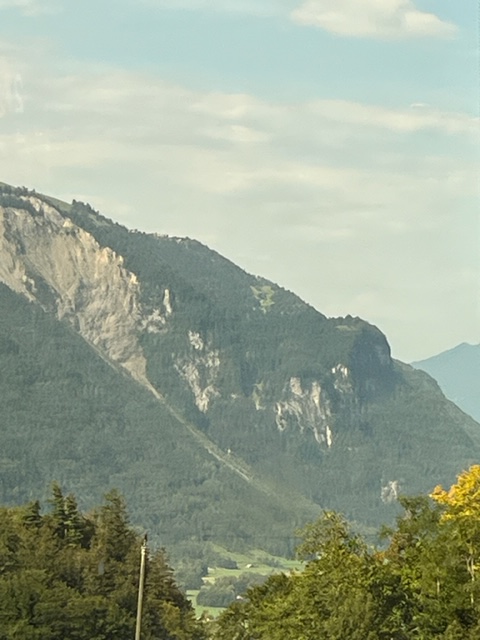
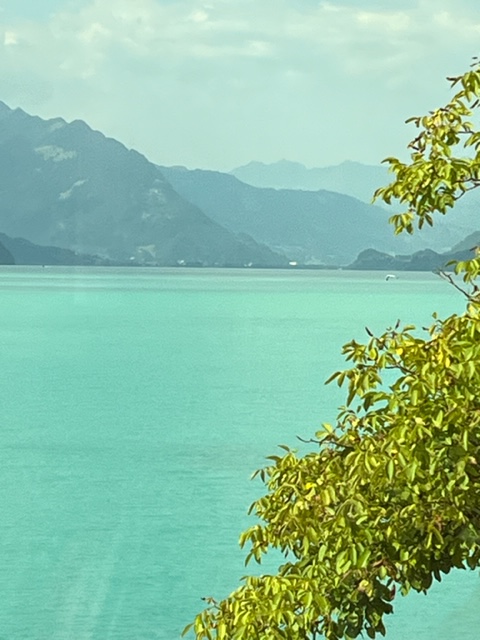
We are travelling between Luzern and Interlaken on the 9.06am train to Interlaken. It is a very busy line even for a Tuesday with families taking biking expeditions and hiking expeditions to places in between. Since leaving Luzern we have been surrounded by mountains and following the shores of lakes with spasmodic agriculture and an urban sprawl which hugs the rail line. Timber is one obvious industry, but it all appears to be pine trees/logs being cultivated and farmed. Some cattle and small acre farms with crops of what I think may be wheat or oats. The journey is likely one- and one-half hours duration and we wonder whether the cost of CHF66 2nd class could have been lessened with taking another day on our EUrail pass.

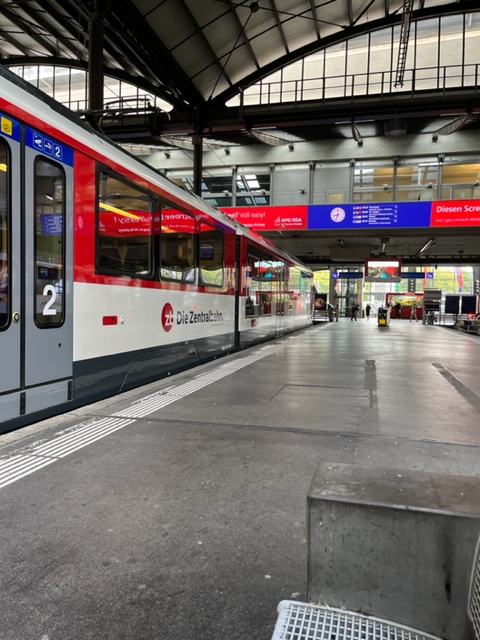
Luzern station
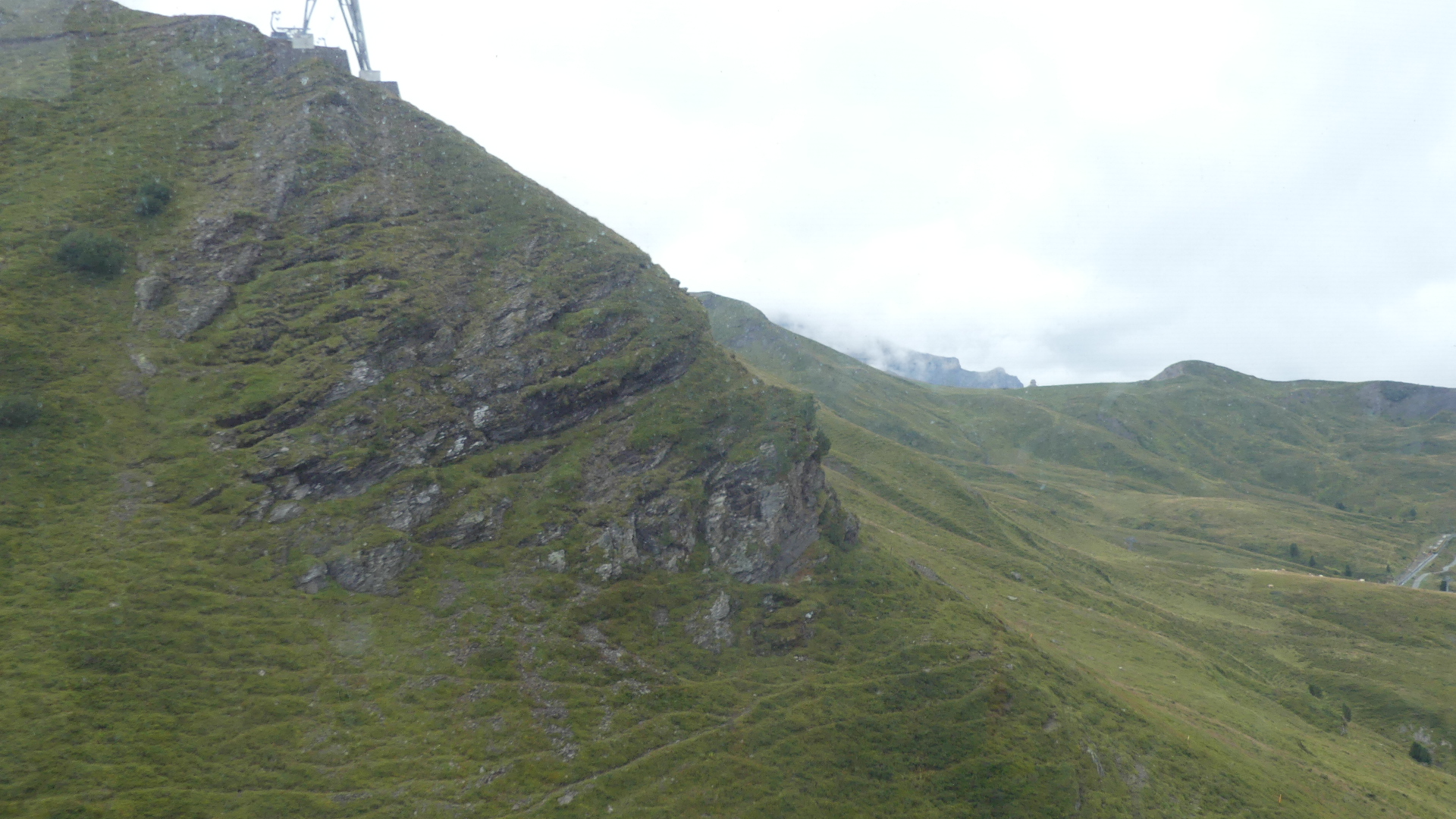
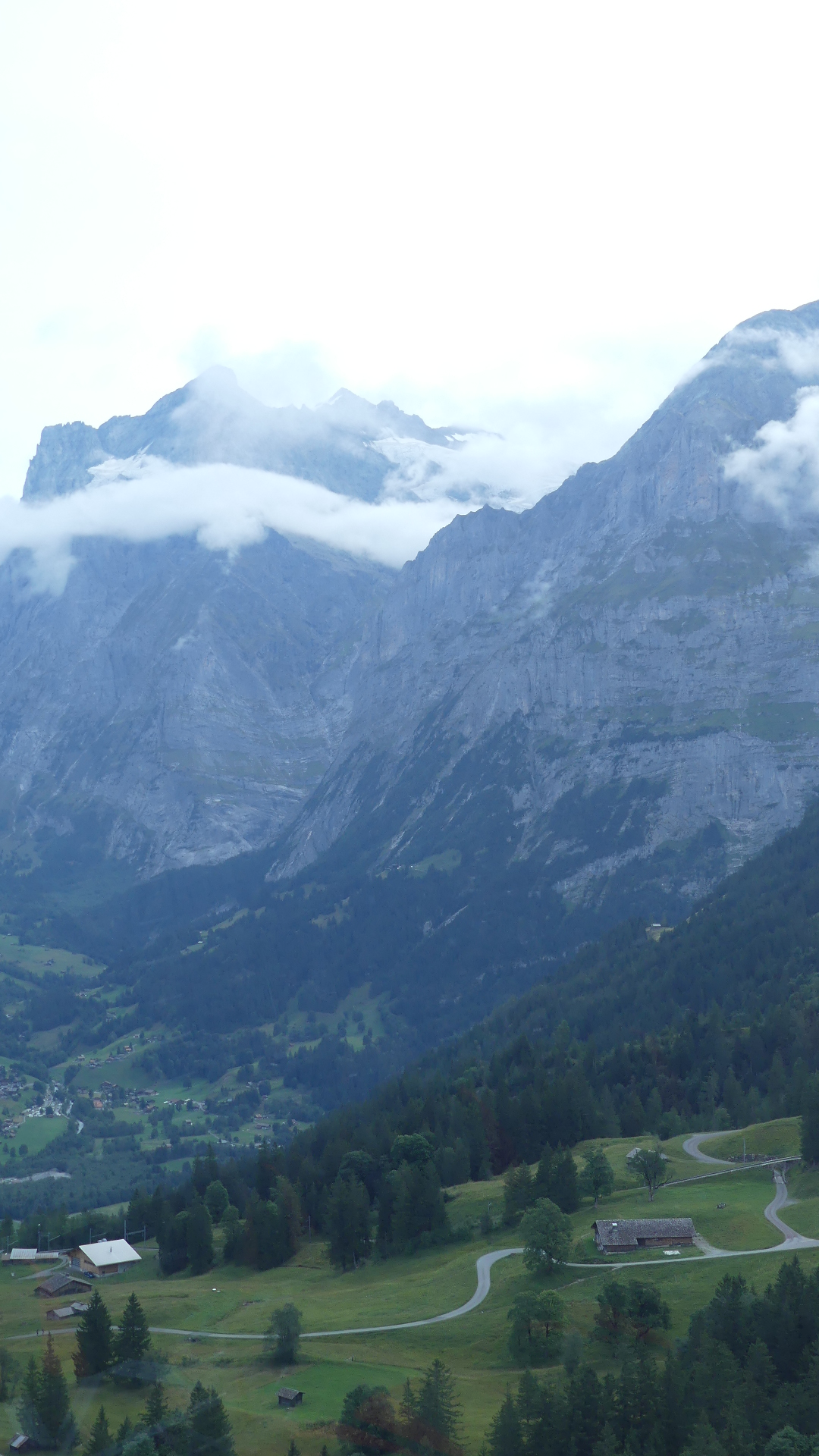
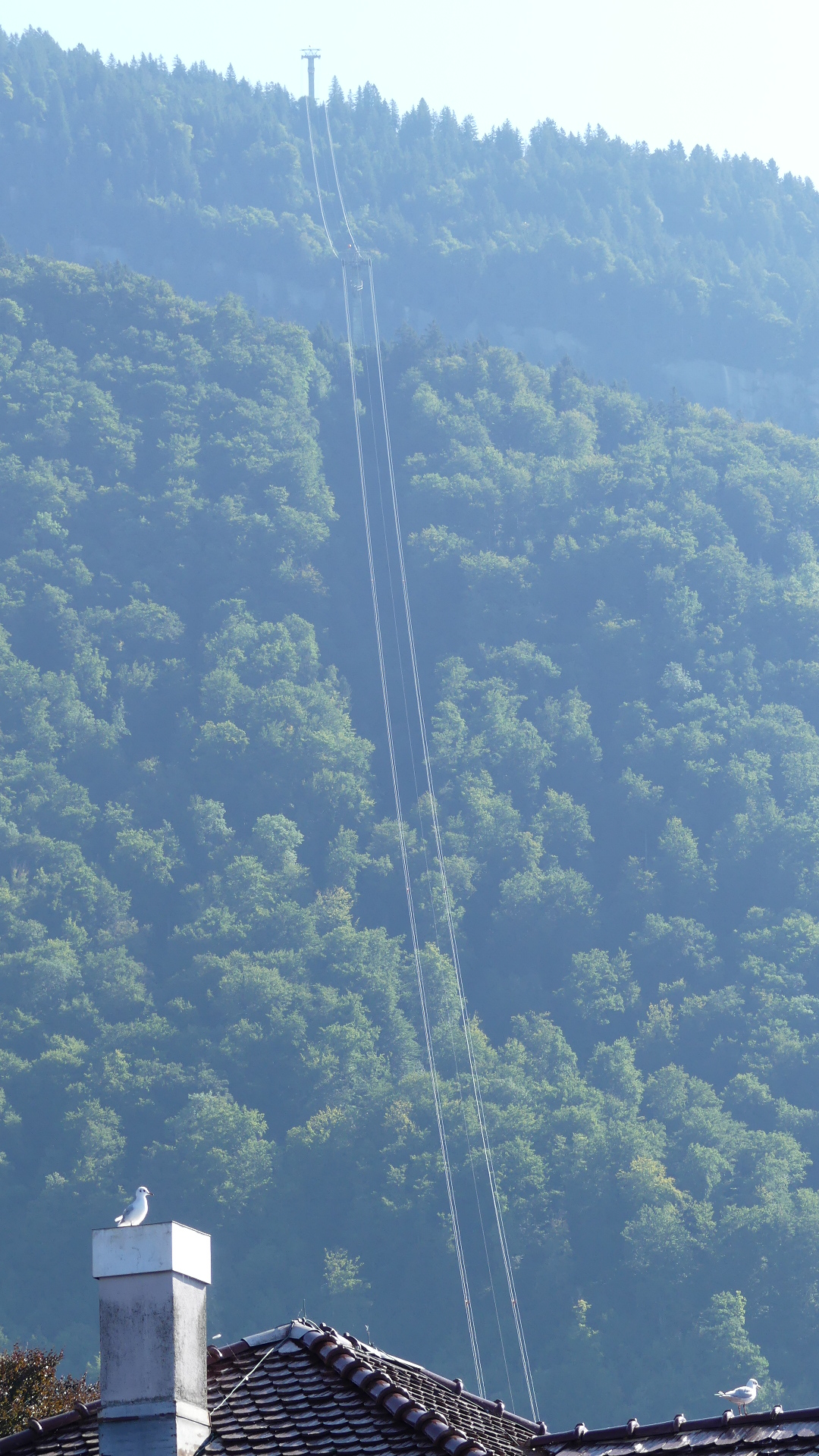
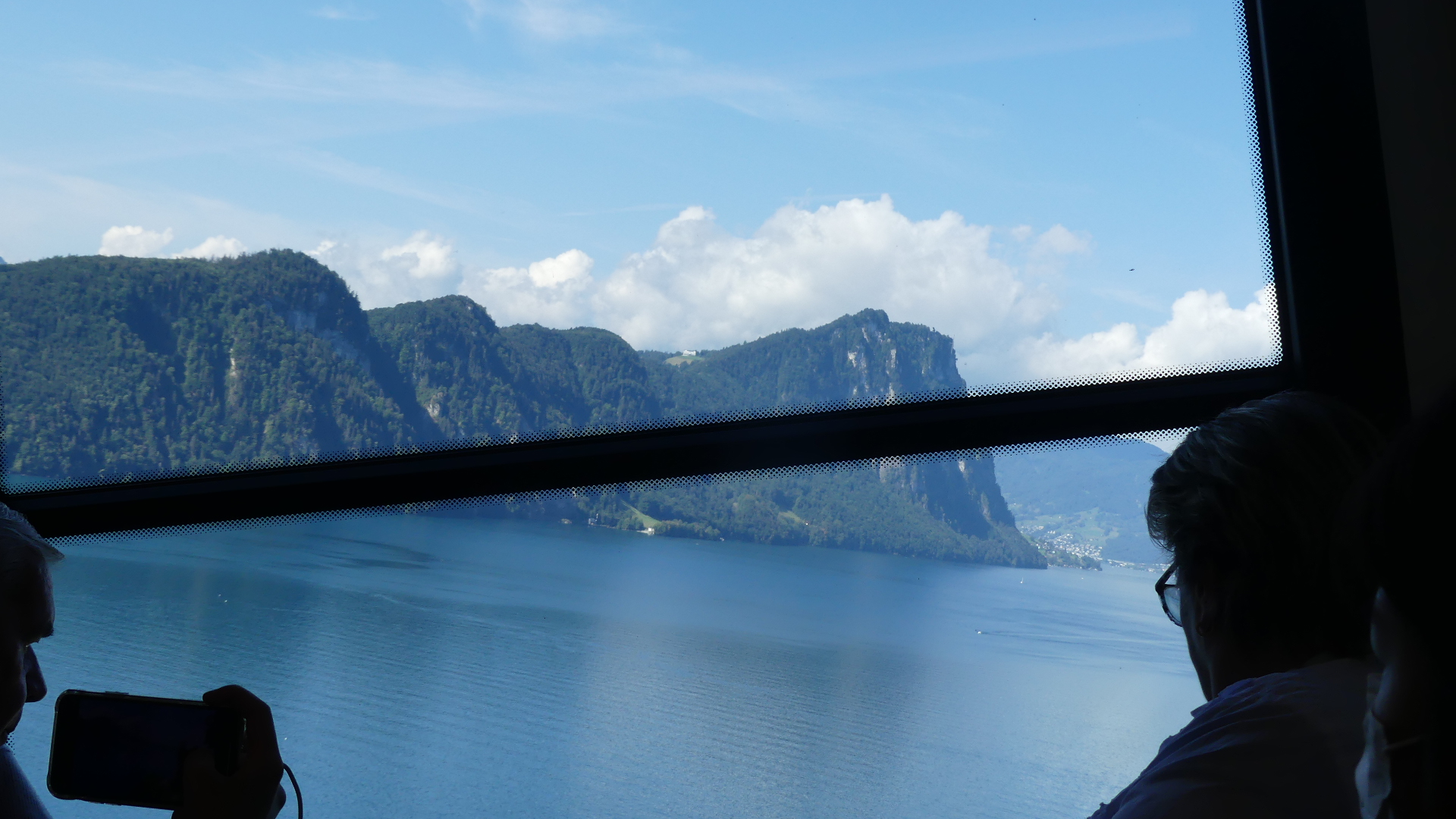
The train climbs rapidly up into the mountains and some hastily snapped phone shots are attached to show the change of scenery and altitude. Kerry has pointed out that behind me are peaks which appear snow-capped and most likely around our destination of Interlaken. Stunning scenery and I am amazed the trains are climbing the mountains like goats. Still, we climb. Sheer rock walls give way to a suburban scene whilst on the other side of the train sheer drops – we are now going down the other side and views down the valley are surprising as to the greenness and the sheer height of the mountains overlooking the valley.

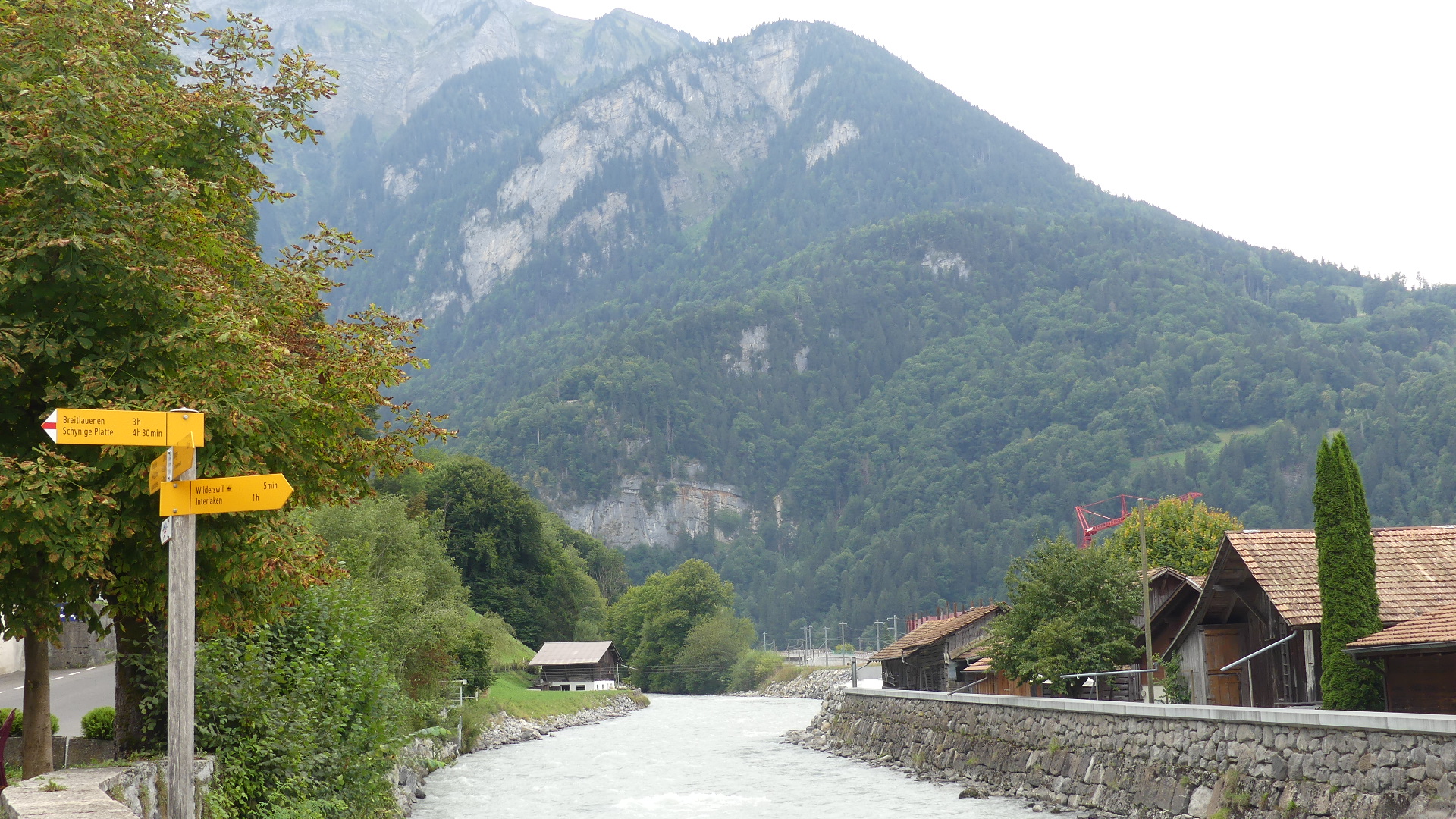
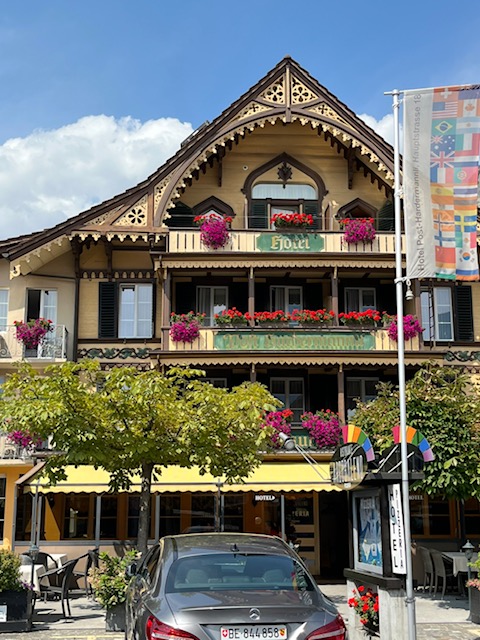
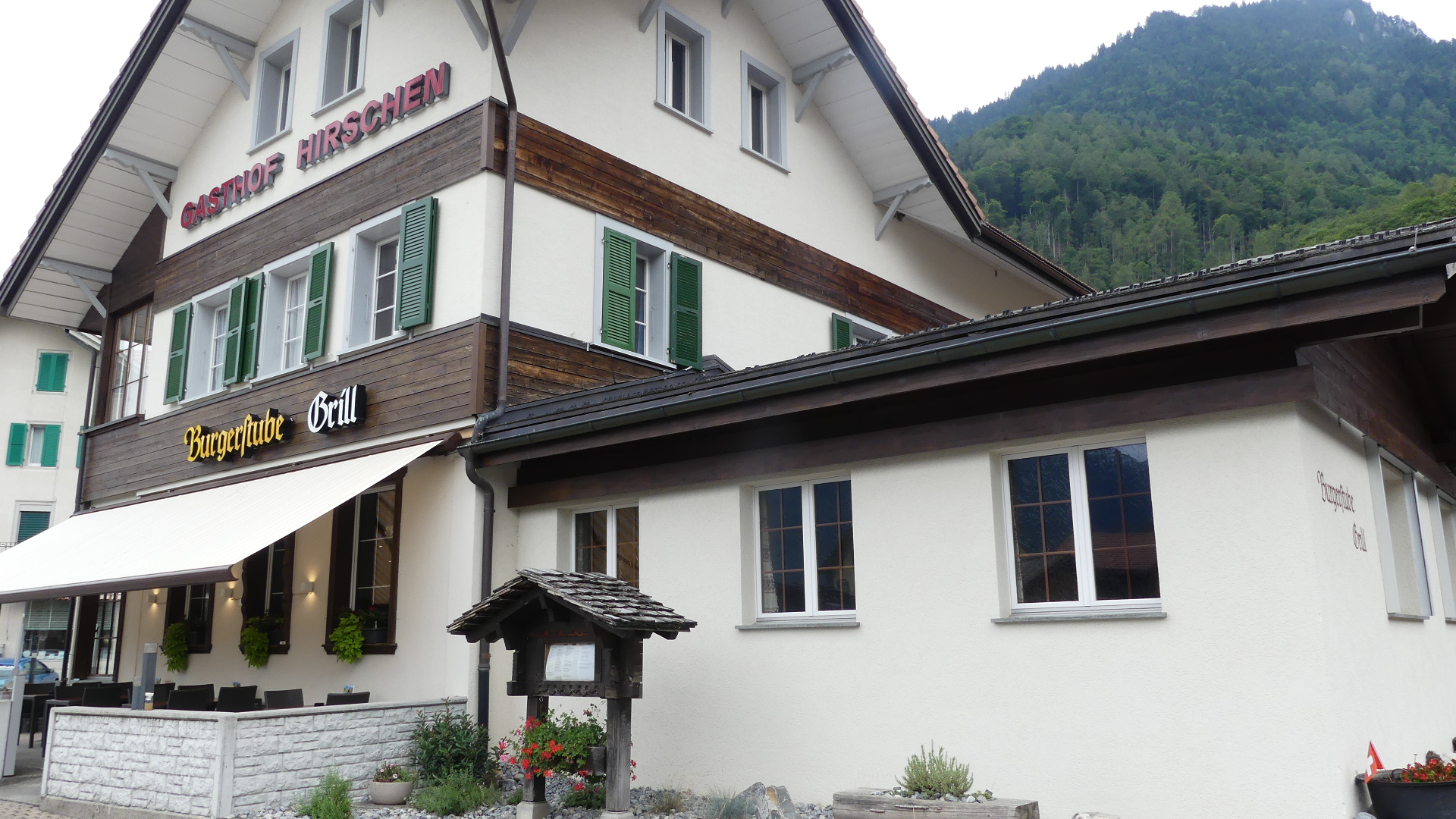
We arrive at Interlaken Ost and investigate getting to our accommodation at Wilderswill. It’s on the outskirts of Interlaken and somewhat rural with a noticeable smell of cows on the air – rather nice after the smell of the cities. A quick train trip and we arrive at the Bahn and Kerry quickly spots the hotel across the rail line and we walk to our hotel within a few minutes. We walk past a train with an ominous snow shovel on its front.

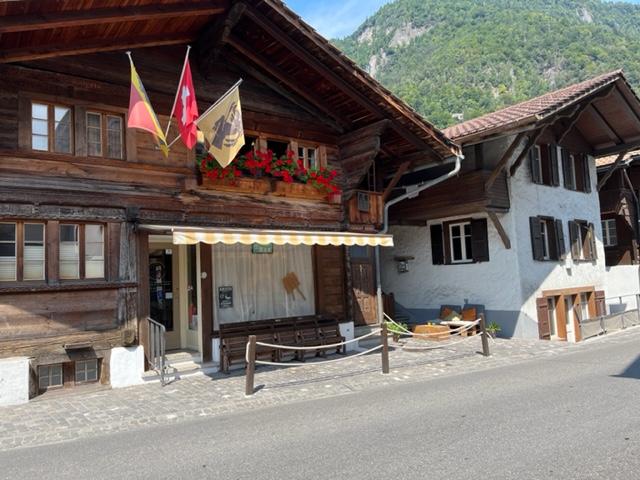
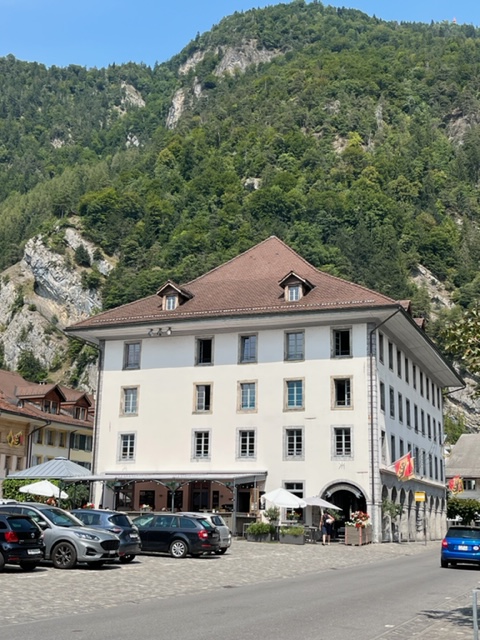
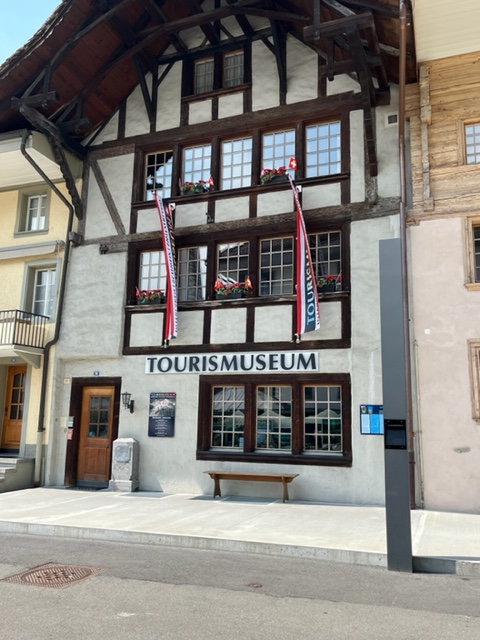
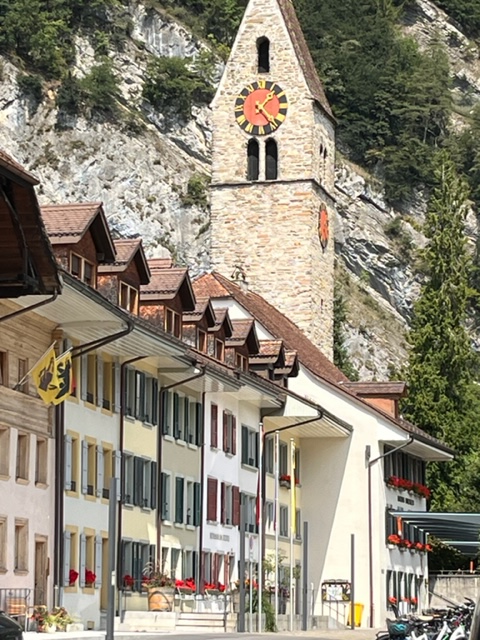
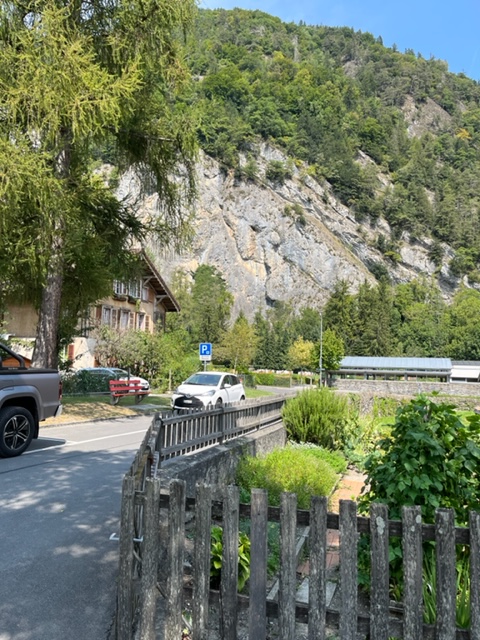
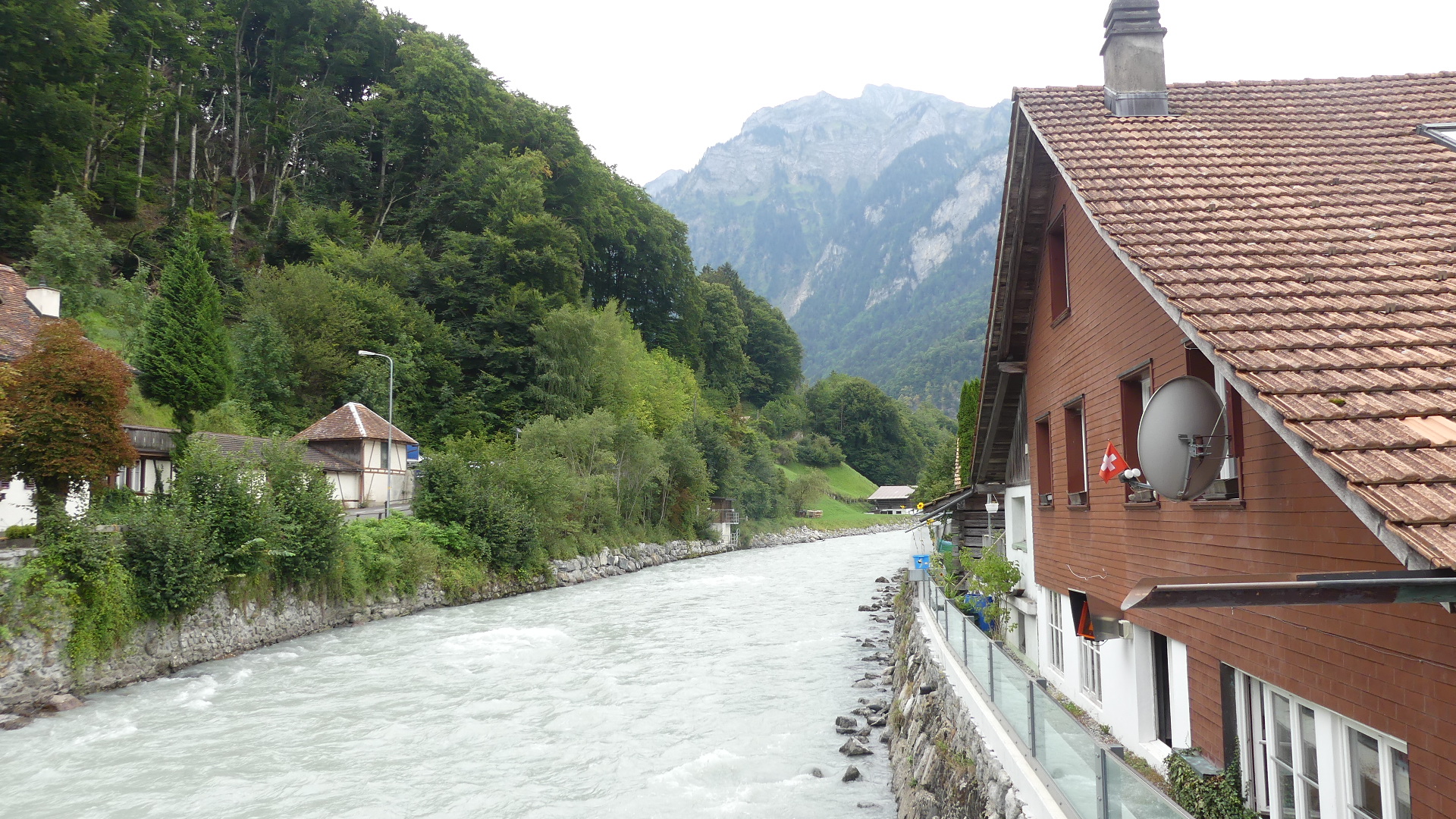
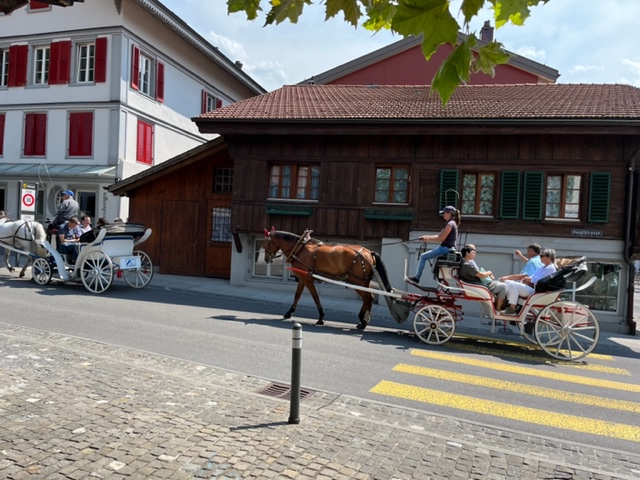
Whilst checking in our hostess provided us with regional passes for the trains and buses which would prove very useful. After settling we used our pass to return to Interlaken Ost and then travel to Interlaken West. The town is split into two and we found ourselves crossing two rivers which ran into Lake Thun to visit the west. Not a lot to see but here are the photos. We strolled along what appears a residential street coming upon a square where the Tourist museum of Interlaken stands opening at 2.00pm week days. We took a rain check and moved on to a church with an older steeple than the rest of the building but immediately at the back of the church just past the cemetery a solid stone wall rose directly creating a sheer cliff face. In this region this characterises all settlements sheer mountain faces abruptly rising from the valley.
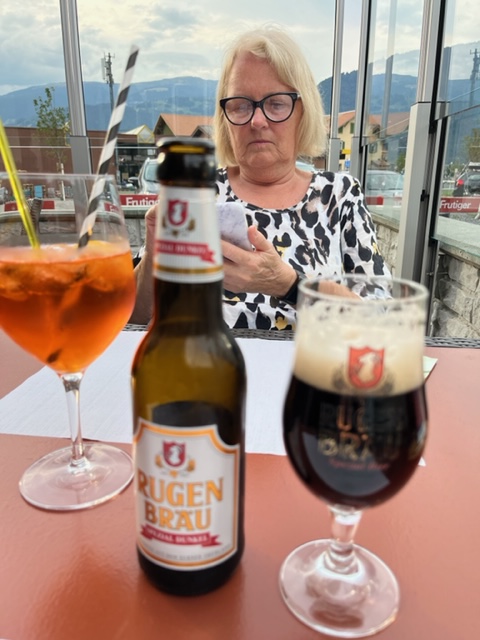
We returned to our guest house for an evening repast (you will all have seen my post on Facebook of Kerry and I relaxing with an Aperol Spritz and a Rogan Brau Dunkel). We struck up a conversation with our hostess about a visit to Jungfraujoch and she tipped us off that we should check with the information office at the rail station about the various options (our previous enquires left us so confused we thought we were going to have to purchase a 3 day pass for CHF249.00). We did that and low and behold if we got up early (6.40am to be precise) we could purchase an early bird 1 day pass for CHF170.00. For the two of us this was a saving of $150.00 but we could only purchase it on the day.
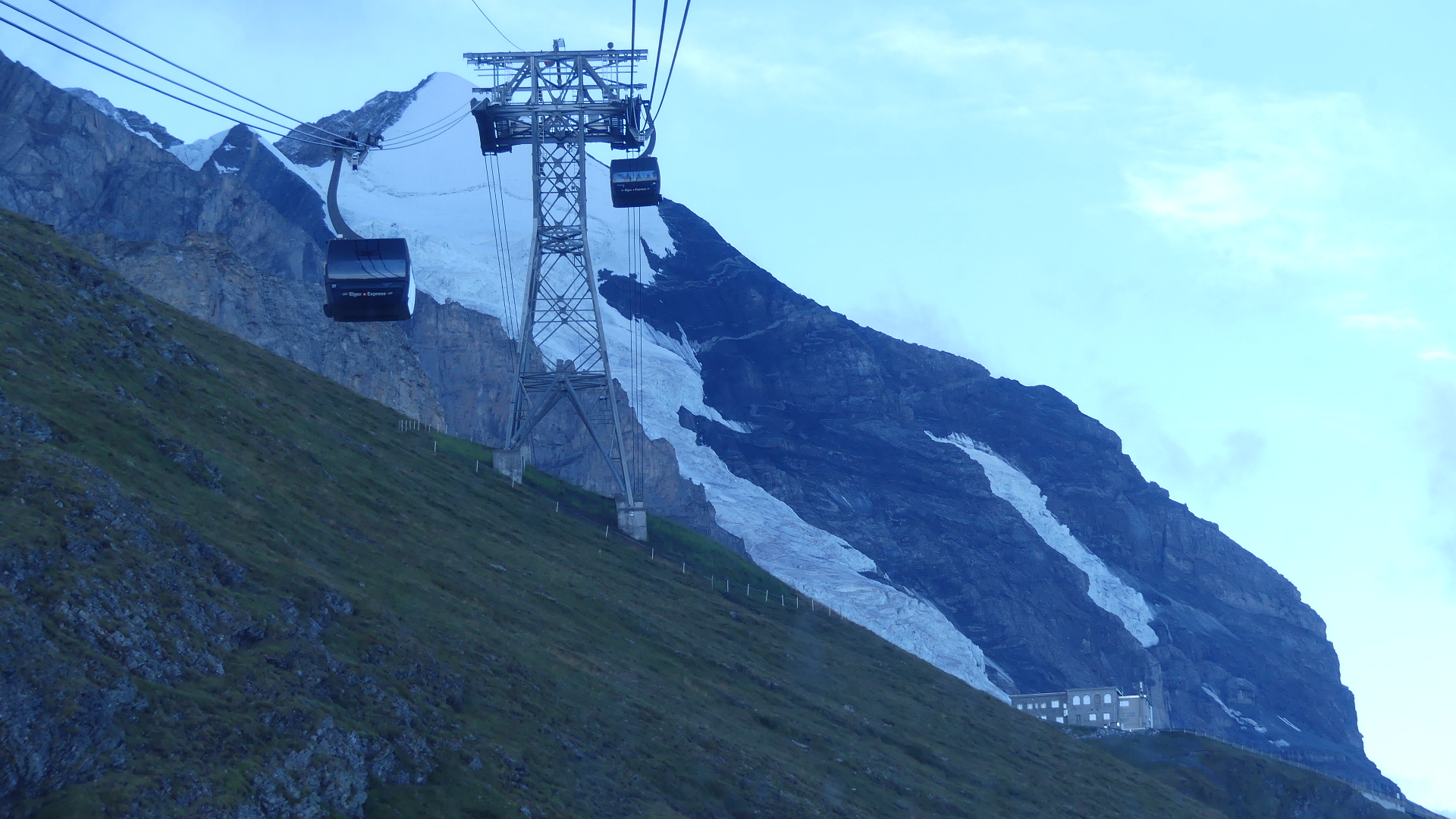
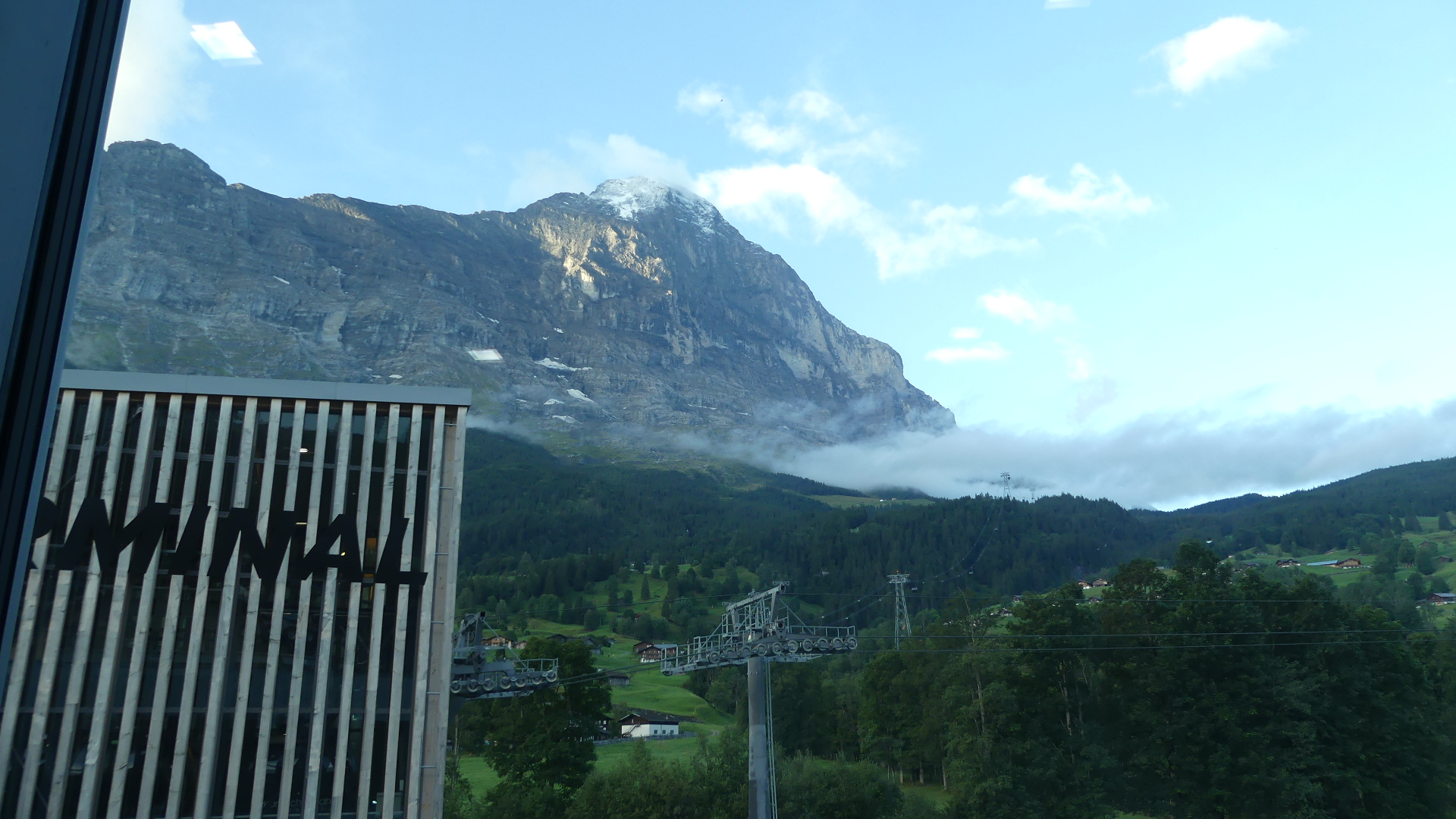
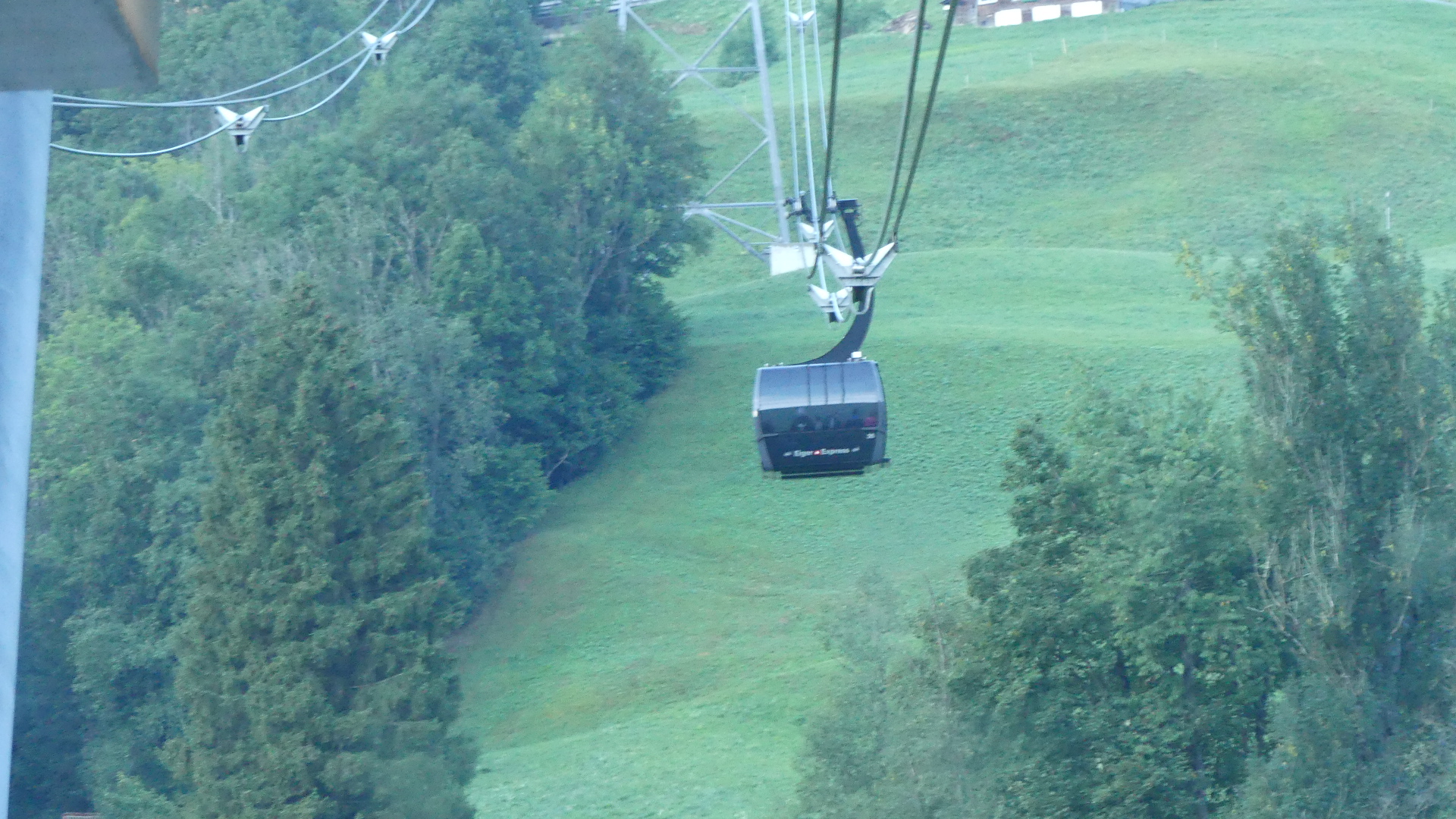
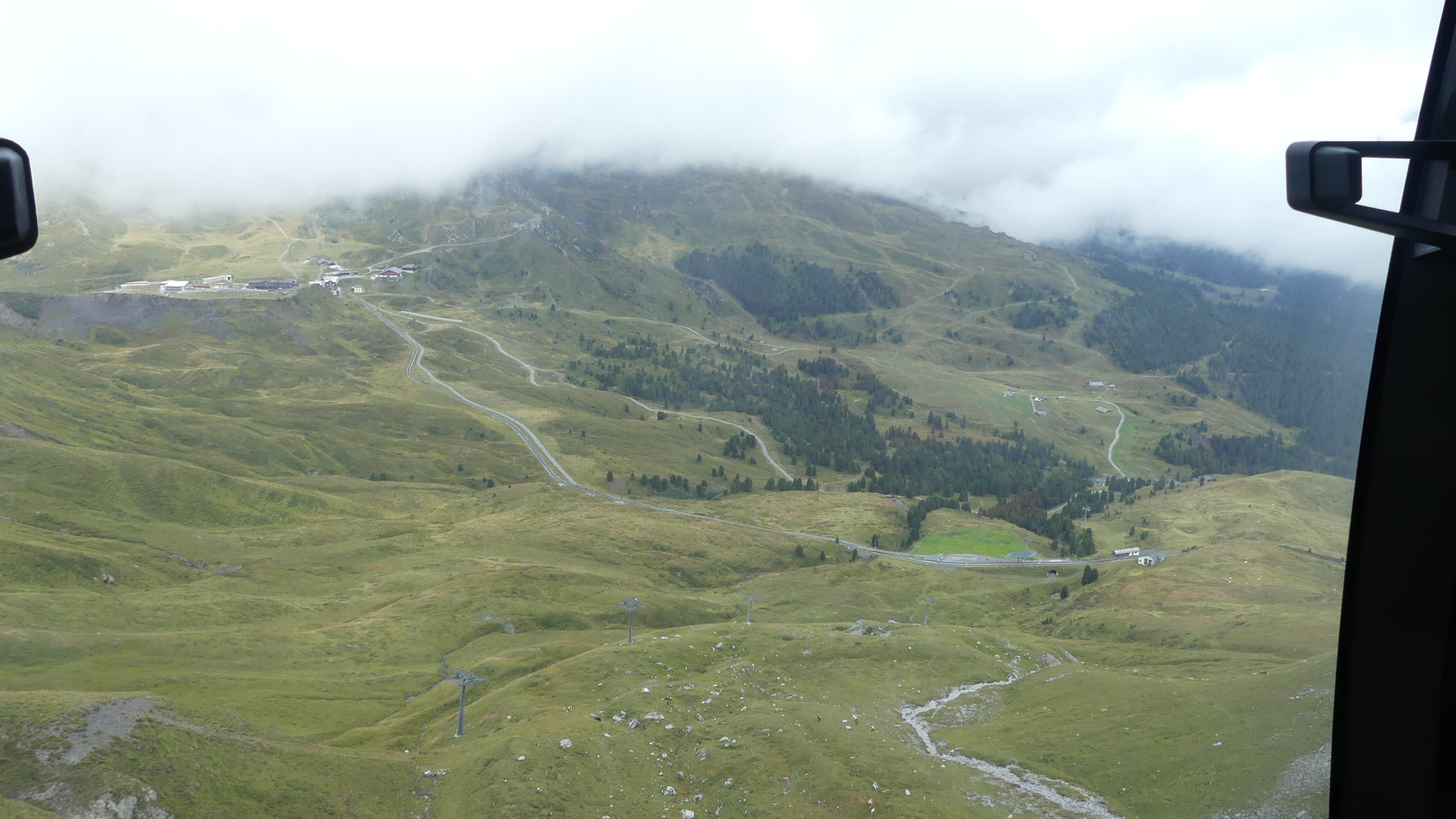
Next morning at 6.30am we were standing in the information office purchasing our tickets then jumping on the train which would take us to Gremwald where we would catch the Eiger Express cable car for a fifteen-minute trip to the eiger station where we would catch a train with all the workmen up to the top of Europe through a tunnel cut through the mountain in the 1890’s. More on that later. We met two Americans on the cable car and seemed to bump into them all through the trip around Jungfraujoch. You may notice the same faces in the following pictures.

Of course, we were too early for the connecting train and had to wait but this gave us a good opportunity to take in our surroundings at 2900m. Above us huge sheets of dirty snow and ice clung to the mountain and the breeze was strong and chill. Fortunately, the train was not long in coming (all of these trains are cog trains) and we entered the tunnel to the top. This journey would last 21 minutes – no wonder it took the tunnel builders years to dig through the hard rock. Arriving at the terminal you would not know whether you were in a modern subway or at the end of a tunnel carved out in 1890 – electronic sliding doors and ticket readers had replaced whatever had been envisioned by the builders.

The terminus is set up as a series of exhibits called “the Tour” and it commences with a long tunnel leaving the warmth of the gift shop and cafe behind. The tunnel is wet and cold and steadily ascending to a giant surround cinema showing film of the mountains Eiger Monch and Jungfraujoch in all seasons and the Sphinx (which is the name given to the building constructed at top of Jungfraujoch) – truly awesome.

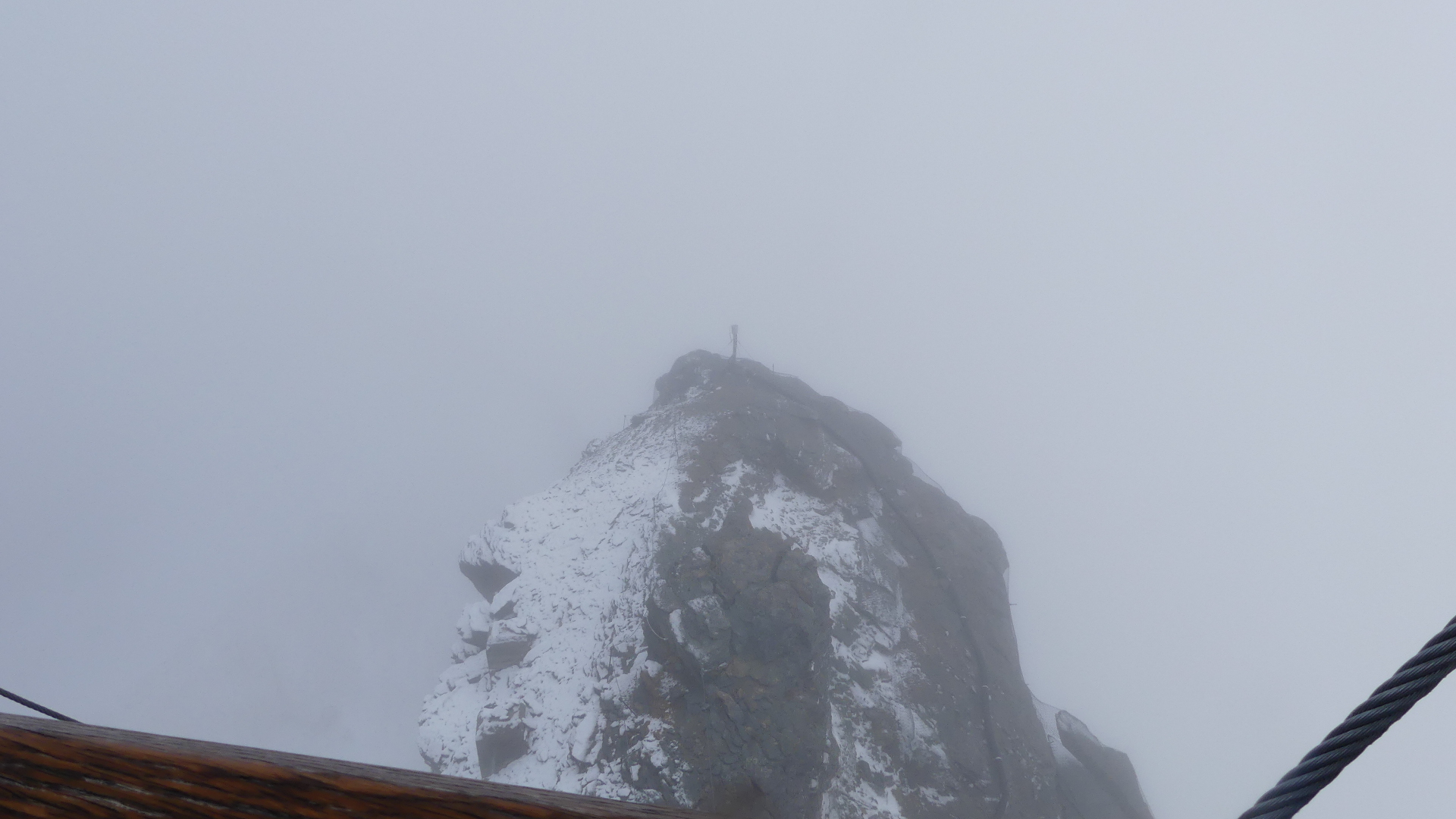
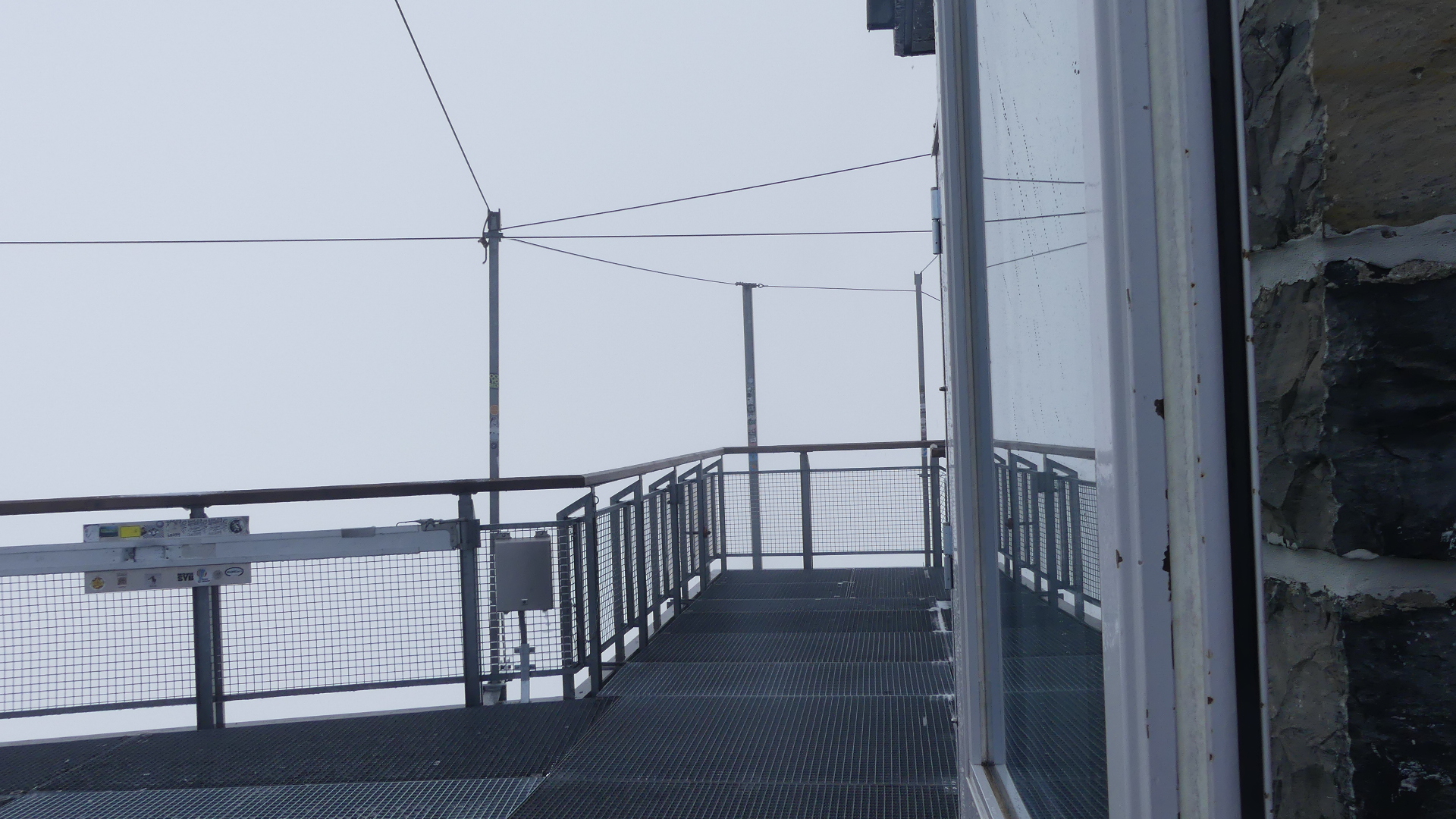
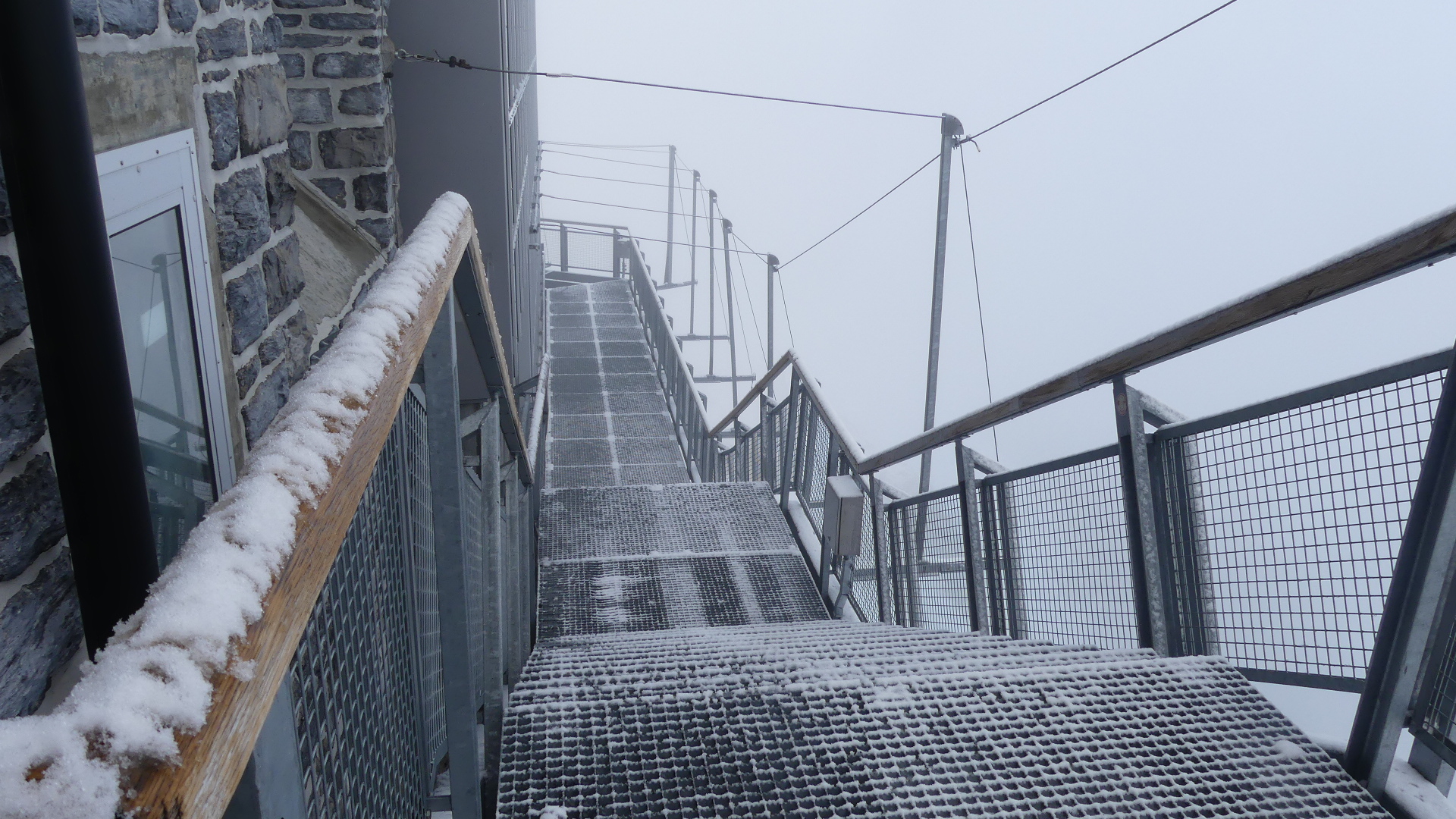
After the cinema we found the lifts to the Sphinx – elevators taking us 80m up to the viewing platforms gift shop (Tissot is well represented) and restaurant. The cloud cover is dense but not a complete white out at this stage (the early bird catches the worm). The wind speed is 32kph and the temperature -2 degrees C. There is ice on the platform which is metal grill suspended over metres of air. We find a quiet side and I duck down the stairs carefully until I can go no further due to my freezing to death with the cold. We both then duck back inside to catch our breath (we are 3500m above sea level) and warm up.
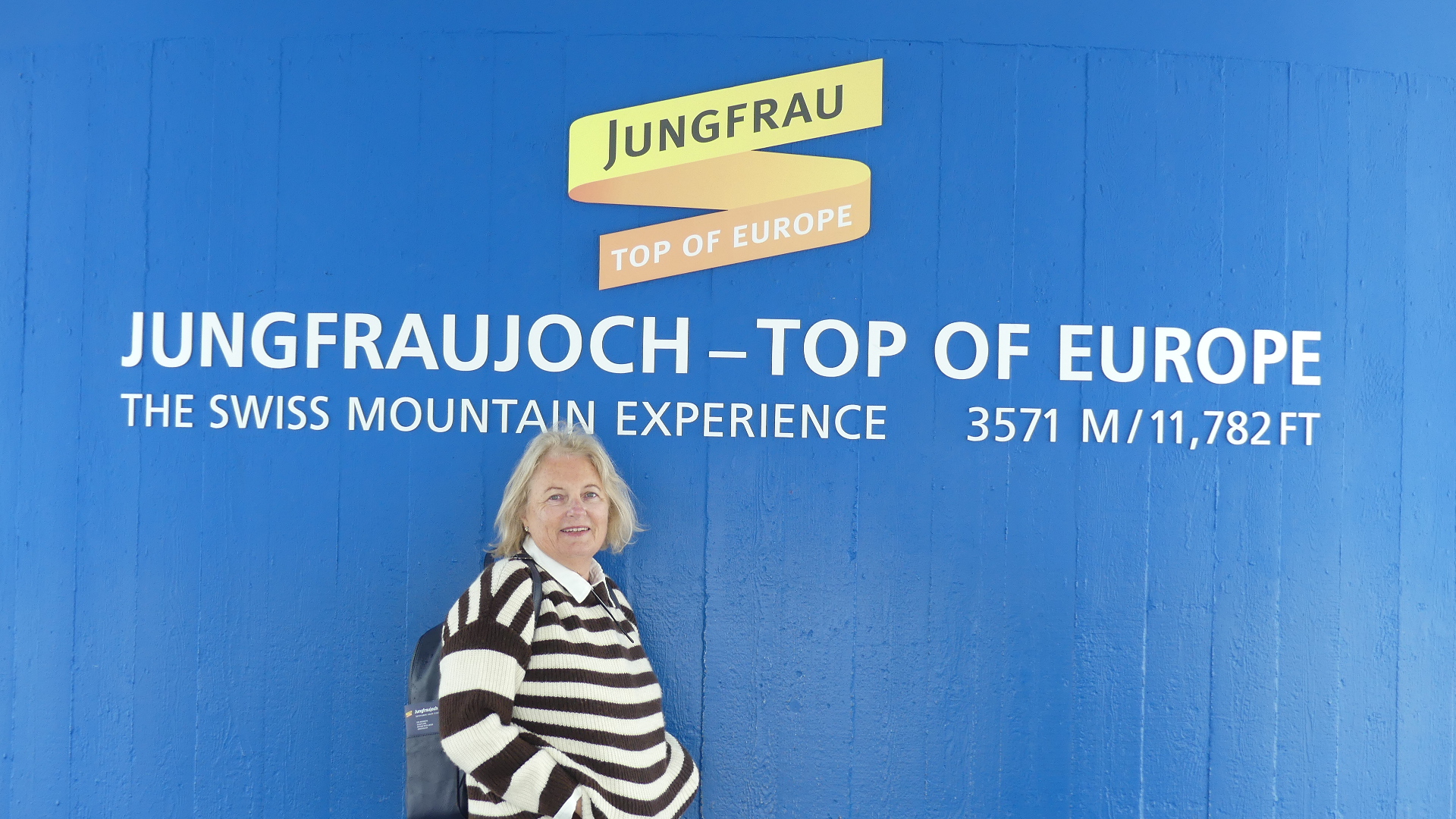
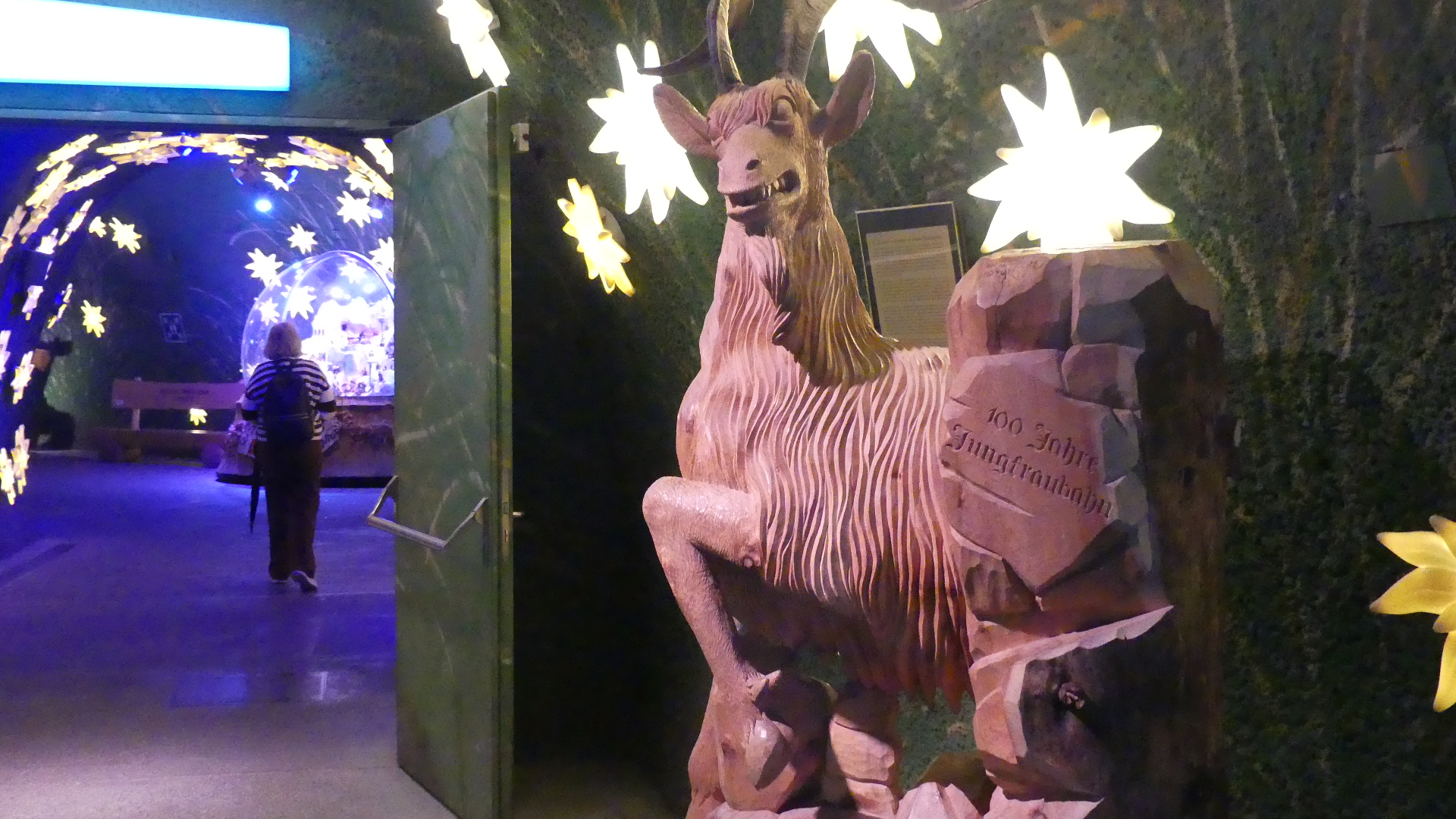
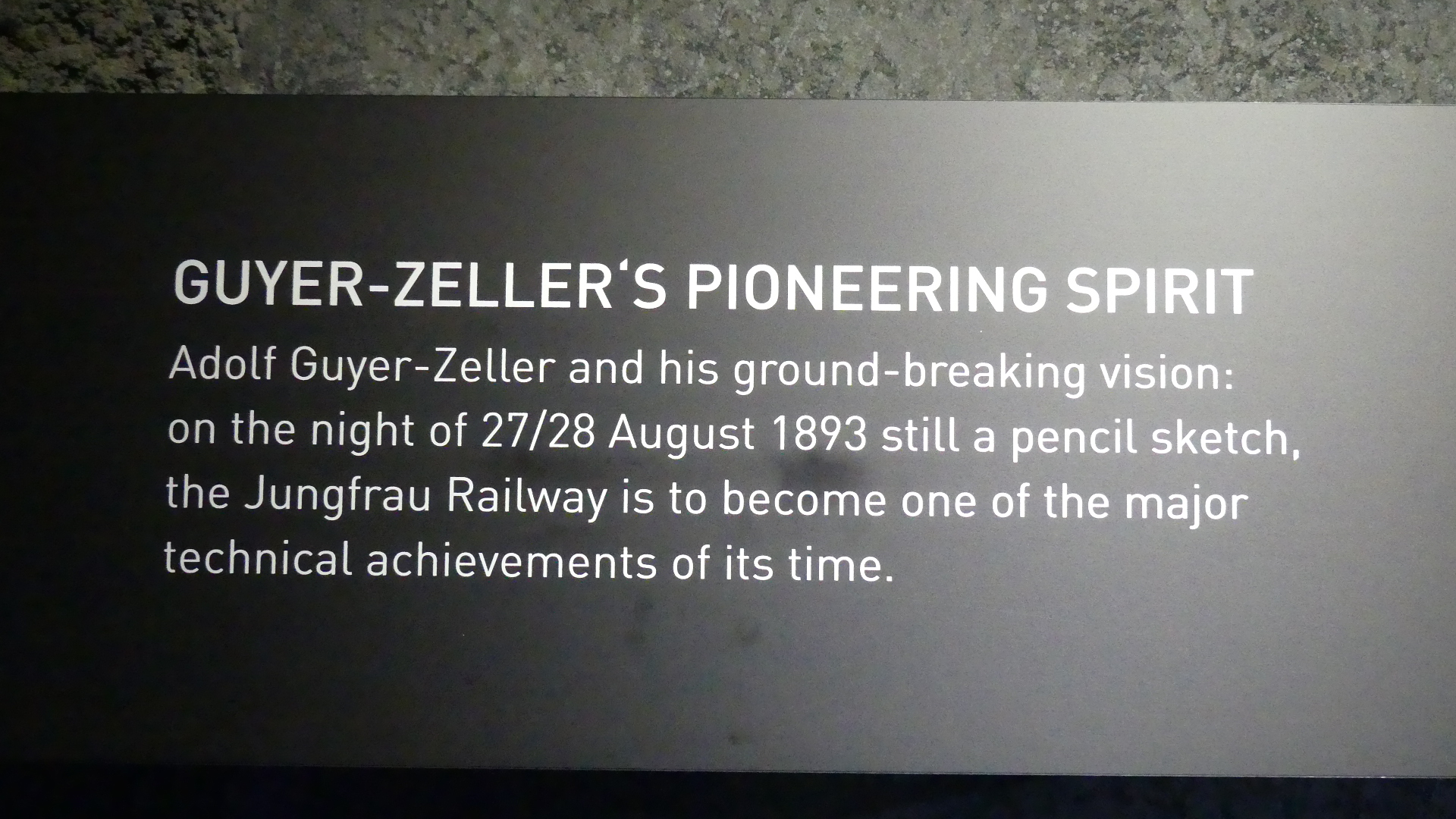
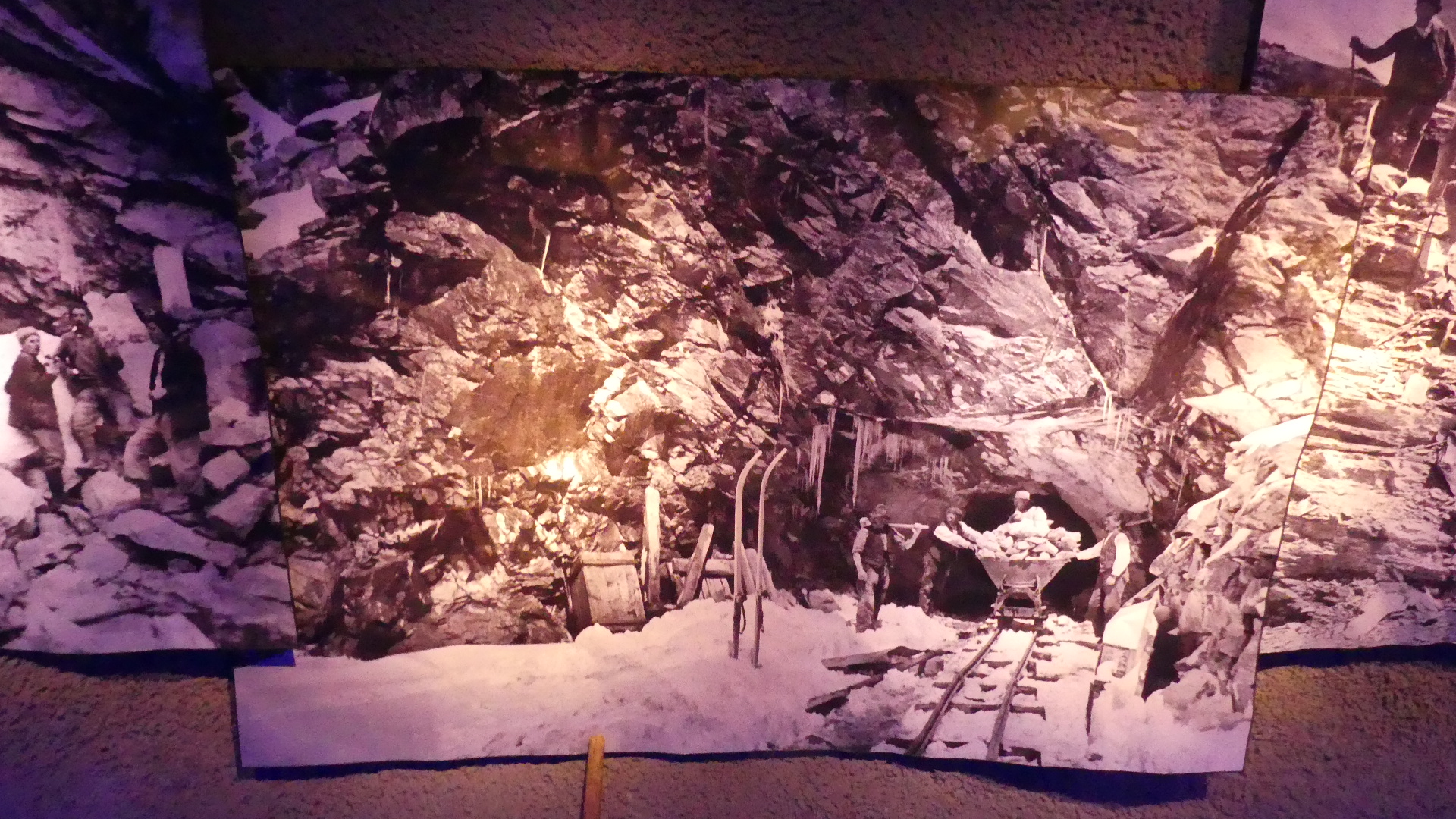
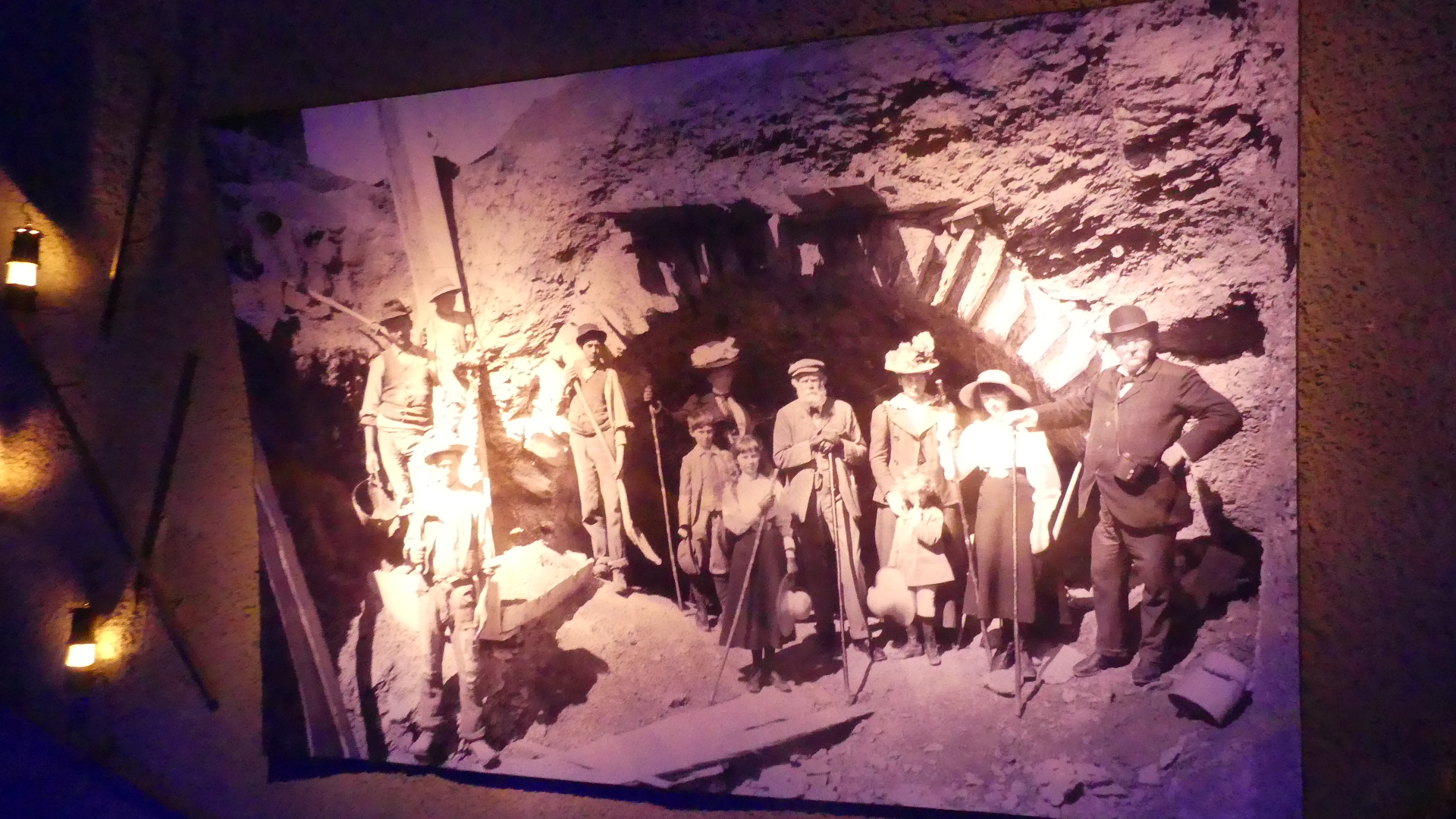
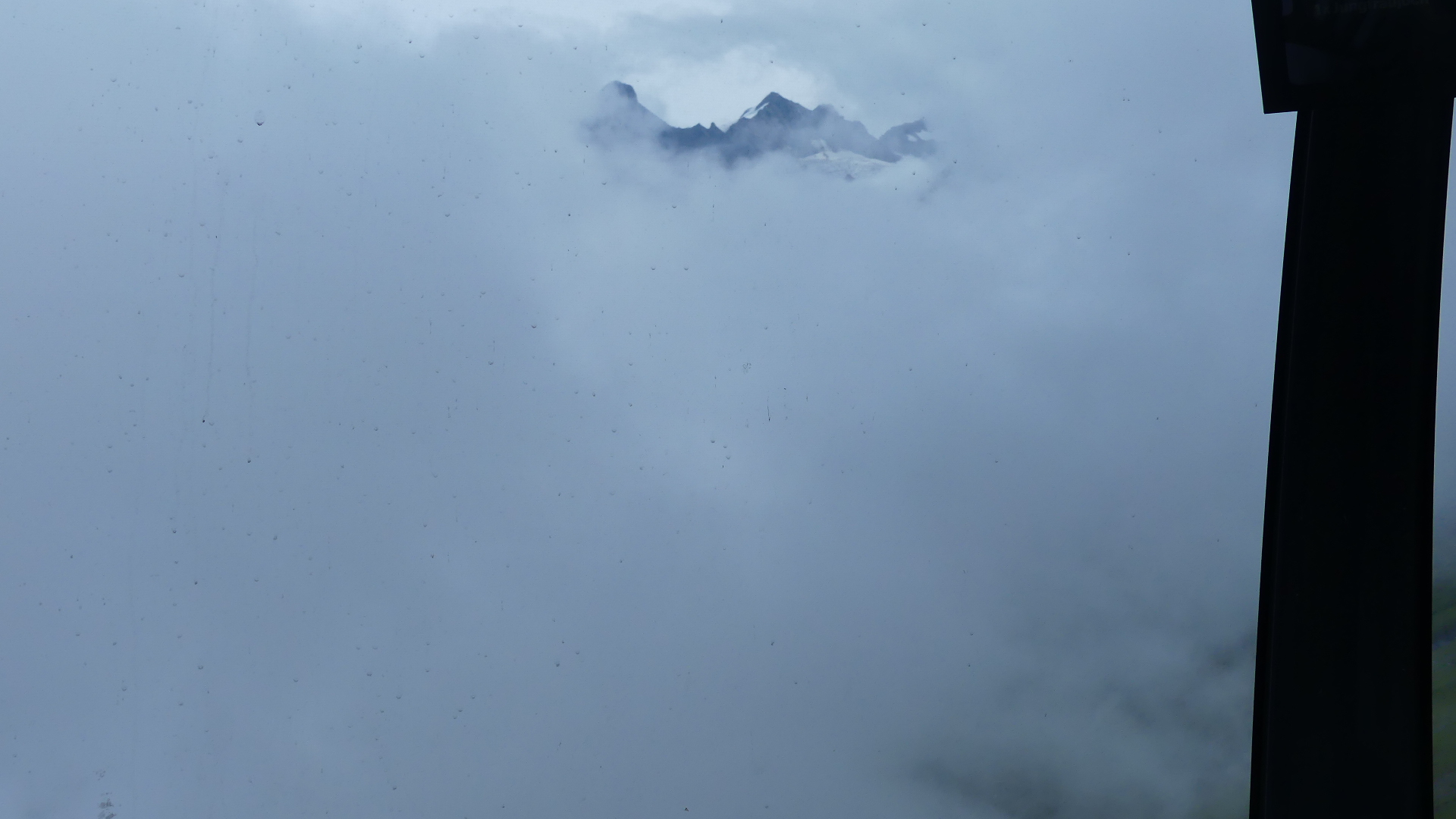
We wandered round looking for a clear view, but none were found. The clouds were piling in and sleet was falling. We decided to return to the Tour and check out the Ice Palace and Ice Caves. The Ice Palace had some enjoyable features but moving on we found an exhibit to the man who had the dream of tunnelling to the top of Jungfraujoch. Following that exhibit is a tunnel honouring the men who lost their lives building the tunnel. Very sobering.

Photos
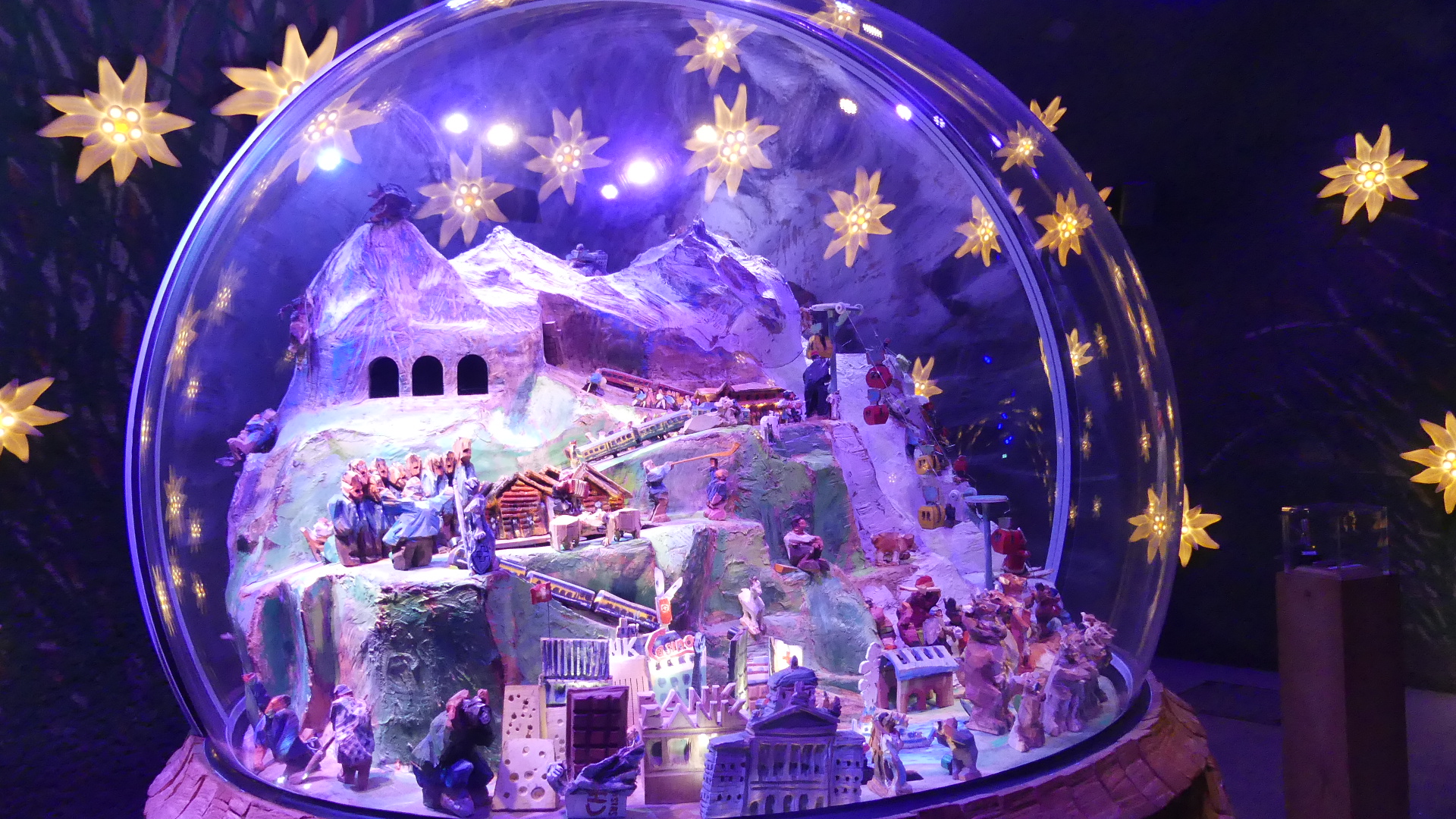
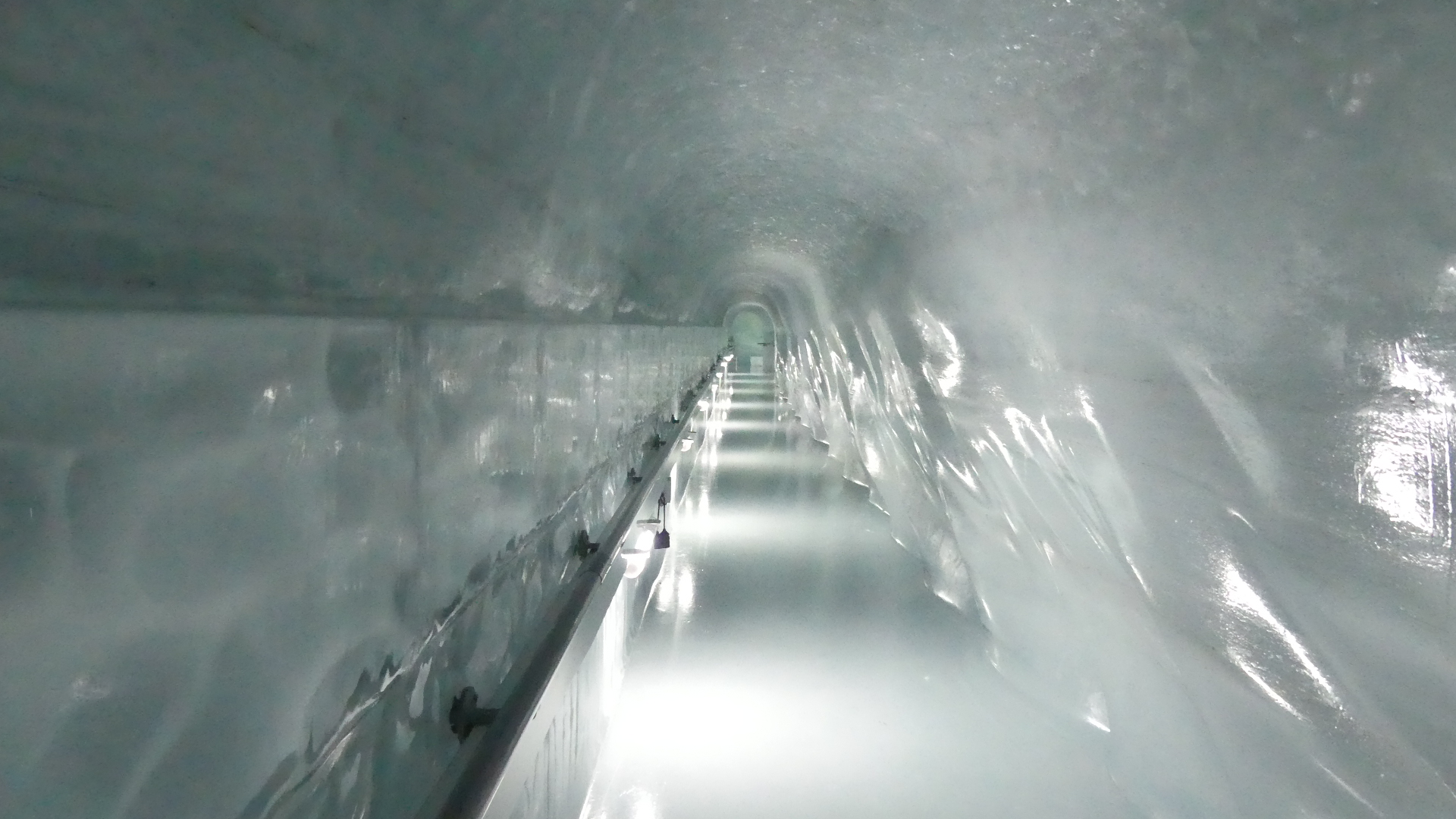
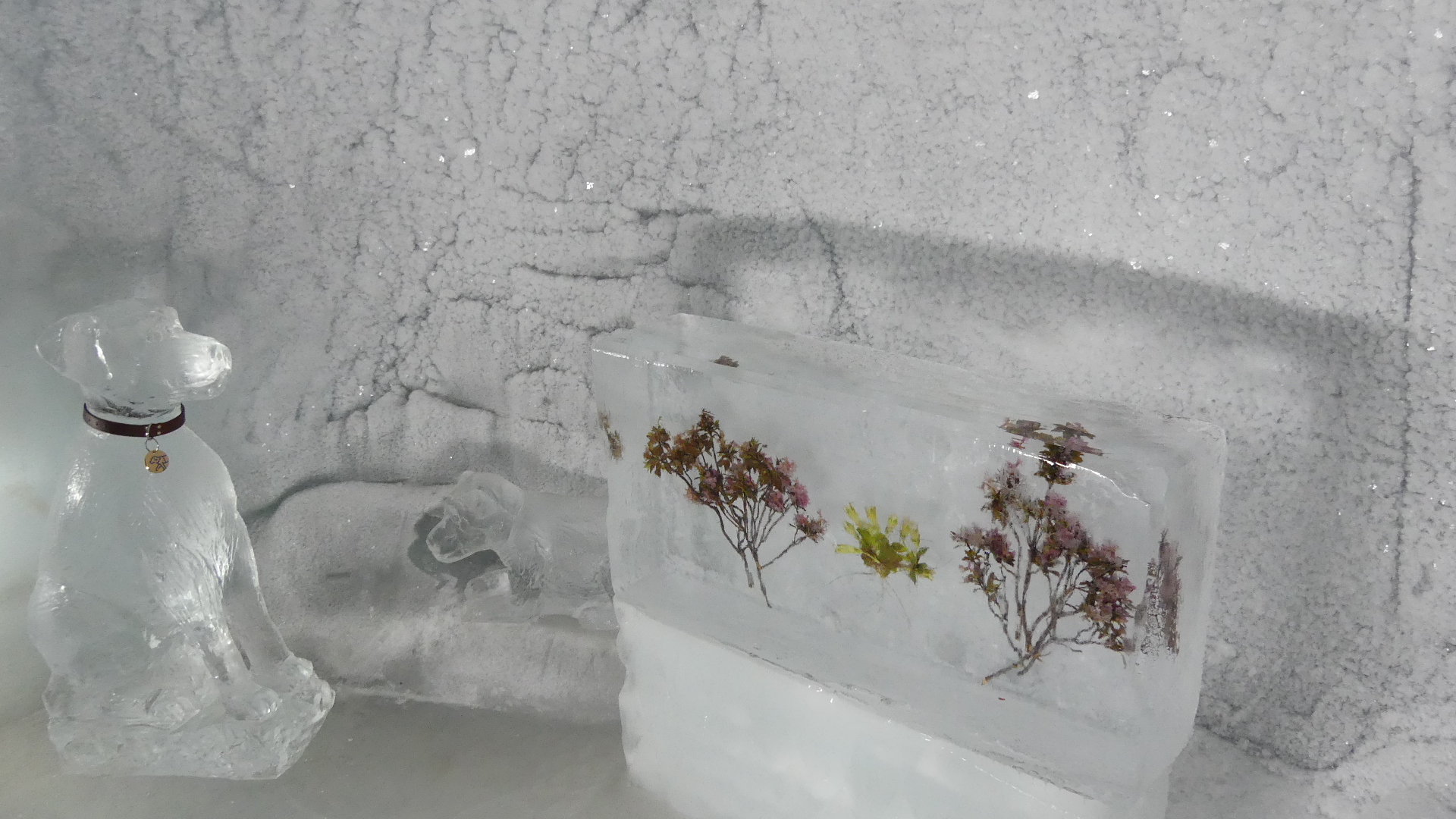
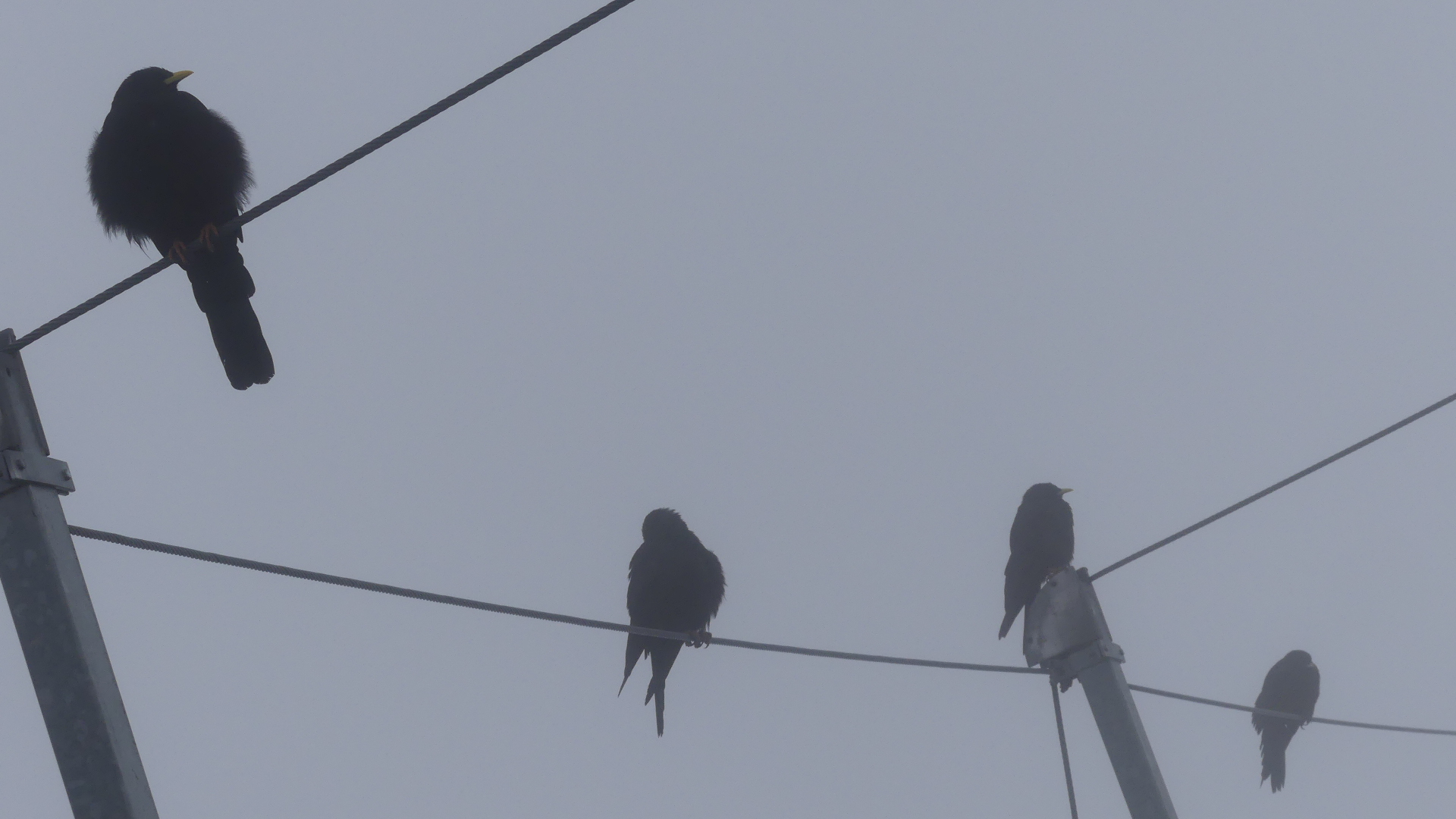
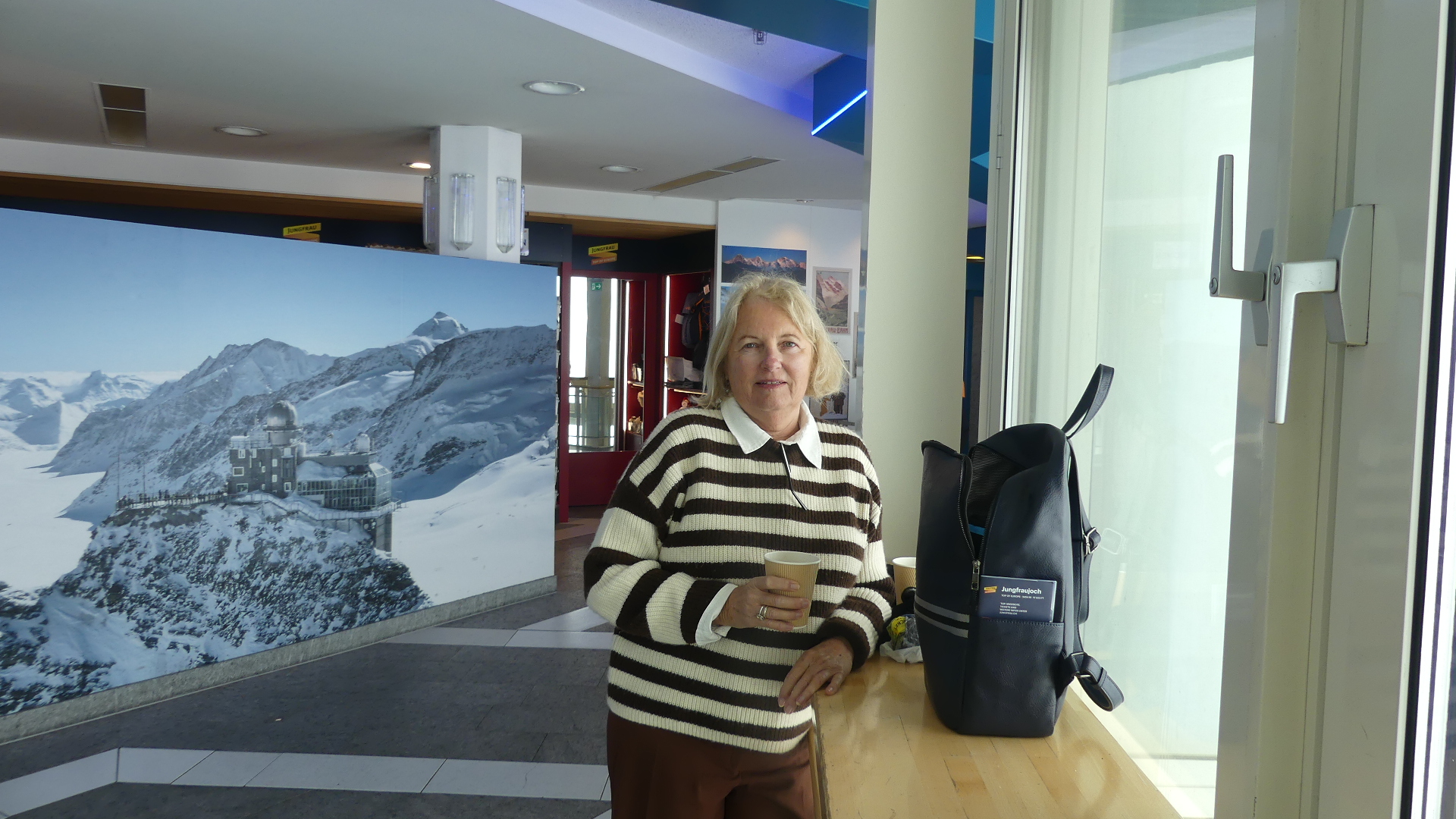
We came to the Ice Cave. I entered and went several metres but that was it I was now unable to bear the cold anymore and we agreed to give this a miss and return to the start of the Tour. We had packed a thermos with hot coffee and now seemed the appropriate time to drink it. We found a bench with a view which today was a pile of white cloud and poured 2 cups – still very hot and a great way to warm up. Another way to warm up was to purchase gloves and a scarf at the gift shop. I noticed a bottle of single malt whisky and was told it was distilled right here on the mountain and I could see the distillery in the Ice Cave. I bought a small bottle to try. Warmed by the coffee and insulated by the gloves and scarf we returned to the auditorium showing the movie of Jungfraujoch in brilliant weather and snowy blizzards and returned to the Sphinx in the hope of kinder weather but unfortunately the rain clouds were set in for the day. We ventured outside on the Plateau – too bloody cold even with our new armour. We made our way back to the Sphinx and were surprised to find perched on handrails and wires on the Sphinx a group of birds also feeling the chilling effects of the weather. I was really surprised to find any bird life this high up. Reassured that we were fully protected against the cold, we returned to the Ice Cave to look for the distillery. Here are the photo results.
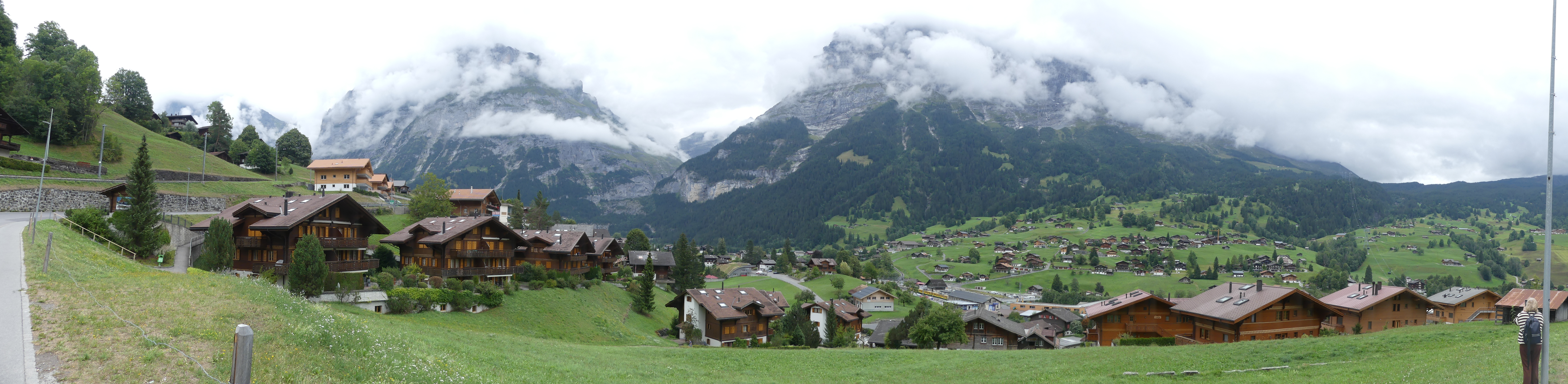
One of the conditions of the early bird tickets is that you must return to the Cable Car station by 1.17pm. With the weather against us we decided to return earlier to Gremwald and see what was in the village. After returning on the train then the cable car it was close enough to lunch to find a place to eat and determine our next step. That next step – to look around Gremwald was a mistake – long uphill walk to find nothing of interest.

Our trip to Gremwald finished with our return to Wilderswill and the hotel. We had heard the chimes of a local church regularly and we could see the steeple from our lounge room window so we went exploring to find that church that chimed on the half hour morning noon and night. Less than 100m metres from the hotel is a small park with some history boards concerning local events and within in 50m a covered bridge giving crossing over the stream running through Wilderswill.

We crossed the bridge which is wide enough for 1 car – pedestrians have to shelter on one of the bridge cross members whilst the car passes through. Bike riders present a different problem for car drivers and with a blind corner at one end of the bridge I am sure there have been contests for right of way. After crossing the bridge Kerry found a very friendly grey Tom cat sunning on the top of the rock wall/fence atop the bank of the stream whilst I kept watch for the cars and cycles. The offending chimes commenced as she stood stroking her new friend. The local information had spoken of the many different nationalities buried in the graveyard behind the church and from where we stood, we could see headstones littered across the hill rising suddenly from behind the church. Curious we went into the churchyard to investigate.

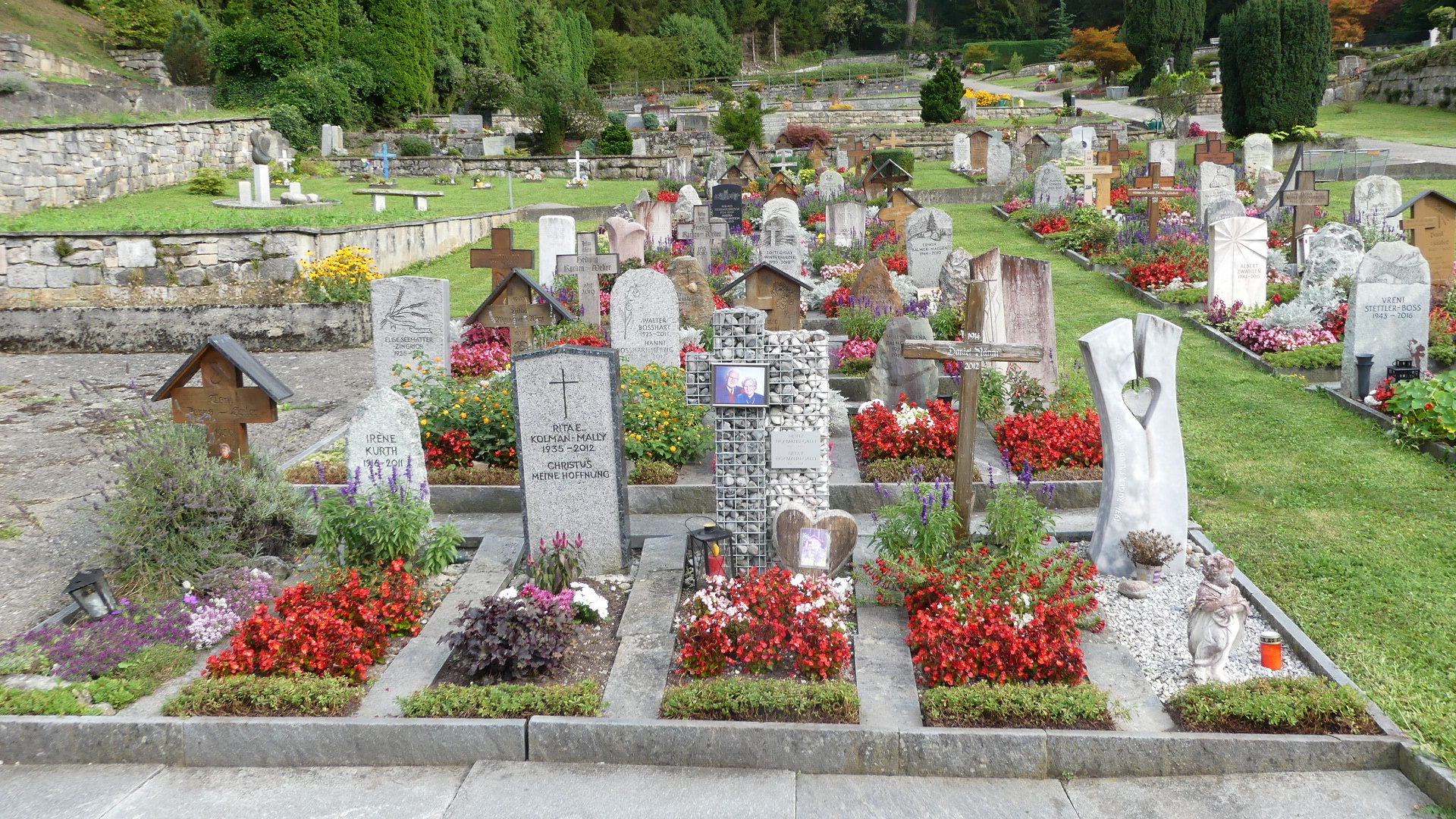
As we entered the graveyard in front of us was a low wall which seemed to hold niches for the cremated with small graves for a few buried. Strangely all the buried seemed small graves and we speculate that even the cremated were buried with a headstone. A set of stairs divided the low wall and gave access to the slope of the almost sheer wall climbing before us. Walking up the hill was strenuous, but we wished to find the early graves mentioned on the park information board. The higher we went made no difference – the dates of death were mixed and none earlier than 1900. The big difference here was the arrangements of garden beds and the mix of flowers. Well maintained all flowers looked healthy and well tendered all the way up the hill.

Part of the secret of the lovely garden was that seedlings were on sale at the foot of the graveyard – a big tray and an honesty box for the cost of purchase. Even the gravestones were different – some utilised old stones which readily weathered giving the appearance of an old grave, one or two had old stones with stained glass ornamental panels attached to the stone and others were “caged rocks” formed in a monument. I will let my pictures finish the story.

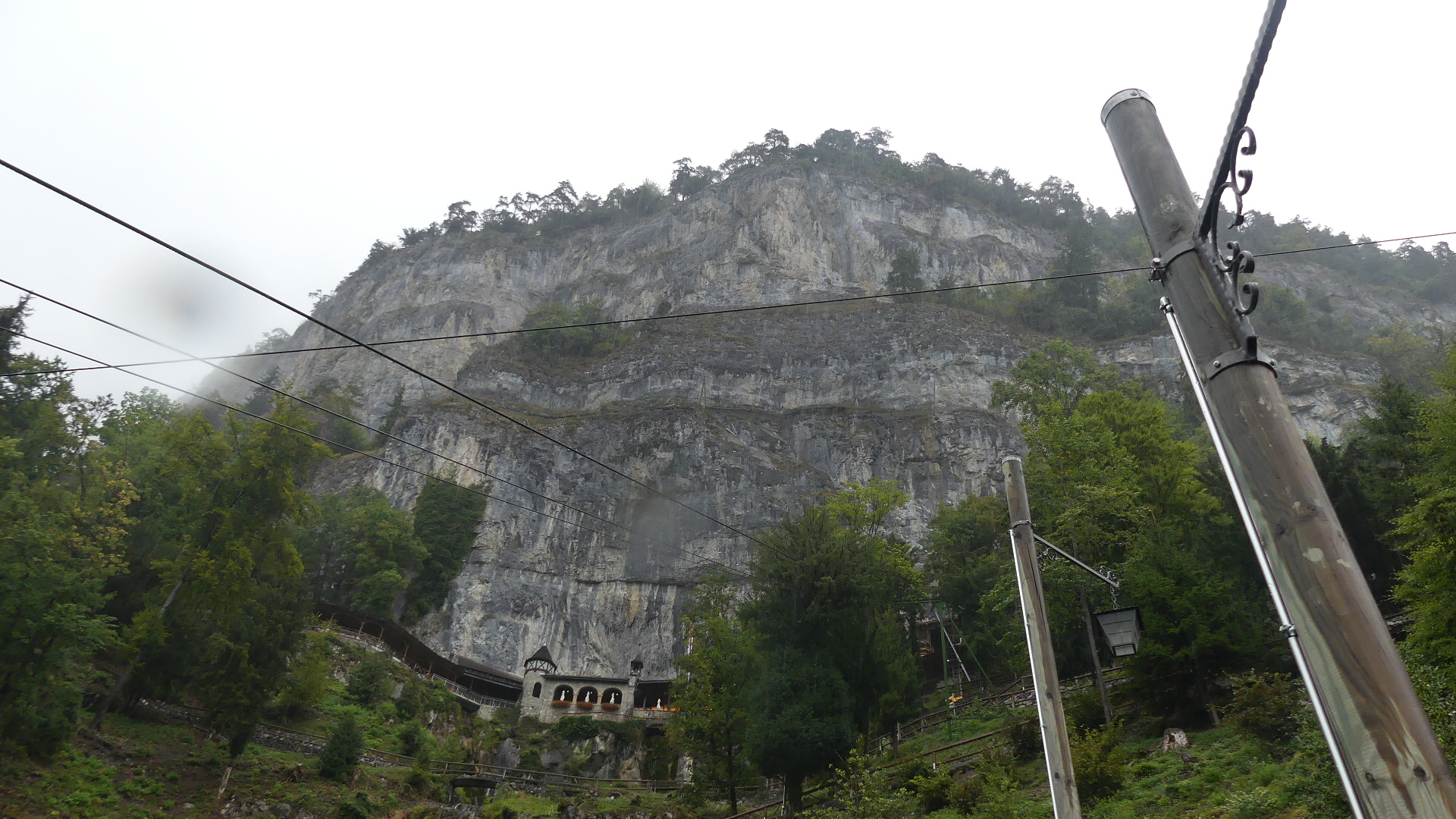
After the graveyard visit we returned to the apartment rain was commencing to fall. It was still overcast and drizzling when we arose the following morning. Fortunately, we visited Jungfraujoch yesterday as today it is raining continuously. Overnight we had looked for some further place to explore and Kerry had found St Beatus Caves. I then did some bus route investigation and determined how we might travel there on our bus pass. Voila our day was planned. So, we caught the local bus into the station at Interlaken West then caught the bus to Thun hopping off at the Caves – all free so far. However, the caves are located in the side of a mountain and the walk to the caves in a straight line would need climbing gear but there was a zigzagging path sometimes breathtakingly steep crisscrossing the stream flowing from the cave. It is still raining. By the way the road below was scratched into the side of this mountain and at least 100m drop to Lake Thun. This would have a part to play in a later scene we witnessed.

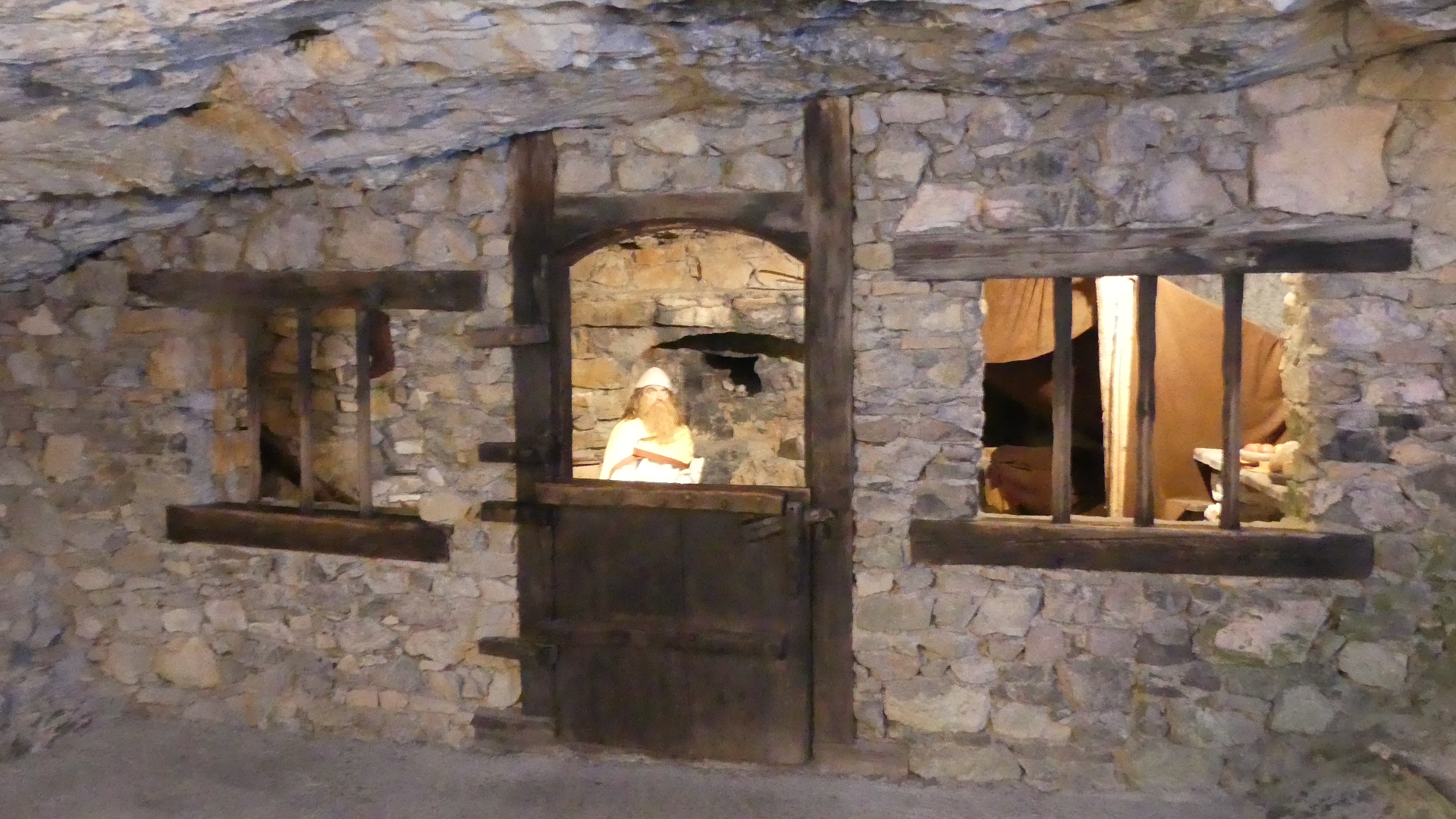
We arrived at the entry to the old monastery now converted to a tourism gateway to St Beatus caves. The caves are named after an Irish missionary who arrived in the 2nd century to spread the Christian gospel or so the story goes – a missionary possibly an Irish missionary that is questionable as there were no Irish pubs in Interlaken at the time. Further investigation required. The legend says that he lived in this cave system and hence once beatified it became St Beatus’ Caves. They have a rather prison like cell displayed with a forlorn St Beatus and later in the museum (halfway down the hill) there were various paintings on the life and death of St Beatus.

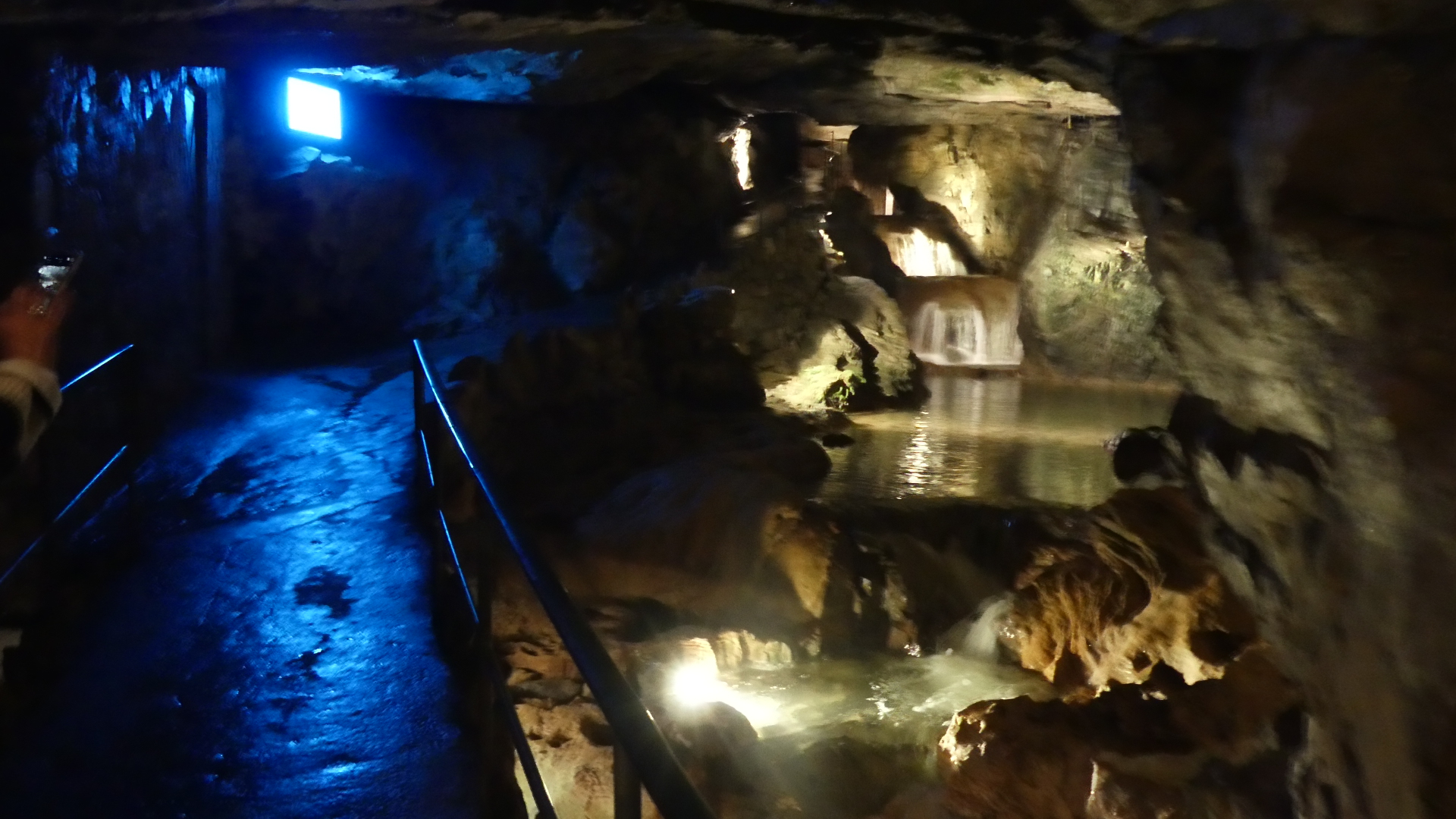
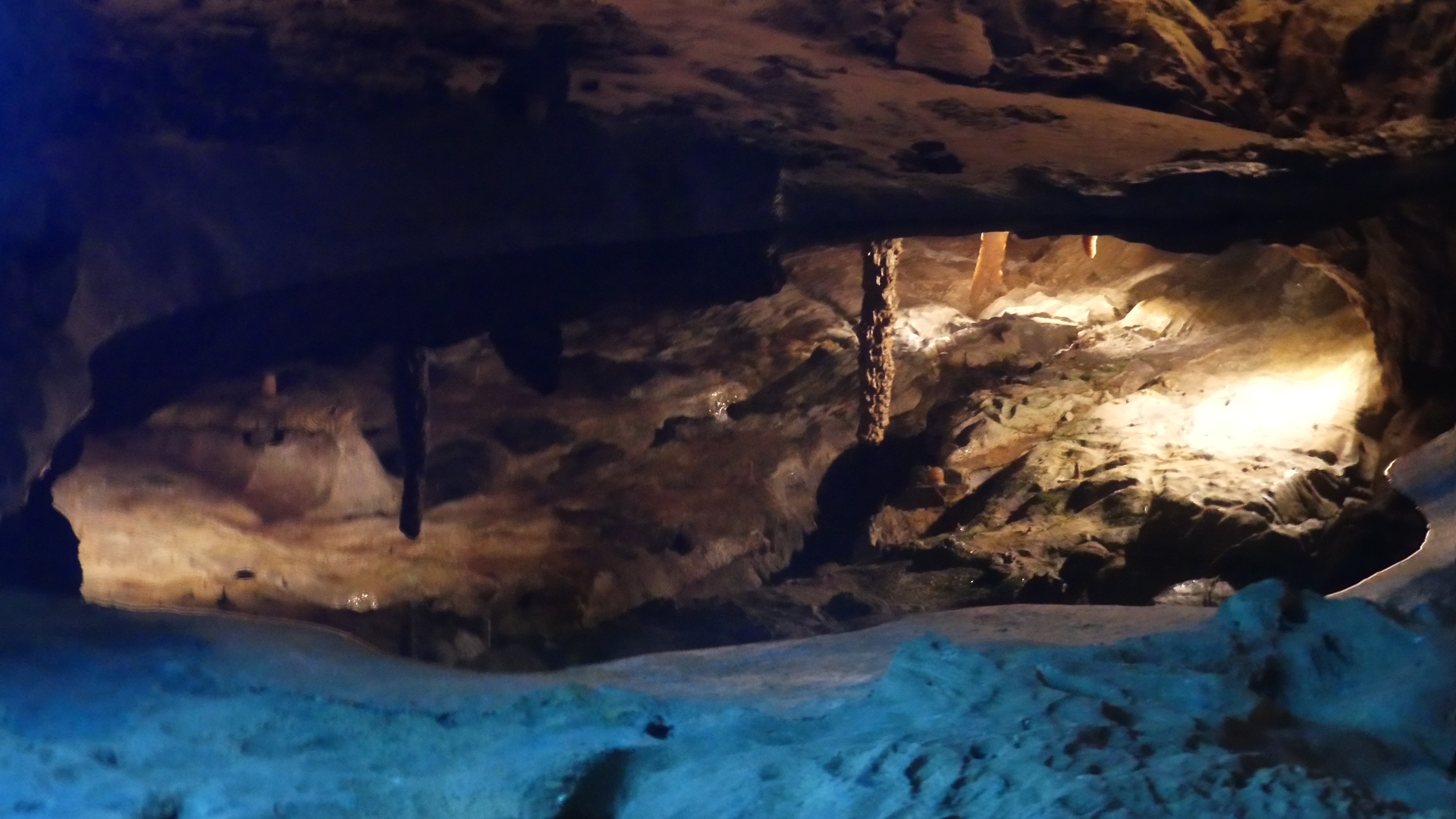
After the cell the cave system starts, and it gradually climbs over a distance of 900m by 84 metres. Although it resounds in places with falling water and there are pools and streams all the way through, it seemed dry to me compared with other cave systems of this type we have visited. The stalagmites all appeared stunted or new if the legend is that the cave system has been active for 1800 years or longer. After climbing to the “Ende” we turned around and went down again until we reached a bridge back to the entrance. My photos follow.

Photos
After completing the journey, we used the facilities bought a cup of coffee and something sweet – it was still raining. Our €10 umbrella was getting a workout. So down we went to the museum which did not excite me other than the sketches of St Beatus and his funeral where he is shown being buried with one of his followers – I was uncertain if the follower was also dead and if he was whether he was some sacrifice – 2nd century Christian sacrifice that is?

After watching some of the visitors to the museum (particularly a Muslim mum trying to get a cup from the attendant for the bottle of water she had brought with her) we went to the bus stop. We had arrived first thing and no one was around. Now by 11.00am the road is a traffic jam with people fighting over the limited car parking spaces available (there is an off-road car park a little distance from the entrance, but everyone wanted the spot beside the front gate). The traffic jam delayed our bus and watching the performances would have been humorous if we had not been delayed.

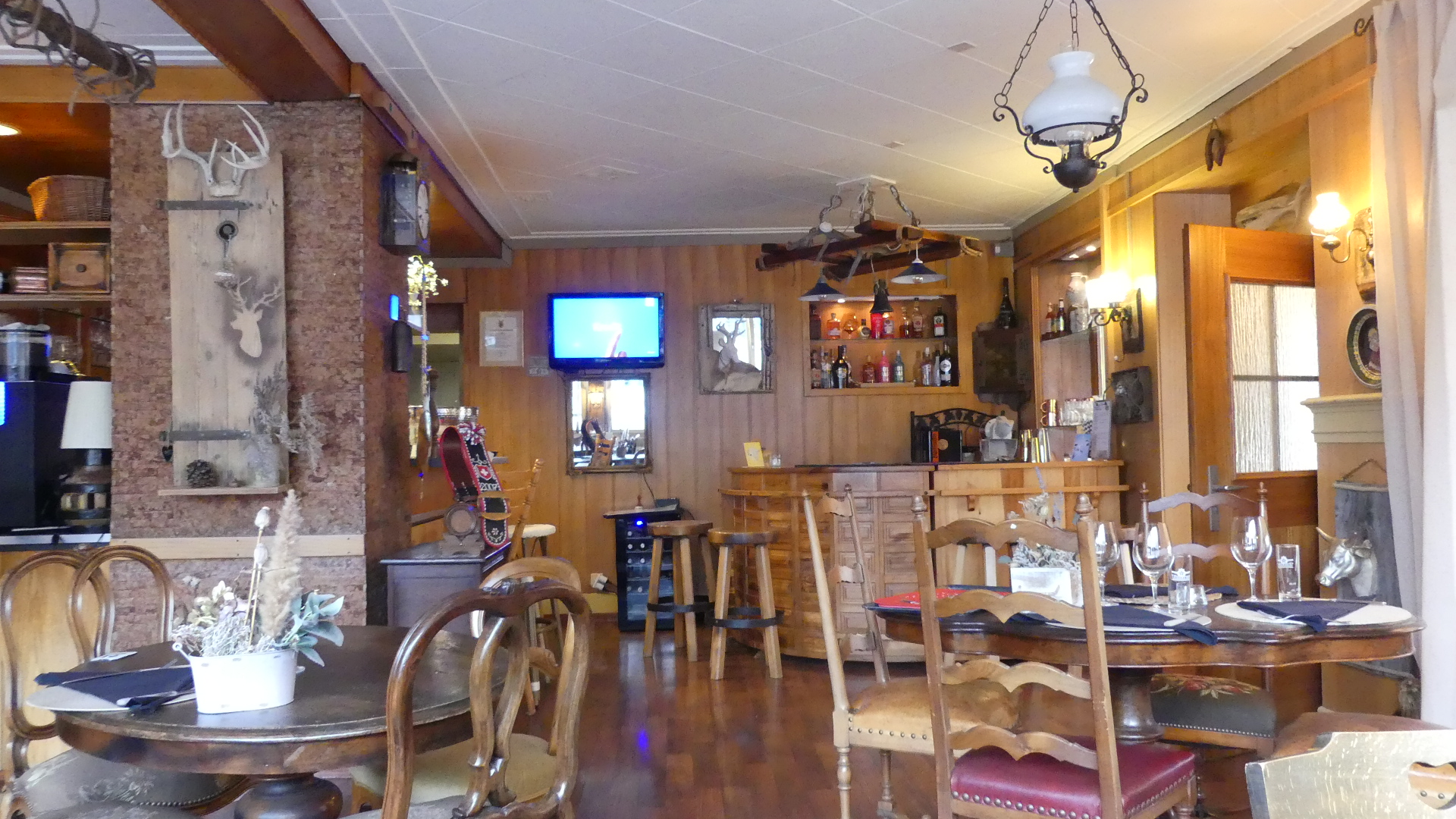
Once on the bus we were quickly transported to Interlaken West. Carly our daughter and her family were in France at the time, and we expected to run into them in Sanary sur Mer. She invited us for a swim at her mother in laws house with our grandsons. Now we have lost our luggage which included our swimwear, so the hunt was now on to buy some swimwear. All efforts in Interlaken West failed so we went to a Restaurant Hotel we had passed for lunch – it was still raining, and we were now damp for the 2nd or 3rd time. Lunch was interesting. This was a little bar with a small menu likely only to appeal to the locals with simple accommodation above and our waitress had lived in America for part of her life, so she had some comprehensible English. It is here that Kerry was given the tip where to buy swimwear cheaply. It required that we go to Interlaken Oust (East) and go to a particular bargain centre close by. It was still raining.

The journey between west and east was a regular journey for us and presented no difficulty however to find the bargain centre meant walking in the rain for almost a kilometre through semi-industrial buildings (so no shelter) and then we were wet. After purchasing the swimwear and a rain poncho we returned to the station and returned home to dry out. But on the bright side I purchased a bright yellow pair of swim shorts made in Australia – how’s that!

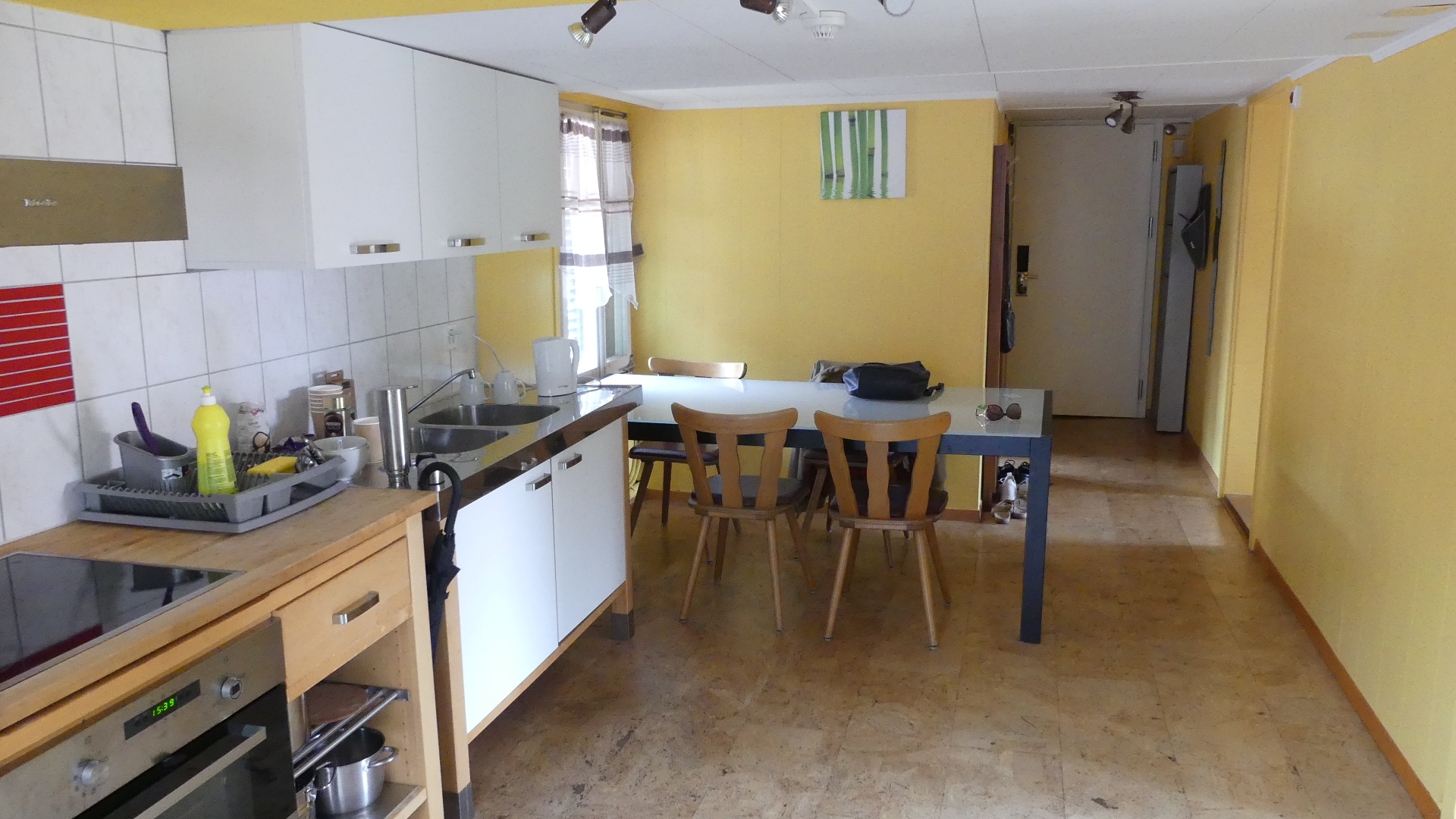
Our last day in Wilderswill ended with a very enjoyable repast. The staff had made us feel welcome and the apartment is large and commodious, so it was very restful while we were “home”.

Next is Lyon the 2nd largest city in France.
The Retirees return to Europe – Luzern/Lucerne

Our trip by train to Luzern was uneventful save for the surprise that Euros are not accepted in Switzerland due to the exchange rate for the Euro against the Swiss Franc instability. We have had to convert our euros to Swiss Francs and the exchange rate is almost par at the moment. Our lost luggage and the money spent to replace the essentials has reduced available holiday funds and Switzerland is more expensive than I had expected.

Luzern rail station is the ideal station with a tourist info centre within the terminal and a terminus with all possible destinations lined up across 14 platforms. No problems collecting our luggage – love these trains – and we can just stroll over to the Tourist Info centre to locate our hotel and obtain some other valuable information on things to see and do. Then its off to Hotel Rossli. The hotel is a doorway off the road in the old city on the northern side of the Reuss River and the reception is in another hotel across the road – in the short space of time it has taken to walk here we have learnt to be aware of cyclists who flash past pedestrian in all directions. After registering at reception we return to the doorway and enter up two flights of stairs to our room which is quite tidy and serviceable with a view over the adjoining roof to river glimpses.

Various photos – the train station, the front door of our hotel the view from the window in the hall and some of the art features in the hotel

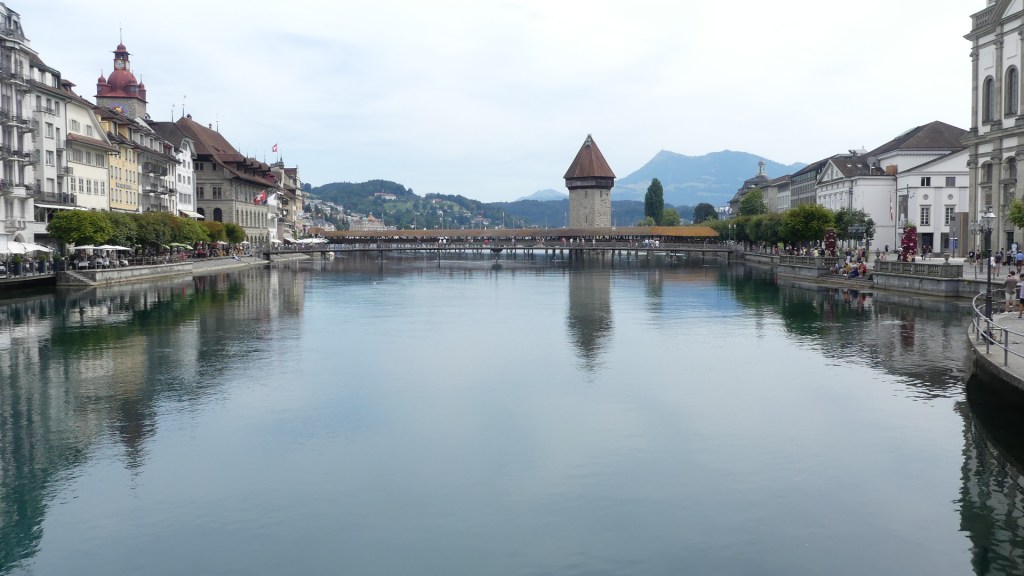
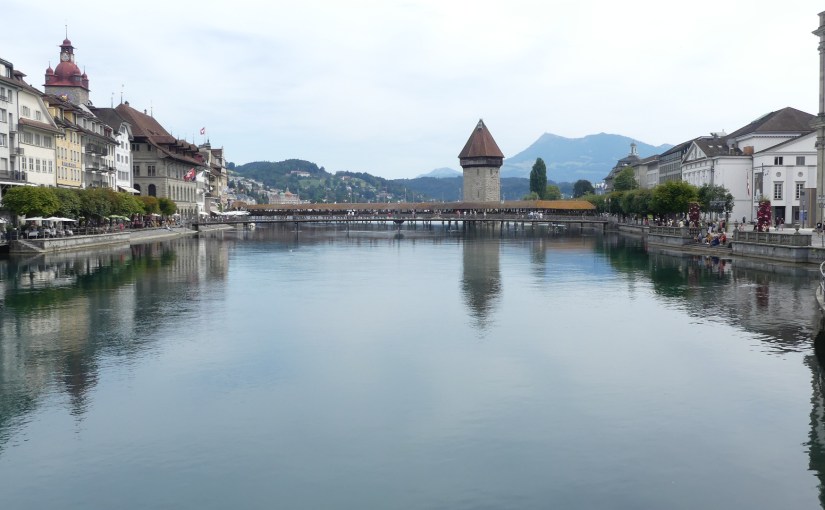
Luzern has a long history and the most notable is the Kapellbrücke or Chapel Bridge. Part of the bridge complex is the octagonal “Wasserturm”, which translates to “water tower,” in the sense of ‘tower standing in the water.’ The tower pre-dates the bridge by about 30 years. Over the centuries, the tower has been used as a prison, torture chamber, and later a municipal archive as well as a local treasury. Today, the tower is closed to the public. The bridge itself was originally built c.1365 as part of Lucerne’s fortifications. It linked the old town on the right bank of the Reuss to the new town on the left bank, securing the town from attack from the south (i.e. from the lake). The bridge was initially over 270 metres (890 ft) long, although numerous shortenings over the years and river bank replenishments mean the bridge now totals only 204.7 metres (672 ft) long. It is the oldest surviving truss bridge in the world. The bridge almost burned down on 18 August 1993, destroying two thirds of its interior paintings. Shortly thereafter, the Kapellbrücke was reconstructed and again opened to the public on 14 April 1994.

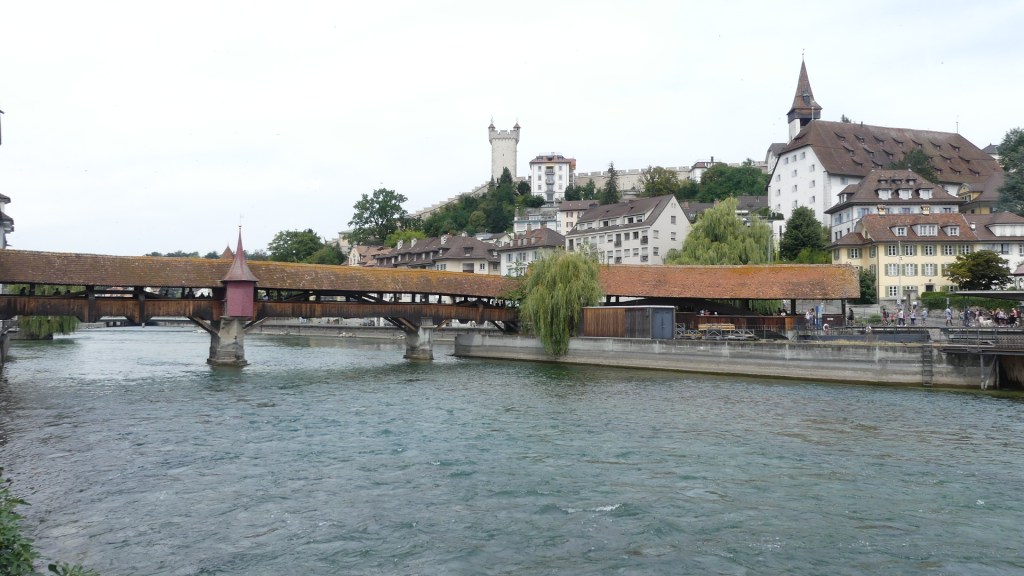
There is a second bridge of this type a few hundred metres up stream called the Spreuer Bridge. The first bridge was constructed in the 13th century to connect the Mühlenplatz (Mill Place) on the right bank of the River Reuss with the mills in the middle of the river. The extension of the bridge to the left bank was completed only in c. 1408. This was the only bridge in Lucerne where it was allowed to dump chaff (in German: Spreu, therefore the name Spreuerbrücke) and leaves into the river, as it was the bridge farthest downriver. The bridge was destroyed by a flood in 1566 and then rebuilt, together with a granary as the bridge head, called the Herrenkeller.

Photos of bridges – Spreuerbrücke then Kapellbrücke and the dam whereby they manage the water flow and generate some hydro electricity

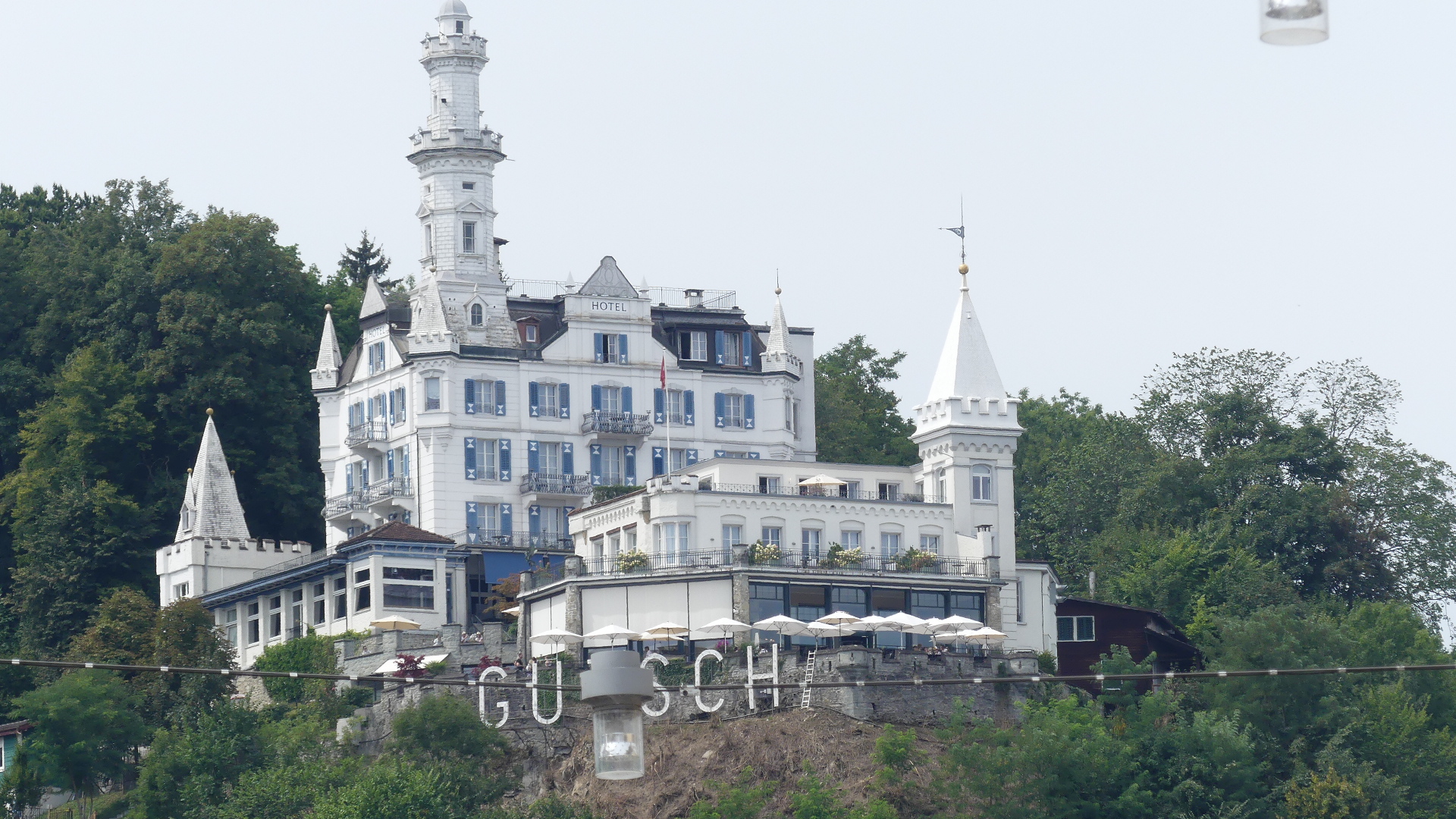
Our accommodation being very close to the Chapel Bridge and old town made it easy to explore however we chose the remnant of the old city wall as our first target. We passed over the foot bridge closest to our flat and into the old town and in the distance saw Chateau Gutsch high on a hill within walking distance of the old town however we did not know that at the time. Passing through the streets we came upon a square with restaurants and hunger took hold so lunch first and explore later. Did I mention that Switzerland is expensive. We shared a pizza Kerry had a soft drink and I had a small beer – 39 Swiss Francs about AUD$55.00.

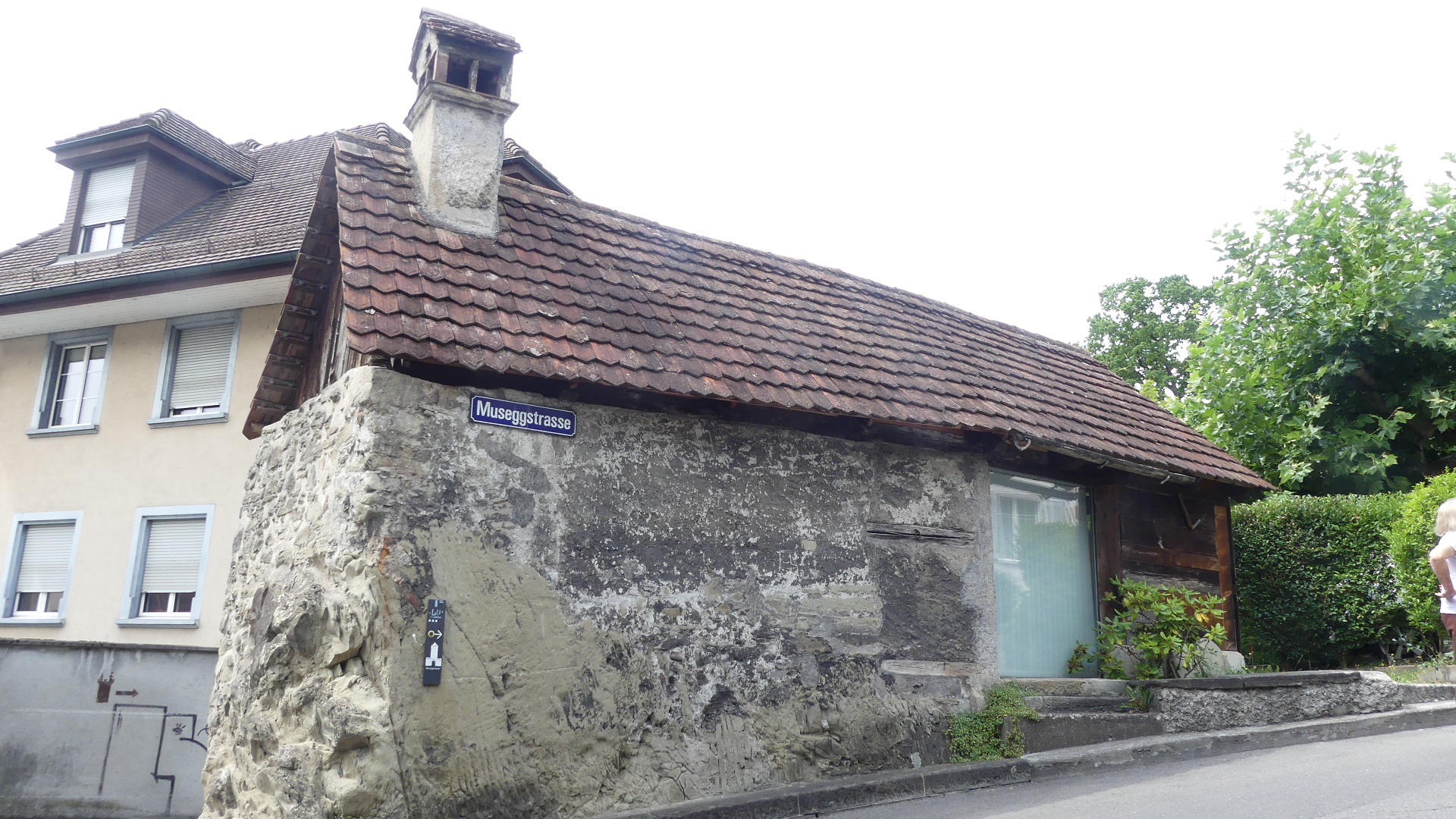
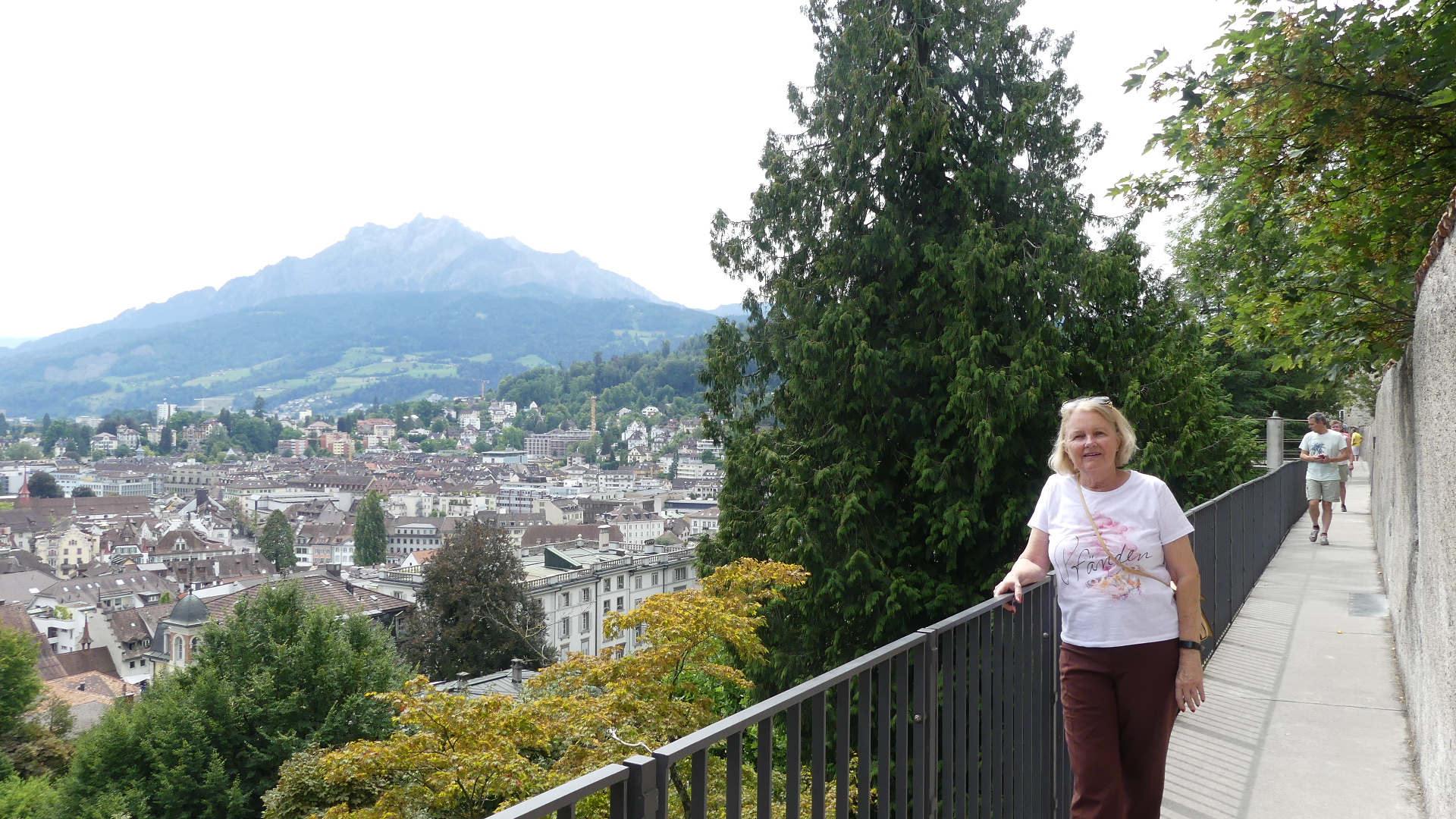
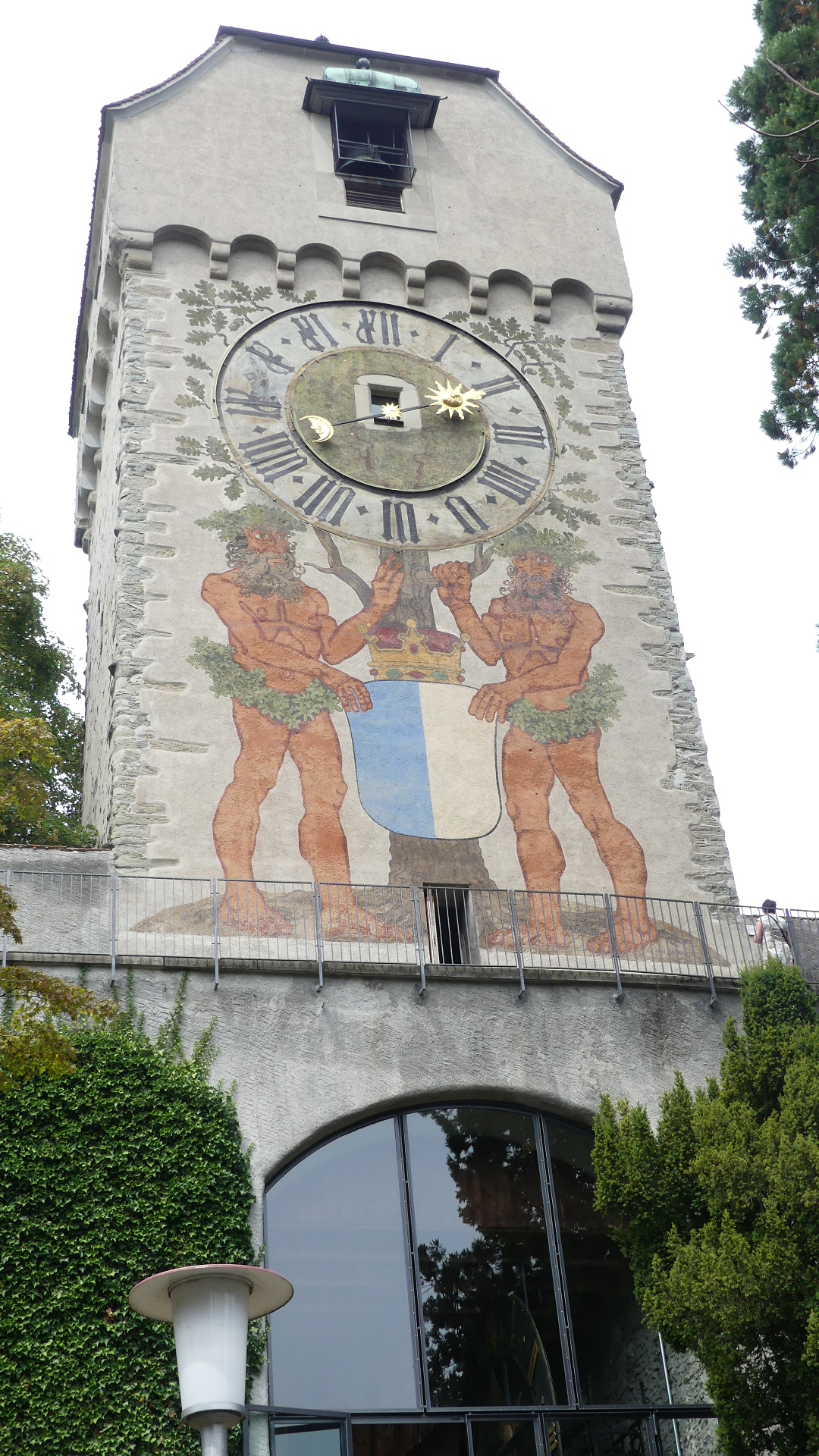
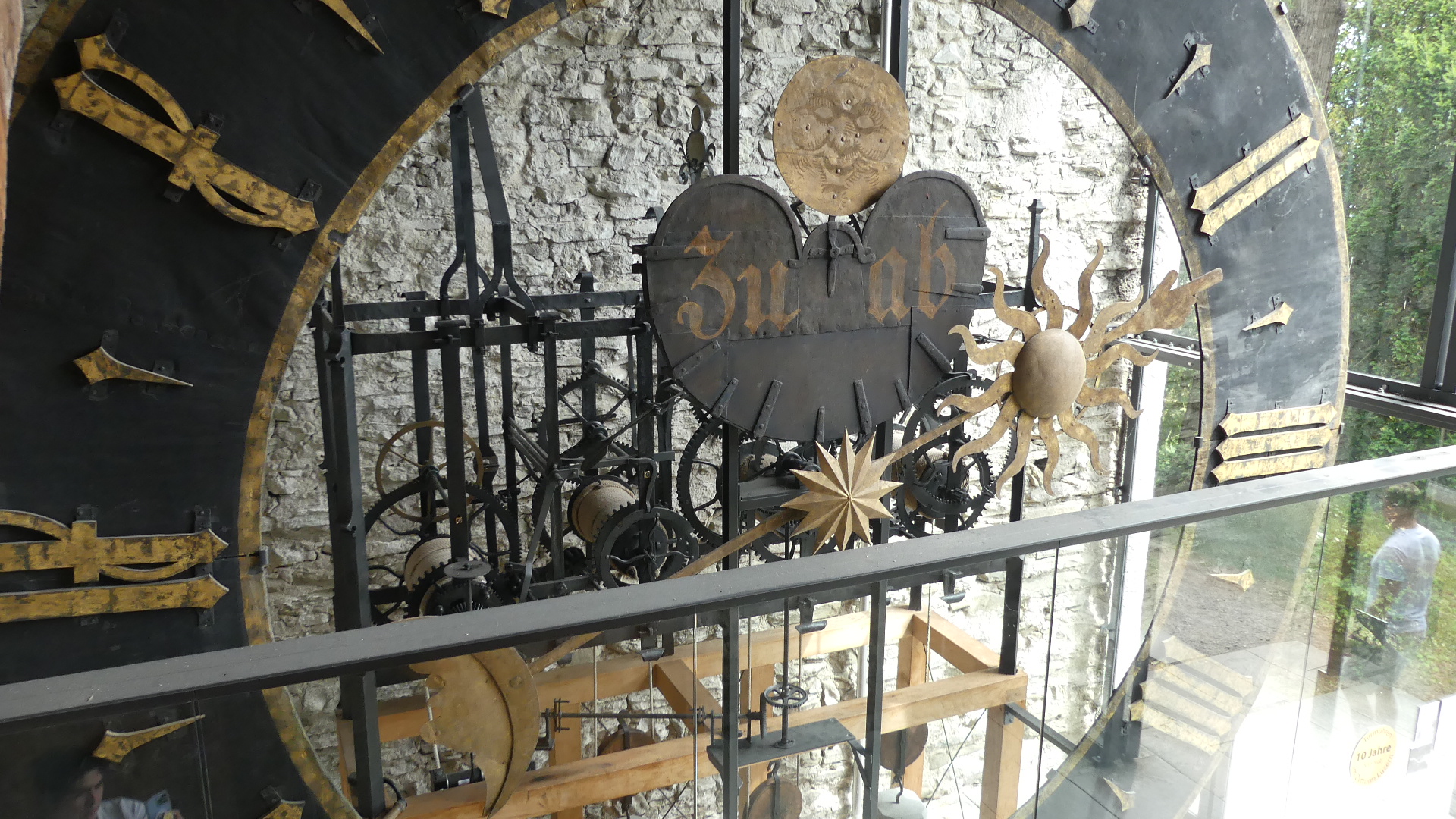
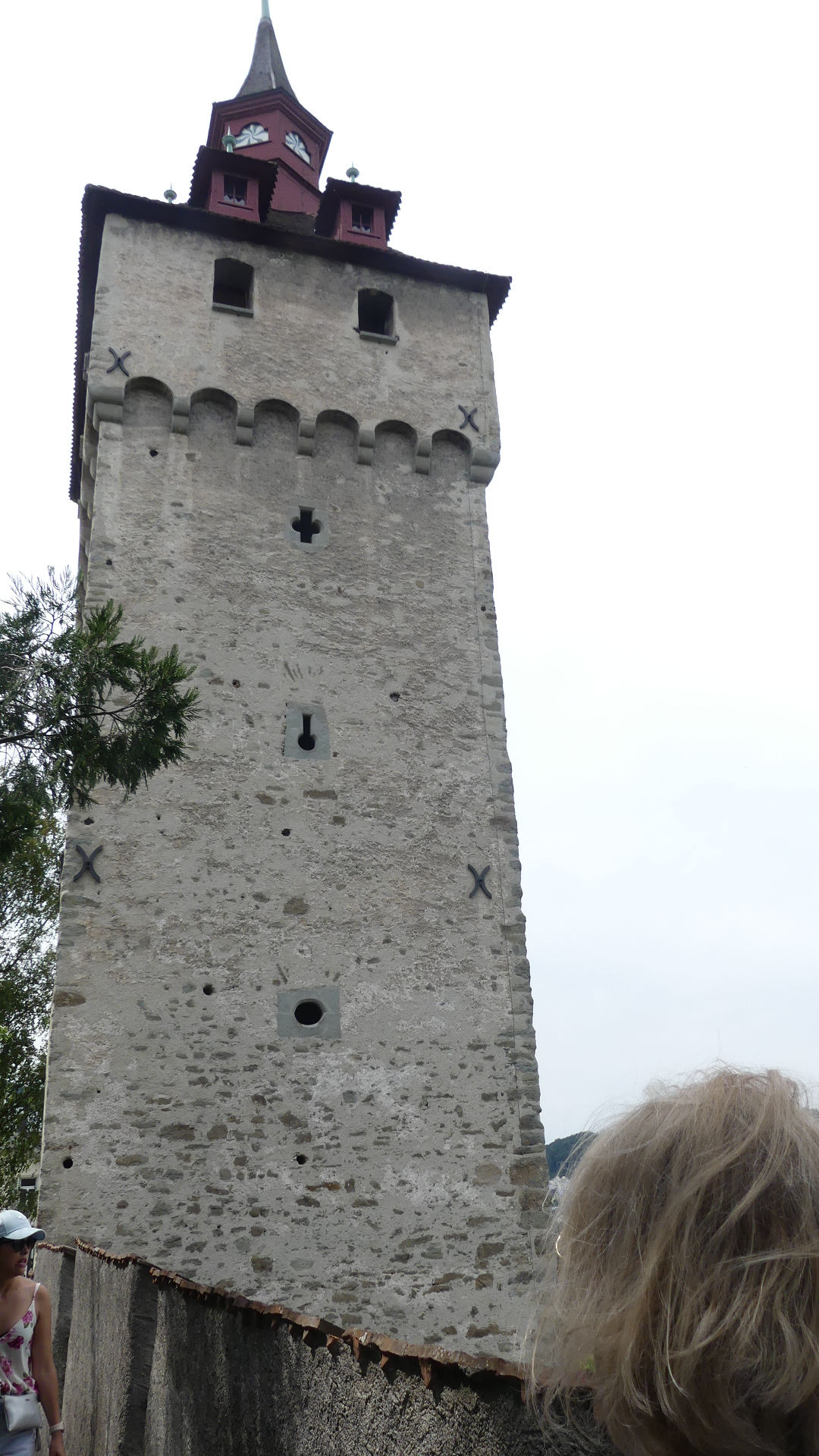
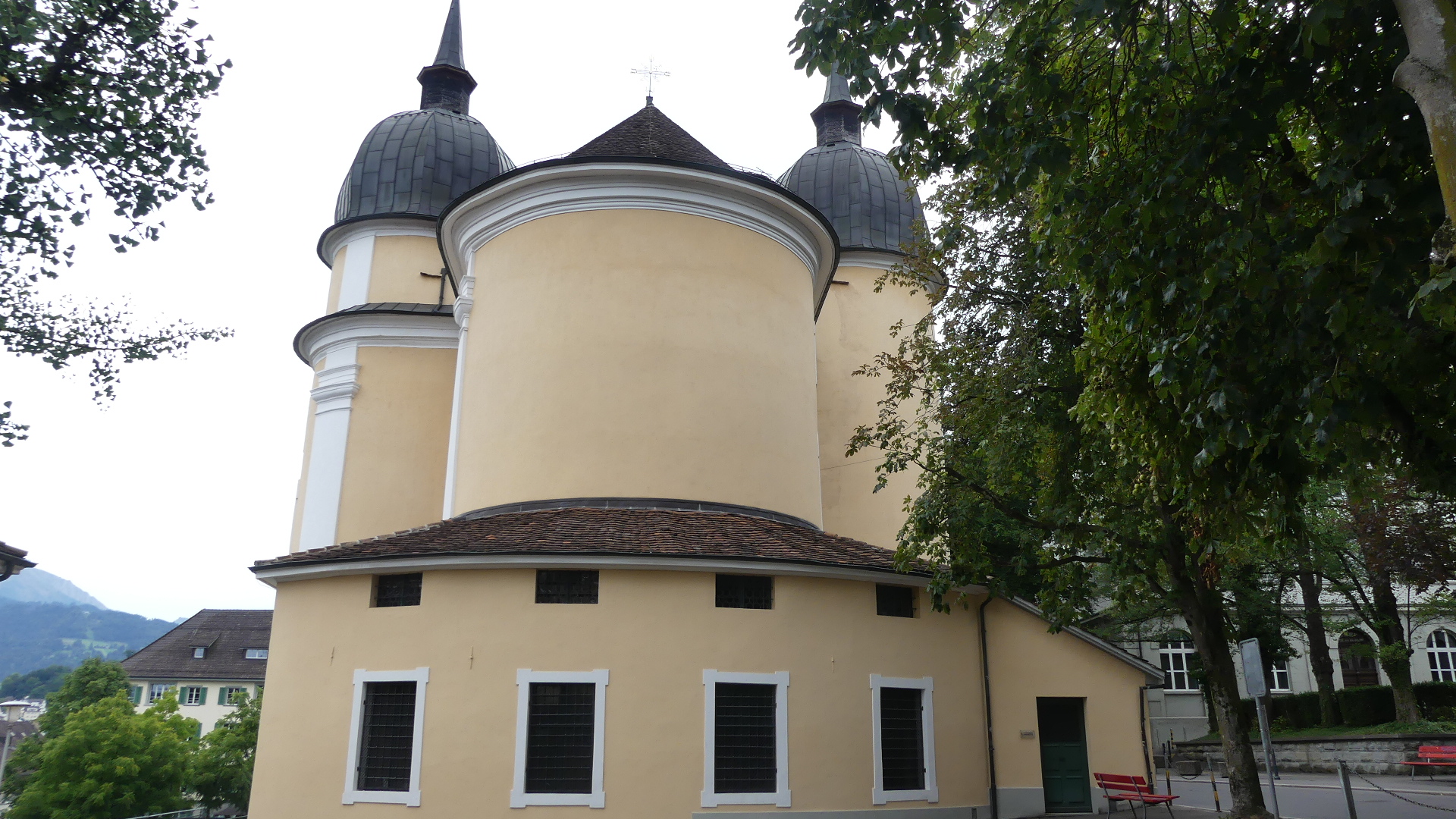
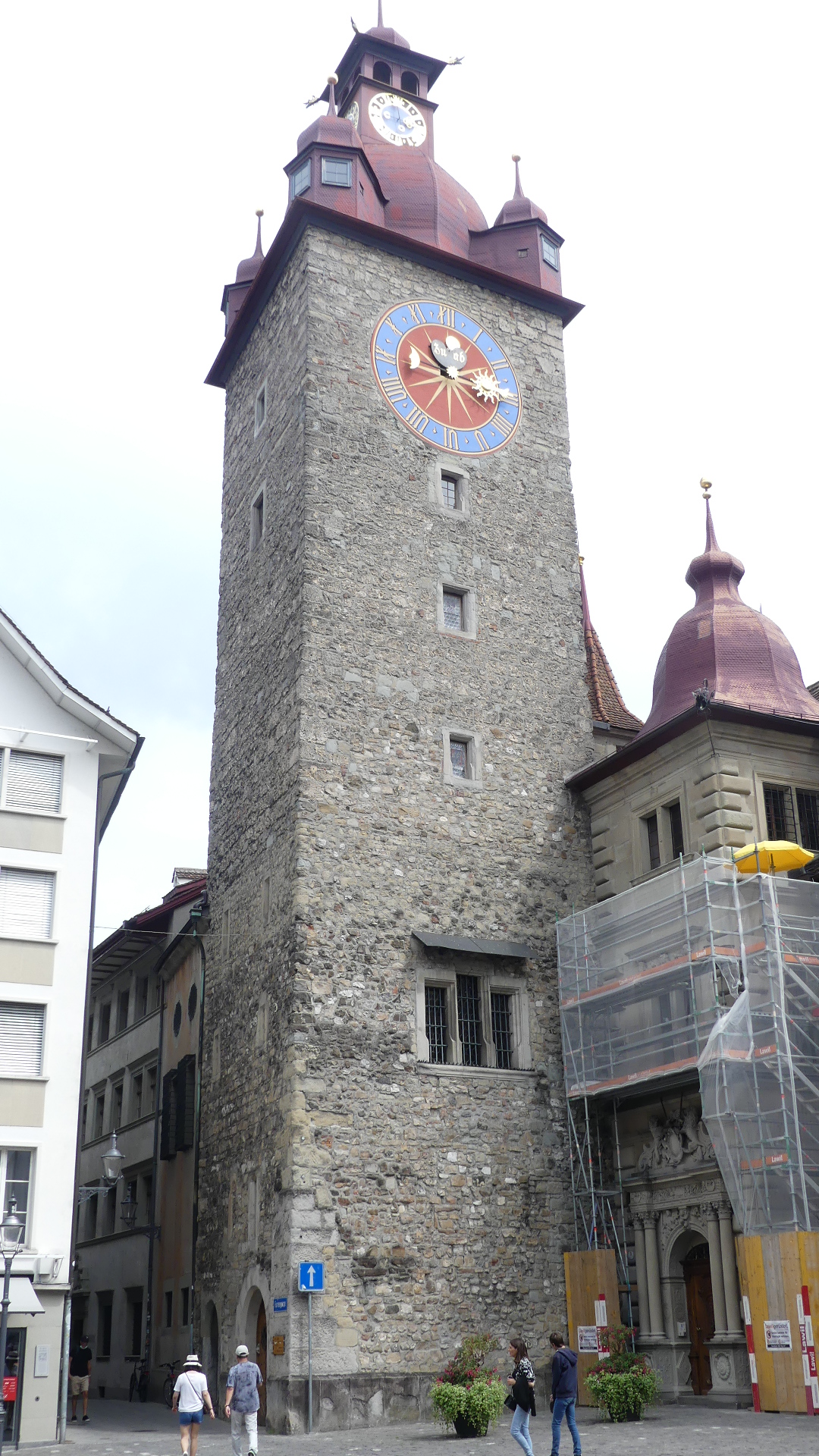
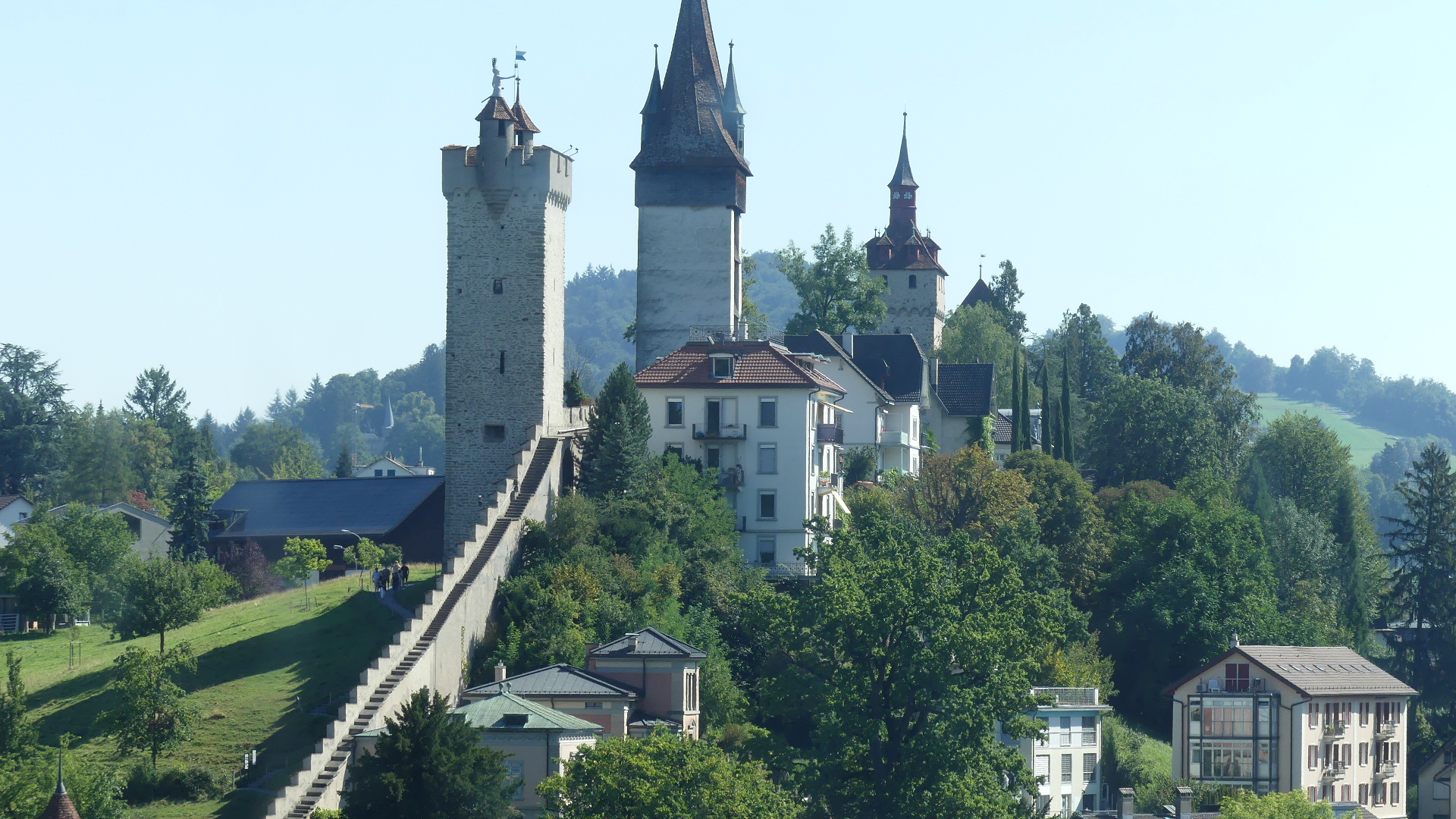
Without any plan we followed the road which gradually climbed up to the city wall passing an old workers hut. We must have walked about ten minutes uphill before finding a set of stairs which we climbed thinking this would get us onto the wall but no it brought us to the base of the wall but it gave us a good vantage spot to take some pictures including the clock tower in the wall. We entered through the modern door which contained a “spare” clock up some narrow wooden stairs to the wall – no interest in climbing to the top. we ventured out onto the wall for some grand views over the city. On the other side of the wall (the outside I presume) is now parks and sports grounds. Attached to the wall is a house with a metal deck leading to its roof (an Italian style “altana” ). There are a number of towers remaining with connecting walls leading almost to the lake and we walked as far as we could before leaving the wall to follow a road and visit a large church “Peters Chapel” in Kapellplats. And of course, there was a confessional.

We continued our exploration through the streets of the old town finding the restaurant we had stopped at in 2015 on the way to Basel. We decided to enjoy a dessert for dinner and unfortunately the occasion was not as good as our remembered occasion. We then crossed the river and passed what has to be the oldest extension to any building in Lucerne on our way to our flat.

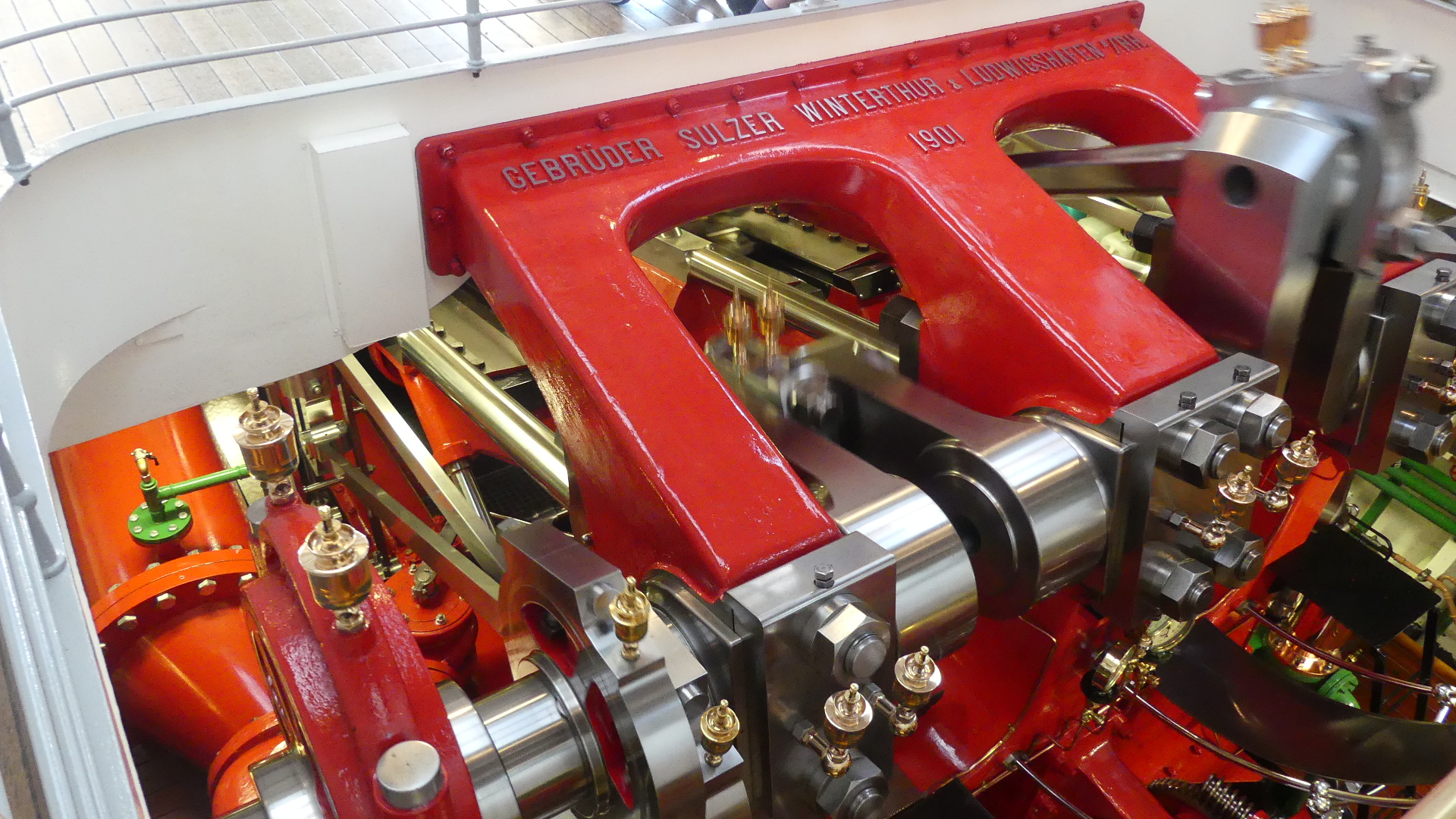
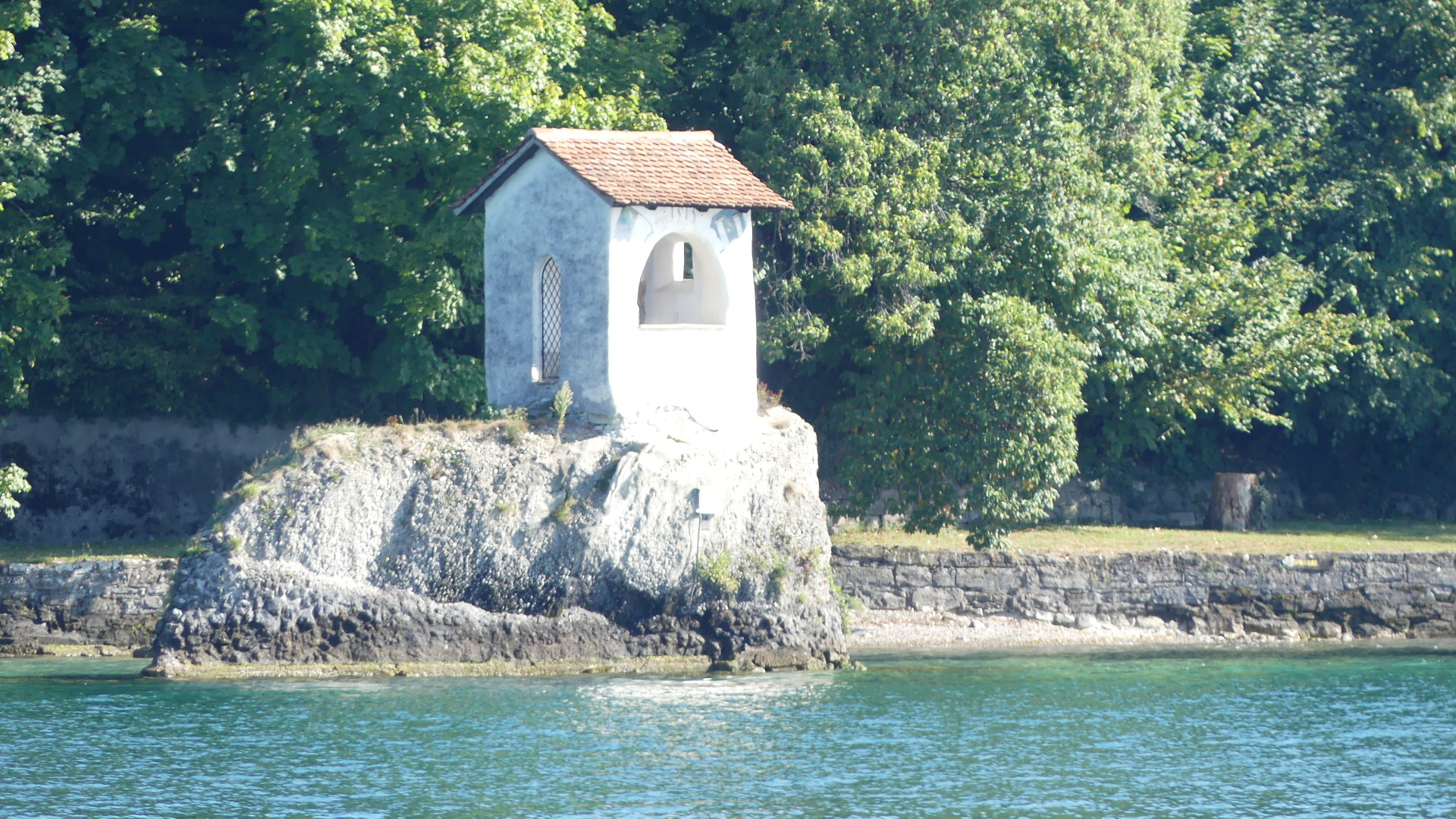
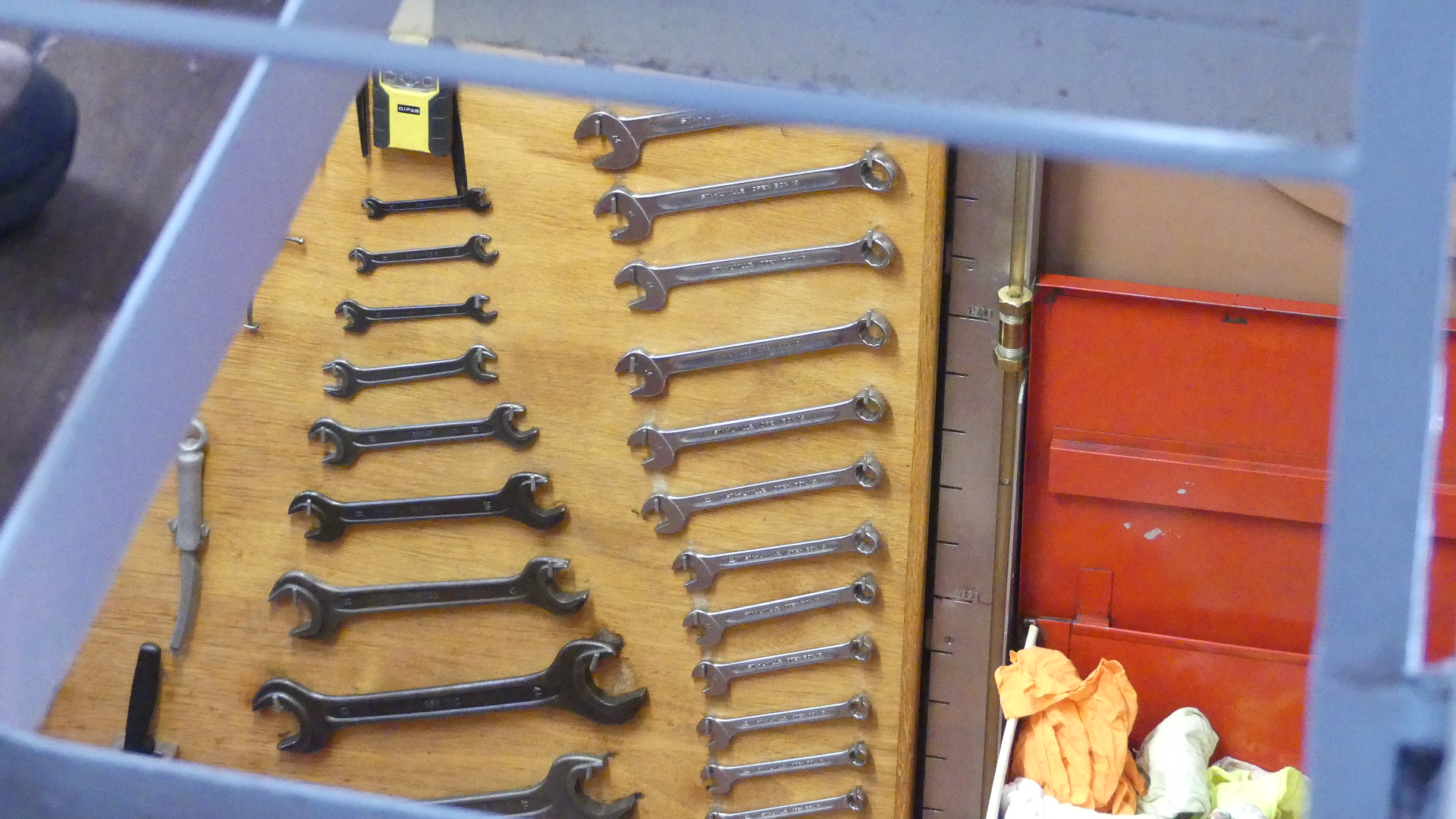
Lucerne is on the banks of Lake Lucerne and one of the tourist musts is a boat trip on the lake. The experience in Bregenz made us wary of just taking a boat trip so after some research we found that a visit to Mt Rigi included a boat trip but the price was eye watering. The other mountain trips on offer were even worse. We had decided to suck it up and do the trip to Mt Pilatus. But when booking it at the Tourist Info Centre we learned that because we had an EUrail Global pass we got the tickets to Rigi at half price. Woo Hoo! But the ferry left in 10mins and we had to get on the boat before then. Handing over the folding, we got the tickets and ran to the wharf which fortunately was only across the road through the park from the Tourist Info Centre. Jumped aboard just in time and went straight to the top deck as the boat was jam packed with other tourists and locals. Ticket Inspector came along and pointed out we were in 1st class on a second-class ticket – so we got kicked off the top deck but not off the boat. The boat appeared to be a restored midship panel steamer only the engine was no longer steam powered. The restorer had exposed and polished the large diesel pistons and created a window into the engine room and the wheel chambers so the visitor could observe the pistons and the paddle wheel and the clean neatly arrayed tools of the diesel mechanic.

We travelled east across the lake stopping at various ports including Weggis and Vitznau. We left the boat at Vitznau to catch the cog train to the top of Rigi. We could then return by cable car from one of the train stops on the return journey and pick up the boat at Weggis.

Photos

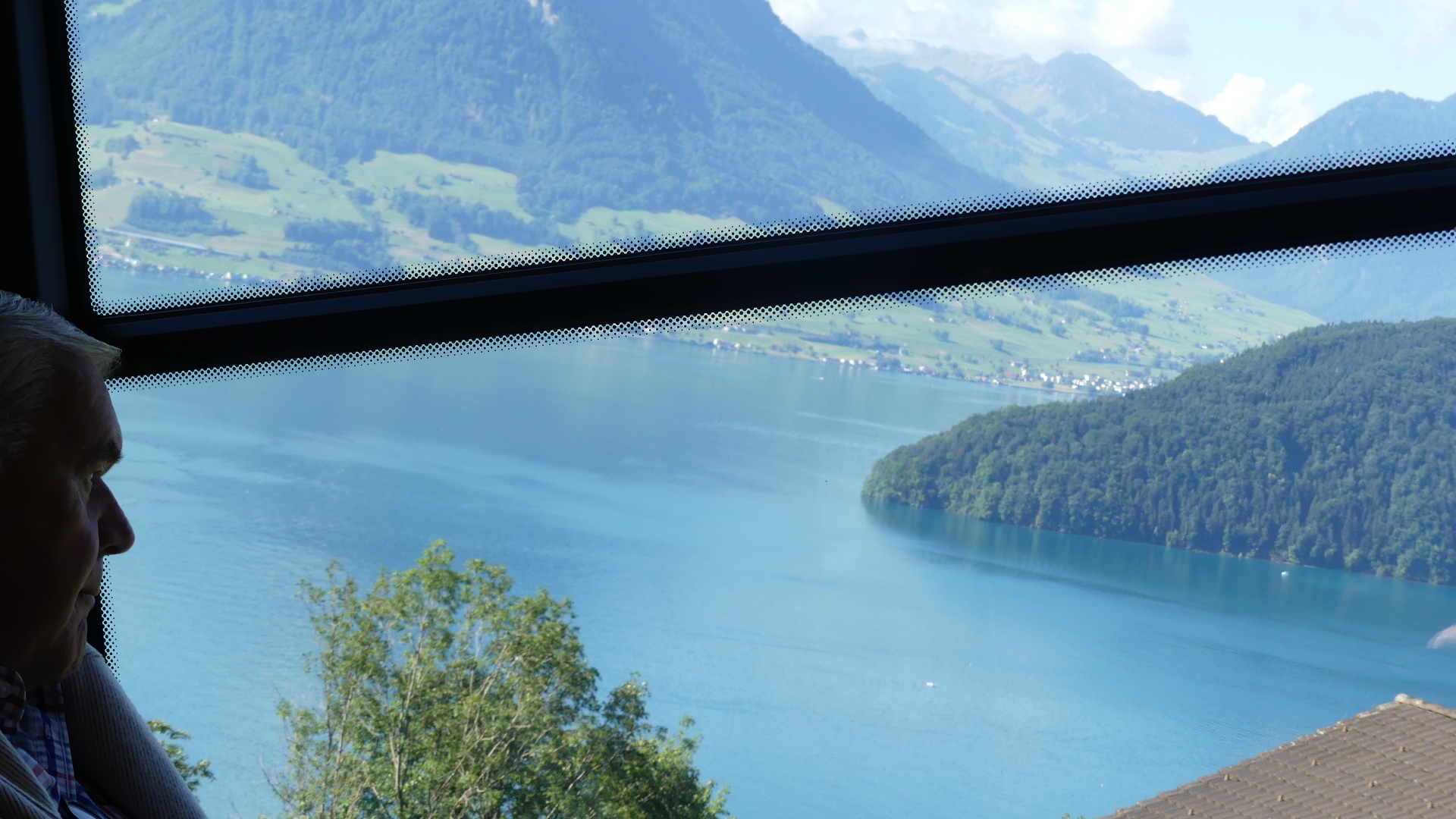
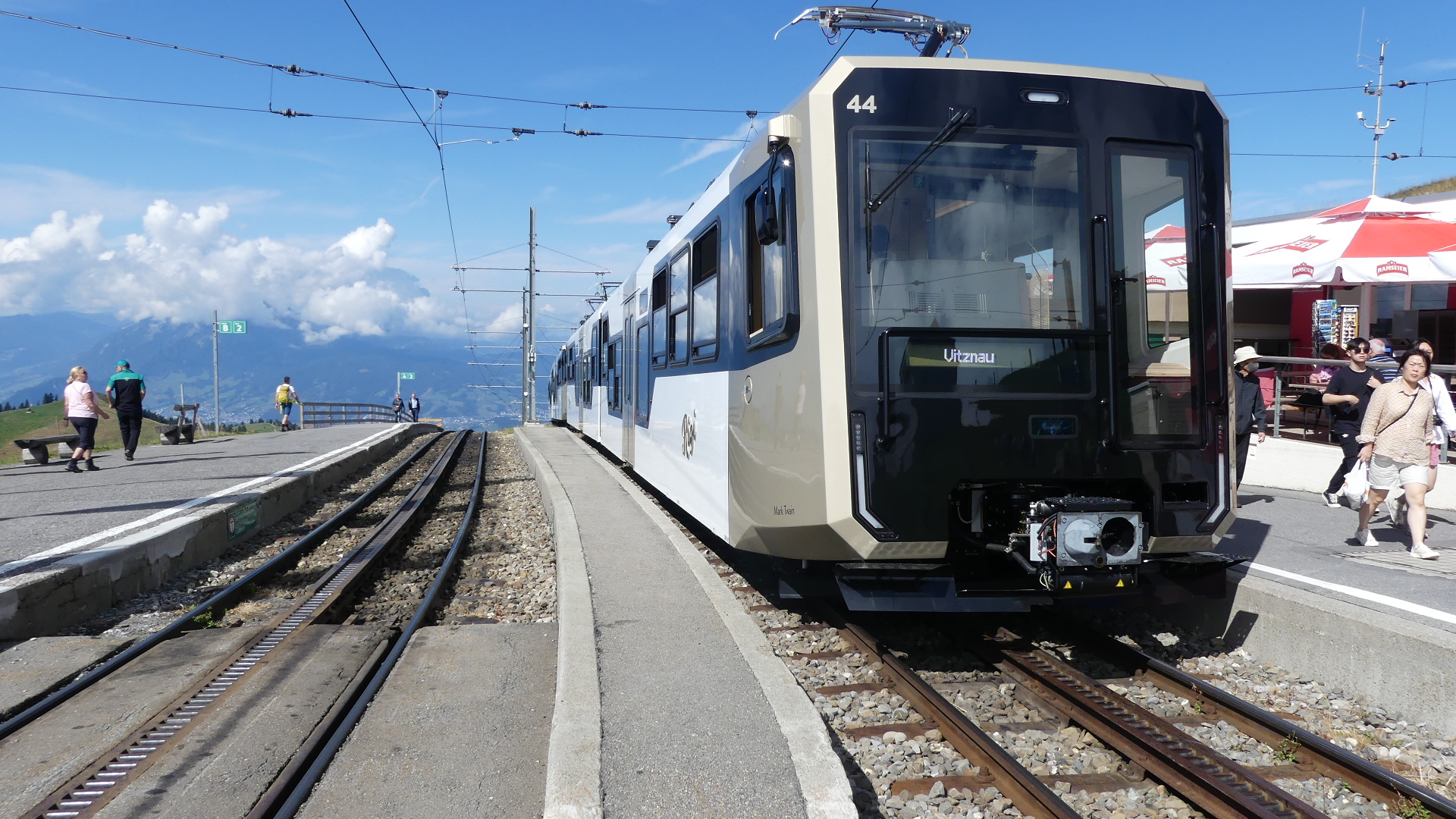
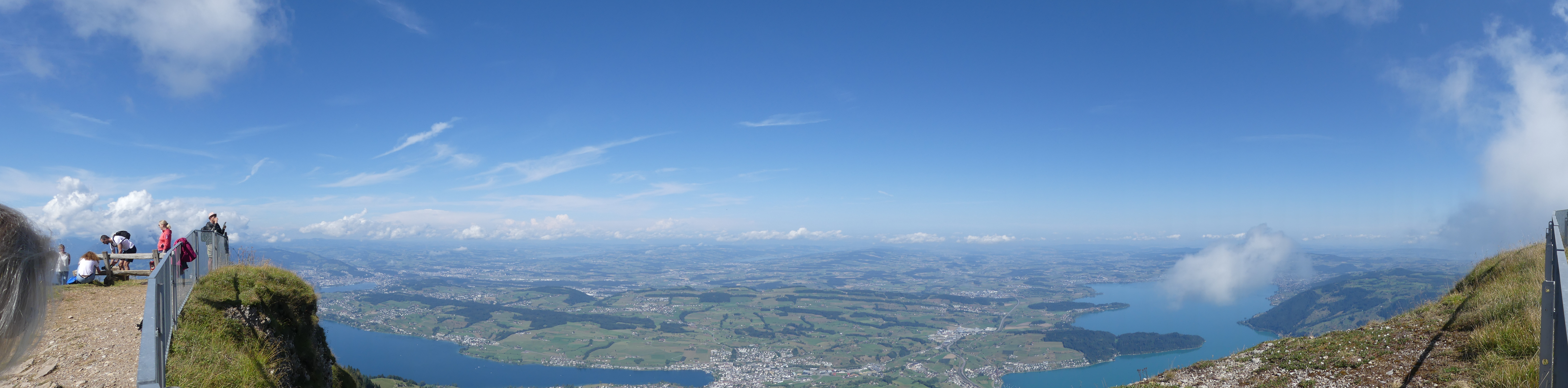
The train was a modern electric powered vehicle rather than the historic looking tram advertising the trip. It climbed rapidly up the mountain side and at times appeared at risk of falling off sheer drops. As we climbed postcard pictures were available of rural homes and panoramas of the larger towns in the valley on the shores of the lake. After several stops at stations for hikers to alight, tourists to make their way to accommodation and locals going home, we made it to the last station some 30m below the summit. Then to my surprise a 2nd train appeared. Apparently, there is another line running to the other side of the island and the blue train was a whole different bunch of tourists. We ascended the summit some 1700+ metres high. Took some fabulous photos including some panoramas and these are following.

The summit is the site of the first survey point for the Canton of Luzern and this is highlighted by a raised concrete peg and a type of tepee over it. Just in case you are not familiar with cog trains I snapped a shot of the under carriage on the blue train (it was more obvious than on our train) to show you the centre rail and the cog wheel that fits into to it to give the train traction up the hills.

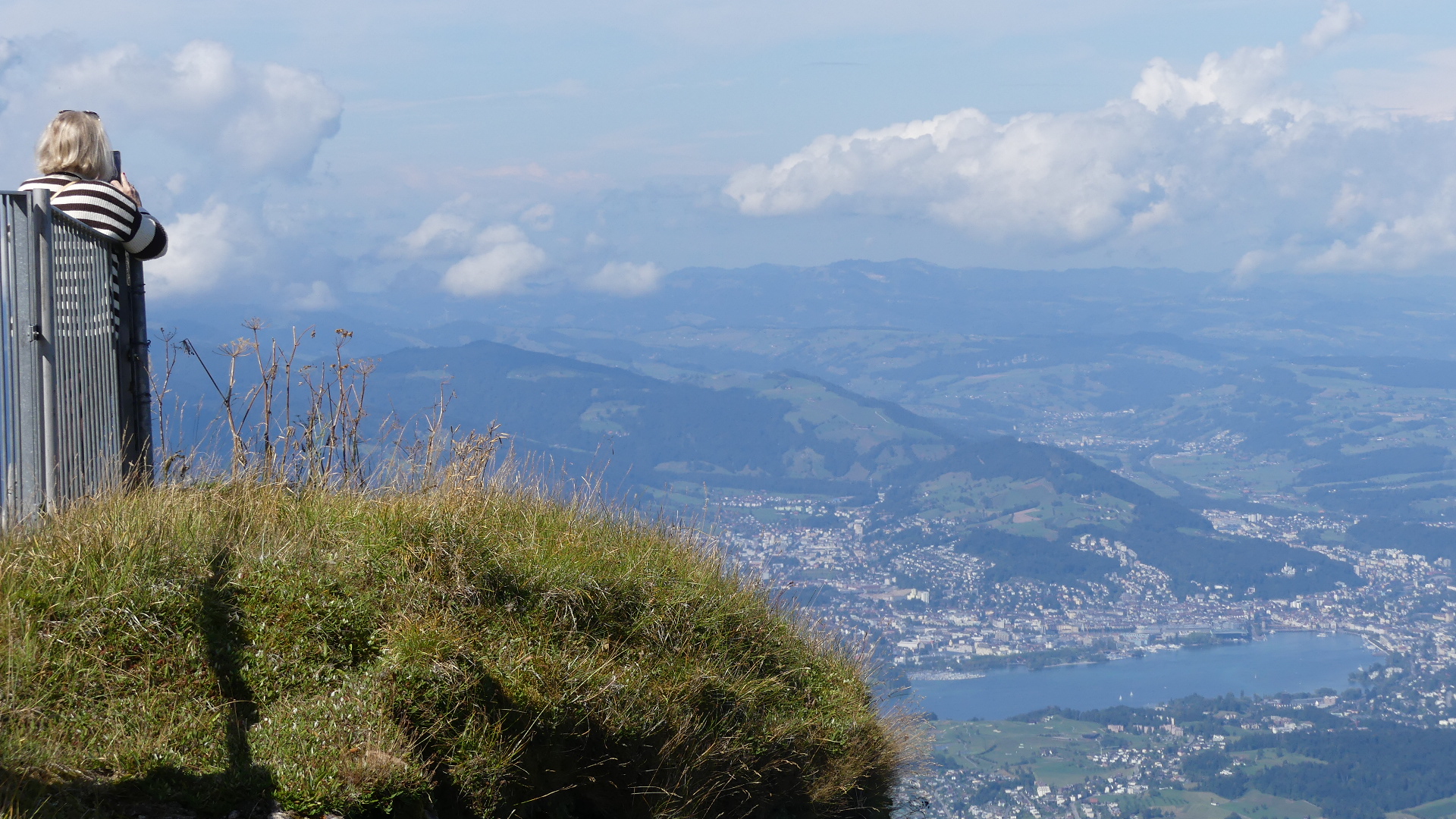
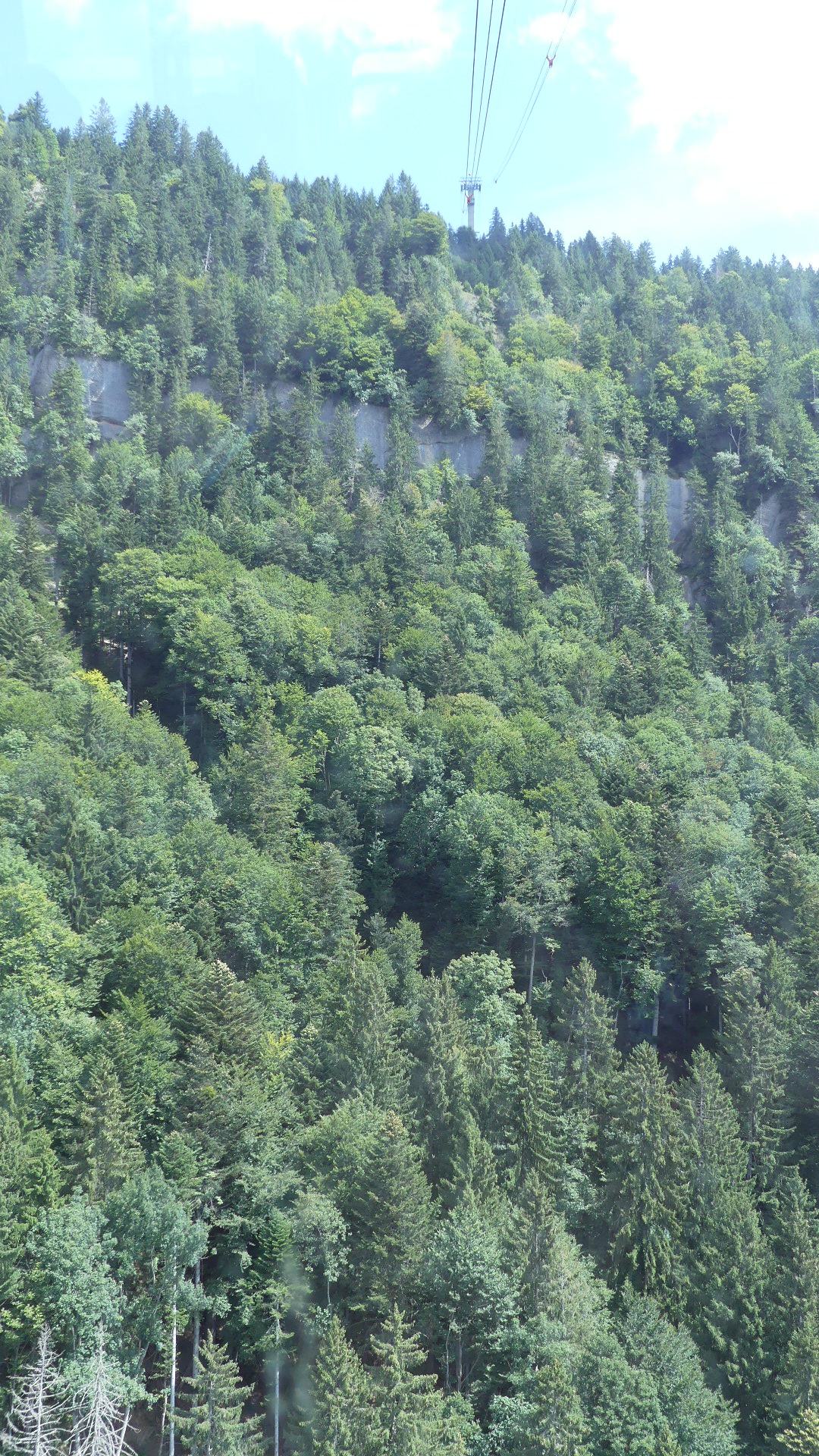
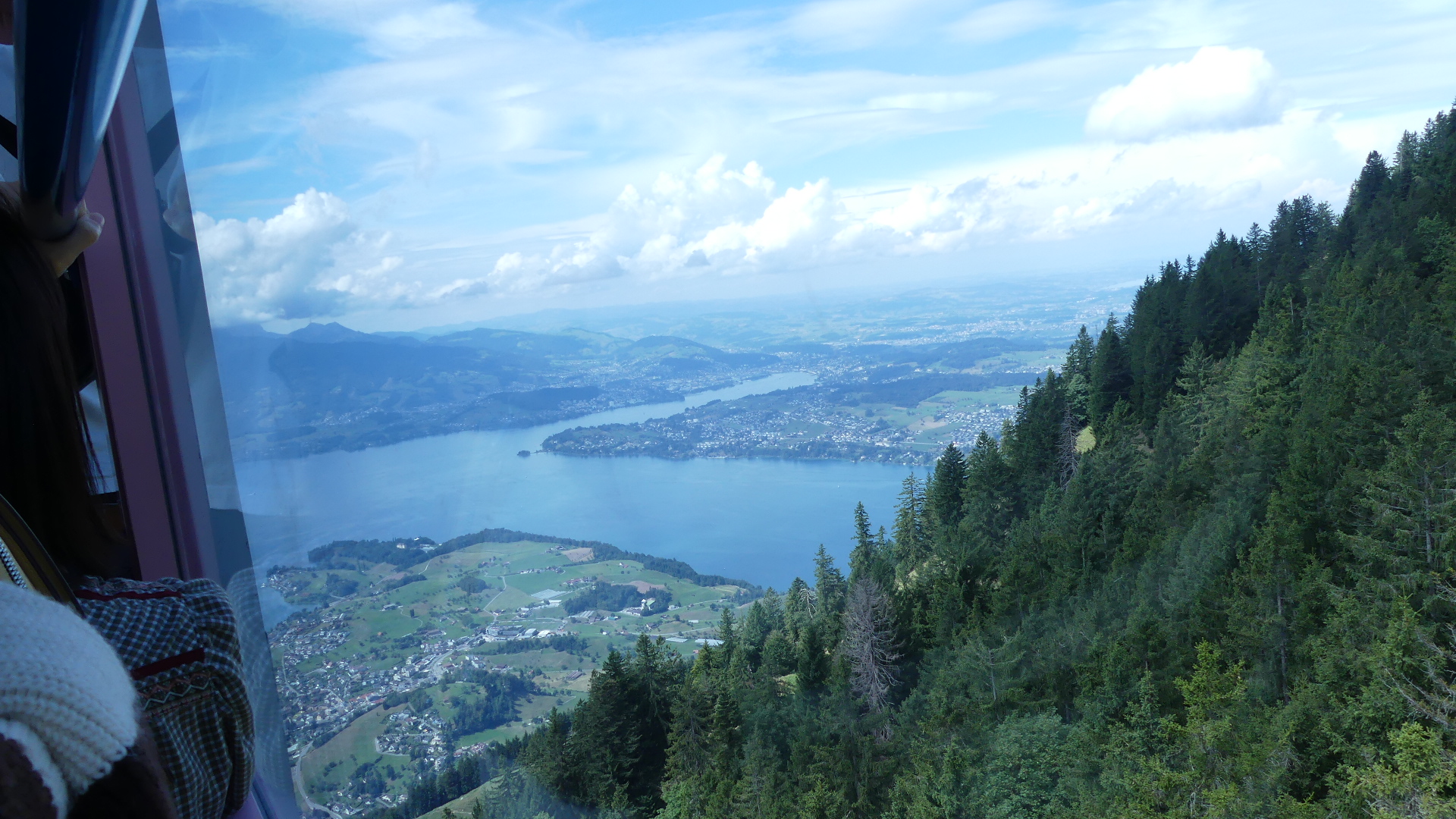
After filling our lungs with fresh air on a rather warm day at the summit and avoiding any of the numerous cow pats along the paths we joined the train for the return journey getting off at Rigi Kaltbad where we could use the cable car to travel down to Weggis. We captured some beautiful views of the lake and its towns travelling down. Those photos follow.

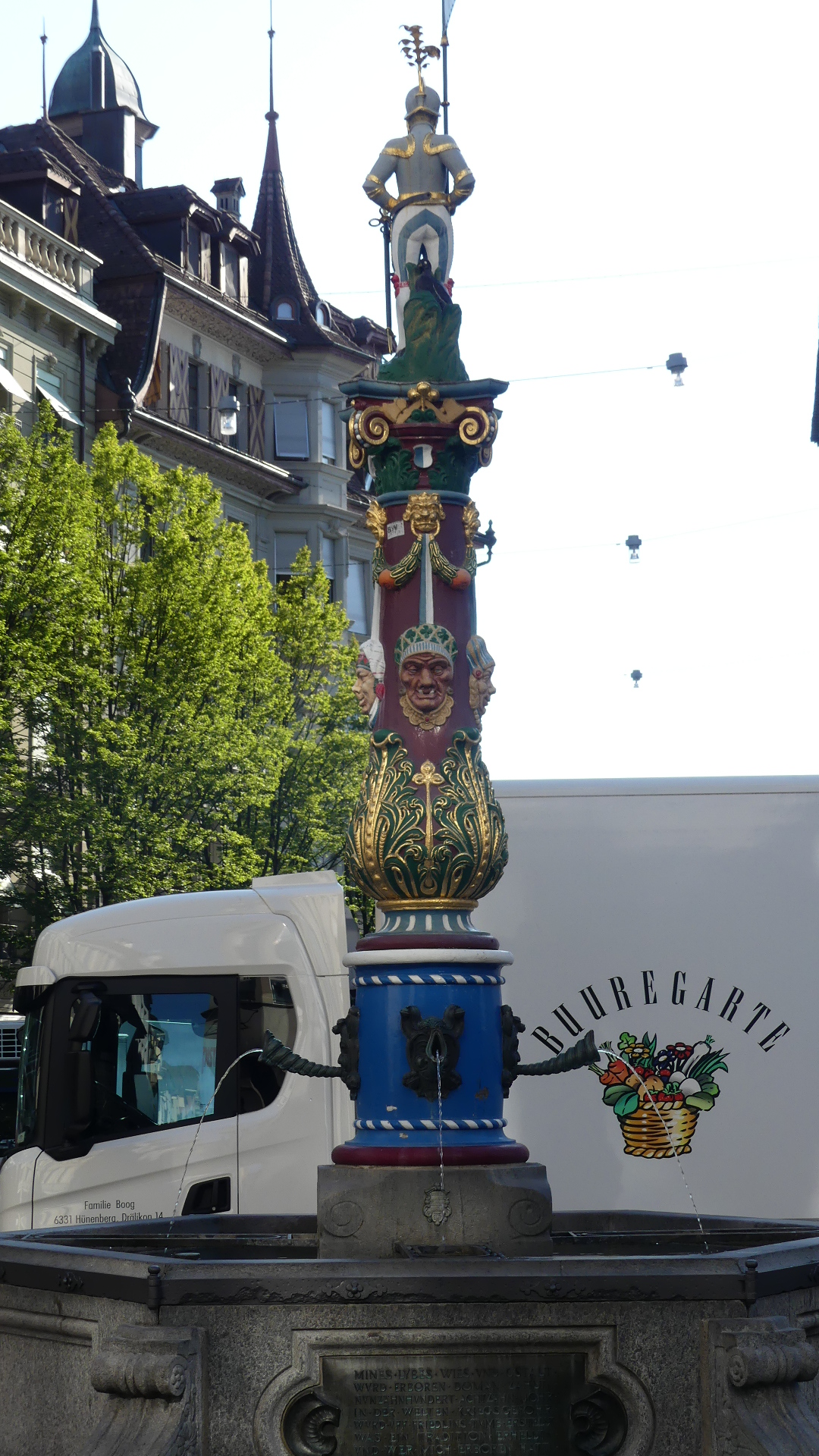
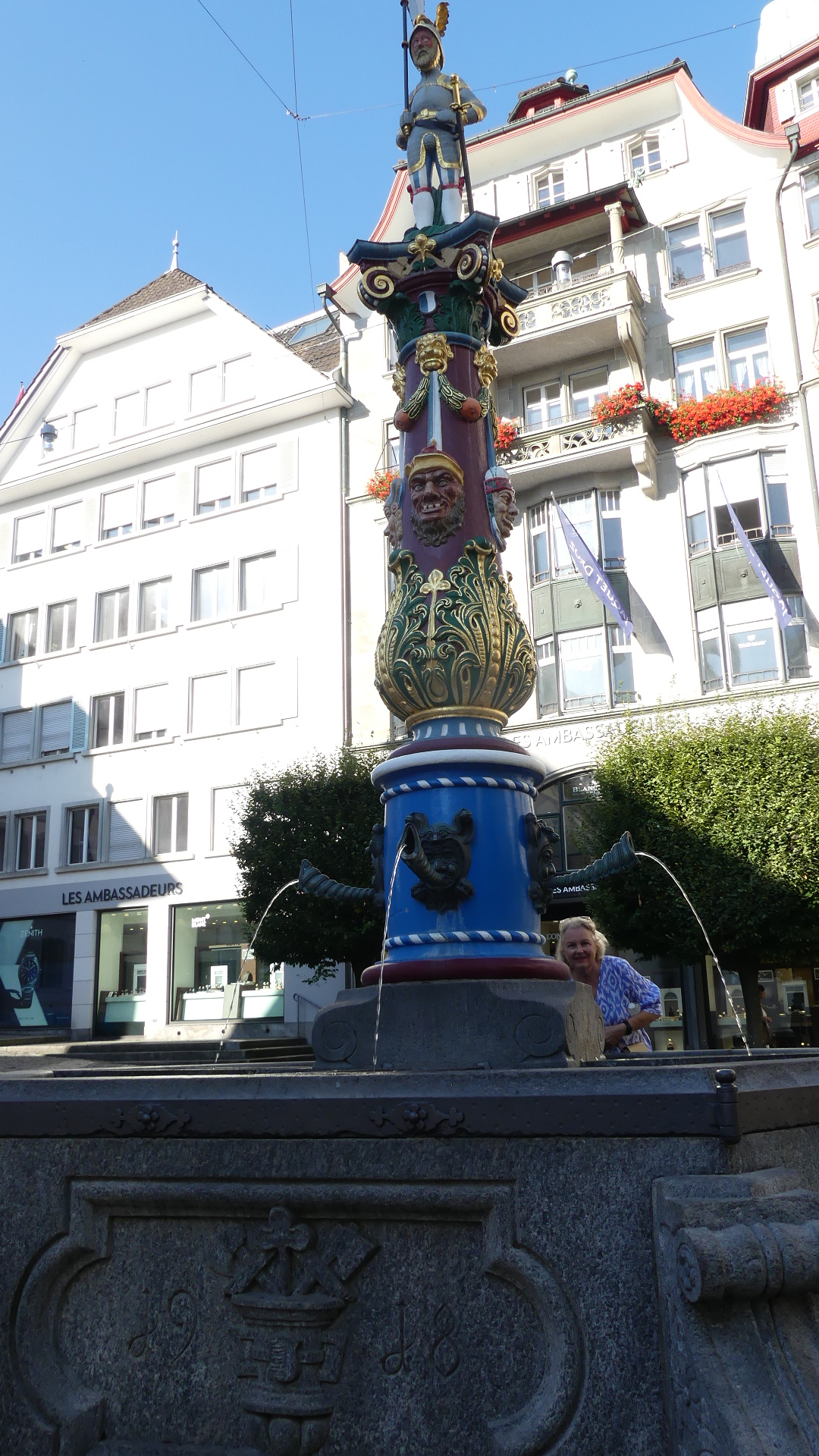
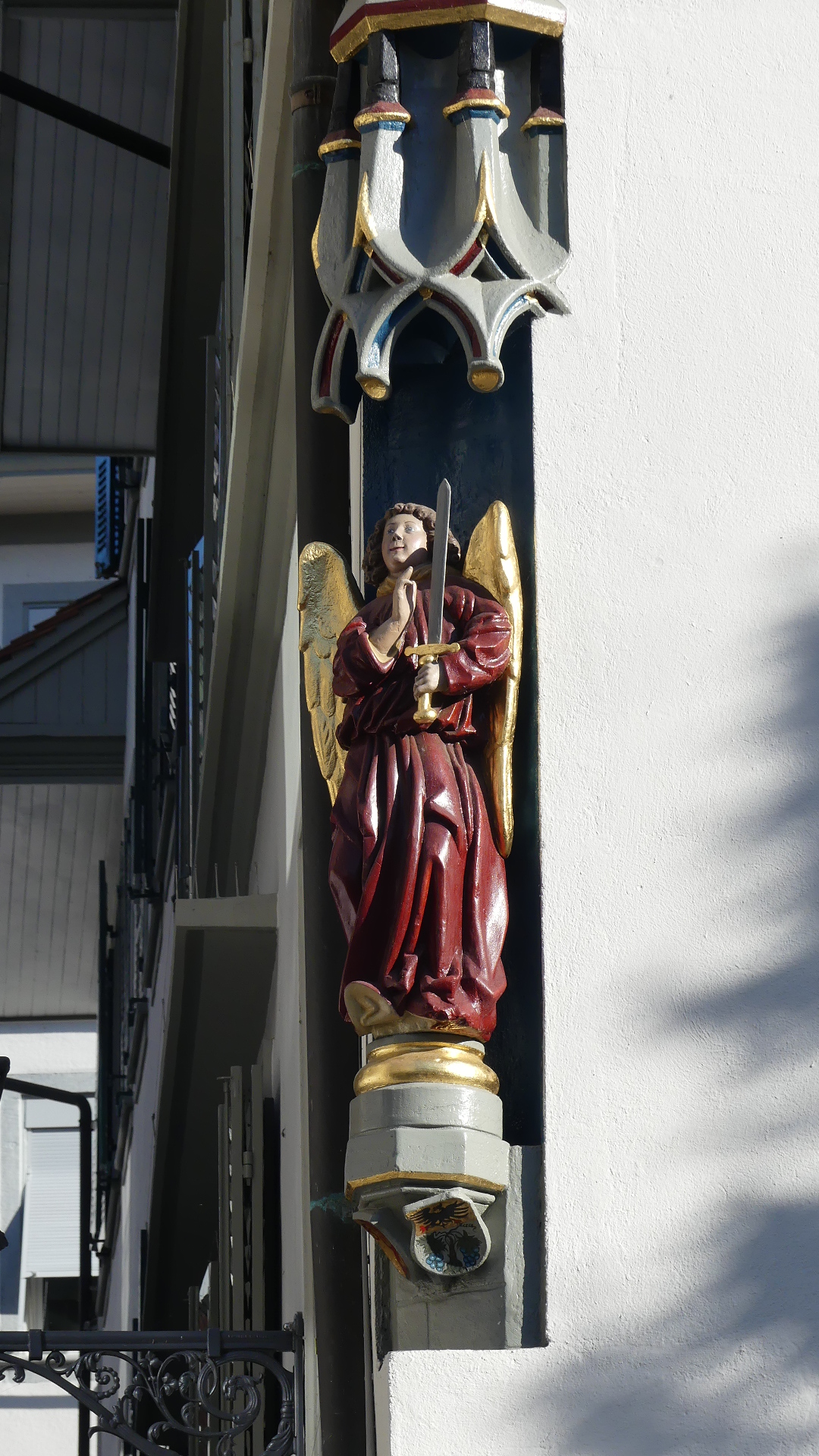
We had not seen everything of Lucerne its statuary and tattooed buildings, so we took a walk with the plan of visiting the Wounded Lion Monument. Here are a few photos of the interesting things we saw.

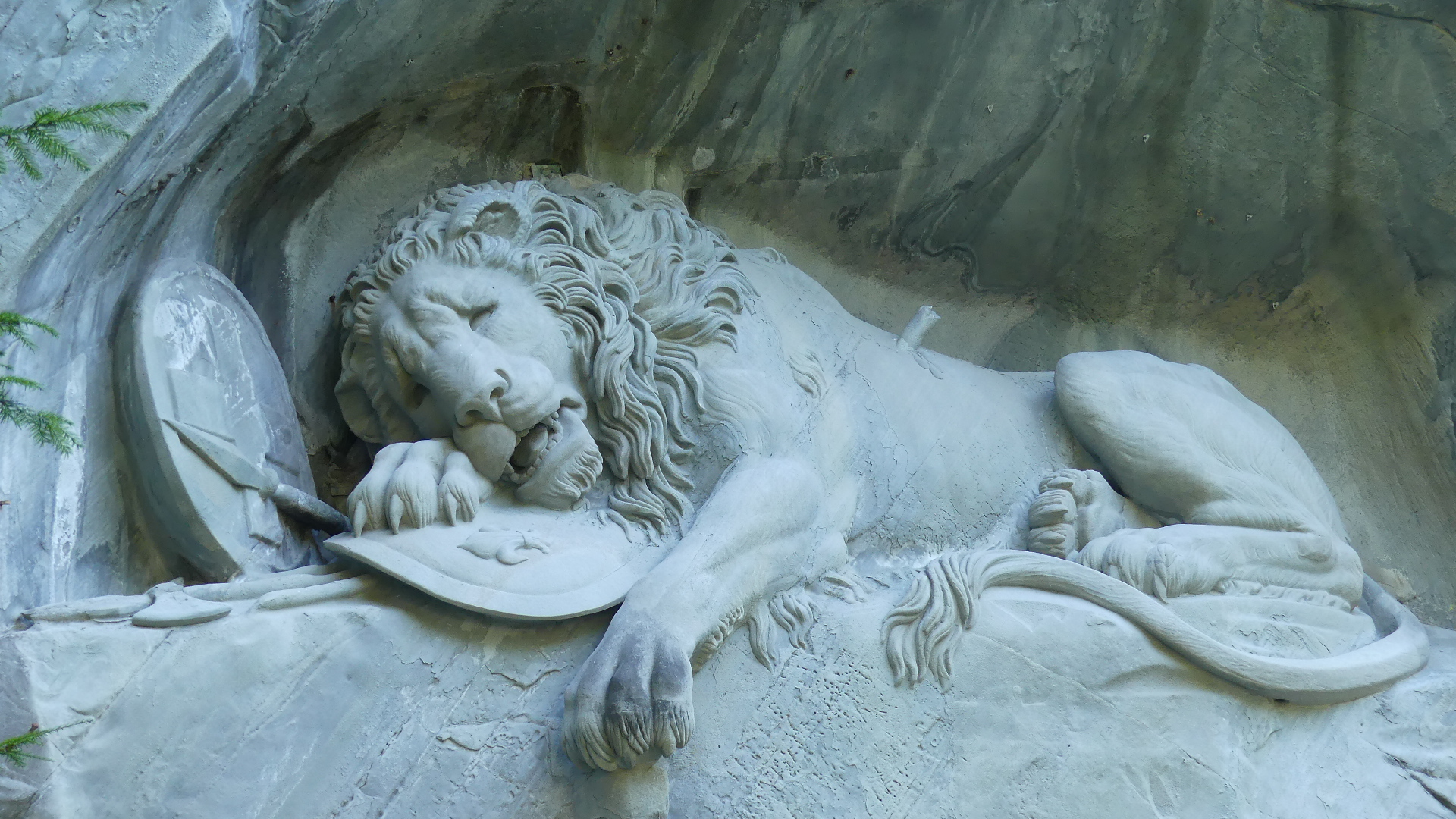
The Wounded Lion Monument recognises the sacrifice of the Swiss mercenaries employed by the King of France as his bodyguards and their massacre at the hands of revolutionaries of the French Revolution in 1792. From the early 17th century, a regiment of Swiss guards had served as part of the Royal Household of France. On 6 October 1789, King Louis XVI had been forced to move with his family to the Tuilieres Palace in Paris. In June 1791 he tried to flee to where troops under royalist officers were concentrated. On 10th August 1792 revolutionaries stormed the palace. Fighting broke out spontaneously after the Royal Family had been escorted from the Tuileries to take refuge. The Swiss Guards ran low on ammunition and were overwhelmed by superior numbers. A note written by the King half an hour after firing had commenced has survived, ordering the Swiss to retire and return to their barracks. Delivered in the middle of the fighting, this was only acted on after their position had become untenable. Around 760 of the Swiss Guards defending the Tuileries were killed during the fighting or massacred after surrender. An estimated two hundred more died in prison of their wounds or were killed during the September Massacres that followed. Apart from about a hundred Swiss who escaped from the Tuileries, the only survivors of the regiment were a 300 strong detachment which, with the King’s authorization, had been sent to Normandy to escort grain convoys a few days before August 10. The Swiss officers were mostly amongst those massacred, although the Major in command at the Tuileries was formally tried and guillotined in September, still wearing his red uniform of the Guard. Two surviving Swiss officers achieved senior rank under Napolean.
Mark Twain is said to have commented that this was the saddest monument he had visited. It’s location in an English garden is now out of the generally trafficked areas but worth a visit to view the extraordinary workmanship of this monument carved into a cliff face.
So, having viewed the monument and read all the information boards in the park we toddled off “home” and on the way discovered that the lane next to the front door of the hotel connected us directly with the River Ruess. It has been joyously decorated and not vandalised with graffiti.

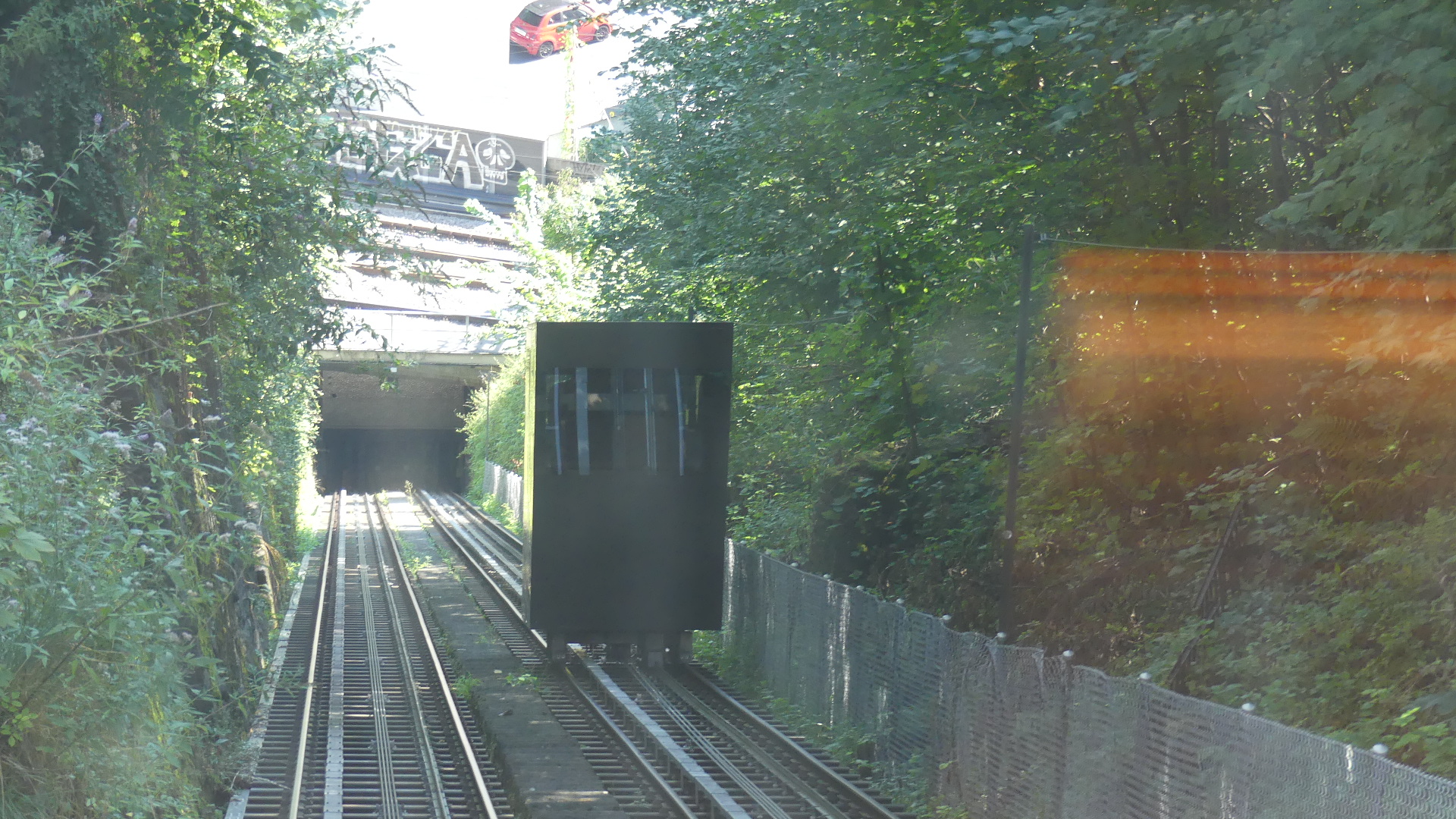
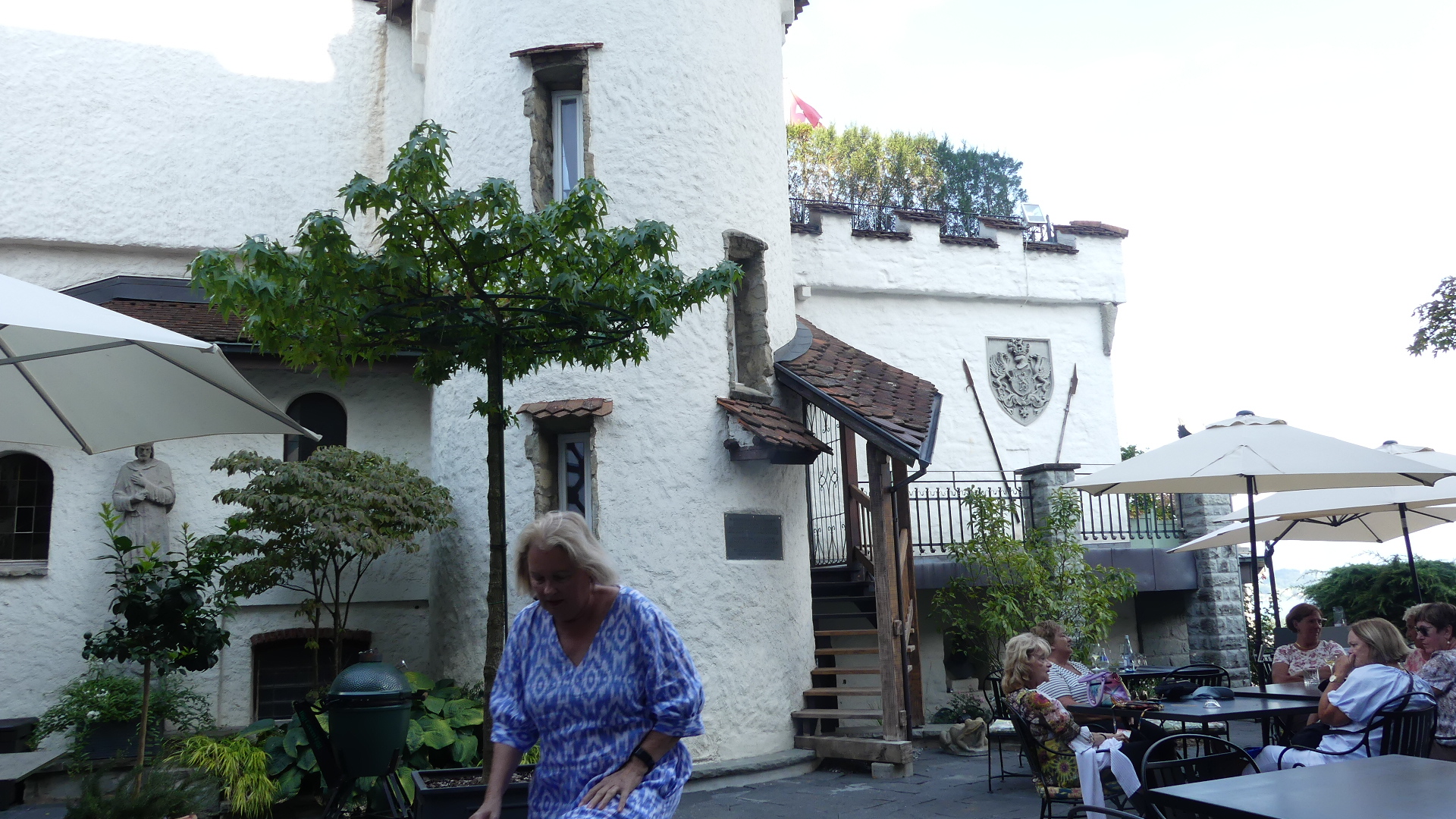
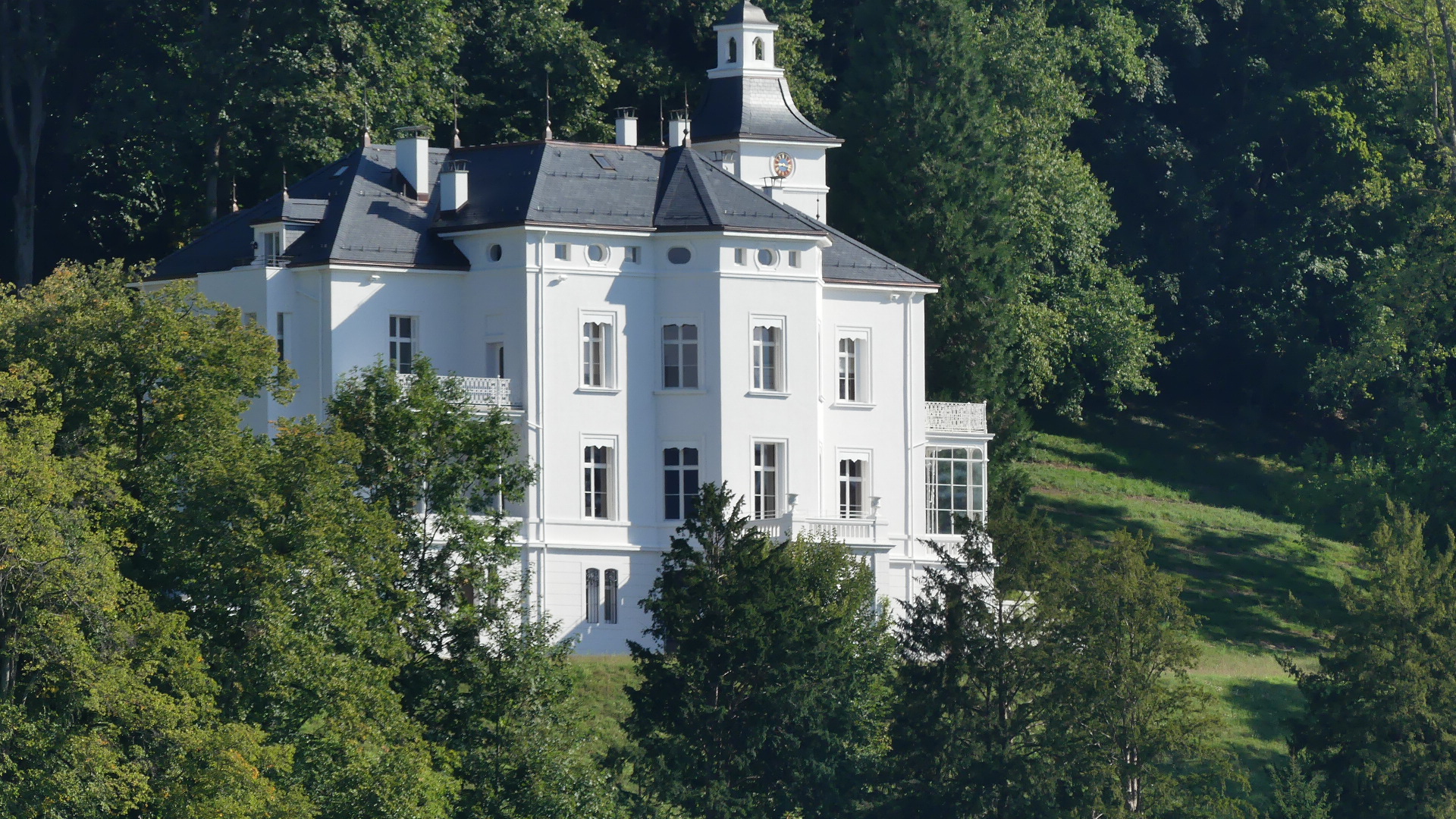
You may recall my mention of Chateau Gutsch and the desire to visit the white palace on the hill. It turns out the palace is now a 5 star hotel with a funicular to take visitors to the hotel (of course there is car access also). With nothing better to do we donned our best clean clothes put on our thongs and tracked down the hotel which happened to be literally 5 minutes from our place. Finding the funicular proved to be no challenge at all and riding up in it gave us an outstanding view of the city wall and its towers, as well as views of the River Ruess, the lake the whole panorama of Lucerne. Inside the entry foyer is an elegant pictorial history of the Gutsch and from the lower balcony theses extraordinary views.
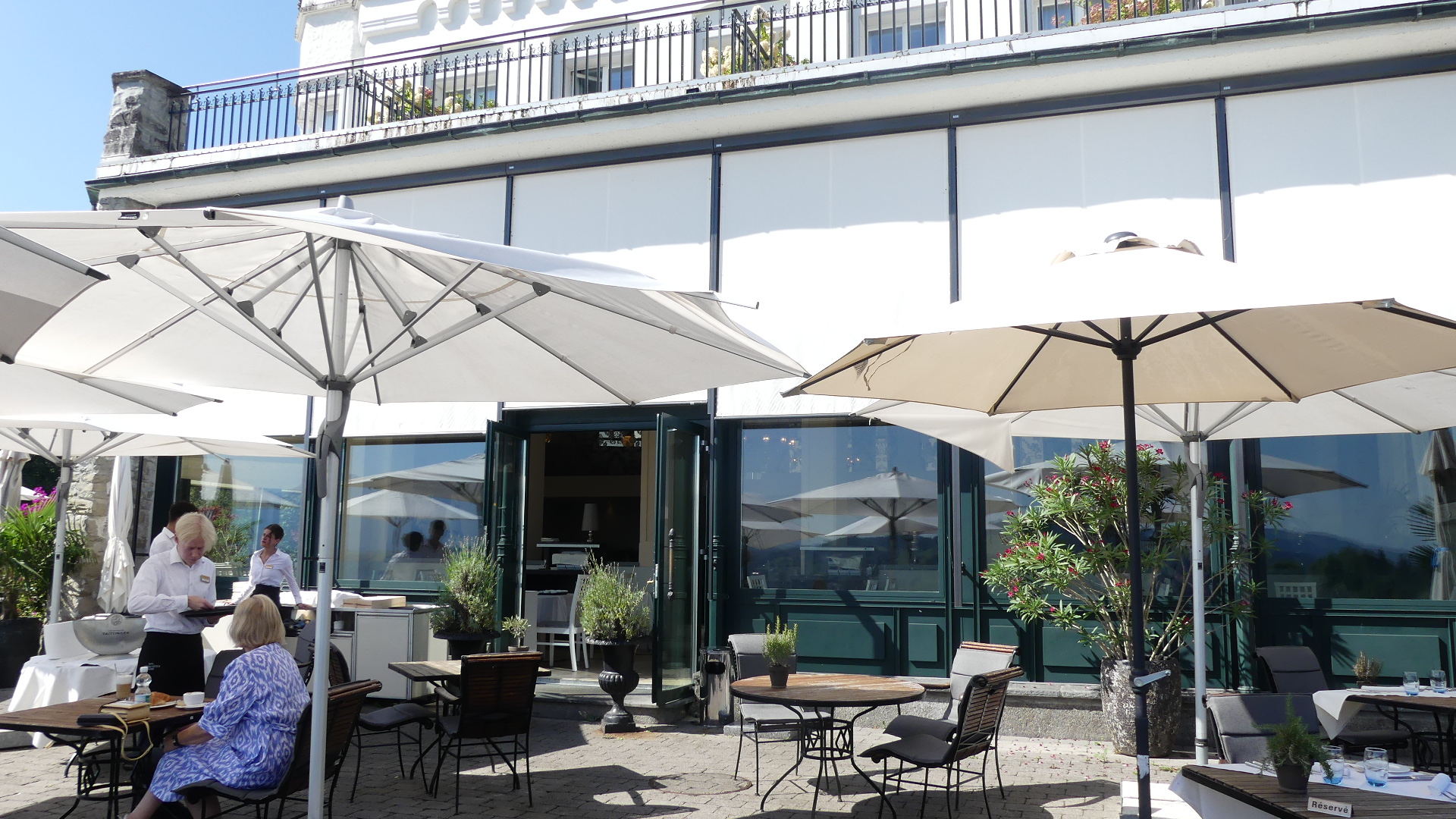
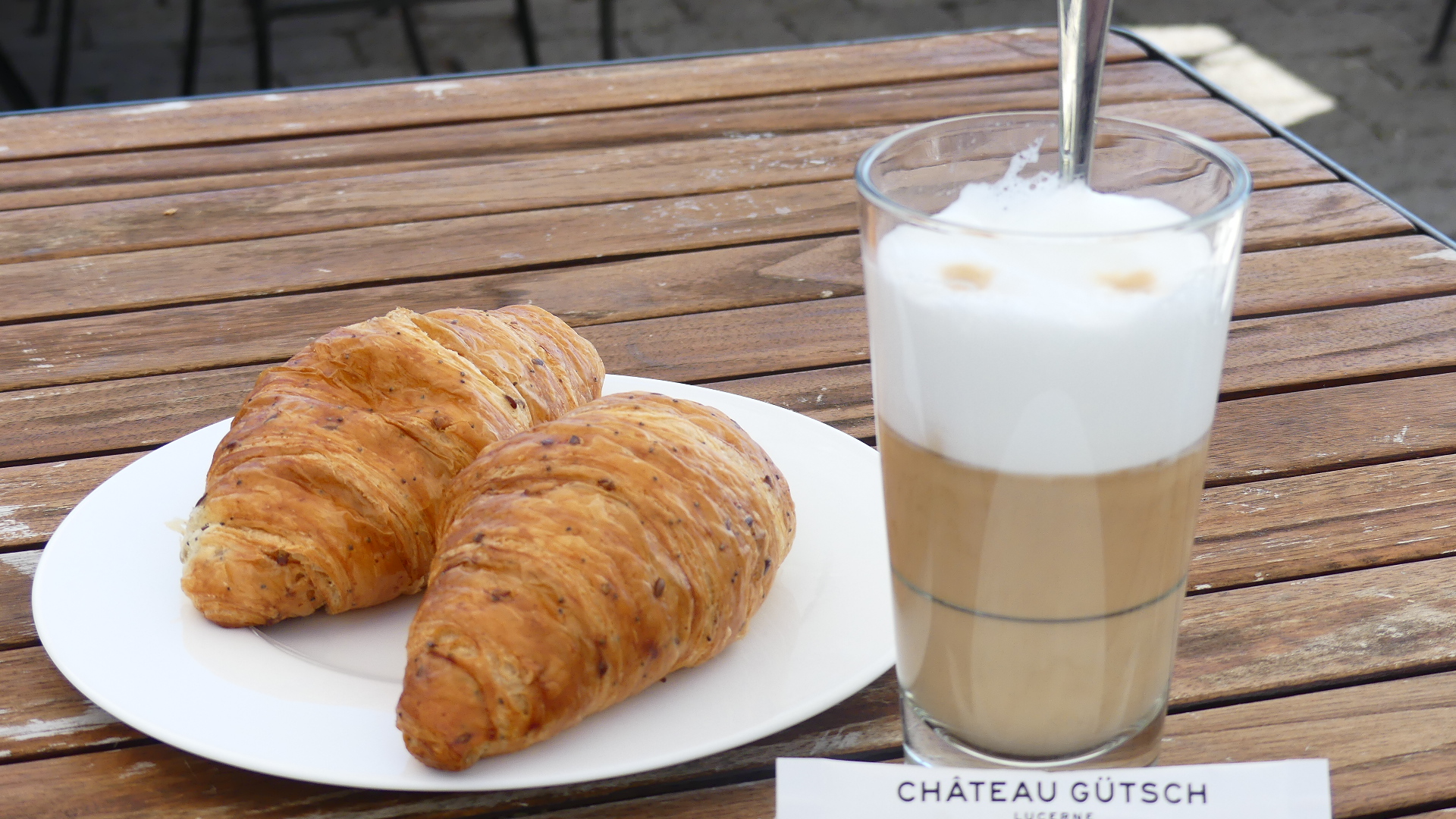
We were the only visitors at this time and had the deck to ourselves. The kitchen was not open, but they could offer coffee and a croissant. The cost was no more than we would have paid at a grubby street cafe – a pleasant surprise.

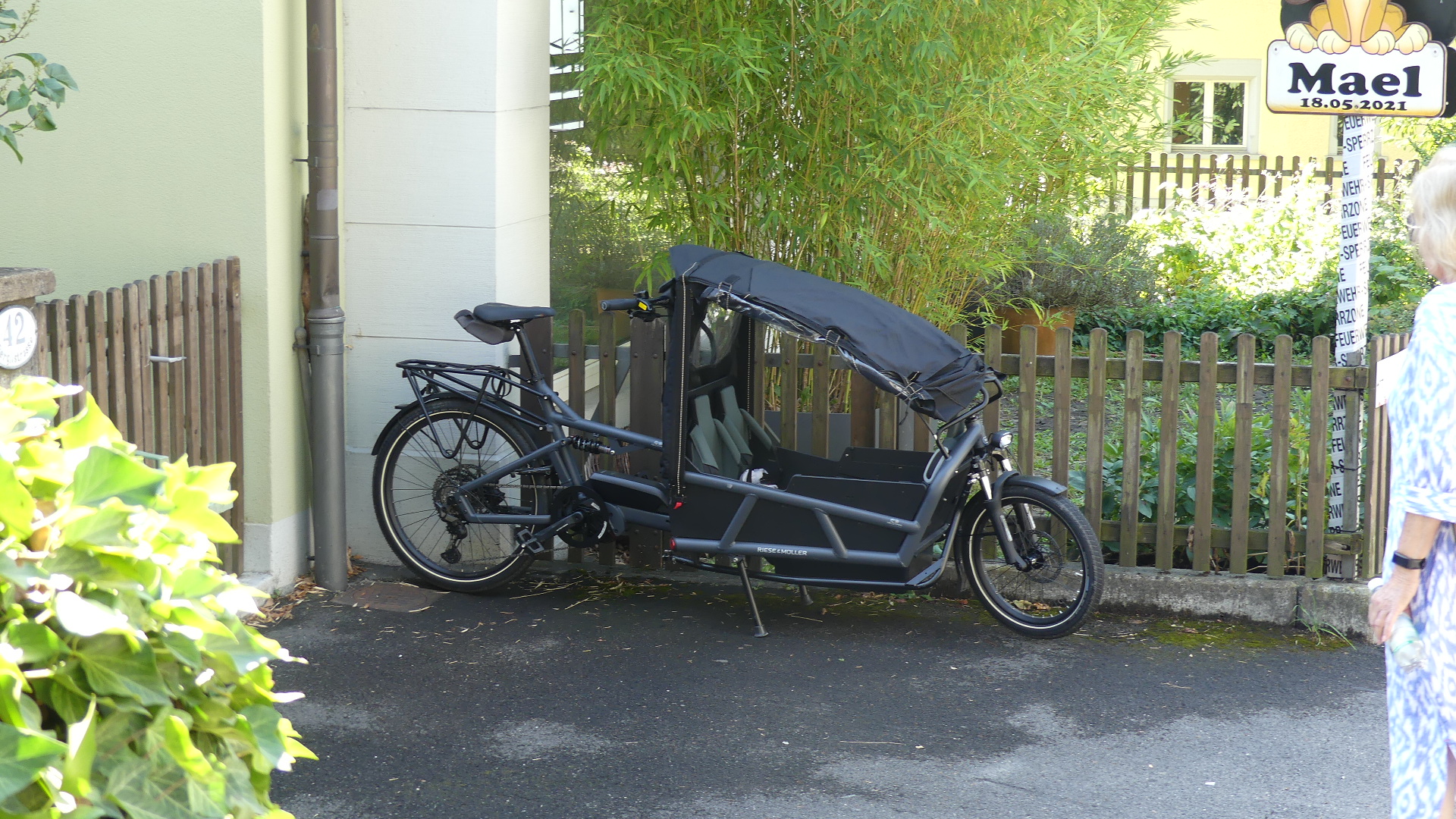
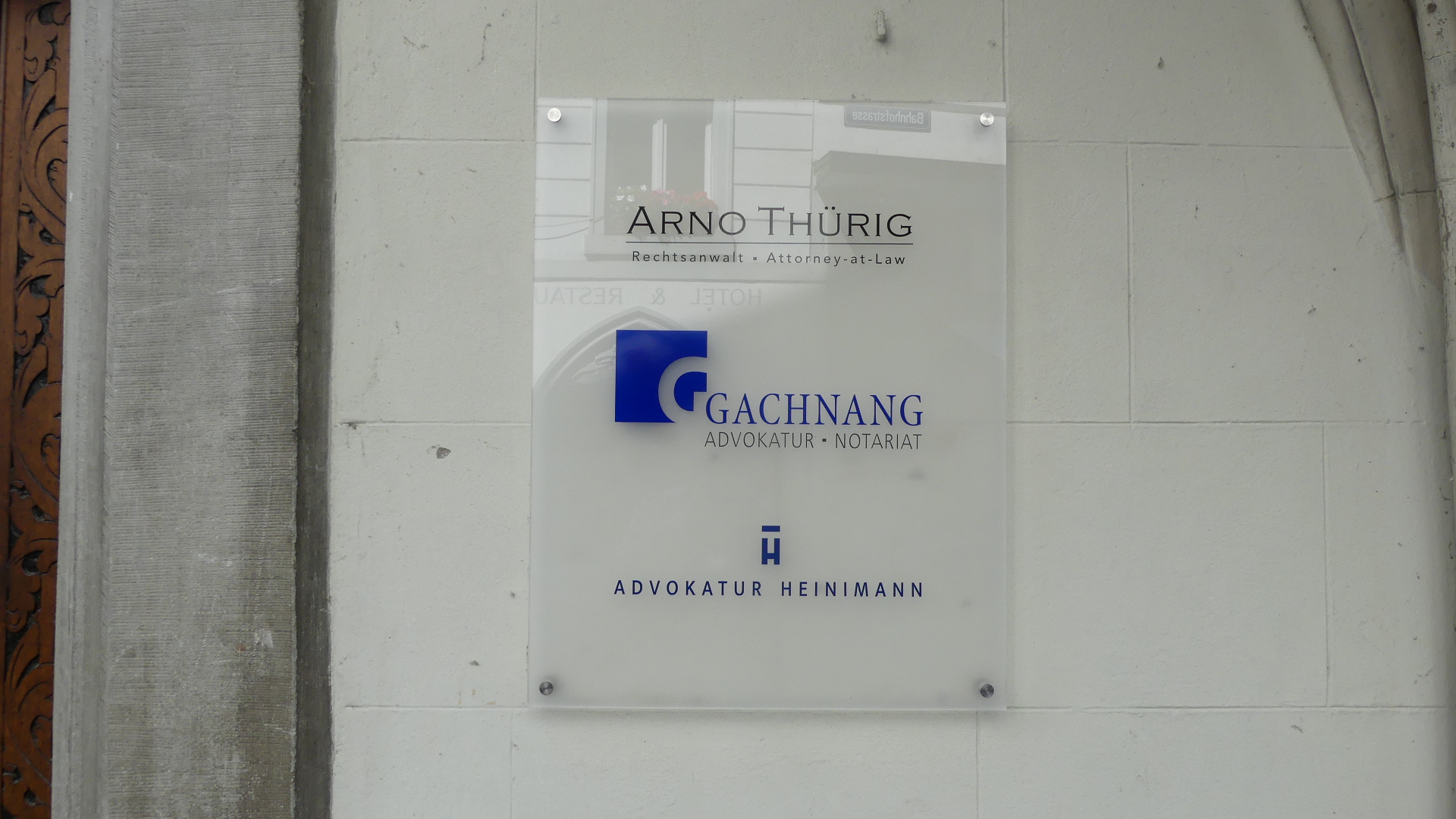
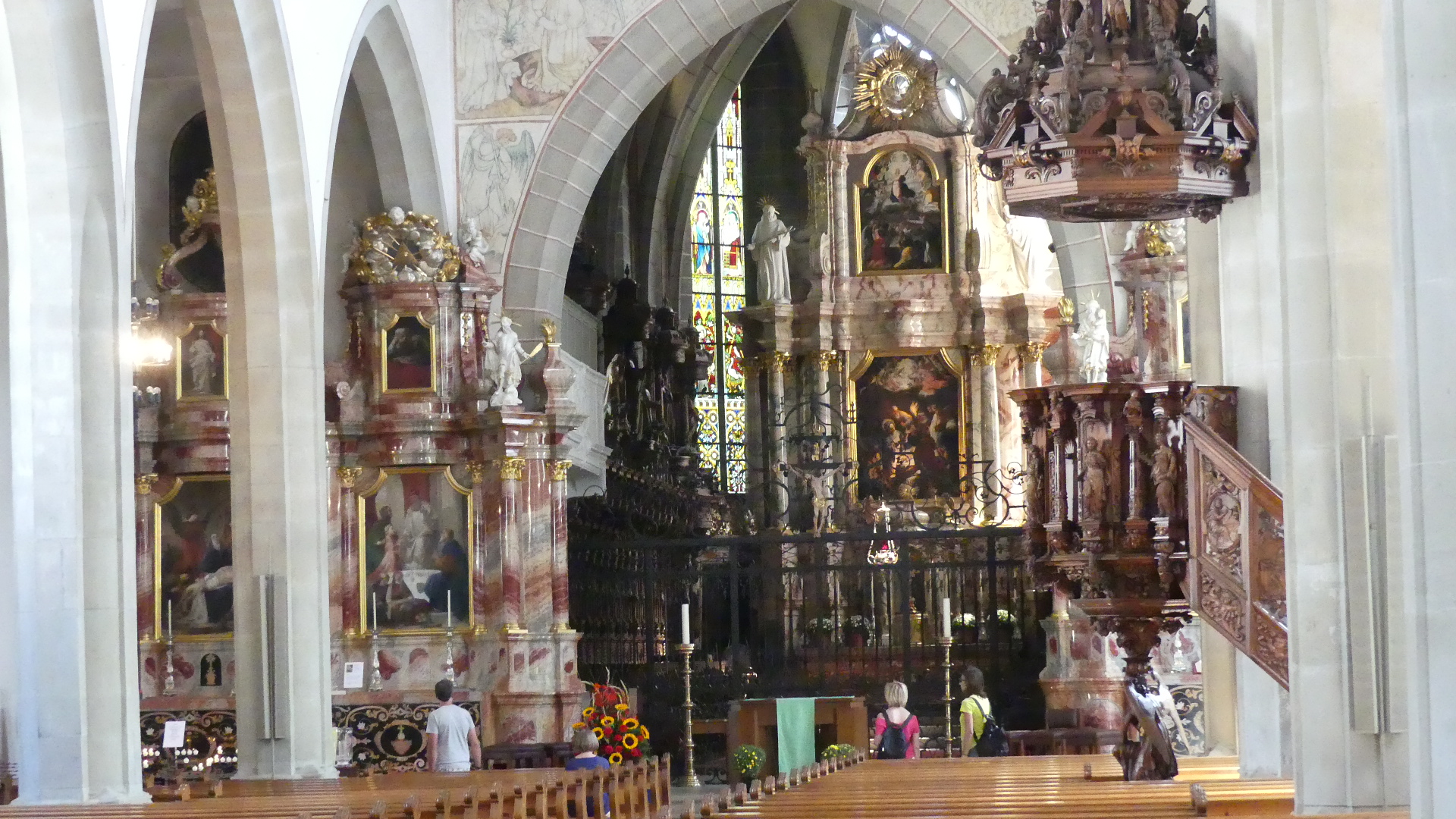
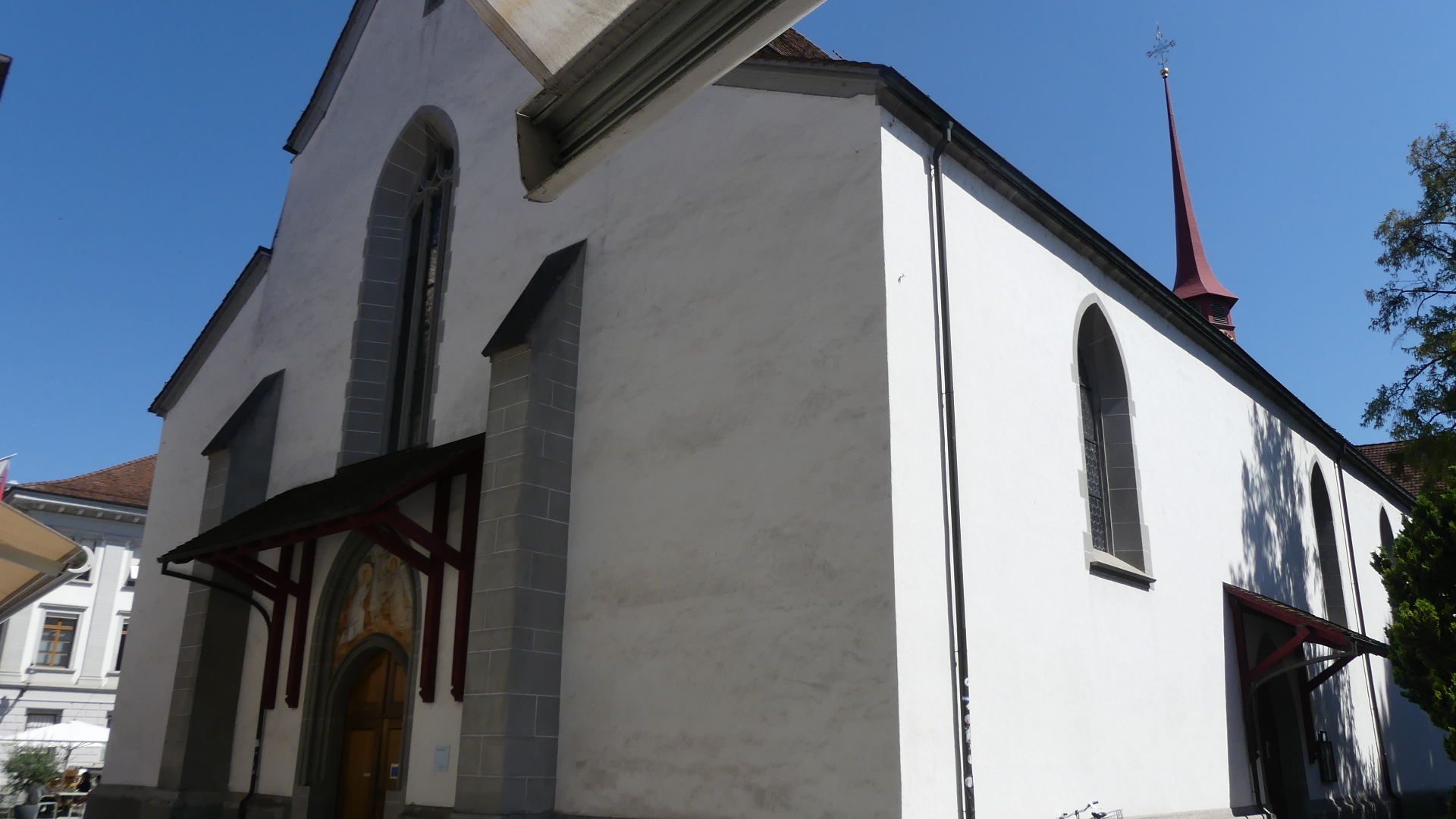
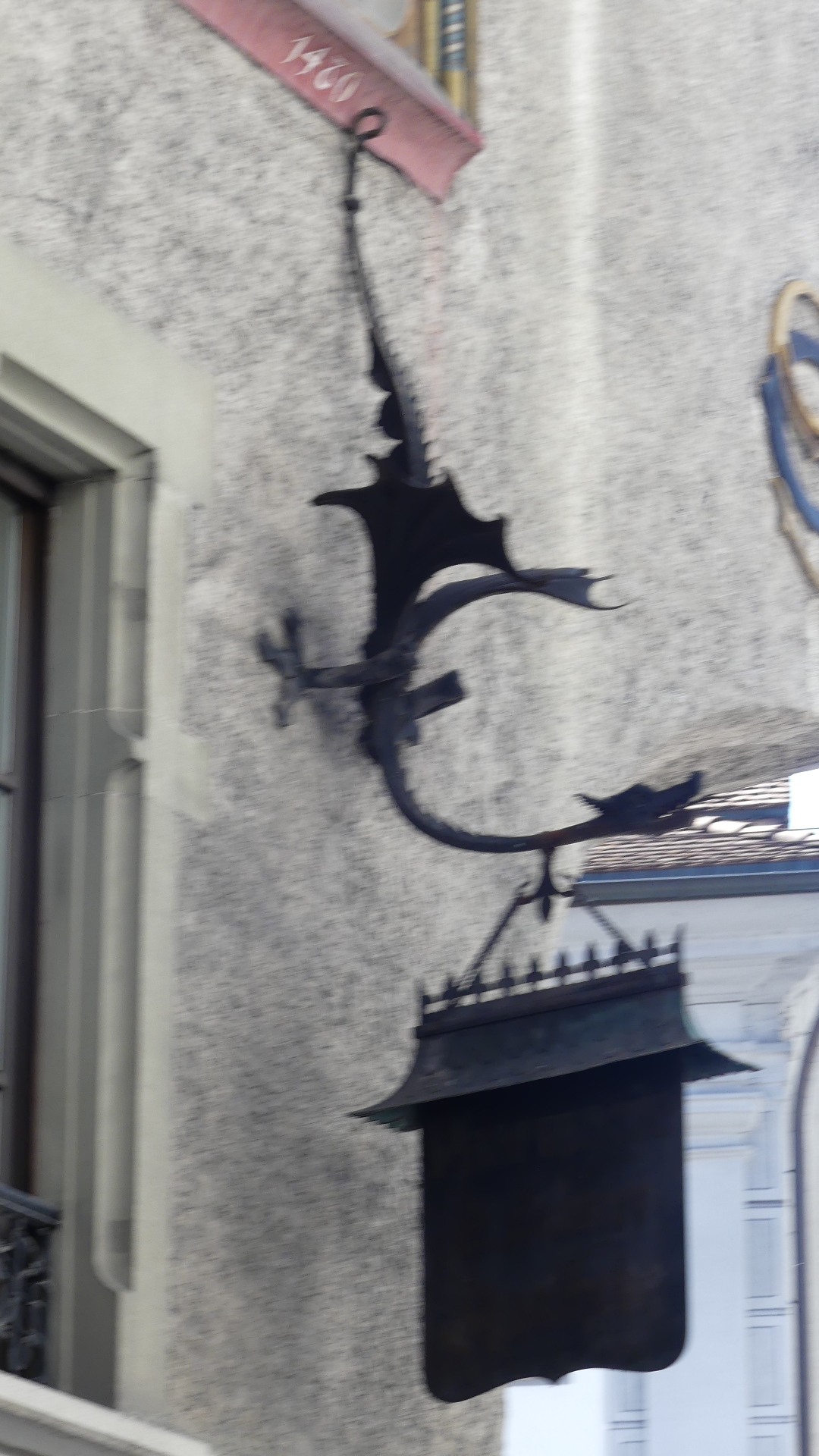
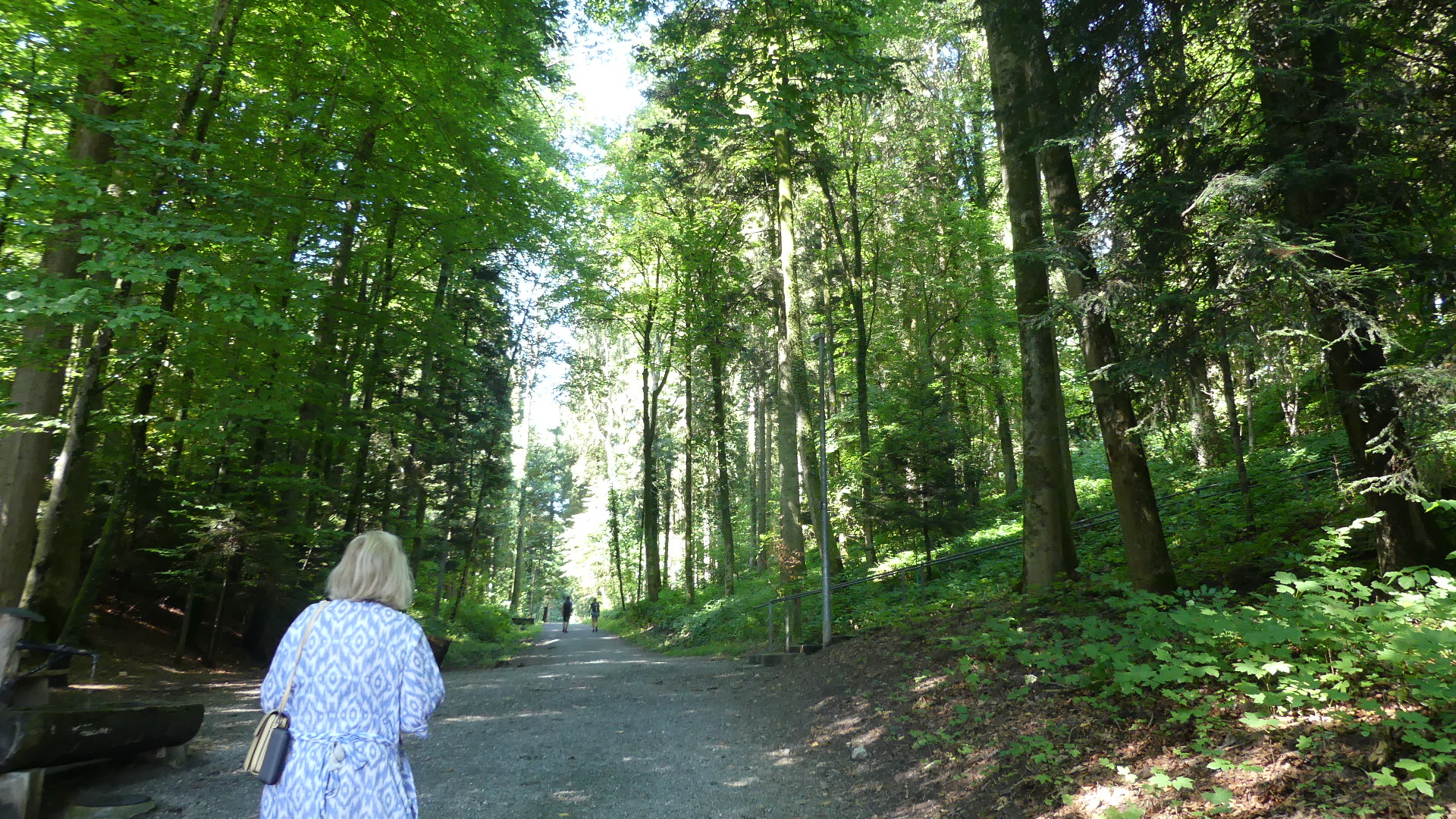
We left the Gutsch vowing to return after 2pm for cocktails at the American Bar. We returned to the town via the garden which in fact is a forest on the ridge behind the hotel. As we walked through the forest, we encountered workmen and Kerry struck up a conversation with the bloke standing in a trench. He was an Austrian from Bregenz – an Anthropologist completing an investigation on the impact a new freeway would have on the forest – fortunately the freeway was being tunnelled underneath the forest and it was more the impact the exhaust stack would have on the forest. He completed the friendly chat with some directions back to the town (how to avoid any steps). Our course took us through a residential area where we made a few discoveries like the self-serve nursery with an honesty box, the family bike (battery assisted for all those hills), Farmer paying a visit to the big smoke, some Advokatur and Notorial offices below the symbol of an iron dragon (??), and a visit to St Paul’s Church with its confessional before stopping for lunch. We then retired to our flat to rest up for the big afternoon at Gutsch.

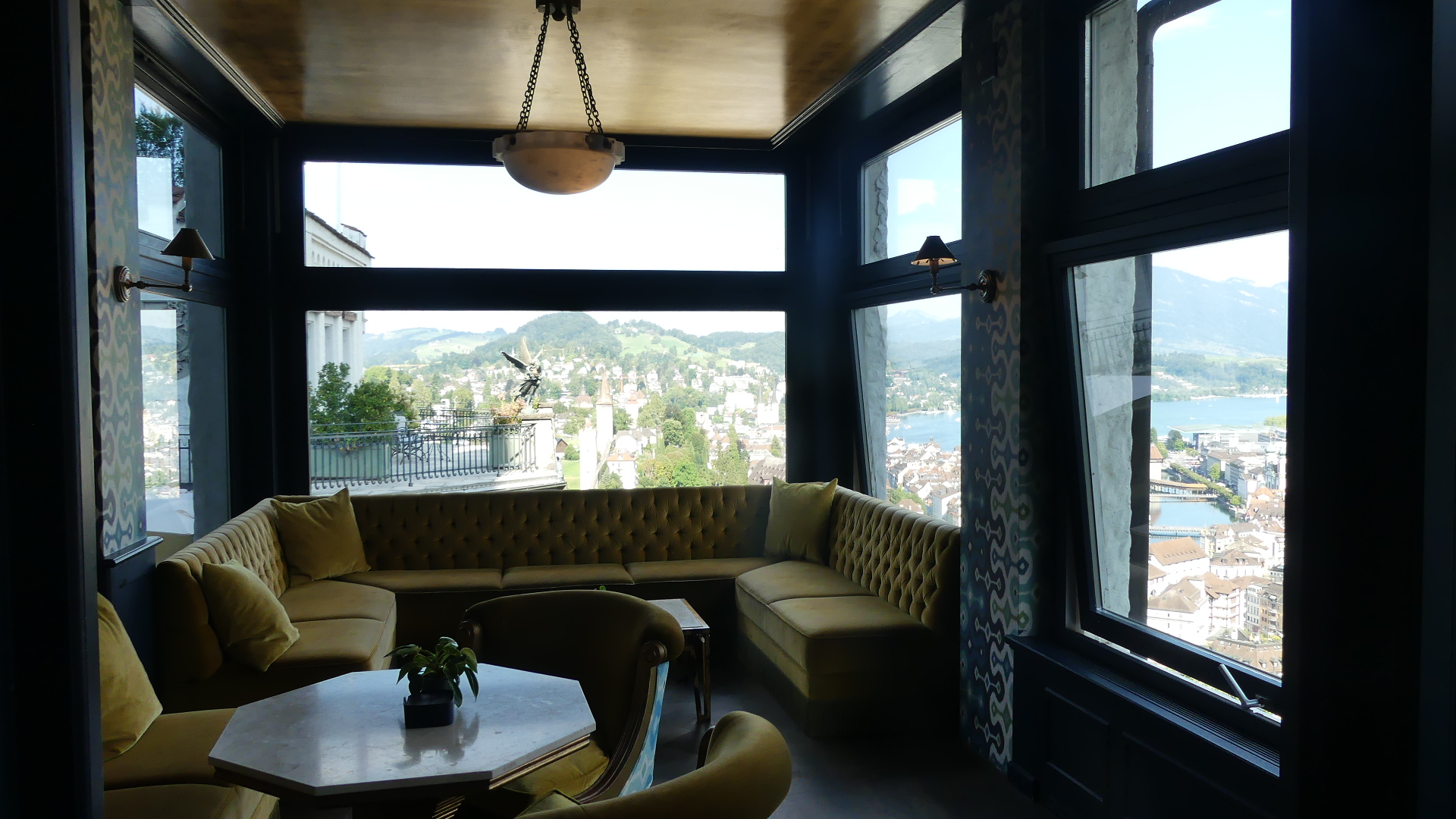
Rested and raring to go, we went to Gutsch and the American Bar. This time we went into the hotel itself and the bar was all classic with portraits of all descriptions and sizes hanging on the wall. The receptionist who was German not Swiss could not say if it was the family and was unable to explain the portrait of a woman holding a severed head on a platter. We left the mysterious portrait and adjourned to the deck in front of the bar. The view had improved with the earlier haze having lifted. The following photos and Kerry’s posts on Facebook will give you a good idea of the old-world opulence of the place.

The Bar has that opulence that we imagine the rich and famous enjoy with views of the town and lake that cannot be bettered. Speaking of which I don’t know if he was rich or famous in his own right but the gentleman in the apartment overlooking the Bar decided to take the sun in his underpants as we enjoyed our drink and tried to enjoy the view. After the “show” and drinks at the American Bar we toddled home for tomorrow we take the train to Interlarken.

The Retirees return to Europe – Vienna

Vienna

Our plan to travel to Vienna via Amsterdam went well and truly awry. Our flight out of Heathrow was late to leave which meant we missed our connection in Amsterdam (not by much I might say as we had to run from terminal B to terminal D to get our connector). A simple phone call by the ground staff for our filght to the gate of our connecting flight stating we were on our way was all it would have taken to avoid the pain that followed. Having missed our connection, the gate captain offered us two alternate connections to Vienna – a direct connection leaving at 8.00pm or a connection via Munich boarding now and leaving in 10 mins and arriving Vienna at 3.00pm – it was now 10.00am in Amsterdam. We chose to go via Munich, boarded the flight and waited and waited (there was no departure slot available for our aircraft) and waited for over an hour.

We arrived in terminal 1 Munich with about an hour before our connecting flight was due to depart, but we could not find the KLM desk to obtain a boarding pass. A staff member on an information desk directed us downstairs to the KLM desk. We hurried downstairs only to be redirected back to where we started where a friendly Air France girl checked our ticket and was unable to identify the airline code as to which airline was our carrier and she assured us that KLM did not fly out of Munich, so she sent us downstairs to another agent who directed us across the tarmac to terminal 2. By this time, we had 15mins to reach our flight.

Terminal 2 was just as difficult to navigate until we found a volunteer visitor assistant who immediately could tell us our airline was Austrian Air not KLM and to go to the Lufthansa desk. The Lufthansa assistant was superb but had to advise us we had missed our connecting flight and the next was at 8.00pm arriving in Vienna at 9.30pm. She also tracked our luggage noting on her screen the change of flight and identifying an error in the recording for both suitcases – (only the first mistake). All of this bad news seemed wonderful to us as we were exhausted, hungry and stressed with all of the f**k ups. Assured of our flight arrangements and our luggage we sought a cafe for a strong drink and something to eat.

Our first choice for our repast was not so good – an incident was in progress and the cafe was cordoned off with heavily armed Police deterring customers from entering. Our second choice was more successful, and we were able to relax. We had four and a half hours to wait for our flight, so we slowly made our way through security again and into the bowels of terminal 2 where we sat suspended until 8.00pm.

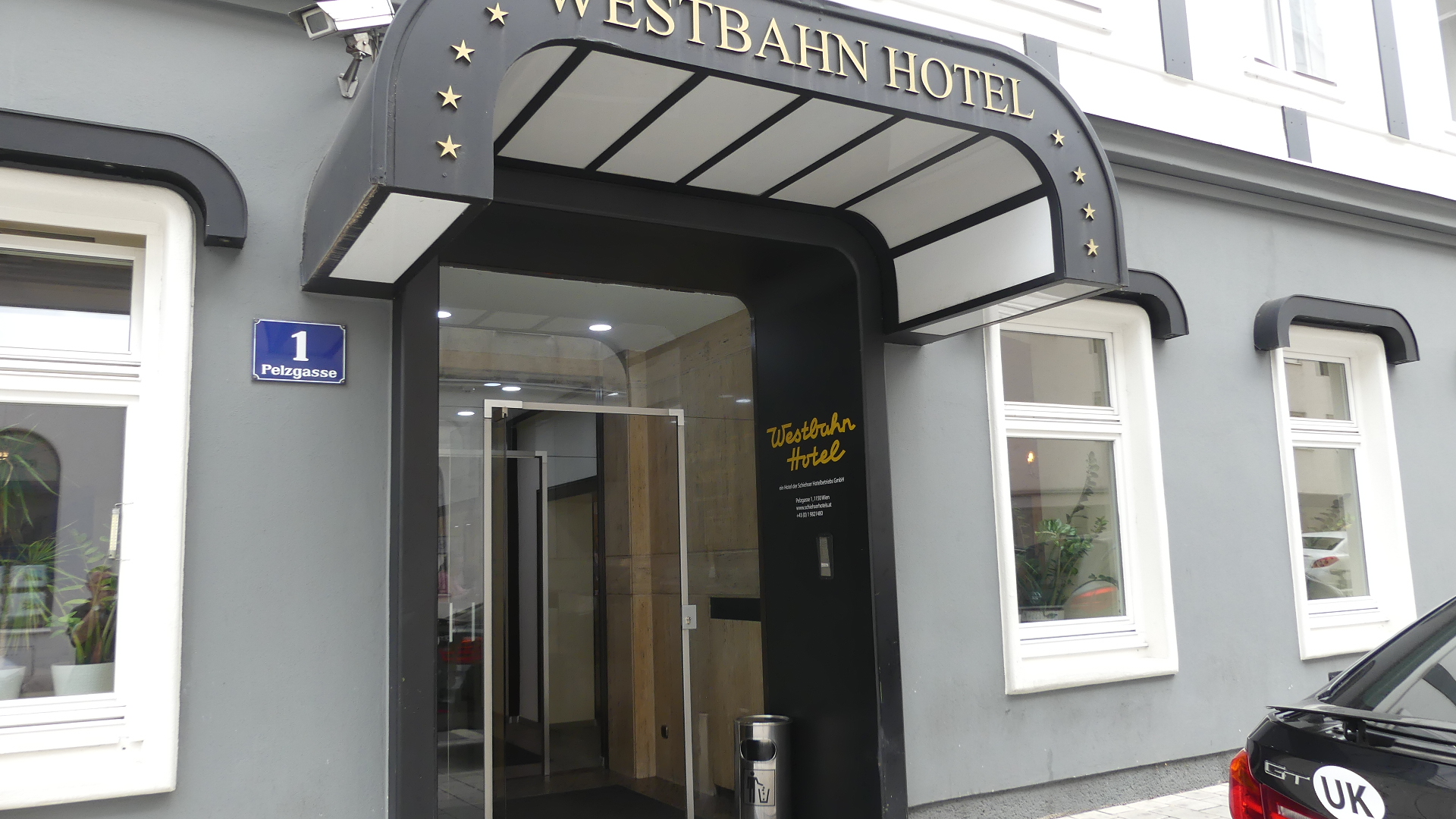
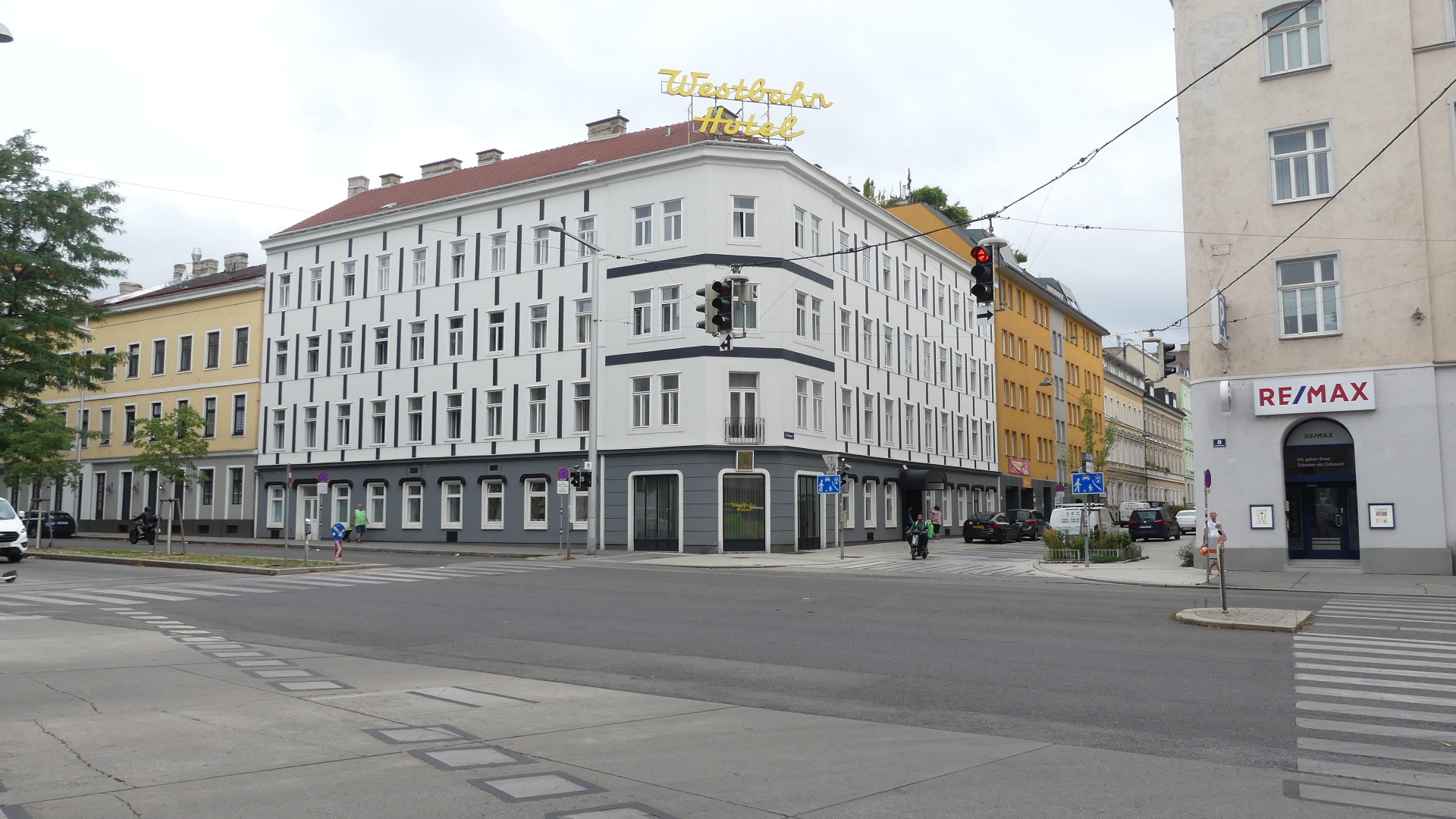
Finally, our flight gate opened, and we were seated in the last two seats in the plane so it was a bit of a struggle to get off the plane and then we had a struggle to find the luggage collection belt only to find our luggage had not made the flight. So, we spent the next half hour completing a lost luggage claim form with the depressing feeling that we would not see the suitcases again. Tired and distressed we simply grabbed the 1st cab handed him our hotel address and bundled into the taxi with only the clothes we stood up in. Sometime after 10.00pm we arrived at Westbahn Hotel as pictured below, uncertain of what awaited us.

The next day we awoke to grey skies and intermittent rain. The room was not air-conditioned, and we had spent most of the night sweating on the bed waiting for morning trying not to think about the fact that our last meal was some hours ago in Munich. Our plans were in disarray, so we decided to make up for it with a hotel breakfast then brief the reception staff about our lost luggage and our anticipated delivery of our luggage. We had an enjoyable breakfast and found the staff on reception sympathetic. They provided us with a city map and pointed out a few of the sights.

We had selected this hotel for its proximity to the rail station. Although very close to a major rail station terminus at West Bahnhof we were not at Bahnof Meidling which we learned is where we had to be to travel to Bregenz in a few days’ time. Had we stuffed up again?

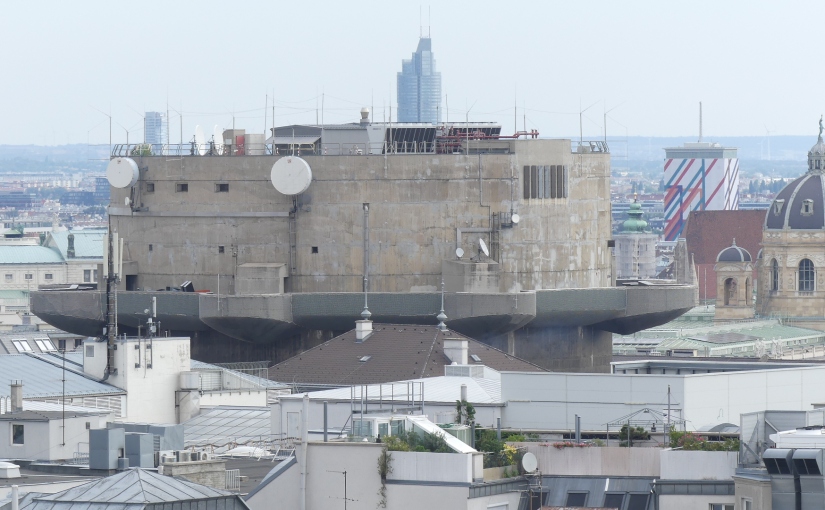
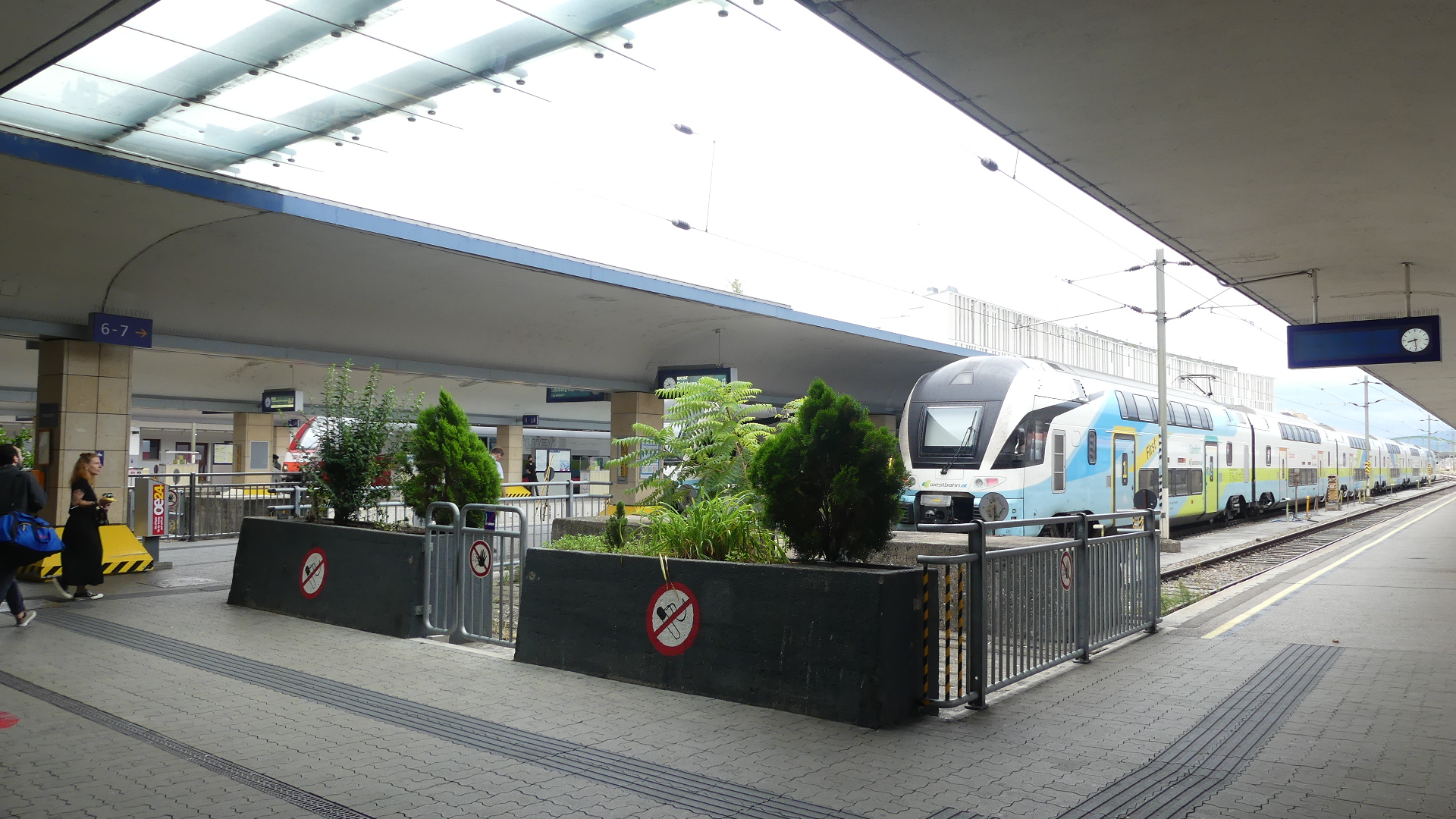
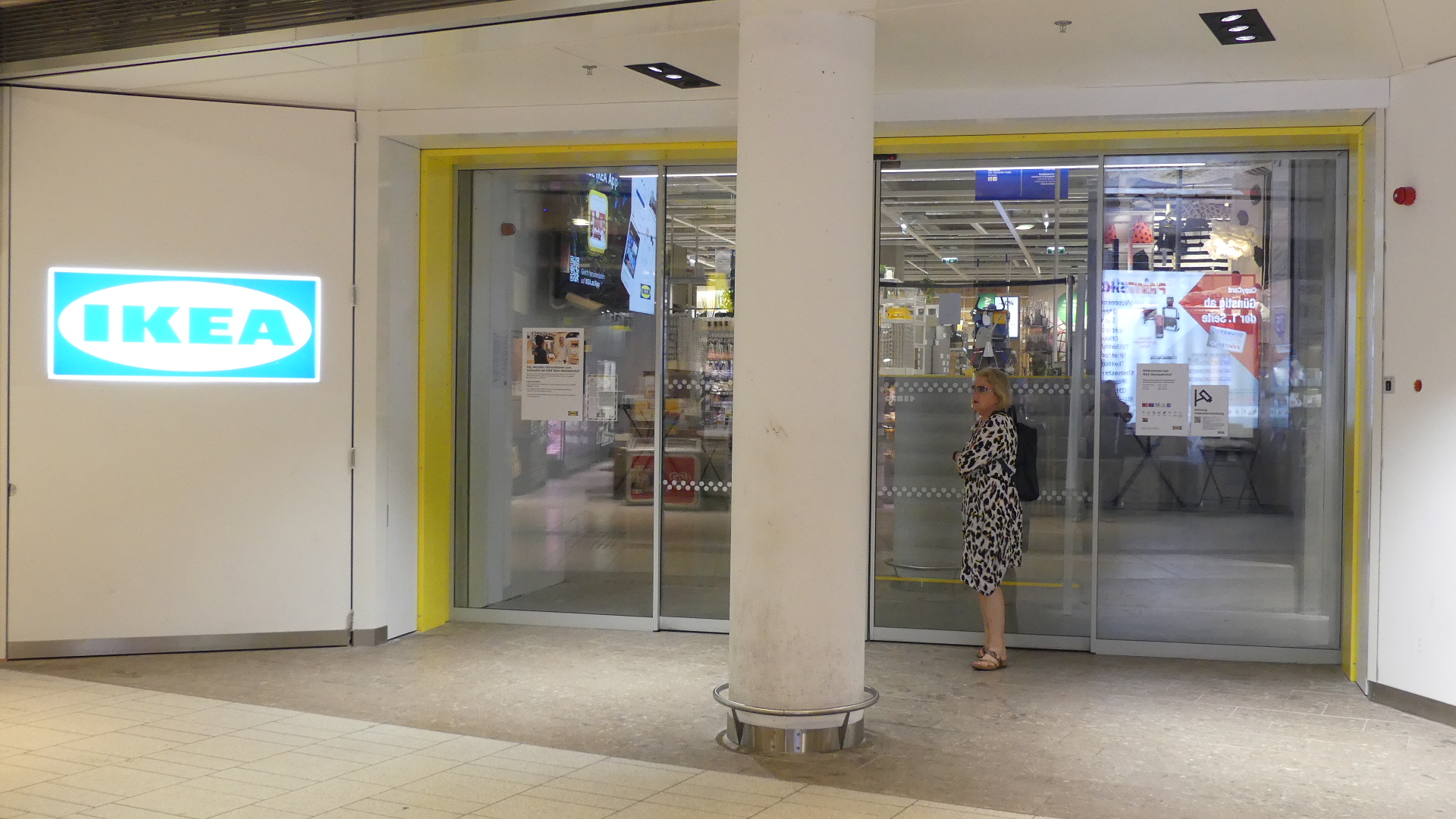
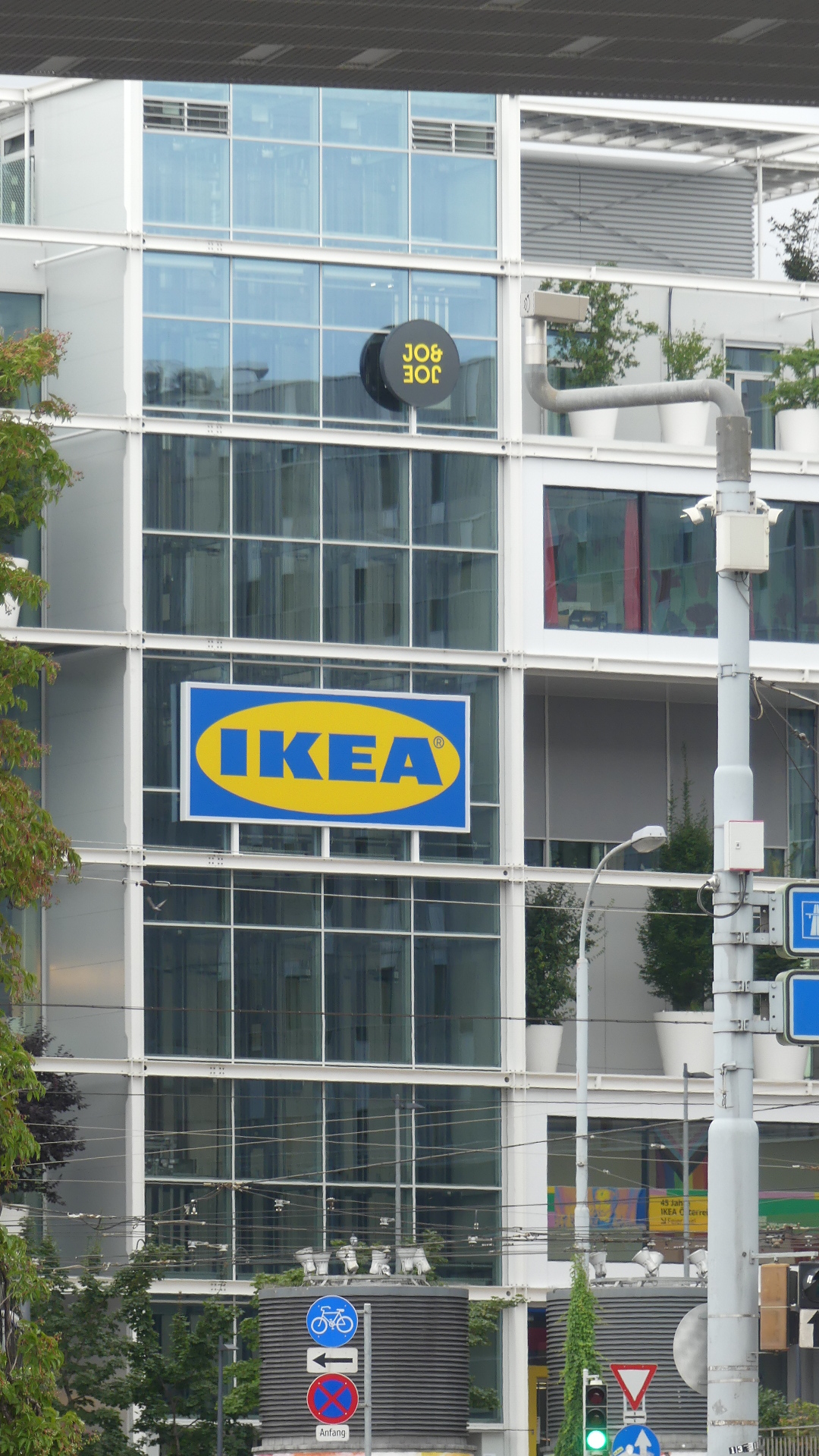
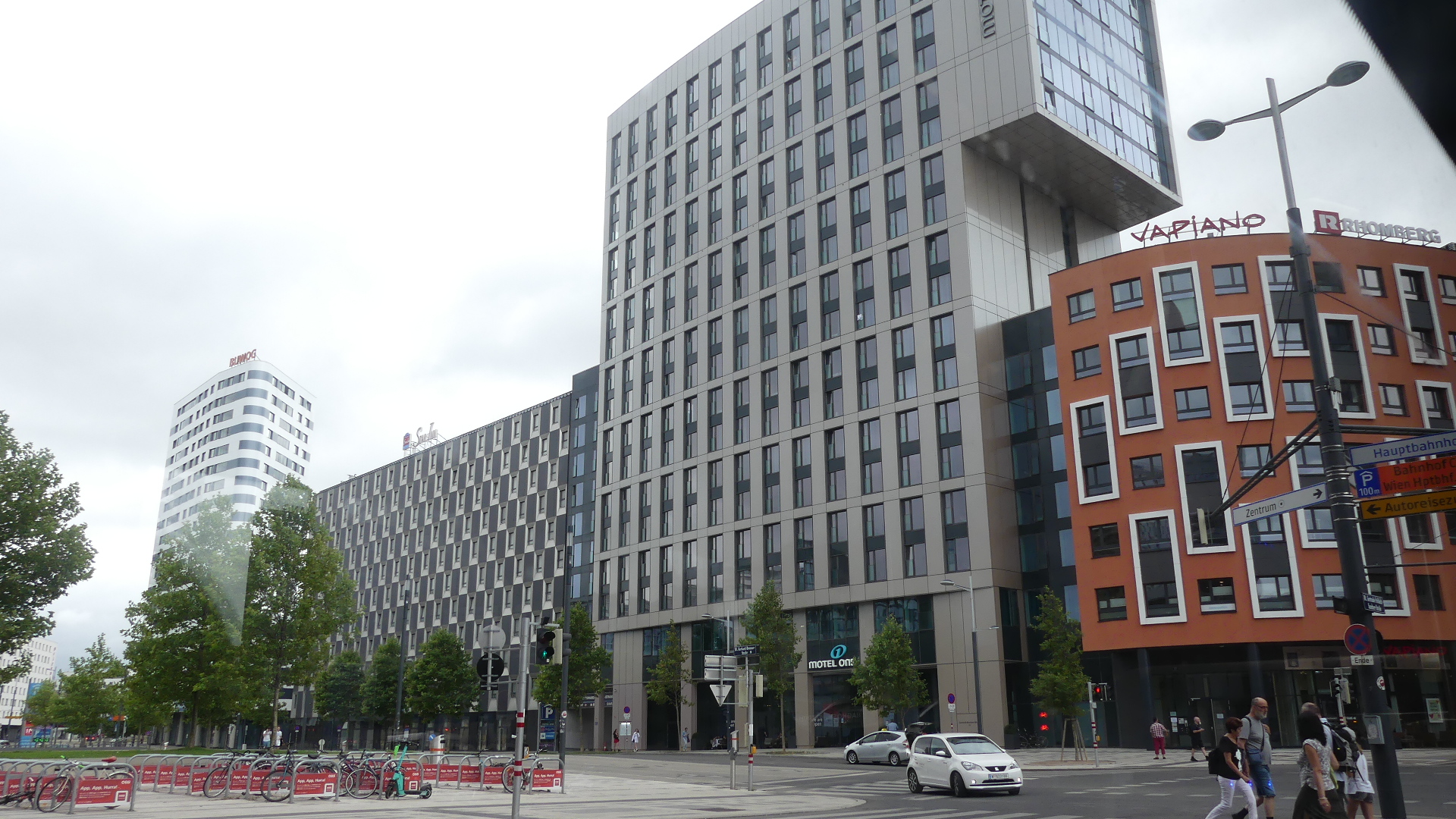
We walked across to West Bahnhof station and found a mini shopping centre and underground station as well as an above ground rail station. Alongside the rail station with an entrance from the station was Vienna’s IKEA store. Located in a most unusual high rise building it appeared part of it was missing with the upper levels left hanging in the air.

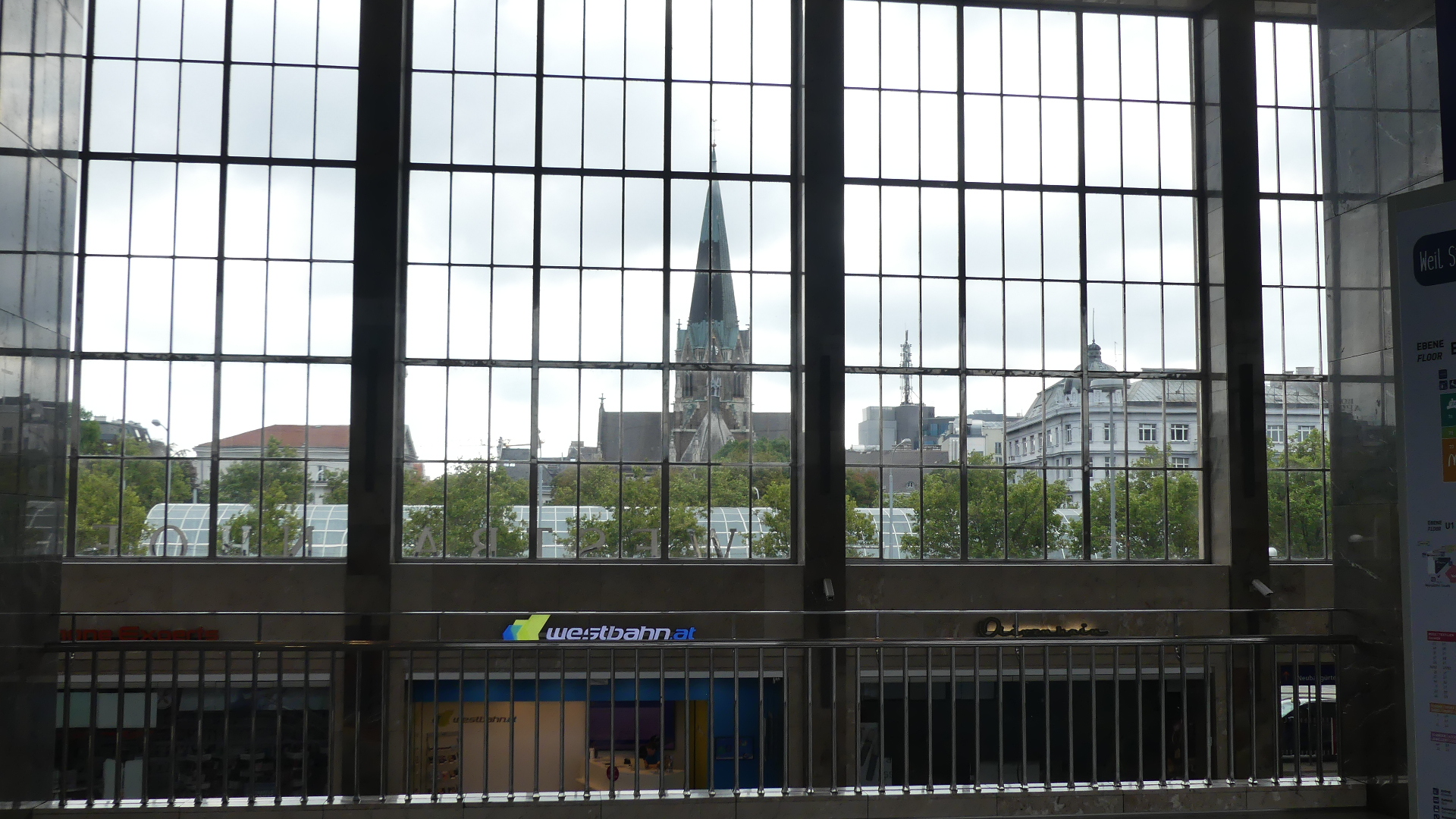
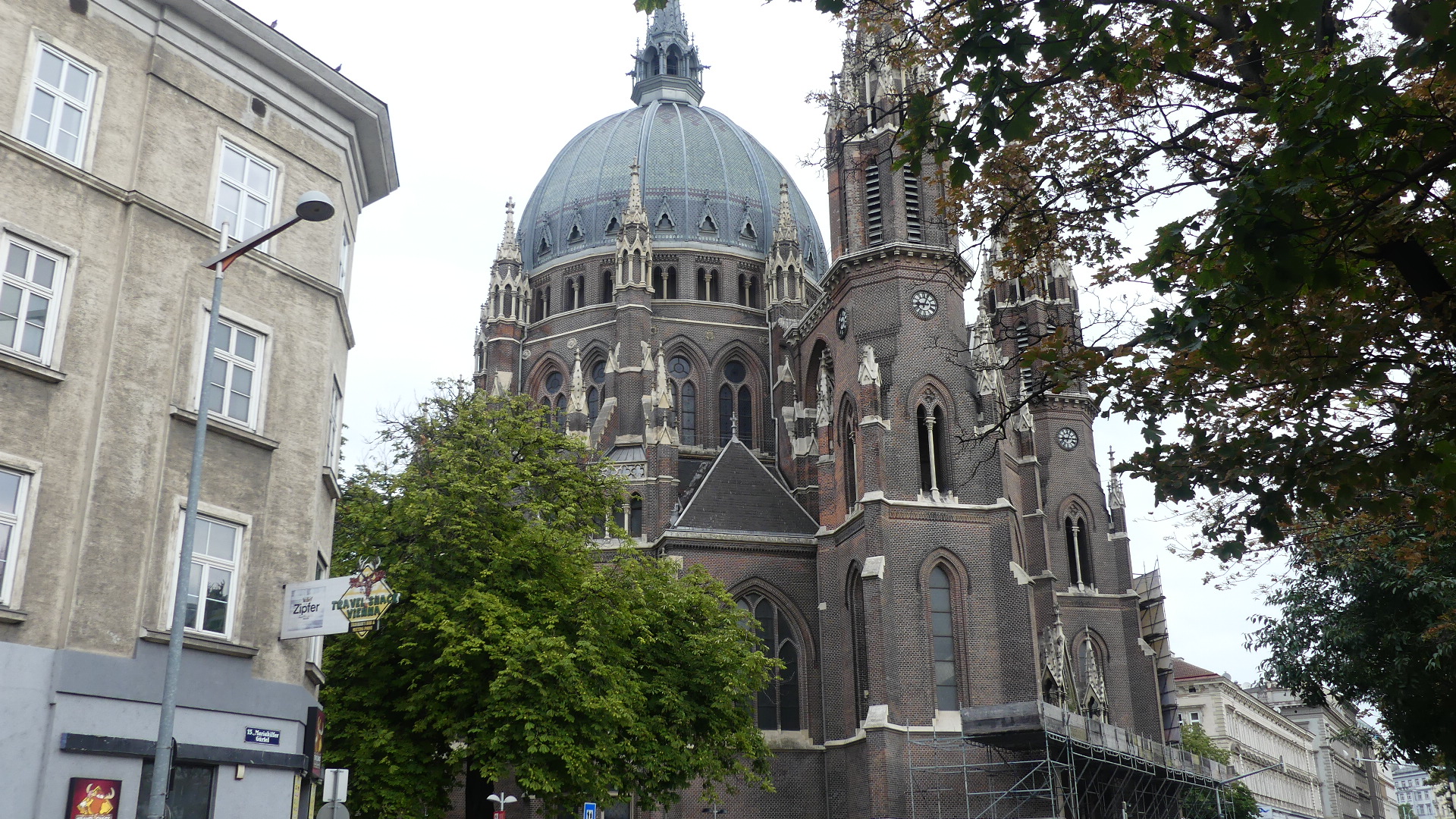
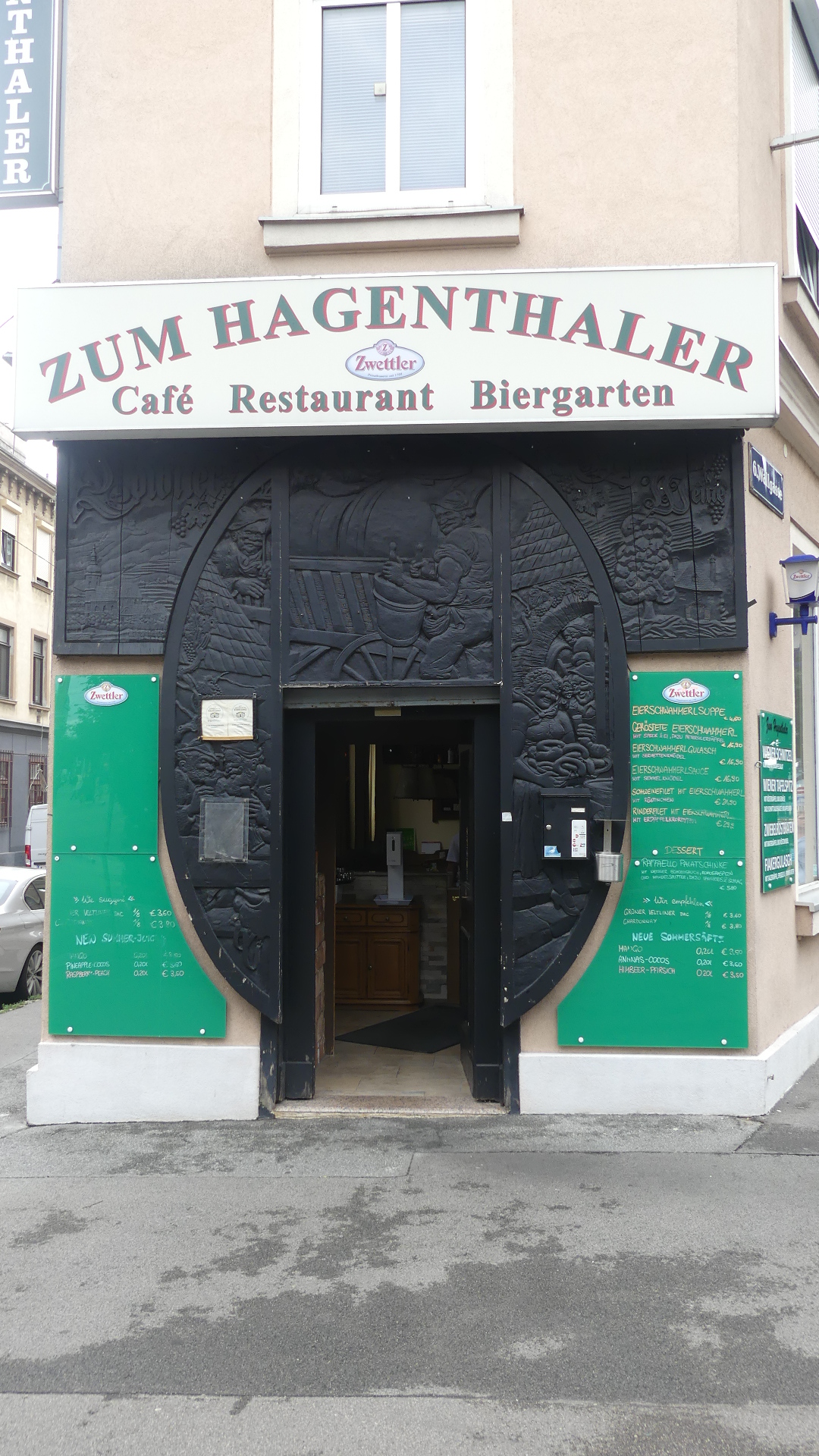
Photos of the Hotel, rail station and IKEA are below. One of the pictures shows a church through the window of the station and one of the pictures shows the church which we found whilst hunting for the IBIS Hotel and the door is the ornate carved door of a cafe/bar near the IBIS.

Photos

Our plan for our time in Vienna involved getting a feel for the layout of the city using the Hop on Hop Off Bus pick the things we wanted to see and return later but the hotel seemed to be some distance from the first stop for the Bus. The hotel receptionist assured us the hotel was centrally located so we walked over to the nearby main shopping Street Mariahilfastrasse after breakfast, and nothing was open – we were to find that the Viennese have some very different habits. The Strasse was very long and no where near to stop 1 of the Hop On Hop Off bus route – the nearest stop turned out to be outside the nearby IBIS Hotel. Using google maps we set off in search of stop #5 on the blue line at the IBIS Hotel.

Well, the IBIS Hotel decided to play hide and seek with us – every time we thought we were getting closer it moved further away. Of course, we were going the wrong way but once we corrected our path we found ourselves in front of the Ibis Hotel only a stone’s throw from our hotel. S**t! We could not take a trick.

Our luck improved once we found the hotel and boarded the bus.

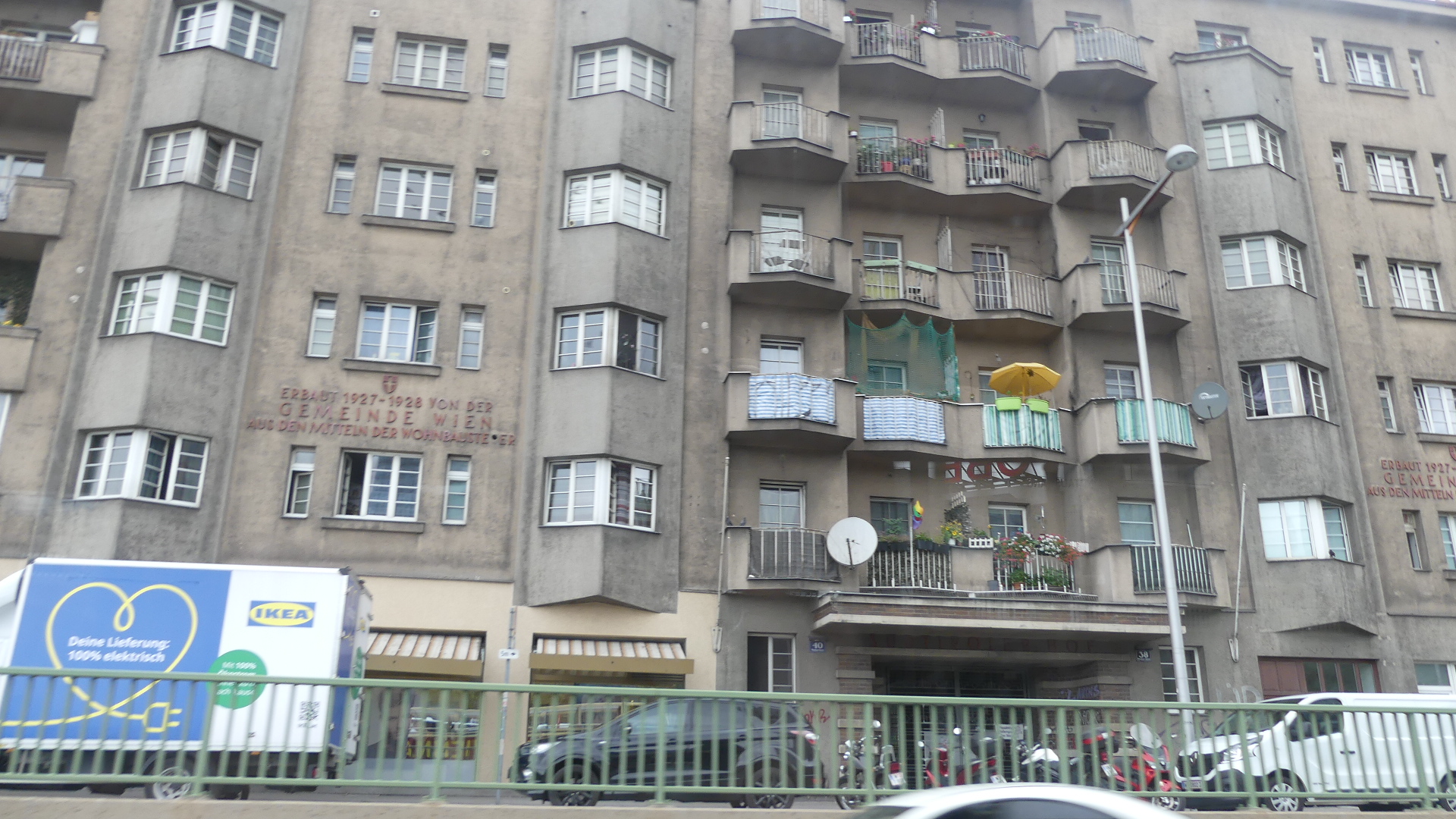
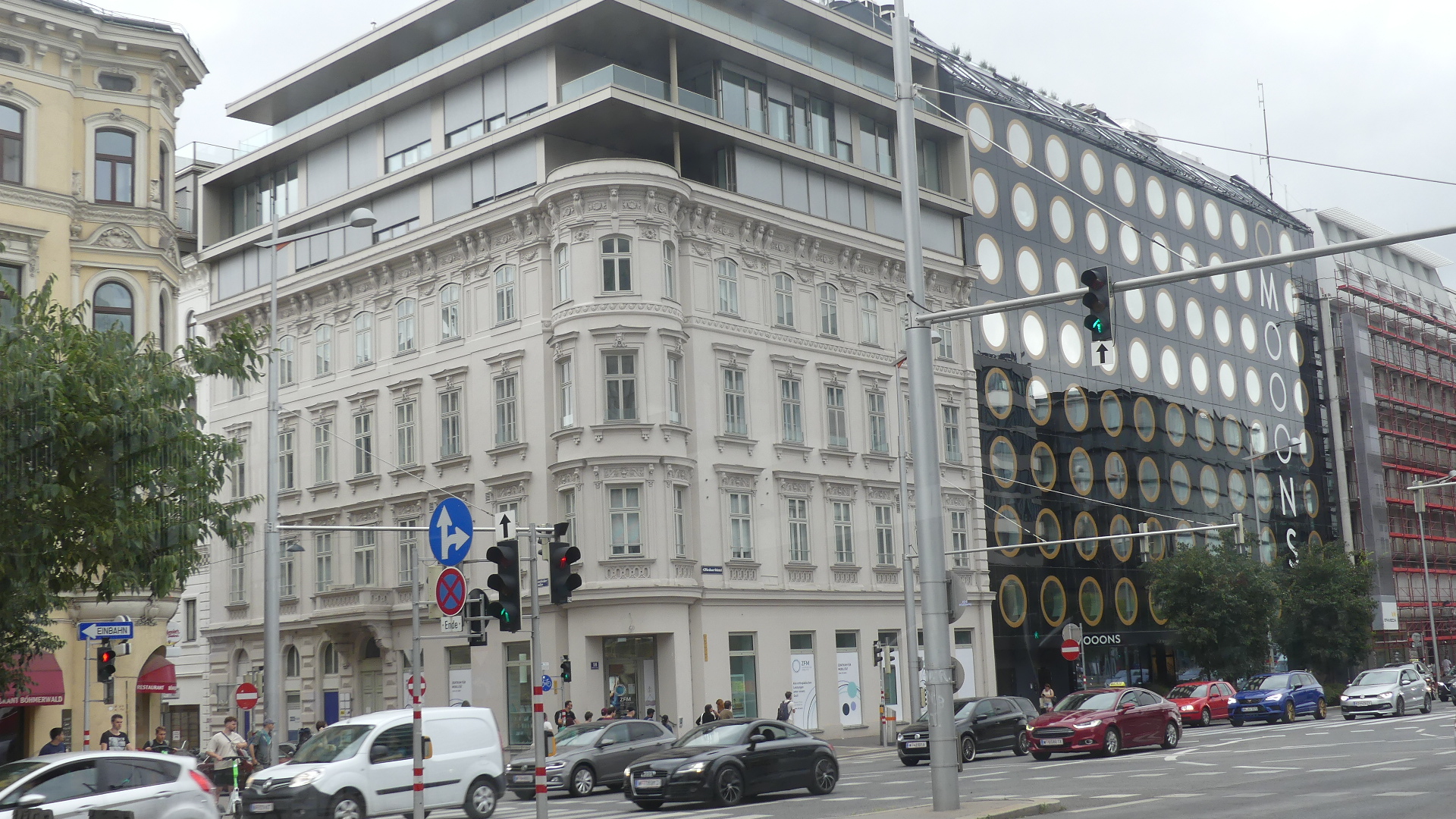
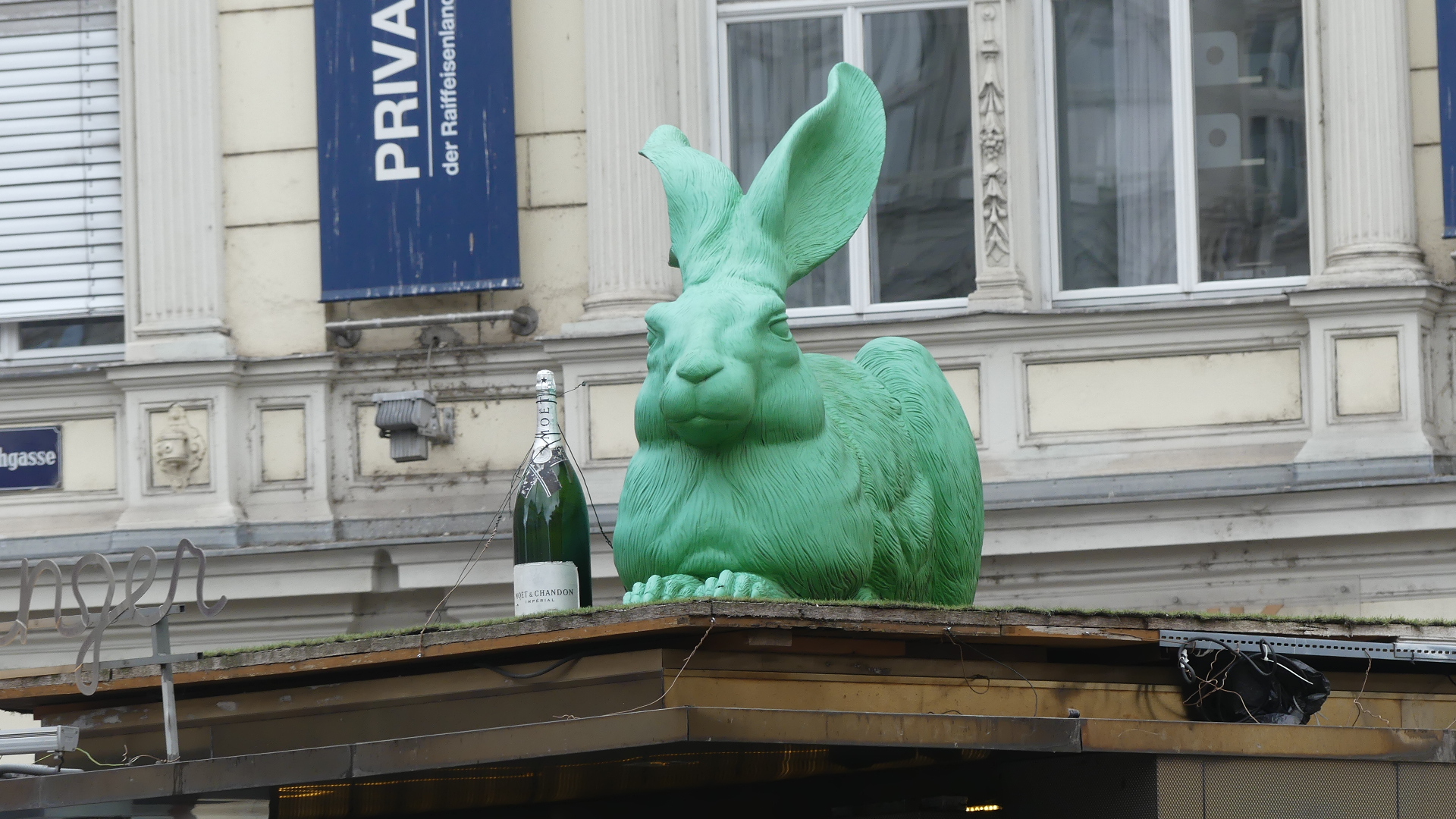
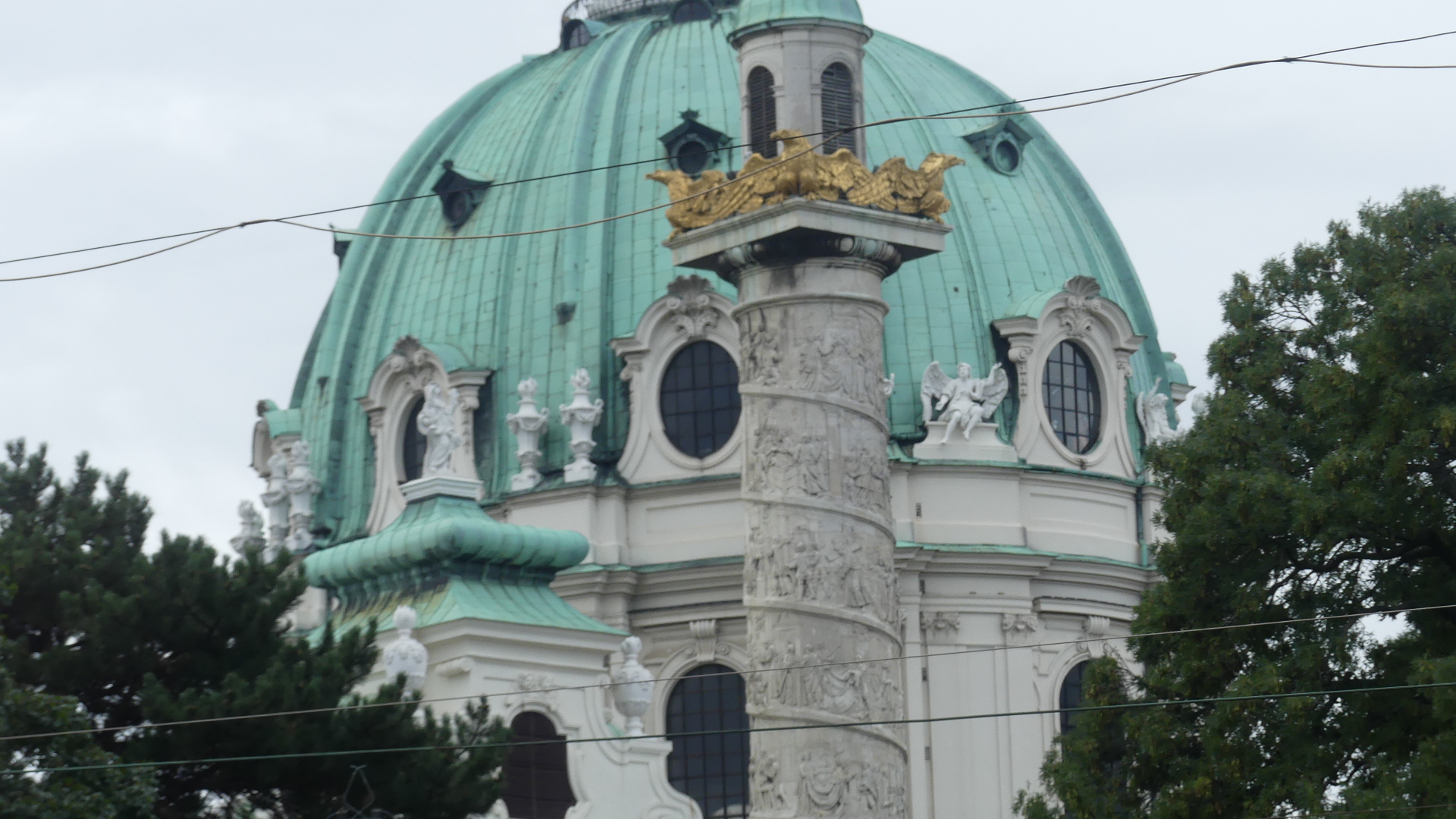
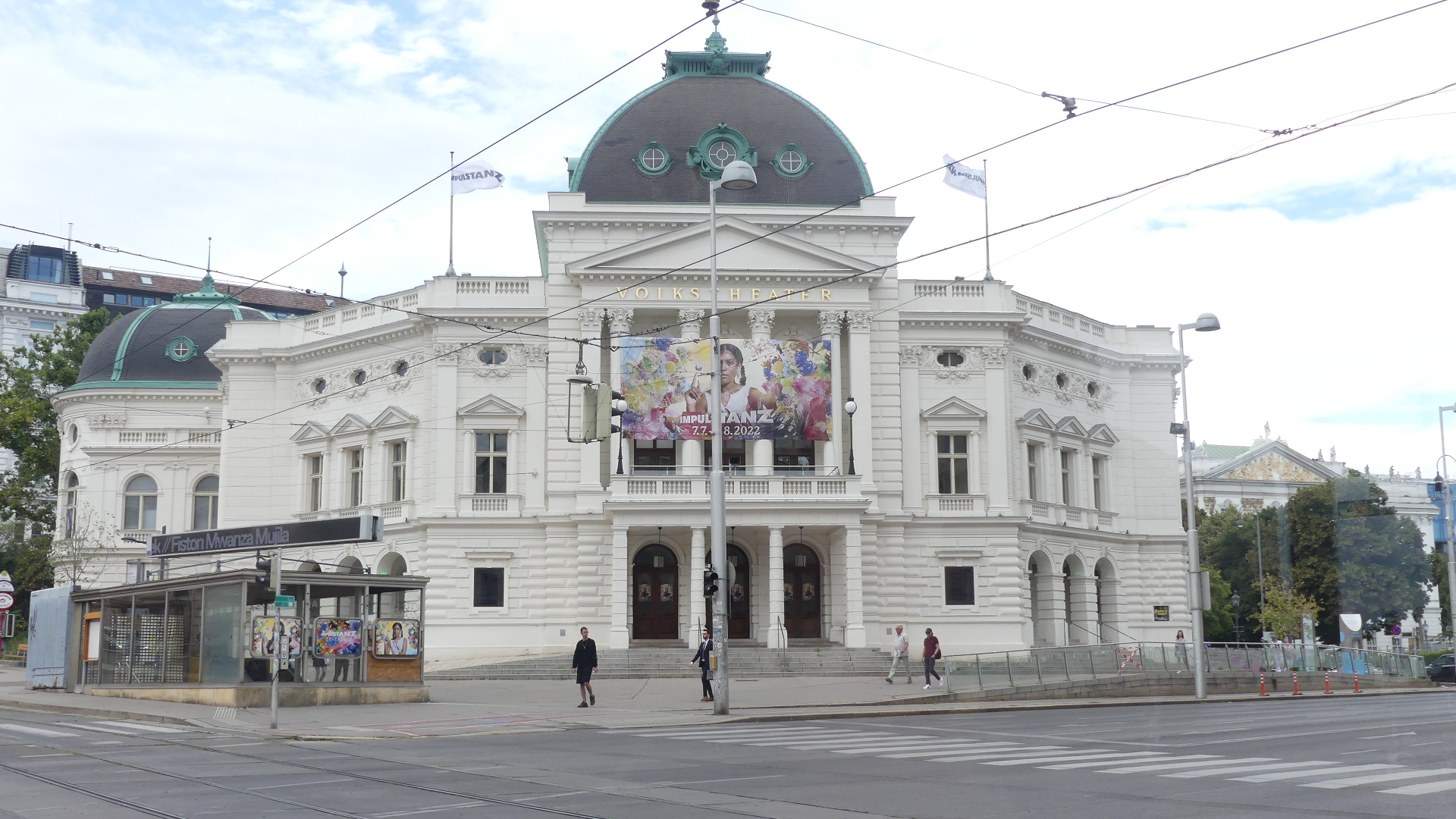
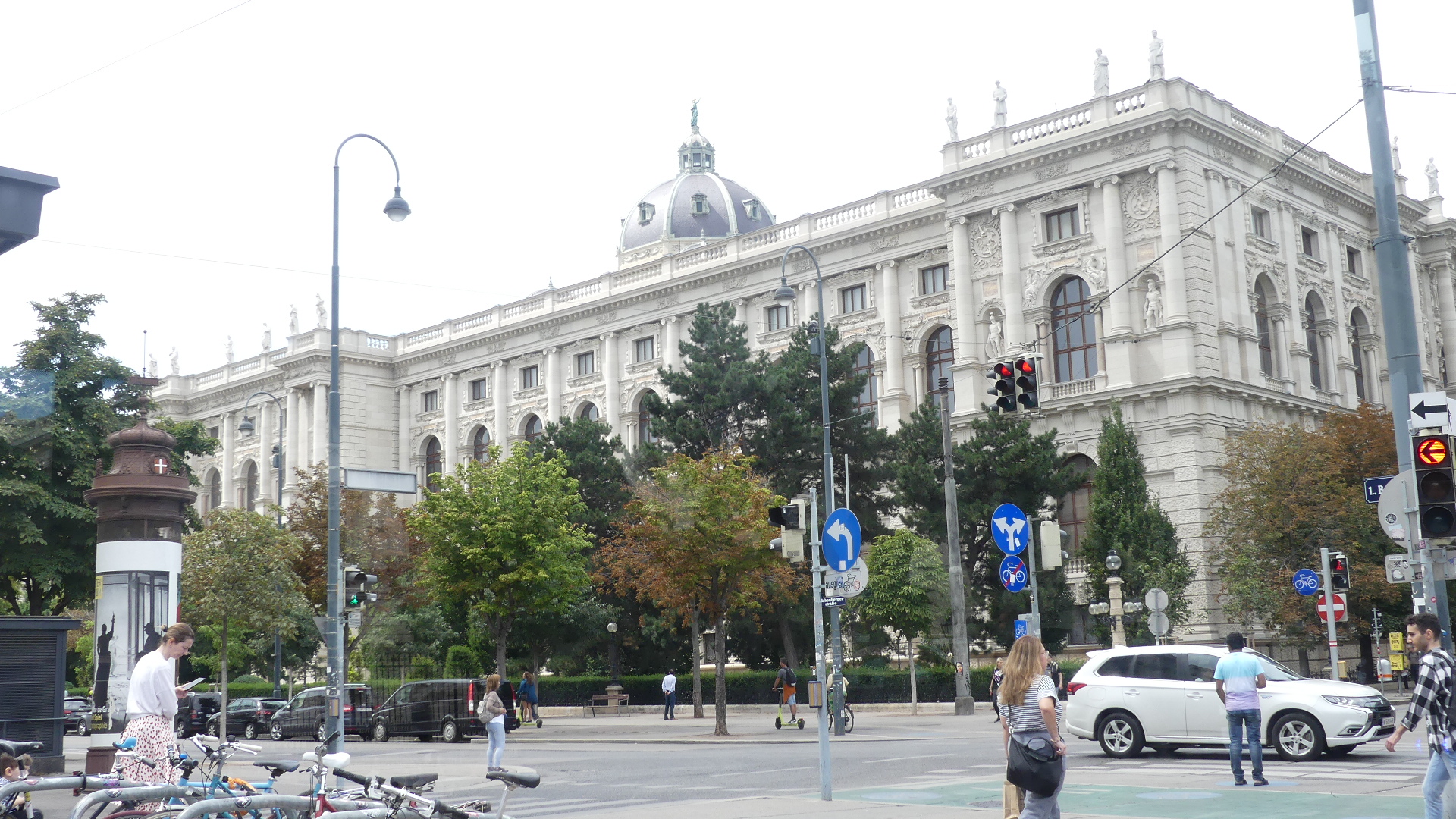
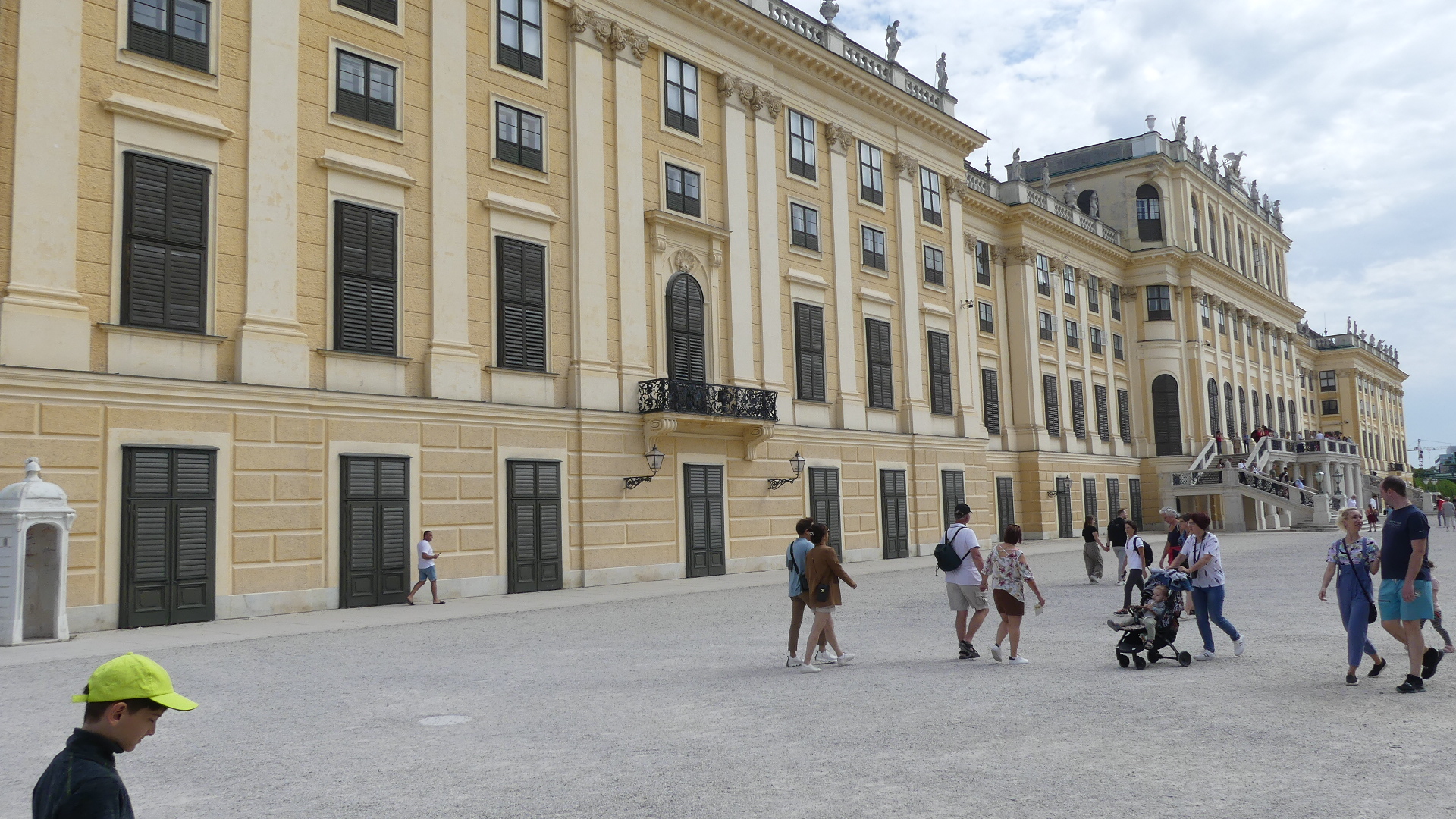
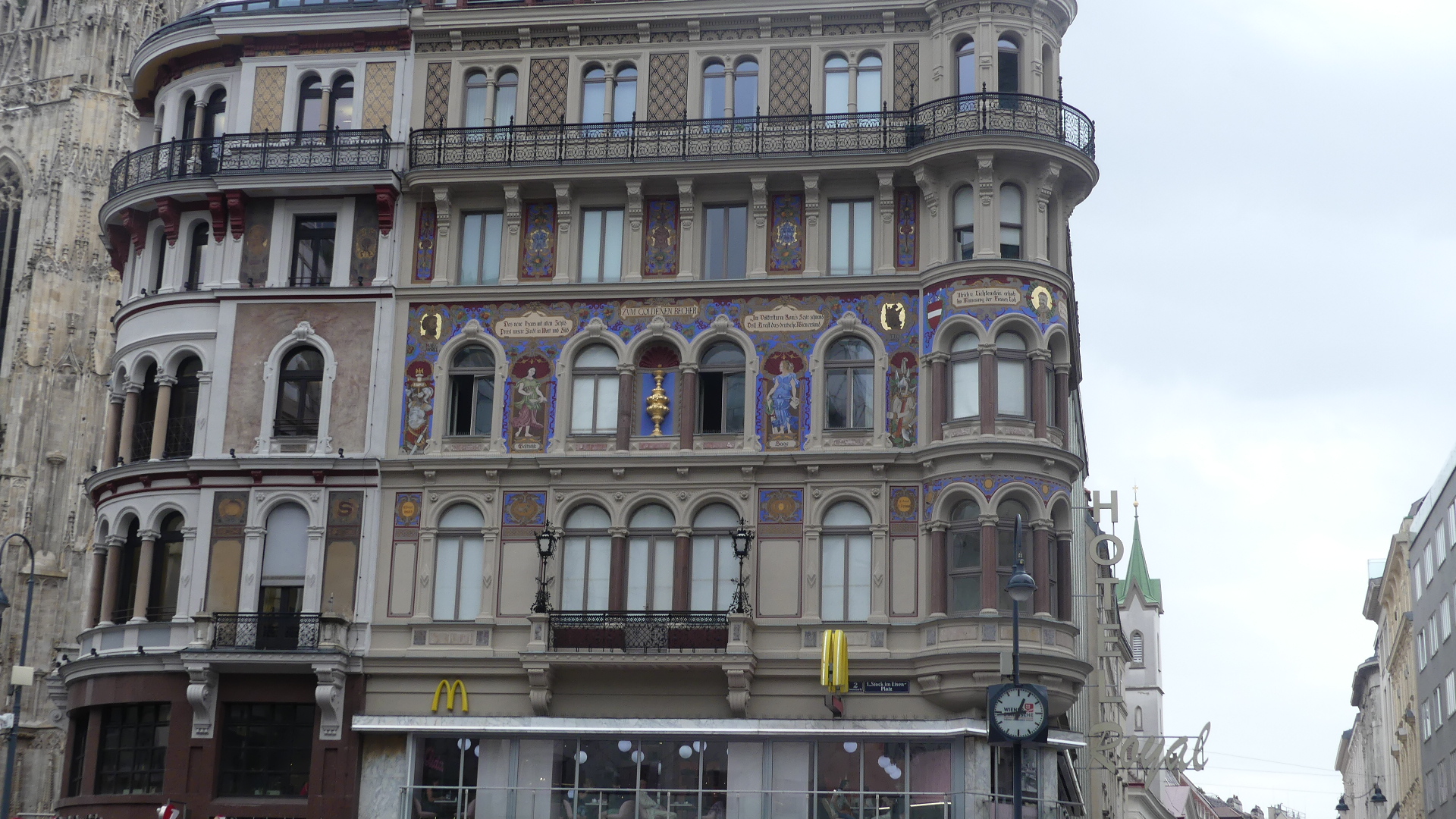
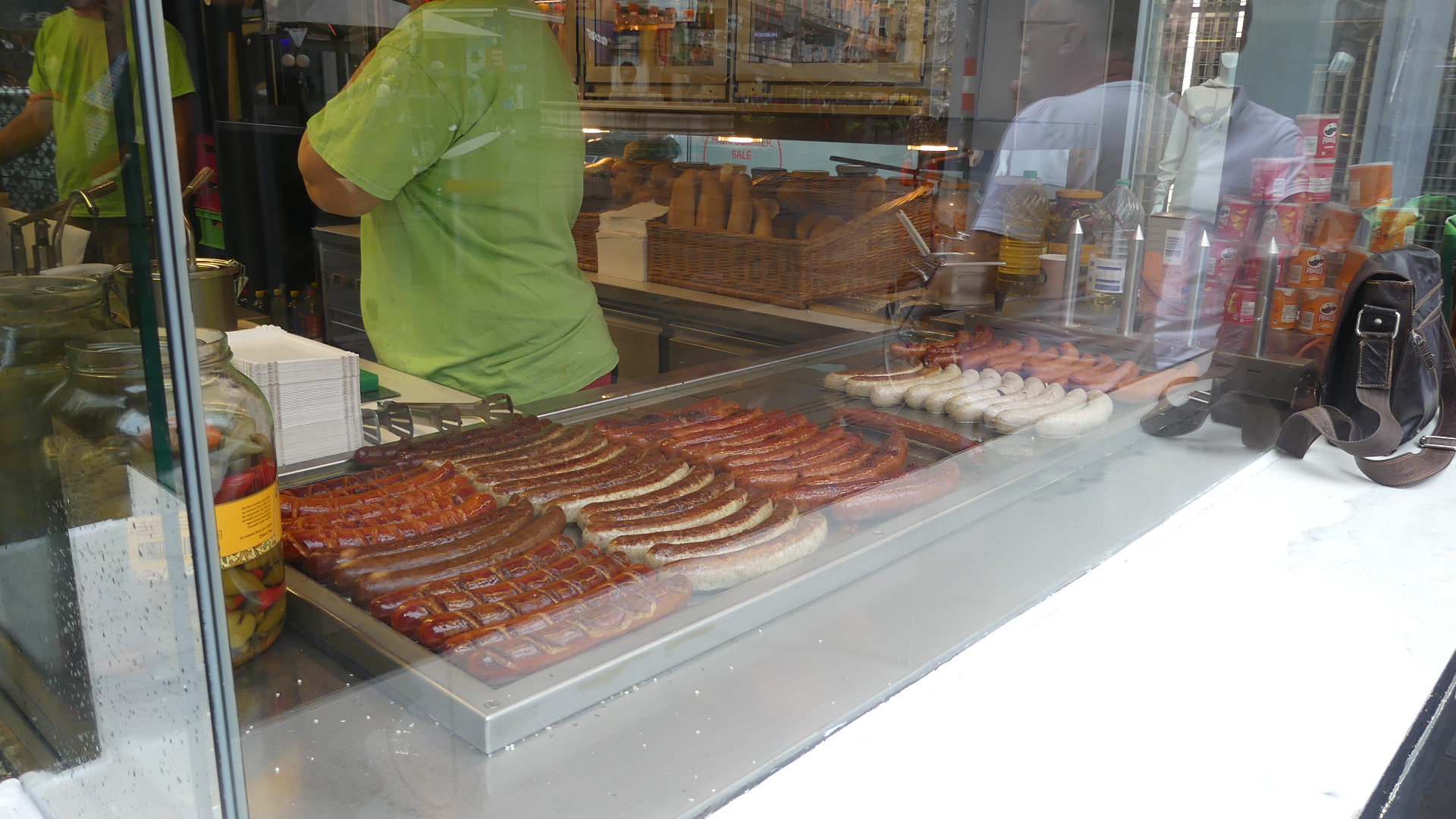
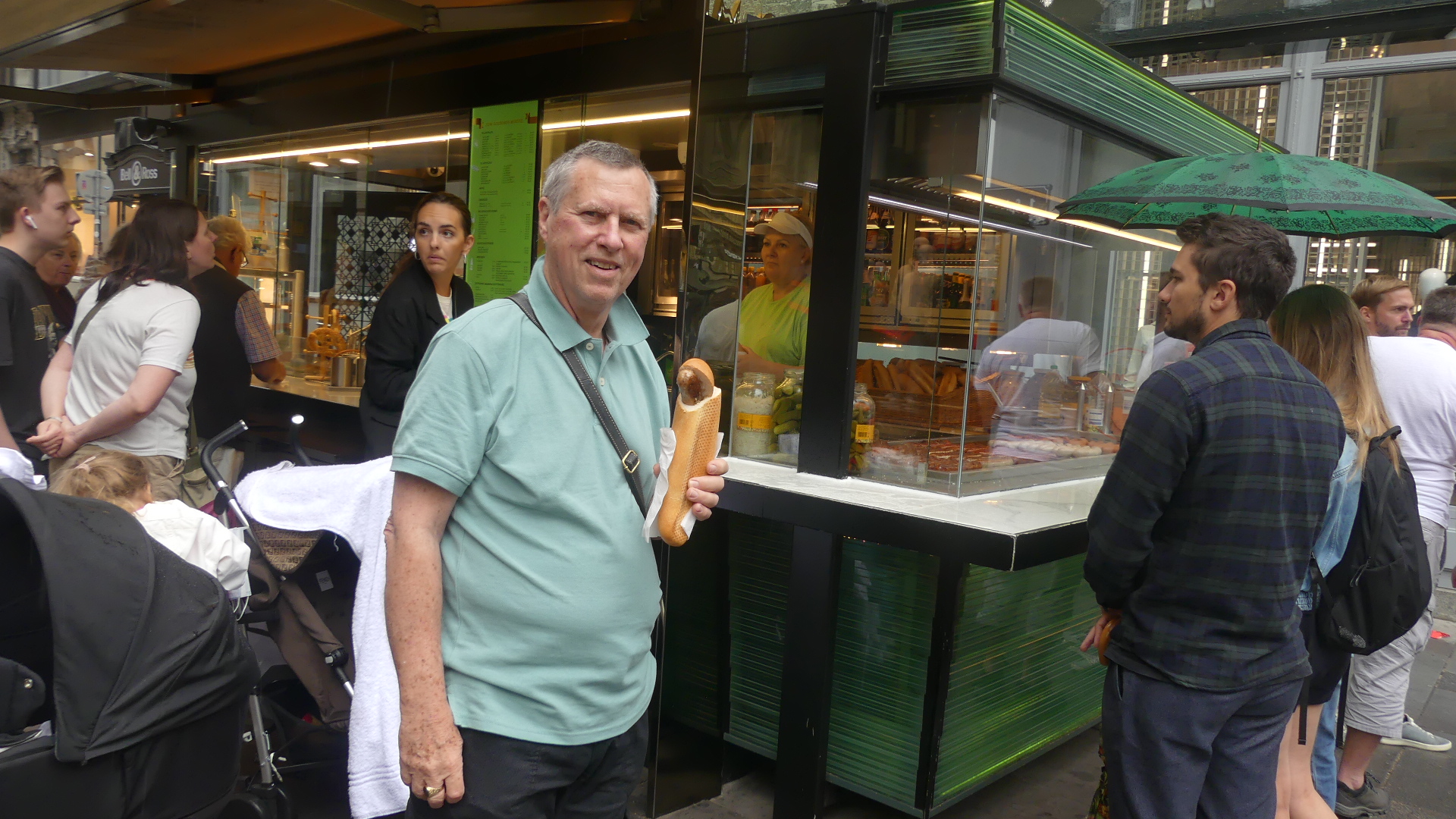
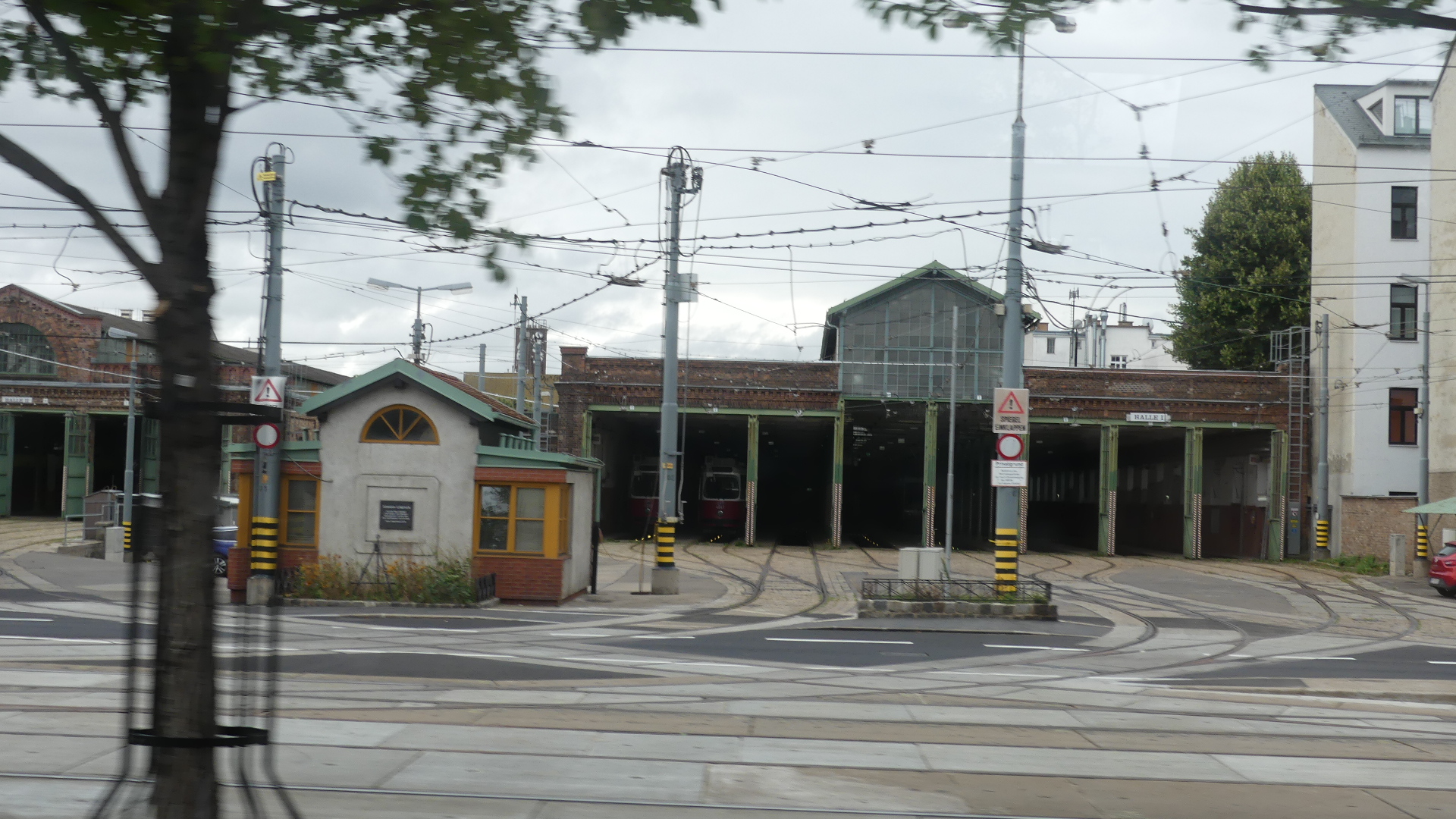
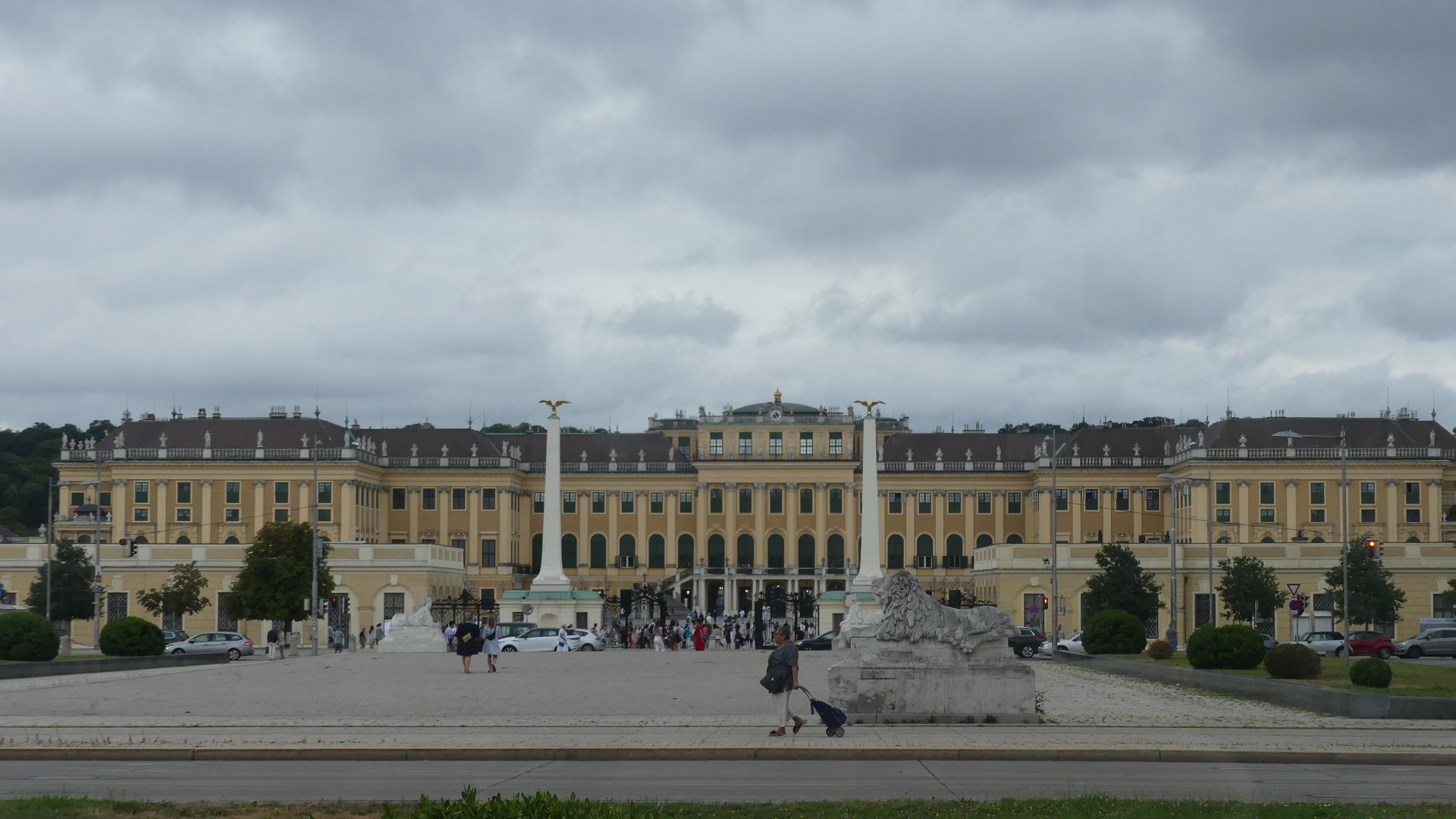
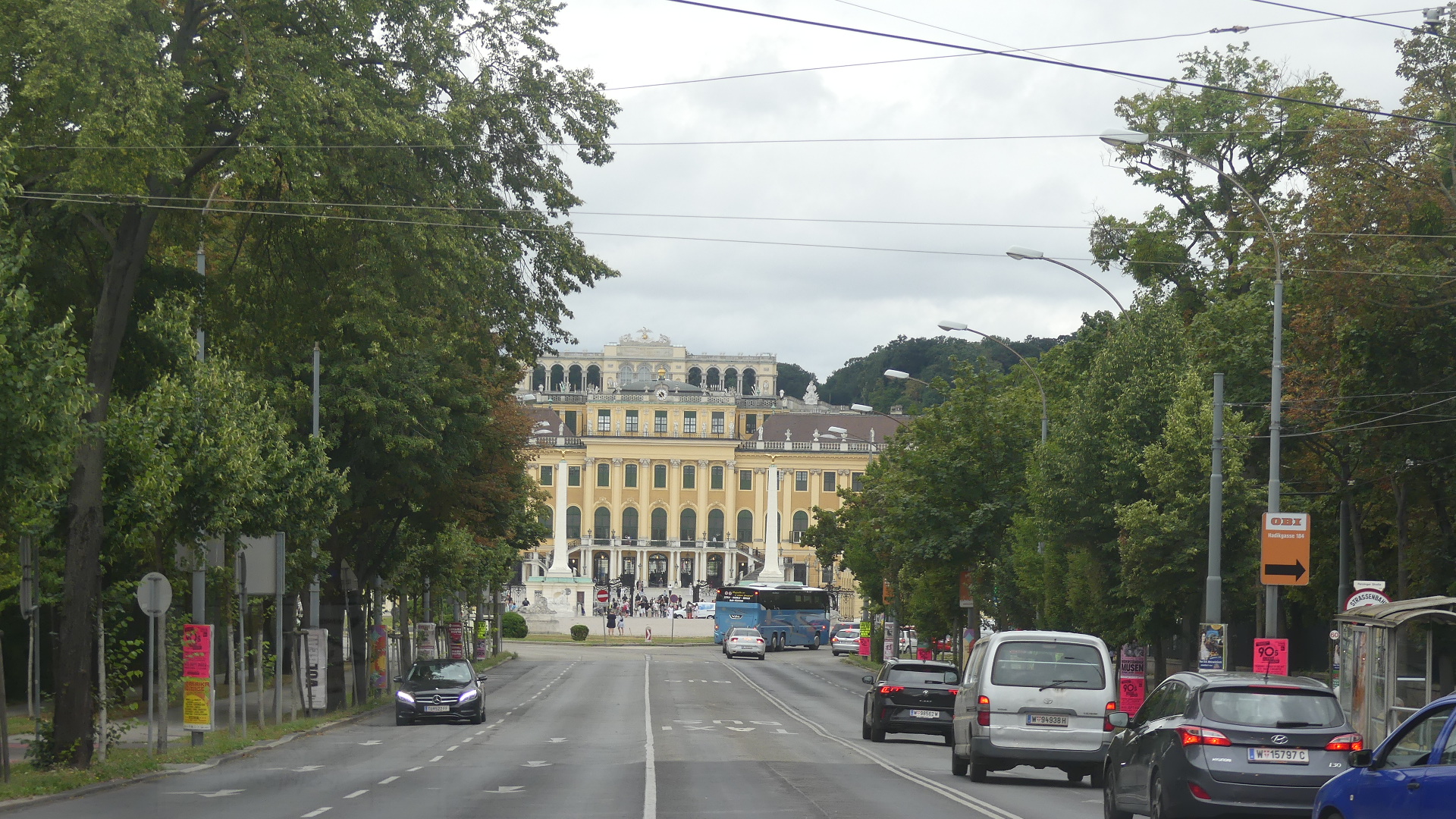
Below are photos of the Viennese trams which crisscross the city and have done so from the beginning of mechanisation as borne out by the derelict horse drawn tram shed still standing in Vienna. At stop #5 Ibis Hotel we got a different angle on the IKEA building, a view down Mariahilfastrasse before the Viennesse arise for the day and we passed this elaborate carved door frame to a restaurant near the Ibis. The Blue line stop 6 is the Schloss Schonenburg to which we would return, and this line generally took us on a cultural tour of Vienna and through districts of Council flats which remain popular till today. The flats are identifiable by the notice on the building that they were built by the Council and the year of building. Fifty percent of housing in Vienna is council owned and rented. These apartment buildings stand out from the modern constructs of glass and metal. See if you can pick out the French Embassy amongst these pictures. One of the features of Vienna is its sausage stands – the Viennese refer to them as “the wurst sausage stands” and don’t understand our mirth about that description. Here is a picture of one near the State Opera featuring a green rabbit. The Viennese treat these similar to a pub where they meet fellow citizens after a show and have a sausage and glass of bubbles or a beer – where we might have a “lamb sandwich and a schooner”. Finally, a statue in honour of Emperor Franz Joseph I think outside the Art museum “Albertina” – the Hapsburgs’ have left their mark everywhere.

Photos

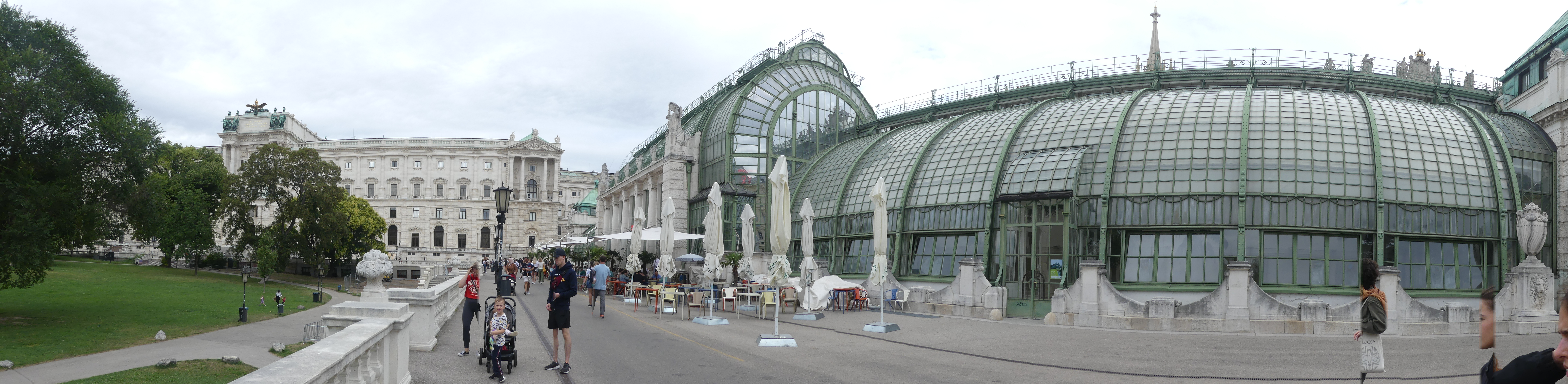
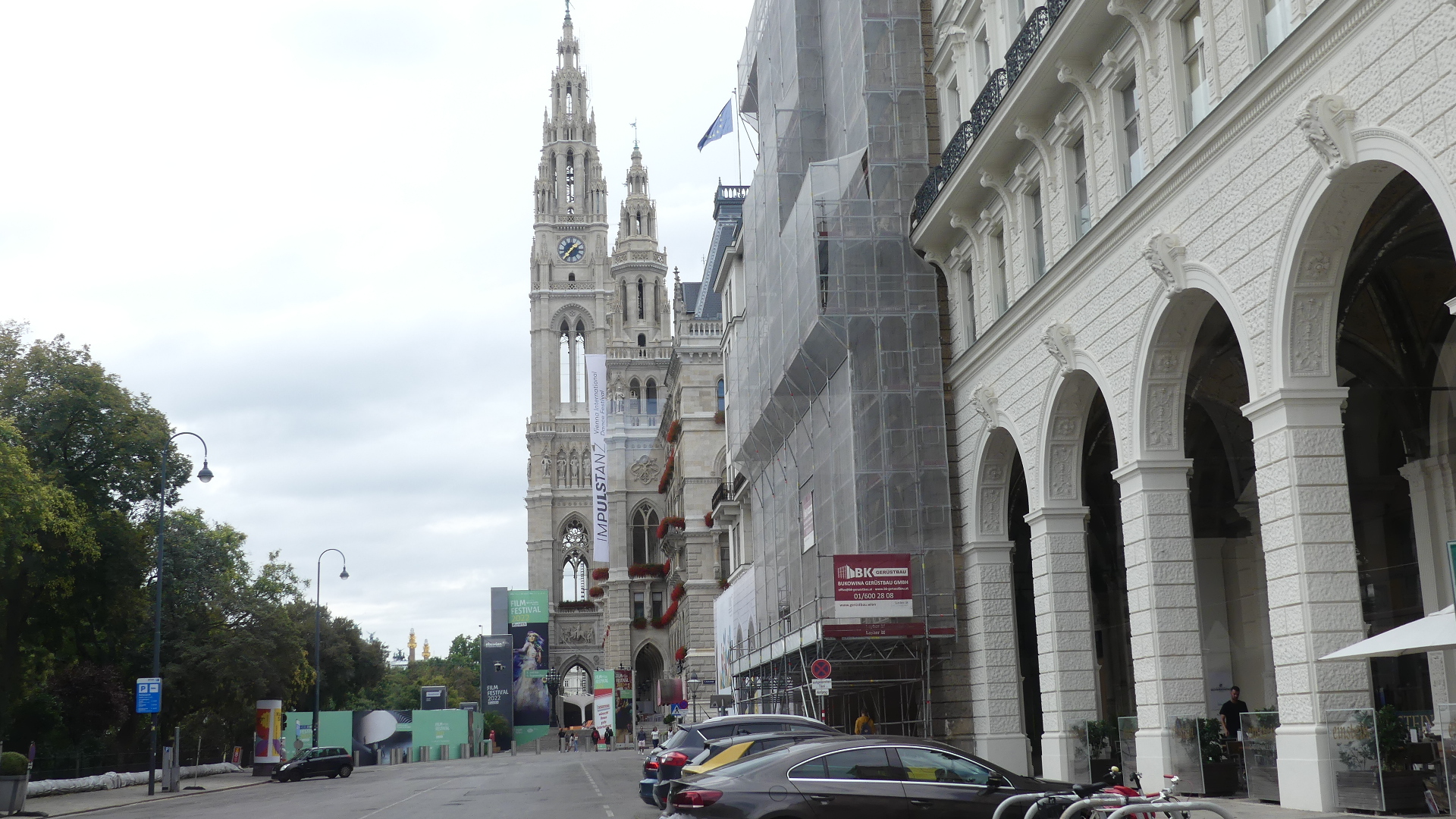
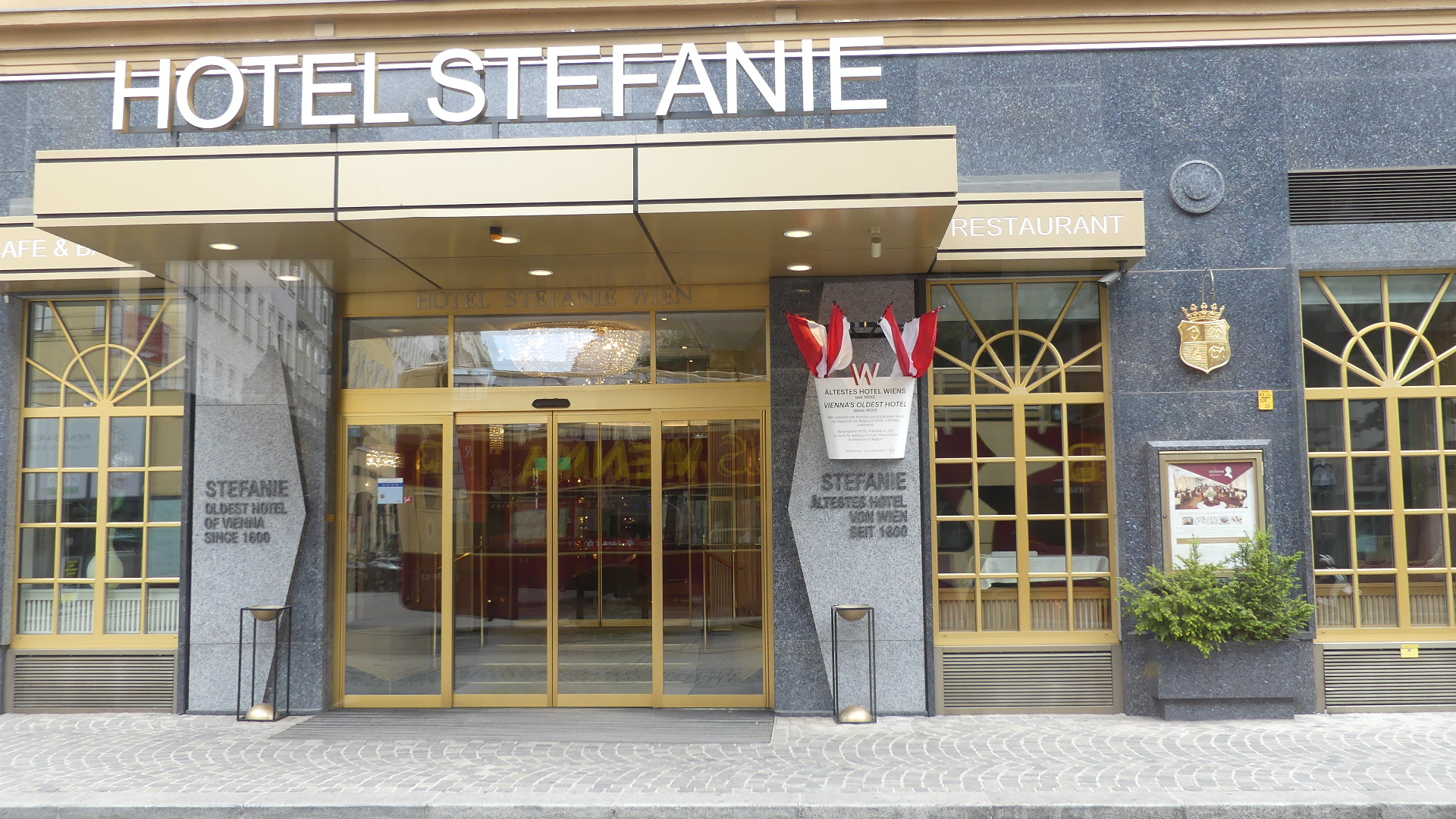
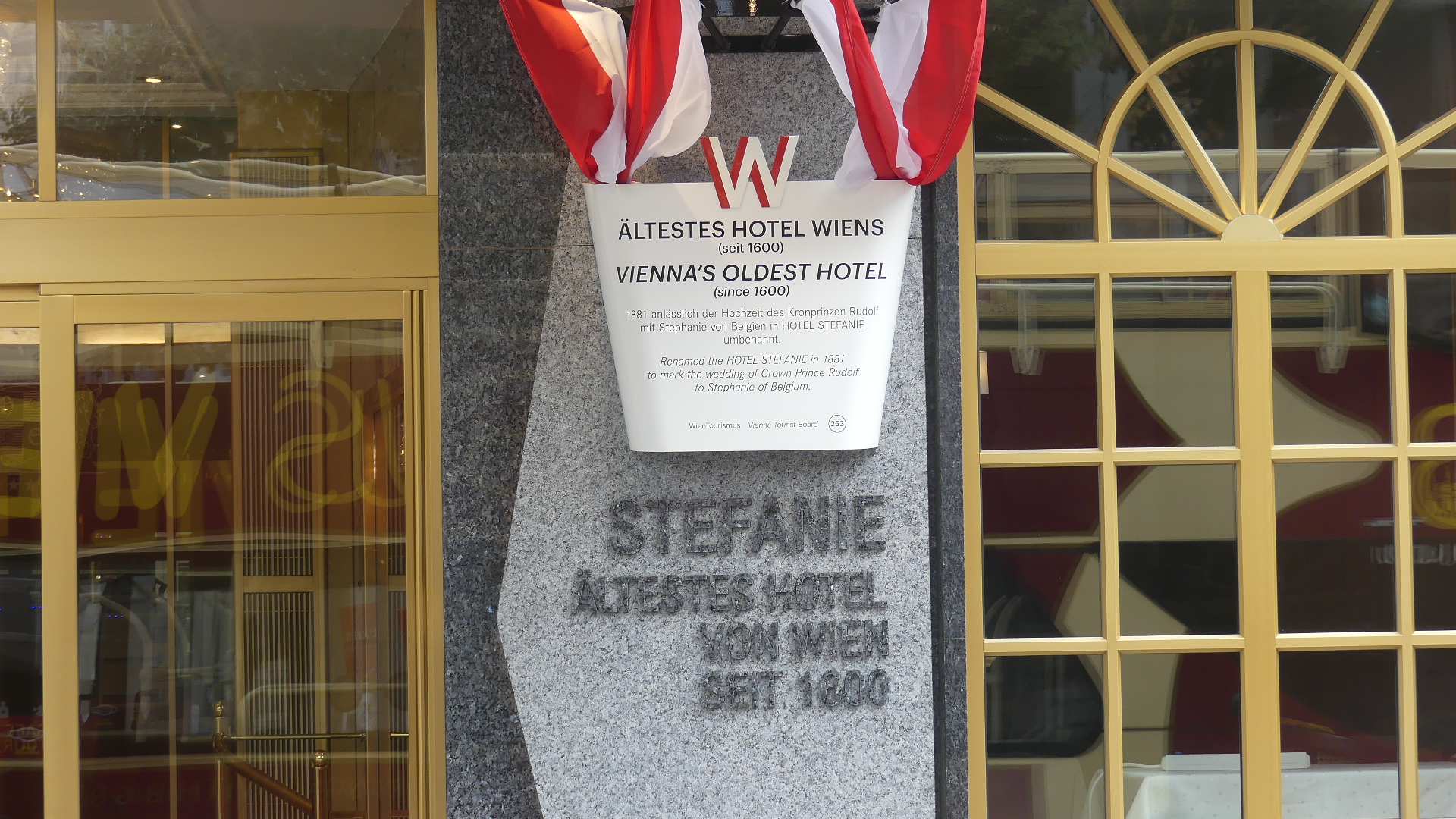
We stayed on the bus until we had completed the blue line and then we joined the red line filling in the blanks around our knowledge of the city. The following photos show where we had lunch at the Palms Restaurant in the former Orangerie of a grand house, some of the grand designs repeated throughout Vienna, the State Opera, the Rathaus (City Hall) and Hotel Stephanie Vienna’s oldest hotel.

Kerry was sick of the bus by the end of the red line – some parts of the red line were long and boring with little of interest to us. Once back at stop 1 we took the Blue Line Bus to stop 3 and walked home along Mariahilfastrasse which is the retail mall of Vienna connecting through to the Schoenberg Schloss (PALACE) – so a bloody long road. We had to replace our missing clothes and here was a street full of shops – so shopping we did go. The loss of the luggage and having to deal with the airline and the insurer greatly diminished our enjoyment of the holiday. Some more photos of the architecture of Vienna.

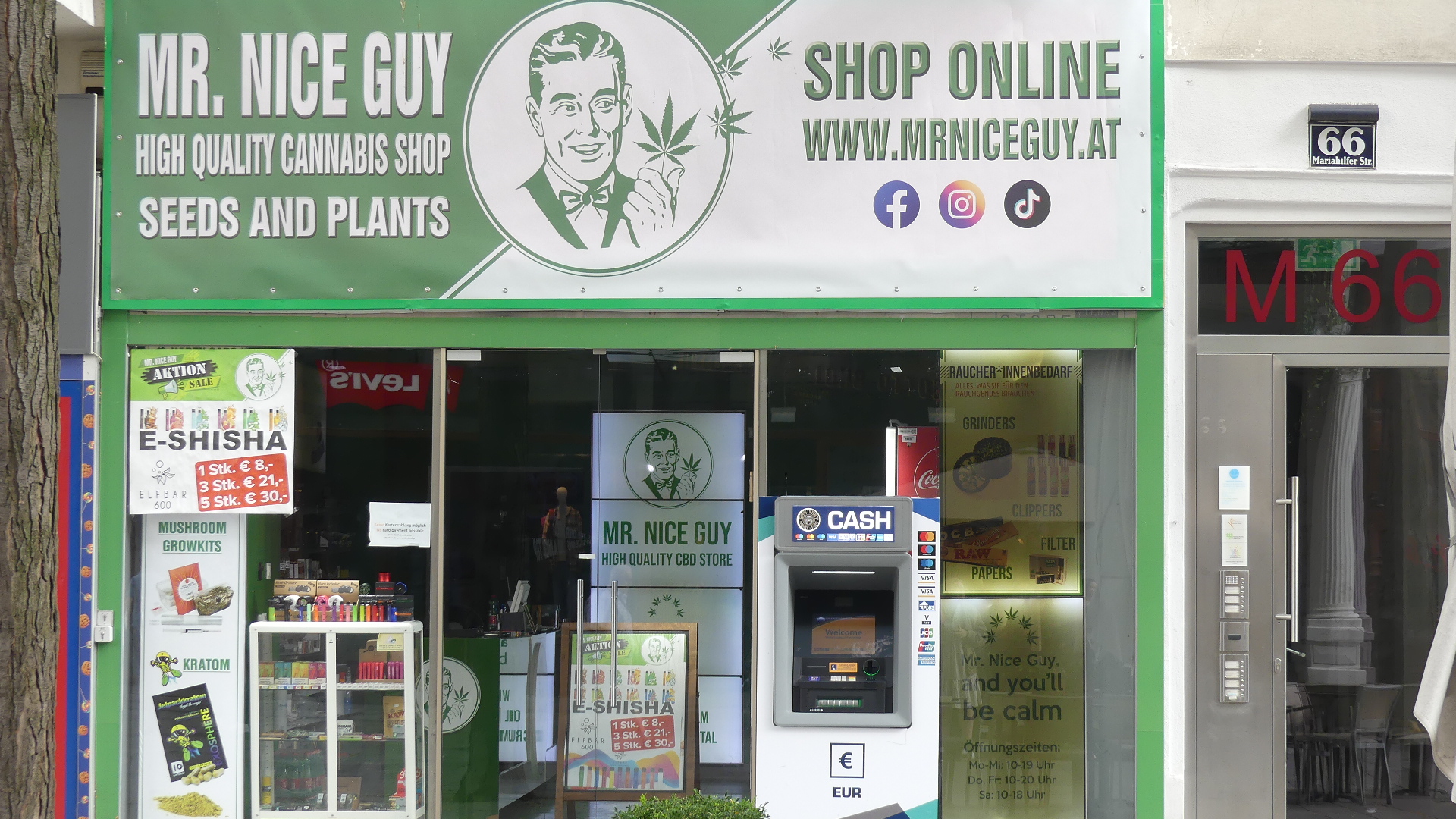
The second day started with breakfast at the hotel followed by some deep dives into particular parts of Viennese life. Our hotel had the luxury of 3 floors and an elevator – it nearly fitted slim Kerry and sleek Glendon who had to breath in. Mariahilfastrasse was asleep when we ventured out, but it meant we were not dodging bikes scooters and the occasional car and motor scooter in the crowds of people shopping up and down the Strasse – it comes to life around 10.00am. The following pictures demonstrate this. Note the “Viennieserrie” and the Cannabis shop (Mr Nice Guy”).

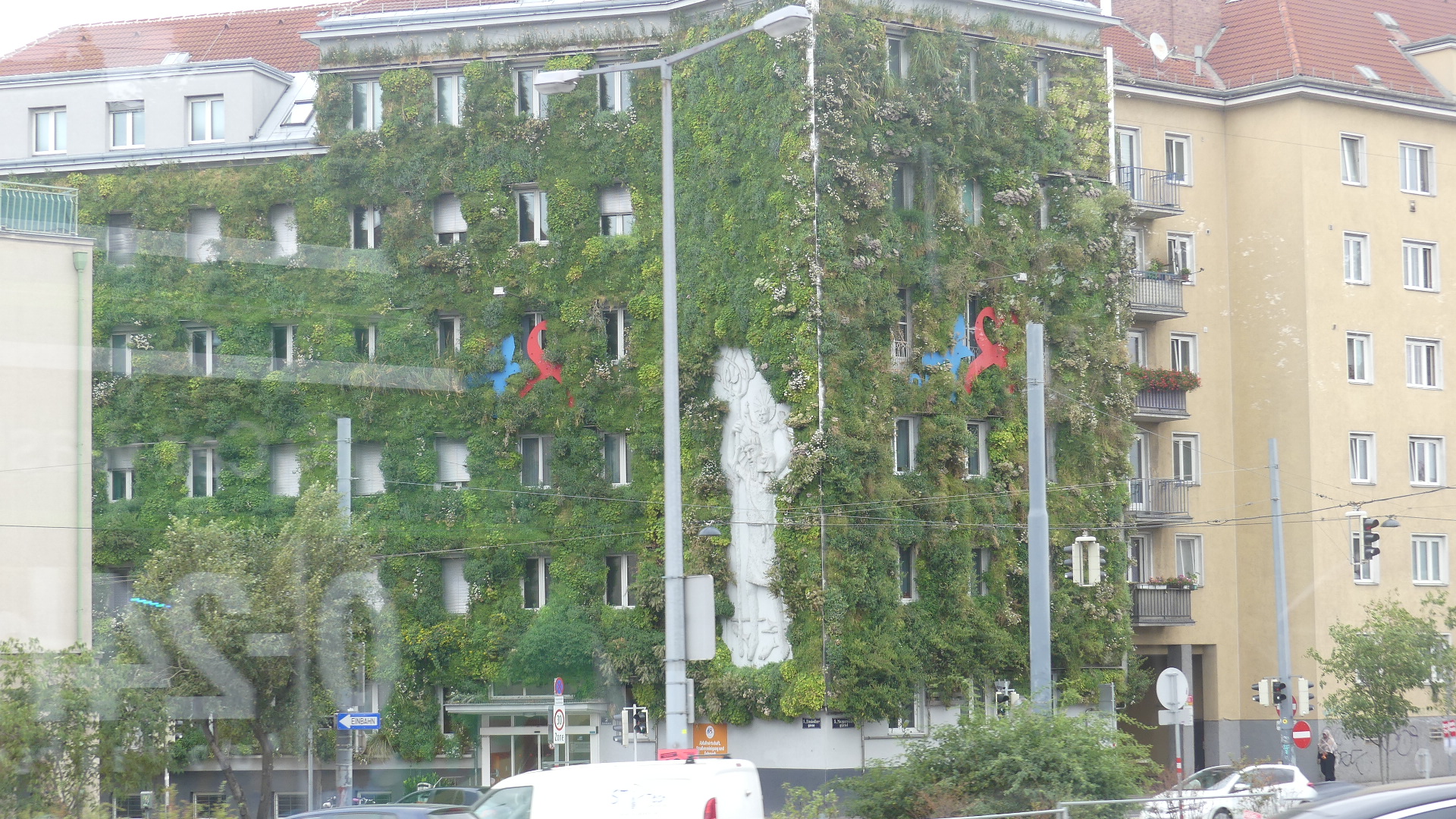
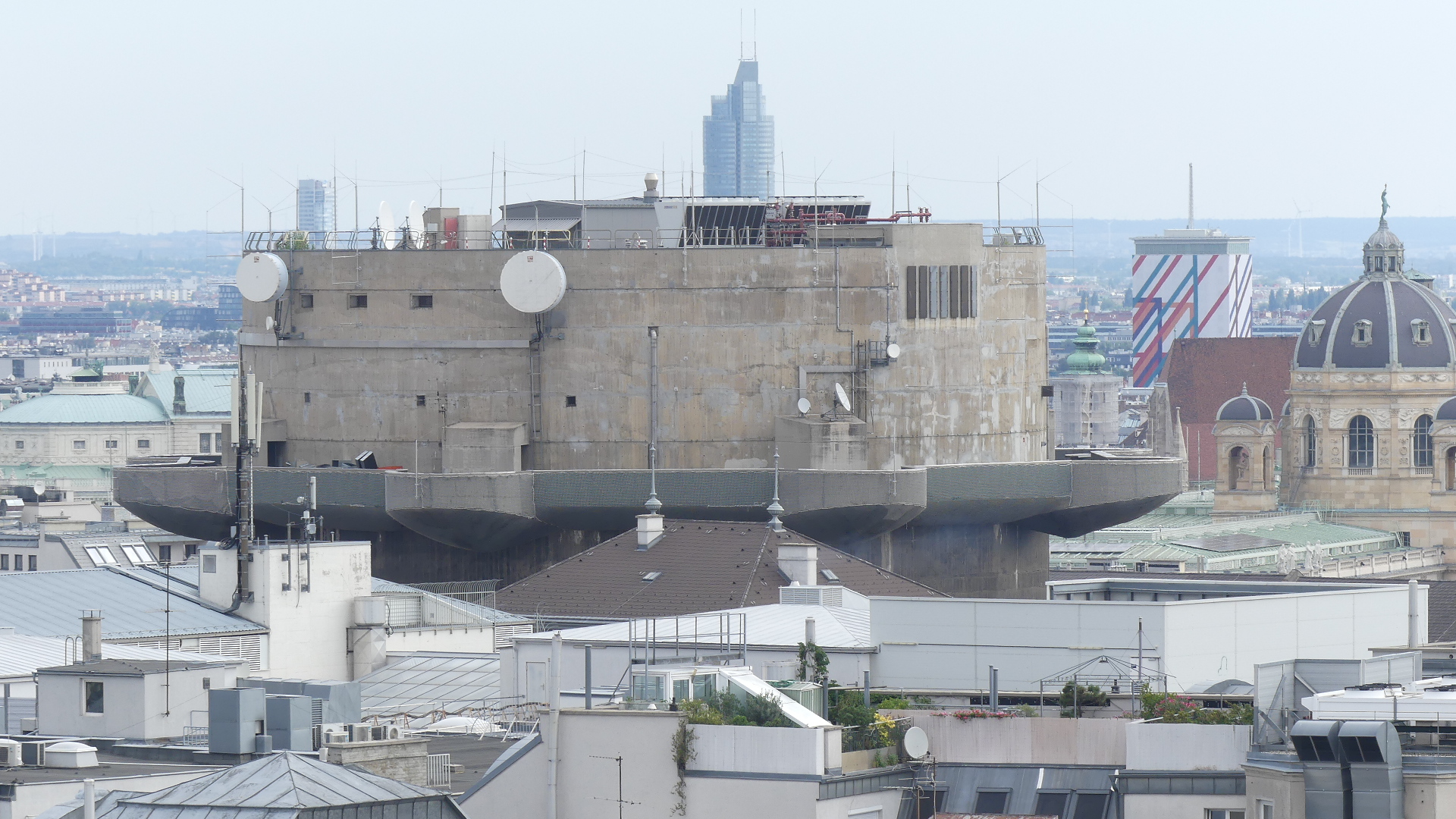
Notice that the photos below include a tower with plants growing up the side – this is the aquarium. During the Nazi occupation of Vienna, the Nazi’s built 6 gun in-placement towers containing anti-aircraft guns and search lights to combat the Allies bombing of Vienna. The towers are so structurally strong that the Viennese have found it commercially unviable to demolish these towers although we only saw one that had been partially demolished and two others – this tower converted to the aquarium and another which we viewed from the top of the aquarium. We were able to get a good oversight of Vienna atop of the aquarium. Many buildings were destroyed and faithfully restored but the gun tower to an aquarium was remarkable.

Photos

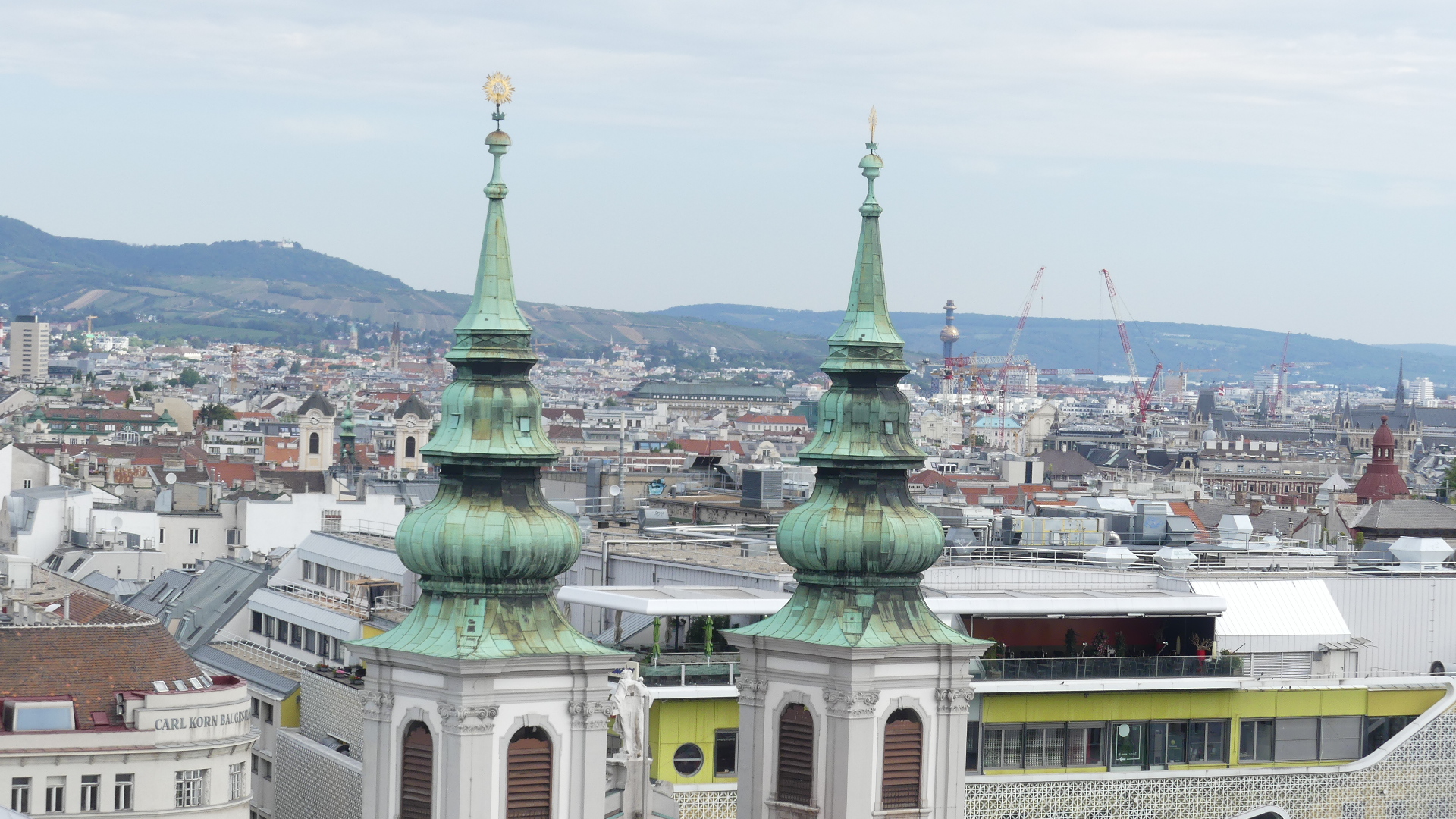
Working our way along Mariahilfastrasse we came across this church which strangely has a statue of the composer Josef Haydn in front of it. Although a contemporary of Mozart and Beethoven and working with them in Vienna I could find no connection to this church. However, we encountered various persons living on the street whom we helped and a student from Kosovo who we helped get a meal that day and was it coincidence that Haydn had also known hunger whilst growing up.

Photos

There are a number of alleys and laneways off Mariahilfastrasse and these photos take you through this particular lane.

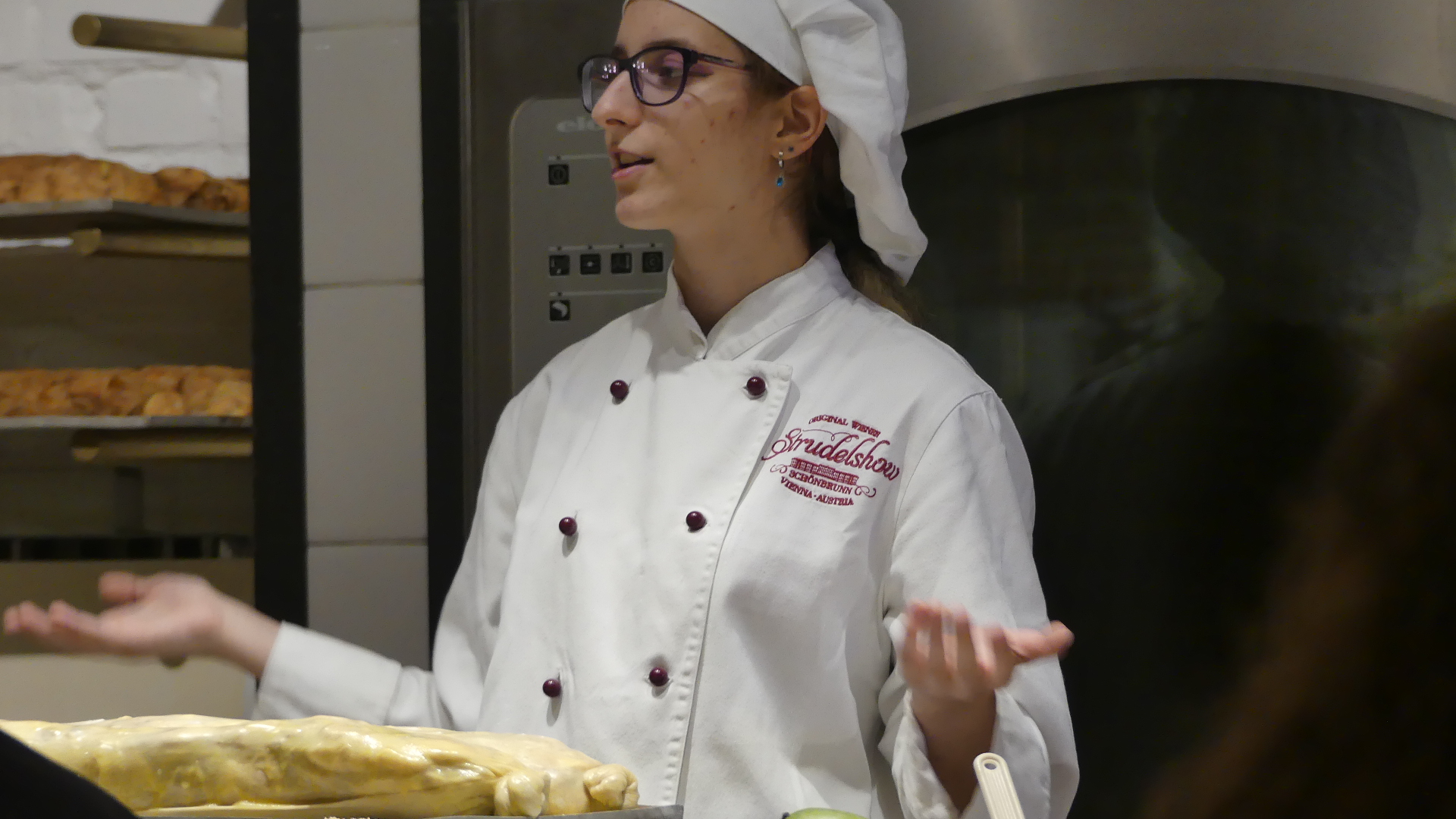
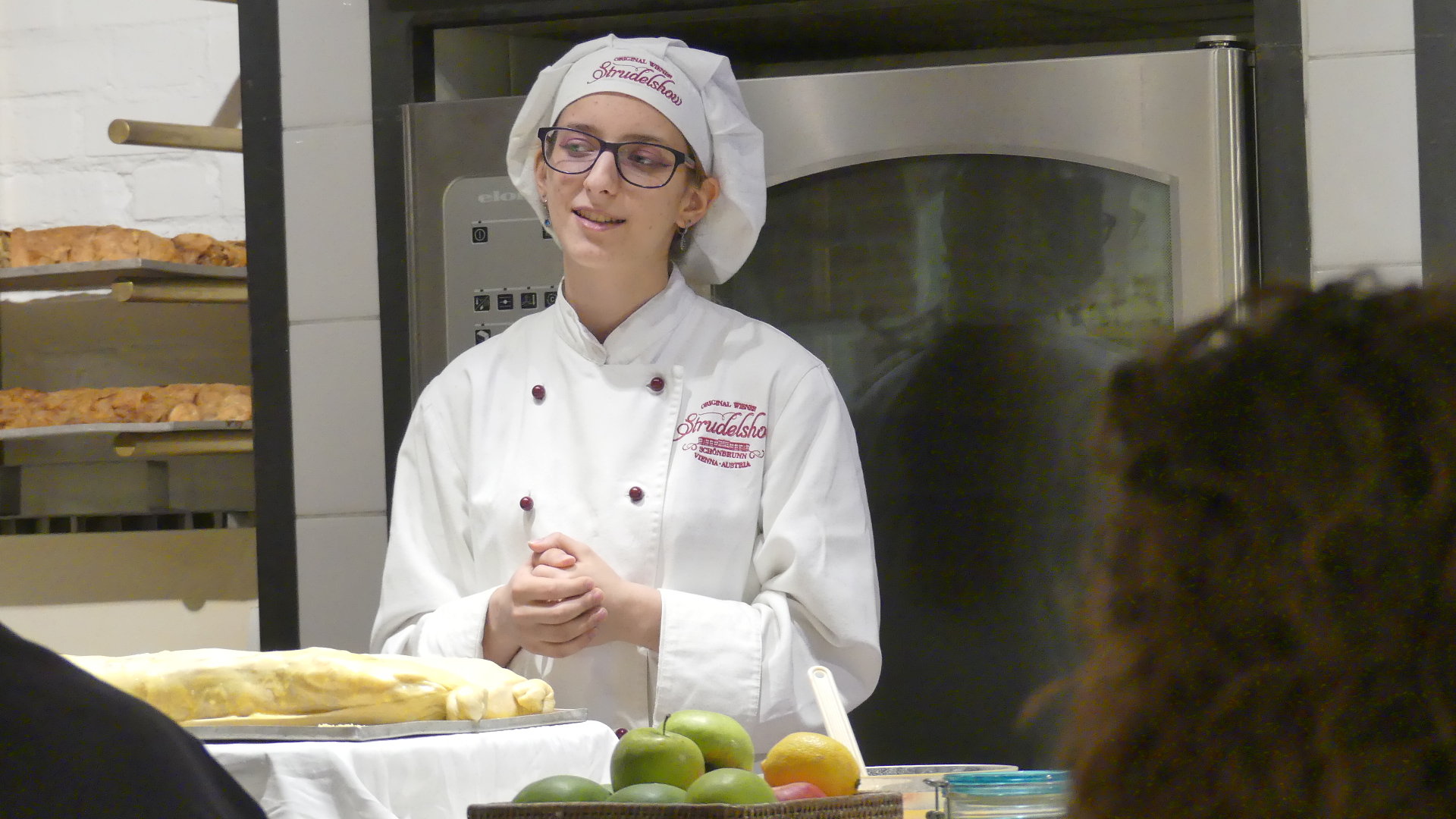
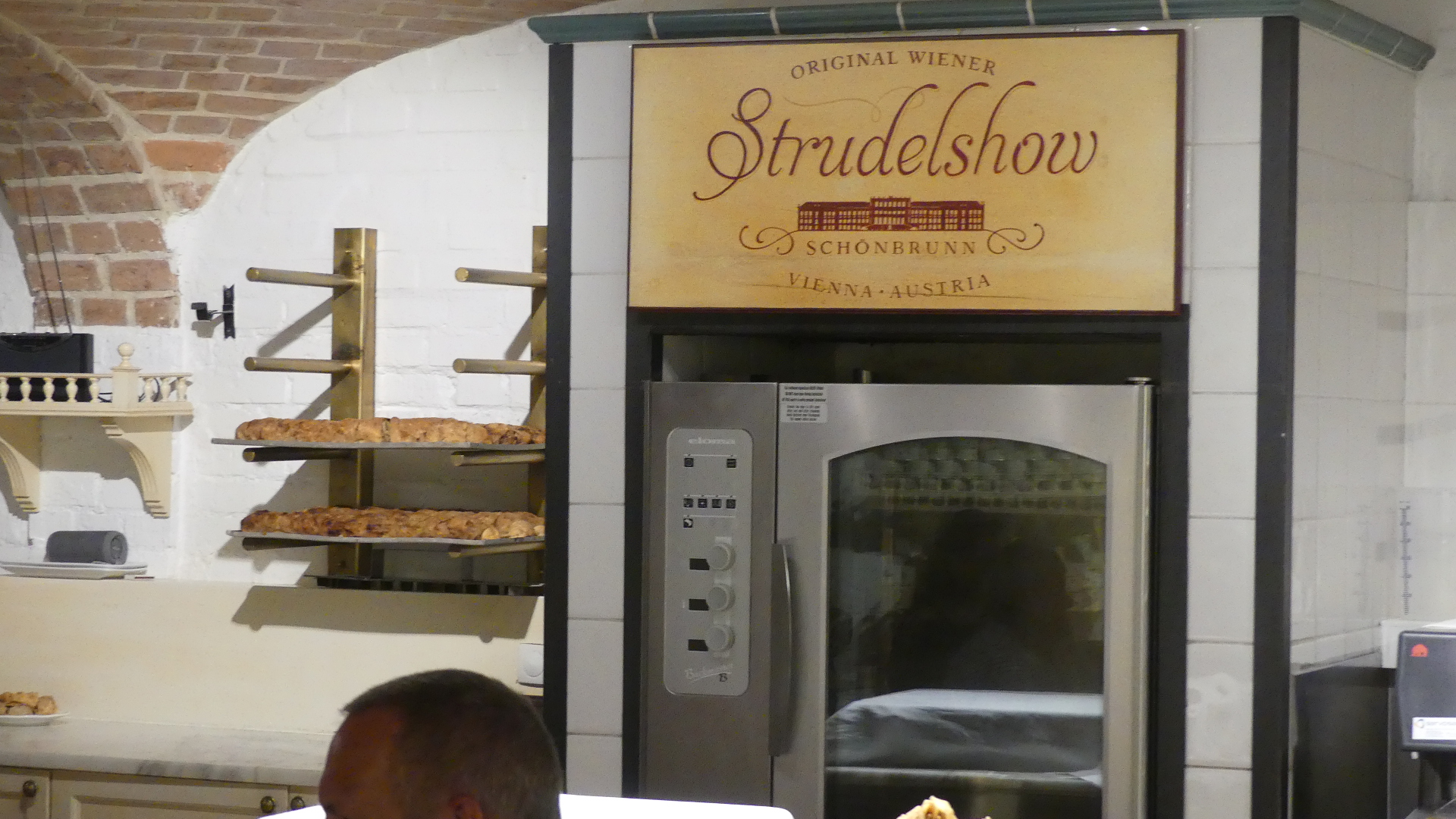
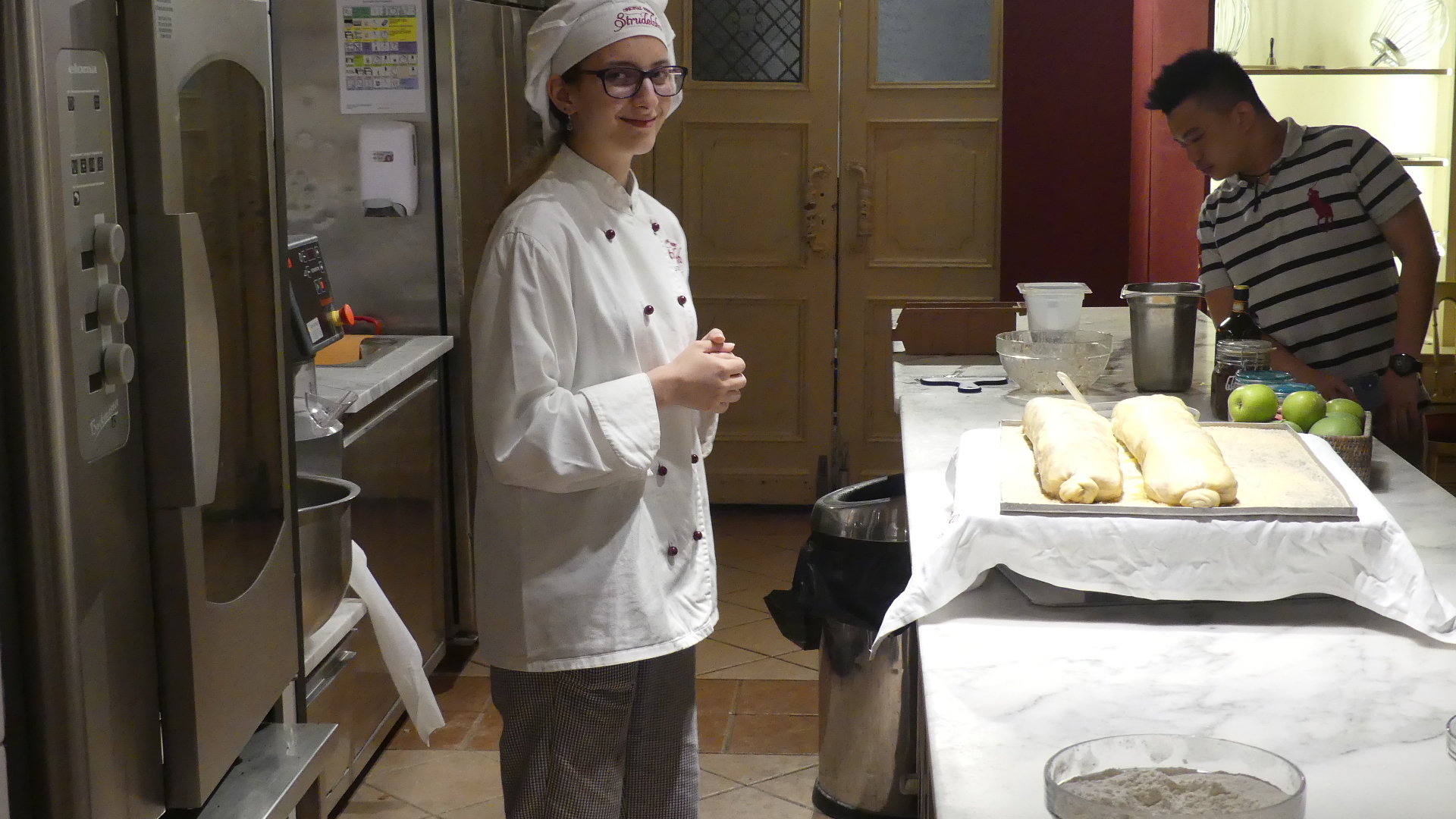
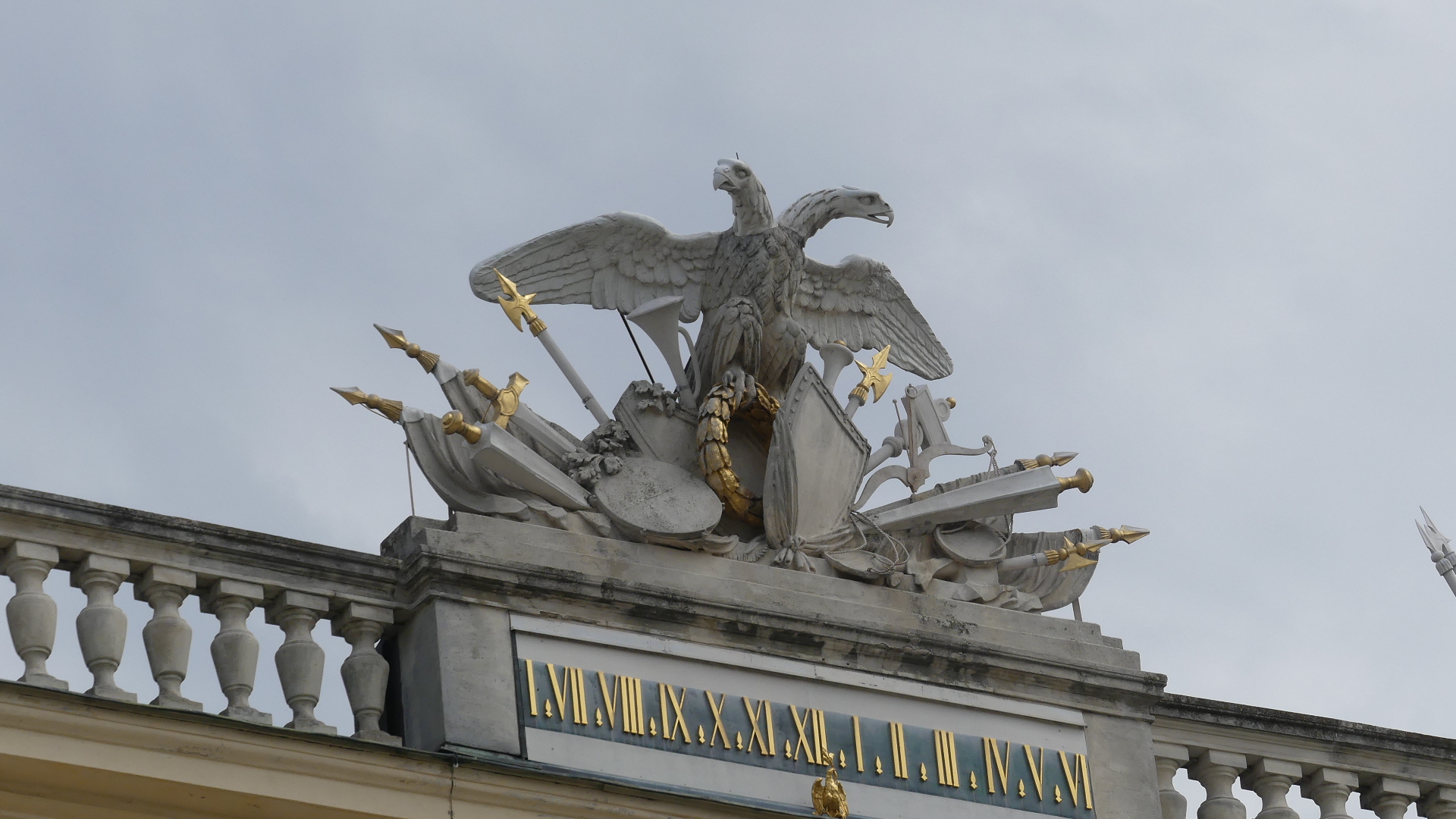
One of our hopes was to visit the Strudel Cooking demonstration at Schloss Schonenburg. It is not a well known event and after some enquiry we caught the Hop on Hop off Bus to stop 6 where we were swept up by the tourists visiting the palace but we made for the bakery. For not a lot of Euros we joined about 20 other people consuming a large piece of strudel and hot chocolate whilst an apprentice baker showed us the traditional method of making strudel which I recorded so that I can make my own strudel not for this blog but here are the pictures of show and the palace gardens.

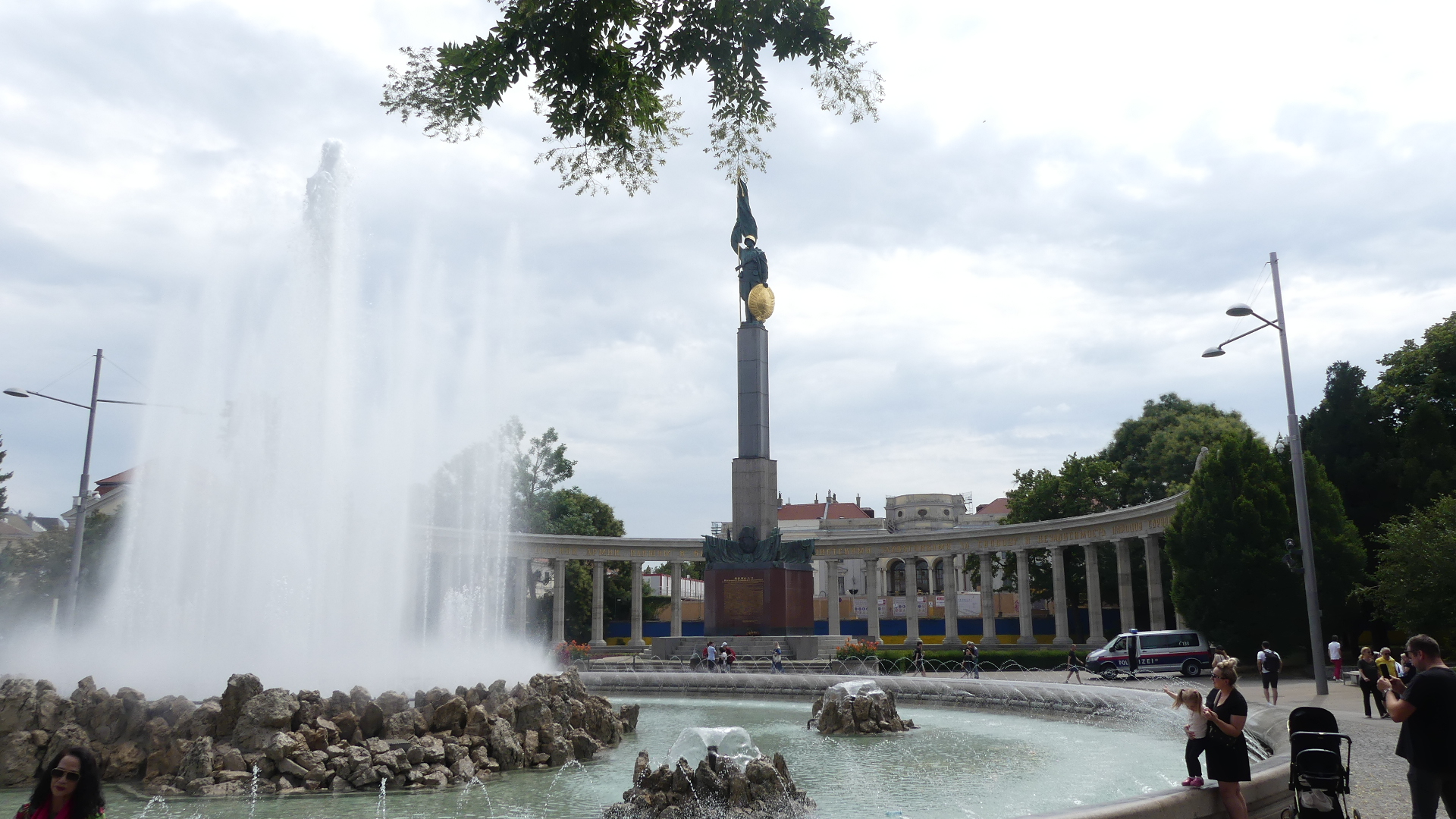
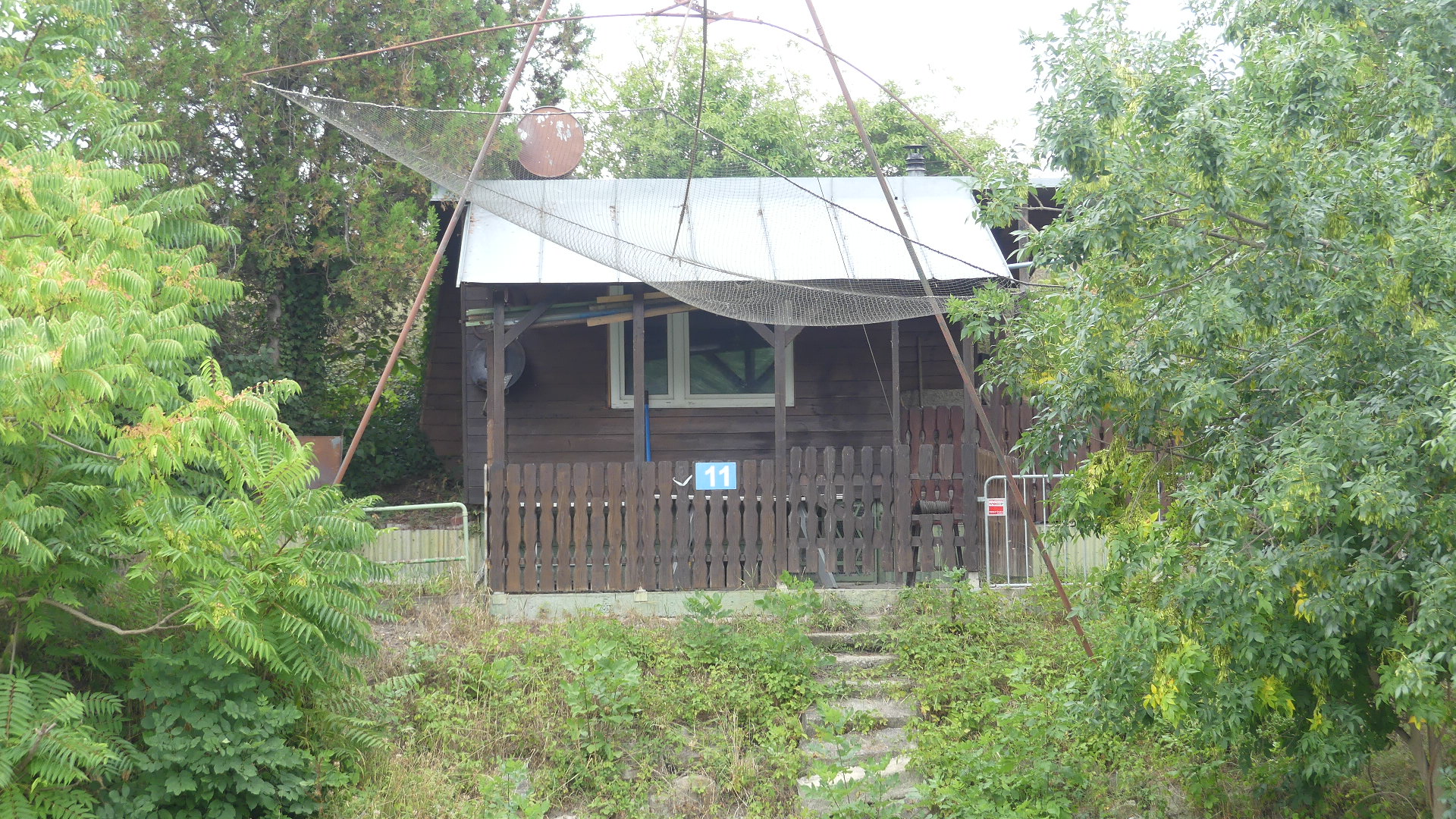
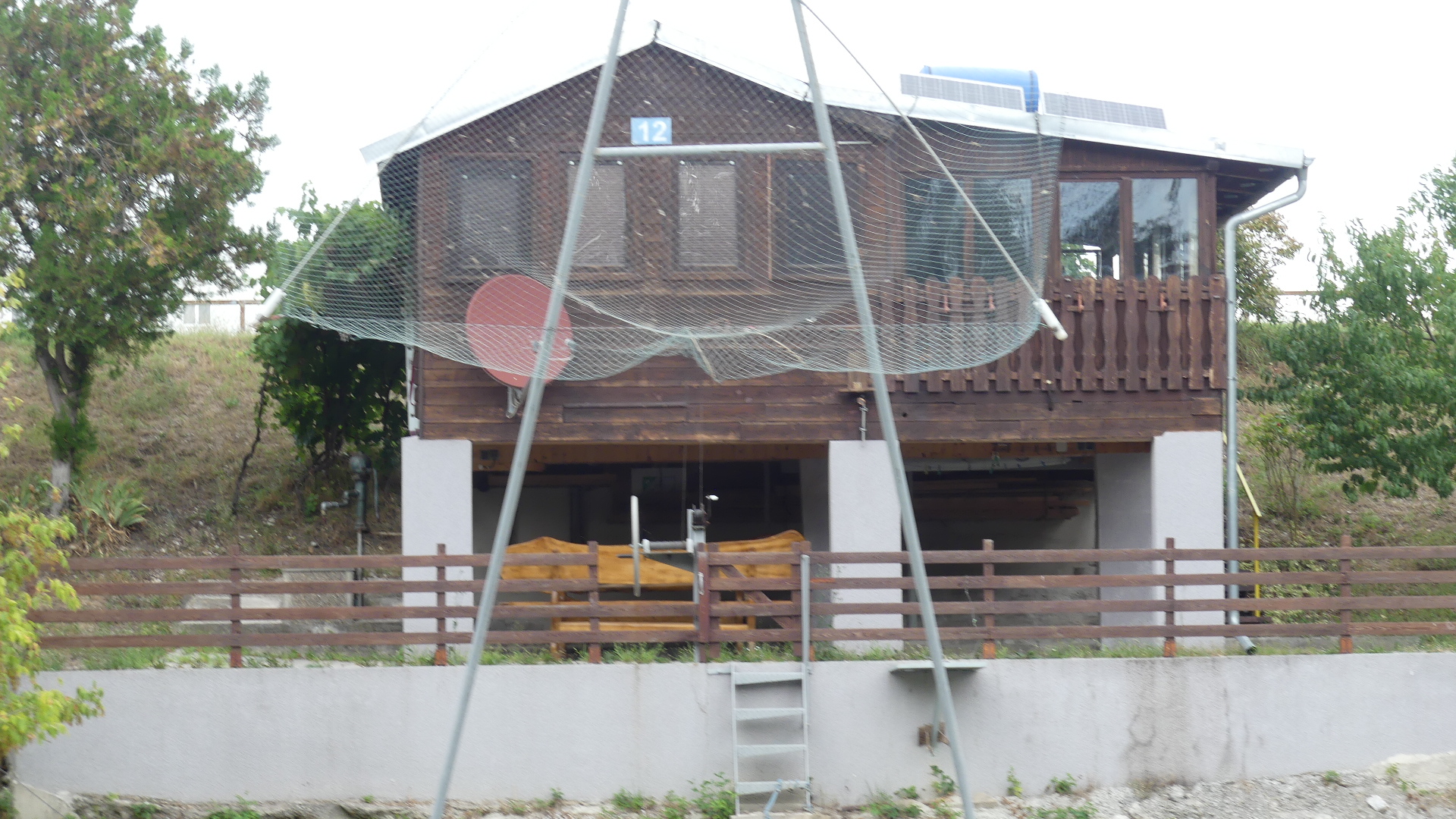
After the strudel show (where we ate a huge piece of strudel with a mug of hot chocolate) we returned to the Hop on Hop off Bus for a boat trip on the Danube or the Donau as the Viennese call it. This was part of the package for a 3 day pass on the Bus. We started at Red Line stop #3 beside the Belvedere Palace. The photos below show the monument to the Russian soldiers lost in some battle over Vienna after WW2 just outside Belvedere. We travelled to stop 8 on the Red Line on the other side of the city from the Palace (did I mention Kerry was sick of the bus). After obtaining the tickets and whilst waiting for the boat I noticed the building across the canal had this distinctive wall art of two men making a hole in the building. The walls around this part of the canal have been given over to graffiti artists and they have made a right mess of it in my view. The cruise starts in the canal and joins the river where the river flooding is controlled by a lock. Not much of a boat trip for 2 hours but another part of the history of Vienna. Nothing much to report on the cruise until we were outside Vienna when suddenly all these huts started appearing on the bank of the canal. I suspect they are weekenders for fishermen. No mention of them in the misguided commentary but they ranged from the derelict to complete.

At last, we reached the Danube and the lock came into view. Unusually the front gate of the lock did not open but rather sunk like a garage door in reverse. The water height difference is quite significant, and they still generate hydroelectric power from the river. As usual there is someone lurking waiting for a bigger vessel to come along and open the lock gates for them. Note the water mark – our boat was raised 5 – 6 metres to pass through the lock.

Just as we approached the end of the journey a Buddhist monument to Peace could be seen on the banks of the river. It seemed quite out of place in the style of its architecture but most appropriate given Europe’s history. Also out of place but for different reason one of the early river cranes used for loading and unloading on the vessels on the Danube has been preserved.We were dropped off at red line stop 10 to endure the bus ride back to the city centre.

Photos

Back at stop 1 we decided to move onto stop 3 Blue Line and walk back to the hotel. We were getting our steps in each day.

The next day, we decided to test the underground and took a ride on line 6 to the main rail station at Meidling and identified where we were to go to catch our train to Luzern. Having successfully done that, we took the underground line 3 back to the city for the guided tour included in our Hop on Hop off bus ticket. The tour was to start at stop 1 red line but upon arriving there was no guide and the guide at that stop told us to look for a blonde woman holding a flag on the other side of the road. At first, I thought the guide had started the tour without us but a tiny little plastic Austrian flag caught my eye and we flushed the guide from her cover. Very quickly we were joined by another half dozen people also hunting for the guide for the tour.

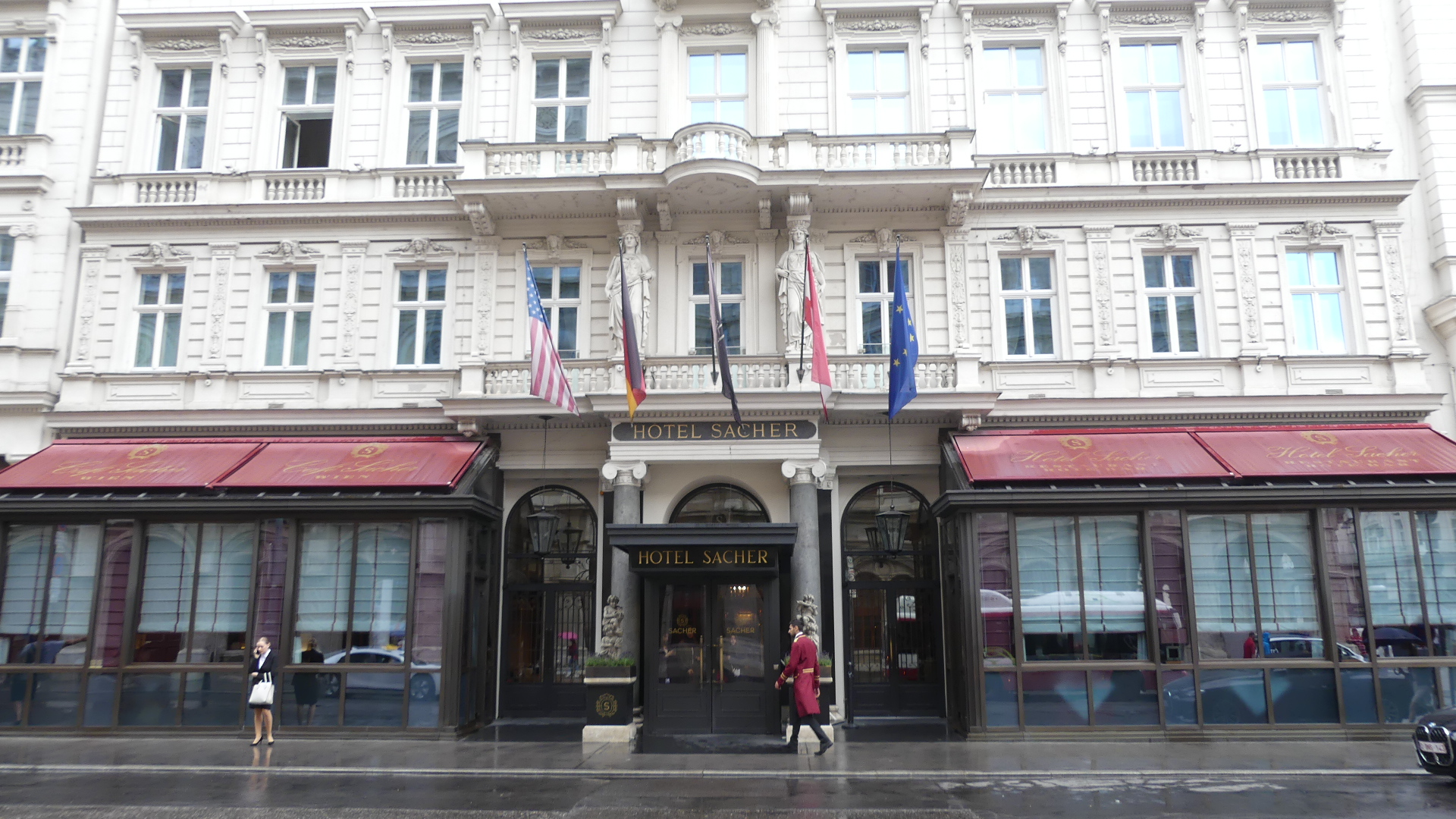
On the way to red line stop 1, I had decided to photograph a statue of Archduchess Maria Therese and her advisors and followers – said to weigh 40 tonnes. We passed the Sacher Hotel which claims it invented the Sacher Torte a claim disputed by an opponent. The dispute was decided in Court in favour of Sacher but not to be out done the opponent claimed it had the traditional recipe. These photos follow.

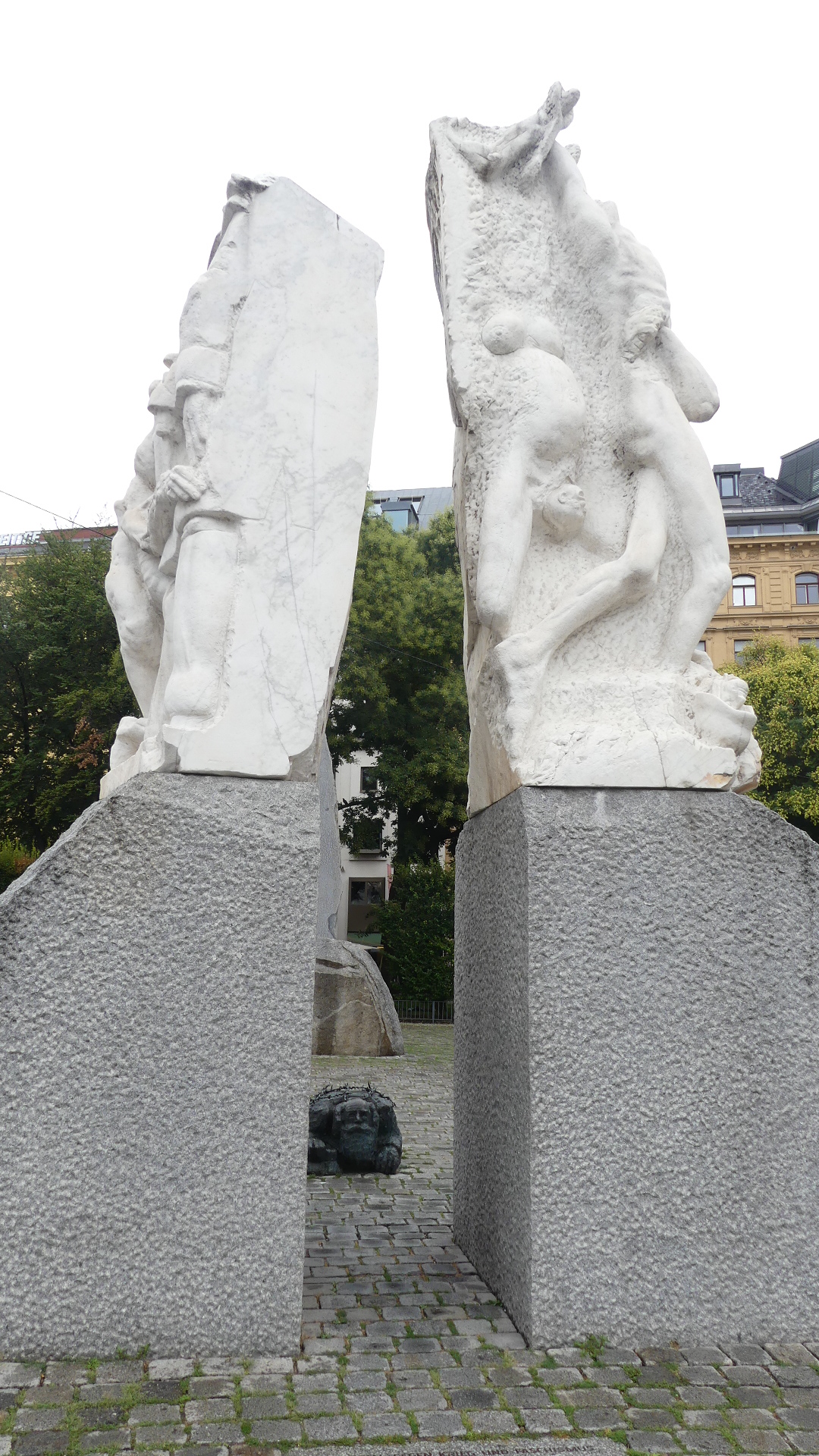
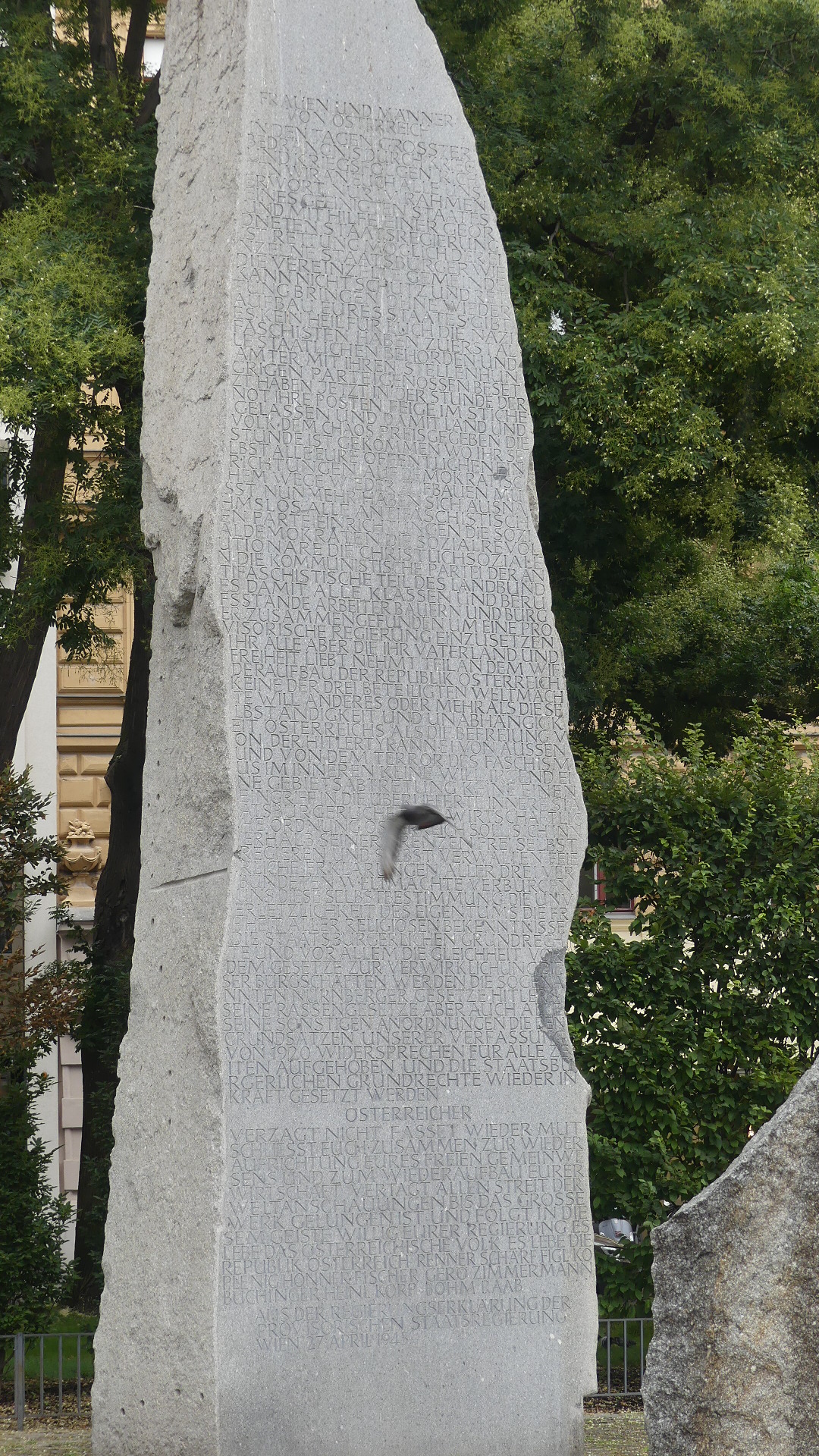
The tour was for 1 hour and my photos from the tour appear below. The first few photos are of a monument depicting the disarray of the aristocrats following the collapse of the Hapsburg Empire, the subjugation of the working class and the upright slab in the monument with writing on it represent s the constitution of Austria to end the rule of the aristocracy and the end of the disarray.

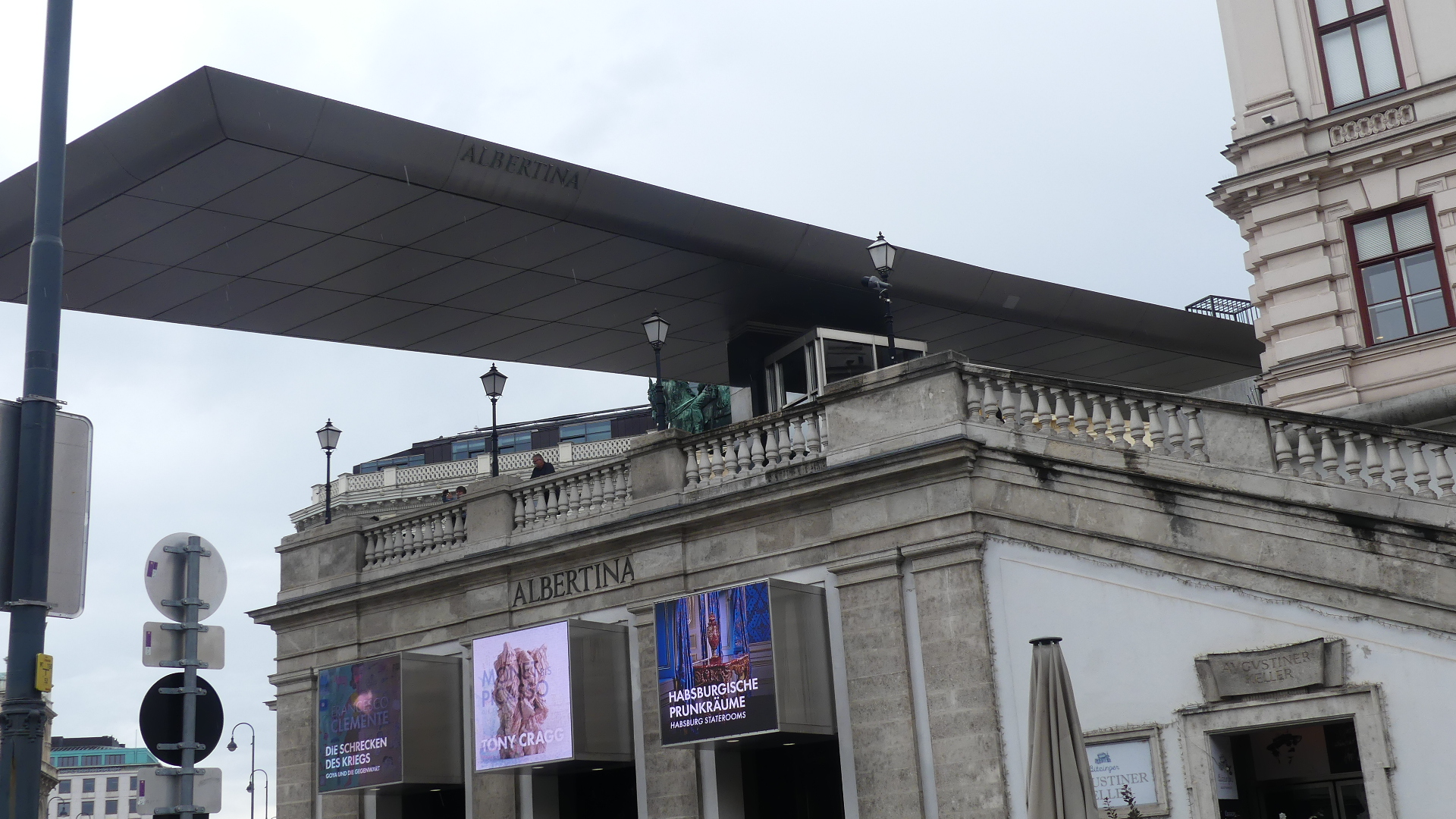
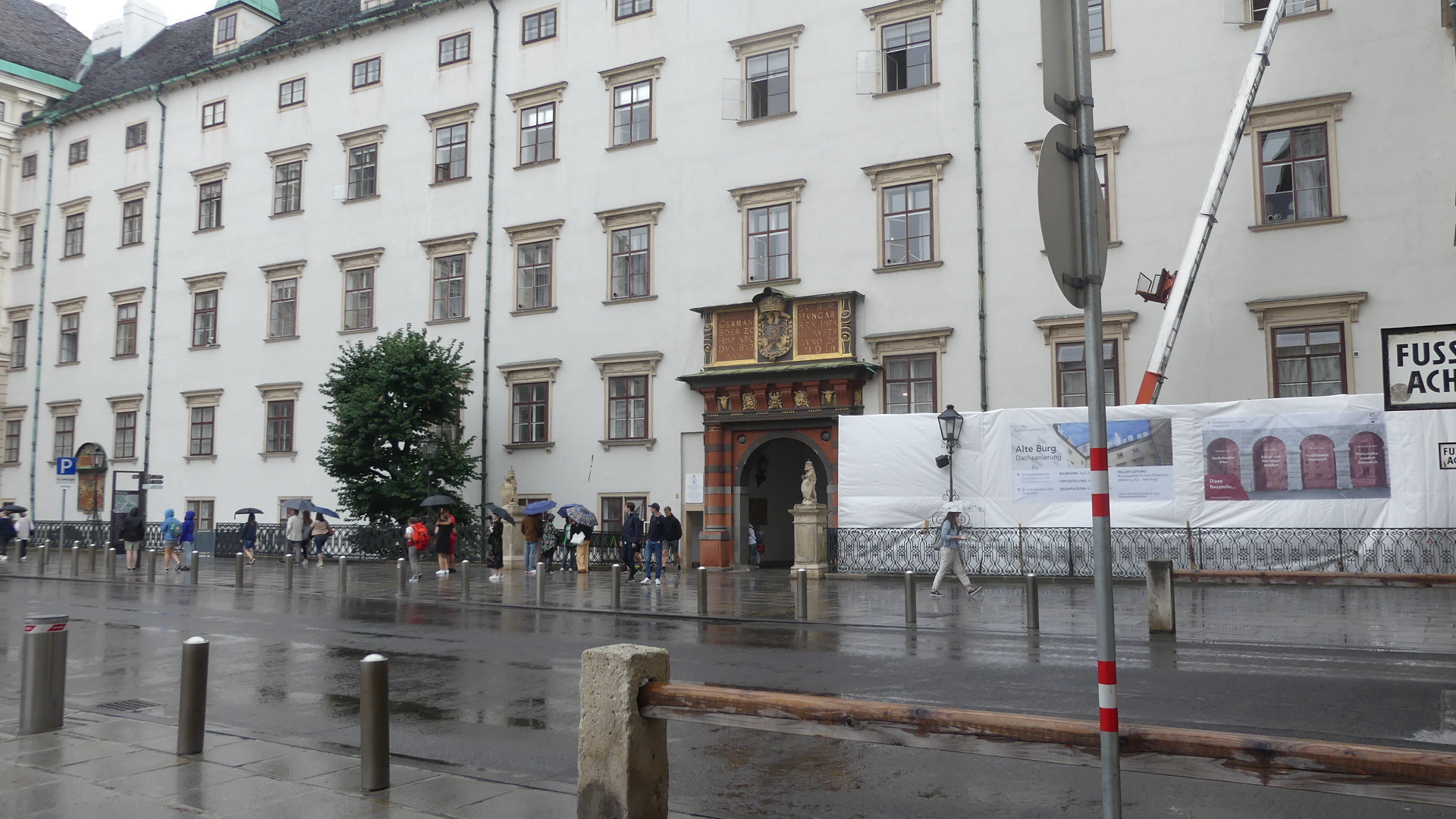
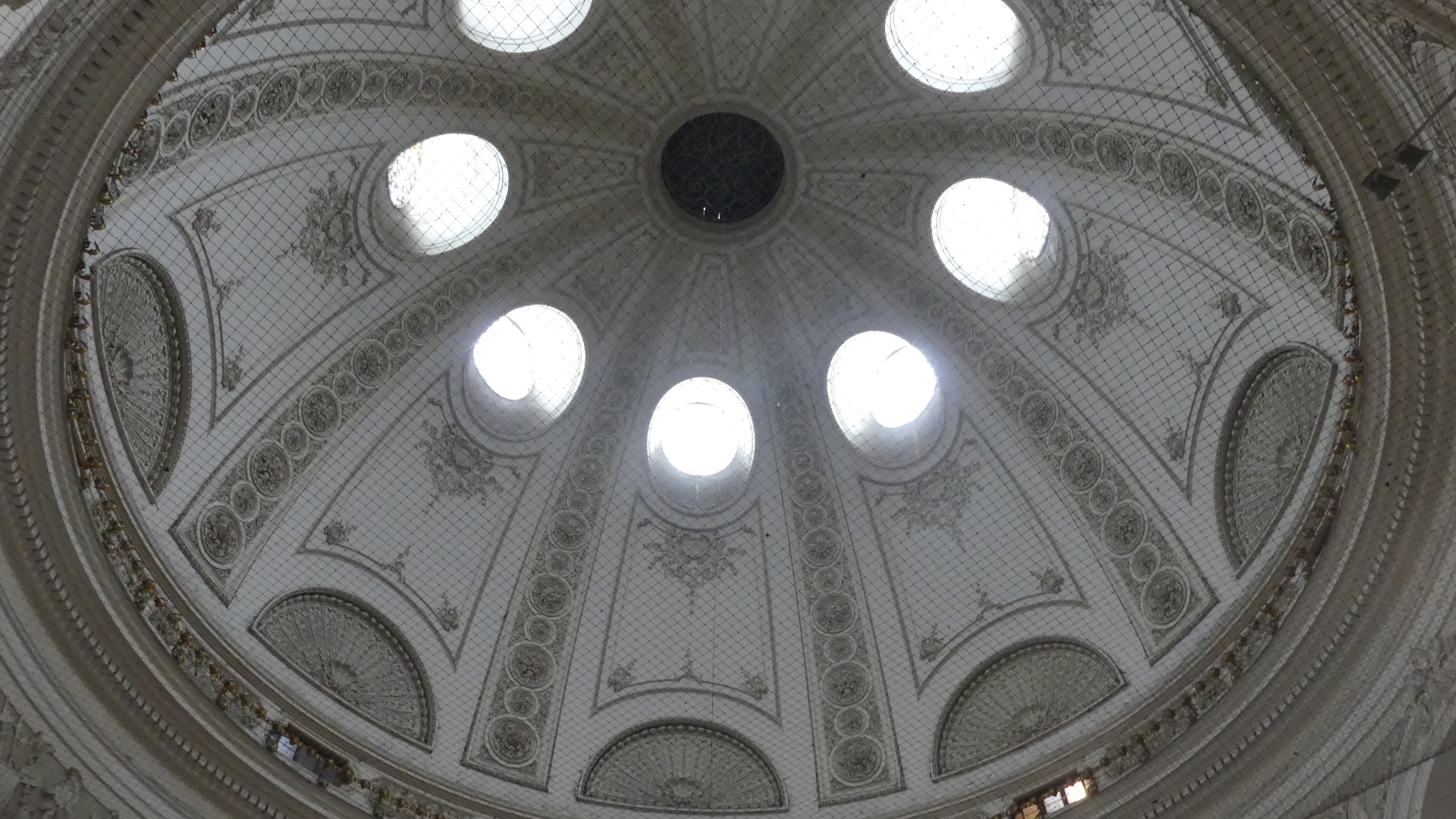
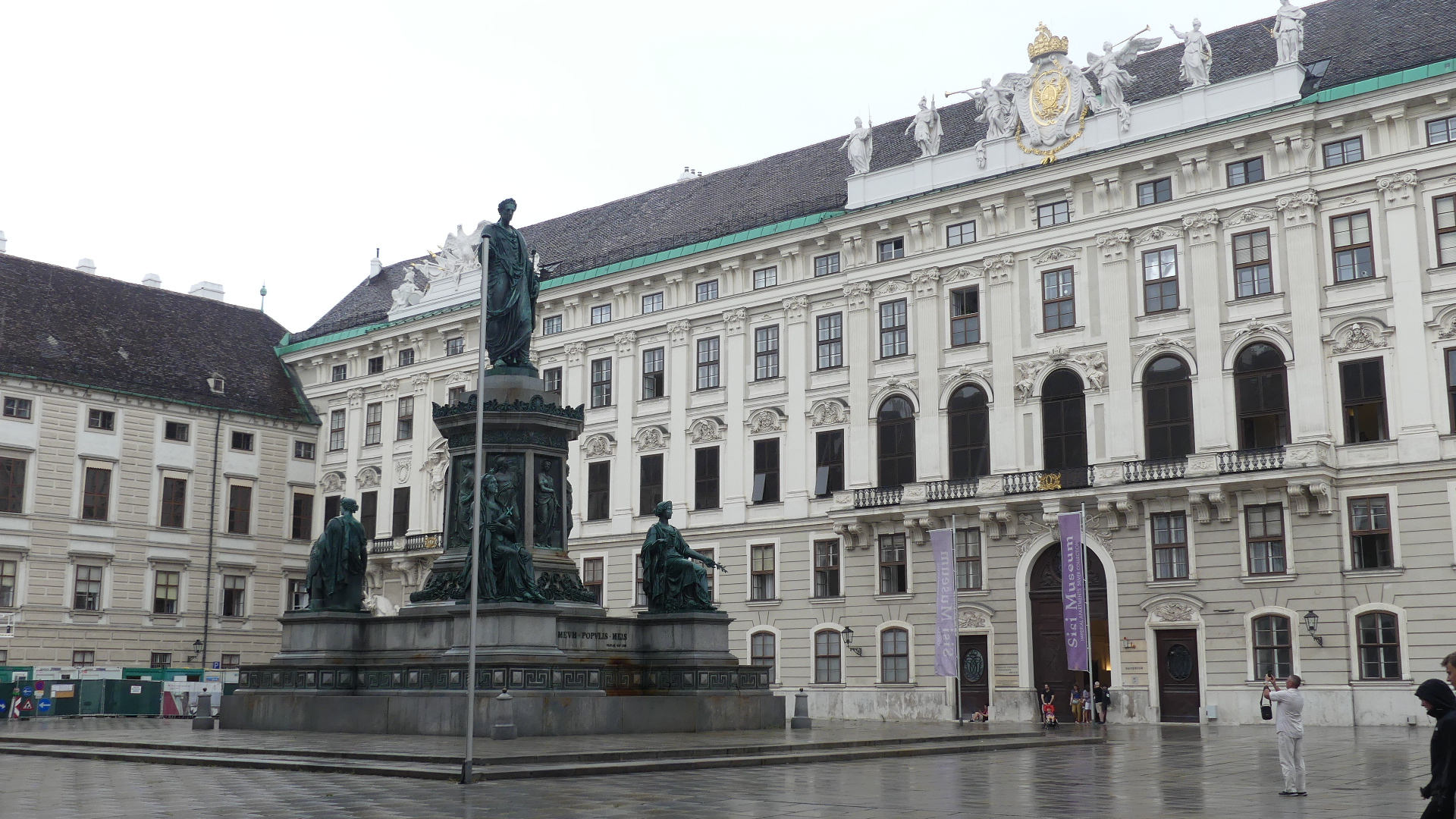
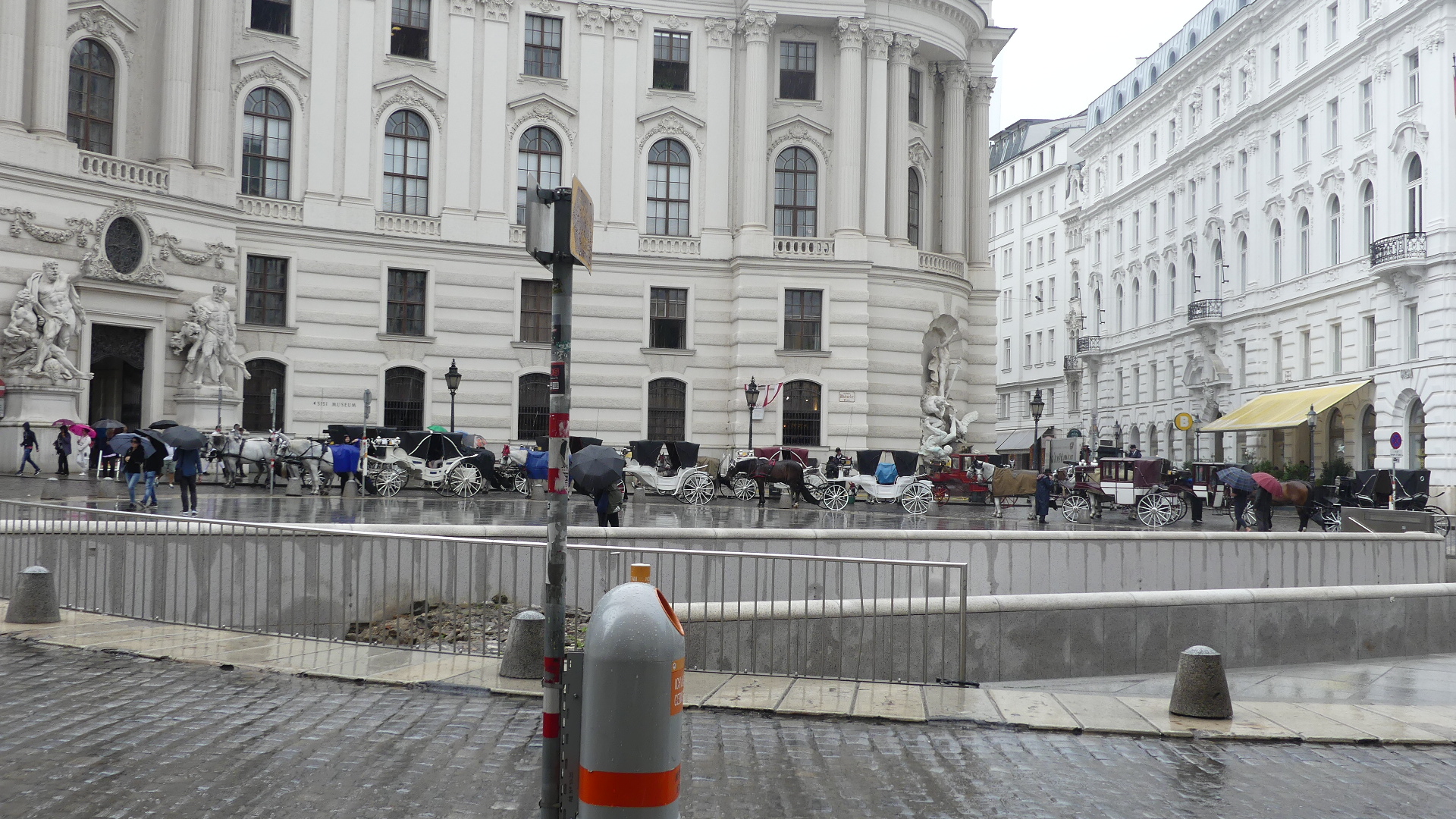
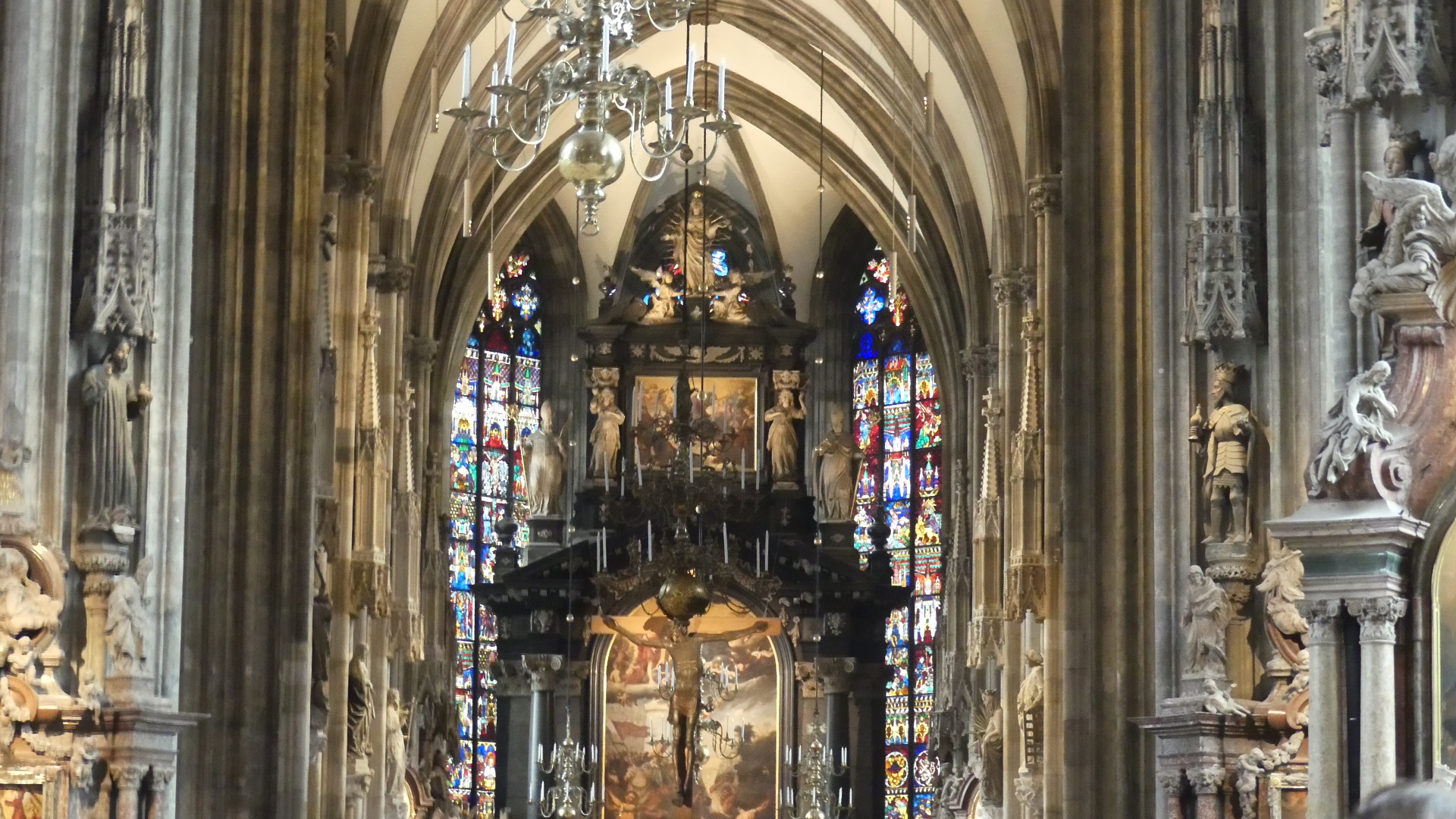
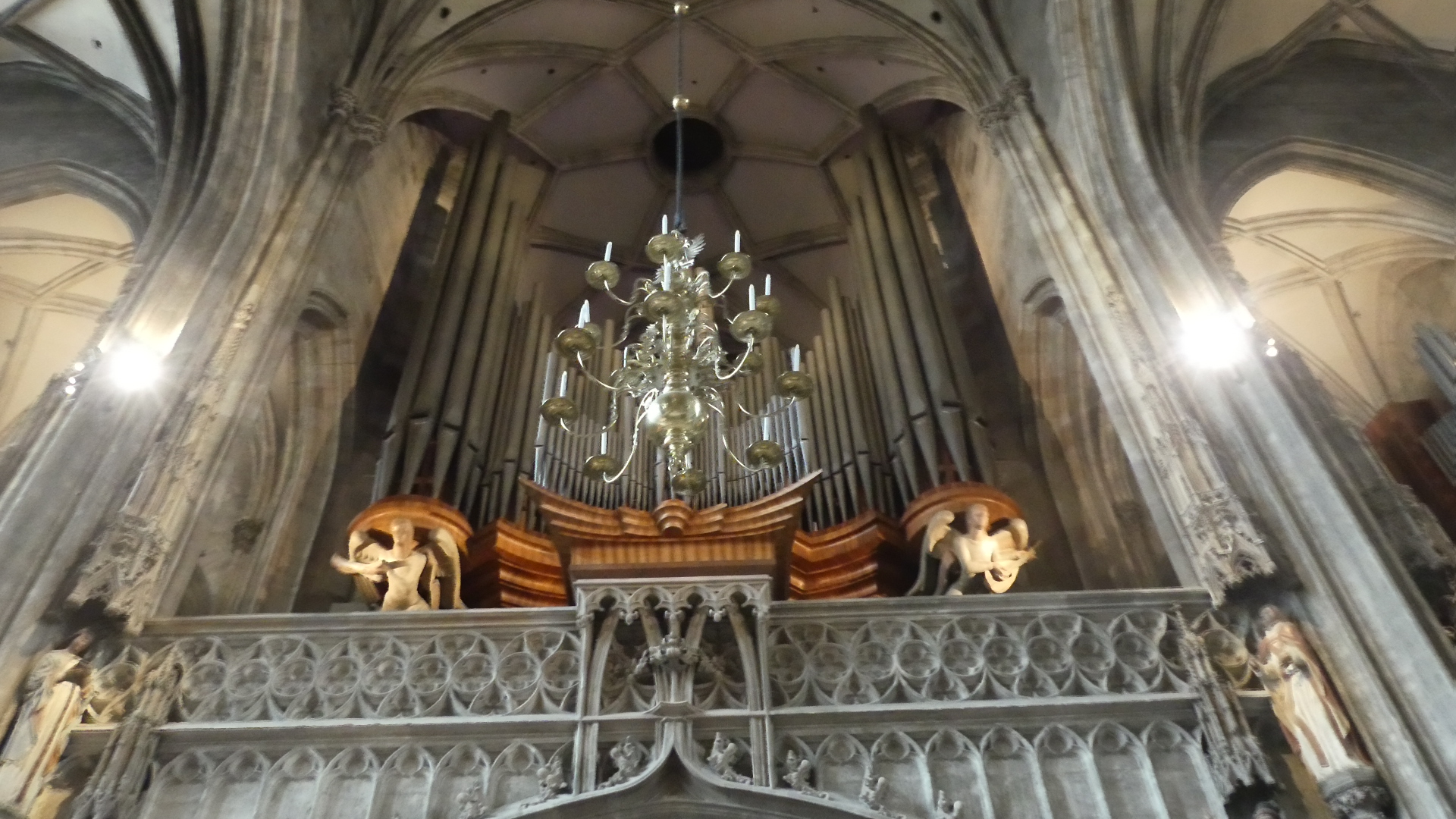
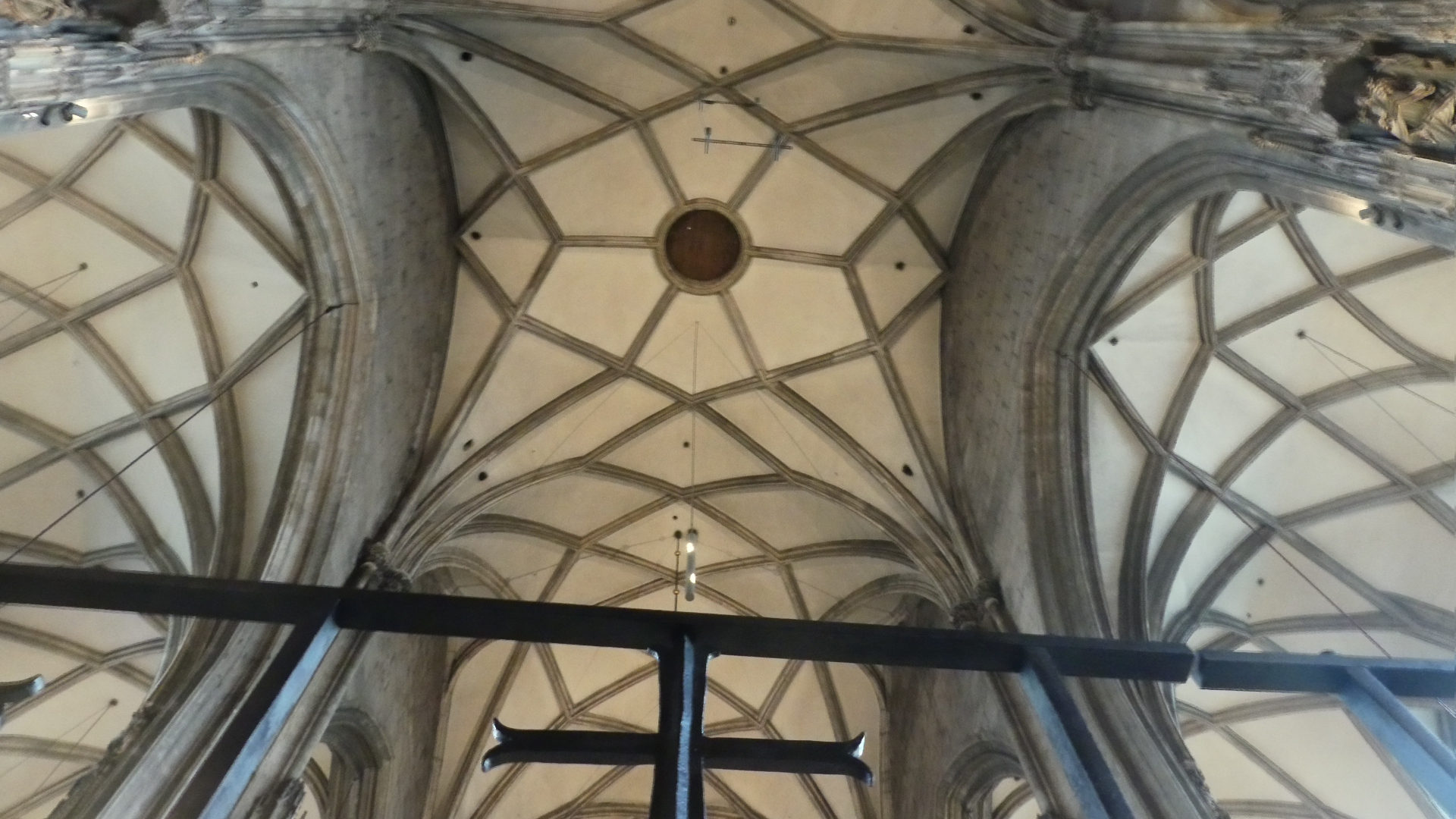
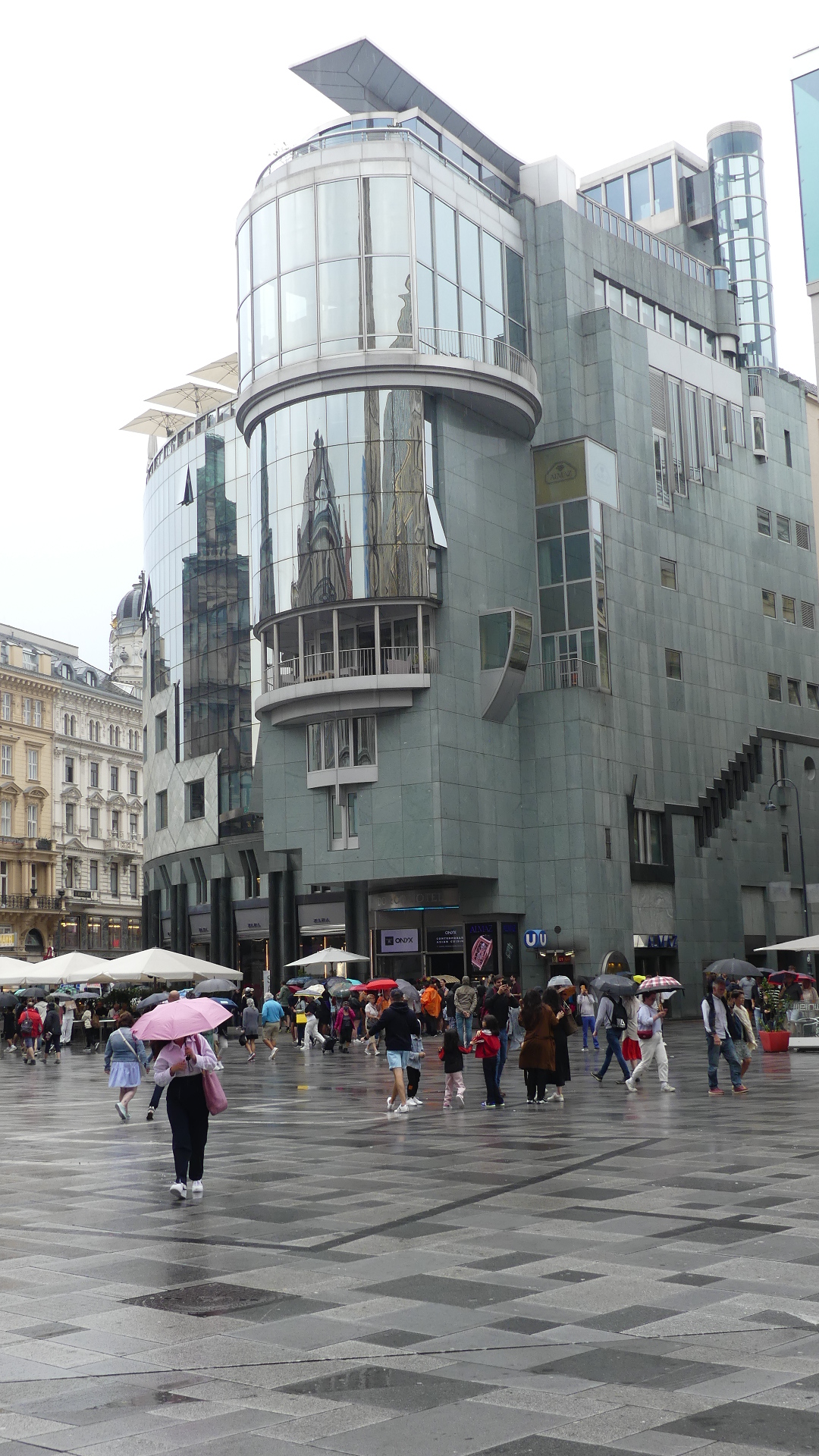
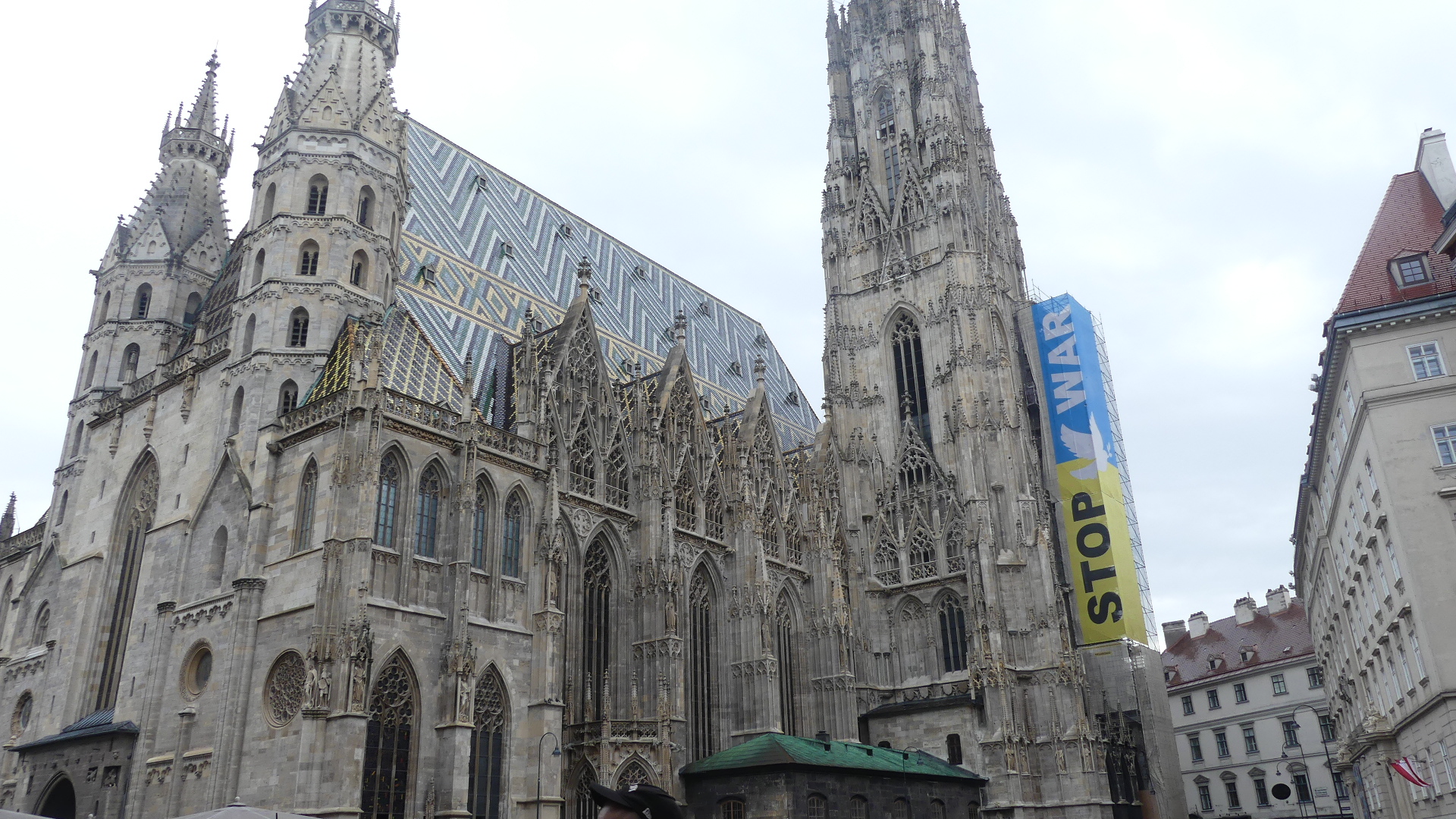
The Albertina is shown with its remodelling architect’s trademark metal wing over the front veranda. Below the veranda stand horse drawn taxi’s, which take their passengers to the Hoffburg palace which currently is housing the President and some of the offices of the government. Behind the Albertina is the national library with it statue of Joseph II, through another passage and another courtyard opens before us – you see the horse drawn cabs again with th Roman ruins found during renovations in the foreground then we burst out of the palace to another commercial shopping mall (and there is the competitor to Hotel Sacher behind the red umbrella) ending in the square of St Stephens Church. This is the principal church of Austria having been founded in the 12th century. Contrast this against the modern commercial building reflecting the church back to it.

Photos

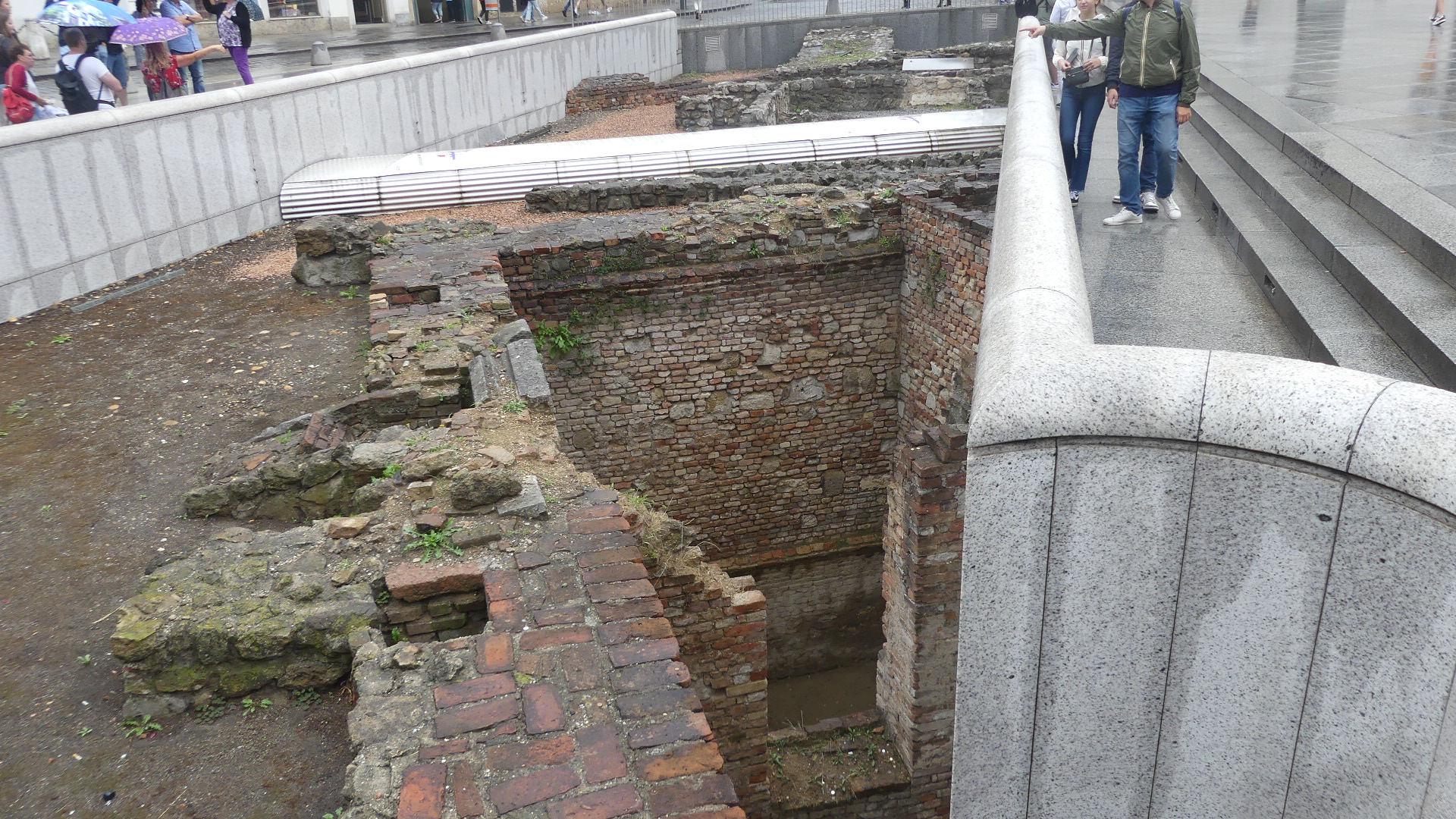
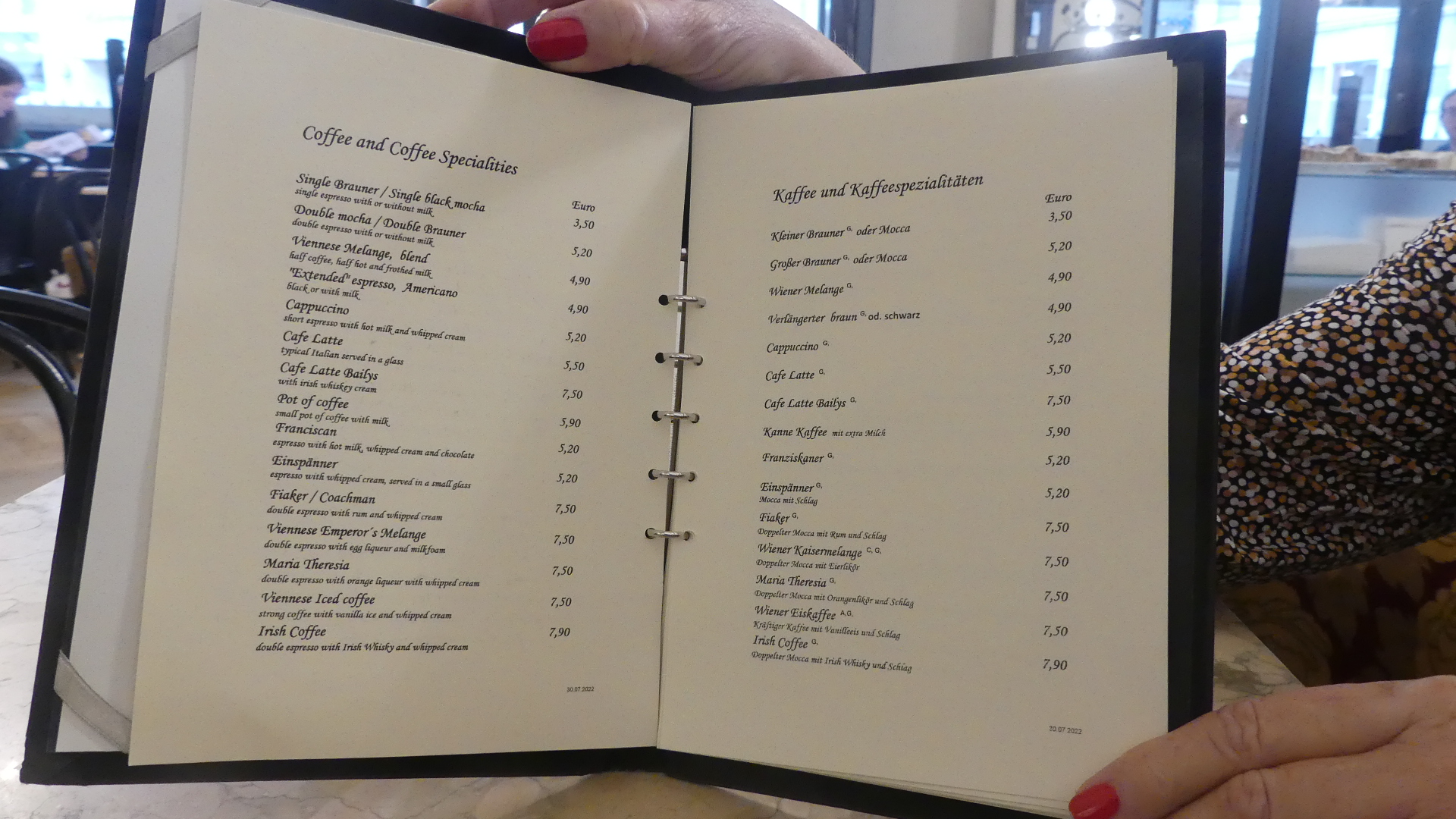
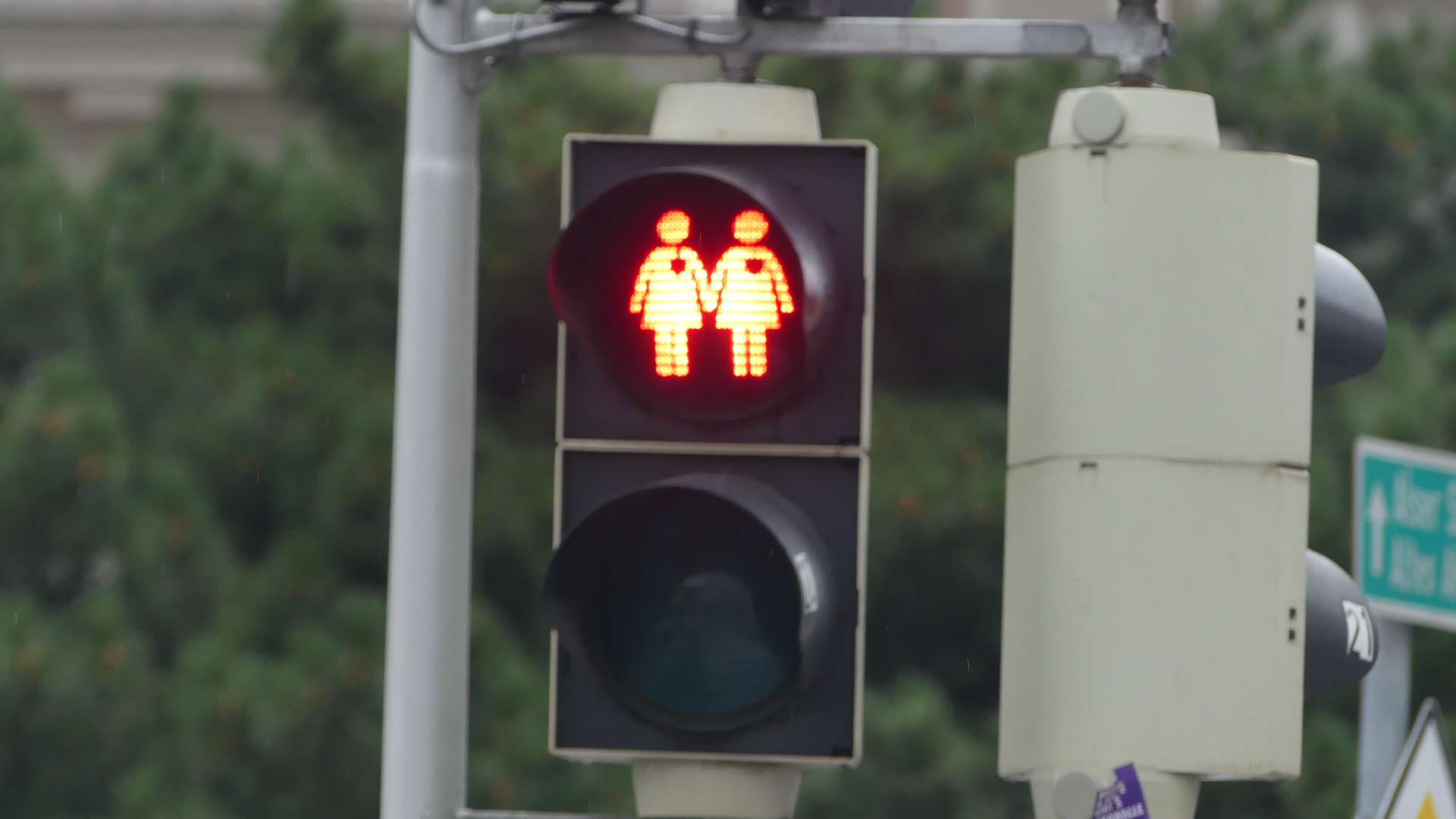
The tour ended here and we had to find our way back to stop 1 on the blue line. One thing I learnt was the Viennese love their sausage stands and so I had to taste why. The following photos will give you the sense of what I am enjoying. As we made our way back, we explored the Roman foundations uncovered in recent renovations, enjoyed a coffee in a traditional Viennese coffee house and passed the stairs to Albertina once more. On our way back to the hotel, Kerry noticed the pedestrian signs displaying images of two pedestrians – turns out that many of the crossing have been changed to rainbow crossings recognising LGBTIQ people.

Our visit to Vienna has almost finished except for an unusual encounter over dinner. We had chosen where we wished to eat that evening – a pub two streets down from our hotel. As I was entering the pub I opened the door and stepped back to allow a woman exiting the pub to do so. She in turn said something to me more than likely in German and I responded with “Excuse me” which brought a retort in English “They are full up – no tables” Without thinking I replied “there is another restaurant one street away ” and she asked if she might join us. We agreed and that is how we met Kristine from Bavaria. Well this was one of our more enjoyable dinner whilst learning that Kristina was a widow and travelling with a group but she was seeking a break by dining alone . We cahtted about family and travel whilst enjoying dinner When we left the restaurant Kristine stated that her group was going east and we were going west tomorrow so like ships in the night we passed each on our way.

We had not heard anything regading our luggage so we purchased a suitcase cosmetics medications and clothes to continue the journey. After briefing the Reception staff not to accept our luggage should it be delivered to the hotel, we left for the train station Bahnhof Meidling.