The Retirees go Abroad – Cologne –Back to Cologne and the Zoo.

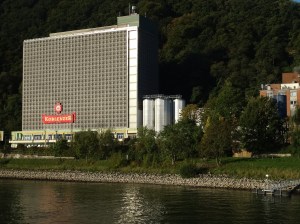
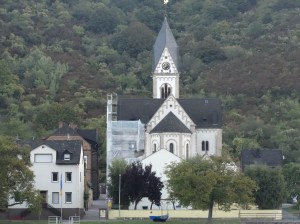
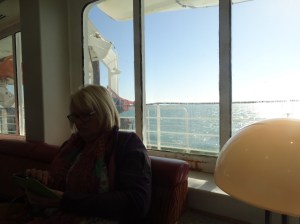
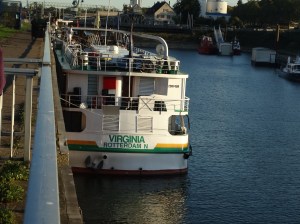
The following morning was grey and cold with a wind to ensure we stayed in the lounge bar. Only those with a nicotine addiction braved the cold. We were awoken by the sound of the crew casting off at 6.00am and pushed out of bed by the shudder of the diesels rumbling to life. We are returning to Cologne and our trip back to the UK this time aided by the river flowing towards the sea. After breakfast we settle into a sunny spot in the lounge. The mist stayed in Rudeschimer and now in Koblenz the sun is shining but the wind remains cold and the sun deck the haunt of those unfortunate addicts. I pulled out my camera and snapped a picture of the Koblenz Brewery and hoped to see some more things to record but I am pretty weary of this boat travel by now and turn to my book regarding theology and a university in Toronto.


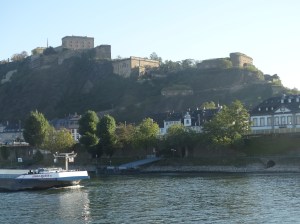
When in Cologne previously Kerry had developed the plan of walking to the cable car across the river and visiting the zoo. We docked in Cologne about 2.00pm. Straight away we set about walking to the cable car and the zoo. Great plan but the walk proved very challenging. We walked along the river with the old city watching our progress.

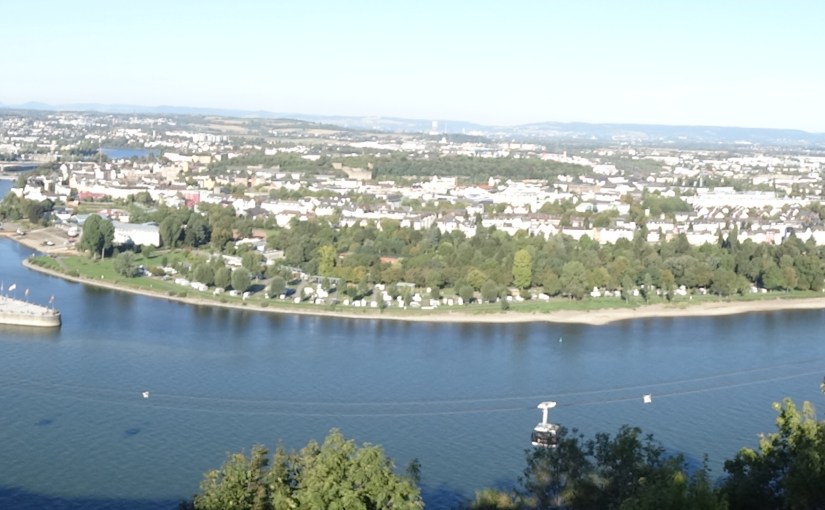
After 45 minutes we encountered a park which seemed oddly located in the industrial end of Cologne (Kholn to the Germans) whilst reasonably maintained seemed to be a bit forgotten. Another 15 minutes walking negotiating the park we found the cable car terminus. It too looked somewhat decayed. We did not have to wait too long before we were high above the freeway and bridge crossing the Rhine with magnificent views of the city and up the river towards Koblenz. We even discovered that the park was more alive than we thought. Beside the terminus was a building so covered with vine we thought it abandoned but once we were in the air we could this was an indoor pool and aquatic area. Dozens of people were sunning themselves on banana lounges and splashing about in the pool. Outside the pool a miniature train was chugging around the park with joyous Kholners riding its miniature carriages.

Our ride ended opposite the Cologne Zoo – set on the outskirts of the city in the suburbia of the city.  The zoo did not appear any different to other zoos from the outside but inside the first animals were domestic pigs, sheep, goats and rabbits. Kerry did not see this as she was headed in the opposite direction – so I popped over to look at the Persian Onagers grazing beside the ablution block. Kerry re-joined me and we moved in an anticlockwise direction through the zoo’s exhibits. We had limited time so we pushed on determined to see as much of a difference as the zoo had to show. What followed? The meerkats, the raccoons, the sun bear, the cheetah, the grizzly bear, the red panda (the poor thing was curious to talk to Kerry and got zapped by the electric fence containing it causing it to rush up a tree), tapir and capybara, giant anteater, the tiger, the leopard (he seemed obsessed with the snow leopard in the opposite cage but when we looked for it, the snow leopard was not there – maybe he knew something about its whereabouts), the gibbon ( the zoo has a number of enclosed environments to suit various animals and this created a dramatic cave like atmosphere or jungle path for the visitor to feel like an explorer), elephants (we had to skip the great apes because of time), oh some homo sapiens dwellings but they weren’t coming out for pictures today, Californian seals, Przewalski’s horses, bison, rhino, giraffe, hippos (but they too were camera shy so I pictured the enclosure) and crocodiles (Africans not the big saltys from Australia so I did not bother with a picture) and Kerry’s favourite the Flamingos.

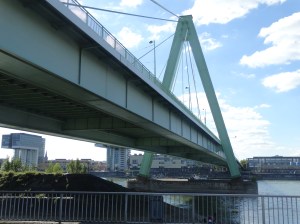
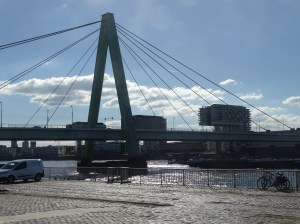
We finished in the zoo about 5.30pm and with sore feet contemplated the walk home. We had passed the light rail on the way so after some enquiries we tried our hand at negotiating the Cologne trams. Without any trouble we made our way to the centre of the old city leaving us only a 45 minute walk back to the boat. We crossed the main railway bridge (now called the Lock Bridge because of all the Love Locks now hanging from the railings – thousands of them). We got back to ship to shower and go to dinner. Pretty good effort but we fell asleep very quickly that night.


The Retirees go Abroad – Cologne –Rudeshiemer by night

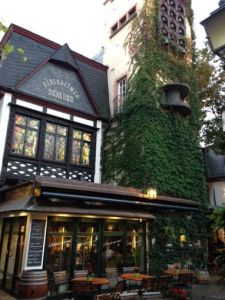
Back to the boat for a rest then after that we prowl Drosselgasse for a nice restaurant. Drosselgasse is the local tourist strip containing all the authentic German restaurants and all serving traditional foods and the local specialty – Rudeschiemer Kaffe – a liqueured coffee. We ended up at the International – Bie Hollerne where two rather Asian entertainers appeared to be enjoying a karaoke night singing English and German tunes with an electronic keyboard and electronic backing. The food was traditional German with lots of sauerkraut and potatoes. I picked a shwineaxe and Kerry selected a veal schnitzel. The schnitzel was melt in your mouth but my schwineaxe stunned me. About 1/2 a kilo of pork joint baked with crackling on a bed of sauerkraut with mashed potato. Well I struggled and I was beaten – no way was I going to eat all of that.

Of course we had to try the coffee. It is served in a traditional pink and white cup into which blocks of sugar and the local brandy Asbach are placed. The waiter then lights the brandy melting the sugar pours black coffee over the flaming sugar and finishes with a scoop of cream. Delicious.

After loosening the top button on my trousers we headed for the boat and a peaceful night free of boat noise and trains rattling by. Well the boat was quiet but even though we were some distance from the train they could be clearly heard echoing through the valley.

← Back

Thank you for your response. ✨

Warning
Warning
Warning
Warning

Warning.

The Retirees go Abroad – Cologne – On the Rhine to Rudeshiemer.

The following morning we sail to Rudeshiemer. Clear blue sky and a chilling breeze keep us inside the main lounge where the tour Manager drones on about the features we are passing. The most interesting fact to me was that the river is very low and many of the rocks normally covered are exposed. The Rhine is a very busy waterway. Apart from the tour boats there are dozens of barges carrying industrial goods and on both sides of the river goods trains rattle past very regularly – at sometimes every 15 minutes.

We seem to be entering the major grape growing region as vineyards now appear covering the surrounding hills stretching for miles. Interspersed amongst the vineyards are the ruins of castles and castles still in use today. These castles were used like customs houses collecting tariffs from the merchants and sailors plying the Rhine. In one case they had a novel if somewhat terrorising system for recalcitrants – a cage hung high over the river into which the recalcitrant would be placed until he or she paid up.

As we approached Rudeschiemer there appeared high on the hill another large and grandiose monument. Little did I know then that we would be walking to that monument later that day. We docked at Rudeschiemer during lunch. They have so many tourist boats they have developed docks for day trippers and overnight river boats. The village itself is stretched along the banks underneath the vineyards whilst on the other side of the river is Binger which appears to have the benefit of a wide plain behind it. Not so as we will see later. We walked up through the village to find a chairlift as we had decided against the organised tour and instead planned to trip over the mountain to Assmannshausen then take a boat (yes another boat) back to Rudeschiemer. We walked through the main square where they were giving the trees their winter haircut and found the chairlift kiosk very quickly. The gondolas are designed for two people and are open so the trip was very different from our previous trip on the Ropewalk. The gondola climbed out of the village giving breathtaking views of the Rhine and the vineyards.

At the terminus on top of the mountain there are numerous walking tracks but the main track is past a mock roman temple type structure  Tempel Rebenhaus again giving magnificent views of the river around to that massive monument Niederwald Denkmal I mentioned. The track wound through a park now over grown into a forest for 45 minutes with viewing points and points of interest along the way. The track was shaded by mature trees and the sunlight filtered through at times brilliantly and other times it could get quite chill. We came across Rossel an old watch tower which gave us a very different view of Binger than what could be seen from the river.

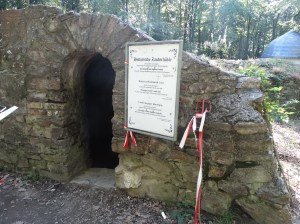
We also came across a historic Zauberhohle – a stone tunnel the purpose of which I cannot guess. The English translation was “enchanted cave” and the notice board said there was an historical explanation at the rear exit. Kerry switched on the light on her IPhone and we wound through the Zauberhohle exiting at a newly built round room but no historical explanation could be found. Oh well one of the mysteries of life.

After the enchanted cave we passed a hotel in what appeared to be the wilderness but in fact was just off a well formed road and around to the next chairlift taking us down to Assmannshausen. These were open chairs and they glided through the forest until reaching a long drop down to the village. Stunning views once again – vineyards the river and the village. In the village was the picture book you hear about. Quaint German buildings all nestled together with narrow roads intersecting (but watch out for the school bus charging through). We stopped at the Krone Hotel (Crown I expect) and there sample the pinot noir from Hollenberg (the local vineyard) and the Riesling from the nearby village of Losch.  The pinot was silky and delicate and the Riesling was dry and lightly fruity. Oh and we also had a piece of plum cake to share.

We could see the ferry terminal from our table in the forecourt of the Krone and thought there would be no trouble to get there for the 4.30 ferry. Except the highway between us and the river. After negotiating our way across the road and under the traffic barrier we caught the ferry to return to Rudeschiemer passing as we did a lonely small vineyard high on a hill, the Rossel, the Mouses Tower outside Binger and the vast stretches of terraced vineyards.

← Back

Thank you for your response. ✨

Warning
Warning
Warning
Warning

Warning.

The Retirees go Abroad – Cologne – On the Rhine to Koblenz and Boppard

The boat sails at 10.30pm for Koblenz and whilst Kerry pretends to sleep I start this blog. It will be a rough night with the motor noise and things shaking through the night.

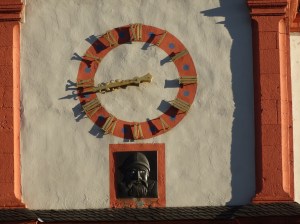
We are woken by the silence. The ship’s engines have stopped. We have arrived in Koblenz. Koblenz is at the confluence of the Rhine and Mosel rivers. After breakfast and a consultation with the tour manager we decide to go it alone. Map in hand we head for the Oberes Mittelrheintal a complex of stately buildings in the centre of medieval Koblenz. On one of the houses is a clock with a face below. The eyes in the faces move with the second hand and on the hour the faces extends its tongue – I don’t know why but it does. Alongside it is the local church (note two bell towers they are very big on twin bell towers) and nearby an impressive school.

The tour manager gave us a few clues as to what to look for and one was the pissing boy. We did not find the boy but may have found his father hard at work selling his wares. Then another church and a walking tour of Americans – weren’t we lucky. A little further along we came across a monument which represent the time line for Koblenz’s history.

Time is getting on and we want to visit the Skyrope and the castle across the Rhine. So we head for the river and find the Skyrope (a cable car) but it doesn’t open till 9.30am. As we wait Martin and Christine (co adventurers on the boat) turn up. It was their idea to go to the castle and not the tour offered by the boat so we join them in a trip up to the castle and then they headed off to view the park around the castle whilst we visited the castle. On the way up we could soon why this site was chosen for the castle – it commands the confluence of the two rivers.

Whilst most of the castle structure remains, the internal areas have been largely converted to various uses. The castle appears to be based on the Dutch design of a star shape with a gate separated from the main gate by a moat. Where once you would have entered the castle by coming through the barbican and climbing the steep hill to the castle gates; these days you came directly into the old fortifications. The castle is now a number of things from military museum to commercial. One of the displays was a trip around the world and through history with Play Mobil figures. In the court yard you have the best views of Koblenz and the two rivers and the old path climbing the hill.

We must return to the boat by 11.30 or miss the boat. So we take the return trip with the Ropewalk and walk to the junction of the two rivers where a bloody big monument has been erected. It appears to celebrate the first unification of the Germanic states. The horse a top the monument column was so real to life it even had the world’s biggest brass balls. Kerry had heard or read that there was even a memorial to the third reunification – parts of the Berlin wall.

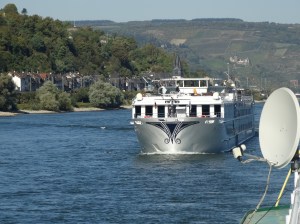
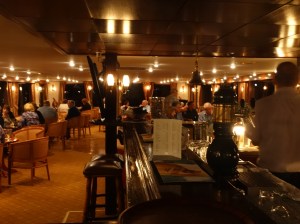
We made it to our boat in plenty of time. One thing that we find strange is the dining room is located on the water line as you will see in the following photos. Some people are getting sea sick every time another boat passes. We retire for lunch and the boat sails to Boppard a charming little village just designed for trapping tourists. So we take the unconventional route behind the town to avoid the tourist shops. We were excited to discover an ancient tower now converted into a home and shop – quite unique. This lead us to the main square and the local church again with twin bell towers – what is it about twin bell towers. Digging around in the back streets we found parts of the old city wall still standing and now incorporated into houses and other buildings, the last remaining city gate and a variety of buildings dating from the 16th century. Not much else to report on Boppard. It has a chair lift but it did not seem to have anything other than views to visit.

Now it is time for a kip then shower time and dinner. Hard life!

← Back

Thank you for your response. ✨

Warning
Warning
Warning
Warning

Warning.

The Retirees go Abroad – Cologne

There are only a few weeks before we go home and to make the most of our last few weeks we have decided to try a bus trip to Cologne in Germany with a trip down the Rhine River for a few days. Yes it may seem odd to travel by bus but it was cheaper by far than plane, train or automobile. So our adventure starts at 5.00am with the alarm going off so we can catch our bus 100m around the corner outside the job centre at Long Eaton. It is a foggy morning and bloody cold as well but there is our bus awaiting us. On board are the driver and a couple from Chesterfield who had to get up at 3.30 am to catch the bus.

It is a bloody boring drive to Stop 24 where we meet our tour bus (they collect everyone and sort them out at Stop 24). We bought some lunch as we thought we were there for an hour and a half but no sooner do I have the subway foot long than the call comes over the intercom – passengers for bus 24 your bus is ready for boarding.

Another boring bus ride then a ferry ride with P&O. We are used to My Ferry and it is a shock to see the difference on the P&O ferry – most disappointing. We are overnighting at Lille or so we are told but it turns out that we are staying at Neuville near the Belgian/France border. The accommodation is fine the meals are shit and the walk after dinner into the village was most interesting. Nothing is open – Its France on a Sunday – but it is a pleasant village with some unusual shrines which I expect are all small chapels giving thanks for peace. After all this is one of the deadliest battle zones of WW1.

The next morning we are promised we will be in Cologne by lunch – we forgot to ask what time is lunch. Breakfast is fine and I get to teach a few Poms how to tell the difference between a boiled egg and a fresh egg. The bus ride is painful with the old biddies in front unable to shut up and Barbara behind us snoring like a trooper.

We arrive at Cologne and the bus driver cannot find the boat. This is the second driver who did not have a clue about his destination. The previous driver could not find Northampton bus station. We find the boat at the end of a bike path – I would never have guessed that the driver would have to reverse his bus up a bike path to drop us off. Two o’clock is lunch time and the food is good so we look set for a decent feed at least once per day.

We have the afternoon in Cologne. We walk for about 30 minutes past some amazing buildings and bridges to cross the Rhine and make our way to the Cathedral but we never made it.

Michael on the cycle stopped us. I bumped into an Irish man who looked my age driving a pedal rickshaw offering guided tours of Cologne and the deal; was so good we took it on. I wanted to see how this old bastard was going to pedal us around Cologne. An electric bike is how. Oh well at least I knew I would not have to push.

He took us to the Cathedral. Michael told us that the Cathedral contained the bones of the three wise men who visited Jesus at his birth. Frederick Barbarossa had stolen them from Milan and built a Cathedral to house them and here they remain. They are contained in a golden shrine in the eastern end of the cathedral.

And then to a memorial to the 6 million Germans killed by the Nazis and then to view a railway bridge and pontificate on the financing of the Cathedral by a levy on boat traffic on the Rhine. Even though the levy was raised for 300 years it took 600 years to finish the Cathedral.

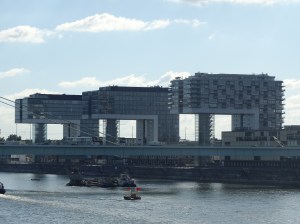
From there we went to see the flood levels of the Rhine in recent history, the new docklands where the old docks of Cologne had been gentrified as apartments. We then returned along the river front to Mick’s favourite Irish pub, the old square containing the medieval city hall (Rathaus) and the Jan and Greta memorial as well as some irreverent grotesques – one poking his tongue and the other baring her bum.We left Michael and returned to the Cathedral and this time went inside.

We decided that we would return to the boat as there are free drinks on tonight. Back at the boat we dine (the food is alright again) and then go to the bar with our dinner companions for a few drinks. Great afternoon and night. This bus tour may turn out alright!

← Back

Thank you for your response. ✨

Warning
Warning
Warning
Warning

Warning.

The Retirees go Abroad – Croatia – Opatija Riviera – Njivice on the island of Krk, Beli on the island of Cres

It is our last day on tour and we are travelling by boat to Njivice on the island of Krk. Krk is the largest island in Croatia and Njivice is the newest town developed on Krk and this is due to tourism. It is all cafes resorts and tourist shops but it also has a traditional beach if somewhat stony. Kerry and I took the opportunity to have a swim. The water is very refreshing and extremely clear. Unlike Icici you can walk into the water but it soon gets to depths of 20 to 25 feet. A 1/2 hour was enough to drive us back to shore to the sunshine and our towels.

Here are the photos of our trip over to Krk our boat and some of the other craft we encountered.

From Krk we travelled to Beli on the island of Cres. Unlike Njivice, Beli developed as a hilltop village and with tourism developed its harbour and the recreational activities that attract tourists. It is also a wildlife haven for the Cres Griffon Vulture although we did not encounter any. Unlike Njivice, Beli has a pebble beach but like Njivice very clear water. But this time we chose to visit the village on top of the hill and take in the stunning scenery. The road to Belli was about 1 kilometre long and most of it at an 18% gradient. Here are the photos.

Our day ended with a long trip home to pack ready for the bus back to Zagreb, Heathrow and then the drive to Long Eaton. I put my camera away until our tour to the Rhine and its wine region of Mosel.

← Back

Thank you for your response. ✨

Warning
Warning
Warning
Warning

Warning.

The Retirees go Abroad – Croatia – Opatija Riviera –Ičići

The next day the sky was clear and blue and the beach was beckoning. So we walked in the direction of Lovran along the coast but only made it to Icici (pronounced itchy key). Just past a large marina, Icici is a small village with a pebble beach and the more typical concrete platform. We hired two sun lounges and an umbrella and stretched out with our books. We are outside the summer season and it is Monday so very few people come to the beach and it remains peaceful. There is a gentle breeze and the sun is mild. Ultimately we work up the courage to jump in the sea -shit it was cold and with the tide coming in quite choppy. It is over 6′ deep even at the edge of the concrete beach so no standing around or lolling in the waves just constant treading water and swimming.

We dried off in the sun and then strolled up to the cafe where most of everything on the menu was “off” apart from the hamburgers and hotdogs. At least the beer was cold and the wine cheaper than Fanta. The wind picked up after lunch and the water became colder and choppier. By 4.00pm we decided to go home – 40 minutes walk along the coastline. A very pleasant day.

Here are some photos of the beach and the walk home.

← Back

Thank you for your response. ✨

Warning
Warning
Warning
Warning

Warning.

The Retirees go Abroad – Croatia – Opatija Riviera – Rijeka once again

The sun did not get up this morning. Rather a grey sky and blustery wind covered over the blue and bright sky of Croatia so our plans change. After enquiries we decide we will go to Krk which is the largest town on the island of the same name. Unfortunately our intel was rubbish and we arrived in Rijeka one hour before the next bus to Krk. The weather was still unfavourable and we did not want to sit at the bus station for another hour so we decided to walk into Rijeka and see a bit more of the town.

We called into Capuchin Church of Our Lady of Lourdes a huge church attached to yet another monastery but there was a service being performed so I thought it would be bad taste to start taking photos; particularly with the big crowd of believers there. We moved on to Square Trg and found Stendarac, a monument given to Rijeka by Emperor Maxamillan for its loyalty to Venice. Since 1700 the Square of Trg Riječkae rezolucijae Square has served as a playground for the children of the patricians, and this is where Stendarac is located, a stone flagpole/pillar used for the flag which was raised as instructed by the Emperor Maximilian in memory of the city’s loyalty during the Venetian occupation in 1508 and as confirmation of the political rights of the city. Originally it was located in front of the old City Hall on Koblerov trg Square, but over the years it has often changed its location. The pillar /flagpole, over 2 metres high is decorated with three inscriptions that date back to 1509, 1515 and 1766, as well as with a relief of St. Vitus holding a model of the city in his hand.

We strolled on to the markets past the train chugging down the main street, past the Ivan pl. Zajc Croatian National Theatre located by the main city market, close to the banks of the Rječina River and close to the port’s docks, on reclaimed land of the former army training ground known as Ürmeny Square.

The markets are made up of two purpose built two storey pavilions one full of butchers shops and the other full of fish mongers, smelly fish mongers.

Not much else to do so we caught a bus home and took a walk along the front. The sun made an appearance but the wind was doing its best to blow it away. Made it around to Hemingway’s cafe and found the Sea Kidd London tied up awaiting its clients. Had a burger, took some photos and went home. Oh by the way if you want to see more about the MV Sea Kidd London go to http://www.yachtcharterfleet.com/luxury-charter-yacht-23357/seakid.htm.

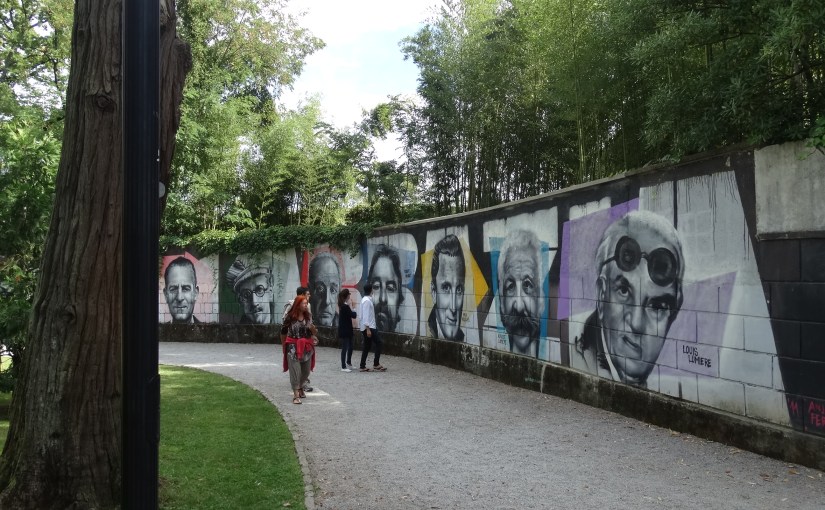
We then took a walk home passing the visitors wall – graffiti depicting from Mahler to Luminere – see the photos below.

Home or the hotel at least we went to the pool read a book had a swim and then back to the room – a lazy day.

← Back

Thank you for your response. ✨

Warning
Warning
Warning
Warning

Warning.

The Retirees go Abroad – Croatia – Opatija Riviera – Rijeka and Trsat

Saturday morning and breakfast is still disappointing and unimaginative. So we quickly move onto the bus station and buy tickets to Rijeka. This is the principal sea port of Croatia and 3rd largest city of Croatia. We can see the high rise towers from our hotels balcony.

The bus trip takes about 30 mins and although air conditioned it is struggling with the heat of the day. Arriving at the bus station we have no idea of the layout of the city but very quickly we discover city history boards in 6 languages which direct us to the information office. Collecting a map of the city we plan to follow part of the old city trail and then go by bus to the hill top castle overlooking Rijeka at Trsat. This city has been fought over by the Venetians, Italians, Hungarians and the Romans because of its excellent harbour.

Our self-guided tour starts with a performance by local Marching teams performing in the mall. Next we move on and to the old city gate which has had the bell tower and clock added to it over time. Note the two headed eagle in the Hapsburg crest over the gate and then the two headed eagle (both heads looking in the same direction) for the city crest. This is how close the Hapsburgs are to Croatia. Passing through the gate we look for evidence of the city’s past and find images of the present, and remembrance of the past (an old olive press now a fountain). Finally we find all that remains of the old roman gate of the garrison from the late roman period. Behind this are the excavated ruins of the Roman garrison buildings and the garrison well.

St Fabians Chapel was built on top of the ruins in about the 8th century and some form of the chapel stand there today. It now faces a car park on rough ground in the midst of other demolished or partly demolished buildings. One of the buildings has become the canvas for some interesting graffiti. We then moved on to one of the most interesting churches we have encountered – a round chapel once part of a Jesuit monastery. The chapel of St Vitus also has a strange past and I have photographed the story and the icon for you to read.

We tried to visit the Palace of Justice without success and the St Mary Assumption Church and its leaning tower. From there we caught the bus to Trsat to see the old castle and have some lunch. We were dropped off from the bus straight into Our Lady of Trsat Church part of another monastery with a service taking place and being broadcast to the world. Pope John Paul visited the church and as a consequent a large bronze of the Pontiff squats in the fore ground of the church.

We found a restaurant and had lunch with a South American macaw. The bloody thing sat on the outside of its cage scratching and chatting to itself as we crunched away on our salads.

The temperature had risen to over 30 degrees so we tried to keep in the shade whilst finding the castle. It turned out to be close by. It is thought that the castle lies at the exact spot of an ancient Illyrian and Roman fortress. The Croatian noble Vuk Krsto Frankopan is buried in one of the churches. The Trsat castle was completely reconstructed and renovated in the 19th century when the mausoleum of the military commander Laval Nugent was built in its interior. The courtyard of the castle has now been turned into a restaurant and many tourists visit the place during the summer months. We had a good look around finding its fabulous views of the city and the hinterland particularly the amazing freeway across the valley. Kerry was starting to feel the heat so I finished exploring whilst she waited with a friend in the shade.

Leaving the castle behind we made our way to the bus stop (too hot to chance our hand at walking down the 750 steps to Rijeka) and then to the canal by the bus station to Opatija. The return trip was hot and noisy – there is no volume switch on some of the old women on the bus and everyone has to listen to their gossiping. On returning to the hotel I could not wait to get into the shower and then we both dozed for an hour before dinner after which we had a walk to the casino where we cleaned up winning 120 Kuna about 10 pounds. Content with having won enough money to buy lunch tomorrow we returned to the hotel to sleep.

← Back

Thank you for your response. ✨

Warning
Warning
Warning
Warning

Warning.

The Retirees go Abroad – Croatia – Opatija Riviera – Lovrana and Moscenice

Friday and the weather is fine with not a cloud in the sky. Only a half day trip today. We will go to Lovrana and Moscenice. We took the small bus today mainly because of the number in the tour group.

Lovran is a town in Istria, Croatia. It is situated on the western coast of the Kvarner Bay. Its name derives from Laurel (Laurus nobilis), as shown in the coat of arms. Lovran is one of the oldest coastal settlements on the eastern shore of Istrian peninsula. By the early Middle Ages it was an important urban and shipbuilding centre of northern Adriatic. Following the sudden development of port towns in the vicinity (Trieste, Pula, and Rijeka) which became the new and dominant urban centres in the region, Lovran lost its significance.
However, by the mid-19th century, the area gained prominence as it becomes a fashionable resort of Austro-Hungarian nobility. The long tradition of tourism is still strongly felt in the Lovran region, and it forms the backbone of the economy. The region is rich with cultural-historical heritage. A parish church with medieval frescoes and Glagolitic inscriptions, and the 14th century tower of St George’s Square within the old urban core, as well as rural ambiances and architectural edifices – namely turn-of-the-century villas with surrounding parks, are general points of interest.

Lovran includes an old town that was once fortified and evidence of the fortification can be seen today. Beside the old watch tower is the church of St George first founded in the 12th century. Both front the old town square which includes Mustacon a wooden relief over the door of a house to protect the inhabitants from evil. Only one of the old town gates exists today and outside of the old town is St Trinity Chapel. There is also a very good coffee shop where we enjoyed an iced coffee – best choice for a hot day.

Mošćenice is a village in the municipality of Mošćenička Dragain Primorje-Gorski Kotar County on the Istrian peninsula, close to Opatija, Croatia. I thought I would give all you secretly Croatian types a chances to get your tongue around a few Croatian names.

It is a typical hilltop village with stone houses and narrow streets situated 173 metres above Mošćenička Draga. From Mošćenice one has a nice view across the Kvarner Gulf to Rijeka and the islands of Krk and Cres. The village is connected to the Mošćenička Draga by road and 750 steps which lead from St. Ivan beach to the centre of the village. Besides the old St. Andrew church, places of interest are the local ethnographic museum and an old olive extraction mill.

The town is typically built as a concentrically conceived settlement with outer walls consisting of houses whose outside walls function as walls of the fortress. In such an enclosed environment, space is precious and all houses are built close to one another, separated by narrow streets and sometimes linked by covered passages. Much of the medieval structure is still visible now.

Our tour starts at the loggia outside the village. Here the village council met and the court was convened and the markets were held. From there we went through the gate under the Austro Hapsburg Crest. The village relied on refining olive oil for most of its life. One of the oil crushing plants from 500 years ago still exits and we were able to visit this establishment.

The parish church of St Andrew Apostle is very intriguing. The resident priest visited us at the church to speak to us in Croatian whilst our local guide translated. The church has been operating on this site since 800AD has been restored many times and added to by Italian soldiers during WW2 with frescos and repainting. It includes the remaining pillars from the original 8th century church and some odd objects including a cross adorned with all the instruments of the crucifixion of Christ.

Then a visit to the local ethnographic museum in the old watch house. Here we found that there is a Scotsman everywhere. If you look closely at the feet of the shepherds coat there is the Croatian form of the bag pipes which our guide said predated the Scots and Irish and made more of a din. The other costume is the typical married woman’s attire. A yellow sash indicated an engaged woman and white sash – a virgin? Perhaps just still looking said our guide.

Back to the hotel and down to the beach. The water is warm said our guide. Bullshit – bloody freezing but still we climbed in and swam around for about 1/2 an hour in water variously 6 feet to 25 feet deep. Then we sat in the sun, and watched the boats go by, before touring more of Opatija visiting the fountain and then the Museum of Tourism located in the first villa built at Opatija in 1820s with its impressive gardens and its Swiss Cottage in the yard. We also passed the Mozart Hotel the prettiest villa on the coast.

And so ended Friday.

← Back

Thank you for your response. ✨

Warning
Warning
Warning
Warning

Warning.