
After a tiring day yesterday we thought we would concentrate on Reims and planned visits to Reims Cathedral, Museum du Tau, and the Basilica of St Remi. It turns out that Reims is not such a big place and it was easy to walk to most places. It also turns out that the Kings of France came to Reims to be invested and crowned at the Cathedral and the banqueting hall beside it – now the Museum du Tau.
The cathedral is a towering grand church. Notre-Dame de Reims (Our Lady of Reims) is the seat of the Archdiocese of Reims and replaced an older church, destroyed by fire in 1211 that was built on the site of the basilica where Clovis was baptized by Saint Remi, bishop of Reims, in AD 496. That original structure had itself been erected on the site of some Roman baths.


Alongside the cathedral is the Palais Archi-Episcopal, now the Museum of Tau. The Palais was the palace of the Archbishop of Reims. It is associated with the kings of France, whose coronation was held in Notre-Dame de Reims. Most of the early building has disappeared: the oldest part remaining is the chapel, from 1207. The building was largely rebuilt between 1498 and 1509, and modified again between 1671 and 1710. It was damaged by a fire on 19 September 1914, and not repaired until after the Second World War.
The Palace was the residence of the kings of France before their coronation in Notre-Dame de Reims. The king was dressed for the coronation at the palace before proceeding to the cathedral; afterwards, a banquet was held at the palace. The first recorded coronation banquet was held at the palace in 990, and the most recent in 1825.
The palace now houses statuary and tapestries from the cathedral, together with reliquaries and other objects associated with the coronation of the French kings.


The Basilica of St Remi started life as the Abbey of Saint-Remi. Founded in the sixth century by the Bishop of Reims who converted Clovis, King of the Franks, to Christianity at Christmas in AD 496, after he defeated the Alamanni in the Battle of Tolbiac. Since 1099 it has conserved the relics of Saint Remi who died in 553AD. The present basilica was the abbey church; it was consecrated by Pope Leo IX in 1049. It houses many other “illustrious persons” in the crypt of St Remi. It was fabulous to stand in a building that had seen more than 1000 years of service and was still in use today.


We had a picnic lunch at a park near the Basilica and after the visit to the basilica we went to the hotel for a nanna nap. Upon arising David suggested we visit the War Rooms where the German nation surrendered and brought to an end the Second World War on May 8, 1945. The Museum of the Surrender of May 7, 1945 is a history museum founded by the city of Reims in 1985 to mark the 40th anniversary of the signing of the first part of the acts of capitulation of Nazi Germany. A second signing took place the following day in Berlin, which ended the Second World War in the European theatre. It is located in part of the premises of the Franklin-Roosevelt High School in Reims


On the way to the museum we passed a roman gate still standing where once gallo-roman citizens passed into the city. After the museum, there was still plenty of sunlight so we walked over to a large nearby park and the monuments of remembrance.


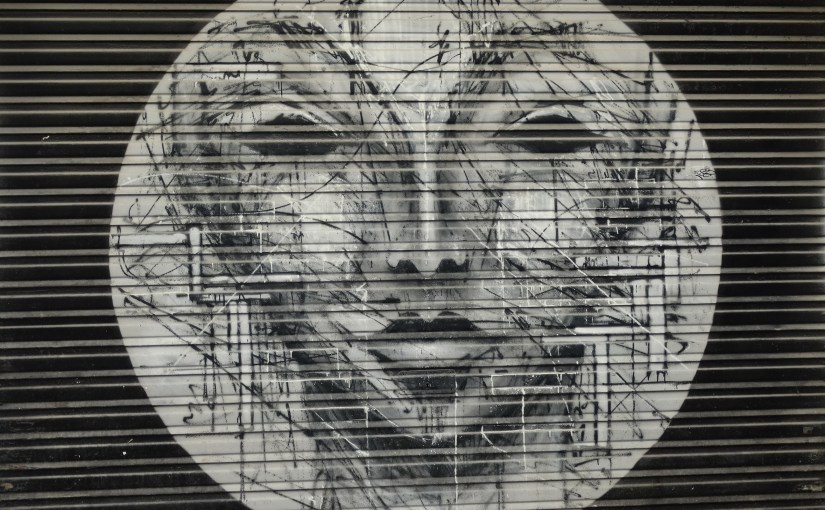
We passed through the park into the city centre and soon found a place to stop for refreshment. The Ernest Hemingway Café took our fancy and we stopped in to catch our breath. After reviving ourselves we walked on through the city past the golden angel atop o tower and past the Kings Cross look alike fountain, past some clever graffiti and then to the Palais of Justice (here David and I had a close encounter with a very angry cat – hissing a scratching at us – we may have been a little inebriated as we shrugged and moved on). Time had passed quickly and we decided we wanted a simple pizza dinner. Veronica spotted the Domino Pizza rider on his scooter and hailed him down so we could find our way there. The poor fellow was so surprised to be hailed that he actually stopped but could not speak a word of English. Never the less we completed the quest and enjoyed our repast under the arches of Rome.


With significant indigestion we retired to bed as we were on the road again tomorrow.




 glendon1954