

POLIGNANO A MARE
This town was one of the towns we wished to visit. Our research showed that it had many points of interest and it was on the itinerary prepared by Chat GPT. Irresistible wouldn’t you say. Robert thought so and agreed it was worth a visit. Our train was loaded with beach goers and we were concerned that we were going to be crowded out.
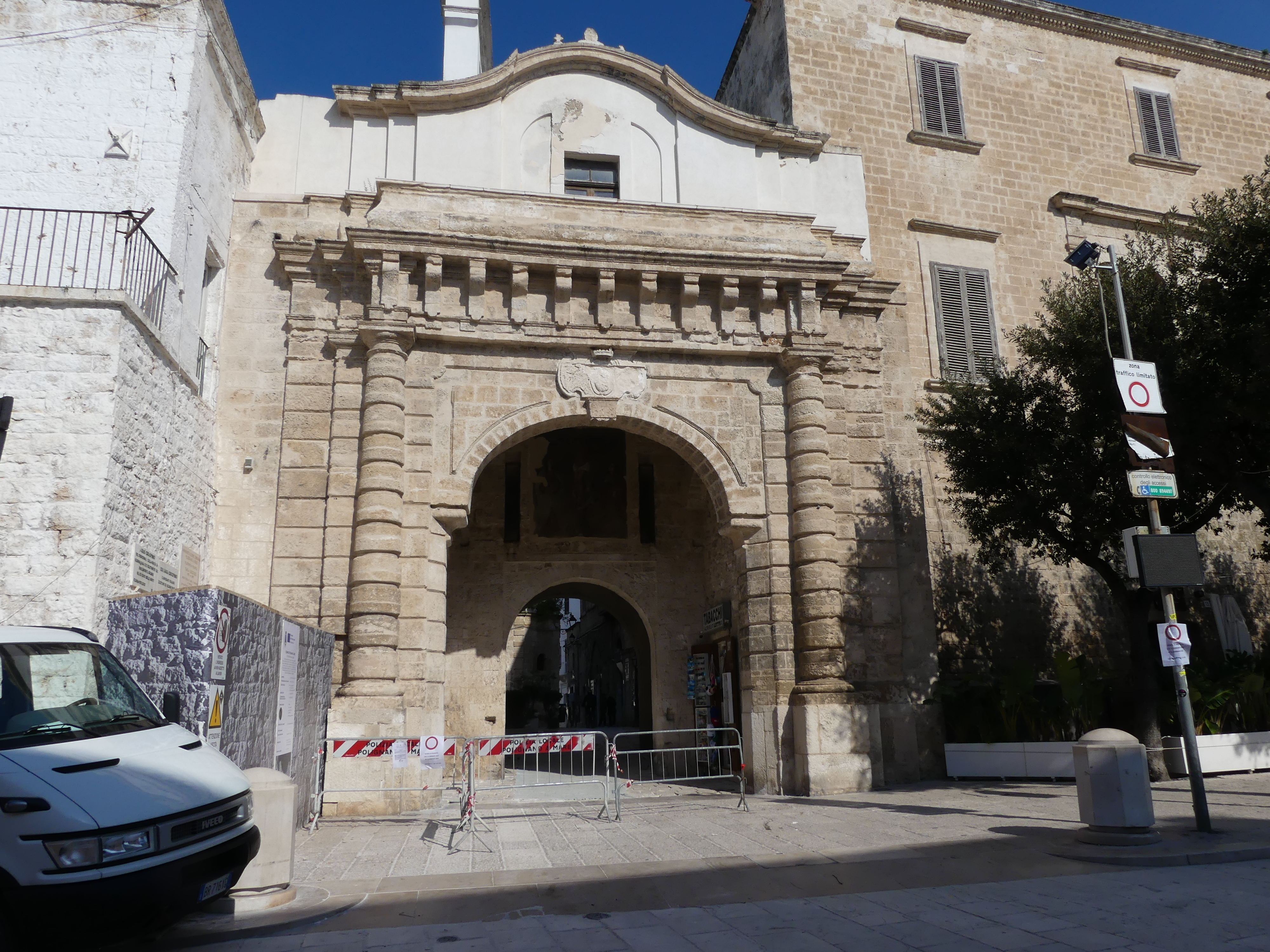
It is a town in the municipality of Metropolitan City of Bari, Puglia southern Italy, located on the Adriatic Sea. My research showed there is a tour of sea caves by boat that can be taken from the town. That interested me but as I have said before we were there in winter and out of season, so it was closed for the season. After arriving on the train there was a short walk to the city gate – oops it was closed also but then it’s not really in operation anymore.
The area has been settled since prehistoric times. It is believed to be the site of the ancient Greek city of Neapolis of Apulia. Thanks to its strategic position on the Adriatic Sea, it soon became a trade centre. The Byzantine Empire, in the 6th century, turned it into a municipal structure; subsequently, it was dominated by the Normans. Under the Aragonese crown, Polignano reached its peak in both economic and cultural terms.

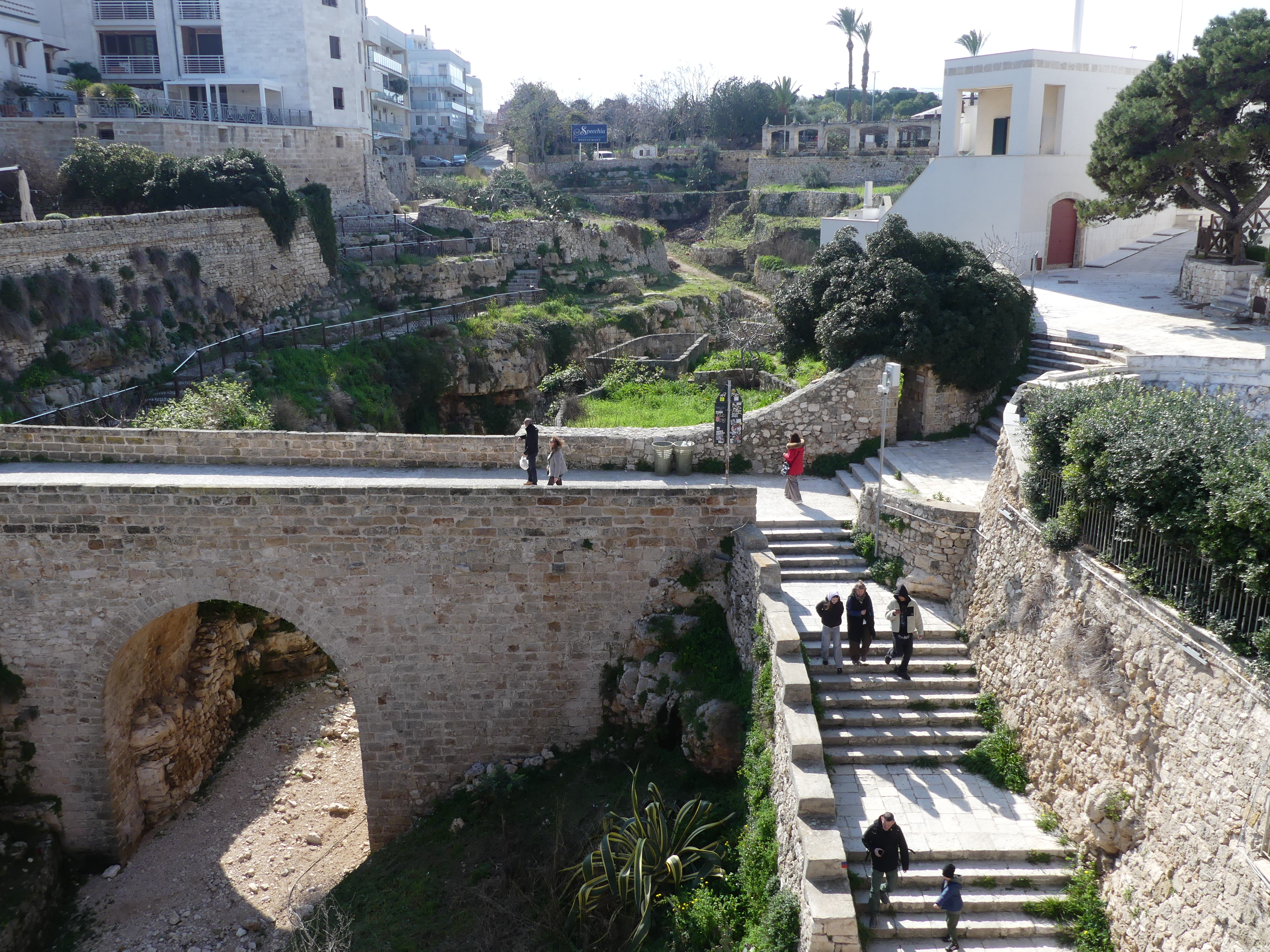
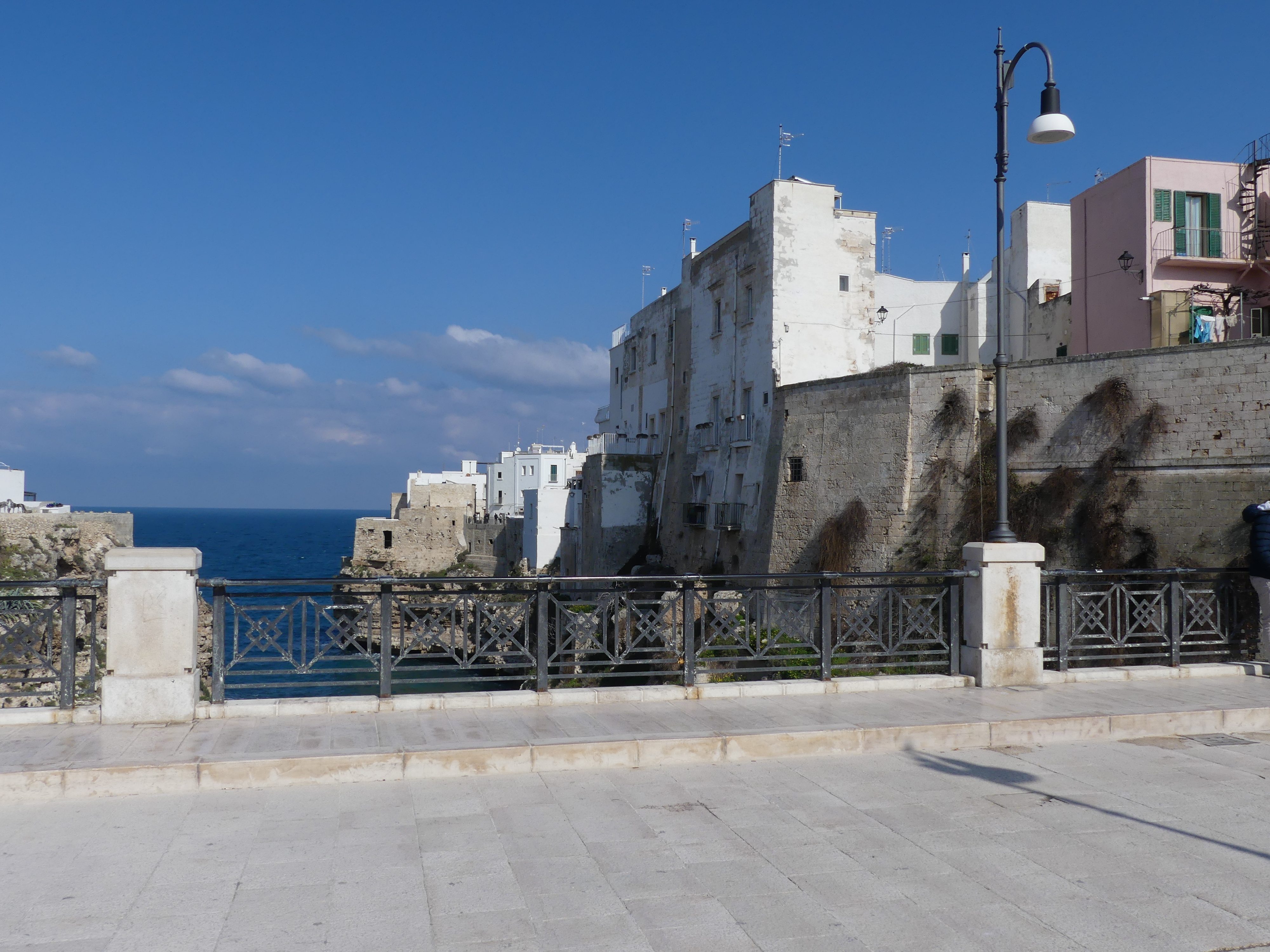
Not to worry, the crowd who came on the train with us showed us the way into town and moved on quickly down the road until reaching a bridge showing exactly why people come to here – the breath taking vista out to sea, not the black cat on the rock ledge but rather the natural rock walls holding the town out of the sea. People do live here – notice the washing on the line and the altana on the roof (Italian roof top terraces). Everywhere in town brings you back to the coastline.
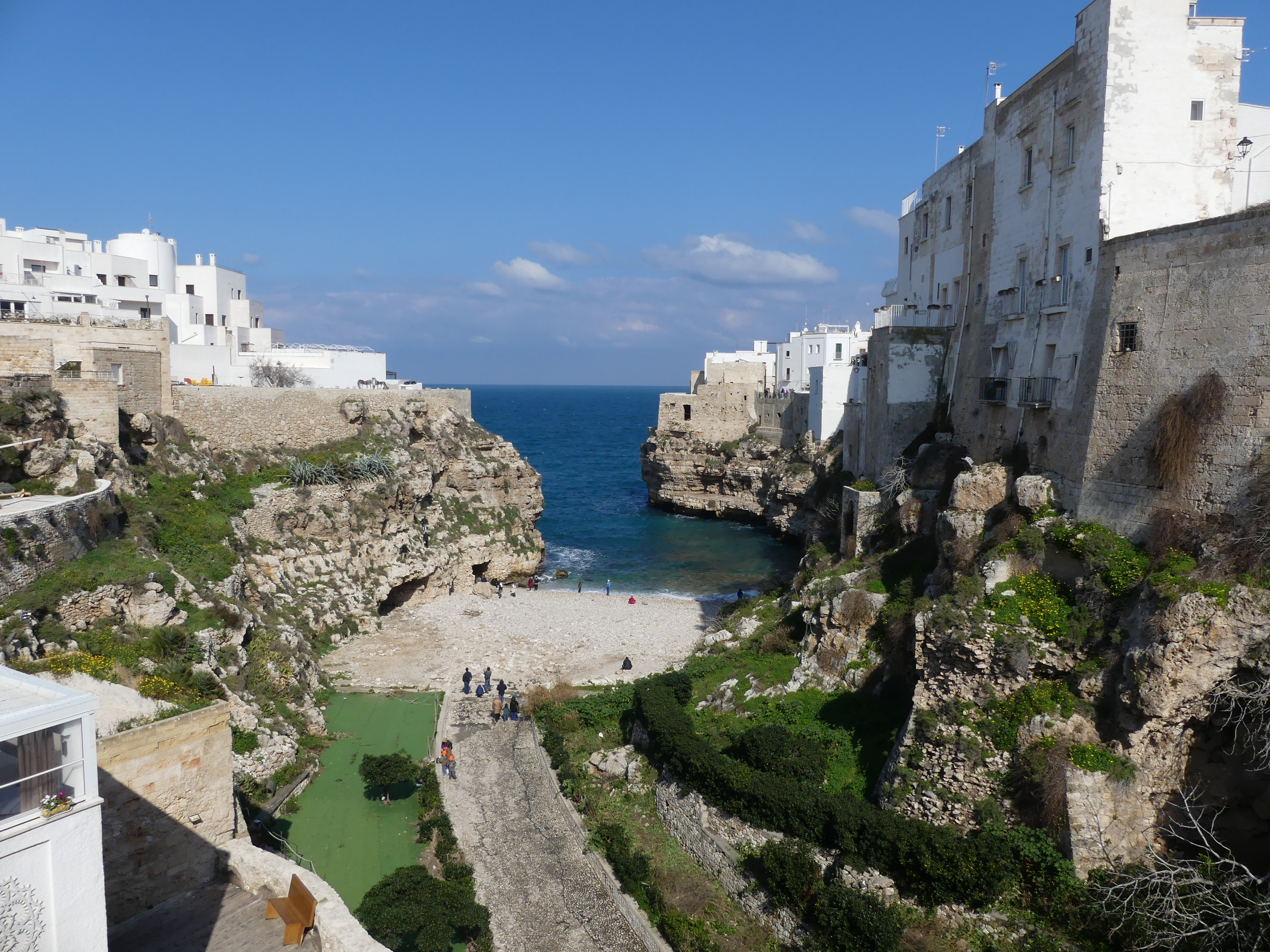
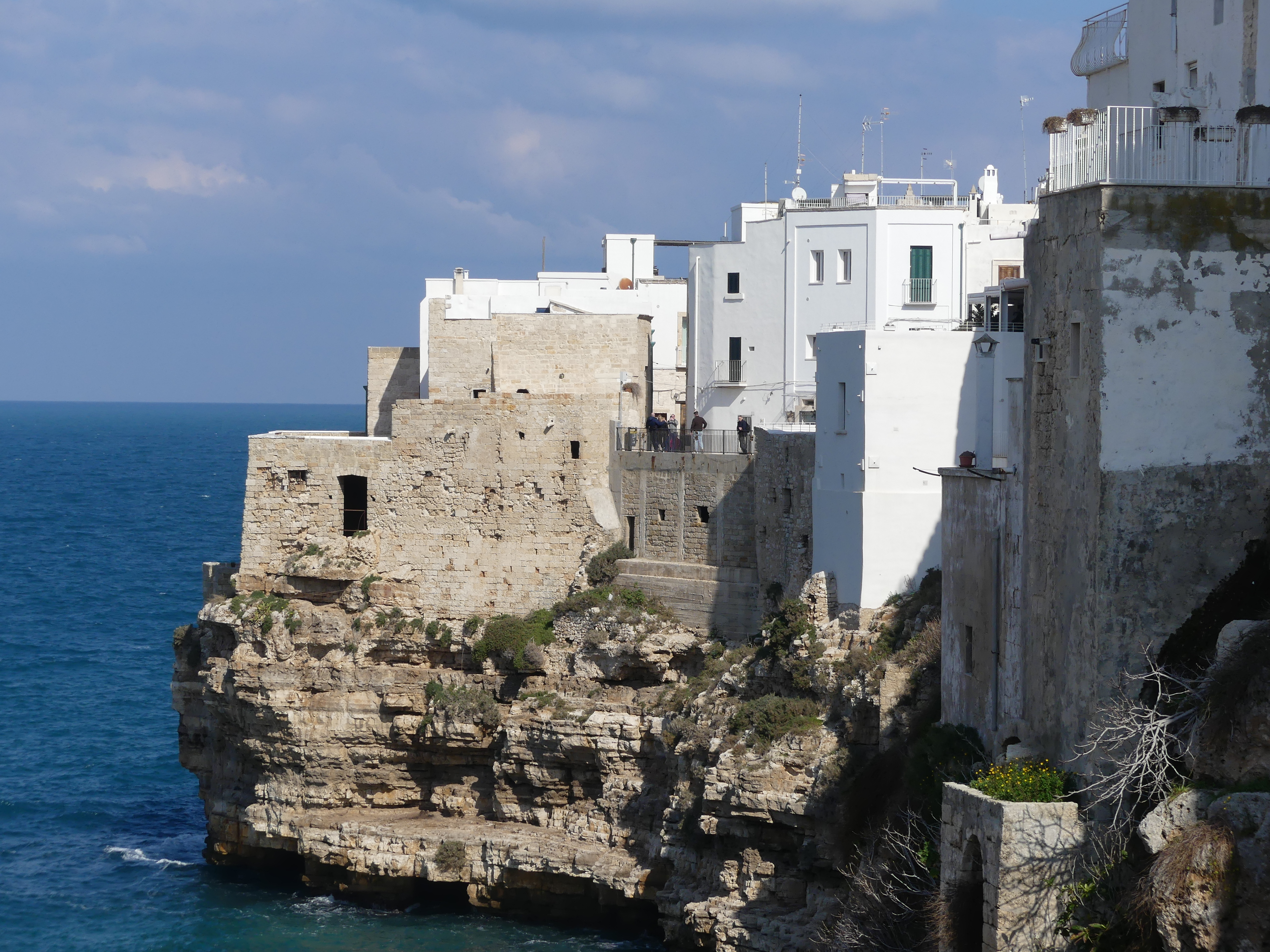


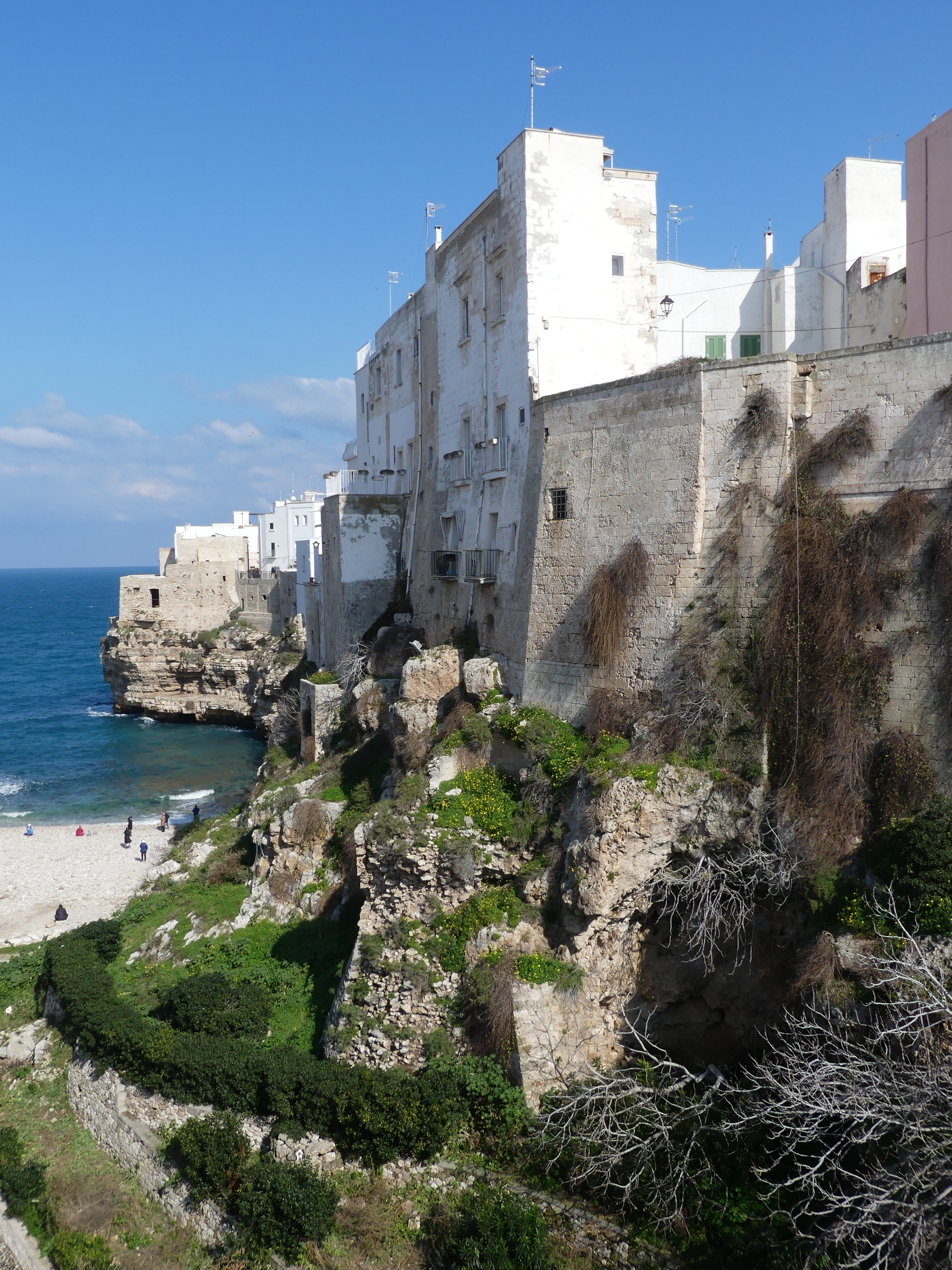

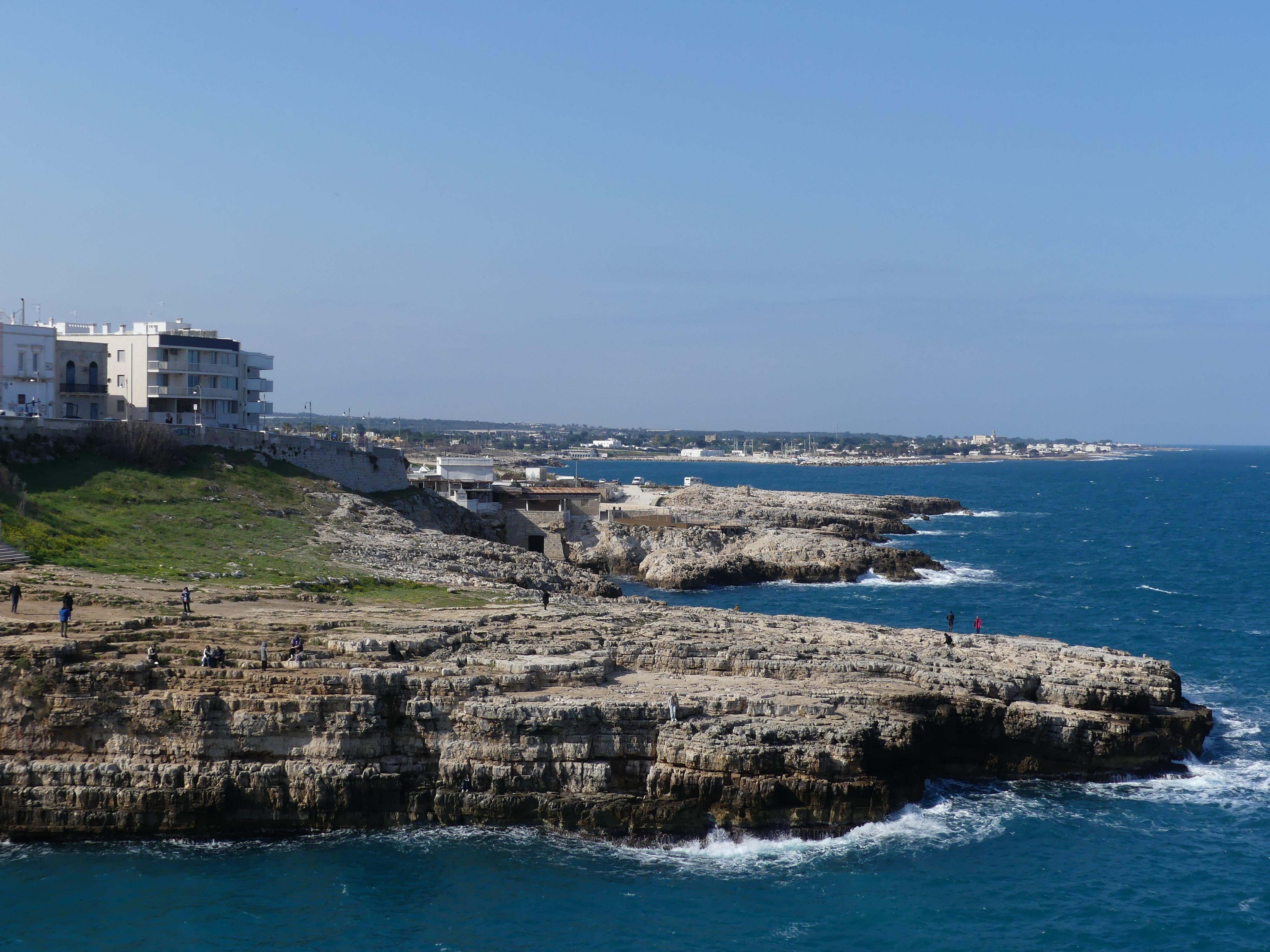
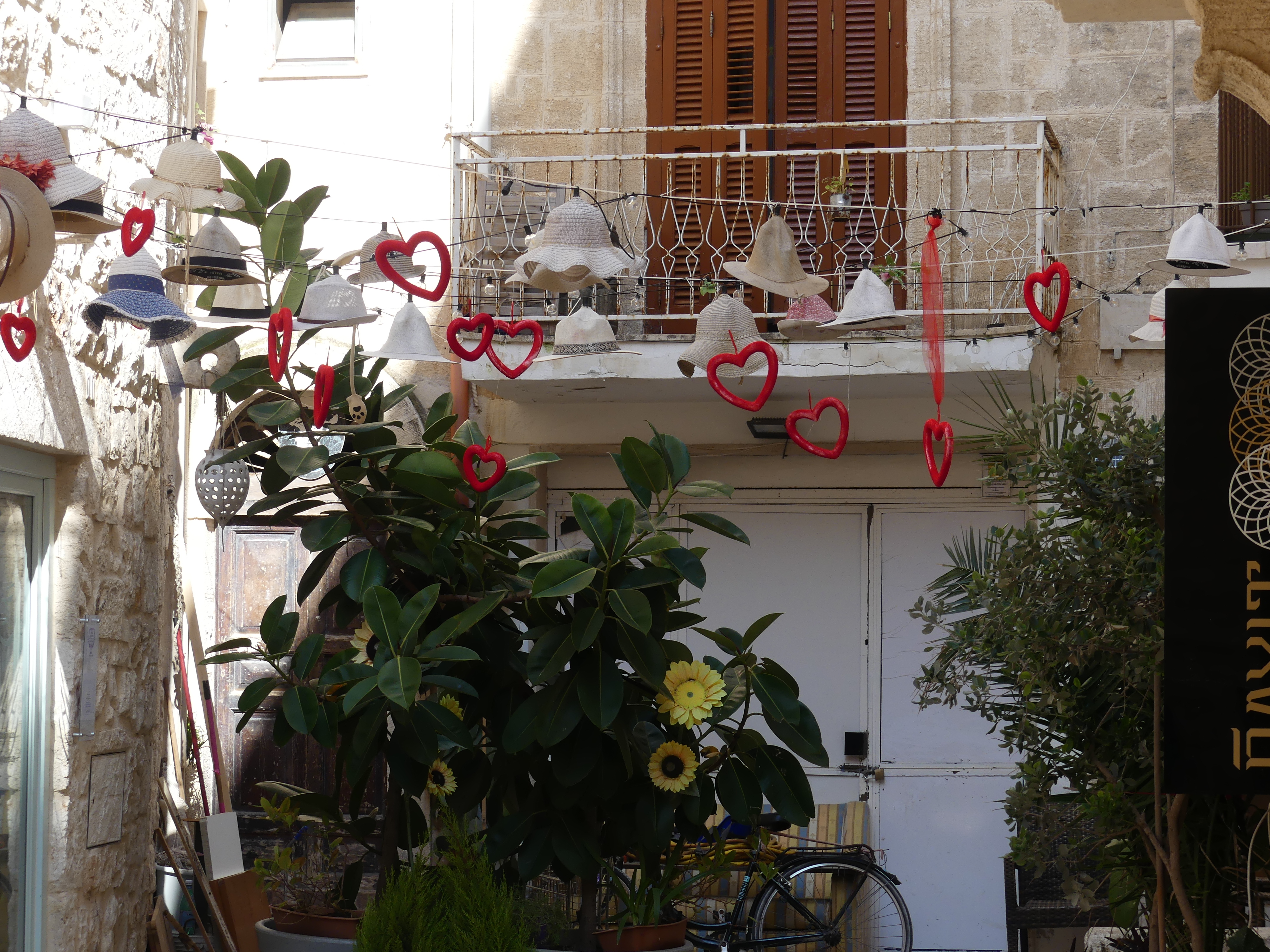
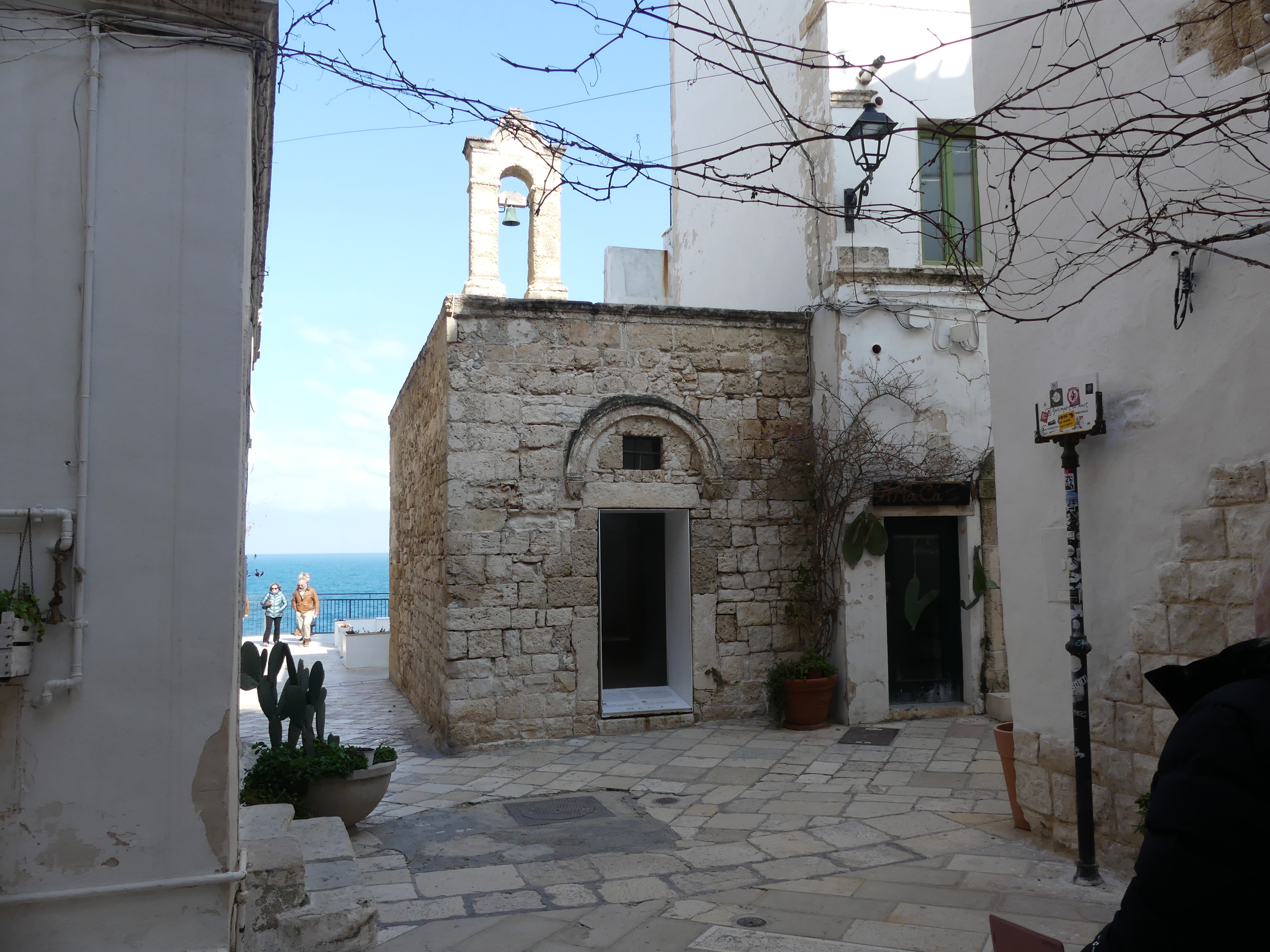
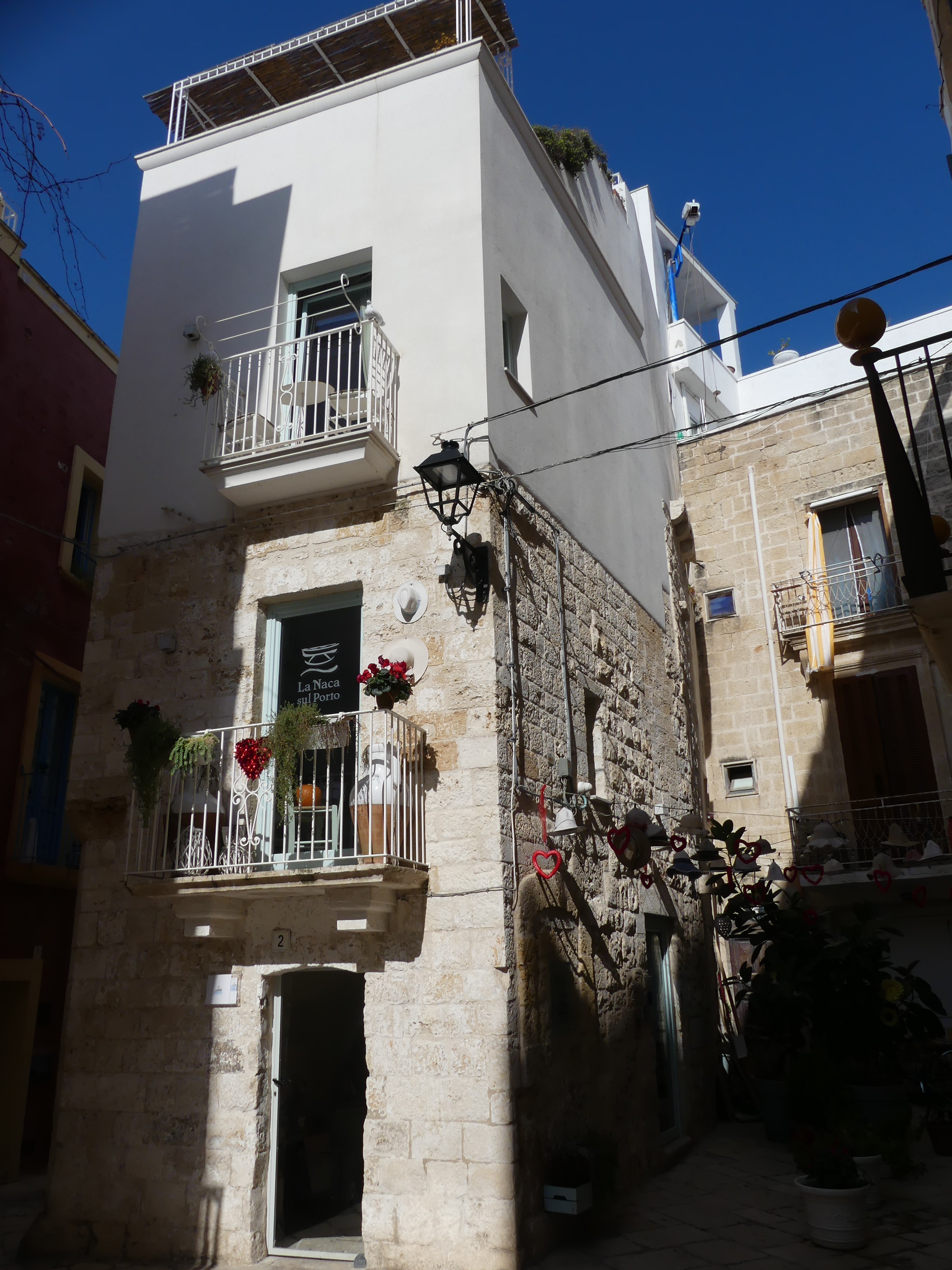
Excited by the movement above us we went back to the City gate and found a passage onto the rocky escarpment above us into the houses on the cliffs. The views were fantastic – all along the coastline houses and building clung to the cliff face, even into the inlet below. The sea caves were quite obvious but the tours were not running so further disappointment that we had chosen the wrong season. We had hoped to have lunch at a restaurant in the walls of the cliff face but it was closed of course for the winter season. You can see the entrance to the restaurant in the photos below. Still we were able to weave in and out of the passage ways all appearing to be alive with lights and decorations. We stopped for lunch after which I was weary and we decided to make our way back to the station.





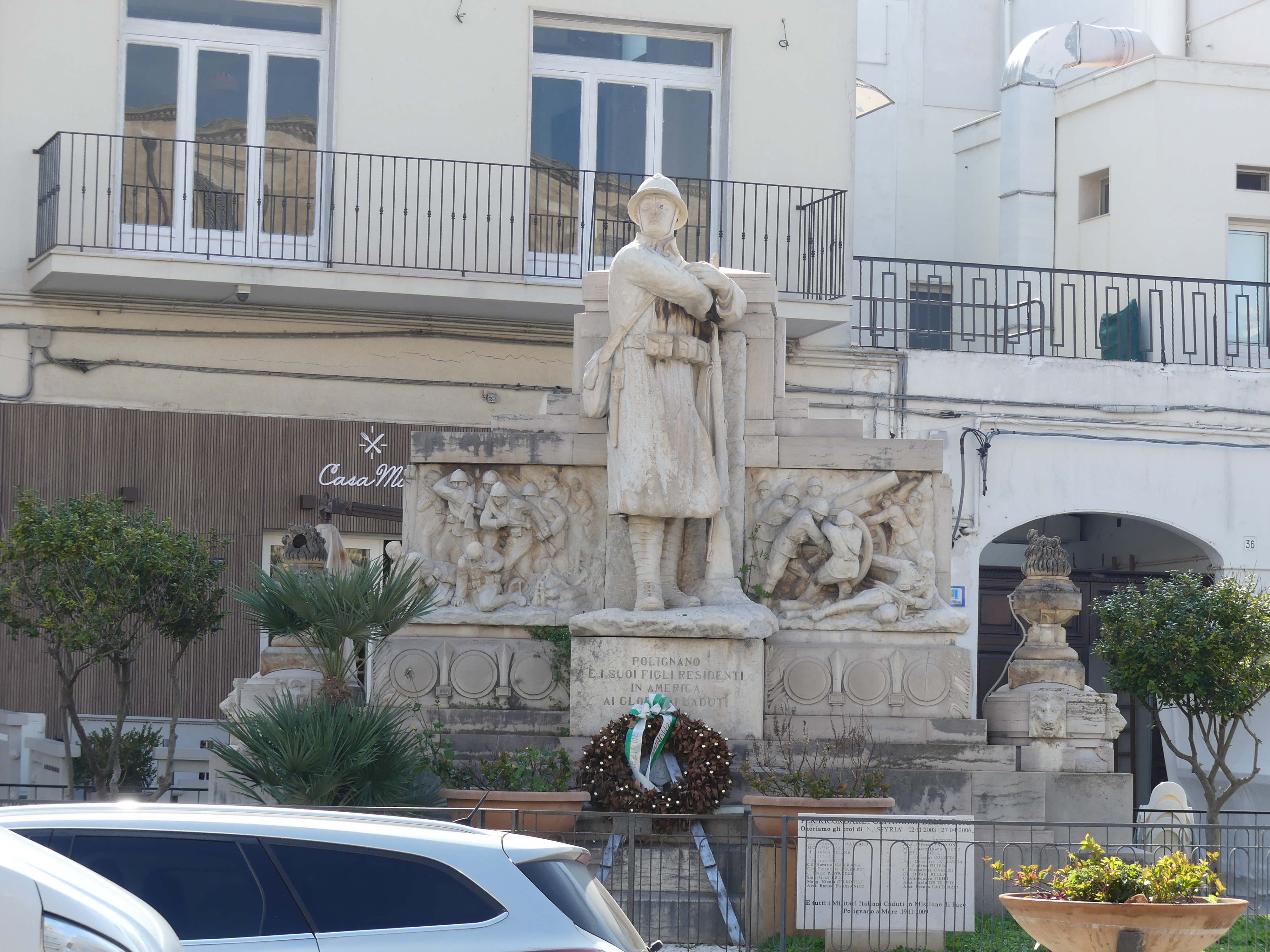
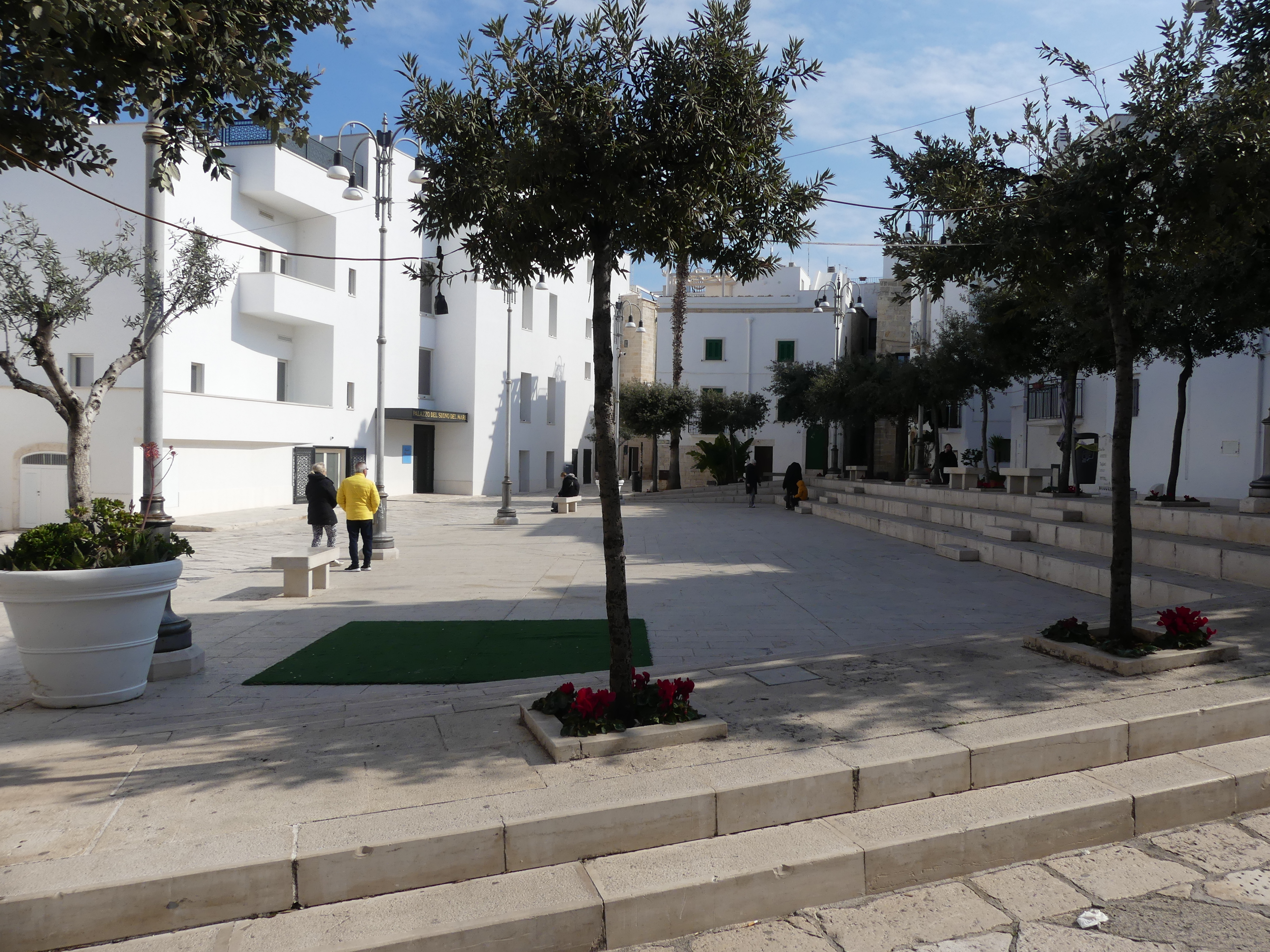
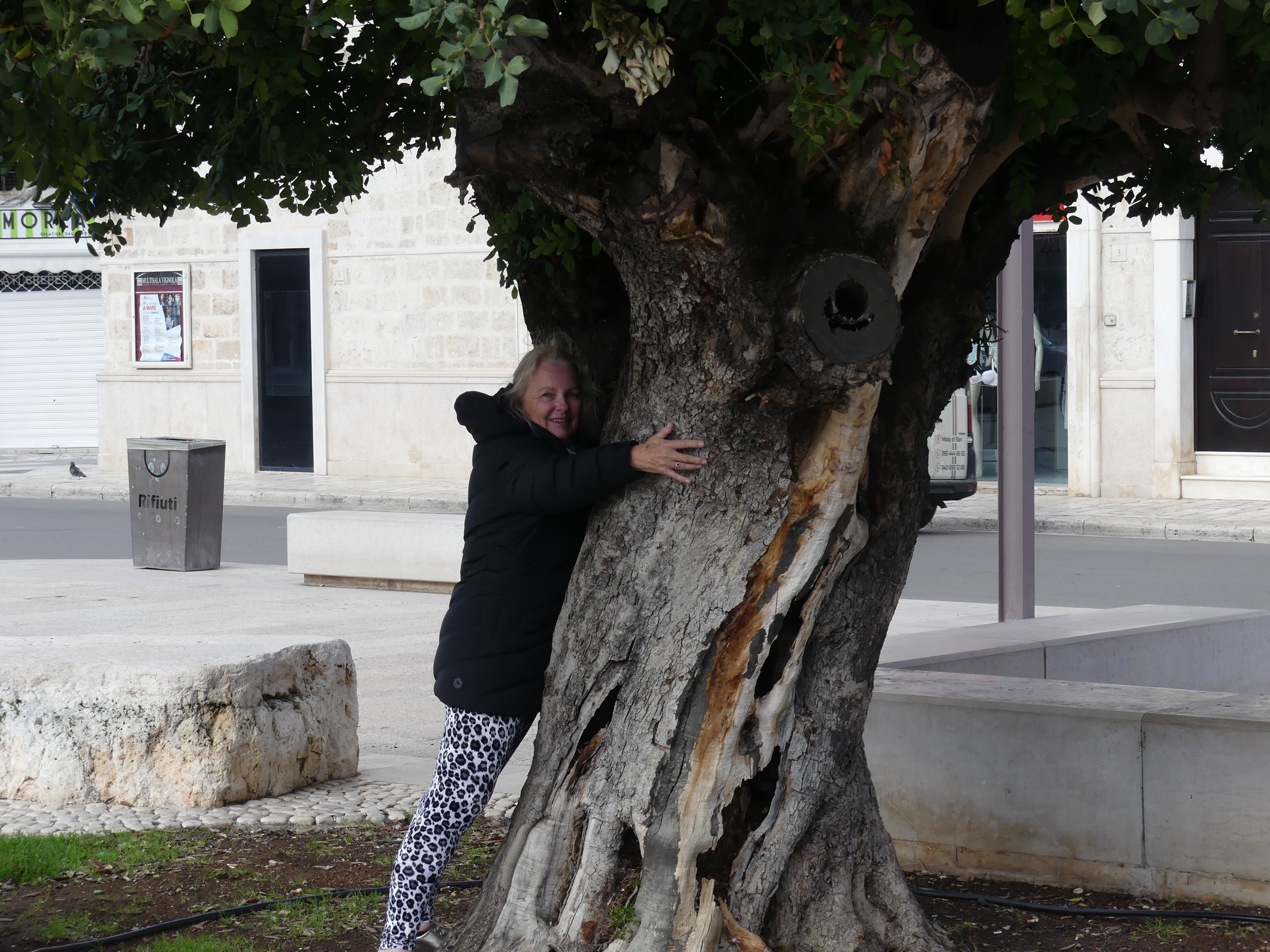
In one of the piazzas, we discovered a memorial to the soldiers lost in WW1 & WW2 – not often have I seen these memorials in rural Italy. Kerry found one of the oldest olive trees we had seen so she gave it a hug for good luck.

The trip on the train to Bari was comfortable and I even had a nap – the photos don’t tell you how far we would walk through these towns and I can tell you I needed the nap. Tomorrow will be a very big day with a trip to Taranto in the very south of the Italian peninsula so be on the lookout for “THE RETIREES GO AROUND THE WORLD – BARI TO TARANTO”
 glendon1954