THE RETIREES GO AROUND THE WORLD – SUTTON HOO UK to CARDIFF WALES – CAERLEON.

We had heard about some Roman ruins just outside of Cardiff and the Museum – “Roman Legionary Museum”. We have visited Rome and roman ruins in Rome, Verona, Pizza and Cesi and Carsulae outside Terni Italy plus Hadrian’s Wall and Littlecote Roman Villa in Wiltshire, so we were not expecting to be surprised but we were.

The town is a pretty Welsh village. Entry is gained through a single lane bridge, and the main street is clean and interesting. After parking in front of the site of the Roman Bath House at the back of a very popular local pub, we strolled through the village waiting for the building to open.

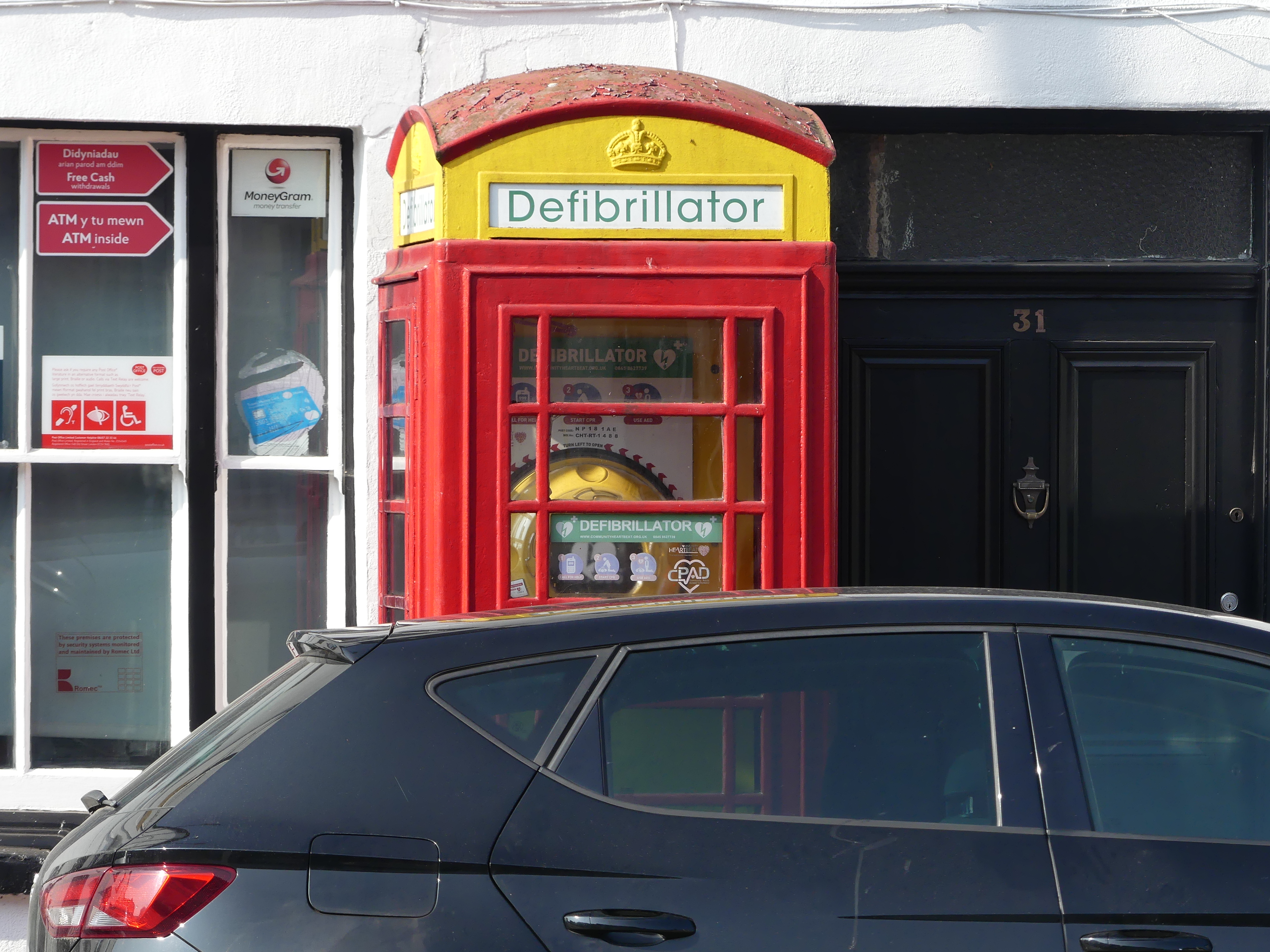
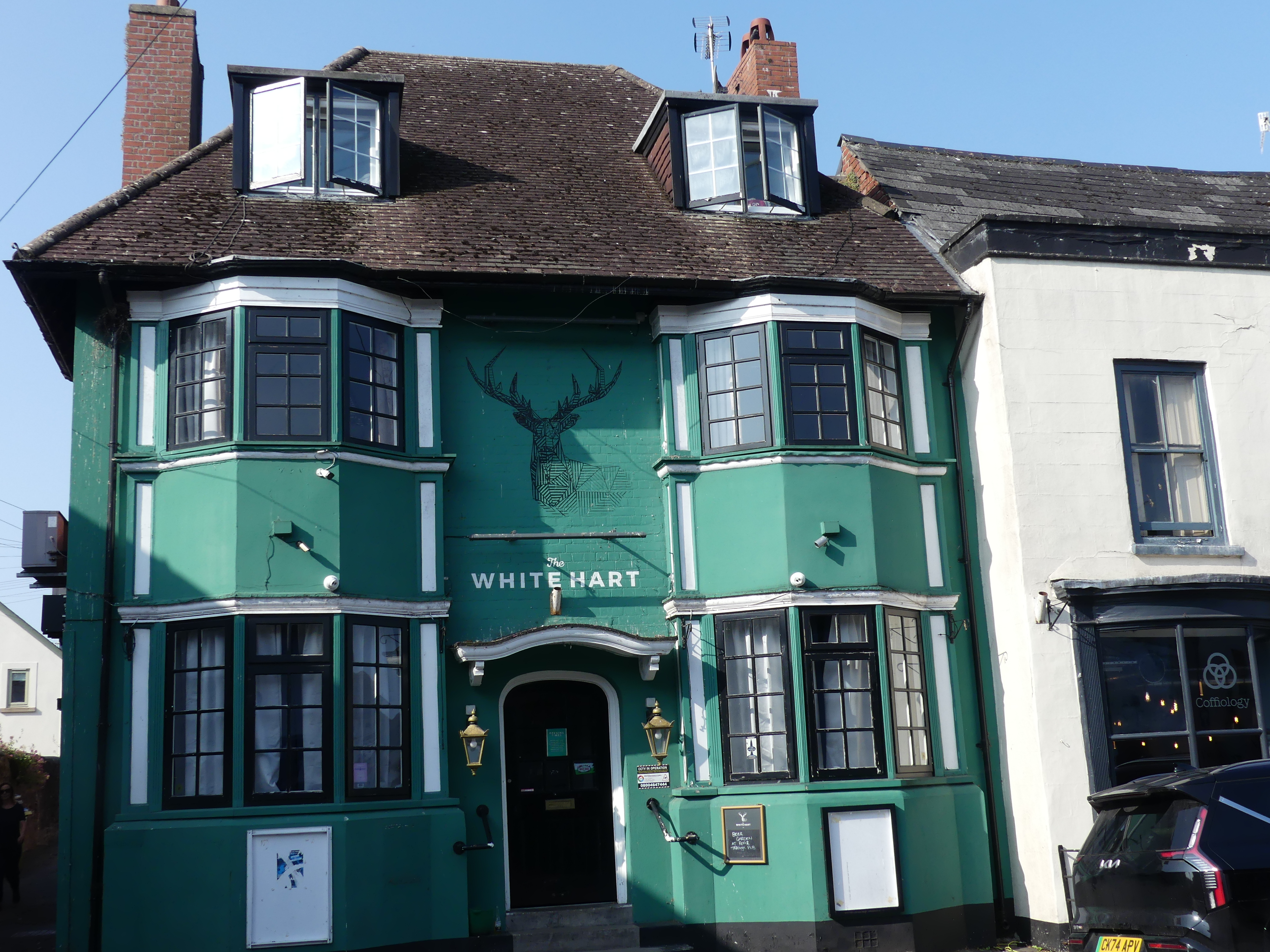
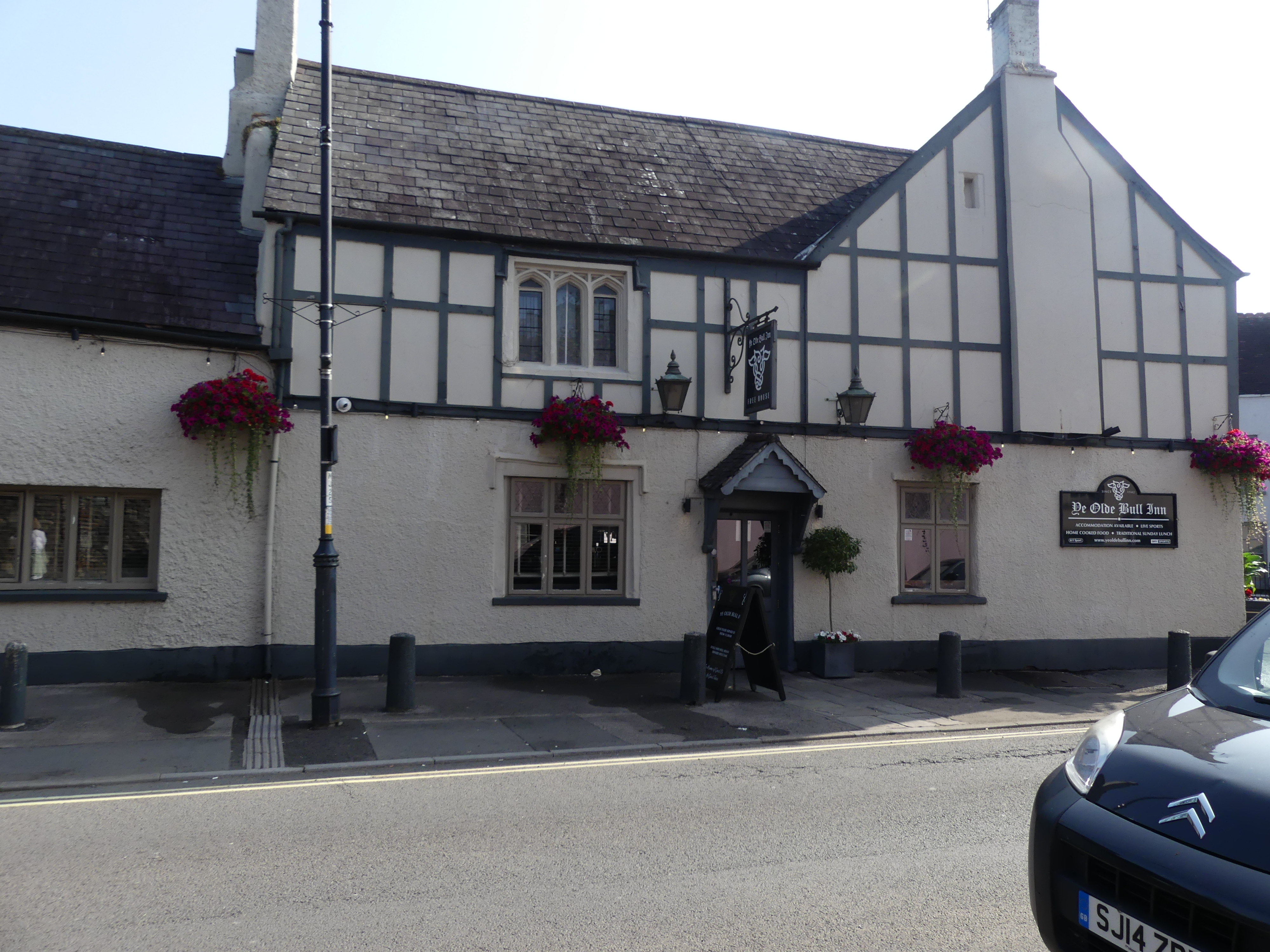
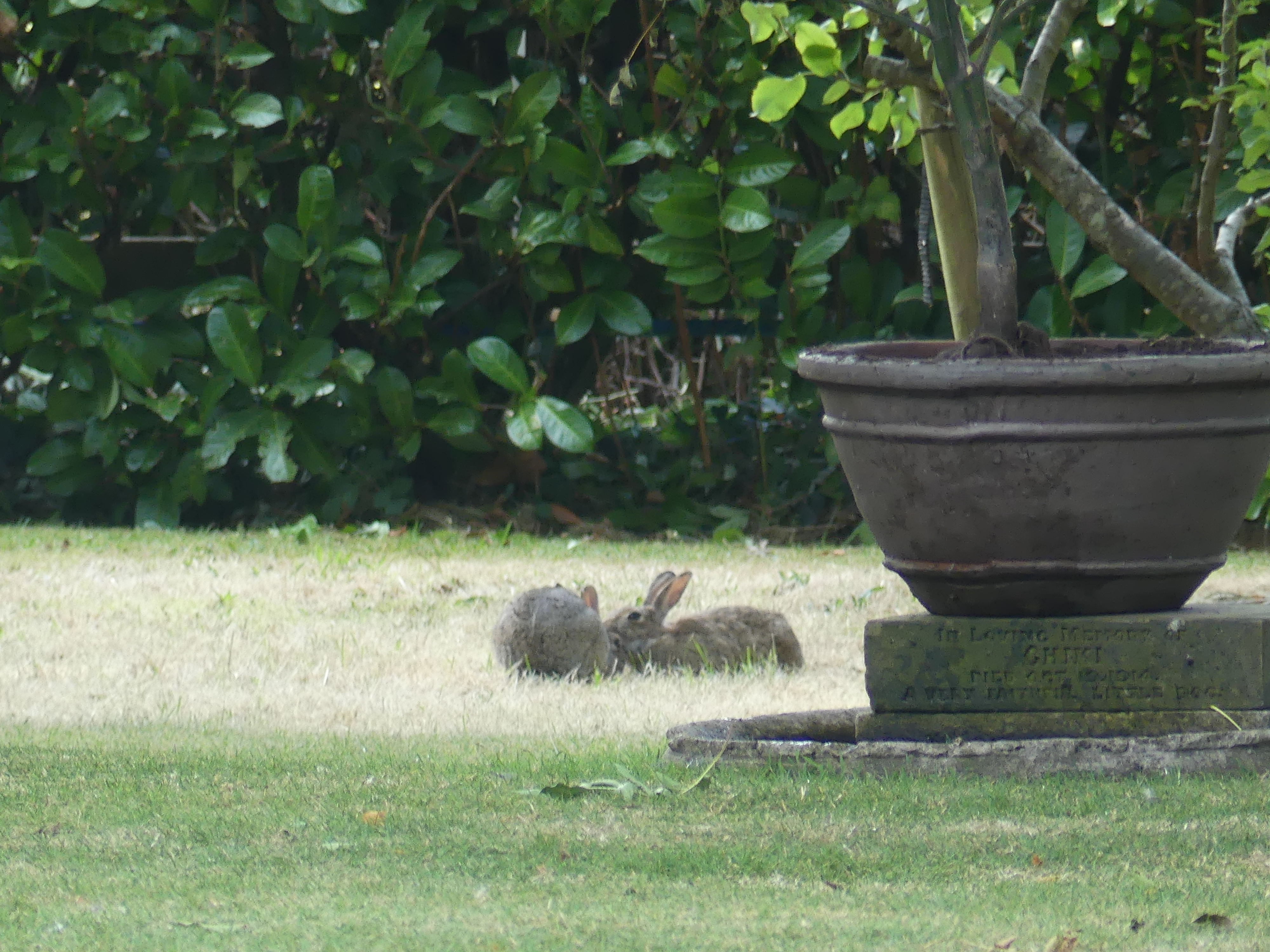
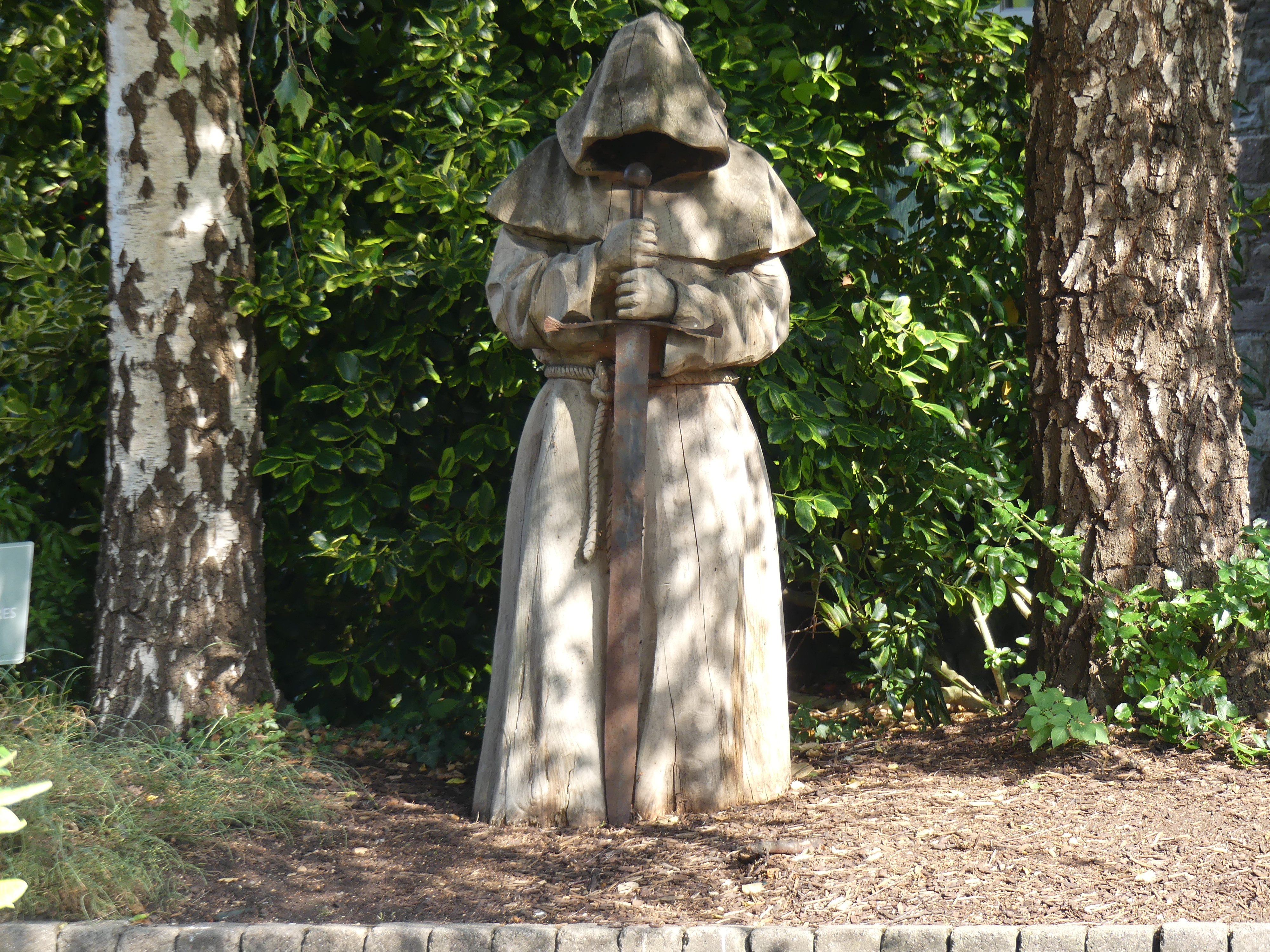
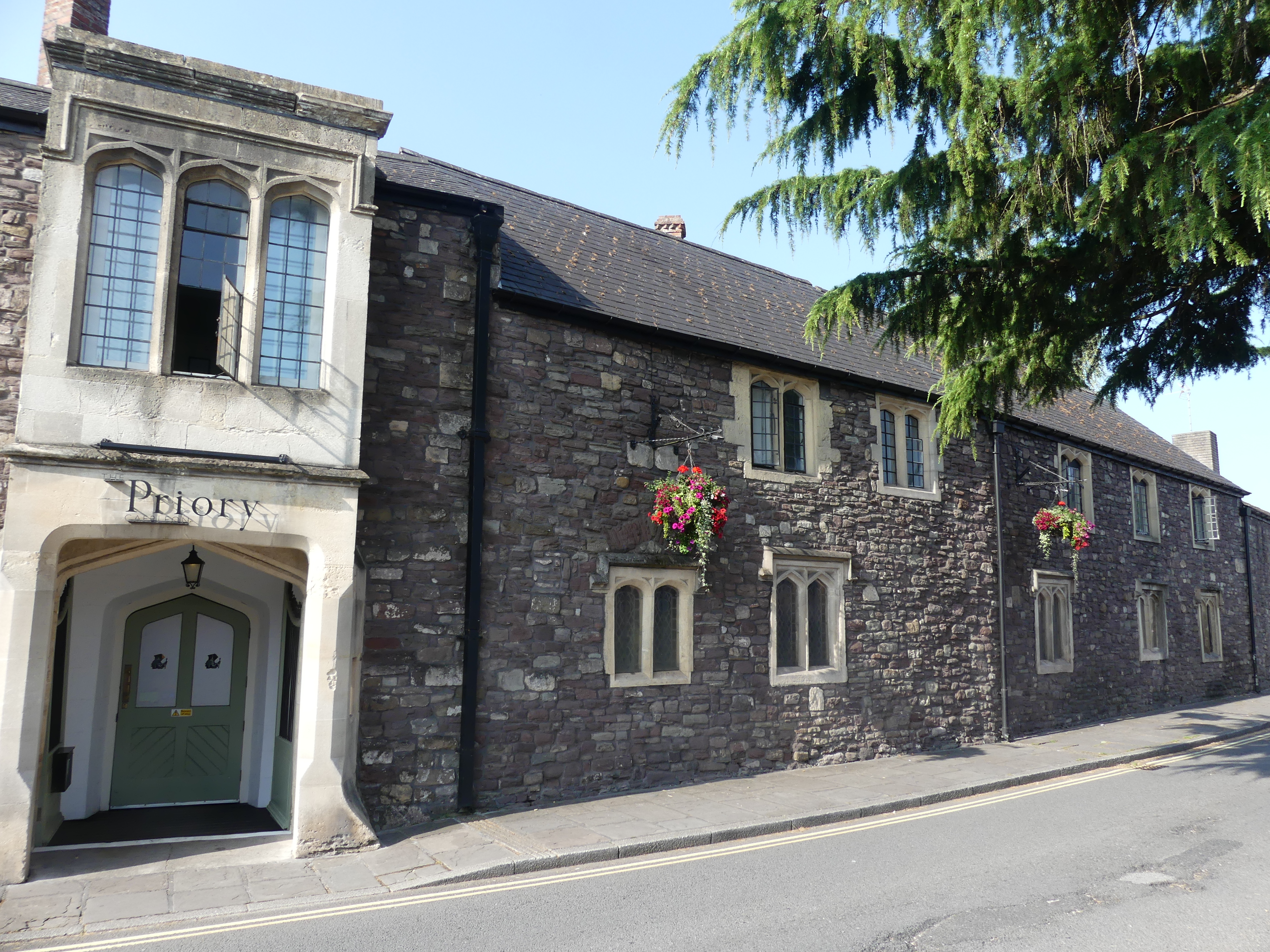
The pictures below take you on that stroll. First is the Priory – now an accommodation hotel but retaining the features of the former Priory with a pair of hares in the back yard. There are some interest wood carvings of a forest gnome, a priory student in cloche and priory guardian. Then there is the pub, a reused telephone box to house a defibrillator, a pretty pub, and the museum entrance.
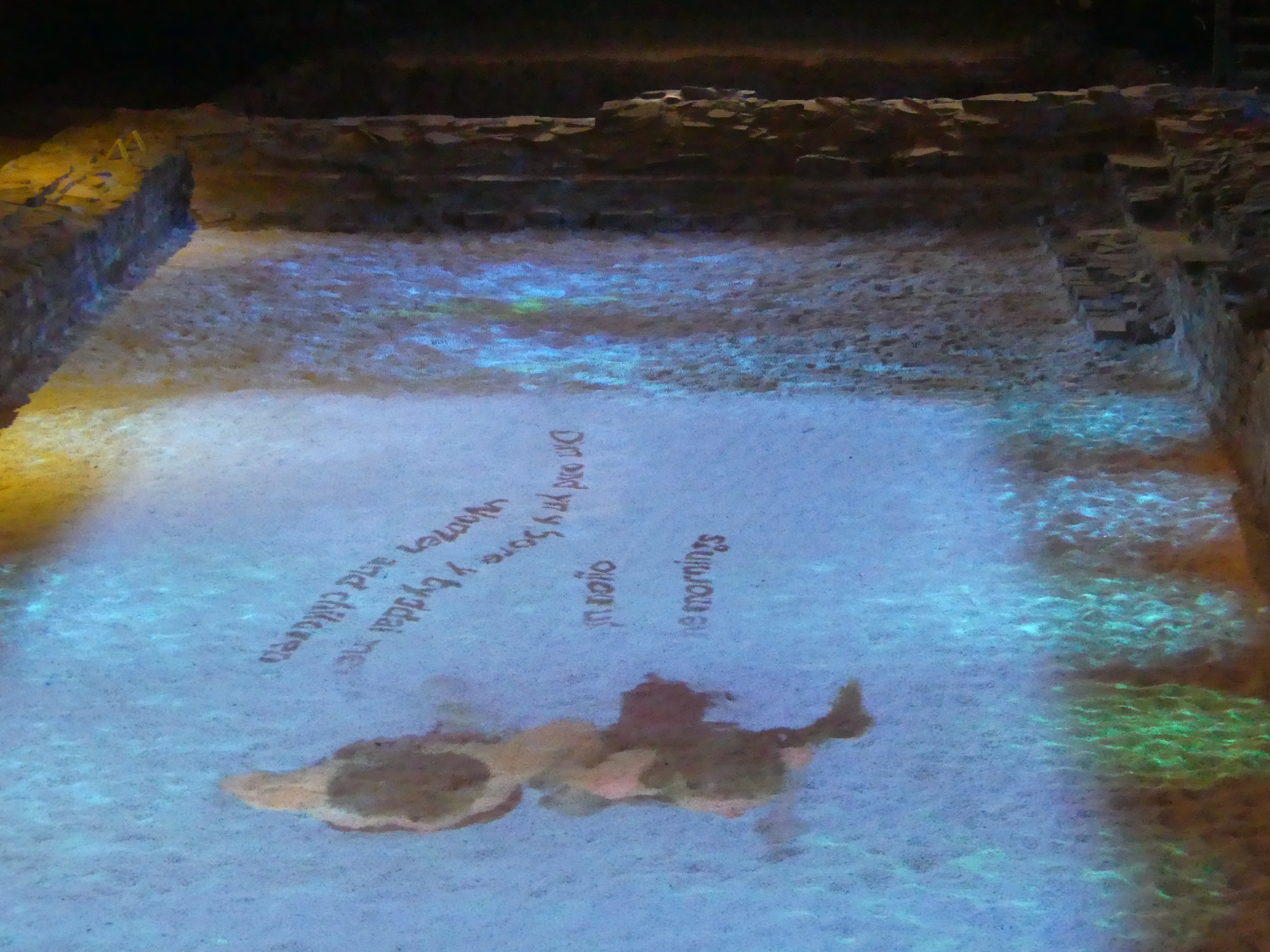
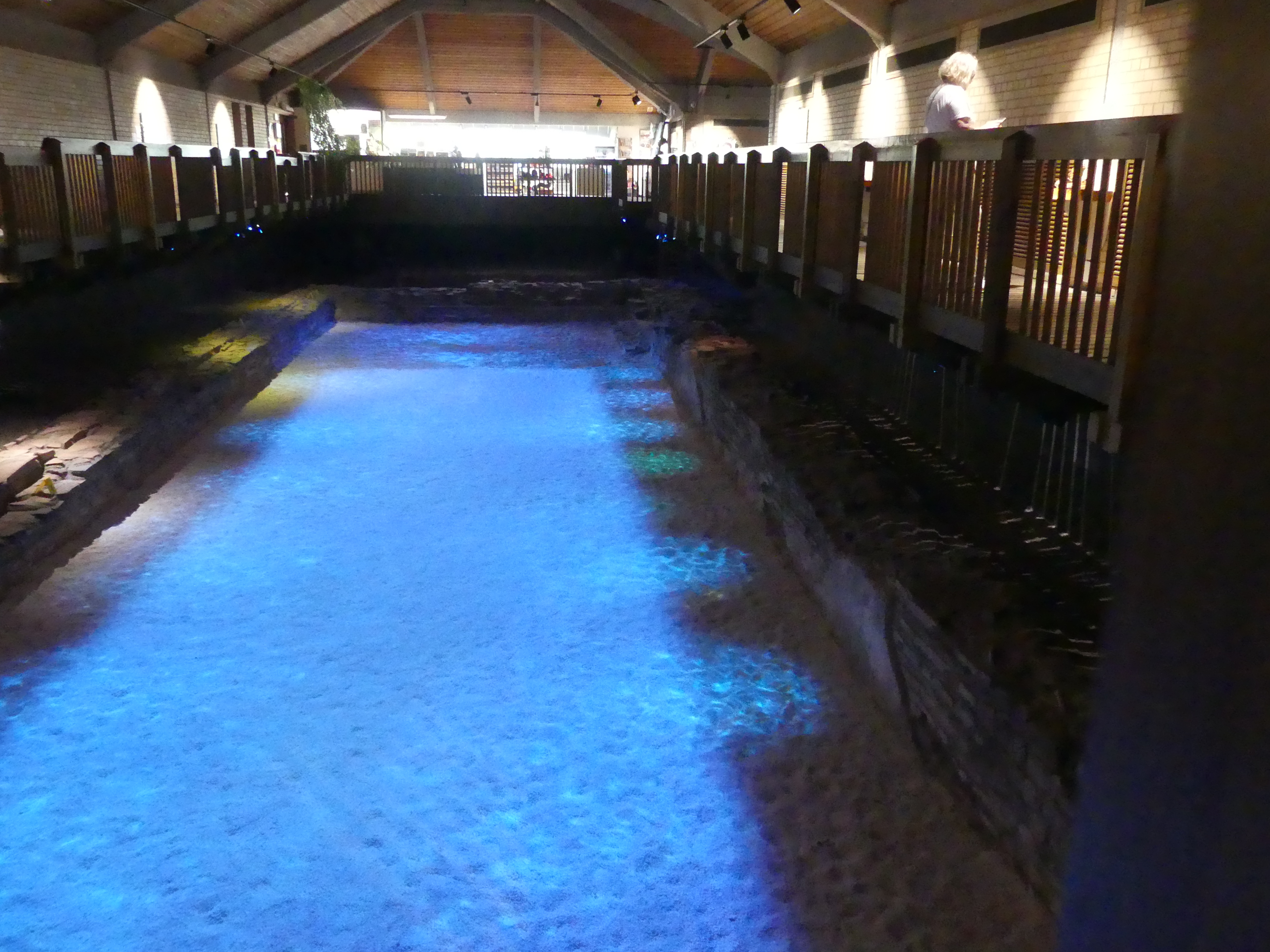
The site is the location of the main Roman legion and fort for the subjugation of the Welsh tribes. Life at the edge of the Roman Empire could be short, hard and dangerous so this fort provided the legionaries a place for rest and relaxation, and it was also their barracks. I have included two of the pages from a comic book containing images of the likely appearance of the building, the interior of the enclosed pools, and the garrison. The baths comprised the hot room (“caldarium”), the warm room (“tepidarium”) and the cold room (“frigidarium”) – you can see the English words in the Latin description.

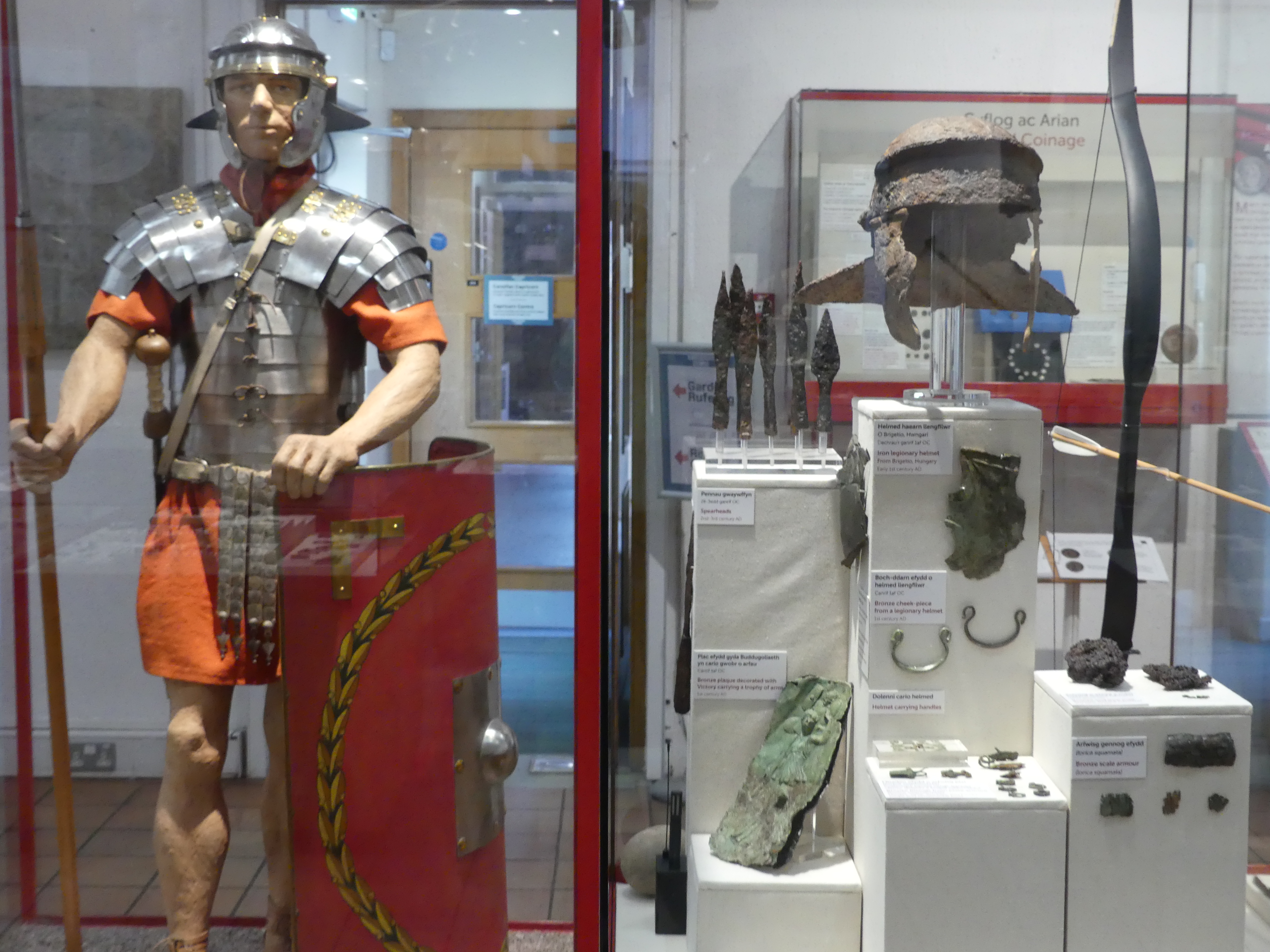
The pictures of the bathes with imagery of soldiers relaxing and using the spa follow. Photos of the replicas displayed in the Exhibition Hall are below.

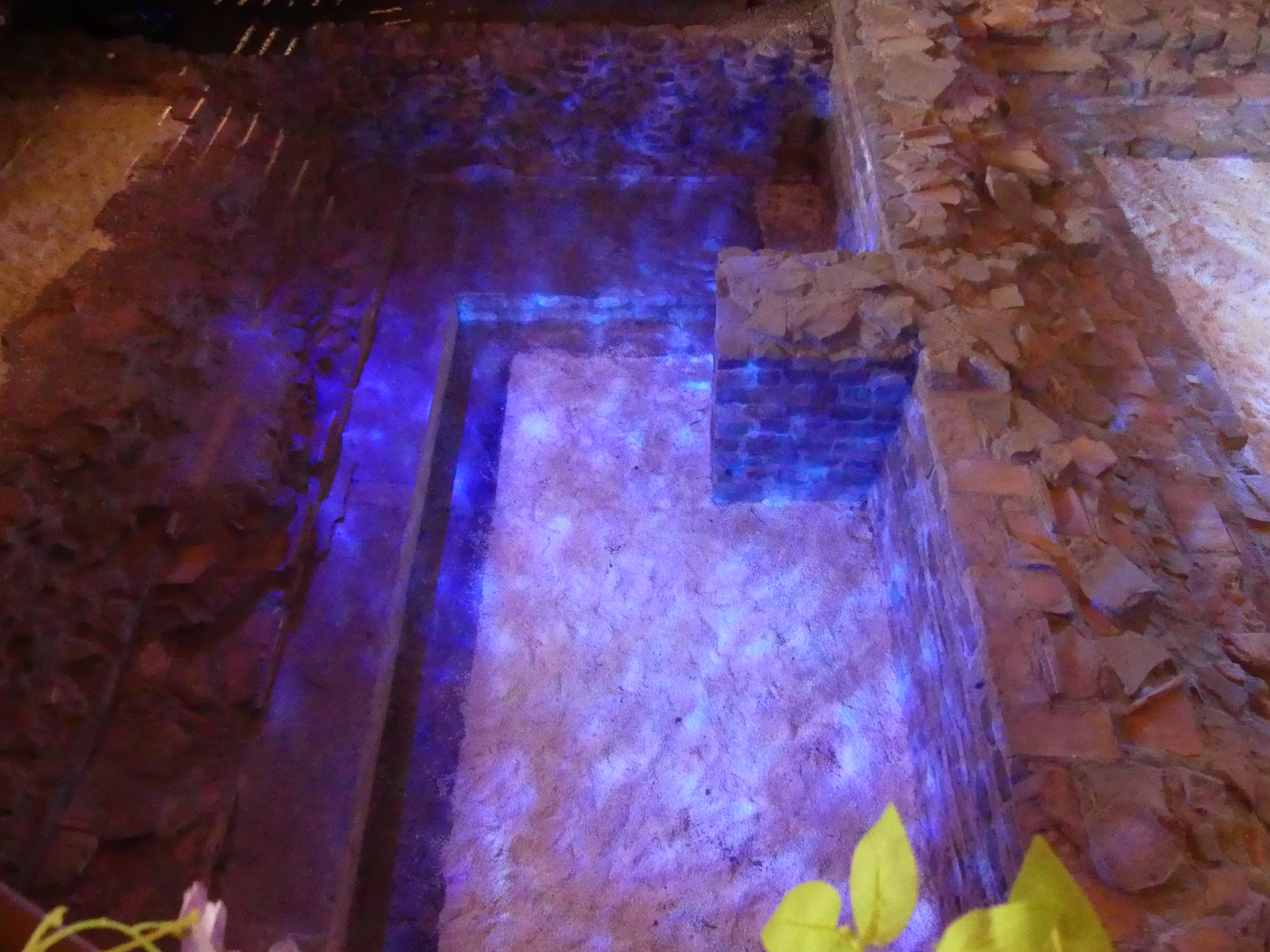
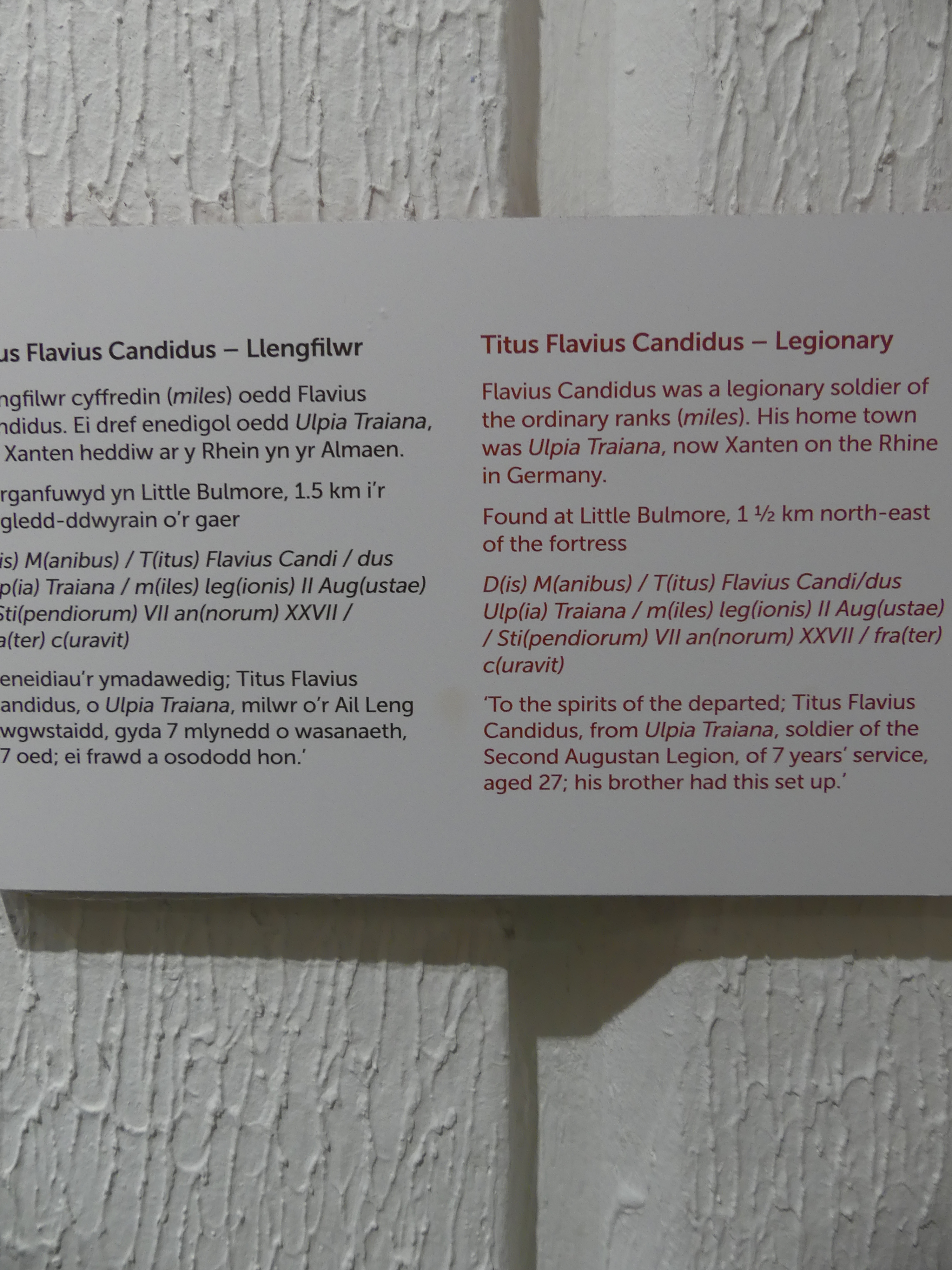
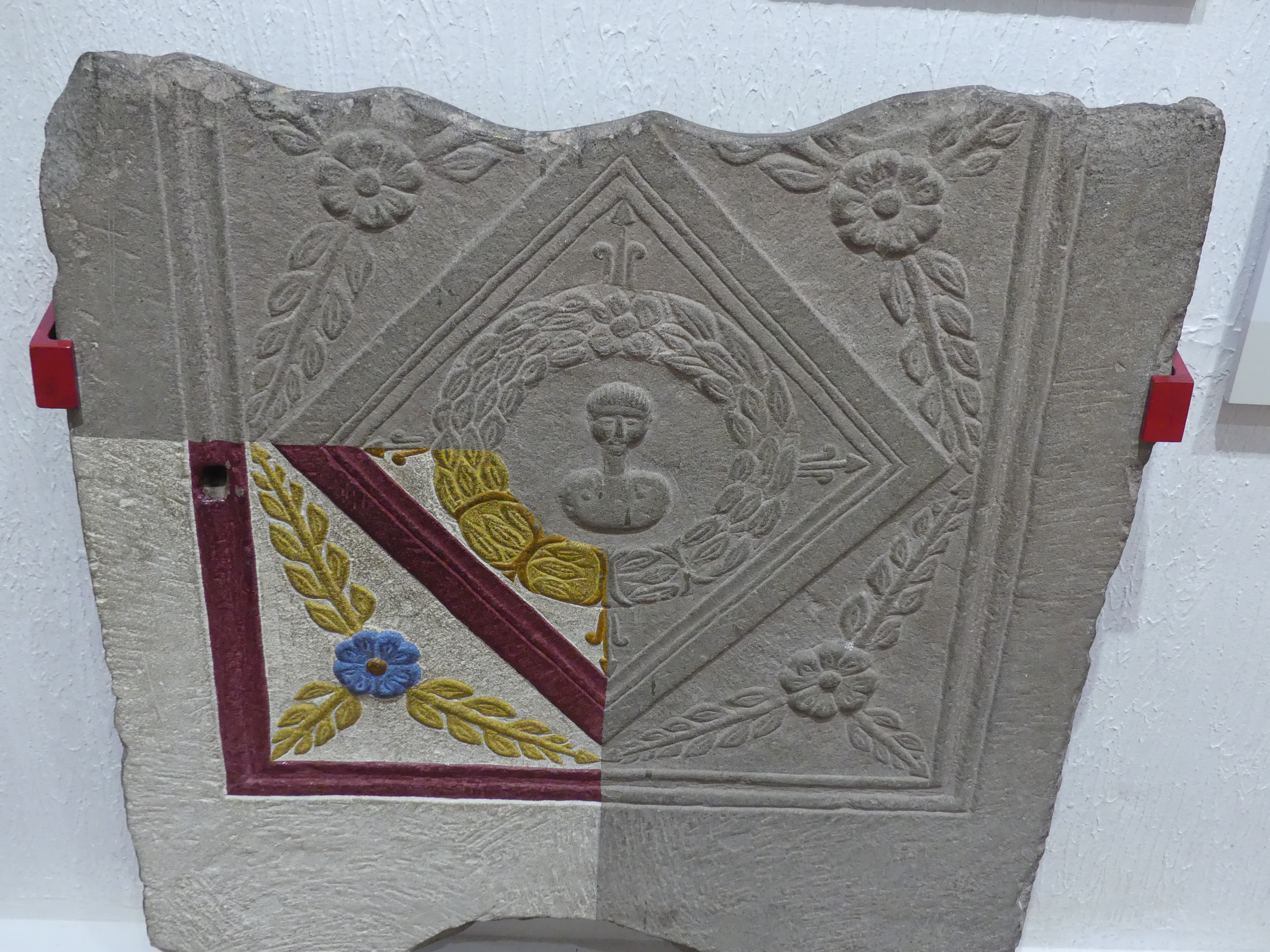
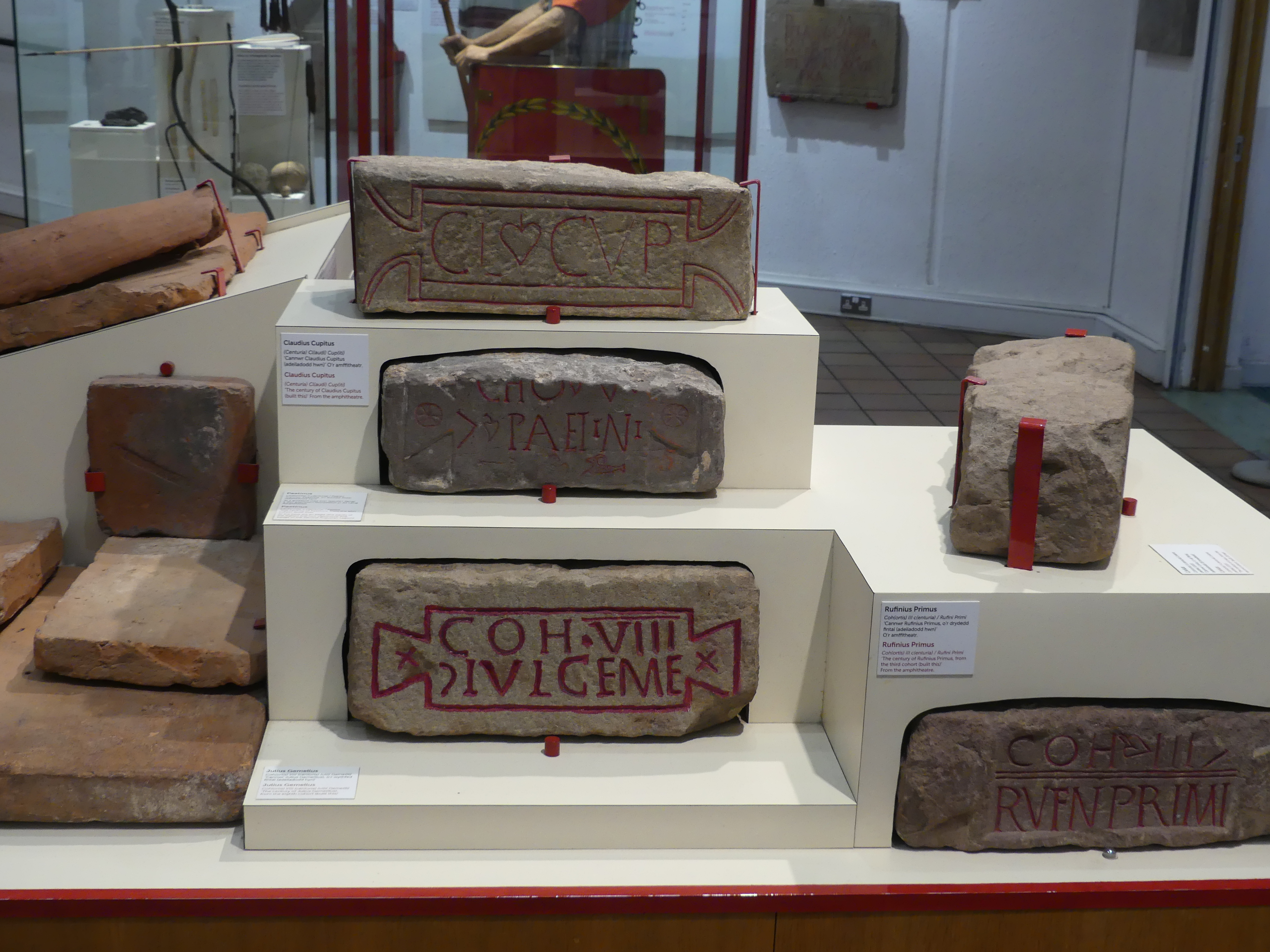
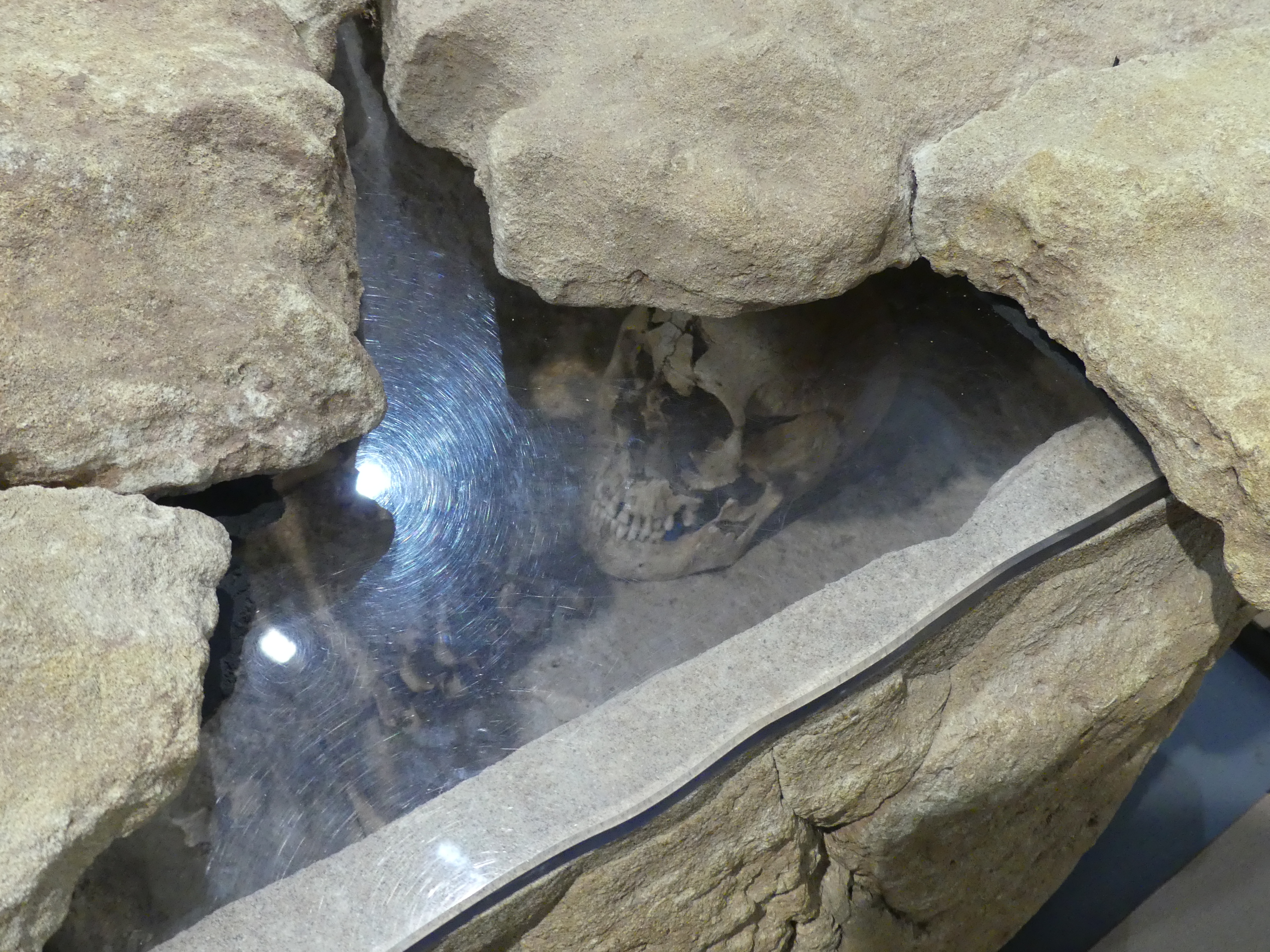
Our entry fee included a visit to the museum. I have included photos of some of the exhibits. The building materials surprised me – properly design pipes and building blocks. They also had the epithets or headstones of graves and cremations.  A stone casket. Partially restored tiles exhibited the beauty of the decorations.

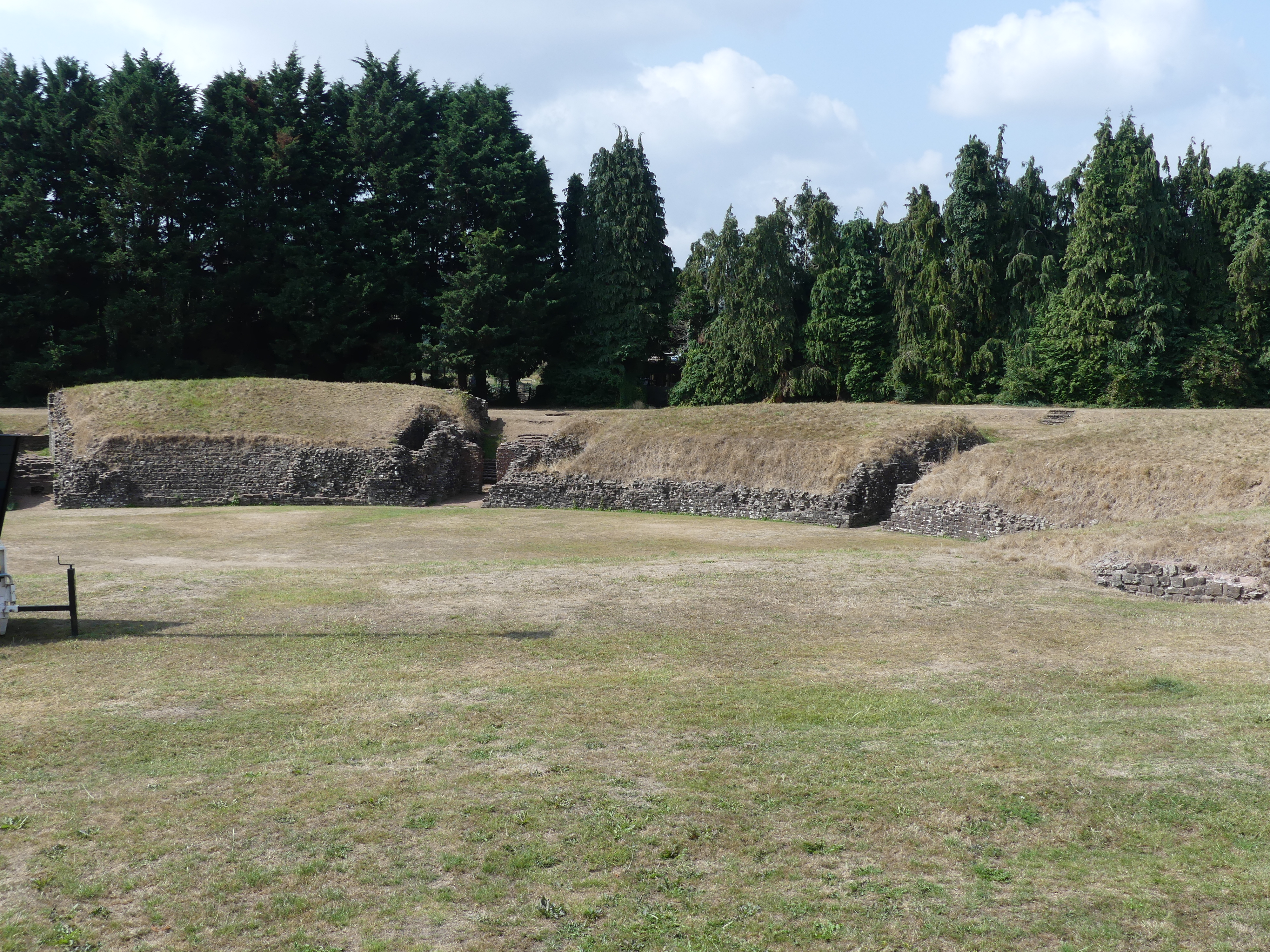
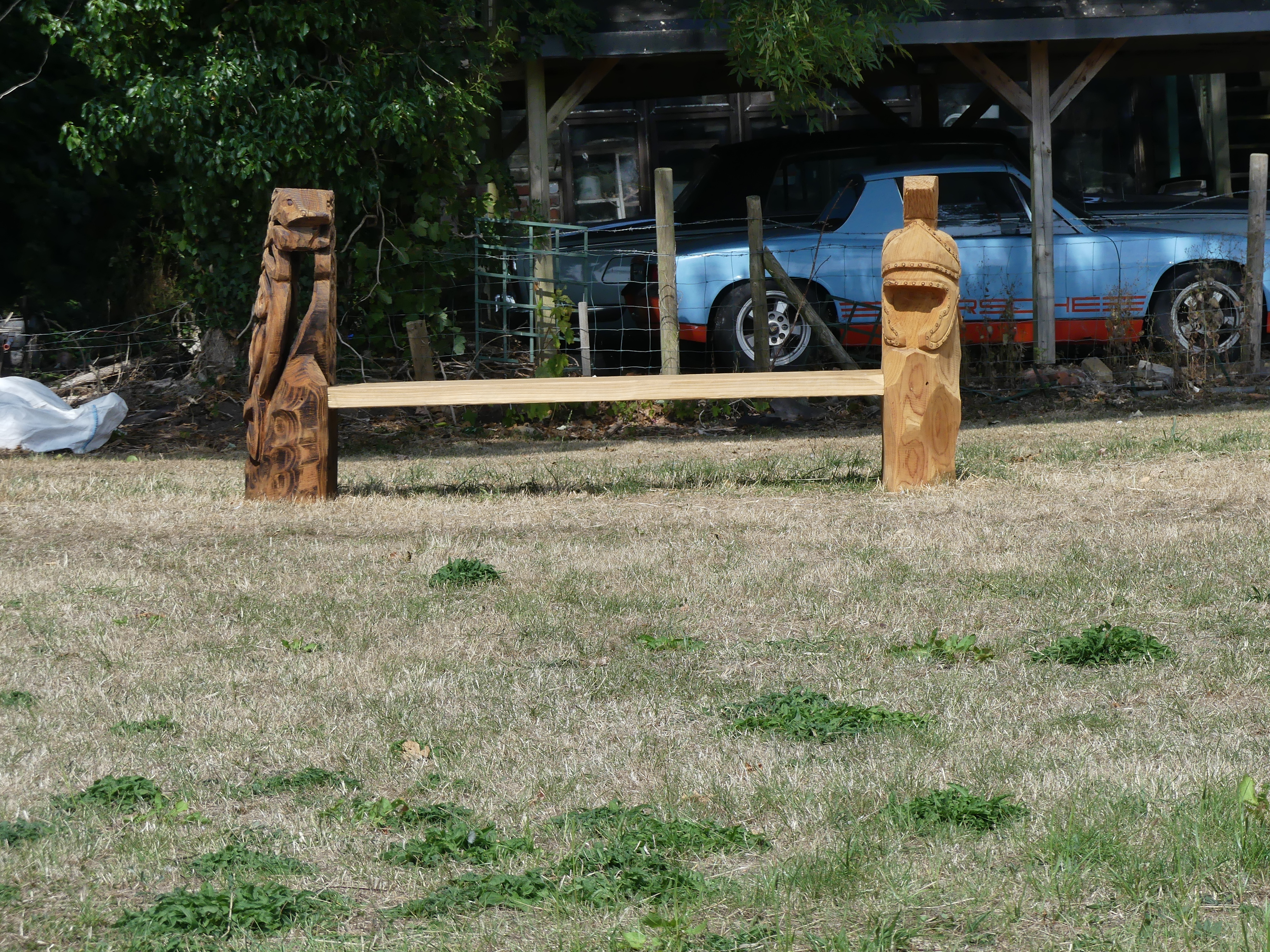
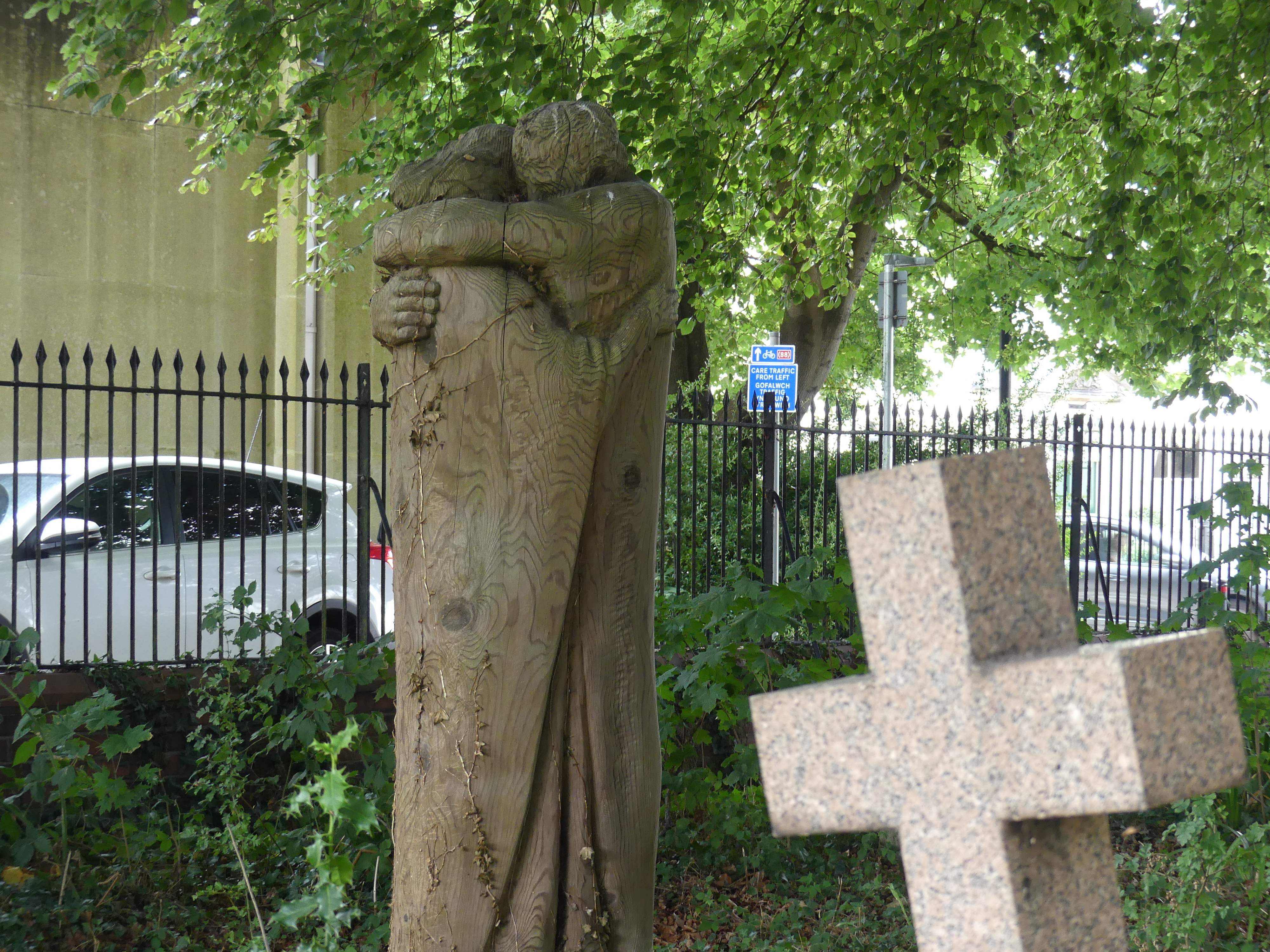
We stopped at the Bull Inn for lunch and encountered Jeremy Clarkson and his farm products. Other things of interest appear in the following photos. St Cadocs’ Church and graveyard. The remains of the Roman amphitheatre and the carvings in the park. An annual event in the village produces these wonderful carvings.

Returning to Cardiff, Kerry, being ever thoughtful, thought she had found another castle – Castle Hensol. We used the GPS in our car and the postcodes for the destination to find everything and it worked perfectly, even on this occasion.  Time brings about change and so it was with Castle Hensol. It was now the centre piece of a gated residential development and golf course. The wine tasting that the advertising had promised had led us on a wild goose chase. After a lot of guessing we found our way only to be disappointed. We needed a booking.

That ends another chapter in our around the world adventure. So, watch out for my next blog on THE RETIREES GO AROUND THE WORLD – CARDIFF to PEMBROKE WALES WEOBLEY CASTLE and KIDWELLY CASTLE.

The Retirees return to Italy – Umbria – The ruins of Carsulae

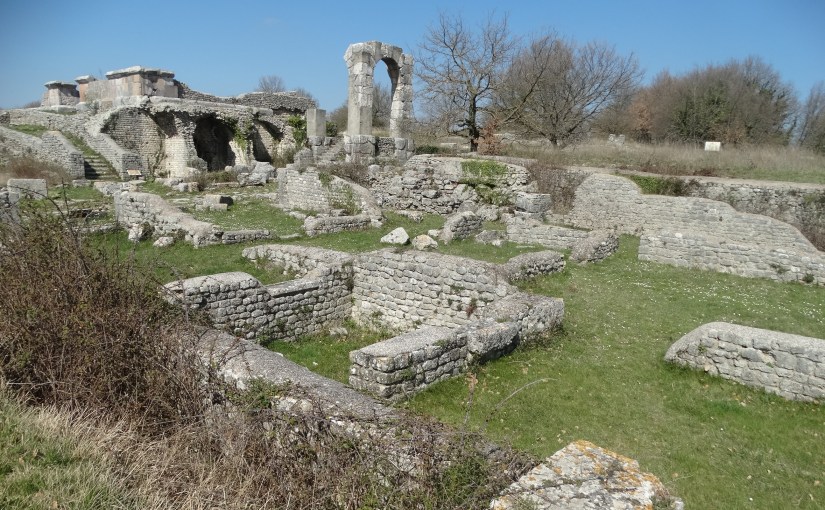
Carsulae is an archaeological site in Umbria, central Italy, now one of the most impressive archaeological ruins in Italy. It is located c. 4 kilometres (2.5 mi) north of San Gemini, a small comune in the province of Terni. Nearby is the comune of Montecastrilli (Montes Carsulis). The bus stops at the car park for the ruins which is on the opposite side of the road and until we stumbled onto the guide map we thought the ruins had been lost. It was like the ruins a ghost town with only one lonely car in it. We walked across the car park under the road and 300 metres later encountered the gatehouse and entrance.

Most historians fix the town’s official founding to about 300 BC. Carsulae’s growth into a major town only took place, however, with the building of the ancient Roman road, the via Flaminia, in 220-219 BC.

When the via Flaminia was built, its western branch proceeded north from Narni, sparking the development not only of Carsulae, but also of Bevagna. This branch of the road courses through a gently rolling upland plain at the foot of the Martani mountain range, an area that had been heavily populated since the middle of the Bronze Age. The eastern branch proceeded from Narni to Terni, north to Spoleto, then past Trevi and finally to Foligno, where it merged with the western branch.

In due course, during the age of Emperor Augustus, Carsulae became a Roman municipium. During his reign a number of major works were initiated, eventually including the amphitheater, most of the forum, and the marble-clad Arch of Trajan (now called the Arco di San Damiano).

During its “golden age” Carsulae, supported by agricultural activity in the surrounding area, was prosperous and wealthy. Its bucolic setting, its large complex of mineralized thermal baths, theatres, temples and other public amenities, attracted wealthy and even middle class “tourists” from Rome.

However, while many of the other mentioned towns and cities on the two branches of the old Roman road continue to exist, nothing but ruins remains of Carsulae, which was abandoned, and once abandoned, never resettled. The only subsequent building that took place occurred in paleo-Christian times, about the 4th or 5th century, at the southerly entrance to Carsulae, where the church of San Damiano, still standing today, was built for a small community of nuns on the foundations of an earlier Roman building.

For centuries after it was deserted, Carsulae was used as a quarry for building materials transported to cities like Spoleto or Cesi, where Roman tombstones may be seen built into the church of S. Andrea (St Andrew), but otherwise, it was left alone. Consequently, archaeologists have been able to map the city with considerable detail.

No one knows the precise reasons why Carsulae was abandoned, but two that seem most plausible are first, that it was almost destroyed and the site made inhospitable by an earthquake, and second that it lost its importance and as a result became increasingly impoverished because most of the important north-south traffic used the faster east branch of the via Flaminia.

Haphazard excavations took place in the 16th century under the direction of Duke Federico Cesi, whose palazzi are in Cesi Acquasparta, and in the 17th century under the direction of Pope Pius VI, but not until 1951 were the ruins subjected to methodical archaeological exploration and documentation. Significant additional work was also done in 1972. There is a current excavation run through Valdosta State University of Georgia.

The modern entrance to the ruins is through a modern gatehouse museum and coffee shop. The museum displays some of the statuary, baths and sarcophagi from the ruins. Speaking of sarcophagi we discovered the ruins of a tomb and sarcophagus on the site.


Go back

Your message has been sent

Warning
Warning
Warning
Warning

Warning.