

Alberobello
Our stay with Robert was coming to an end. After visiting Alberobello we will go to Naples and Robert will return to Cesi.
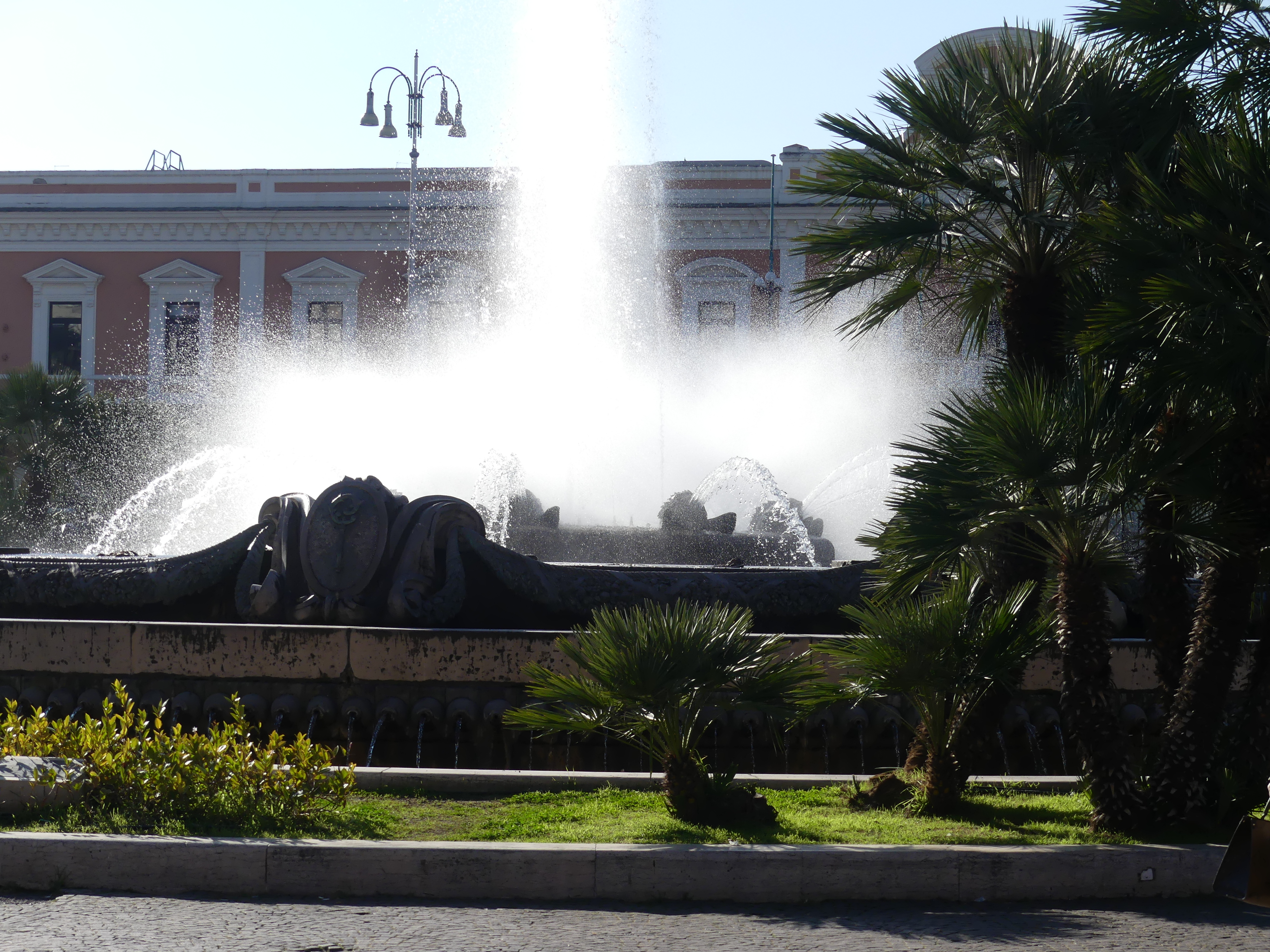
We left Bari station (obstructed by the fountain) as we were taking the bus (what! – where’s the train) for Alberobello (literally “beautiful tree”). It is a small town and commune of the Metropolitan City of Bari, Apulia. It has 10,237 inhabitants (2022) and is famous for its unique trullo buildings. The trulli of Alberobello have been designated as a UNESCO World Heritage Site since 1996 and Alberobello is one of I Borghi più belli d’Italia (“The most beautiful villages of Italy”).
The history of the trulli is linked to an edict of the 15th-century Kingdom of Naples that subjected every new settlement to a tribute. In 1481 a tribute imposed on the residents led to them building their dwellings out of dry stone, without using mortars, so that they could be configured as precarious buildings and easily demolished. Having to use only stones, the peasants found in the round form with self-supporting domed roof the simplest configuration. The roofs were embellished with decorative pinnacles representing the signature of the architect (master trullaro).
Our story starts with a picture of the fountain in front of the railway station in Bari from where we caught our bus to Alberobello. Upon arriving at the train station via the bus, we left the bus and walked through the modern town. The walk up the hill and down into the Piazza is shown in my photos below. The Municipio and the tourist map were two of the first features we reached. Clean and tidy, the people of Alberobello have great pride in the Town.

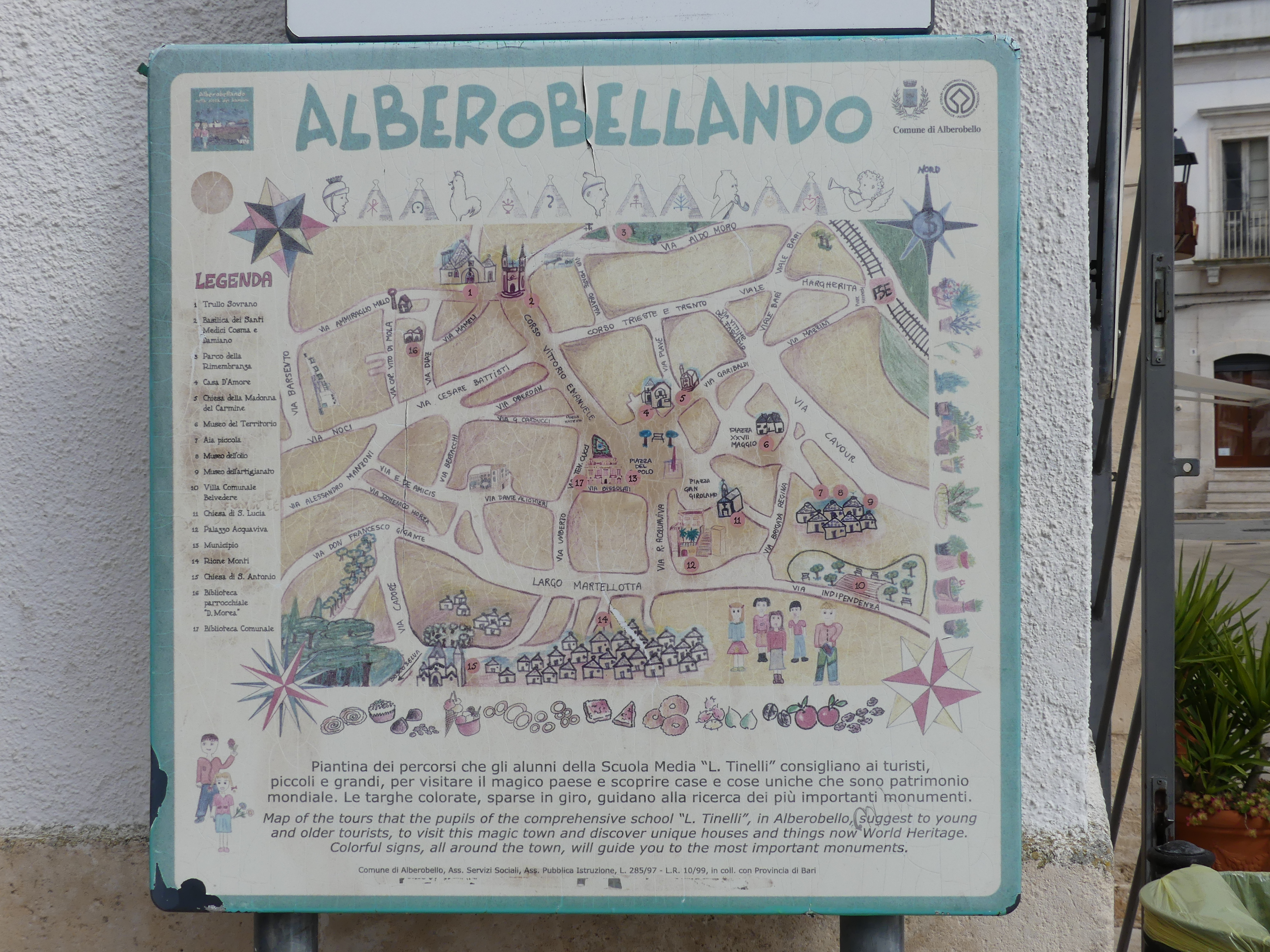
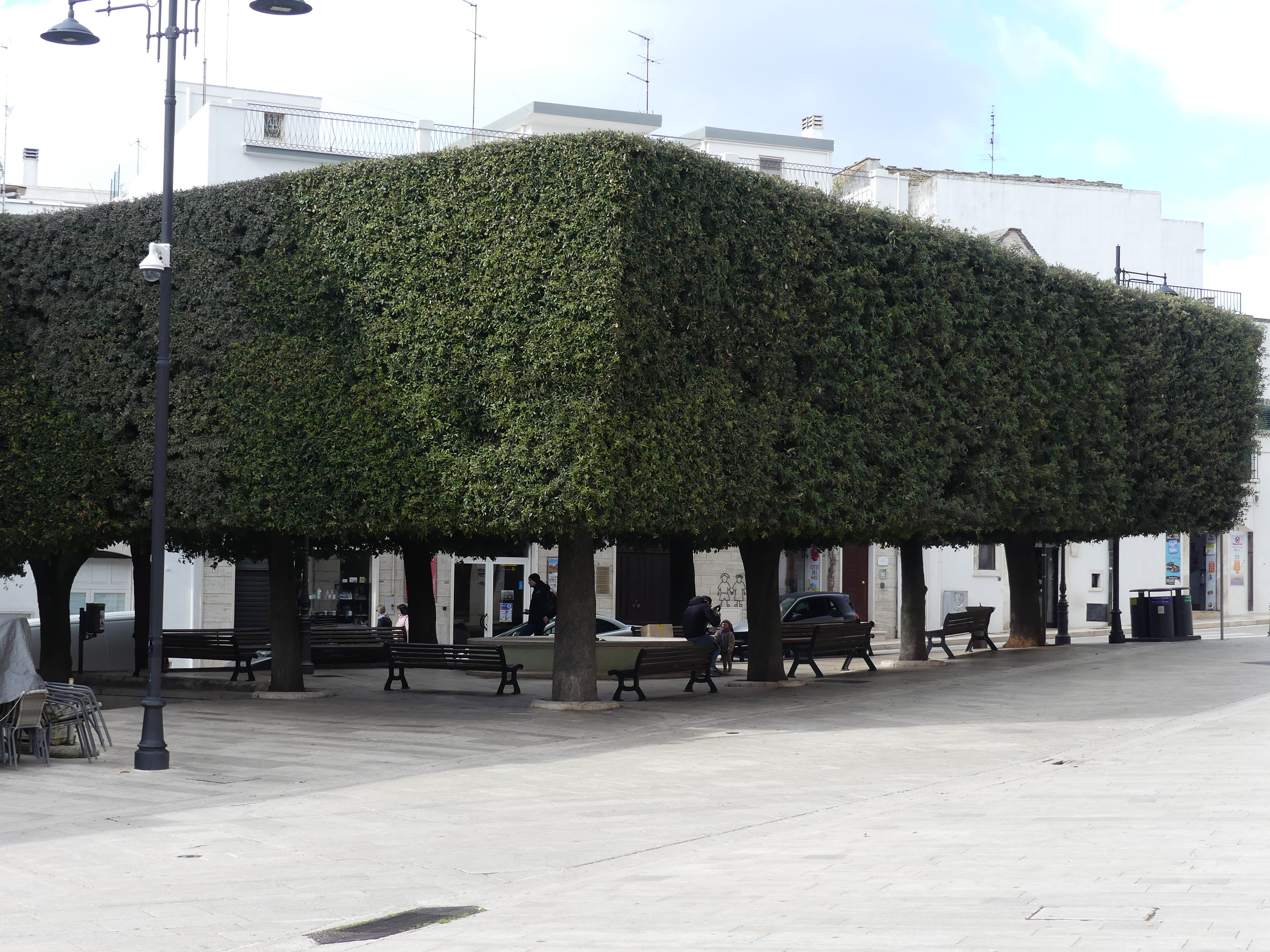


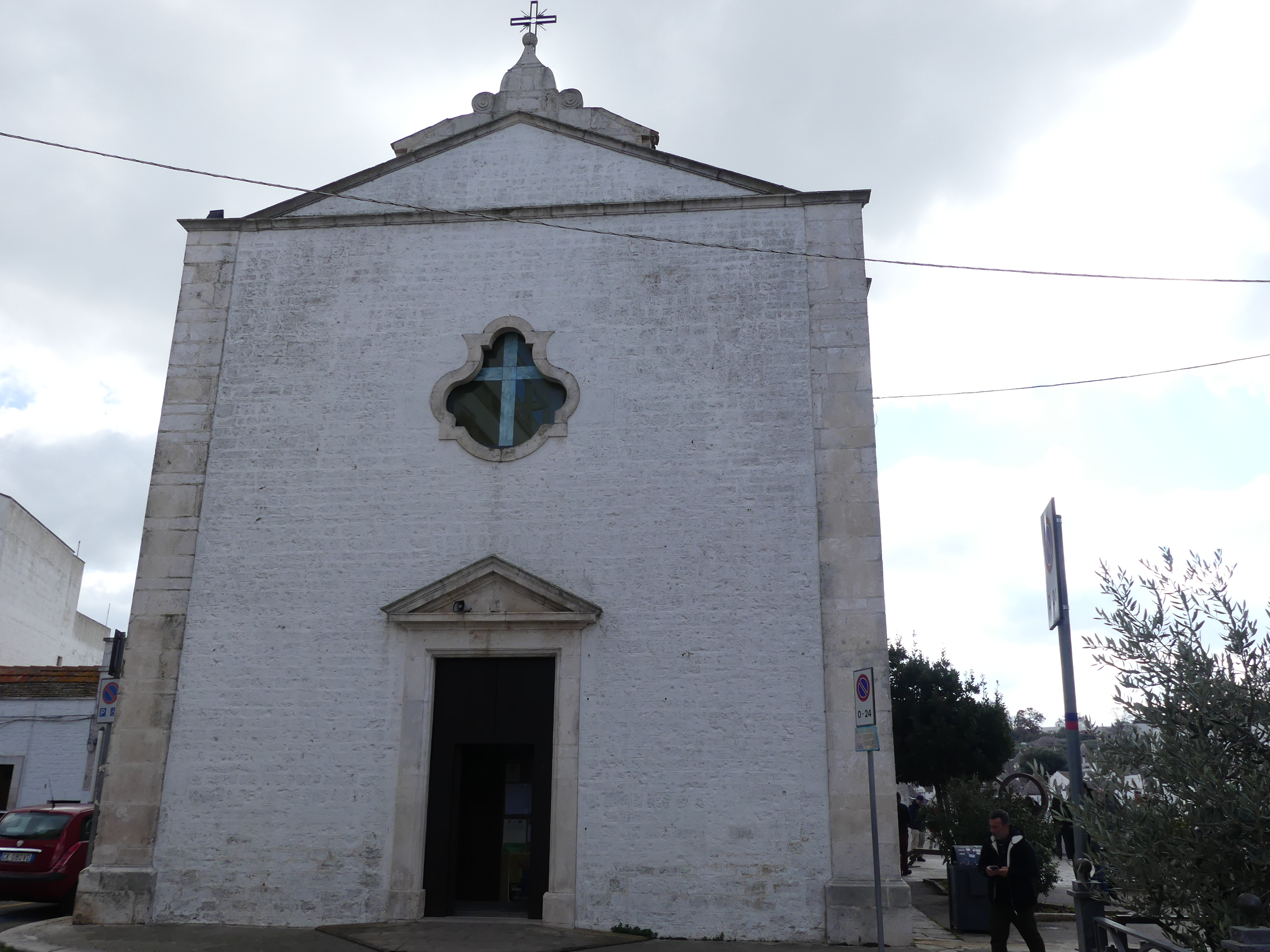
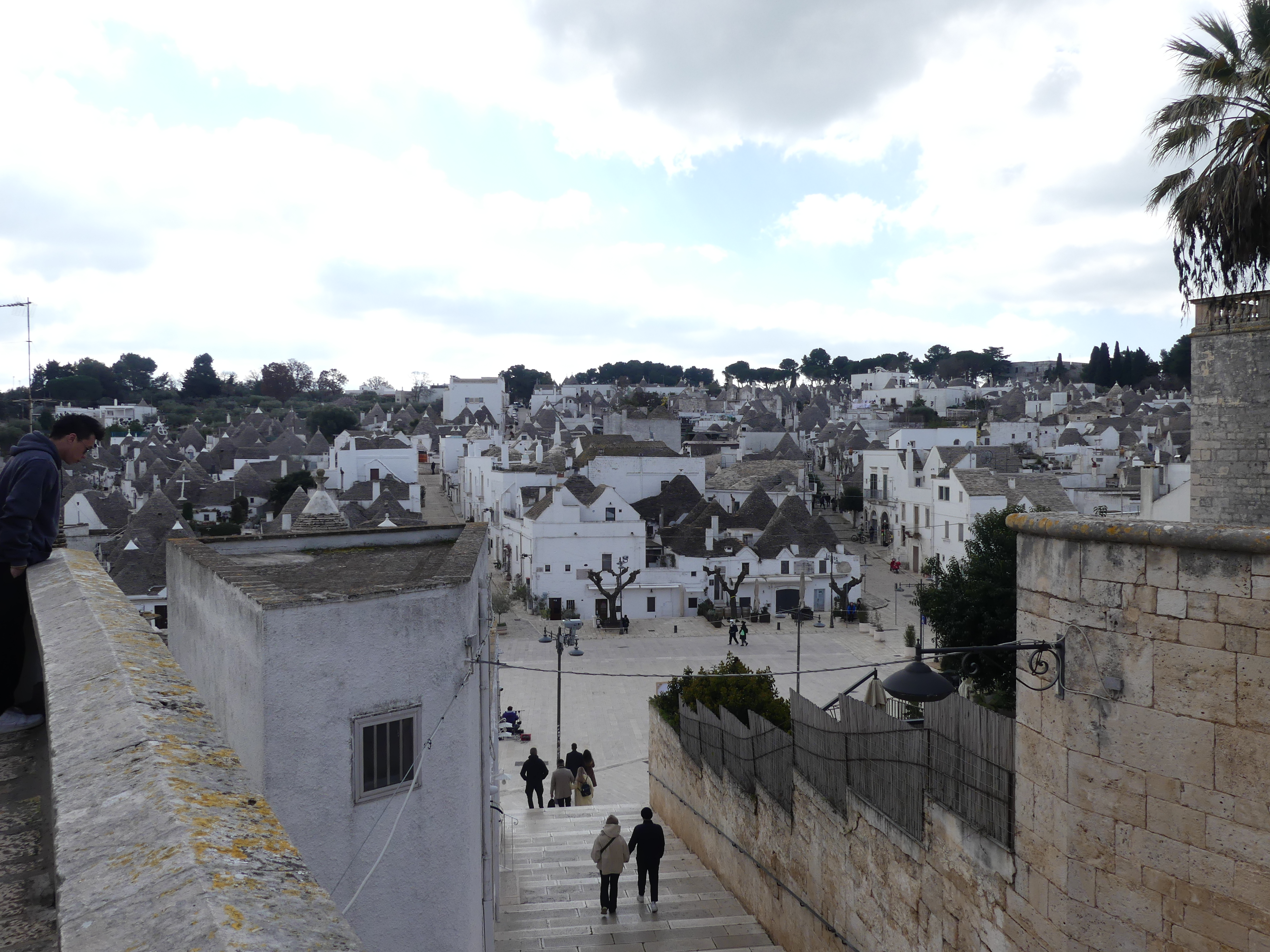
In the last photo above we have found the stairway into the Trulli village. The trulli homes are all uniformly coated in white. Some continue to be used as homes, but many are shops or B&Bs. We visited the Arie dell Artigianato, an artisan timber craftsman. Whilst inside the design for the roof had me puzzled as to how the trulli stand up but climbing through the ceilings was not permitted.


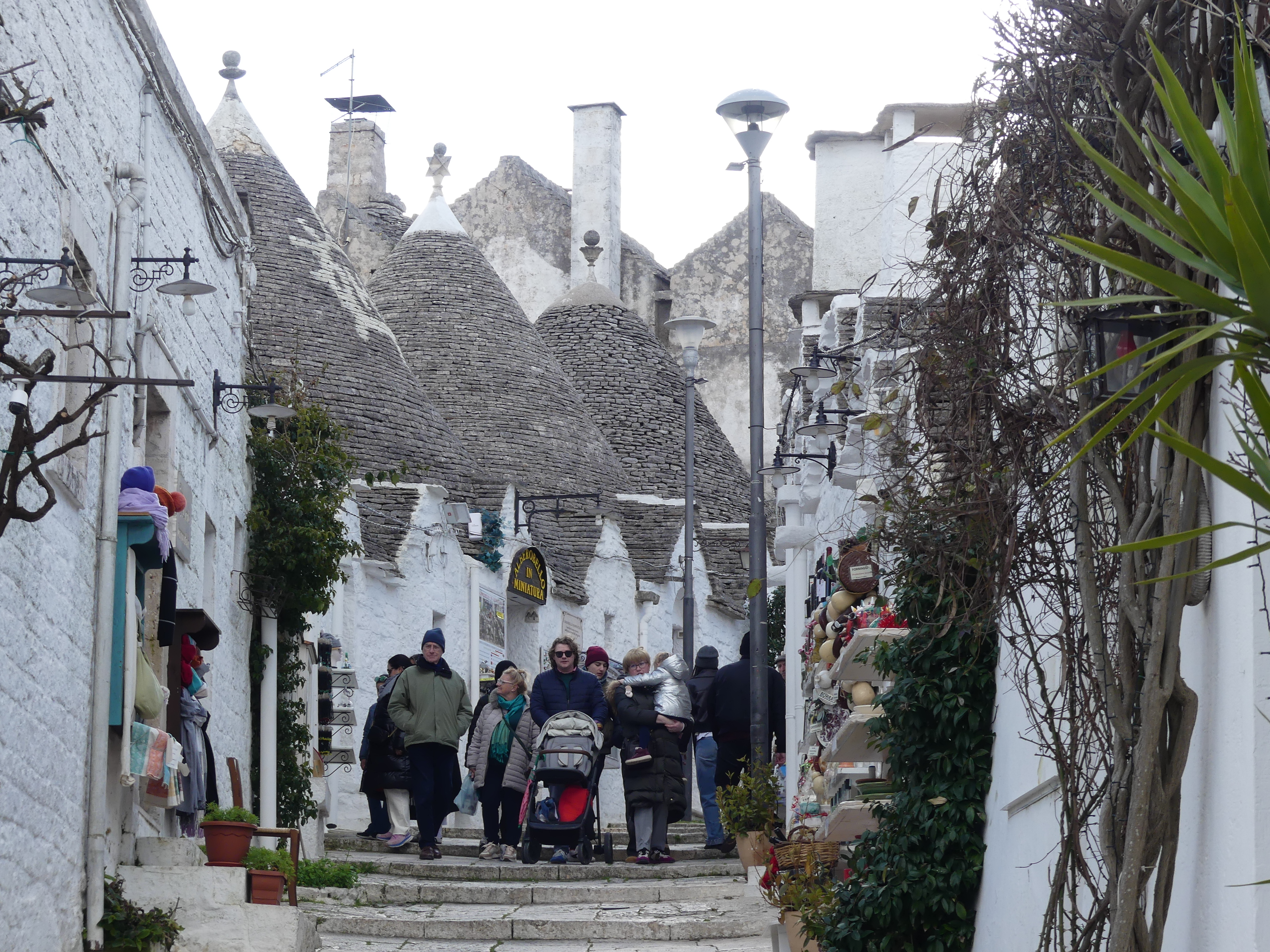
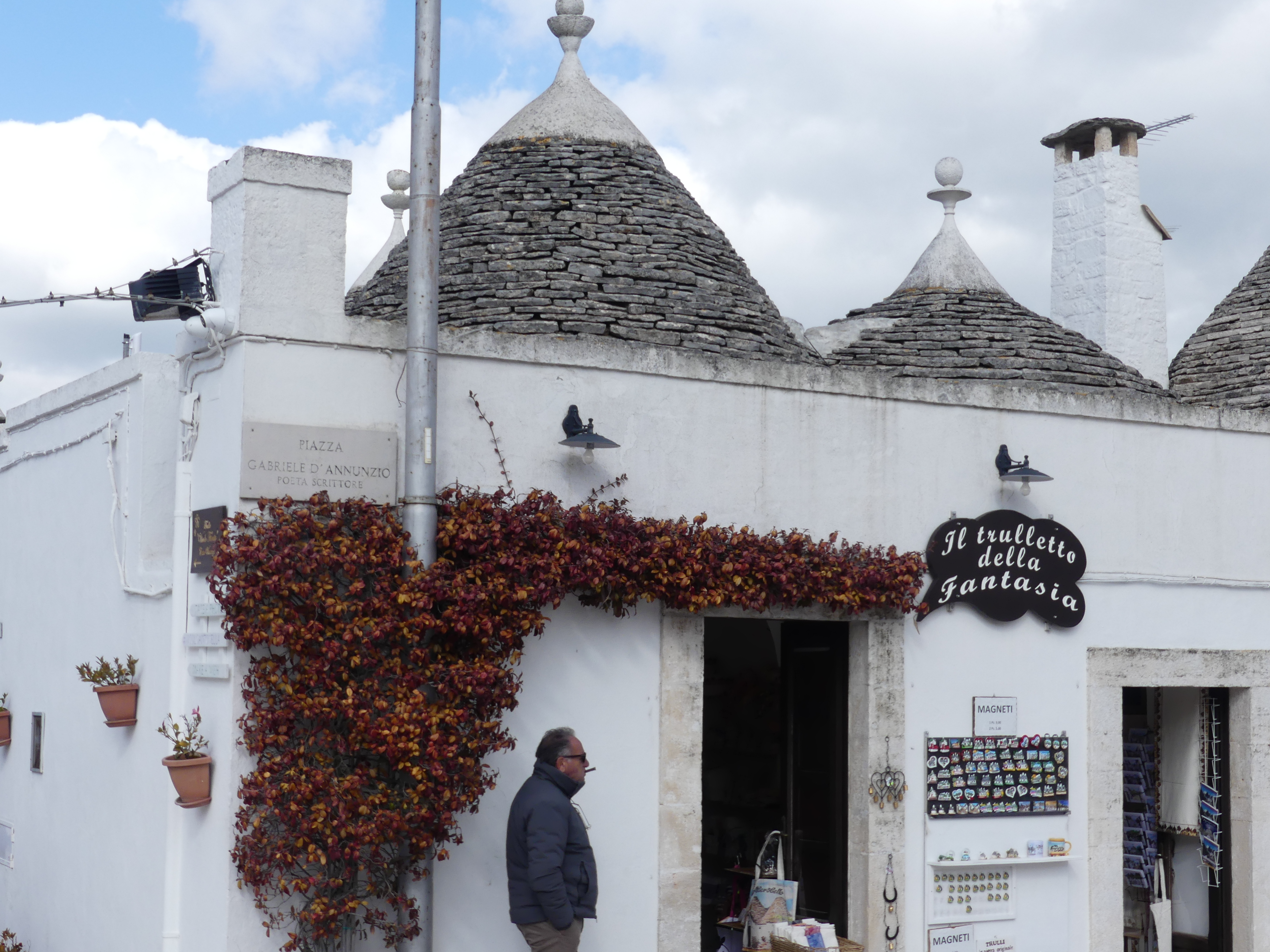
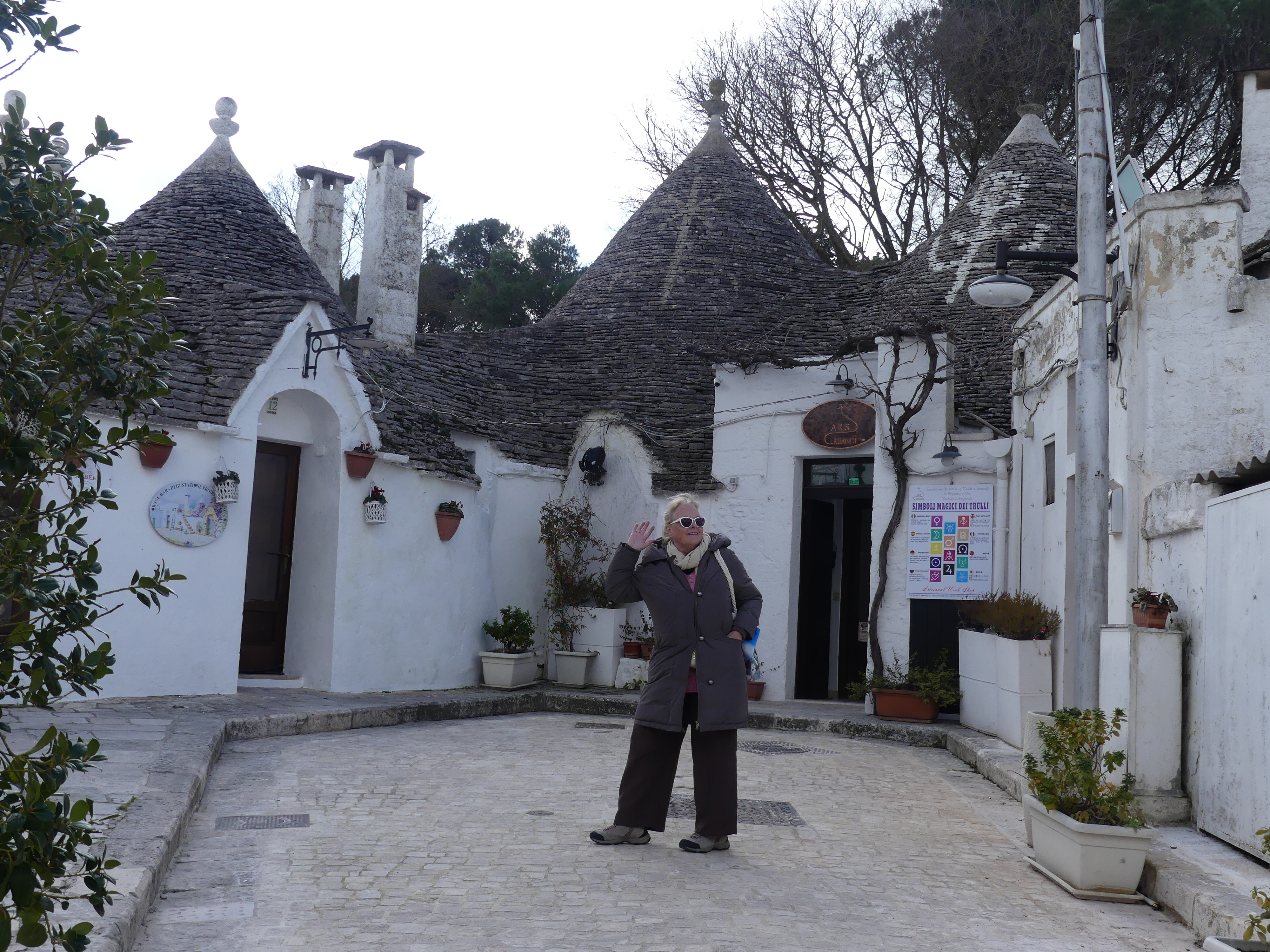
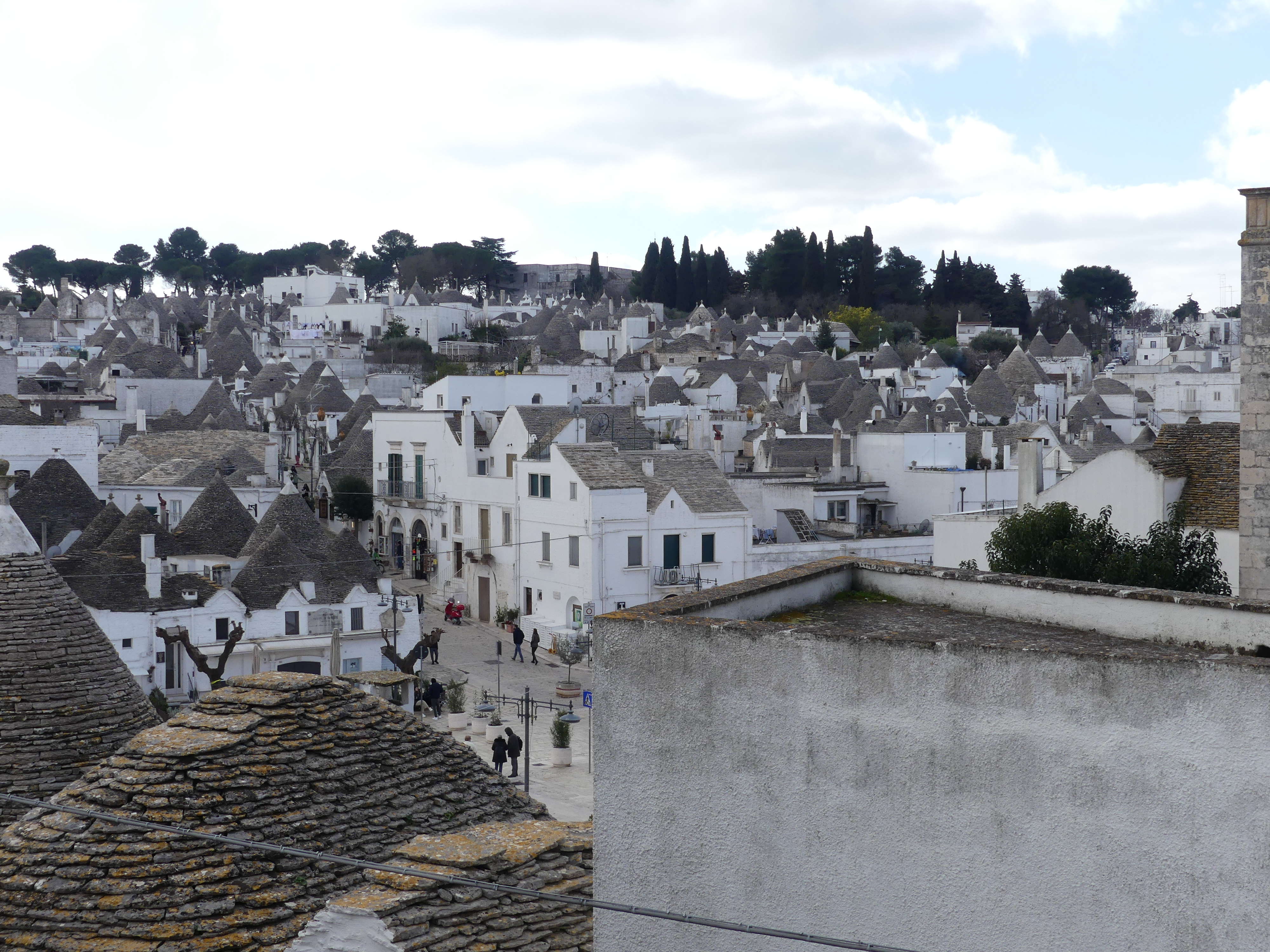
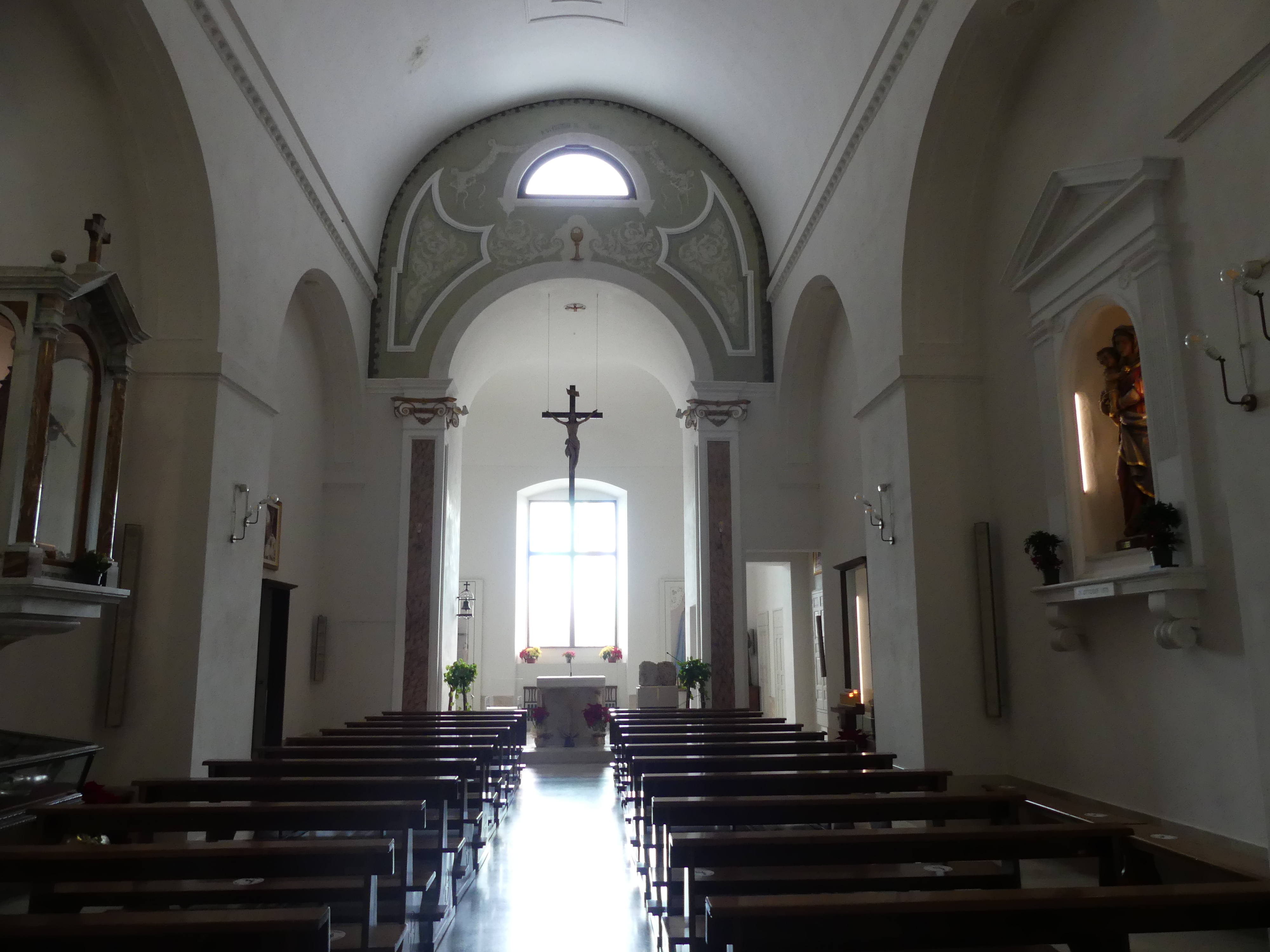
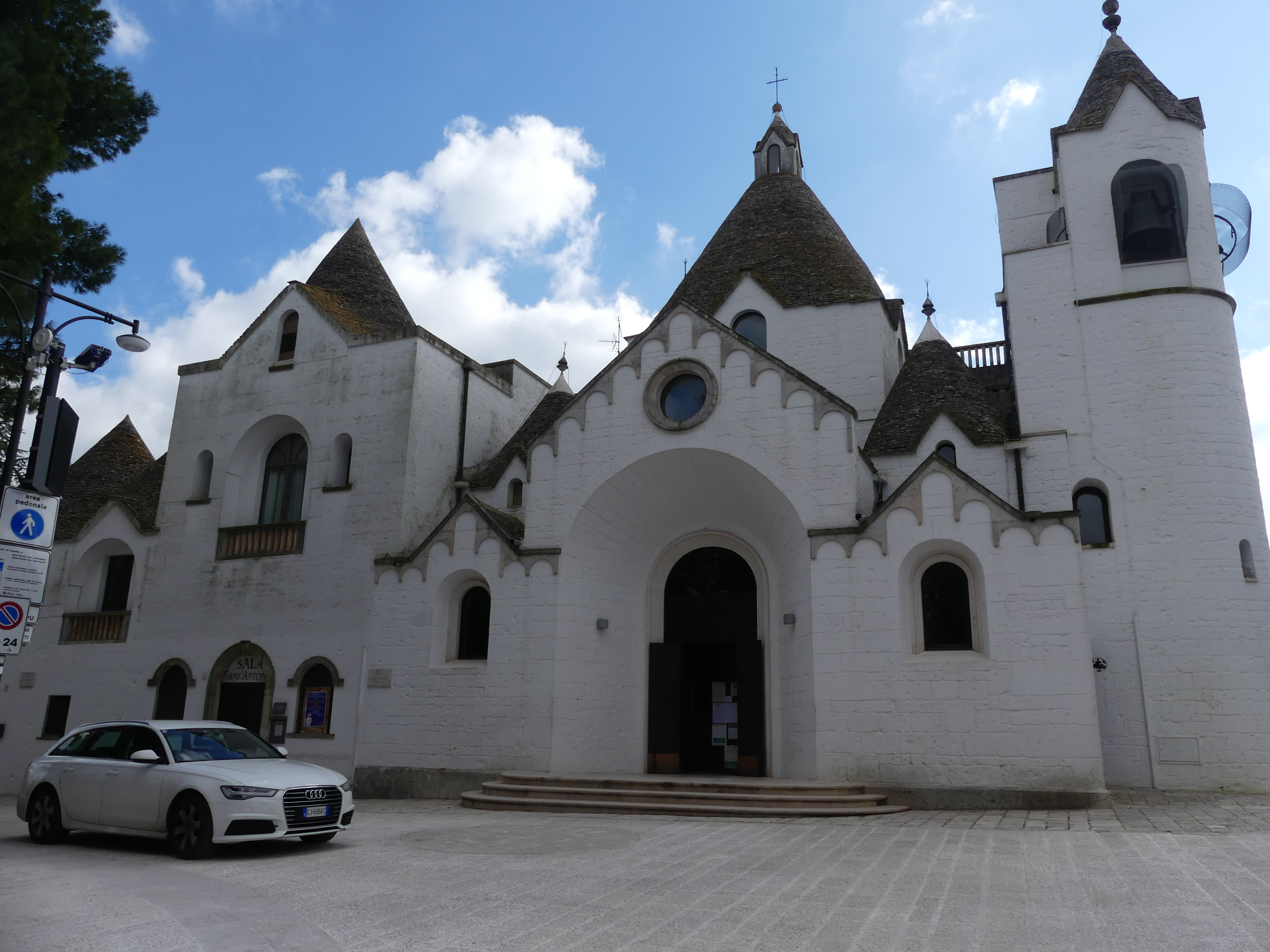
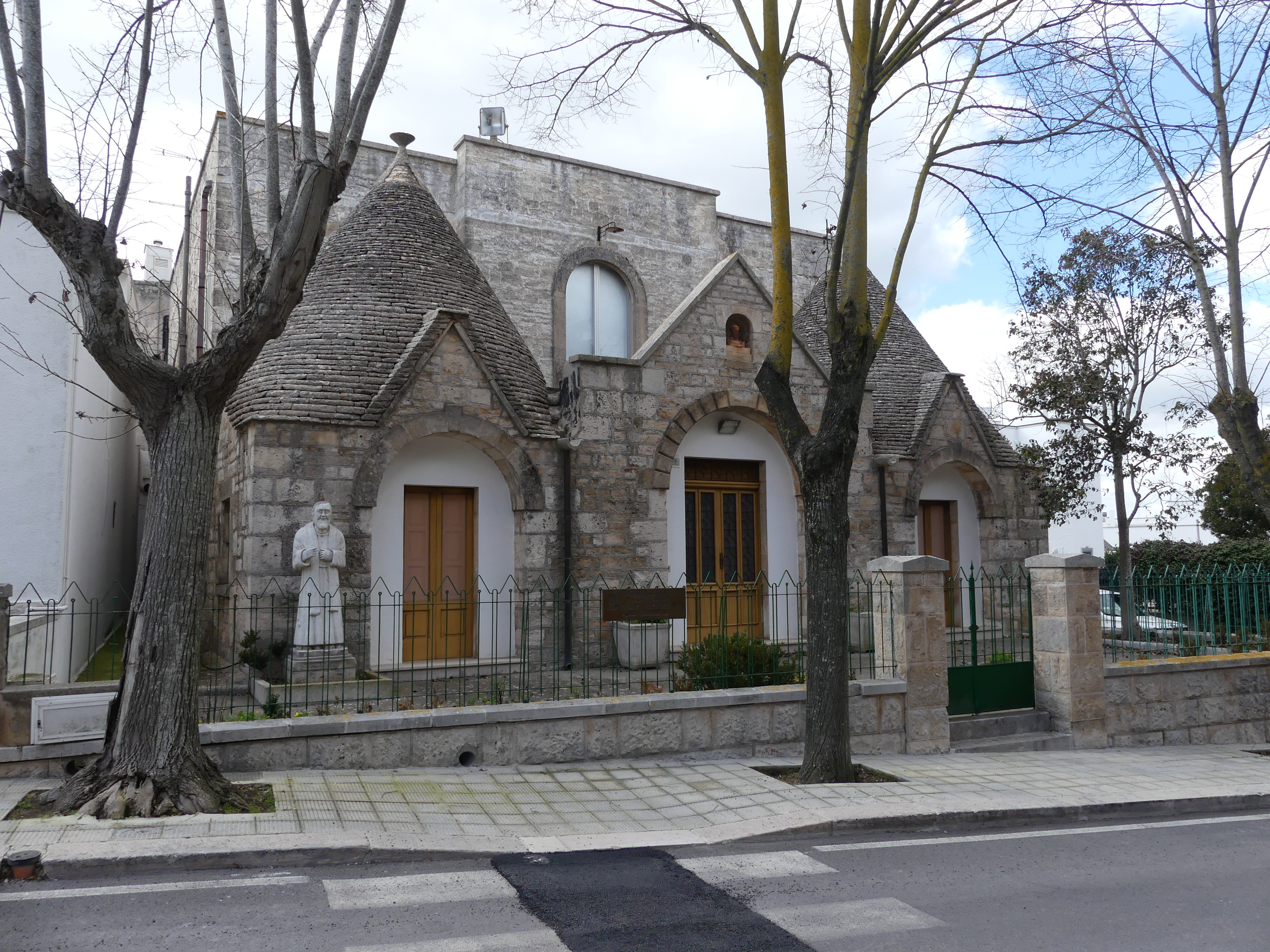
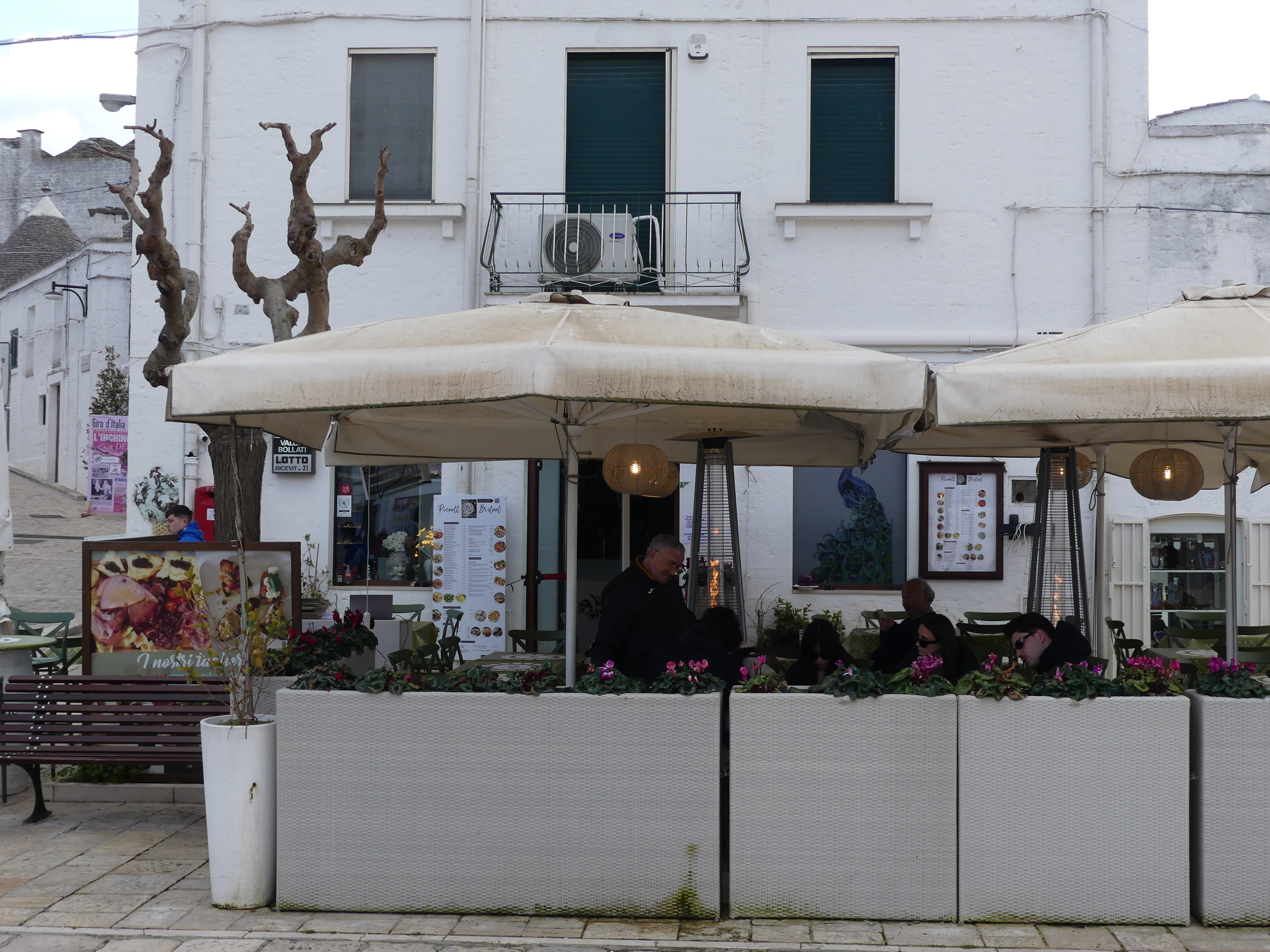
We walked through the key streets with Kerry taking in some shops until reaching a church, Parrocchia Sant’Antonio di Padova (Church of Saint Anthony of Padua) at the top of the hill of course built in 1927 in trulli style. Even the manse had trulli influences. From the top of the hill, we could see the two bell towers of the Saints Cosma & Damian’s church. We made our way down to the bottom of the hill and found our lunch restaurant but not in a true trulli building but a look alike. After lunch we ambled back through town visiting the Basilica of the Saints Cosma & Damian’s in the modern part of the town. The present structure of the church dates back to 1885, a work of Antonio Curri. Inside you can find the two wooden statues (1782 and 1784) and the reliquary containing some bones fragments of the Saints. The project led by architect Antonio Curri, was finished only in 1914. During the 26th and the 27th of September the celebration of the Saint’s city holiday, that summons a crowd of pilgrims from the nearby towns, and as tradition claims, they travel the entire route by foot. Note the papal keys over the entrance to the Basilica.


Our final day of the “train journey holiday” to Bari ended at the bus station outside the railway station at Alberobello where we joined the queue to catch the bus back to Bari. Really interesting place to visit and normally you can catch the train. We left the transportation for Robert to organize so I have no idea why we caught the bus.
We farewelled Robert thanking once again for his hospitality and best wishes with his B&B bookings. He is a great friend.
The next morning we boarded our train for Naples from Bari. The journey would take us from the west coast to the east coast with one change of train. The small towns we have been visiting will be in stark contrast to Naples for size but we were not ready for the dirtiness of the city. Read on with our travels when “THE RETIREES GO AROUND THE WORLD – BARI to NAPLES”.
 glendon1954