THE RETIREES GO AROUND THE WORLD – SUTTON HOO UK to CARDIFF WALES – CAERLEON.

We had heard about some Roman ruins just outside of Cardiff and the Museum – “Roman Legionary Museum”. We have visited Rome and roman ruins in Rome, Verona, Pizza and Cesi and Carsulae outside Terni Italy plus Hadrian’s Wall and Littlecote Roman Villa in Wiltshire, so we were not expecting to be surprised but we were.

The town is a pretty Welsh village. Entry is gained through a single lane bridge, and the main street is clean and interesting. After parking in front of the site of the Roman Bath House at the back of a very popular local pub, we strolled through the village waiting for the building to open.

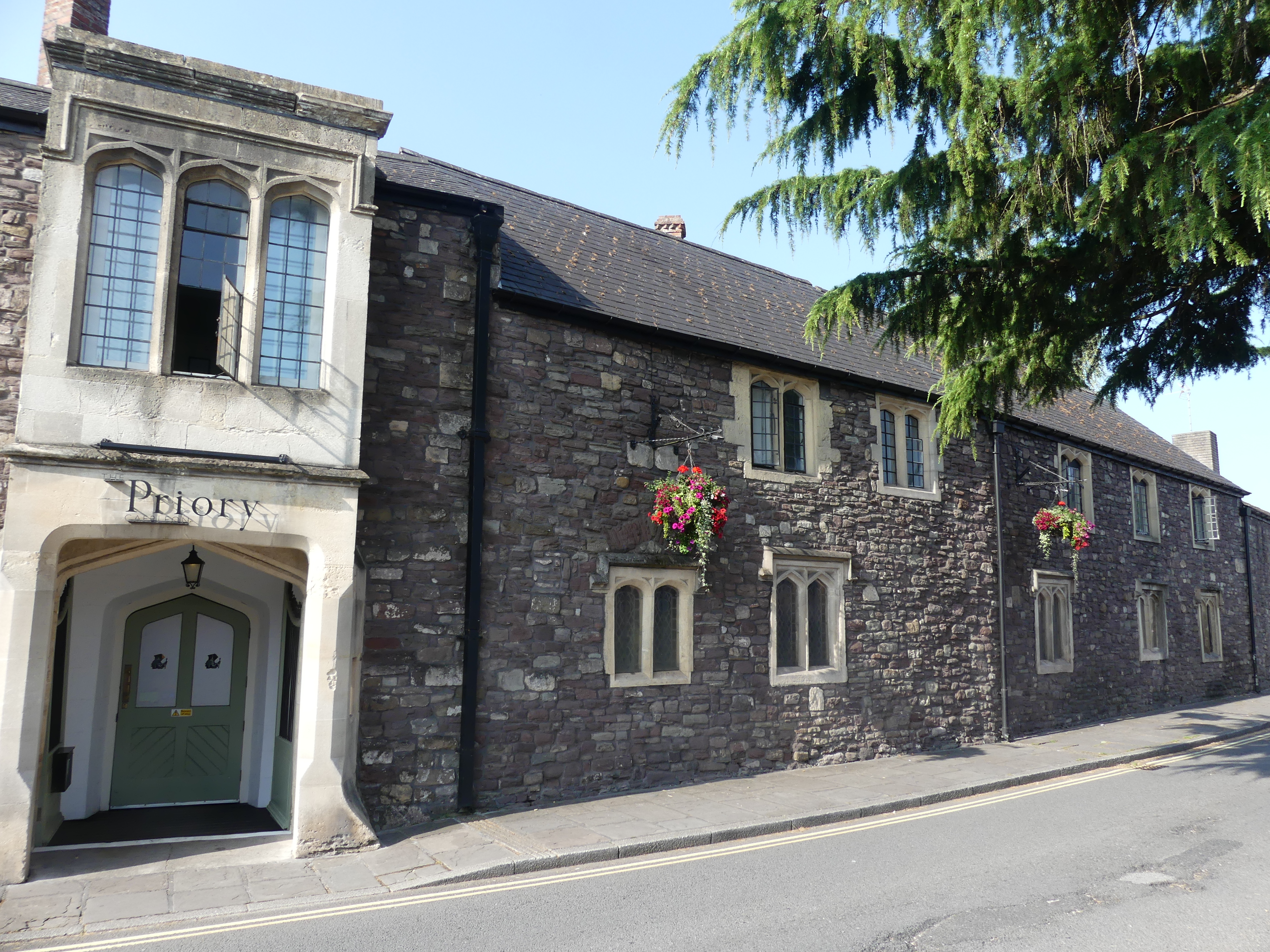
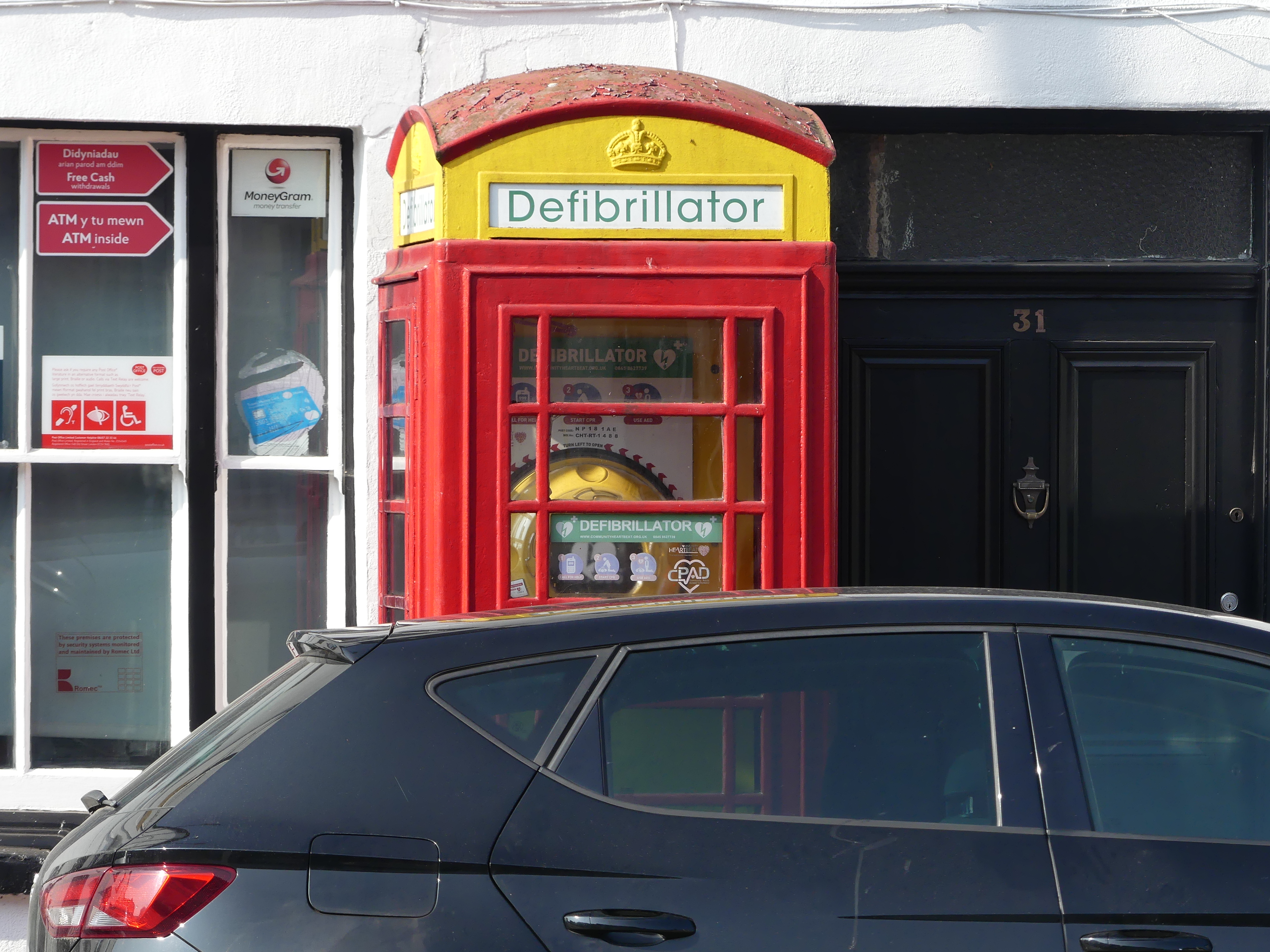
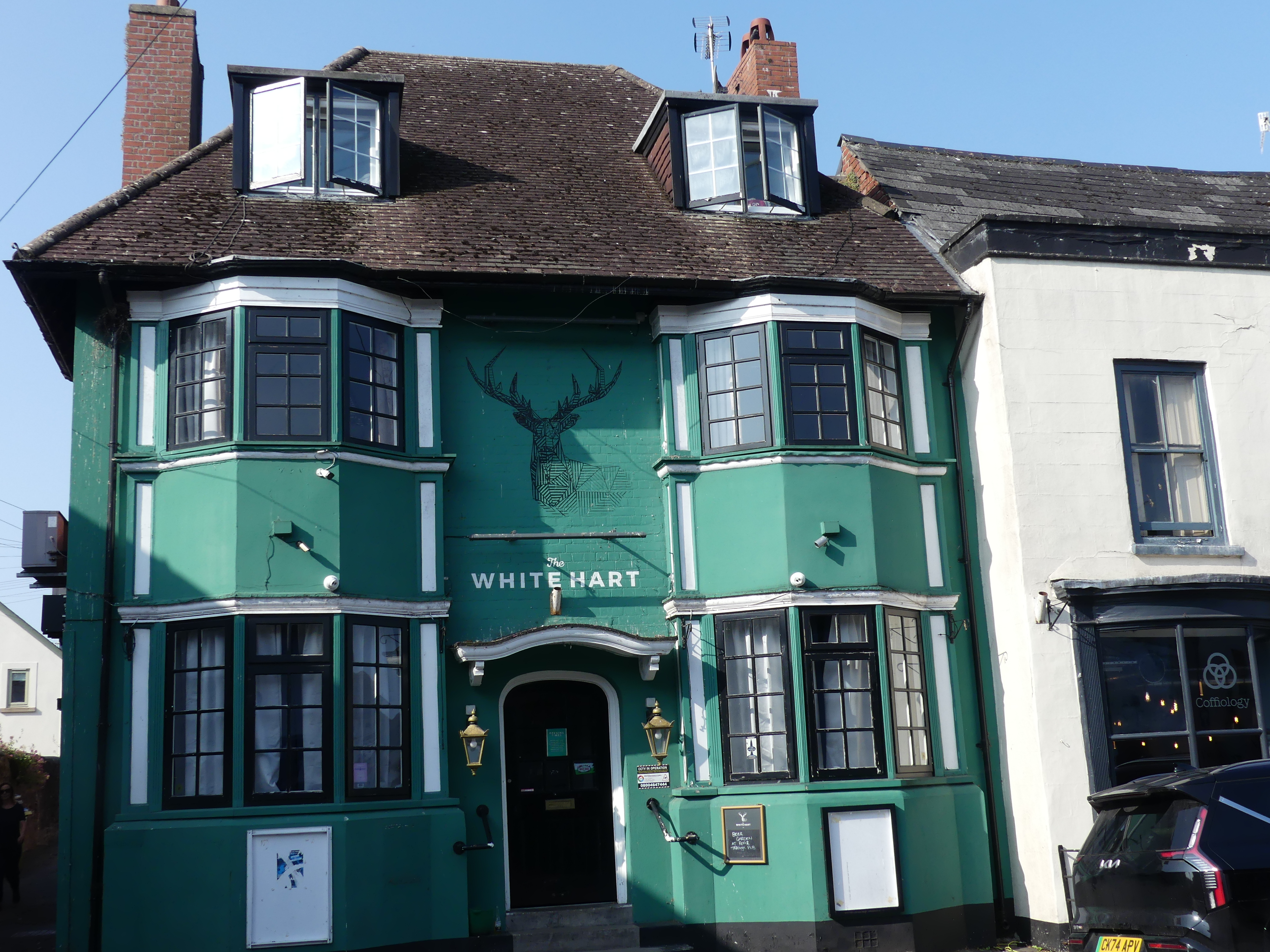
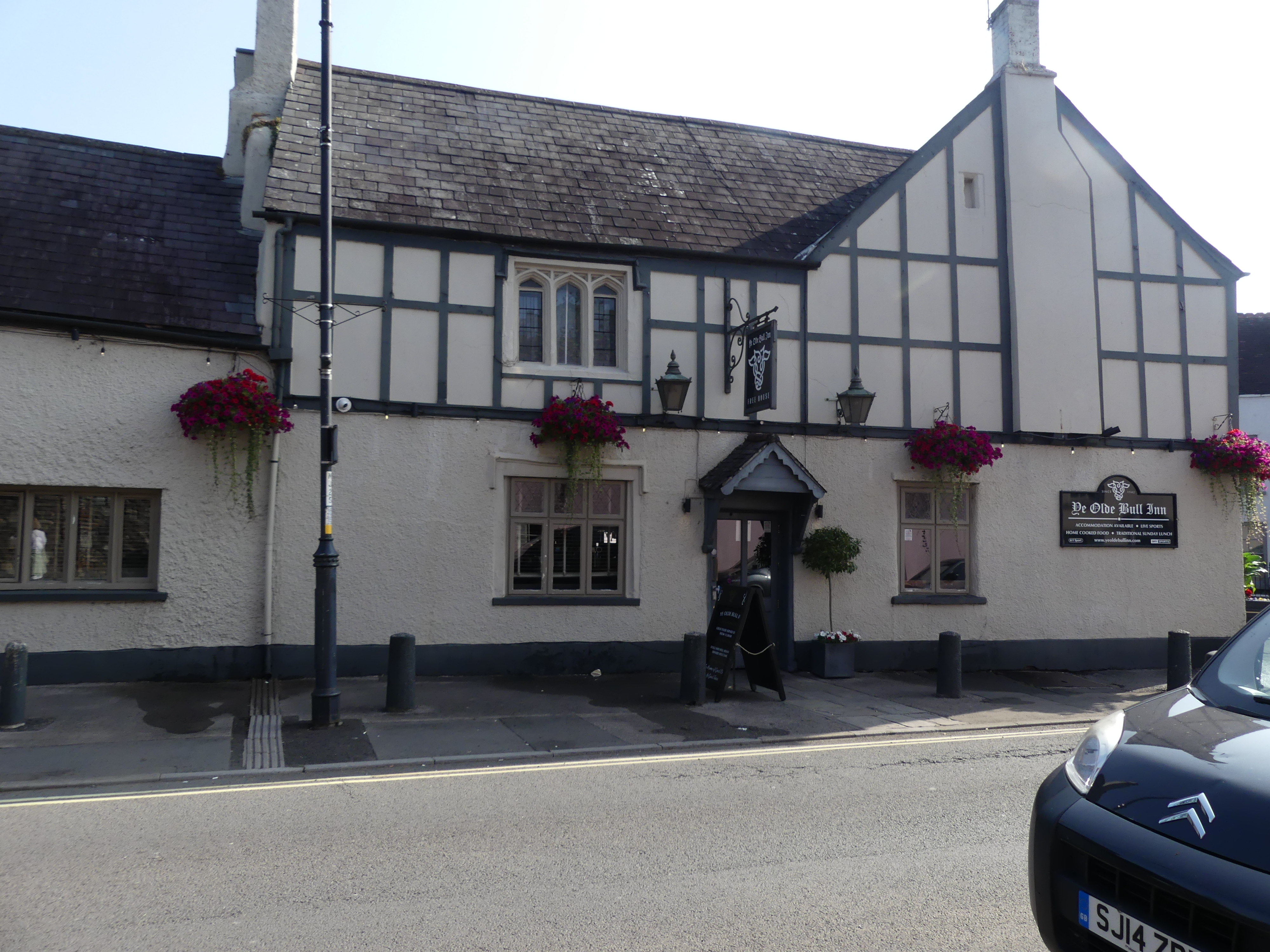
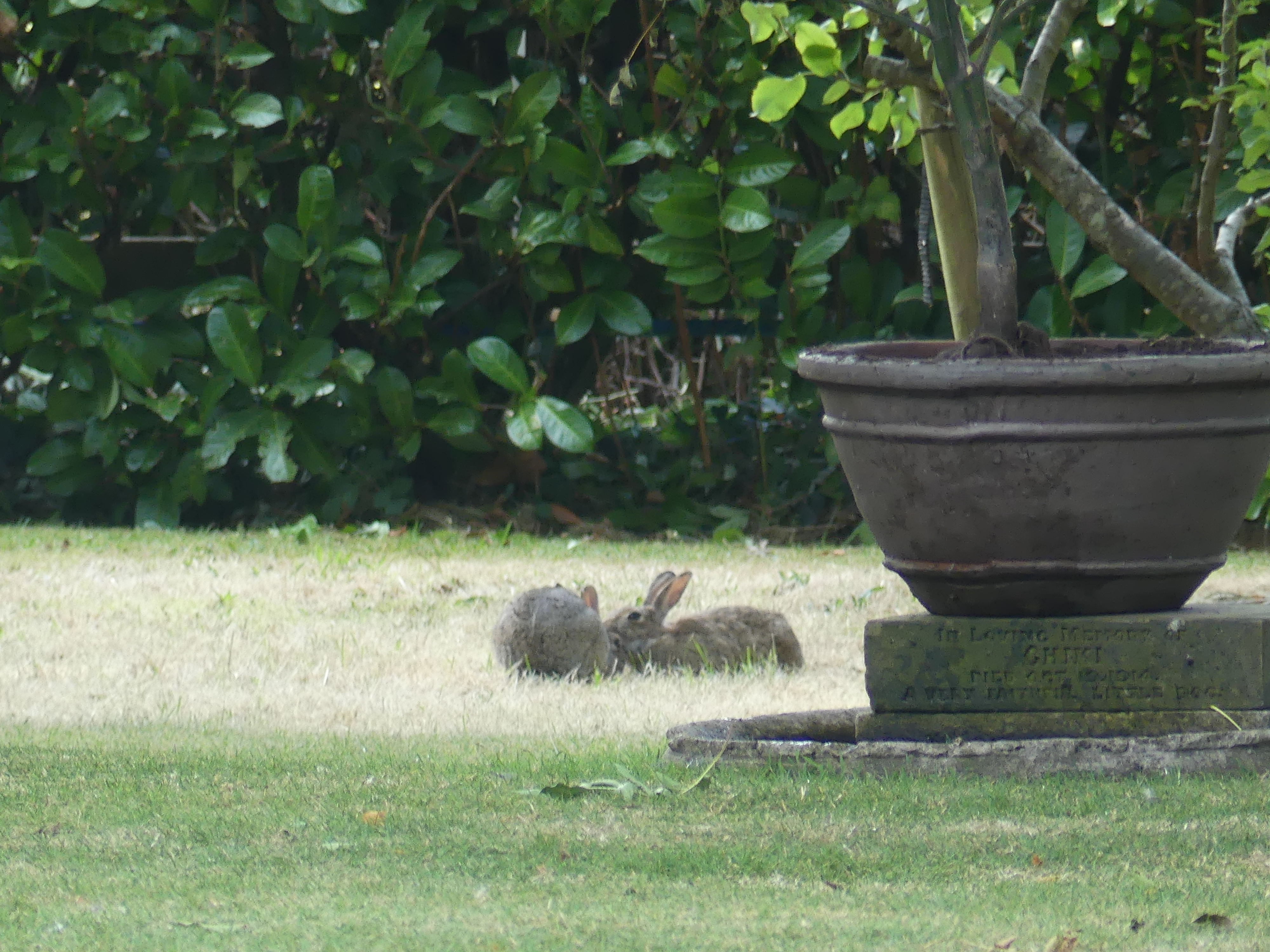
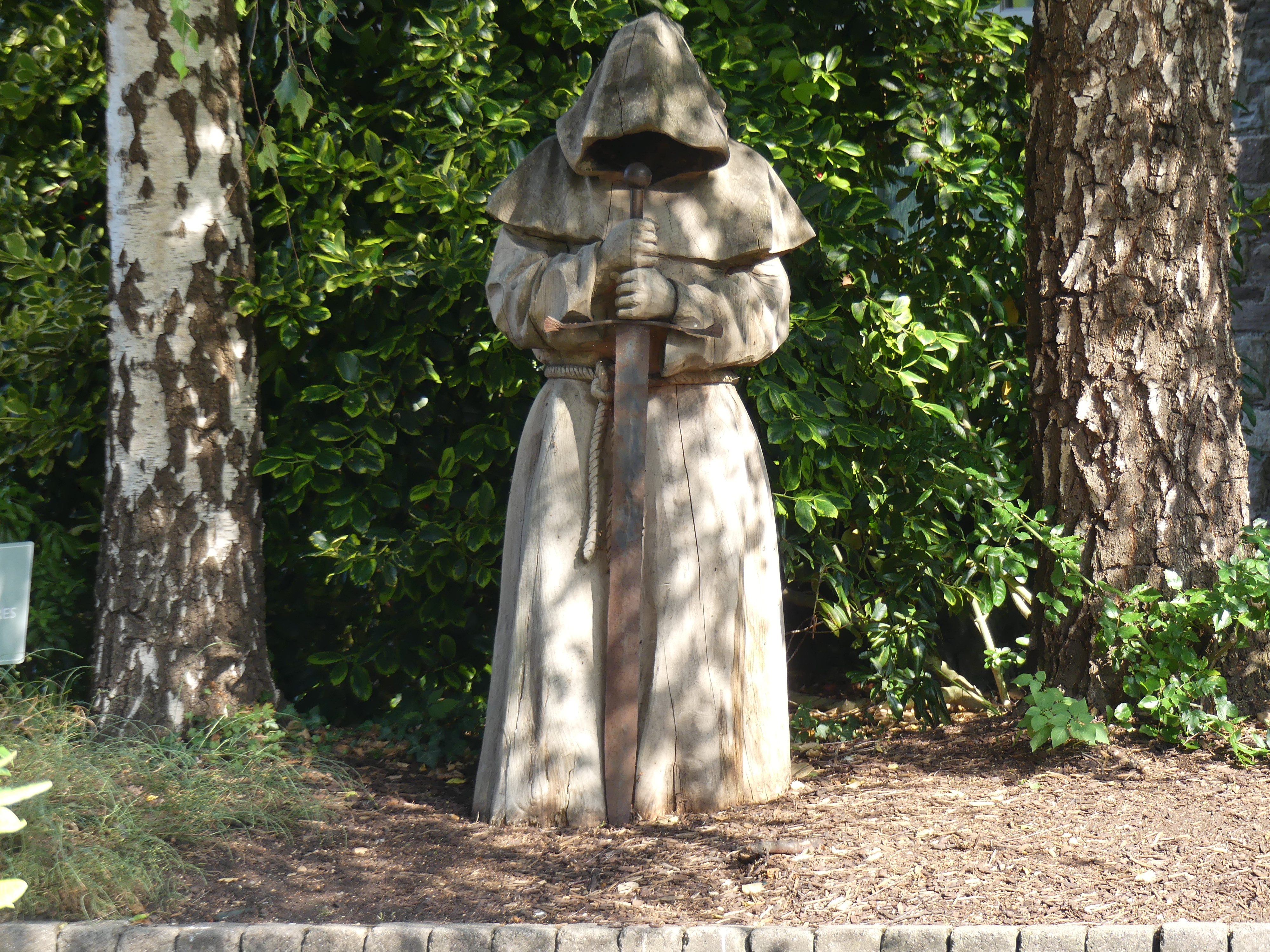
The pictures below take you on that stroll. First is the Priory – now an accommodation hotel but retaining the features of the former Priory with a pair of hares in the back yard. There are some interest wood carvings of a forest gnome, a priory student in cloche and priory guardian. Then there is the pub, a reused telephone box to house a defibrillator, a pretty pub, and the museum entrance.

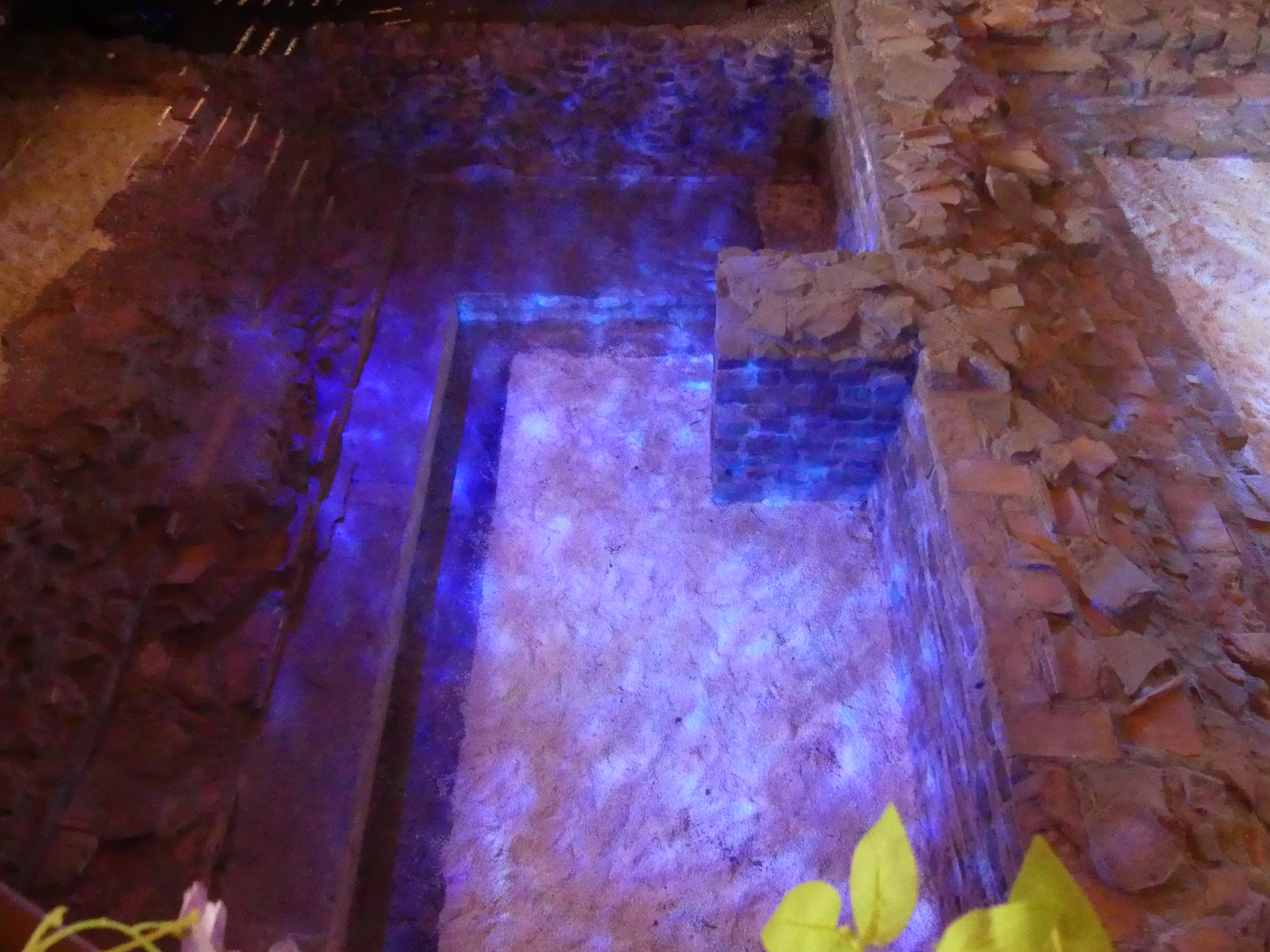
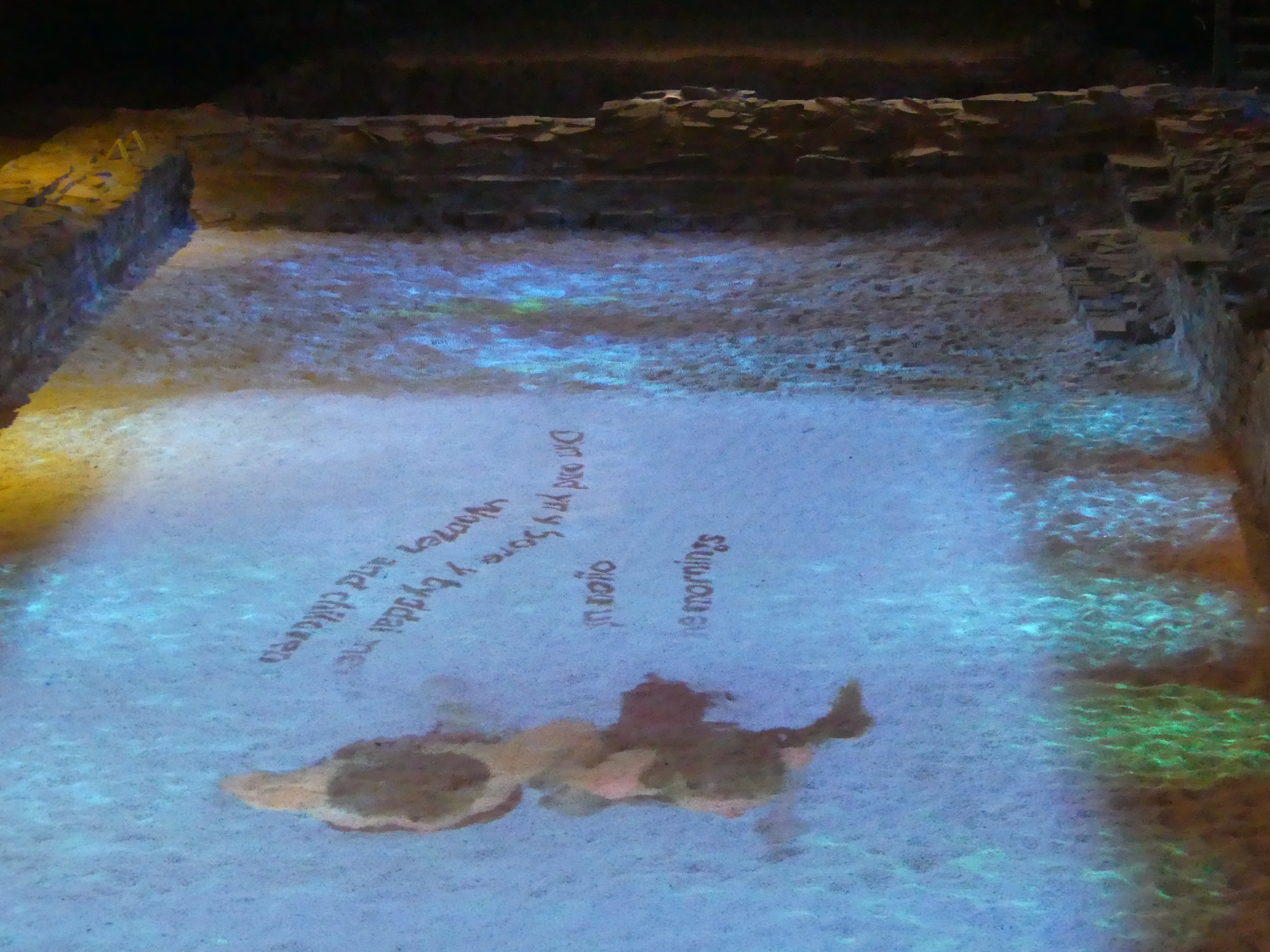
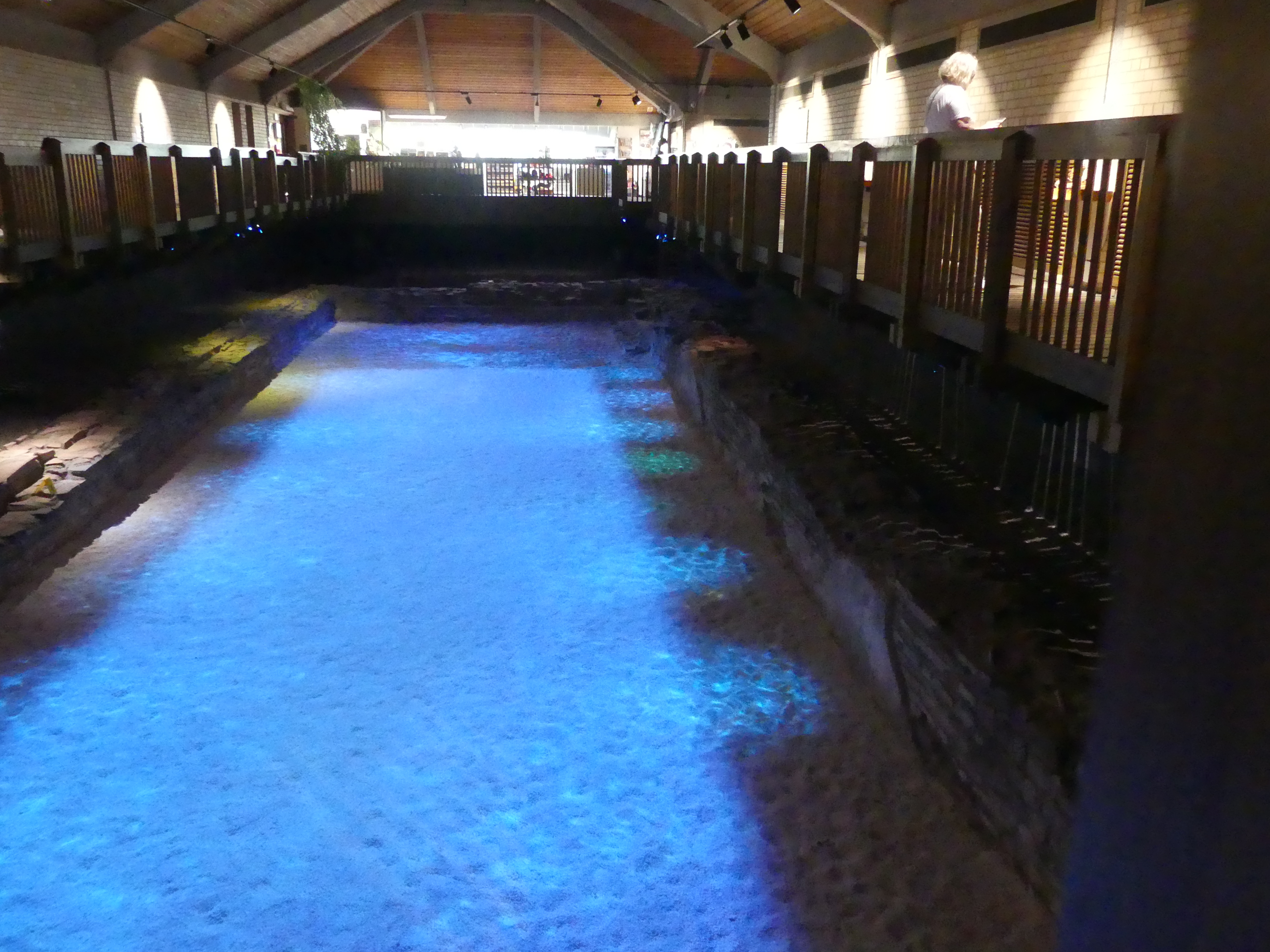
The site is the location of the main Roman legion and fort for the subjugation of the Welsh tribes. Life at the edge of the Roman Empire could be short, hard and dangerous so this fort provided the legionaries a place for rest and relaxation, and it was also their barracks. I have included two of the pages from a comic book containing images of the likely appearance of the building, the interior of the enclosed pools, and the garrison. The baths comprised the hot room (“caldarium”), the warm room (“tepidarium”) and the cold room (“frigidarium”) – you can see the English words in the Latin description.

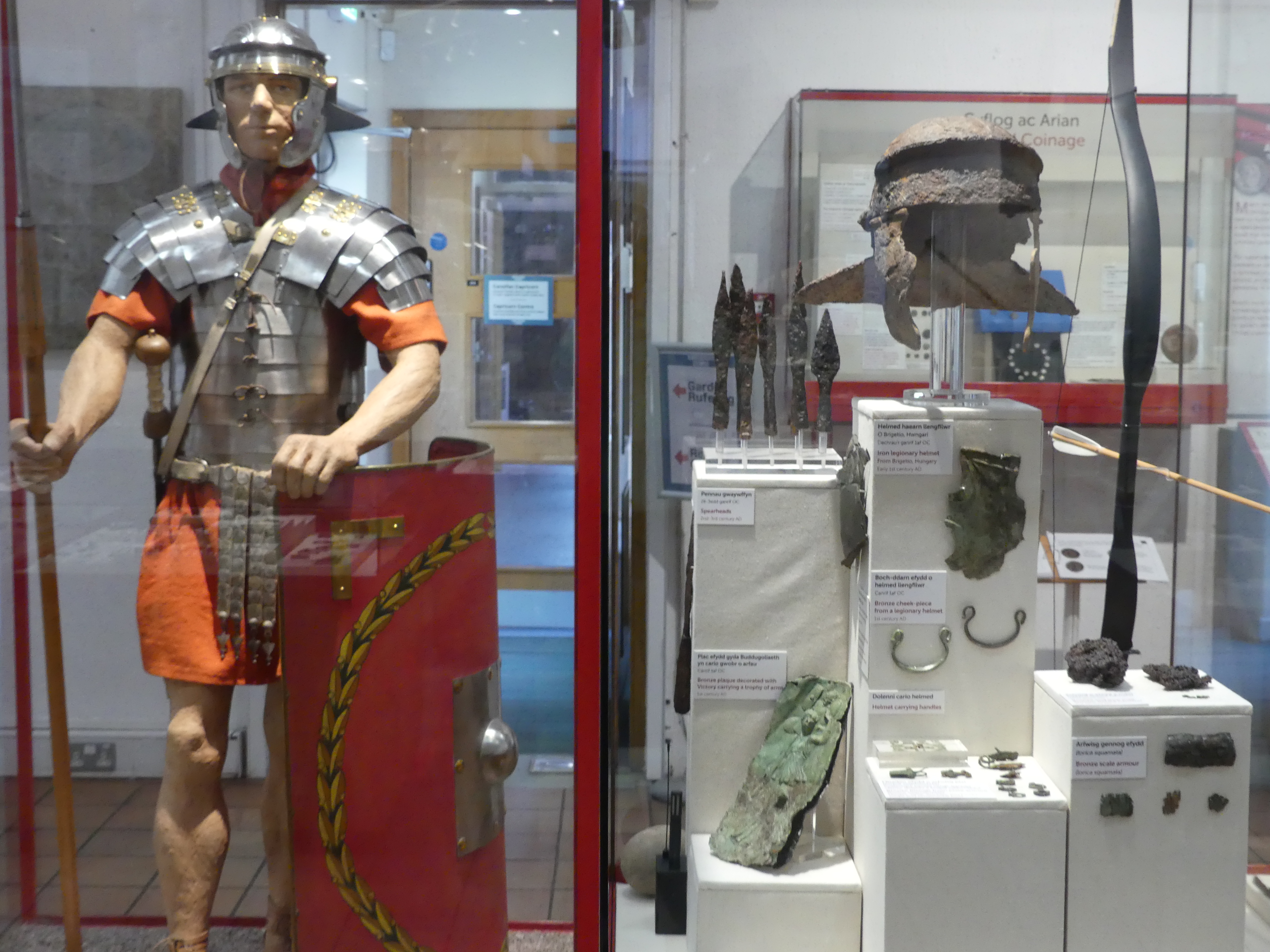
The pictures of the bathes with imagery of soldiers relaxing and using the spa follow. Photos of the replicas displayed in the Exhibition Hall are below.

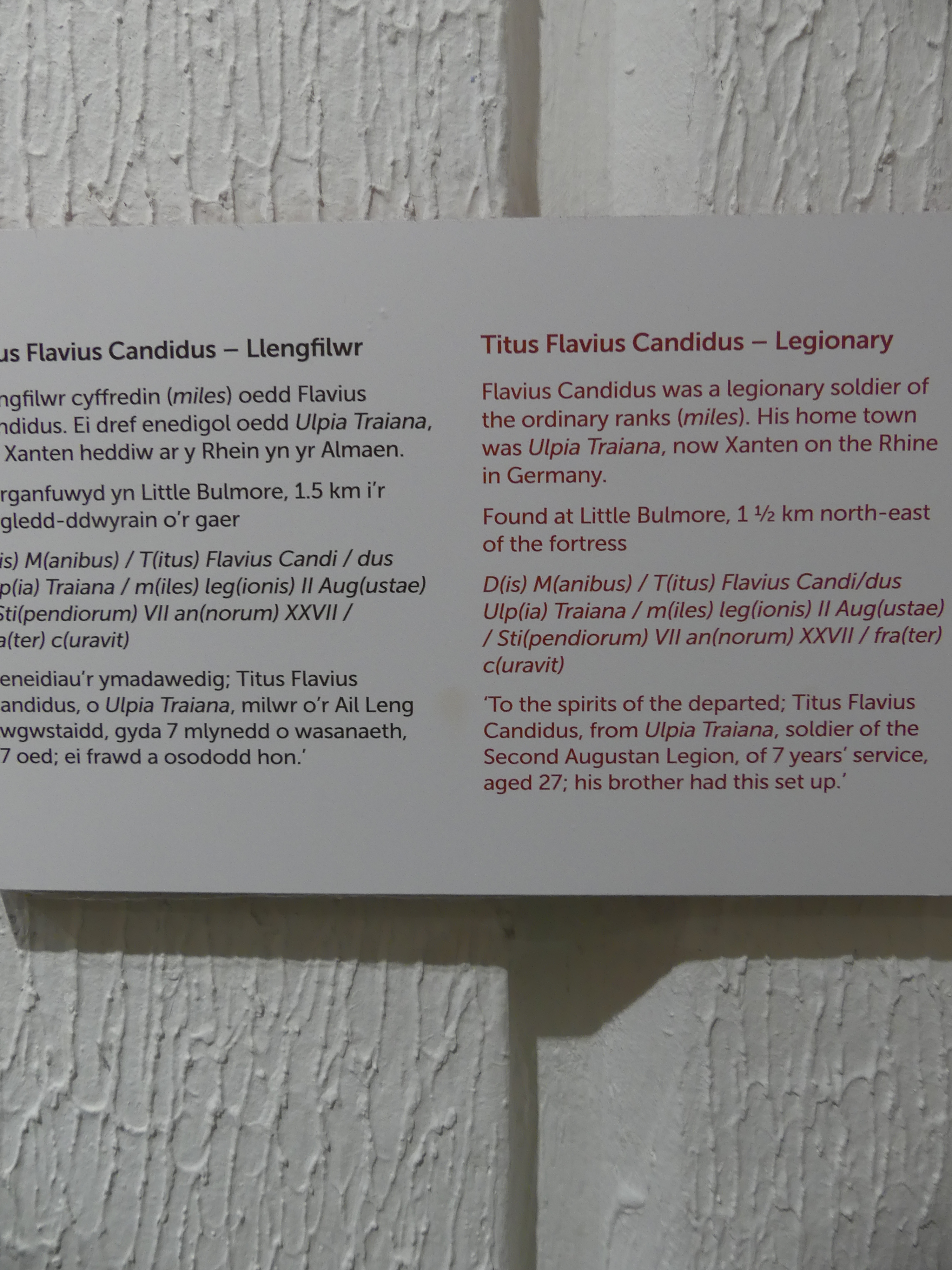
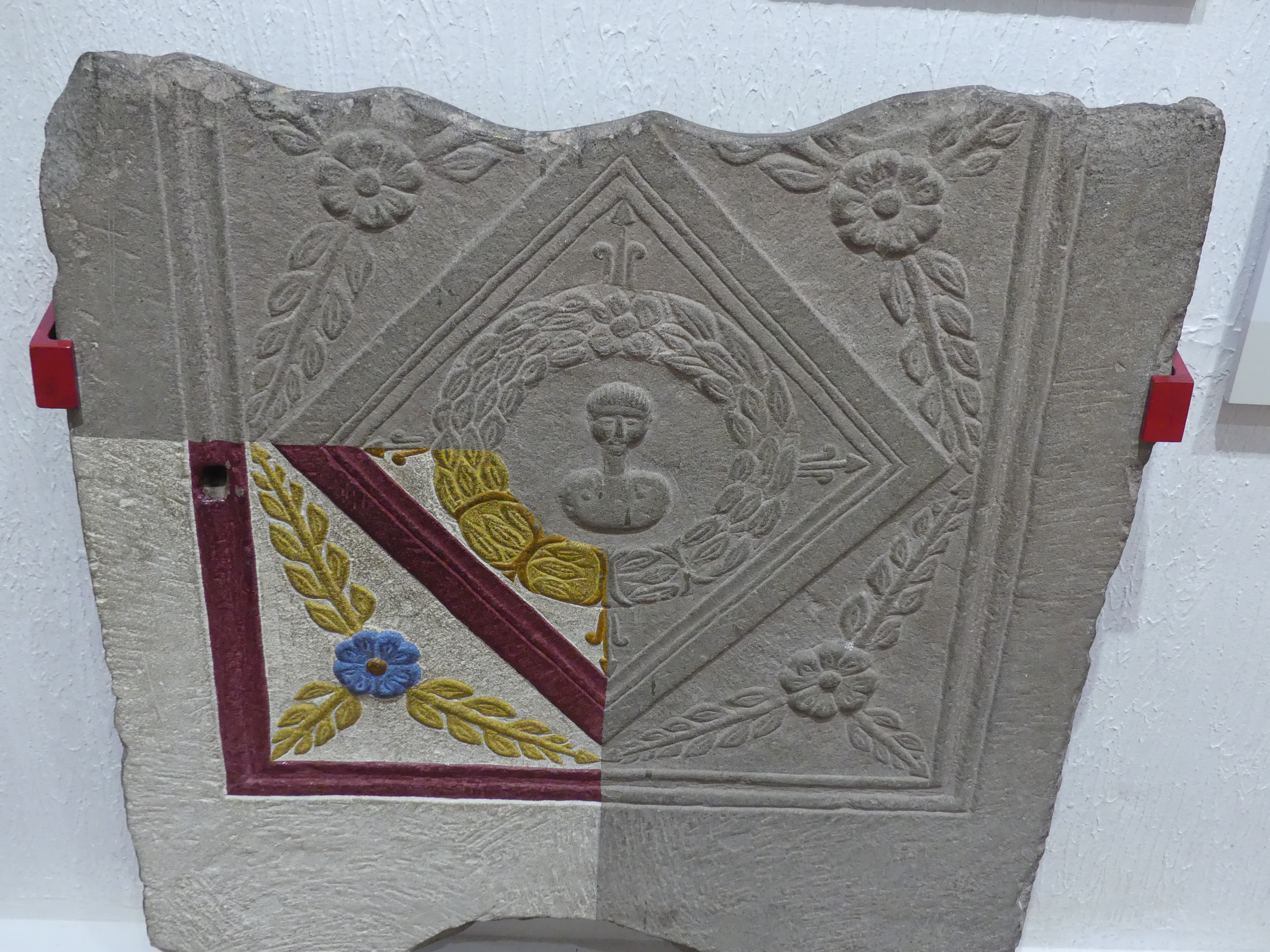
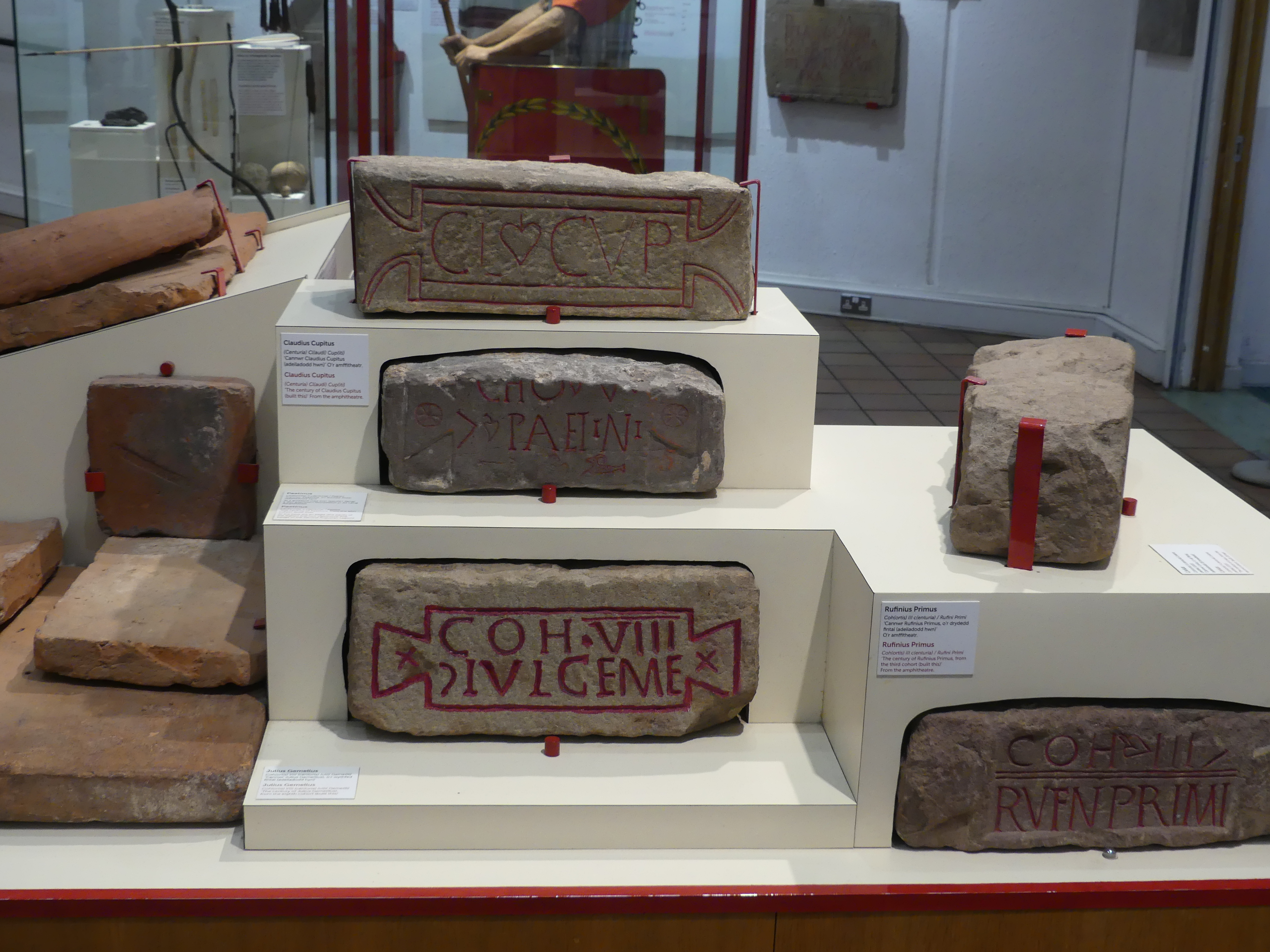
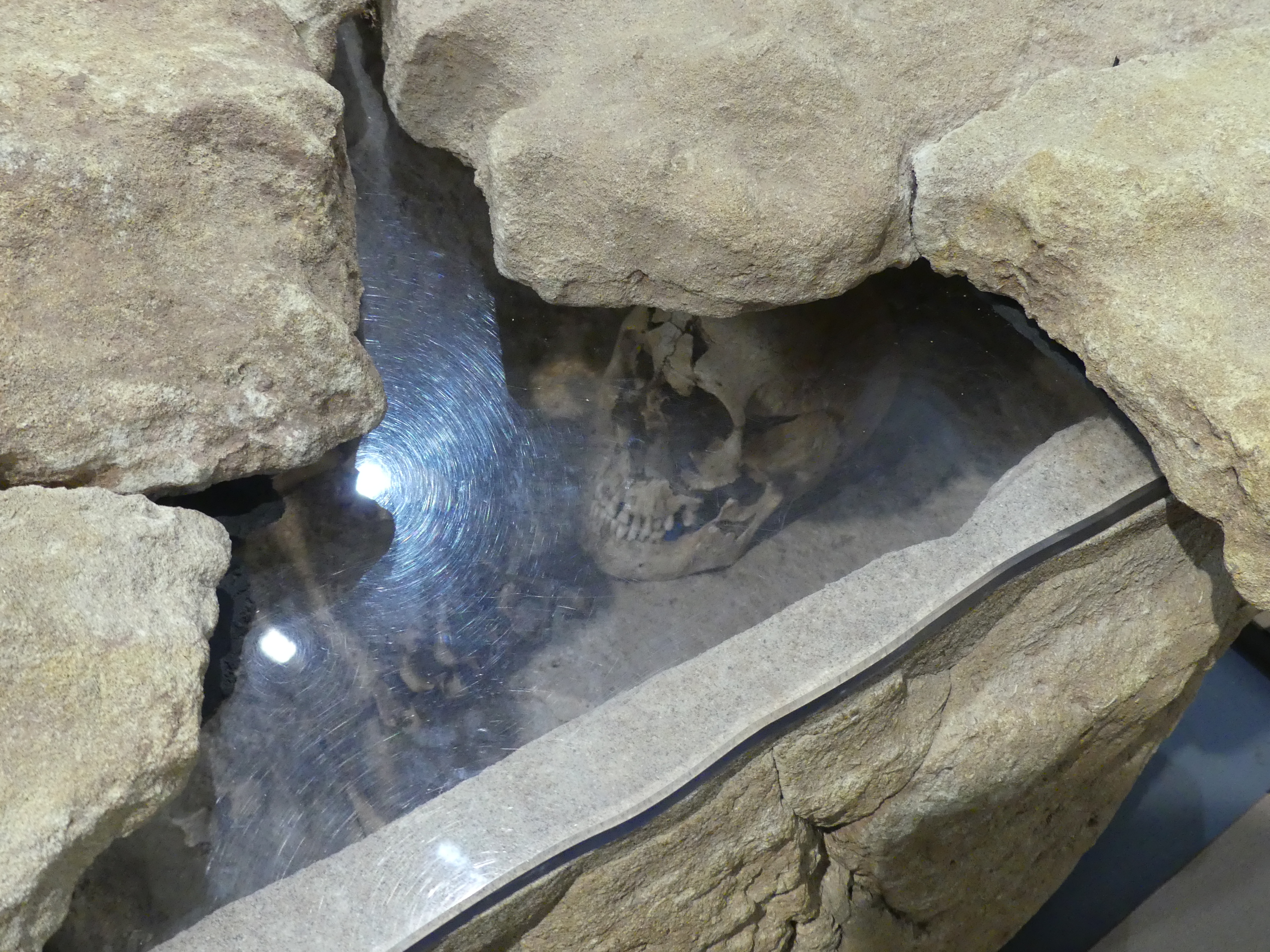
Our entry fee included a visit to the museum. I have included photos of some of the exhibits. The building materials surprised me – properly design pipes and building blocks. They also had the epithets or headstones of graves and cremations.  A stone casket. Partially restored tiles exhibited the beauty of the decorations.

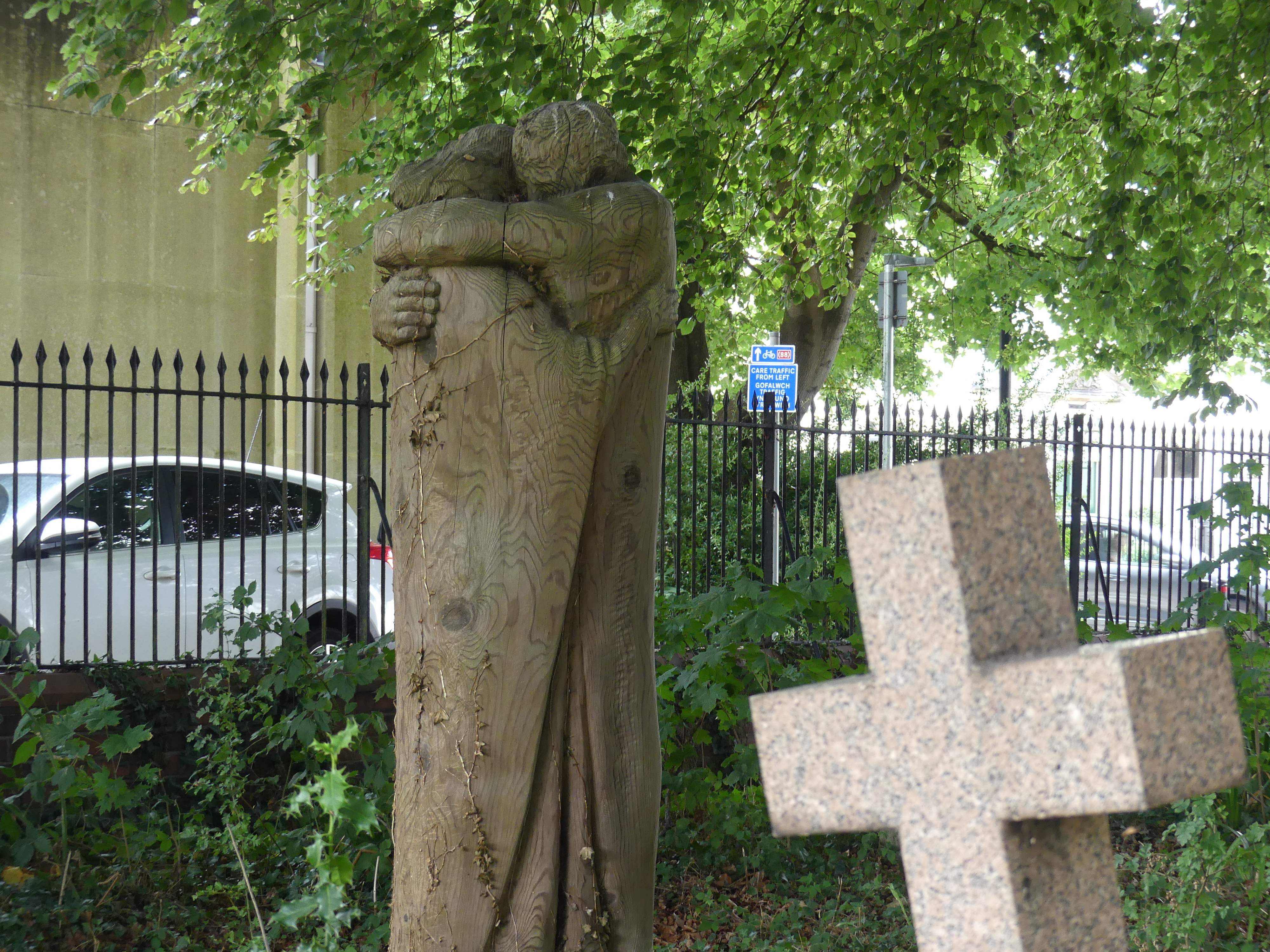
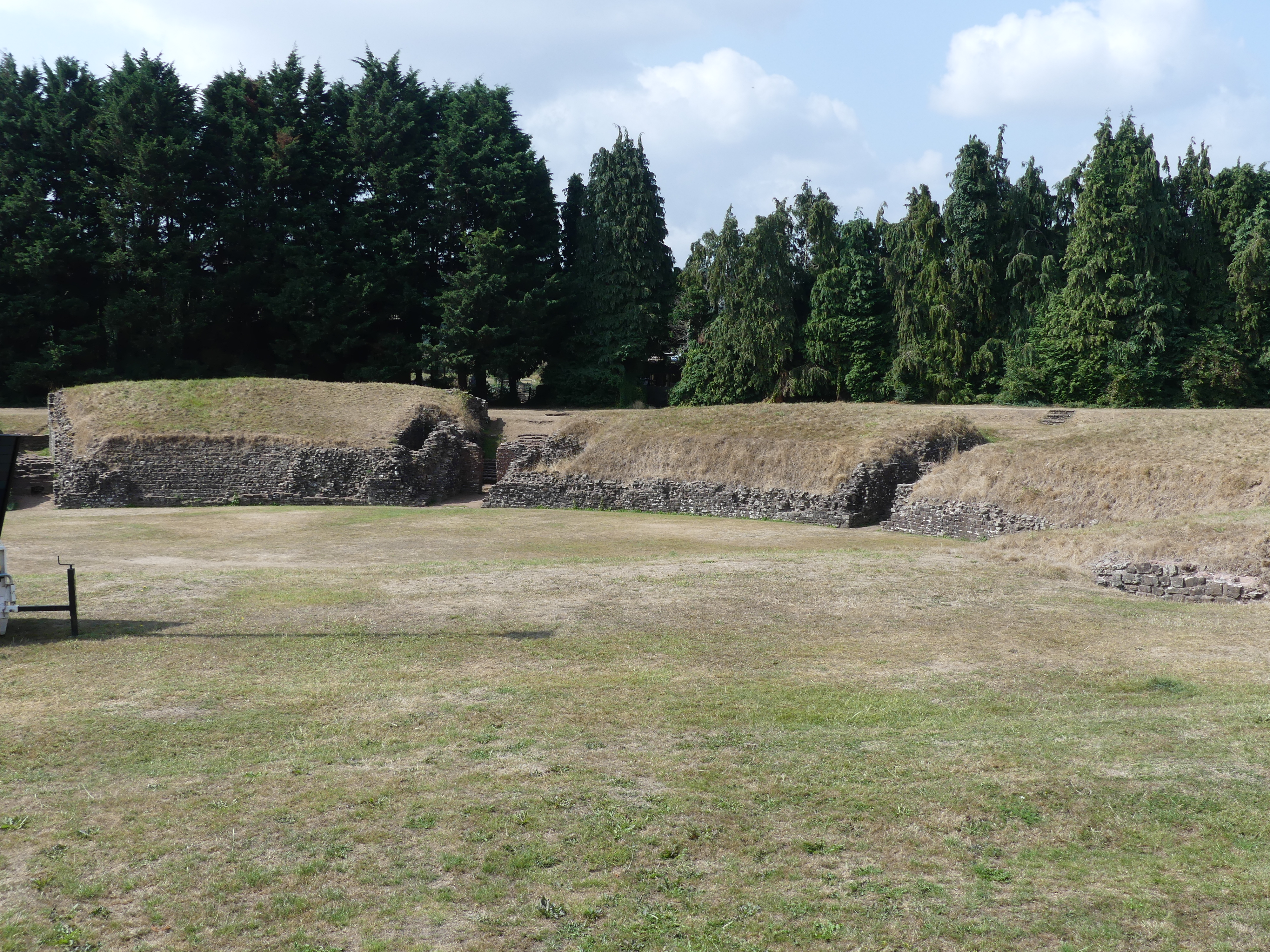
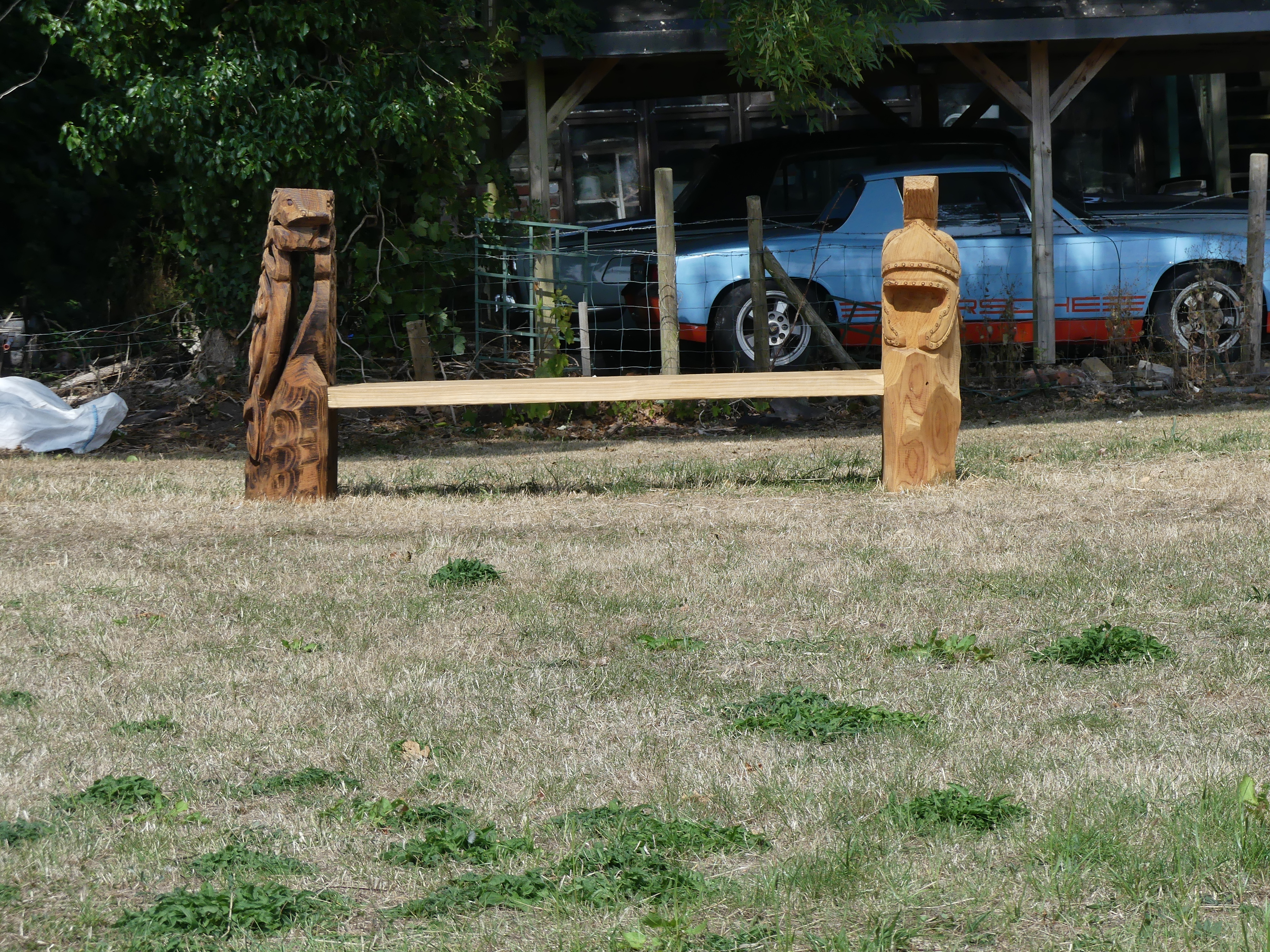
We stopped at the Bull Inn for lunch and encountered Jeremy Clarkson and his farm products. Other things of interest appear in the following photos. St Cadocs’ Church and graveyard. The remains of the Roman amphitheatre and the carvings in the park. An annual event in the village produces these wonderful carvings.

Returning to Cardiff, Kerry, being ever thoughtful, thought she had found another castle – Castle Hensol. We used the GPS in our car and the postcodes for the destination to find everything and it worked perfectly, even on this occasion.  Time brings about change and so it was with Castle Hensol. It was now the centre piece of a gated residential development and golf course. The wine tasting that the advertising had promised had led us on a wild goose chase. After a lot of guessing we found our way only to be disappointed. We needed a booking.

That ends another chapter in our around the world adventure. So, watch out for my next blog on THE RETIREES GO AROUND THE WORLD – CARDIFF to PEMBROKE WALES WEOBLEY CASTLE and KIDWELLY CASTLE.

“THE RETIREES GO AROUND THE WORLD – NAPLES to ROME & Leonardo da Vinci–Fiumicino Airport THEN TOKYO”

Back in Rome

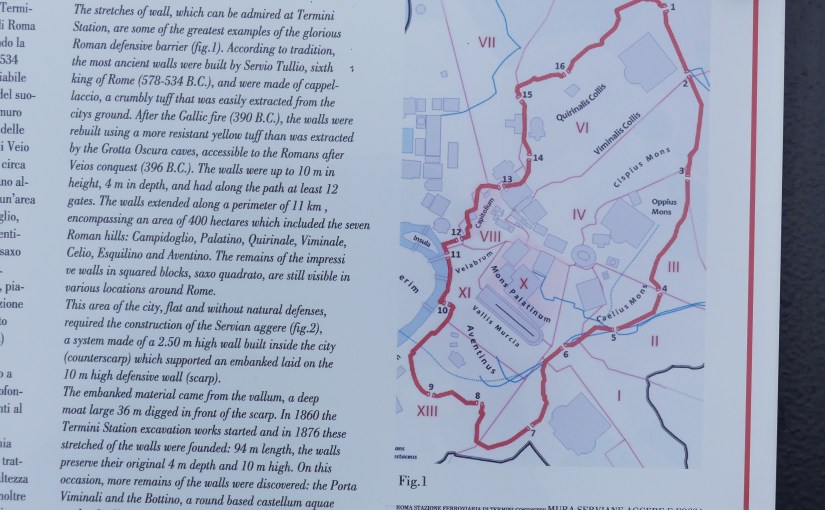
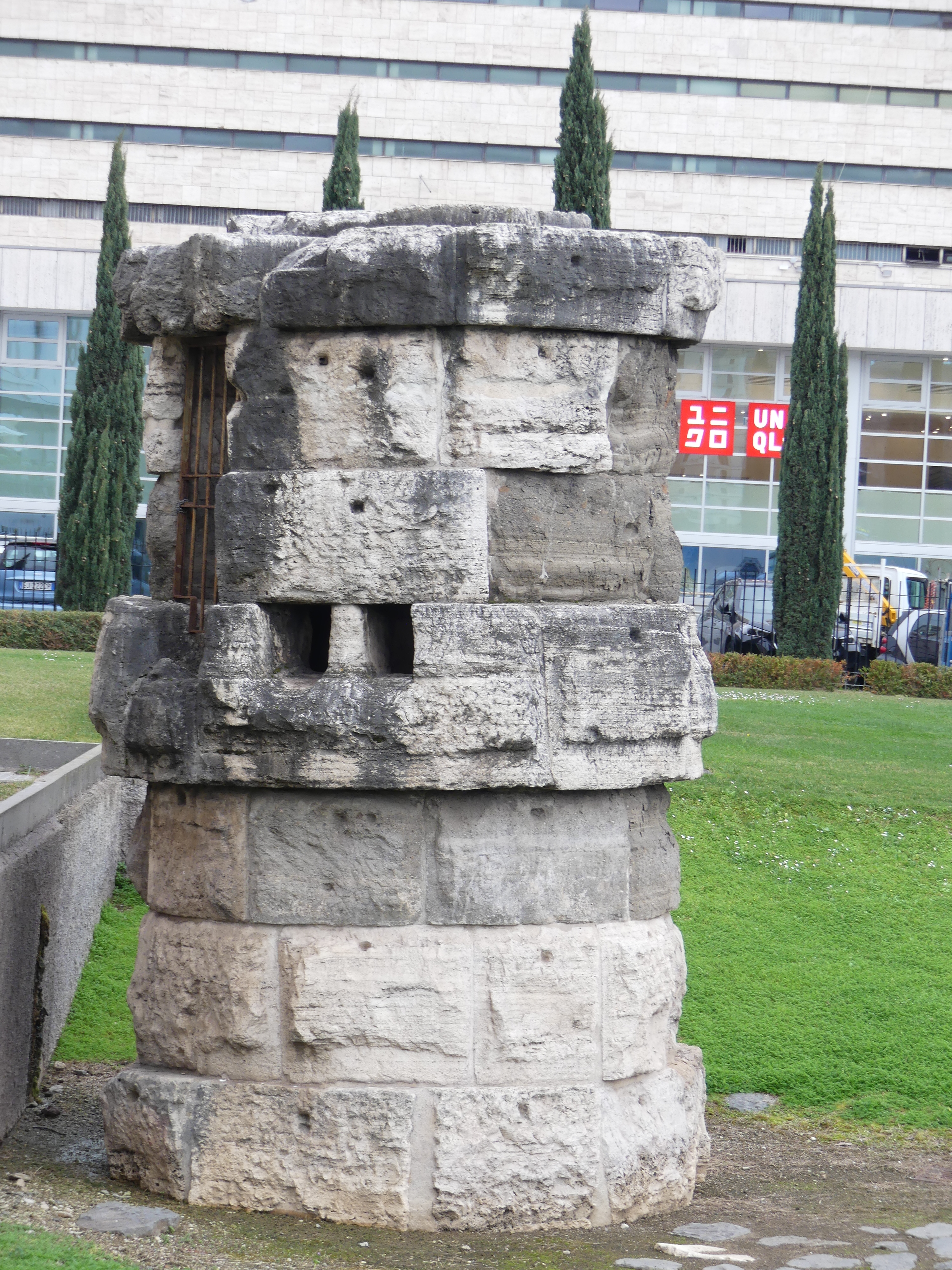
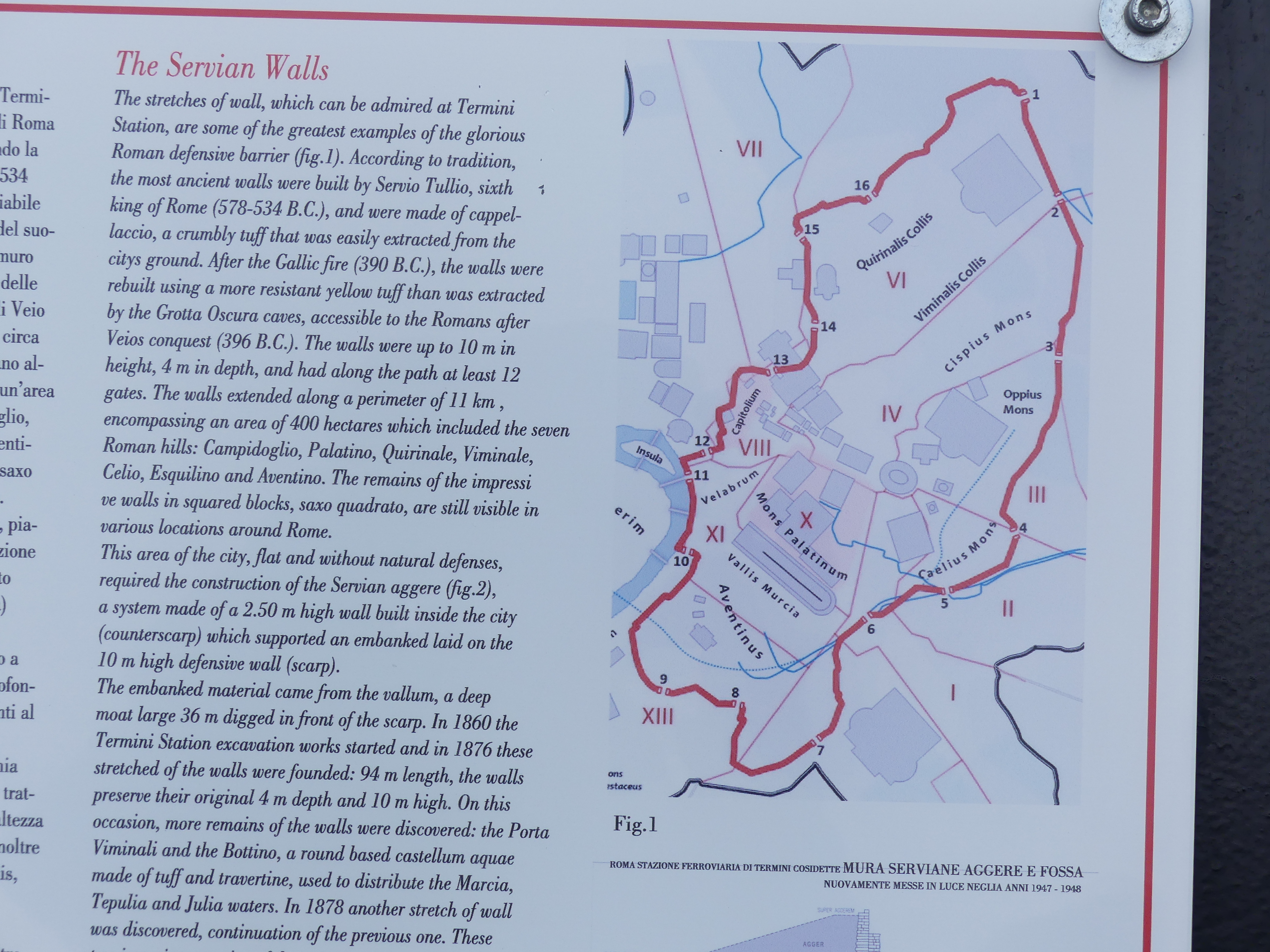
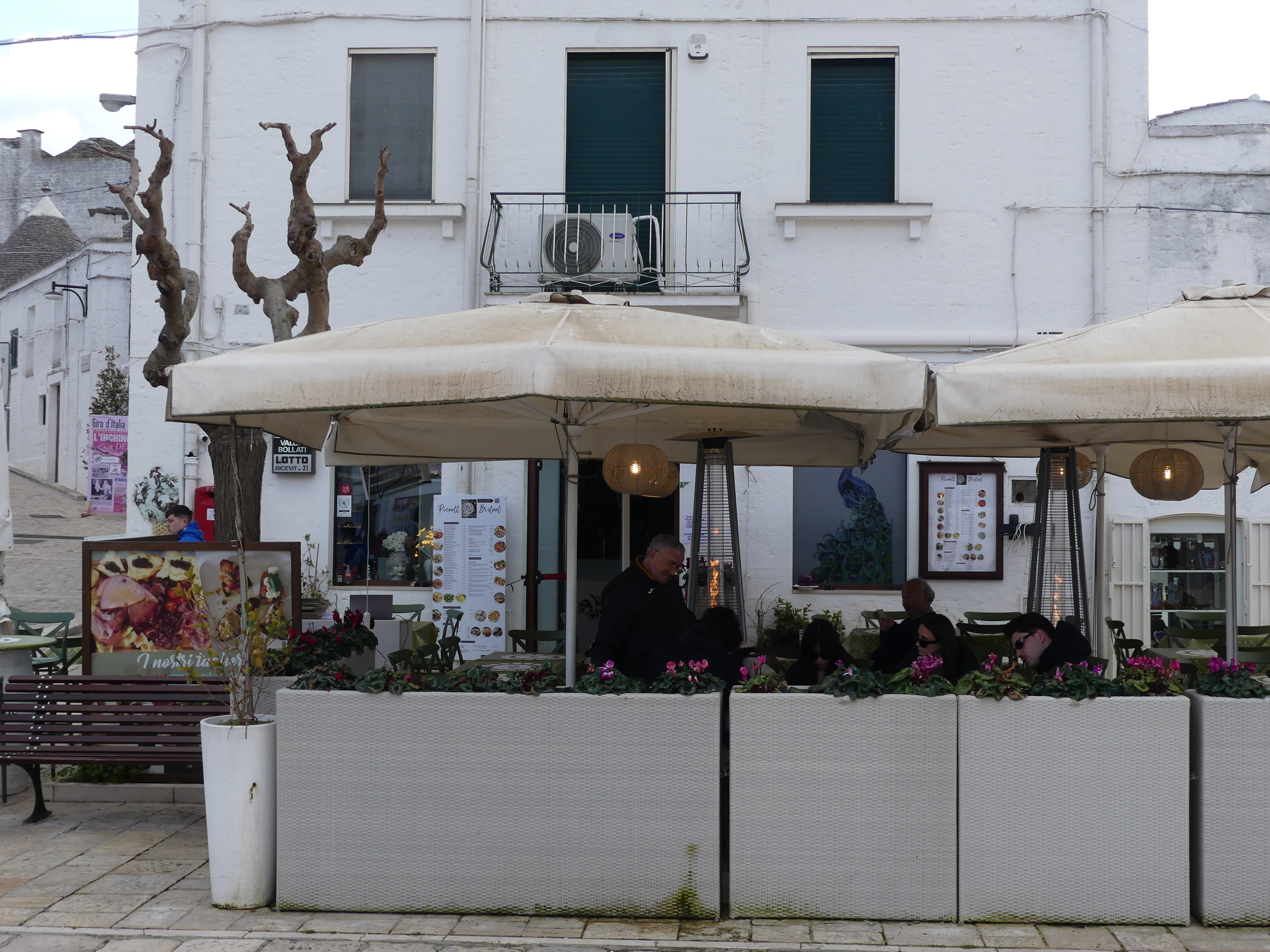
We returned to Rome by train arriving in Terminii and crossed the road to Dream Station B&B for the night. Having been traveling all day we took in the air by visiting the remains of the Servian walls standing outside the Entrance/Exit from Terminii station. The Servian Wall is an ancient Roman defensive barrier constructed around the city of Rome in the early 4th century BC. The wall was up to 10 m (33 ft) in height in places, 3.6 m (12 ft) wide at its base, 11 km (6.8 mi) long, and is believed to have had 16 main gates, of which only one or two have survived. In the 3rd century AD it was superseded by the construction of the larger Aurelian Walls. The largest section is preserved outside the Terminii Station and includes a section in a McDonald’s dining area at the station. When writing this blog, and reviewing my photos, I found this photo “Porta Esquilina – this gate on the Esquiline is still visible, and incorporates the later arch of the emperor Gallienus.” I can recall Kerry, and I discovered this gate when we visited Piazza Vittorio Emanuele II when we were searching for her roof top restaurant for her birthday. A picture is below.

Our trip to the airport the next morning was trouble free as I recall it now. We had purchased a round the world ticket so we ended up flying via Helsinki on a Finnair Jet to get to Tokyo. The flight was trouble free and the fun was to begin with finding our hotel in Tokyo. Read on for my blog on “THE RETIREES GO AROUND THE WORLD – “ROME TO TOKYO”.

“THE RETIREES GO AROUND THE WORLD – NAPLES to SORRENTO”

SORRENTO

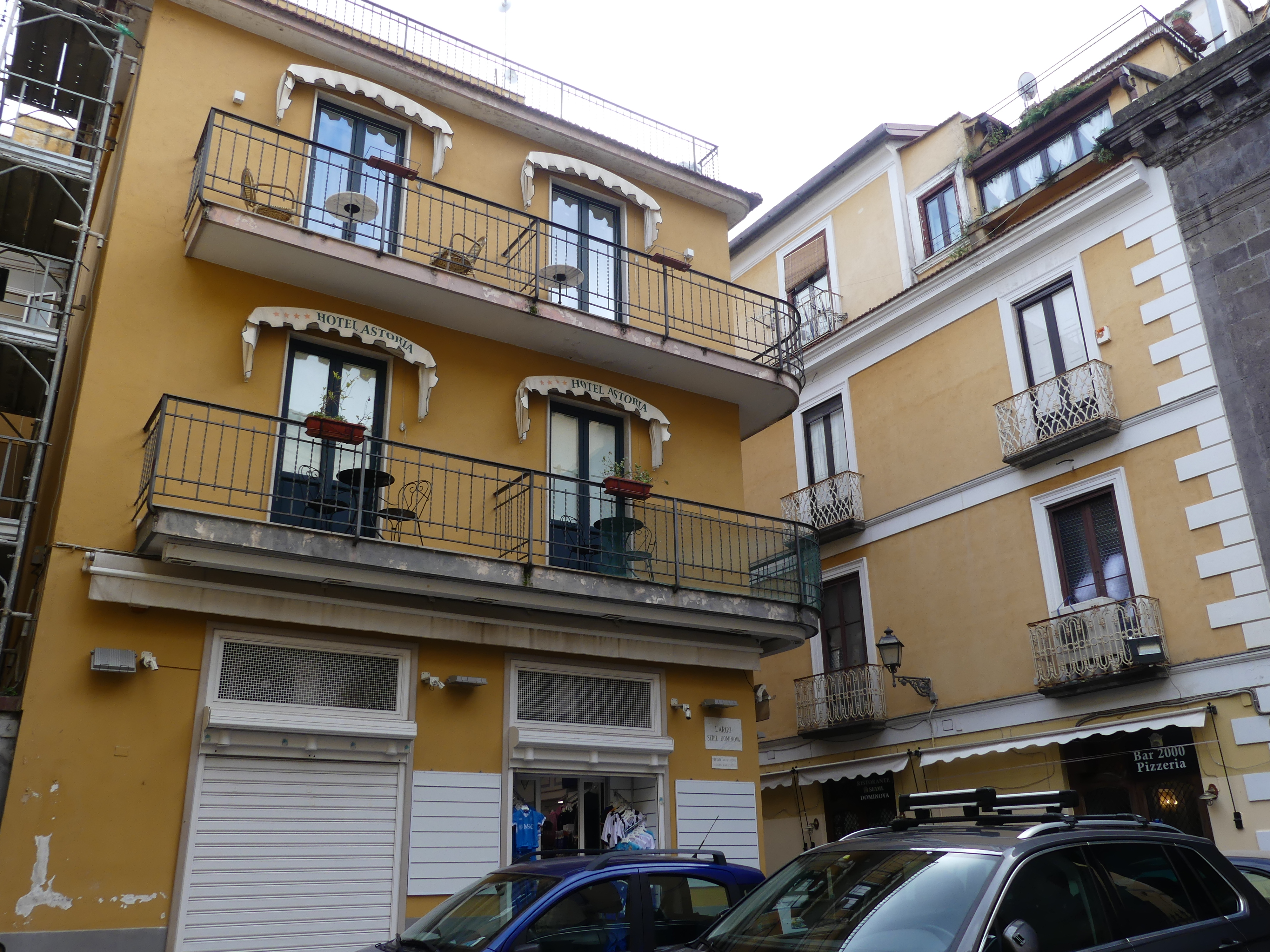
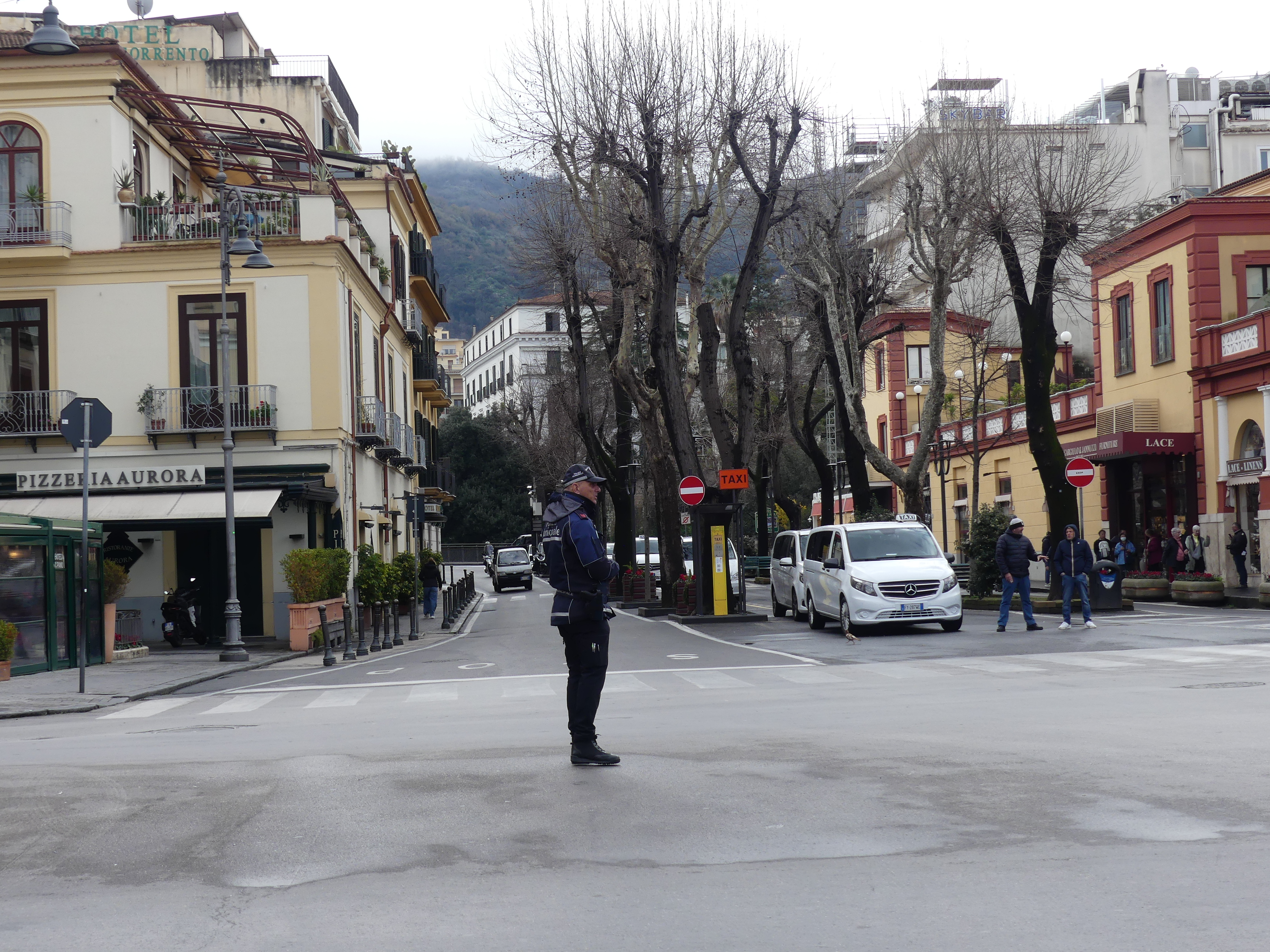
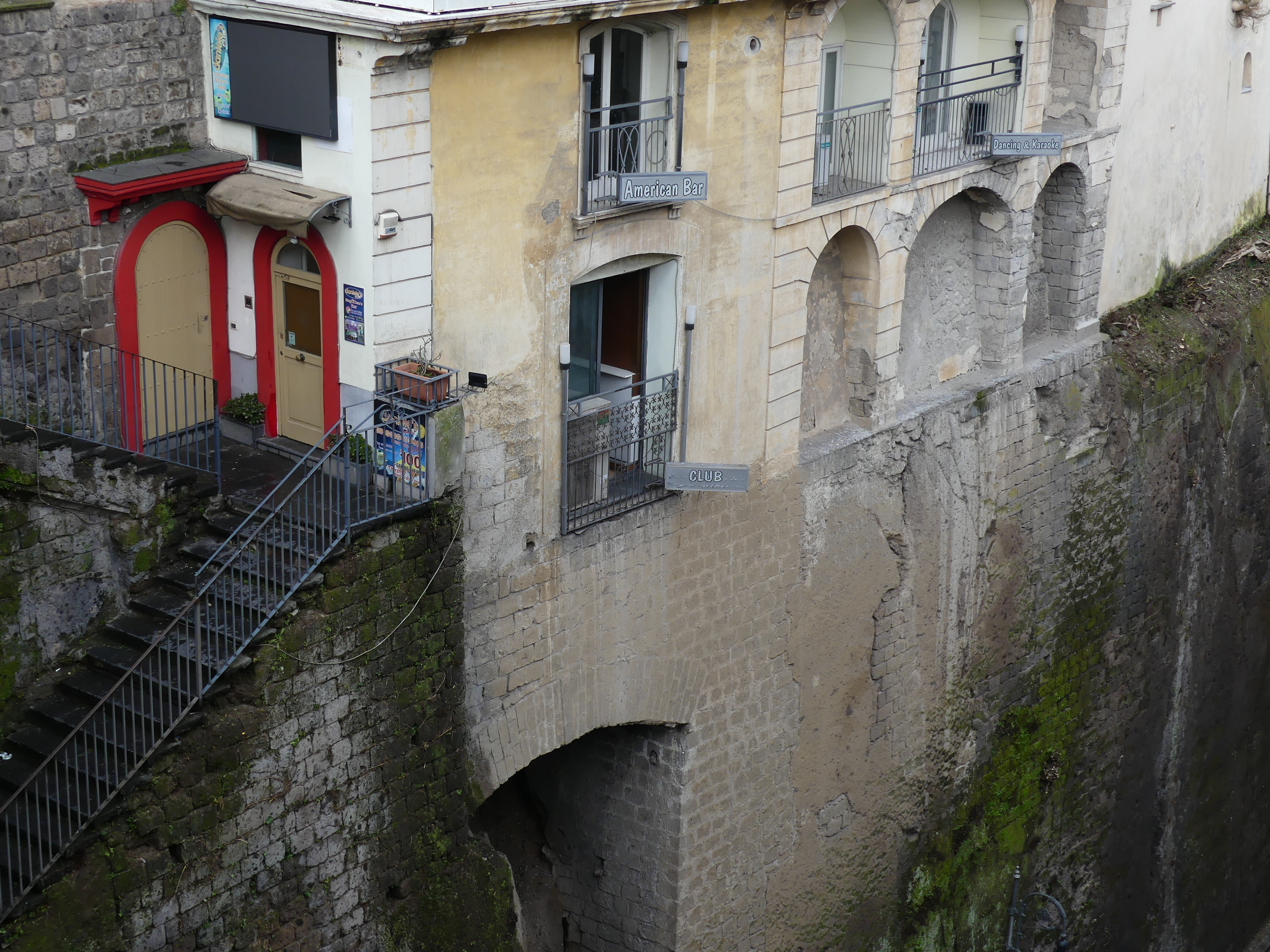
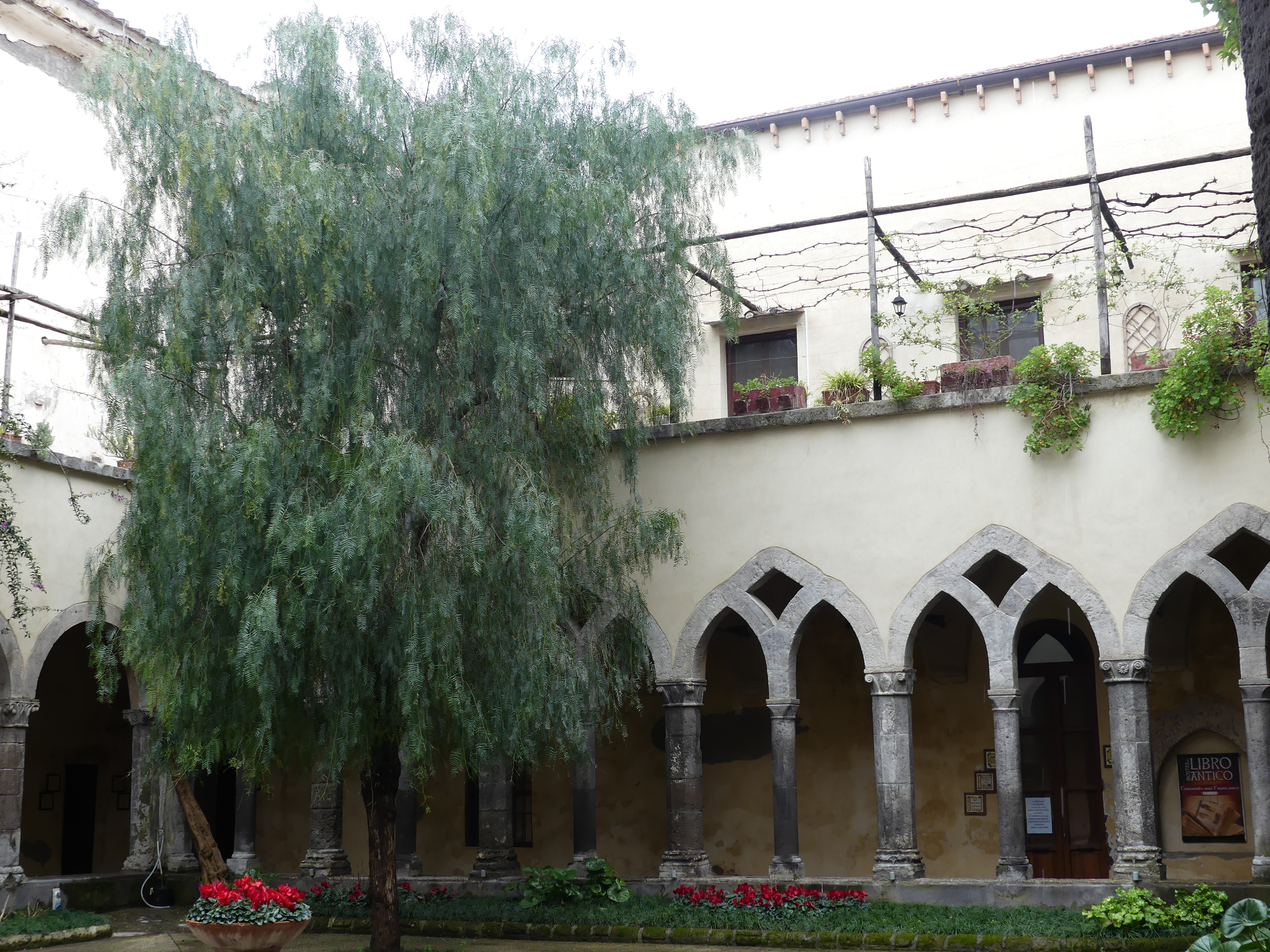
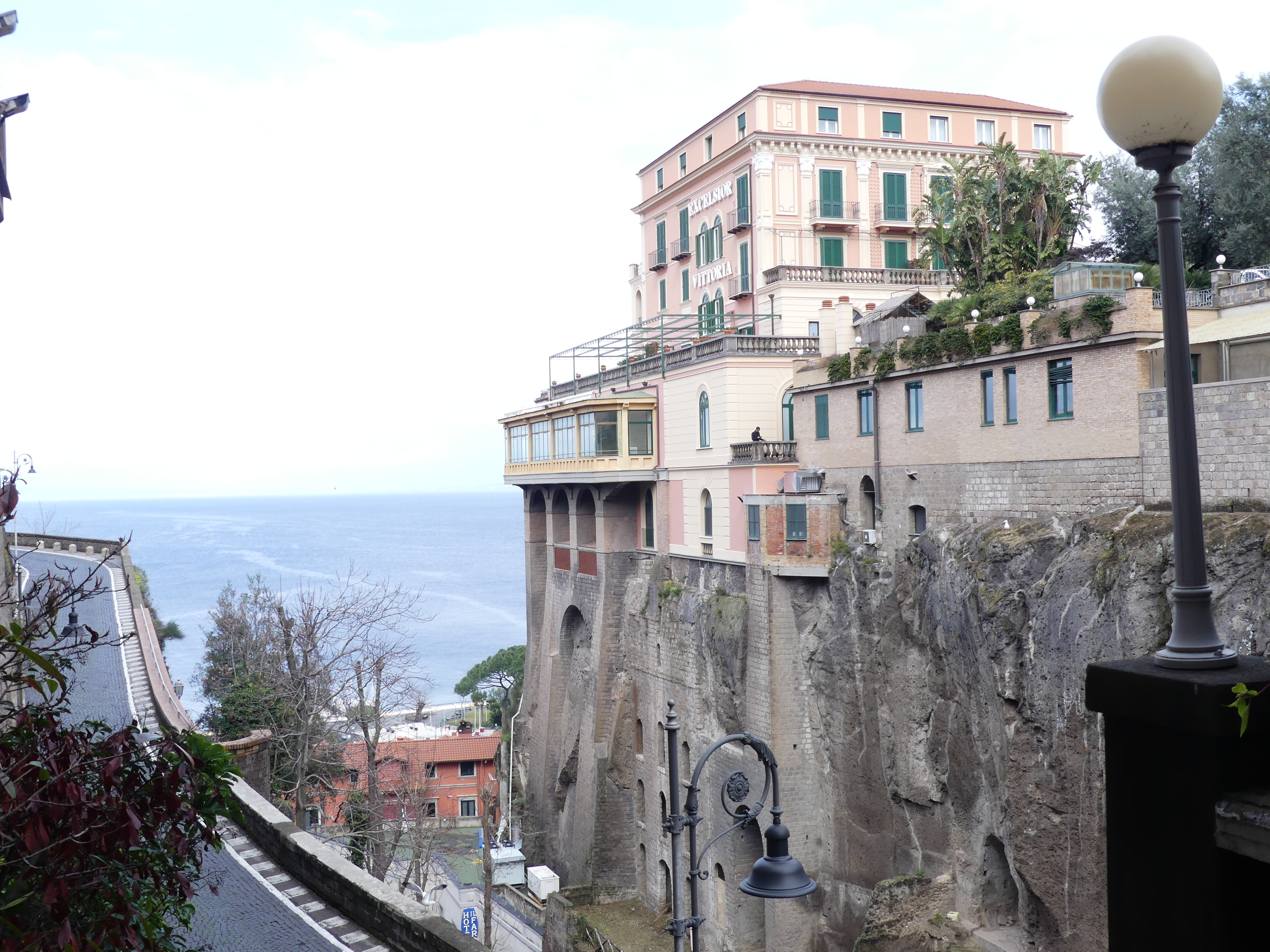
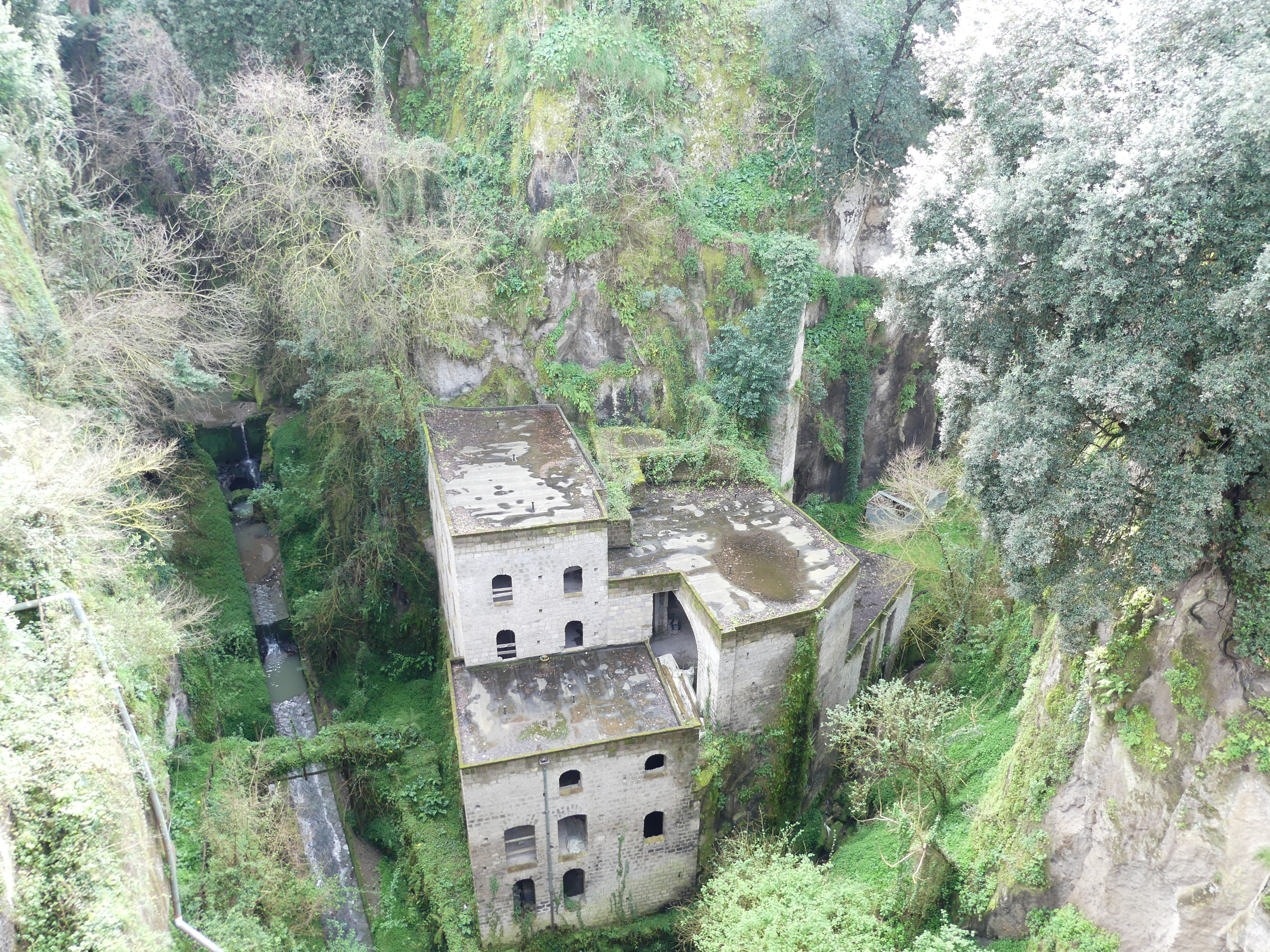
We decided to take another train trip this time along the coast to Sorrento, a resort town to the south. Arriving at the station/terminus for the train, we found a tour guide shop and picked up a map of the town and headed for the centre of town. At first it was unremarkable in its architecture and design until we came across a ravine passing through the town with buildings and roads straddling it and overlooking the Bay of Naples. Over the centuries of Sorrento’s establishment, it has been the subject of piracy, bombardment, and invasion, so it is no stranger to visitors to town.

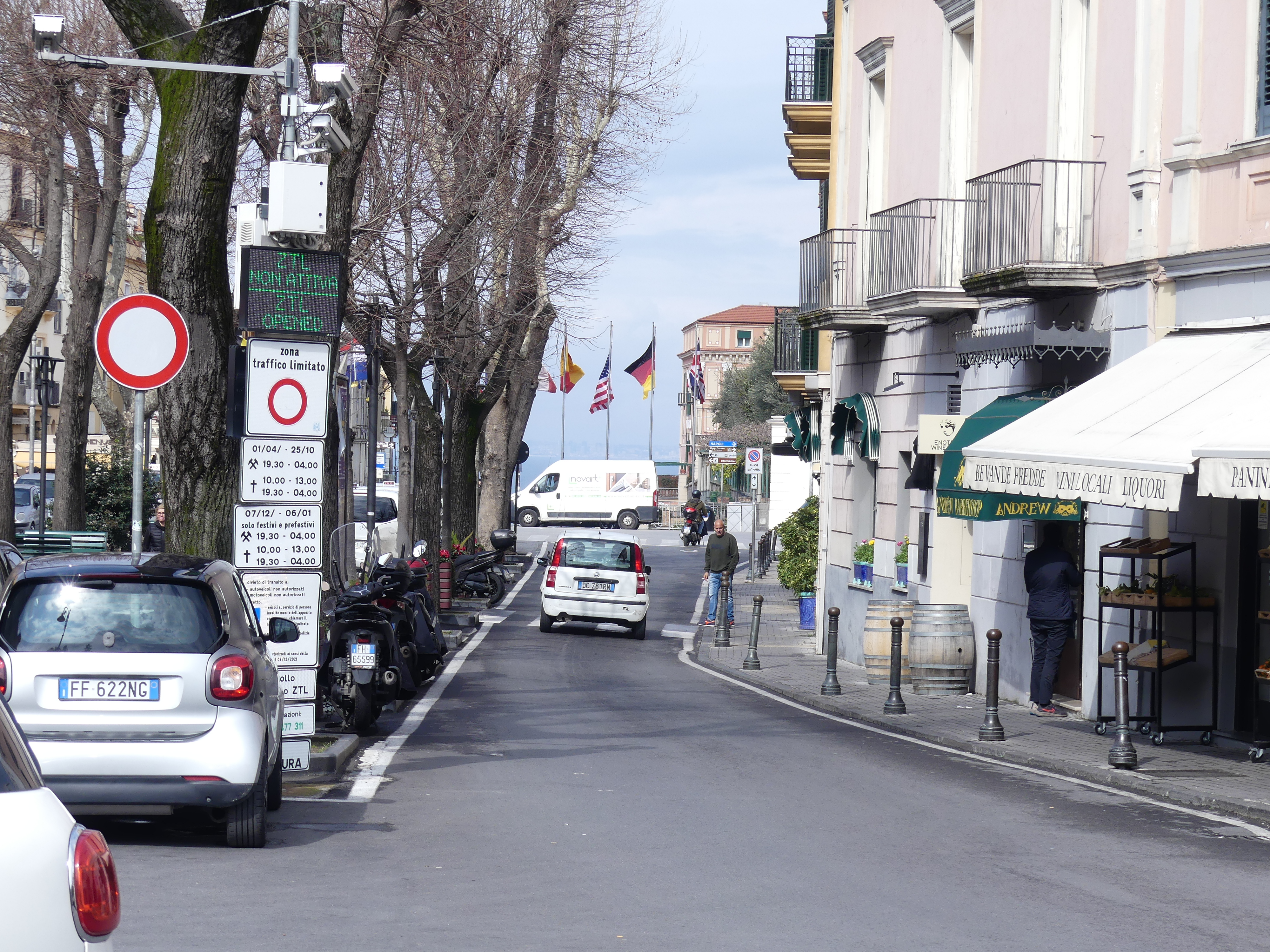
The “old town” is identified by narrow streets and loads of shops, and most were open despite it being winter and raining.

Sorrento became an archbishopric around 420 AD. After the fall of the Western Roman Empire, it was ruled by the Ostrogoths and then returned to the Eastern Empire. In 1035 the city was acquired by the Duchy of Naples, then it returned to Lombard hands but when defeated by Robert Guiscard, Sorrento entered the Norman sphere of influence: any residual independence was ended in 1137 when it was conquered and annexed to the Kingdom of Sicily. In the 19th century the economy of the city improved markedly, favoured by the development of agriculture, tourism and trade. In 1861 Sorrento was officially annexed to the new Kingdom of Italy. In the following years it confirmed and increased its status of one of the most renowned tourist destinations of Italy, a trend which continued into the 20th century.

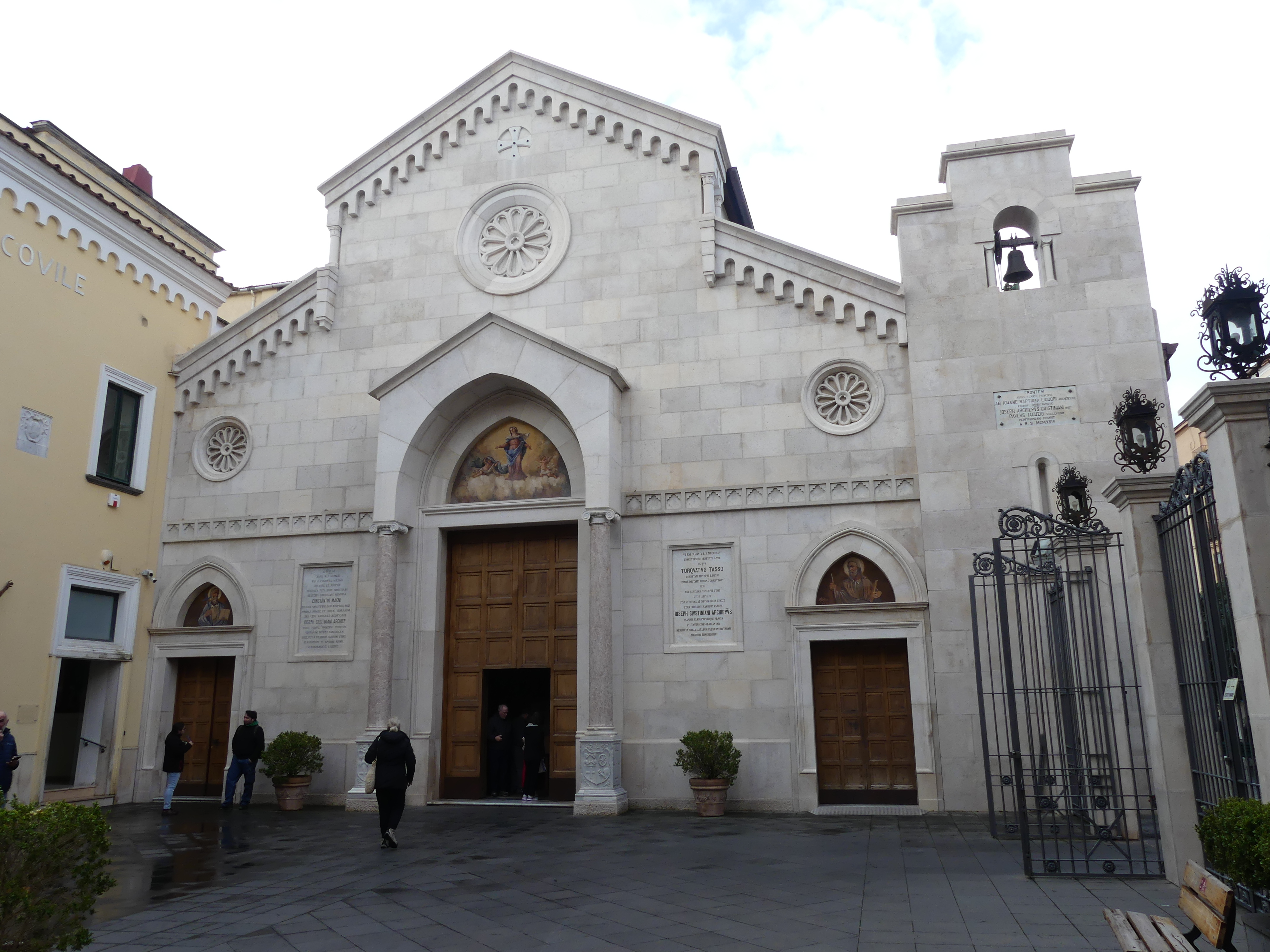
It had the usual lords and ladies running the place over the history of the town and the building below was the home of the last family ruling the town. Apart from Counts and Countesses, it was a Bishopric of the Catholic Church from 420 AD, and we found the cathedral and monastery nearby. The cathedral was ornate as demanded for a Bishopric, but it also contained the most unusual diorama of the birth of Christ – I always imagined the birth of Jesus as a quiet affair, a few sheep, a star and 3 old blokes bearing gifts. The diorama makes it look like Queen St on a Friday evening.It also had its main doors internally decorated with stations of the cross.

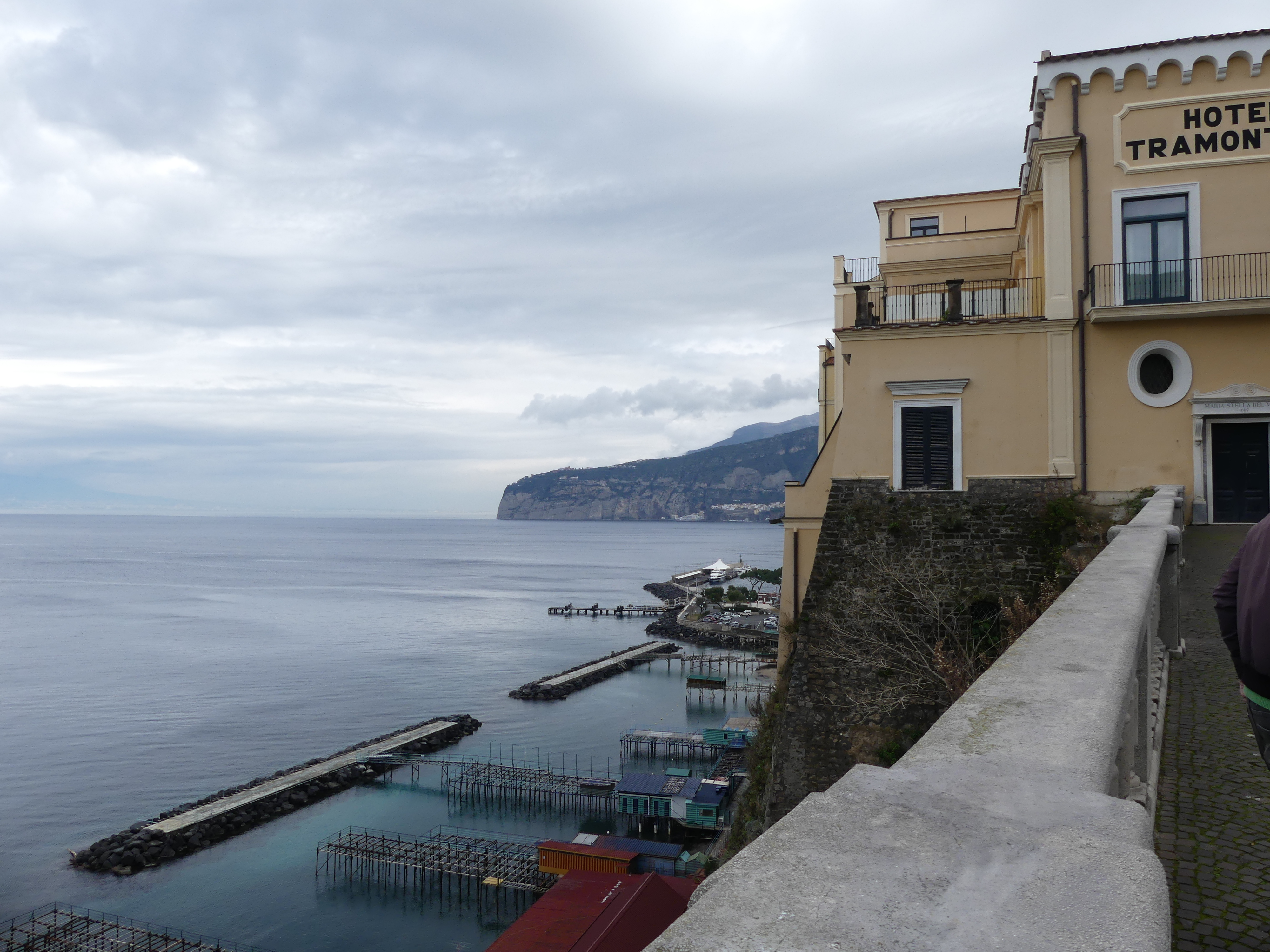
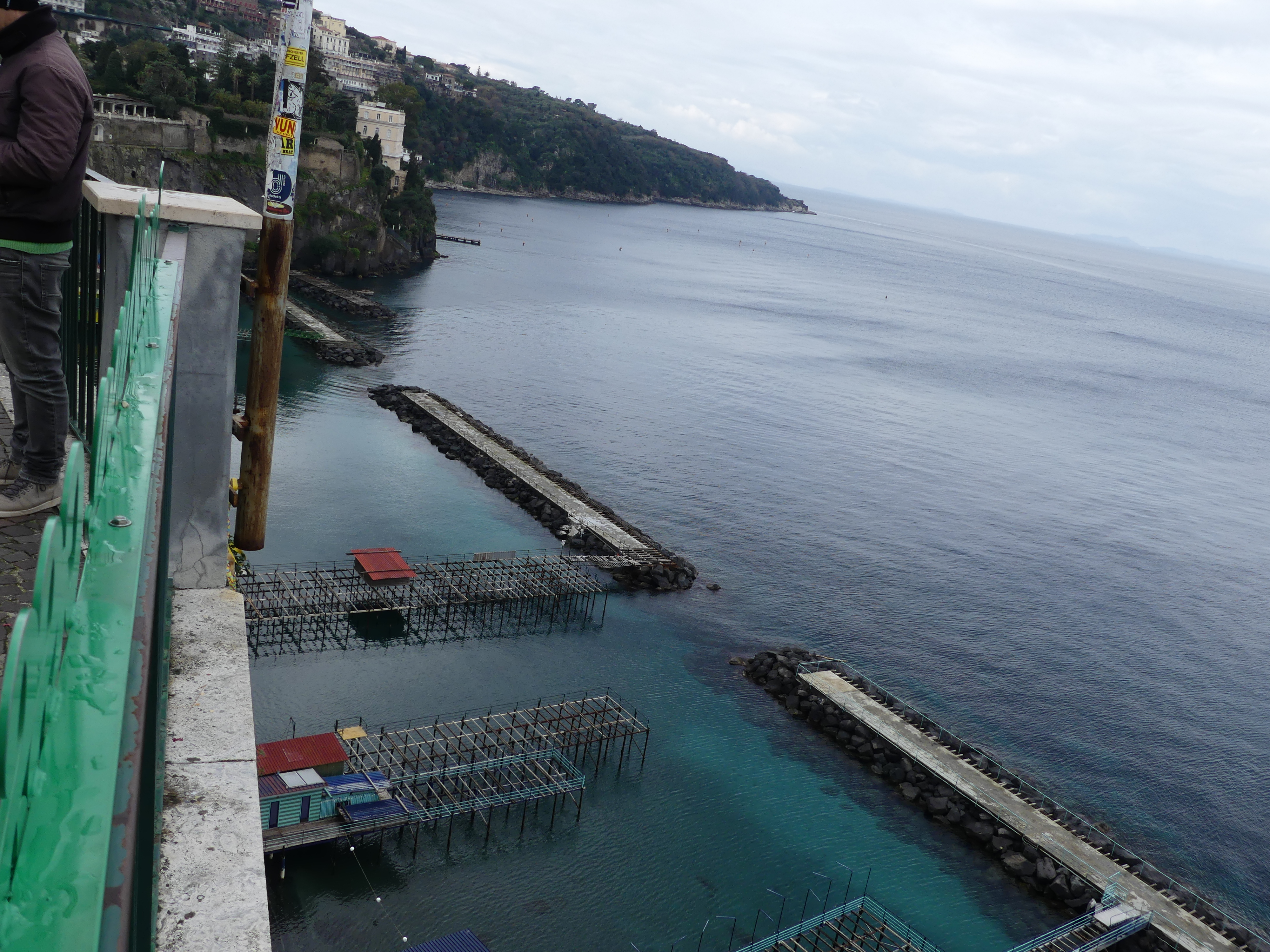
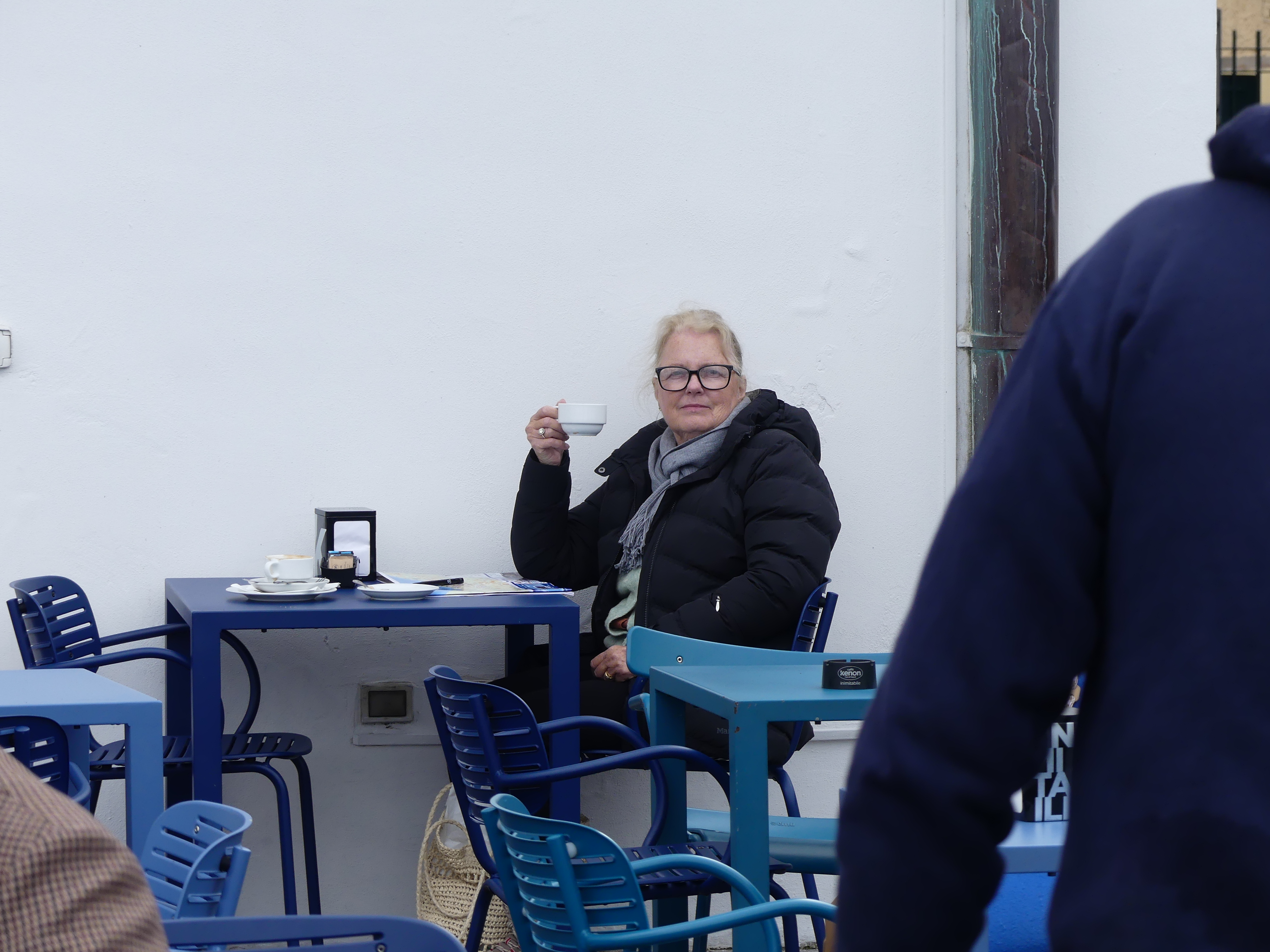
We walked through the town checking out the rift created by nature (actually the rift has always been there and people built on top of it) to the cliff side and views of the Bay of Naples/Tyrrhenian Sea and of course a cafe.

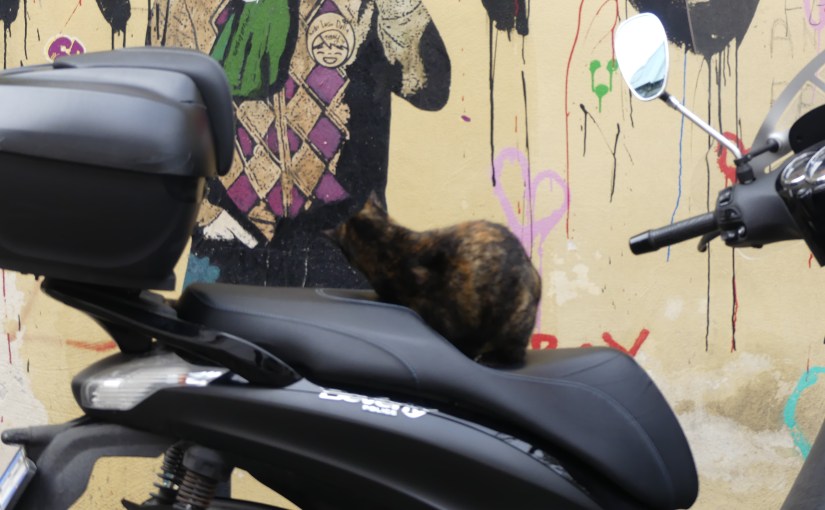
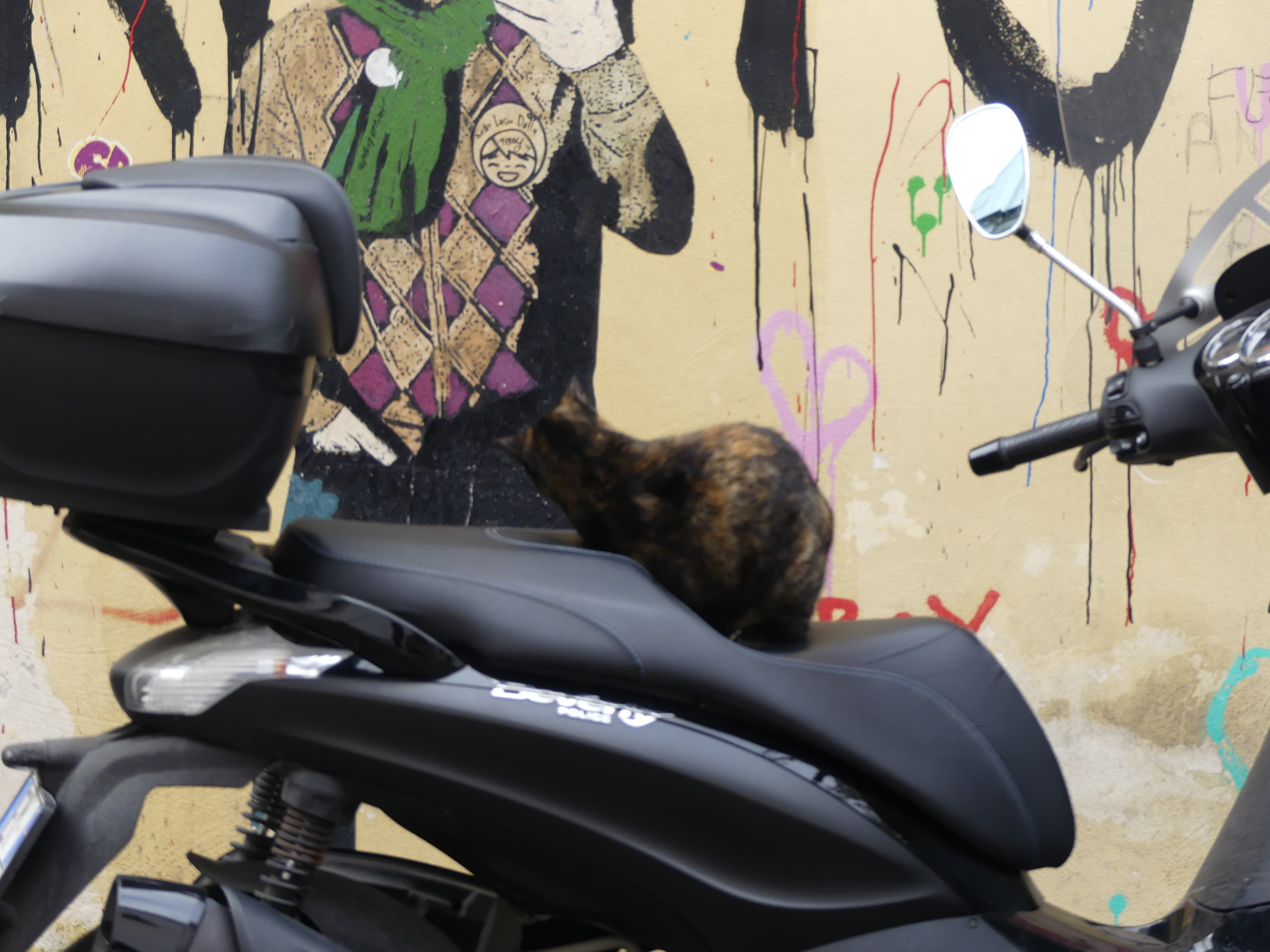
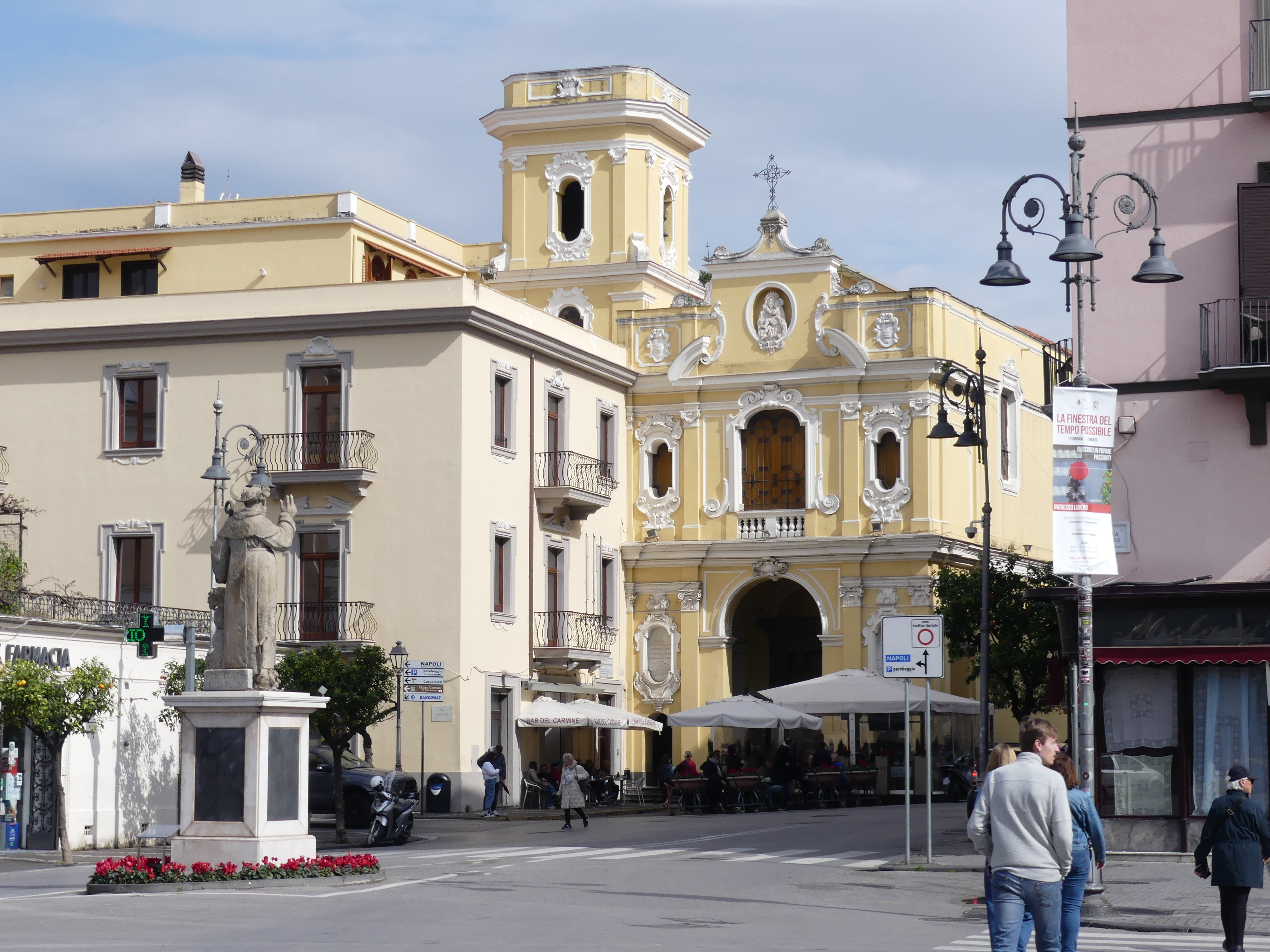
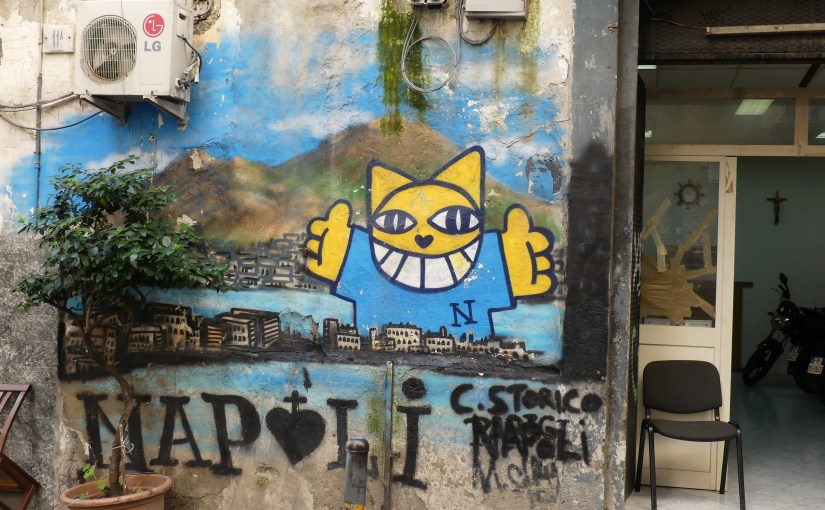
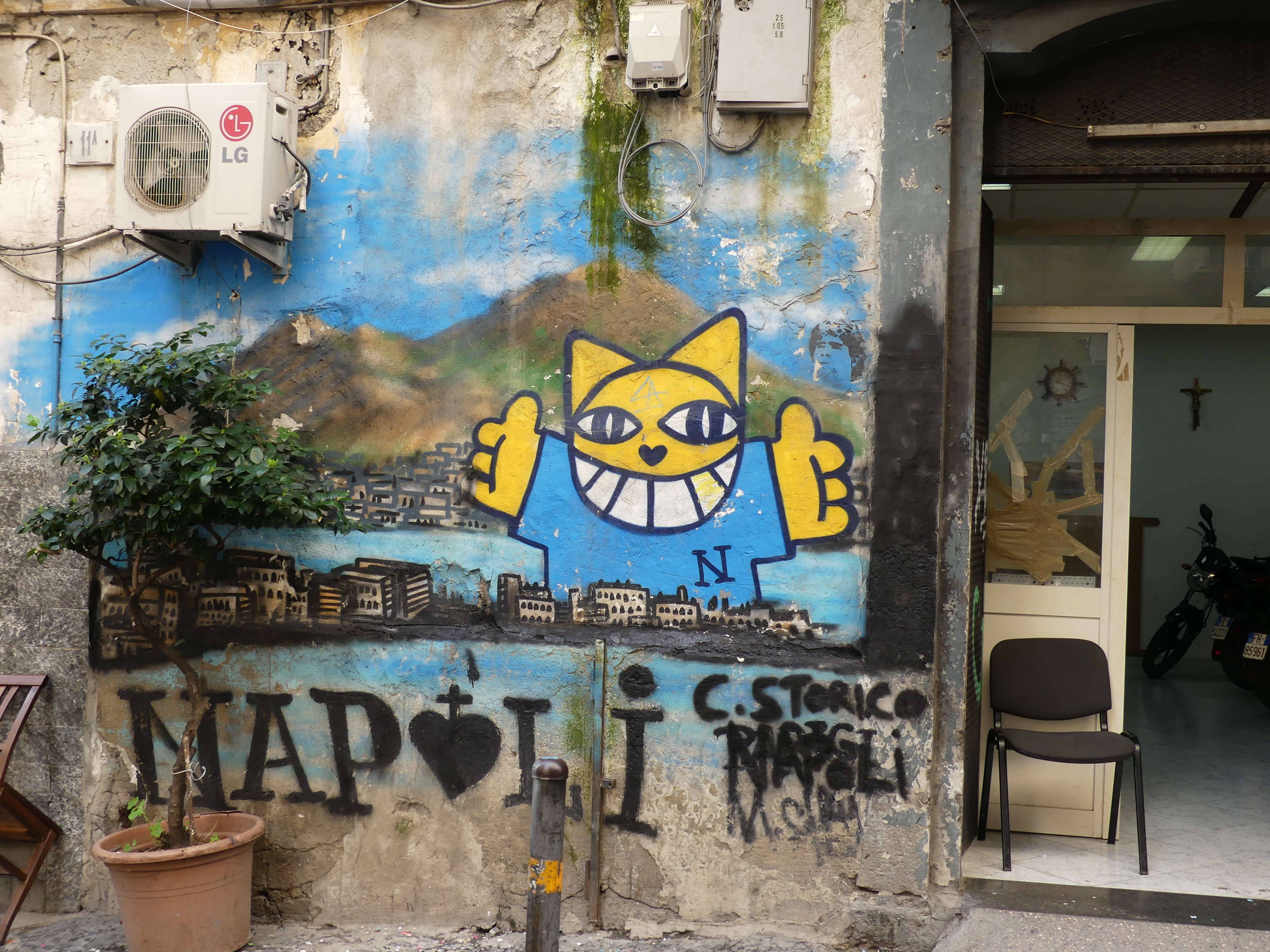
We continued our walkabout finding some street art (that bloody cat staring at the graffiti would not shift), a statue of a saint or is it “saintress” for the feminine, and a colourful square (you may notice the remnant of a scooter photo bombing my picture).

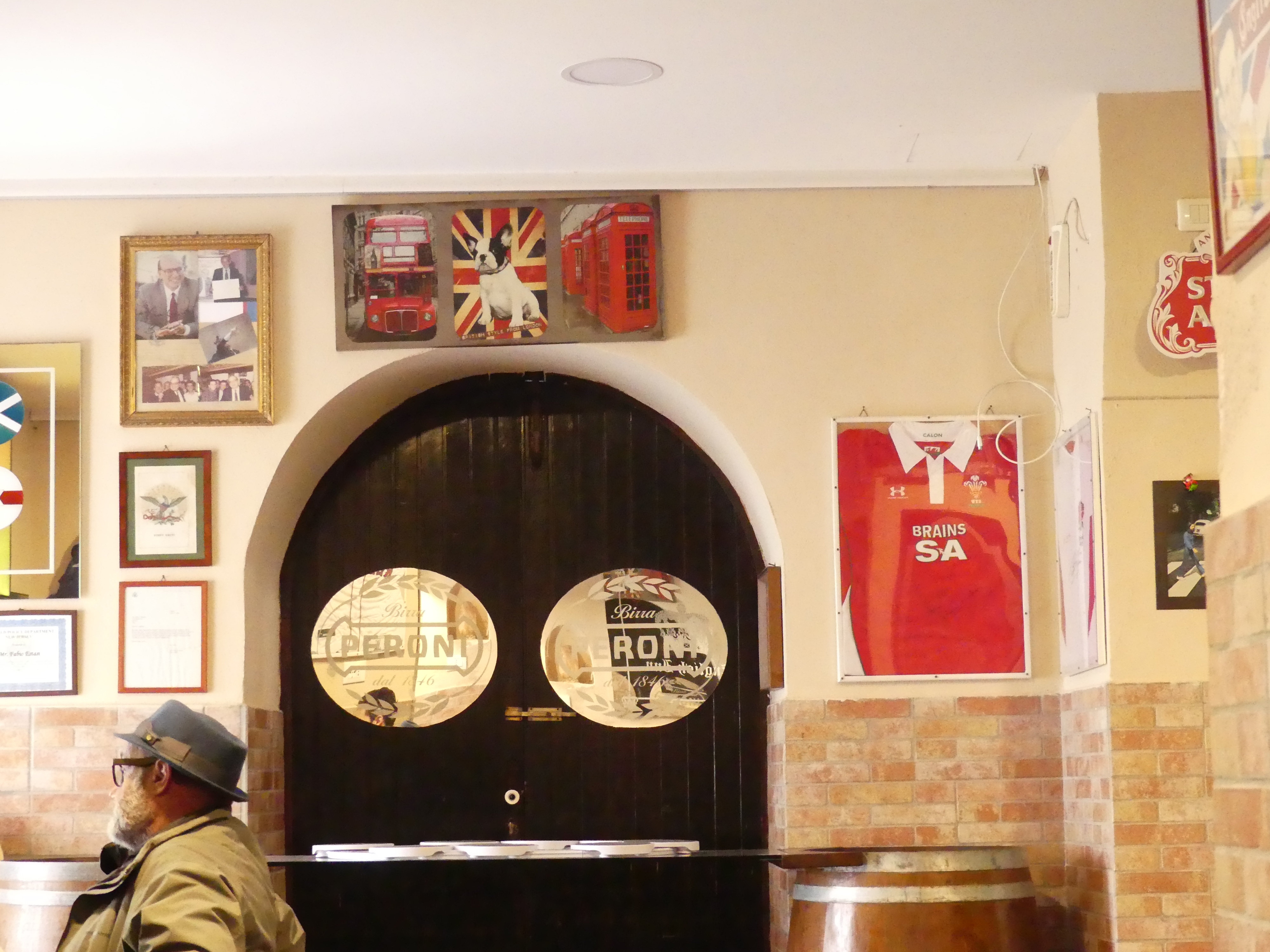
This walkabout took us to most parts of the village and ultimately to the only British pub in town, so we stopped for lunch. Queer isn’t it that there is a British pub in town and not one of the staff had any idea what it should look like or how to act. To be honest they didn’t have much of a clue about pubs and the waitress had never seen a British pub till she started work at this establishment and I told her, she hadn’t seen one yet, which puzzled her. Ah well, my appetite had not been good and the plain food passed off as British pub food was all I could handle. We left our waitress puzzling and returned to the train back to Naples.

It was time for a nap as we are yet to pack and we have to return to Naples for a Finnair flight to Tokyo tomorrow. My next blog will be entitled “THE RETIREES GO AROUND THE WORLD – NAPLES to ROME & Leonardo da Vinci–Fiumicino Airport THEN TOKYO”

“THE RETIREES GO AROUND THE WORLD – BARI to NAPLES”

Naples

Full of vibrant culture, food, and history: Founded by Greeks in the first millennium BC, Naples is one of the oldest continuously inhabited urban areas in the world. Robert had returned to Cesi and we made our way to Naples by train. On arriving at the central railway station in Naples, Stazione di Napoli Centrale (Napoli Centrale), located in Piazza Giuseppe Garibaldi we set off in search of the hotel. It is the main rail terminus and station for Naples, 25 tracks, serving about 137,000 people per day. It was massive and intimidating just as Terminii in Rome was the first time.

Kerry piloted us out onto Piazza Giuseppe Garibaldi in search of our hotel, Hotel Vergilius Billia which I am certain is a Mormon hotel with open bibles placed strategically in the hotel. The Piazza is 4 city blocks long and 3 blocks wide with a subterranean passage below us. The hotel was difficult to find at first in Via Guiseppe Pica but ultimately proved to be quite central. Clean and quiet with breakfast included we were well settled.

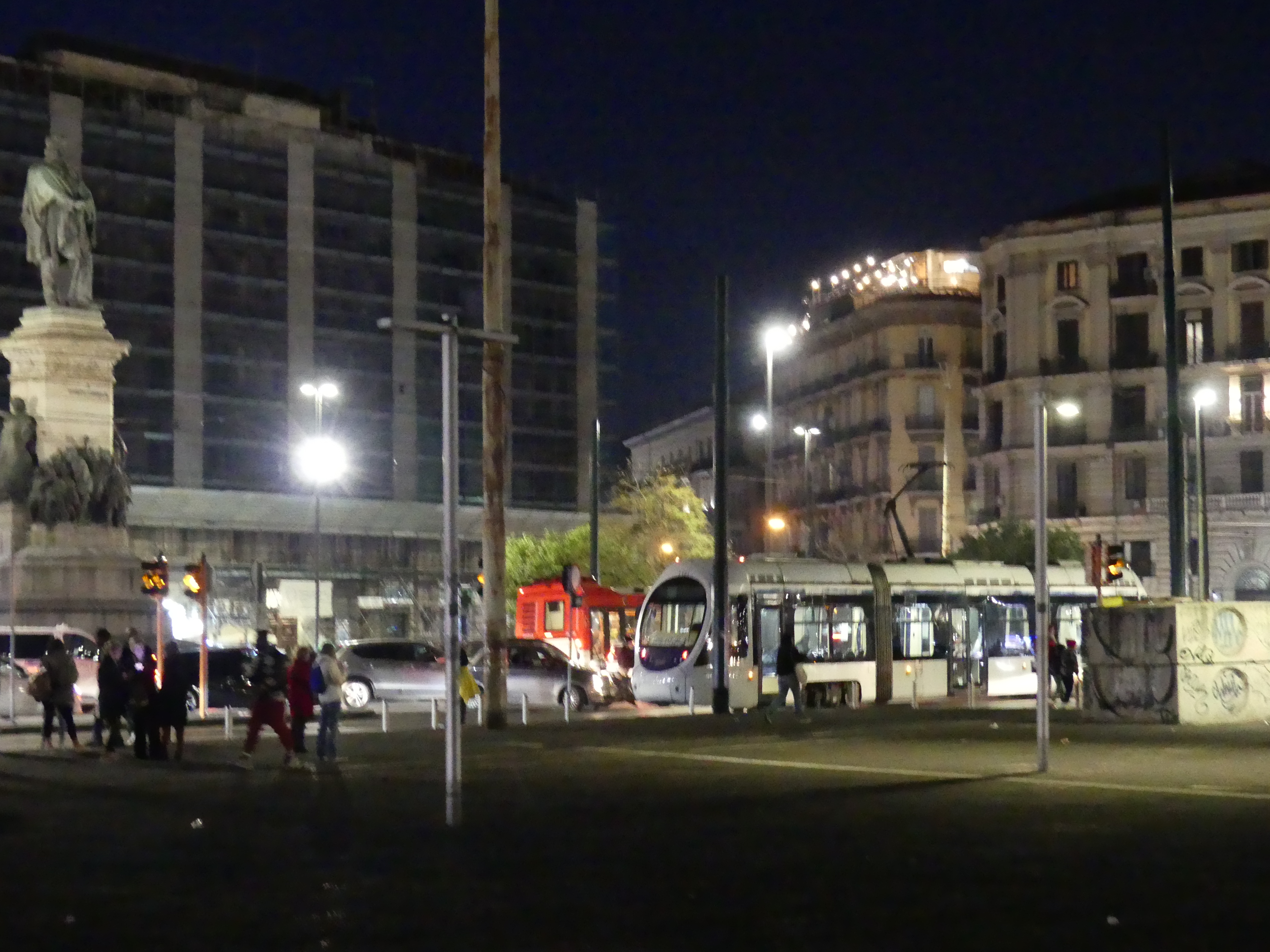
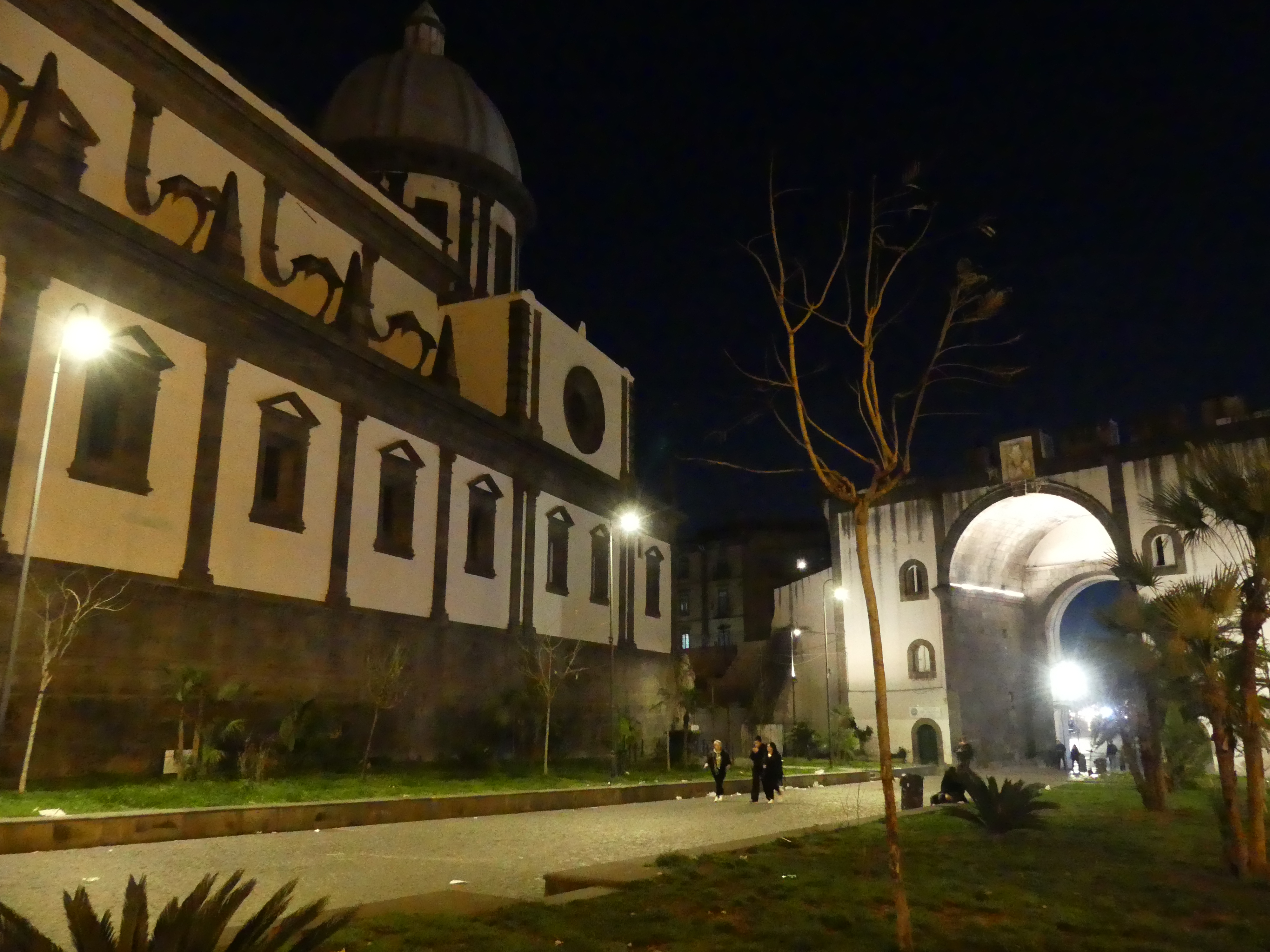
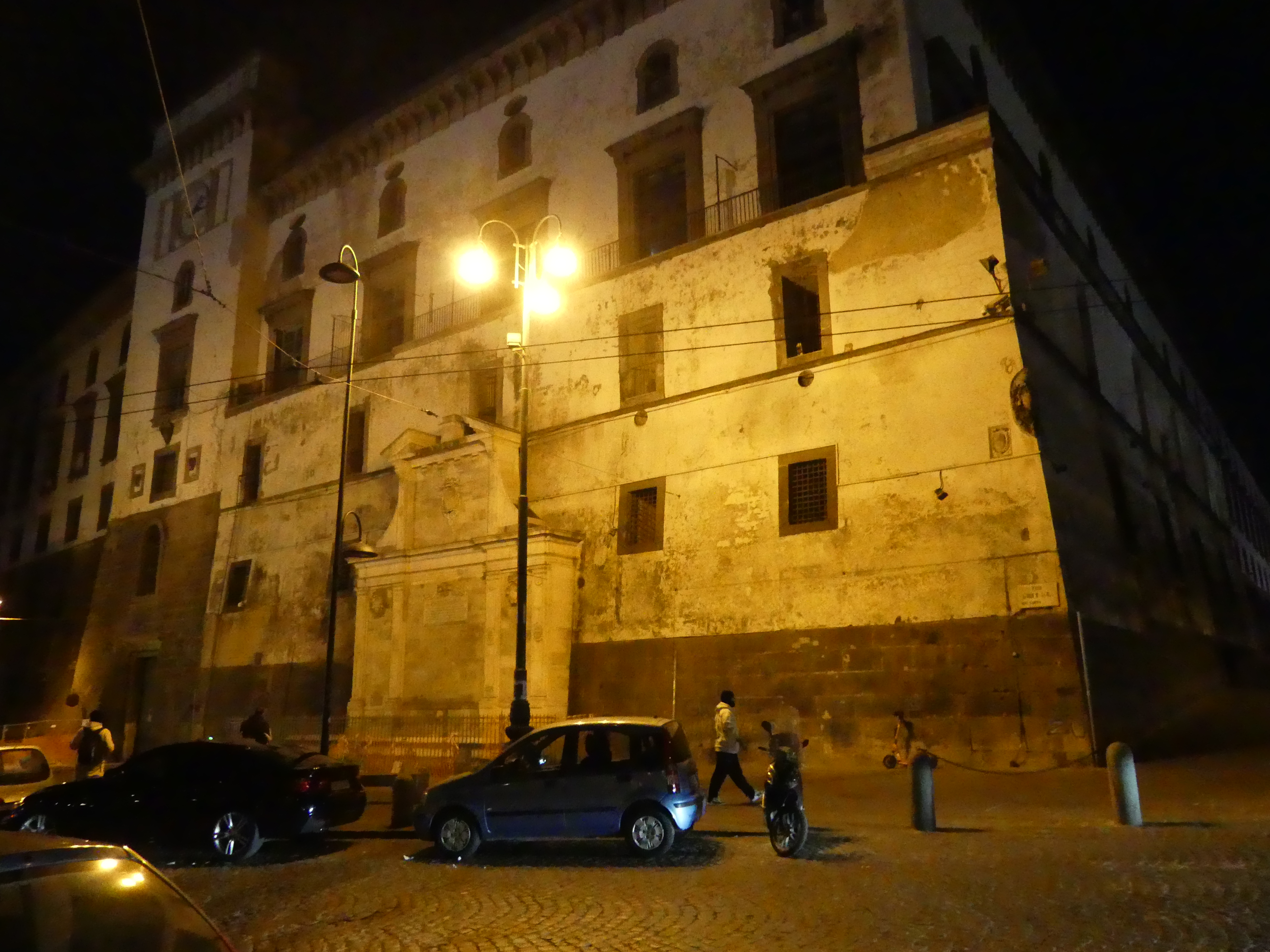
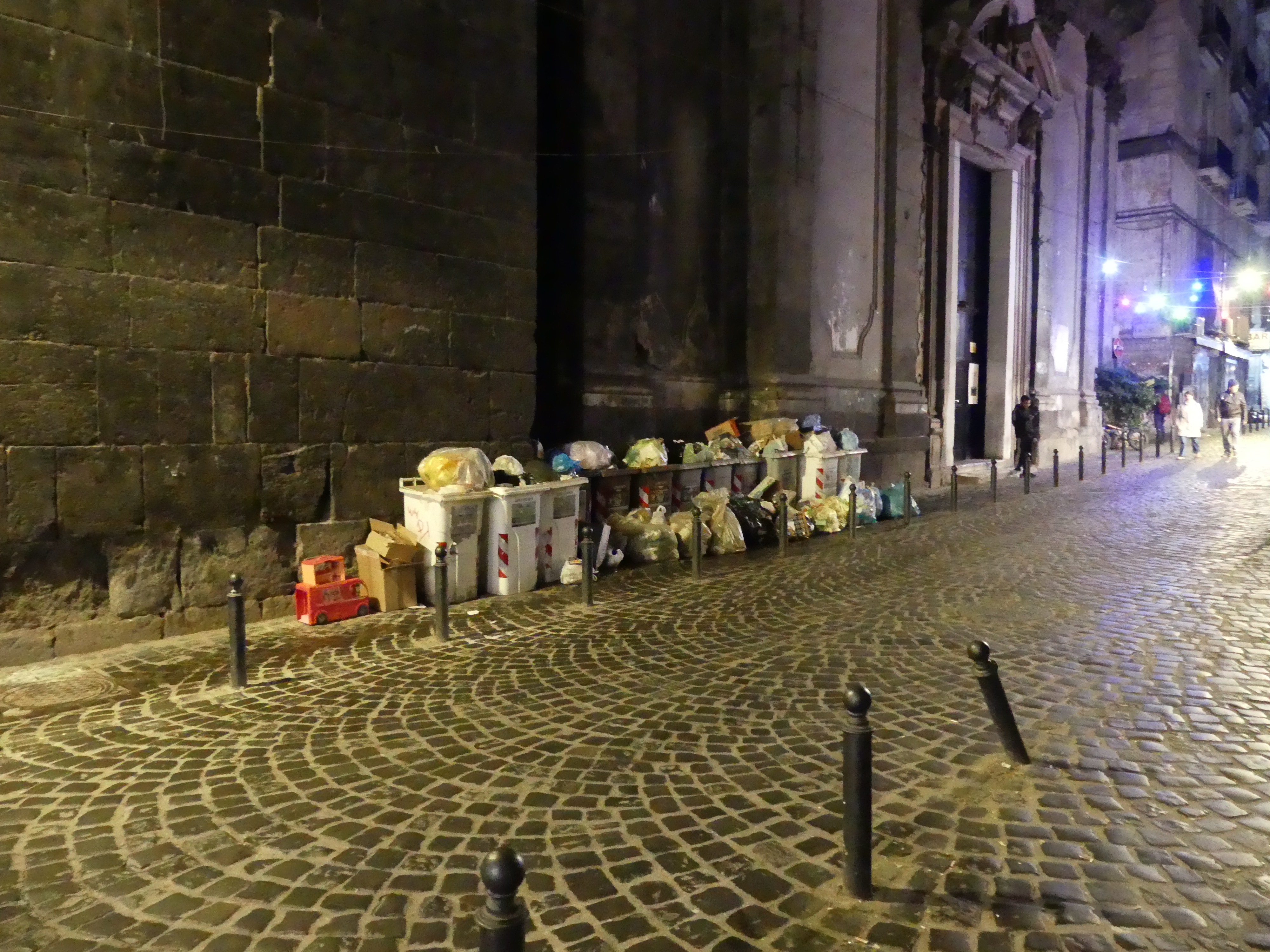
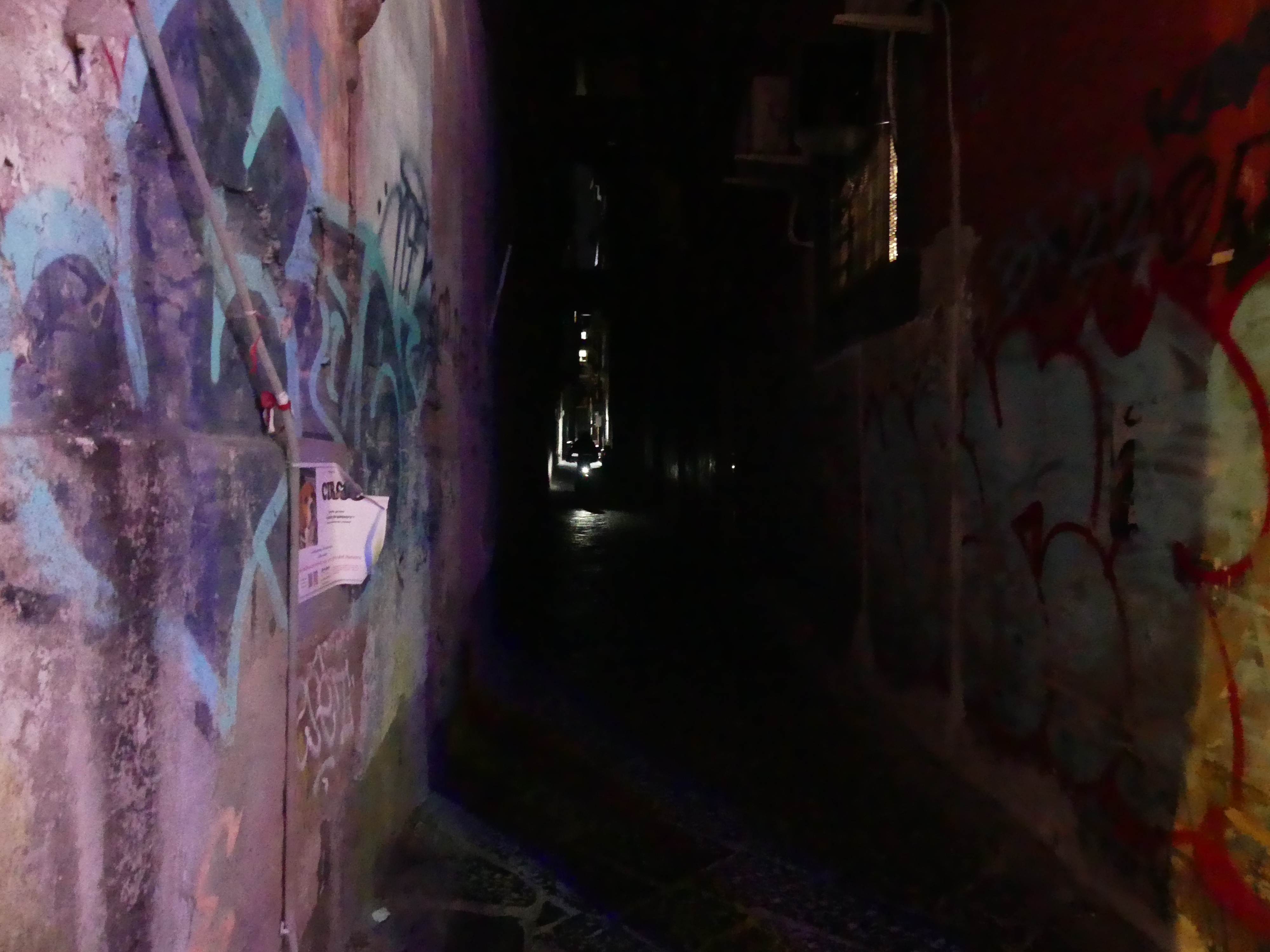
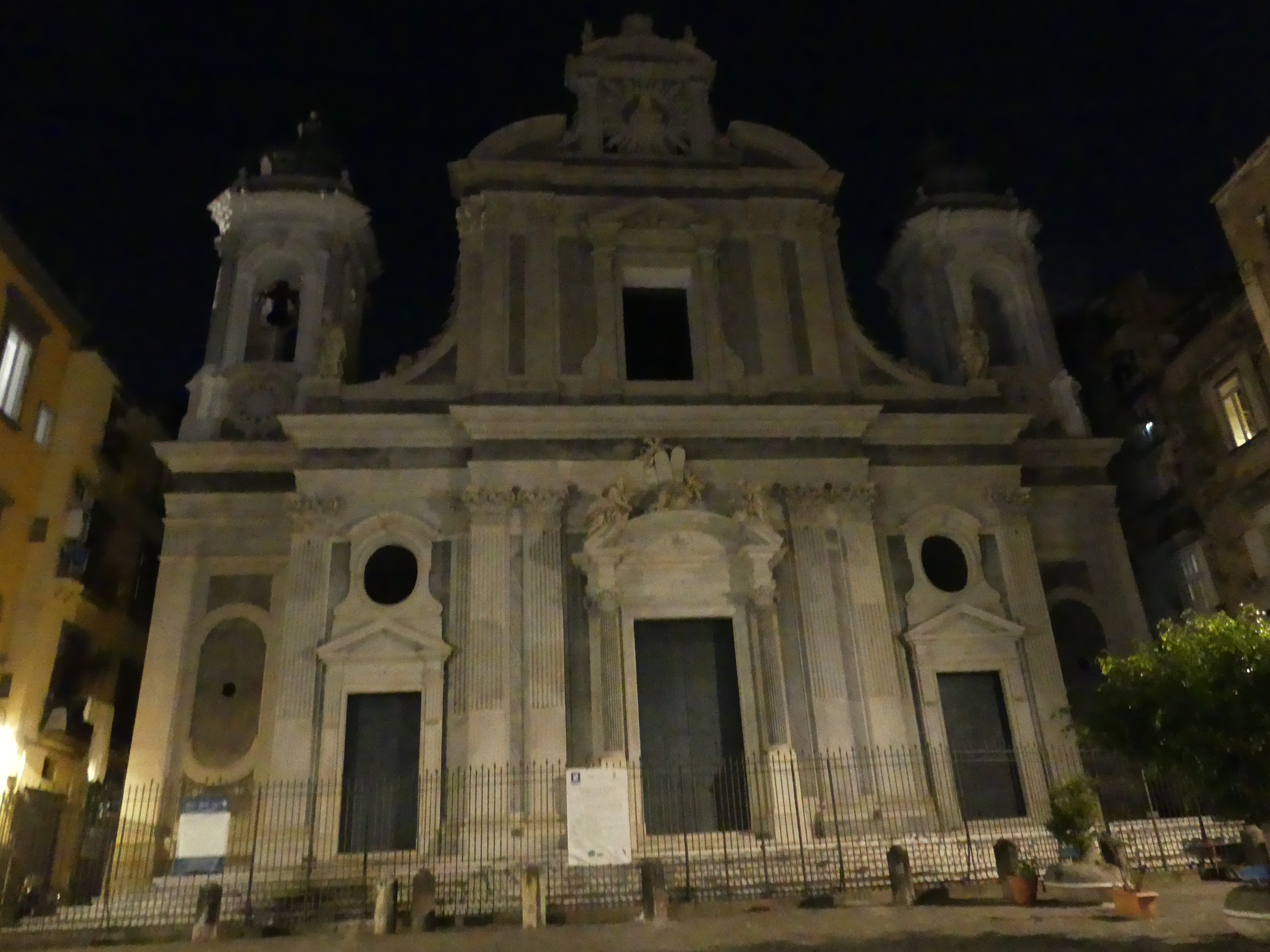
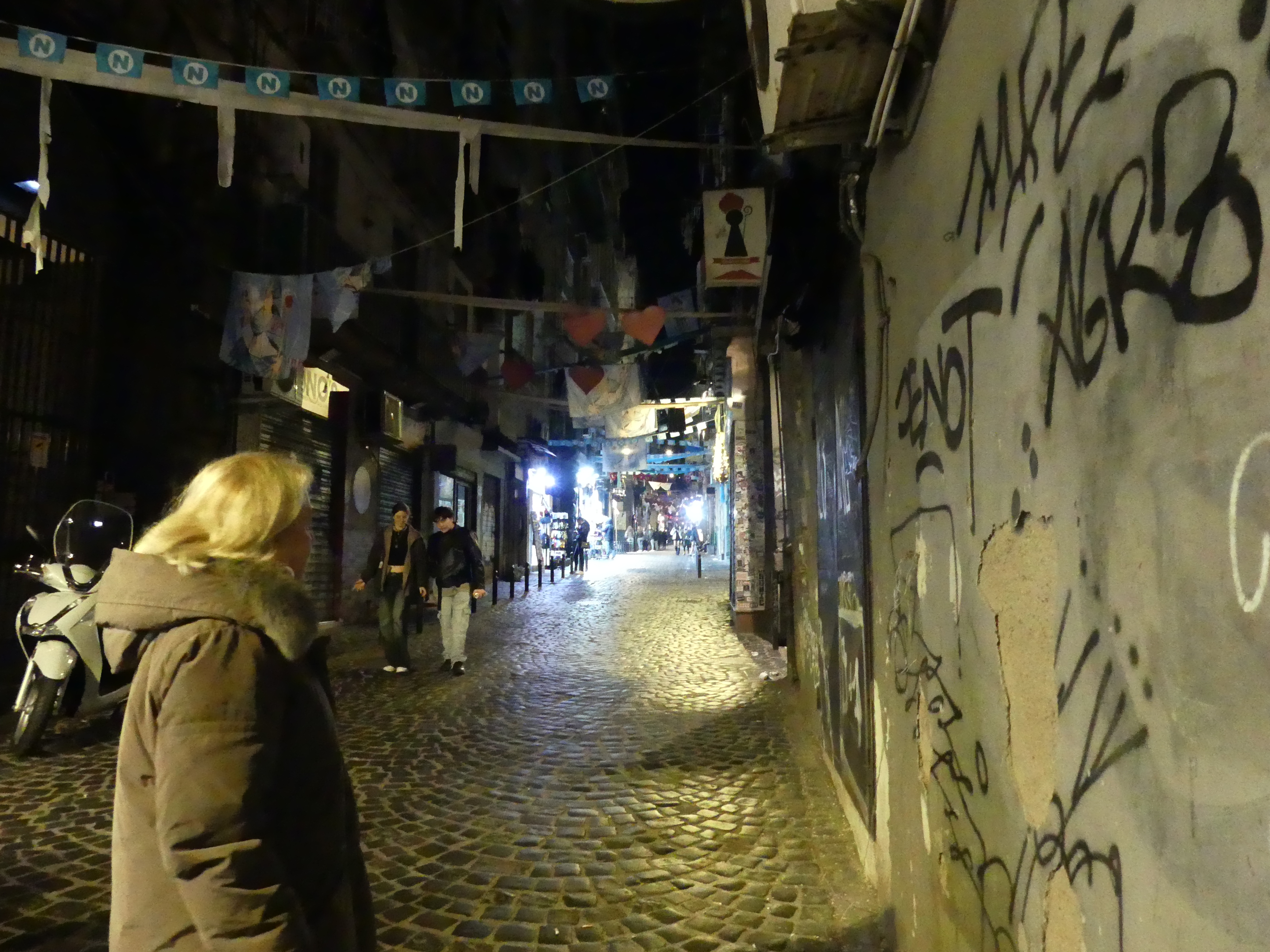
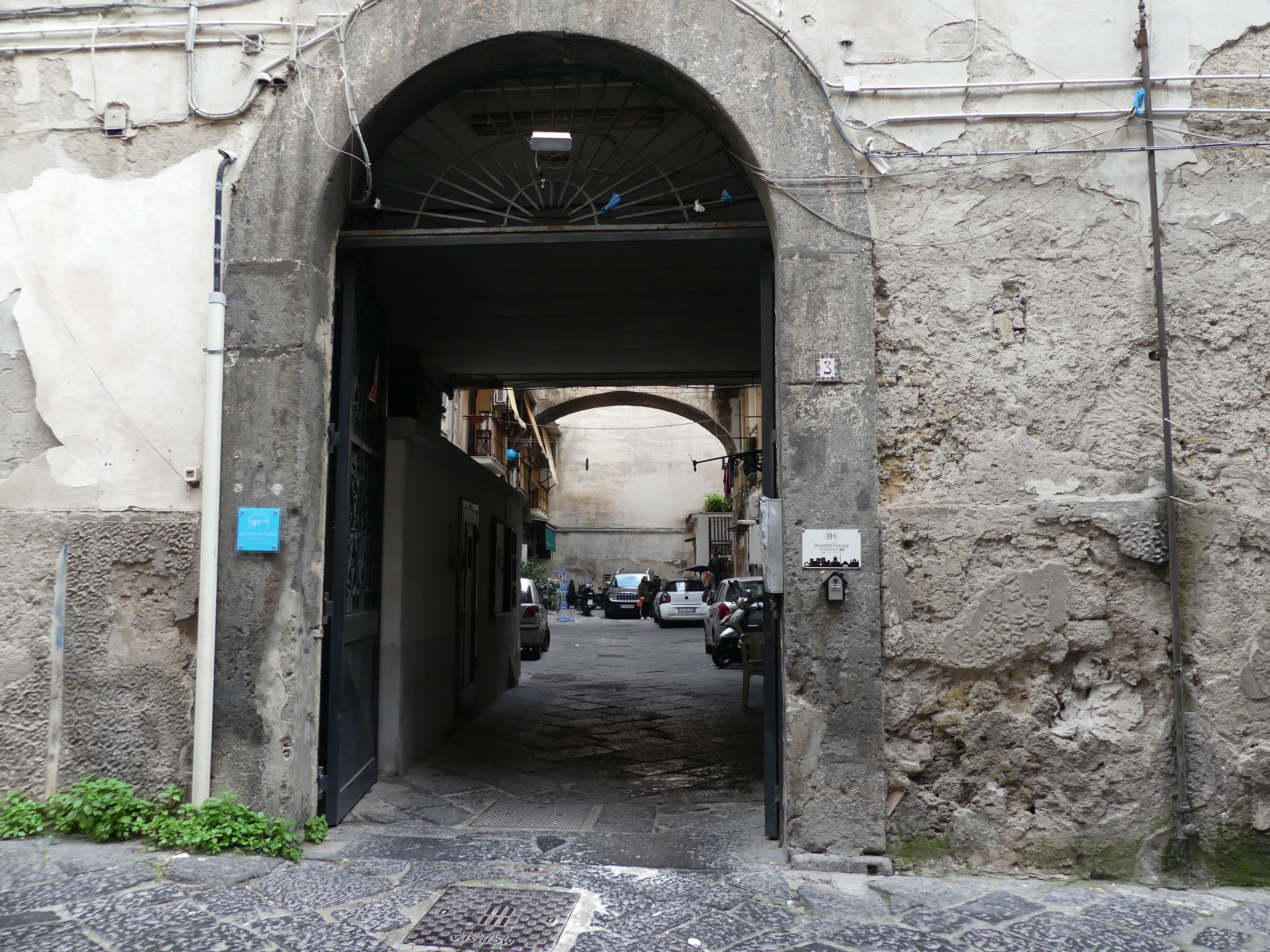
Our plan here was to visit the old city and particularly visit the underground tunnels and cisterns built by the Greeks and Romans. After booking into our hotel, we visited the old town by night particularly the historic centre of the city in Via dei Tribunali. We crossed the piazza past a church and attached monastery past the walls of a castle and into Via dei Tribunali. The first thing we noticed was how dirty it is and how alive it is with people, scooters and cars down this narrow alley. In a doorway we found the tell-tale sign of a recent birth – a boy. Here is a selection of photos going to the old town and in the old town itself.

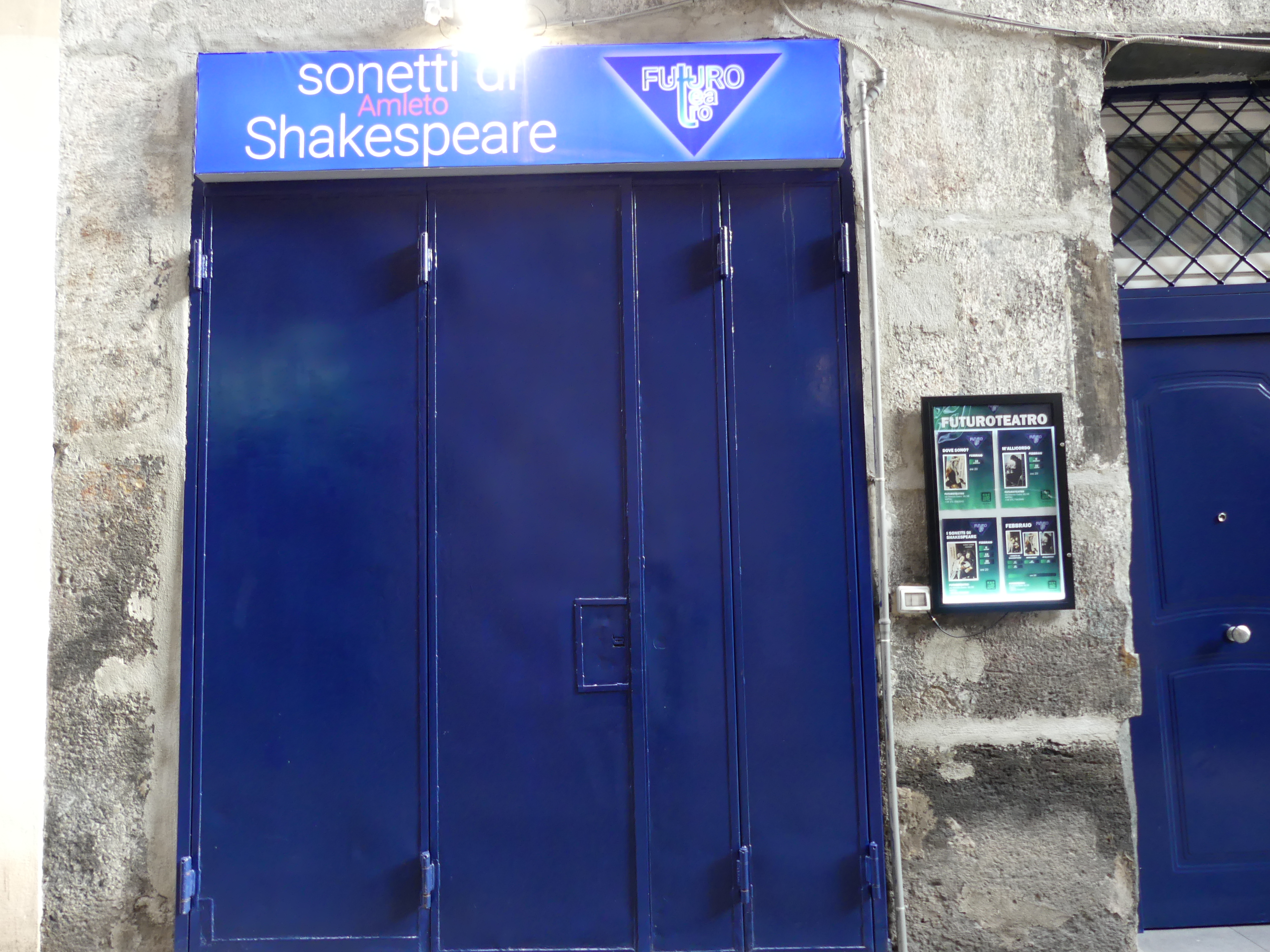
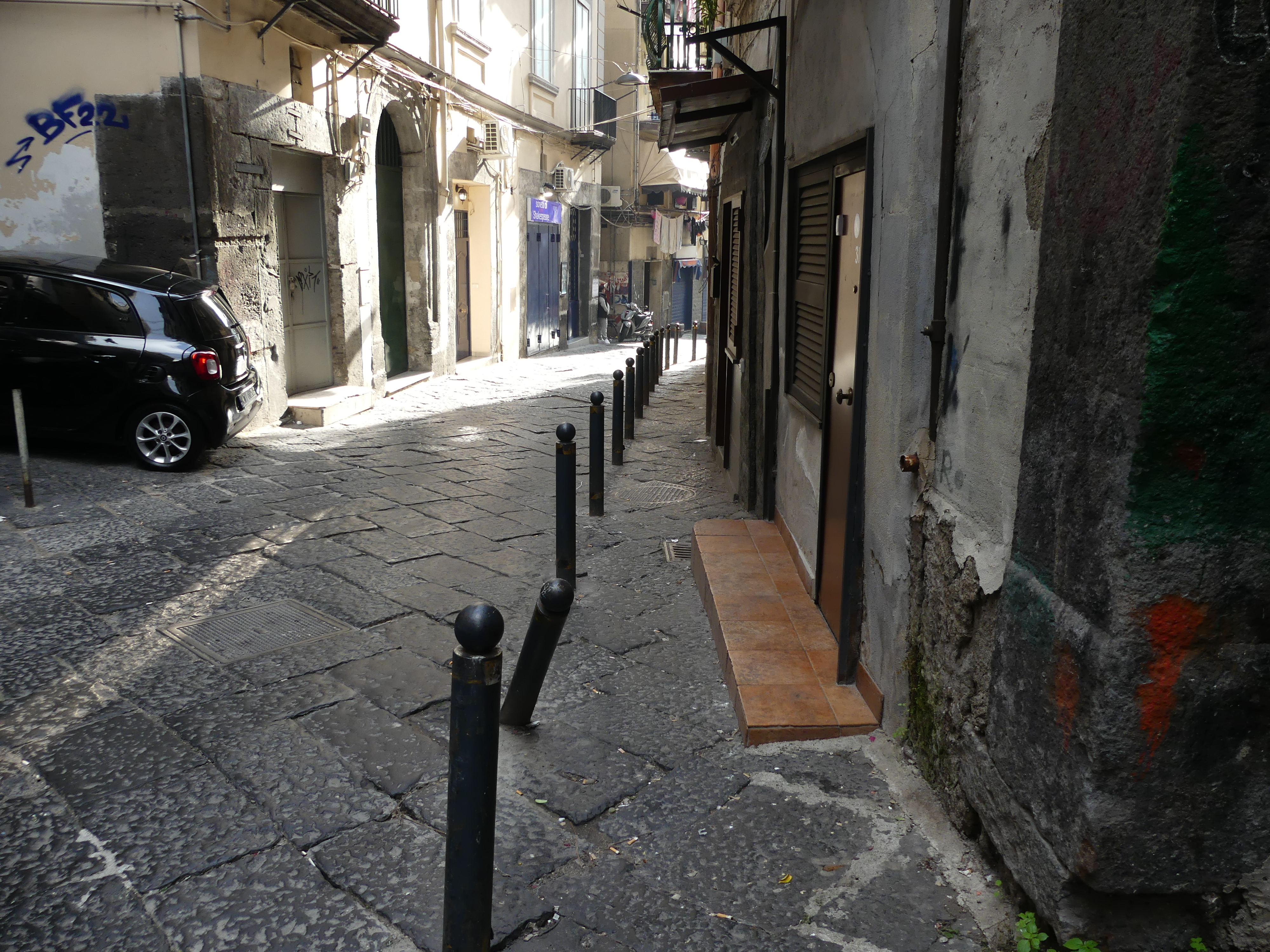
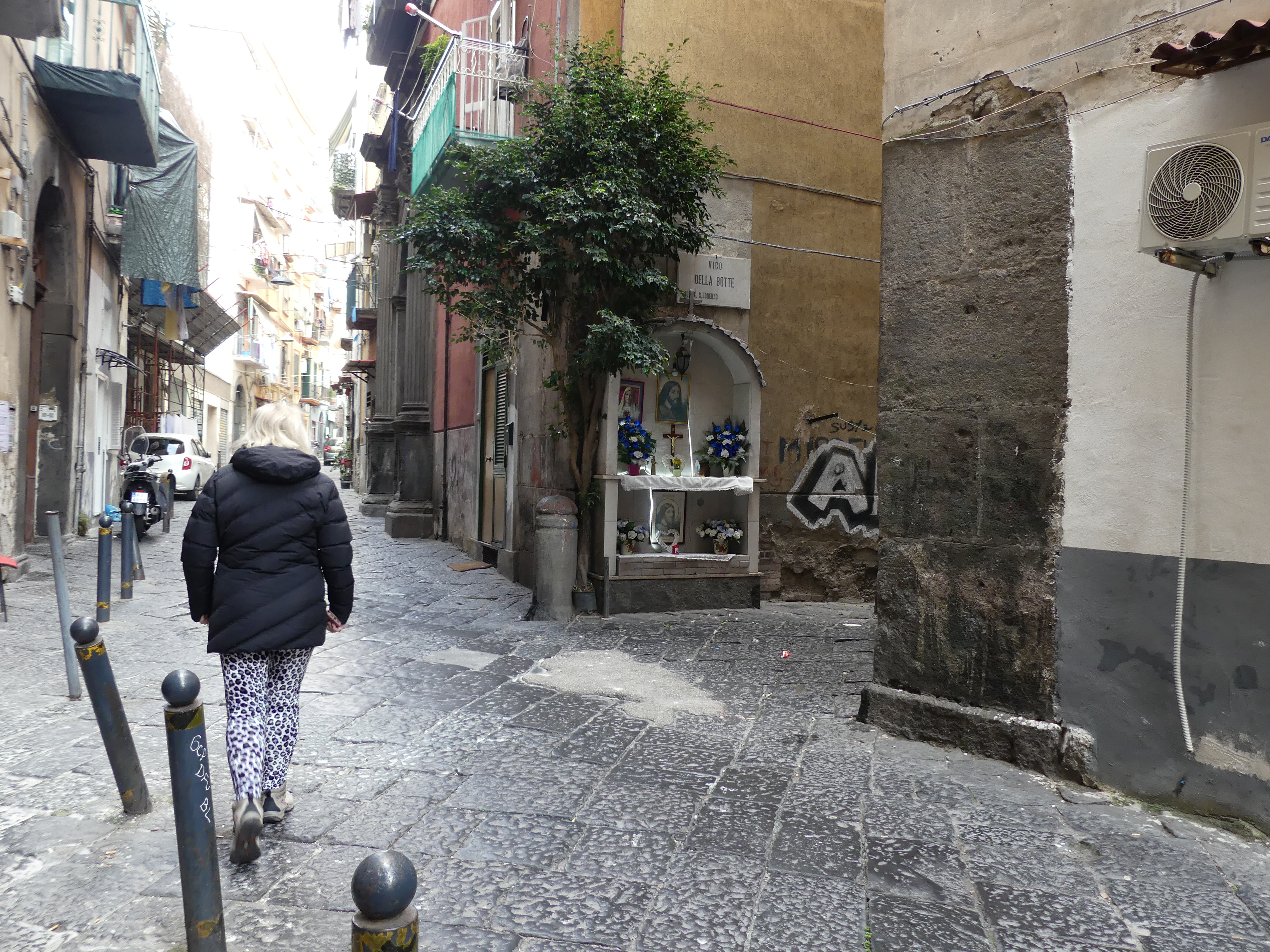
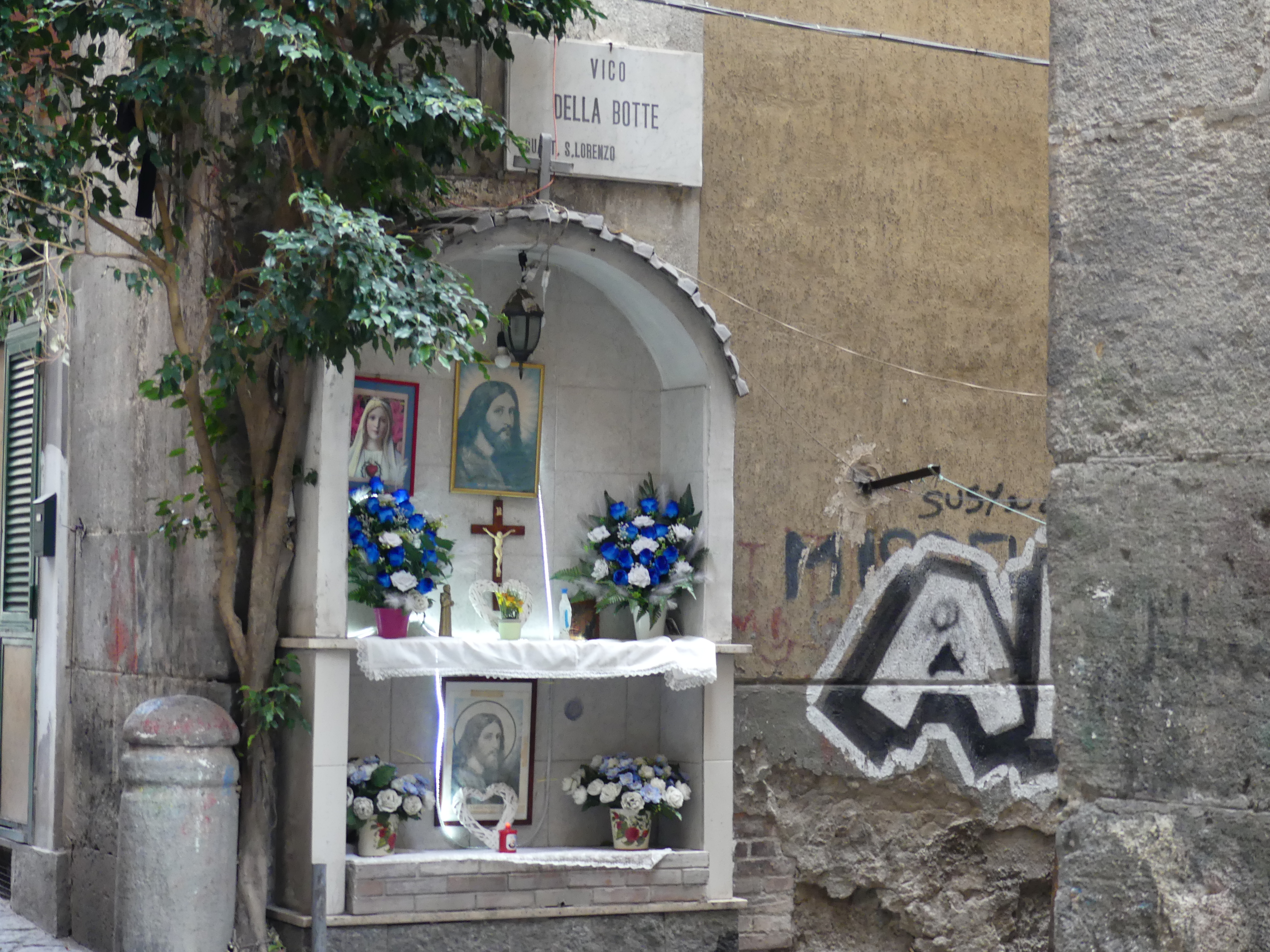
The following morning it was breakfast first before our big day in the old town. One of the first shops we encountered was the Italian Bunnings hardware store. A further surprise awaited us when we passed a theatre presenting Sonetti de Amleto (Sonnets of Hamlet). Shakespeare in Naples. The streets were narrow and the buildings dirty and tired sometimes decorated with street art or a chapel for worship.

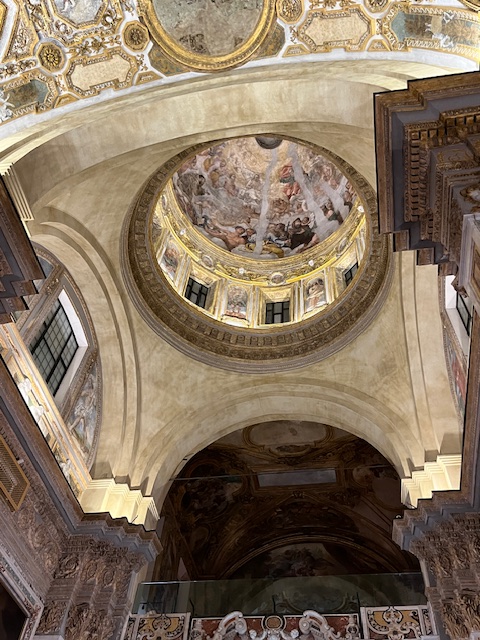
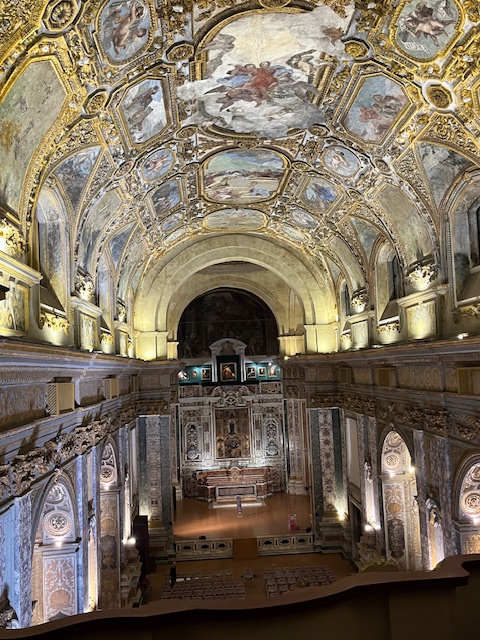
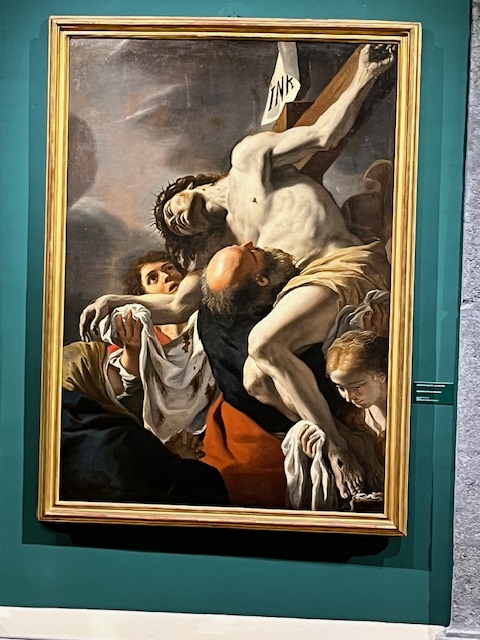
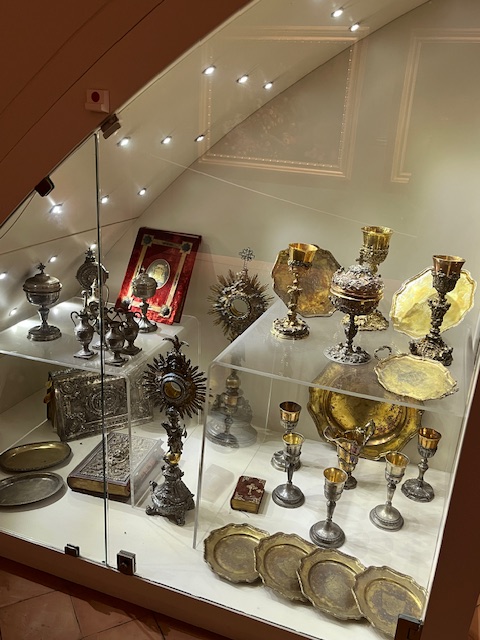
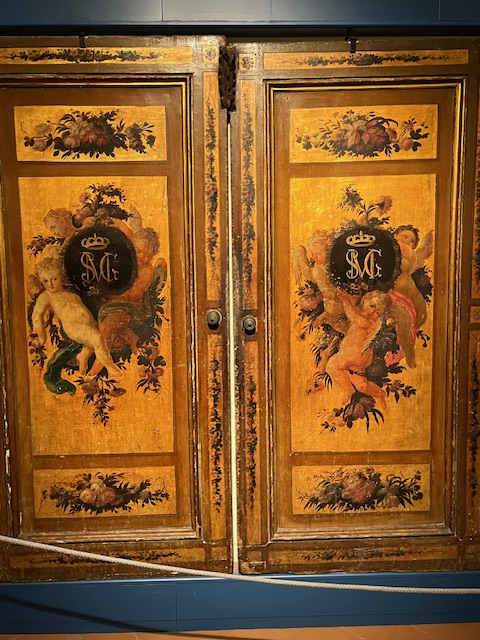
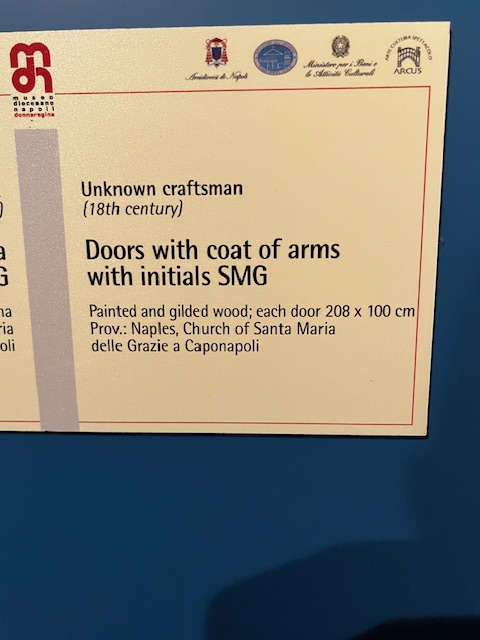
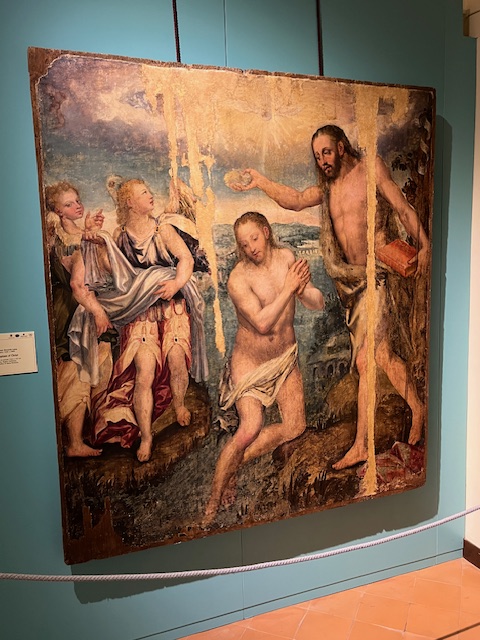
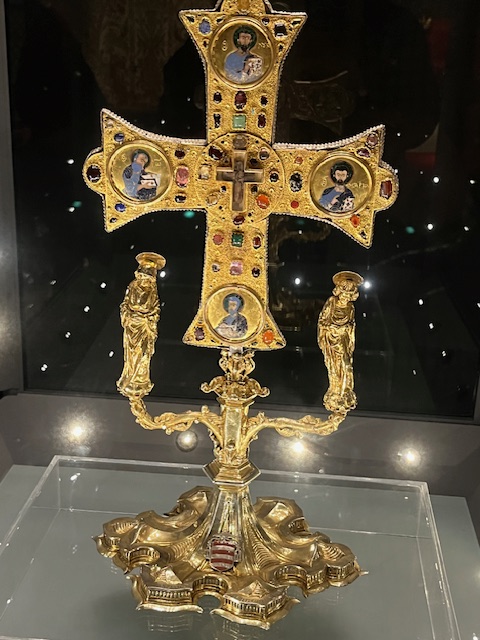
But then we encountered Museo Donna Regina. The monumental complex of Donna Regina represents a unique example in the panorama of the historic centre of Naples. In this Franciscan monastic insula, there are preserved testimonies of the ancient convent and of the two original churches, the medieval one and the seventeenth-century together conceived as one, until the 1930 s, conceived as a single structure with a corridor that, like a sort of umbilical cord, united the buildings, in addition to the apses, the past and the present, allowing the Poor Clares to move without leaving the places of cloister.

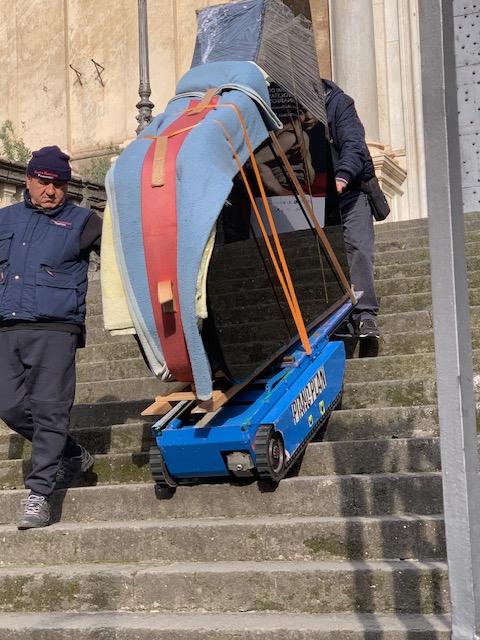
Today, through the original architecture and decorations, we can find rare examples of the history of Neapolitan art and the Franciscan order. It also provides space for classical concerts. As we entered a grand piano was be carried down the front stairs by a tracked robot to be loaded onto a truck following a performance the previous night. If you wish to read more about this unique museum, then proceed to http://www.museodiocesanonapoli.com/il-complesso-museo-diocesano/.

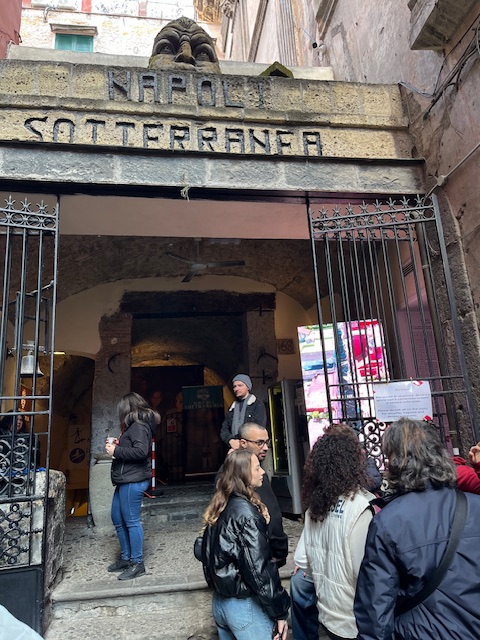
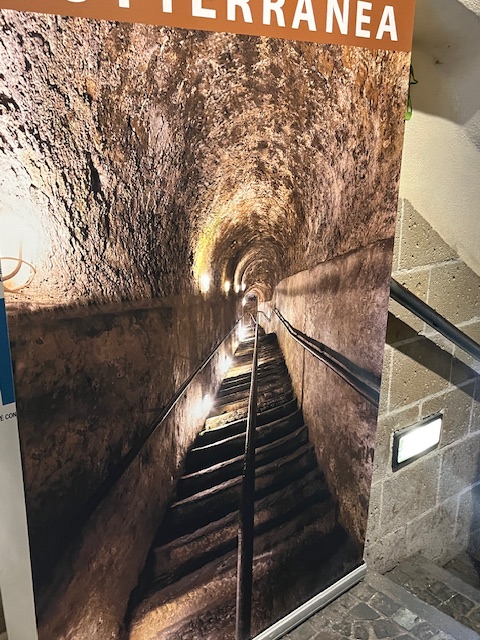
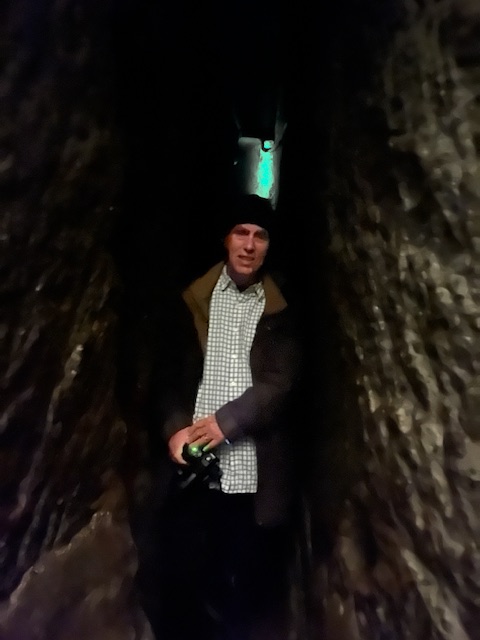
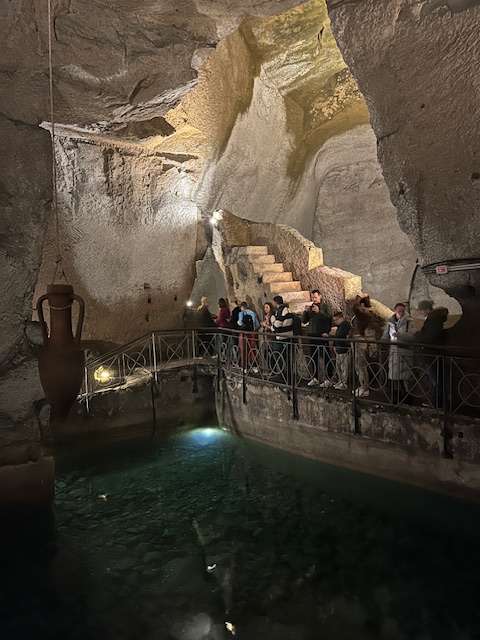
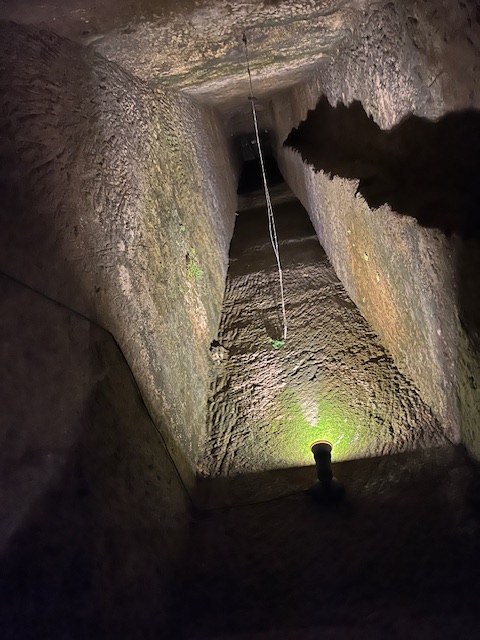
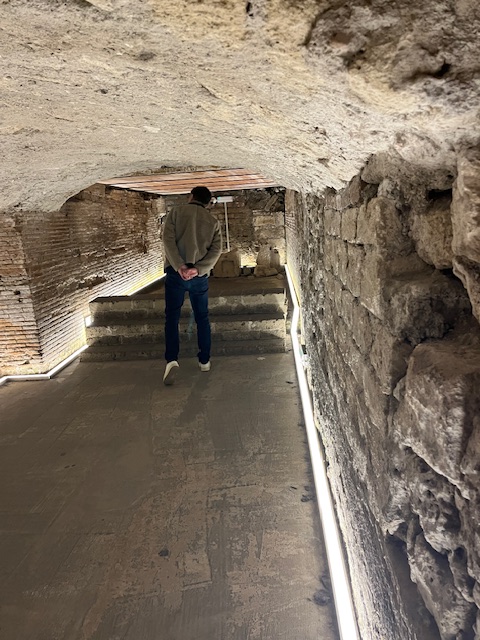
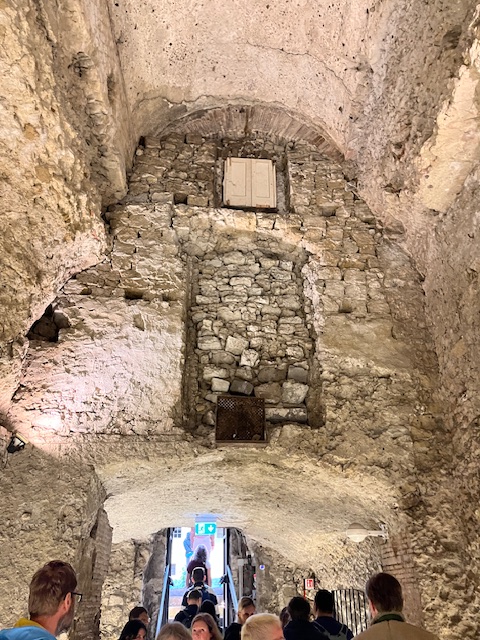
Underneath Naples are several ancient Greco-Roman reservoirs dug out from the soft tufo stone on which, and from which, much of the city is built. Approximately one kilometre (0.62 miles) of the many kilometres of tunnels under the city can be visited from the Napoli Sotteranea, this system of tunnels and cisterns underlies most of the city and lies approximately 30 metres (98 ft) below ground level. During World War II, these tunnels were used as air-raid shelters, and there are inscriptions on the walls depicting the suffering endured by the refugees of that era. We were here to visit those tunnels. My photographs show us entering and following the stairs underground for a long way. God only know how they got a tank down here or why they would keep unexploded munitions down here. The pictures of the narrow tunnels are in fact passageways for water and very easy to get lost as I almost did. At the end of the tour, we exited to visit the remains of Nero’s lost theatre rediscovered after restoration of the reservoirs.

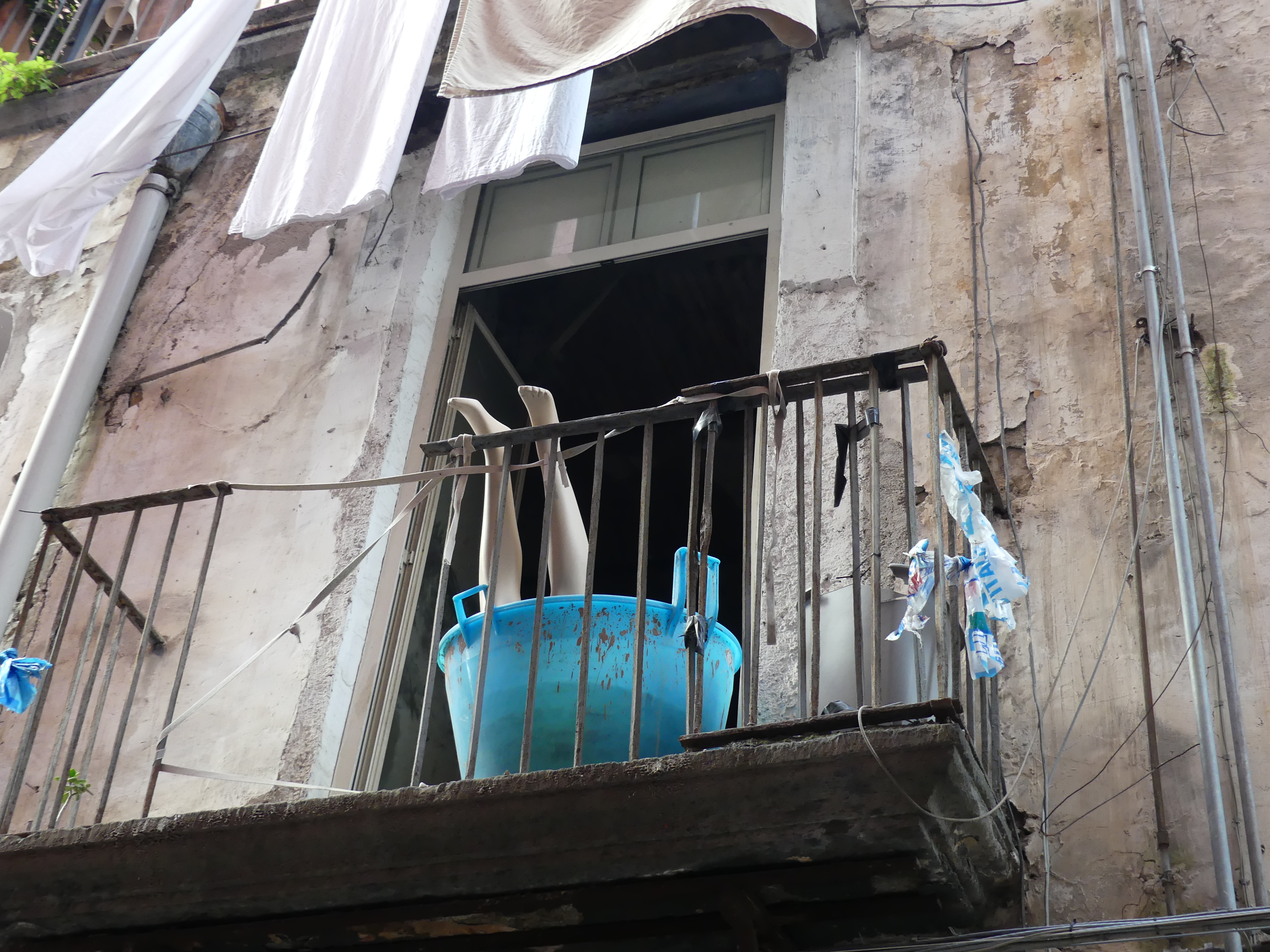
Some joker had prepared a frightening image of what awaits outside the reservoir. It was hot thirsty work down there This pop-up liquor shop had just the answer as we made our way home. Mauling mannequins seemed to have some appeal in Naples.

The surrounding area is an underground geothermal zone and this geothermal area is present generally from Mount Vesuvius beneath a wide area including Pompei, Herculaneum, and from the volcanic area of Campi Flegrei beneath Naples and over to Pozzuoli and the coastal Baia area. The resulting cavities beneath the city can now be divided up into several major categories Aqueducts and sewer tunnels; Rainwater cisterns, reservoirs and aqueduct diversionary channels; Caverns left from quarrying of tuff; the remains of Nero’s “lost” theatre; Greco-Roman businesses, such as the remains of an ancient forum that was preserved in a mud slide; Other voids from removal of sand and other types of materials; Interconnecting tunnels and passageways among caverns; Places of worship, including catacombs and pre-Christian hypogea (cult burial chambers);Major ancient and modern roadway tunnels, and rail and subway tunnels.

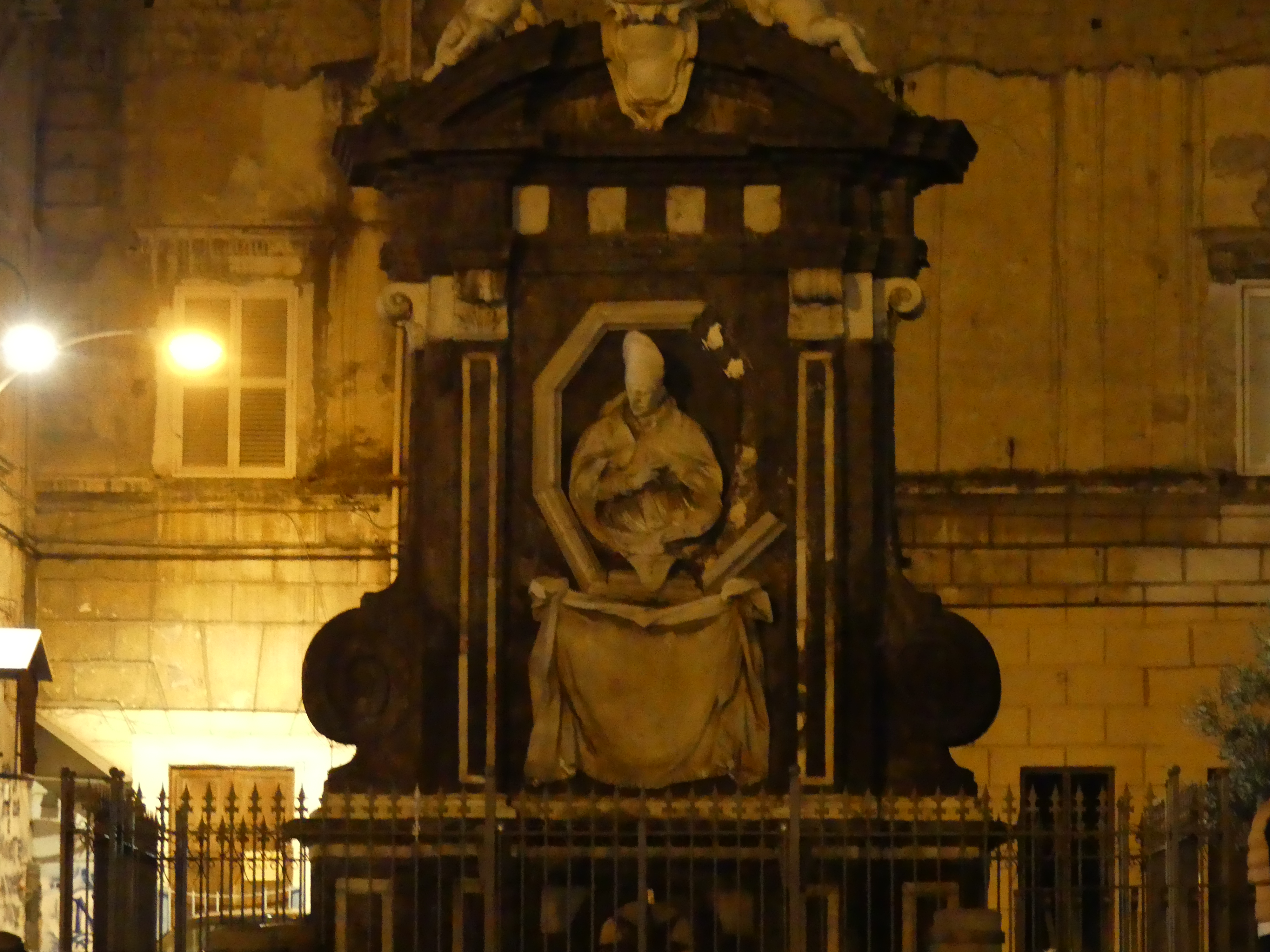
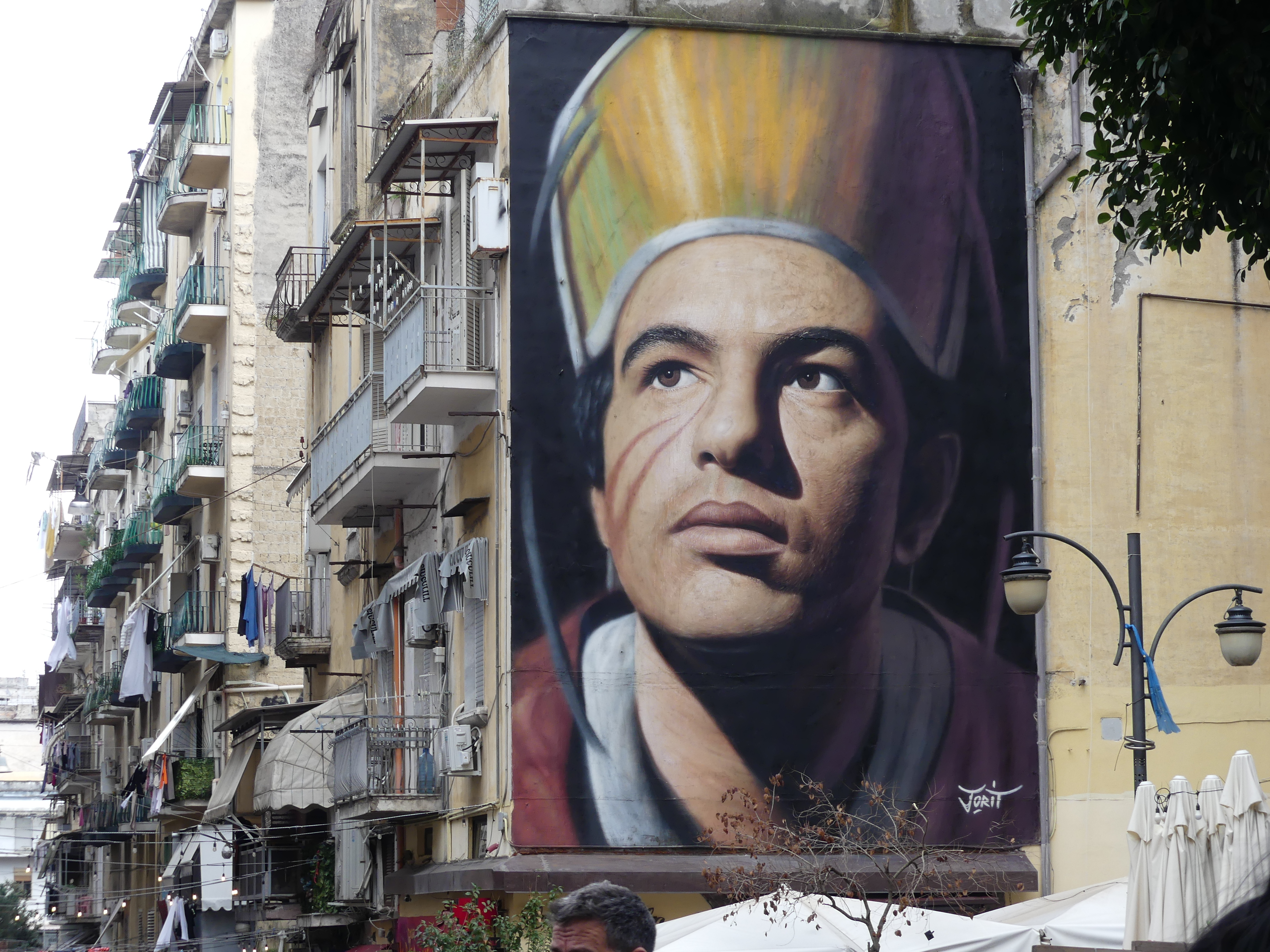
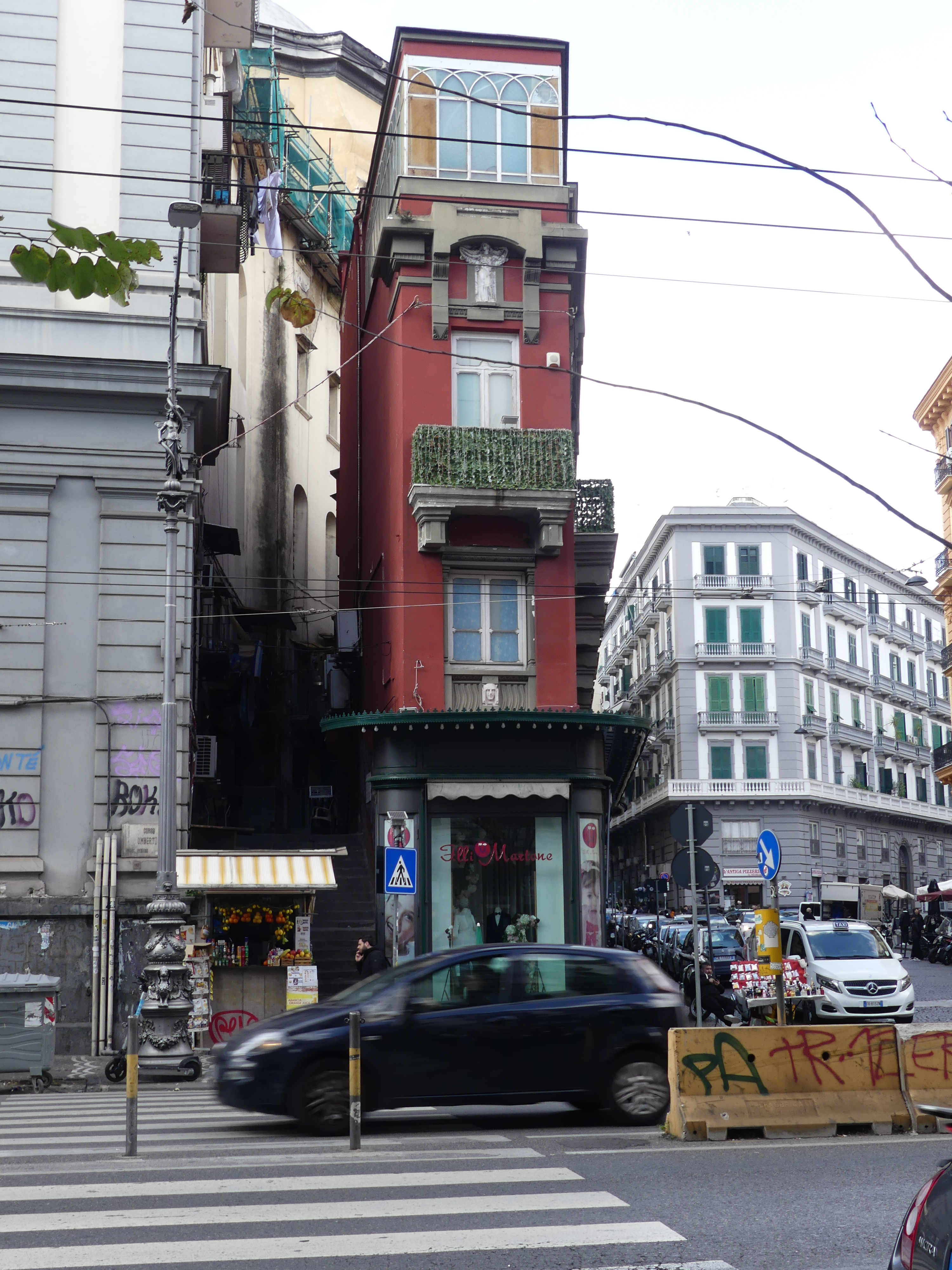
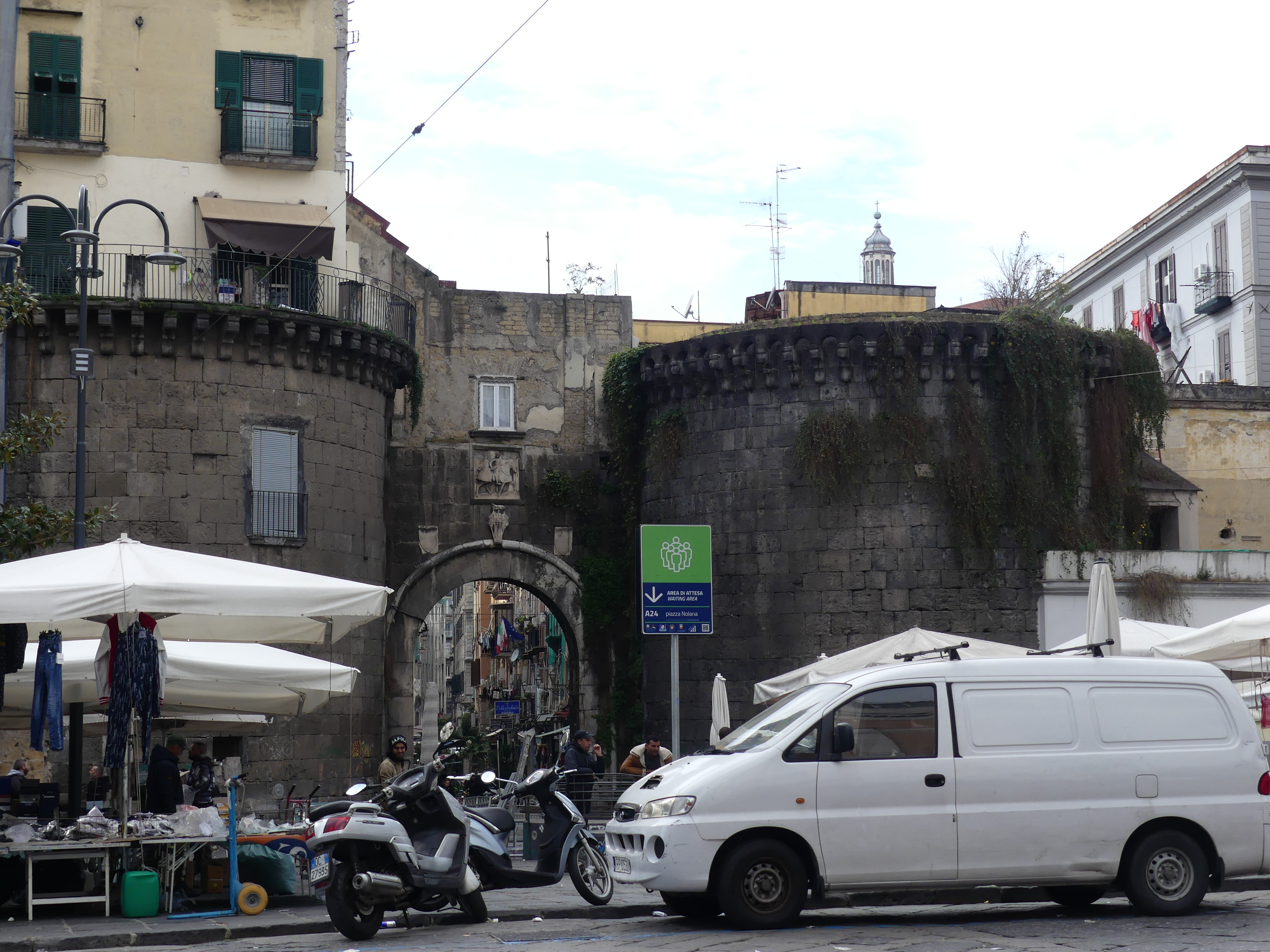
As commented about some walls being “decorated” with “street art” – we came across this portrait of a bishop – very impressive. The church however seemed to have walls collapsing into the chapel. As we made our way back to Hotel Vergilius Billia we took a different route came across an ancient gate of the city and disjointed buildings with openings and windows in odd places but still in use. Here are some photos of a narrow but long building and an ancient gate surrounded by merchants.

After having experienced the old city, we thought a visit to one of the nearby coastal towns would be interesting. We chose Sorrento and again used the train to get there. Hold onto your seat as my next blog is “THE RETIREES GO AROUND THE WORLD – NAPLES to SORRENTO”.

“THE RETIREES GO AROUND THE WORLD – BARI to ALBEROBELLO”

Alberobello

Our stay with Robert was coming to an end. After visiting Alberobello we will go to Naples and Robert will return to Cesi.

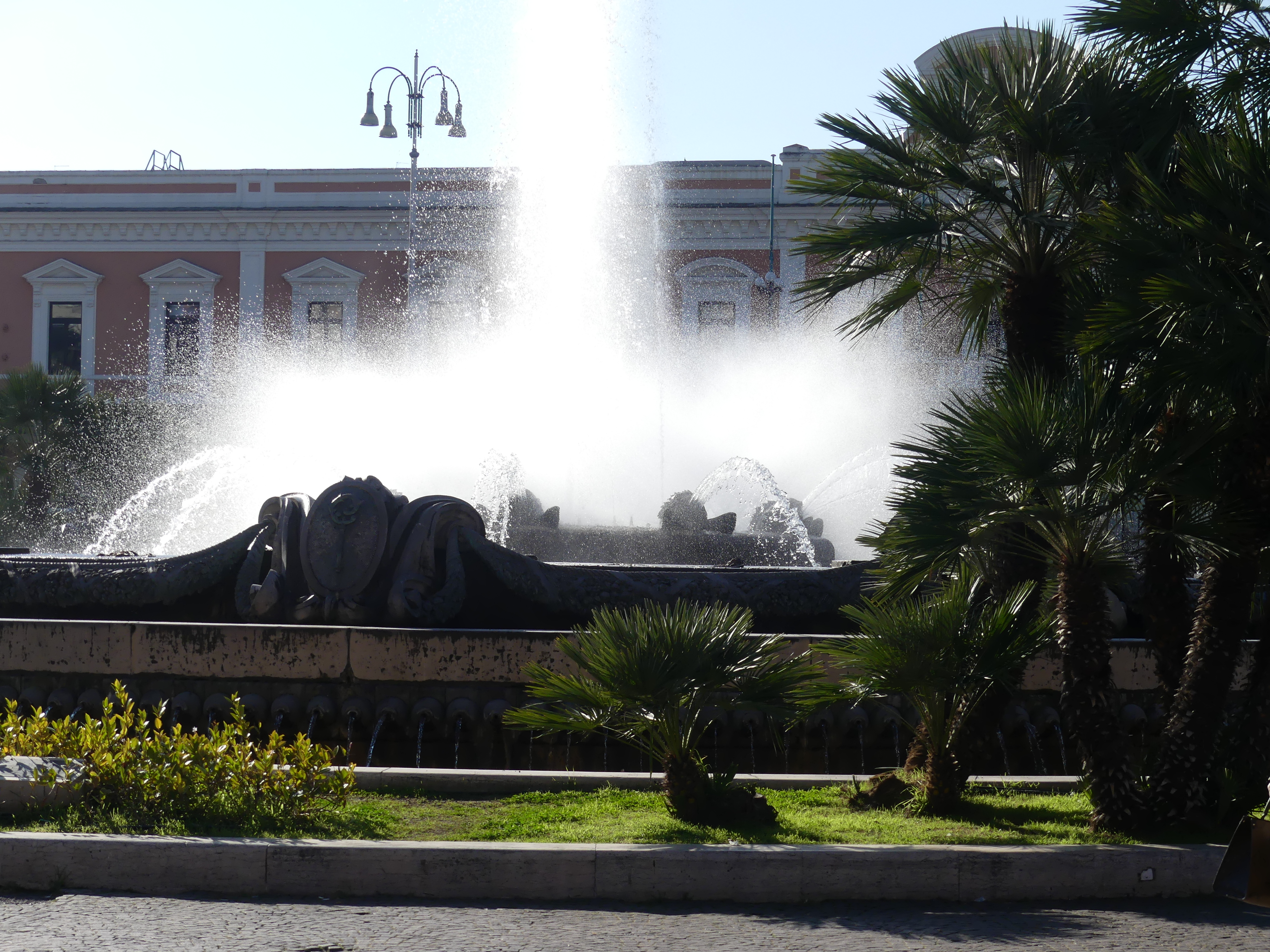
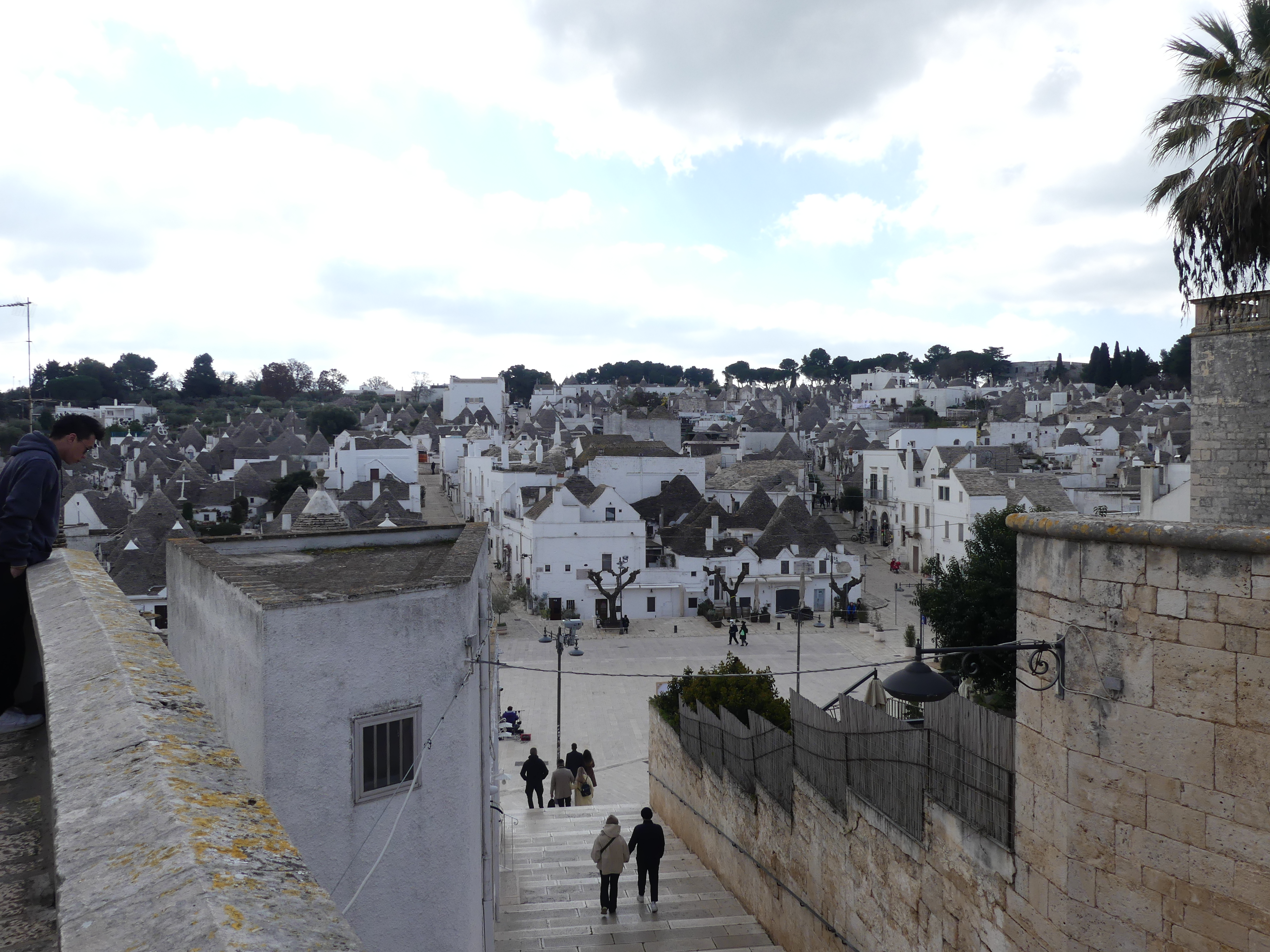
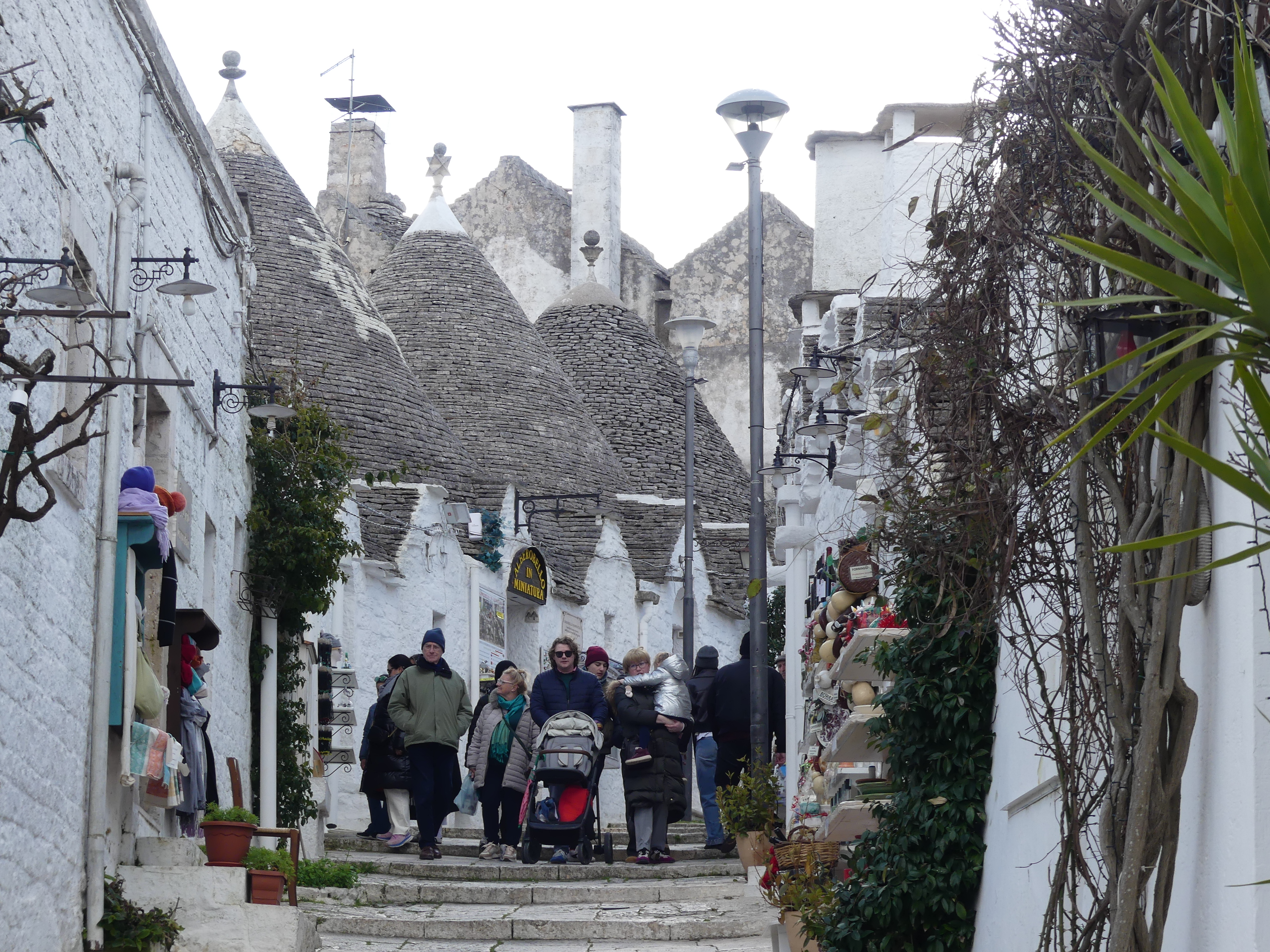
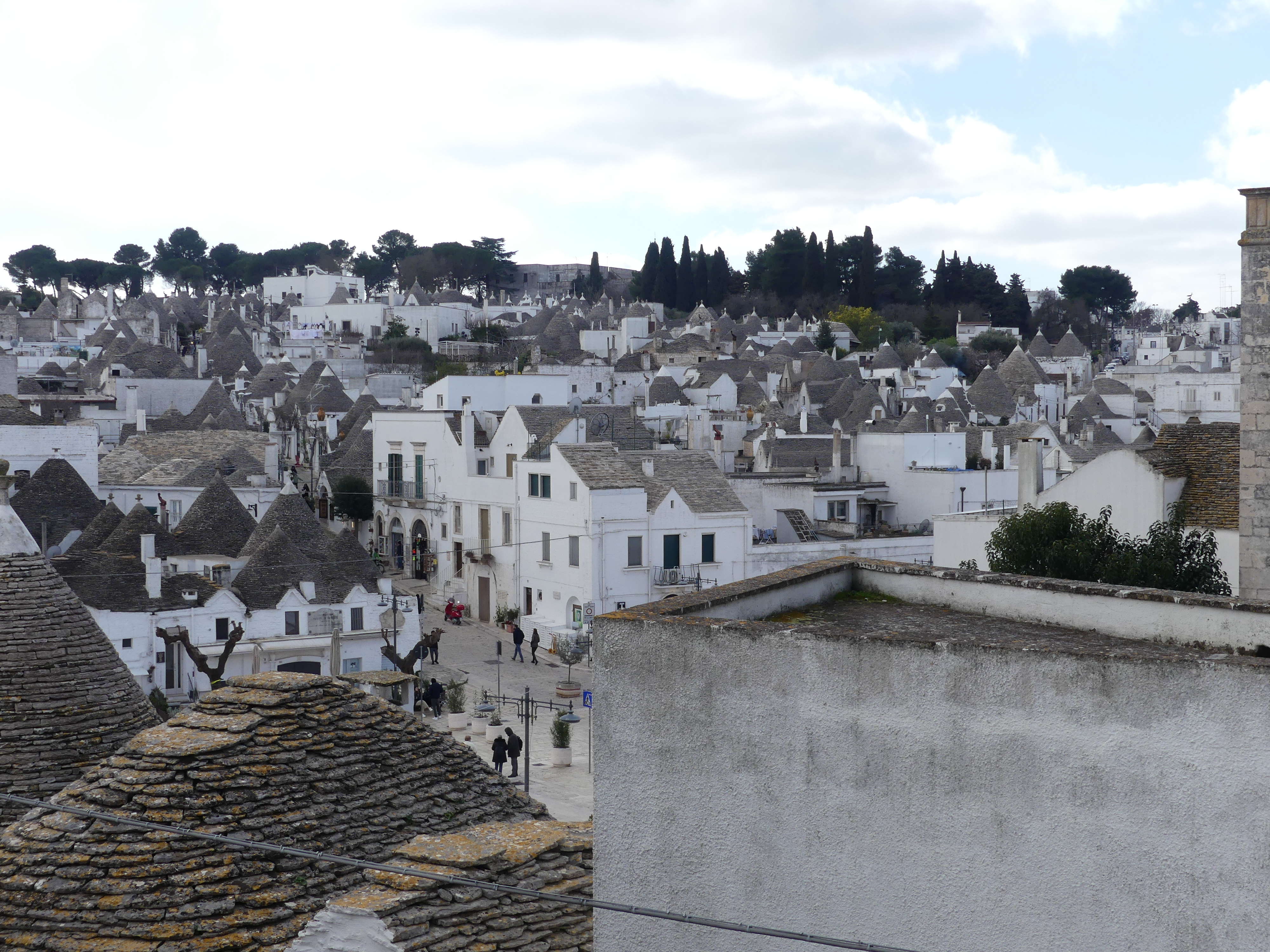
We left Bari station (obstructed by the fountain) as we were taking the bus (what! – where’s the train) for Alberobello (literally “beautiful tree”). It is a small town and commune of the Metropolitan City of Bari, Apulia. It has 10,237 inhabitants (2022) and is famous for its unique trullo buildings. The trulli of Alberobello have been designated as a UNESCO World Heritage Site since 1996 and Alberobello is one of I Borghi più belli d’Italia (“The most beautiful villages of Italy”).

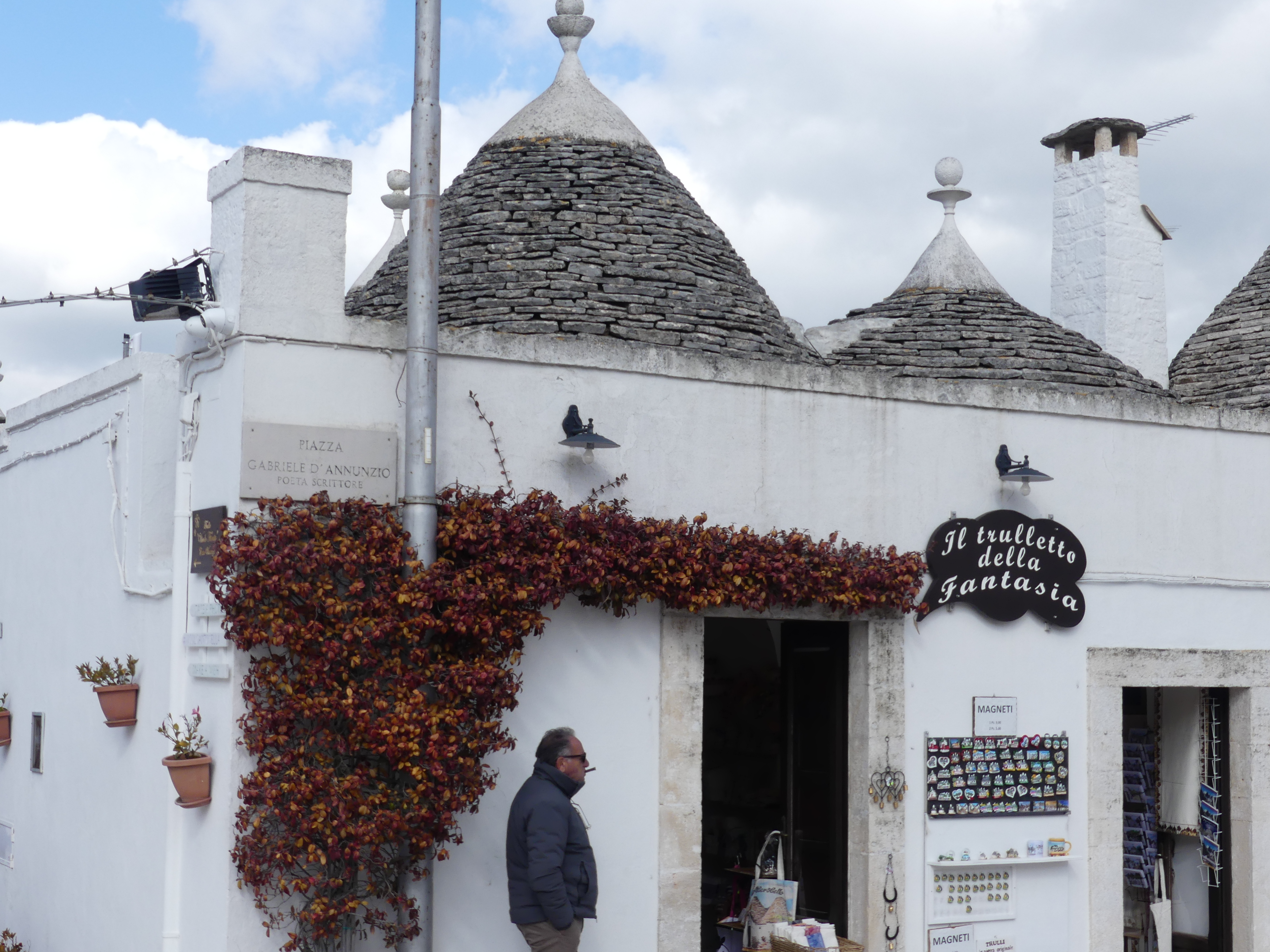
The history of the trulli is linked to an edict of the 15th-century Kingdom of Naples that subjected every new settlement to a tribute. In 1481 a tribute imposed on the residents led to them building their dwellings out of dry stone, without using mortars, so that they could be configured as precarious buildings and easily demolished. Having to use only stones, the peasants found in the round form with self-supporting domed roof the simplest configuration. The roofs were embellished with decorative pinnacles representing the signature of the architect (master trullaro).

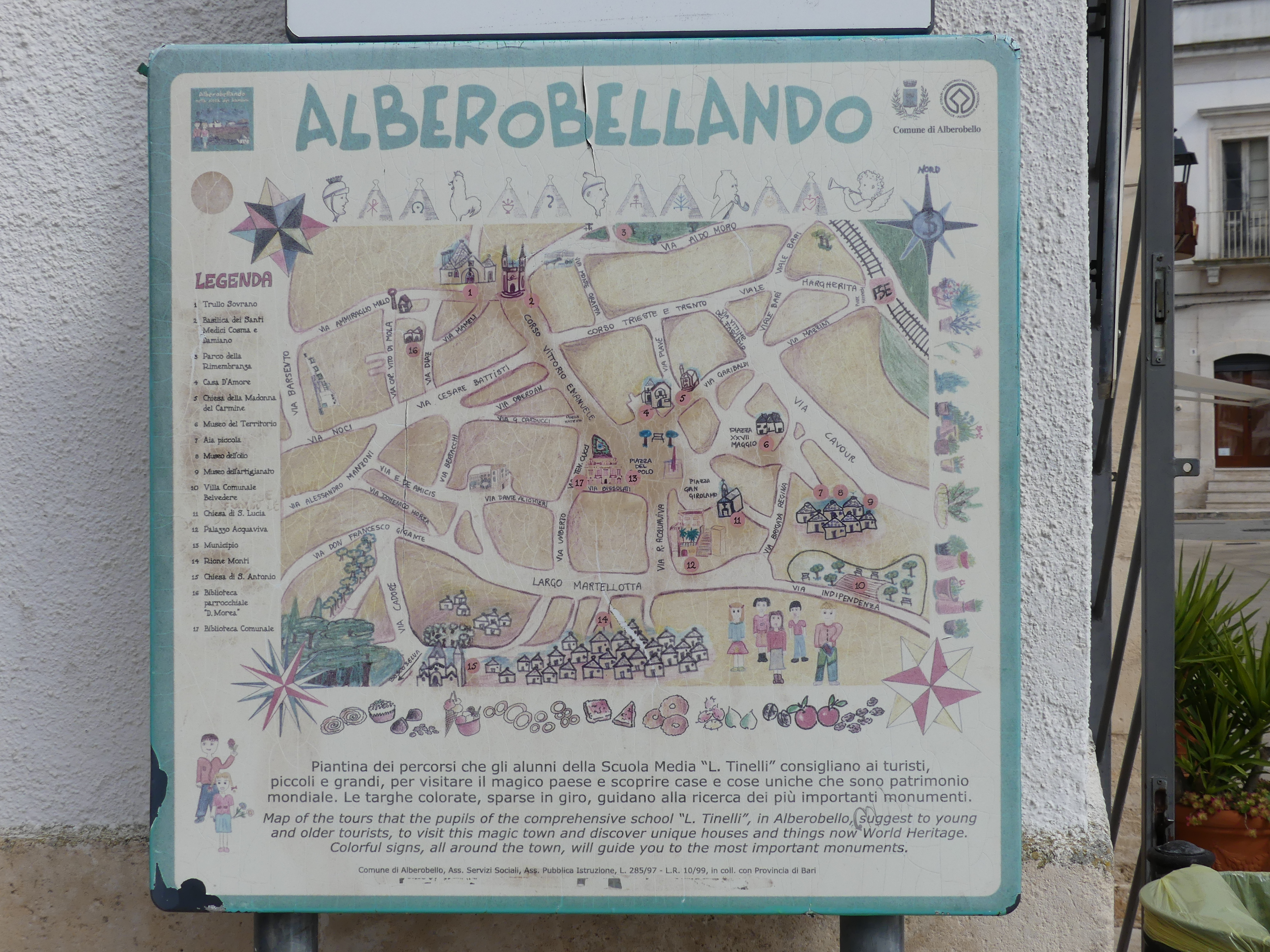
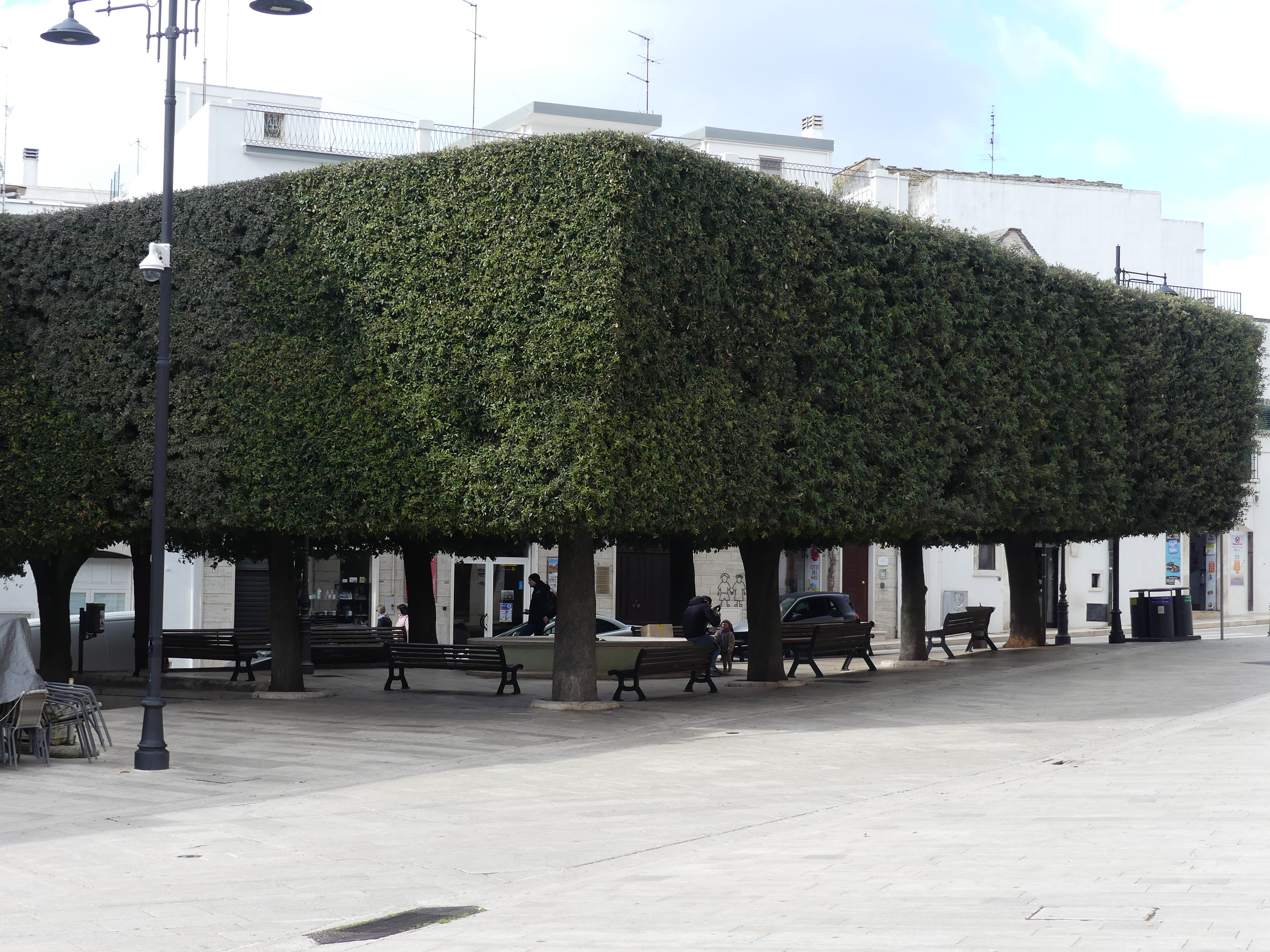
Our story starts with a picture of the fountain in front of the railway station in Bari from where we caught our bus to Alberobello. Upon arriving at the train station via the bus, we left the bus and walked through the modern town. The walk up the hill and down into the Piazza is shown in my photos below. The Municipio and the tourist map were two of the first features we reached. Clean and tidy, the people of Alberobello have great pride in the Town.

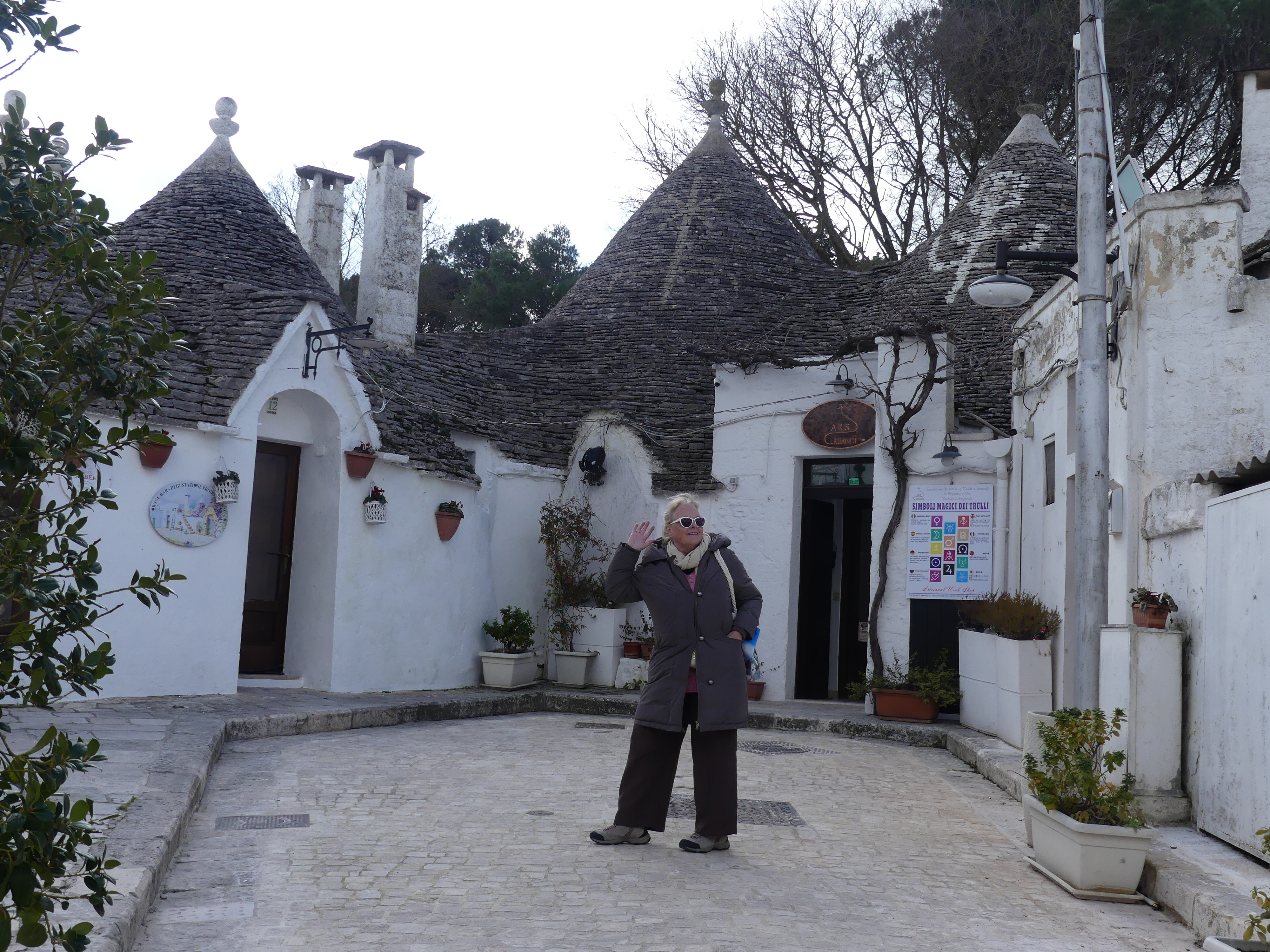
In the last photo above we have found the stairway into the Trulli village. The trulli homes are all uniformly coated in white. Some continue to be used as homes, but many are shops or B&Bs. We visited the Arie dell Artigianato, an artisan timber craftsman. Whilst inside the design for the roof had me puzzled as to how the trulli stand up but climbing through the ceilings was not permitted.

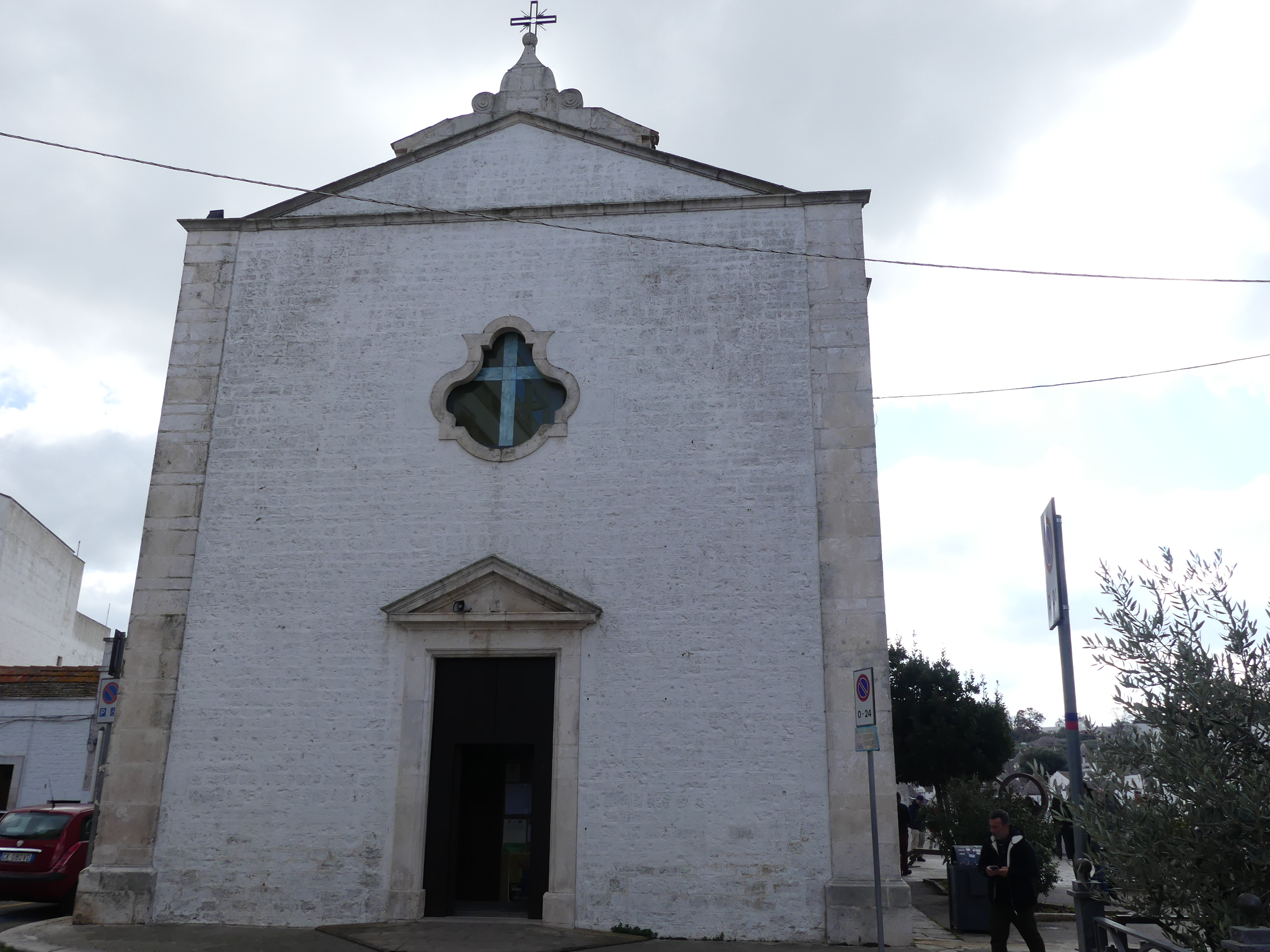
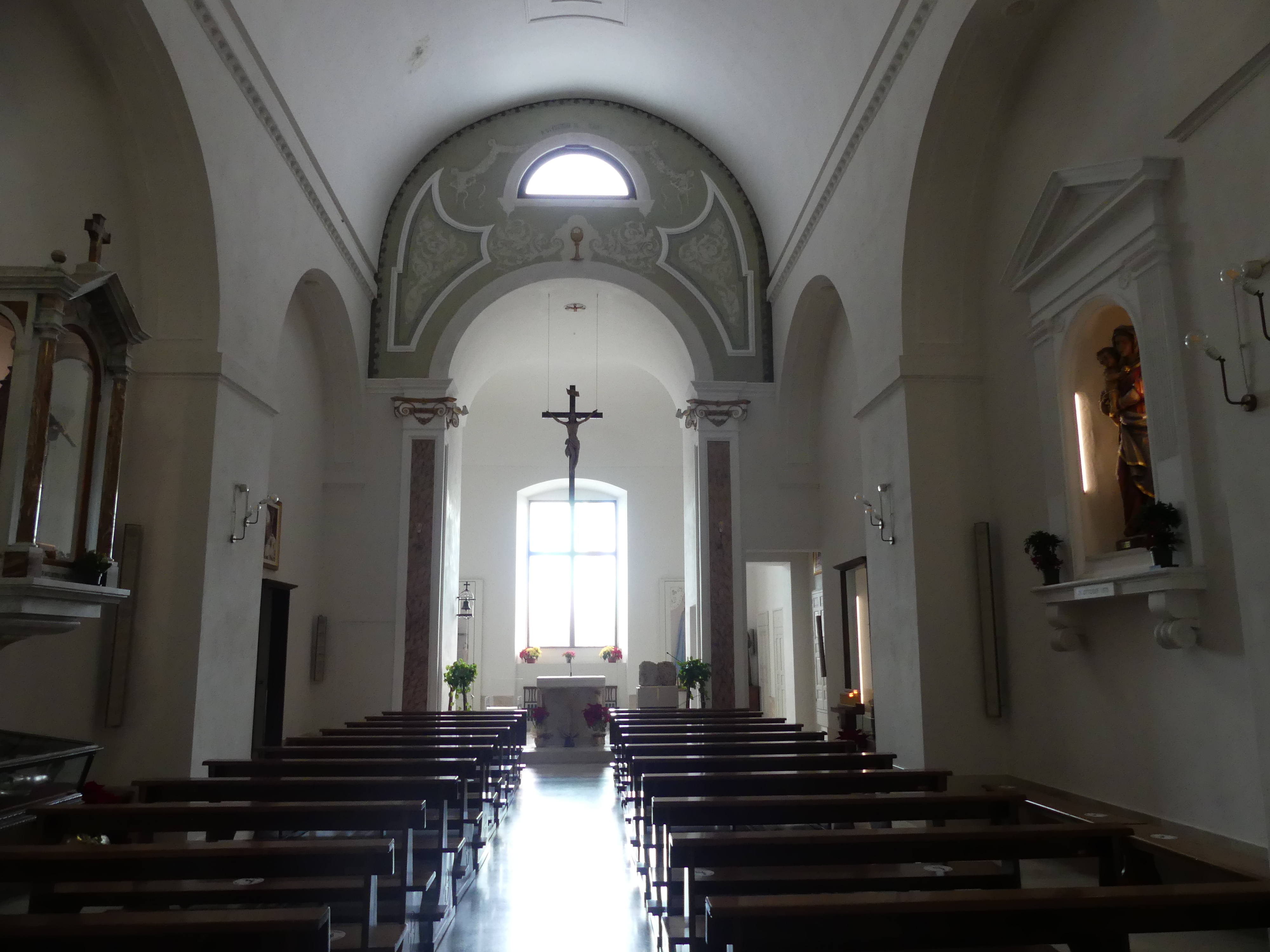
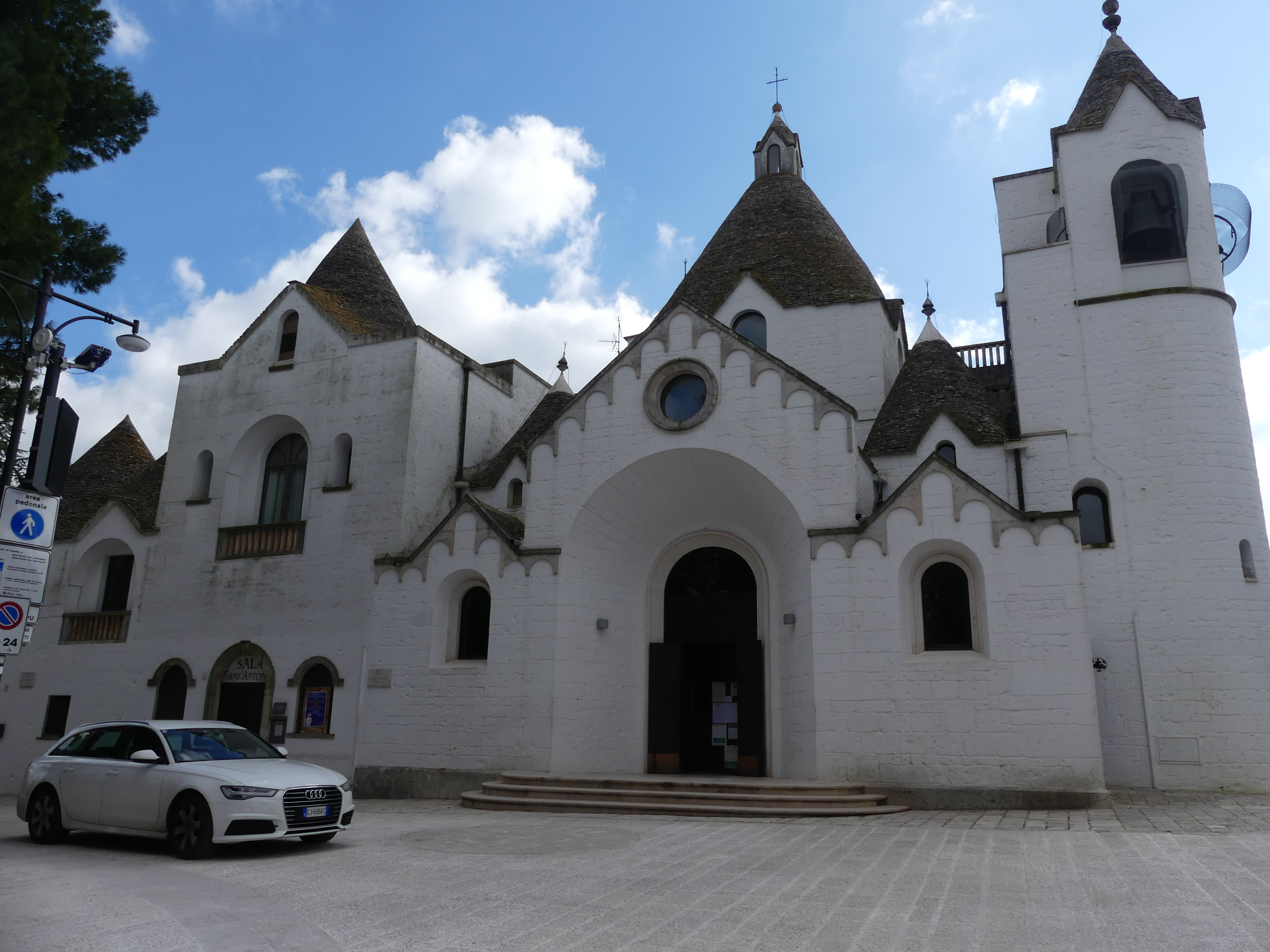
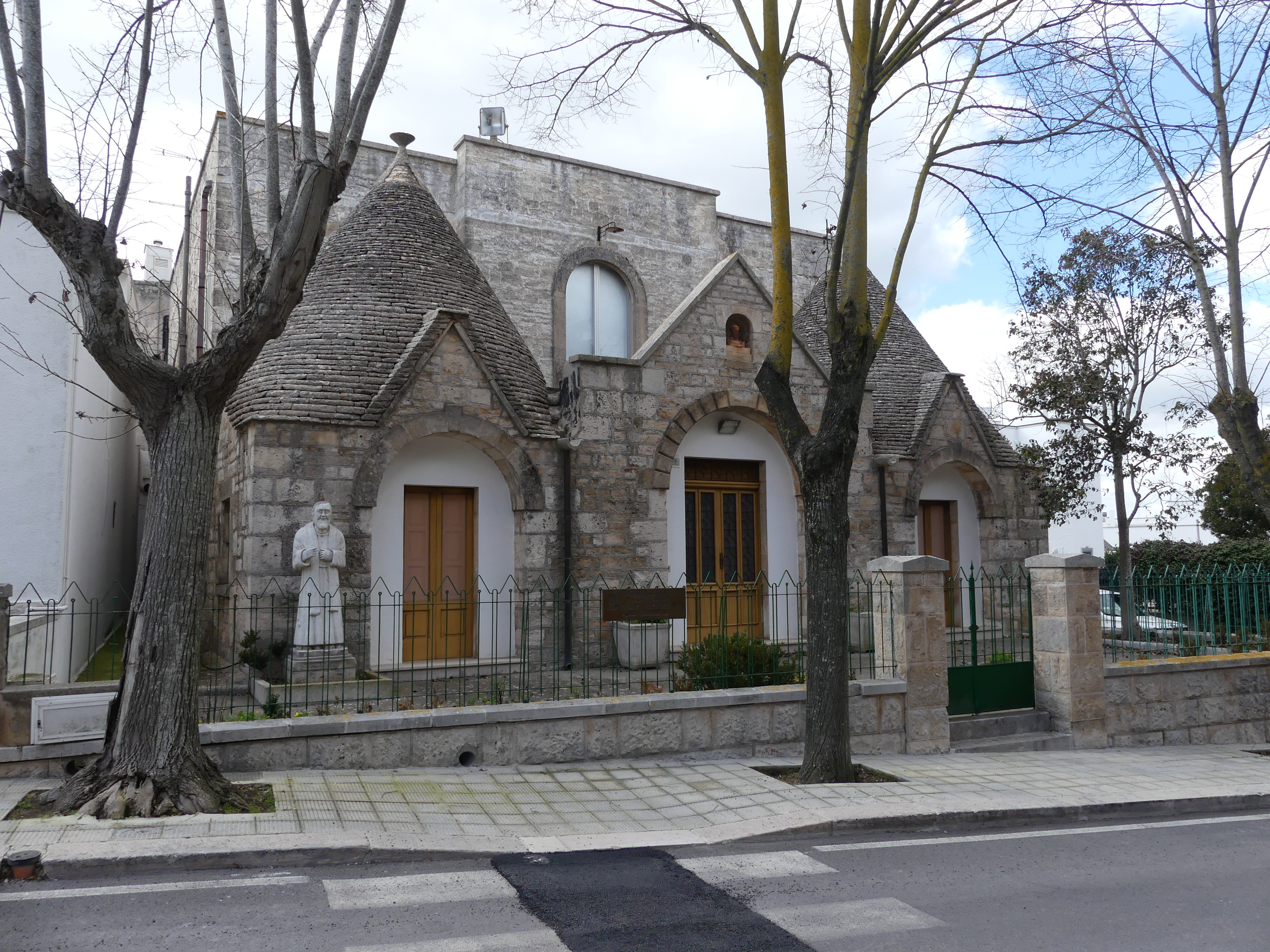
We walked through the key streets with Kerry taking in some shops until reaching a church, Parrocchia Sant’Antonio di Padova (Church of Saint Anthony of Padua) at the top of the hill of course built in 1927 in trulli style. Even the manse had trulli influences. From the top of the hill, we could see the two bell towers of the Saints Cosma & Damian’s church. We made our way down to the bottom of the hill and found our lunch restaurant but not in a true trulli building but a look alike. After lunch we ambled back through town visiting the Basilica of the Saints Cosma & Damian’s in the modern part of the town. The present structure of the church dates back to 1885, a work of Antonio Curri. Inside you can find the two wooden statues (1782 and 1784) and the reliquary containing some bones fragments of the Saints. The project led by architect Antonio Curri, was finished only in 1914. During the 26th and the 27th of September the celebration of the Saint’s city holiday, that summons a crowd of pilgrims from the nearby towns, and as tradition claims, they travel the entire route by foot. Note the papal keys over the entrance to the Basilica.

Our final day of the “train journey holiday” to Bari ended at the bus station outside the railway station at Alberobello where we joined the queue to catch the bus back to Bari. Really interesting place to visit and normally you can catch the train. We left the transportation for Robert to organize so I have no idea why we caught the bus.

We farewelled Robert thanking once again for his hospitality and best wishes with his B&B bookings. He is a great friend.

The next morning we boarded our train for Naples from Bari. The journey would take us from the west coast to the east coast with one change of train. The small towns we have been visiting will be in stark contrast to Naples for size but we were not ready for the dirtiness of the city. Read on with our travels when “THE RETIREES GO AROUND THE WORLD – BARI to NAPLES”.

“THE RETIREES GO AROUND THE WORLD – ROME to CESI”

ROME

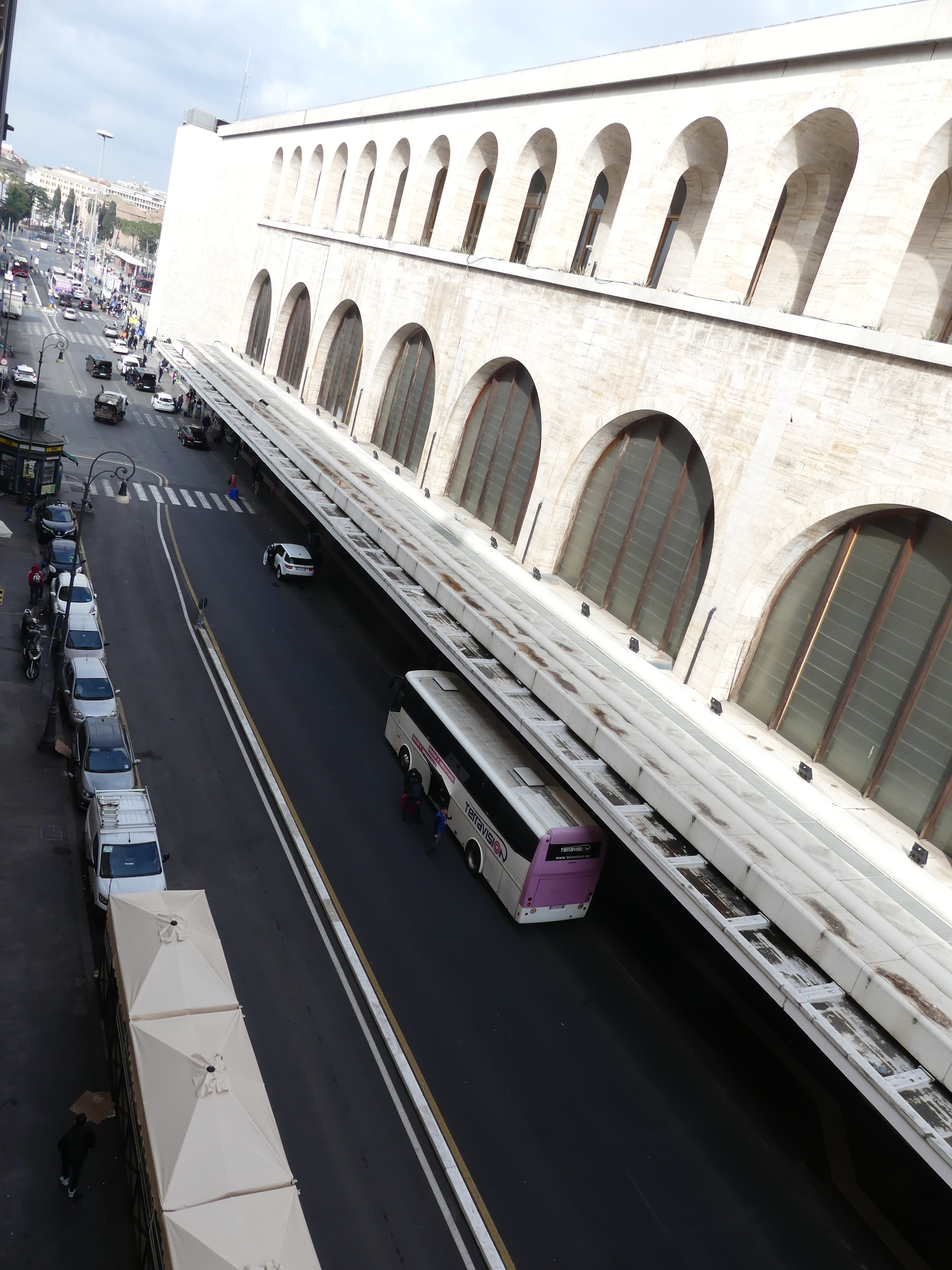
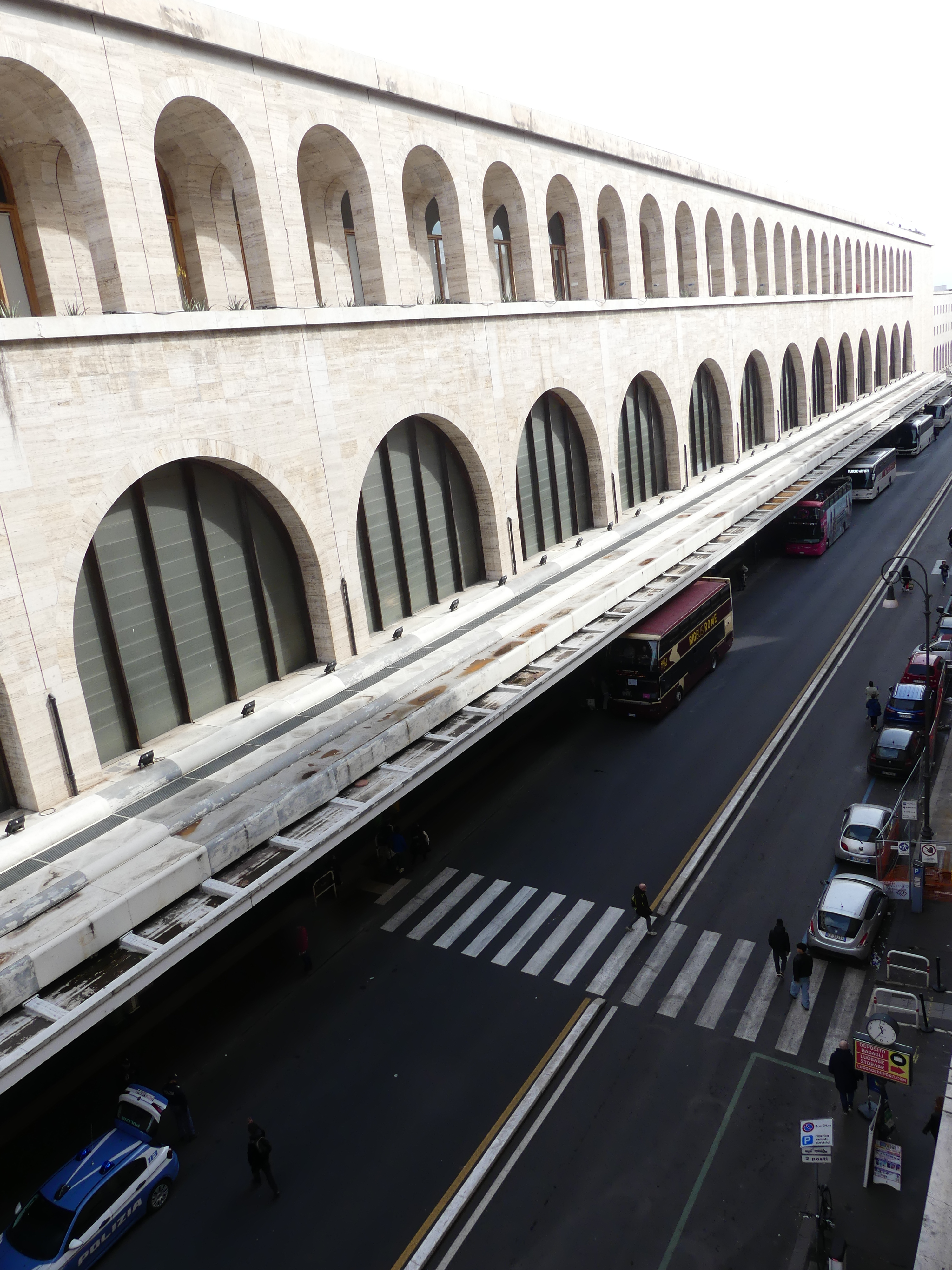
I opened the window of our room. It was the 12th and it was Kerry’s birthday. In flooded sunlight and the structure containing the terminus known as “Terminii”. The photos below show the size of the station and the view from the courtyard of the building containing our B&B – the contrast between the front and the back is like a time ship – new and old.

Kerry had a birthday wish. She wished for a celebratory dinner and had chosen from the internet “La Terrazzade de Papi Roof Top Restaurant”. The restaurant is overlooking the roof tops of the city. That morning, we set out to find this place (booked online sight unseen) in preparation for the night. I hate using google maps to guide you to your chosen place – it always seems to play tricks on you like it’s a game. We ended up in a park Piazza Victorio, also known as Piazza Vittorio Emanuele II and we had never encountered it before. Wikipedia tells us that the piazza was built by Gaetano Koch shortly after the unification of Italy. It is the largest piazza in Rome (316 x 174 metres). In the centre of the piazza is a garden with the remains of a fountain built by Alexander Severus (so called Trophy of Marius), and the Porta Alchemica (Alchemist’s Portal or also called Magic Gate or Porta Magica), the entrance to Villa Palombara, former residence of the alchemist Marquis Palombara. It also contains Giardino Nicola Calipari, named after an Italian secret agent, killed accidentally by US soldiers in Iraq on 4 March 2005, in the phases immediately following the liberation of the journalist of Il Manifesto Giuliana Sgrena. I captured some of these features and post the photos below.

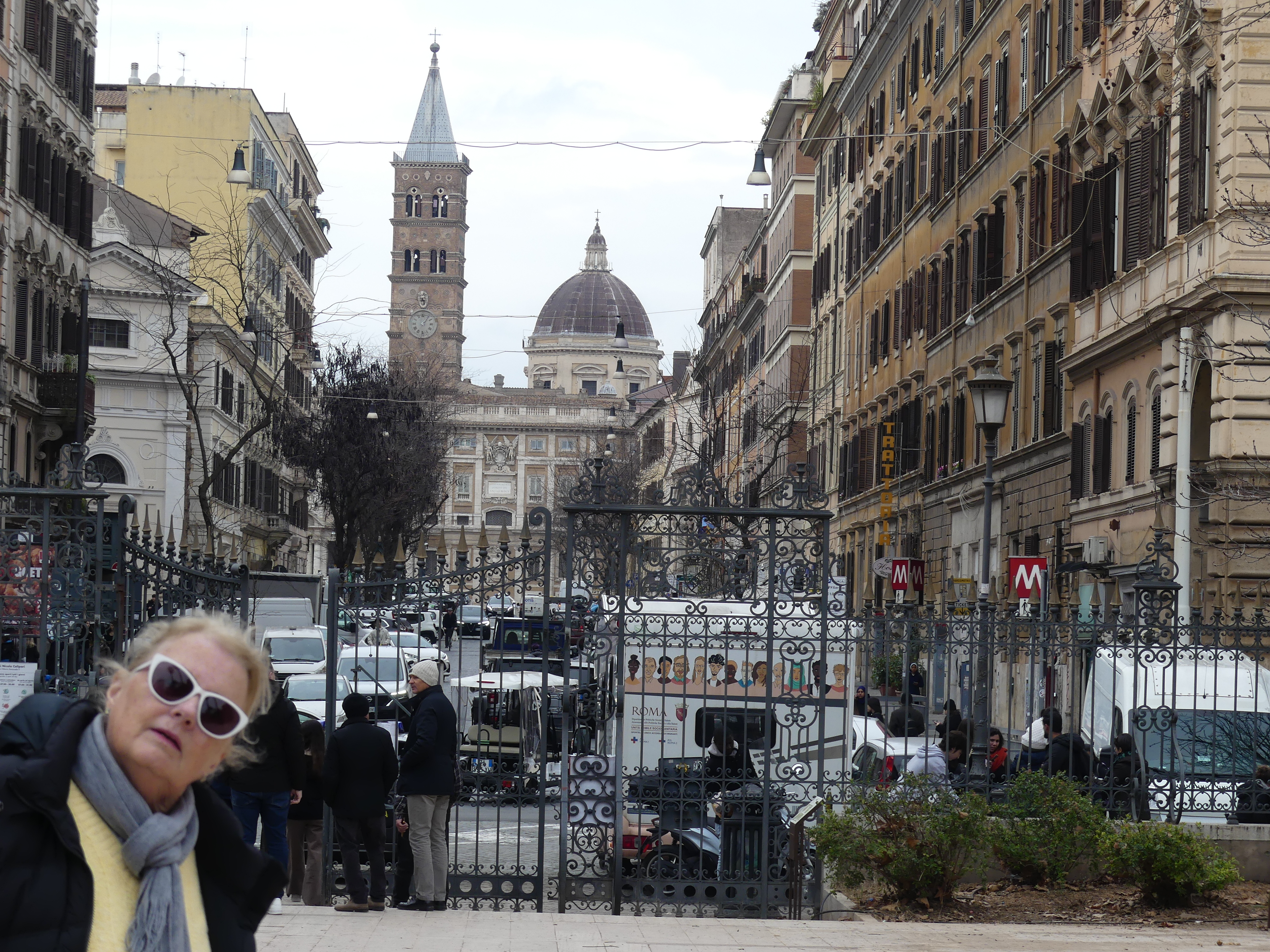
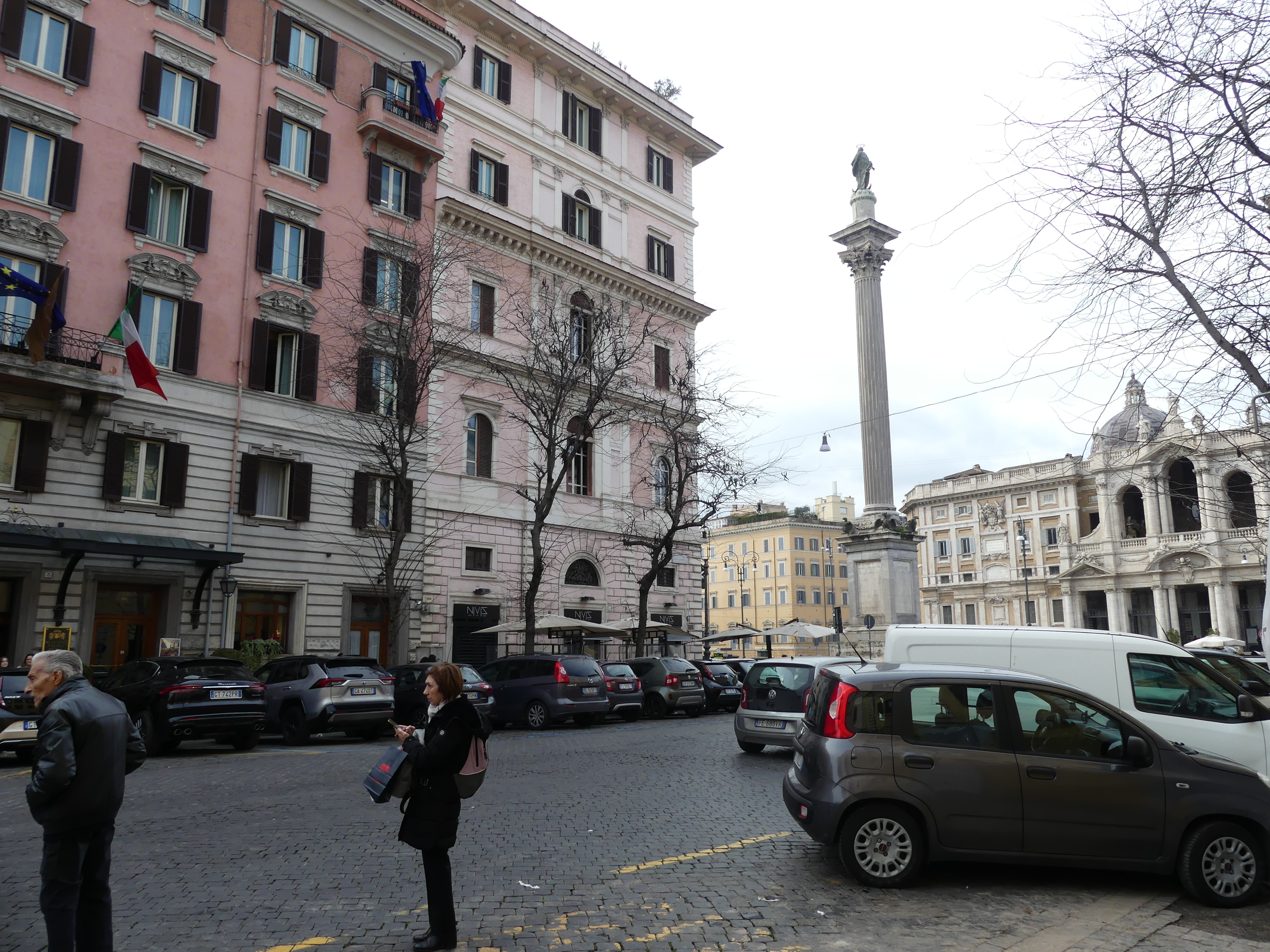
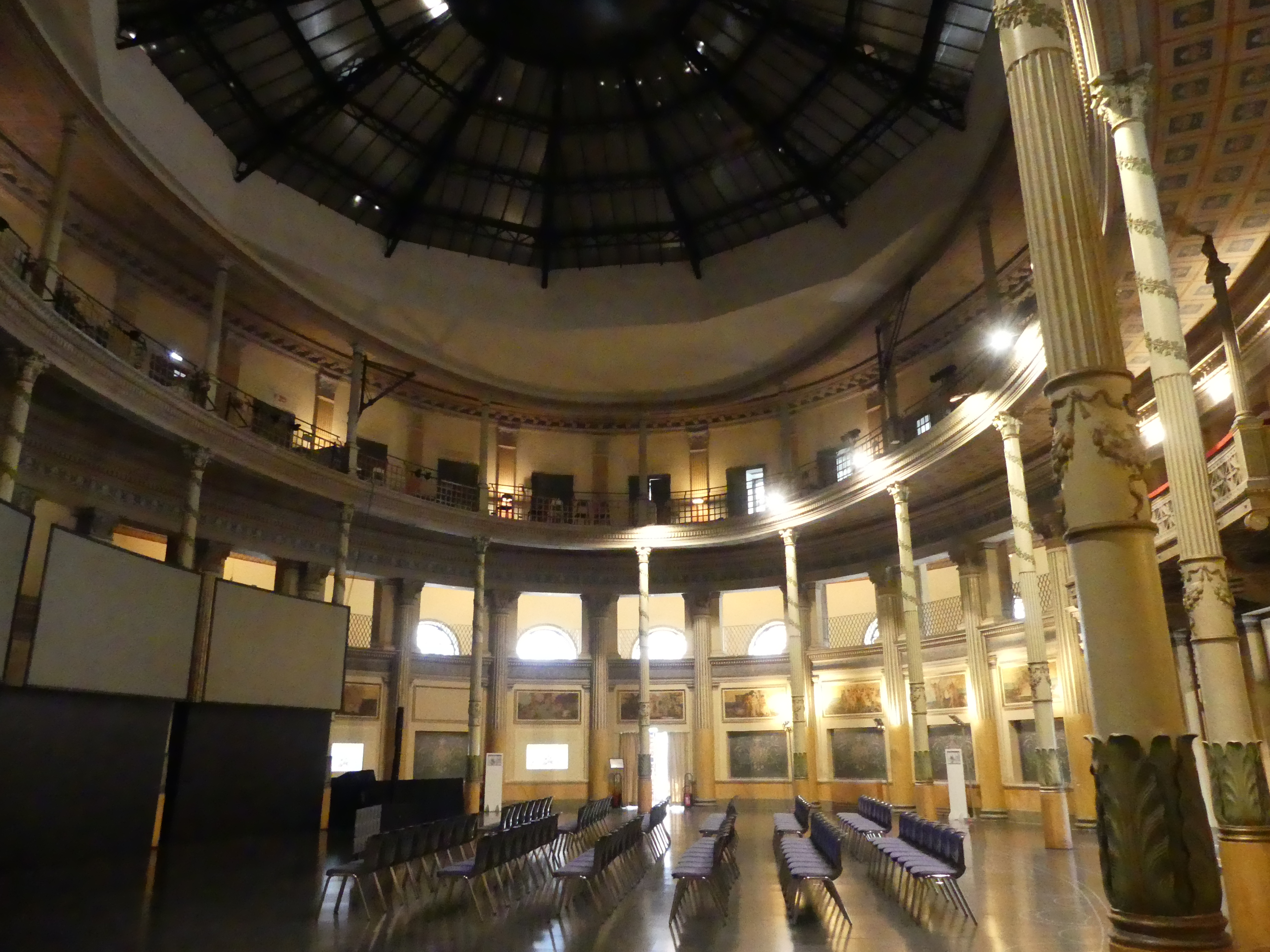
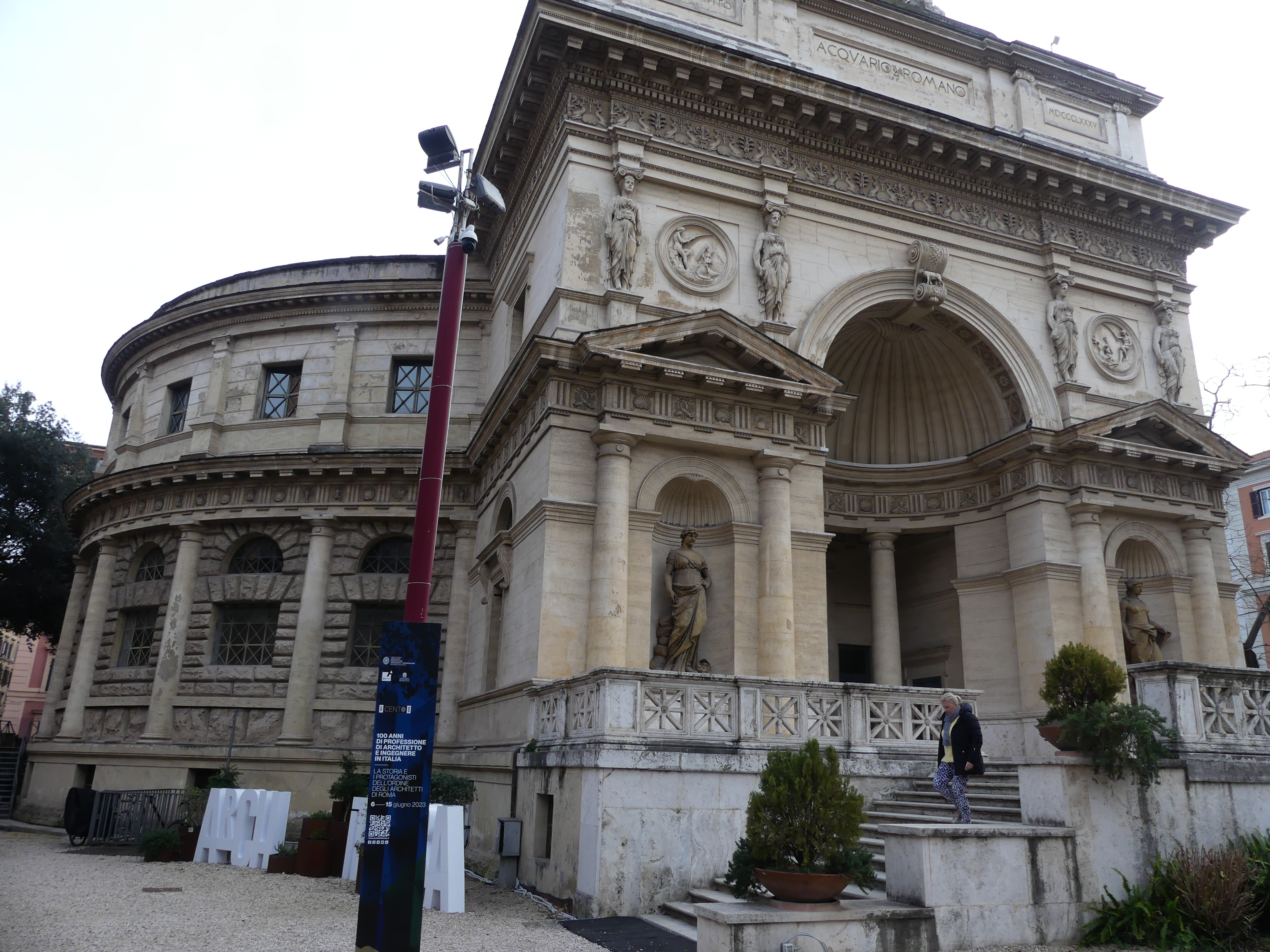
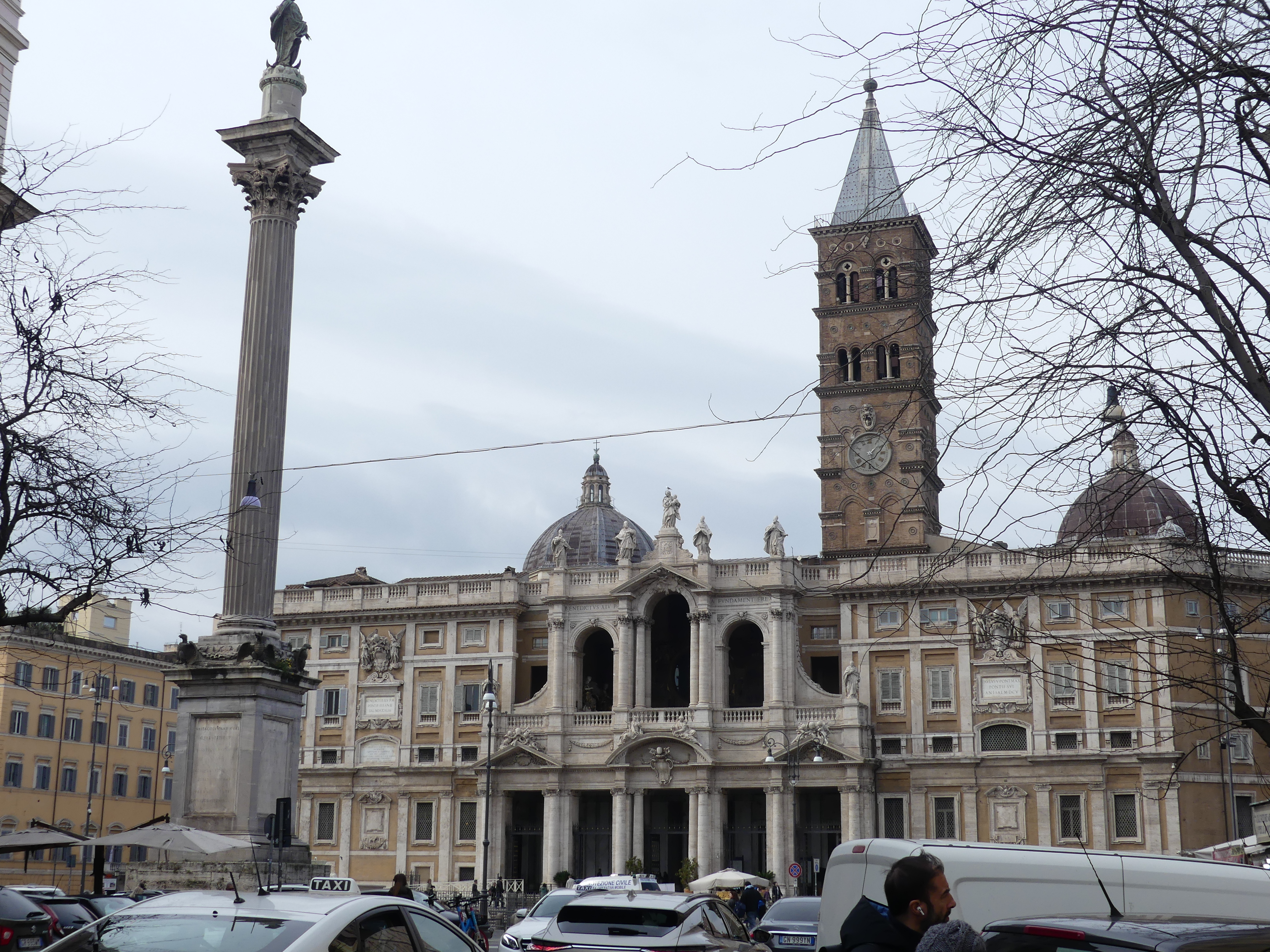
Back tracking from the piazza, we found the hotel with the roof top restaurant and checked out the shortest route home. The scenery was a grand mixture. Starting with Kerry photo bombing my picture of the grand church at the end of the street to the hotel passed the Porta Esqualina Gate and the Arch of Gallineus (The Arch of Gallienus is a name given to the Porta Esquilina, an ancient Roman arch in the Servian Wall of Rome). It was here that the ancient Roman roads Via Labicana and Via Tiburtina started. We saw the statue of Santa Maria Maggiore standing on a pinnacle in front of a grand Basilica constructed in her honour through to an architectural museum and conference centre (see Turismo Roma) again unseen by these eyes – very interesting and made us think of George Hazell an architect and former next-door neighbour for almost 20 years. I expect he would have enjoyed visiting the unique oval building.

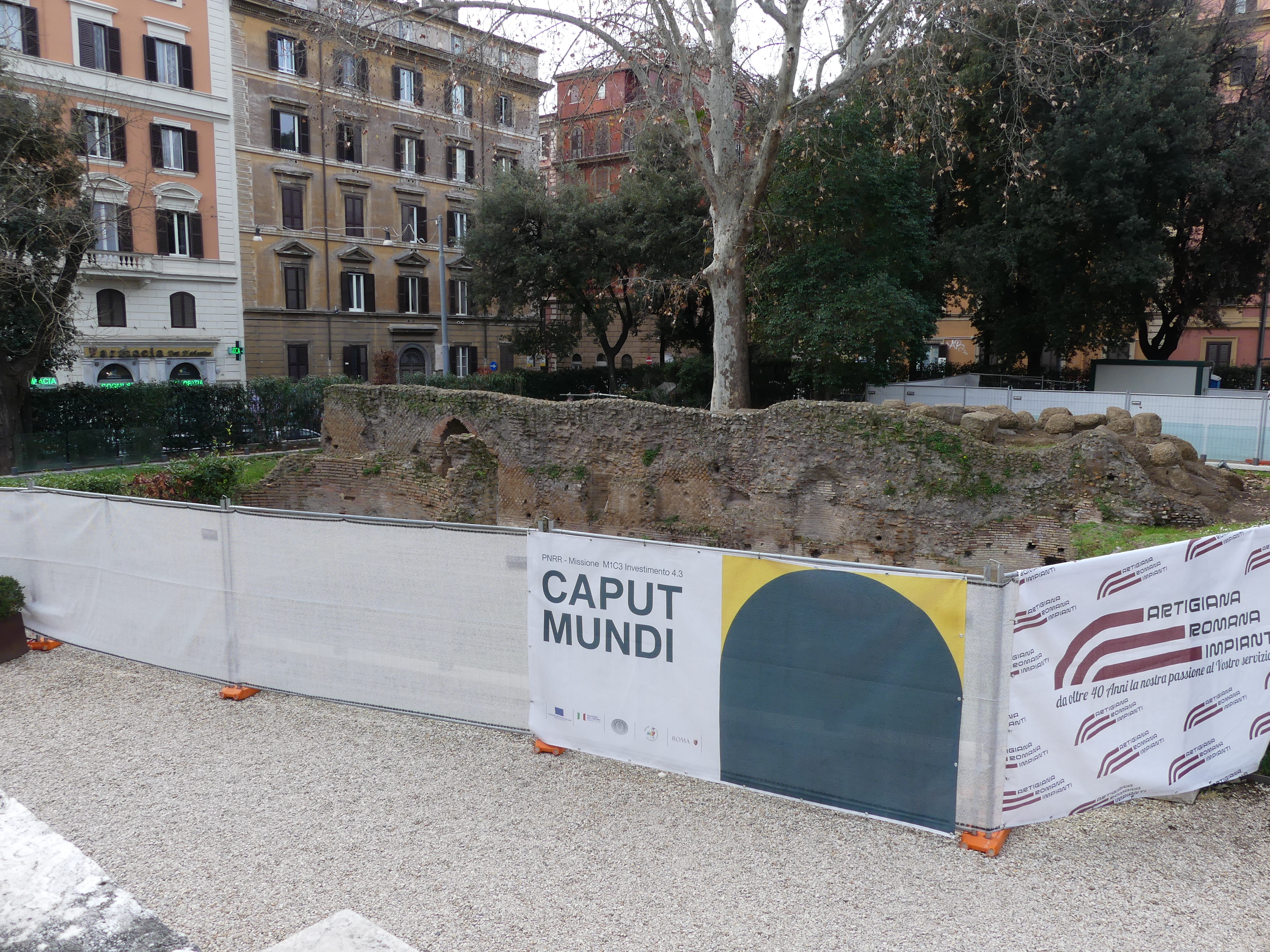
In Piazza Manfredo Fanti, surrounded by a small garden, is the monumental building, inspired by classical architecture, for the construction of a fish farming establishment with an aquarium the Acquario Romano which has been restored as Casa dell’Architettura. In the garden, there is one of the most interesting sections of the Servian Walls, built around the 4th century BC to defend Rome.

There was a small café in one of the outer rings of the building where we had coffee and lunch. We then made our way to our Dream Station B & B, and I had an afternoon nap a legacy of my chemotherapy then we dressed for dinner.

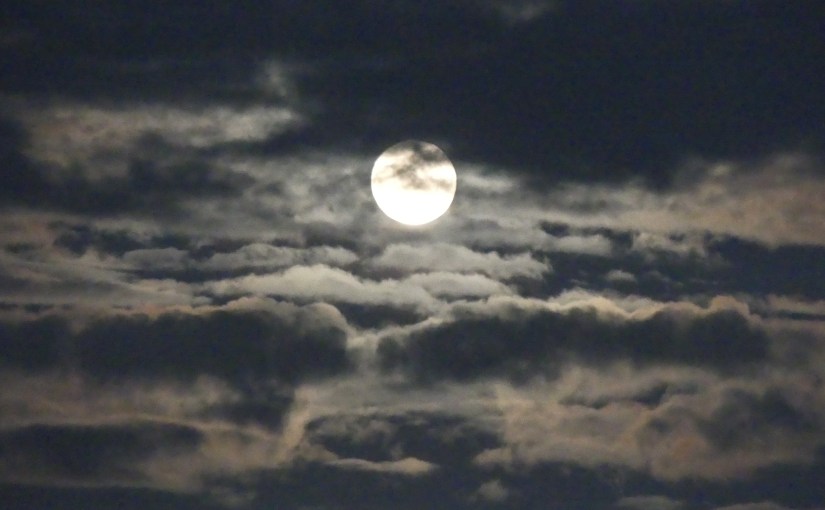
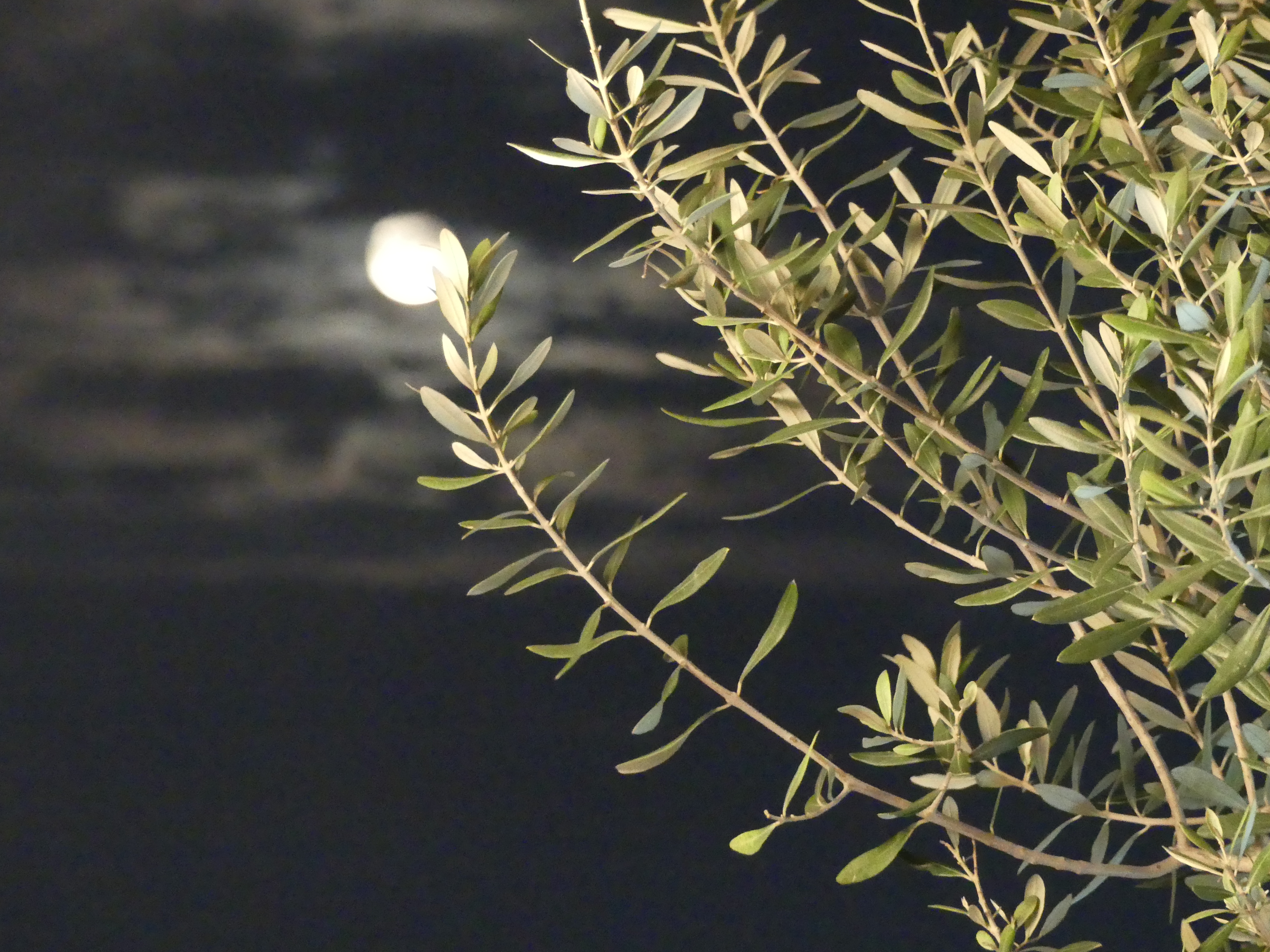
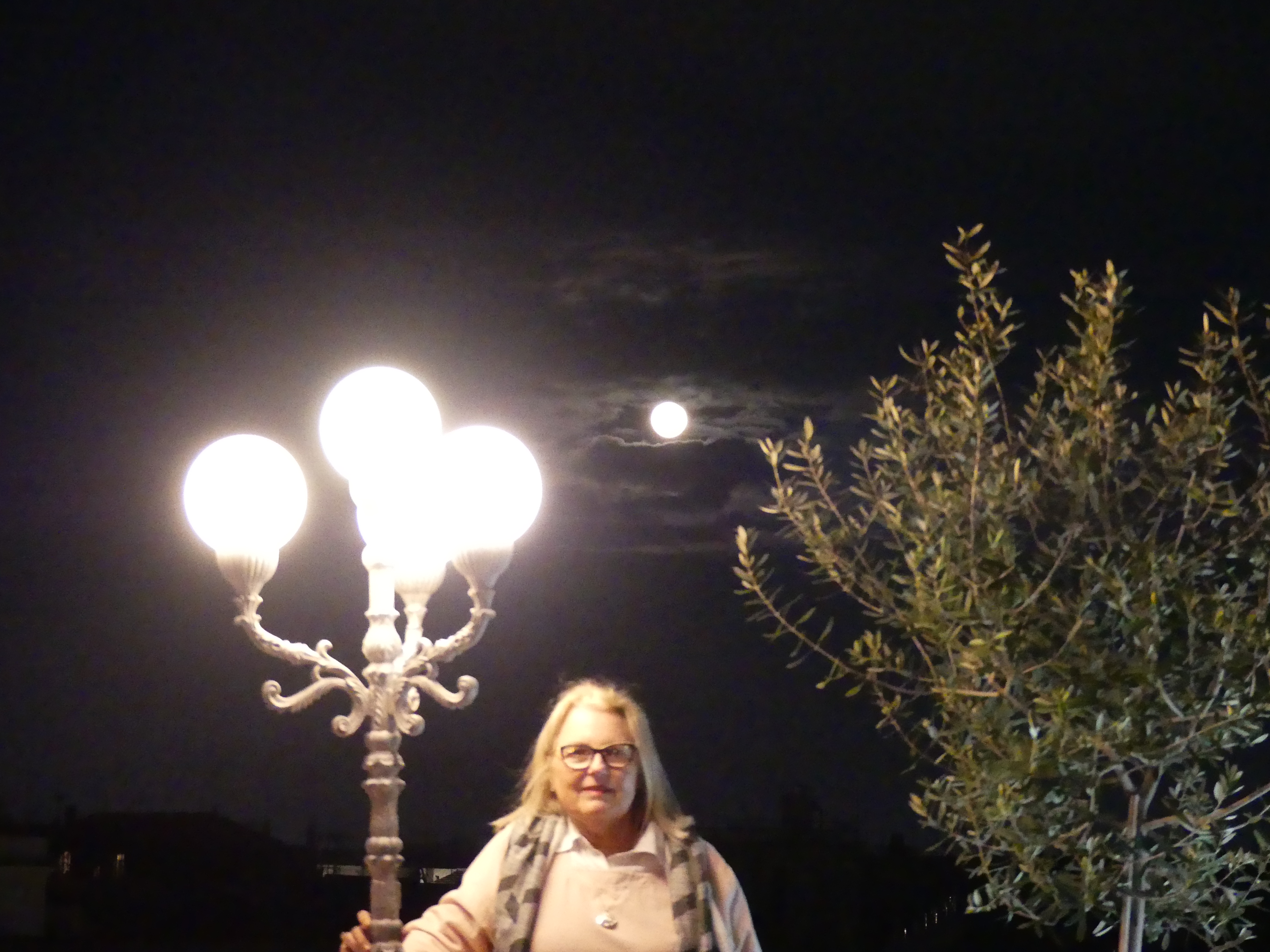
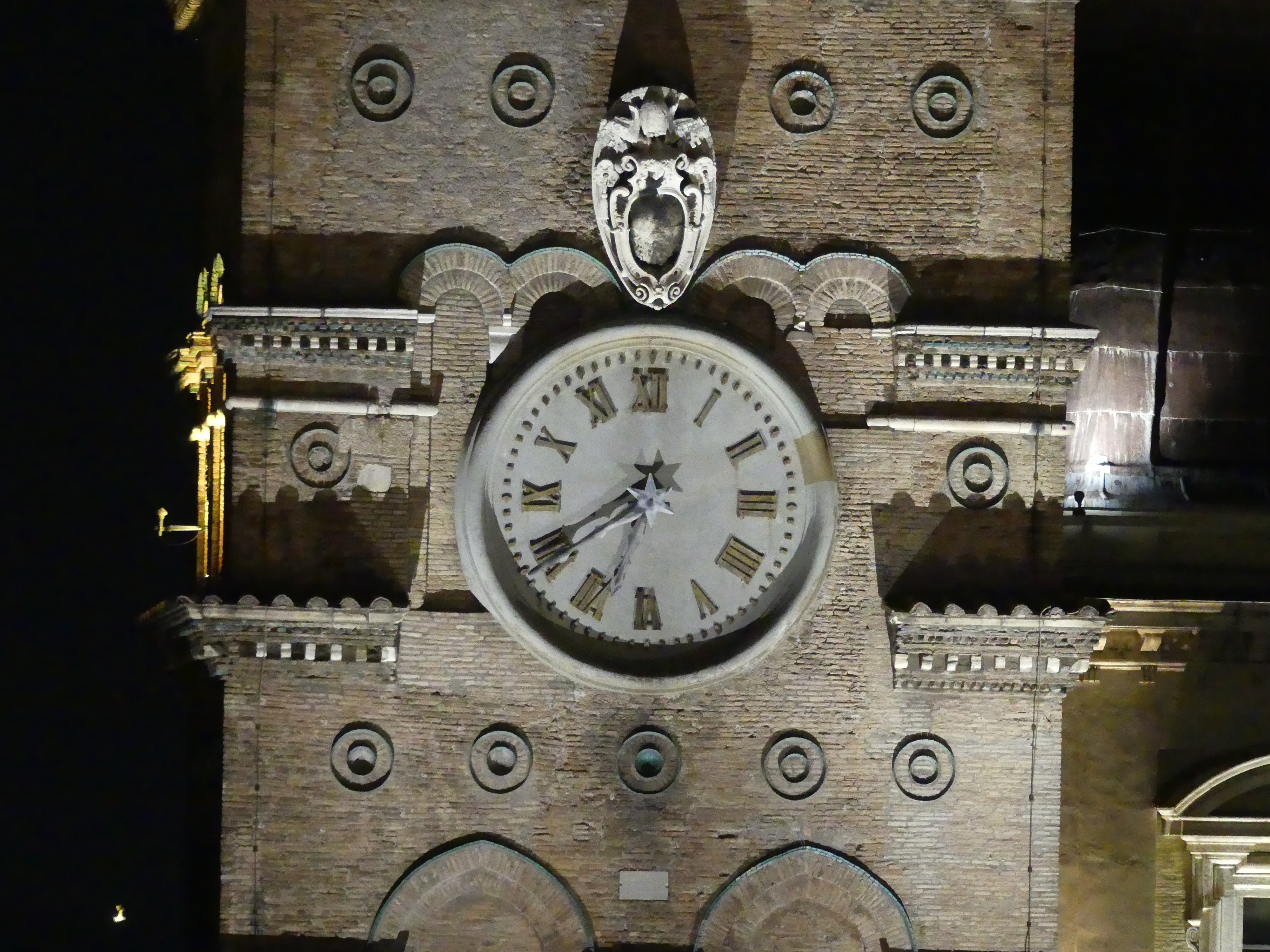
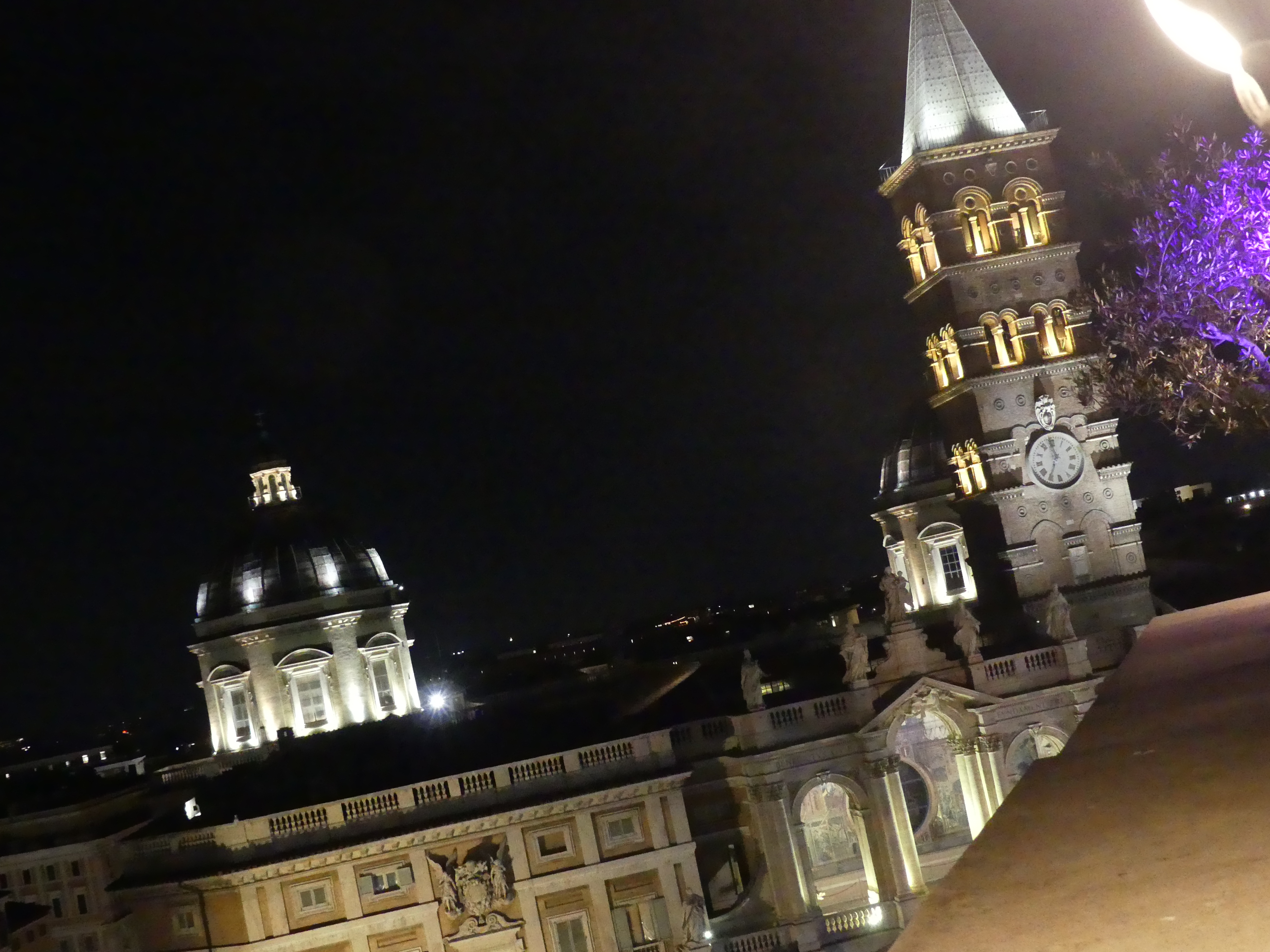
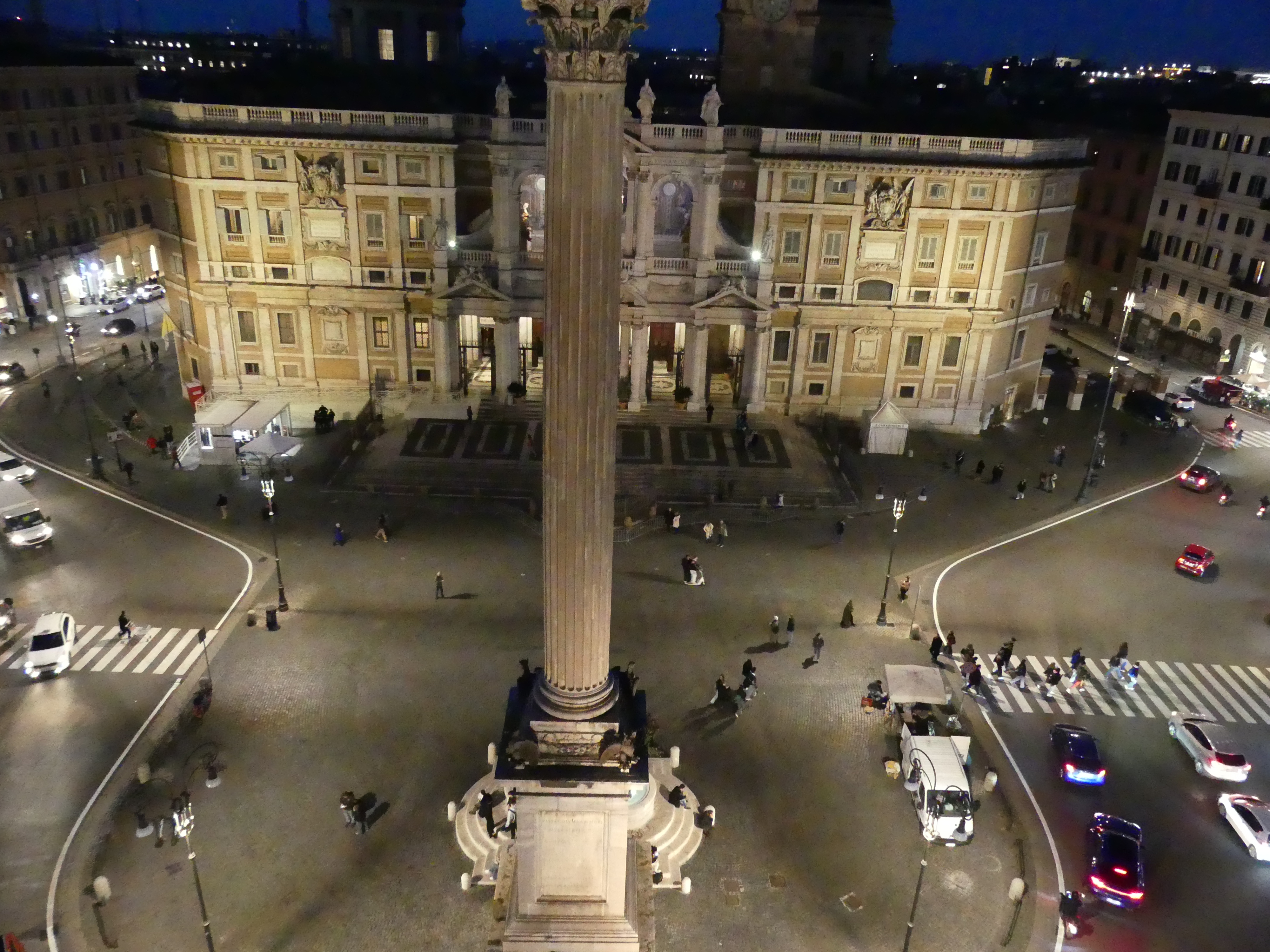
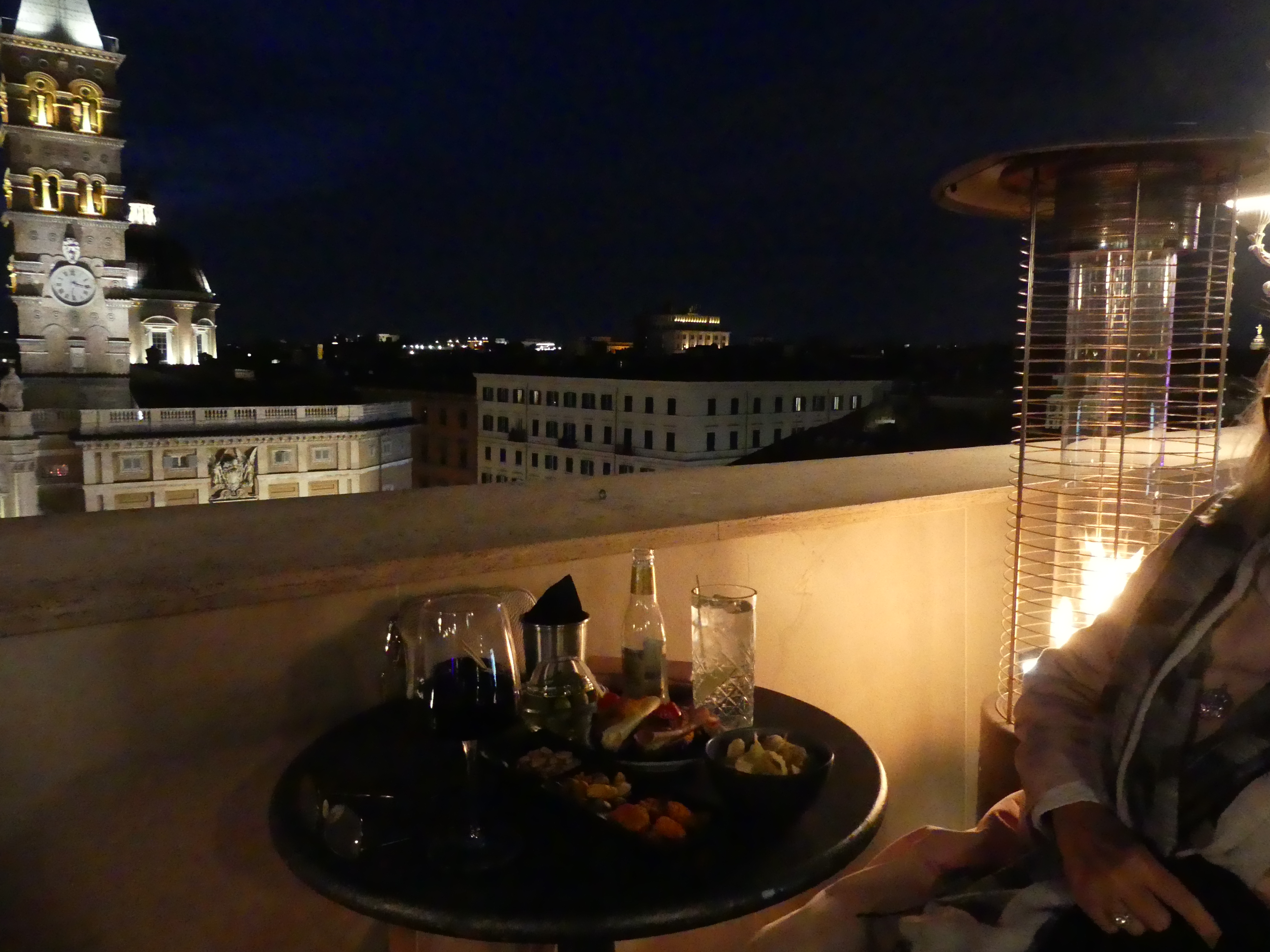
We retraced our steps back to La Terrazzade de Papi. To access the roof top we followed a roundabout path of stairs and corridors to the roof – 7 to 8 stories above ground. The interior of this level was on level 7 and the exterior on level 8. It was still daylight, so we were afforded views from most points of the compass before witnessing the rising of the moon and the clouds then encircling and covering up the moon. In front of us was the statue of Santa Maria Maggiore in a Piazza to her honour tall enough we felt we could nearly touch it. Behind it was the Basilica also named after the saint. I believe this is the Basilica chosen by the late Pope Francis who was very much alive at this time.

We had no idea what to expect for dinner and were surprised when we were presented with two platters. It was like an Italian tapas with our choice of drinks. We nibbled away at the food and took selfies for Facebook from every reachable corner of the roof. Just the dream come true for Kerry’s birthday. To finish the evening we went inside to the restaurant for Tiramisu and coffee. We were the only ones in the restaurant except for one other patron sucking away on one of the many “hookahs” offered by the establishment.

A slow stroll back to our B&B and early to bed for the trip to Cesi tomorrow and a visit to Roberto’s villa. Keep reading and follow THE RETIREES GO AROUND THE WORLD – “ROME to CESI ” in Cesi.

The Retirees Celebrate 30 years – Nottingham, Cesi and Rome

We don’t often decide to embark on a journey with such speed and decision as on this occasion. We had barely returned from our Mississippi trip that was over 12 months in planning than we were off again to celebrate 30 years of marriage. In truth we had celebrated at year ten then forgotten about anniversaries often finding ourselves remembering on the day but with no other particular thought or preparation.

Over dinner on the American Queen outside of Memphis and after a bottle of wine I said words to the effect that we should celebrate this 30th year with a trip to Rome. I don’t know why. Why Rome? Why this particular year/milestone. But Kerry didn’t miss the slip (if it be a slip) and the planning began in earnest upon our return to Brisbane.

The final itinerary;

Travel to London overnight and then catch the National Express bus to Nottingham and catch up with Cilla and Bob and meet with Martin and Christine visit the Rotary Club of Nottingham members, visit St Mary of the Virgin church in Attenborough where we tended the gardens and graves.

Travel to East Midlands Airport for the flight to Rome by RyanAir landing at Ciampino Airport travel into Rome and overnight at the Dreamstation Hotel before catching a train at Terminii out to Terni then the taxi up to Cesi in the hills overlooking Terni to visit Roberto and whilst there to visit Splato, Portaria and Kerry to visit Purugia (I was resting my injured tendon and doing the washing).

Travel to Rome by train and find our accommodation at the Maittise B&B in Via Nationalize to enjoy 5 romantic days in a stinking hot and humid Rome,

Then travel back to Australia.

That’s it – two weeks and we return home. Most unusual for us to take such a short trip. So settle back whilst I take on the trip across the world and back again.

Go back

Your message has been sent

Warning
Warning
Warning
Warning

Warning.


The Retirees in Umbria – return to Italy.

After 10 hectic days at home we boarded a plane for Italy. Our friend Roberto (formerly Robert) has made his home in Italy and desperately wanted to show off his renovated Villa Contessa in Cesi. What kind of friends would we be if we disappointed him?

Our flight with Qantas (an Emirates code share) was trouble free but lasted 23 hours with a three hour stopover in Dubai. Wisely we had decided to overnight it in Rome and get a good night rest before training it to Cesi. After landing we were talked into taking a minicab ride to our hotel. It turned out to be a good idea even though our hotel is directly across the road from Termini – Rome’s city terminus for the train. Our cab brought us into Rome through Trastevere across the Tiber past the Colosseum and through Piazza Vitorio past the ruins of the Forum (there were two other couples to be dropped off hence the circuitous route) and finally to Termini where we were greeted by a large green door and a small card on the intercom system telling us our “hotel” Dream Station Hotel was on the 4th piano (floor).

No one had said it was behind a large green door down a lane through a heavily barred gate on the 4th floor and we had 4 suitcases and hand luggage. Fortunately, there was a lift. It looked like a refrigerator and was about the same size internally saving us the difficulty of getting a refund and finding a new hotel. Once we had taken the suitcases up in the elevator two x two due to its carrying capacity, we discovered a quaint set of bedrooms (three for sure and may be three more across the landing) fitted out with a share kitchen and comfortable rooms with private bathroom. Good value at €65.00 per night.

We were settled in by 2.00pm. So here we are in Rome – what to do? Firstly, we went to Termini to book our tickets to Cesi and work out the train system. We visited the tourism information office and then the Trenatalia office to book the tickets. This is important to understand/question what happened later. Having finished the necessary, we wandered through the back streets of the area some five blocks southwest of Stazione Termini encountering The Basilica di Santa Maria Maggiore.

It is a Papal major basilica (presently undergoing renovation) and the largest Catholic Marian church in Rome, from which size it receives the appellation “major”. The ancient basilica enshrines the venerated image of Salus Populi Romani, depicting the Blessed Virgin Mary as the health and protectress of the Roman people. Pursuant to the Lateran Treaty of 1929 between the Holy See and Italy, the Basilica is within Italian territory.

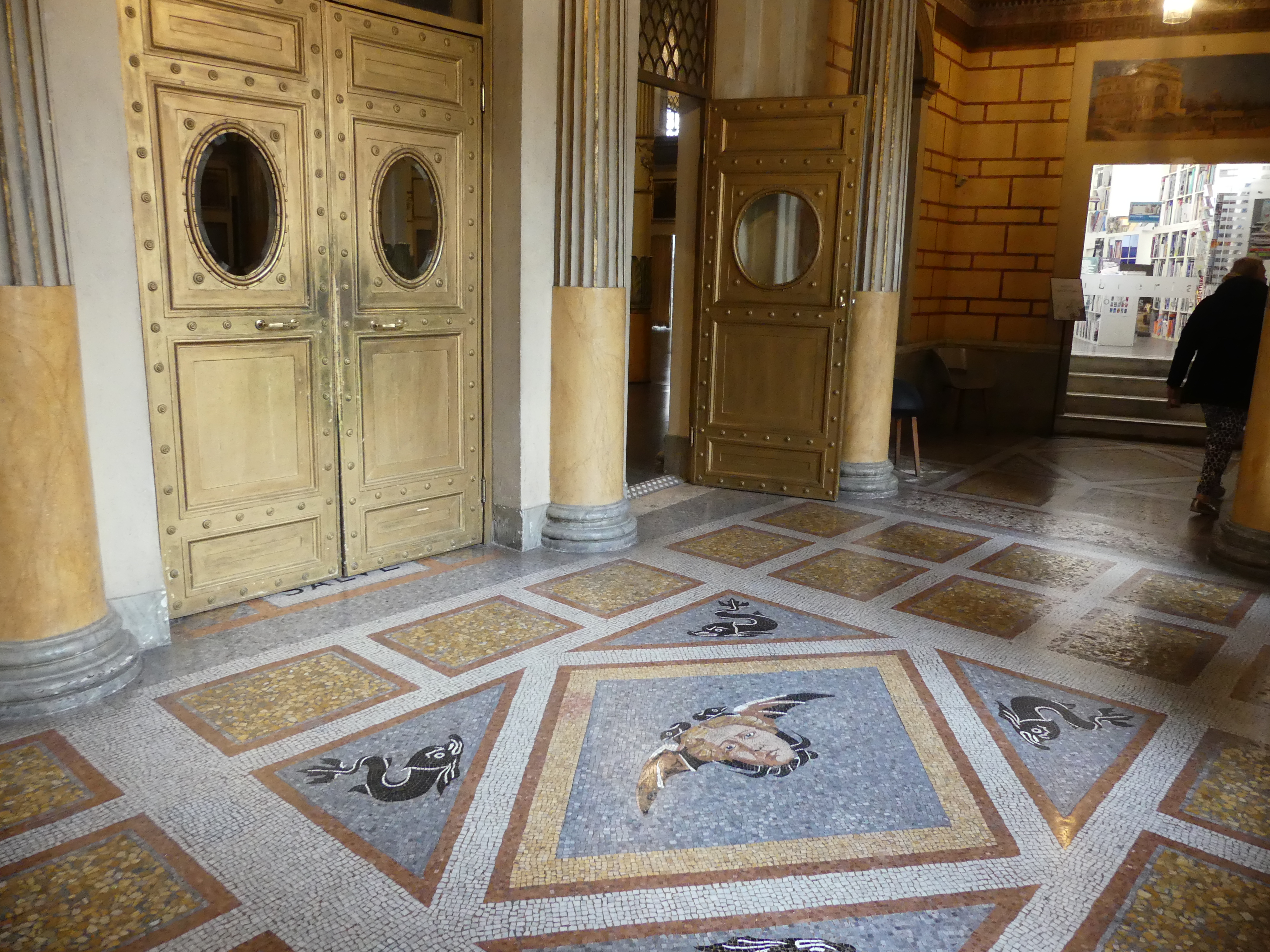
From there we found our way to an architects’ conference in a recently renovated building and in the grounds of course ruins of some previous use and one of the inhabitants of Rome still making use of it (picture below). Jet lag and the cold of the Roman evening started to take its toll, so we had an earlier dinner and retired to our hotel. Big day tomorrow training it to Terni and then up to Cesi.

Breakfast finished we walked around to Piazza della Republica and The Basilica of St. Mary of the Angels and the Martyrs. The building was created by the rearrangement in 1562, of the work of Michelangelo Buonarroti, and the central hall of the Baths of Diocletian, by order of Pope Pius IV at the request of the priest Sicilian Antonio Duke, uncle of the faithful disciple of Michelangelo, Jacopo del Duca. We had been here previously so we moved through the Basilica itself and went to the Sacristy and into a small courtyard where we spotted a statue of Galileo (donated by the PRC – Peoples Republic of China) and another religious scene before existing the building through the tradesman’s entrance onto Via Cernaia.

Our journey then took us past Domus  Australia in Via Cernaia bearing the Australian flag and the Vatican flag (I suspect the lodgings of Cardinal Pell whilst in Rome based on the protest notices affixed the bars on the windows), past the British embassy, past a memorial to the soldiers lost in 3 wars in the first 2 decades of the twentieth century, and the Magistrates Court.

These are a few things to see around Terminii whilst waiting for a trian.

Go back

Your message has been sent

Warning
Warning
Warning
Warning

Warning.

The Retirees Go Abroad – Museo Nazioanale Di Castel Sant’Angelo

Unfortunately lunch was a bit disappointing but the afternoon held the promise of a visit to the Castel Sant’Angelo now a museum.
Part of the benefits of the Omnia pass is the use of the Roma Christiana Bus tour for 3 days. This is your usual “red bus” or open top bus tour of the major attractions in the city only this time the bus is painted yellow. So we boarded the bus to do the tour and finish at stop 1 to visit the castle. The tour, as with all such tours, gave us a good understanding of where things were and the distances between them.
Arriving back at the castle we were at first taken back by the shape which is a large circular tower with a further tower inside it. Castel Sant’Angelo (English: Castle of the Holy Angel), is a towering cylindrical building in Parco Adriano, Rome, Italy. It was initially commissioned by the Roman Emperor Hadrian as a mausoleum for himself and his family. The building was later used by the popes as a fortress and castle, and is now a museum.
Entering the castle the usual Italian thing happens – you realise there is little guidance about how to view the building or what it is you are viewing. So we followed our noses and ended up in a corridor inside the centre tower going up the middle of the tower. De je vu! This was very much like the Keep (tower) in Windsor Castle except it did not have a cannon pointed at you as you climbed the stairs. We saw the passage the Popes could use to evacuate the Vatican and hide out in the castle and we crossed over what appeared to be a means of securing the inner tower by drawing up the bridge.
We came out onto a deck serving as a patio between administrative rooms and the Popes apartment. Here was a large sculpture of an angel (if the Pope was staying here he needed an angel to protect him). This was once the tallest building in Rome and the views from the castle were pretty spectacular. On this level there is a café with grape vines growing over it. It looked very pleasant and after a nature call I found Kerry had made a friend (see its photo). As you would expect the Papal apartment was well adorned and they had a bloody big money box for all their jewels.
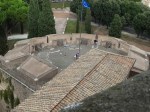
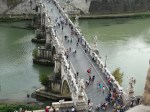
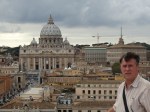
We continued to climb leaving aside the myriad of side passages through the various rooms of the papal apartments until we came to the roof deck with a colossal avenging angel hanging above us. In medieval times this platform would have given a commanding view of the whole of Rome. We could clearly see Victtorio which we visit later in our trip. You can see the Basilica, the river, in fact all around.
We walked down a different path to exit the castle. This was more like the “tradesman” with a wide path for deliveries. Between the inner tower and the outer tower we found a section of paving which had been dated back to Hadrian’s time.
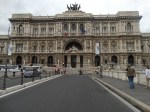
After seeing the castle we decided to walk along the river again to see what we can see. We passed the Courts and poked our heads in and a friendly guard allowed us to poke in a bit further but no photos allowed.
Back on the footpath we noticed that it is not all smooth sailing for all Romans – some still live pretty rough.
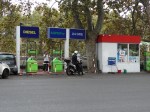
As we strolled along we came across a service station Italian style – two bowsers and the cashier – that’s it.
Finally we arrived at Ponte Cavour and the modern fountain of Henri Cartier- Bresson where we rested our tired feet and slaked our thirst with water. By the way a tip for all travellers. When in Rome you will pass public fountains just running and spilling over the footpath. These are perfectly safe and you should fill up your water bottle at the fountain whenever you can.
Rested, we walked up Via Tomacelli into Via Condotti on our way back to the Spanish Steps. On our Vatican tour the guide had tipped us off that we can identify the date of things by papal insignia and she gave the example of the three bees for the Barberini pope and the fountain at the Spanish Steps. Sure enough when we inspected here was the insignia. We had been walking all day but according to Kerry we had to climb the Spanish Steps. Why? Because!
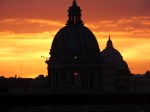
So we did. We climbed the steep slope between the Piazza di Spagna at the base and Piazza Trinità dei Monti, and we realised that behind the scaffolding was the Trinità dei Monti church dominating the top of the stairs. We went inside and found the choir was singing so we sat to listen. They were signing in French which struck me as strange then the priest got up and he too spoke in French. We had stumbled across a French church in Rome. As we left the Church we were struck by the pretty sunset. I have shared here the best of my photos of the sunset.
Below the church reminded me of Montmartre with the artists scattered around. We found two pretty sketches of things we have seen bartered heavily with the artist and purchased same. At the top of the stairs we found a plaque stating that the monumental stairway of 135 steps was built with French diplomat Étienne Gueffier’s bequeathed funds of 20,000 scudi, in 1723–1725, linking the Bourbon Spanish Embassy, and the Trinità dei Monti church that was under the patronage of the Bourbon kings of France, to the Holy See in Palazzo Monaldeschi located below. That made it clear why this area was so “French”.
As the sunset indicates once again we were in the city after sunset with no particular plans for dinner. However close by was an alfresco restaurant on the roof of a building and because we were at the top of the Spanish Steps we could walk across a bridge to the Restaurant. The night air was cool after an unexpectedly and unseasonably warm day, so sitting on top of Rome with a cool breeze a glass of wine and pizza seemed even closer to heaven than in the Basilica. There we met briefly a couple form Florida on a brief holiday getting away from the kids. We shared the evening and atmosphere agreeing that getting the Italians to do anything was like herding cats.
We ended the evening with a trip on the Metro and the bus back to the hotel. The lights of the Jolly Pizza were still burning but we were tried and in need of a rest. So ended day 2.

Go back

Your message has been sent

Warning
Warning
Warning
Warning

Warning.

The Retirees Go Abroad – Roma, the Eternal City.

I arrived home (Long Eaton) on October 13 after the Long Commute back to Australia to prepare for our trip to Roma in 3 days time.

However before travelling, there is time for a little more renovation then the morning working bee at the church. A few minutes to pack then we are on the bus to the airport, picked up our Euros at the airport which we had booked on line then through security and having breakfast at the airport. That simple.

The flight was uneventful and arriving at the airport was surprising because it was so small. Ryanair tends to use the secondary airports. The main international airport Leonardo da Vinci International Airport is Italy’s chief airport and is commonly known as “Fiumicino Airport”, as it is located within the nearby Commune of Fiumicino, south-west of Rome. However we flew into Rome Ciampino Airport which is a joint civilian and military airport. It is commonly referred to as “Ciampino Airport”, as it is located beside Ciampino, south-east of Rome. Collected our luggage and then went out to find a way of getting to our hotel. Hello what’s this? A chauffeur with a notice board reading “Senor and Senora Young”. That us Kerry cries. What a pleasant surprise. No worrying about how to get there just jump on board the chauffeur driven van and we are there at the hotel.

We booked in and thanked the receptionist for sending the chauffeur. “No Senor we did not send the chauffeur perhaps the agency”. The penny drops. Kerry looks at me and says she must have booked it with our flight. Later we check and sure enough for a little extra we had booked the chauffeur. Well worth the cost.

Now a little bit of history courtesy of Wikipedia to set the scene.

“Rome is the capital of Italy and also of the Province of Rome and of the region of Lazio. With 2.9 million residents in 1,285.3 km2 (496.3 sq. mi), it is also the country’s largest and most populated commune and fourth-most populous city in the European Union by population within city limits. The urban area of Rome extends beyond the administrative city limits with a population of around 3.8 million. Between 3.2 and 4.2 million people live in Rome metropolitan area. The city is located in the central-western portion of the Italian Peninsula, within Lazio (Latium), along the shores of Tiber River. Vatican City is an independent country within the city boundaries of Rome, the only existing example of a country within a city: for this reason Rome has been often defined as capital of two states.

Rome’s history spans more than two and a half thousand years, since its legendary founding in 753 BC. Rome is one of the oldest continuously occupied cities in Europe. It is referred to as “The Eternal City” (Latin: Roma Aeterna), a central notion in ancient Roman culture. In the ancient world it was successively the capital city of the Roman Kingdom, the Roman Republic and the Roman Empire, and is regarded as one of the birthplaces of Western civilization. Since the 1st century AD, Rome has been considered the seat of the Papacy and in the 8th century it became the capital of the Papal States, which lasted until 1870. In 1871 Rome became the capital of the Kingdom of Italy, and in 1946 that of the Italian Republic.

After the Middle Ages, almost all the popes since Nicholas V (1422–55) pursued coherently along four hundred years an architectonic and urbanistic program aimed to make of the city the world`s artistic and cultural centre. Due to that, Rome became first one of the major centres of the Italian Renaissance along with Florence, and then the birthplace of Baroque style. Famous artists and architects, such as – to name just a few – Bramante, Michelangelo, Raphael and Bernini, made the city the centre of their activity, creating masterpieces like St Peter’s Basilica, the Sistine Chapel, Raphael Rooms and St. Peter’s Square.”

So after 2,500 years of history I was excited that in one place I might see pieces of those parts which influenced the Western world as we know it today. Even with this knowledge I was surprised (both pleasantly and not so pleasantly) with what we discovered.

Now the hotel was not what we expected. When booking the hotel we knew that it was 3 star but we did not ask what the standard of a star might be. The hotel looked uninviting with rubbish bins at the front spilling onto the road part of the road did not have kerb and channel and parts of it looked abandoned. From reception we were told to find our room we had to go outside up a flight of stairs through the door and our room was 101. A little unusual but we did this and got lost because the door looked for all the world to be a service door not the entrance to a set of hotel rooms.

The building containing the hotel is built in a “U” shape and has a deck between the two small towers, a ramp at the open end going down to the bus stop and a wall and covered walkway at the other end making the bottom of the “U”. We walked out onto the deck but could not find any door that would give entrance to the hotel. Ultimately we tried the service door and “Voila” we found the room. The room was basic like a prison cell is basic (the air conditioning does not work until the ambient temperature is unbearable), the shower leaked, the floor tiled throughout and the furniture spartan.

Now to travel to the old city of Rome we had to catch a bus to the Metro then into Rome. It is a bit like living at Redland Bay catching a bus to Carindale and then into the city. After a few times this became routine and we would travel with the Italians going to and from work each day.

On the positive side the cost to use the bus, train, tram and the Metro (all on the one ticket) was 1.50 euro per 100 minutes (we needed about 20 minutes on a good day and 1 hour on a bad day to get into Rome). The bus stopped immediately outside the hotel except on Domenica (Sunday) when we had to walk down to the main road about 500 metres away. There is a trick to all this. Don’t catch the bus to Grotto Celoni but catch the one to Anangina but it is hard to tell when both buses are a 507 and the bus destination is shown as Anangina even though it is going to Grotto Celoni. So on our first attempt we ended up at Grotto Celoni and had to catch the 511 back to Anangina.

When you get to Anagina, after witnessing the most fluid abuse of road rules by every driver on the road, you arrive at a bus station that must collect people from miles around as there are row upon row of stops and the enterprising Italians have set up a market which operates from 5.30am (when the Metro opens) to God only knows what time (it seems to vary) but you know when they have left because every bit of packaging and rubbish lies scattered around. On top of this is the car parking which never seems empty and in fact is supplemented by the illegal use of road side gateways and double parking. There was even a burnt out van there which seemed to the Italians no more unusual than the thousands of people making their way to the Metro.

There are only two Metro lines. The A line from Anangina (Yes we were at the end of the line in the south) and Battistini in the north and the B line from – well we did not use it much but it generally runs east west intersecting with the A line at Terminii (which is also a bus station and Rail head).

There was the ever present para military Carabinieri, the local Polizi, then someone else in uniform all carrying guns and walking around importantly. Even more ever present were the beggars and the street sellers (it felt like Nadi in Fiji). Some definitely would not take no for an answer.

Our first trip into the city was to collect our Omnia passes. If travelling to Rome these are well worth looking into. I suspect this is actually owned and operated by the Vatican because at one site we got a sales pitch for Christianity. Have a look on the web site http://www.romeandvaticanpass.com.

There are two collection points and because we were unfamiliar with Rome we chose the one closest to us at Piazza San Giovanni as it seemed easier than the other at the Vatican. Well of course it wasn’t. After taking the bus to the Grotto instead of Anangina we went the wrong way many times before understanding how street directions work in Rome. The collection point was inside a door unmarked with any identification but next door to the “mother church” St John’s Lateran. We probably spent an hour trying to locate this place and when I said to the guy at the office “well we passed the first test – we found you” I got a surly grin and he launched into explaining how the passes operated.

We decided that our official visit would start the next day as the passes are for 3 days and once you start using them (even if it is a minute to midnight) that counts as your first day. We knew that there was very little to go back to at the hotel, so we took to the Metro and made our way to the Spanish Steps (we will talk more about these later). Crowds of tourist awaited us (and this was the low season) and we wandered in the general direction of the river just to see what we could see. In this area the roads are unofficial malls but of course the cars and scooters did not stop weaving their way through pedestrians. From Piazza Spagna we strolled down Via Condotti into Via Tomacelli where, to Kerry’s delight, we found the Magnum Shop. Here they take an ordinary magnum ice cream and make it decadent. Words cannot describe the result so I will leave it to the photos.

After tasting the delights of the Magnum shop we continued our stroll down to Ponte Cavour. The sun was setting and we took photos and decided it was time to make our way home. However we could not go back the way we came we had to go a different way. With the benefit of a street map I can say that we got lost but saw the Palace Borghese, some other Piazzas, some other churches, missed the Fontana de Trevi, and stumbled upon the Metro in Piazza Barberini. I doubt we could ever find that path again. It was now passed 8.00pm and no dinner yet.

So we returned to our hotel along with the thousands of workers going home (yes even at this hour the Metro was packed) and experienced an attempted pick pocketing in the Metro. These were kids. One blocked my way and whilst I tried to push past him the other sought to lift my wallet. I was lucky and they failed but the lesson is not to carry a wallet in a pocket and be aware that pick pockets are there you just don’t realise it until too late. When we reached the bus station at Anagina the traffic was horrendous and the bus crawled its way back to our hotel.

We arrived back at the hotel around 9.00pm not having any plans about dinner. In fact I thought we were going to bed hungry. But like a star in the night the lights of the Jolly Pizza shone brightly at us as we walked up the ramp to the back of the hotel. The Jolly Pizza is a crude little eatery which serves good tasty food at reasonable prices and has a nonchalant atmosphere (basically they ignore you except when serving you and they carry on with the life of making and delivering large numbers of pizzas ordered by telephone). My first attempt at ordering was a shambles. We ended up sharing a pasta dish and finishing with two nutella crepes instead of one. Oh well at least we were not hungry and this little gem was to become a regular place to eat. After returning we fitted into the routine and appeared to be accepted as part of the furniture.

So that was our first day. We learnt a lot. Took some pictures. Planned the next few days adventures and then off to bed.

Go back

Your message has been sent

Warning
Warning
Warning
Warning

Warning.