Tudor Halls – Sudbury Hall Sudbury Derbyshire

August 22, 2014
Tudor Halls – Sudbury Hall Sudbury Derbyshire

As we leave Calke Abbey we realise we have not had lunch so we decide that we would go to Sudbury Hall 30 mins away as there was likely to be a pub open in a larger village. Well of course when we get to Sudbury and visit the Vernon Arms there the kitchen closed 30 mins beforehand. No time to lose we thought we would go to the Hall and its café.

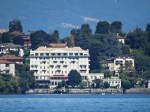
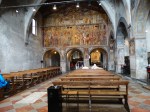
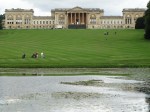
This hall is one of the finest restoration mansions as opposed to the stabilised decline we had just seen at Calke Abbey. In the 16th century there was a marriage between the heiress to the Sudbury estate and Sir John Vernon. This house was then built by George Vernon between 1660 and 1680 and is noted for its grand staircase (strangely not located in the centre of the hall but at one end (the west I guess as an east wing was built on the other end by later owners toward the end of the 19th century). It also is noted for its Long Gallery with portraits of various people but particularly Charles II’s mistresses (one cheeky one had a wardrobe mal-function whilst sitting for the portrait – cover up that nipple) and its grand wood carvings and murals. It is worth a visit to http://www.nationaltrust.org.uk/sudbury.
We were a bit rushed so my photos may not do it justice.
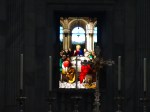
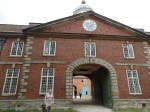
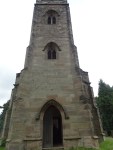
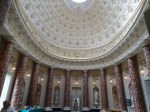
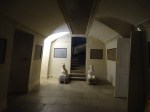
• The grand staircase – note the mural on the ceiling of the staircase
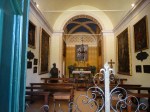
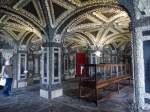
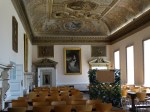
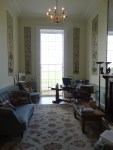
• One of the drawing rooms – note all the scroll work and the murals – the scroll work is hand carved.
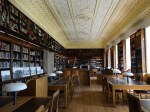
• The Long Gallery – typical of Tudor Houses to show off the family (I did not take a picture of the lady with the wardrobe malfunction out of modesty)
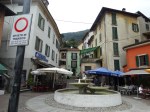
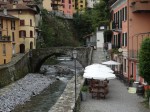
• The Vernon Arms – kitchen closed
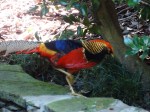
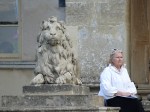
• The Sudbury Hall kitchen pet
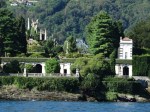
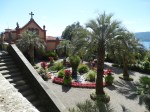
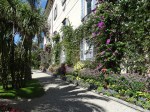
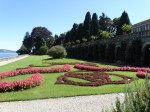
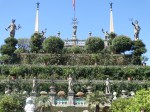
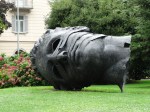
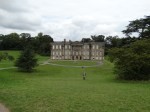
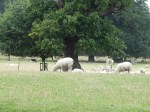
• A view of a part of the garden – who would be so anal to plant every tree in rows

The Unstately Home and Country Estate

August 22, 2014

The Unstately Home and Country Estate

It is a dull old day in Long Eaton. So we pick up the National Trust book for ideas of places to go. Didn’t I tell you when we visited Stowe House that we joined the National Trust? There is just so much but a lot seems to be the same. Calke Abbey stood out because it was close and it appeared different because it had been restored but not renovated. We also have to collect some parcels from home from UPS but Kerry has not been able to find the UPS station to collect her parcels. With these two objectives in mind we set off.

We find the UPS station very quickly – it is disguised as a corner store with a very small sign that it is also the UPS station for Long Eaton. That puzzle solved we set off into the country side and within 30 minutes arrive at Calke Abbey. We are greeted by sheep and cattle and to my surprise dozens of vehicles with locals visiting for the day.

Calke had been founded as an Abbey just before 1100AD and given to England’s first Augustinian order whom formed the Priory. In 1129AD the Abbott of Chester seized the Priory until he was told to hand it back by the Arch Bishop of Canterbury. St Giles Church which still stands on the site today was founded in 1160AD survived the rages of Henry VIII and his Parliamentary commissioners (which the Priory did not and was destroyed) until 1834 when it became a private manorial chapel until acquired by the National Trust with the manor house in 1984 due to the family being unable to pay the 8 million pounds in death duties. The bell tower contains one of the earlier bells from the 14th century made at Leicester by Newcombe Bell-founders (source National Trust).

The church is still consecrated and holds occasional services, weddings and the like. The first family home appears to have been built in Tudor style by Roger and Richard Wendsley (1573 to 1585) until purchased by First Baronet Sir Henry Harpur in 1622 (the family had become wealthy from Richard who in the previous century had been Justice of the Court of Common Pleas at Westminster and later Chief Justice of the County Palatine of Lancaster and through marriage acquired other estates in Derbyshire and Staffordshire). The house was rebuilt by the 4th Baronet Sir John Harpur around the Tudor Home. The house remained in the family for 6 more Barons with Sir Vauncey Harpur-Crewe (the 10th Baronet) being the last. The last few Barons became very reclusive being educated raised and living exclusively within the grounds of the estate (source Wikipedia and the tour guide/volunteer from the National Trust).

The guide showed us through the house which has been intentionally displayed in the state of decline in which it was handed to the Trust. The Trust has located and interviewed a surviving member of the family who lives in the US and still has rights to reside in a flat within the house and two of the former staff. At the turn of the century there were still 26 household staff and 11 ground keepers, and a pony mower. We were shown both sides the lords side and the staff side and given free rein in the estate. I’ll let the phots tell the rest of the story:

  • The Stables – there is a large stable building which now houses shop café toilets and exhibits including a play area for kids
  • The house – is looking very sad and the front has lost its grand entrance stair case
  • The drawing room – the later barons were naturalists (shot and stuffed anything they could find) and mounted or encased it in this room
  • The letter box – the last baron was so withdrawn he would write letters to the staff rather than talk to them, the butler would clear the box each day and deliver the correspondence/instructions
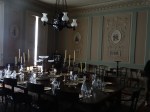
  • The dining room – a show of wealth
  • The Butler’s Pantry – includes a dumb waiter for the meals from the kitchen and the footman (who we heard via an audio interview) slept in that room
  • The service bells – a bell for each household servant – here is one wall of the bells there were two others (the number of servants declined over the years)
  • The bed – a gift from Elizabeth I on the marriage of Sir John – apparently never slept in and so unique it has been displayed around the world
  • The kitchen and the pastry rooms – note the decay – these rooms were closed up in 1922. Note the colours yellow (lime wash and pigs urine – disinfectant effect) and the blue (apparently repelled flies from the pastry)
  • The servants dining room – just a little dampness problem
  • The walk to the church
  • The church
  • The gardens – this is a minute sample
  • The ice house – the servants cut ice form the river in winter and filled these chambers to provide ice throughout the year
  • The sheep and the deer

For more information on Calke Abbey see www.nationaltrust.org.uk/calke


Go back

Your message has been sent

Warning
Warning
Warning
Warning

Warning.

Wollarton Hall Nottingham

August 20, 2014
Wollarton Hall Nottingham
We are both awake early as the electrician is coming this morning, we are joining the rotary meeting at Woolloongabba via google hangout and going to St Mary the Virgin Church to help clean up. The electrician arrived and fitted the new fittings except for one which was for a lamp not a ceiling and provided a solution to the poor lighting in the bathroom – he put in another light which now floods the bathroom so that it is brighter than outside the flat.
In the midst of the electrician’s work we “hang out” with the Rotarians at home. I think that some of them thought it was fanciful that we even try to attend the meeting from 26,000 miles away. Great fun and good to catch up but it feels like we have not left home.
The electrician is still here and we have to give St Mary’s a miss. Finally finished he stands around chatting until 12.00 noon – it was bloody hard to get him here then equally hard to get rid of him.
We decide we will change the lamp shade so into the car (THISTLE) and off to British Home Stores Derby. Oops cannot find the receipt but manage to exchange it anyway at the cost of 2 pounds parking. As we are out and about we decide to visit Wollarton House one of the sights of Nottingham recommended to us by our mates at Nottingham Rotary.
Wollarton Hall is located in the centre of Nottingham (CBD is only 3 miles away) in a very large park by the same name with Europe’s oldest and first cast iron greenhouse, and with herds of red and fallow deer running around. It is an Elizabethan mansion (late 16th century) completed in the same year the Spanish Armada was sunk 1588. (Interesting because this lead to some innovation around sourcing timber for the Prospect Room as the Navy was using every stick for ships). The Willoughby family had been sheep farmers in the county and changed their family name to reflect the wealth they were accumulating (they adopted the locality name). By the time that Sir Francis Willoughby (a Baronet) built this mansion the family were the wealthiest family in Britain next to the Tudors (Elizabeth I). Funny thing is that Sir Francis had a problem with status and wanted to lord it over everyone. So he invited Liz to visit his family home (the one before he built Wollarton Hall) and when Liz did visit her comment was something like – We don’t like the man, nor do we like the wife nor do we like the house. So he built Wollarton – the first place in Britain to have central heating, a bathroom and double glazing but more about that later. Money was no object.
One hundred years later Francis Jnr became a pioneering naturalist so the Hall is filled with stuffed animals and heads on the wall. The practice was continued down the centuries by the family.
As is the fate of these ambitious families someone loses the family fortune and the property falls into disrepair. In this case it was death duties that got them and the house and park has ended up in the hands of the Nottingham City Council and is now a natural history museum the stables are the industrial museum and shops and the park is open to the public (the day we were there it seemed every member of the public).
There was a tour on offer for 5 pounds each and as entry was free we thought what the heck. So as the kids disappeared to see Batman (yes it was a dress up day for the kids) we started our tour in the main hall. Most home for the gentry up to this date were castles or fortified buildings but this was to be a stately manor and they had no template other than a castle or a church so this looks like a castle but is intended to be a house. It is square (the only square manor house in the UK) and has a central court which was entered through stone arches to greet the Lord on his throne. Behind that was the dining room and the kitchens underneath in the basement. I mentioned the Spanish Armada. Well they did not have enough timber to provide the supports to the Prospect Room which is above the centre court. Also they tried to emulate the manner of support of the ceiling with the grotesques at the bottom but instead of support it actually pulled down on the floor. And when the architect could not get the timber he wanted because of the Navy he design a lattice support beam which never did work which meant the Prospect Room which was designed to allow notable guests to view the extent of the Willoughby lands (to the horizon for 360 degrees) all that was safe was a small viewing platform at the top of the stairs 3 storeys above ground. Of course when the Council took it over they put in the correct supports hence the floor today looks unworn although it is over 500 hundred years old.

From the Prospect Room we walked down to traverse a section of the roof (apparently a favoured past time of the Tudor gentry). Here we see the double glazing installed at a time when the government charged a tax on the number of windows but money was no object. The second lord (they climbed their way up to Dukedom also) had installed side doors to the centre court which created a draught and the centre court could not be kept warm so they installed steel pipes behind all fire paces filled with water channelled underground from a cistern installed 3 miles away to carry heat throughout the home (the first heating system) and then later the doubling glazing to contain heat (the first of its kind). On the corners of the house are the bedrooms for the guests starting with the highest ranking having access to the roof.
After viewing the walk we returned into the house and were shown the household safe (a solid steel door) and to protect the inhabitants of the house and the money from the staff at night there were two iron grilled gates and then a heavy wooden door before you got to the staff quarters (prison). Beyond were the Tudor kitchens discovered by the Council when renovating the hall. They are a bright yellow in colour and the Council discovered this was a paint made up of lime wash and pigs urine (the urine acted as a disinfectant). There were three areas to the kitchens and a slaughter room beside the meat salting room.

From the slaughter room we went into an underground tunnel which operated as both a beer cellar wine cellar brandy cellar and the cistern room for collecting the water from that cistern 3 miles away, channelling it through the tunnels to clear the air in the tunnels and ultimately to fill the man-made lake in the park. The tunnels allowed servants to clear the path for the water and to service that cistern and others but they could also call into the “Admiral Rodney “ a pub in the village going to and returning from the cistern.
After existing from the tunnels we viewed the rest of the house in particular the natural history displays and then the stables but they were closed – we had run out of time. After all was said and done a most interesting visit to see a Tudor household as it might have been.


Although I forgot the big camera we are starting to get prepared and I had the small camera in our travel pack and took some pictures and here they are:
• the Hall, its grounds,

  • some of the “heads of the household”
  • the centre court,
  • the Prospect Room
  • the view to the horizon, and
  • the stables (bigger than some other stately homes)
    • The bathroom (between the floors of the Prospect Room and below was the first indoor bathroom in Britain)
    • The kitchens and slaughter room

Attenborough, the Cromwell connection and St Mary the Virgin church

Monday August 11

Attenborough, the Cromwell connection and St Mary the Virgin church

Last night we reacquainted ourselves with the Rotarians of the Nottingham Rotary Club. We will do more with the Club and have already volunteered to do some fund raising next week.

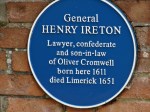
The following day we took it pretty easy. I said earlier that I had something about Oliver Cromwell and his connection to Long Eaton. Well his son-in-law Henry Ireton was born at Attenborough in 1611 and the place of his birth (much renovated) still stands there today. Attenborough is the next to Long Eaton between Toton and Chillwell.

Ireton ended up a general in the English Parliamentary Army during the English Civil War and died of fever in Ireland in November 1651. He was baptized at St Mary the Virgin Church (more about the church shortly) graduated BA in 1629 from Trinity College Oxford in 1629 and entered the Middle Temple (one of the exclusive inns of barristers in London). Ireton joined the parliamentary army and engaged in his first battle in 1642 and fought in 5 campaigns until being wounded at the Battle of Naseby whilst commanding the left wing of the attacking force before being freed by Cromwell’s right wing of the force in September 1645 and thereafter entered parliament in October as the member for Appleby and after fighting in the siege of Oxford married Cromwell’s daughter (and step daughter of General Fleetwood) Bridget Fleetwood (who after being widowed from Ireton married her step-father the General).

Unlike Cromwell, Ireton supported the idea of a constitutional Monarchy and conducted lengthy negotiations with the Army and the King (Charles I) to try and achieve this outcome for the Civil War but he became convinced of the hopelessness of dealing with Charles after the King’s flight to the Isle of Wight. He was to later sit on the King’s trial and was one of the commissioners to sign the death warrant for Charles.

He accompanied Cromwell to Ireland for his Irish campaign in August 1649 and was elevated to the rank of Major General and placed in charge of the New Model Army in Ireland when Cromwell returned to England to invade Scotland. He died of fever after the successful siege of Limmerick and was buried at Westminster Abbey under the Arms of the Commonwealth of England Scotland Wales and Ireland (the Kingdom having ceased with the beheading of Charles I). However following the restoration of the King in 1660 Charles II exhumed the corpse from Westminster along with Cromwell and John Bradshaw (all of whom signed the death warrant for Charles I) on January 30 1660 (the anniversary of the beheading of Charles I) and mutilated the corpses.

Now as to St Mary the Virgin church it still stands in Attenborough having stood in one form or another for 1000 years (they have found evidence of a wooden Saxon Church and remnants of a Norman Church in the grounds and todays building). We have volunteered to attend a working bee at the church and are interested in doing further activities for the community through the church.

I have attached the photos showing:

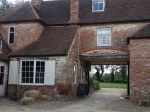
  • The Ireton memorial and todays house
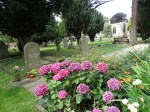
  • The St Mary the Virgin Church and graveyard.

Since I first wrote this article Kerry and I have joined the maintenance crew at the church to do a spot of cleaning up.Kerry trimmed bushes whilst I cleaned storm water drains and mowed amongst the tombstones. Here is the photographic evidence.

First Working Bee
First Working Bee

Go back

Your message has been sent

Warning
Warning
Warning
Warning

Warning.

Weekend at Slough – What’s this – a school?

August 16 – 18
What’s this – a school?

The trip home through Reading was an experience – Reading Station has 15 platforms – so much for a country stop.
Check out Monday August 18 and we leave the unfriendly people of Travelodge Slough to travel to Buckingham (Kerry does not want to sit on the M25 going home but wants to see pretty villages). So I set the GPS (“Tommy”) for Buckingham formerly the centre for Buckinghamshire (some centuries earlier but now a village of some 12,000 people). Well we found a way around the M25 and its called the M40 but we made the mistake of having breakfast at one of the “Services” along the way. Service are usually a small shopping centre with bathroom facilities and take away food outlets a petrol station truck stop and often a motel. We had spent under 10 pound for a full English breakfast at Windsor the day before and here we are today 17 pounds for some burcher muesli and a ham and cheese toastie.
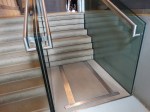
After about 1 hour we arrived at Buckingham but its not a pretty village (interesting old goal in the middle of town though – Kerry is not amused so I will have to see the goal next time). So we plot our return to Long Eaton and before long we see in the distance a large gate (no fence) looking like the Arch de Triumph and a sign saying “Stowe House”. Kerry is interested so after a near collision at a blind corner (my fault not looking at the road but where we are going) we turn towards the entrance which has some amazing similarities to the Long Walk (this observation would be proven correct later). We were met at the car park and asked for our National Trust card which of course we did not have. No worries so in we went and parked near the “New Inn”. On entering the New Inn I found that it was set up just as it would have appeared in the 18th century but Kerry went straight to the information centre. By the time I got there she was signing us up as Trust members and had found a chap from Toton (next village over from Long Eaton). He explained that there were extensive gardens and a large house which we could visit free as members of the Trust. Also the house was open to be viewed because of the school holidays (6 weeks in summer). So off we set. (Just before we go any further I will mention the great invention I saw at the centre – a set of stairs that retract into the floor to expose an elevator for disabled people – photo follows)
Any way we walked and walked and walked to finally arrive at the bell house (visitor would ring the bell to be let into the estate). On entering the estate and gardens you are hit by the enormity of the estate and the home at the centre of it. Looking across two adjoining lakes and past the golf course sits Stowe House. We were to learn that the Temple family were sheep farmers up till 1546 and in 1589 they bought the estate and constructed the original Stowe house which was completed in the early 17th century by Sir Richard Temple 3rd Baronet. There is a lengthy history of how this family climbed the political ladder and the royal ladder from Baronet to Earl to Viscount to Marquess to Duke. During this climb the house was extended enormously until it became the longest house in the UK. The house remained in the family but the family name changed through marriage to Grenville. One of the daughters was wife of William Pitt and therefore mother to William Pitt the Younger (two Prime Ministers of the UK) and the family became Grenvilles who were also Prime Ministers therefore the family was richly endowed with good political fortune. The sons also married well to add to the fortune which they spent just as quickly developing Stowe. At one time the Baron moved 600 people out of the village of Stowe keeping their church and resuming their land. It all came to a sad end when after entertaining Queen Victoria and the Prince consort the bailiffs moved in and sold up everything. The house of course was to emulate grand homes and impress political and royal dignitaries hence the look alike Long Walk (my idea – not based on anything else)
There is much more to the story and I suggest you look at Wikipedia if interested in the full family history. Other sites are http://www.stowe.co.uk.
In 1922 the house and estate were sold to the governors of the Stowe School and the property put into the Stowe House Preservation Trust and rented to the school for boarding and schooling accommodation. A great use preserving the best and continuing to use the building and the grounds. And the curry for lunch for the staff smelt pretty good also but no invitation was forth coming to us.
Oh I forgot to add that New Inn was built by the family for visitors to stay (obviously not important visitors) and visit the estate.
A picture tells a thousand words or so they say. See what you think:
• New Inn and the restored rooms
• Stowe House
• The Gothic building
• Garden scenes
• The front door and the back door and steps
• The main entertaining room and it statutes
• The Egyptian Room (one of them went all over the middle east and Greece to collect for the house)
• The Library the deputy Heads office and other rooms
• The Church
• The footy shed and field
• An aerial view and
• Those amazing stairs at the information centre.

Go back

Your message has been sent

Warning
Warning
Warning
Warning

Warning.


Weekend at Slough – Off to the Races

August 16 – 18
Off to the Races

As I said we went back the second day so after completing our visit to the castle we went to a pub and then to Windsor Riverside Railway Station to travel to Royal Ascot. As the Royals always rode to Ascot there is no direct train link but on arriving at Ascot you would swear there was only the racecourse and all roads lead to it.
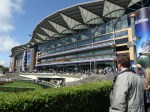
Truly breathtaking. The first thing you see (apart from the 25,000 other people visiting) is the mounting enclosure and a modern glass and metal stand of huge proportions. Standing room only when we got inside. I bought a beer from a friendly vendor and we settled down (actually we stood up) till the events started.
First there was the fly by from the Red Arrow RAR aerial acrobatics team. That was it – we were left somewhat dumbfounded but then came the Chinook – well what this thing could not do – just amazing. This was followed by the race – time trials across a course where the pilot manoeuvre his plane through various obstacles on a course in propeller driven planes at 300 kph. There was an Aussie competing -Matt Hall and he qualified by beating the favourite Pom. Unfortunately he missed out on the next qualifying round so we went home. My camera battery was flat also and I had not packed my spare battery. NOTE TO TRAVELLERS – BACKPACK WITH ALL NECESSARY SPARES, COATS, UMBRELLAS AND WET ONES NEEDED.
Here are some of the photos I took:
• The pub

the Pub
the Pub

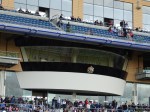
The racecourse the royal box and mounting yard

Buying a beer

• The fly by

• The Chinook

• One of the racers and

• The finish line – we were standing directly in front of the finish line and where they took off – another lucky fluke


Weekend at Slough – a visit to Mr and Mrs Windsor and their castle

August 16 – 18
A visit to Mr and Mrs Windsor and their castle
We had booked to go to the Red Bull Air Race at Royal Ascot Racecourse on August 17. We loaded up the car and drove down to Slough (near Windsor and Heathrow). Its only 2 hours on the M1 but the M25 is always a risk for delays. We arrived at Slough pretty much on time and after identifying our hotel and parking the car for two days we went to the rail station at Slough and headed to Windsor. Surprisingly Slough has a dedicated line to Windsor and Eton as Queen Victoria decided she wanted one. She also decided she wanted another dedicated station Windsor Riverside which connects into the Staines line. This was to prove valuable in getting to Ascot.
We caught the train (photo attached) and arrived at Windsor to learn that Frogmore House was open.

This house is in the Great Windsor Park ((Frogmore estate about one half mile from Windsor Castle along the Long Walk) and is the house (as opposed to Castle or Palace) used by the Royal family and includes their crypt in the grounds. In 1790 Queen Charlotte decided she wanted a country home for her and her daughters and its been in use as a retreat or royal residence ever since and is a favourite of the present Queen (she has special little doors for the corgis – not dog flaps but proper little doors on all the doors leading to the verandah). It is only opened twice a year and we fluked one of those days.
After walking through Windsor from the station we came to the Long Walk which has been the ceremonial drive into the castle to the Royal and State Apartments. It is quite amazing a line of trees with a road in the middle going to the horizon. Some years ago when we caught up with Angus Innes in London he took us to Hampton Court and then a pub just off the Long Walk for lunch. So I was somewhat surprised to find the pub again. Great pub and beautiful location.
Our visit to Frogmore was quite strenuous as the estate is large and the house set well into the estate. We visited the mausoleum/crypt and noticed that Edward and Wallis are buried there side by side but quite apart from the other graves (and not inside the crypt). The house is something else. I’ll let the pictures tell the story. We spent a couple of hours there (mainly because of the distance to walk) and this meant we were destined to be caught up in the queue to get into the castle.
So after a spot of shopping for some new shoes (Kerry’s feet still giving her trouble) we lined up for 40 minutes to get in. NOTE TO ALL VISITING HERITAGE SITES AND MONUMENTS IN LONDON – you will be scanned for anti – terrorist reasons so leave your crocodile Dundee knives at home – the blade has to be less than 7cm so I got mine through when we visited the Shard some time ago but I just don’t take my knife with me to public buildings any more. Waiting while they measure the length of the knife can be a bit embarrassing.
After the scanning and collecting our free audio guide we set off to visit the castle and what a castle. Primarily now a residence it is a community within itself with formidable defences for its period. It started as a wooden keep under William the Conqueror. He got his soldiers to dig a large circular trench atop a hill and to throw the dirt and rubble into the centre and on top of the pile he built a wooden Keep (circular tower) and after 100 years (the time judged as necessary to let it compact) they built the present stone Keep and the other accoutrements like gatehouse and barbican (no longer standing) and over the centuries added all the rest. The last addition to the castle was another 10m added to the keep by George IV just to make it look more impressive.
We toured inside the castle and St. George’s Chapel (it is the size of a Cathedral) (no photos allowed) and most impressive was the hall of the knights of the garter. You may recall there was a fire at the castle well you would not know it now. But good old Phil (Prince Philip) made one alteration to connect the state apartments to the castle proper. It took a good couple of hours to see it all. It is a must see in my view.
There is quite a nice surprise at the end. You can extend your ticket for one year by having it stamped by one of the wardens which means you can return for free (avoid all the queues and still get your free audio guide).
We did go back the following day – Kerry to see Queen Mary’s doll house and me to climb the Keep. The doll house was not my cup of tea as the queue is always there and never shortens but Kerry tells me it is a miniature working house with running water and electricity silver table ware and working furniture. The Keep has over two hundred stairs to its top and at the end of the first flight is a canon looking straight at you to repel intruders. Once at the top you have an unrestricted view but no photographs allowed of the State and Royal Apartments (we don’t want to catch Fergie sucking toes on camera again).
I have included some photos of:
• The bus station at Slough (a pity the rest of Slough is not as modern)
• The train – actually a museum piece on show at the station
• The Long Walk and the entrance to the State Apartments form the Long Walk
• The crypt front and back (where the graves are)
• Frogmore House and Frogmore Estate gardens
• Flowers in the streets of Windsor
• The Keep (the Union Jack means the Queen is away – her own flag is flown when she is home), St Georges gate
• St Georges Chapel and the apartments of the clergy and some of the grotesques on the Chapel exterior (these are the little faces images featuring throughout gothic structures. I always thought them to be gargoyles until reading about them in the castle)
• The moat (never filled with water)
• The gate house to the Keep and the views from the Keep


Sherwood Forest, Thoresby Abbey, Rufford Country Park and Wellsby Abbey


August 13, 2014
Sherwood Forest, Thoresby Abbey, Rufford Abbey Country Park and Wellsby Abbey
It is Wednesday our wedding anniversary so we have planned to catch up with Ingrid and John Pears plus revisit Thoresby Abbey. Ingrid is a world renowned glass blower with her furnace and shop at Thoresby courtyard and past President of the Nottingham Rotary Club. Thoresby is now a Warner Hotel but Warner has restored the Abbey magnificently. It is about 55 minutes north of Long Eaton.
On the way (as usually happens) we were distracted with a sign to Newstead Abbey but the Abbey building is closed during the week. This diversion meant that we approached Thoresby from a different direction and we ran into Rufford Abbey Country Park. Rufford is now a ruin but has an interesting history. The Abbey was founded by Cistercian monks in 1147. Henry VIII closed the Abbey and it ended up in the hands of the 4th Earl of Shrewsbury and converted to a country house. Now remember Bess of Hardwick. One of her husbands was the Earl of Shrewsbury so the Abbey might have ended up in the hands of the Cavendish family except that it passed along the female line and ended up in the hands of the Saville Family until sold to Nottingham County Council in 1952 and became England’s first country park. It is 150 acres in size and regularly frequented by families.
Below you will see photos of the Abbey as is today showing
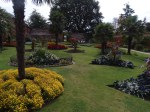
• The interior ground floor of the monks quarters
• The base of a corbel (support for the upper floor) and its grotesque
• One part of the under croft with displays of abbey furniture and
• The other part showing the lay monks quarters and
• What is now called the Orangeries but started life as a bath house with a swimming pool (in 1740 this was quite unique) and the view from the Orangeries to the grounds.

You can read more at website: http://www.Nottinghamshire.gov.uk/ruffordcp

We then moved on to the only remnant of Sherwood Forest remaining. Mining and logging over the years has decimated the forest and the Brits are desperately trying to hold on to this little bit. It is near the village of Edwinstowe and includes a visitor centre and various walks in the forest. We took the walk to Major Oak said to be the tree Robin Hood and men used as a hiding spot because the trunk has a cavity which can hold 13 men. All of the good oak trees have been cut out leaving the stunted and diseased but even these have grown to enormous proportions over 800 years. In Robin’s time the forest was a Royal Hunting Forest made up of villages open heath woodland sunny glades and farmland. I was surprised to learn that the ecology of the forest is quite unique and includes 200 different species of spider and 1500 species of beetle.
I have given you below photos of
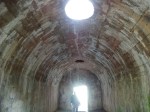
• The entrance to the visitors centre
• Major Oak (11m in circumference and longest limbs being 28m)
• An eagle and a hawk at the visitors centre

• The Robin Hood supply wagon

• and us enjoying a cuppa

You can read more at website: http://www.Nottinghamshire.gov.uk/sherwoodcp

Finally we made our way to Thoresby. Having been there before we went straight to the Courtyard (the former stables turned into a retail centre for the hotel) in the hope of catching up with Ingrid and John. We had heard that Ingrid had been ill so it came as no real surprise that her studio was closed. So we went to the hotel to have lunch but ended up visiting the restored abbey because it is so outstanding. I have attached photos of the:
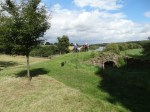
• the entrance to the courtyard
• the abbey in the distance
• the grand hall
• the blue room restaurant and the hand-made silk wall paper costing 500 pound per metre
• a carving of “major oak” and
• examples of towel art
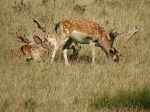

You can read more at website: http://www.warnerleisurehotels.co.uk
There is reference in the tourist guides to the “the Dukeries” which is a reference to the 4 great ducal estates in the region south of Worksop. The Duke of Newcastle (Clumber House – no longer there) Duke of Portland (Welbeck Abbey – questionably there) the Duke of Kingston (Thoresby Hall) and the Duke of Norfolk (Worksop Manor). To find out more about the Dukeries and to get some lunch we went to Welbeck Abbey. We were puzzled by the crowds of people visiting this former abbey which is now just a group of shops selling plants to produce. Not worth the visit unfortunately and no photos.

Peaks district – Blue John Cavern and the Chestnut Centre

August 14, 2014
Peaks district – Blue John Cavern and the Chestnut Centre
Sunrise Thursday the weather looks clear and cool but the TV forecasts rain for everywhere else in Britain. Therefore a good time to visit the Peaks District. This is about 1 hour 15 mins north-west of Long Eaton by car travelling out through Chesterfield. We have two objectives the Blue John Cavern and the Chestnut Centre both near the village of Chapel en le Frith (Yes we are still in the UK but in the 12th century when this used to be royal hunting forest King Stephen established the chapel and from there grew the town. These royals of course were Normans and spoke French not Saxon so it became known as the Chapel in the Forest or Chapel en le Frith).
The drive was trouble free and when we started to climb the hills the scenery changed dramatically. Suddenly the hills were the colour purple with heather flowering everywhere. We stopped by a public walkway (these paths are all over the UK allowing the public to walk across most open fields and hills) and took the photos below. Tres pretty and this is where we got the first inkling that cool really meant very cool. We continued the drive and the scenery just got more and more picturesque. It is hard to pull over to take photos so I just snapped them from inside the car. I also took a video which I am not sure if I can put into my blog but I will try. It will give you some idea of the extraordinary beauty of this region.
We came into the Blue John cavern region through Castletown and to access the cavern we had to travel through this pass in the hills which looked like a giant sword strike in the hills (see photos below). As we travelled up the crag sheep hung precariously off the slopes grazing but I wondered how many had become road kill over time – how they hung on I don’t know. Once we reached the top and made our way to the turnoff to the cavern another extraordinary vista opened before us. Just pretty country.
The cavern looked pretty tired. The visitors centre looked more like a military bunker and the entrance to the cavern looked like a cell. It did not help that we were dressed for a summer day and it felt like the middle of a Brisbane winter day. Even in the cavern it felt like a fridge.
Blue John (or as the nobles of the 17th century referred to it “Bleu et Juene” [French was still the language of the nobility] – hence the locals misinterpreted it as Blue John) is a semi-precious fluor-spar mineral formed in the limestone and mined for the last 300 years. It is the only hill in the world where this mineral can be found so the clever miners have reduced production to simply top up use of the product annually thereby holding its value as a semi-precious mineral. I have included some of our photos going through the cavern and some of the veins of the mineral and the entrance to the current cavern where the commercial deposits can be mined (not allowed in there). I have also taken a photo of a yellow stone/deposit in the gift store window as there was none of that evident in the cavern.
After surfacing from the cavern we travelled on to the Chestnut Centre (Otter Owl and wildlife-park). We stopped for a coffee from our new flask courtesy of our friendly bus driver Robert and then ventured into the park. We arrived at feed time for some of the animals. We saw a martin, some European polecats (looked very much like the martin) various owls from little ones to big ones and otters from little ones to big ones. Kerry was put off that they were feeding them dead day old chicks but none of the kids seemed the least bit worried. I have given you a variety of pictures below. As we arrived at the Giant Otter pen it started to rain and rain and rain so we made our way back to the visitors centre but on the way stopped under a tree to watch the deer being feed hence the rain drops on the lens.
It was time we were fed. So we decided to shout ourselves lunch instead of the boiled eggs we had planned to eat. We found the Roebuck Pub in Chapel en le Frith in the ancient part of the town (the pub had been there in some form since the 12th century and the food tasted like it was from that epoc). Rested and fed we travelled home via Ikea town where Kerry solved a problem with the curtains in our bedroom – bought new curtains. So ended another successful adventure.
I have attached photos of:
• the heather over the hills
• views of the picturesque country side
• the gorge and the visitors centre
• the trip down the cavern
• “blue john” in the face of the wall and cut and polished and
• The pole martin and his friends at the Chestnut Centre.


Go back

Your message has been sent

Warning
Warning
Warning
Warning

Warning.

Derby – the industrial city

August 11 2014

Derby

We have been redecorating the flat now for almost a week (repainting and replacing some of the worn out and broken furniture – 6 years of tenants) and whilst we are within sight of finishing we decided it was time for a break (and to acquire some further bits and pieces to finish off). Close by Long Eaton is the city of Derby and Westfield has constructed a large shopping centre just on the fringe of the CBD. So it is a little bit of home I suppose but there is parking and on a rainy day you are warm and dry.

Derby has quite a history. It is both a city (approx. 250,000 people as at 2011 census) and the name of the county in which it is located. It is the home of the Industrial revolution with the first mechanised factory in the world having been constructed there in 1721. The entrepreneur was a fellow named John Lombe (died 6 years later rumoured to have been poisoned by an Italian “Mata Hari”) who was one of the first industrial spys in the world taking technology from Italy for the spinning of silk and patenting the process in the UK and thereby breaking the China/Italy strangle hold on silk. The remnants of his factory remain today as Derby’s Industry Museum.

Derby is the home of Rolls Royce but many of the industrial engineering industries for which Derby became famous have closed. Royal Crown Derby makers of fine bone china has gone through a metamorphosis to emerge as a specialist manufacturer of porcelain and bone china.

There is evidence of Roman settlement and later Anglo Saxon records of a settlement that has grown into Derby. The origin of the town name could be Anglo Saxon (Djura-by), Roman (Dervinto) or Danish (deor)

.

In the Civil War (Cromwell times 1642 – 1646) Derby had a turbulent history but was on the side of Parliament against the Royalist Armies but 100 hundred years later it played host to Bonnie Prince Charlie where he planned his assault on London to regain the throne of England for the Stuarts. As you all know Charlie backed away from the fight and faced his “Waterloo” at Culloden in 1746, which saw the House of Hanover replace the House of Stuart on the thrones of England Scotland Wales and Ireland. (I will have a little more about Cromwell and his connection with Long Eaton/Attenborough later on).

Derby is built upon the Derwent River and many mills were establish in the Derwent Valley to make use of the water power generated by the river. There is a whole system of mills along the valley but the most interesting to us was the mill at Darley Abbey. We have not made it to the Abbey this time but when we do I will show you all that remains of the 12th century abbey and the industrial weir providing the power for the mills along the Derwent.

In the photos following you will see

• the symbol of Derby the Ram located in the Mall,

• the Book Café (the home of the largest scones known to man) – we stopped for a cuppa and I had an enormous cheese scone and Kerry a sultana scone; the premises were so popular it seemed no one was able to walk past it without coming in,

• the Tiger Bar (a pub which is built over the entrance to the Derby Catacombs – regular ghost tours are conducted where the tourists disappear into a trap door in the floor of the dining room in the bar and reappear later) – we may return for the ghost tour ourselves,

• Derby Cathedral dating from the 12th century and where Bess of Hardwick (a famous identity from Elizabeth I’s reign, one of the wives of the Lord Cavendish and she starting as a 15 year old had 4 husbands and 11 children herself [the family are now the Duke of Devon and much of the privately owned land in London belongs to this family] and gaoler of Mary Queen of Scots) is buried along with all the family members since the 17th century

• Bonnie Prince Charlie on his horse to commemorate his plotting at Derby,

• the Old Silk Mill Pub (no connection with the original factory other than it is close by)

• Derby’s oldest pub Ye Old Dolphin,

• the catholic monolith St Mary’s (it replaced an older church destroyed by Henry VIII)

• the remnants of the first industrial factory (the Silk Factory) now the Derby Museum of Industry

• a painting by an unknown (and not very good) artist of Derby showing the Silk Factory, Exeter House and the town of Derby circa 1725 – they purchased this from an auction because it is the only record they have showing what the town and factory looked like and it shows Exeter House where Charlie and his co-conspirators met – this was later used to entertain visiting industrialist checking out the factory

• a 3D printer in action at the museum – we saw it produce a whistle which worked and two feathers usable as book marks – amazing to see an image turned into a solid, and we saw kinetic sand which is remarkable because it only sticks to itself and therefore is perfect for model making

• remarkable premises of a local law firm “Flint Bishop” occupying this whole building – have a look at their website they have people for just about every letter of the alphabet

the Ramthe Book Cafethe Tiger BarDerby CathedralBonnie Prince Charliethe Silk Mill HotelYe Olde Dolphinthe Silk Factory18th century Derby 3D printerFlint Bishop offices DerbyThe Abbey - the remenants of the Darley AbbeyWhat a place of worship - The Abbey

I have also included some older photos of Darley Abbey from previous visits. All that remains of the Abbey is a former church turned into a pub. Somewhat of a miracle turning water into wine women and song.

Go back

Your message has been sent

Warning
Warning
Warning
Warning

Warning.