“THE RETIREES GO AROUND THE WORLD – Singapore Day 3 and 4“

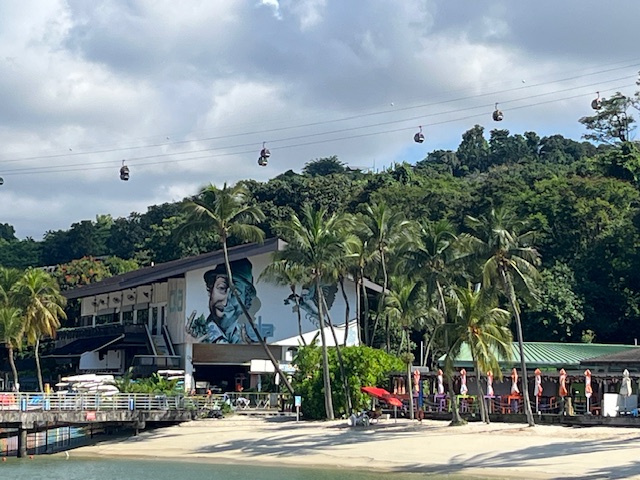
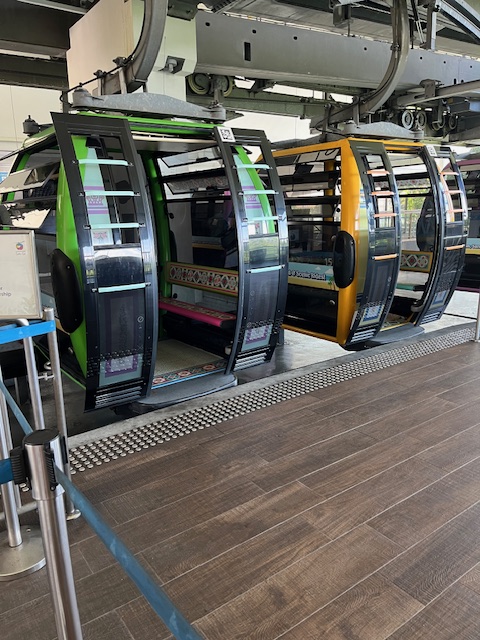
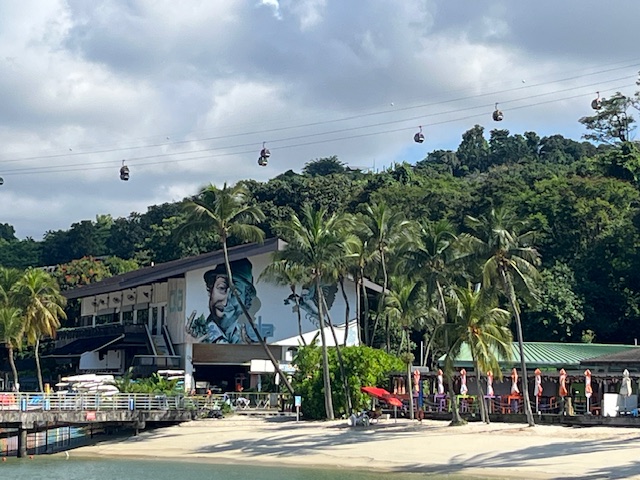
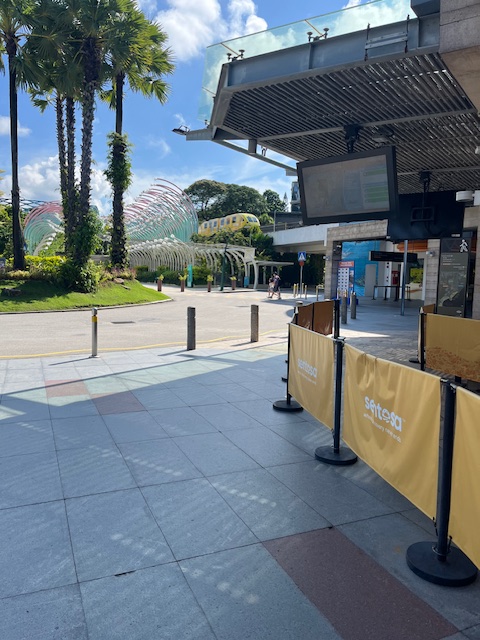
We awoke early this morning as we had decided to visit Sentosa Island with plans to ride the cable cars. Of course we had to work out the underground to travel to the island. Once we reach the Terminus for the train we were hopeful of catching the cable car across to the island. But the cable car was being serviced that week, so we travelled on the monorail.

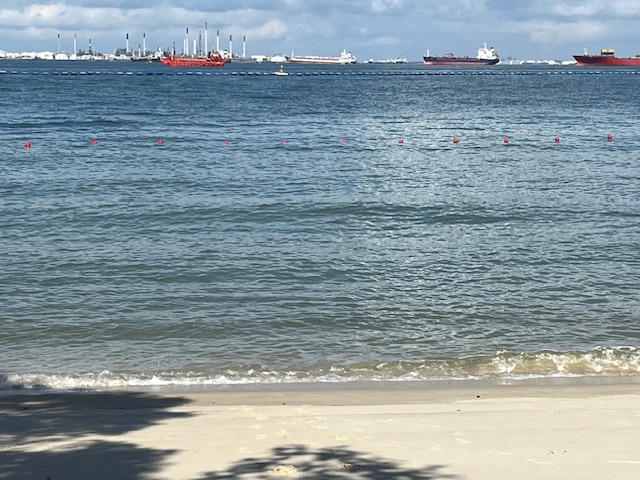
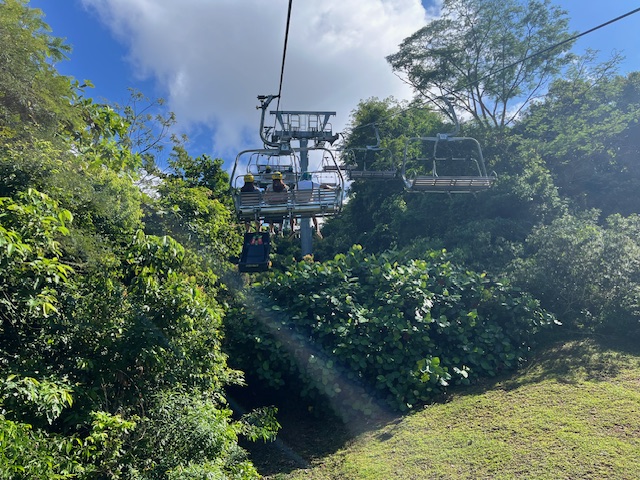
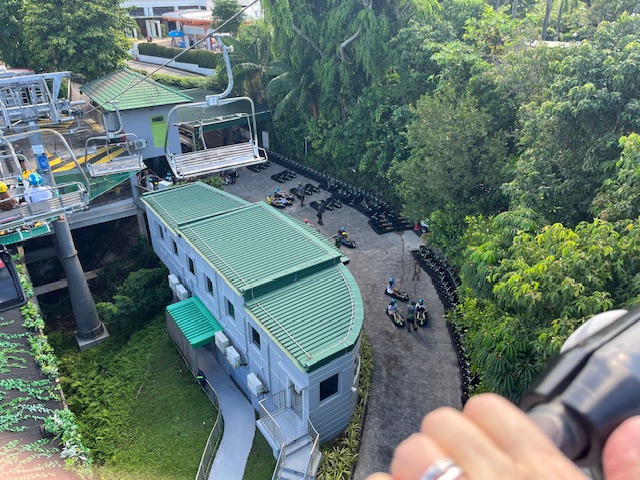
Interestingly the underground train and the monorail both reminded me of Beijing and Hong Kong – struggling against the tide of people trying to get into the rail car. Despite the throng when we arrived the place looked deserted. There were 5 to 6 stops on the monorail and maybe they all got off at earlier stations than the terminus. On arriving the directional signs took us to the beach where the only other people there was a family under a red umbrella. No waves to be found but the bay was cluttered with ships at anchor. Not much excitement there so we followed the signs to the ski lifts – yes we are on the equator and they are using ski lifts. The reason is that under the ski lift there is a raceway so you can hire the car to ride down the hill and you dragged your car up the hill by dragging it from your lift. I could not work out if the nets were to catch falling passengers or falling cars.

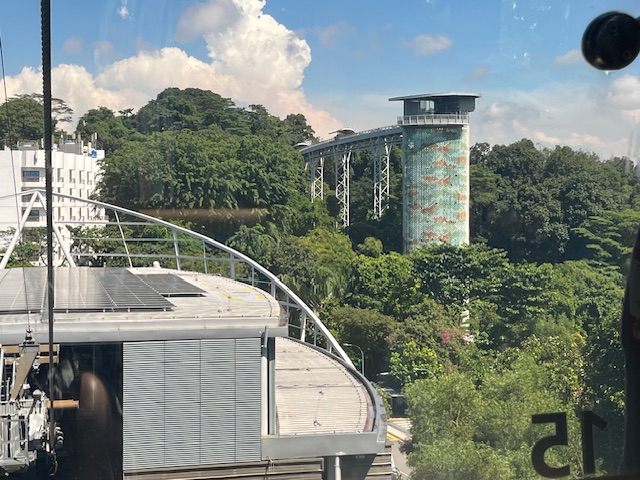
We weren’t ready for the race so we left the ski lift at the top station and walked around to the cable car which we thought was not operating. Yes it was operating but not the connections to the mainland. Still we thought we ought to catch the cable car to see more of the island. The cable car terminated at the treetop walk. Now the temperature was bloody warm, my disposition was cranky due to my various ailments and there was no lift to take us to the treetop climb. We stayed aboard and went back to the ski lift as we had spotted an air conditioned ice cream shop with tables and chairs.
We made our way back to the hotel to get ready to transfer across to Raffles the following day.

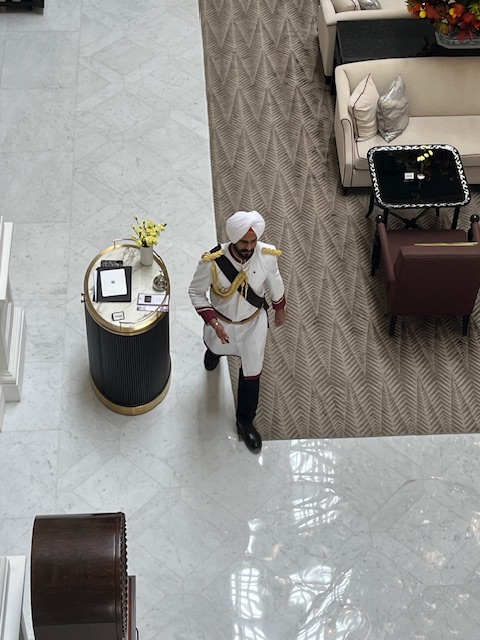
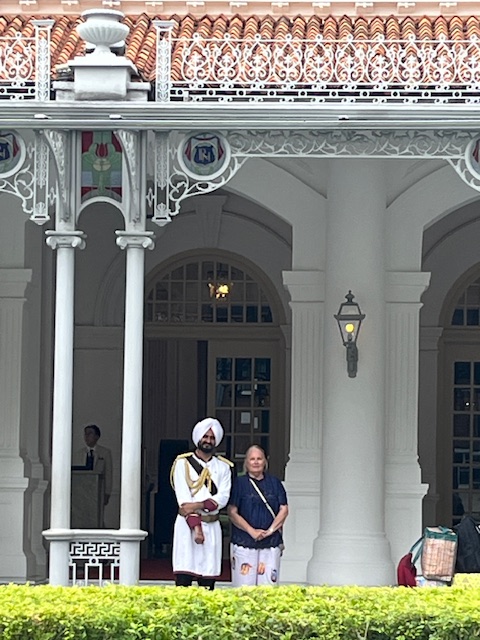
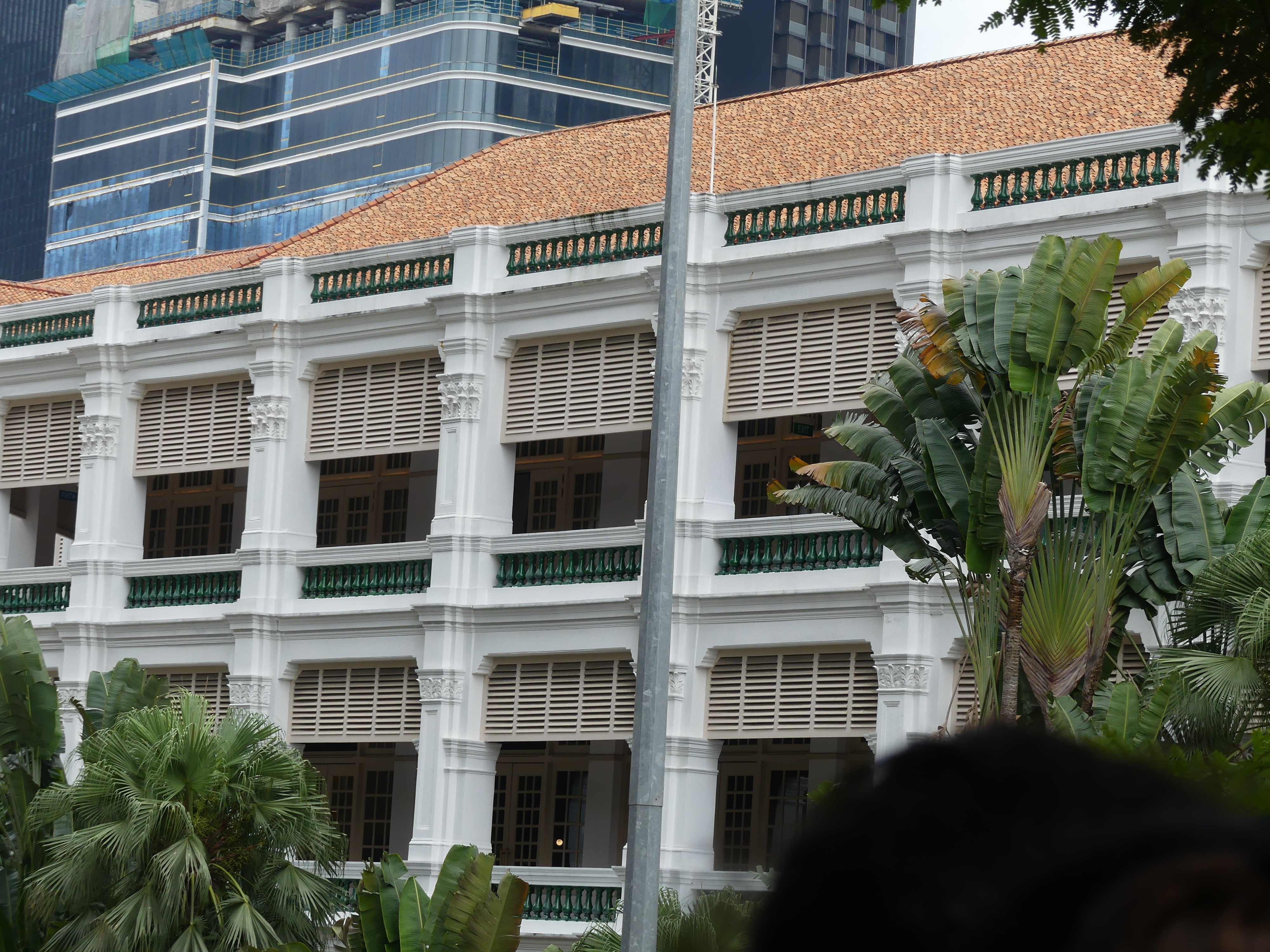
Day 4 and we start preparing to check out Park Royal Collection Hotel and make the move across to Raffles Singapore. We caught a cab even though the hotel was nearby. We did not feel like dragging our luggage in the heat of the day. Arriving at Raffles we were met by the traditional Sikh Doorman at the front door of the hotel and shown inside to the reception office. Our room was not ready so we decided to check out our home for the next 2 nights.

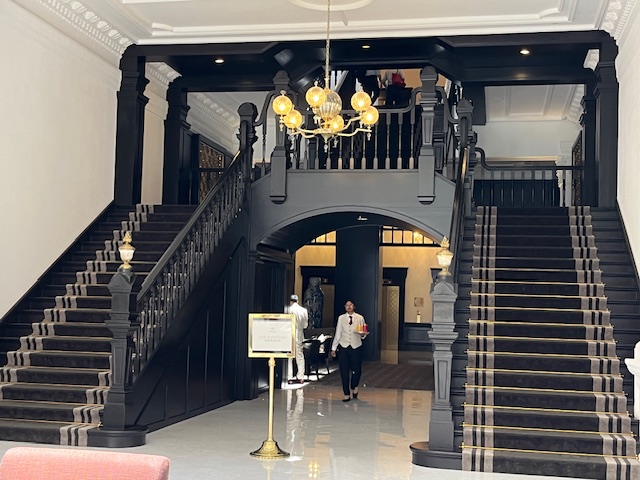
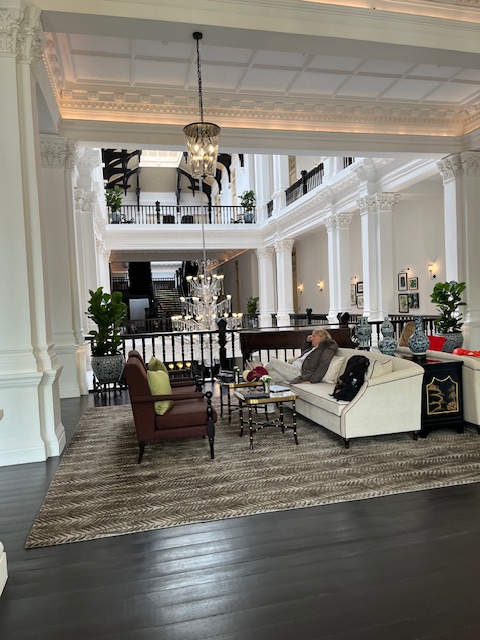
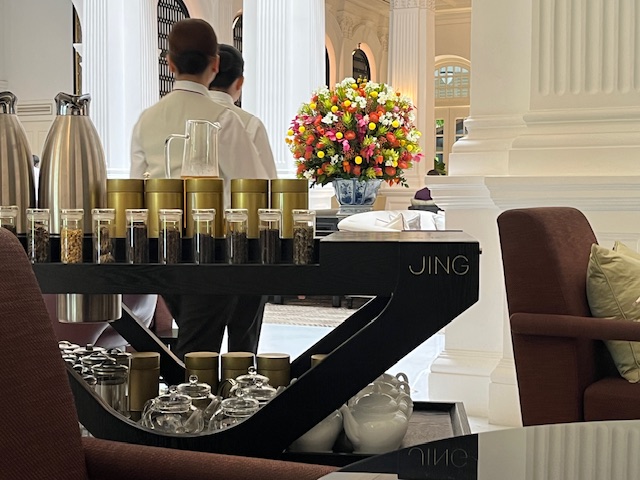
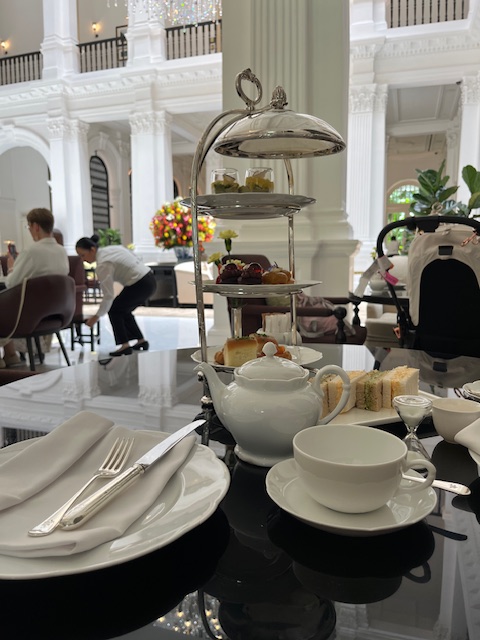
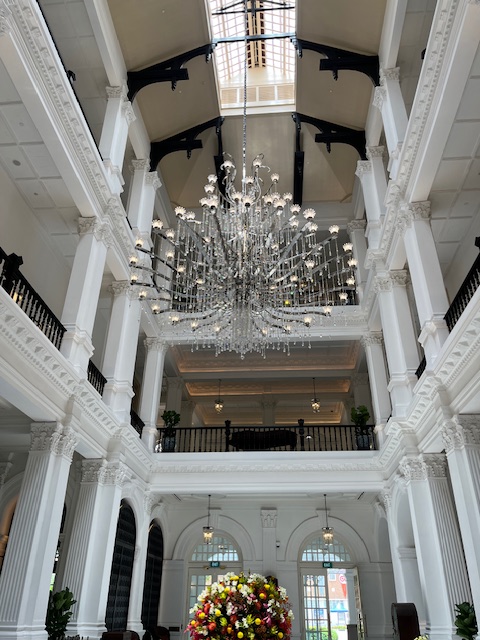
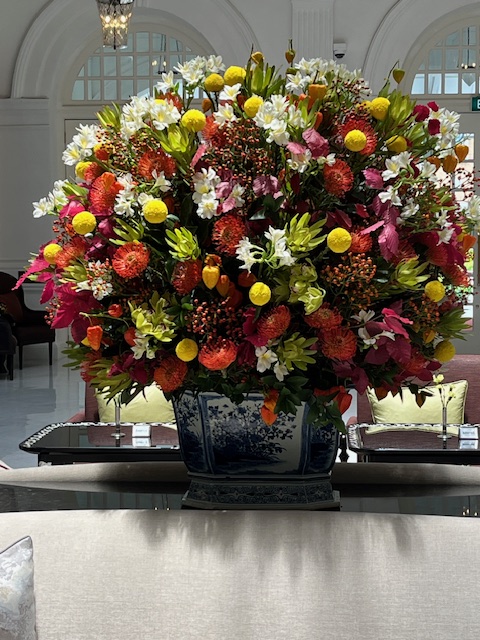
The entrance was grand with a huge chandelier and flower bouquet. Beyond the back staircase is the reception room – guests only no visitors allowed. Leading off the entrance foyer was a dining area and the “High Tea” service area. Kerry had this itch and desire for a high tea and as high teas go it was expensive but exquisite. After our high tea we moved to the relaxing lounges on the floor above .
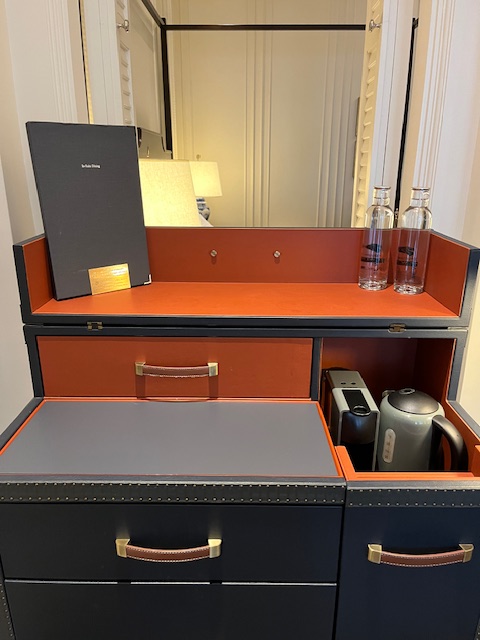
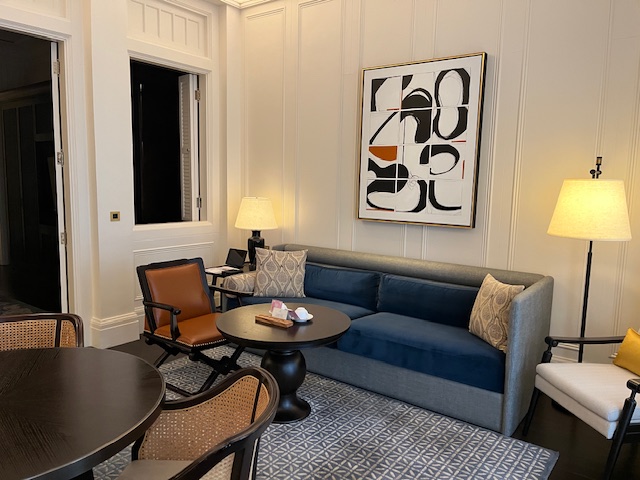
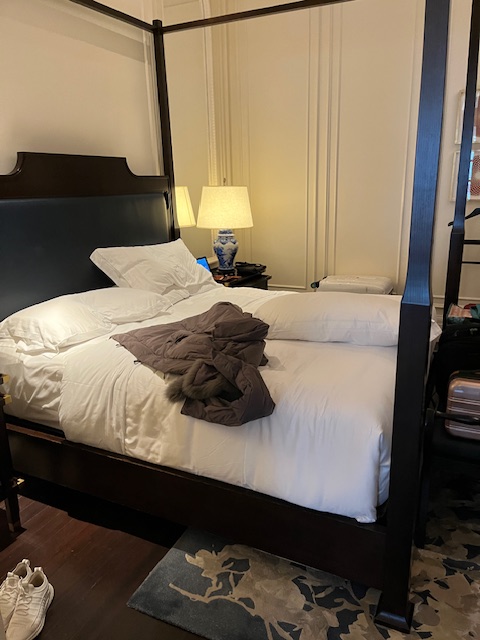
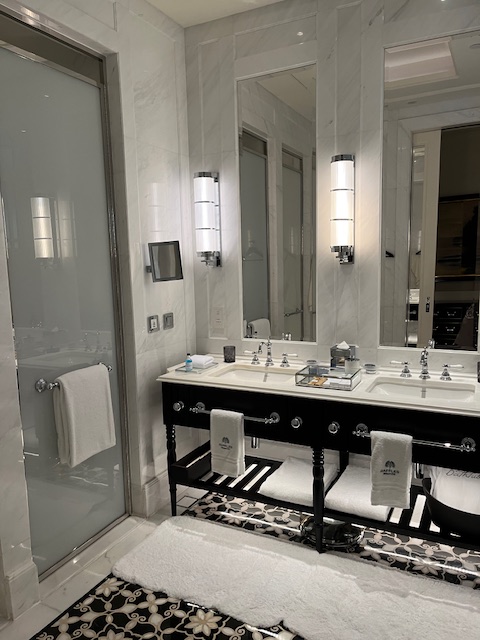
Finally our room was available and we were guided to the room (formerly part of the stables of the original hotel) where we met our butler who guided us through the use of the tablet to operate the room. I will mention an incident that happened on the 2nd day of our stay. Kerry was certain we had to catch our flight so rather than check we packed and got ready to go by limo to the airport. We said good bye to the hotel and I have included her picture with the Doorman. We drove to the airport only to be told our flight was the following day so we cabbed it back to the hotel and asked for our keys back for 1 more night. They assured us we were not the first to make that mistake.
So my next blog will deal with some of the facilities at the hotel and a visit we made to the Orchid Gardens which is part of the Botanic Gardens of Singapore. Get ready for “THE RETIREES GO AROUND THE WORLD – Singapore Day 5“
“THE RETIREES GO AROUND THE WORLD – Singapore Day 2“
We had planned on catching the bus on Day 2 to visit places on the Yellow line of the hop on hop off tour route. A restful night and we were getting ready to get on the move again. Kerry hopped in the shower but was suddnely overcome with dizziness and despite calling me to the shower ended up falling over. She passed out and I was able to wake her and together we got her to a seated upright position. Fortunately she had not done any harm but she was still light headed. She said she only wished to rest today and urged me to go off on my own. After arranging breakfast I took off to catch the bus before 9.40am which was the expiration of my tour ticket. I got to the bus by the skin of my teeth and travelled the yellow route the the rest of the day.

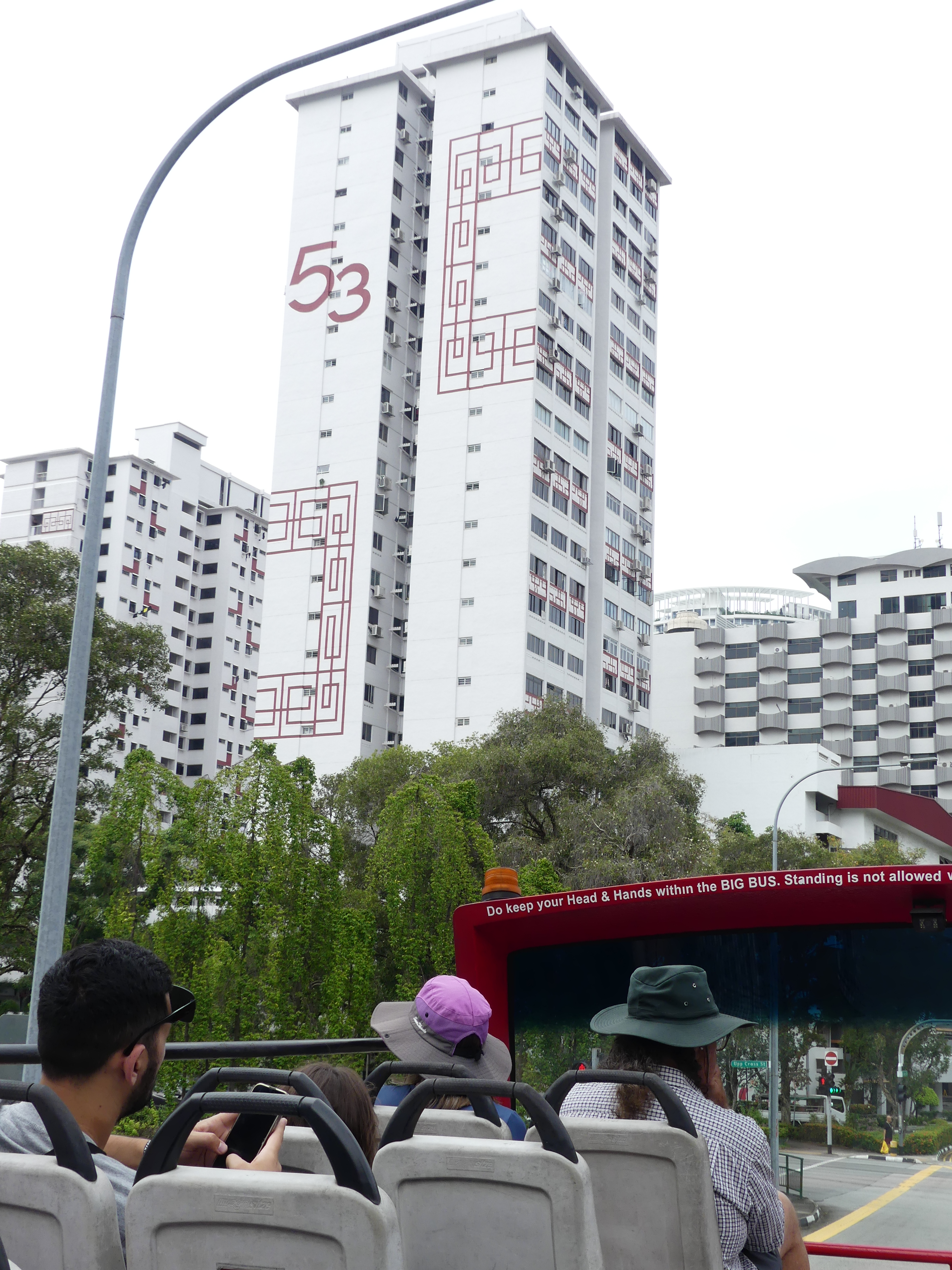
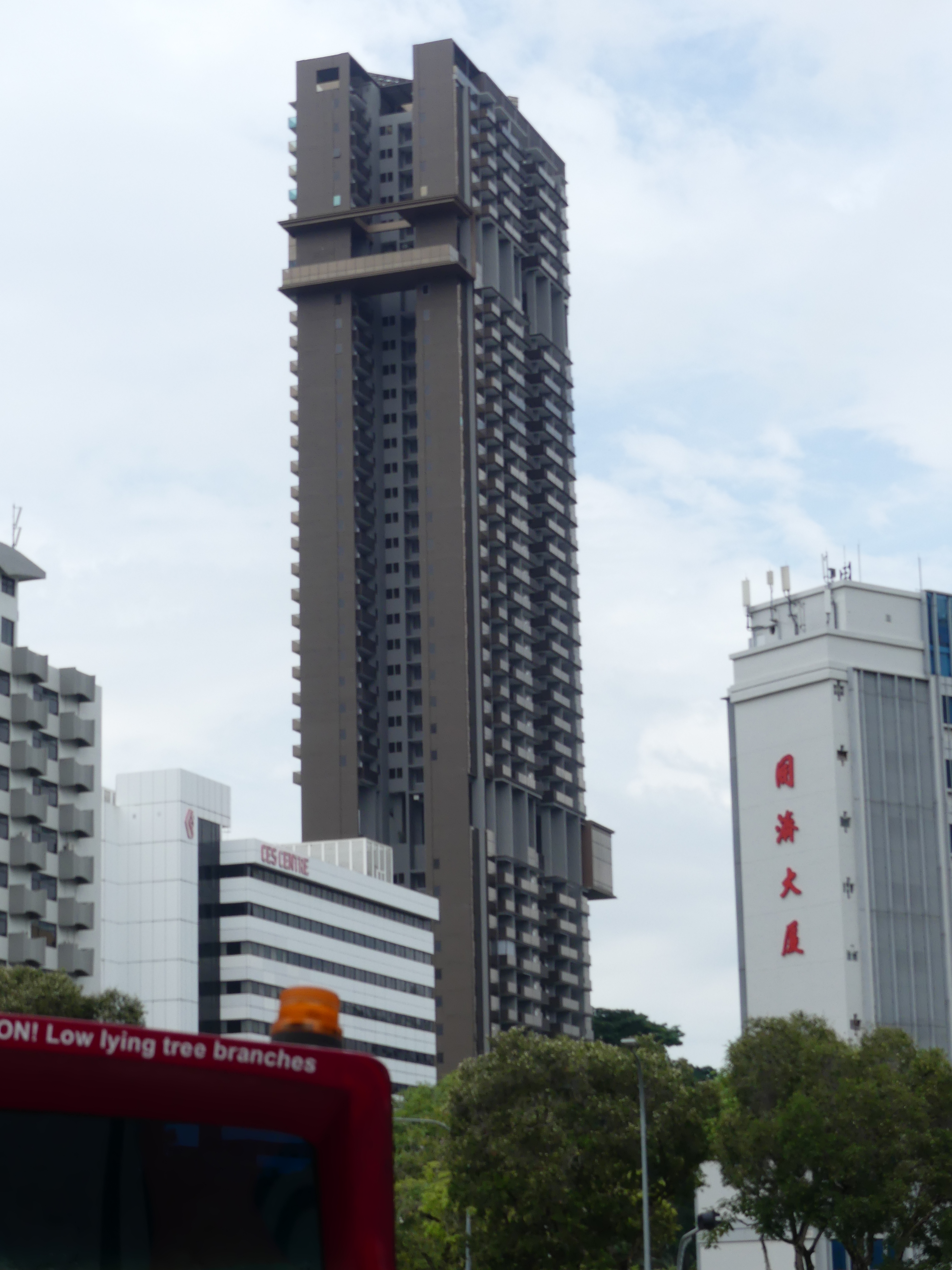
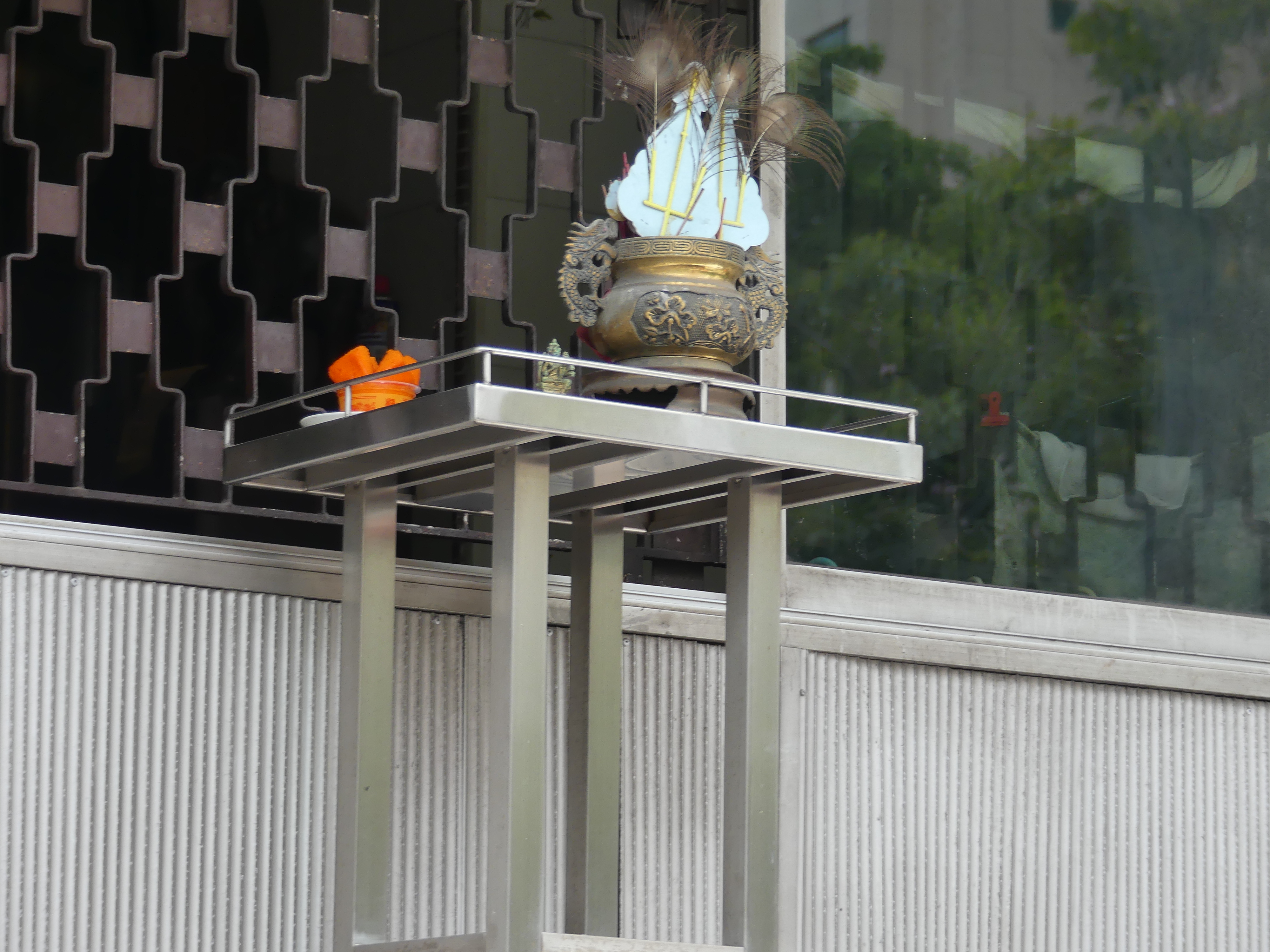
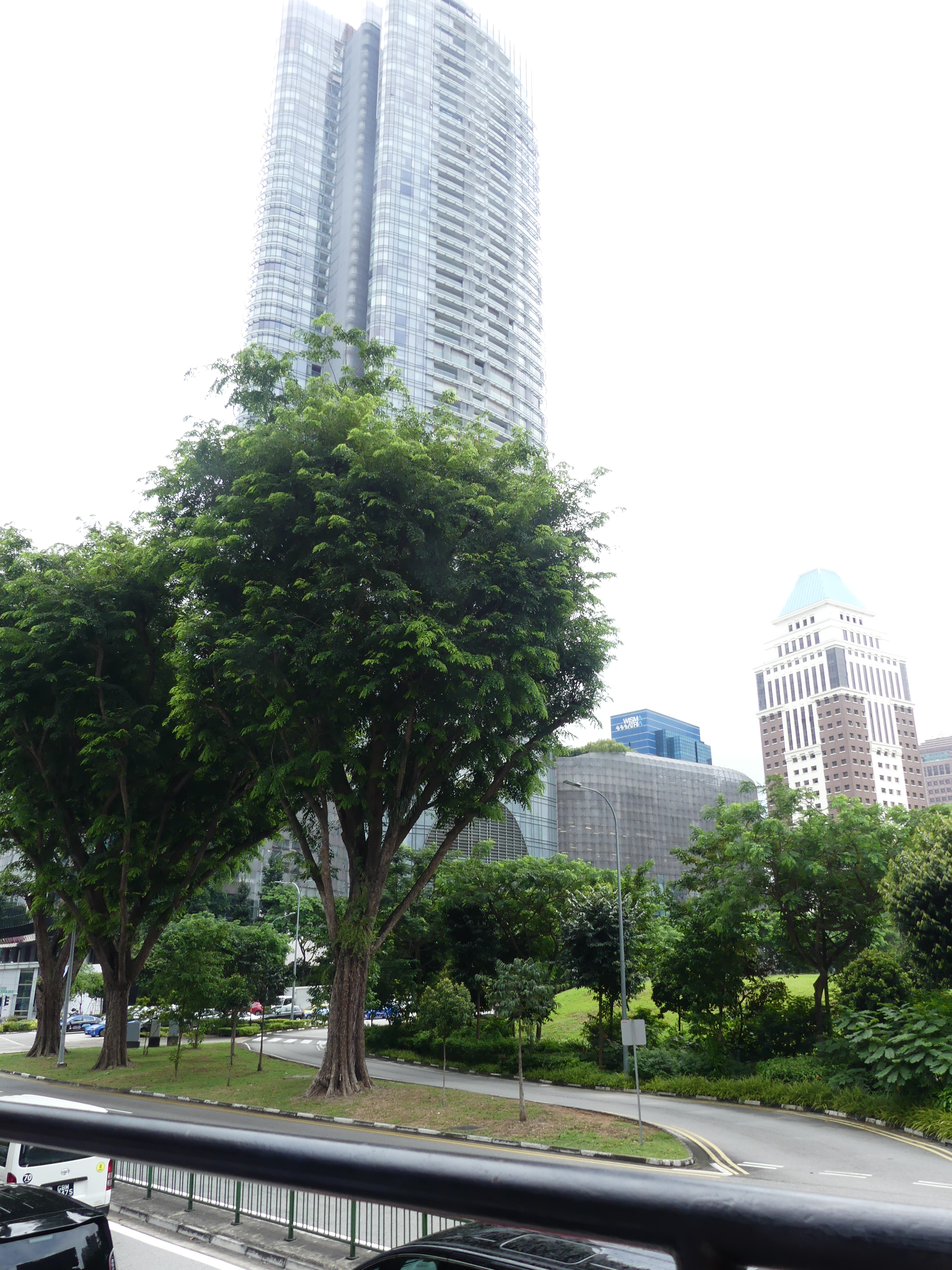
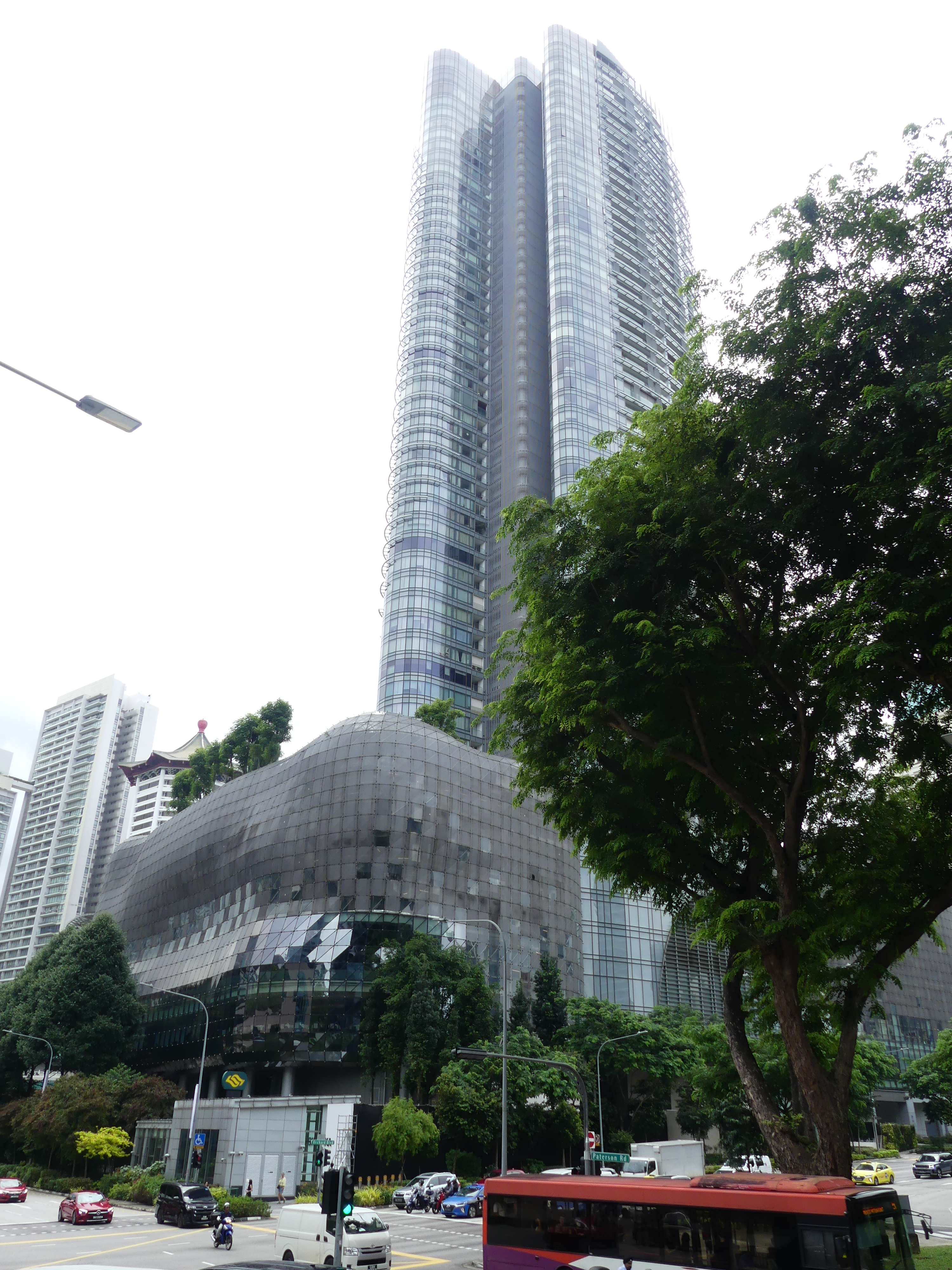
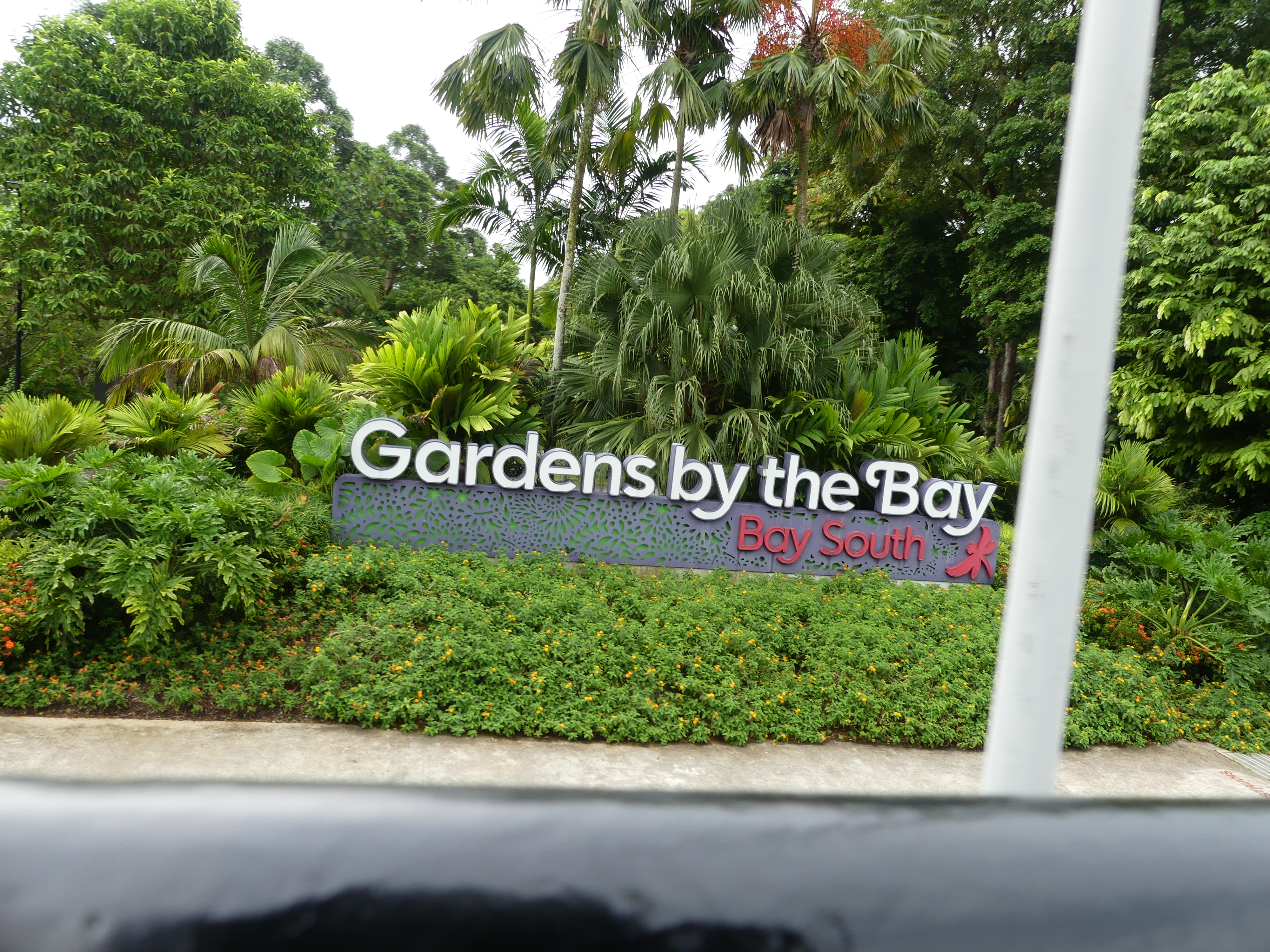
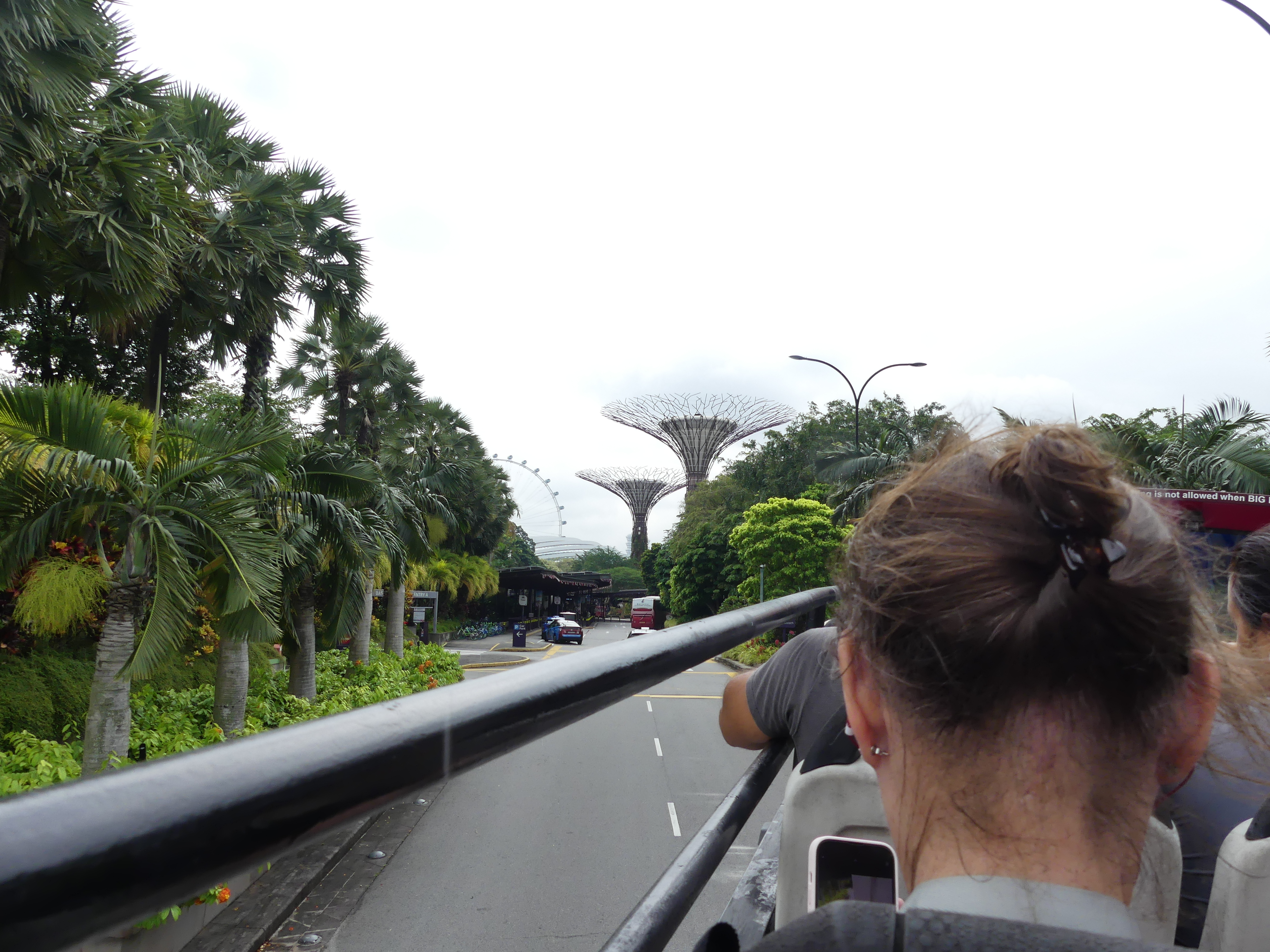
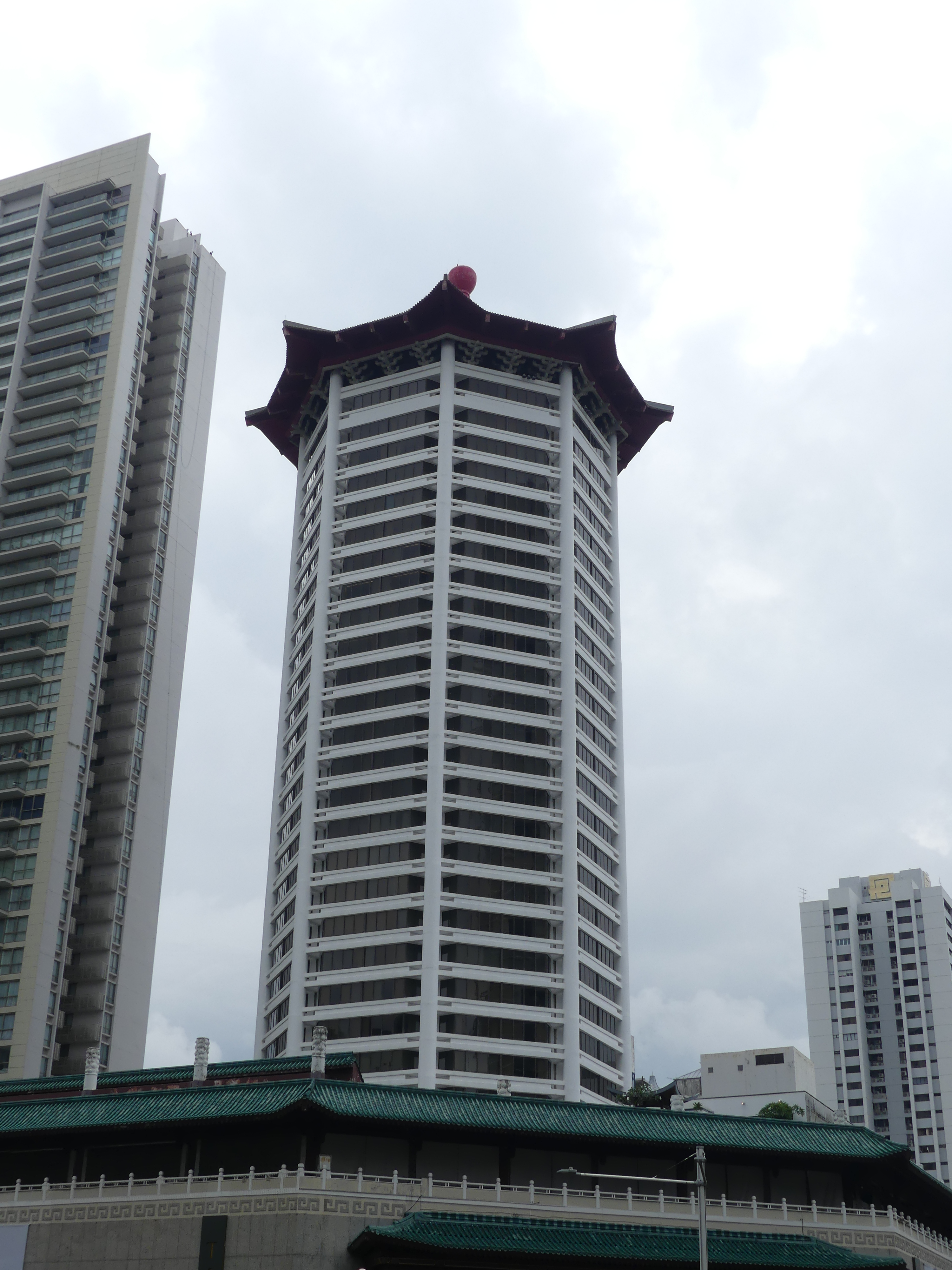
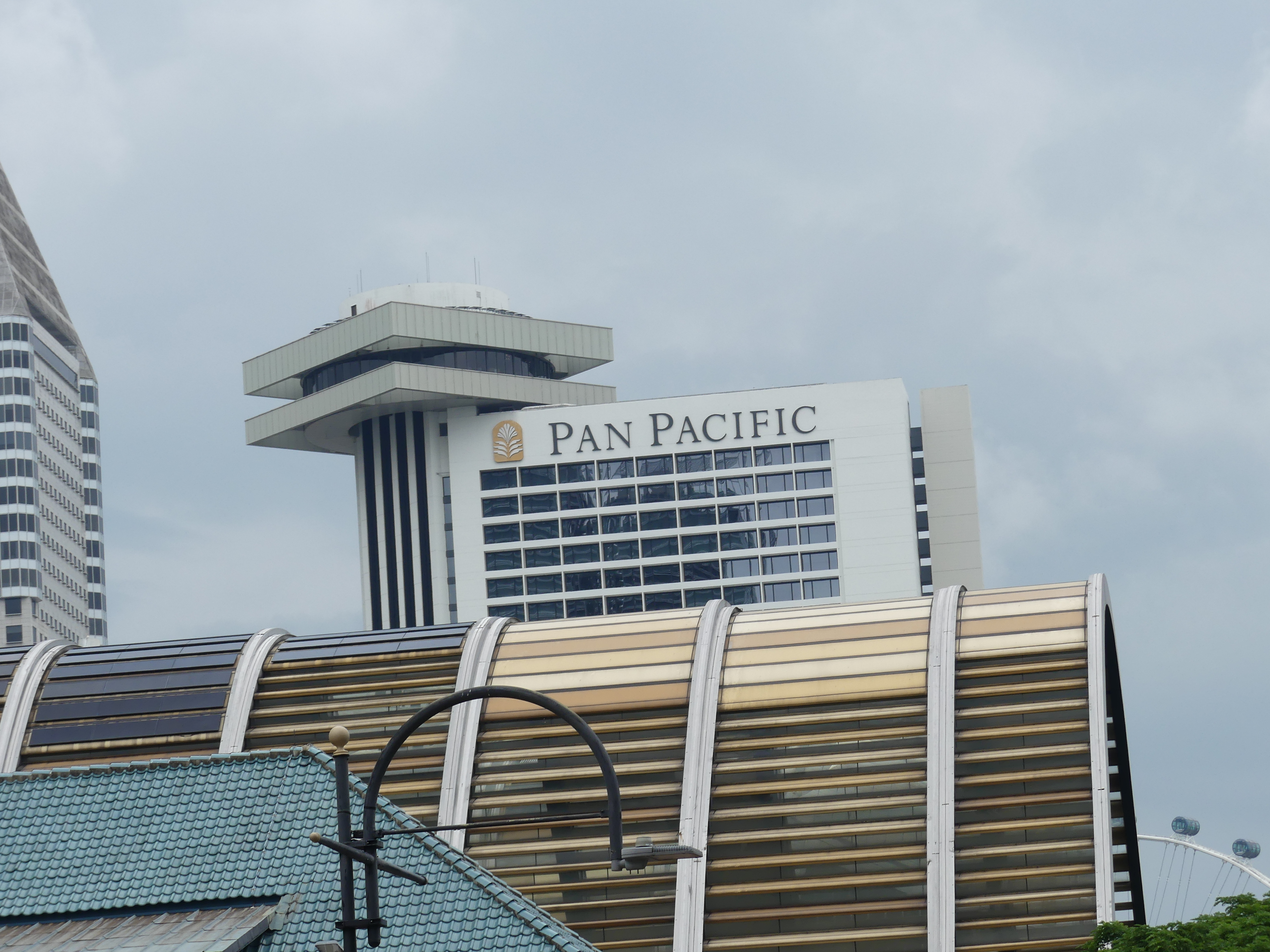
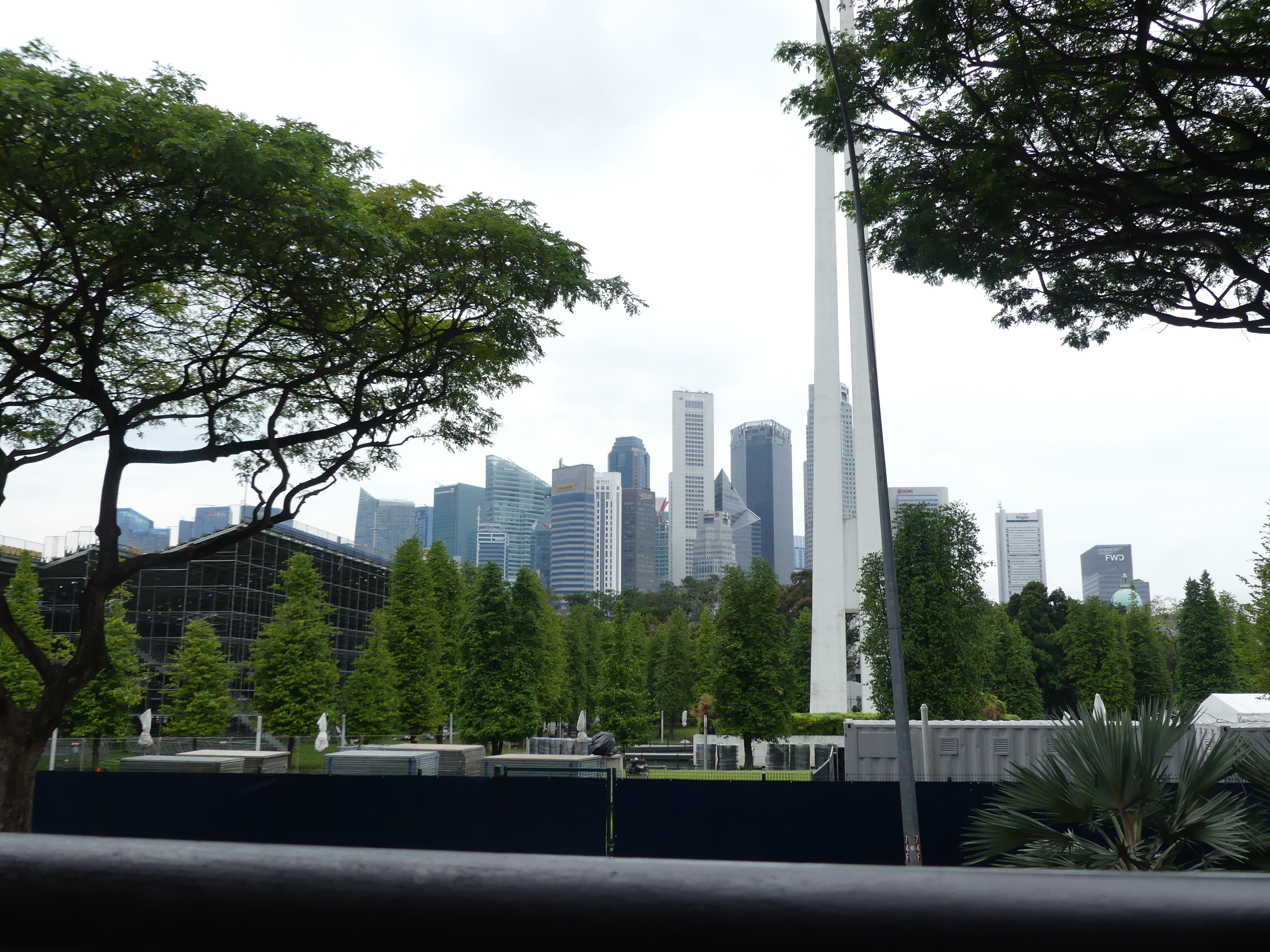
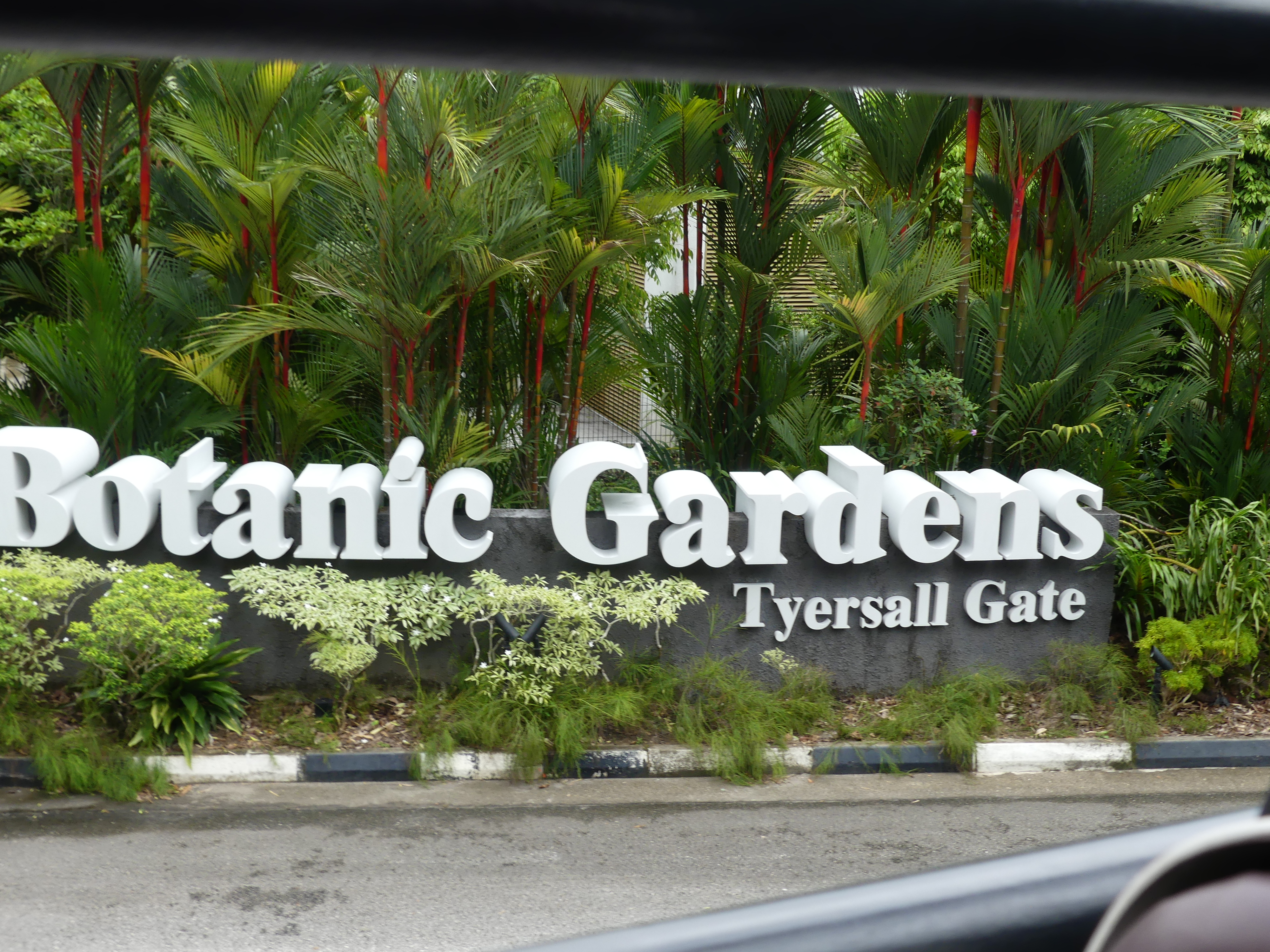
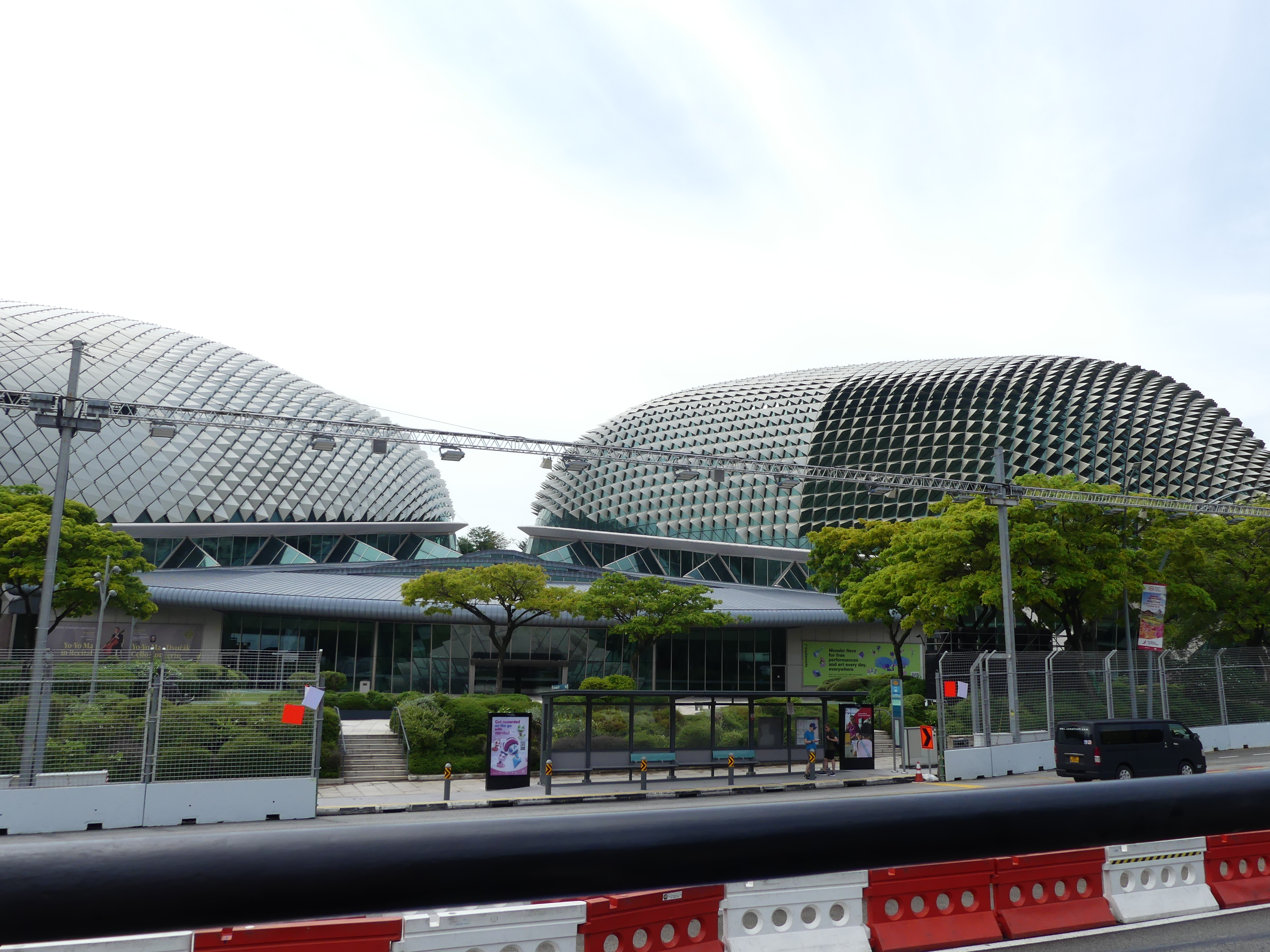
The yellow route tended to travel north west to south east whereas the red route had travelled north east to south west. So I caught the red route bus to the terminus then changed bus to the yellow route. The first stop was near the Singapore Flyer – a ferris wheel overlooking the outer bay. It then followed the red route to the Gardens by the Bay then meandered through the CBD out to the Botanic Gardens and then returned to the terminus at the Suntech Mall. I again transferred to the red route to return to the hotel. The following is a pictorial of some of the sites along the way.

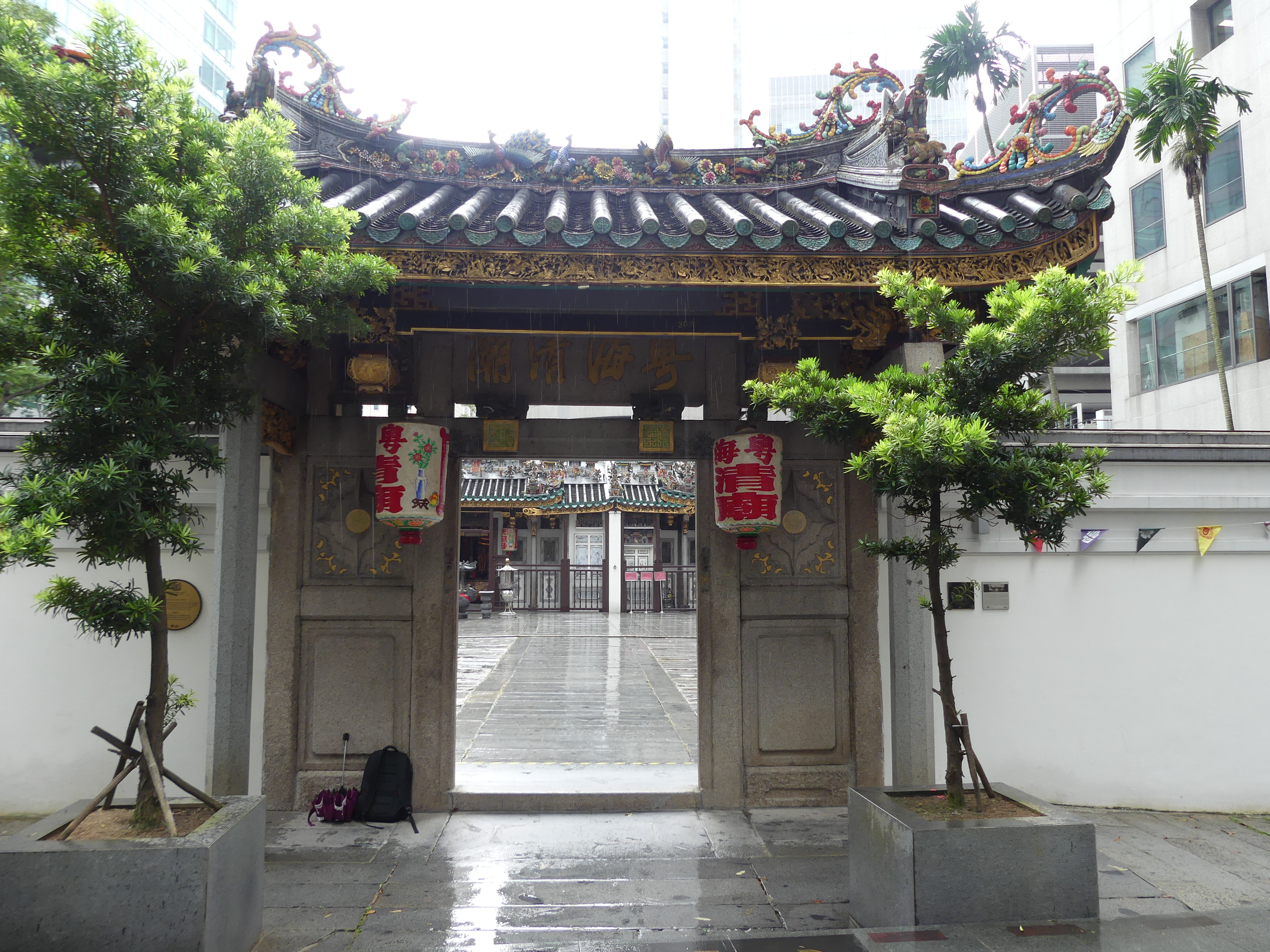
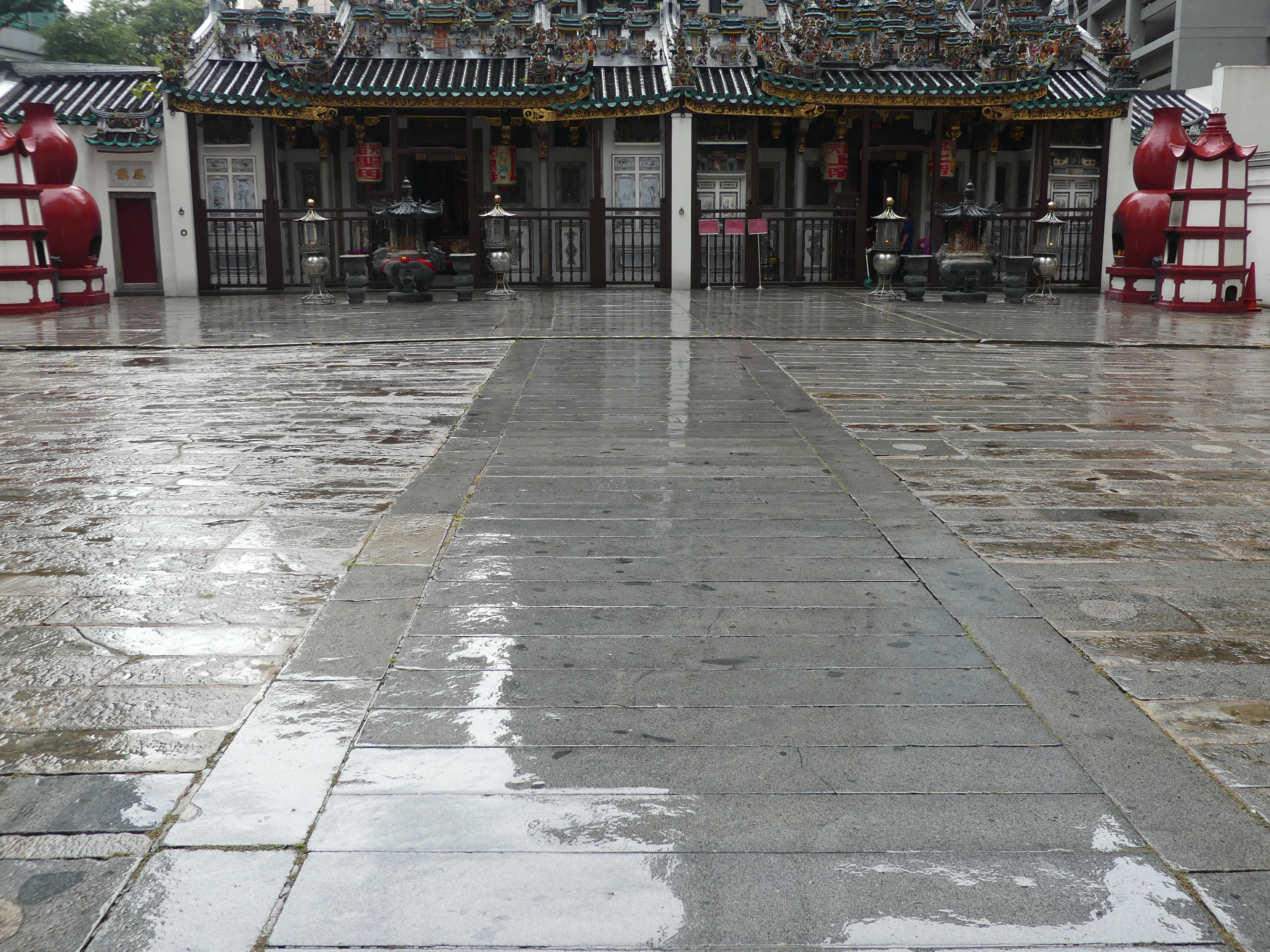
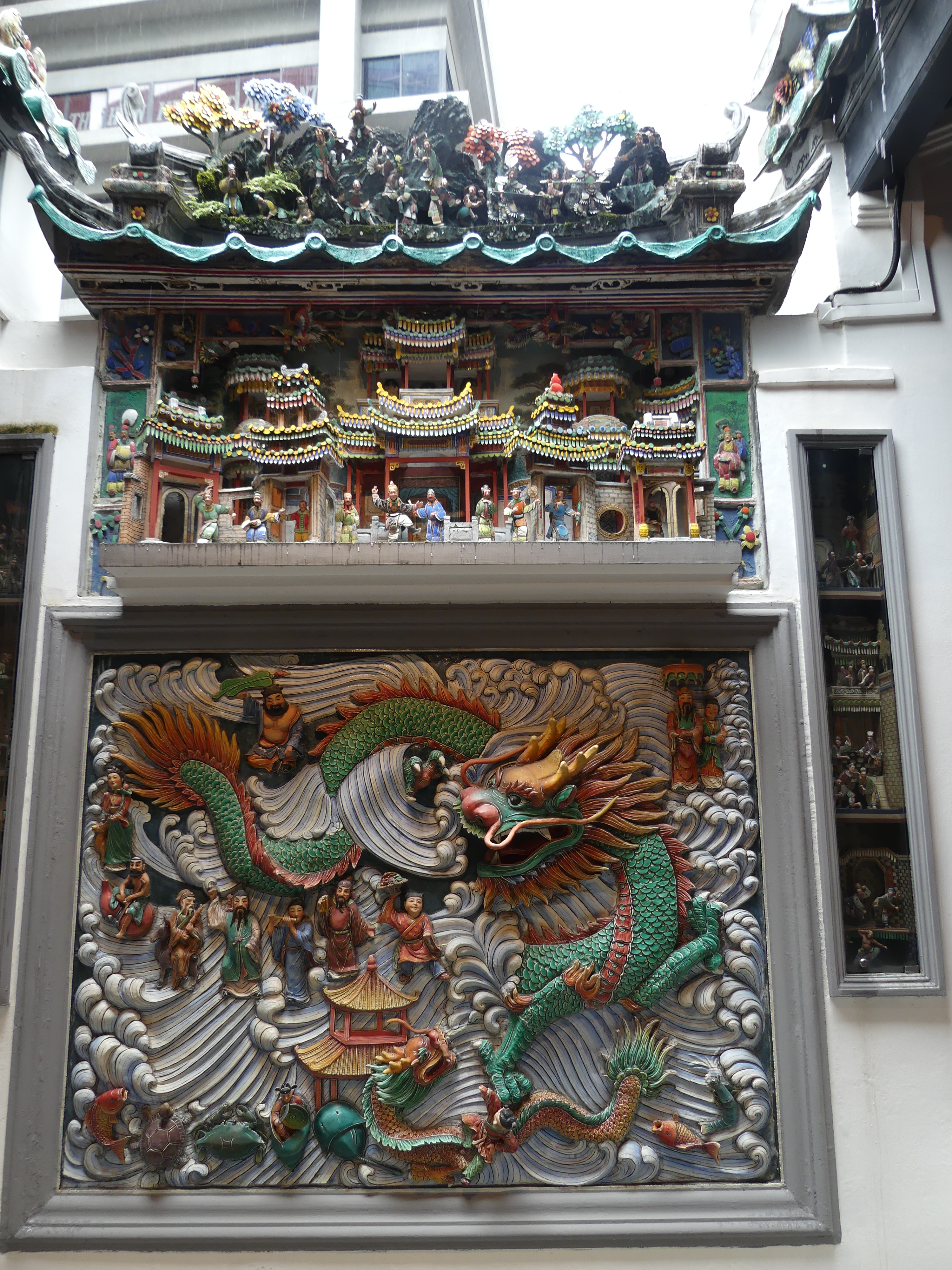
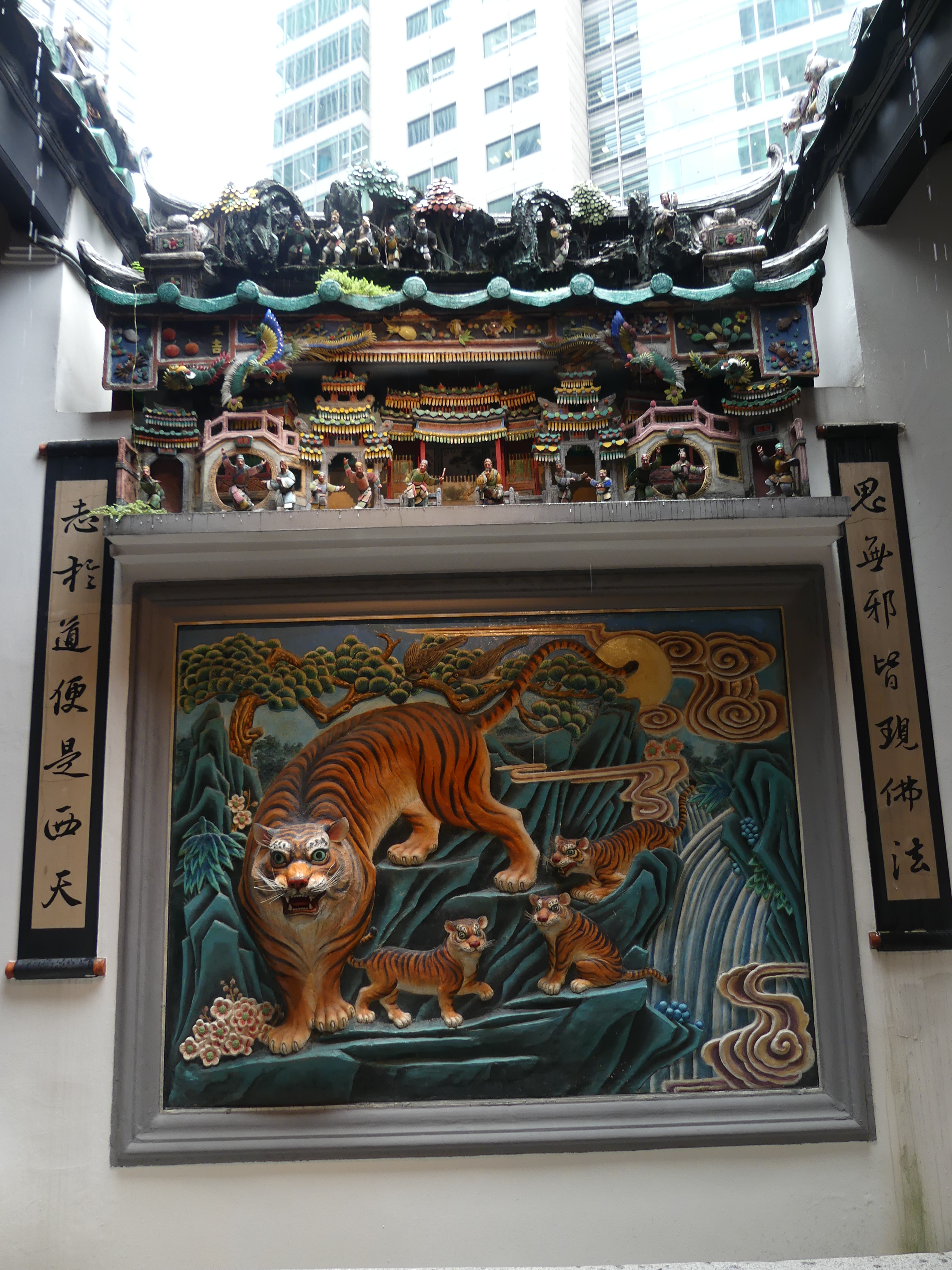
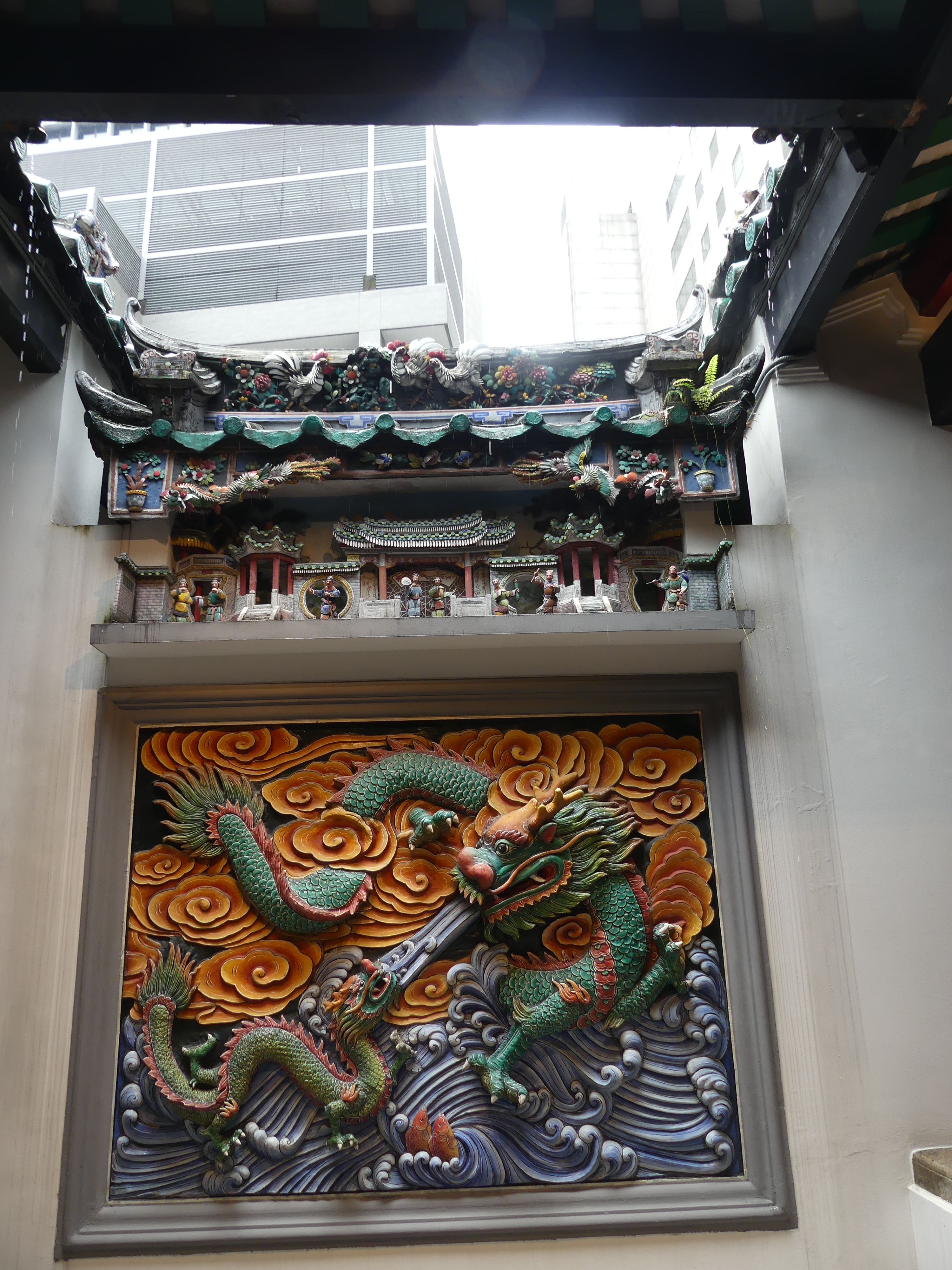
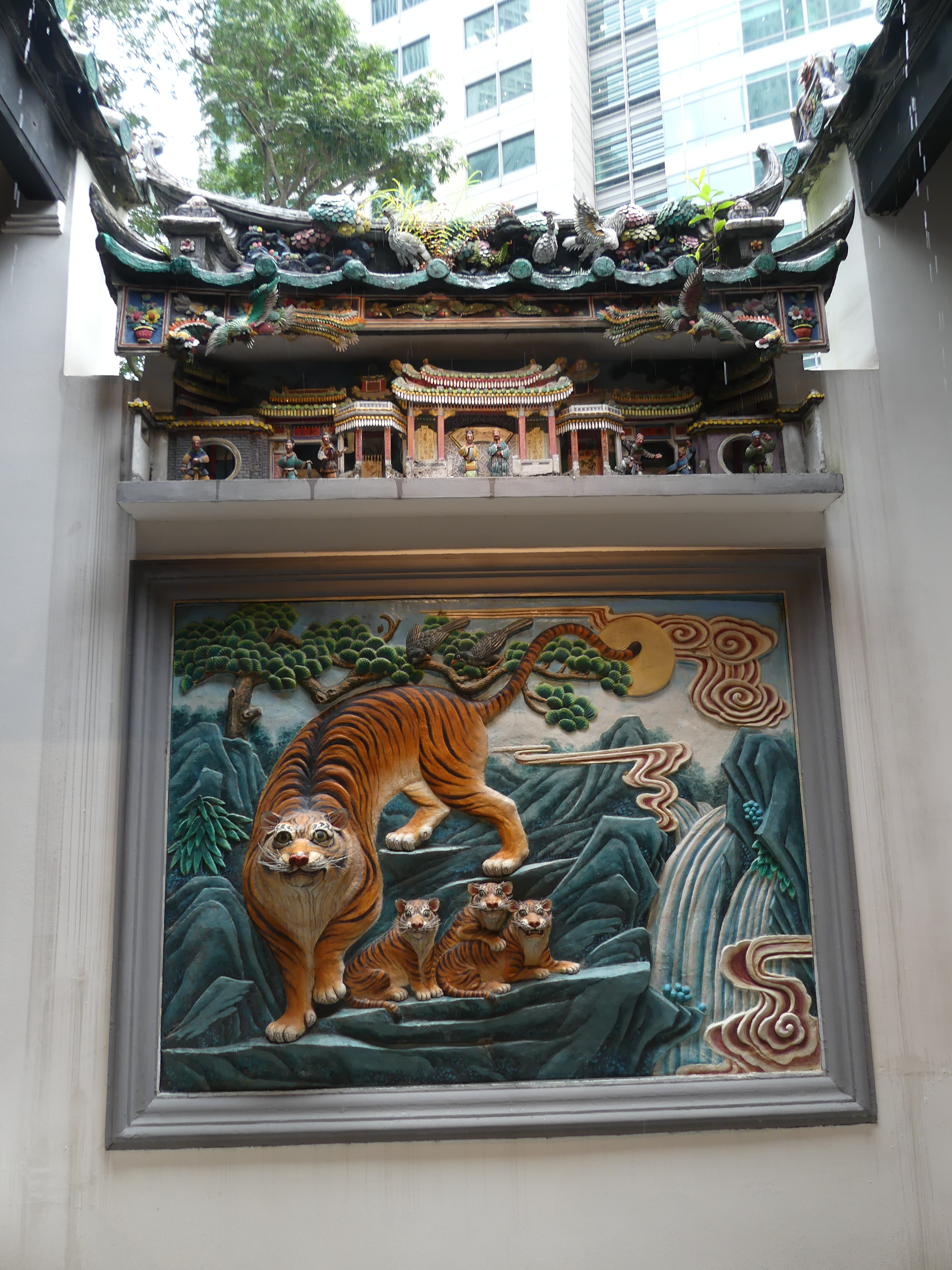
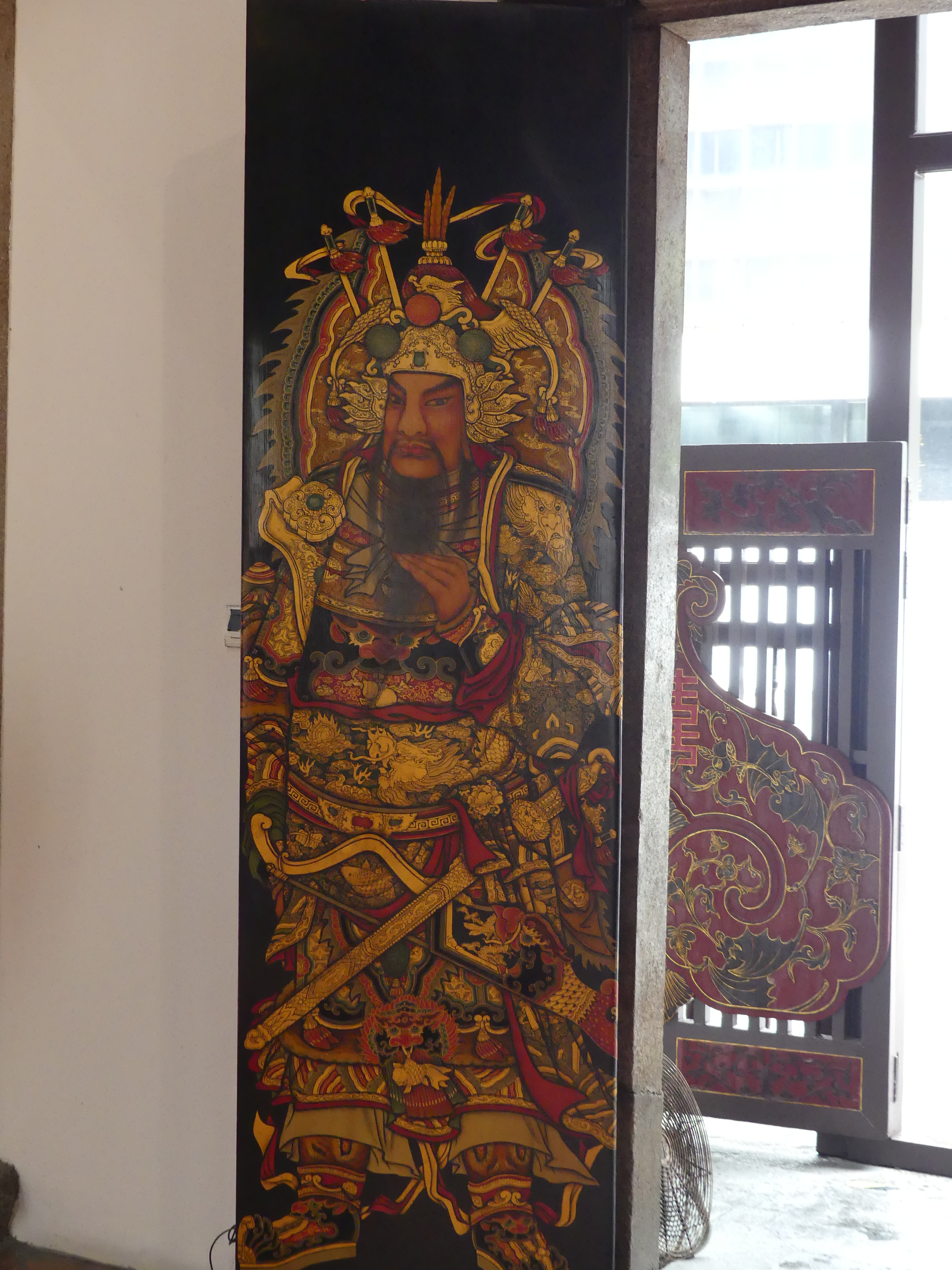
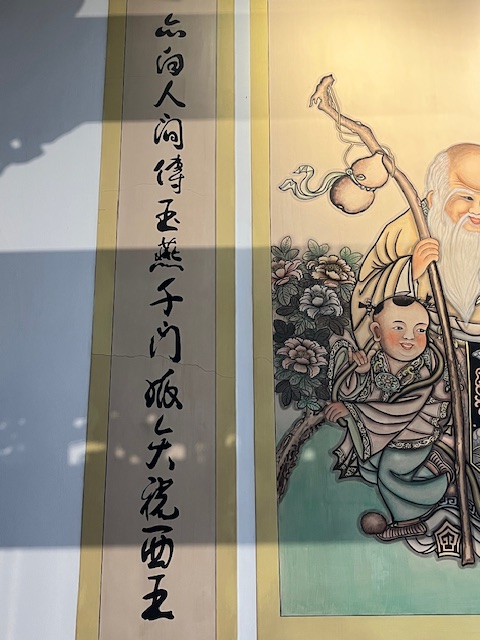
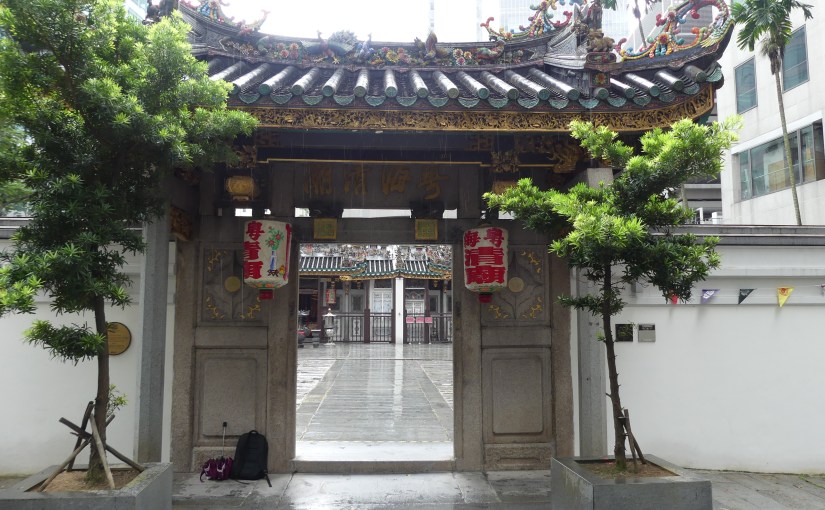
On the first day we had passed the Yueh Hai Ching Temple. I decided I would visit the temple which required I get off the tour bus at the Fullerton Hotel and wind my way back to Phillip St and find the temple. The Temple is walled and the front doors being open I stepped into the square at the front of the temple. Yueh Hai Ching Temple is also known as the Wak Hai Cheng Bio from its Teochew pronunciation. The temple, whose name literally means “Temple of the Calm Sea”, was the first stop for Chinese immigrants to Singapore in the early 19th century. Philip Street was once near the sea, so that sailors could head to the temple immediately after docking to offer their prayers and gratitude for their safe journey . Due to land reclamation, the temple was effectively distanced from the shore.

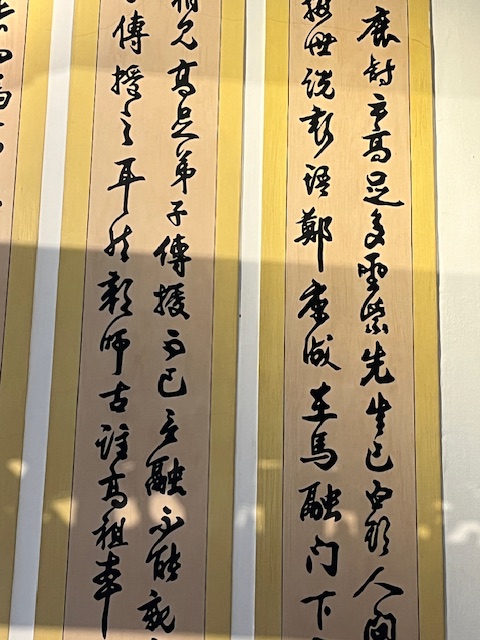
There are in fact two temples. The right temple is dedicated to Xuan Tian Shang Di, otherwise known as Duo Lau Yah. The left temple is dedicated to Tian Hou Sheng Mu, otherwise known as Ma Zu. The Xuan Tian Shang Di is a god worshipped by the Taoist. It is very much respected and worshipped by the secret societies in 19th Century. Mazu is worshipped as she guides ships to safety in times of peril. Our son Adam has throughout his life been a Chinofile is now a highly accomplished Mandarin speaker, writer and translator. After his service in the military and before retiring he served representing Australia in Beijing for 3 years. Because of his interests in matters Chinese I sent him photos of the temple and its Chinese scripts and he was the first to alert me tothe fact that the Temple in fact worships two Gods namely Duo Lau Yah and Mazu. Here are my photos.

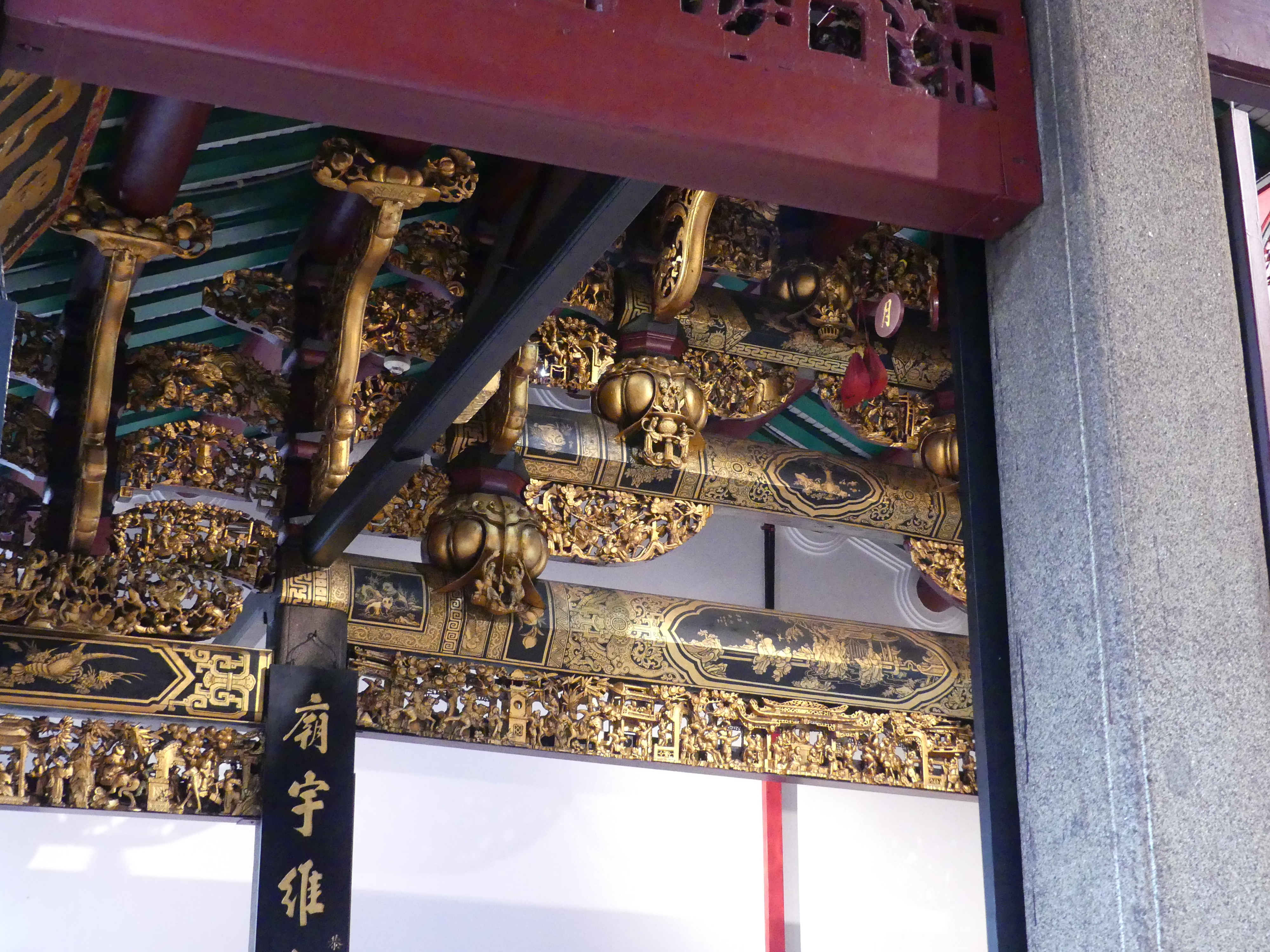
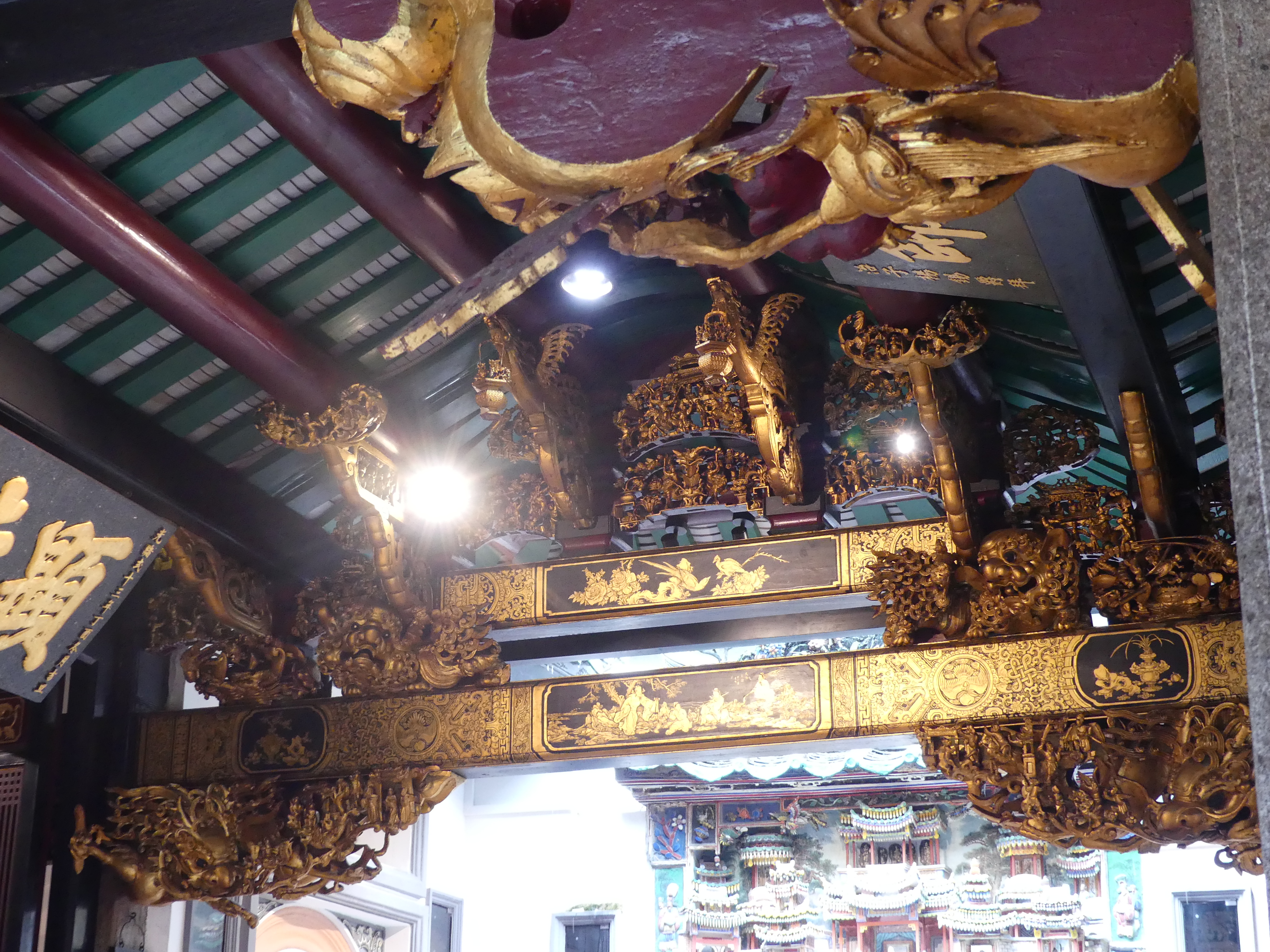
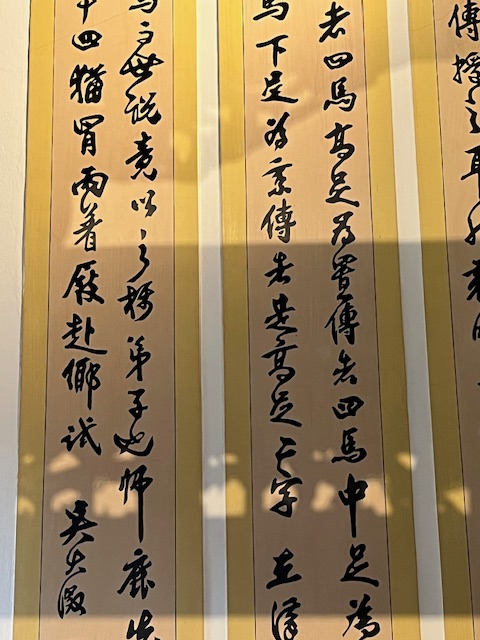
I wanted to send him images of the manuscripts on the walls for his interest and my need to have a translation so I took further photos with my phone for ease of transfer.

I have forgotten what Adam told me about the different scriptures but understanding that there are two temples and these manuscripts were prepared at different times I begin to understand why there are marked differences.

I returned to Kerry at the hotel. She was feeling better and I think we may have taken a walk to obtain dinner that night. All of the various cafes and restaurant all seemed to fire up after dark. “THE RETIREES GO AROUND THE WORLD – Singapore Day 3“
“THE RETIREES GO AROUND THE WORLD – DAY 10 SS NIEUW STATENDAM – Cork“

After sailing from the Isle of Man, we headed toward a former British dependancy – Eire and the city of Cork. We have been to Ireland previously but despite it being tiny compared to home, 4 weeks was not enough to get everywhere and Cork was one of those places. We have become quite adept at finding our own way. But it becomes tiring so we took the easy way with the hop on hop off bus. I have attached our map of Cork – things to see and do in Cork. We had been to Blarney castle and I had kissed the “Barney stone”. Its supposed to give the kisser the gift of elequence – some might consider that to be an overkill in my case. And thats why we did not go to Cork – we went to the castle only all those years ago.

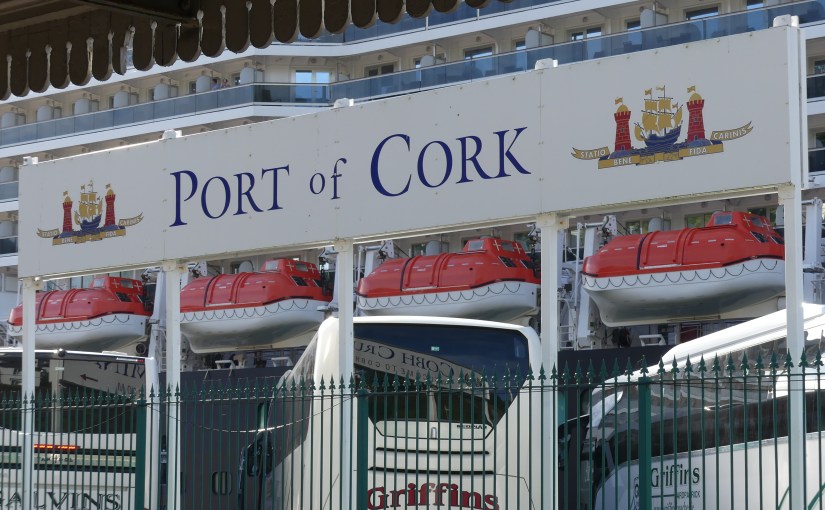
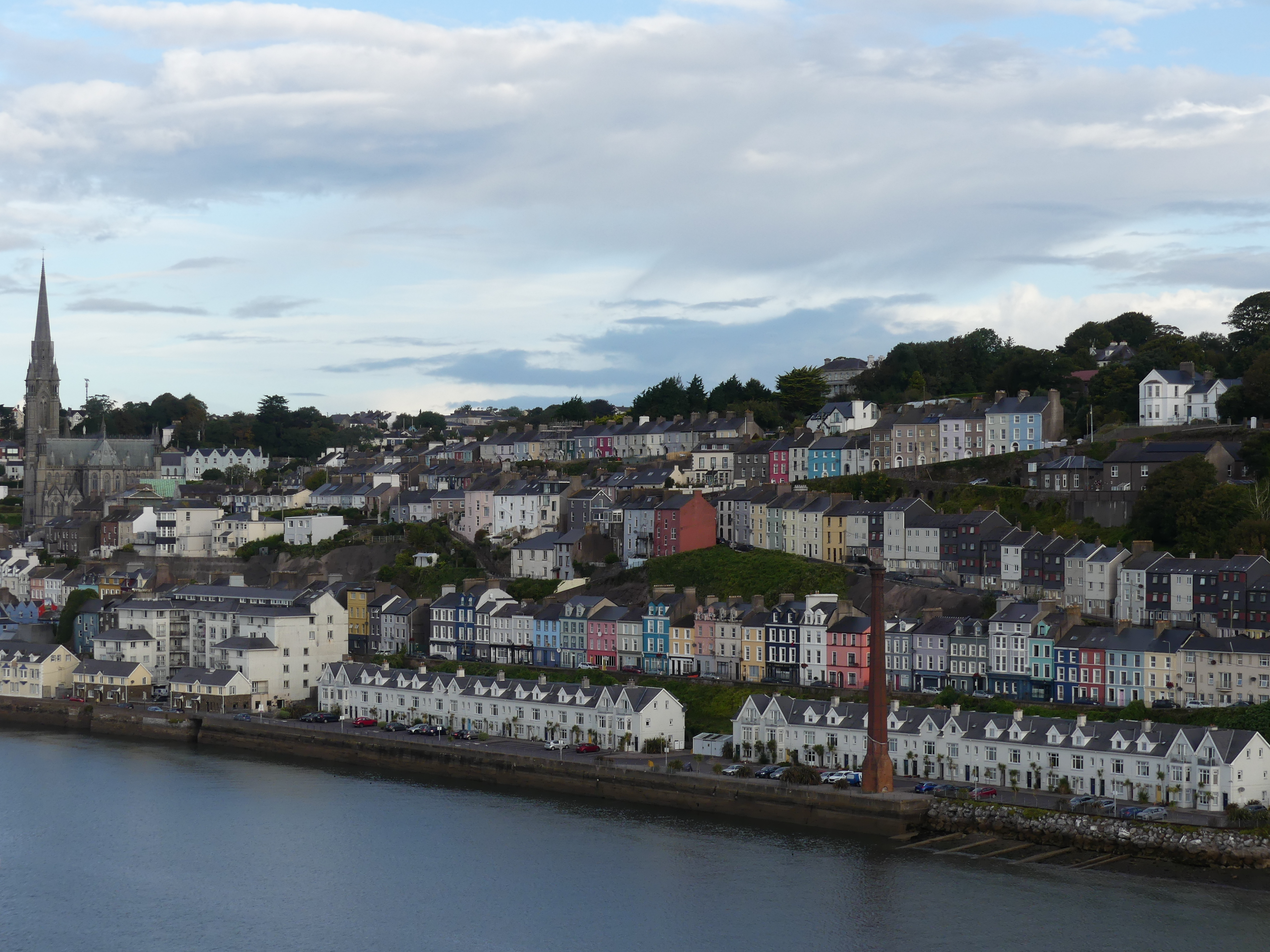
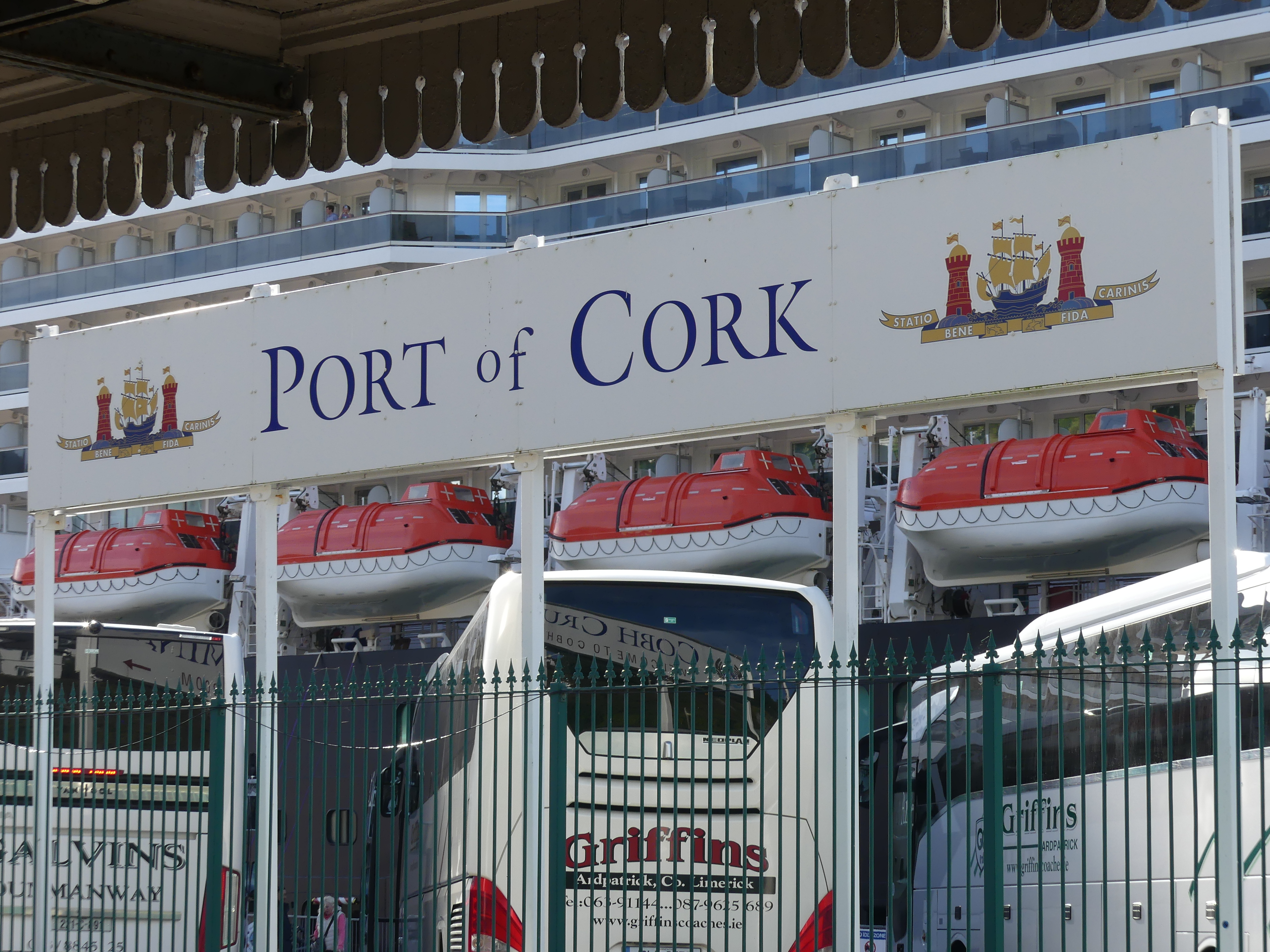
The port for Cork is actually a town called Cobh and a pretty town it is with a good connection to Cork by rail. So our day started with a train ride. The ship passed some of the pretty houses as it docked but once we docked and entered the Port of Cork we then had to pass through the Cobh Cruise Terminal – now that’s Irish. On arriving at Cork rail terminal we crossed the road to Station View Tavern (it looks at the station) and awaited the hop on hop off bus.

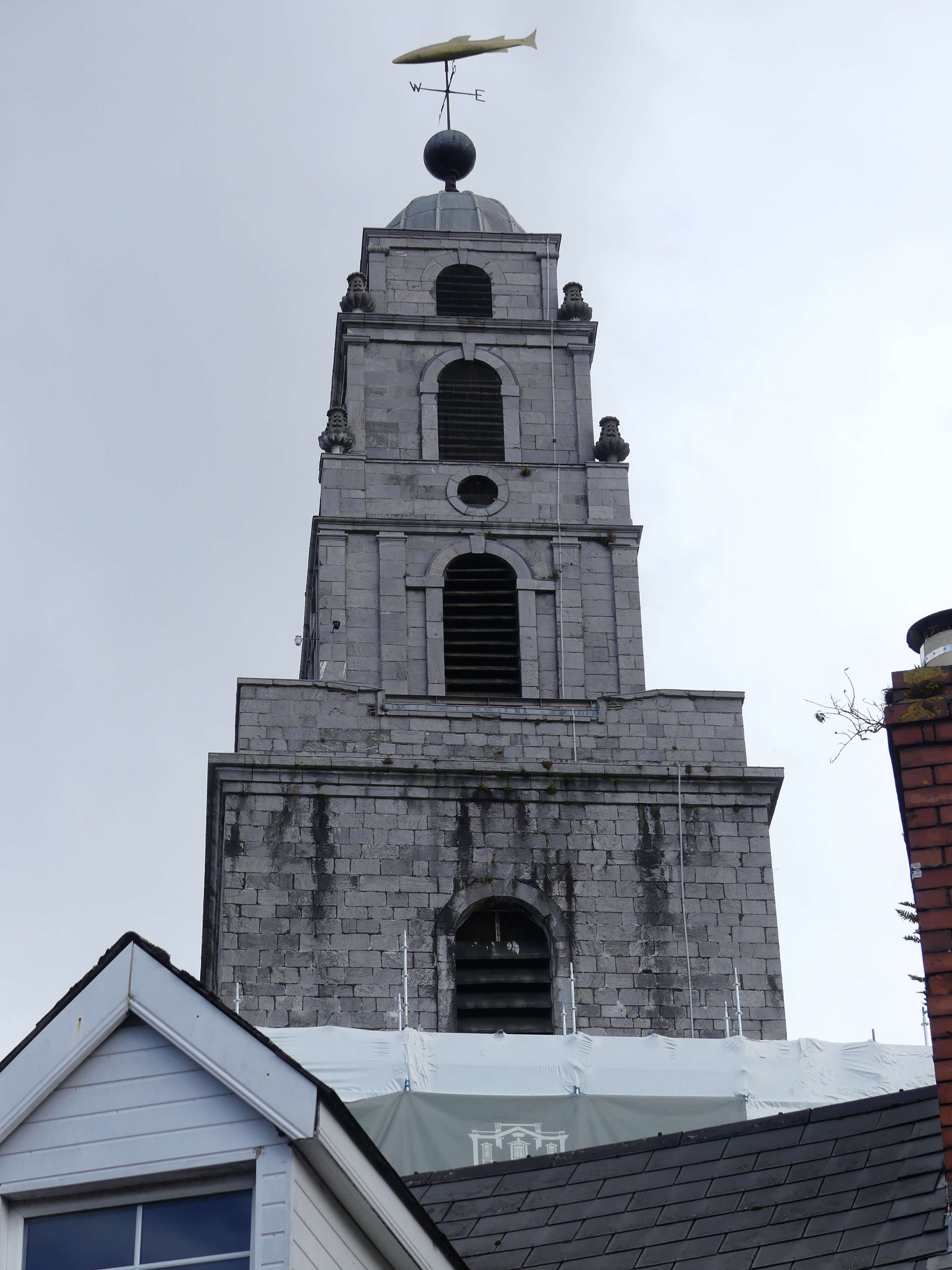
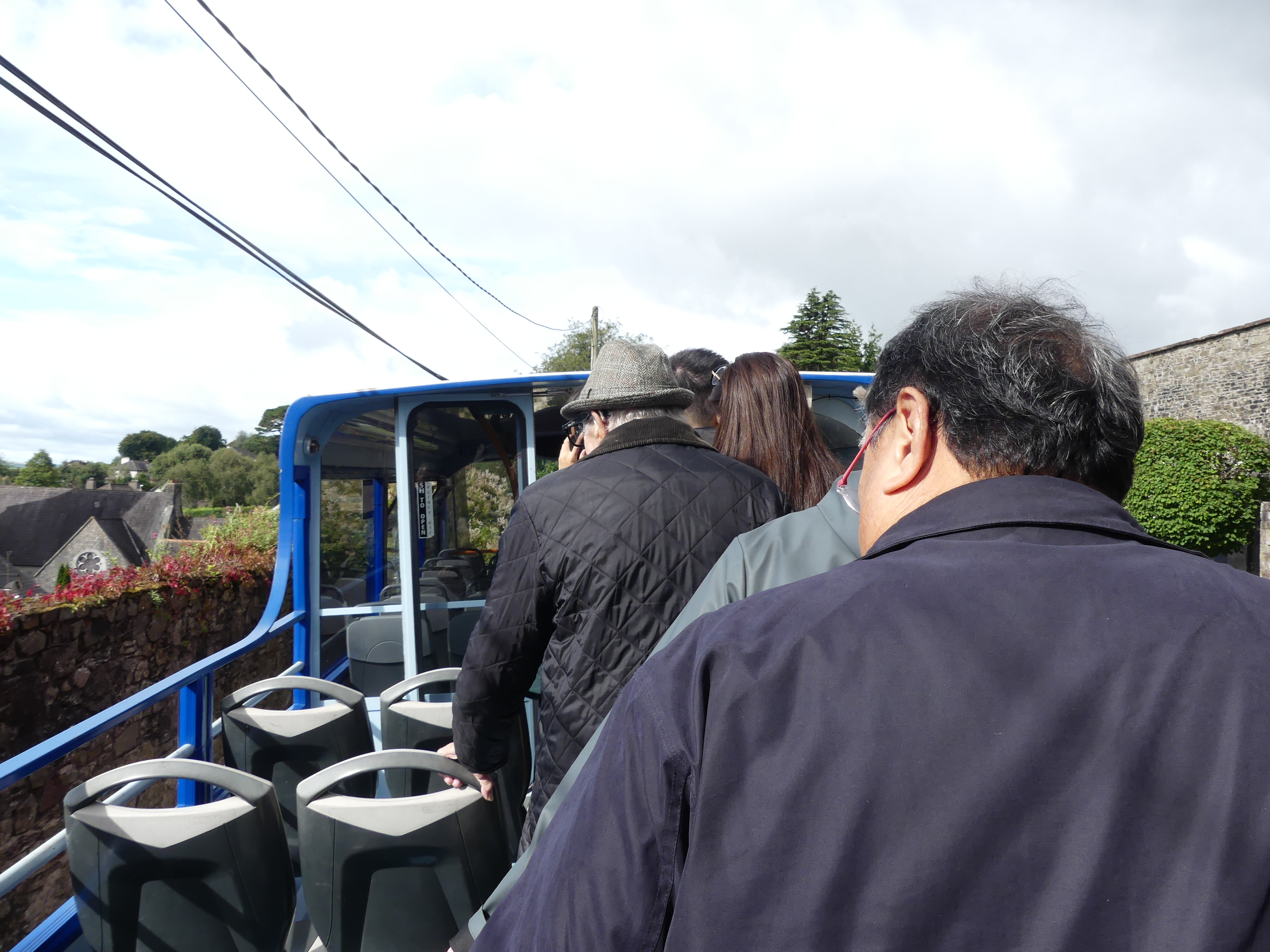
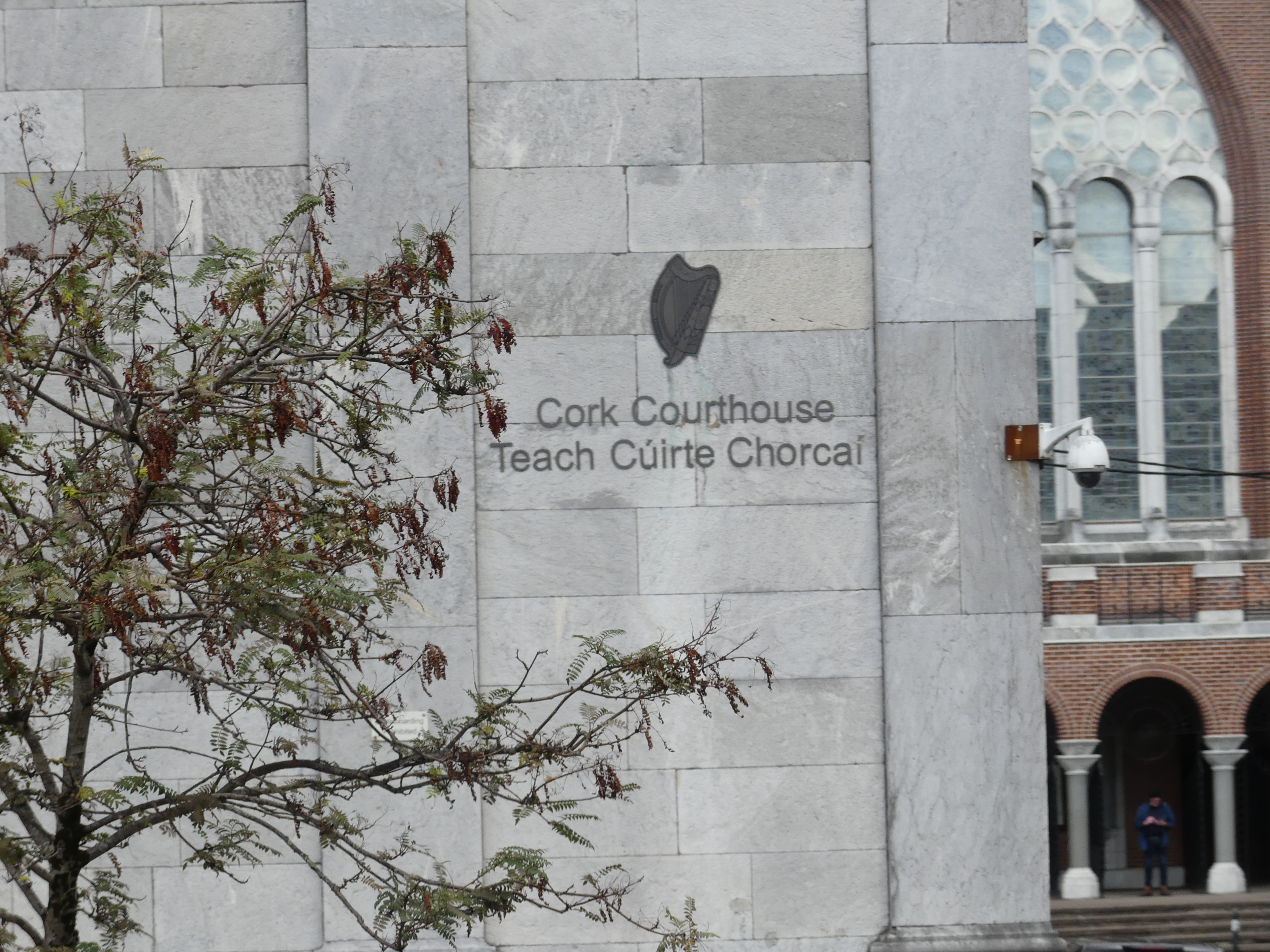
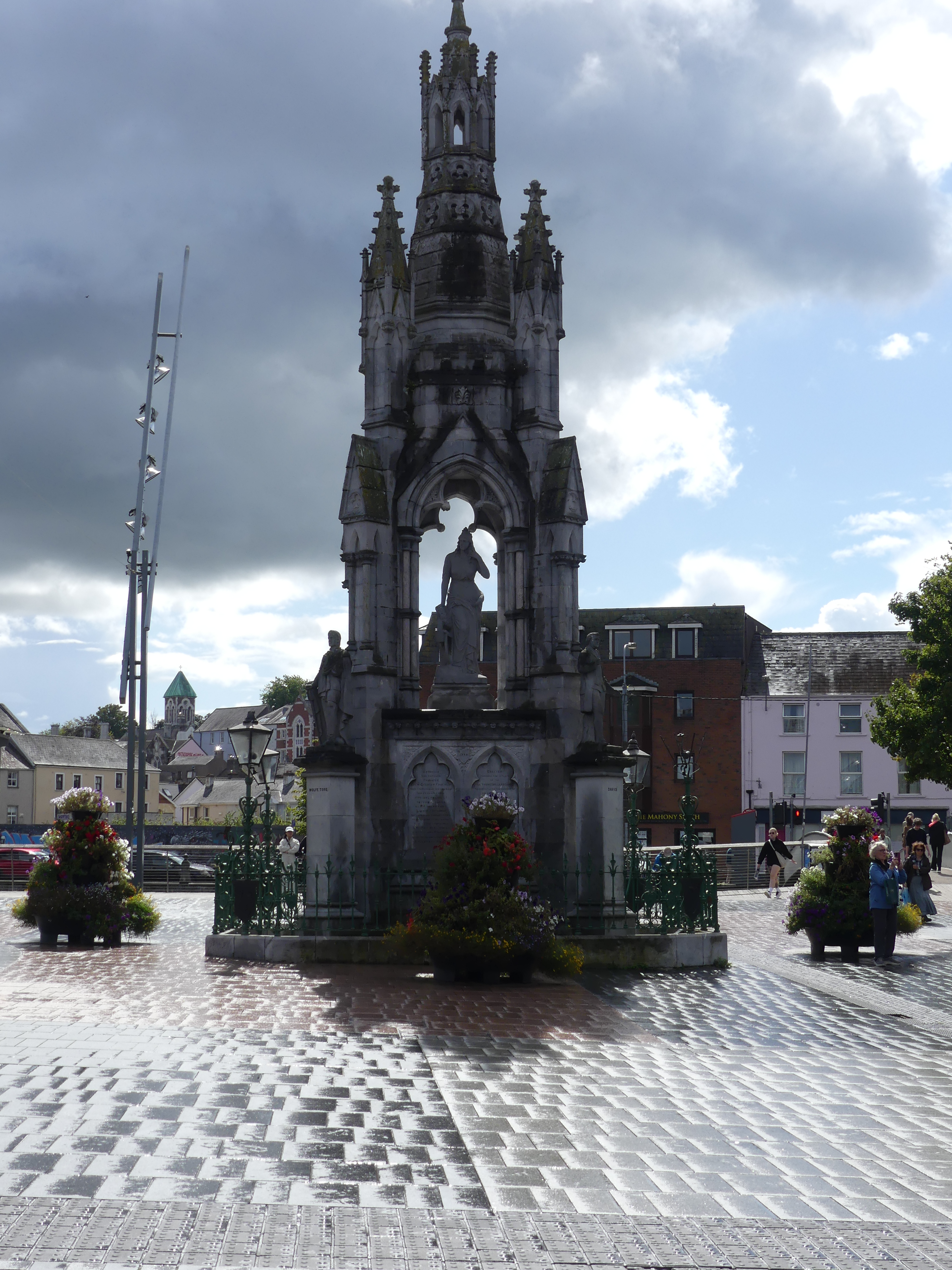
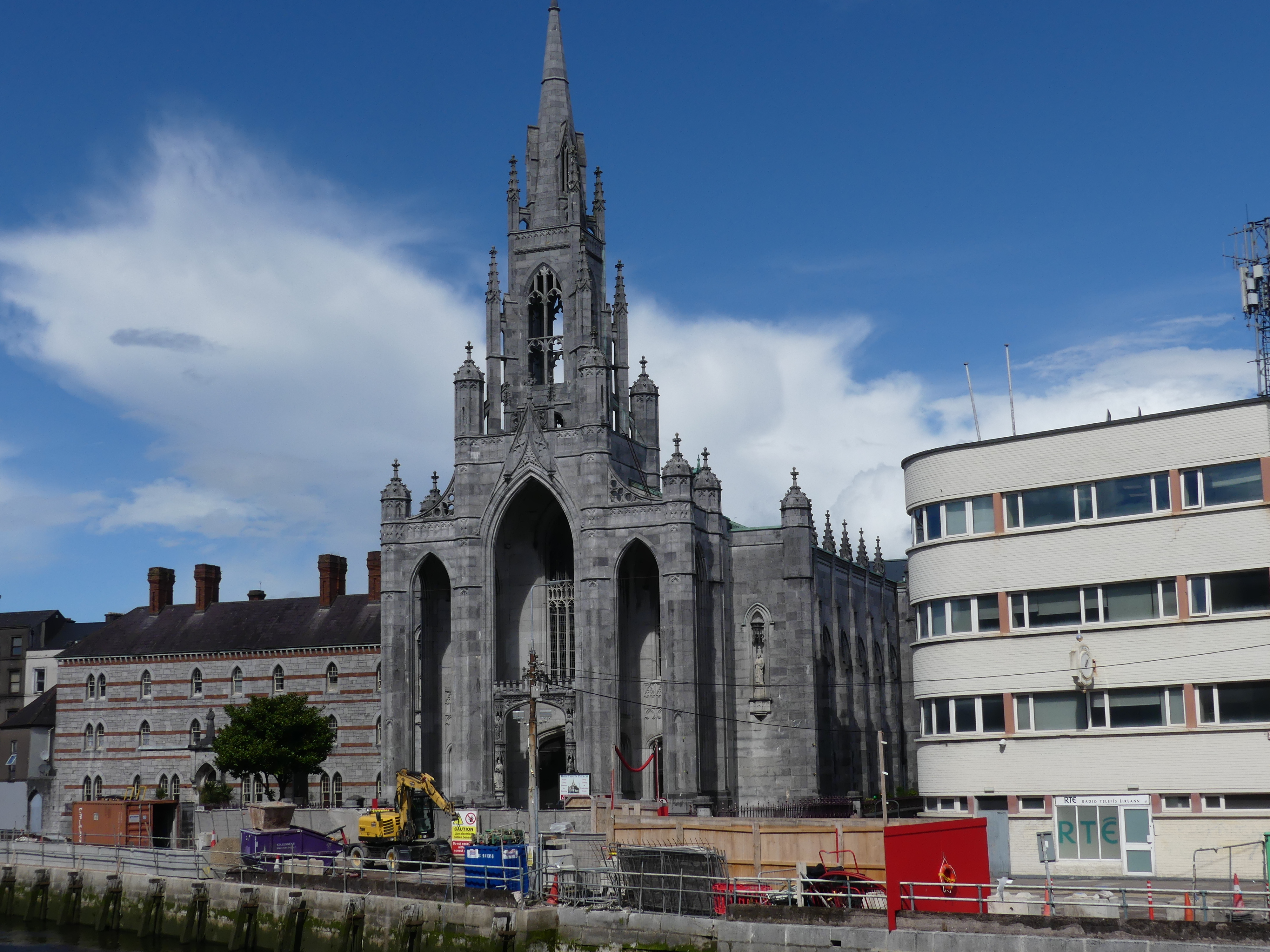
Having boarded the bus, we occupied seats on the open roof of the bus. The following photos follow the ride. Firstly we moved through the docks area to an old bridge which had street lighting where all the lights appeared to be arching over the road similating dockside cranes. There were church spires on the horizon some like the one photographed below adorned with a sign of the occupation of its parishoners – in this case a fish atop the weather vane. We had no particular things we wished to see so we were taking the full tour before deciding. We came to the entrance of the old gaol and the bus had an exagerated lean towards the footpath. After some passengers got off the bus the cry went out, “Stand up and move over on top”. Well that had me puzzled until I realised the bus had to be righted so that it could leave its parking place – you see all of us moving as instructed. The bus then carefully made its way to the Courthouse.

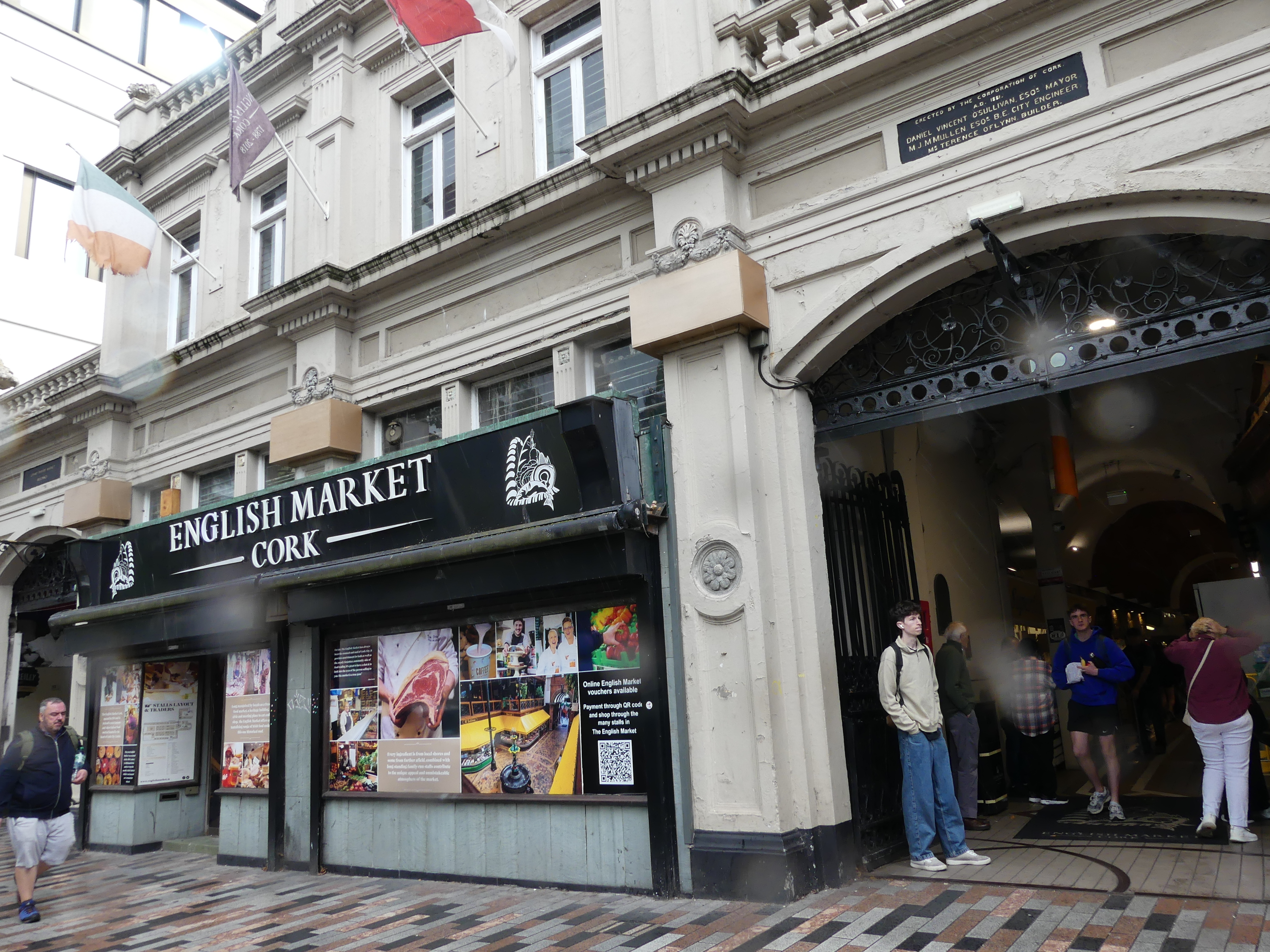
We planned to hop off the bus at the English Market. We passed some graffitti on the way – some in the street style and then a full size portrait but there was little else of interest before reaching the Market. I am not sure what we were hoping to find. As the name implies its a market and there was nothing that we could take back to the ship.

We left the market and waited in the square for our bus. Kerry stopped a local bike rider for some directions. We felt like fools (I was taking the picture).

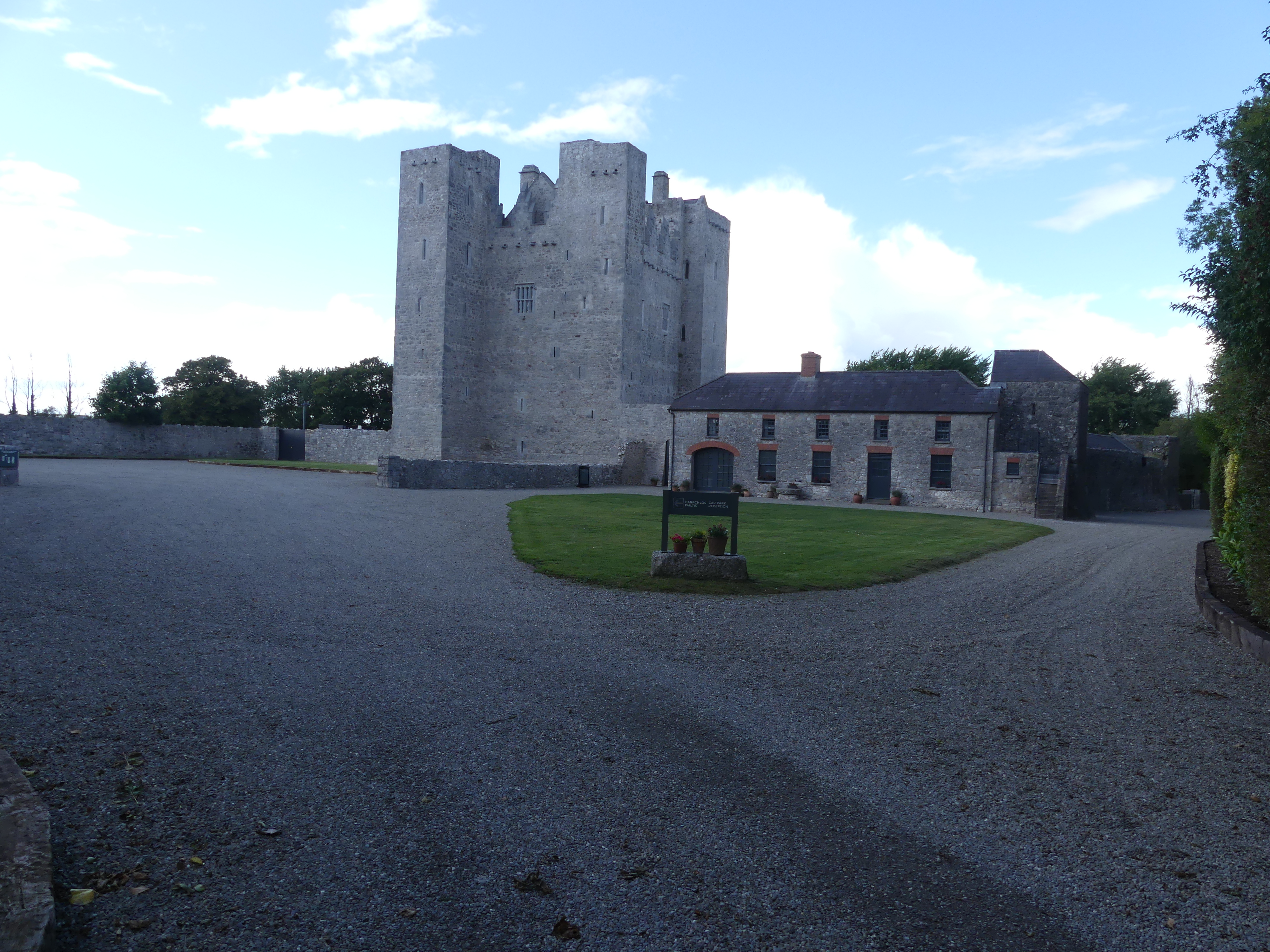
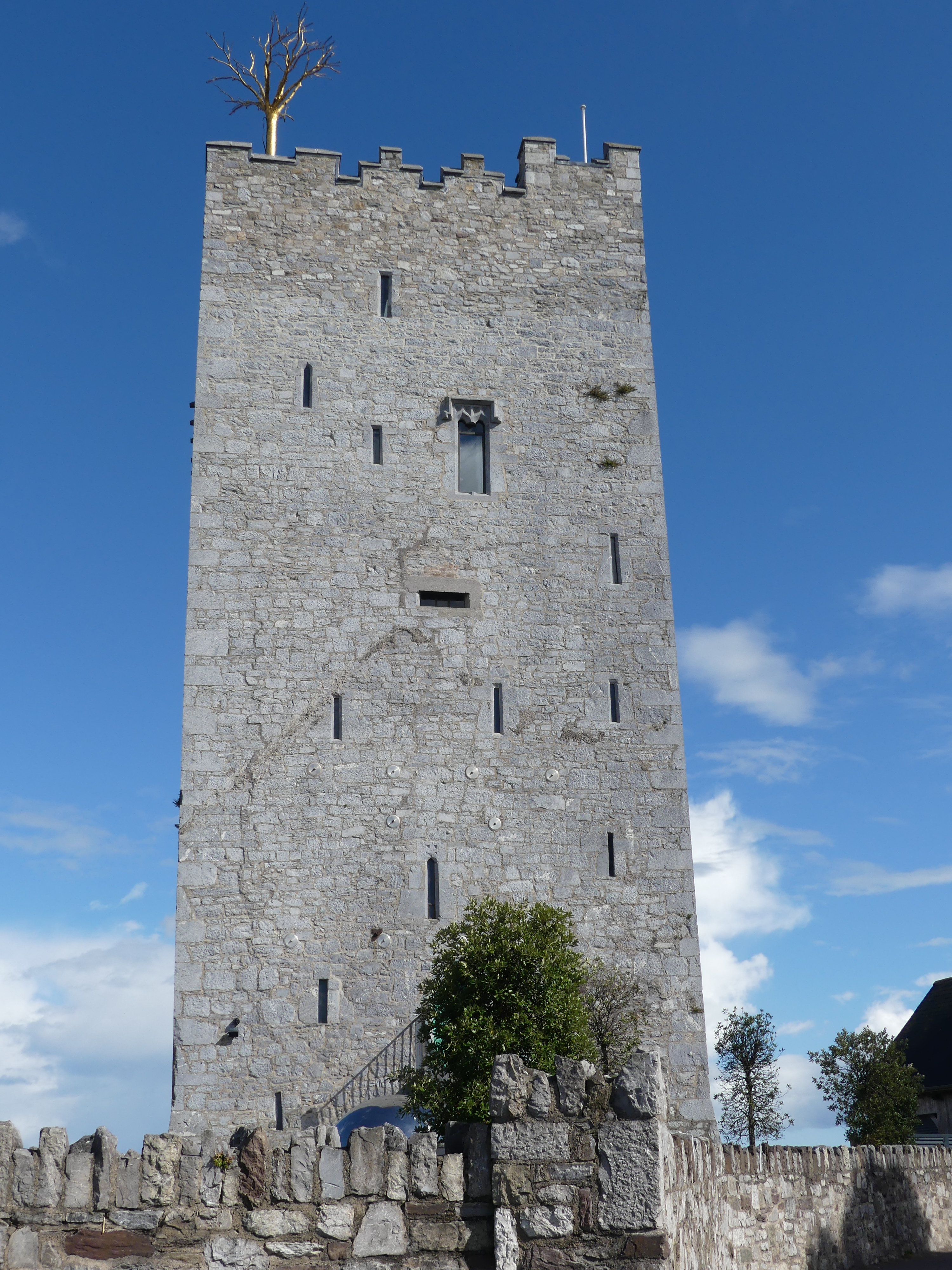
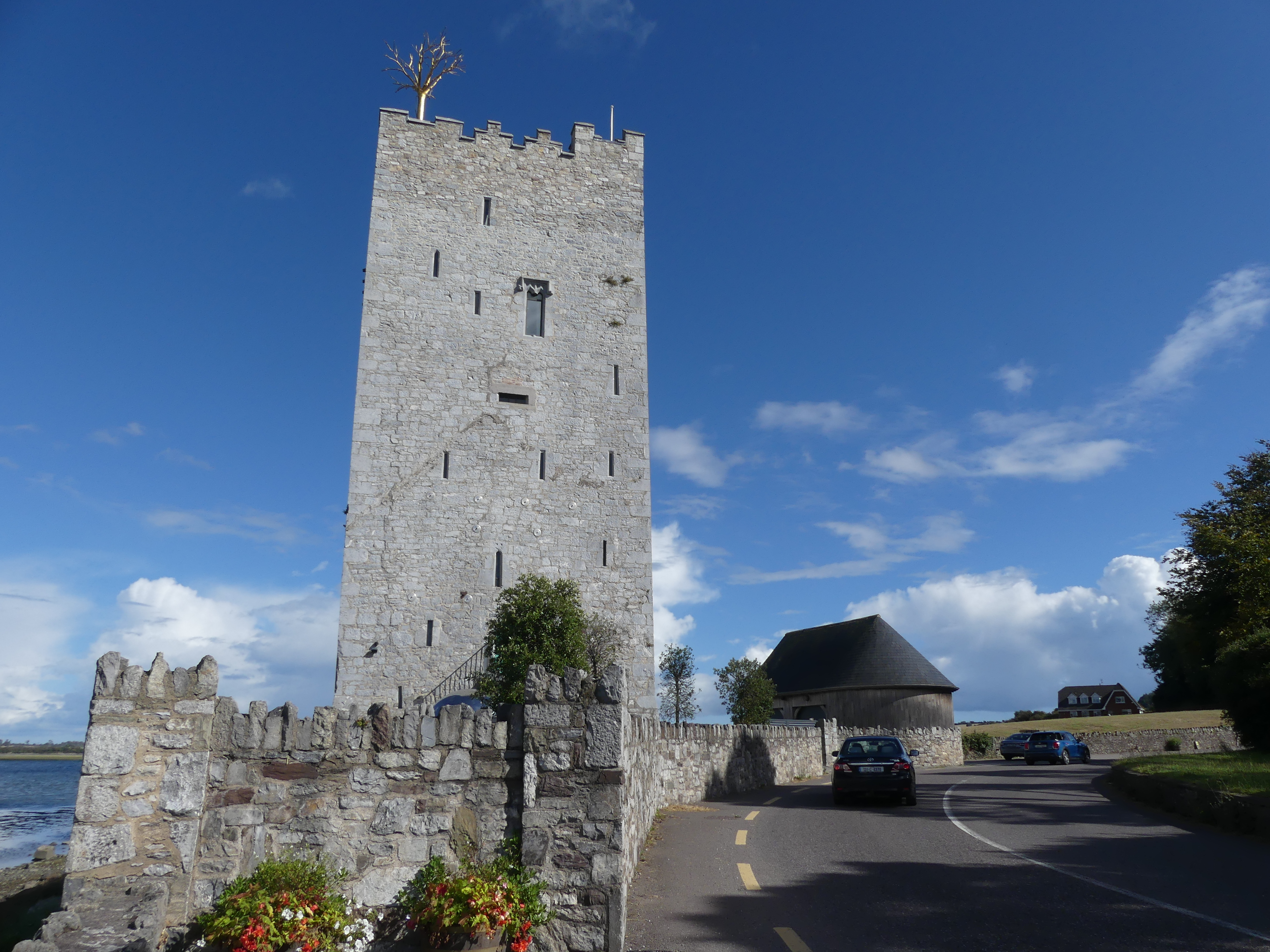
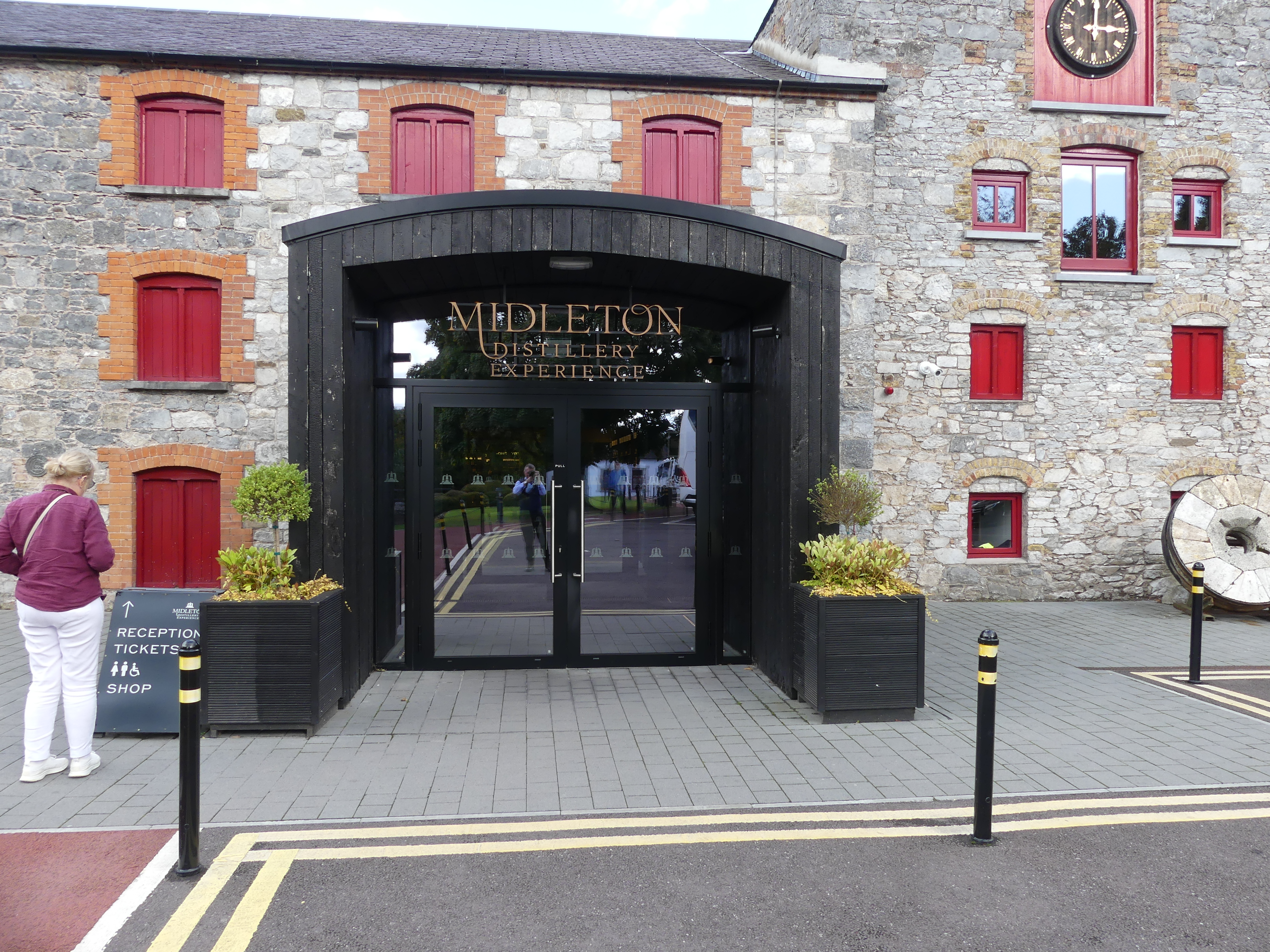
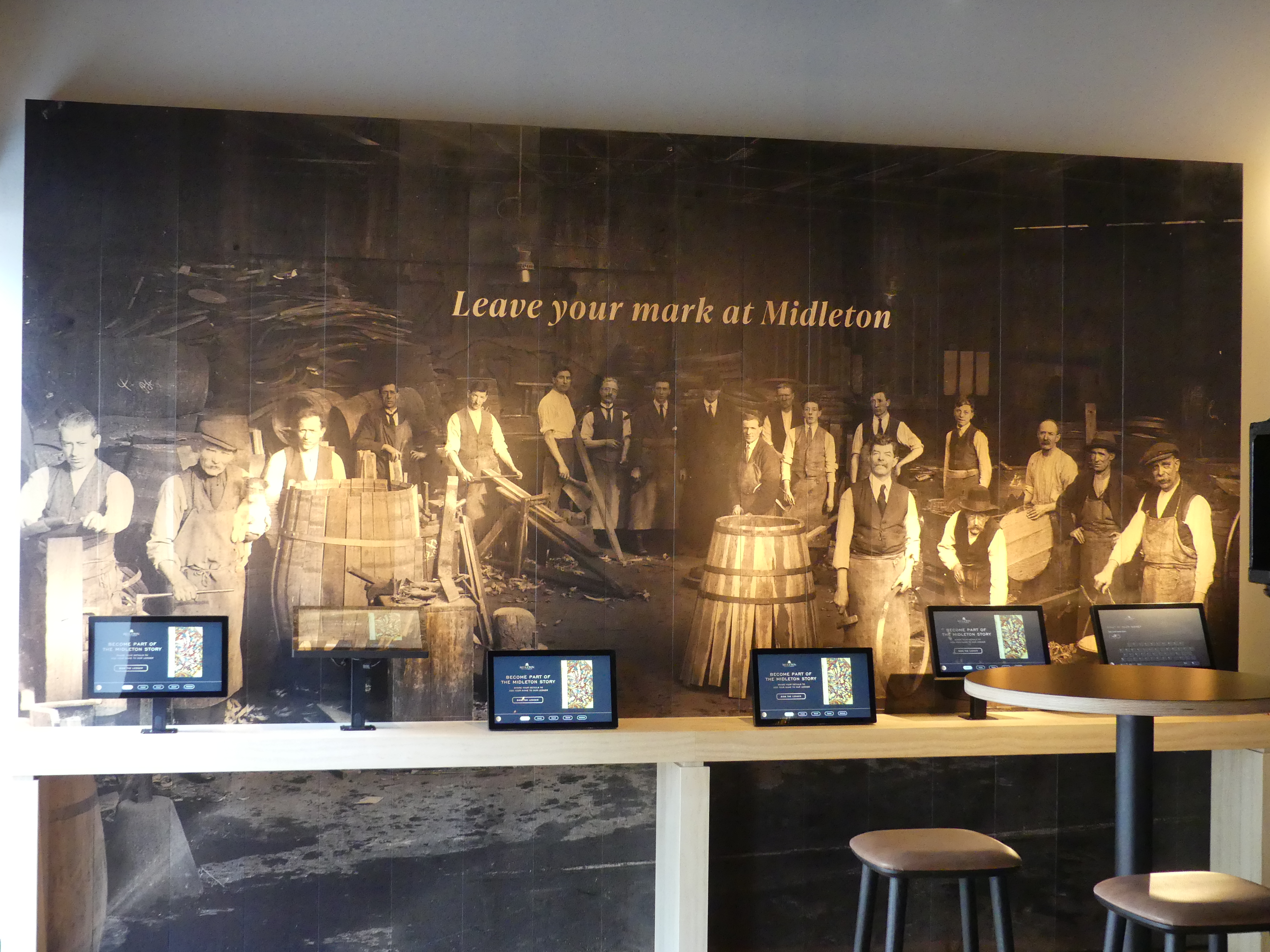
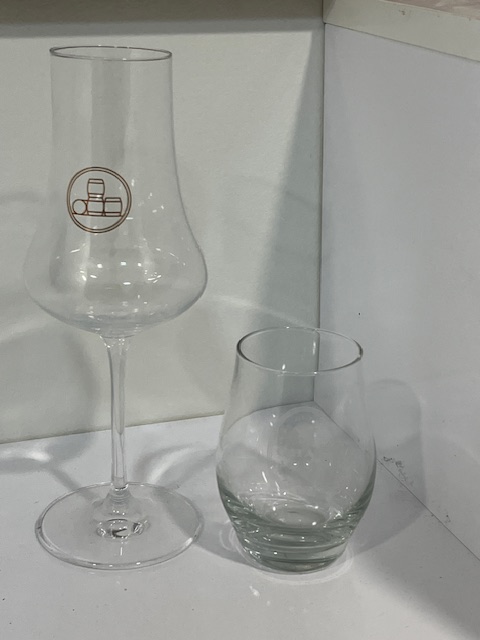
There was some time wasted waiting for the bus. I took some further photos of surrounding buildings and ultimately the bus arrived. Our tour was coming to an end. We got off at the Station View Tavern and then returned on the train to the port. Nothing much to do when Kerry noticed the cabs lined up offering tours and one was to the Jameson Distillery. That sounded promising. We climbed into the cab and shot off expecting this would be nearby. Well we were wrong. Firstly he stopped to show us a castle tower converted into a dwelling before turning into a place called Middletons which turns out to be the maker of Jamiesons Whiskey and some other labels. They offered tasting paddles at a price of course but I picked up a bottle of Redbreast single pot stilled 12 year old whiskey and saved paying for the paddle. I also obtained a whiskey taster. Many years ago, probably 10 years ago, Doug and Neirda travelled with us to Oban and Doug and I did the tour and obtained an “Oban” labeled taster. So I also obtained a Jamieson’s taster. I have shown both tasters below.

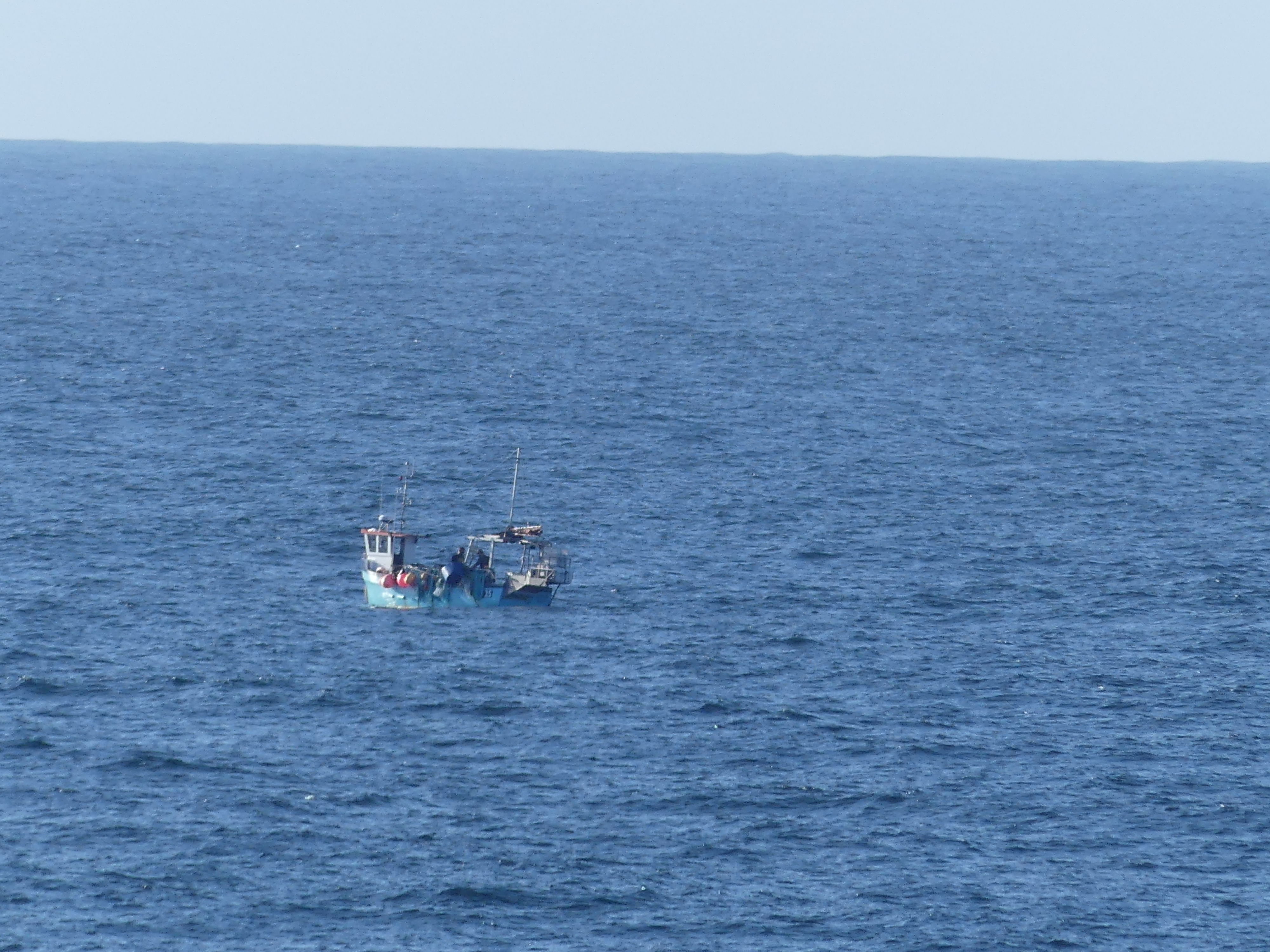
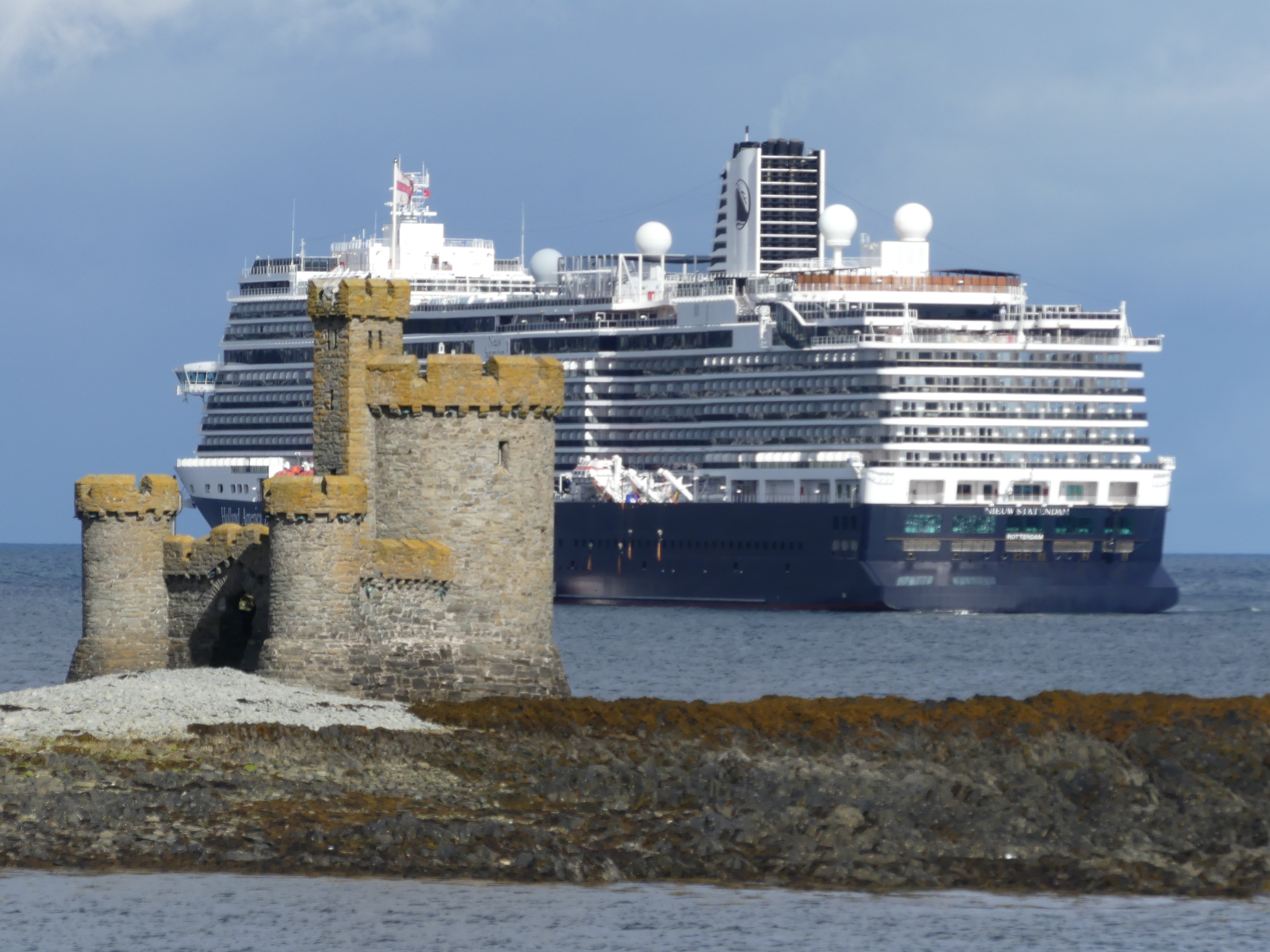
We were returned to the dock in Cobh and boarded the ship with our booty. Tomorrow would be at sea and our last day would result in our returning to Dover and disembarking. So this is what its like to be at sea. The only vessel we passed between Cobh and Dover.

We had planned to take a taxi to our hotel in Heathrow following which we would fly to Singapore for a short stay before travelling home. However, the ship was providing a bus to Heathrow which meant we could make a saving of over 100 pounds and a more reliable way to travel or so we thought. My next blog we return to Heathrow Airport then go to Singapore. Stay tuned for the trip home – “THE RETIREES GO AROUND THE WORLD – Heathrow overnight and arrive in Singapore“

“THE RETIREES GO AROUND THE WORLD – DAY 9 SS NIEUW STATENDAM – Isle of Man“

Thanks to Wikipedia here are a few facts I have learnt from my visit to the Isle of Man and reading Simon Winchester’s book on the Remains of Empire.

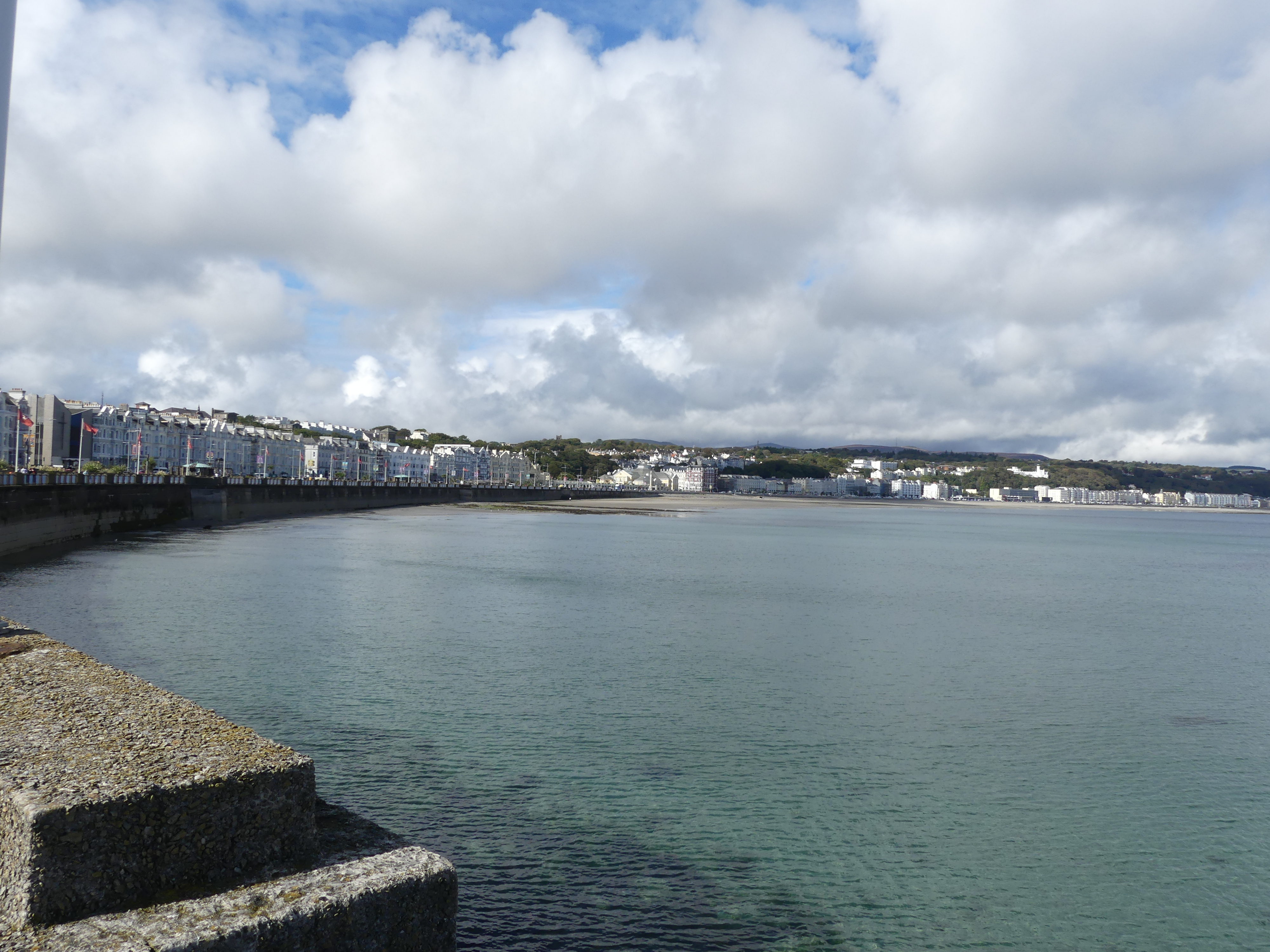
The Isle of Man (Manx: Mannin) is a self-governing British Crown Dependency in the Irish Sea, known for its Celtic and Viking heritage, rugged landscapes, and unique status as not being part of the UK but under the British Crown. It boasts its own parliament (Tynwald), laws, and distinct culture, symbolized by the three-legged triskelion and motto, “Whichever way you throw it, it will stand”. The capital is Douglas, and famous for the annual TT motorcycle race and its thriving finance sector. Crown Dependency, with internal self-governance; the UK handles defense and foreign relations. Head of State: King Charles III, holding the title Lord of Mann. Official Languages: English and Manx (Gaelic). Symbols: The Three Legs of Man (triskelion) and the motto Quocunque Jeceris Stabit (Wherever you throw it, it shall stand).

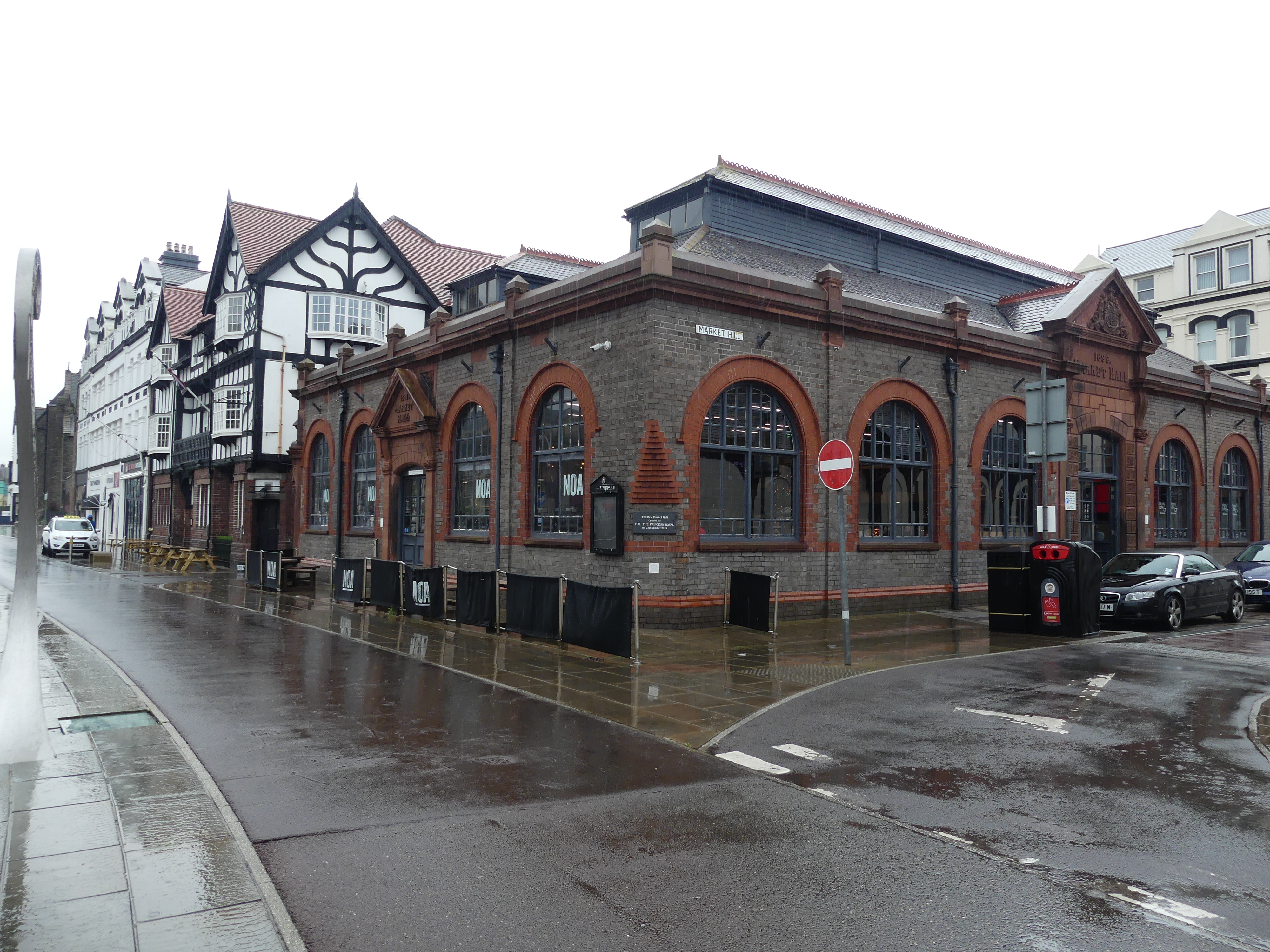
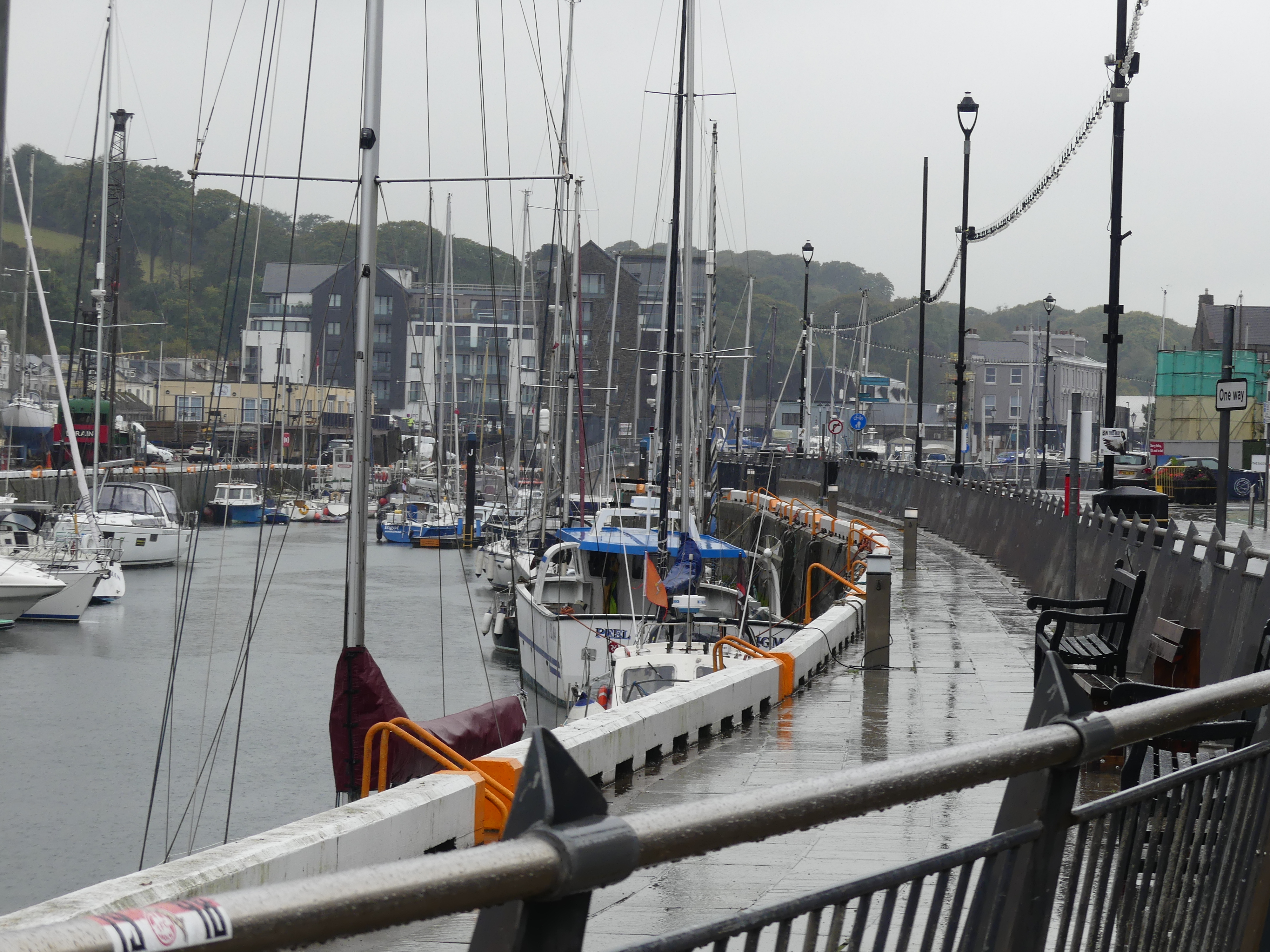
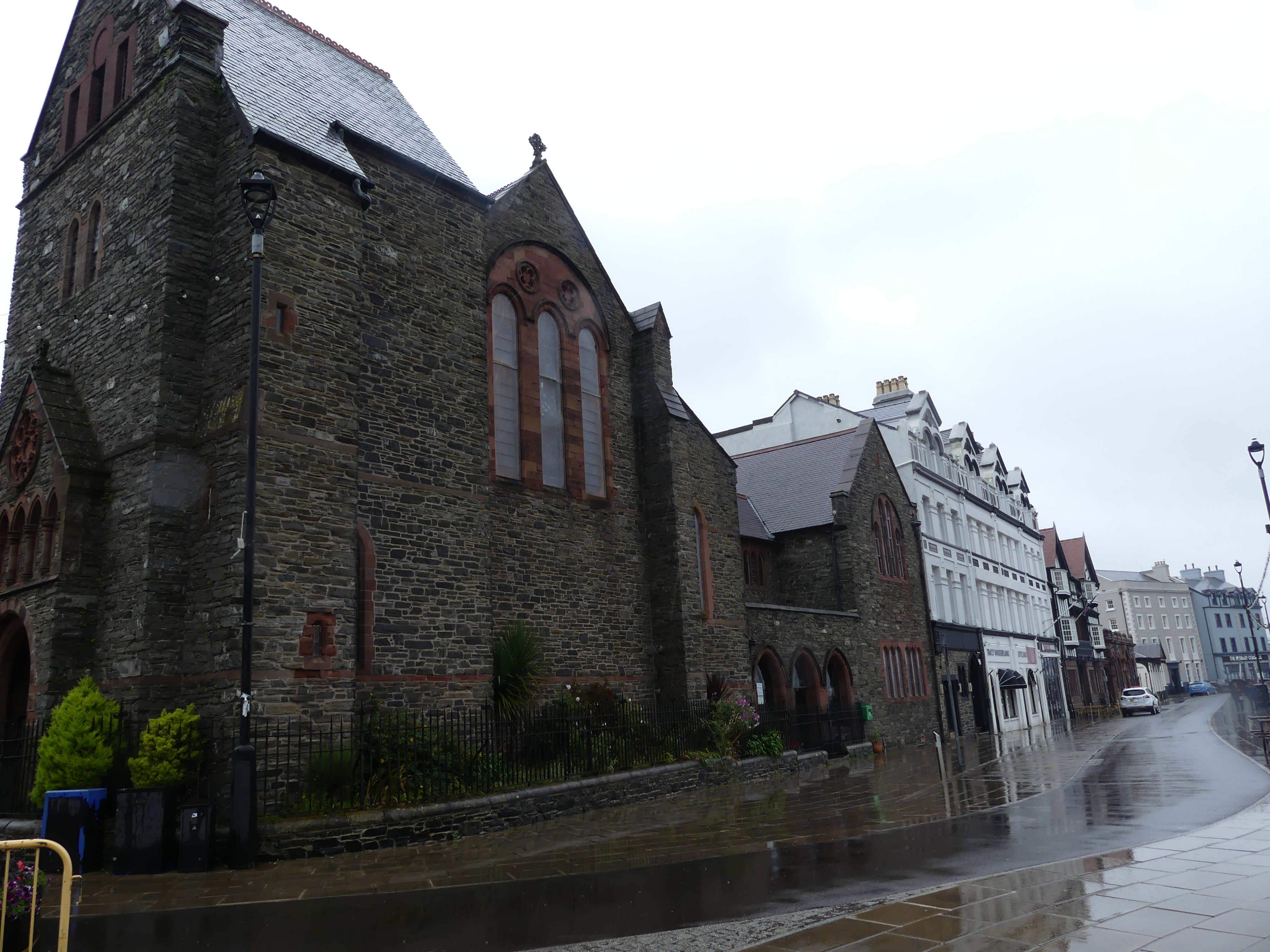
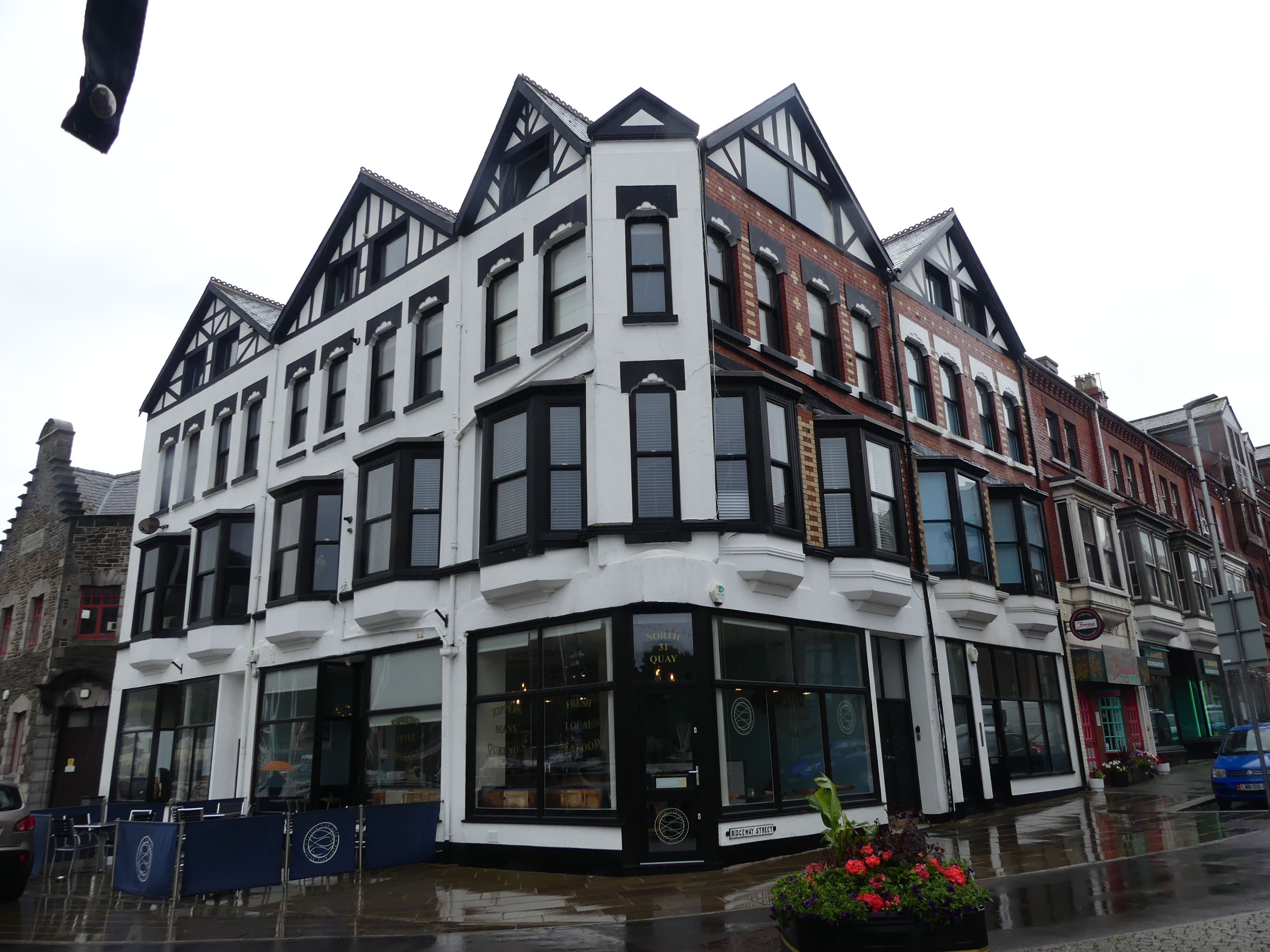
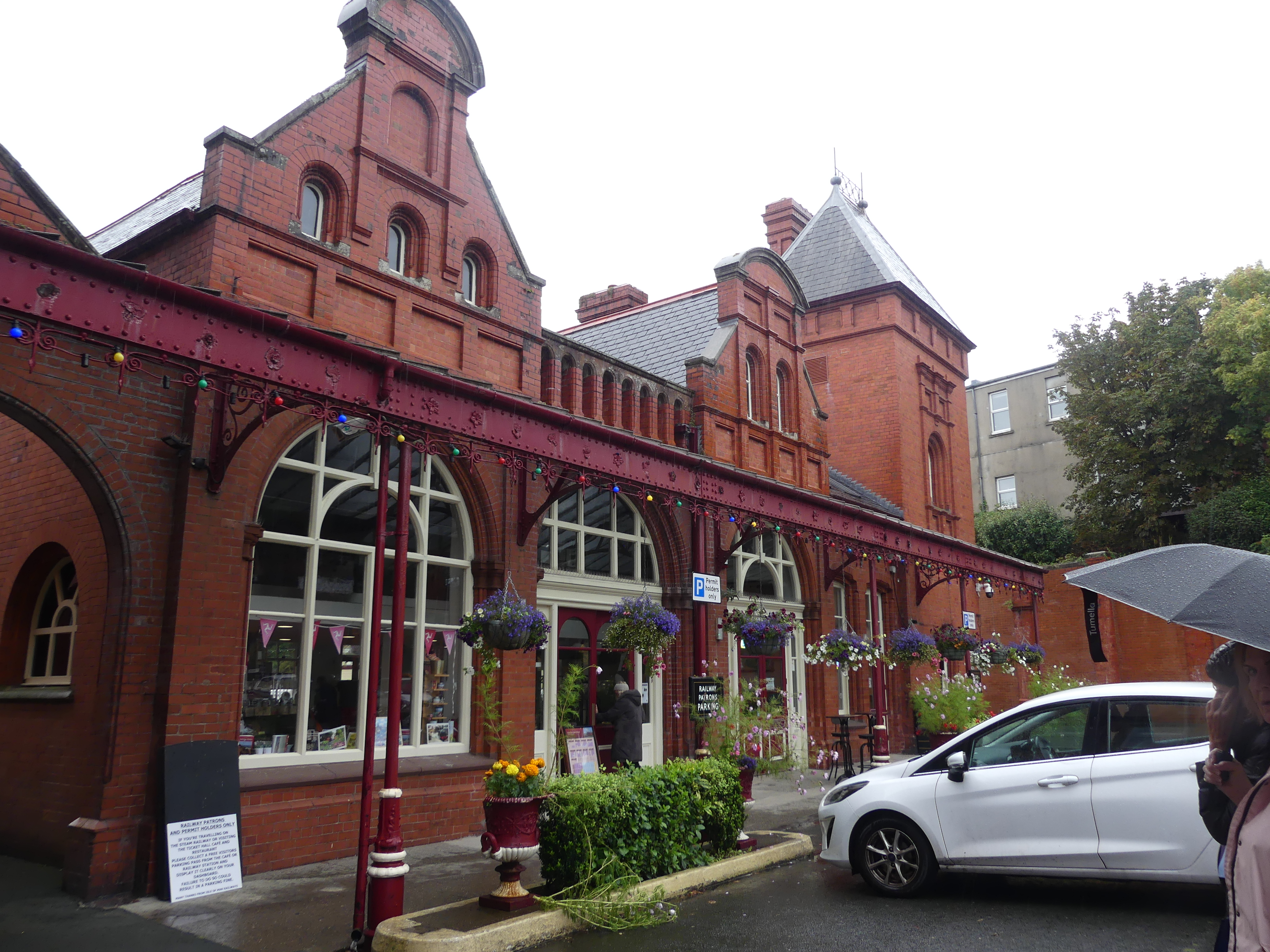
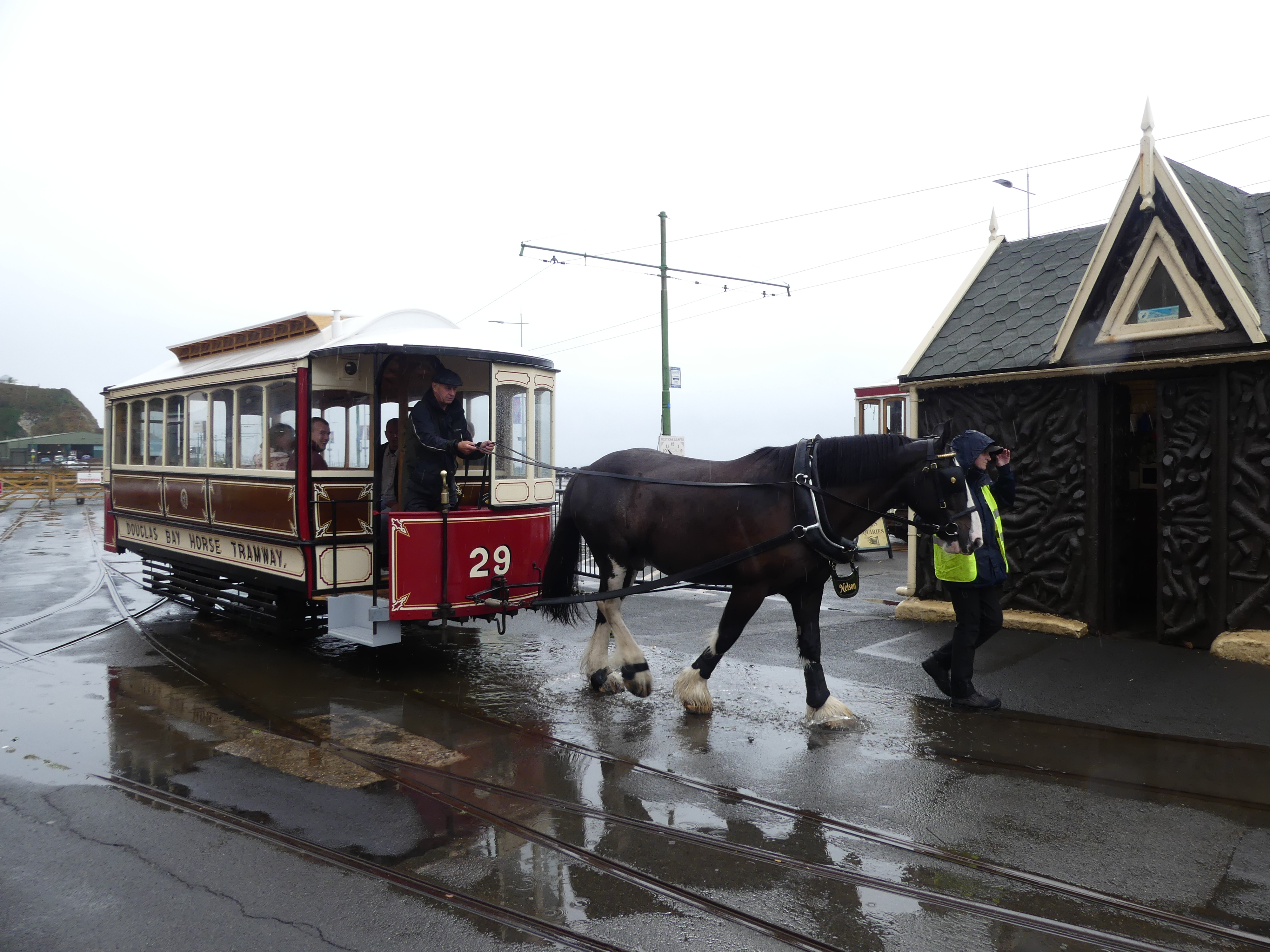
The capital is the city of Douglas. I have scanned and placed below part of the brochure from our visit and to help you understand the things we did. First after docking we made our way through the customs terminal for Man then worked our way around to the railway station planning to take a horse drawn tram then a train to Ramsey in the north.

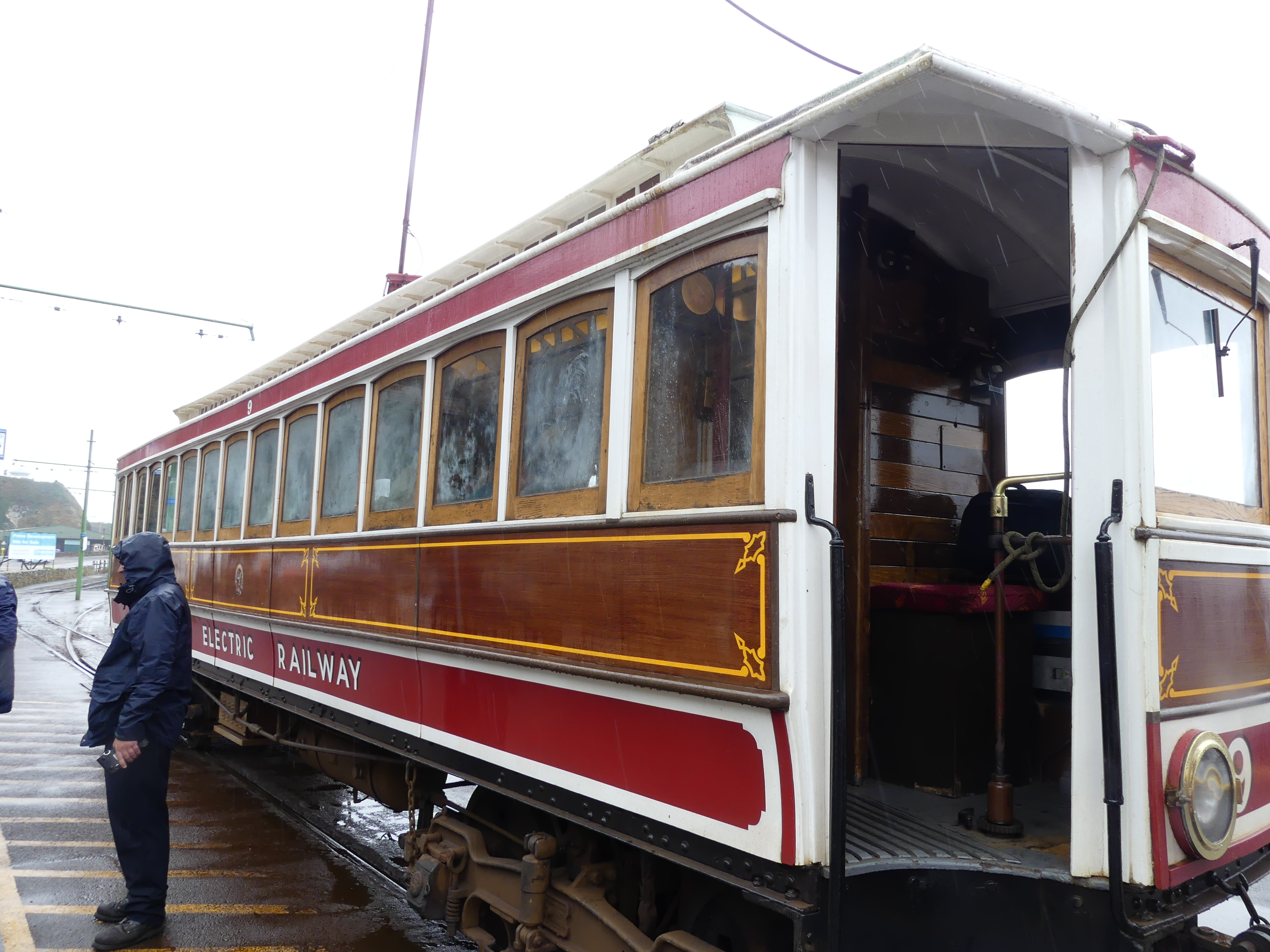
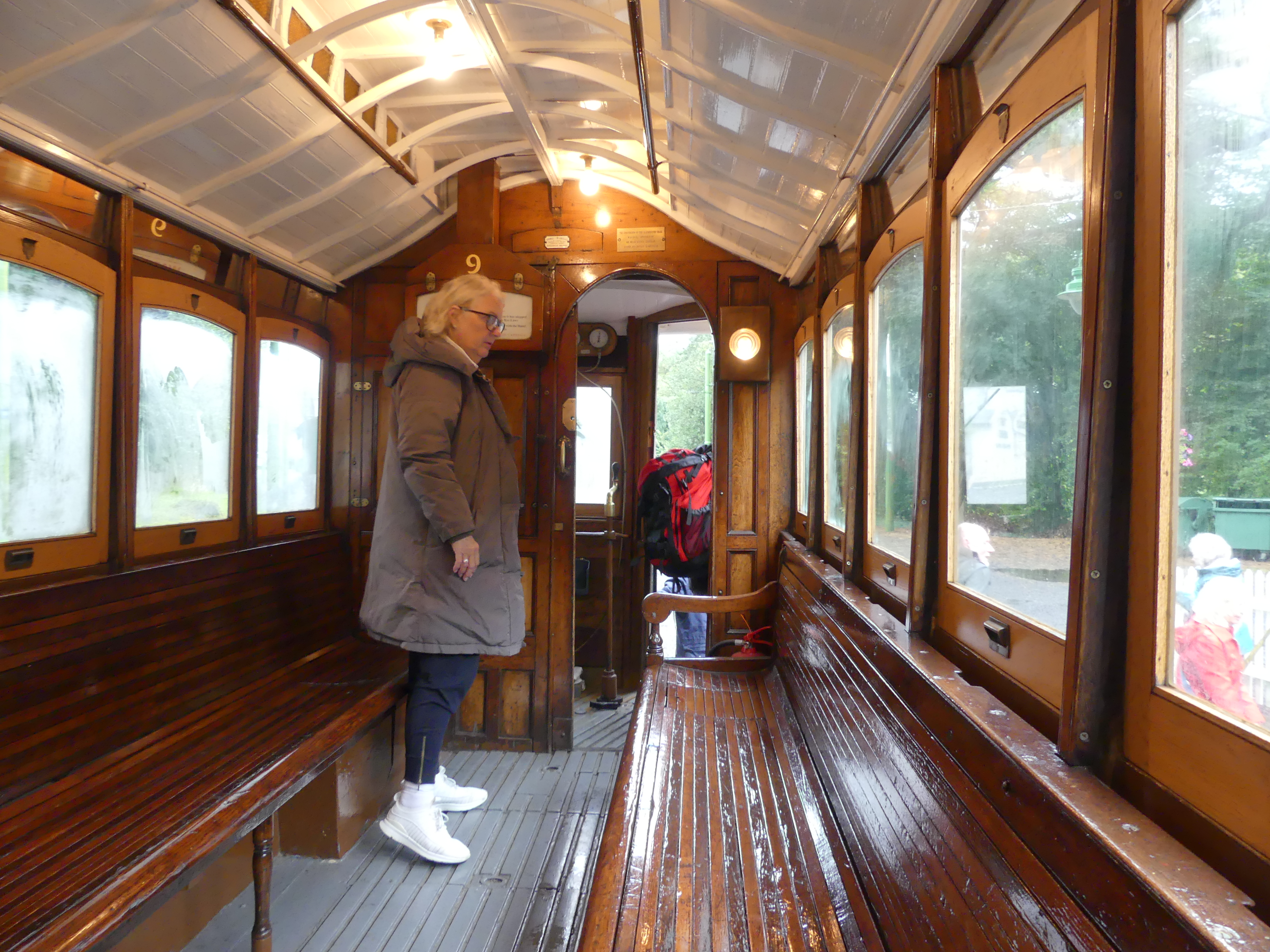
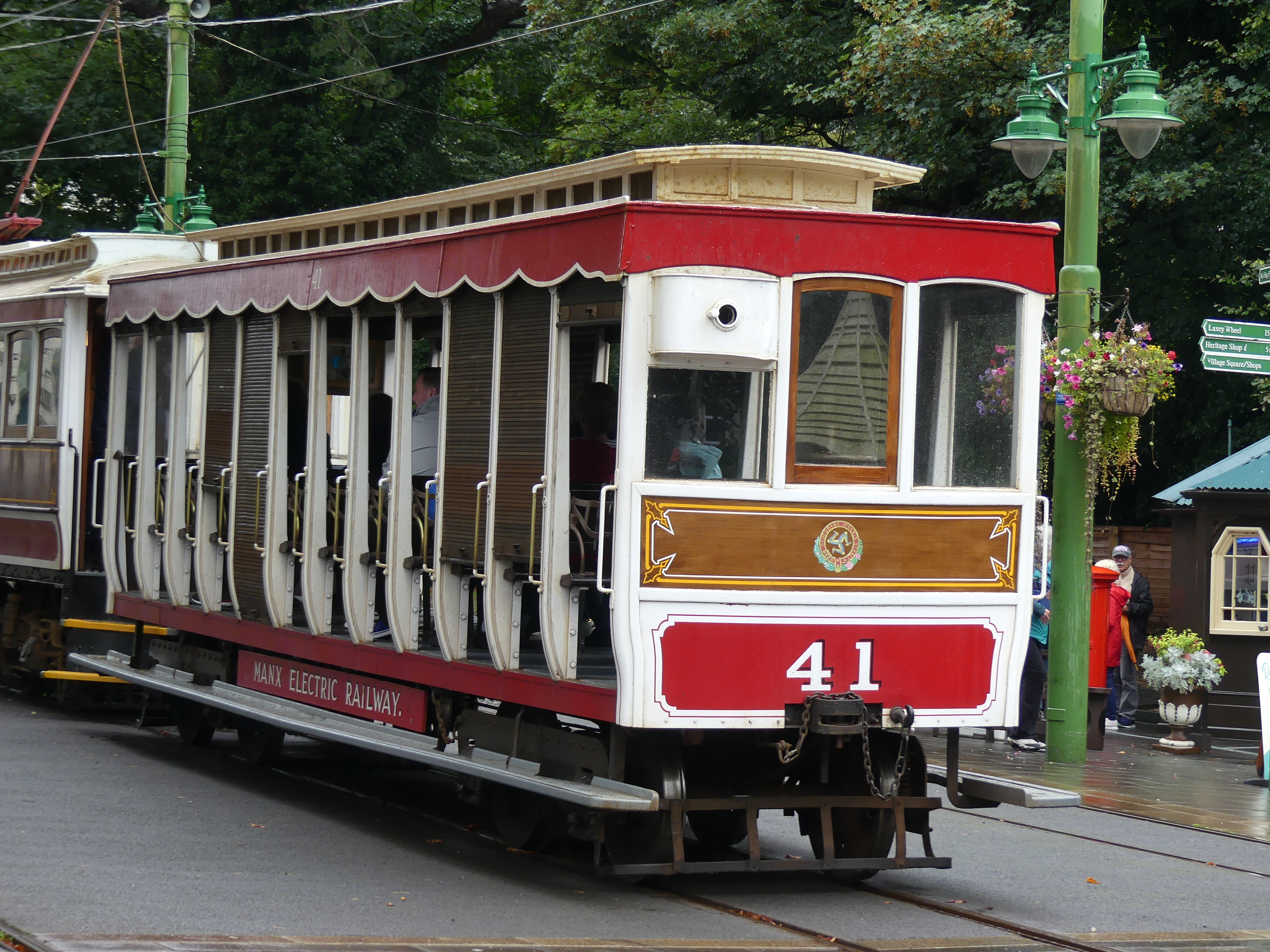
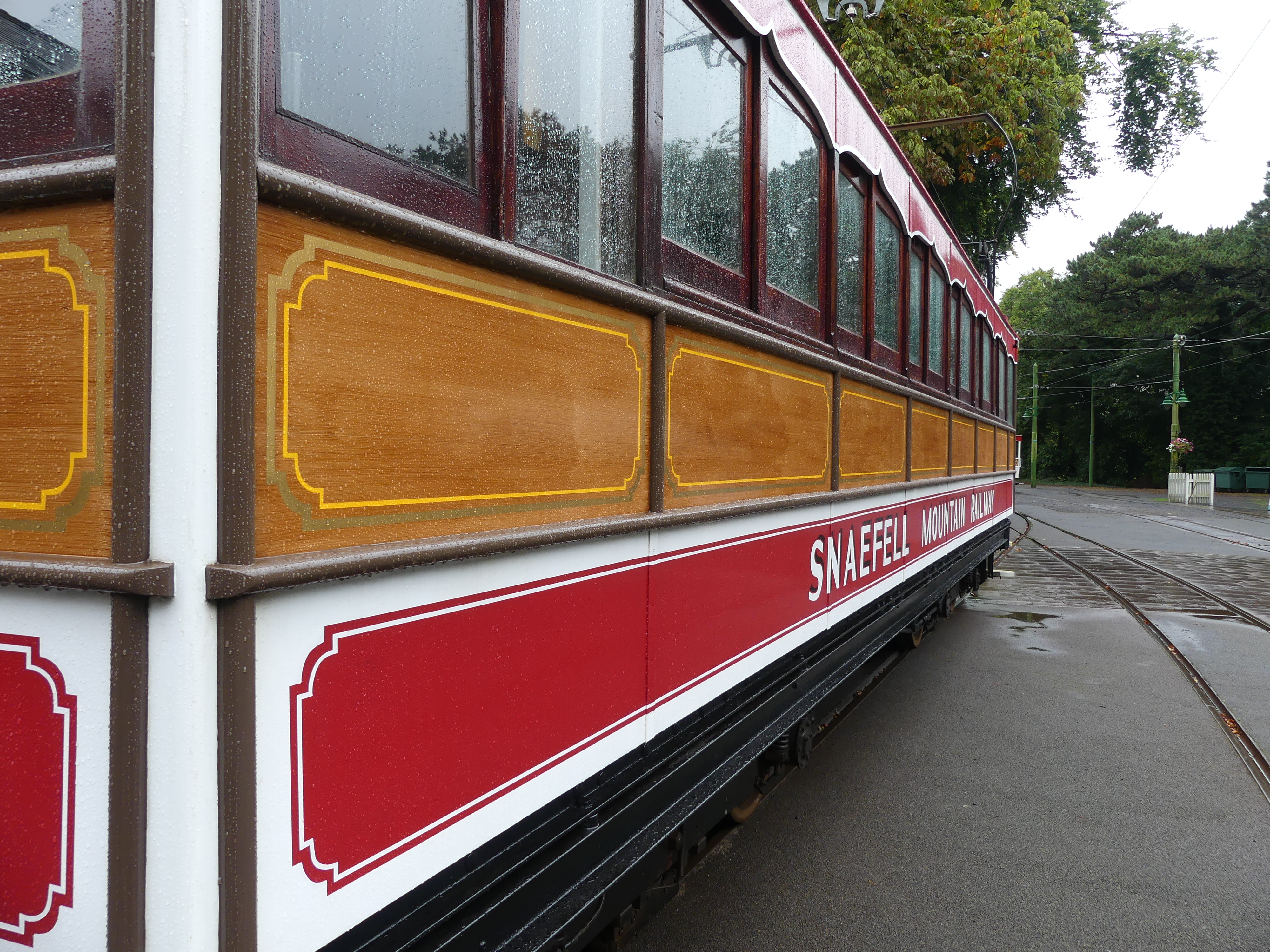
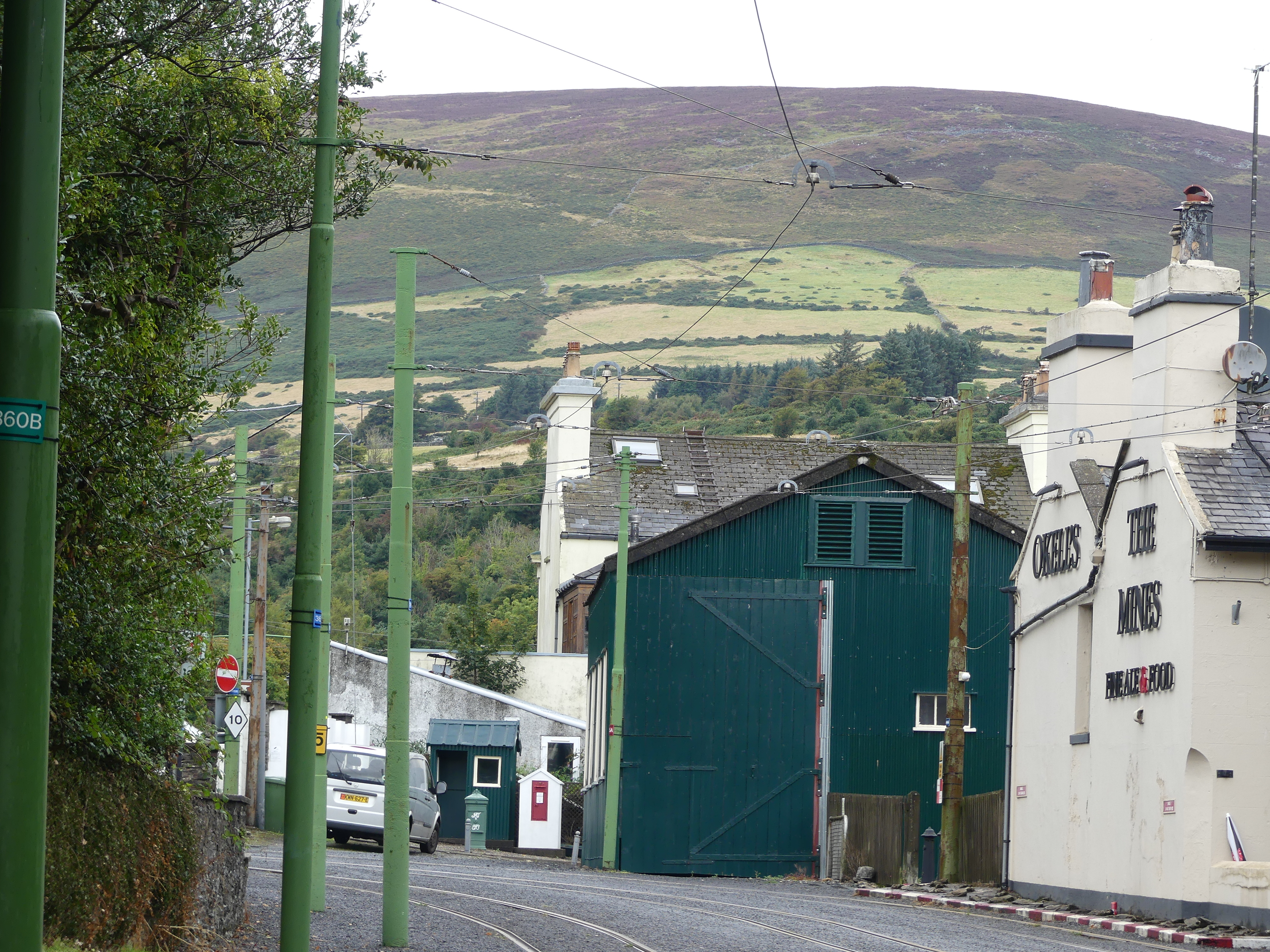
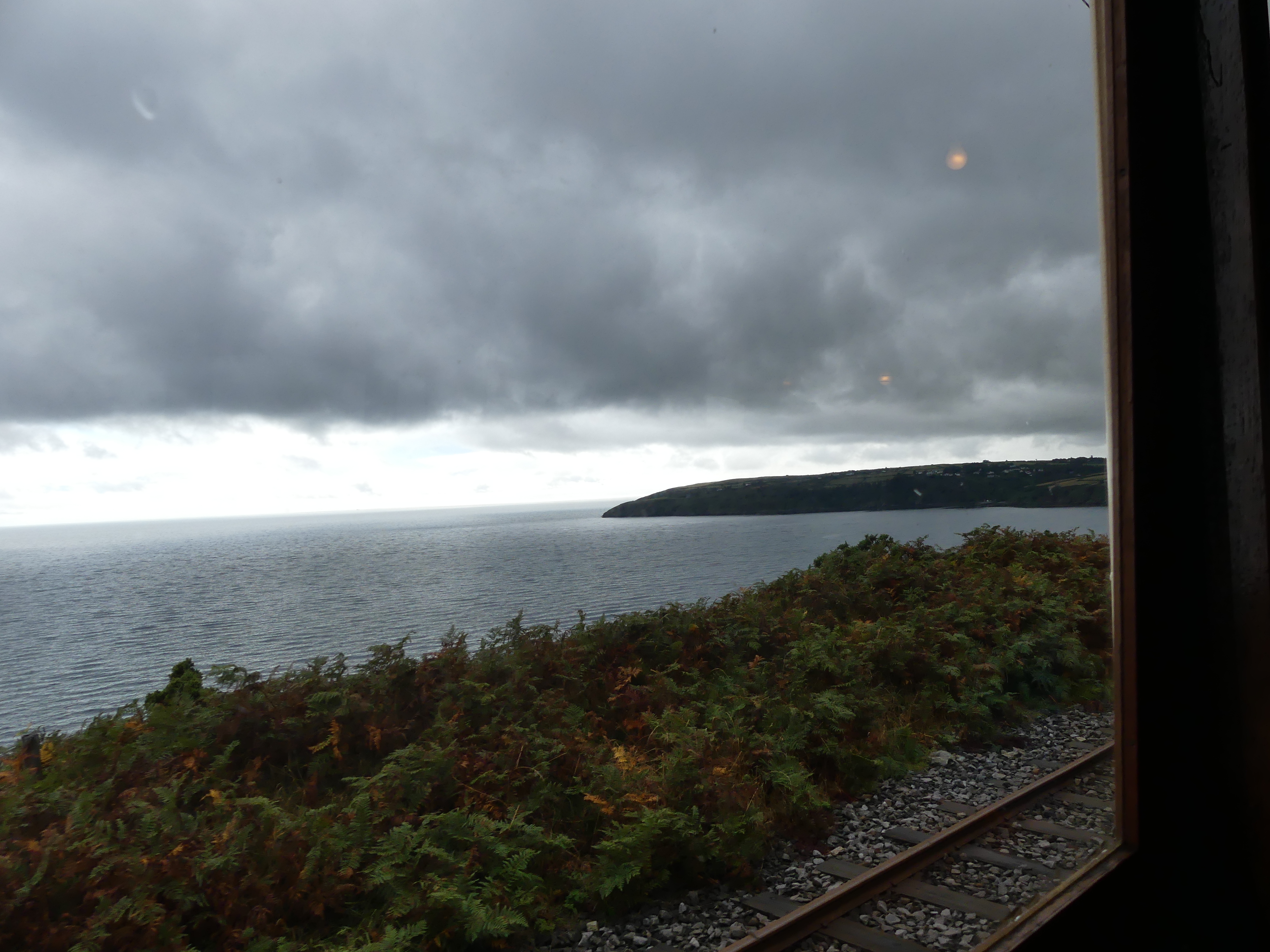
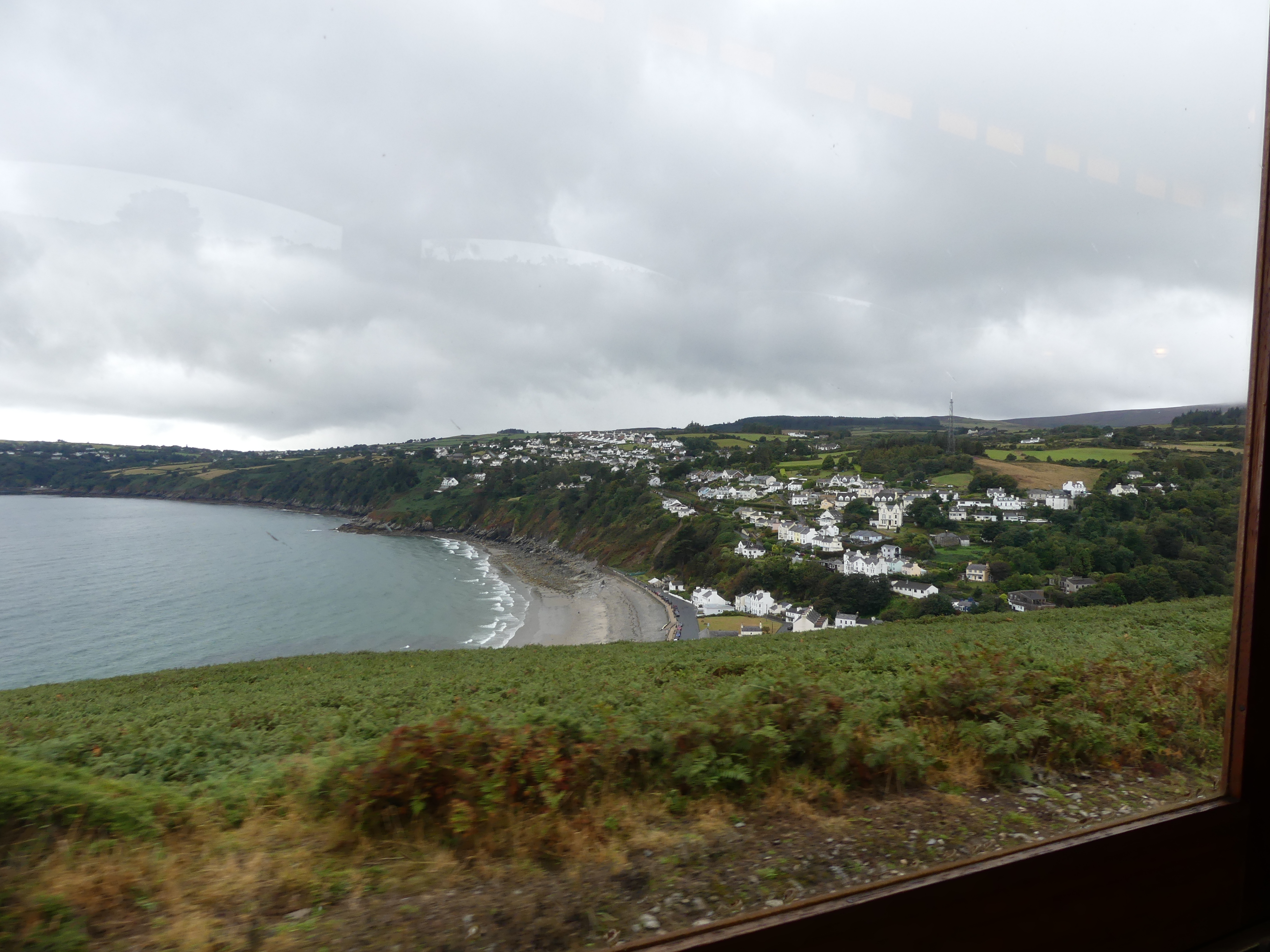
As you can see, it was not fair weather and we sheltered under a tiny umbrella. On arriving at the station disappointment awaited us – no trains. What we wanted was on the otherside of the city, so we hunted down a taxi and made our way to the horse drawn tram which would take us on the first part of our adventure. On arrival at the rail station we left the horse and carriage and transitioned to the Manx Electric Railway and then we had to make a decision – do we take to the Snaefell Mountain Railway or take the Manx Electric Railway to Ramsey. We decided to do both.

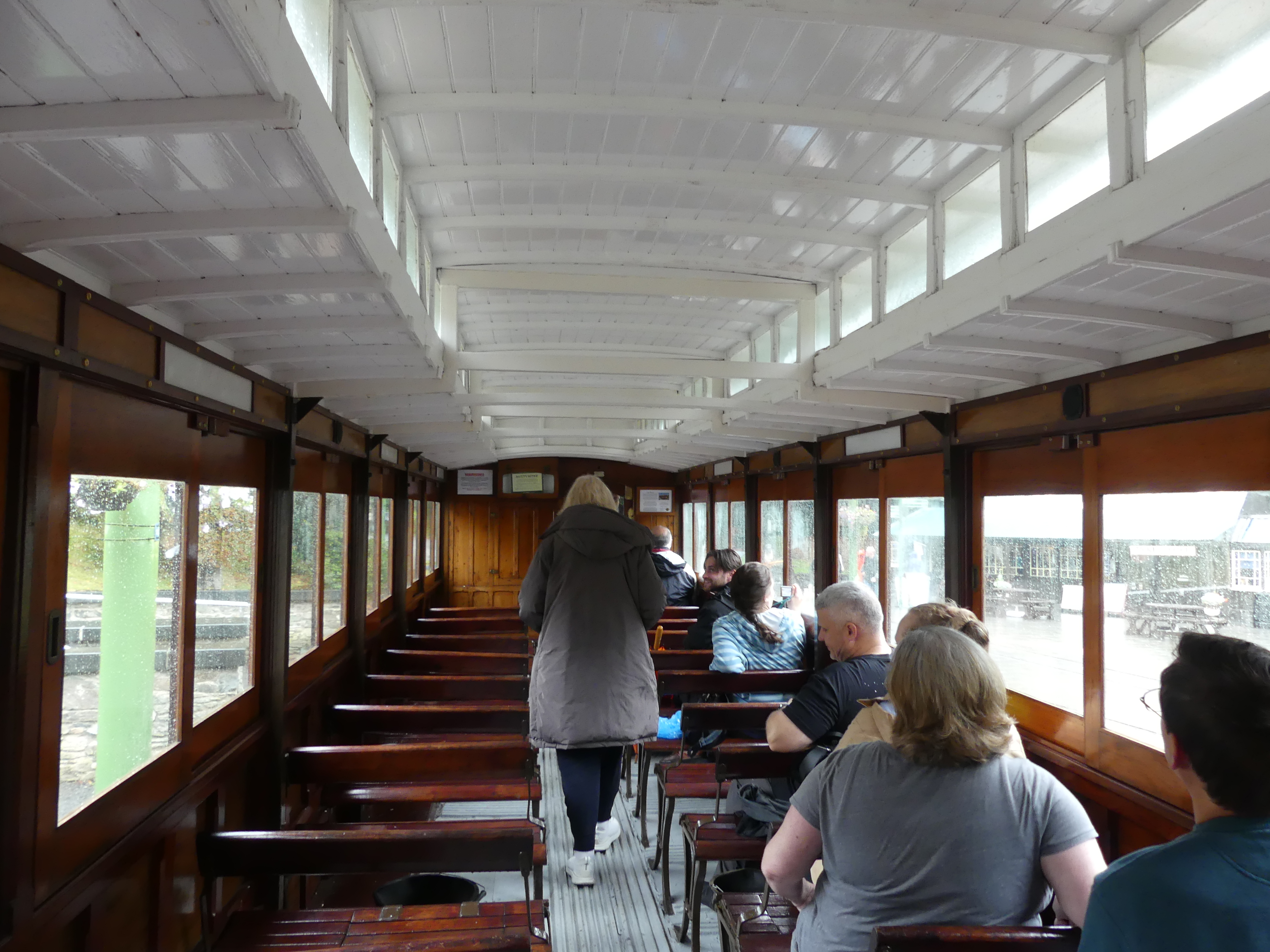
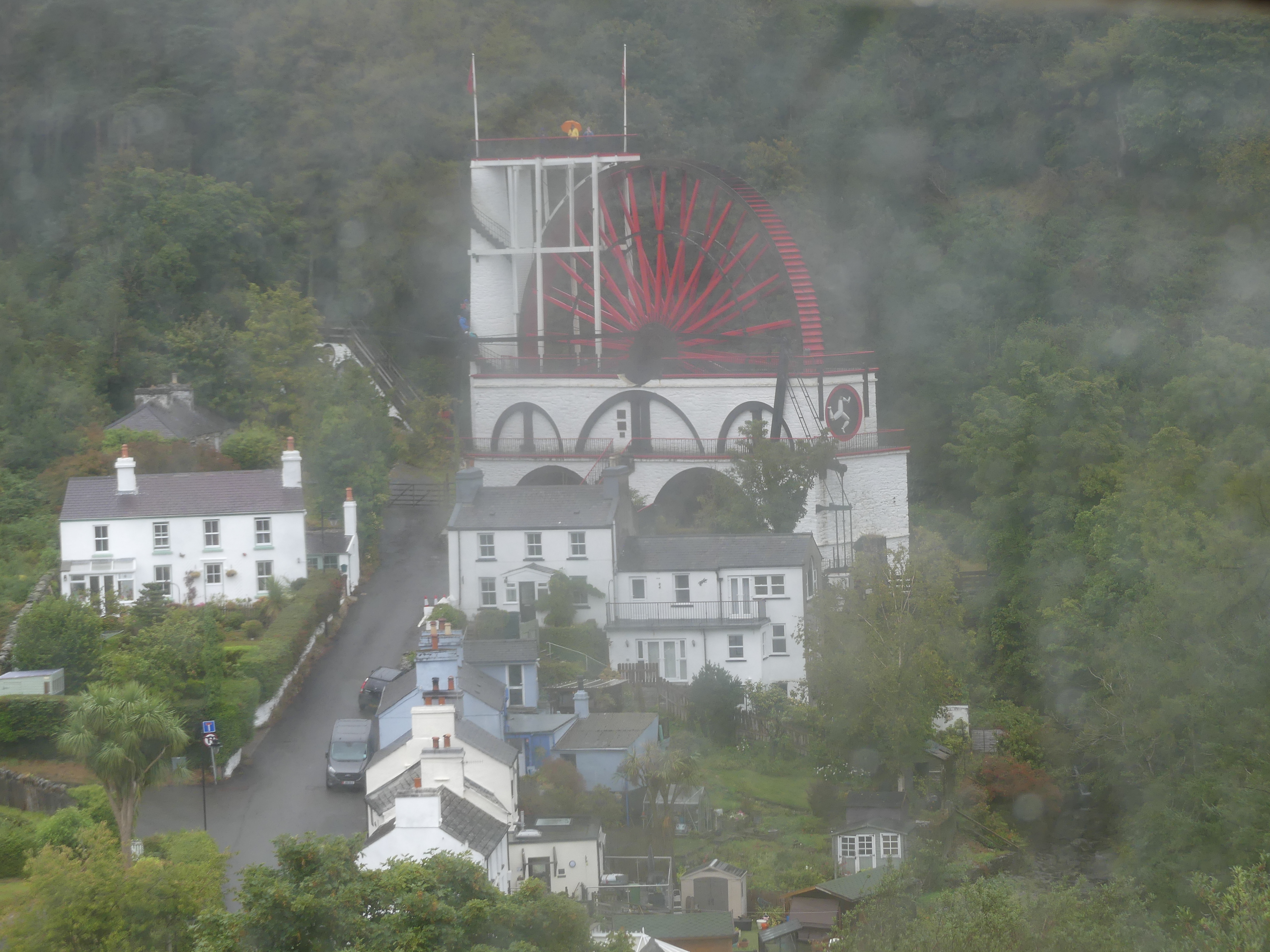
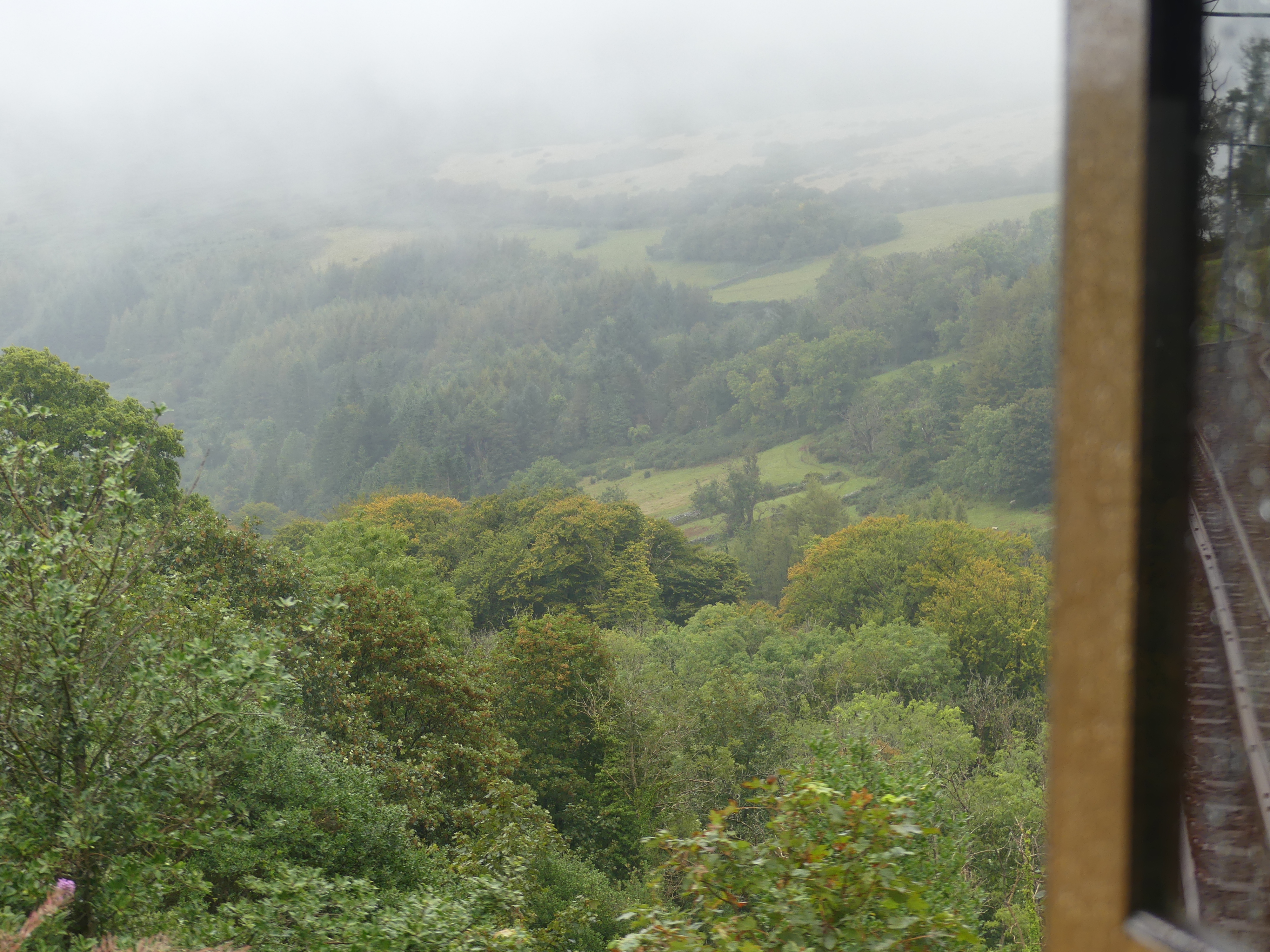
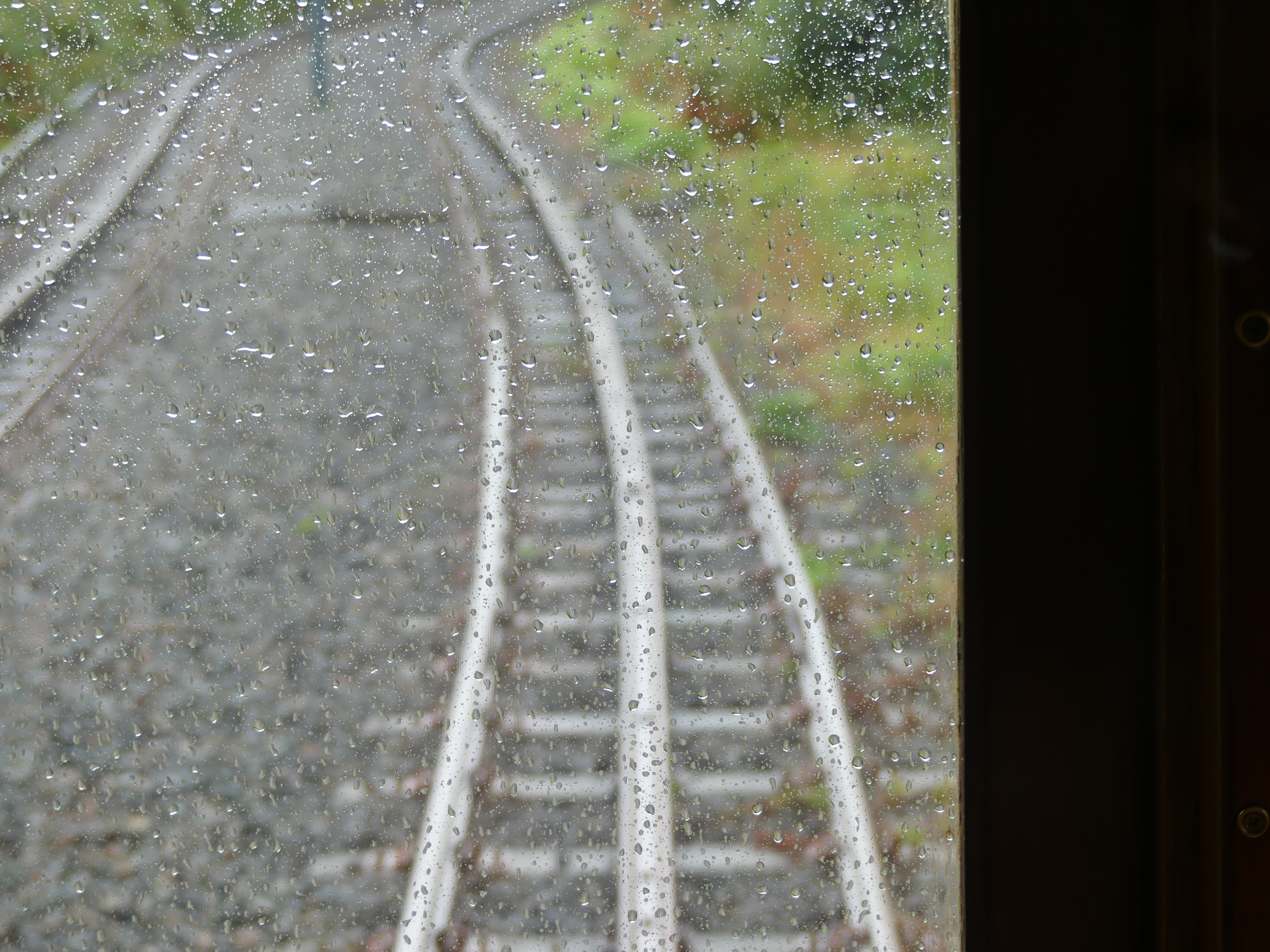
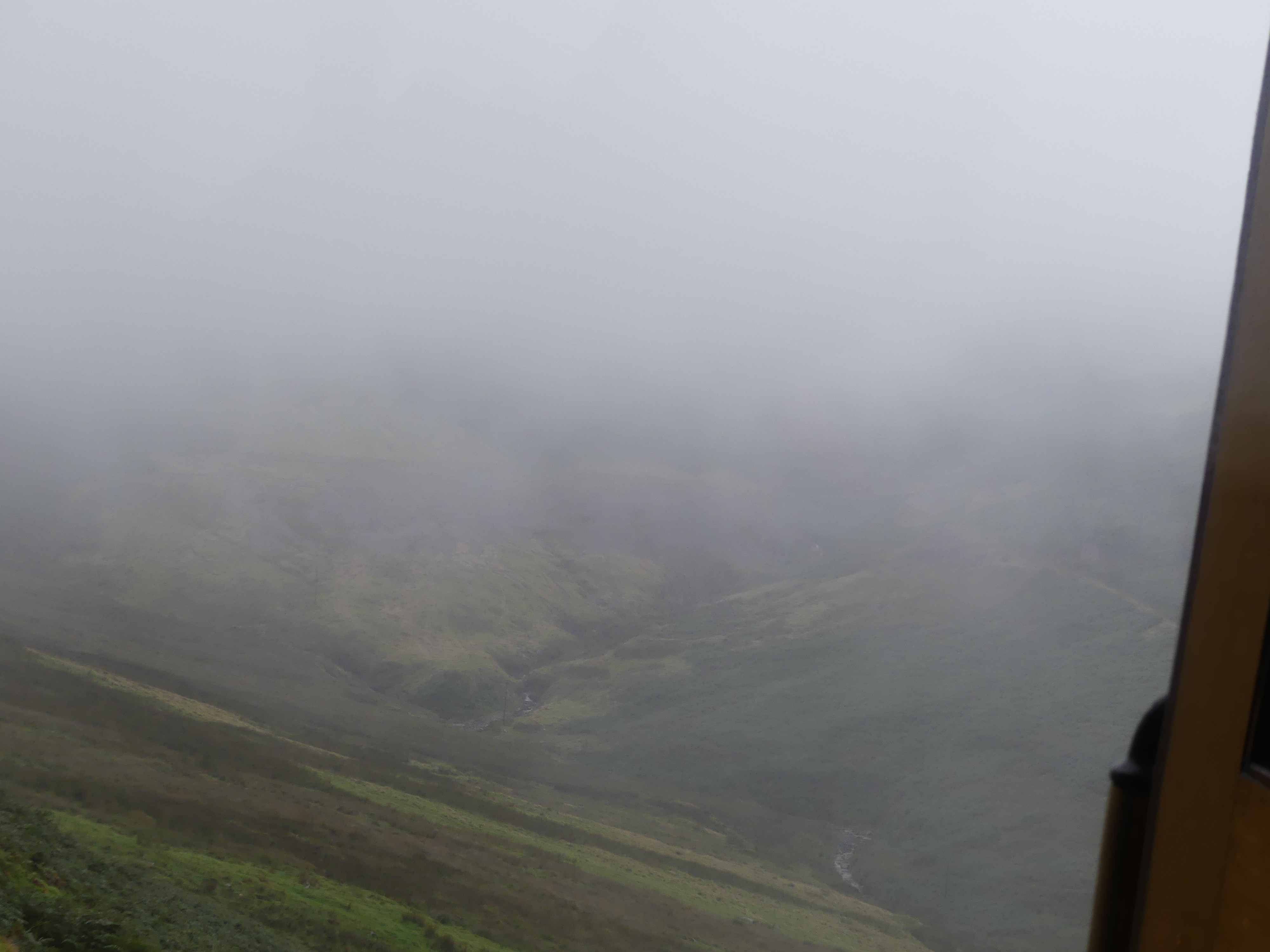
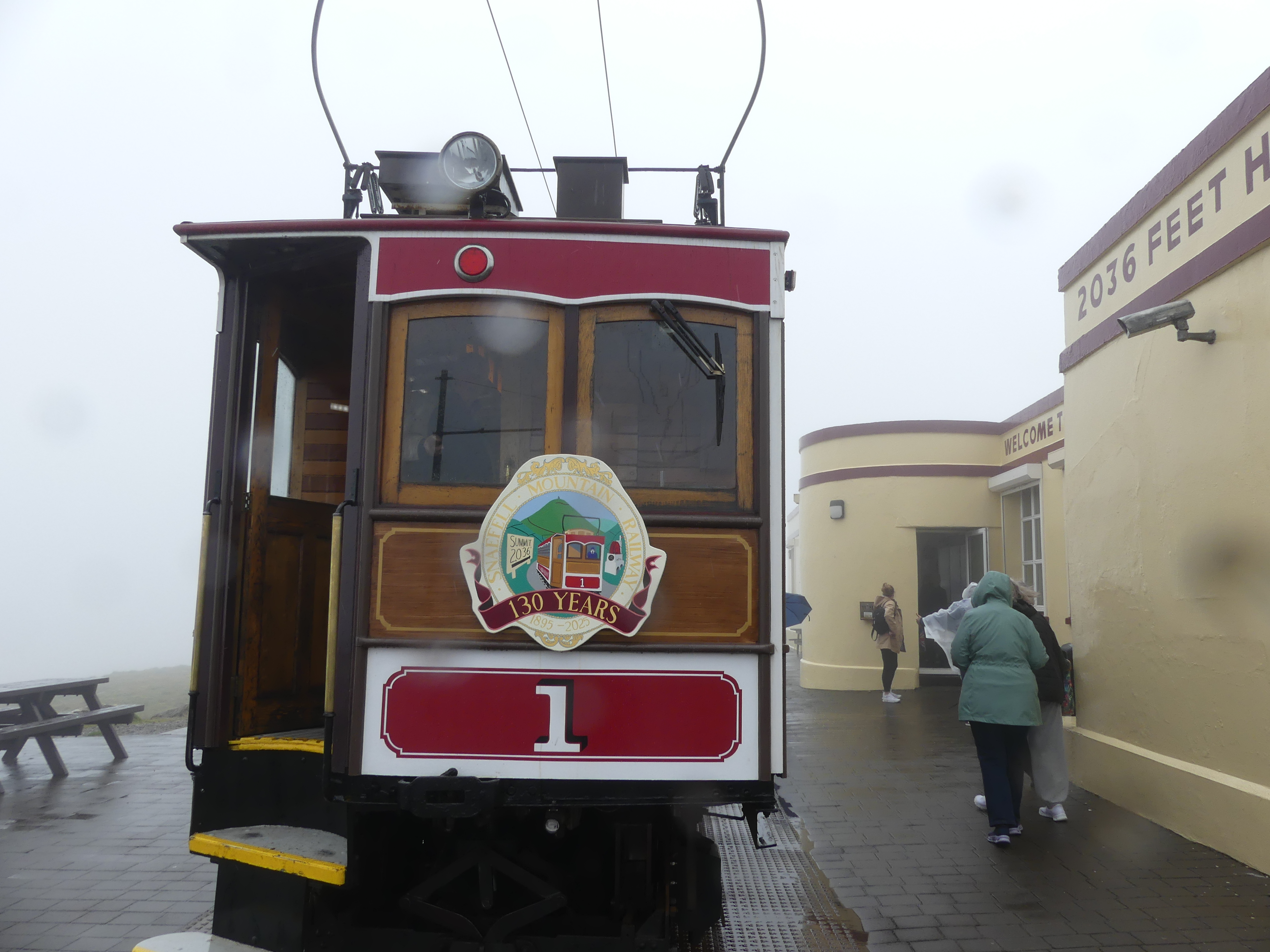
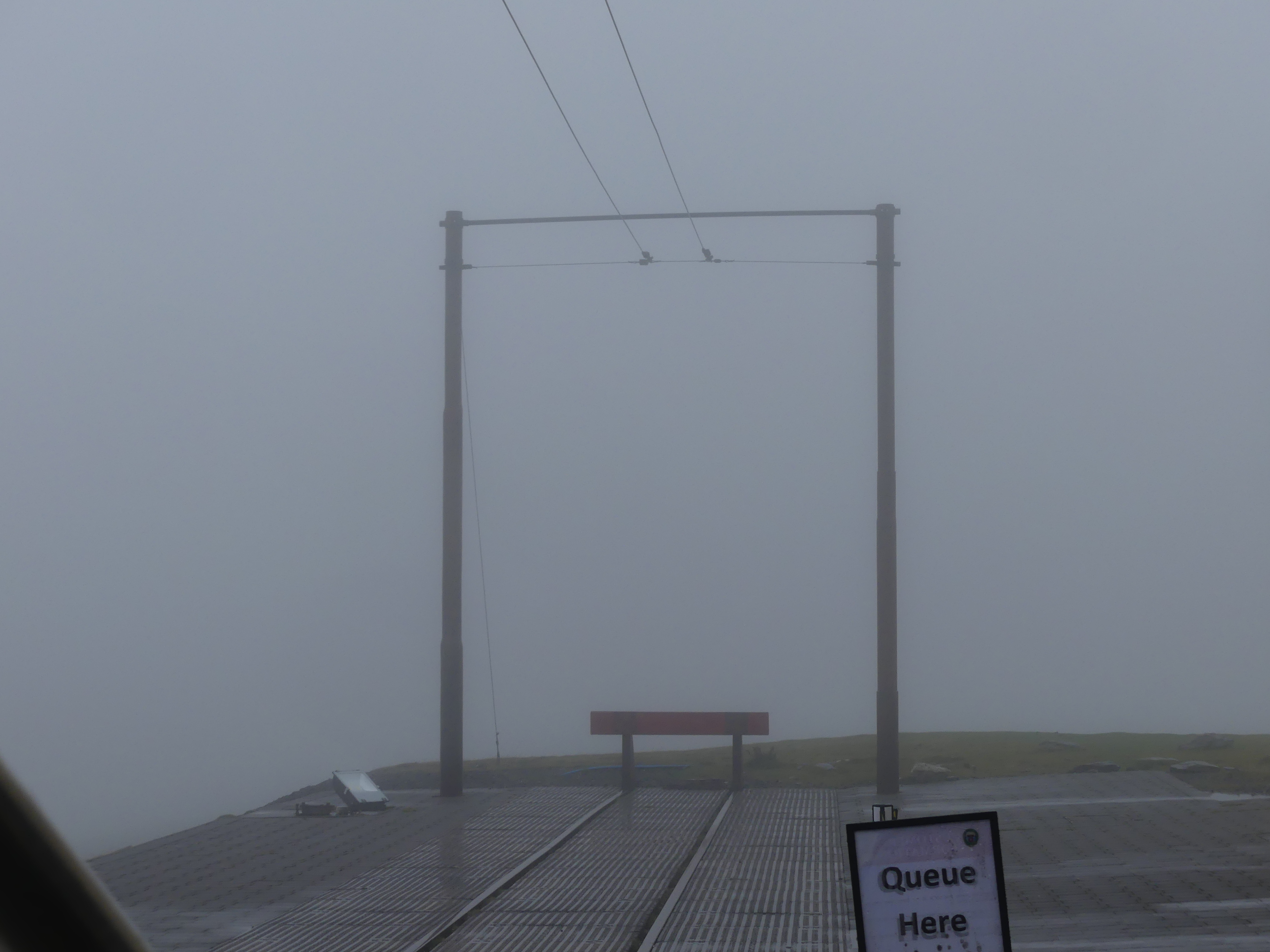
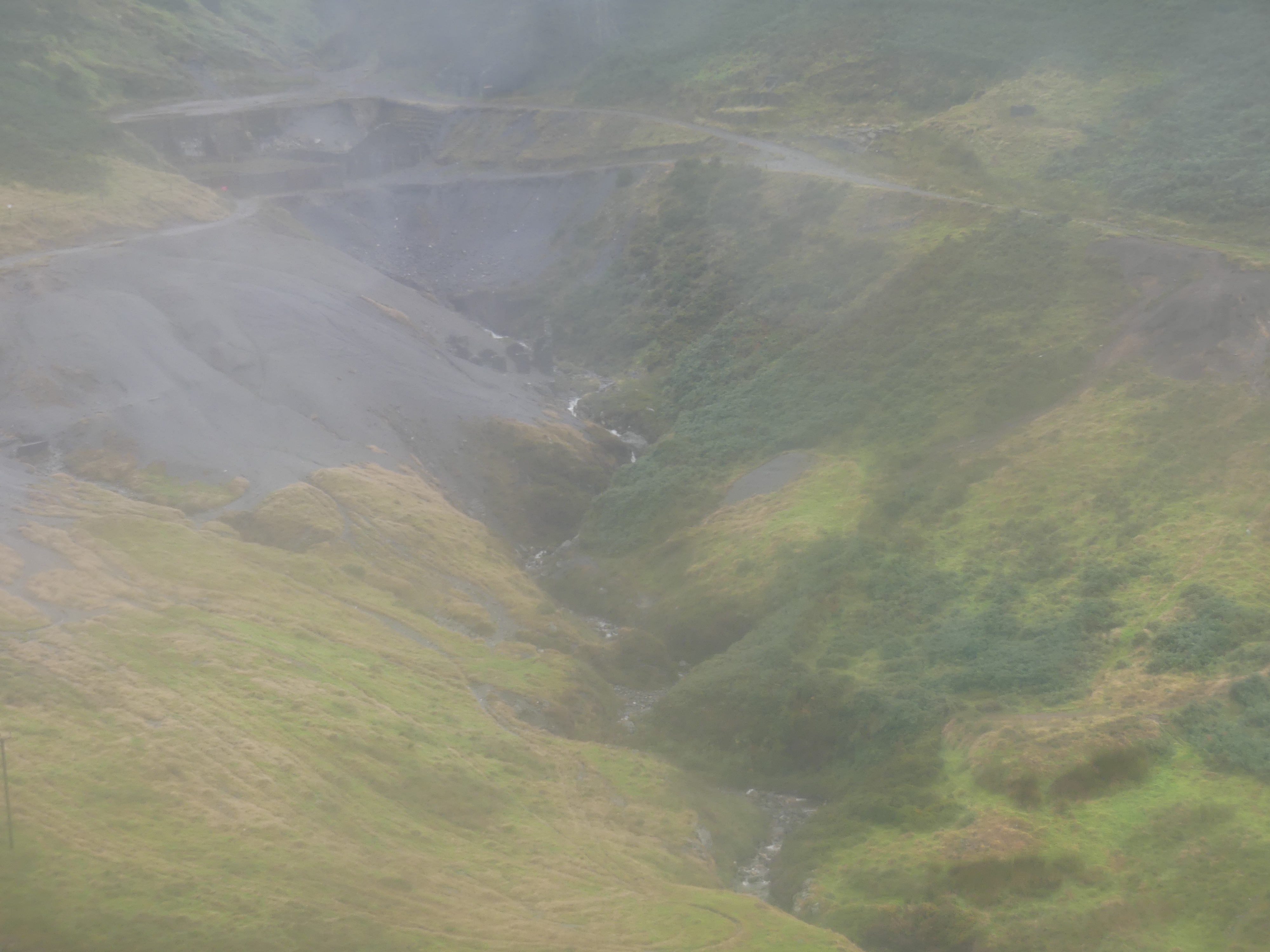
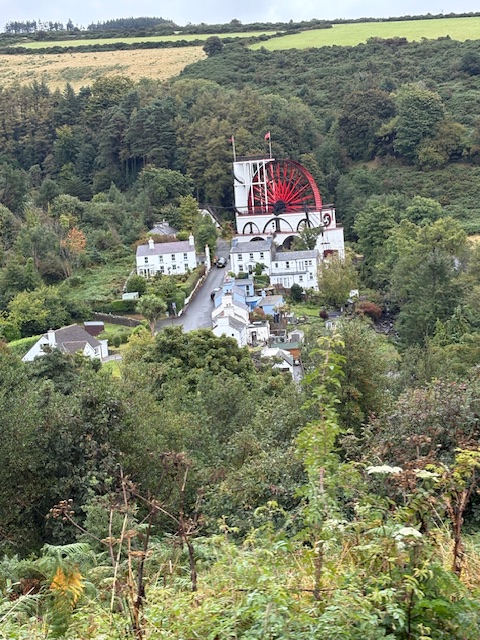
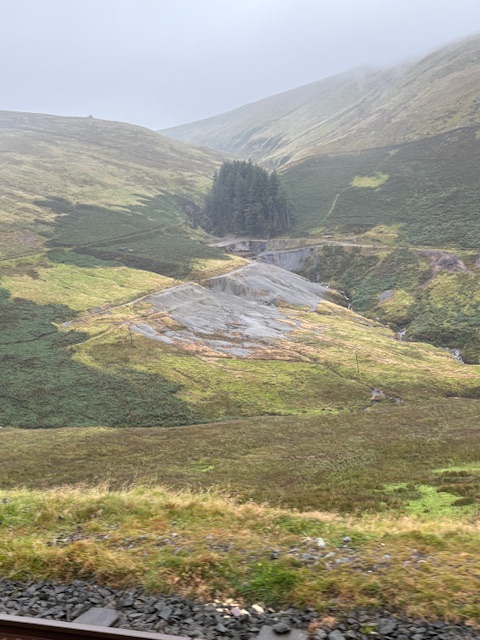
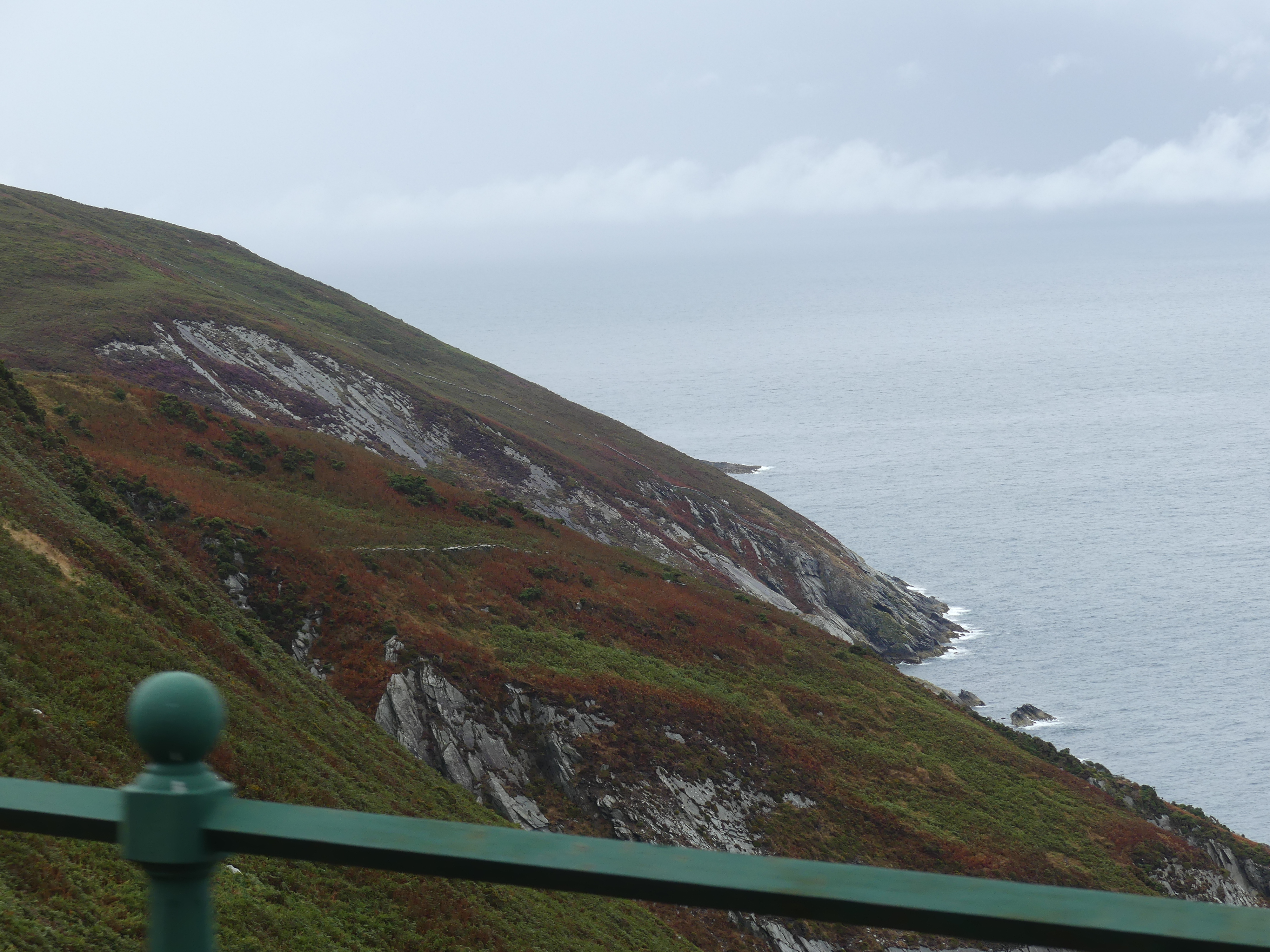
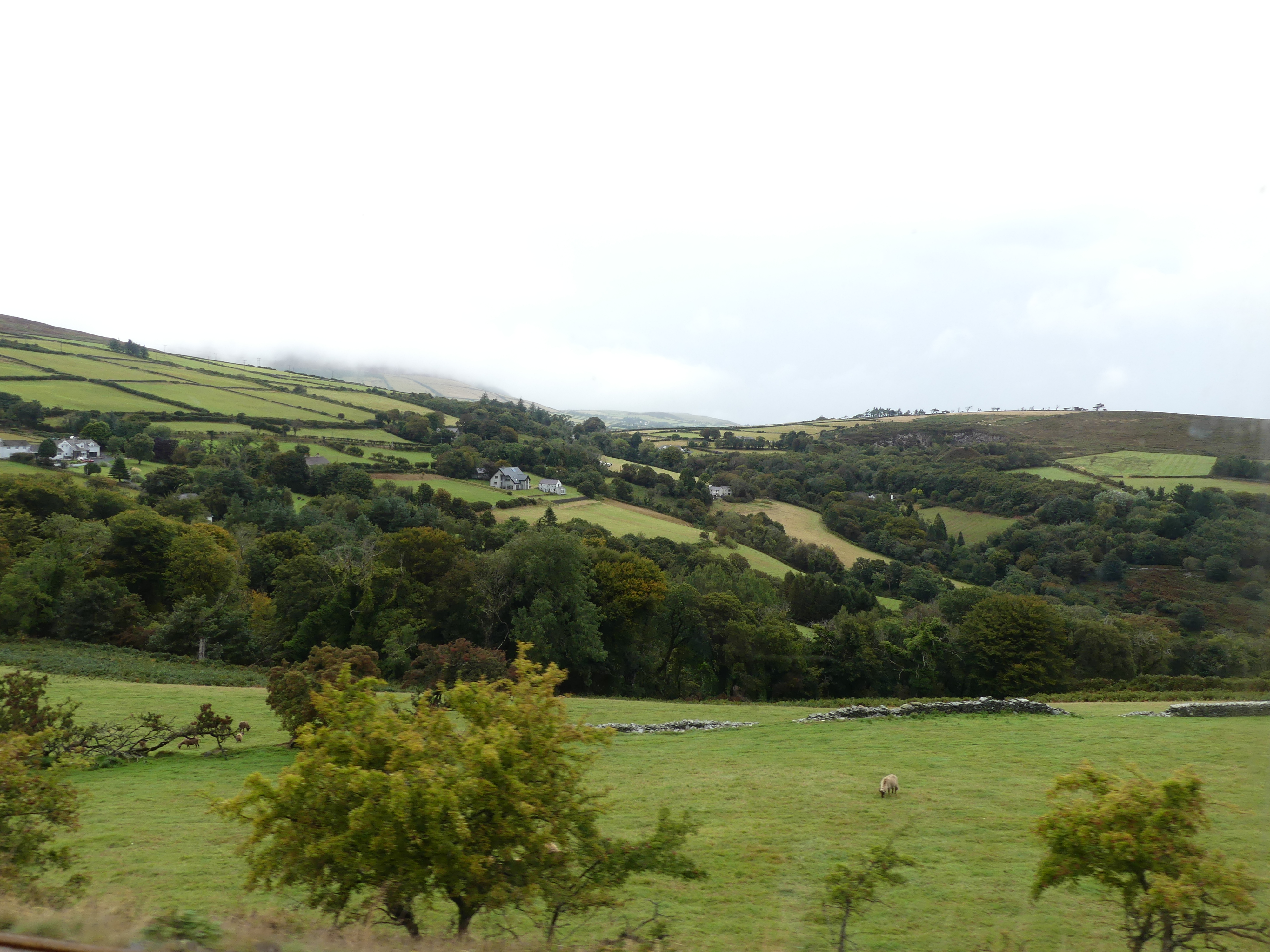
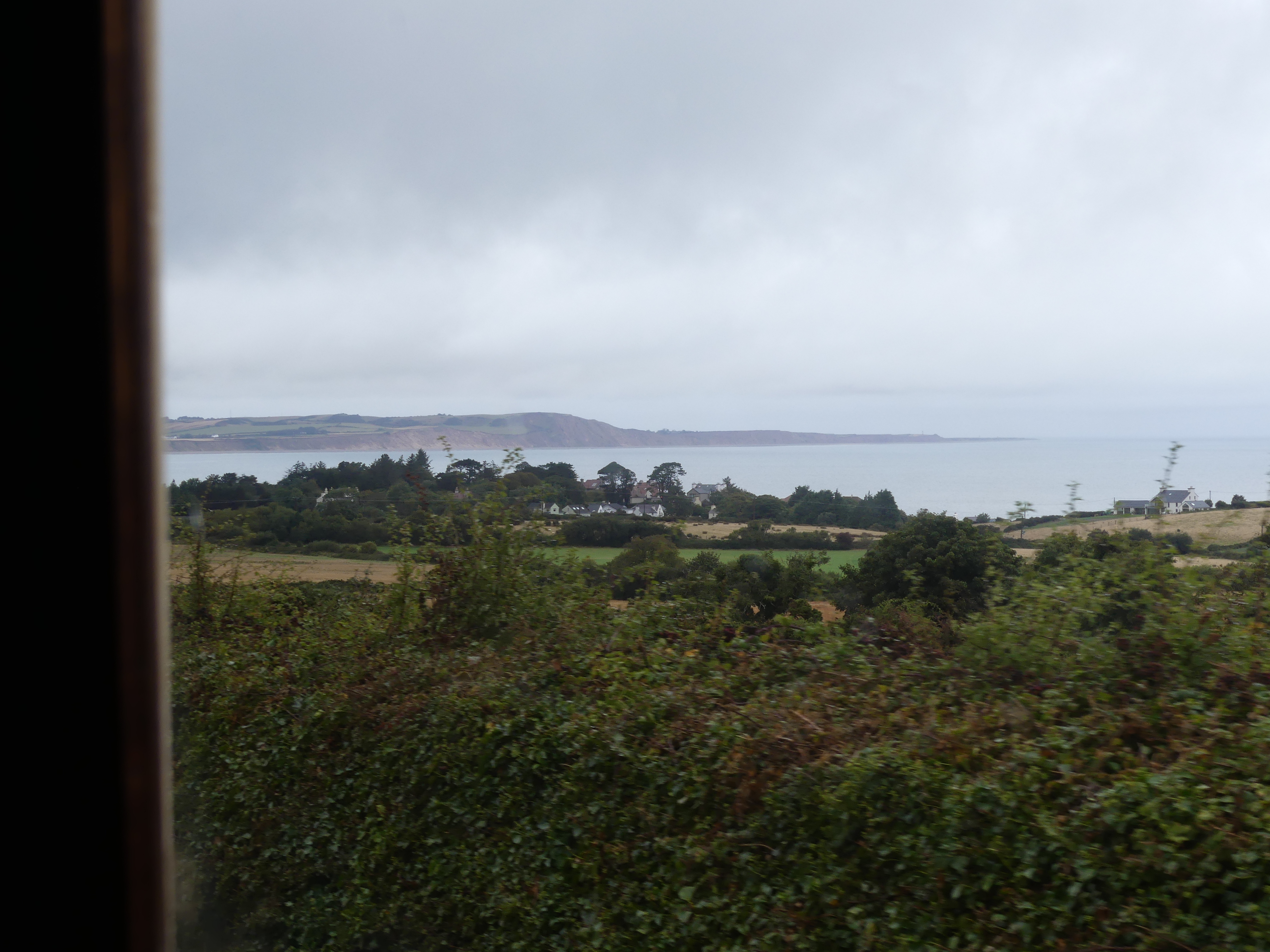
We boarded the Snaefell Mountain Train with its “third or centre line”. The summit of Snaefell, at 2,036 feet (621 m) above sea level is the highest point on the island. It connects with the Manx Electric Railway (MER) in Laxey. The line is 5 miles (8 km) long, is built to 3 ft 6 in (1,067 mm) gauge and uses a Fell Incline Railway System centre rail for braking on the steep gradients. Unfortunately the weather remain cloudy and damp and I gave up trying to take clear photos. That did not stop Kerry who took some good photos showing how miserable the weather was on the highest peak. The photos appear below. The first shows the Great Laxey Wheel which is the largest surviving original working waterwheel in the world. The remaining photos show the cloudy ride to the top, the third rail, the whiteout at the top and the cloudy return.

Kerry’s Photos: lunch atop Mt Snaefell, Laxey Water Wheel and vista from half way.

Back in Laxey we travelled onto Ramsay passing through a village having the name “Dreemskerry”. How cute is that?

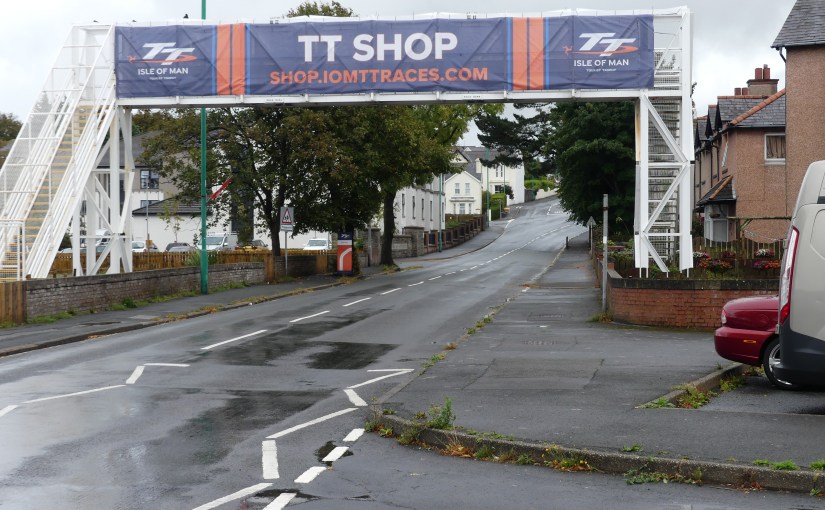
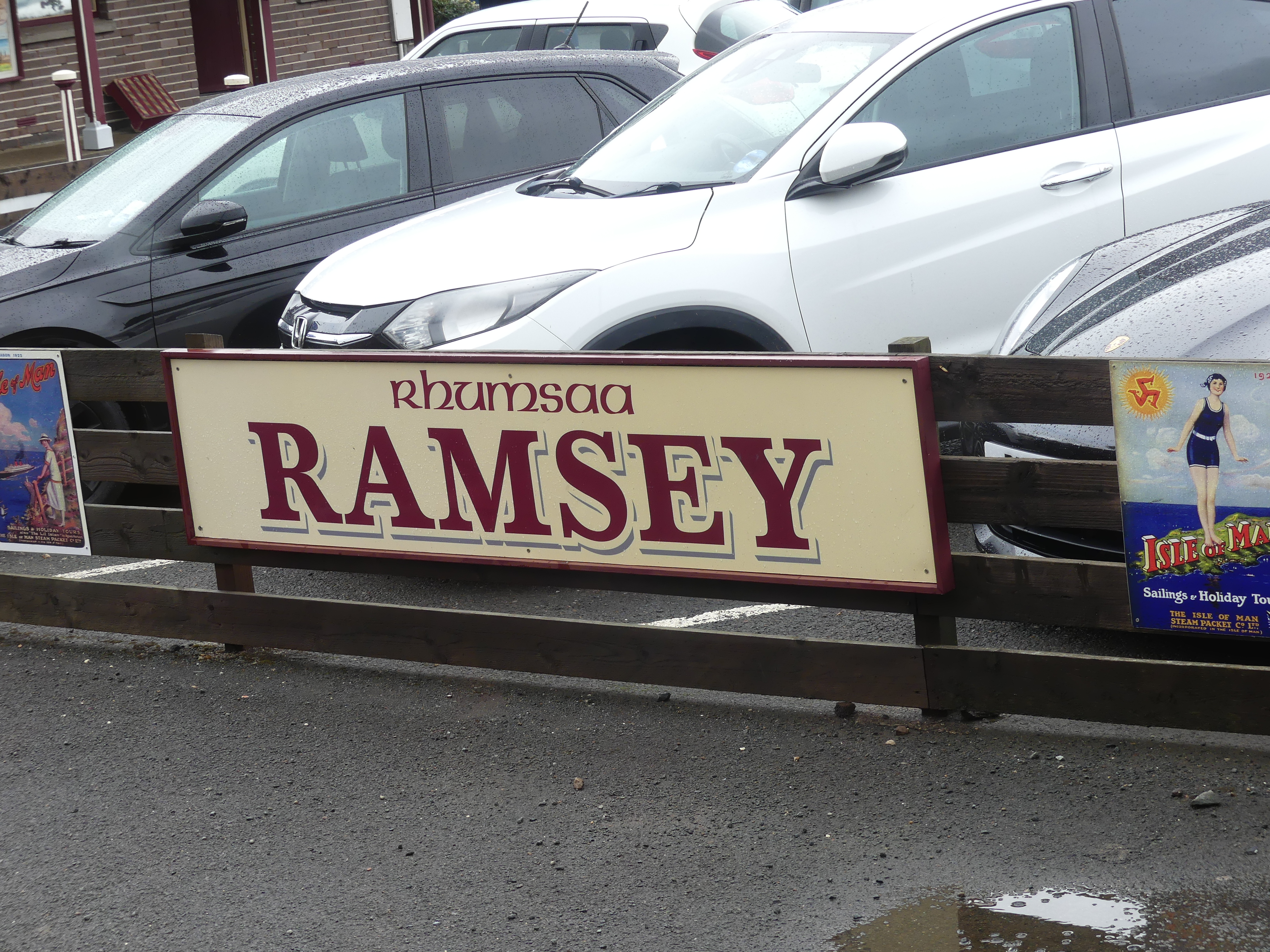
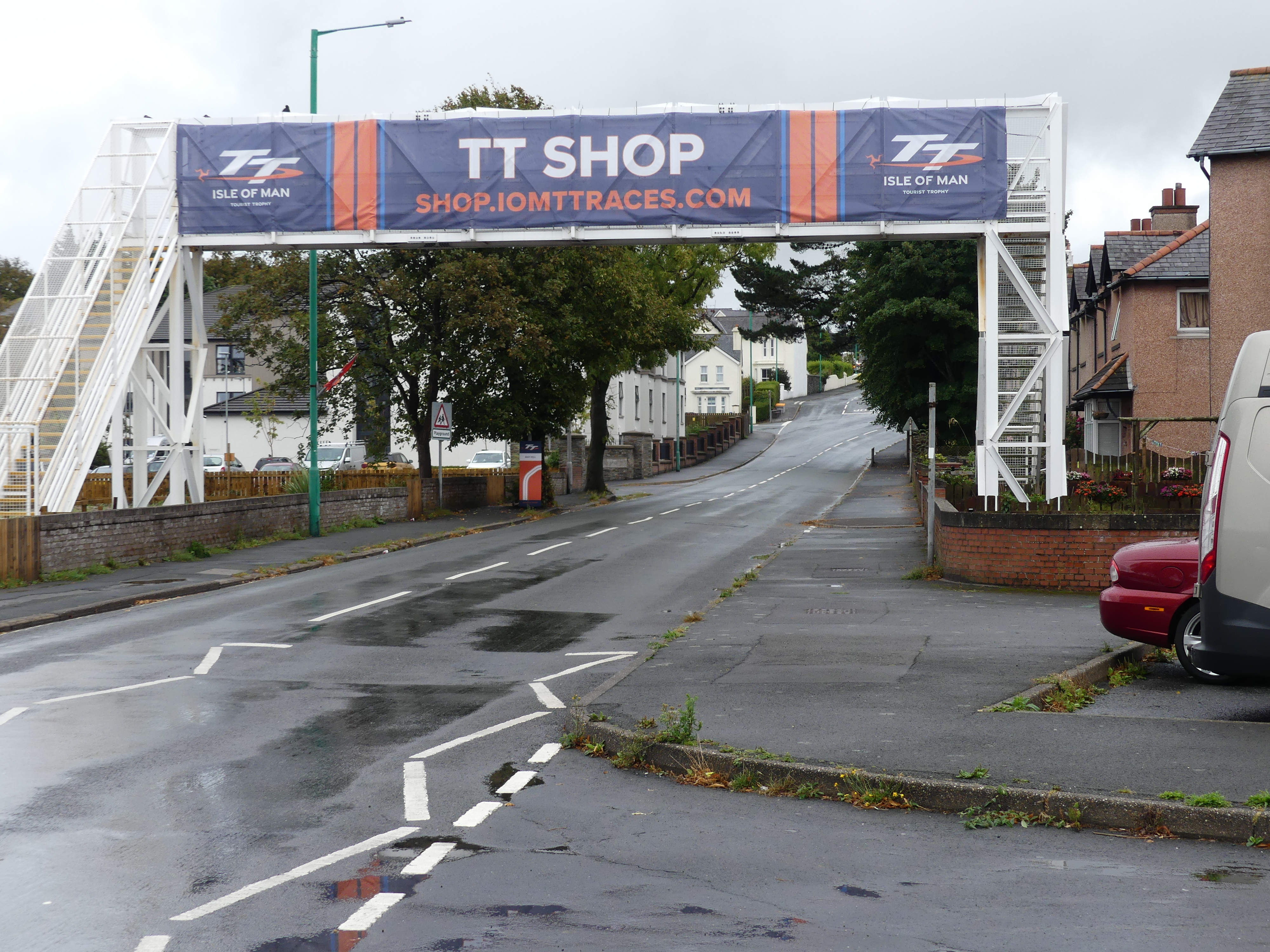
We arrivied in Ramsey and knew we would need to get back to Douglas if we were going to reboard the ship. We made our way to the Bus Station and there in the same street was evidence of the big event on Man – The Isle of Man TT or Tourist Trophy races. An annual motorcycle racing event held on the Isle of Man in May and June of mostly every year since its inaugural race in 1907. The two week event is sanctioned by the Auto Cycle Union, which also organises the event through its commercial arm known as Auto-Cycle Union Events Ltd. The Manx government owns the rights to, and promotes the event.

The Isle of Man TT is a series of time-trial format races, run on public roads closed for racing. The event consists of one week of practice and qualifying sessions, followed by one week of racing. The closed public roads form the Snaefell Mountain Course, a 37.73 mile route containing 219 turns that traverses through a mix of urban and rural areas. The event currently features 5 different classes of road racing, each competing in two races over the course of the racing week. Since the inaugural Isle of Man TT in 1907, the event has been held mostly every year since, with seasons being cancelled only due to war or disease outbreak. The TT has become part of the local culture and economy of the Isle of Man with more than 40,000 visitors annually traveling to the island for the event.

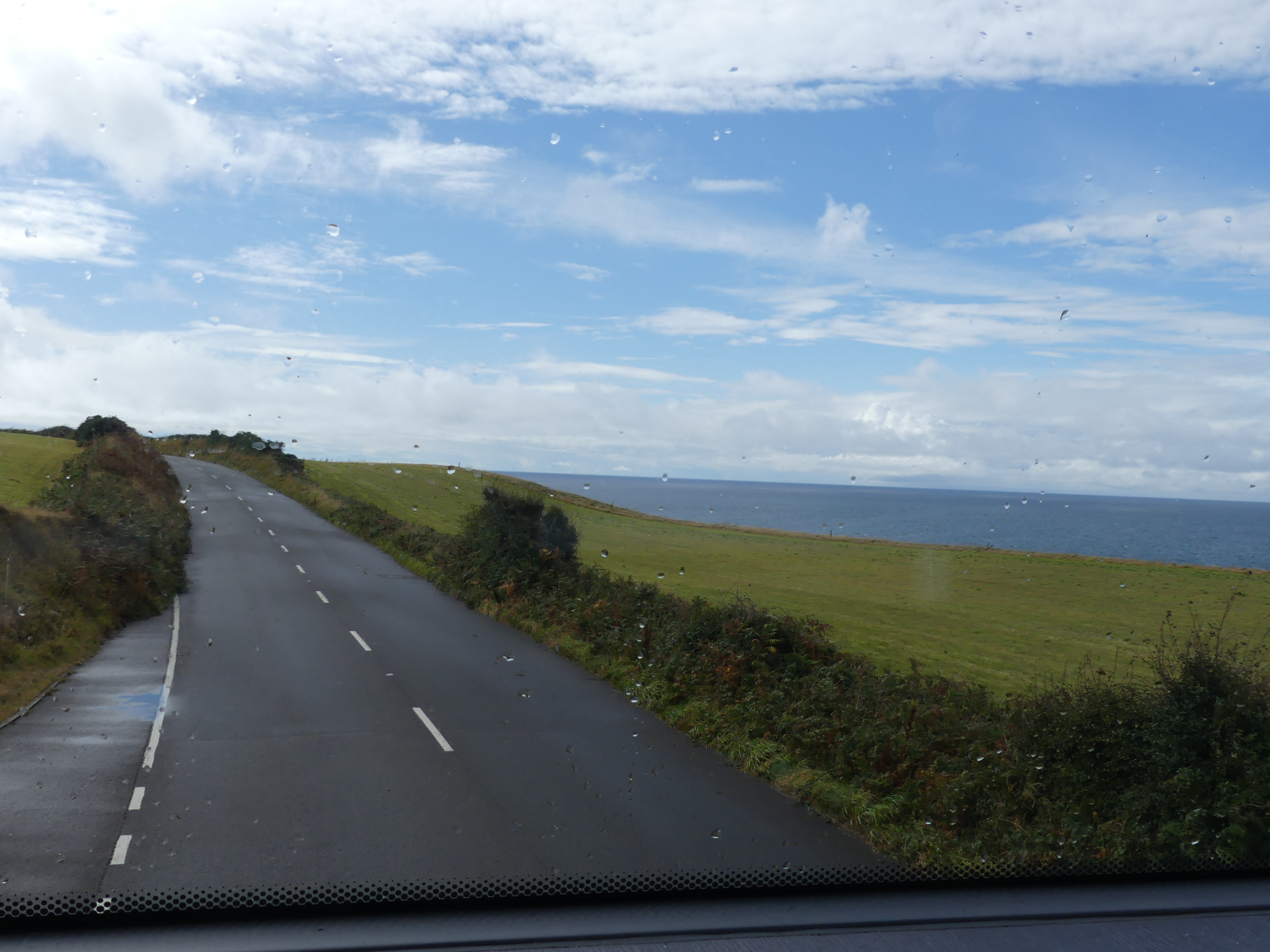
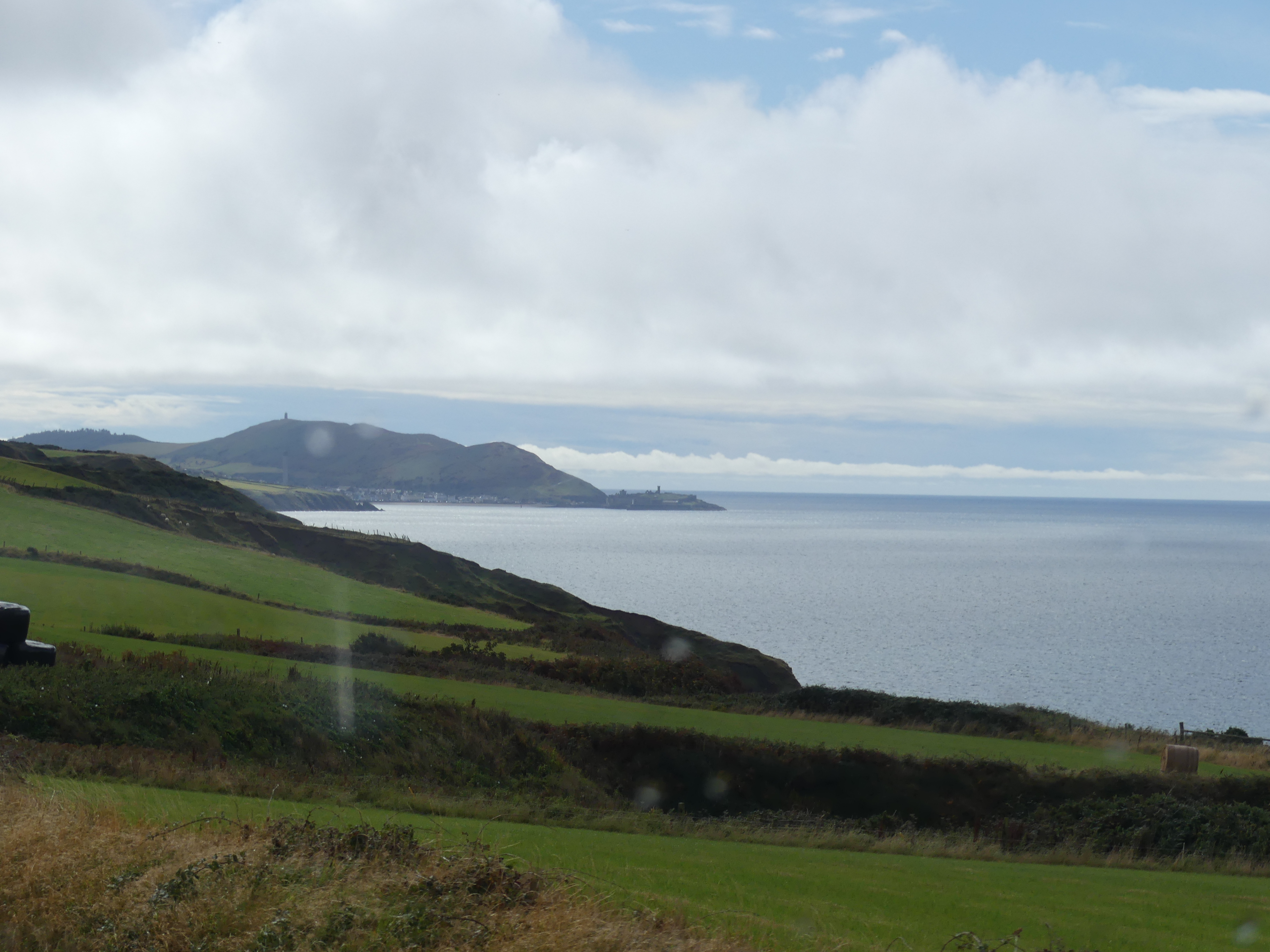
We caught the double decker bus returning to Douglas via Peel and chose to ride in the front seats upstairs – not a good chose. I think the driver was in training for the next TT event with the bus lurching down narrow country roads at excessive speed. There were a few occassions where I thought I was on a roller coaster. Of course we arrived in one piece and in time for me to buy the island T-shirt and then to catch the next tender to the ship.

Another day of excitement but we were both worn out by the gripping of the rail in the bus. Tomorrow we sail west to Cork in the Republic of Ireland. We have been around Ireland both north and south so we would need to think of something to do that we have done. Read about what we discovered in my next blog “THE RETIREES GO AROUND THE WORLD – DAY 10 SS NIEUW STATENDAM – Cork Eire”

“THE RETIREES GO AROUND THE WORLD – DAY 8 SS NIEUW STATENDAM – Greenoch and Glasgow Scotland “

Leaving Liverpool we sailed north again to visit Glasgow but as all you geographers know Glasgow is not on the coast and our ship was far too large to be sailing up the wee little river (River Clyde) on which the city is located. No other explanation was given as to why we docked in Greenock which is on the western coast. What ever the reason we landed in Greenock. So I did a bit of research and this is what I found:

“Greenock is a town in Inverclyde, Scotland, located in the west central Lowlands of Scotland. The town is the administrative centre of Inverclyde Council. It is a former burgh within the historic county of Renfrewshire, and forms part of a contiguous urban area with Gourock to the west and Port Glasgow to the east.” Wikipedia

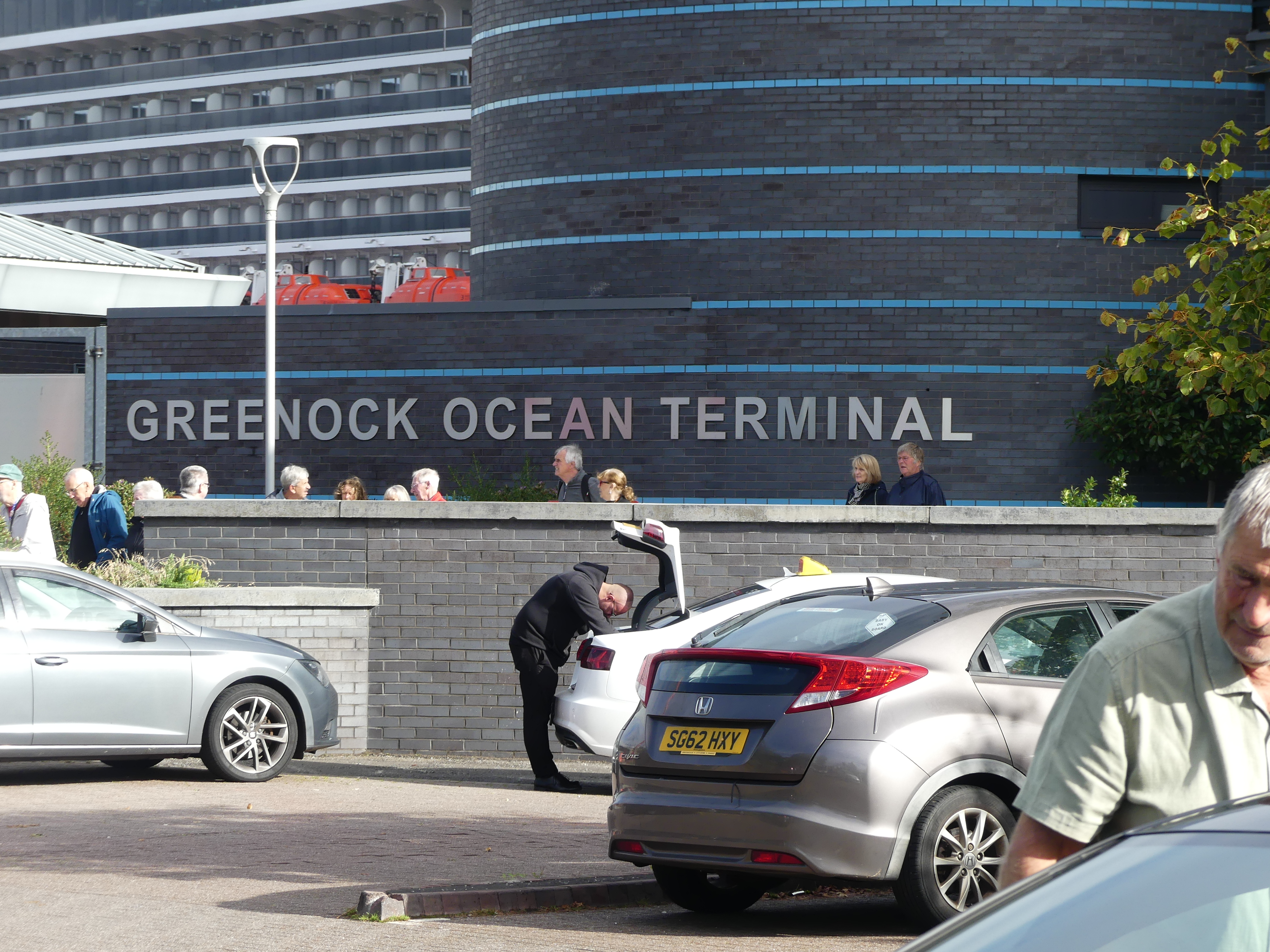
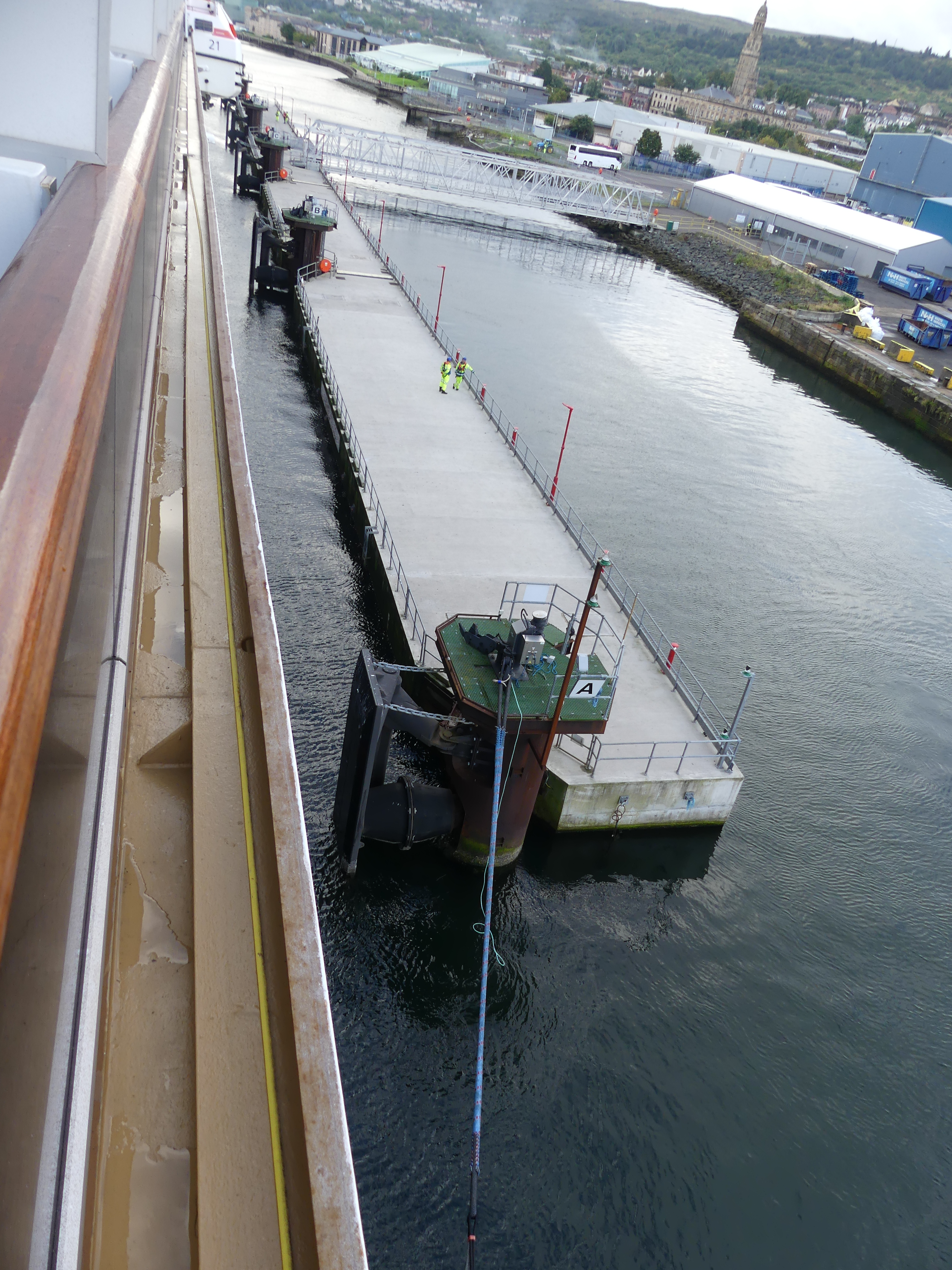
Still none the wiser we followed the crowd and disembarked. Later when we returned further research showed the reason why cruise ships docked at Greenock. “Strategically positioned along major maritime routes, it is a key stop for Northern European and British Isles cruise itineraries, offering travelers a perfect blend of cultural heritage and natural beauty.” Still didn’t help my understanding but we found a reason why all travellers should stop there. I’ll let you know shortly. The photos show the terminal which does nothing to help understand the attraction.

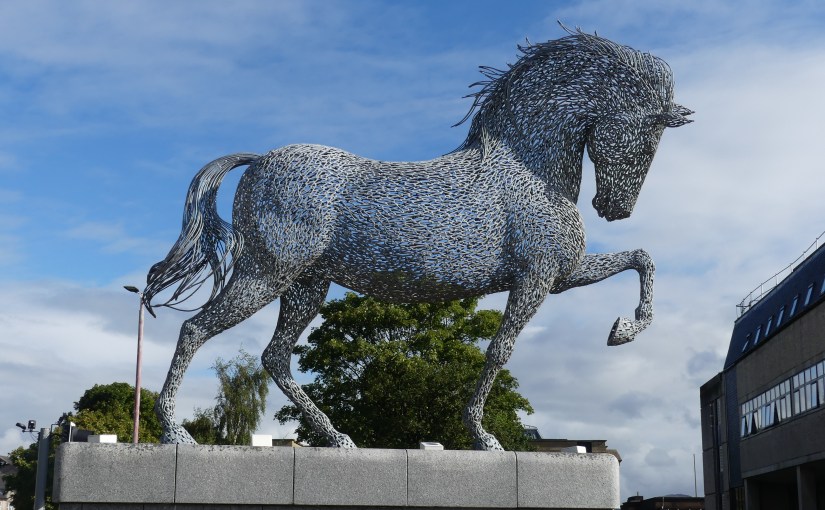
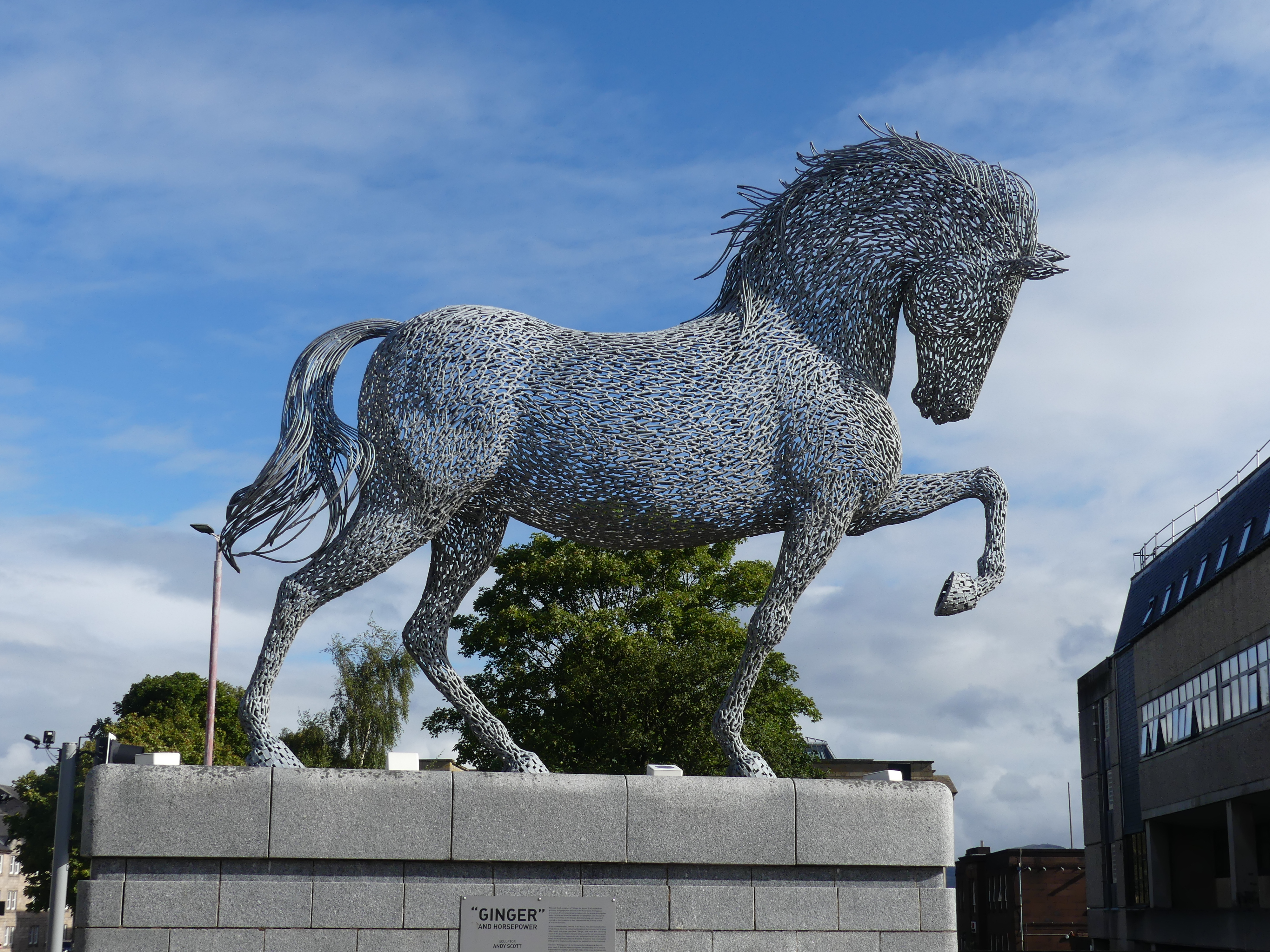
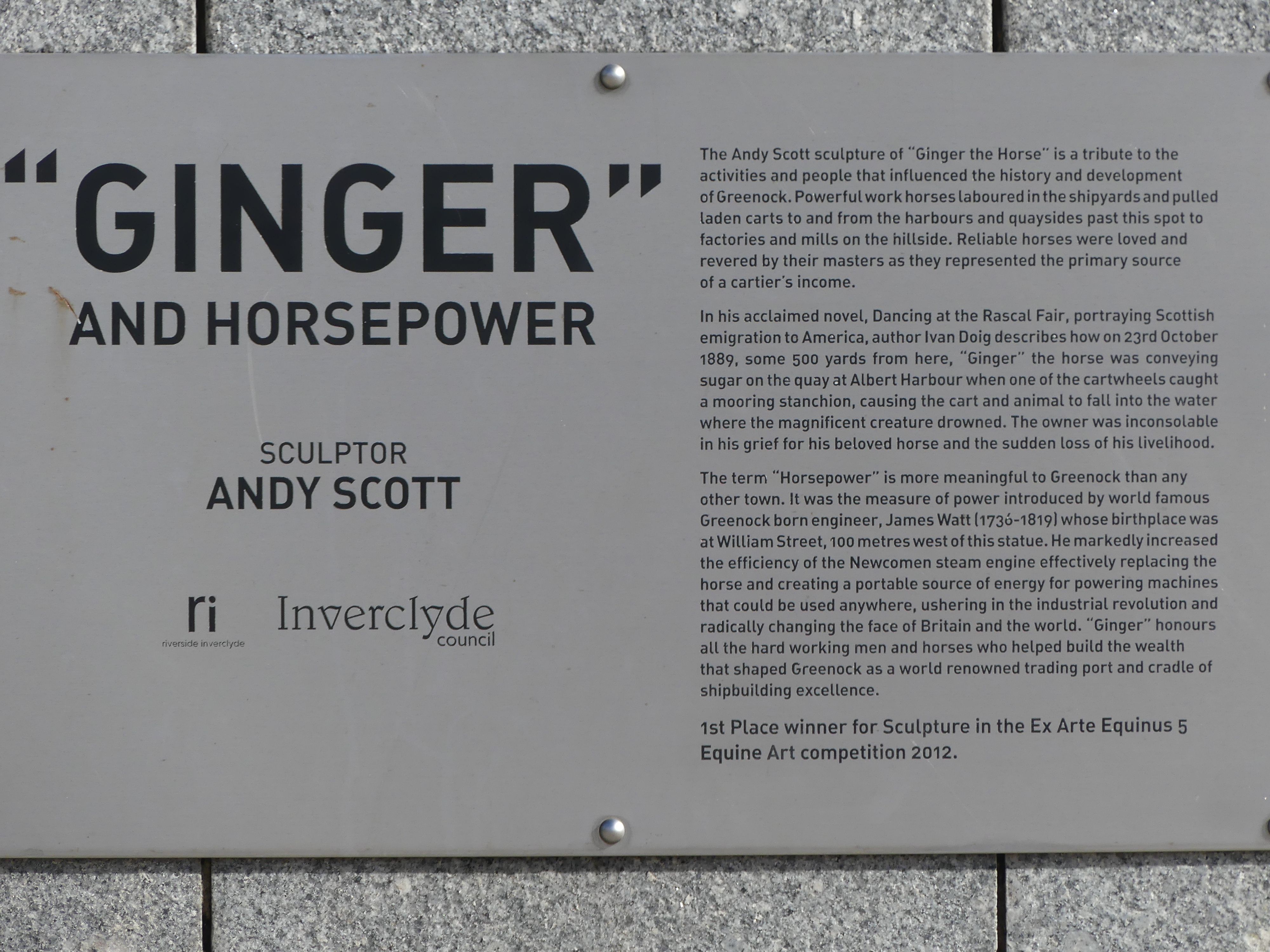
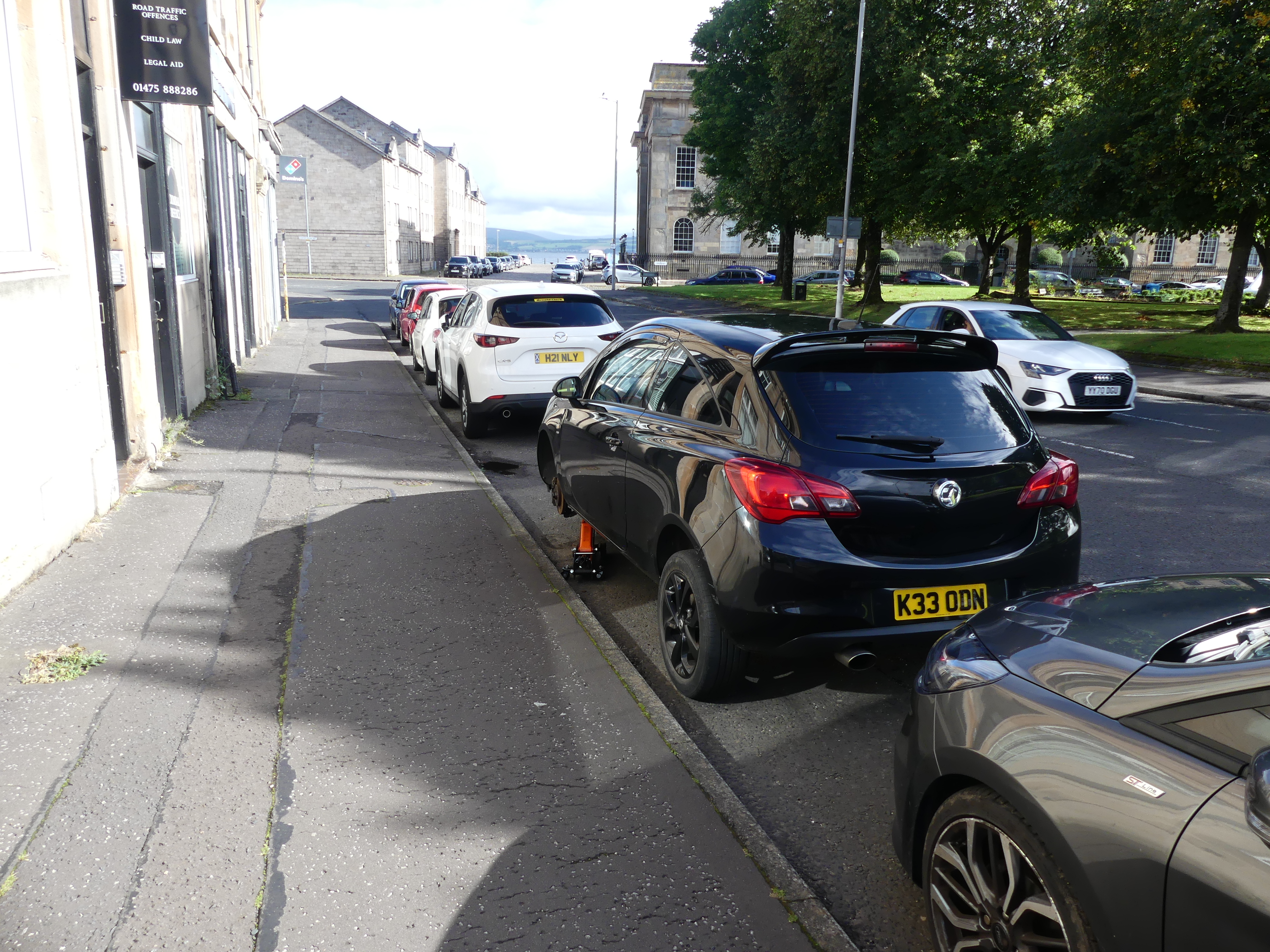
We walked from the ship toward the central business district. We passed a car missing its front wheel but didn’t know if it was well equipped thieves or someone without a spare tyre. After passing an Aldi supermarket we came to a major road crossing with an imposing statue on the other side of the road. It was “Ginger” a sculpture by Andy Scott designed to represent all the cart horses which pulled carts during the area’s great shipbuilding and maritime history. Inverclyde was once one of the most important shipbuilding ports in the world. When Greenock engineer James Watt wanted to describe the measure of power, he invented the term “horsepower” which is still used to this day. The name Ginger comes from an actual horse which drowned while transporting sugar on the quay at Albert Harbour in Greenock. A very emotive monument to the industry of Greenock.

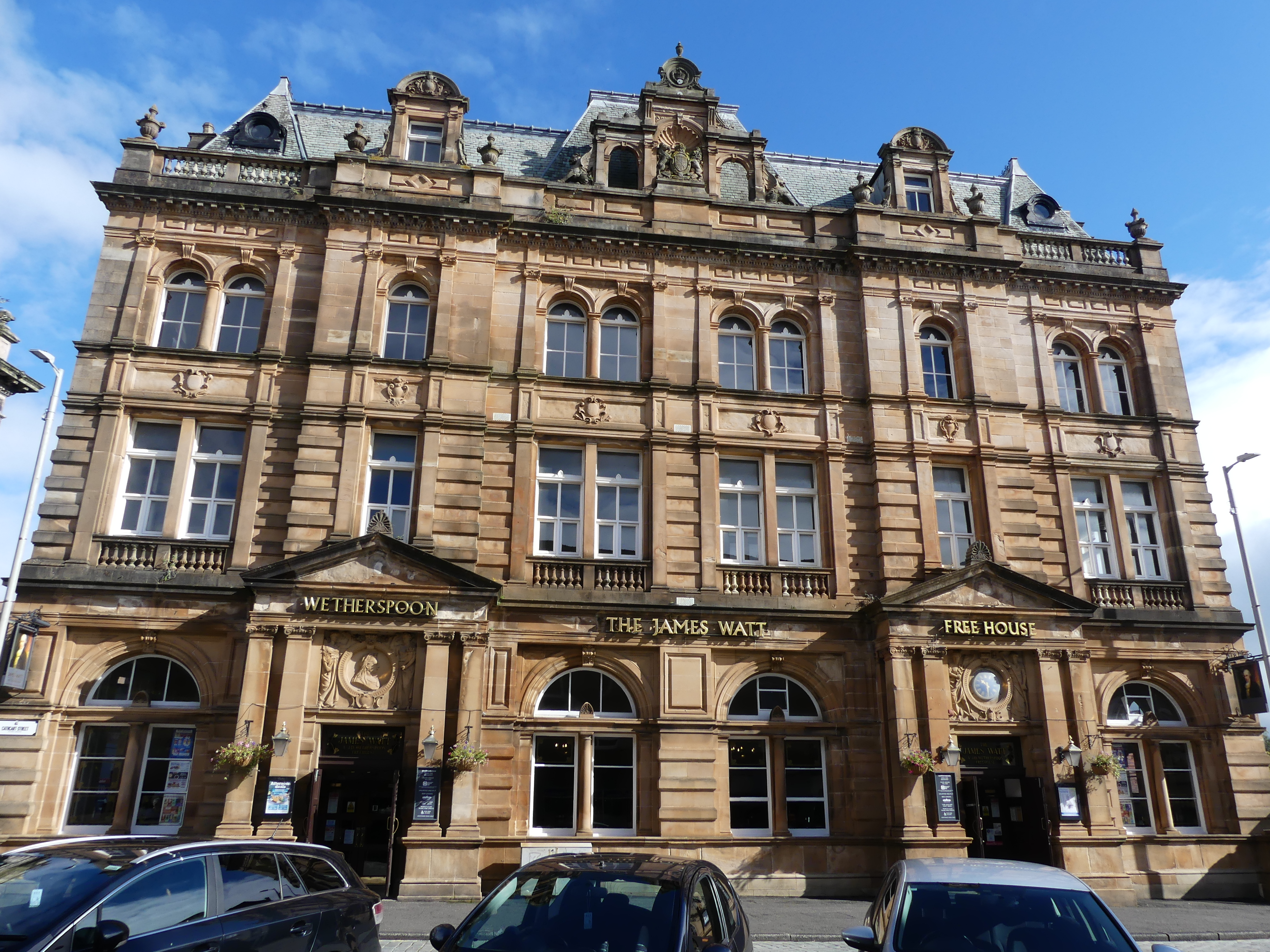
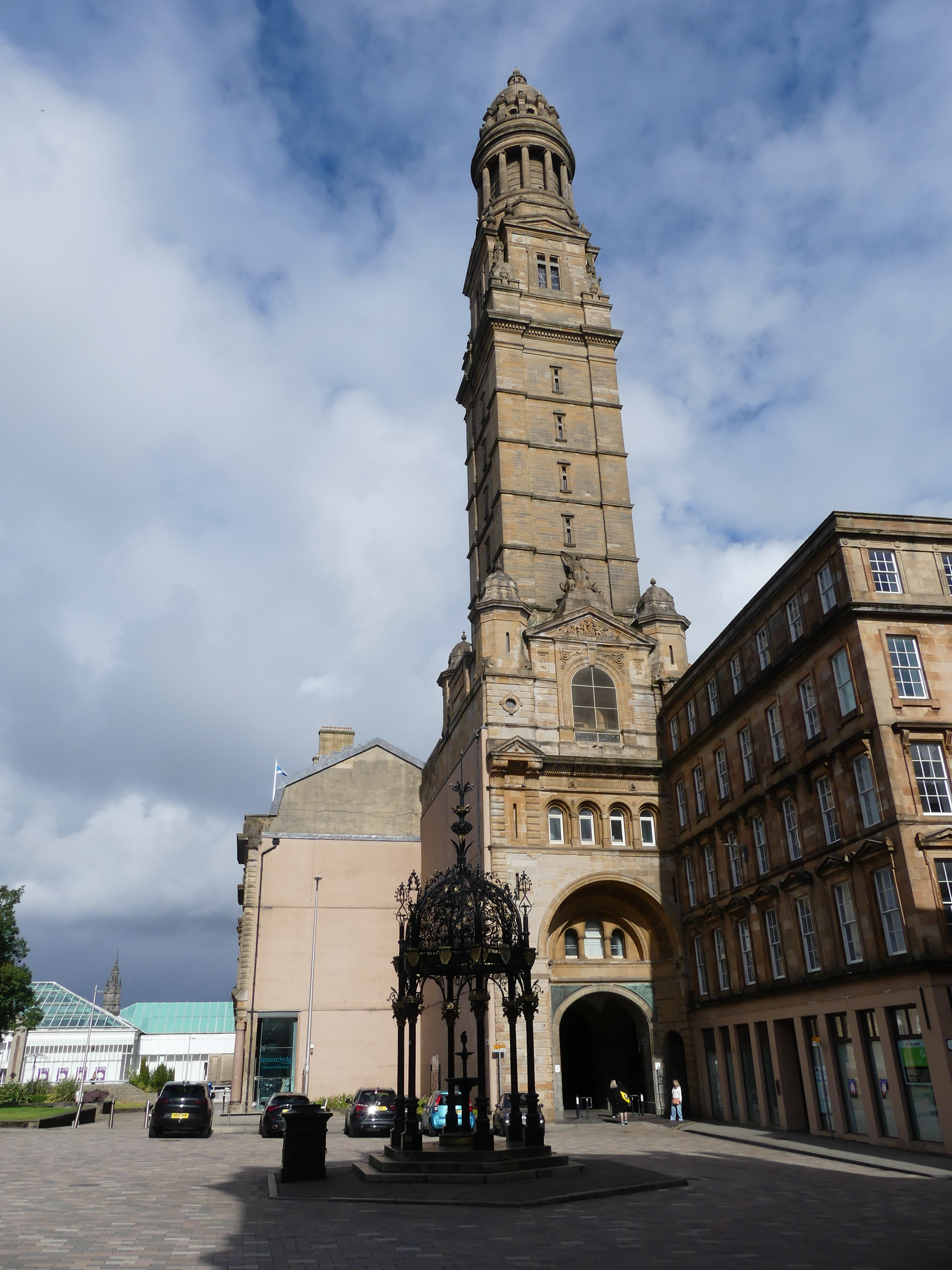
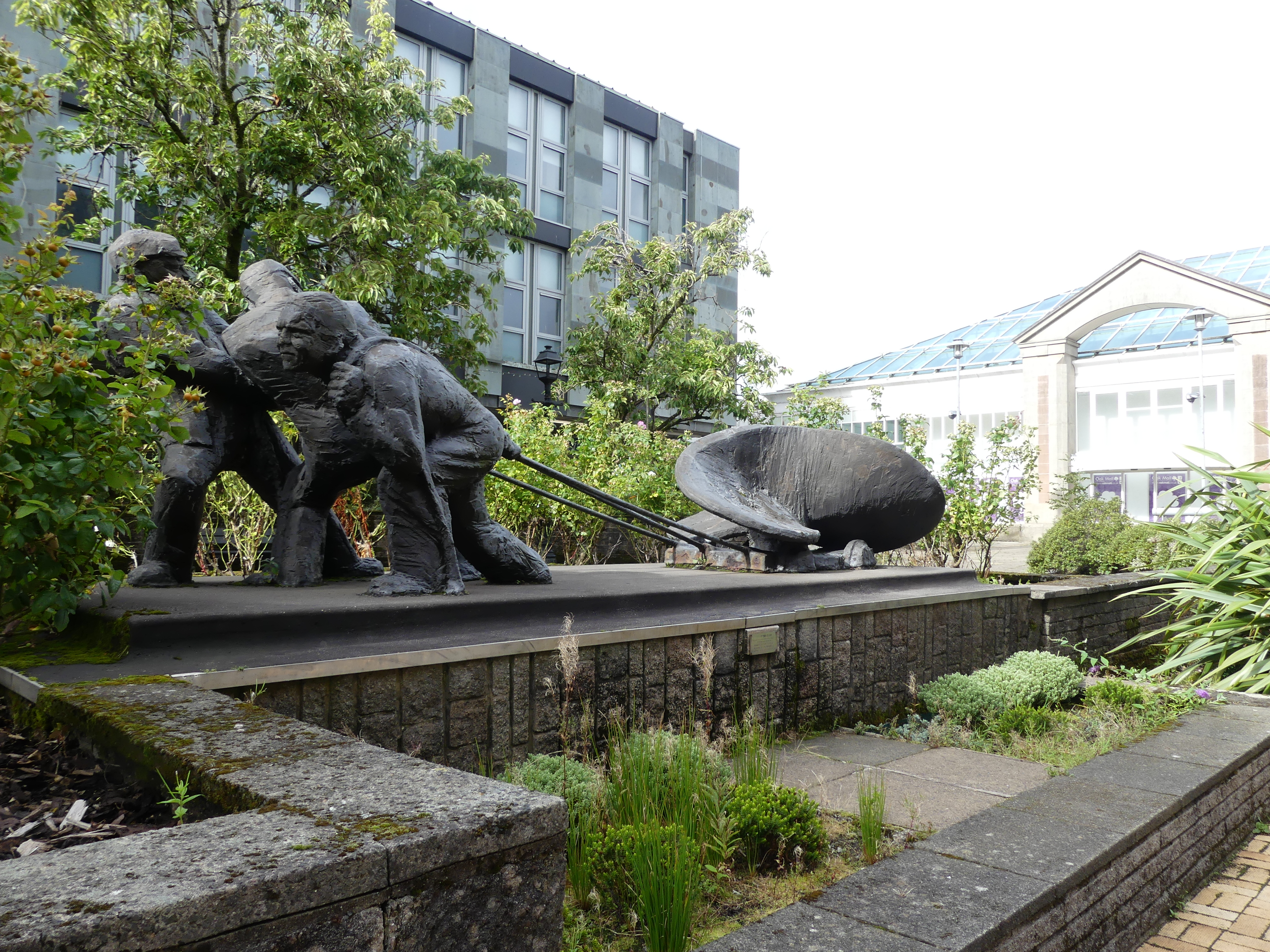
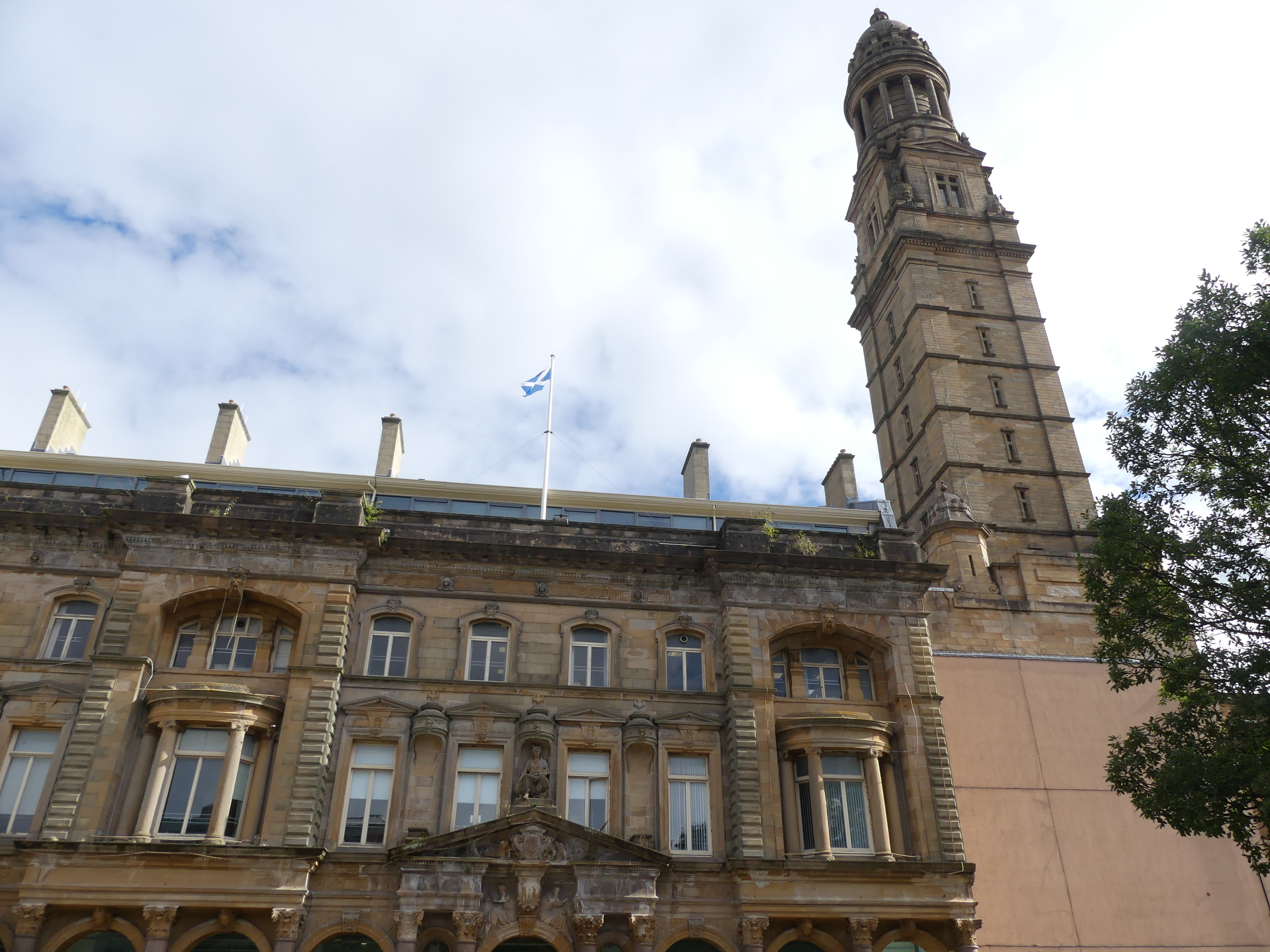
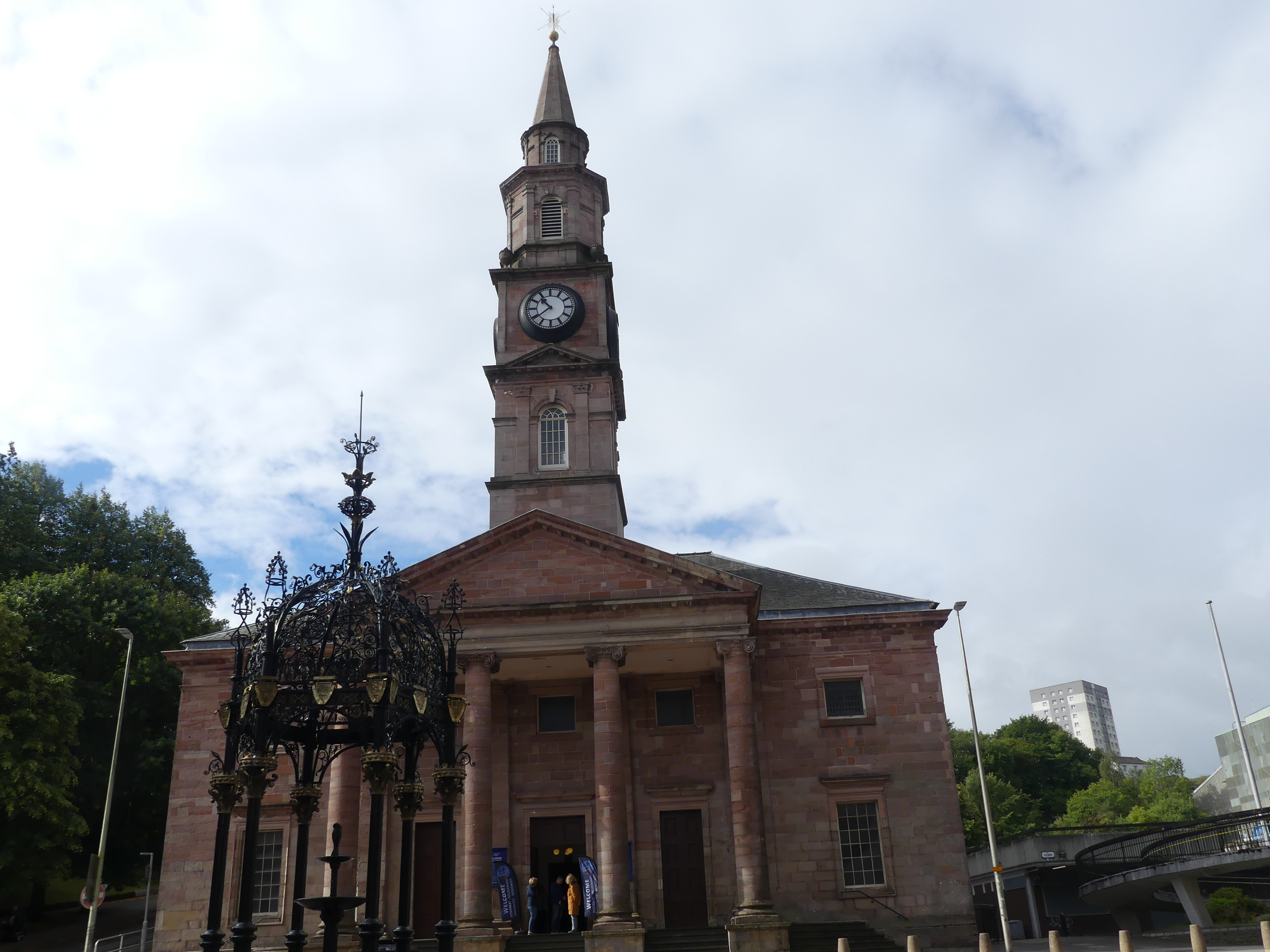
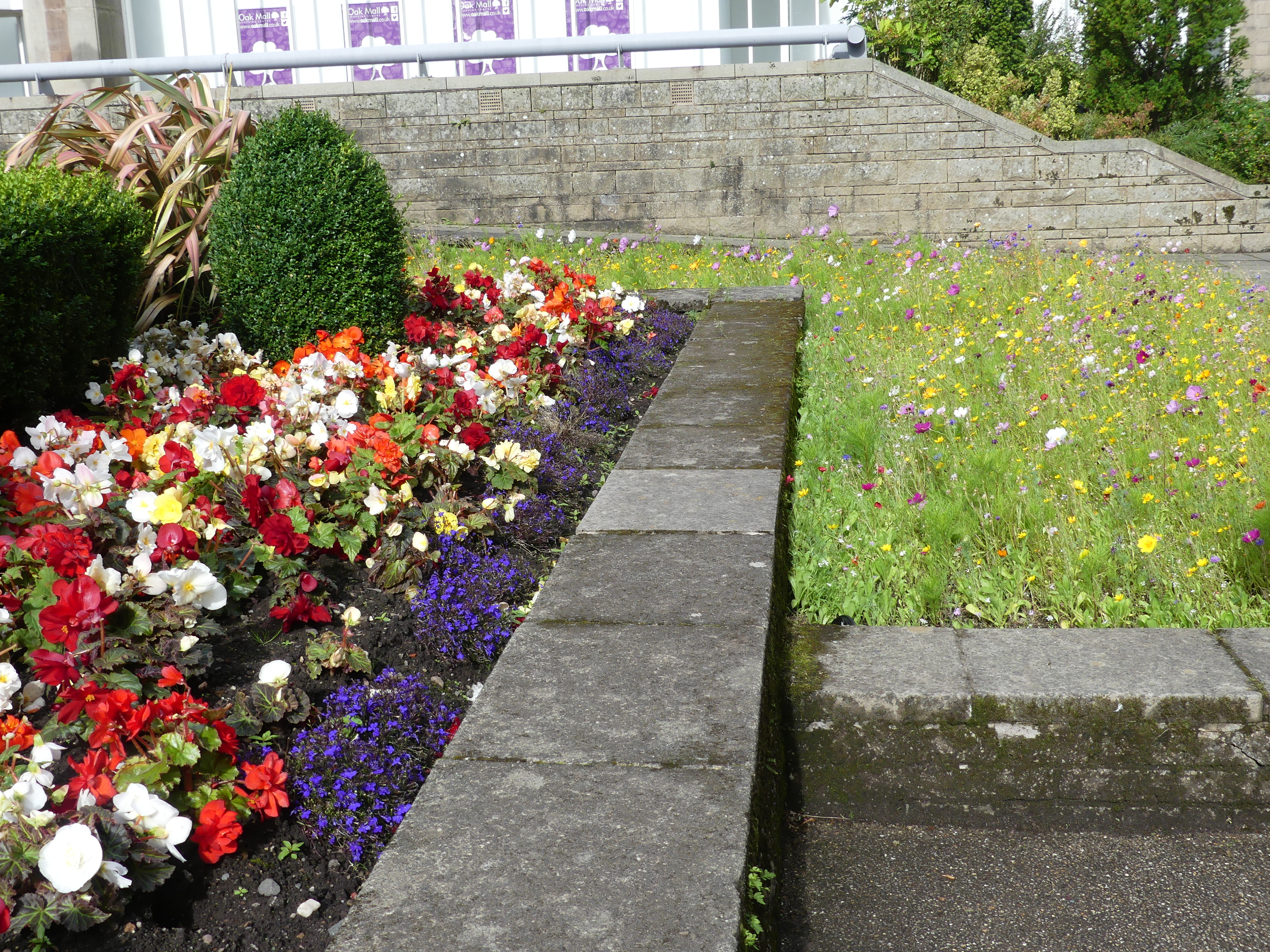
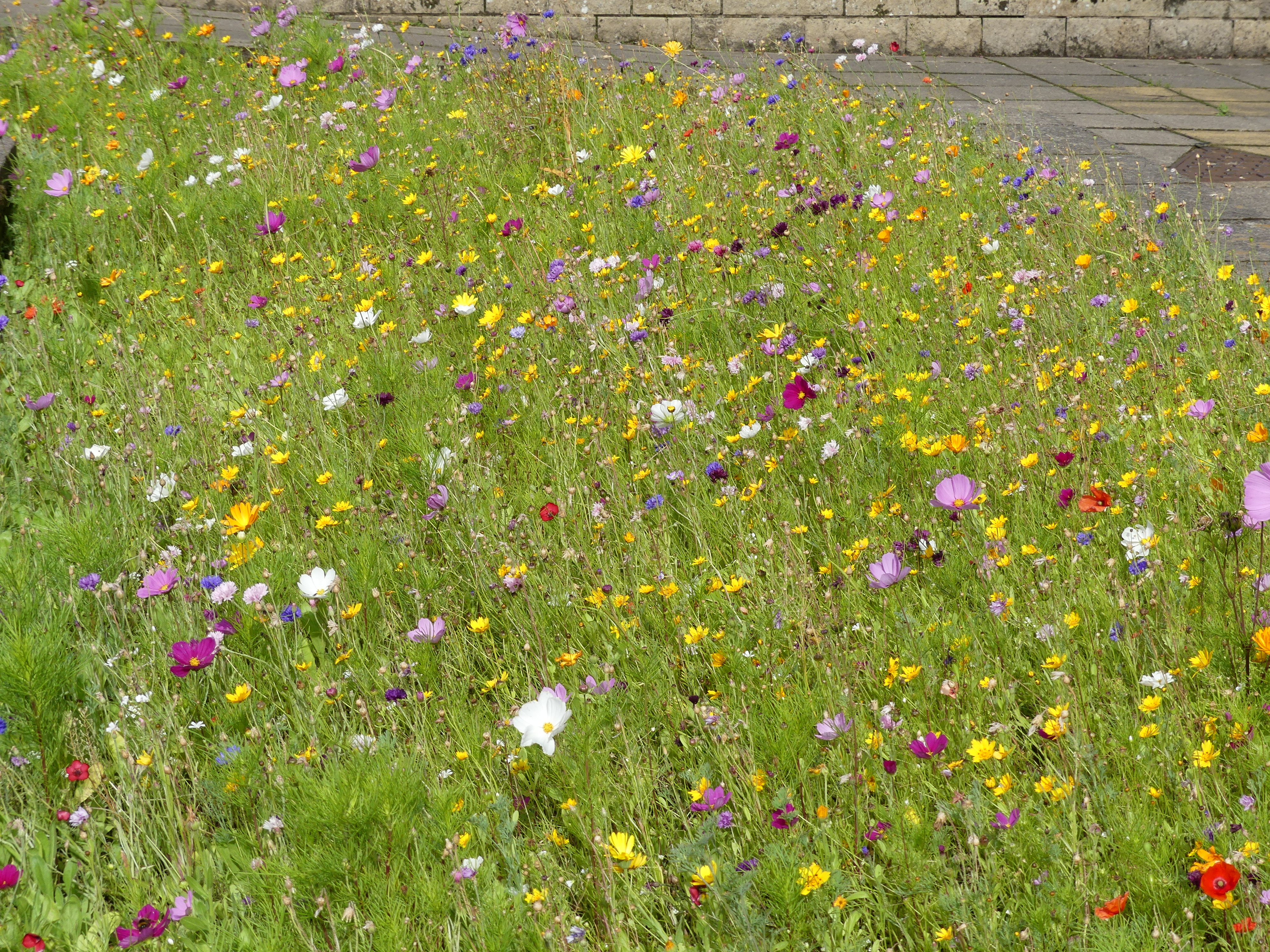
We continued our exploration following the road to the CBD passing some very impressive buildings of the nineteenth century including one converted to a Weatherspoons Pub named “the James Watt Building”, the Town Hall and the square in front of the hall. The sculpture of workmen dragging a newly forged propeller again references the industrial history of the town. The harshness of the stone and mortar is softened by the wild flowers and grasses in the garden.

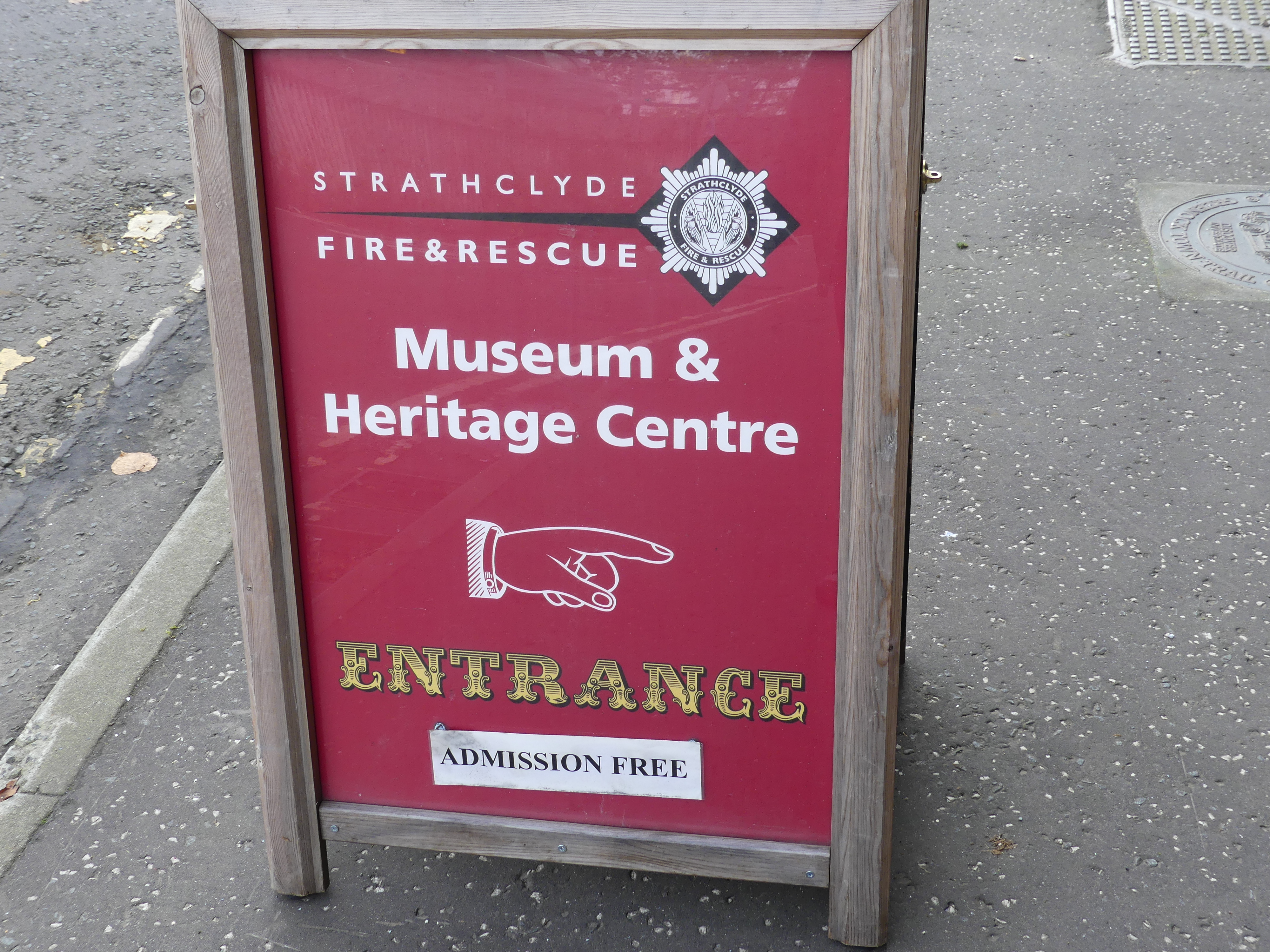
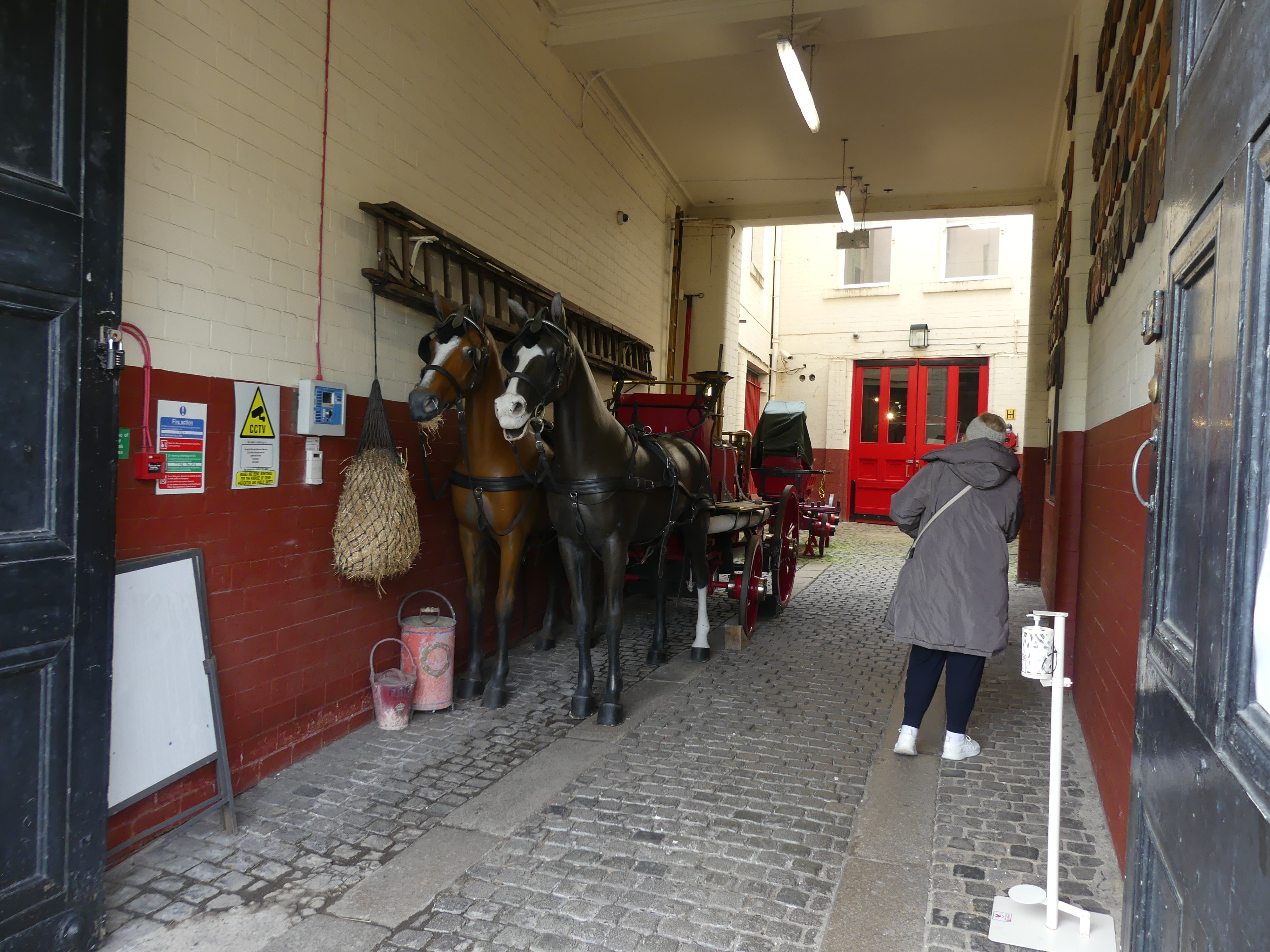
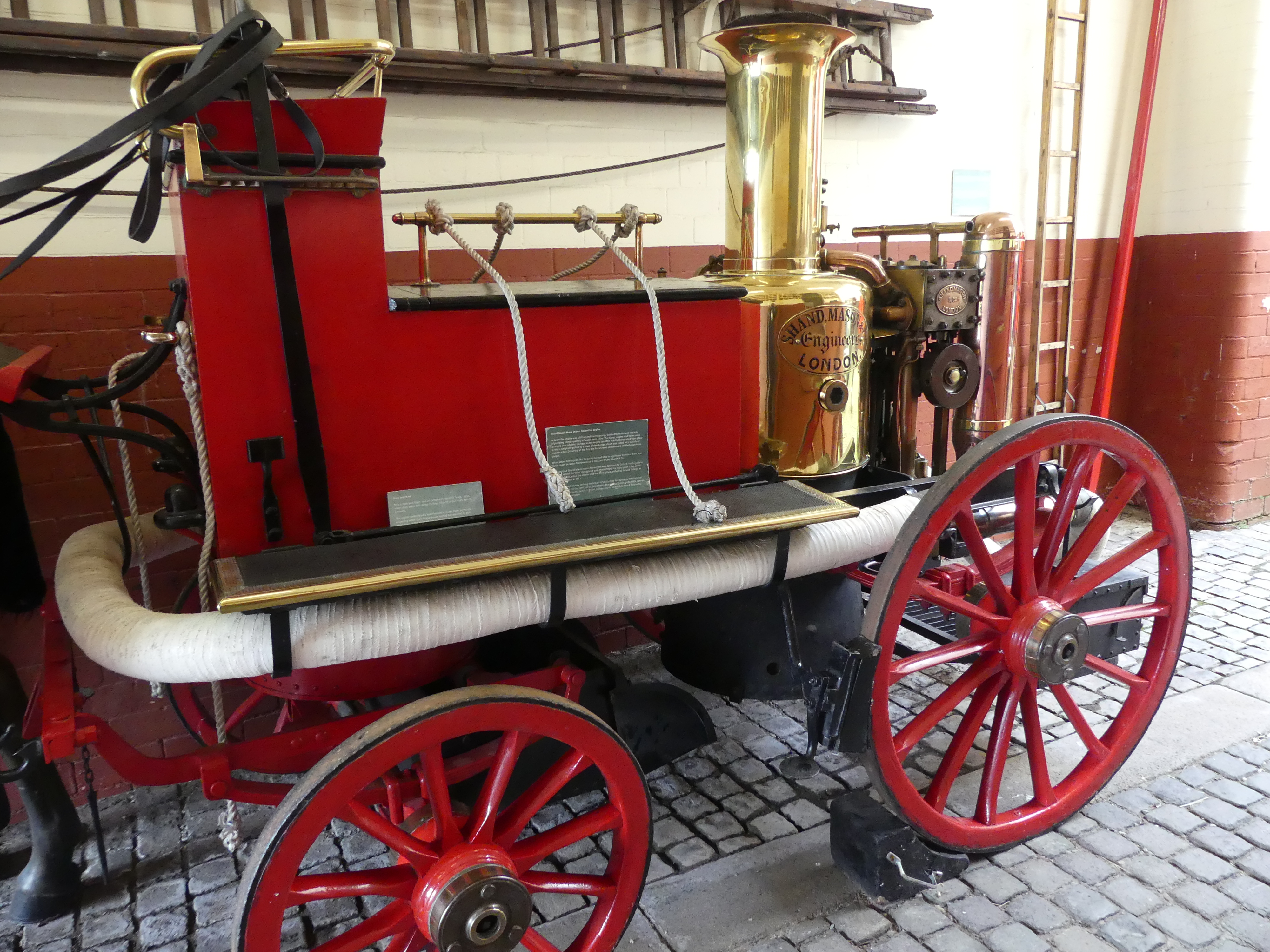
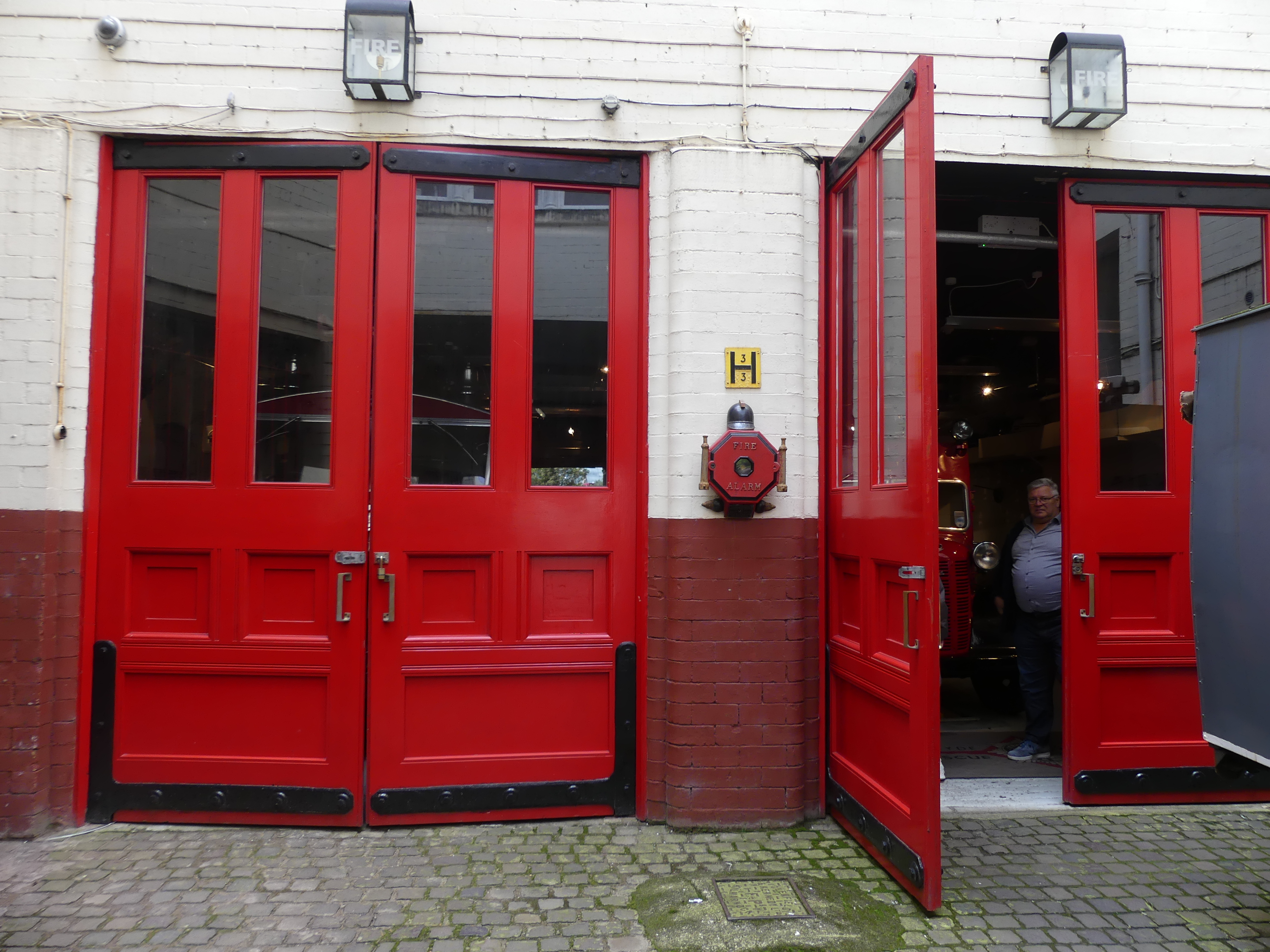
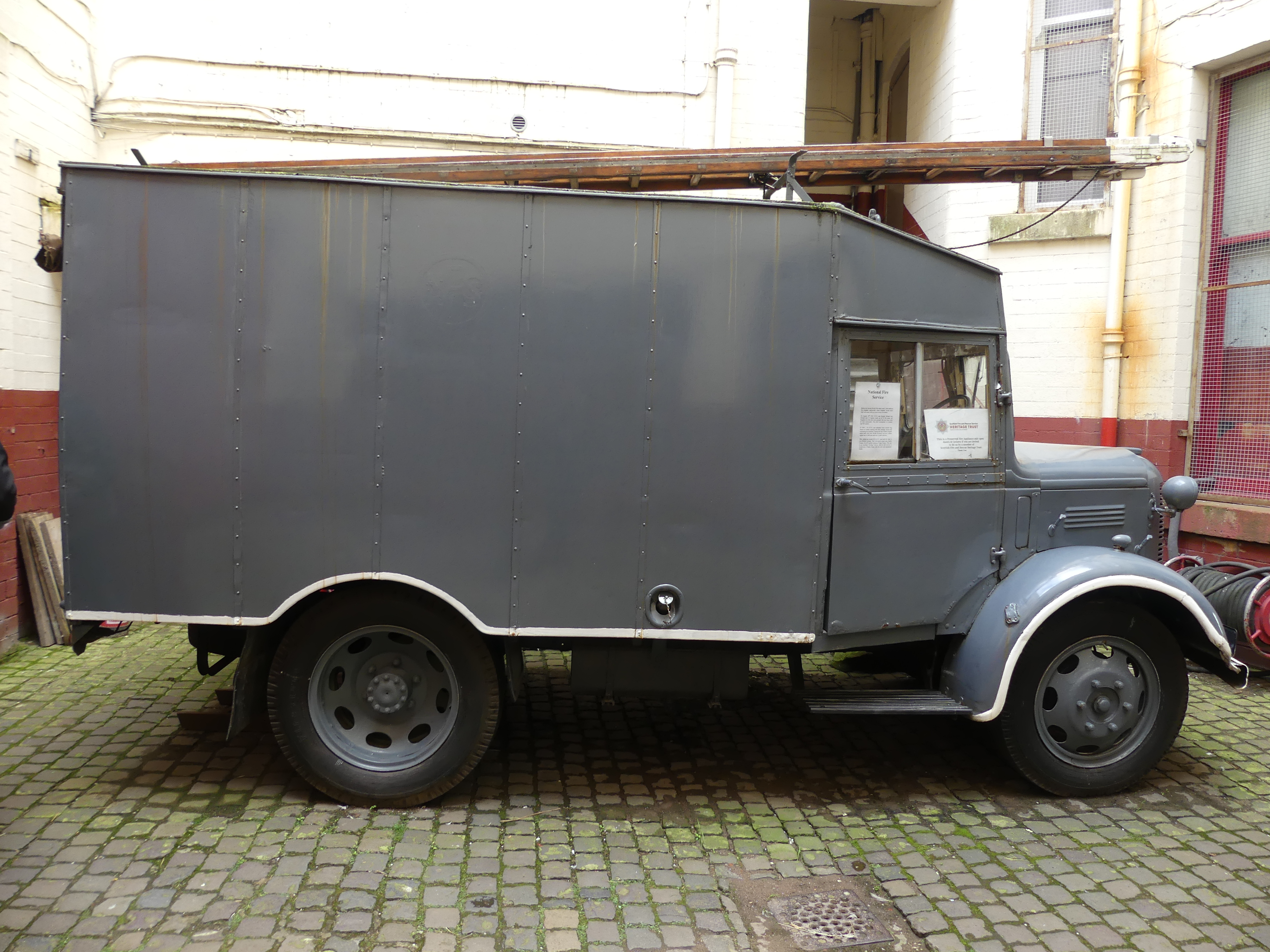
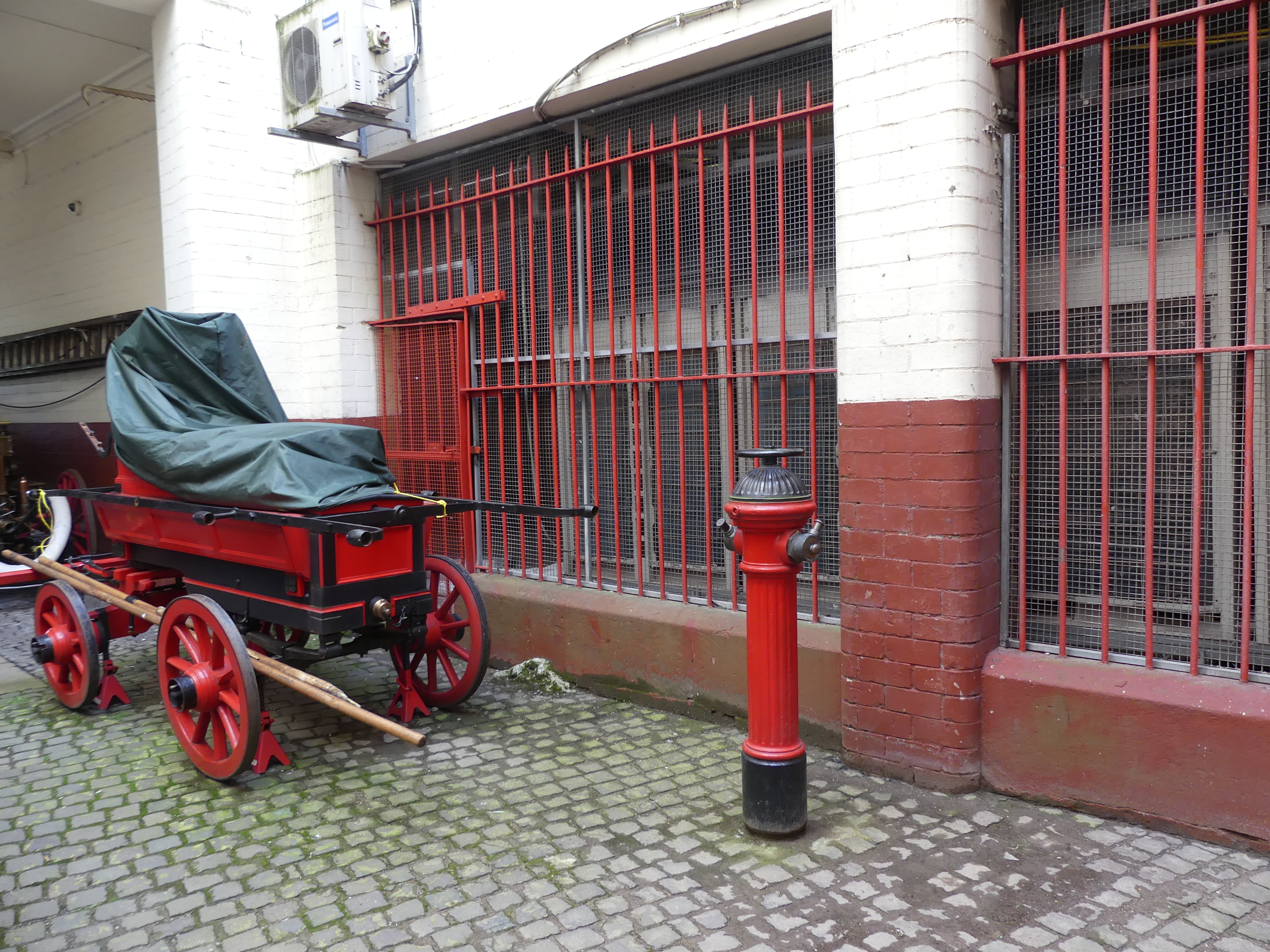
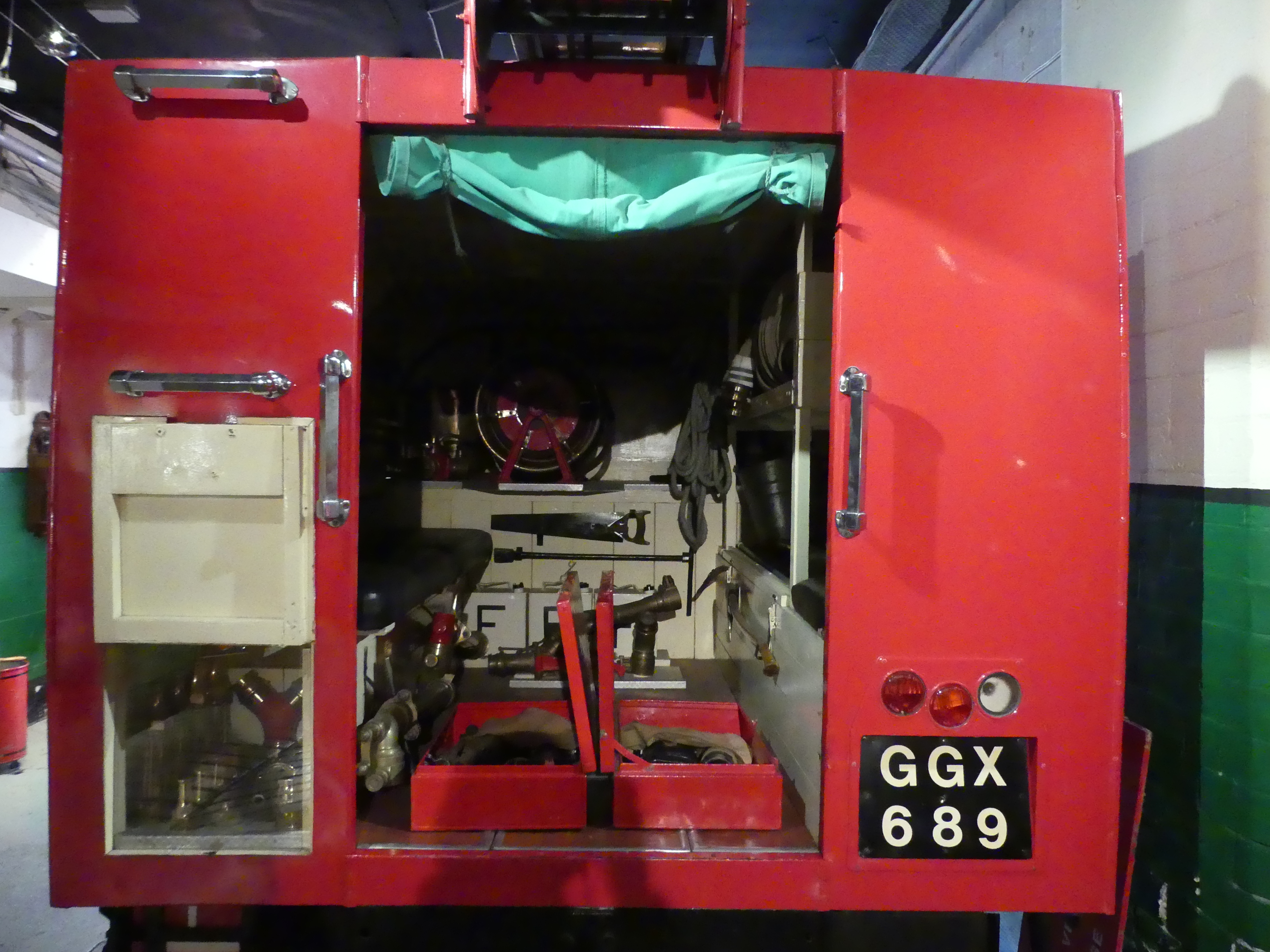
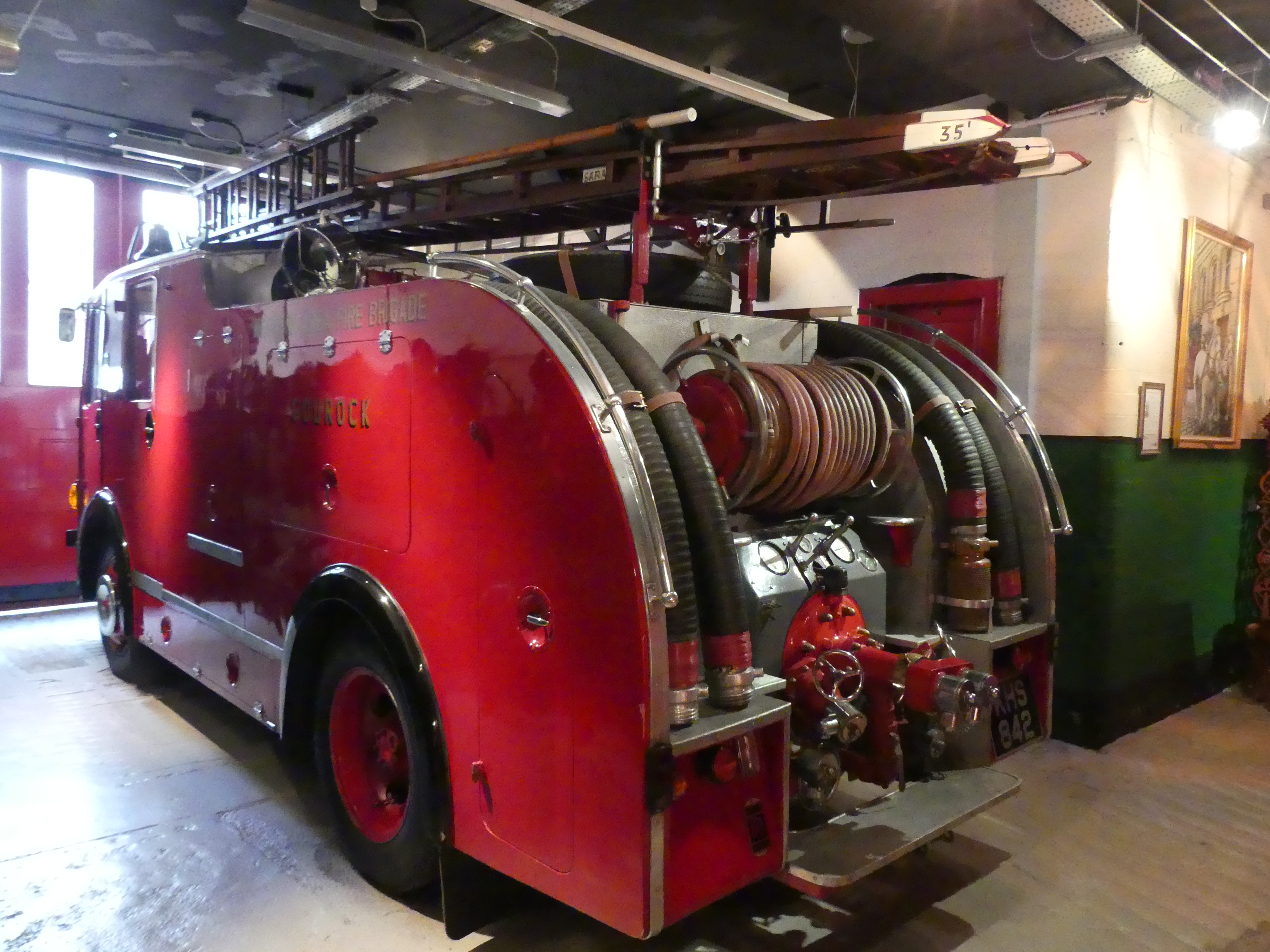
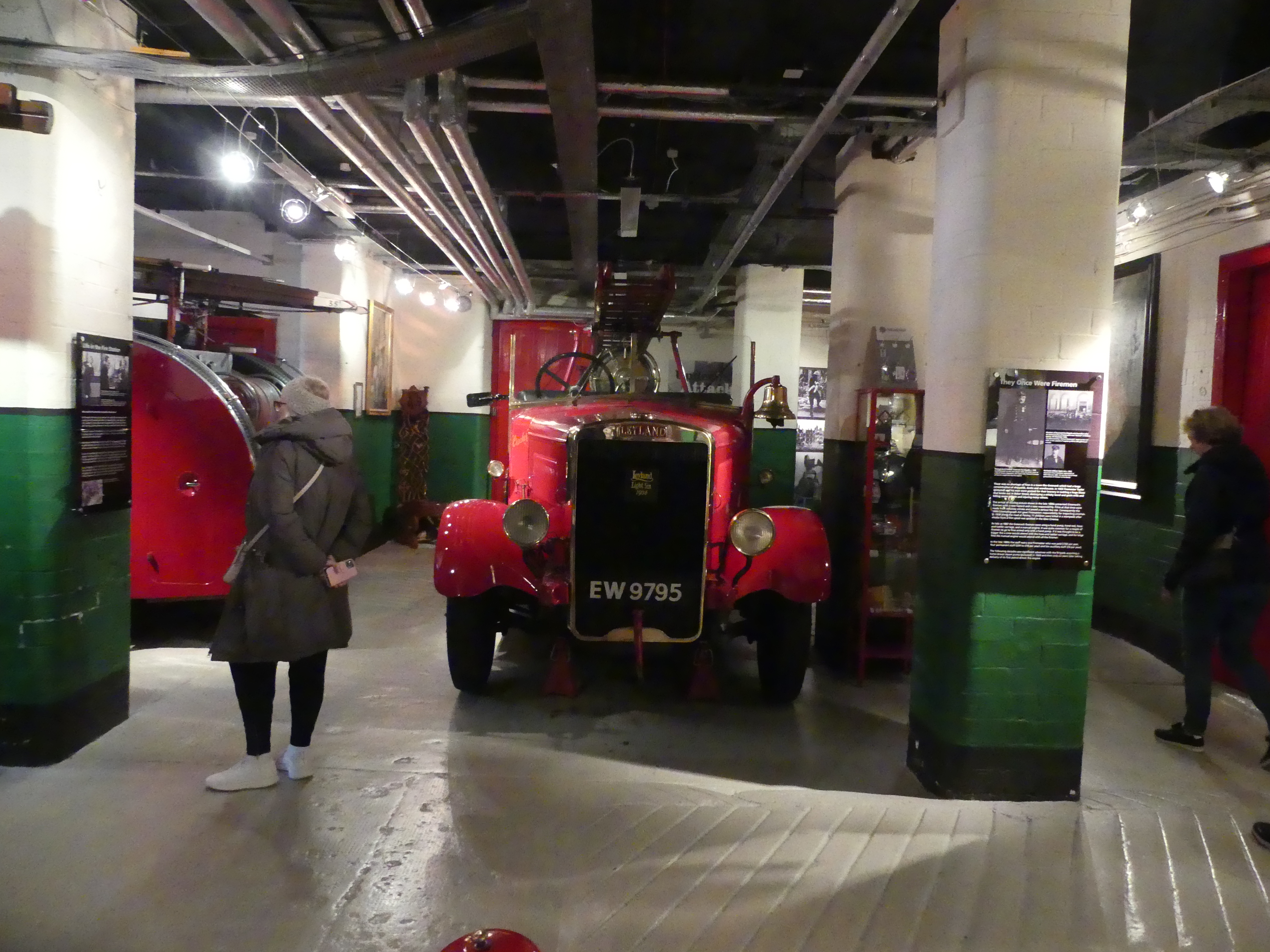
I cannot recall what drew us toward an A fold sign in Wallace Place but I’m glad it did. Here in the old Fire Station the Scottish Fire and Rescue Service Museum has been established by a Trust of the same name. It is a museum dedicated to the history of Scotland’s fire and rescue service. It houses a wide range of artefacts and stories from the service’s long history with displays on the history of firefighting, the development of fire safety in Scotland, and the history of the building. Many of the exhibits have been gathered from around Scotland as the station closed in 1960 before it was reopened as by the Strathclyde Fire & Rescue Museum 52 years later. The video story is fascinating and a must see should you visit it. My photos give you a snipet of what you will find.

I have also scanned the brochure on the museum and attached its 4 pages are here.

We spent most of our visit in this museum before returning to the ship. There must be a reason why such an interesting and important museum has been hidden away in Greenock and we only found it by accident. However that is the way I like it – something undiscovered brought to life in my blogs. Our travels then took us to the 4th Island “THE RETIREES GO AROUND THE WORLD – DAY 9 SS NIEUW STATENDAM – Isle of Mann “. A few interesting facts around this limb of the Empire so you will need to read on.

“THE RETIREES GO AROUND THE WORLD – DAYS 6 & 7 SS NIEUW STATENDAM – Belfast Northern Ireland and Liverpool England”

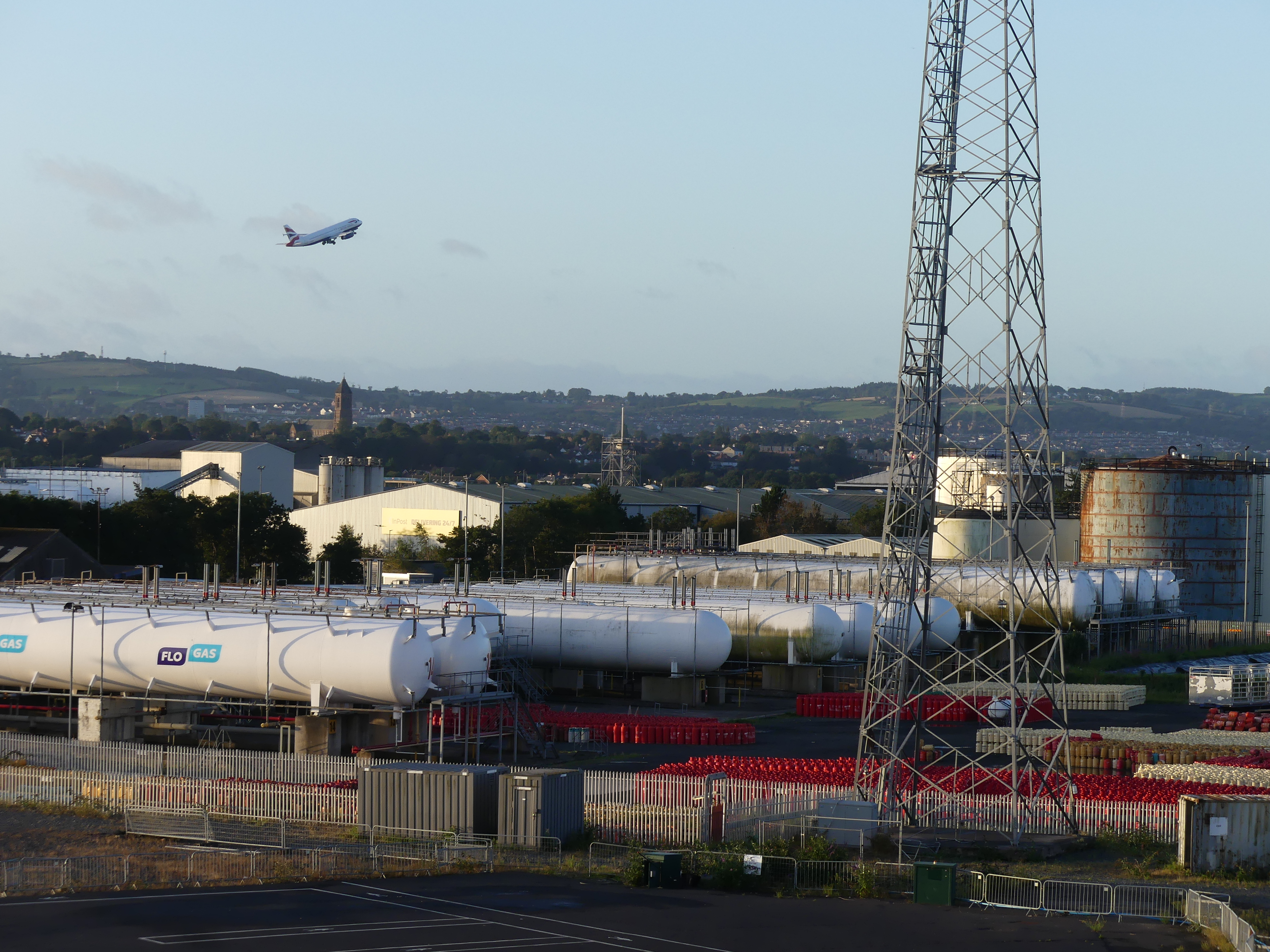
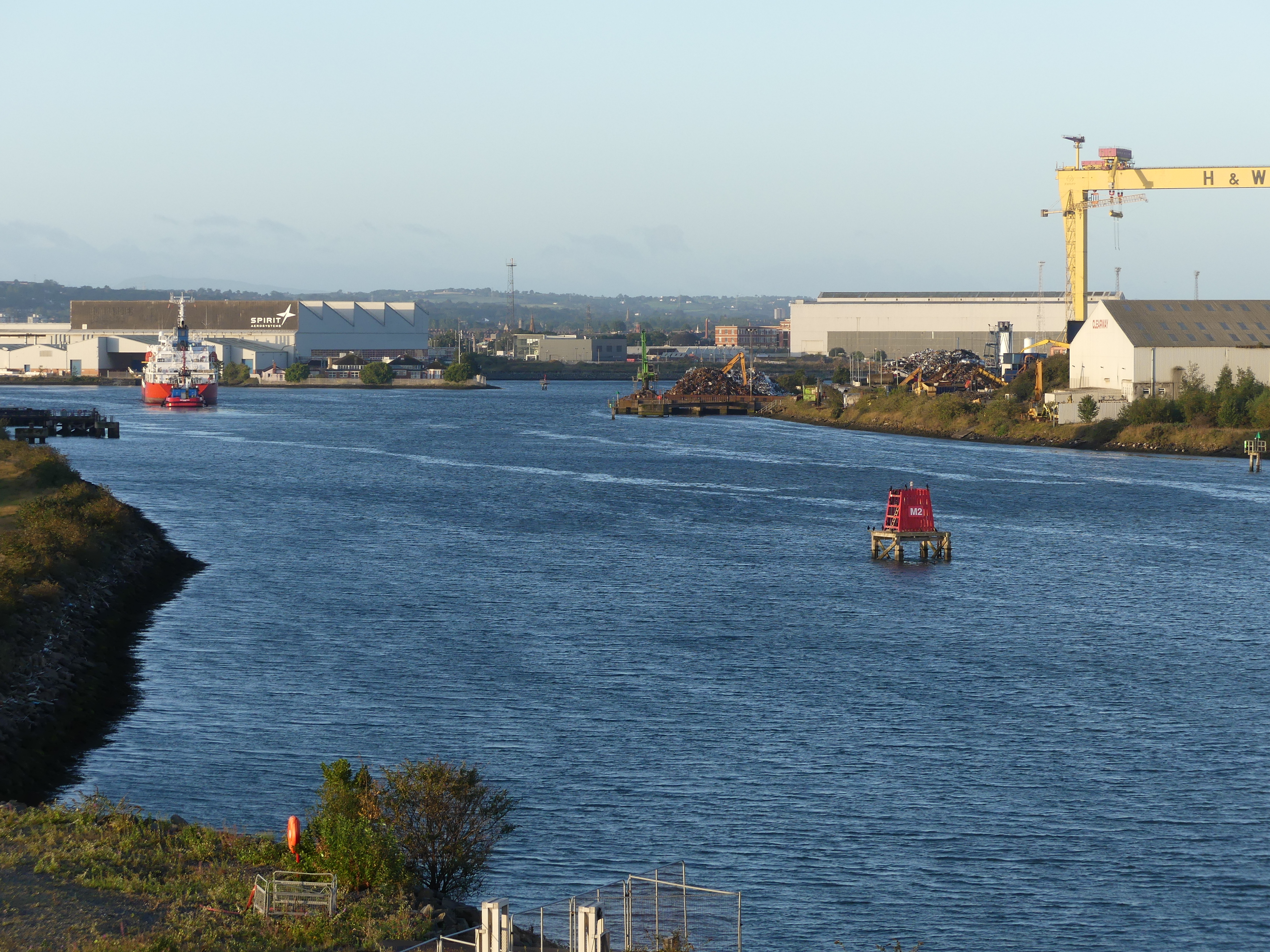
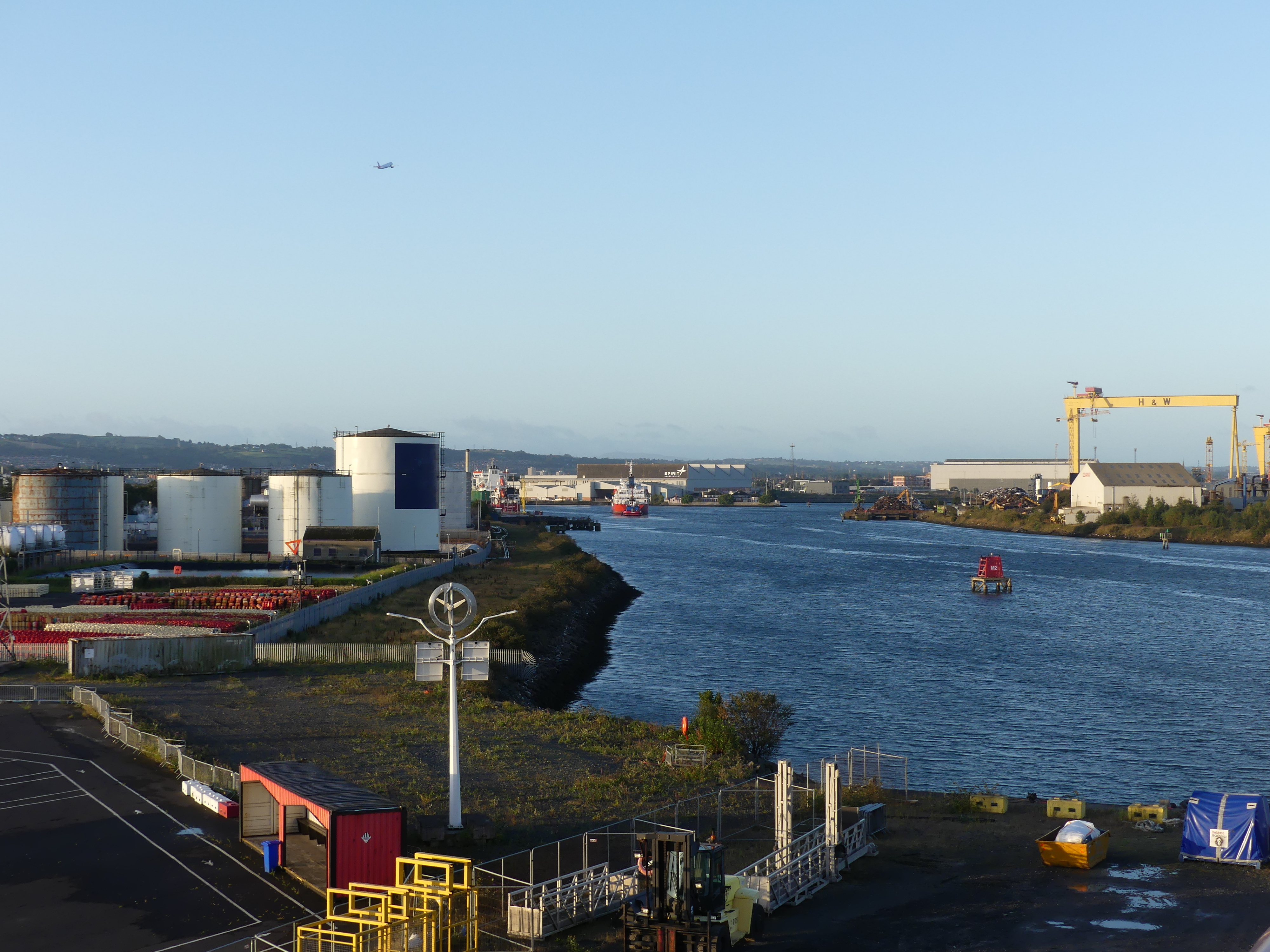
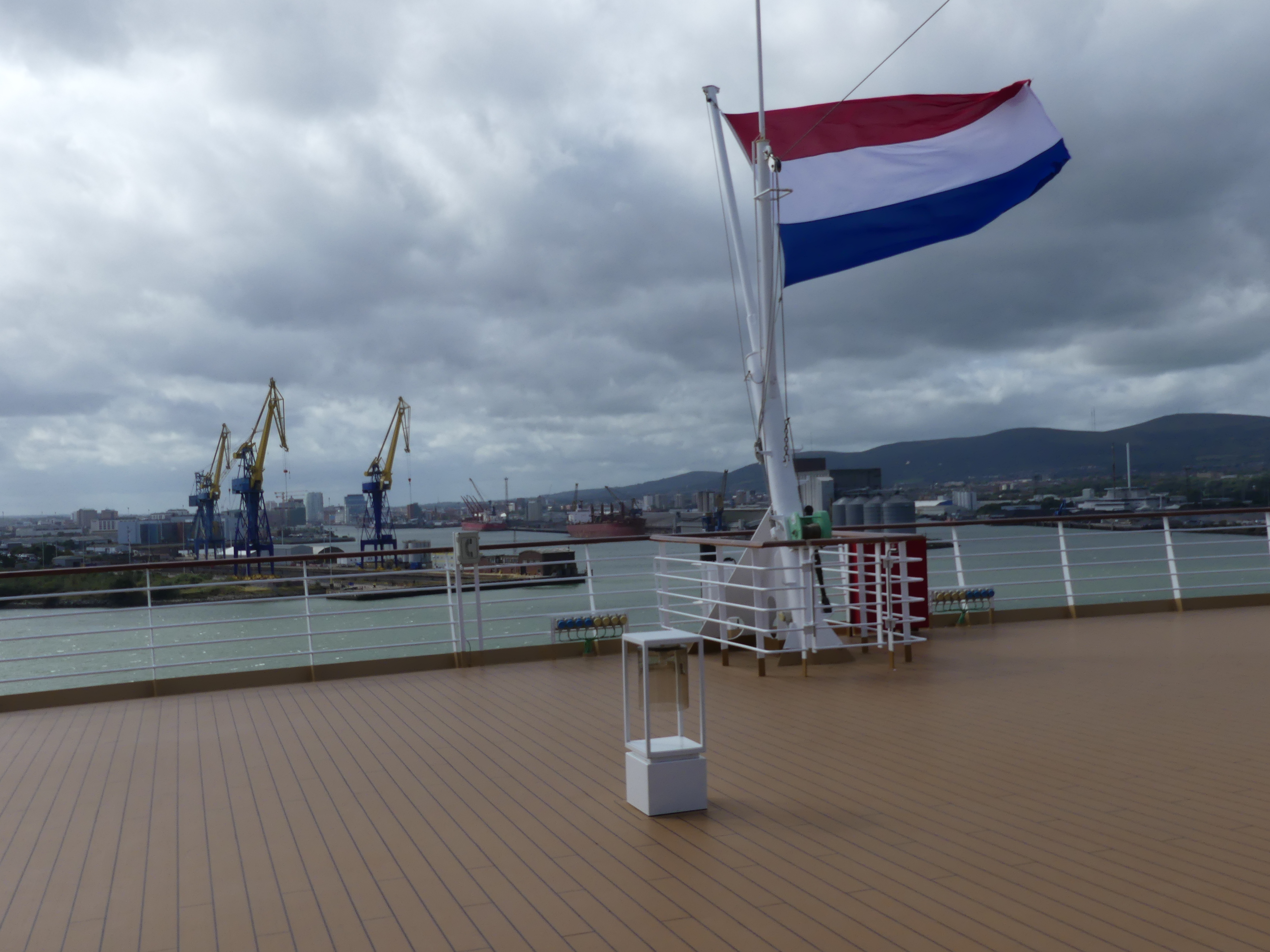
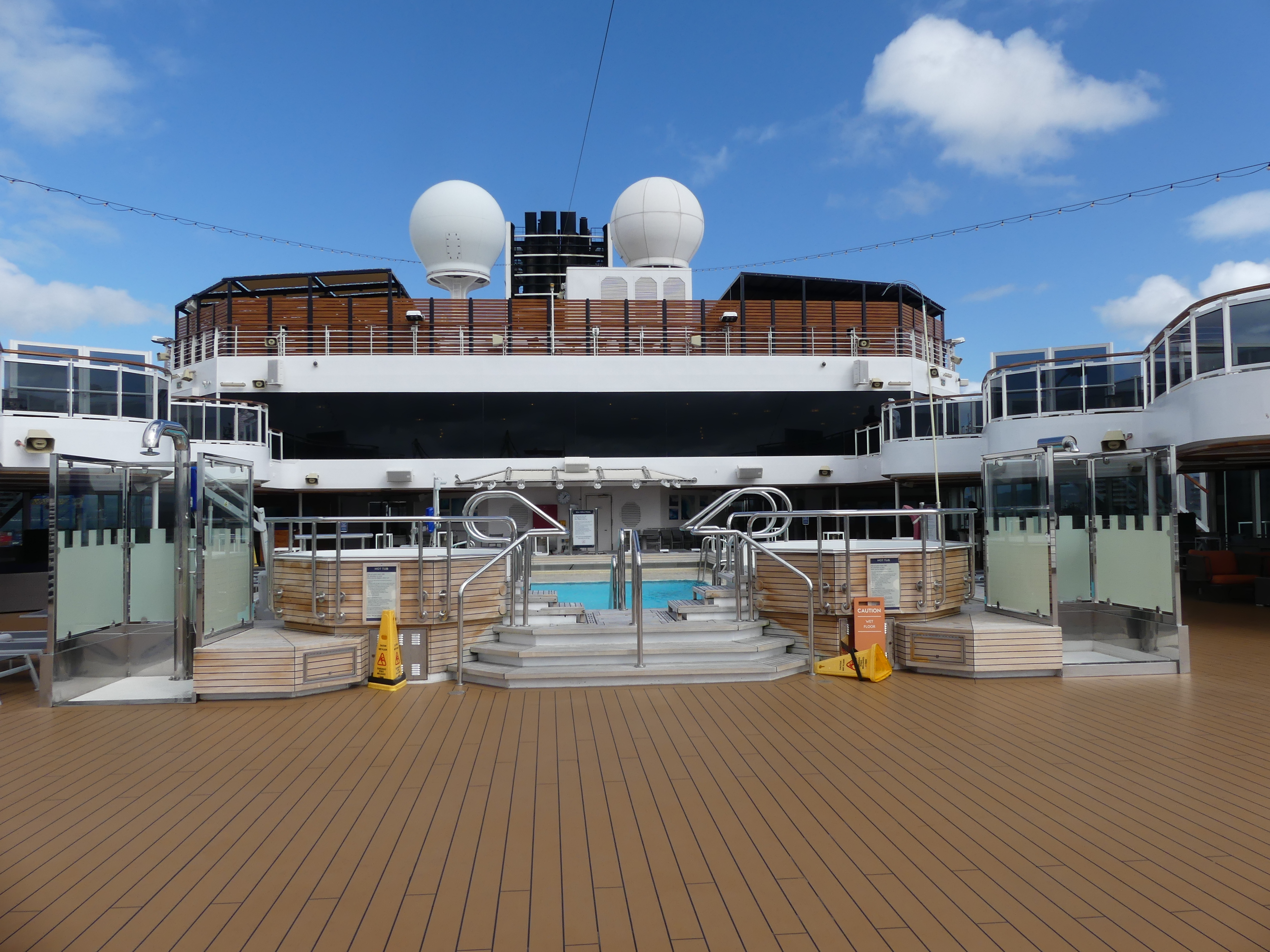
As stated in my last blog concerning Outer Hebredies, we had visited Belfast previously and felt like a day off, staying on the ship. We docked on a grey morning and this seemed an omen that we had made the correct choice but by breakfast the sky was clearing. It remained chilly – certainly too chilly for the pool so we relaxed reading books and found the games room later in the day. We took an afternoon stroll and I have included photos of the day in port. Notice the empty pool.

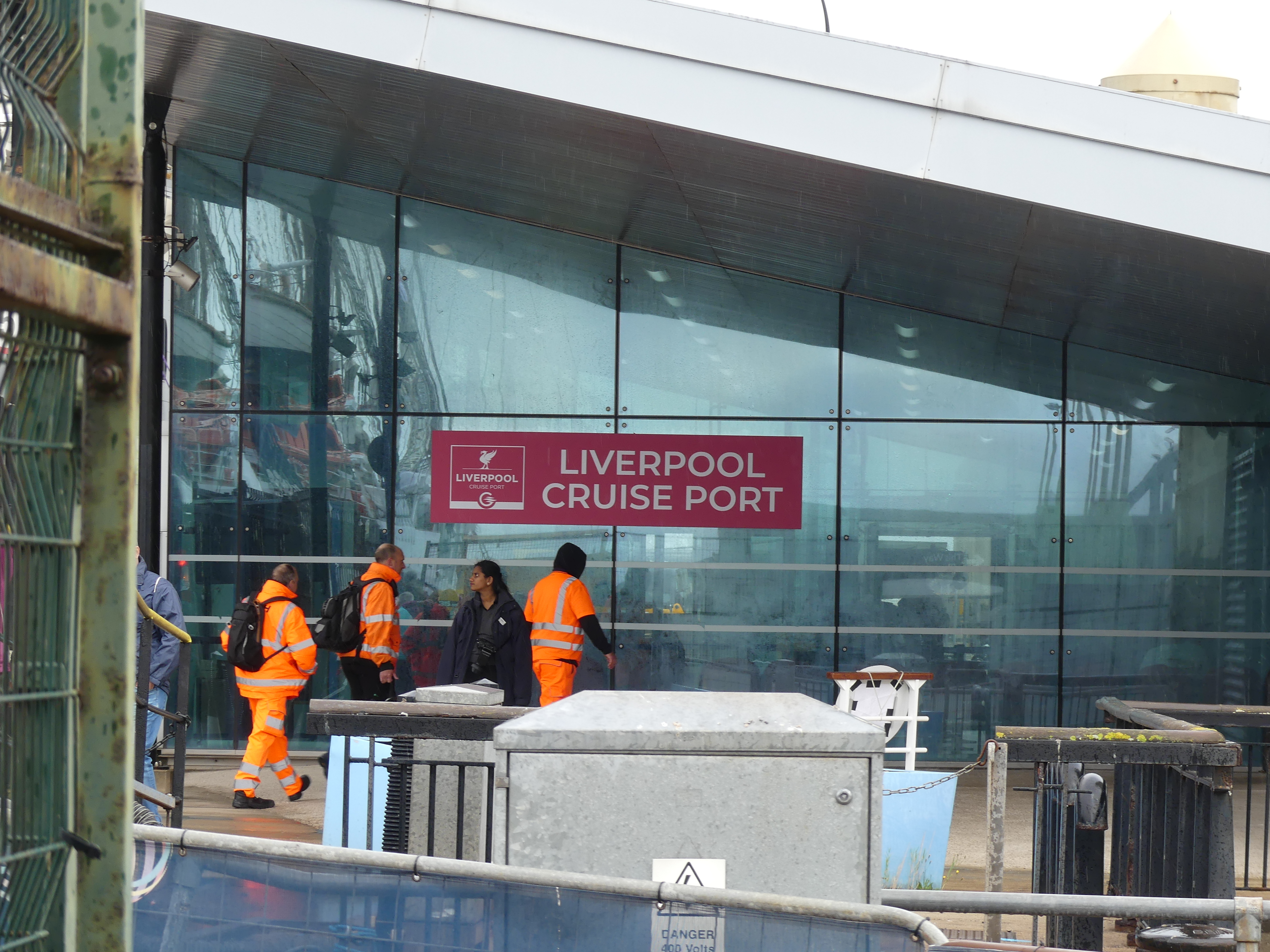
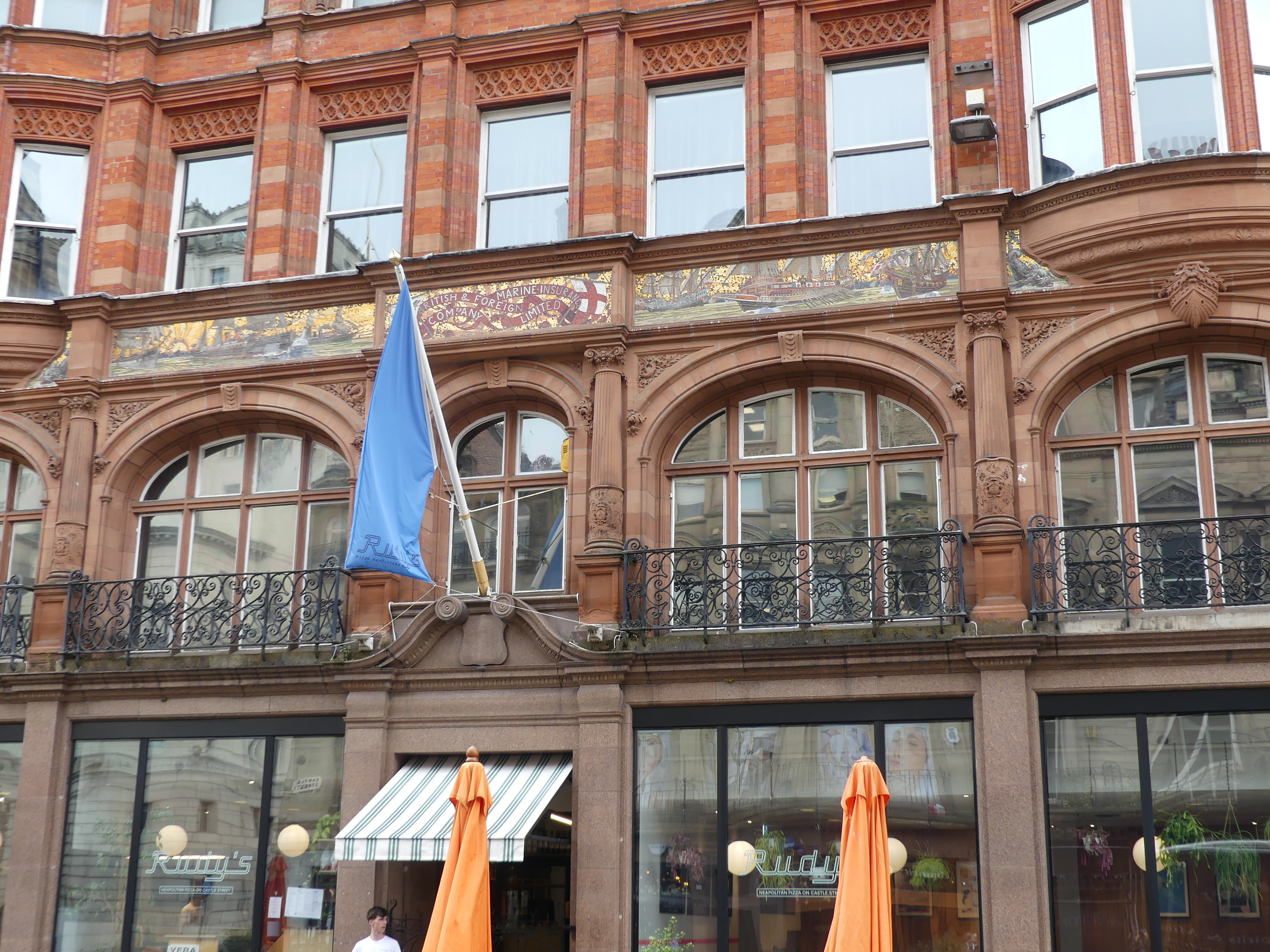
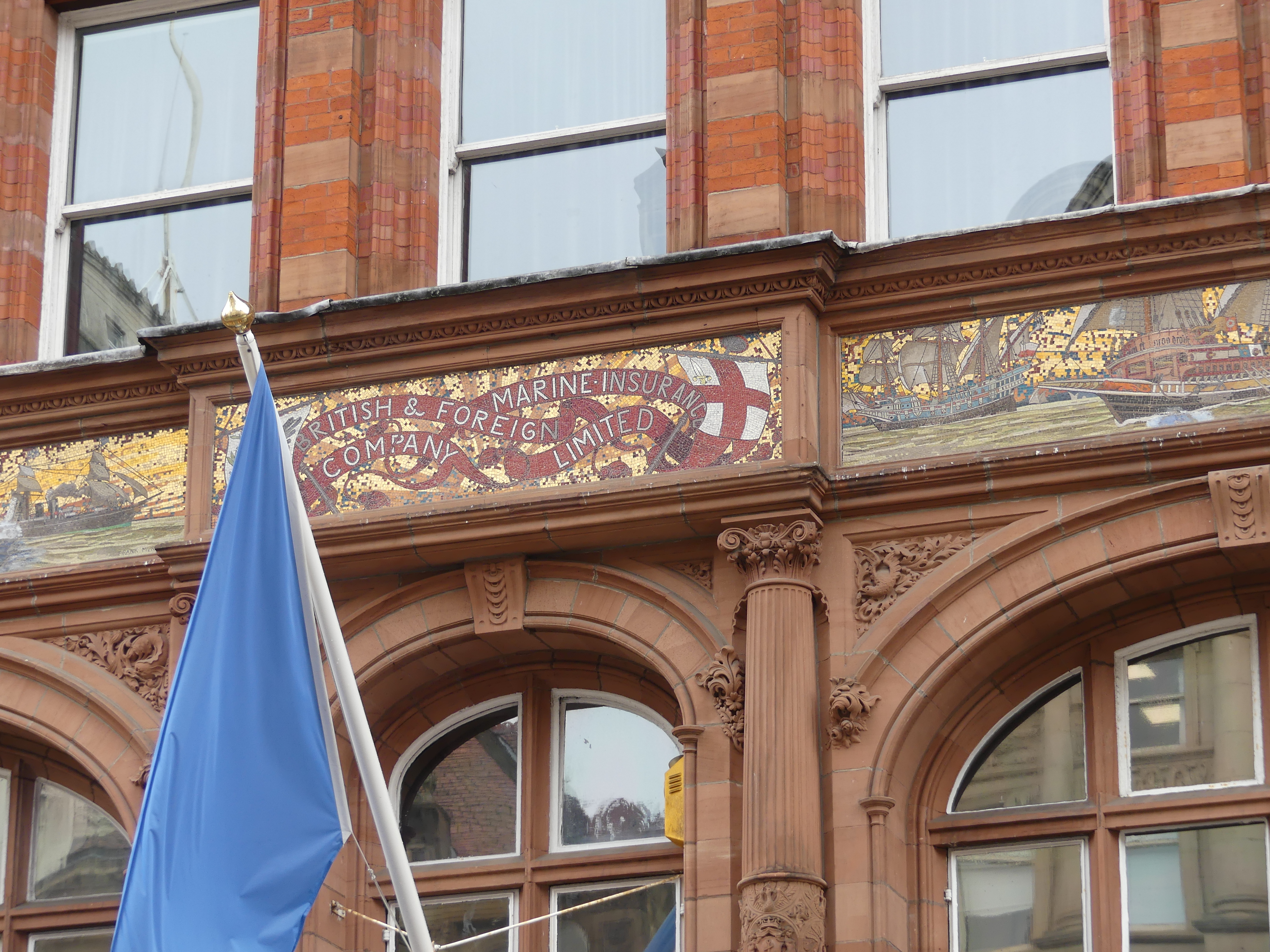
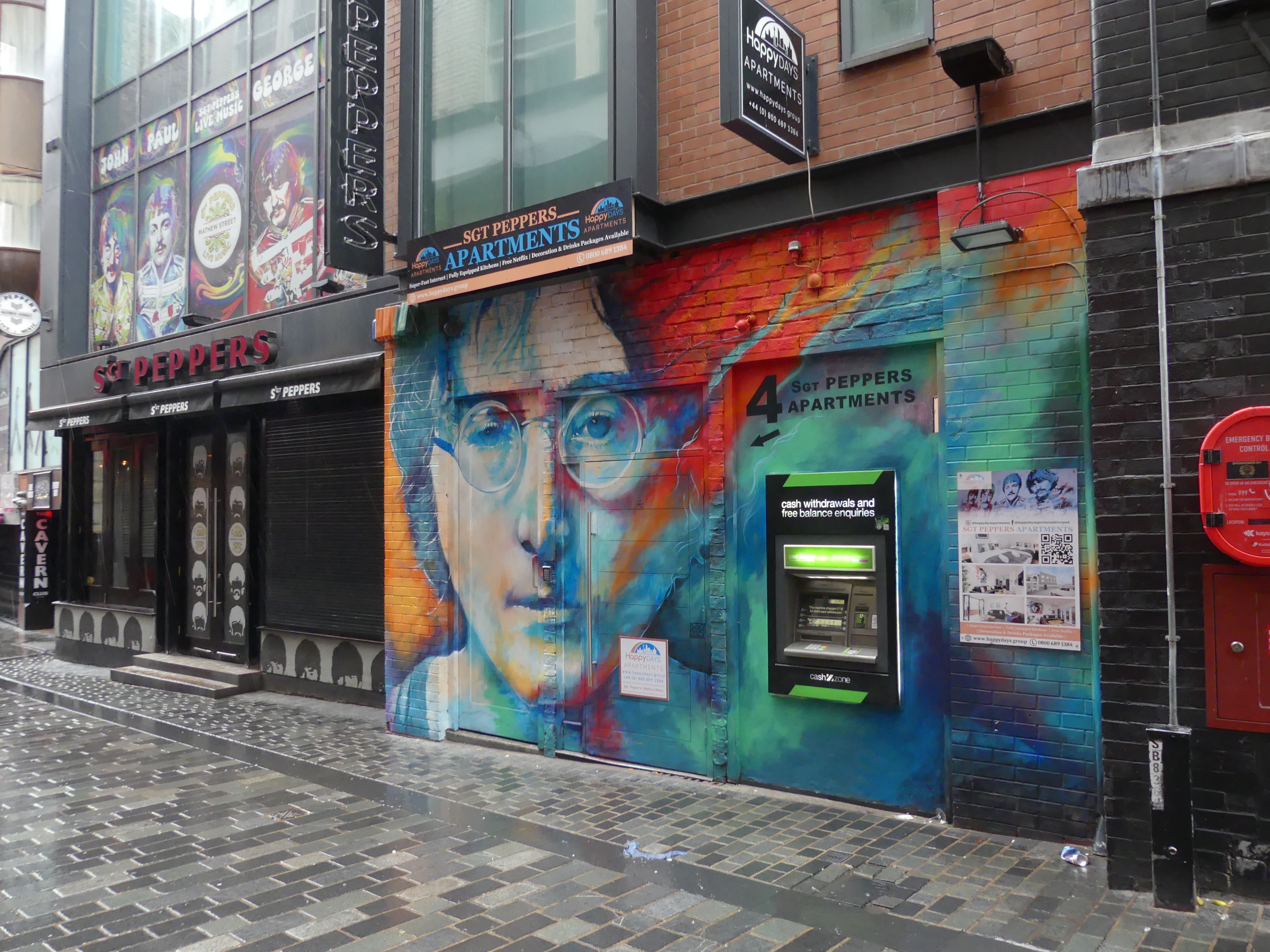
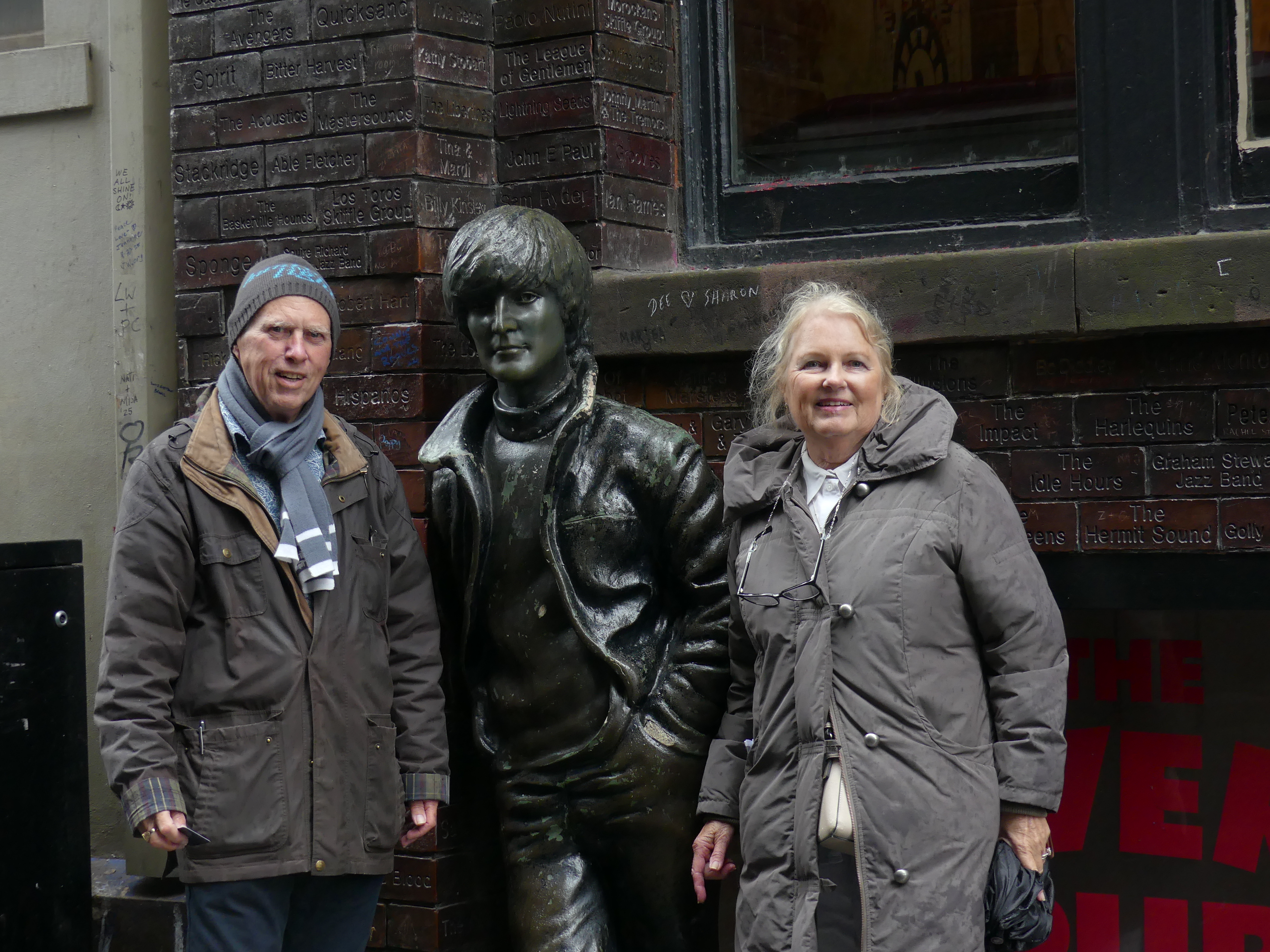
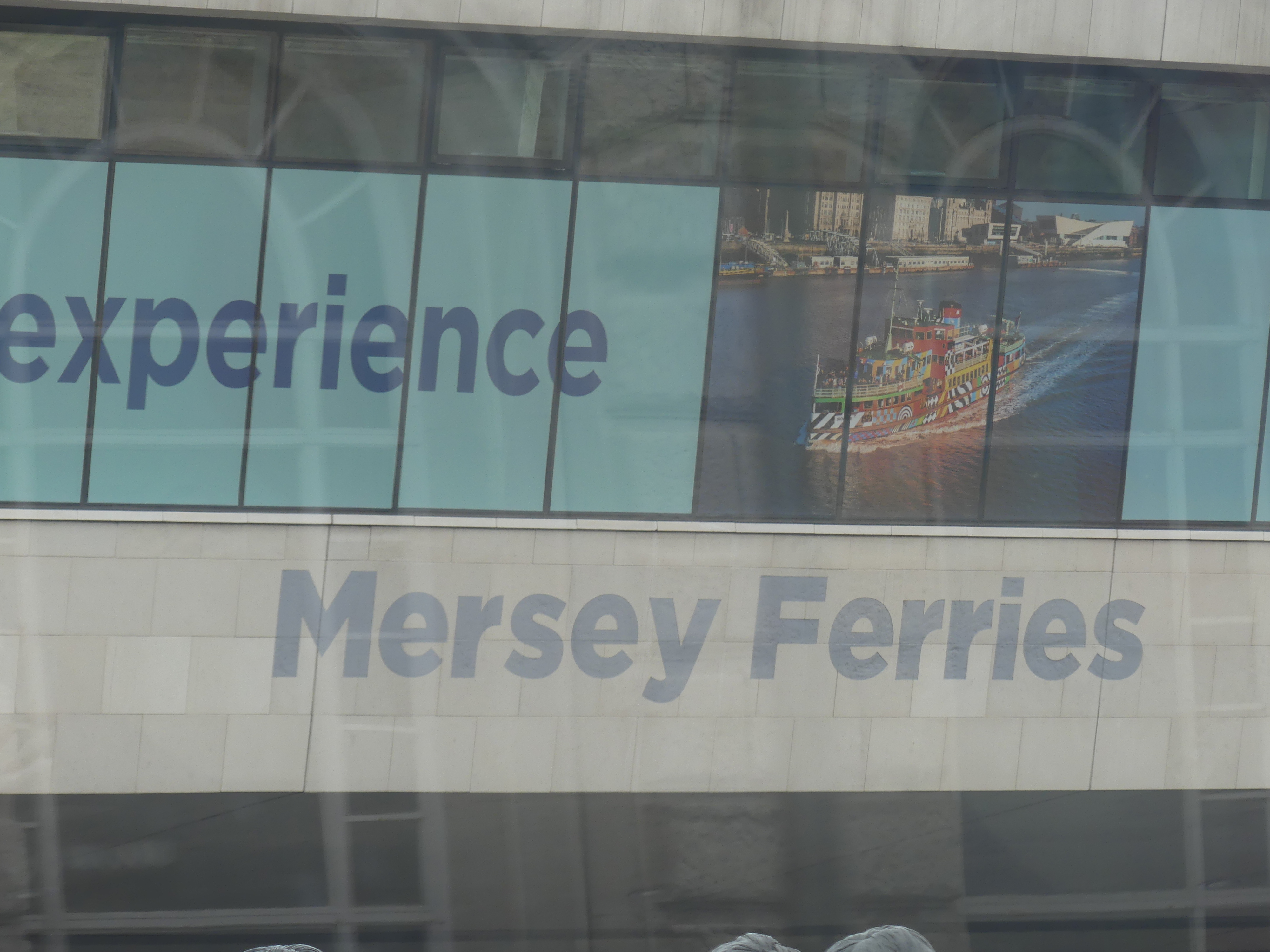
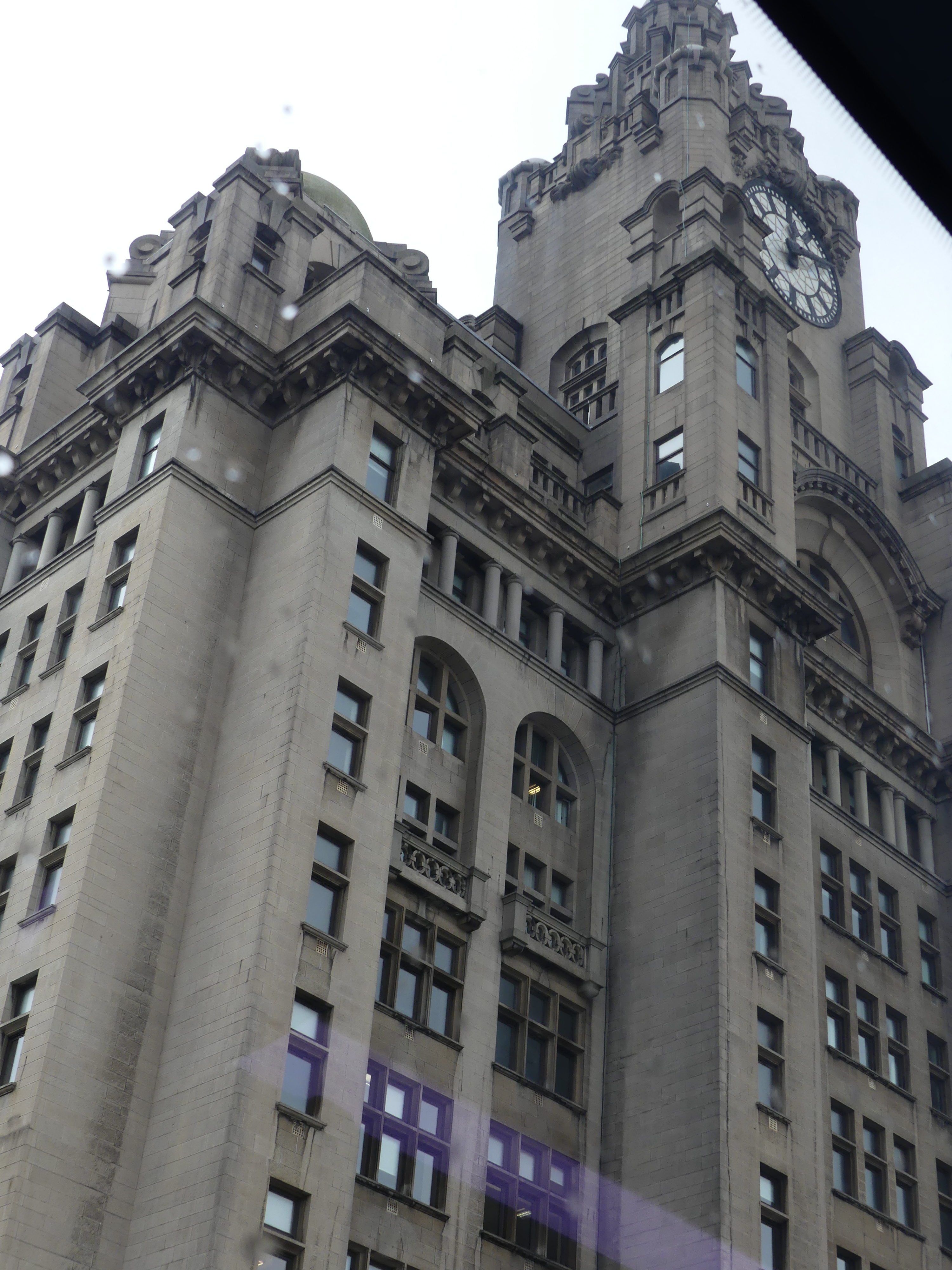
Moving onto Liverpool we were also familiar from previous trips with the sights of Liverpool but we decided we would take the hop on hop off bus – no strenuous activity as we caught up with rest. As usual we departed the ship through the cruise terminal onto the Albert Docks. In front of us is the Liver Building Liverpool’s iconic waterfront landmark, famous for its twin clock towers topped with mythical Liver Birds (Bertie & Bella), built in 1911, and known as one of the “Three Graces” with the Cunard & Port of Liverpool Buildings. Further along at Pier Head The Museum of Liverpool. We had visited this last time we were in Liverpool and found it a fascinating museum both for its architecture and for the history it holds. It tells the story of Liverpool and its people, and reflects the city’s global significance. It opened in 2011 as newest addition to the National Museums Liverpool group. As we continued our exploation past City Hall we found a grand old insurance building. Located just blocks from Albert Dock and adjacent to Liverpool Town Hall, this building on the east side of Castle Street was designed in 1889 by G.E. Grayson and housed the British and Foreign Marine Insurance Company for almost 70 years. We were making our way to the Cavern Club some time home of the Beatles and many a tribute band. The lane with its protrait of John and his statue brought back memories of our previous visit.

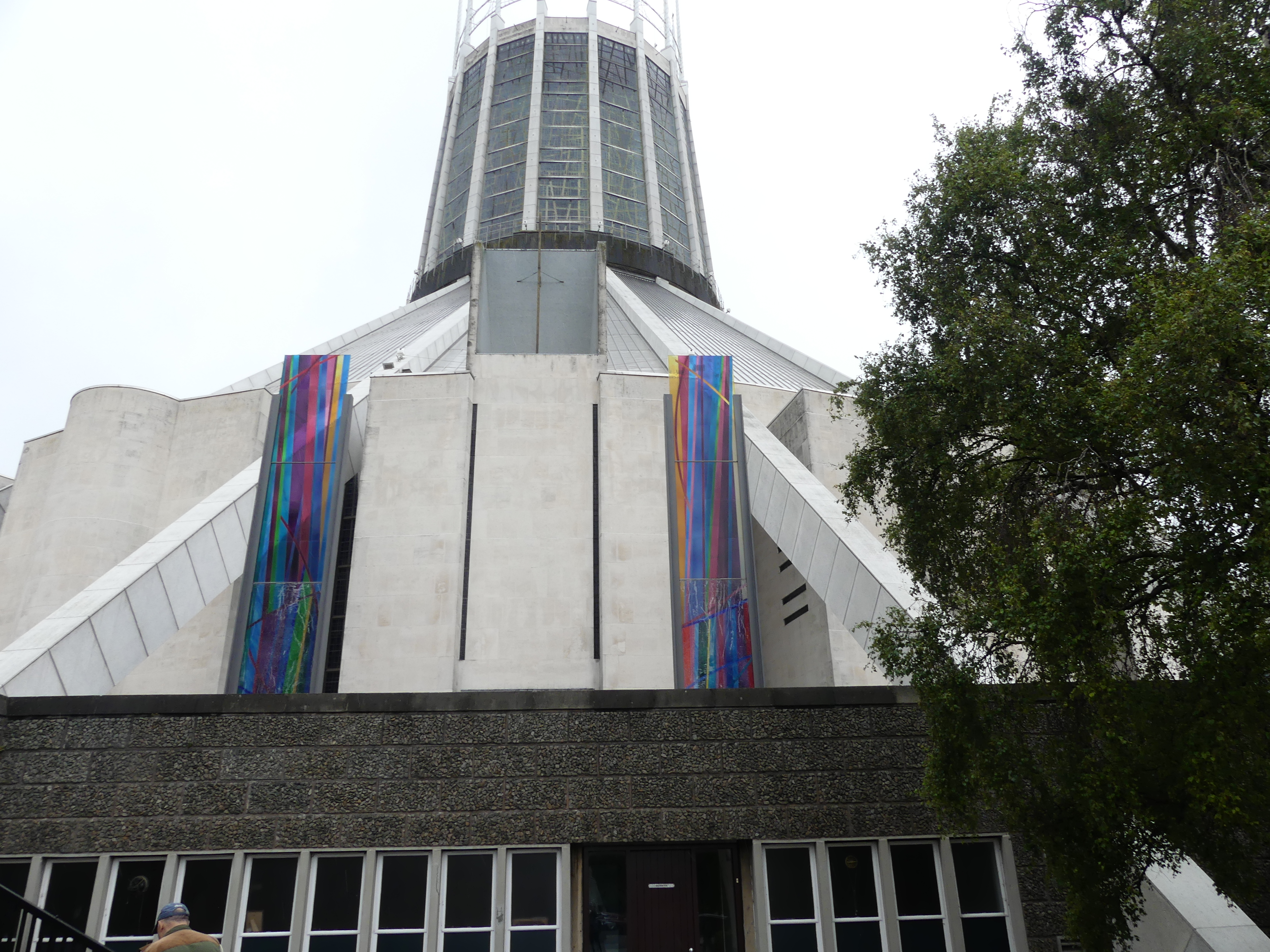
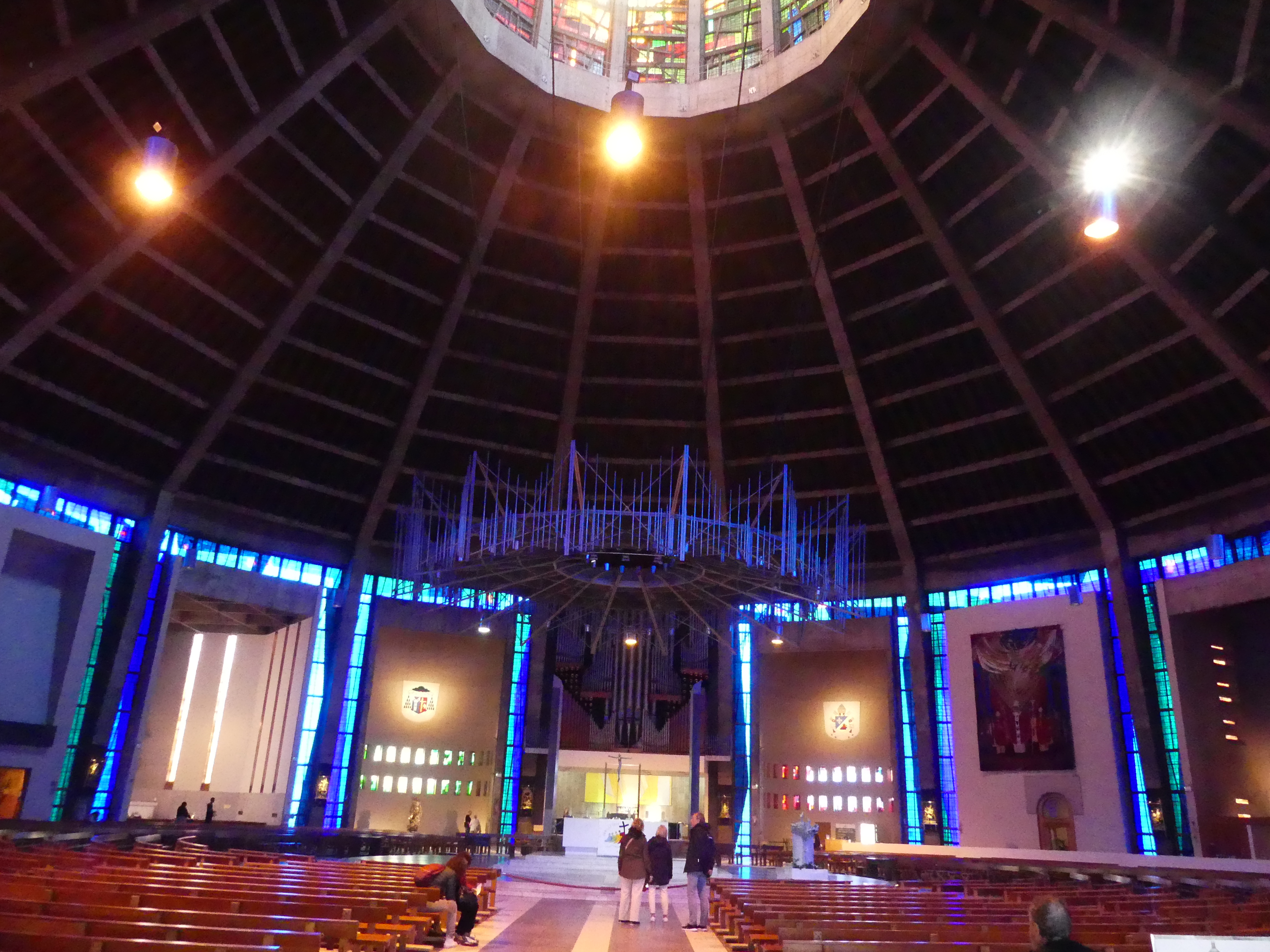
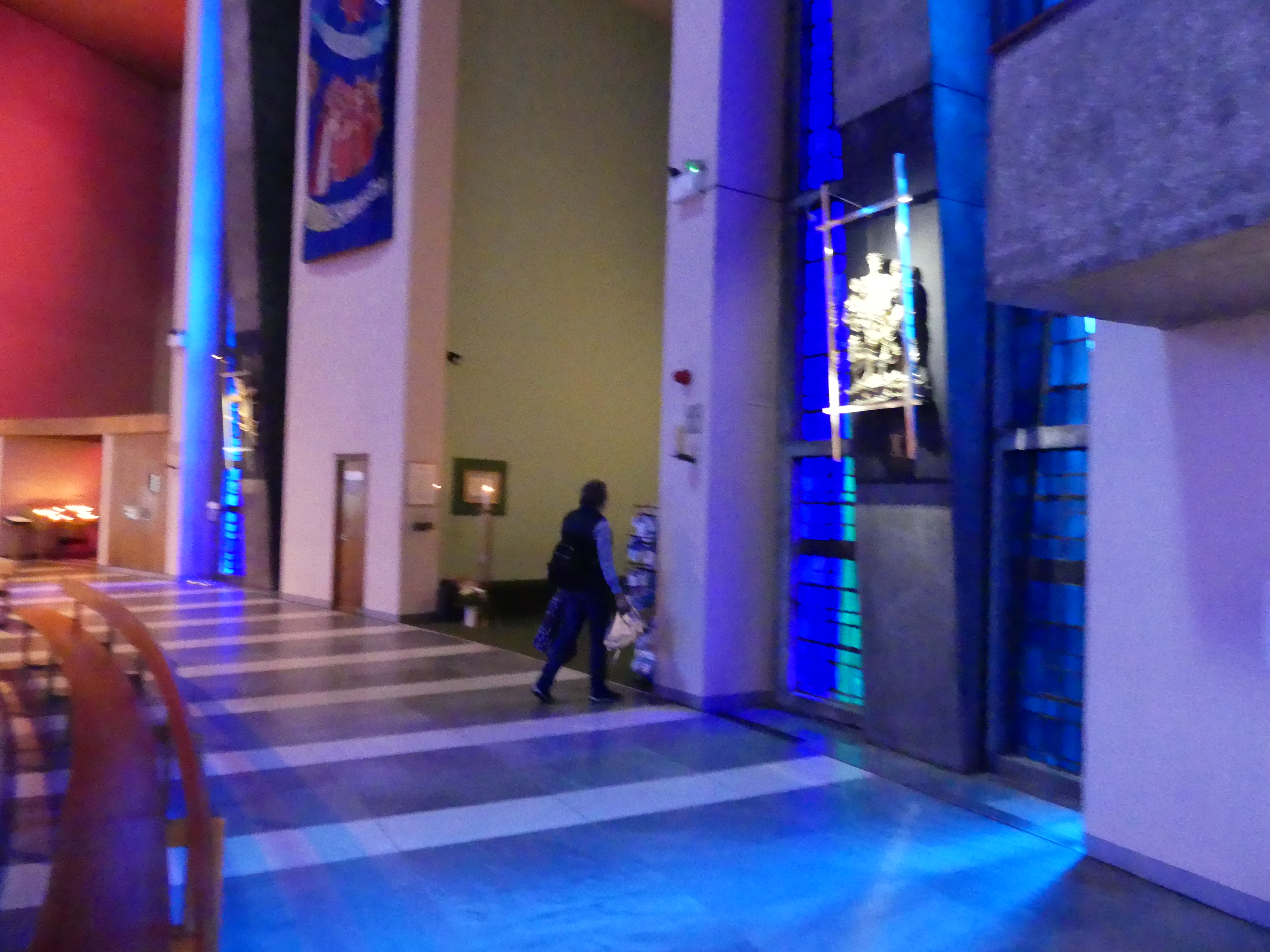
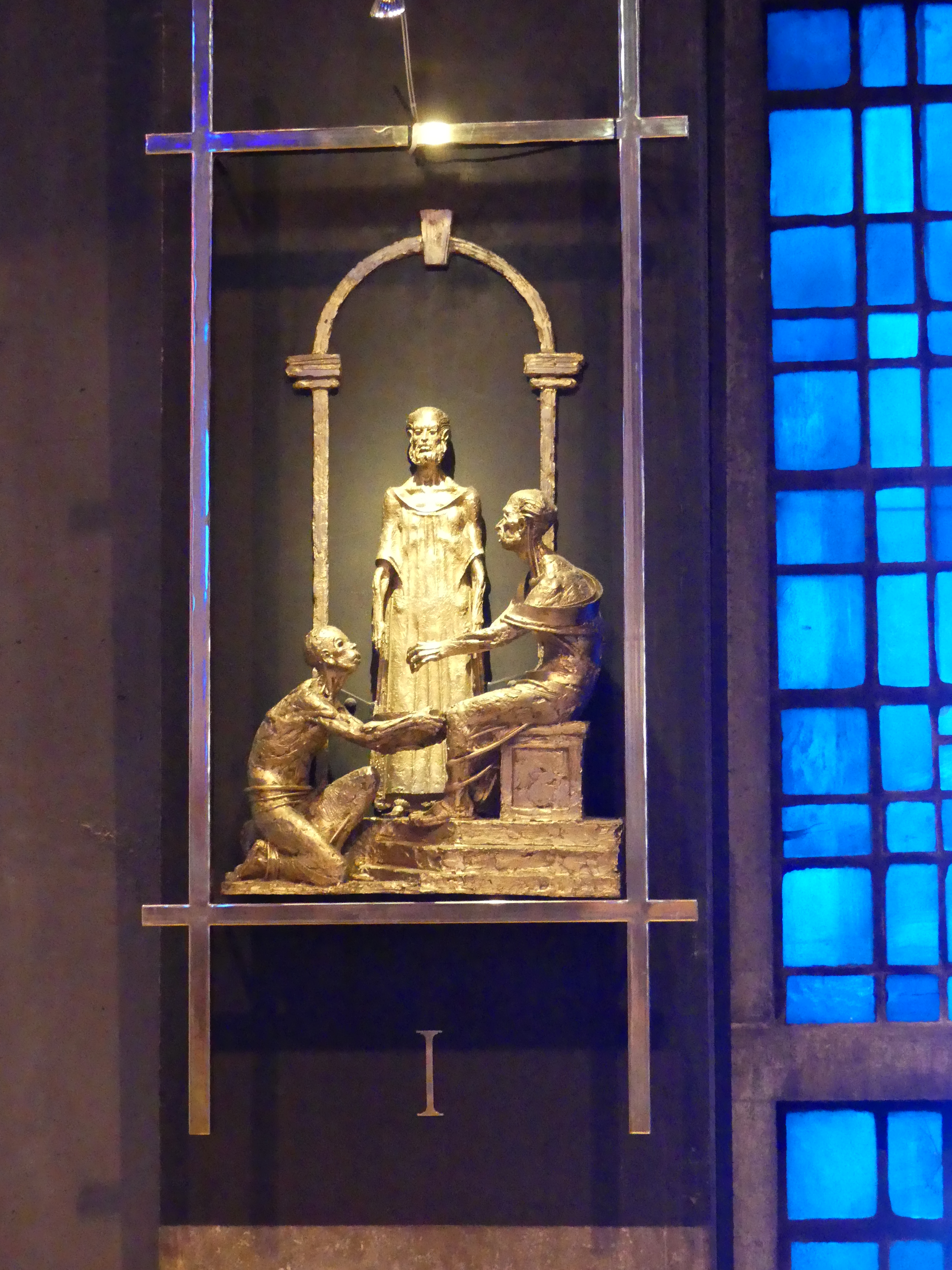
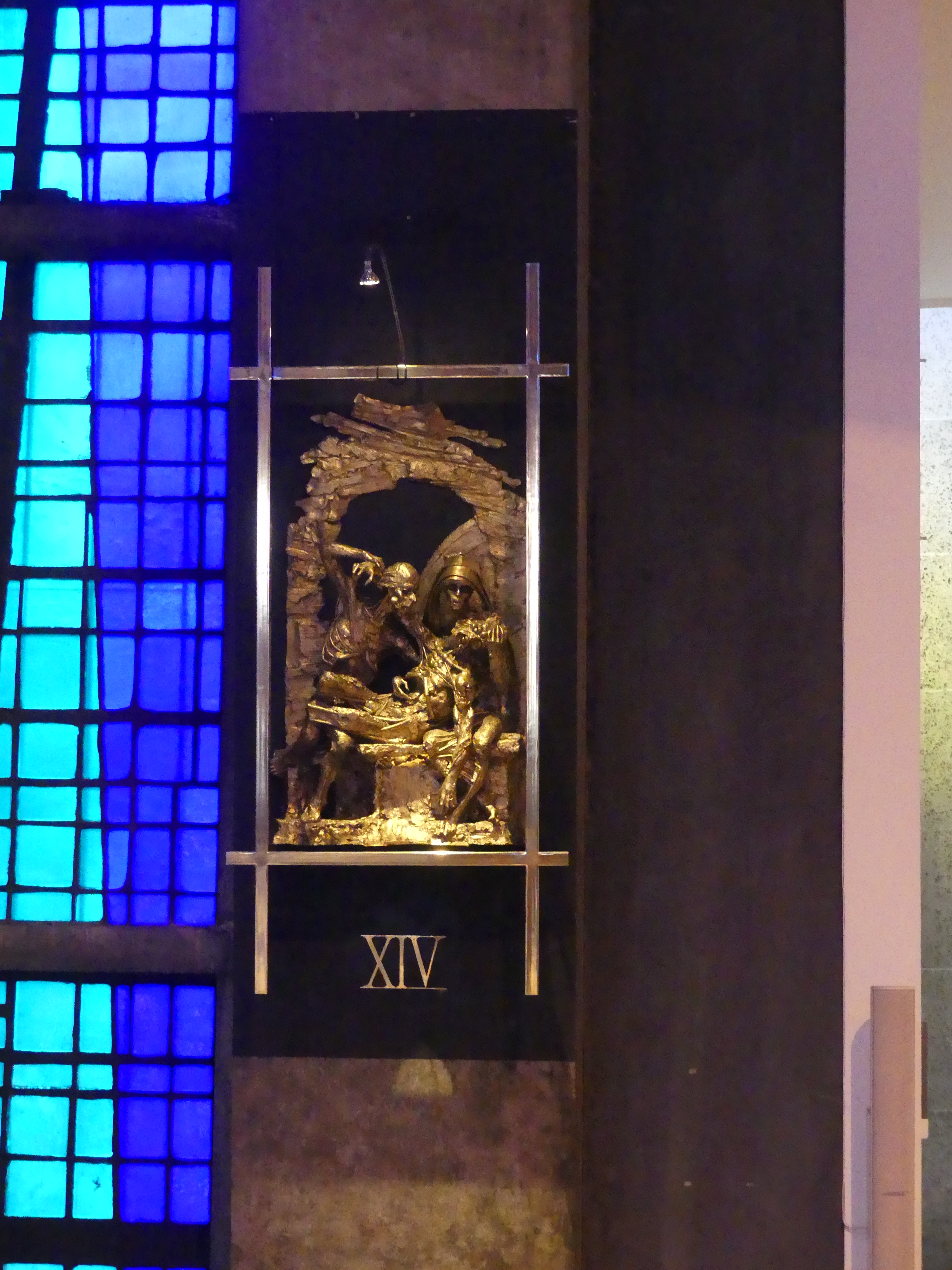
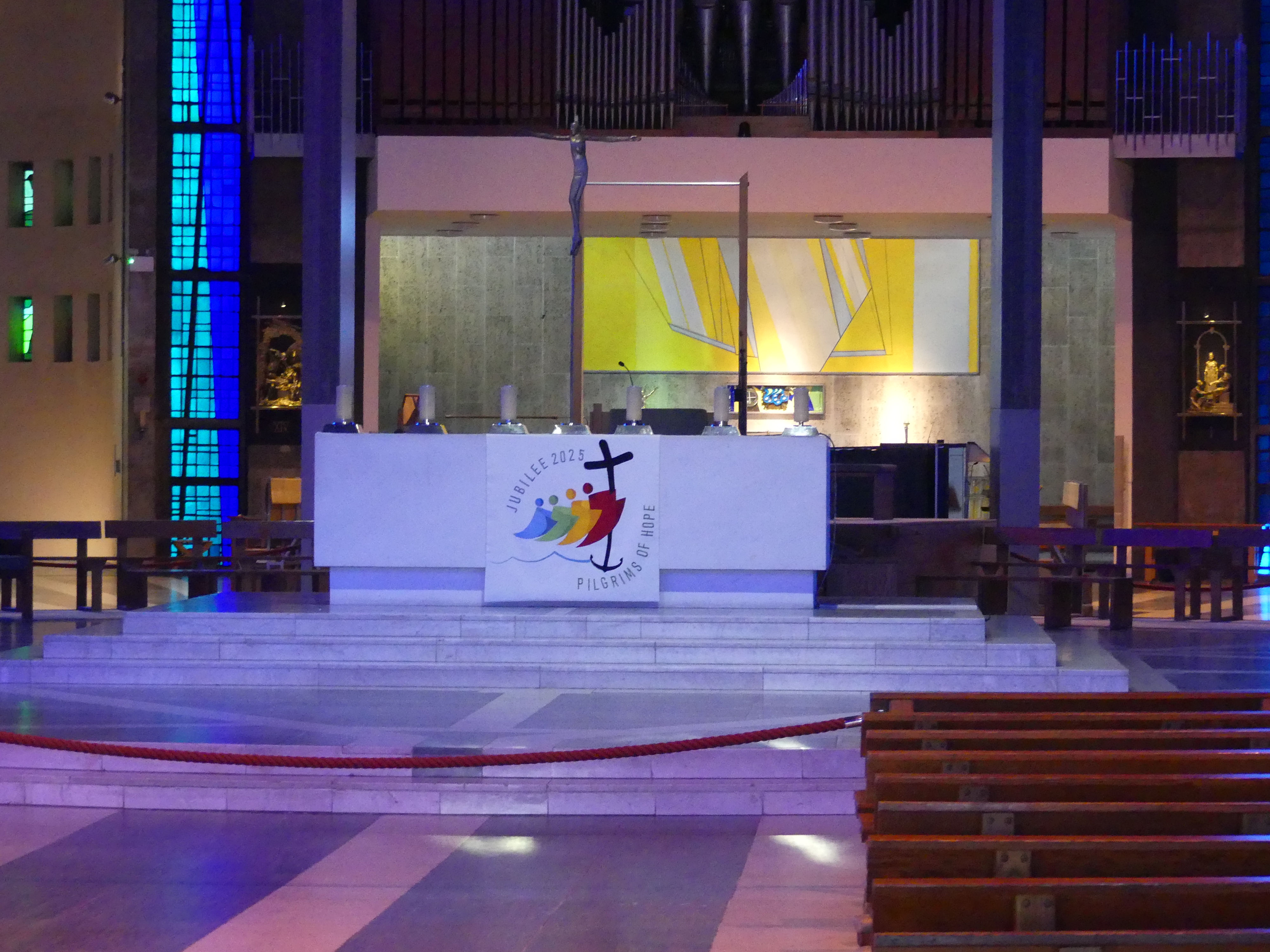
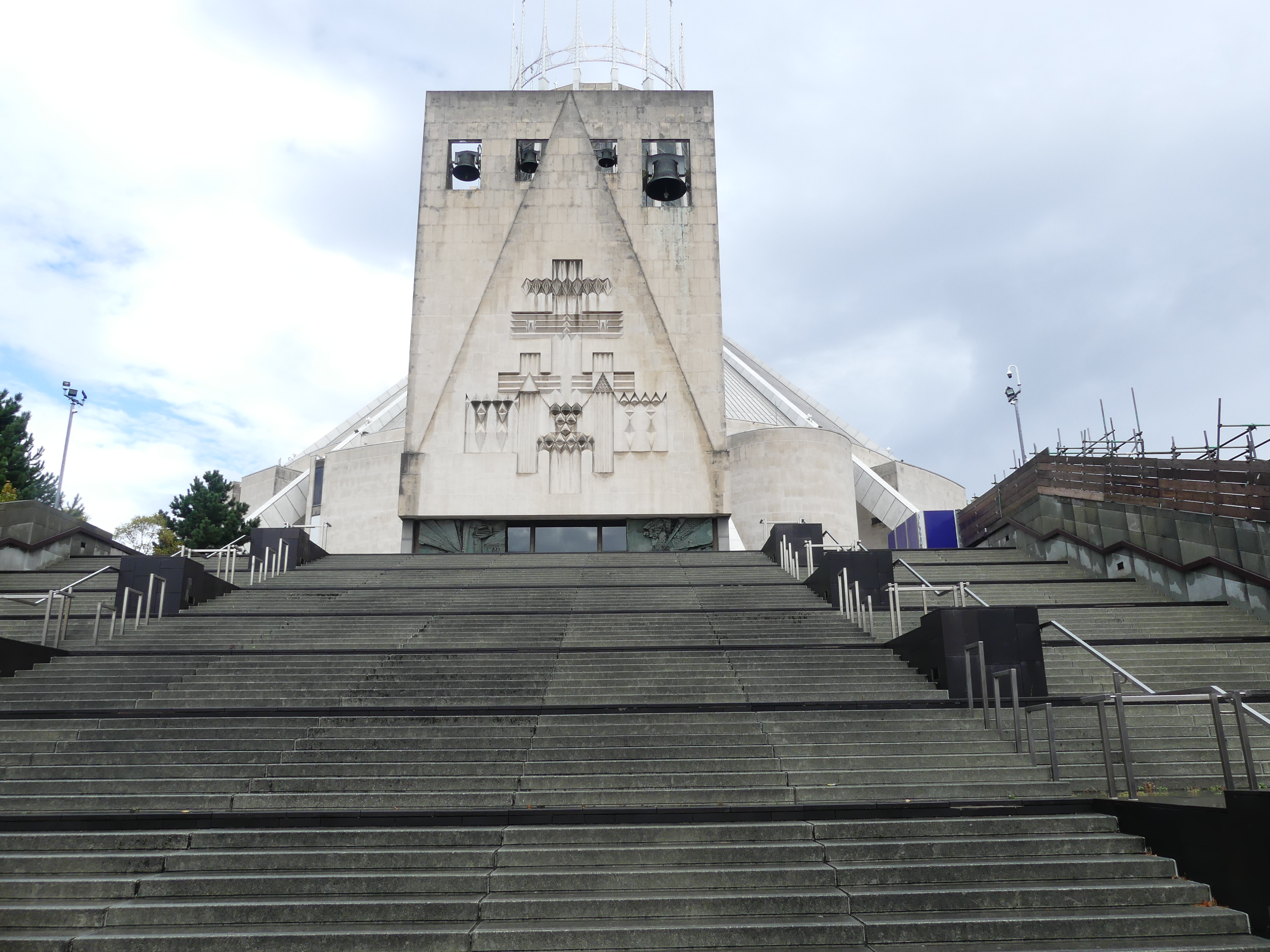
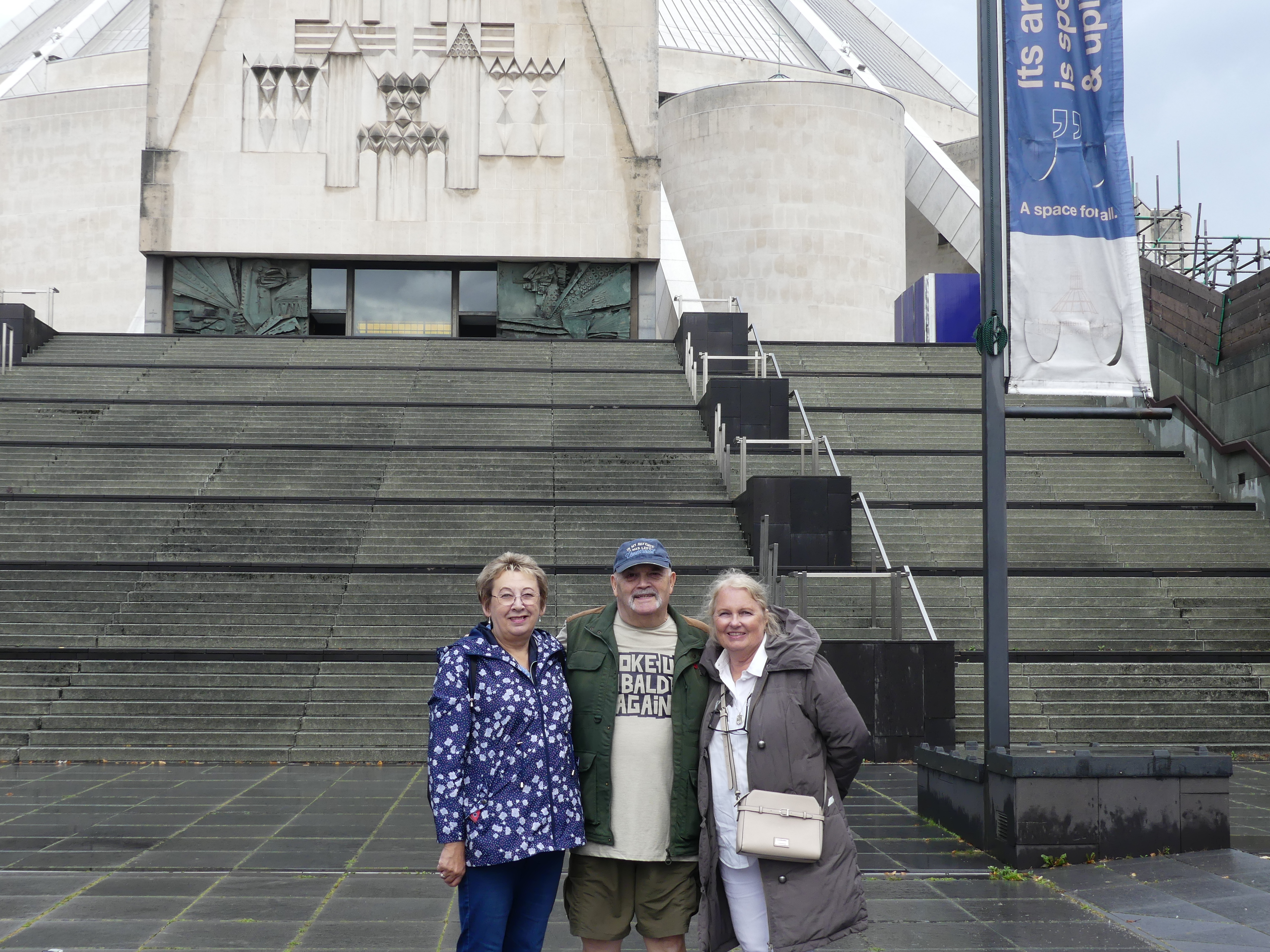
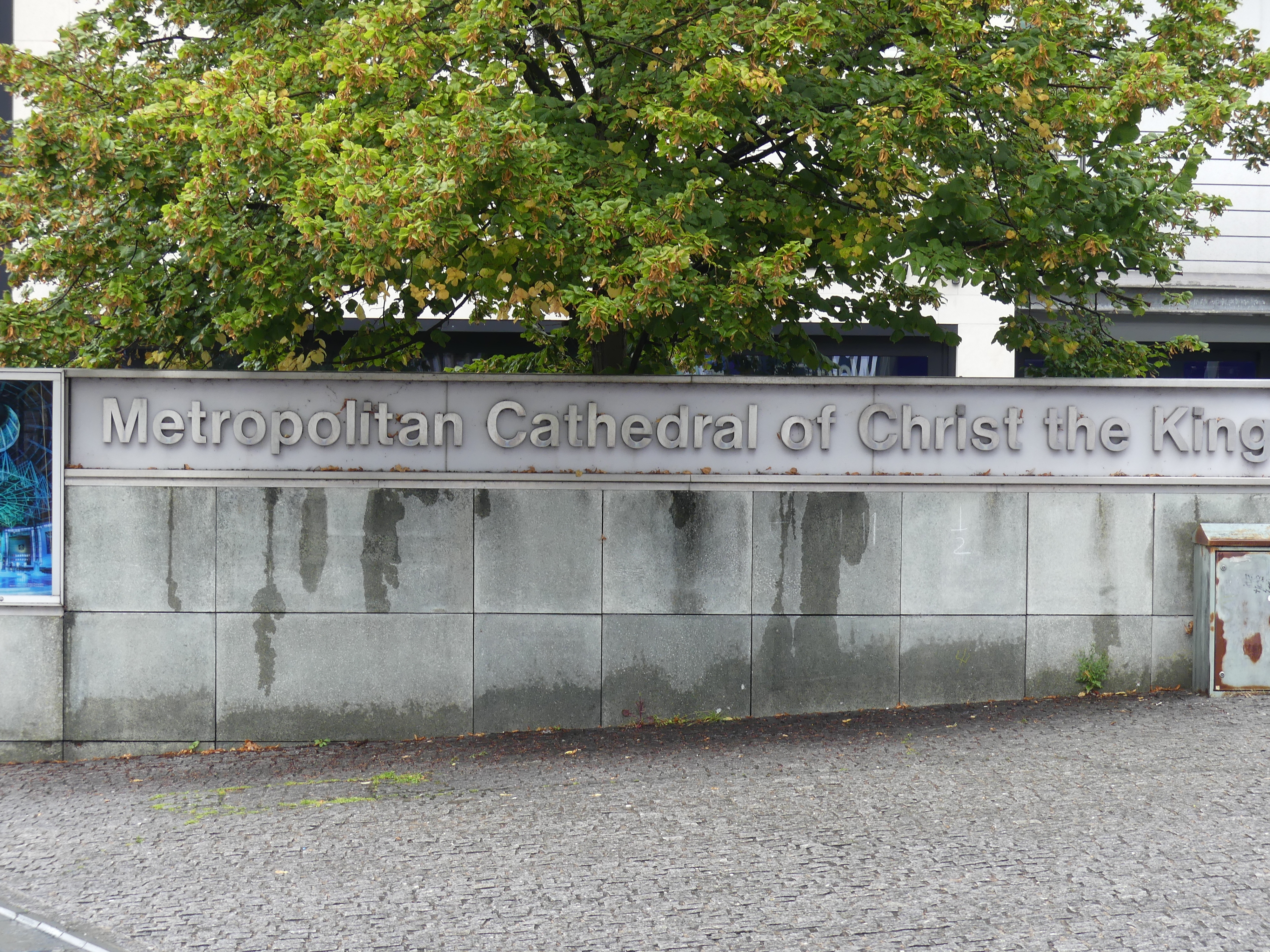
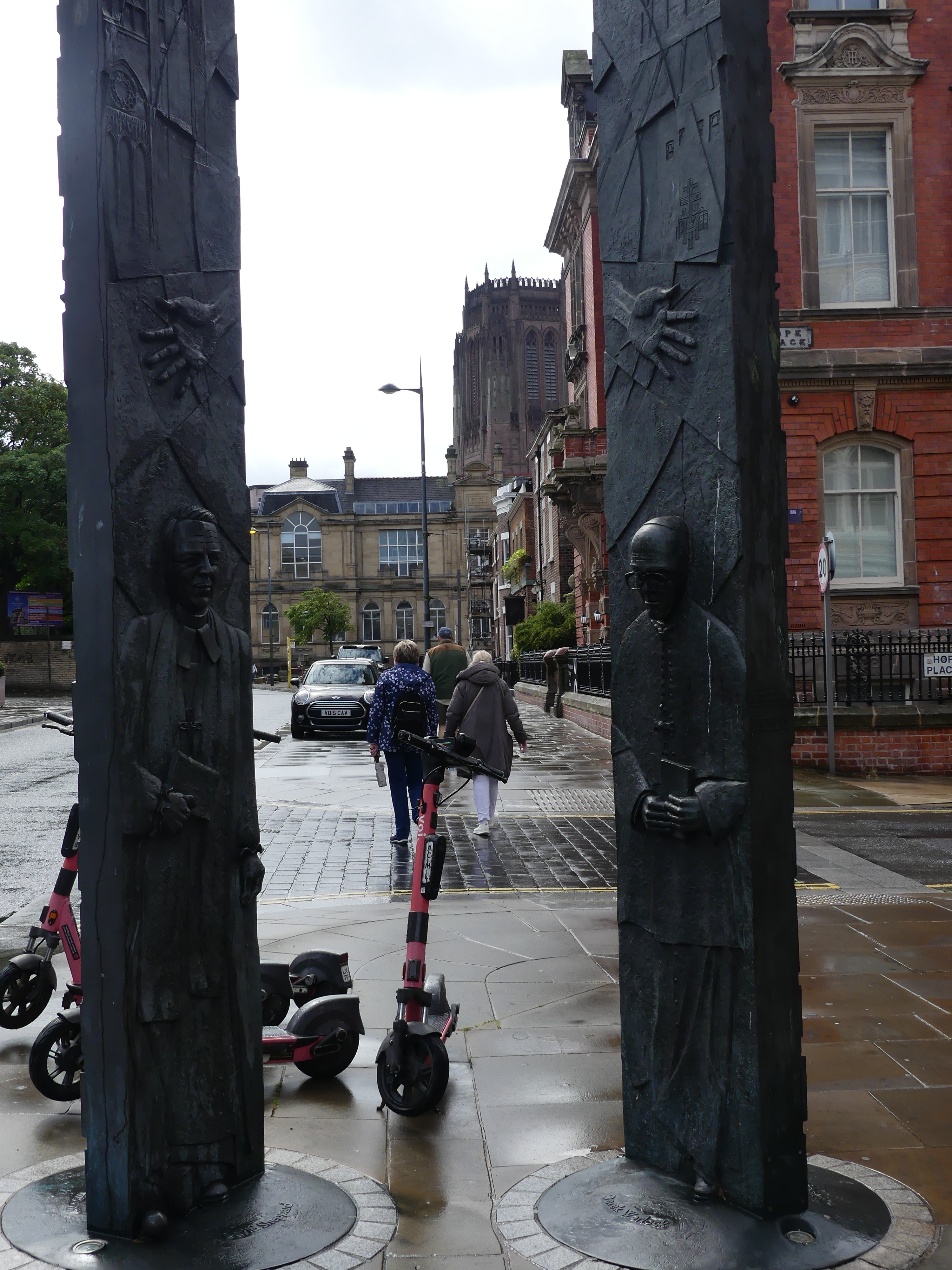
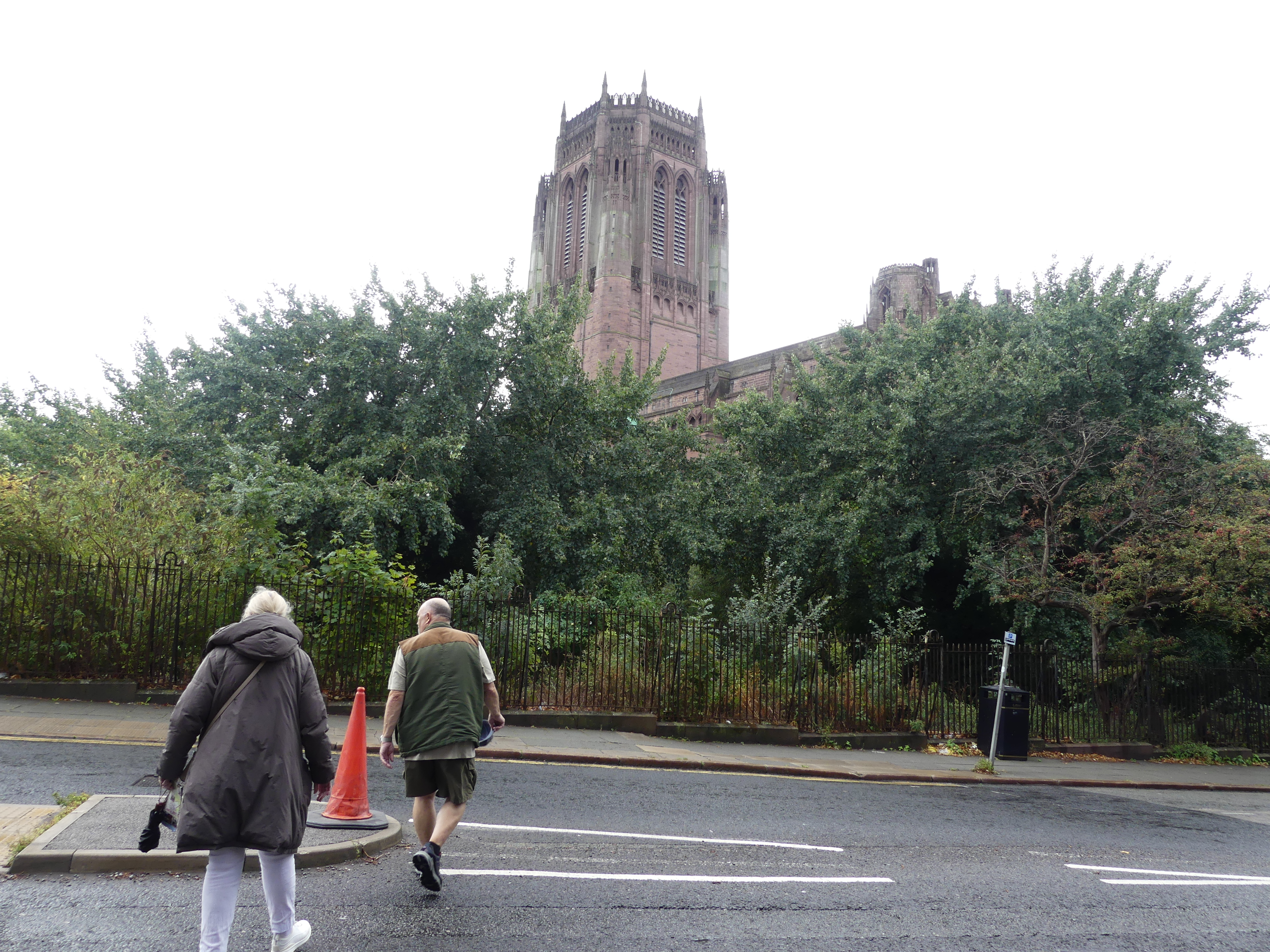
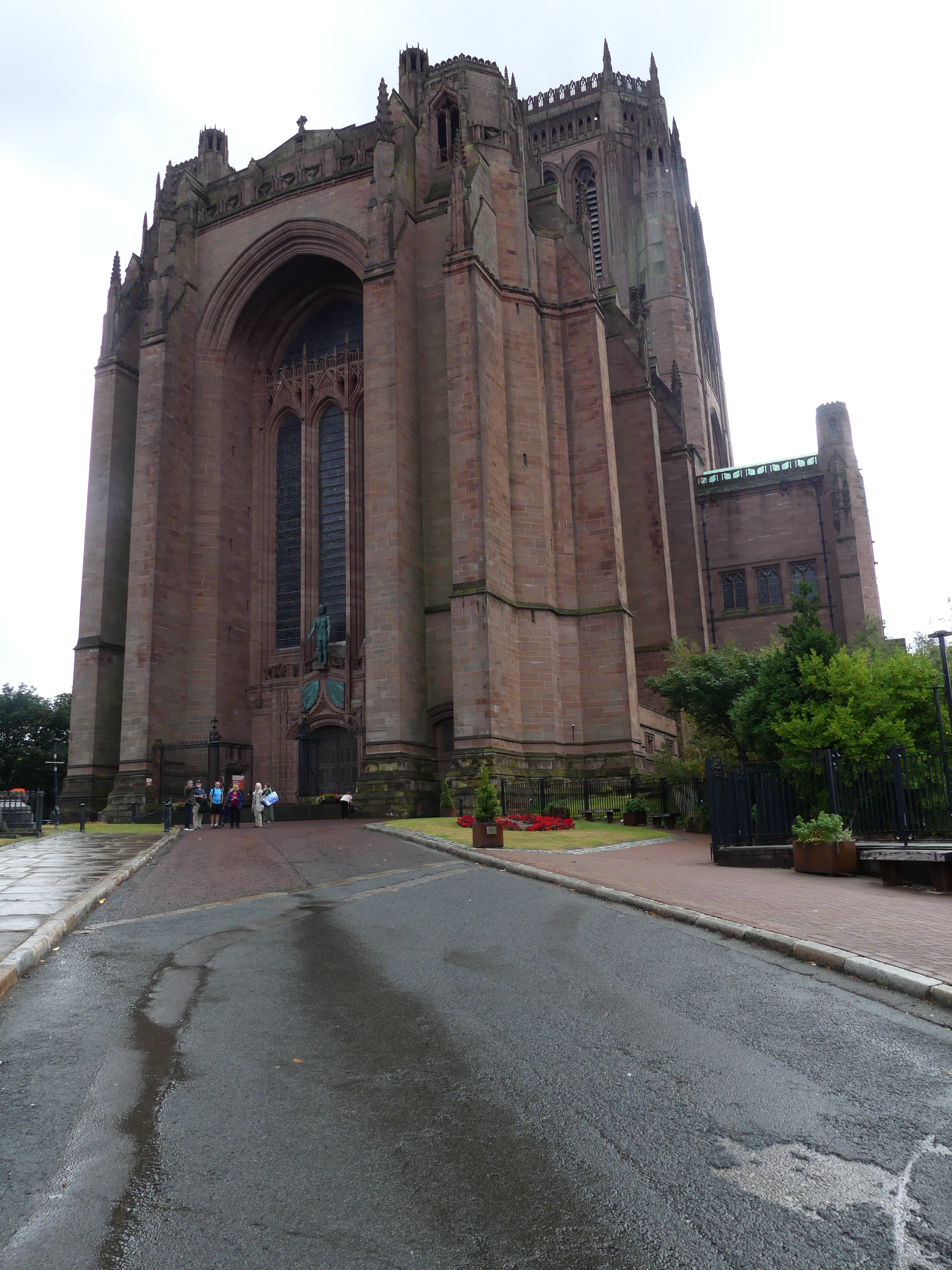
We met friends Martin and Christine from Manchester to catch up for lunch and ride the bus with us. Even though they lived only 1 hour away from Liverpool they had never been tourists in the city. They joined us and we were all surprised by the Liverpool Metropolitan Cathedral. The Cathedral is a dramatic icon of faith, architecture, and human endeavour. An awe-inspiring landmark on the Liverpool skyline. (from the website of the Cathedral) The exterior and interior were both awe inspring. Based on a circular design the layout of the interior was amazing. Multiple small chapels adjoined the centre of the church and the stations of the cross were unique in their design. The guide book suggested that the church was a response to the Anglican endeavours which we subsequently visited. There are two photos of the Anglican church below but it was a traditional design like many others we have seen through Britain and Europe.

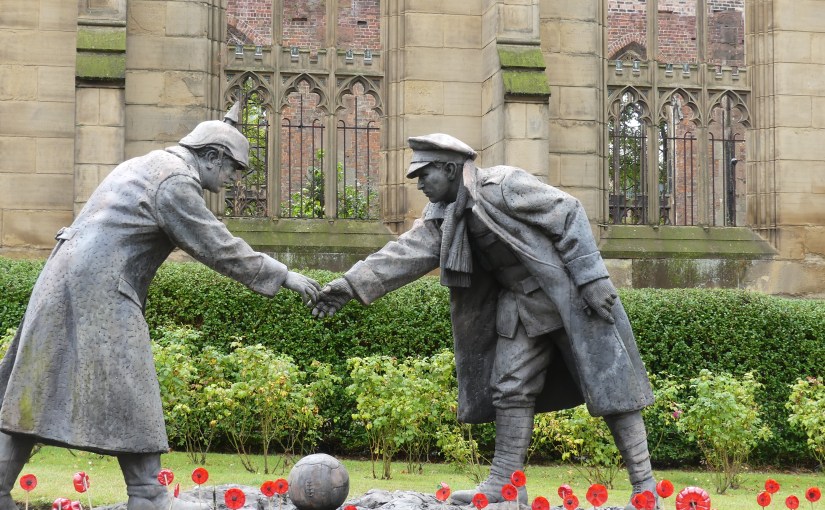
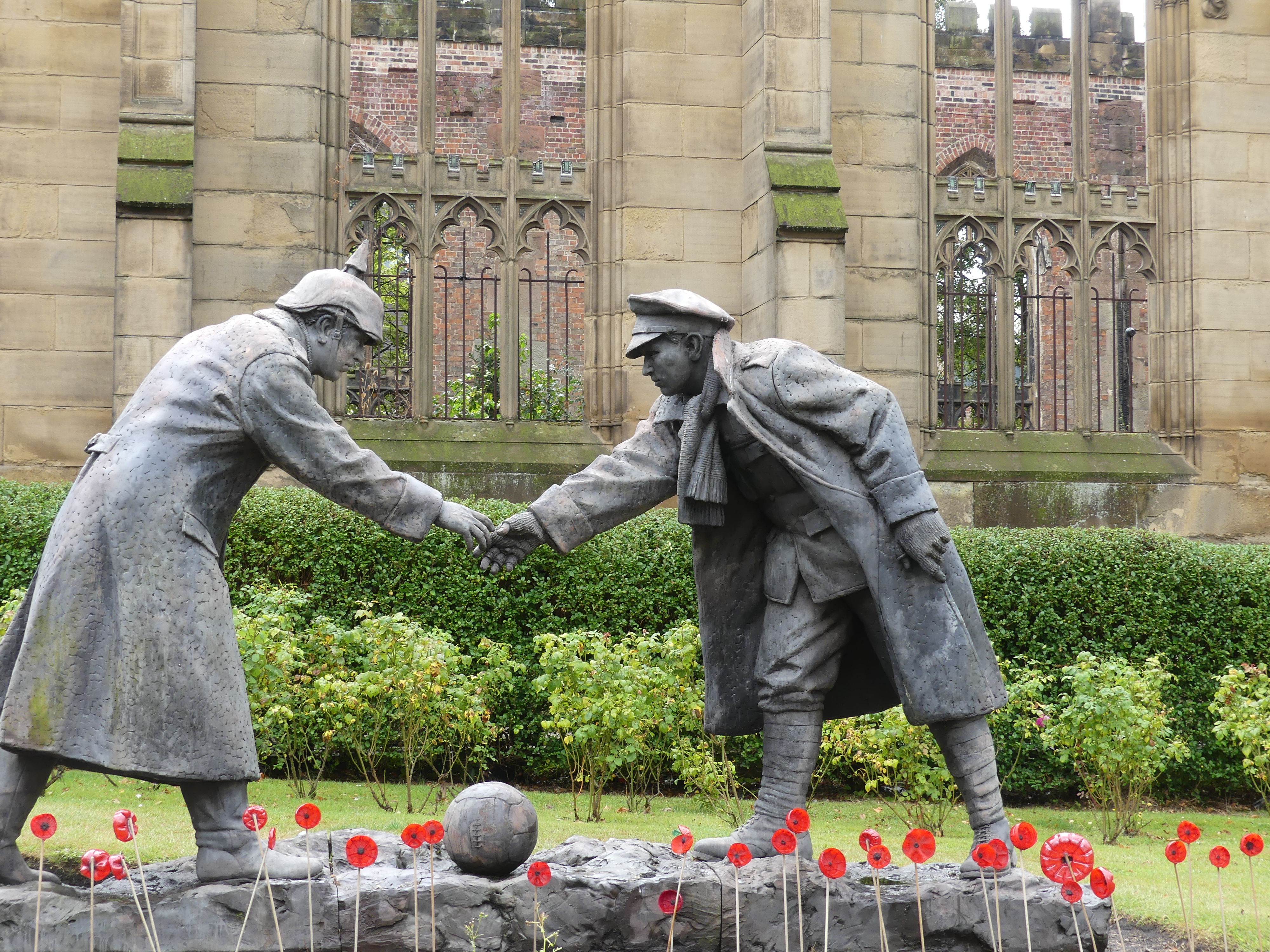
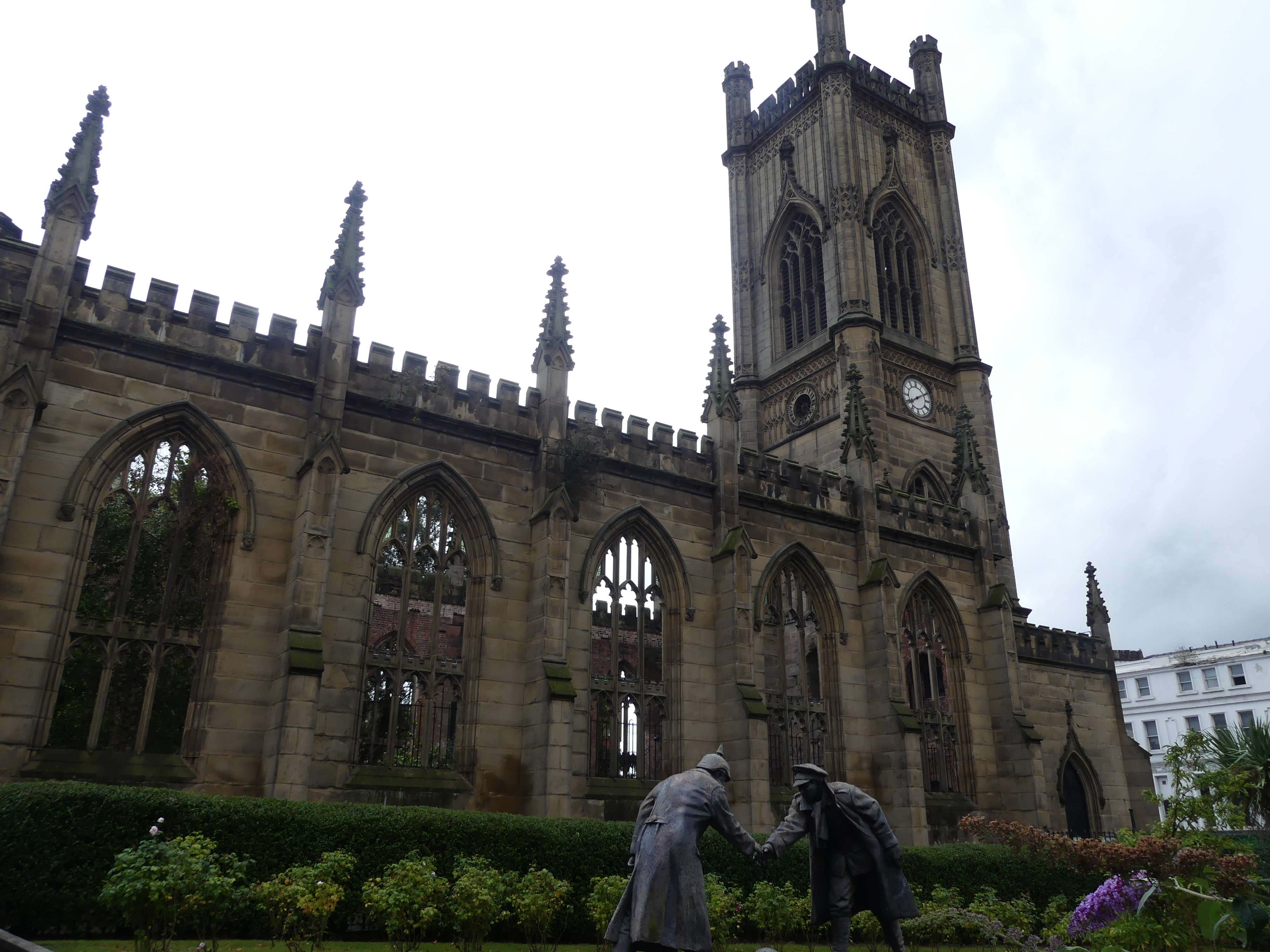
We made it back to the tour bus station to take us to a sculpture commemorating the World War One Christmas truce. Two soldiers, about to shake hands, capture the moment British and German soldiers stopped fighting and played football on Christmas Day 1914. The statue is entitled “All Together Now”. The statue was on display at St Luke’s Church, which faces down Bold Street. The statue, designed by Andy Edwards, is on display at Liverpool’s St Luke’s Church which is itself a bombed-out church, a monument to the 1941 Blitz on Liverpool. BBC News had a story on the monuments on 15th December 2014 and reported that “The sculpture will be on display at the church for a week before being transported to Flanders in Belgium where it will be displayed.” This is 2025 and the statue is back.

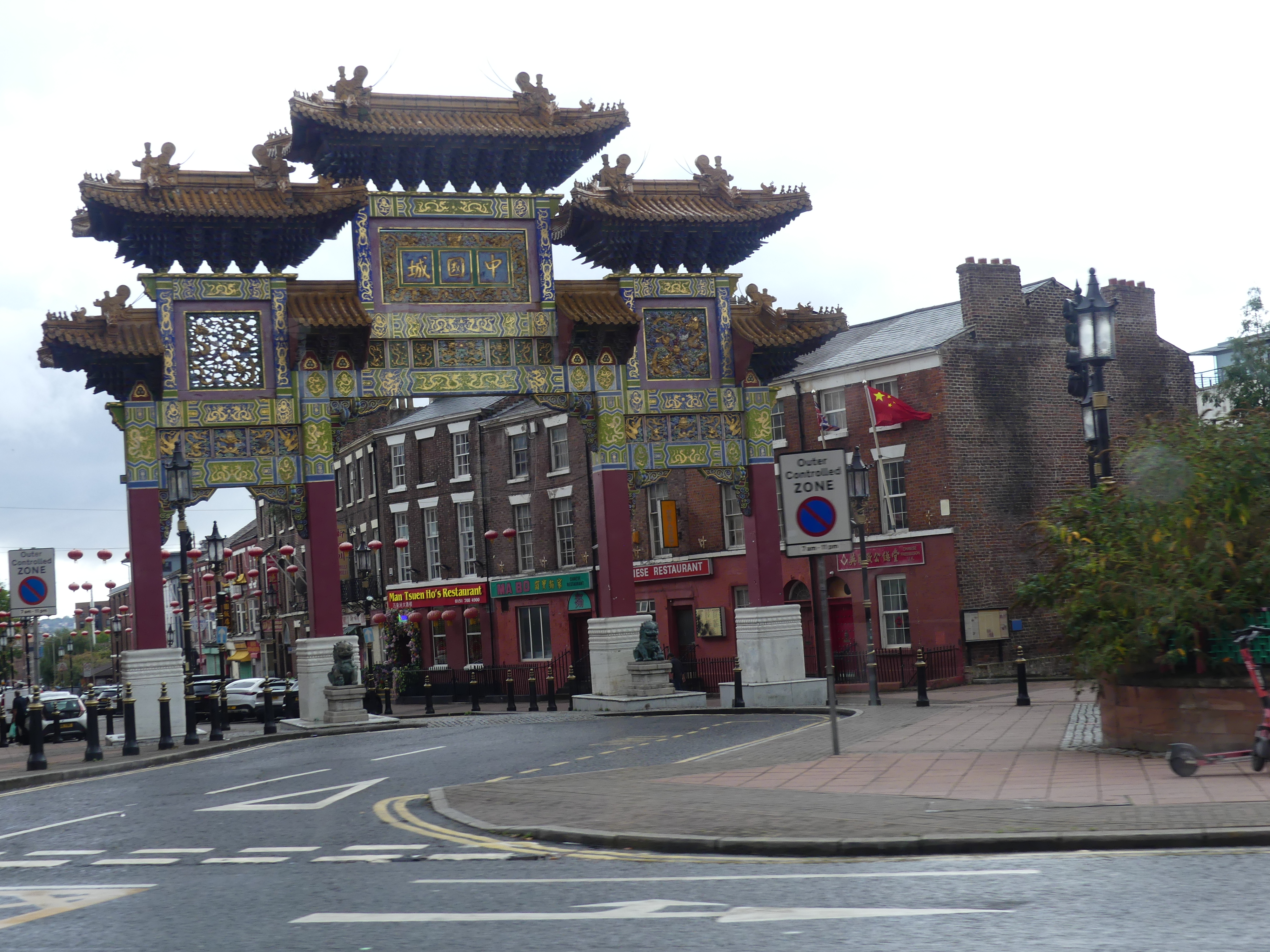
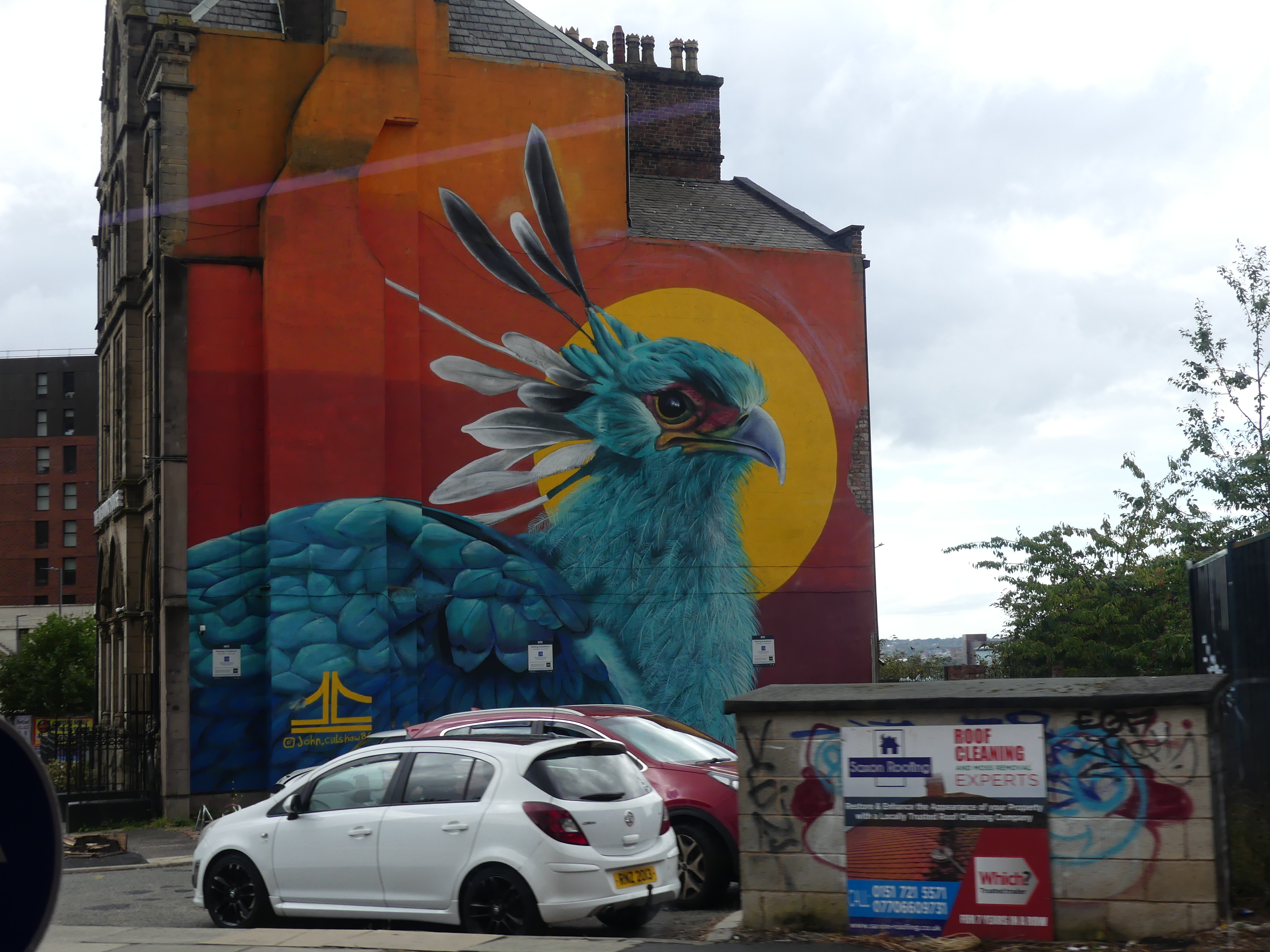
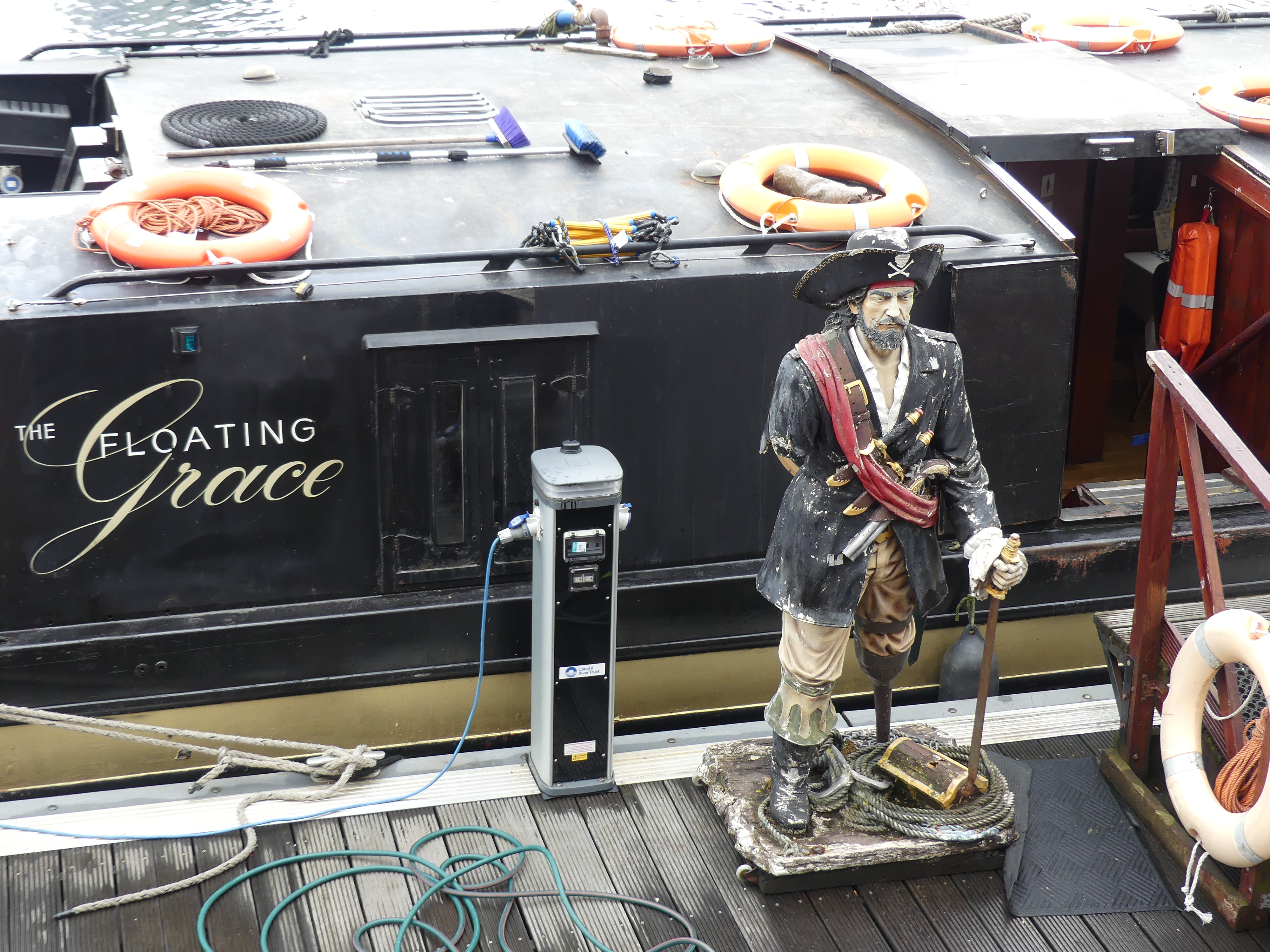
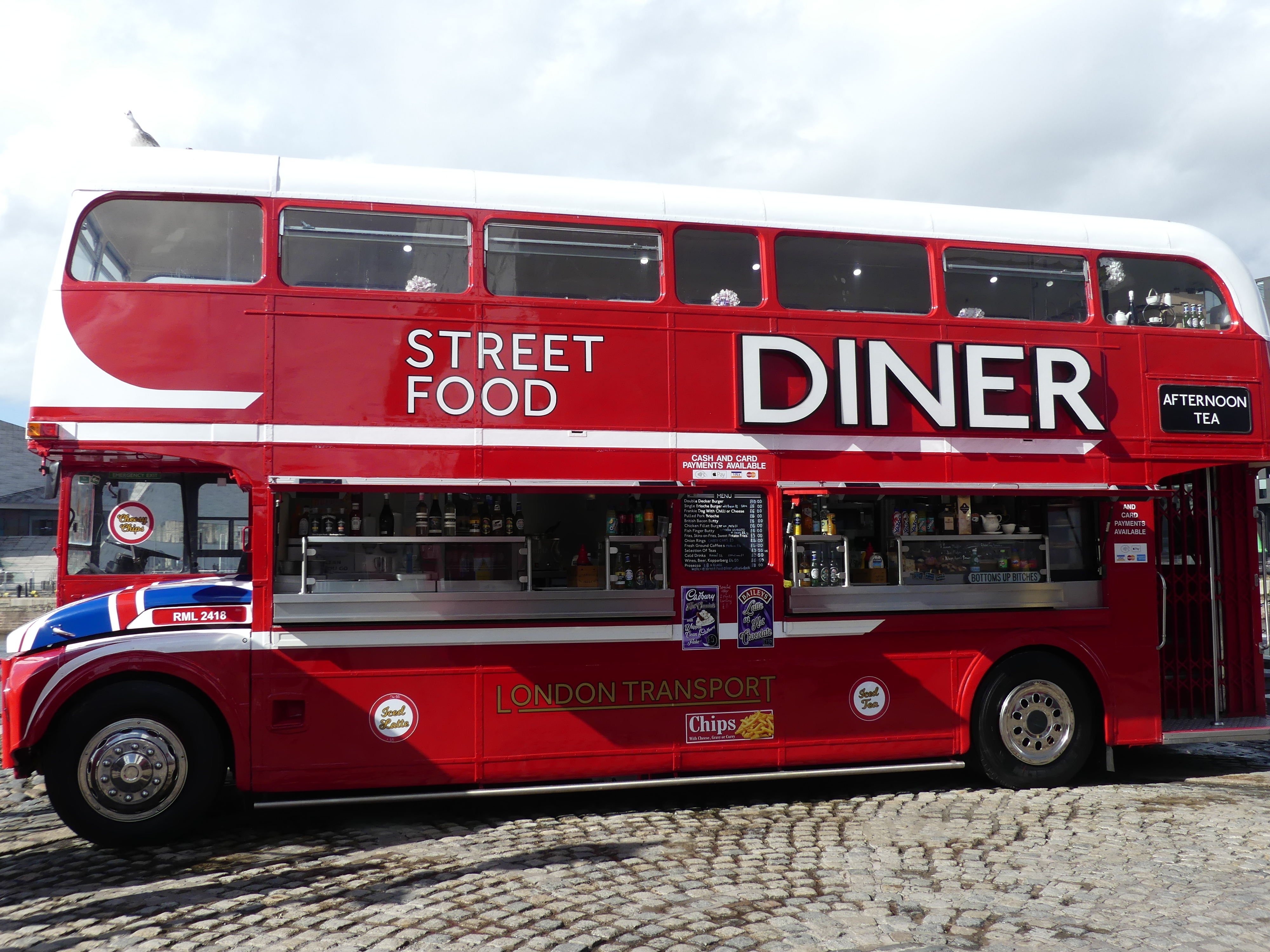
We continued on the tour passed a very eleaborate gate to Chinatown and an impressive street art drawing of a hawk of some description onto the wharf area again. It was time for lunch and we ended up in a pub near the Three Graces not the curbside takeaway in my photos. With a warm fire and some English ales we warmed up and told stories of the things we had done.

Martin and Christine had travelled by train and they wanted to catch the train home before the rush hour and our ship was close by. Parting knowing that we may not have an opportunity to catch up again brought home the reality that we were both getting older.

I cannot remember what we did once we returned to the ship but we were tired. It had been cold all day and we did a lot of walking so my guess is our bed was calling. Next blog is “THE RETIREES GO AROUND THE WORLD – DAYS 8 SS NIEUW STATENDAM – Greenoch and Glasgow Scotland “. We never made it as far as Glasgow because we found a positive gem in Greenock – The Scottish Fire and Rescue Service Museum and Heritage Center. Enjoy our journey and explorations.

“THE RETIREES GO AROUND THE WORLD – DAY 5 SS NIEUW STATENDAM – Outer Hebredies – Isle of Lewis and Harris”

My research into the Outer Hebredies was rather limited. The known history of the archipeligo starts in the Mesolithic era leaving a diversity of important prehistoric sites. The Outer Hebrides, sometimes known as the Long Isle or Long Island (Scottish Gaelic: an t-Eilean Fada), is an island chain off the west coast of mainland Scotland. The islands form part of the archipelago of the Hebrides, separated from the Scottish mainland and from the Inner Hebrides by the waters of the Minch, the Little Minch, and the Sea of the Hebrides. The Outer Hebrides are considered to be the traditional heartland of the Gaelic language. Since 1998 the Council has used only the Gaelic form of its name, including in English language contexts. The council area is called Na h-Eileanan an Iar (‘the Western Isles’) and its council is Comhairle nan Eilean Siar (‘Council of the Western Isles’). There are 19 inhabited islands having an estimated population of 26,020 in 2024, and there are more than 50 substantial uninhabited islands.

The Romans appear to have had sporadic settlements on the islands but little other impact. The Western Isles became part of the Norse kingdom lasting for over 400 years. The ill-fated 1263 expedition of Haakon IV of Norway, resulted in the Outer Hebrides along with the Isle of Man, being yielded to the Kingdom of Scotland a result of the 1266 Treaty of Perth. The archaeological record of the Norse period is very limited with the best known find from this time being the Lewis chessmen, which date from the mid 12th century. With the Treaty of Union with England in 1707, the islands came under the control of Great Britain. Much of the land is now under local control, and commercial activity is based on tourism, crofting, fishing, and weaving.

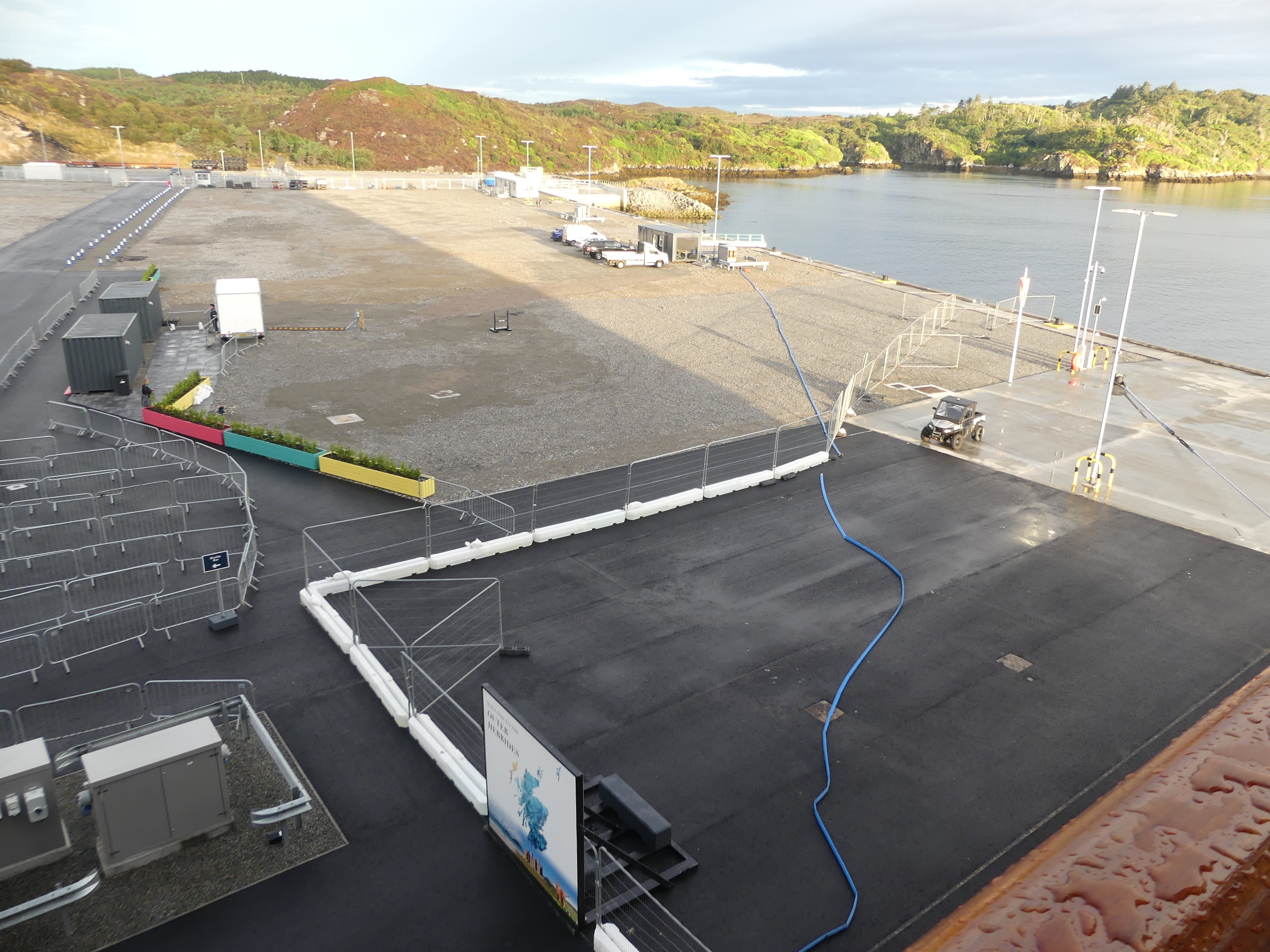
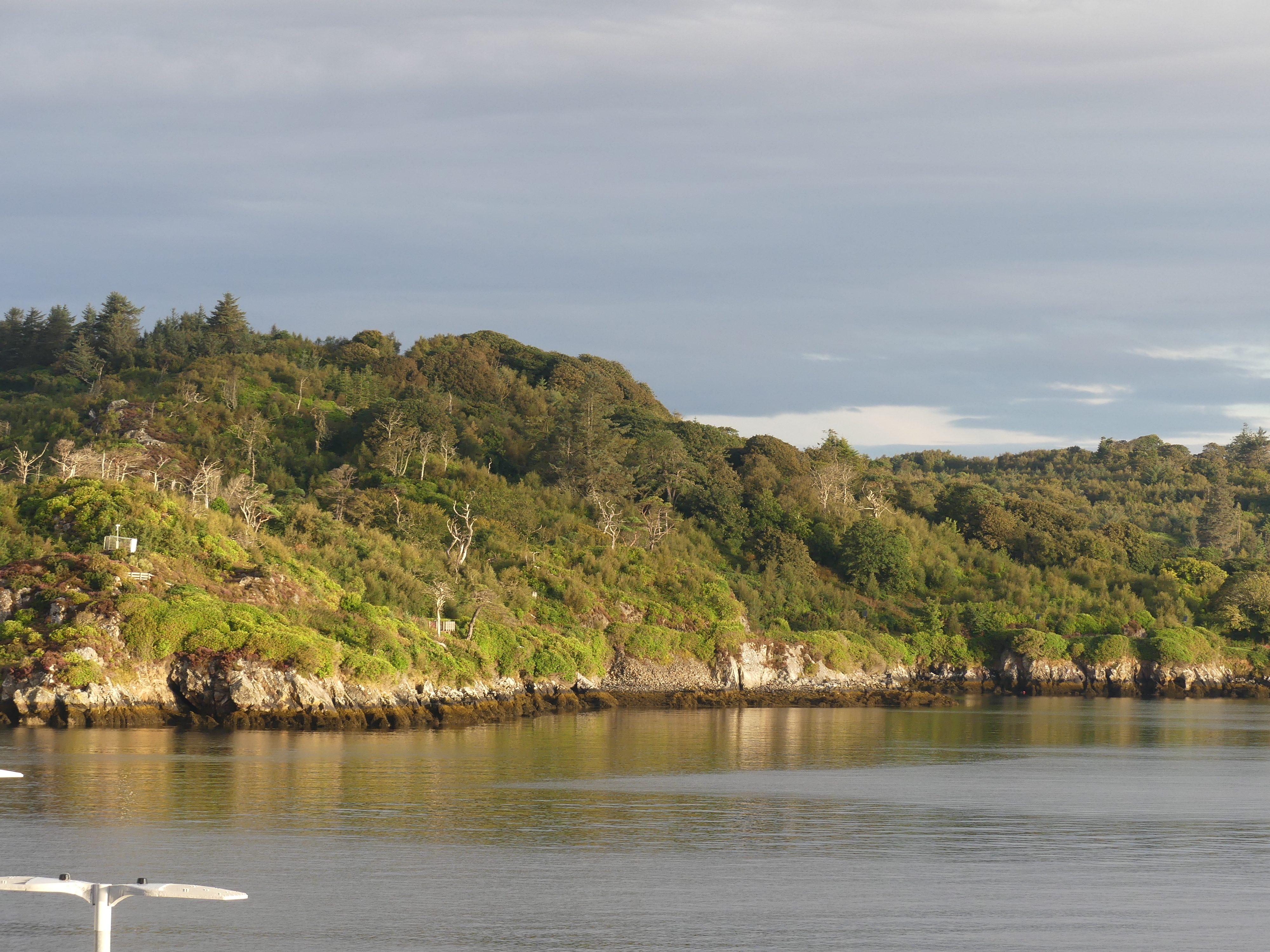
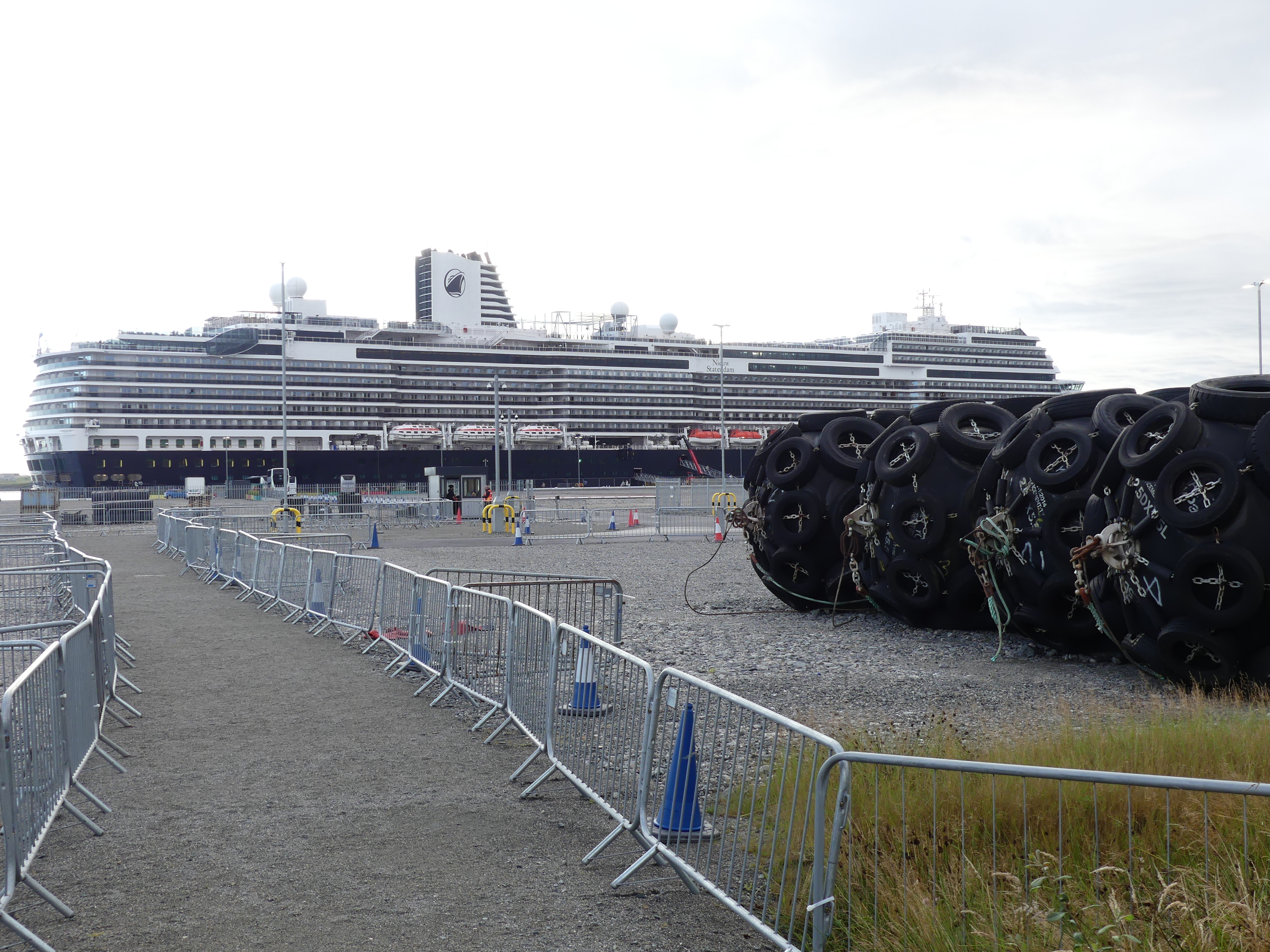
When we awoke we were met by an austere vision of what we might expect in Stornoway. I have added the tourists Map of Stornoway which will make sense of my tale of exploration. The first photo is the barren “Deepwater terminal”. The absense of residences and human activity had us puzzled.

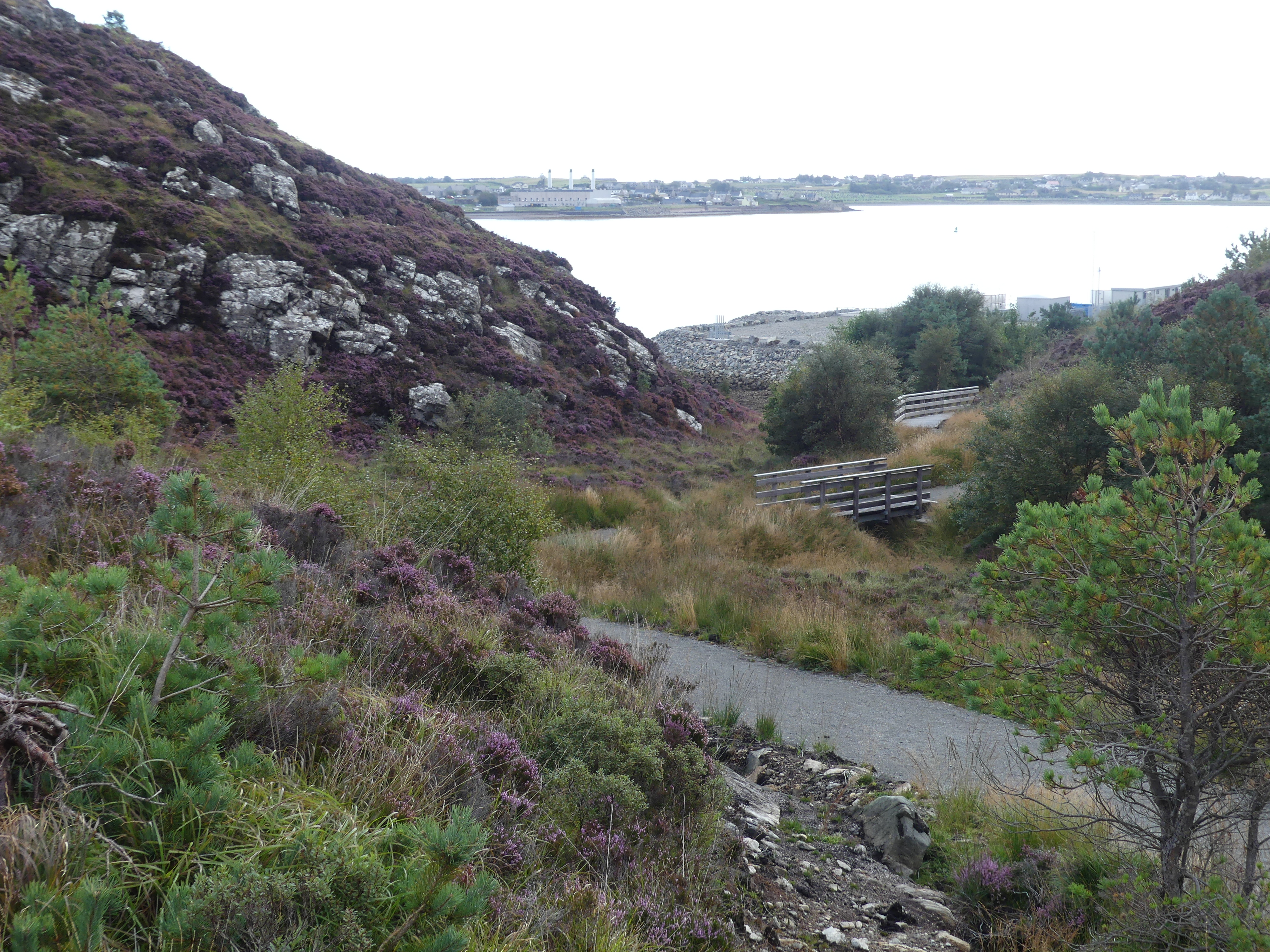
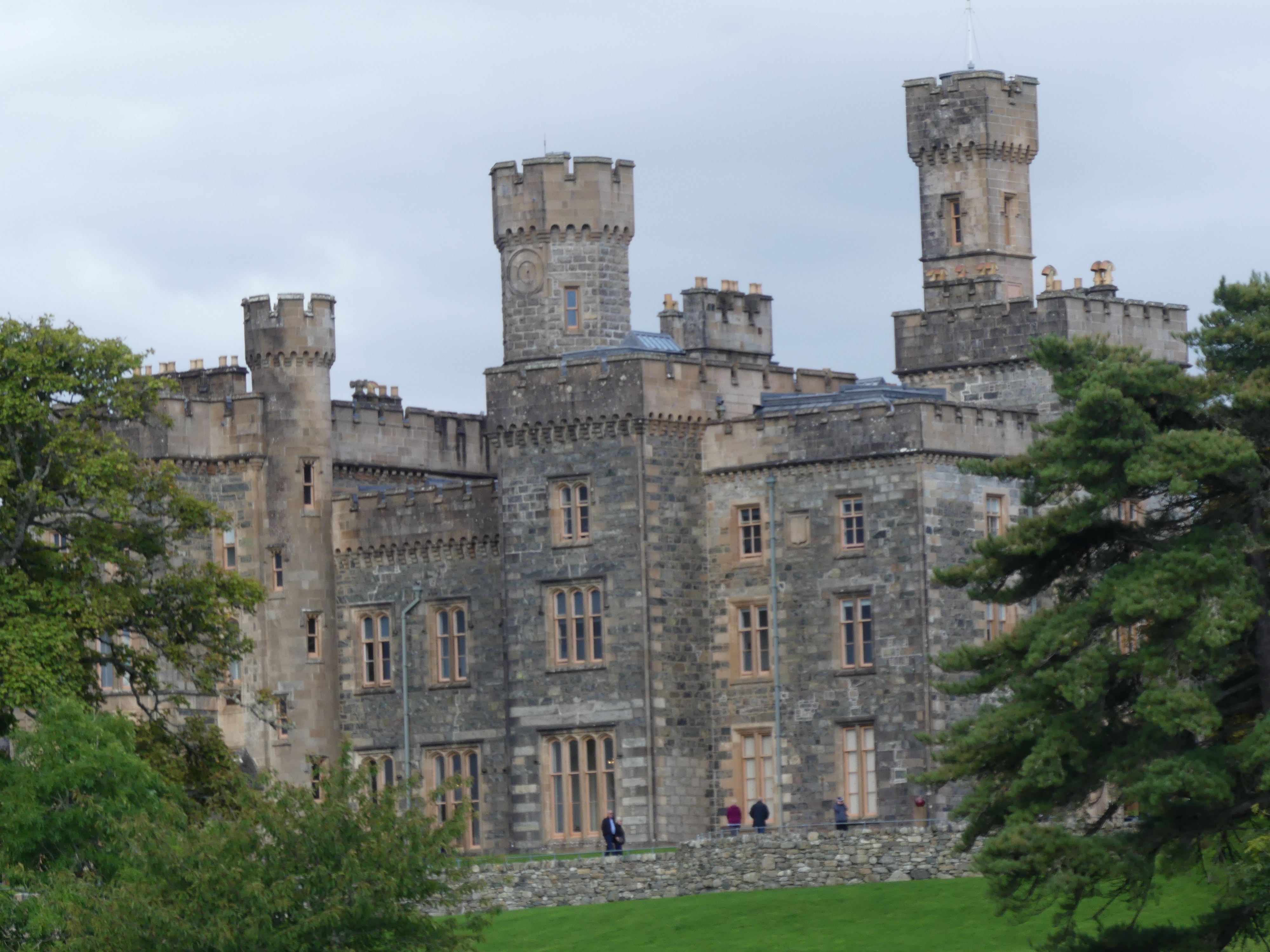
Map 1 shows the location of the terminal at which we had docked. At that time by means of gossip amongst the passengers, we learned that there was a path to follow through the woods to reach the town or there was the shuttle bus. We elected for the path. Map 2 shows you where the path ended. We walked through Castle Lews (which was closed for a private function) into the harbour of the town.

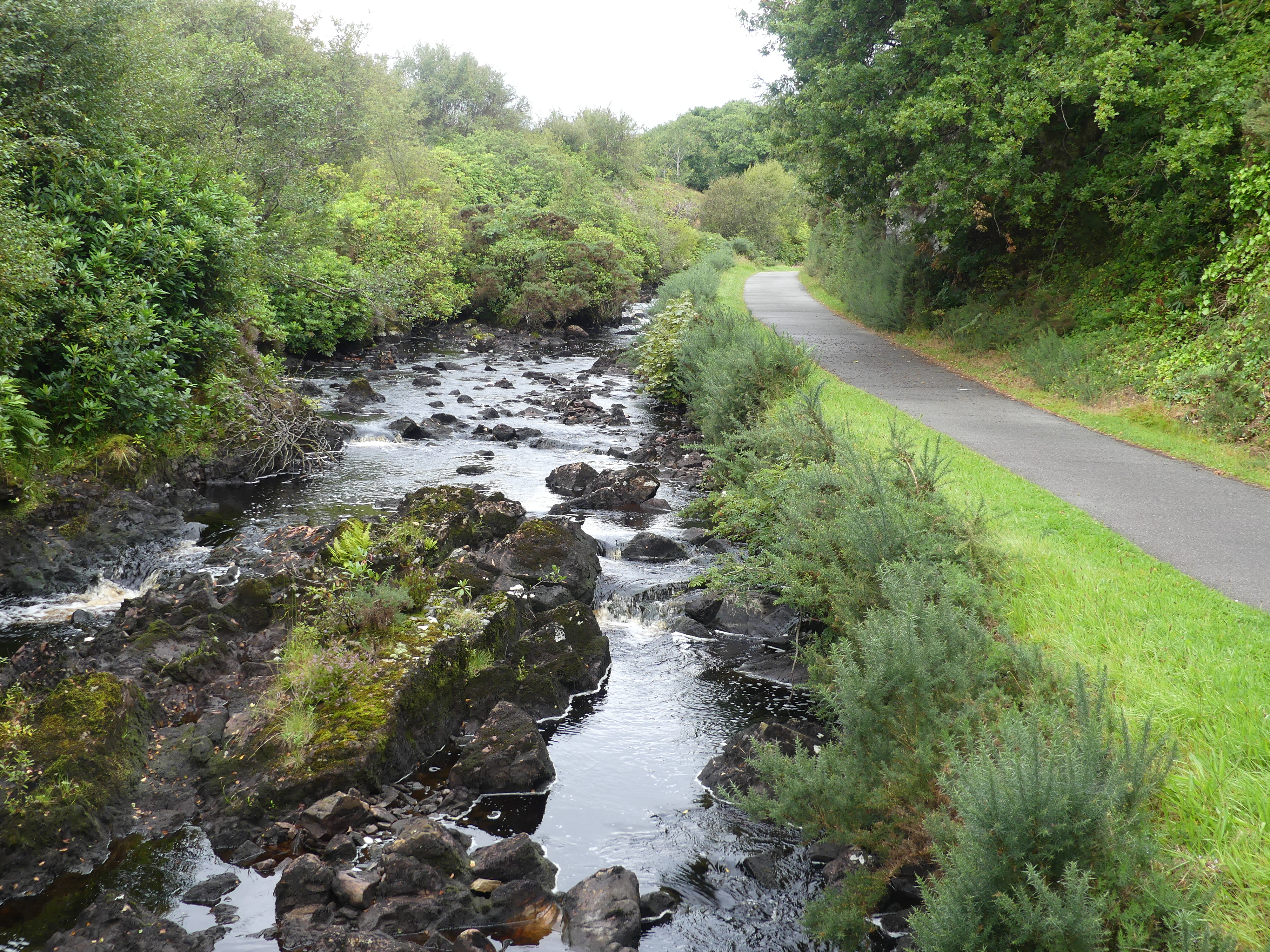
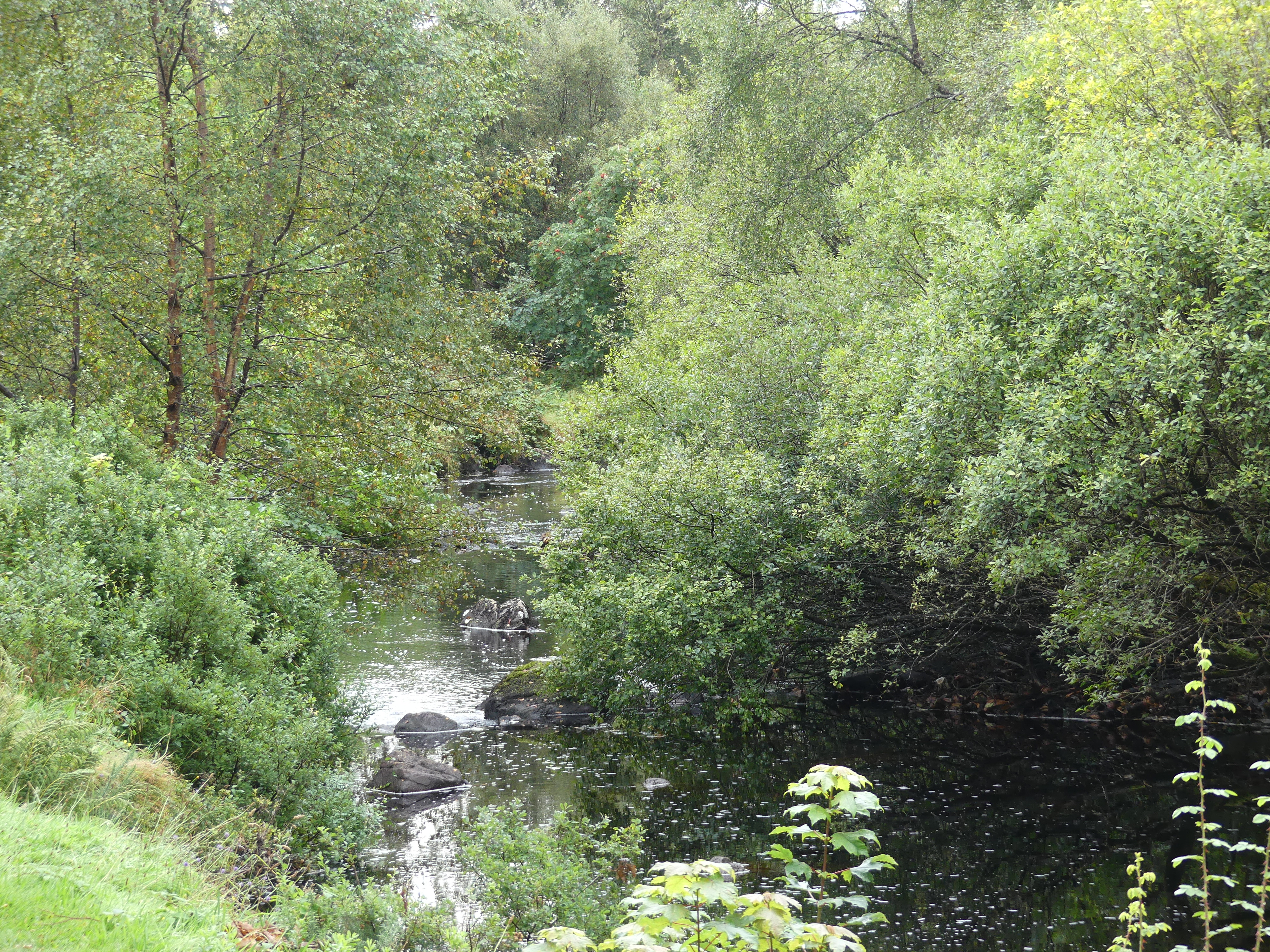
My photos of the walk through the woods to Castle Lews and then into Stornoway follow.

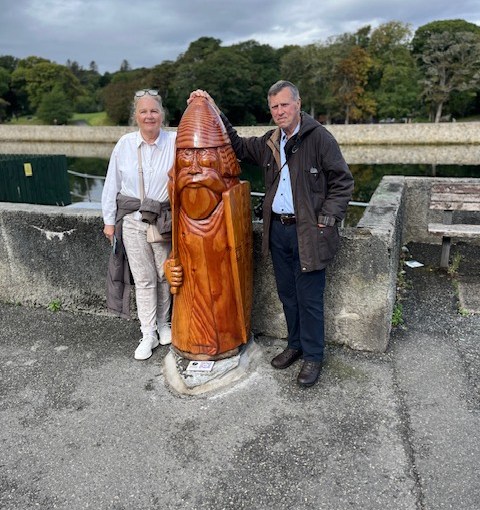
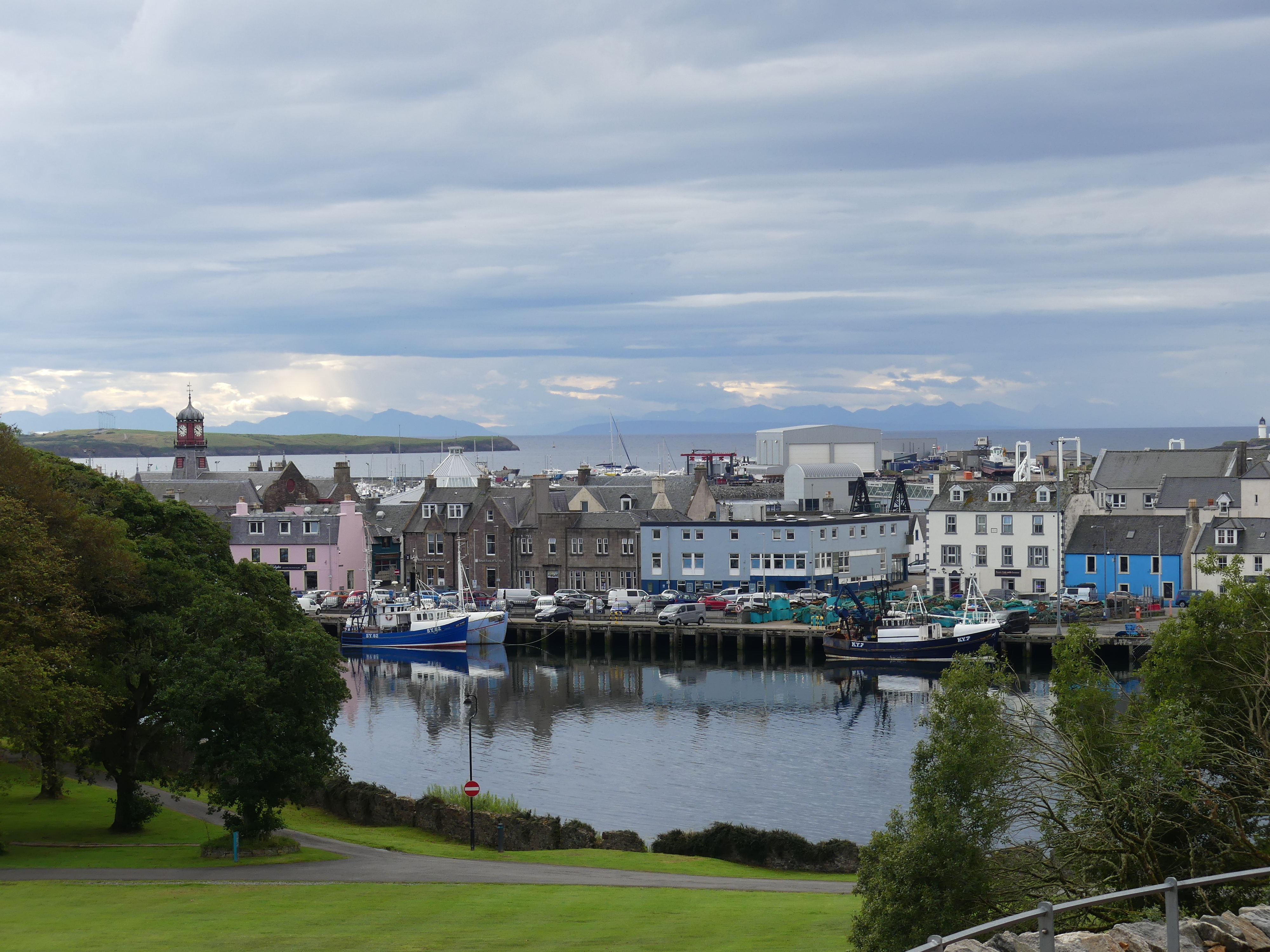
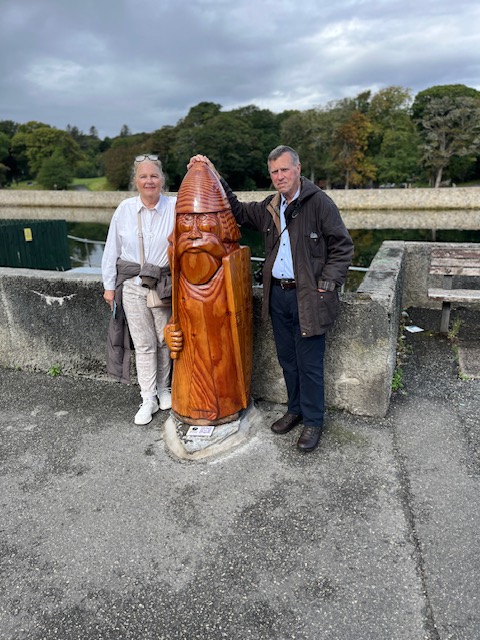
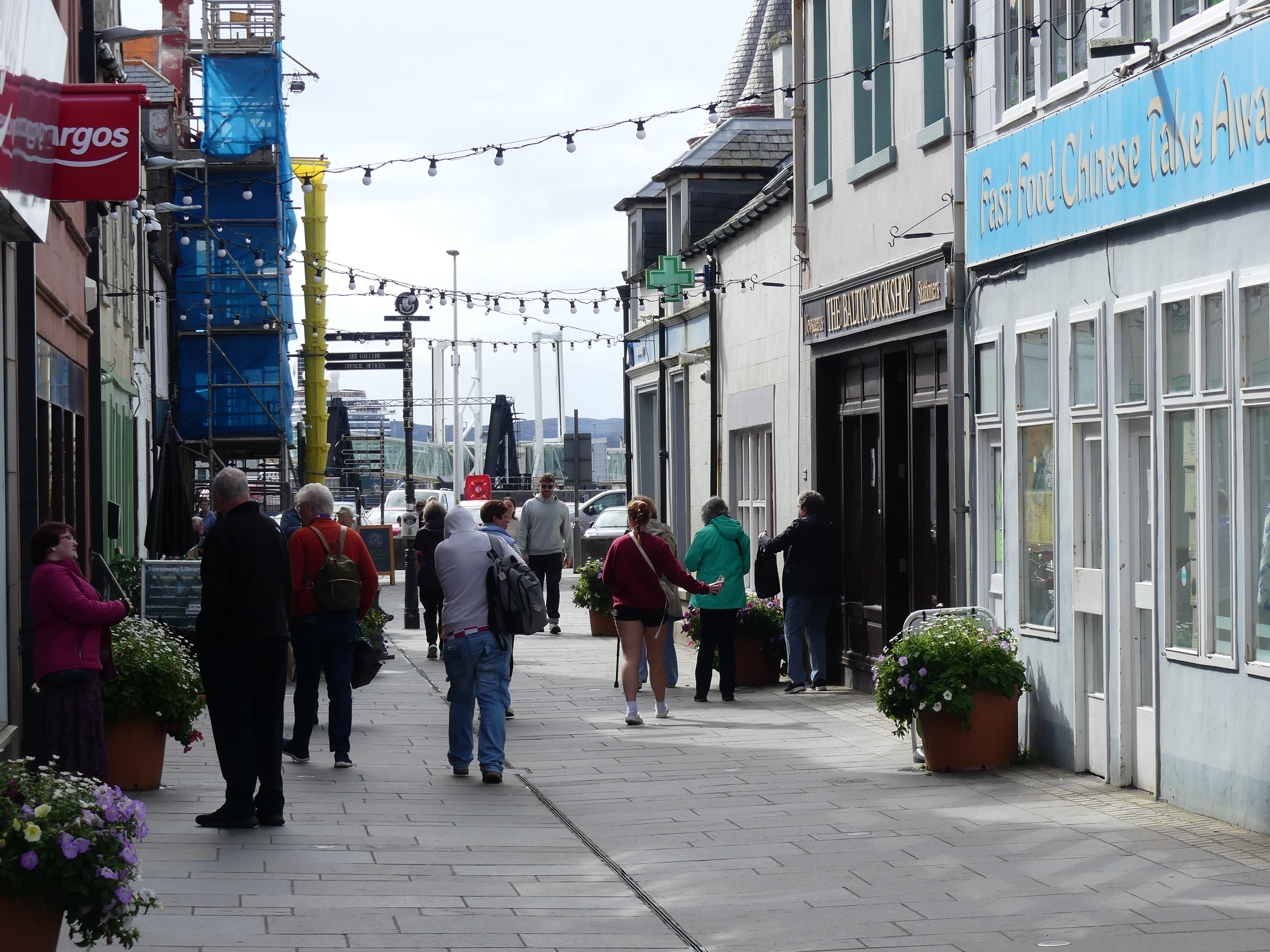
As we came to the end of the walk, we encountered people from the cruise boat visiting the castle and we became the bearers of the sad news that it was closed for a private function – glad we didn’t pay for that excursion. Crossing the bridge to enter the town we encountered a sculpture of a chessman one of the few Nordic reminders of the past. We strolled into town and found it to be a thriving village. With the back drop of the harbour and the Castle over the inlet it was romantic to walk the waterfront then head into the main street.

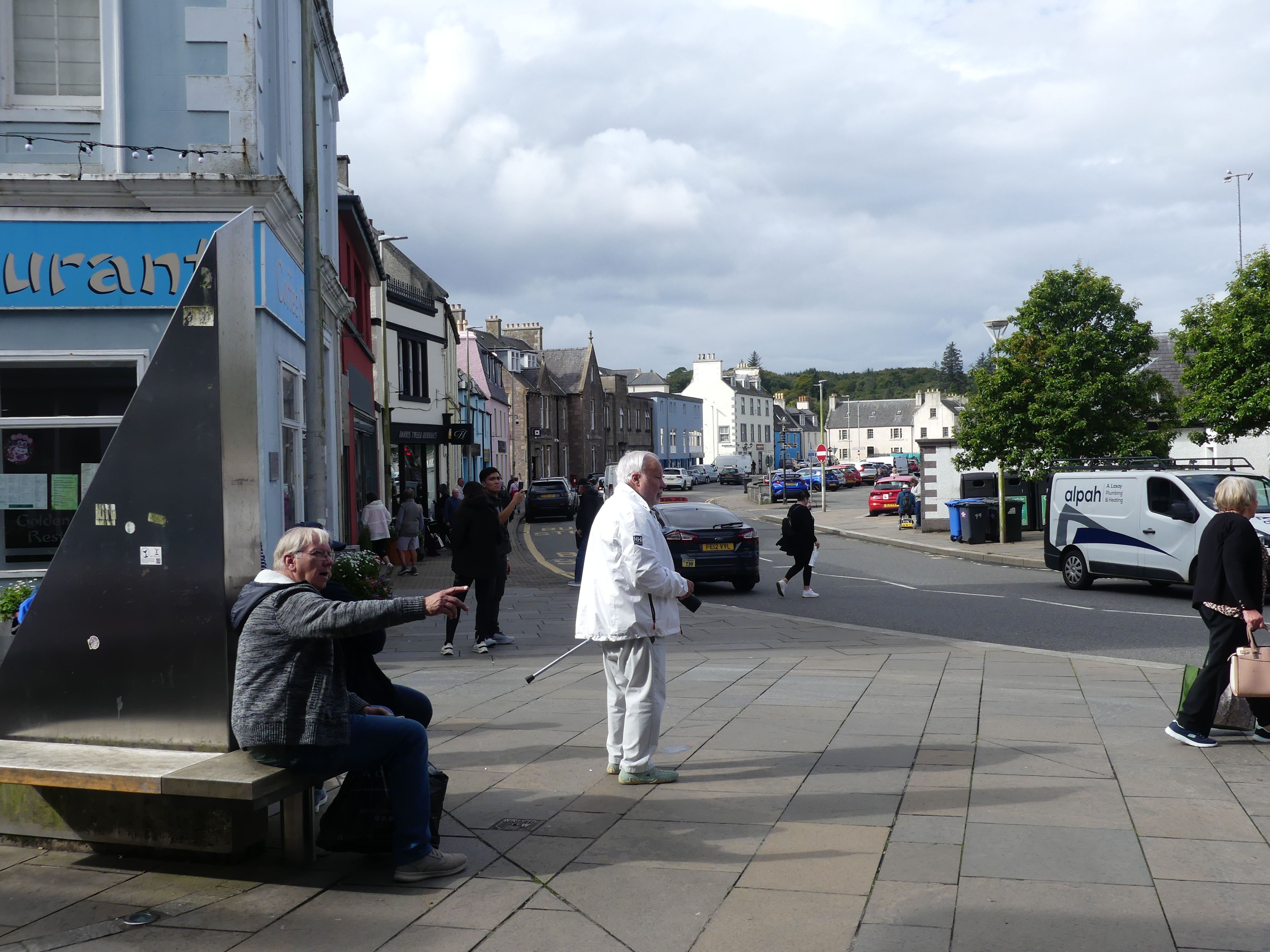
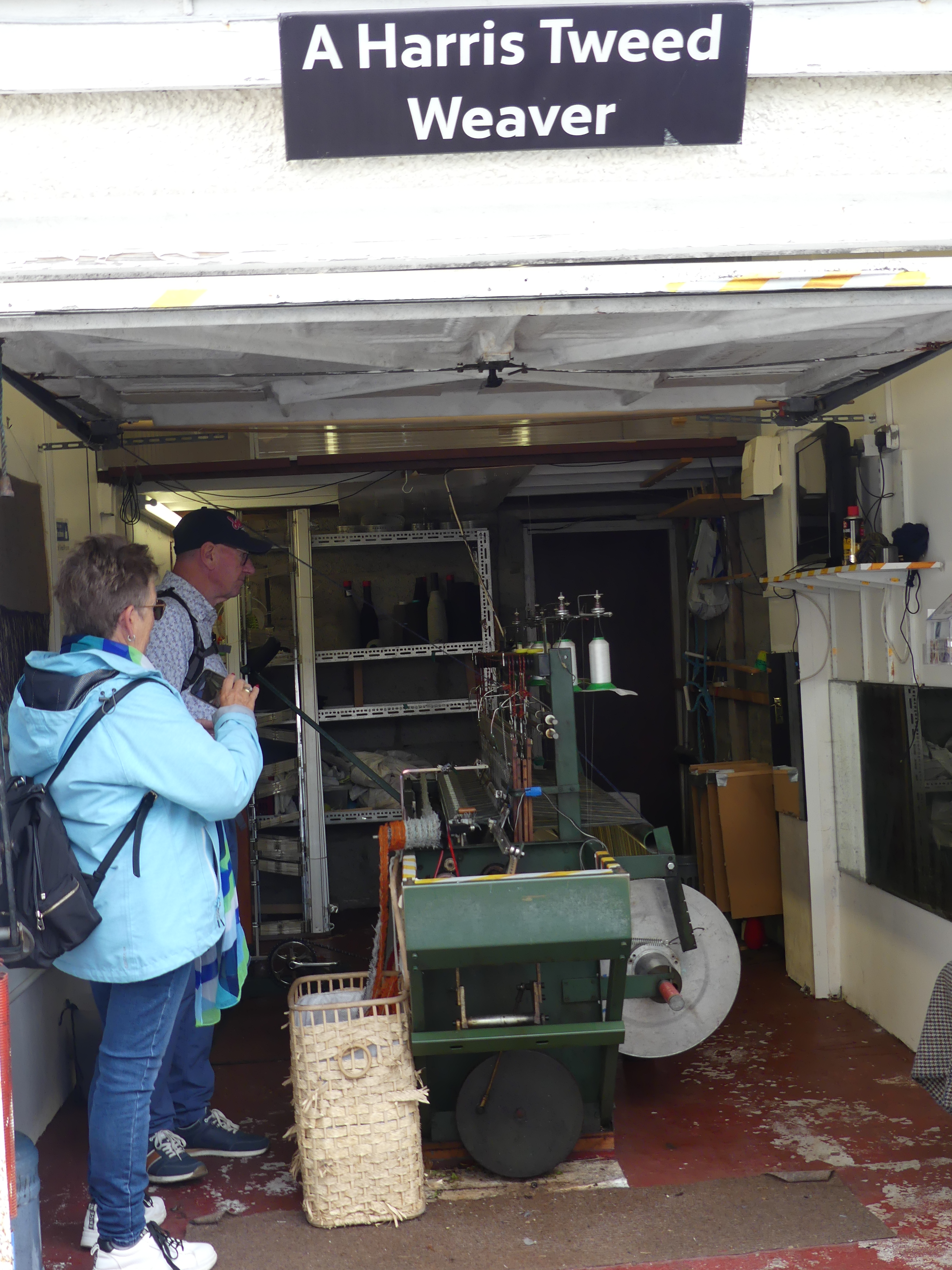
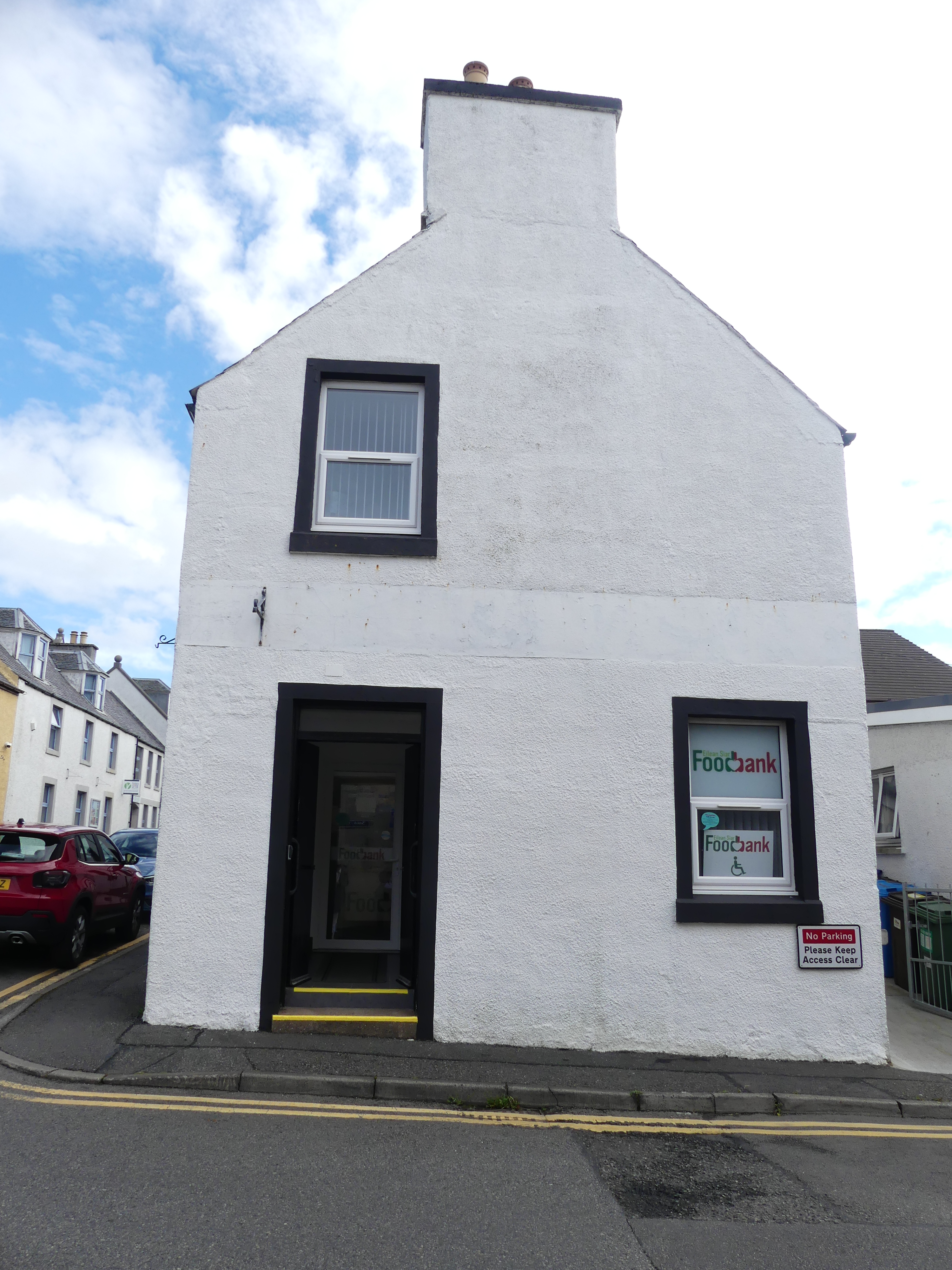
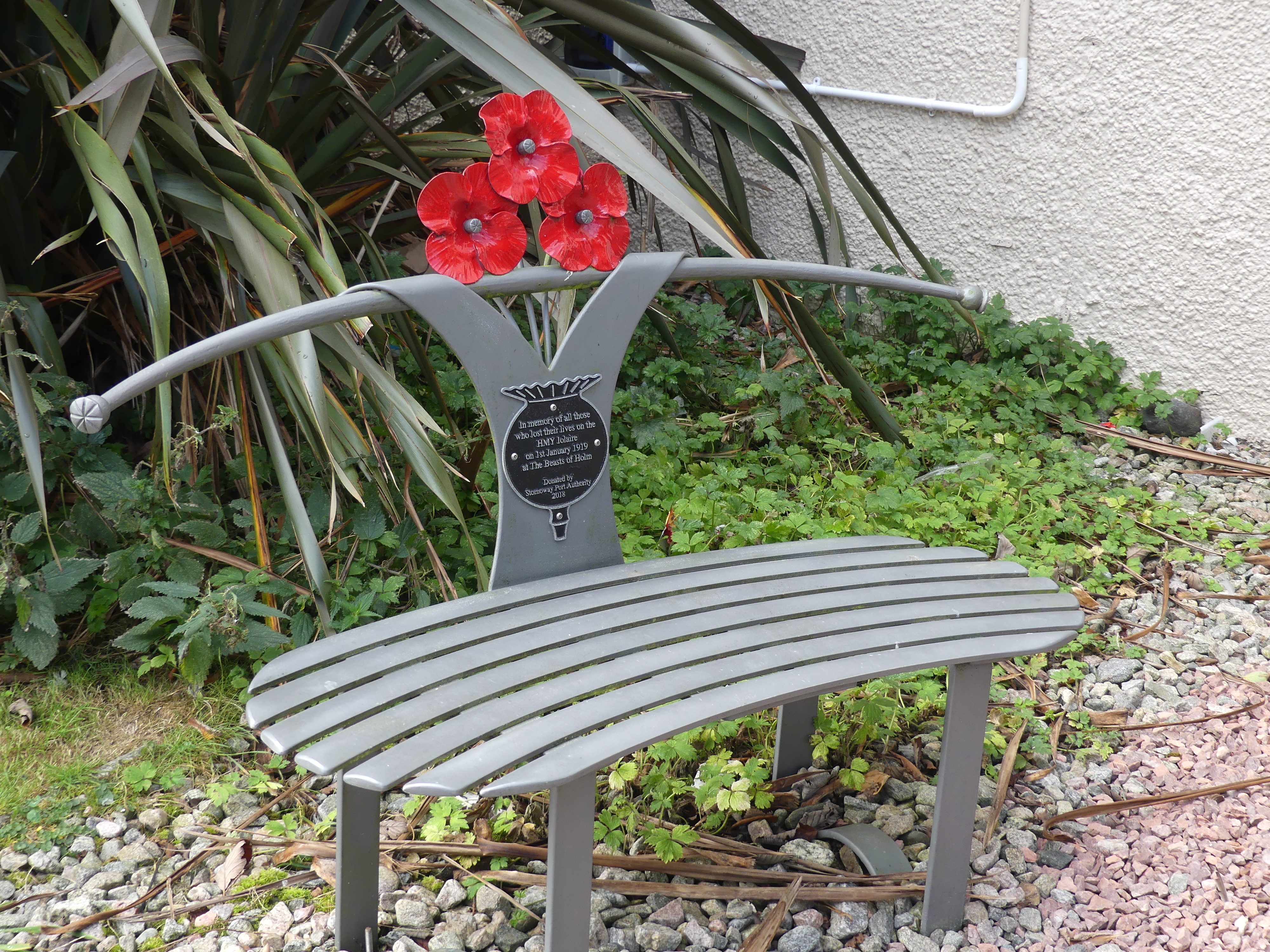
We moved into some of the semi-residential areas just on the edge of the town and discocered tha Harris Tweed weaver working in his shed (former garage attached to his house – not really a throw back to the shed outside the croft). And we found a reminder of home – the Foodbank office (Rotary obtains prepared meals for its Community Table in our Senior Citizens Hall kitchen with the meals being provided by FareShare at Morningside heated, packed and delivered by Rotary Brisbane South-East). We also found a memorial to soldiers lost in war and another stylish memorial chair as we saw in Kirkwell.

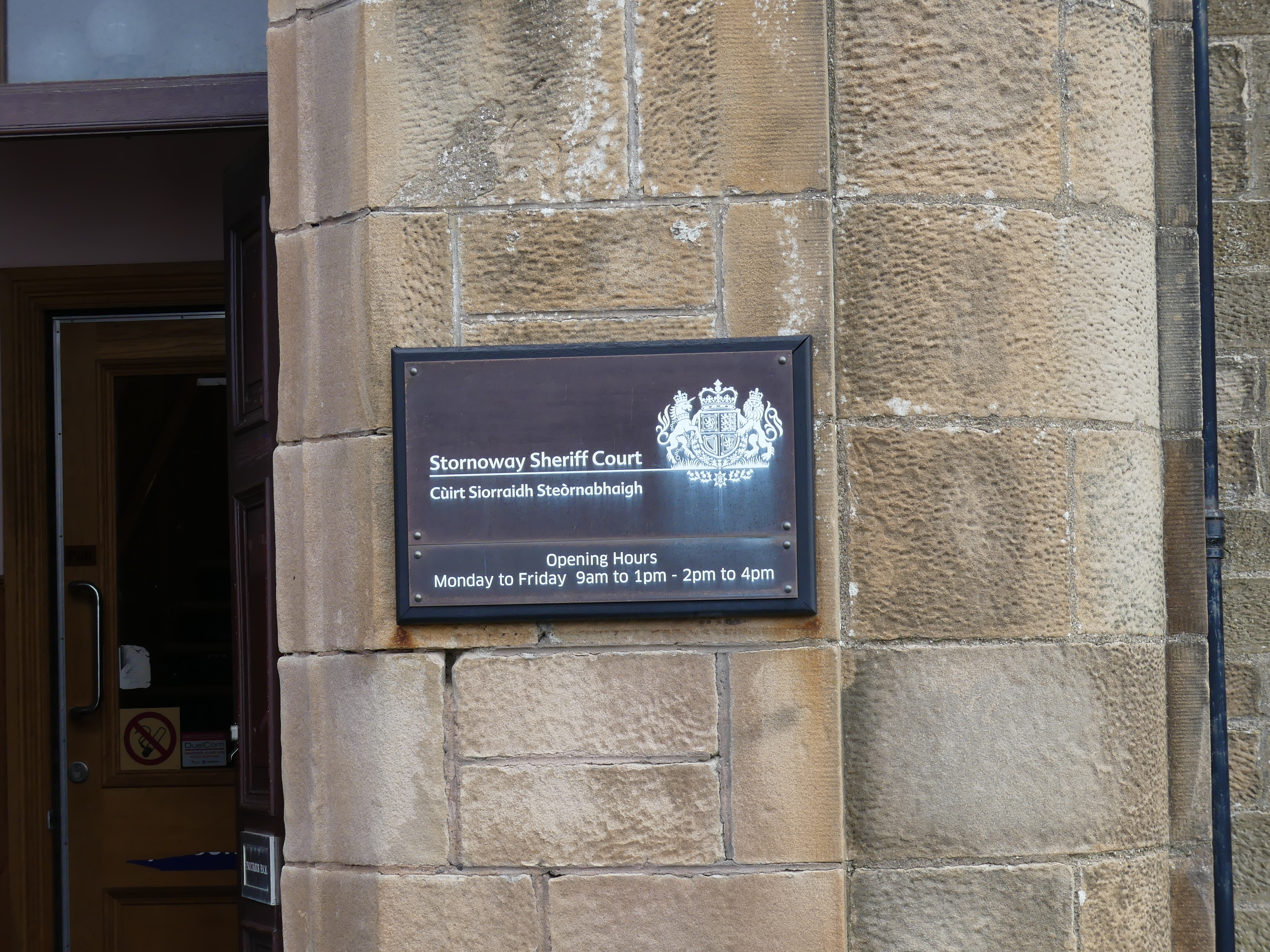
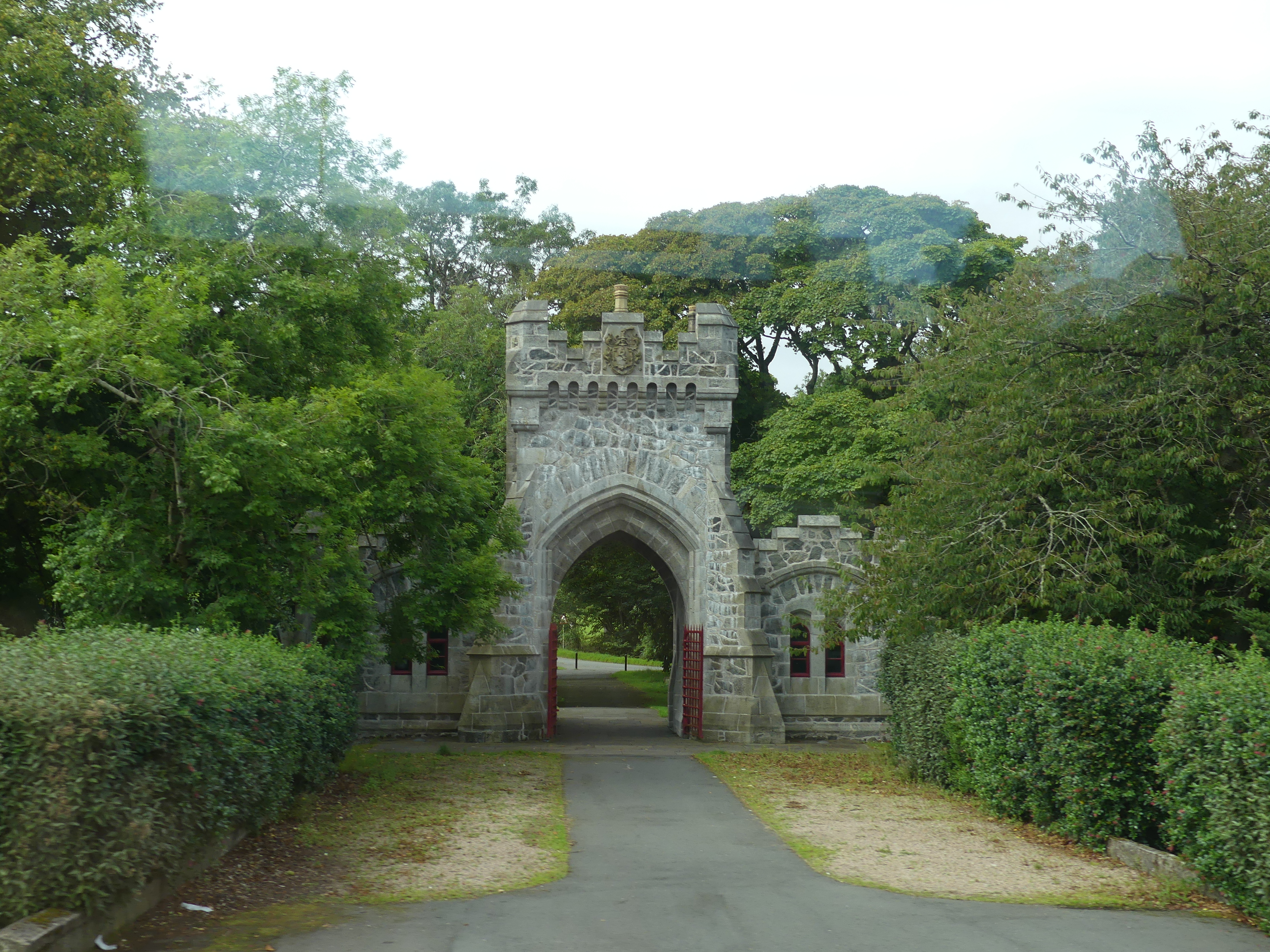
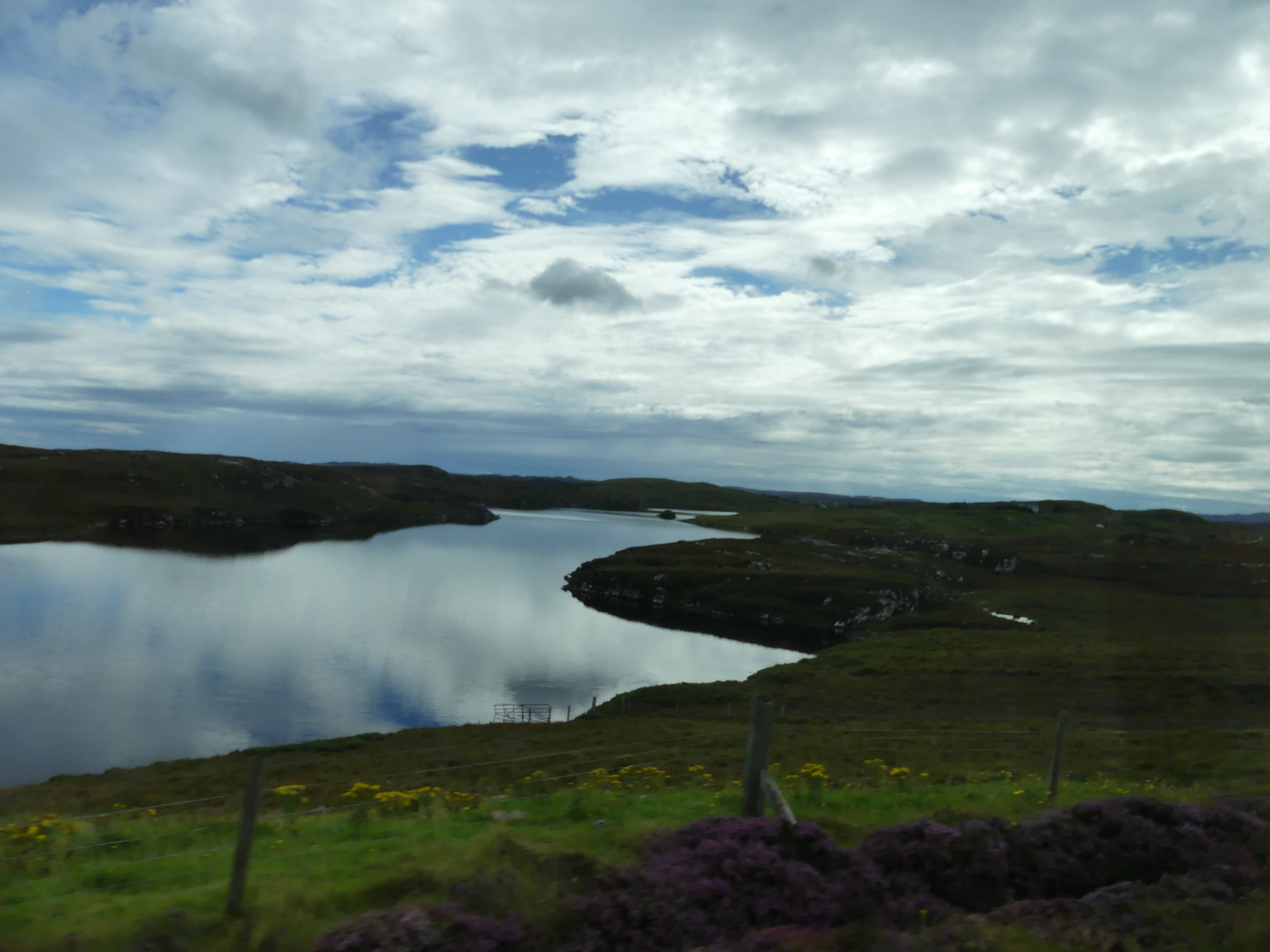
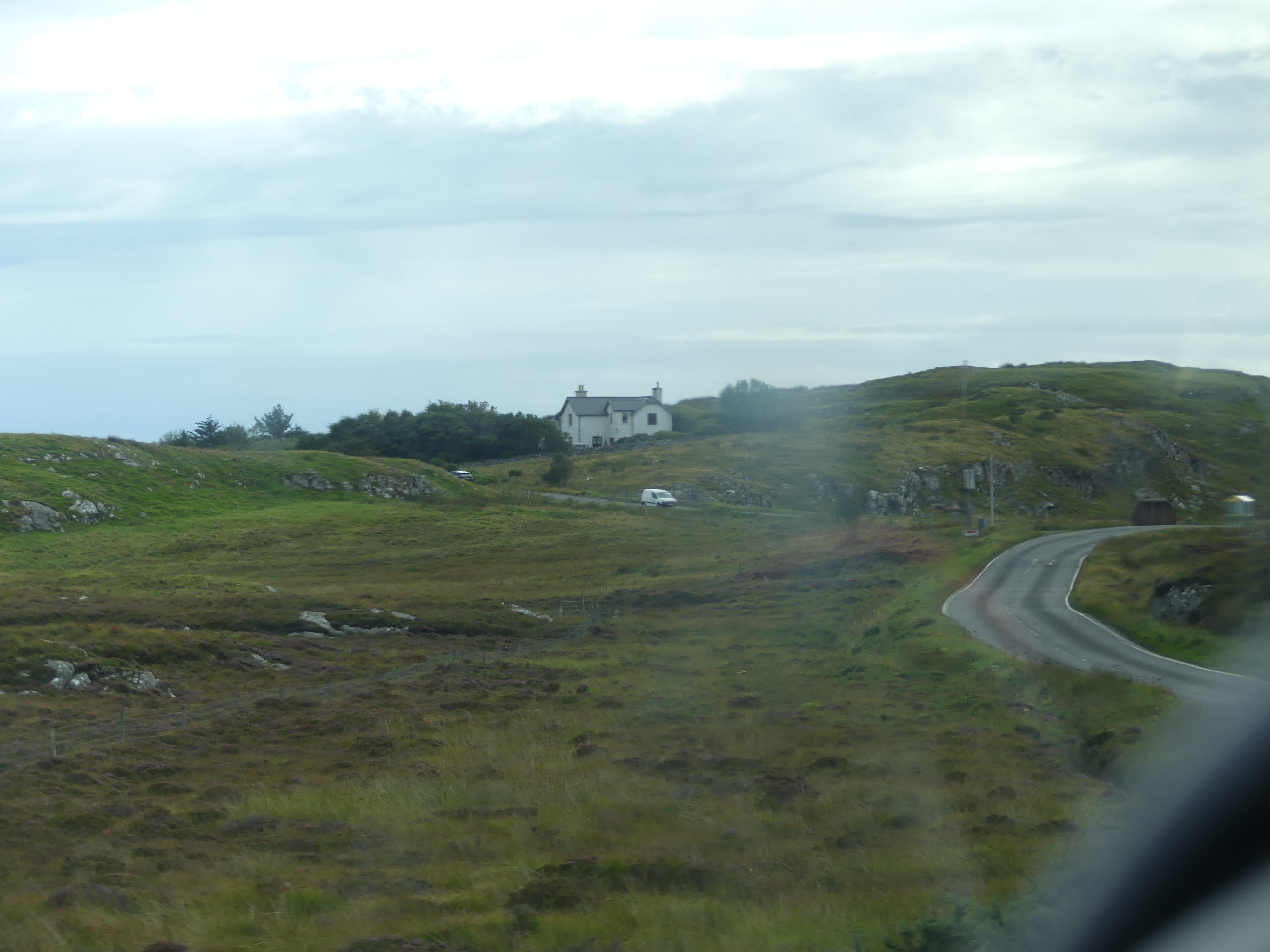
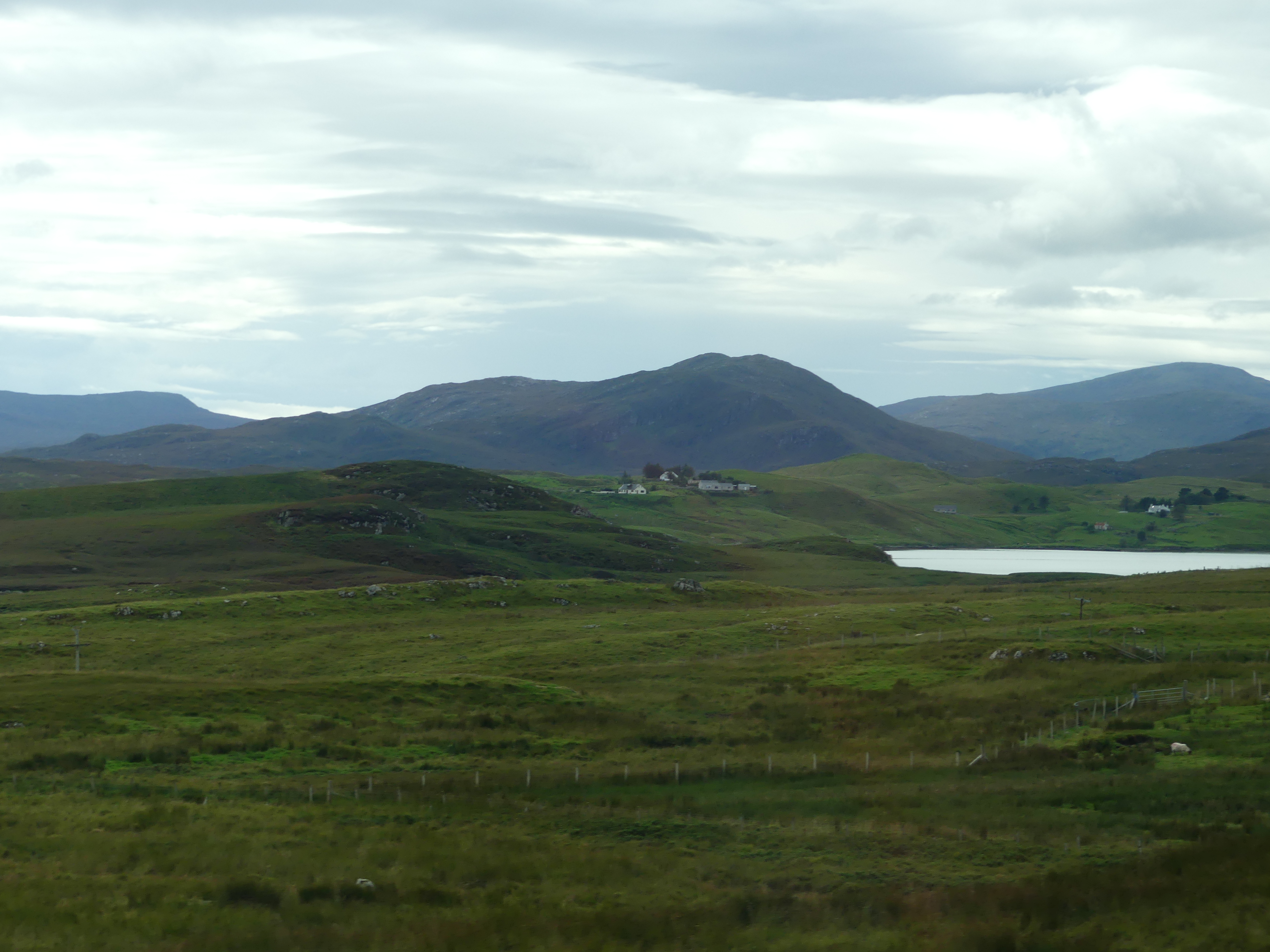
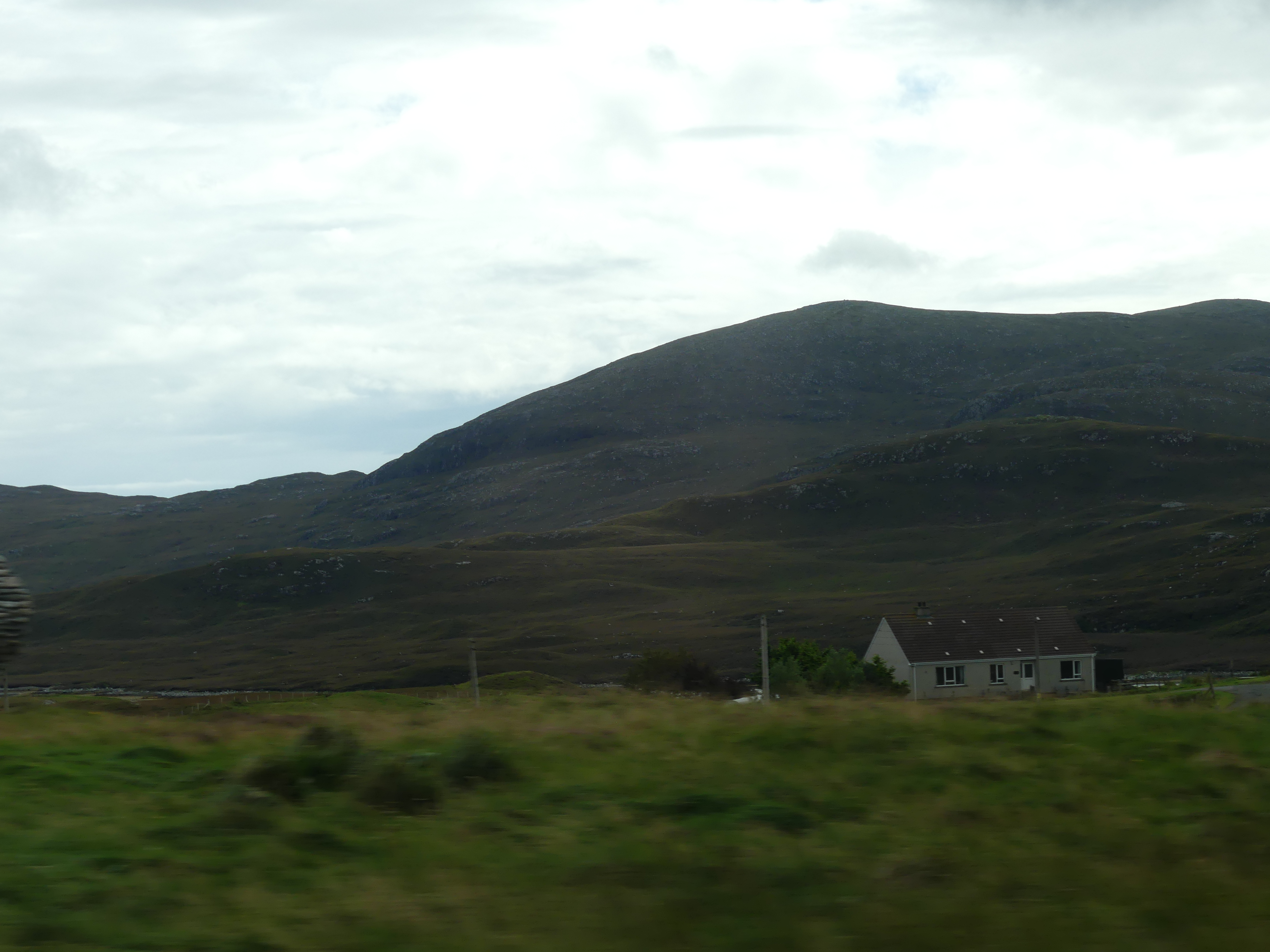
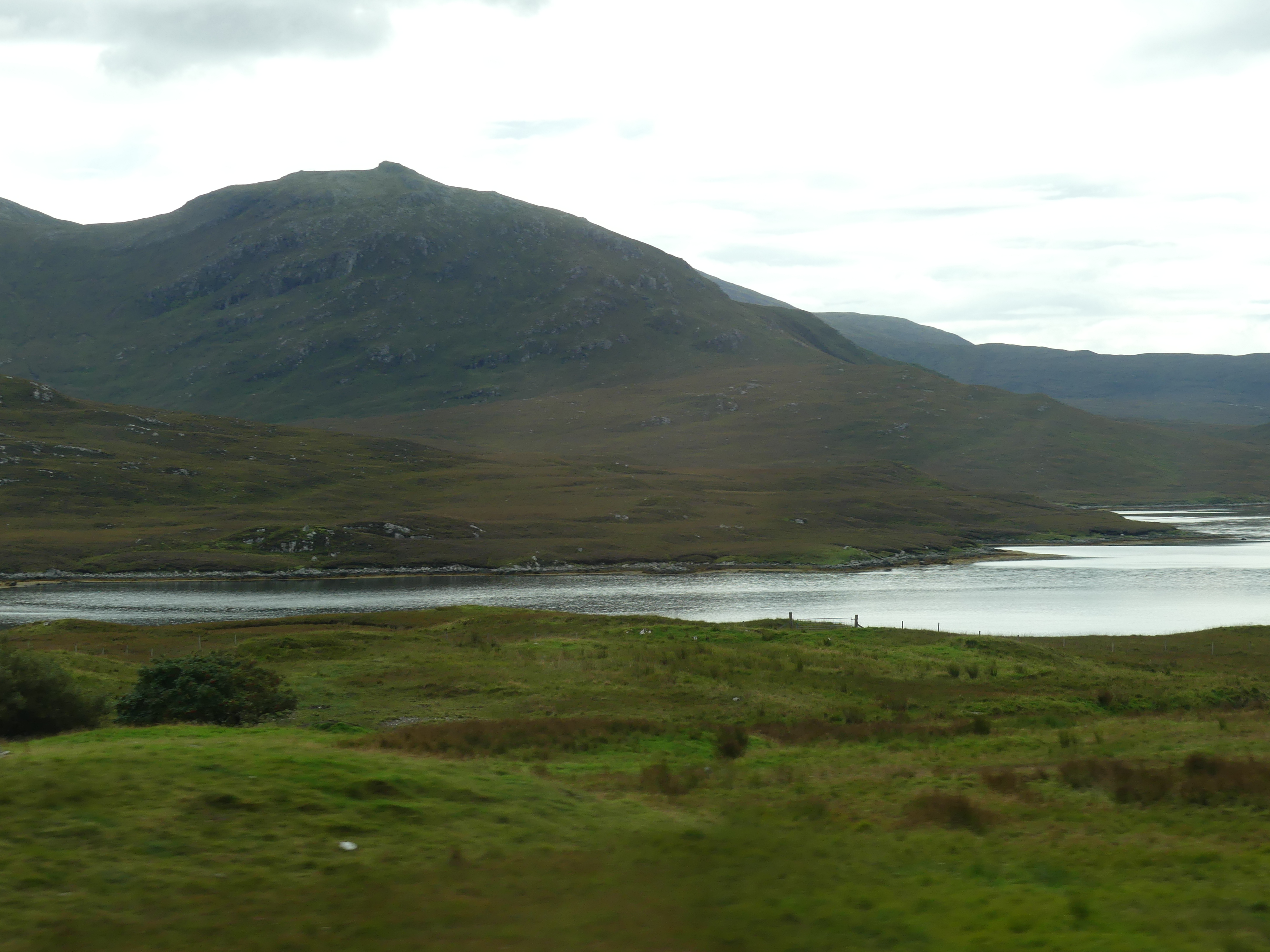
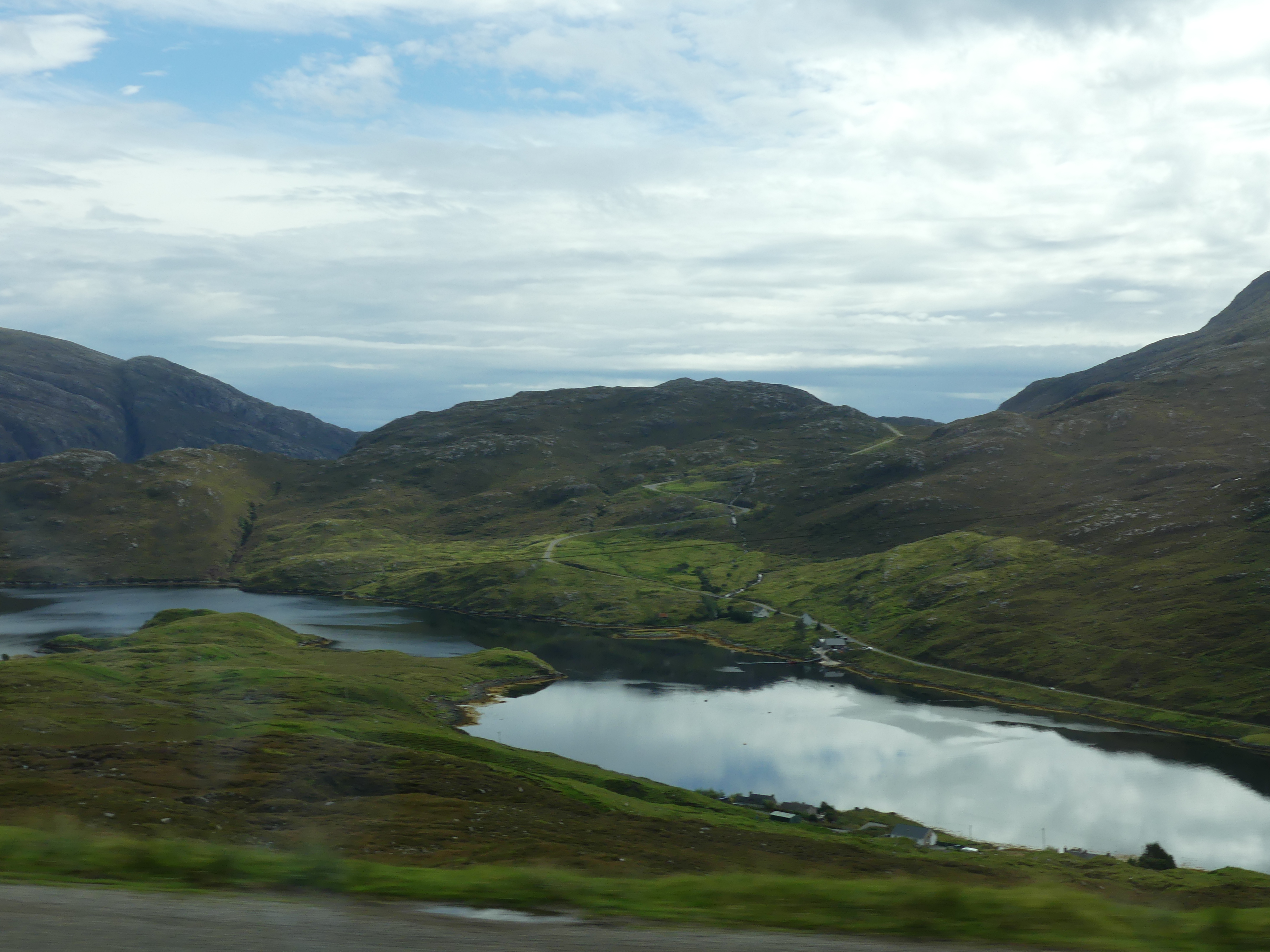
We also found the Sheriff Court and the bus station. We had decided that we would take the local bus over to the township of Harris. It was not difficult and they buses ran fairly regularly. Leaving Stornoway we passed the gate to the castle and soon we were into the countryside. Remote and wild, it took sometime to cross the island

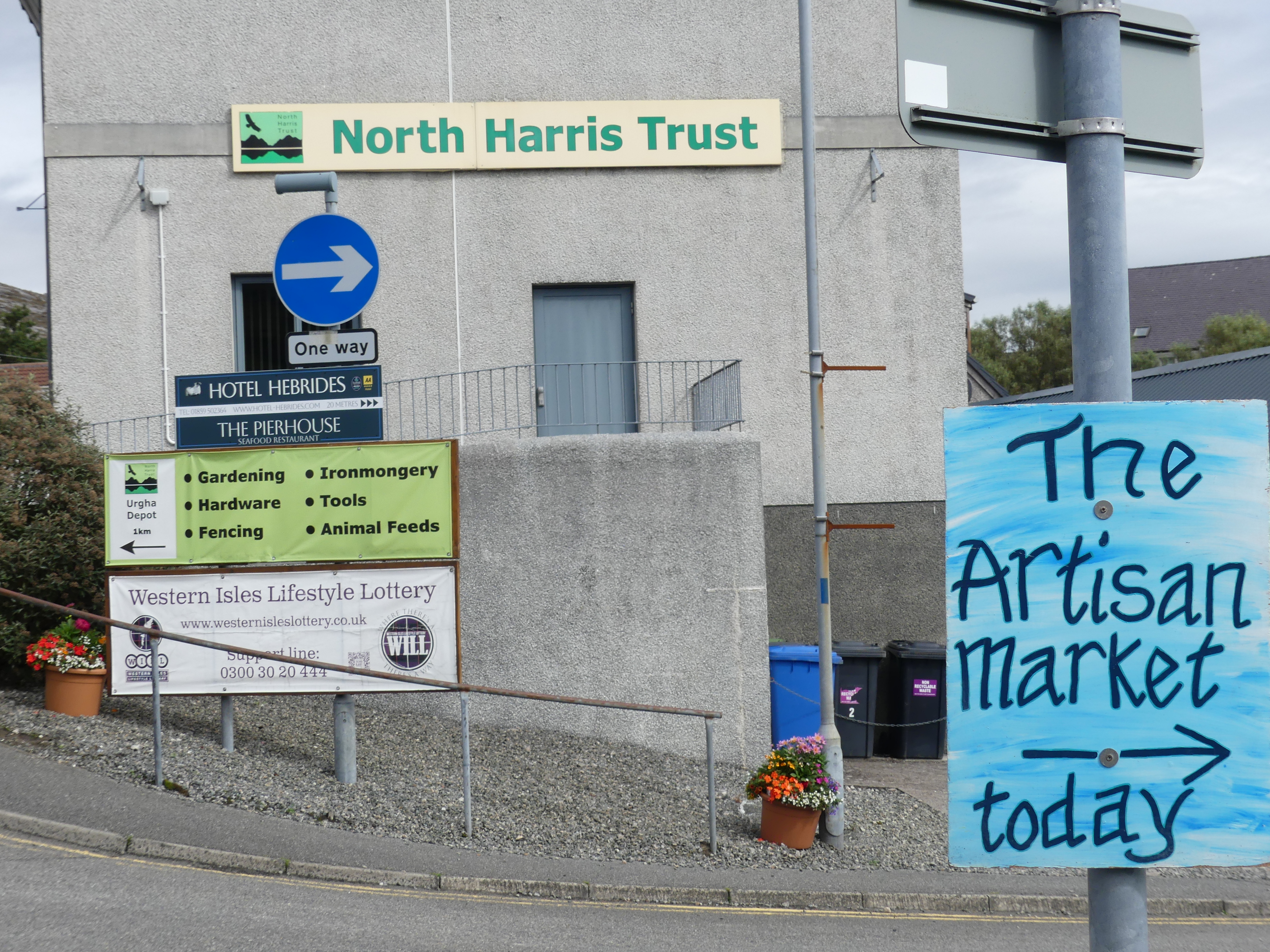
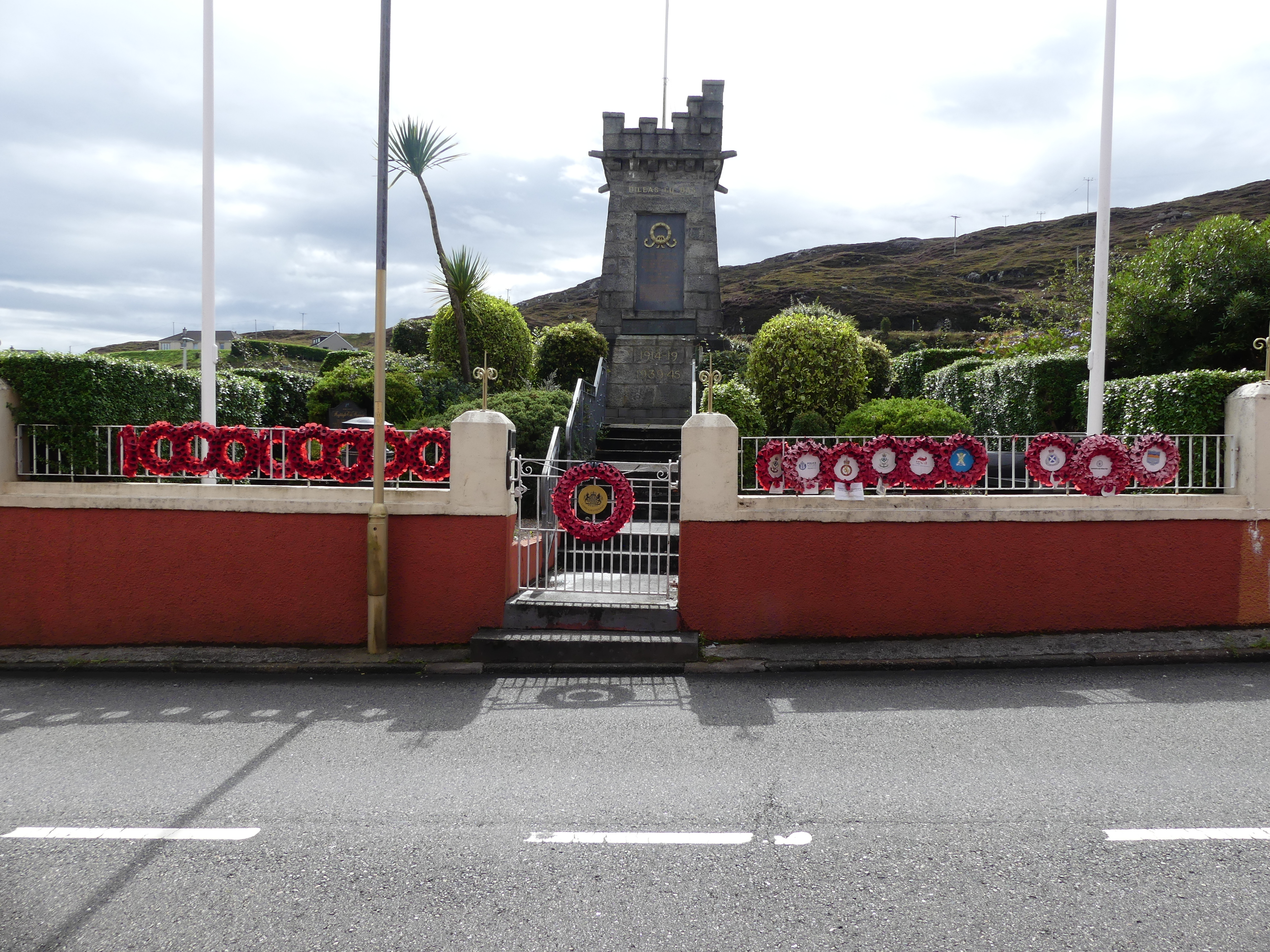
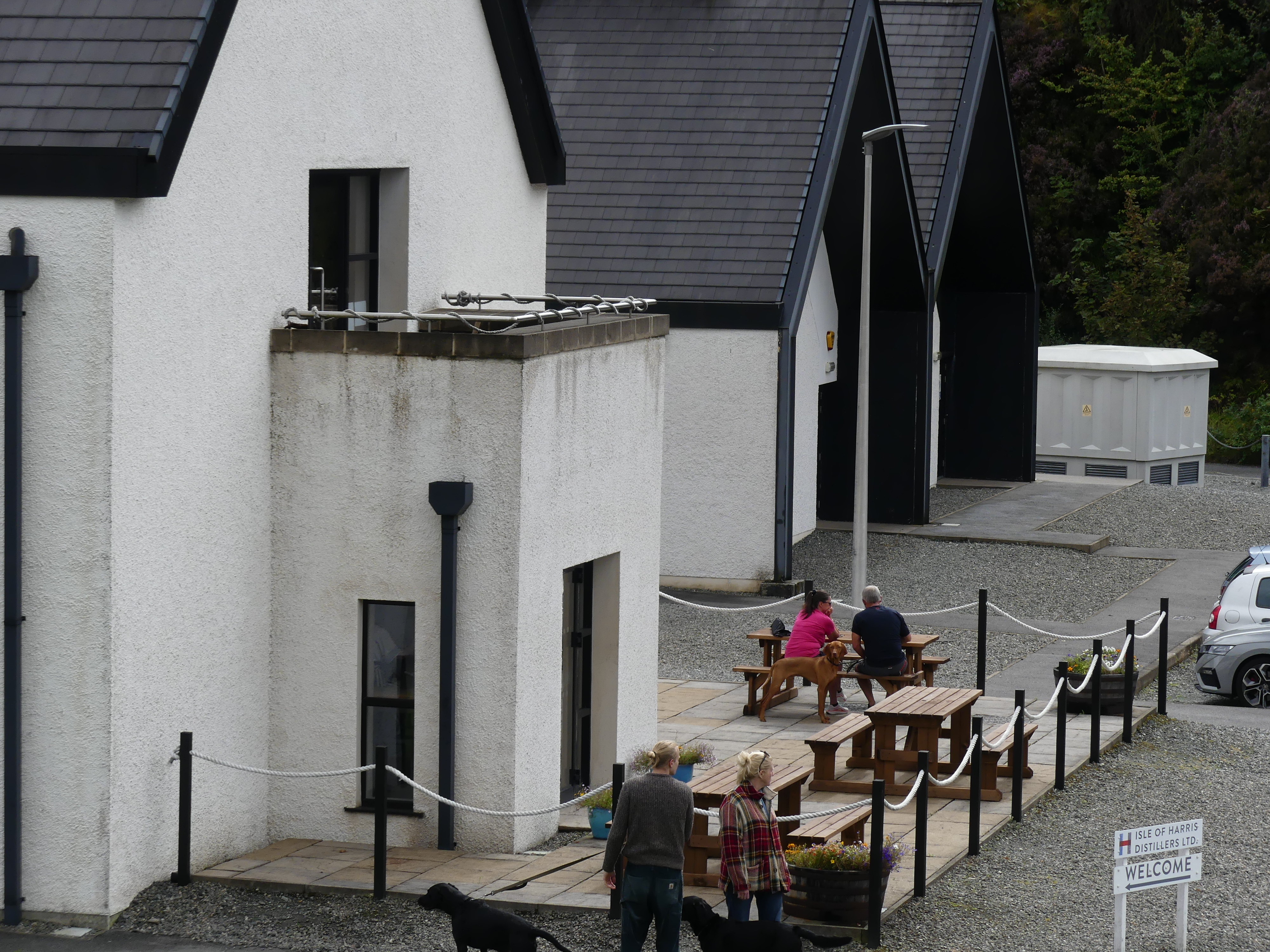
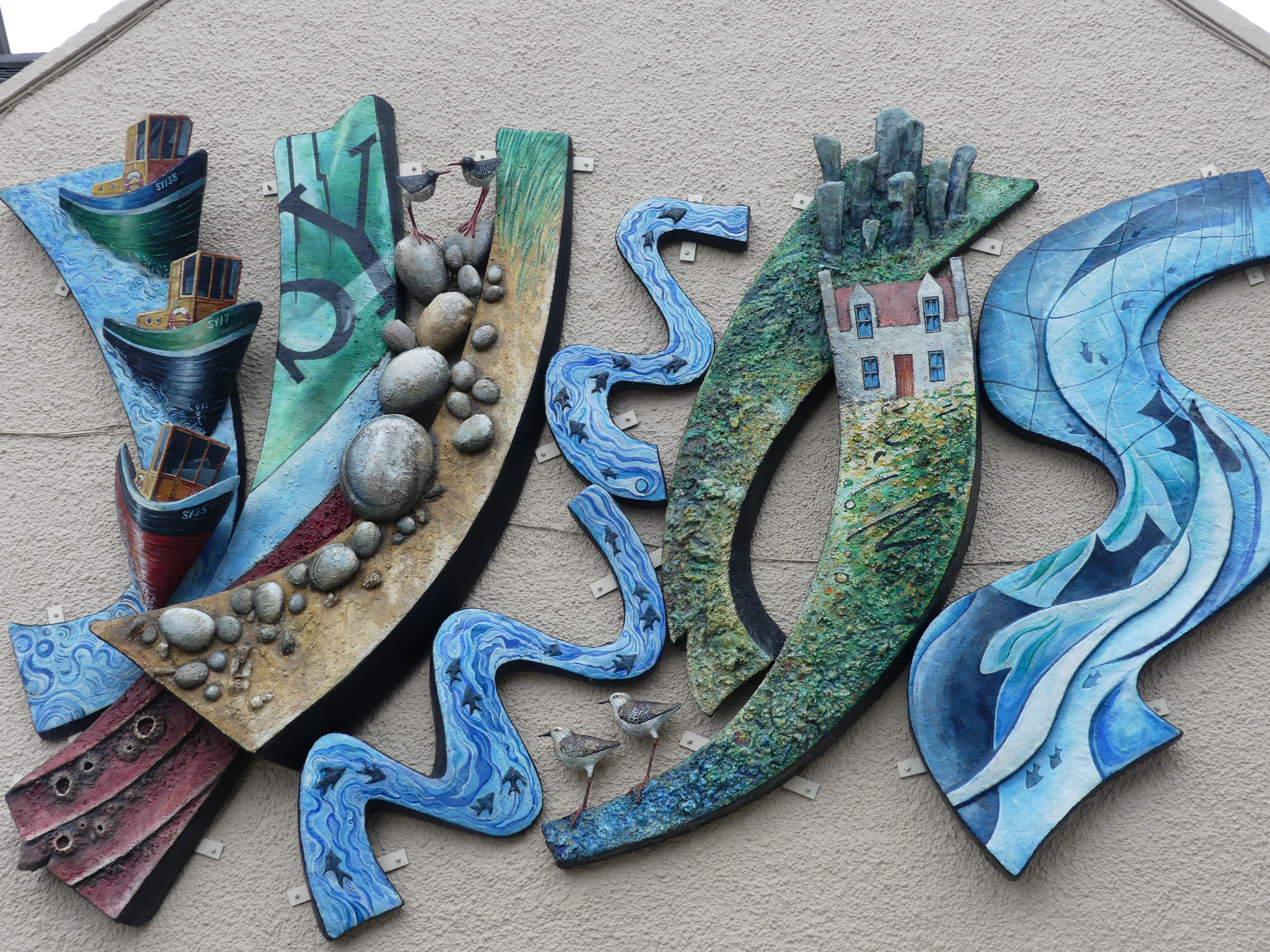
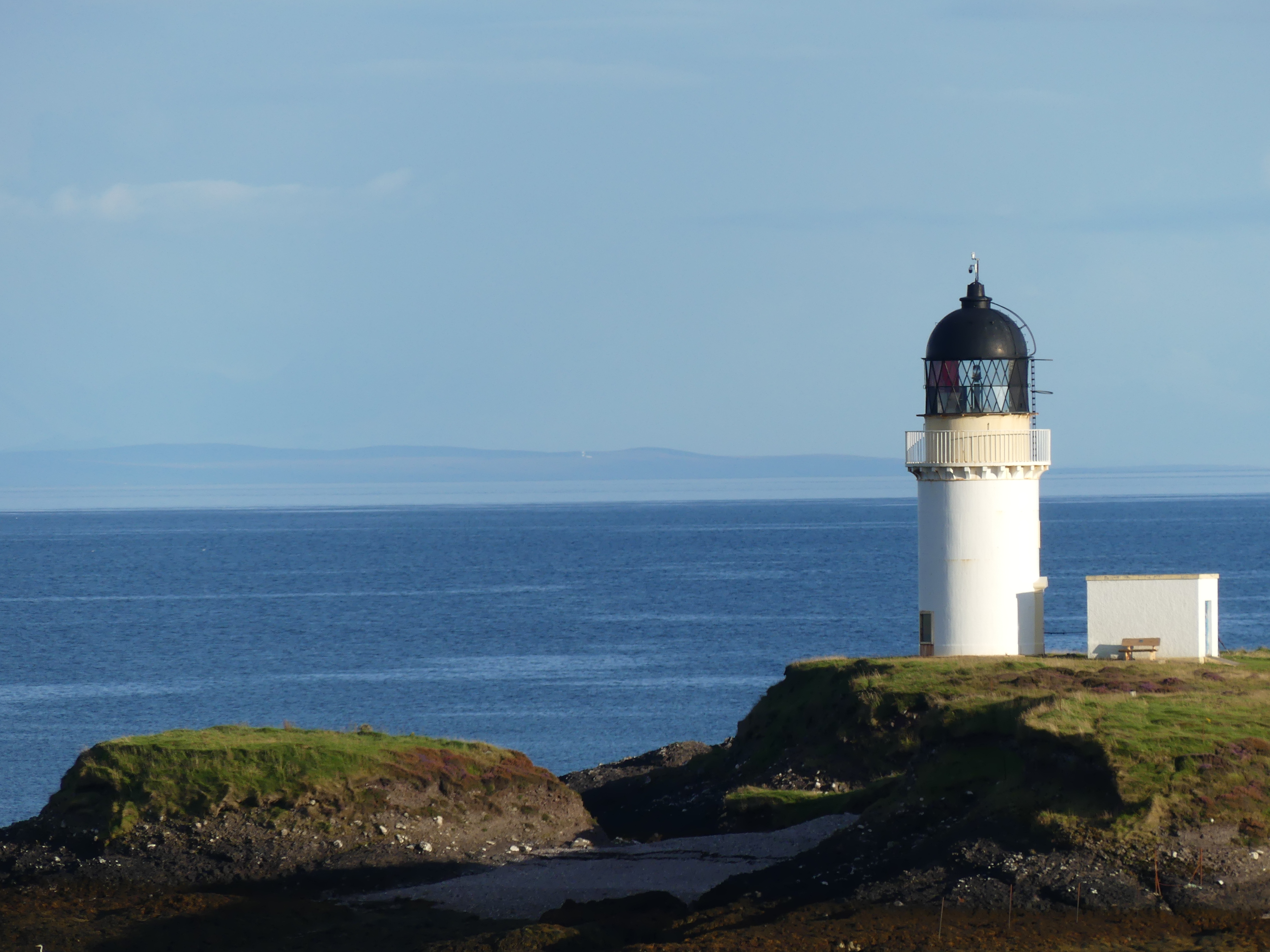
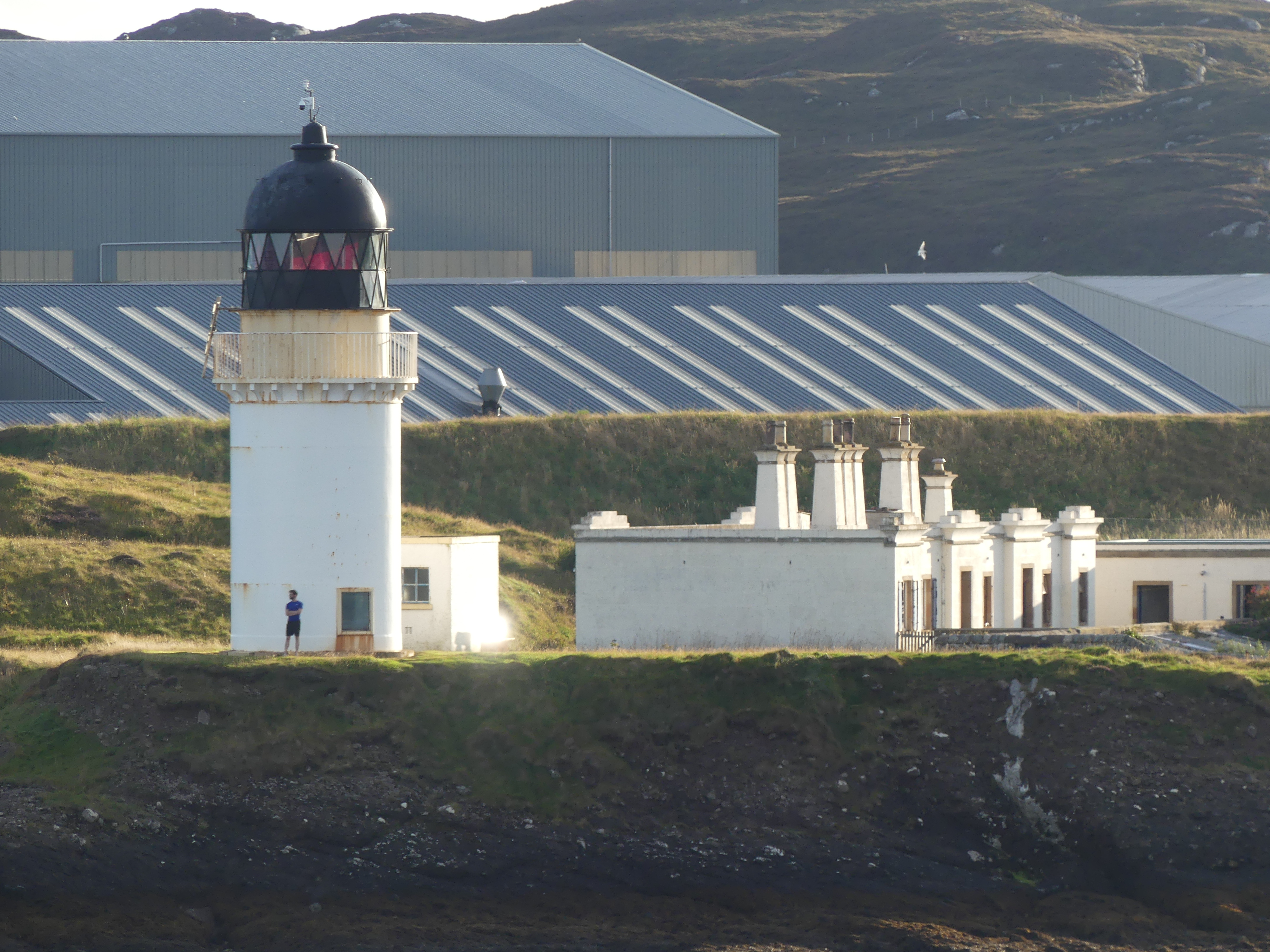
Just as we were beginning to lose hope that we would get to the terminus, it happened – we arrived in North Harris. Perched on the side of a hill over an inlet the village of North Harris was celebrating with an Artisan Market. Set up in the community hall all the hand made crafts to be found on the island were on display. The first stall had wool not pulled into any shape but we had seen the off cuts in the Weavers shed. The stall holder told us she was having trouble obtaining the offcuts due to the decline in small weavers. As it happened I had picked up the business card for A. Harris Tweed Weaver in Stornoway and I passed it onto her. Not only was she grateful but couldn’t believe that a tourist knew more than she did on her subject. Other things of note were the inlet below, the war memorial perched on the very edge of the rock face of the inlet, the distillery and lighthouse below. Not a traffic light to be seen in the village.

Our bus had return to take us back to Stornoway and our ship to continue our adventure. The next port would be Belfast. We had spent sometime in Belfast a few years back when driving around Ireland (North and Eire) so we wondered what we might do. Lean about our decision when reading my next blog “THE RETIREES GO AROUND THE WORLD – DAY 6 SS NIEUW STATENDAM – Outer Hebredies – Belfast Northern Ireland”

“THE RETIREES GO AROUND THE WORLD – DAY 4 SS NIEUW STATENDAM – Orkney Isles”

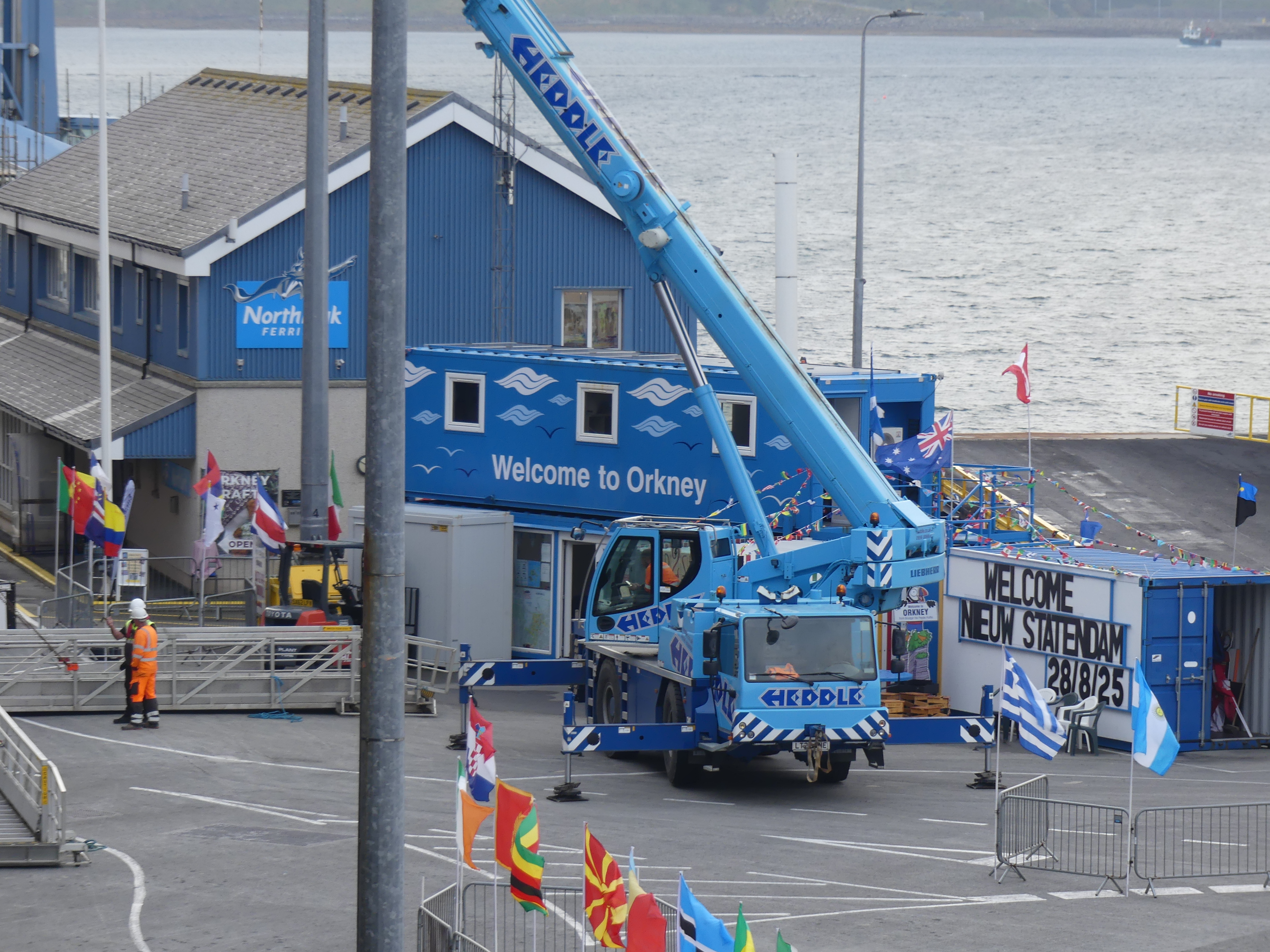
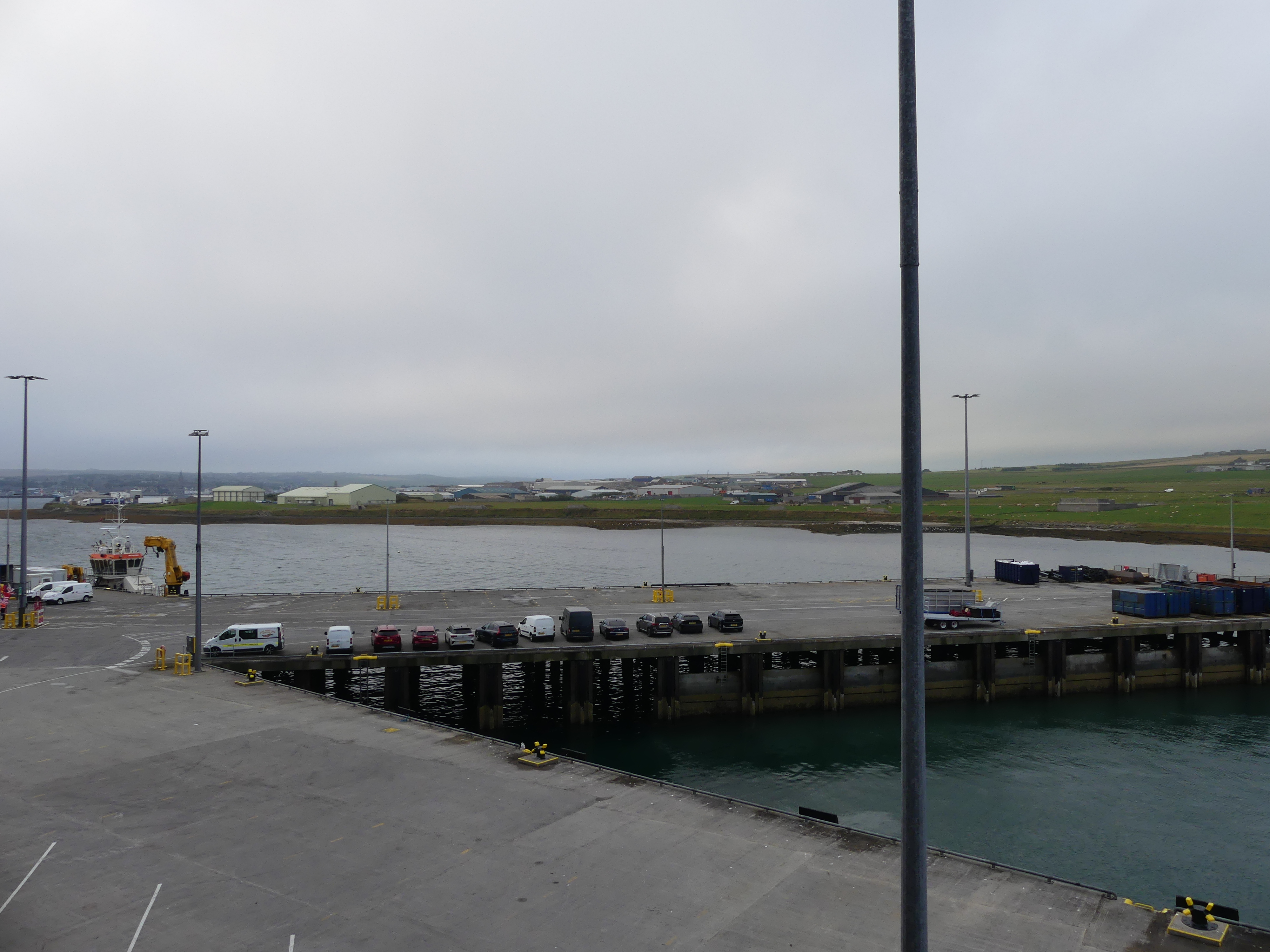
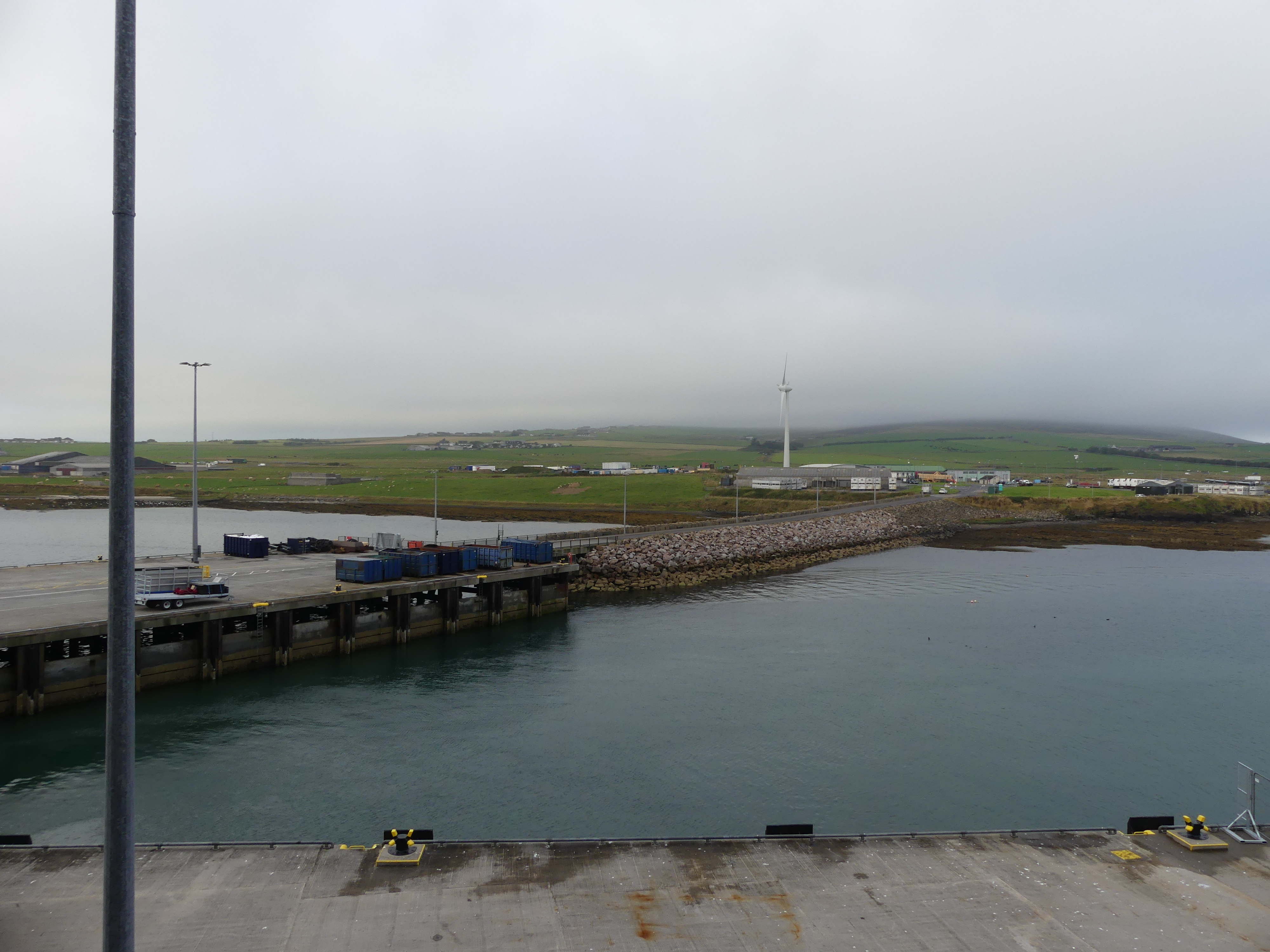
Day 4 of our cruise (I am not counting the days at sea). We have arrive in Kirkwall Orkney Islands and moored at Kirkwall Pier. Something of the history of Kirkwall coming from Wikipedia tells us that “Kirkwall (Scots: Kirkwa, Kirkwaa, or Kirkwal; Norn: Kirkavå; Scottish Gaelic: Bàgh na h-Eaglaise) is the largest town in Orkney, an archipelago to the north of mainland Scotland. First mentioned in the Orkneyinga saga, it is today the location of the headquarters of the Orkney Islands Council and a transport hub with ferries to many locations. It is the centre of the St Magnus International Festival and is also a popular stopping off point for cruise ships. St Magnus Cathedral stands at the heart of the town.”

This did not help us with the deciding what we wanted to do with our limited time in Kirkwall. So we looked at the history of the town and Wikipedia provided the following “The town was first mentioned in the Orkneyinga saga in the year 1046, when it was recorded as the residence of Rögnvald Brusason, the Earl of Orkney …..

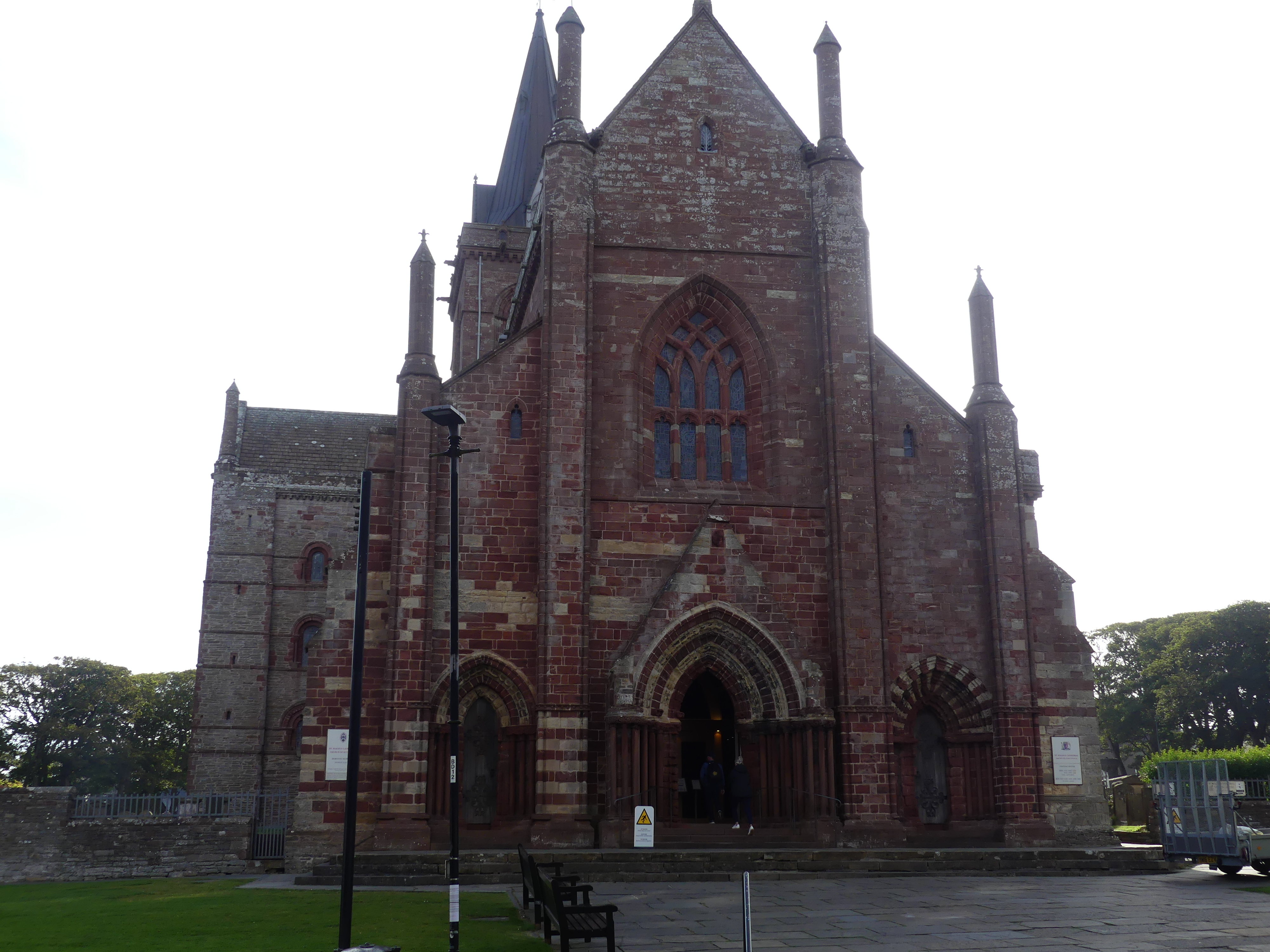
In 1486, King James III of Scotland elevated Kirkwall to the status of a royal burgh, and in time it would return a Burgh commissioner to the Parliament of Scotland. After Union with England it combined with other towns to form the Northern Burghs, sending a single MP to Parliament. In 1918, the Parliamentary Burgh of Kirkwall merged into Orkney and Shetland.” We made our way to the heart of the town and St Magnus Cathedral.

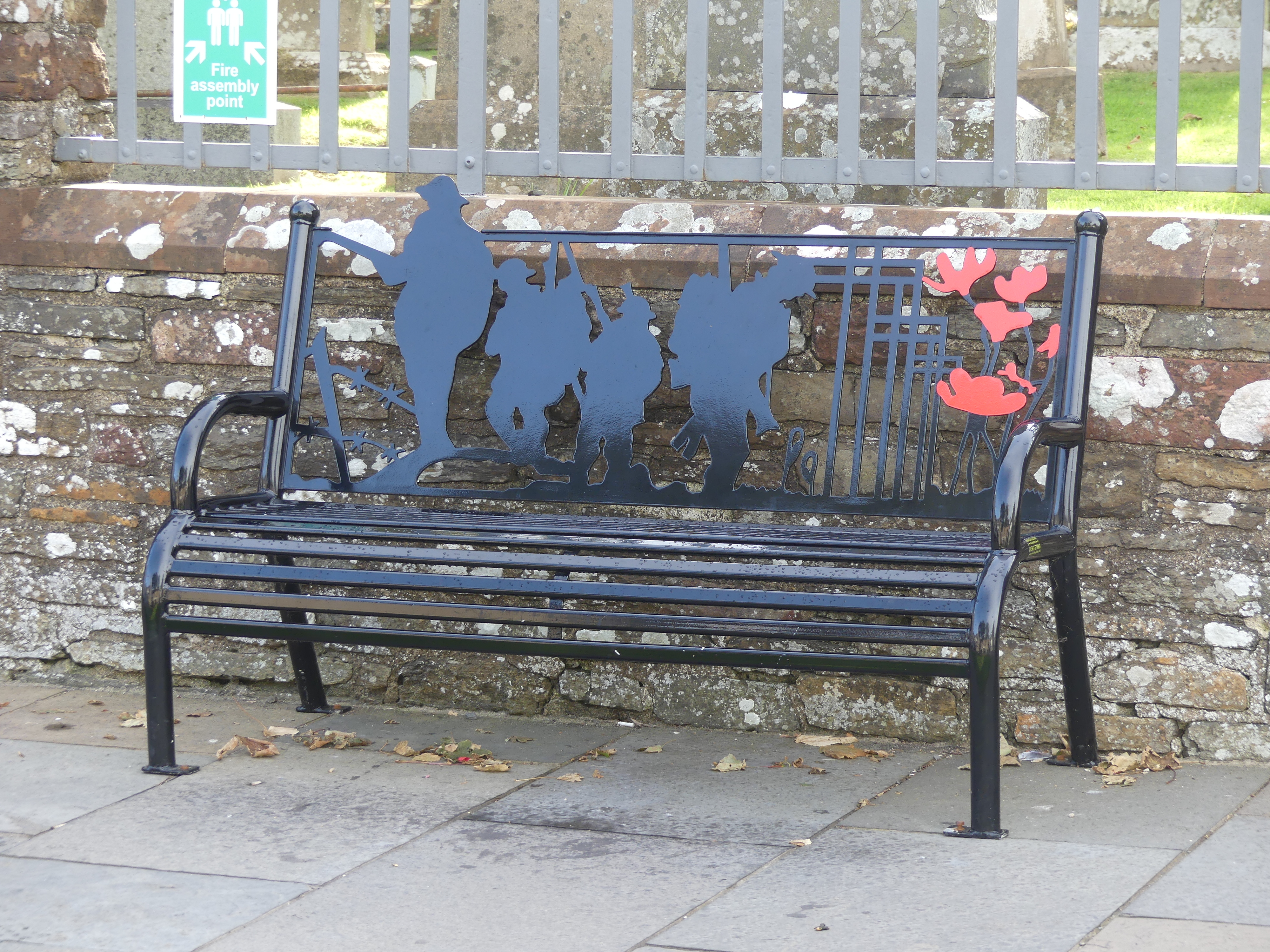
There is something like 9,000 people living in the Orkneys as at its last census. Tourism, particularly cruse ship tourism contributes to its economy and the Orcadians have been loyal Brits over the years. The street furniture portrayed a remembrance to fallen soldiers in a very useful memorial. Then there is St Magnus Cathedral. I have inserted our map that we used to guide our search and you will see that the Cathedral in “the heart of the town”.

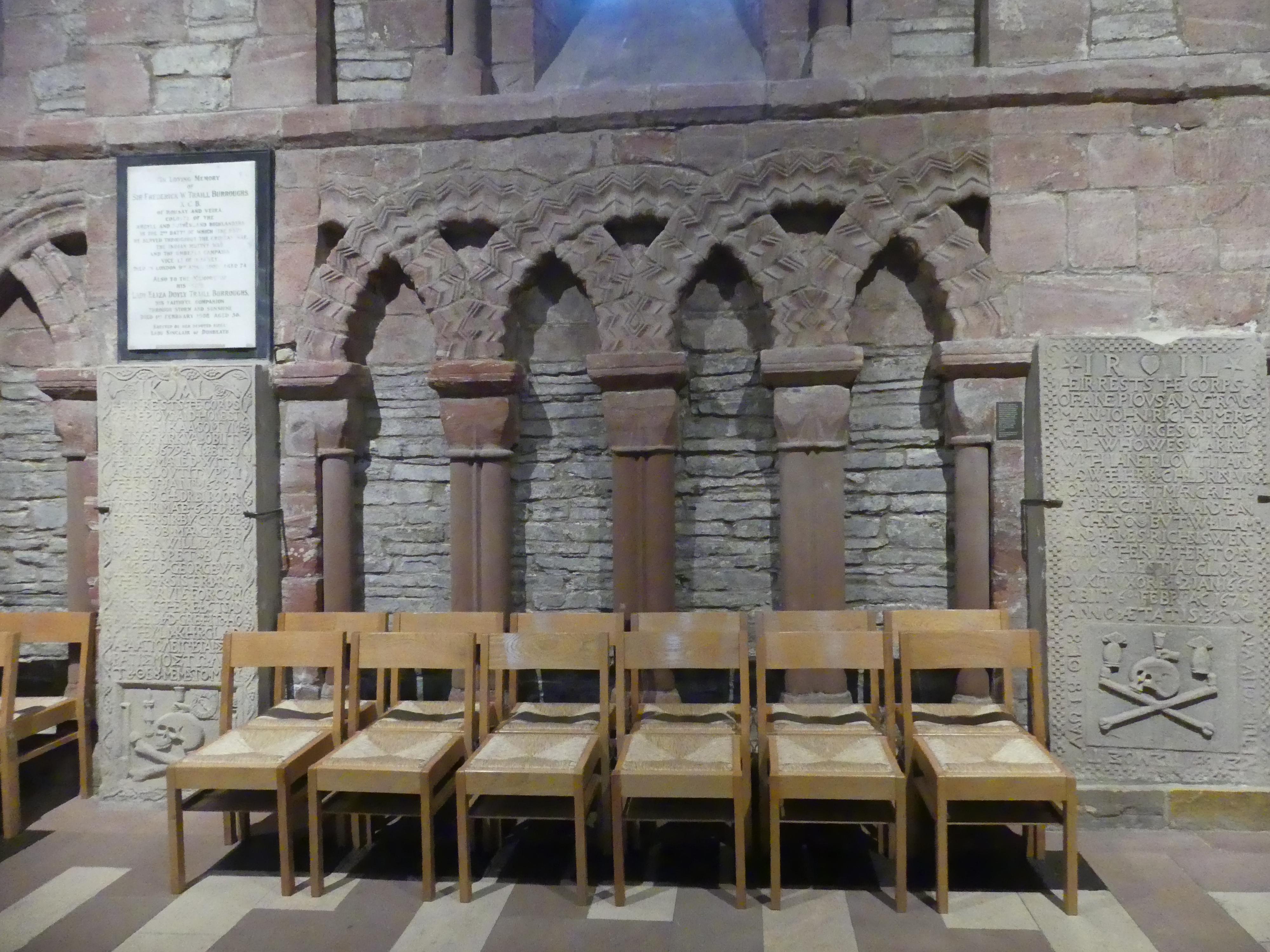
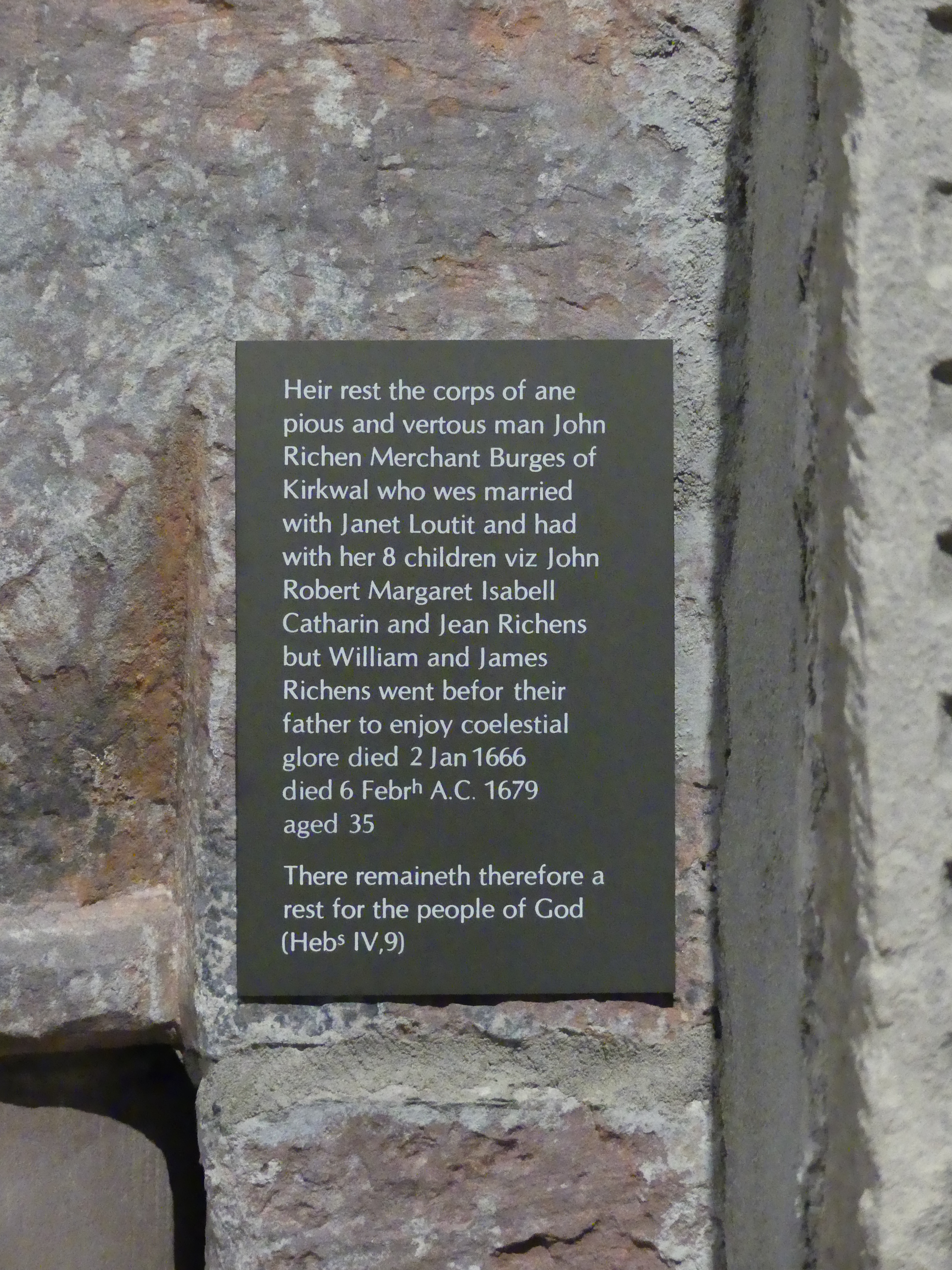
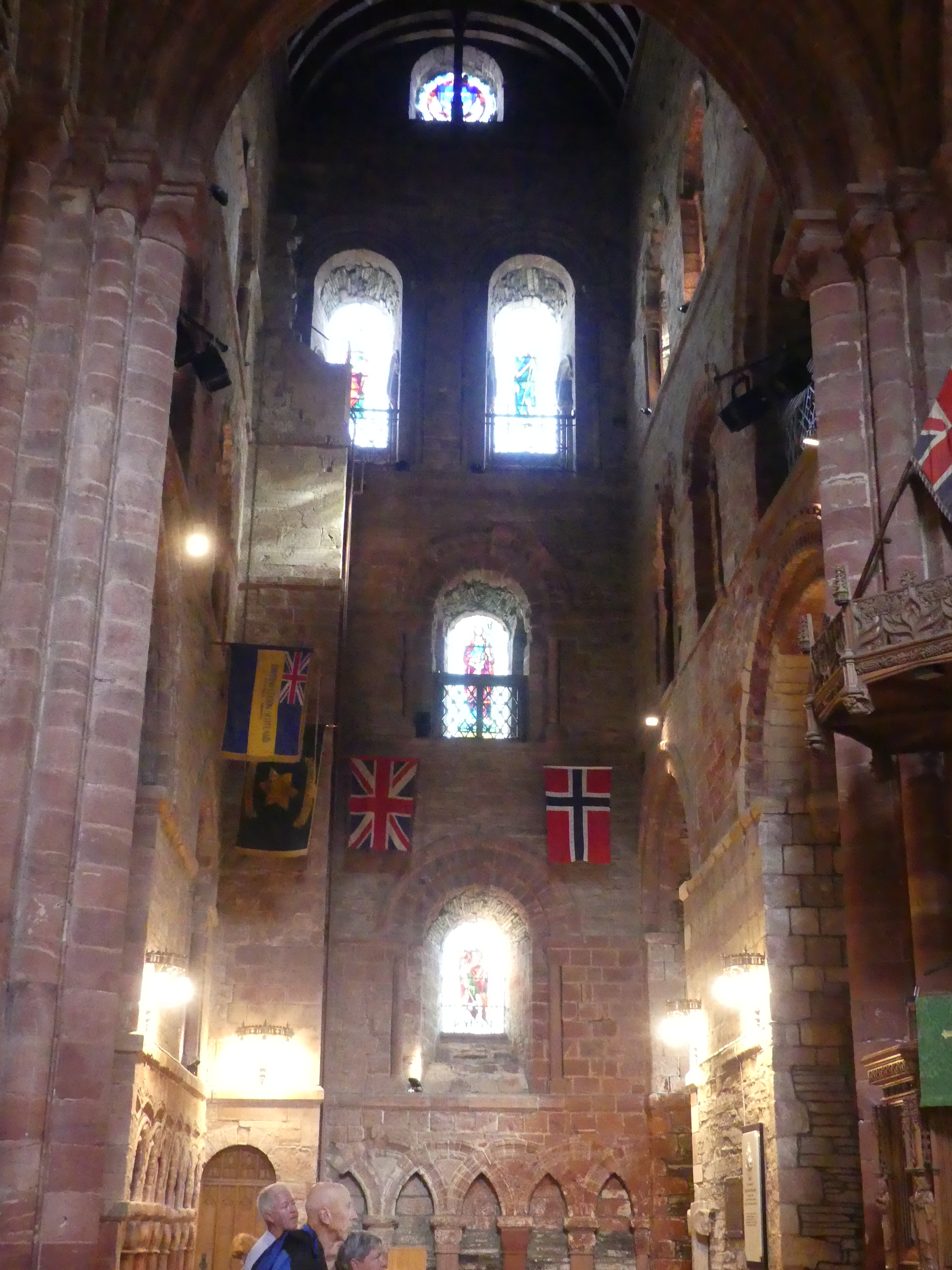
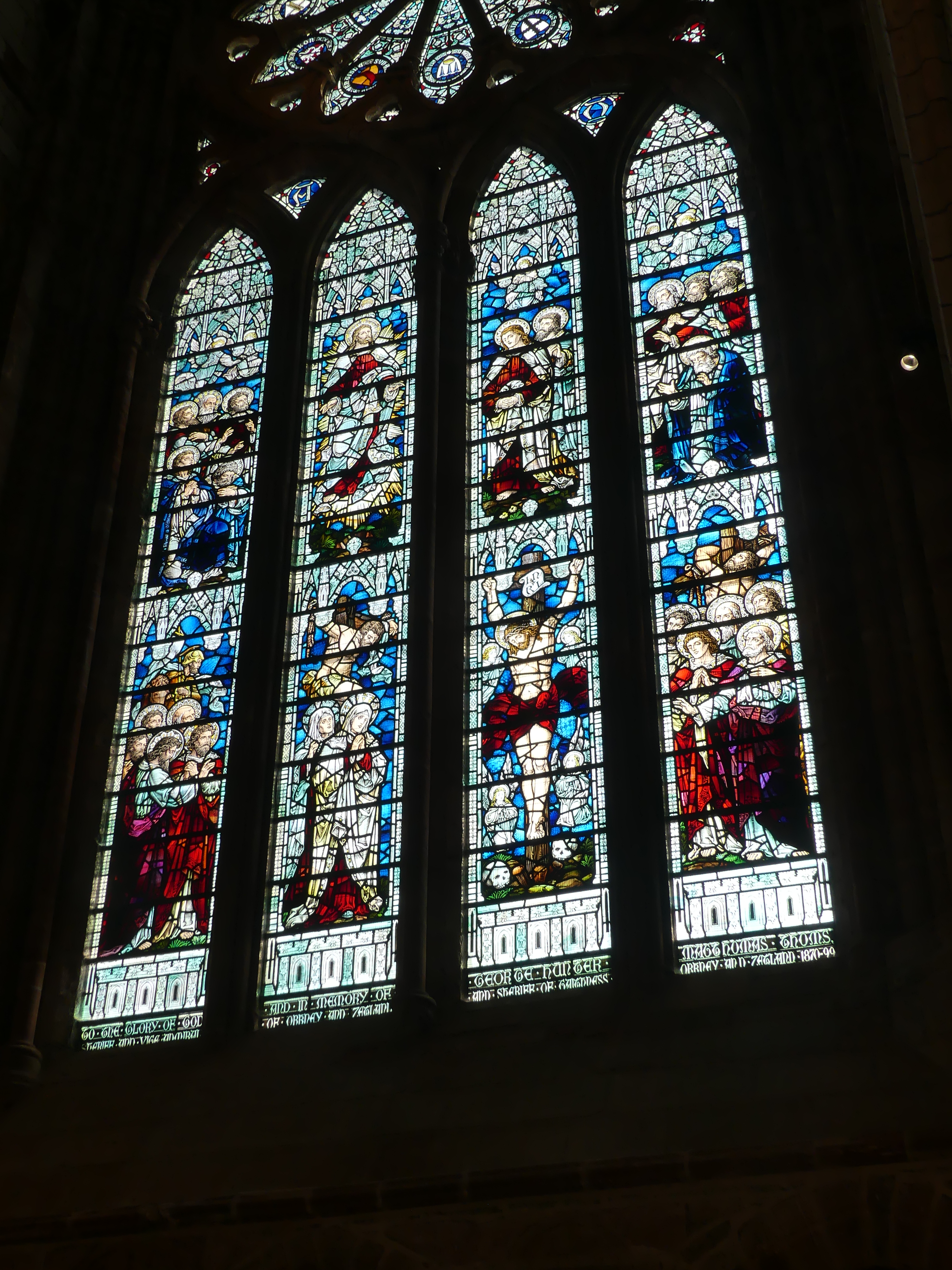
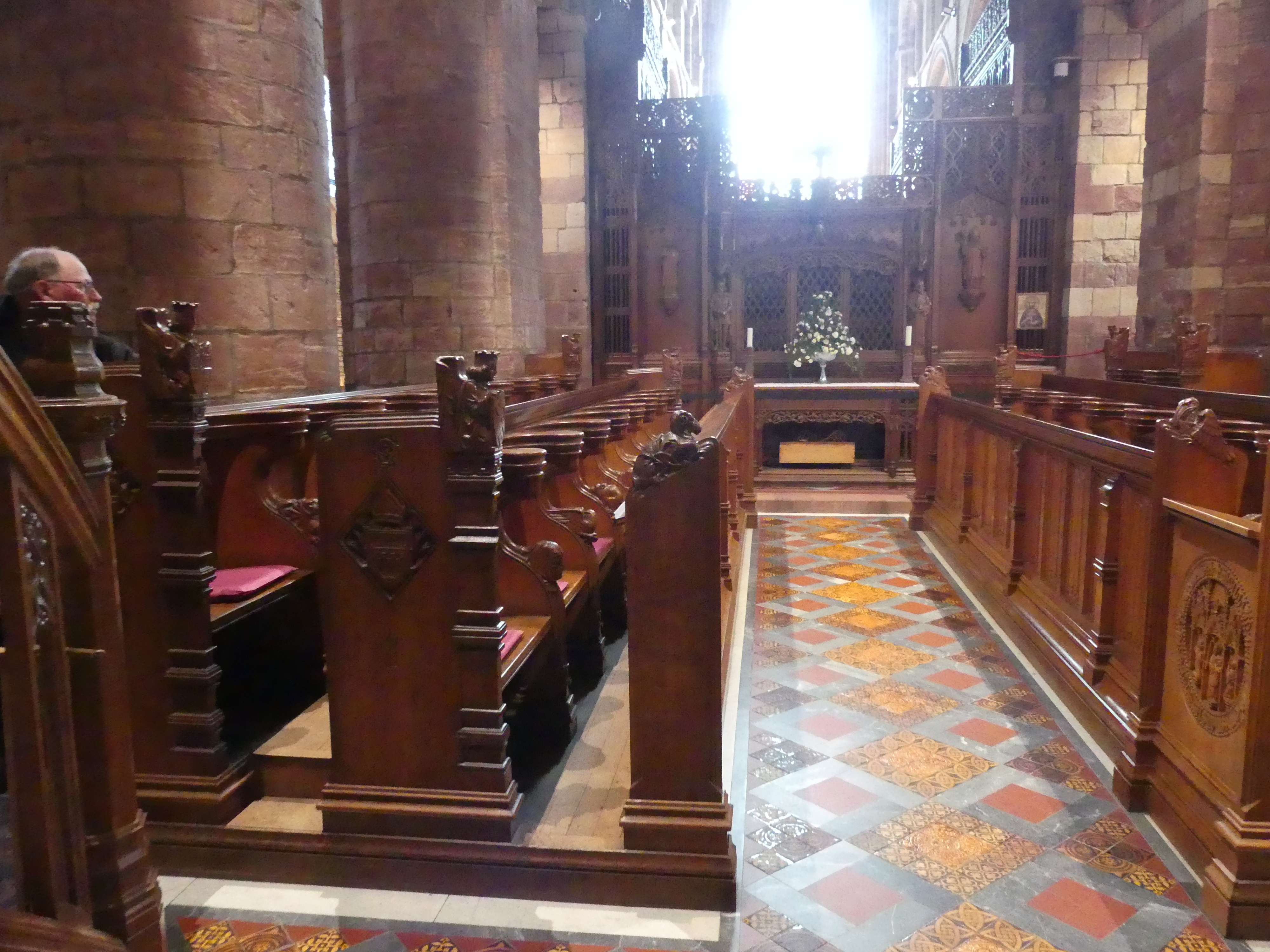
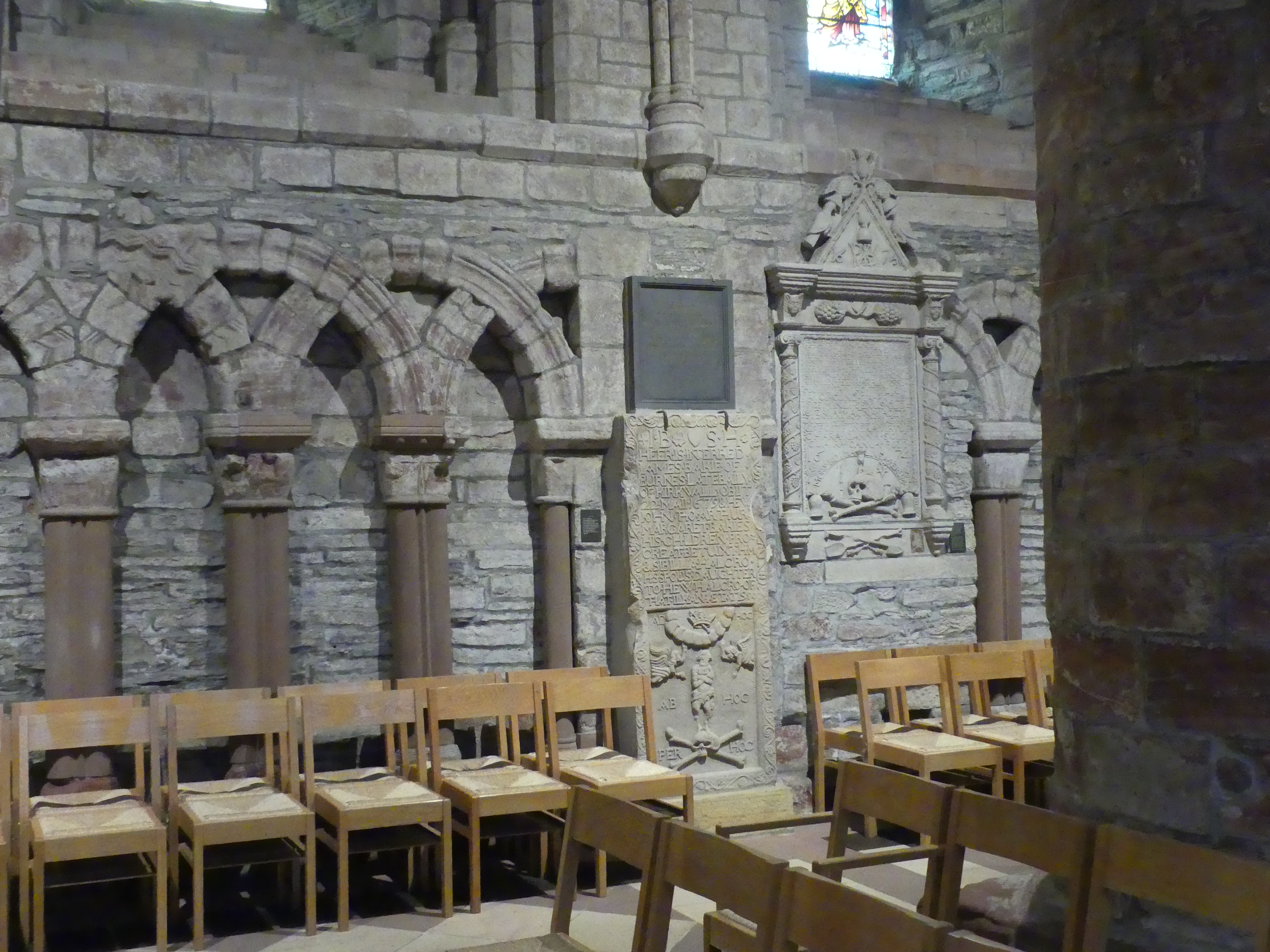
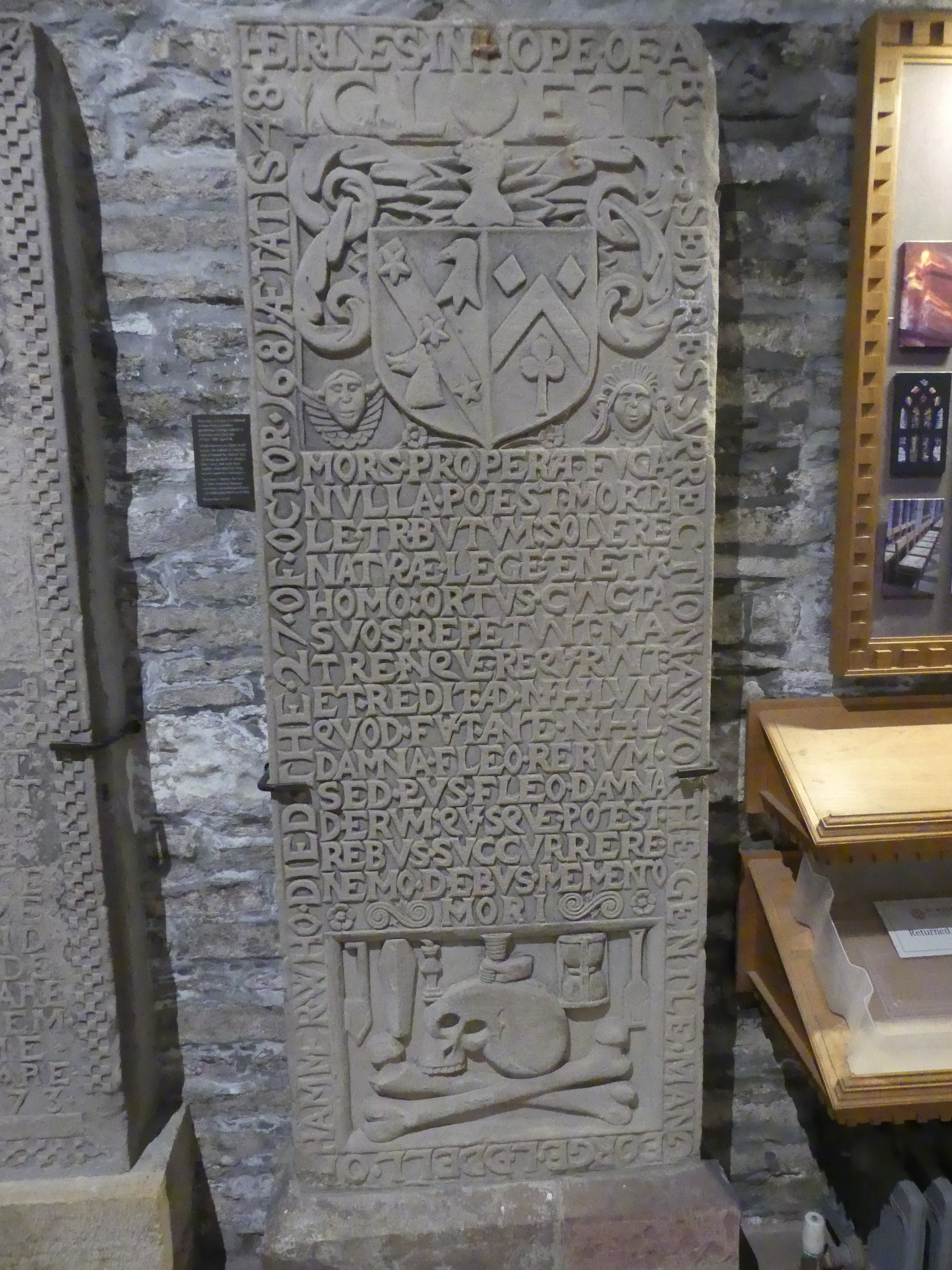
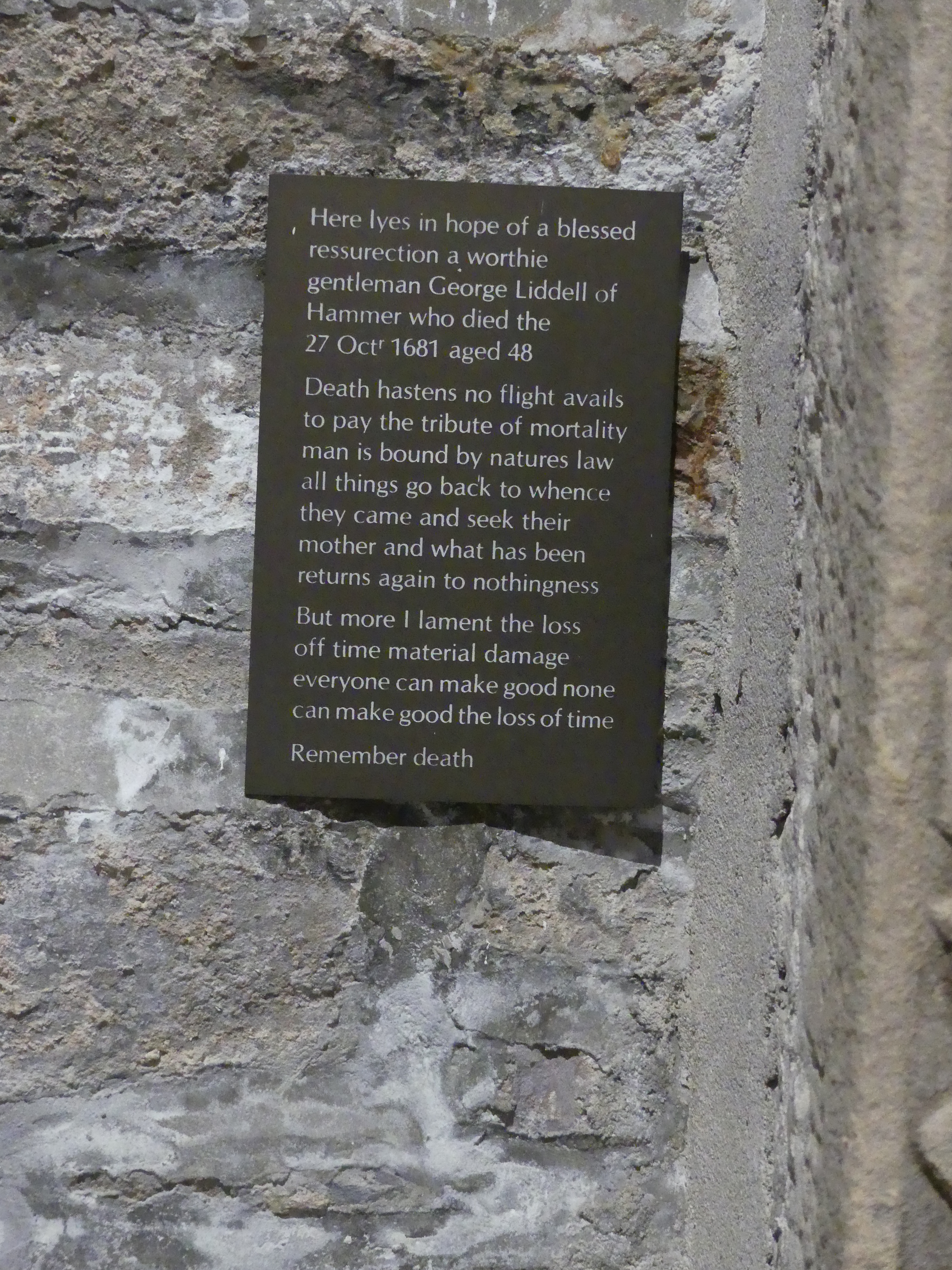
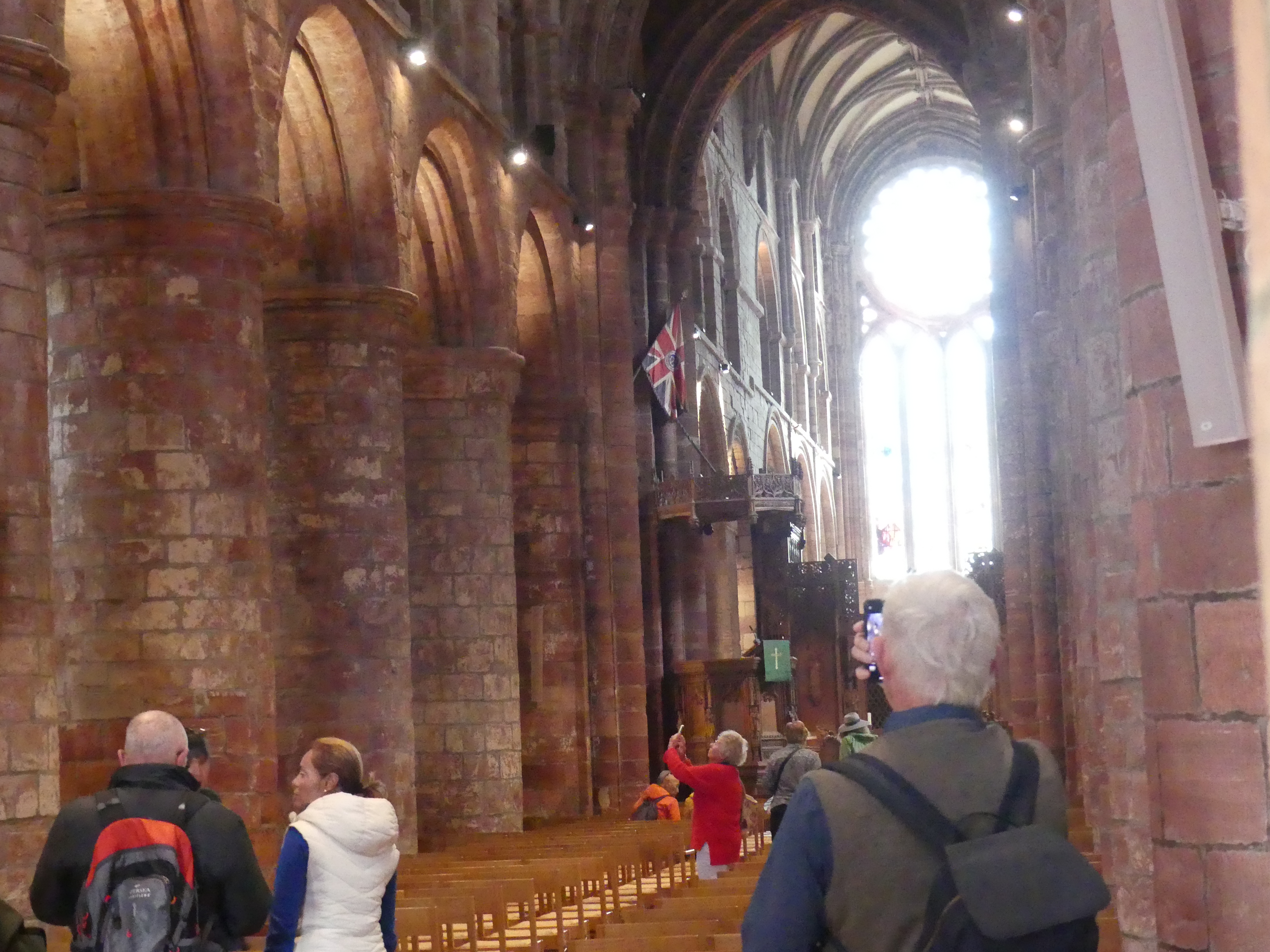
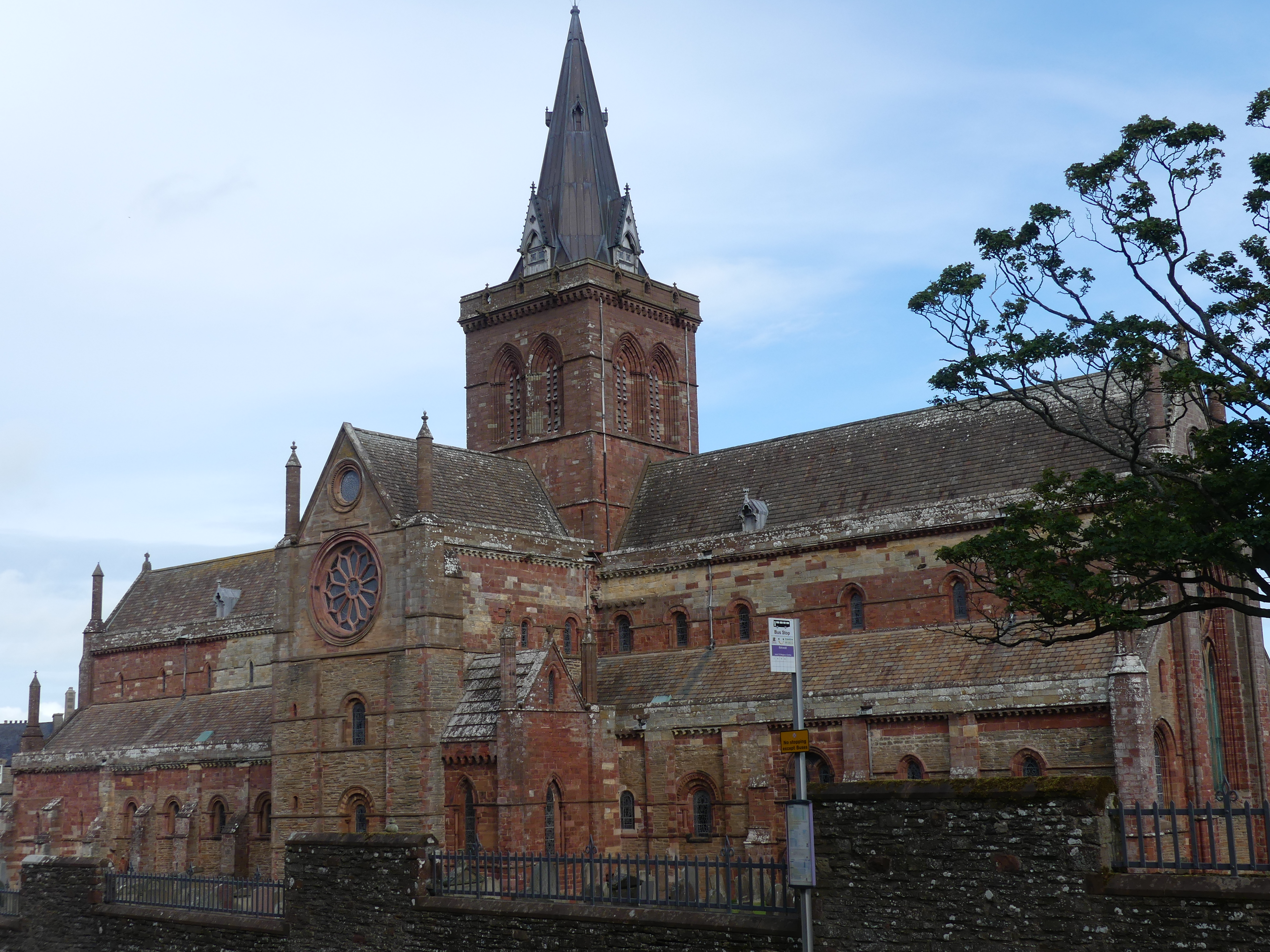
The website for the Cathedral commences with these words “St Magnus Cathedral known as the ‘Light in the North’ was founded in 1137 by the Viking, Earl Rognvald, in honour of his uncle St Magnus who was martyred here in Orkney. The Cathedral belongs to the people of Orkney and its doors are open to all.” The Cathedral has been maintained utilising its interior to give the visitor its history through the headstones of the many people through the centuries brought to rest at the church. My pictures below walk you through the building.

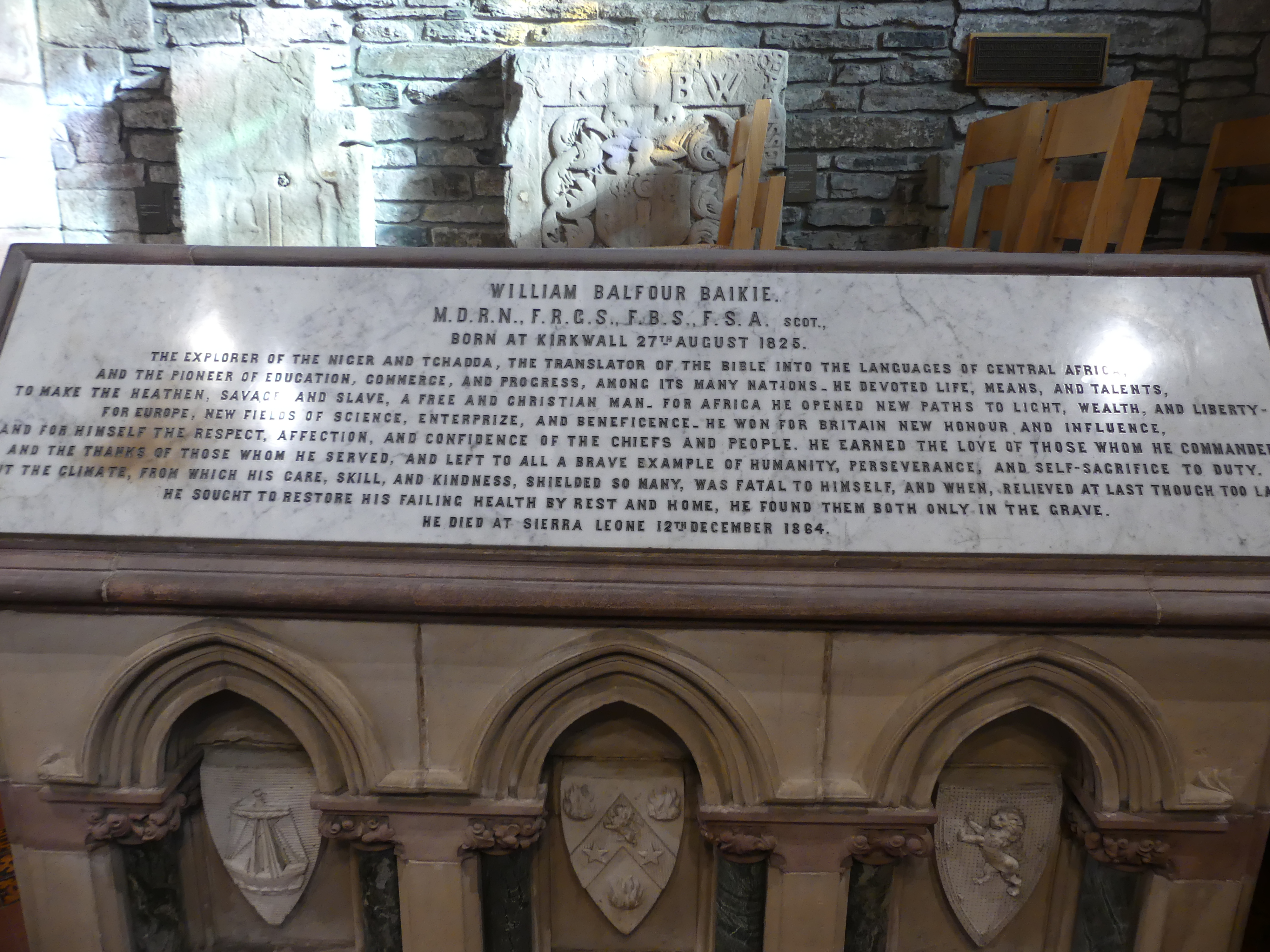
Some of the raw nature of the materials used in building the cathedral portray a genuiness that many of the ostenatious churches we have seen didn’t. This is a church where people worship not a monument to the faith occupying the building. We had purchased a booklet entitled “Reminisciences of the Cahtedral Church of St Magnus since 1846 by an eye witness” the witness was Samuel Baikie. The researcher preparing the booklet was George Burgher and published between 1990 and 2001. In my pictures you will see the tombstone of William Balfour Baikie August 1825 and the booklet records the restorative work undertaken by Samuel. It contains a floor plan of the deceased remains laid to rest in the church as at 1769 and other restorations performed through to the publishing of the booklet.

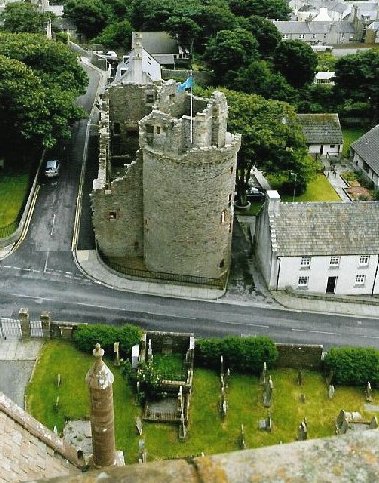
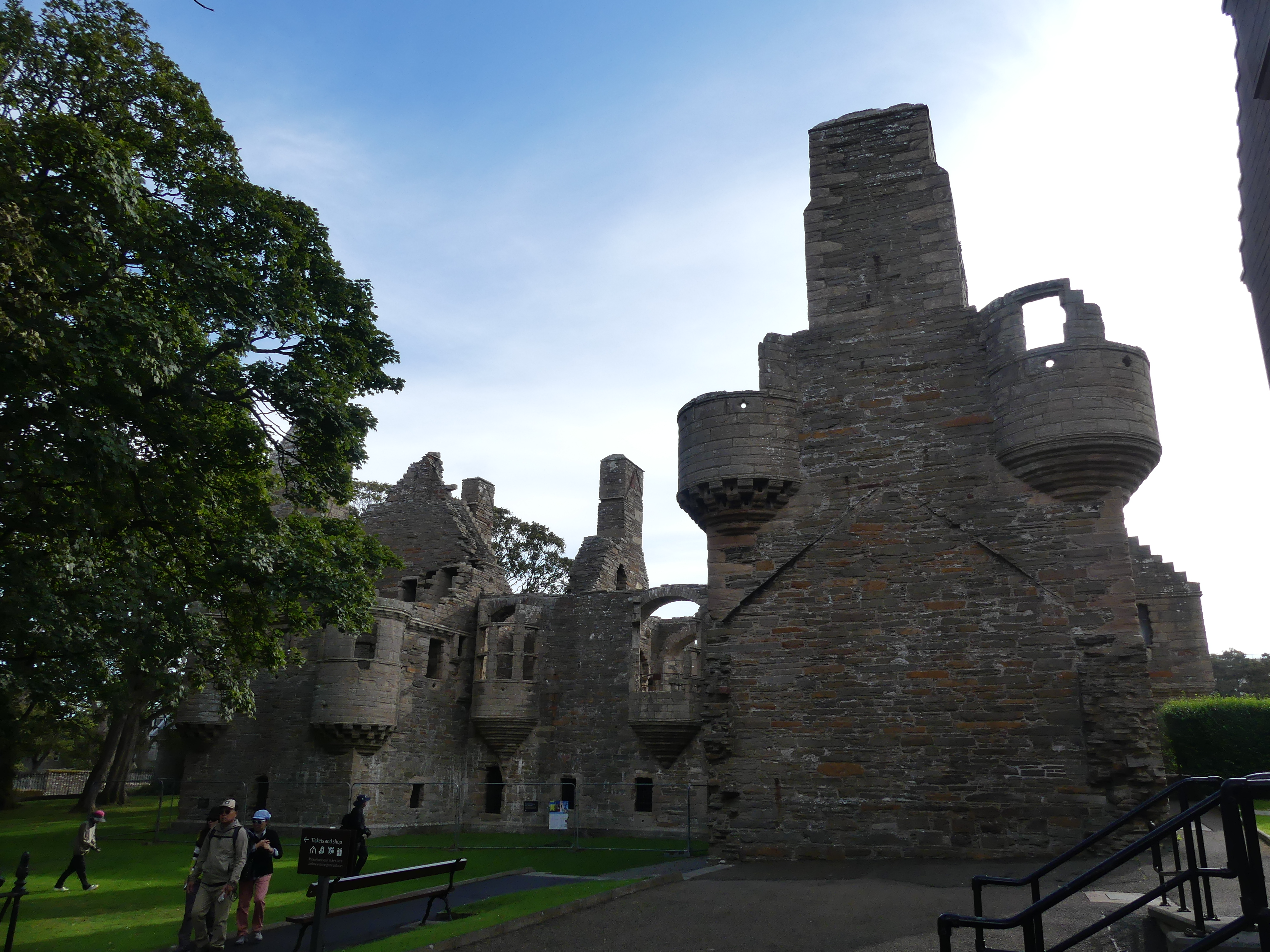
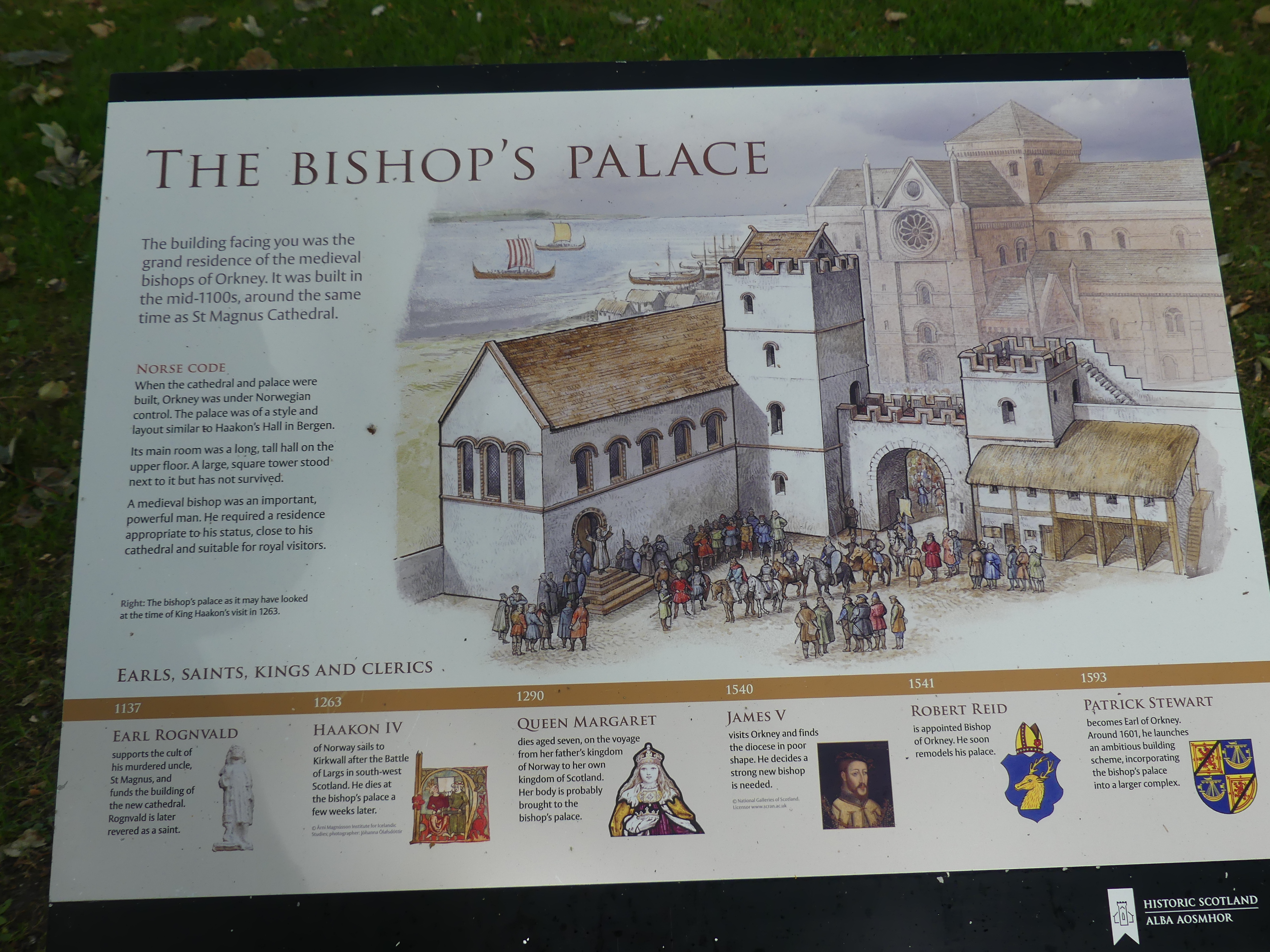
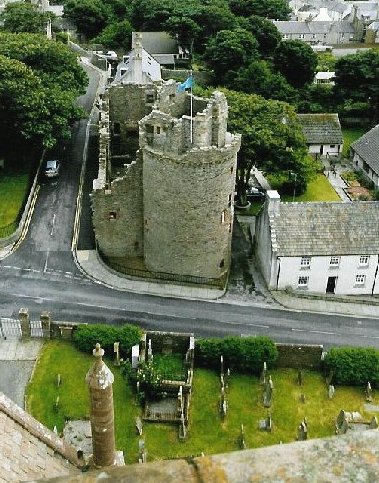
The cathedral is in Broad St at the corner of Palace St. The name of the street suggested we would find more and we did. The Bishops Palace and the Sherriff Court. The Bishop’s Palace, Kirkwall is a 12th-century palace built at the same time as the adjacent St Magnus Cathedral. It housed the cathedral’s first bishop, William the Old of the Norwegian Catholic Church who took his authority from the Archbishop of Nidaros (Trondheim). The ruined structure now looks like a small castle. Originally, it is thought to have been like a typical Royal Norwegian palace, with a large rectangular hall above store rooms and a tower house as the Bishop’s private residence. Wikipedia shows the Bishop’s Palace, seen from St Magnus Cathedral tower and I have copied this photo to the collage of photos below.

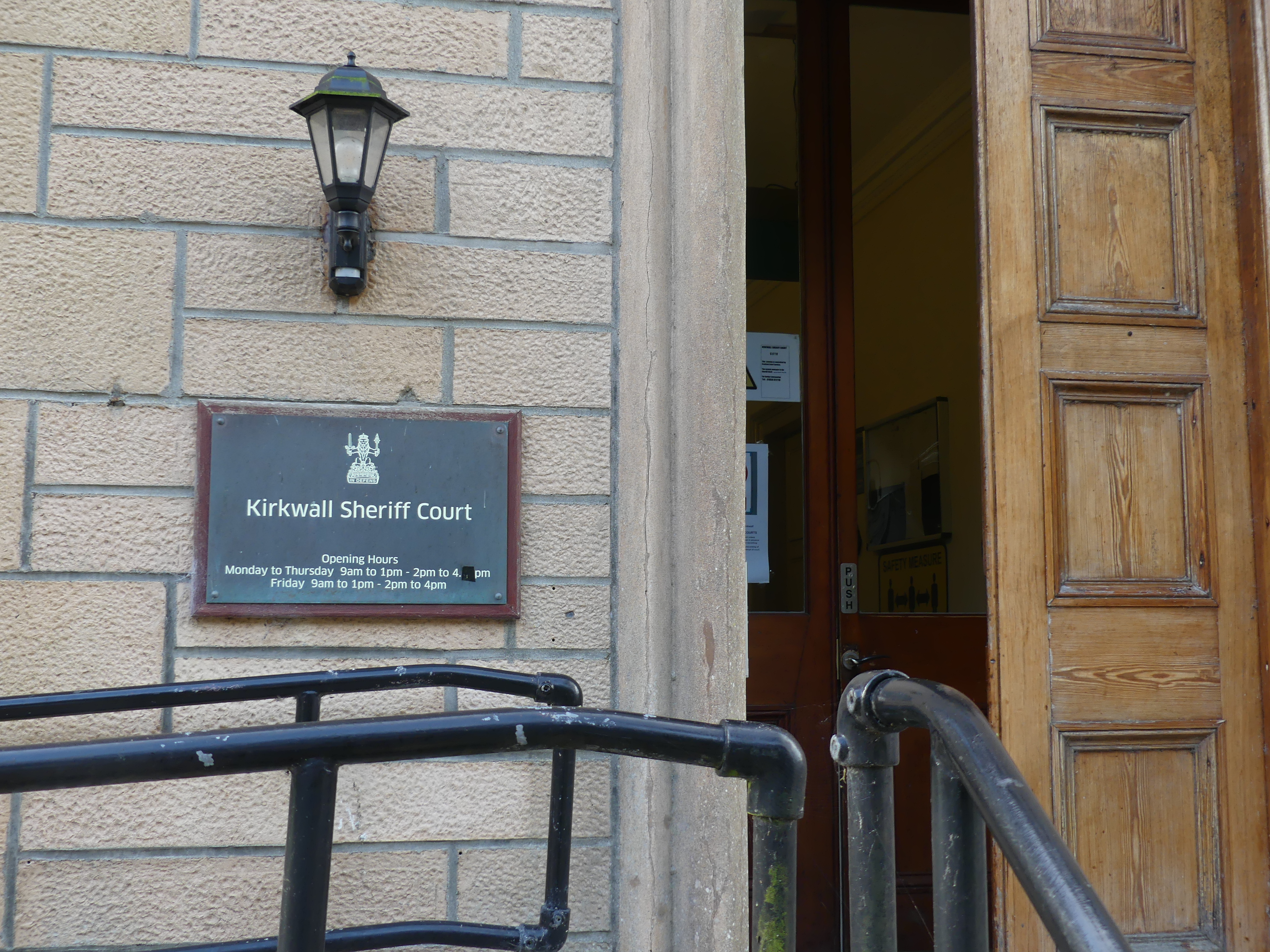
We also encountered the Kirkwall Sheriff Court. The Sheriff Court in Kirkwall continues to serve as the main court for the Orkney Islands, dealing with complex matters that surpass the jurisdiction of the Justice of the Peace Court (for minor offenses) but aren’t severe enough for the High Court (murder, treason). We found the Cathedral coffee shop which included a film on the history of St Magnus, the Cathedral and the Bishops Palace. The coffee shop was a mixture of uses and the parish offices.

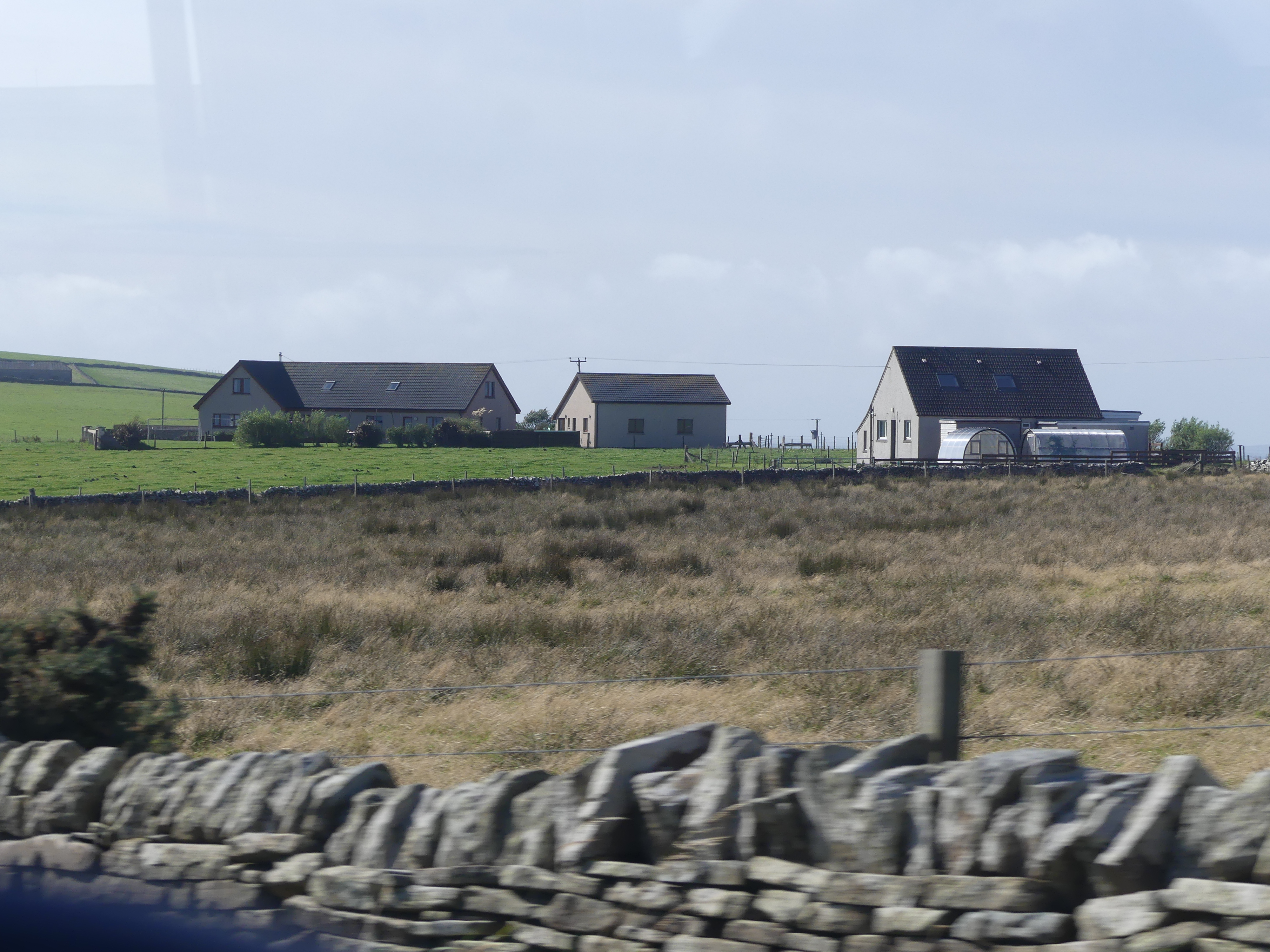
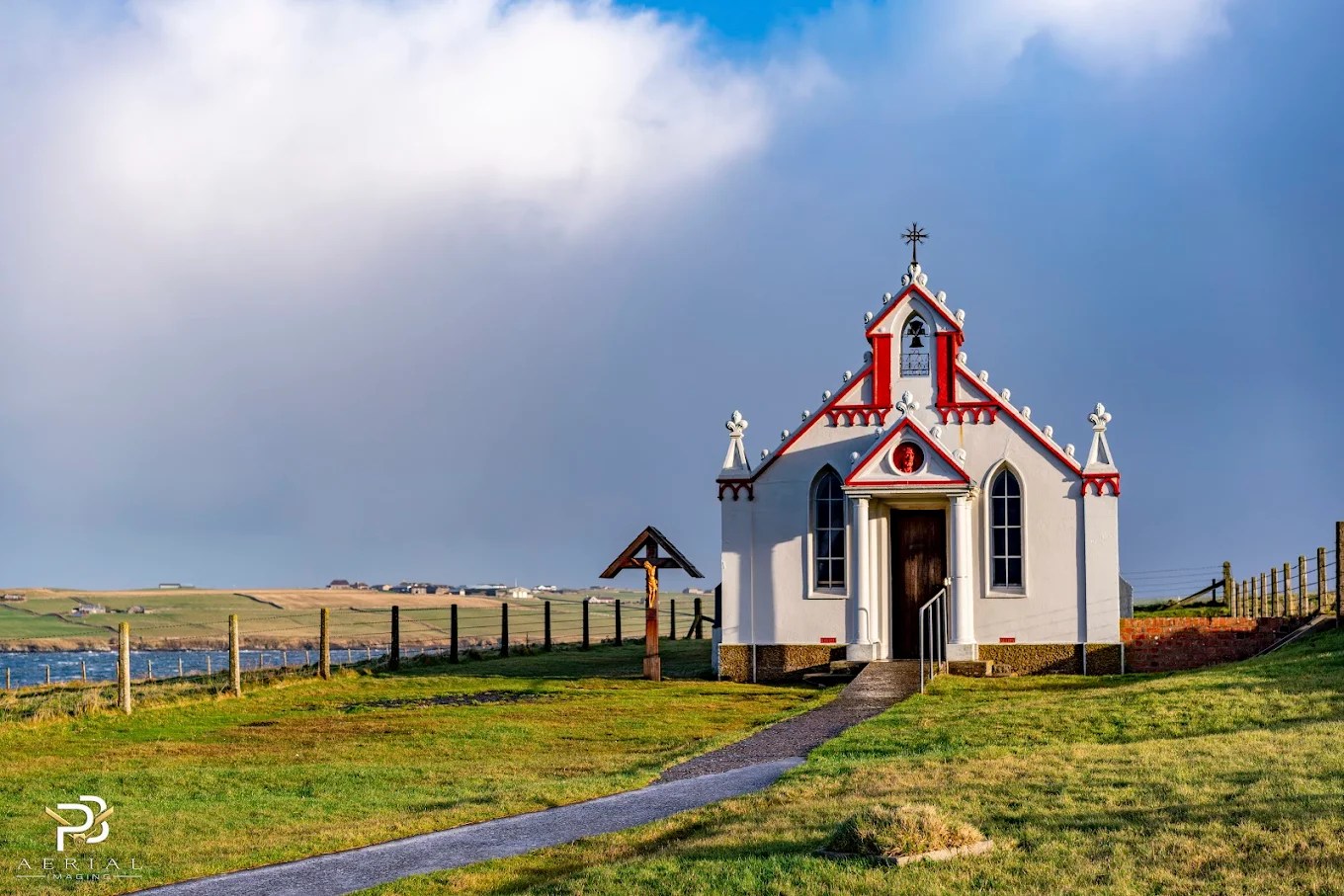
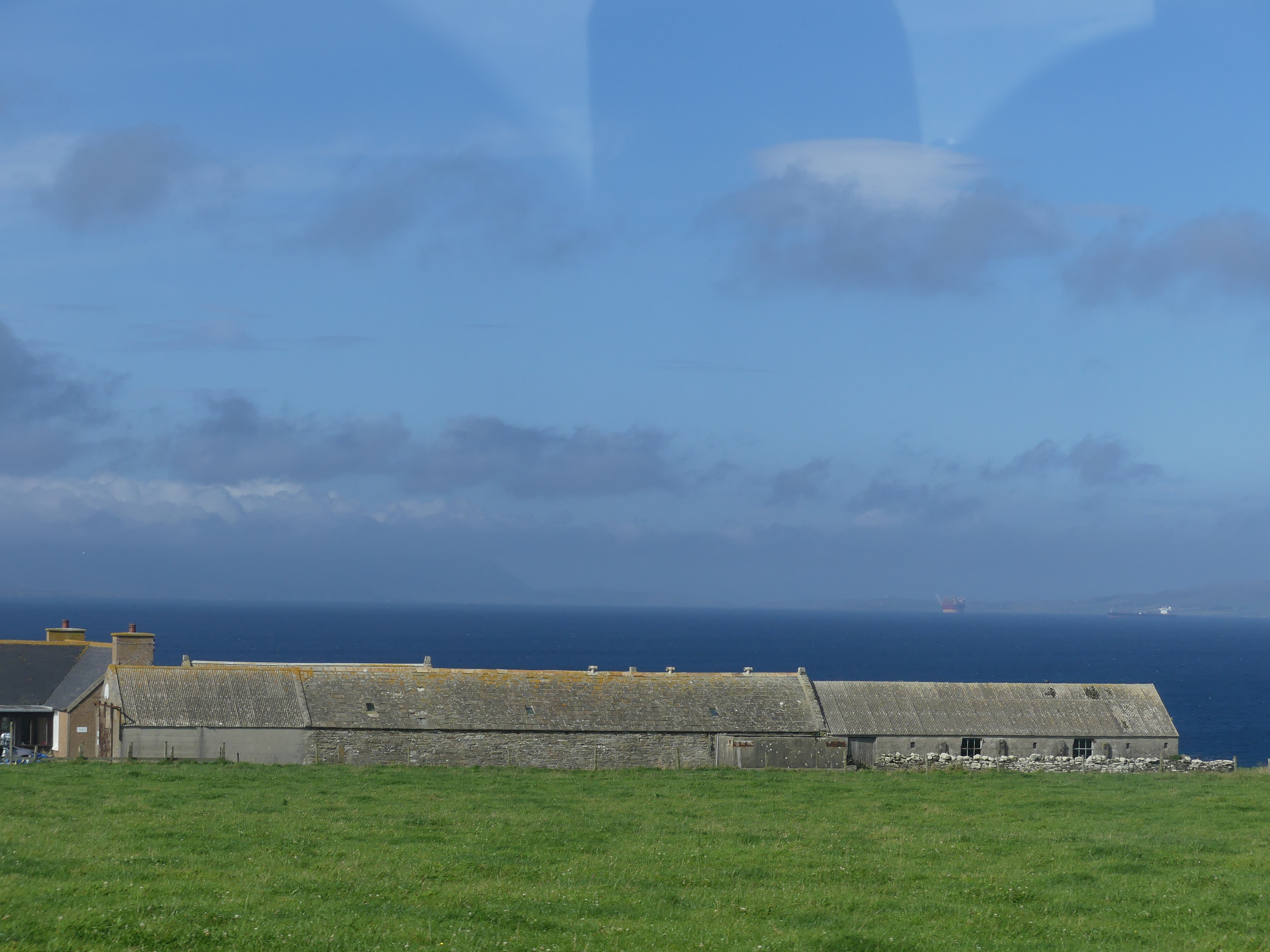
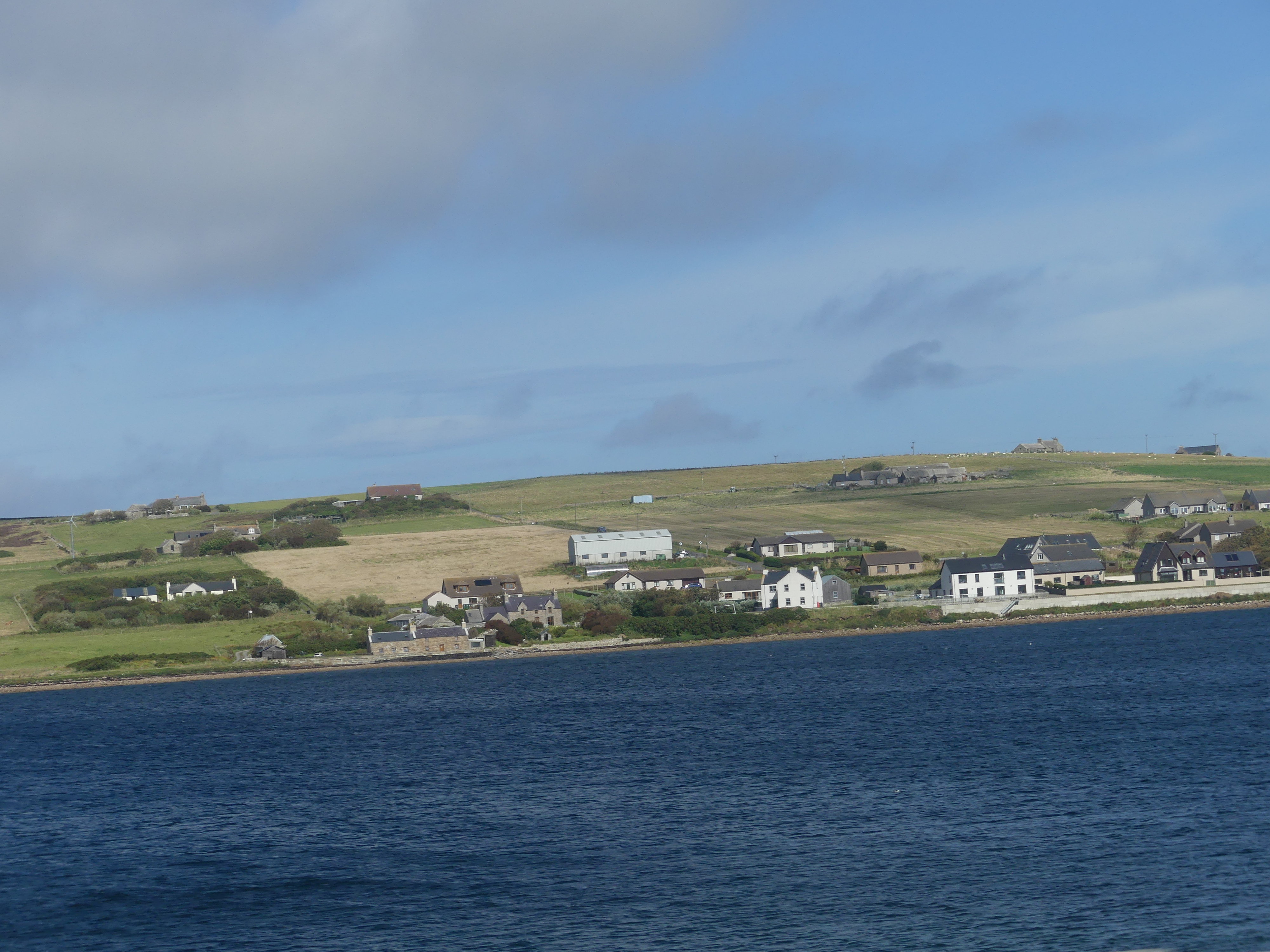
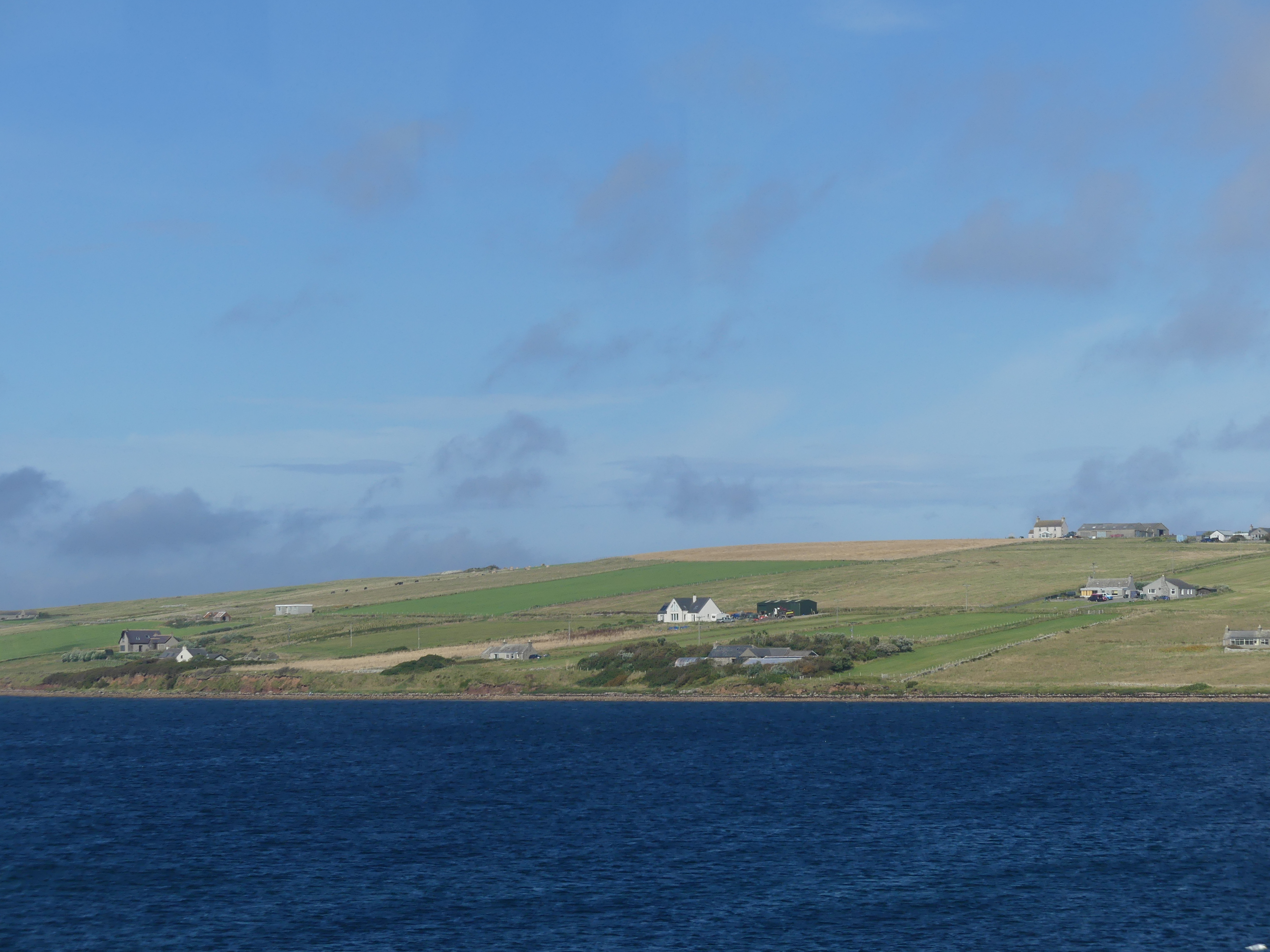
Refreshed we made our way to the bus station in Junction Rd intending to travel to a church constructed by WW2 Italian prisioners of war and onto St Margarets Hope on Ronaldsay. This was a local bus which provided transport for the islanders and tourists alike. My pictures below take you on the trip with us. The countryside has a likeness to Shetland – scattered stone farm houses and lots of sea views. By the time we arrived at the stop for the Italian Chapel, I was exhausted and the thought of an 800 metre walk to and from the chapel did not appeal. Preparing for this blog and researching the history of the chapel, I regret not making the time. Next time might be different. The POWs were not assisted in making the chapel but by 1943 the structure pictured below had been constructed.

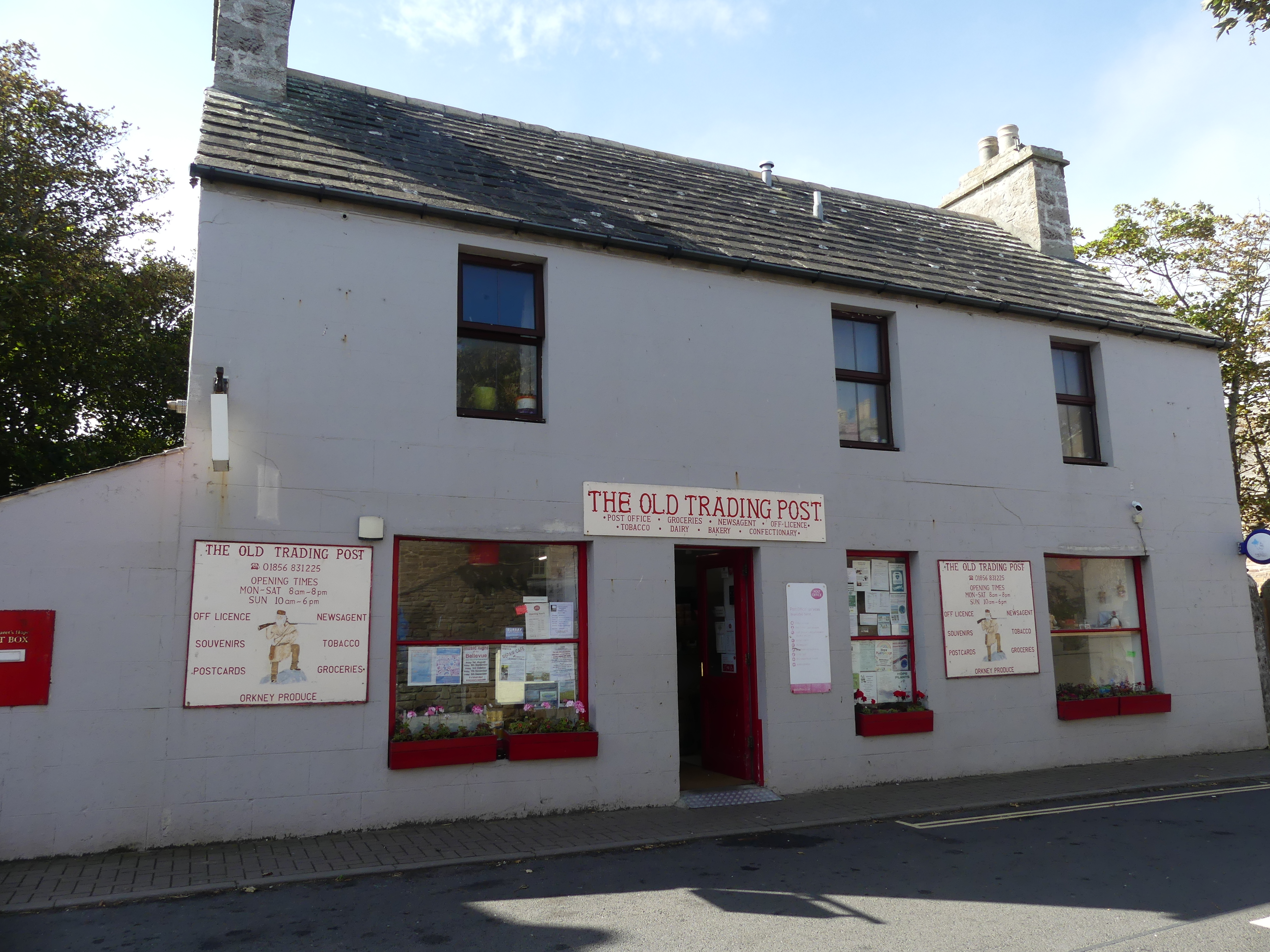
We remained on the bus until it reached its terminus – St Margarets Hope. The village by the sea was a collection of houses plus the post office. My last photo is the Post Office/Convenience store/ Accommodation booking centre – you name it. With such an evocative name I was disappointed. There was some disagreement about the bus journey and whether we should stay aboard to travel on. Unfortunately we didn’t stay on (my fault). It is likely we would have gone onto Burwick on the southern point of Ronaldsay but the information we didn’t have was when would it return to Kirkwall and would it be in time to reboard our ship.

We returned to Kirkwall and then to the ship. I was ready for a nap. Although it felt as though we had done little in Kirkwall, I was very happy to lie down in the cabin and soon was dreaming of the adventure tomorrow. All will be revealed in “THE RETIREES GO AROUND THE WORLD – DAY 5 SS NIEUW STATENDAM – Outer Hebredies – Isle of Lewis and Harris”

“THE RETIREES GO AROUND THE WORLD – DAY 3 SS NIEUW STATENDAM – Shetland Isles.”

Wikipedia says:

“Murders are rare in the Shetland Islands, but high-profile cases have made headlines, notably the 2024 murder of Canadian Claire Leveque by her partner, Aren Pearson, and the 2019 murder of Tracey Walker (also known as Tracy Ann Walker) by Ross MacDougall and Dawn Smith….”

“These events highlight isolated violent crimes in the islands, contrasting with the generally low crime rates often associated with the region.”

“These are noted as extremely rare events, with police describing the 2019 case as only the third murder inquiry in 50 years.
Despite the fictionalized murders in the popular “Shetland” books and series, the islands are generally considered a very safe place to live with low crime rates.”

So this sets the scene for our visit to Lerwick capital of the Islands and located on the main island.

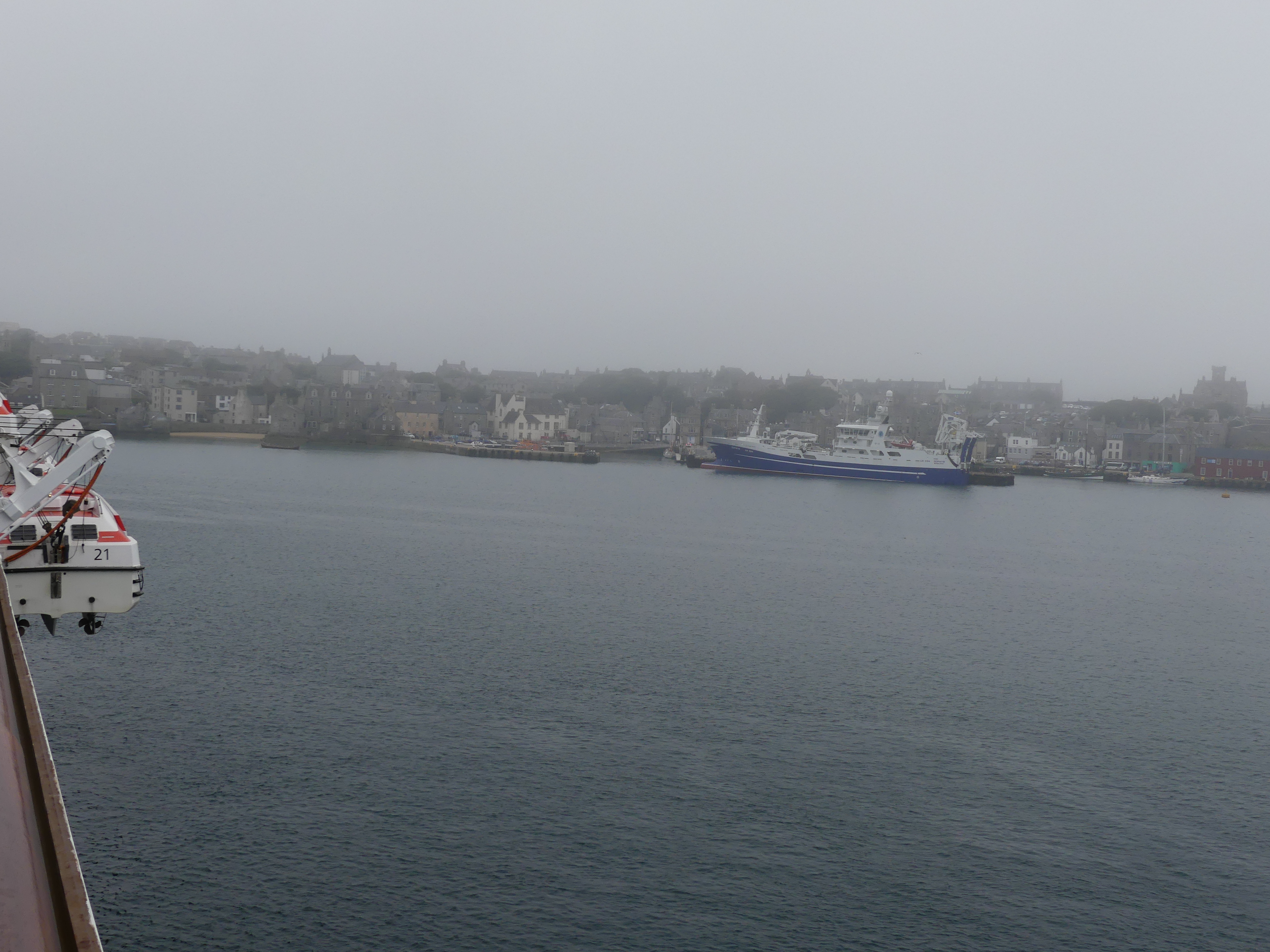
It was a cold and misty day on the east side of Mainland, Shetland and we were calling into Lerwick for the day. Lerwick is the main town and port of the Shetland archipelago, Scotland. Shetland’s only burgh, Lerwick had a population of about 7,000 residents in 2010. It is the northernmost major settlement within the United Kingdom. It is also the background in the BBC series Shetland.

The first settlement to be known as Lerwick was founded in the 17th century as a herring and white fish seaport to trade with the Dutch fishing fleet. Its collection of wooden huts was burned to the ground twice: once in the 17th century by the residents of Scalloway, then the capital of Shetland, who disapproved of the immoral and drunken activities of the assembled fishermen and sailors; again in 1702 by the French fleet. Fort Charlotte was built in the mid 17th century on Lerwick’s waterfront, and permanent stone-built buildings began to be erected around the fort and along the shoreline. Lerwick became capital of the Shetland Islands in 1708, taking over the function from Scalloway.

We had decided that we would take a taxi and view the burgh. So after the tenders dropped us off at Victoria Pier, we approached the first cab in the rank and organised a two hour taxi ride with a very amiable cab driver (but not a tour guide) for 120.00 quid.

We were hoping to see the wild Shetland ponies and our driver had a fair idea where to find them.

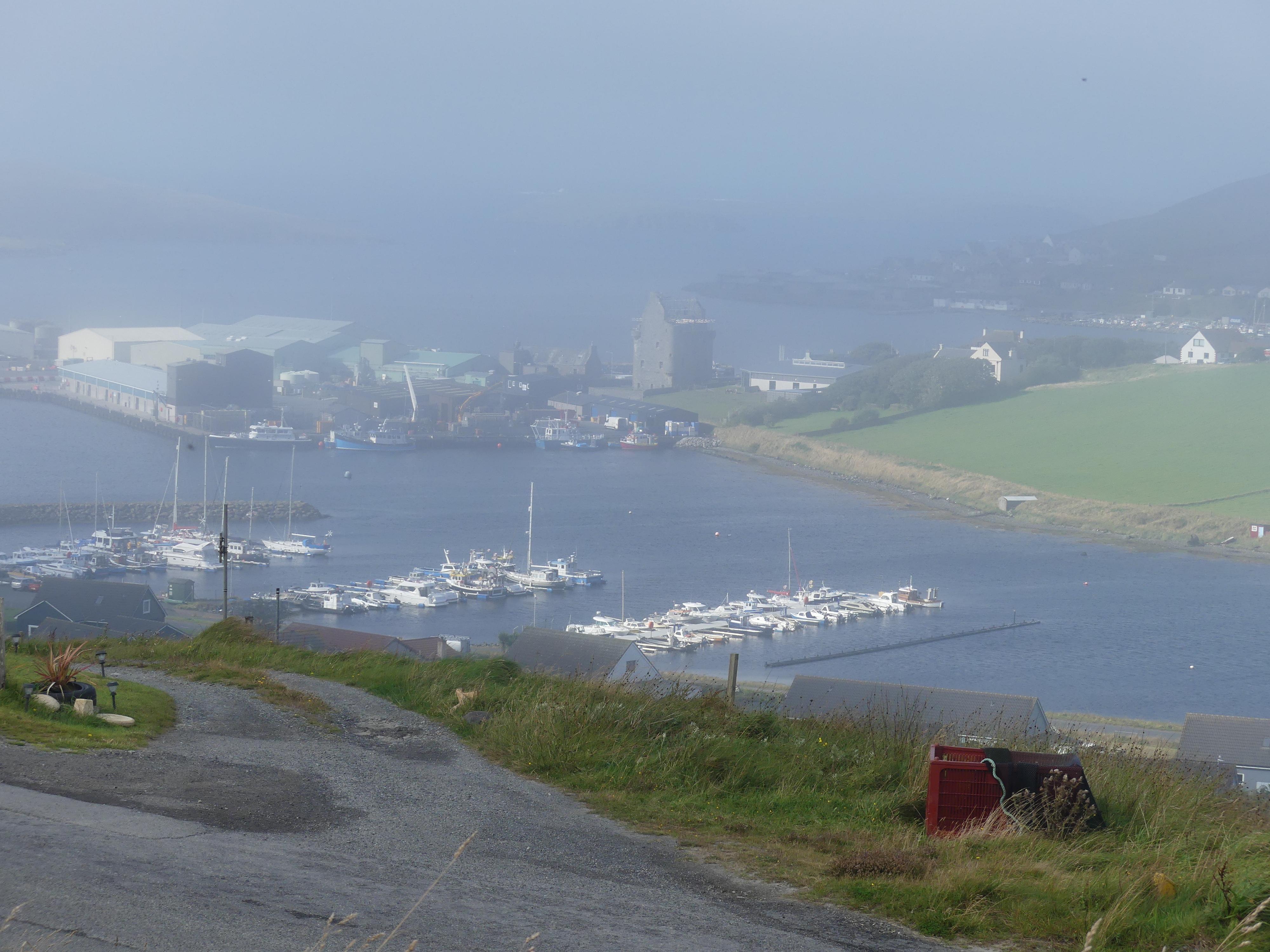
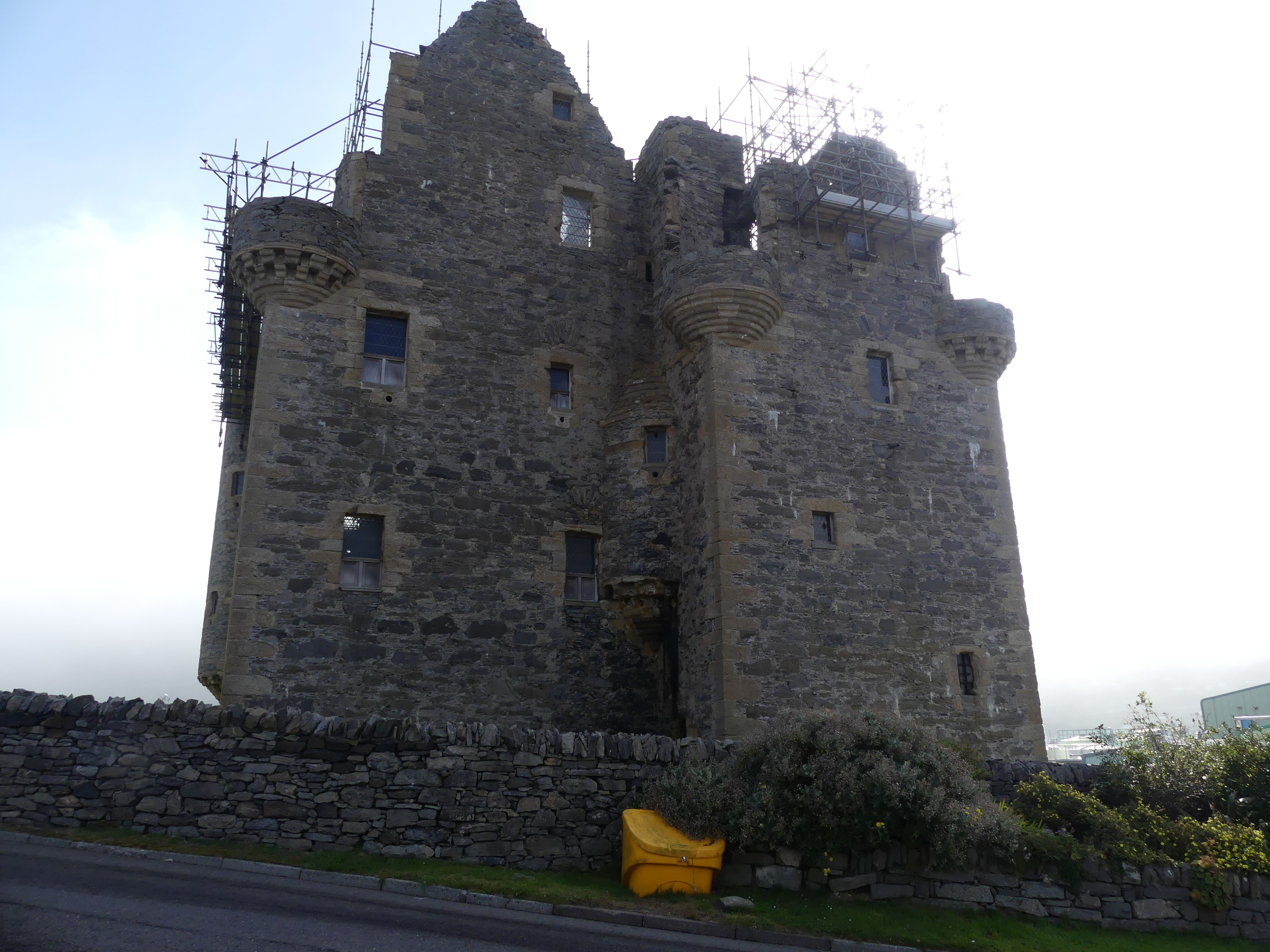
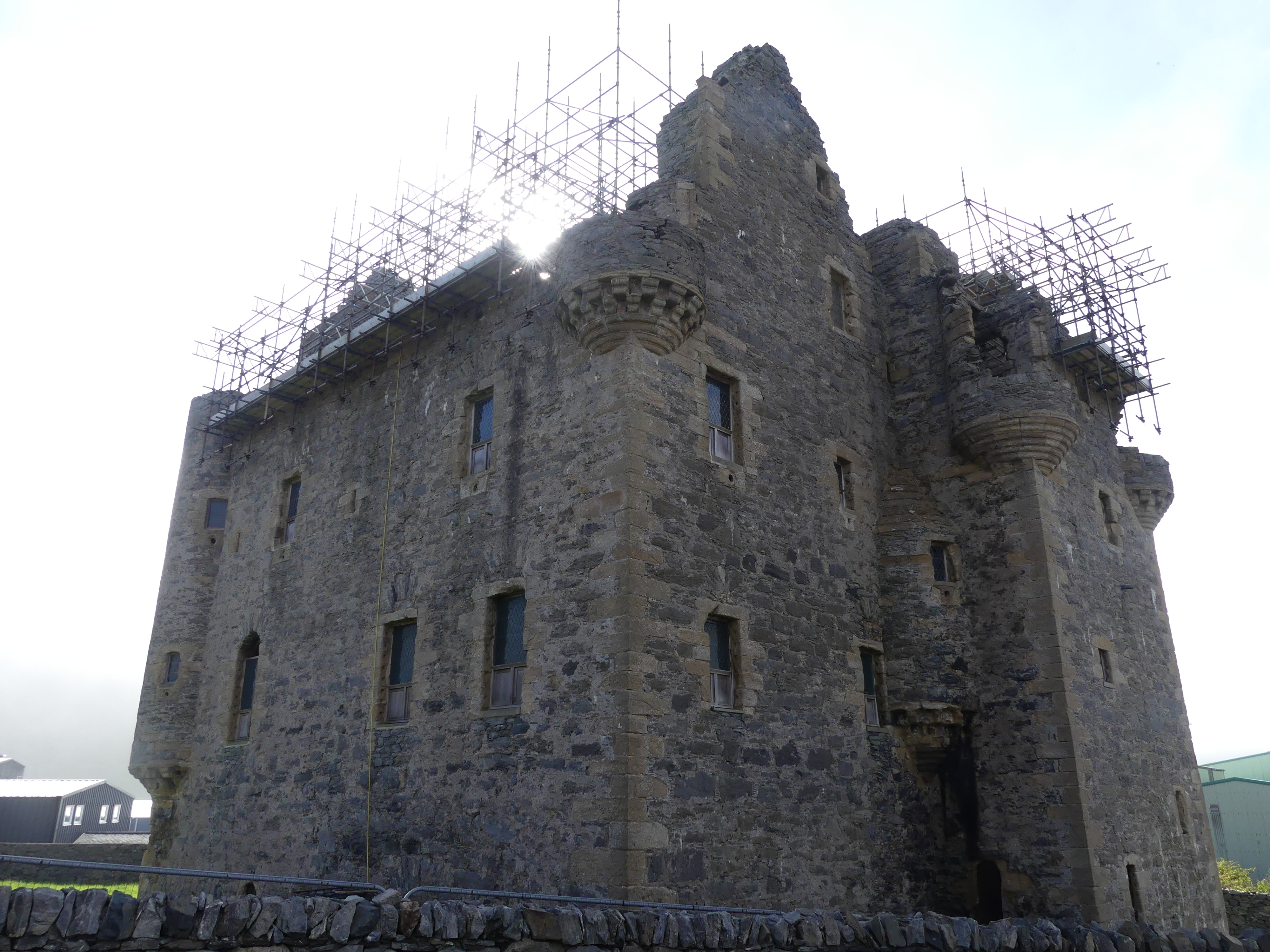
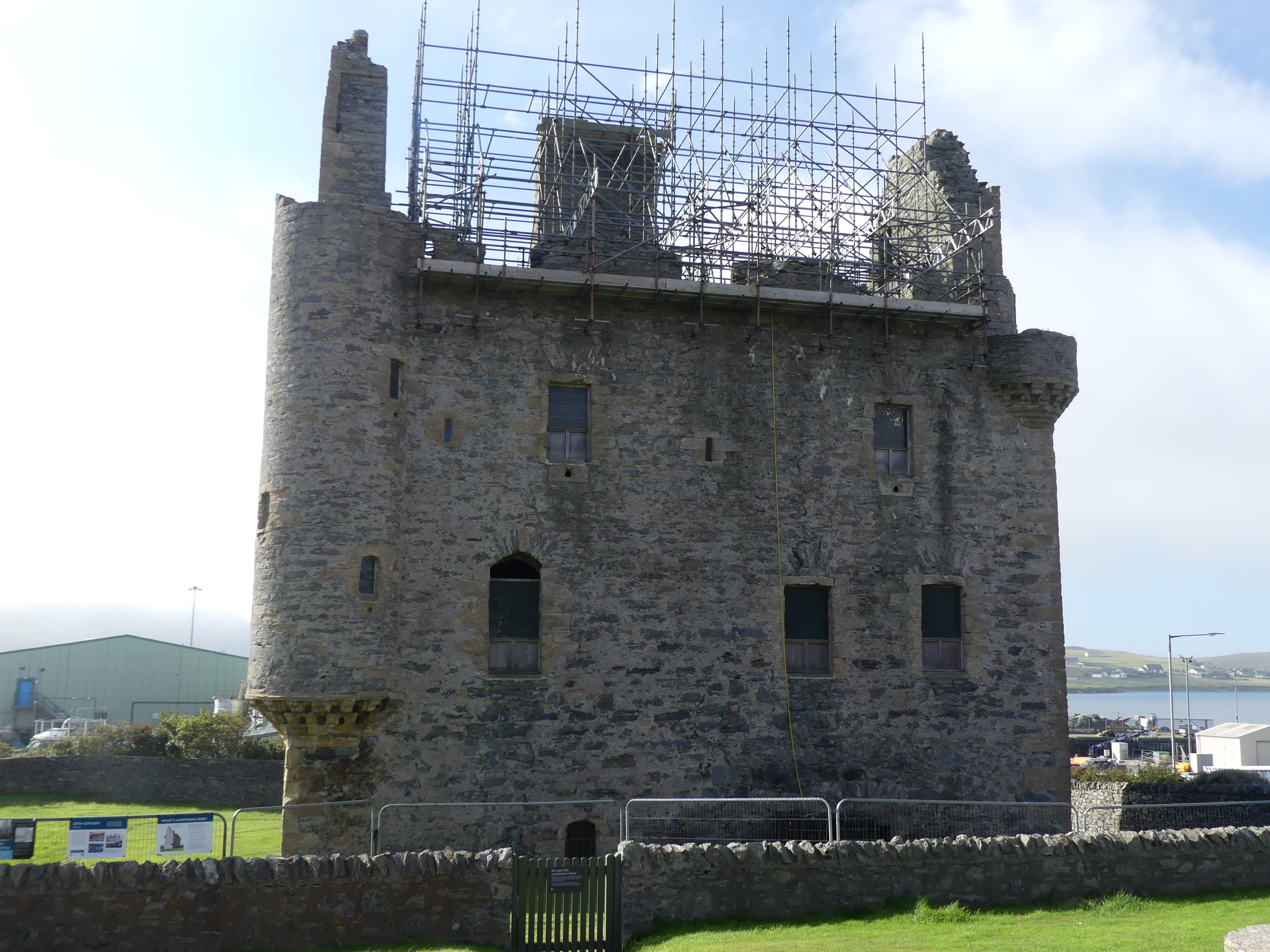
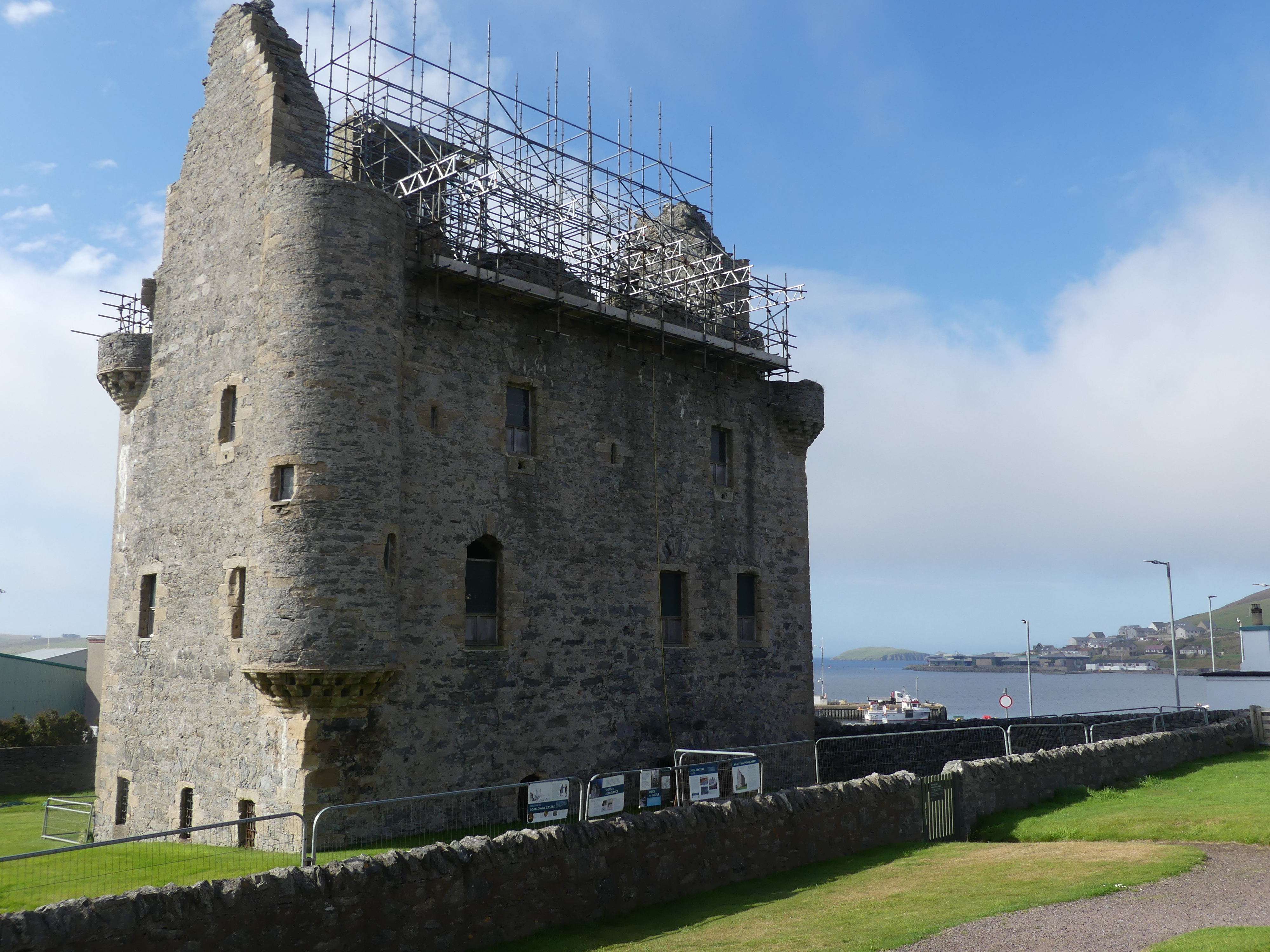
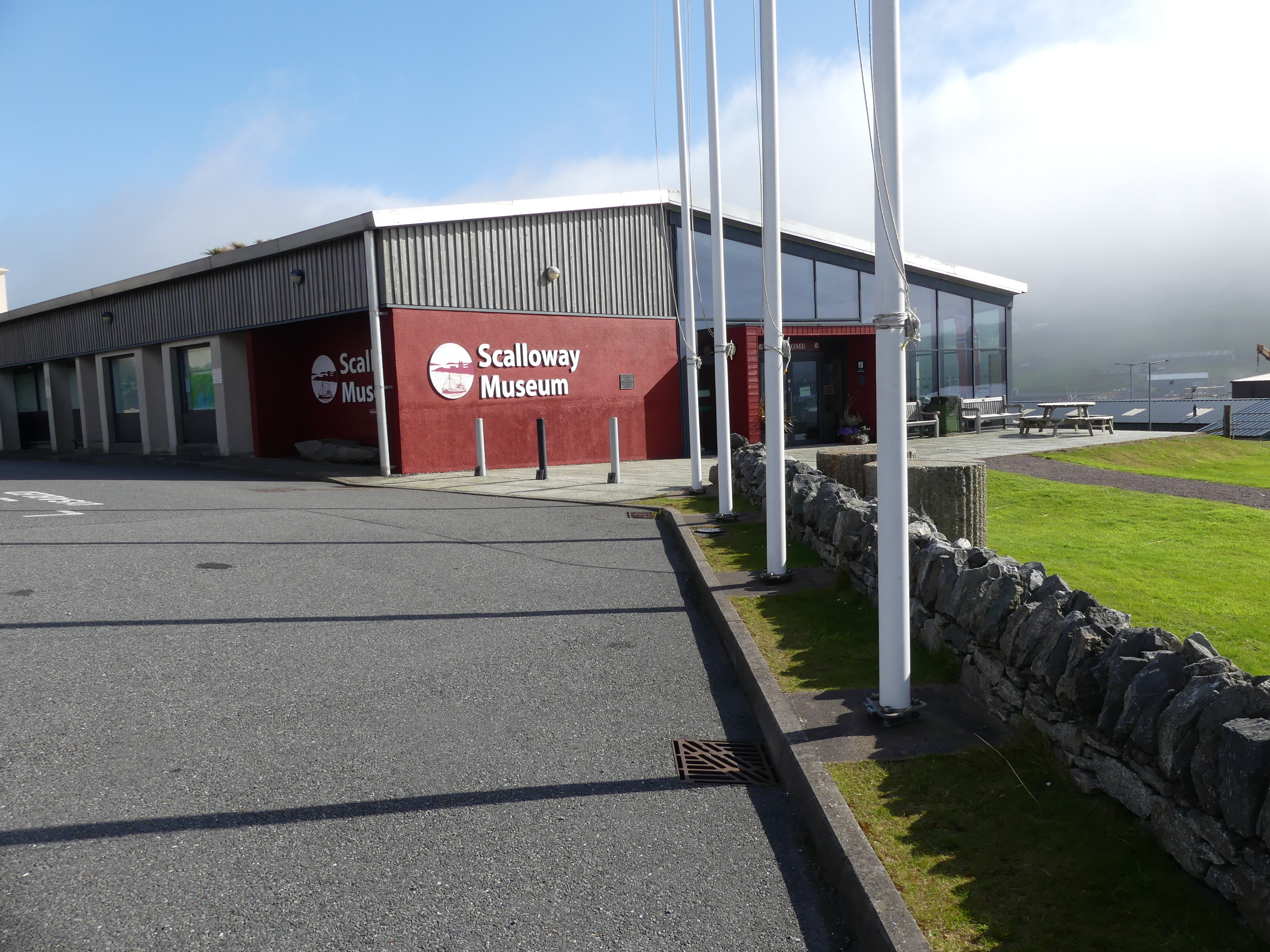
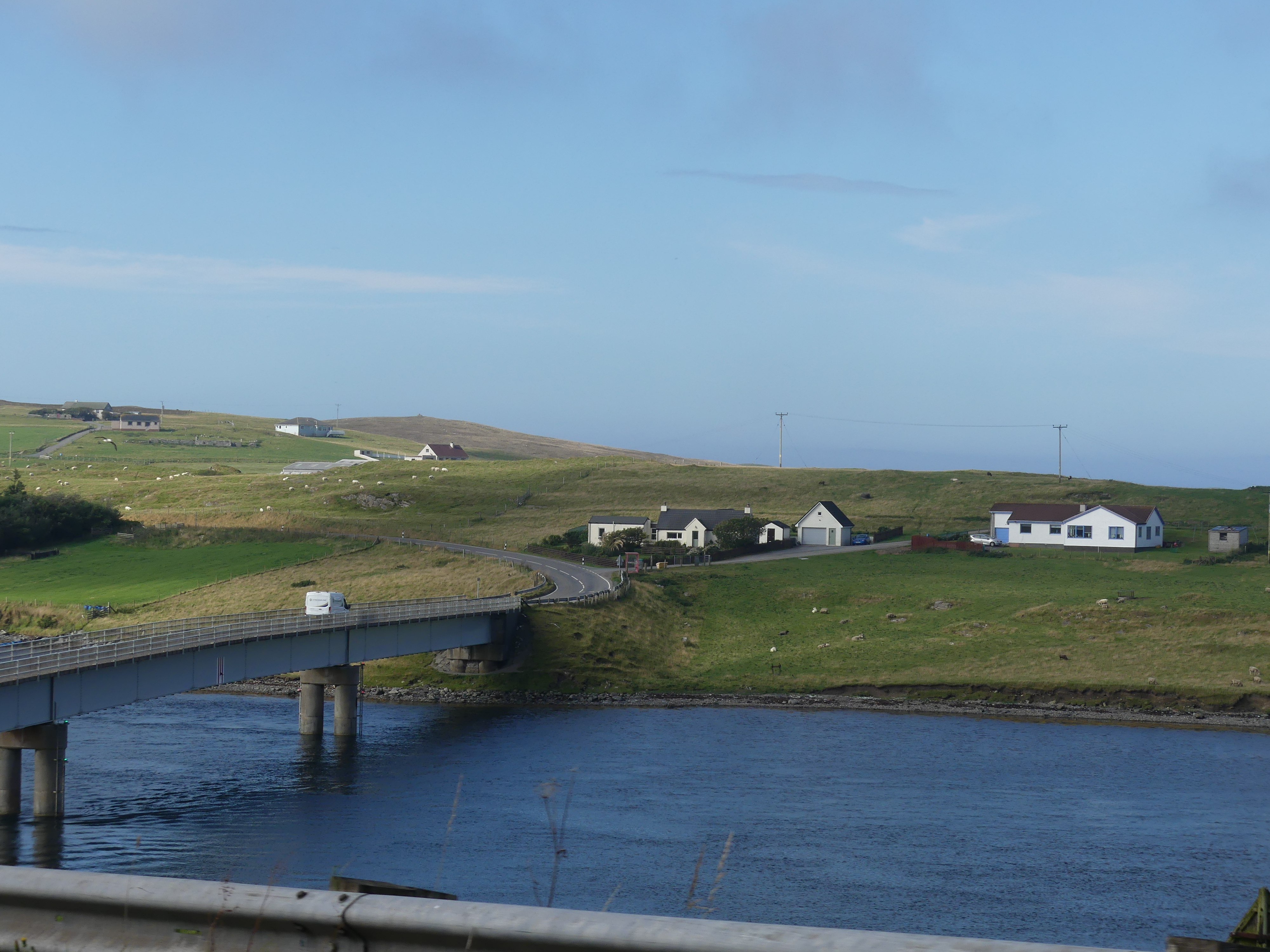
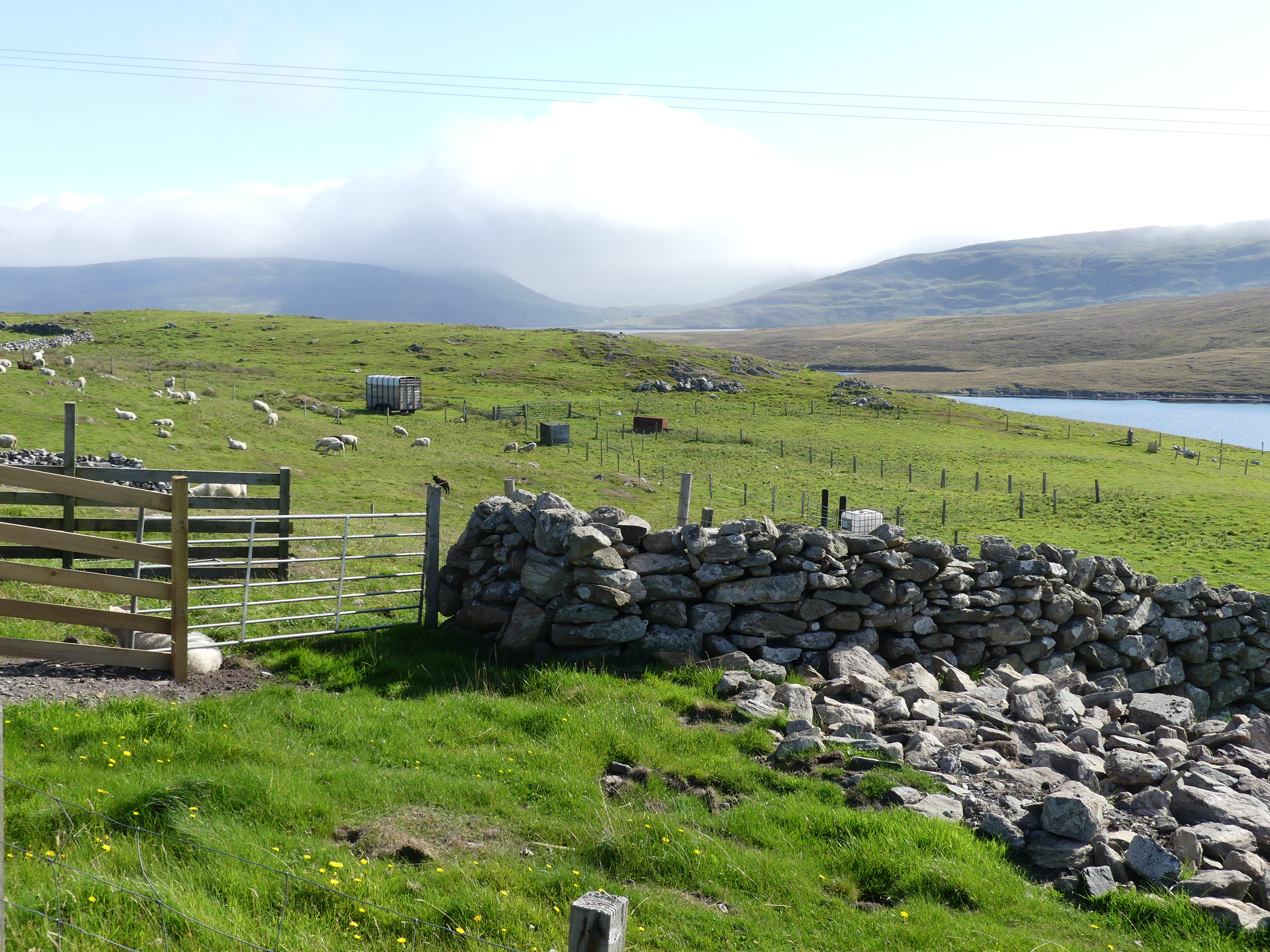
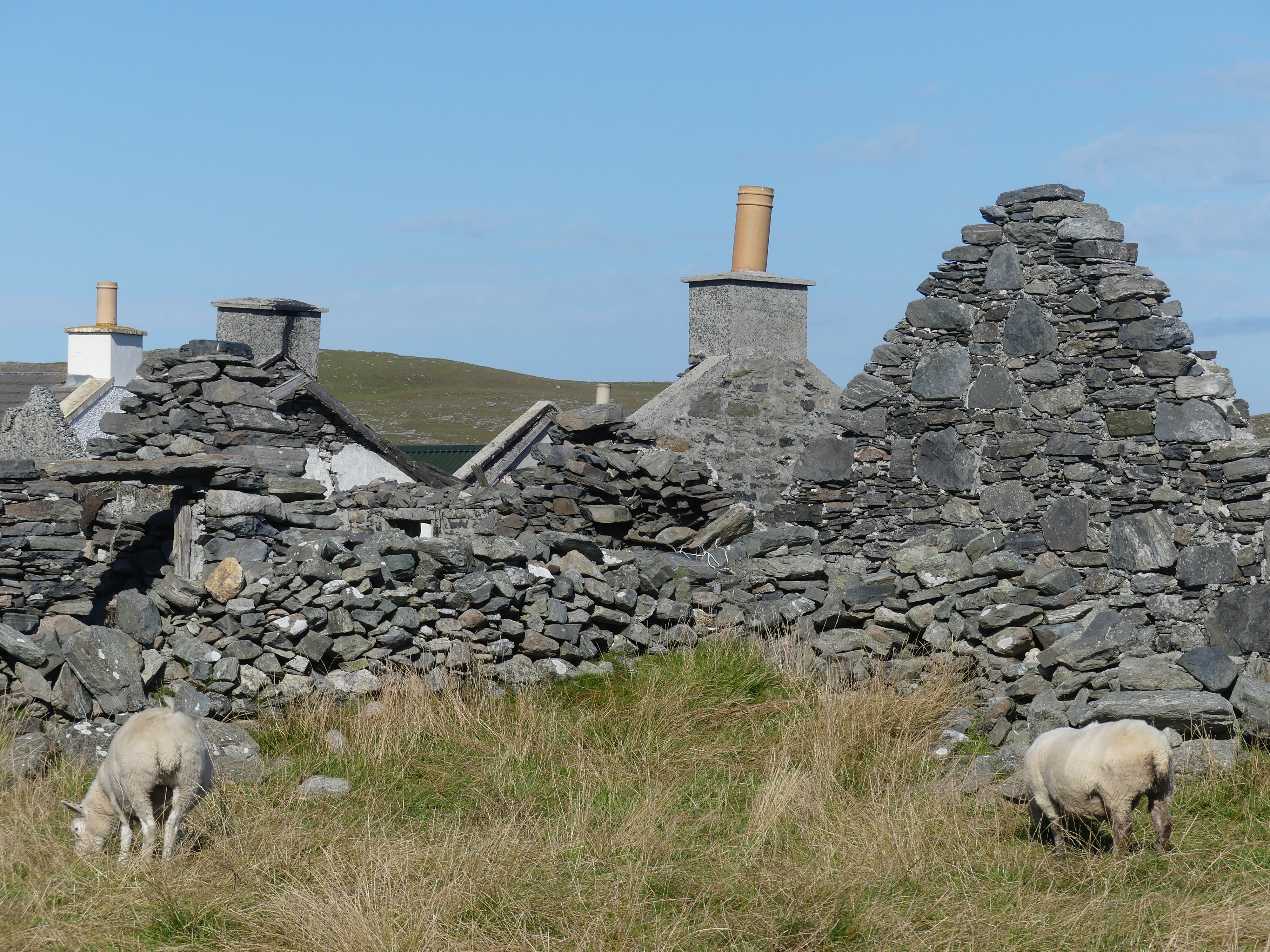
He then proceeded to drive us to Scalloway. Scalloway is the largest settlement on the west coast of the Mainland. The village had a population of roughly 900, at the 2011 census. Now a fishing port, until 1708 it was the capital of the Shetland Islands. Scalloway Castle is a tower house in Scalloway. The tower was built in 1600 by Patrick Stewart, 2nd Earl of Orkney, during his brief period as de facto ruler of Shetland. On arriving it was clear that the castle was no longer open to visitors. Driving into Scalloway we had a great view of the village and its harbour but it remained misty. The castle was bedecked with scaffolding and signs to not enter the premises. My pictures are below. Towards the rear of the castle was a museum but unfortunately not open this day. In the paddock at the rear of the museum a couple of “wild” ponies were grazing.

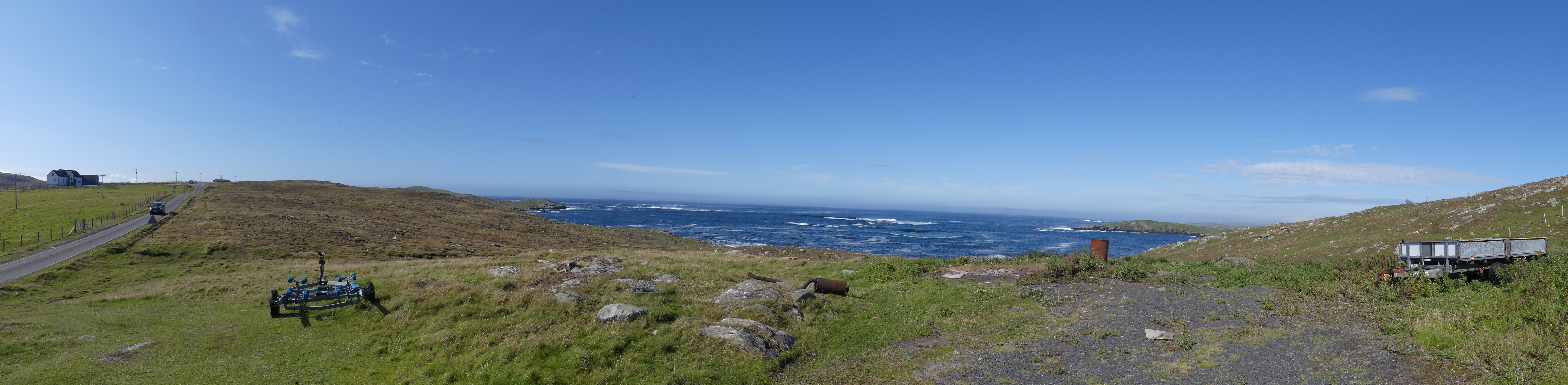
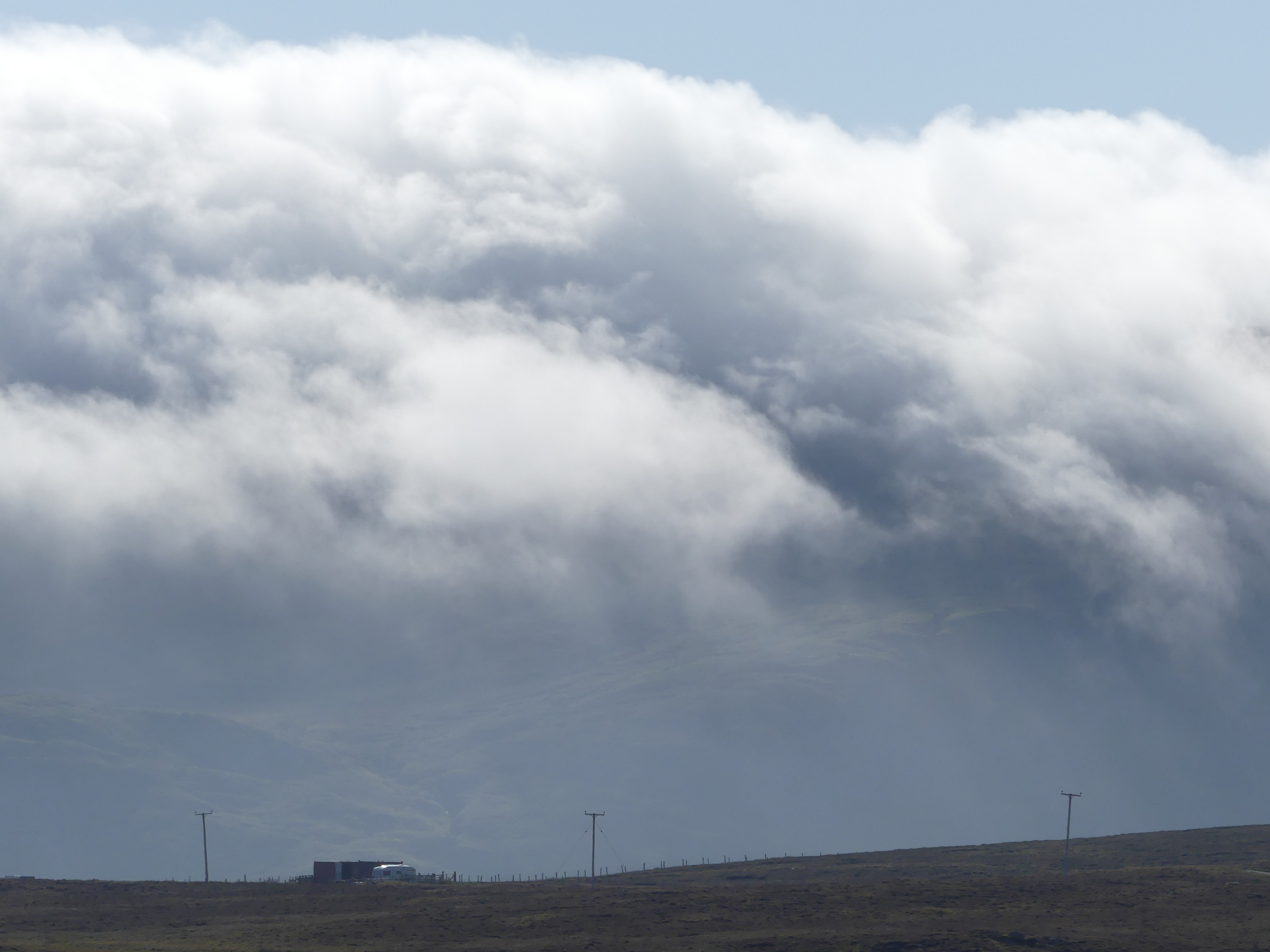
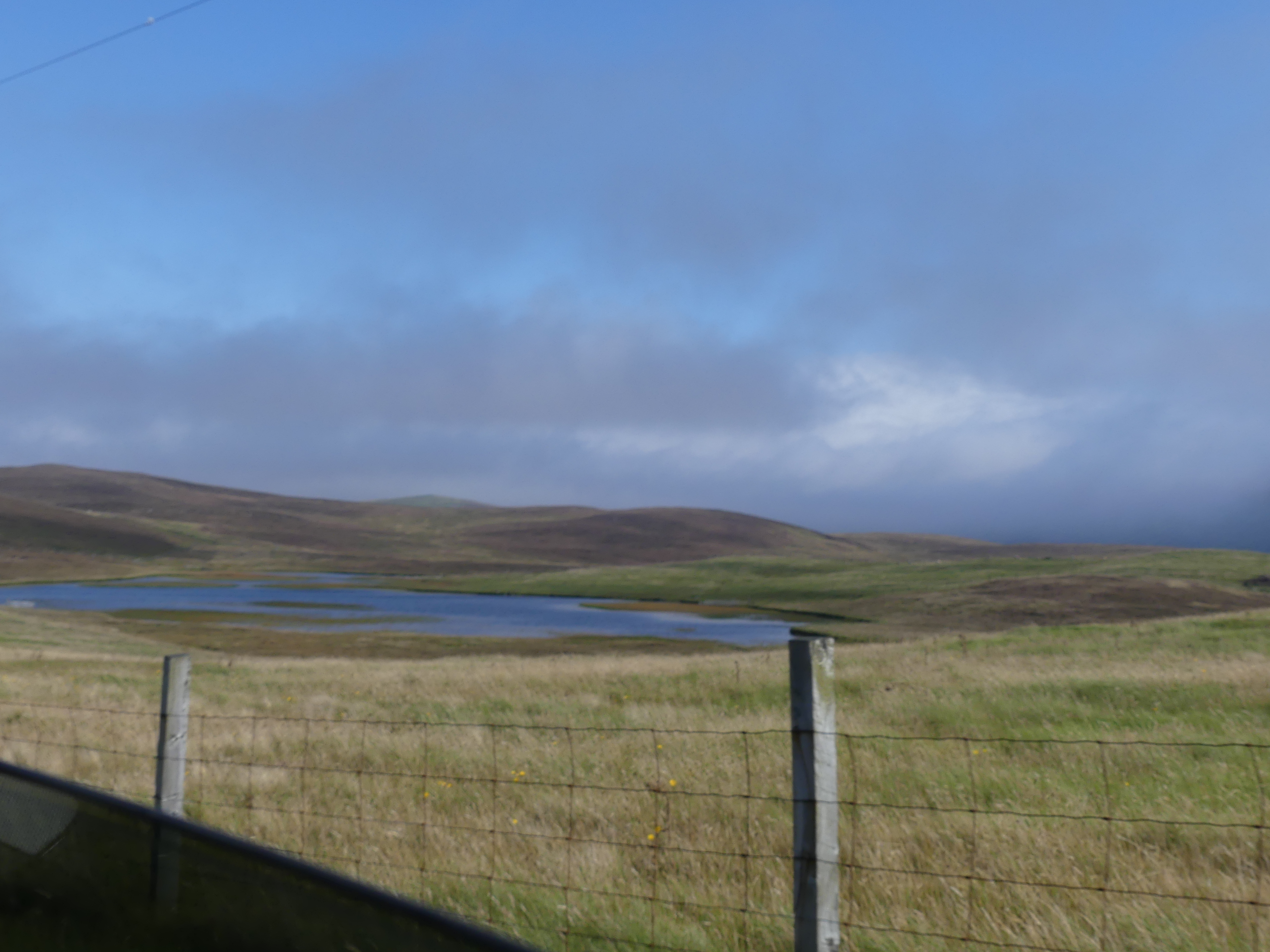
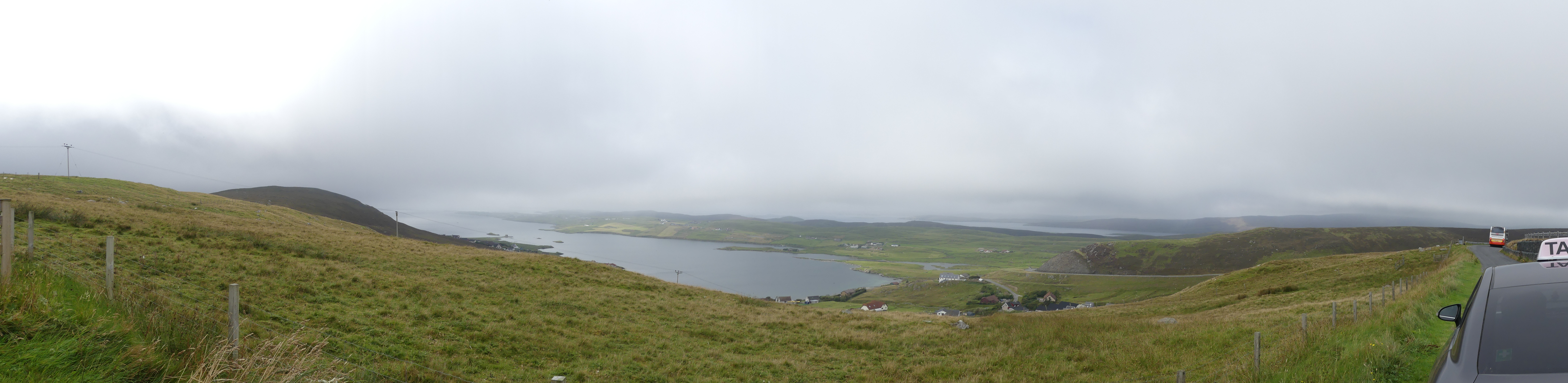
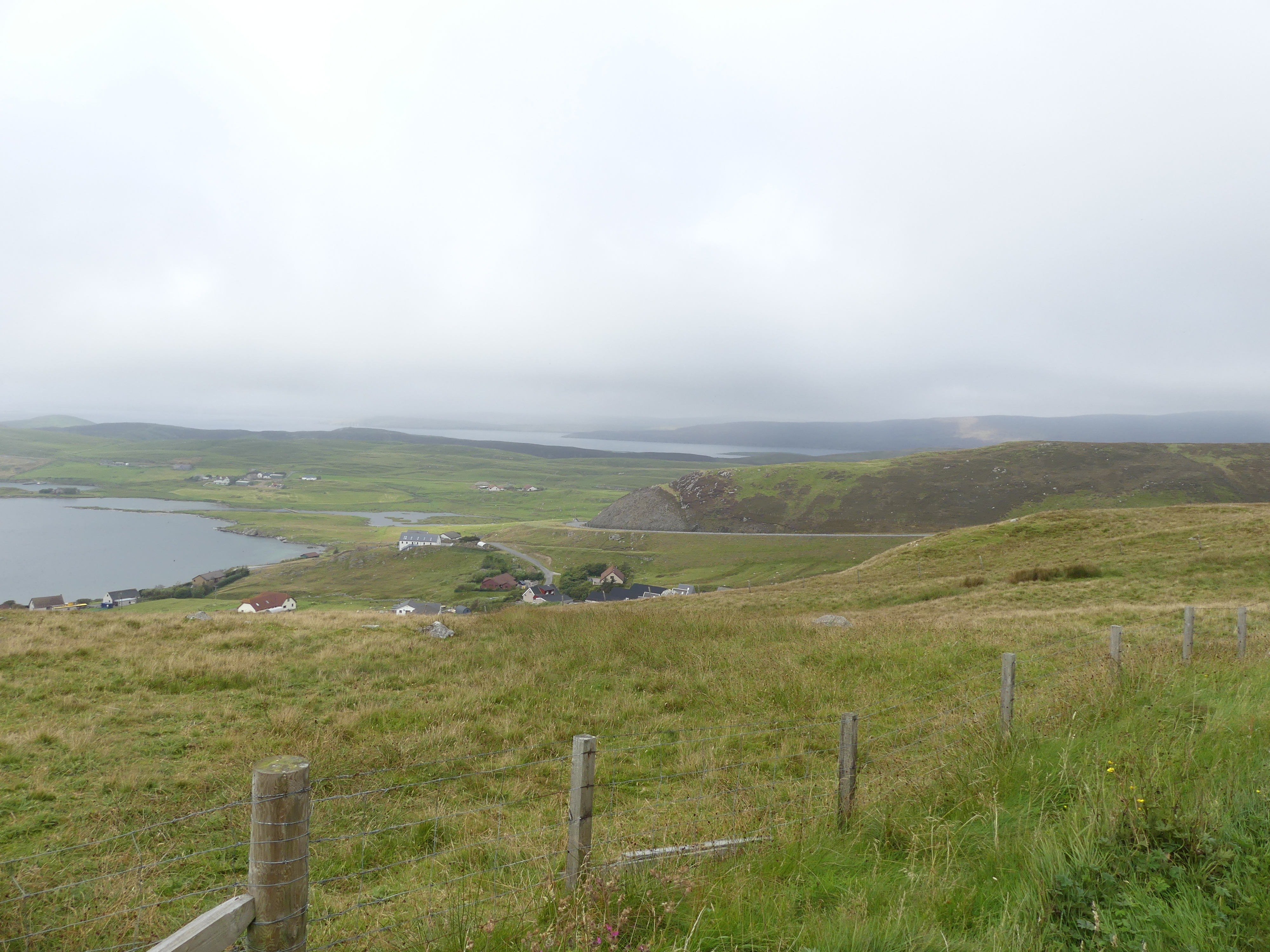
We left Scalloway to see more of the western side of the island. The weather was trying to clear but it was obvious that the eastern side was still overcast from the dense clouds shrouding the central hills. I will tell the story in pictures.

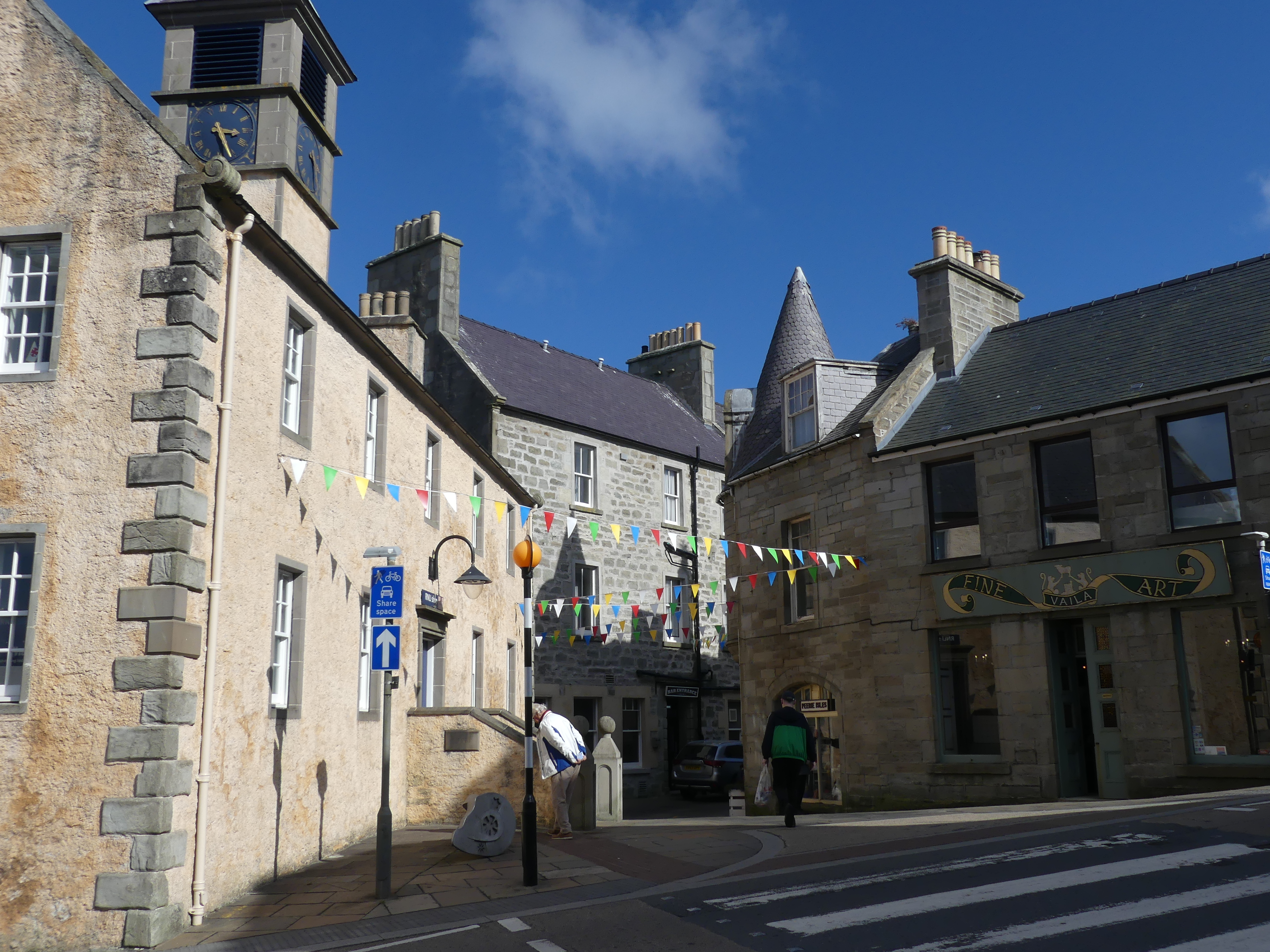
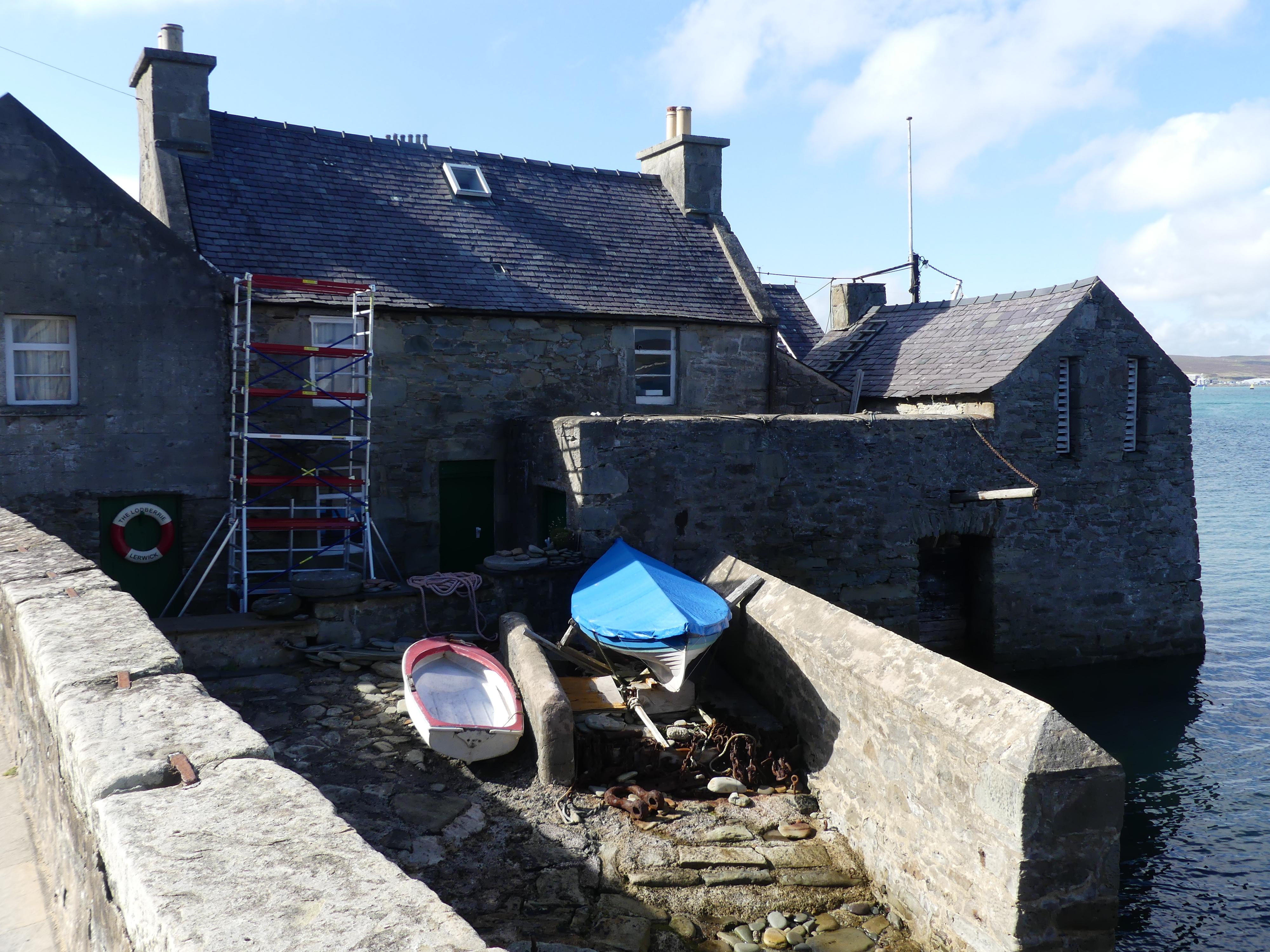
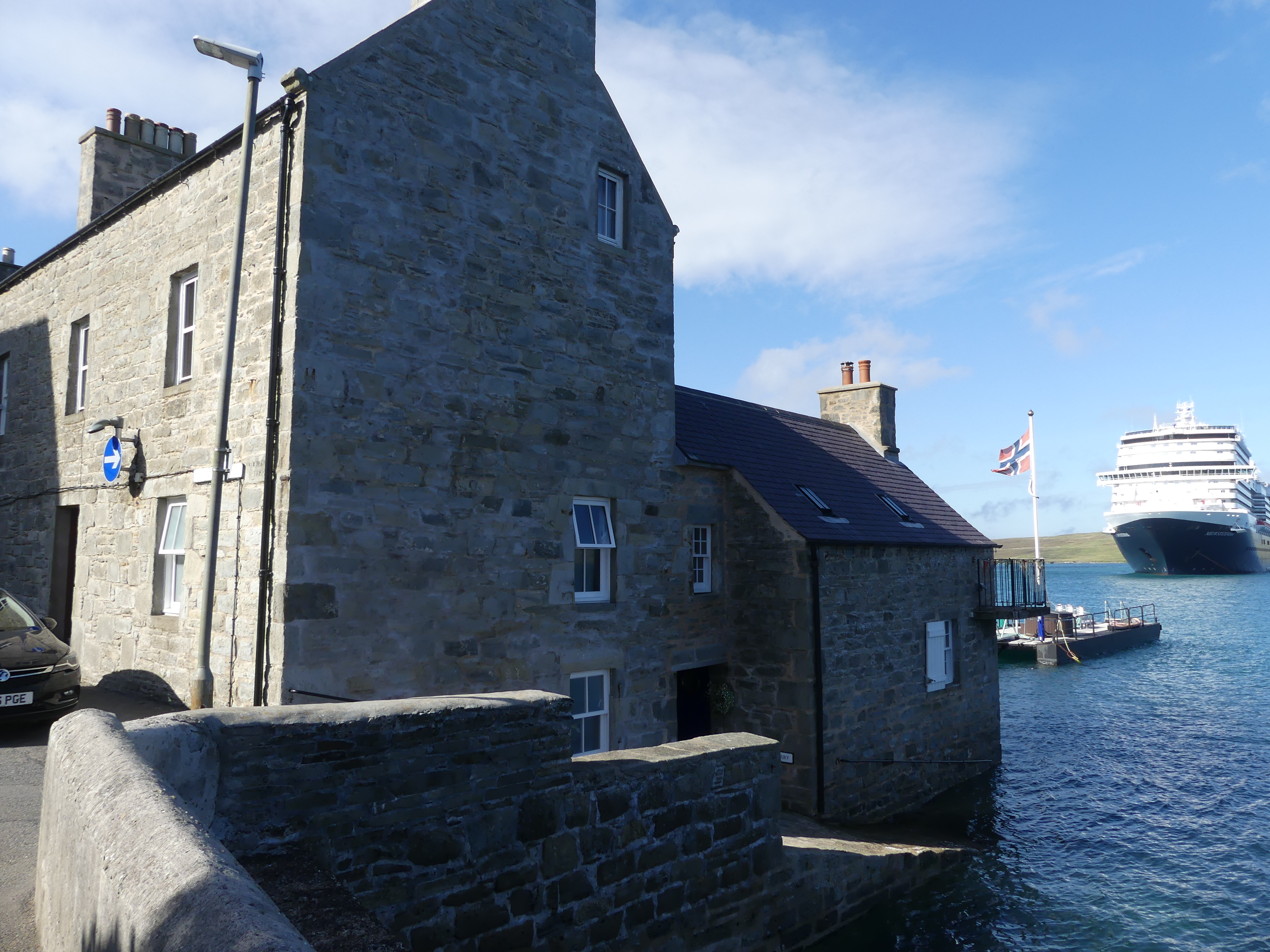
Our cab ride had come to an end with the car re-entering Lerwick and returning to the cab rank. On foot we started to explore the town. The old town was still very much the centre of town with Fort Charlotte at the northern end of the main road. The houses with Lodberries attached we quite evident and Jimmy Perez’s house and Lodberry is picture 4 below with our ship in the background.

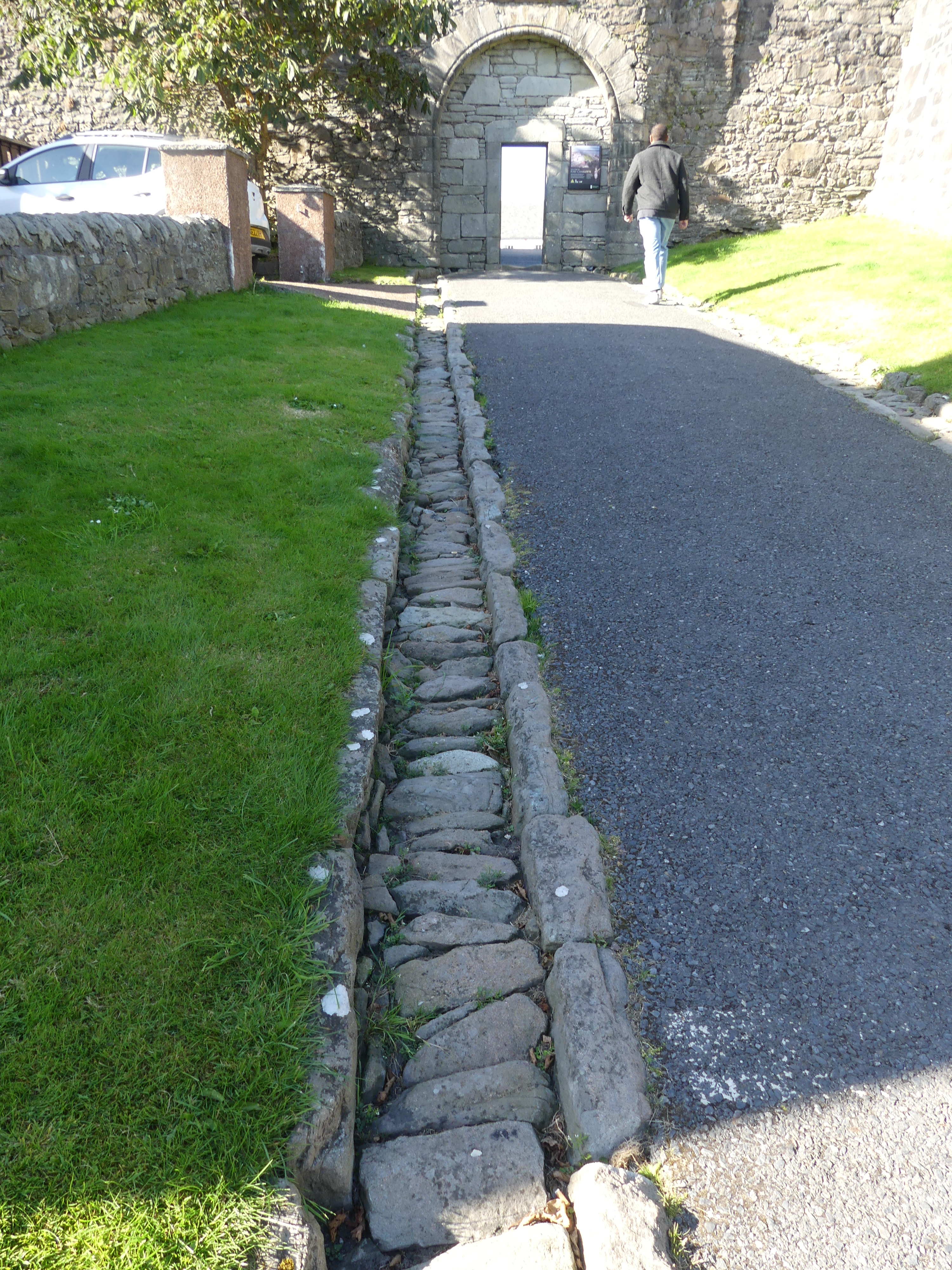
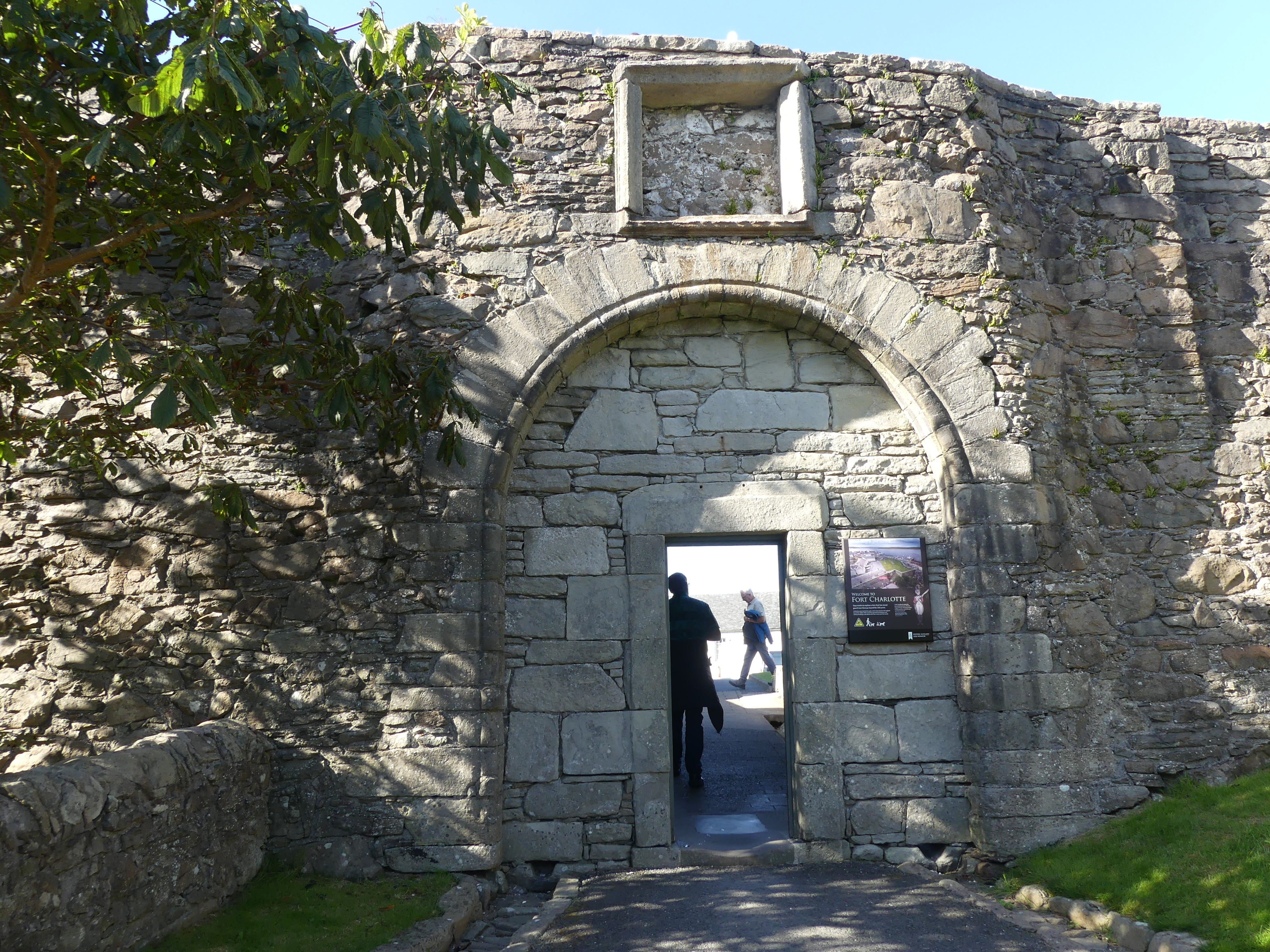
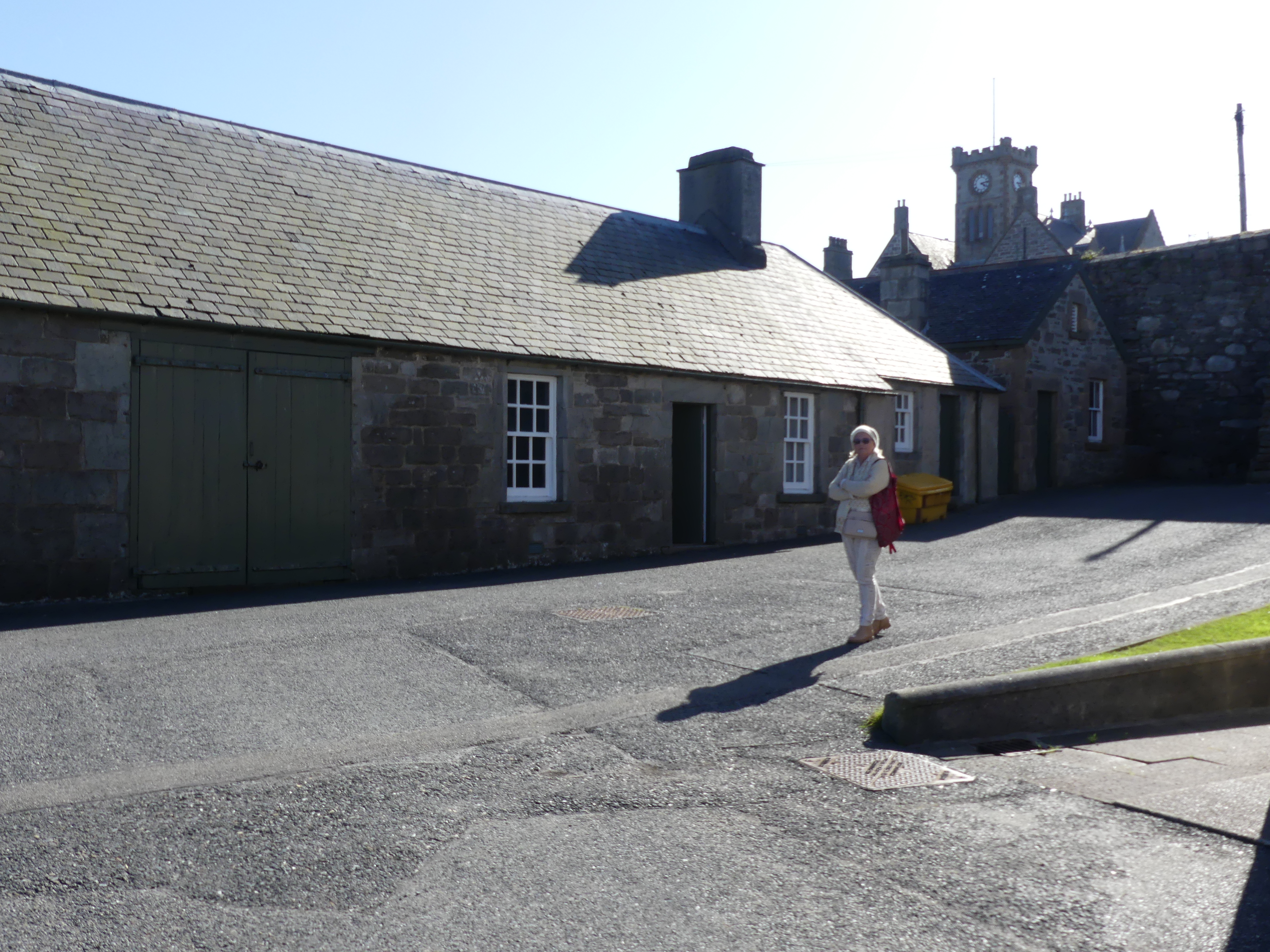
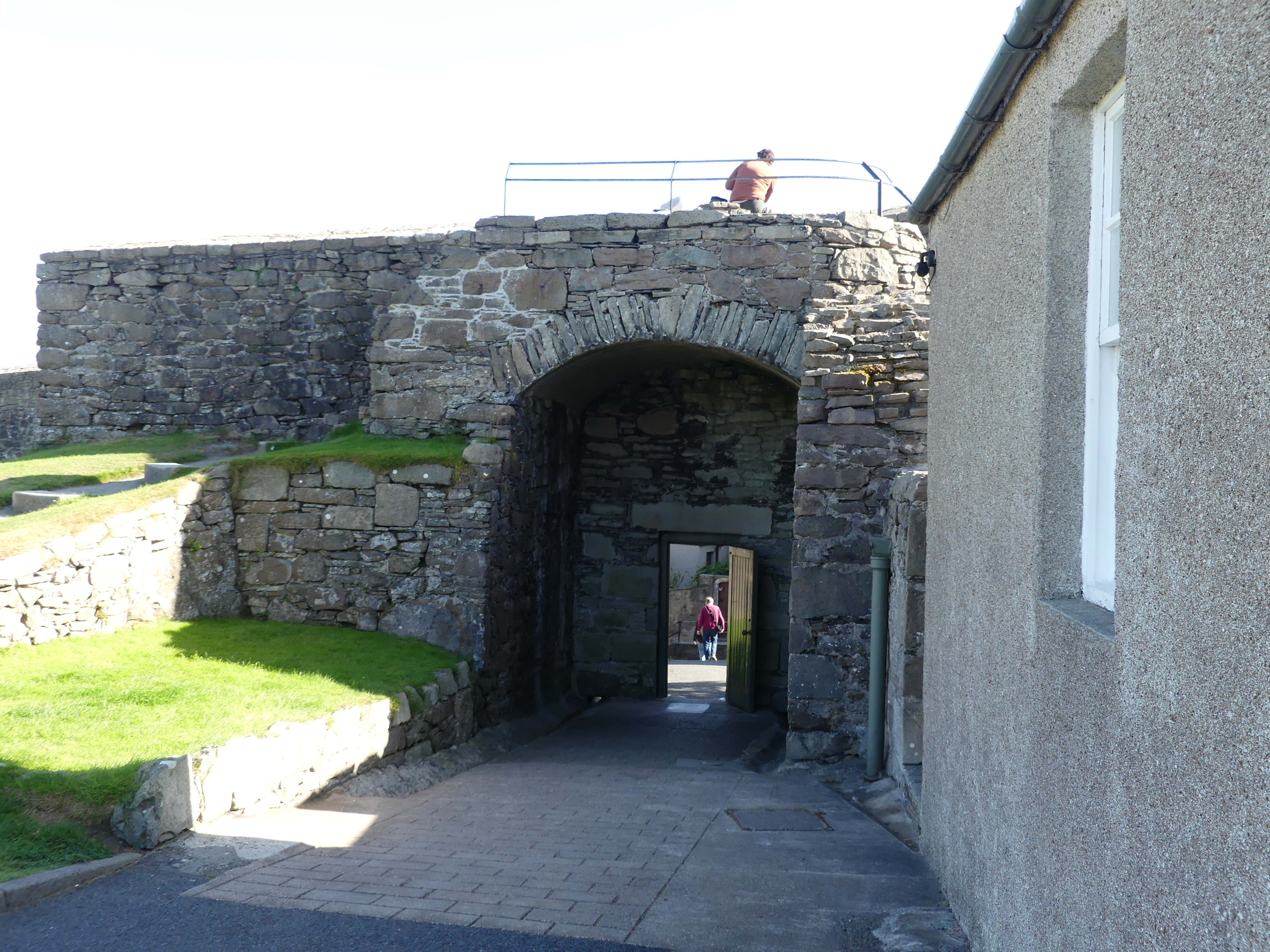
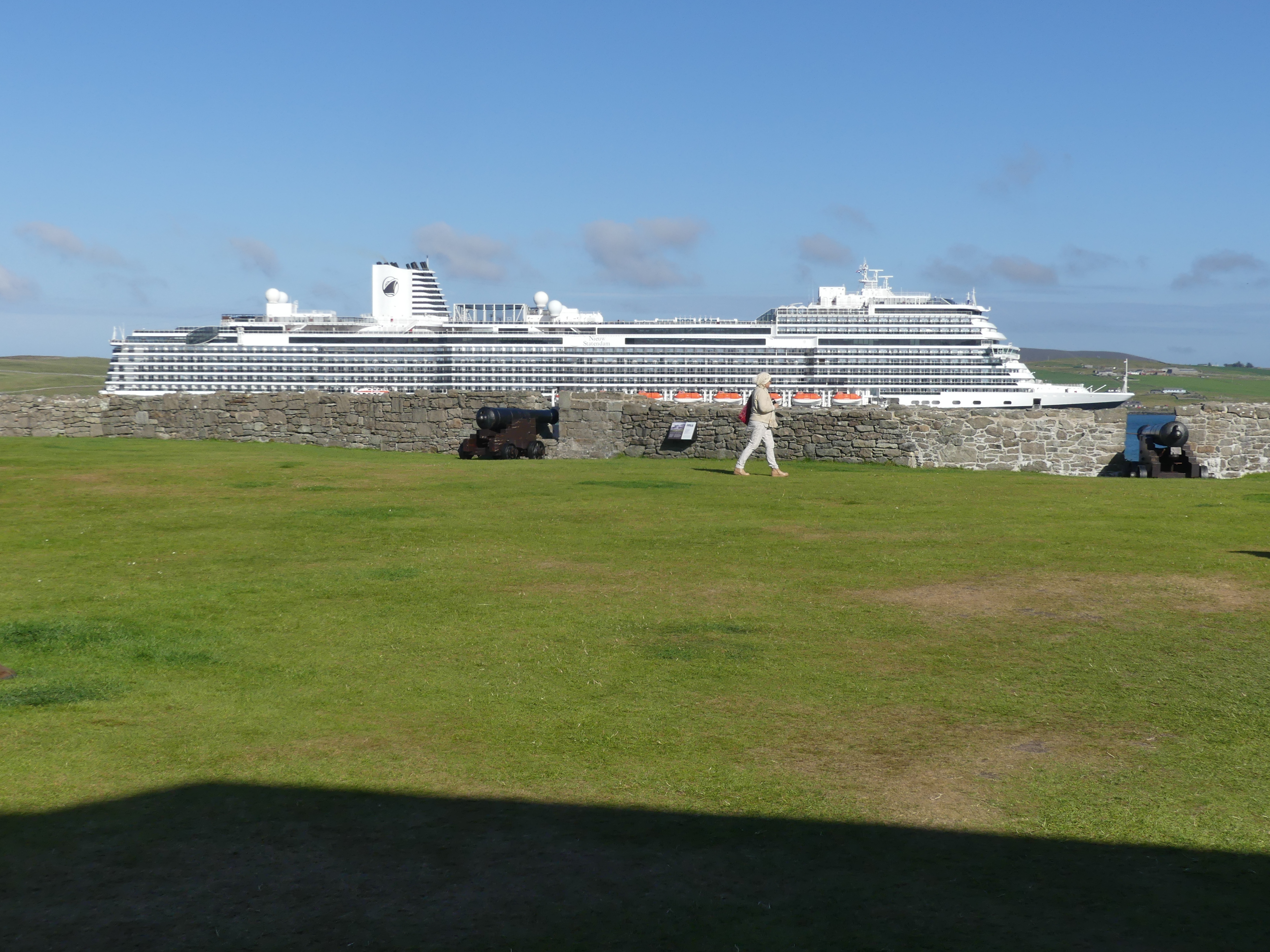
We made our way to Fort Charlotte and learned of its chequered history and current use. Yes that is our ship in the background of picture 7. The first incarnation of the fort was built between 1652 and 1653 during the First Anglo-Dutch War. Little is known of the original structure and no trace of it has been found.

The second structure was built on the same site by Robert Mylne under the orders of Charles II at the start of the Second Anglo-Dutch War in 1665 at a cost of £28,000. It held off a Dutch fleet in 1667 which thought it was far more heavily manned and gunned than it actually was. In fact, the walls were unfinished and there were few guns. At the end of the war it was slighted when the government decided not to station a garrison in Lerwick, and it was unmanned when the Dutch burnt it in 1673 during the Third Anglo-Dutch War.

It was rebuilt in its current form in 1781 and named after Queen Charlotte, but has never seen service during hostilities since then. It housed a garrison during the Napoleonic Wars and was later a base for the Royal Naval Reserve. From 1837 to 1875 it was used as the town jail and courthouse and later a custom house and a coastguard station.

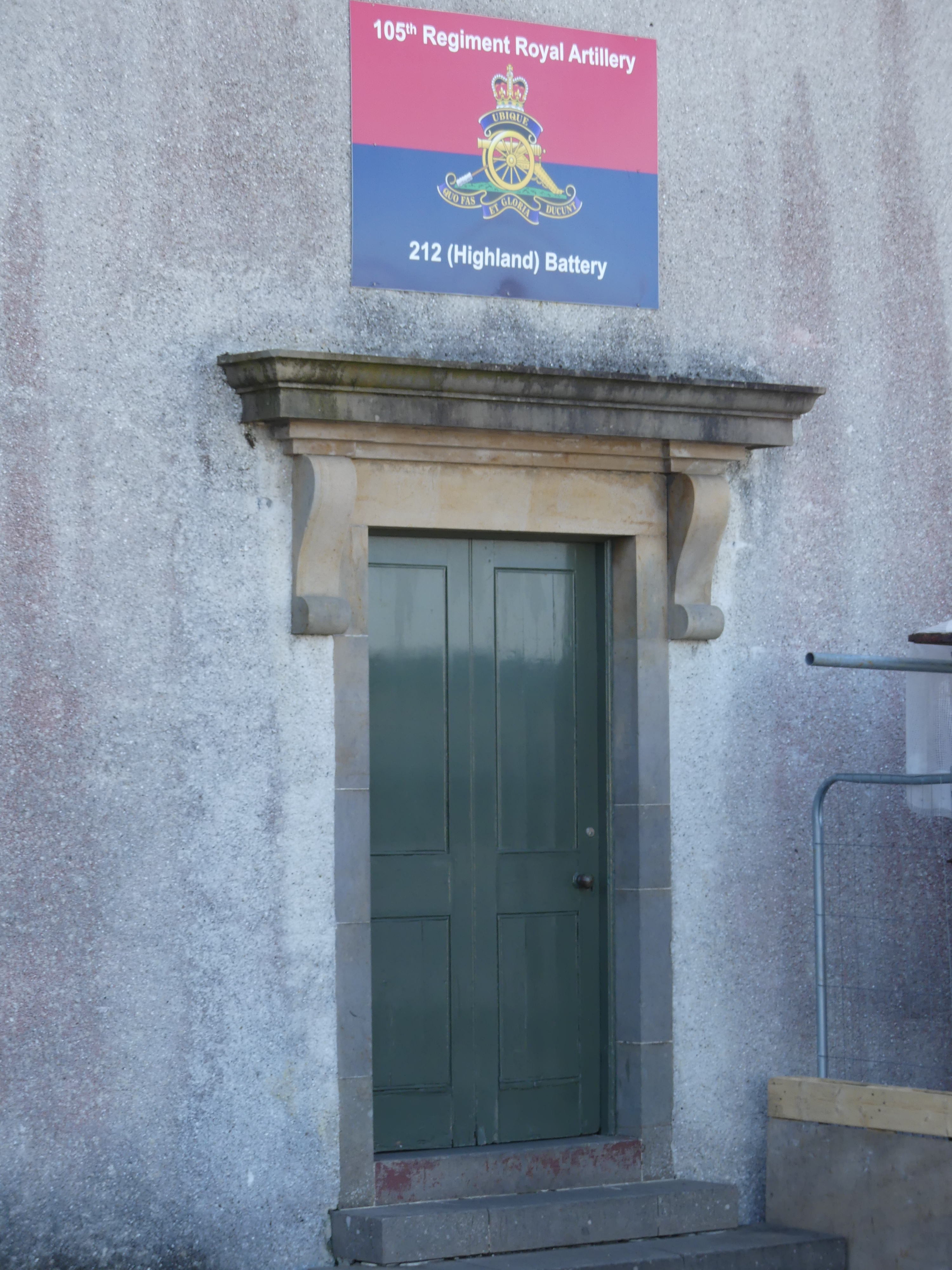
Land reclamation and structures erected in front of the fort mean that it no longer dominates the shoreline and the overall ground plan can only be seen from the air. Fort Charlotte is managed by Historic Environment Scotland, and is the base for 212 Highland Battery, part of Britain’s Army Reserve.

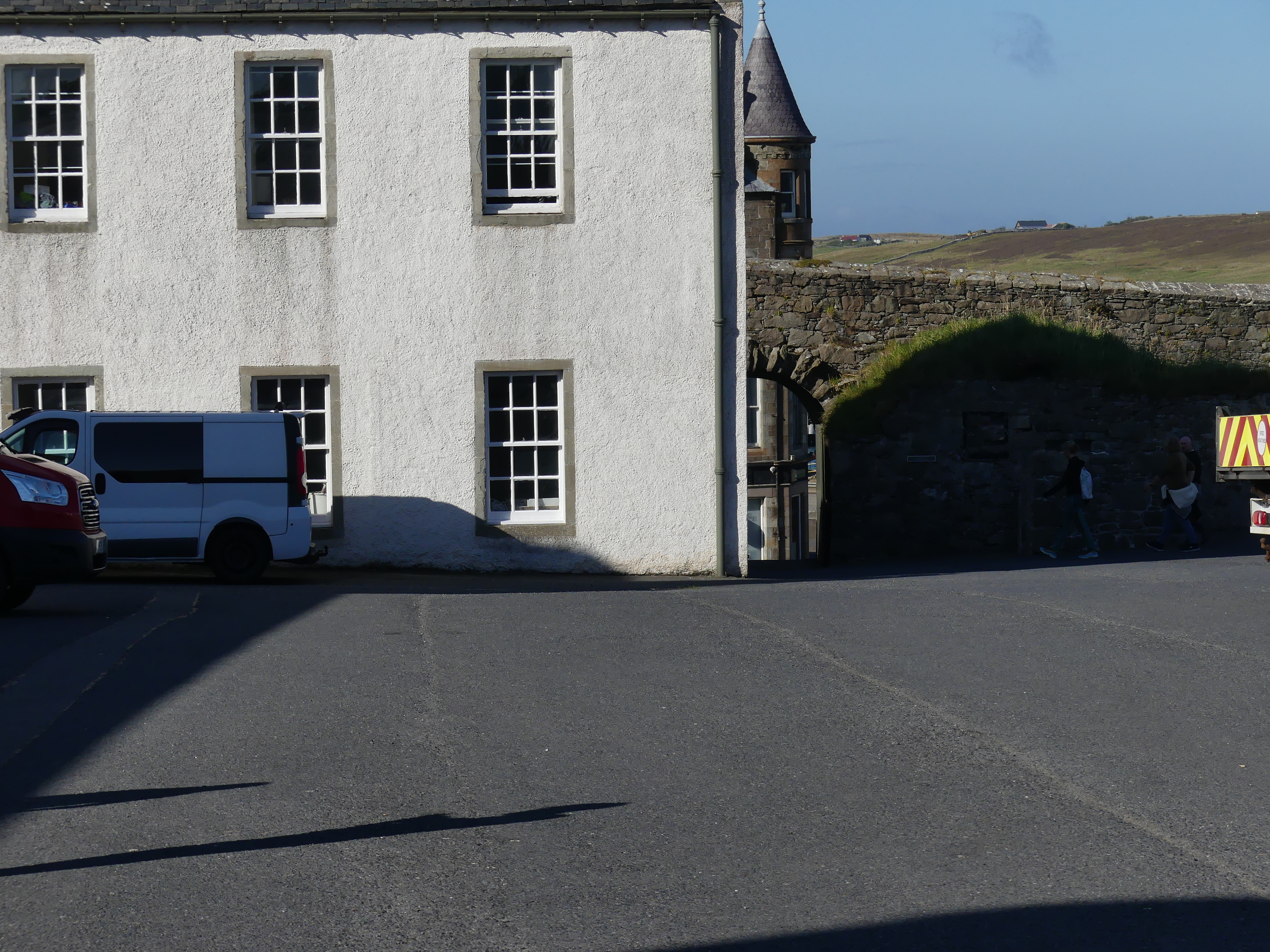
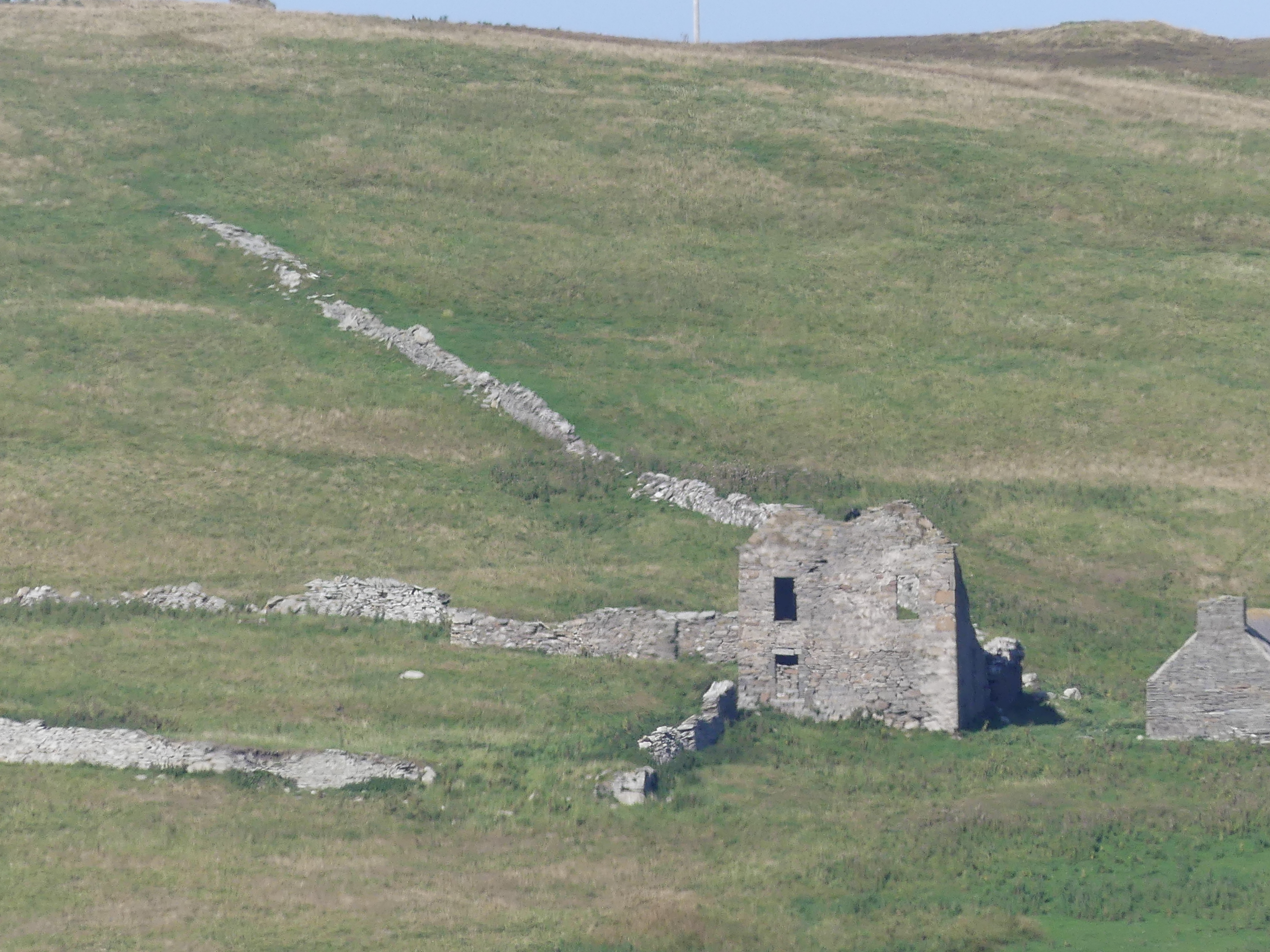
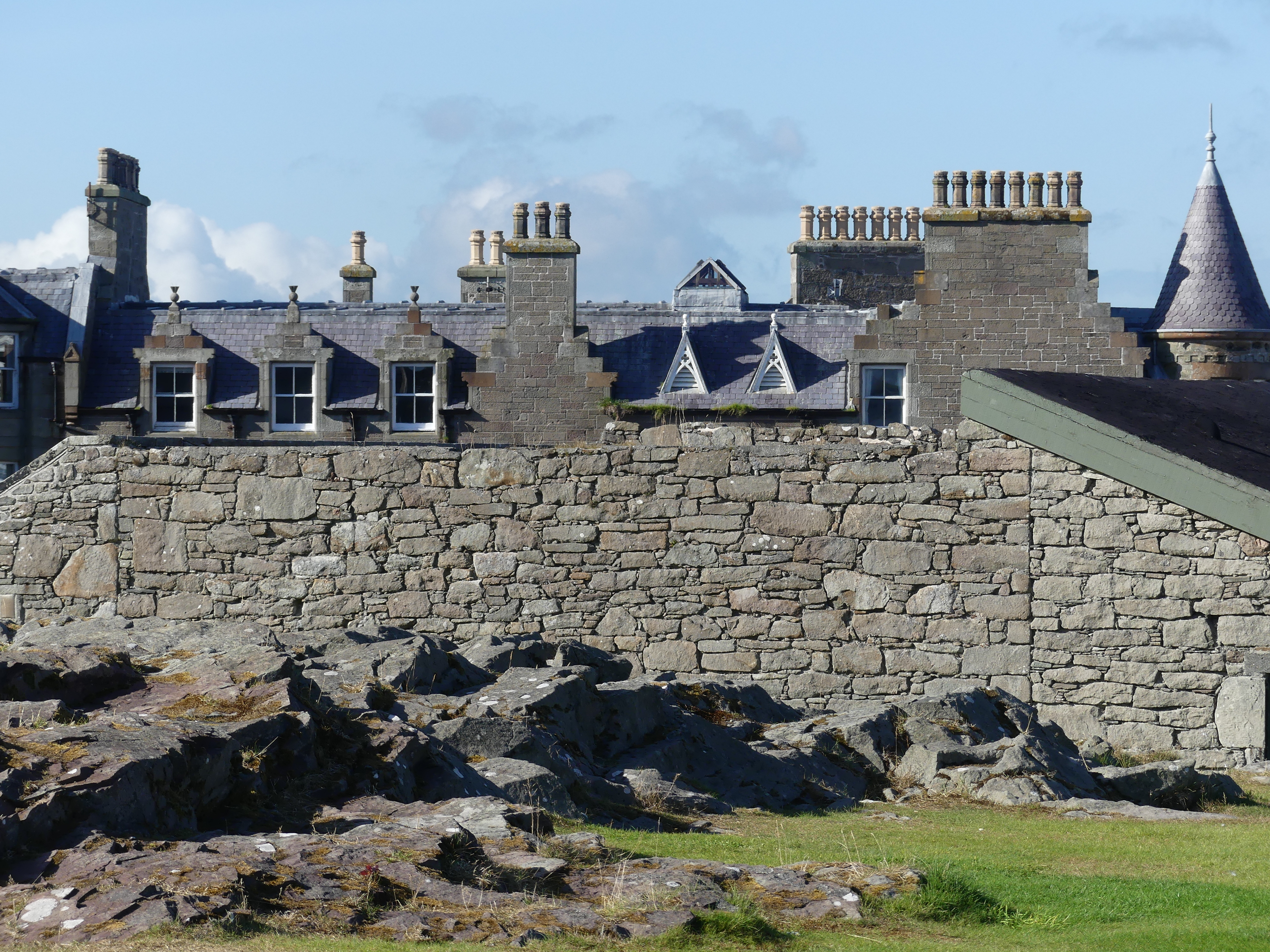
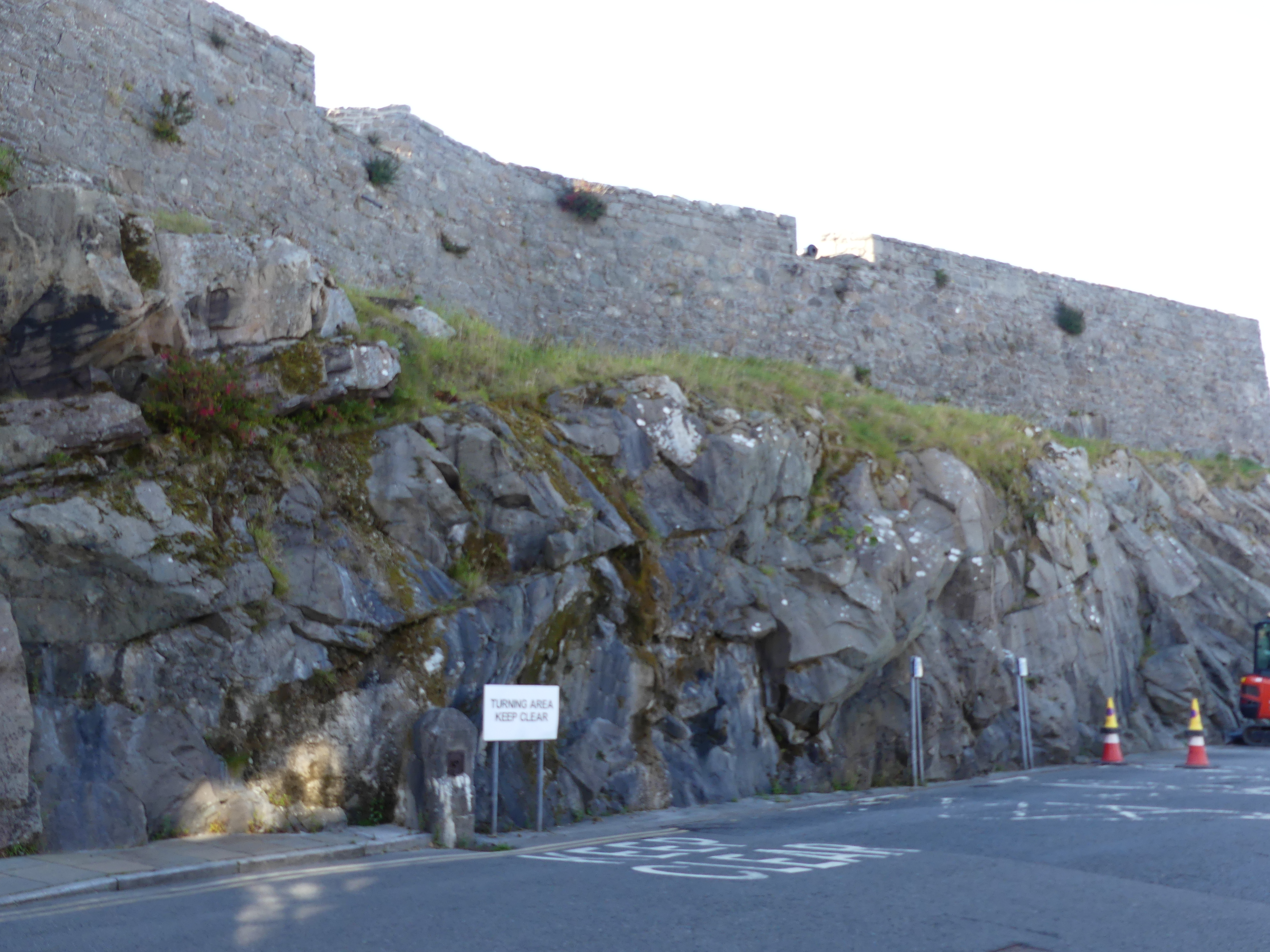
The photos in the last line include the former farm house across the bay, the houses beyond the fort walls and the natural stone wall with the bastion wall built atop of it and the main road below.

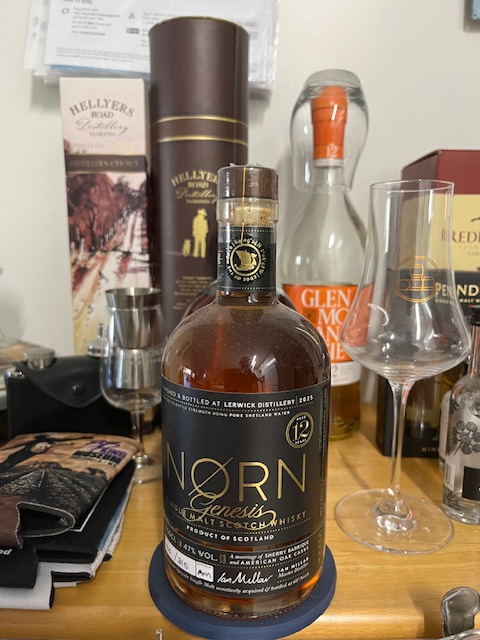
We continued our walk through the town. I had heard there was a distillery opening in the town and here was a chance I might stumble upon it. We walked past the car ferry to Bressay (picture below) and Kerry found the distillery. It was close to closing time and the sales girl explained quickly about their distiller and the fact that the distillery had not produced any scotch for retail sale as yet (the distilled brew must be in the cask for 3 years and a day before it is Scotch) but they could offer a tasting paddle of various other scotchs from around Speyside and the Highlands and a sample that their distiller had been working on at his previous distillery. The bottle label gives away the secret. Beautiful scotch but at 160 quid prohibitively expensive. Below is a picture of my 500 gram 12 year old numbered bottle of “Norn” scotch “a Speyside Single Malt secretively acquired and bottled at 60 degrees North” – Master Distiller Ian Millar.

As we returned to our ship we came upon a shop with a goat at its front door – yes a living breathing live goat. The goat belonged to two Shetlanders running an arts and crafts store and the goat was a pet. They we’re closing for the day so they opened the back door of their van and the goat climbed in and home they went. Its a long time since such a scene occurred in Queens St Brisbane but its an every day event in Commercial St., Lerwick’s main street.

Our day in Shetland had come to an end but I forgot to mention that I purchased a T-shirt emblazoned with Shetland ponies such that I would always remember my visit. At that time I also decided I would collect a T-shirt from each of the islands we visited – Orkneys, Outer Hebrides, and Isle of Mann. No, no photo of my T-shirt. But you may see me wearing in the streets of Brisbane. Til my next blog “THE RETIREES GO AROUND THE WORLD – DAY 4 SS NIEUW STATENDAM – Orkney Isles” – may you keep a fair wind at your back.

“THE RETIREES GO AROUND THE WORLD – DAY 2 SS NIEUW STATENDAM – Queensport & Edinburgh then Shetland Isles.”

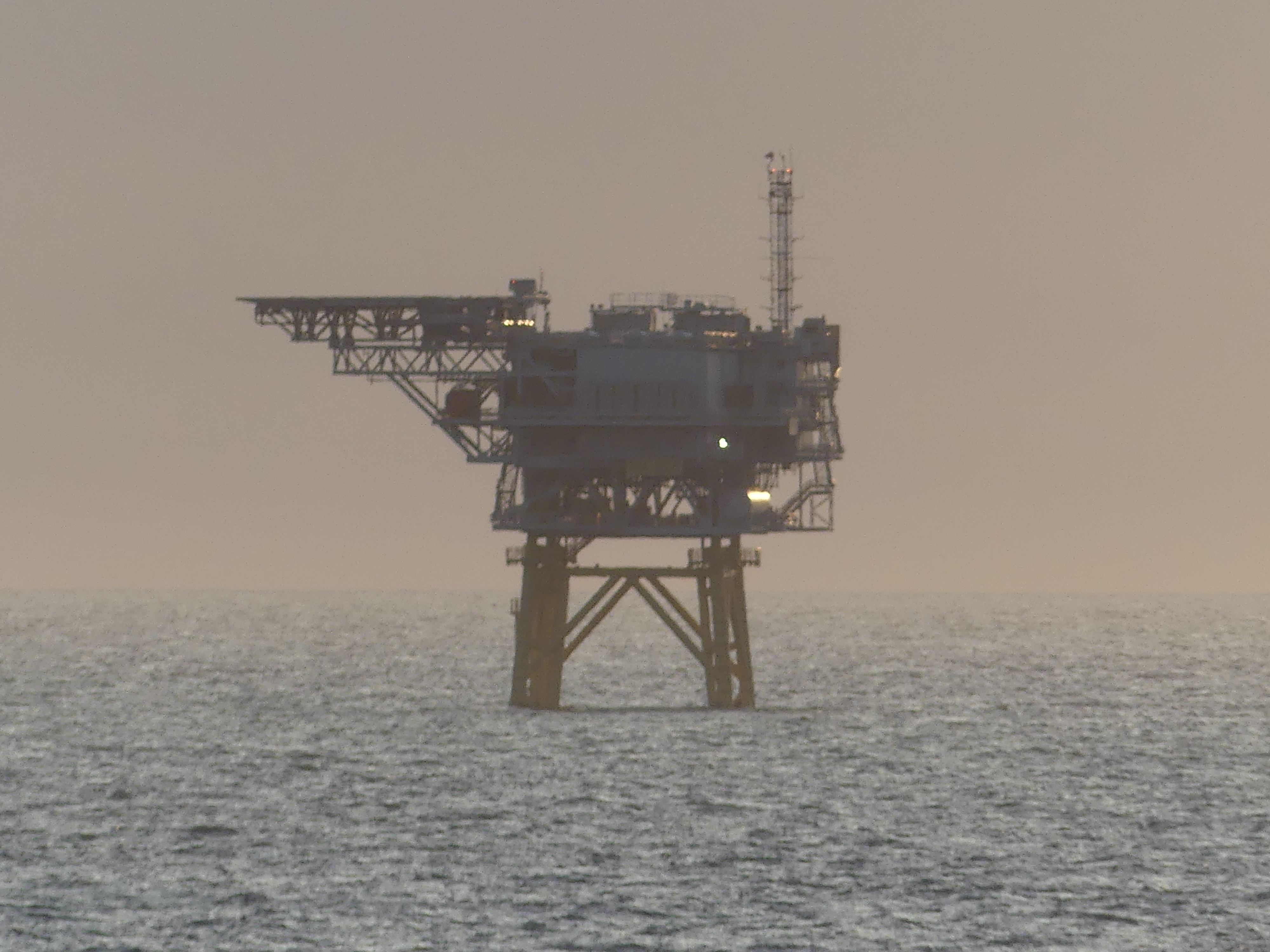
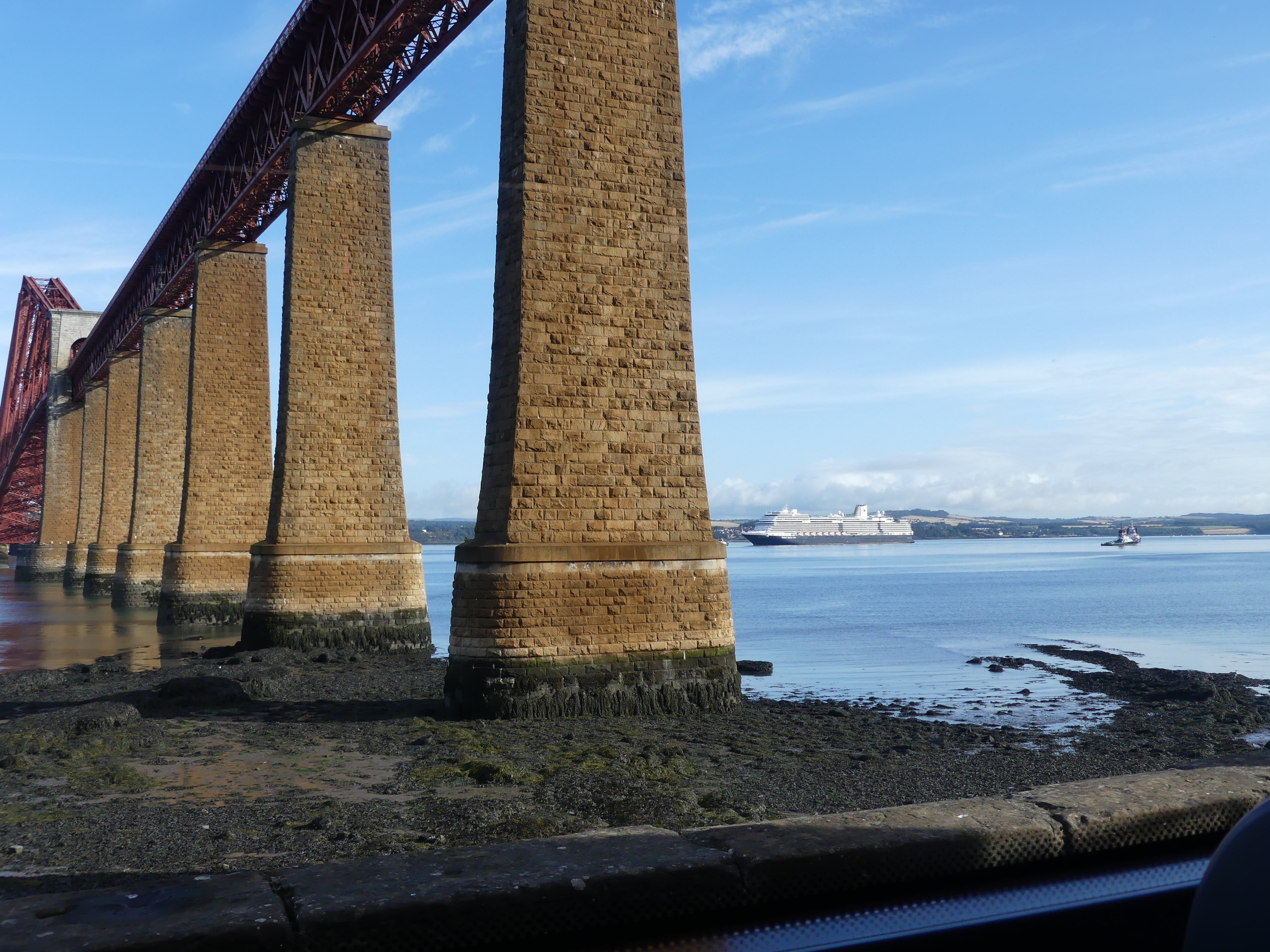
The ship continued to rock and roll gently through the night. Kerry found this disturbing and I slept like a baby – except for the dig in the ribs from Kerry who wanted me to worry about the rolling with her. With the dawn we passed a number of oil platforms until we entered the harbour of Queensport. The ship was too big to dock at Queensport so the ship lowered the tenders and we travelled to the wharf to disembark. The pictures below are of the bridge across the Firth of Forth where the River Forth meets the North Sea, and famous for its three iconic bridges (Rail, Road, Queensferry Crossing) near Queensferry, serving as our entrance to Edinburgh. Some years ago we attended the Edinburgh festival and attended the Tatoo. We stayed at Fife taking the train across one the bridges (there only being two bridges at the time with third under construction) and the reunion with the bridge reminded us of that trip.

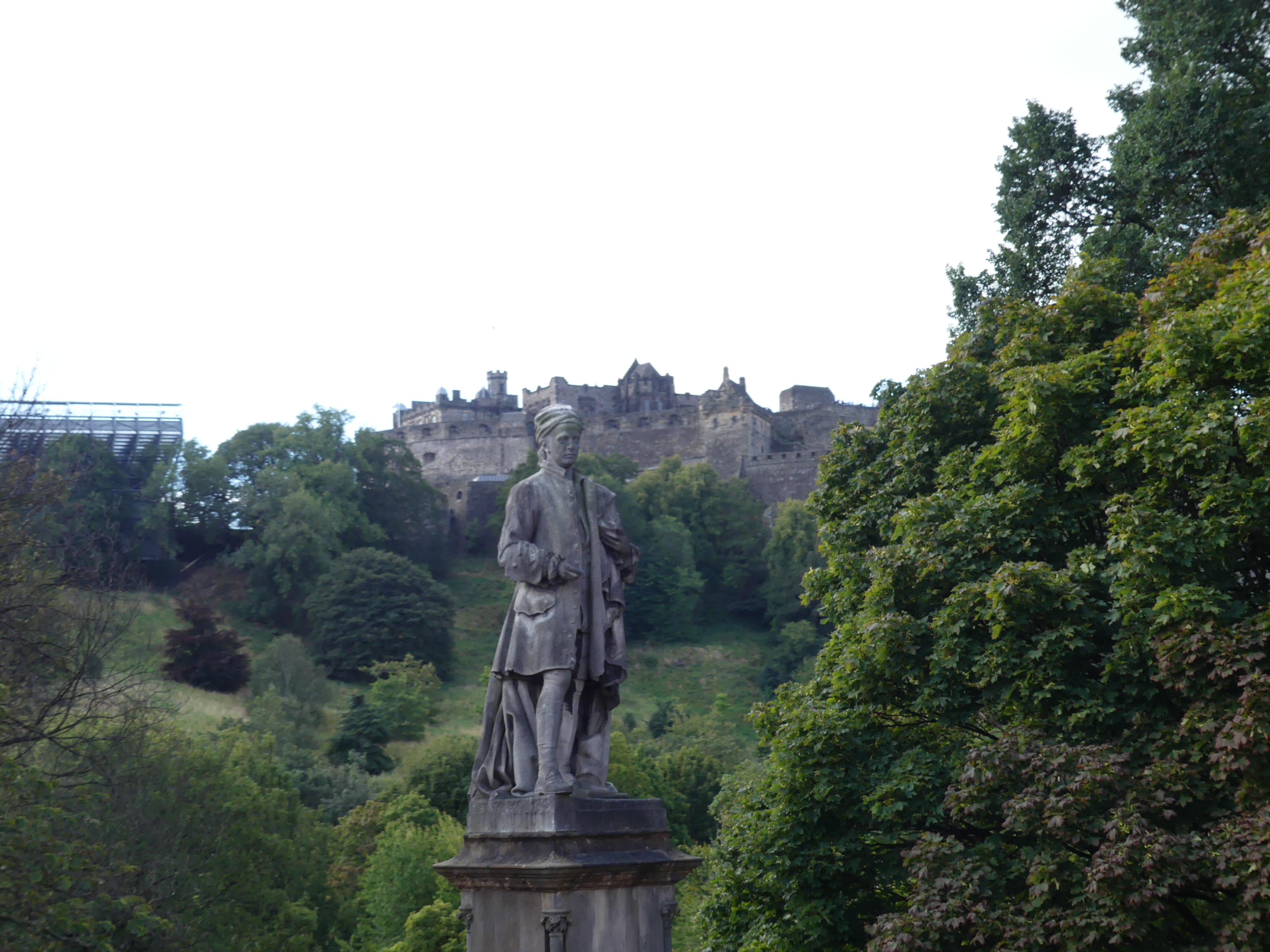
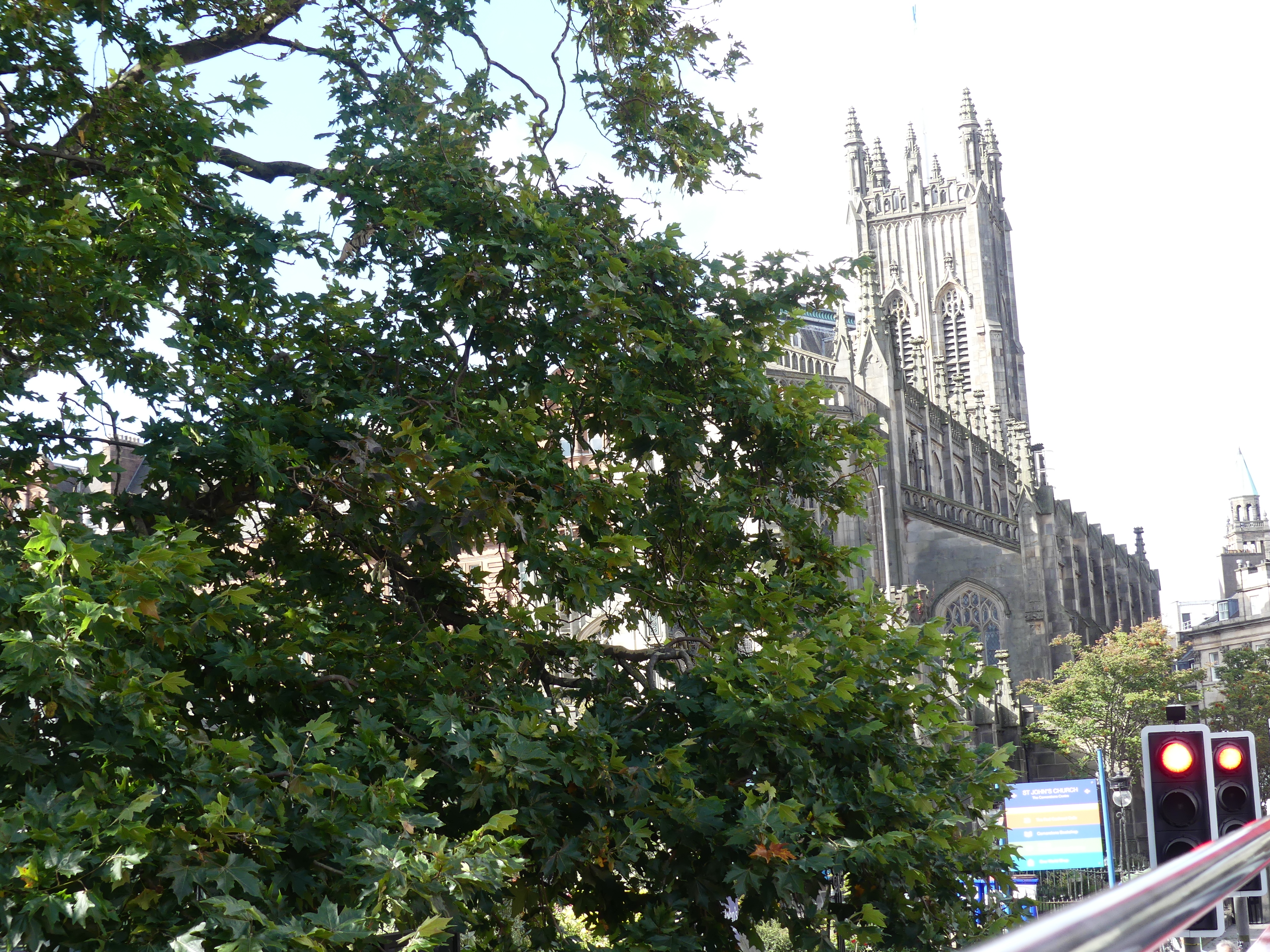
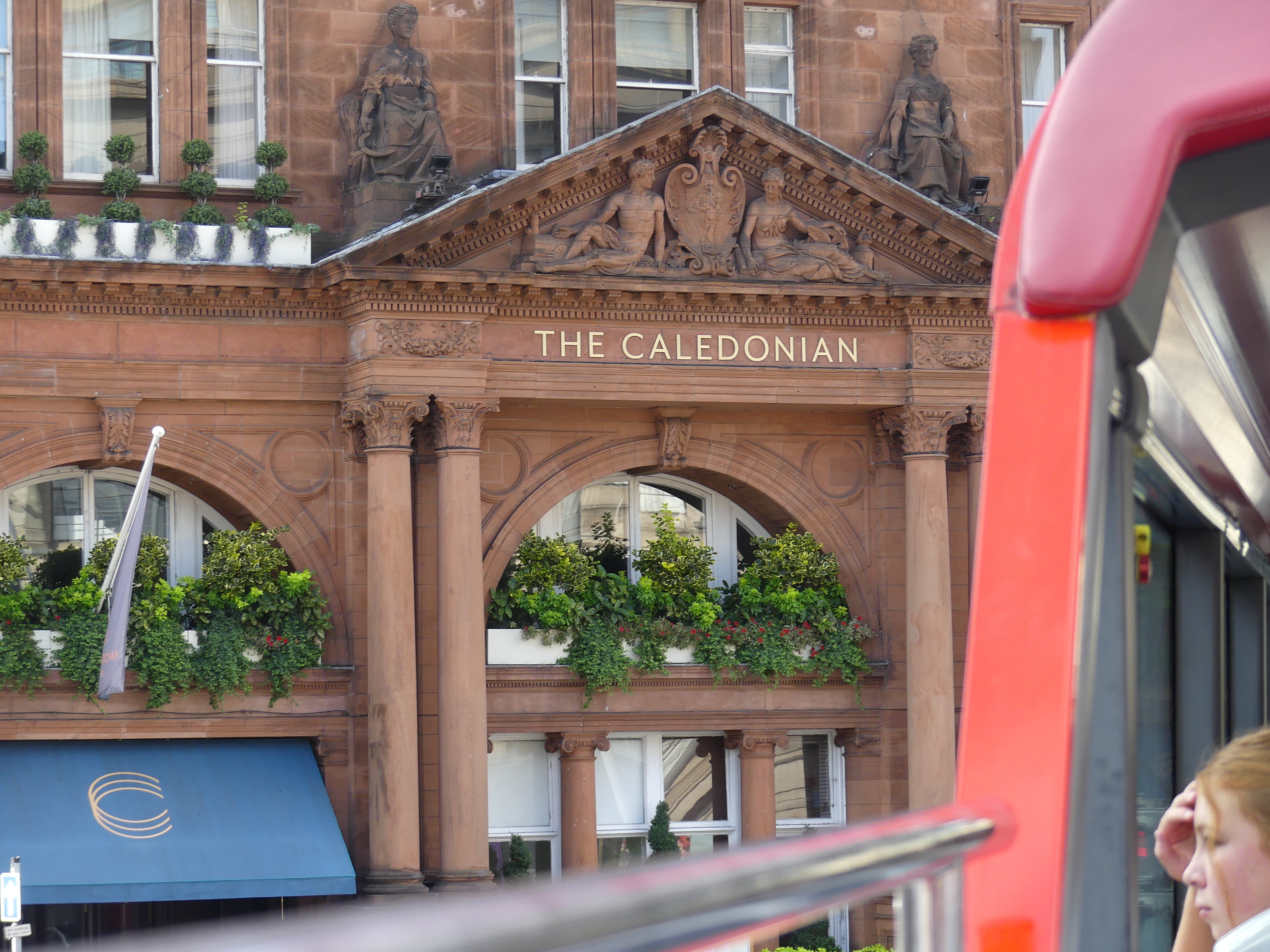
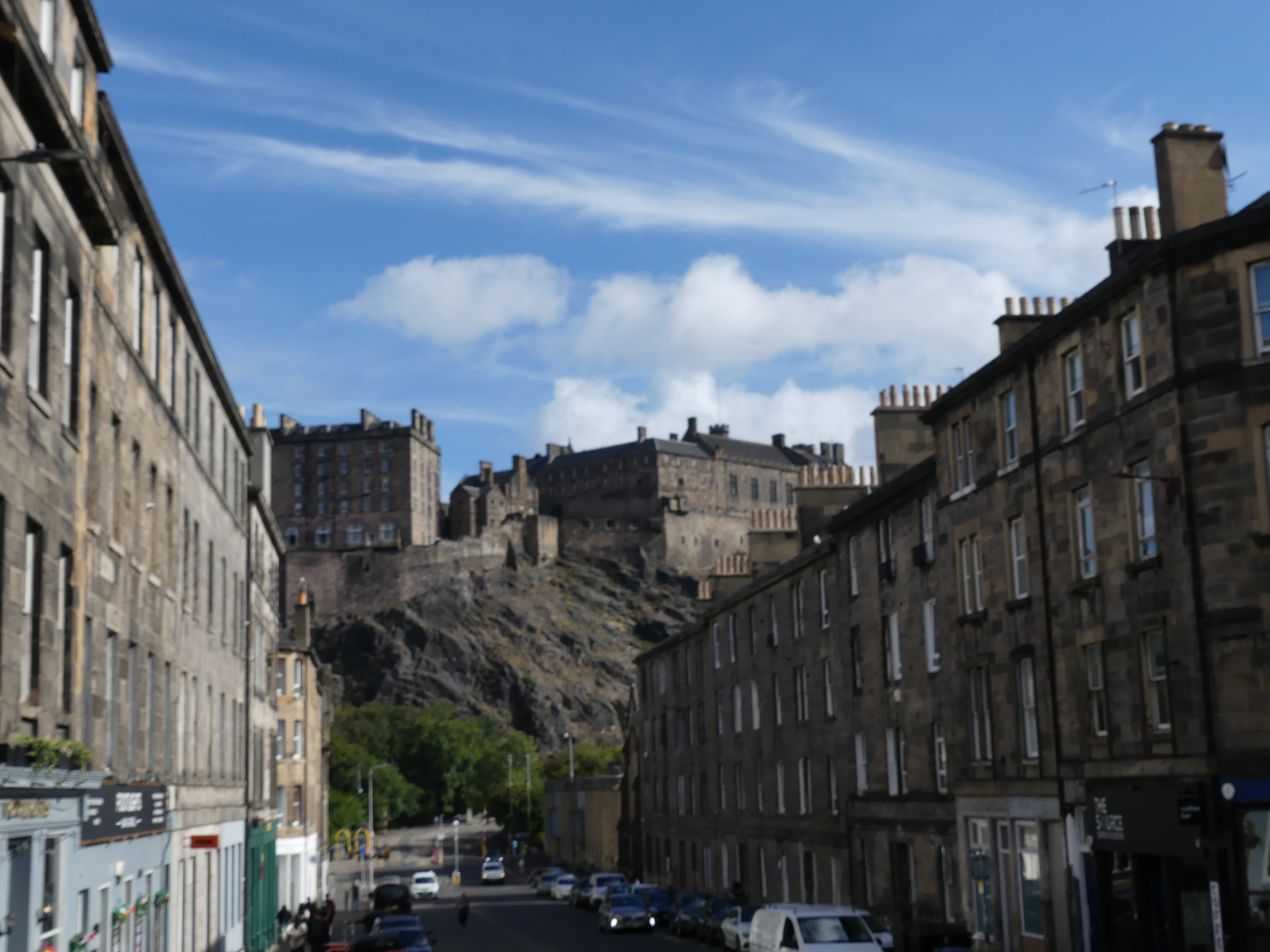
The ship provided a bus shuttle which we caught from the Ferry into Edinburgh. After sought out where we were, we made our way to Waterloo Place outside Princes Street Suites. A man in a uniform brandishing a placard advertising the Hop on Hop off bus stood under Prince Leopold’s Arch selling tickets. The arch built in 1819 to celebrate the visit of Leopold Prince of Saxe Courburg seemed out of place and there was no explanation as to the reason for it. My research shows that the arch marks the entry of Leopold into Edinburgh connecting Waterloo Place over the Old Calton Gorge, with the arch serving as a temporary triumphal gateway for the royal visit. A significant civic event at the time, though this Prince Leopold later became the first King of the Belgians. As we passed the arch we commenced the red line tour passing the Scott Monument. The Scott Monument is a Victorian Gothic monument to Scottish author Sir Walter Scott. It stands in Princes Street Gardens in Edinburgh, near Edinburgh Waverley Railway Station. In the distance you will see Edinburgh Castle. 

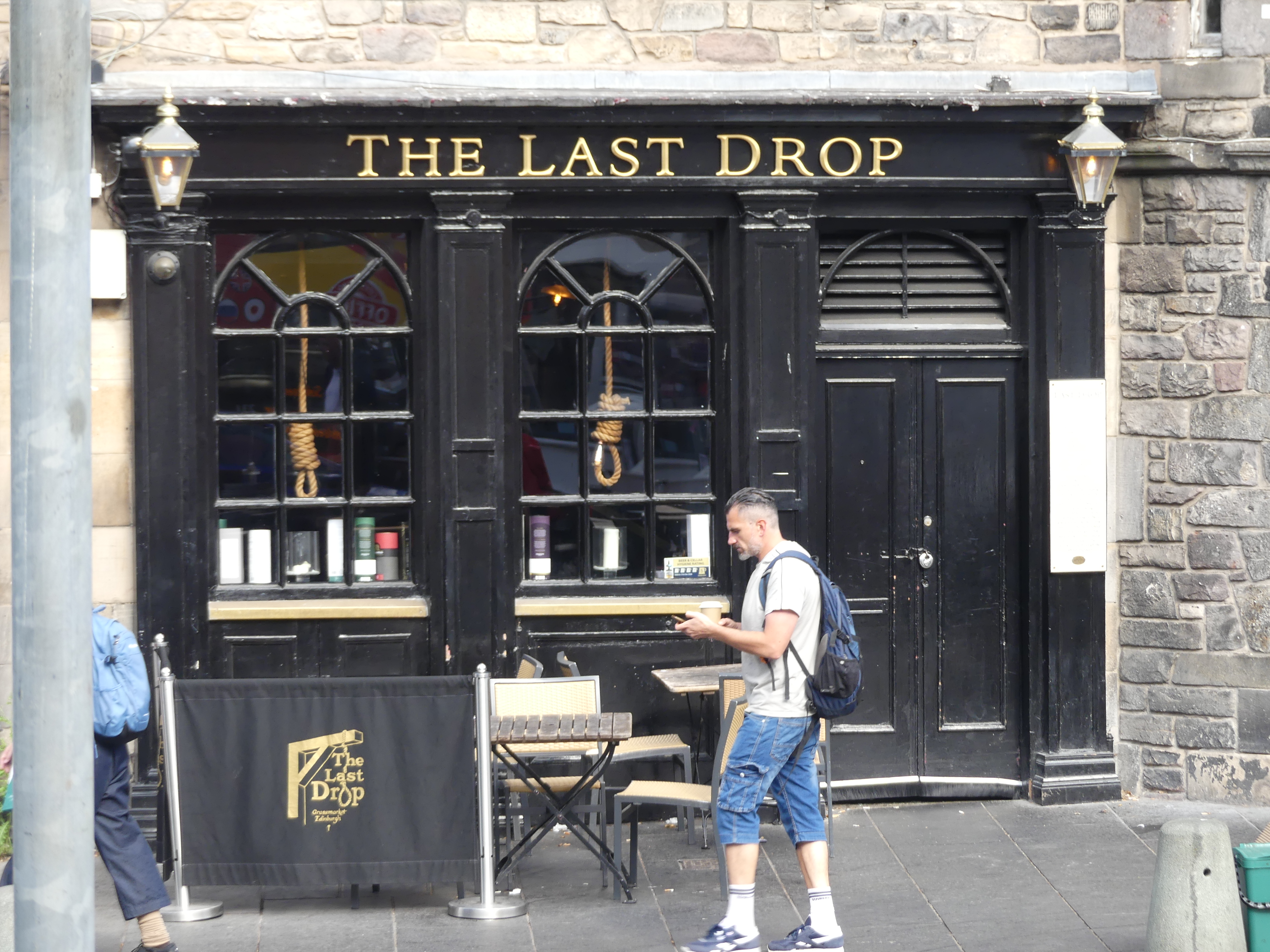
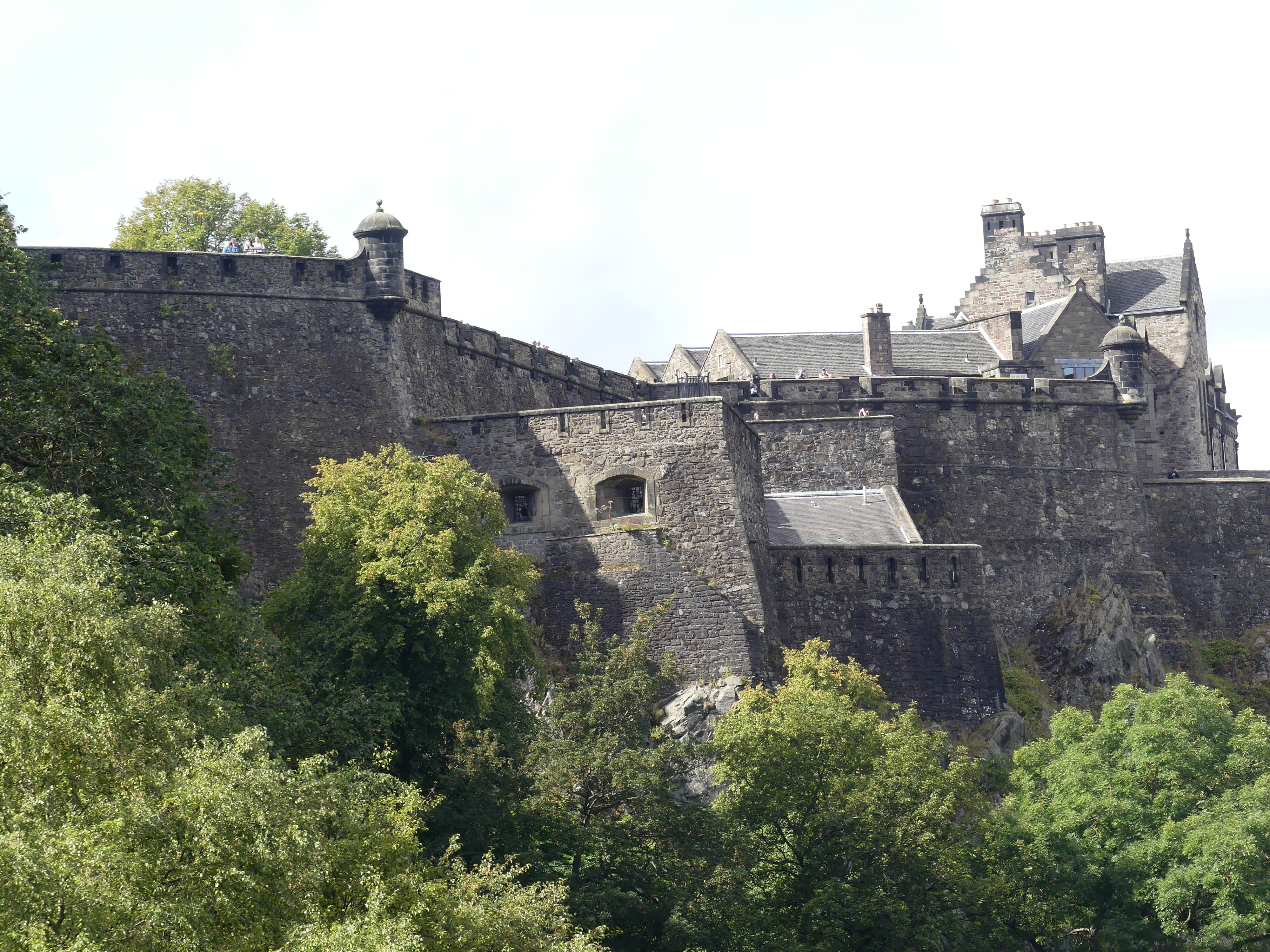
The Bus moves along the Royal Mile through the heart of Edinburgh’s Old Town, connecting the magnificent Edinburgh Castle, perched high on a base of volcanic rock, the Mile is overlooked by impressive, towering tenements, and into the Grassmarket. The Grassmarket is a historic, picturesque, cobbled square beneath Edinburgh Castle, famous for its lively atmosphere, independent shops, quirky pubs (like The Last Drop and Maggie Dickenson), diverse restaurants, and its past as a cattle market and site for public executions.

The Last Drop sits in Edinburgh’s Grassmarket district which was a small open space where local farmers brought their hay and other produce for sale. It was also the location of one of the main gallows in the city and crowds would flock in huge numbers to see the public executions. The Last Drop Tavern is located immediately next to the scene of public hangings which took place there back in the eighteenth century. Tenements once stood on the site, but these were rebuilt into the pub you see today using the old buildings’ original seventeenth century stone.

Maggie Dickensen Pub. Maggie Dickson was a fish hawker from Musselburgh and in 1723 she “fell pregnant” after a secret relationship with an innkeepers son in Kelso. The newborn baby died and Maggie decided it was best to conceal the body so the affair would not be discovered. However, the baby’s body was discovered and Maggie was found guilty of killing a child. She was returned to Edinburgh for execution, which took place in Grassmarket on September 2, 1724. Her friends and relatives took possession of her body, and placed it in a coffin and to be taken to Musselburgh for burial. The party paused en route for a drink and they noticed, the lid of the coffin began to move. Maggie was alive and well enough to walk the rest of the way to Mussleburgh the next day. She survived she was a “good friend” of the ropemaker and the early breaking of the rope allowed her survival. Having already been pronounced legally dead she could not be tried again and she lived another 40 years and known as Half-Hangit Maggie. She opened the pub in Grassmarket, and whenever there was a hanging going on outside, she would bring the accused a pint and say not to worry, she survived her own hanging.

Pictures of both establishments are above. Next stop was Calton Hill.

Calton Hill is a prominent, historic hill in central Edinburgh, famous for its iconic monuments, panoramic city views, and as a UNESCO World Heritage Site location. Key features include the unfinished National Monument (a Parthenon replica) and the City Observatory, offering stunning vistas of Edinburgh Castle, Arthur’s Seat, and the Firth of Forth. Moving on we passed Holyrood House, now overgrown with trees and then the Scottish Parliament Building seen below on the left. As we finished our tour we came across H & T Pawnbrokers. Very elaborate establishment – certainly no Steptoe and Sons there.

We returned to our shuttle bus stop after grabbing a sandwich at the Edinburgh Waverley Railway Station, tired from sitting in the bus – that still happens to me that I need a nap in the afternoon.

Our next adventure is “THE RETIREES GO AROUND THE WORLD – DAY 3 SS NIEUW STATENDAM – Shetland Isles.” We have both enjoyed the BBC drama of “Shetland” and I was anxious to see for my self how this small group of islands could have so many murders occurring on a daily basis.