Castell Coch
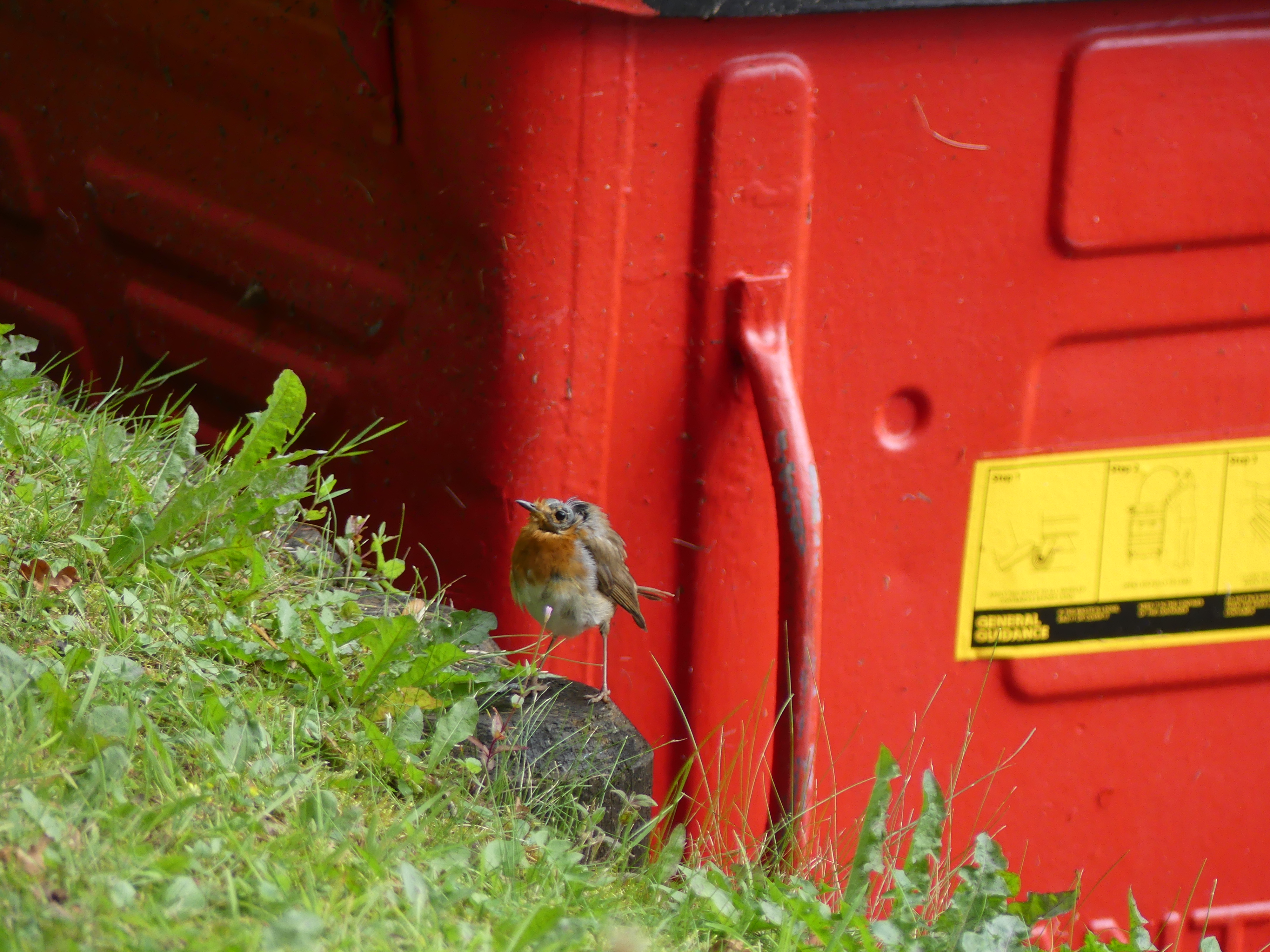
Castell Coch is very near to Cardiff and the drive was pleasant without too many narrow roads. Having said that, as we neared the Castell the roads narrowed, and the bush encroached onto a narrow lane. A sharp left-hand turn and a choice of two lanes presented. Fortunately, we took the correct lane into the car park. The Castell is hidden above the carpark. A portaloo was the sentinel to the carpark, and our first red robin came to show us the way forward. The Castell is undergoing renovation to close leaks into the stonework of the castle which amazingly requires that the stonework be given 2 years to dry out as part of the renovation.
Castell Coch (Welsh for ‘red castle’) is a 19th-century Gothic Revival castle built above the village of Tongwynlais in Wales. The first castle on the site was built by the Normans after 1081 to protect the newly conquered town of Cardiff and control the route along the River Taff. In 1760, the castle ruins were acquired by John Stuart, 3rd Earl of Bute, as part of a marriage settlement that brought the family vast estates in South Wales. He turned it from castle to country house but rarely used it. In 1950 the 5th Marquess of Bute, placed it into the care of the state. It is now controlled by the Welsh heritage agency CADW. The surrounding Castell Coch beech woods contain rare plant species and unusual geological features and are protected as a Site of Special Scientific Interest.
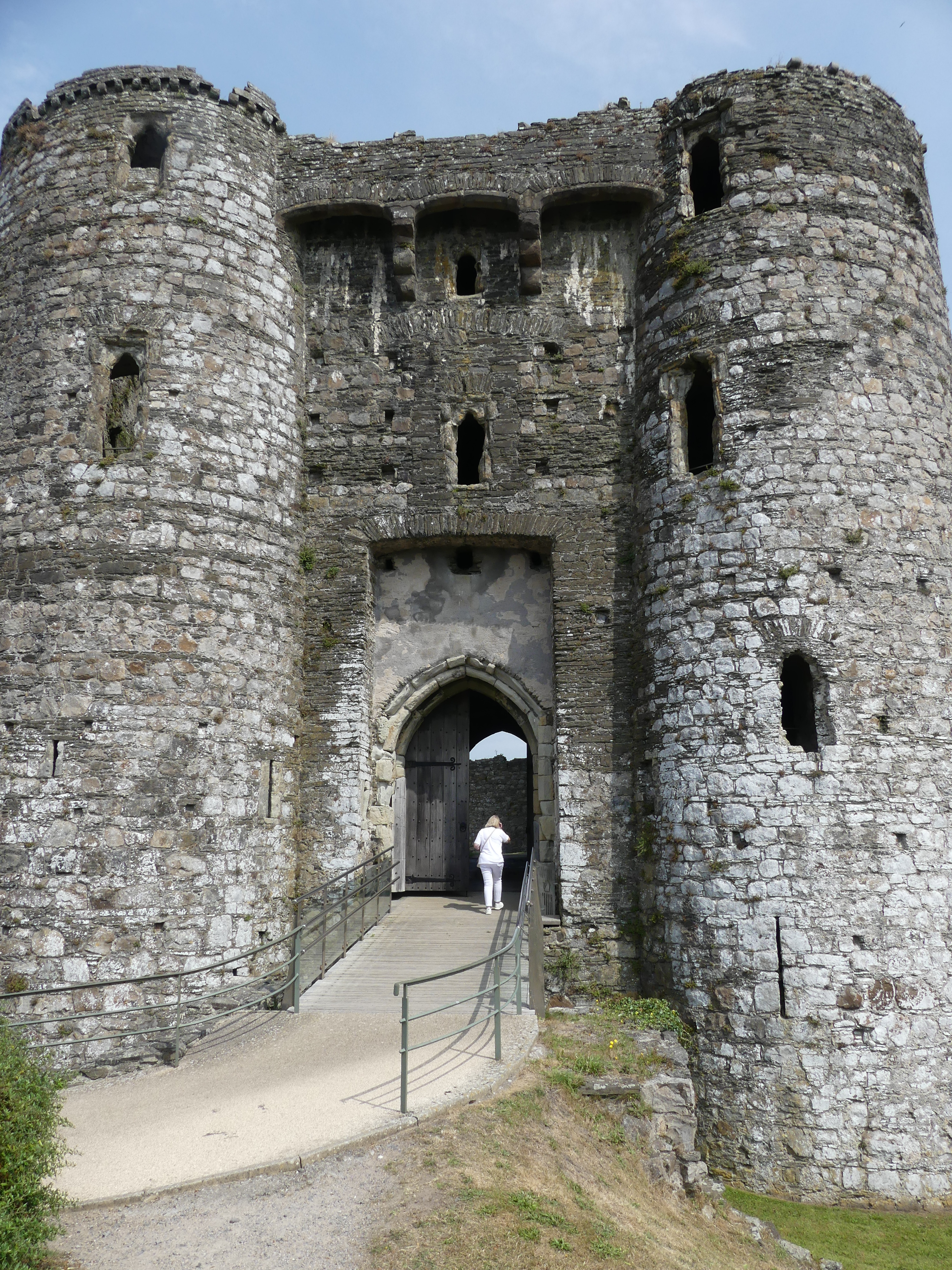
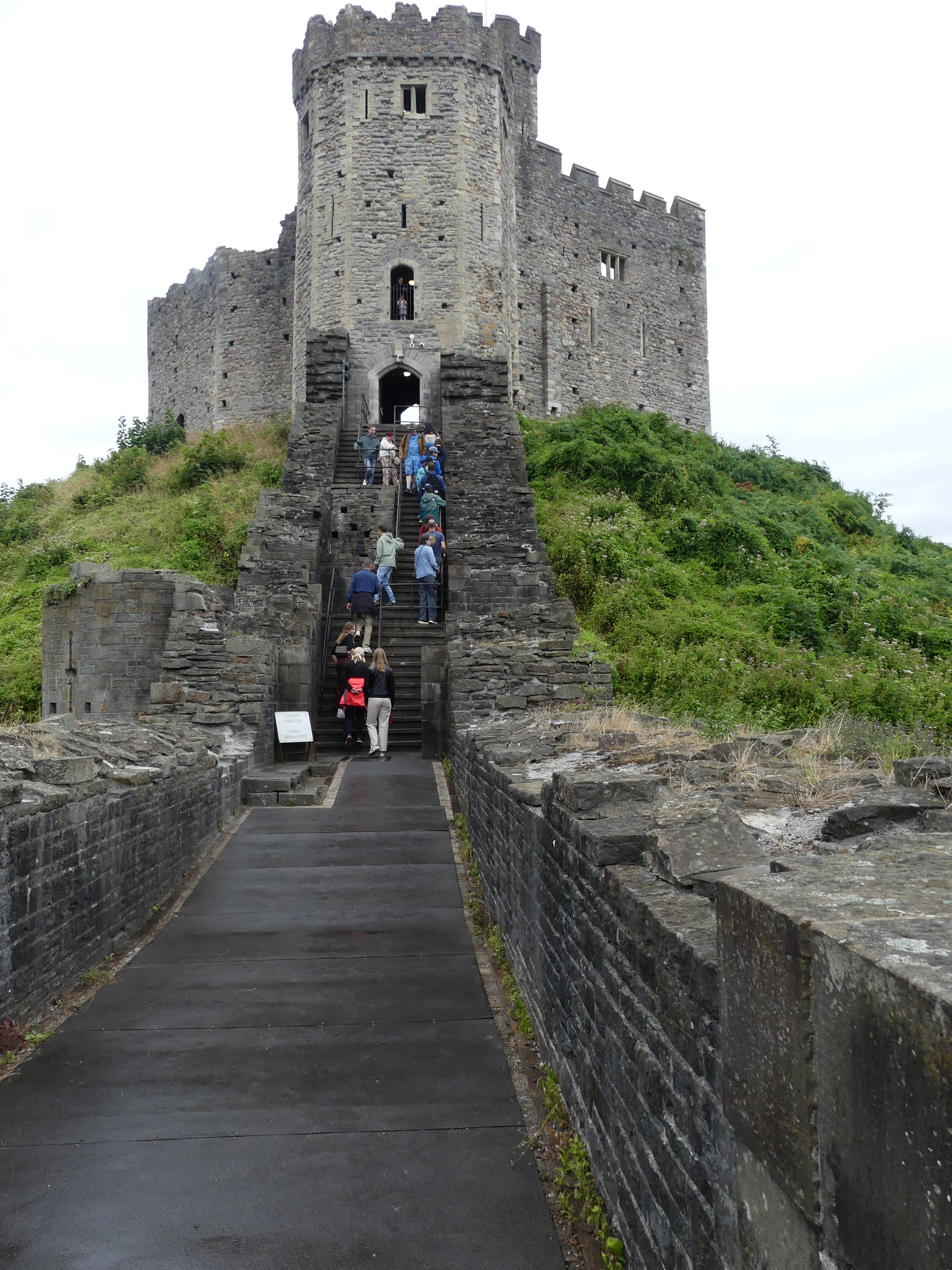
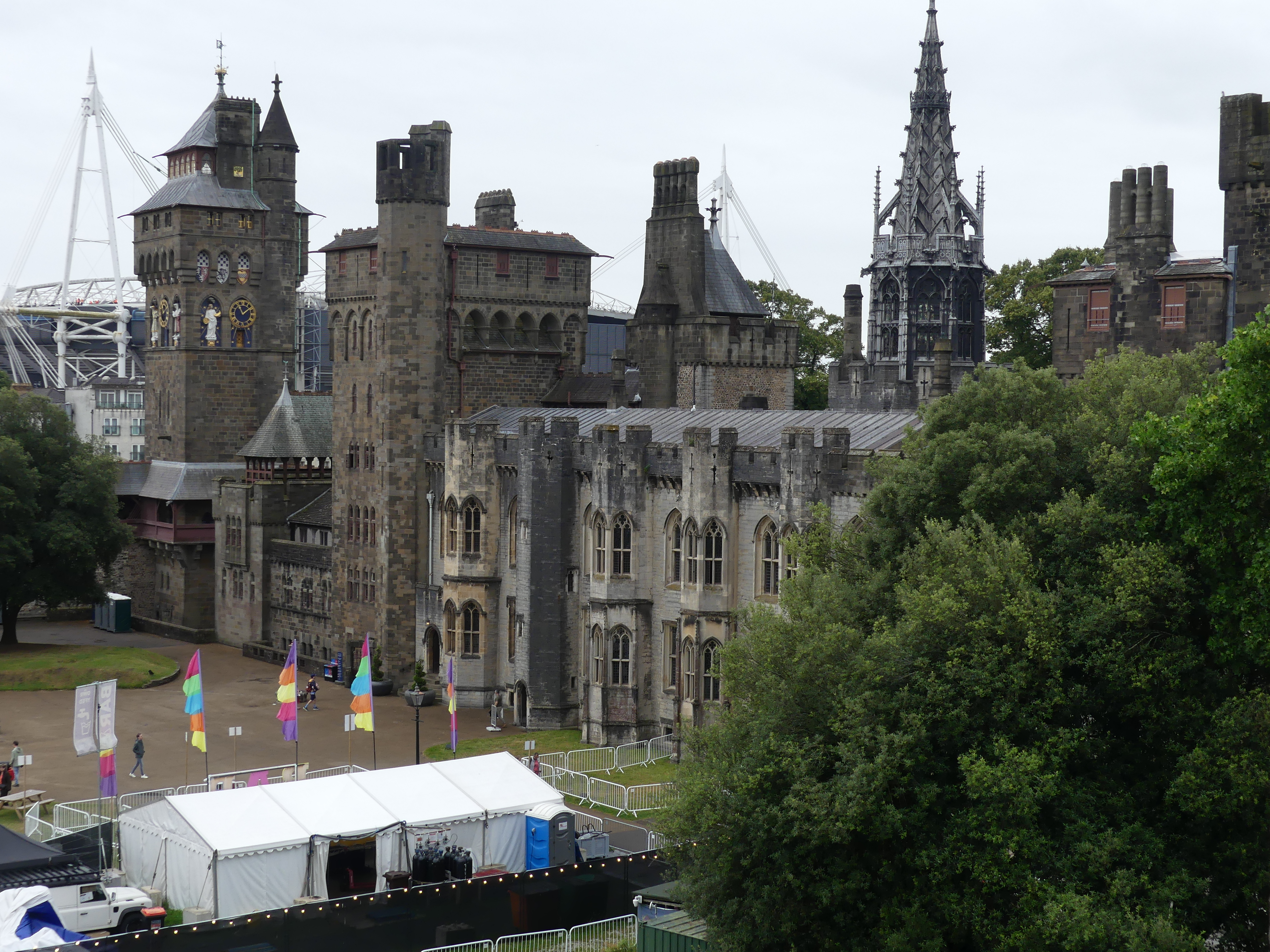
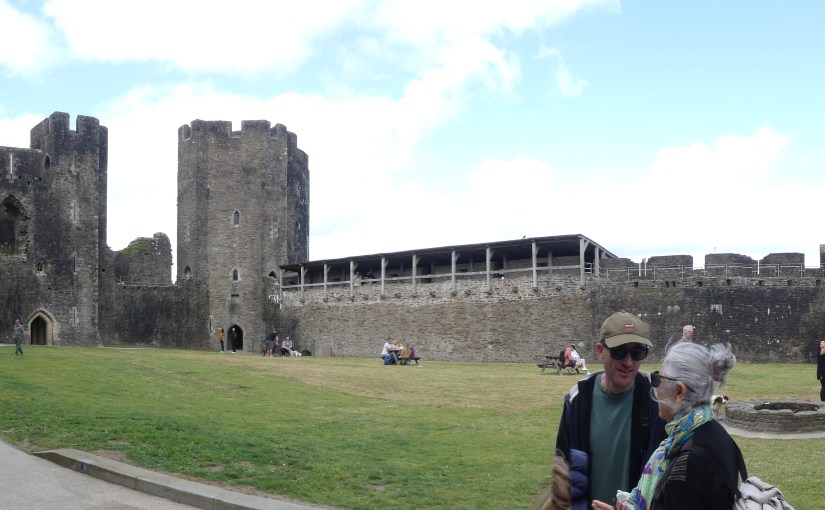
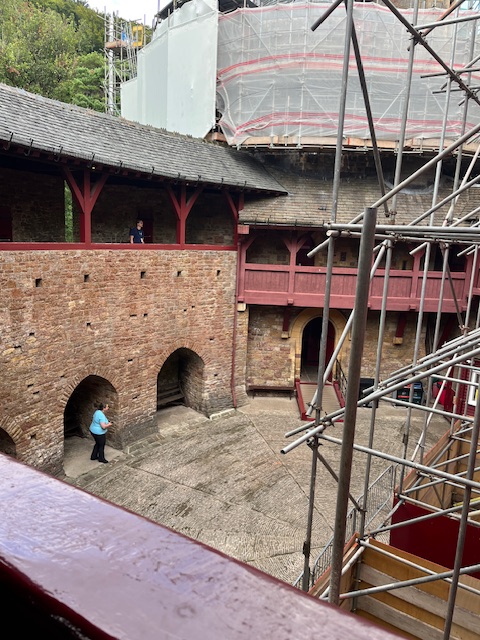
The first picture shows the pleasant entrance to the castle. As you approach the castle, you see the former moat. No longer filled with water, it still stands as a barrier to enter the castle so a permanent draw bridge leads you into the castle. The castle is in the care of CADW the Welsh Government’s historic environment service which provides for the restoration and accessibility to these historic places. From the outside it is obvious that Cadw is doing its job. One part of the castle is clothed in a large sheet painted with images of the castle and a story on a large sign about the renovation. The walls of this section of the castle are being dried out. An entrance fee is payable, and the ticket office is on your right as you pass under the portcullis. Yes the castle still has it’s portcullis. The attendant is a pleasant Welsh lady who before taking our money tells us that instead of taking a ticket for this castle only we could buy a 3 day or 7-day pass and supports her statement with 2 brochures of the many places of interest that are cared for by CADW. It cost us a little over £50 for the 7-day pass and gave us a huge saving in respect of the future visits we planned to make.
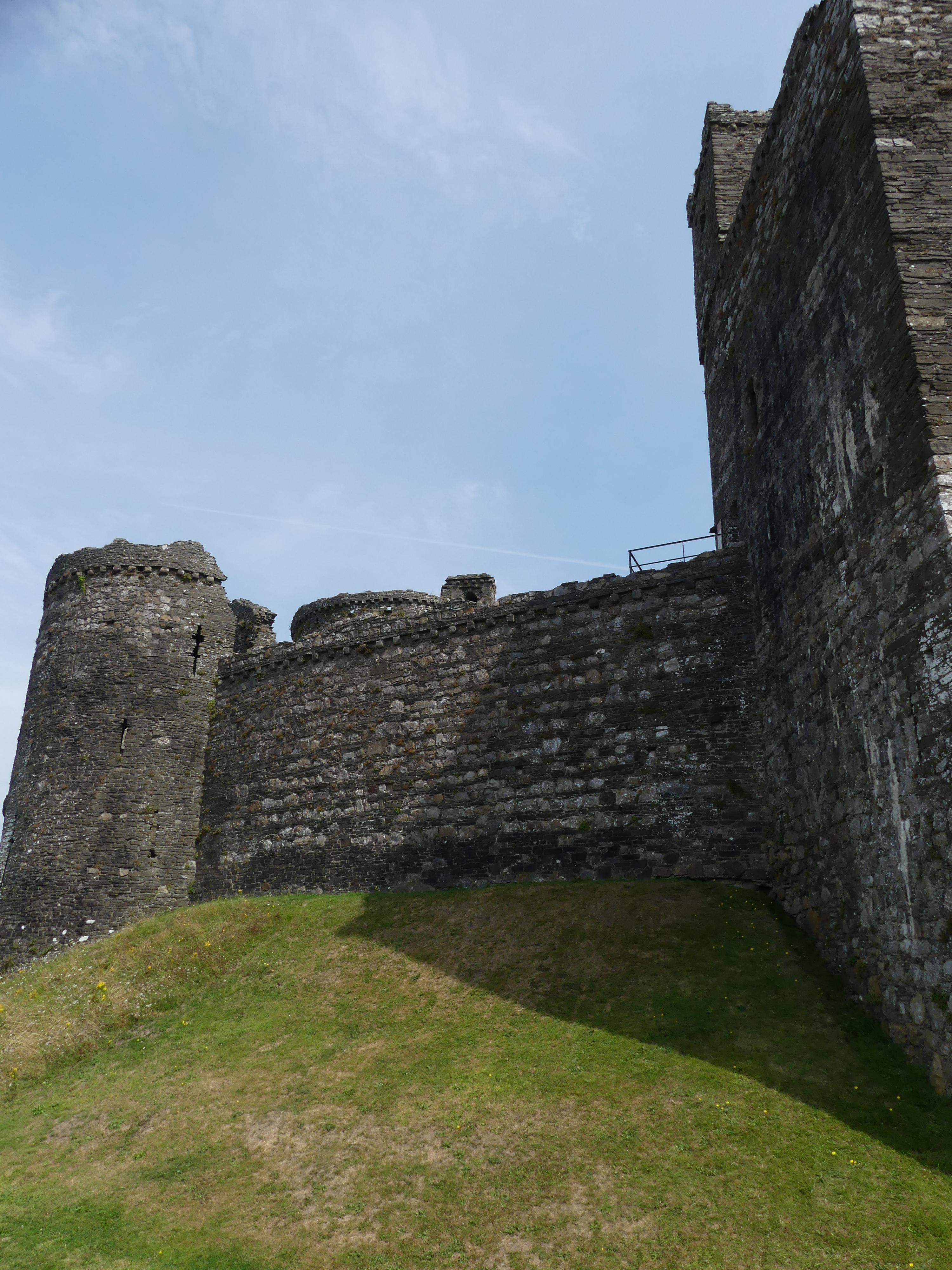
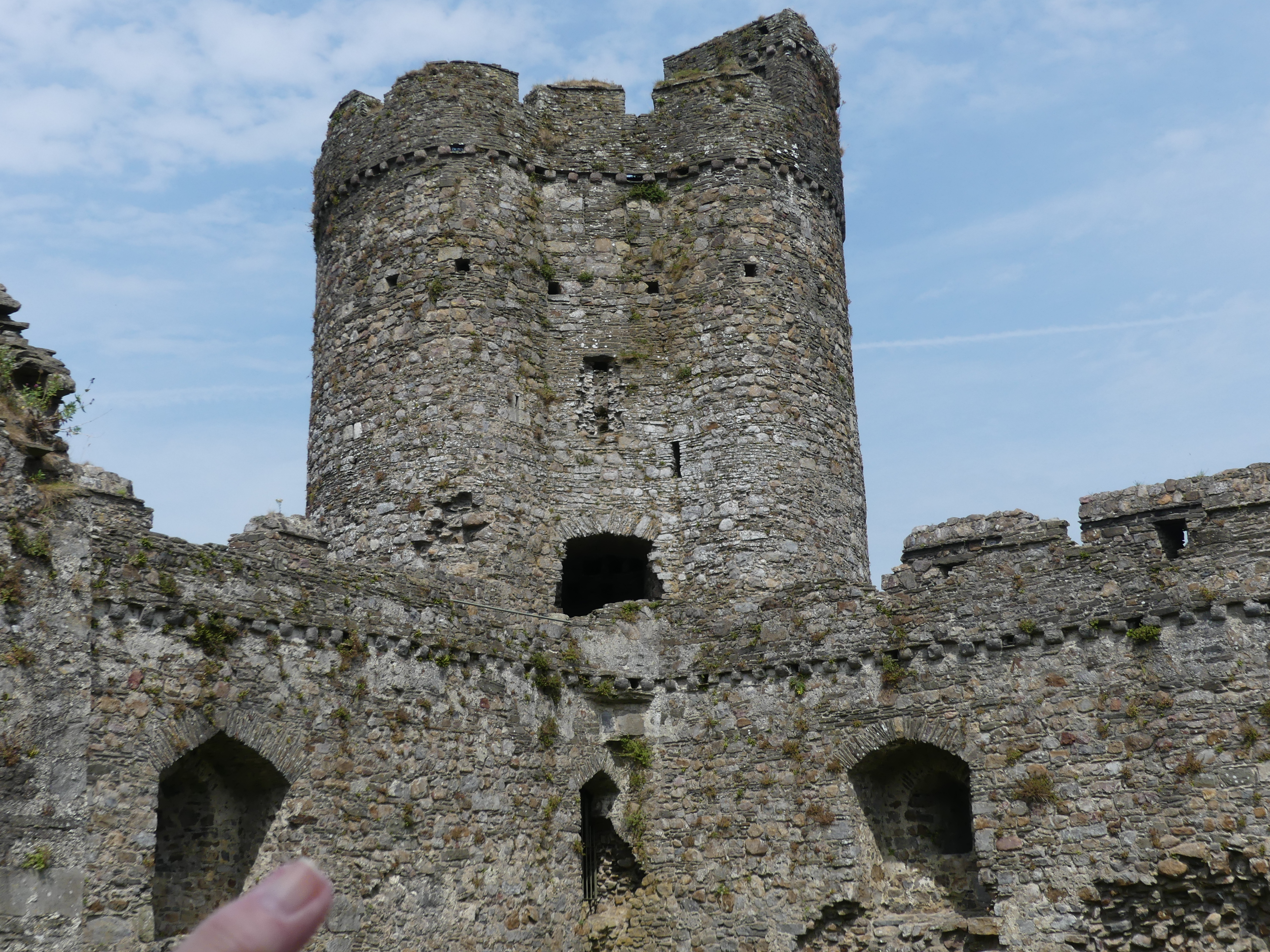
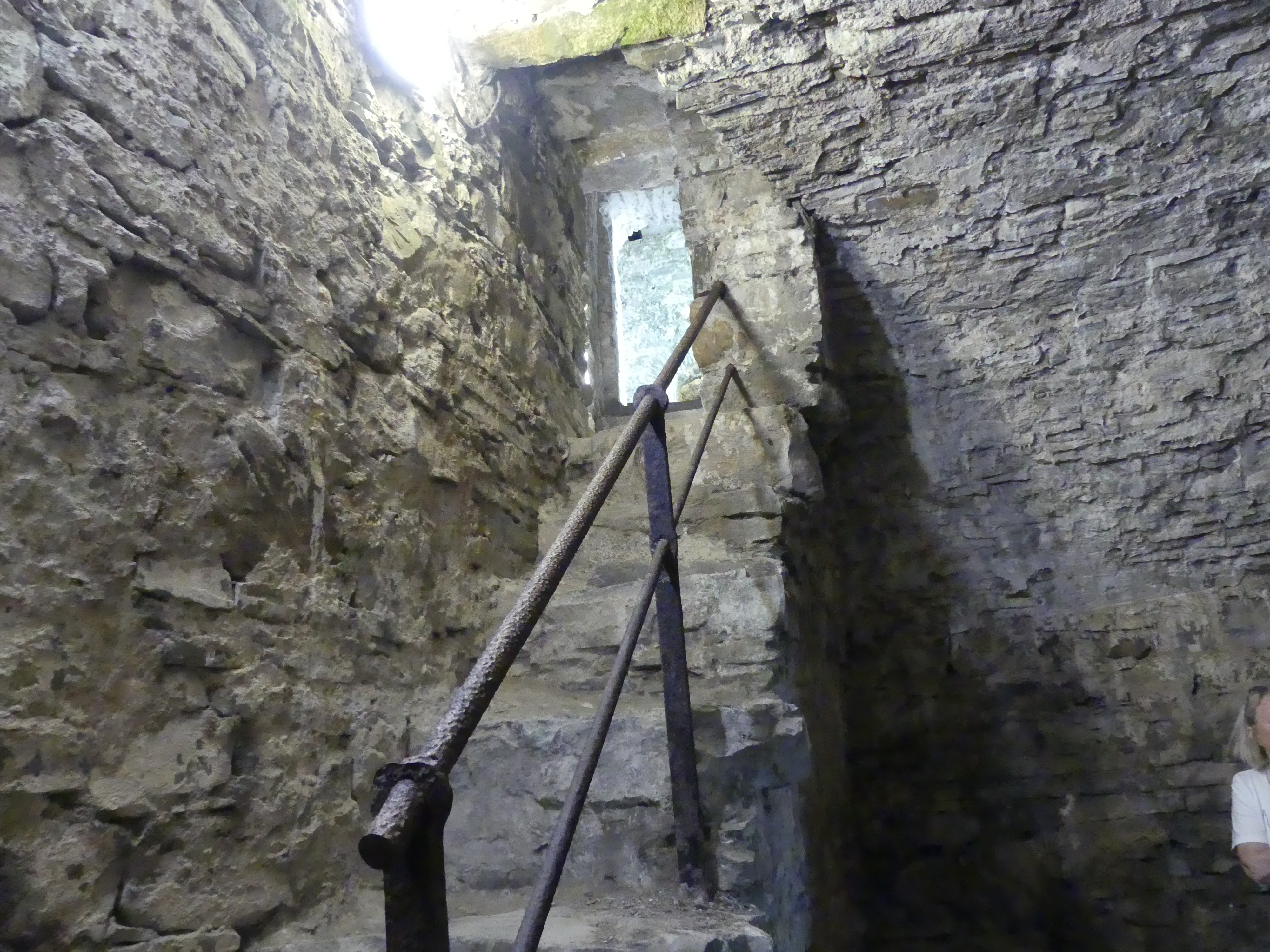
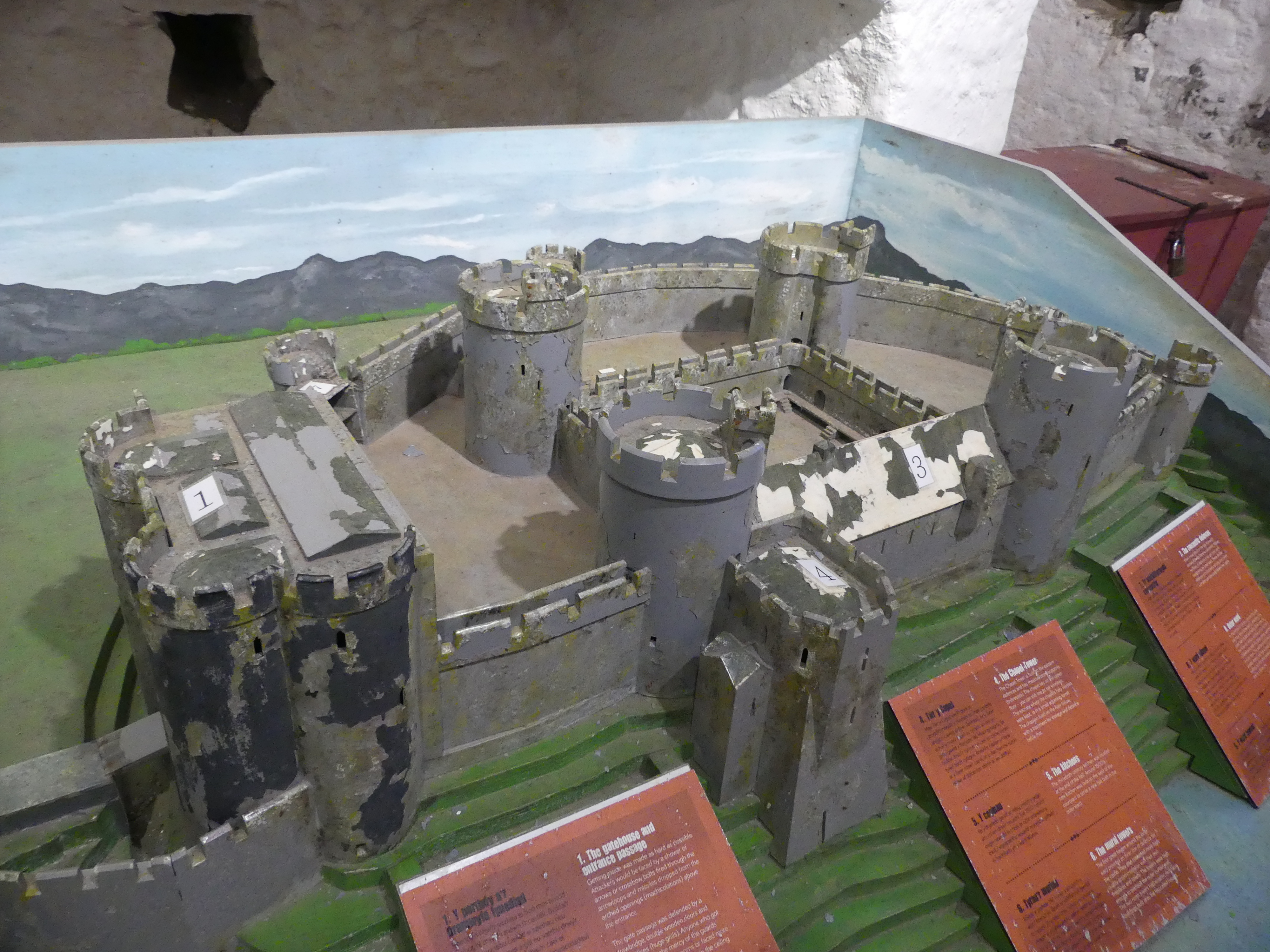
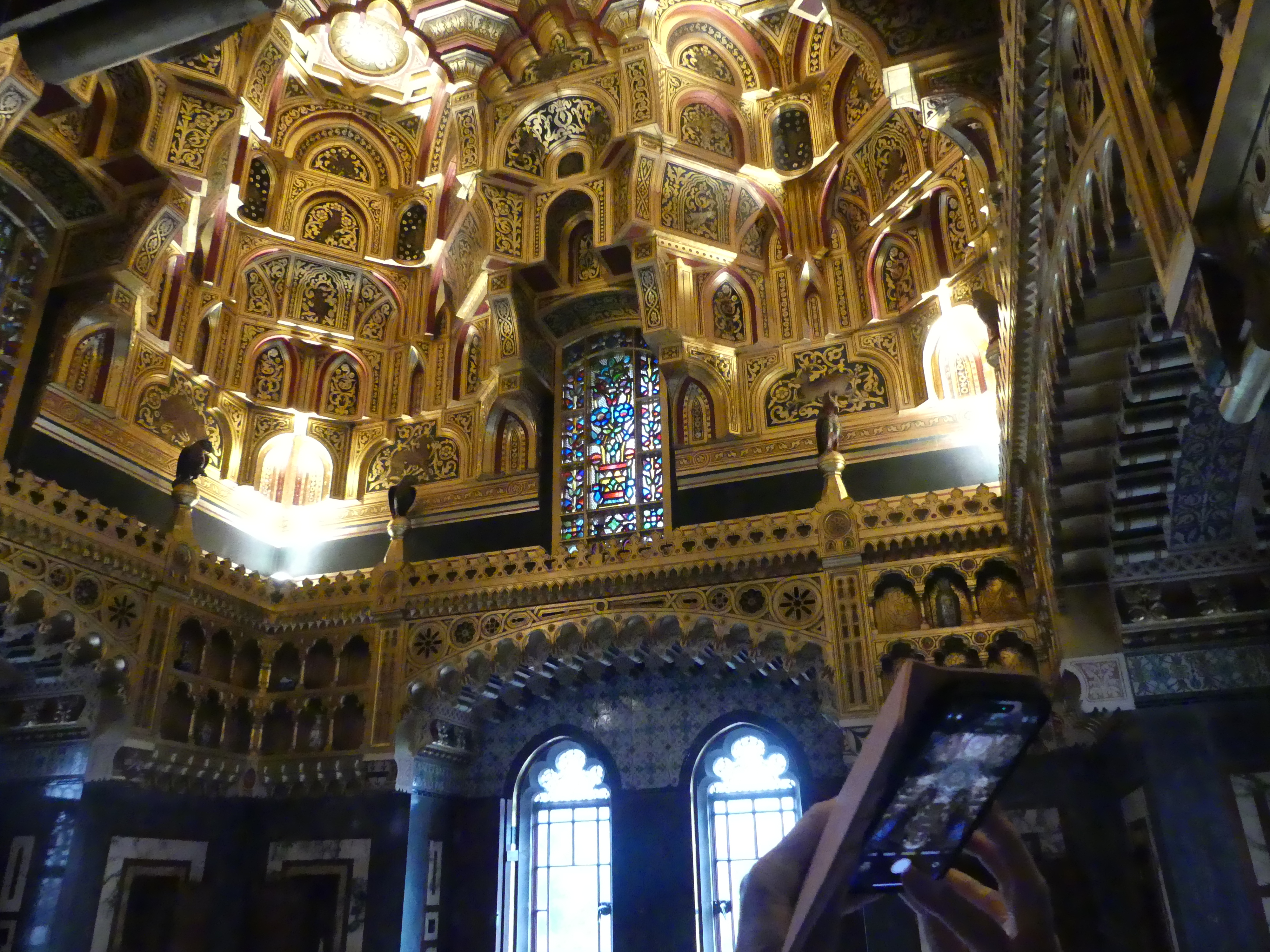
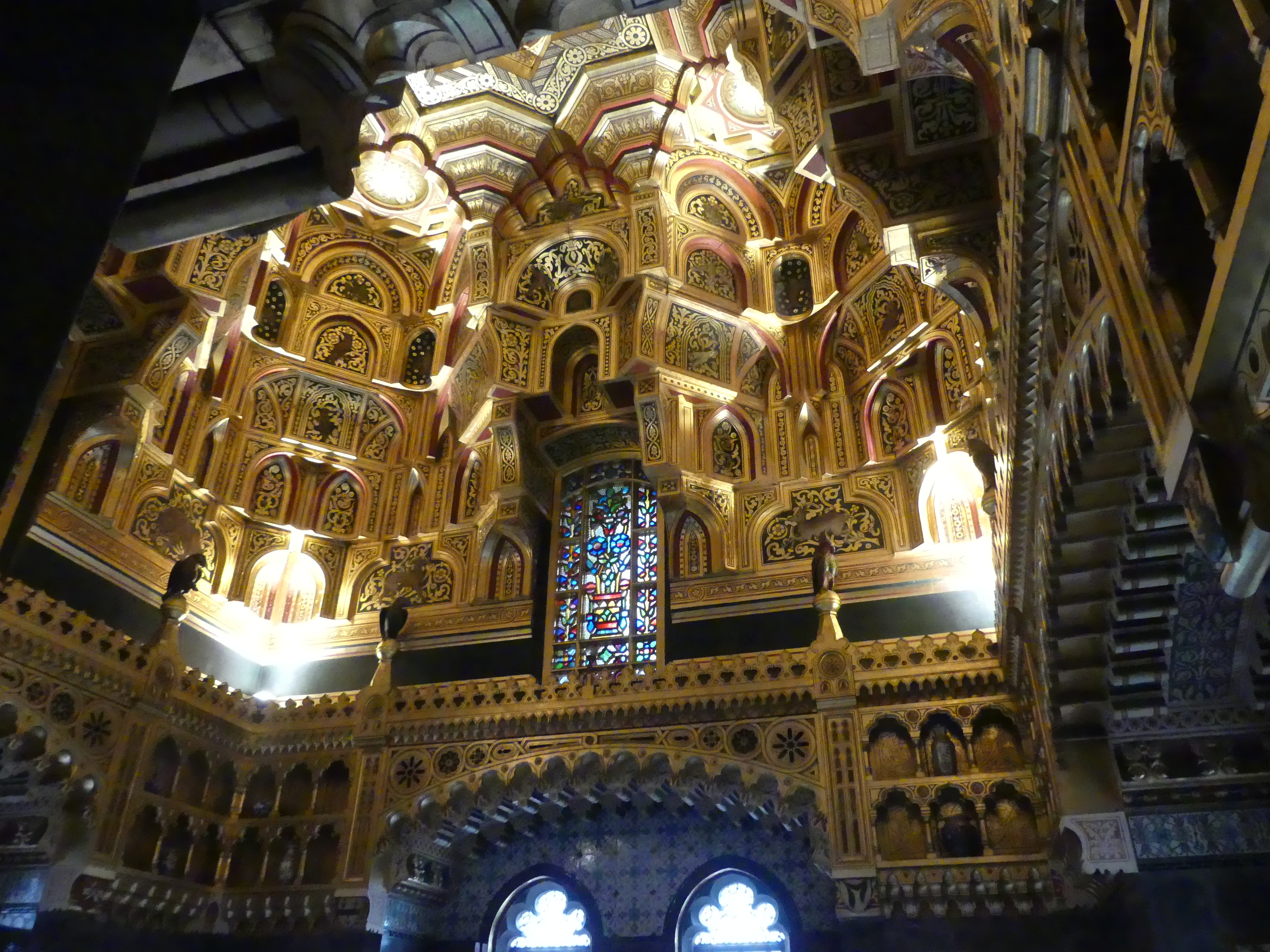
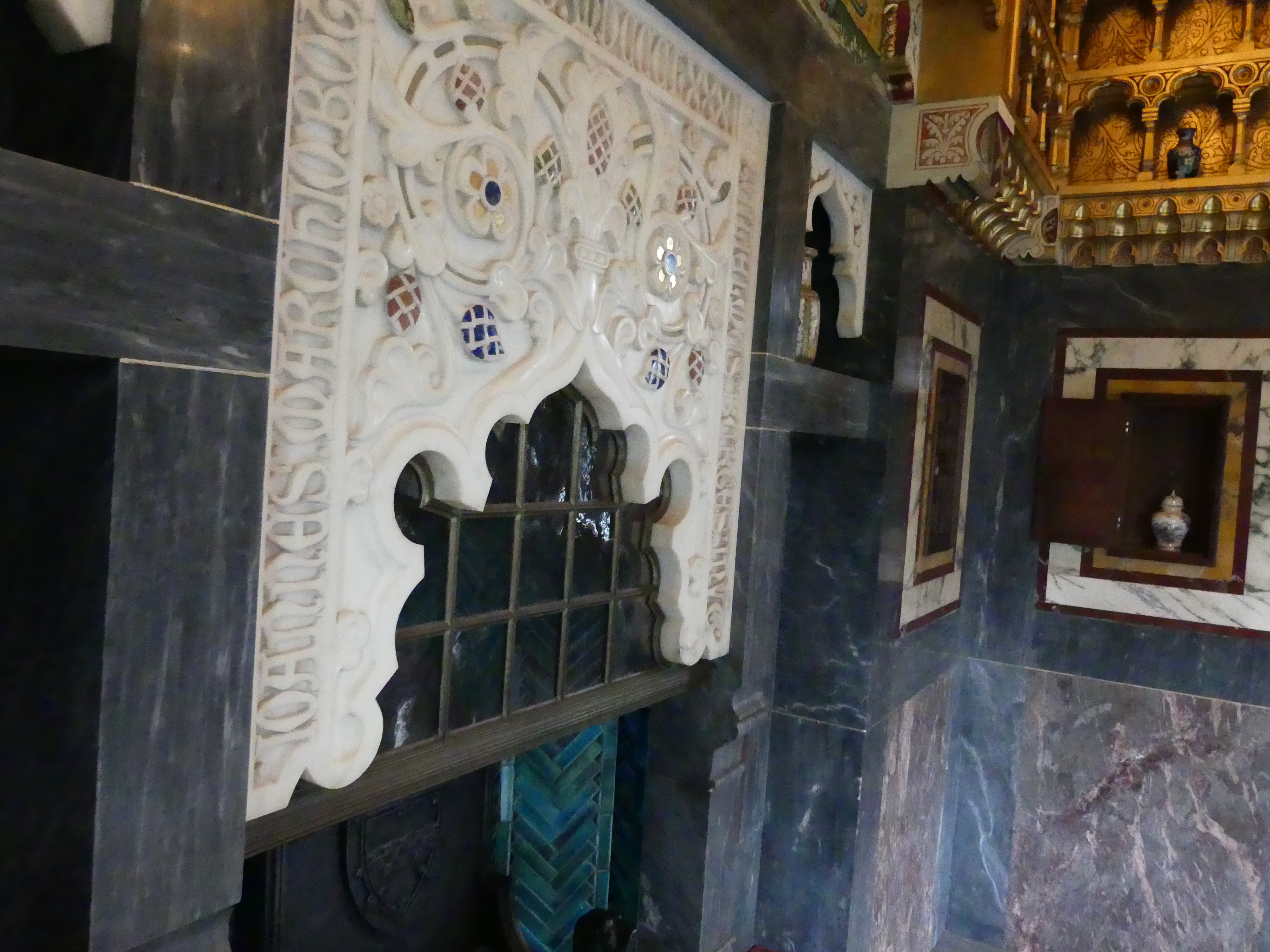
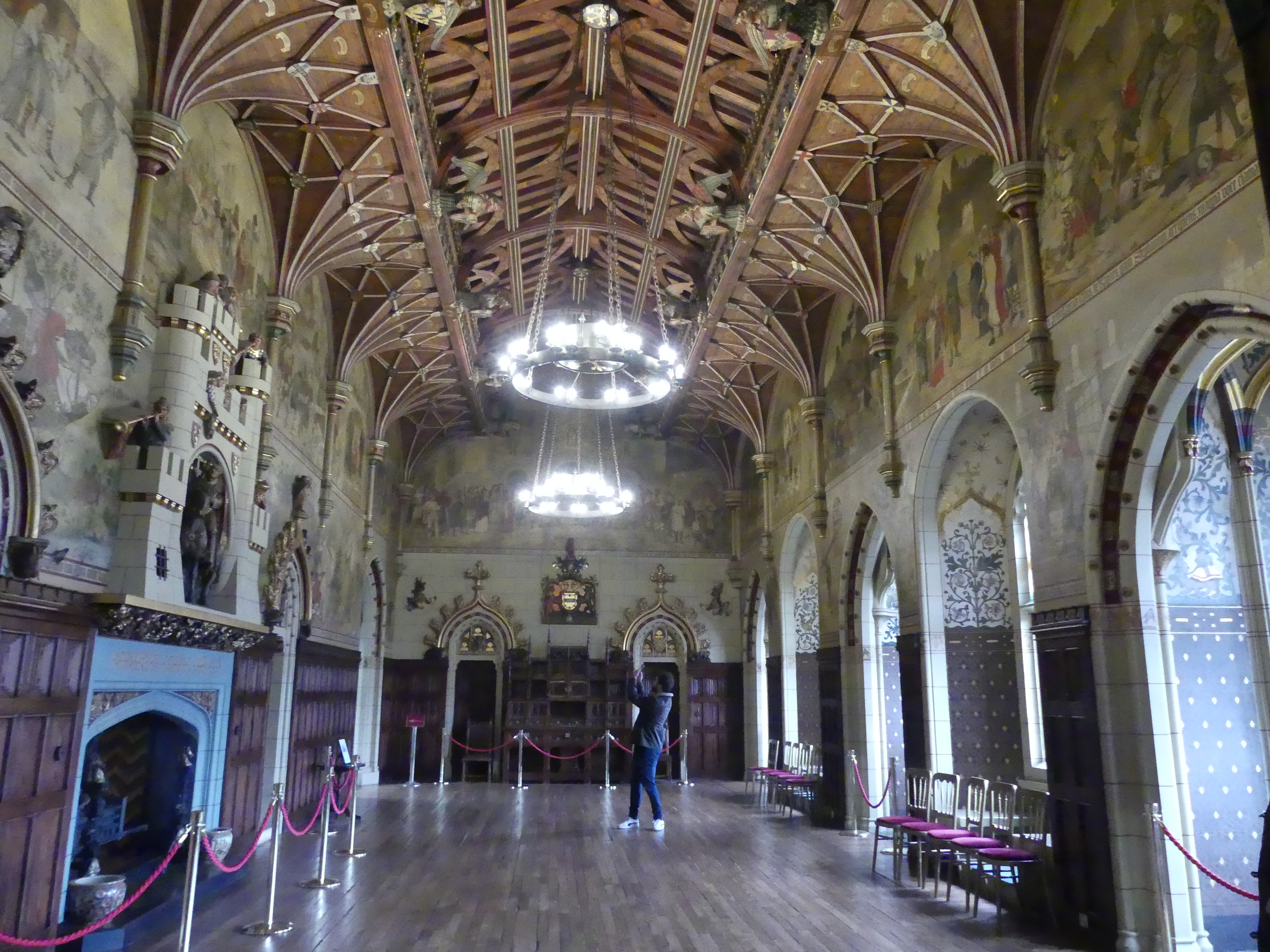
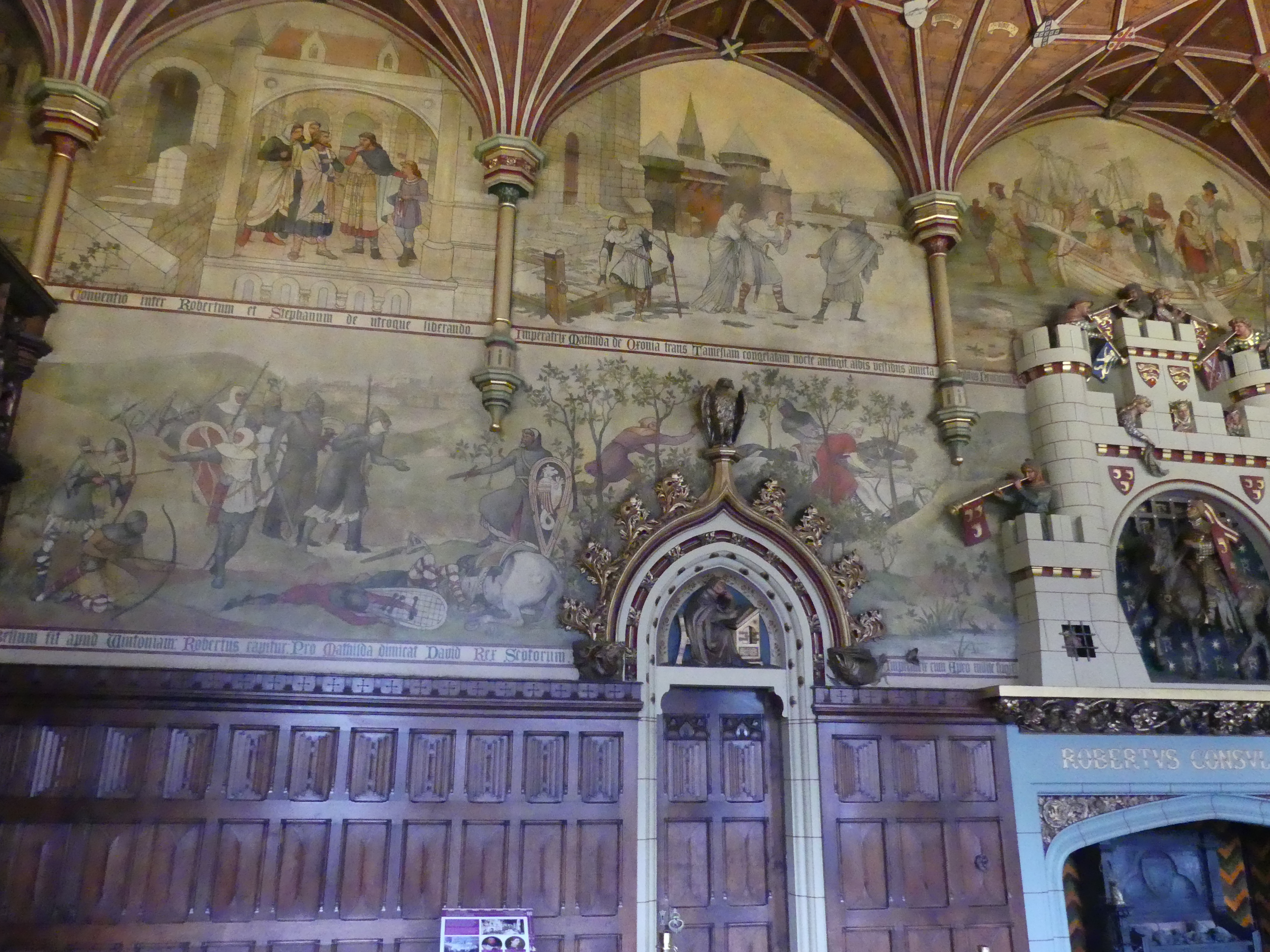
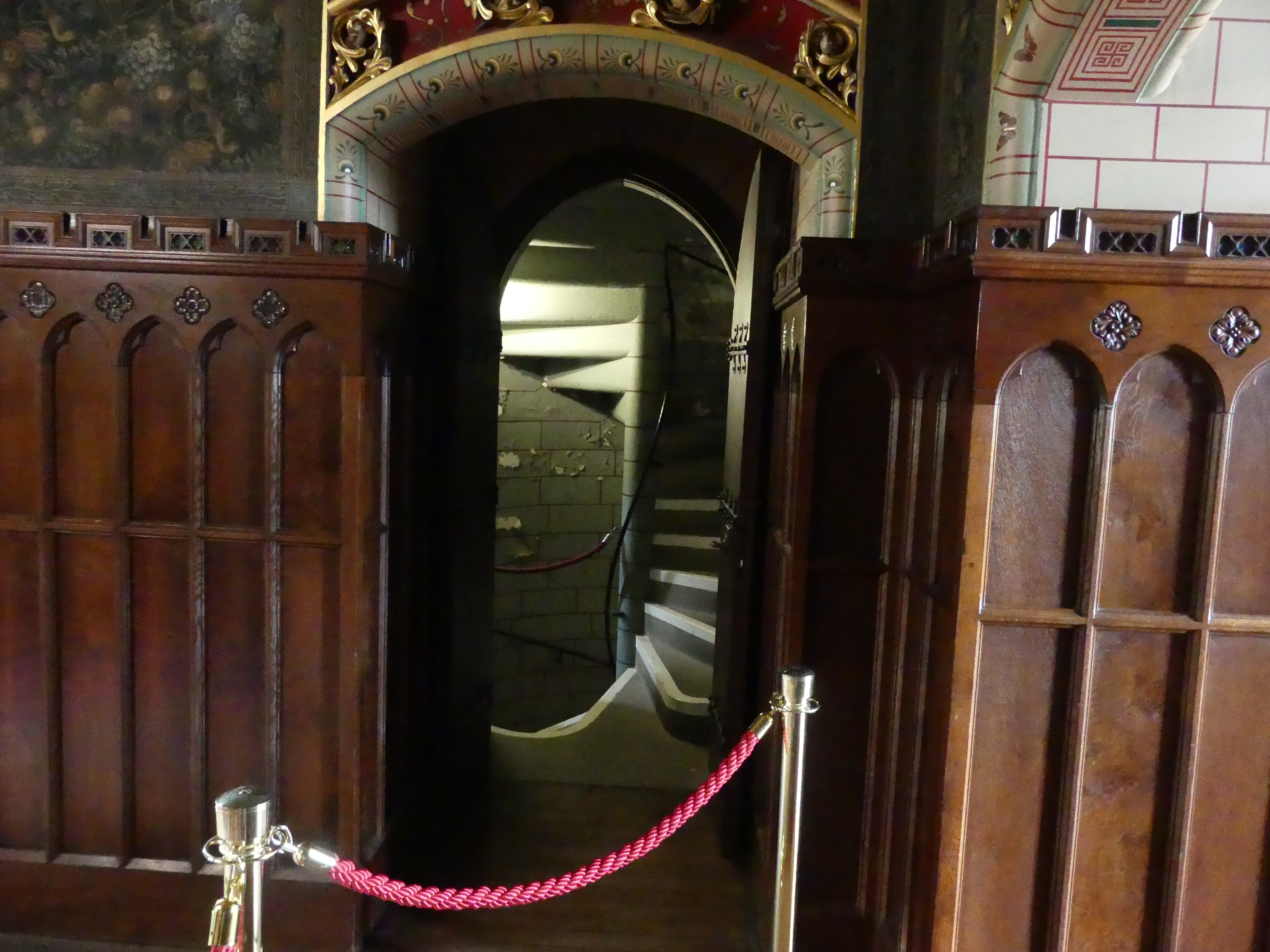
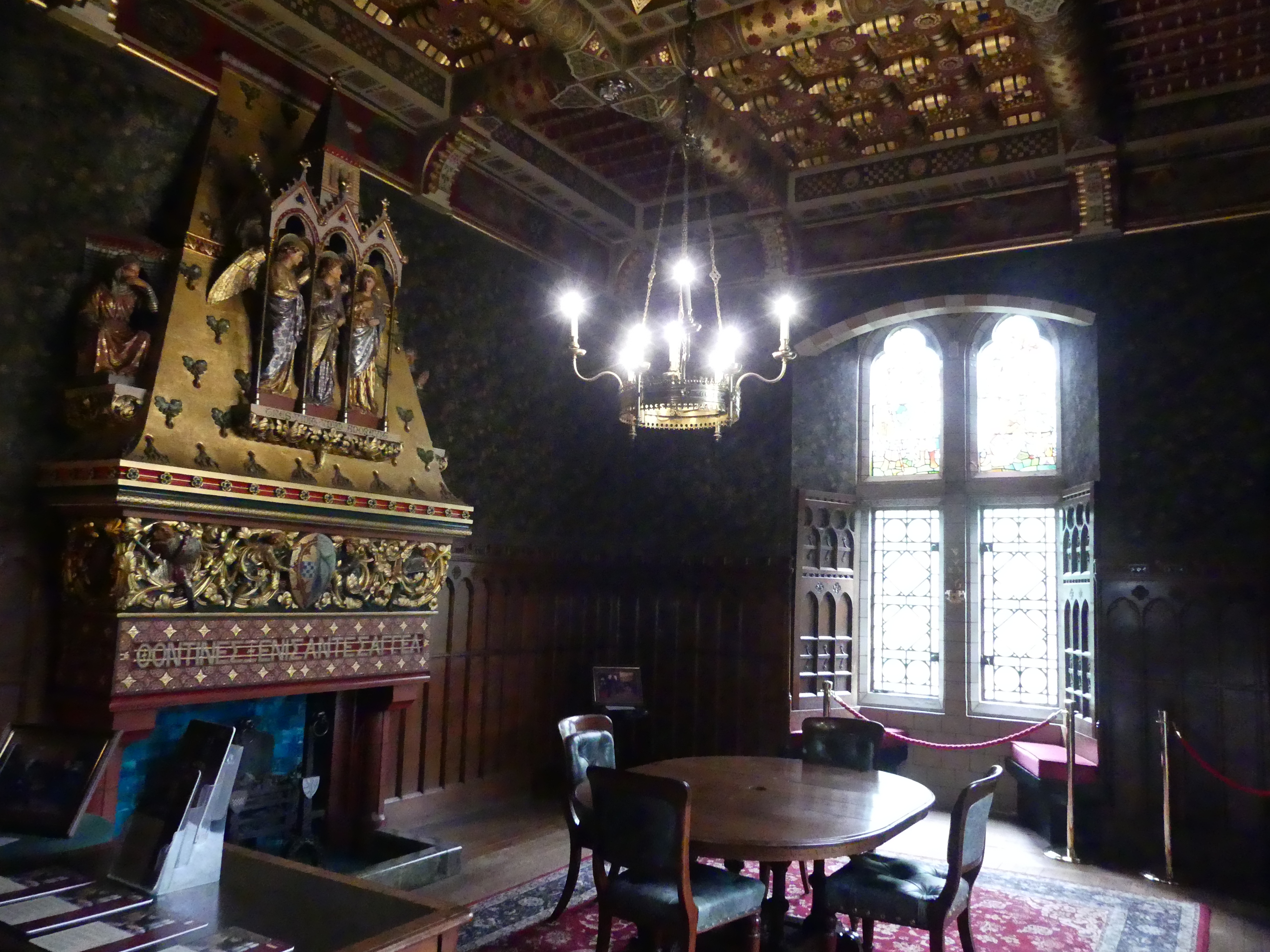
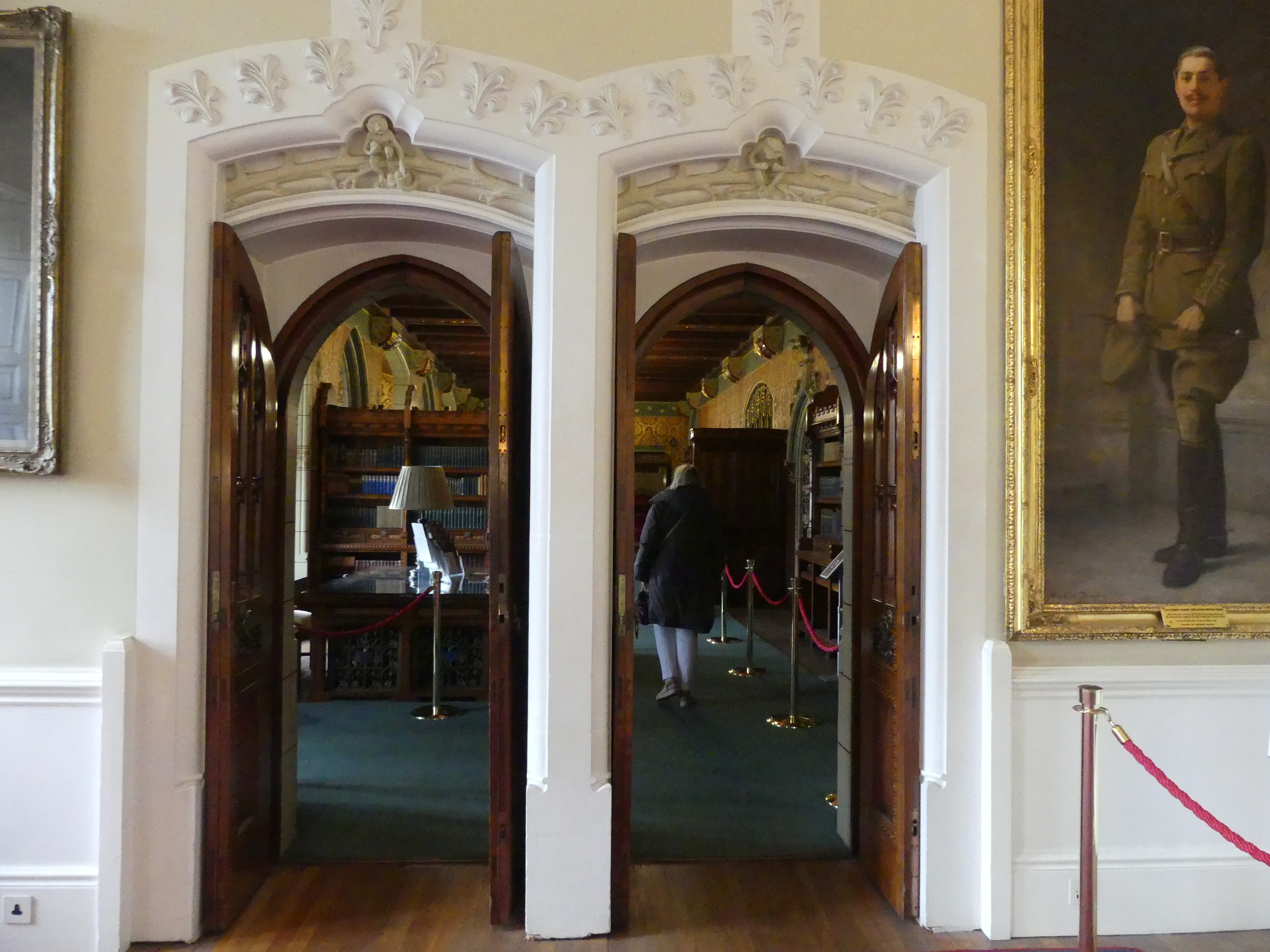
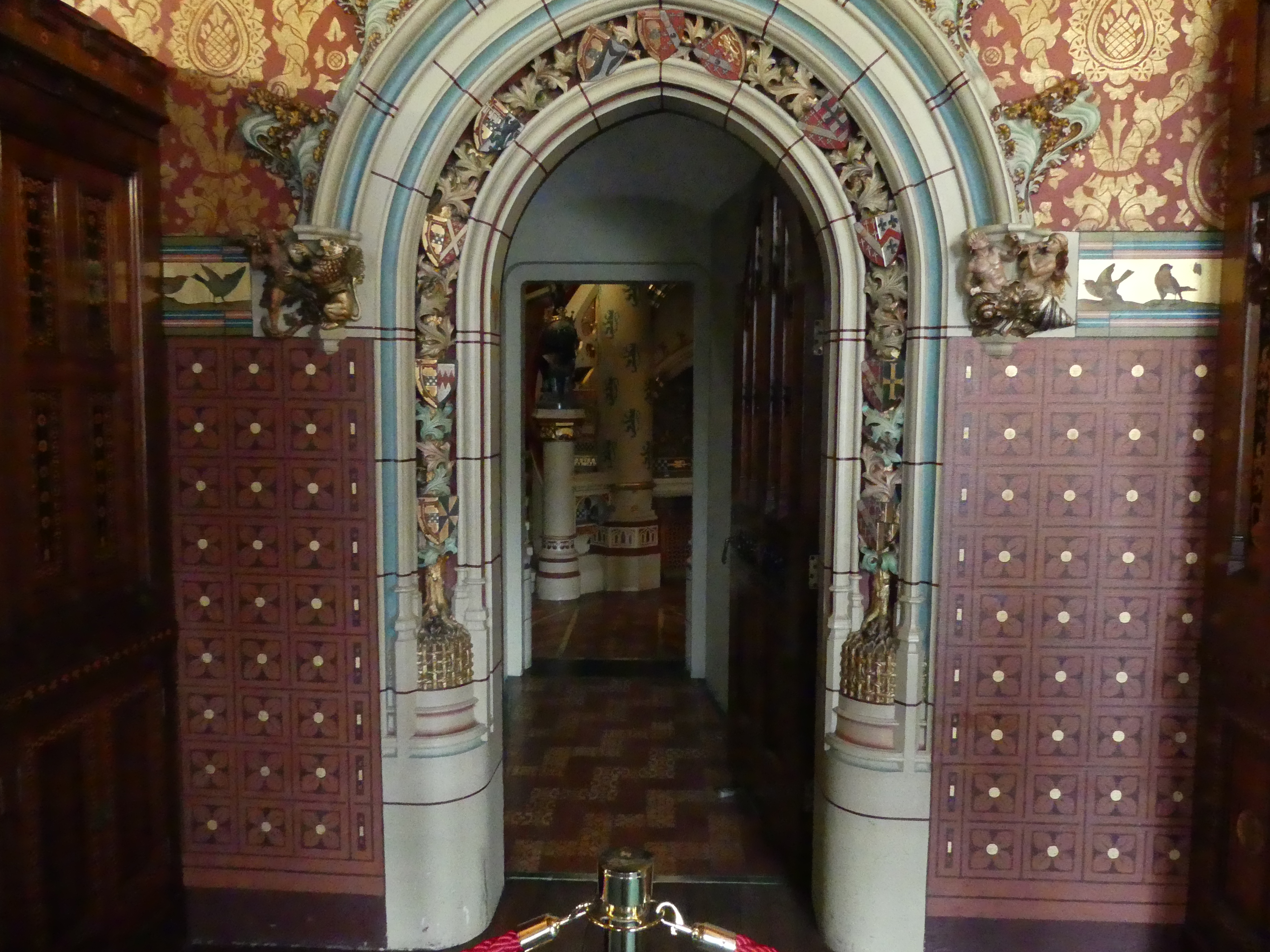
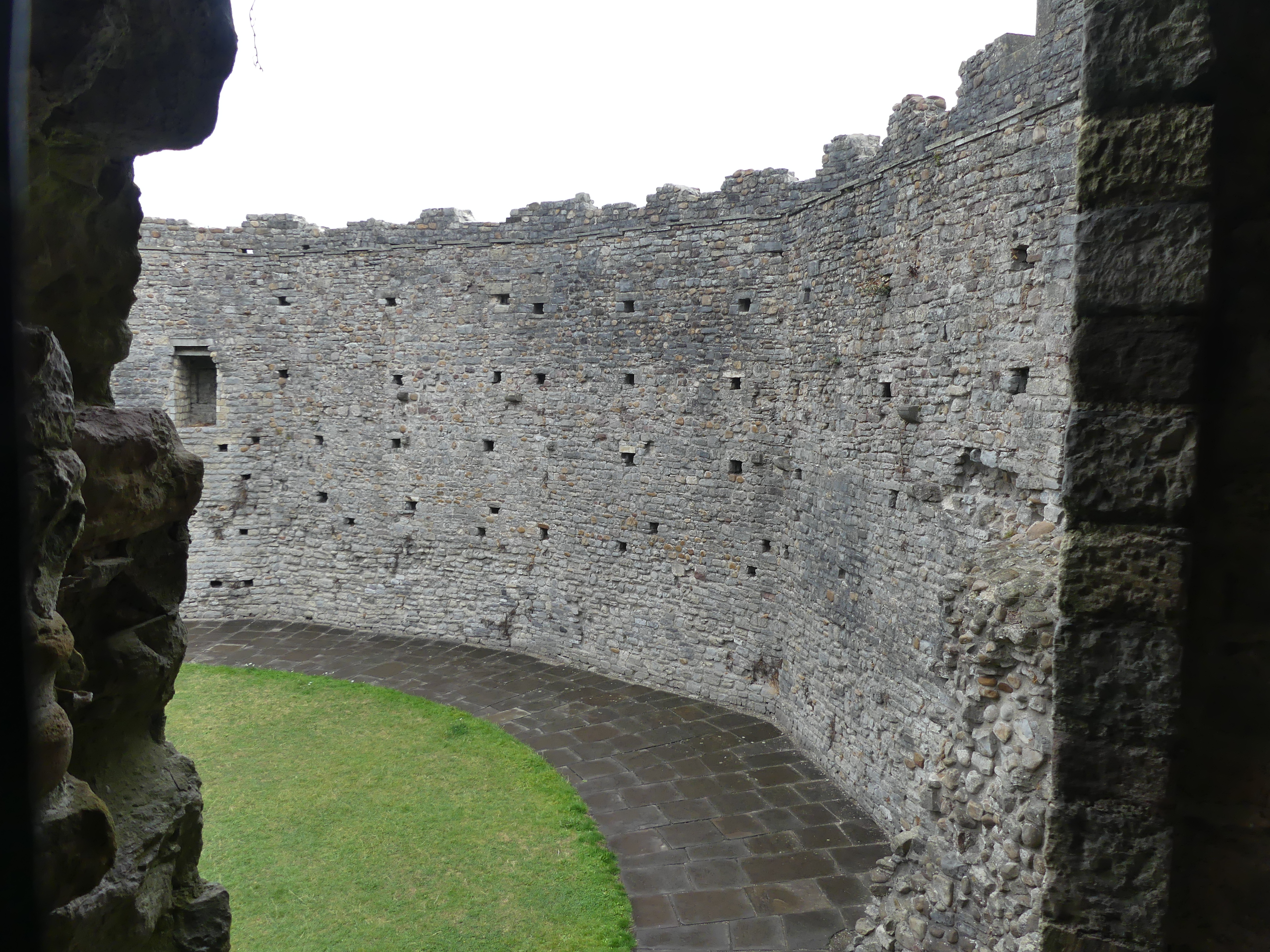
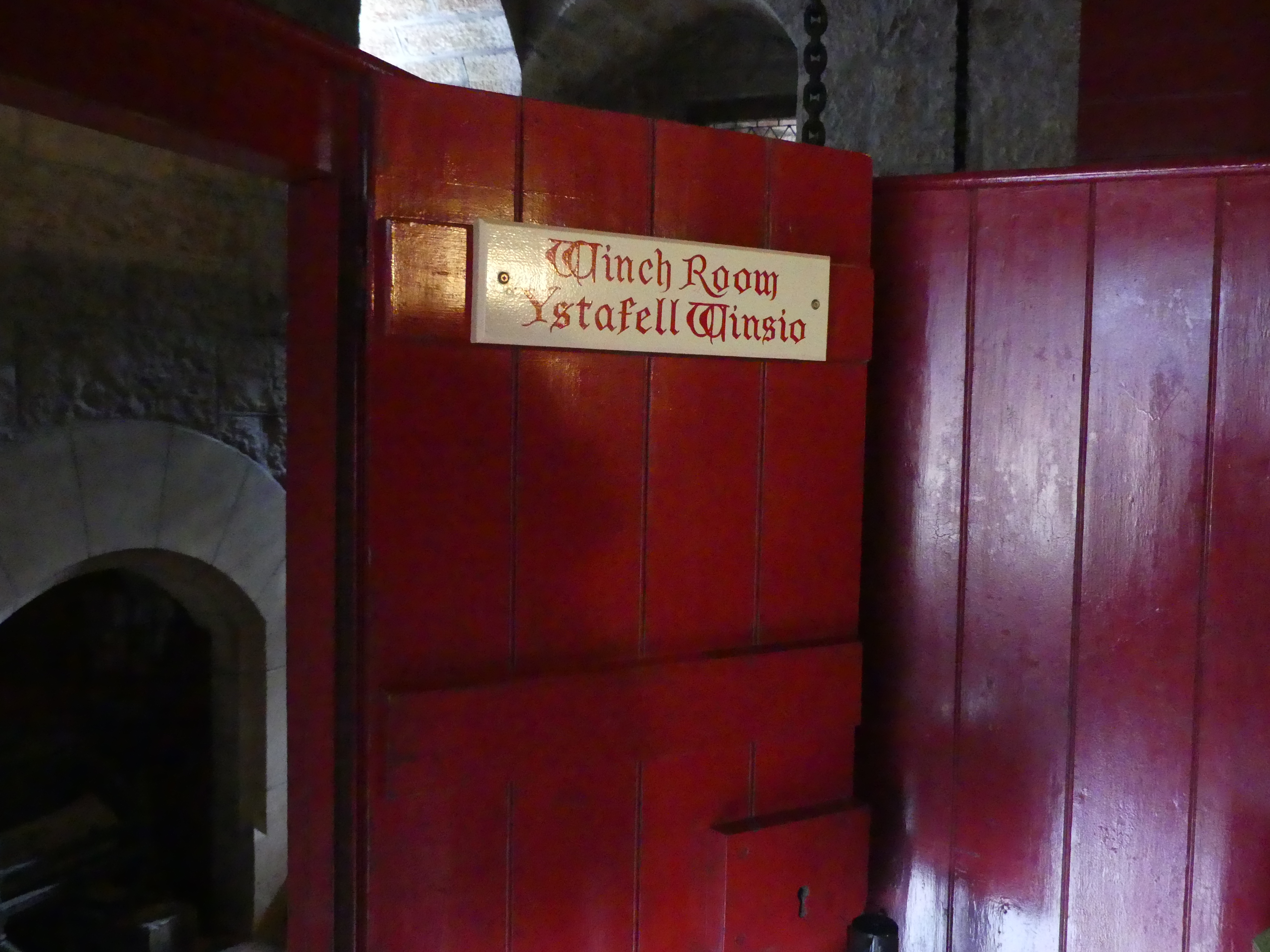
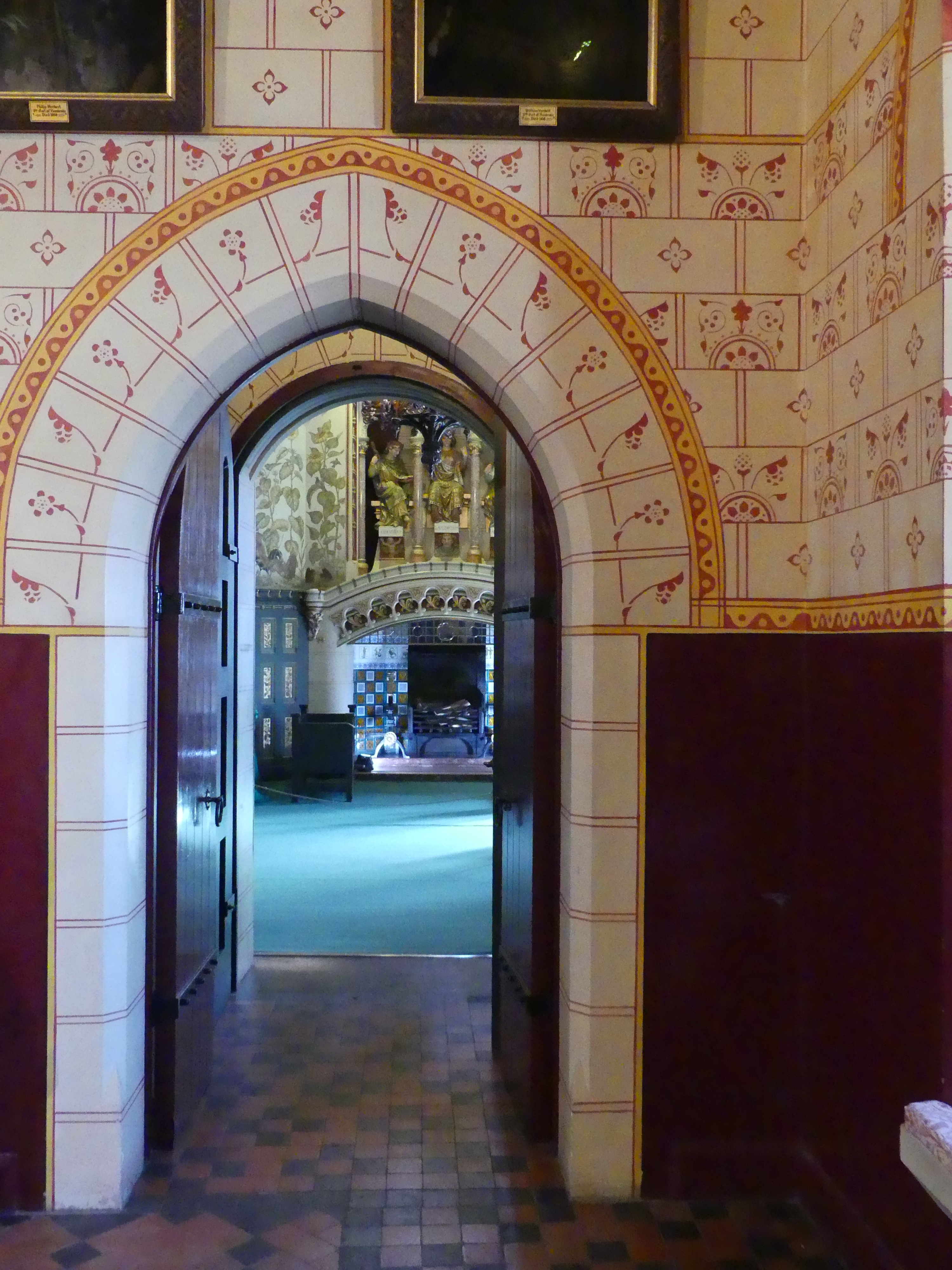
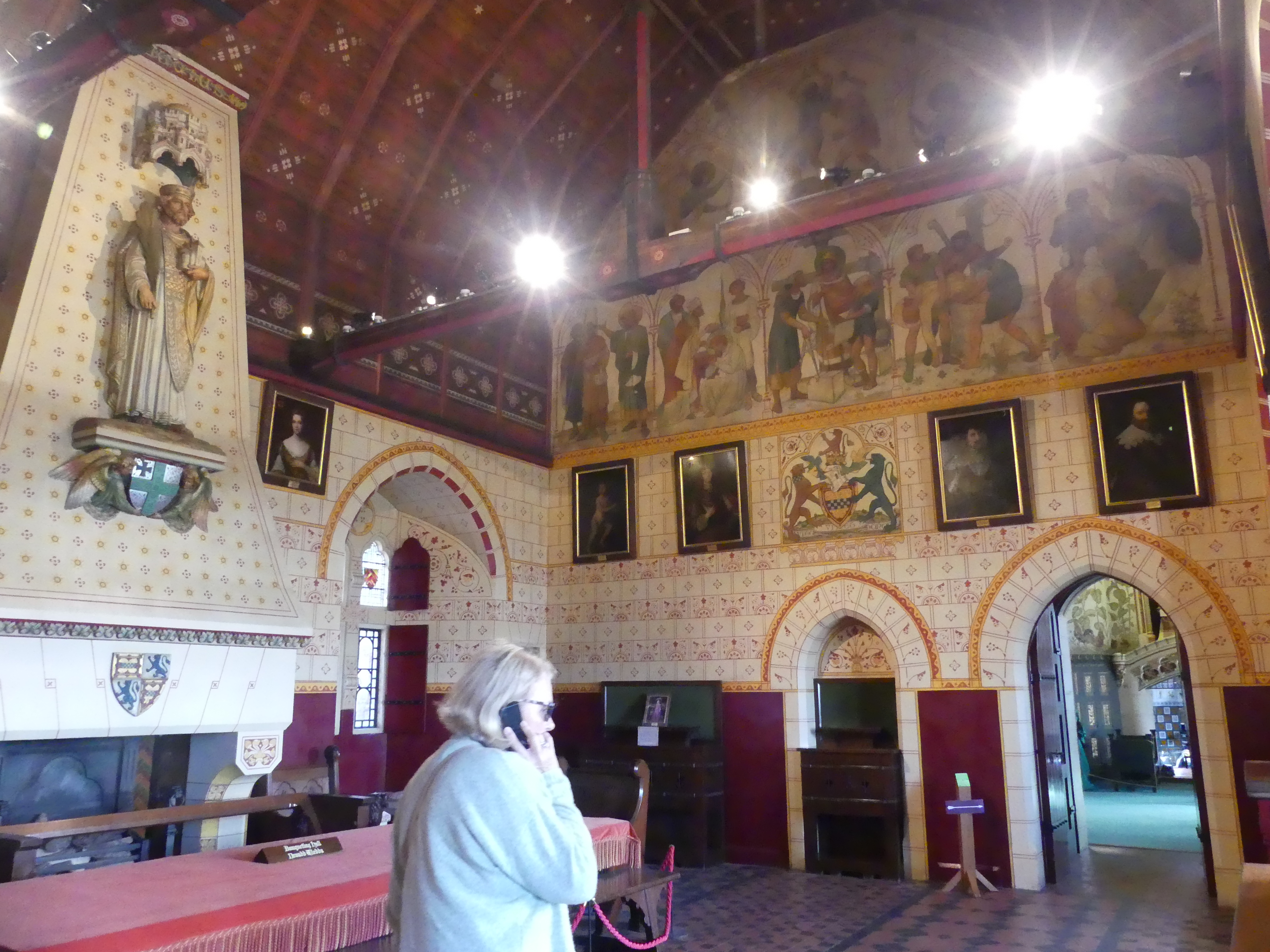
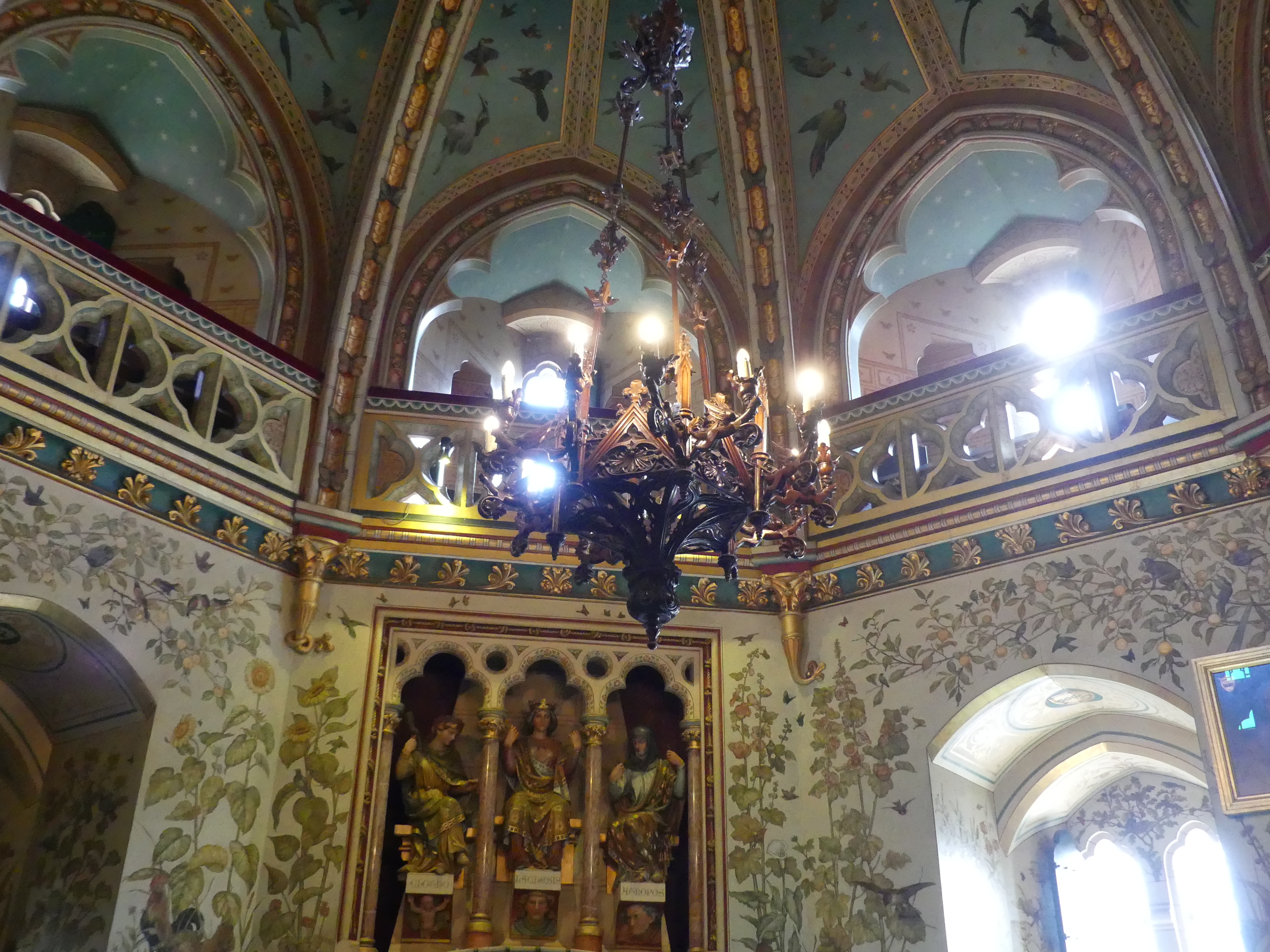
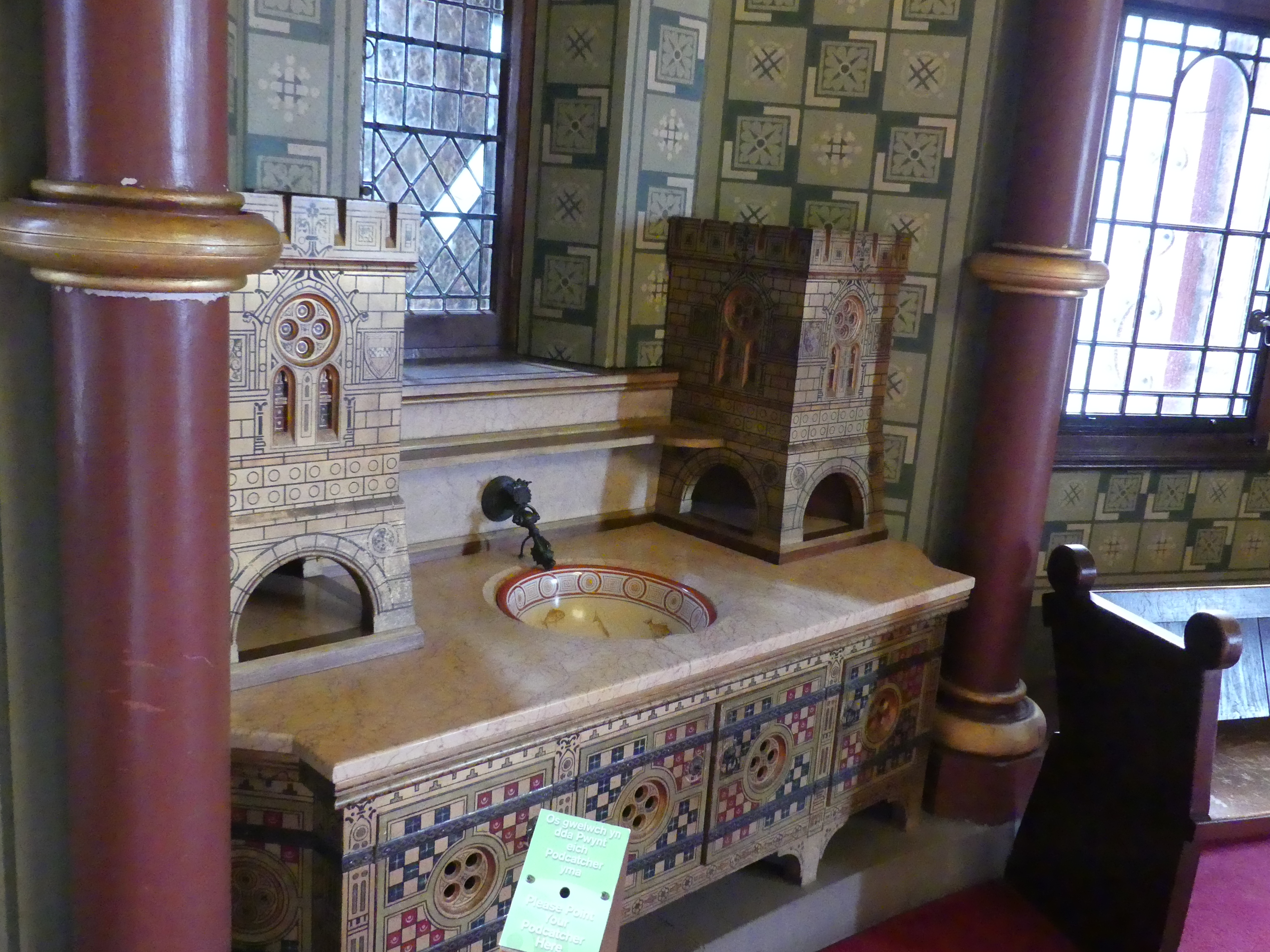
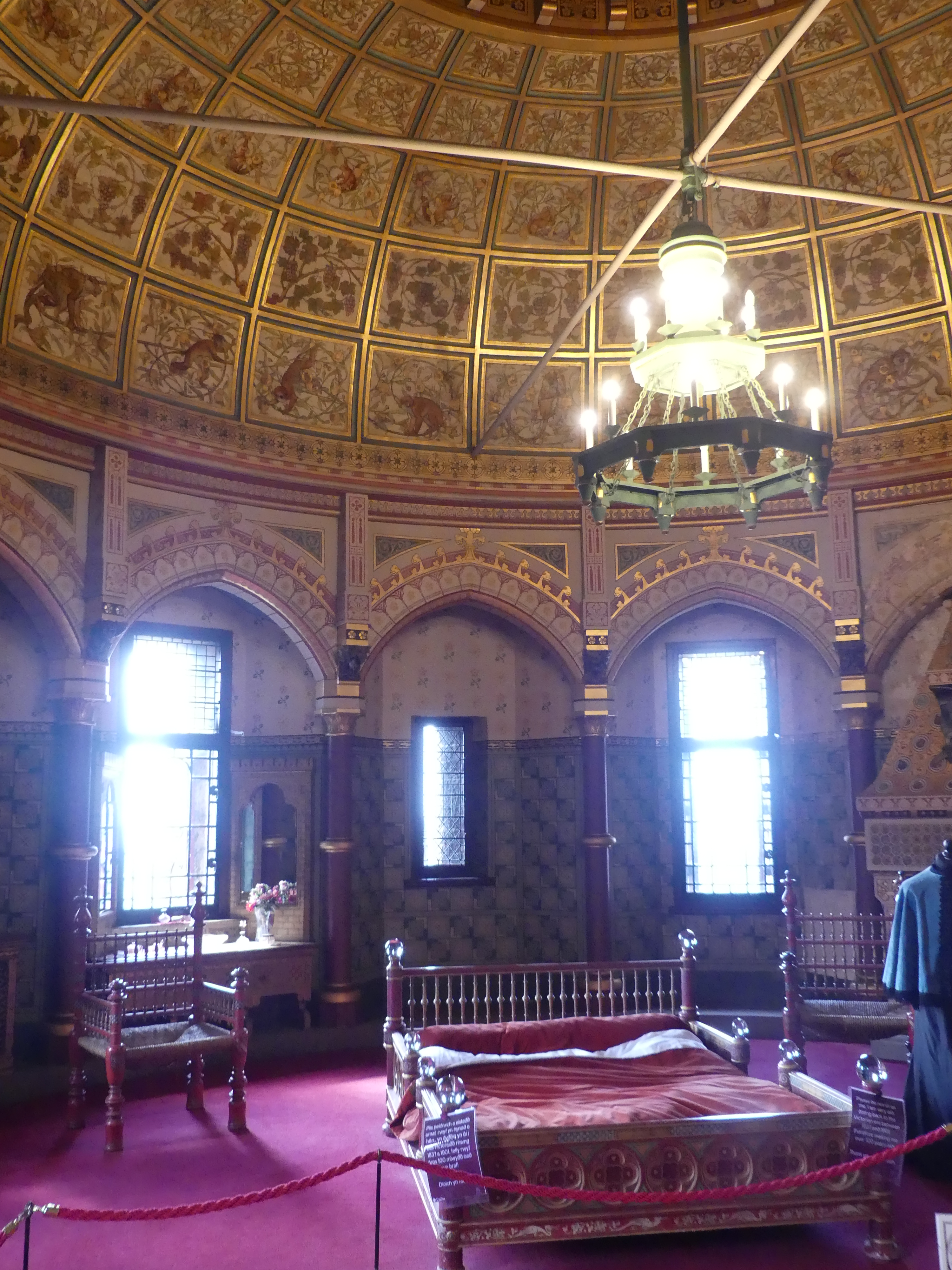
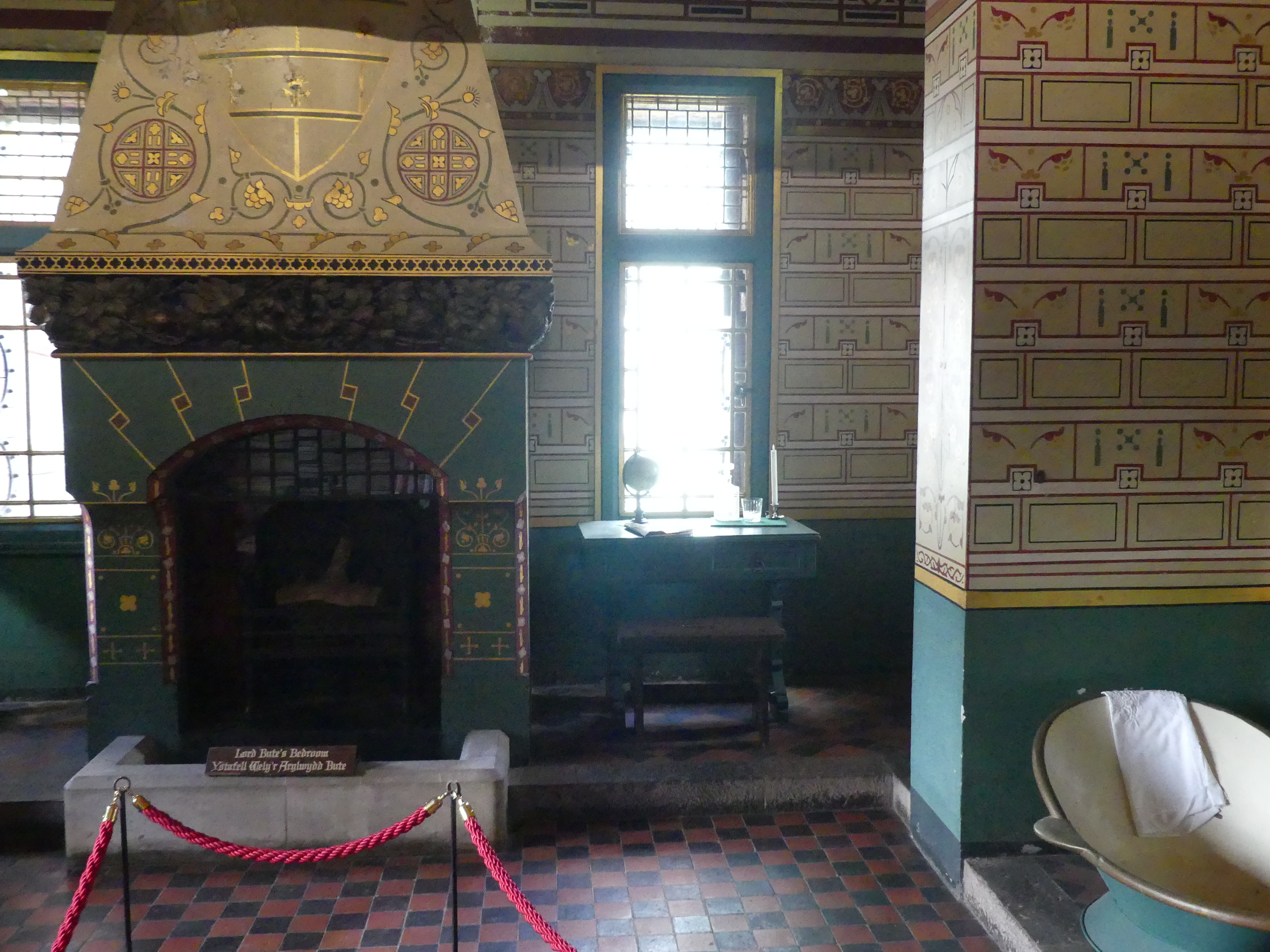
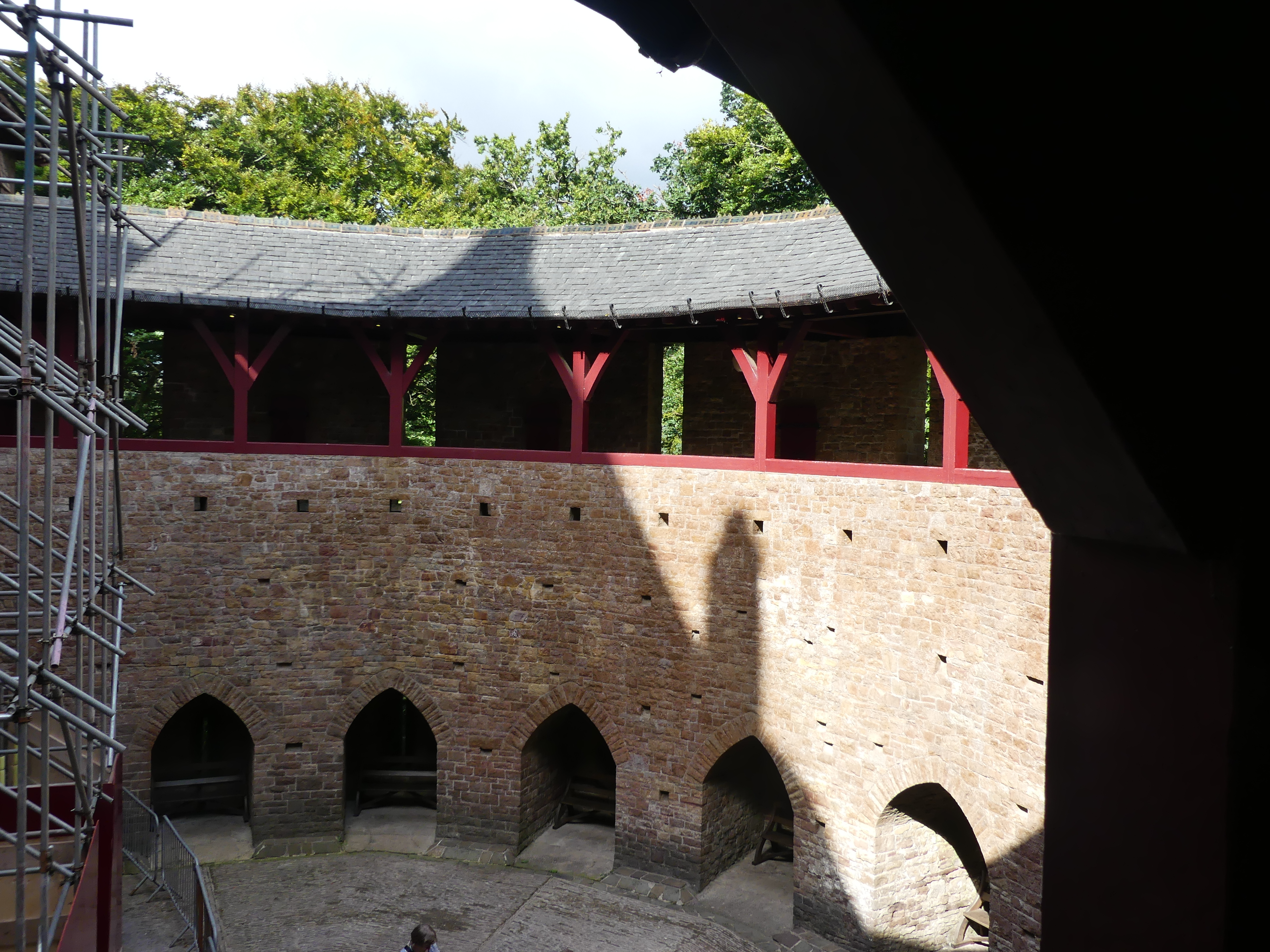
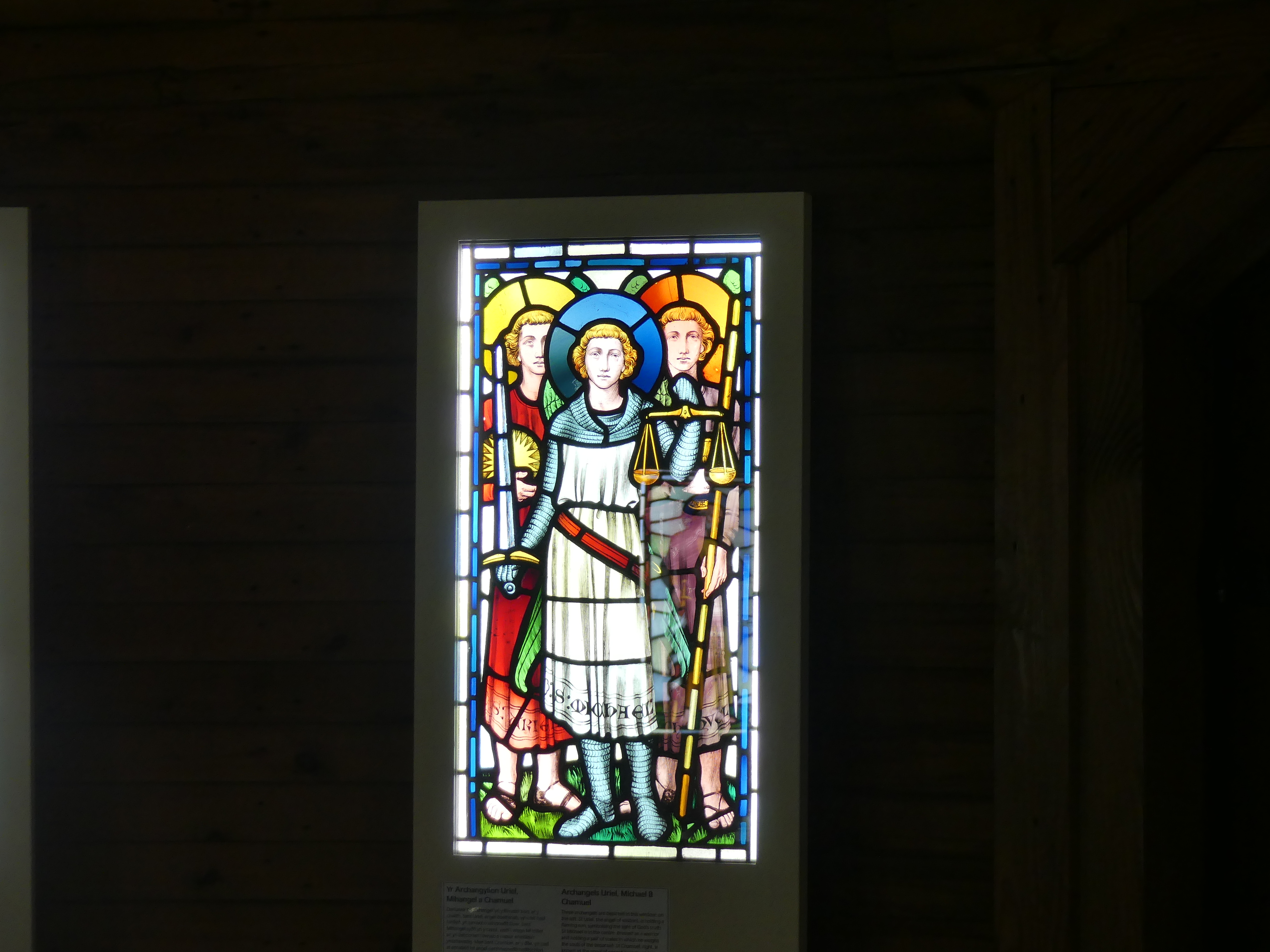
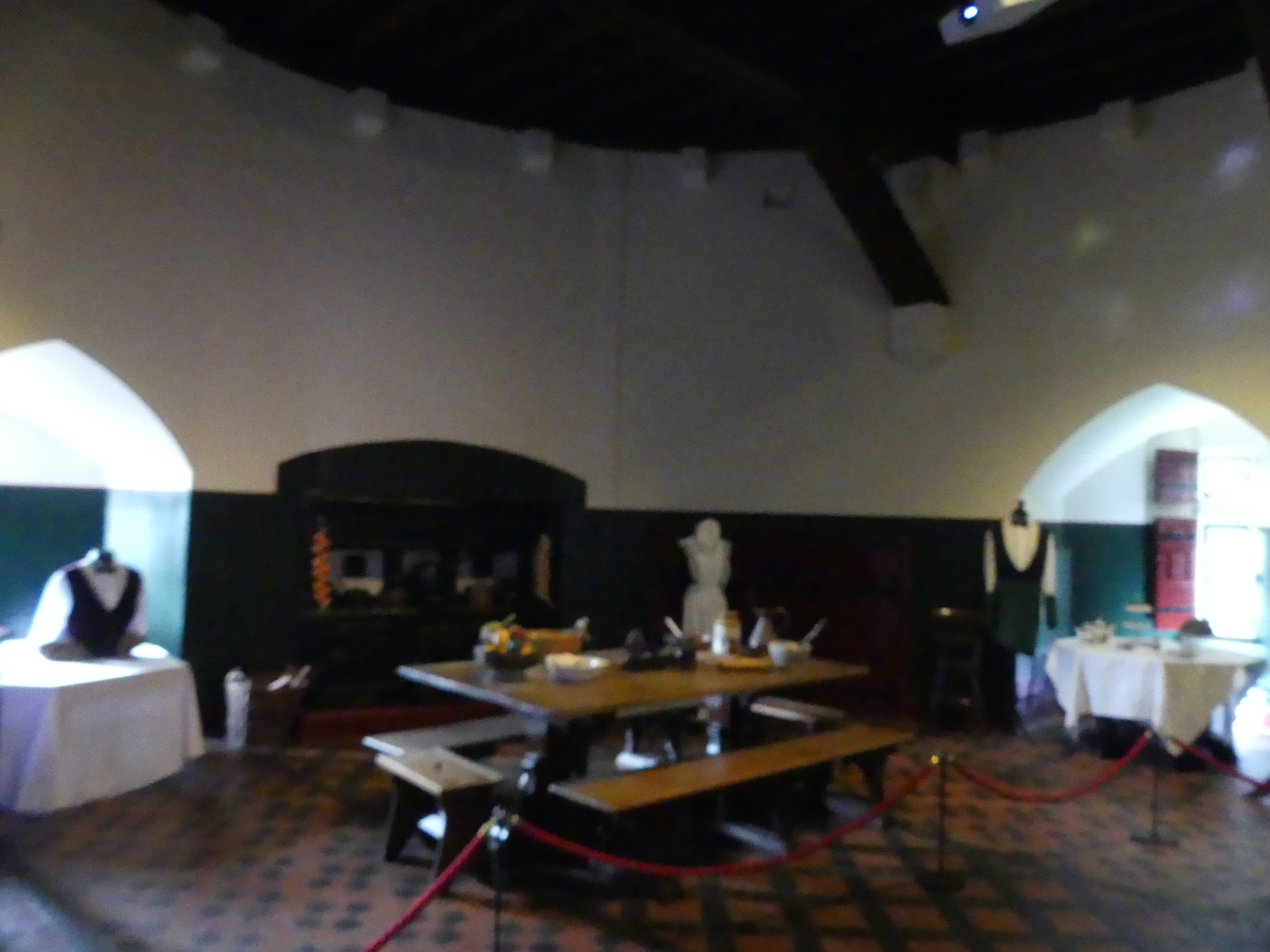
With our self-guided tour, we roamed the Castell. Many of the rooms were filled with furniture from the past and gave us a good idea of the recent use of the place. The photos below follow our tour. Unusually they have kept and restored the chamber “the Winch Room” holding the machinery that operated the portcullis the draw bridge and the “murder hole”. The toilet has been modernised but remains in its original location such that the waste use to flow out over the castle walls. The Lady of the house had a bedroom in the top of one of the towers and was quite pleasant whist the Lord ‘s bedroom was one floor below. It held a single bed, a fireplace and was rudimentary. We joked about the labour of love climbing the stairs for nuptuals with the lady of the house.
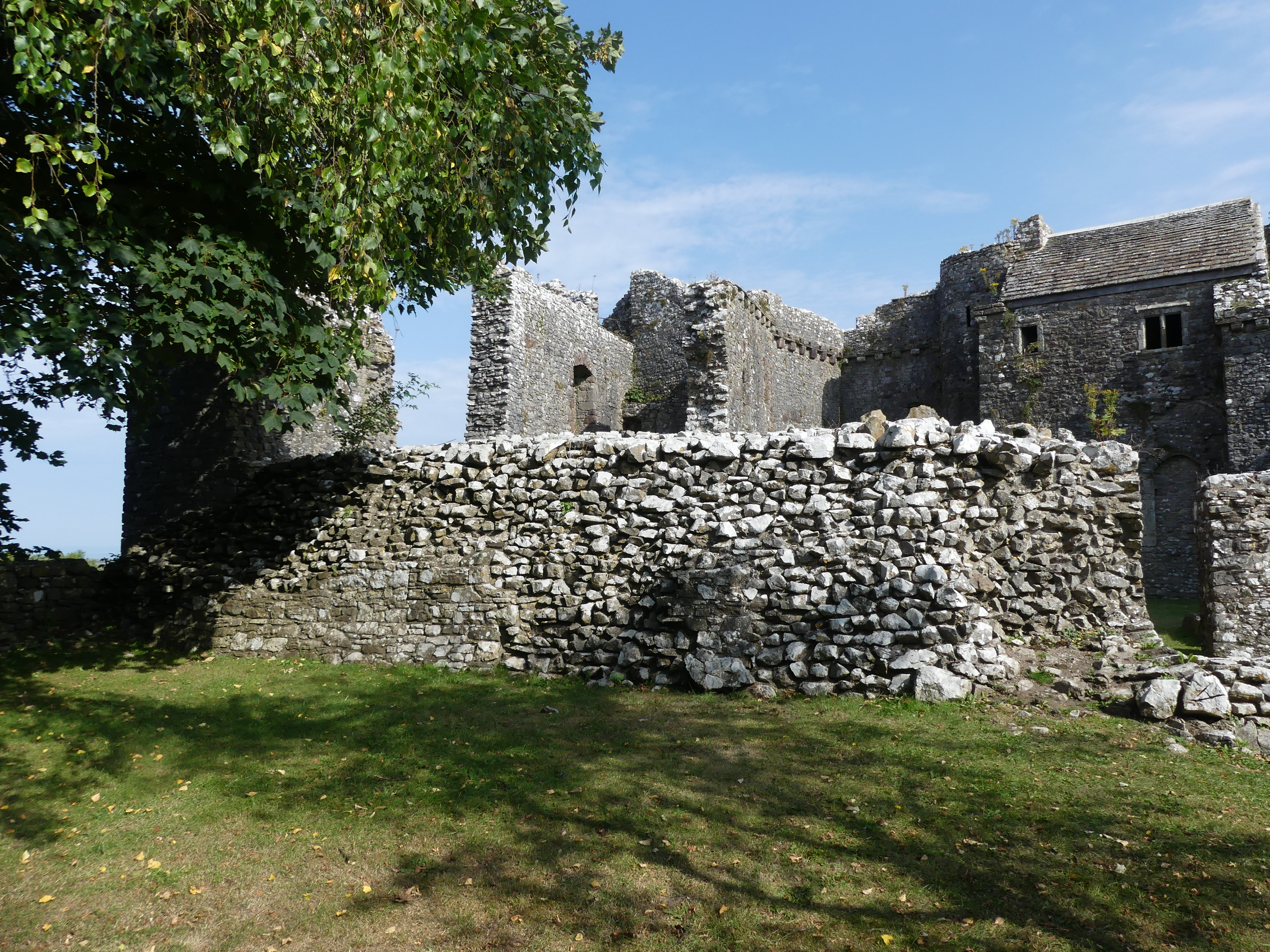
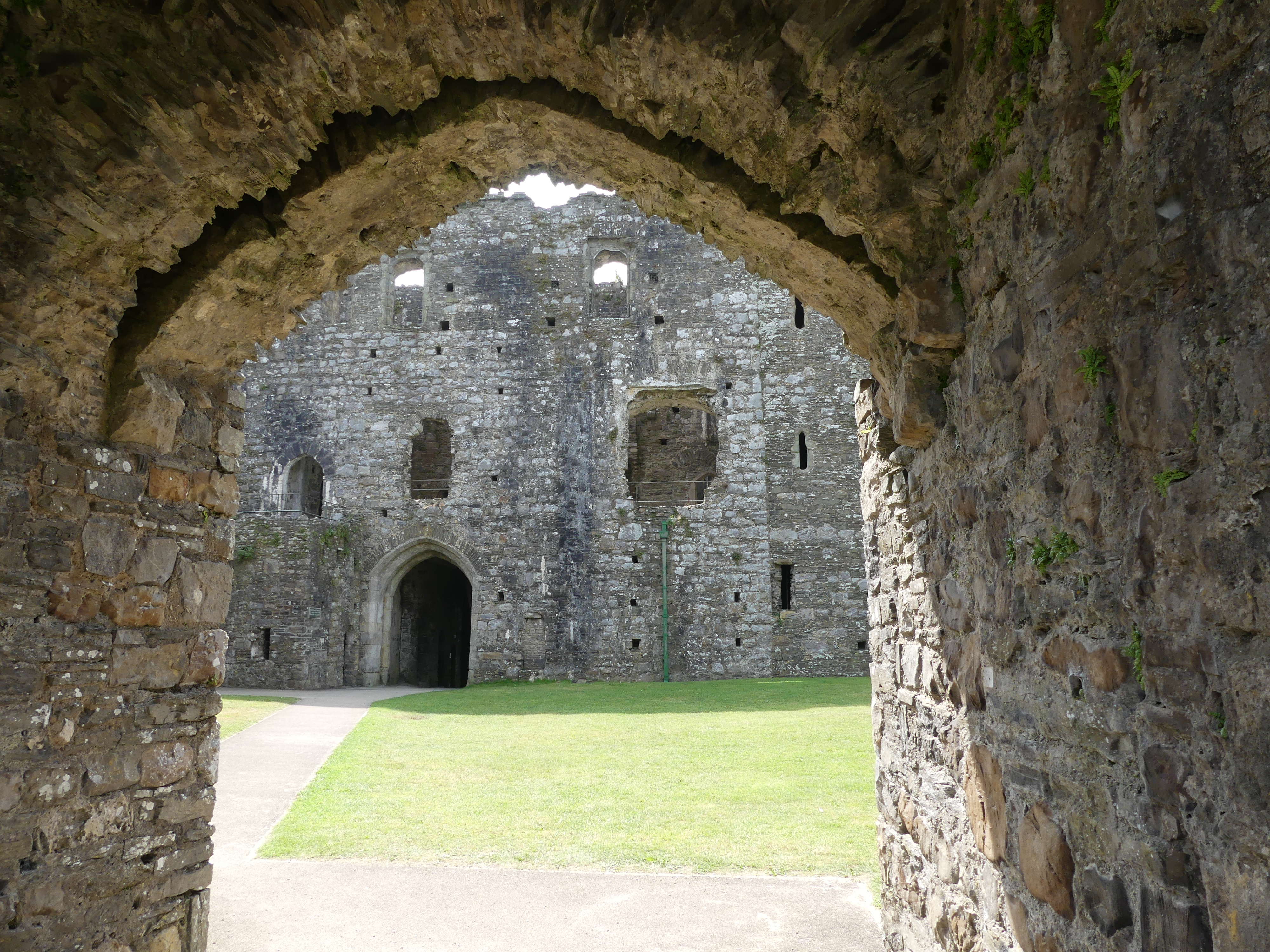
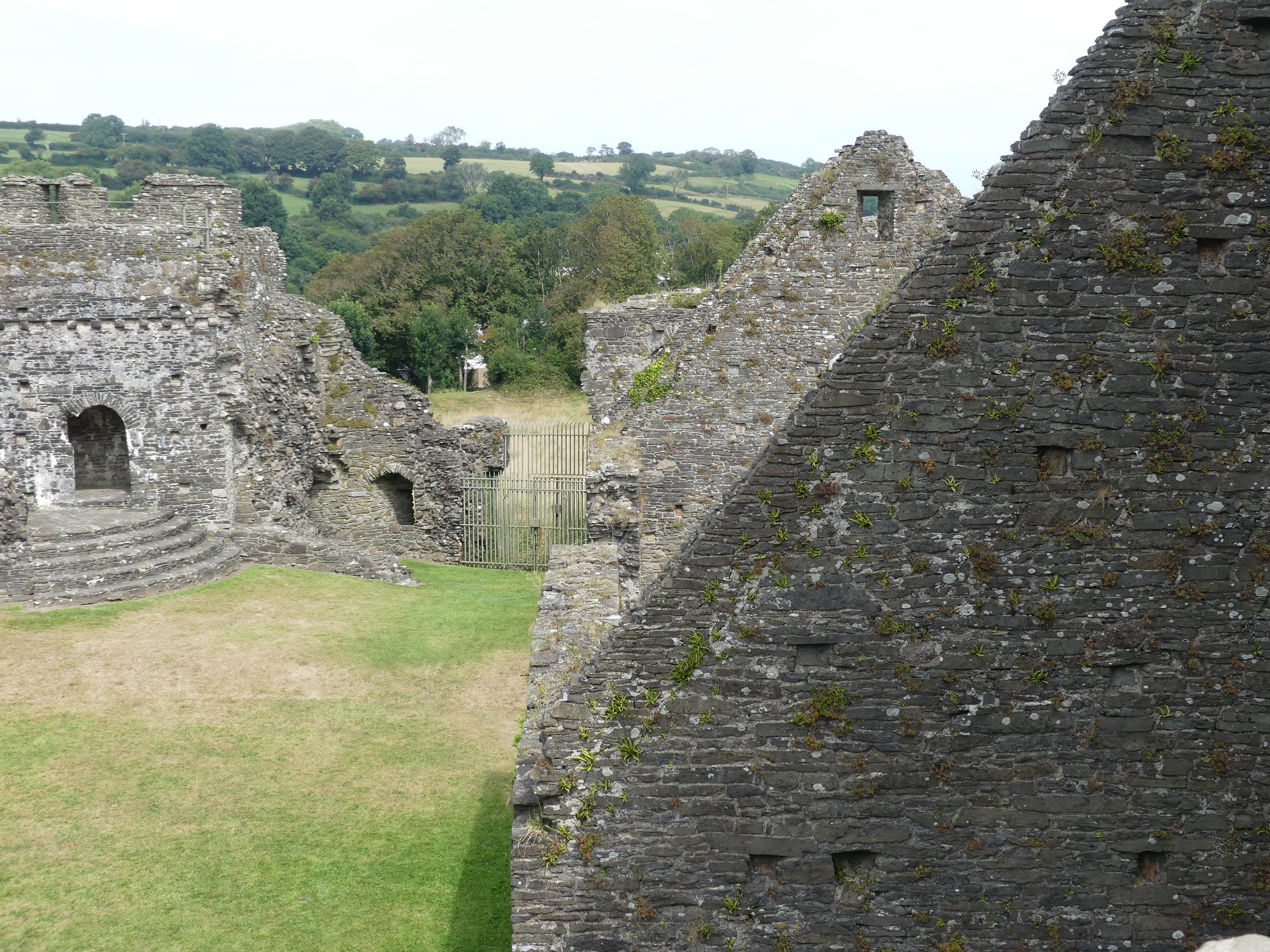
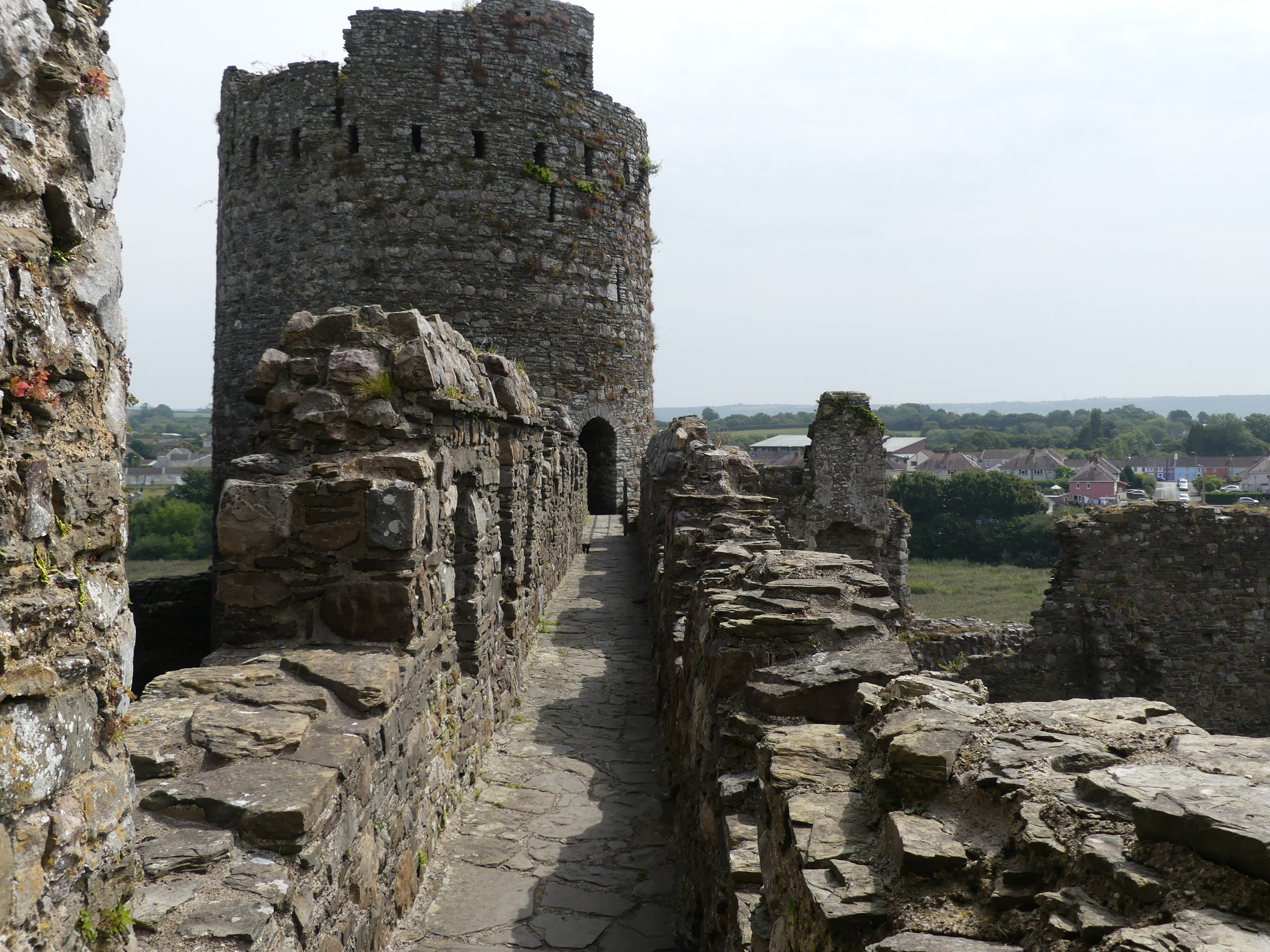
The remaining castle that was open for viewing including the balconies circling the castle keep and the chapel, the keep, and the kitchen. I have included the brochure map showing the layout of the Castell (which appears to mean a non-fortified castle) and a photograph of the ruined state of the castle taken over by CADW.
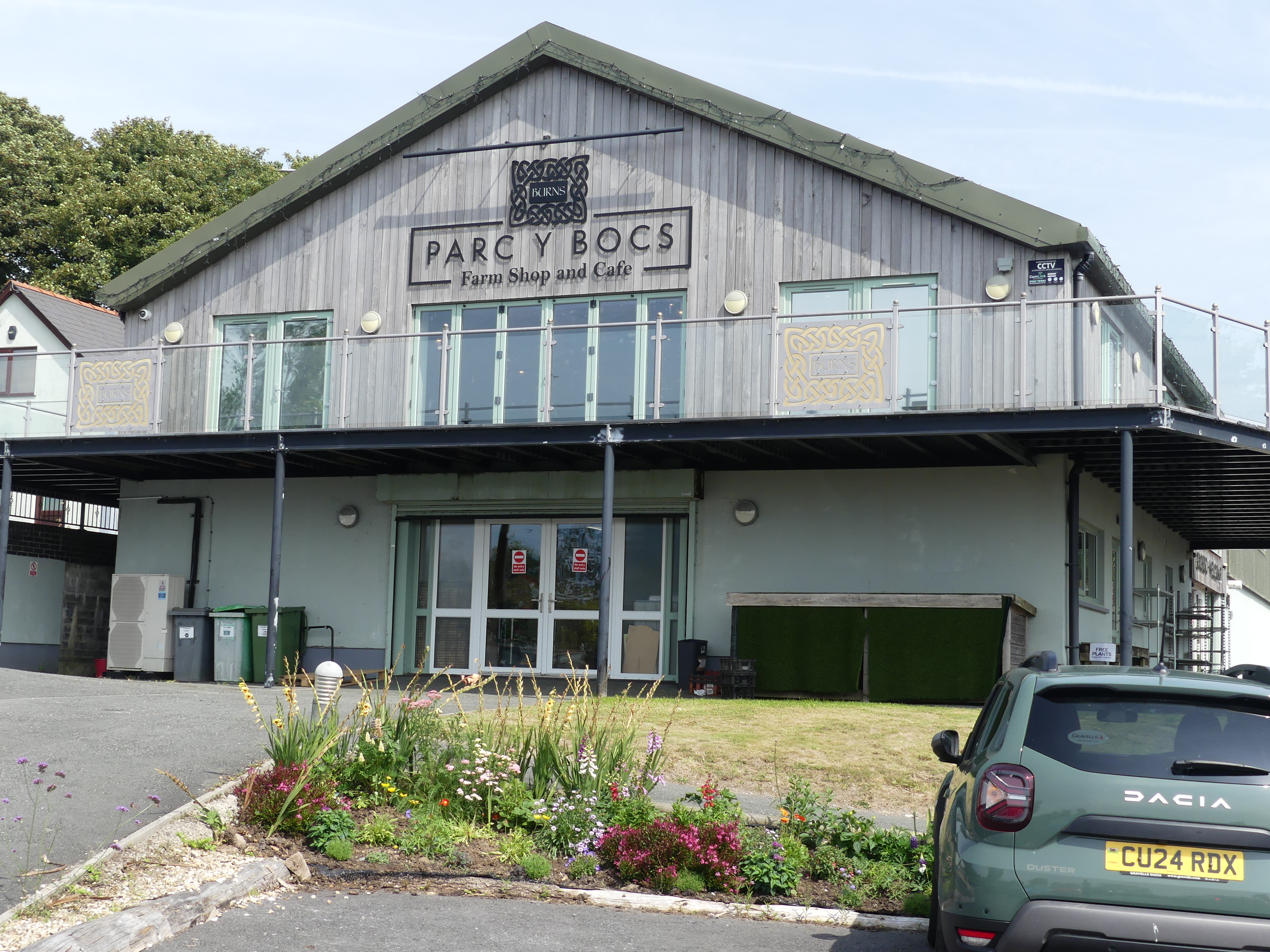
There is no coffee shop at Castell Coch, so we returned to the car as we had heard been informed by the staff that there was a great café nearby. The directions were simply go back to the main road but turn hard left. We followed instructions and returned to the juncture of two laneways and turned hard left and found ourselves on a one-way path to a garden shed which has now been developed as the café. Very rough and rudimentary but it did the trick and even introduced us to a Welsh delicacy. After coffee we headed for Caerphilly Castle which was very nearby.
Caerphilly Castle
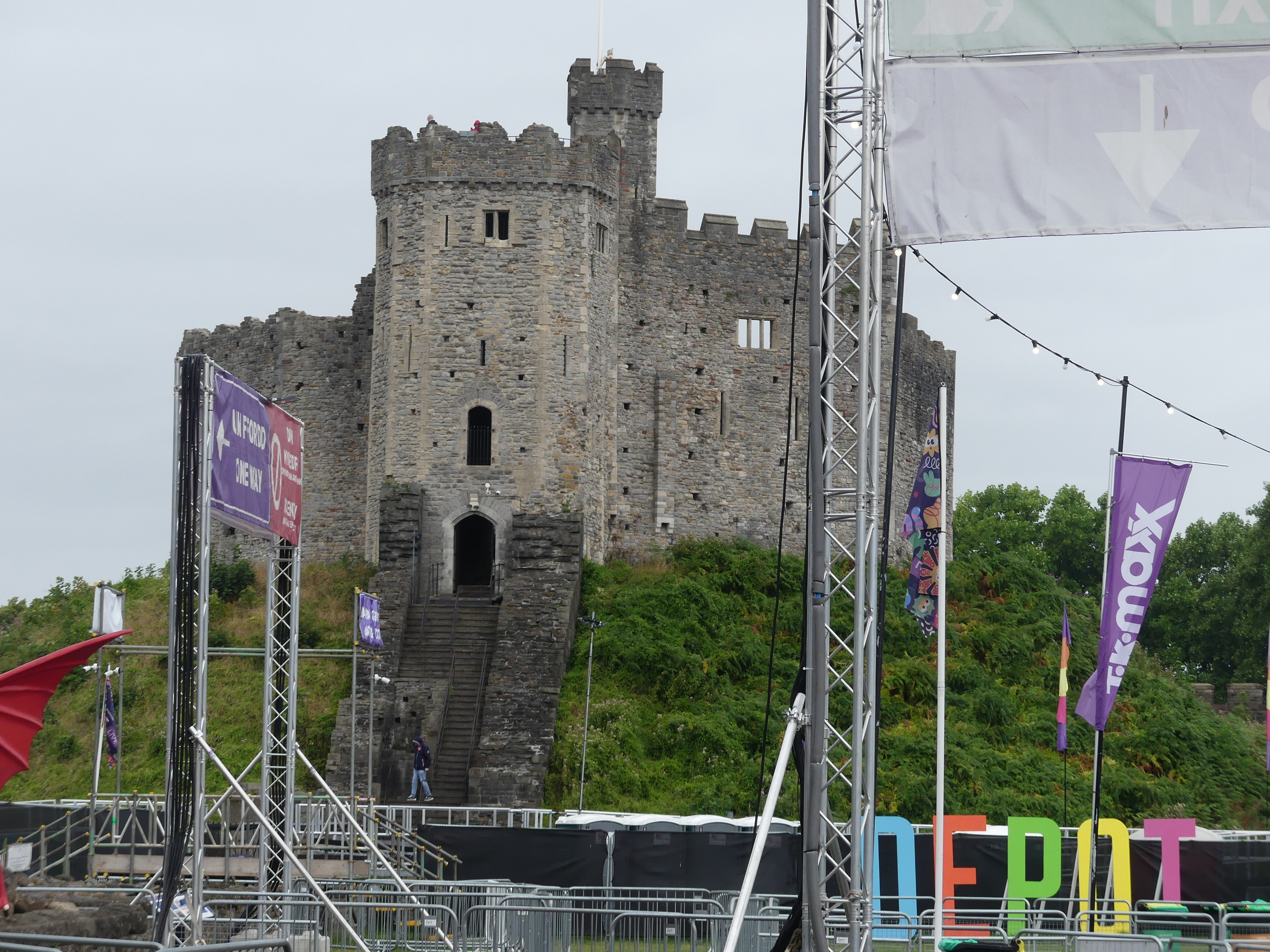
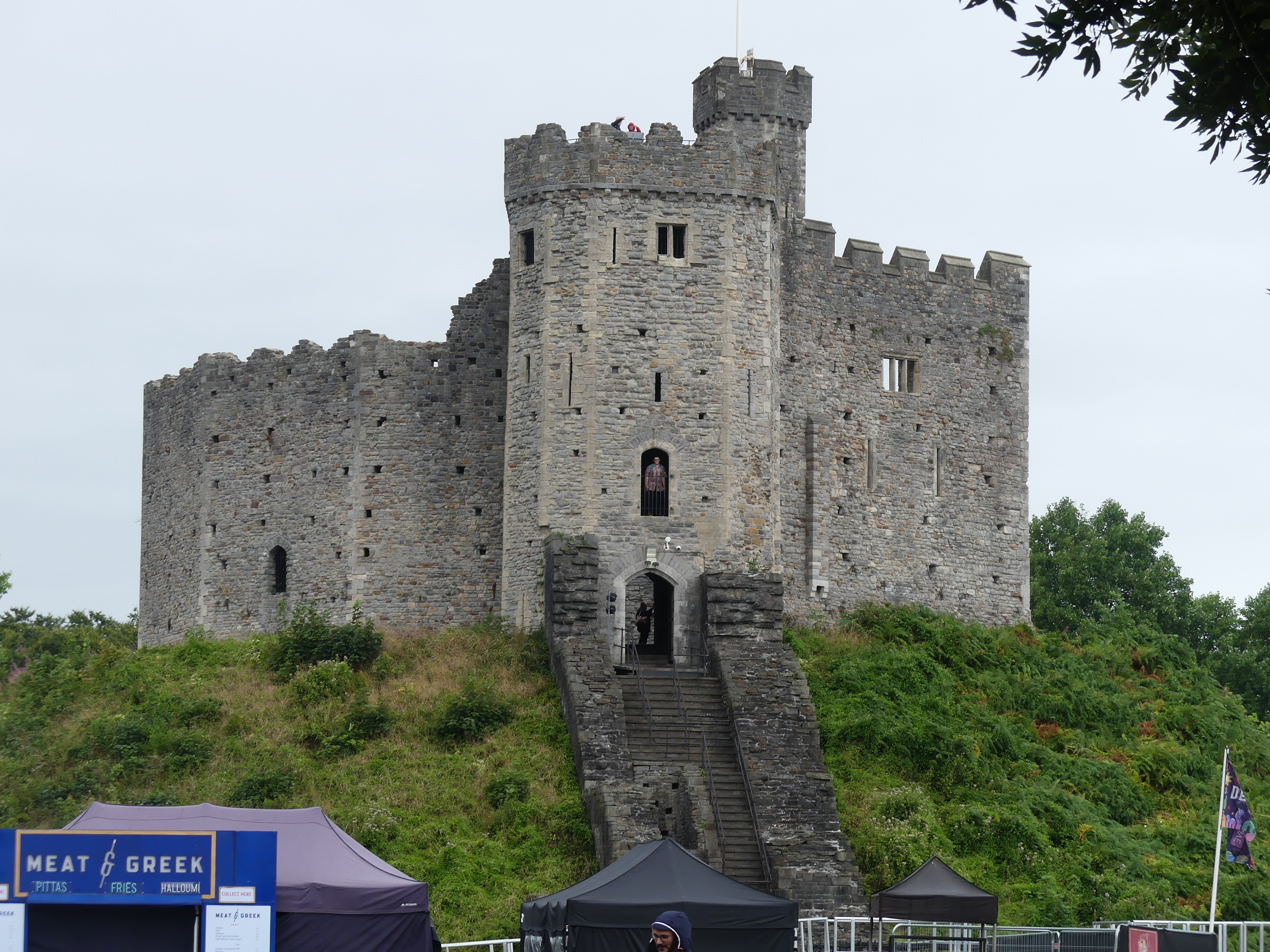
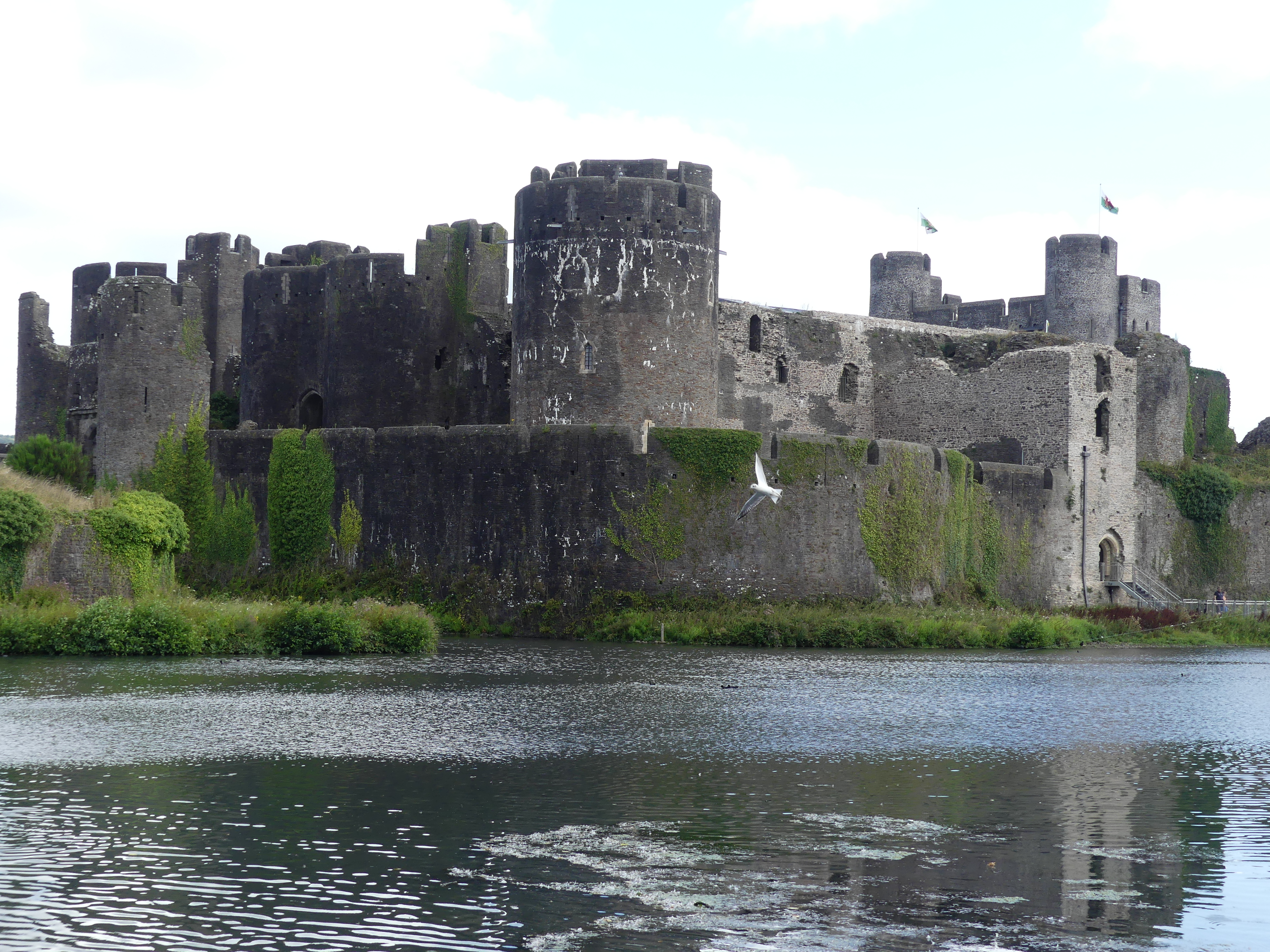
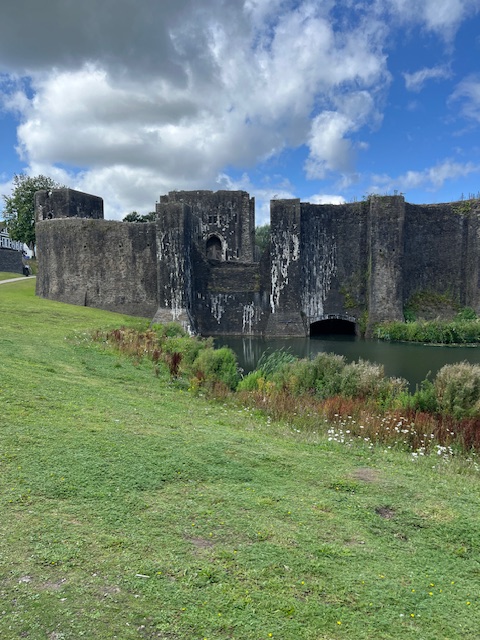
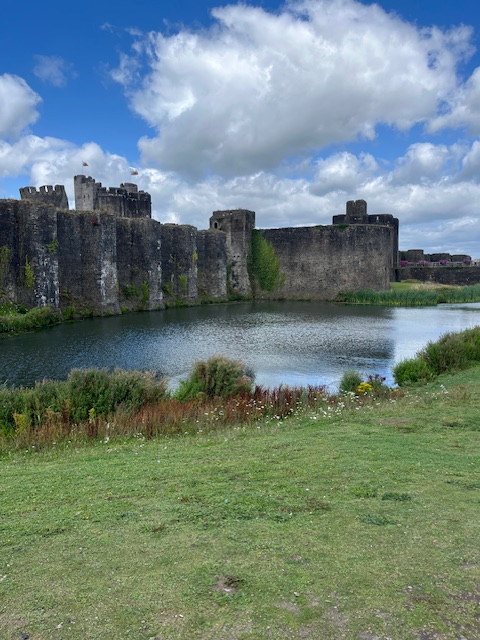
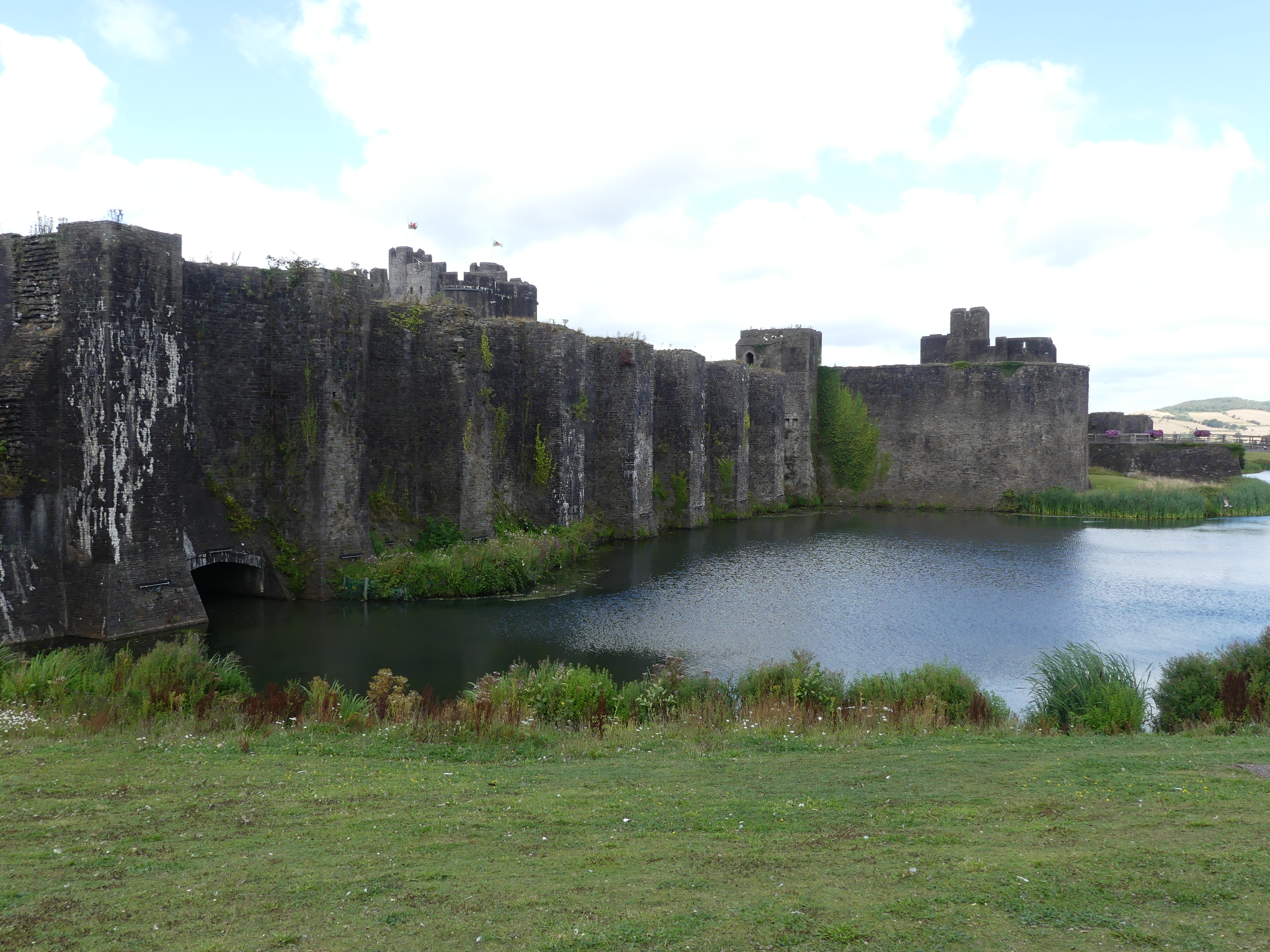
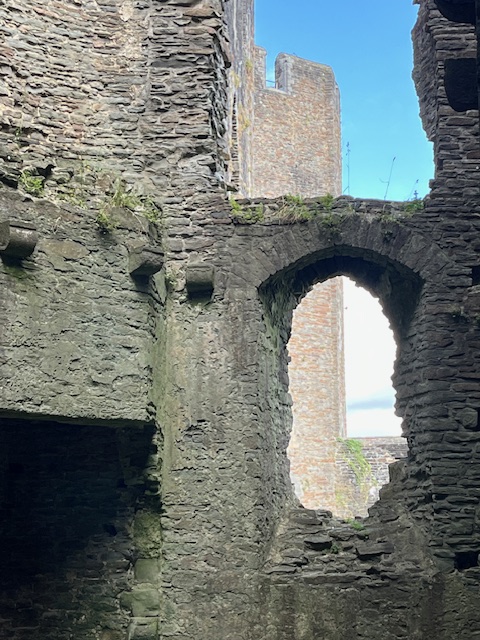
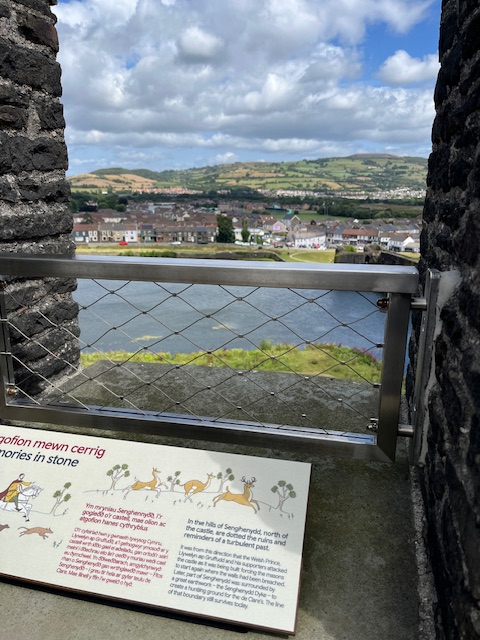
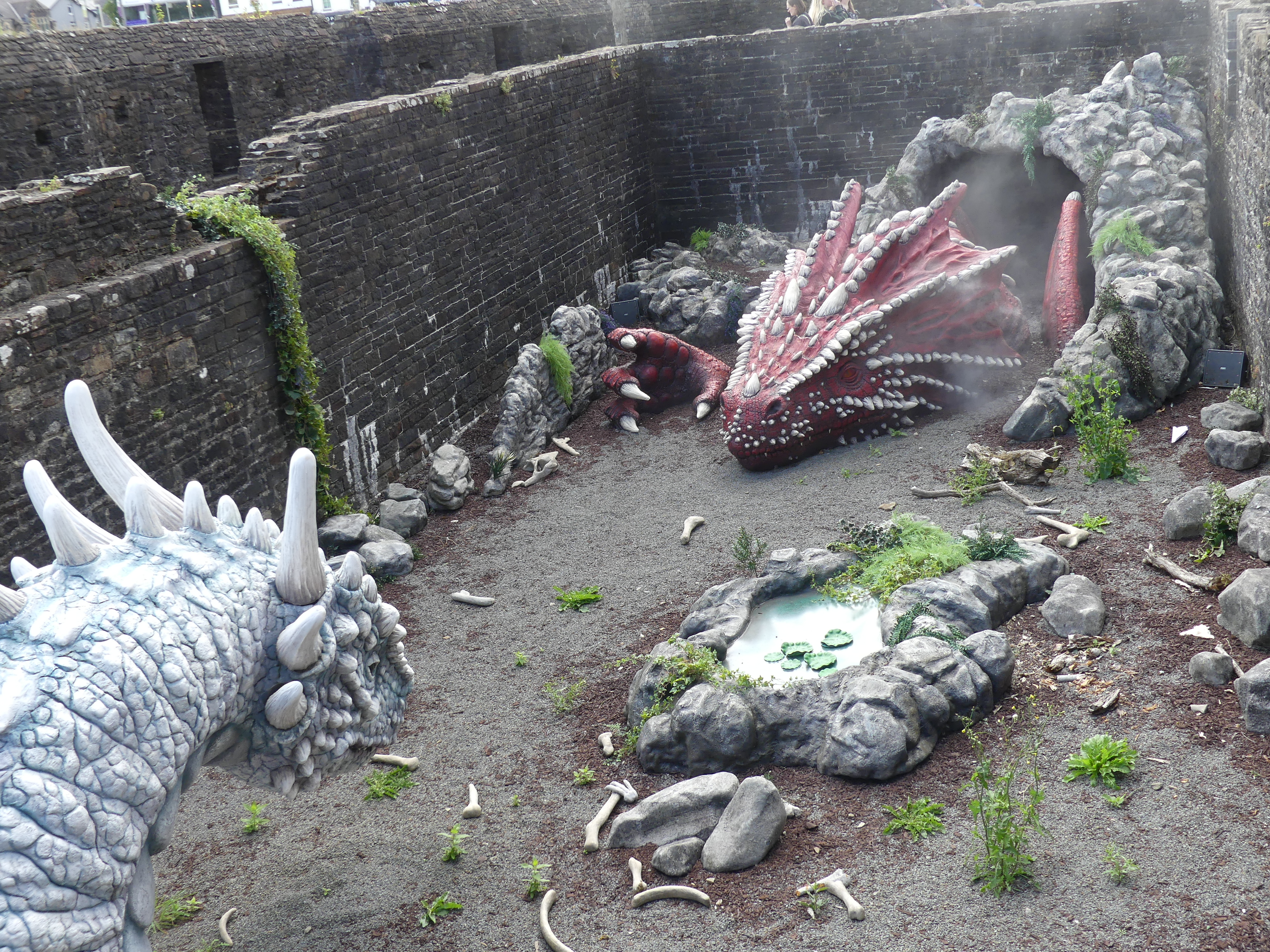
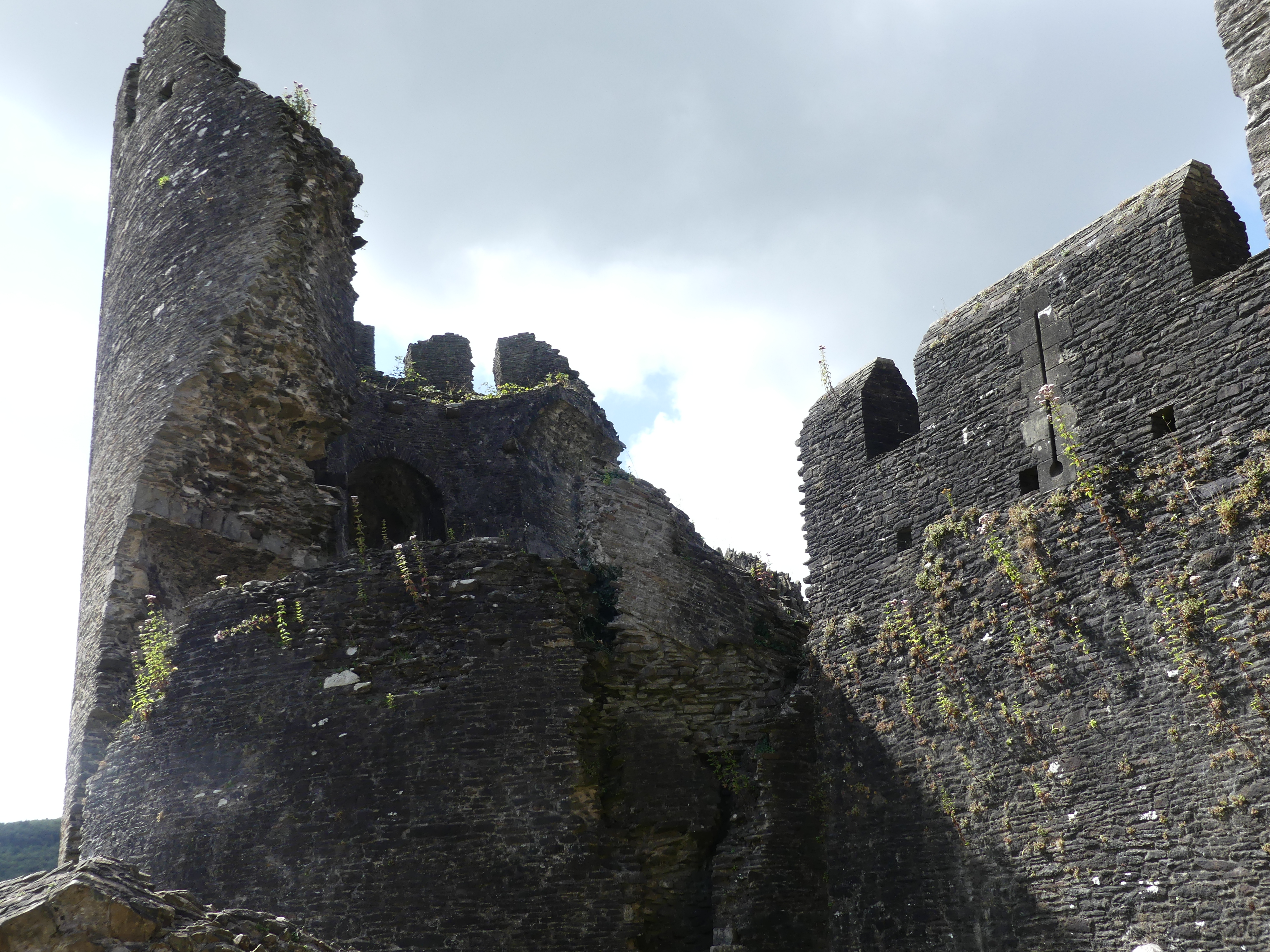
This castle is also controlled by CADW. Where Castell Coch had been in the bush/forest, Caerphilly Castle is a famous castle located in a modest size town. Parking is always the trick to visit a castle. How long are you going to need and how far have you to walk to reach it. In the pictures below I start with a view of part of the castle, followed by another view. It is immense. The moat is more a lake and the drawbridge shows how wide the moat is at its narrowest point. Inside is a secondary defensive wall. A make-believe dragon pit has been added to match myth with reality. One of these towers has been partly demolished by the Roundheads when they formed the Commonwealth in the 17th century.
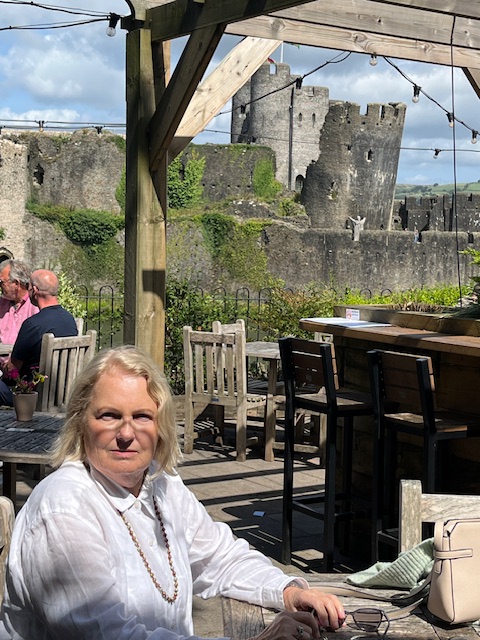
The Castle has been decorated to tell the story of a queen of England married to her King at 13 and fifteen respectively and her surviving to give birth to 18 children and outliving her King and then surviving the aftermath of his death. For some reason my photos have not survived. A truly magnificent castle. We spent our time in the castle finishing with lunch on the deck of a hotel overlooking a magnificent view of the castle. Note in the picture on the left above that there is a “bloke” holding up the tumbling tower. It is in fact a prop and the tower is tilted by a bomb placed by the Roundheads Army which over ran the castle in the 17th century.
Attached is the Cadw brochure from our visit.
Our plan is to return home and rest up as we will have a big day tomorrow when THE RETIREES GO AROUND THE WORLD – SUTTON HOO UK to CARDIFF WALES – CAERLEON.
Share this: Feel free to share



























































































 glendon1954