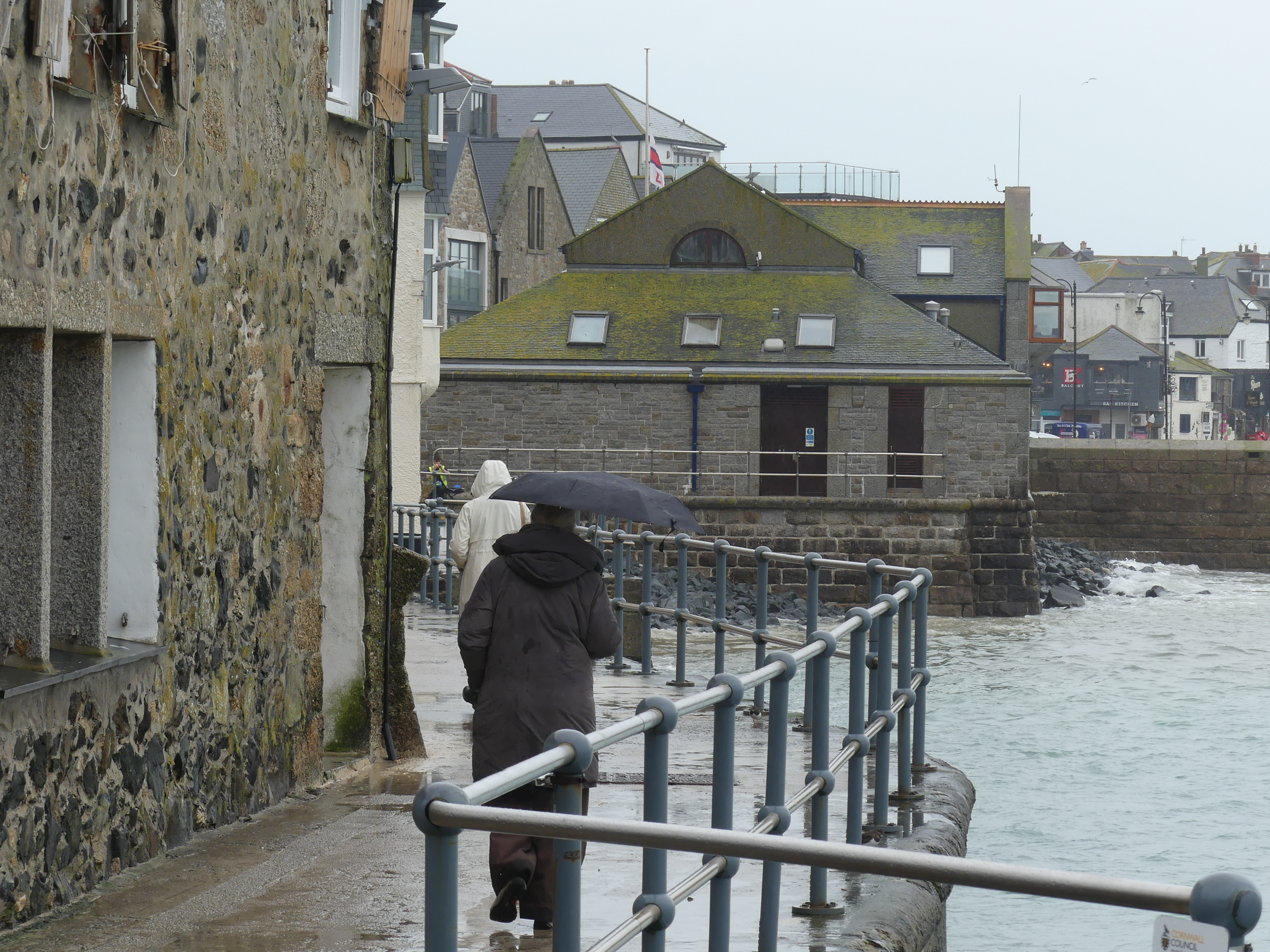
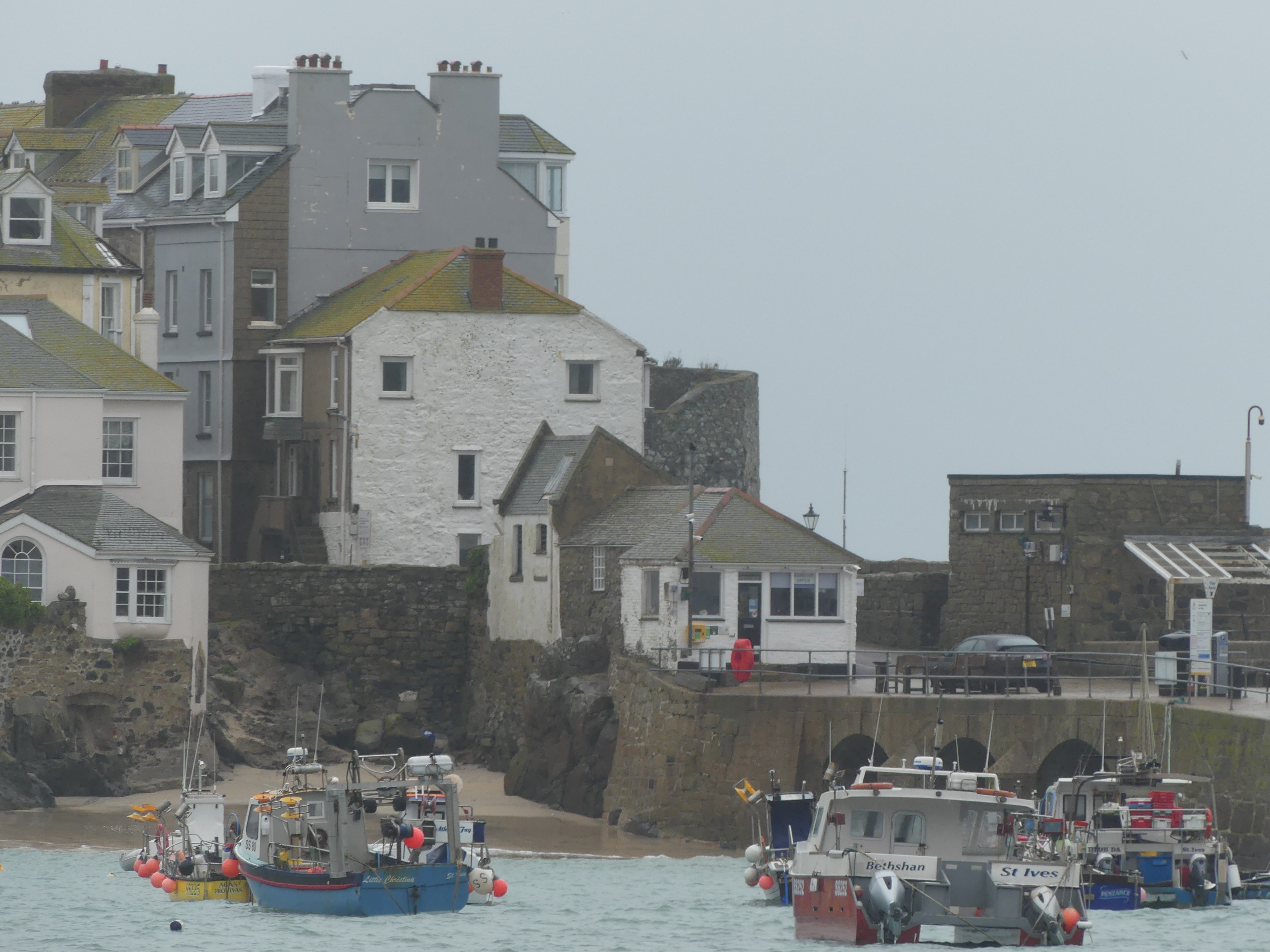
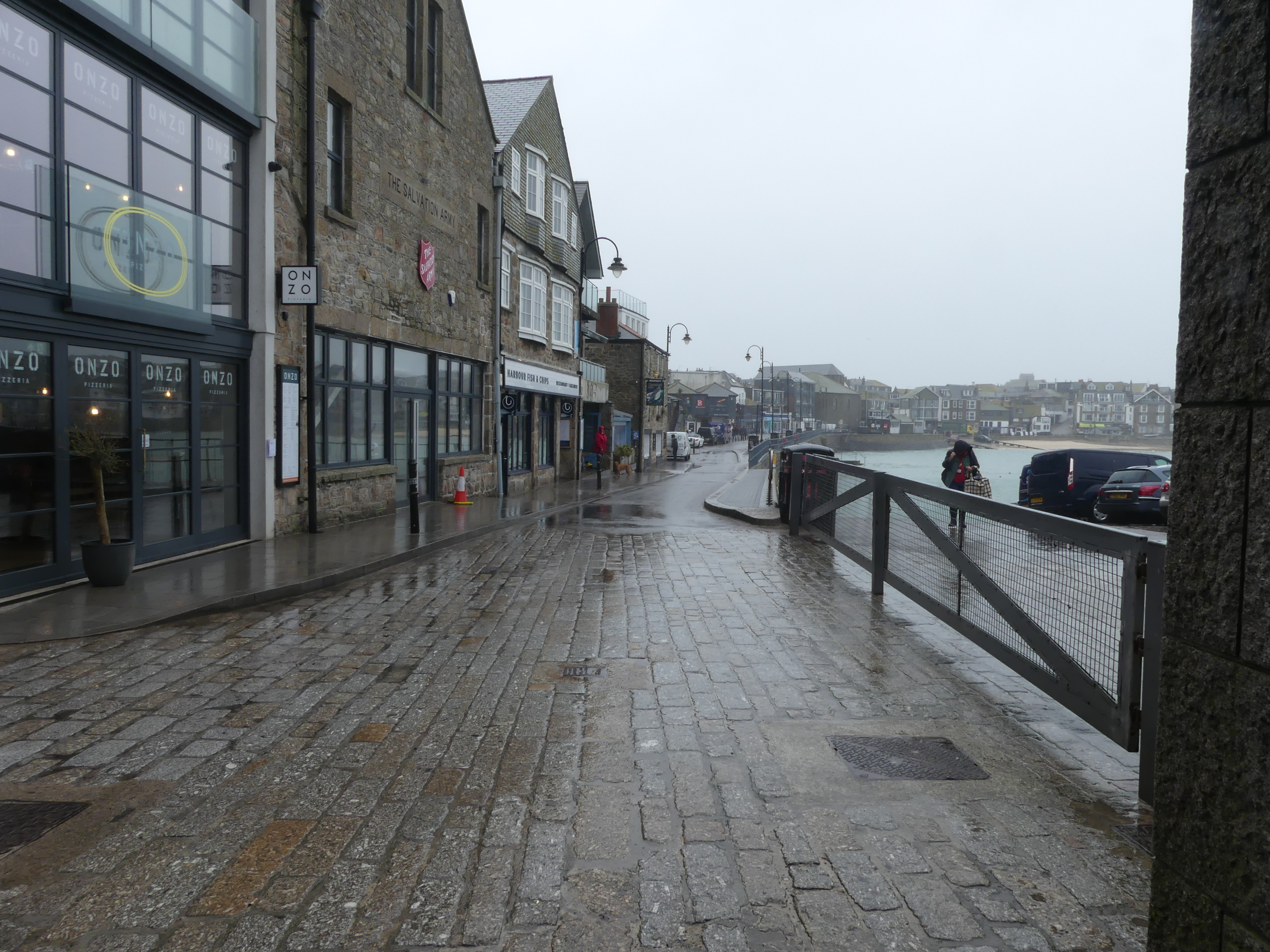
THE RETIREES GO AROUND THE WORLD – SUTTON HOO UK to CARDIFF WALES – CAERLEON.

We had heard about some Roman ruins just outside of Cardiff and the Museum – “Roman Legionary Museum”. We have visited Rome and roman ruins in Rome, Verona, Pizza and Cesi and Carsulae outside Terni Italy plus Hadrian’s Wall and Littlecote Roman Villa in Wiltshire, so we were not expecting to be surprised but we were.

The town is a pretty Welsh village. Entry is gained through a single lane bridge, and the main street is clean and interesting. After parking in front of the site of the Roman Bath House at the back of a very popular local pub, we strolled through the village waiting for the building to open.

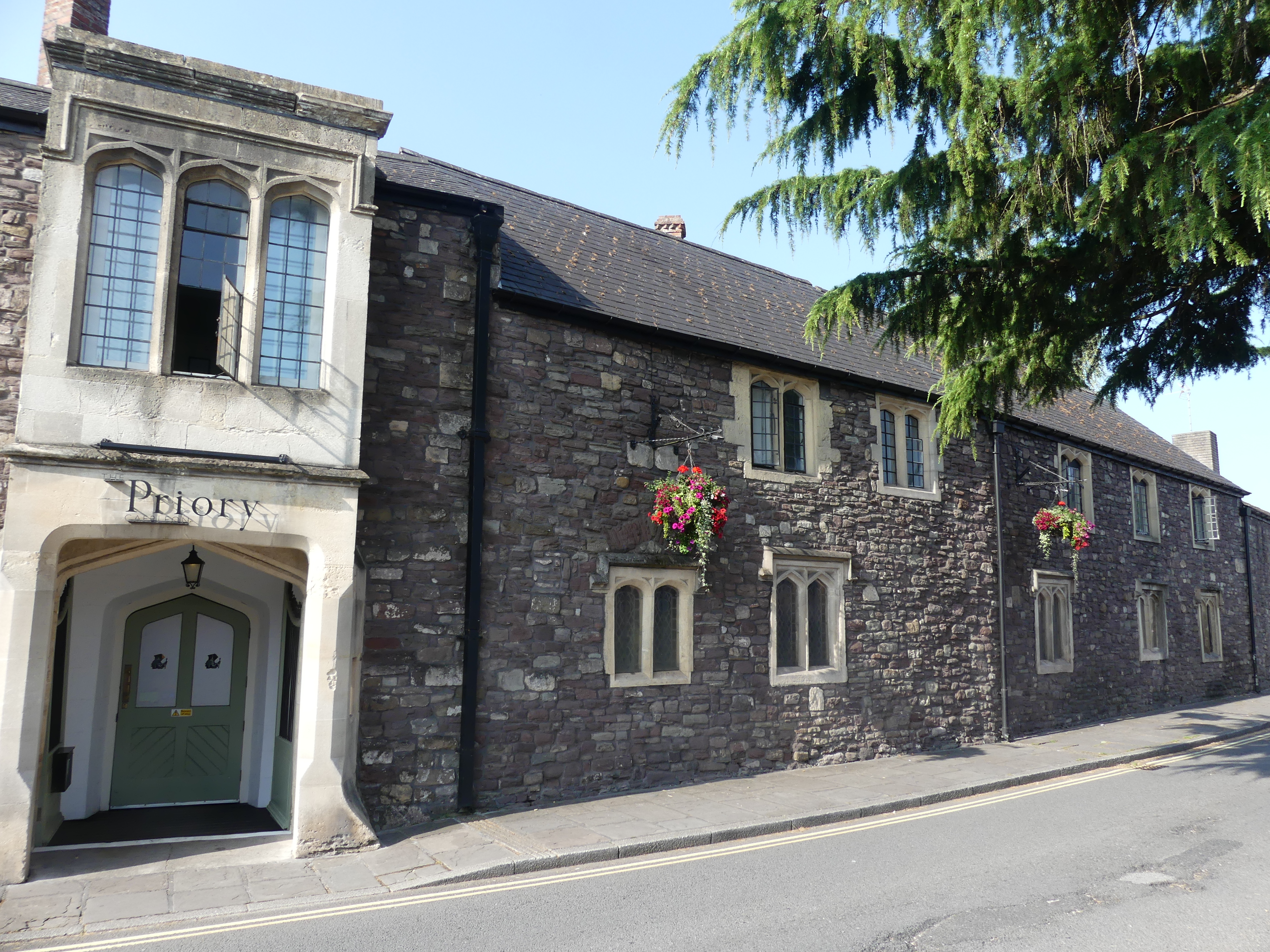
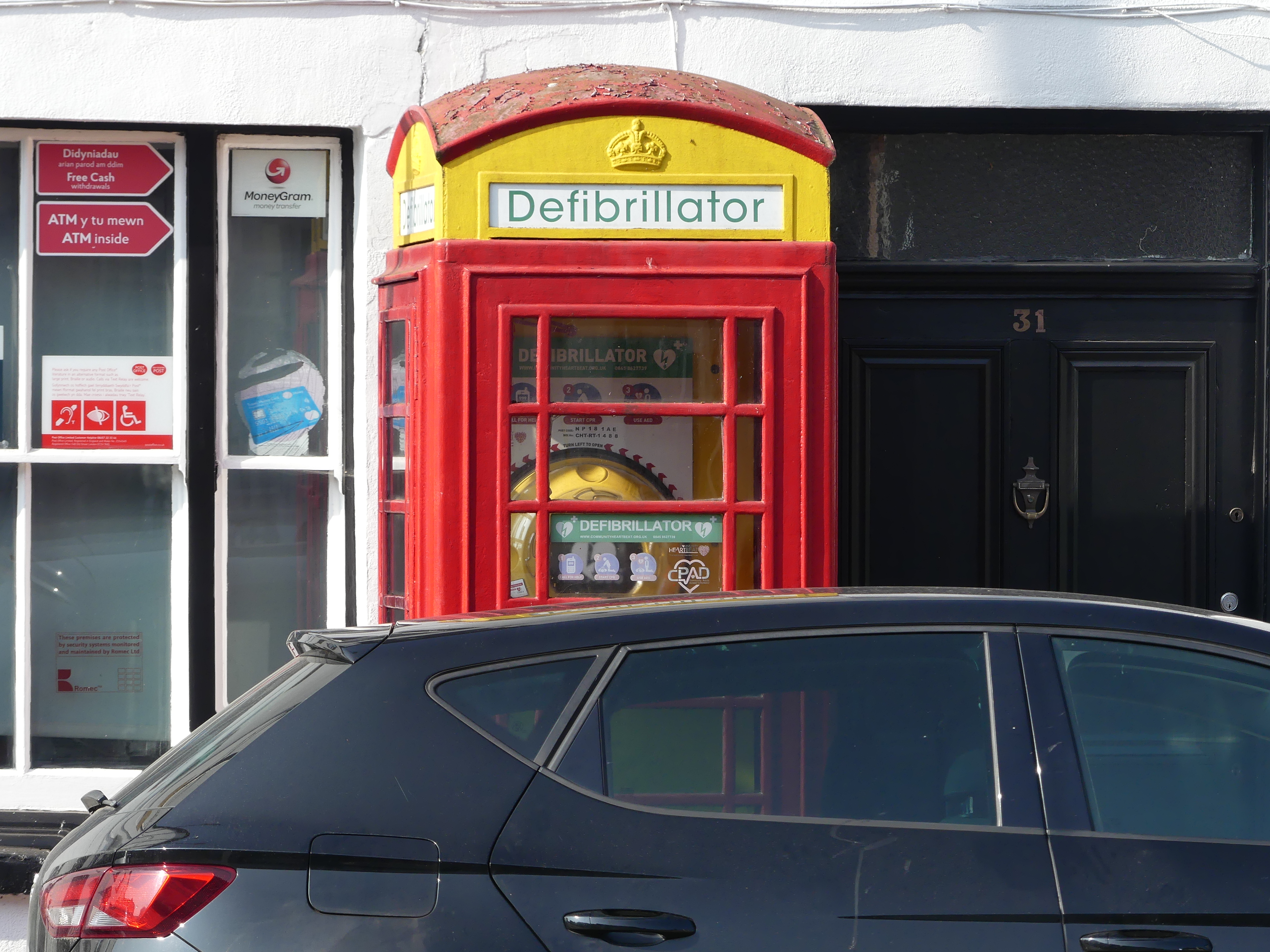
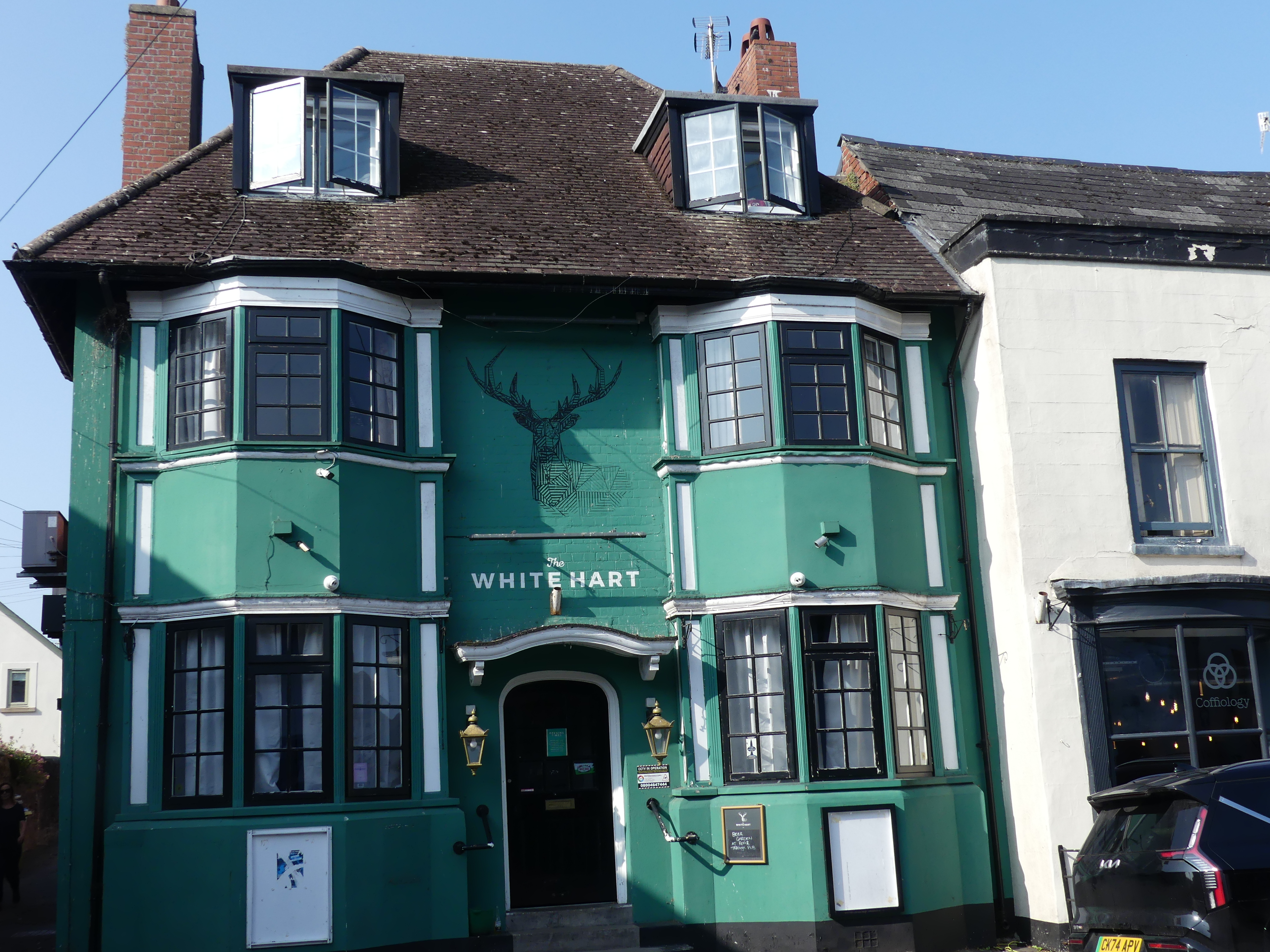
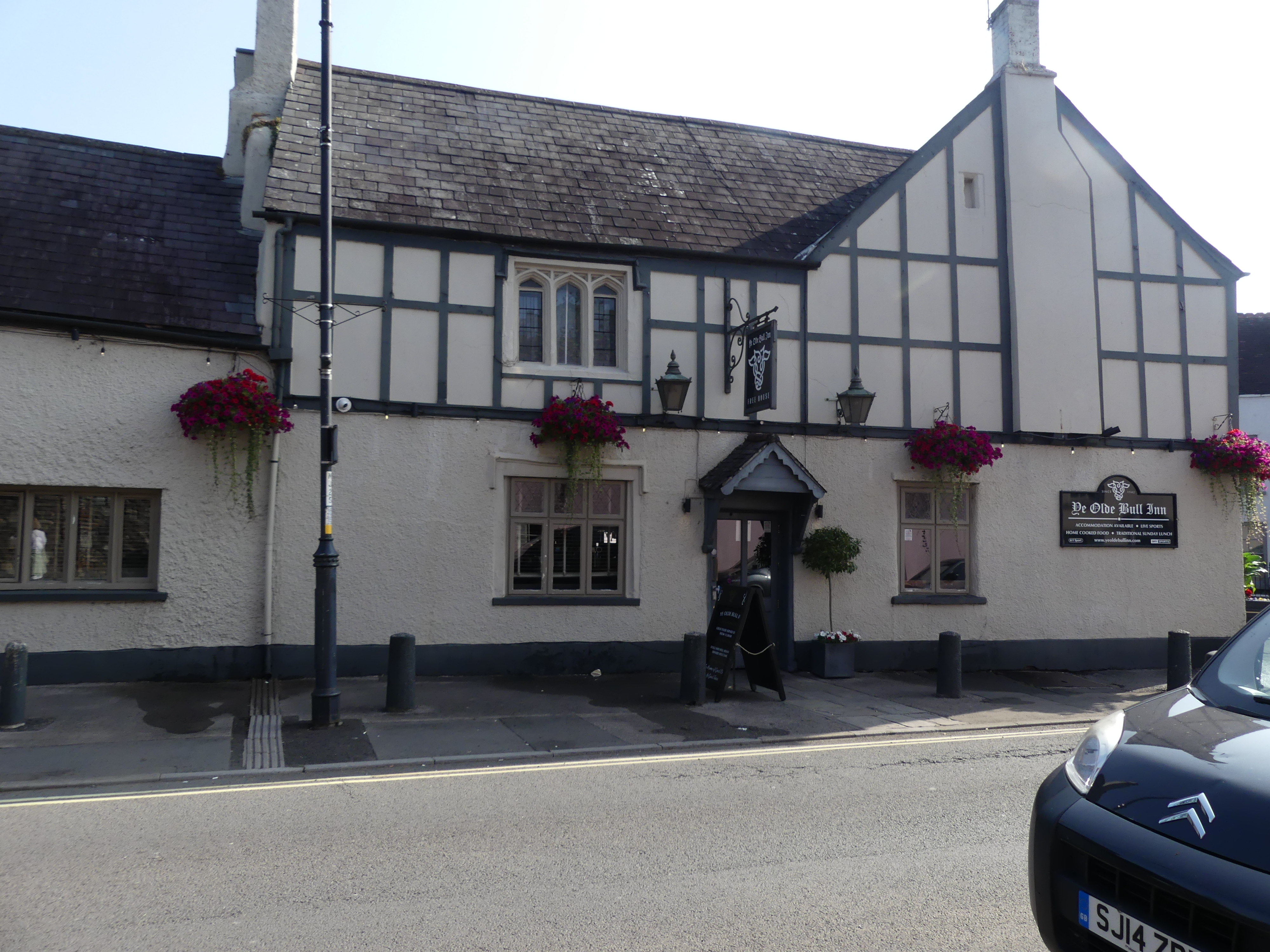
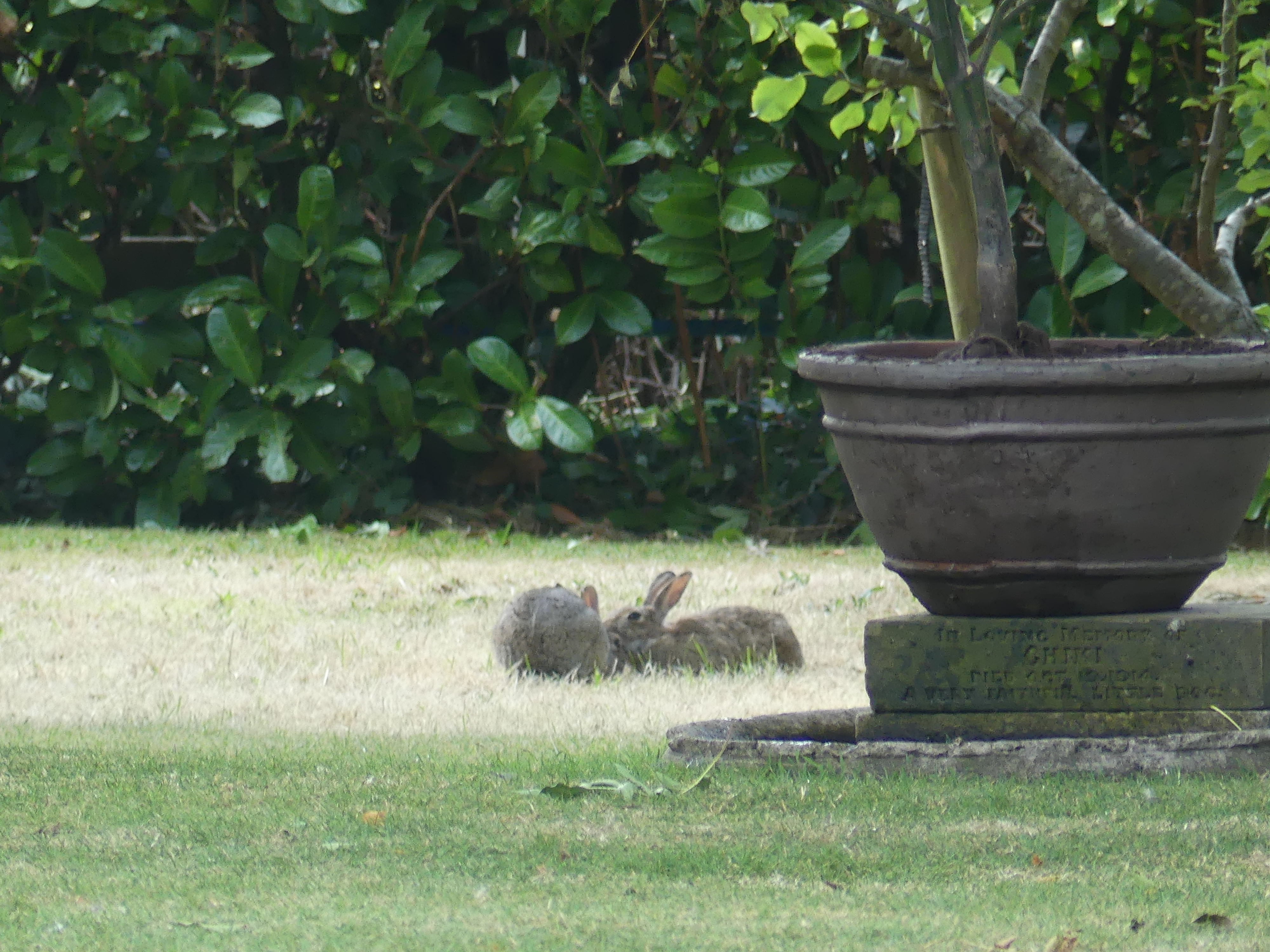
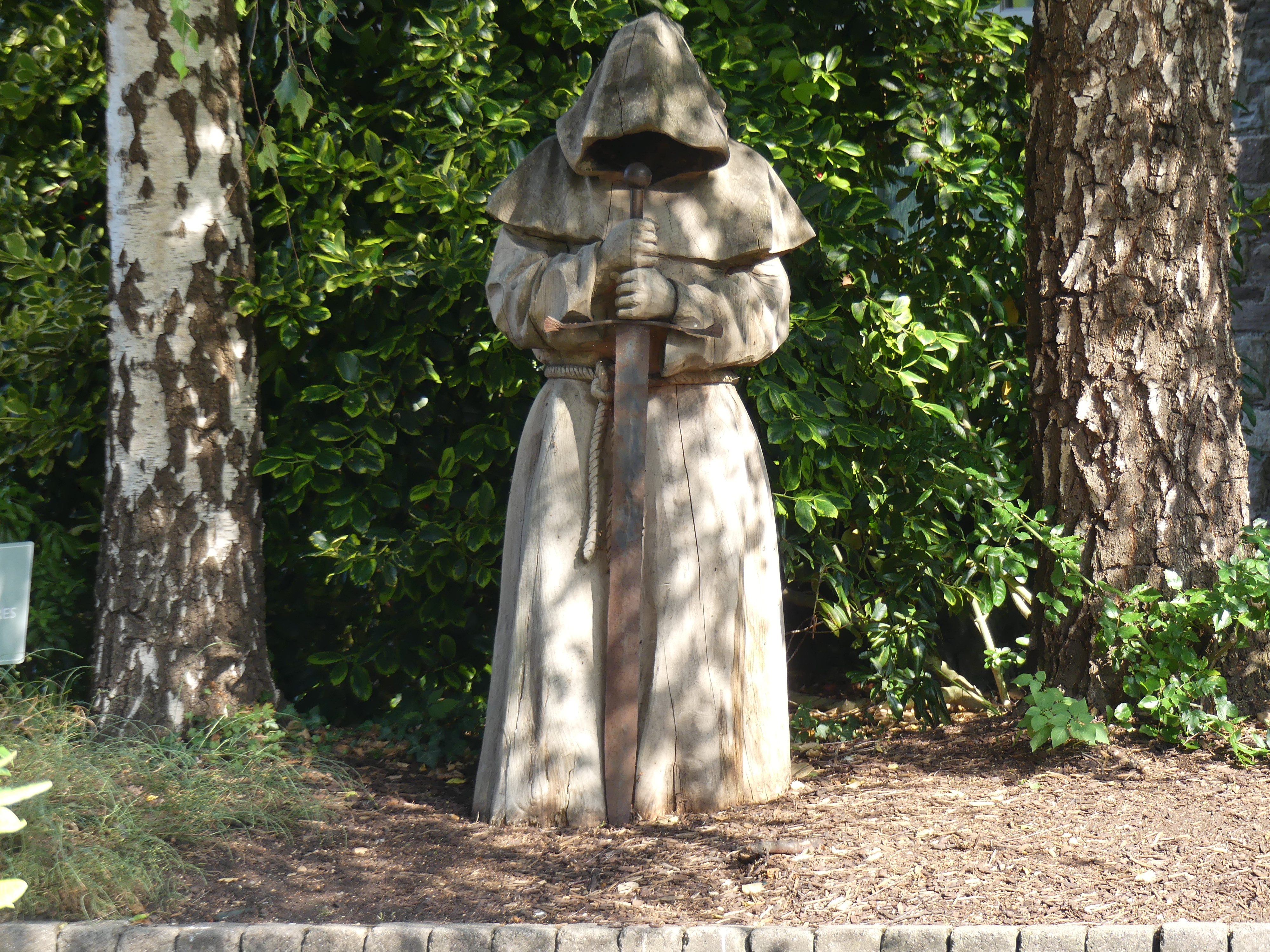
The pictures below take you on that stroll. First is the Priory – now an accommodation hotel but retaining the features of the former Priory with a pair of hares in the back yard. There are some interest wood carvings of a forest gnome, a priory student in cloche and priory guardian. Then there is the pub, a reused telephone box to house a defibrillator, a pretty pub, and the museum entrance.
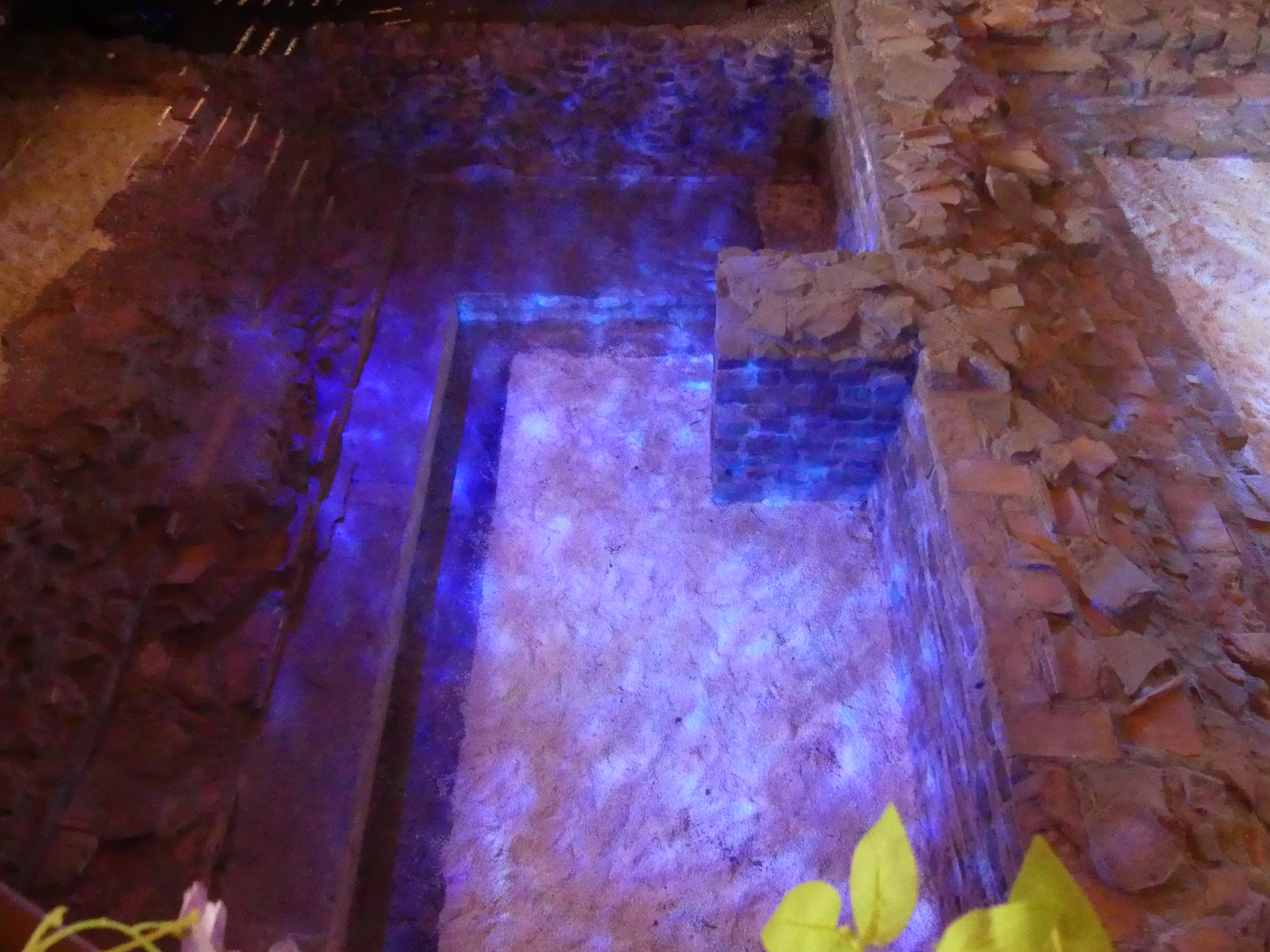
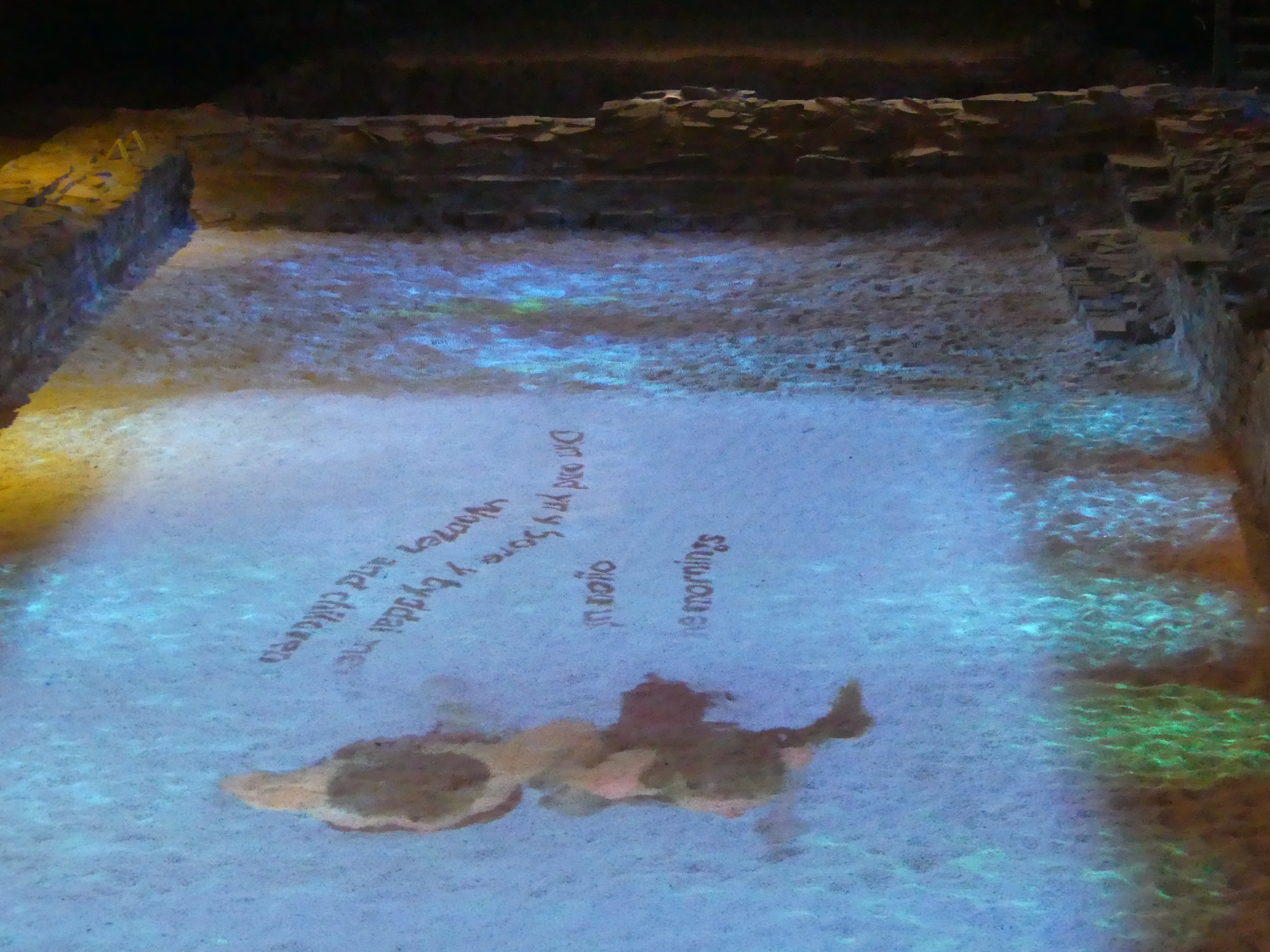
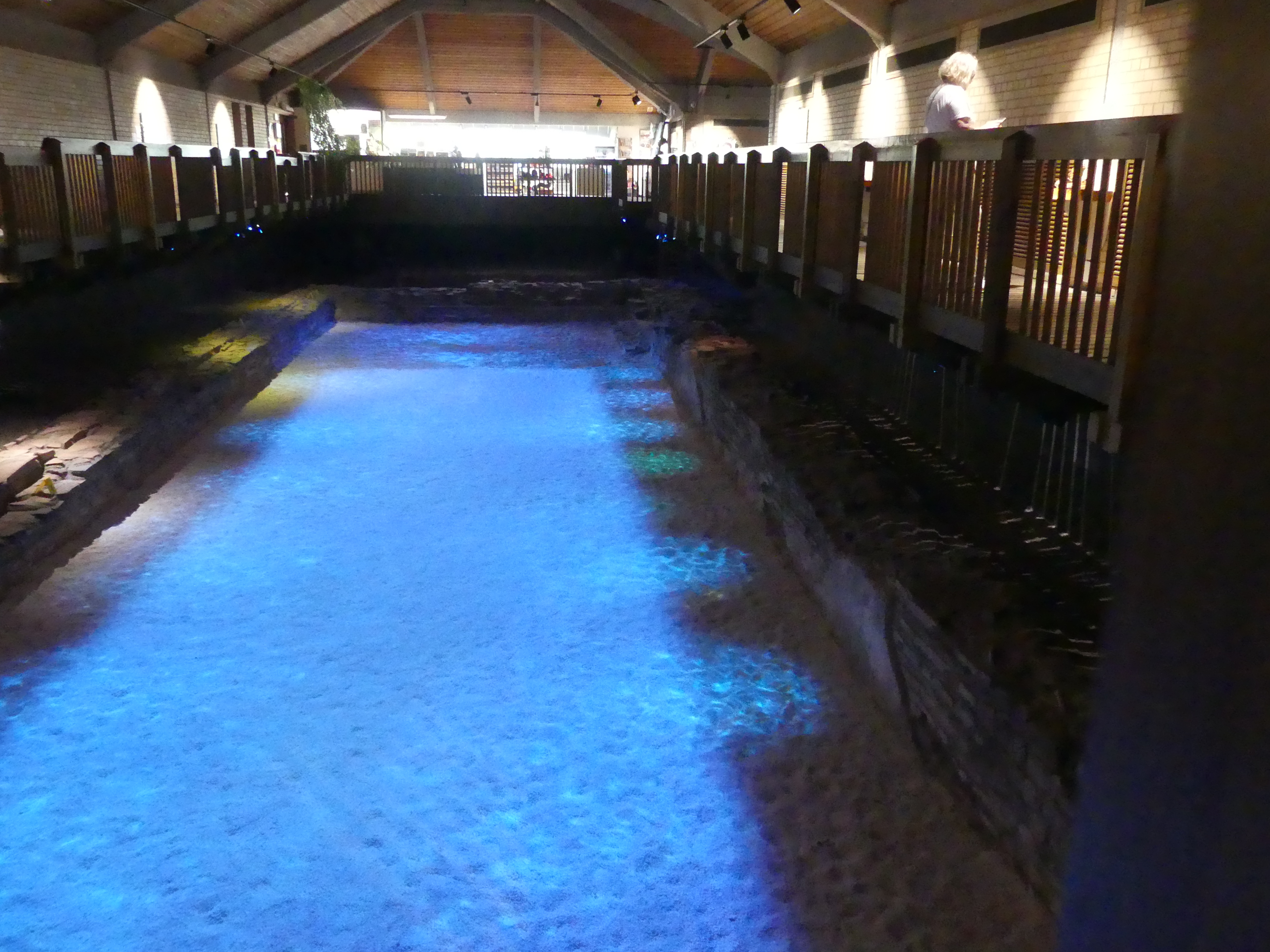
The site is the location of the main Roman legion and fort for the subjugation of the Welsh tribes. Life at the edge of the Roman Empire could be short, hard and dangerous so this fort provided the legionaries a place for rest and relaxation, and it was also their barracks. I have included two of the pages from a comic book containing images of the likely appearance of the building, the interior of the enclosed pools, and the garrison. The baths comprised the hot room (“caldarium”), the warm room (“tepidarium”) and the cold room (“frigidarium”) – you can see the English words in the Latin description.

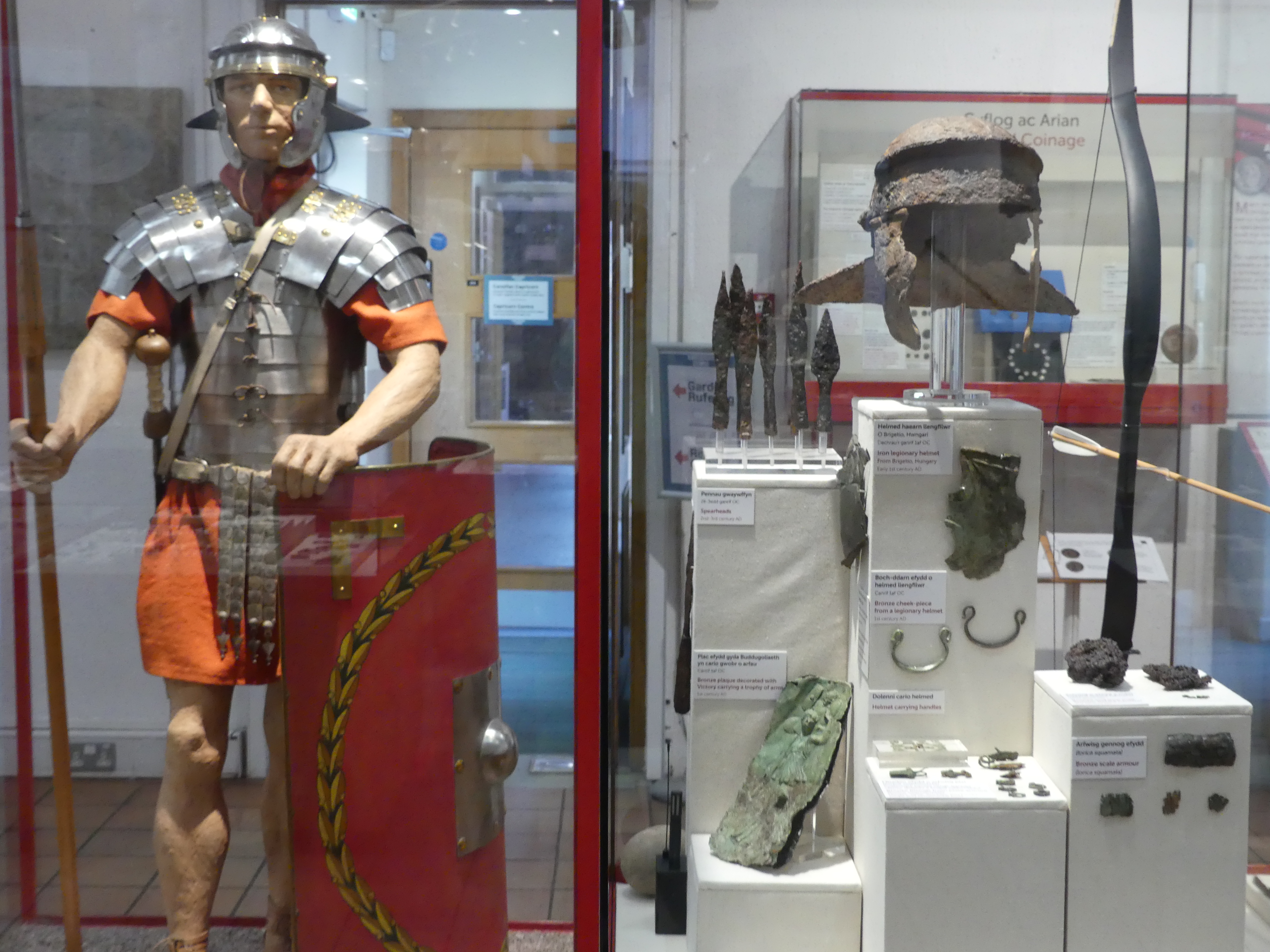
The pictures of the bathes with imagery of soldiers relaxing and using the spa follow. Photos of the replicas displayed in the Exhibition Hall are below.

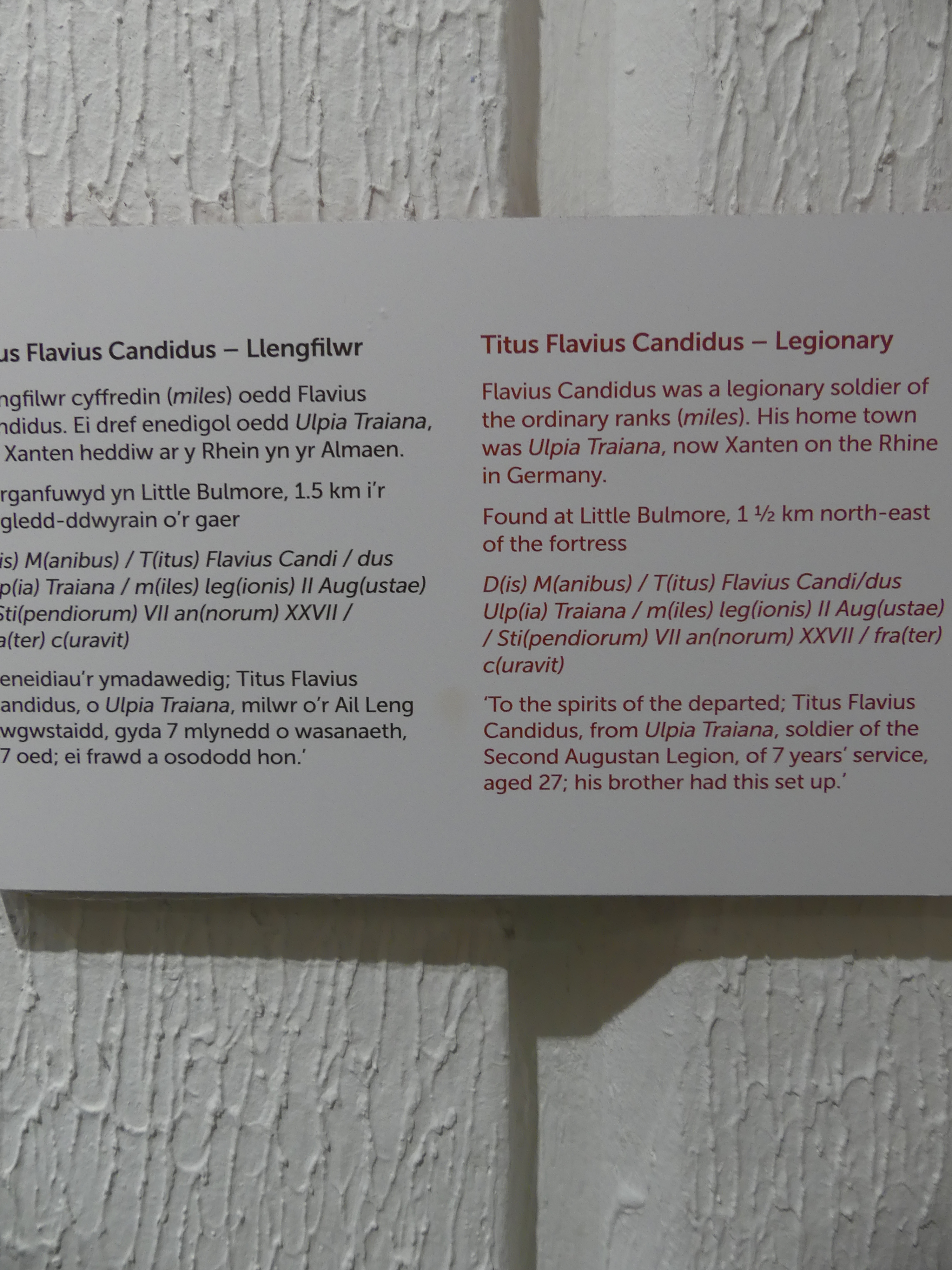
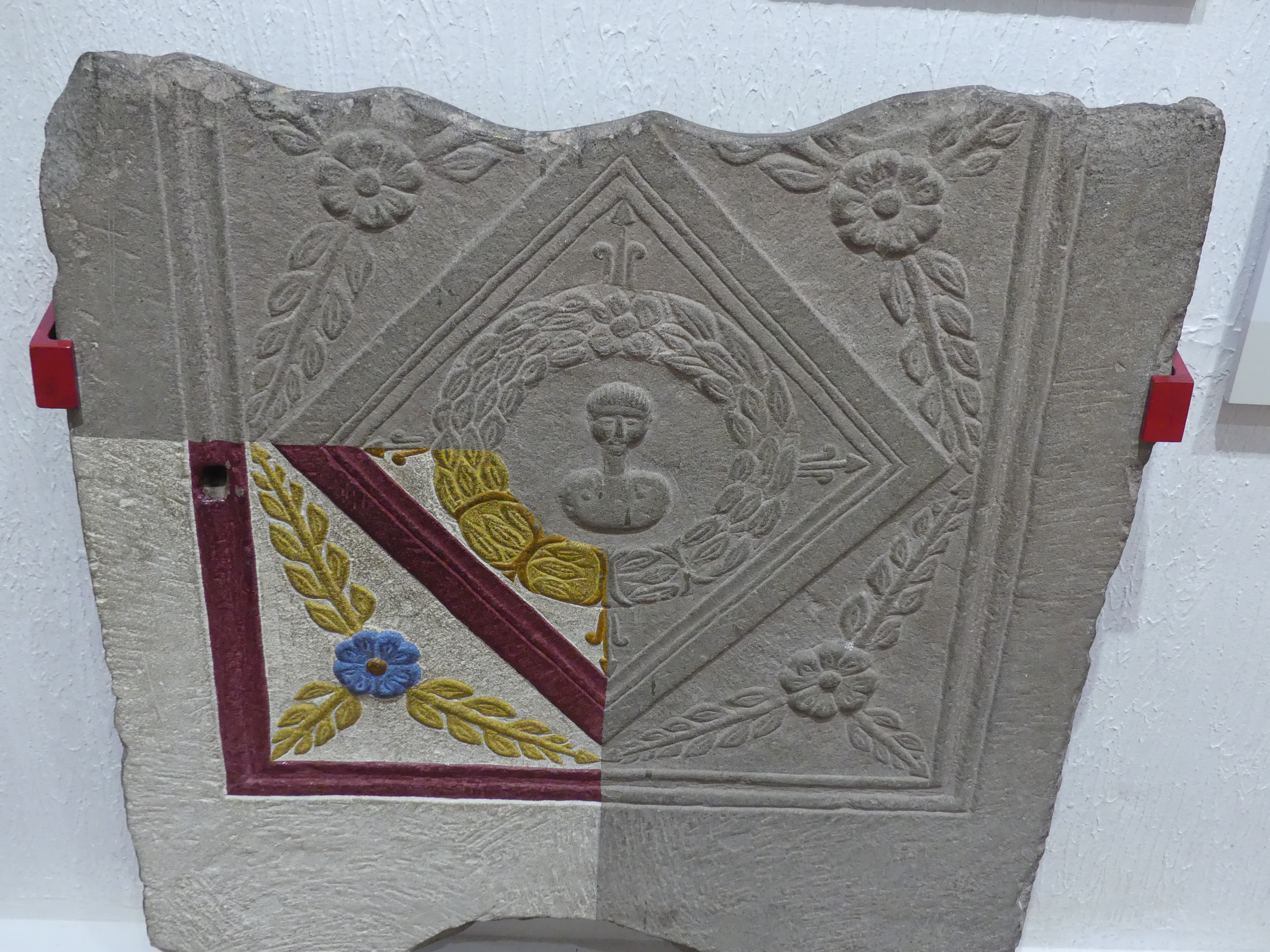
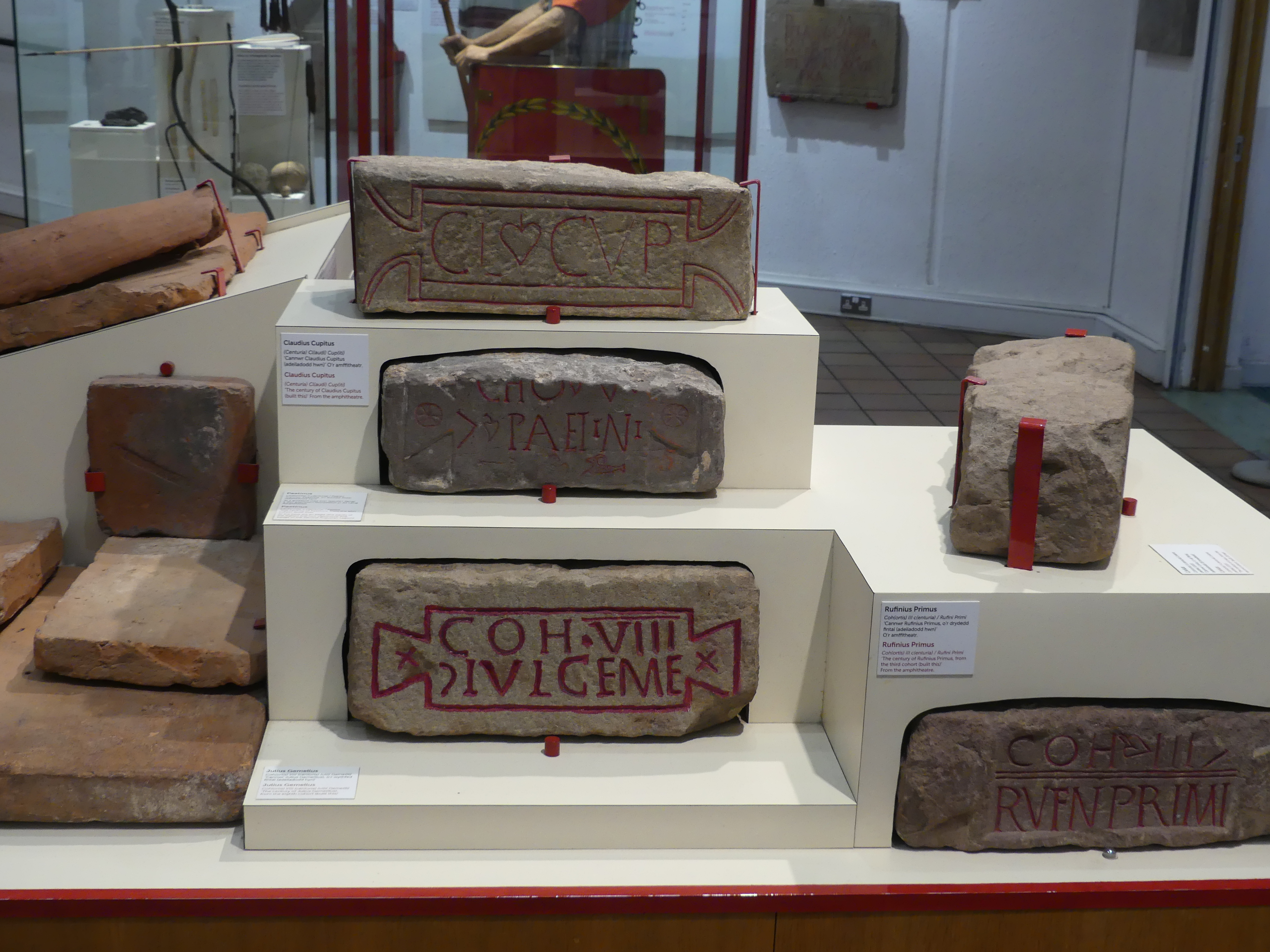
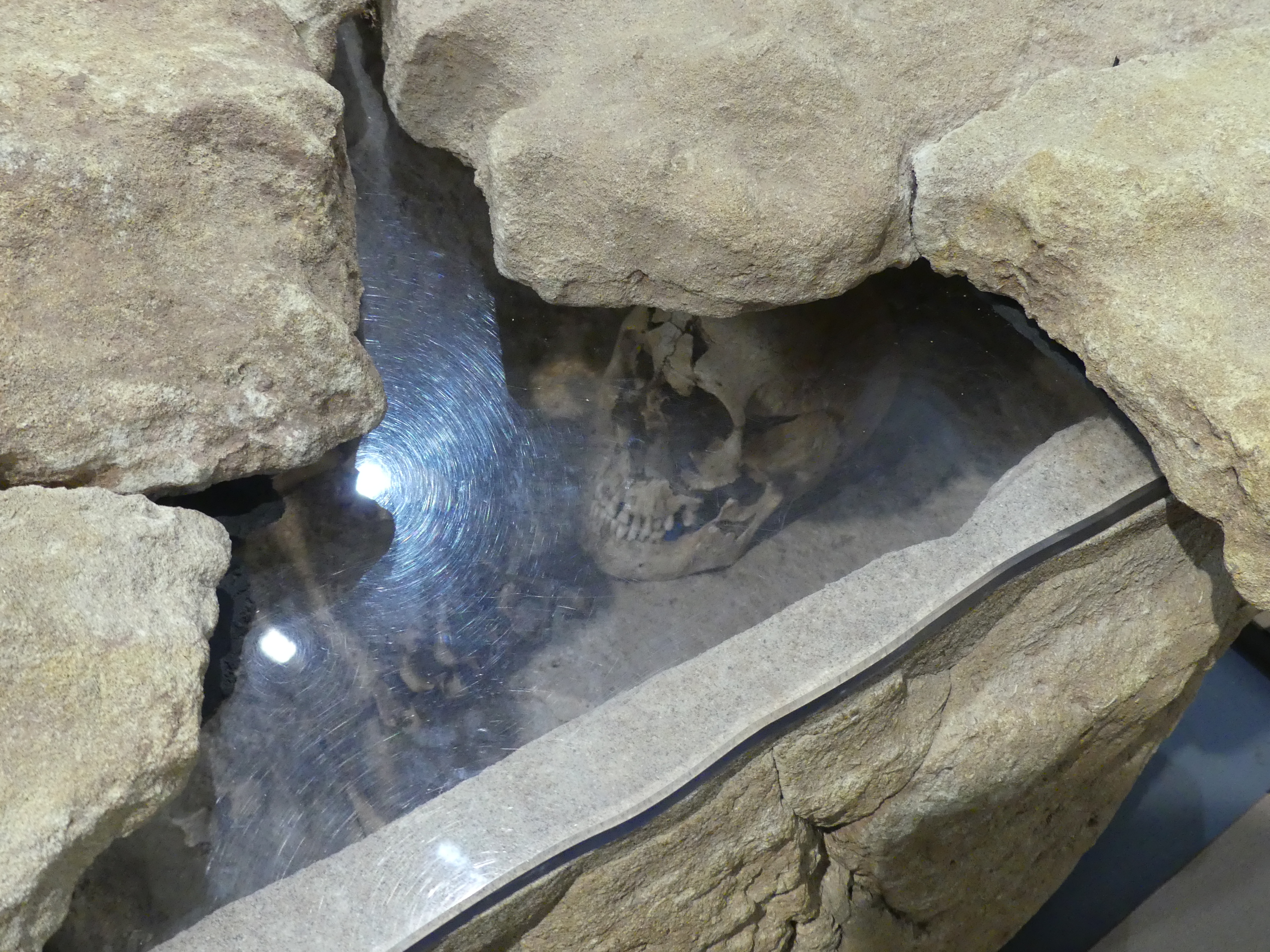
Our entry fee included a visit to the museum. I have included photos of some of the exhibits. The building materials surprised me – properly design pipes and building blocks. They also had the epithets or headstones of graves and cremations.  A stone casket. Partially restored tiles exhibited the beauty of the decorations.

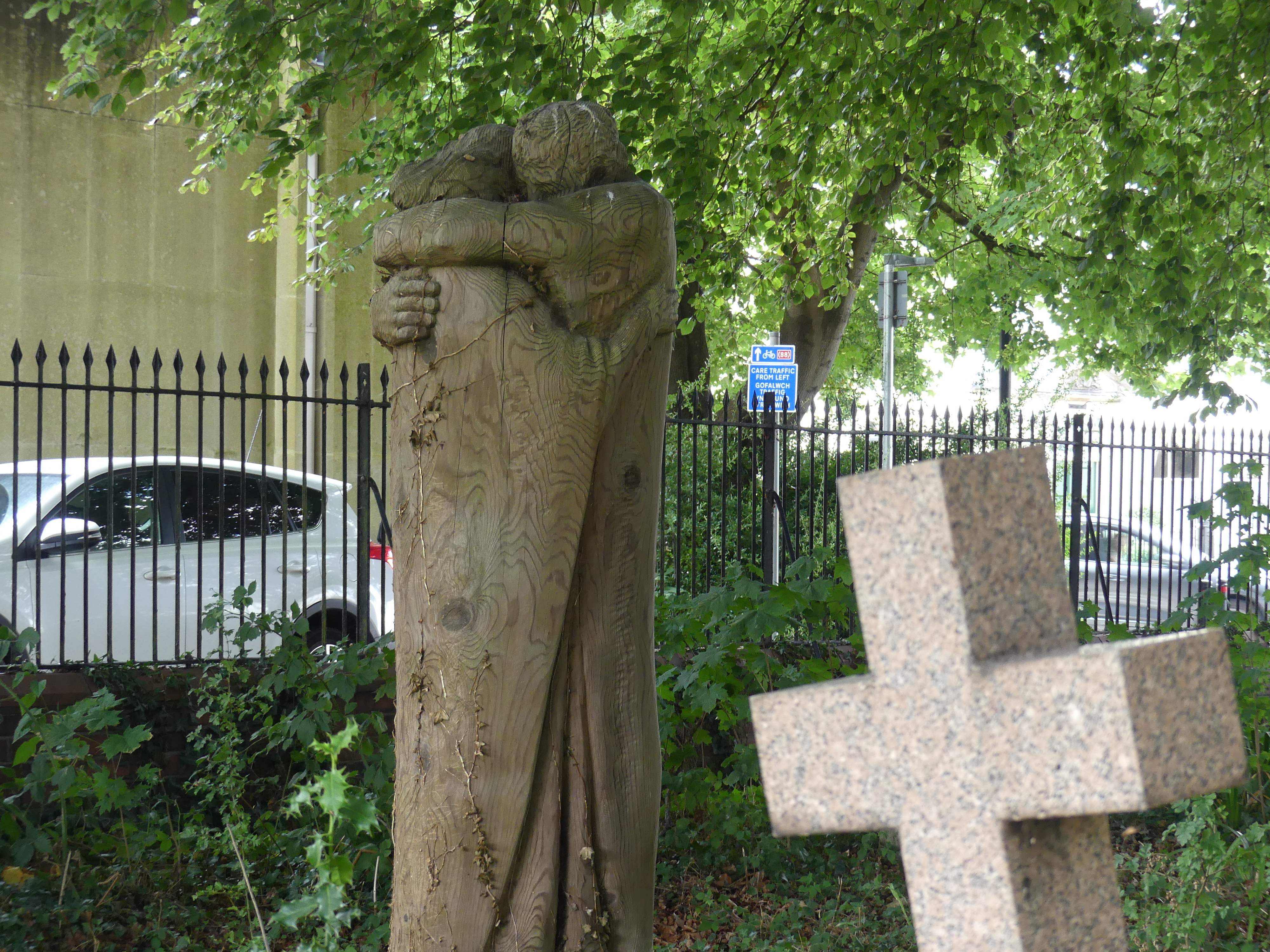
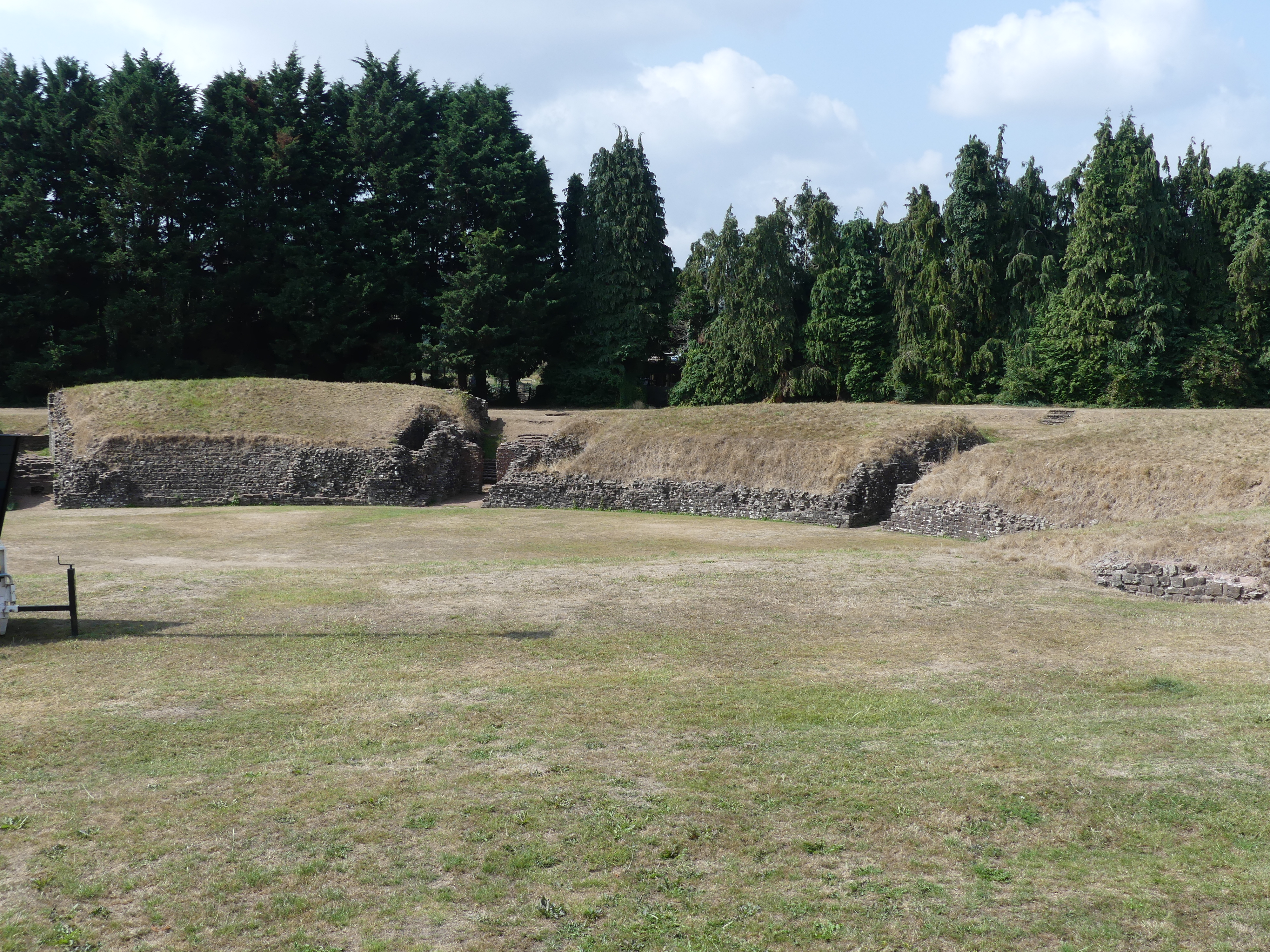
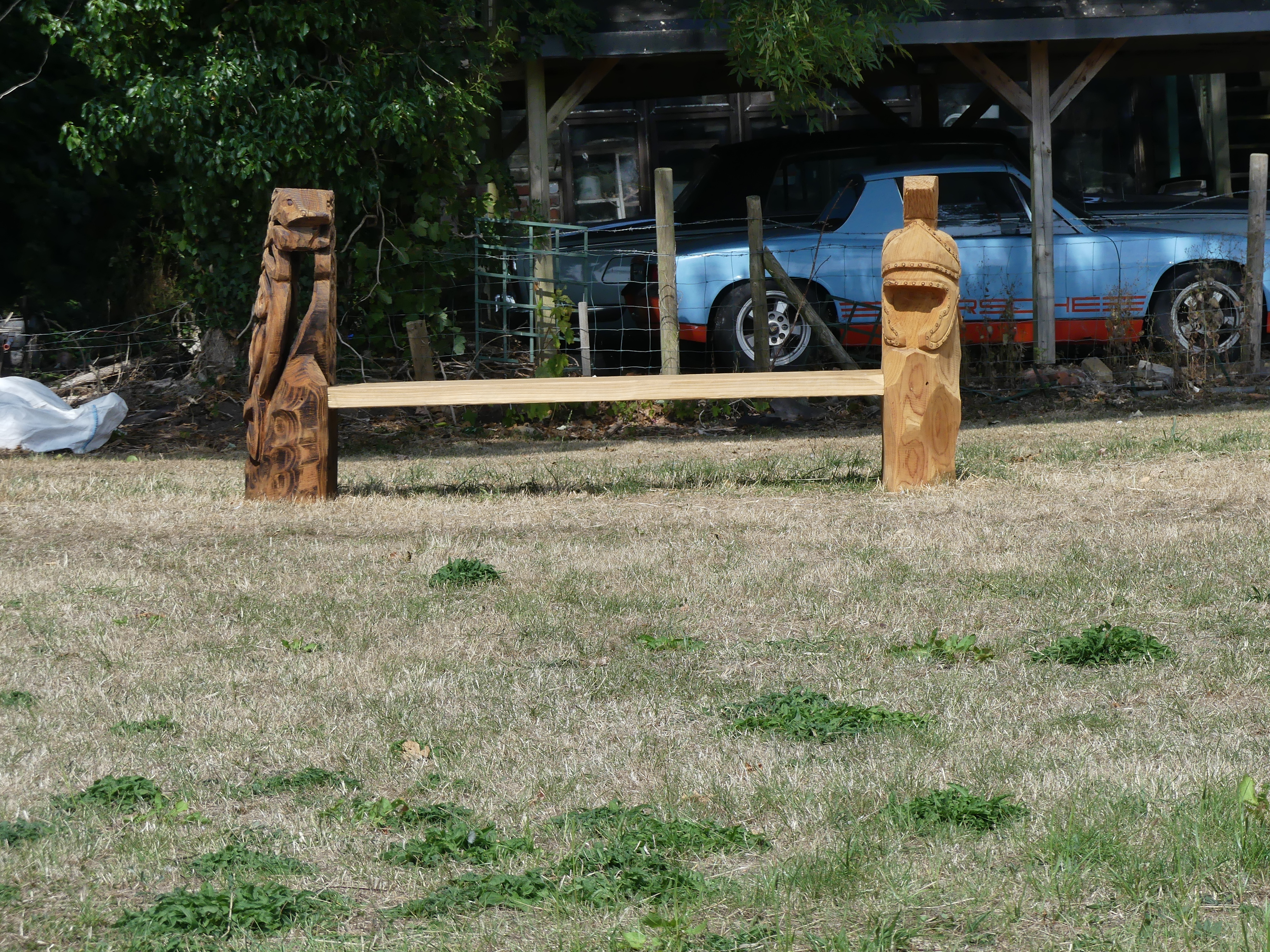
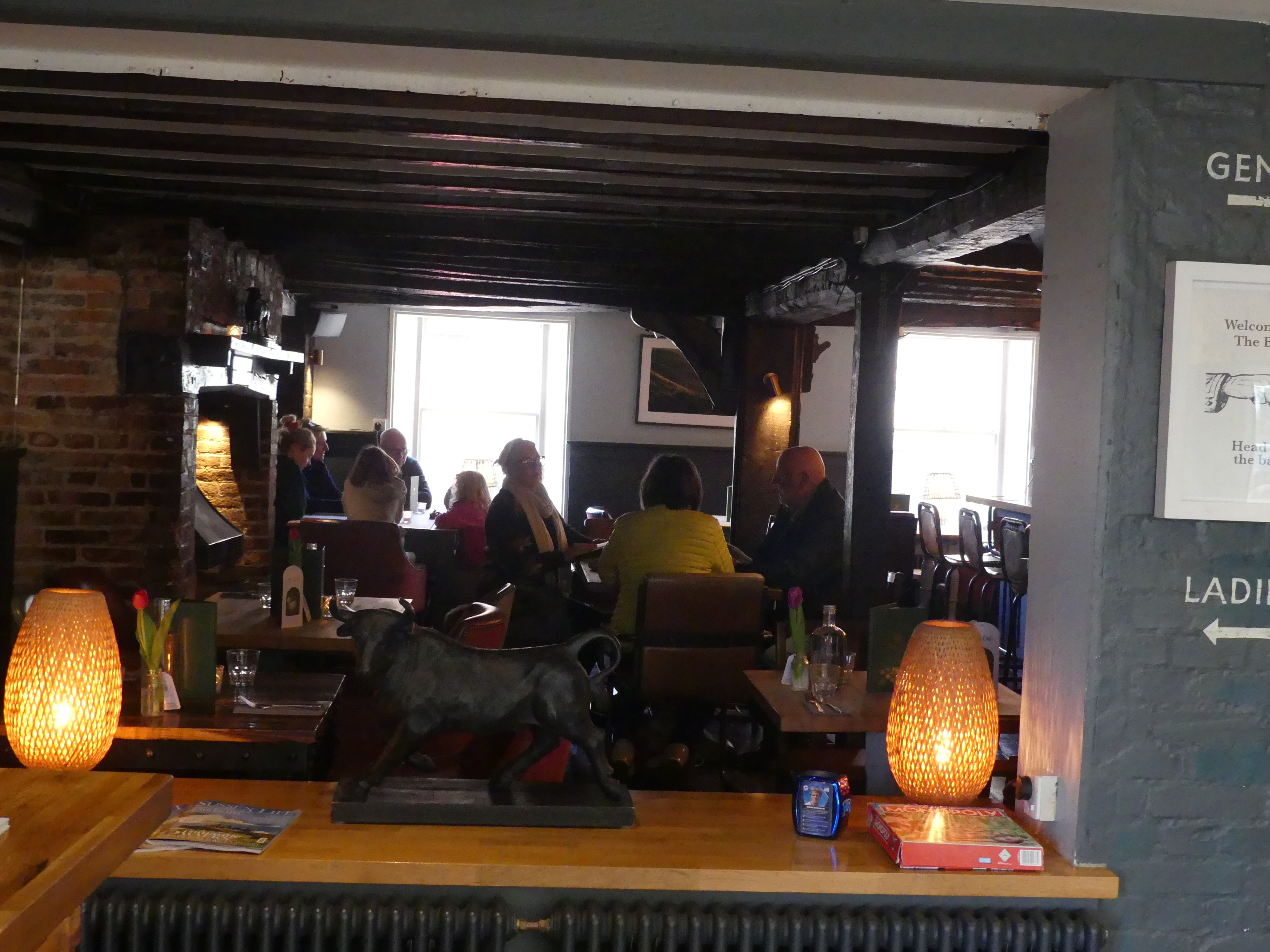
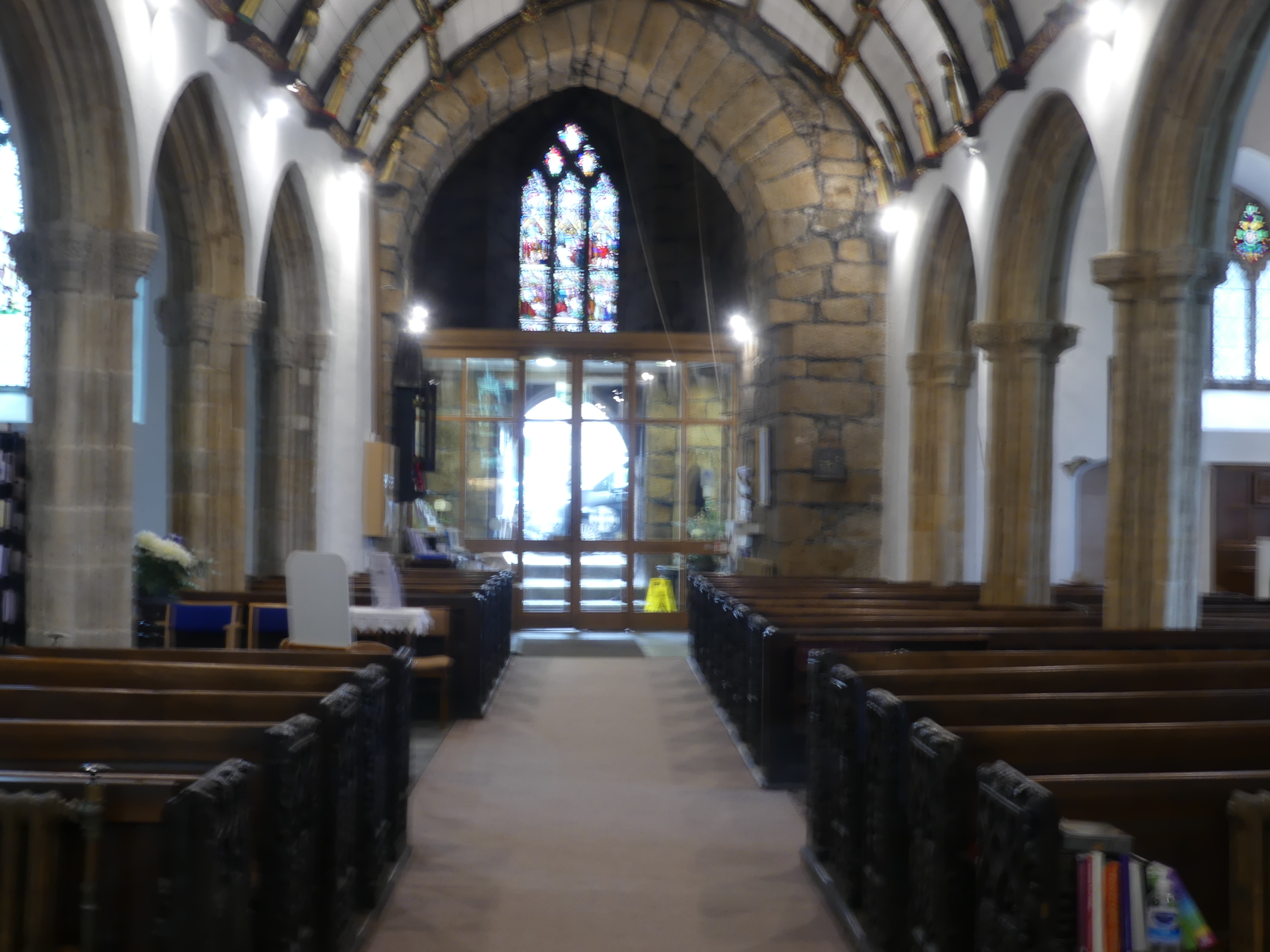
We stopped at the Bull Inn for lunch and encountered Jeremy Clarkson and his farm products. Other things of interest appear in the following photos. St Cadocs’ Church and graveyard. The remains of the Roman amphitheatre and the carvings in the park. An annual event in the village produces these wonderful carvings.
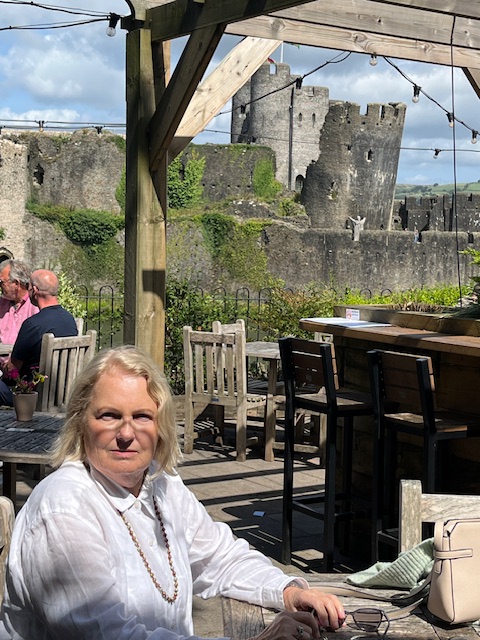
Returning to Cardiff, Kerry, being ever thoughtful, thought she had found another castle – Castle Hensol. We used the GPS in our car and the postcodes for the destination to find everything and it worked perfectly, even on this occasion.  Time brings about change and so it was with Castle Hensol. It was now the centre piece of a gated residential development and golf course. The wine tasting that the advertising had promised had led us on a wild goose chase. After a lot of guessing we found our way only to be disappointed. We needed a booking.

That ends another chapter in our around the world adventure. So, watch out for my next blog on THE RETIREES GO AROUND THE WORLD – CARDIFF to PEMBROKE WALES WEOBLEY CASTLE and KIDWELLY CASTLE.

THE RETIREES GO AROUND THE WORLD – CARDIFF WALES – CASTELL COCH AND CAERPHILLY CASTLE

Castell Coch

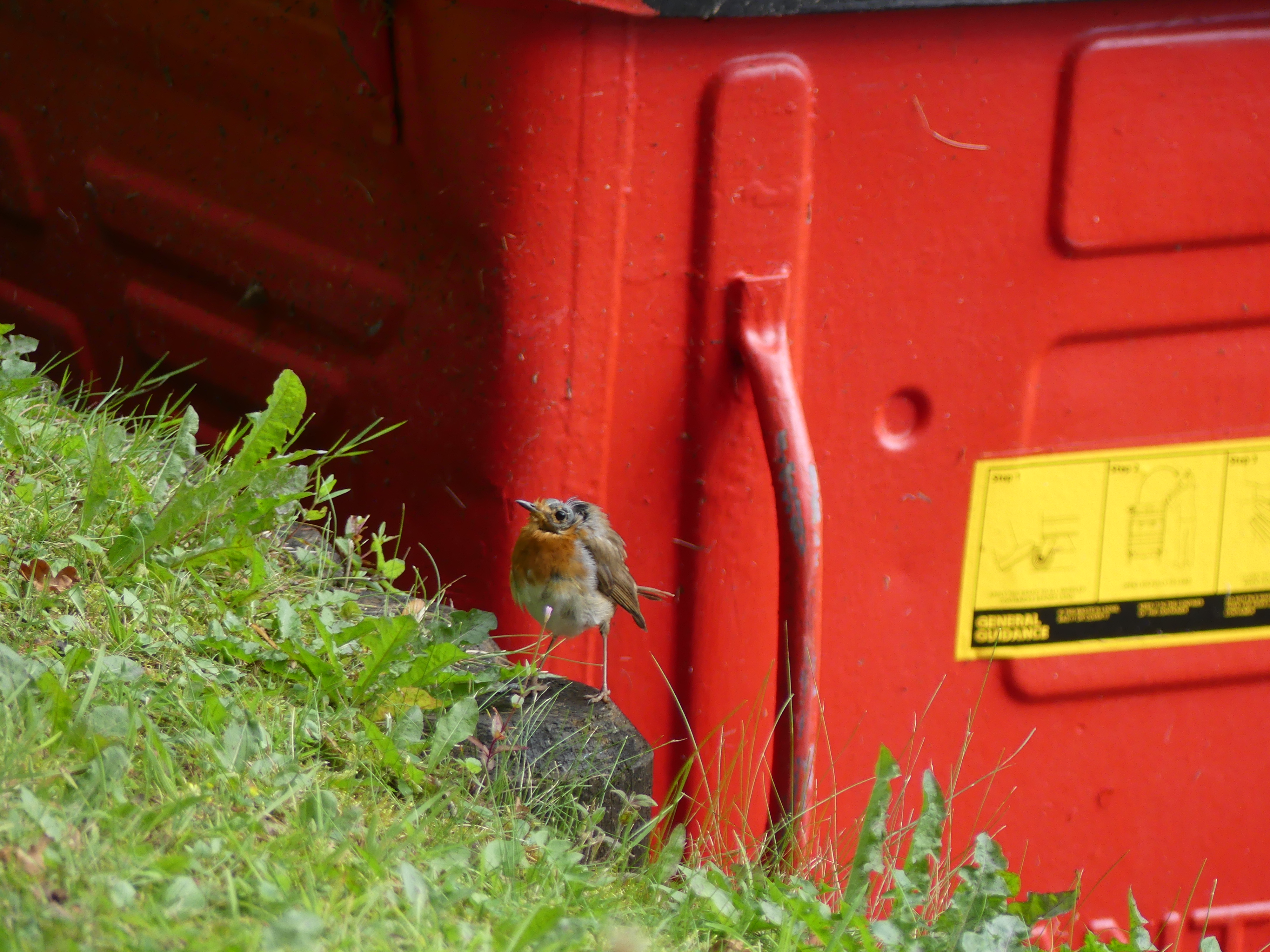
Castell Coch is very near to Cardiff and the drive was pleasant without too many narrow roads. Having said that, as we neared the Castell the roads narrowed, and the bush encroached onto a narrow lane. A sharp left-hand turn and a choice of two lanes presented. Fortunately, we took the correct lane into the car park. The Castell is hidden above the carpark. A portaloo was the sentinel to the carpark, and our first red robin came to show us the way forward. The Castell is undergoing renovation to close leaks into the stonework of the castle which amazingly requires that the stonework be given 2 years to dry out as part of the renovation.

Castell Coch (Welsh for ‘red castle’) is a 19th-century Gothic Revival castle built above the village of Tongwynlais in Wales. The first castle on the site was built by the Normans after 1081 to protect the newly conquered town of Cardiff and control the route along the River Taff. In 1760, the castle ruins were acquired by John Stuart, 3rd Earl of Bute, as part of a marriage settlement that brought the family vast estates in South Wales. He turned it from castle to country house but rarely used it. In 1950 the 5th Marquess of Bute, placed it into the care of the state. It is now controlled by the Welsh heritage agency CADW. The surrounding Castell Coch beech woods contain rare plant species and unusual geological features and are protected as a Site of Special Scientific Interest.

The first picture shows the pleasant entrance to the castle. As you approach the castle, you see the former moat. No longer filled with water, it still stands as a barrier to enter the castle so a permanent draw bridge leads you into the castle. The castle is in the care of CADW the Welsh Government’s historic environment service which provides for the restoration and accessibility to these historic places. From the outside it is obvious that Cadw is doing its job. One part of the castle is clothed in a large sheet painted with images of the castle and a story on a large sign about the renovation. The walls of this section of the castle are being dried out. An entrance fee is payable, and the ticket office is on your right as you pass under the portcullis. Yes the castle still has it’s portcullis. The attendant is a pleasant Welsh lady who before taking our money tells us that instead of taking a ticket for this castle only we could buy a 3 day or 7-day pass and supports her statement with 2 brochures of the many places of interest that are cared for by CADW. It cost us a little over £50 for the 7-day pass and gave us a huge saving in respect of the future visits we planned to make.

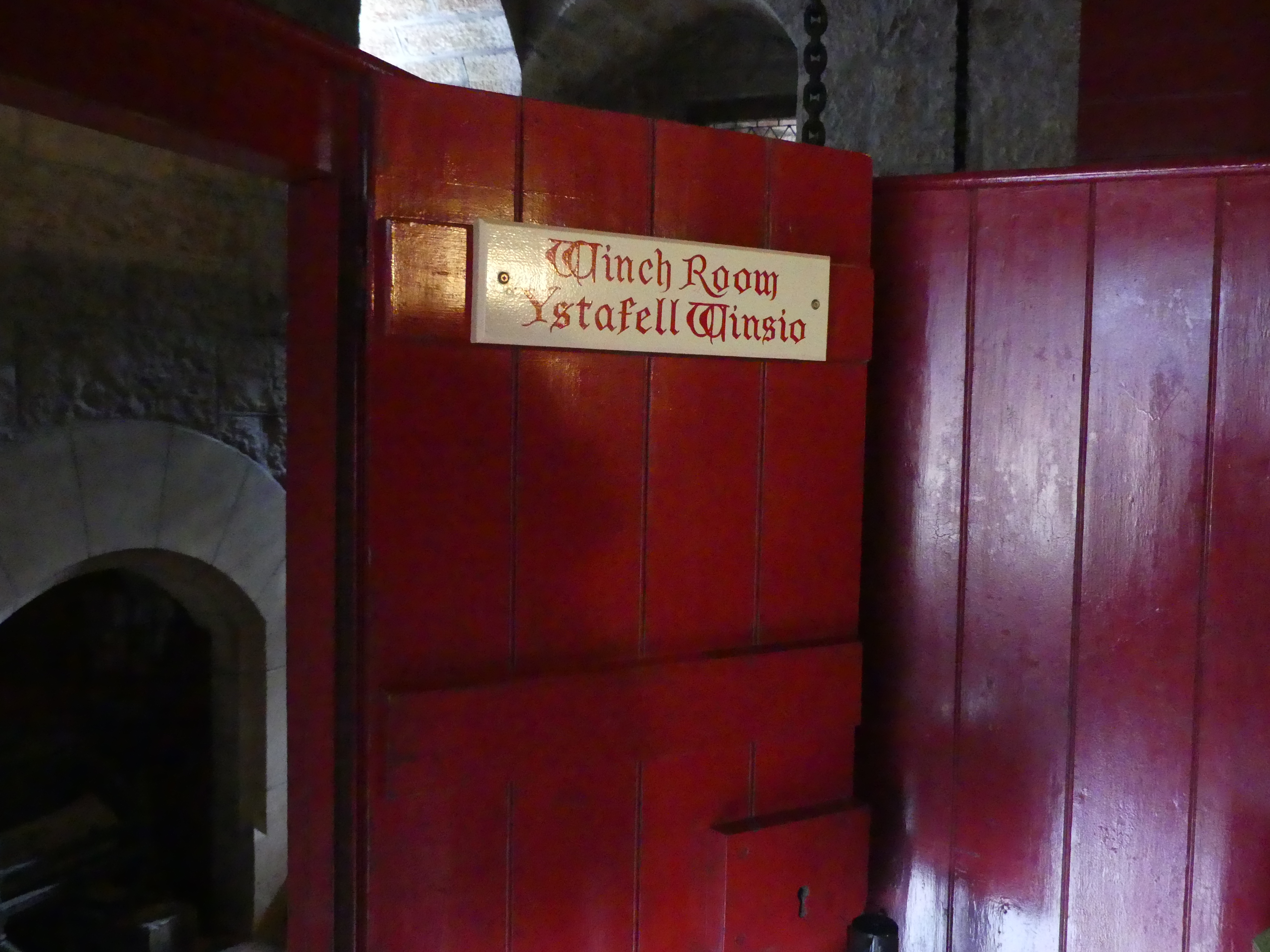
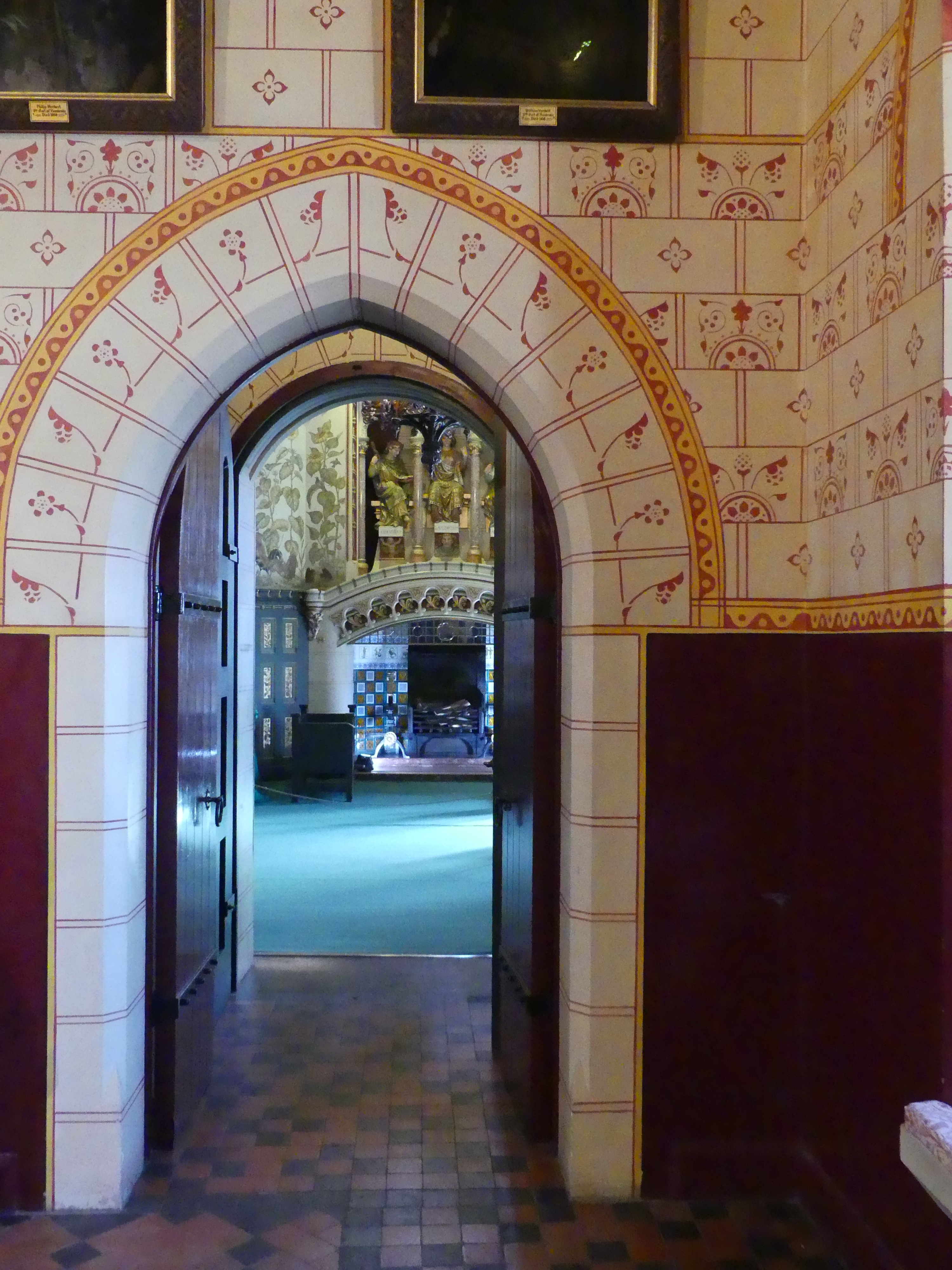
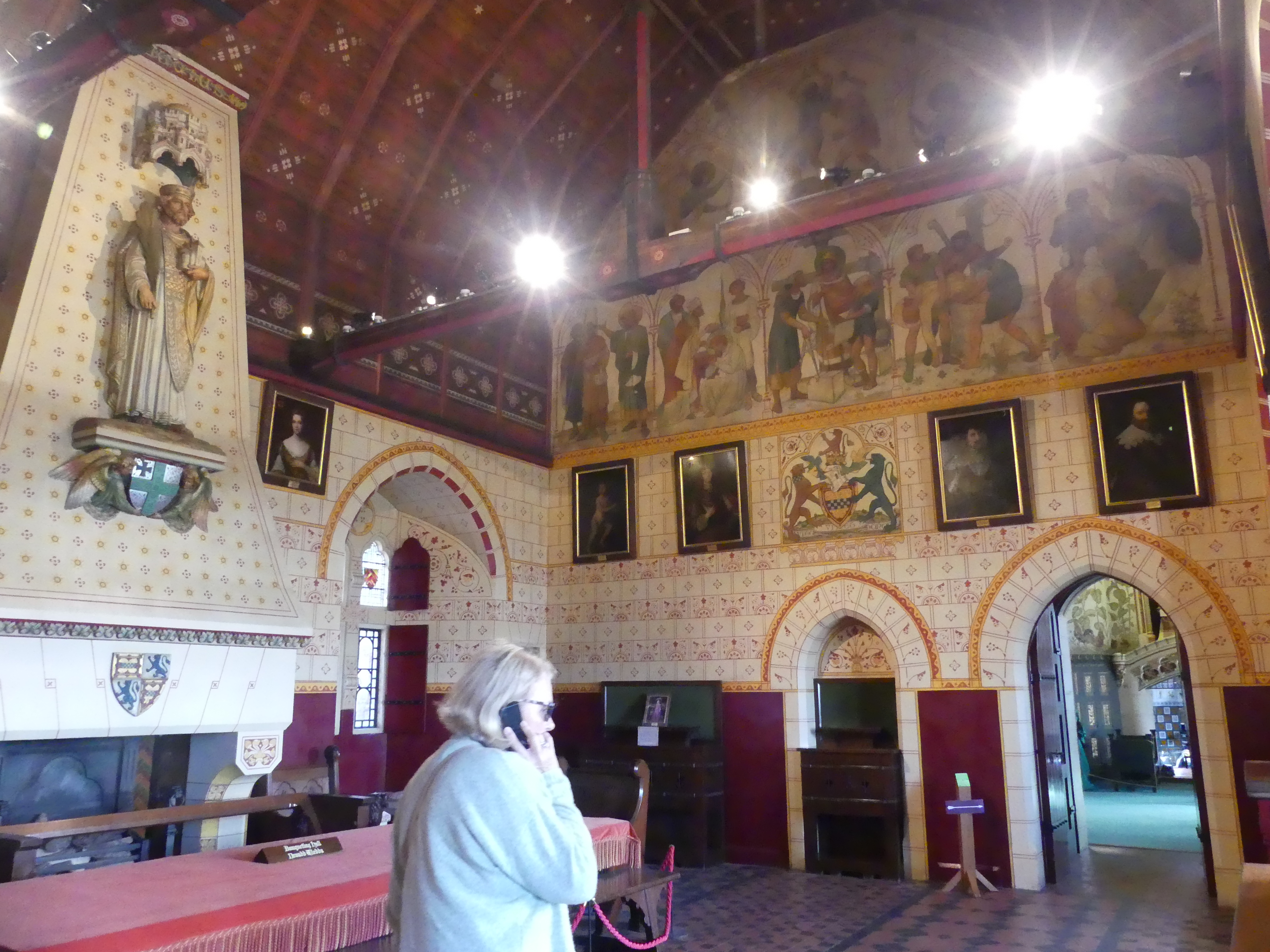
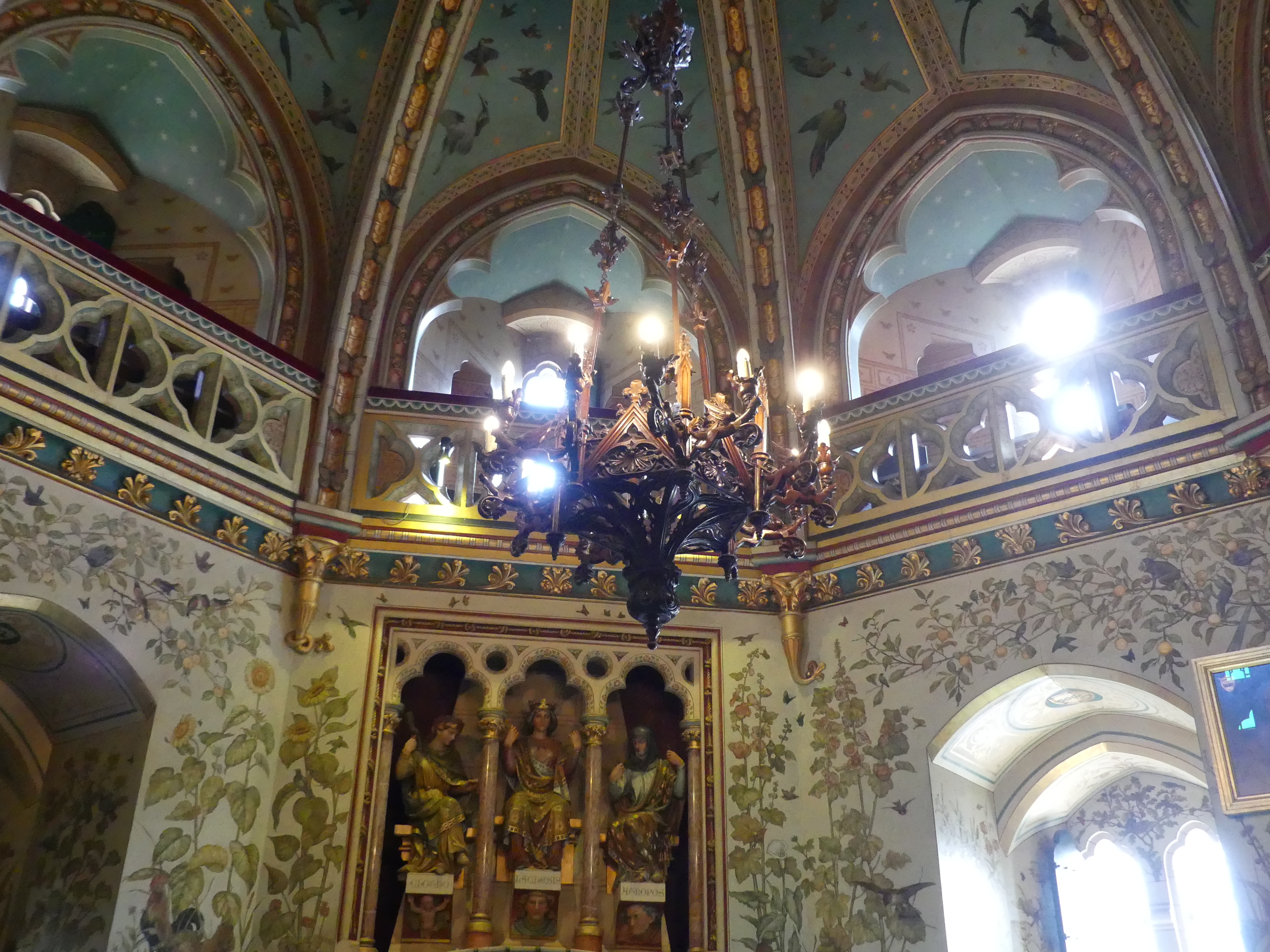
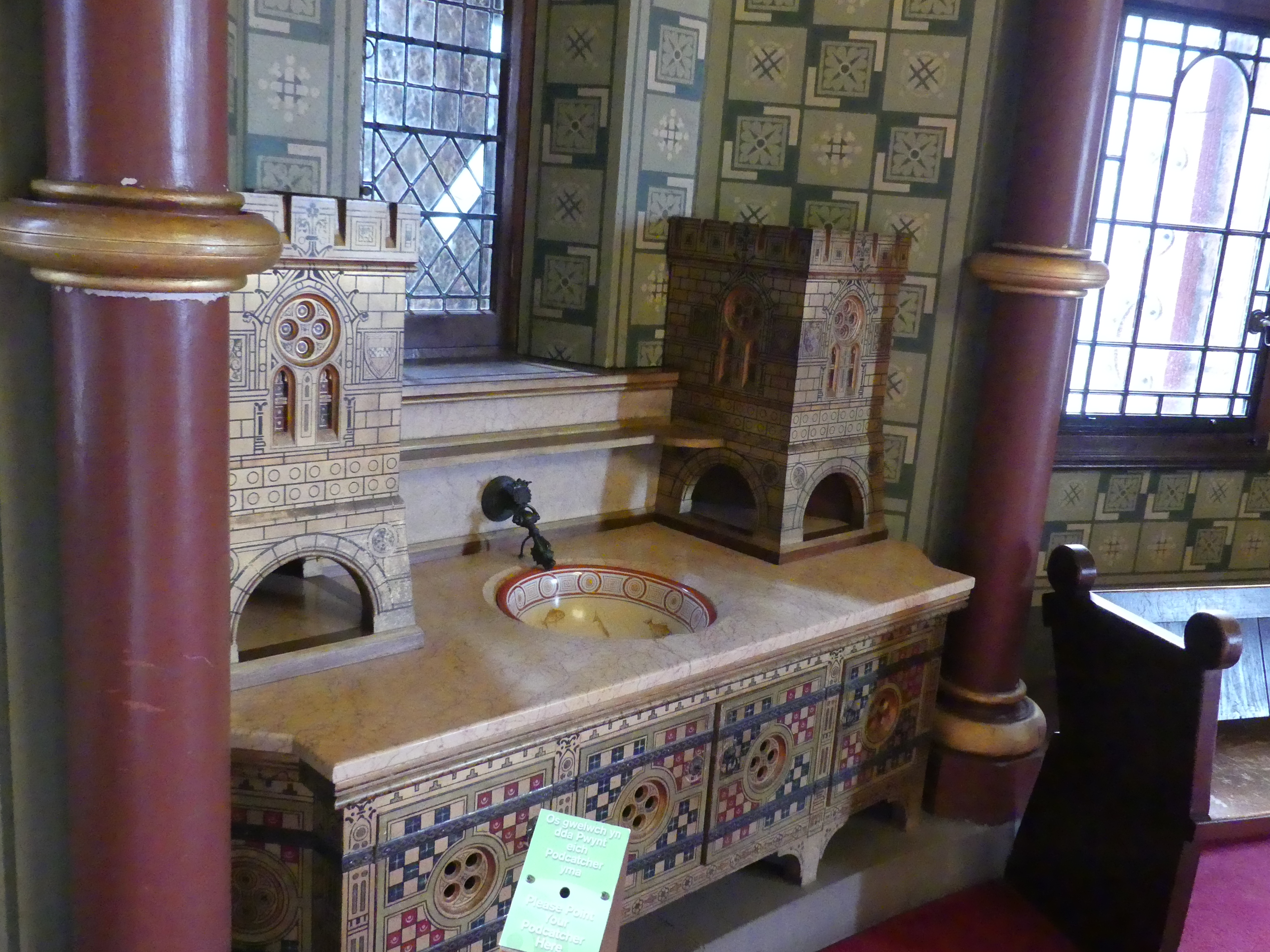
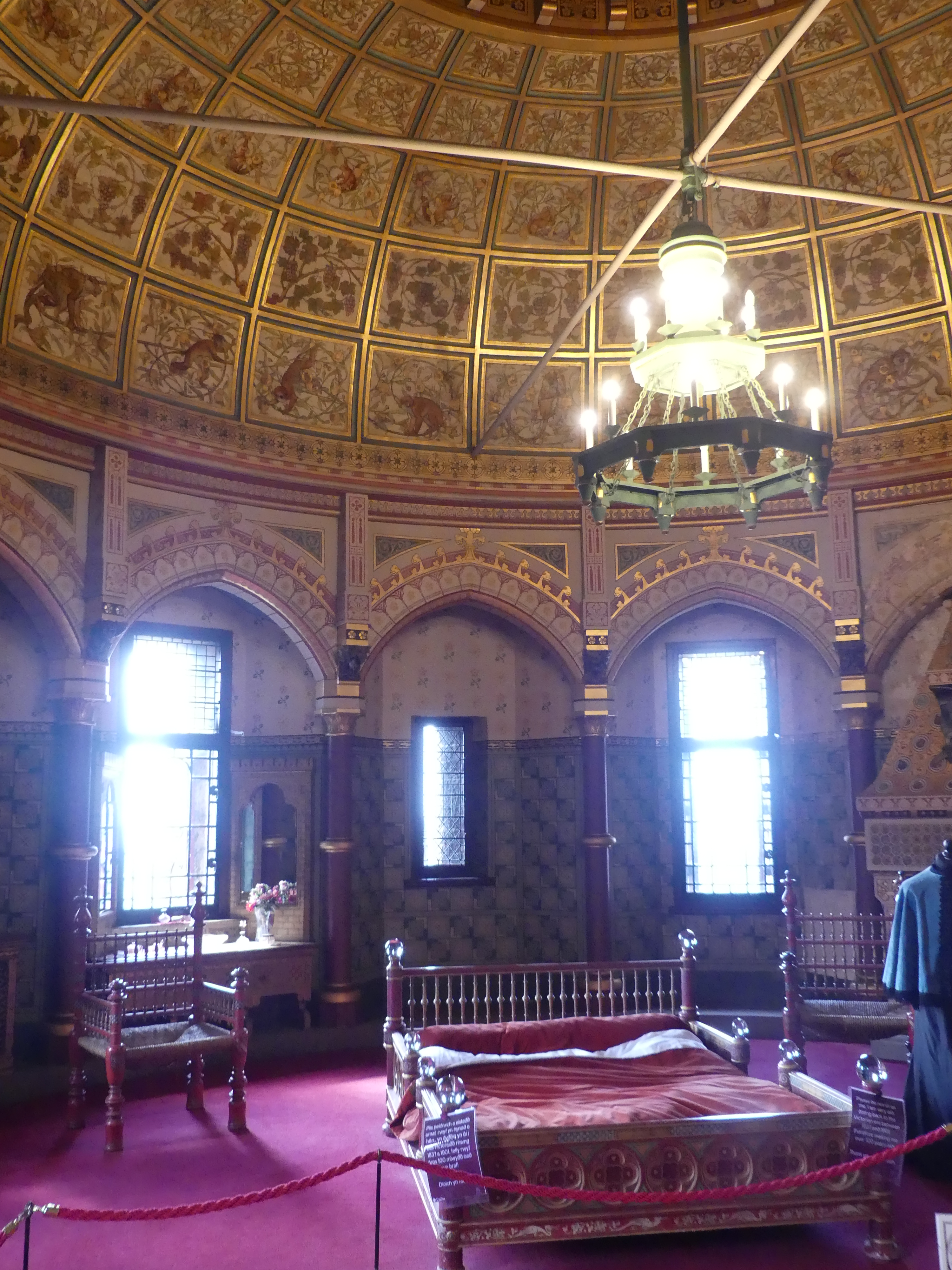
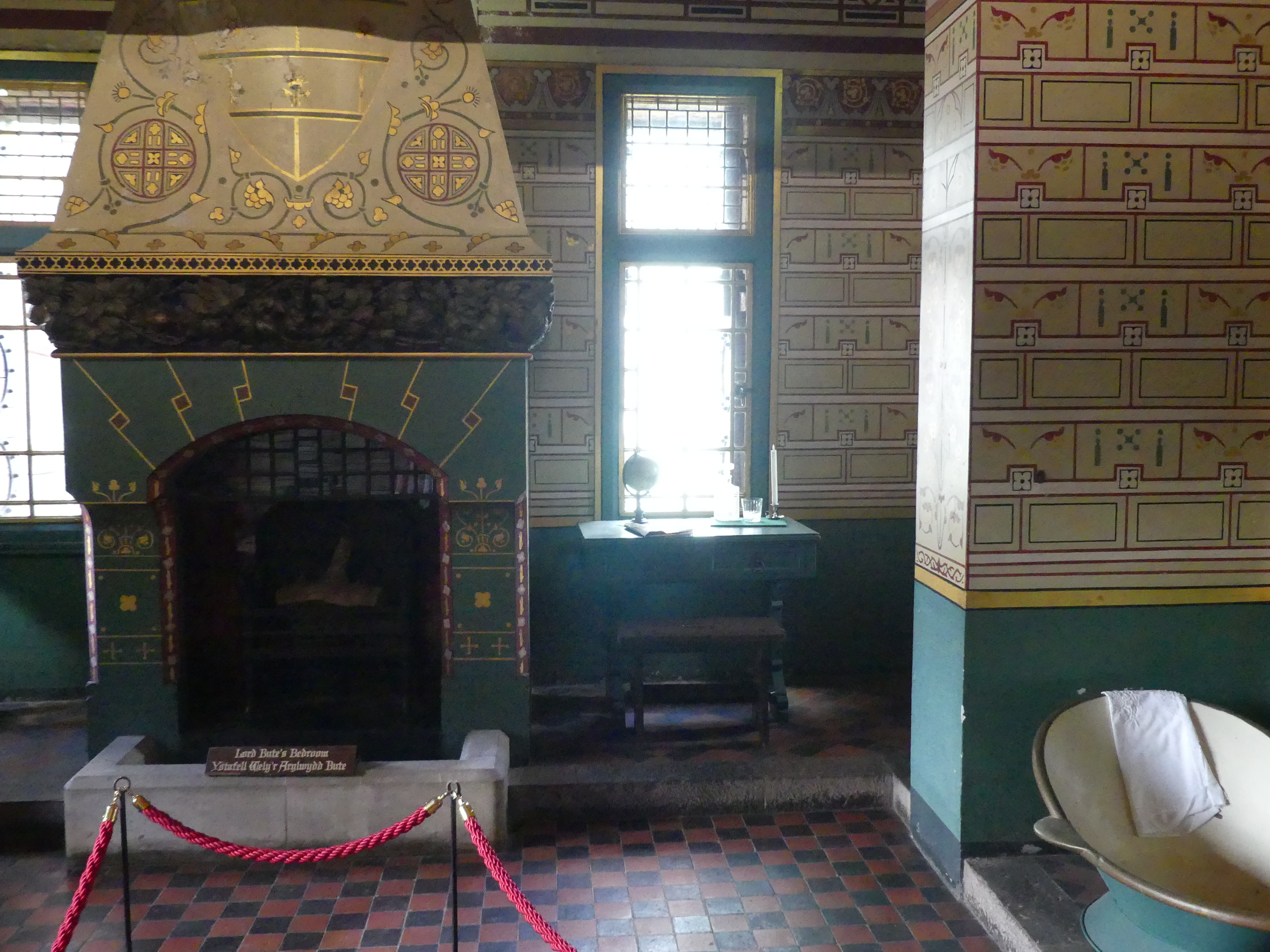
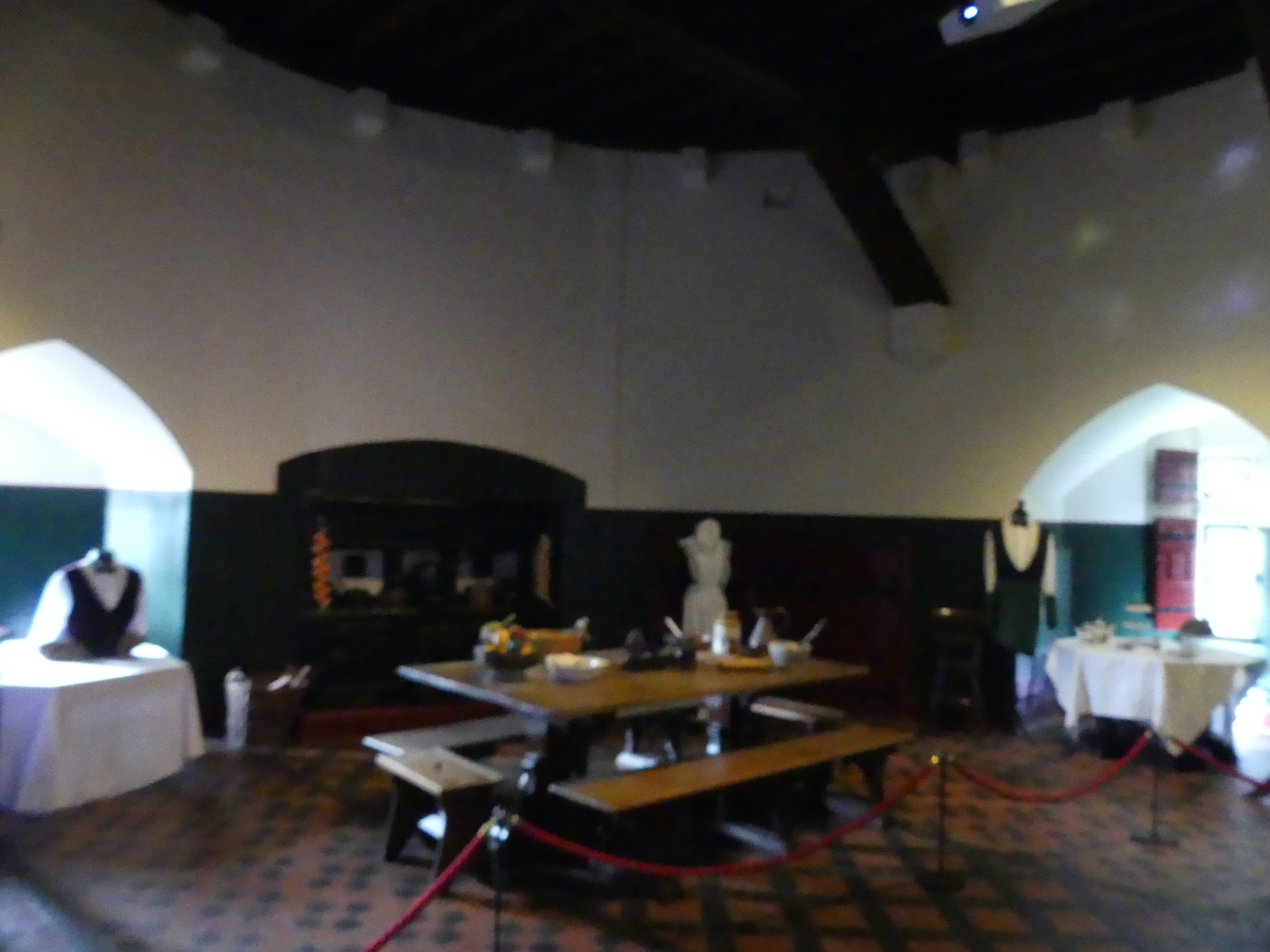
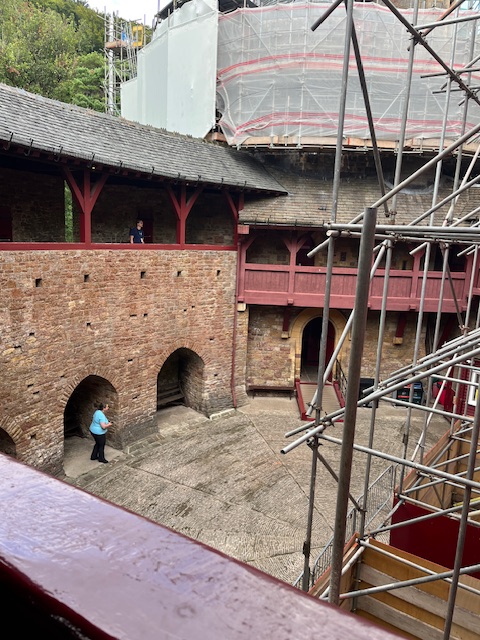
With our self-guided tour, we roamed the Castell. Many of the rooms were filled with furniture from the past and gave us a good idea of the recent use of the place. The photos below follow our tour. Unusually they have kept and restored the chamber “the Winch Room” holding the machinery that operated the portcullis the draw bridge and the “murder hole”. The toilet has been modernised but remains in its original location such that the waste use to flow out over the castle walls. The Lady of the house had a bedroom in the top of one of the towers and was quite pleasant whist the Lord ‘s bedroom was one floor below. It held a single bed, a fireplace and was rudimentary. We joked about the labour of love climbing the stairs for nuptuals with the lady of the house.

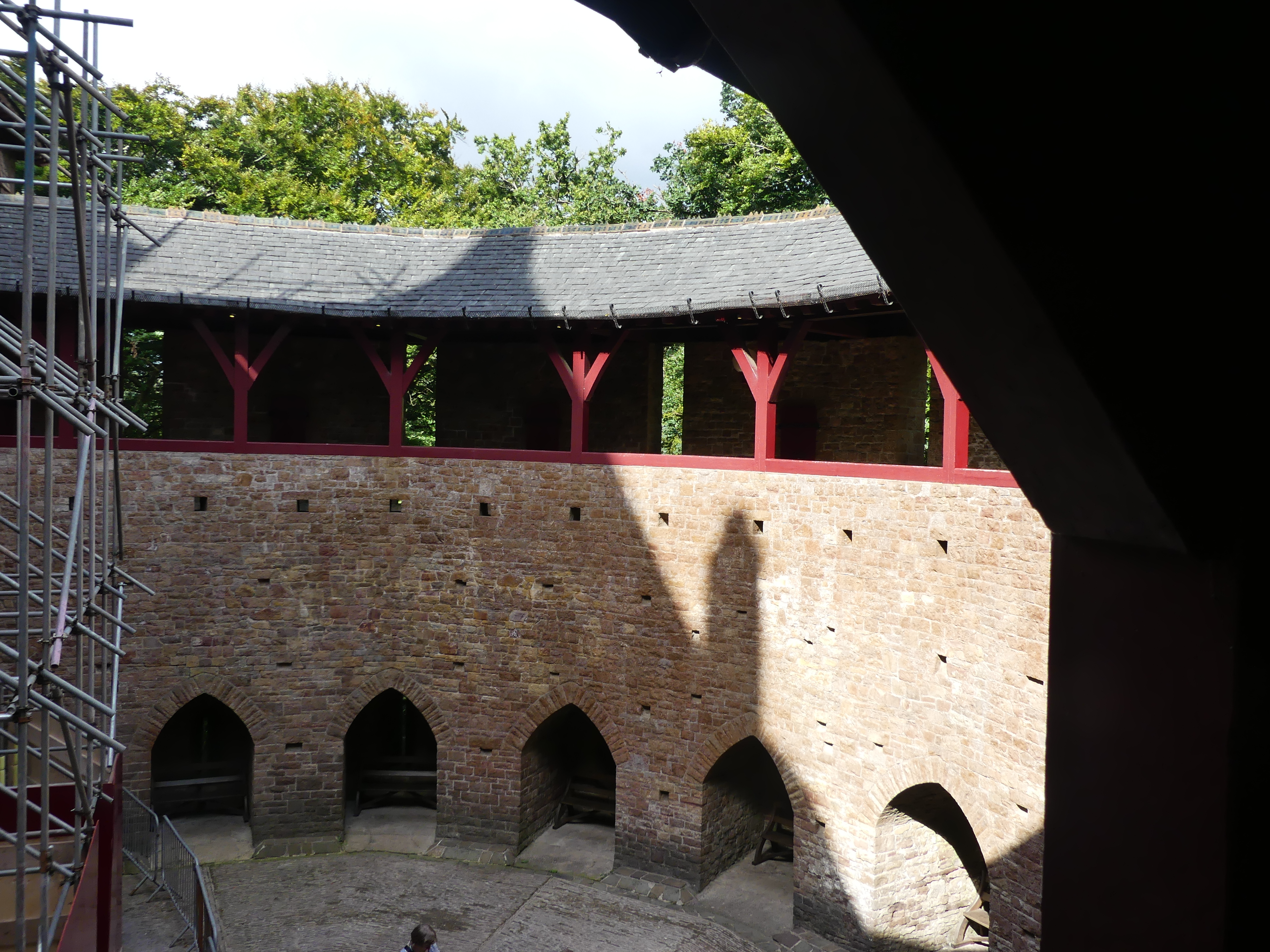
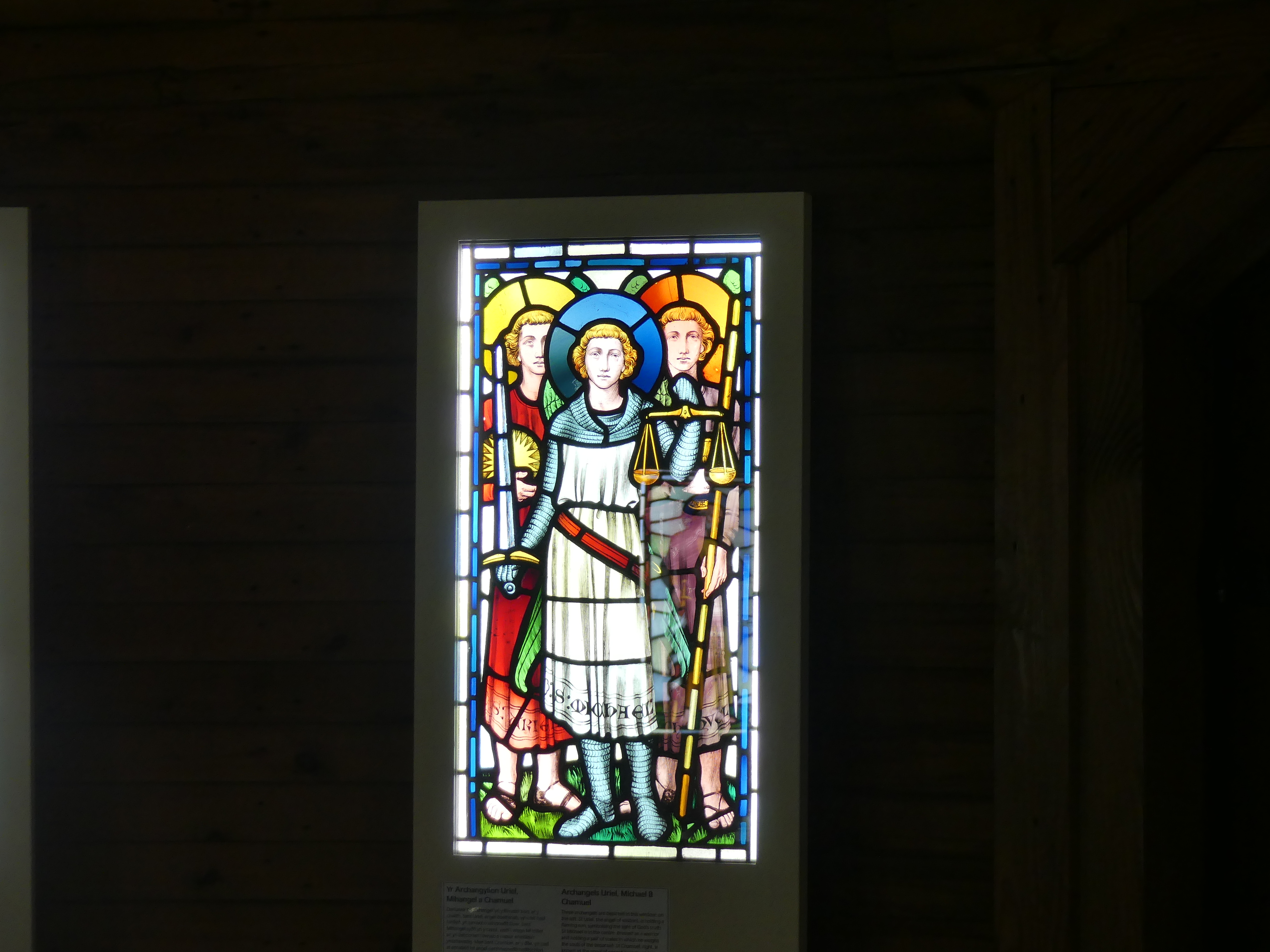
The remaining castle that was open for viewing including the balconies circling the castle keep and the chapel, the keep, and the kitchen. I have included the brochure map showing the layout of the Castell (which appears to mean a non-fortified castle) and a photograph of the ruined state of the castle taken over by CADW.

There is no coffee shop at Castell Coch, so we returned to the car as we had heard been informed by the staff that there was a great café nearby. The directions were simply go back to the main road but turn hard left. We followed instructions and returned to the juncture of two laneways and turned hard left and found ourselves on a one-way path to a garden shed which has now been developed as the café. Very rough and rudimentary but it did the trick and even introduced us to a Welsh delicacy. After coffee we headed for Caerphilly Castle which was very nearby.

Caerphilly Castle

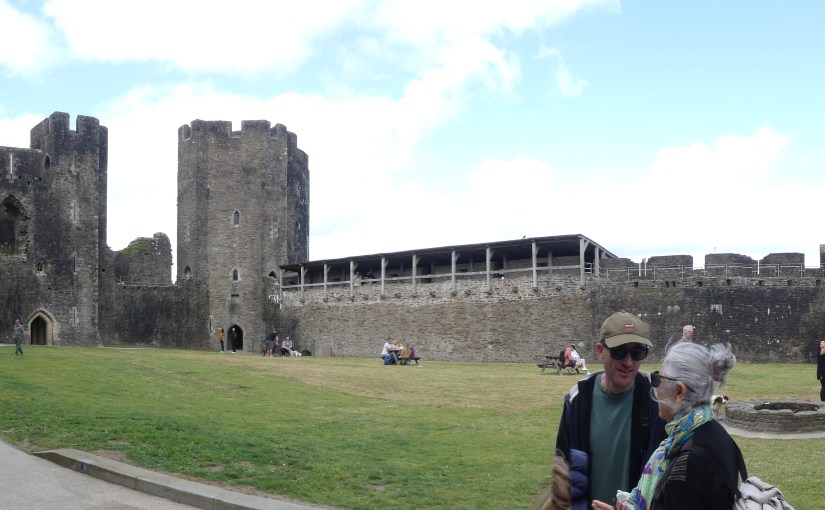
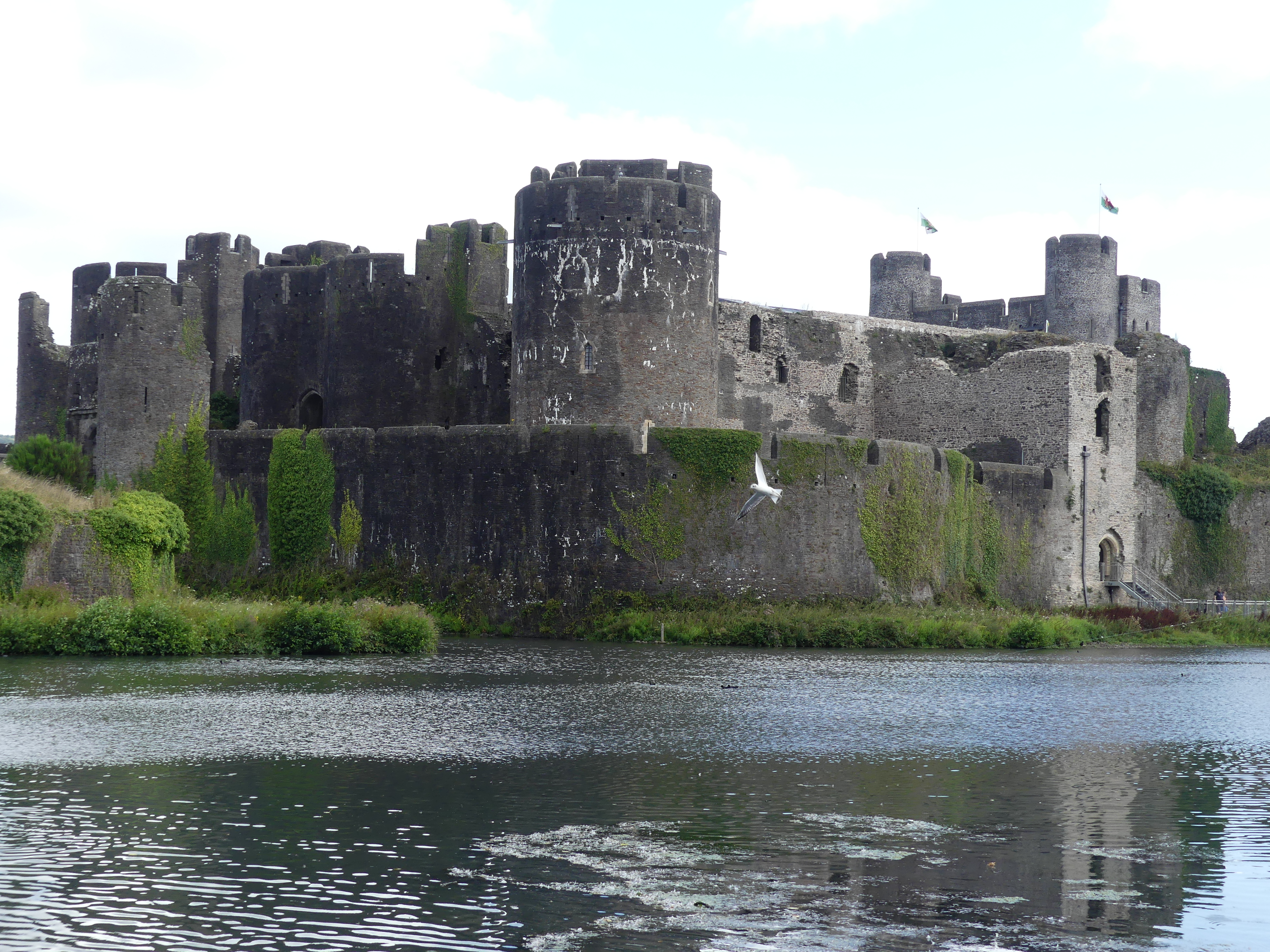
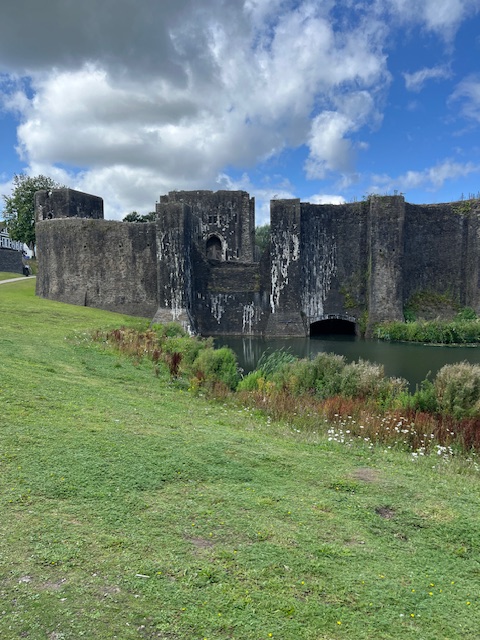
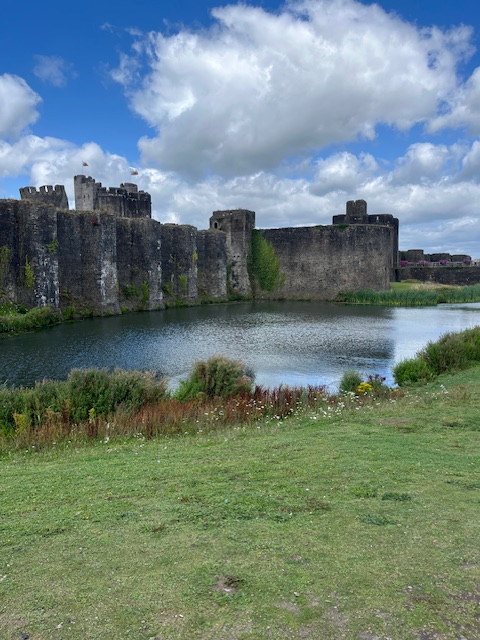
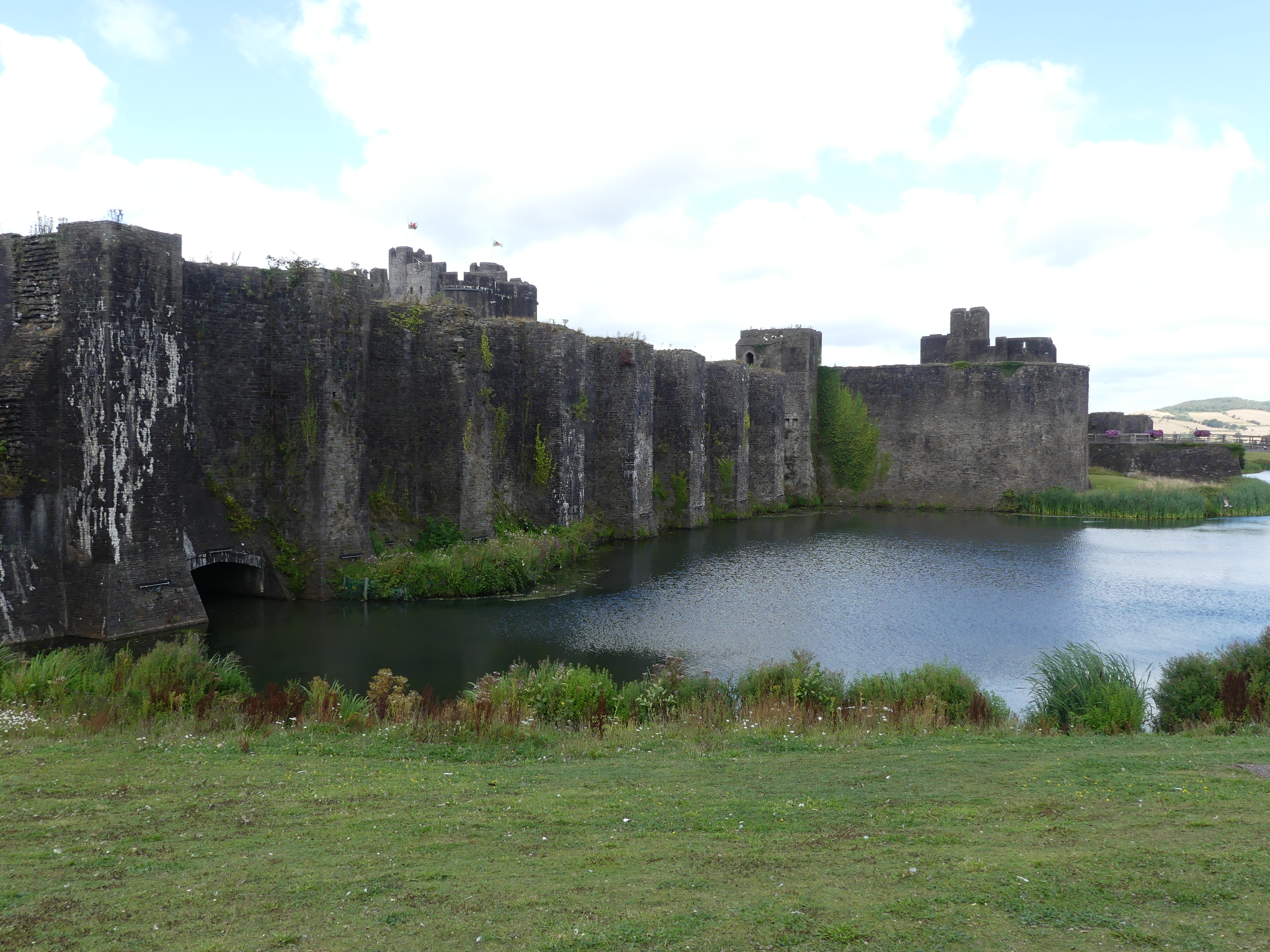
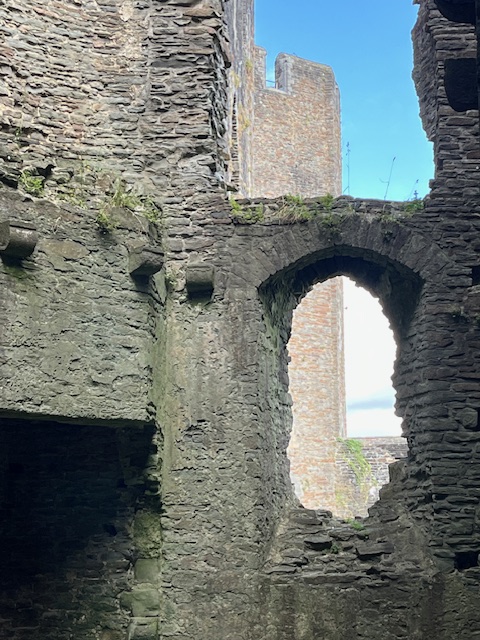
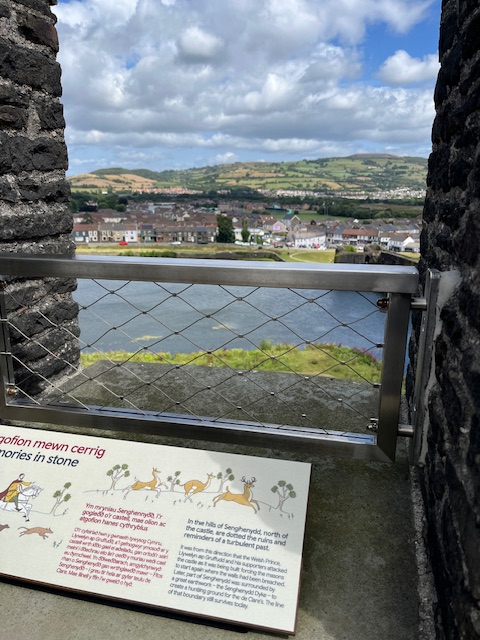
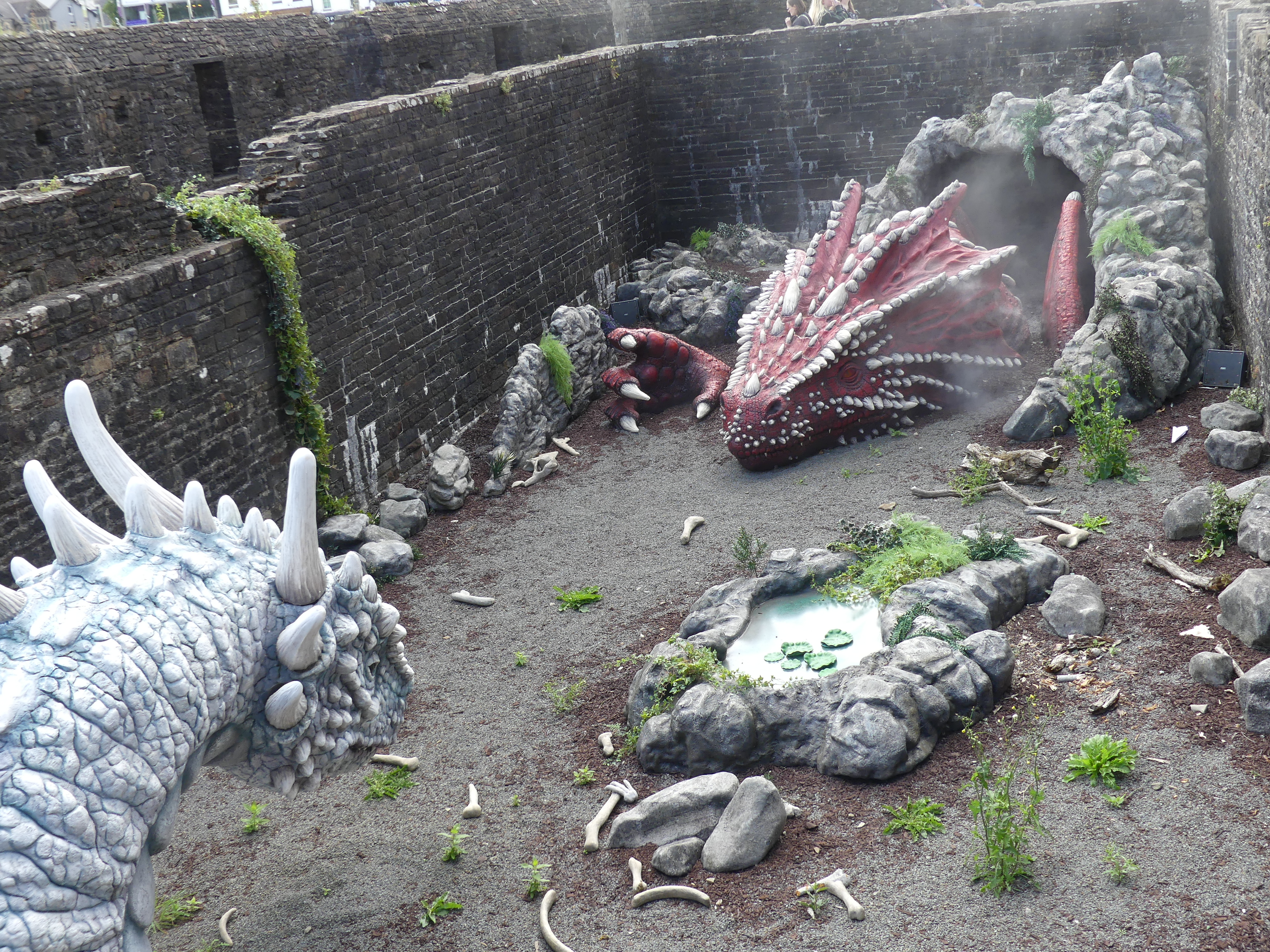
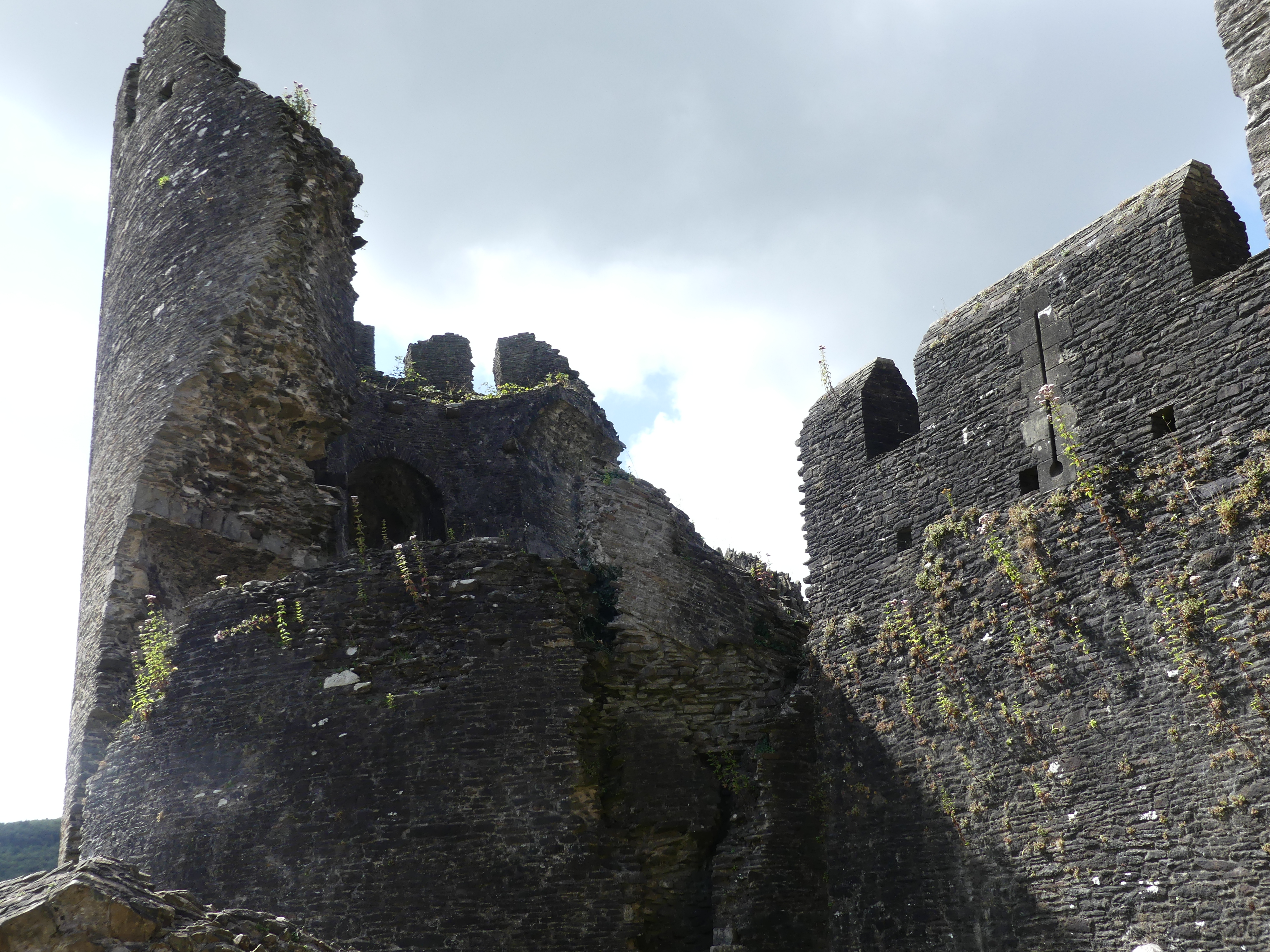
This castle is also controlled by CADW. Where Castell Coch had been in the bush/forest, Caerphilly Castle is a famous castle located in a modest size town. Parking is always the trick to visit a castle. How long are you going to need and how far have you to walk to reach it. In the pictures below I start with a view of part of the castle, followed by another view. It is immense. The moat is more a lake and the drawbridge shows how wide the moat is at its narrowest point. Inside is a secondary defensive wall. A make-believe dragon pit has been added to match myth with reality. One of these towers has been partly demolished by the Roundheads when they formed the Commonwealth in the 17th century.

The Castle has been decorated to tell the story of a queen of England married to her King at 13 and fifteen respectively and her surviving to give birth to 18 children and outliving her King and then surviving the aftermath of his death. For some reason my photos have not survived. A truly magnificent castle. We spent our time in the castle finishing with lunch on the deck of a hotel overlooking a magnificent view of the castle. Note in the picture on the left above that there is a “bloke” holding up the tumbling tower. It is in fact a prop and the tower is tilted by a bomb placed by the Roundheads Army which over ran the castle in the 17th century.

Attached is the Cadw brochure from our visit.

Our plan is to return home and rest up as we will have a big day tomorrow when THE RETIREES GO AROUND THE WORLD – SUTTON HOO UK to CARDIFF WALES – CAERLEON.

THE RETIREES GO AROUND THE WORLD – CARDIFF WALES – CARDIFF BAY BARRY ISLAND AND PENARTH.

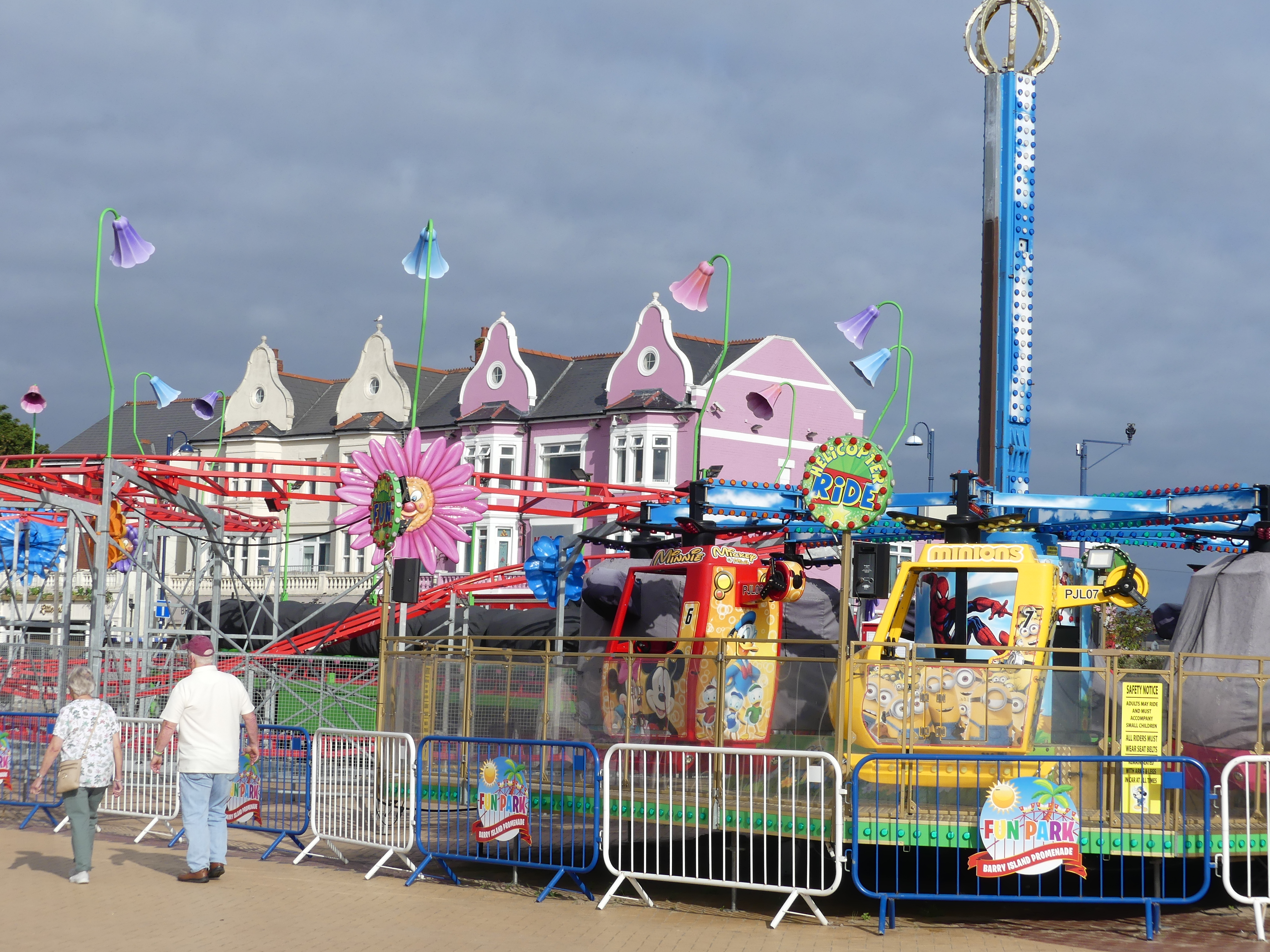
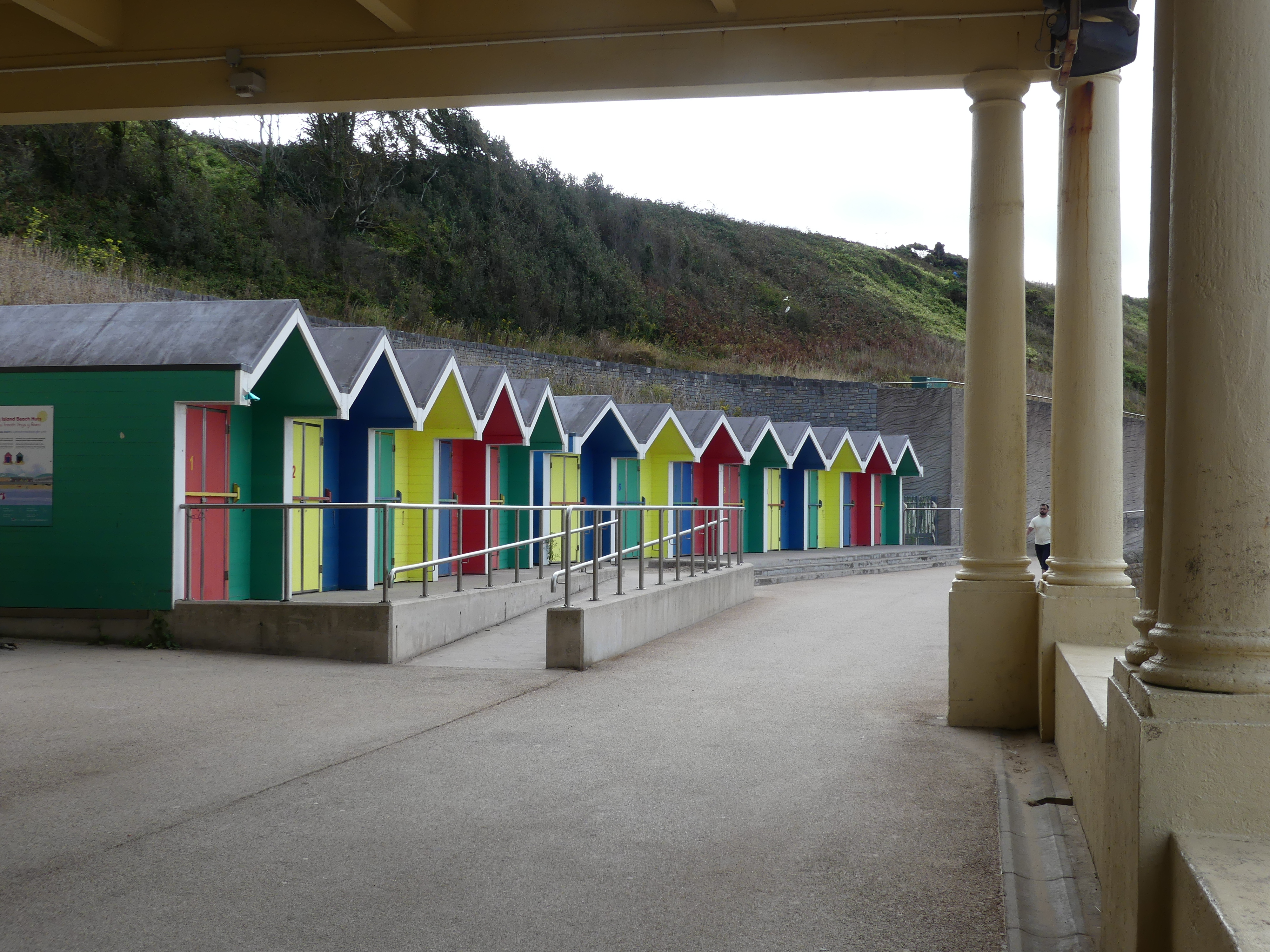
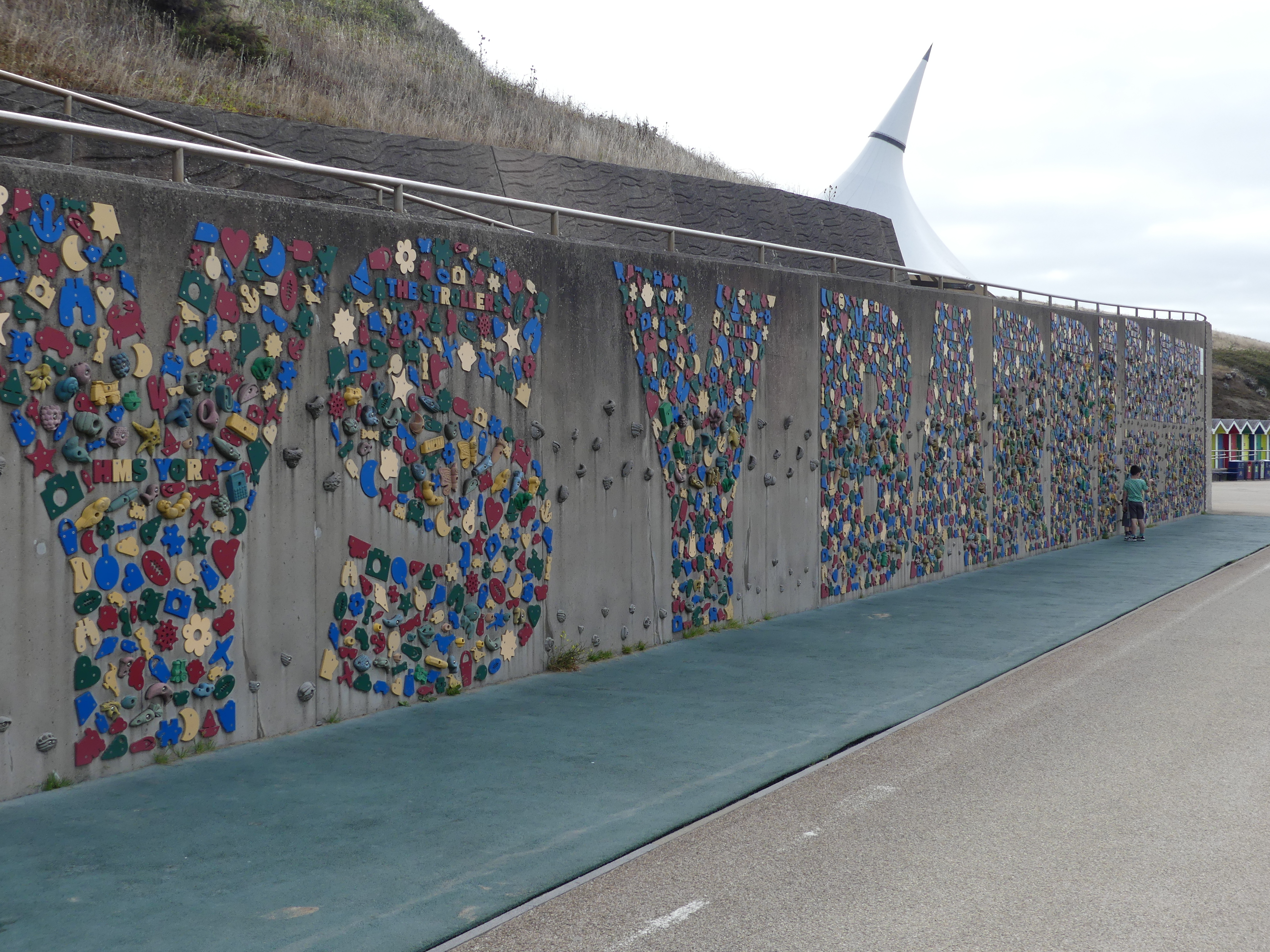
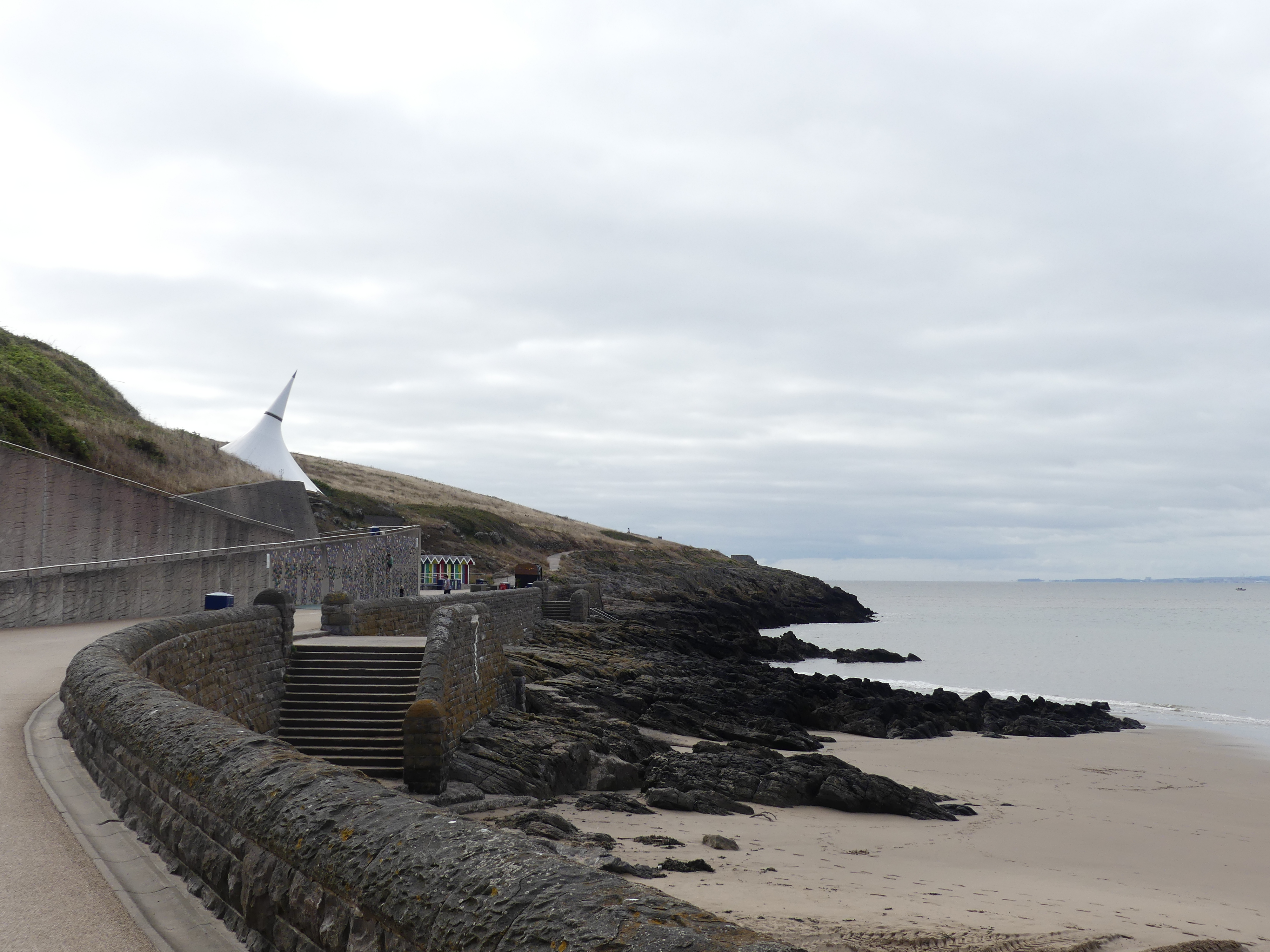
To the south of Cardiff is a bay having the obvious name Cardiff Bay. We made our way around to Barry Island. It’s the middle of school break and the middle of summer – everyone should be at the beach. Well not in Cardiff. We took a walk around the township and the beaches were deserted and the carnival had not started. Oops we have arrived too early it doesn’t start till 10.00 am. Even so the weather is not inviting you onto the beach and the water is hardly more than a mill pond – not exciting at all. The beach huts are polished and painted but no body is around. There is a clever beach side kids climbing wall with one lad having a go but he is a bit small as yet.

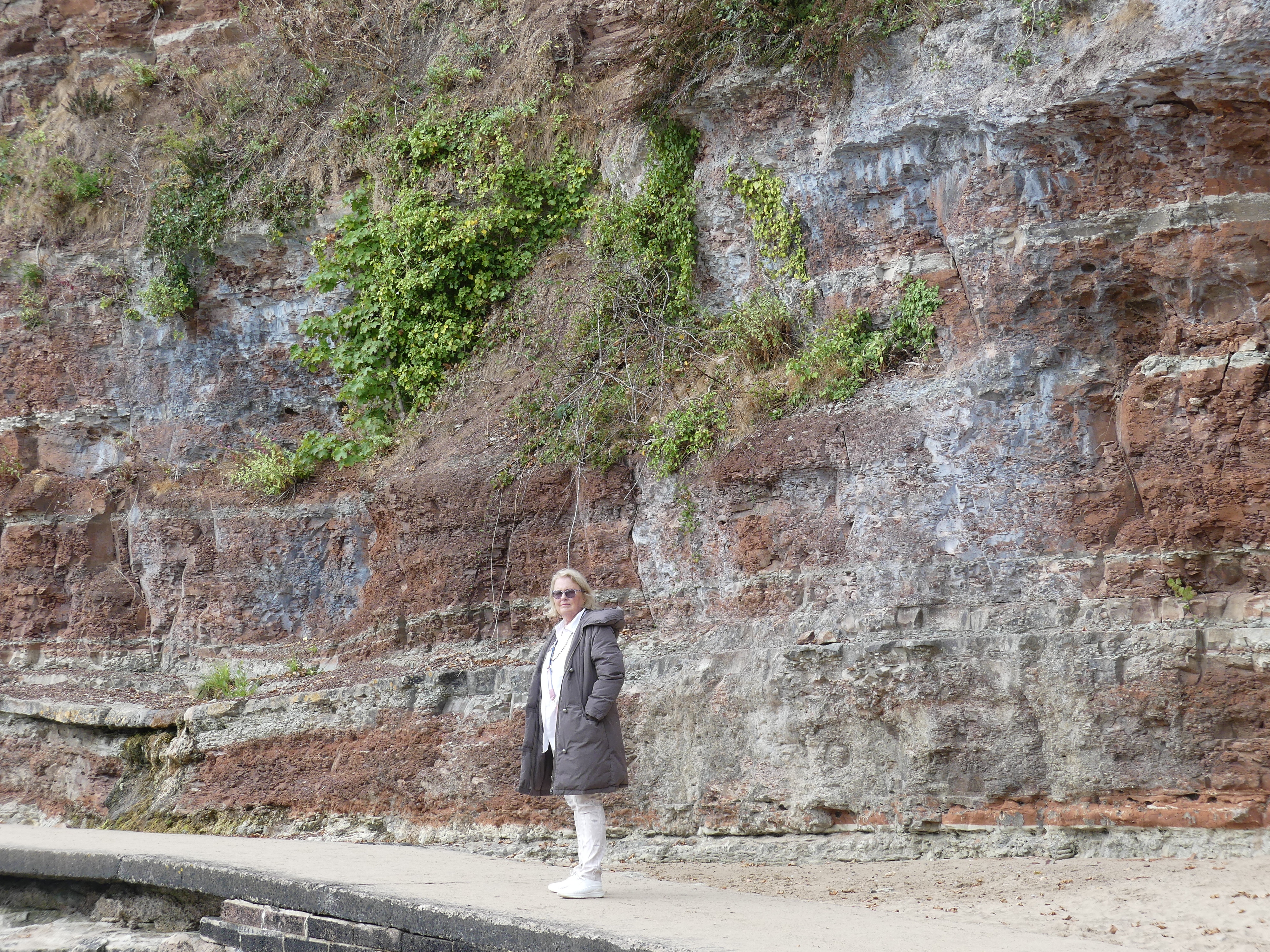
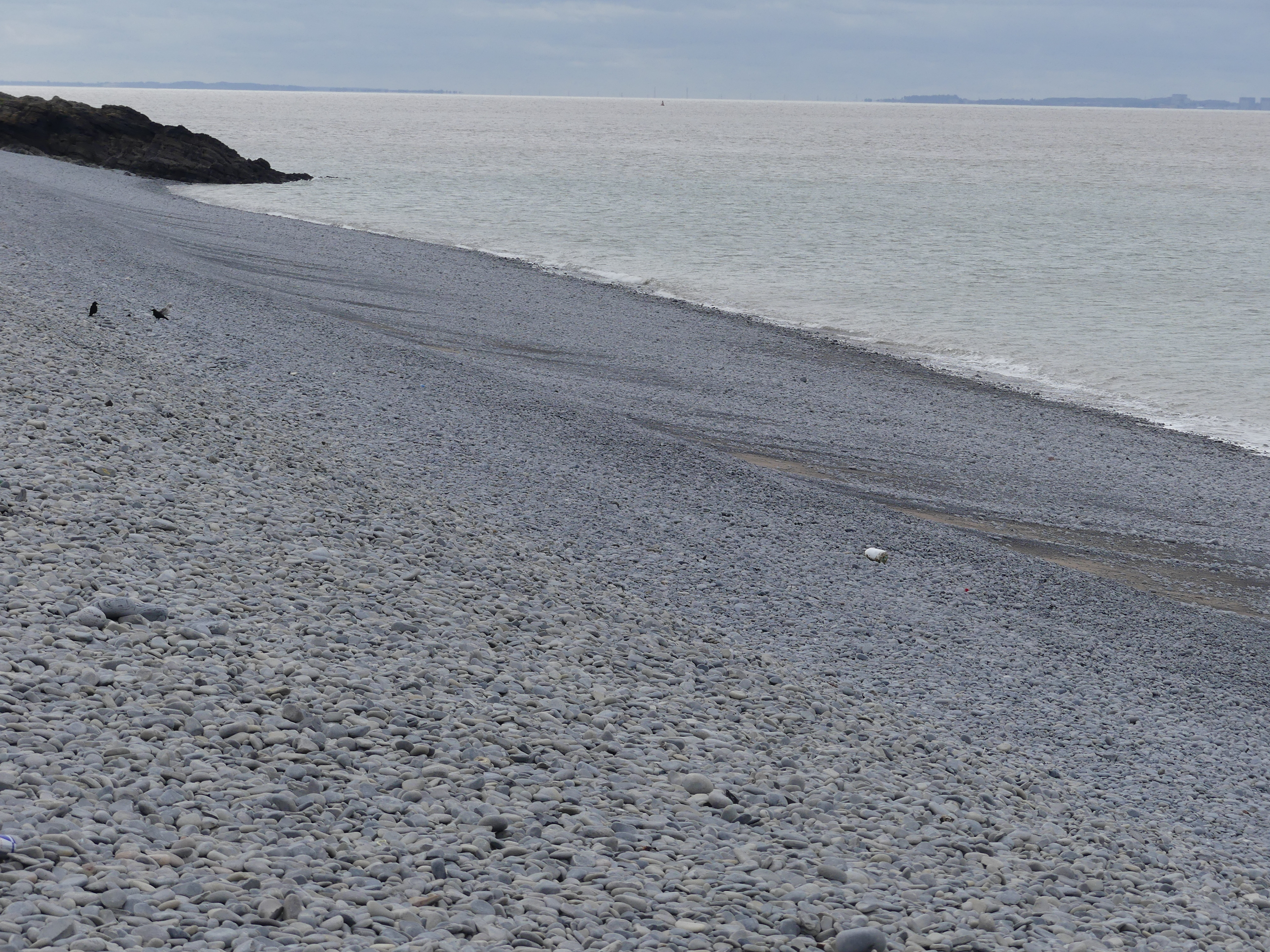
The Bay played a part in the second World War and a demounted concreted base stands testament to the place where the telescope was replaced by a gun. We walk around the headland path and come across an automated lighthouse and it is the sentinel for Nellie Point. My late Mum was named Nellie and I felt a little chuffed that she had the same name as this Point. The path comes to a dead end where it ends in a cliff and a small beach. A passing local tells us there is a pathway on the other side of the beach, but the gradient is so steep that locals call it “death hill”.  So warned, we turn around and walk back. After collecting the car, we take a drive around to a different beach where Kerry pulls out our picnic thermos of coffee and some biscuits. This beach is covered in pebbles and has been severely eroded.

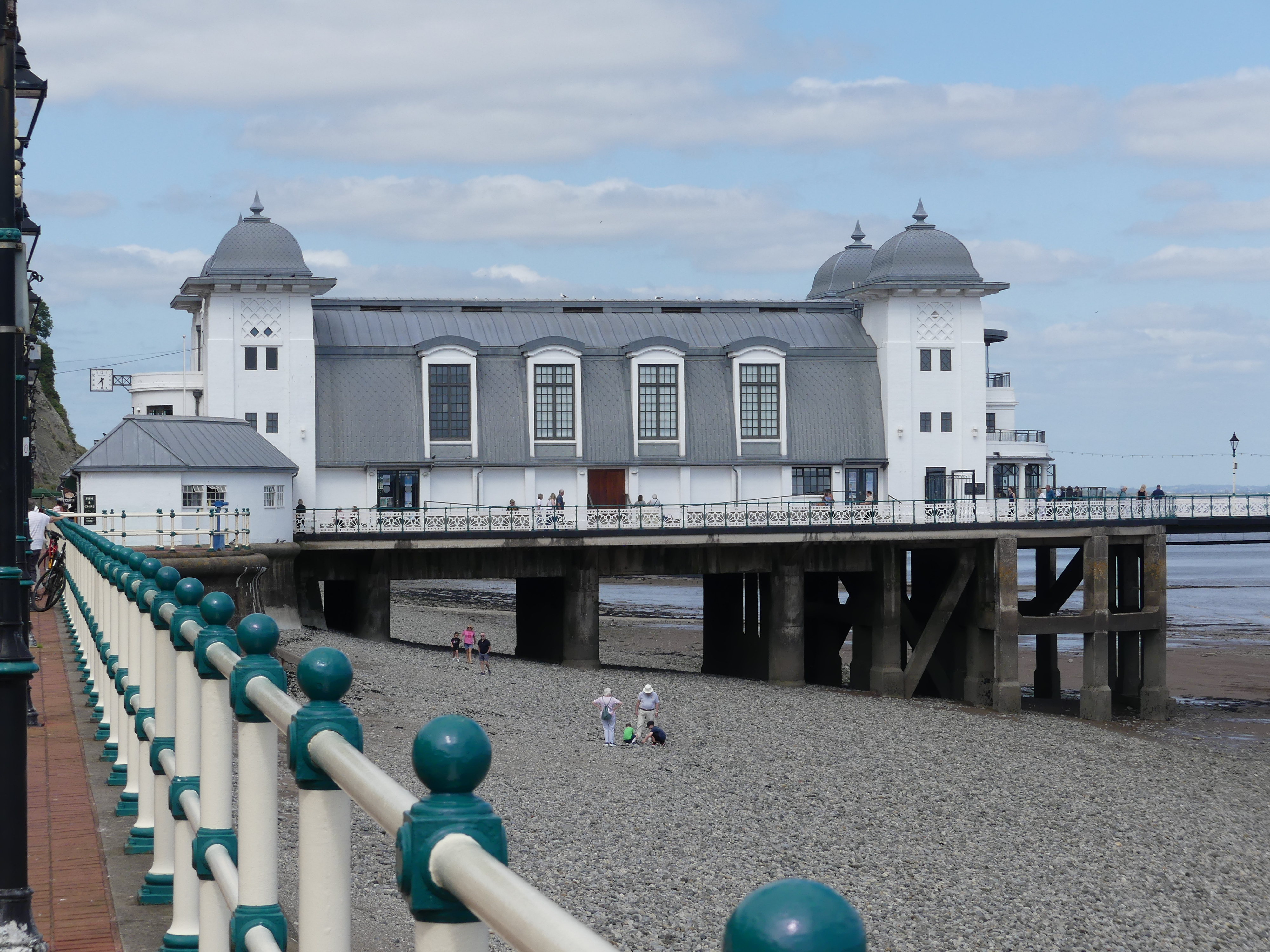
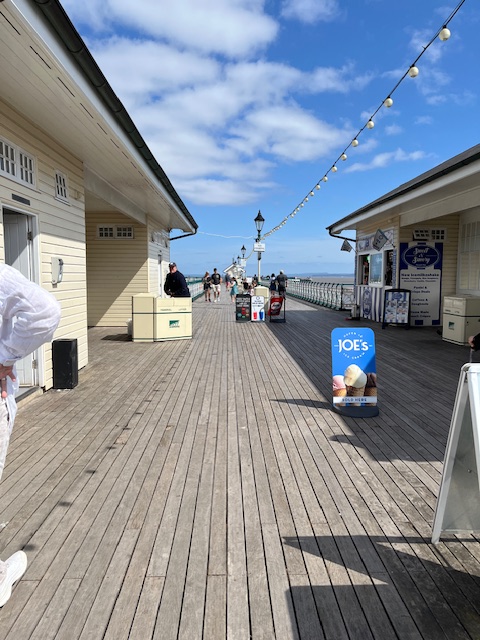
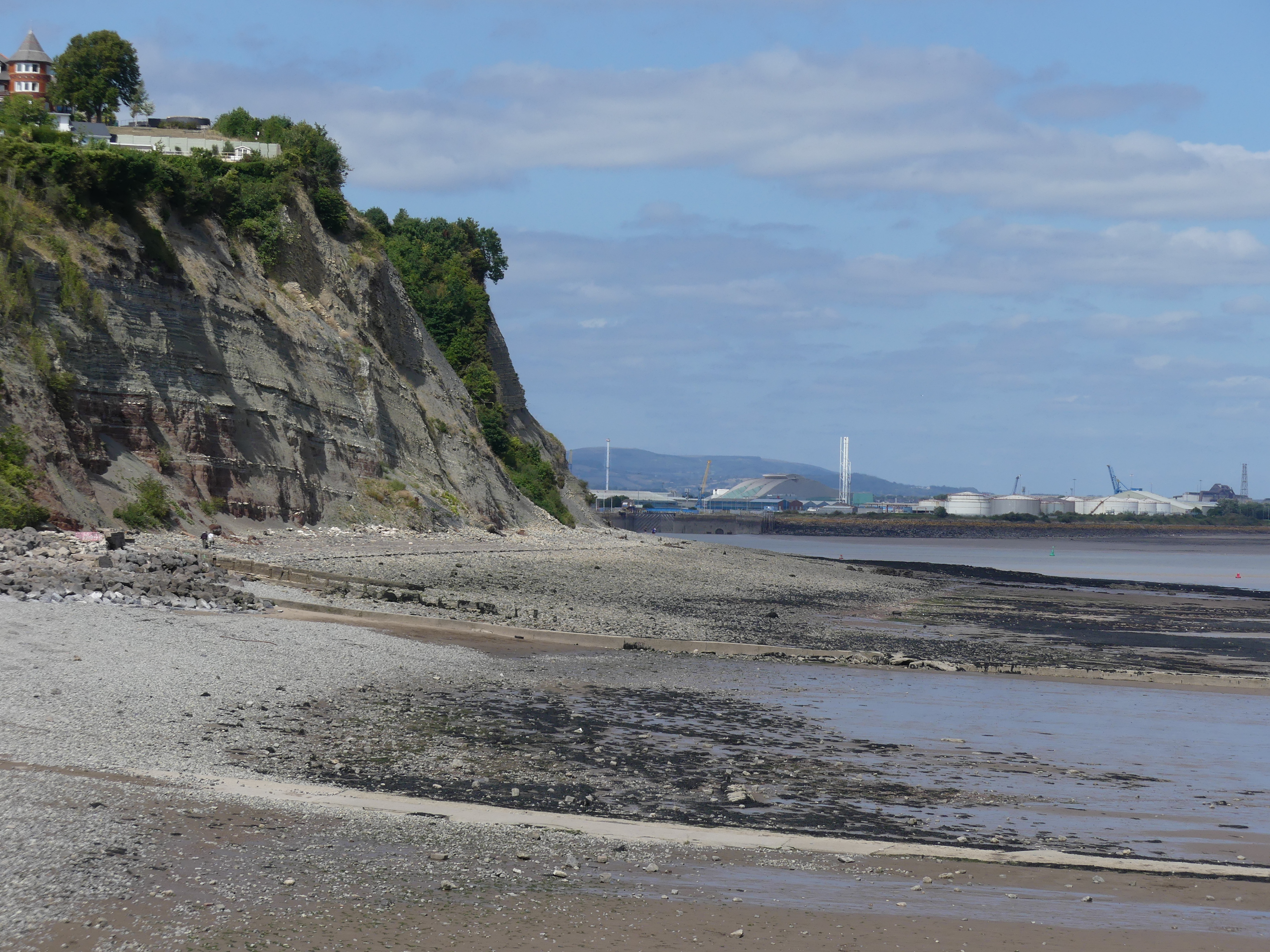
We decided to extend our trip to another beach side at Penarth to the east of the Bay. Lots more activity over here. Penarth is famous locally for its pier – the Brits love these piers. They also love oddly designed public baths. In the pictures below is what looks to be an odd house with a tower when in fact it is an odd public bath house – go figure. The beach is backed by some dramatic cliffs and steep walks up the hills. The pier is very long due to the shallow waters. You can see in my pictures a boat sitting in the boat channel and how far off the land they sit.

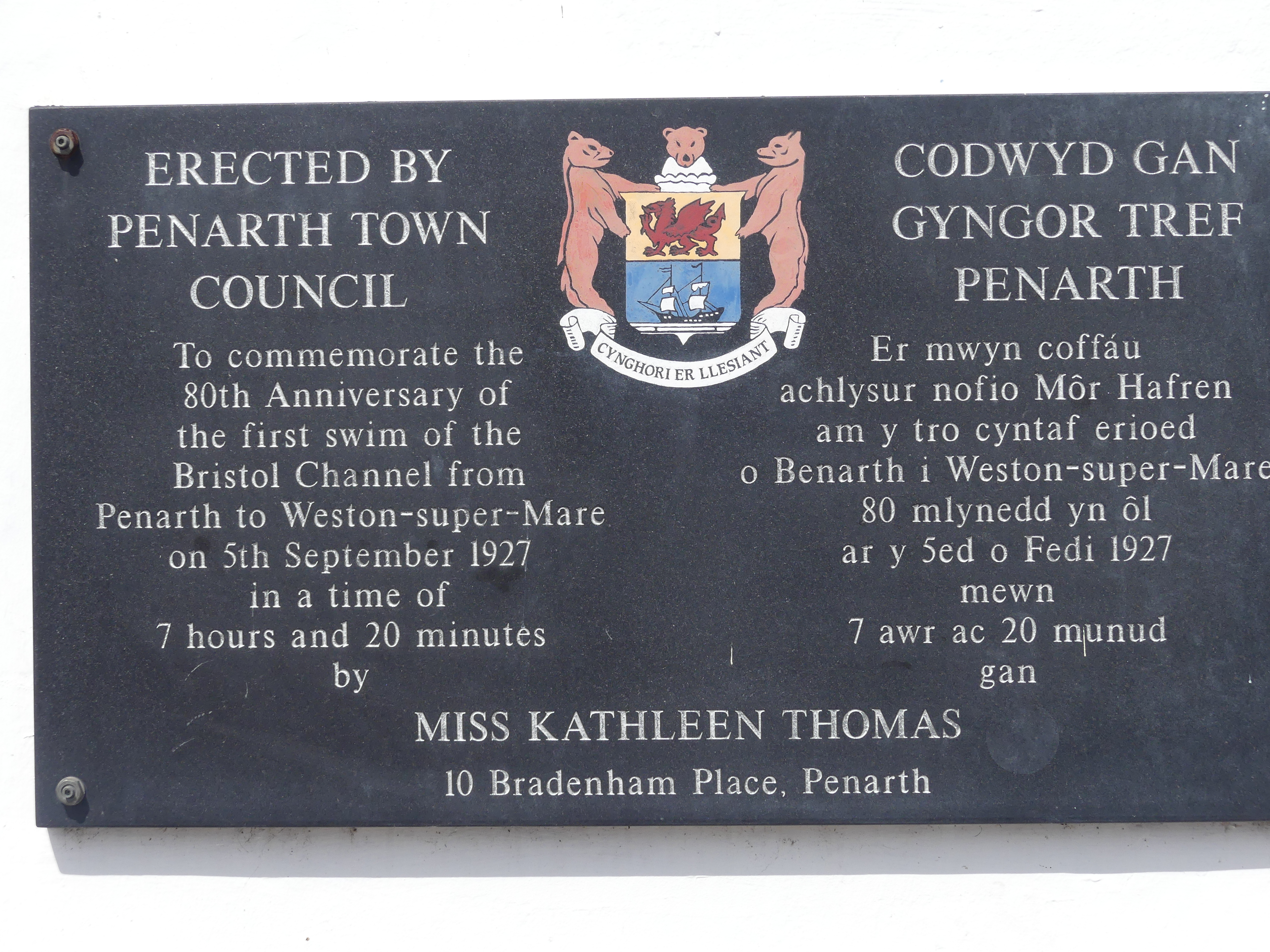
Emblazoned on the wall of the kiosk at the commencement of the pier is a memoriam to Miss Kathleen Thomas who braved the chill water in 1927 to swim from Penarth to Weston-Super-Mare on the English side of the Bristol Channel. The plaque suggests that no one else has beaten her time for the swim. I reckon its just too bloody cold.

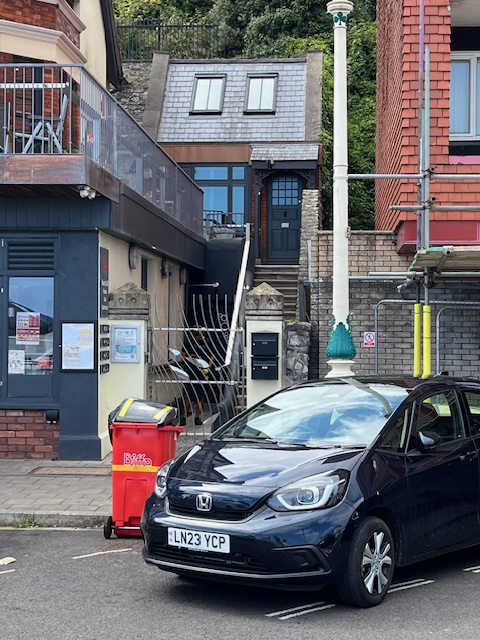
The ice cream shop beckoned. So, ice cream in hand we weaved back to our car parked some distance from the pier and ended our beach side tour for the day. As we walk to the car we pass a passage where sheltered in the back is small cottage taking advantage of the seaside views.

Tomorrow we will commence our castle hunting with a visit to Castell Coch and Caerphilly Castle. Watch for THE RETIREES GO AROUND THE WORLD – CARDIFF WALES – CASTELL COCH AND CAERPHILLY CASTLE.

THE RETIREES GO AROUND THE WORLD – LONDON HEATHROW UK to IPSWICH & SUTTON HOO UK

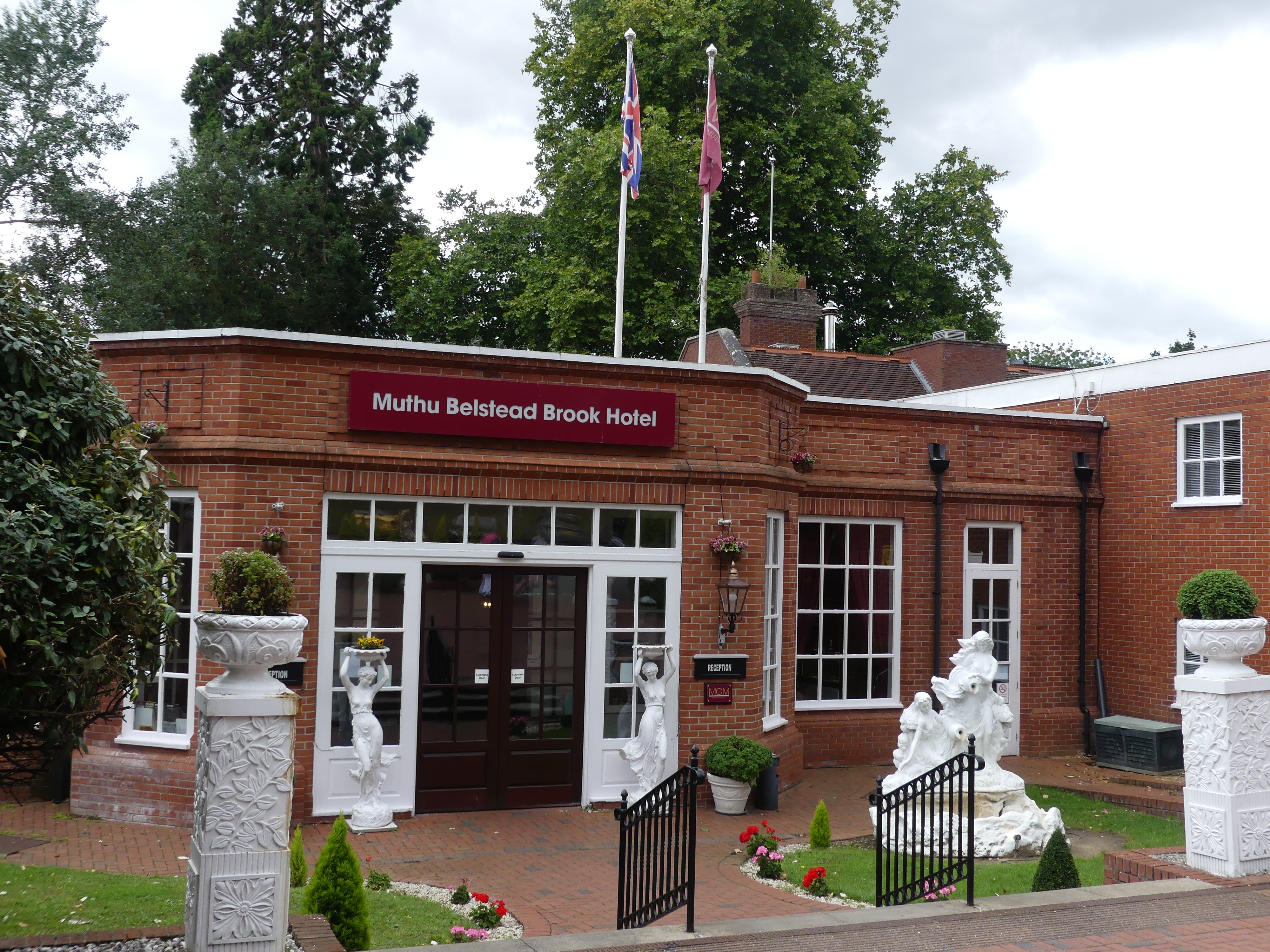
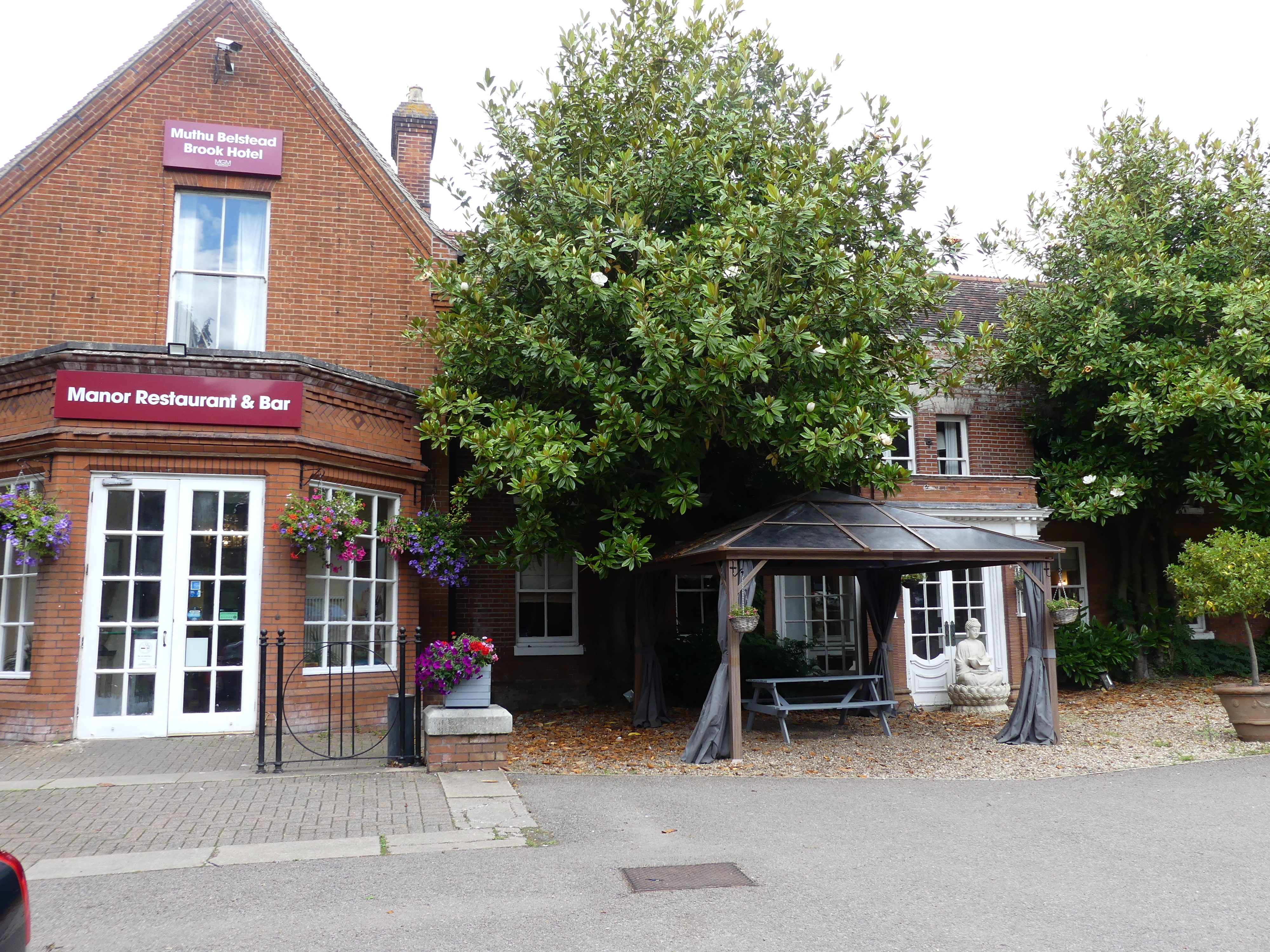
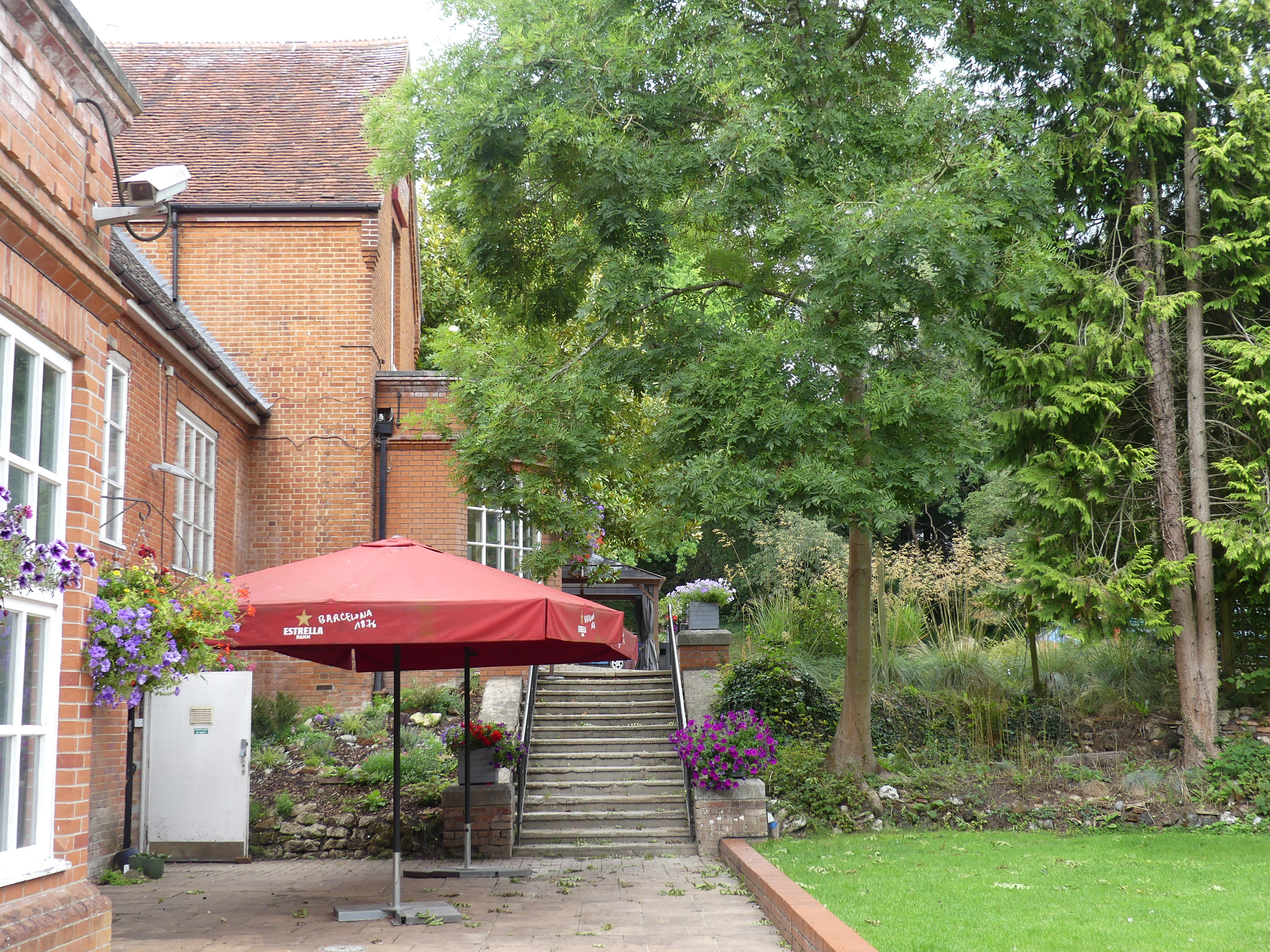
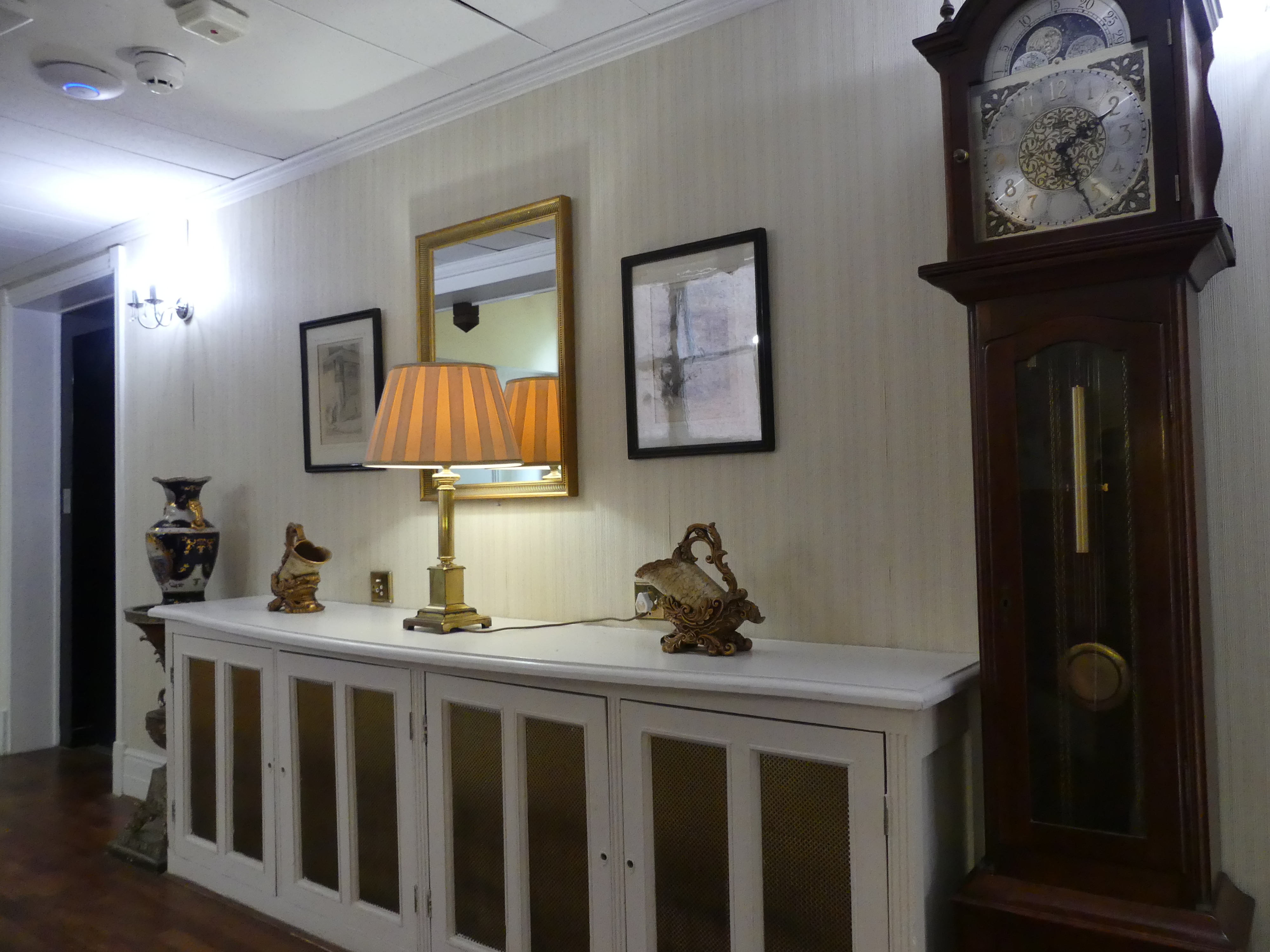
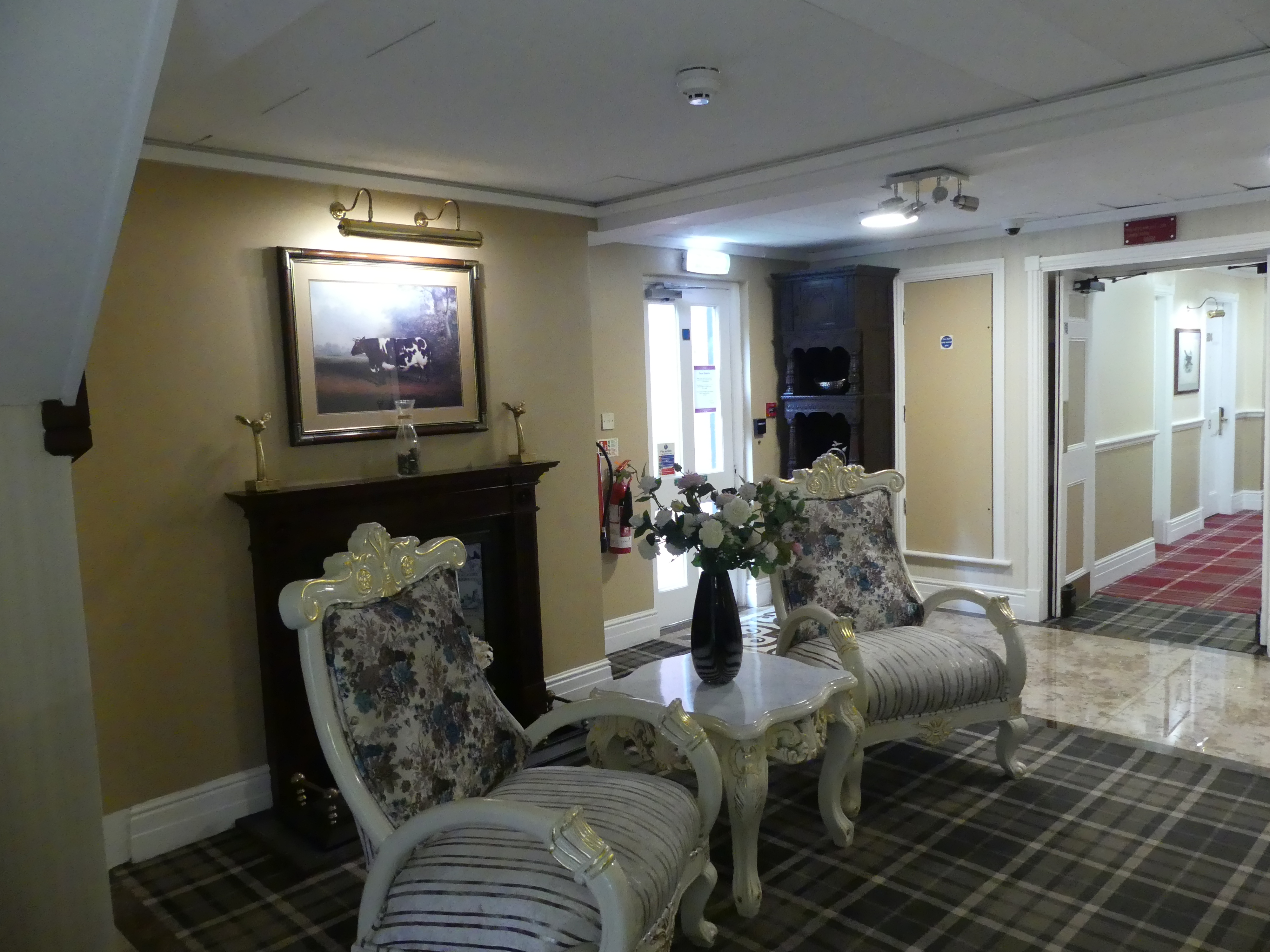
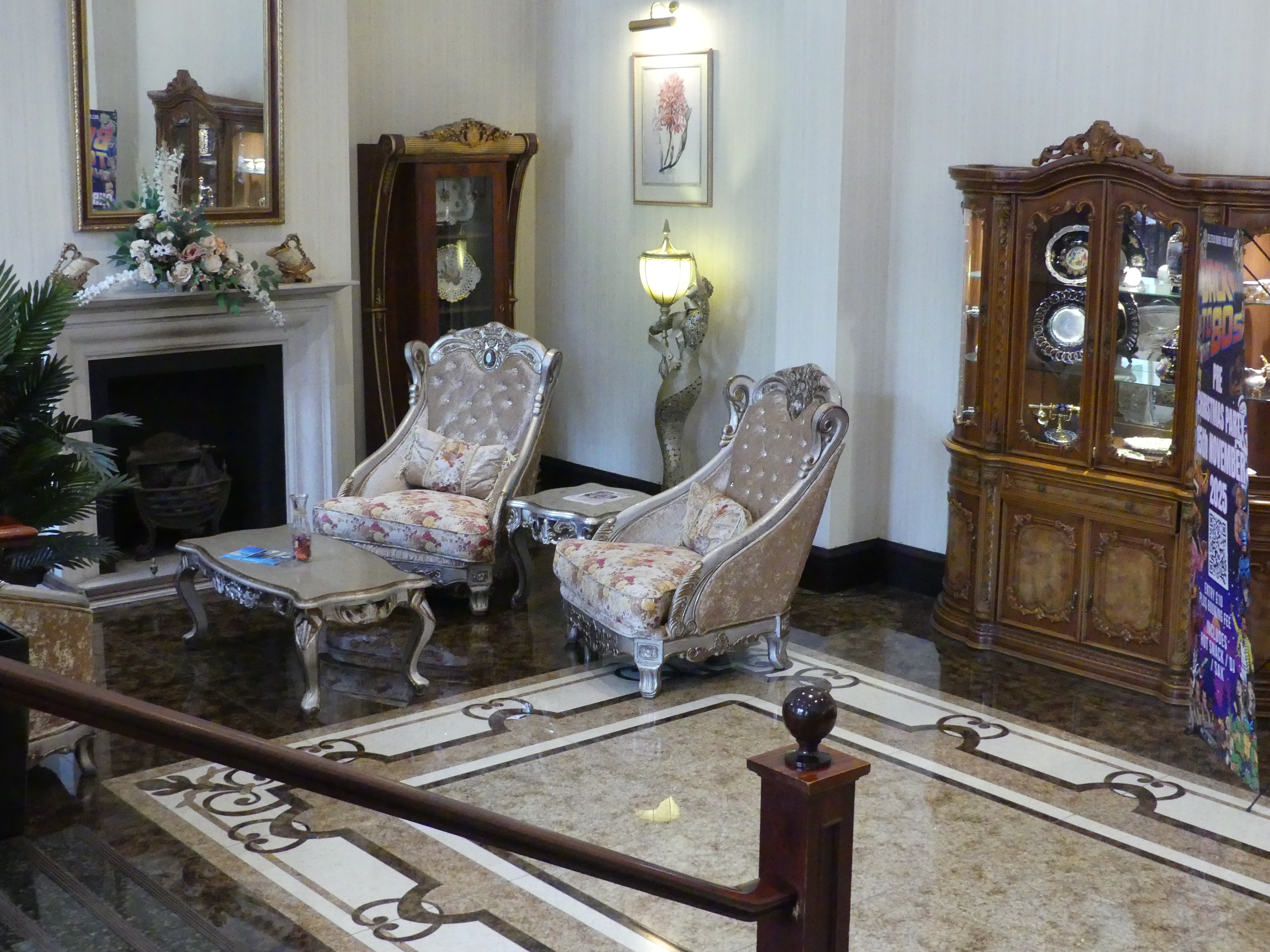
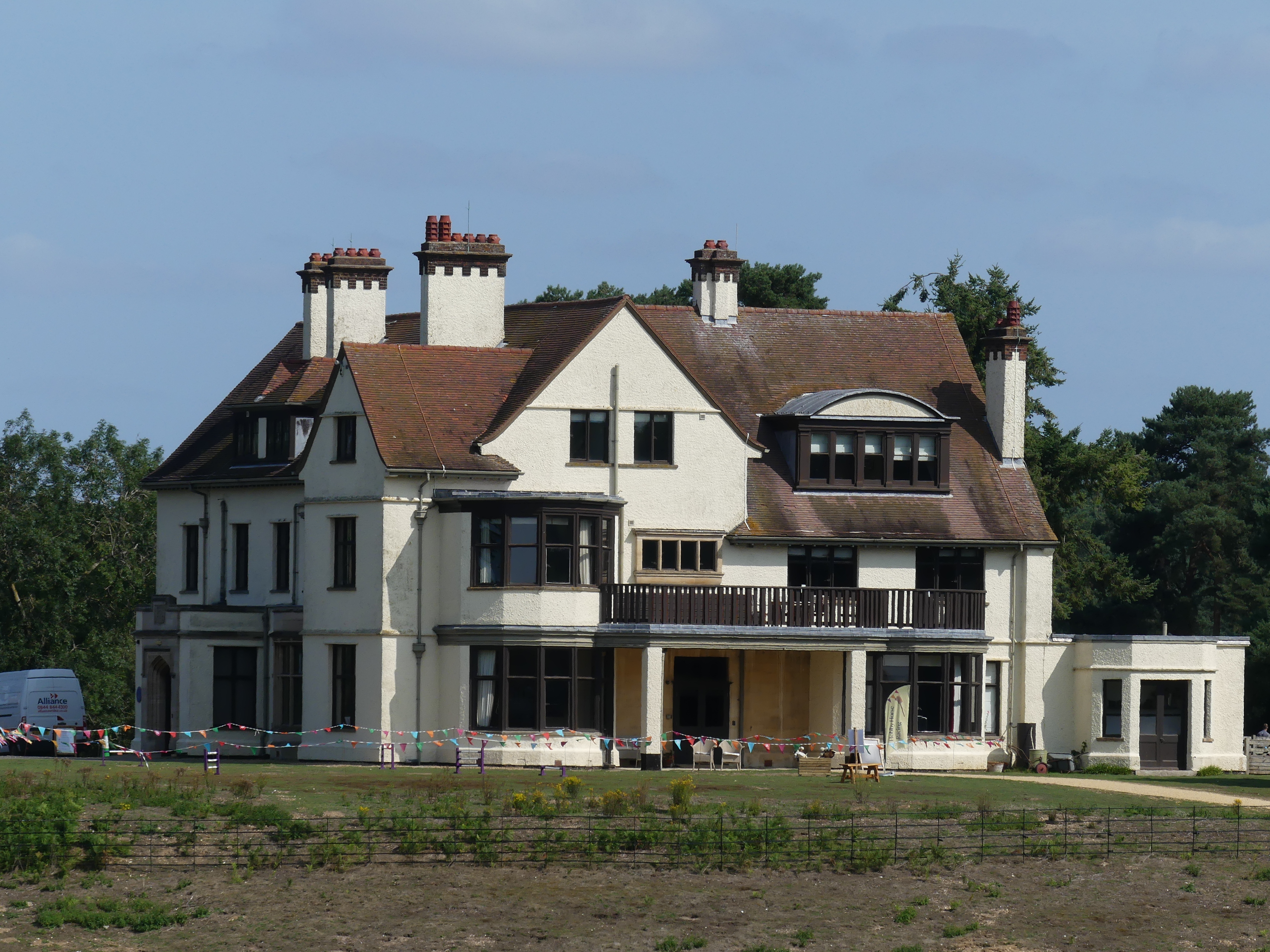
We left the Best Western Chicago and I had forgotten I took this picture of our accommodation for our overnight stay in Chicago for comparison with our Hotel in Ipswich UK. Our accommodation in Ipswich was actually outside of Ipswich in a suburb called Pinewood nestled on a brook surrounded by a suburban setting. Called the Muthu Belstead Brook Hotel it presented as a restored manor with appropriate furniture and appeared very comfortable, but we had lost 1 night of our booking through the American Airline stuff ups. The external appearance reminded me of a health resort, but the internal furniture appeared to be styled in Victorian/Edwardian style.

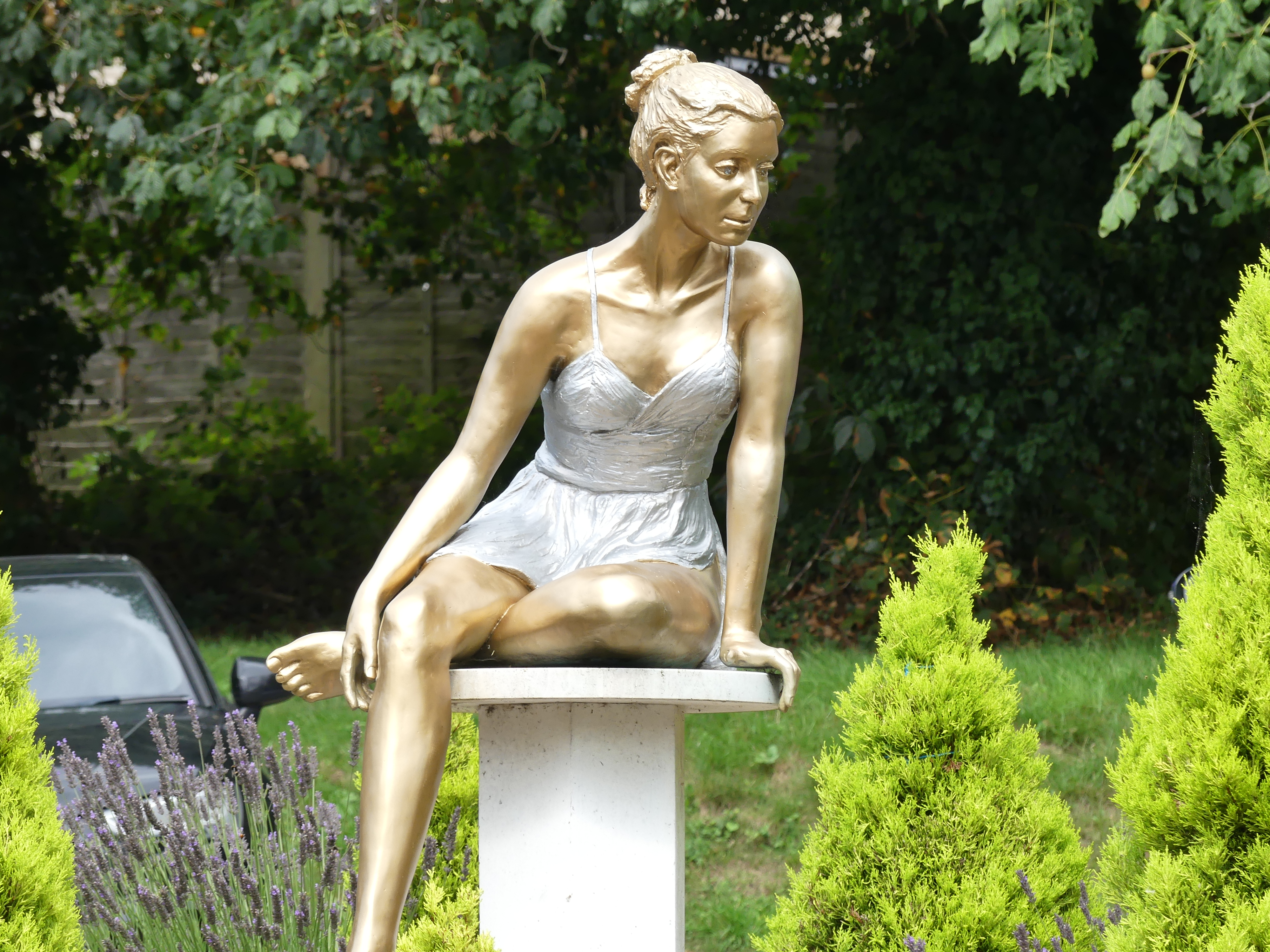
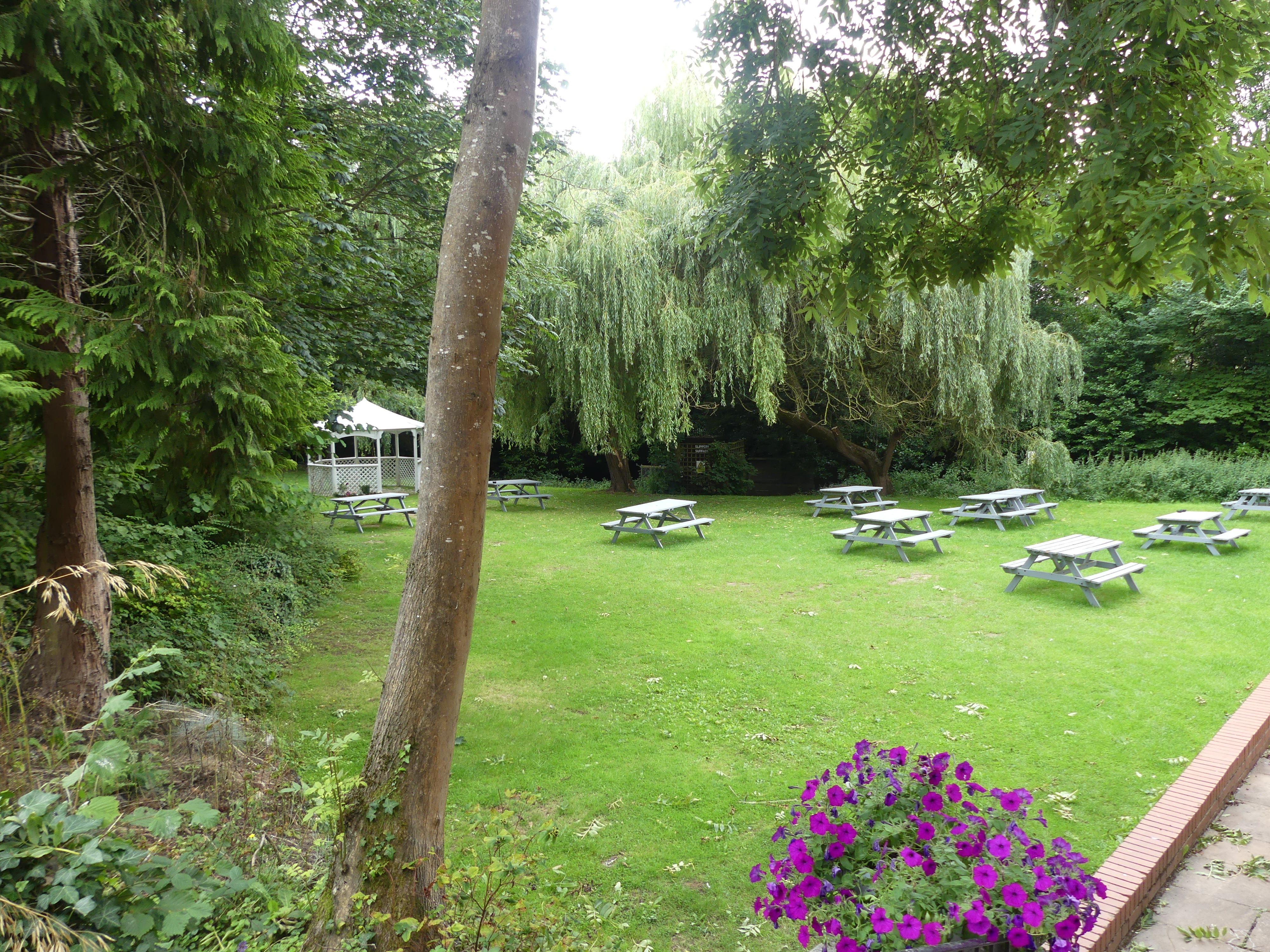
After checking in we walked around the property and booked dinner in the main restaurant where we enjoyed drinks before dinner then pasta for me and pork belly for Kerry. I had my appetite for a change and emptied my plate. Kerry was unable to finish her dinner. Kerry had been driving for the most part of the day and we were both tired and needed a good night’s rest. Before bed we organised our suitcases for the following morning. A quick walk around at the setting for the hotel, a visit by an inquisitive squirrel then off to bed – tomorrow Sutton Hoo.

We were early to rise ate a hearty breakfast then drove to Sutton Hoo. We had lost a whole day through airline stuff ups so there was some urgency about getting to Sutton Hoo and then to Cardiff.

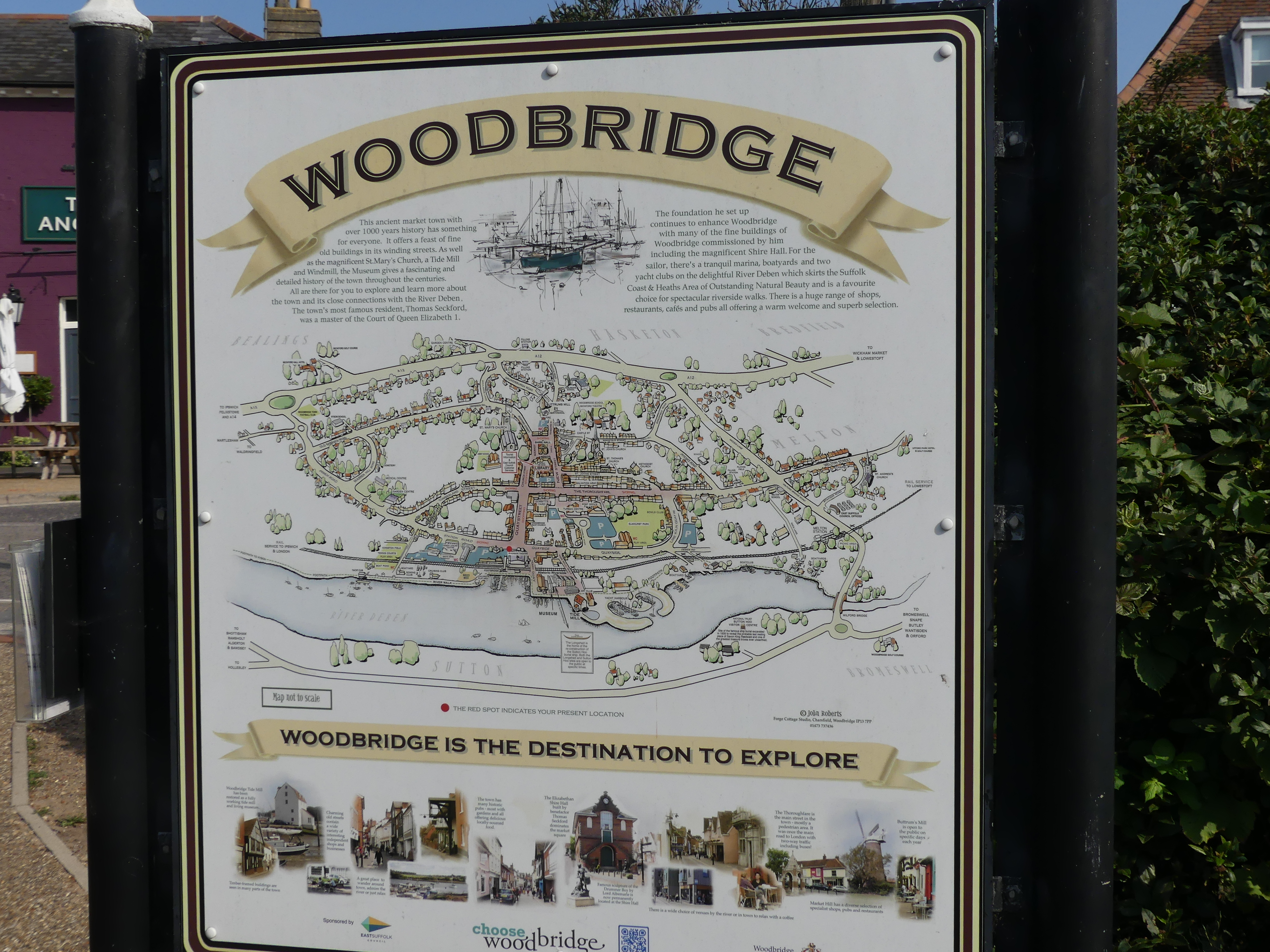
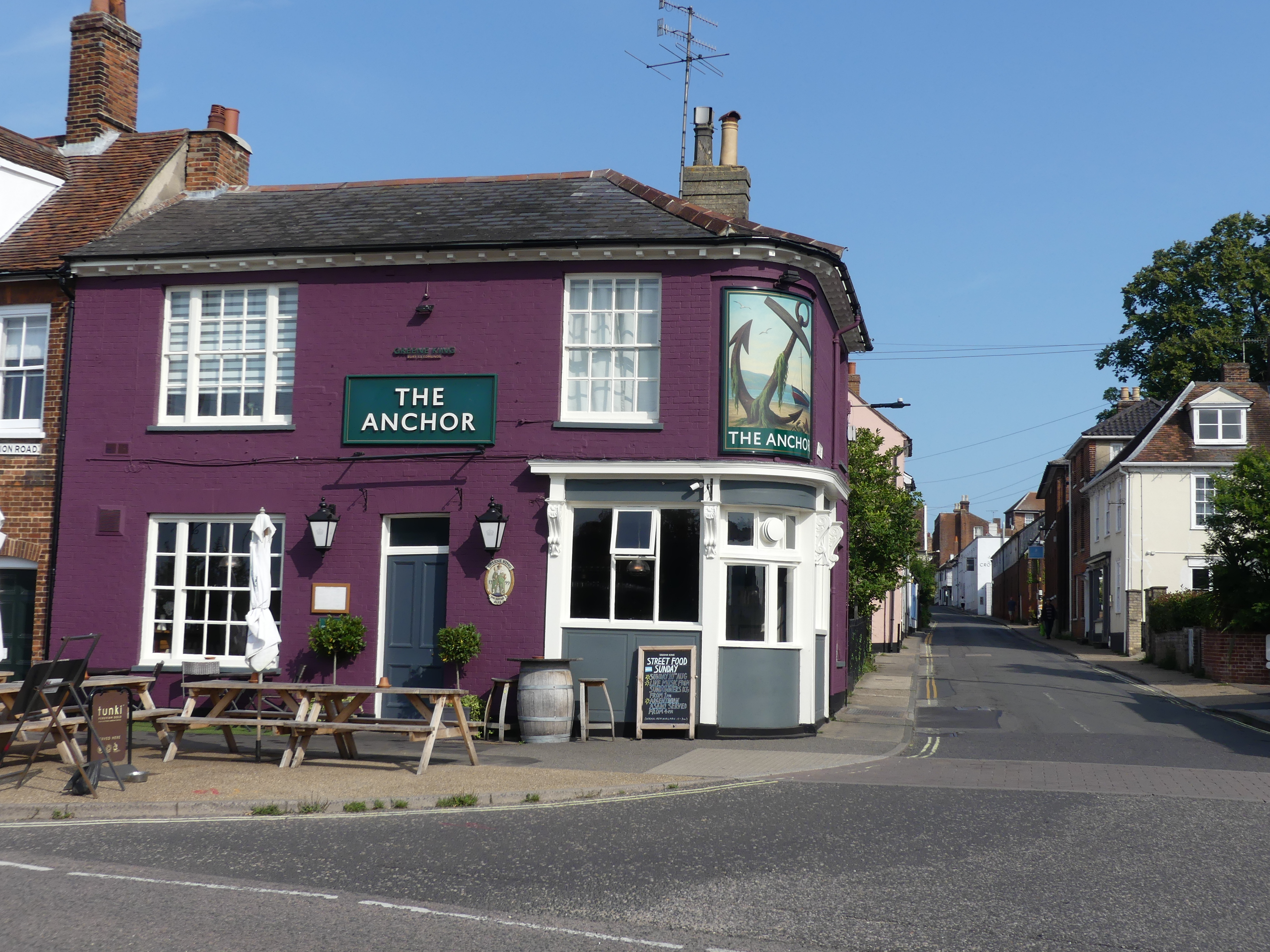
Where we had been in suburbia, Sutton Hoo was in farmland. We turned up at the front gate at 8.00 am and it was closed. We could see others entering by a side or staff entrance so we worked out we would have to come back. What to do – we decided to go back to Woodbridge the closest village and have a look around and we are glad we did. Narrow winding streets as usual but they had given the entrance streets including the High St some thought and made each one way reducing the road blockage by removing tightly parked cars and only permitting parking by permit holders. We had seen advertising that a restored water mill could be visited near the marina on the river. However, we were too early by a month, so we decided on a coffee stop. The photos following commencing with the Red Lion Hotel, followed by the rail station, a local resident going to the railway station (he volunteered for a photo), a sign board about the village history, the Anchor Hotel in bright colours, the marina, and a sign board about the Tide Mill (an early example of green technology).

Whilst enjoying coffee in the sun a local woman sitting at the opposite table had started talking to Kerry telling her about a local tradesman reconstructing an Anglo-Saxon long boat by hand. It was a tossup – the long boat or Sutton Hoo – Sutton Hoo won.

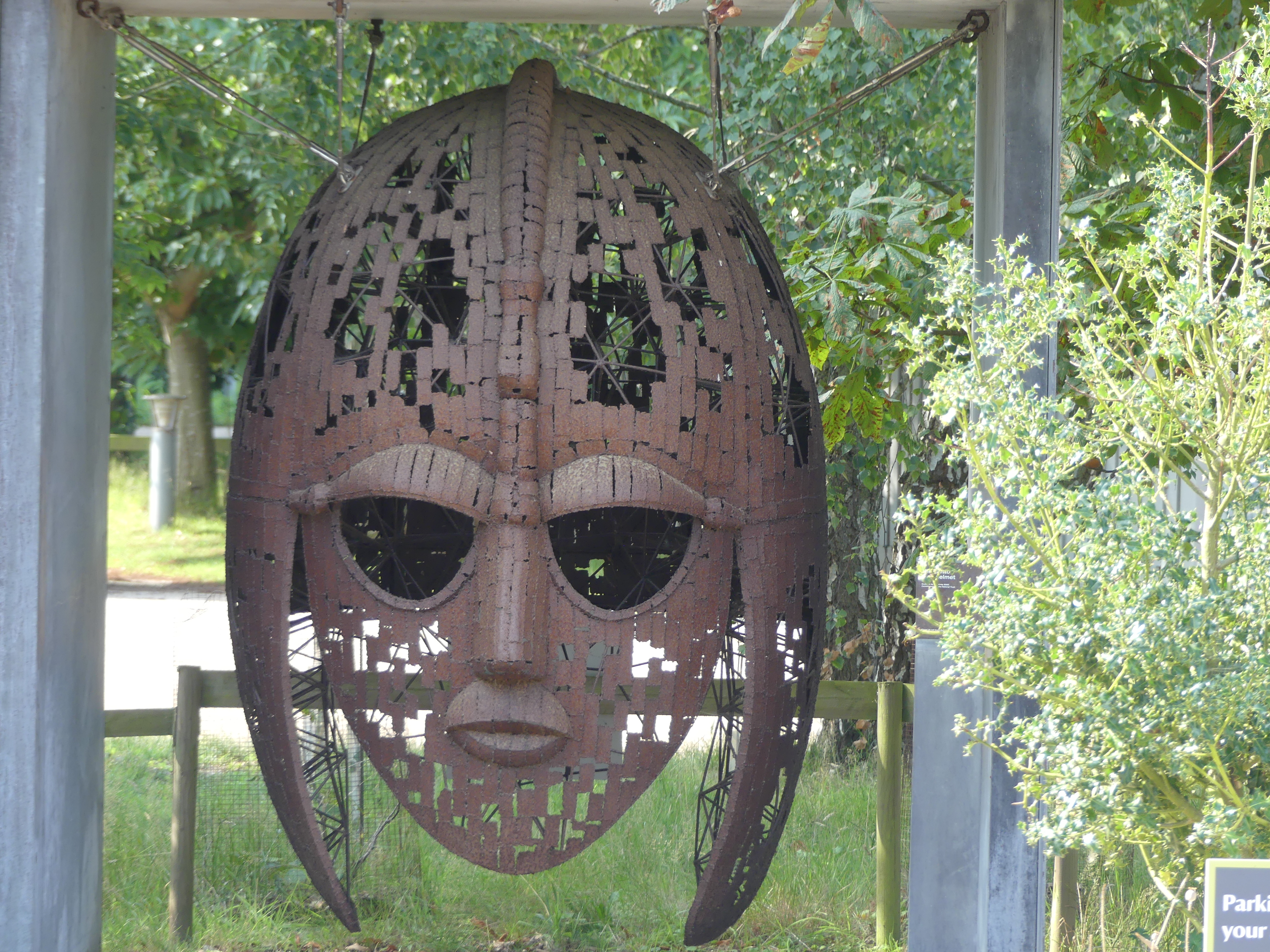
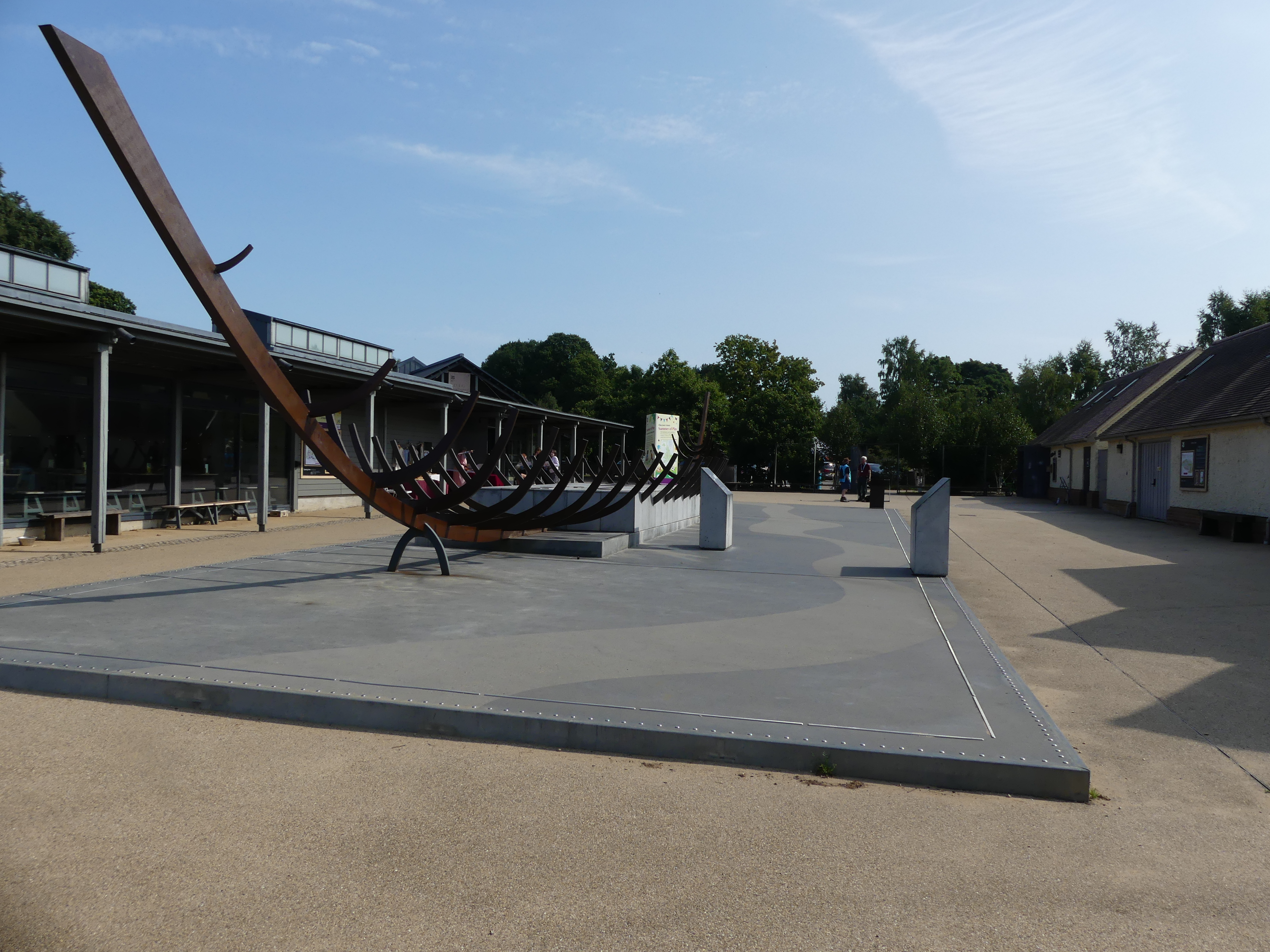
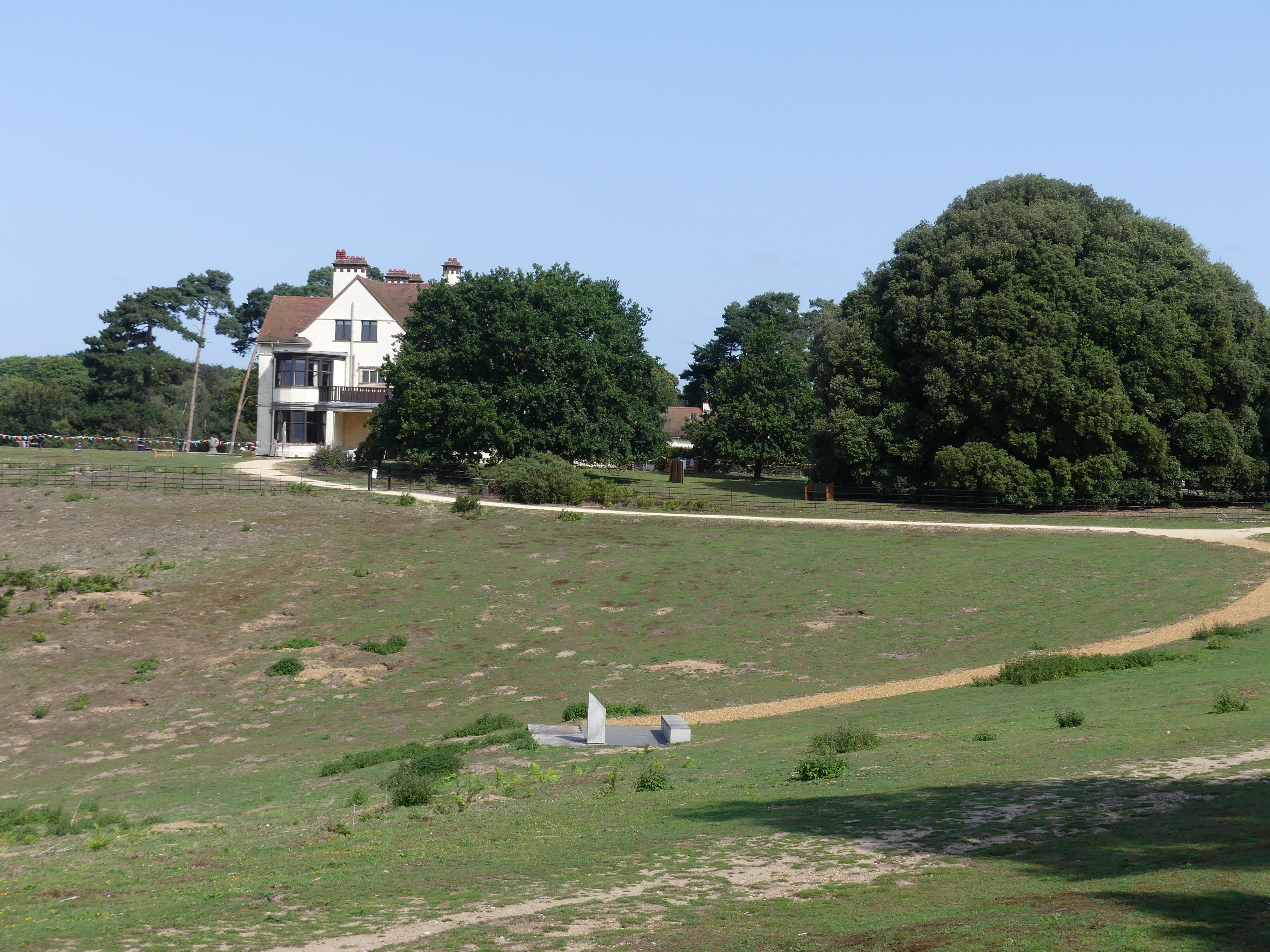
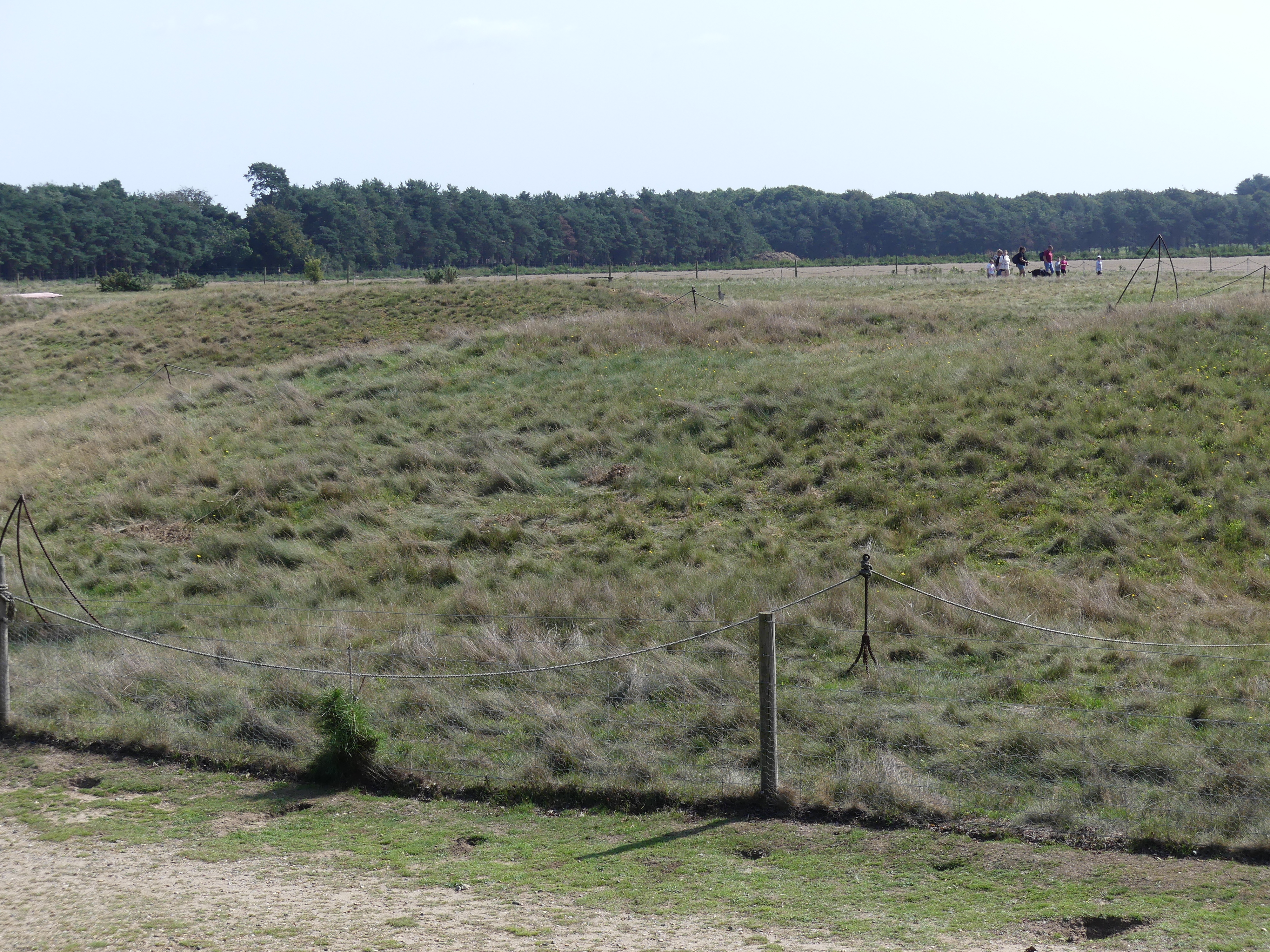
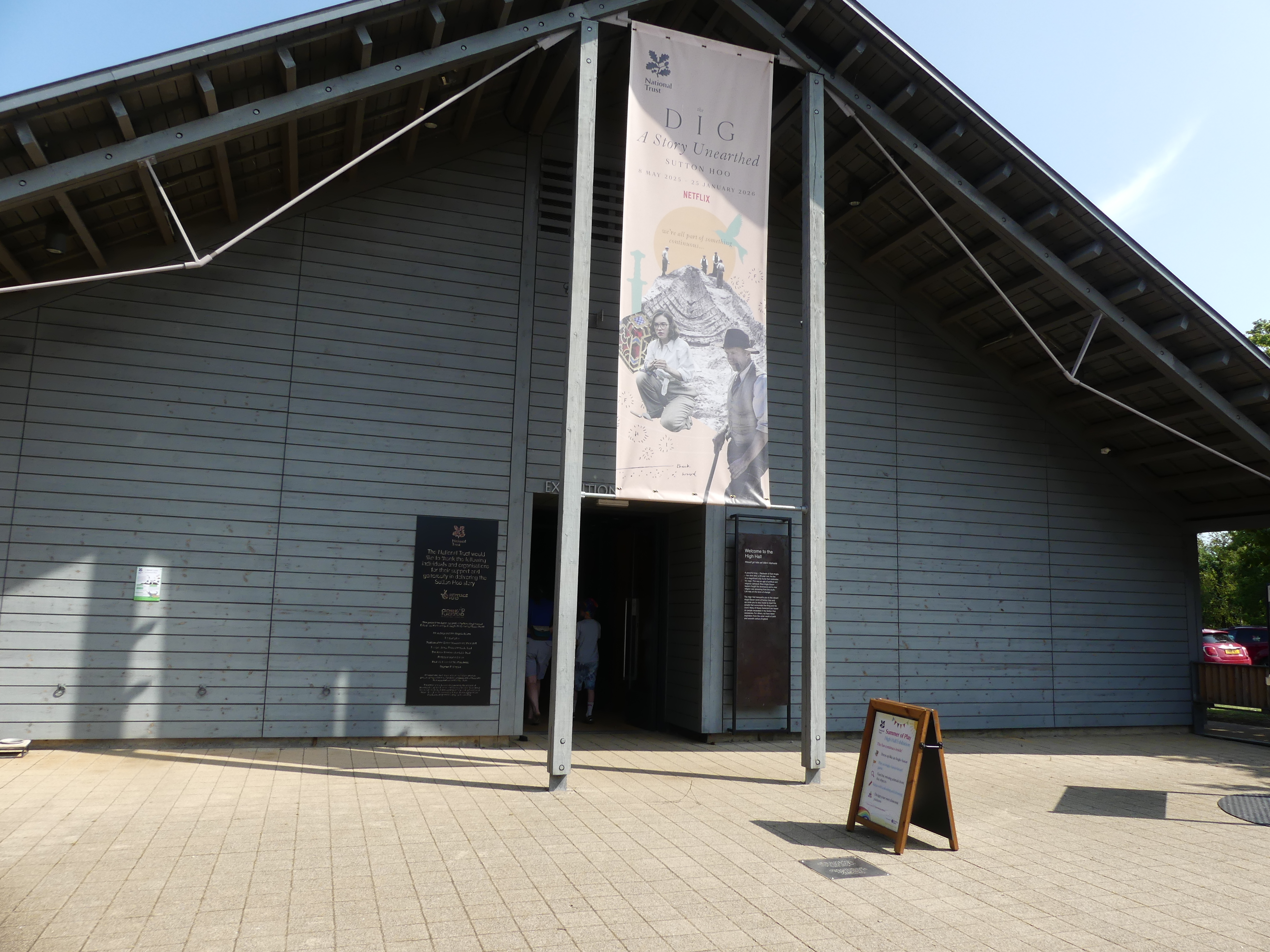
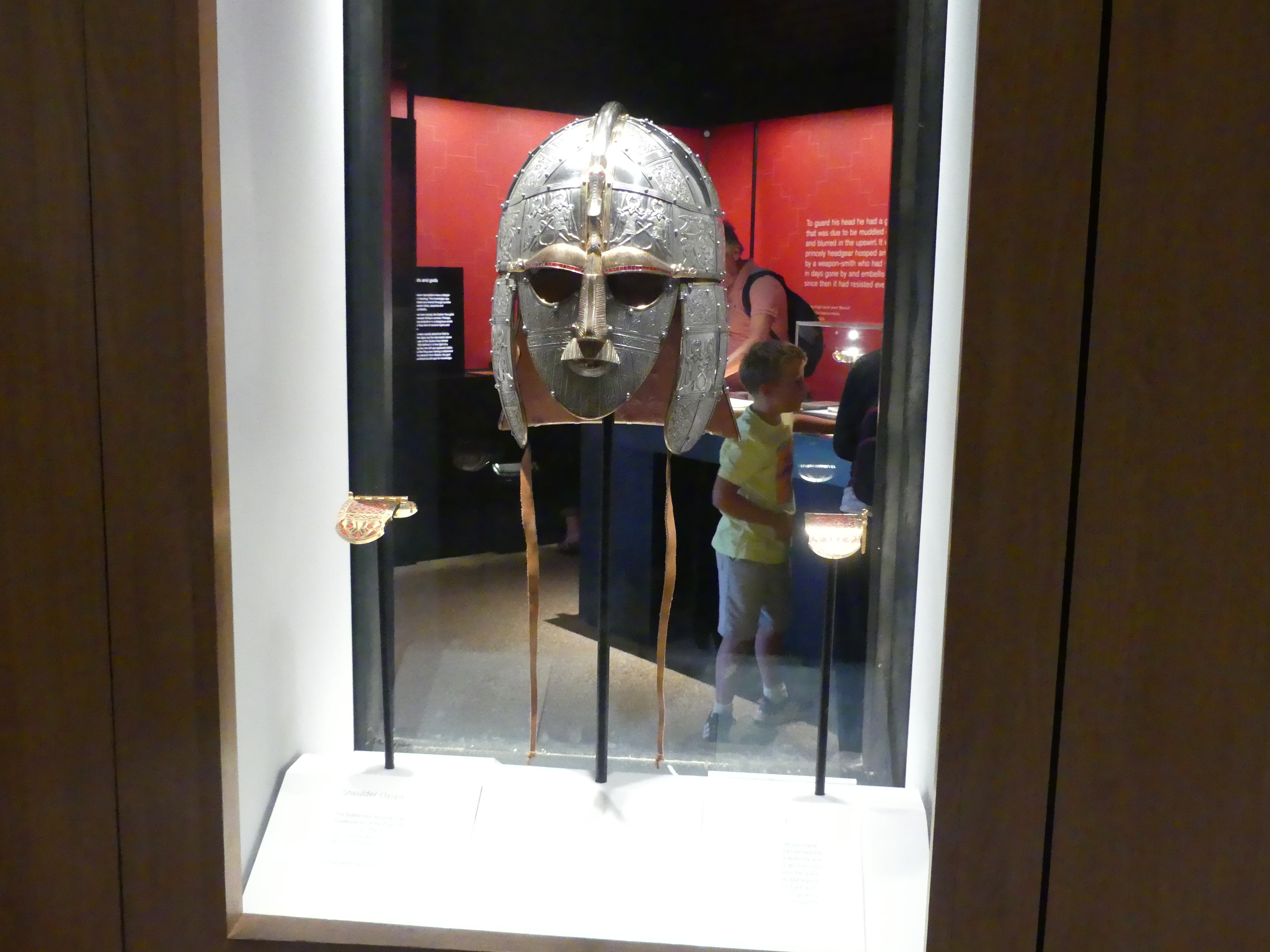
Arriving for the 2nd time a few minutes after 10.00 am we found that there was already a dozen or more families parking up and headed for the entrance. We joined the rush and were greeted by an enlarged recreation of the dead Kings war bonnet now widely recognised as the symbol for Sutton Hoo. The site and displays are controlled by Britain’s National Trust and most of everyone else were Trust members returning to the site. The ticket office is in one of the restored farm buildings and encircling it are the main exhibition hall, the gift shop and the cafeteria. In the fore court is a reconstruction of the Kings war boat based on the impression of the boat left in the mud of the burial mounds (the boat being made of timber it had disintegrated some time ago leaving only its impression). Our time was divided into visiting all exhibits in 2 hours, so we made our way to the burial mounds about 10 minutes’ walk away. Following a dirt path there are a few exhibits to inspect on the way to the burial mounds, one of which was this up turned bow of a boat and “throne” within it. Trekking through the field gave me a clear view of the farmhouse which we would visit before leaving. There is a viewing tower (4 stories high with no lift) overlooking the burial mounds which you can no longer inspect – they are all enclosed away from prying fingers as there are still some to be opened and things to find. Information stations lead the visitor through the exhibits.

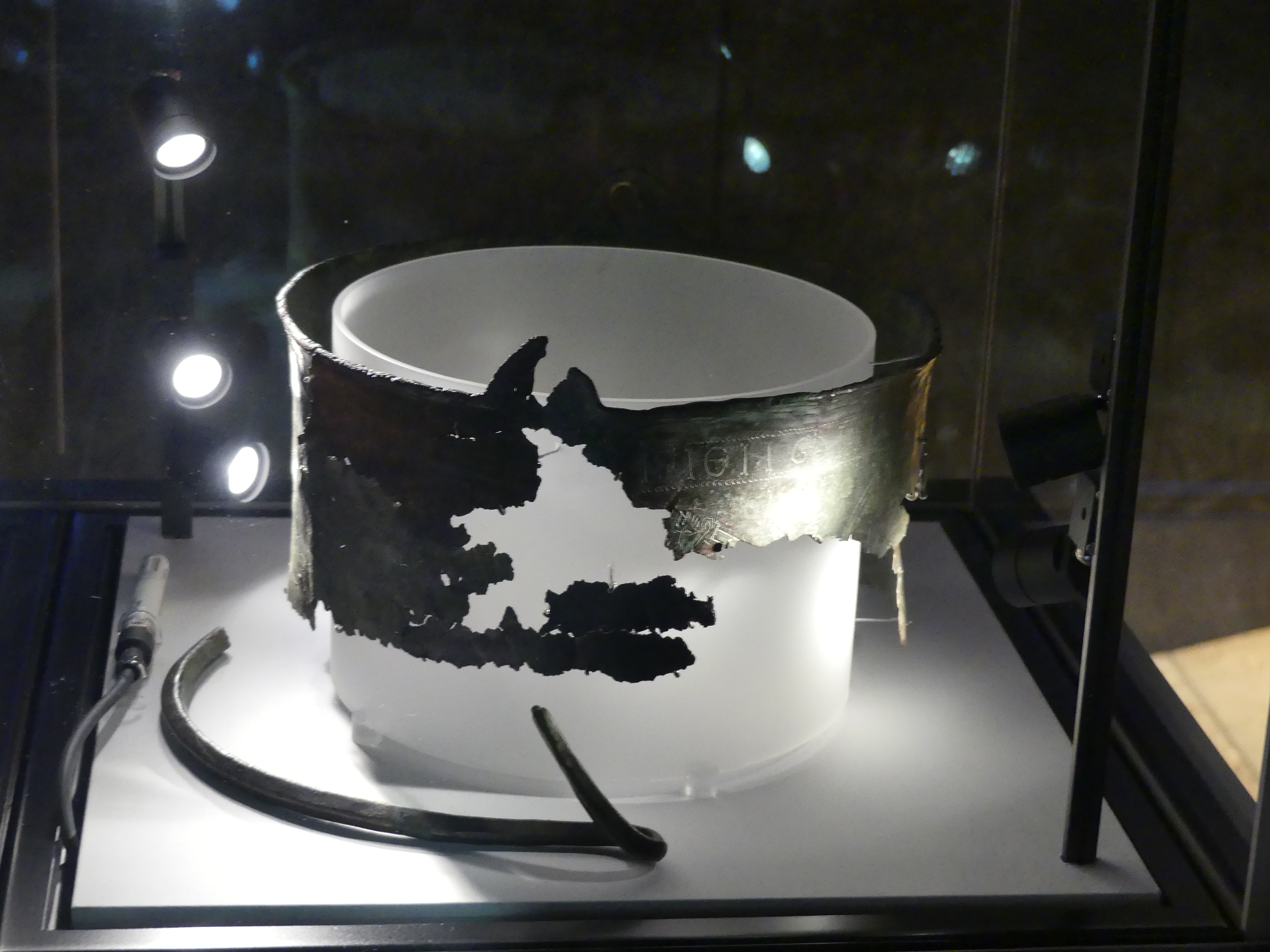
The viewing of the mounds left us about 1 and 1/2 hours to view the exhibition hall and the house. I was feeling some disappointment by this time. I had hoped to have access to the burial chamber. All the mounds are fenced off and the ones that have been opened have been resealed. So, when we got to the exhibition hall the small amount of the contents discovered has been moved to the British Museum and some mint stuff was available on loan. For example, the disintegrating pail shown in the photos below, whilst other imitation relics were on display. My photos follow.

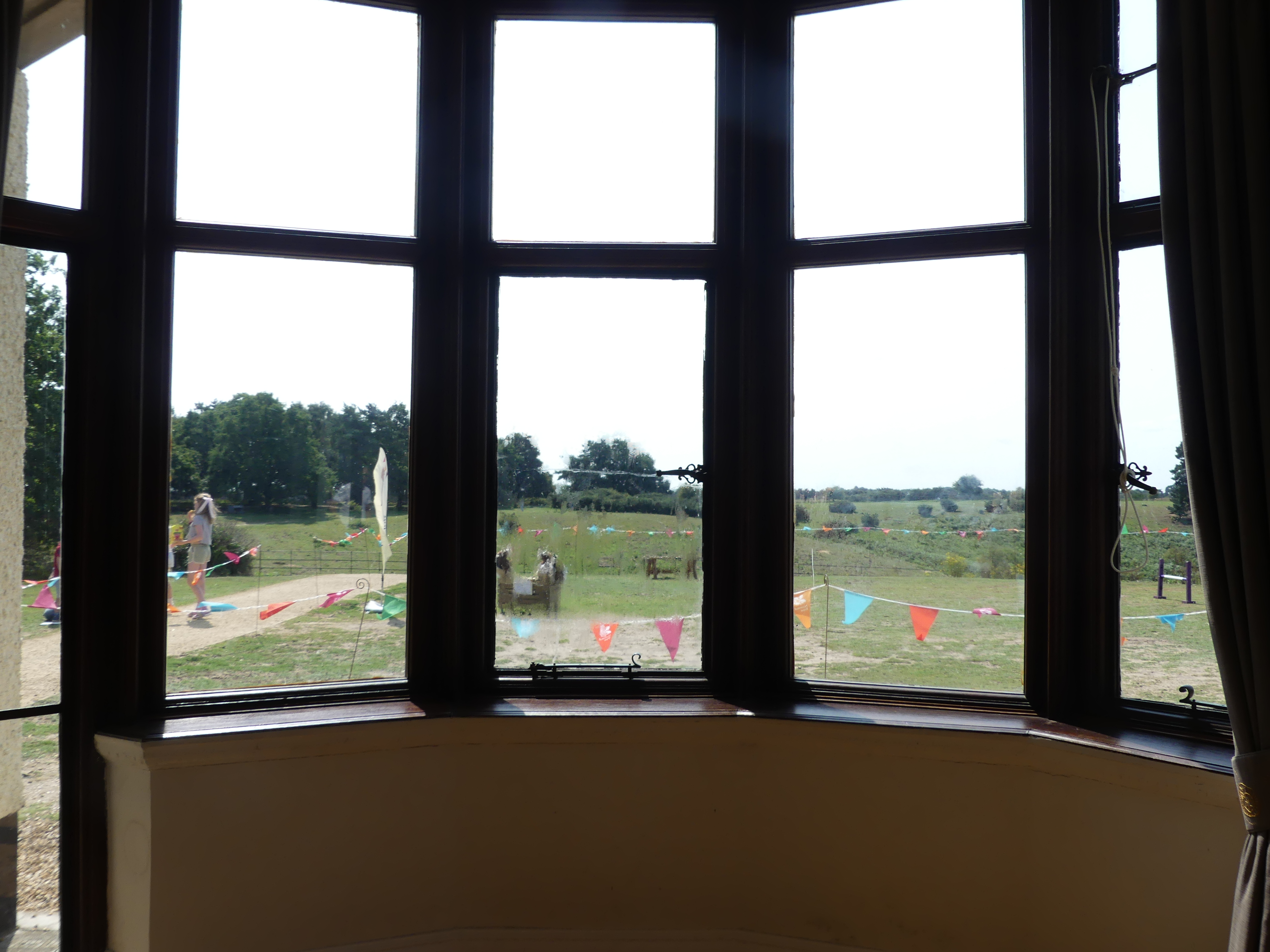
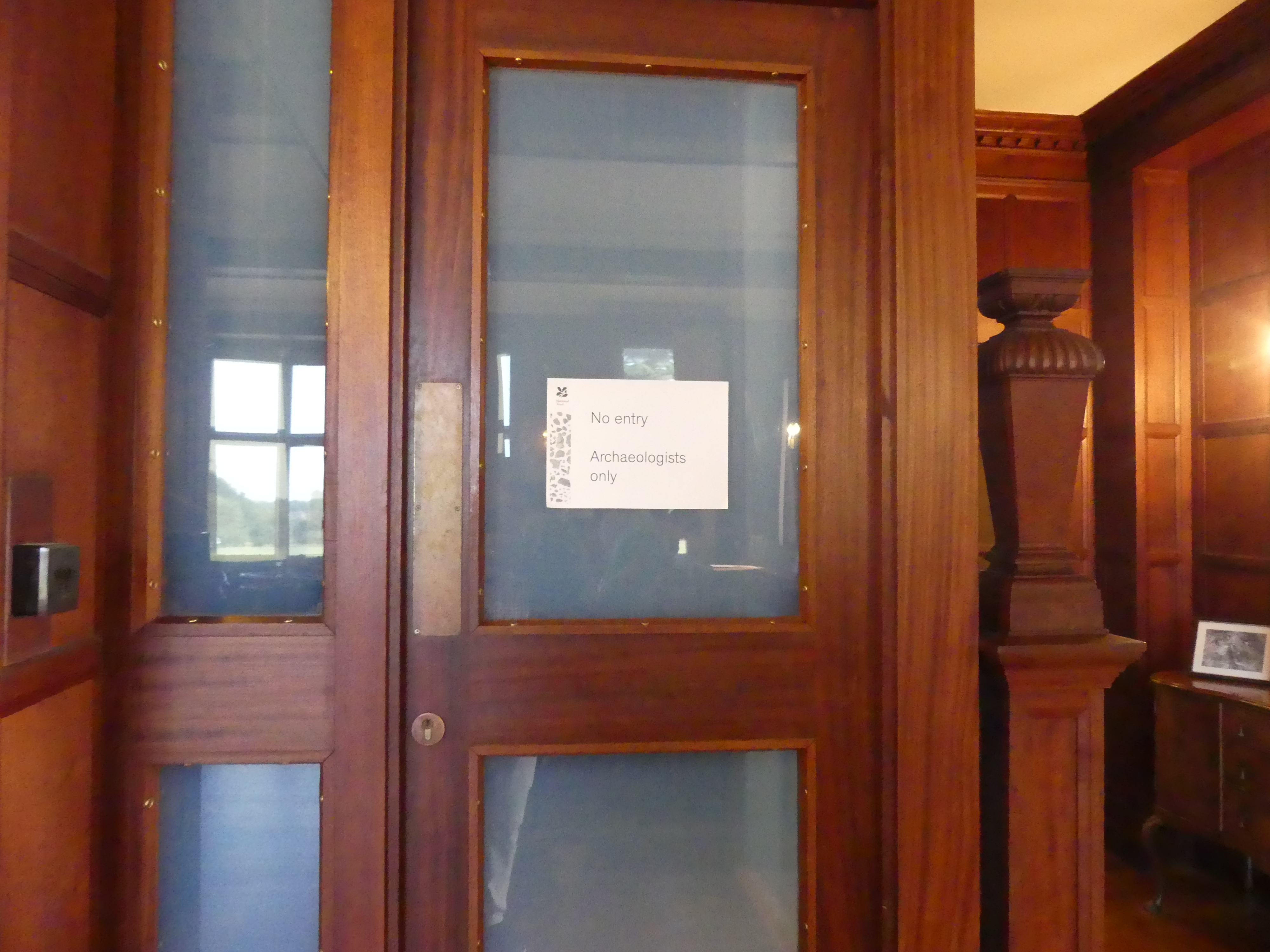
I visited the house owned by Mr & Mrs Pretty, who were the owners when local gardener and amateur archaeologist Basil Brown started unearthing the most important find of 6th to 7th century Anglo-Saxon burial practices. It is filled with artifacts of the time of excavation, newspaper articles photographs and include working rooms for the Trust workers and archaeologists working on the site. A movie of the discovery and excavation has been made, and I believe it is still available, and it is a most interesting story.

Our time was up as we must be in Cardiff tonight. Keep an eye open for my further blogs when THE RETIREES GO AROUND THE WORLD – SUTTON HOO UK to CARDIFF WALES UK.

“THE RETIREES GO AROUND THE WORLD – “TOKYO TO ISHIGAKI JAPAN, HUALIEN TAIWAN, PORT KEELUNG & TAIPEI TAWAIN, & PORT NAGASAKI JAPAN”

Day 6 Ishigaki, Ishigaki Island

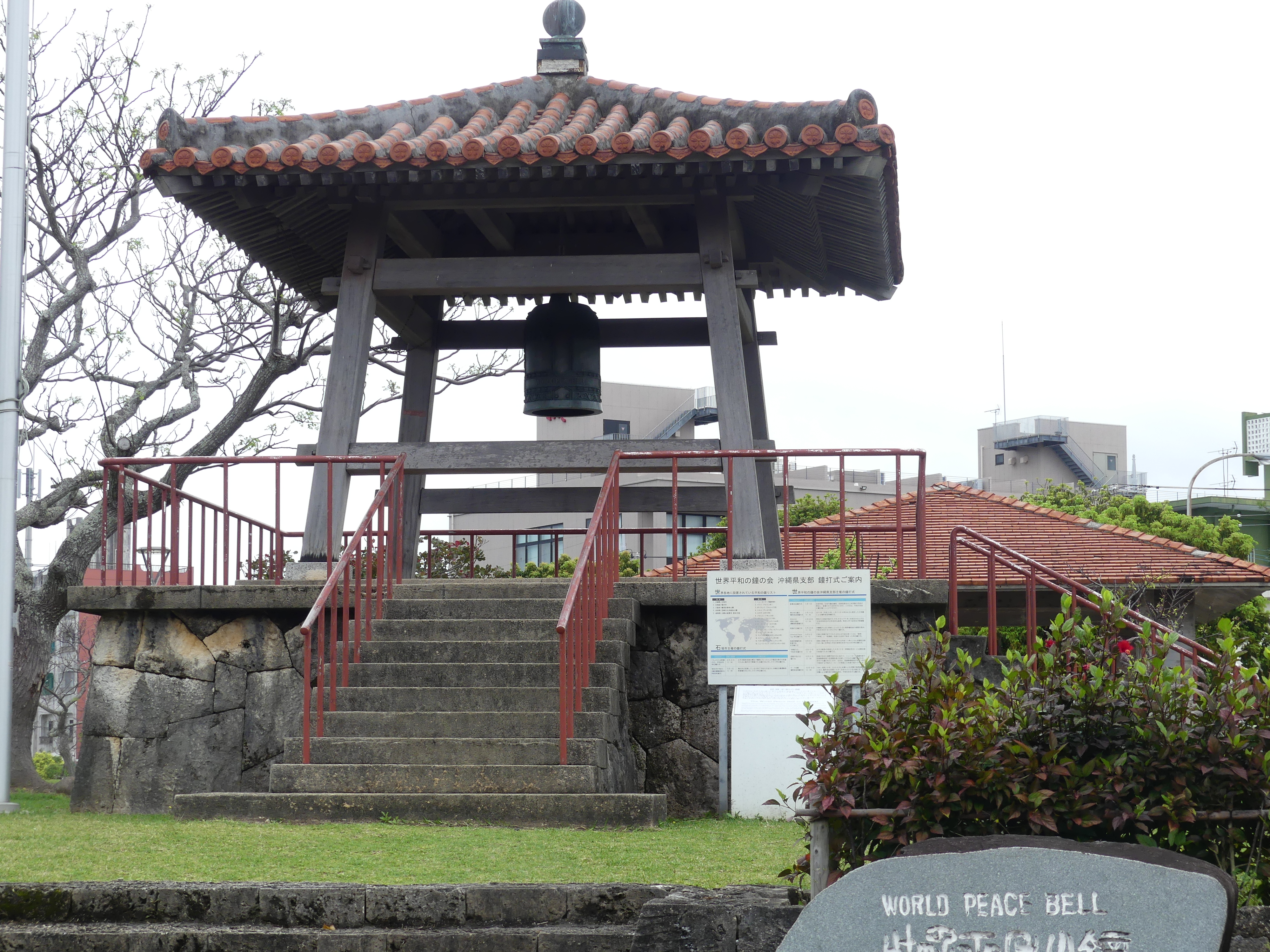
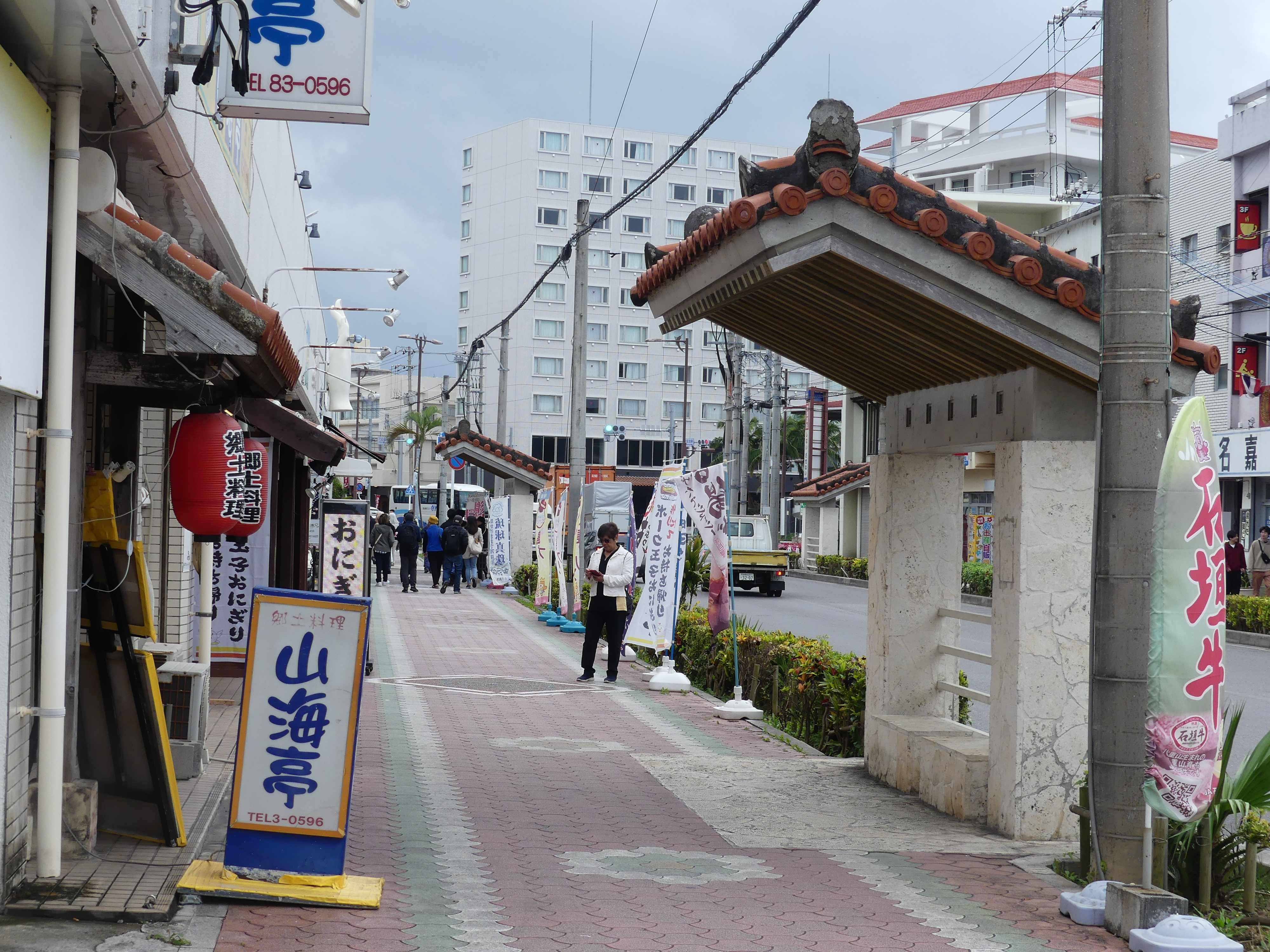
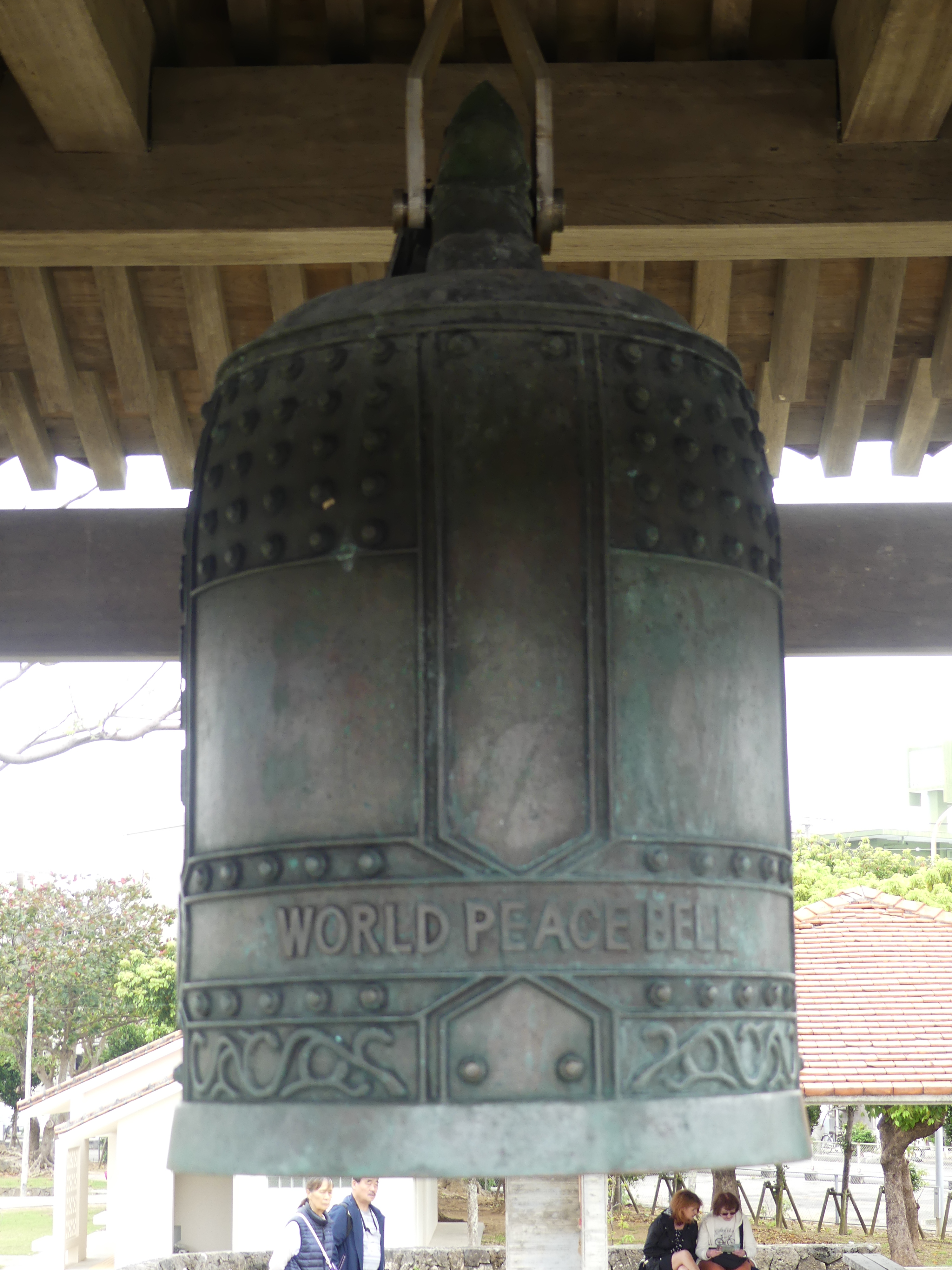
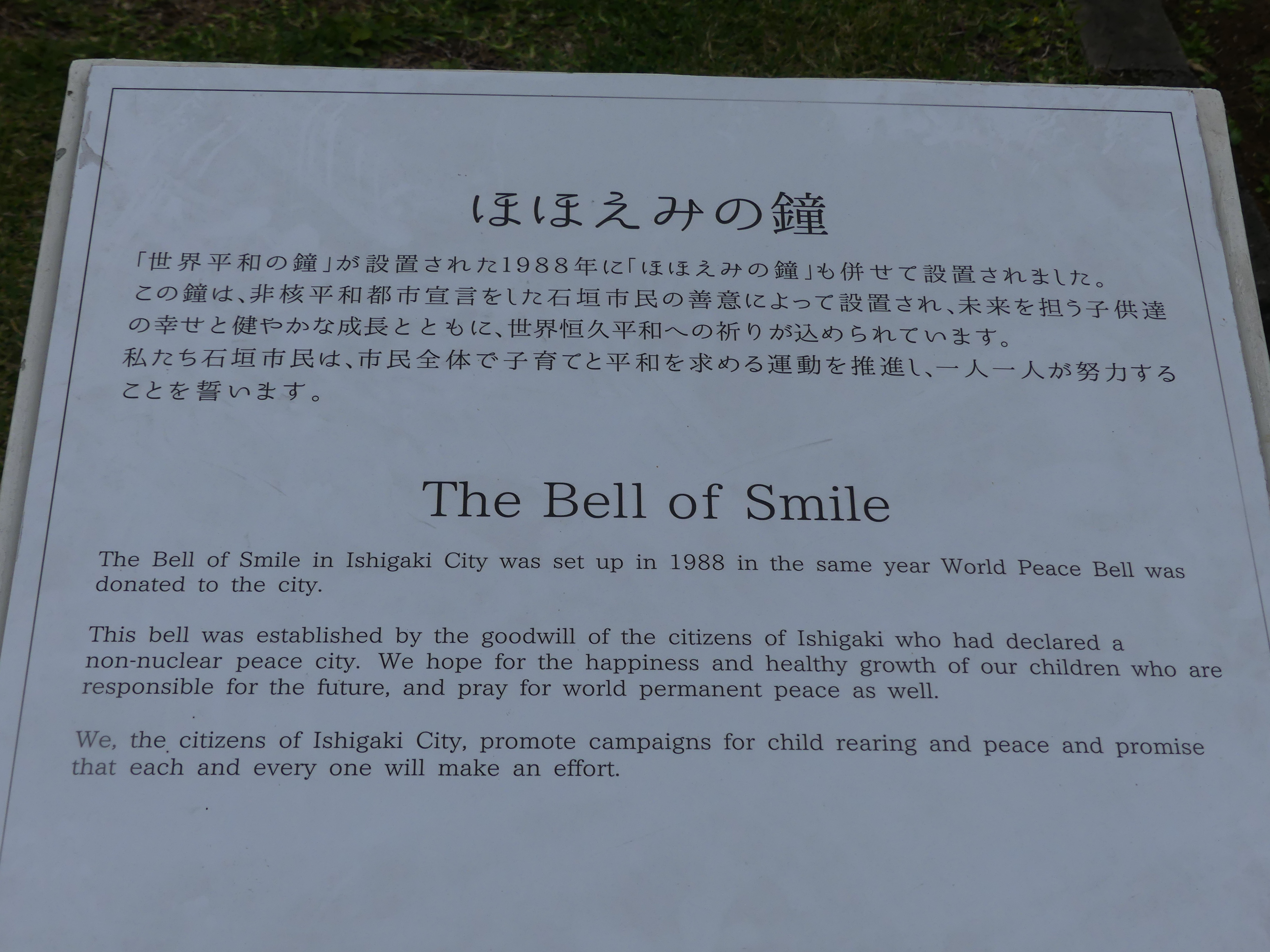
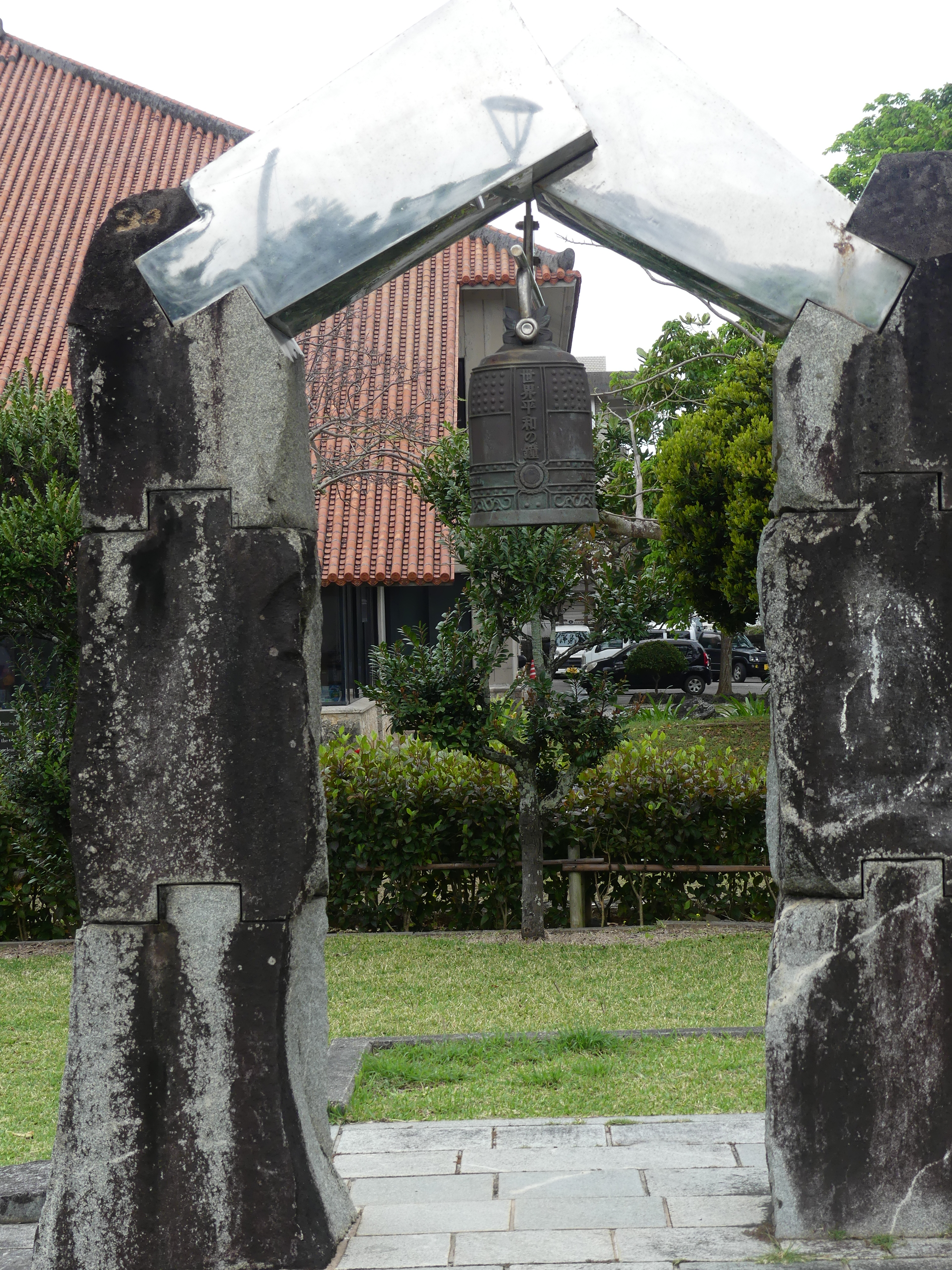
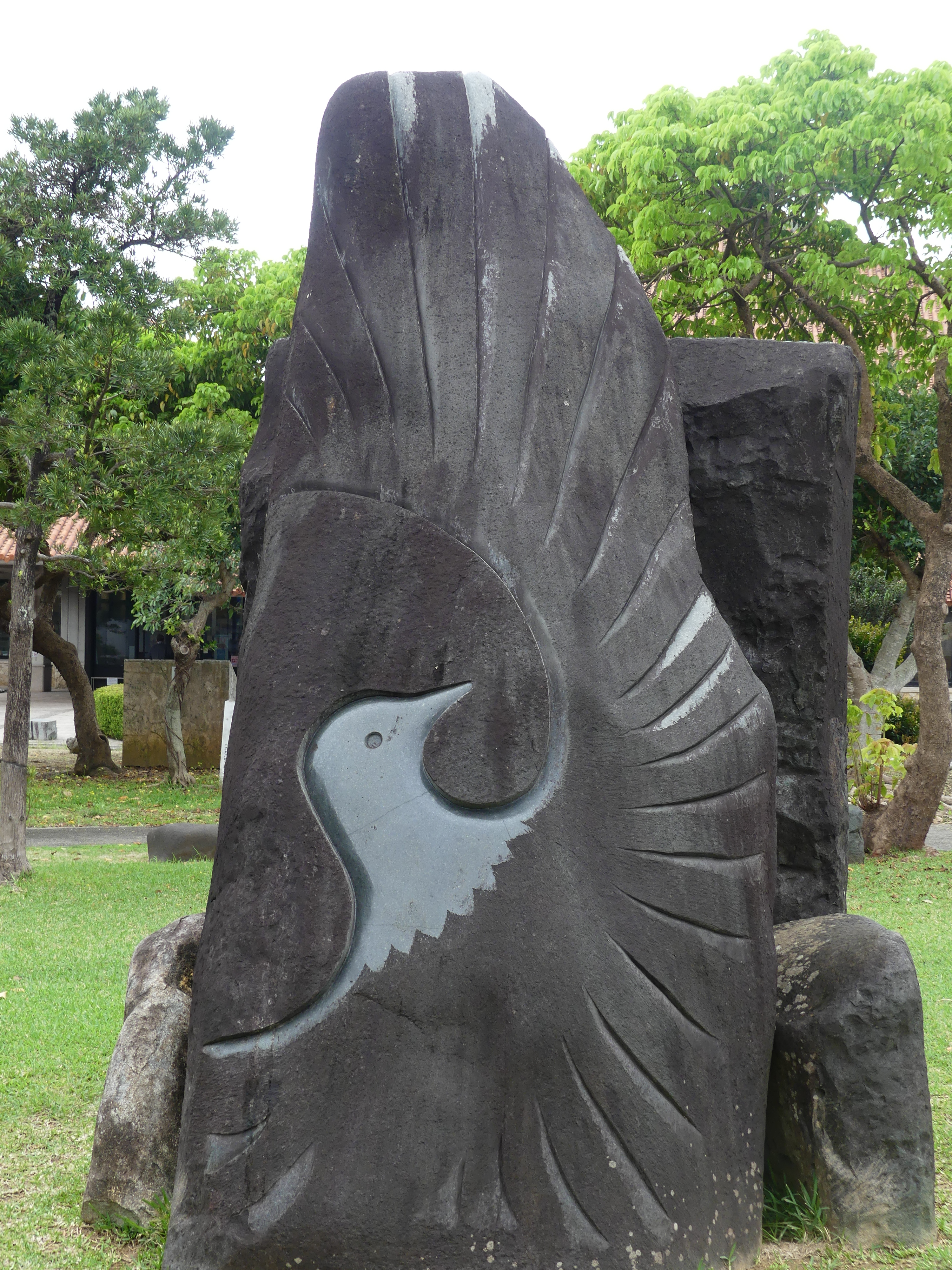
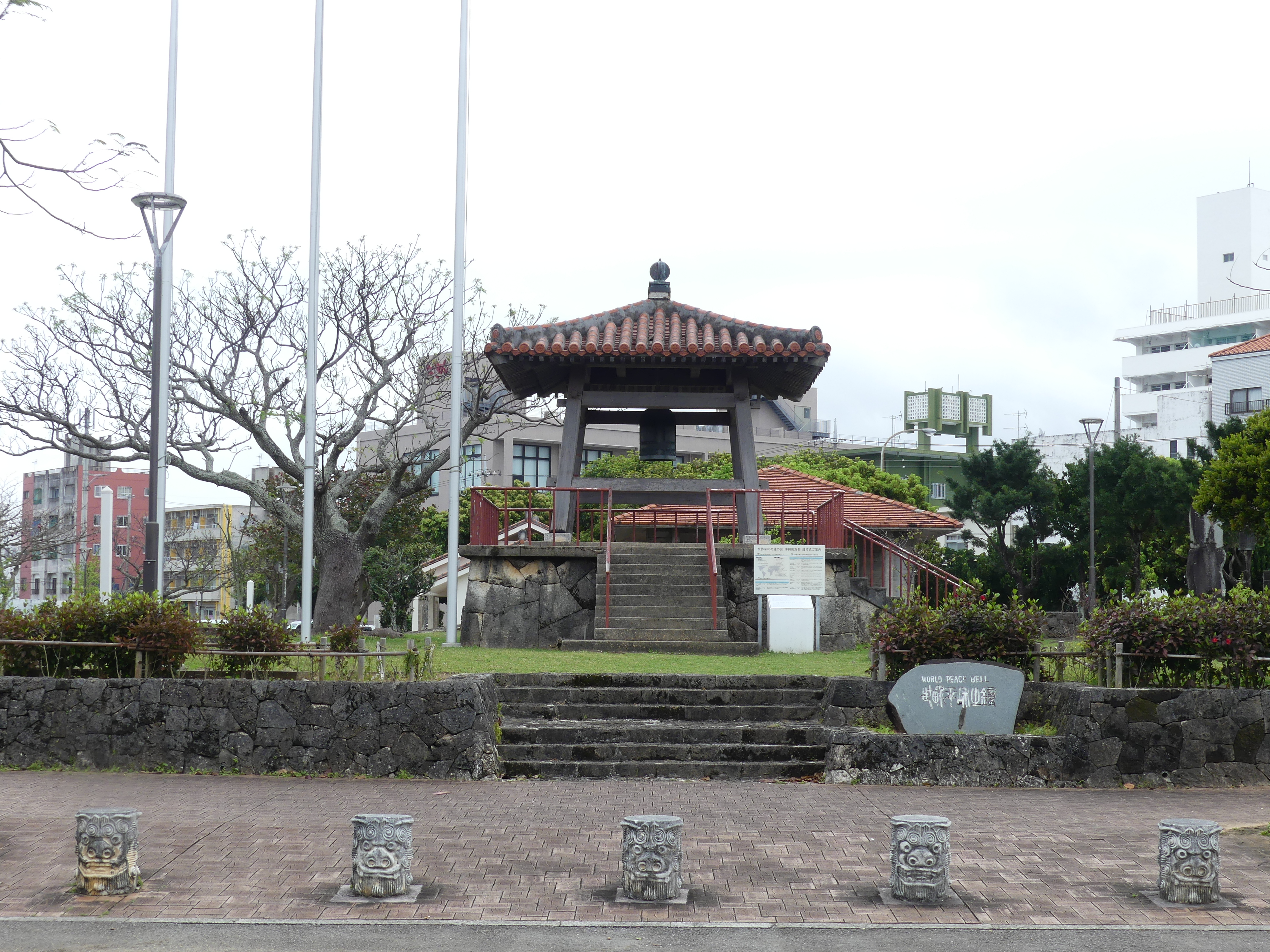
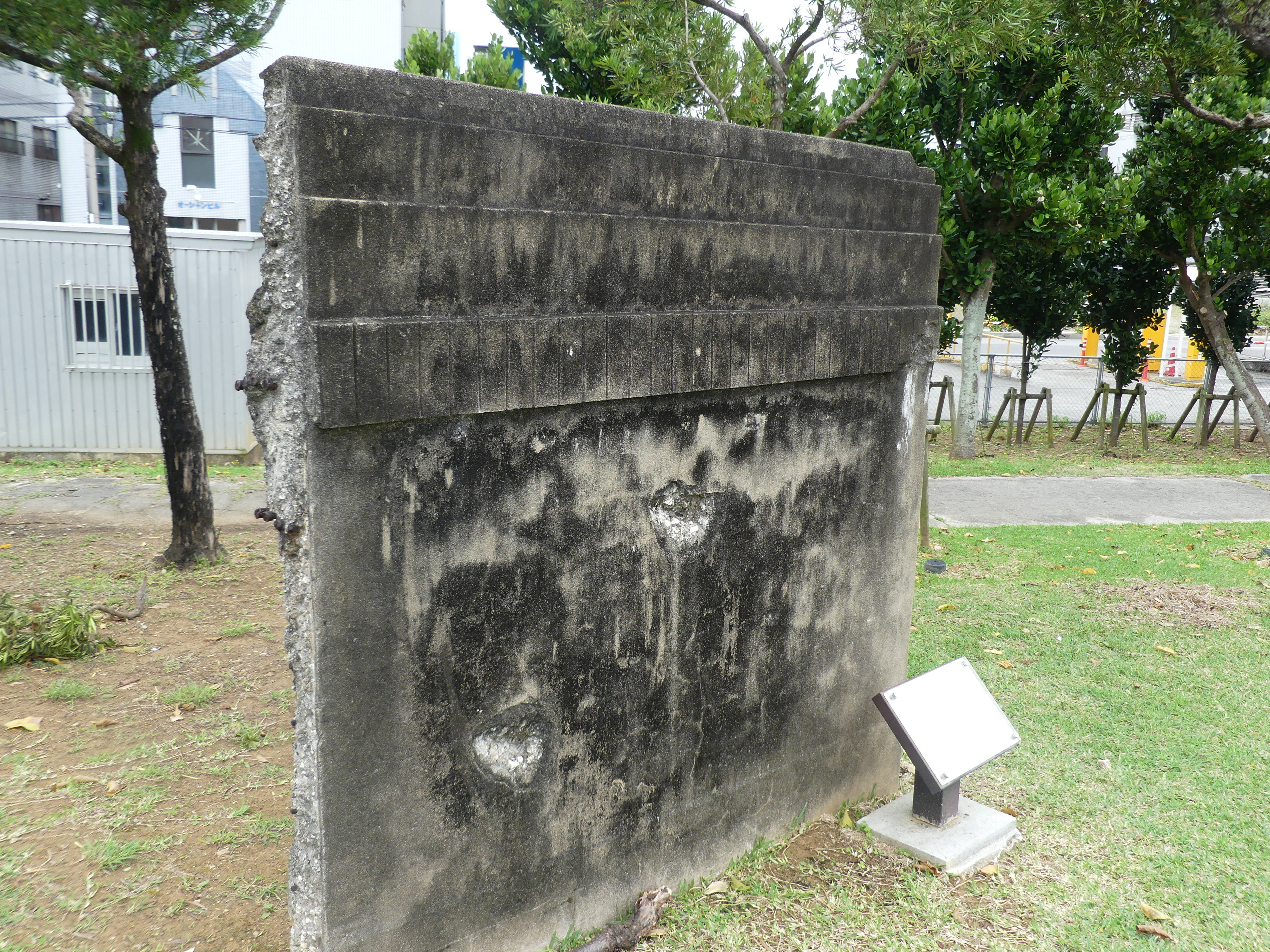
We had returned to the MS Noordam and set sail as the sun struggled with the rain. We continued in our south westerly course to Ishigaki Island. Located in Okinawa Prefecture, Ishigaki Island is the biggest and busiest of the Yaeyama Islands, located 400 kilometres southwest of Okinawa’s main island. The advertising for Ishigaki describes its greenery, city comforts, cozy stays, and its very own airport. We had not booked any excursions, but we did get off the ship and took the shuttle bus into the centre of town and strolled around. I have posted below my photos which include the peculiar bus stops in the main street, and the typical café in most towns (a selection of drinks from a drinks machine) whilst the purpose-built establishment is locked up behind. There was not a lot in the town to interest us until we got to a park (with the café) which had not rated a mention on the ship’s literature. Prominently positioned on the corner of the park was a shrine housing the World Peace Bell and beside it the Bell of Smile. I have included the inscription for the Bell of Smile. There is also a sculptured Dove of Peace, and a piece of a bullet riddled wall but without an inscription in English I am uncertain as to its origin or meaning. I am guessing it is a piece of the destroyed Okinawa which would account for the bloody big bullets someone was shooting at the wall.

I found it difficult to find interest in shopping and there seemed little else to do unless you wanted to get in a car/taxi and drive around to see beaches or astronomical observatories. So, after an hour or more we were back to the bus and returning to the air-conditioned ship with all its amenities. At 5.00 pm the gang plank was pulled up, and we were on our way to Hualien Taiwan.

Day 7 Hualien Taiwan

8.00 am the next day we were tying up at the dock at Hualien. This is Taiwan and immigration checks are necessary even if you are not leaving the ship. The Spaniards built mines for gold in Hualien in 1622. Permanent settlements began in 1851, when 2,200 Han Chinese farmers from Taipei arrived. Settlements in the area remained small by the start of Japanese rule. On 25 October 1945, Taiwan was handed over from Japan to the Republic of China under Kuomintang government. In January 1946, the incoming Kuomintang designated Hualien City a county-administered city of Hualien County and to be the county seat. On 3 April 2024, a major earthquake struck near Hualien.

We had planned another walk about. We made it as far as a marketplace on the dock full of trinkets and things we did not need. After browsing through the markets, we changed our mind and returned to the ship and a good book. A rest day was in order.

Days 8 & 9 Port Keelung & Taipei Tawain

Port Keelung is the port for Taipei the capital of Tawain and officially known as Keelung City. It is a major port city in northeastern Taiwan. Keelung was first inhabited by the Ketagalan, a tribe of Taiwanese aborigine. The Spanish expedition to Tawain (formerly Formosa) in the early 17th century was its first contact with the West. By 1624 the Spanish had built San Salvador de Quelung, a fort in Keelung serving as an outpost of the Manila-based Spanish East Indies. The port changed hands a number of times with the Japanese occupying it in the late nineteenth century.

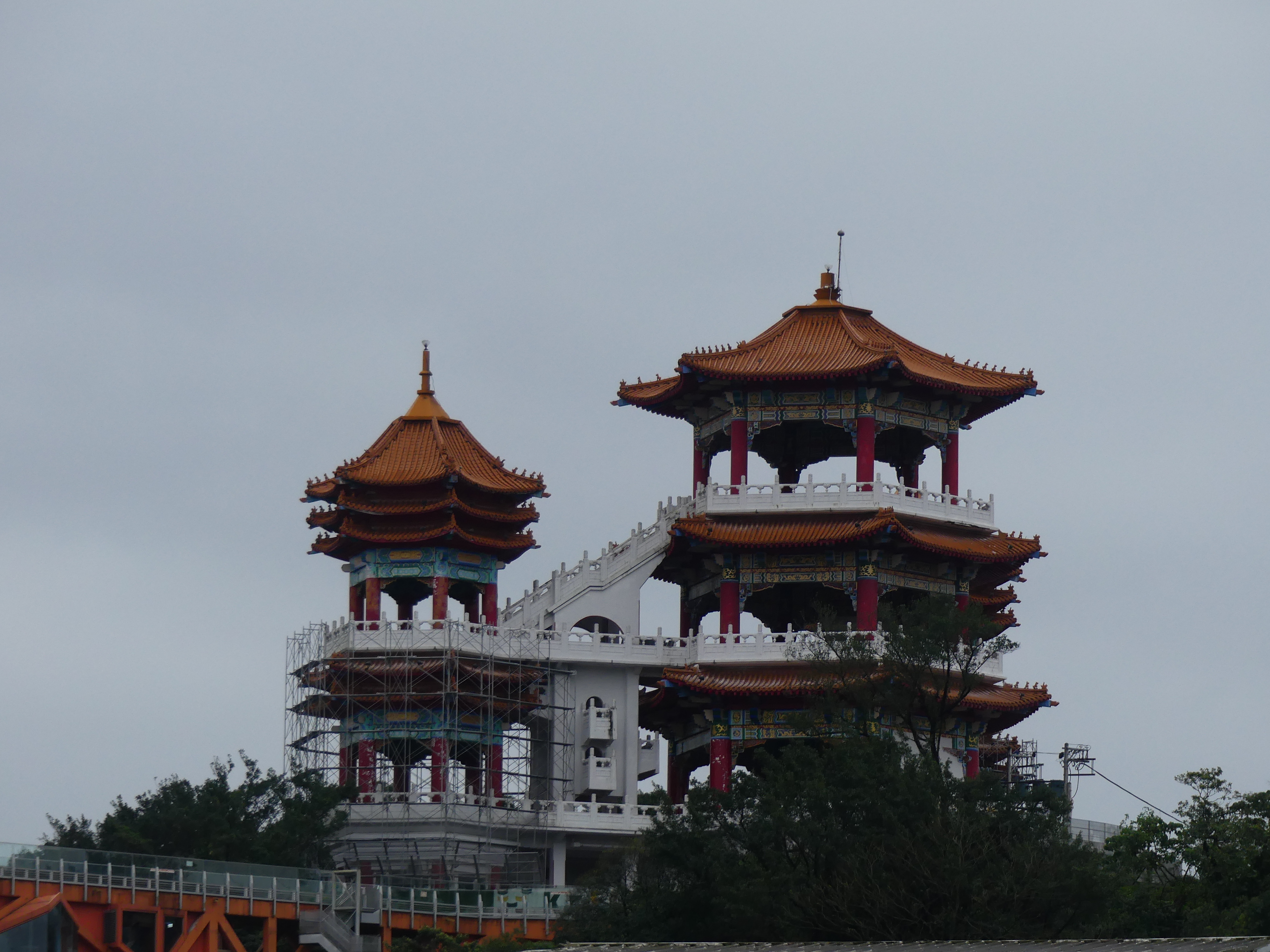
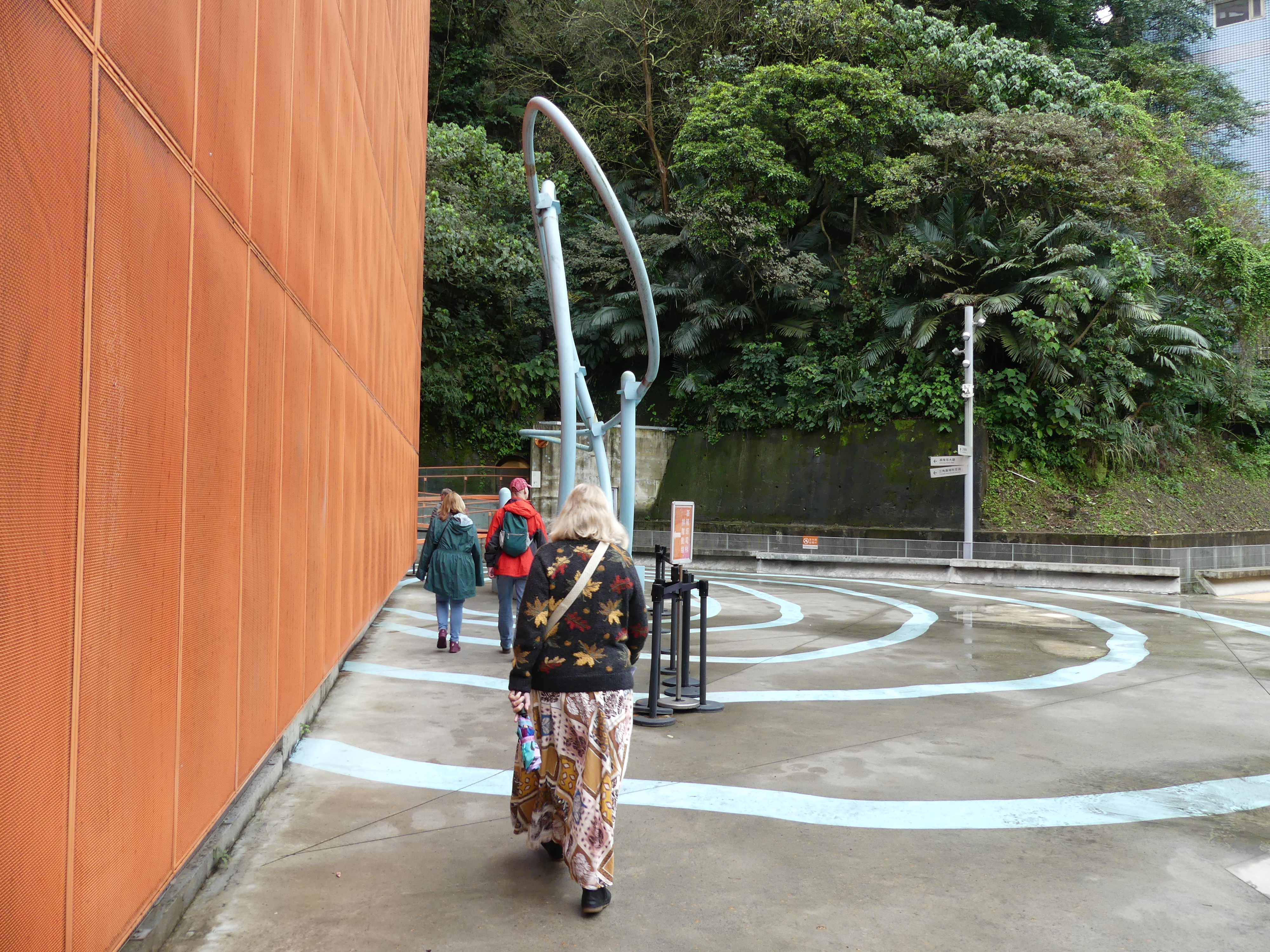
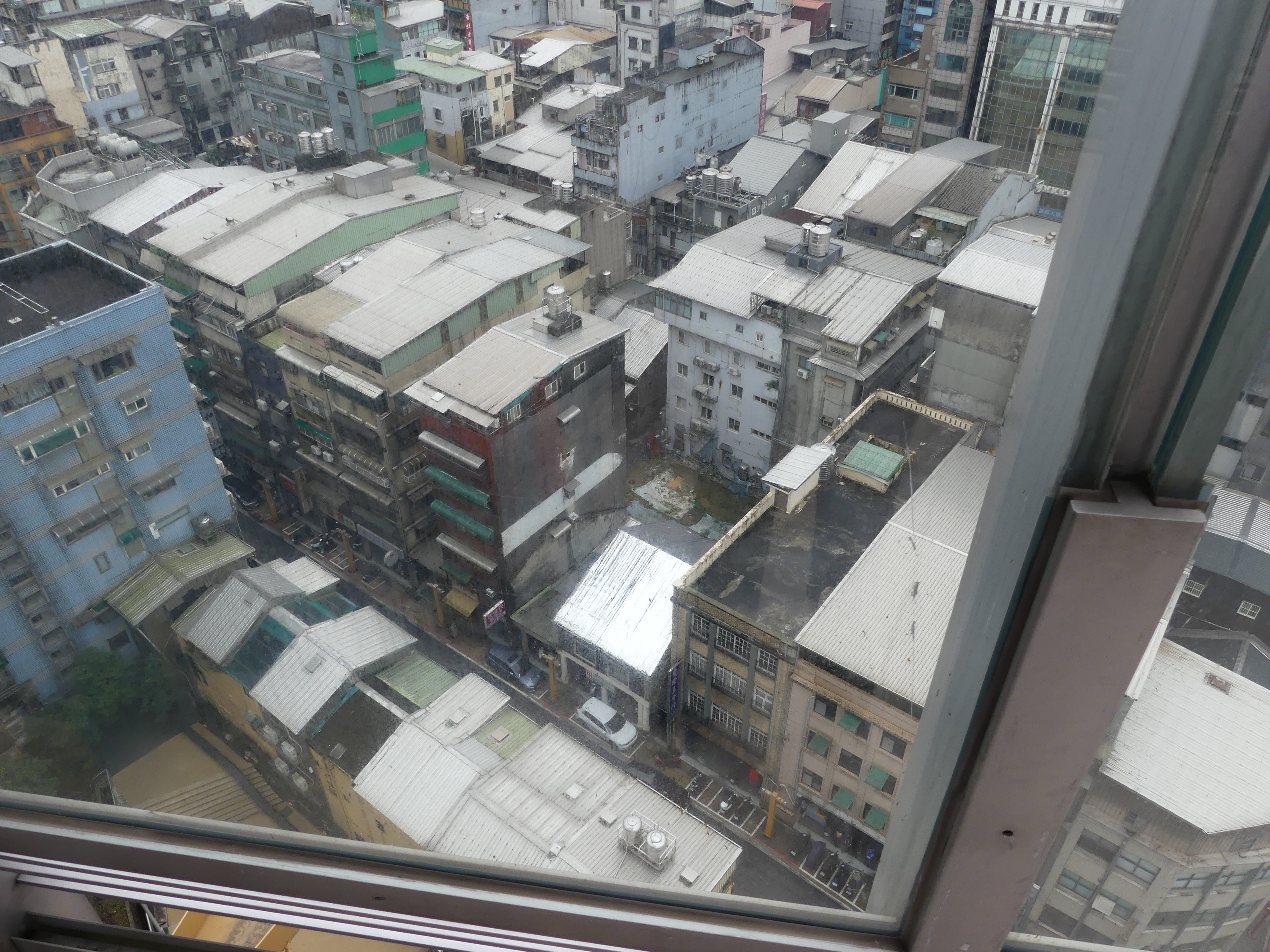
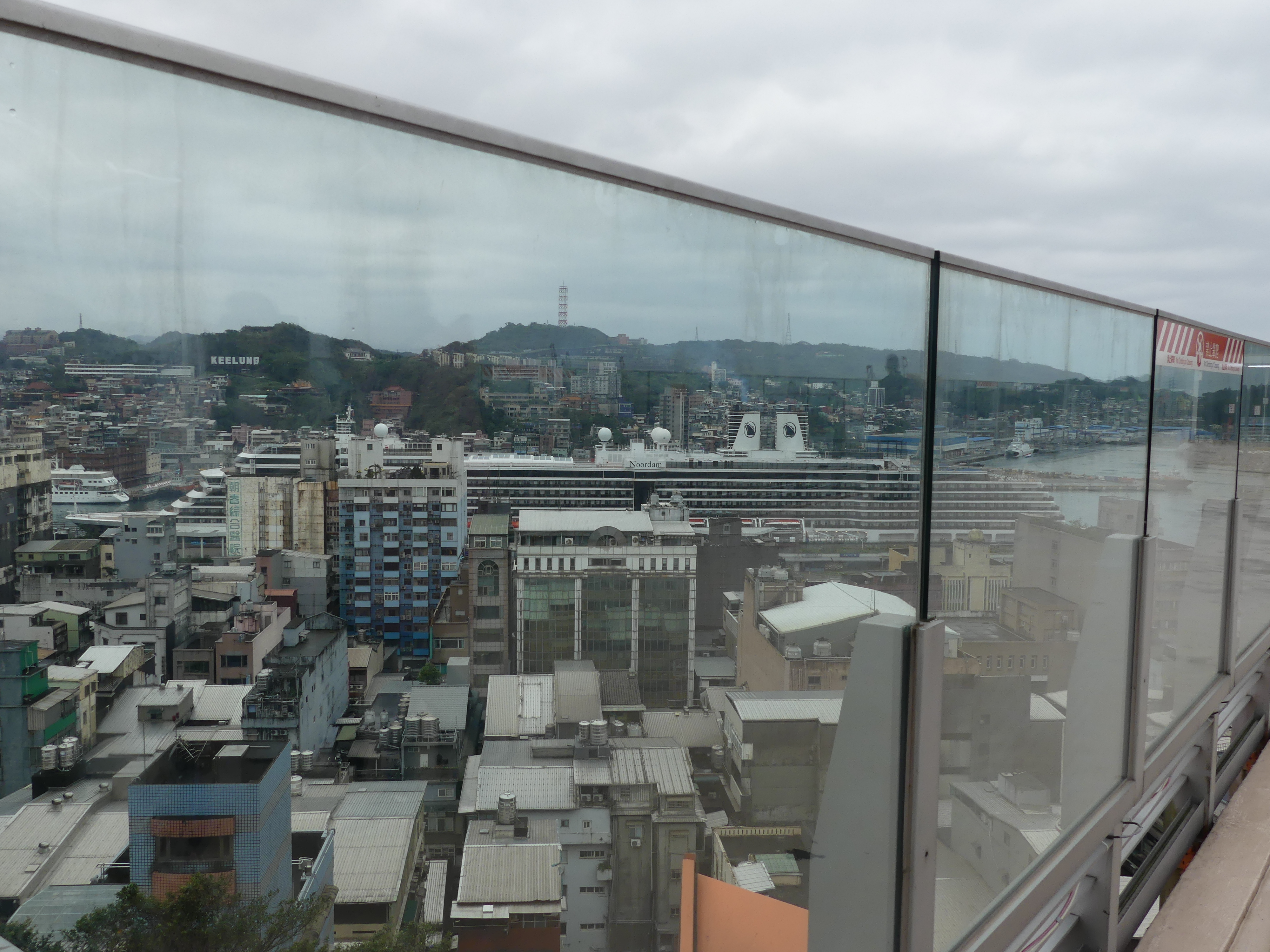
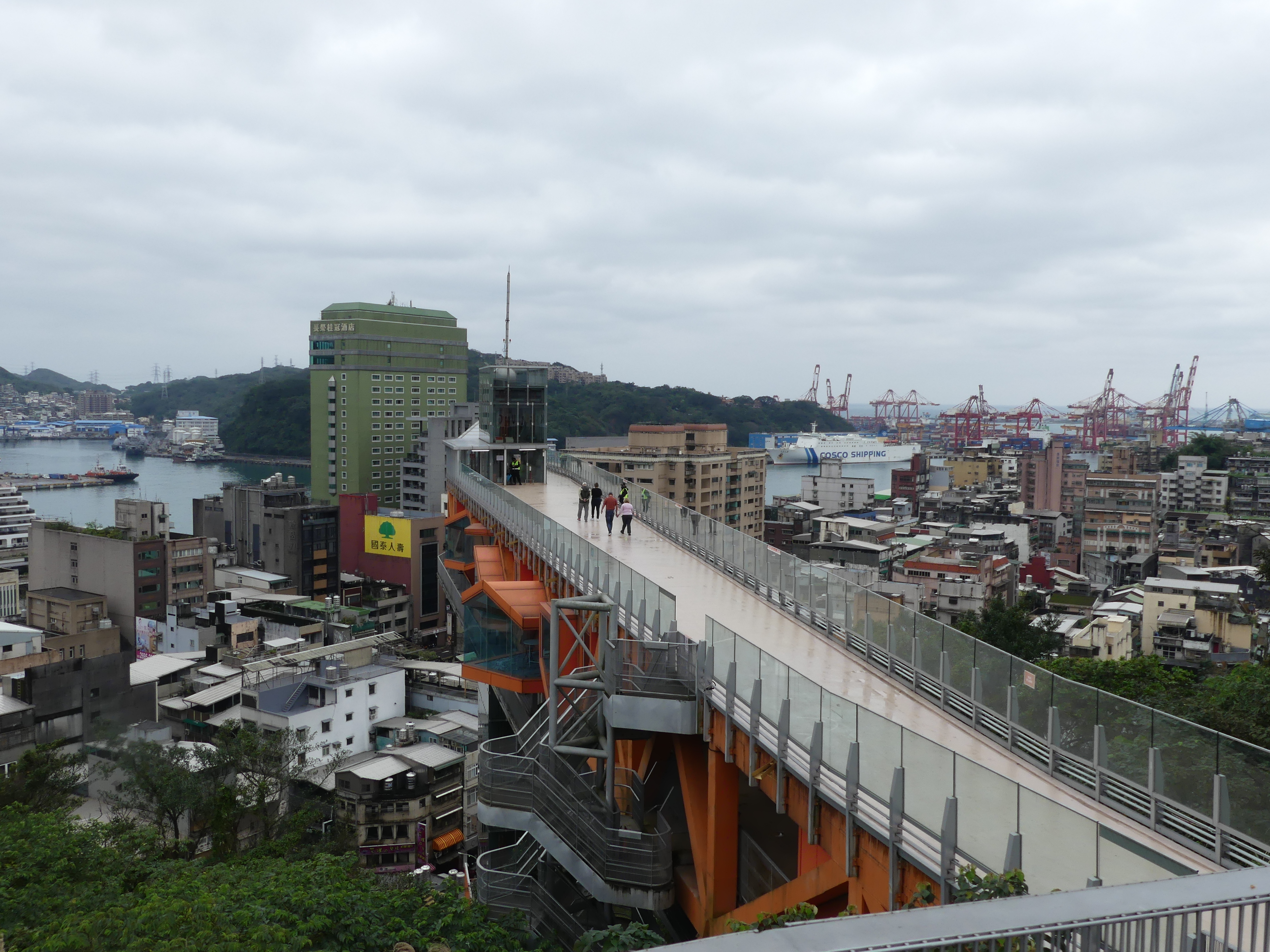
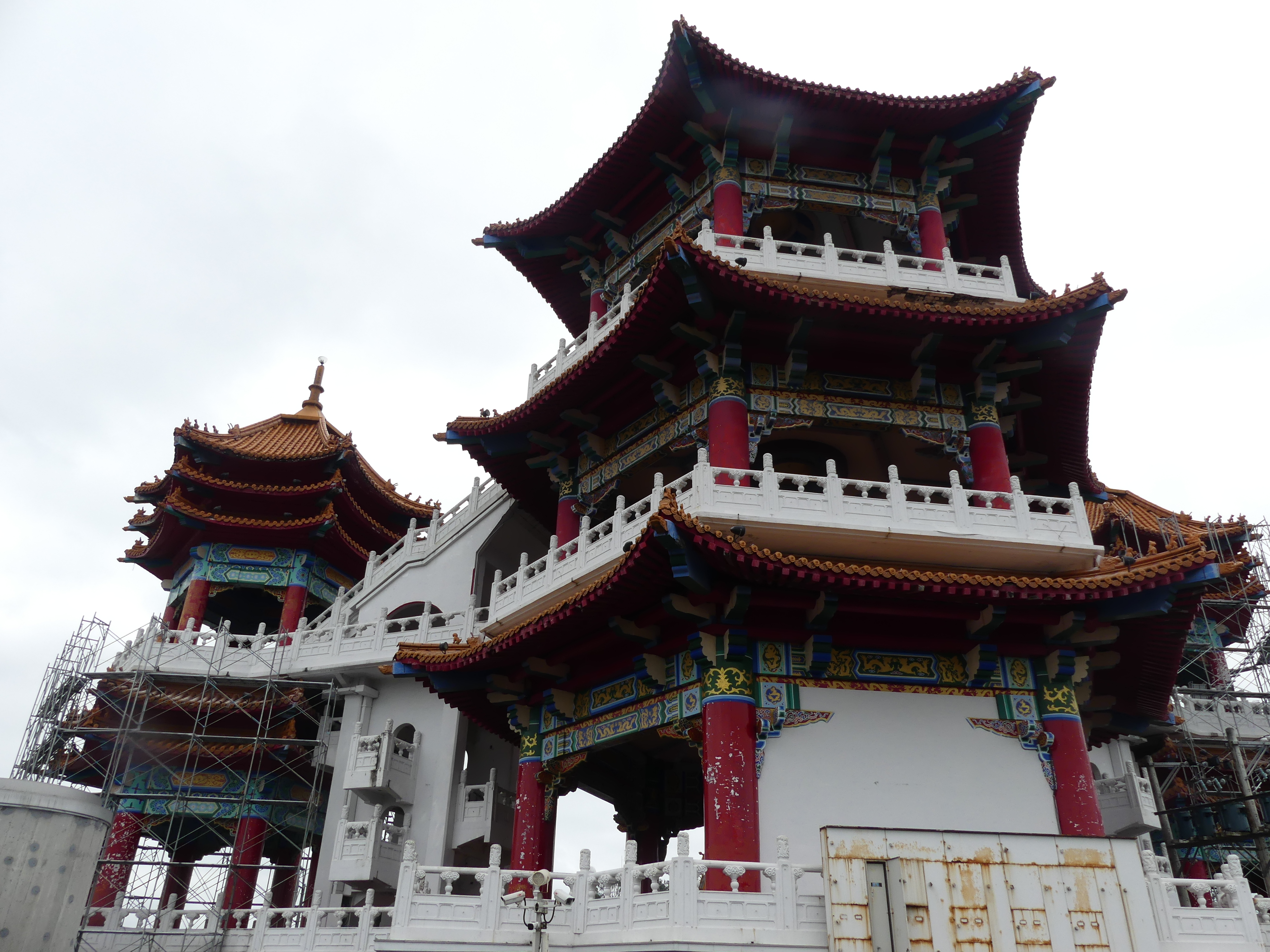
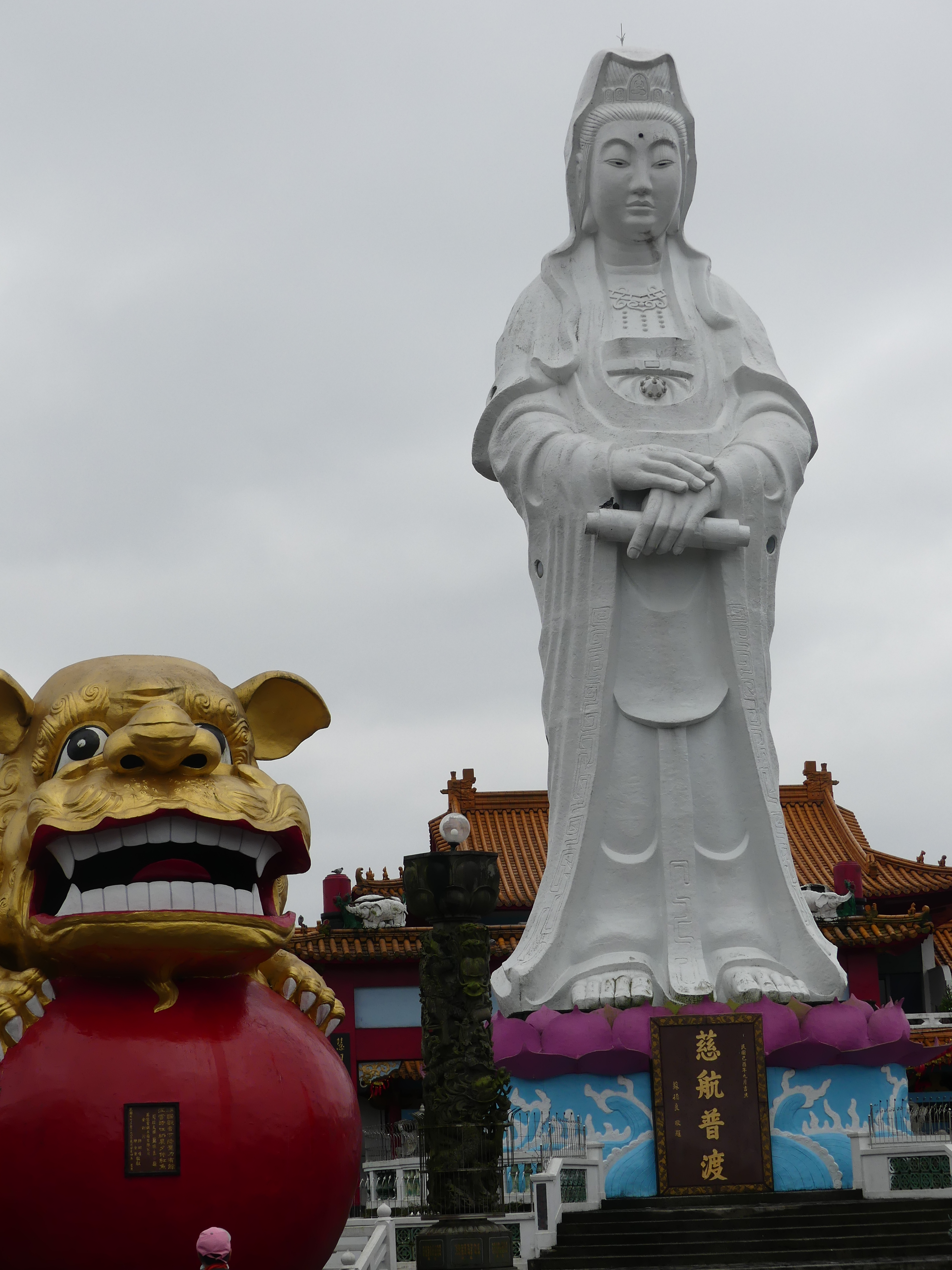
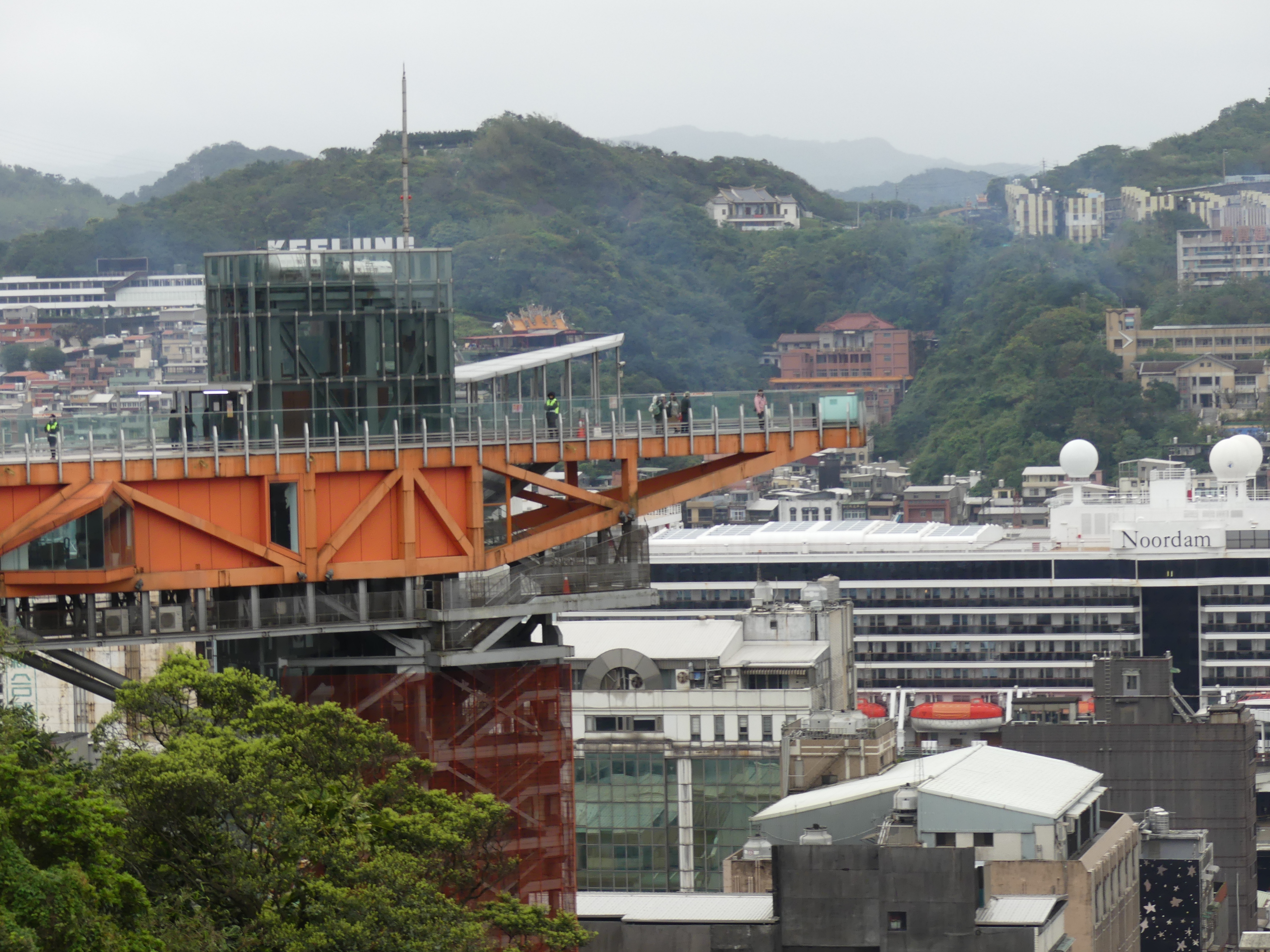
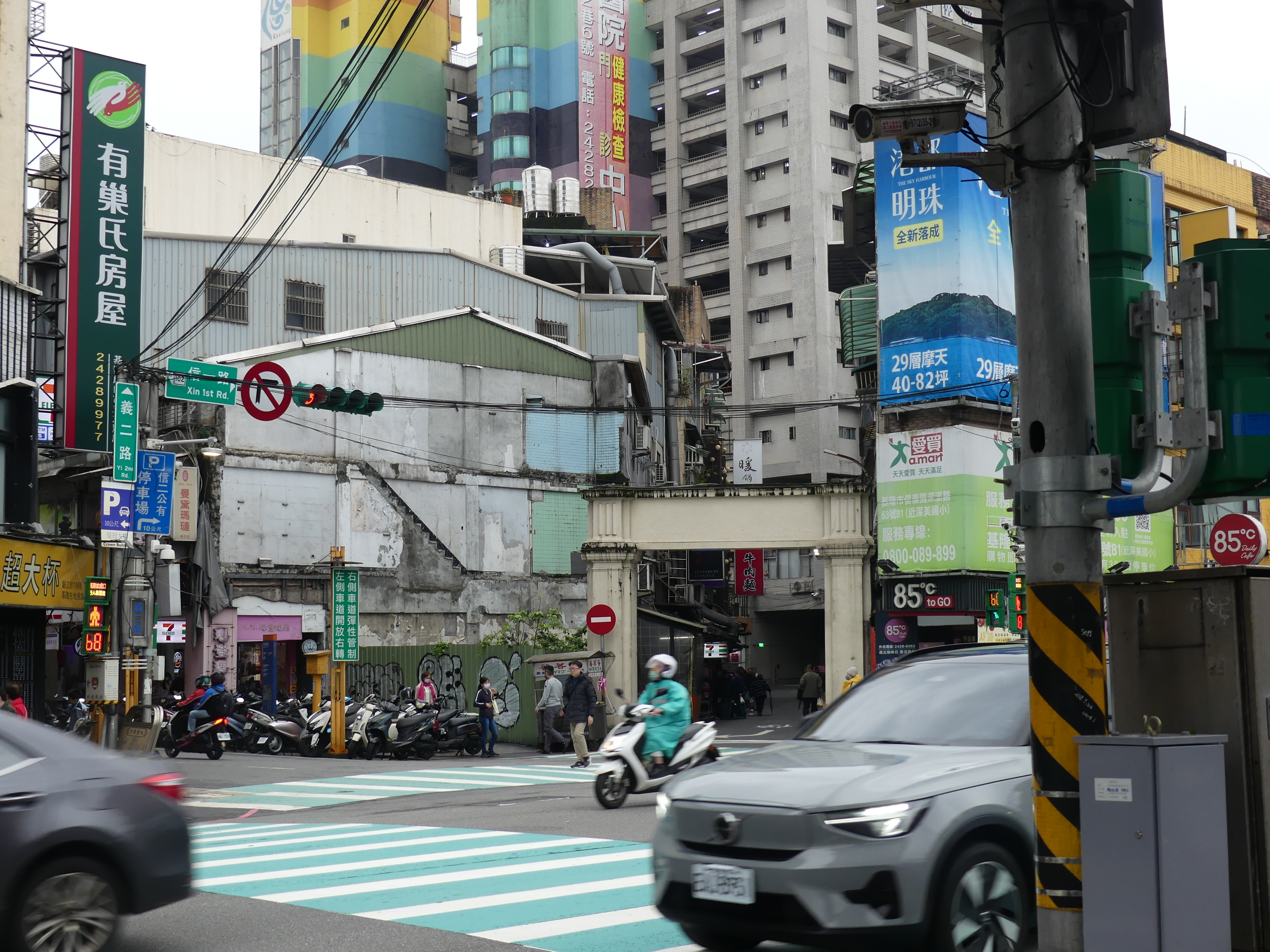
The dock and port was very busy and more sophisticated than any of the previous ports we had visited in the last few days and the view from the dock was a good introduction to the city. Immediately visible was the temple on the hill. We had not booked any excursions, so we disembarked and hit the road. We searched for the access we had been told about at the ship’s briefing on the Port and located the high tower shown in my photos. Fortunately there was a lift or we would still be climbing. Street art was quite commonplace where space permitted. I followed Kerry to the bottom of the tower and took photos of this remarkable viewing platform. The ship filled the picture to give you an idea of size. The temple could not be accessed due to maintenance, but it was still an impressive building.

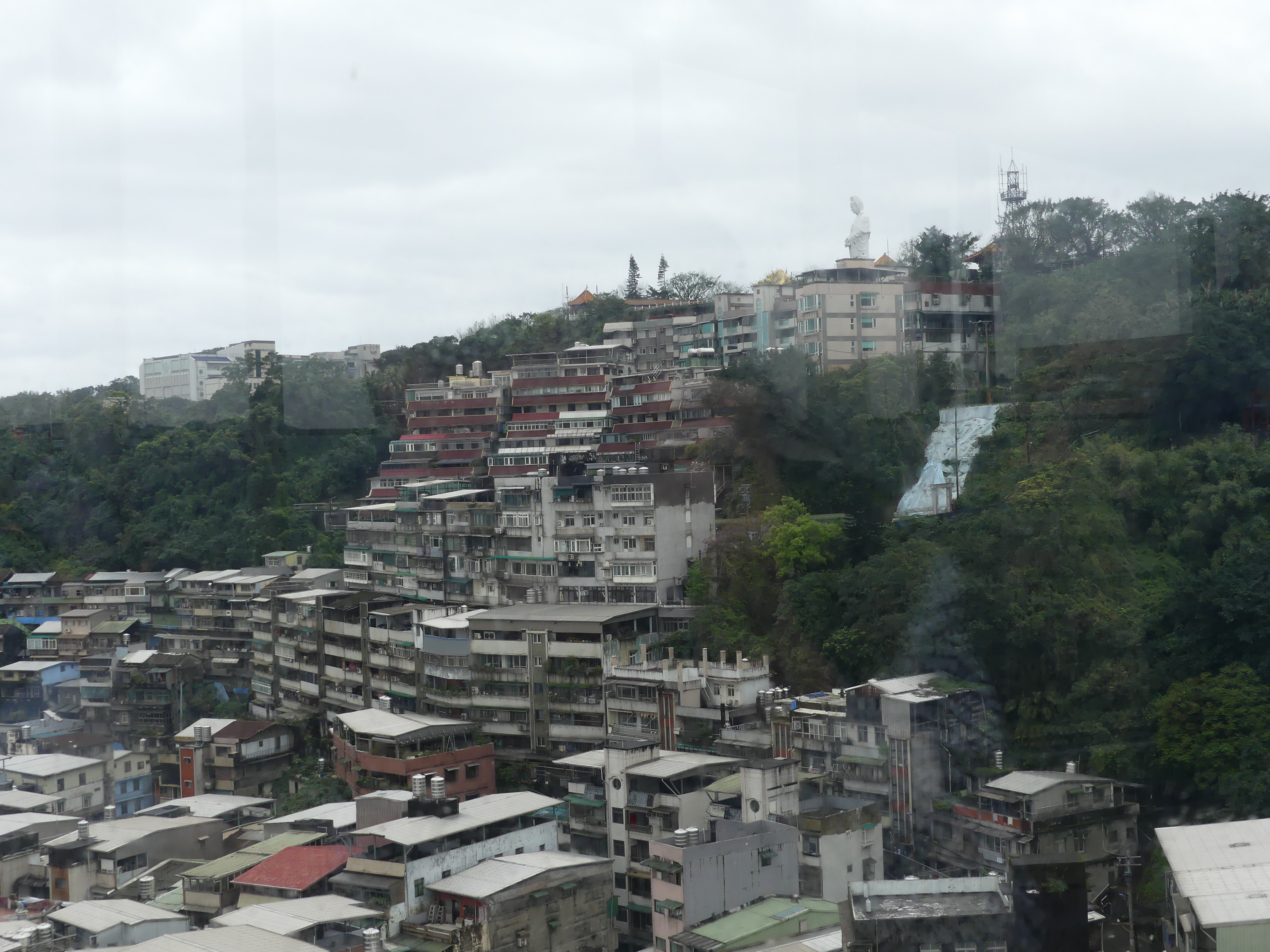
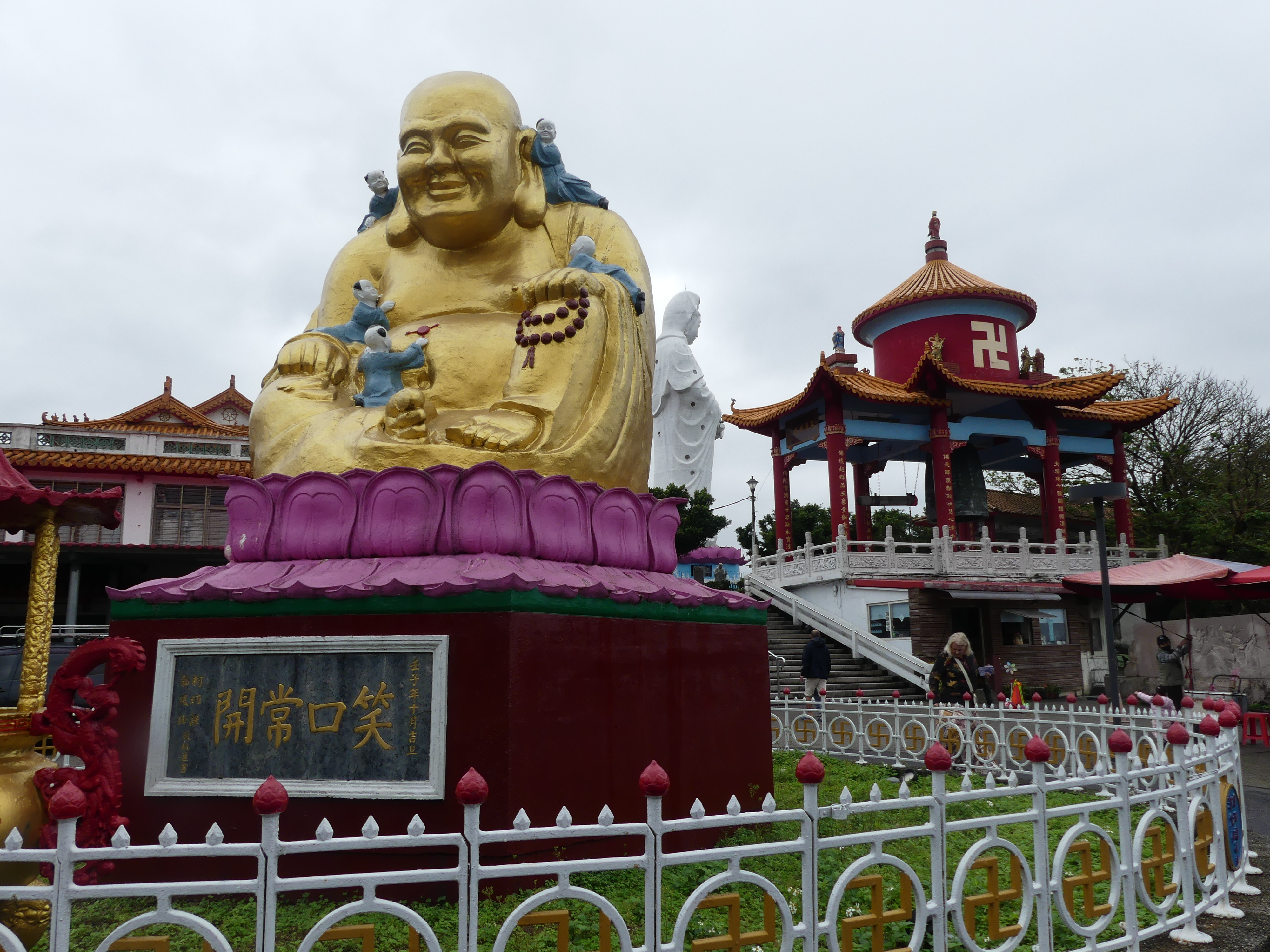
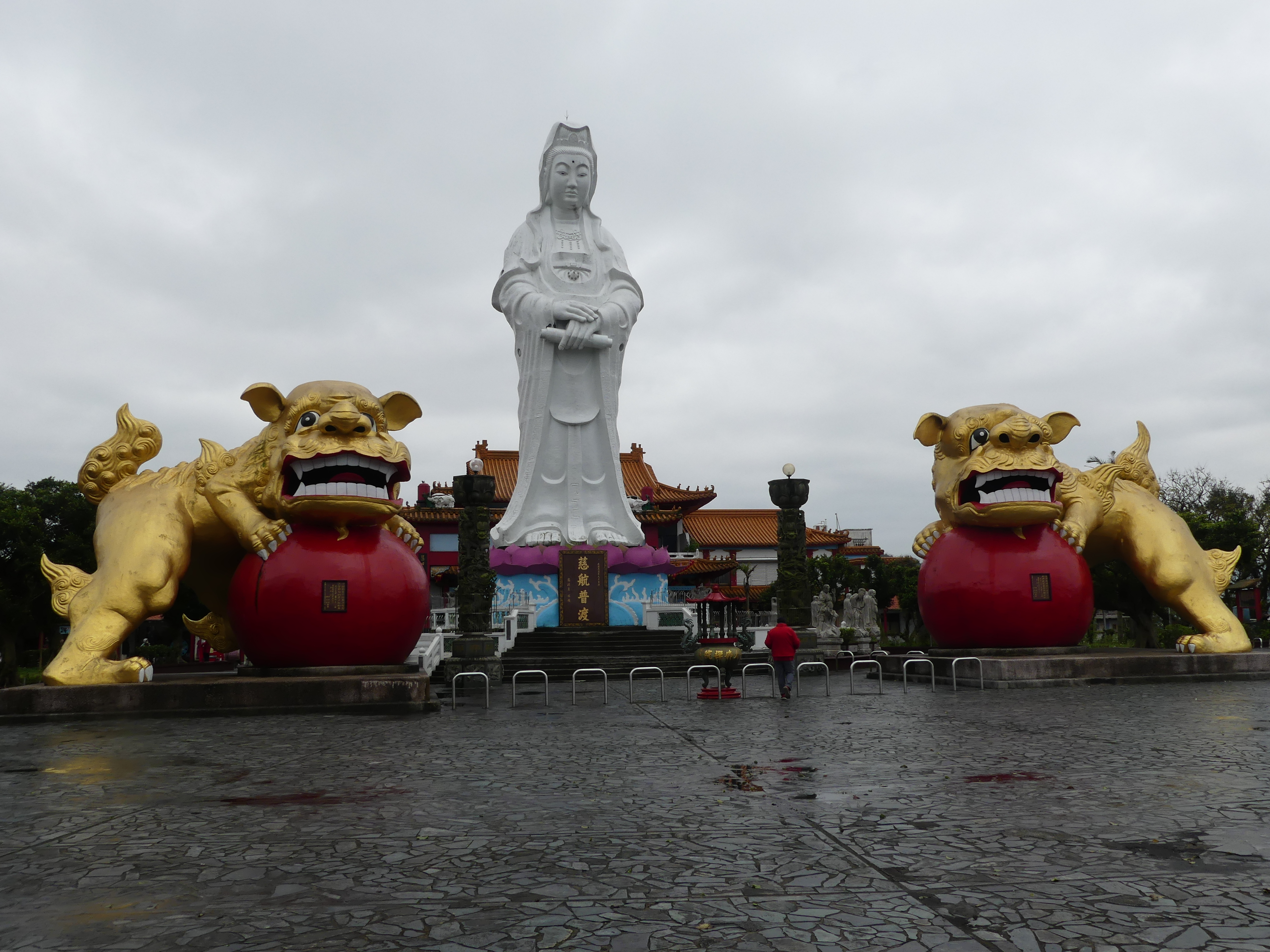
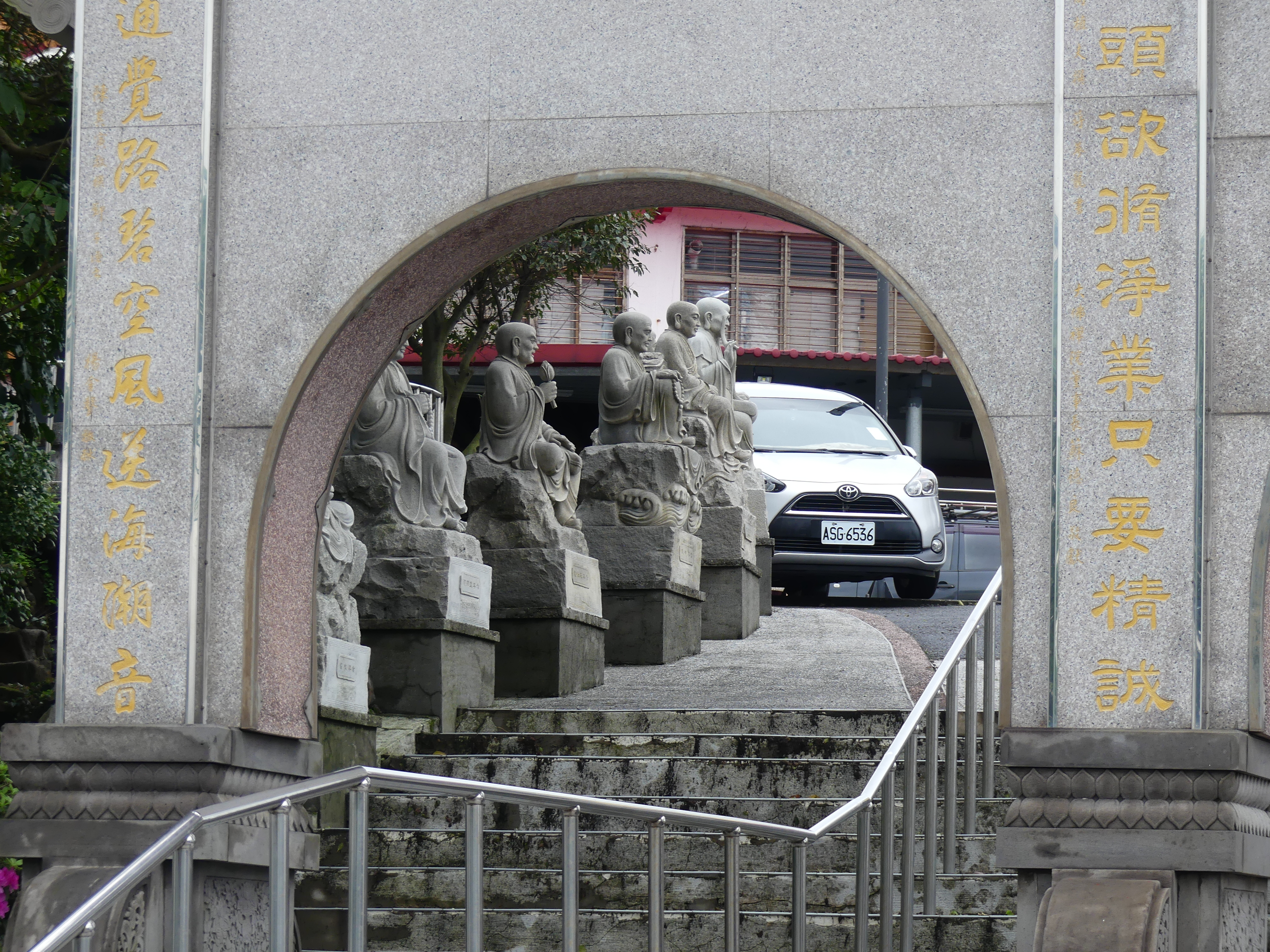
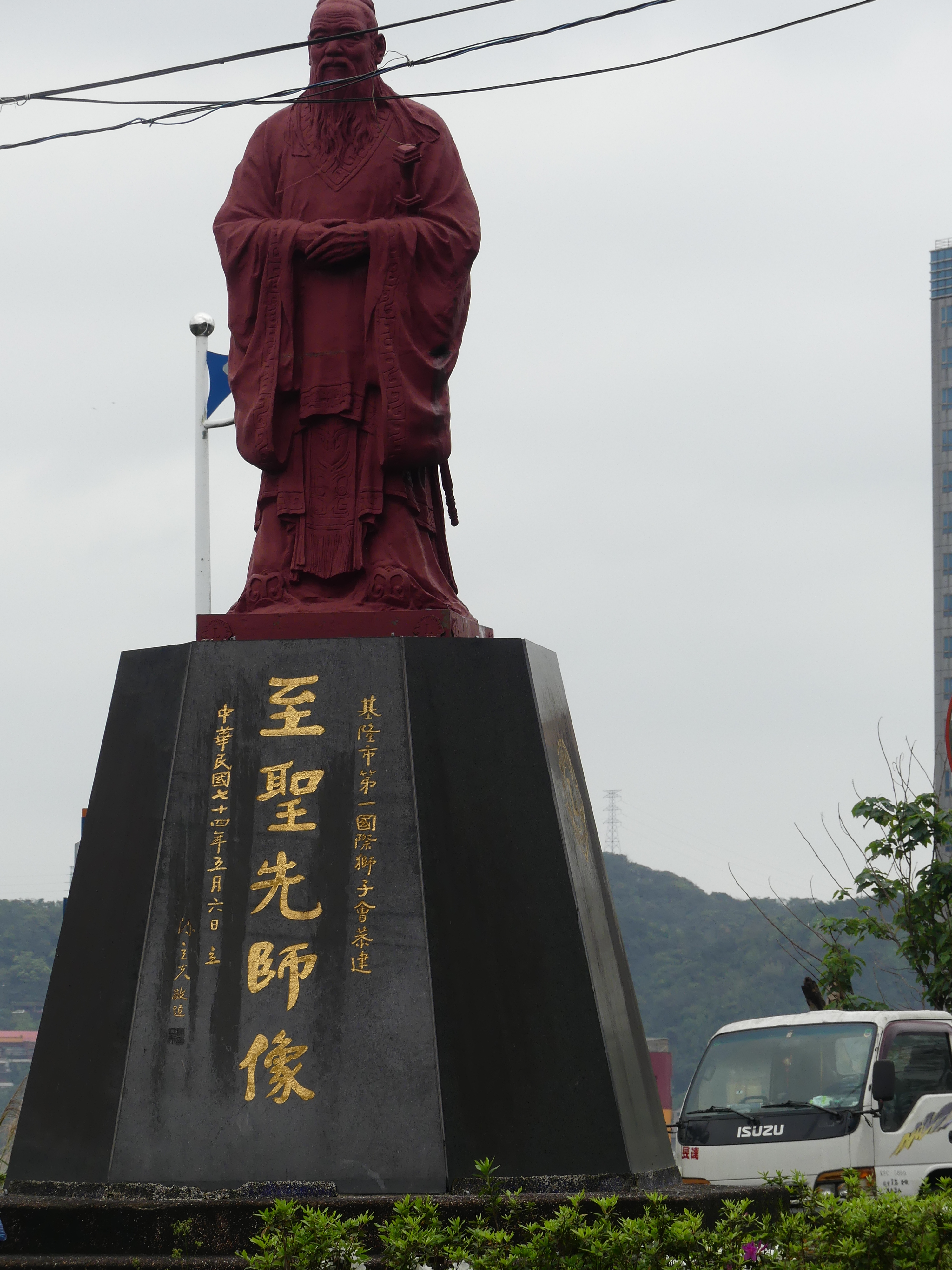
We had spotted the white Buddha and thought we could find our way to it. Along the way I was surprised we passed a lion donated to the community by Lions Club of Kobe Nada and Keelung Central. We came in a side entrance to the plaza and were greeted by a familiar symbol the swastika and surprised to see it – it clearly has other meanings. Co-Pilot informed me “In Japan, the swastika is a symbol with a long history, particularly in relation to Buddhism. The symbol, known as manji in Japanese, is traditionally used on maps to indicate Buddhist temples.” We had our first experience of using eastern toilets here as well as having the best view of the port right down to the silos on the other bank of the harbour. We exited through the front gate and walked downhill toward the temple again. There is a bridge connecting the temple with the White Buddha and from there I was able to photograph the temple viewing platform showing its construction. You will see the MS Noordam again and those silos on the other bank.

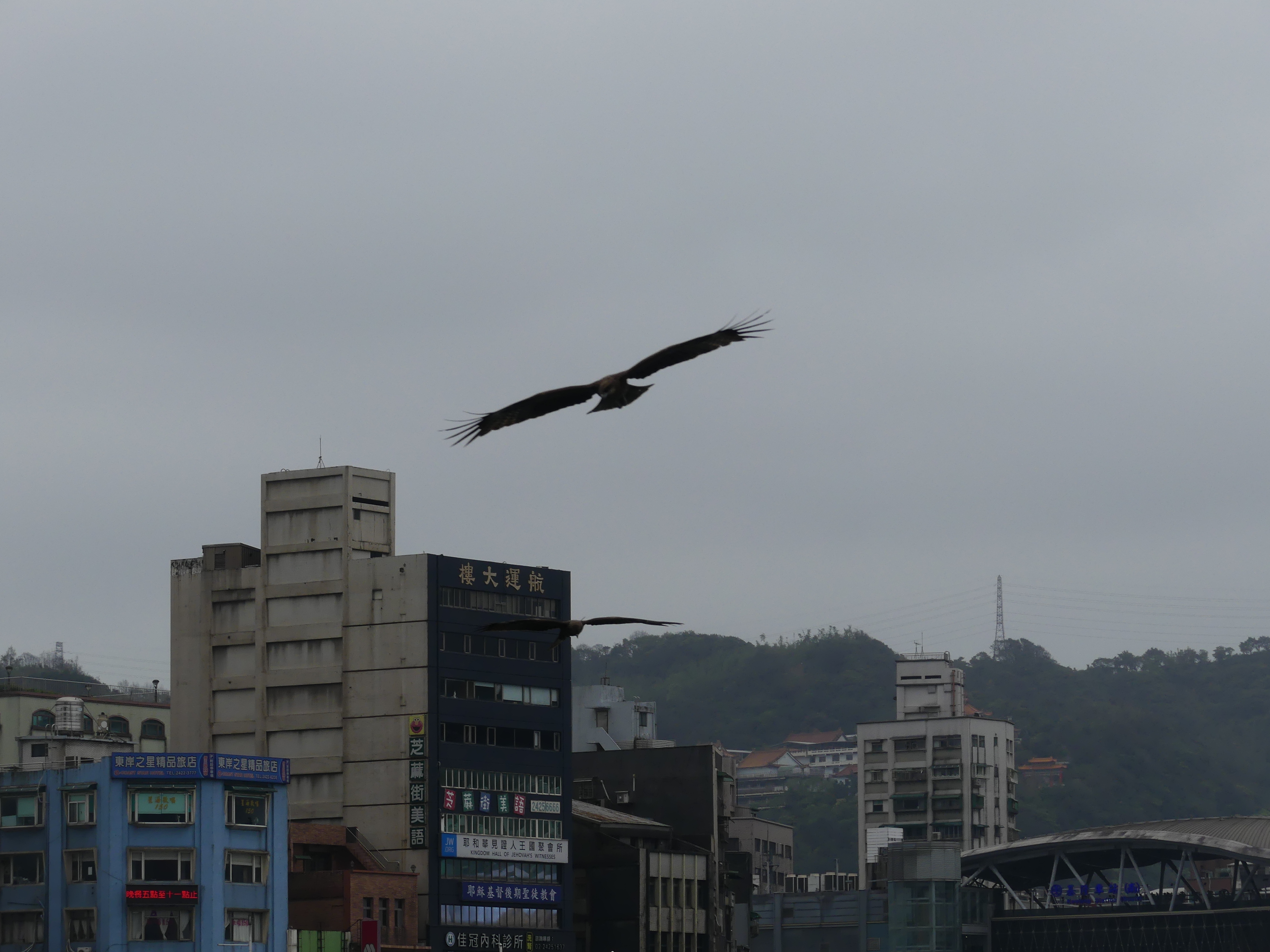
We walked through the back streets until encountering a canal with its decorated bridges, the mix of old and new and the scooters. I had noticed a large number of hawks/eagles circling over the harbour. They were circling to catch fish. Co-Pilot tells me that “Keelung is on a migration route for birds of prey, with many species passing through or stopping over, especially in spring and fall. While many raptors are migratory, some residents, like the Formosan Crested Goshawk, can be found in Keelung’s mountainous areas. Keelung is also known for having black kites, which are a type of raptor, and the city has even implemented fines for feeding them, recognizing their importance as a protected species.”

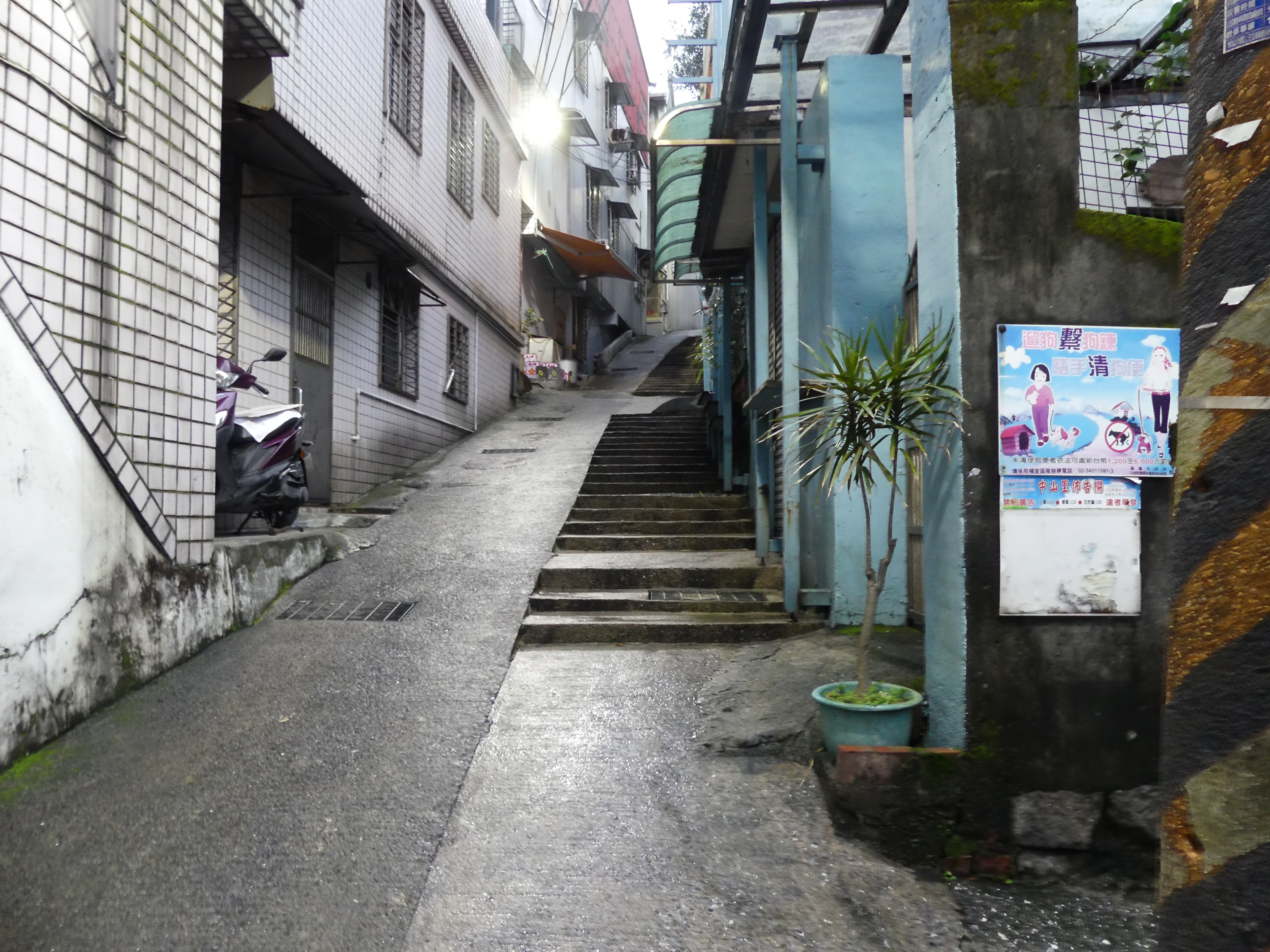
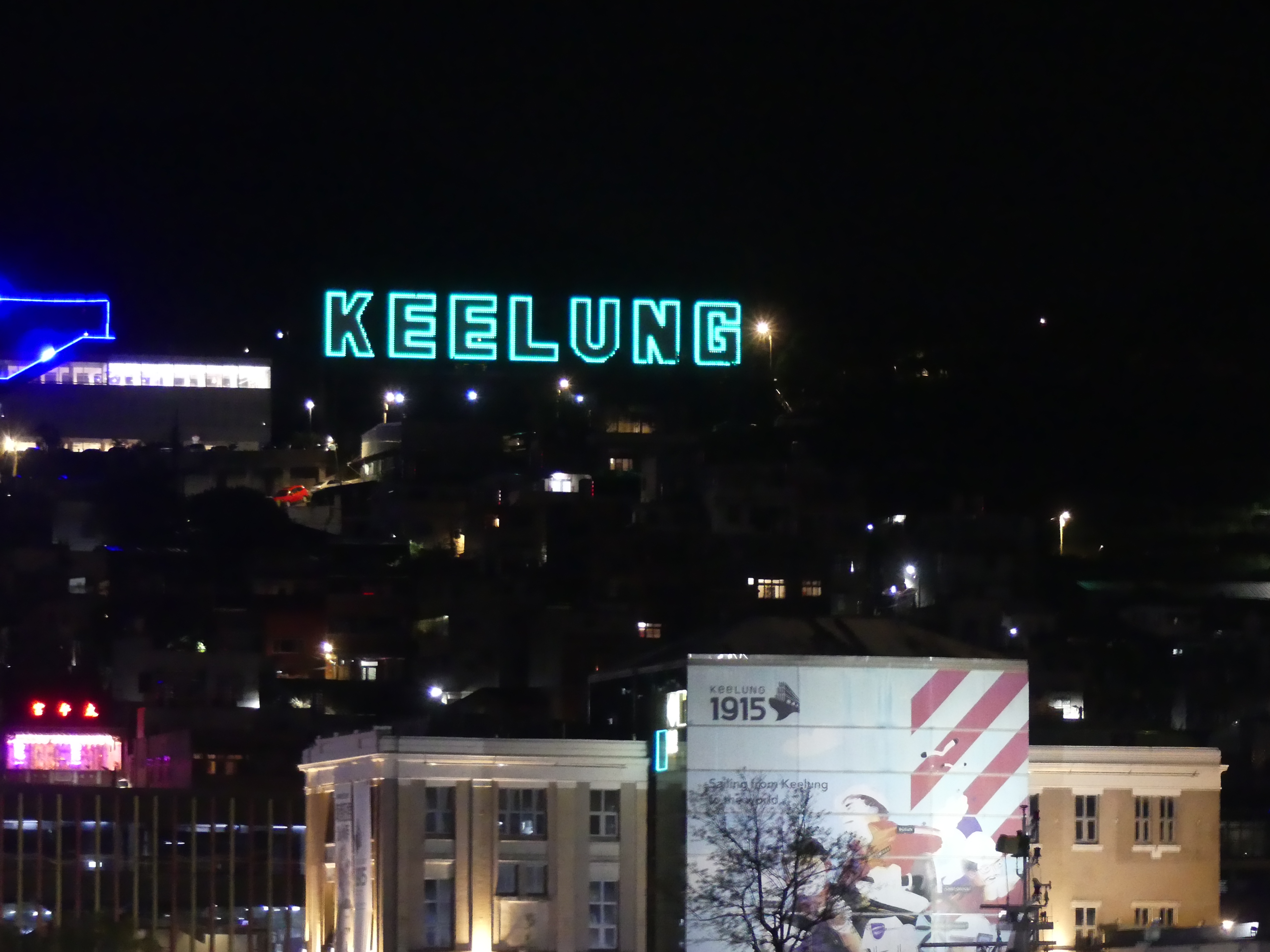
As the ship was stopping overnight, we decided to take in Keelung City by sunset. The idea was to visit the Hollywood style announcement of the city by night. Kerry was keen to visit the sign saying, “It’s just over there”. So just before sunset we set out to find our way on foot. I found a non-descript lane which basically said “this way” to take us up the hill. Now Kerry has the habit of counting stairs. She did so on this occasion also. Once she got to 200 stairs, I didn’t wish to think anything further about that. We passed houses with small shrines and open doors and damn scooters busily buzzing bottom to top, more Buddhist temples and finally a sign – we had arrived. You will see two photos of the sign “Keelung” below, one from beside the sign and the other from the streets below. Yes, we did that in the rain.

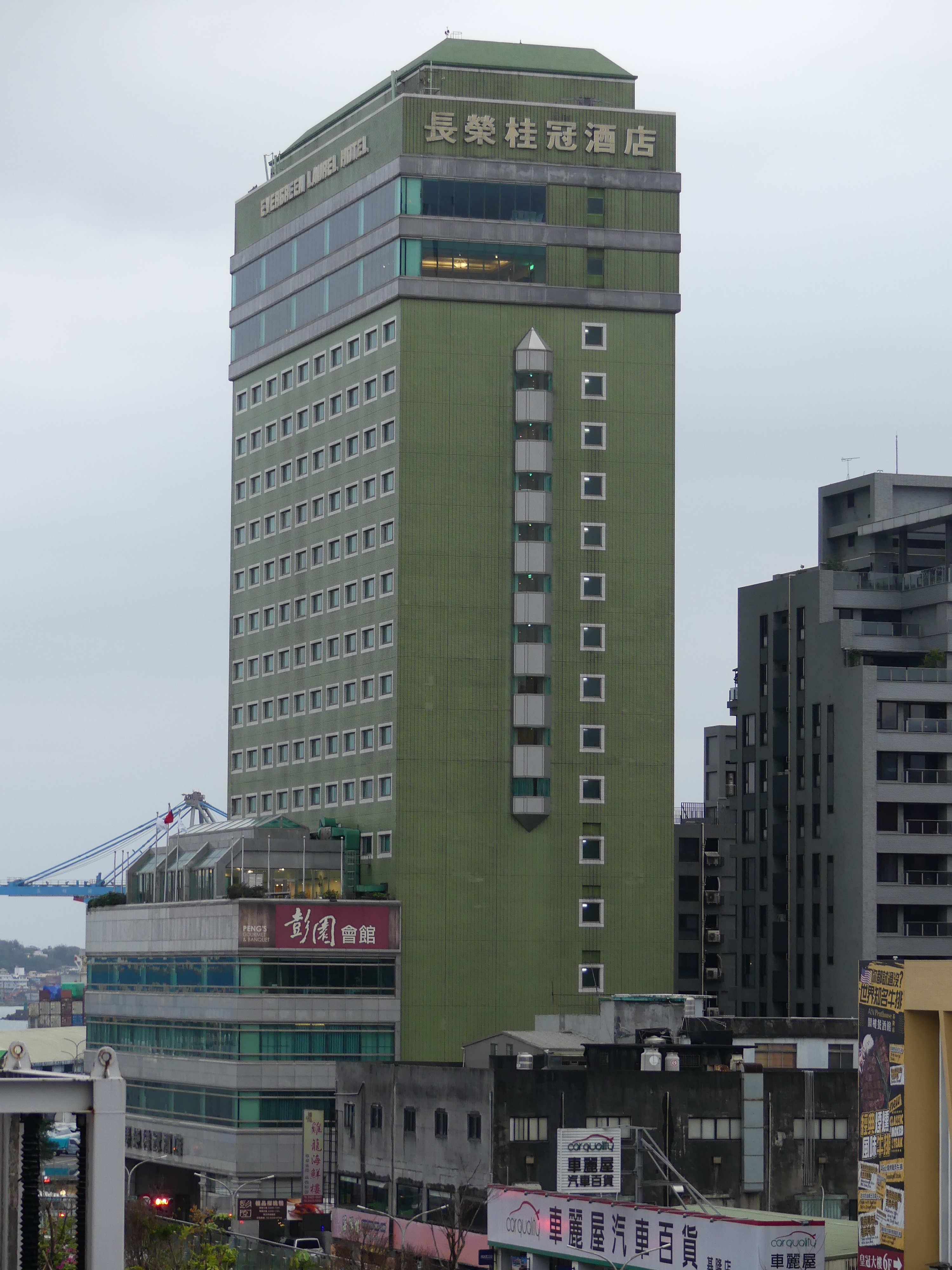
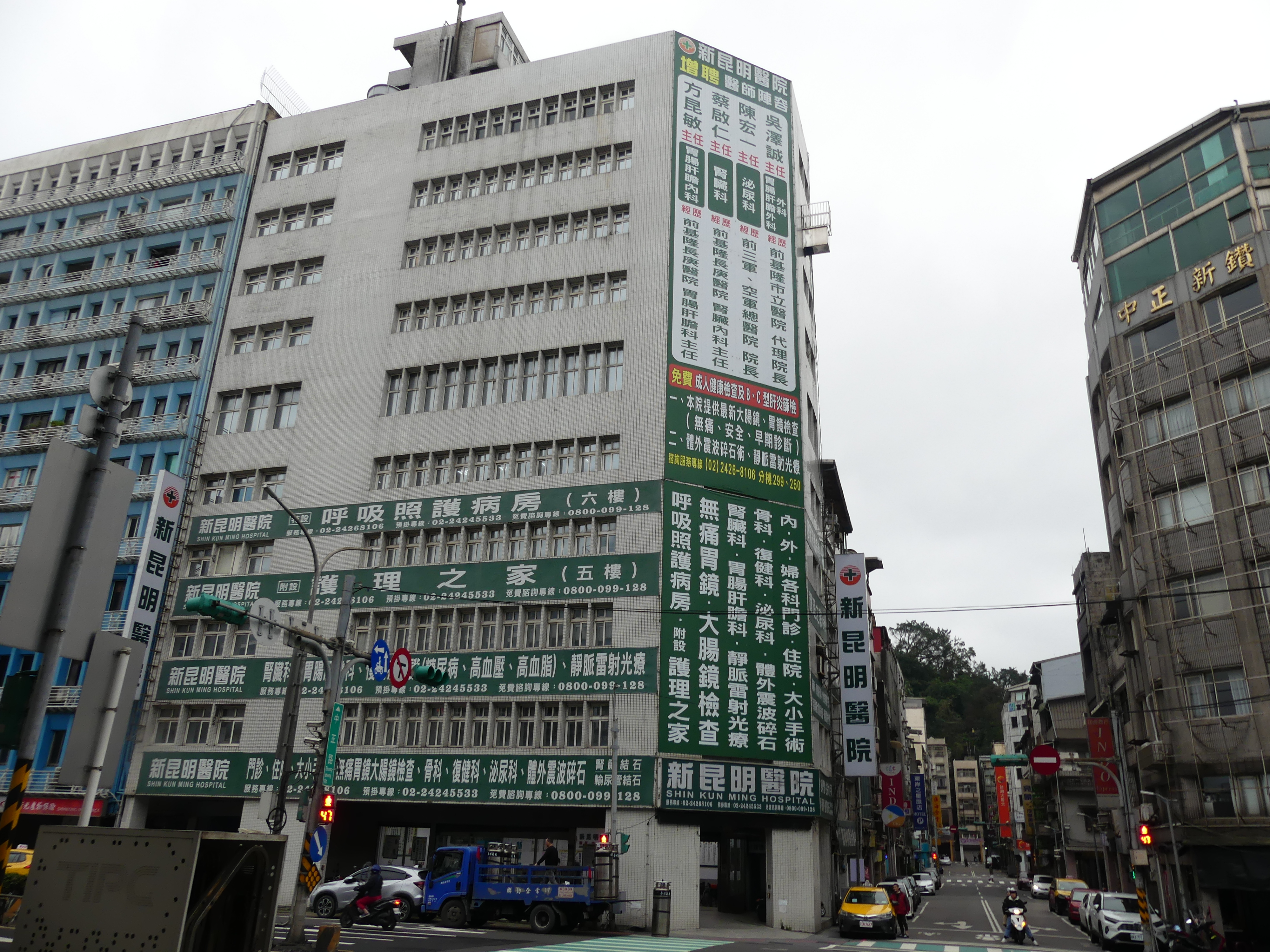
We made our way through the night market and the streets generally. The streets were so packed we were shouldering through the crowd. I was getting very tired by this time and Kerry kindly returned to the ship with me otherwise she would still be looking for me in that crowd. The next morning, I got a picture of Evergreen Hotel. Now we had flown with EVA airlines on many occasions. Evergreen is one of those Asian vertically integrated companies from airlines to hotels to transport and everything in between and here is one of the hotels. I also snapped a picture of a building which turned out to be a hospital – who would have guessed if you were not Taiwanese and where the hell do you park.

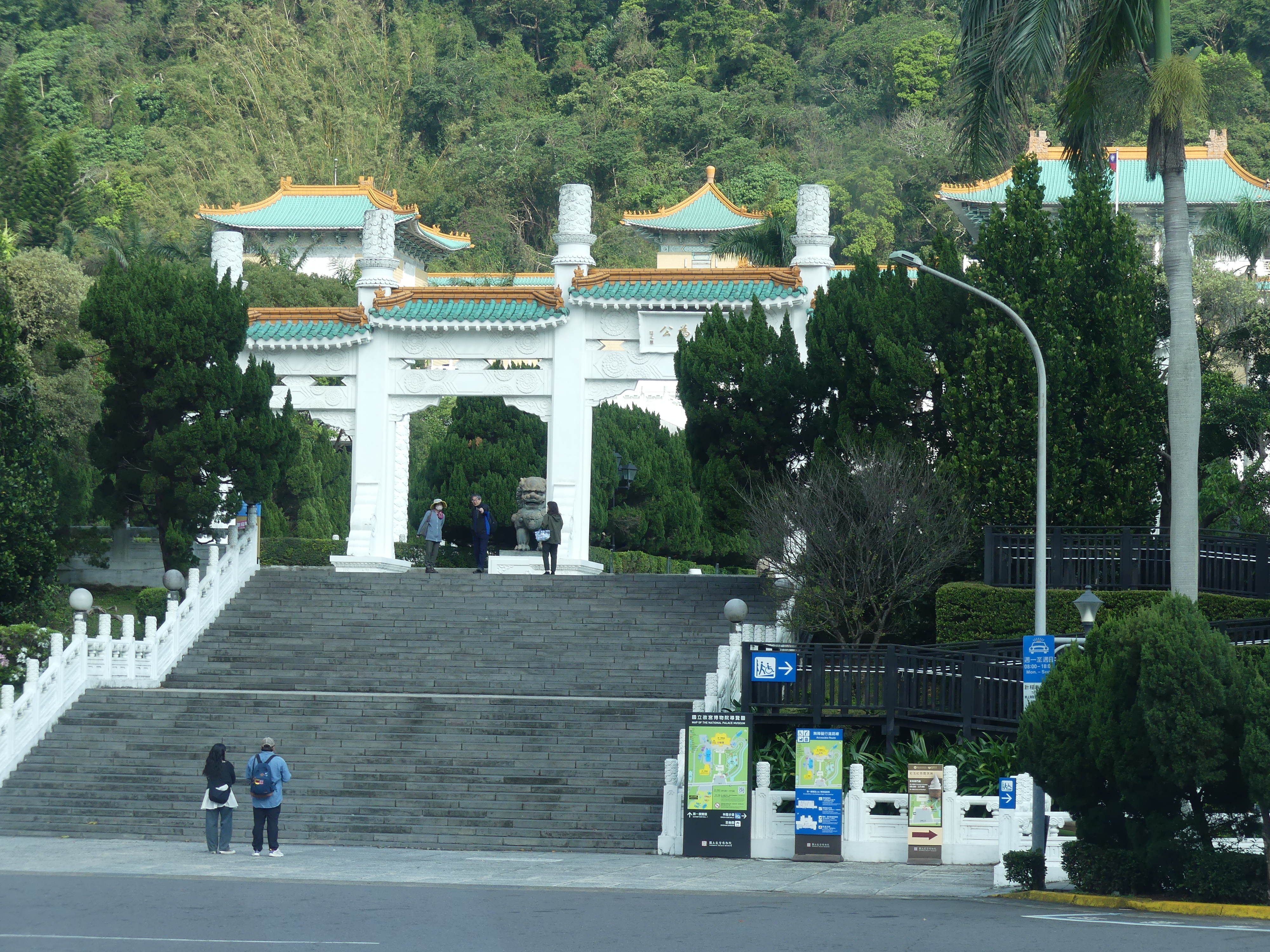
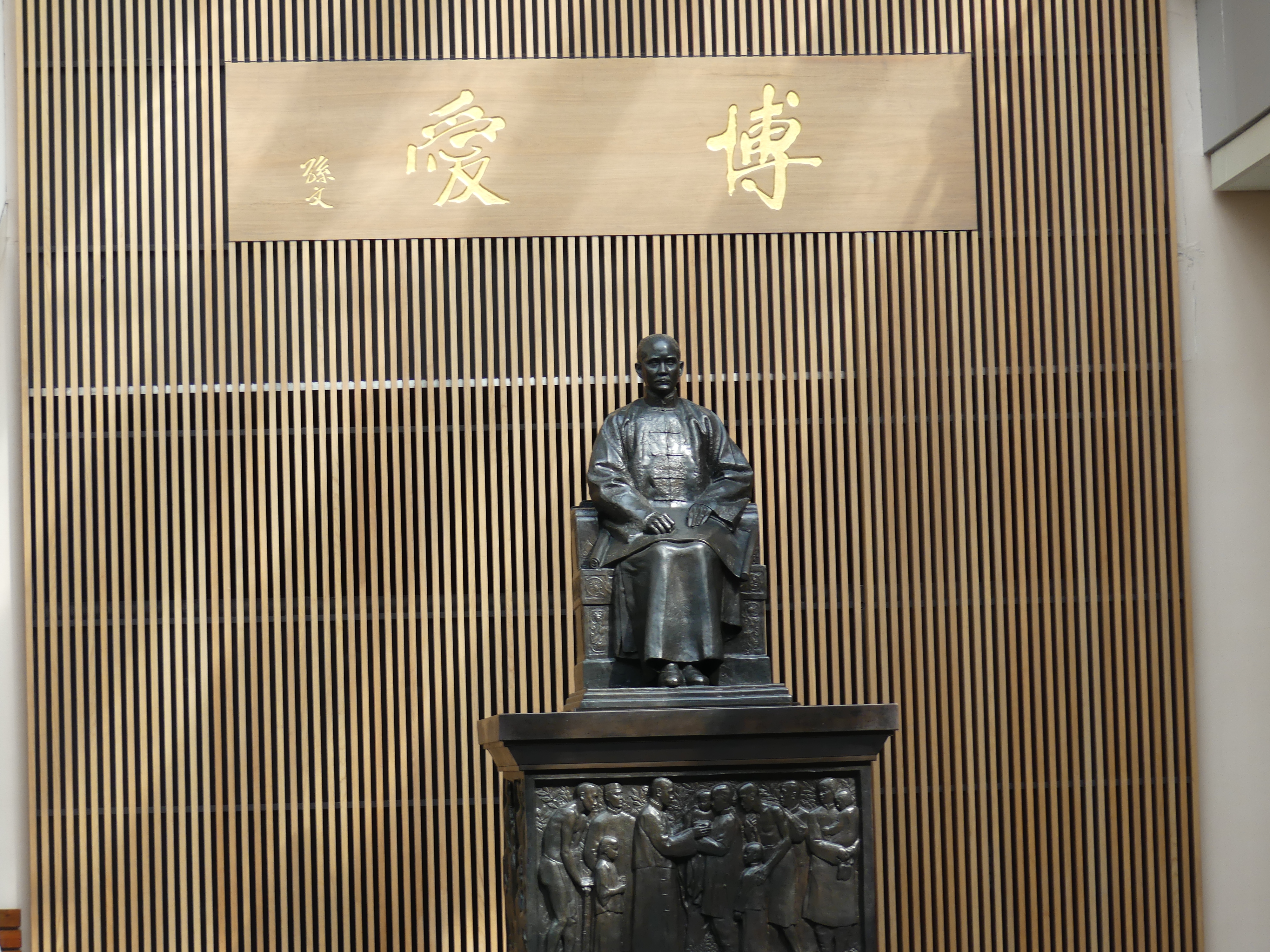
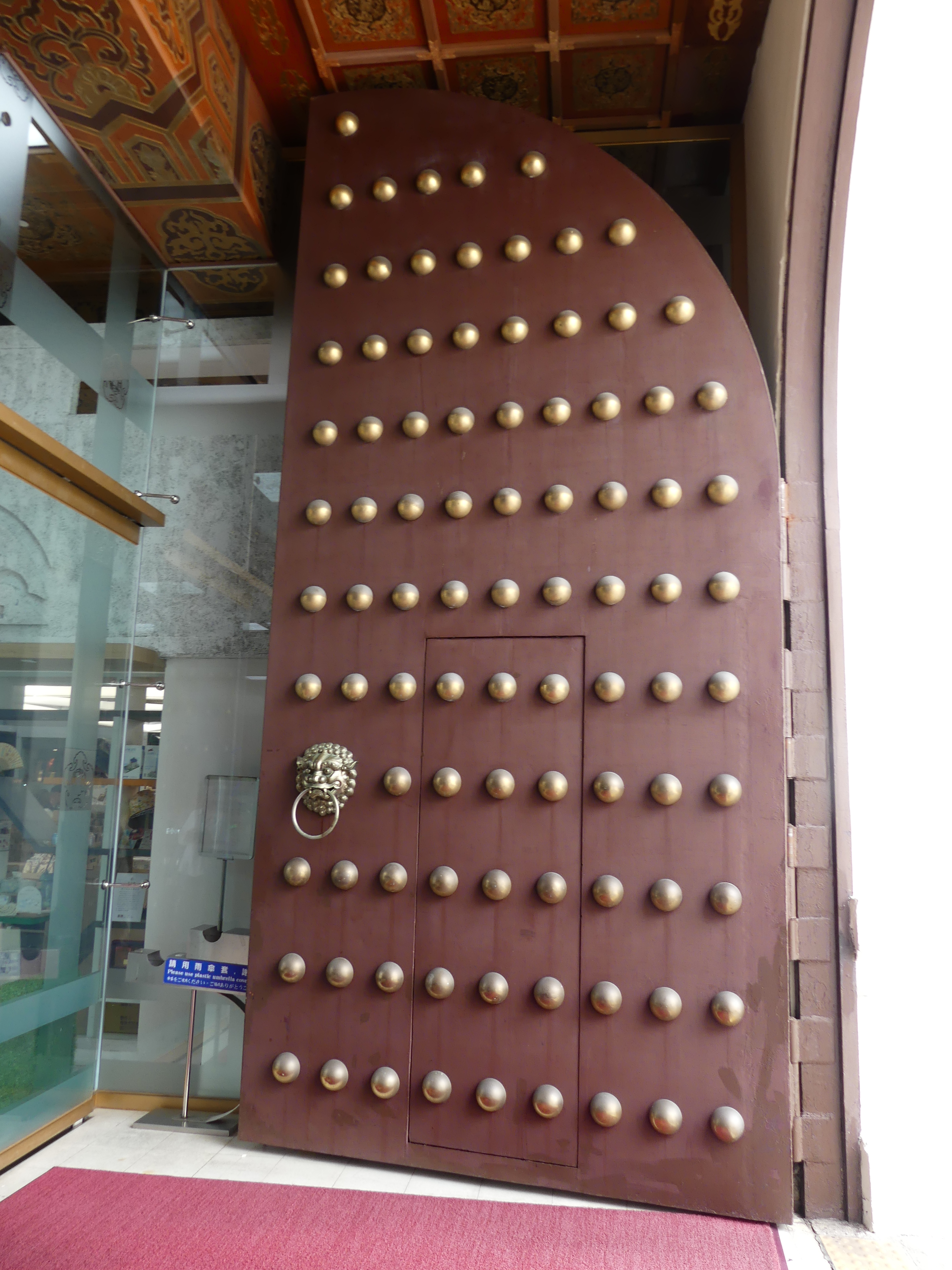
The following day we joined Barry and Sandi Rowland on the excursion of Taipei City Centre and Taipei 101, Chang Kai-Shek Memorial, National Palace Museum & Martyrs’ Shrine. We started with the National Palace Museum. After entering the museum, the great man greets us inside the front door.

There is a lot of Chinese artifacts here and I have provided a few photos of what caught my eye. I suggest all of this was liberated from the Peoples Republic of China by Chang Kai Shek escaping with the nationalists army to the island of Formosa later renamed Taiwan.

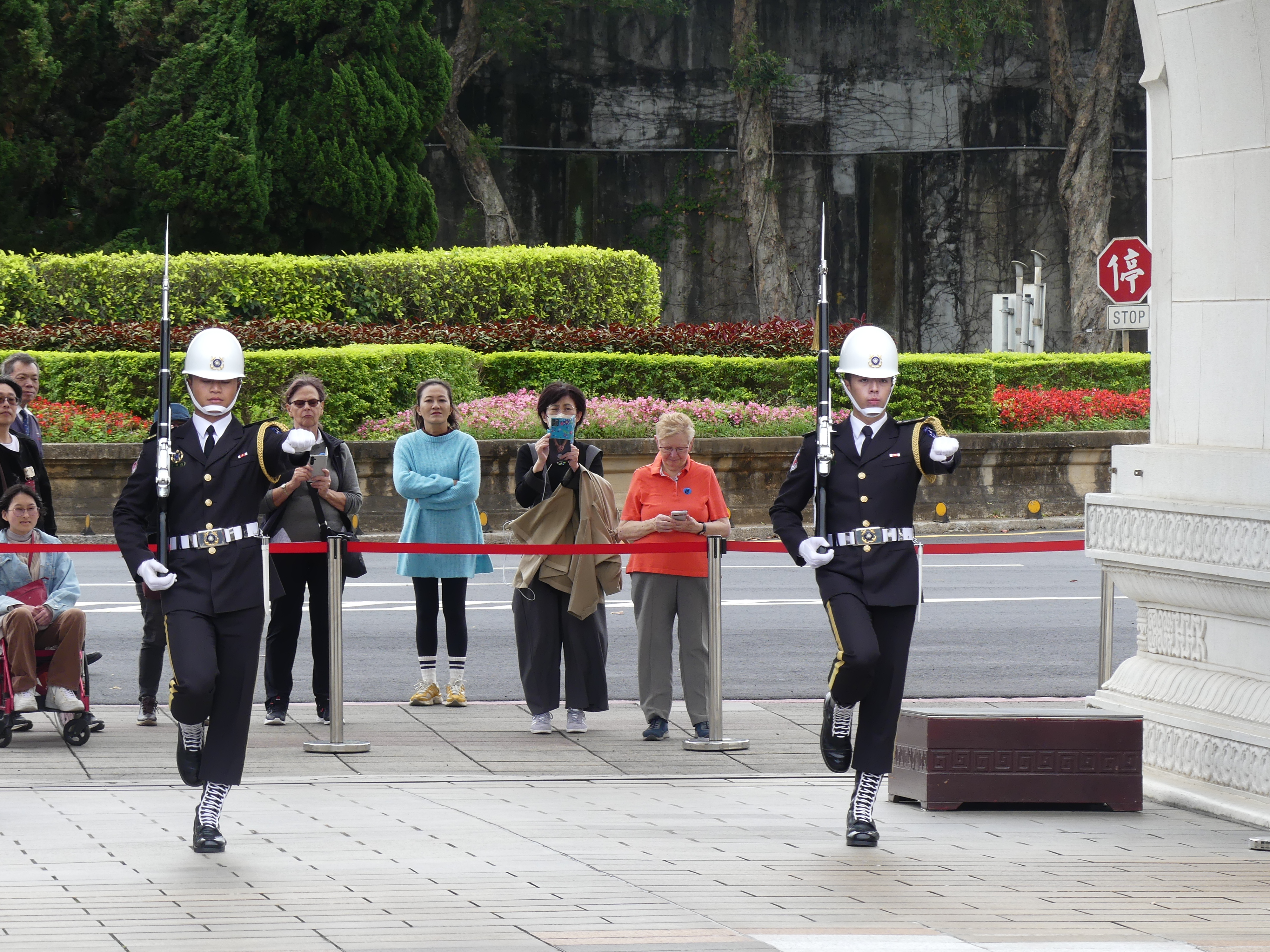
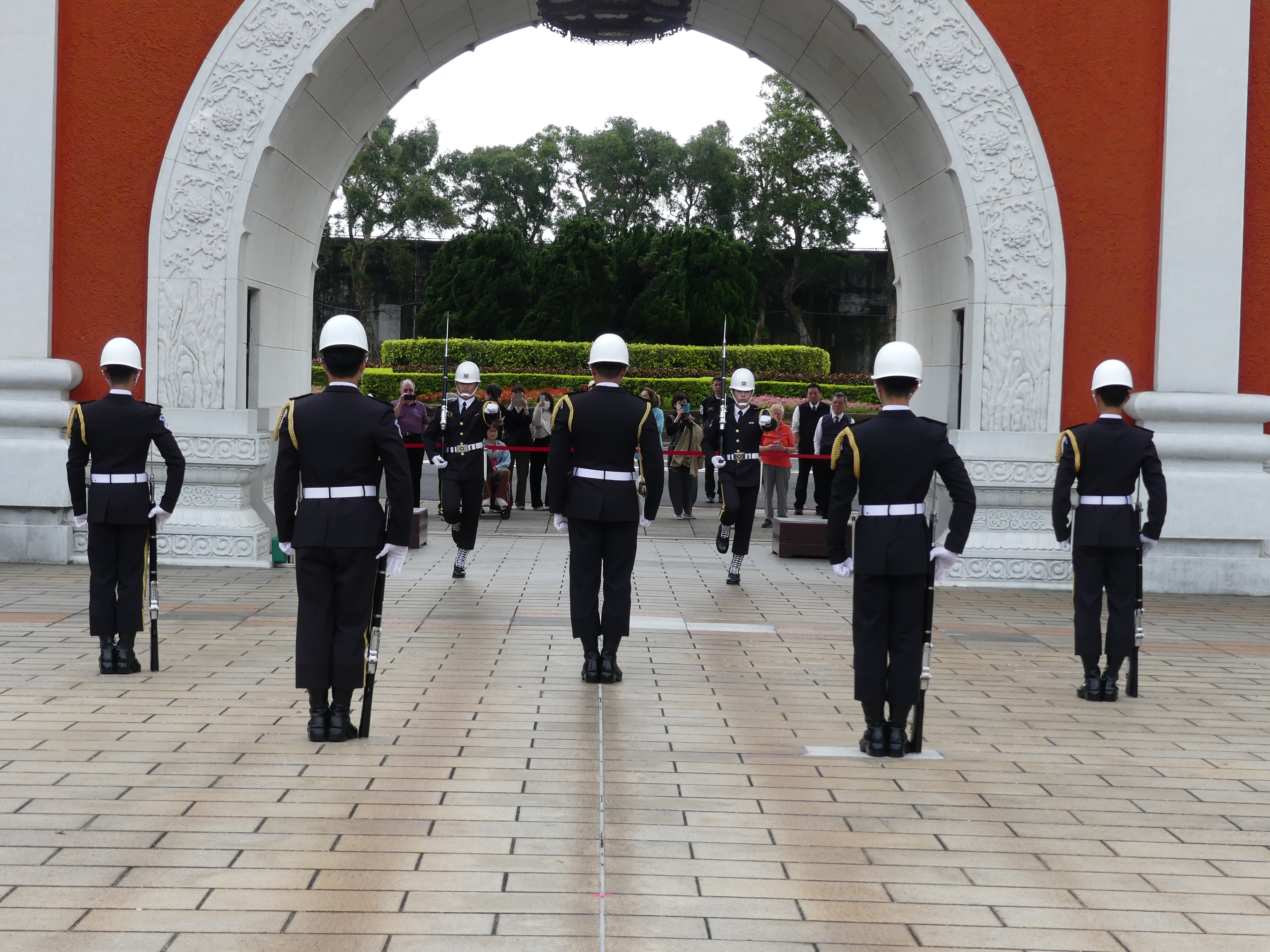
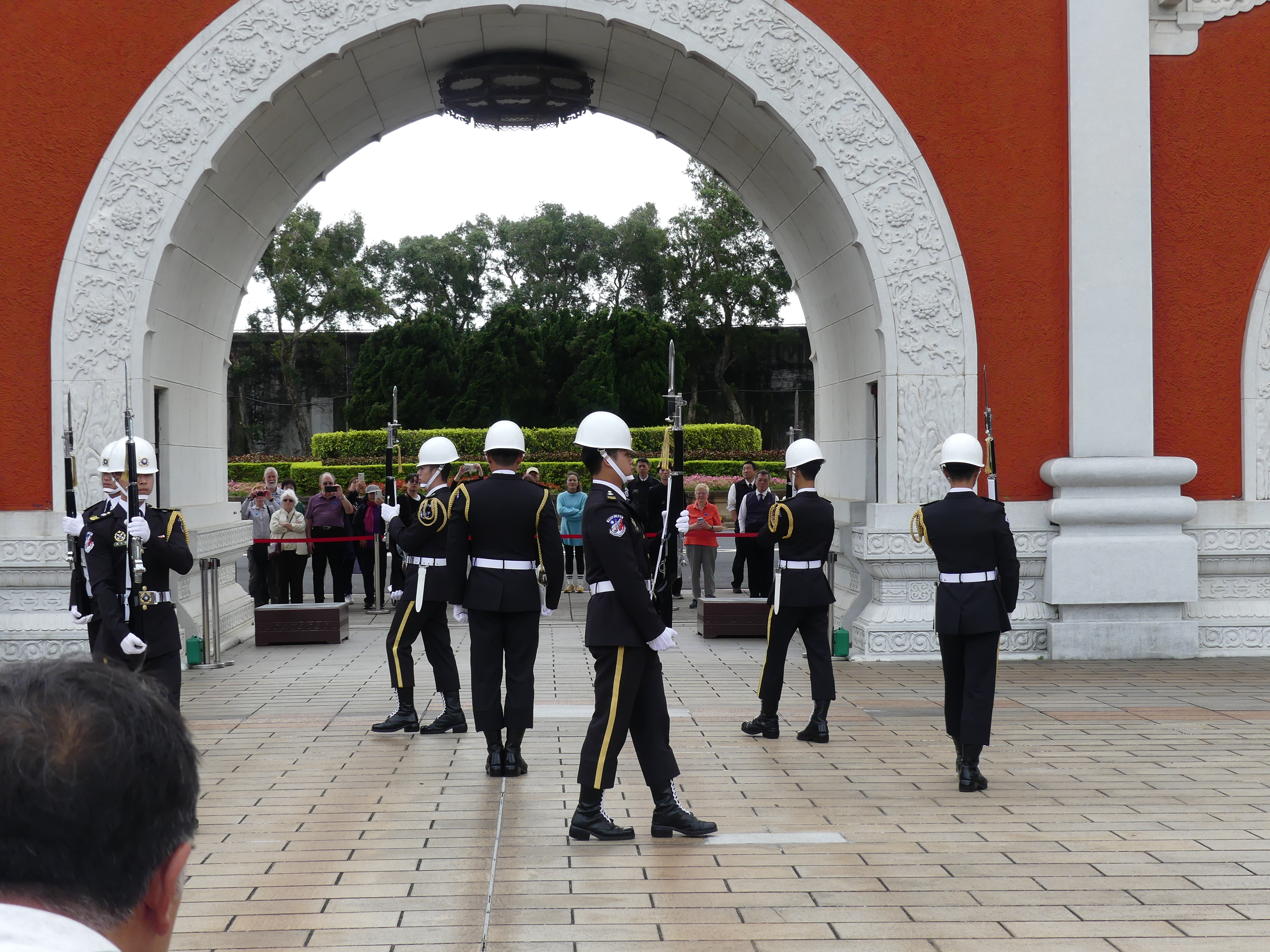
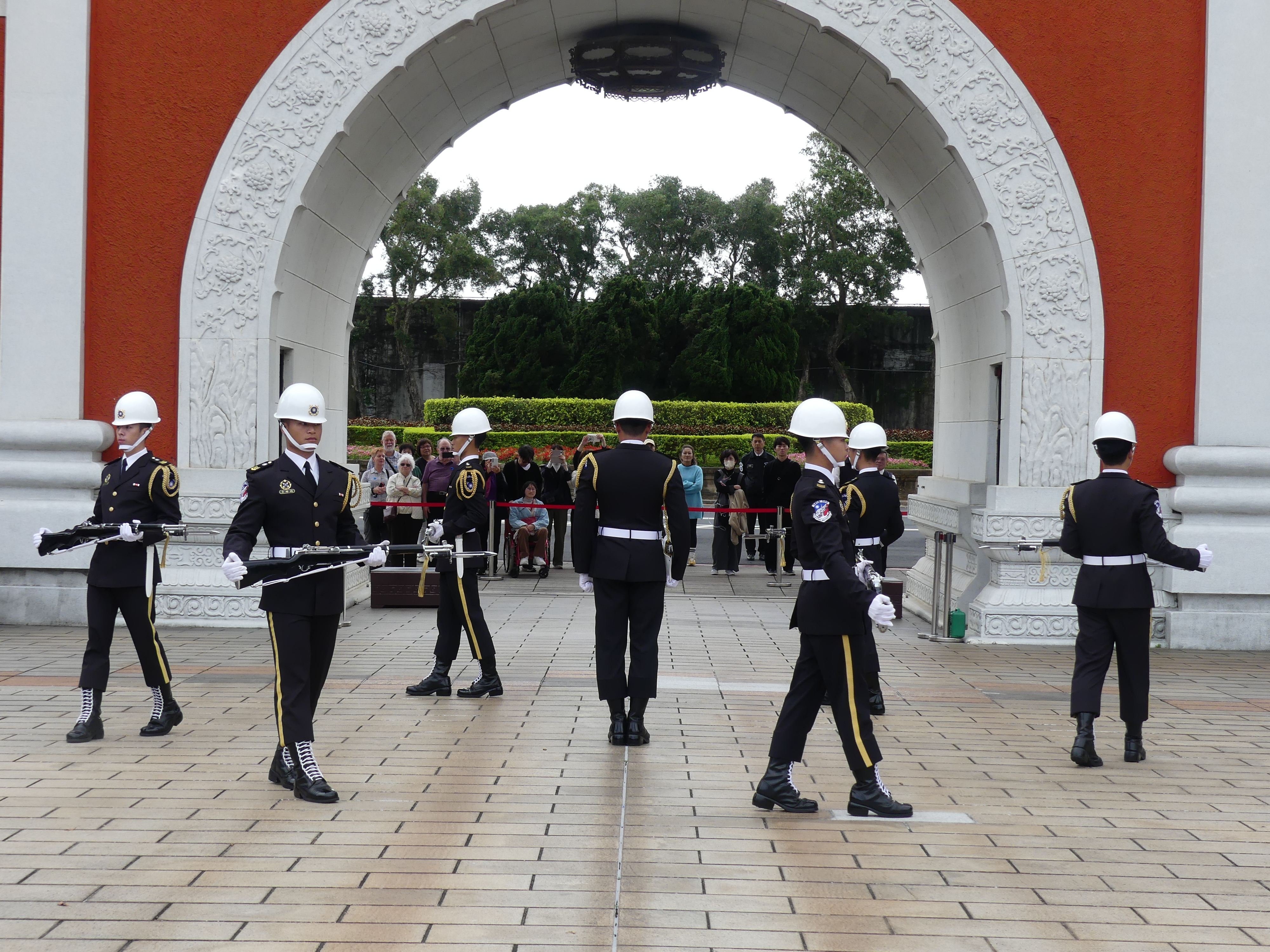
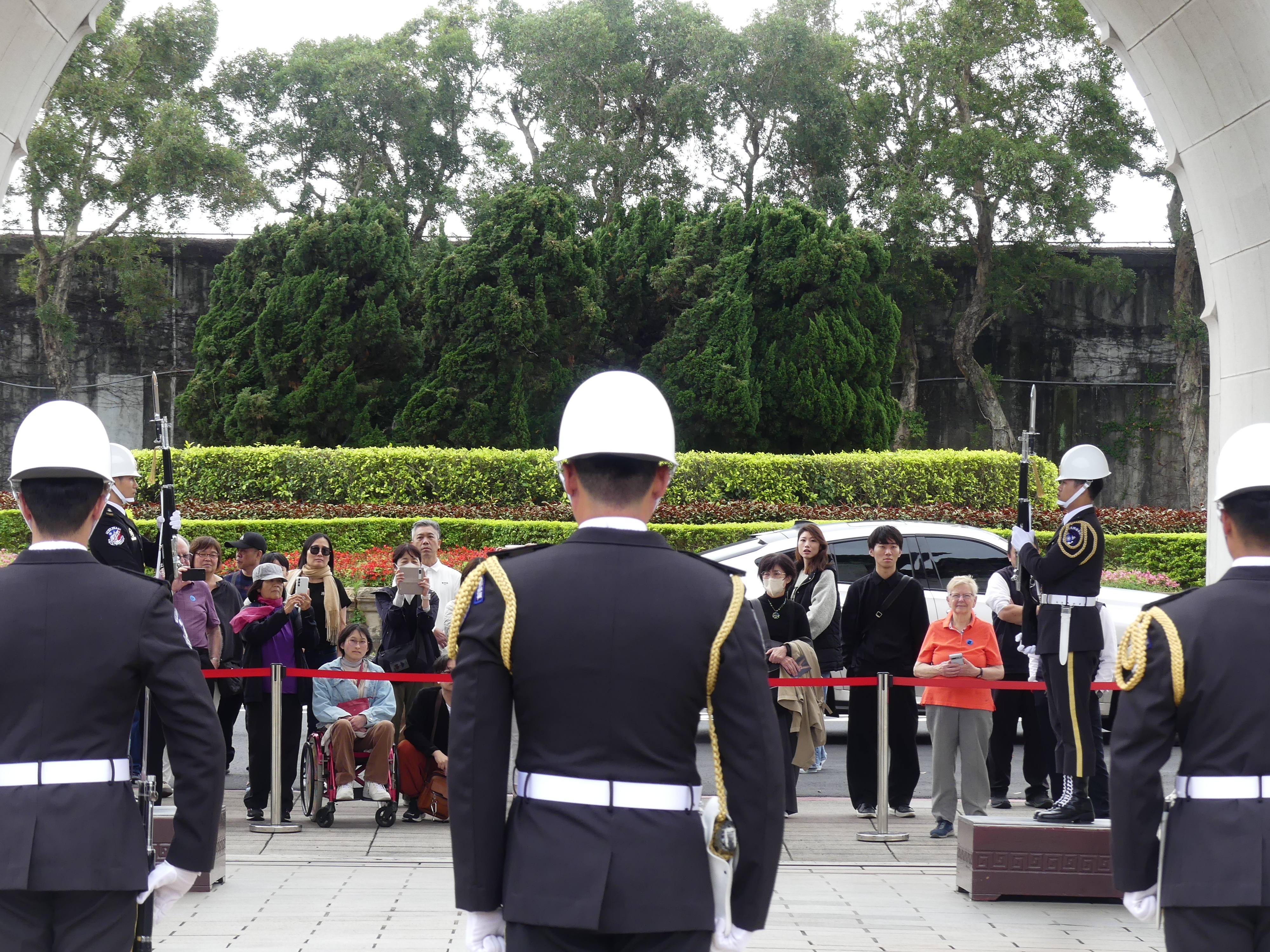
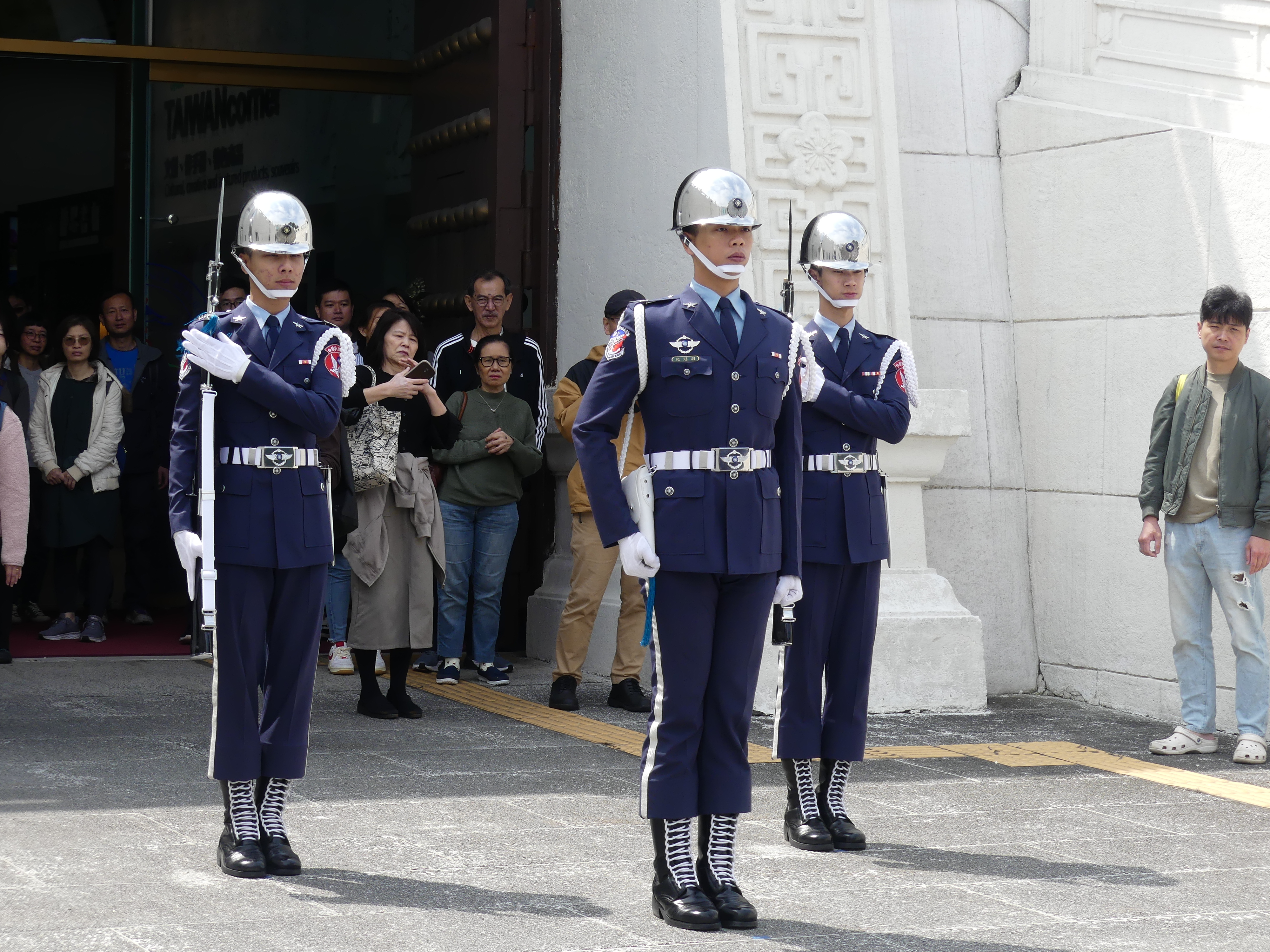
Back to the bus and next, we observed the changing of the guard.

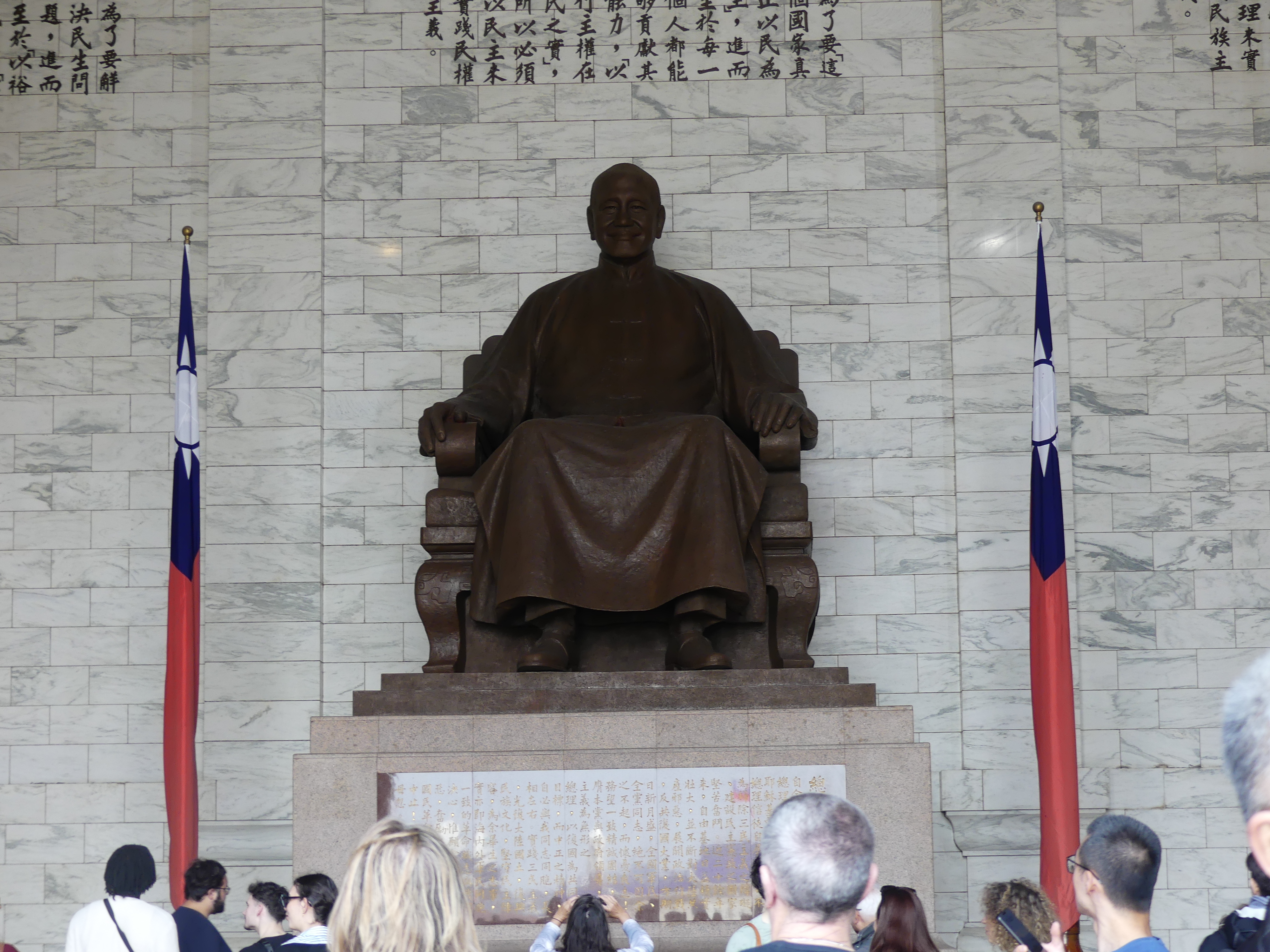
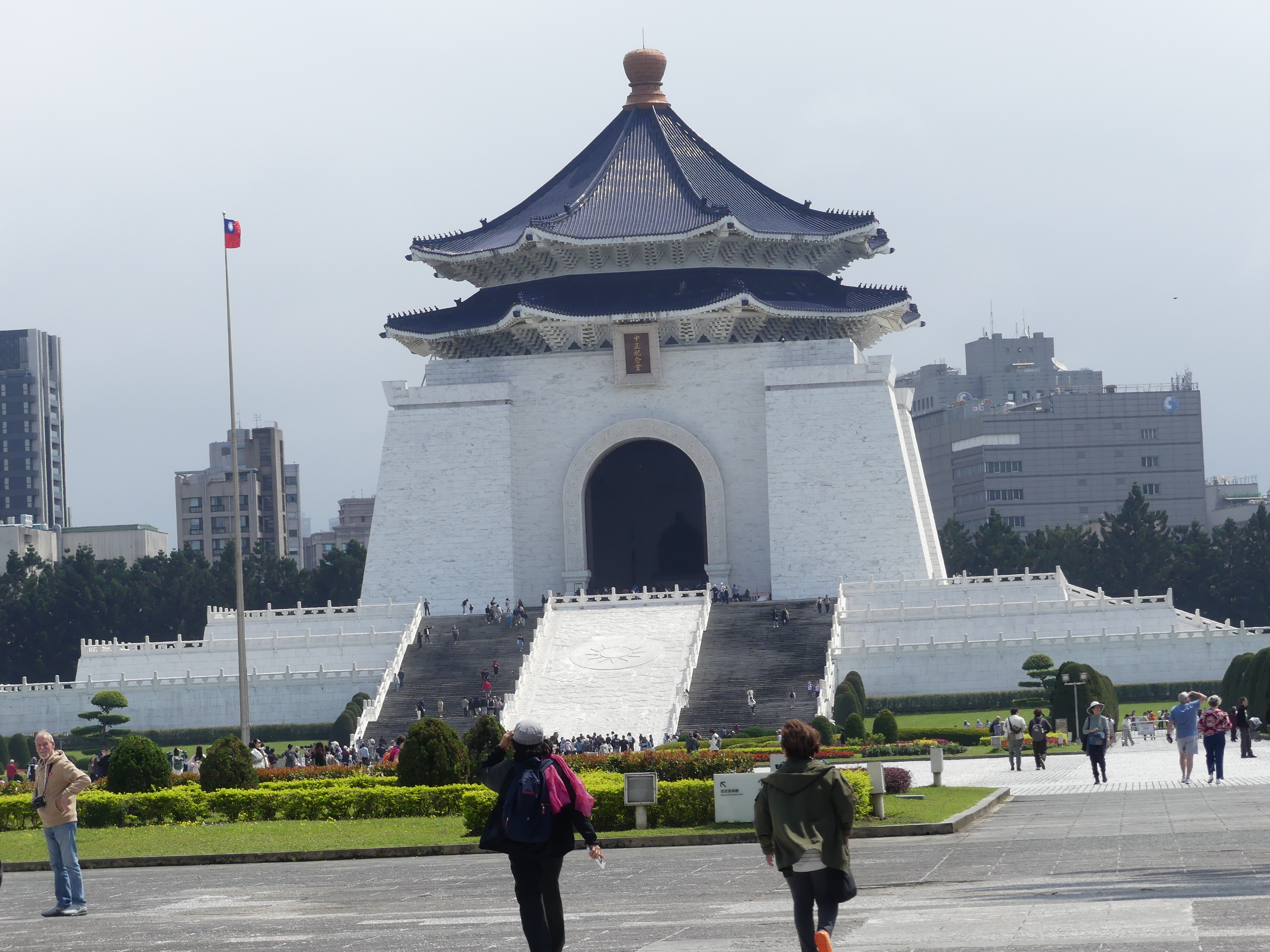
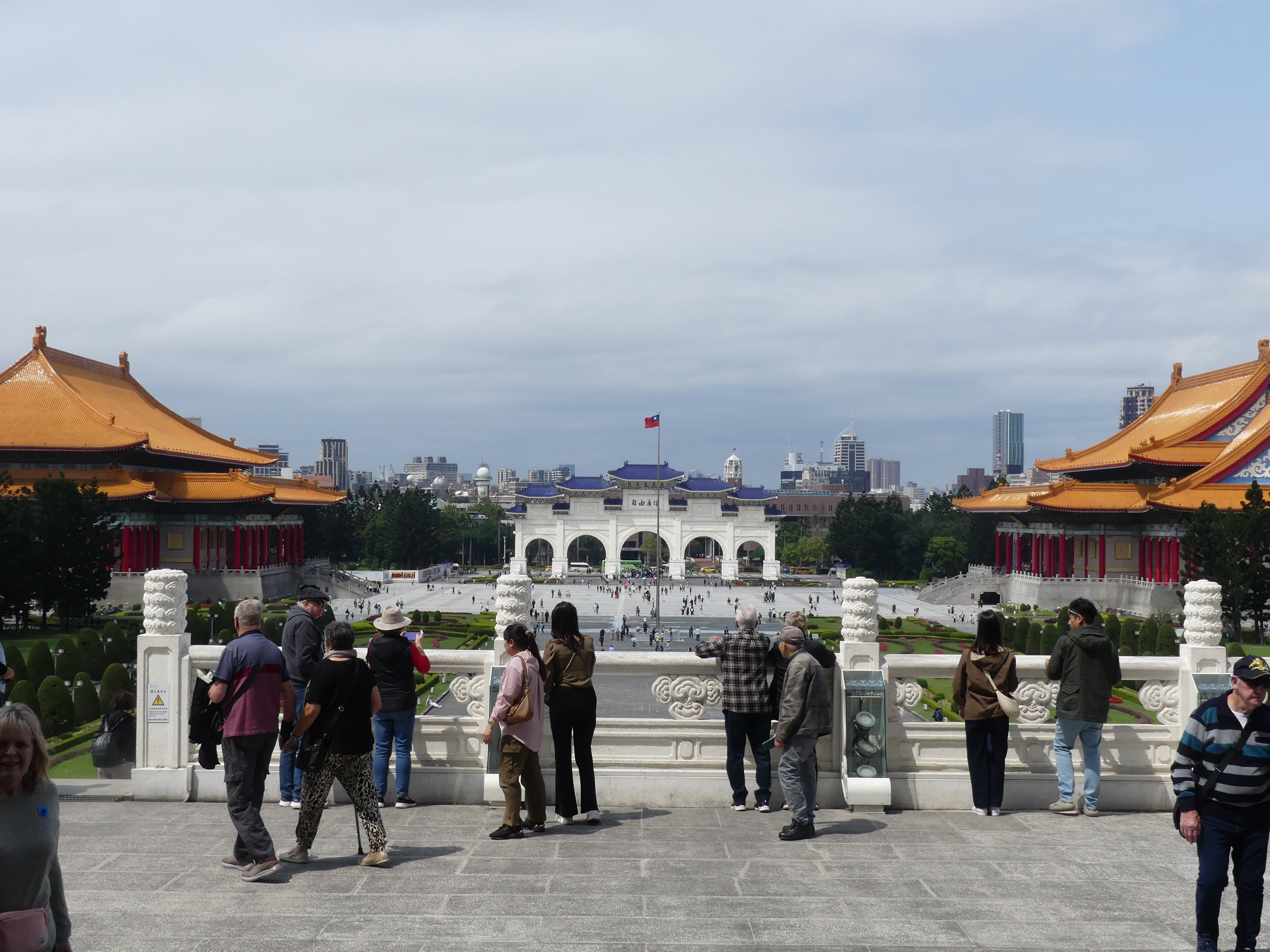
This was followed by the visit to the Chang Kai Shek Memorial & Martyrs Memorial where they also changed the guard. A grand plaza spread over acres of central Taipei with a huge monument to Chang Kai Shek. It included a Performing Arts pavilion and Museum and the Shrine.

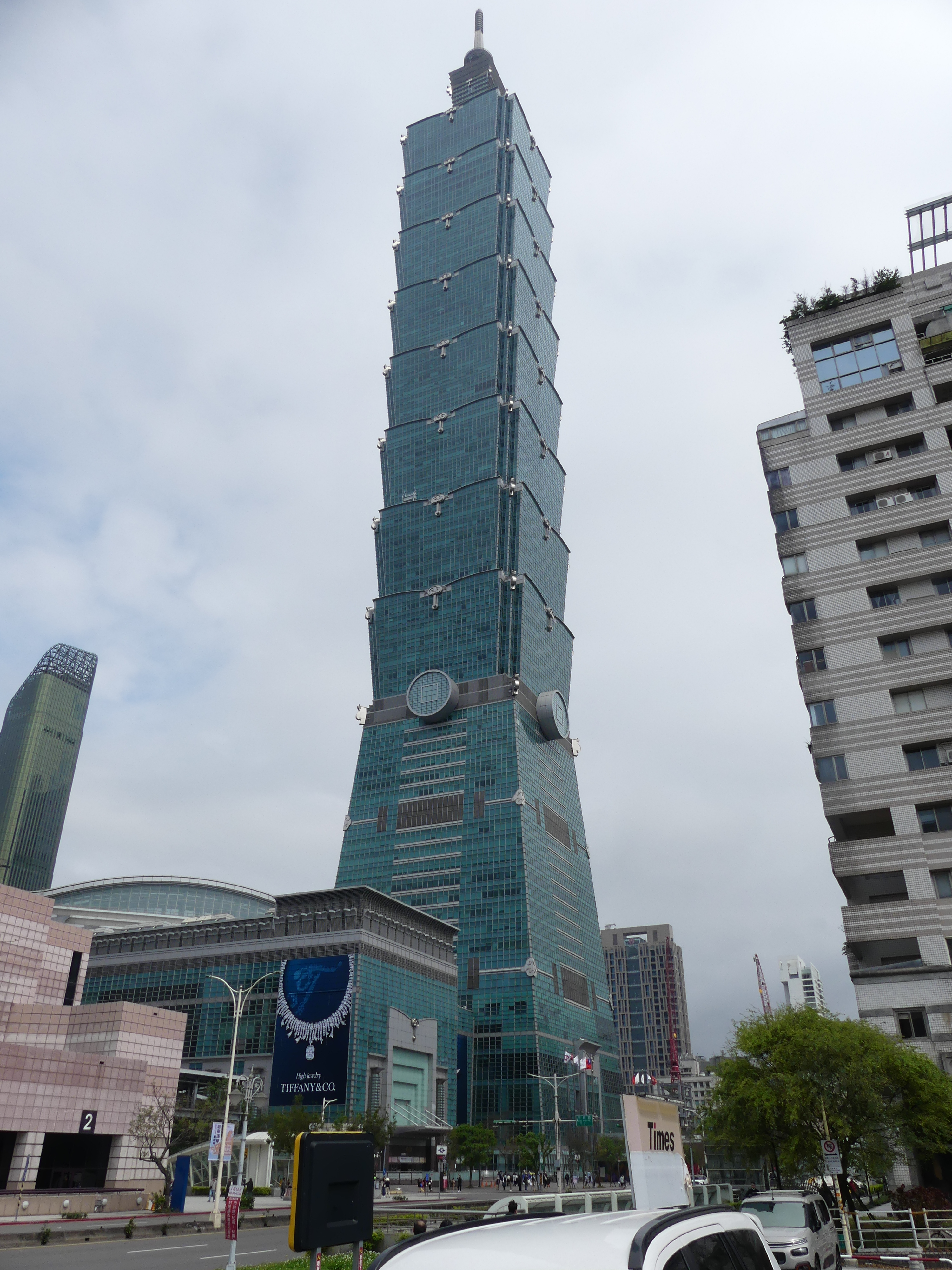
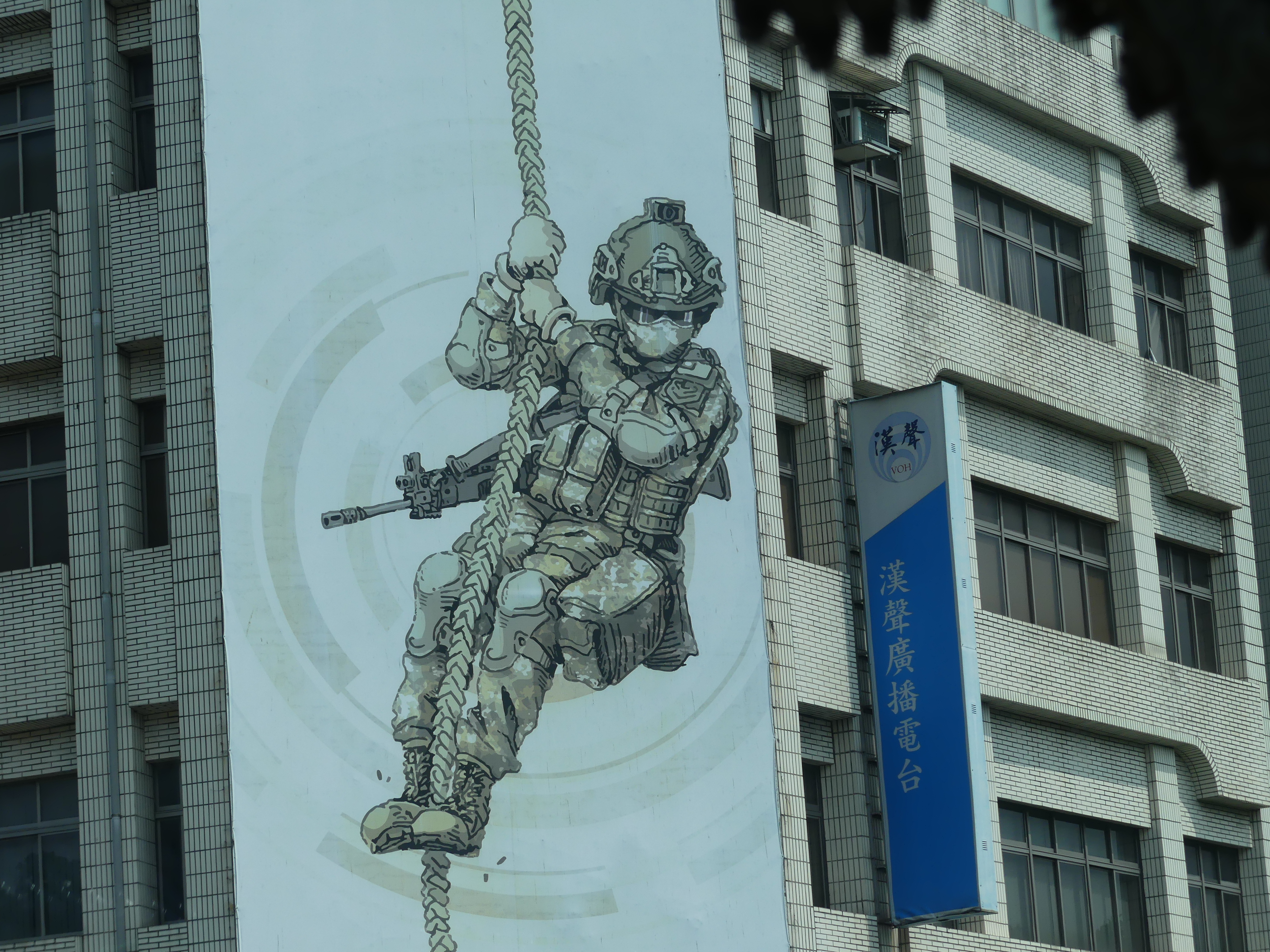
Finally, we visited Taipei 101 which was the world’s tallest building at one stage. The design based on the natural design of bamboo gives the building a different appearance. On the way I spotted this piece of street art also. Foretelling the future?

The bus returned us back to the ship as we depart tonight and are at sea until we reach Nagasaki.

Day 10 Port Nagasaki

We had booked the excursions to Ground Zero and Atomic Bomb Museum and Nagasaki Peace Park, & Atomic Bomb Museum. Barry and Sandi were on this tour with us, so we travelled together as you will see.

Founded by the Portuguese, the port of Nagasaki became the sole port used for trade with the Portuguese and Dutch during the 16th through to 19th centuries. Part of Nagasaki was home to a major Imperial Japanese Navy base during the First Sino-Japanese War and Russo-Japanese War. Near the end of World War II, the American atomic bombings of Hiroshima and Nagasaki made Nagasaki the second city in the world to experience a nuclear attack. The city was rebuilt.

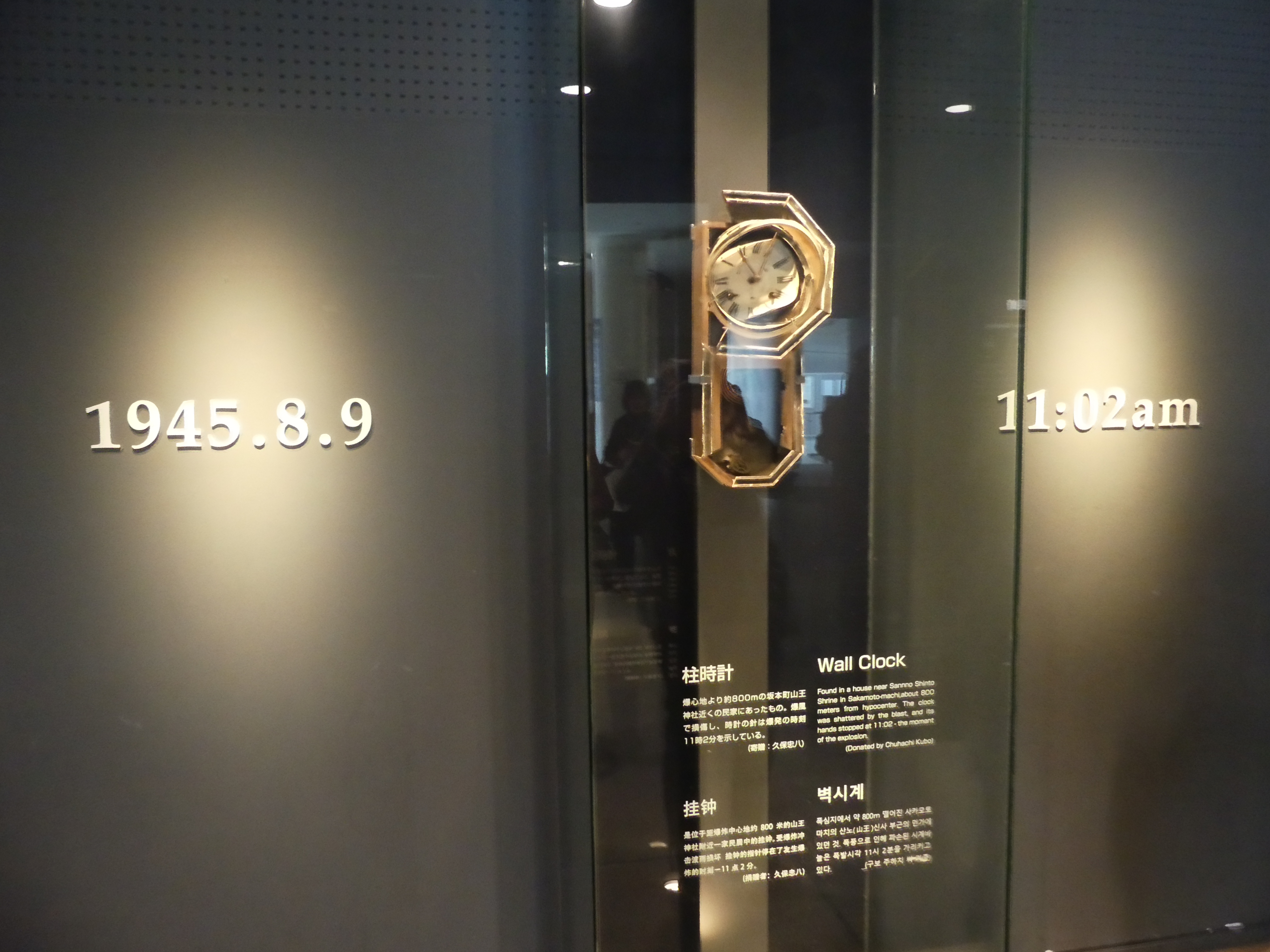
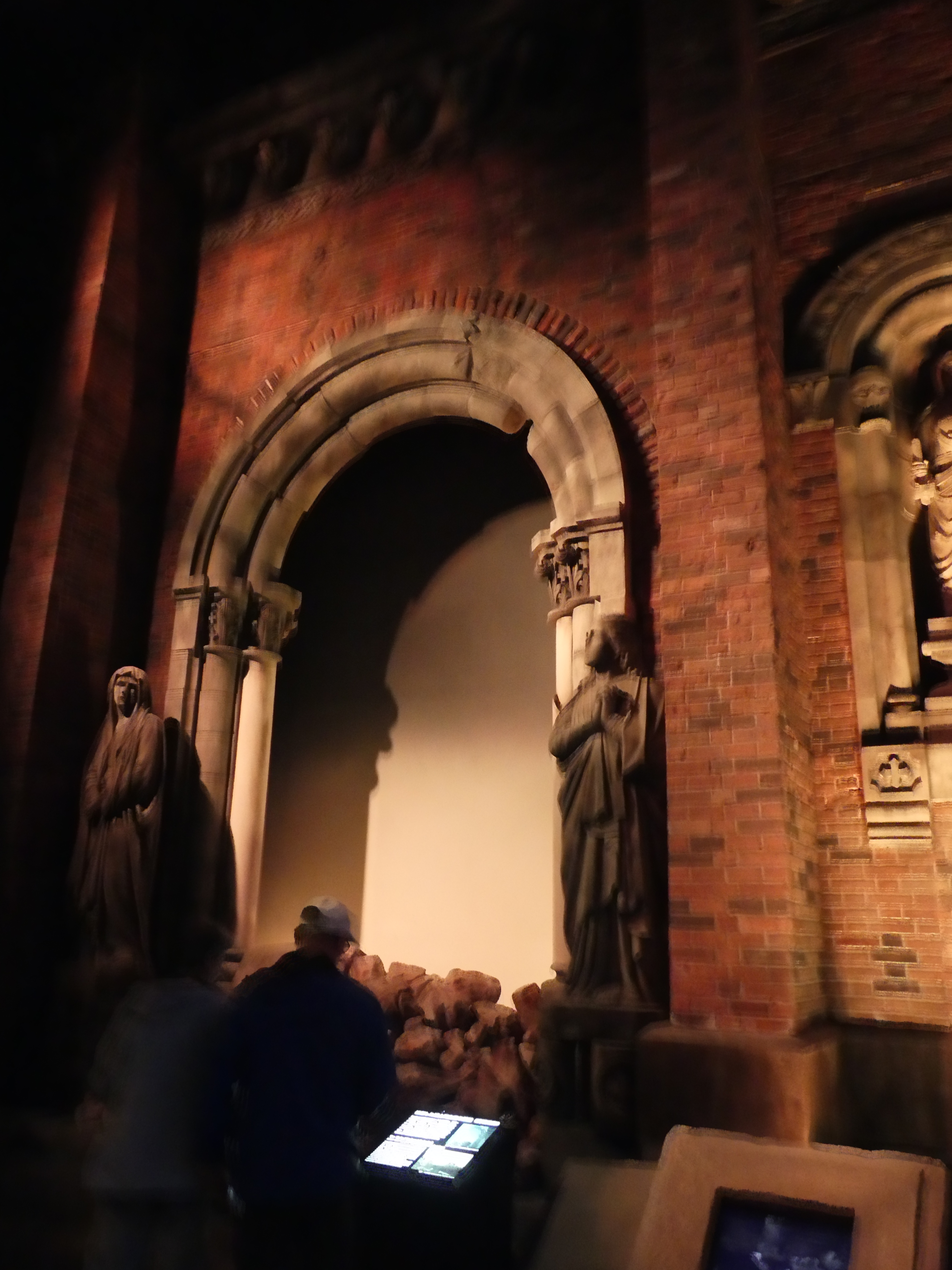
First excursion stop was Nagasaki Peace Park, & Atomic Bomb Museum. On arrival the bus parked in front of a large brick building with sculptures in front of it (my last picture below) but that is not what we came to visit – we walked past this building through a park of sorts into an underground shelter with a staircase following the walls to the bottom of the shelter – a bit like the Gugenheim Gallery in New York. This exhibition covers the devastation caused by the atomic bomb, the process that led to the dropping of the atomic bomb, and the history of nuclear weapons development. Permanent Exhibition Rooms show the city, scenery, and life of Nagasaki residents before the atomic bombing August 9, 1945. I have seen some of this material previously but the very first thing you see here is time standing still – the moment of the explosion in the form of a distorted clock found amongst some of the remains that had not been vapourised. There are the reconstructed remains of a Jesuit Church a remnant from Portuguese times and the photographic evidence of the remains in situ in 1945. I suggest a visit to https://nabmuseum.jp/ to see the remainder of the museum. The images are shocking as a result I lost the desire to photograph anything further.

Our second stop was Ground Zero and Atomic Bomb Museum. I found this far less confronting but still devastating to grasp the enormity of the bombing. Nagasaki’s Ground Zero and the Atomic Bomb Museum are crucial sites for understanding the devastating impact of the atomic bomb dropped on Nagasaki on August 9, 1945. Ground Zero, marked by a black stone monolith and concentric circles, is the exact location where the bomb exploded. The hypocentre, or Ground Zero, is the point directly below the blast where the atomic bomb detonated.

Memorial Park:

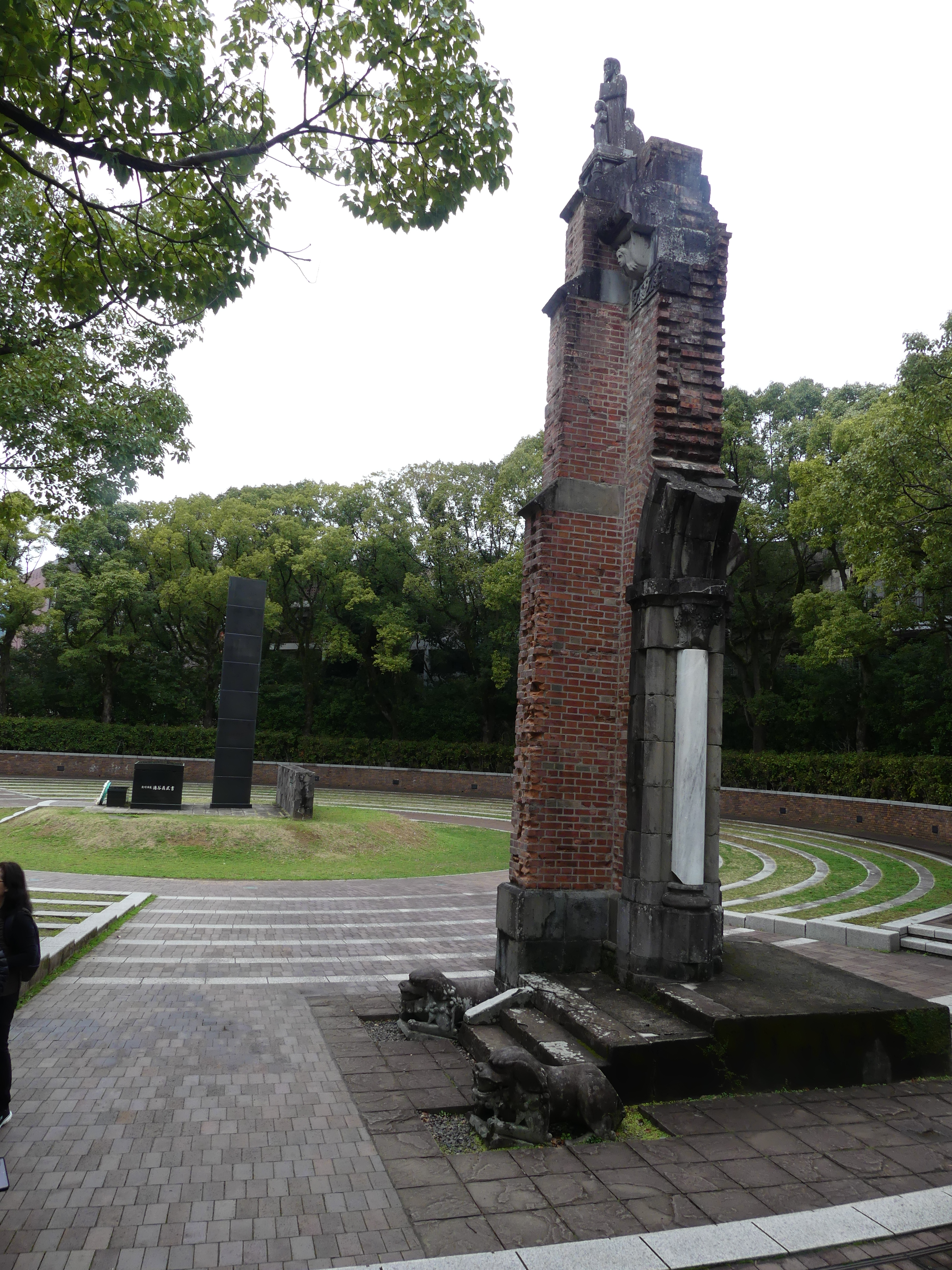
Ground Zero is located within Nagasaki Peace Park, a space dedicated to commemorating the victims and promoting peace. Urakami Cathedral Pillar: A damaged pillar from the Urakami Cathedral, which was destroyed by the bomb, stands nearby as a poignant reminder. To access this site, we had to pass through a park – Nagasaki Peace Park.

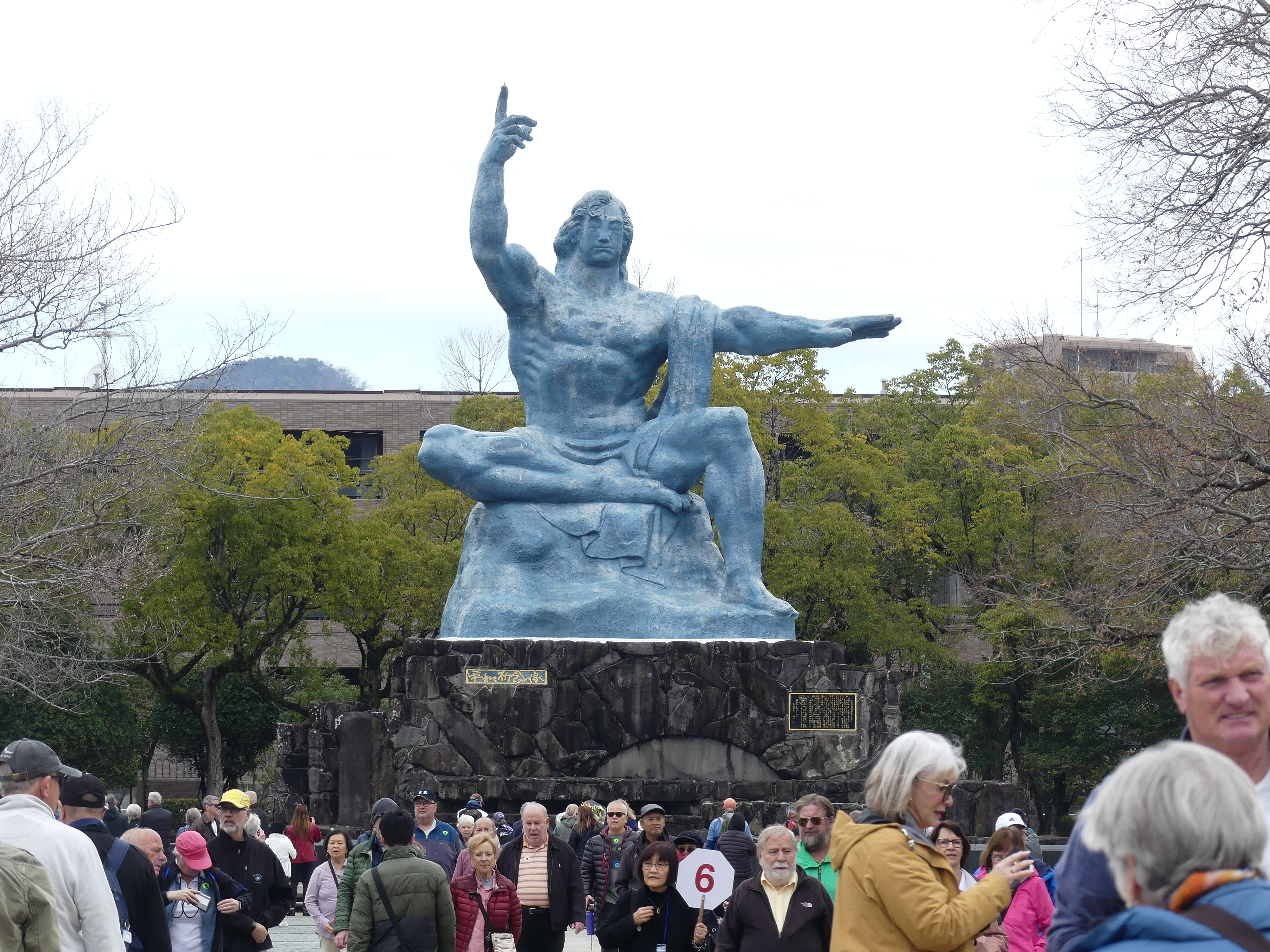
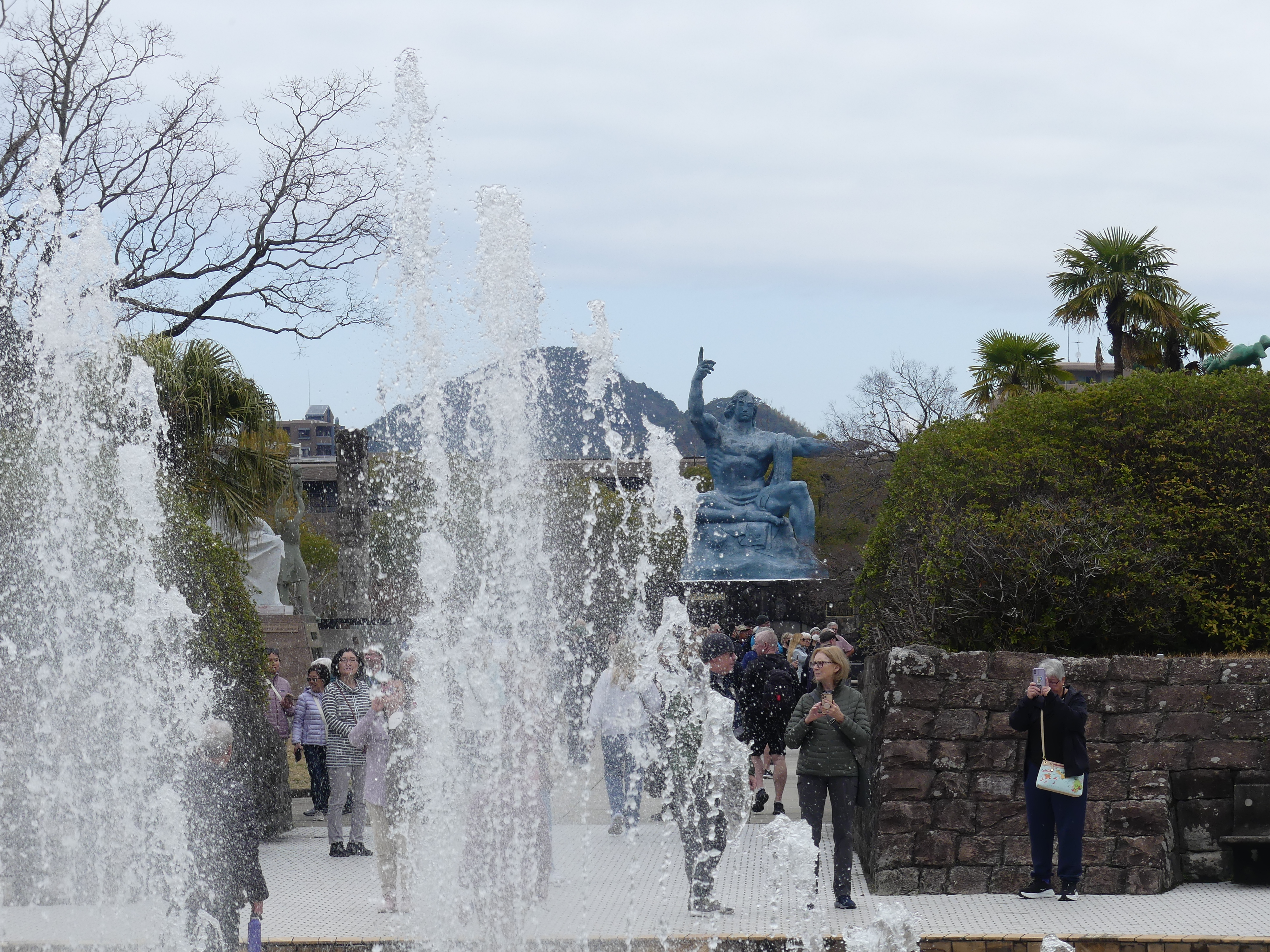
Established in 1955, and near to the hypocentre of the explosion the park’s north end has the 10-meter-tall Peace Statue created by sculptor Seibo Kitamura of Nagasaki Prefecture. The statue’s right-hand points to the threat of nuclear weapons while the extended left hand symbolizes eternal peace. The mild face symbolizes divine grace, and the gently closed eyes offer a prayer for the repose of the bomb victims’ souls. The folded right leg and extended left leg signify both meditation and the initiative to stand up and rescue the people of the world. The statue represents a mixture of western and eastern art, religion, and ideology. Installed in front of the statue is a black marble vault containing the names of the atomic bomb victims and survivors who died in subsequent years.

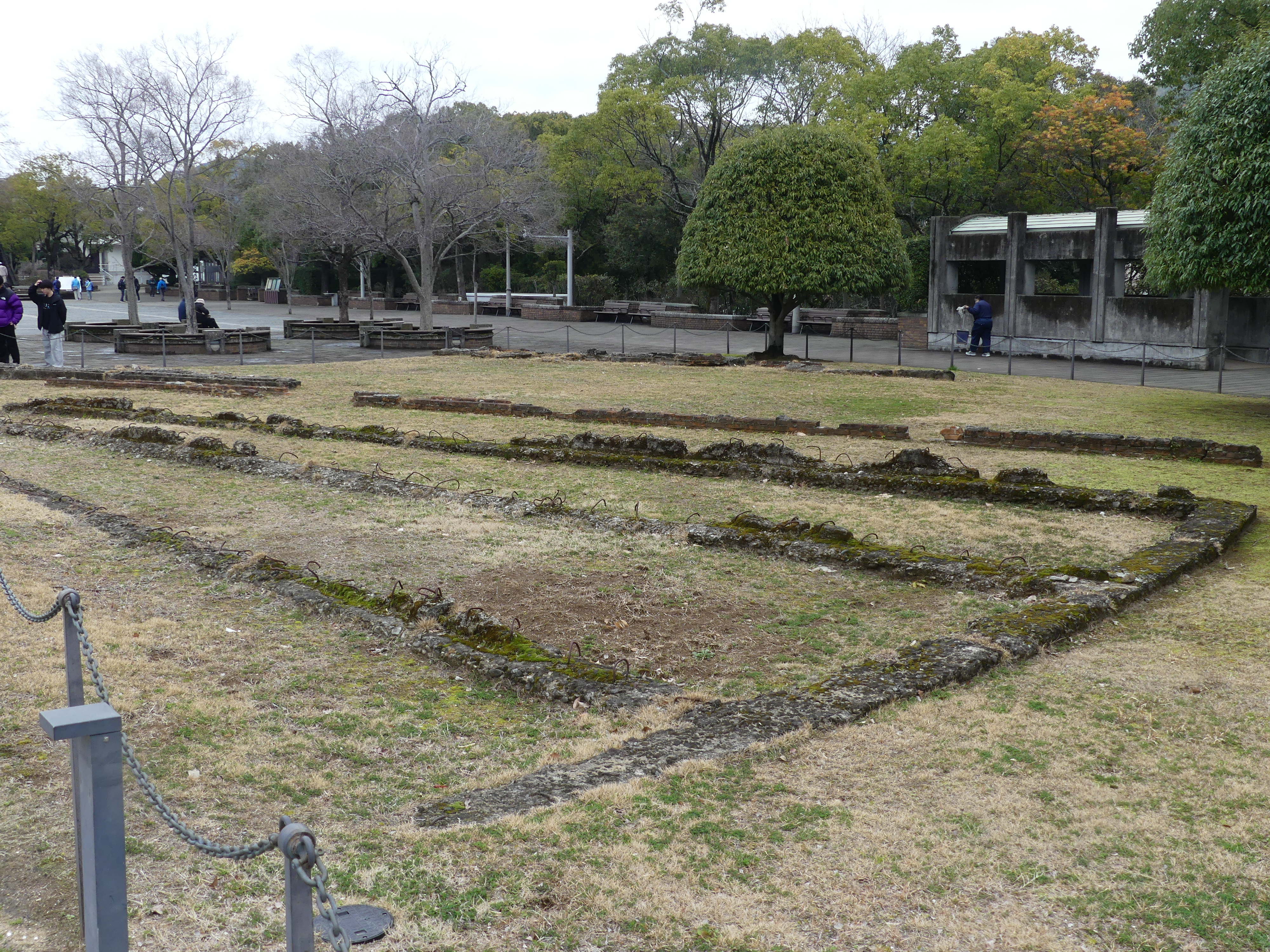
In 1978 the city of Nagasaki established a “Peace Symbols Zone” on both sides of the park and invited donations of monuments from different countries around the world. Beside these monuments lie the foundations of an obliterated building. The following monuments can be seen in the park:

“Cloak of Peace (Te Korowai Rangimarie)”, by Kingsley Baird from New Zealand, 2006.; the plaque reads: “The statue symbolizes consolation, protection, and solidarity. It also expresses ambivalence, reflecting conflicting interpretations of historical events.”

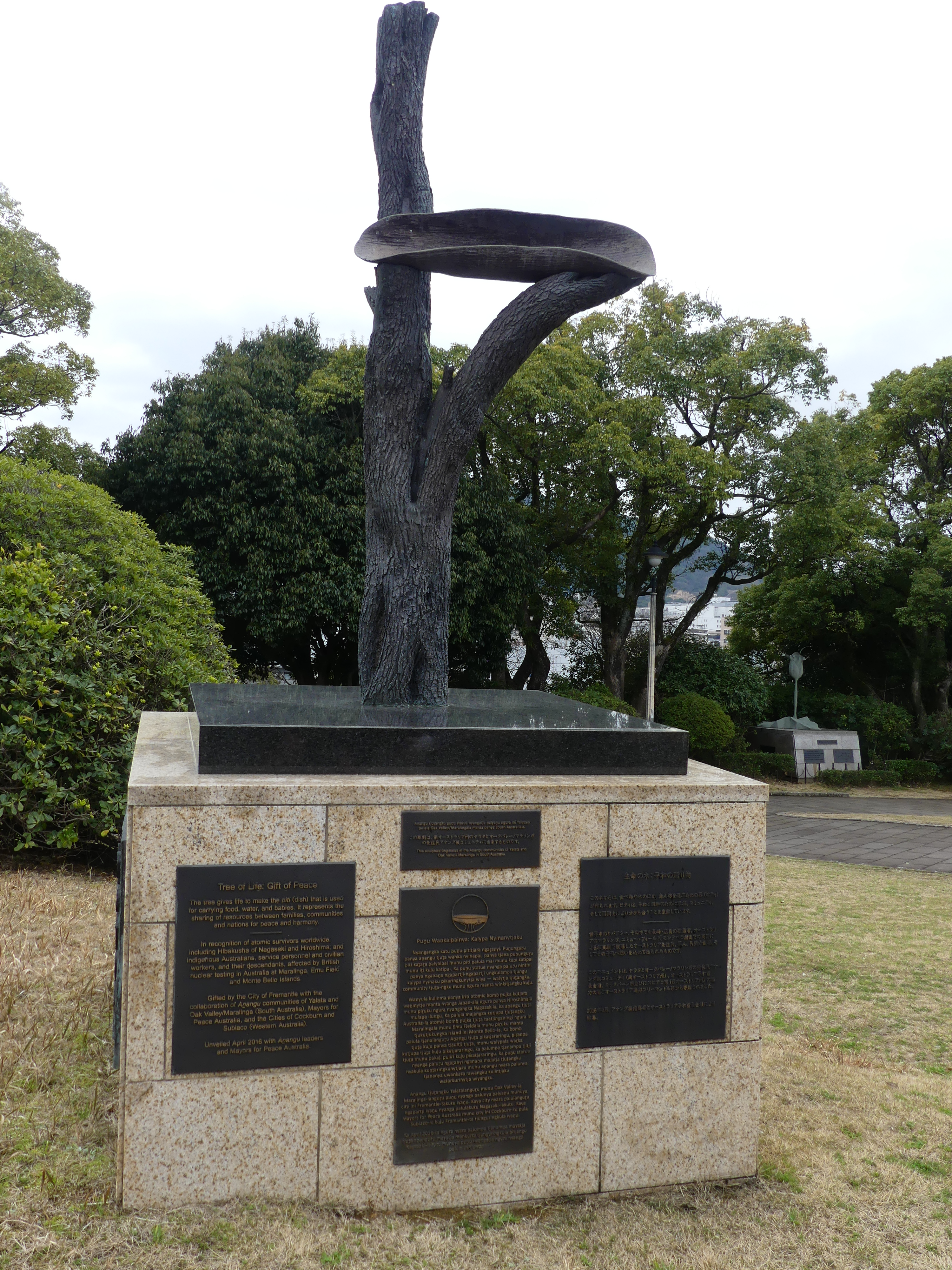
“Tree of Life: Gift of Peace” (Punu Wankalpainya: Kalypa Nyinanytjaku) from Australia, unveiled 18 April 2016; the sculpture of a bronze tree cradling a ceremonial piti (dish) originates in the Anangu communities of Yalata and Oak Valley/Maralinga in South Australia. The plaques which are in Pitjantjatjara, Japanese and English, read “The tree gives life to make the piti (dish) that is used for carrying food, water, and babies. It represents the sharing of resources between families, communities and nations for peace and harmony.” The sculpture also recognises atomic survivors worldwide.

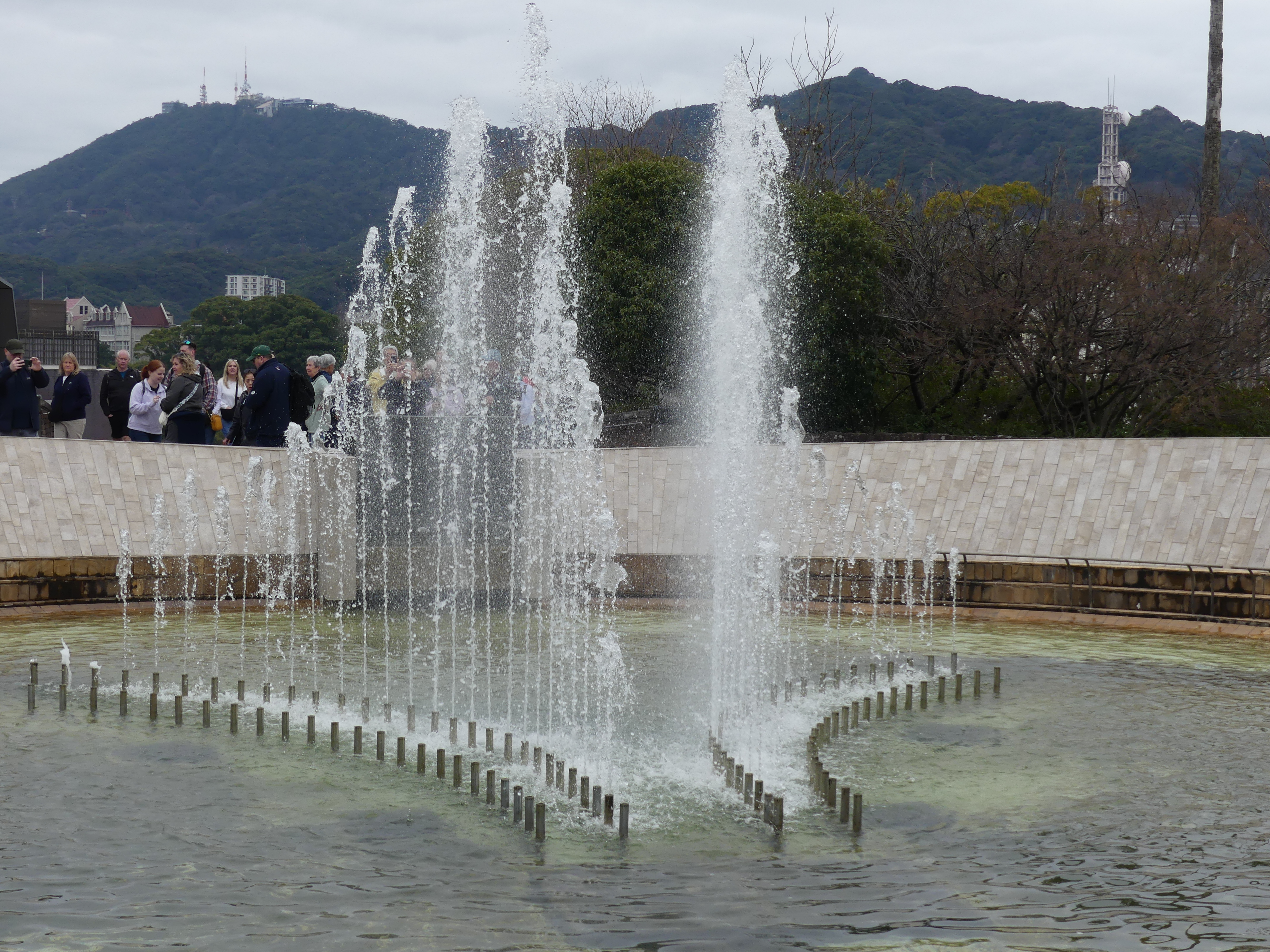
Amongst the memorials and fountains were beds of flowers seeming incongruous in that setting. To reach Ground Zero there is an escalator with a travelator incorporated in it. Very novel and practical. Well, I told you Barry and Sandi were there and here’s the proof.

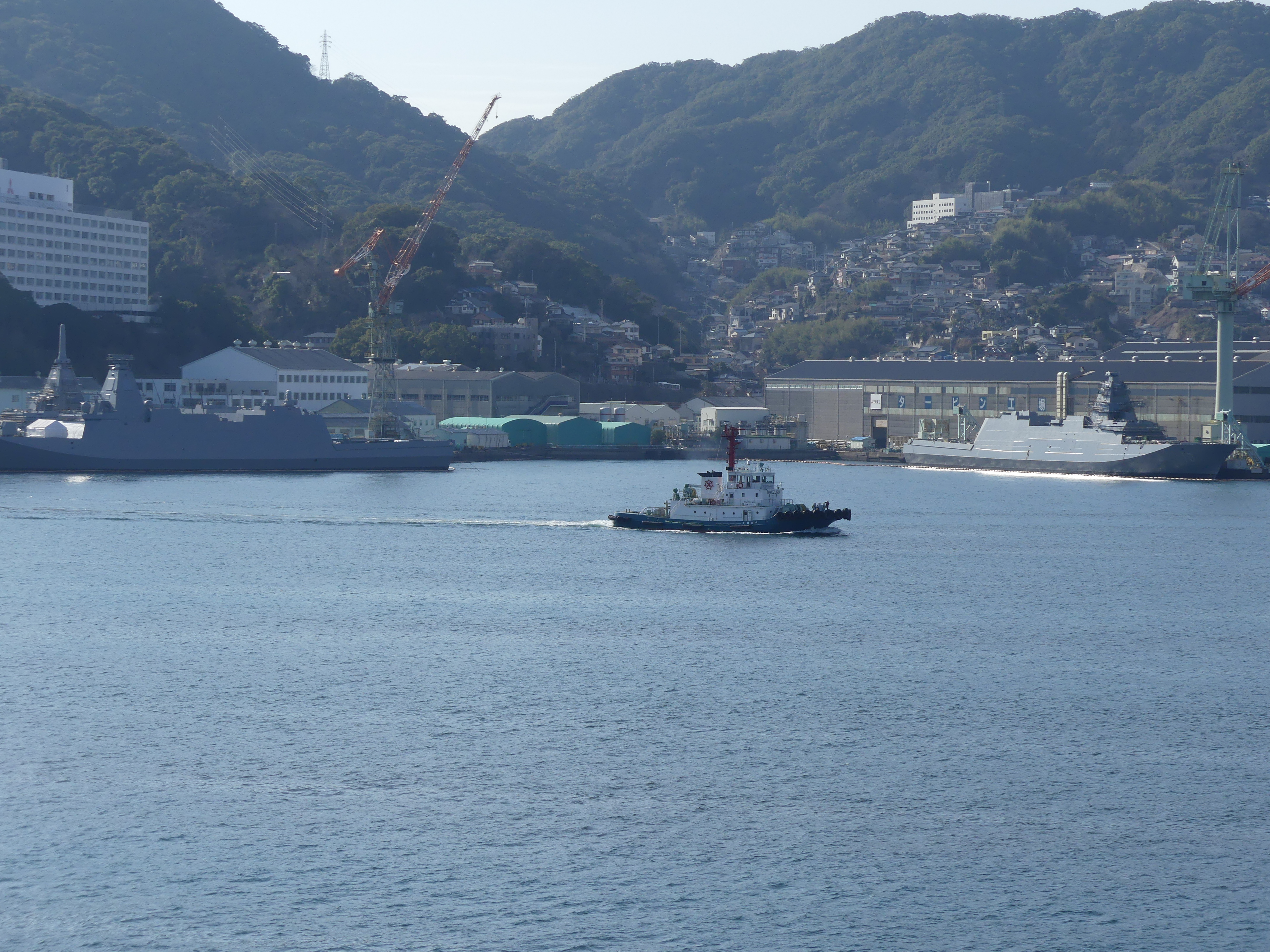
We returned to the ship and recovered with a walk around the deck. As we walked around the deck, we encountered another visitor in the harbour MS Norwegian Sky. I was fascinated by the black kites floating in the air over the harbour and we were joined by a lonely kite on our walk. As we circled around the ships deck some naval vessels hove into view. Despite the evidence we had witnessed today, we remain on guard not at peace.

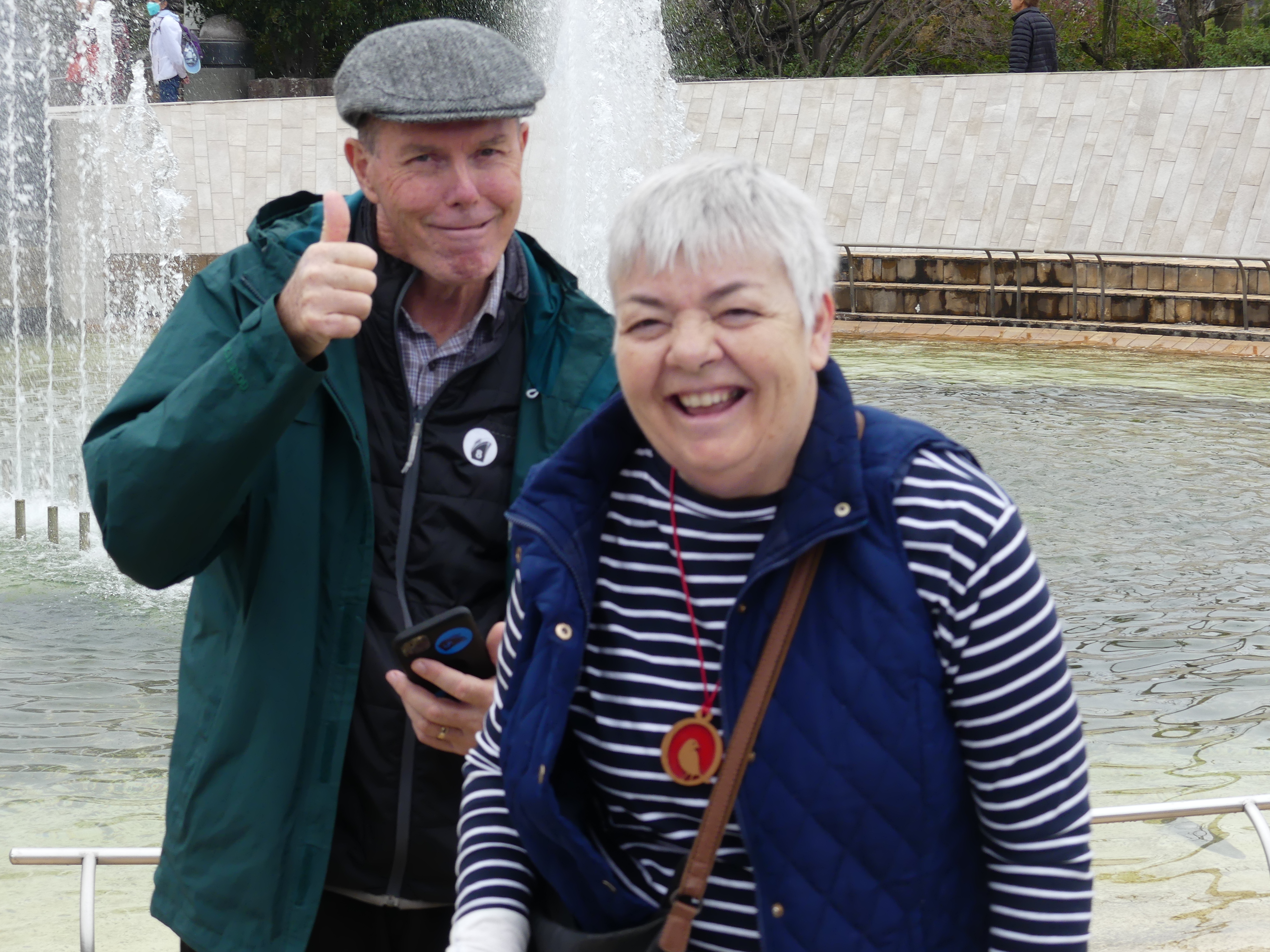
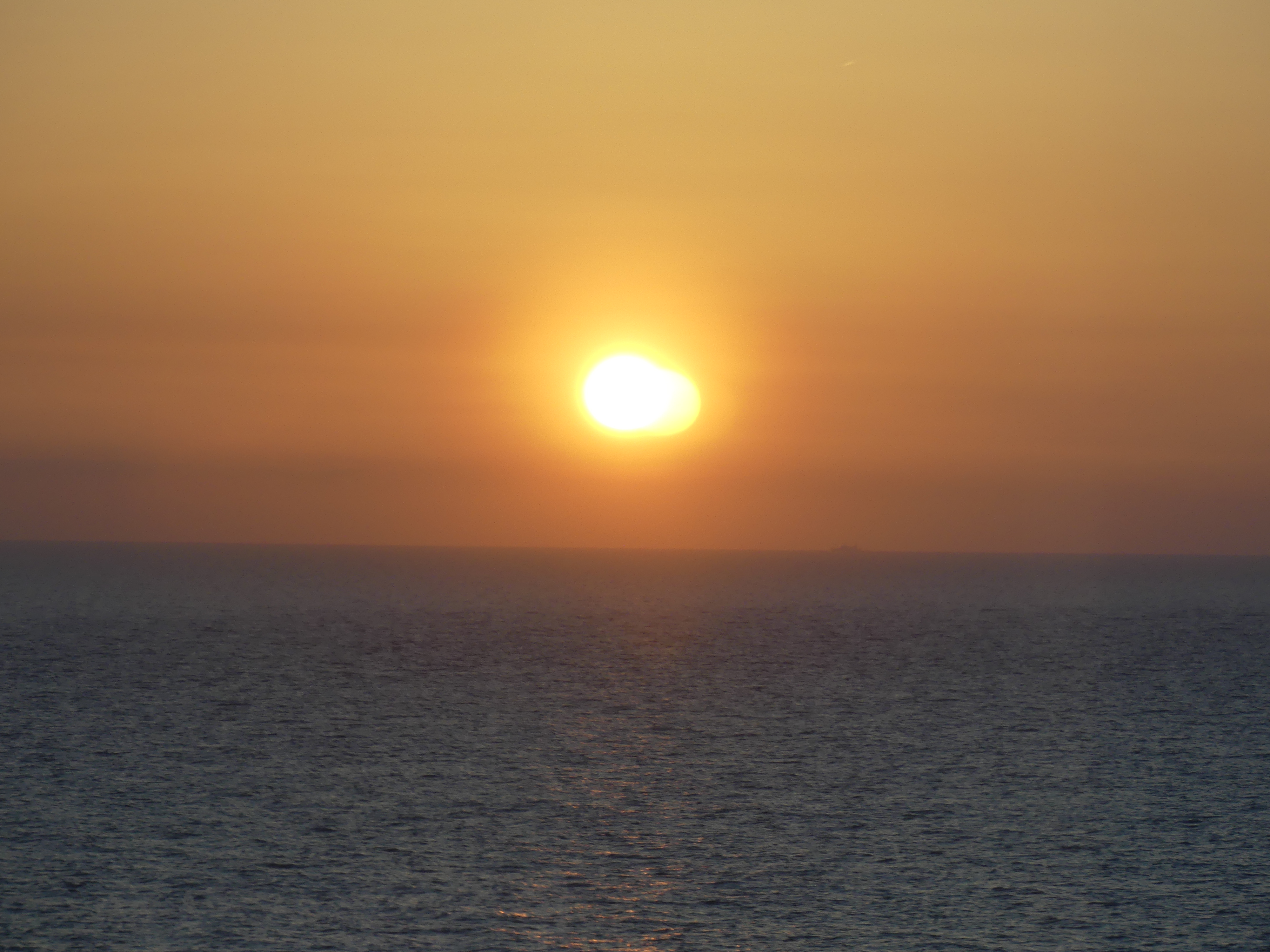
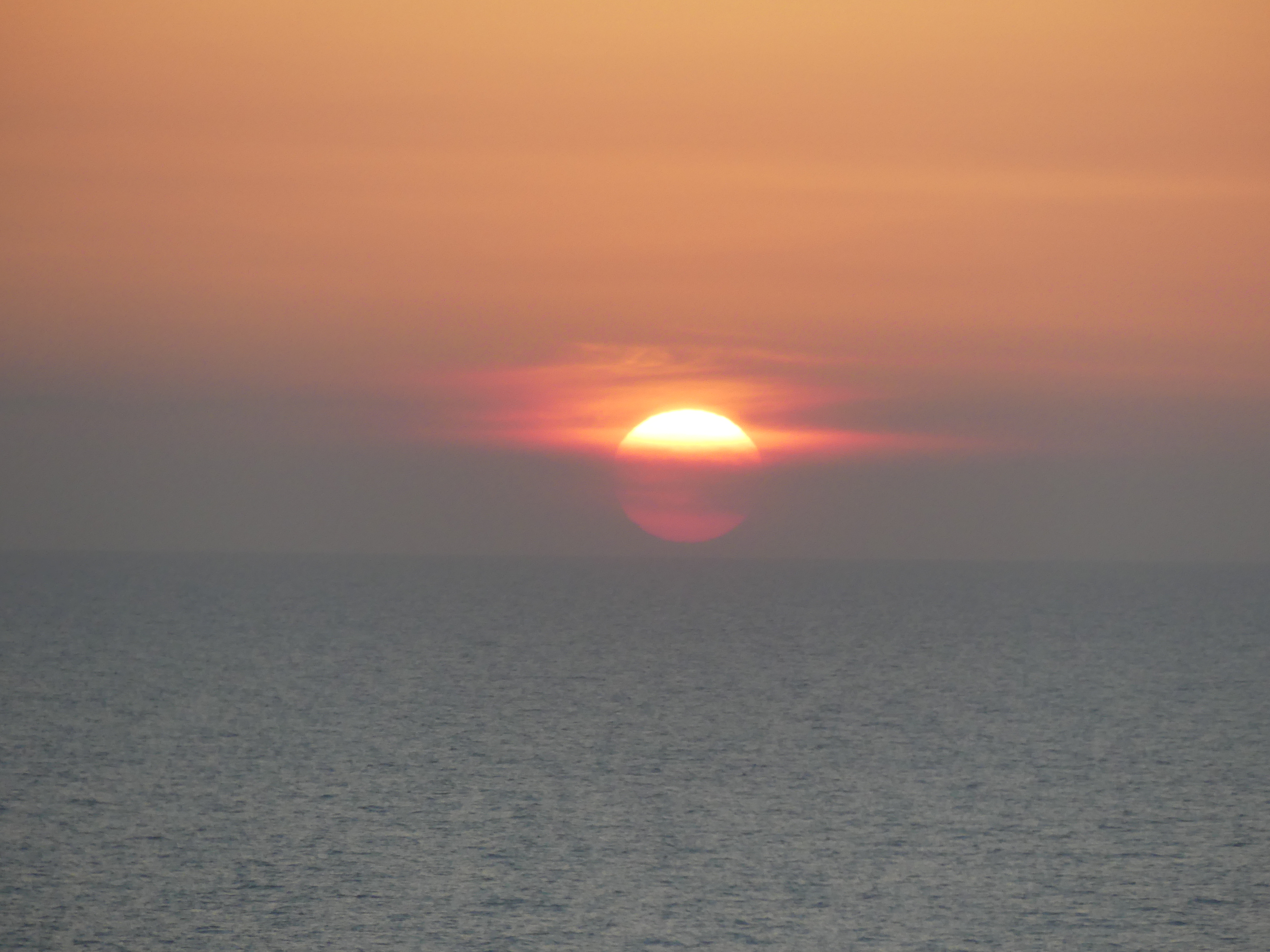
We regrouped with Barry and Sandi at the bar on deck 10 and giving views over the bow of our ship and concluded the day with our first clear sunset of the cruise.

We are nearing the end of our cruise. We are headed to Tokyo so our adventure will continue for a few more days. Watch out for THE RETIREES GO AROUND THE WORLD – “TOKYO TO KAGOSHIMA, KOCHI, PORT KOBE & HOME”

“THE RETIREES GO AROUND THE WORLD – NAPLES to SORRENTO”

SORRENTO

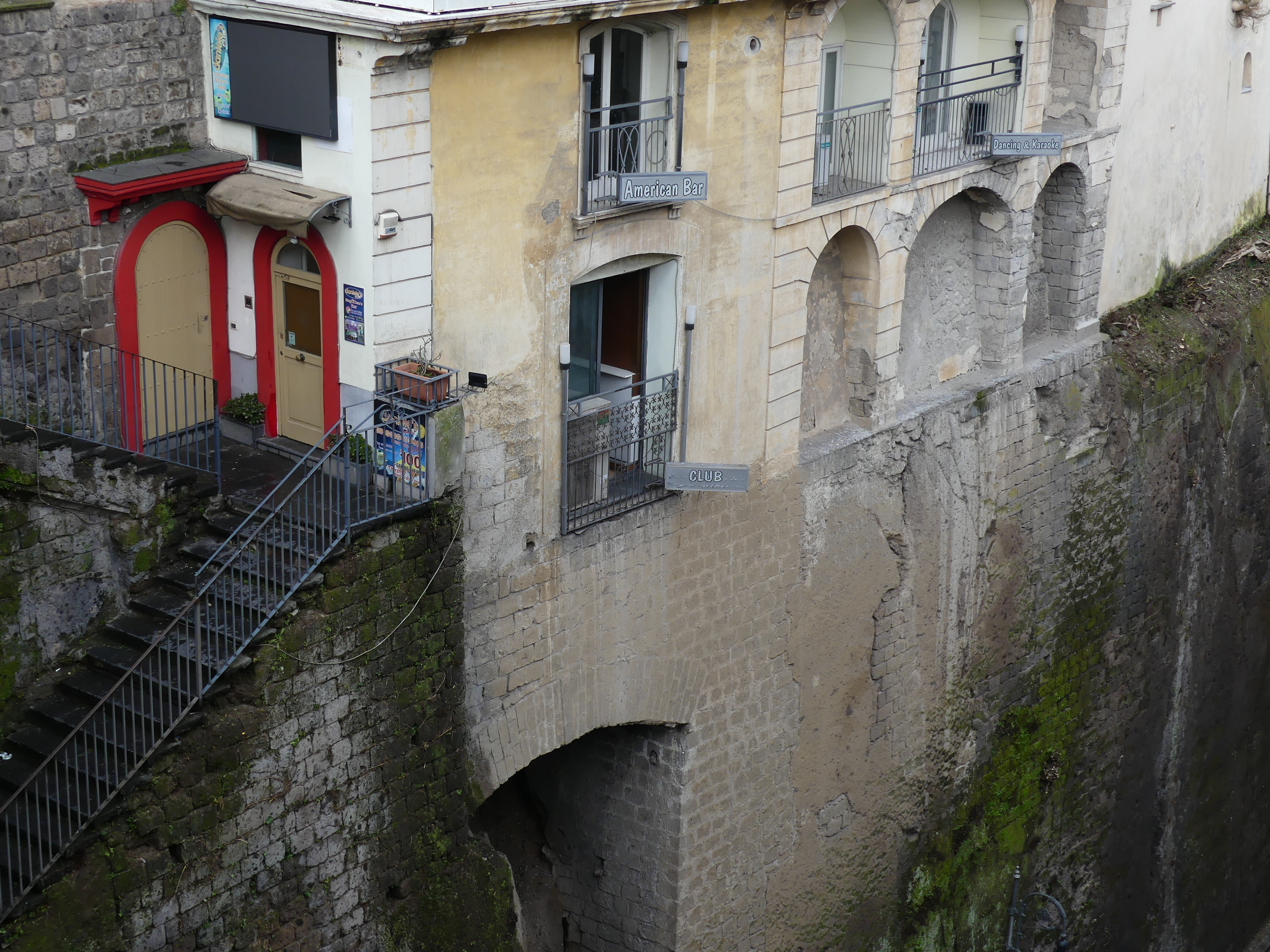
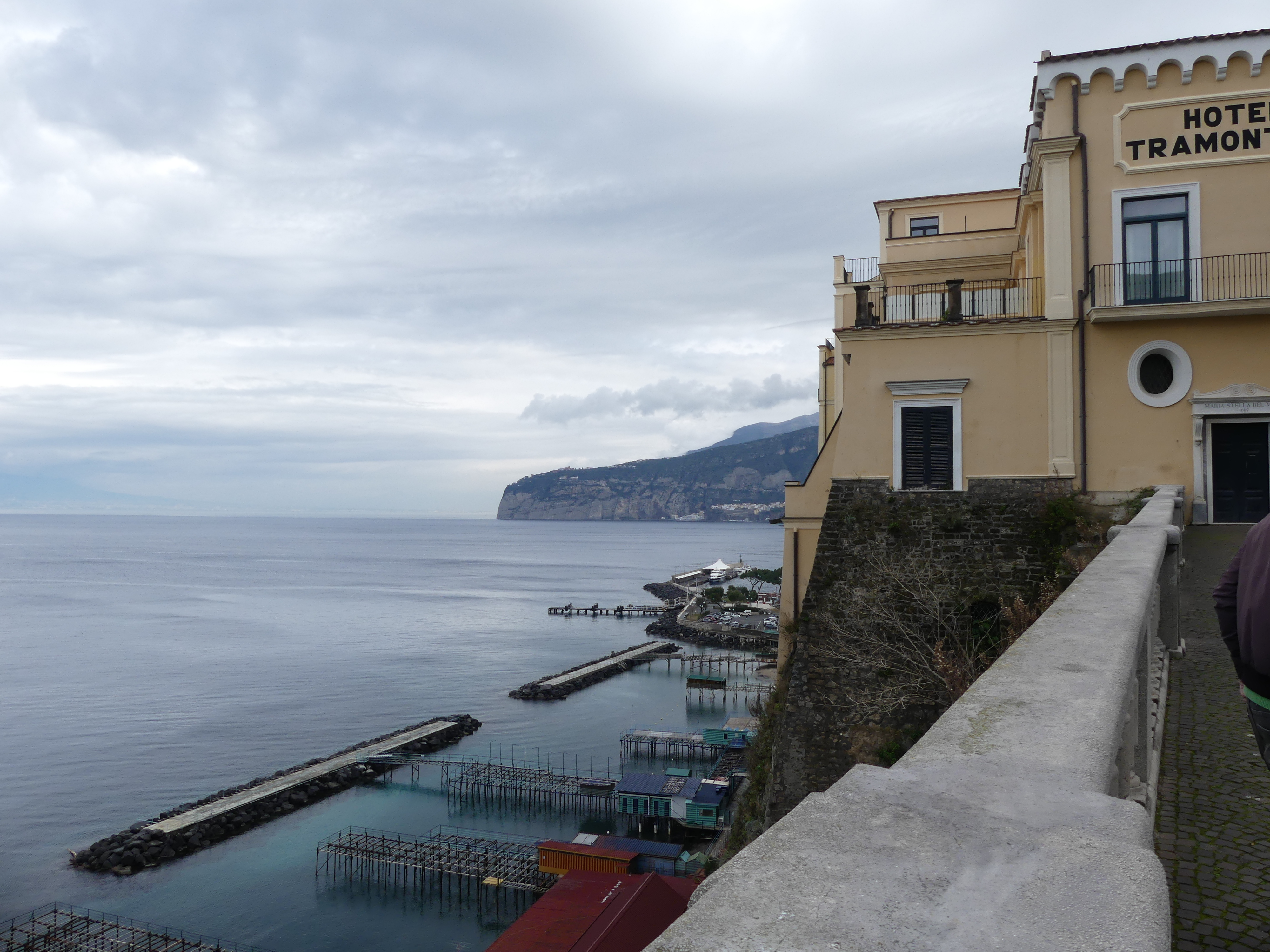
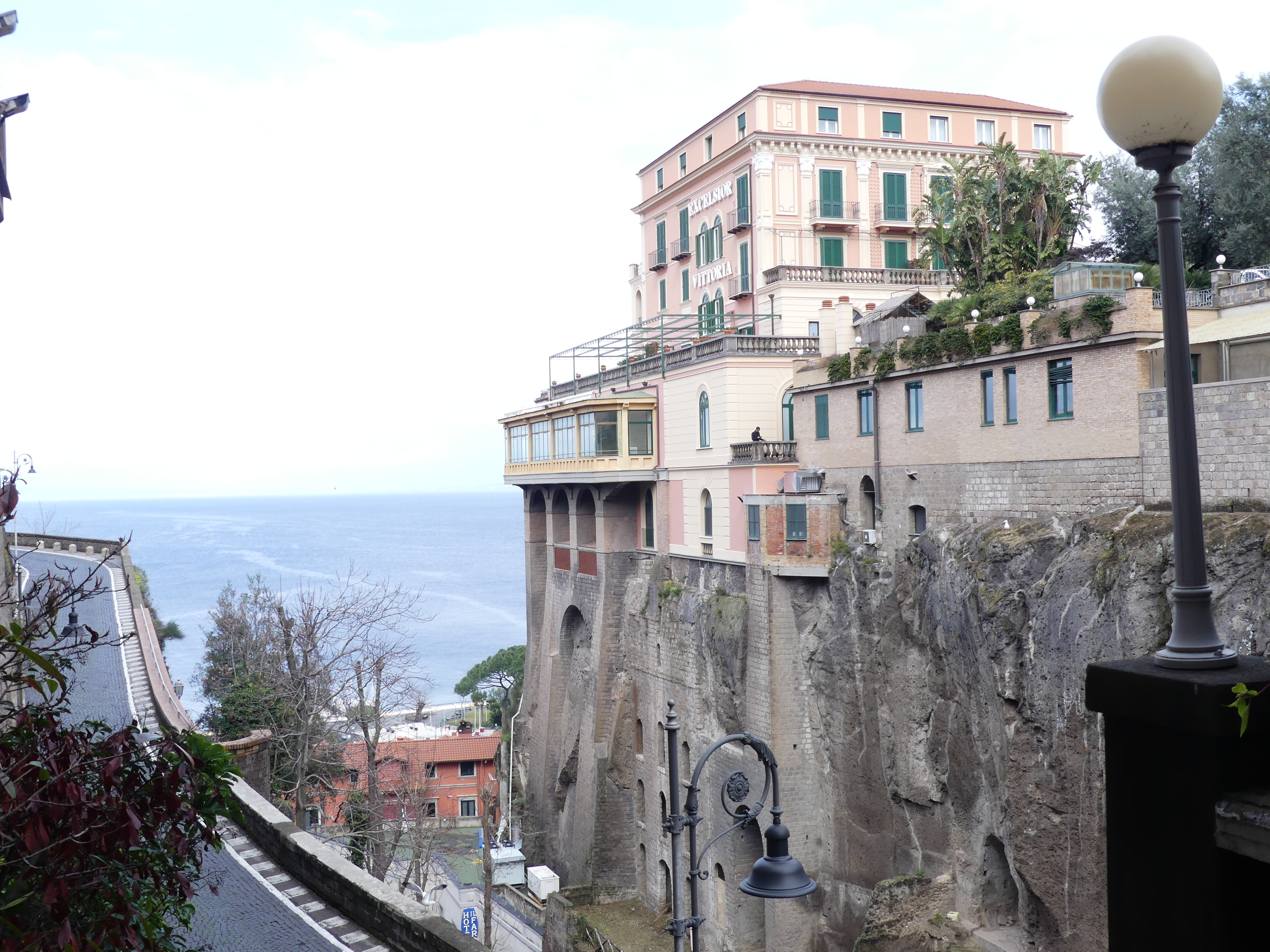
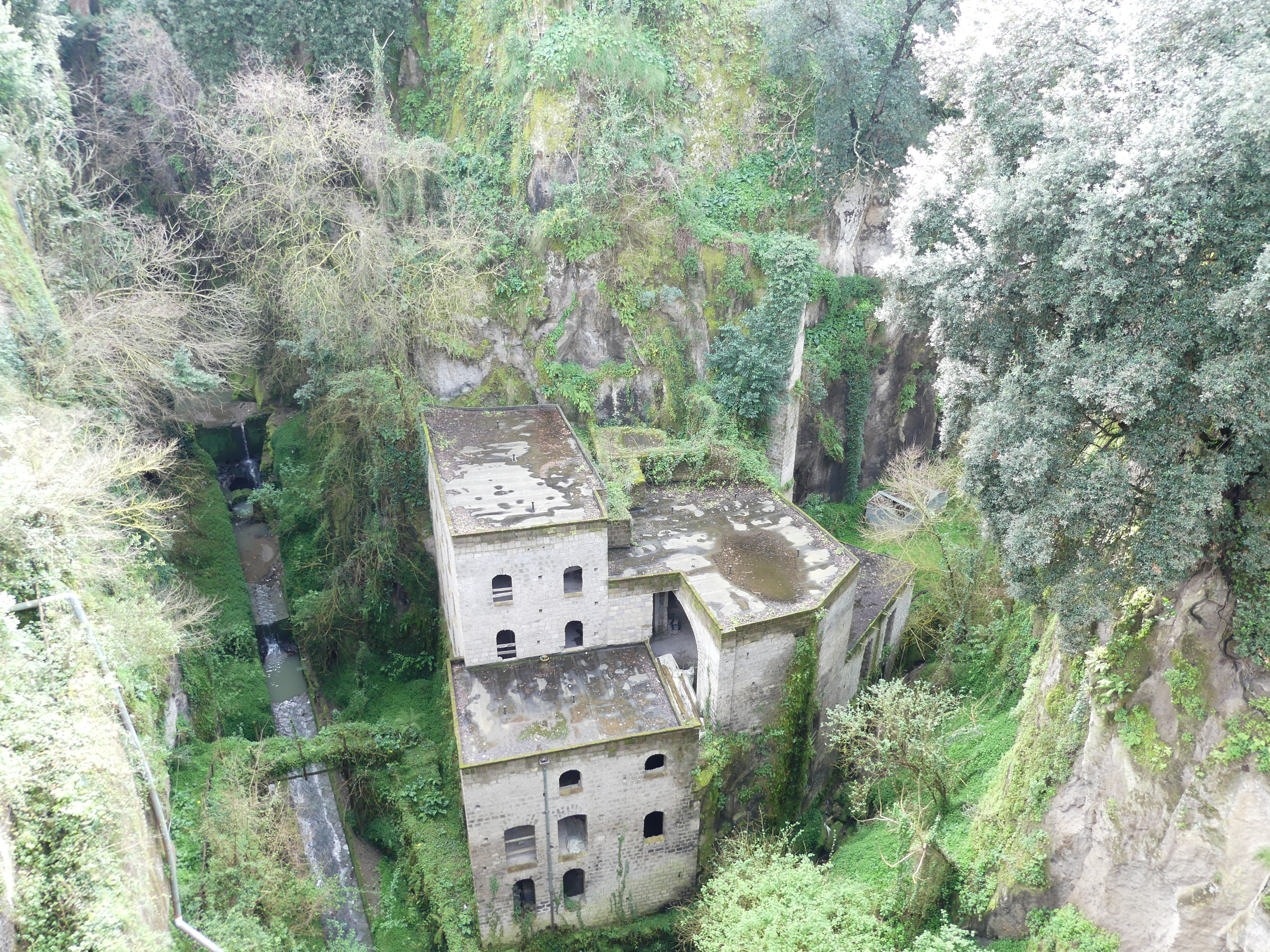
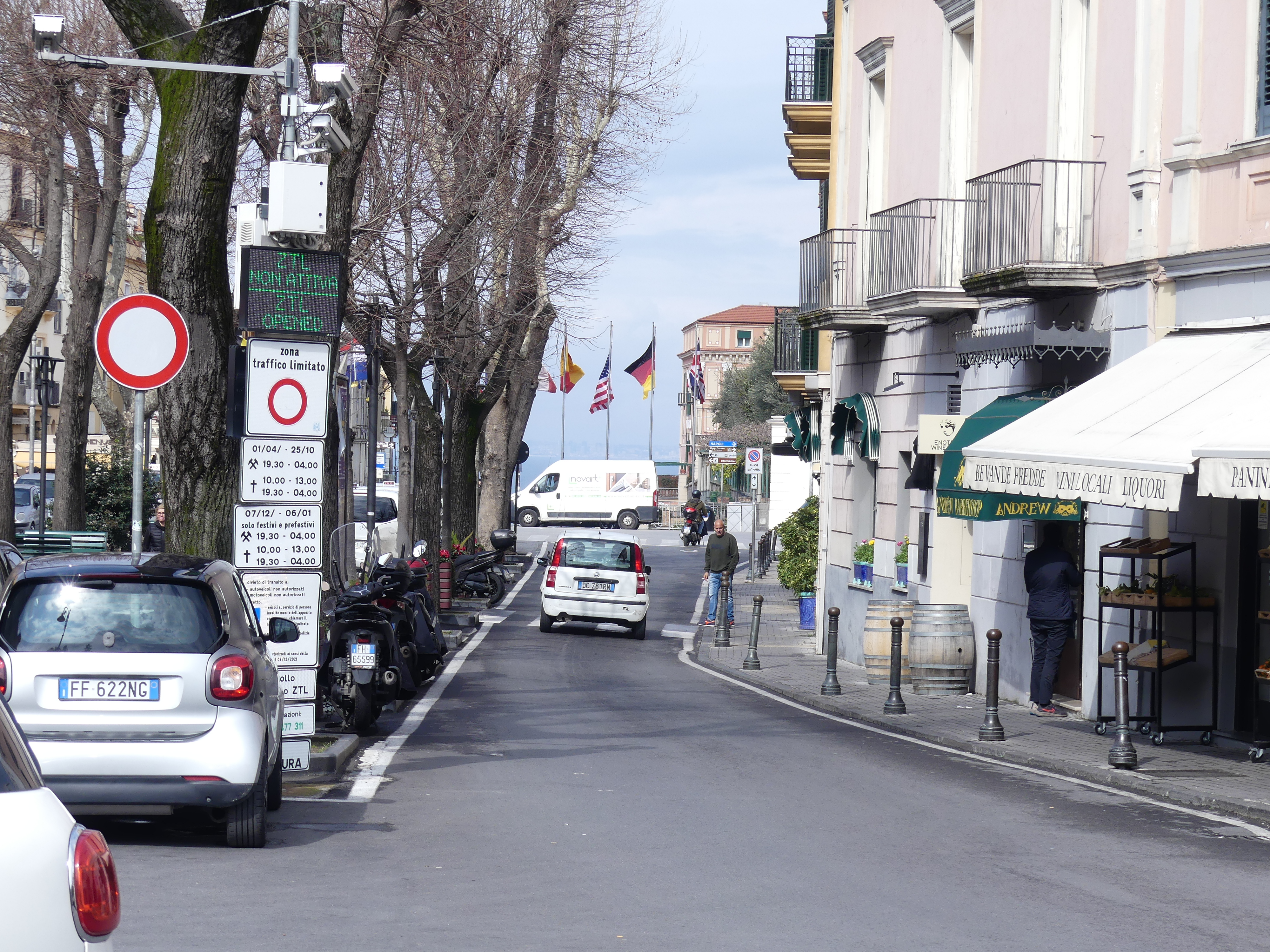
We decided to take another train trip this time along the coast to Sorrento, a resort town to the south. Arriving at the station/terminus for the train, we found a tour guide shop and picked up a map of the town and headed for the centre of town. At first it was unremarkable in its architecture and design until we came across a ravine passing through the town with buildings and roads straddling it and overlooking the Bay of Naples. Over the centuries of Sorrento’s establishment, it has been the subject of piracy, bombardment, and invasion, so it is no stranger to visitors to town.

The “old town” is identified by narrow streets and loads of shops, and most were open despite it being winter and raining.

Sorrento became an archbishopric around 420 AD. After the fall of the Western Roman Empire, it was ruled by the Ostrogoths and then returned to the Eastern Empire. In 1035 the city was acquired by the Duchy of Naples, then it returned to Lombard hands but when defeated by Robert Guiscard, Sorrento entered the Norman sphere of influence: any residual independence was ended in 1137 when it was conquered and annexed to the Kingdom of Sicily. In the 19th century the economy of the city improved markedly, favoured by the development of agriculture, tourism and trade. In 1861 Sorrento was officially annexed to the new Kingdom of Italy. In the following years it confirmed and increased its status of one of the most renowned tourist destinations of Italy, a trend which continued into the 20th century.

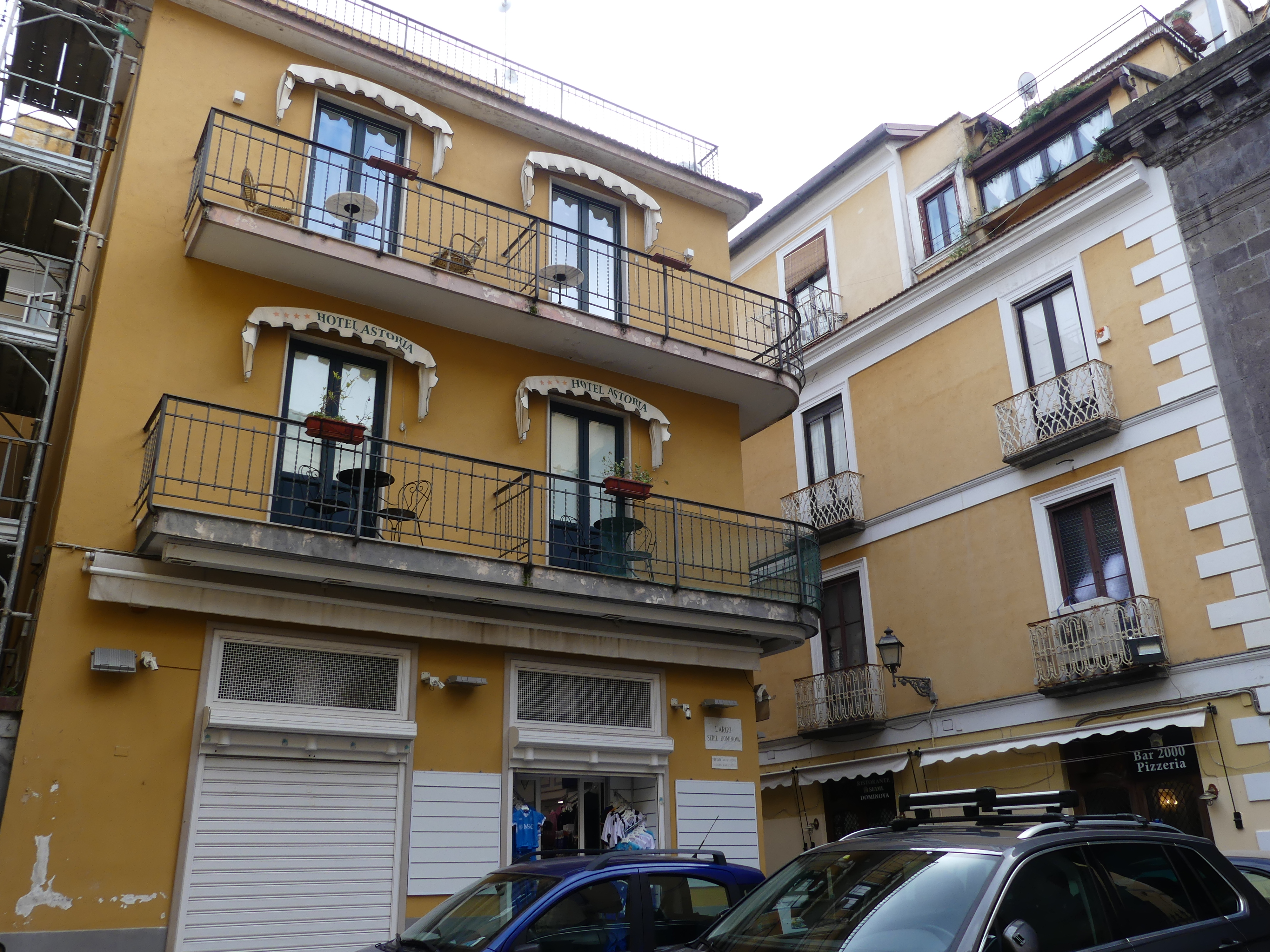
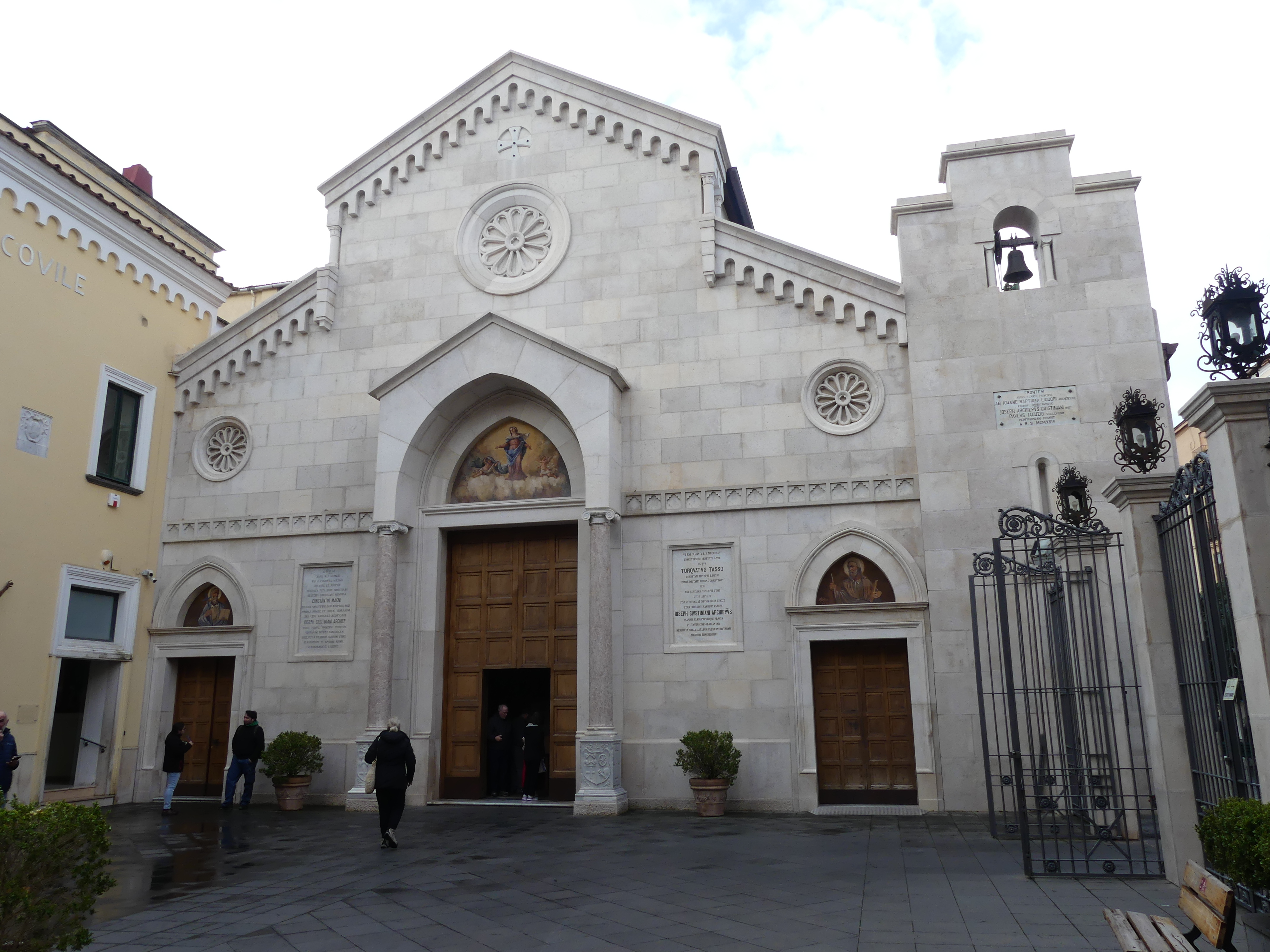
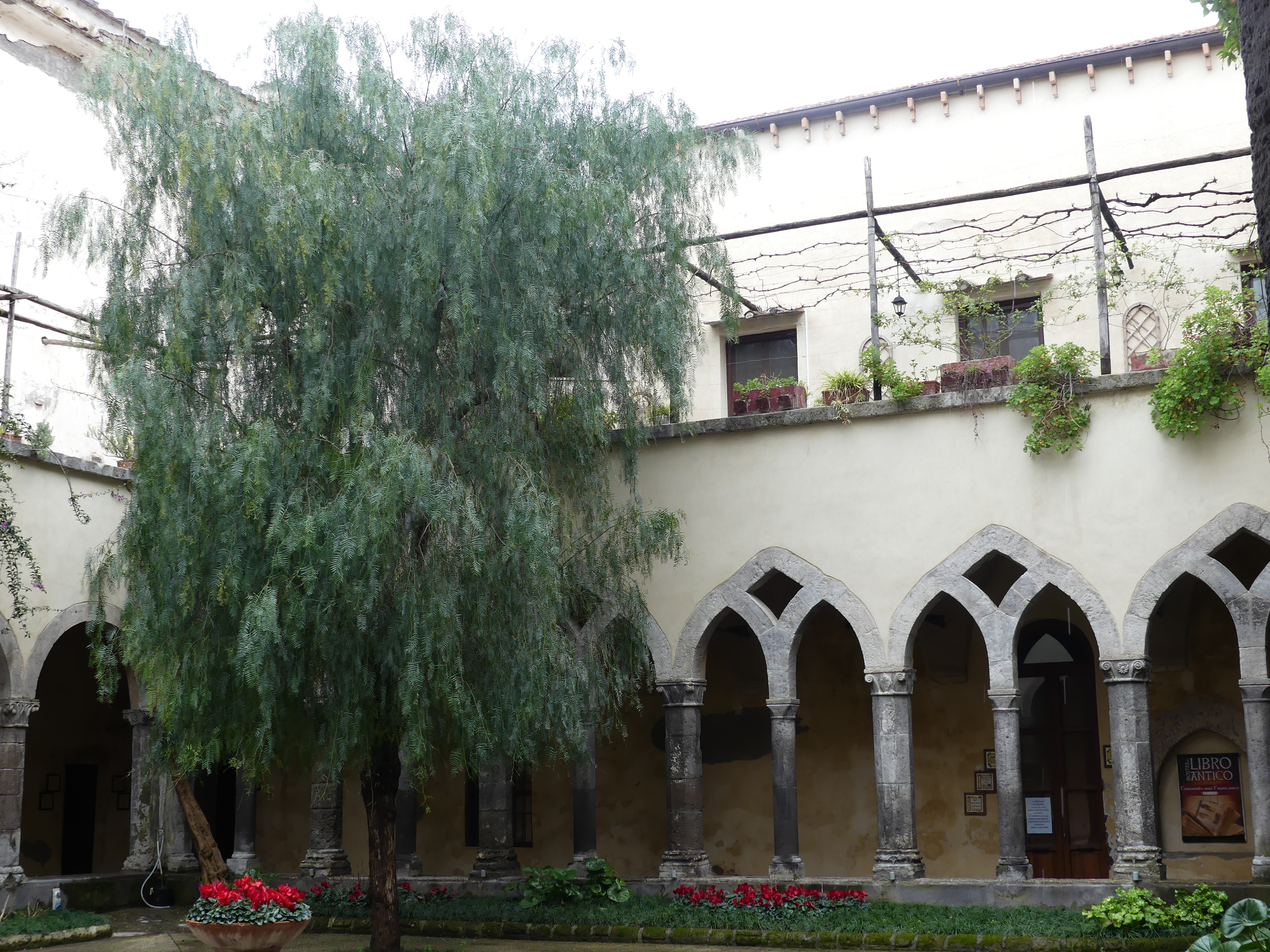
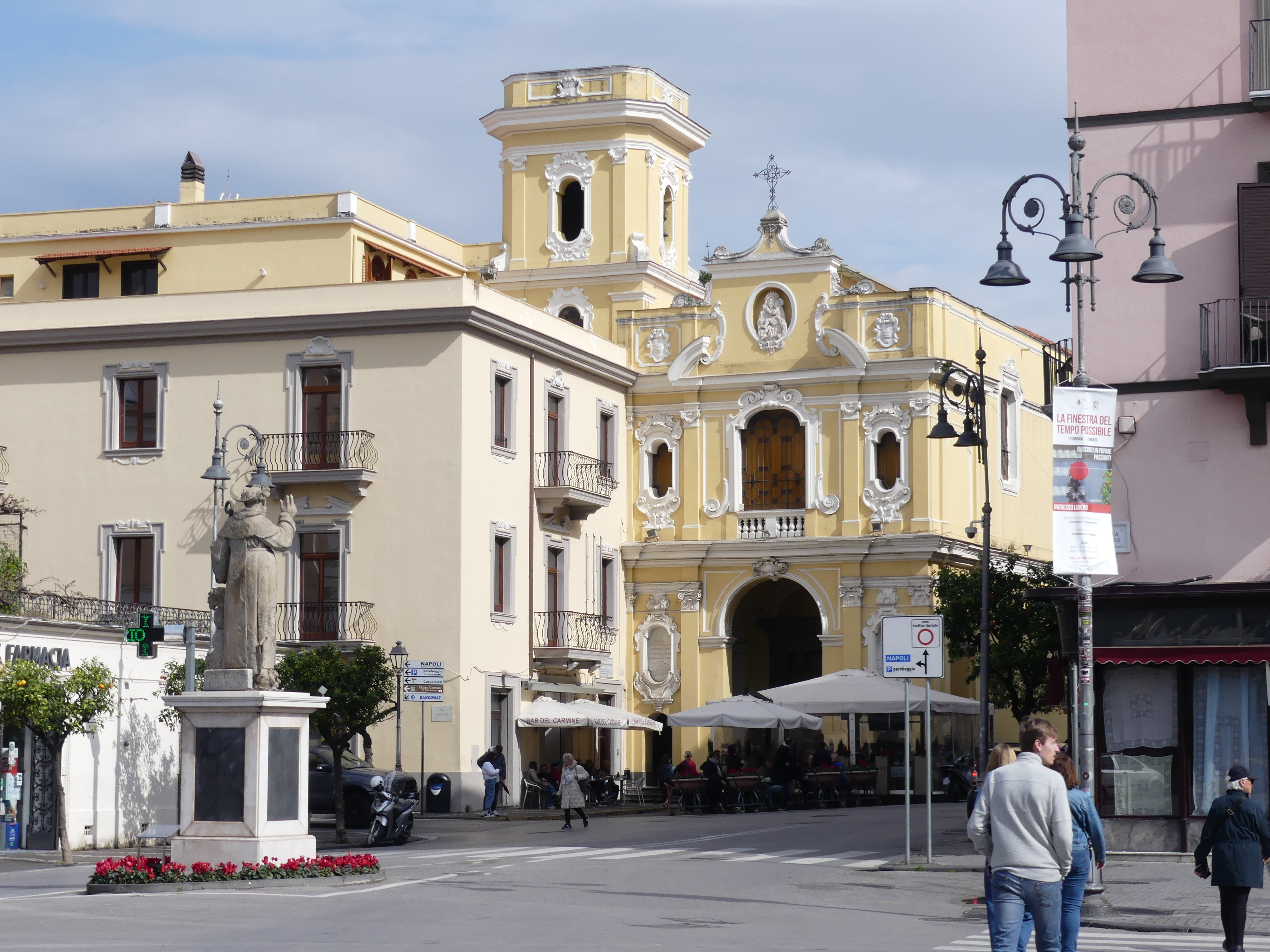
It had the usual lords and ladies running the place over the history of the town and the building below was the home of the last family ruling the town. Apart from Counts and Countesses, it was a Bishopric of the Catholic Church from 420 AD, and we found the cathedral and monastery nearby. The cathedral was ornate as demanded for a Bishopric, but it also contained the most unusual diorama of the birth of Christ – I always imagined the birth of Jesus as a quiet affair, a few sheep, a star and 3 old blokes bearing gifts. The diorama makes it look like Queen St on a Friday evening.It also had its main doors internally decorated with stations of the cross.

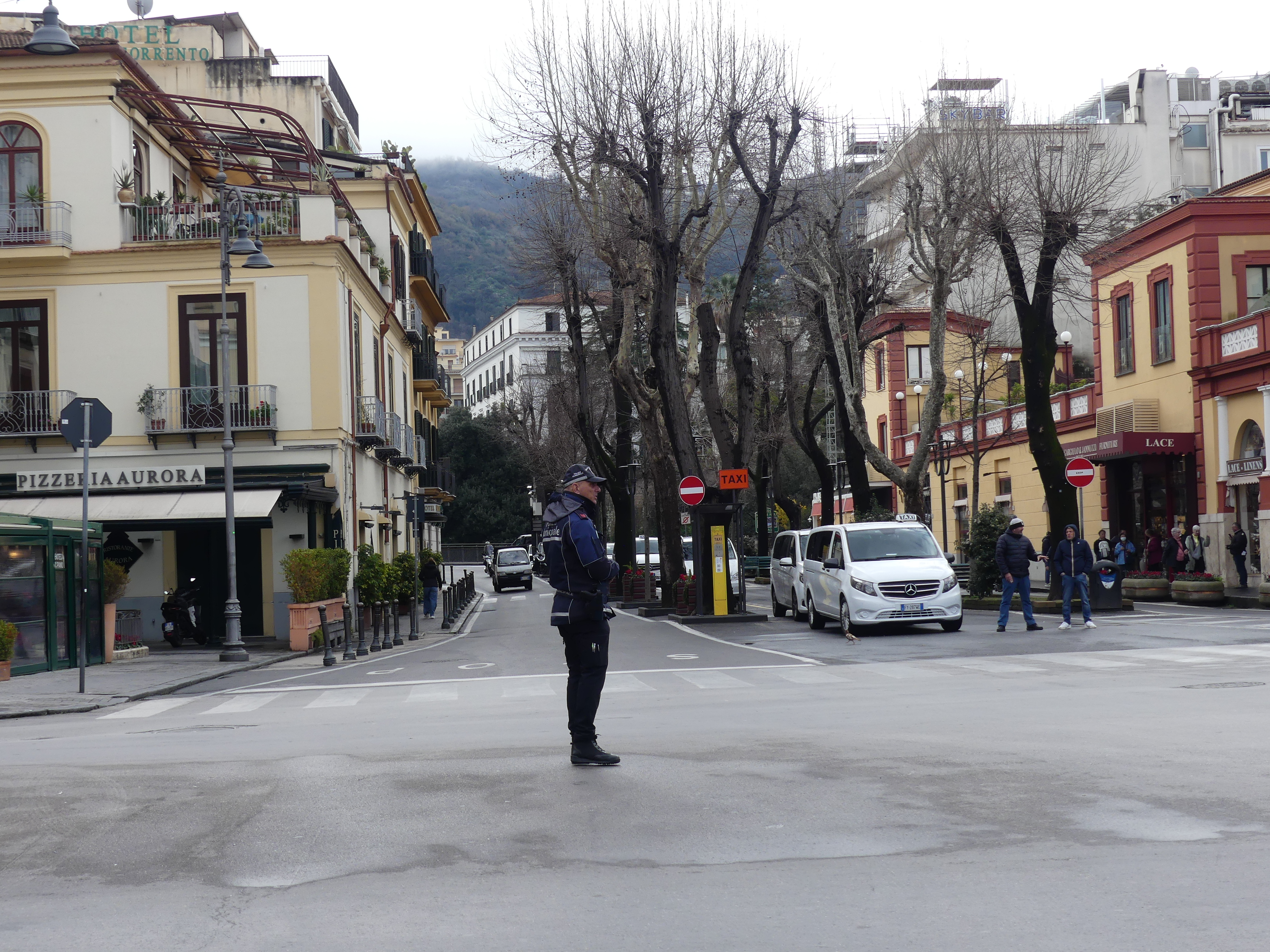
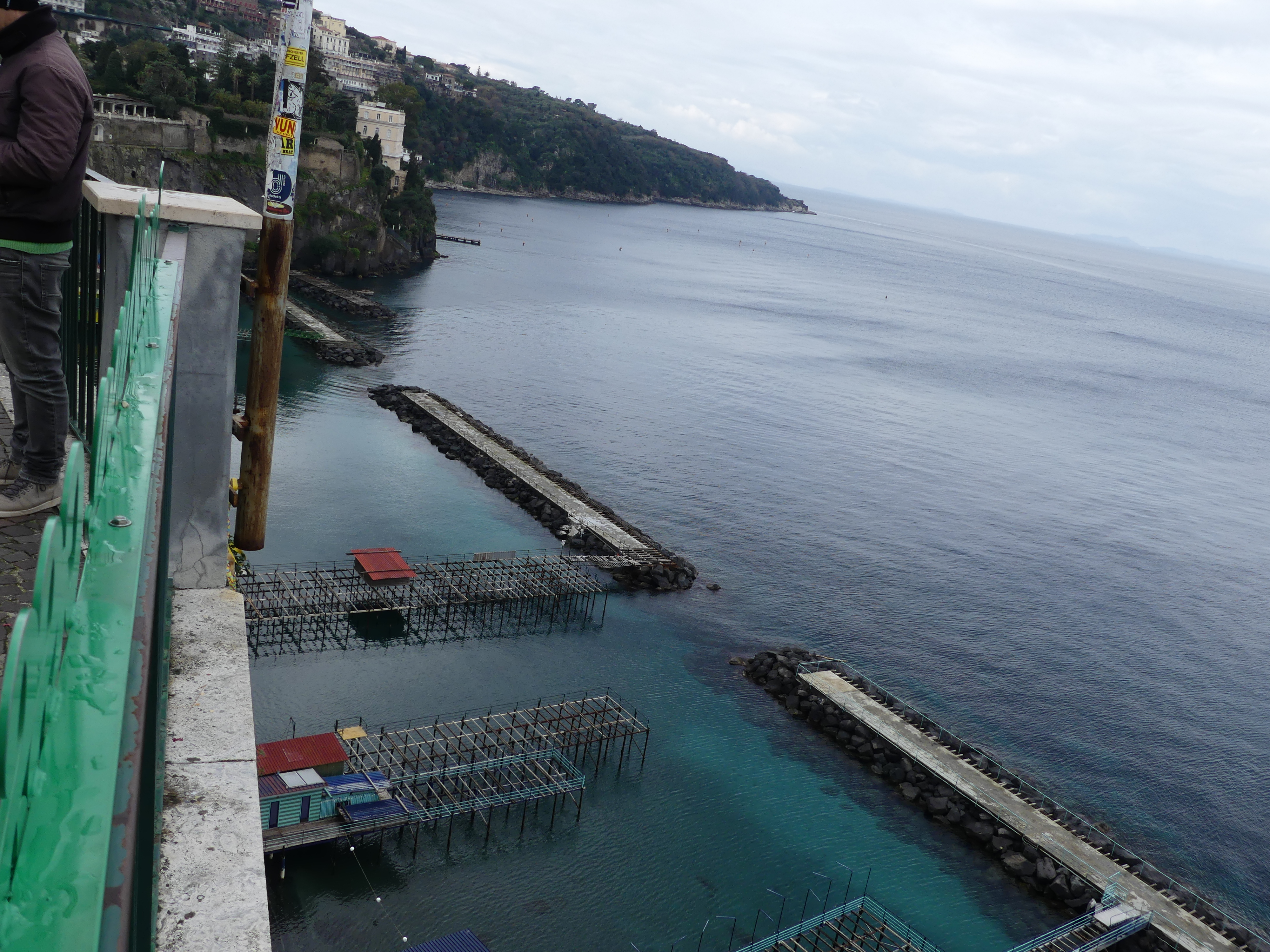
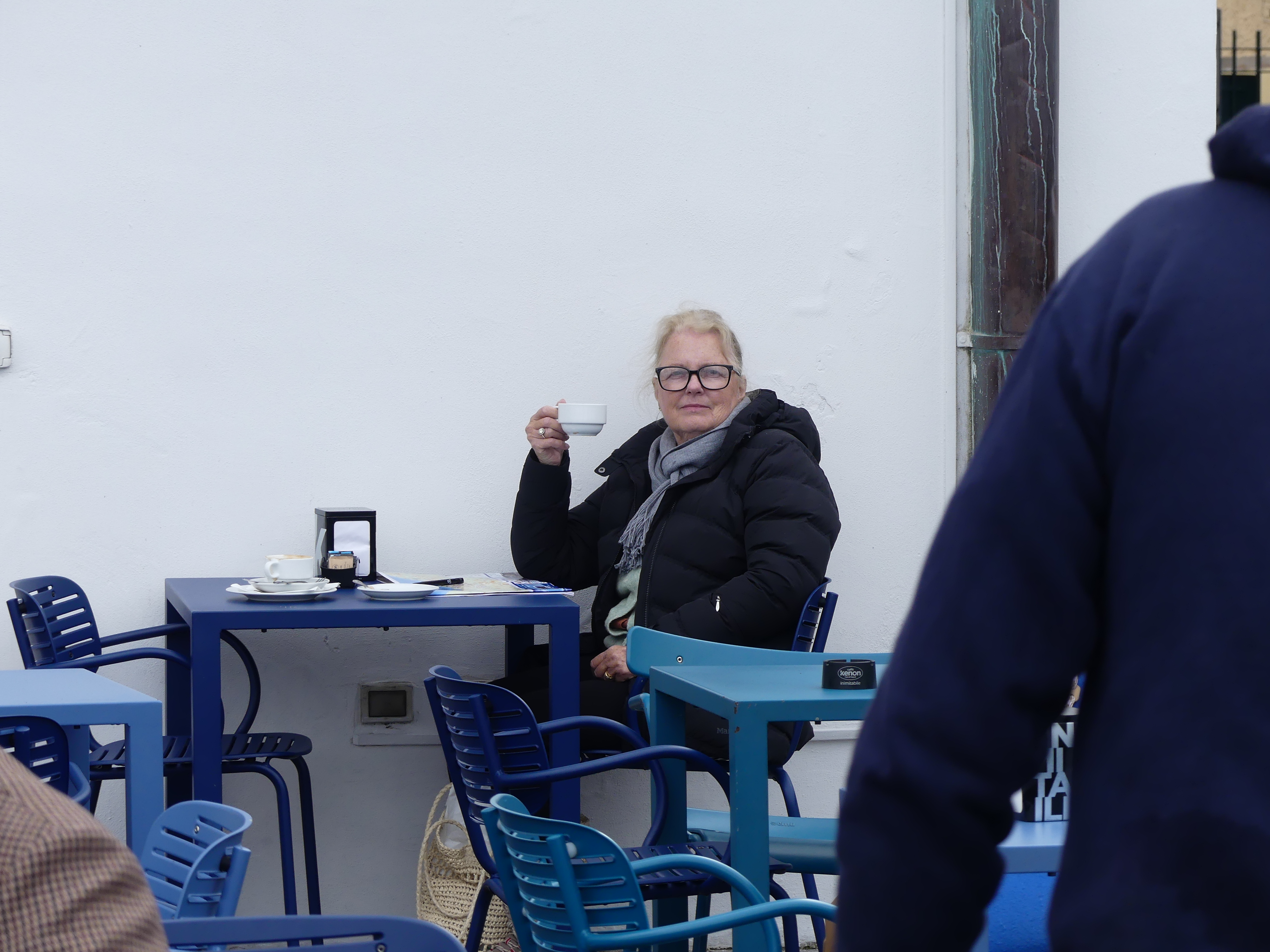
We walked through the town checking out the rift created by nature (actually the rift has always been there and people built on top of it) to the cliff side and views of the Bay of Naples/Tyrrhenian Sea and of course a cafe.

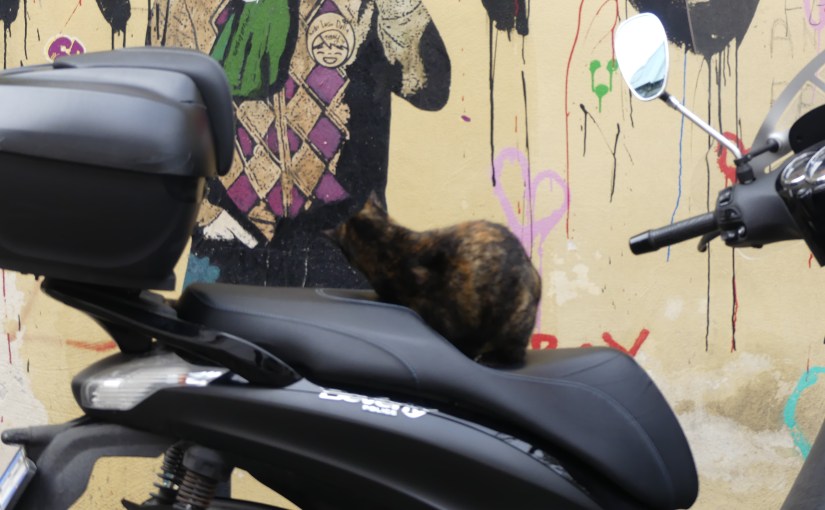
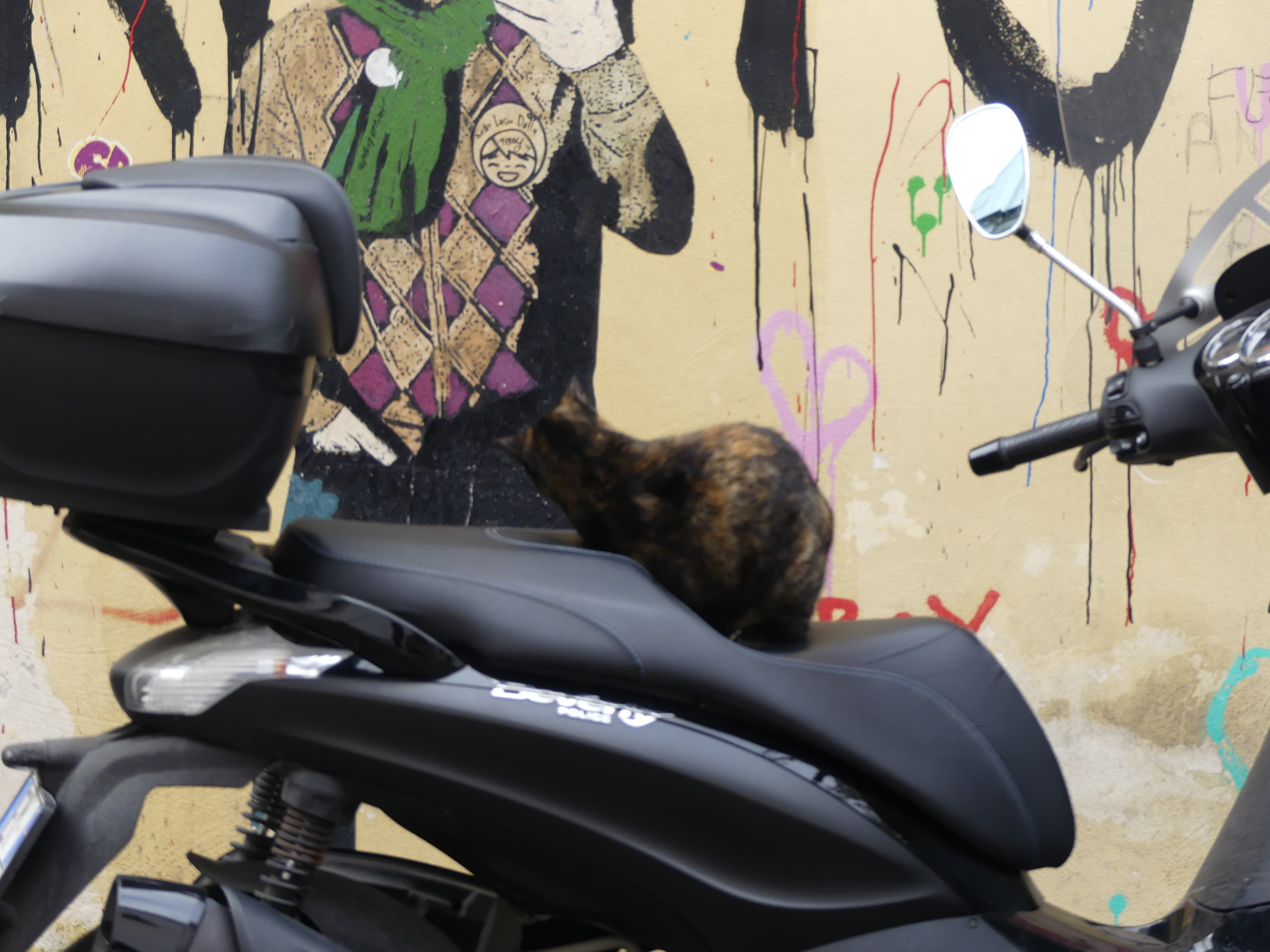
We continued our walkabout finding some street art (that bloody cat staring at the graffiti would not shift), a statue of a saint or is it “saintress” for the feminine, and a colourful square (you may notice the remnant of a scooter photo bombing my picture).

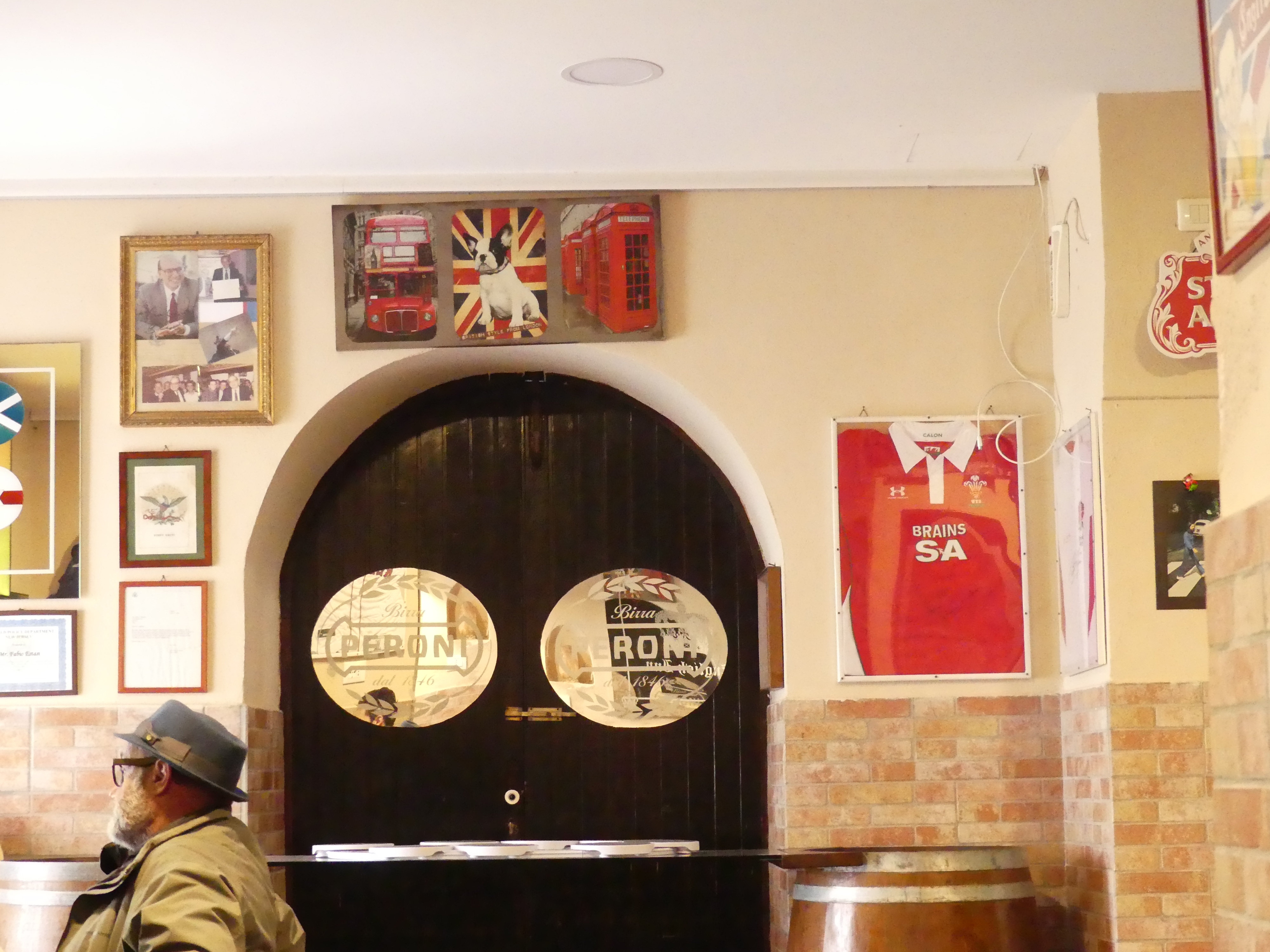
This walkabout took us to most parts of the village and ultimately to the only British pub in town, so we stopped for lunch. Queer isn’t it that there is a British pub in town and not one of the staff had any idea what it should look like or how to act. To be honest they didn’t have much of a clue about pubs and the waitress had never seen a British pub till she started work at this establishment and I told her, she hadn’t seen one yet, which puzzled her. Ah well, my appetite had not been good and the plain food passed off as British pub food was all I could handle. We left our waitress puzzling and returned to the train back to Naples.

It was time for a nap as we are yet to pack and we have to return to Naples for a Finnair flight to Tokyo tomorrow. My next blog will be entitled “THE RETIREES GO AROUND THE WORLD – NAPLES to ROME & Leonardo da Vinci–Fiumicino Airport THEN TOKYO”

“THE RETIREES GO AROUND THE WORLD – BARI to ALBEROBELLO”

Alberobello

Our stay with Robert was coming to an end. After visiting Alberobello we will go to Naples and Robert will return to Cesi.

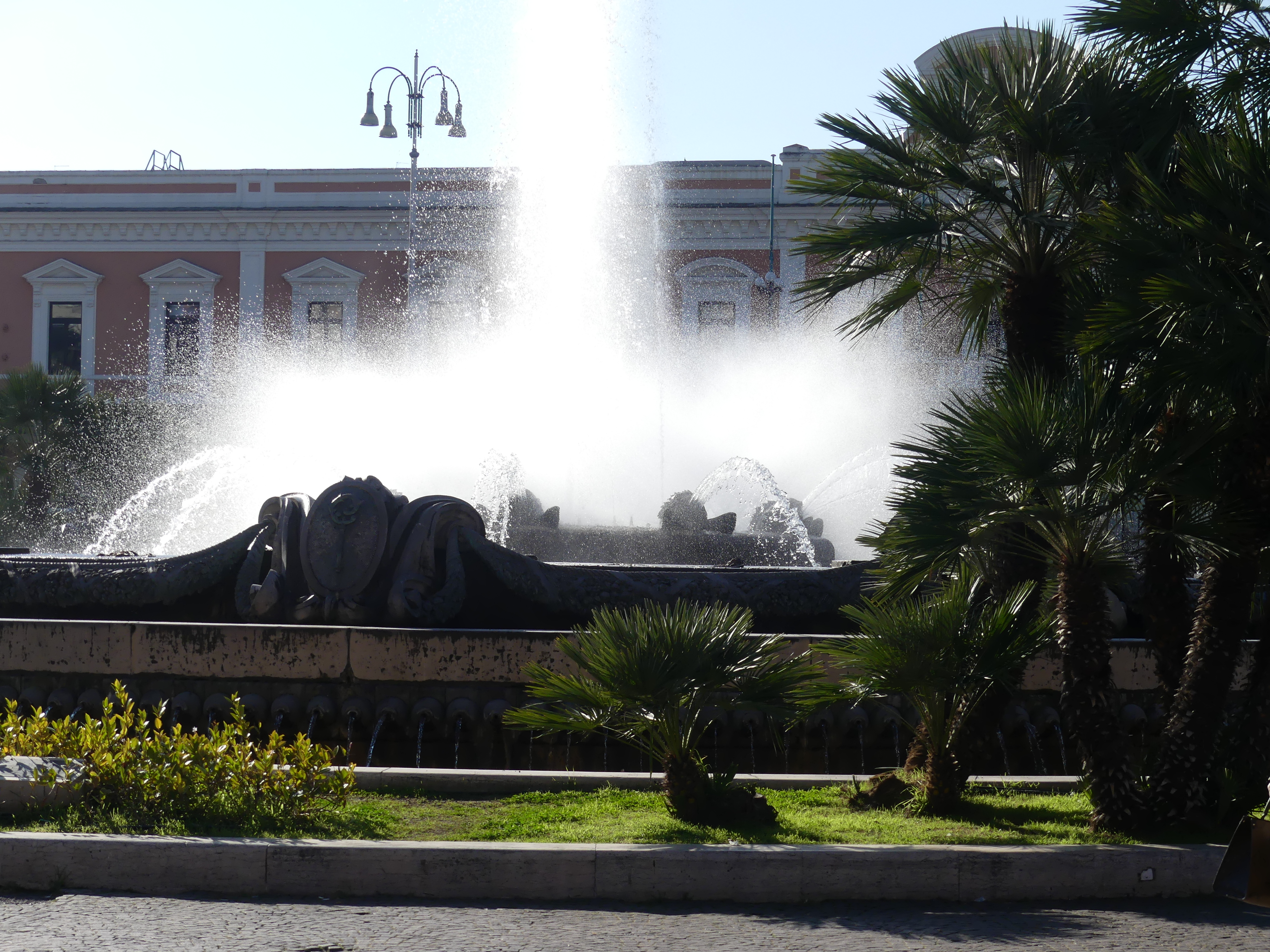
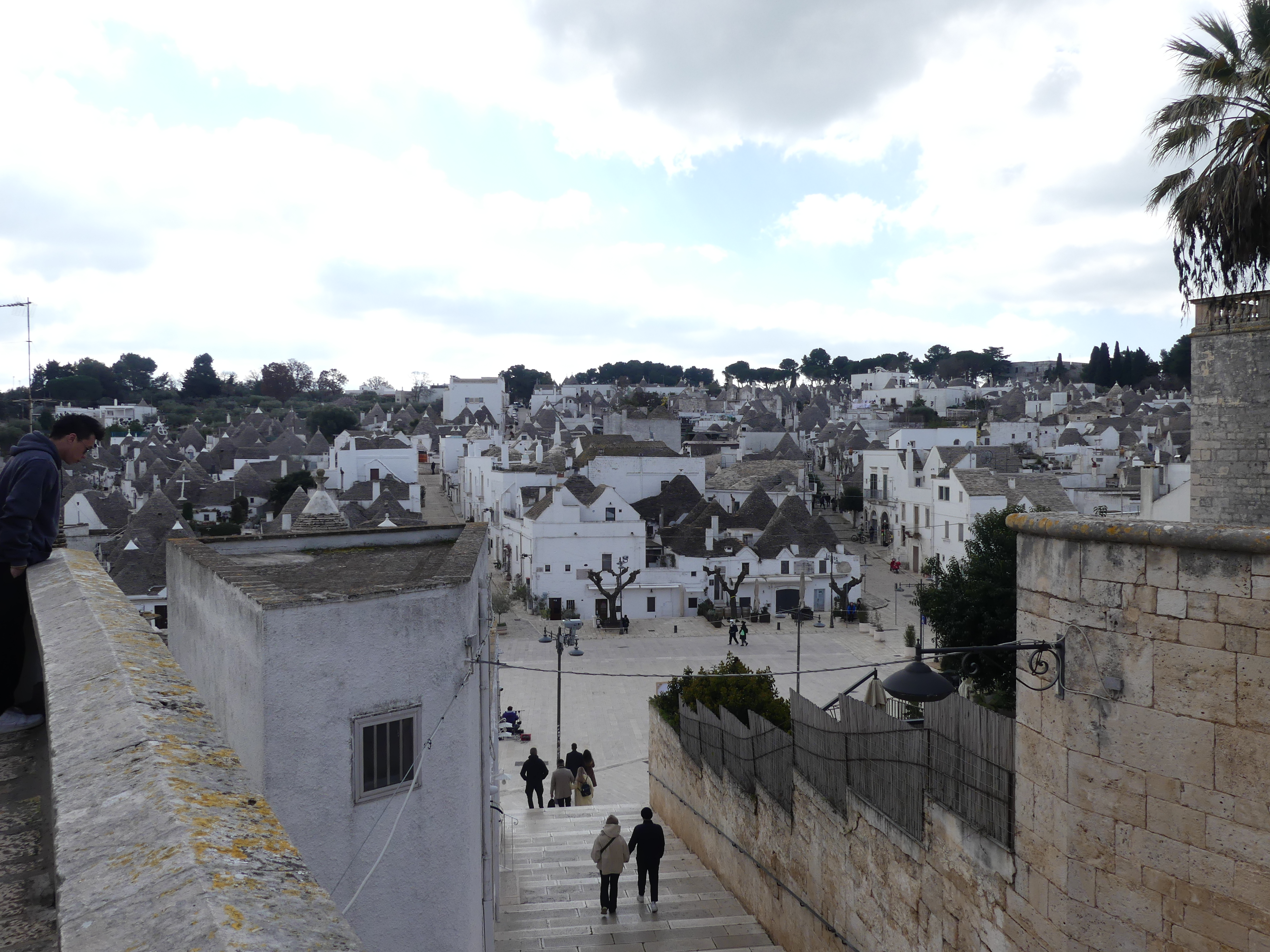
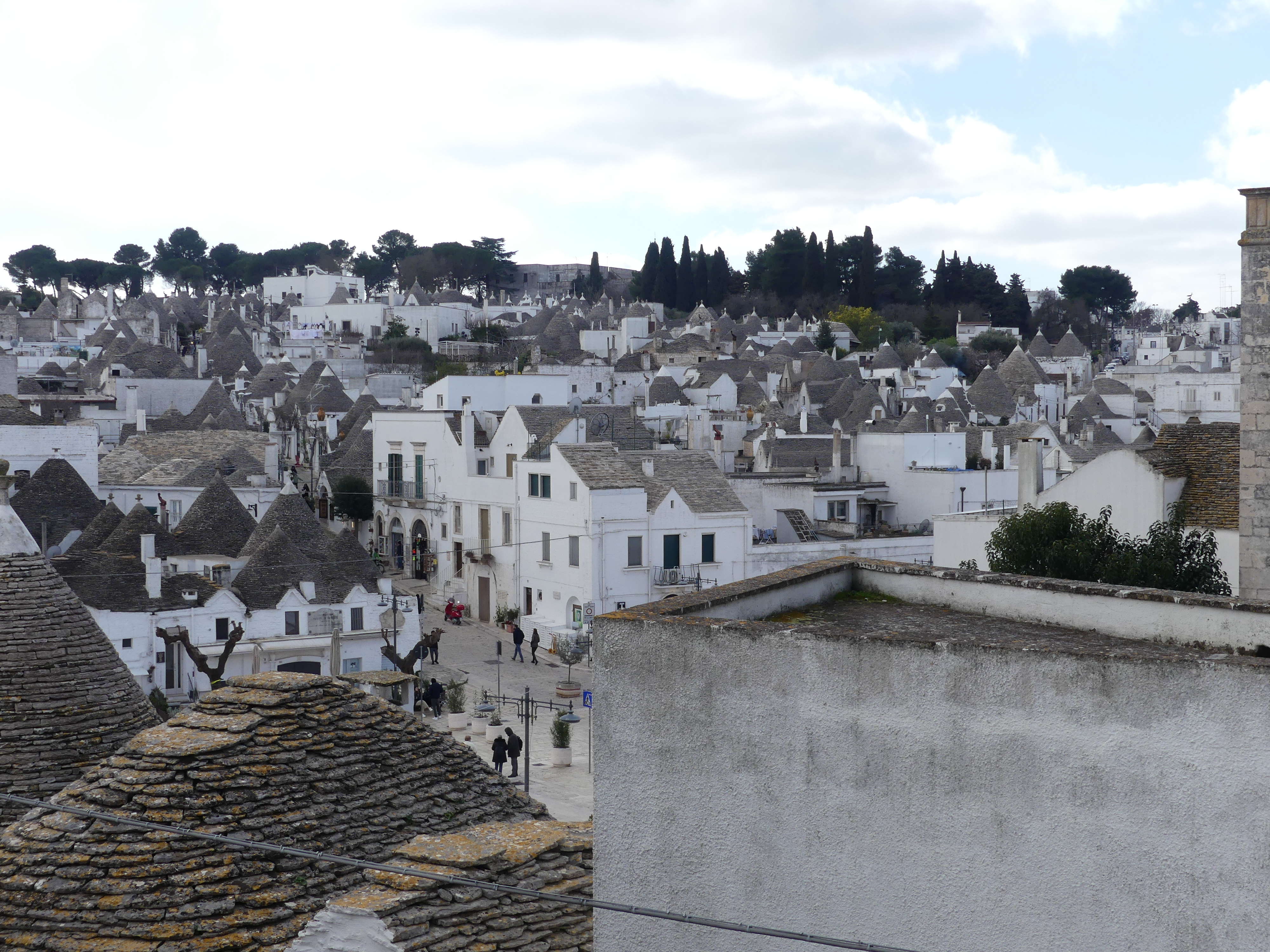
We left Bari station (obstructed by the fountain) as we were taking the bus (what! – where’s the train) for Alberobello (literally “beautiful tree”). It is a small town and commune of the Metropolitan City of Bari, Apulia. It has 10,237 inhabitants (2022) and is famous for its unique trullo buildings. The trulli of Alberobello have been designated as a UNESCO World Heritage Site since 1996 and Alberobello is one of I Borghi più belli d’Italia (“The most beautiful villages of Italy”).

The history of the trulli is linked to an edict of the 15th-century Kingdom of Naples that subjected every new settlement to a tribute. In 1481 a tribute imposed on the residents led to them building their dwellings out of dry stone, without using mortars, so that they could be configured as precarious buildings and easily demolished. Having to use only stones, the peasants found in the round form with self-supporting domed roof the simplest configuration. The roofs were embellished with decorative pinnacles representing the signature of the architect (master trullaro).

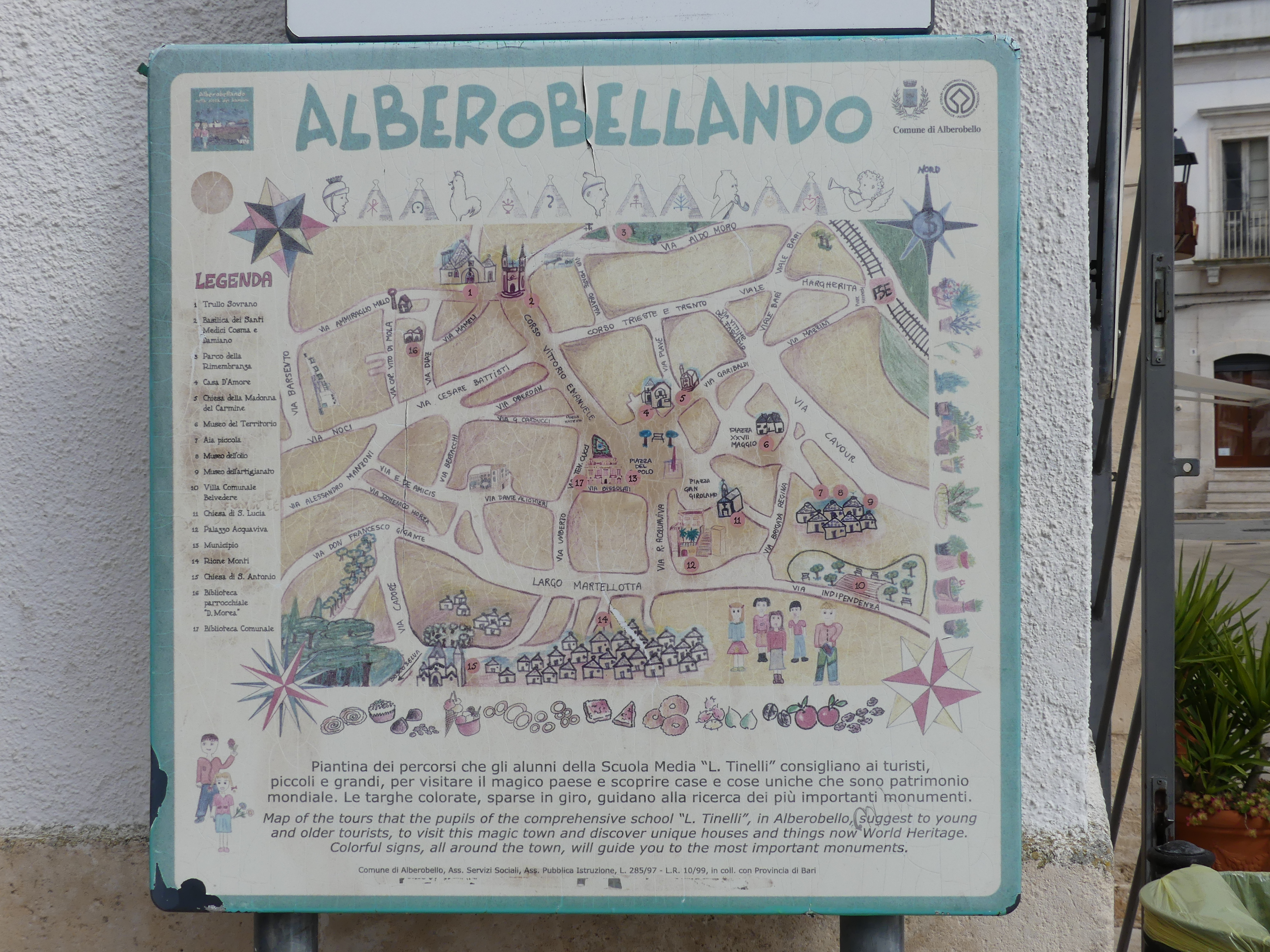
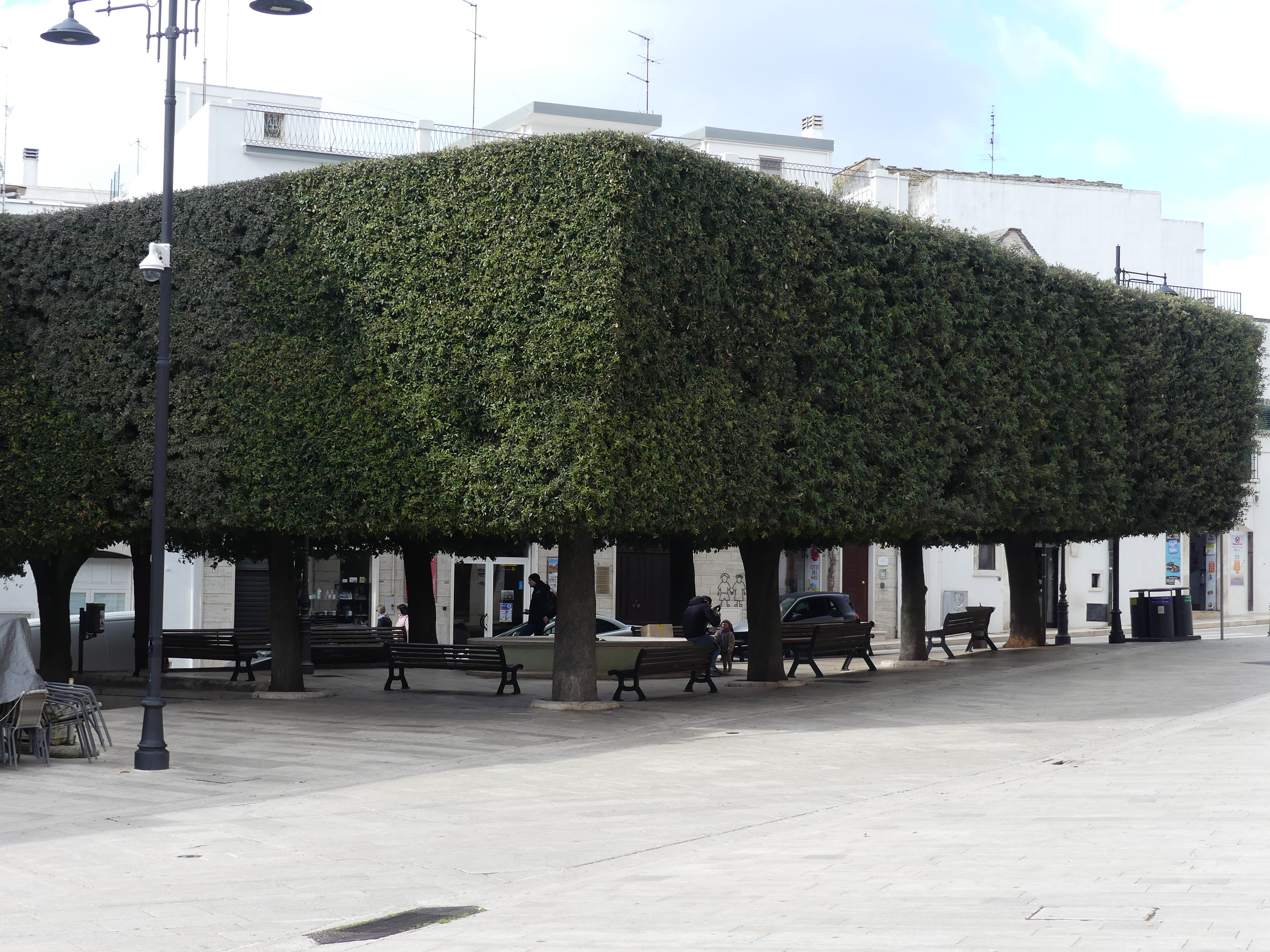
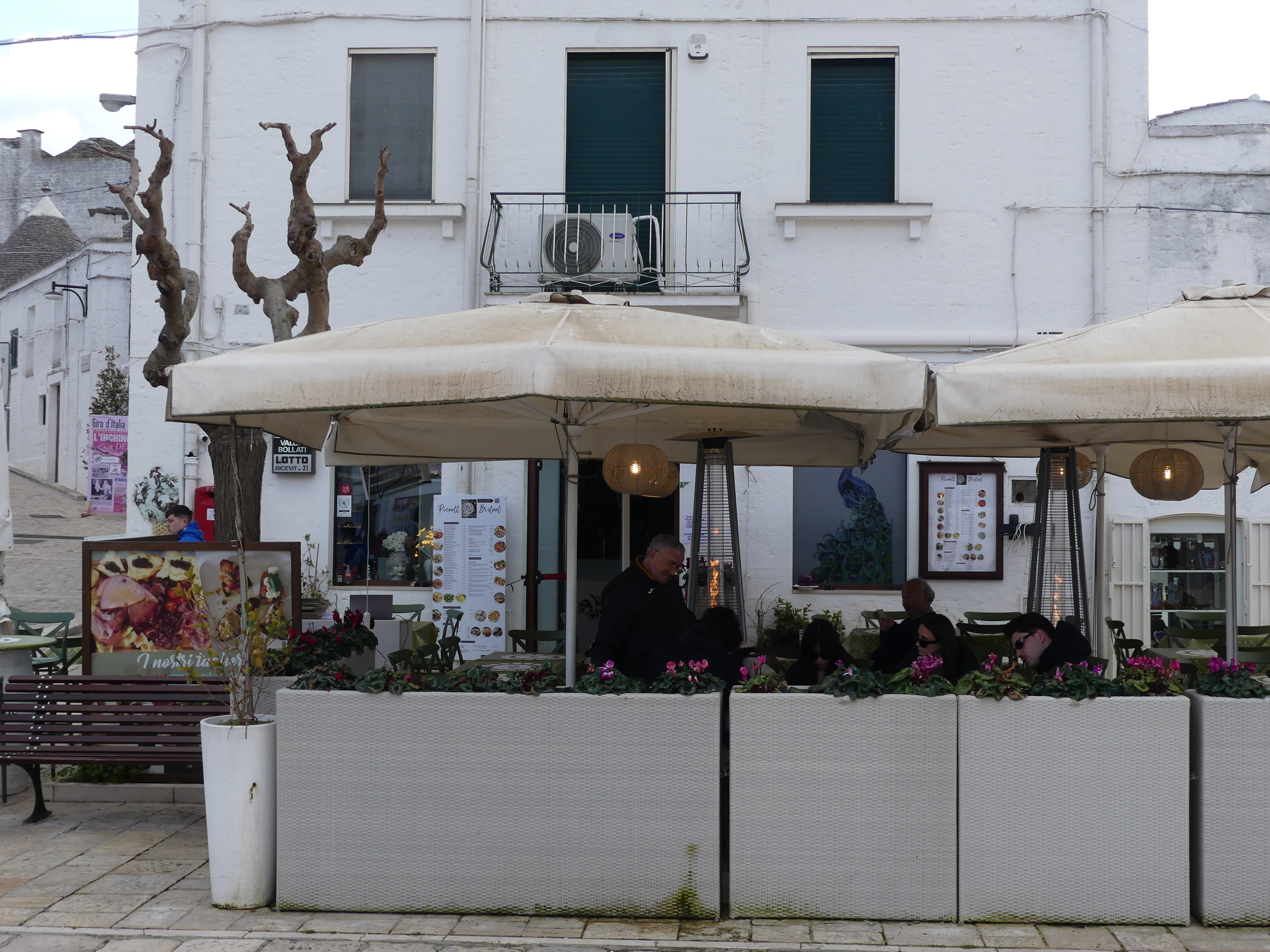
Our story starts with a picture of the fountain in front of the railway station in Bari from where we caught our bus to Alberobello. Upon arriving at the train station via the bus, we left the bus and walked through the modern town. The walk up the hill and down into the Piazza is shown in my photos below. The Municipio and the tourist map were two of the first features we reached. Clean and tidy, the people of Alberobello have great pride in the Town.

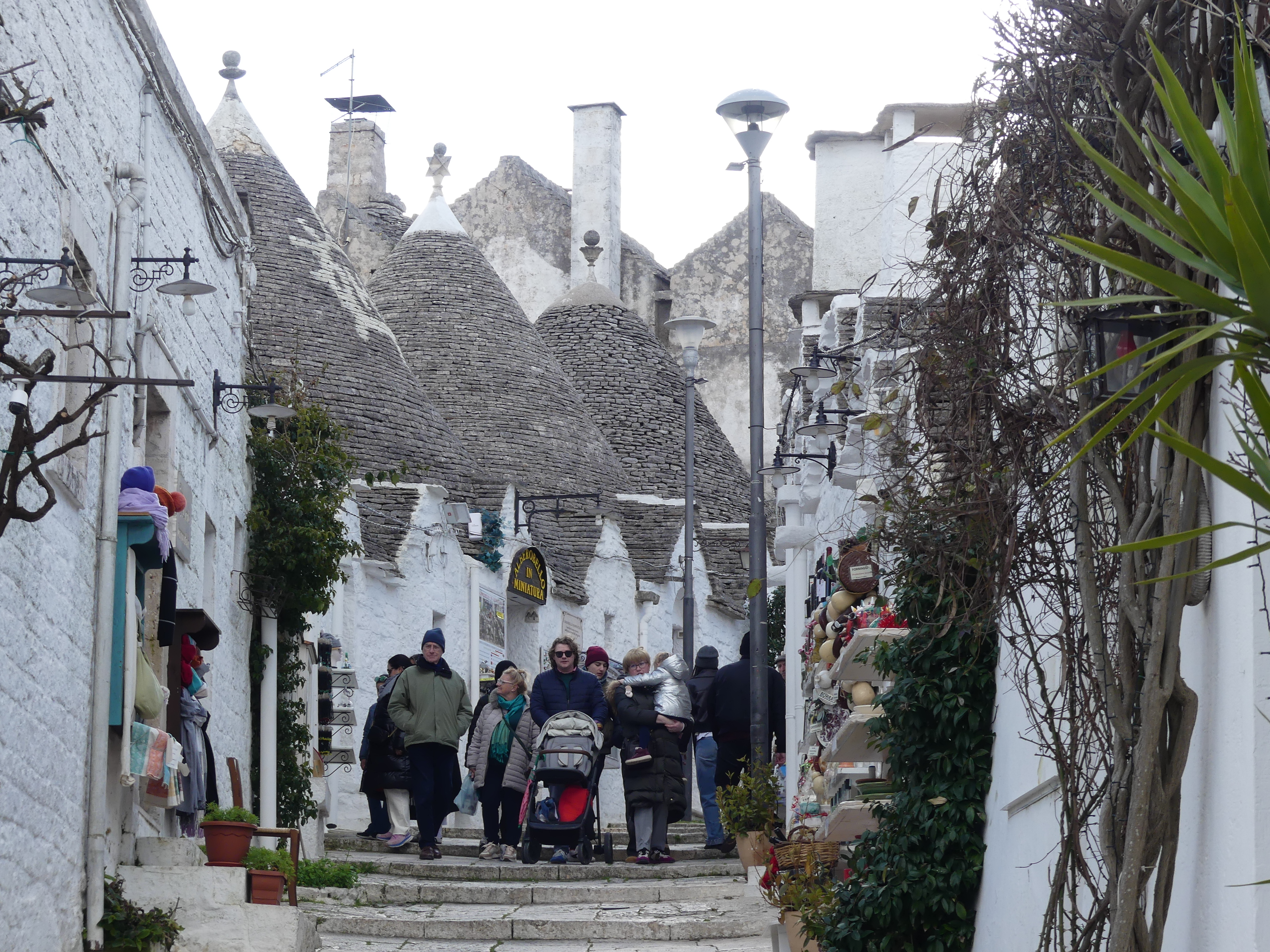
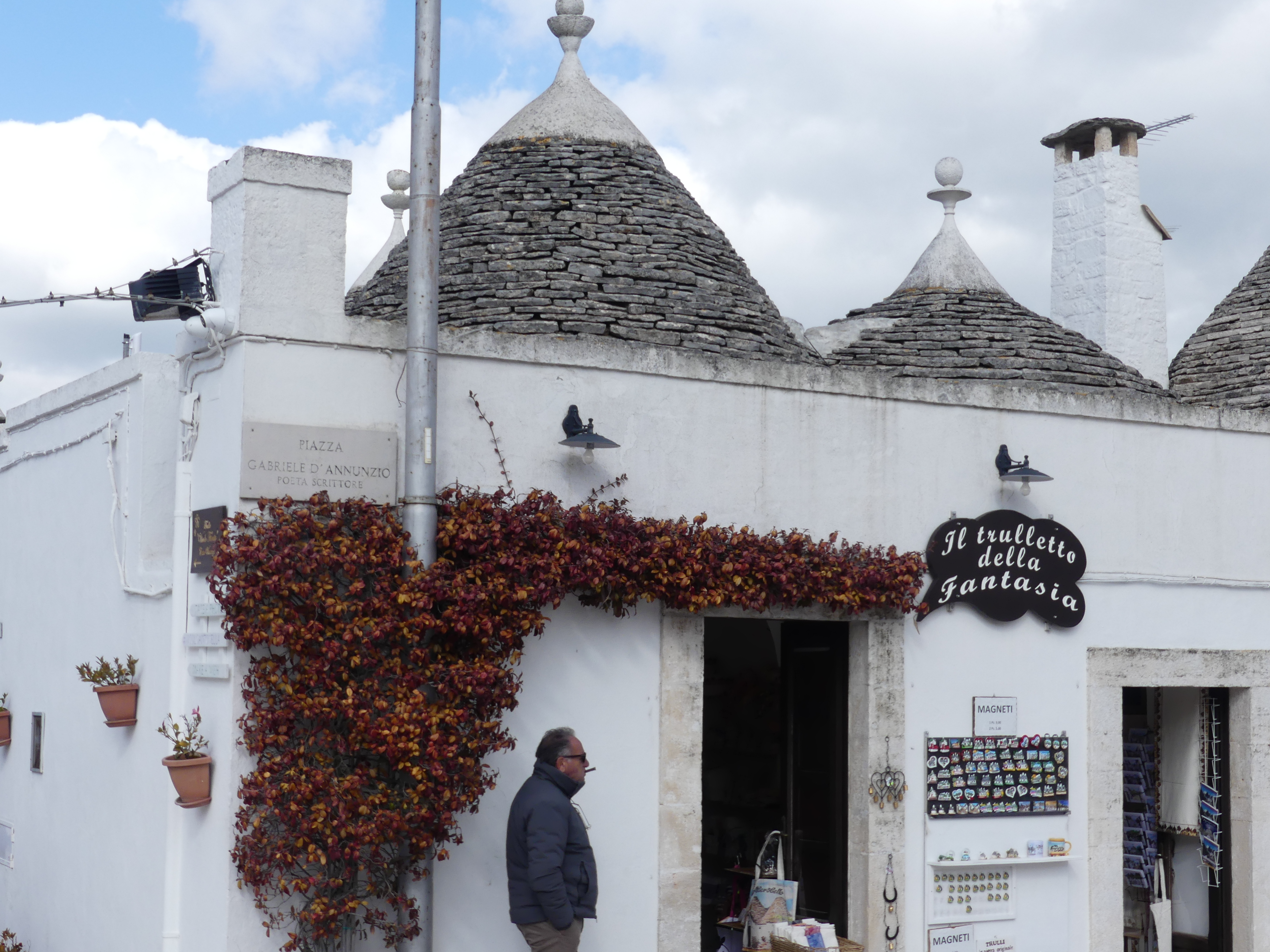
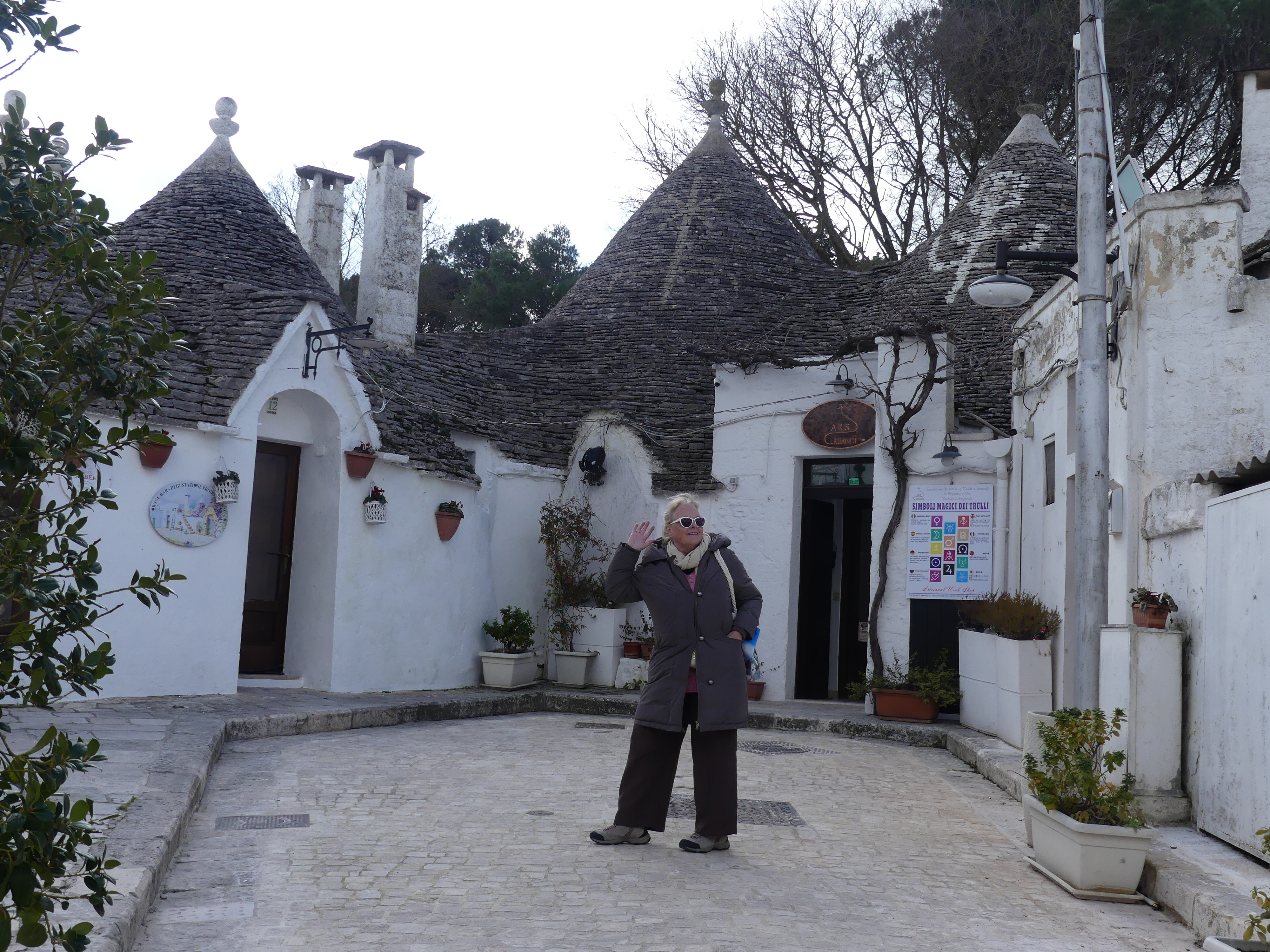
In the last photo above we have found the stairway into the Trulli village. The trulli homes are all uniformly coated in white. Some continue to be used as homes, but many are shops or B&Bs. We visited the Arie dell Artigianato, an artisan timber craftsman. Whilst inside the design for the roof had me puzzled as to how the trulli stand up but climbing through the ceilings was not permitted.

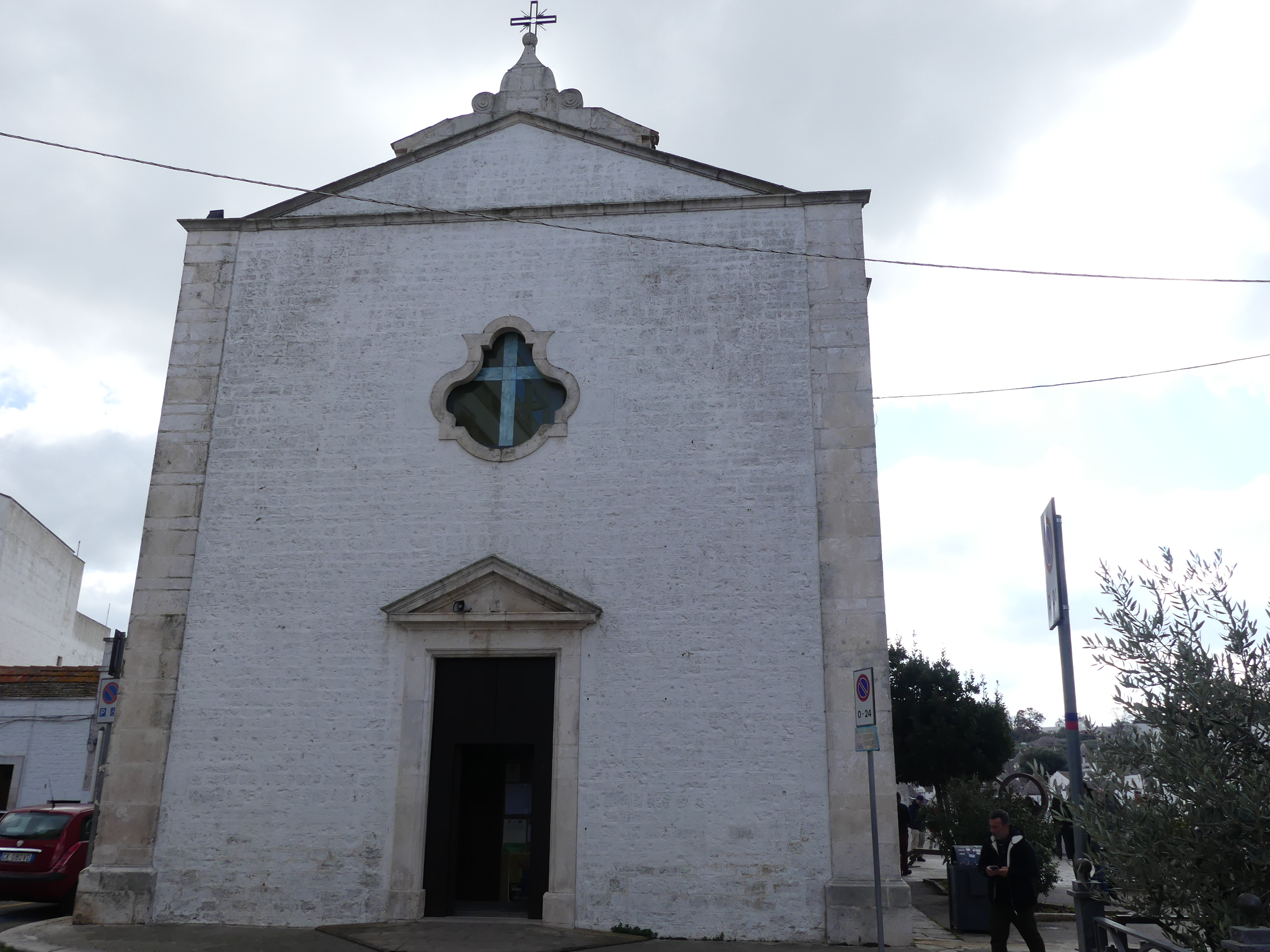
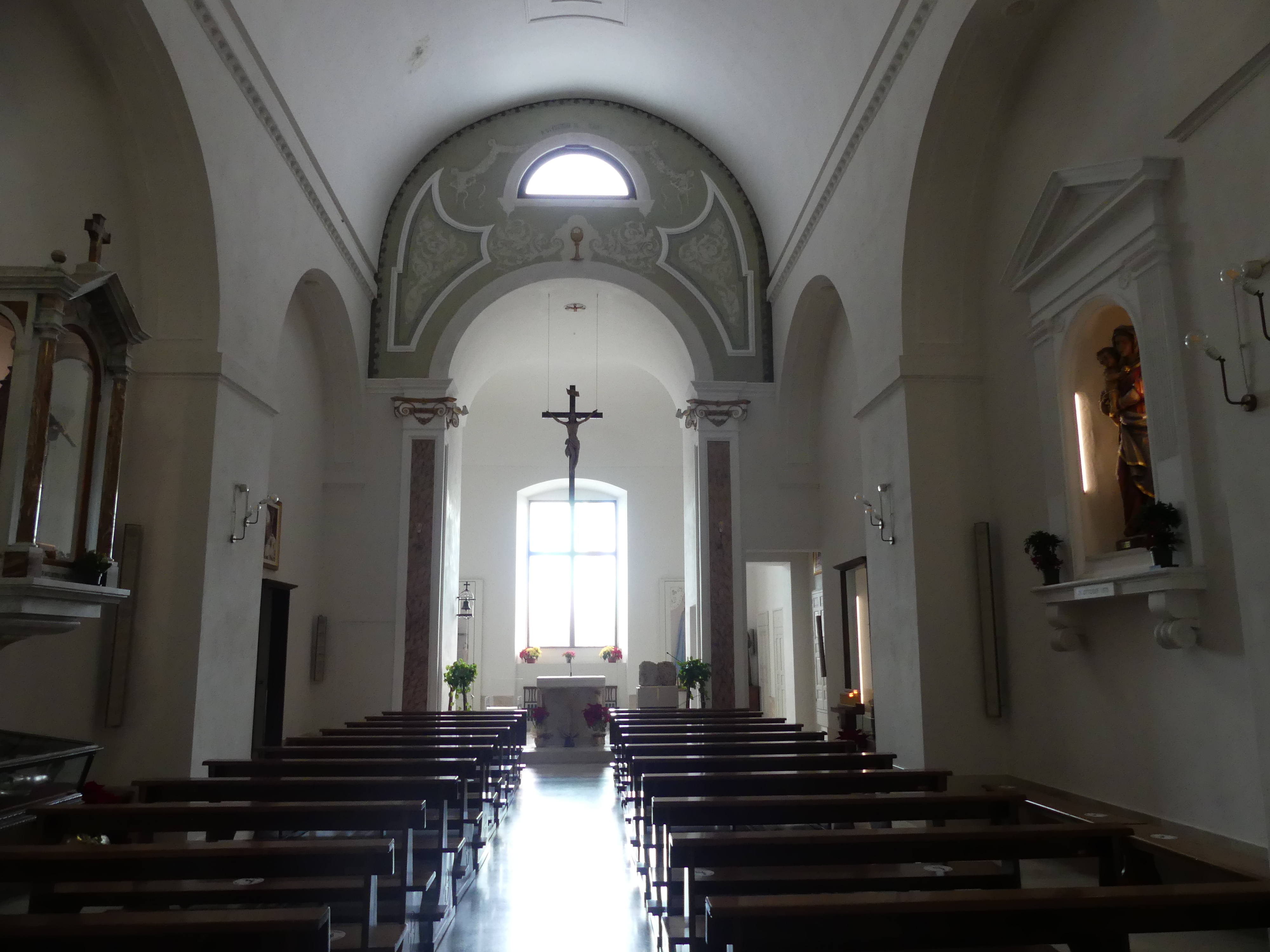
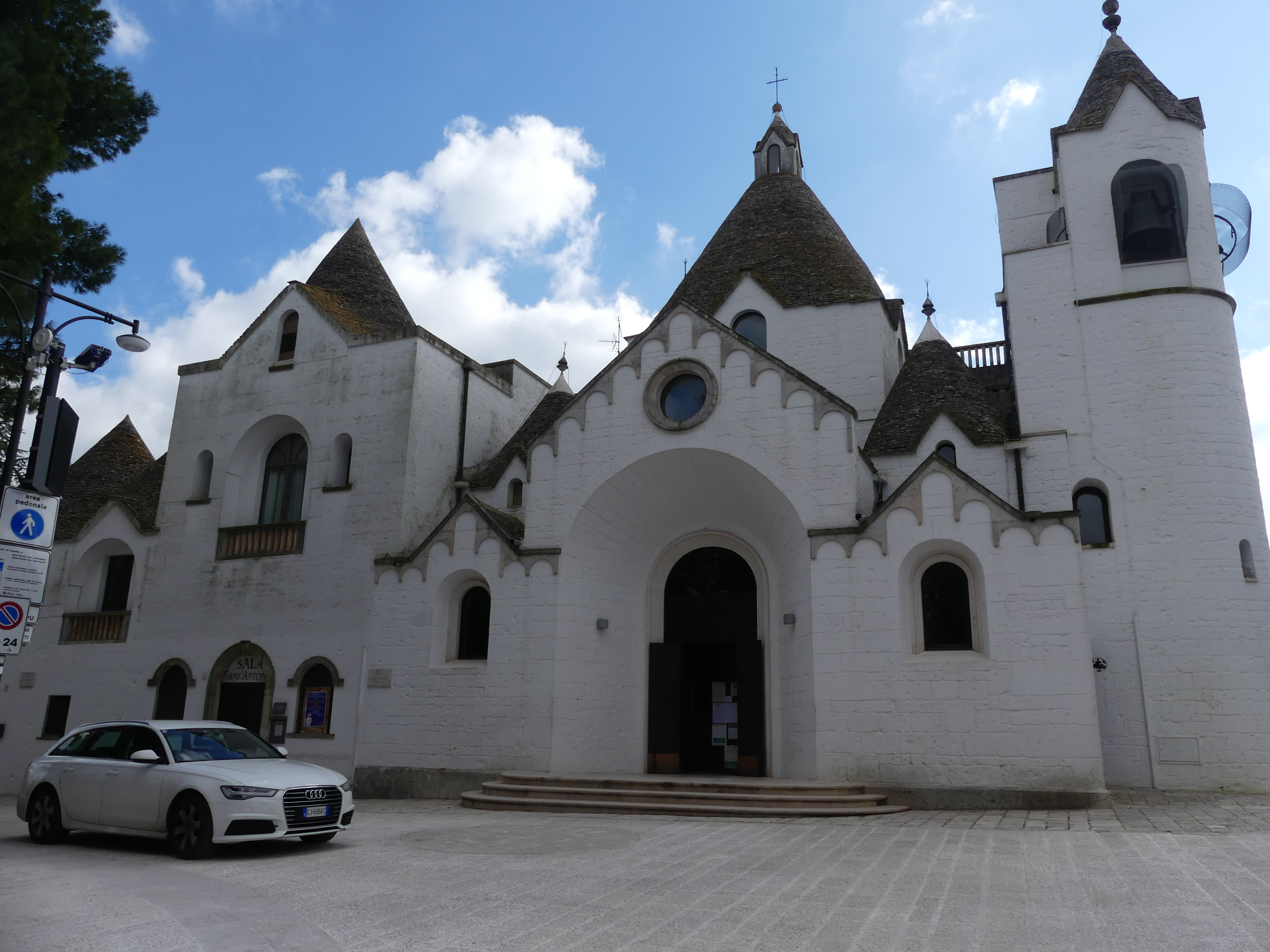
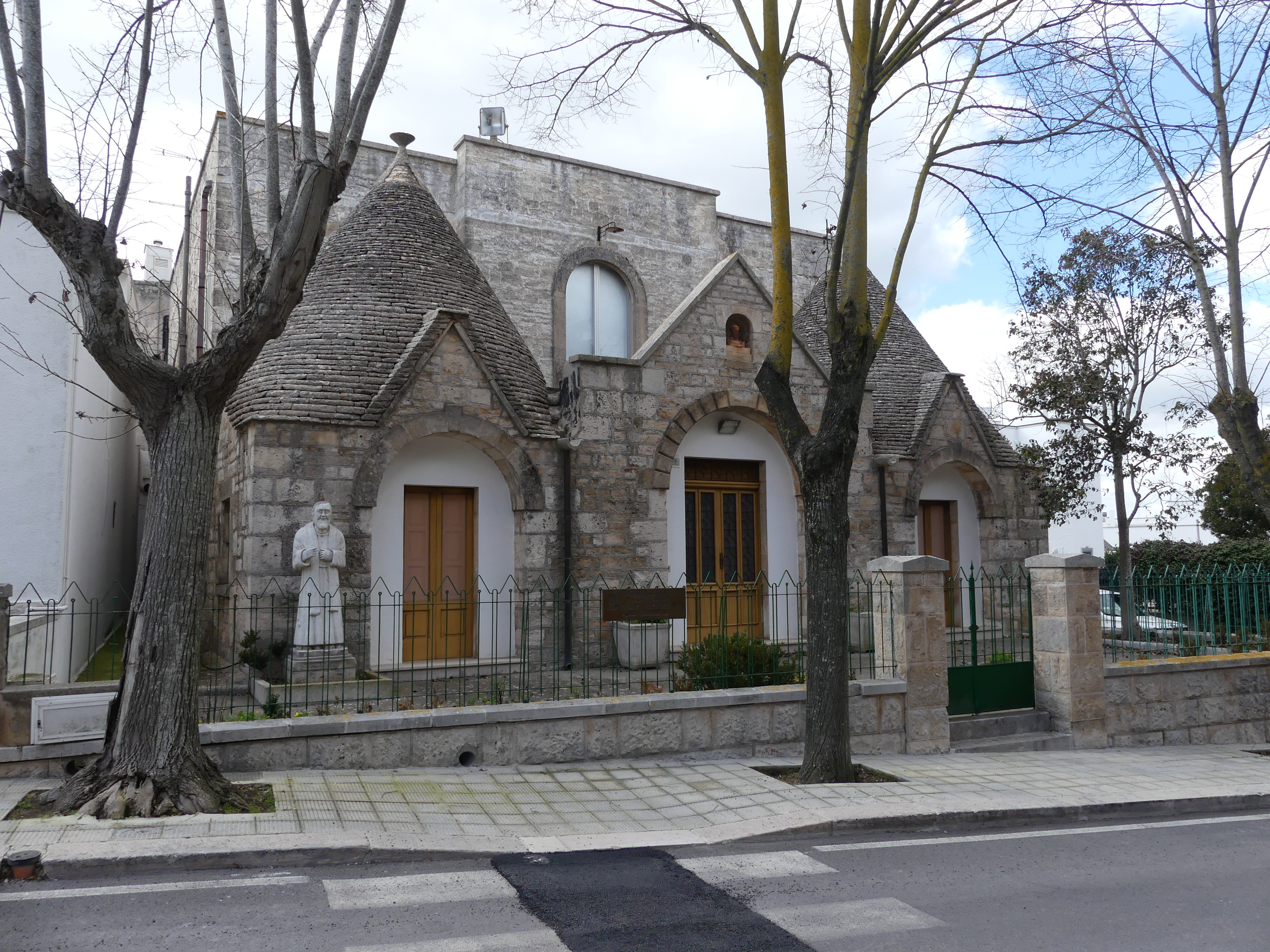
We walked through the key streets with Kerry taking in some shops until reaching a church, Parrocchia Sant’Antonio di Padova (Church of Saint Anthony of Padua) at the top of the hill of course built in 1927 in trulli style. Even the manse had trulli influences. From the top of the hill, we could see the two bell towers of the Saints Cosma & Damian’s church. We made our way down to the bottom of the hill and found our lunch restaurant but not in a true trulli building but a look alike. After lunch we ambled back through town visiting the Basilica of the Saints Cosma & Damian’s in the modern part of the town. The present structure of the church dates back to 1885, a work of Antonio Curri. Inside you can find the two wooden statues (1782 and 1784) and the reliquary containing some bones fragments of the Saints. The project led by architect Antonio Curri, was finished only in 1914. During the 26th and the 27th of September the celebration of the Saint’s city holiday, that summons a crowd of pilgrims from the nearby towns, and as tradition claims, they travel the entire route by foot. Note the papal keys over the entrance to the Basilica.

Our final day of the “train journey holiday” to Bari ended at the bus station outside the railway station at Alberobello where we joined the queue to catch the bus back to Bari. Really interesting place to visit and normally you can catch the train. We left the transportation for Robert to organize so I have no idea why we caught the bus.

We farewelled Robert thanking once again for his hospitality and best wishes with his B&B bookings. He is a great friend.

The next morning we boarded our train for Naples from Bari. The journey would take us from the west coast to the east coast with one change of train. The small towns we have been visiting will be in stark contrast to Naples for size but we were not ready for the dirtiness of the city. Read on with our travels when “THE RETIREES GO AROUND THE WORLD – BARI to NAPLES”.

“THE RETIREES GO AROUND THE WORLD – BARI to TARANTO”

TARANTO

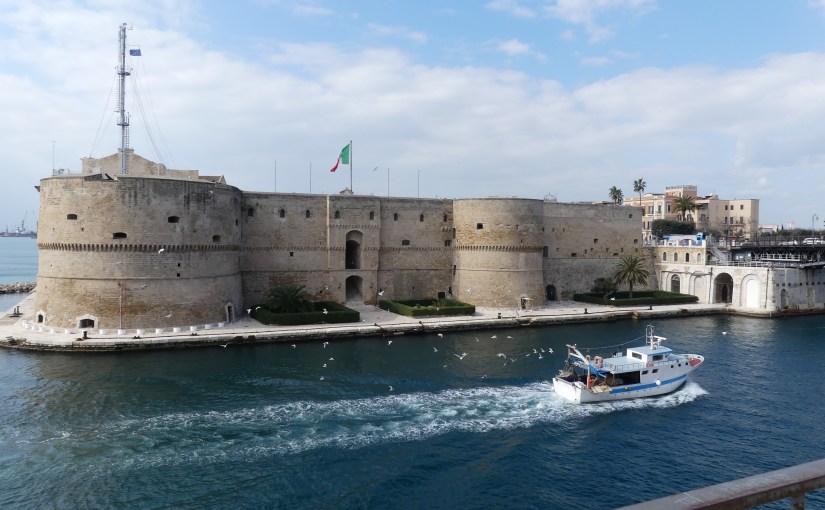
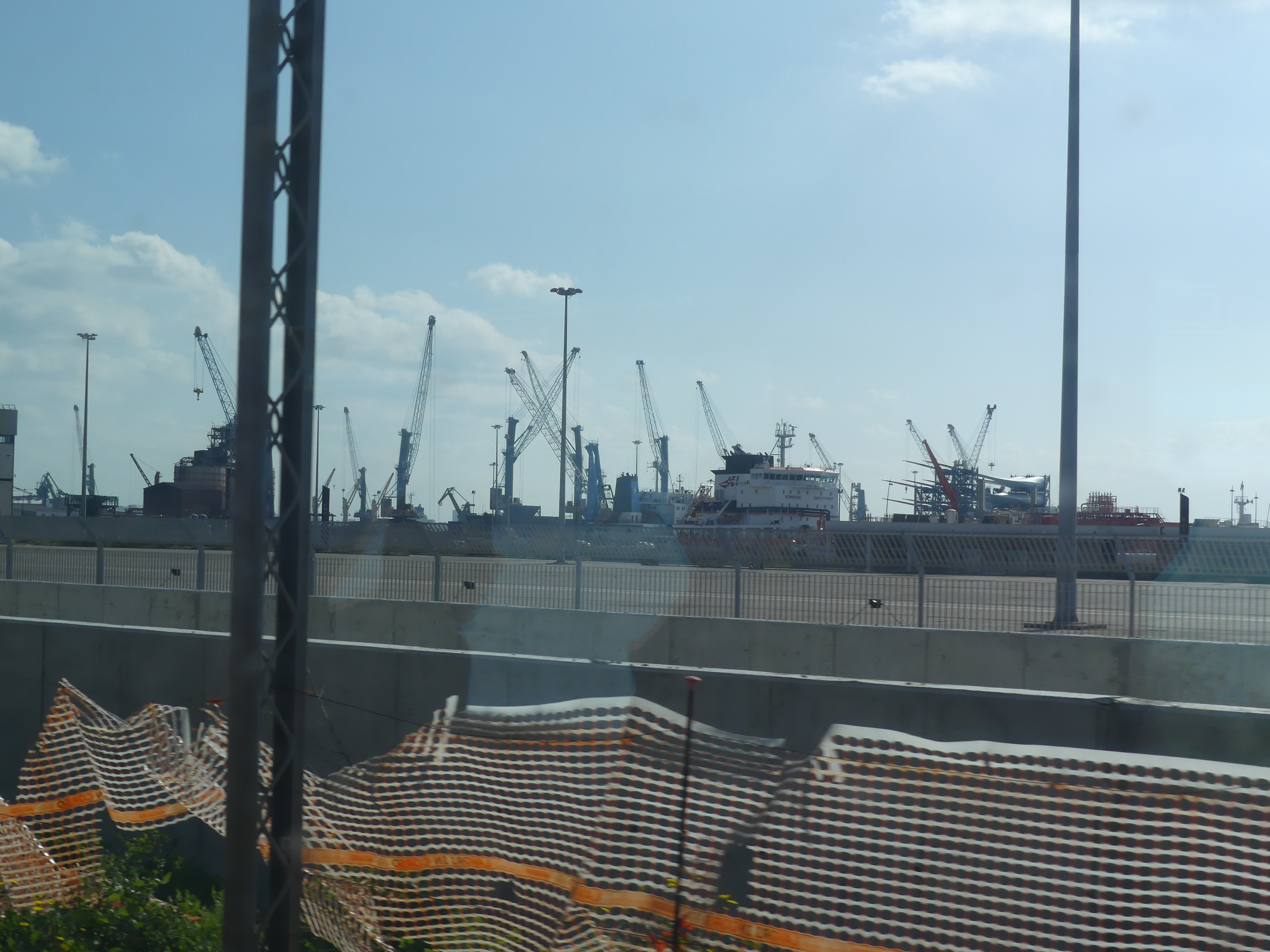
Another town I had not anticipated visiting. Taranto is much further south than we planned traveling. It is a coastal city in Apulia, southern Italy. It is the capital of the province of Taranto, serving as an important commercial port as well as the main Italian naval base. Founded by Spartans in the 8th century BC during the period of Greek colonization – good to see the Spartans had finished fighting long enough to do something positive.

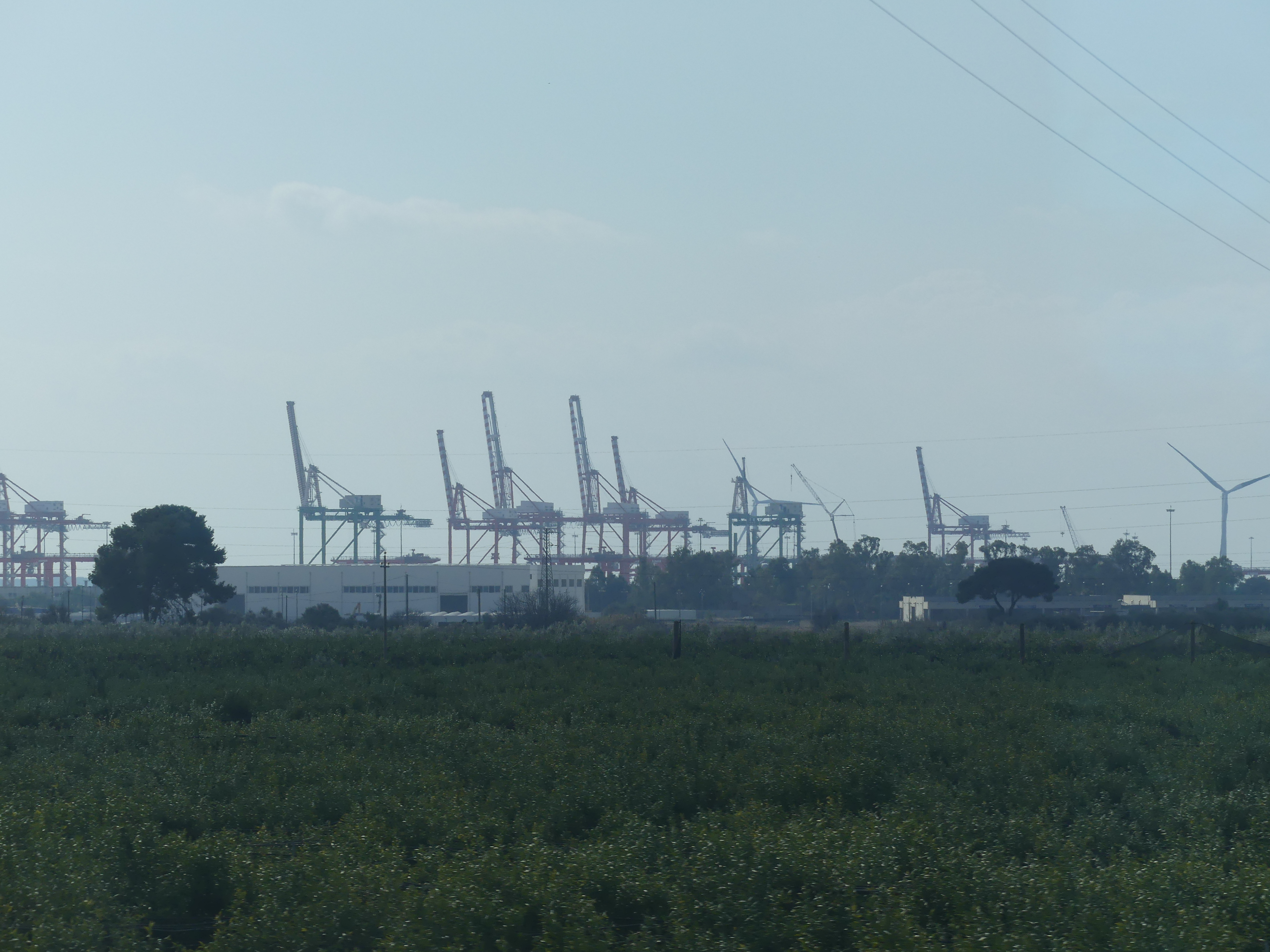
This was a longer journey and moved us out of the coastal areas of the Adriatic Sea to cross some long flat plains into an industrialized centre on the Mediterranean Sea.

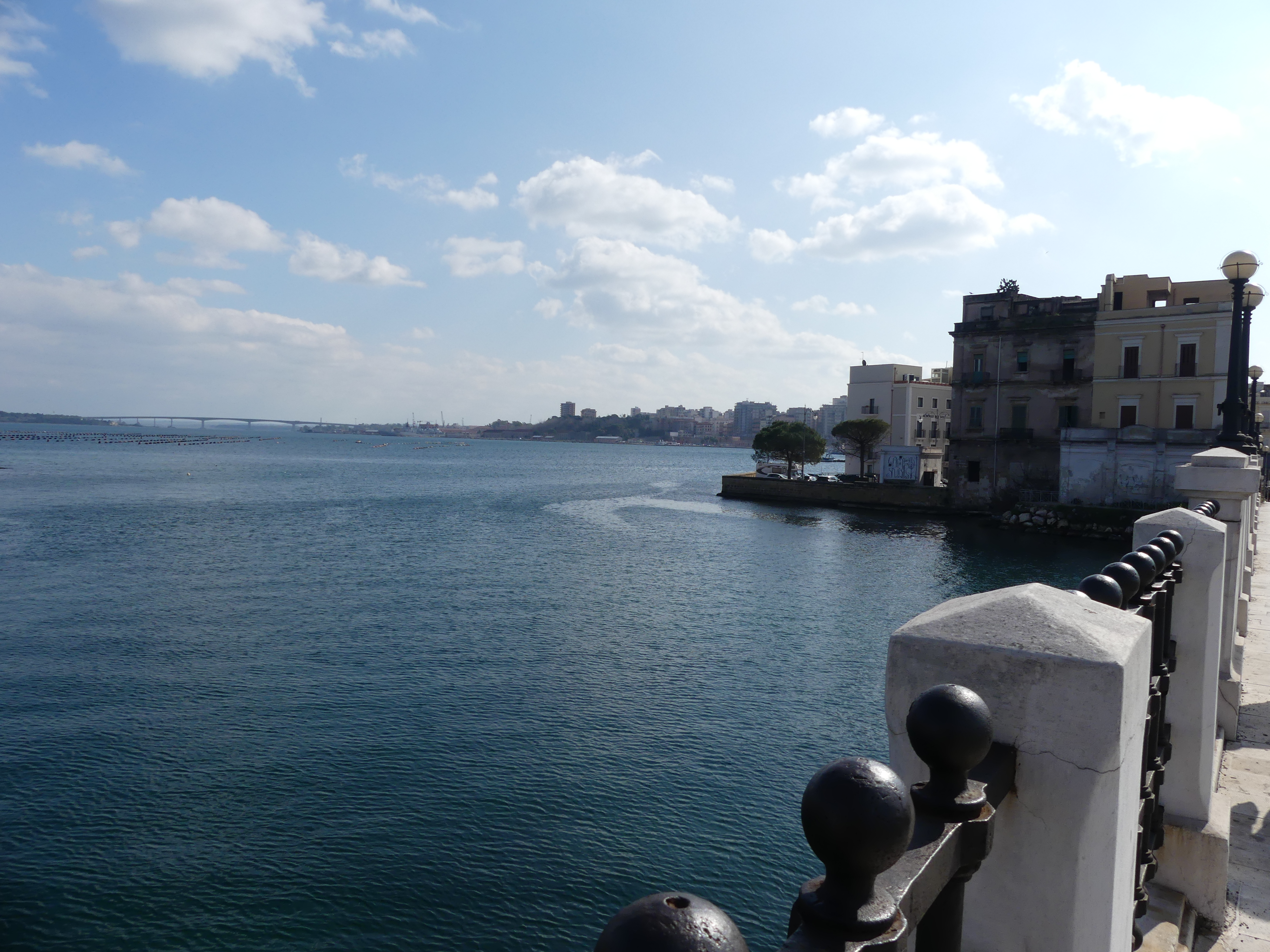
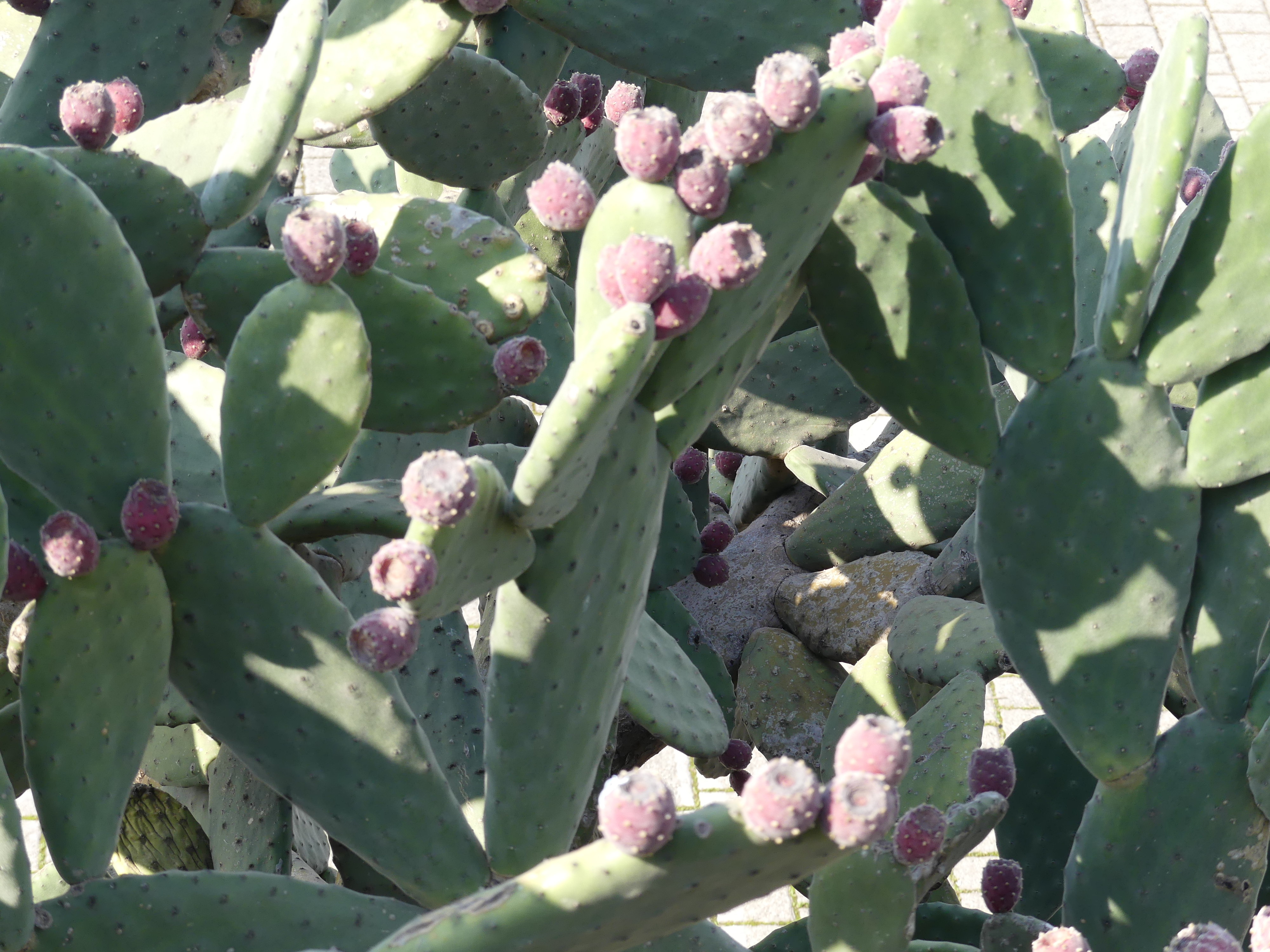
The walk from the station to the old town was also longer than other towns. Taranto was clearly a much larger town. To get to the old town we had to cross a substantial bridge. Cactus seemed to be a popular roadside plant and was coming into flower.

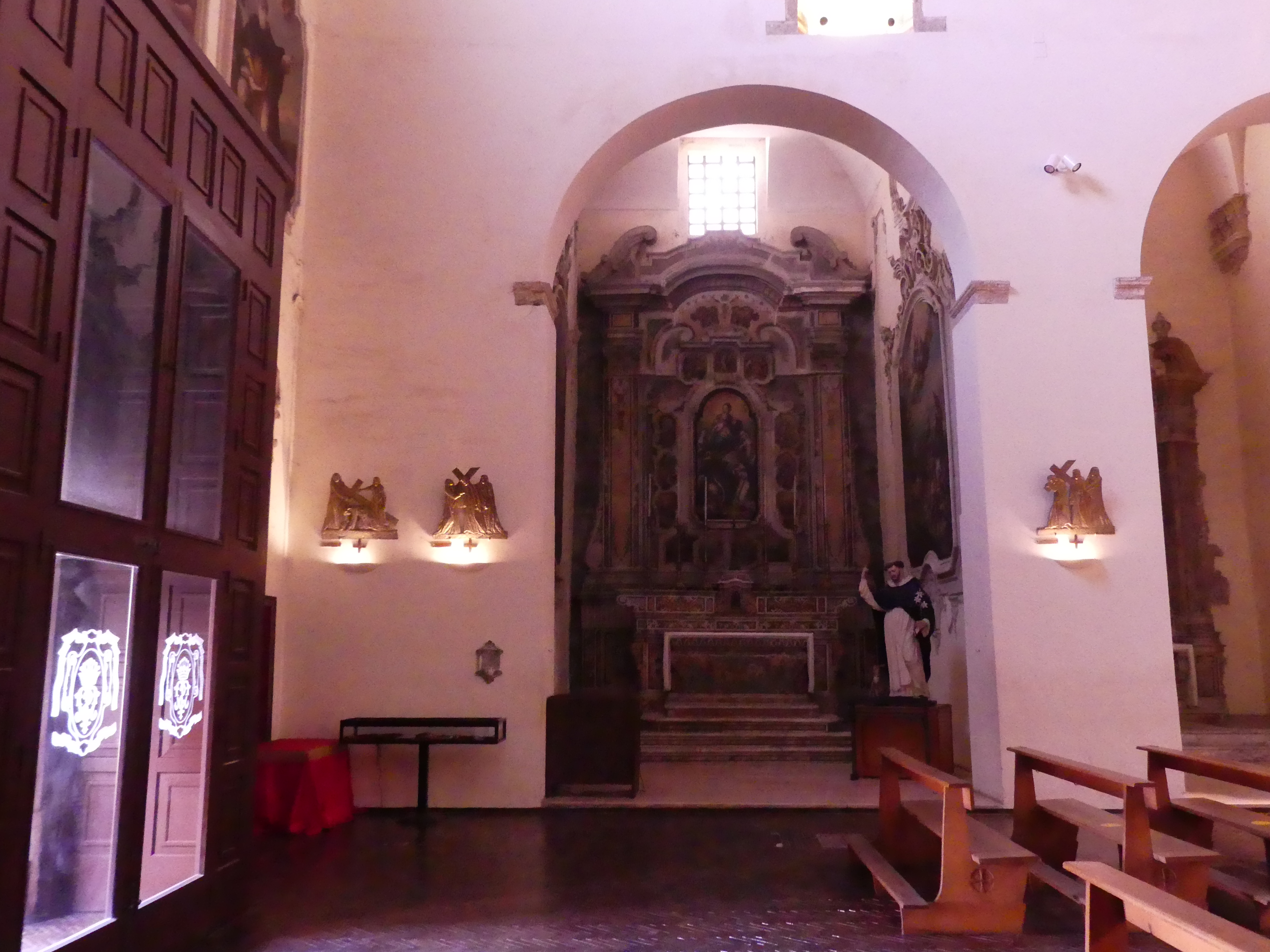
Another church. This time atop a large staircase – Chiostro de san Domenico – plainly adorned but with a new twist on the stations of the cross. In the pictures below you can make out the plaque on the walls put forward the picture of the Crucifixion.

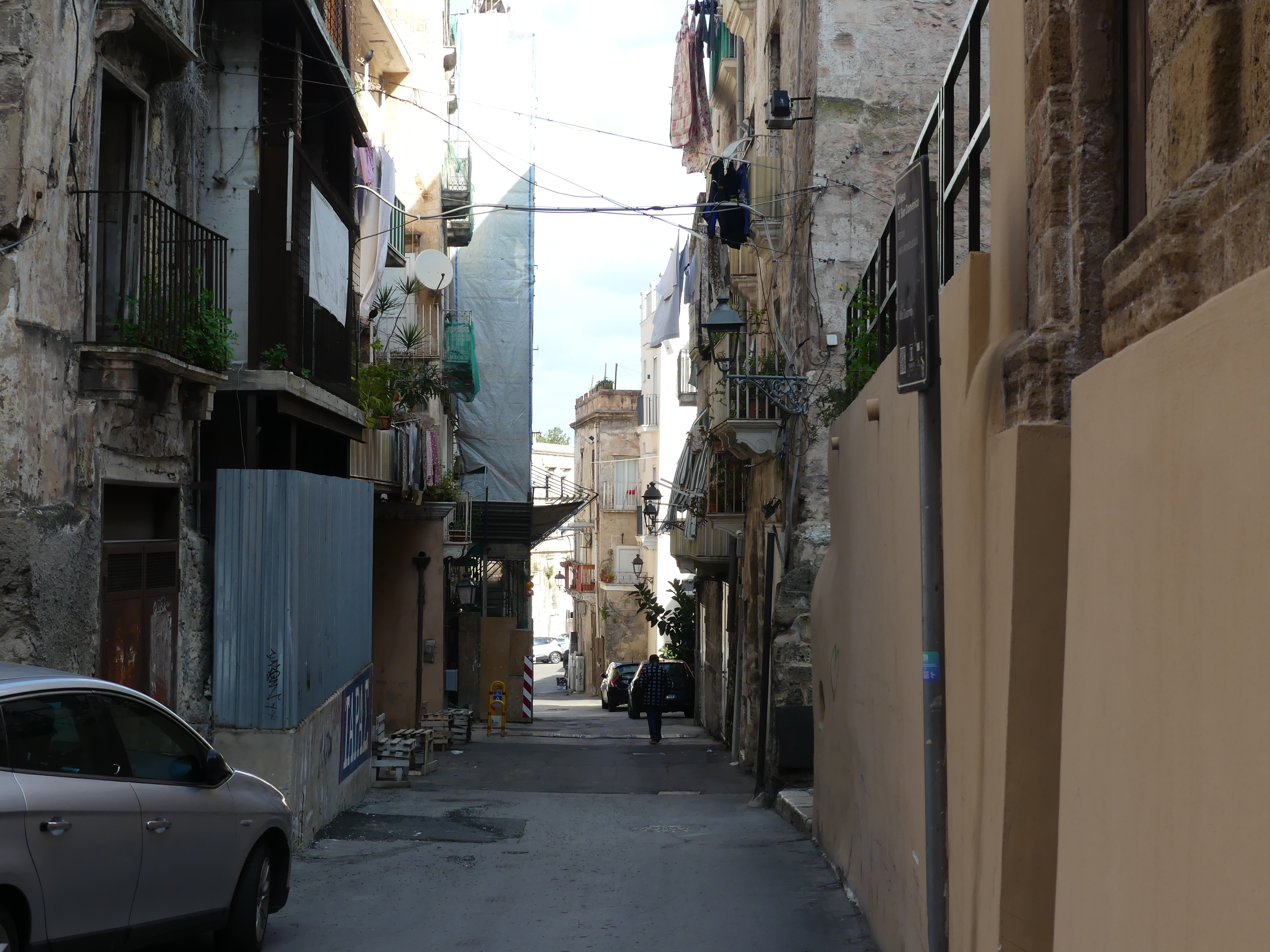
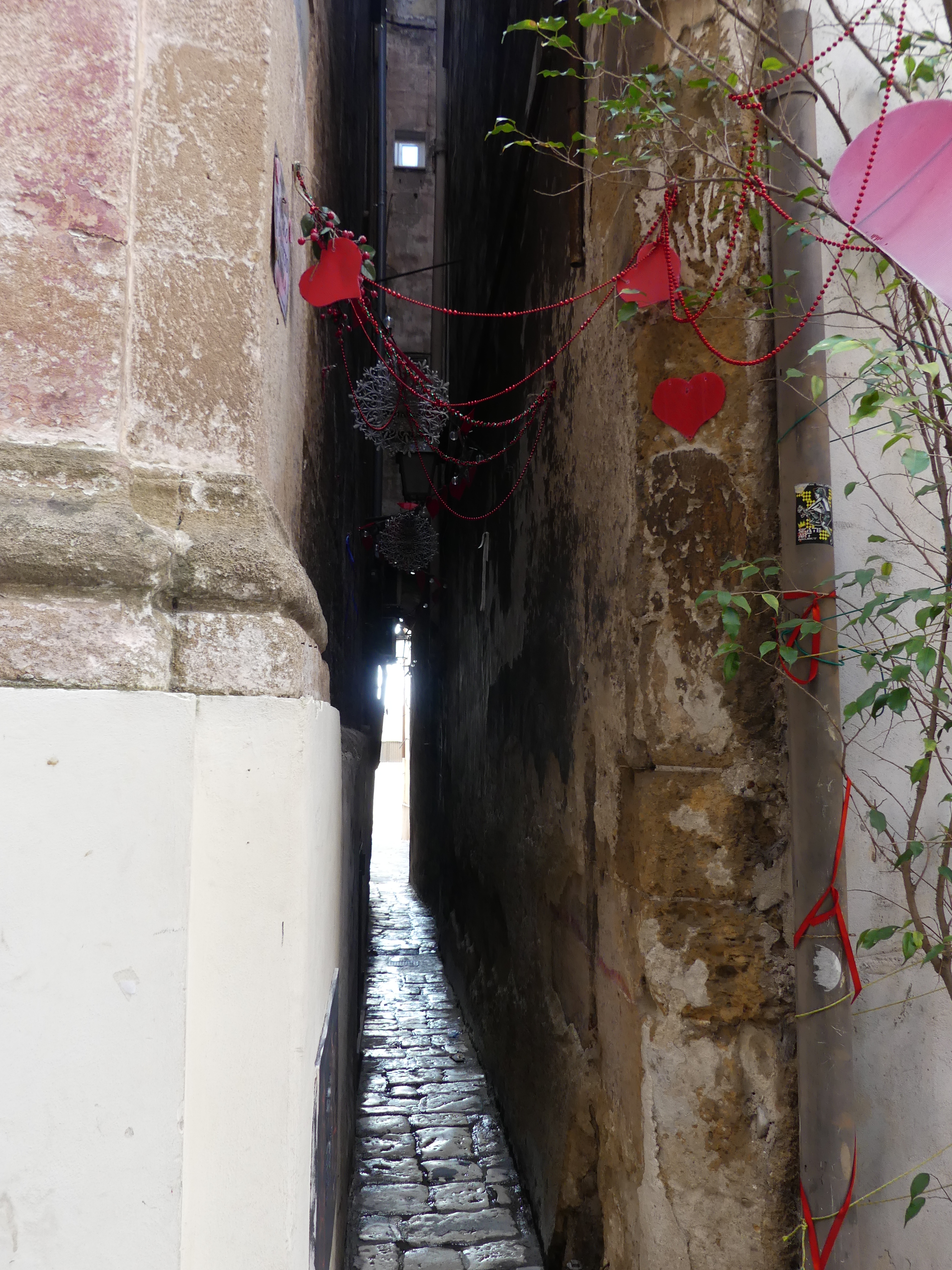
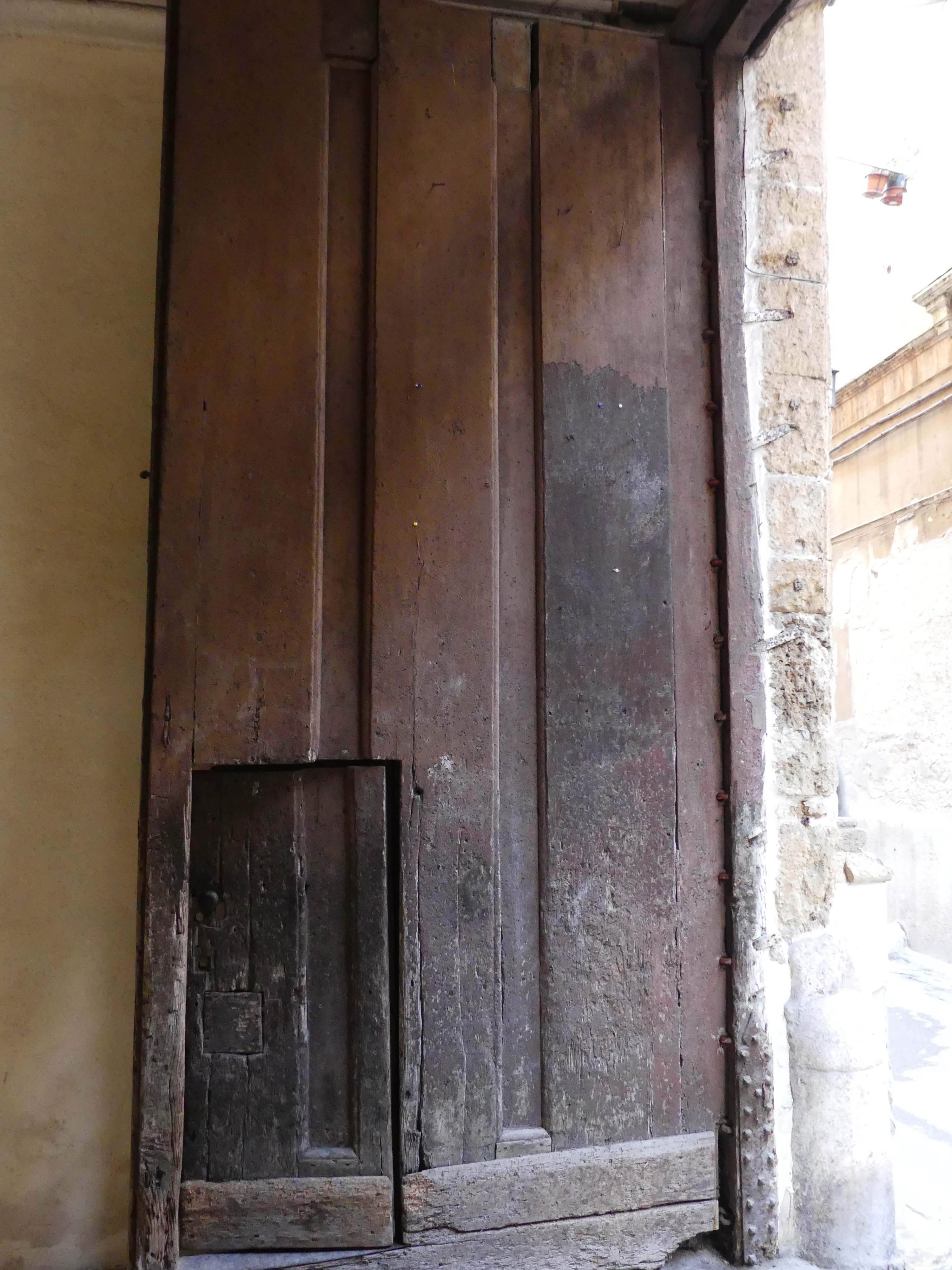
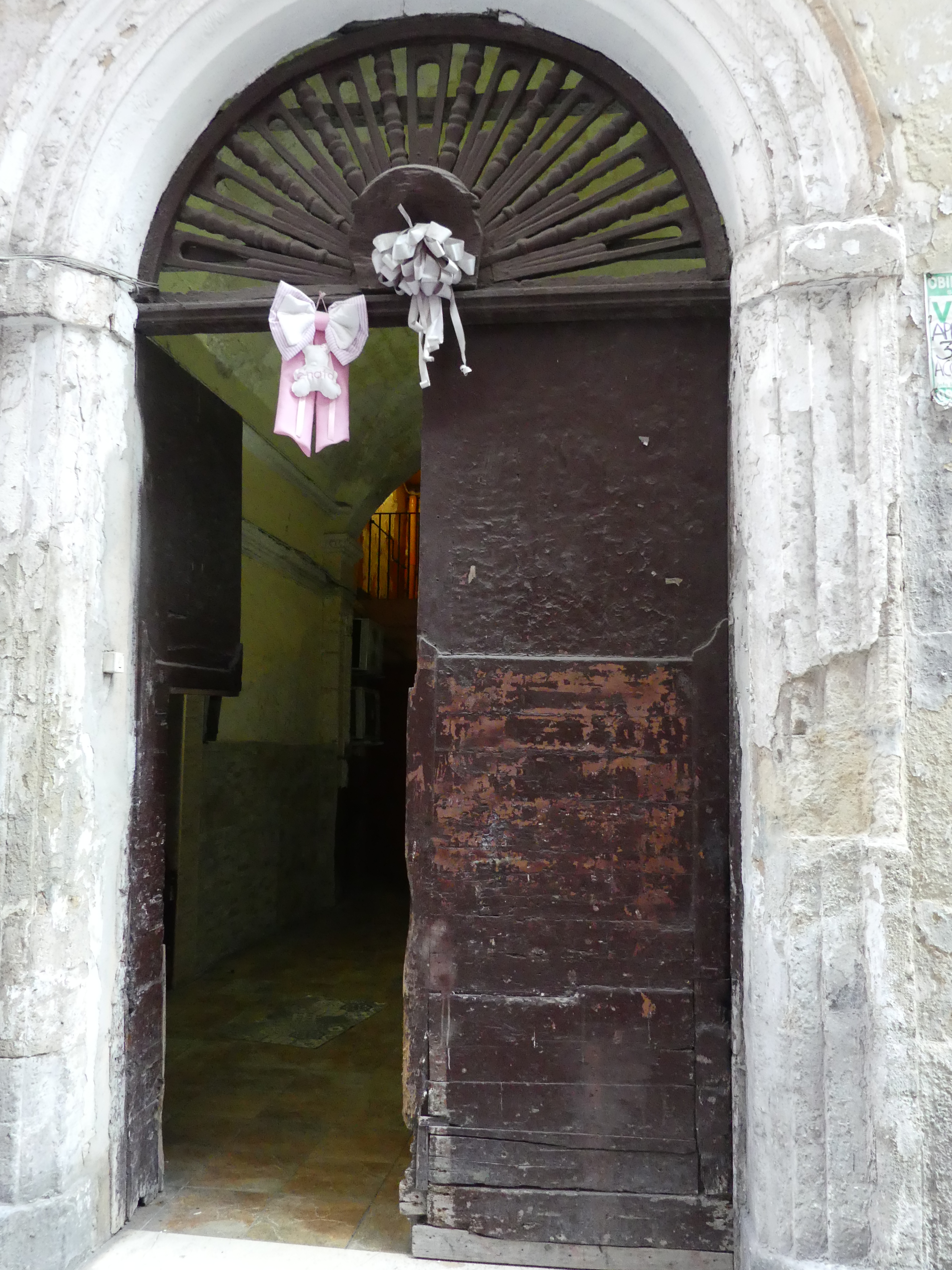
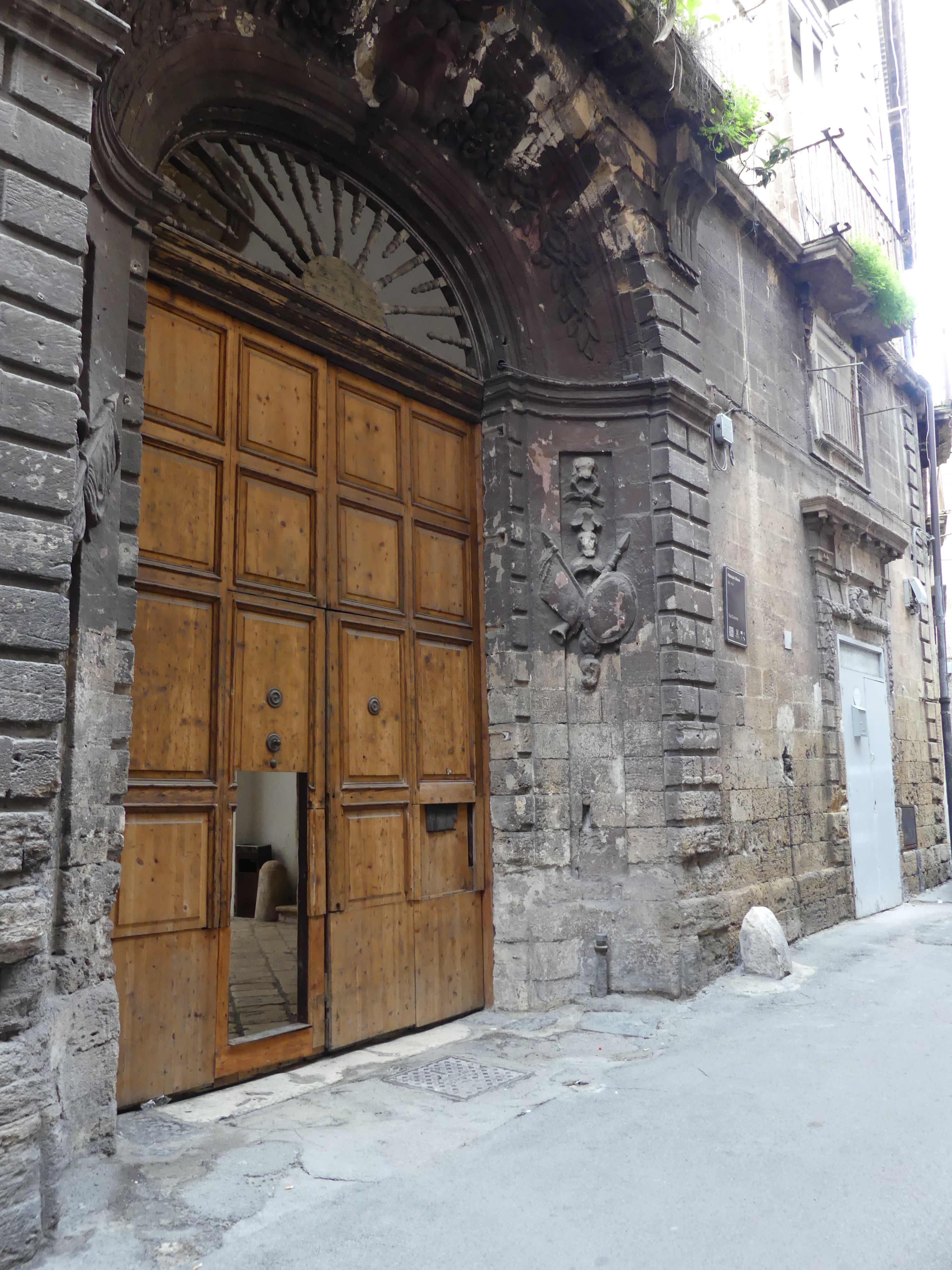
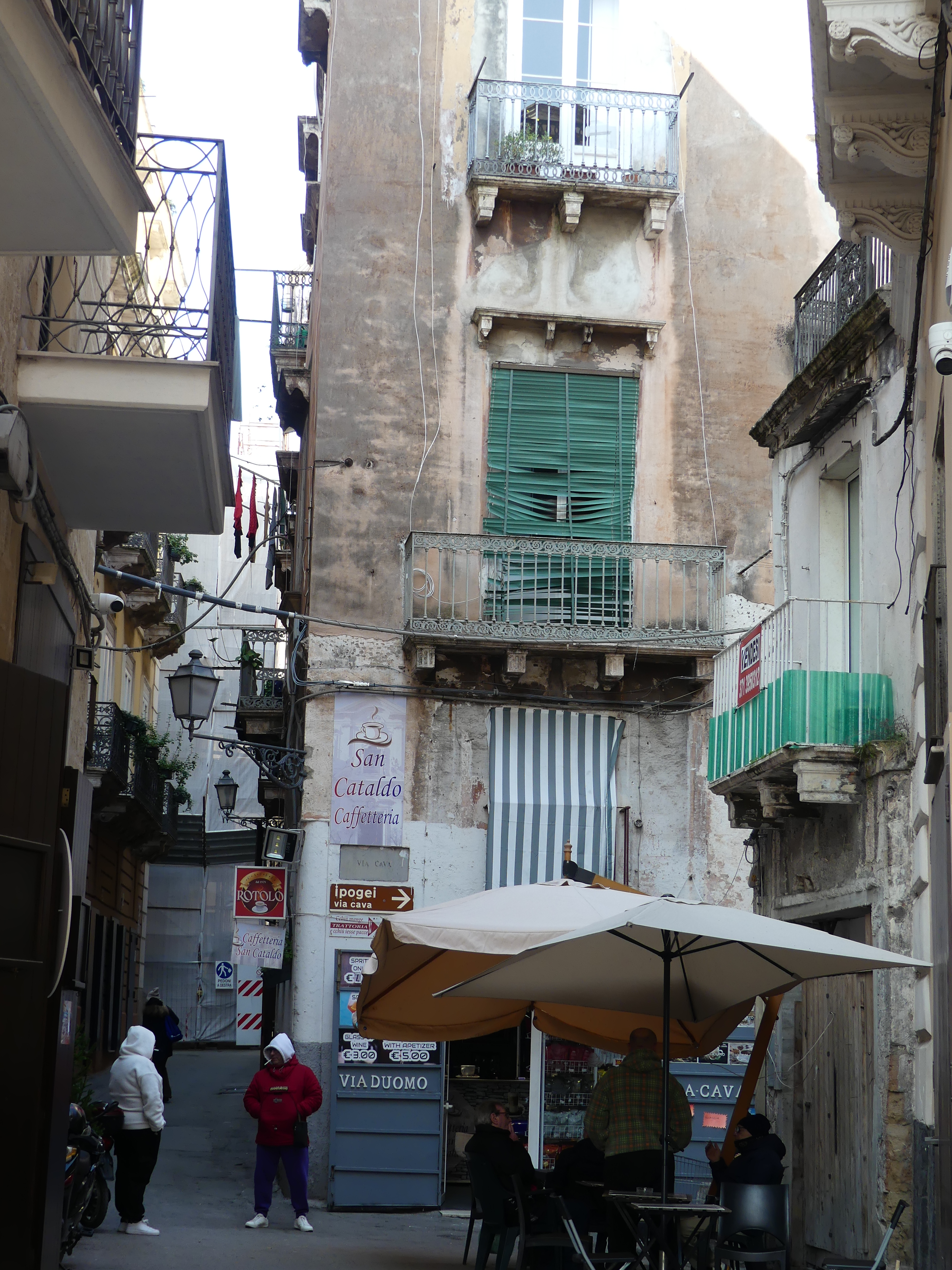
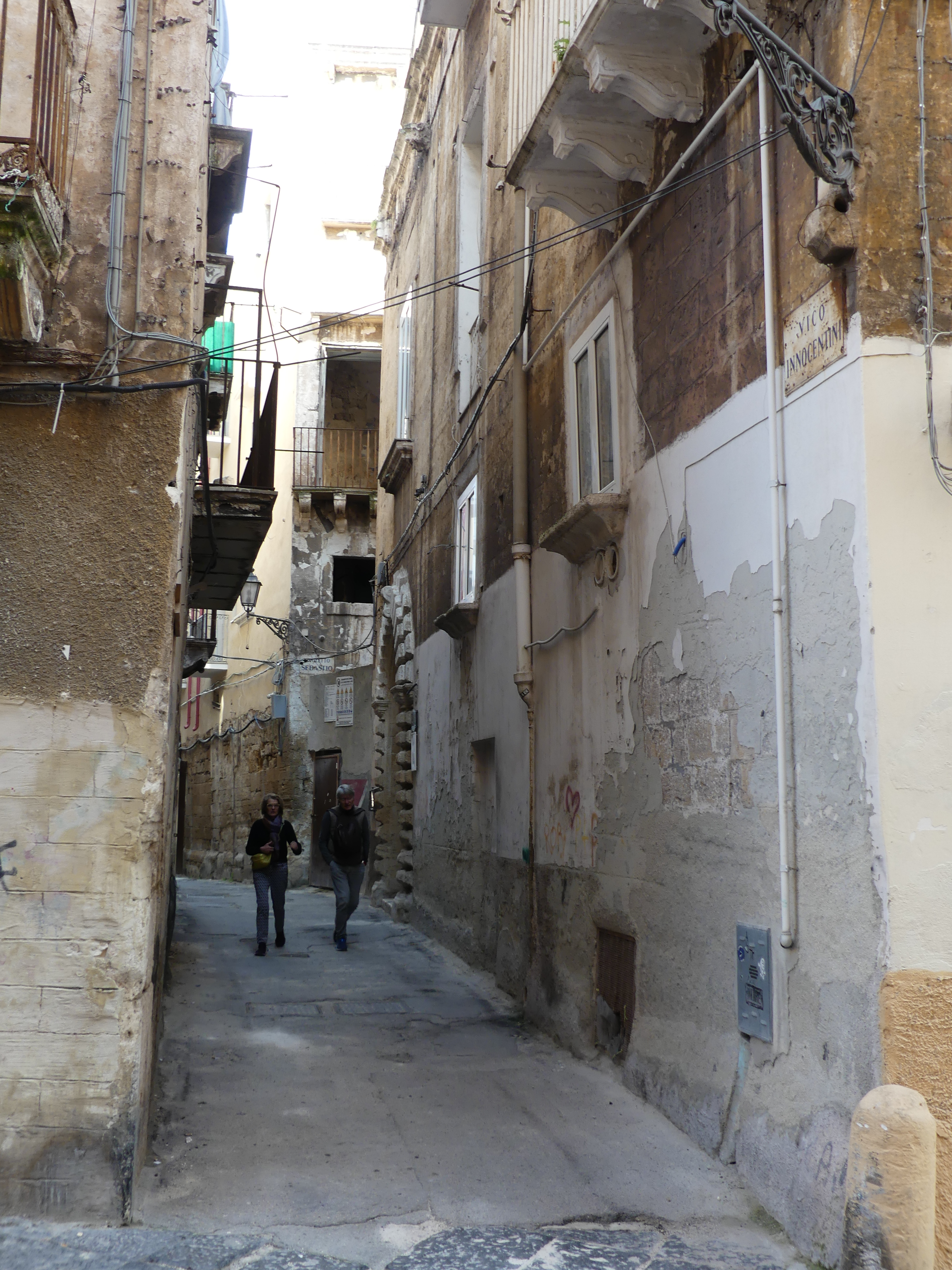
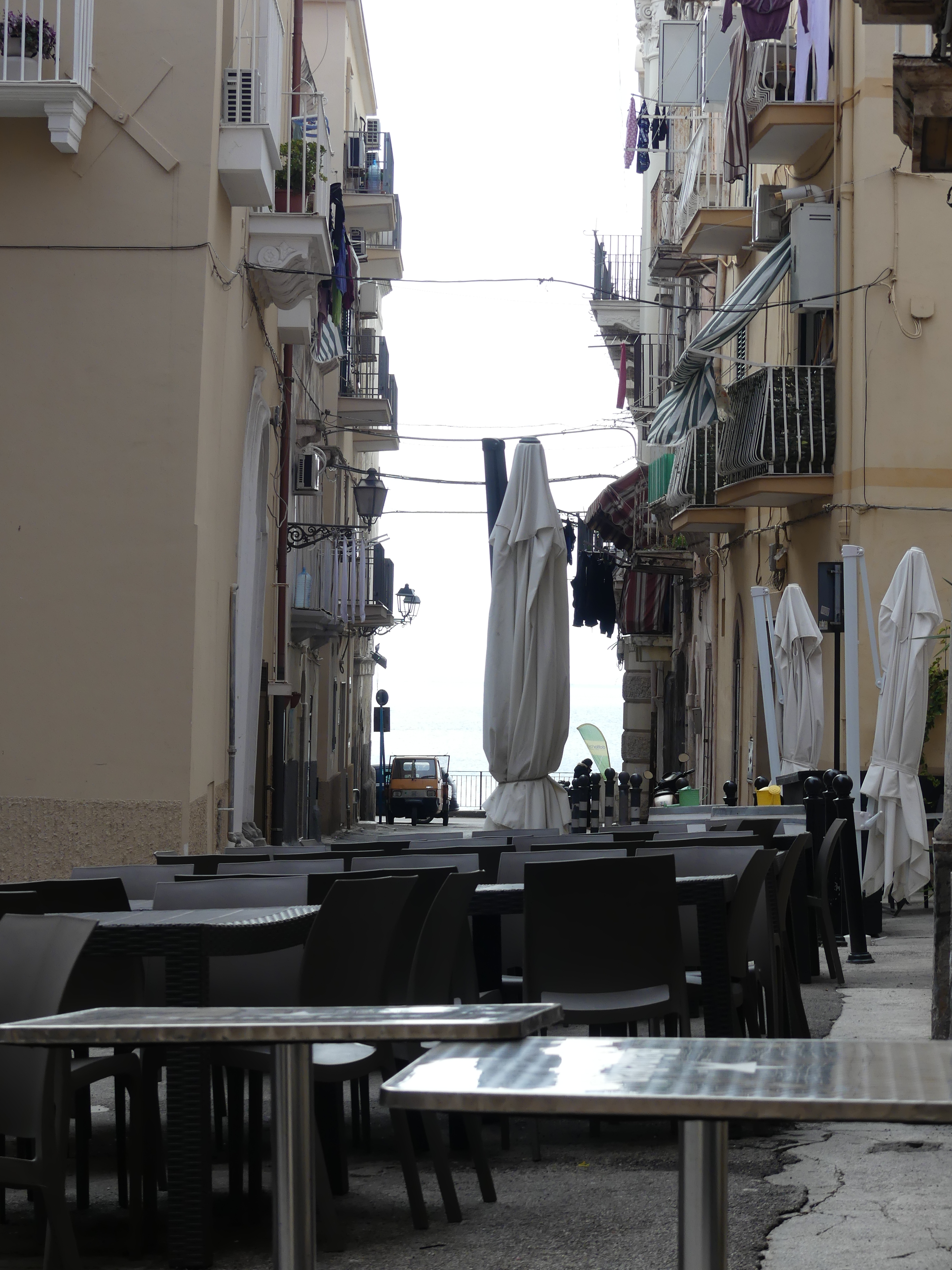
As we walked through the old town some of the passageways reduced to single file and some of the doors must have had some big hay wagons storing goods behind them. Here we encountered the practice of adorning the front door with bows celebrating the birth of a child blue for boys and pink for girls. In this case I think a little girl but they have forgotten to take an earlier birth “notice” down. We were to see this regularly in Naples. We also encountered the back street cafes – yes that’s it in the last photo. There is our fearless leader forever conscious of the WHS rules of being seen.

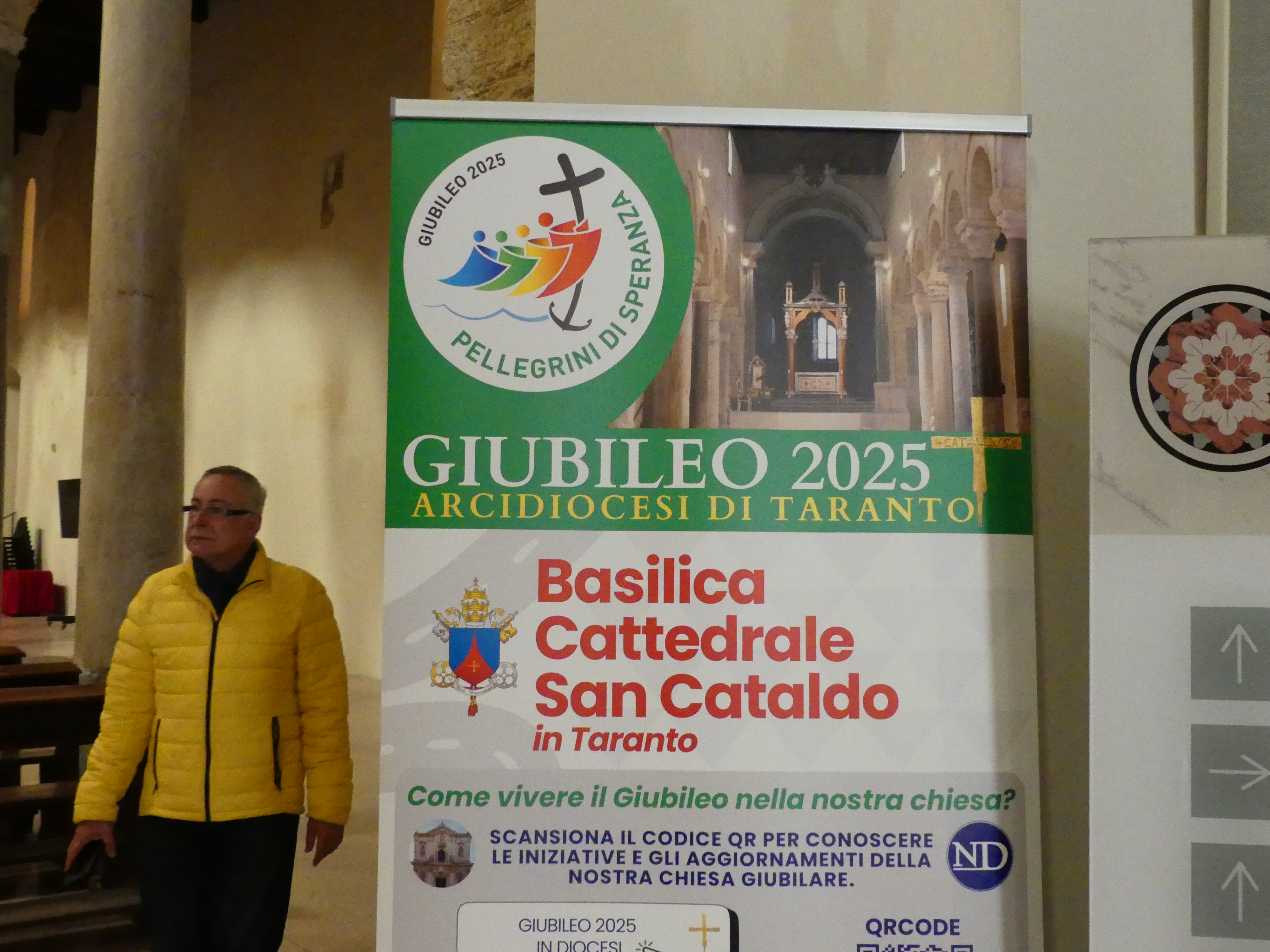
In our walk about we uncovered an Italian national monument Basilica Cattedrale san Calaldo. We were told that the primitive early Christian cathedral, attested since the 7th century, had to be placed outside the walls of the town and its location could probably be in the area where the Church of Carmine is now located, where a piece of the column on which Saint Peter is said to have celebrated the Holy Sacrifice is currently preserved. However, the church we see today was built by the Byzantines in the second half of the 10th century, following the sacking of the city by the Saracens in AD 927, when the Muslims definitively destroyed what remained of the ancient Greco-Roman city. The building contains some very interesting features and remains in use.

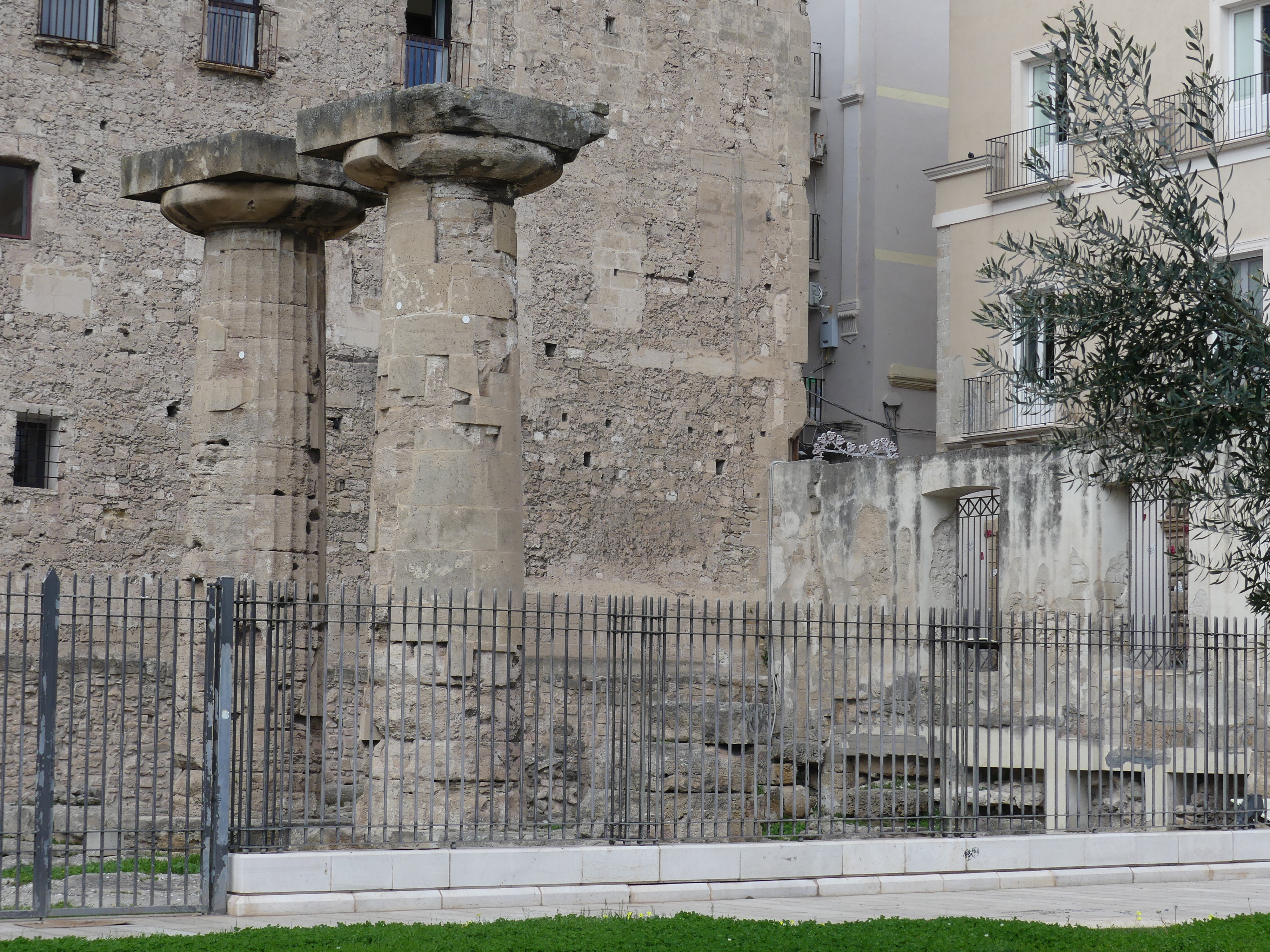
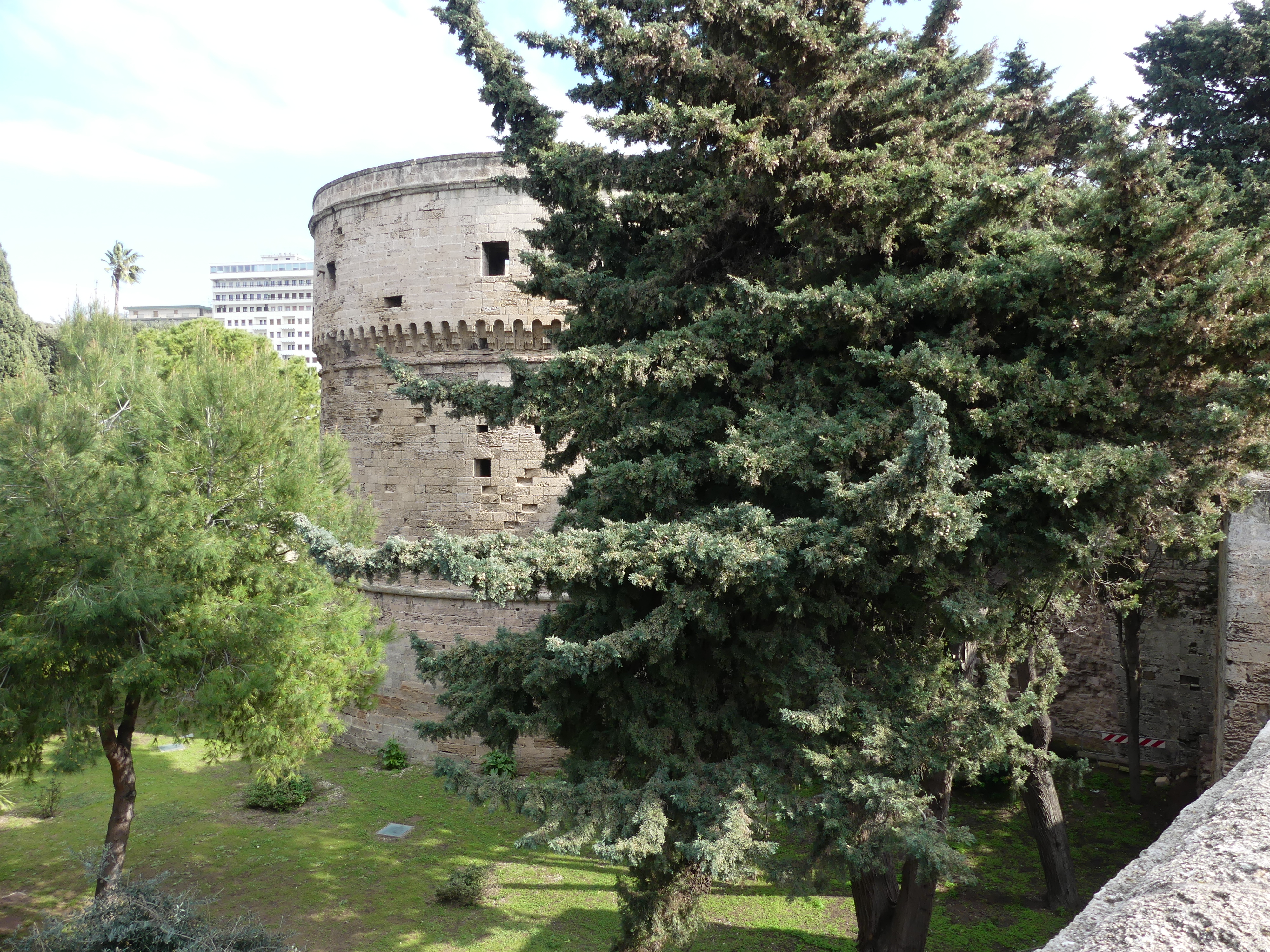
After leaving the gift shop (they must spoil it don’t they) we continued our walk about passing a florist with a novel presentation. The space inside was very tiny and this shopkeeper had utilized every inch of space including the back of the doors. It’s not yet Italian lunch time and the street cafes are empty. But judging by the number of tables in all sorts of spaces they expect a crowd. Then we found what the Byzantine Saracens left behind – a bit of the Greco- Roman ruins they missed in their sacking of the city. Across the road was the castle in use today for what appeared to be some para-military purpose and not permitting visitors. It had been constructed by the occupying Aragonese and still in use. I got cranky about that and the fact that I couldn’t take any photos inside. I was still receiving chemotherapy and tiredness brought on my bad temper. Kerry correctly pulled me away and I stomped off.

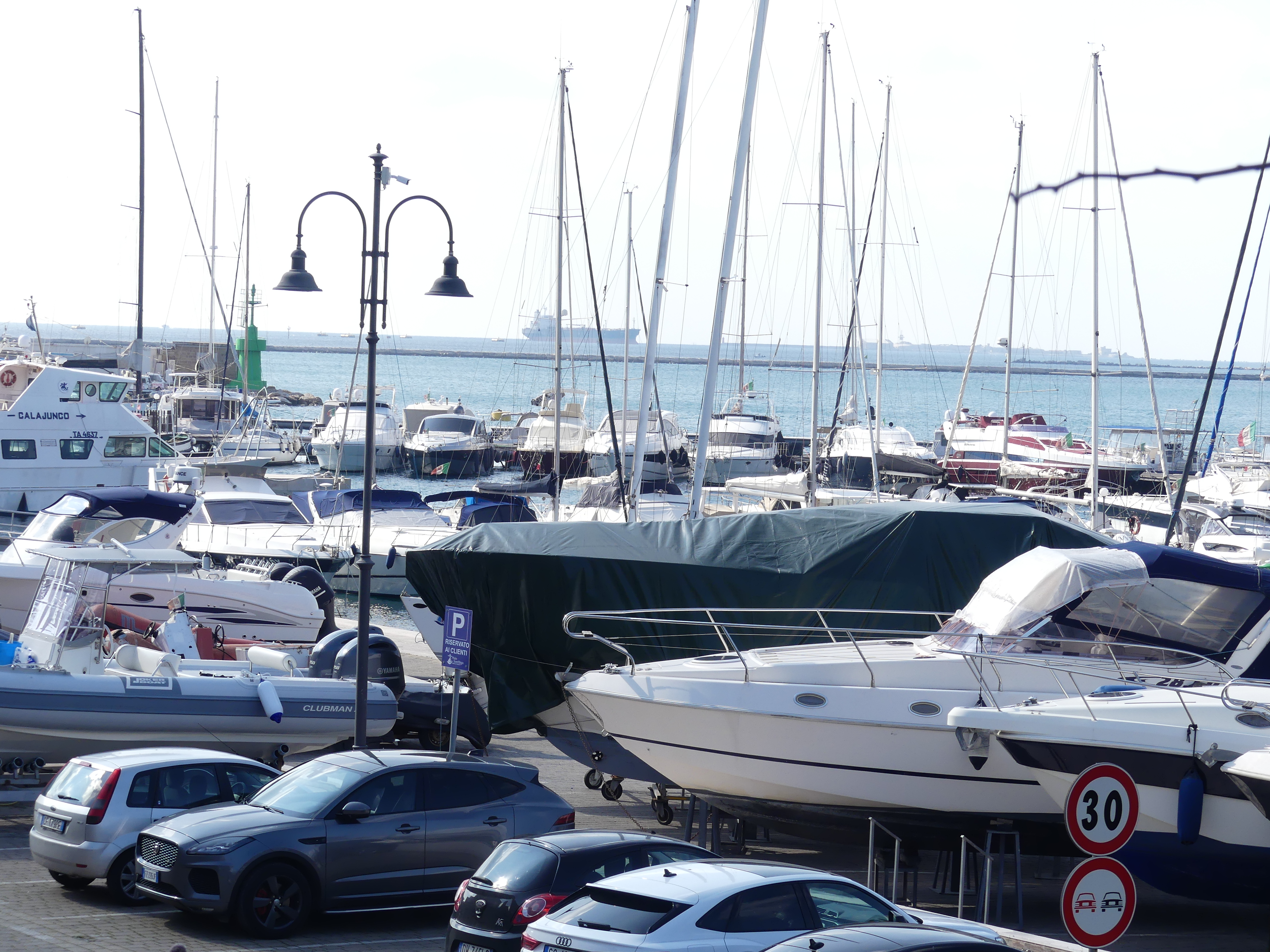
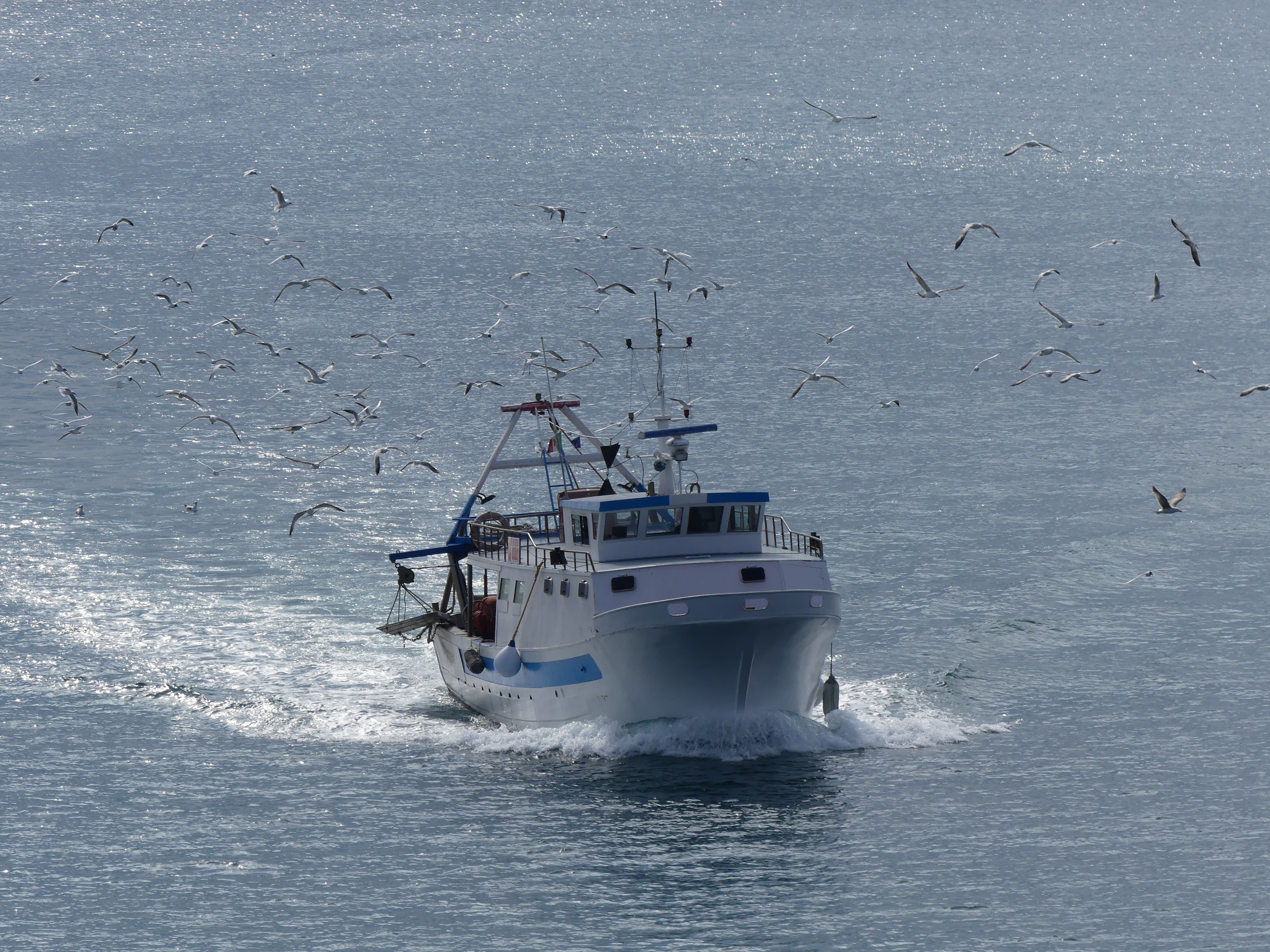
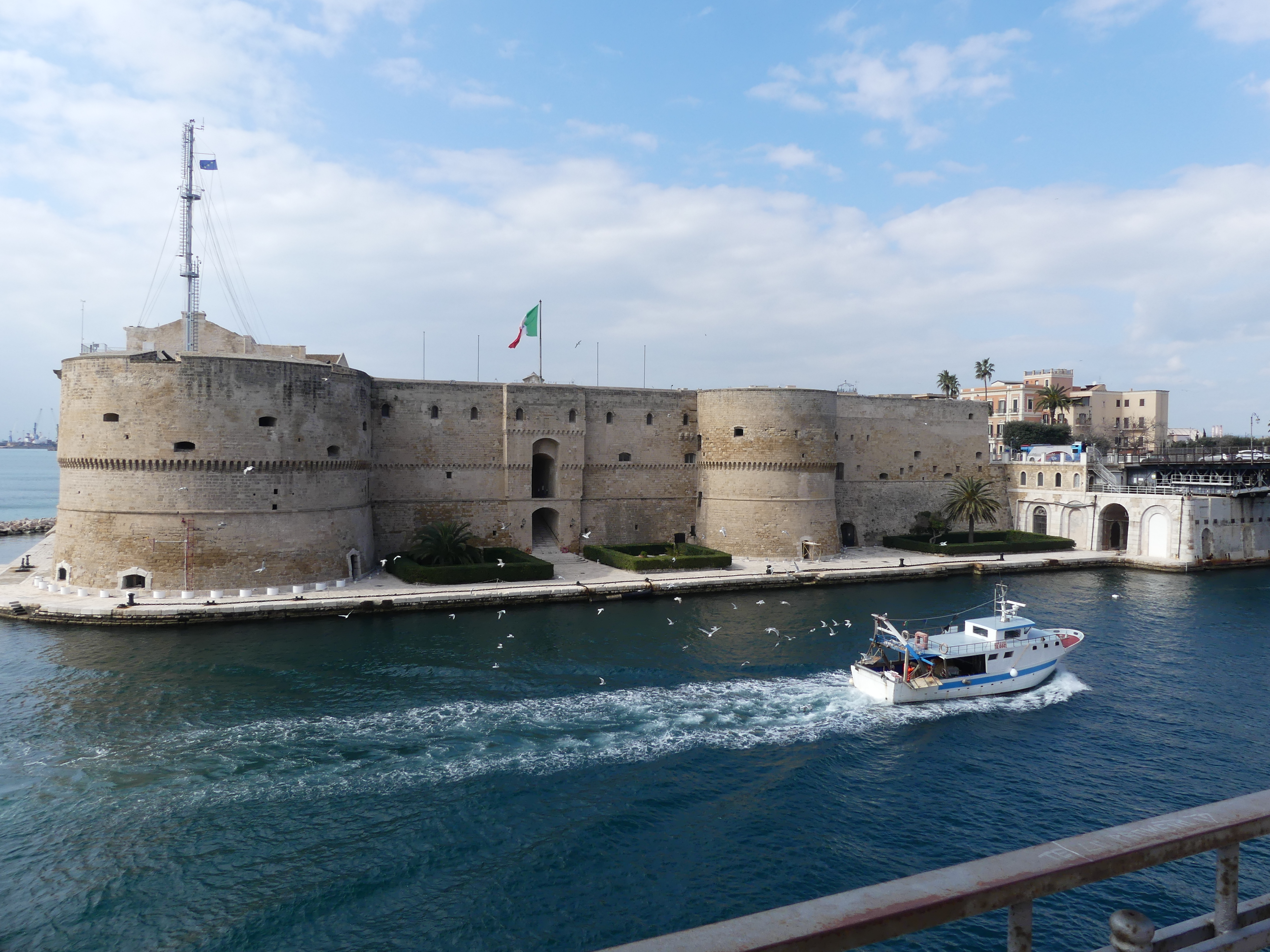
I moved on over another bridge and spotted this fishing vessel full of fish with trailing gulls. Fishing remains an important part of Taranto. Across another bridge (it dawned on me that we were on an island) and here is the HQ for Marina Militare.

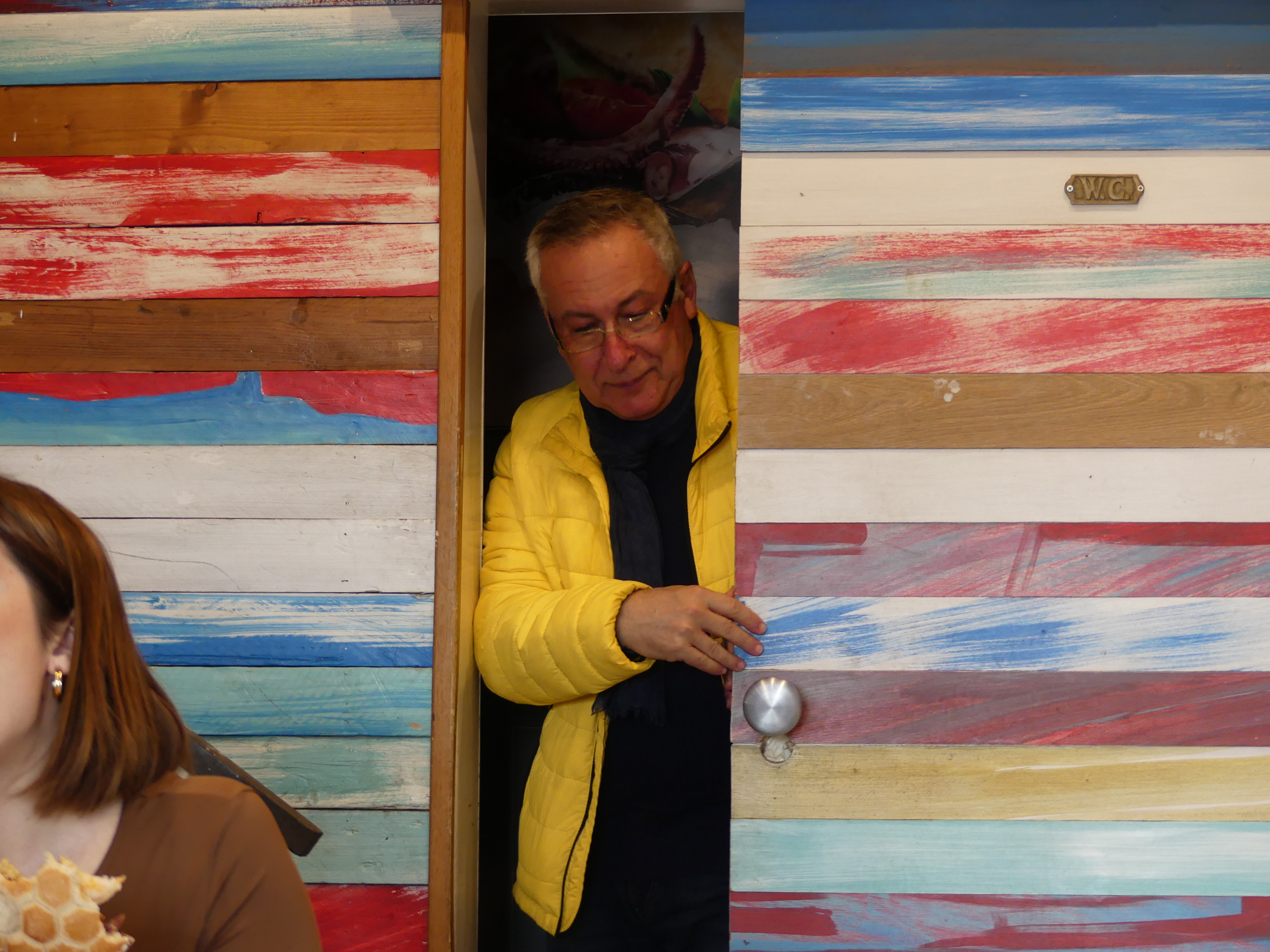
Nearby we found a café for lunch. It fitted into a tiny space with some imaginative interior design and colour schemes – here is a photo of Robert leaving the bathroom bitching like hell about how small it was.

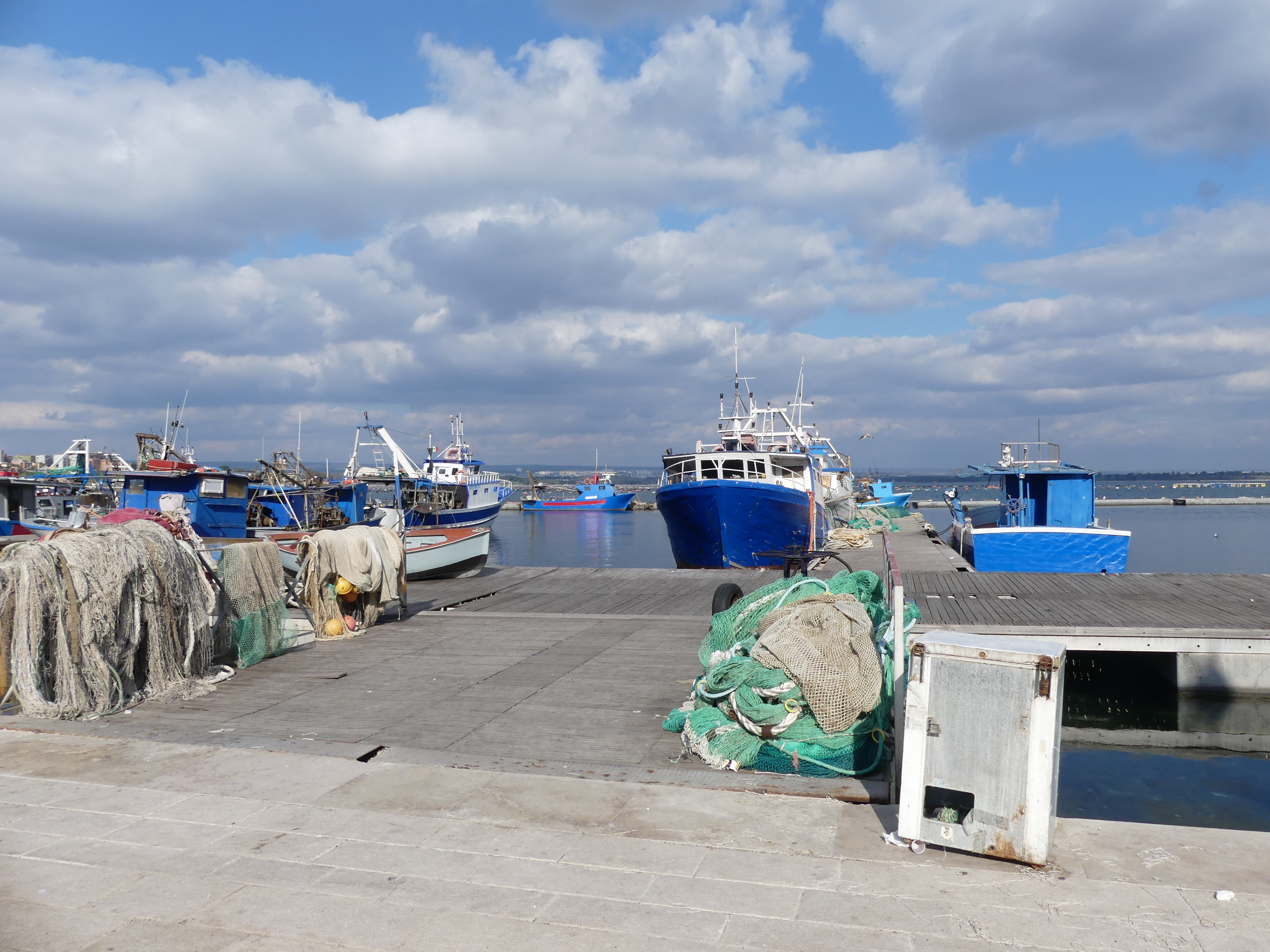
After a rather disappointing lunch (I still had no appetite due to my chemo) we continued our exploration following the main road around the island. The road took us to the sheltered harbour housing the fishing fleet and a rather tired section of the old town. Notably the church looked in good order.

We had circumnavigated the island containing the old town of Taranto and called it a day. I needed a nap so we made our way back to the train station, and I had my nap going back to Bari.

You may note that Robert has taken over the itinerary but we didn’t mind. He had a few more surprises for us so get ready for “THE RETIREES GO AROUND THE WORLD – BARI to MATERA” in my next blog.

“THE RETIREES GO AROUND THE WORLD – ROME to CESI”

ROME

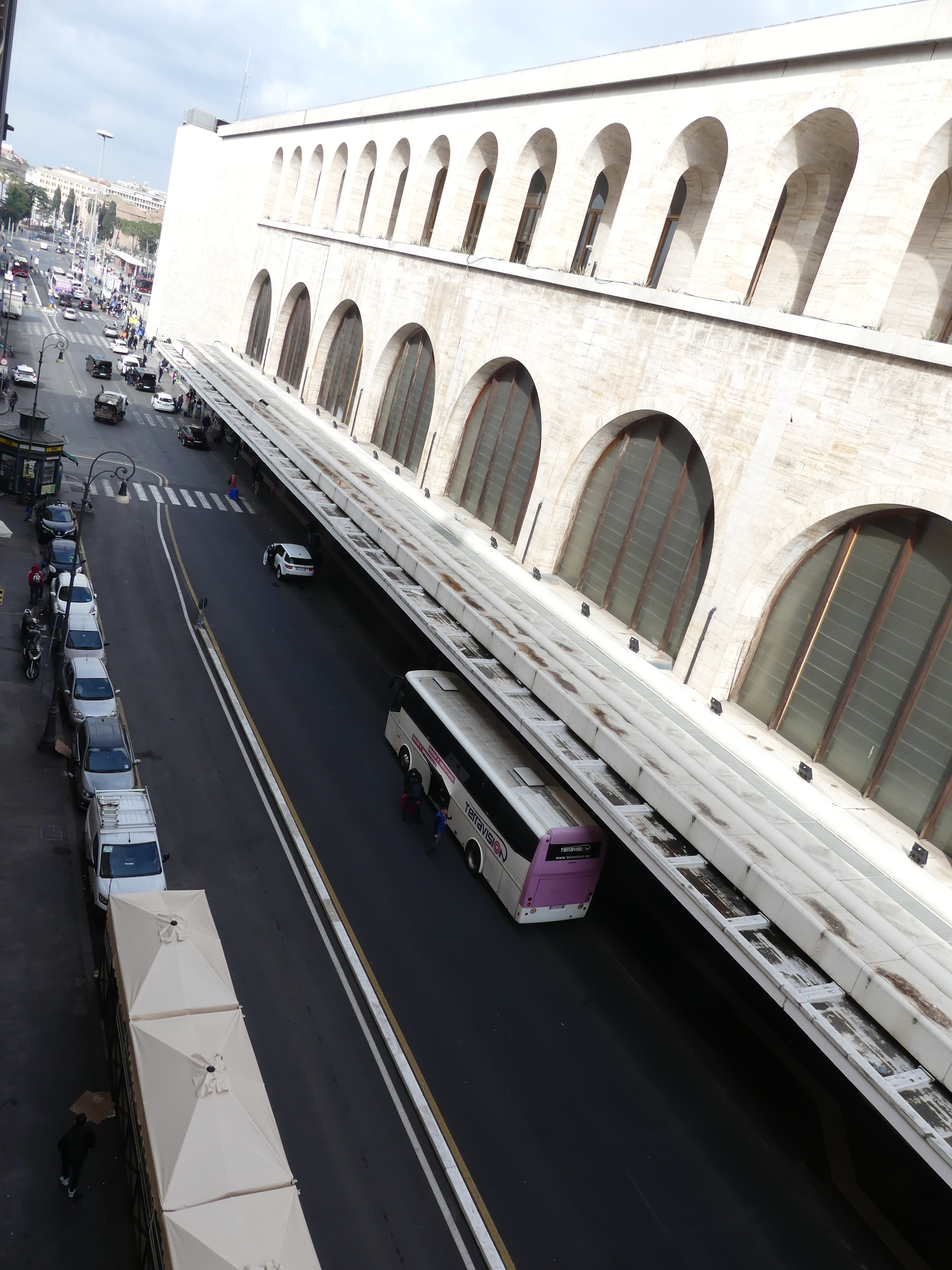
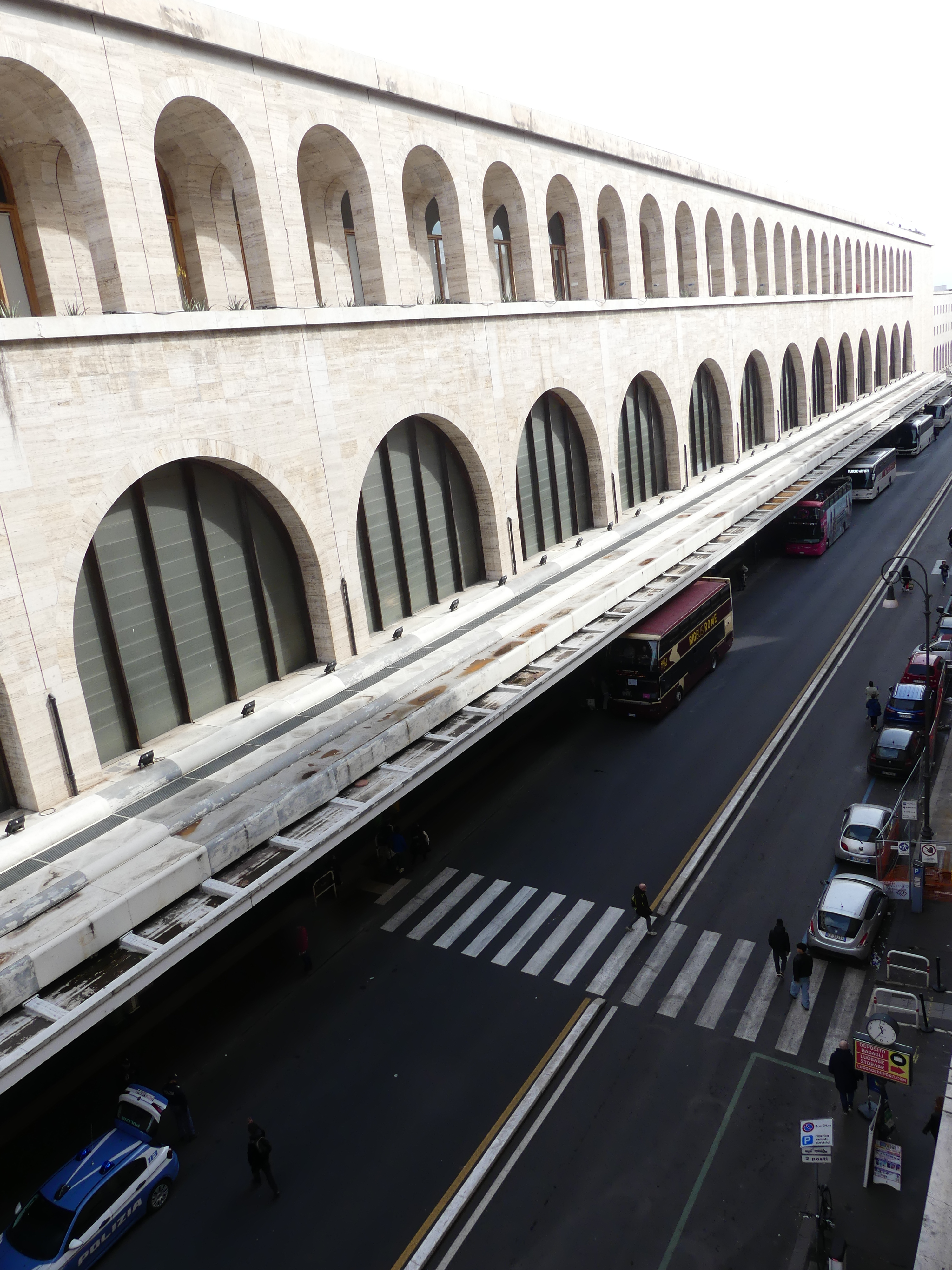
I opened the window of our room. It was the 12th and it was Kerry’s birthday. In flooded sunlight and the structure containing the terminus known as “Terminii”. The photos below show the size of the station and the view from the courtyard of the building containing our B&B – the contrast between the front and the back is like a time ship – new and old.

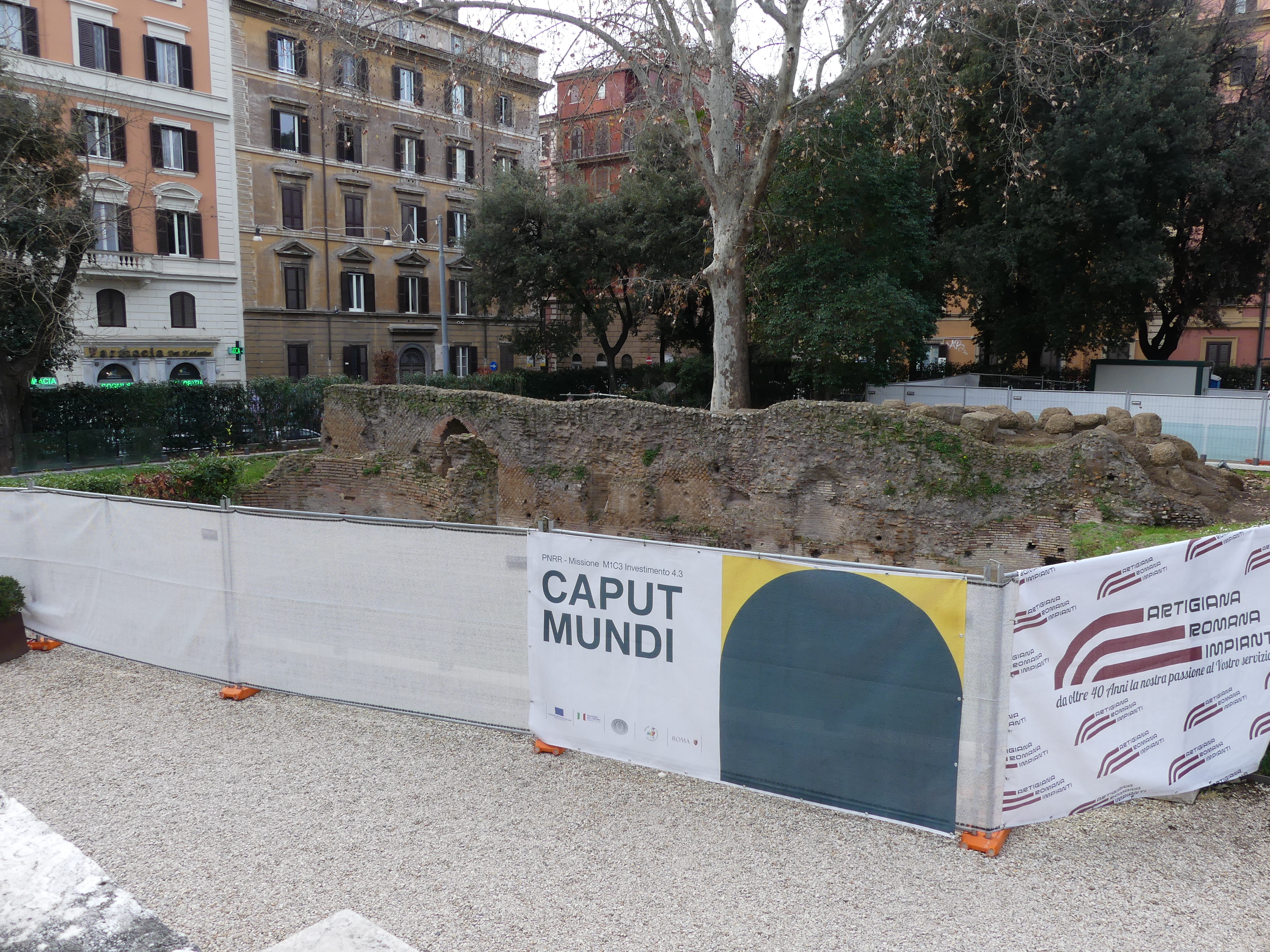
Kerry had a birthday wish. She wished for a celebratory dinner and had chosen from the internet “La Terrazzade de Papi Roof Top Restaurant”. The restaurant is overlooking the roof tops of the city. That morning, we set out to find this place (booked online sight unseen) in preparation for the night. I hate using google maps to guide you to your chosen place – it always seems to play tricks on you like it’s a game. We ended up in a park Piazza Victorio, also known as Piazza Vittorio Emanuele II and we had never encountered it before. Wikipedia tells us that the piazza was built by Gaetano Koch shortly after the unification of Italy. It is the largest piazza in Rome (316 x 174 metres). In the centre of the piazza is a garden with the remains of a fountain built by Alexander Severus (so called Trophy of Marius), and the Porta Alchemica (Alchemist’s Portal or also called Magic Gate or Porta Magica), the entrance to Villa Palombara, former residence of the alchemist Marquis Palombara. It also contains Giardino Nicola Calipari, named after an Italian secret agent, killed accidentally by US soldiers in Iraq on 4 March 2005, in the phases immediately following the liberation of the journalist of Il Manifesto Giuliana Sgrena. I captured some of these features and post the photos below.

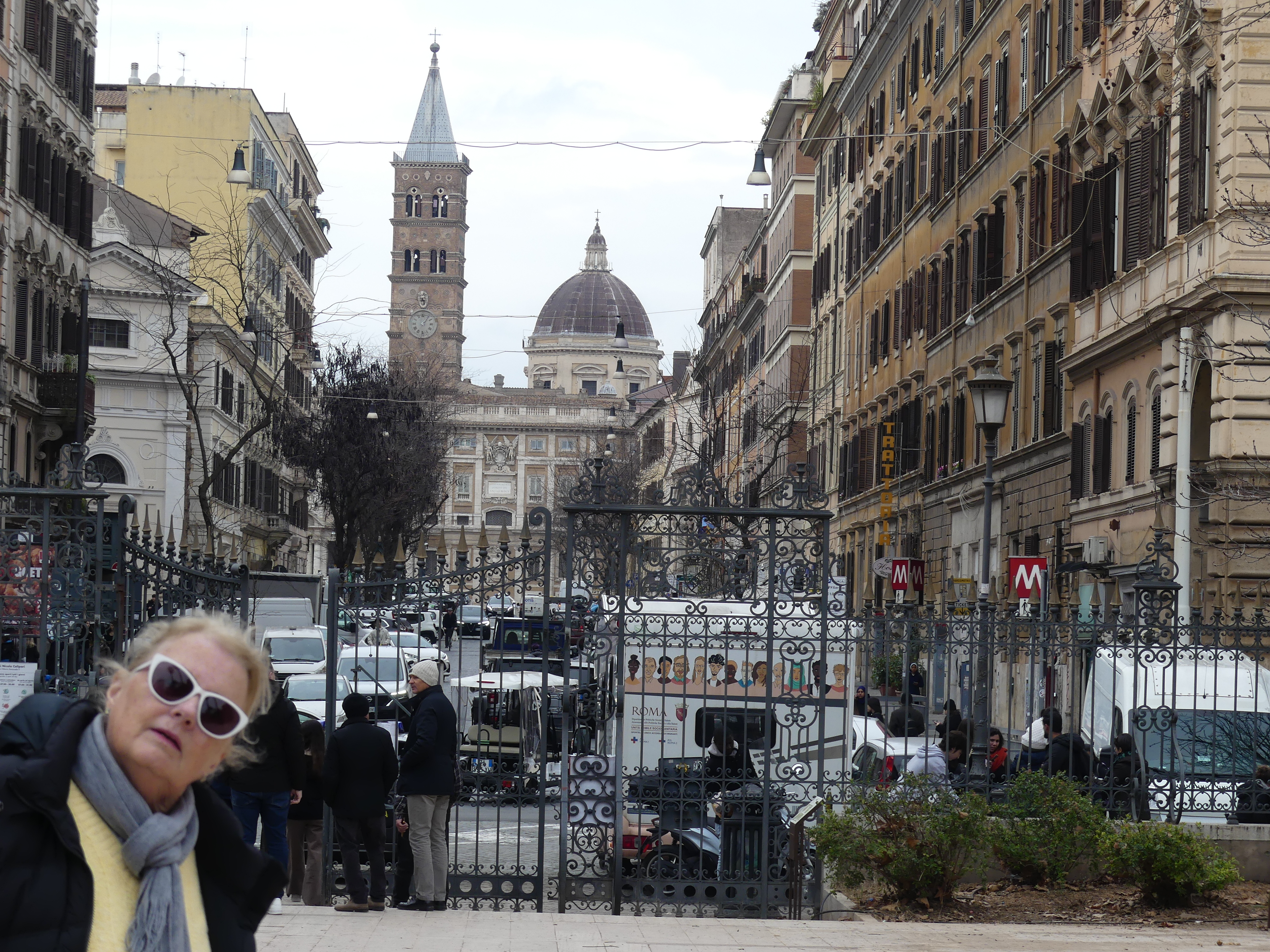
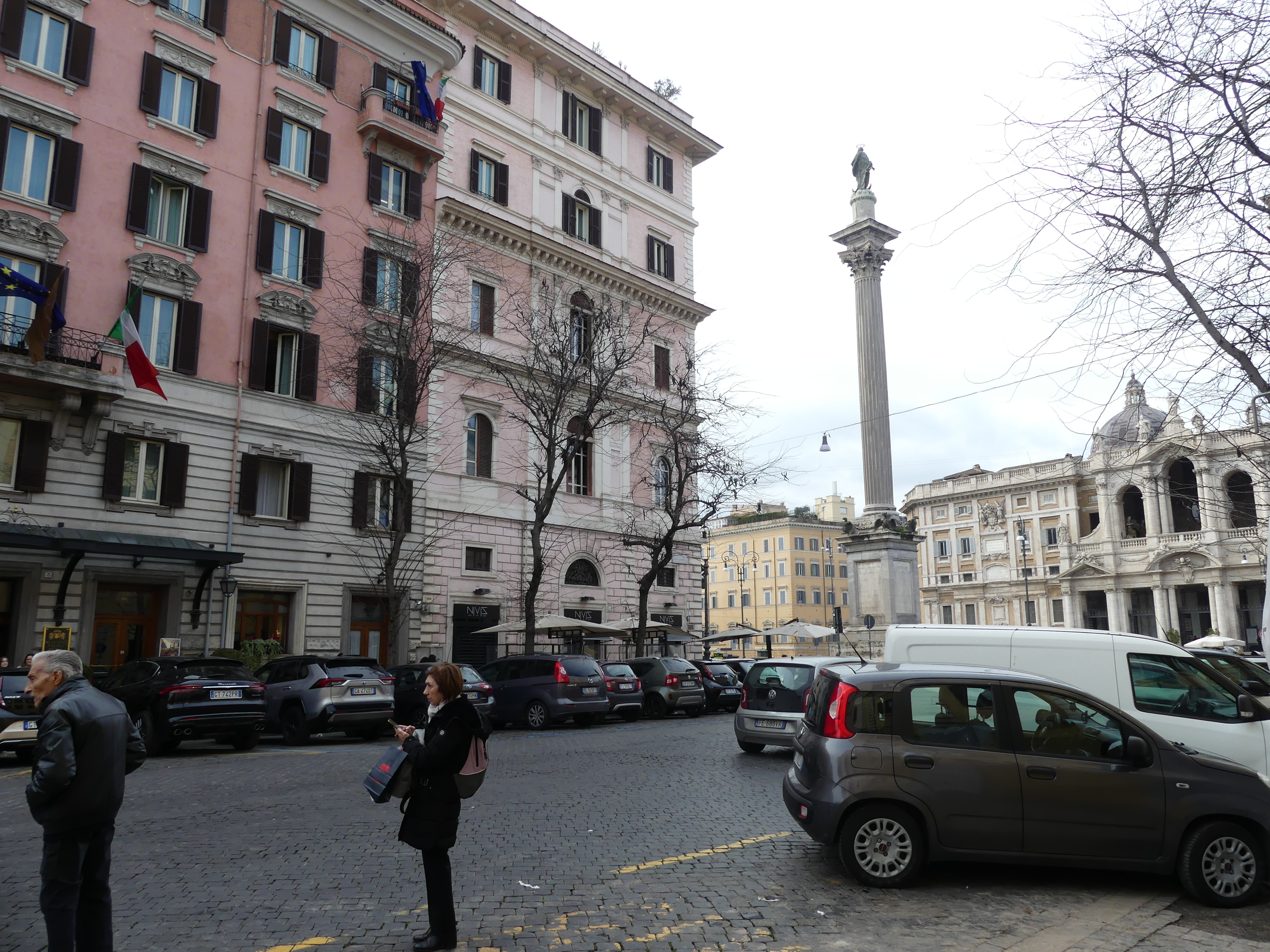
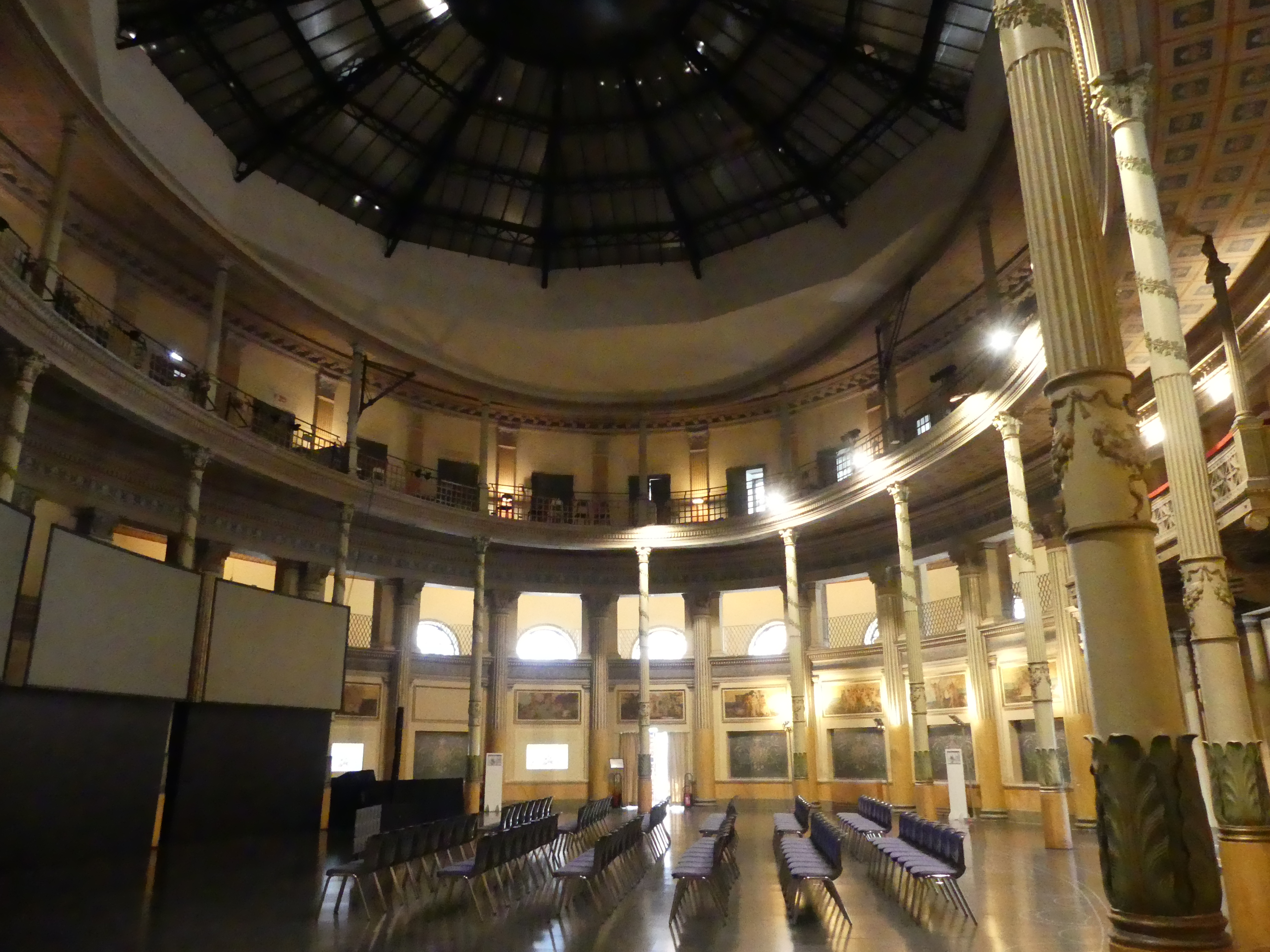
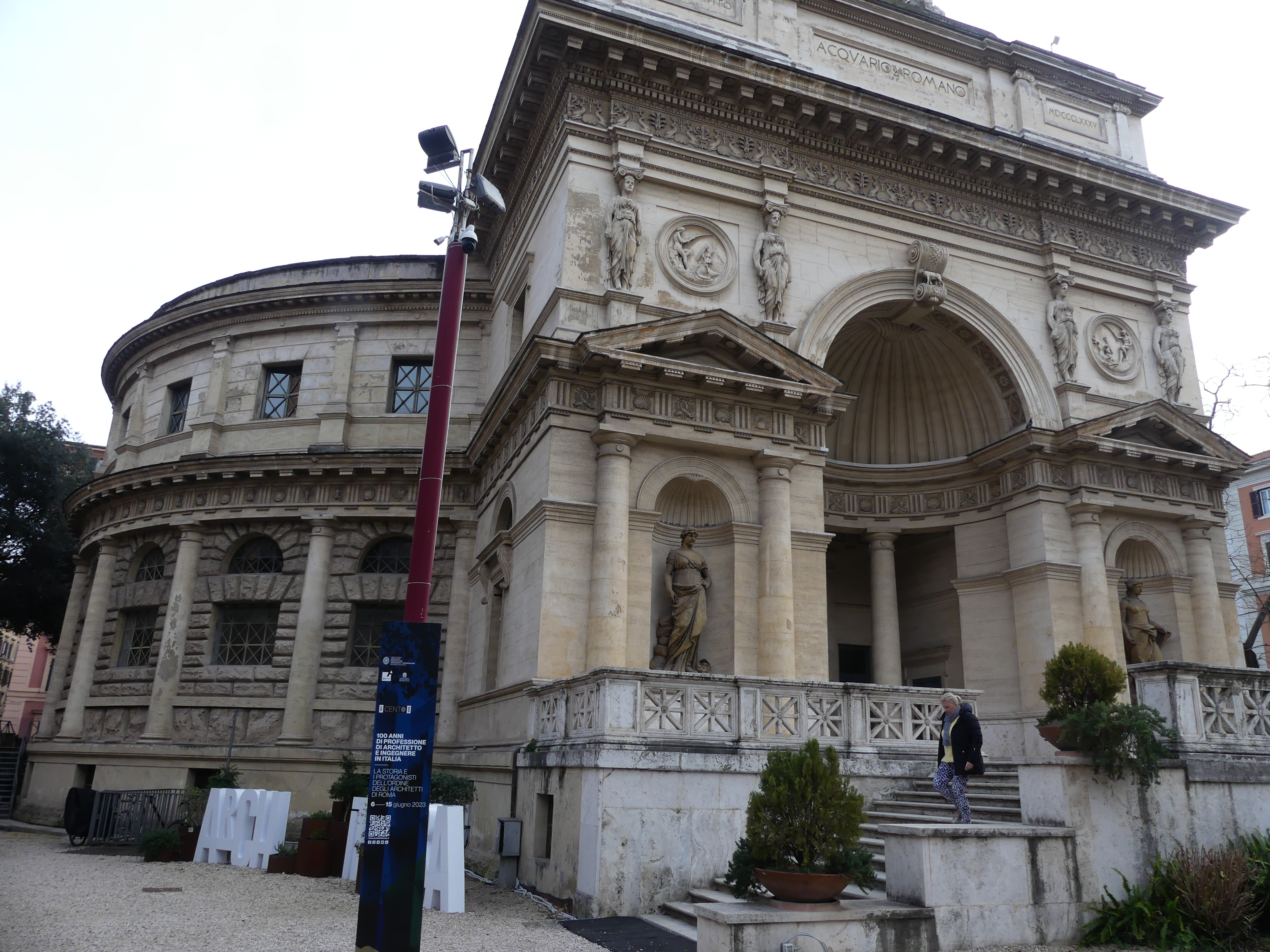
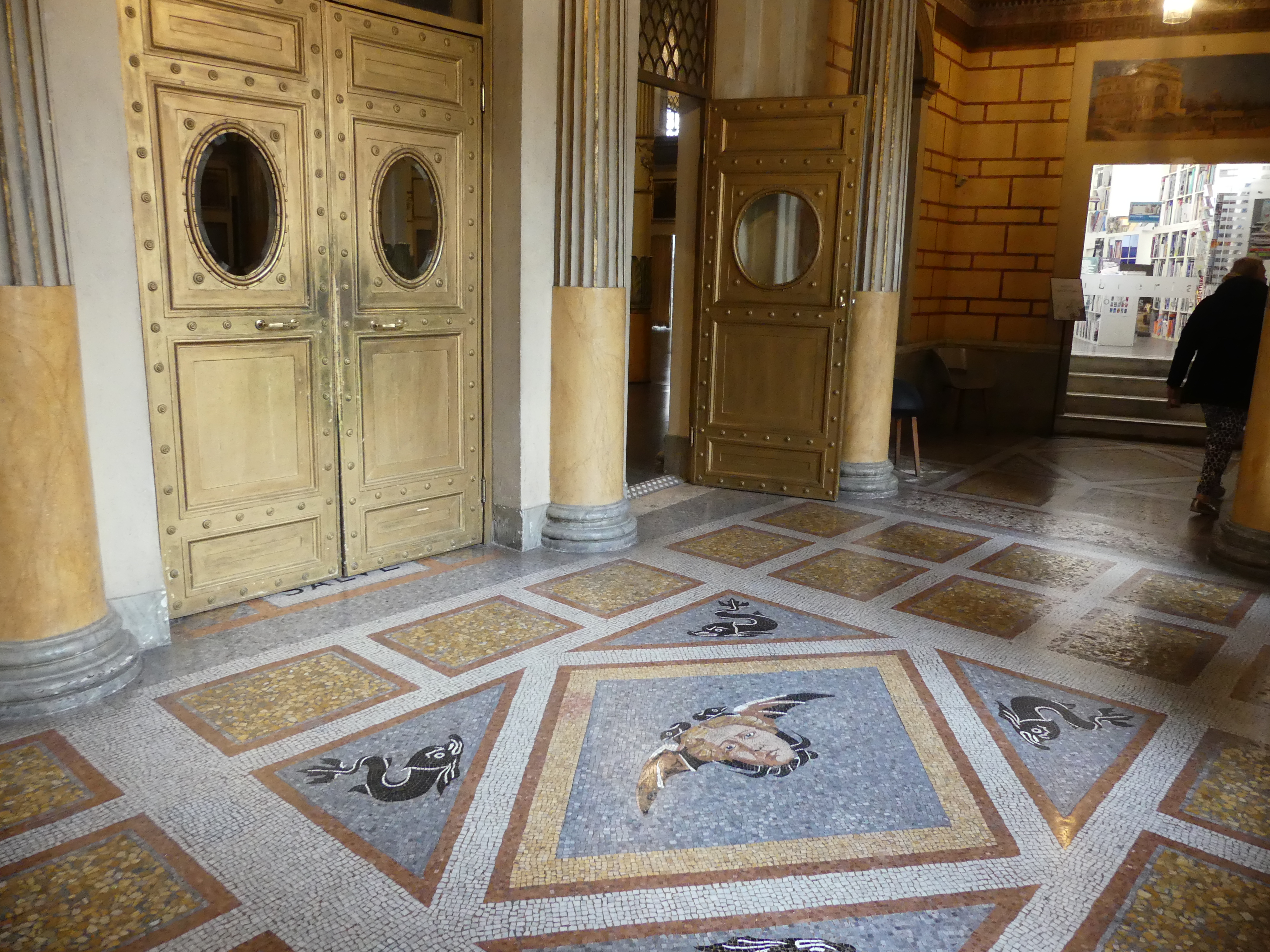
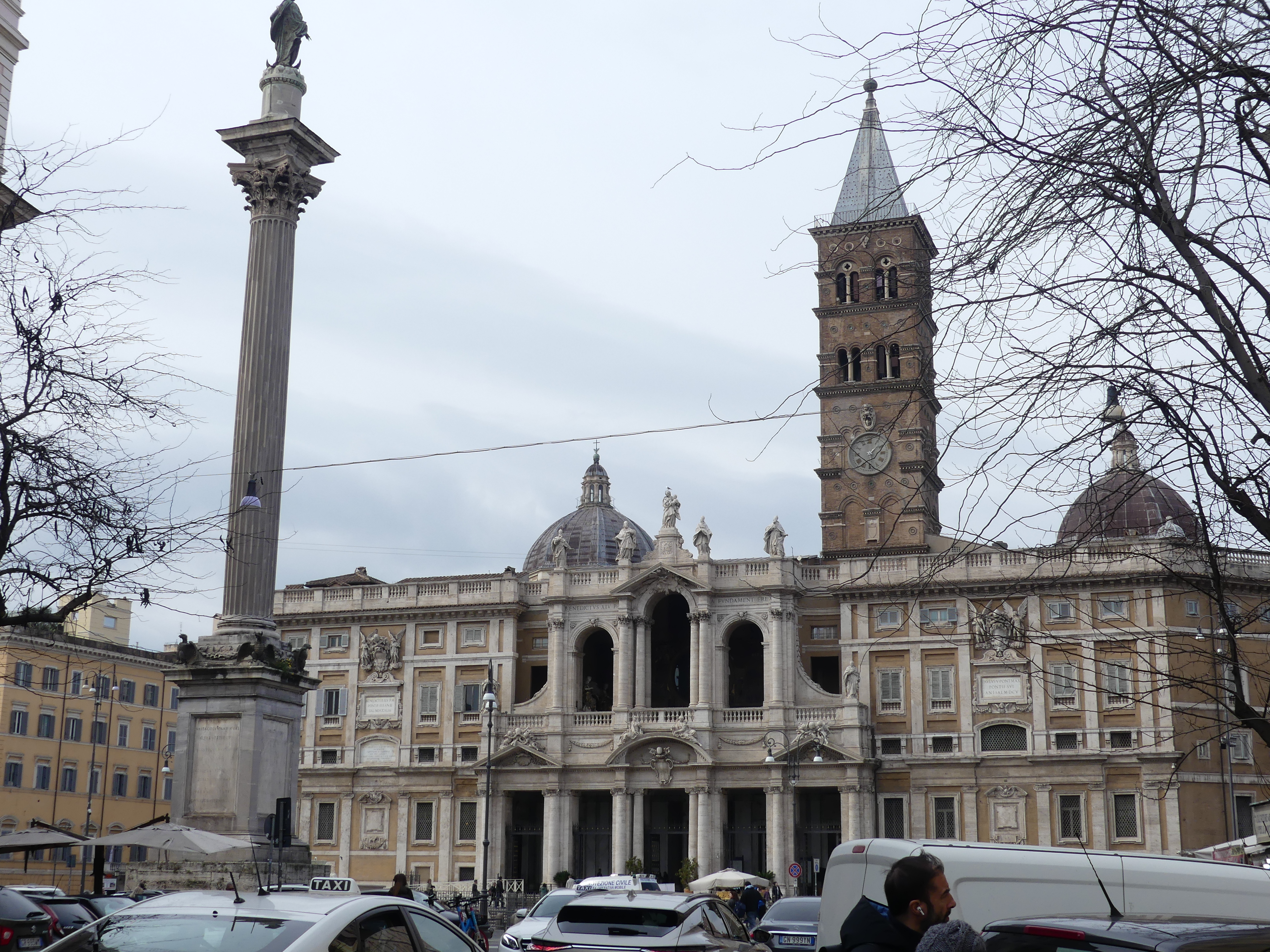
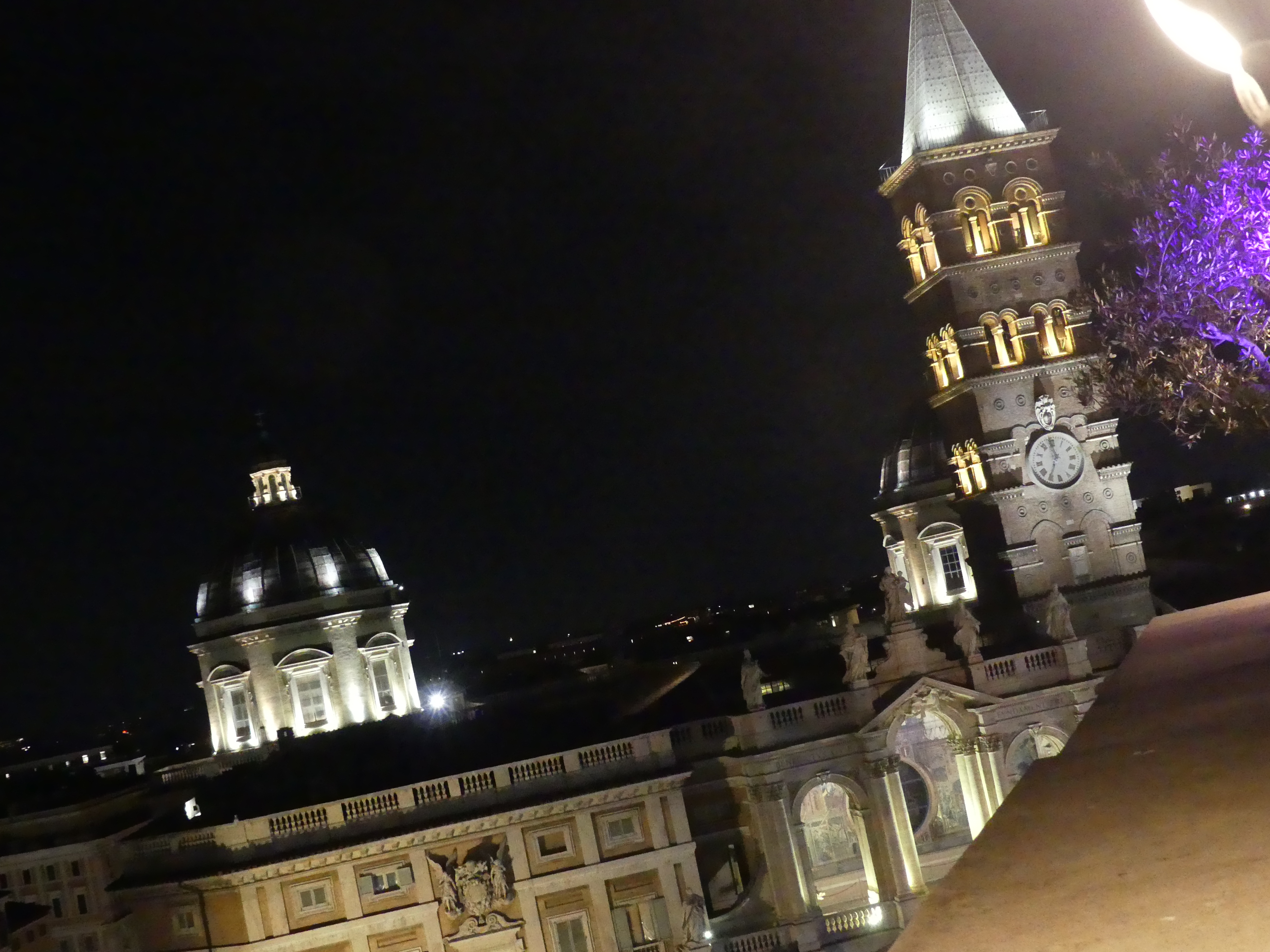
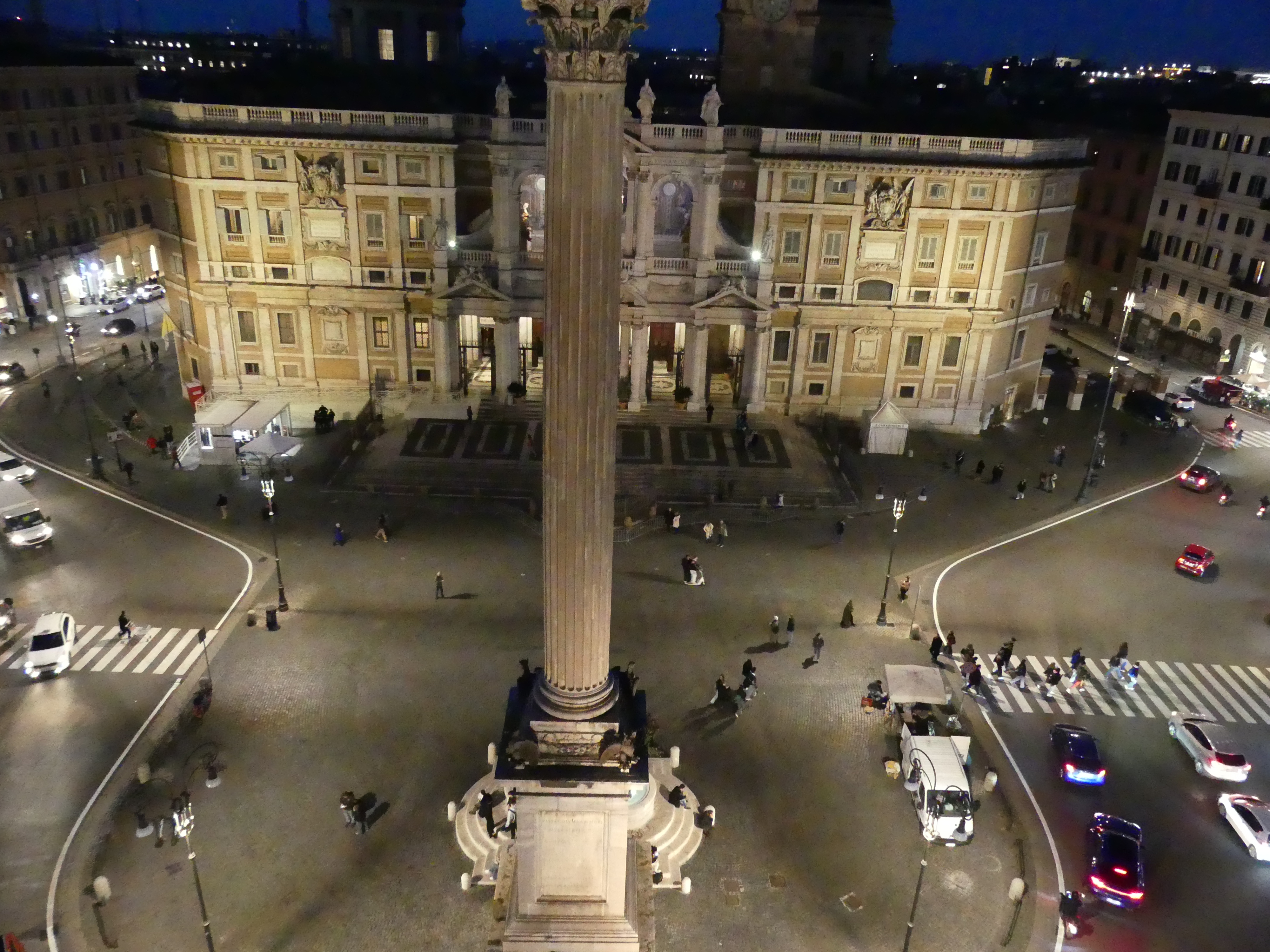
Back tracking from the piazza, we found the hotel with the roof top restaurant and checked out the shortest route home. The scenery was a grand mixture. Starting with Kerry photo bombing my picture of the grand church at the end of the street to the hotel passed the Porta Esqualina Gate and the Arch of Gallineus (The Arch of Gallienus is a name given to the Porta Esquilina, an ancient Roman arch in the Servian Wall of Rome). It was here that the ancient Roman roads Via Labicana and Via Tiburtina started. We saw the statue of Santa Maria Maggiore standing on a pinnacle in front of a grand Basilica constructed in her honour through to an architectural museum and conference centre (see Turismo Roma) again unseen by these eyes – very interesting and made us think of George Hazell an architect and former next-door neighbour for almost 20 years. I expect he would have enjoyed visiting the unique oval building.

In Piazza Manfredo Fanti, surrounded by a small garden, is the monumental building, inspired by classical architecture, for the construction of a fish farming establishment with an aquarium the Acquario Romano which has been restored as Casa dell’Architettura. In the garden, there is one of the most interesting sections of the Servian Walls, built around the 4th century BC to defend Rome.

There was a small café in one of the outer rings of the building where we had coffee and lunch. We then made our way to our Dream Station B & B, and I had an afternoon nap a legacy of my chemotherapy then we dressed for dinner.

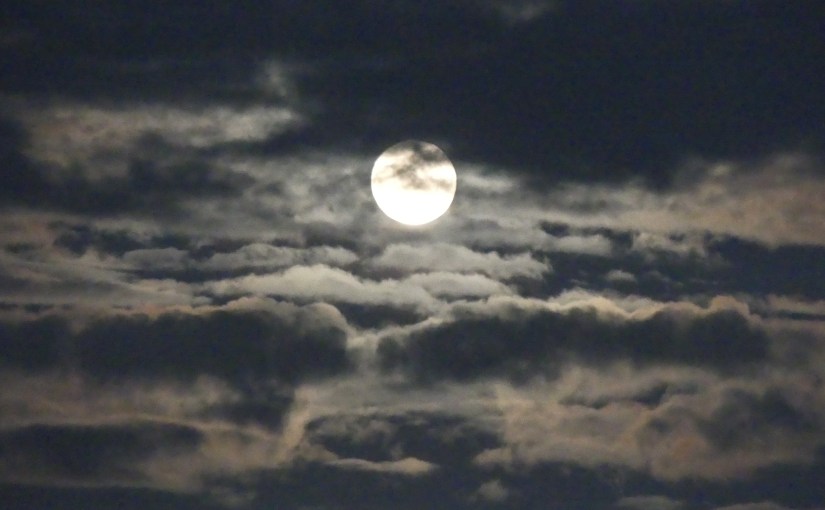
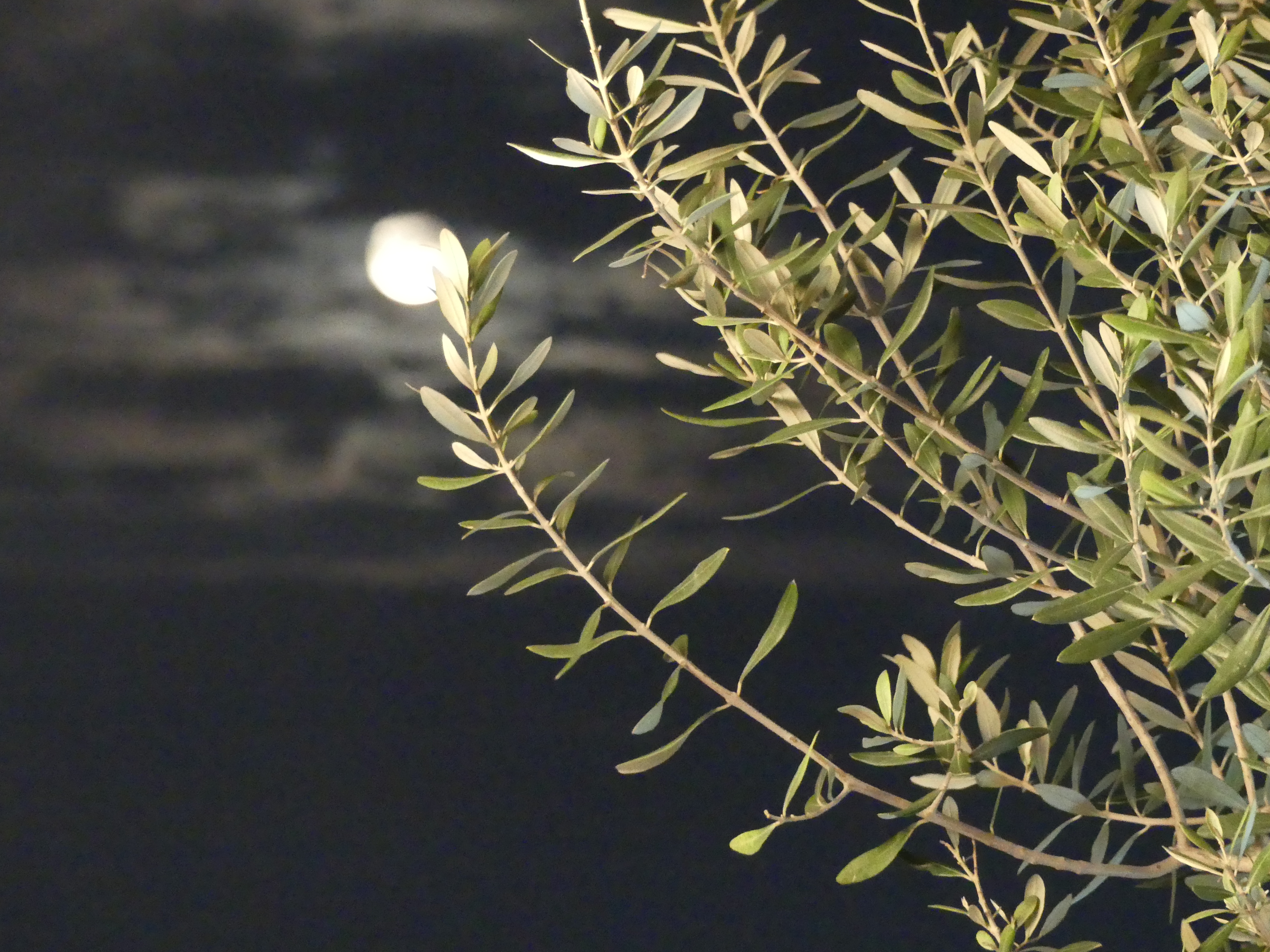
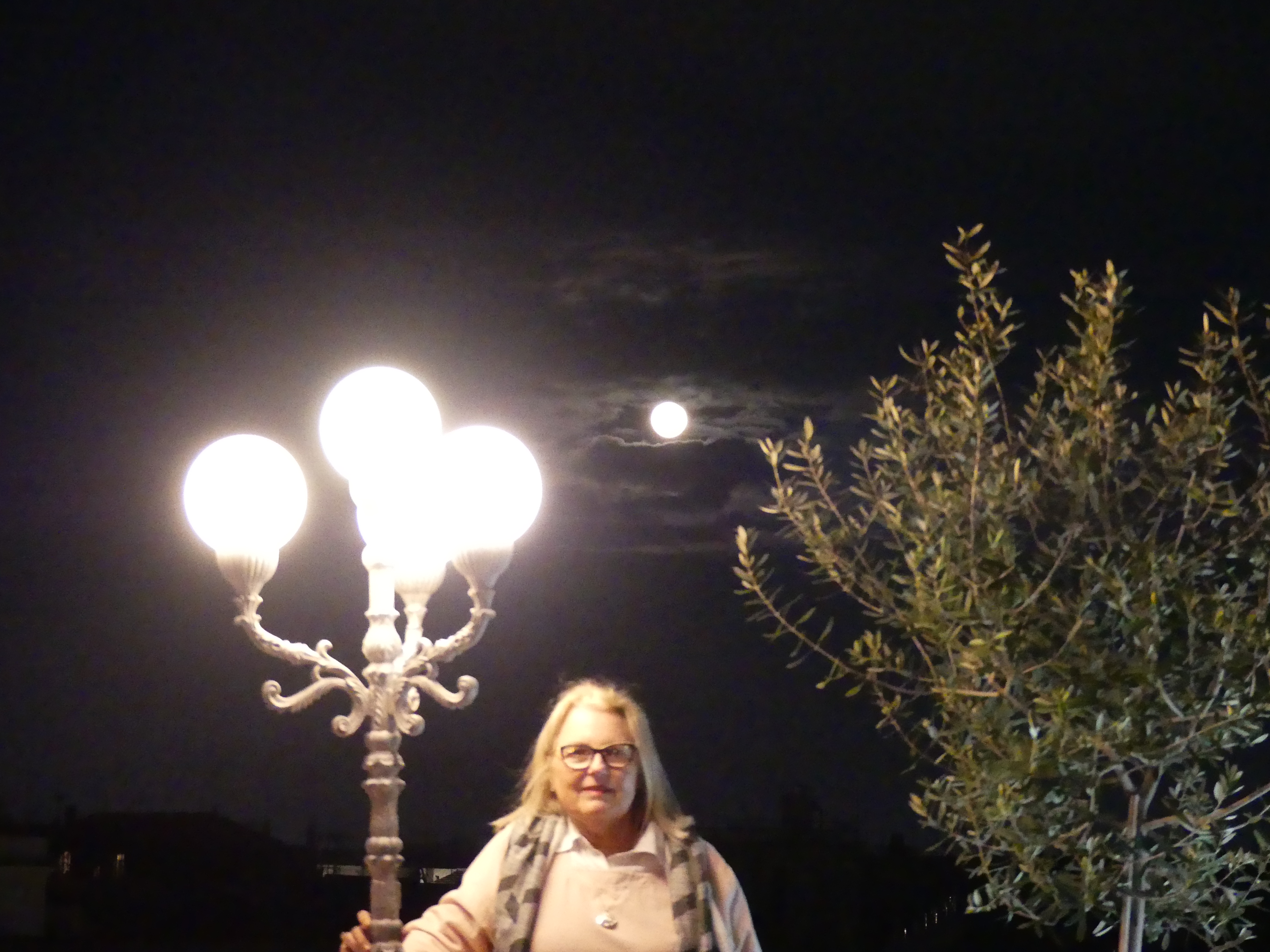
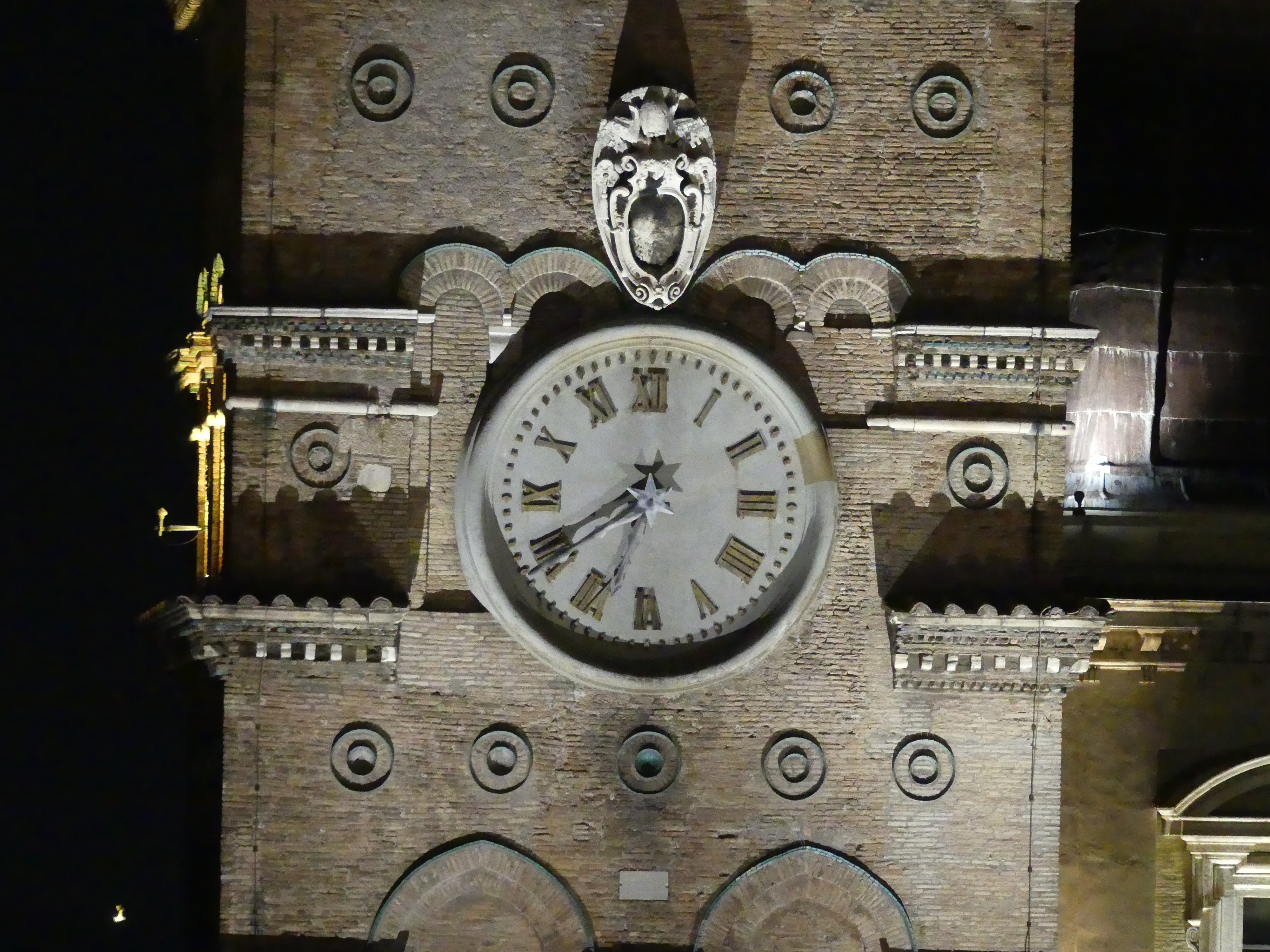
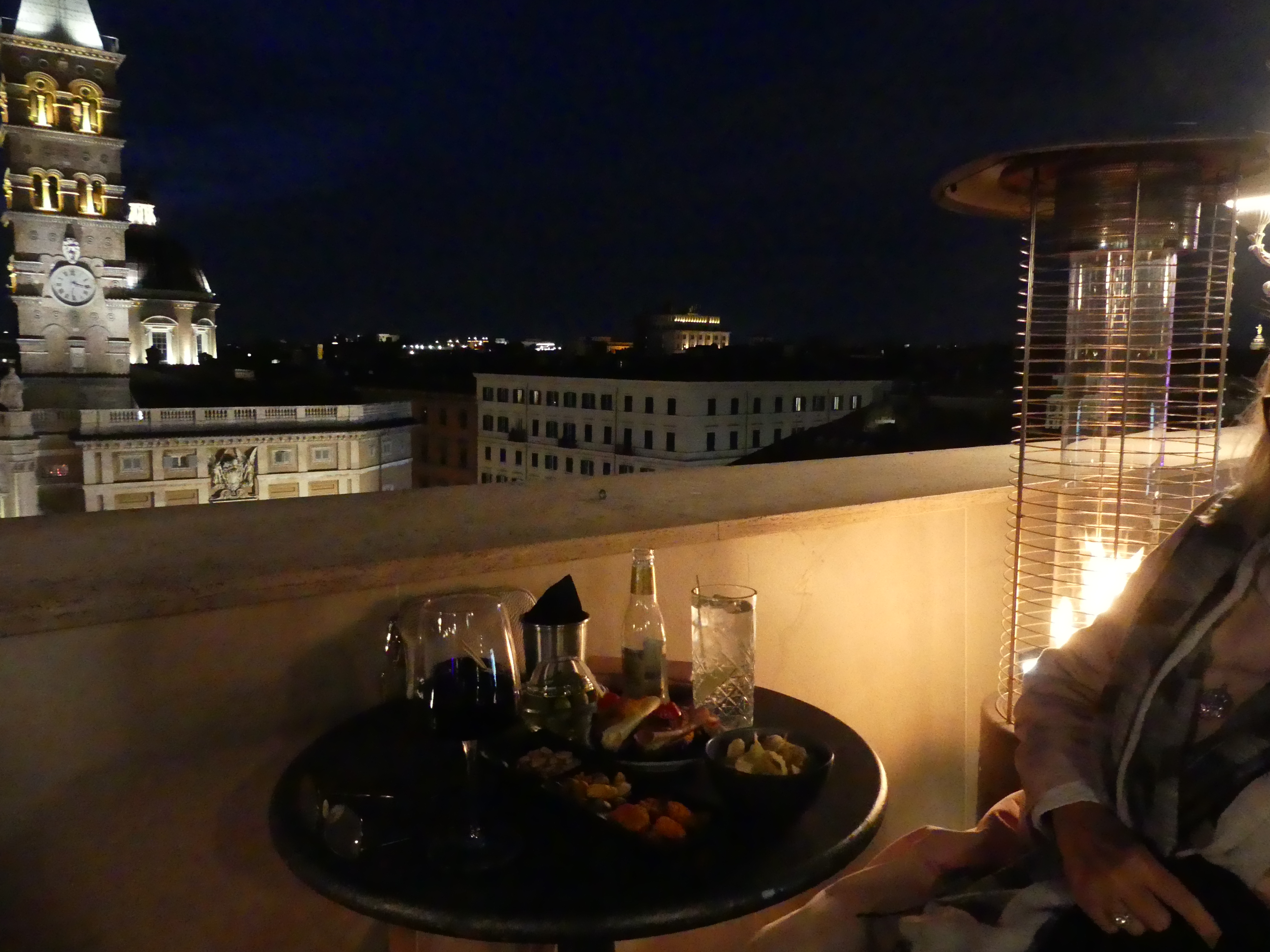
We retraced our steps back to La Terrazzade de Papi. To access the roof top we followed a roundabout path of stairs and corridors to the roof – 7 to 8 stories above ground. The interior of this level was on level 7 and the exterior on level 8. It was still daylight, so we were afforded views from most points of the compass before witnessing the rising of the moon and the clouds then encircling and covering up the moon. In front of us was the statue of Santa Maria Maggiore in a Piazza to her honour tall enough we felt we could nearly touch it. Behind it was the Basilica also named after the saint. I believe this is the Basilica chosen by the late Pope Francis who was very much alive at this time.

We had no idea what to expect for dinner and were surprised when we were presented with two platters. It was like an Italian tapas with our choice of drinks. We nibbled away at the food and took selfies for Facebook from every reachable corner of the roof. Just the dream come true for Kerry’s birthday. To finish the evening we went inside to the restaurant for Tiramisu and coffee. We were the only ones in the restaurant except for one other patron sucking away on one of the many “hookahs” offered by the establishment.

A slow stroll back to our B&B and early to bed for the trip to Cesi tomorrow and a visit to Roberto’s villa. Keep reading and follow THE RETIREES GO AROUND THE WORLD – “ROME to CESI ” in Cesi.

THE RETIREES GO AROUND THE WORLD – SAN FRANCISCO USA/BRIGHTON HOVE UK

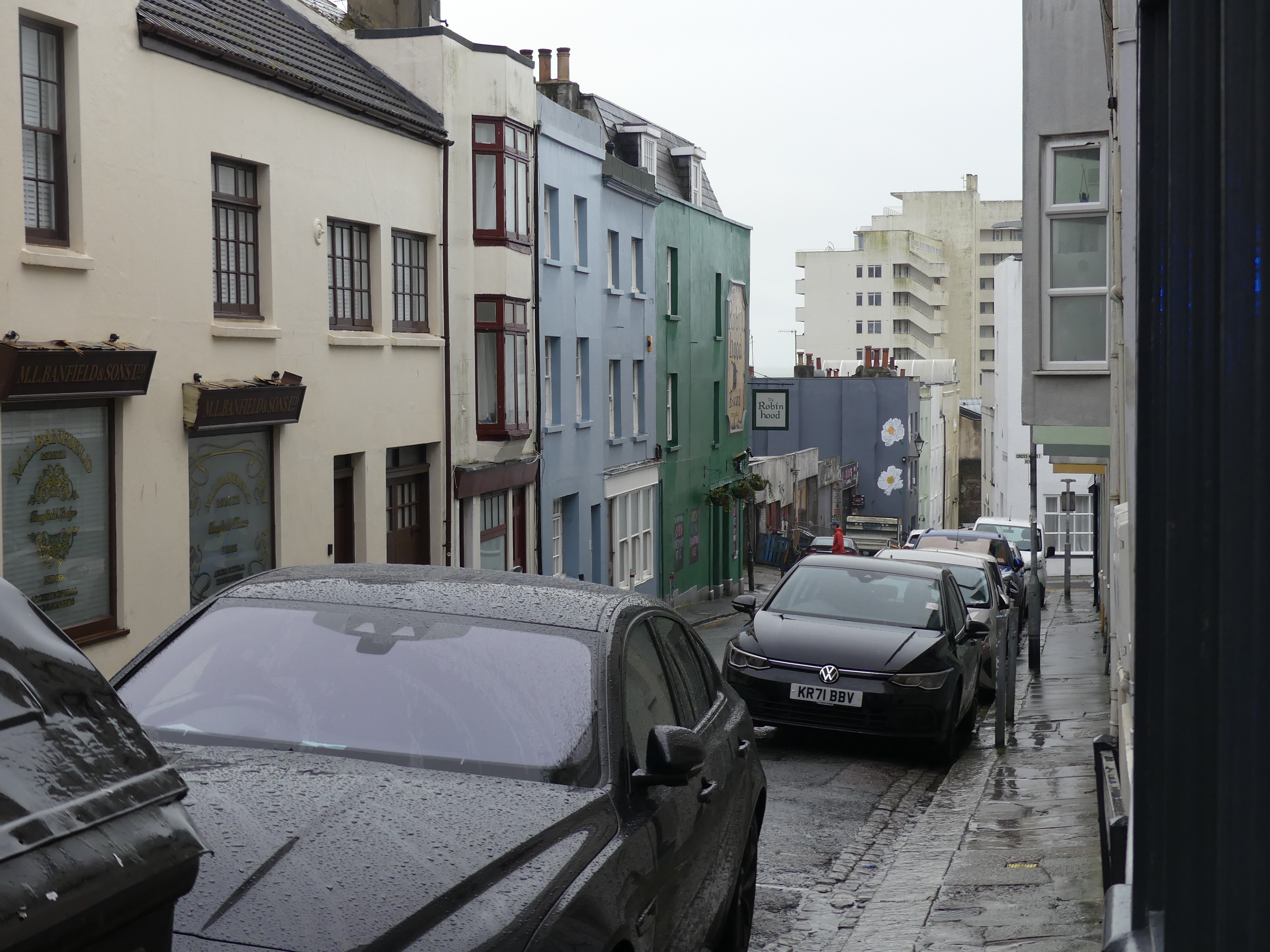
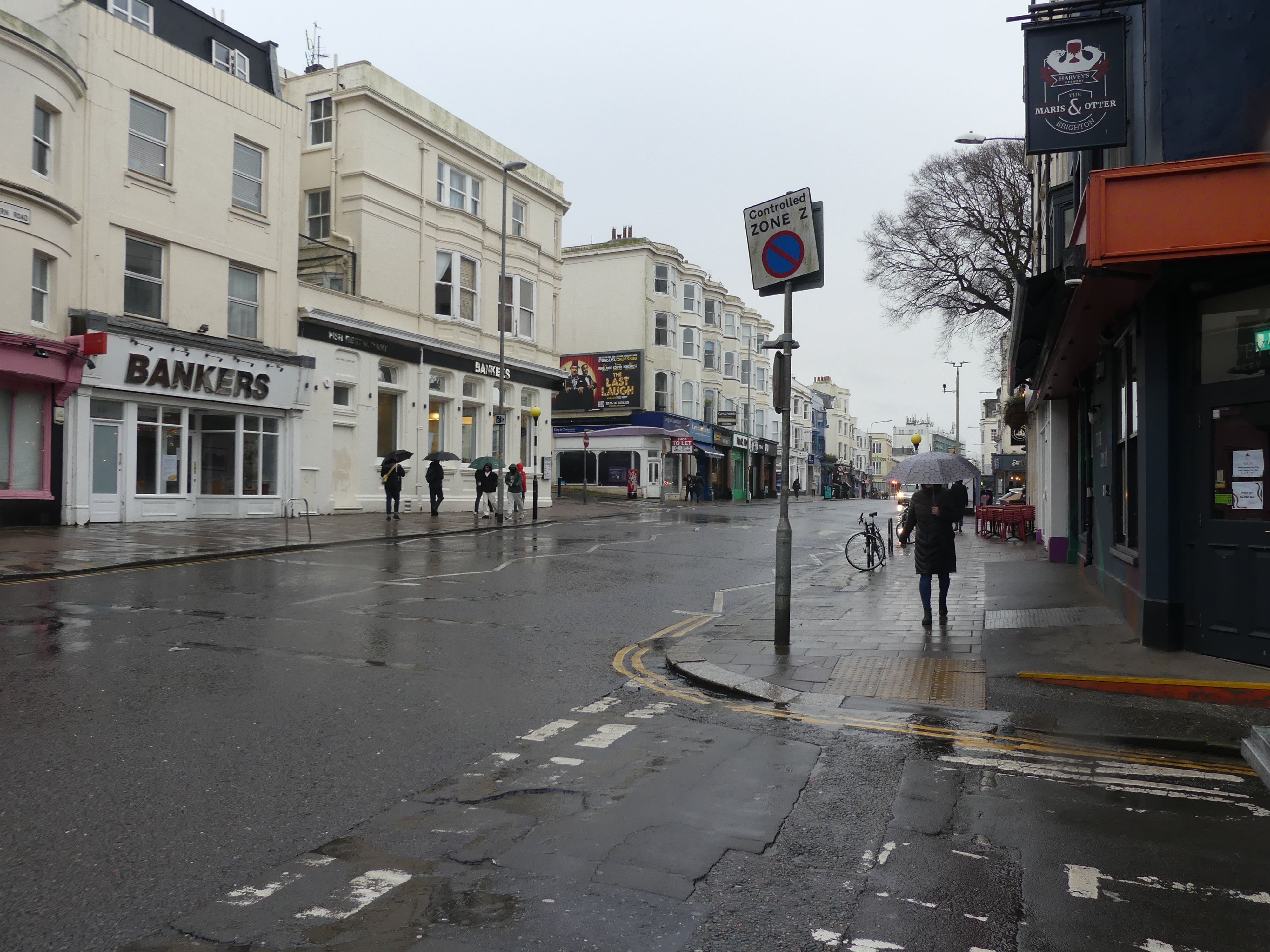
The B&B (pictured above) was well located on the road that marked the exact boundary between the two towns (Brighton and Hove), and you would not have known the difference save for a sign on a building at the end of the road announcing the boundary. Upstairs It had two bedrooms both with an ensuite and downstairs a powder room kitchen lounge room and a dining table in the middle. Enough room for us but no garage. The missing garage came as quite a shock. The hiring of the car was based on the B&B having “private parking”. Our strategy was to spend the day traveling around and hope to find a space at night when it was free to park on the streets. Mick and Terri had joined us.

Mick had in his younger days worked in or owned a garage at the end of the street with a “lady of the night” working from the building across the road and the Robin Hood Pub on the opposite corner. The garage has gone, and the Lady has moved on but the pub was still there.

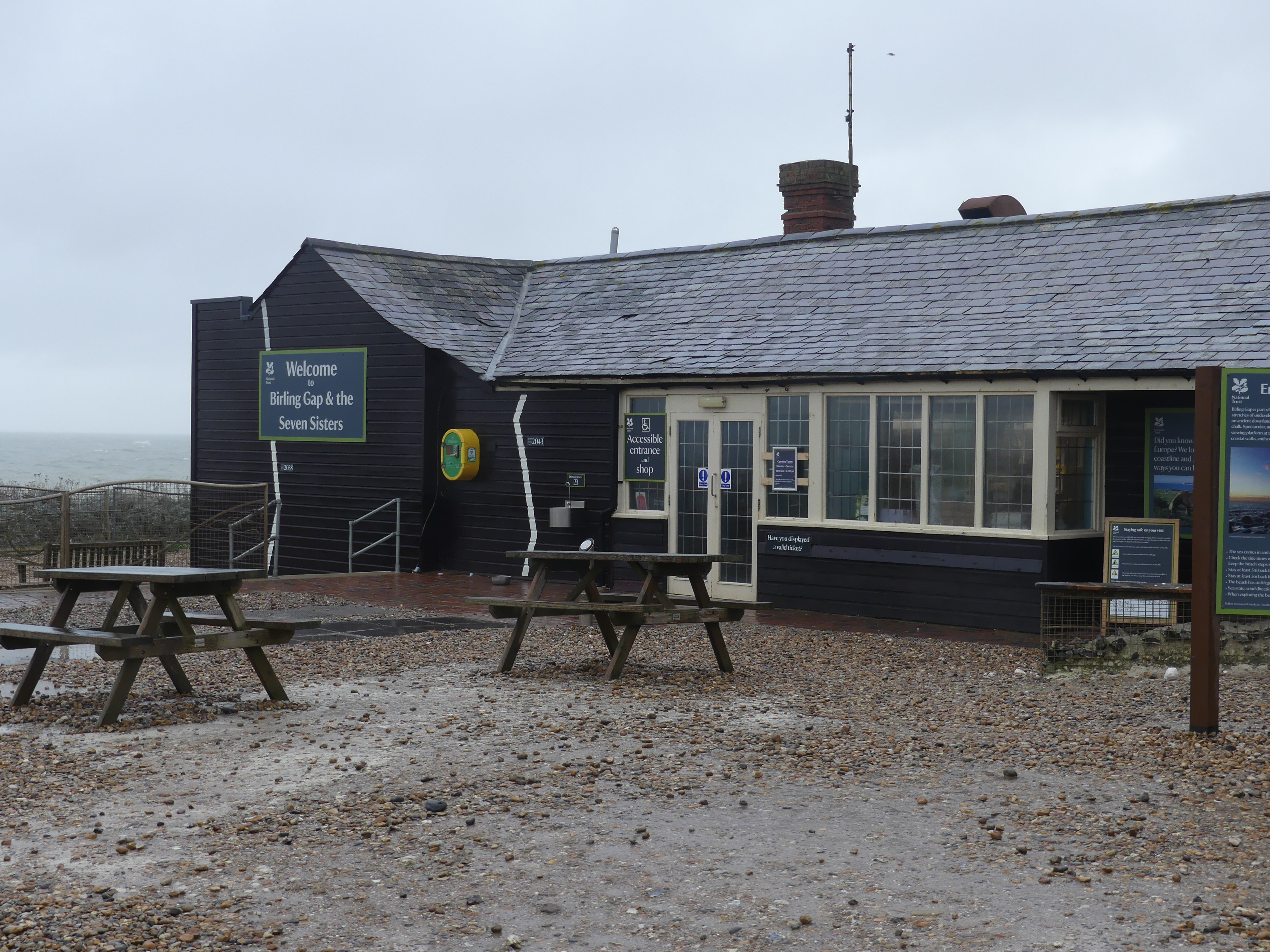
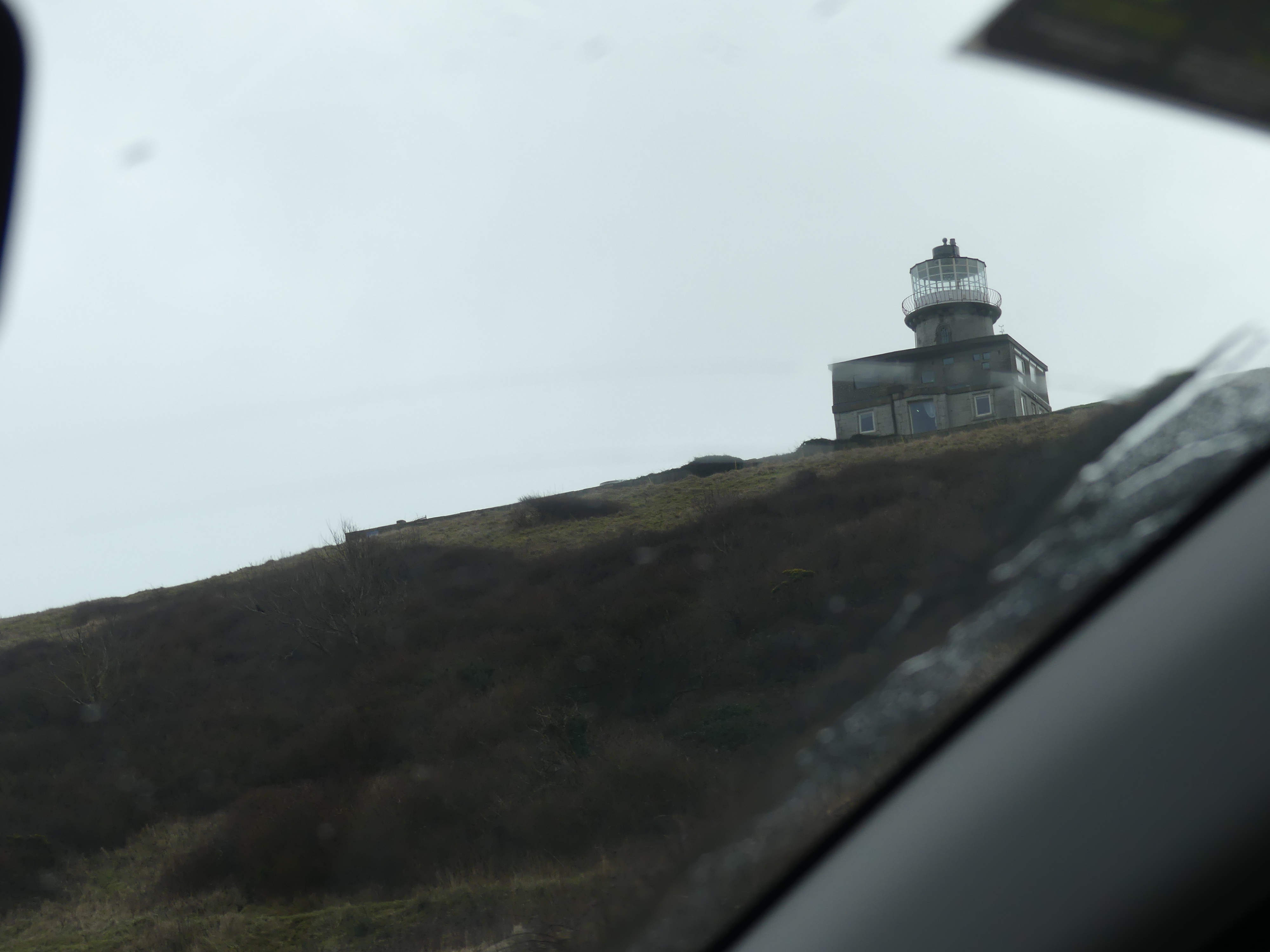
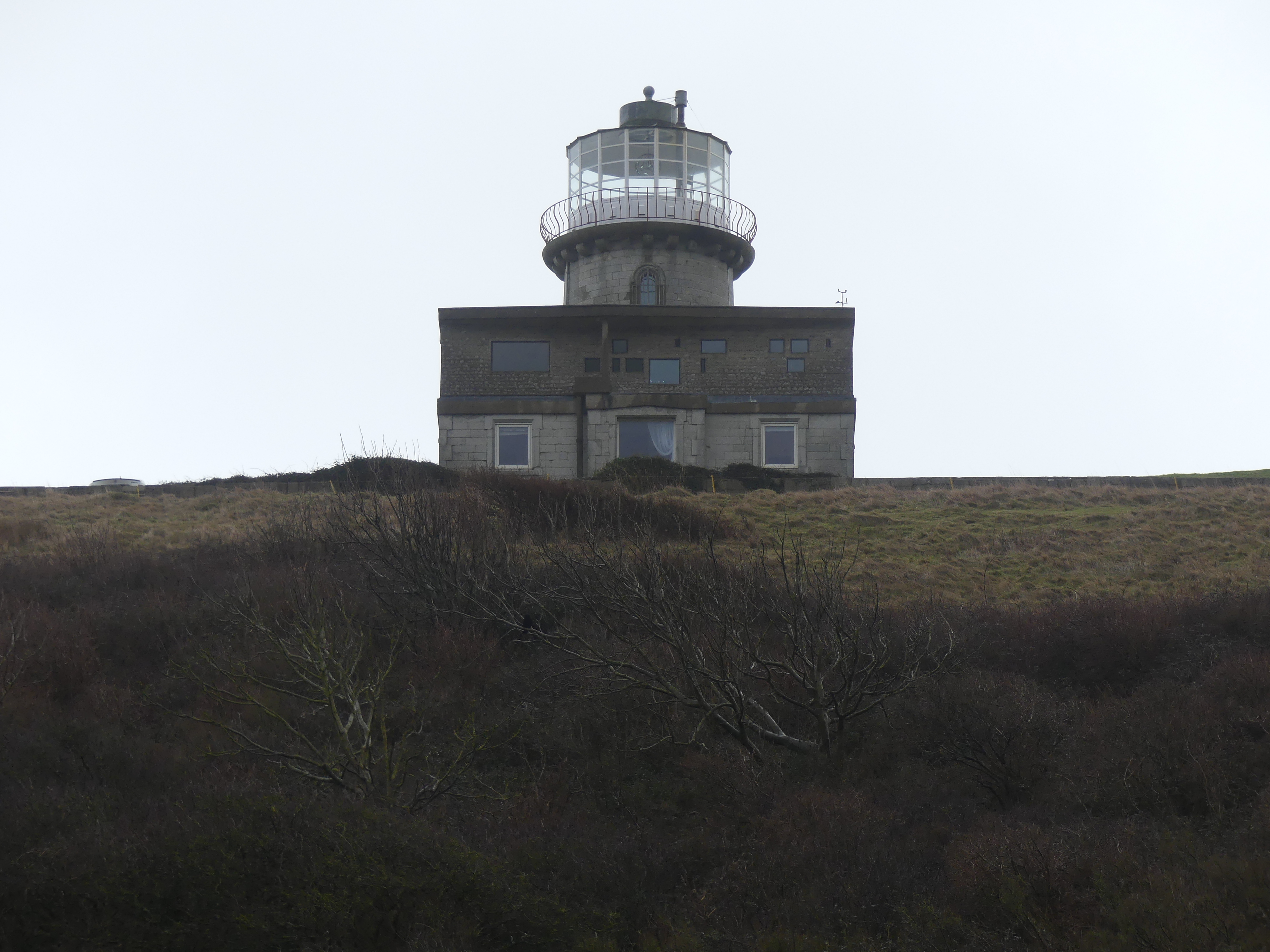
I had prepared an itinerary and planned to drag Terri and Mick around. Despite the itinerary we got side tracked on our way to Battle Abbey and Battlefield. We visited Beach Head and the suburbs of Eastbourne to allow Mick to catch up with an old friend. The wind was howling this day and sea mist blanked out the sun. The coastline is a continuation of the white cliffs of Dover and towered over the beach. It’s known for its dramatic, 531-foot (162-meter) high cliffs being the highest chalk cliffs in England and offers stunning views of the coastline and the English Channel. Beachy Head is part of the Seven Sisters Country Park. The visitor centre measures the distance from the edge of the cliffs to the centre and predicts that the centre will be lost over the cliff by 2050. We drove to the highest point and stepped out to take photos and were close to being blown away. The first picture is the visitors centre which will one day be in the sea as they lose a portion of the cliffs each year. The little lighthouse is further along the coast until you come to the highest point which is the last photo.

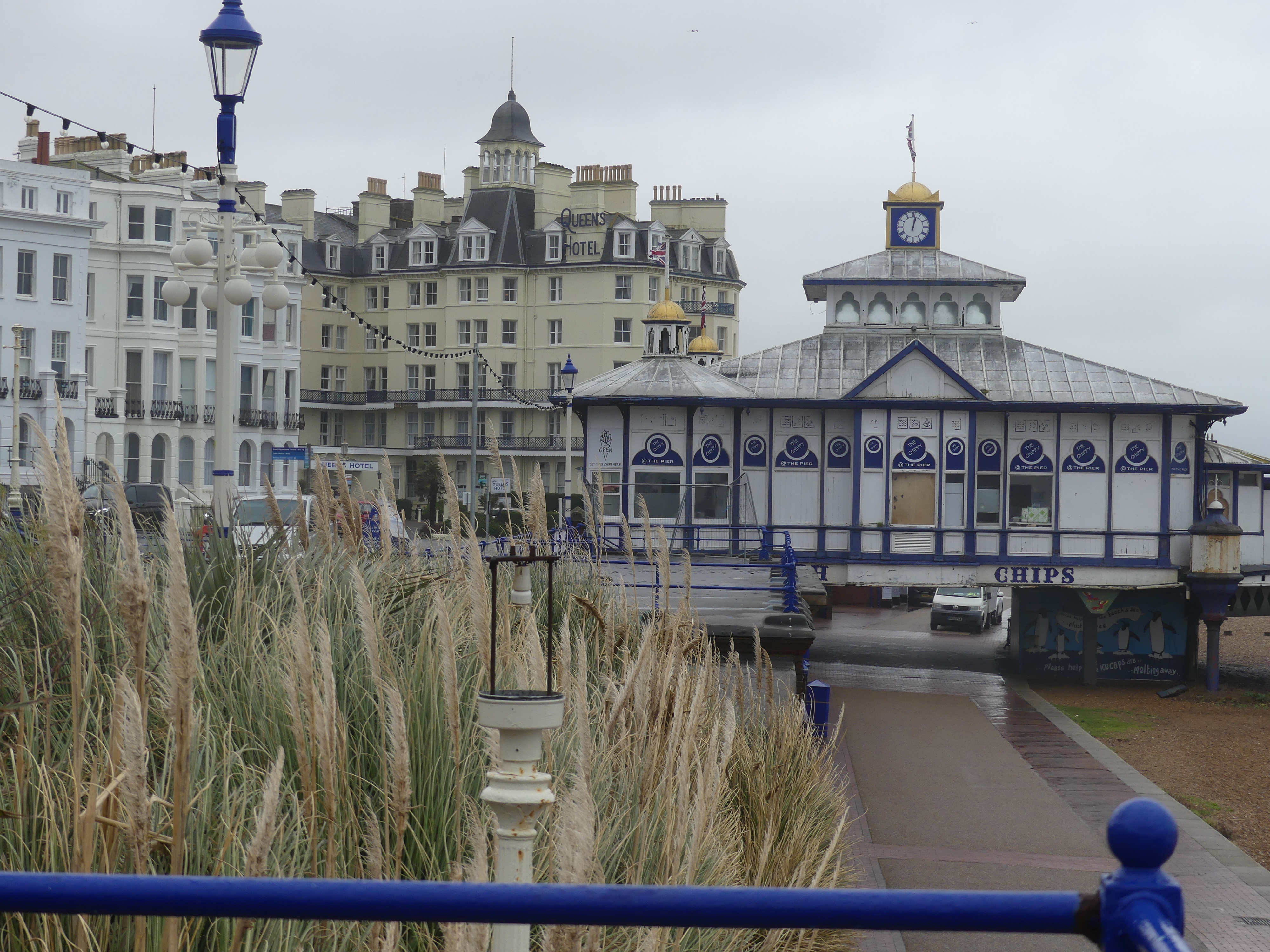
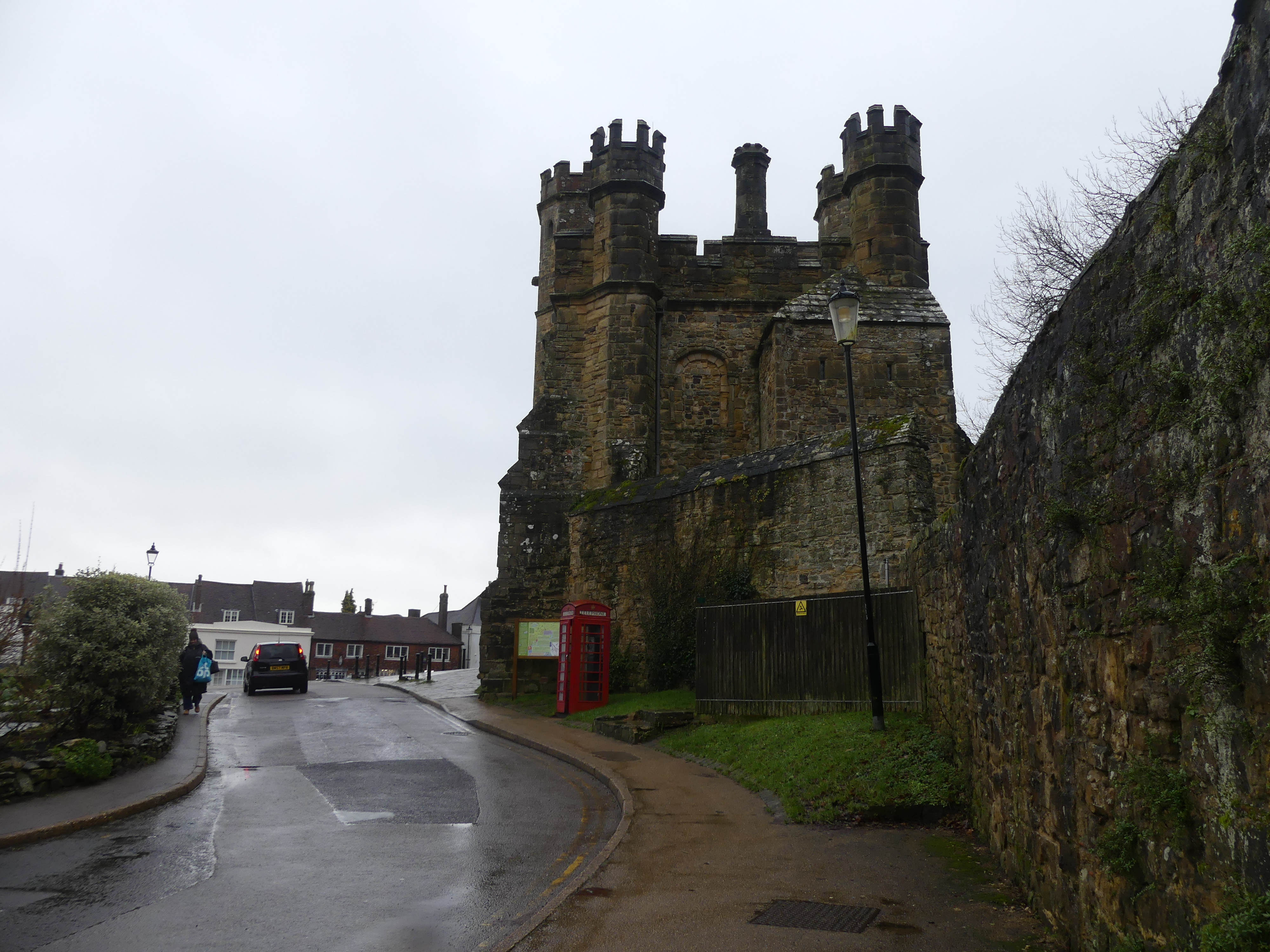
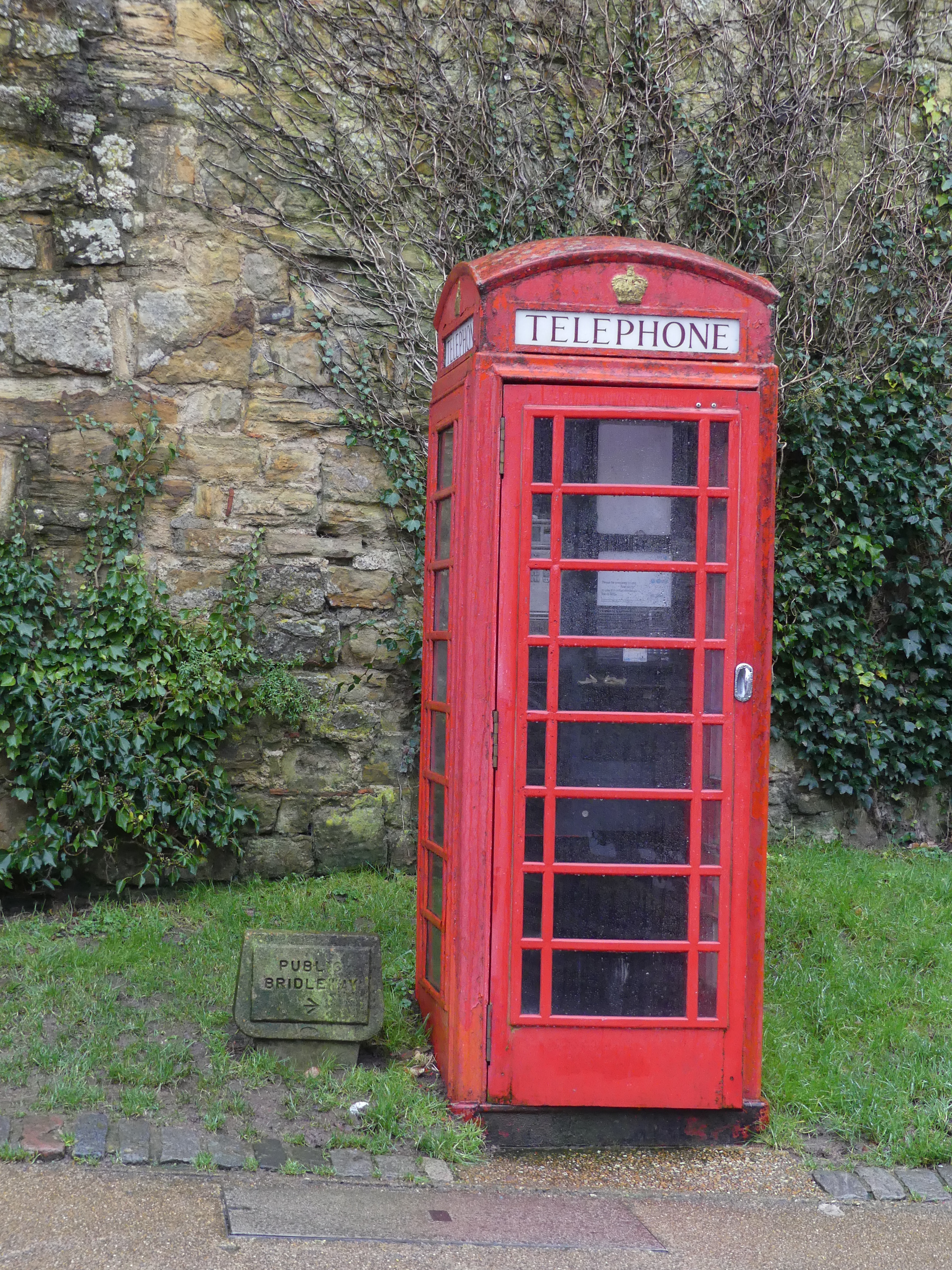
We moved on through Eastbourne to the town of Battle and parked behind Battle Abbey at the monastery car park. Terri had put the money in the meter and we moved onto the Abbey which was closed – it was Sunday. Disappointed we walked through the village and found somewhere warm for lunch. We paid no further attention to the parking meter until we received a rude email from the car hire people. We paid the administration fee but never received the fine – its in the mail. The first two pictures are Eastbourne Pier and its “shop” followed by the advertisement for a re-enactment of the battle on the carpark wall in Battle. The last picture is the phone box outside the Abbey from which King Harold rang home to tell his Queen he may be late for dinner. The battle with William in 1066 AD took place in this area.

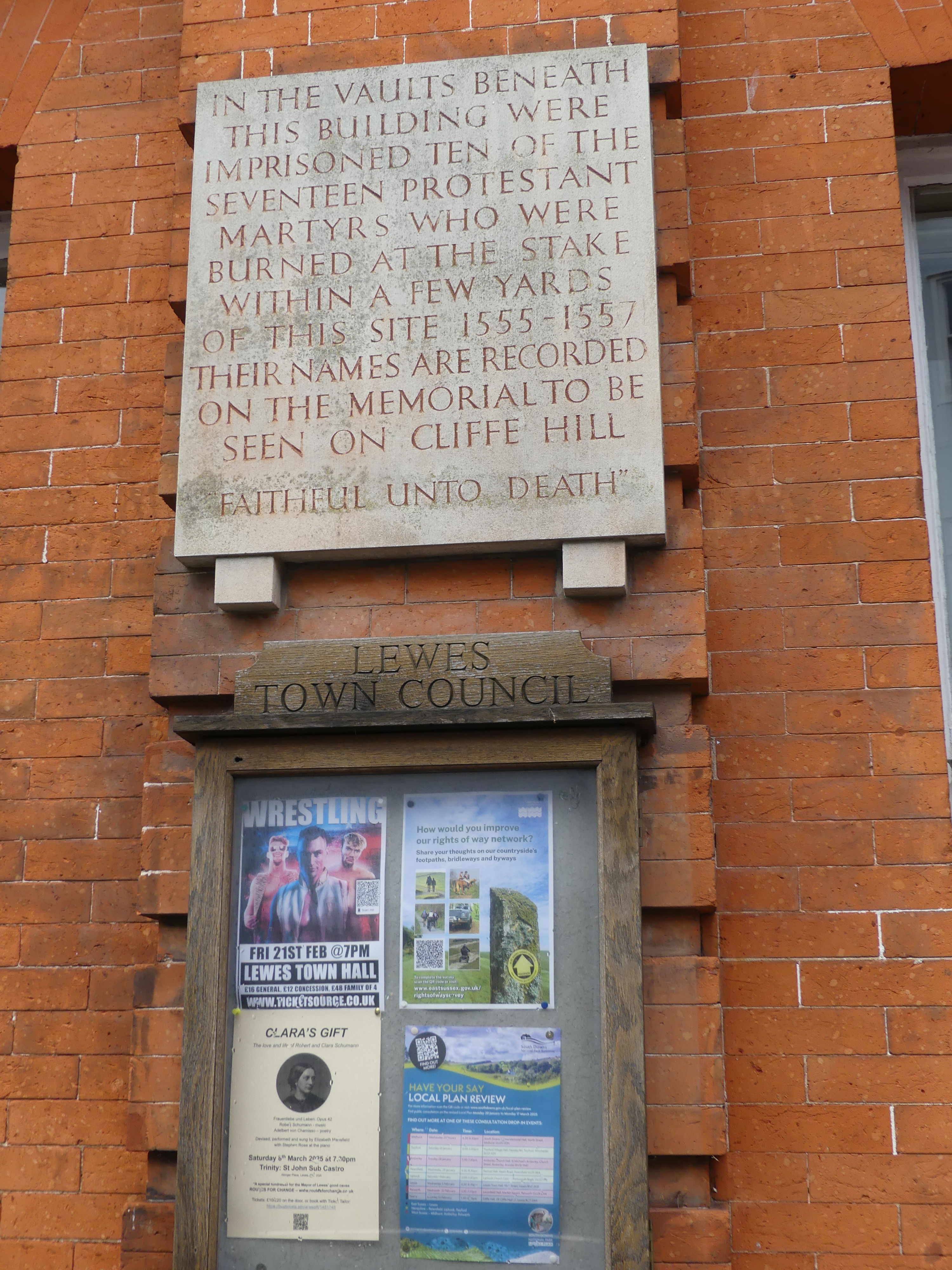
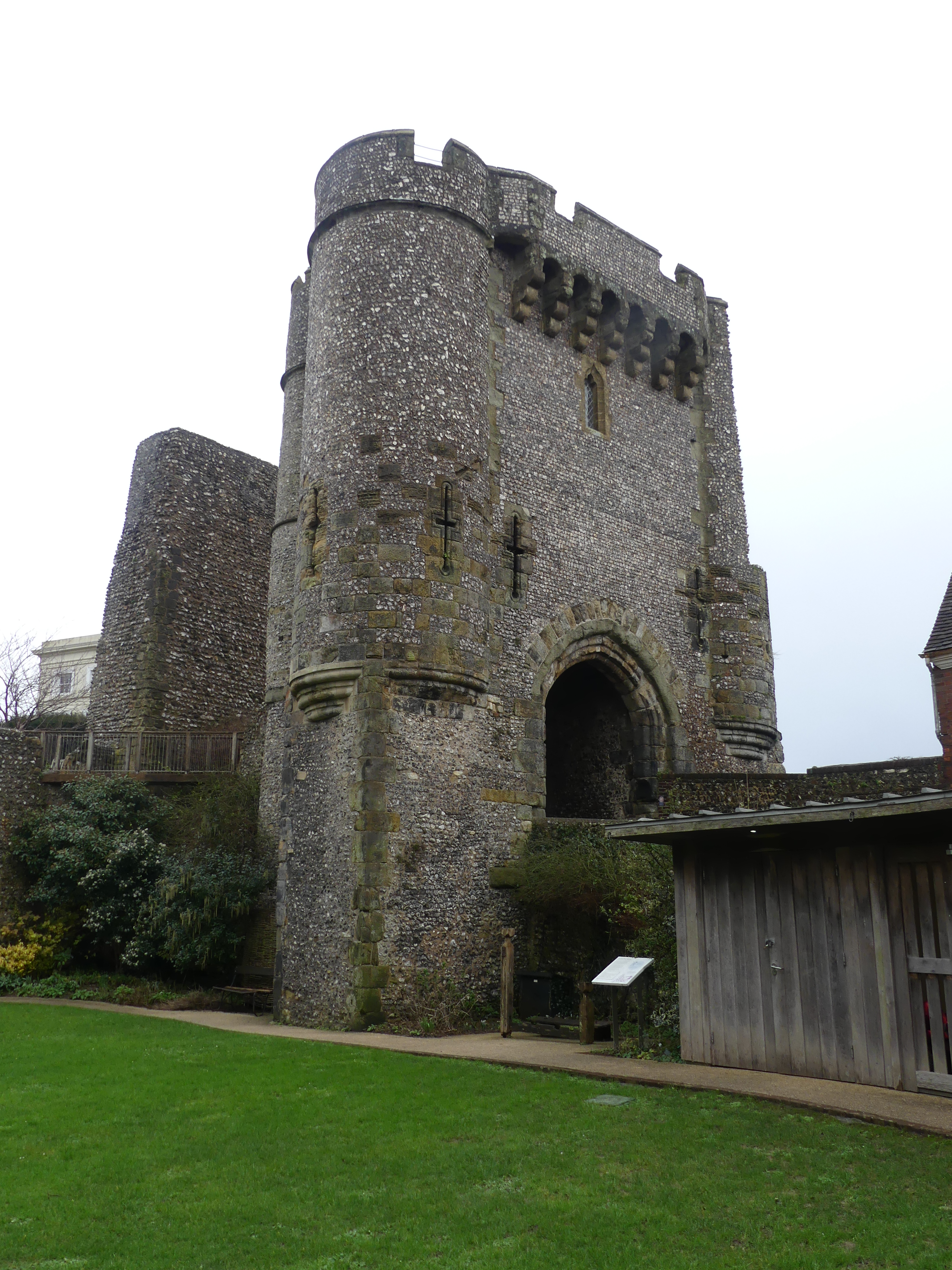
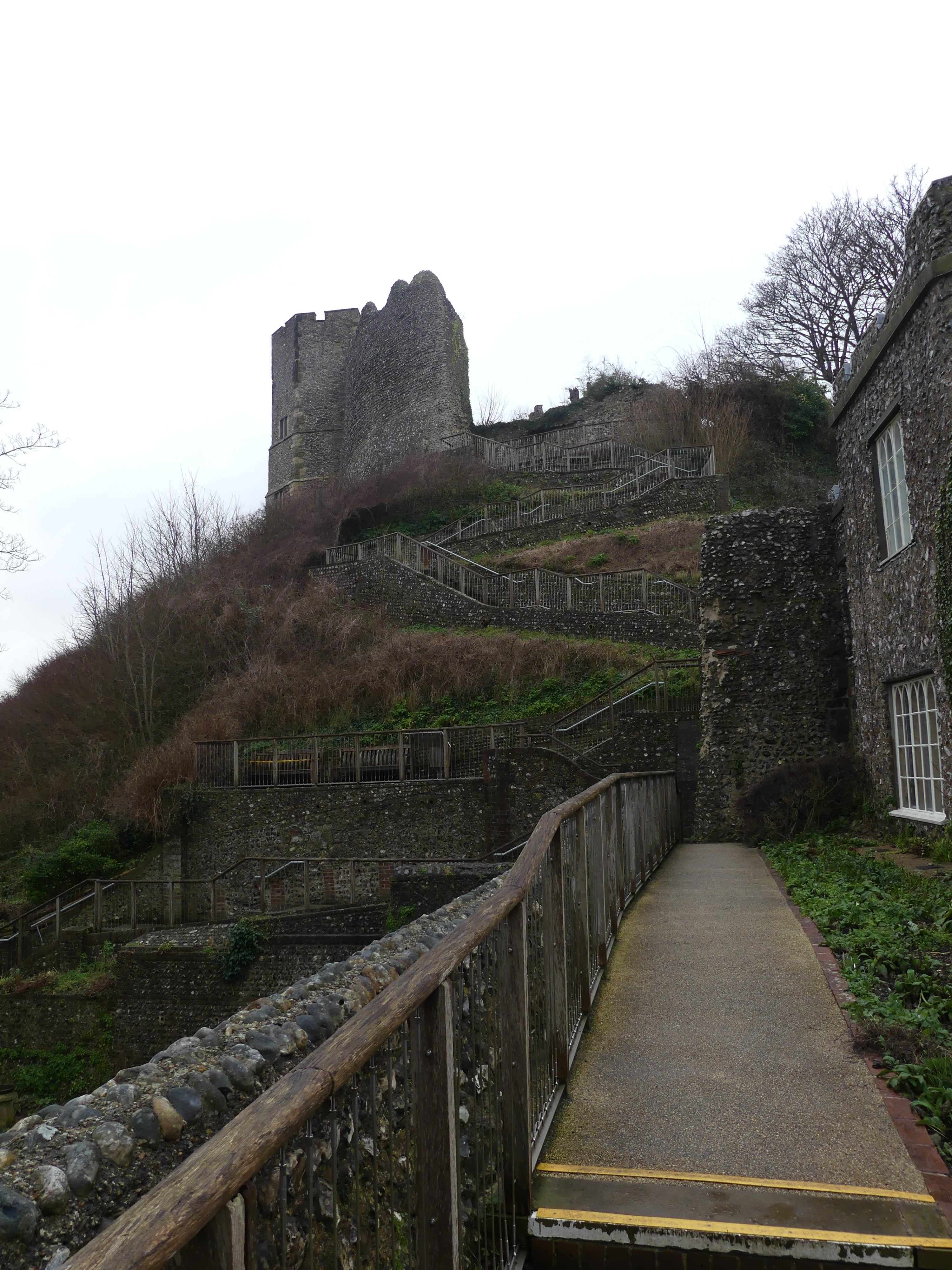
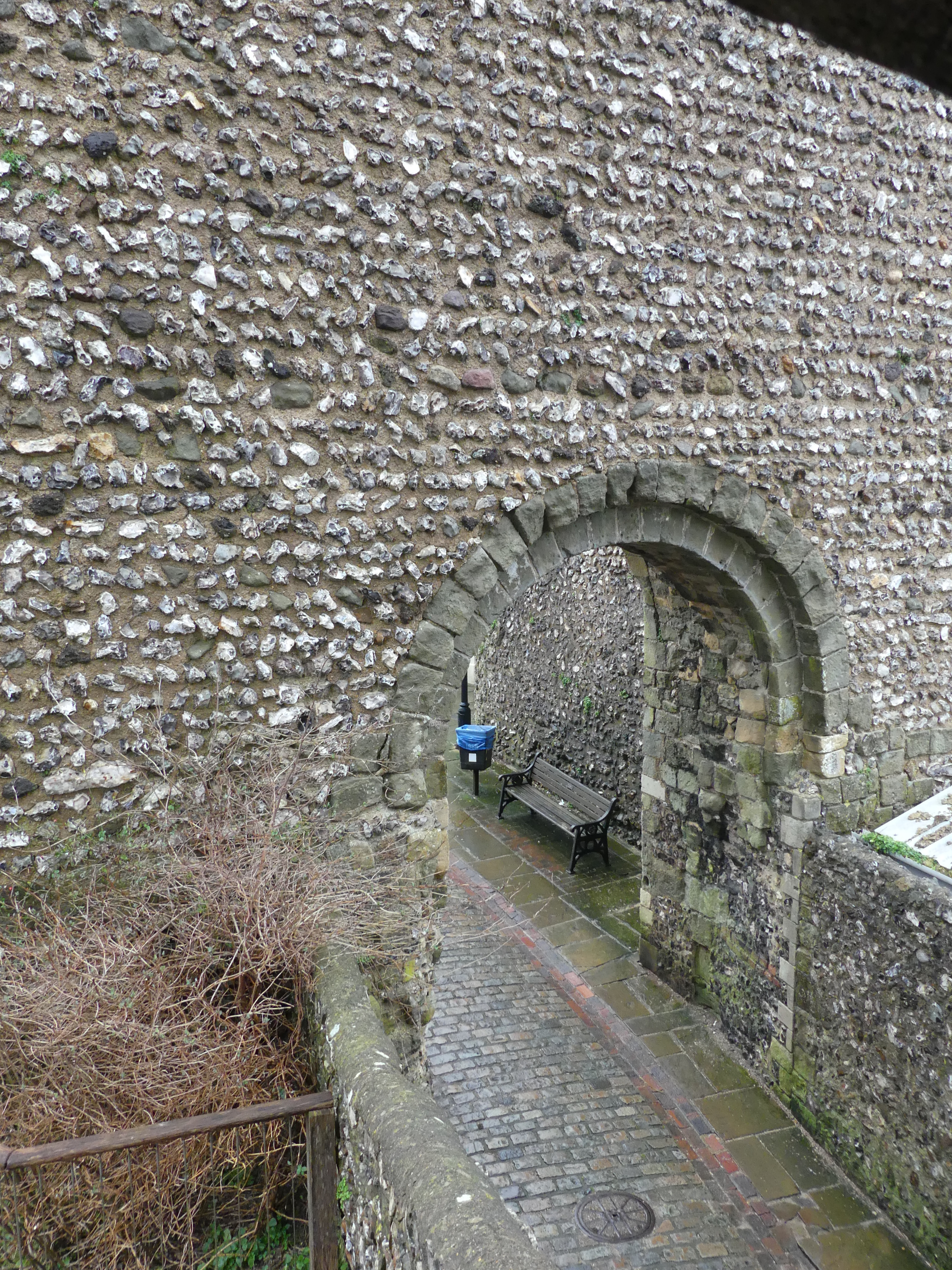
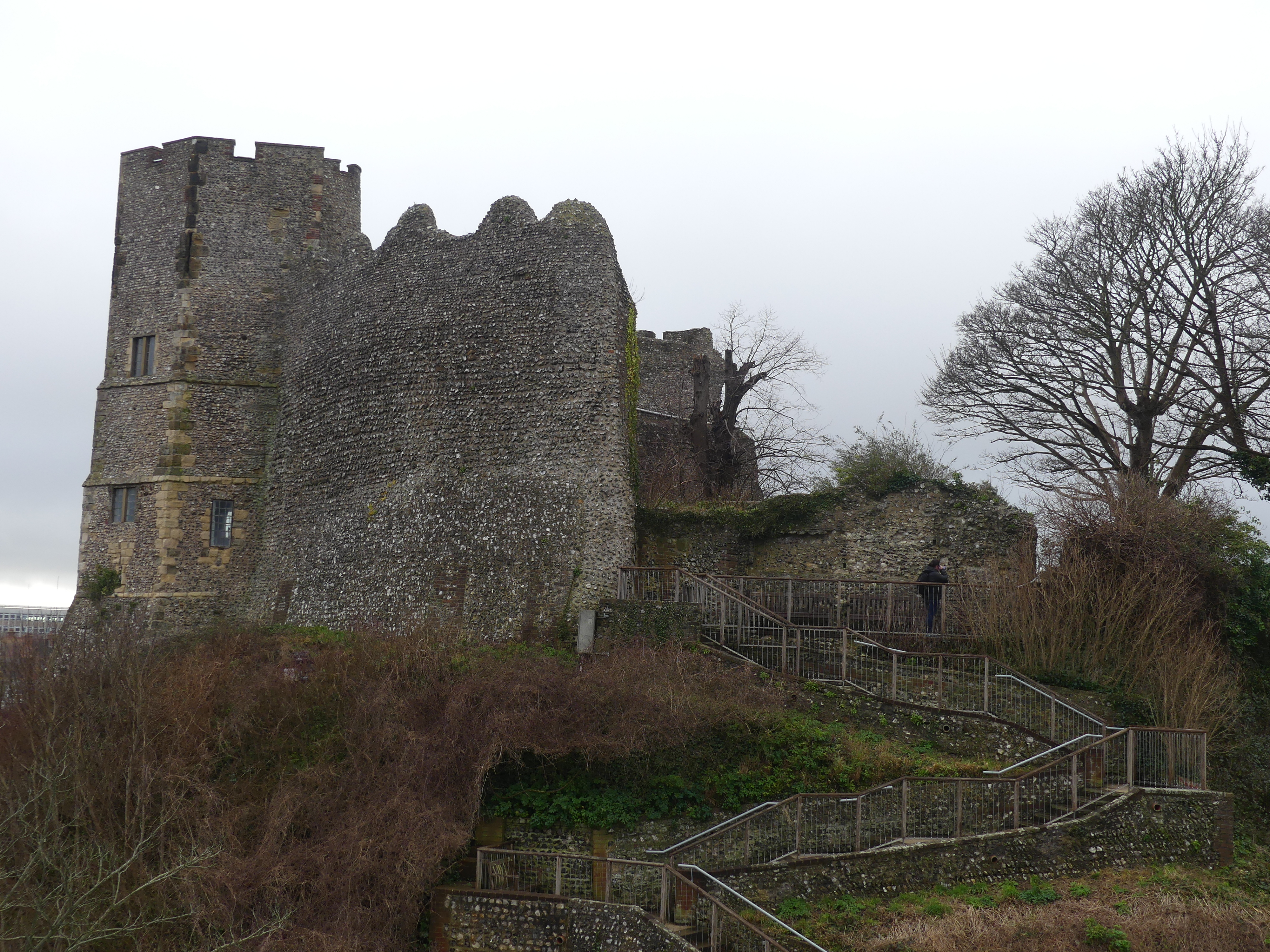
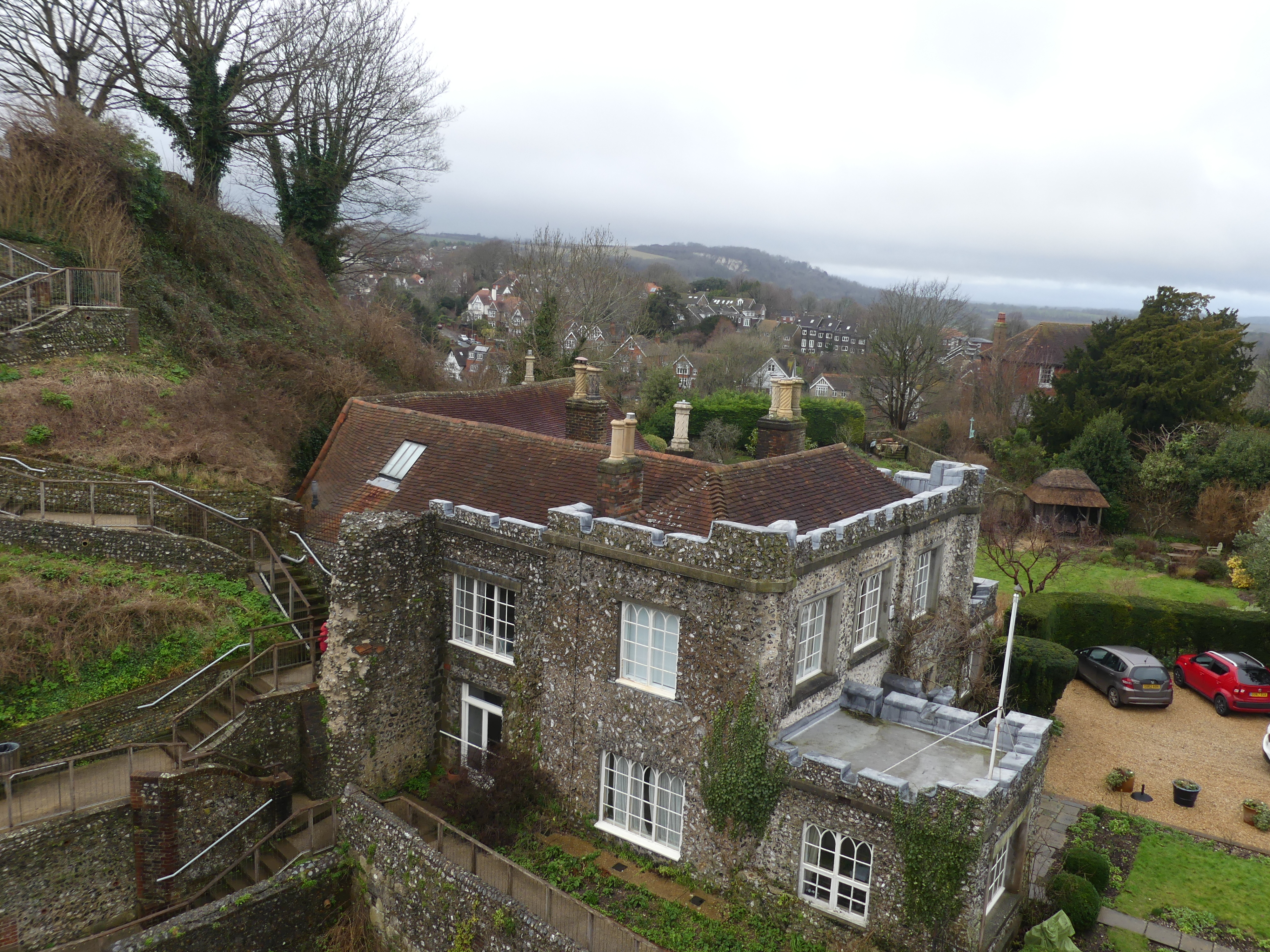
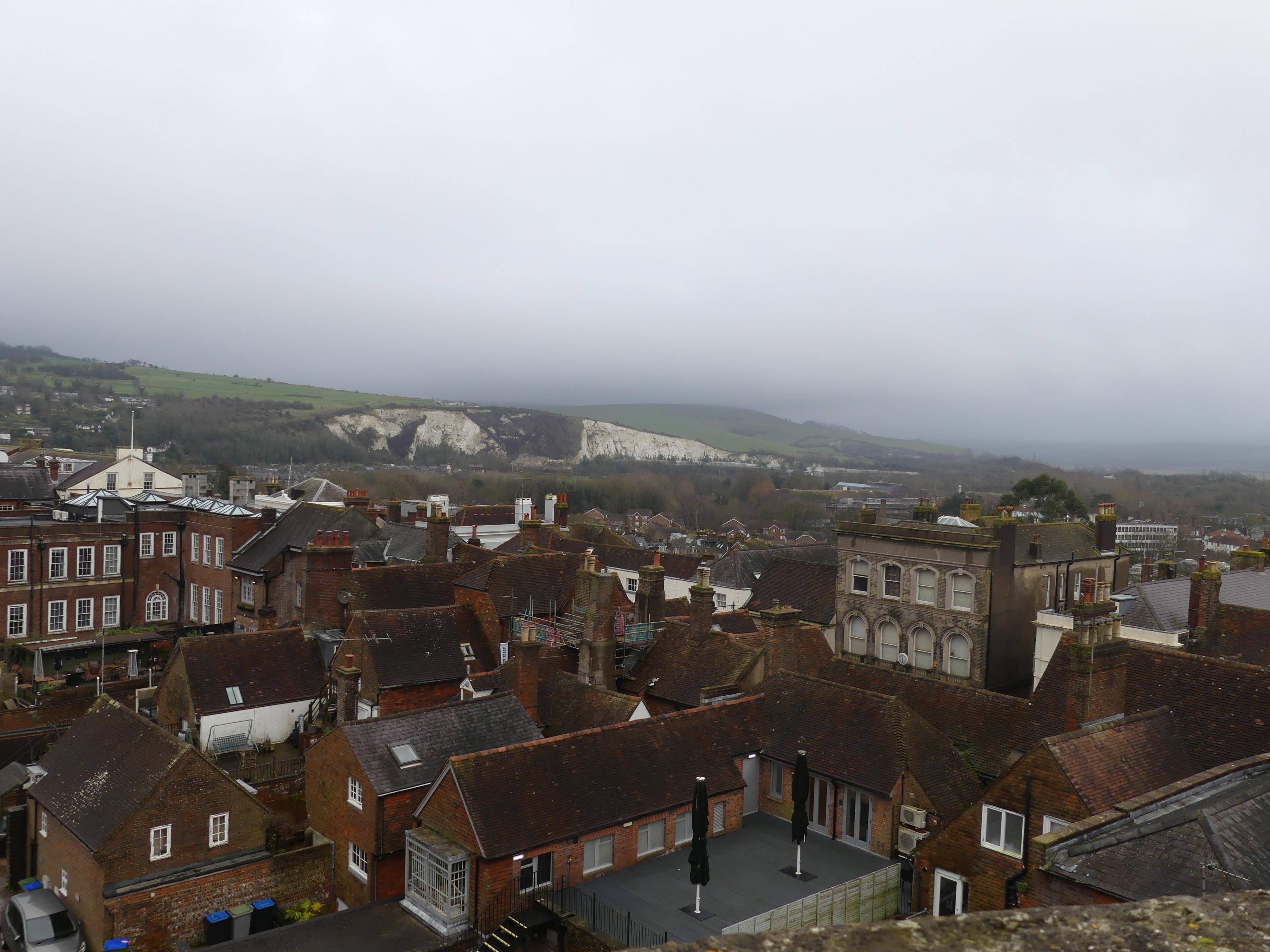
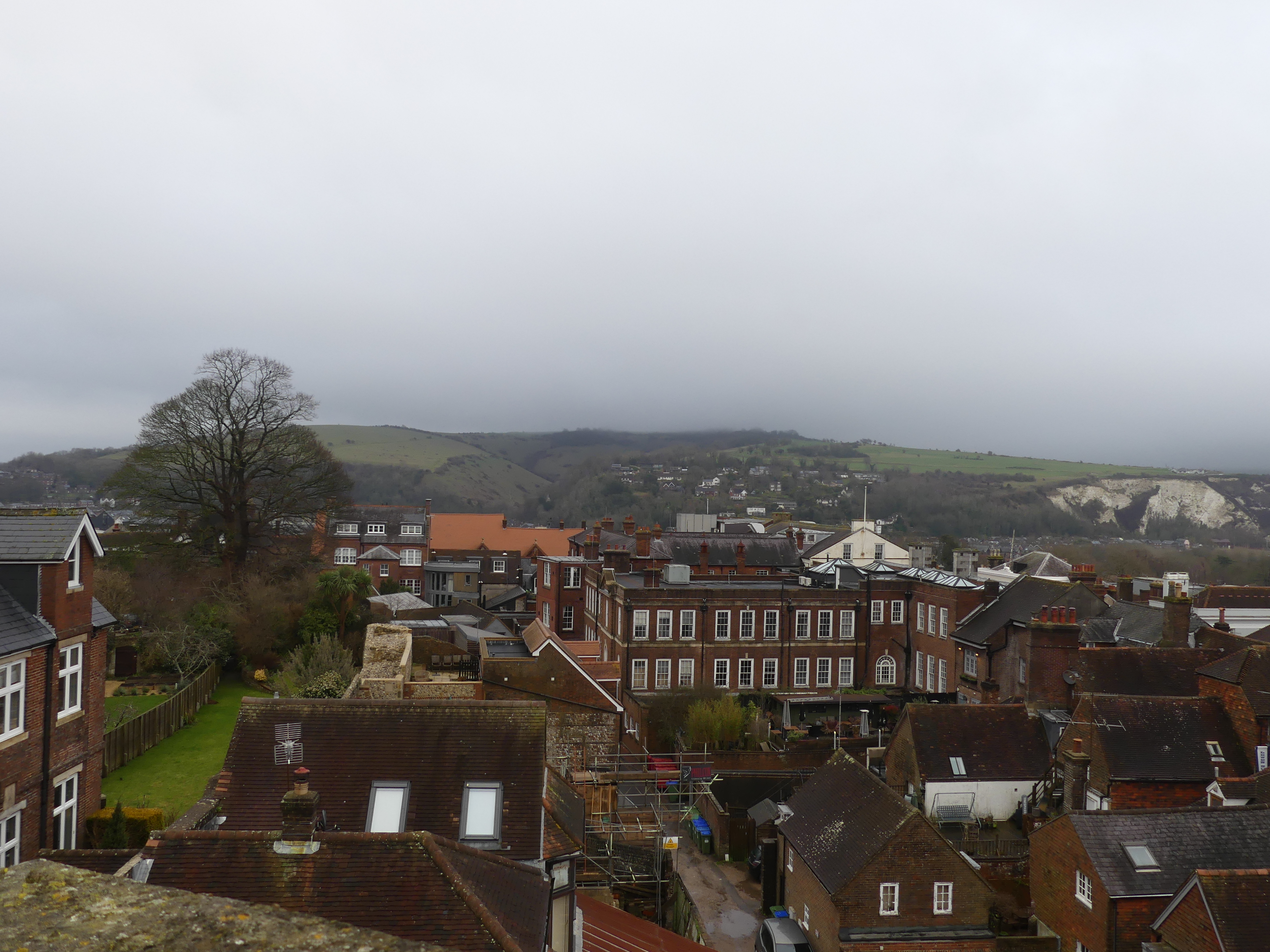
With the Abbey closed our afternoon was free so we headed to Lewes and Lewes Castle and Museum of Sussex Archaeology. The town was buzzing, and the only parking space was the council car park near the river Ouse 500m away from the castle and museum. The castle is largely a ruin with a castle gate and some other buildings remaining. Still, it was very interesting. Lewes Castle is a medieval Norman castle originally called Bray Castle. it occupies a commanding position guarding the gap in the South Downs cut by the River Ouse and occupied by the towns of Lewes and Cliffe. It stands on a man-made mount just to the north of the high street in Lewes and is constructed from local limestone and flint blocks. The Barbican gate is mostly intact and can be accessed. The sign on the wall in the photo below tells the passerby that ten of the seventeen protestant martyrs were imprisoned in the vault below this building and burned at the stake a few metres from this site in 1555 to 1557.

This tour ended our day, and we returned to Hove to find a car space, a place to eat and a warm space to retire.

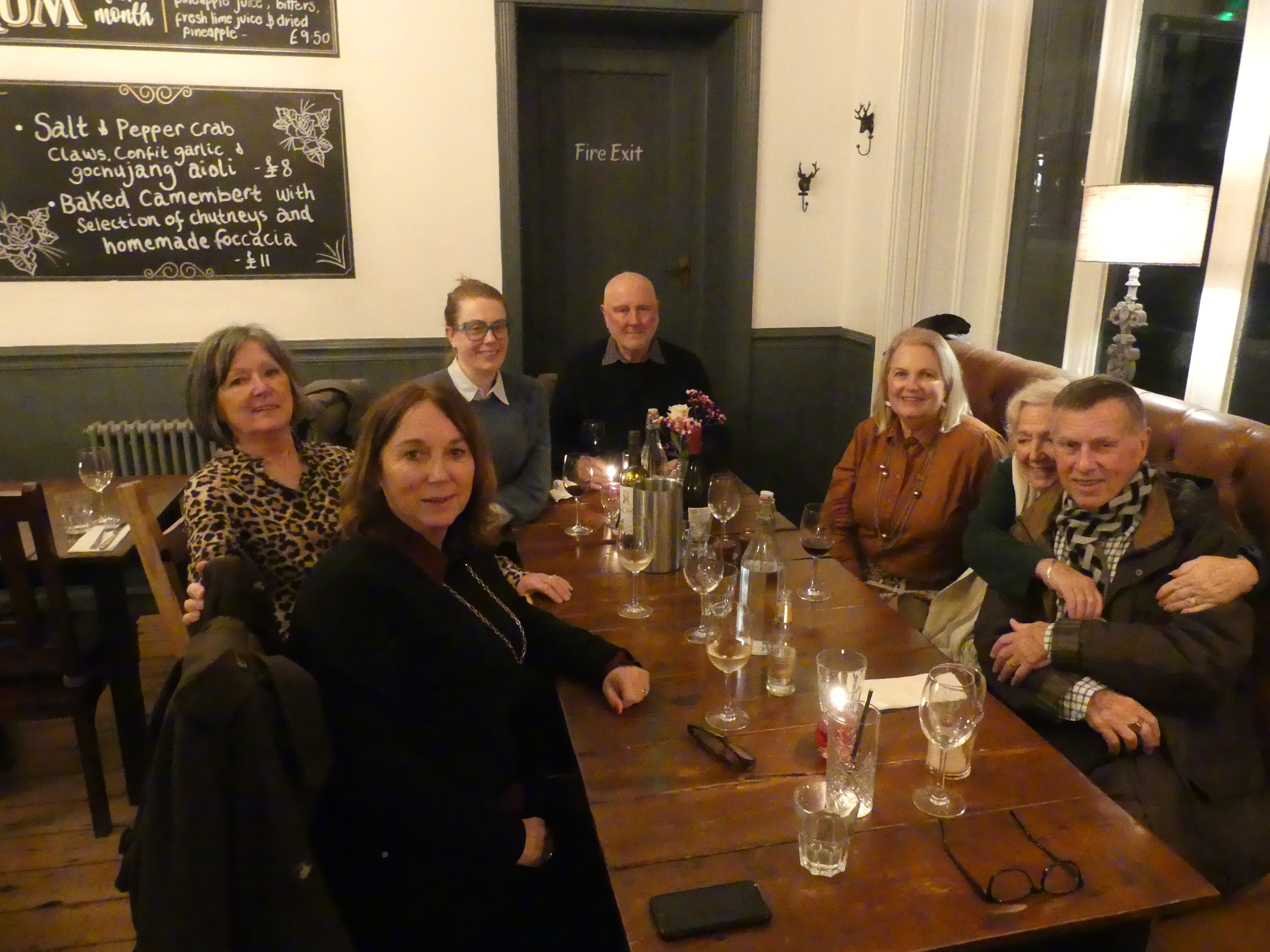
My niece Louise, who is presently managing the race days for Formula 1 Racing around the world, took time out of her busy schedule to come down by train to Hove and arrange for more of my relatives to meet us. Louise, Trish (Terri’s sister and my cousin) and her daughter Sarah arranged for dinner at the Connaught Hotel in the heart of Hove. We parked in the Aldi parking station and walked on to the Connaught Hotel – large and noisy hotel and a table of 7.

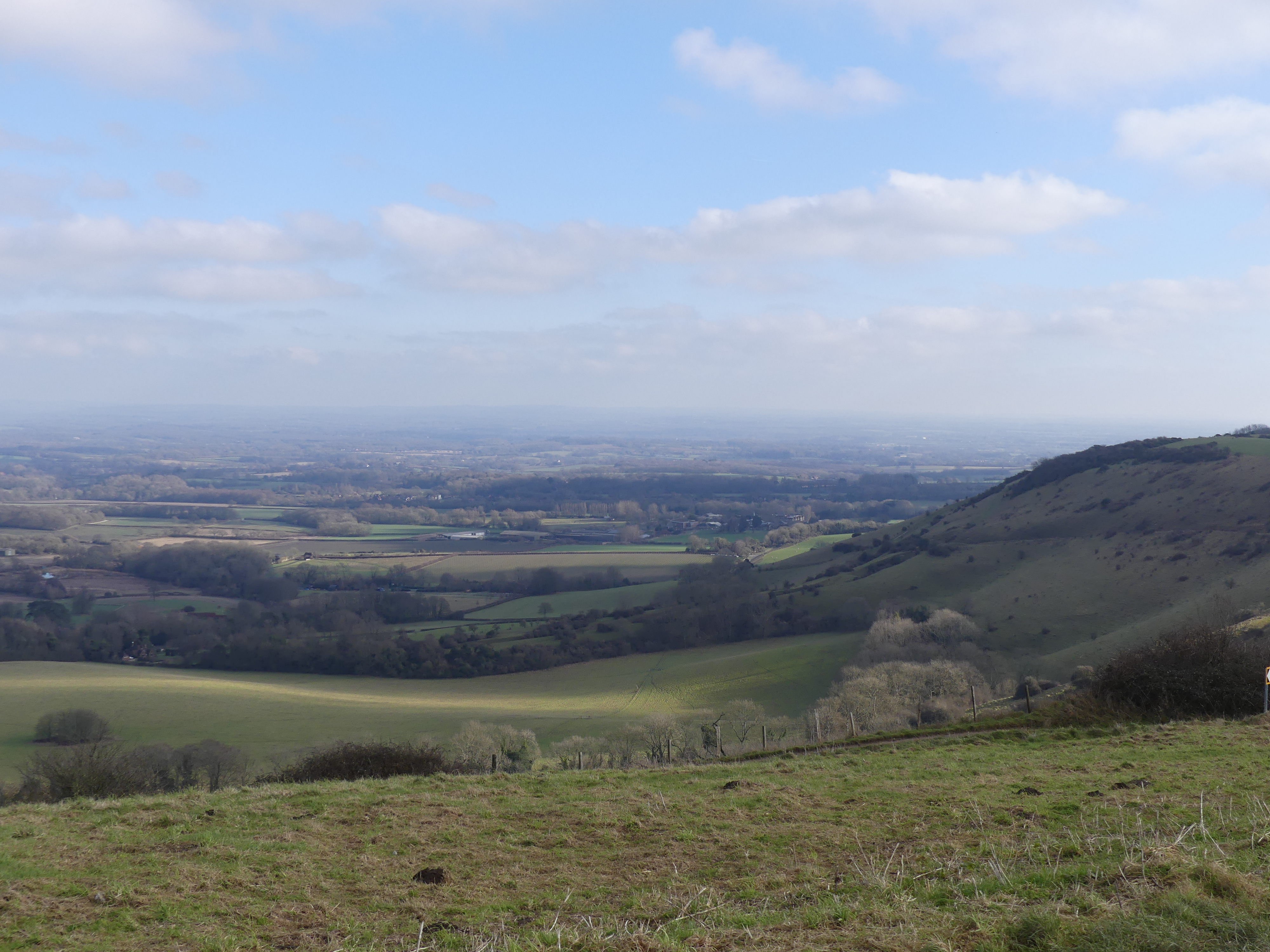
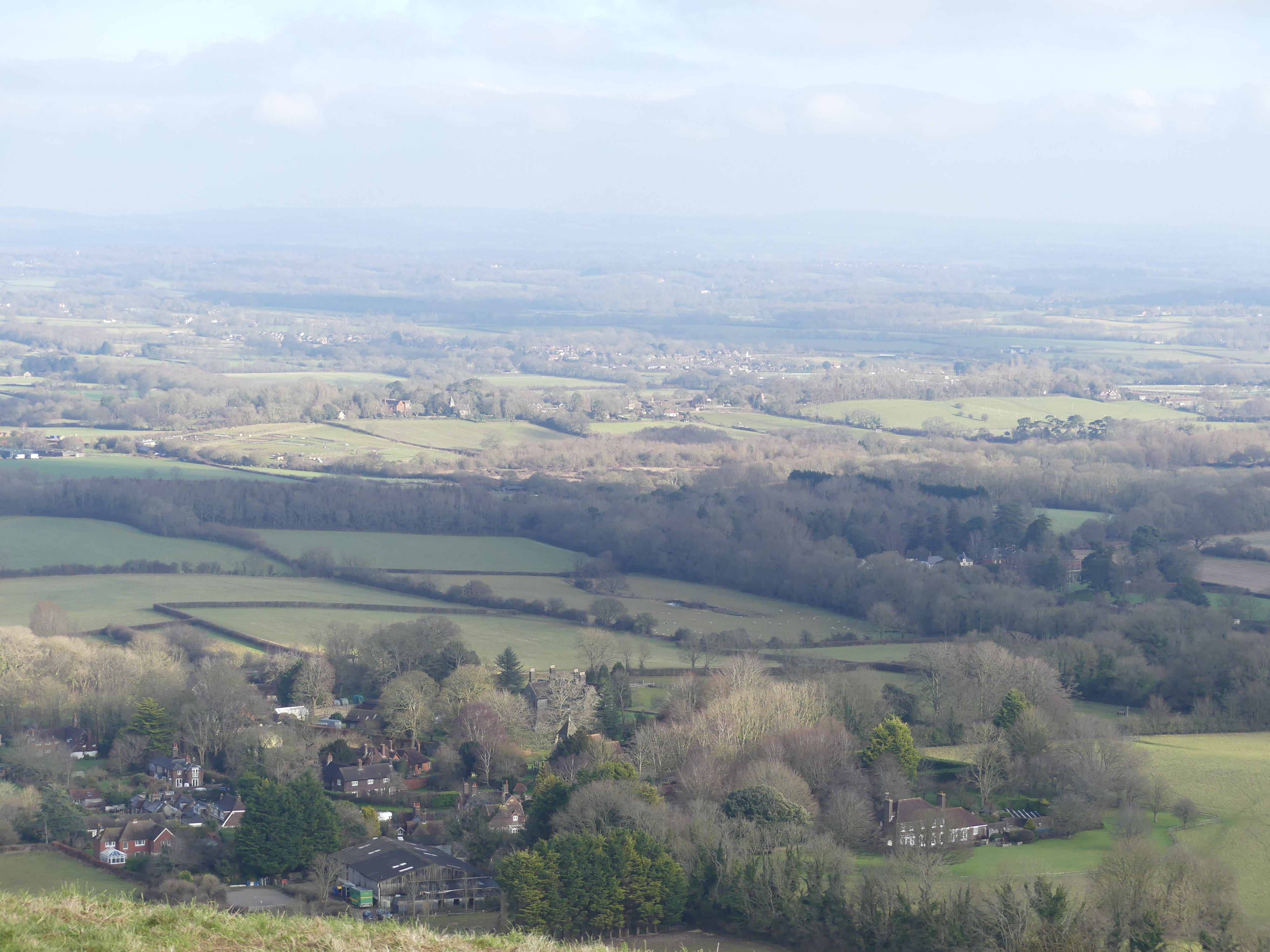
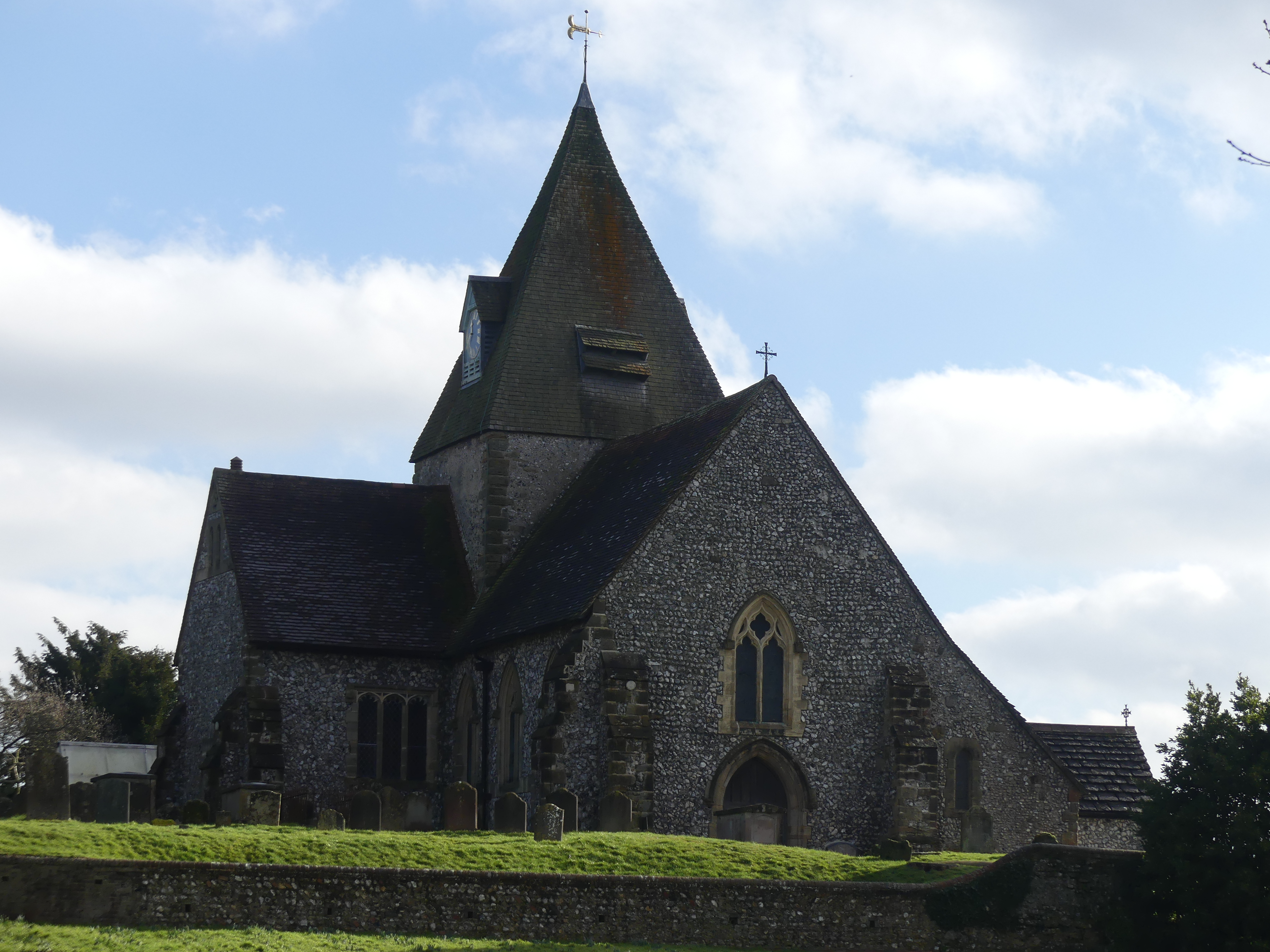
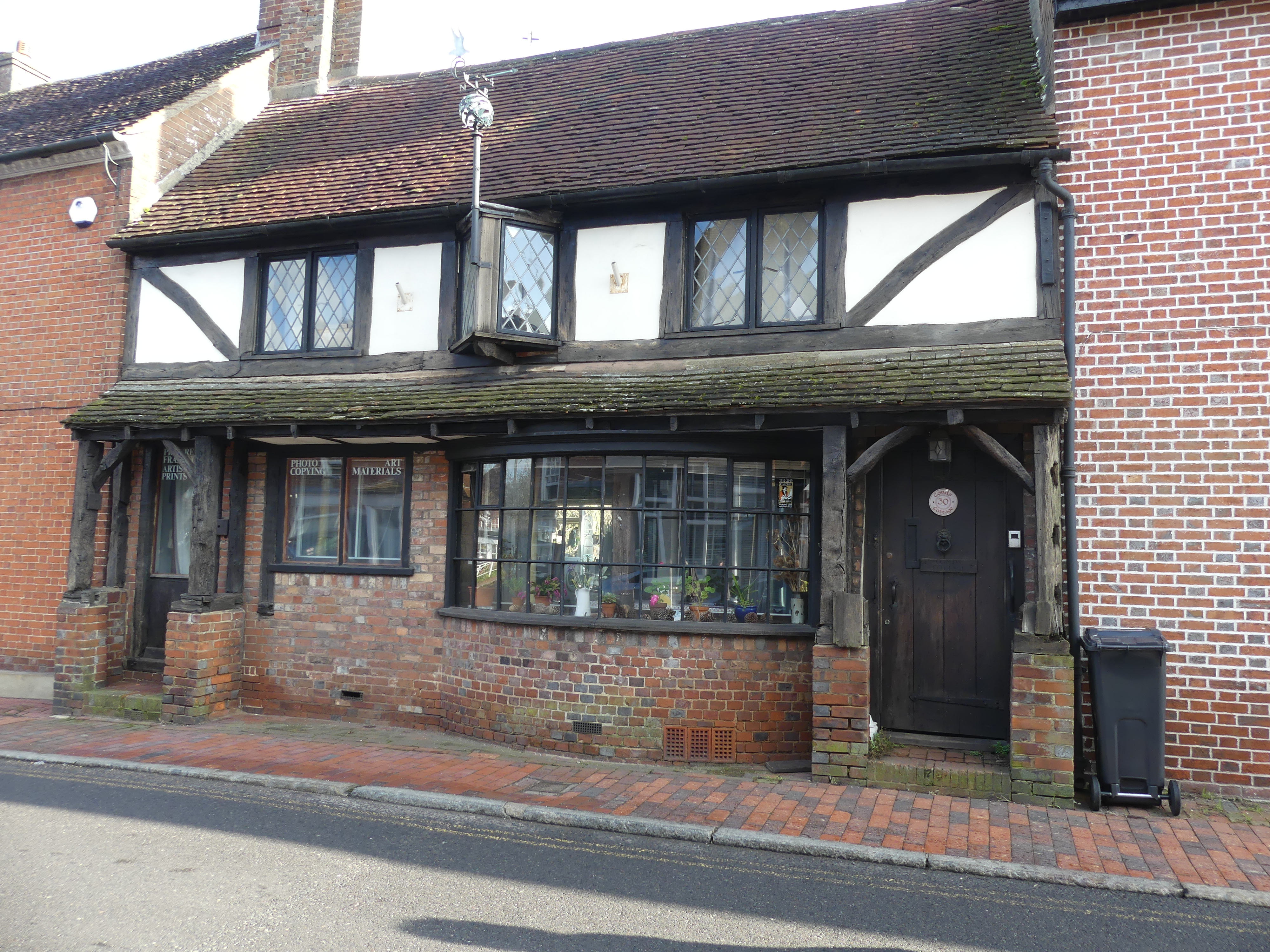
We also managed to fit in a visit to Ditchling a very small village with a lot of history. Even so the place was busy with visitors, and we ended up parking in a puddle in a dead-end lane – the only park we could find. It brought into the churchyard and as is typical of English churches we also passed through the cemetery finding a very quaint grave with its own font. Some of the buildings look to be from the Tudor era but the pub was warm and cozy. On the way to Ditchling we passed through some pretty country as you will see below. In the village itself the church stood out as the centre of the village and the buildings all to be very early or Georgian built.

After spending the morning in Ditchling we returned to Hove and the “Nevell” an old haunt for Mick and we met up with one of Terri’s sons for a drink and get together. The following day we continued our visits to beach side towns and the photos following show a mariners church where the sailors went to sea after visiting the church.

We had a lovely time renewing friendships meeting more of my father’s family in the UK and visiting new things in Brighton Hove. Our time in Brighton Hove had come to an end and we had the discussion as to when we might catch up again before we headed off to Truro in Cornwall. We had not visited places like Port Issac where Doc Martin had his practice (the TV show) and King Arthur’s alleged castle at Tintagel. The drive would take over 4.5 hours so we scheduled a stopover in Dorchester for a break and some lunch.

Read on in my next blog “THE RETIREES GO AROUND THE WORLD – BRIGHTON HOVE UK/ CORNWALL UK.