THE RETIREES GO AROUND THE WORLD – LONDON HEATHROW UK to IPSWICH & SUTTON HOO UK

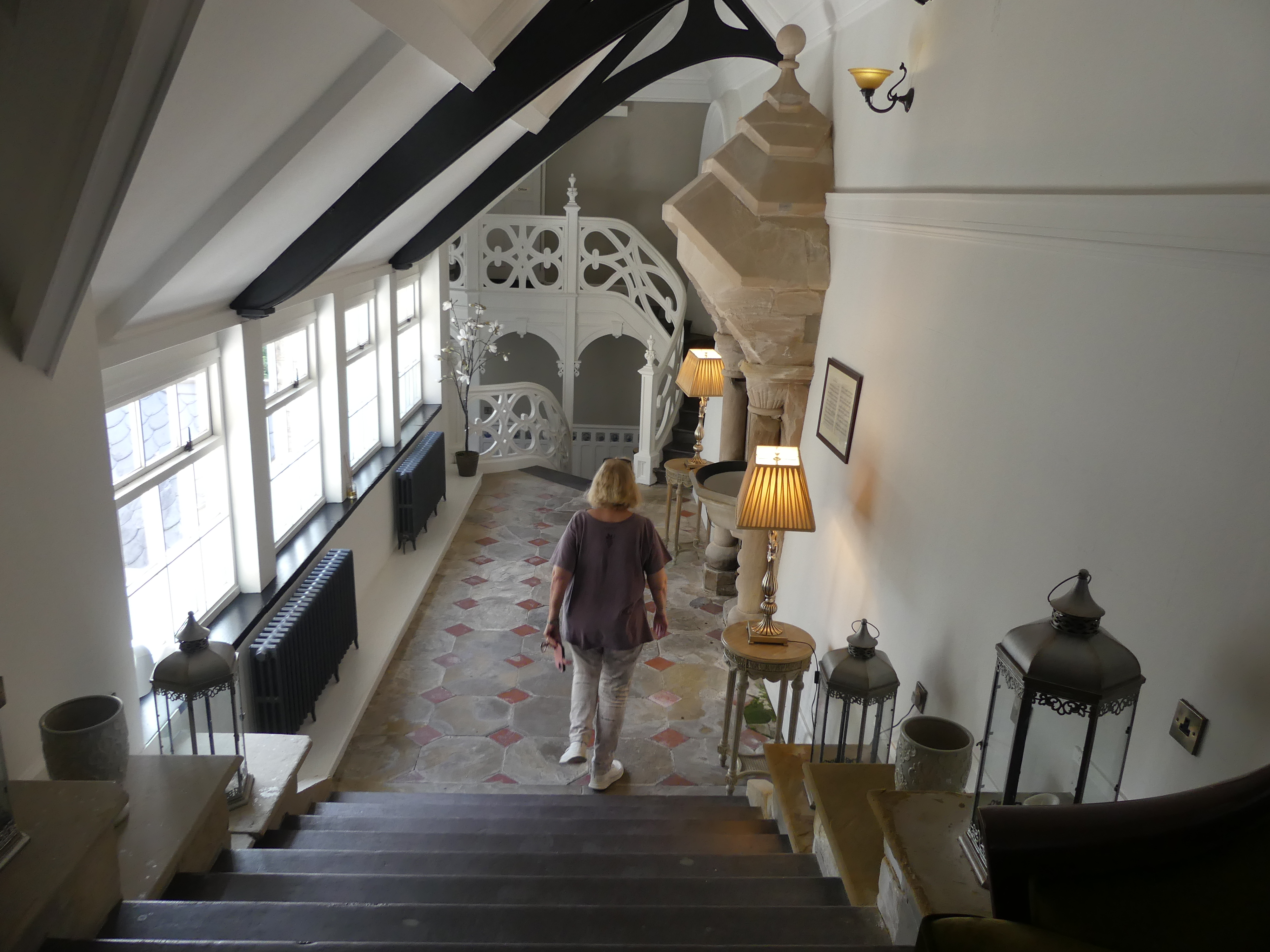
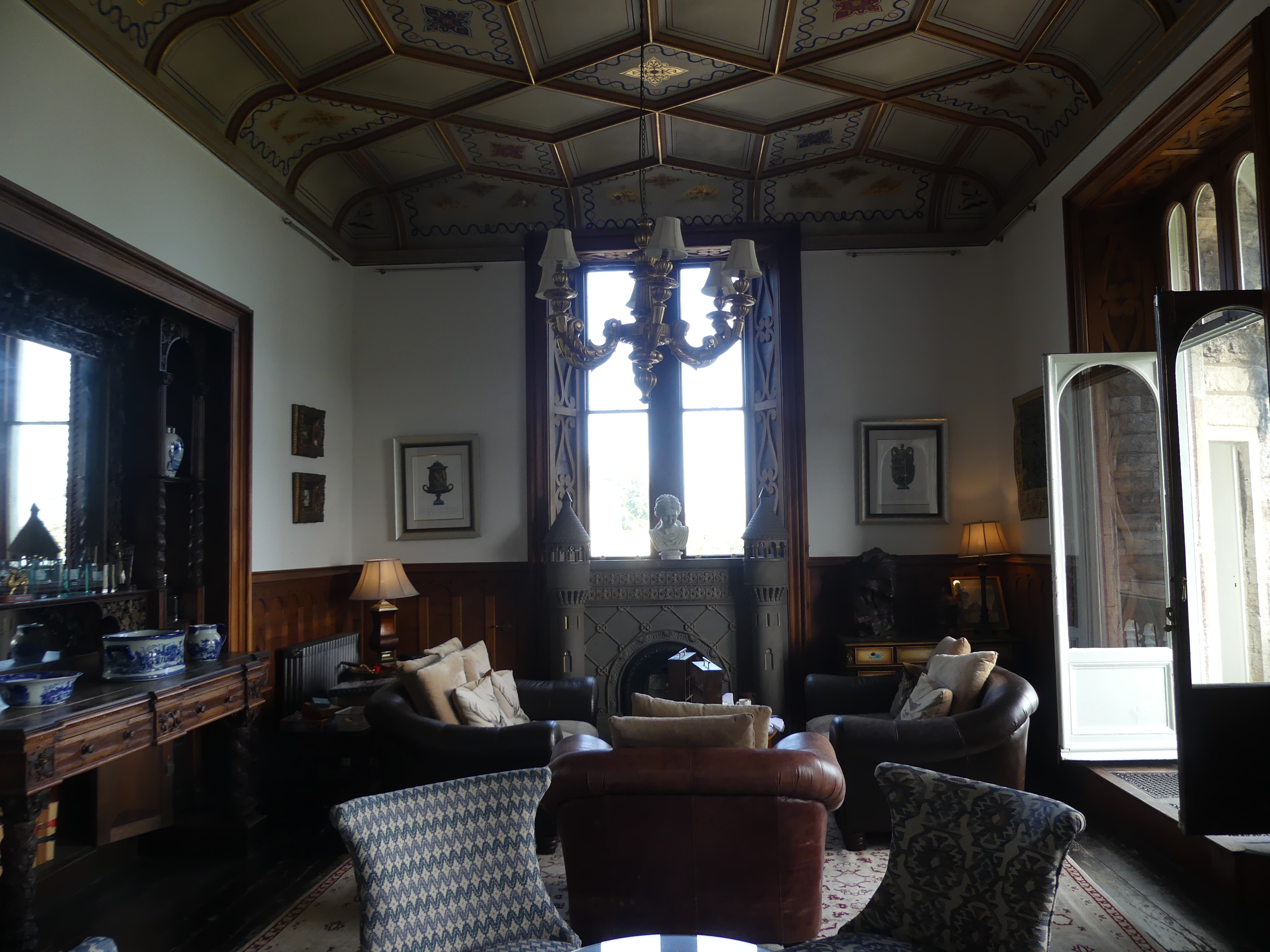
We left the Best Western Chicago and I had forgotten I took this picture of our accommodation for our overnight stay in Chicago for comparison with our Hotel in Ipswich UK. Our accommodation in Ipswich was actually outside of Ipswich in a suburb called Pinewood nestled on a brook surrounded by a suburban setting. Called the Muthu Belstead Brook Hotel it presented as a restored manor with appropriate furniture and appeared very comfortable, but we had lost 1 night of our booking through the American Airline stuff ups. The external appearance reminded me of a health resort, but the internal furniture appeared to be styled in Victorian/Edwardian style.

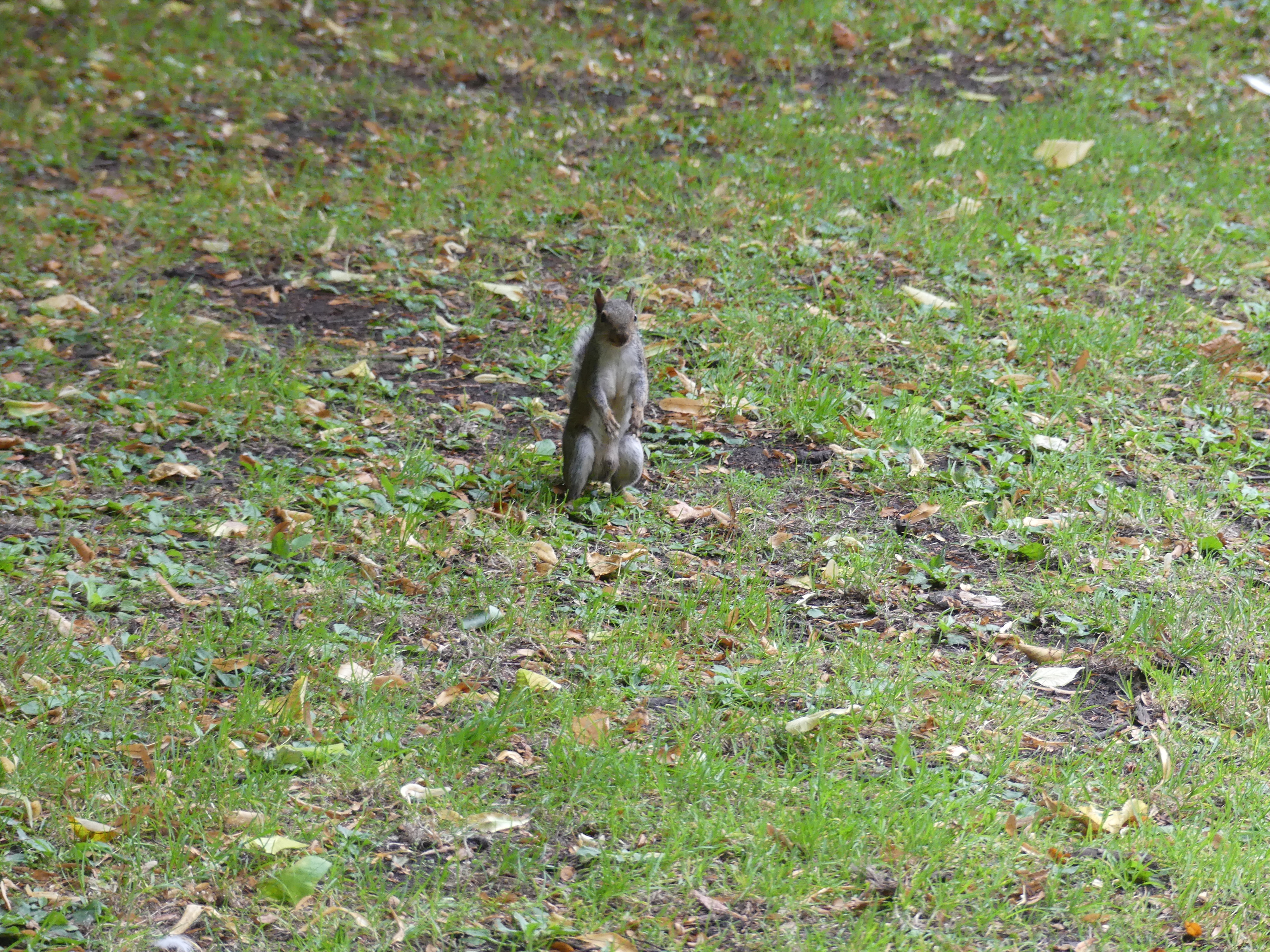
After checking in we walked around the property and booked dinner in the main restaurant where we enjoyed drinks before dinner then pasta for me and pork belly for Kerry. I had my appetite for a change and emptied my plate. Kerry was unable to finish her dinner. Kerry had been driving for the most part of the day and we were both tired and needed a good night’s rest. Before bed we organised our suitcases for the following morning. A quick walk around at the setting for the hotel, a visit by an inquisitive squirrel then off to bed – tomorrow Sutton Hoo.

We were early to rise ate a hearty breakfast then drove to Sutton Hoo. We had lost a whole day through airline stuff ups so there was some urgency about getting to Sutton Hoo and then to Cardiff.

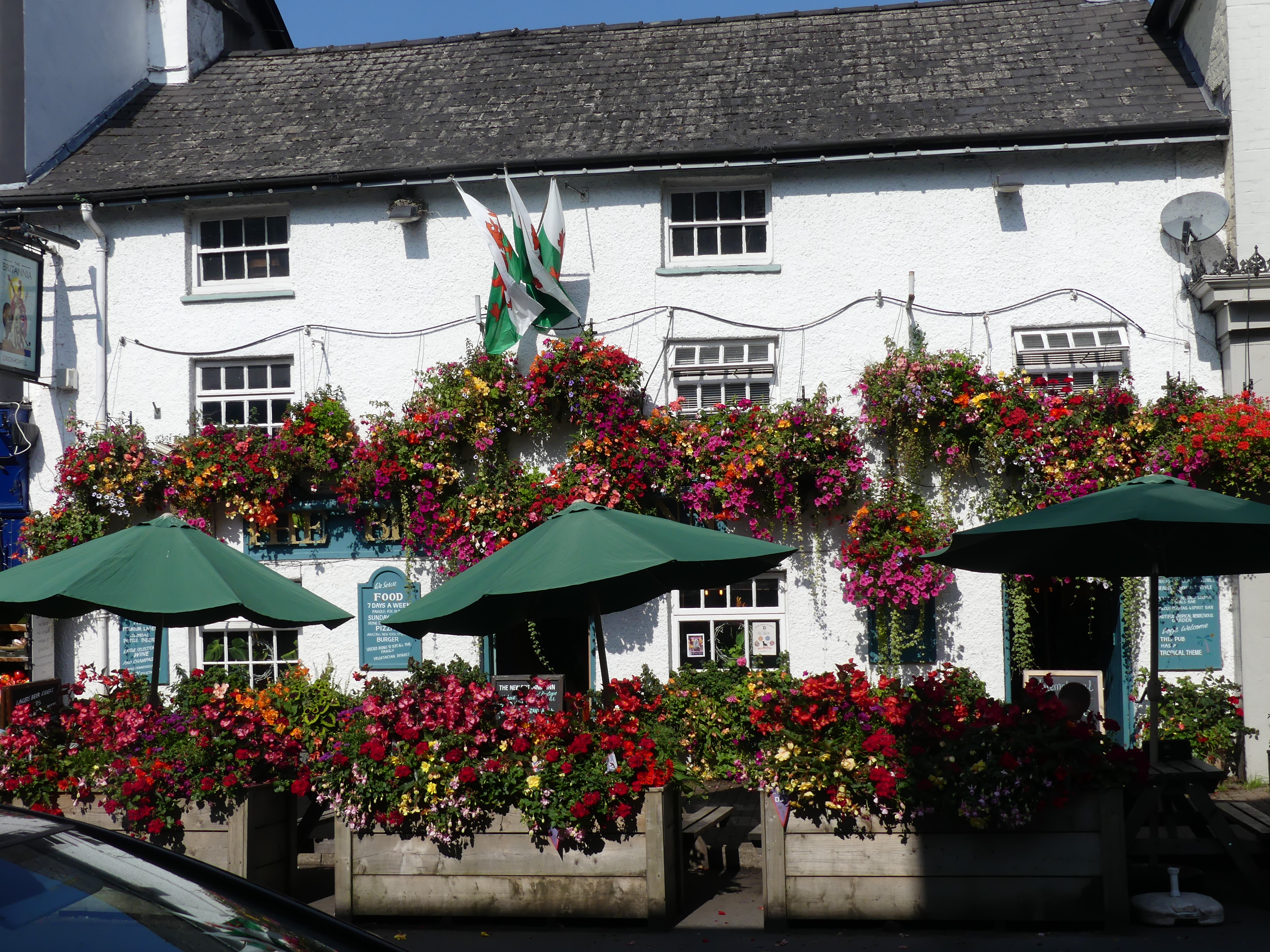
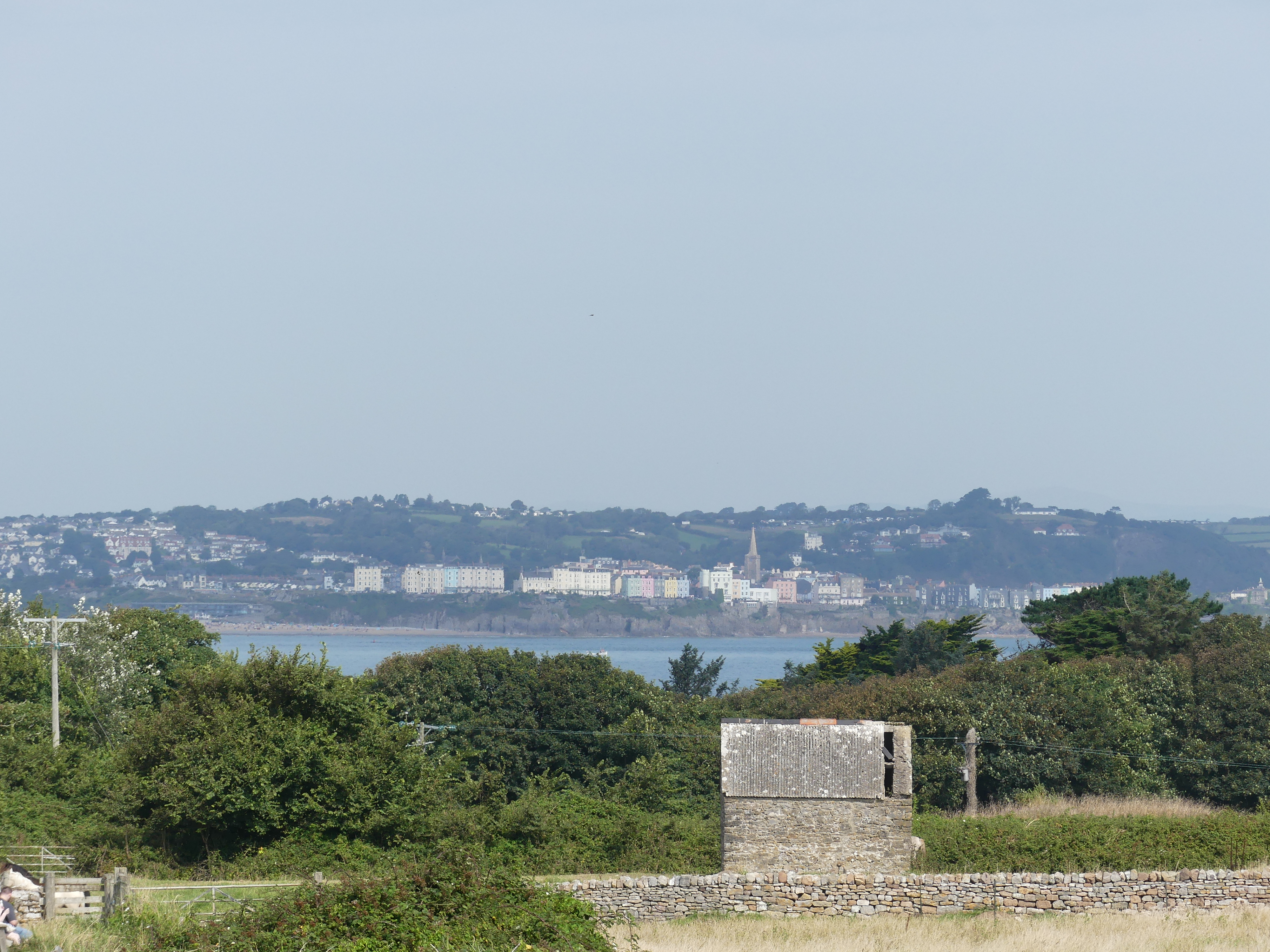
Where we had been in suburbia, Sutton Hoo was in farmland. We turned up at the front gate at 8.00 am and it was closed. We could see others entering by a side or staff entrance so we worked out we would have to come back. What to do – we decided to go back to Woodbridge the closest village and have a look around and we are glad we did. Narrow winding streets as usual but they had given the entrance streets including the High St some thought and made each one way reducing the road blockage by removing tightly parked cars and only permitting parking by permit holders. We had seen advertising that a restored water mill could be visited near the marina on the river. However, we were too early by a month, so we decided on a coffee stop. The photos following commencing with the Red Lion Hotel, followed by the rail station, a local resident going to the railway station (he volunteered for a photo), a sign board about the village history, the Anchor Hotel in bright colours, the marina, and a sign board about the Tide Mill (an early example of green technology).
Whilst enjoying coffee in the sun a local woman sitting at the opposite table had started talking to Kerry telling her about a local tradesman reconstructing an Anglo-Saxon long boat by hand. It was a tossup – the long boat or Sutton Hoo – Sutton Hoo won.

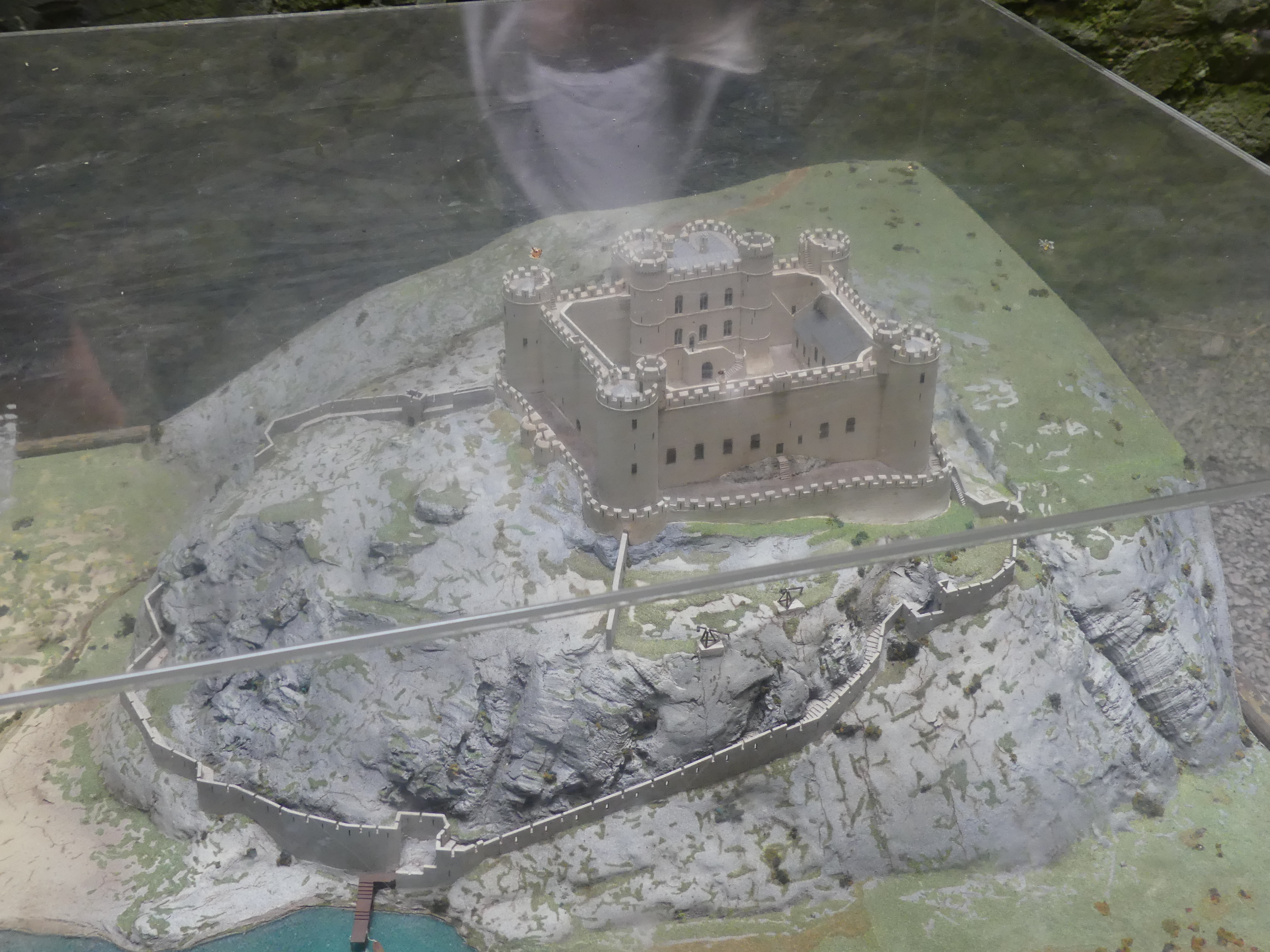
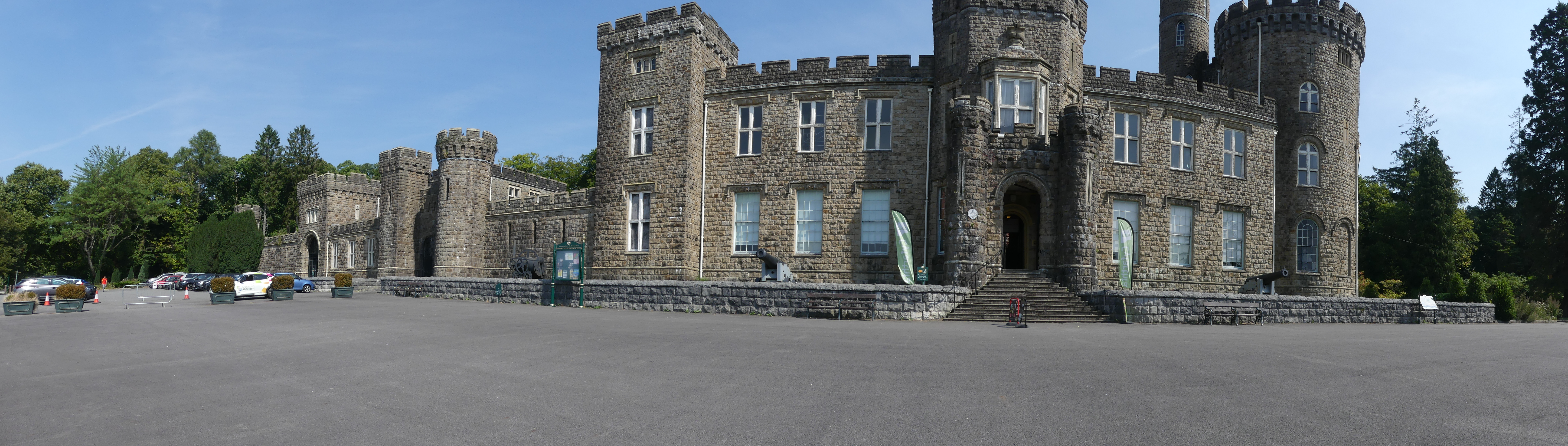
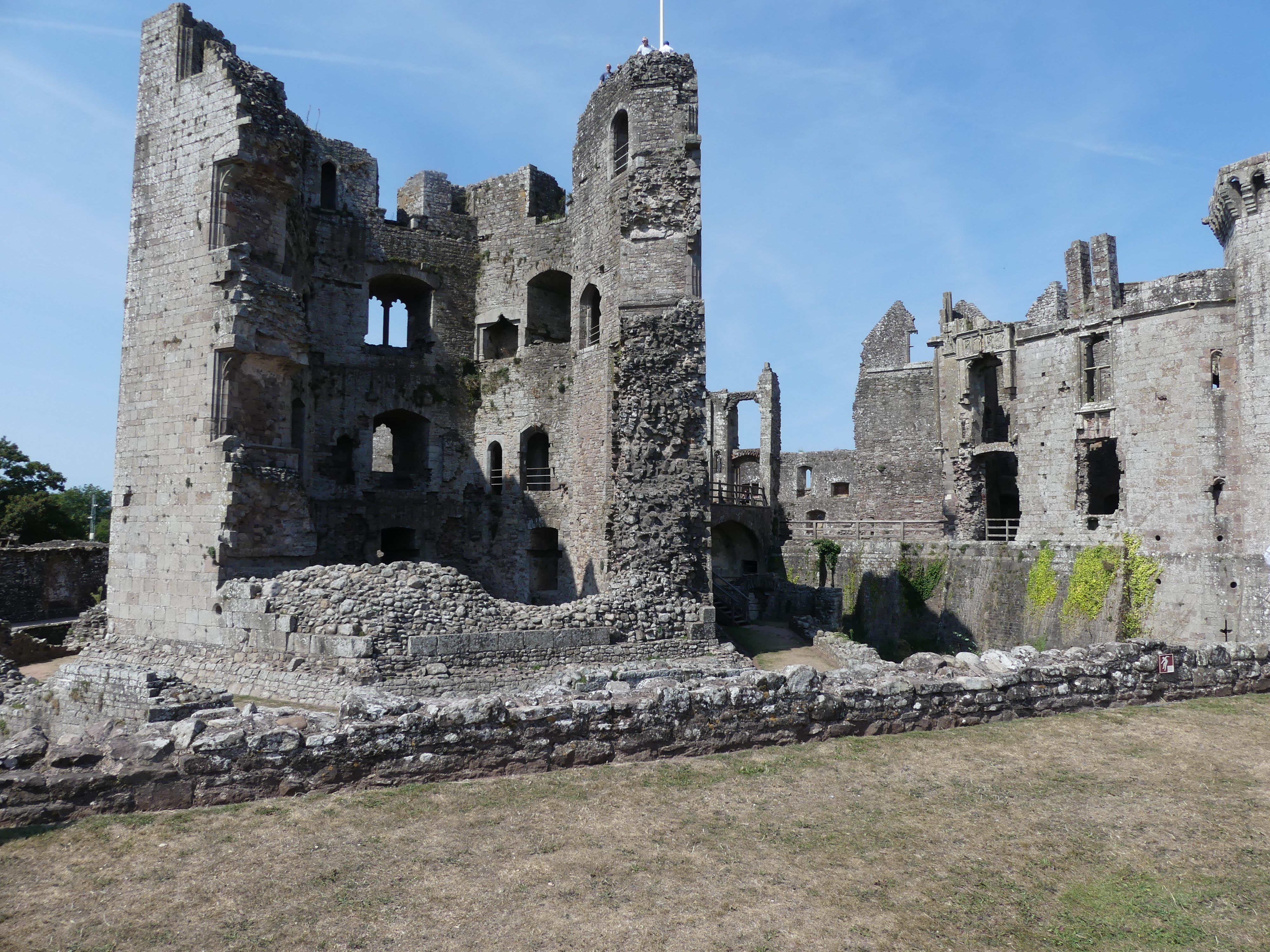
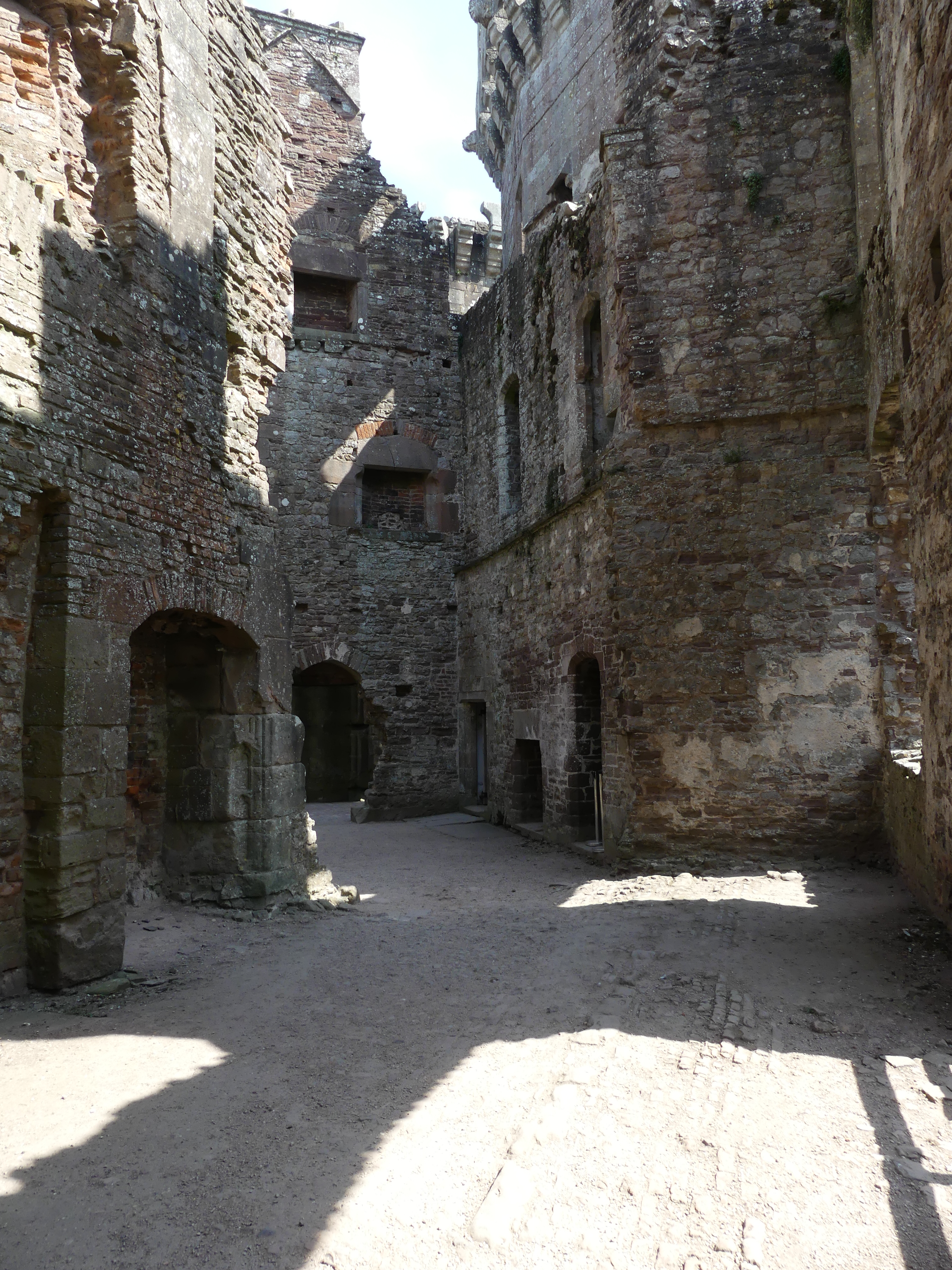
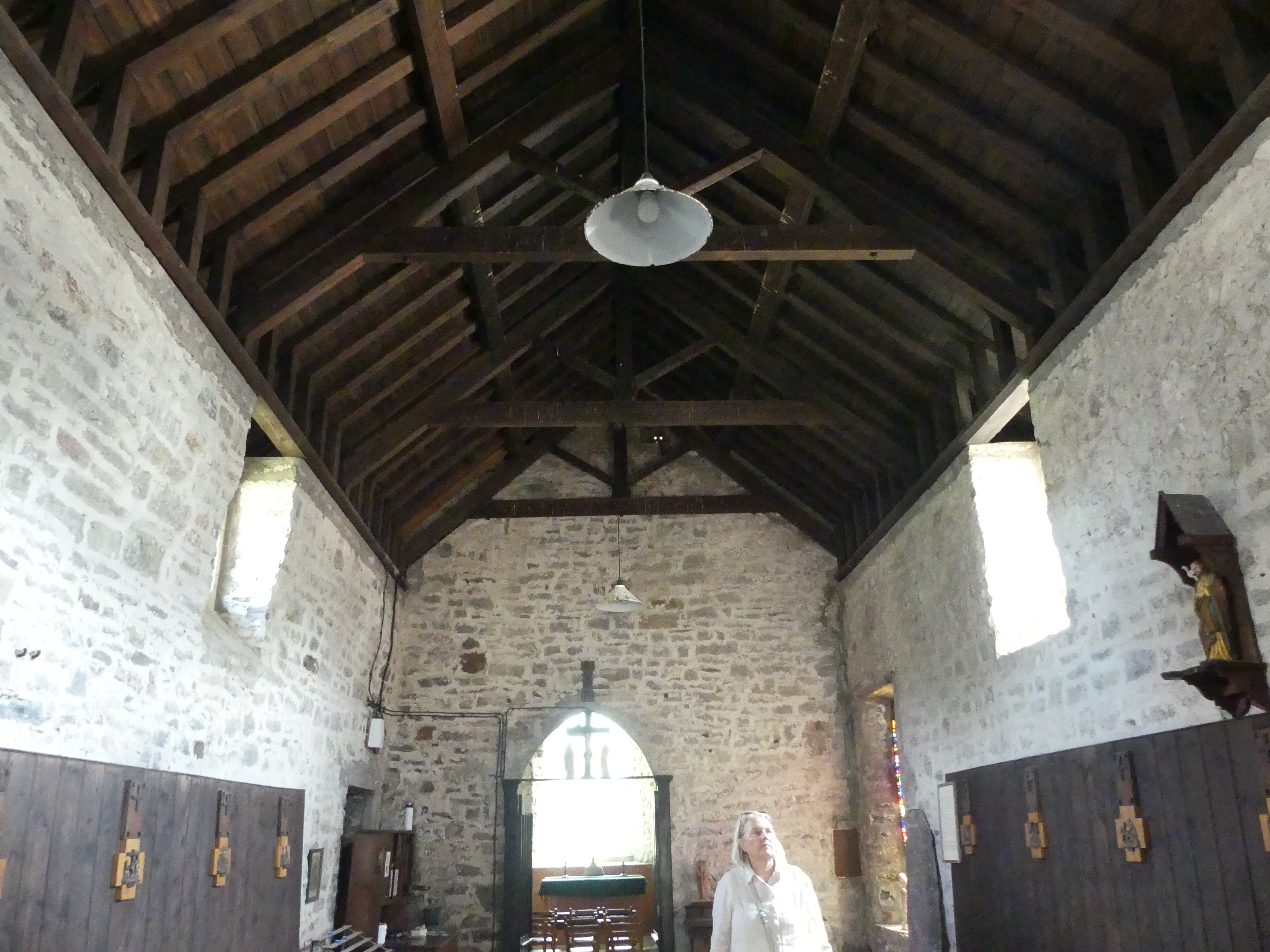
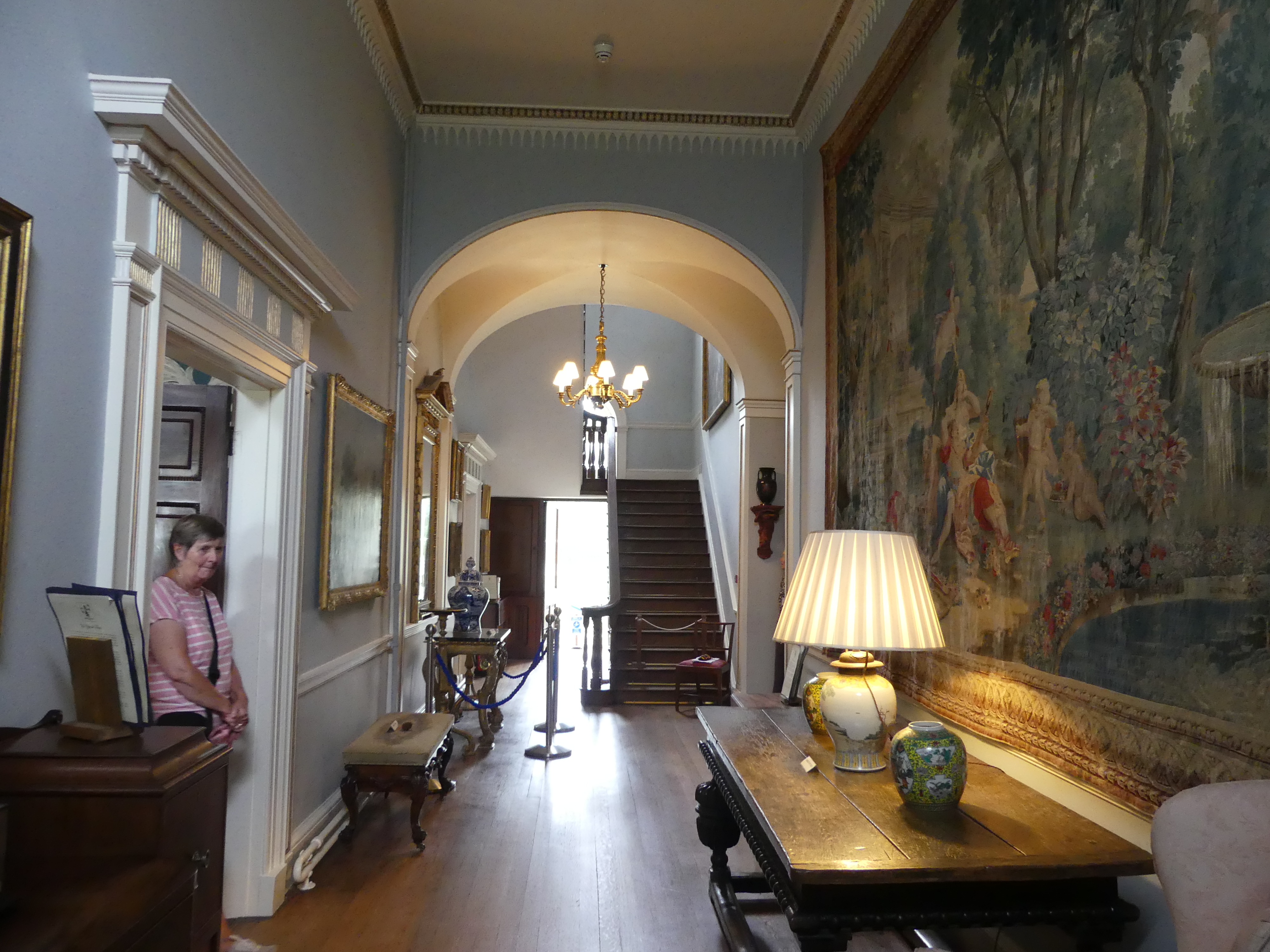
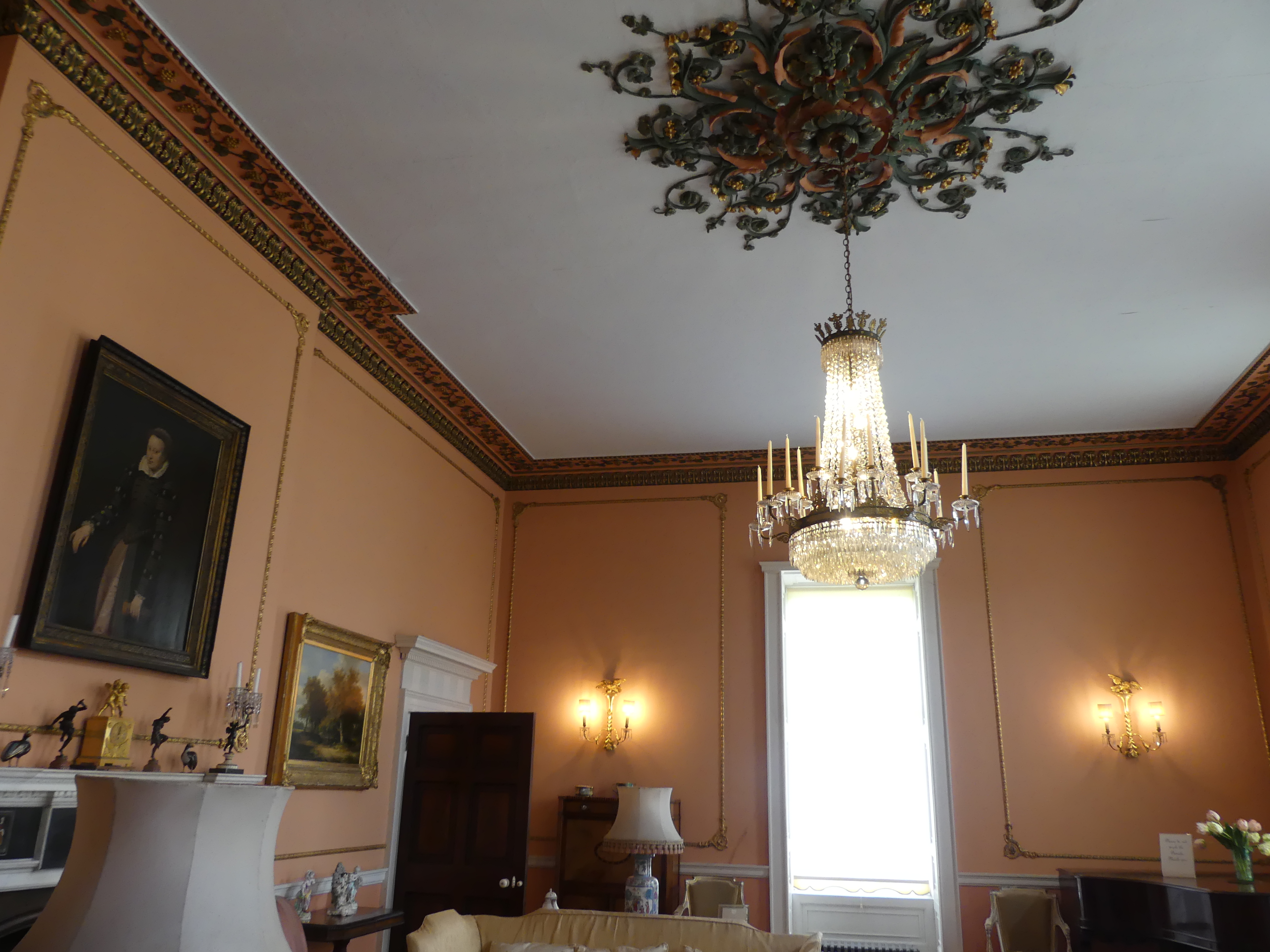
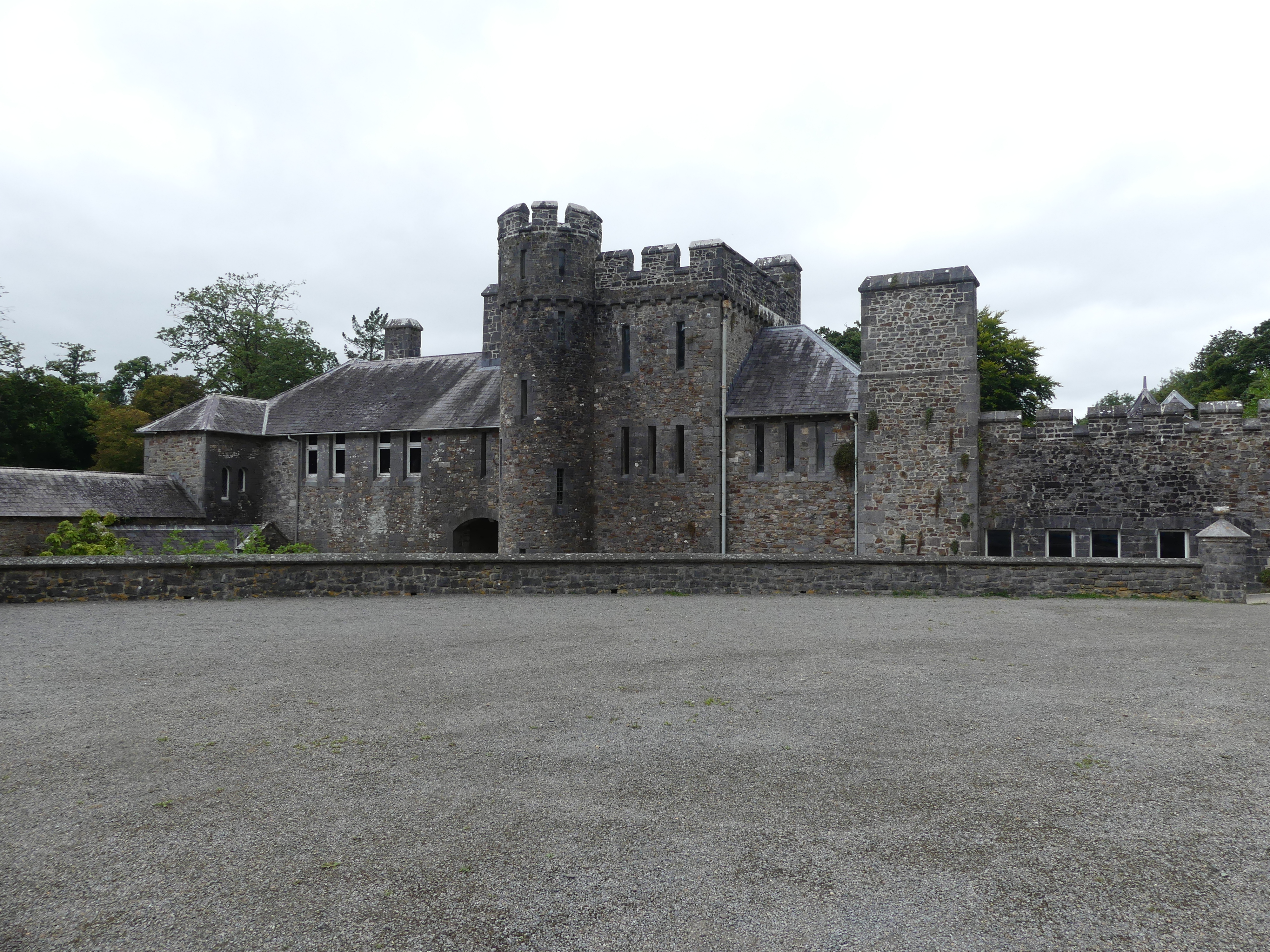
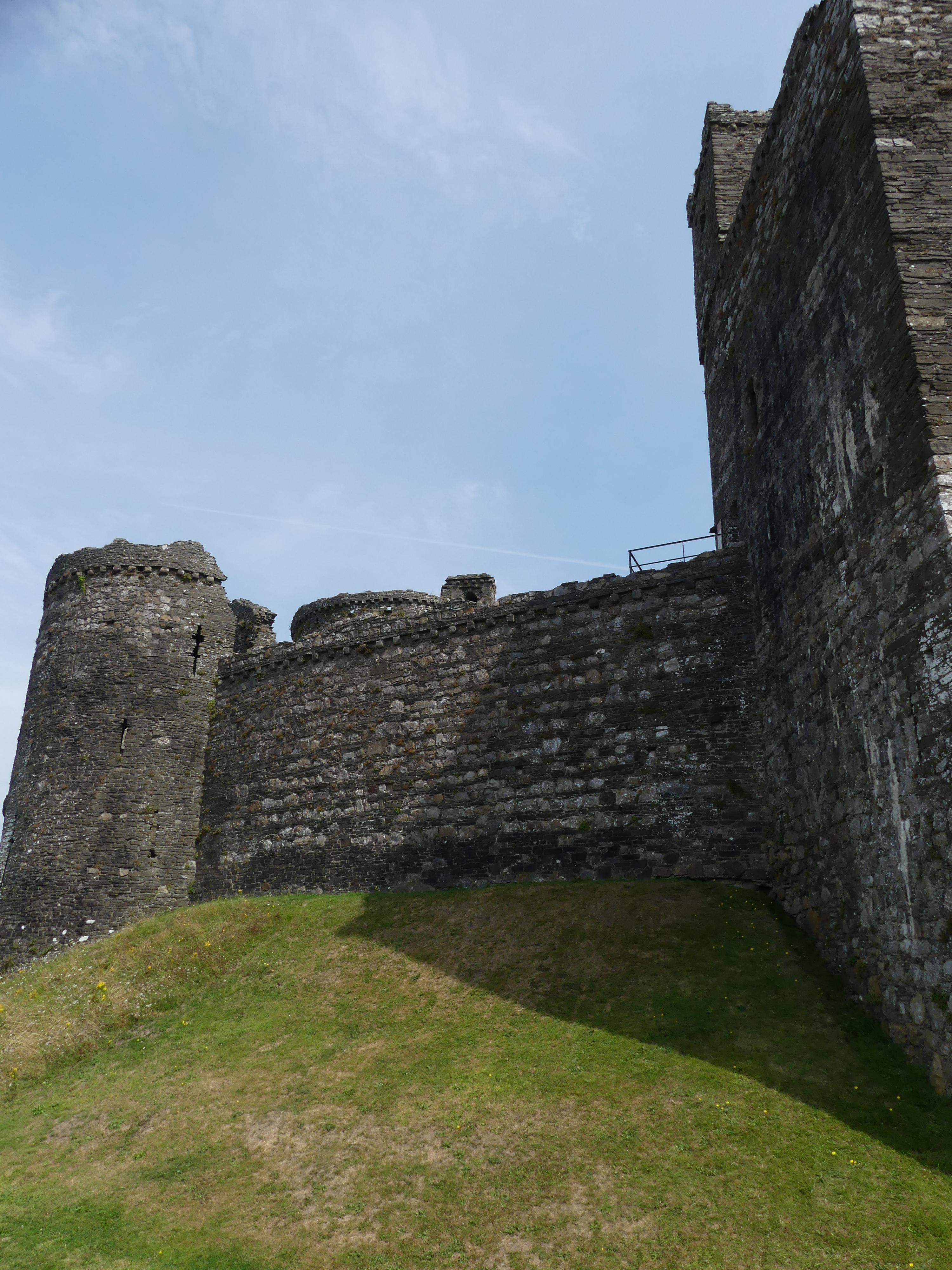
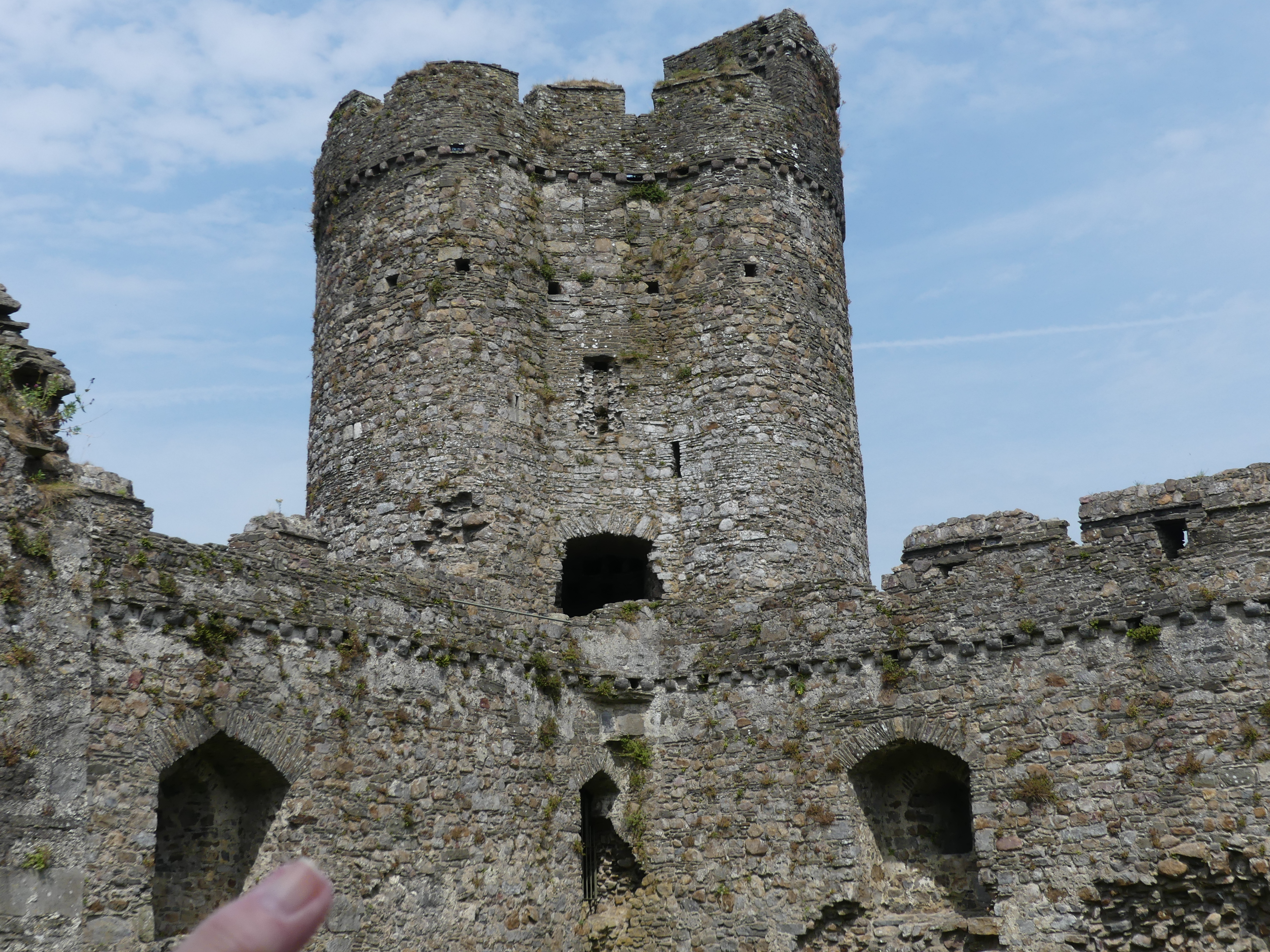
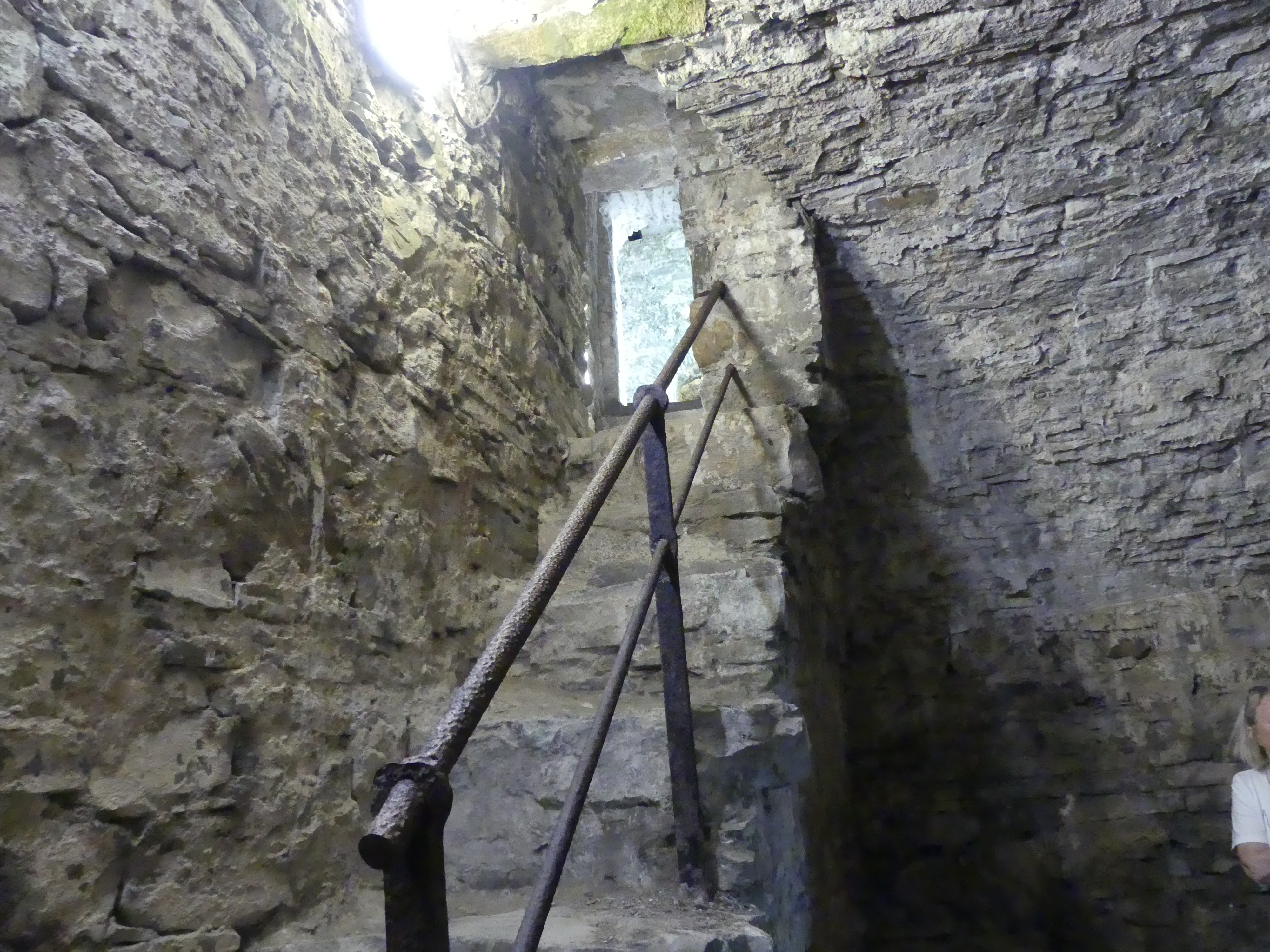
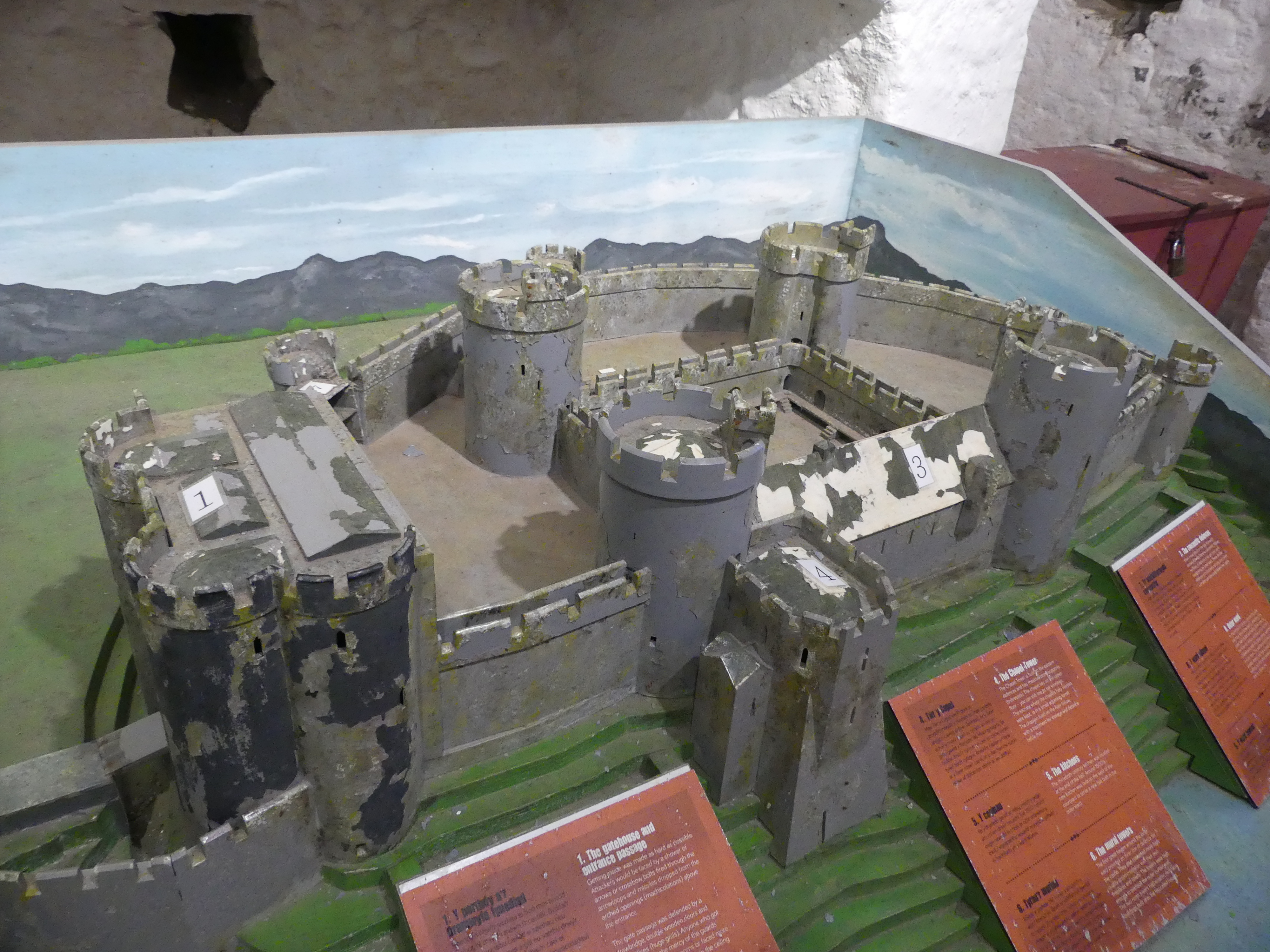
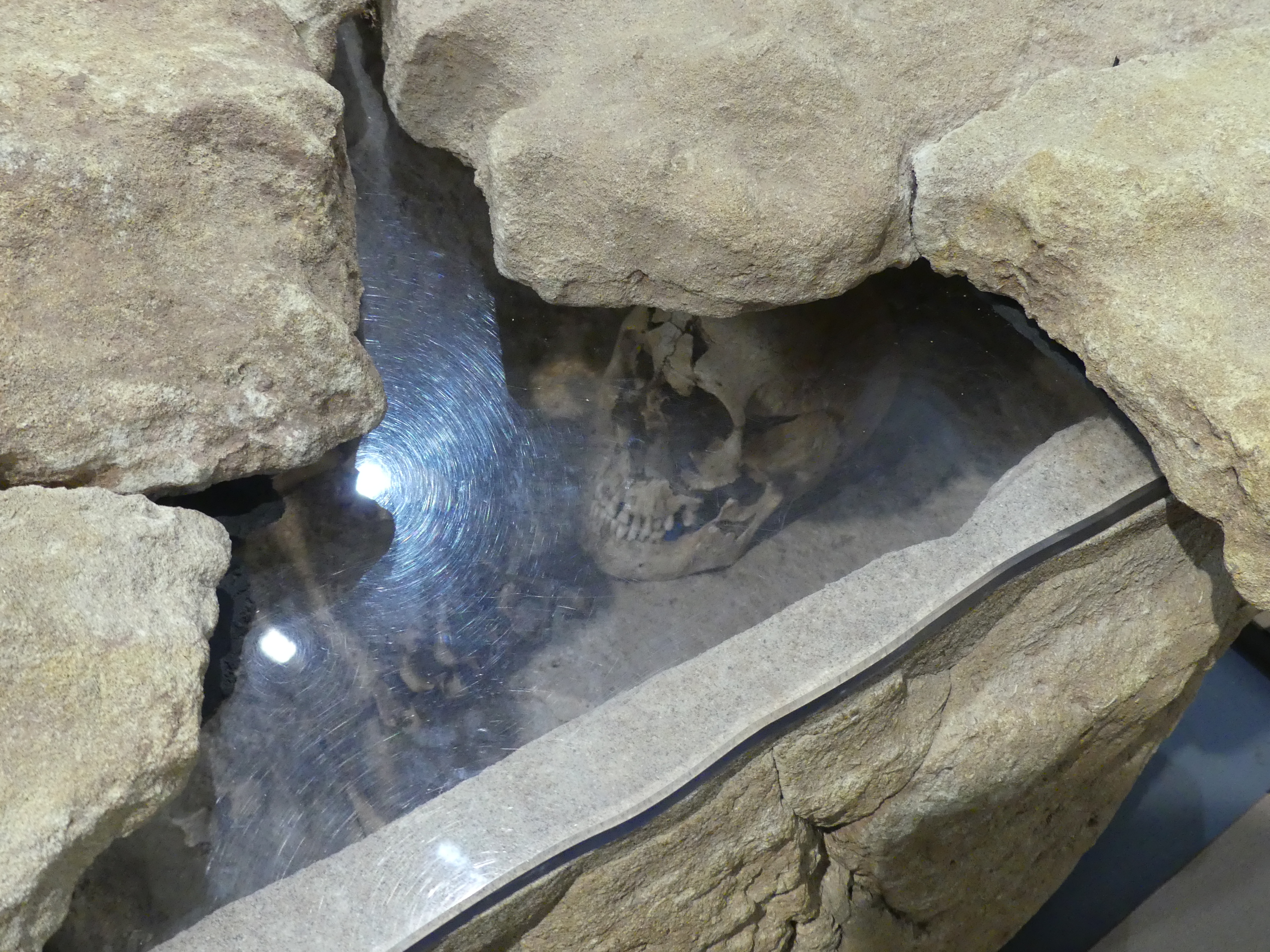
Arriving for the 2nd time a few minutes after 10.00 am we found that there was already a dozen or more families parking up and headed for the entrance. We joined the rush and were greeted by an enlarged recreation of the dead Kings war bonnet now widely recognised as the symbol for Sutton Hoo. The site and displays are controlled by Britain’s National Trust and most of everyone else were Trust members returning to the site. The ticket office is in one of the restored farm buildings and encircling it are the main exhibition hall, the gift shop and the cafeteria. In the fore court is a reconstruction of the Kings war boat based on the impression of the boat left in the mud of the burial mounds (the boat being made of timber it had disintegrated some time ago leaving only its impression). Our time was divided into visiting all exhibits in 2 hours, so we made our way to the burial mounds about 10 minutes’ walk away. Following a dirt path there are a few exhibits to inspect on the way to the burial mounds, one of which was this up turned bow of a boat and “throne” within it. Trekking through the field gave me a clear view of the farmhouse which we would visit before leaving. There is a viewing tower (4 stories high with no lift) overlooking the burial mounds which you can no longer inspect – they are all enclosed away from prying fingers as there are still some to be opened and things to find. Information stations lead the visitor through the exhibits.

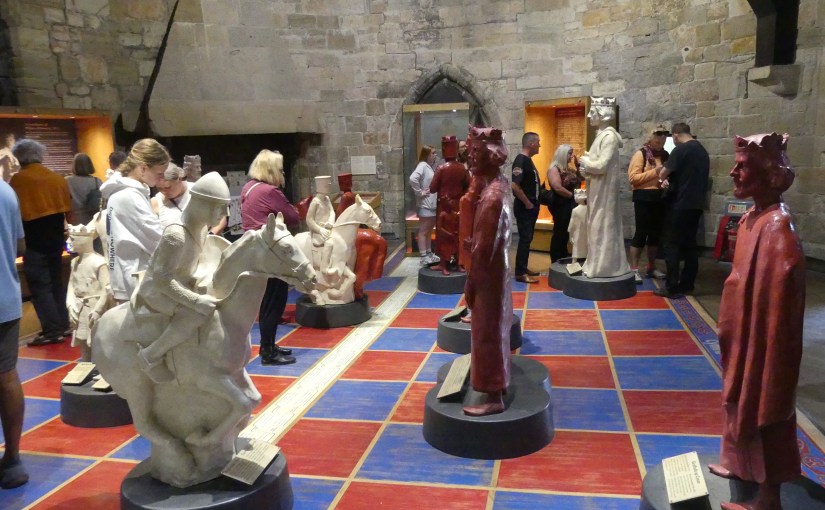
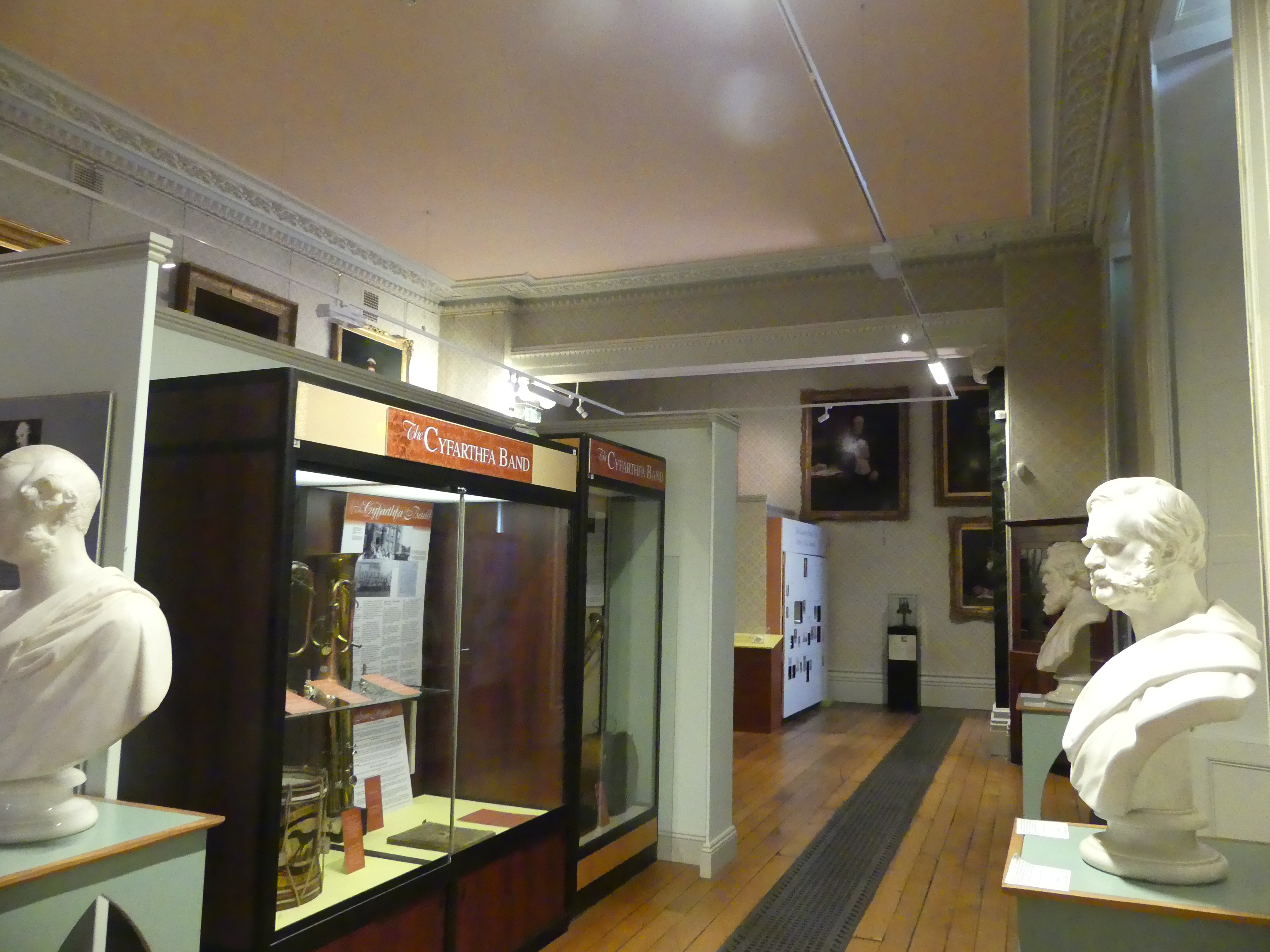
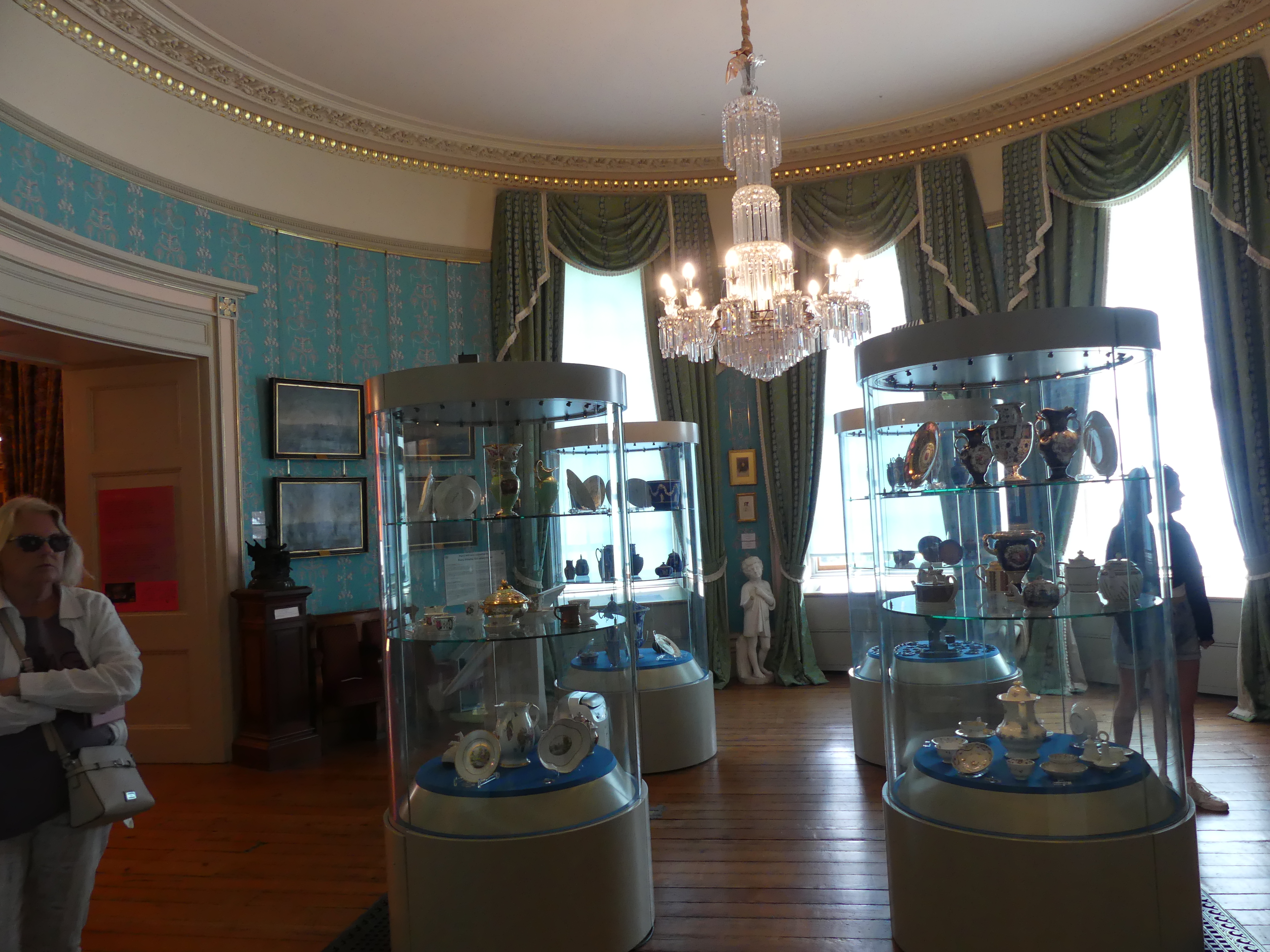
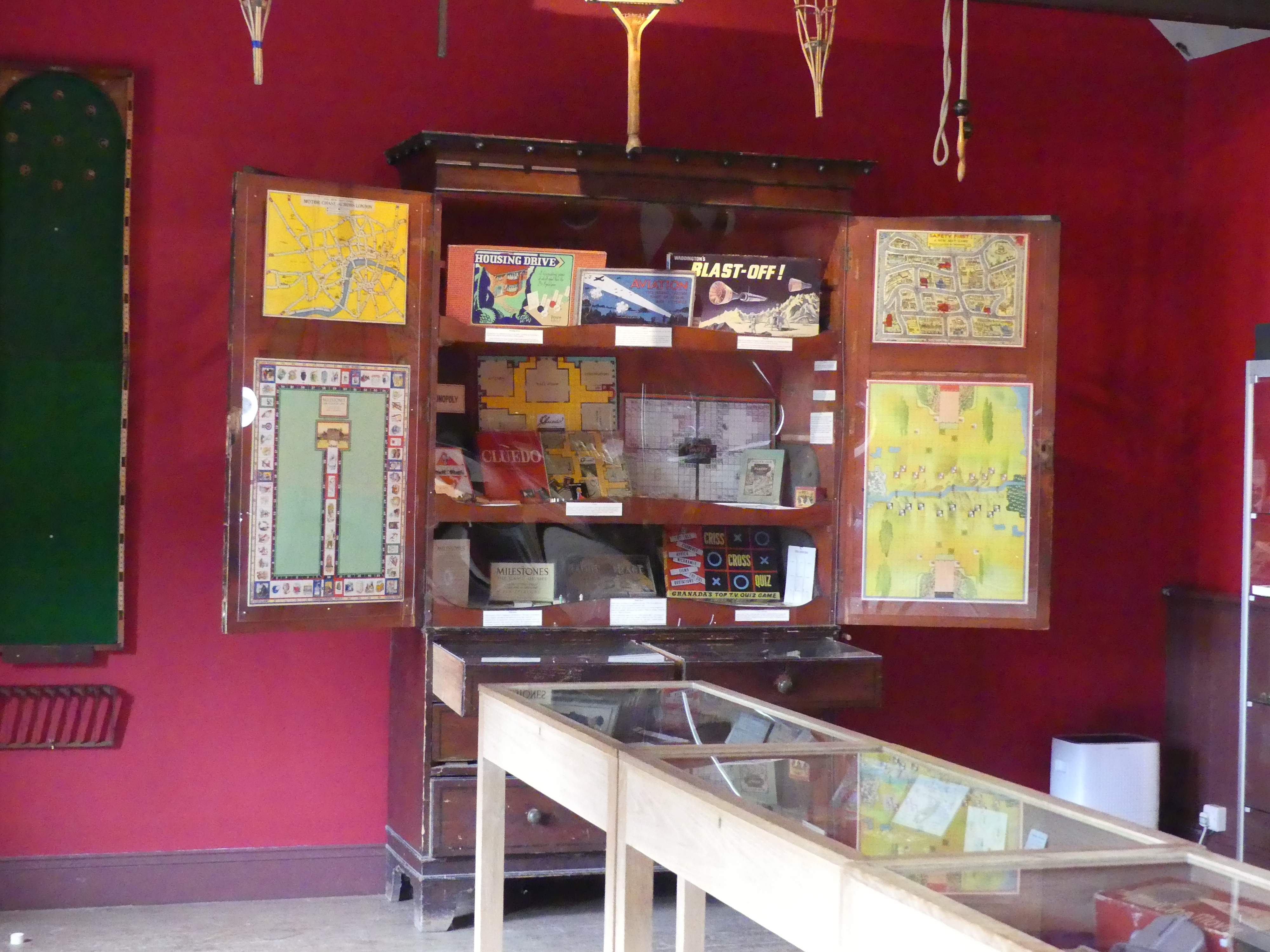
The viewing of the mounds left us about 1 and 1/2 hours to view the exhibition hall and the house. I was feeling some disappointment by this time. I had hoped to have access to the burial chamber. All the mounds are fenced off and the ones that have been opened have been resealed. So, when we got to the exhibition hall the small amount of the contents discovered has been moved to the British Museum and some mint stuff was available on loan. For example, the disintegrating pail shown in the photos below, whilst other imitation relics were on display. My photos follow.

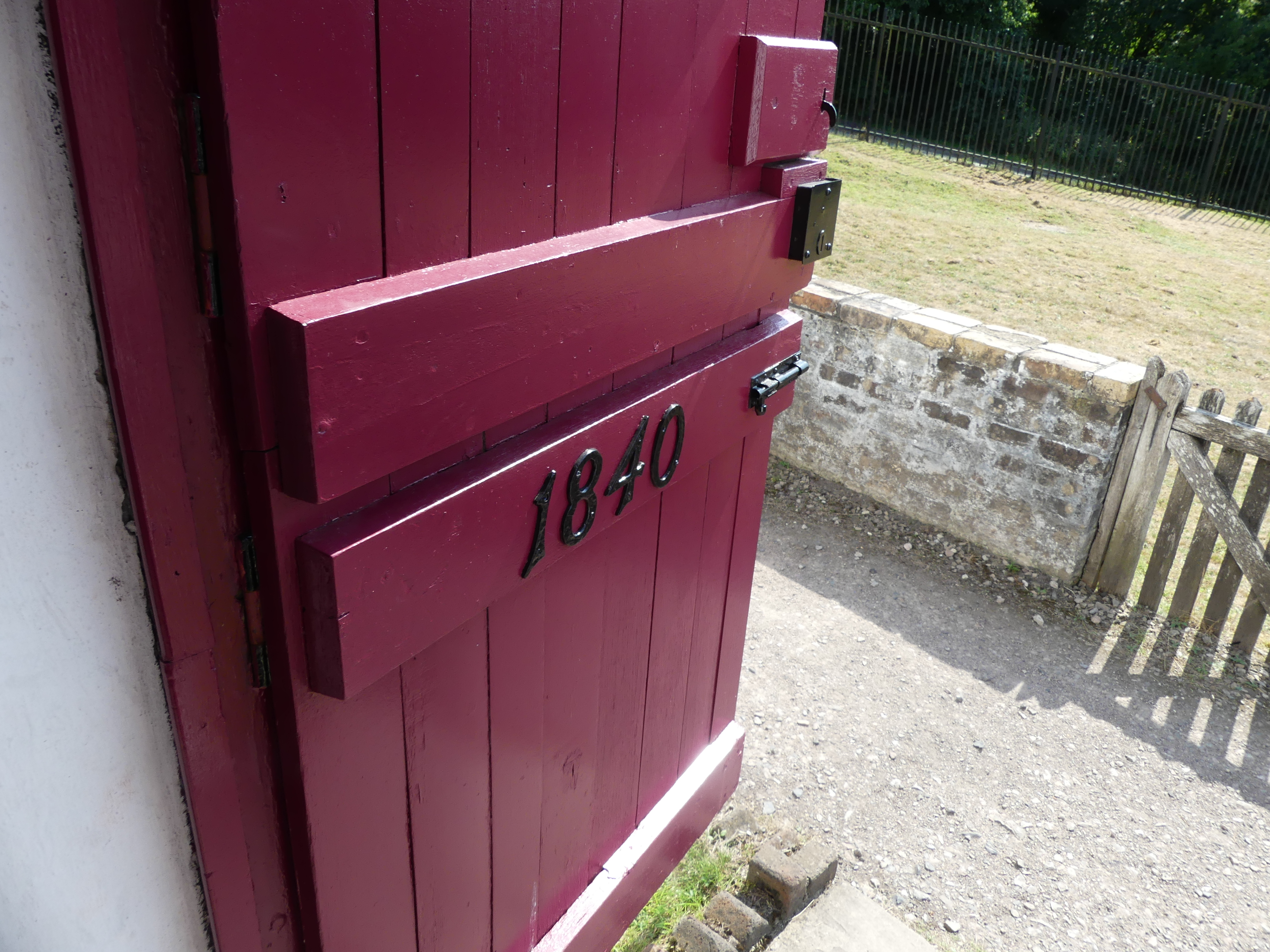
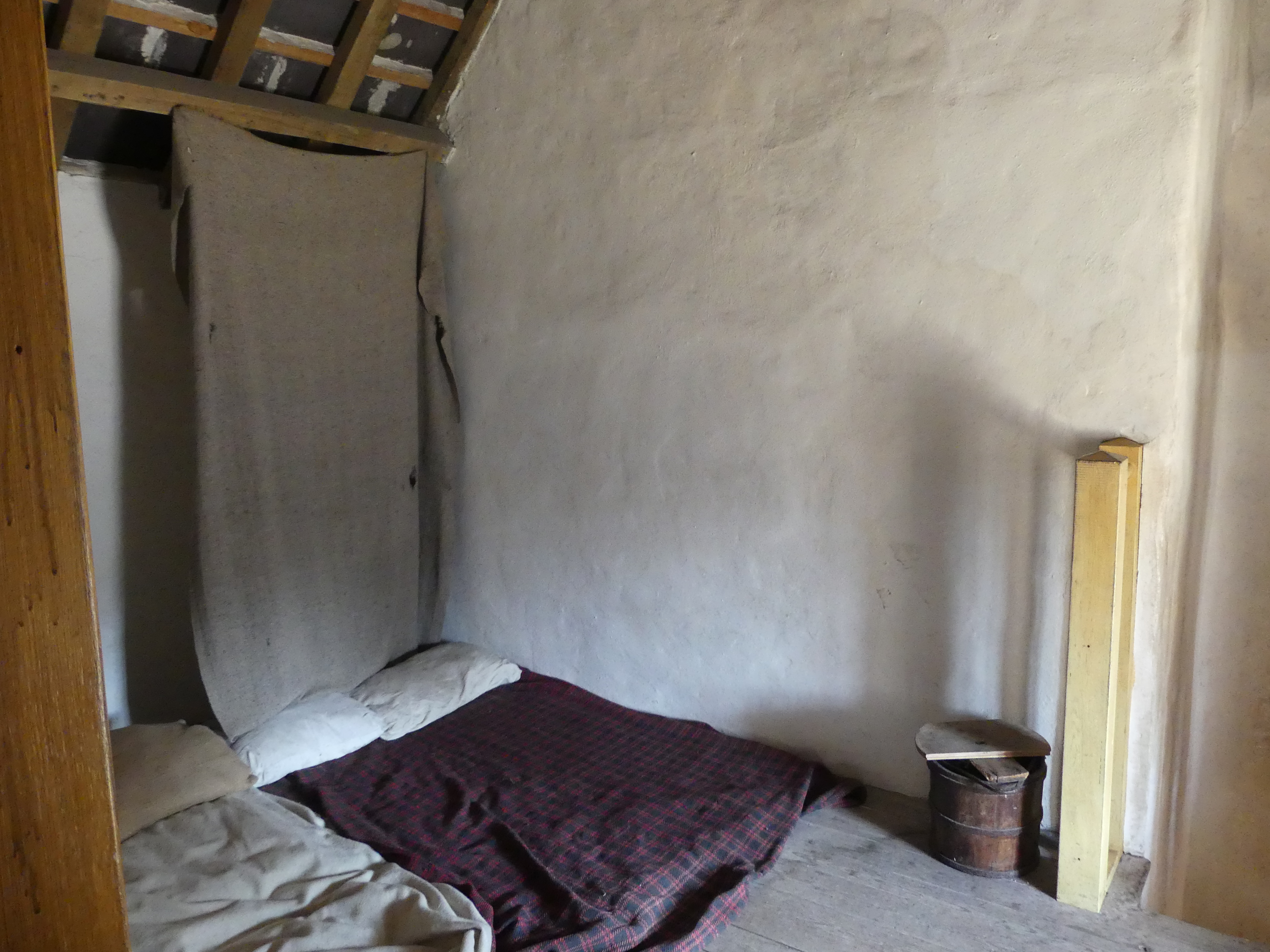
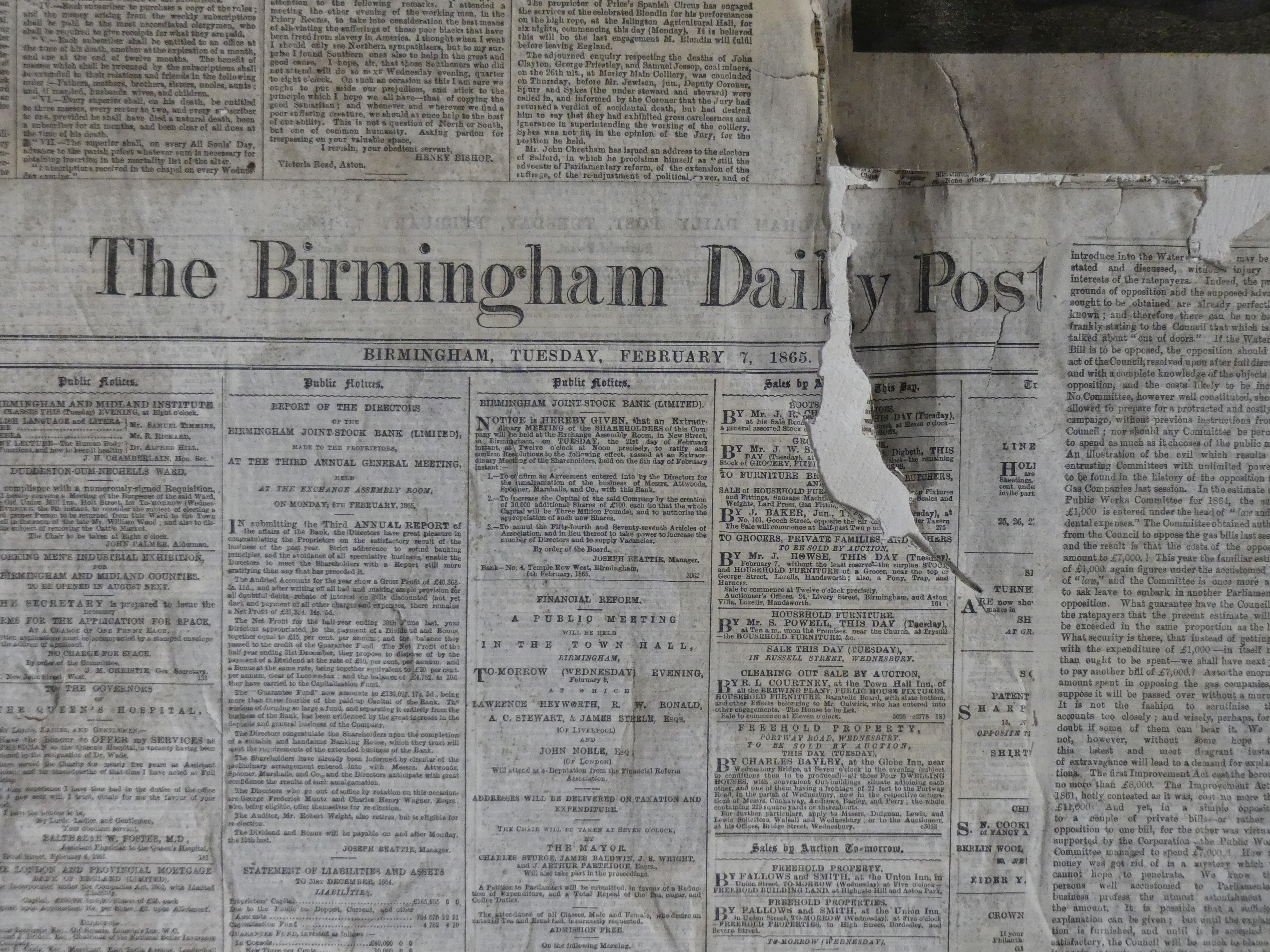
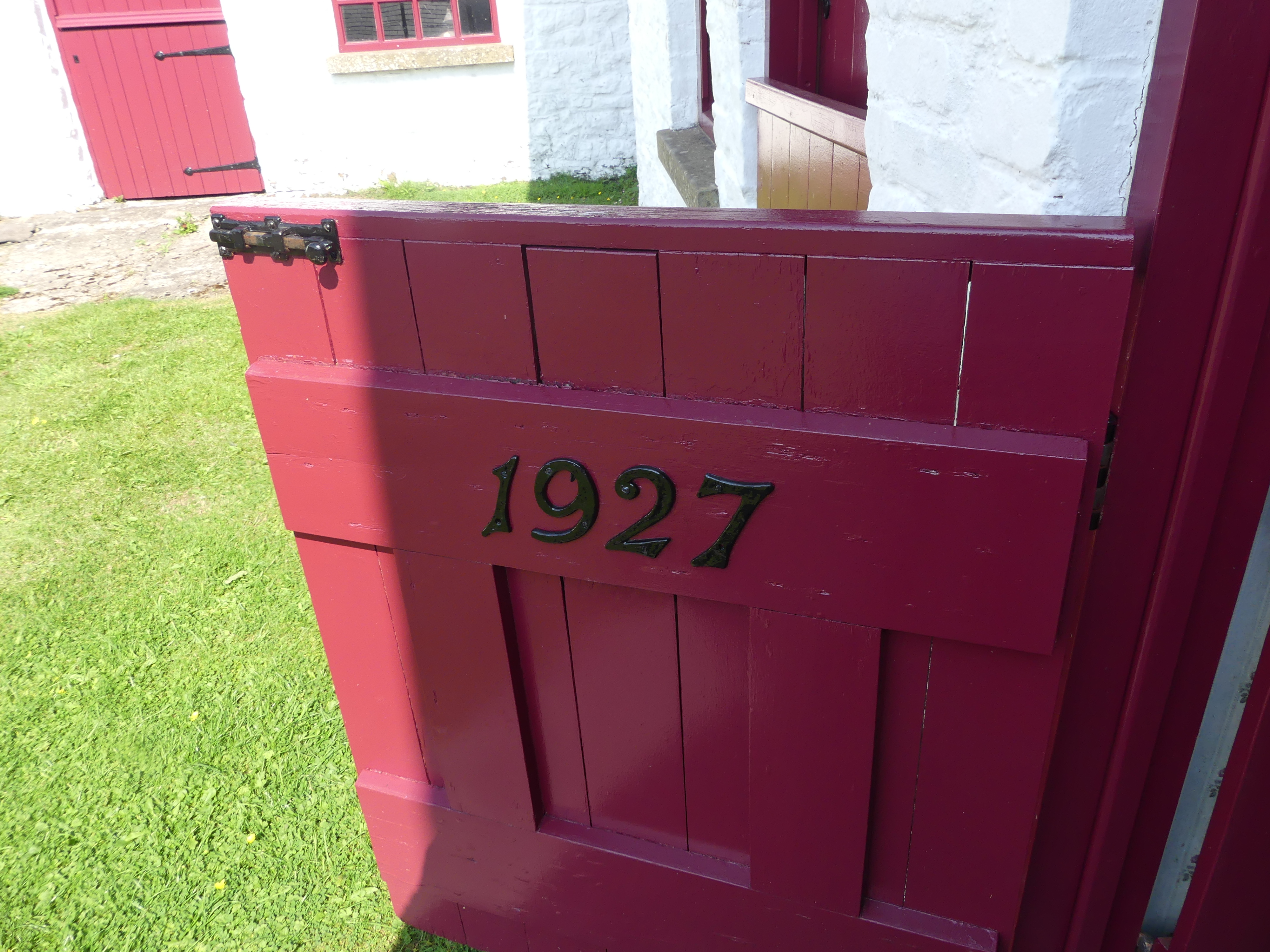
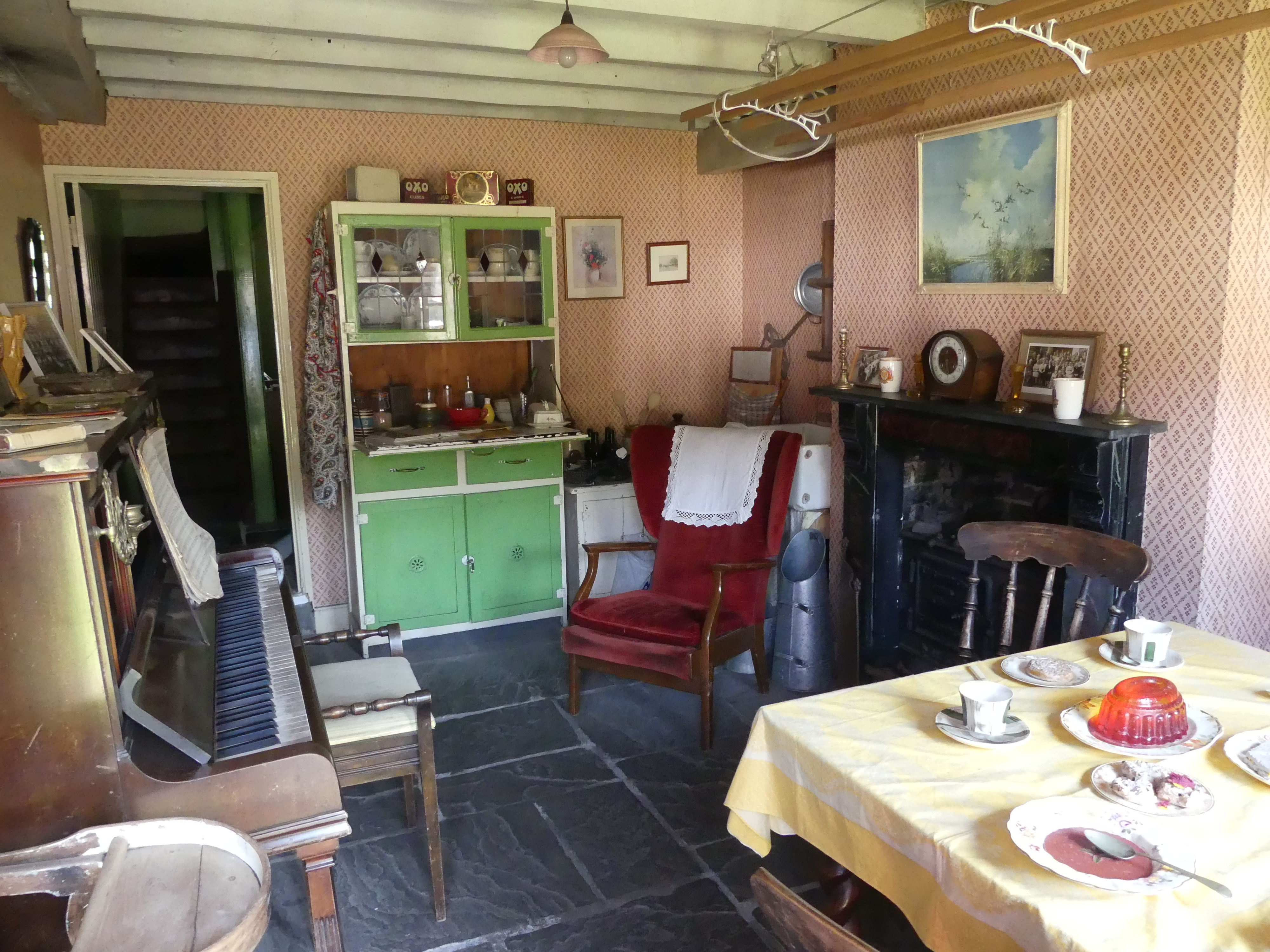
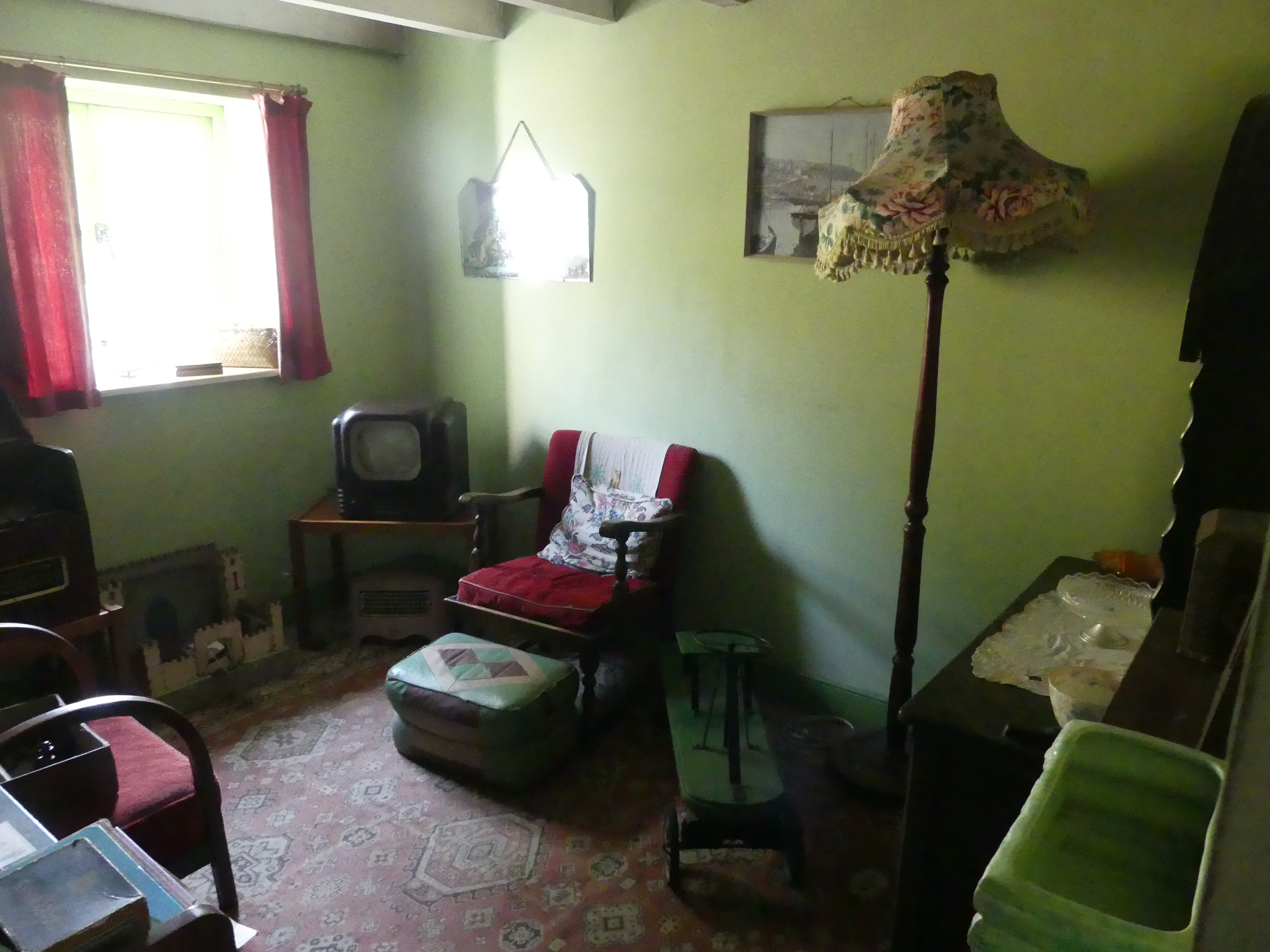
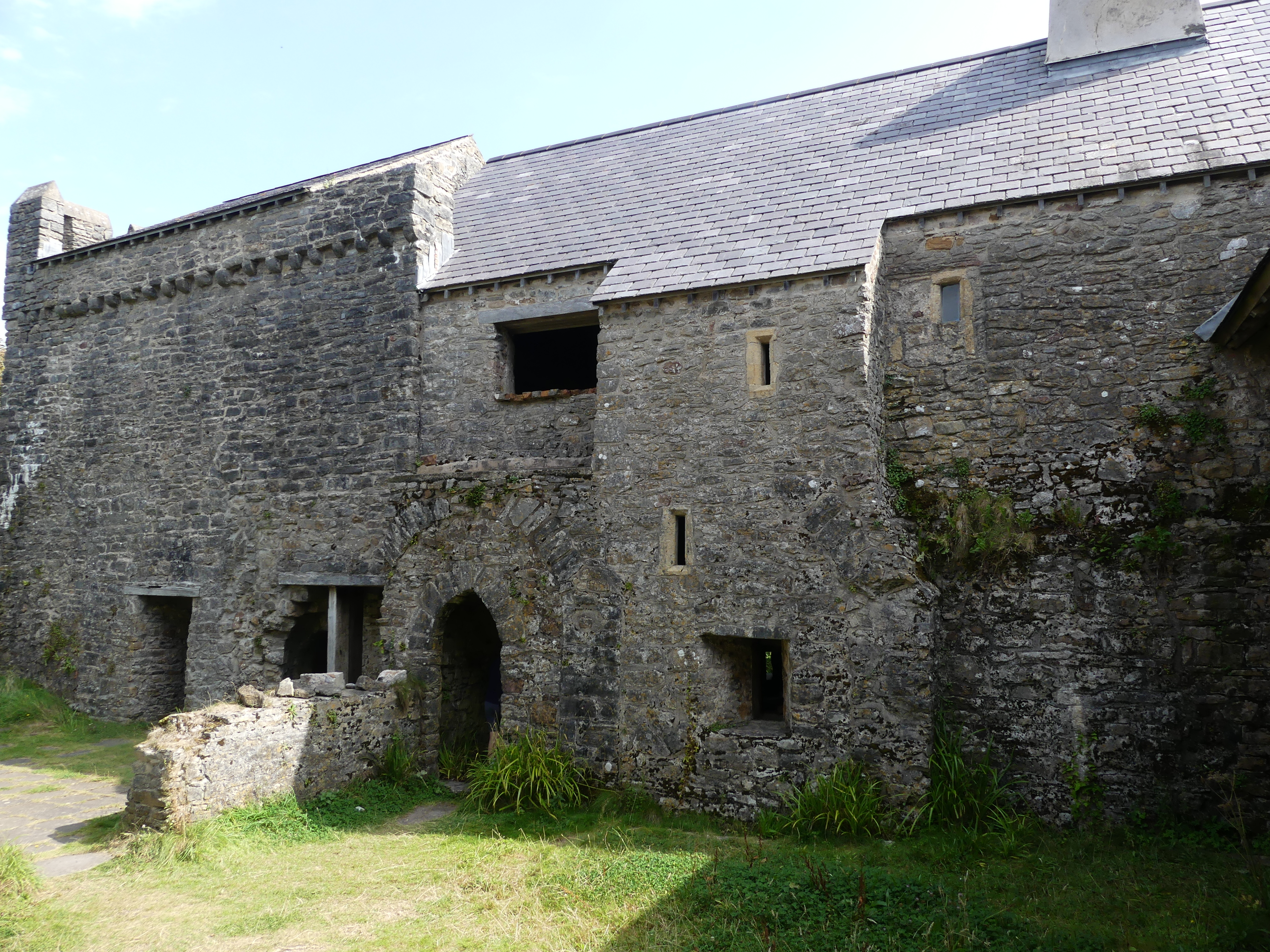
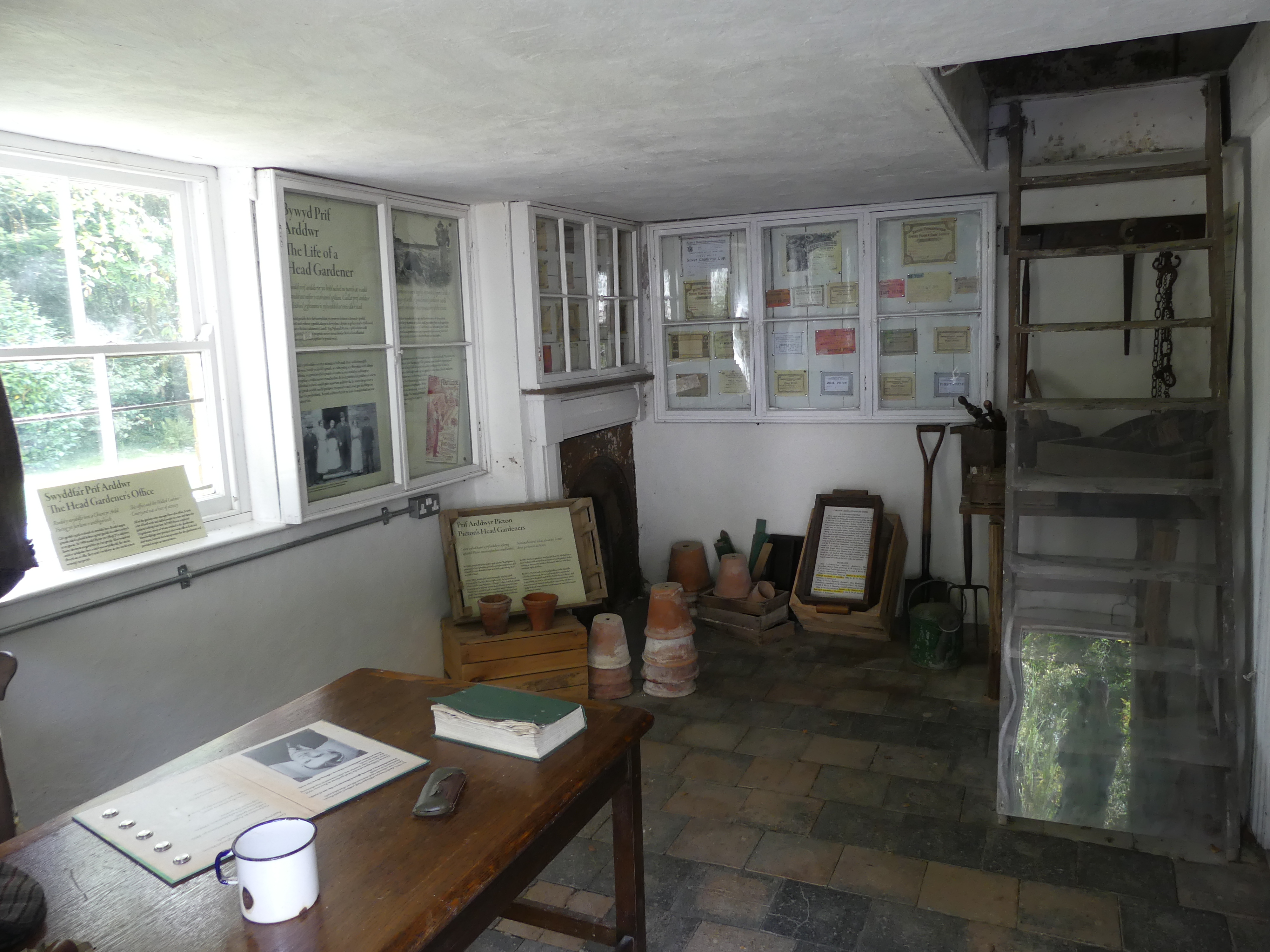
I visited the house owned by Mr & Mrs Pretty, who were the owners when local gardener and amateur archaeologist Basil Brown started unearthing the most important find of 6th to 7th century Anglo-Saxon burial practices. It is filled with artifacts of the time of excavation, newspaper articles photographs and include working rooms for the Trust workers and archaeologists working on the site. A movie of the discovery and excavation has been made, and I believe it is still available, and it is a most interesting story.

Our time was up as we must be in Cardiff tonight. Keep an eye open for my further blogs when THE RETIREES GO AROUND THE WORLD – SUTTON HOO UK to CARDIFF WALES UK.

THE RETIREES GO AROUND THE WORLD – SAN FRANCISCO USA

We arrived in San Francisco on time and ready to start our holiday. Our son Ben arrived at the airport as planned and Angus is with him to greet us. It is great to see both and during the ride to their home we hear all the gossip about Felix George our 1-month-old grandson number 9 amongst grandchildren. Angus is a little uncertain as we drive to their home. We are having a brief stay so that we don’t disturb their routine greatly. Part of the plan is to stay at the motel shown below for a couple of days and catch up with them each day. Peet’s coffee is nearby and we make use of that along with Taco Bell which we gave a big swerve. Felix at 1 month.

Jee greets us with Felix in her arms, and it is a great start to our holiday. Angus introduces Felix to us and I share some toast with Angus – peanut paste and honey I recall. Kerry gets as many cuddles as she can with Felix.

The few days fly quickly, lunch with Dad (Ben) at his new work (well a café near work really) and playing with Angus who loves building forts and racing his cars through the fort and knocking it all down, but we now have a game of “lets clean up”. Next is a jigsaw puzzle then cleaning up out in the yard. Kerry is cleaning the leaves off the back deck, and I am helping but Gus wants to help so he gets the broom, and we all play let’s clean up.

And so it goes, nothing special just being together.

We visited the local “Farmers Market”. Angus was somewhat disturbed by the spider on the wall of this house. Whilst there we notice there is a lot of street art in downtown Alameda and we captured a few to show you. Kerry and I took a walk through Alameda and stumbled across a museum of pinball machines from their inception to today. Every kind of machine I have seen and many I had never seen. We took photos to record our visit and spoke with the owner who serves behind the counter and gave us the run down on how it all started with the purchase of some of the earliest machines.

All in all, a couple of special days. On our last day Ben picked us up from the Motel to visit Jee with Gus and Felix for final farewells and then dropped us at the airport with plenty of time to catch our flight to London via Chicago, but it would prove not a smooth transition. Our flight departure is delayed then our flight arrival is also delayed by a plane broken down in the air gate meant for us to dock. Read about it all in my next blog “THE RETIREES GO AROUND THE WORLD – SAN FRANCISCO USA to LONDON HEATHROW UK”

“THE RETIREES GO AROUND THE WORLD – “TOKYO TO KAGOSHIMA, KOCHI, PORT KOBE & HOME”

Day 11 Kagoshima

Located at the southwestern tip of the island of Kyūshū, Kagoshima is the largest city in the Kagoshima prefecture by some margin. It has been nicknamed the “Naples of the Eastern world” for its bay location (Aira Caldera), hot climate, and emblematic stratovolcano, Sakurajima. Kagoshima is constantly bombarded by ash from the eruptions of Sakurajima and is at risk of a major volcanic disaster. Sakurajima (‘Cherry Blossom Island’) is an active stratovolcano. A stratovolcano is a typically conical volcano built up by many alternating layers (strata) of hardened lava and tephra. The lava flows of the 1914 eruption connected it with the Ōsumi Peninsula. It is the most active volcano in Japan. Sakurajima is serviced by the Sakurajima Ferry which runs 24 hours per day 7 days per week.

There was not a lot about this port that thrilled us, but a volcano was another matter. We docked at a purpose-built cruise terminal, but as you can see from my photographs it was overcast. We did not book any excursions again deciding to explore for ourselves. So, we caught the shuttle to the city and made our way to the Sakurajima Ferry Terminal. As we did so we came upon a circus – well more of a small town in caravans and containers.

The ferry terminal was easily found and operated on the “you are going to have to return” basis so you only paid for a one-way ticket. As you can see from my photos below it is a large car ferry with 3 stories of passenger seating – Sakurajima is a tourist spot obviously. The ferry terminal at the other end was quite impressive and clearly well used. You can make out the volcano in the background and the steam venting from it.

Here is a gate not to the shops but to the Tsukiyomi Shrine. So where are the shops? The settlement according to our map was 4 streets wide and 5 streets deep and the fabled pottery shops were not to be found. Well, it is still winter so no tourist shops to be seen. We followed Yogan Nagisa trail, a concrete paved trail following the coastline of the island.

Look at the beach in the photos below – the island is so obviously volcanic. We stumbled across a local secret by following the trail – hot spas for tired feet. Kerry very quickly had her shoes off and stuck them into very warm volcanic water and as you will see from the pictures the volcano is still active, has 3 peaks and a major eruption is predicted in the next 30 years – watch the headlines. Apart from enjoying the sunshine and the bushy surroundings there was not a lot to do.

We found our way to the High School, and you will see from my photo the volcano dominates the island. All along the trail we were followed by the Black Kites we first saw in Port Keelung. I stopped to get a photo of the volcano. It was still shrouded in cloud, but we could see one of the peaks/calderas of the volcano.

We caught the ferry back to Kagoshima (the ferries are about 10 to 15 minutes apart). Most of the ports had a welcoming and farewelling ceremony and even though Kagoshima was not the biggest and best they were the most enthusiastic. One group followed us to the end of the dock.

Day 12 Kochi – Glendon’s birthday

My birthday started with this surprise awaiting me on my return from breakfast.

I was not feeling on top of the world but thought I was well enough to look around the dock. We could see some industrial buildings on a high plateau of earth likely made from reclaimed material from the harbour. So, we headed for the plateau via over 100 stairs from the road below the plateau and found another mini brewery – South Horizon Brewery. It was not open yet. They had two small delivery vans out front and in the loading dock which caught my eye and whilst I checked them out Kerry had attracted some interest from staff in the brewery, and they opened for the day. Coffee and cake for the first time on an excursion and we were joined by two other Aussies who sat with us (I think he was Kevin, but I cannot think of her name). They had done a lot of traveling also and we swapped tales for an hour or more all the time in the shadow of the ship so to speak. They had got out of bed a bit earlier than us and had walked around the plateau, so they headed for the ship whilst we continued our walk. Unfortunately, my unsettled stomach brought me back to the Brewery urgently and that’s when Kerry bought the beer so that I could remember the name. We then returned to the ship, and I rested for the remainder of the day. My chemo treatment strikes back in strange ways.

That night we dined with Barry and Sandi in the fine dining restaurant taking coffee on deck 10. Not as good as a roof top in Rome but pretty damn good just the same. We hatched a plan for tomorrow with the Rowlands to see Kobe.

Day 13 Port Kobe

Feeling much better, the 4 of us caught a cab to go to Kobe’s Rokko Cable Line a funicular railway that climbs Mount Rokko. It offers stunning views of the city and surrounding areas. Our Japanese is lousy, but I don’t know how to confuse funicular with herb garden. Our lack of Japanese worked in our favour, and we found ourselves at the first station of the Kobe Nunobiki Ropeway not the Rokko Cable Line. This elegant “walk-in-the-sky” ropeway offers a comfortable 10 – minute ride with panoramic views of all of the colours of the seasons while looking down upon Kobe as well as sweeping views of Kyoto and Osaka. The ride up on the ropeway took us through station 2 onto station 3 and the top of the gardens and it was beautiful and panoramic despite the overcast weather.

Upon arriving at the last station, I was surprised to see clearly Austrian / Swiss architecture. The flowers were amazing, and this led us to make our way through the gardens to station 2 but on the way, we spotted the flowerpot men, gothic garden chairs, the glasshouse and its café and verandah deck where Barry and Sandi discovered the foot baths –

ooh they liked it. And then just as we went up we had to come down.

Here are some more random photos – the Japanese version of an iced coffee, me at rest and us in the verandah cafe.

At station 2 we decided to take the ropeway to the first station down to the streets of Kobe. Oh O, we had a passenger with us, but he had enough and crawled away.

Kobe has an odd passion about sewerage covers throughout the city with different designs on each lid, so I photographed some as we made our way back to the ship. We also walked past the former US Embassy building.

That night we decided to visit the town at night starting with Chinatown (very odd in Japan) which was just across the road where the ship’s shuttle dropped us. We dined in a Chinese looking restaurant drinking Japanese beer, or was it?

Back to the ship and the next day was at sea as we prepared to disembark at the Tokyo International Cruise Terminal. I packed my camera in my suitcase, and we made our way to Osaka and then home to Brisbane – Tokyo Haneda Airport Terminal 1, Travel to Osaka

(Japan Airlines) Osaka Terminal 1 Travel to Brisbane (Jetstar).

A great welcome back to travel and cruising – Kerry has already found our next holiday and you can expect some further blogs from me. Until next time – May you have fair winds and following seas.

“THE RETIREES GO AROUND THE WORLD – “TOKYO TO ISHIGAKI JAPAN, HUALIEN TAIWAN, PORT KEELUNG & TAIPEI TAWAIN, & PORT NAGASAKI JAPAN”

Day 6 Ishigaki, Ishigaki Island

We had returned to the MS Noordam and set sail as the sun struggled with the rain. We continued in our south westerly course to Ishigaki Island. Located in Okinawa Prefecture, Ishigaki Island is the biggest and busiest of the Yaeyama Islands, located 400 kilometres southwest of Okinawa’s main island. The advertising for Ishigaki describes its greenery, city comforts, cozy stays, and its very own airport. We had not booked any excursions, but we did get off the ship and took the shuttle bus into the centre of town and strolled around. I have posted below my photos which include the peculiar bus stops in the main street, and the typical café in most towns (a selection of drinks from a drinks machine) whilst the purpose-built establishment is locked up behind. There was not a lot in the town to interest us until we got to a park (with the café) which had not rated a mention on the ship’s literature. Prominently positioned on the corner of the park was a shrine housing the World Peace Bell and beside it the Bell of Smile. I have included the inscription for the Bell of Smile. There is also a sculptured Dove of Peace, and a piece of a bullet riddled wall but without an inscription in English I am uncertain as to its origin or meaning. I am guessing it is a piece of the destroyed Okinawa which would account for the bloody big bullets someone was shooting at the wall.

I found it difficult to find interest in shopping and there seemed little else to do unless you wanted to get in a car/taxi and drive around to see beaches or astronomical observatories. So, after an hour or more we were back to the bus and returning to the air-conditioned ship with all its amenities. At 5.00 pm the gang plank was pulled up, and we were on our way to Hualien Taiwan.

Day 7 Hualien Taiwan

8.00 am the next day we were tying up at the dock at Hualien. This is Taiwan and immigration checks are necessary even if you are not leaving the ship. The Spaniards built mines for gold in Hualien in 1622. Permanent settlements began in 1851, when 2,200 Han Chinese farmers from Taipei arrived. Settlements in the area remained small by the start of Japanese rule. On 25 October 1945, Taiwan was handed over from Japan to the Republic of China under Kuomintang government. In January 1946, the incoming Kuomintang designated Hualien City a county-administered city of Hualien County and to be the county seat. On 3 April 2024, a major earthquake struck near Hualien.

We had planned another walk about. We made it as far as a marketplace on the dock full of trinkets and things we did not need. After browsing through the markets, we changed our mind and returned to the ship and a good book. A rest day was in order.

Days 8 & 9 Port Keelung & Taipei Tawain

Port Keelung is the port for Taipei the capital of Tawain and officially known as Keelung City. It is a major port city in northeastern Taiwan. Keelung was first inhabited by the Ketagalan, a tribe of Taiwanese aborigine. The Spanish expedition to Tawain (formerly Formosa) in the early 17th century was its first contact with the West. By 1624 the Spanish had built San Salvador de Quelung, a fort in Keelung serving as an outpost of the Manila-based Spanish East Indies. The port changed hands a number of times with the Japanese occupying it in the late nineteenth century.

The dock and port was very busy and more sophisticated than any of the previous ports we had visited in the last few days and the view from the dock was a good introduction to the city. Immediately visible was the temple on the hill. We had not booked any excursions, so we disembarked and hit the road. We searched for the access we had been told about at the ship’s briefing on the Port and located the high tower shown in my photos. Fortunately there was a lift or we would still be climbing. Street art was quite commonplace where space permitted. I followed Kerry to the bottom of the tower and took photos of this remarkable viewing platform. The ship filled the picture to give you an idea of size. The temple could not be accessed due to maintenance, but it was still an impressive building.

We had spotted the white Buddha and thought we could find our way to it. Along the way I was surprised we passed a lion donated to the community by Lions Club of Kobe Nada and Keelung Central. We came in a side entrance to the plaza and were greeted by a familiar symbol the swastika and surprised to see it – it clearly has other meanings. Co-Pilot informed me “In Japan, the swastika is a symbol with a long history, particularly in relation to Buddhism. The symbol, known as manji in Japanese, is traditionally used on maps to indicate Buddhist temples.” We had our first experience of using eastern toilets here as well as having the best view of the port right down to the silos on the other bank of the harbour. We exited through the front gate and walked downhill toward the temple again. There is a bridge connecting the temple with the White Buddha and from there I was able to photograph the temple viewing platform showing its construction. You will see the MS Noordam again and those silos on the other bank.

We walked through the back streets until encountering a canal with its decorated bridges, the mix of old and new and the scooters. I had noticed a large number of hawks/eagles circling over the harbour. They were circling to catch fish. Co-Pilot tells me that “Keelung is on a migration route for birds of prey, with many species passing through or stopping over, especially in spring and fall. While many raptors are migratory, some residents, like the Formosan Crested Goshawk, can be found in Keelung’s mountainous areas. Keelung is also known for having black kites, which are a type of raptor, and the city has even implemented fines for feeding them, recognizing their importance as a protected species.”

As the ship was stopping overnight, we decided to take in Keelung City by sunset. The idea was to visit the Hollywood style announcement of the city by night. Kerry was keen to visit the sign saying, “It’s just over there”. So just before sunset we set out to find our way on foot. I found a non-descript lane which basically said “this way” to take us up the hill. Now Kerry has the habit of counting stairs. She did so on this occasion also. Once she got to 200 stairs, I didn’t wish to think anything further about that. We passed houses with small shrines and open doors and damn scooters busily buzzing bottom to top, more Buddhist temples and finally a sign – we had arrived. You will see two photos of the sign “Keelung” below, one from beside the sign and the other from the streets below. Yes, we did that in the rain.

We made our way through the night market and the streets generally. The streets were so packed we were shouldering through the crowd. I was getting very tired by this time and Kerry kindly returned to the ship with me otherwise she would still be looking for me in that crowd. The next morning, I got a picture of Evergreen Hotel. Now we had flown with EVA airlines on many occasions. Evergreen is one of those Asian vertically integrated companies from airlines to hotels to transport and everything in between and here is one of the hotels. I also snapped a picture of a building which turned out to be a hospital – who would have guessed if you were not Taiwanese and where the hell do you park.

The following day we joined Barry and Sandi Rowland on the excursion of Taipei City Centre and Taipei 101, Chang Kai-Shek Memorial, National Palace Museum & Martyrs’ Shrine. We started with the National Palace Museum. After entering the museum, the great man greets us inside the front door.

There is a lot of Chinese artifacts here and I have provided a few photos of what caught my eye. I suggest all of this was liberated from the Peoples Republic of China by Chang Kai Shek escaping with the nationalists army to the island of Formosa later renamed Taiwan.

Back to the bus and next, we observed the changing of the guard.

This was followed by the visit to the Chang Kai Shek Memorial & Martyrs Memorial where they also changed the guard. A grand plaza spread over acres of central Taipei with a huge monument to Chang Kai Shek. It included a Performing Arts pavilion and Museum and the Shrine.

Finally, we visited Taipei 101 which was the world’s tallest building at one stage. The design based on the natural design of bamboo gives the building a different appearance. On the way I spotted this piece of street art also. Foretelling the future?

The bus returned us back to the ship as we depart tonight and are at sea until we reach Nagasaki.

Day 10 Port Nagasaki

We had booked the excursions to Ground Zero and Atomic Bomb Museum and Nagasaki Peace Park, & Atomic Bomb Museum. Barry and Sandi were on this tour with us, so we travelled together as you will see.

Founded by the Portuguese, the port of Nagasaki became the sole port used for trade with the Portuguese and Dutch during the 16th through to 19th centuries. Part of Nagasaki was home to a major Imperial Japanese Navy base during the First Sino-Japanese War and Russo-Japanese War. Near the end of World War II, the American atomic bombings of Hiroshima and Nagasaki made Nagasaki the second city in the world to experience a nuclear attack. The city was rebuilt.

First excursion stop was Nagasaki Peace Park, & Atomic Bomb Museum. On arrival the bus parked in front of a large brick building with sculptures in front of it (my last picture below) but that is not what we came to visit – we walked past this building through a park of sorts into an underground shelter with a staircase following the walls to the bottom of the shelter – a bit like the Gugenheim Gallery in New York. This exhibition covers the devastation caused by the atomic bomb, the process that led to the dropping of the atomic bomb, and the history of nuclear weapons development. Permanent Exhibition Rooms show the city, scenery, and life of Nagasaki residents before the atomic bombing August 9, 1945. I have seen some of this material previously but the very first thing you see here is time standing still – the moment of the explosion in the form of a distorted clock found amongst some of the remains that had not been vapourised. There are the reconstructed remains of a Jesuit Church a remnant from Portuguese times and the photographic evidence of the remains in situ in 1945. I suggest a visit to https://nabmuseum.jp/ to see the remainder of the museum. The images are shocking as a result I lost the desire to photograph anything further.

Our second stop was Ground Zero and Atomic Bomb Museum. I found this far less confronting but still devastating to grasp the enormity of the bombing. Nagasaki’s Ground Zero and the Atomic Bomb Museum are crucial sites for understanding the devastating impact of the atomic bomb dropped on Nagasaki on August 9, 1945. Ground Zero, marked by a black stone monolith and concentric circles, is the exact location where the bomb exploded. The hypocentre, or Ground Zero, is the point directly below the blast where the atomic bomb detonated.

Memorial Park:

Ground Zero is located within Nagasaki Peace Park, a space dedicated to commemorating the victims and promoting peace. Urakami Cathedral Pillar: A damaged pillar from the Urakami Cathedral, which was destroyed by the bomb, stands nearby as a poignant reminder. To access this site, we had to pass through a park – Nagasaki Peace Park.

Established in 1955, and near to the hypocentre of the explosion the park’s north end has the 10-meter-tall Peace Statue created by sculptor Seibo Kitamura of Nagasaki Prefecture. The statue’s right-hand points to the threat of nuclear weapons while the extended left hand symbolizes eternal peace. The mild face symbolizes divine grace, and the gently closed eyes offer a prayer for the repose of the bomb victims’ souls. The folded right leg and extended left leg signify both meditation and the initiative to stand up and rescue the people of the world. The statue represents a mixture of western and eastern art, religion, and ideology. Installed in front of the statue is a black marble vault containing the names of the atomic bomb victims and survivors who died in subsequent years.

In 1978 the city of Nagasaki established a “Peace Symbols Zone” on both sides of the park and invited donations of monuments from different countries around the world. Beside these monuments lie the foundations of an obliterated building. The following monuments can be seen in the park:

“Cloak of Peace (Te Korowai Rangimarie)”, by Kingsley Baird from New Zealand, 2006.; the plaque reads: “The statue symbolizes consolation, protection, and solidarity. It also expresses ambivalence, reflecting conflicting interpretations of historical events.”

“Tree of Life: Gift of Peace” (Punu Wankalpainya: Kalypa Nyinanytjaku) from Australia, unveiled 18 April 2016; the sculpture of a bronze tree cradling a ceremonial piti (dish) originates in the Anangu communities of Yalata and Oak Valley/Maralinga in South Australia. The plaques which are in Pitjantjatjara, Japanese and English, read “The tree gives life to make the piti (dish) that is used for carrying food, water, and babies. It represents the sharing of resources between families, communities and nations for peace and harmony.” The sculpture also recognises atomic survivors worldwide.

Amongst the memorials and fountains were beds of flowers seeming incongruous in that setting. To reach Ground Zero there is an escalator with a travelator incorporated in it. Very novel and practical. Well, I told you Barry and Sandi were there and here’s the proof.

We returned to the ship and recovered with a walk around the deck. As we walked around the deck, we encountered another visitor in the harbour MS Norwegian Sky. I was fascinated by the black kites floating in the air over the harbour and we were joined by a lonely kite on our walk. As we circled around the ships deck some naval vessels hove into view. Despite the evidence we had witnessed today, we remain on guard not at peace.
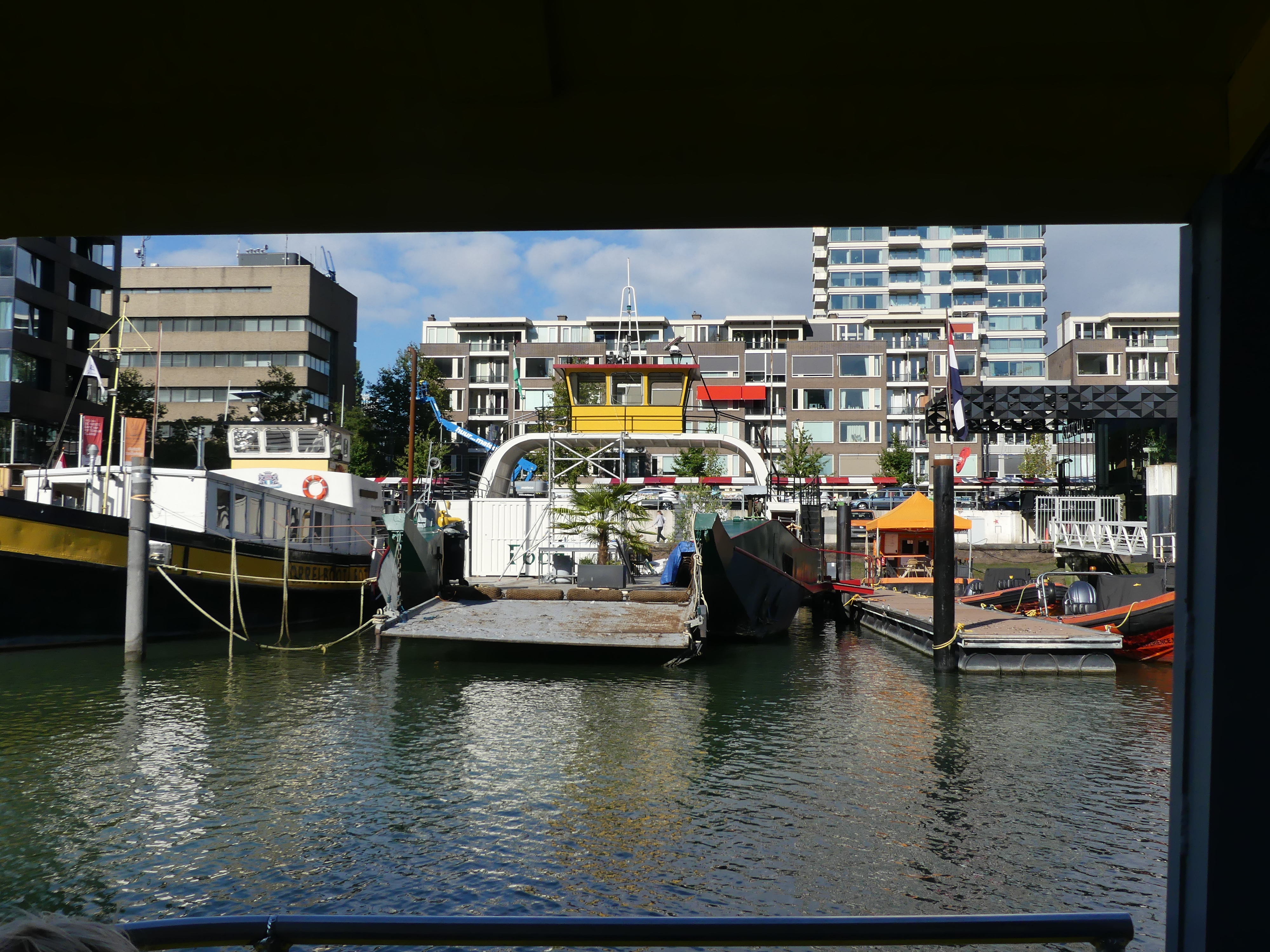
We regrouped with Barry and Sandi at the bar on deck 10 and giving views over the bow of our ship and concluded the day with our first clear sunset of the cruise.

We are nearing the end of our cruise. We are headed to Tokyo so our adventure will continue for a few more days. Watch out for THE RETIREES GO AROUND THE WORLD – “TOKYO TO KAGOSHIMA, KOCHI, PORT KOBE & HOME”

THE RETIREES GO AROUND THE WORLD – TOKYO TO ABURATASU, PORT NARE AND PORT NAHA OKINAWA

Days 1 & 2 At Sea

After the drama of finding the terminal, we cruised off that afternoon drinks in hand looking over the stern of the MS Noordam. The pictures below show the terminal, the crowd tucking into the welcoming drinks, some of the surrounding buildings and our stateroom. Later photos will give you a view of our deck but as you will note it was raining.

Day 3 Aburatsu

We were exhausted from rushing here and there. The tours/excursions did not excite us so we were not enticed to go ashore. The previous day and night had been choppy, and we decided it was great to just relax. The weather continued to be overcast and showery from time to time. So, we watched as several passengers filled the awaiting buses and thought of a good book and rest. Amongst the photos below you will see the harbour is fenced off by rocky outcrops and the channels out of the harbour had to be marked by lighthouses when the ship sailed.

Day 4 Port Naze

It was overcast once again. We had paid for one of the excursions, so we were wide awake watching the ship come into the dock and noting the heavy vegetation around the town. Our TV was connected to the ships bow camera, so we did not need to take a step outside to know its was still overcast. Once again there was a seawall to protect the harbour and a ferry service servicing the nearby islands. The town seemed about to be swallowed by the surrounding vegetation.

We boarded a bus and started our journey to the Amami – Oshima Conservation Reserve with its diverse flora and fauna of Amami Oshimas’ subtropical forests, from its labyrinthine mangroves to its widespread laurel forests. The exhibition room has life-sized dioramas of forest vegetation and rare animal species such as the Amami rabbit. The Amami rabbit is a relic species with short ears, dark fur, and hunched back only found on Amami Oshima and neighbouring Tokunoshima Island. Interestingly there is a golf course alongside the Centre.

Next, we went to Honohoshi Beach. It showed the volcanic past of Japan and its islands. I think this is a stop to allow the glass bottom boat to deal with each wave of tourists as there was little of interest, but our tourist guide managed to keep talking.

The reason that motivated me to take this excursion was the glass bottom boat and the reef viewing. Having been spoilt by the Great Barrier Reef, I could only be disappointed and I was. I have given you a selection of photos none of which are particularly good but that is just what it looked like. The final picture of the parking lot and the town centre give you an idea that this is nothing out of ordinary and little has changed over time. Perhaps the big surprise is how popular the square box car design is in all the island localities. They are everywhere we go.

Day 5 Port Naha Okinawa

We docked at Port Naha. Naha is the capital and largest city of Okinawa, formerly ruled by the Ryukyu Kingdom from 1429 and unofficially annexed by Japan after the invasion of Ryukyu in 1609. Okinawa was officially founded in 1879 by the Empire of Japan after seven years as the Ryukyu Domain, the last domain of the Han system. Okinawa was occupied by the United States during the Allied occupation of Japan after World War II and was governed by the Military Government of the Ryukyu Islands from 1945 to 1950 and Civil Administration of the Ryukyu Islands from 1950 until the prefecture was returned to Japan in 1972. Okinawa comprises just 0.6 percent of Japan’s total land mass, but about 26,000 (75%) of United States Forces Japanese personnel are assigned to the prefecture; the continued U.S. military presence in Okinawa is controversial.

It is odd in my view that given this recent history and the continued occupation by the USA that Okinawa Peace Memorial has been established here. It was the scene of the decimation of the Japanese Army and civilian population so in that sense the memorial makes sense. The continuation of the occupation must irk the locals.

At the terminal we boarded a bus to Gyokusendo Cave, our first stop on the way to the Peace Memorial. Having seen many similar caves from Europe to England to Western Australia & Tasmania I was surprised at the interference with the natural features of the caves. From an artificial concrete entrance to chain sawing through stalagmite outcrops to create a path through the caves I was disappointed. Further the natural temperature seemed to be interfered with, and the lighting was poor. One thing I can applaud though is the escalator at the end of the walk through the cave. Our last cave experience in Margaret River WA there was more than 300 steps to climb out – not happy Jan.

The caves are underneath what appears to be the recreation of an old Japanese village, and this was interesting. Open plan living with bamboo walls! There is also a culture centre. Remembering that Okinawa has not always been part of a united Japan it was interesting to view some of their differences. The Japanese have developed a reputation for beer making but there are some secrets to their difference. In this centre there is a modern mini brewery brewing beer with bite. The bite comes from the ingredients – snakes – no sale at the souvenir shop for me. We moved through the centre and back to the bus with a nasty taste in my mouth thinking about the snakes and then I thought the Mexicans put a worm in their Tequila – I don’t drink Tequila either.

Our next stop was the Okinawa Prefecture Peace Memorial Museum. On April 1, 1945, the U.S. Army and Marine Corps launched an invasion of Okinawa with 185,000 troops. They were faced with fanatical resistance from the Japanese defenders. A third of Okinawa’s civilian population were killed during the ensuing fighting. The dead, of all nationalities, are commemorated at the Cornerstone of Peace. The Battle of Okinawa was a fierce battle lasting 3 months and killing more than 100,000 civilians and a similar number of soldiers followed by a USA administration for 27 years followed by the Treaty of Mutual Cooperation and Security between the United States and Japan, United States Forces Japan (USFJ) have maintained a large military presence. On May 15, 1972, the U.S. government returned the islands to Japan following the signing of the 1971 Okinawa Reversion Agreement. In 2006, some 8,000 U.S. Marines were removed from the island and relocated to Guam. The move to Marine Corps Base Camp Blaz was expected to be completed in 2023 but as of 1 January 2025 is still in process.

The memorial includes a teaching area for children occupying most of the ground floor whilst the upper level records the history of the Battle. I have posted below my photos of the memorial reciting the names of those killed, whether by action, starvation or suicide, on both sides of the conflict, the Cornerstone of Peace, its location by the sea and the Museum building. Has the investment caused anything to change?

It has been uplifting to see the aspirations of the survivors of the war, but the reality is war continues to lurk around Japan – North and South Korea remaining at loggerheads and China still determined to extinguish the Nationalists in Taiwan. We moved through the Peace Memorial, but I cannot help a feeling of helplessness that the memorial is in vain. Not a happy note to end on but we are glad to have had the privilege of visiting such an important memorial.

Keep reading and follow our path through the islands of Japan to Taiwan and return. The next chapter is “THE RETIREES GO AROUND THE WORLD – TOKYO TO ISHIGAKI JAPAN, HUALIEN TAIWAN, PORT KEELUNG & TAIPEI TAWAIN, & PORT NAGASAKI JAPAN”

“THE RETIREES GO AROUND THE WORLD – “ROME TO TOKYO”

TOKYO

Our Finnair flight was unremarkable which is a good rating – no problems were encountered. So my first picture is our plane. We allowed ourselves two days in Tokyo to ensure we arrived in time to catch our ship. I think we made good use of our time there and we only saw what was immediately around our hotel, Hotel Villa Fontaine Tokyo – Hamamatsucho and what we saw on a trip into the centre of Tokyo. Our arrival was marred by our cab driver not having a clue where our hotel was located. Unknowingly his GPS took us to the rear staff entrance to the hotel which confused him and us but fortunately some locals on the street showed us the lane way to the front of the hotel. The second photo is the front of the hotel, and the following pictures show how close we were to the 3 levels of railway rushing around us. We noticed that several businesses had their own shrine for staff and passersby, and the first one below was immediately across the road from the hotel and alongside the Japanese version of a café – a drink dispenser. Note they also dispense Kirin Beer.

We obtained a tourist map from our hotel. We were checking the location of the dock for our departure on our cruise and became worried that the instructions as to the location of the dock for boarding our ship were somewhat vague – “Yokohama Dep. 4.00 pm”. Believing the dock was nearby, we took a walk to the waterfront. There was a considerable amount of renewal happening/being constructed underneath rail overpasses and vehicle expressways and in between the enormous city towers around us along the path to the waterfront. The photos below show the way in which the Japanese used all space available.

We made it to the dock but there was no sign of any ship terminal. Tugs and ferries but no cruise ships. We continued our search passing through wharf industries harbour side units and canals but no cruise ship terminal. Push bikes were popular even with the public transport available. As we returned to our hotel we were surprised by the architecture of one building: a domed area under an office tower. It proved to be a shopping centre at the base of an office block, but it seemed to be “dead” with no people activity inside the building. It seemed to be a cross between a plant hot house and a shopping centre. Not sure how successful it has been.

On returning to the hotel, we decided we would call our travel consultant and get the complete street address and directions for the dock. A very helpful consultant gave us an address (we were rather suspicious that the address said nothing of a terminal or dock number), but we felt assured that the instructions for the taxi would get us to our ship. Our concerns eased we took a ride by train into the city.
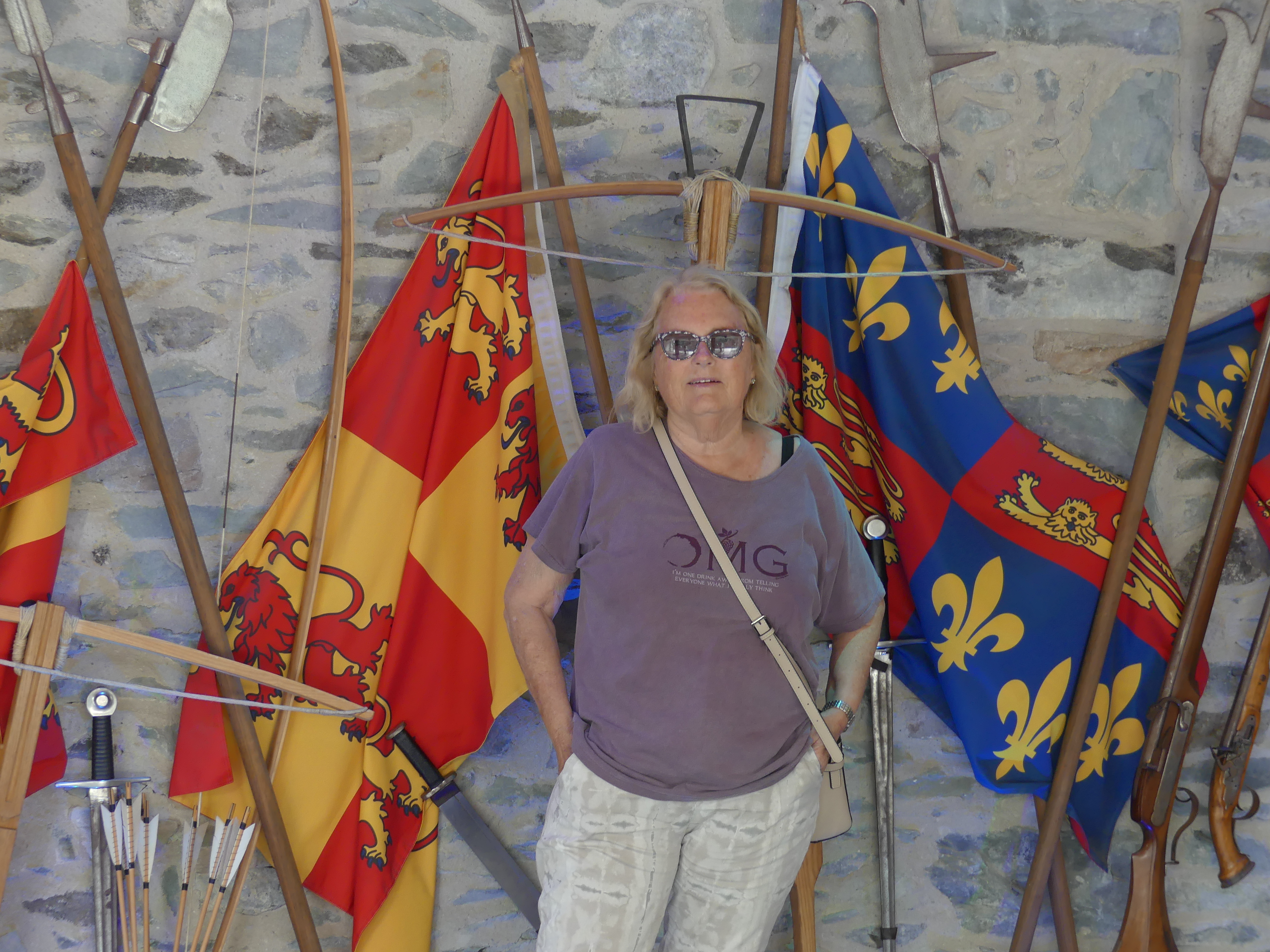
Tokyo has a rail ring road making it easy to get to the centre of town. We were looking for Tokyo’s highest building to get to the roof top for a grand view of the city and beyond – as the tourist literature promised. Getting to where we wanted to go was trouble free. Finding our destination from the train station not so easy. Passage ways, footpaths and aerial walk ways had us confused but we got there in the end. We found that building but to get to the roof top was ticket only access and all tickets for today were sold out. So, we took in the sites from ground level. That’s it 1st picture left to right.

When walking to our station to catch the train we walked past an open garage containing go-carts. No idea what that was about and there was no signage in English to inform us. So we were very surprised when we encountered go – carts full of jubilant tourists came rolling past us in the centre of the city. I have provided a photo below then follows a photo of the world’s busiest pedestrian crossing. As well as street level pedestrians there are pedestrians aloft – yes 3 storeys above ground and connecting everything. It is hard to find anything old world Japanese, but we found it in a restaurant with shrines in its front yard – what must that land be worth!

We had a burger in Hungry Jacks (very Japanese) and decided to explore further passing over a canal with houseboats and a new stretch of pedestrian and bike pathway and gardens on our way back to the hotel. The following day – “sailing day” – Kerry had spotted a large garden space on our map within walking distance and we thought we had time to explore a bit more.

The pictures below start with a different form of shrine to the one across the road from our hotel – an upright tablet with two temple urns beside it – then surprisingly our first cherry blossom tree in full flower. The park seemed closed at every entrance, so we traveled to the walkway 3 levels above ground for the view of the park. More than a park it is a religious sanctuary set out in traditional Japanese style. As the park seemed closed, we went in the opposite direction towards the harbour. The pictures show you the grand scale of these walkways. We passed a high school and its sporting fields and ended up on the harbour boardwalk with ferry terminals spaced along it and ferries plying the harbour and trains passing by. The buildings around us towered above and I have taken some photos of some of the more impressive. I was even able to grab a picture of the look-a-like Eiffel tower – the last photo but its a long way off.

We turned around and went back to where we had come form. I cannot recall what made us walk to the opposite end of the walkway, but I am glad we did so as we found the entrance to the park – there is a fee to enter and that explains the closure of all the other entrances. The photos below show you around the gardens. We were now pressed for time so we did not get to every point but we saw the cherry blossom grove in full flower with a traditional bride walking through and an Australian lass enjoying the sunshine.

We made our way back to the hotel and collected our suitcases. The receptionist called the cab driver and handed to him our piece of paper with the address for the cruise terminal – we thought – but our concerns were well founded. The address was the HQ of Holland America lines in Tokyo and the cabbie had no English-speaking ability and was completely oblivious as to where the Tokyo International Cruise Terminal might be. We have not had the need for using our phone for translation so we were left to go to charades to tell the cabbie what to do. He wanted to put us and our luggage on the street, but we insisted that he find out where to go and to his credit he did that by questioning every parking centre and hotel security he could find and struck it lucky.

Meanwhile I was on the phone abusing (politely) the HAL staff to find out where the dock was. My efforts seemed to be languishing but then the cabbie turned a corner, and the vessel MS Noordam was at anchor at the Tokyo International Cruise Terminal. The cabbie thought that we would leave him alone if he dropped us off but we were still a kilometer from the ship so he endured found the road to the reception of the terminal gladly took my Yen 7,000 (should have been Yen 500 for a 15 minute trip but it was HAL fault for the misleading information – my complaint to HAL resulted in an apology and refund of the cab fare.)

Relieved we boarded the ship with a good story to remember this trip. However, we were soon to learn many other people had the same misfortune. We settled down and then we were shown to our stateroom, whilst we awaited our luggage there was some noisy bumping coming from the hall and I stuck my head out. The bloke in the adjoining cabin was bumping in with their luggage so I asked if he needed a hand, and an Aussie accent answered that he was right. This was Barry and his wife Sandi from Indooroopilly just arrived in their taxi from Yokohama – they had also been given a bum steer by HAL. From there and occasions where we shared a dinner table, we became acquainted and did quite a few things together. We still keep in touch with them – our next adventure was to be to Nudgee Beach but for reasons forgotten we ended up at Indooroopilly.

So the next and last leg of our adventure was about to commence. Read on as we relax on the high seas south of Japan to Taiwan and back again in my blog “THE RETIREES GO AROUND THE WORLD – “TOKYO TO ABURATASU, PORT NARE AND PORT NAHA OKINAWA”.

“THE RETIREES GO AROUND THE WORLD – NAPLES to SORRENTO”

SORRENTO

We decided to take another train trip this time along the coast to Sorrento, a resort town to the south. Arriving at the station/terminus for the train, we found a tour guide shop and picked up a map of the town and headed for the centre of town. At first it was unremarkable in its architecture and design until we came across a ravine passing through the town with buildings and roads straddling it and overlooking the Bay of Naples. Over the centuries of Sorrento’s establishment, it has been the subject of piracy, bombardment, and invasion, so it is no stranger to visitors to town.

The “old town” is identified by narrow streets and loads of shops, and most were open despite it being winter and raining.

Sorrento became an archbishopric around 420 AD. After the fall of the Western Roman Empire, it was ruled by the Ostrogoths and then returned to the Eastern Empire. In 1035 the city was acquired by the Duchy of Naples, then it returned to Lombard hands but when defeated by Robert Guiscard, Sorrento entered the Norman sphere of influence: any residual independence was ended in 1137 when it was conquered and annexed to the Kingdom of Sicily. In the 19th century the economy of the city improved markedly, favoured by the development of agriculture, tourism and trade. In 1861 Sorrento was officially annexed to the new Kingdom of Italy. In the following years it confirmed and increased its status of one of the most renowned tourist destinations of Italy, a trend which continued into the 20th century.

It had the usual lords and ladies running the place over the history of the town and the building below was the home of the last family ruling the town. Apart from Counts and Countesses, it was a Bishopric of the Catholic Church from 420 AD, and we found the cathedral and monastery nearby. The cathedral was ornate as demanded for a Bishopric, but it also contained the most unusual diorama of the birth of Christ – I always imagined the birth of Jesus as a quiet affair, a few sheep, a star and 3 old blokes bearing gifts. The diorama makes it look like Queen St on a Friday evening.It also had its main doors internally decorated with stations of the cross.

We walked through the town checking out the rift created by nature (actually the rift has always been there and people built on top of it) to the cliff side and views of the Bay of Naples/Tyrrhenian Sea and of course a cafe.

We continued our walkabout finding some street art (that bloody cat staring at the graffiti would not shift), a statue of a saint or is it “saintress” for the feminine, and a colourful square (you may notice the remnant of a scooter photo bombing my picture).

This walkabout took us to most parts of the village and ultimately to the only British pub in town, so we stopped for lunch. Queer isn’t it that there is a British pub in town and not one of the staff had any idea what it should look like or how to act. To be honest they didn’t have much of a clue about pubs and the waitress had never seen a British pub till she started work at this establishment and I told her, she hadn’t seen one yet, which puzzled her. Ah well, my appetite had not been good and the plain food passed off as British pub food was all I could handle. We left our waitress puzzling and returned to the train back to Naples.

It was time for a nap as we are yet to pack and we have to return to Naples for a Finnair flight to Tokyo tomorrow. My next blog will be entitled “THE RETIREES GO AROUND THE WORLD – NAPLES to ROME & Leonardo da Vinci–Fiumicino Airport THEN TOKYO”

“THE RETIREES GO AROUND THE WORLD – BARI to NAPLES”

Naples

Full of vibrant culture, food, and history: Founded by Greeks in the first millennium BC, Naples is one of the oldest continuously inhabited urban areas in the world. Robert had returned to Cesi and we made our way to Naples by train. On arriving at the central railway station in Naples, Stazione di Napoli Centrale (Napoli Centrale), located in Piazza Giuseppe Garibaldi we set off in search of the hotel. It is the main rail terminus and station for Naples, 25 tracks, serving about 137,000 people per day. It was massive and intimidating just as Terminii in Rome was the first time.

Kerry piloted us out onto Piazza Giuseppe Garibaldi in search of our hotel, Hotel Vergilius Billia which I am certain is a Mormon hotel with open bibles placed strategically in the hotel. The Piazza is 4 city blocks long and 3 blocks wide with a subterranean passage below us. The hotel was difficult to find at first in Via Guiseppe Pica but ultimately proved to be quite central. Clean and quiet with breakfast included we were well settled.

Our plan here was to visit the old city and particularly visit the underground tunnels and cisterns built by the Greeks and Romans. After booking into our hotel, we visited the old town by night particularly the historic centre of the city in Via dei Tribunali. We crossed the piazza past a church and attached monastery past the walls of a castle and into Via dei Tribunali. The first thing we noticed was how dirty it is and how alive it is with people, scooters and cars down this narrow alley. In a doorway we found the tell-tale sign of a recent birth – a boy. Here is a selection of photos going to the old town and in the old town itself.

The following morning it was breakfast first before our big day in the old town. One of the first shops we encountered was the Italian Bunnings hardware store. A further surprise awaited us when we passed a theatre presenting Sonetti de Amleto (Sonnets of Hamlet). Shakespeare in Naples. The streets were narrow and the buildings dirty and tired sometimes decorated with street art or a chapel for worship.

But then we encountered Museo Donna Regina. The monumental complex of Donna Regina represents a unique example in the panorama of the historic centre of Naples. In this Franciscan monastic insula, there are preserved testimonies of the ancient convent and of the two original churches, the medieval one and the seventeenth-century together conceived as one, until the 1930 s, conceived as a single structure with a corridor that, like a sort of umbilical cord, united the buildings, in addition to the apses, the past and the present, allowing the Poor Clares to move without leaving the places of cloister.

Today, through the original architecture and decorations, we can find rare examples of the history of Neapolitan art and the Franciscan order. It also provides space for classical concerts. As we entered a grand piano was be carried down the front stairs by a tracked robot to be loaded onto a truck following a performance the previous night. If you wish to read more about this unique museum, then proceed to http://www.museodiocesanonapoli.com/il-complesso-museo-diocesano/.

Underneath Naples are several ancient Greco-Roman reservoirs dug out from the soft tufo stone on which, and from which, much of the city is built. Approximately one kilometre (0.62 miles) of the many kilometres of tunnels under the city can be visited from the Napoli Sotteranea, this system of tunnels and cisterns underlies most of the city and lies approximately 30 metres (98 ft) below ground level. During World War II, these tunnels were used as air-raid shelters, and there are inscriptions on the walls depicting the suffering endured by the refugees of that era. We were here to visit those tunnels. My photographs show us entering and following the stairs underground for a long way. God only know how they got a tank down here or why they would keep unexploded munitions down here. The pictures of the narrow tunnels are in fact passageways for water and very easy to get lost as I almost did. At the end of the tour, we exited to visit the remains of Nero’s lost theatre rediscovered after restoration of the reservoirs.

Some joker had prepared a frightening image of what awaits outside the reservoir. It was hot thirsty work down there This pop-up liquor shop had just the answer as we made our way home. Mauling mannequins seemed to have some appeal in Naples.

The surrounding area is an underground geothermal zone and this geothermal area is present generally from Mount Vesuvius beneath a wide area including Pompei, Herculaneum, and from the volcanic area of Campi Flegrei beneath Naples and over to Pozzuoli and the coastal Baia area. The resulting cavities beneath the city can now be divided up into several major categories Aqueducts and sewer tunnels; Rainwater cisterns, reservoirs and aqueduct diversionary channels; Caverns left from quarrying of tuff; the remains of Nero’s “lost” theatre; Greco-Roman businesses, such as the remains of an ancient forum that was preserved in a mud slide; Other voids from removal of sand and other types of materials; Interconnecting tunnels and passageways among caverns; Places of worship, including catacombs and pre-Christian hypogea (cult burial chambers);Major ancient and modern roadway tunnels, and rail and subway tunnels.

As commented about some walls being “decorated” with “street art” – we came across this portrait of a bishop – very impressive. The church however seemed to have walls collapsing into the chapel. As we made our way back to Hotel Vergilius Billia we took a different route came across an ancient gate of the city and disjointed buildings with openings and windows in odd places but still in use. Here are some photos of a narrow but long building and an ancient gate surrounded by merchants.

After having experienced the old city, we thought a visit to one of the nearby coastal towns would be interesting. We chose Sorrento and again used the train to get there. Hold onto your seat as my next blog is “THE RETIREES GO AROUND THE WORLD – NAPLES to SORRENTO”.

“THE RETIREES GO AROUND THE WORLD – BARI to ALBEROBELLO”

Alberobello

Our stay with Robert was coming to an end. After visiting Alberobello we will go to Naples and Robert will return to Cesi.

We left Bari station (obstructed by the fountain) as we were taking the bus (what! – where’s the train) for Alberobello (literally “beautiful tree”). It is a small town and commune of the Metropolitan City of Bari, Apulia. It has 10,237 inhabitants (2022) and is famous for its unique trullo buildings. The trulli of Alberobello have been designated as a UNESCO World Heritage Site since 1996 and Alberobello is one of I Borghi più belli d’Italia (“The most beautiful villages of Italy”).

The history of the trulli is linked to an edict of the 15th-century Kingdom of Naples that subjected every new settlement to a tribute. In 1481 a tribute imposed on the residents led to them building their dwellings out of dry stone, without using mortars, so that they could be configured as precarious buildings and easily demolished. Having to use only stones, the peasants found in the round form with self-supporting domed roof the simplest configuration. The roofs were embellished with decorative pinnacles representing the signature of the architect (master trullaro).

Our story starts with a picture of the fountain in front of the railway station in Bari from where we caught our bus to Alberobello. Upon arriving at the train station via the bus, we left the bus and walked through the modern town. The walk up the hill and down into the Piazza is shown in my photos below. The Municipio and the tourist map were two of the first features we reached. Clean and tidy, the people of Alberobello have great pride in the Town.

In the last photo above we have found the stairway into the Trulli village. The trulli homes are all uniformly coated in white. Some continue to be used as homes, but many are shops or B&Bs. We visited the Arie dell Artigianato, an artisan timber craftsman. Whilst inside the design for the roof had me puzzled as to how the trulli stand up but climbing through the ceilings was not permitted.

We walked through the key streets with Kerry taking in some shops until reaching a church, Parrocchia Sant’Antonio di Padova (Church of Saint Anthony of Padua) at the top of the hill of course built in 1927 in trulli style. Even the manse had trulli influences. From the top of the hill, we could see the two bell towers of the Saints Cosma & Damian’s church. We made our way down to the bottom of the hill and found our lunch restaurant but not in a true trulli building but a look alike. After lunch we ambled back through town visiting the Basilica of the Saints Cosma & Damian’s in the modern part of the town. The present structure of the church dates back to 1885, a work of Antonio Curri. Inside you can find the two wooden statues (1782 and 1784) and the reliquary containing some bones fragments of the Saints. The project led by architect Antonio Curri, was finished only in 1914. During the 26th and the 27th of September the celebration of the Saint’s city holiday, that summons a crowd of pilgrims from the nearby towns, and as tradition claims, they travel the entire route by foot. Note the papal keys over the entrance to the Basilica.

Our final day of the “train journey holiday” to Bari ended at the bus station outside the railway station at Alberobello where we joined the queue to catch the bus back to Bari. Really interesting place to visit and normally you can catch the train. We left the transportation for Robert to organize so I have no idea why we caught the bus.

We farewelled Robert thanking once again for his hospitality and best wishes with his B&B bookings. He is a great friend.

The next morning we boarded our train for Naples from Bari. The journey would take us from the west coast to the east coast with one change of train. The small towns we have been visiting will be in stark contrast to Naples for size but we were not ready for the dirtiness of the city. Read on with our travels when “THE RETIREES GO AROUND THE WORLD – BARI to NAPLES”.

“THE RETIREES GO AROUND THE WORLD – BARI to MATERA”

Matera

Robert wanted us to visit Matera as he thought it was so unique. The first unique thing was, it was accessible on a private rail line. Its station was beside the principal station in Bari but the line ran its own trains etc. So, a new railway experience – here is the train driver awaiting departure and on departing it soon became obvious we were going rural.

Before its integration into the modern Italian state, the city of Matera had experienced the rule of the Romans, Lombards, Arabs, Byzantine Greeks, Swabians, Angevins, Aragonese, and Bourbons. Matera is believed to have been settled since the Palaeolithic (10th millennium BC) times. This makes it potentially one of the oldest continually inhabited settlements in the world. Robert had two reasons to bring us here; to learn about and see the Sassi and for his own personal reasons that I cannot go into.

The train journey was through some impoverished looking rural countryside arriving at a modern station where the train turns around and goes back to Bari. Walking down to the old town we thought everything looked clean and reasonably modern, but it starts to change at the old well. Amid the town piazza, Piazza Vittorio Veneto was a pit to leading to Roman ruins and a viewing platform of the Sassi – we had no idea that this is what awaited us.

The ruins shown above are part of Roman settlement that has survived and beyond is the Sassi. The Sassi can be best viewed through a balcony which can be accessed through the ruins or through arches above the the ruins.

The view of this well of houses and streets stunned me but I had no idea what lay hidden amongst the houses, shops roads walkways and arcades. The Sassi are cave dwellings and consist of around twelve levels spanning the height of 380 m, connected by a network of paths, stairways, and courtyards (vicinati). The tripartite urban structure of Civita and the two Sassi, relatively isolated from each other, survived until the 16th century, when the centre of public life moved outside the walls to the Piazza Sedile in the open plain (the Piano) to the west, followed by the shift of the elite residences to the Piano from the 17th century onward. By the end of the 18th century, a physical class boundary separated the overcrowded Sassi of the peasants from the new spatial order of their social superiors in the Piano, and geographical elevation came to coincide with status more overtly than before, to the point where the two communities no longer interacted socially. Yet it was only at the turn of the 20th century that the Sassi were declared unfit for modern habitation, and the government relocation of all their inhabitants to new housing in the Piano followed between 1952 and the 1970. A new law in 1986 opened the path to restoration and reoccupation of the Sassi, for the benefit of the wealthy middle class. The recognition of the Sassi, labeled la città sotterranea (“the underground city”), together with the rupestrian churches across the Gravina as a UNESCO World Heritage Site in December 1993 has assisted in attracting tourism and accelerated the reclaiming of the site. In 2019, Matera was declared a European Capital of Culture from poverty and degradation to the flavour of the month.

Firstly, we went to the Roman ruins. Below the ruins are cisterns. Early dwellers invested tremendous energy in building cisterns and systems of water channels. The largest cistern has been found under Piazza Vittorio Veneto, the Palombaro Lungo which was built in 1832. With its solid pillars carved from the rock and a vault height of more than fifteen metres, it is a veritable water cathedral, which is navigable by boat. Like other cisterns in the town, it collected rainwater that was filtered and flowed in a controlled way to the Sassi. Kerry and I walked through marveling at the depth which the water could fill up to.

After exiting the cistern, we entered the Sassi through the ruins and commenced our decent into the Sassi which originated in a prehistoric troglodyte settlement, and these dwellings are thought to be among the first ever human settlements in what is now Italy. You will see in one picture bones have been used to support the rainwater gutters. I don’t know whether they are animal or human. We visited one of the dwellings open for tourist inspection. Inside the cave is the main bedroom, a loom, a place for the donkey (if you had one) and further down further space. Remember these were still in use in 1950. We left the cave to explore some more of the Sassi – there were some we did not want to explore. You will se Kerry and Robert viewing a cave once occupied and vacated in 1952. Close inspection was not possible by reason of the odour emanating from who knows what now occupies it.

 Amongst the jumble of buildings and at the bottom of the Sassi, we found an authentic Italian Restaurant Amore Crusco. The appealing landing was victim of the showers that followed us all day, but the interior was very pleasant and warm so here we enjoyed lunch. Everything that goes down must eventually come up so after lunch we clambered out of the Sassi and took in some of the newer parts above the Sassi. The pictures below are of our lunchtime repast. The climb back to the modern square knocked the wind out of Kerry and me after which I was ready for a nap.

Robert had personal reasons/plans for the evening in Matera, so being experienced train travelers, we caught the train home minus Robert. So our next trip was the last trip with Robert as our guide. We visit Alberobello, so be watching for “THE RETIREES GO AROUND THE WORLD – BARI to ALBEROBELLO”