“THE RETIREES GO AROUND THE WORLD – CRICKHOWELL (Ebbw Vale) TO CHATEAU RHIANFA PLAS RHIANFA, GLYNGARTH MENAII BRIDGE.”

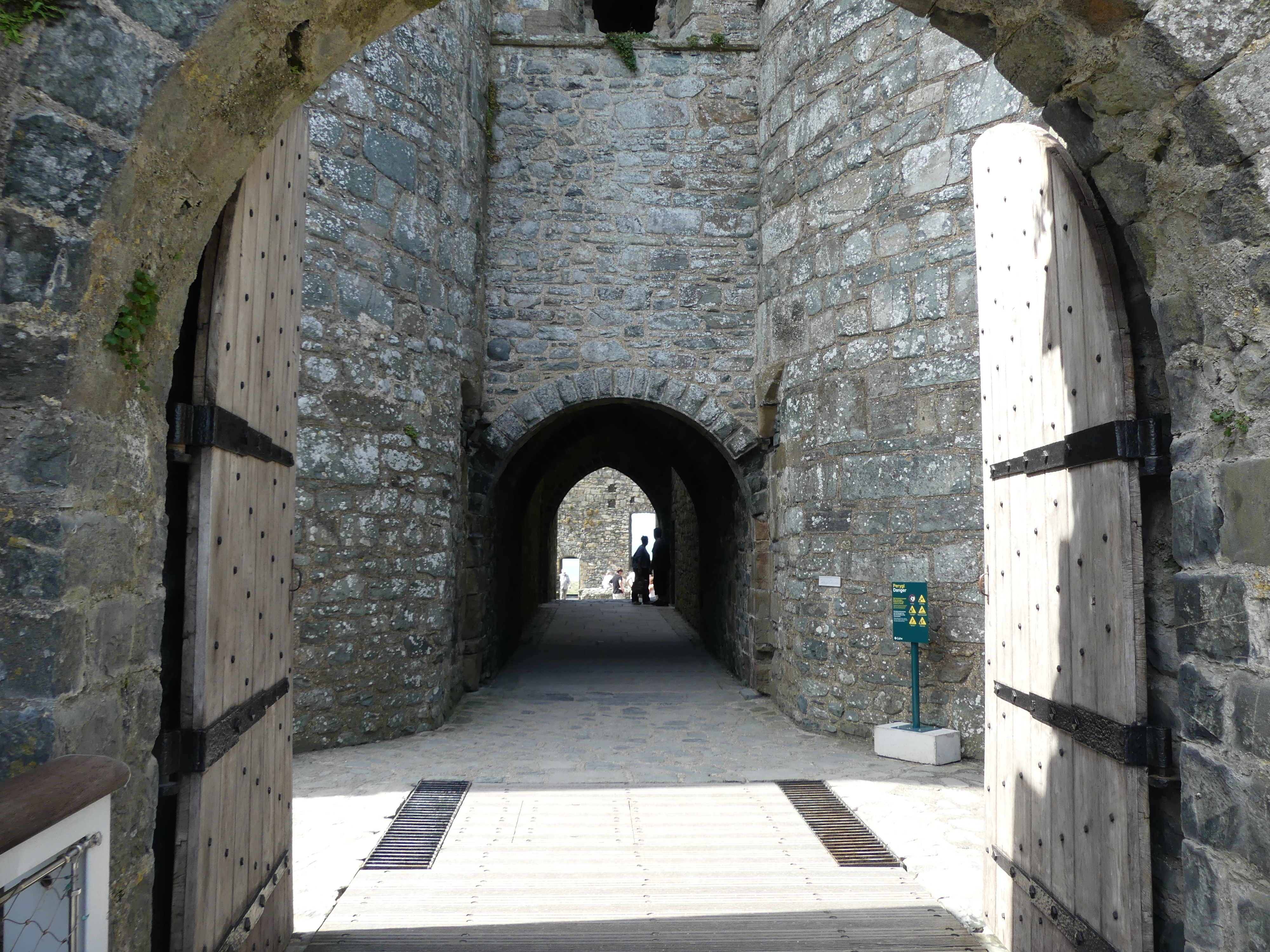
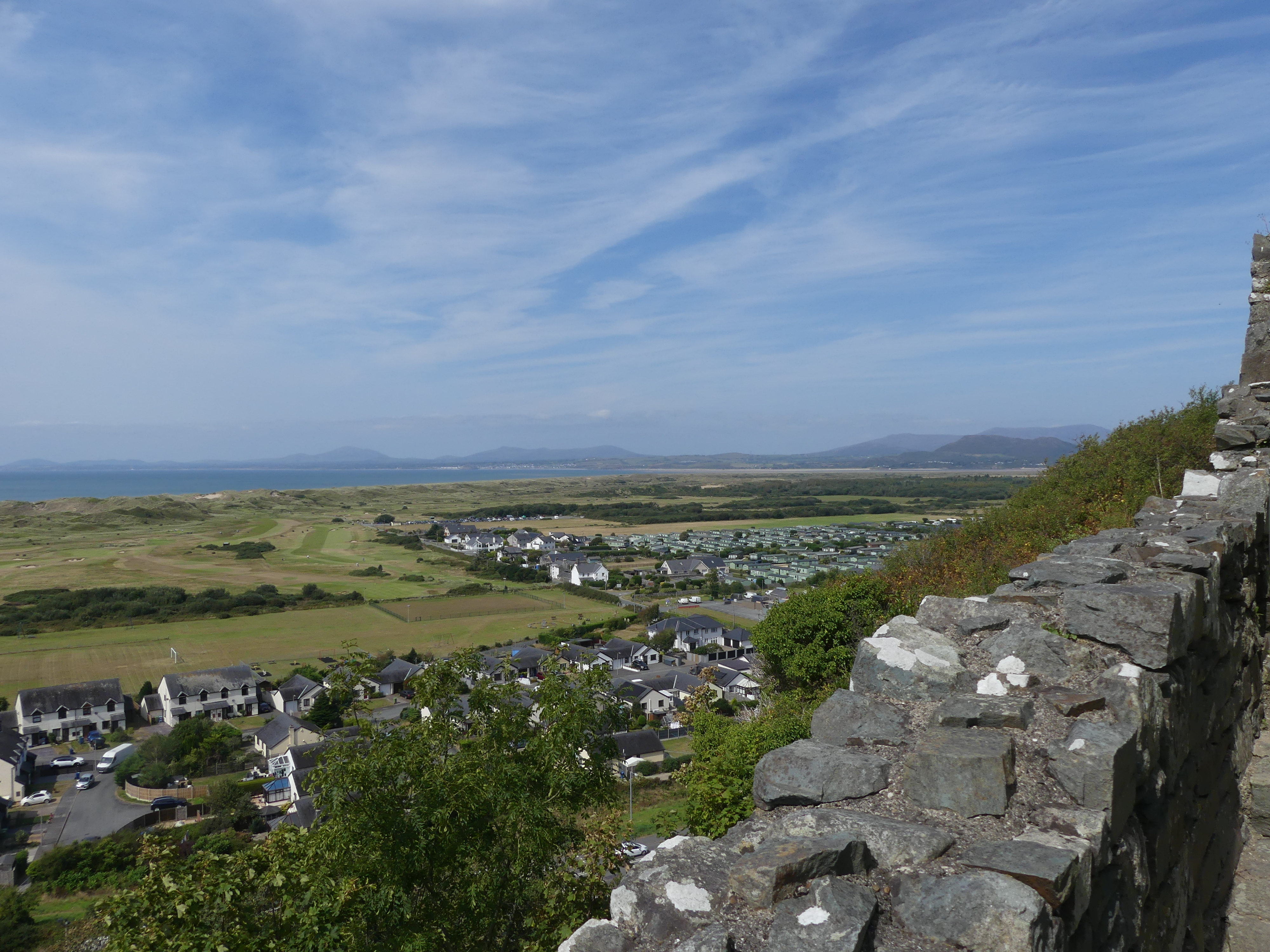
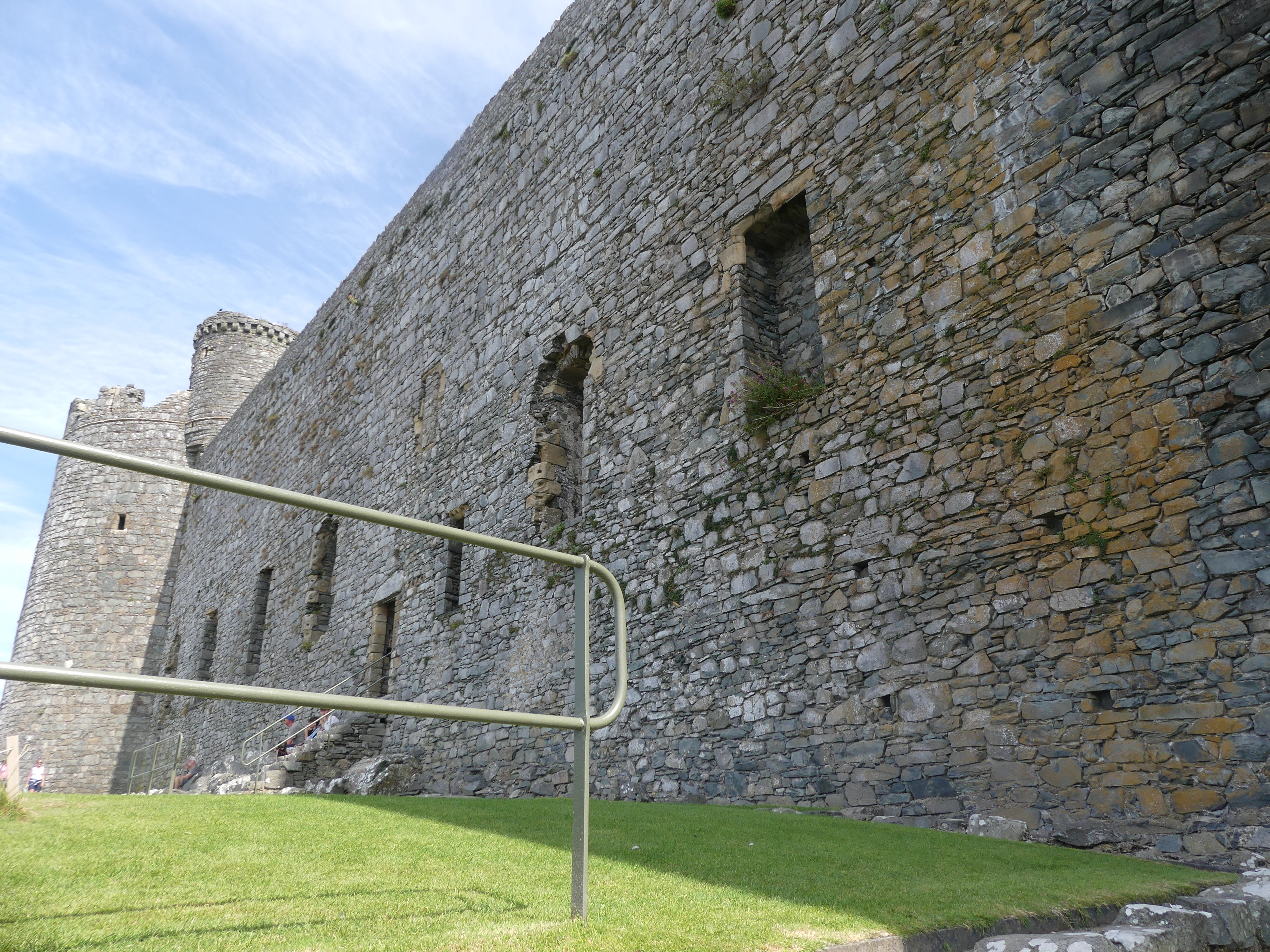
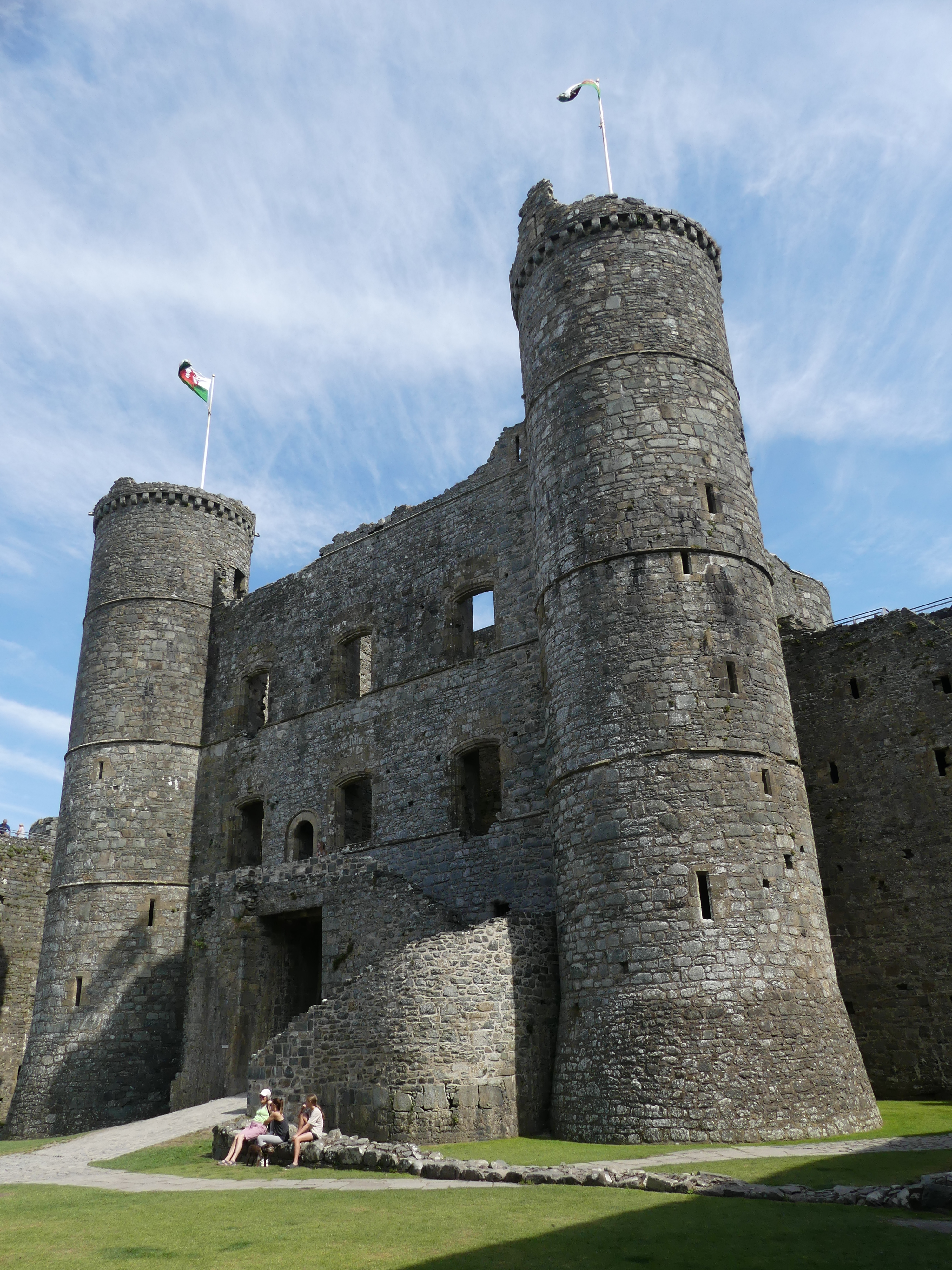
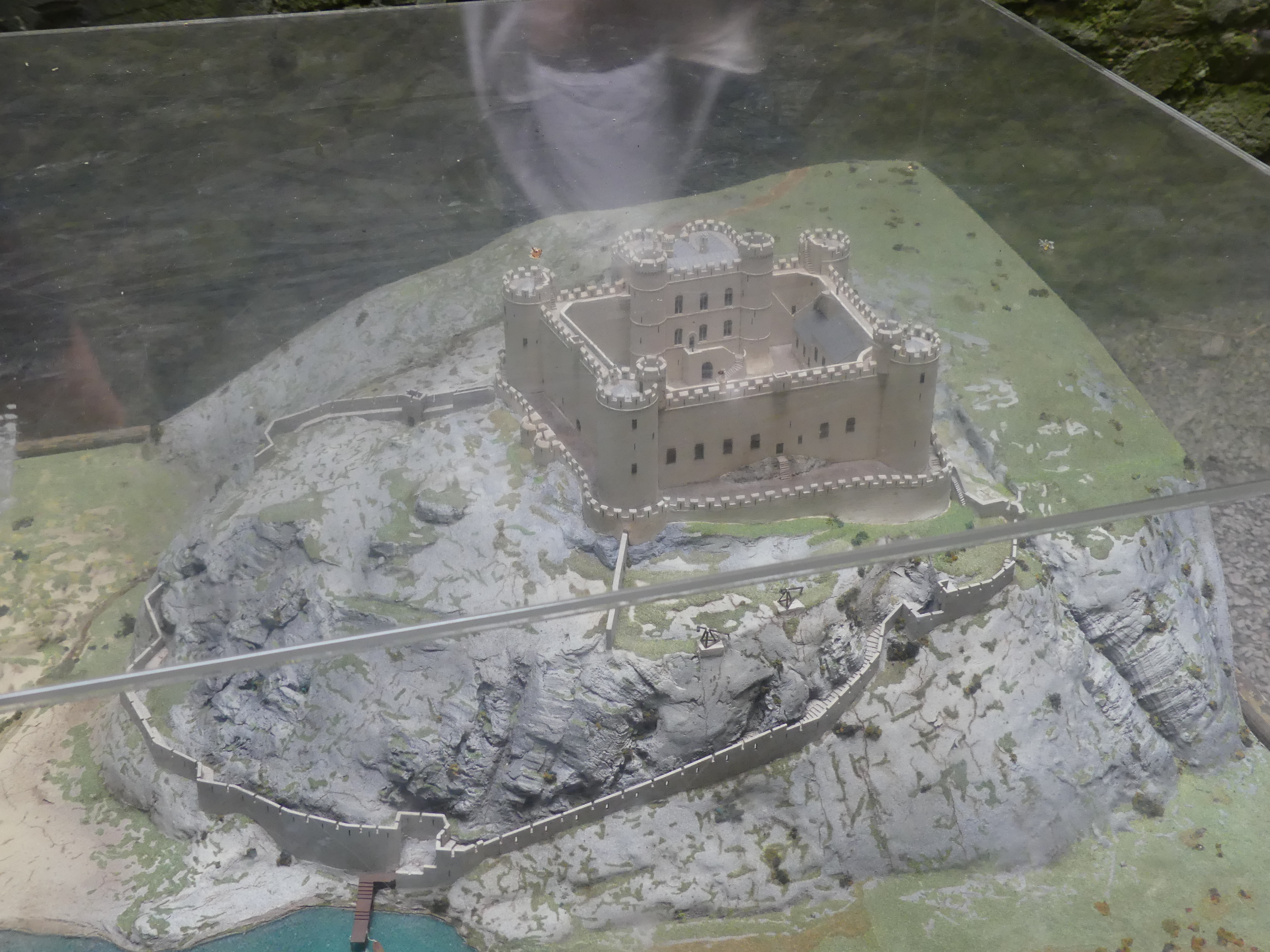
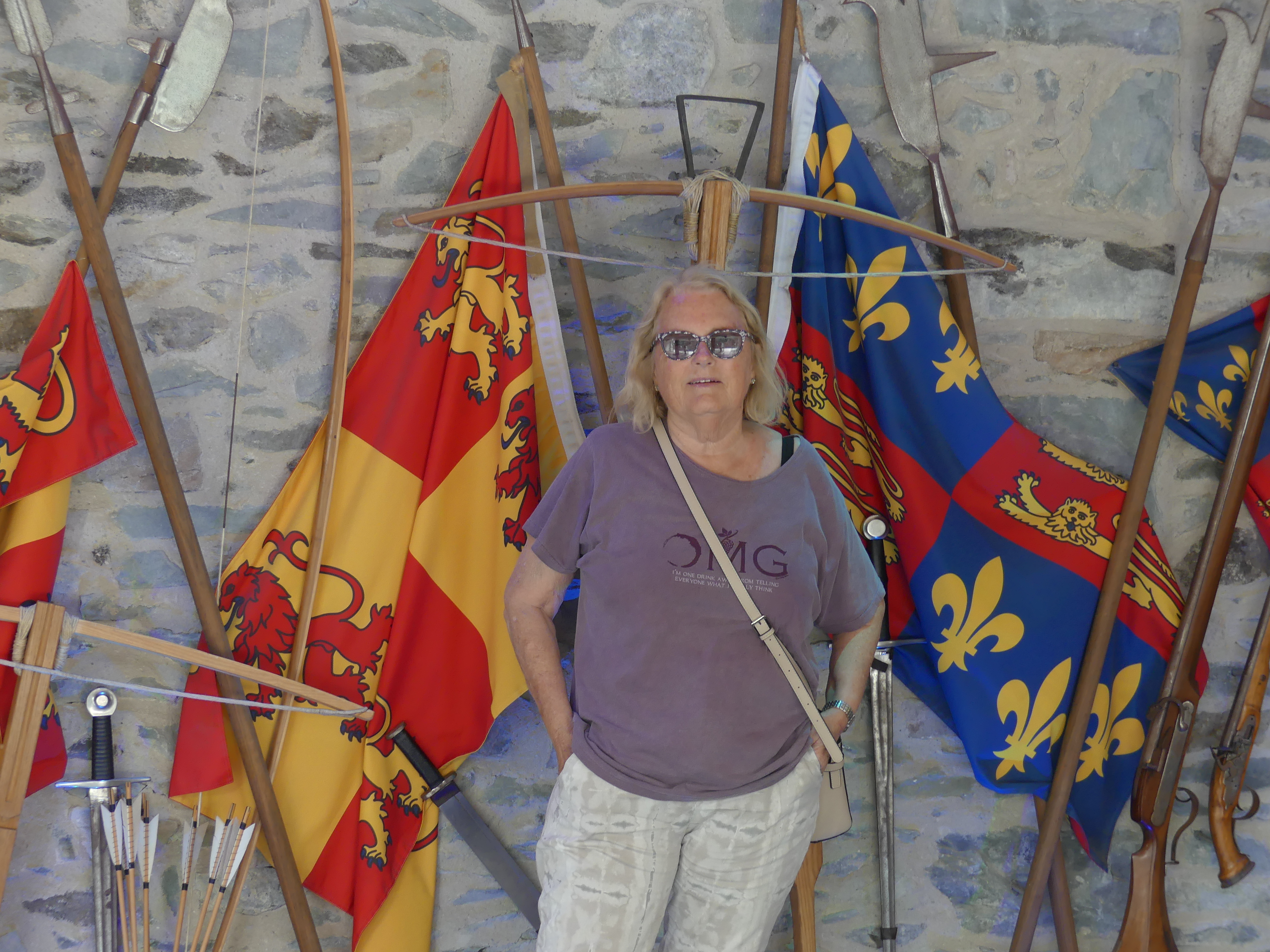
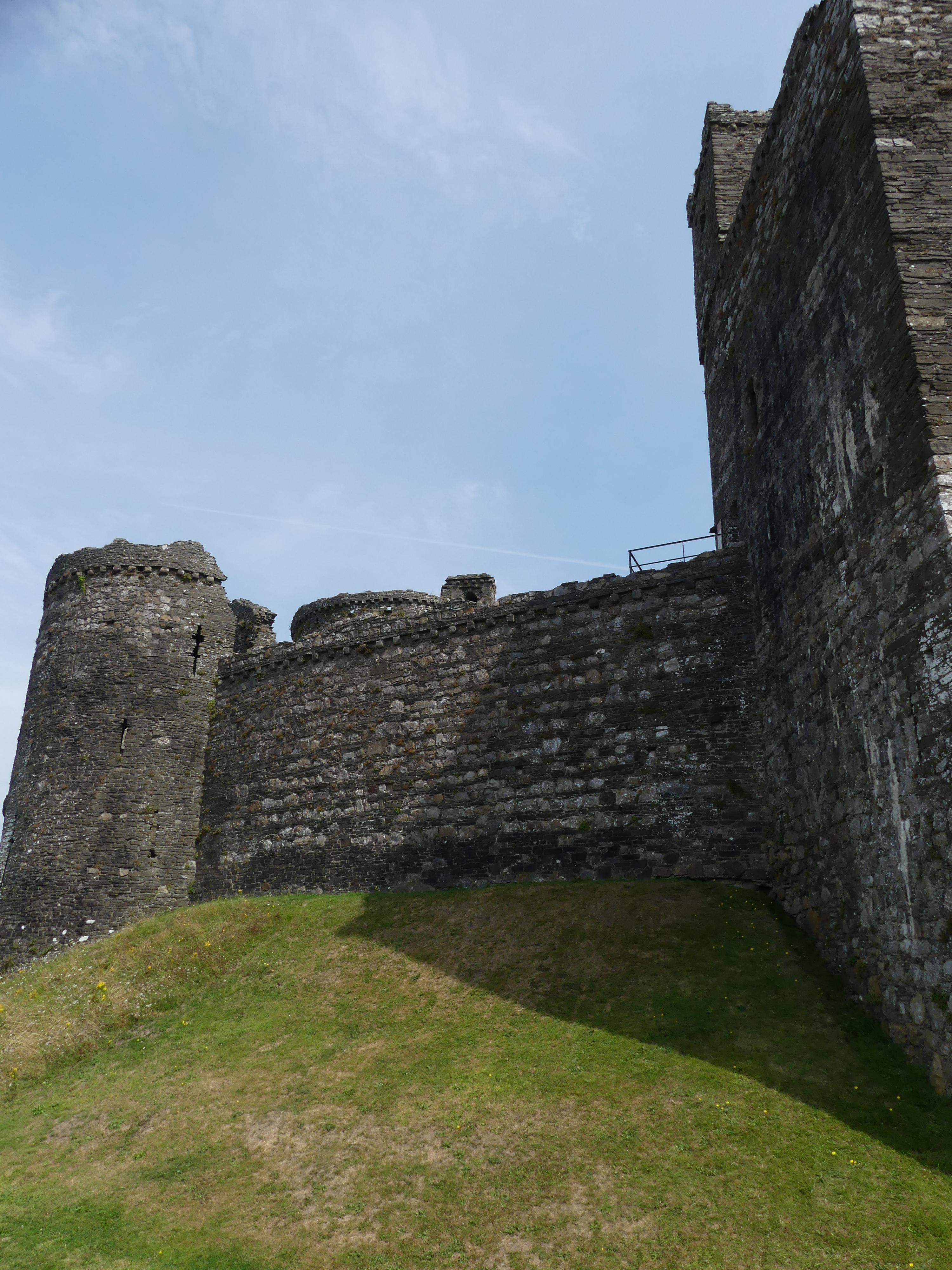
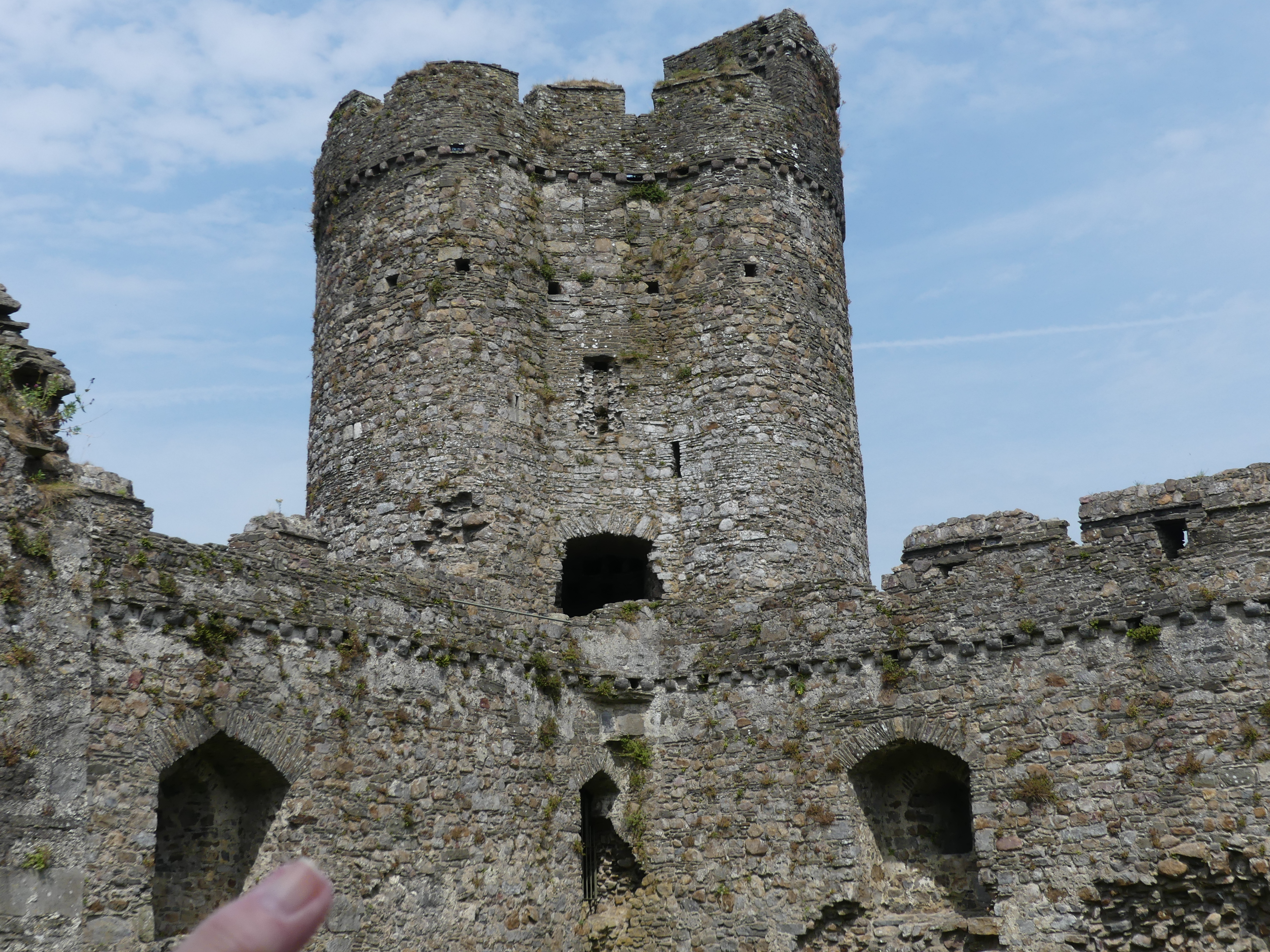
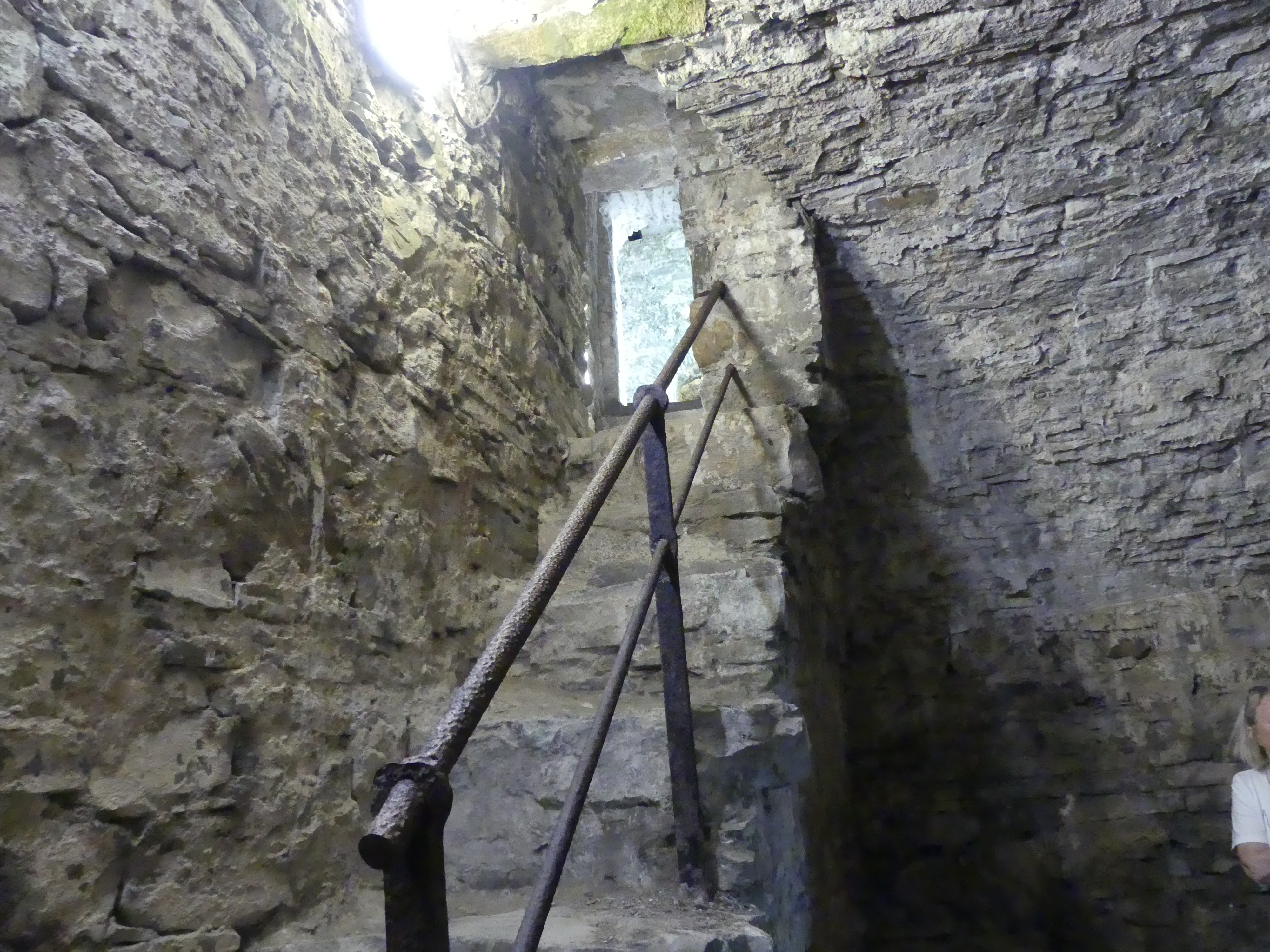
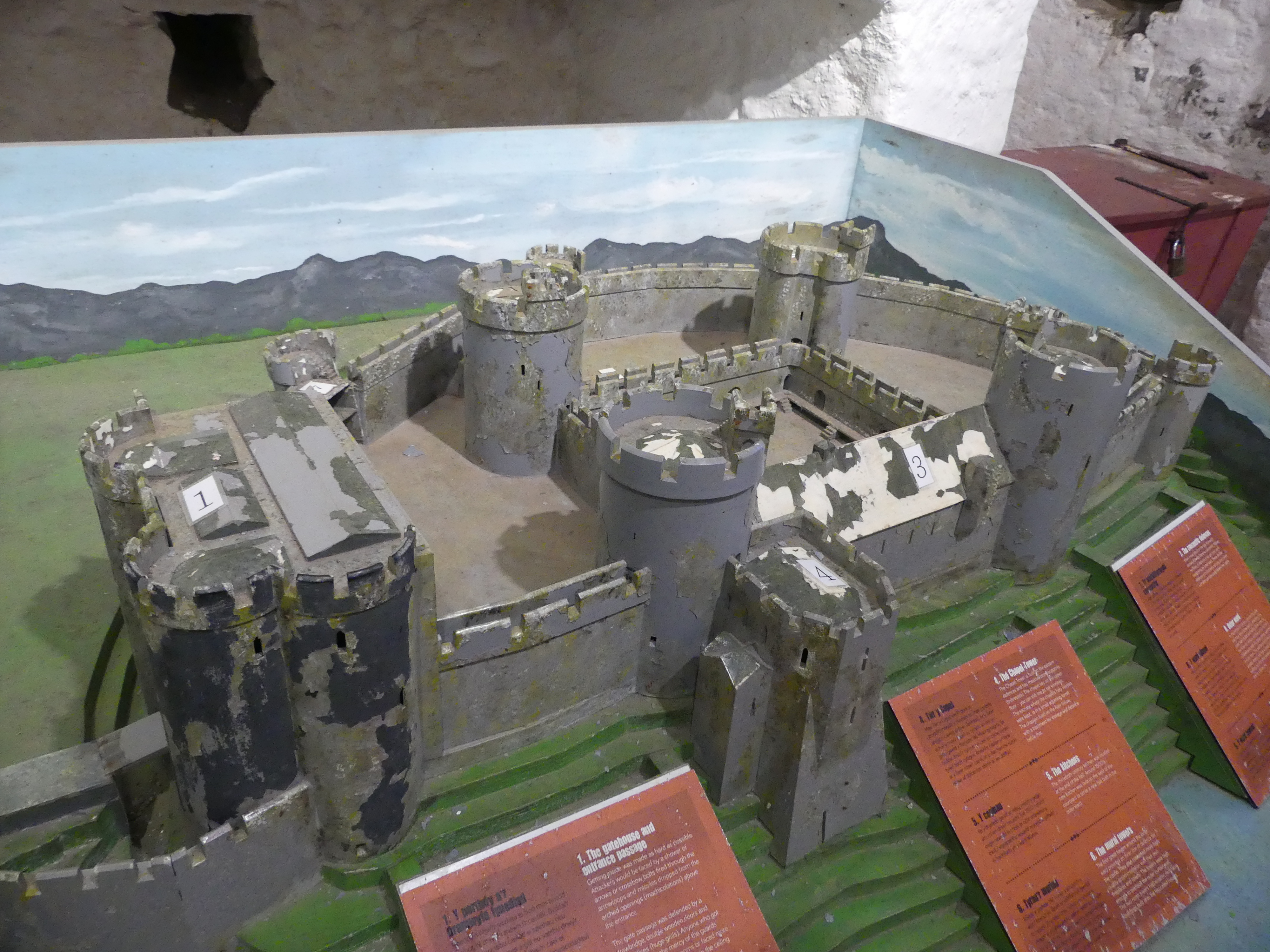
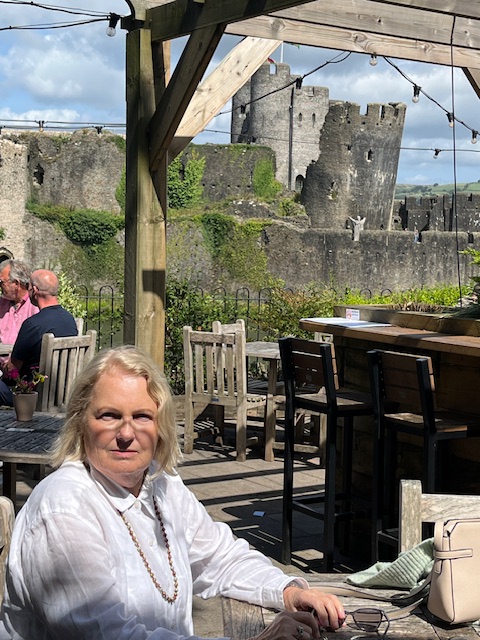
The drive to Chateau Rhianfa on the isle of Anglesey took us past Harlech Castle in Harlech, Gwynedd, Wales, a Grade I listed medieval fortification built onto a rocky knoll which years ago was close to the Irish Sea. A Seagate and stairs to the former landing area remains today but is nowhere near the present coast. It was built by Edward I during his invasion of Wales between 1282 and 1289. Over the next few centuries, the castle played an important part in several wars, withstanding the siege of Madog ap Llywelyn between 1294 and 1295, but falling to Prince Owain Glyndŵr in 1404. It then became Glyndŵr’s residence and military headquarters for the remainder of the uprising until being recaptured by English forces in 1409. During the 15th-century Wars of the Roses, Harlech was held by the Lancastrians for seven years, before Yorkist troops forced its surrender in 1468, a siege memorialised in the song “Men of Harlech”. Following the outbreak of the English Civil War in 1642, the castle was held by forces loyal to Charles I, holding out until 1647 when it became the last fortification to surrender to the Parliamentary armies. In the 21st century the ruined castle is managed by Cadw, the Welsh Government’s historic environment service, as a tourist attraction. As my photos below show the castle is well defended by its environment and provides excellent views of the surrounding village. I have also attached the Cadw brochure.

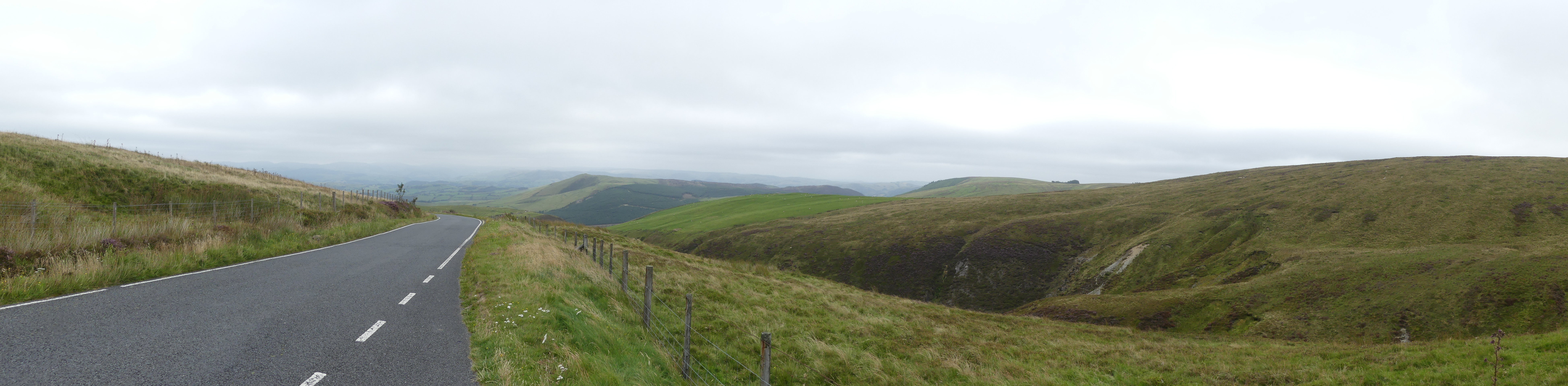
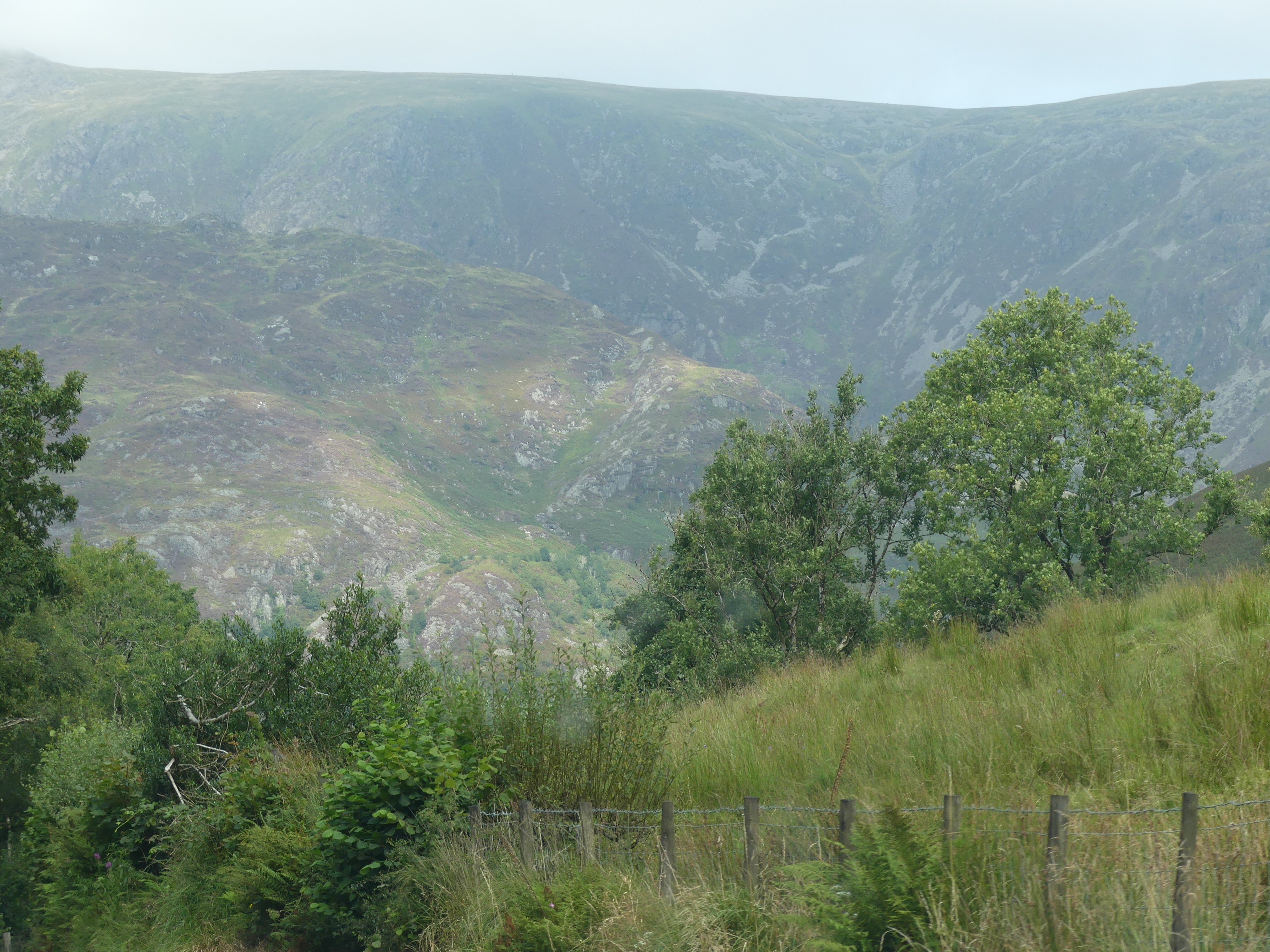
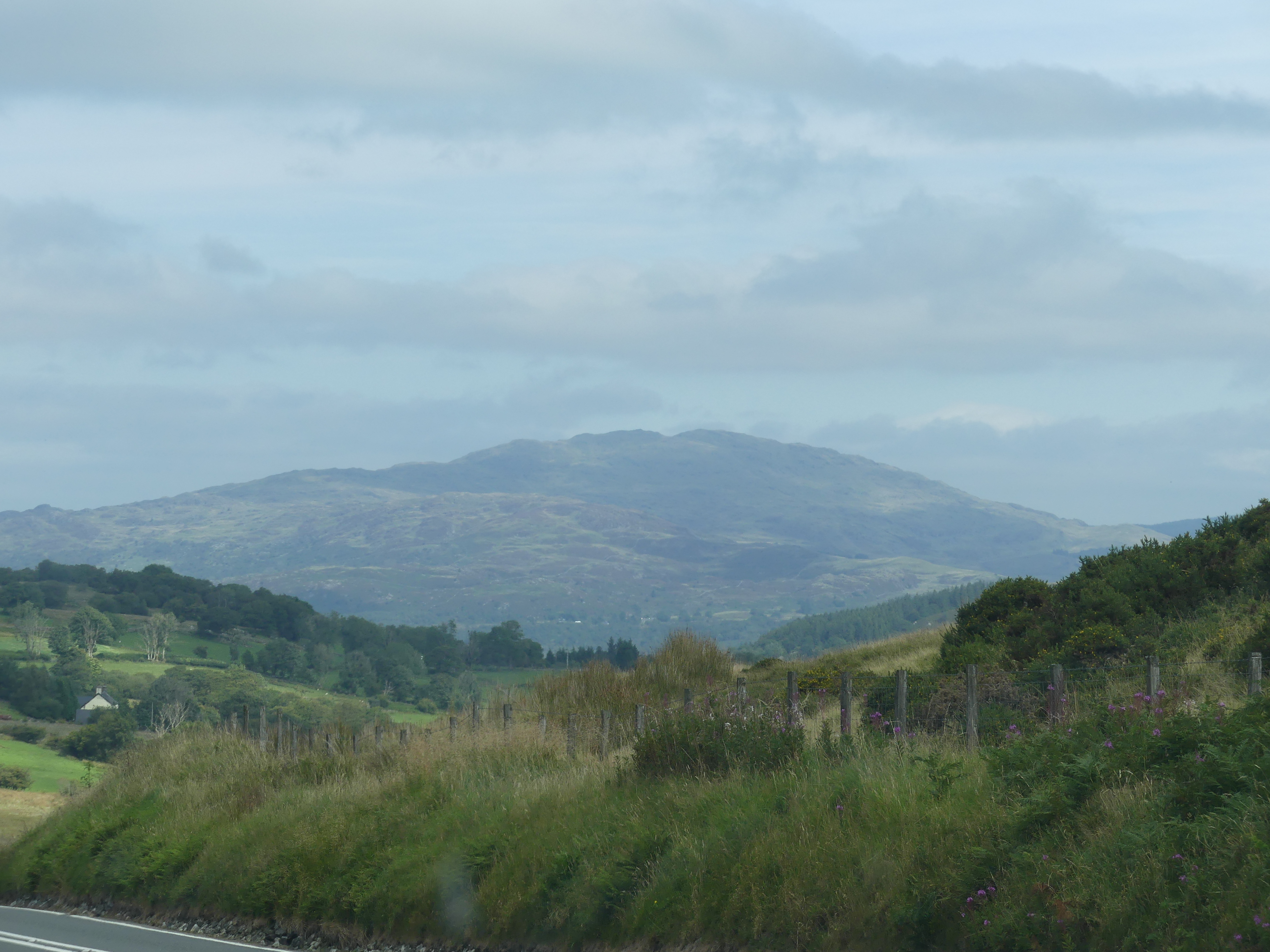
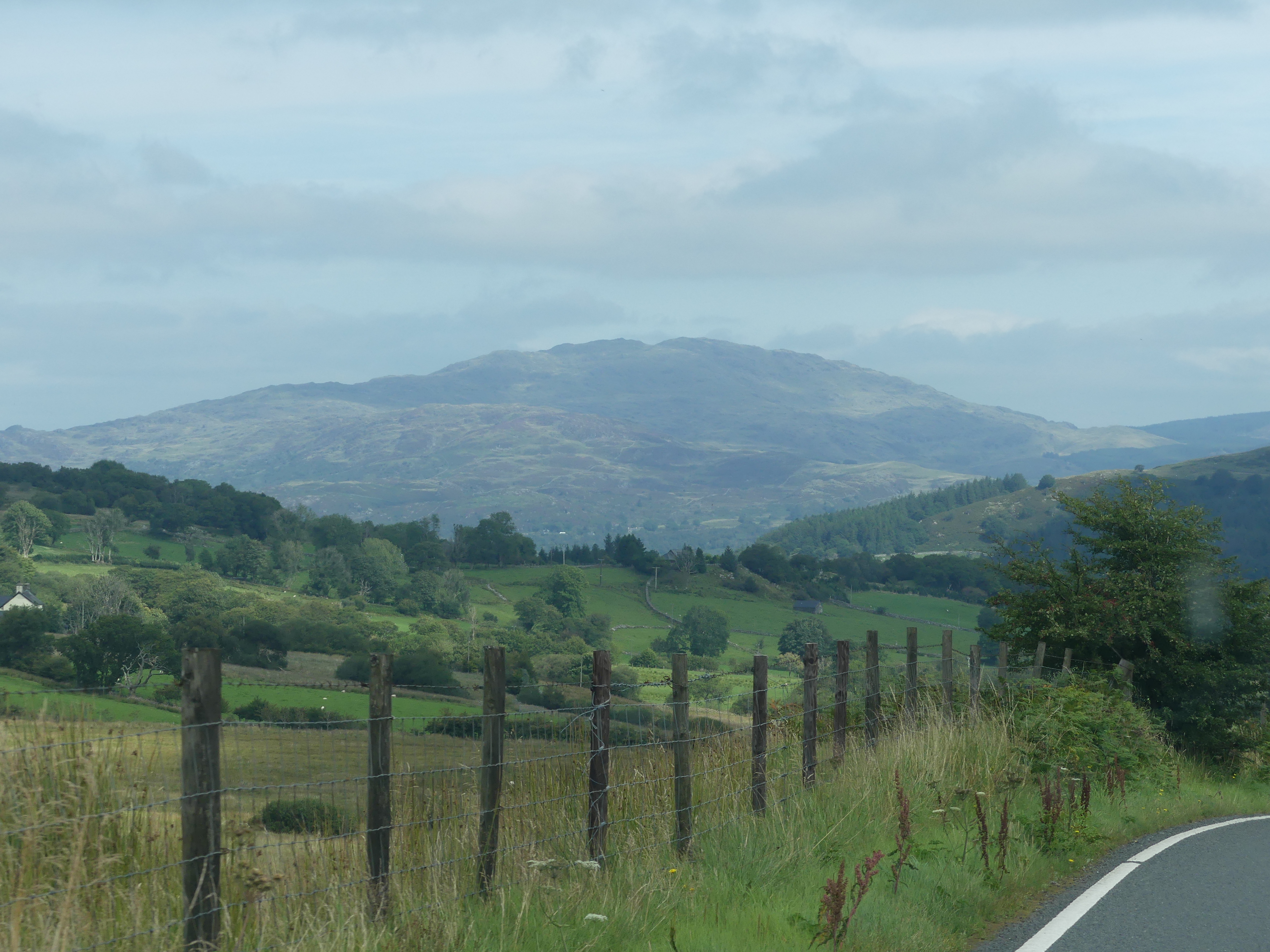
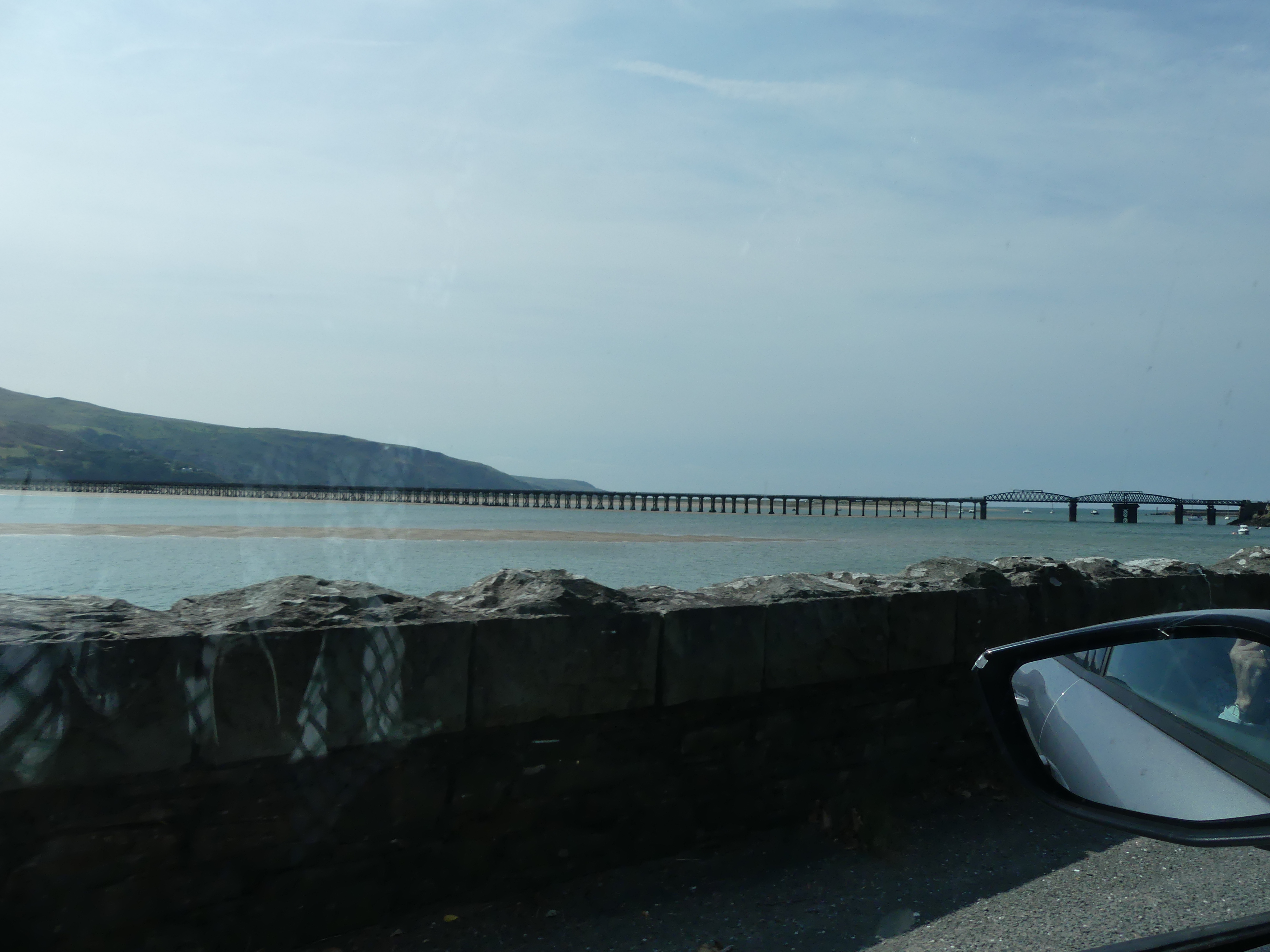
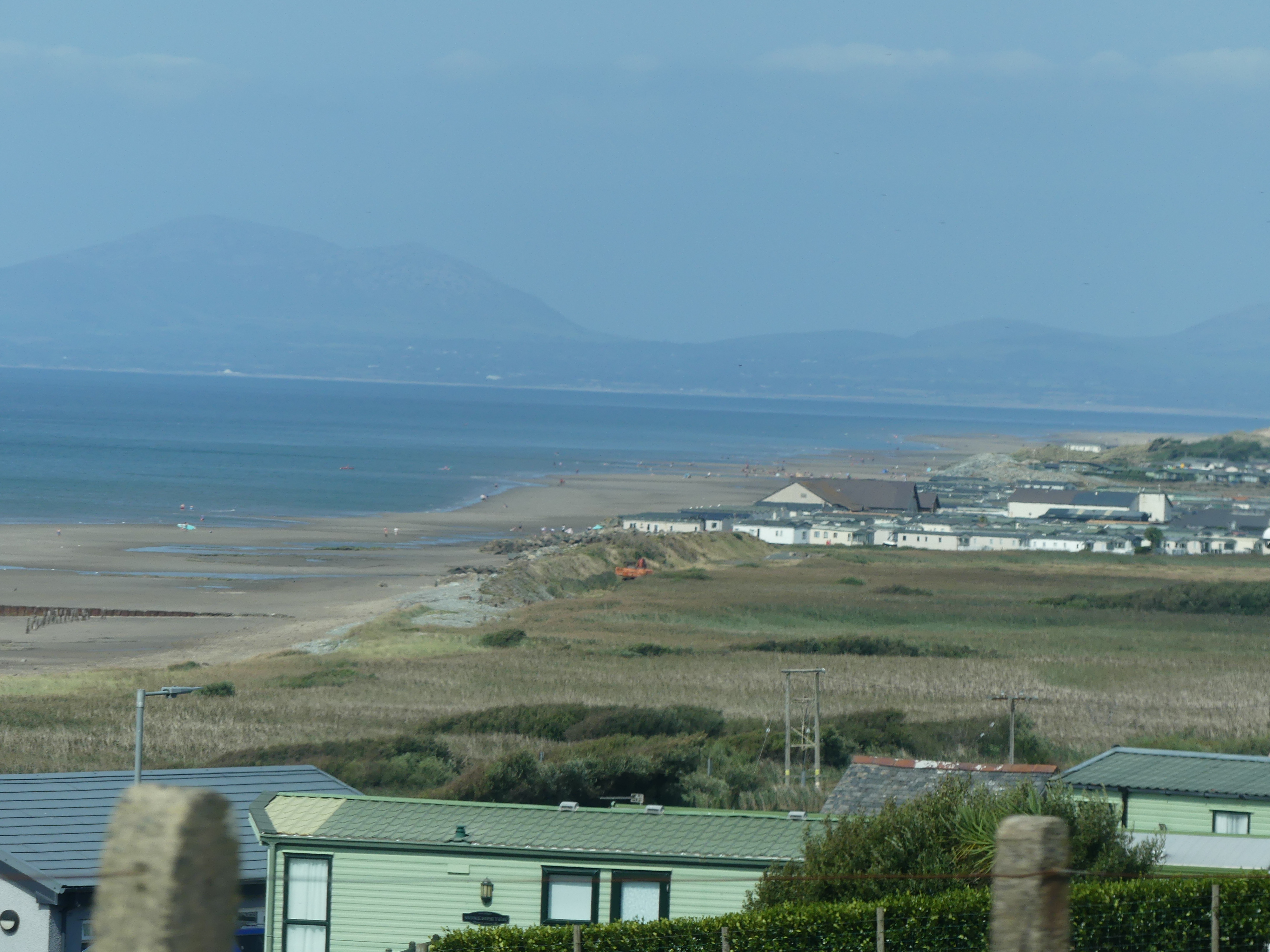
The drive to Harlech was very picturesque and I could not put my camera down.

CHATEAU RHIANFA PLAS RHIANFA

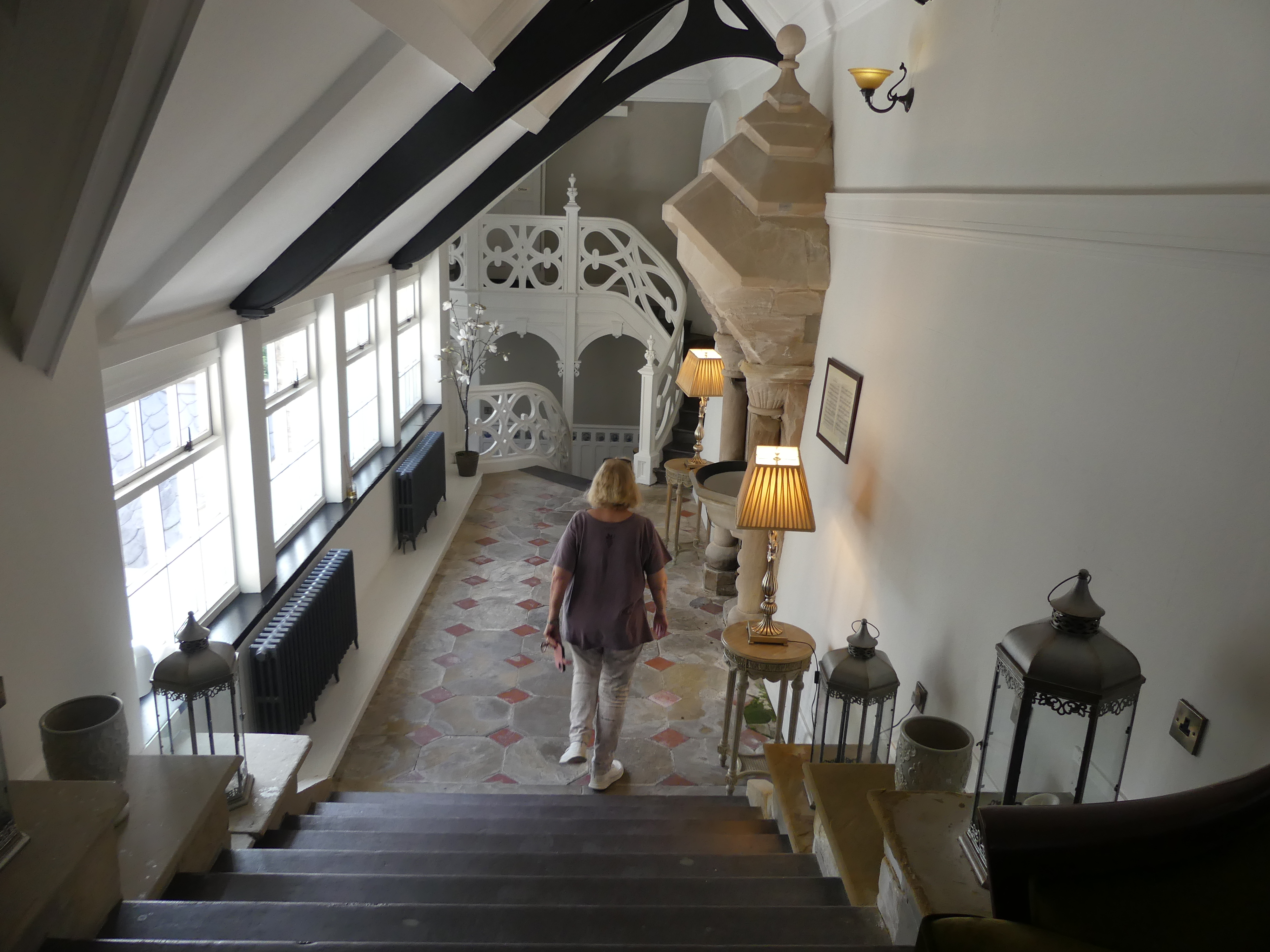
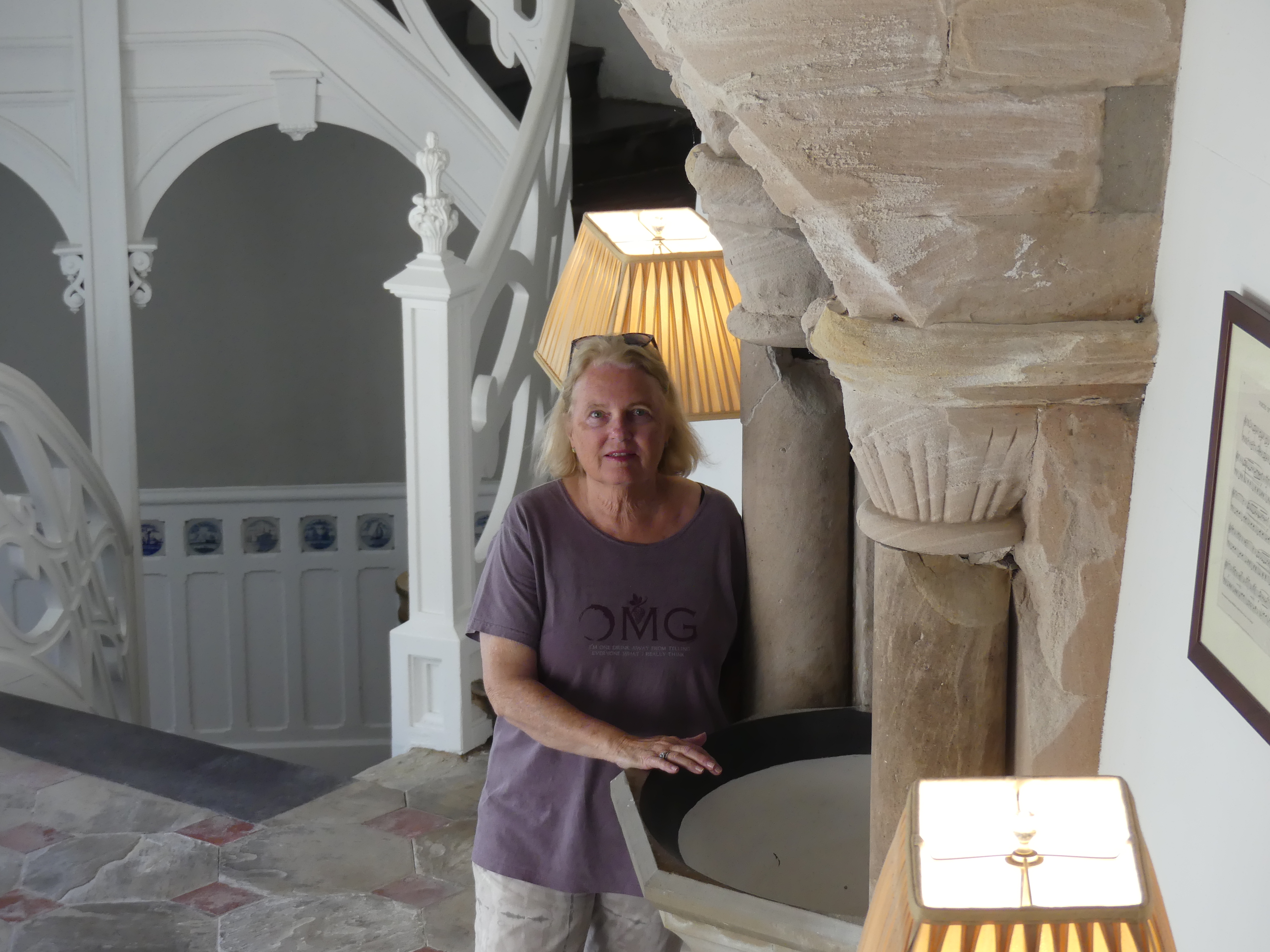
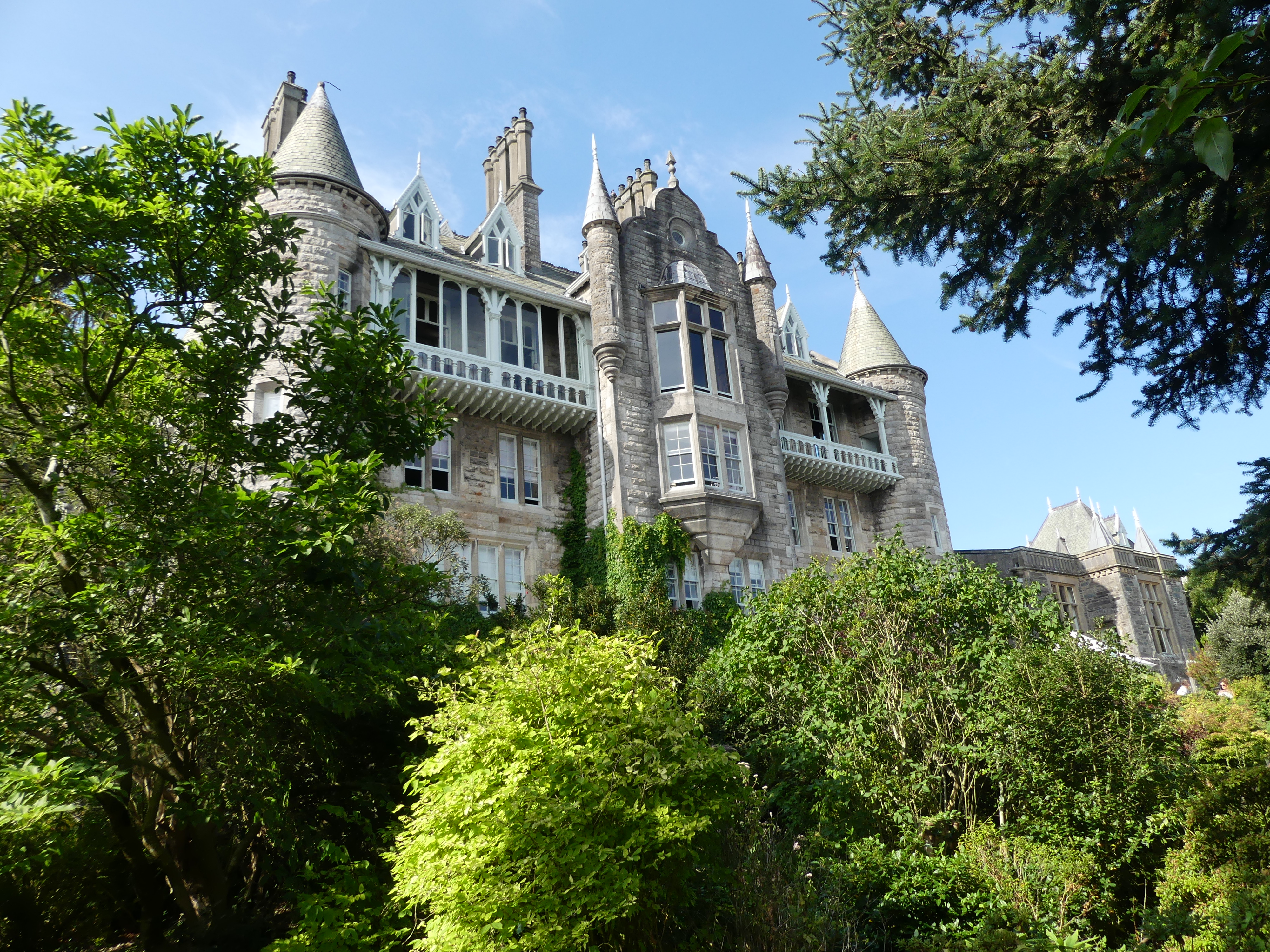
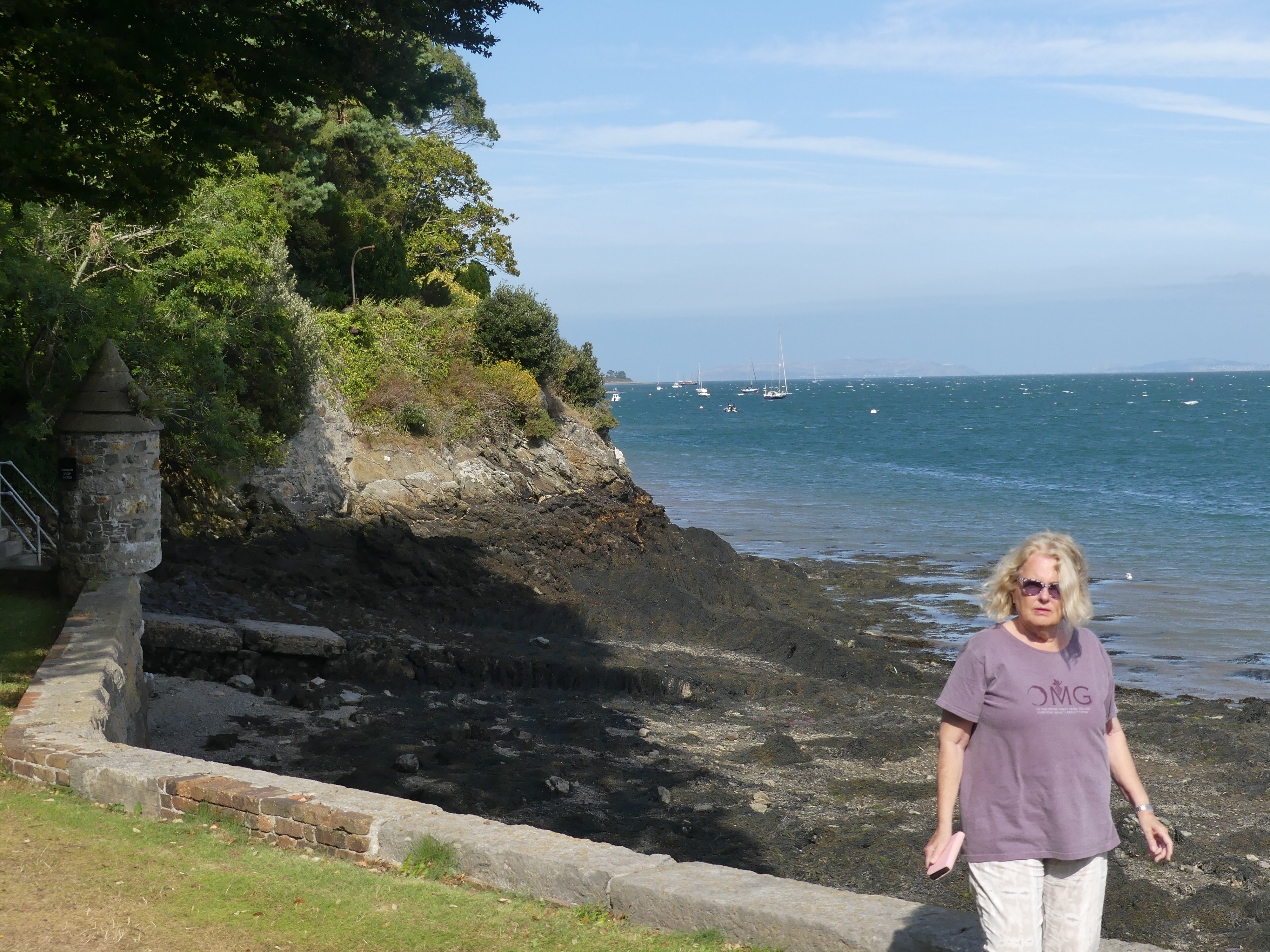
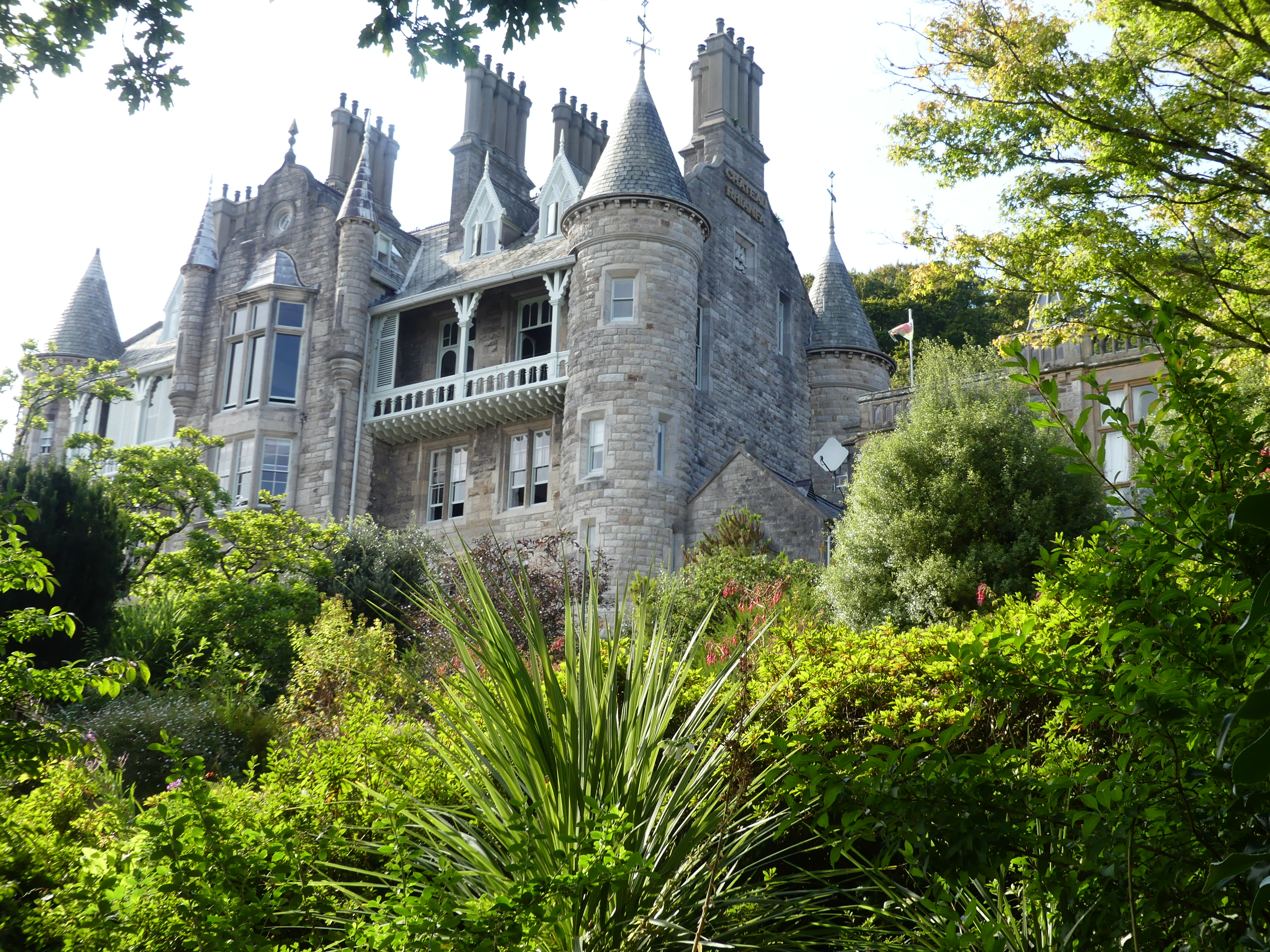
We arrived in Angelsey about mid afternoon and crossed the Menai Bridge. We proceeded along the road following the bay until we noted the entrance – a sharp right-hand turn into a crowded driveway. Chateau Rhianfa, is located on Menai, between Menai Bridge and Beaumaris. The house was built for Sir John Hay-Williams, 2nd Baronet of Bodelwyddan, and his wife Lady Sarah Elizabeth Hay-Williams with construction commencing in 1849 and completed in 1851. The house remained in the possession of the Williams family until 1957 when it was sold and converted into several apartments. Most of the land surrounding the house was also sold, leaving three acres attached to the estate. In 2012 the building reopened as a hotel, with three cottages within the estate converted into guest houses. My photos below show our bedroom – first round bed that I can recall and it was not all that comfortable. It proved to be unusual to sleep in. The bar was quaint but did not seem to be used regularly. Down on the waterfront we looked back to the mainland. The wind was constant and quite cool. The last photo of the exterior of the hotel showing a tower is in fact a view of our bedroom from the outside of the building.

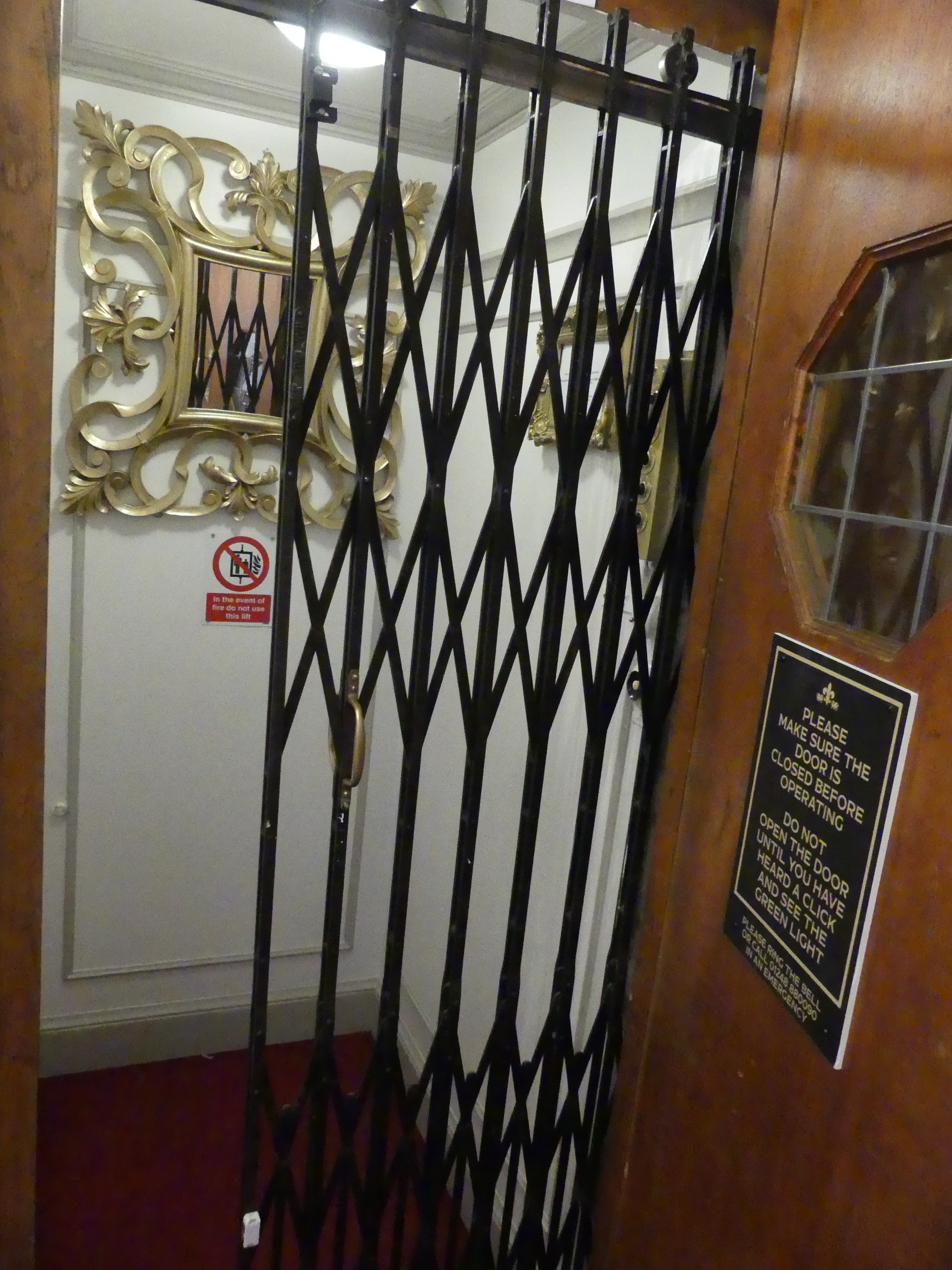
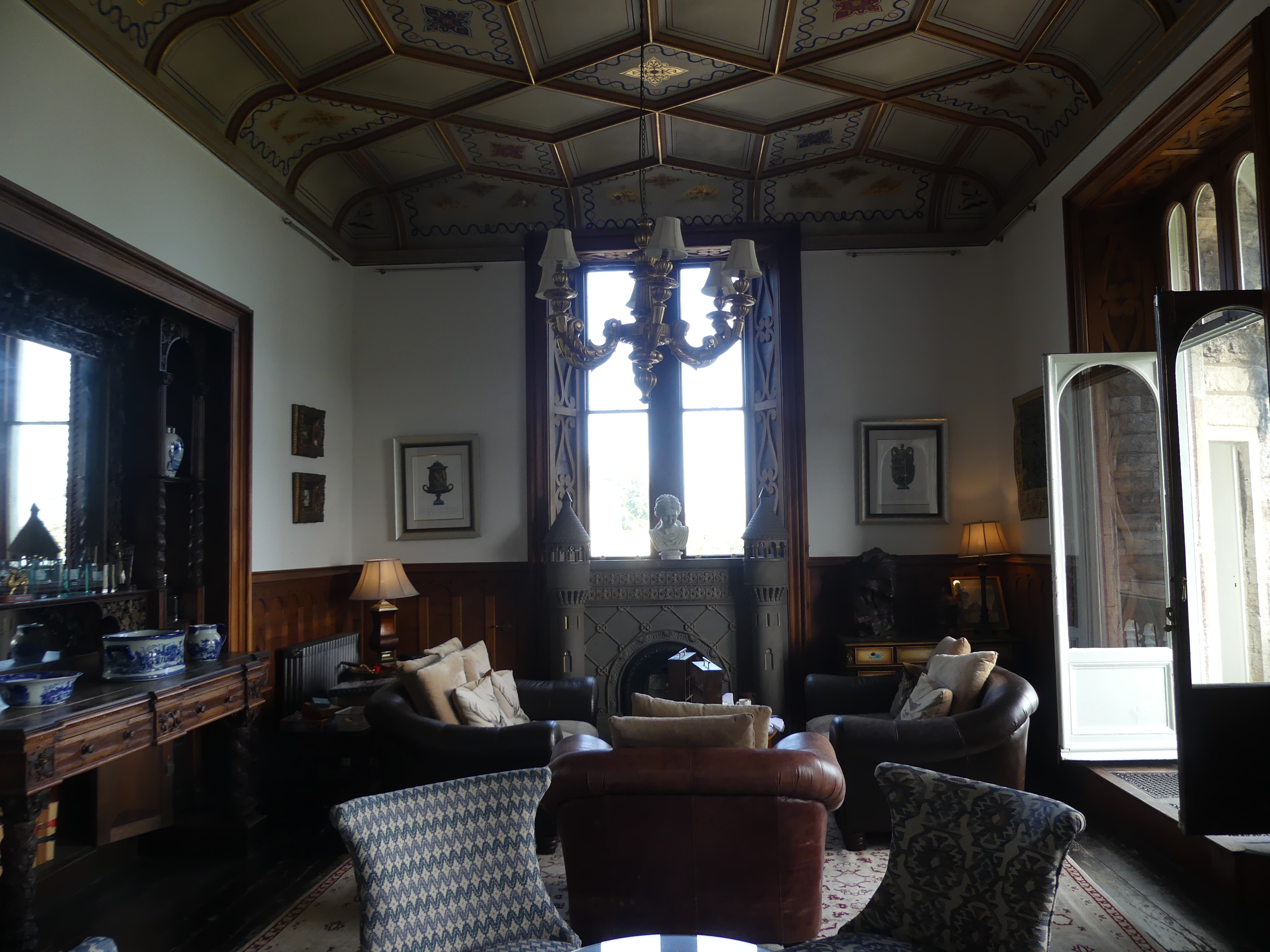
The hotel has been appointed with luxurious furniture and fittings in accord with the style of the building. It is surrounded by gardens and fronts the Menai Strait. The layout of the hotel was quirky but that appeals to us and makes it more interesting. It has an elevator which we gave a lot of use while we were there. Our photos give you a tour of the hotel, Menai Strait on a windy day and the elevator. The following day we had time to move through the many rooms of the hotel starting from the carpark at the entrance then the 3 lounges overlooking the waters of Menai Strait, the corner day bed on the verandah on the first floor, the top of the stairs and the chairs for the elderly to rest after the climb, some wild flowers sprung up in the garden and then the famous lift.

CAERNARFON AND ITS CASTLE

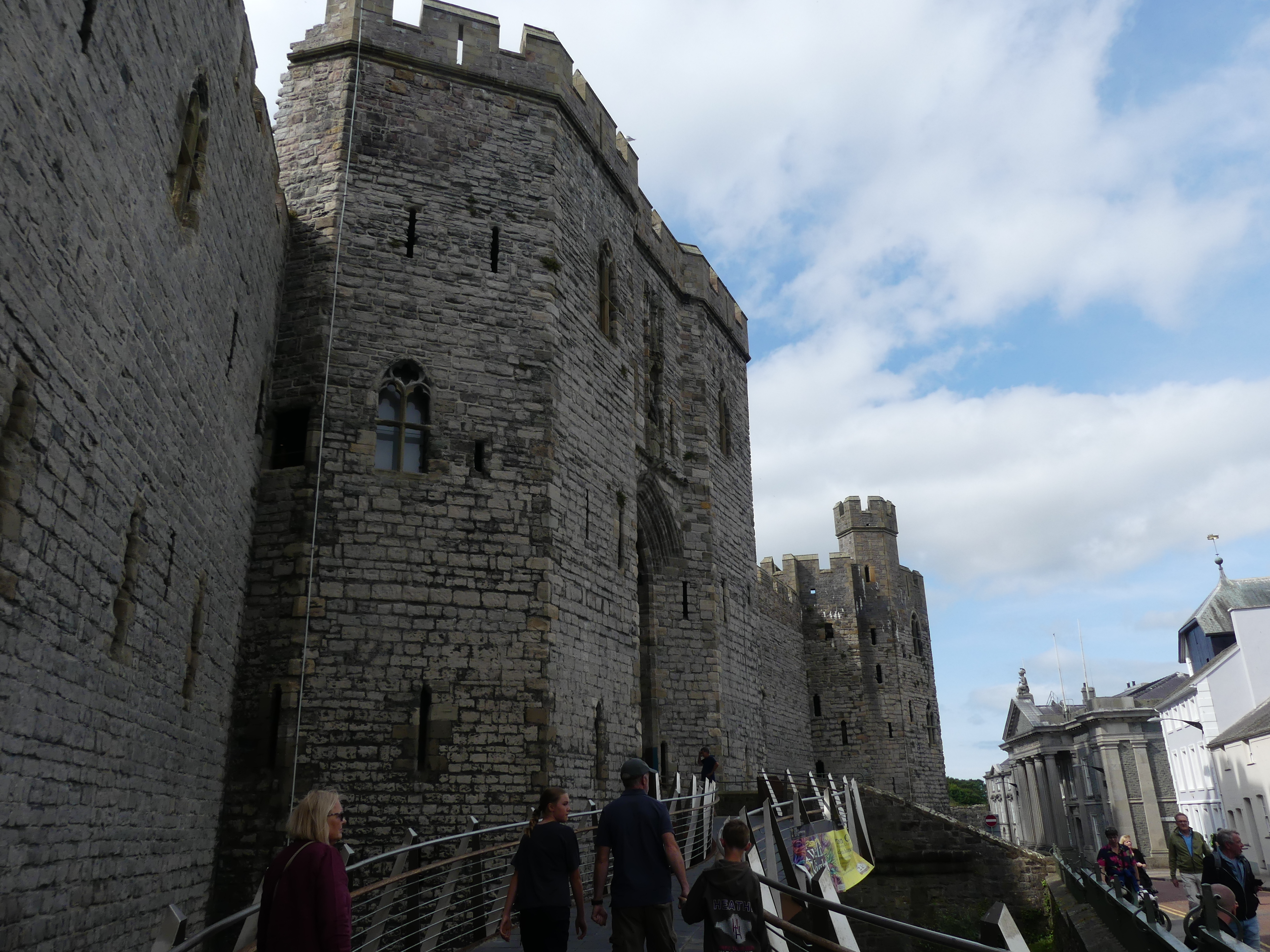
One of the attractions for me in visiting Anglesey was Caernarfon Castle. Although it is located in Caernarfon some 20 minutes drive away, I was keen to visit the castle which has maintained some of its medieval history. One of the best things about travel by road in the UK is their postal system where every residence, business, Government Office and castle has an individual post code and the g.p.s. system on my phone or in the car operated to locate and direct us to where we wanted to be. So locating the castle – no problem. Finding parking – always a bloody headache and this occasion was no exception. When you do find public parking it was different in every village and it took some time to understand what had to be done to avoid a fine – nerve wracking.

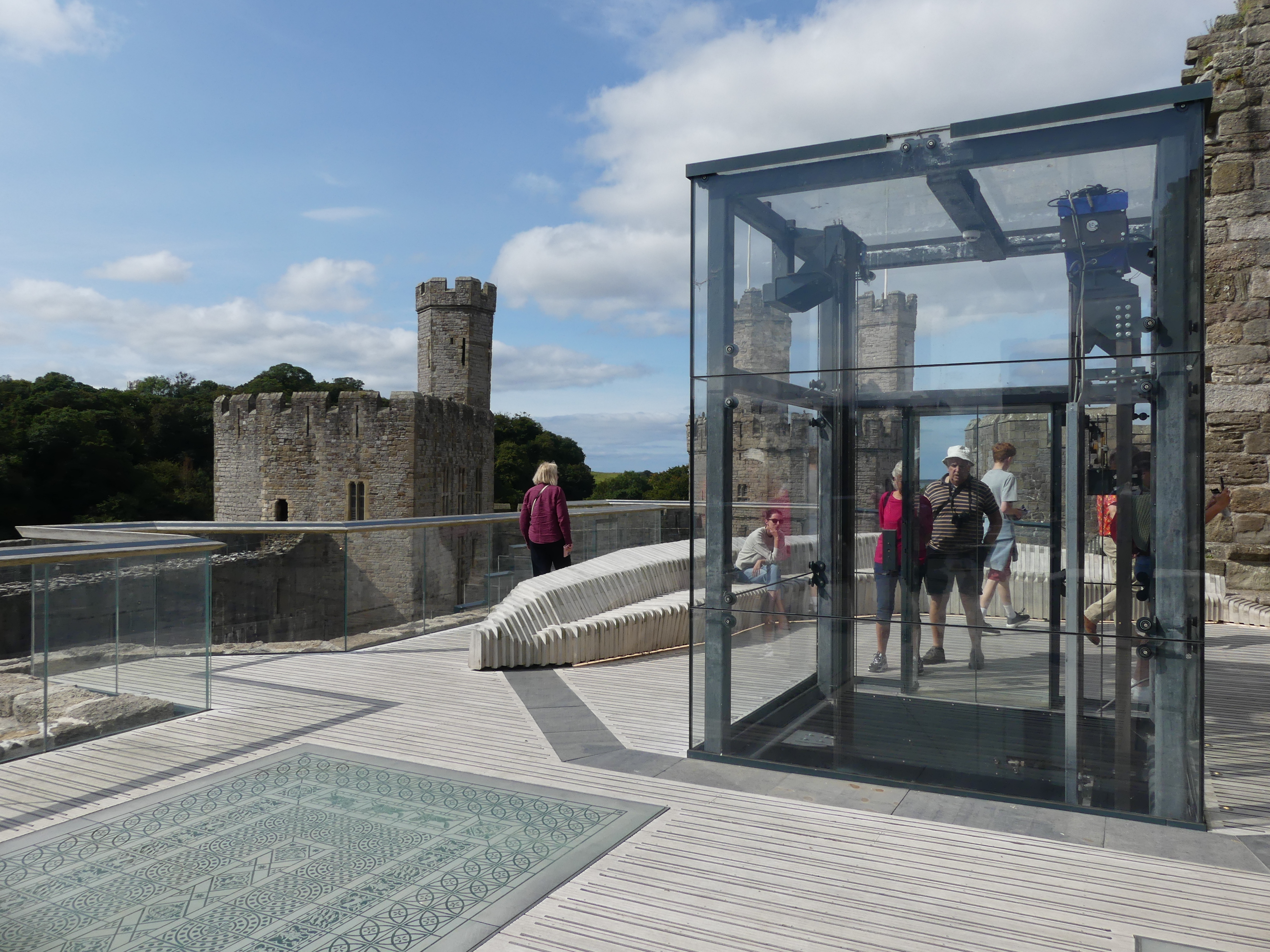
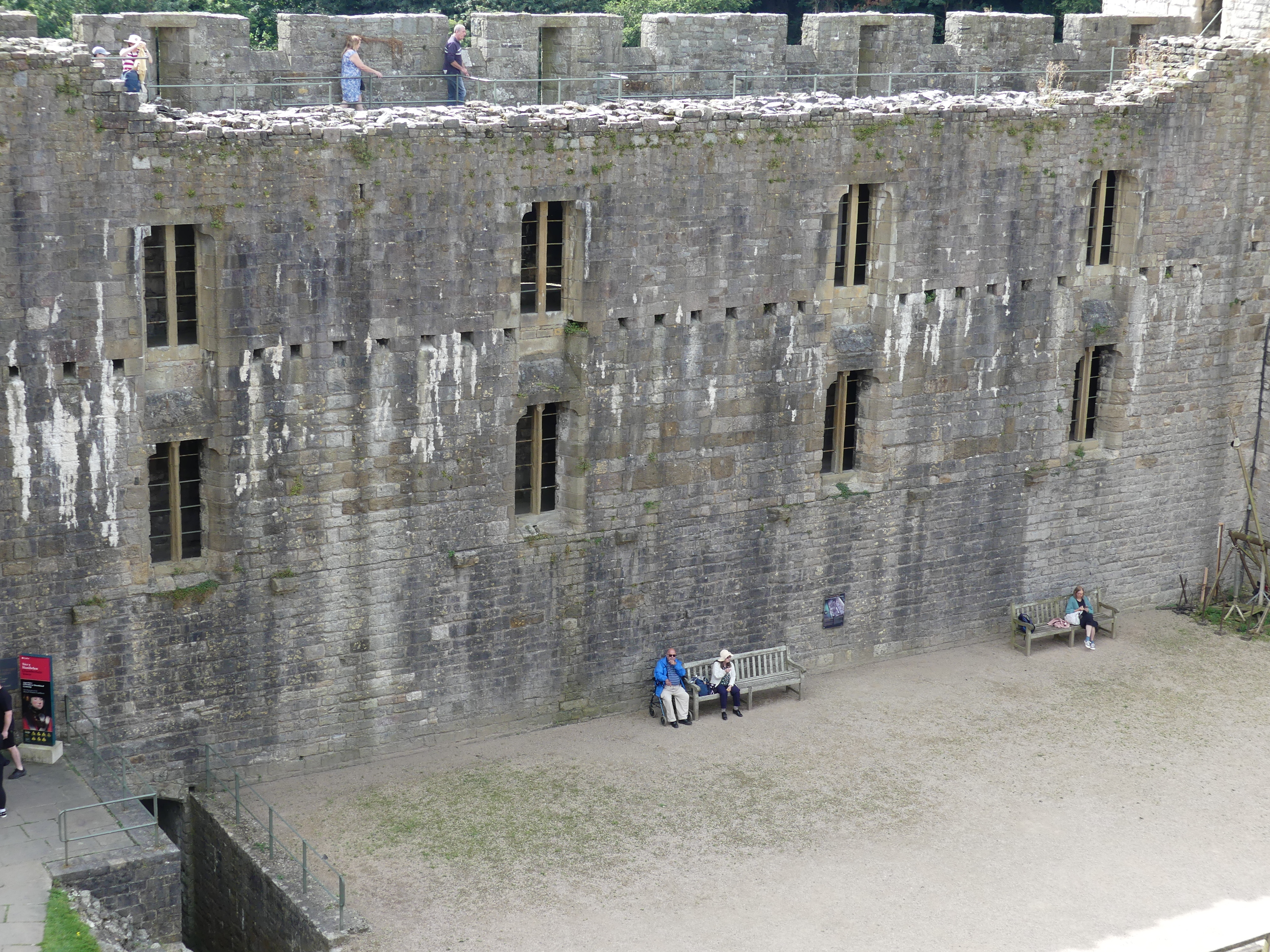
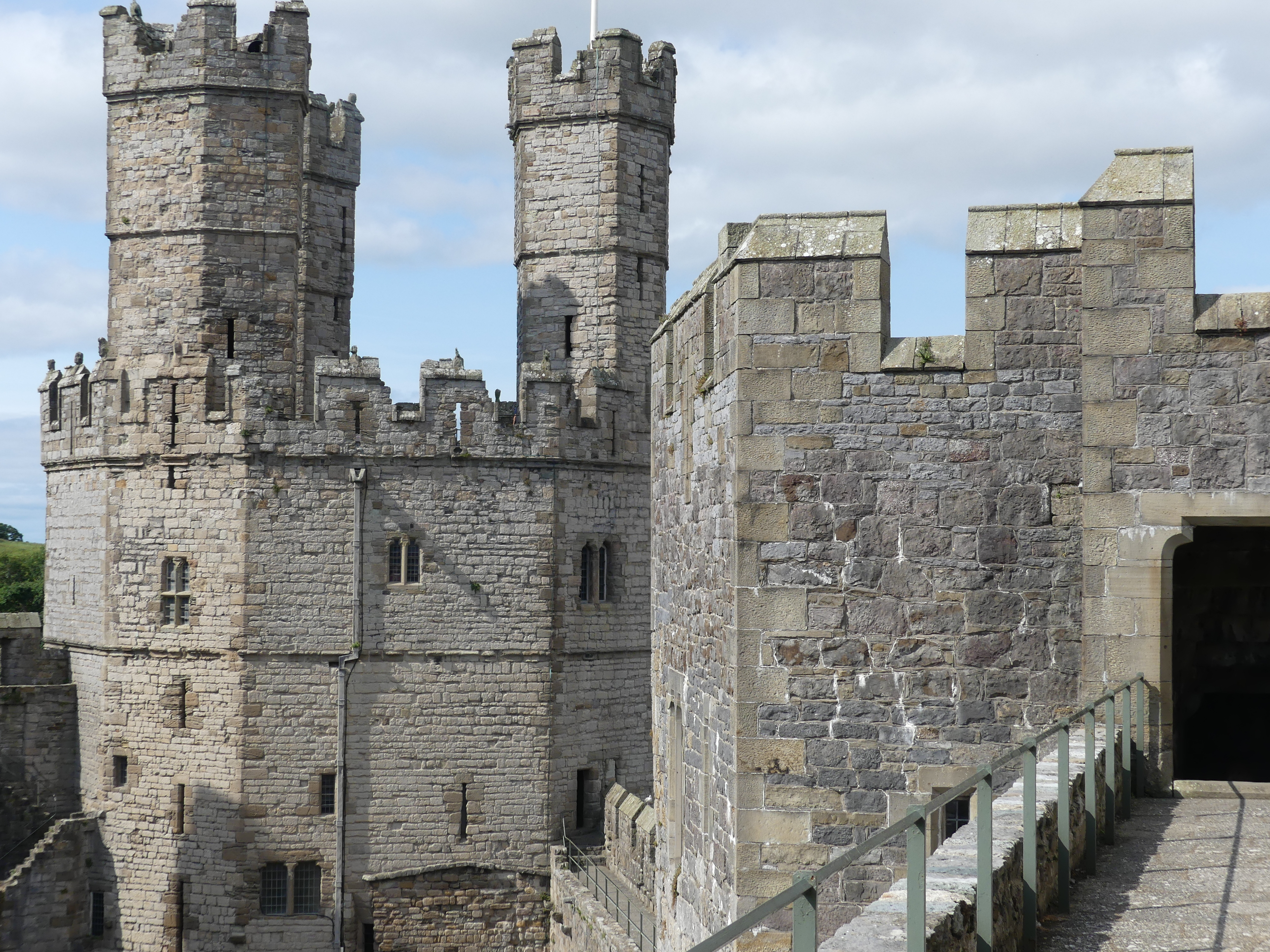
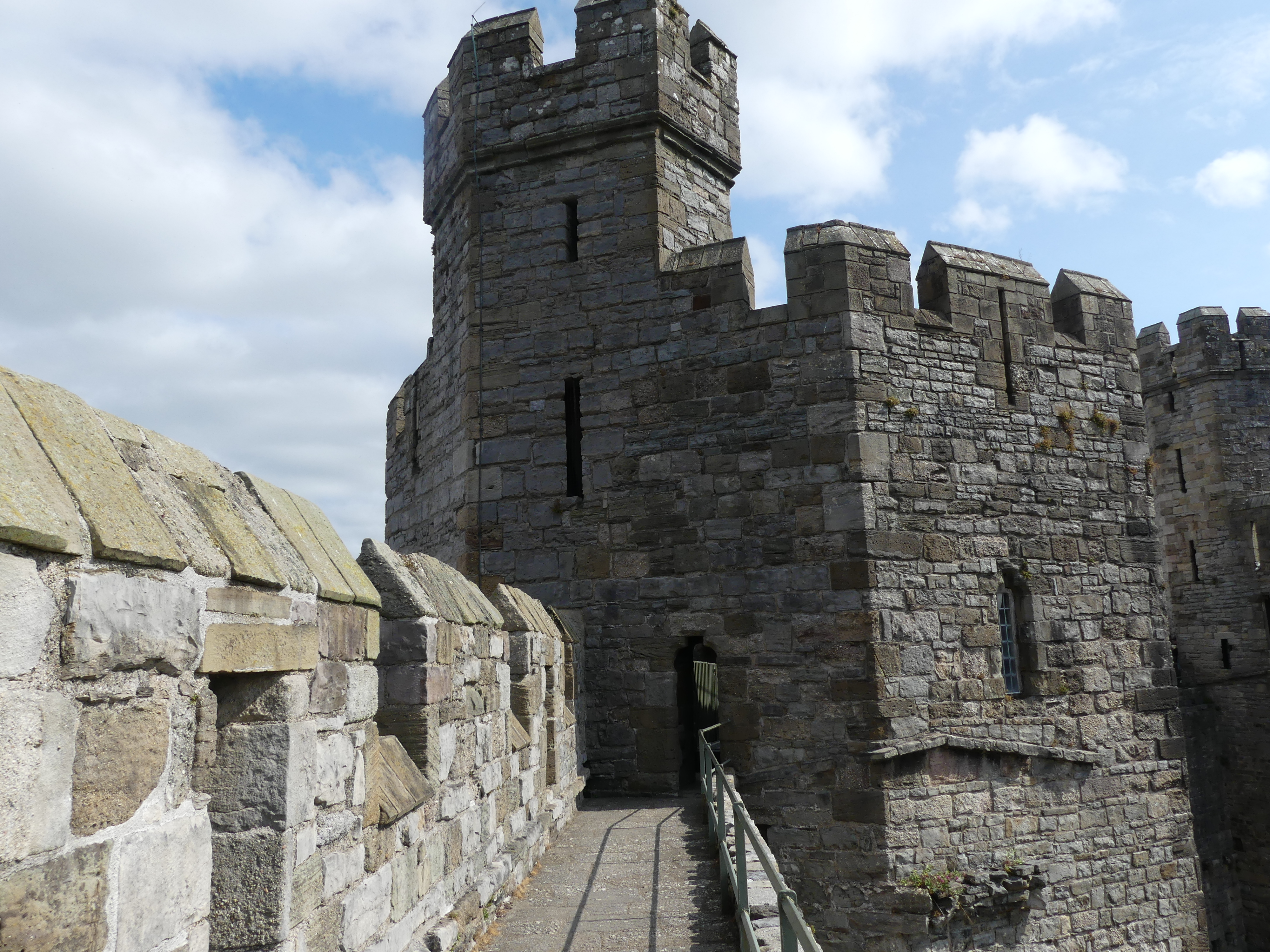
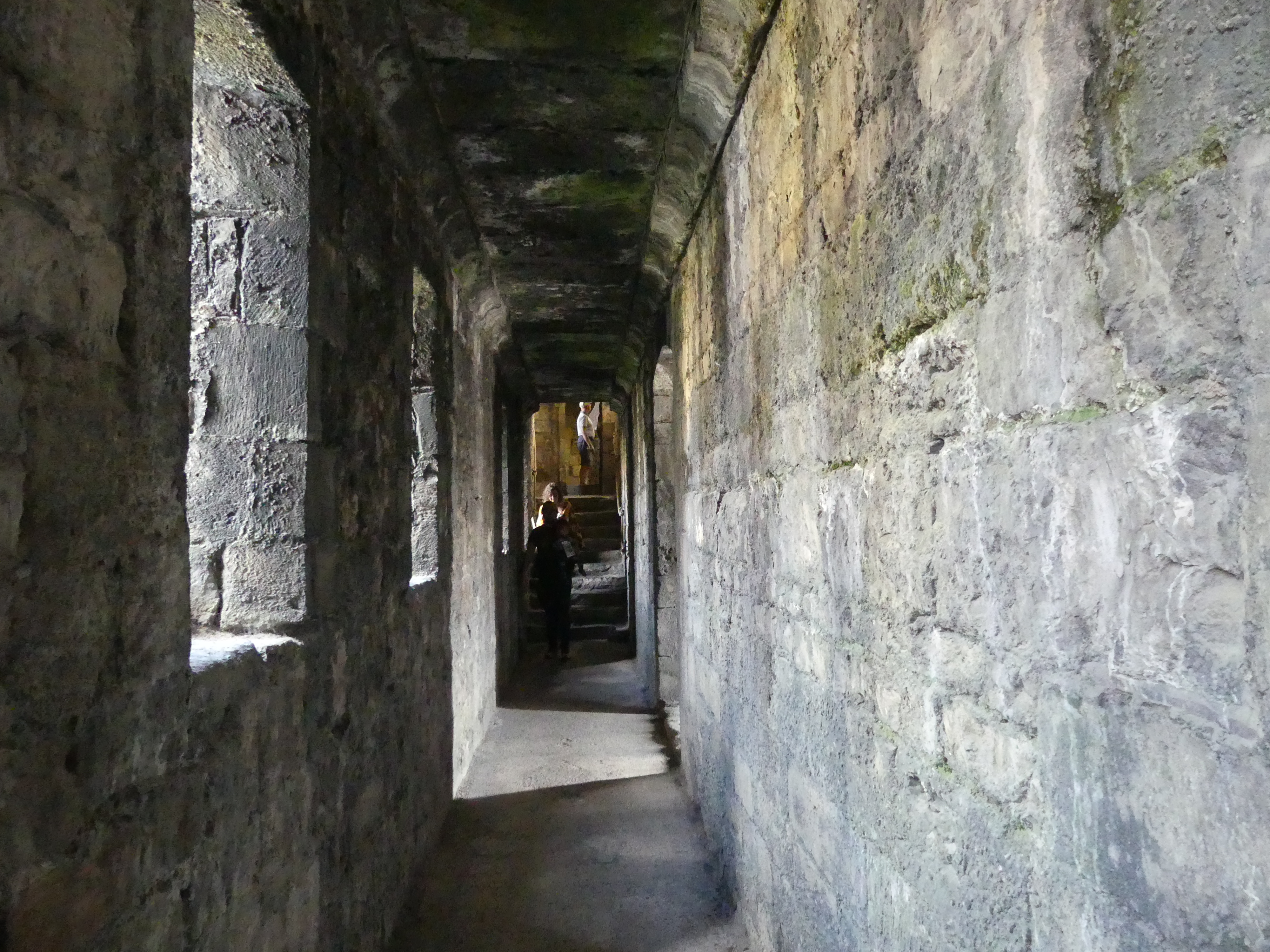
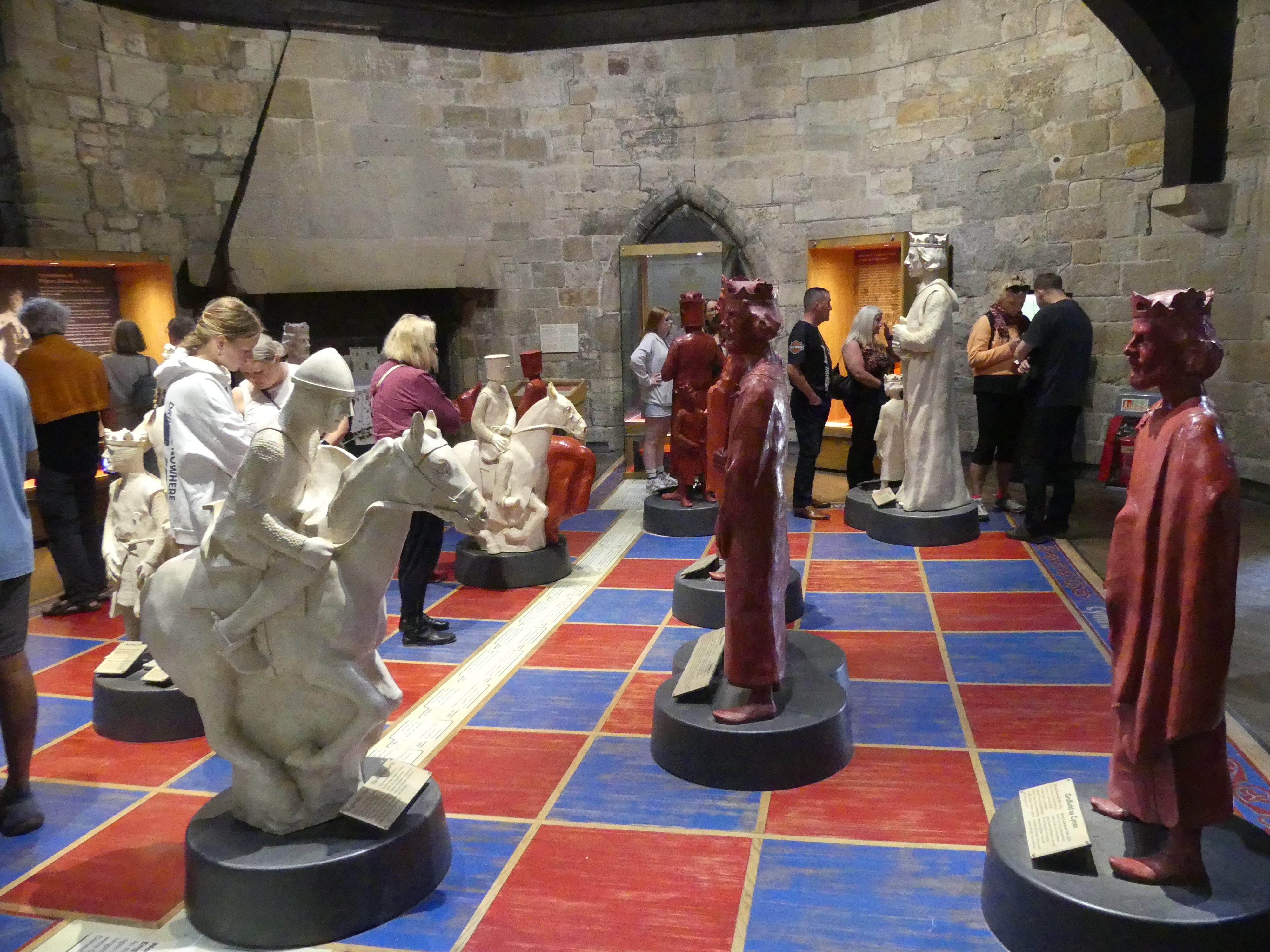
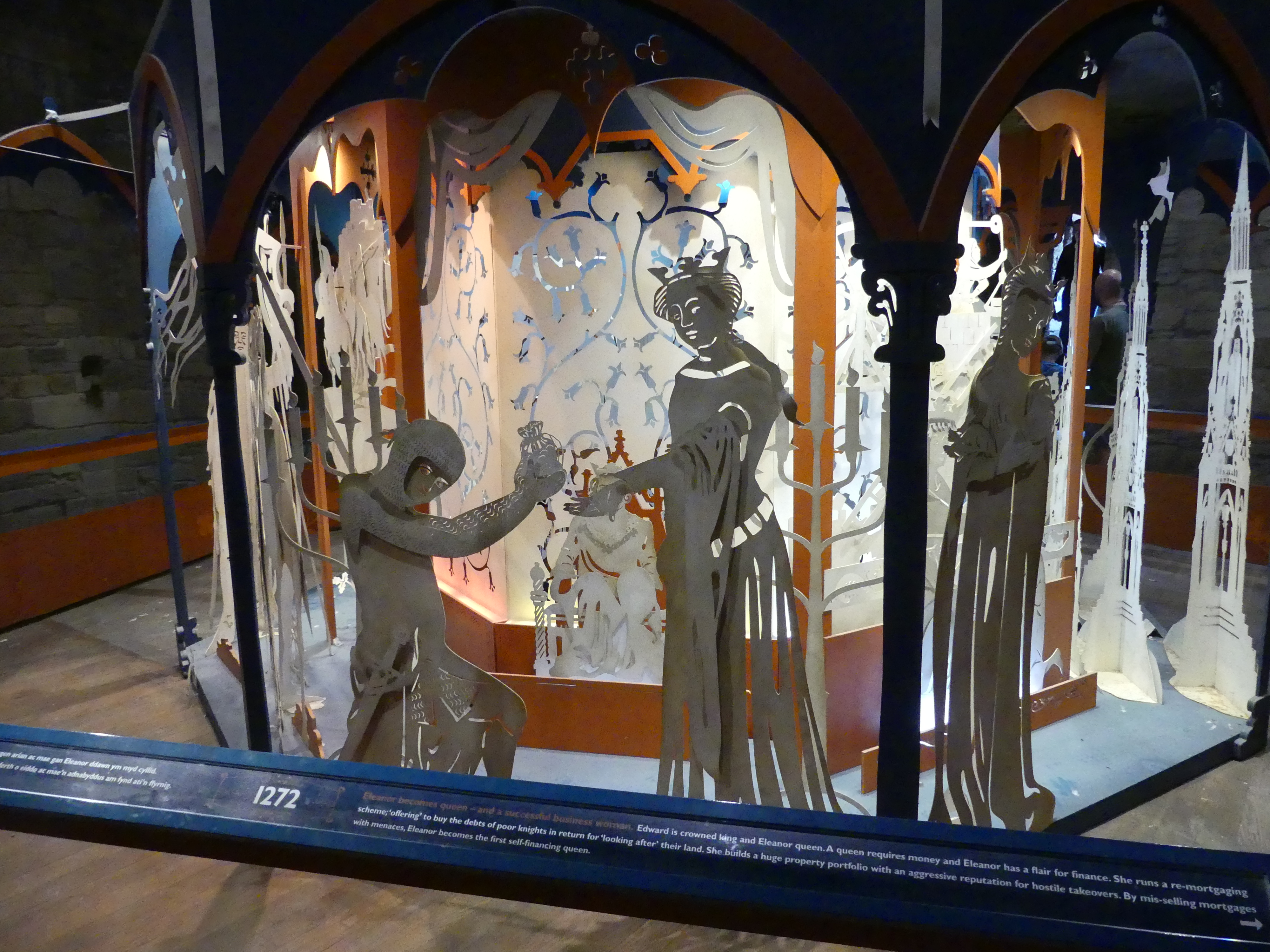
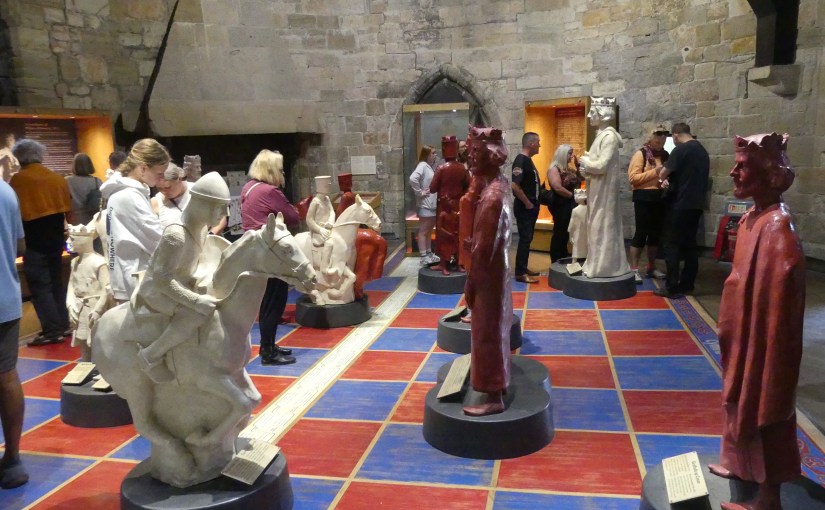
We found the public parking, determined the manner for payment and walked off with fingers crossed. We found one of the gates in the remaining walls of the castle and inside those gates was the streets and businesses given the protection of those walls. Like the “Black Boy Inn” and there did not appear to be any offense taken by the residents. After progressing through to the inner keep, we came to the ticket office and once again our 7 days Cadw pass gained us free entry. That pass saved us a huge sum of entry fees. Inside the inner sanctum of the castle was a mixture of medieval and modern. For the first time the castle had an elevator of modern design and faultless operation. Our photos show that this was a strongly fortified and important place. It was large as castles go and you could well imagine the comfort it afforded the residents living and working in the outer keep. One of the towers had been fitted out to tell some of the stories of the castle – one was a chess set with the key players shown as Kings Queens Knights Bishops and Pawns and the other concerning Edward I and Eleanor of Castile, his queen, particularly how Eleanor retained power after Edwards death.

Her story is told in the collage shown in my pictures above. Eleanor of Castile (1241 – 28 November 1290) was Queen of England as the first wife of Edward I. She also ruled as Countess of Ponthieu in her own right from 1279. Her marriage was to secure and affirm English sovereignty over Gascony. As a 13-year-old, Eleanor was married to Edward on 1 November 1254. She is believed to have birthed a child not long after.

Simon de Montfort’s government imprisoned her in Westminster Palace. Eleanor took an active role in Edward’s reign as he began to take control of Henry III’s post-war government. The marriage was particularly close; Edward and Eleanor traveled together extensively, including the Ninth Crusade. In her lifetime, Eleanor was disliked for her property dealings and the supposed exploitation of Jews, bringing her into conflict with the church. Eleanor died at Harby near Lincoln in late 1290; following her death, Edward built a stone cross at each stopping place on the journey to London, ending at Charing Cross, known as Eleanor crosses.

Notwithstanding the sources of her wealth, Eleanor’s financial independence had a lasting impact on the institutional standing of English queens, establishing their future independence of action. After her death, Eleanor’s reputation was shaped by conflicting fictitious accounts – both positive and negative – portraying her as either the dedicated companion of Edward I or as a scheming Spaniard. These accounts influenced the fate of the Eleanor crosses, for which she is probably best known today.

Below is the Cadw brochure for the Castle

HOLYHEAD

The port of Holyhead is the busiest UK Irish ferry port and is home to the largest seagoing ferry in the world. The origins of Holyhead (Caergybi) date from 450AD, when Celtic King Caswallon defeated Irish invaders on Holy Island. It is a historic port town, and is the largest town and a community in the county of the Isle of Anglesey, Wales. Holyhead is on Holy Island, bounded by the Irish Sea to the north, and is separated from Anglesey island by the narrow Cymyran Strait, having originally been connected to Anglesey via the Four Mile Bridge. For us it was just on the other side of the island.

We had no idea what to expect. The only thing we knew is that you caught the ferry to Ireland from Holyhead. On arrival at the ferry terminal the first thing we noticed is there is dedicated parking and no charge. In the distance we could see what looked like a passenger ship which turned out to be the ferry.

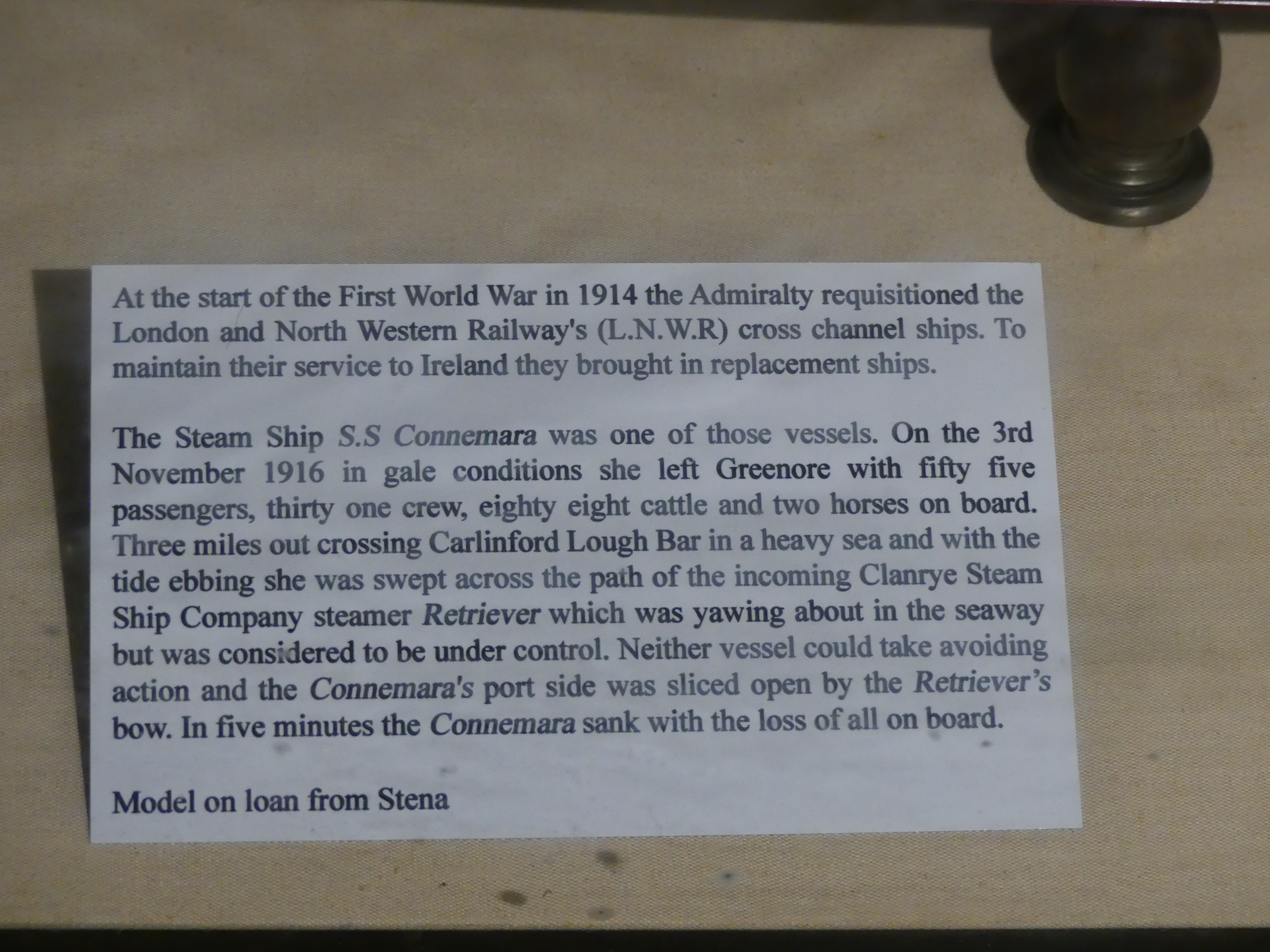
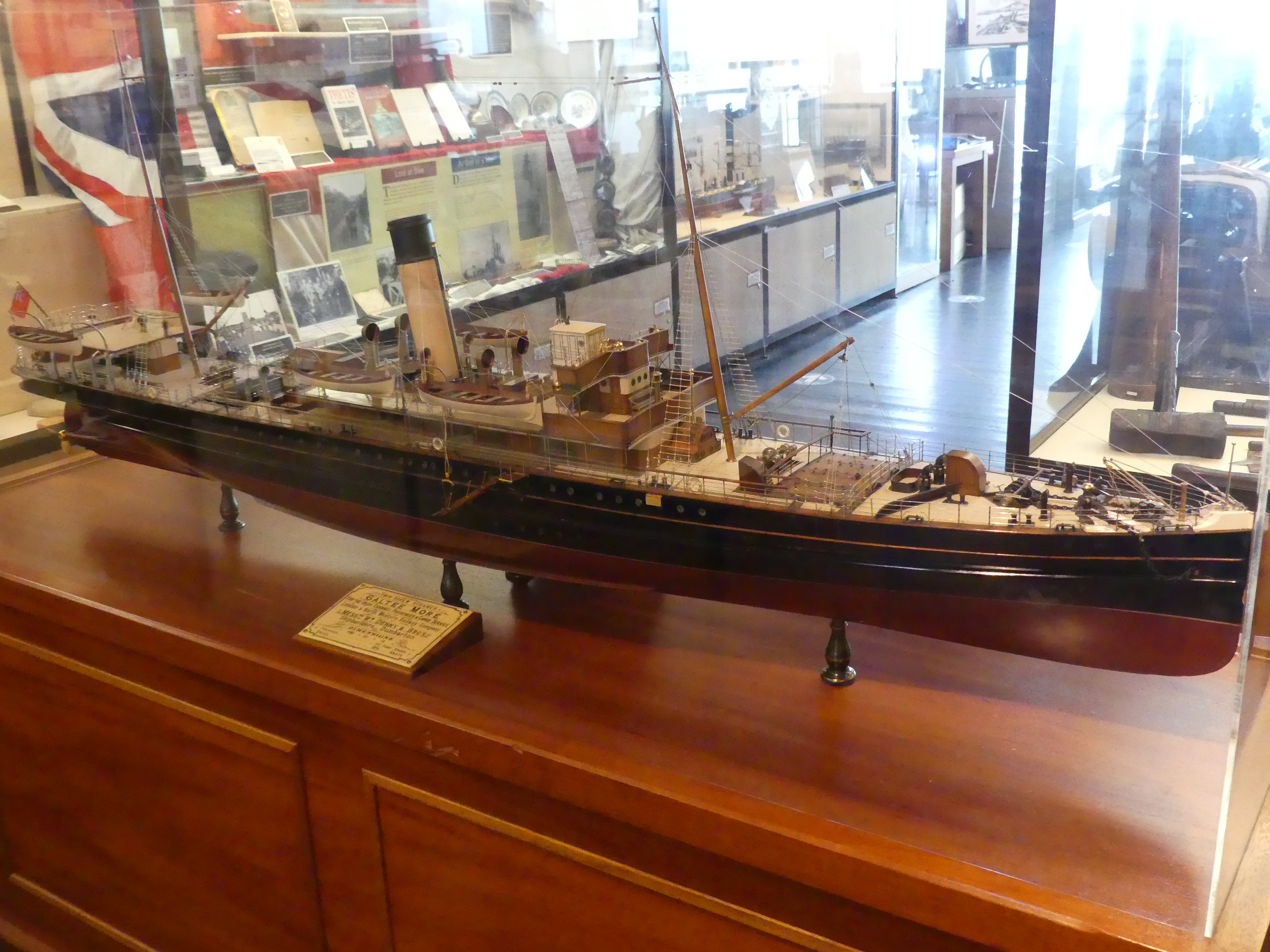
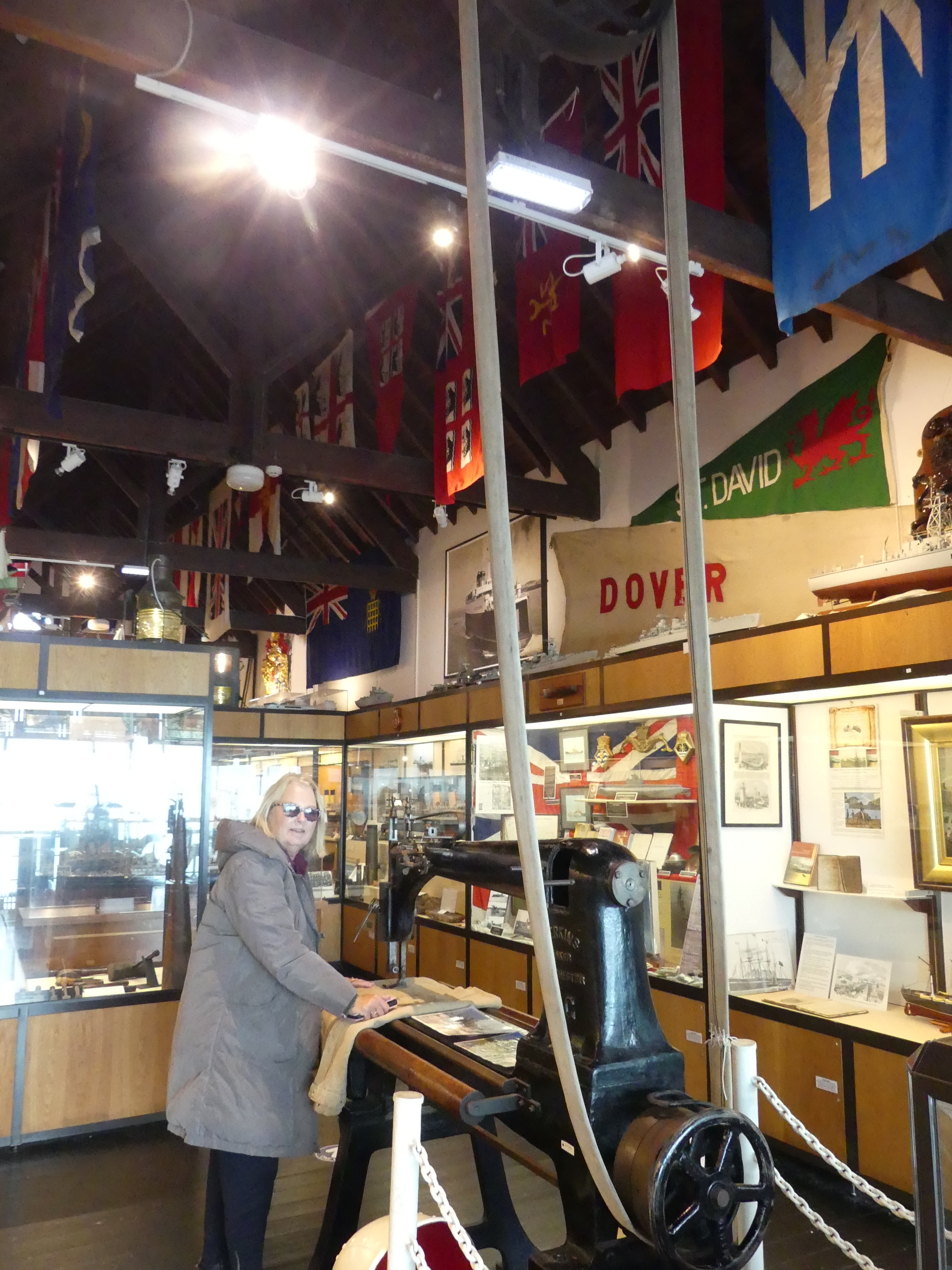
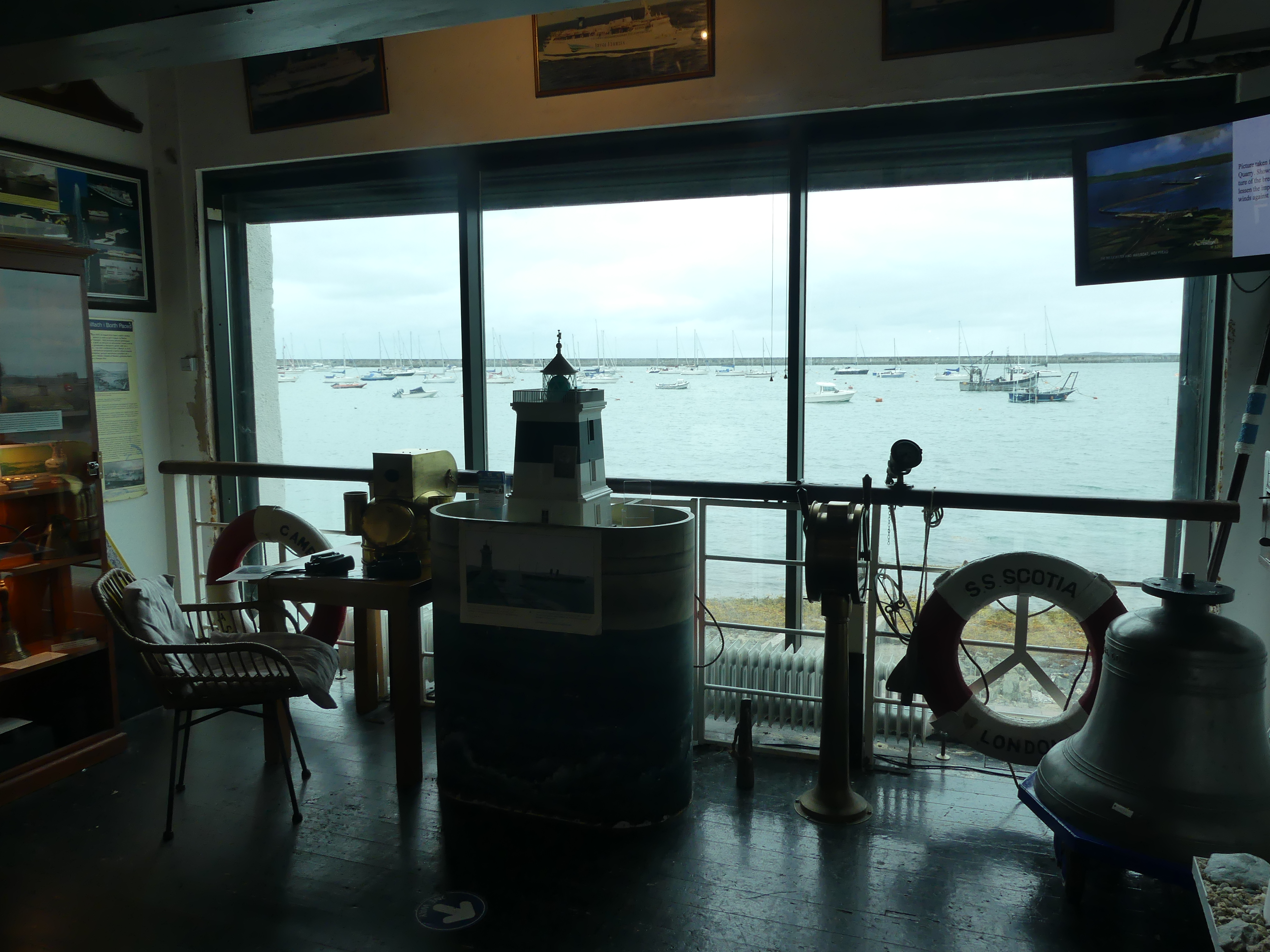
The weather was gray and cold and there was little to see. The thing that caught my eye was a maritime museum sited on the edge of the Bay with a nearby coffee shop and the rails of a former Rescue shed for launching of boats. There was a small entry fee but the volunteers manning the museum were quite prepared to show us around and give us the history of the museum and the displays in the museum. Our photos show the larger building which is the museum with the smaller coffee shop beside it. Kerry found a sewing machine which fascinated her. It was a sail makers machine which once upon a time was driven by steam power and 3 times the size of her industrial machines. Outside of the museum was a brick bomb shelter used during the Wars as Holyhead was a target for enemy planes. It was fitted out as though expecting a raid any moment. After completing our visit we adjourned to the coffee shop and found it was open from lunch only but just for us served us with coffee and cake with the ferry sitting against the wharf.

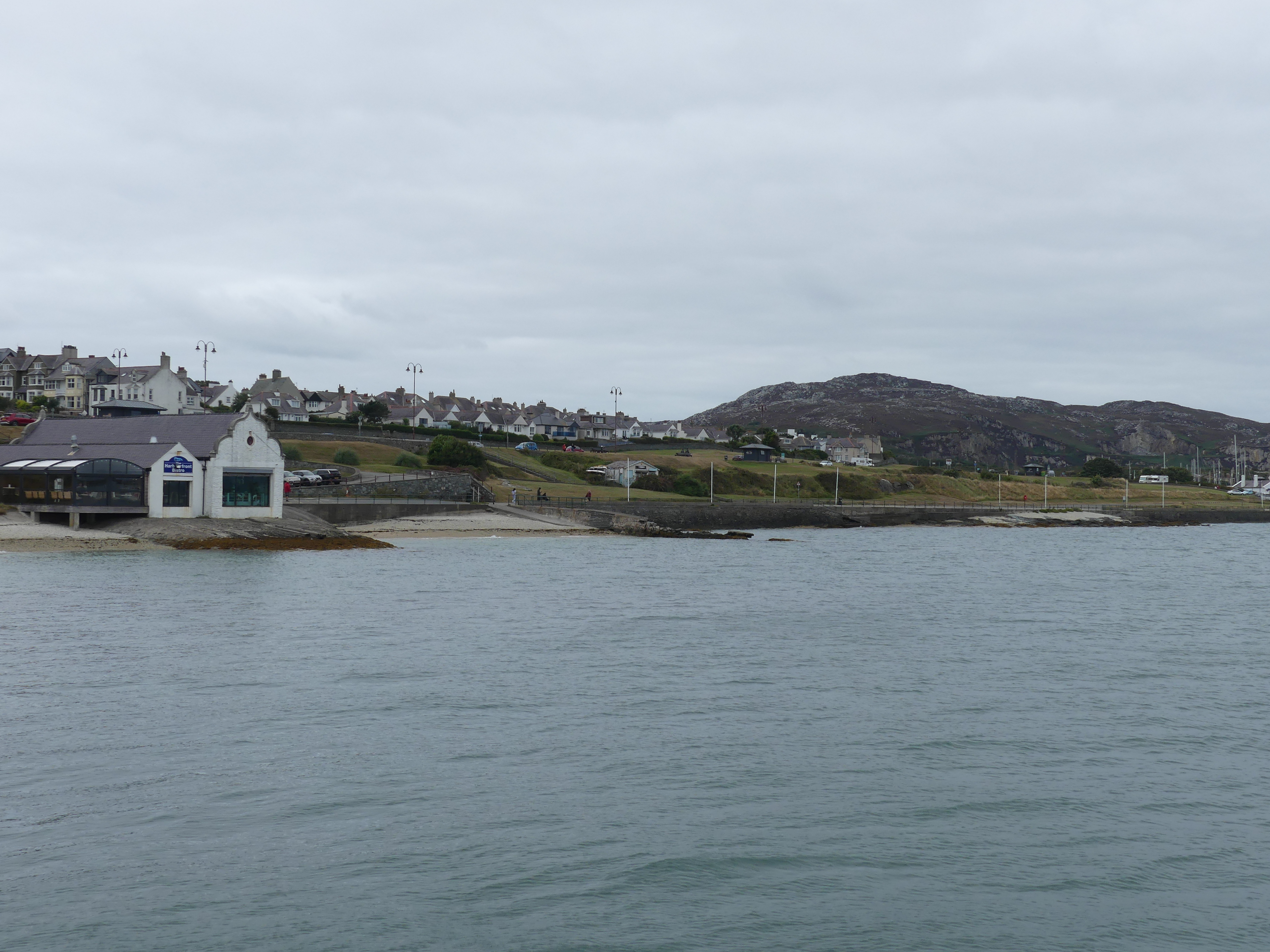
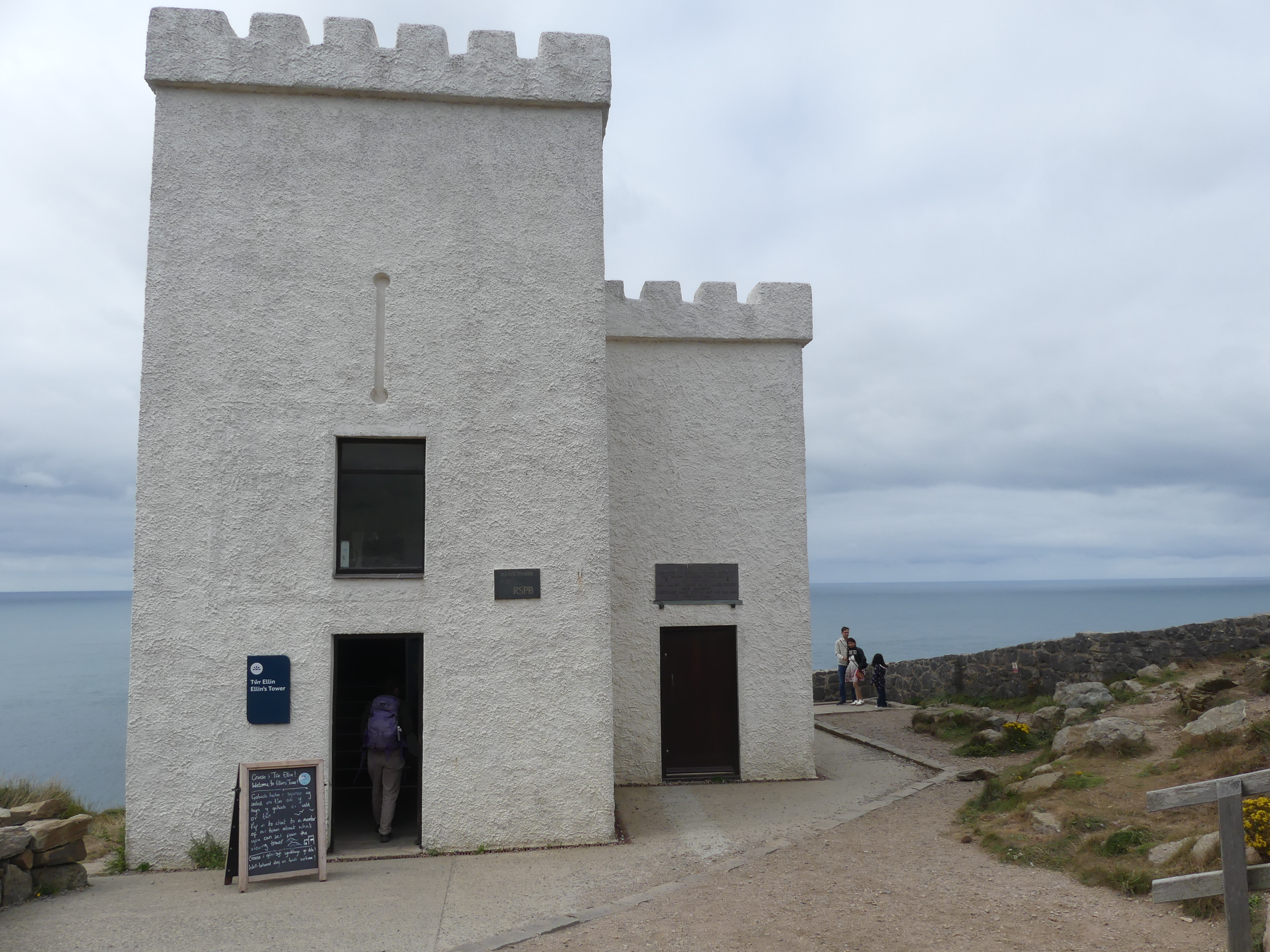
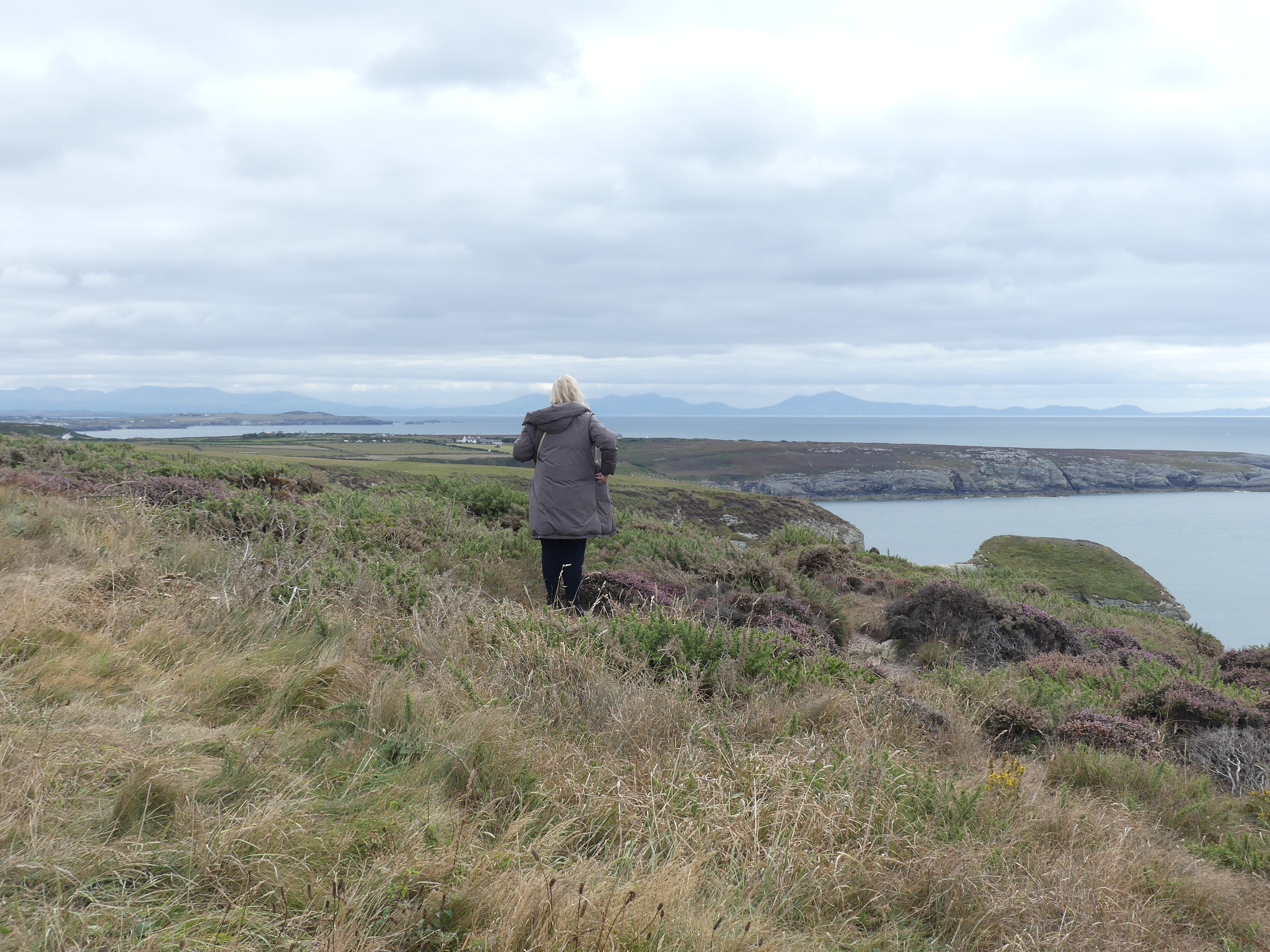
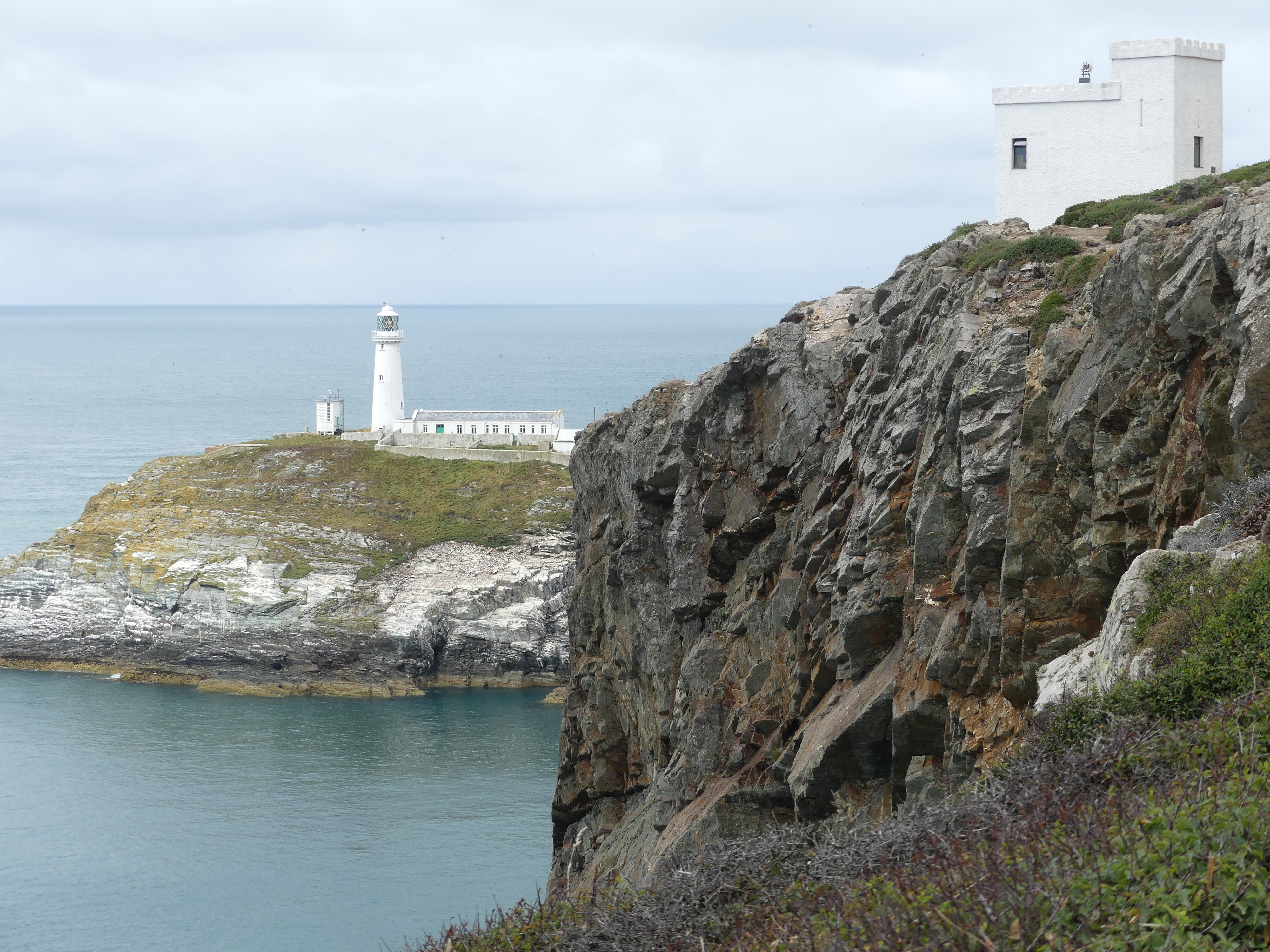
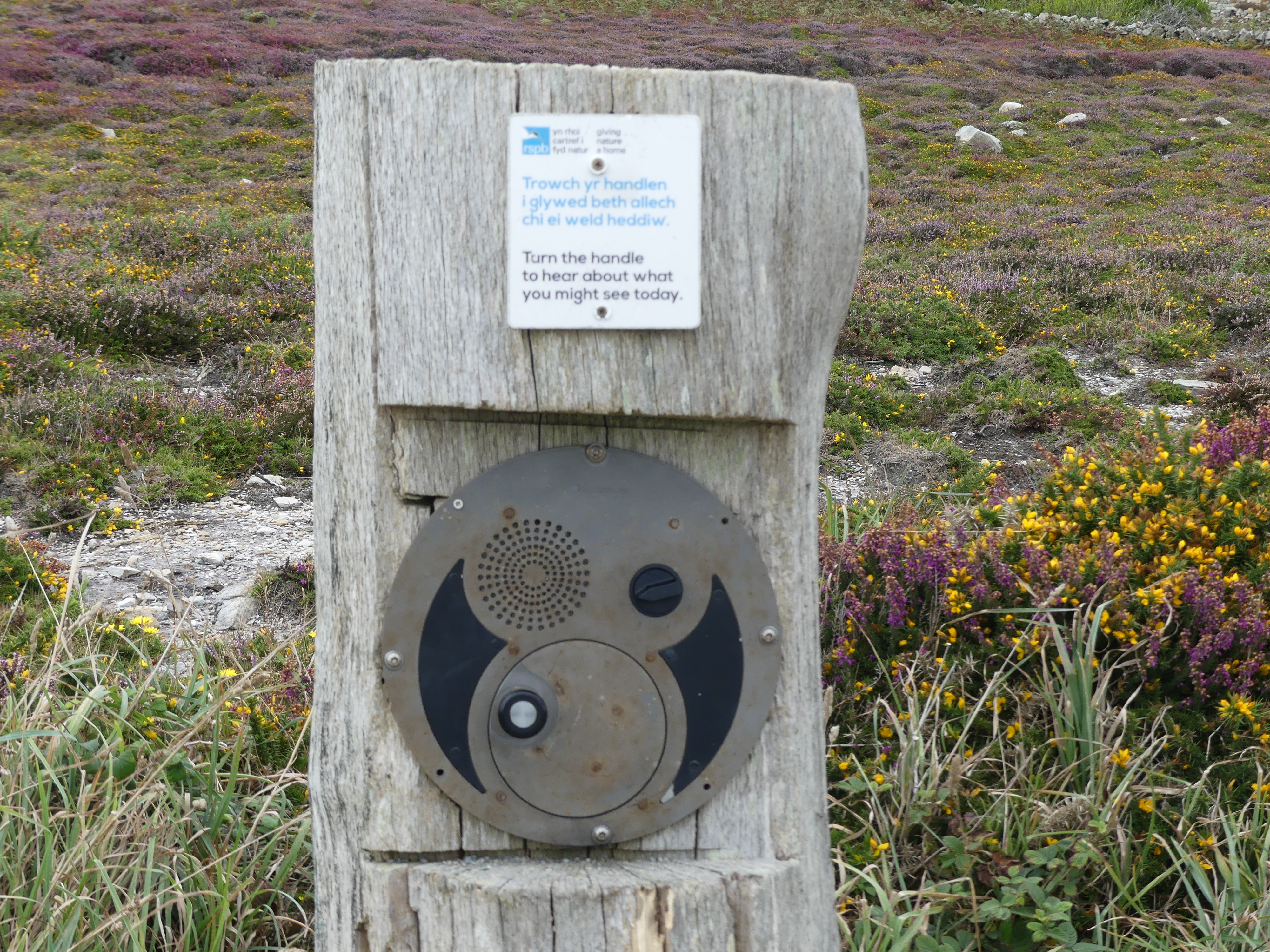
We finished a very welcome coffee and moved on to the South Stack Lighthouse. Searching for the lighthouse was a challenge and we missed the turn ending up in a cliff side park overlooking the lighthouse.The main lighthouse near Holyhead is the South Stack Lighthouse, a historic structure built in 1809 on a small island off the coast of Holy Island. It is famous for its dramatic location, accessed by descending over 400 steps from the mainland cliffs, and is a popular spot for birdwatching, including puffins and other seabirds. The lighthouse is 91 metres tall and the walk to the lighthouse starts on the headland with 400 stairs down then a lengthy walk to the buildings then the climb to the top of the lighthouse turnaround and go back again. That would have taken all day and probably killed one or both of us so we were content to view the building as we encountered an environmental centre built in a miniature castle like building in the reserve with information on the reserve and its flora and fauna. You will see in one picture the RAF planes that regularly flew across.

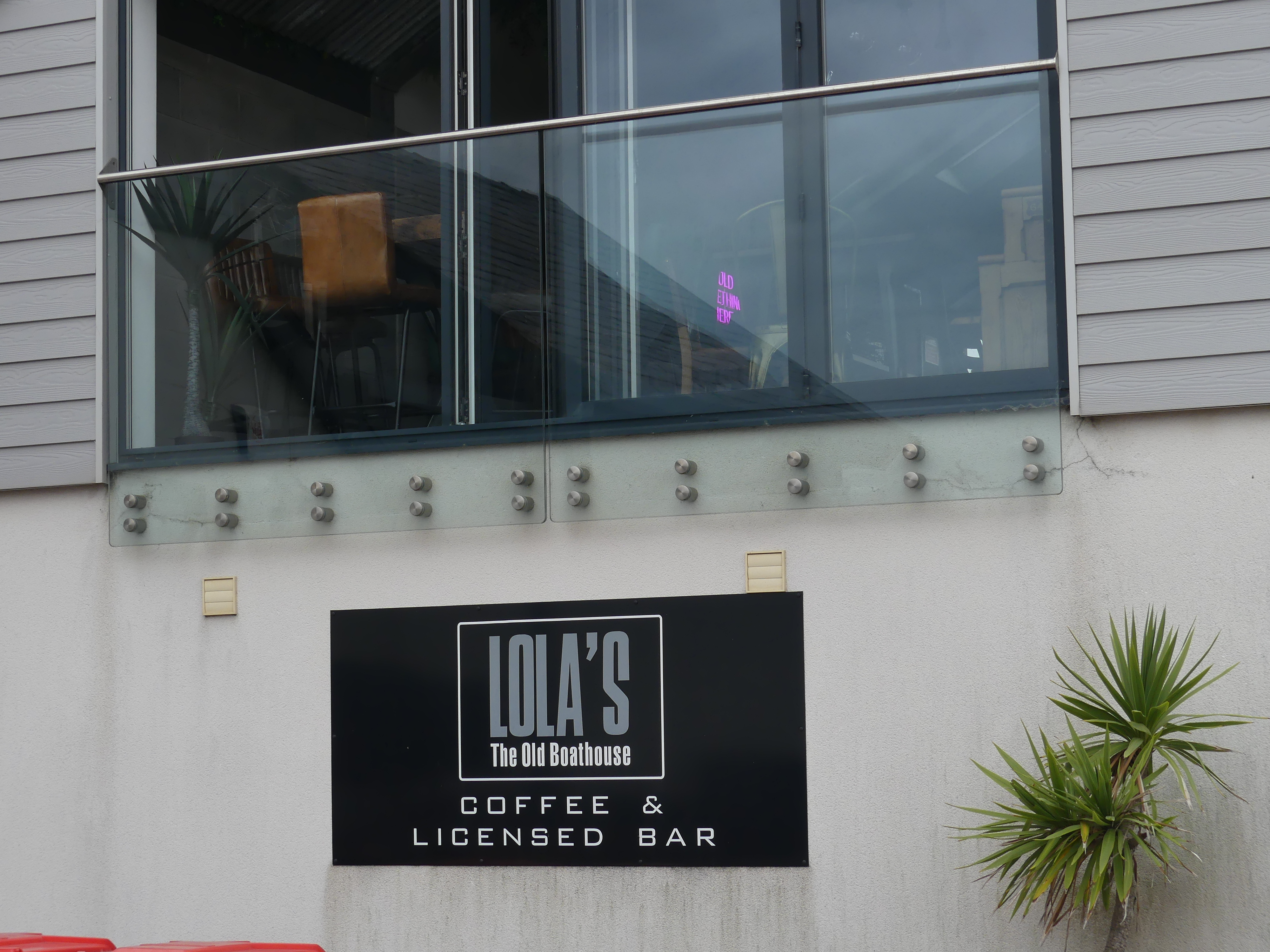
We moved onto the next town and visited the beach and got some lunch. As we departed we came across this restaurant “Lola’s” the old boathouse. Lola is our 2nd grandchild living in Tasmania.

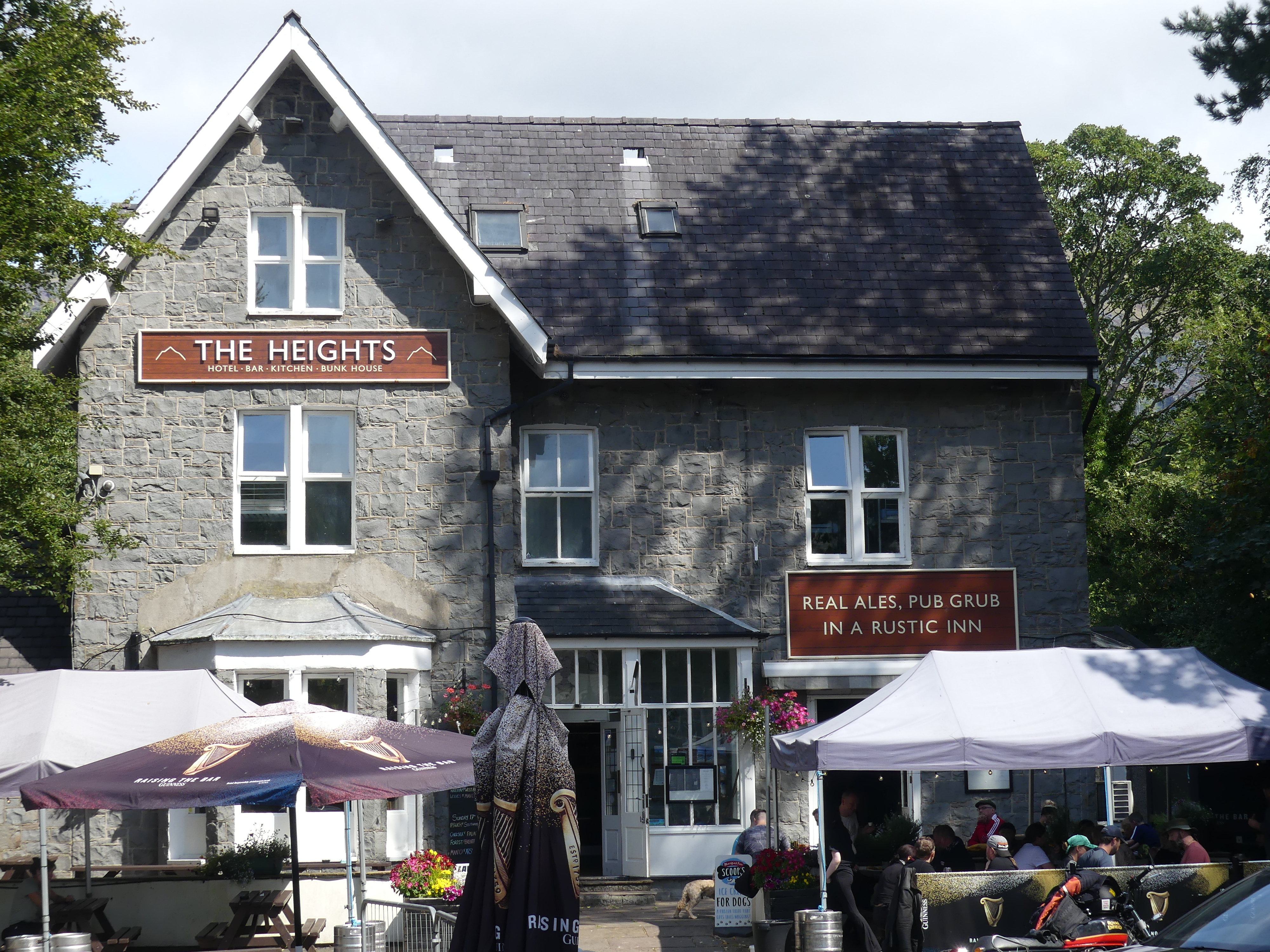
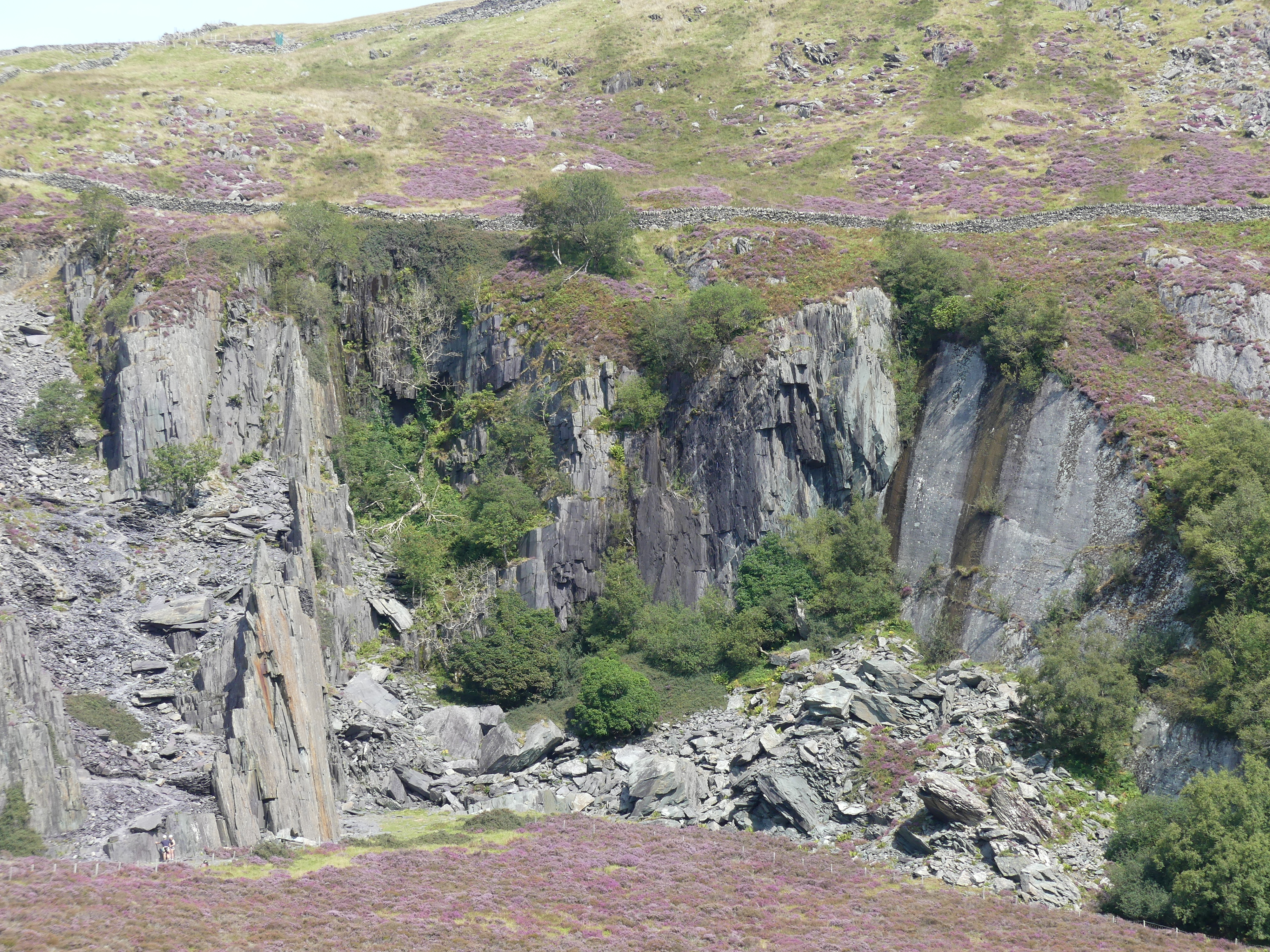
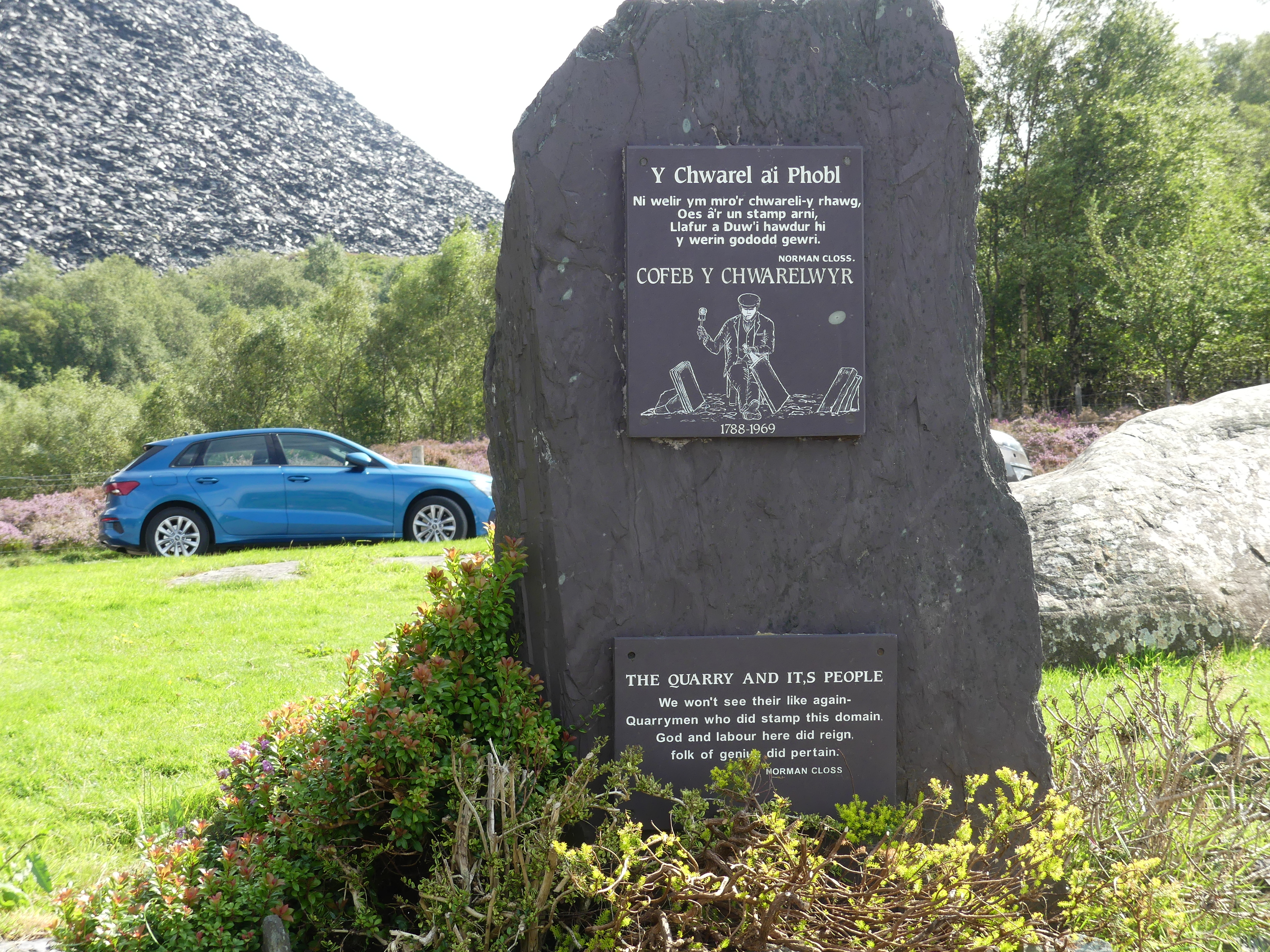
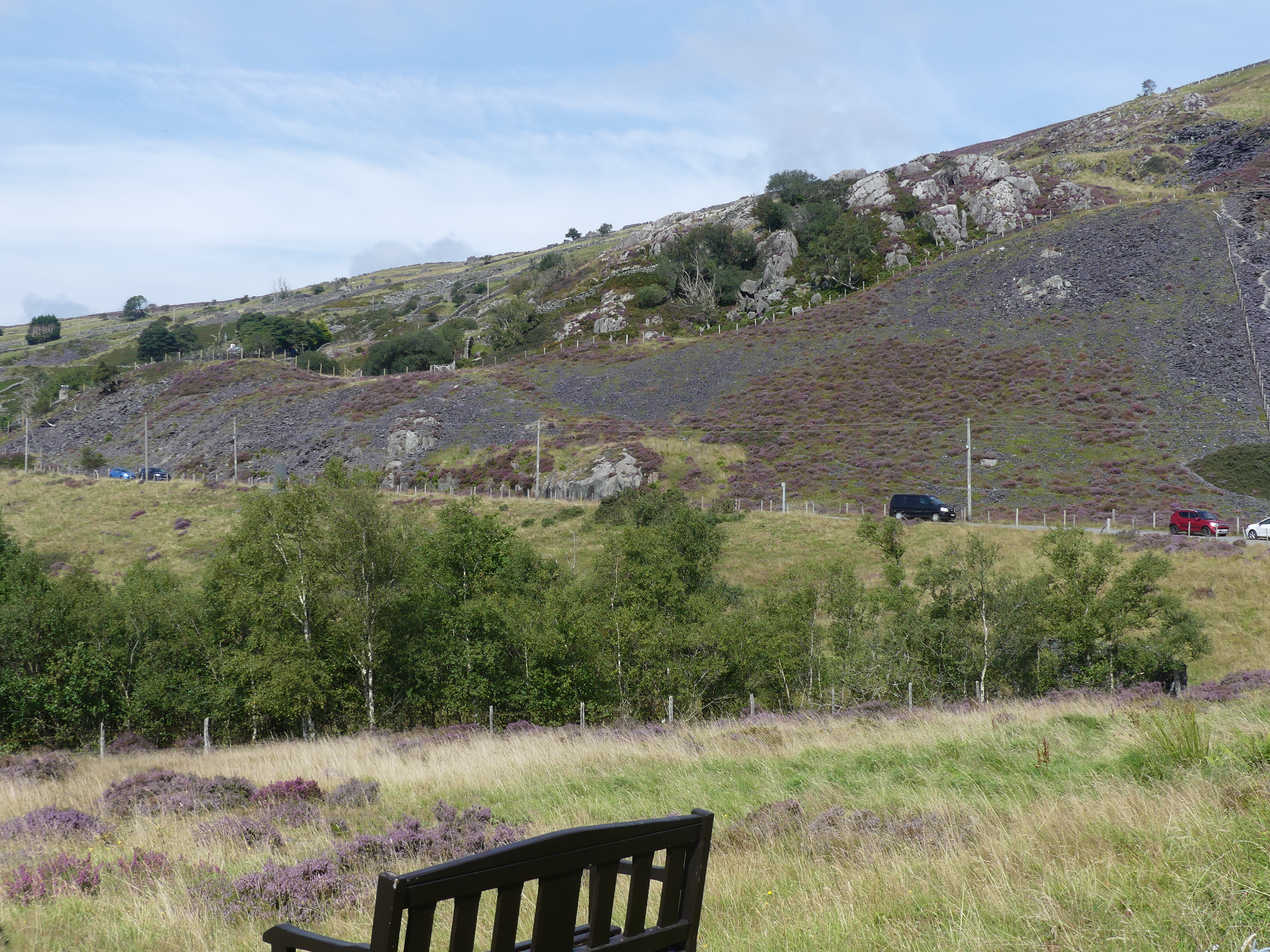
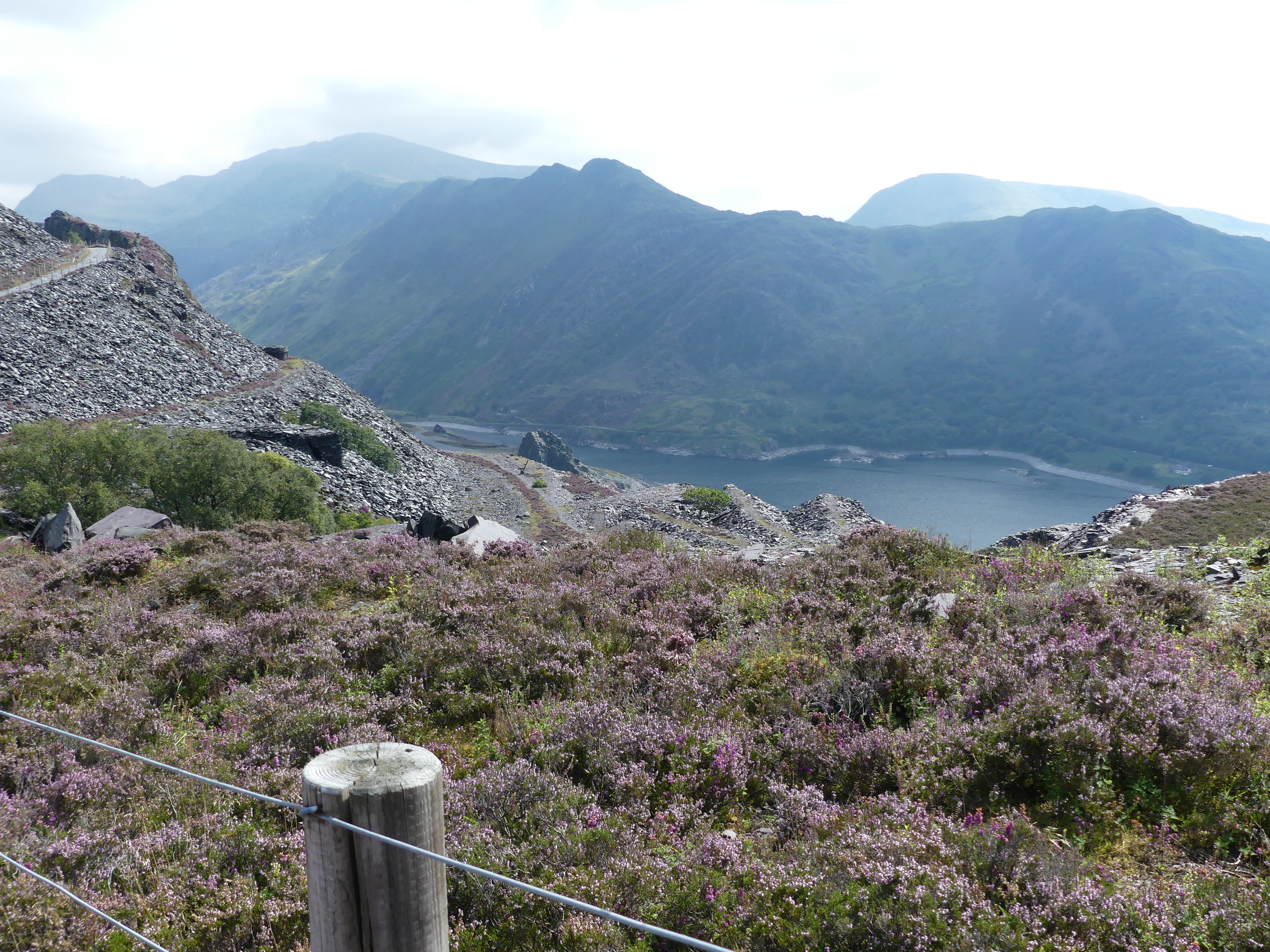
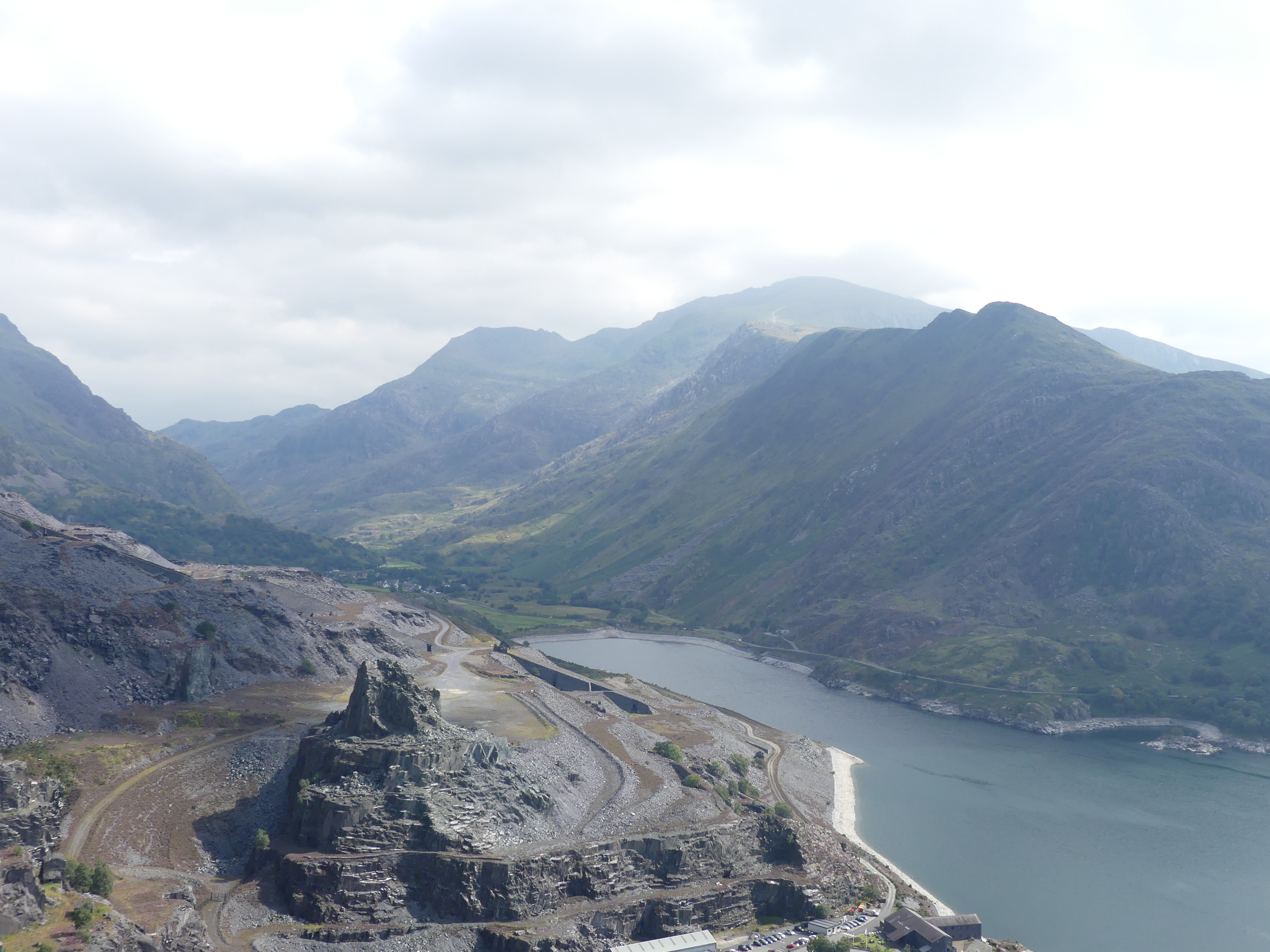
In our travels we were told about an old slate mine that we should visit. To get there we had to travel through a village called The Heights. The Heights rests beside a lake behind which is the mountains in which two of Britain’s largest slate quarries can be found. The main slate mining areas near “The Heights” are in the UNESCO World Heritage site, the Slate Landscape of Northwest Wales, which includes former quarries like Penrhyn Quarry near Bethesda and Dinorwic Quarry near Llanberis. Both were once among the world’s largest slate quarries and now serve as tourist and recreational sites. This abandoned site is just one of those mines.

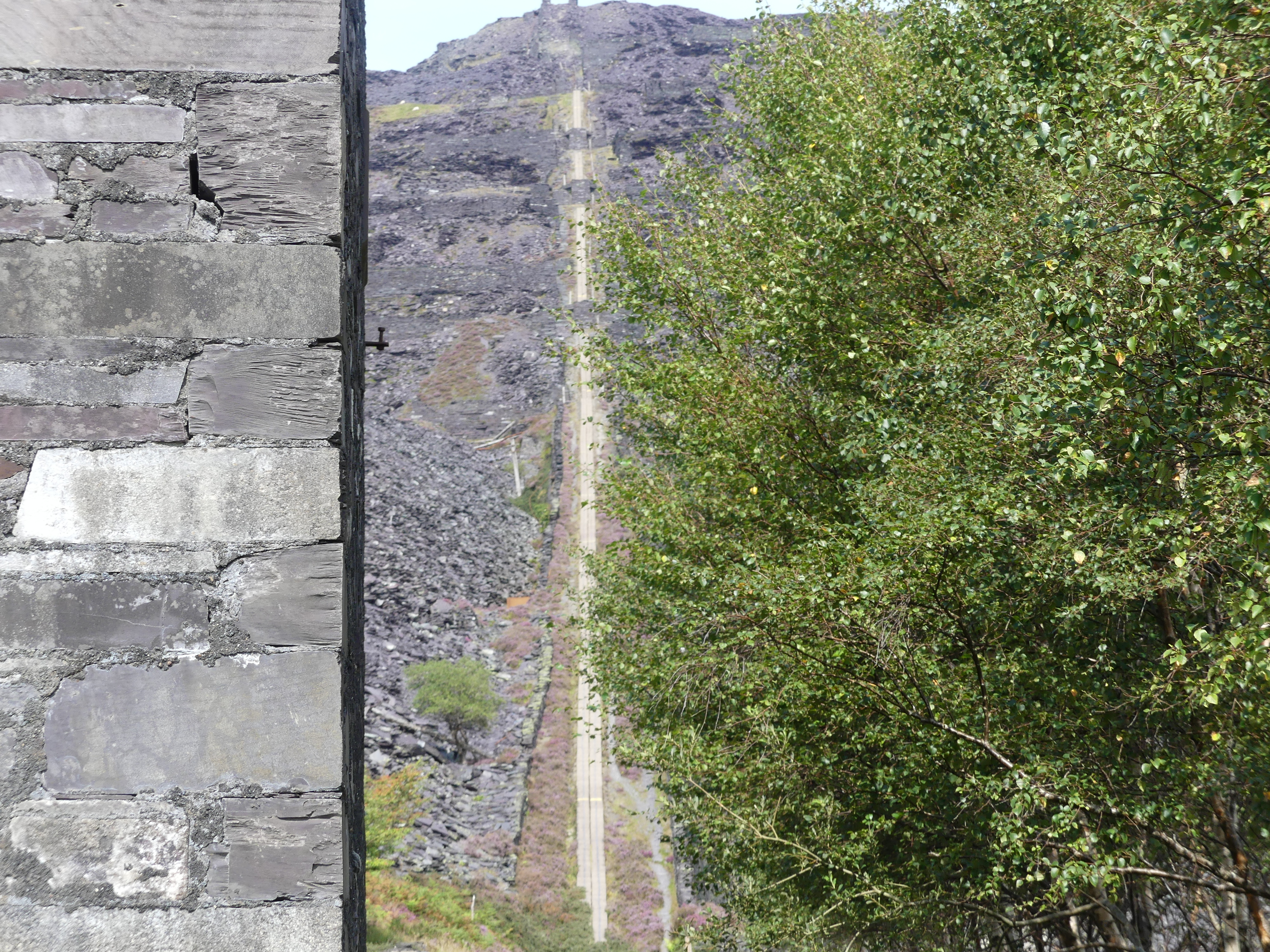
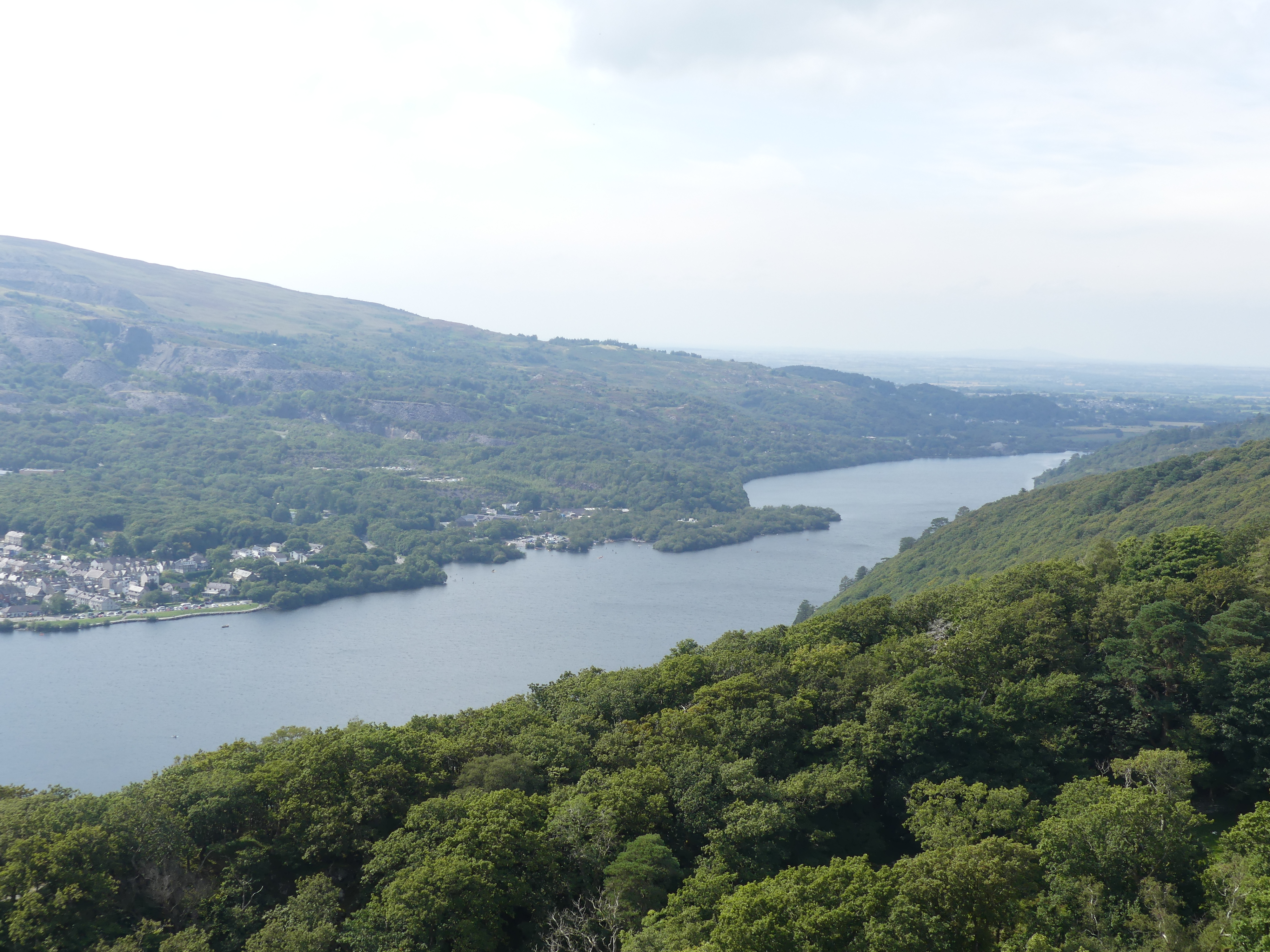
We parked along the lakeside in The Heights and firstly caught sight of the ruined tower then the Sword in the Stone – not really King Arthur territory which we had visited earlier this year when in Cornwall. We walked through the village finally settling on a pub for a cold beer and lunch. We got some directions to the closest mine and that is the mountain pictured above. Of course narrow country roads once again this time climbing the mountain. As we came to a cul de sac providing visitor parking we were amazed by the slate rubble making up additional height to the mountains. There were a number of ruins in the mine surrounds but slag heap with almost vertical rail lines to remove the stone surrounded us. Below us is the village of the Heights and the ruined castle we had seen across the lake. On a very early trip to North Wales we had visited Baleneau Festinog slate mine and had a very good idea of the labour needed to create the spoil heaps that surrounded us. We really do have many blessings in this life one being I did not have to work in a slate mine.

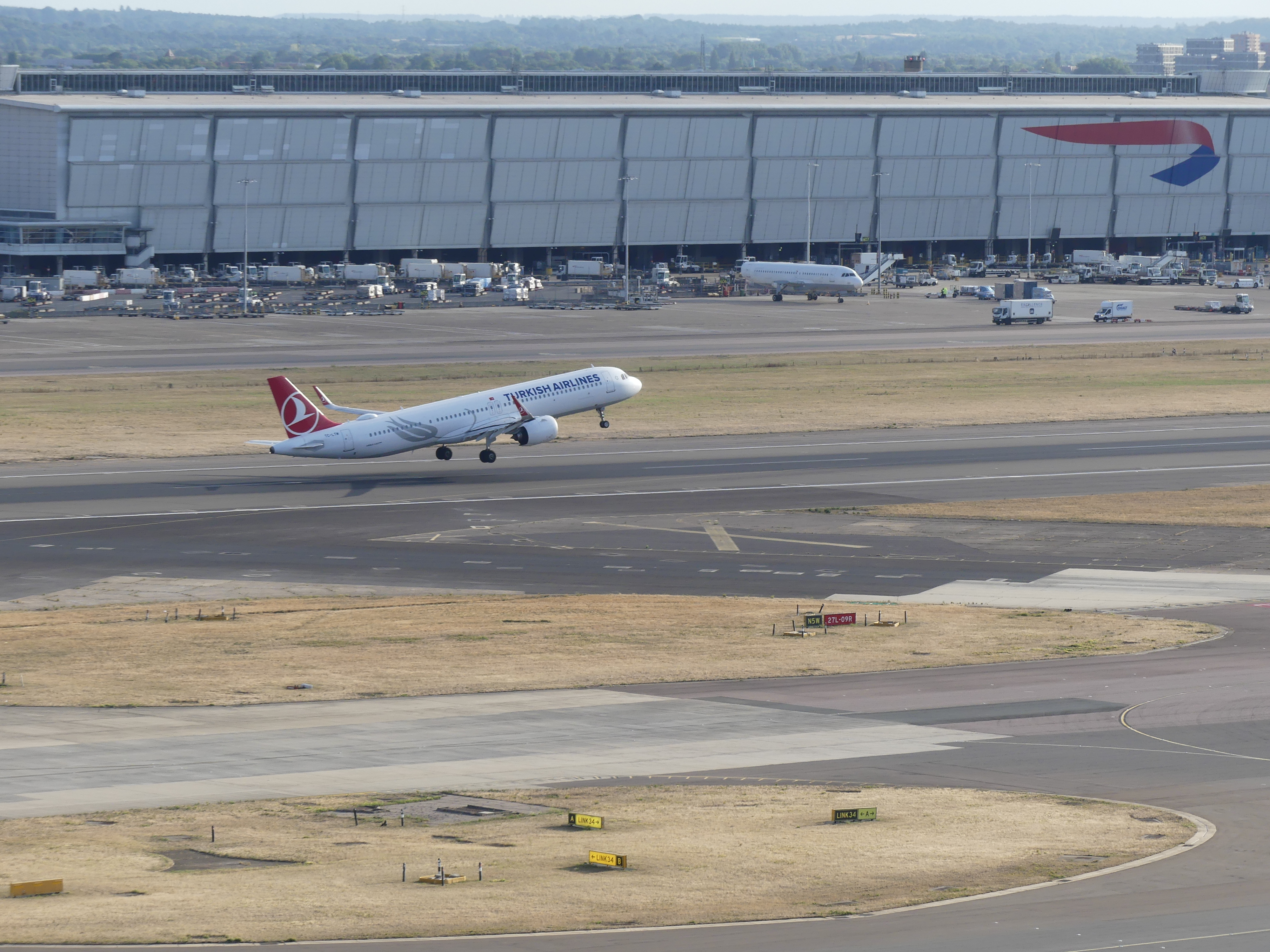
Our time in Anglesey was up and we now faced the drive to Dover to catch our ship to circumnavigate the British Isles. We drove back to Heathrow Airport and rested up in a hotel then returning the hire car. The hotel had a great roof top lounge where I obtained some good photos before being told to put it away by the Maitre De.
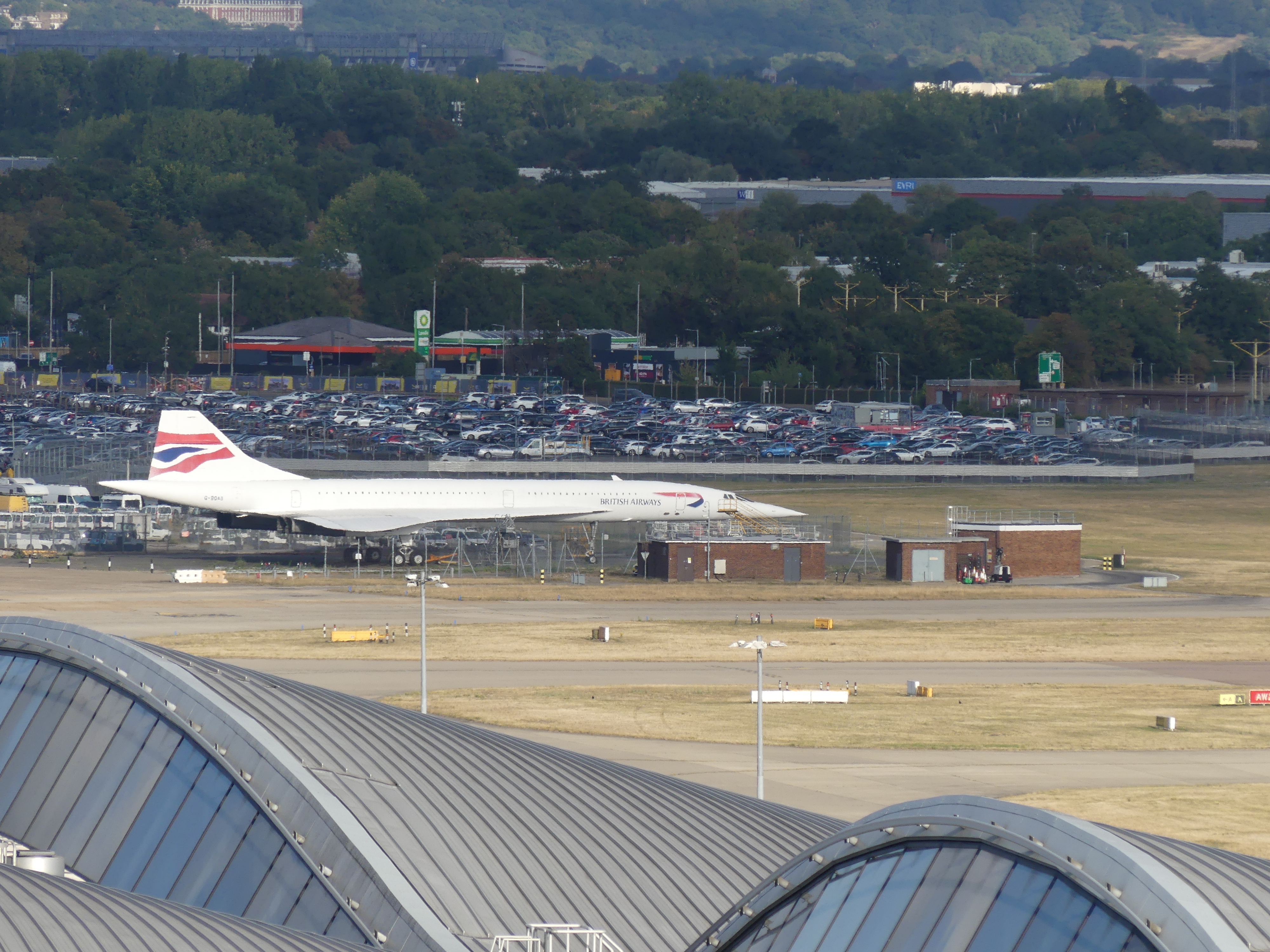
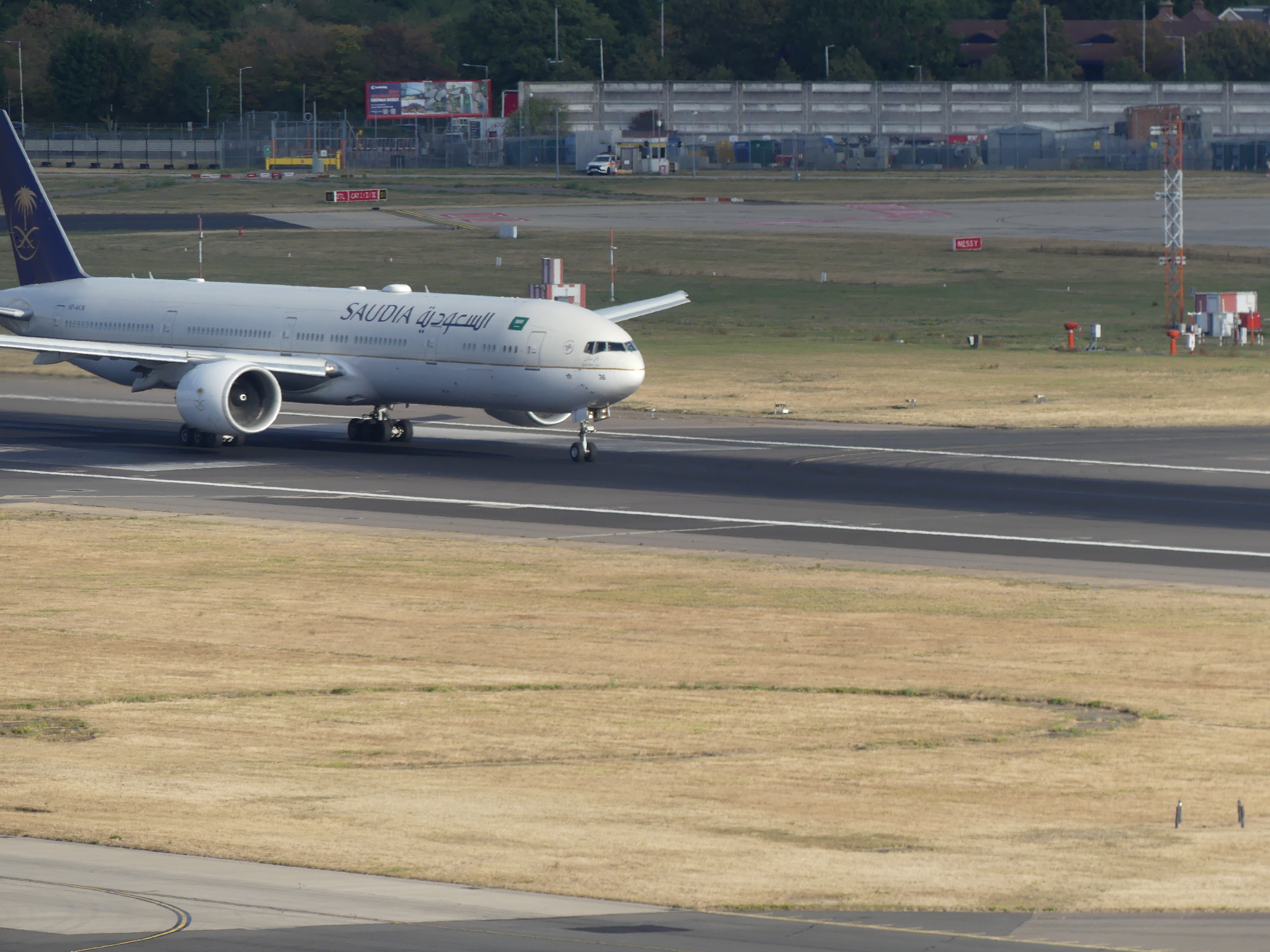
The following day we caught the tube to London and caught the National Express bus to Dover not knowing what awaited us. Read on with our continuing adventure in “THE RETIREES GO AROUND THE WORLD –CHATEAU RHIANFA PLAS RHIANFA, TO DOVER AND SS NEUW STATENDAM.”

THE RETIREES GO AROUND THE WORLD – CARDIFF to PEMBROKE WALES – WEOBLEY CASTLE and KIDWELLY CASTLE.

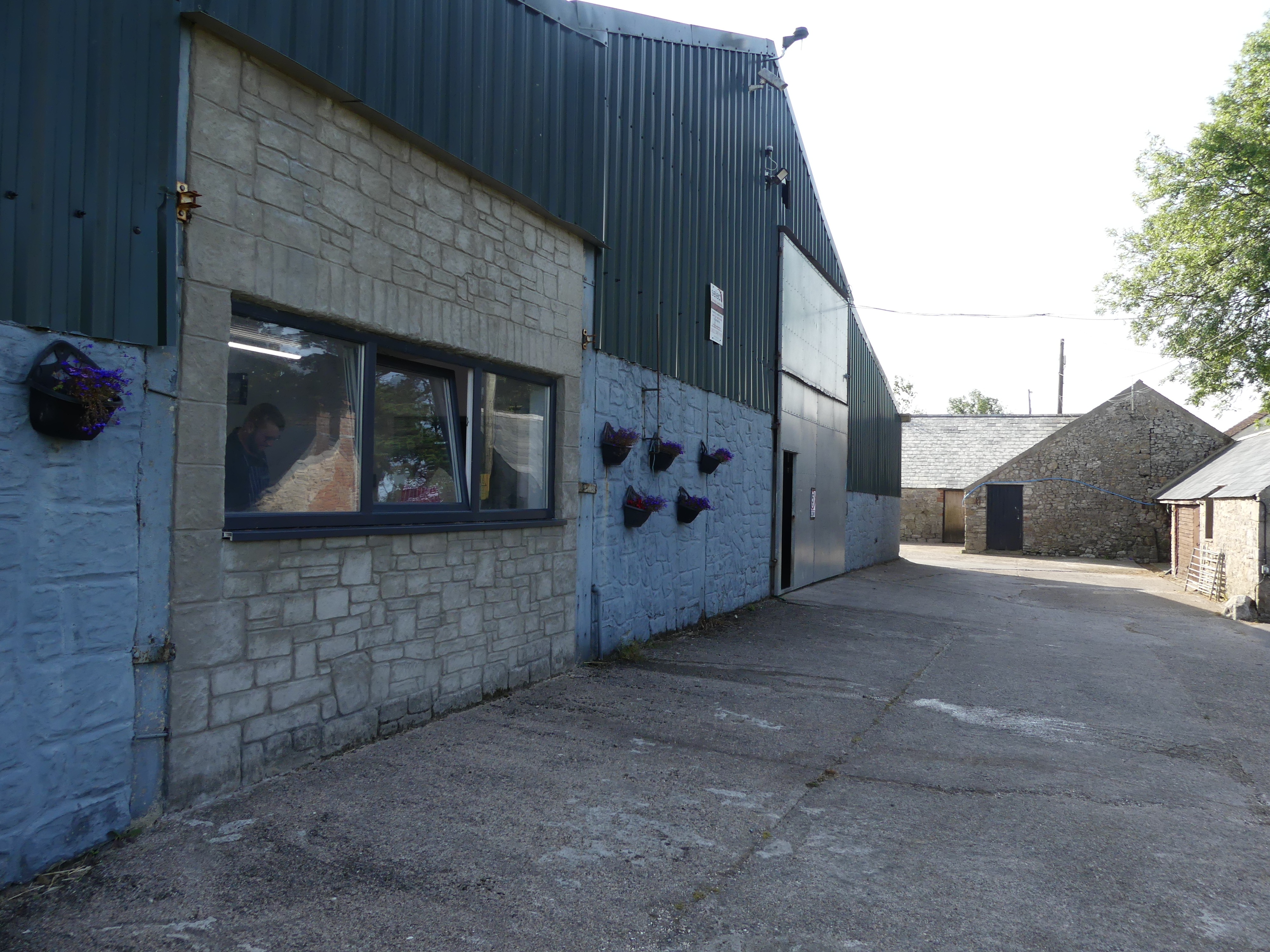
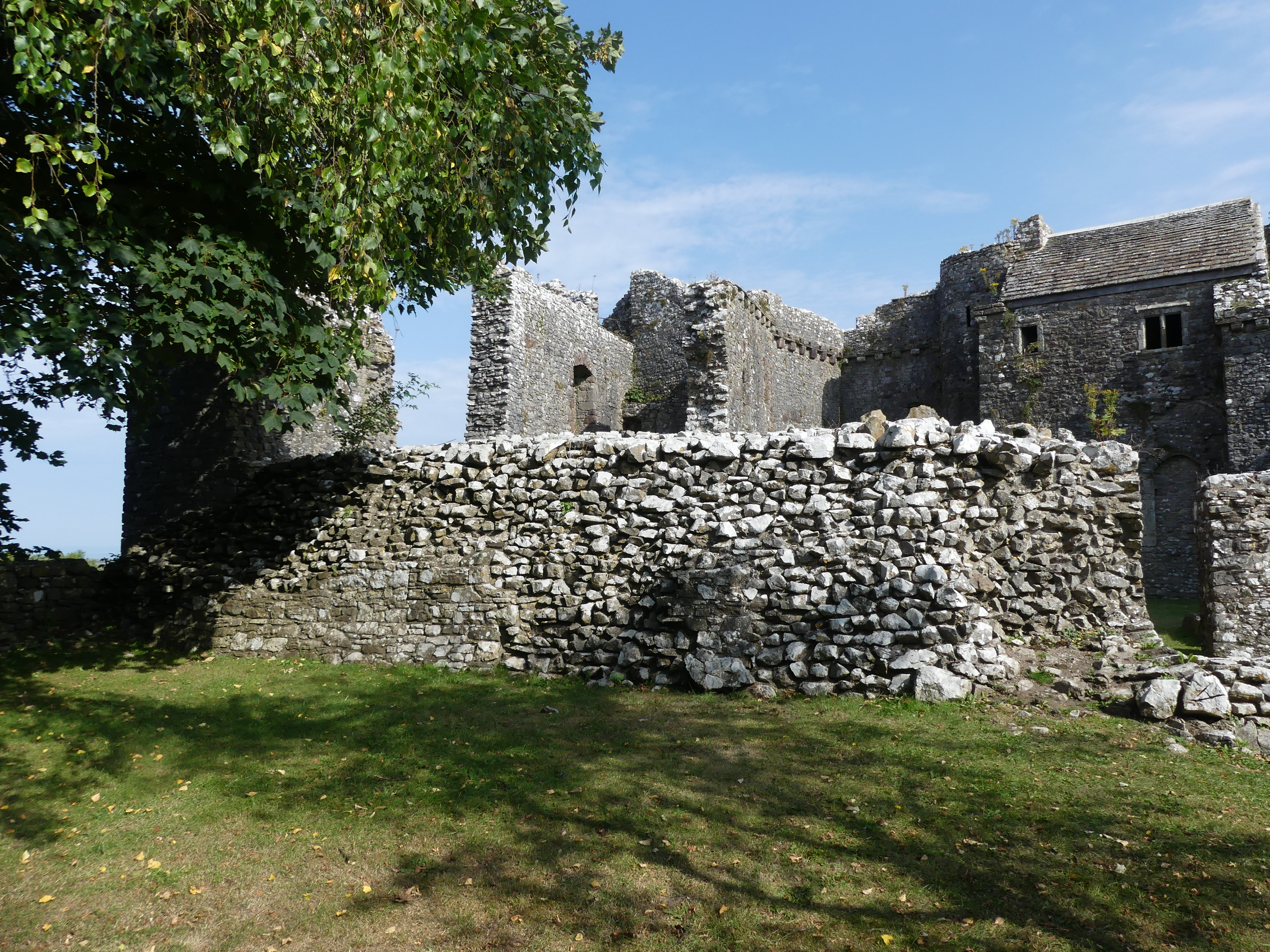
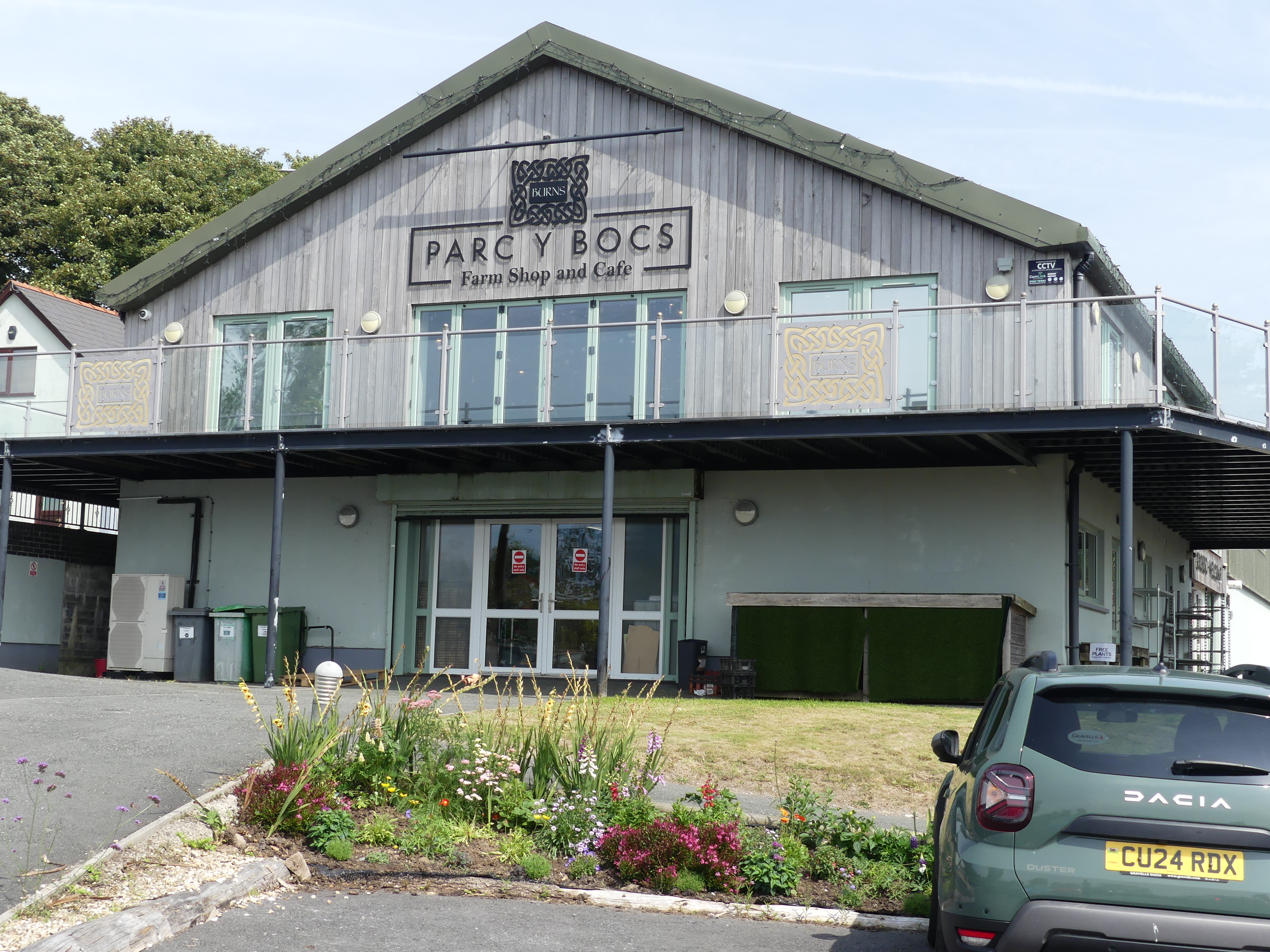
One of the things I enjoy is to move off the beaten track and find the strange, unusual and forgotten. This is what happened when we were traveling between Cardiff and Pembroke. We earmarked Swansea as a place to take a break on the drive. I cannot recall if Weobly Castle was planned or just happened. I also cannot recall whether it was on the Cadw free list but I think not as no-one was looking after this place to any degree. Anyway, we ended up pulling onto a side road and passed Parc V Blocs farm shop and onto a sheep farm.

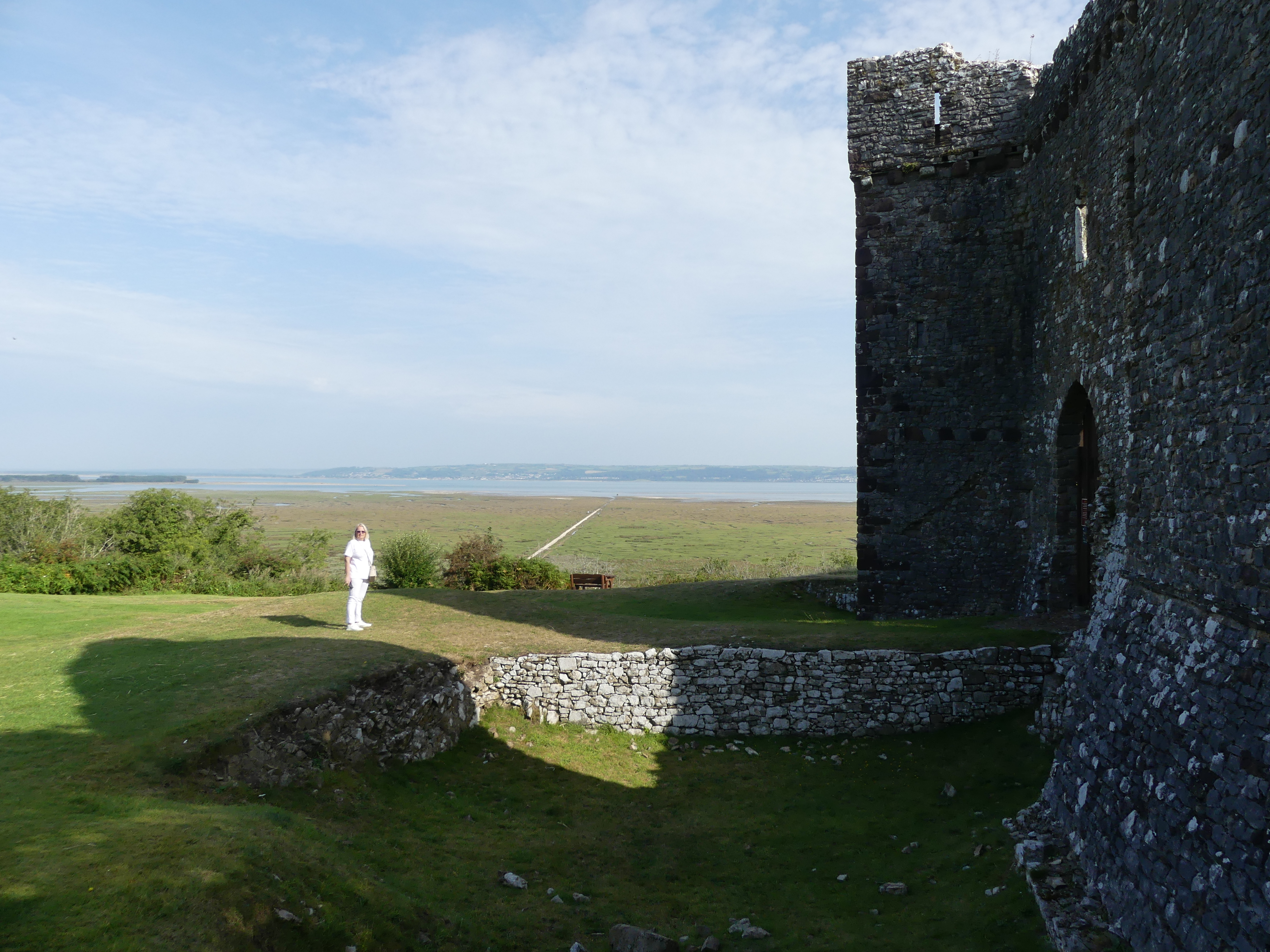
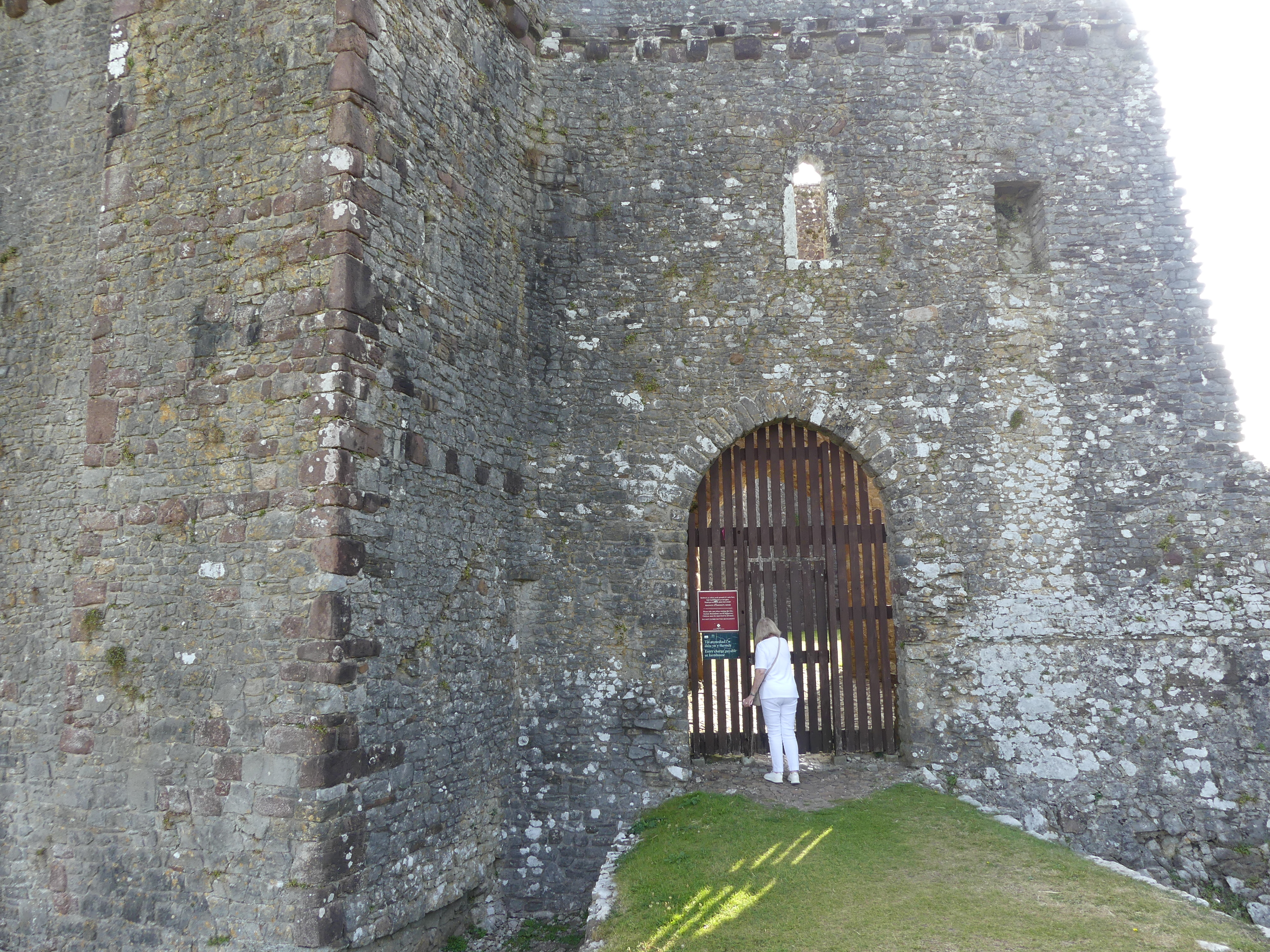
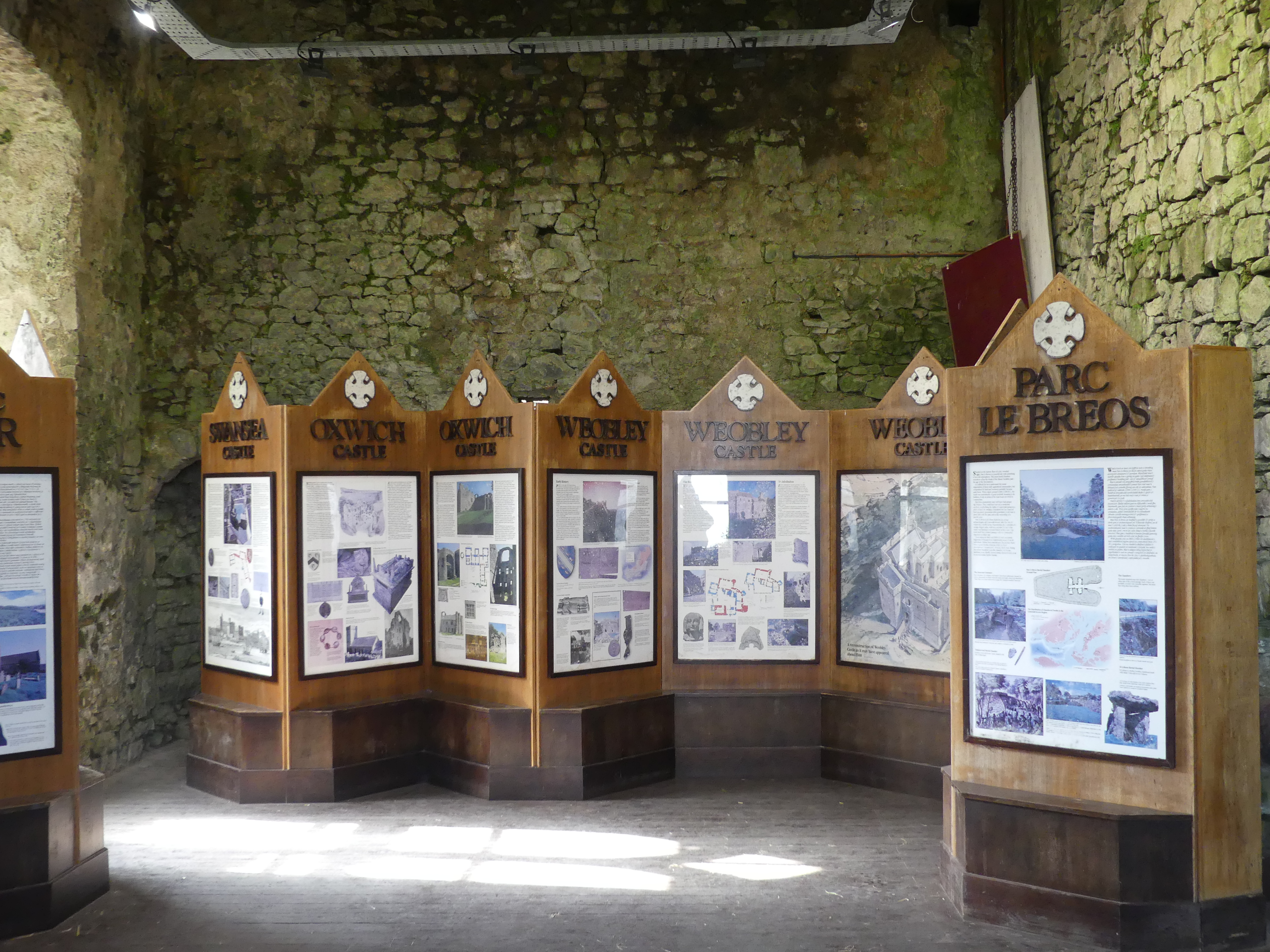
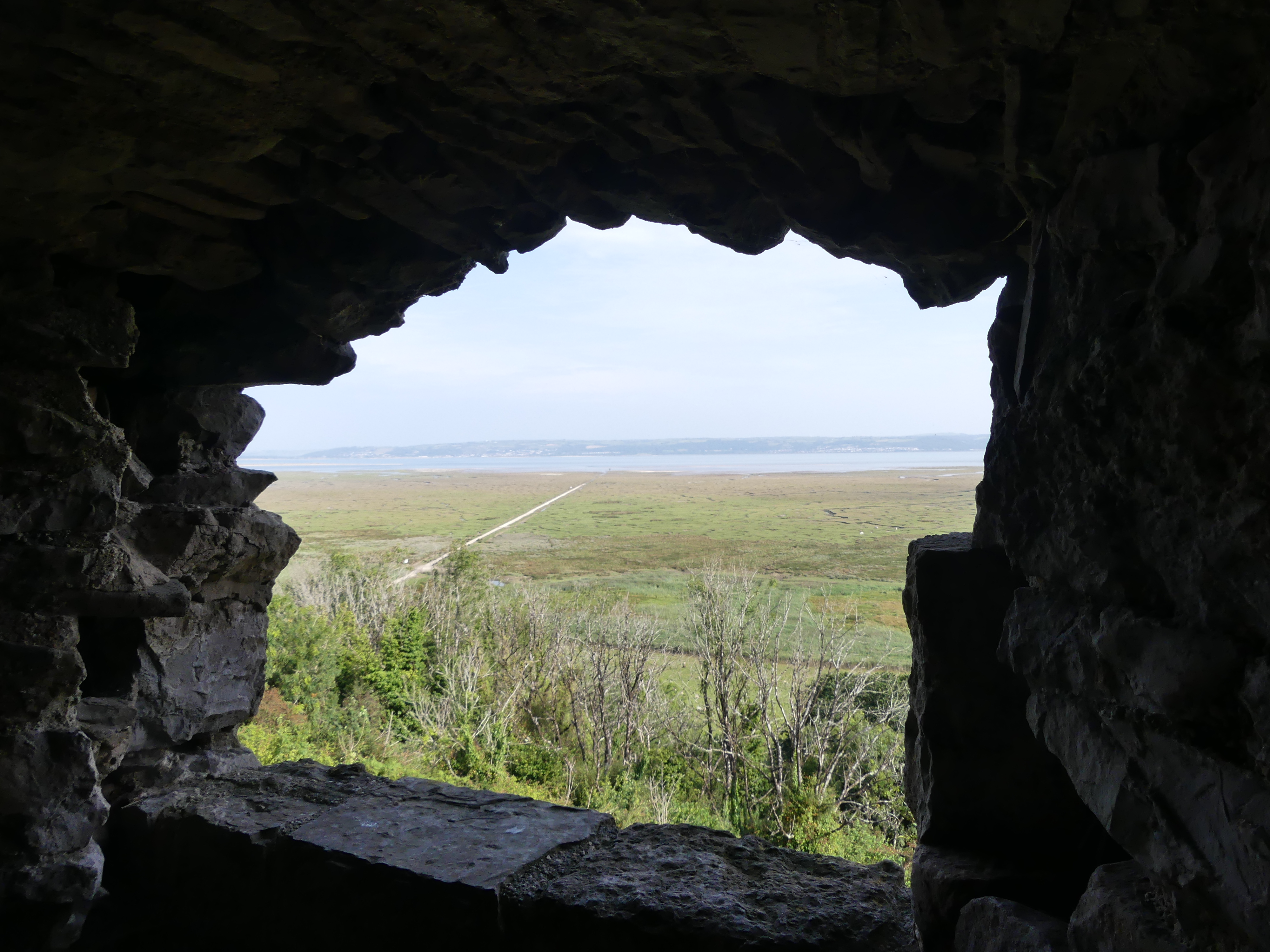
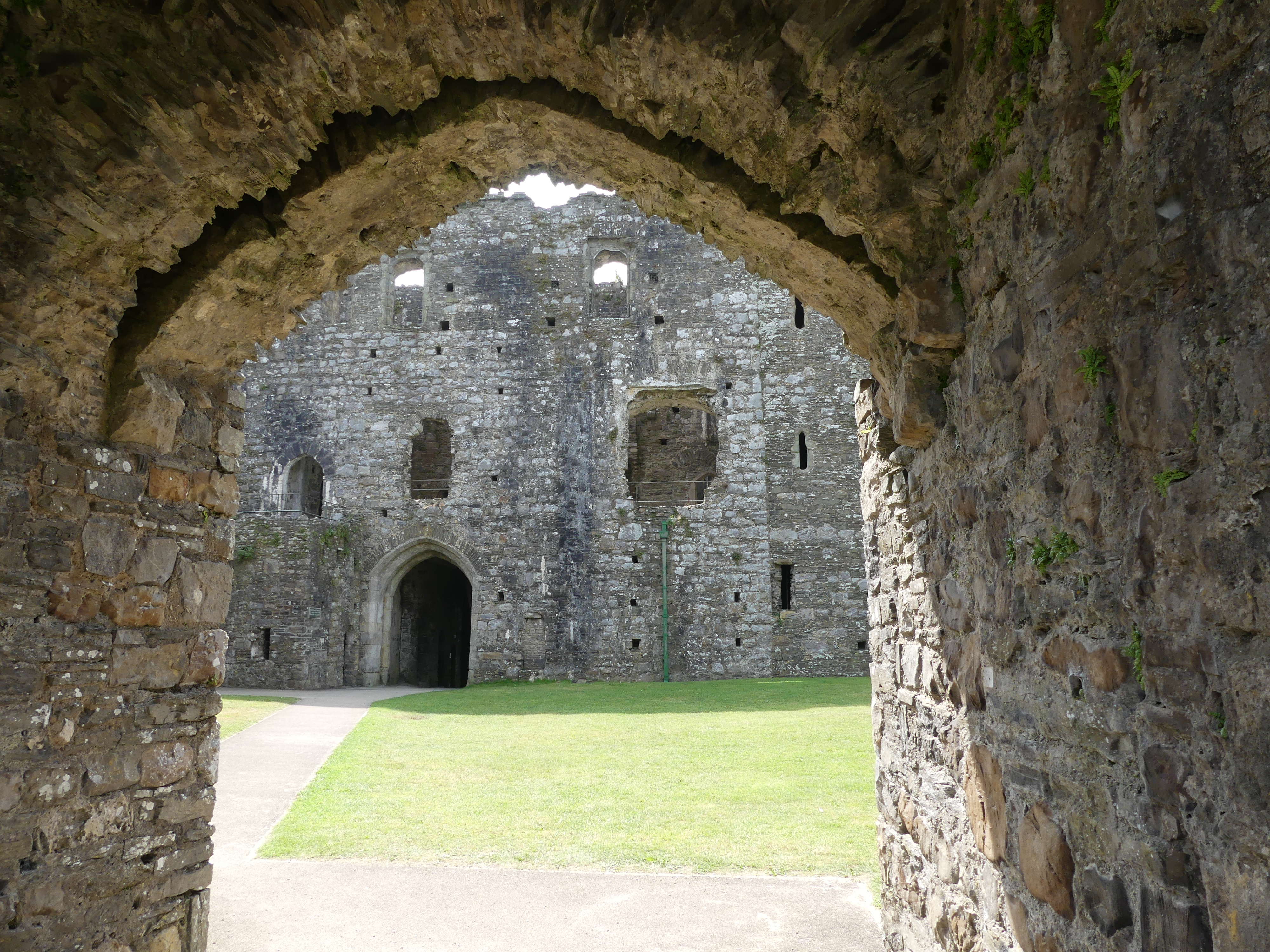
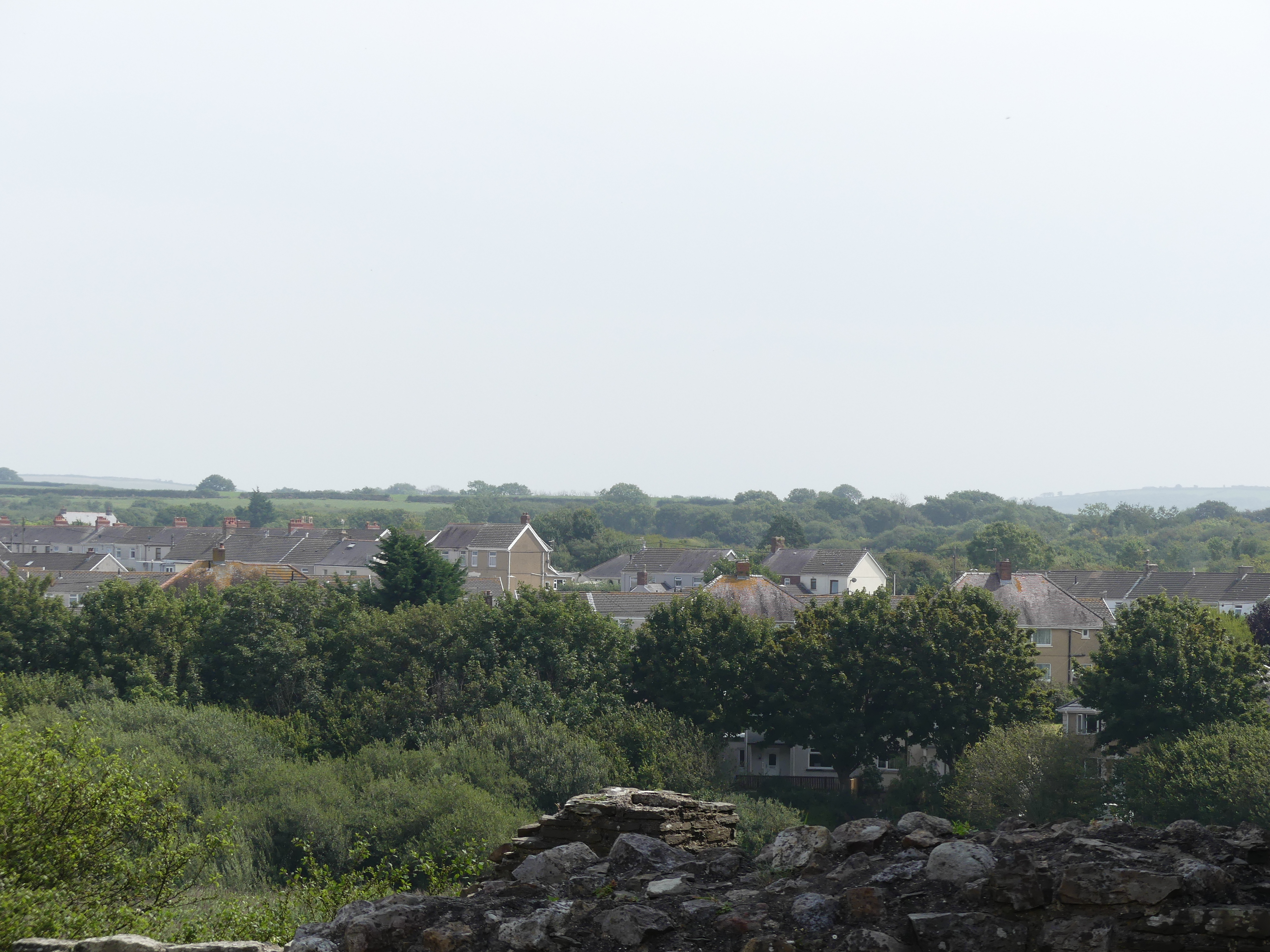
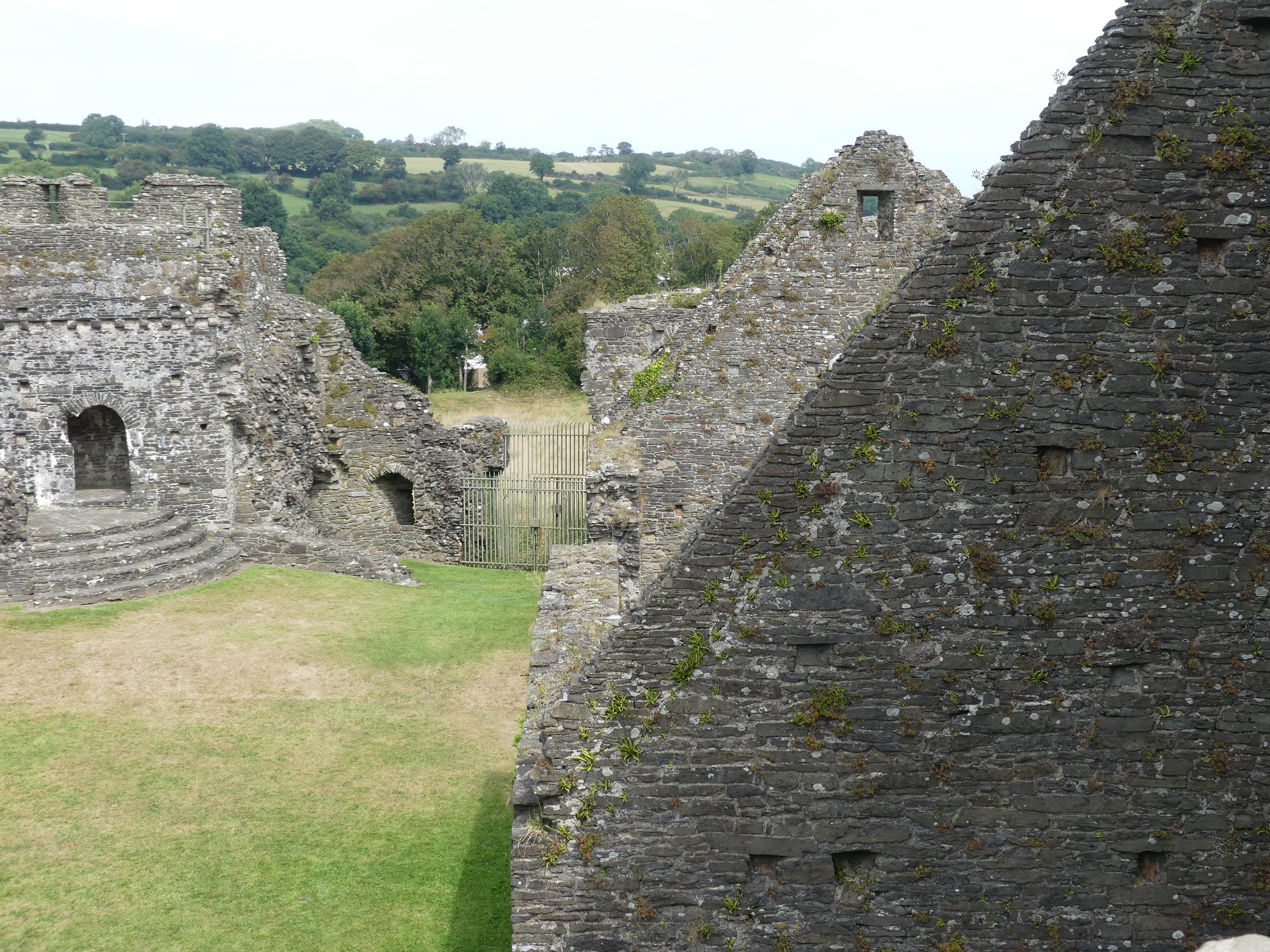
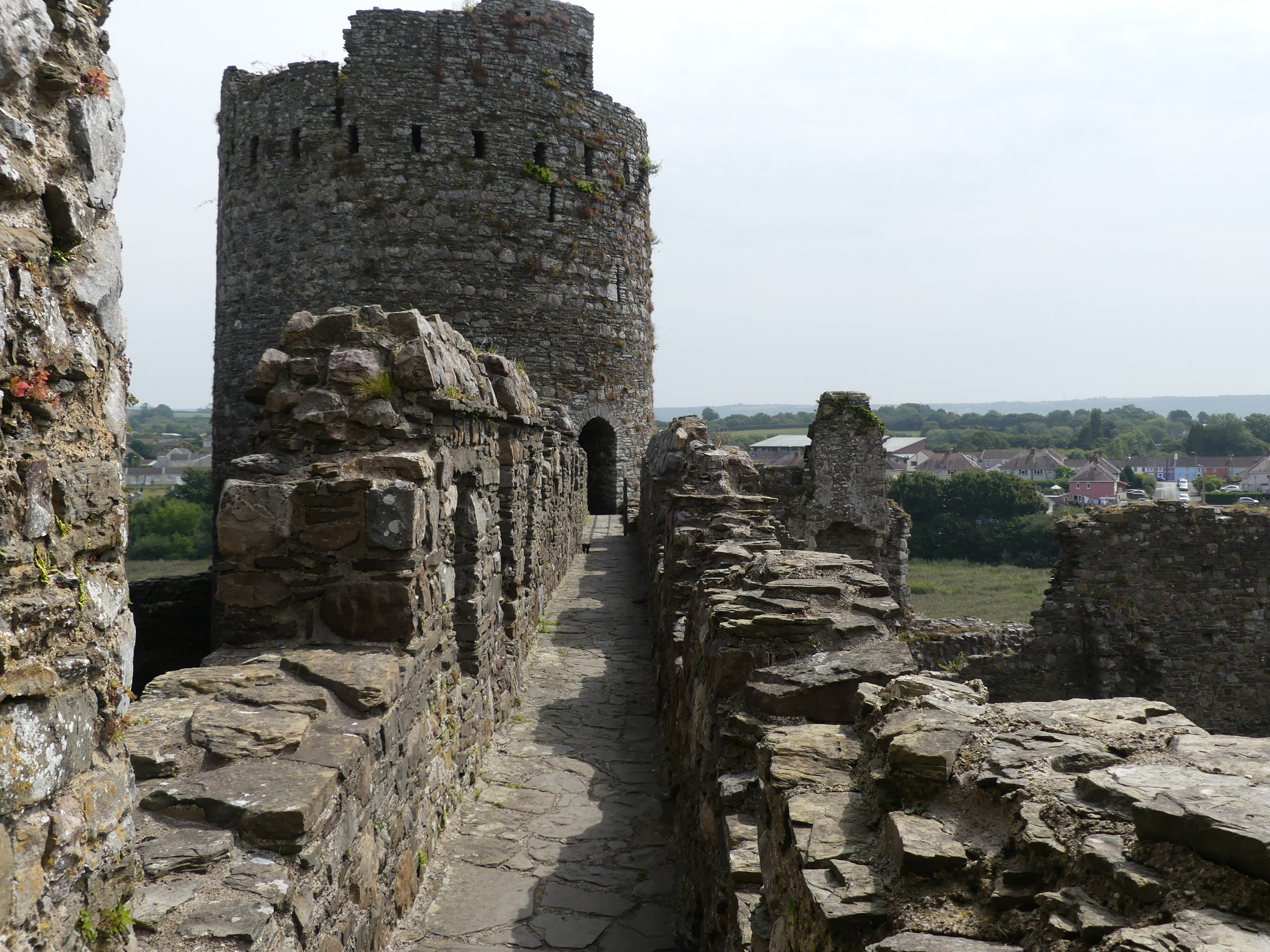
The remains of Weobley Castle remaining upon the farm. As we entered the site a sign notified us that we had to go to the shop to order our lamb and pay admission to the castle. The shop was an attachment to the farmhouse and the castle ruins stood beyond the shop standing on the edge of a precipice running down to the flood plain of a river and the sea. The grazing sheep and cattle looked the size of toys. If this was an important place to have a castle, then it was well positioned. My photos show the view from the floor of the castle and generally around all that remains whilst also showing you where they slaughter and dress the sheep carcasses. It felt like we had discovered somewhere forgotten.

We returned to Parc V Bloc for lunch and wondered just who would visit this place. Despite its business description it was a small supermarket café functional hall and pet barn all in one. Outside in the grounds was playground equipment and picnic tables – all in all I even expected used cars and farm equipment but that is going too far.

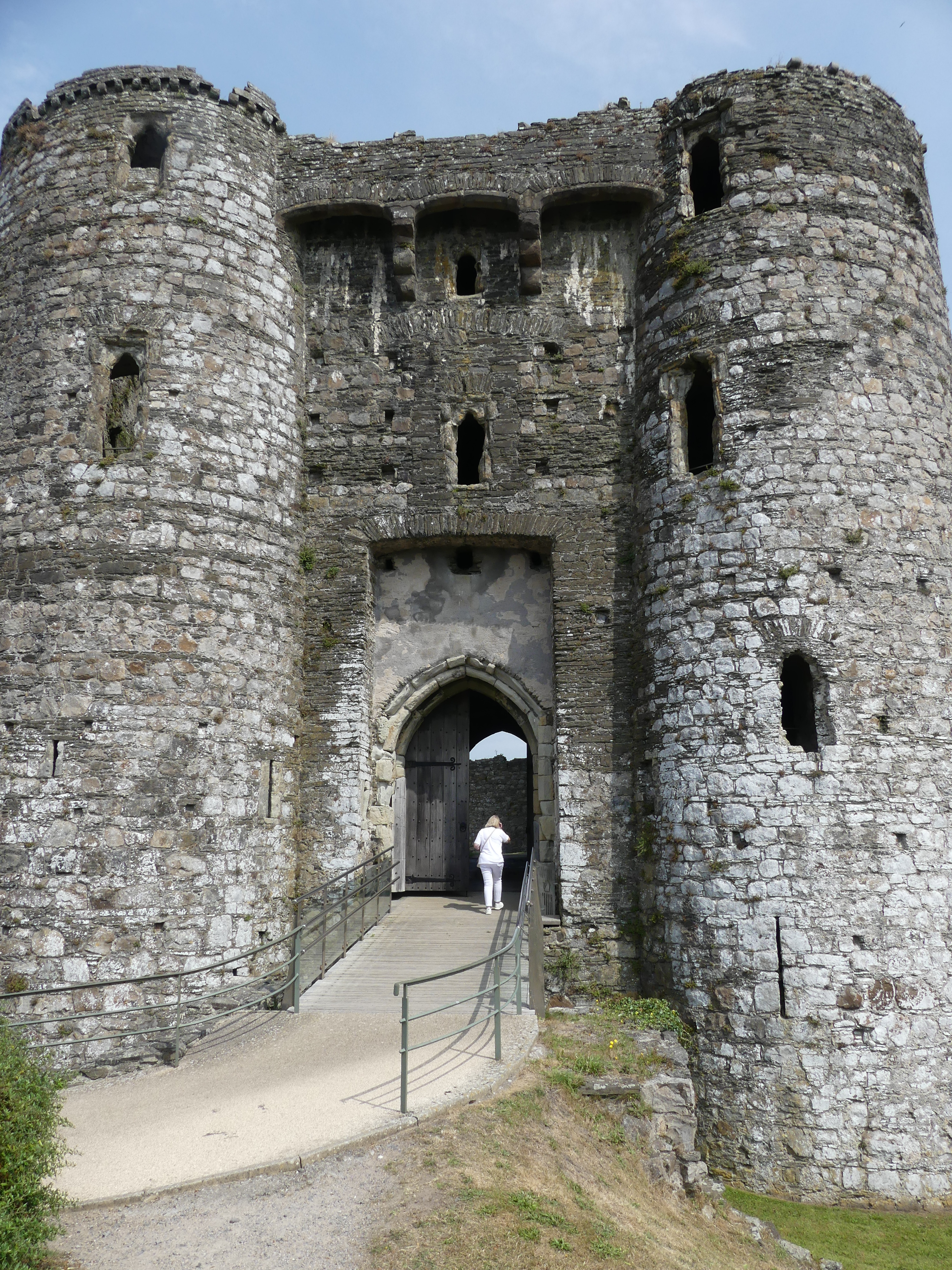
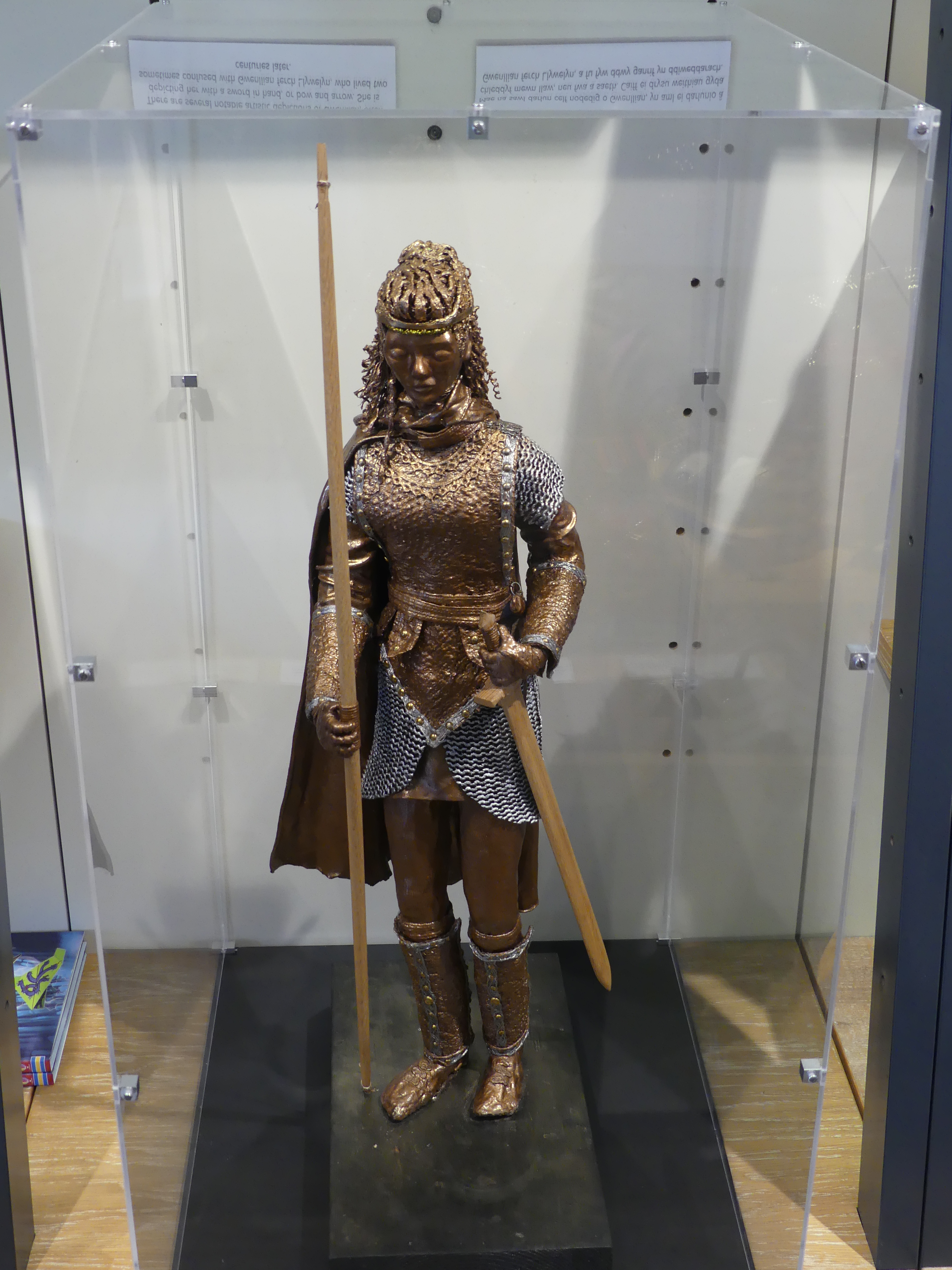
Next stop was Kidwelly Castle as a break in the trip to Tenby and Pembroke. This one was on our Cadw 7-day ticket and as my photos show it largely ruins except when the Queen is on her throne. As we were leaving the ticket office/gift shop a warrior queen in a glass case stood proudly challenging all passersby and reminded us of Celestial Starfall festivals.

Keep reading – my next blog takes you to Pembrokeshire when THE RETIREES GO AROUND THE WORLD – CARDIFF to PEMBROKE WALES.

THE RETIREES GO AROUND THE WORLD – SUTTON HOO UK to CARDIFF WALES – CARDIFF CASTLE.

The journey from Sutton Hoo to Cardiff is about 4 hours if the Gods are kind. We had a short stopover

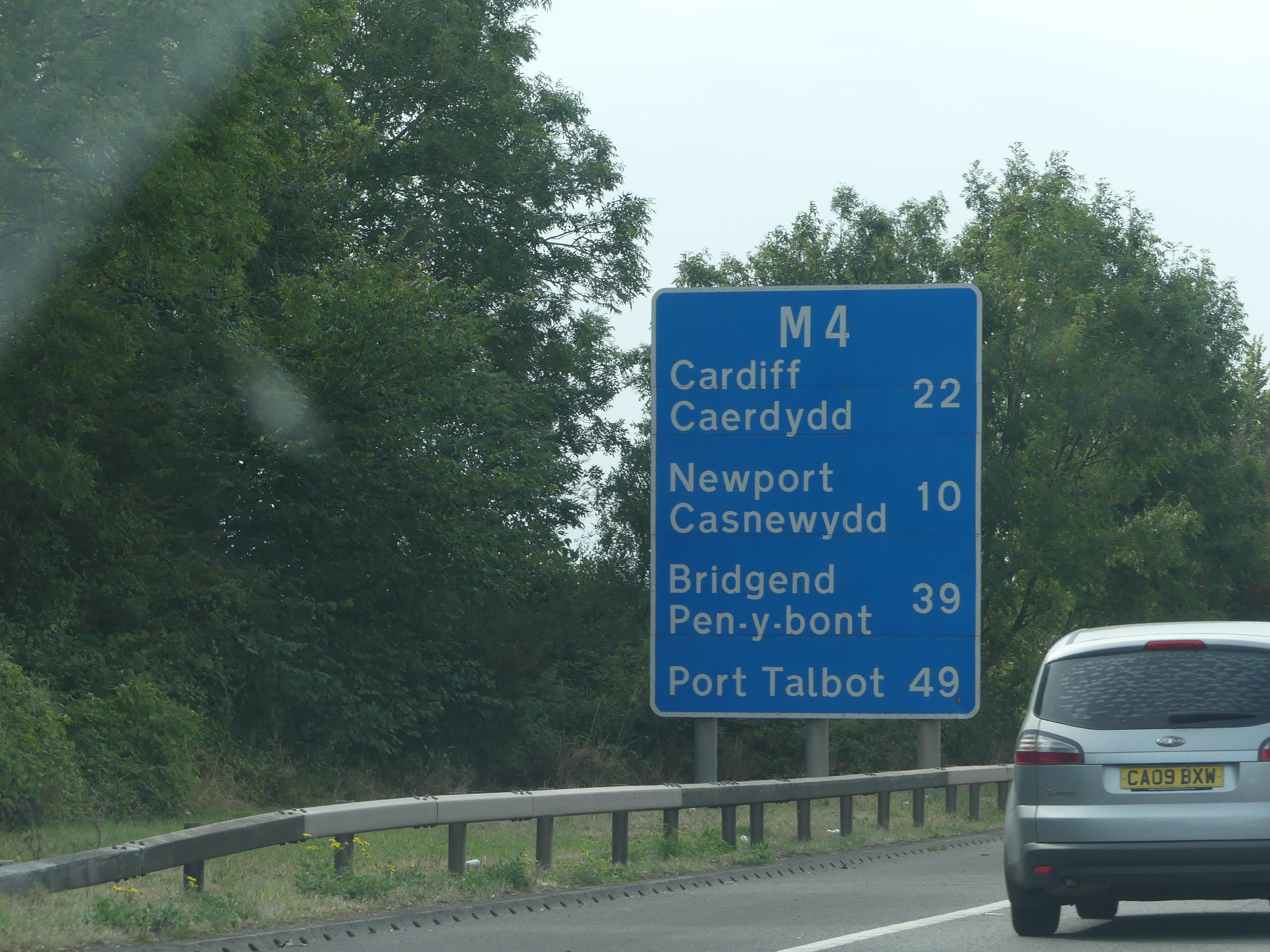
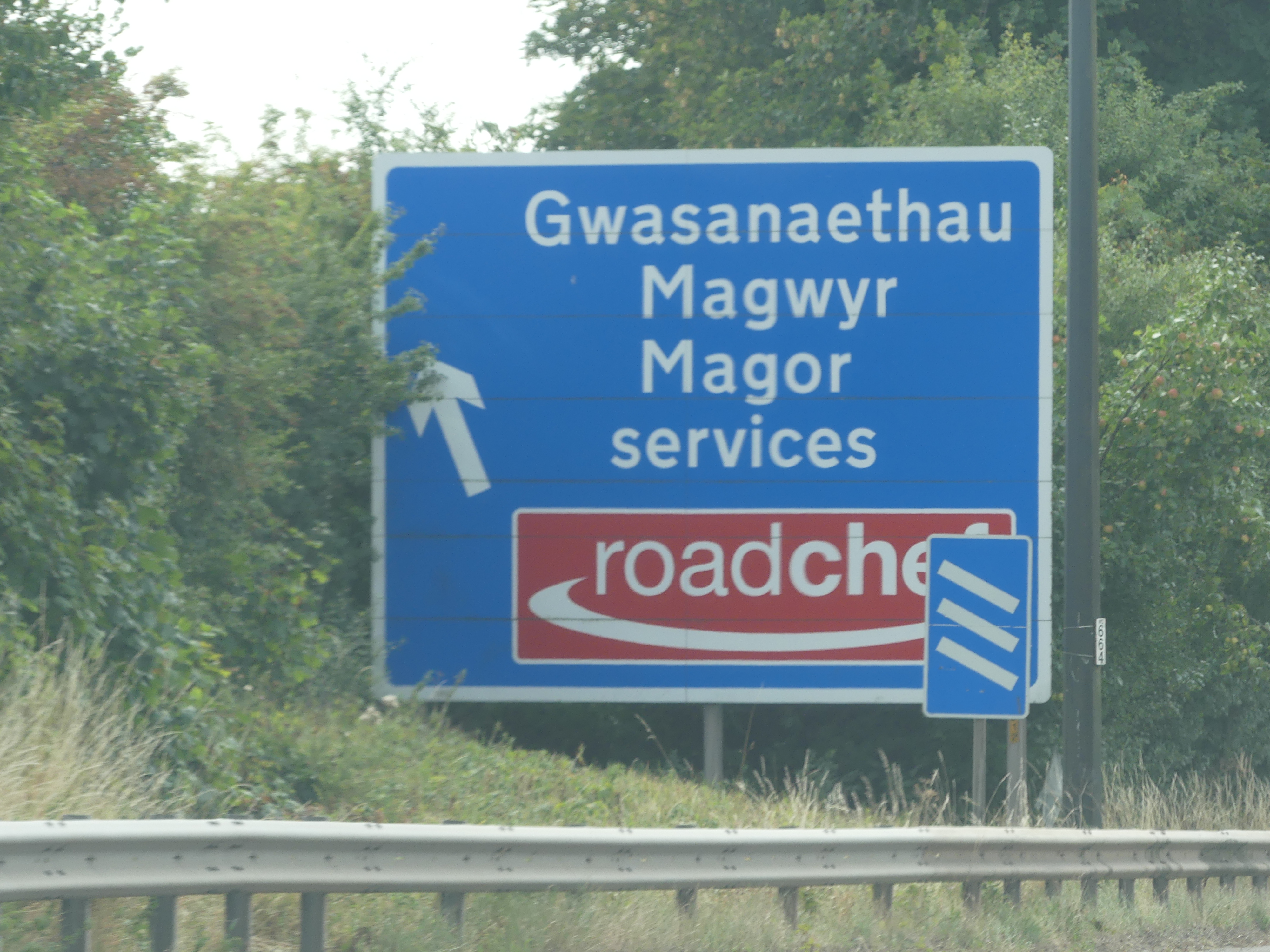
Finding the address of your B&B is a bit difficult but we found the GPS in the car extremely good using postcodes to find our goal. However, we never really got a good understanding of the functionality or how to properly use the search function – the space bar could not be found which is ok for post codes awful for an address. The entrance into Cardiff is across a grand bridge but you have to get used to everything being written in Welsh with English subtitles. I found this very off-putting, and I don’t know why – in Europe it is like that everywhere.

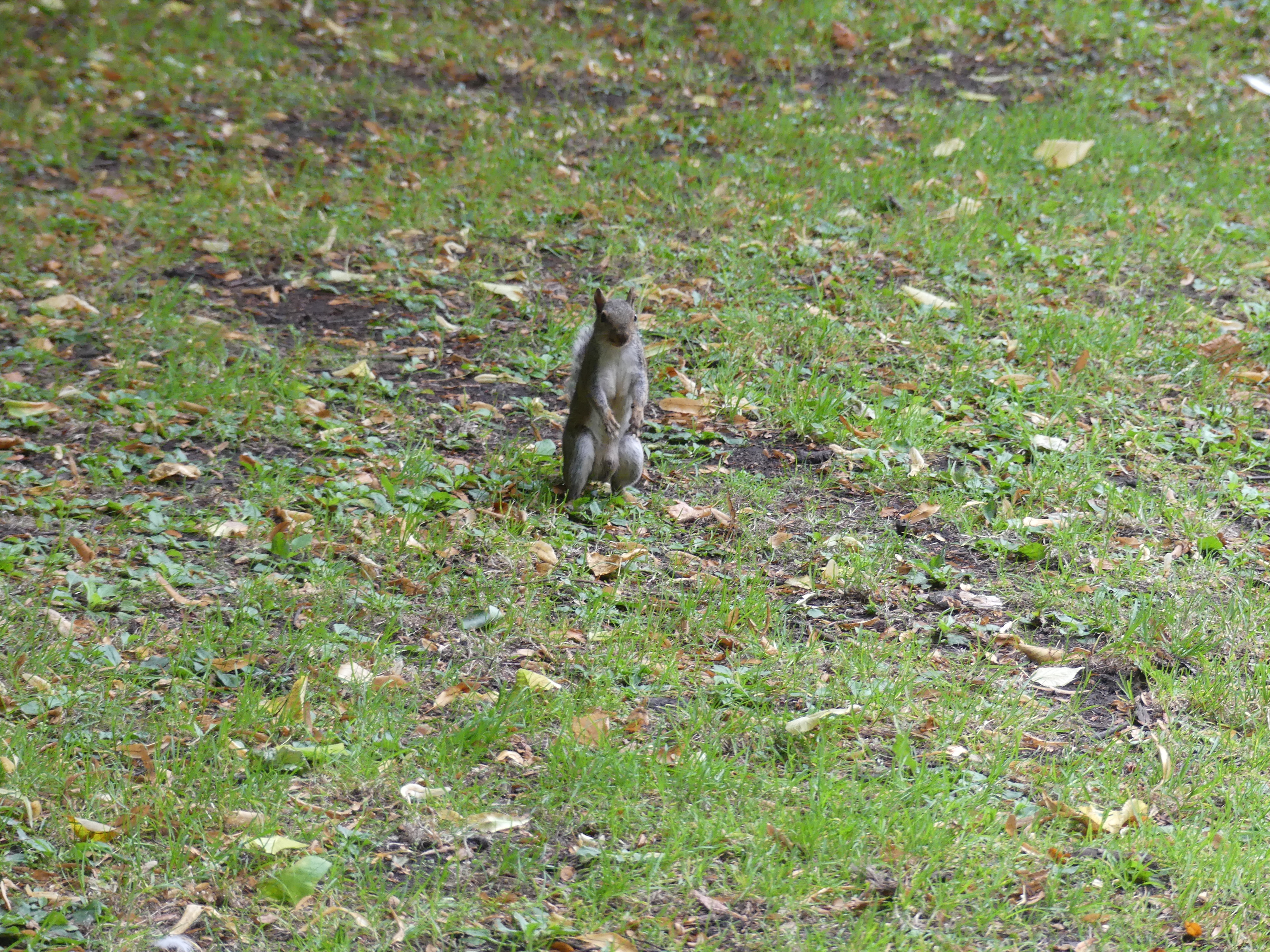
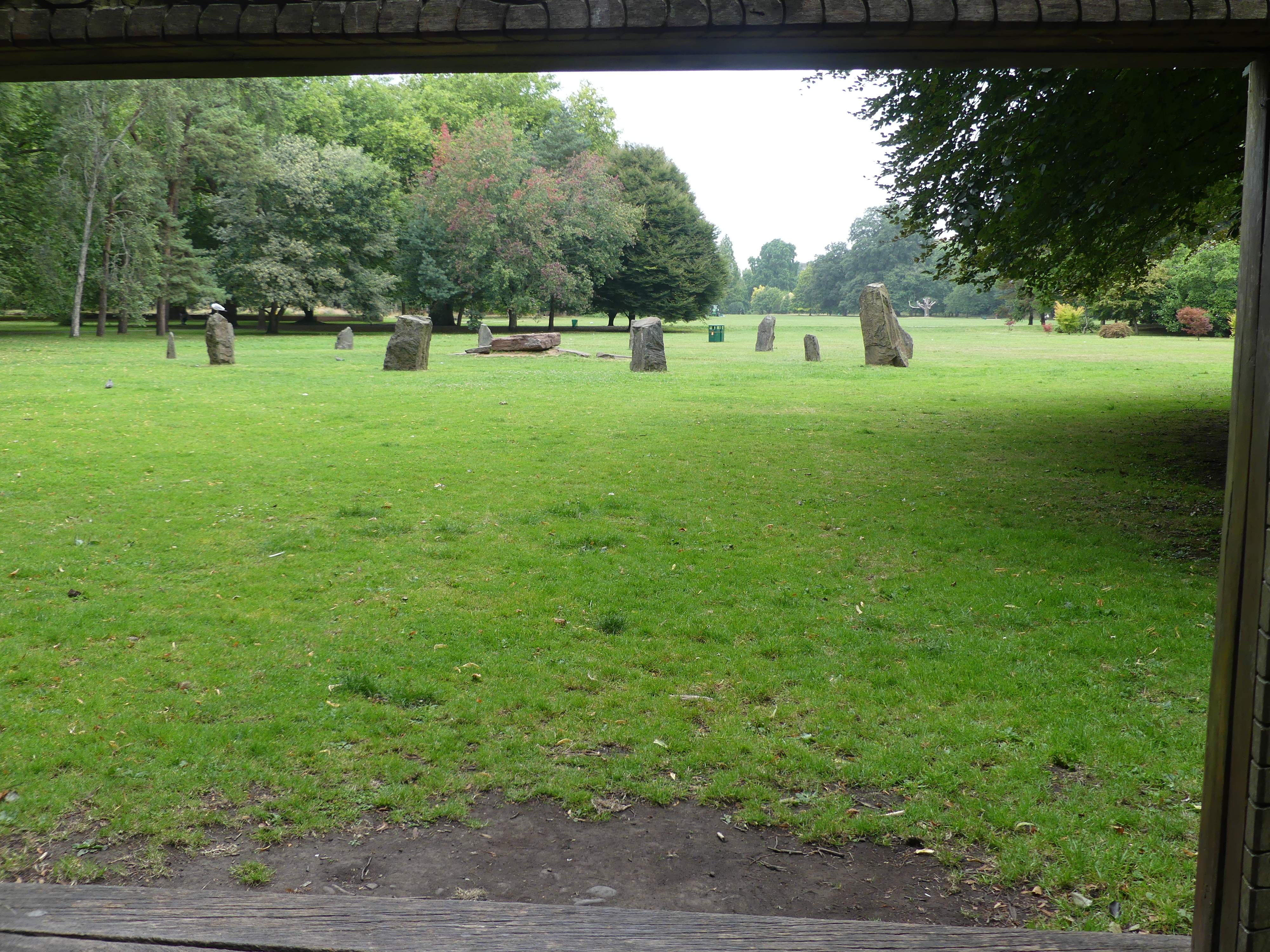
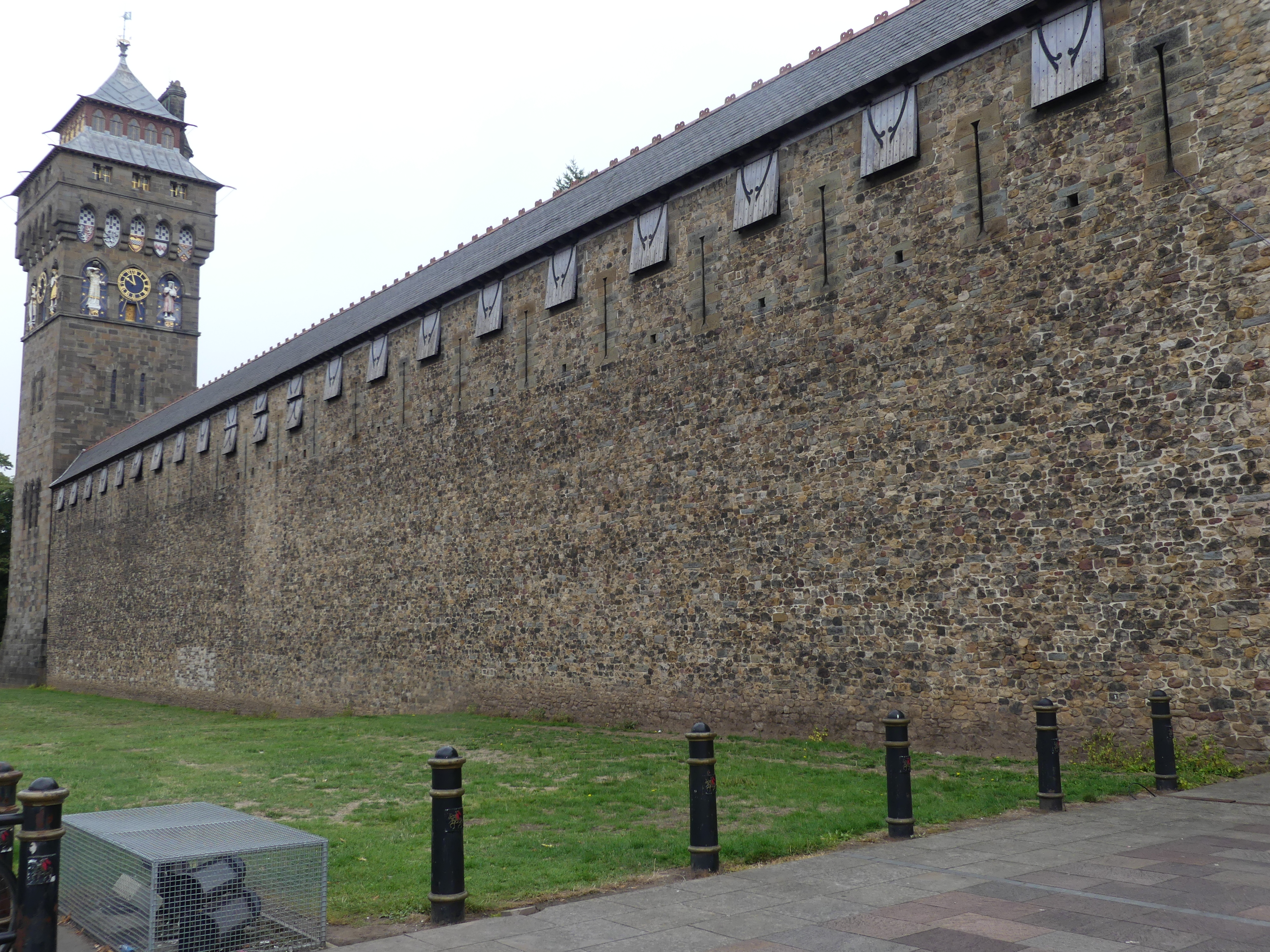
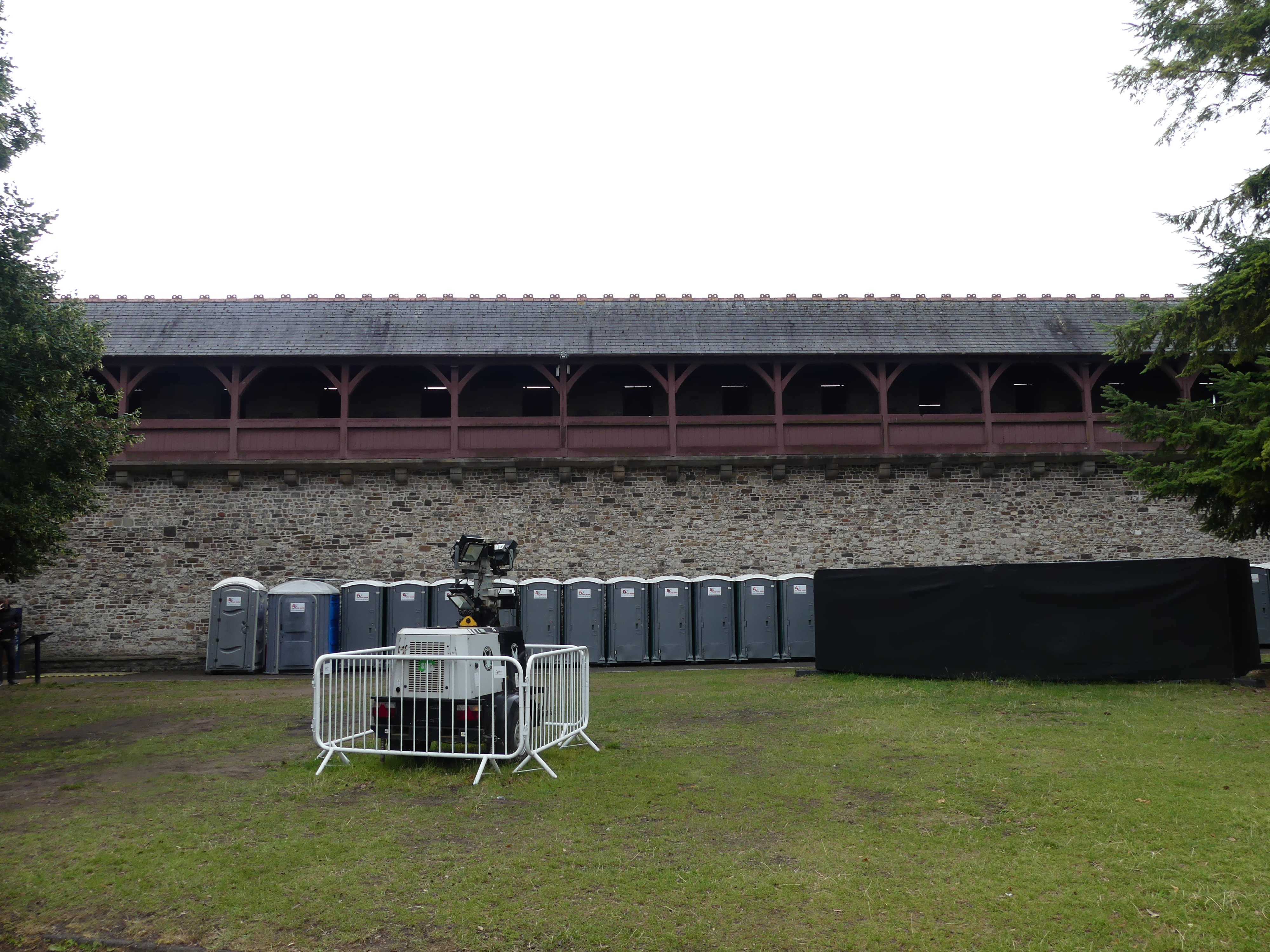
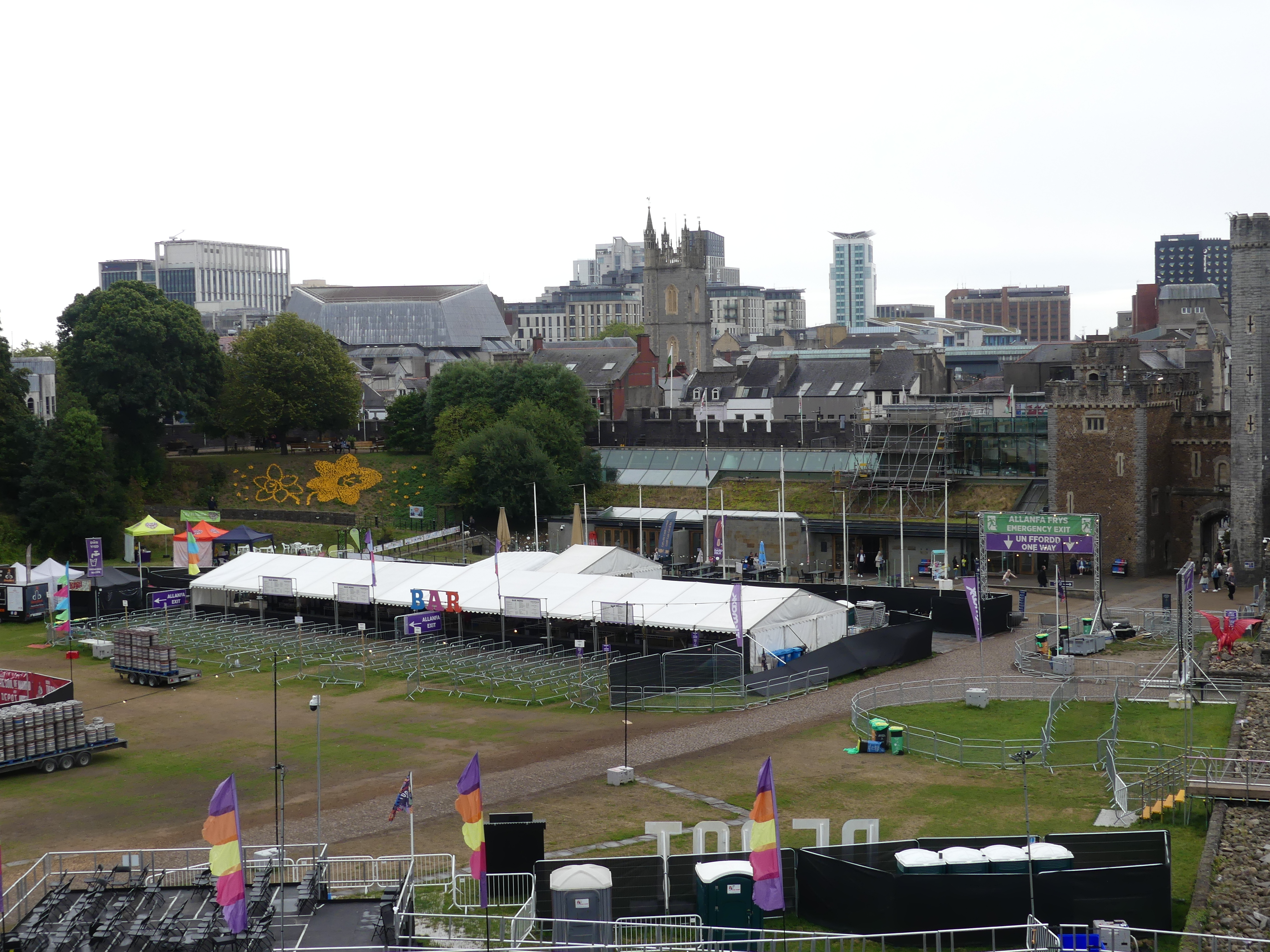
The Landlord had organised a parking permit for us which meant we could park anywhere in the street and Neville Street proved to be a major throughfare to the city centre. We ventured to catch a bus – 3 different routes run through Neville St. So when in doubt ask a stranger on the street. This stranger was very helpful walking us to the point where the city centre was at the end of the second street around the corner from our B&B. The castle wall of Cardiff Castle extends to encircle a gloriously wild park, and the former gatehouse has become a coffee shop – very twenty-first century. There are gray squirrels and standing stones and the western gate that is not used anymore.

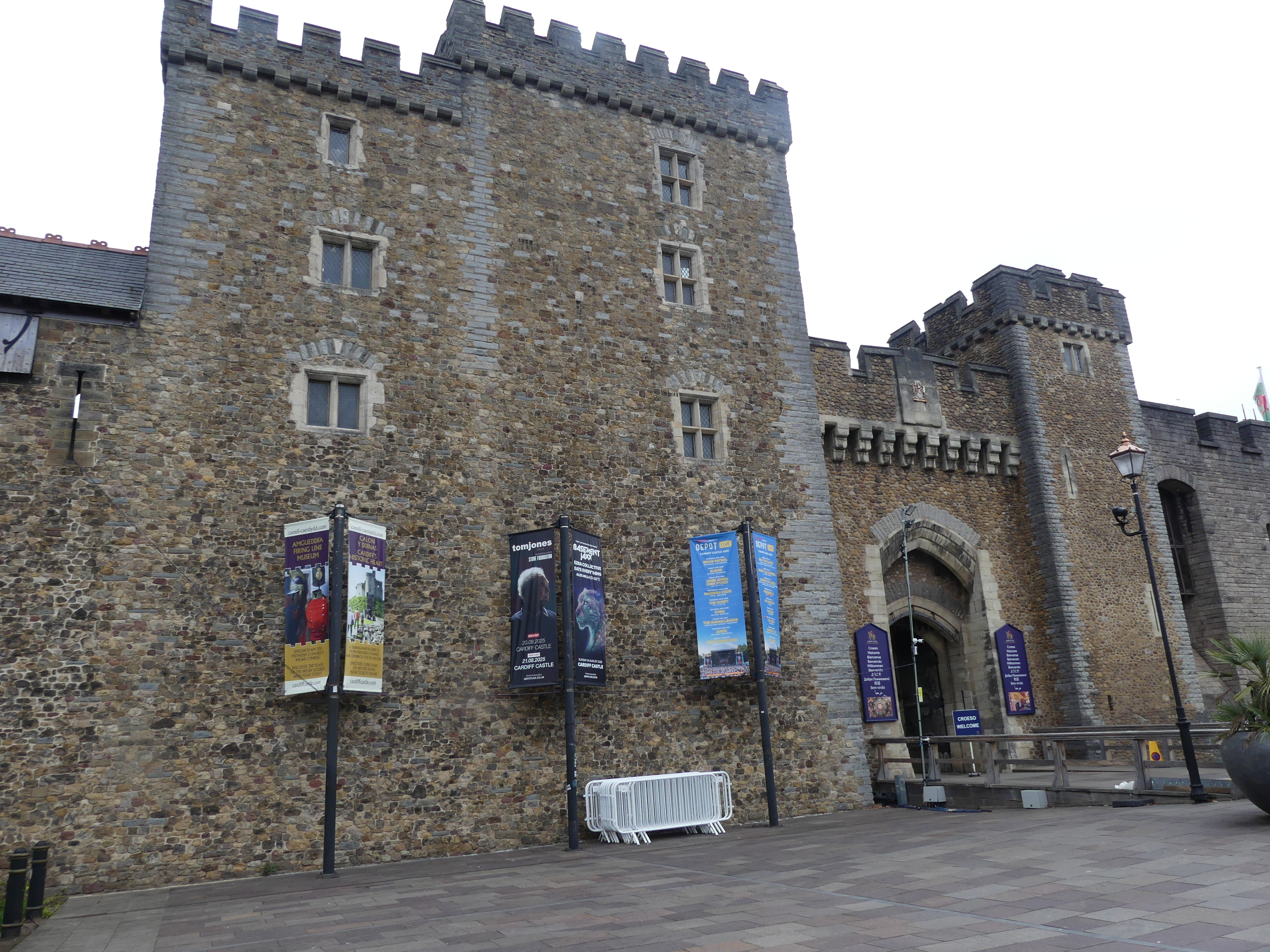
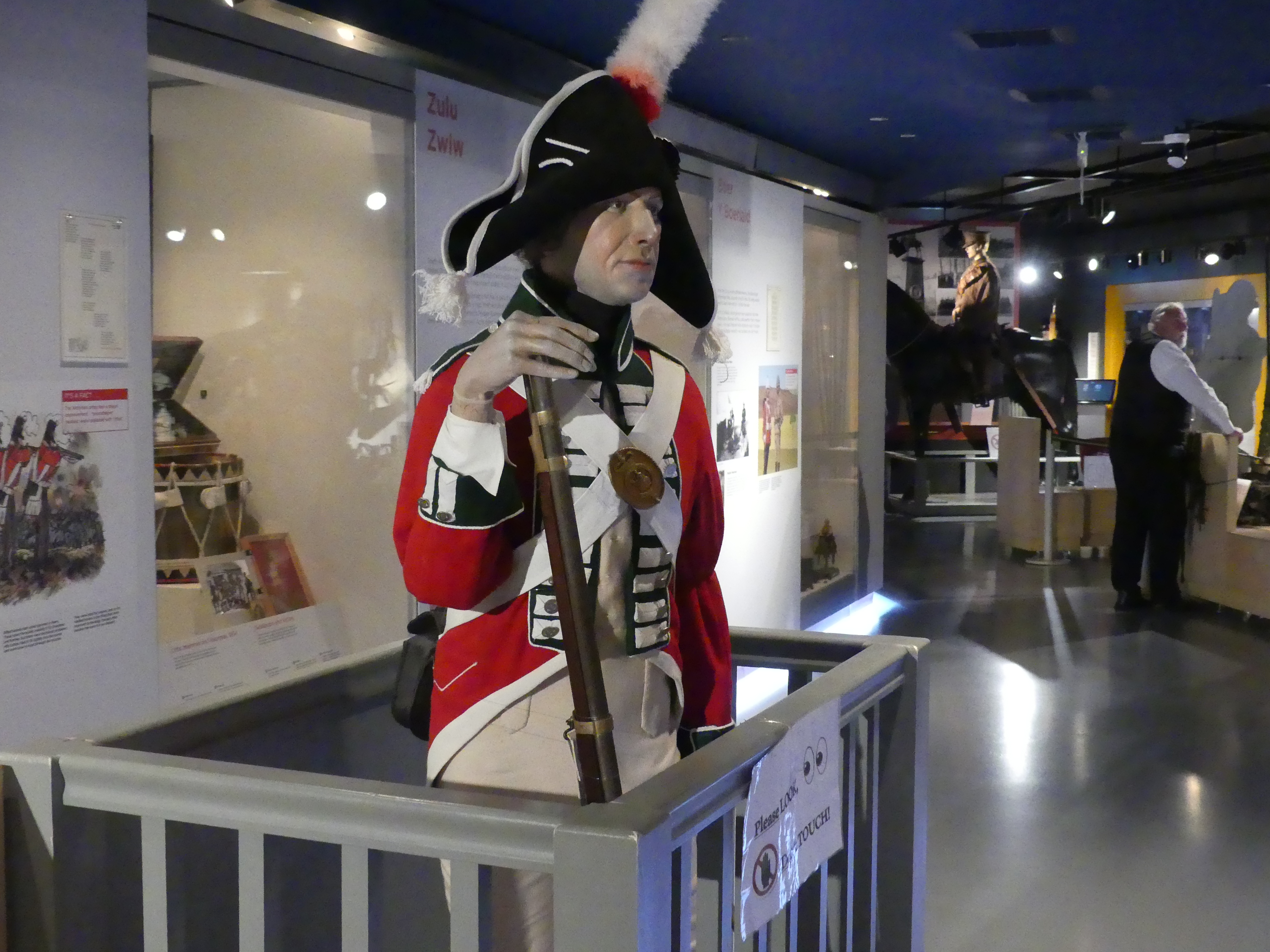
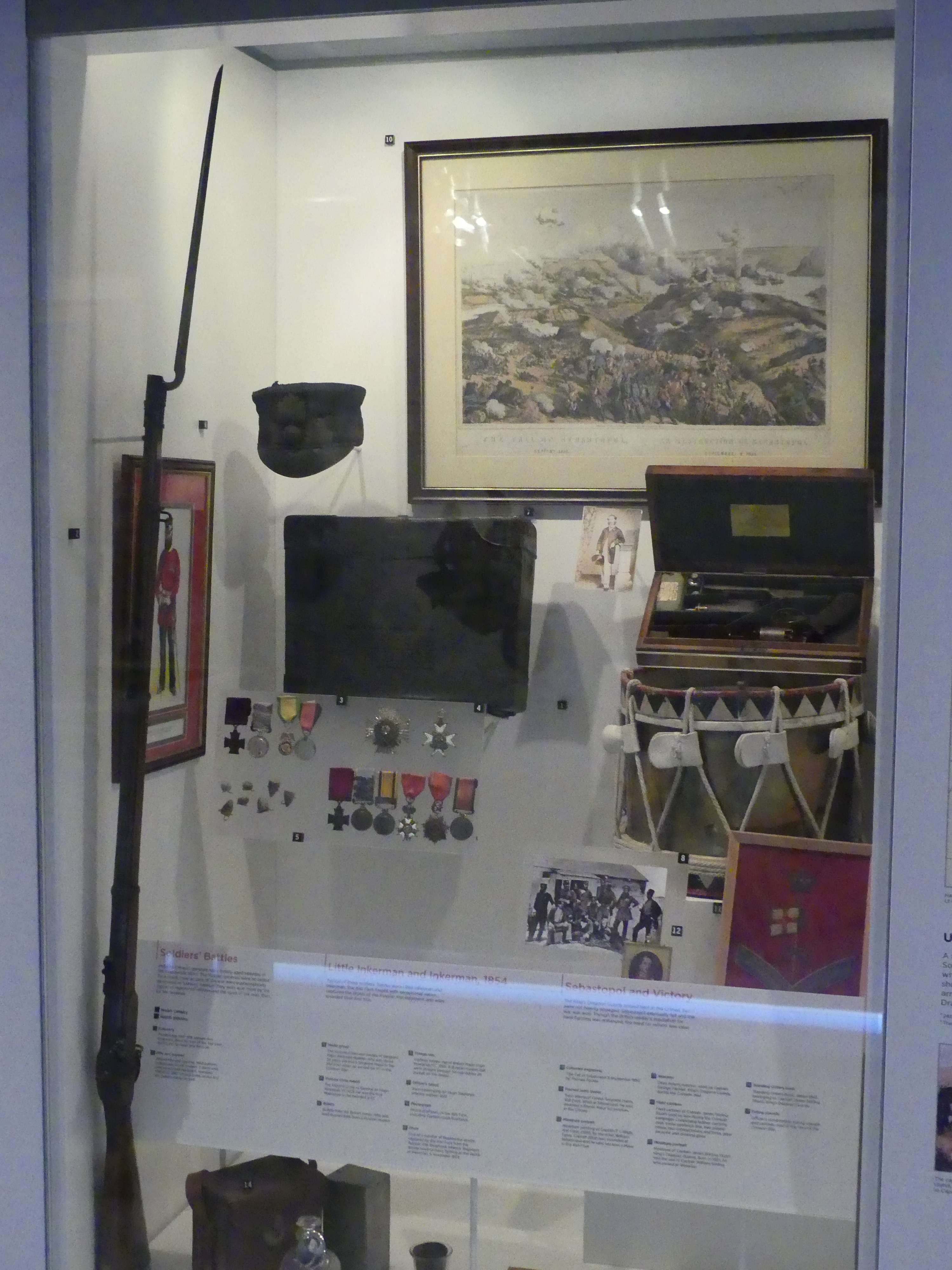
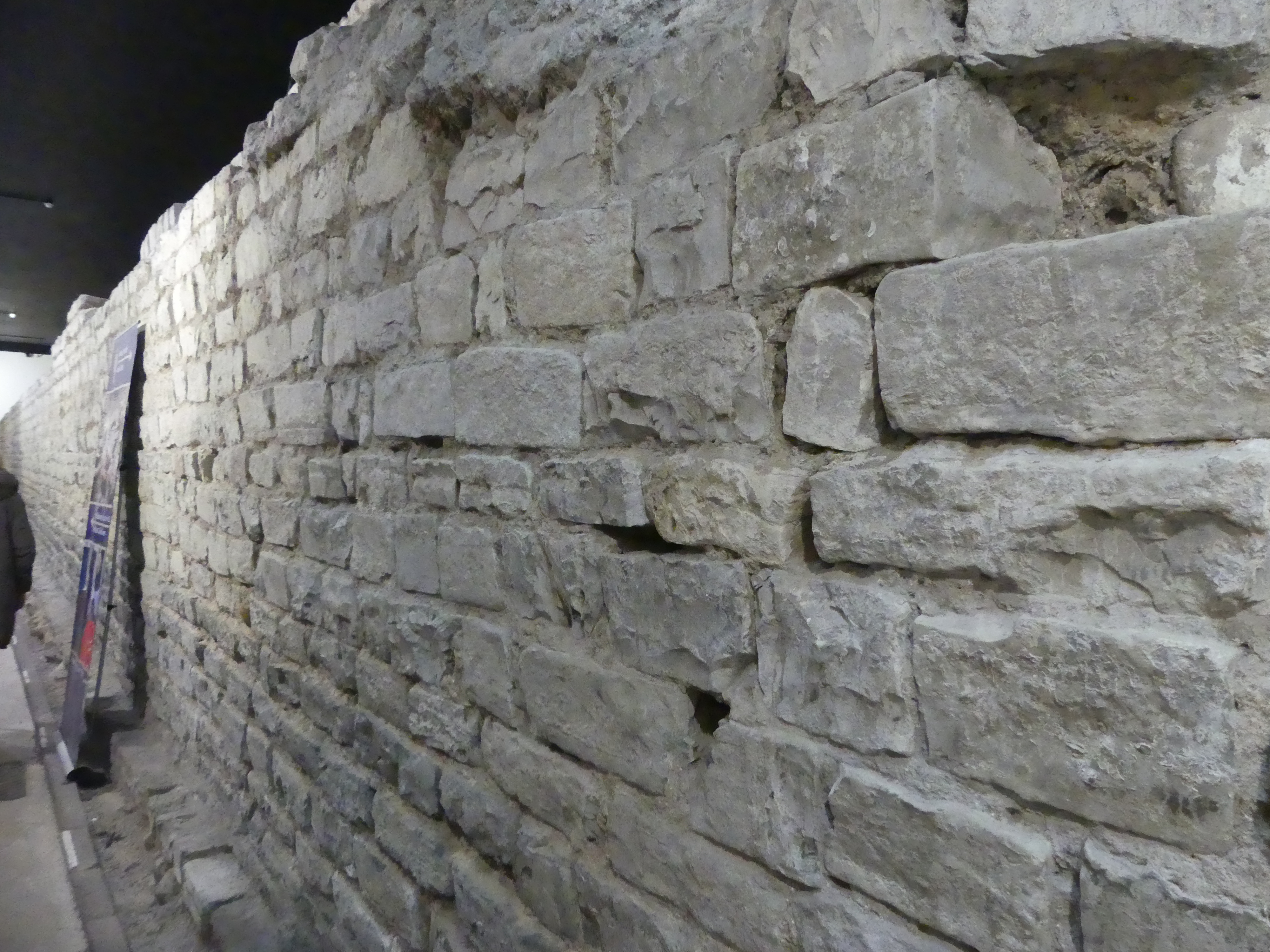
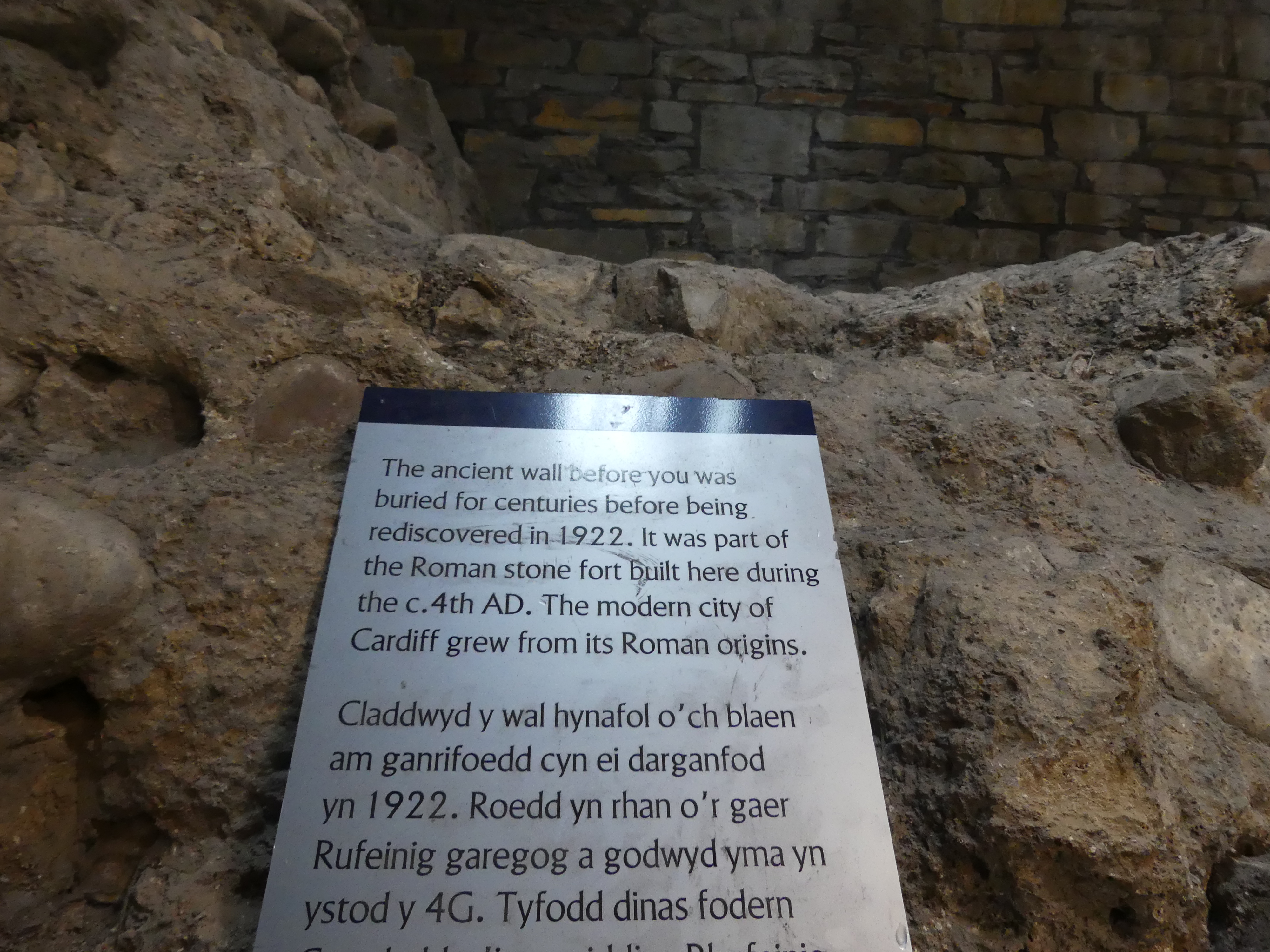
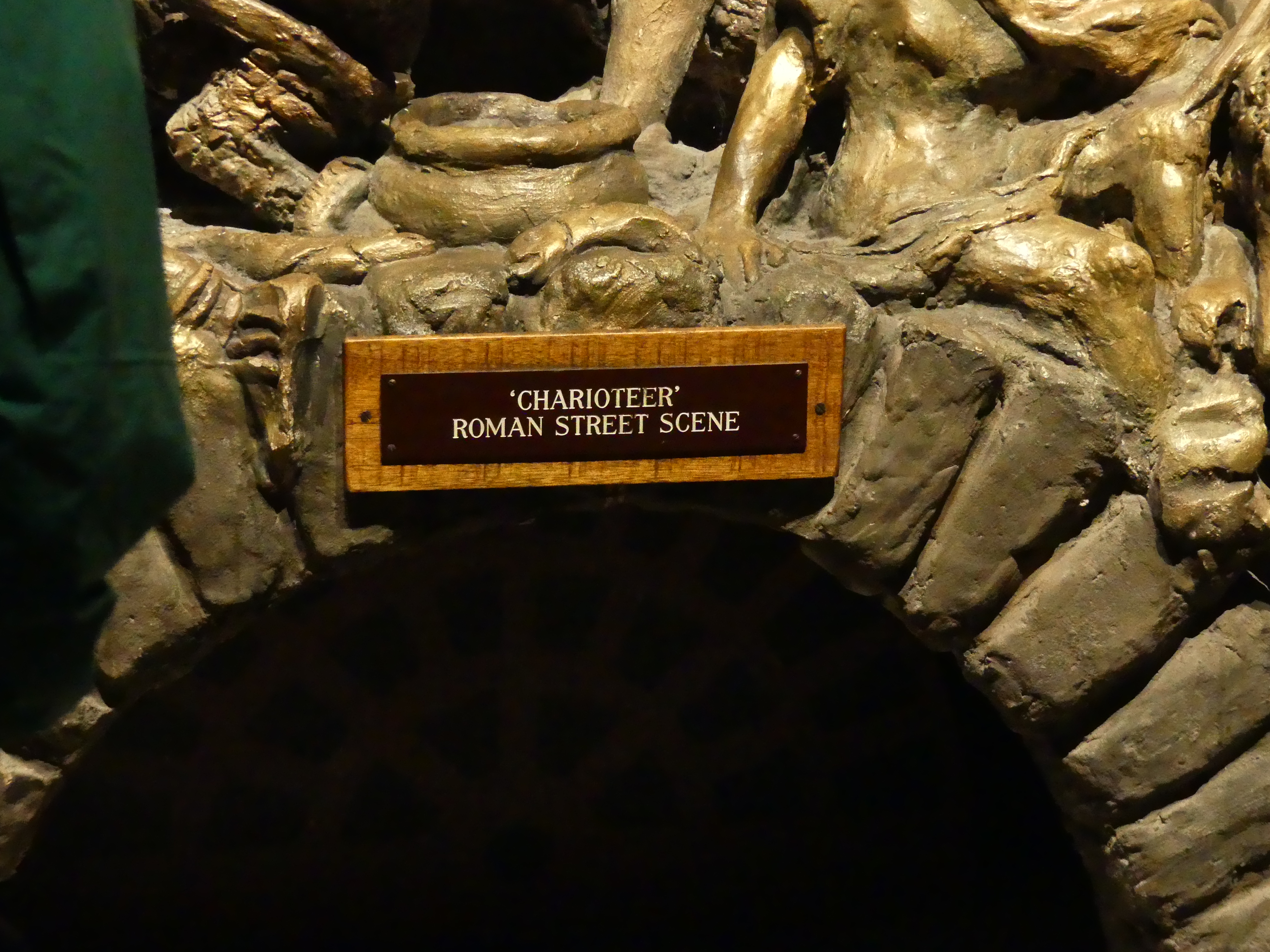
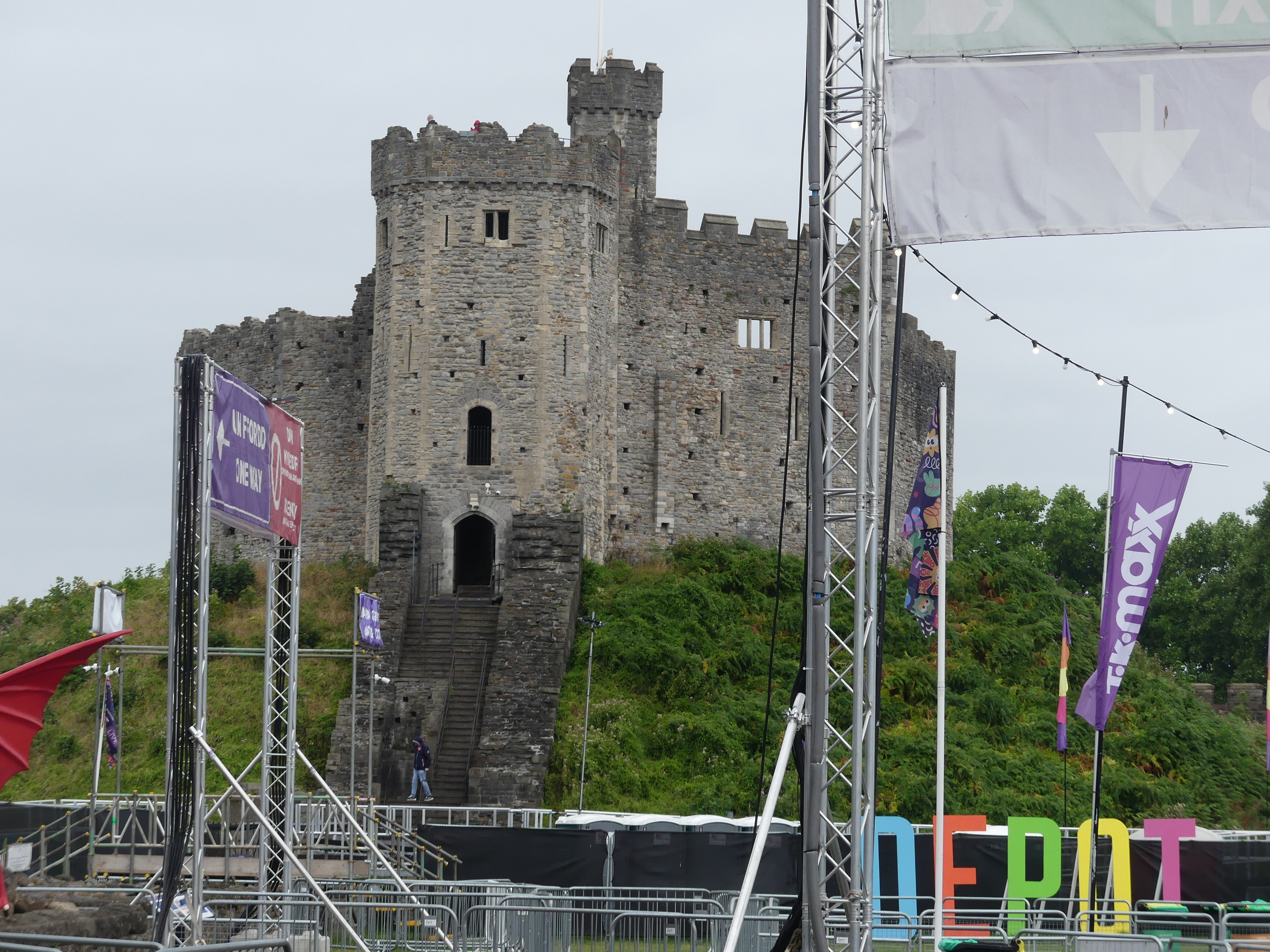
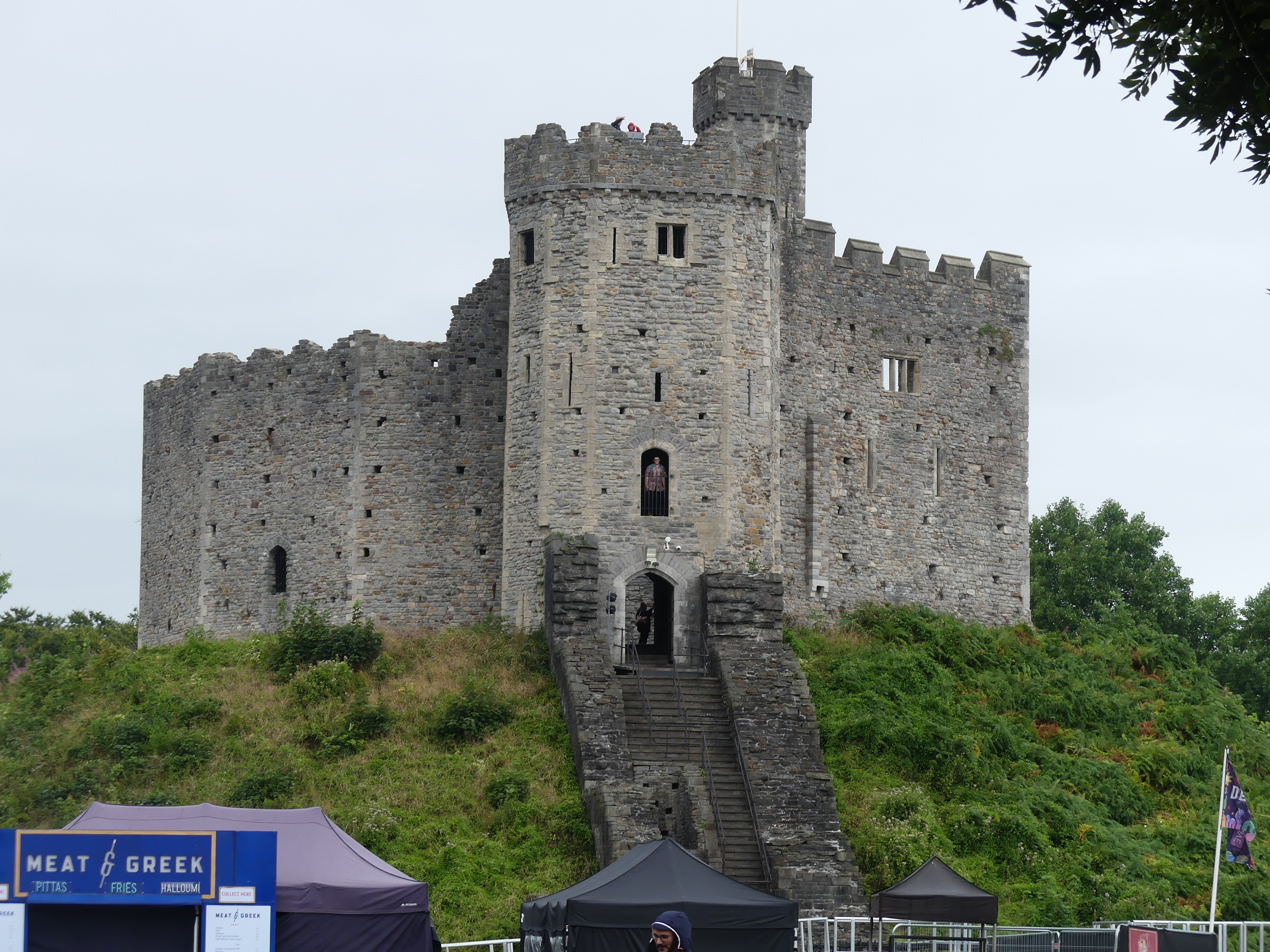
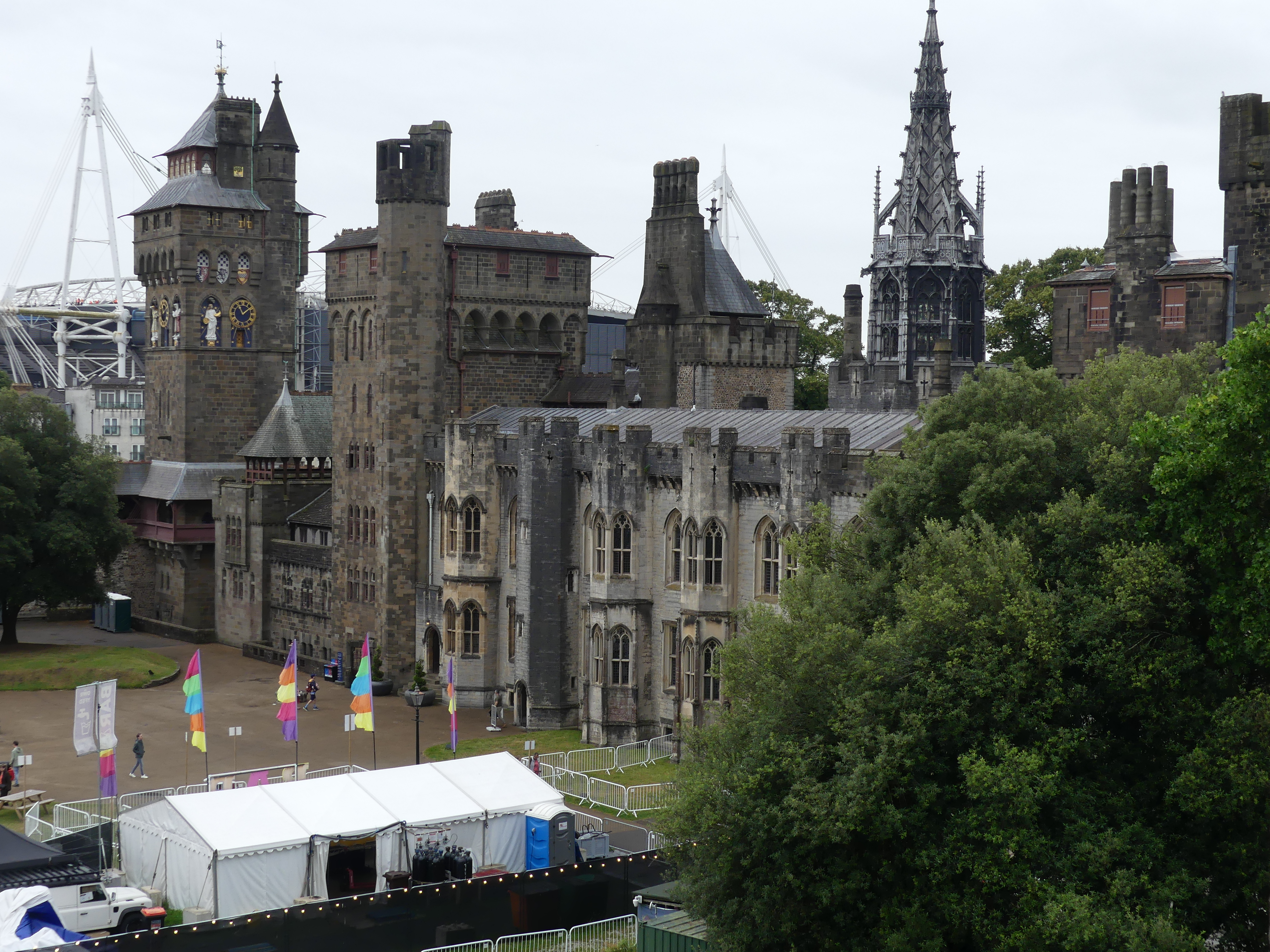
The wall from the gatehouse to the castle is adorned with animal sculptures but at this time I only photographed the twin lions on a gate to another side entrance being used for a wedding. We planned a visit to the castle and this occasion was a general walk around to learn where we might find various things. The castle walls are intact and dominate this part of town. The following day we went on a more formal visit and bought tickets to go inside. The castle is still in use but not for its original defensive purposes but more of a museum. There is a memorial to all the Welsh regiments raised for King and Country from the Welsh population in one basement area. Very comprehensive and explanatory but equally underlining futility of war. There is a dedication to the 7 VC awarded to soldiers in the Boer War for instance. Along with “modern” memorabilia there is a remnant of the Roman occupation in the form of a wall uncovered in preparation of the basement for this military memorial. The inserted sculptures are modern in the form of Roman sculptures around the time of the construction of the wall.
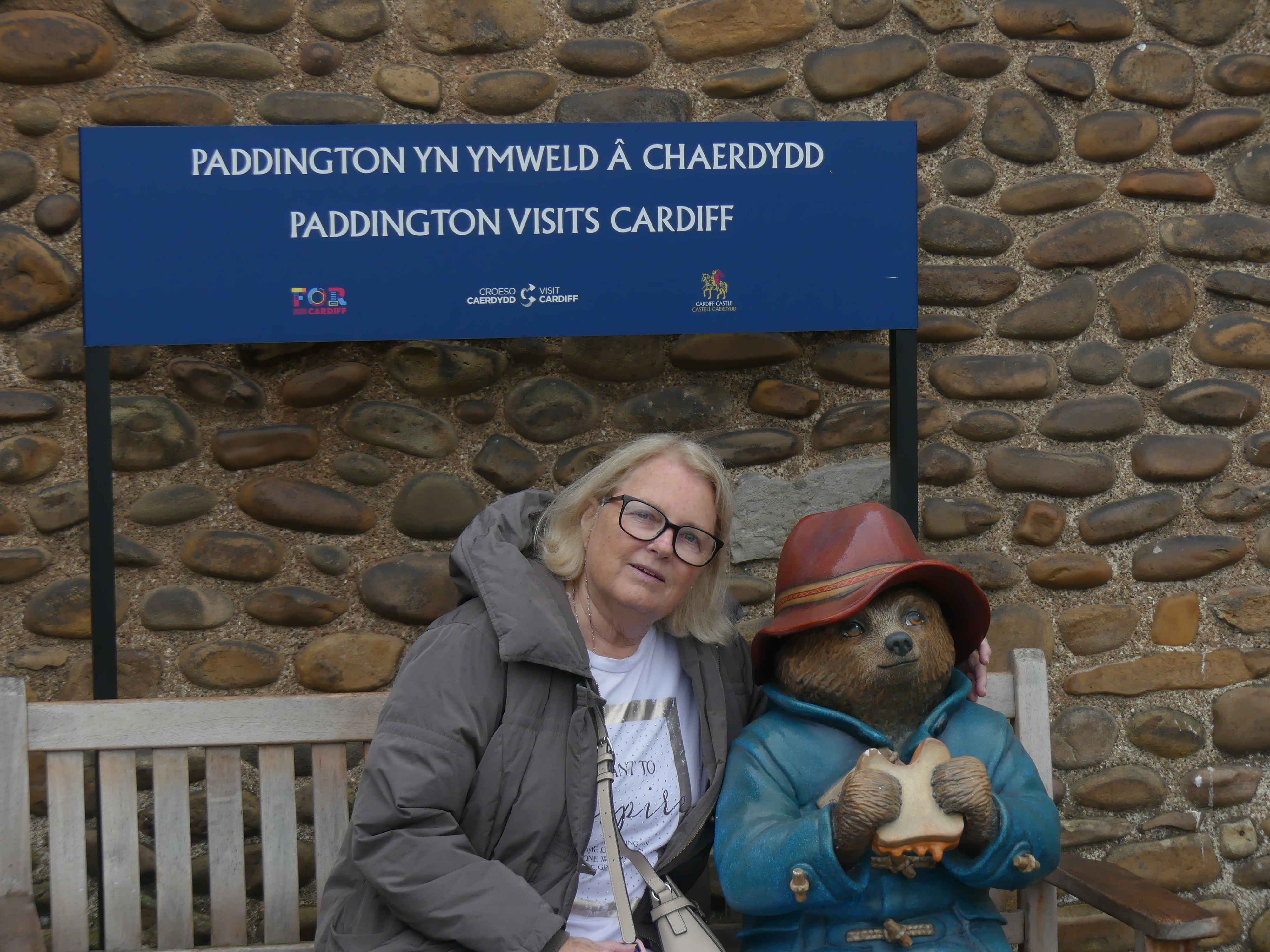
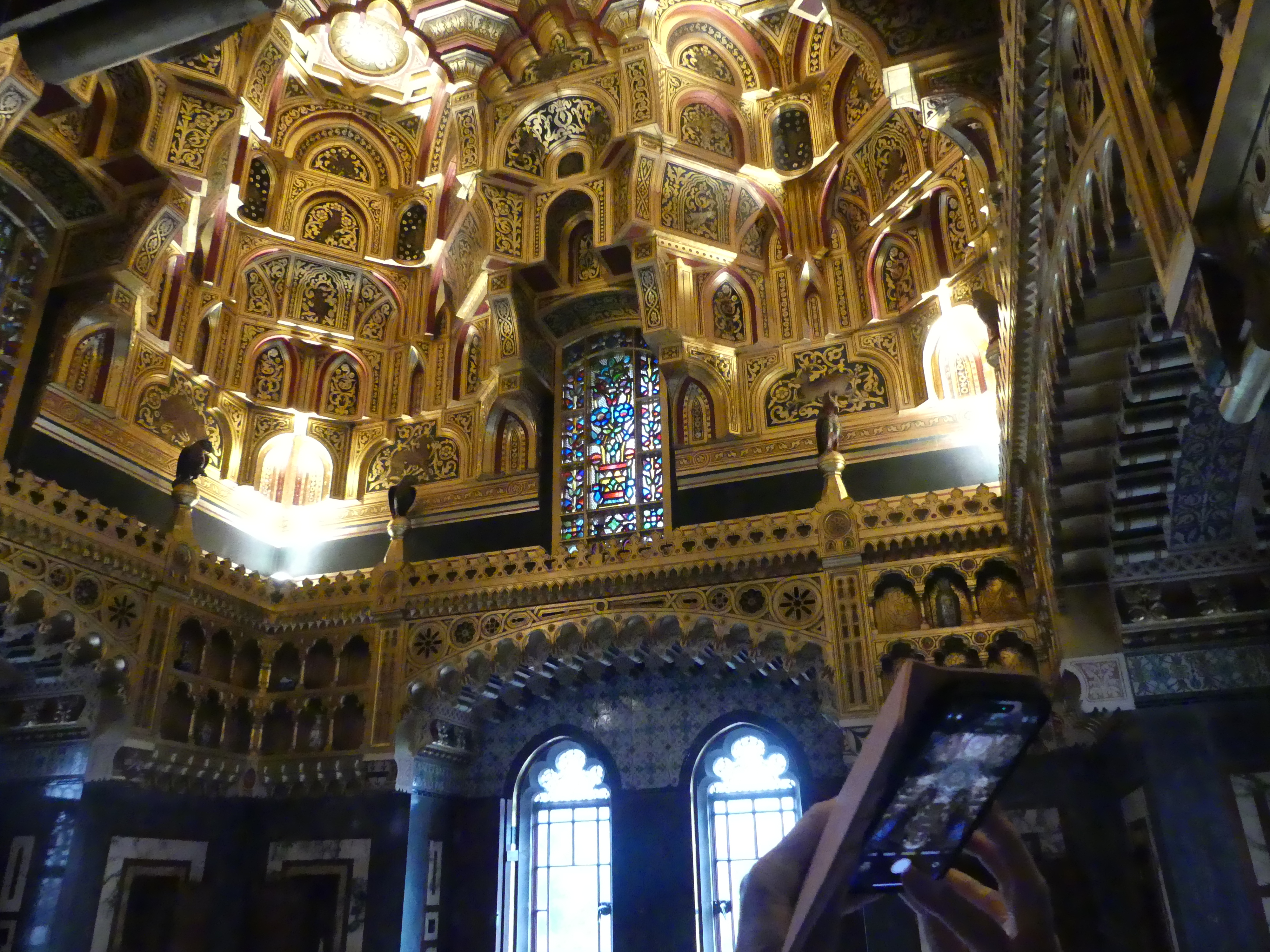
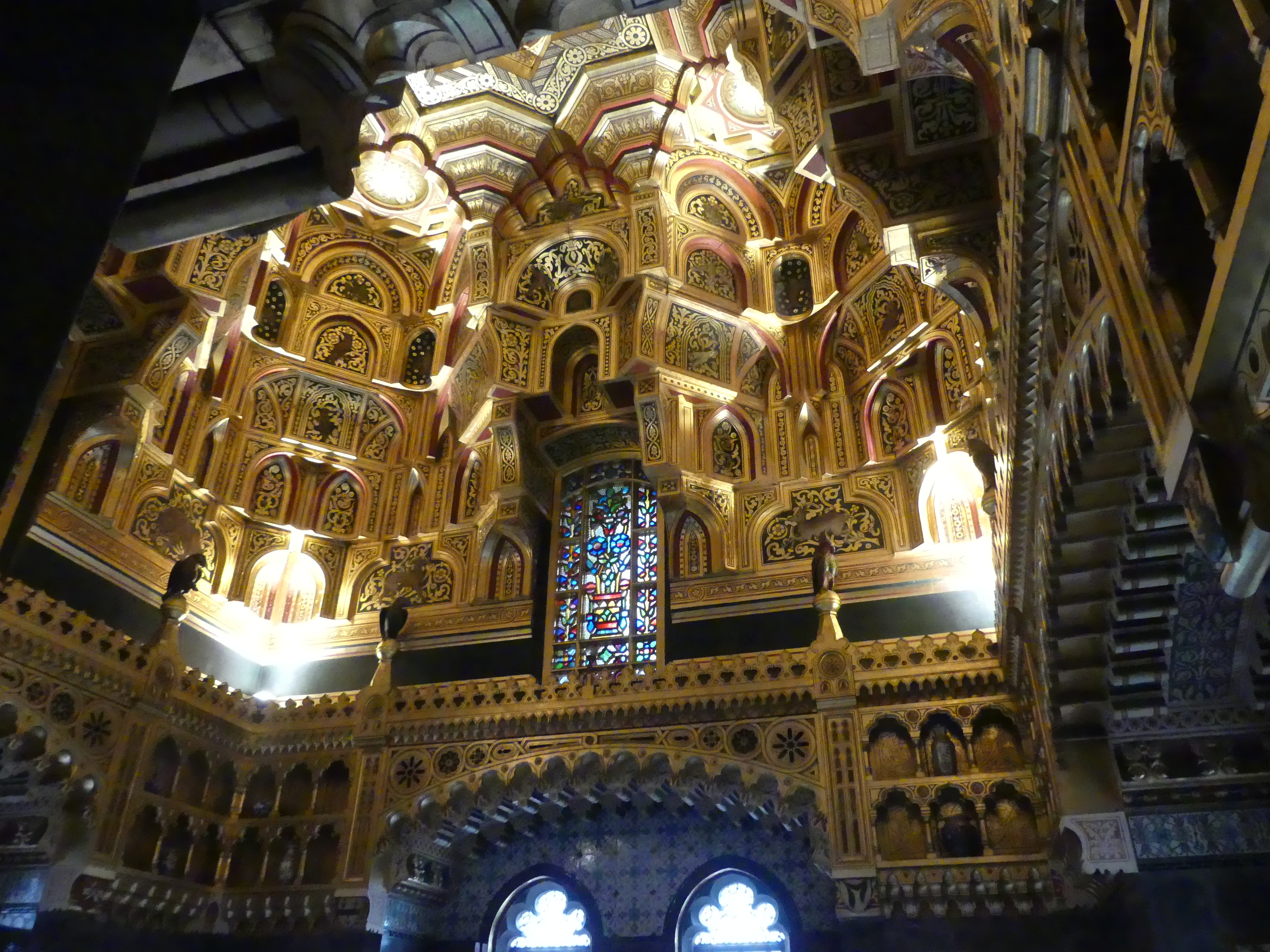
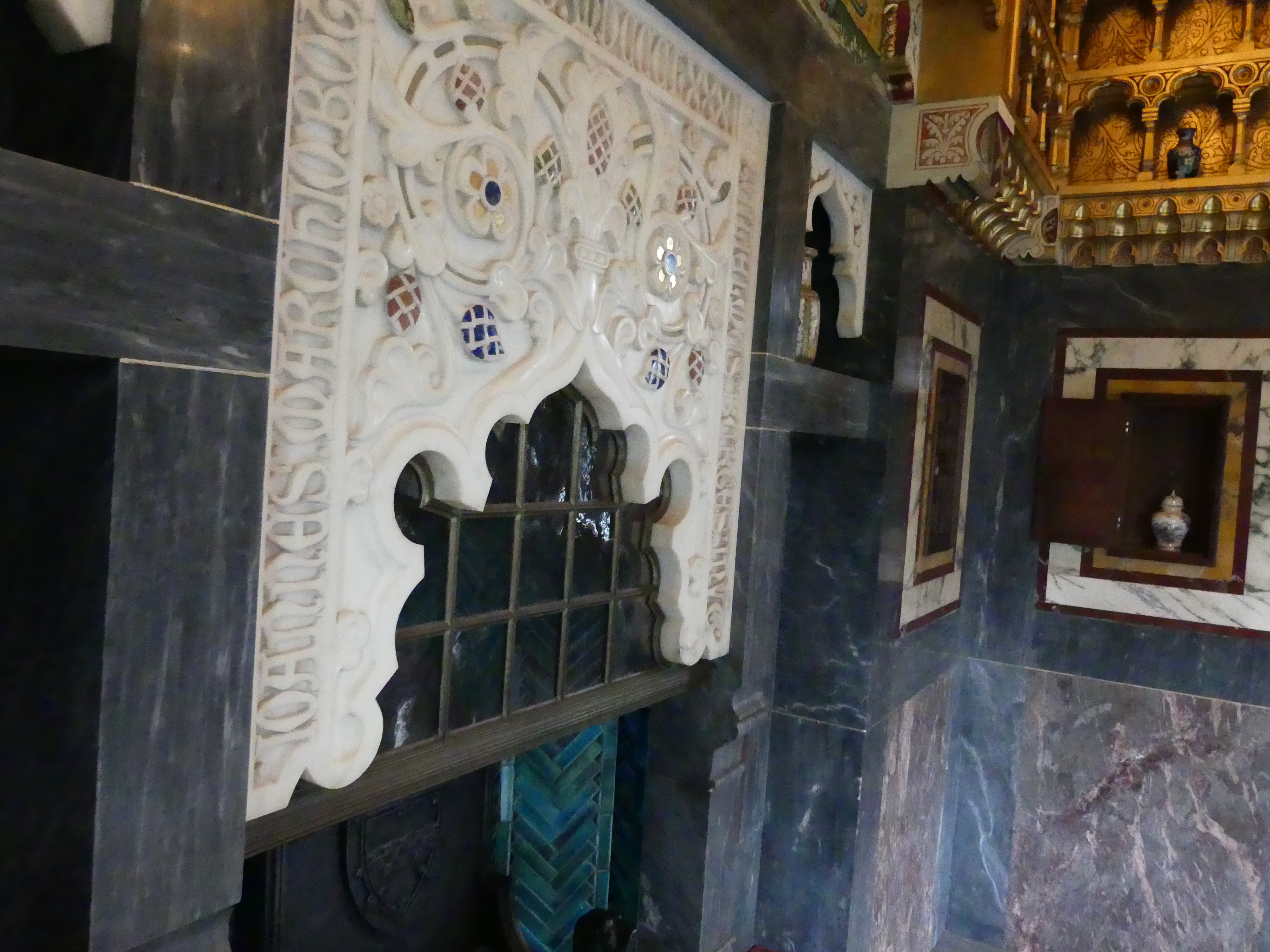
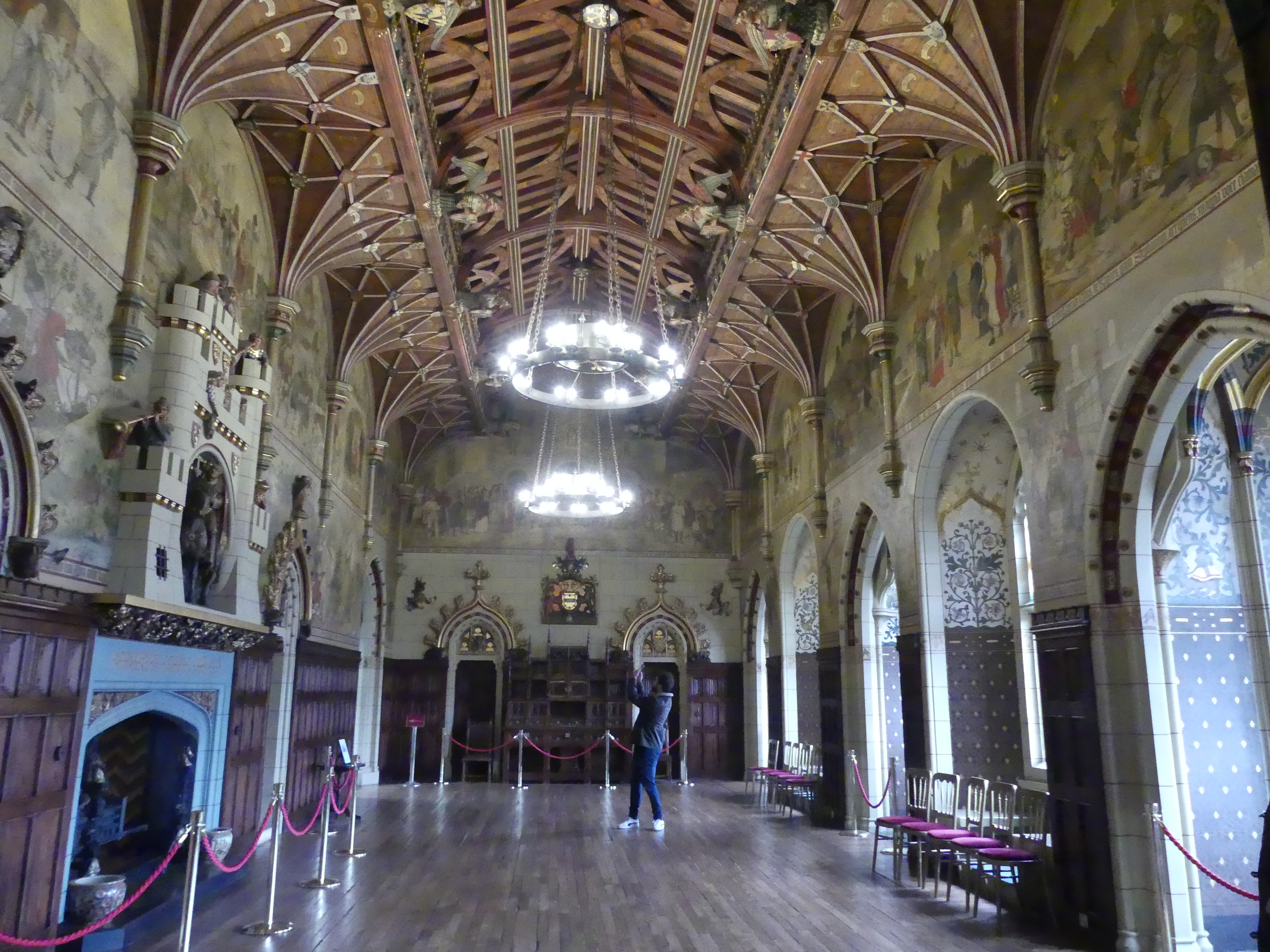
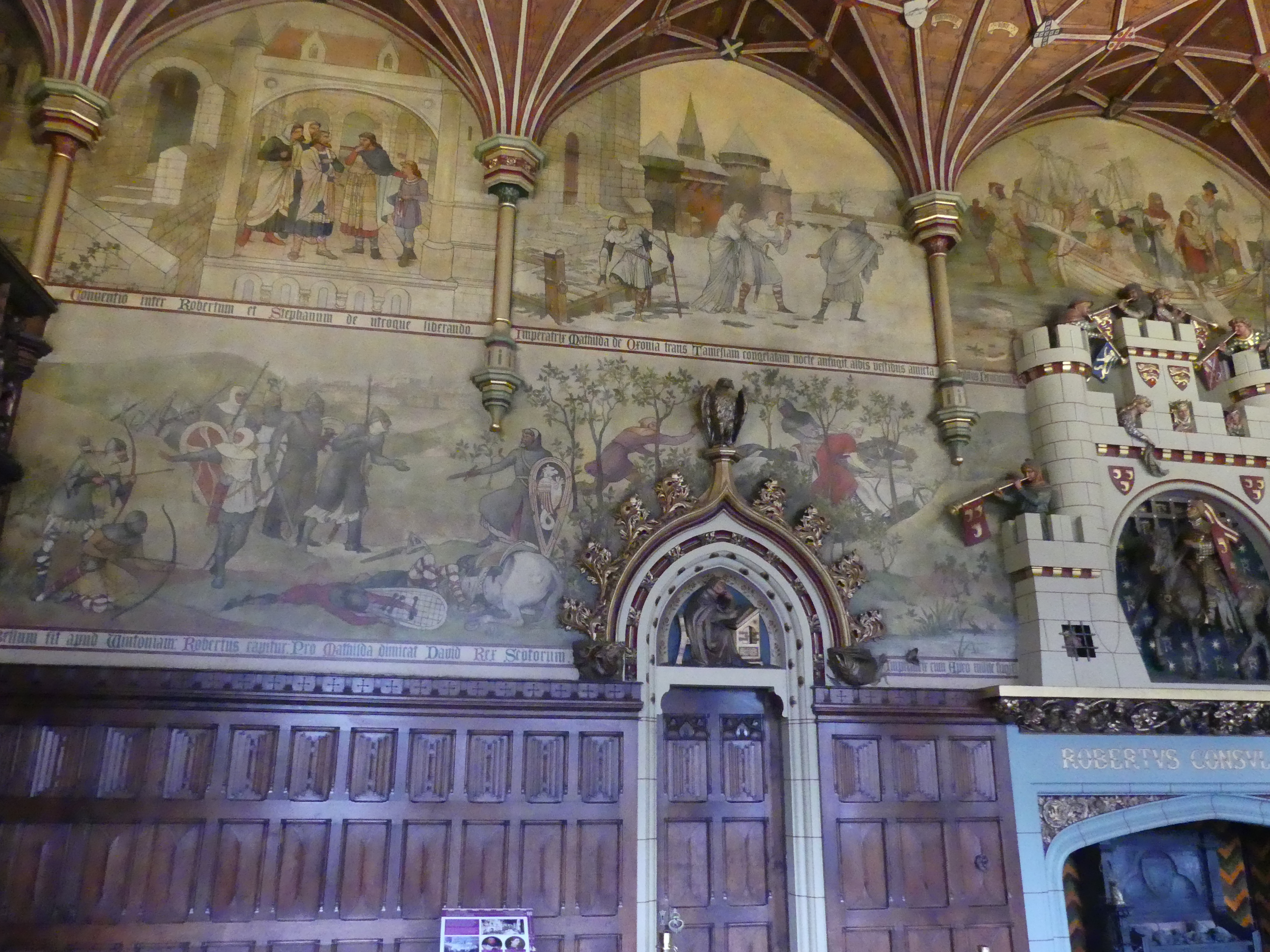
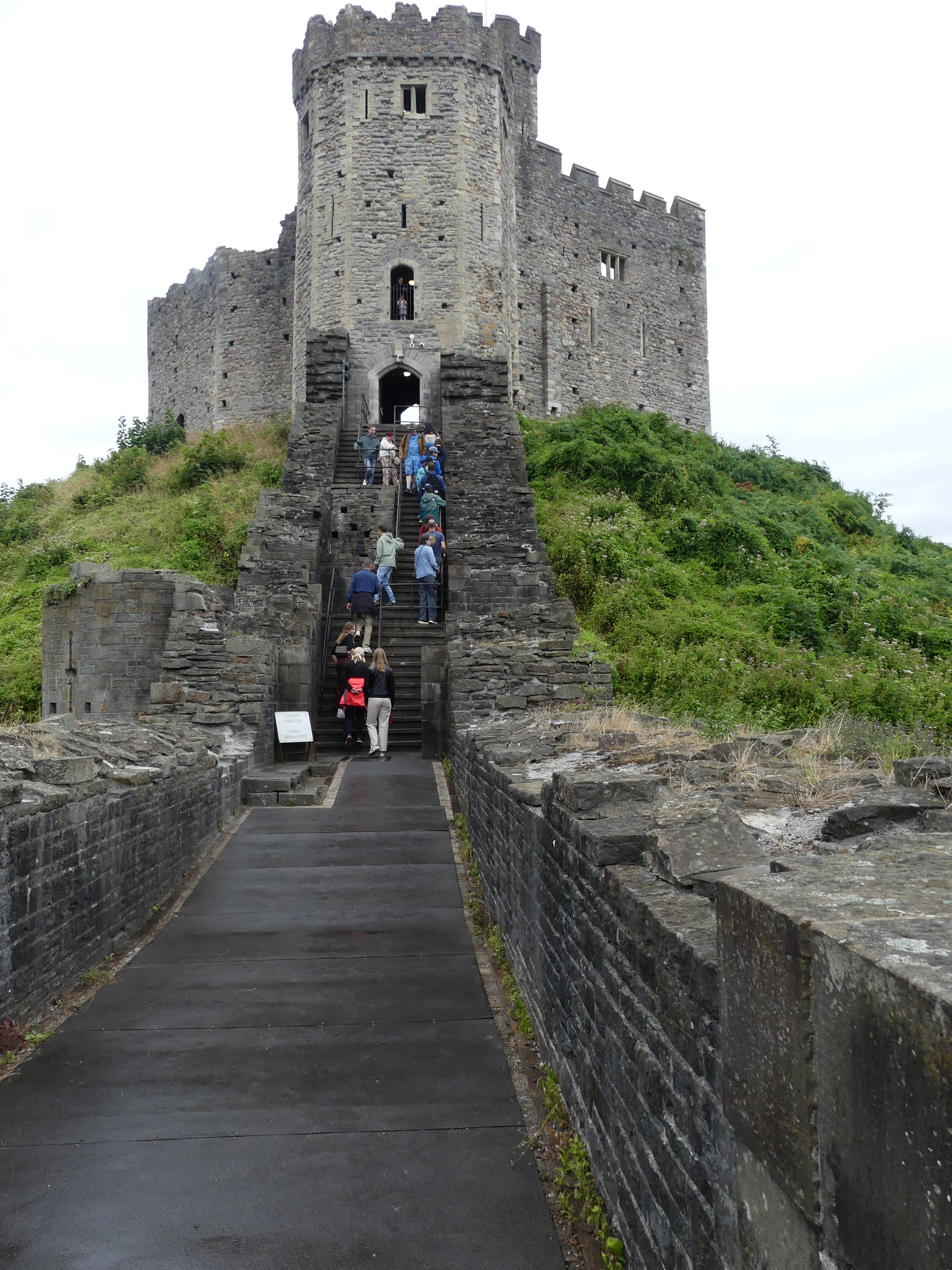
After that sobering visit Kerry found a friend to share his seat whilst I went across to the most ancient part of the castle- the Norman Keep. The sheltered walkways on the walls of the castle have been reconstructed but where they once connected to the much later constructed residence they are not open into the house unless you pay for the tour. Before visiting the Keep, Kerry and I took in the rooms of the house that are open to visitors. They have been decorated in the style that might have adorned the house when first built.

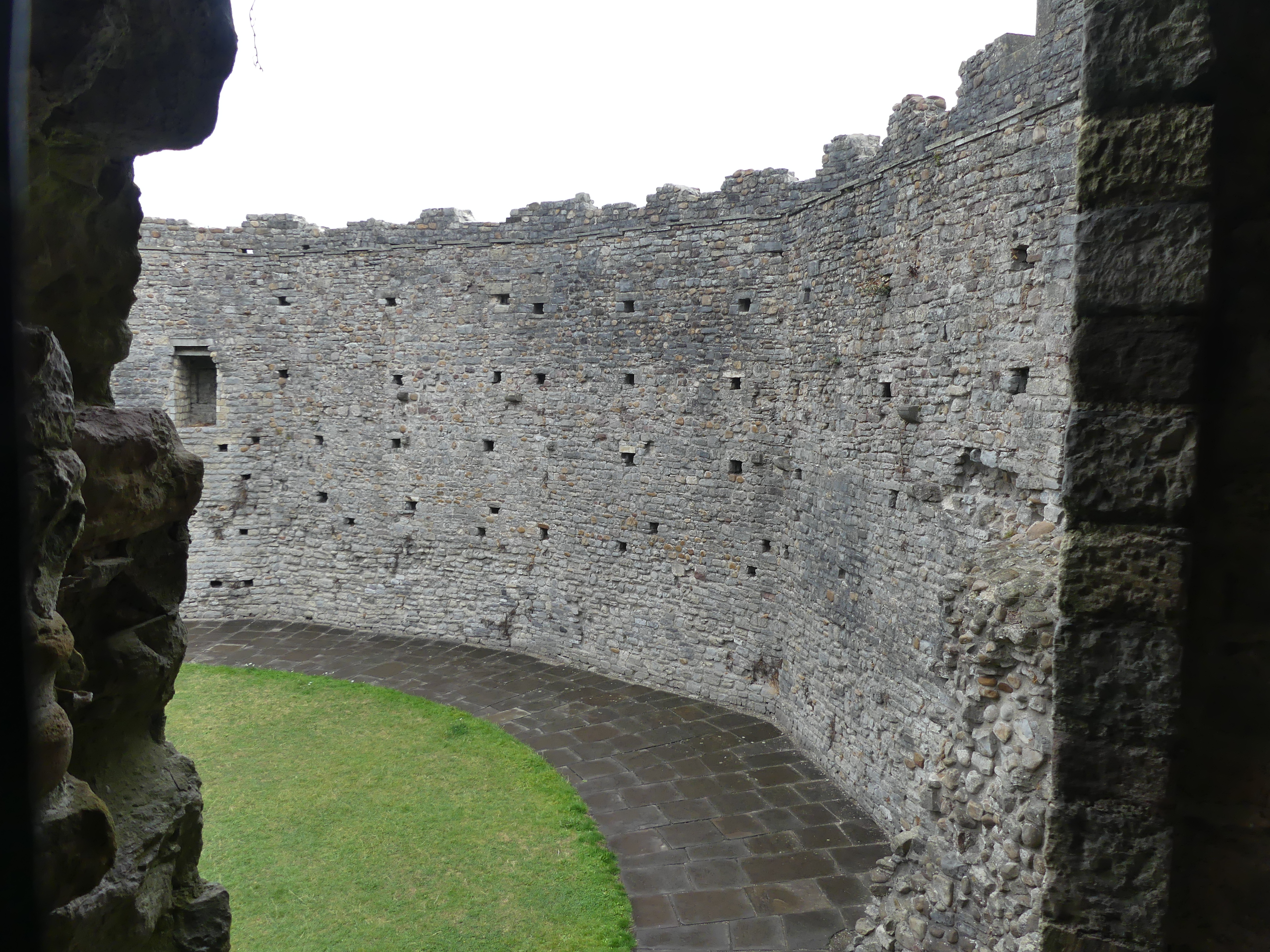
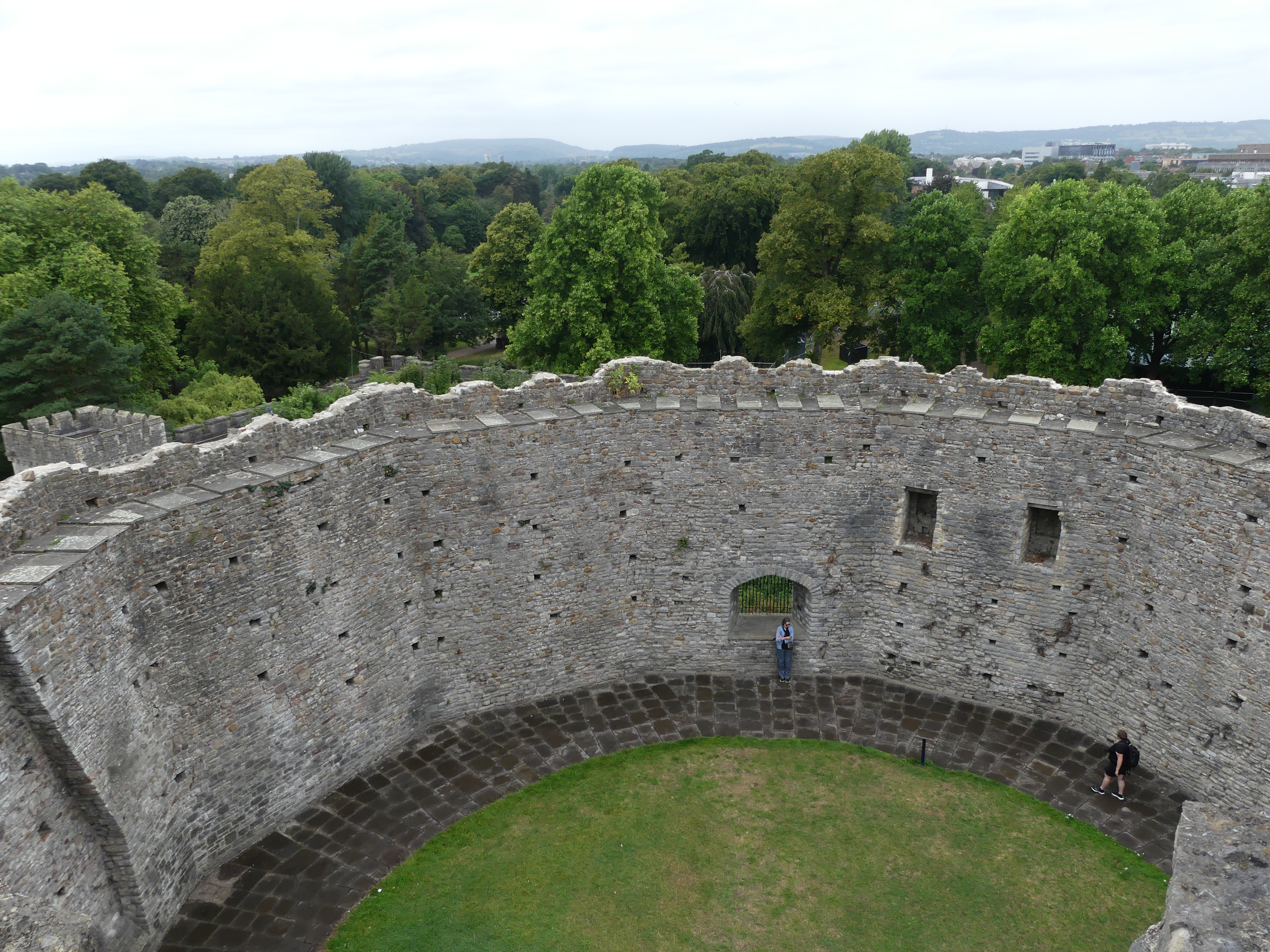
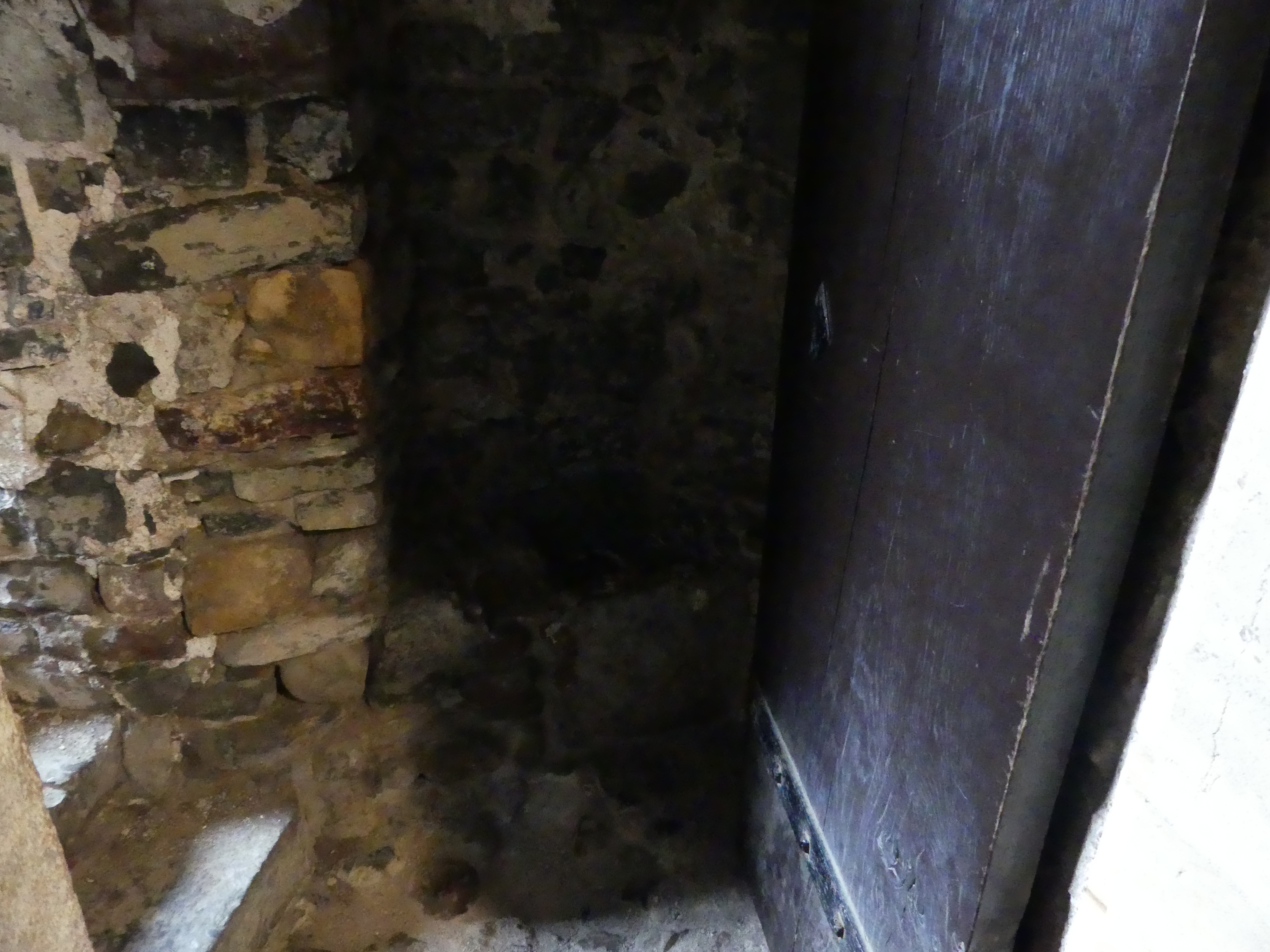
Kerry returned to her seat with Paddington whilst I challenged myself with a walk up the stairs of the Norman Keep. Rough and uneven, the stairs were a challenge but no defribulator at the top to help me recover. My photos below take you through the remaining parts of the towers (including the long drop that passes for a loo) – and the scenery around the tower and its walls.

Below is the floor plan of sorts for the castle.

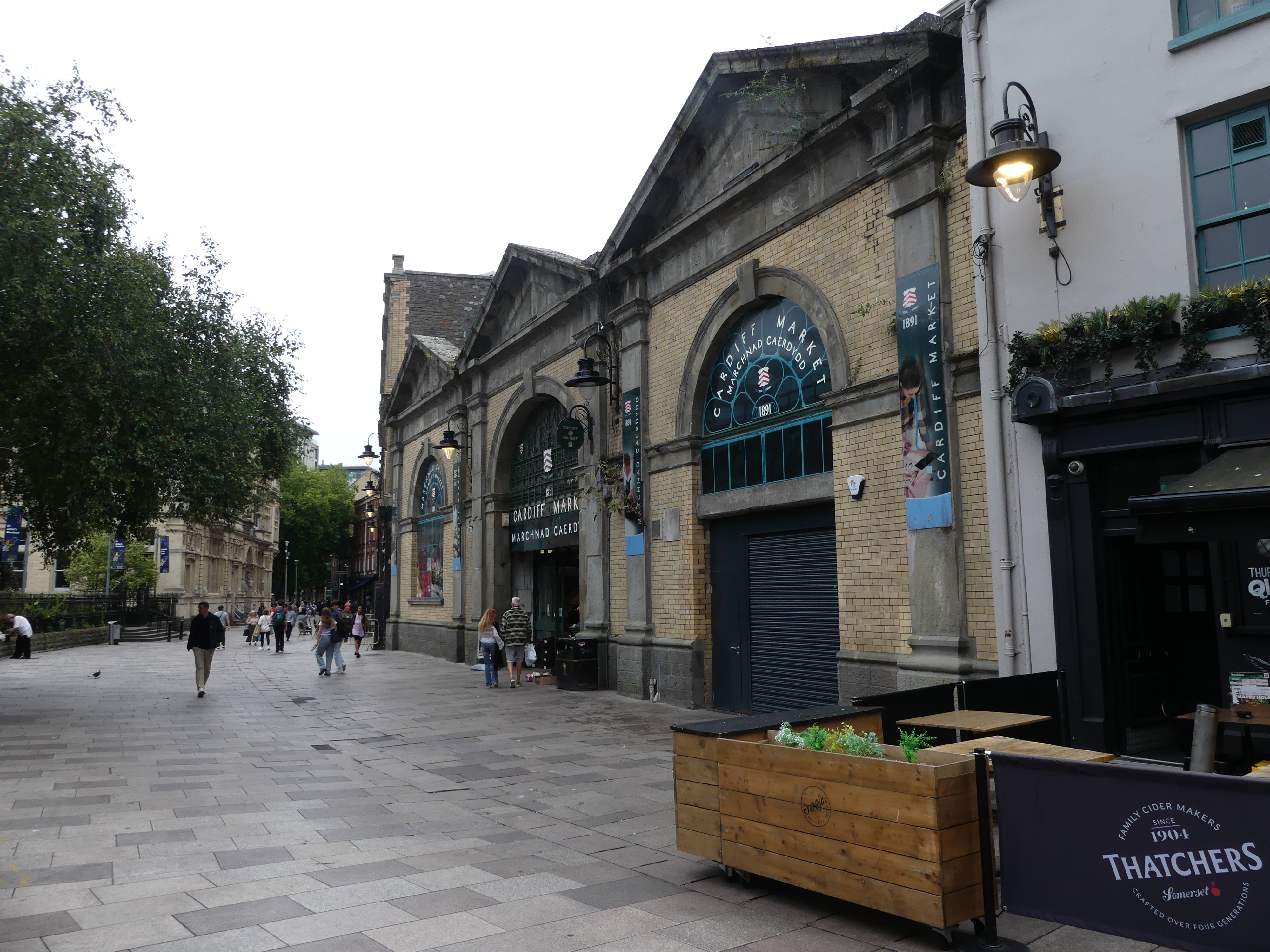
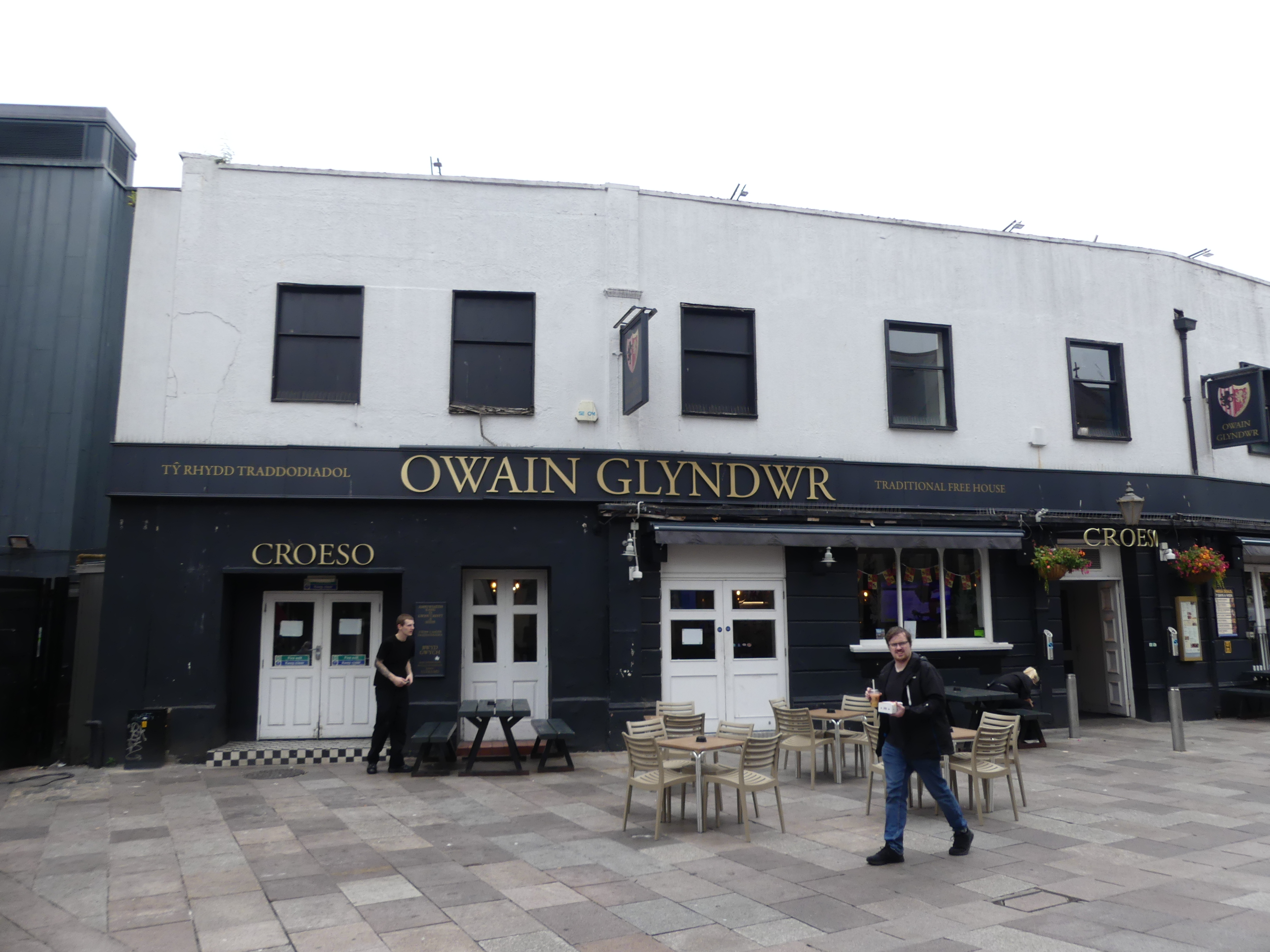
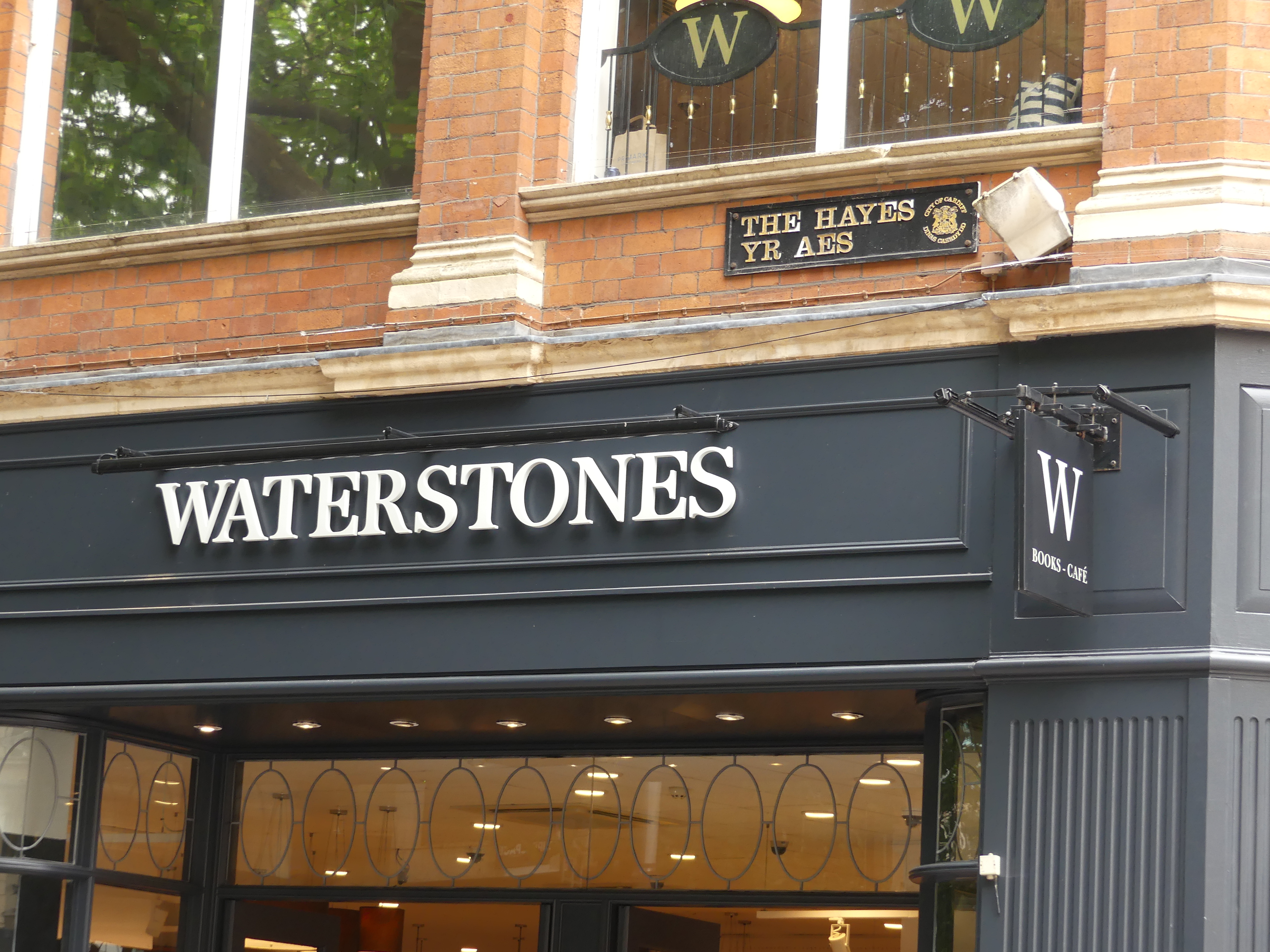
We had both had enough of castles for the day and took time to look around the “High St” of the old town and some of the street art, the church, some of the colourful pubs and a street named “Hayes” Street. On the way home I photographed the walls of the castle decorated with various non-indigenous animals.
Our first day concluded with a walk home and a good night’s rest. The following morning was a new adventure, and you will need to read on to learn about THE RETIREES GO AROUND THE WORLD – SUTTON HOO UK to CARDIFF WALES – CARDIFF CASTLE.

THE RETIREES GO AROUND THE WORLD – SUTTON HOO UK to CARDIFF WALES – CAERLEON.

We had heard about some Roman ruins just outside of Cardiff and the Museum – “Roman Legionary Museum”. We have visited Rome and roman ruins in Rome, Verona, Pizza and Cesi and Carsulae outside Terni Italy plus Hadrian’s Wall and Littlecote Roman Villa in Wiltshire, so we were not expecting to be surprised but we were.

The town is a pretty Welsh village. Entry is gained through a single lane bridge, and the main street is clean and interesting. After parking in front of the site of the Roman Bath House at the back of a very popular local pub, we strolled through the village waiting for the building to open.

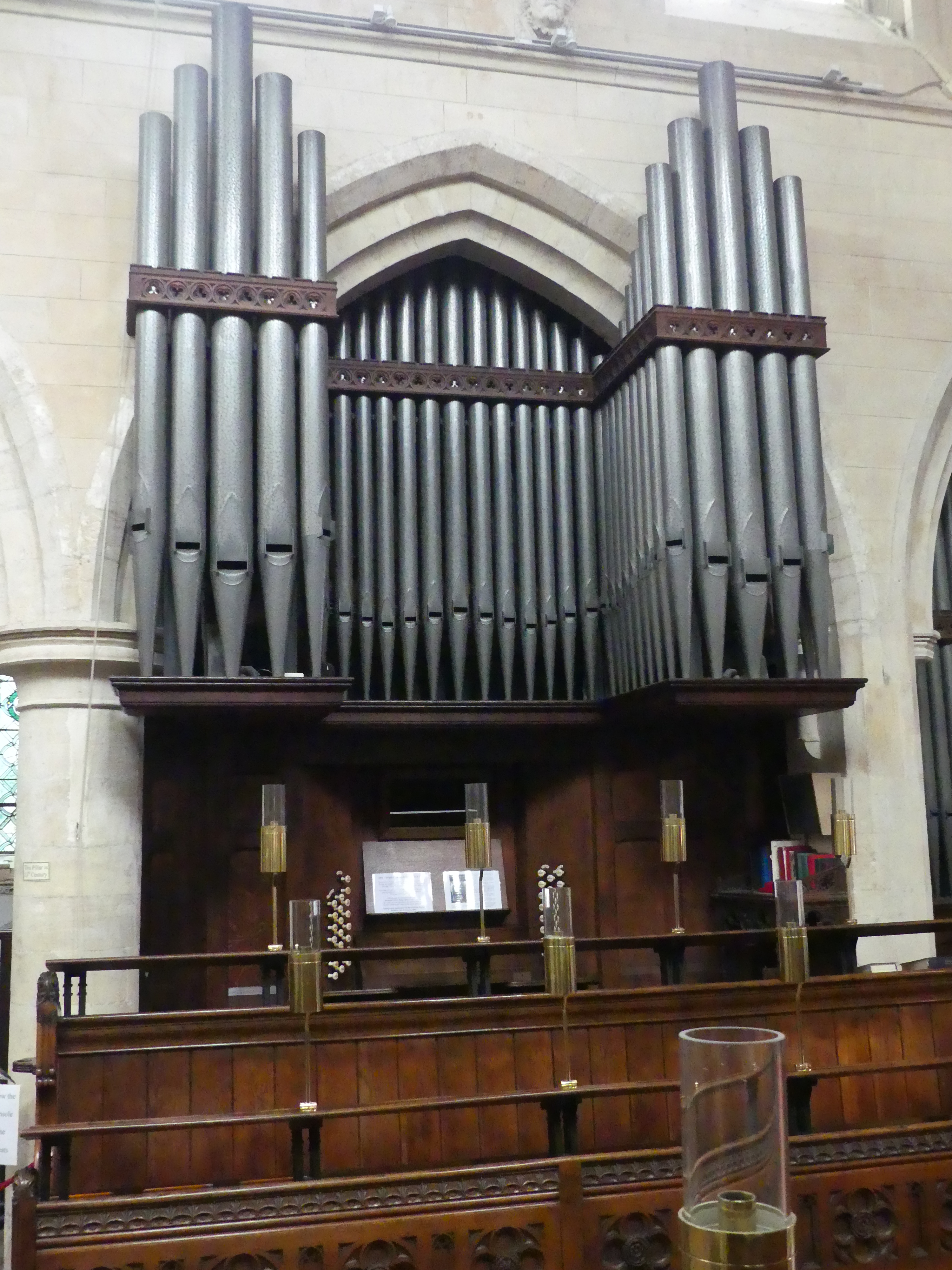
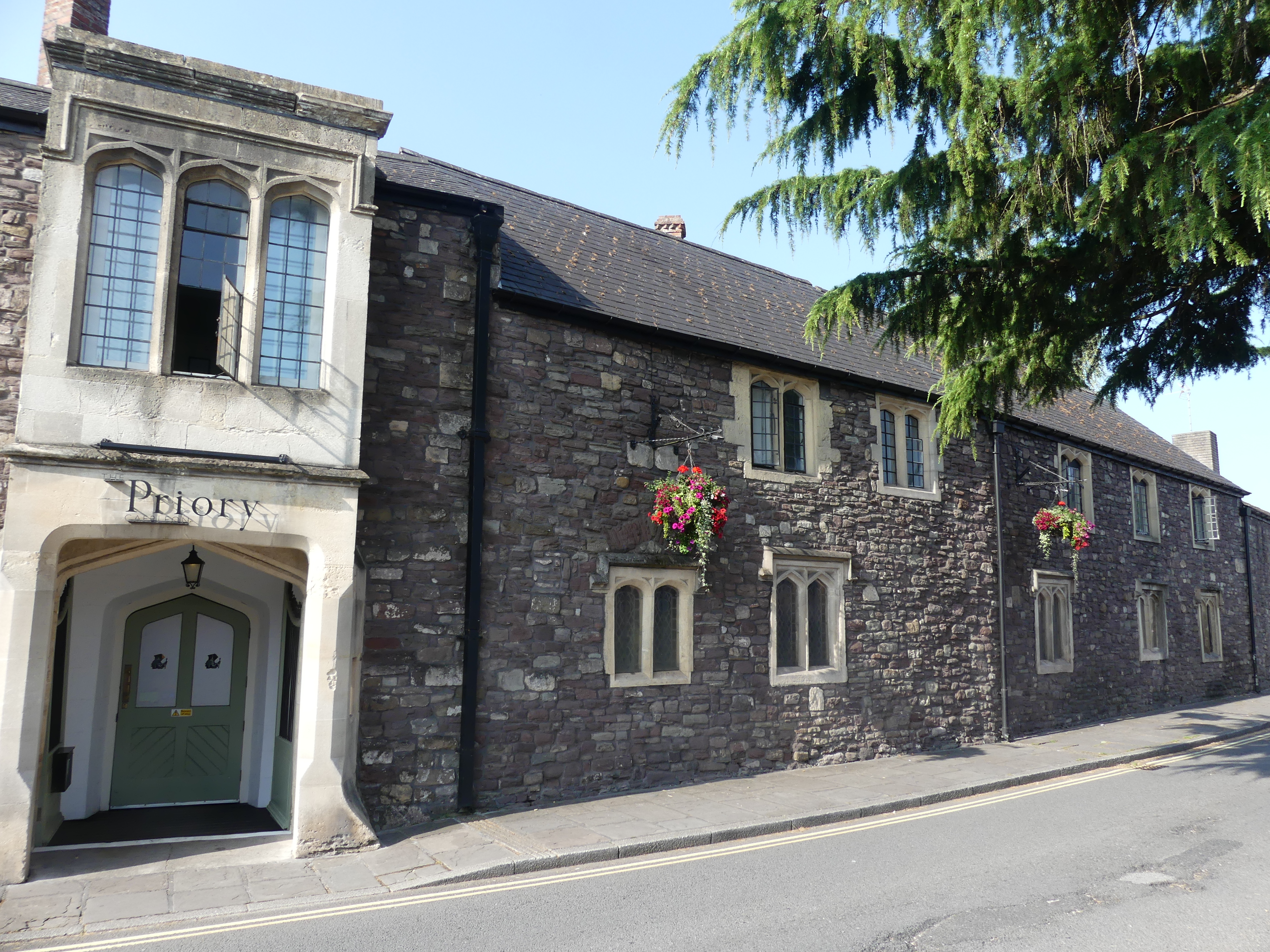
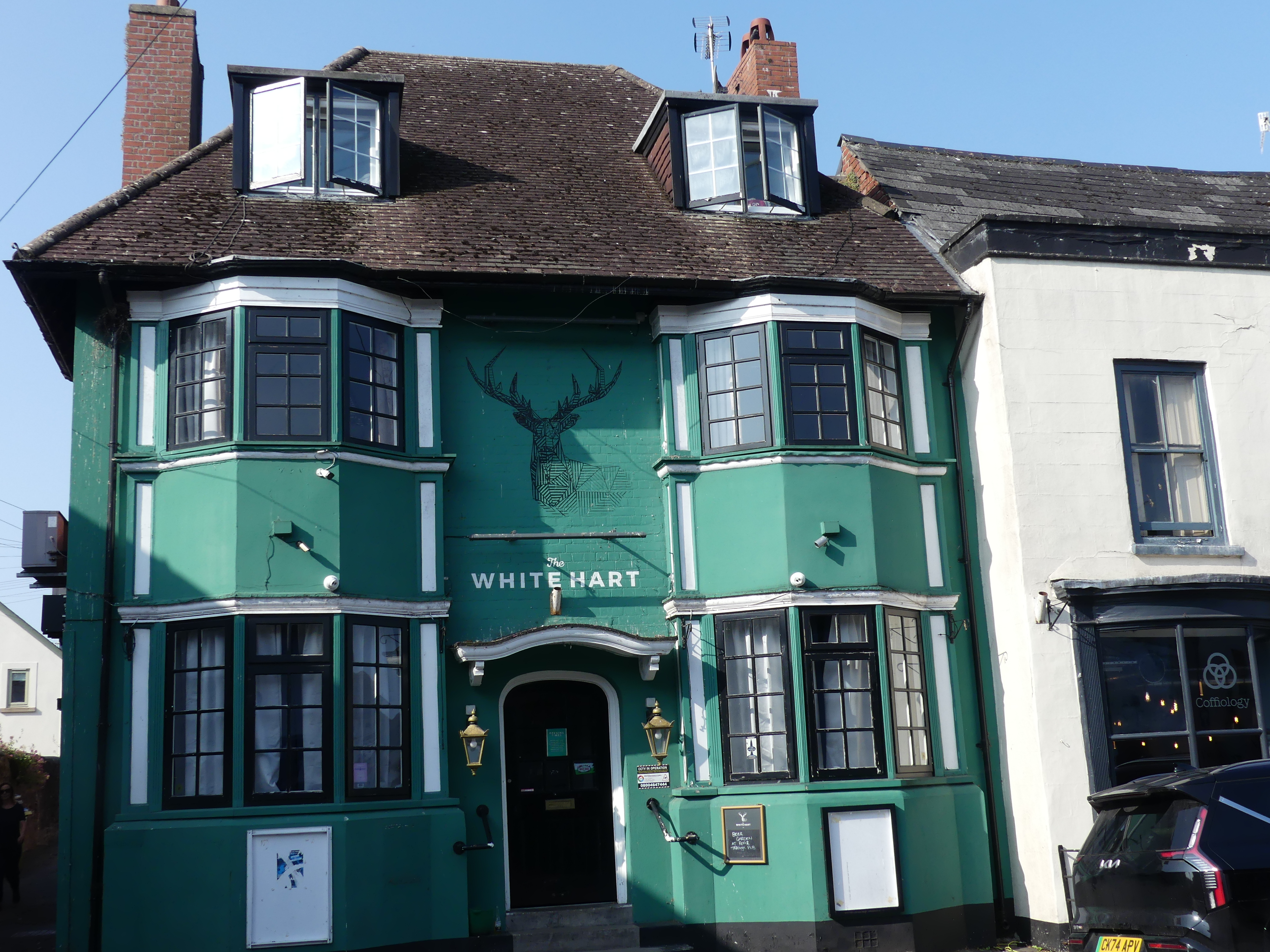
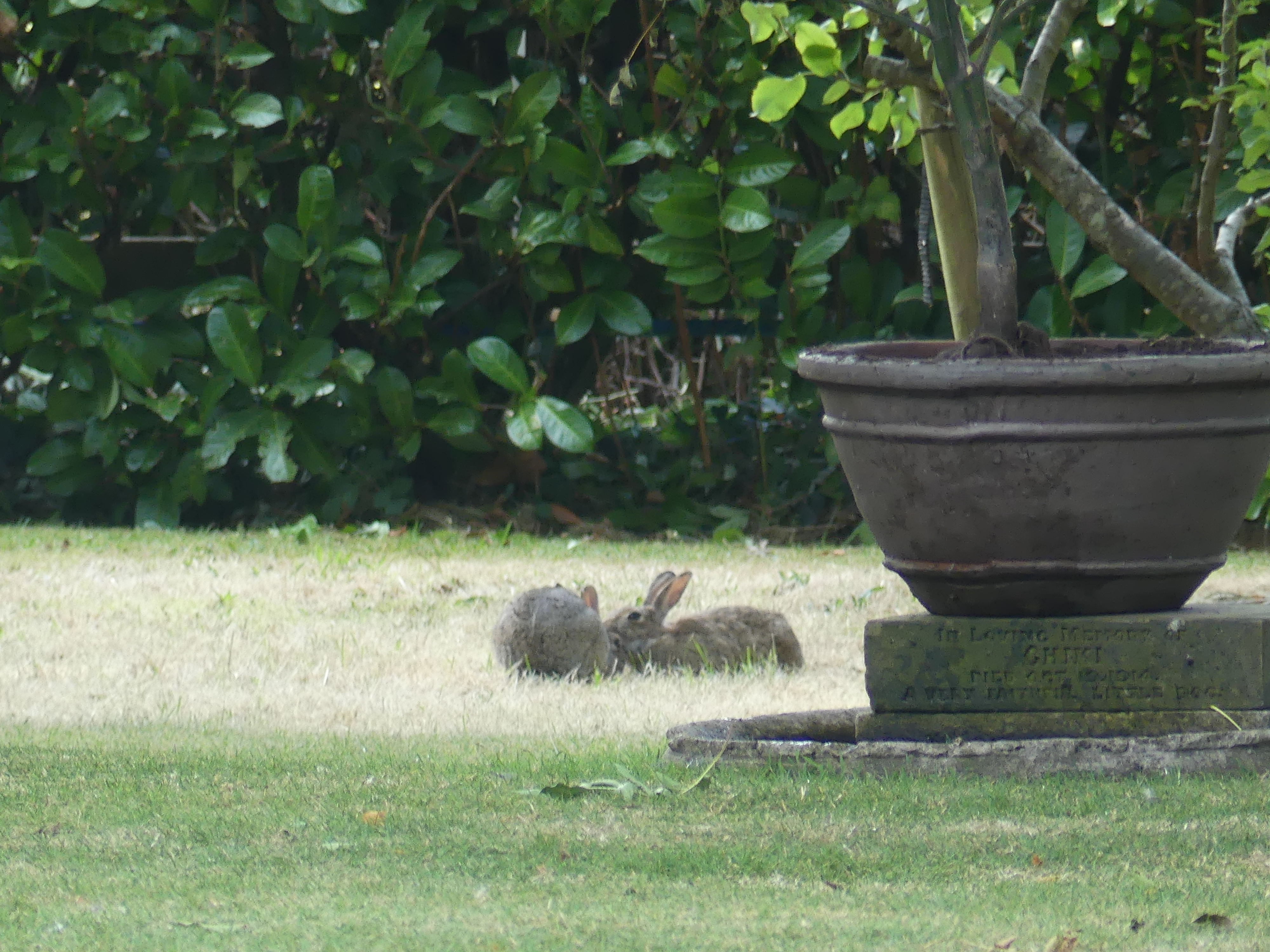
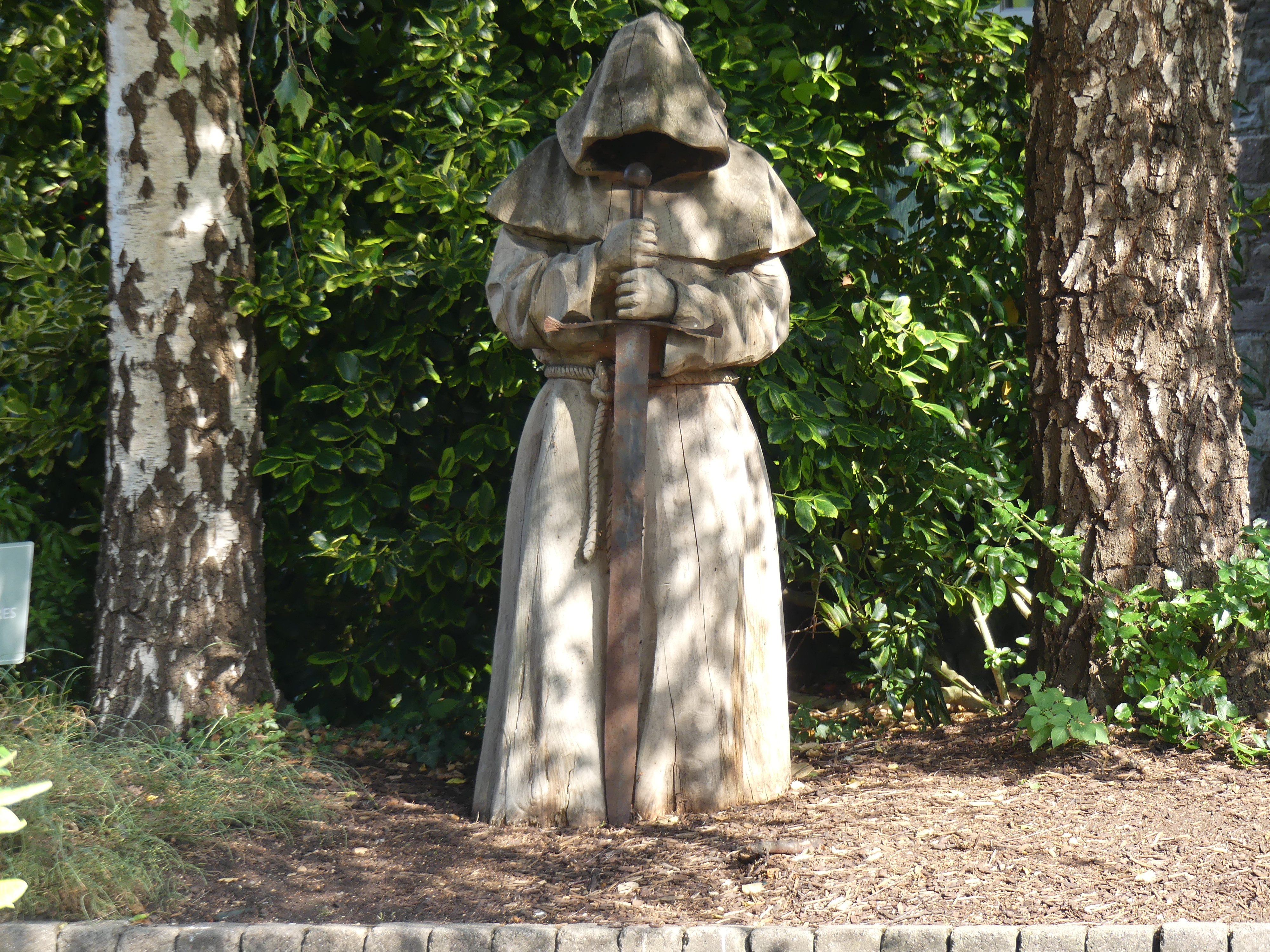
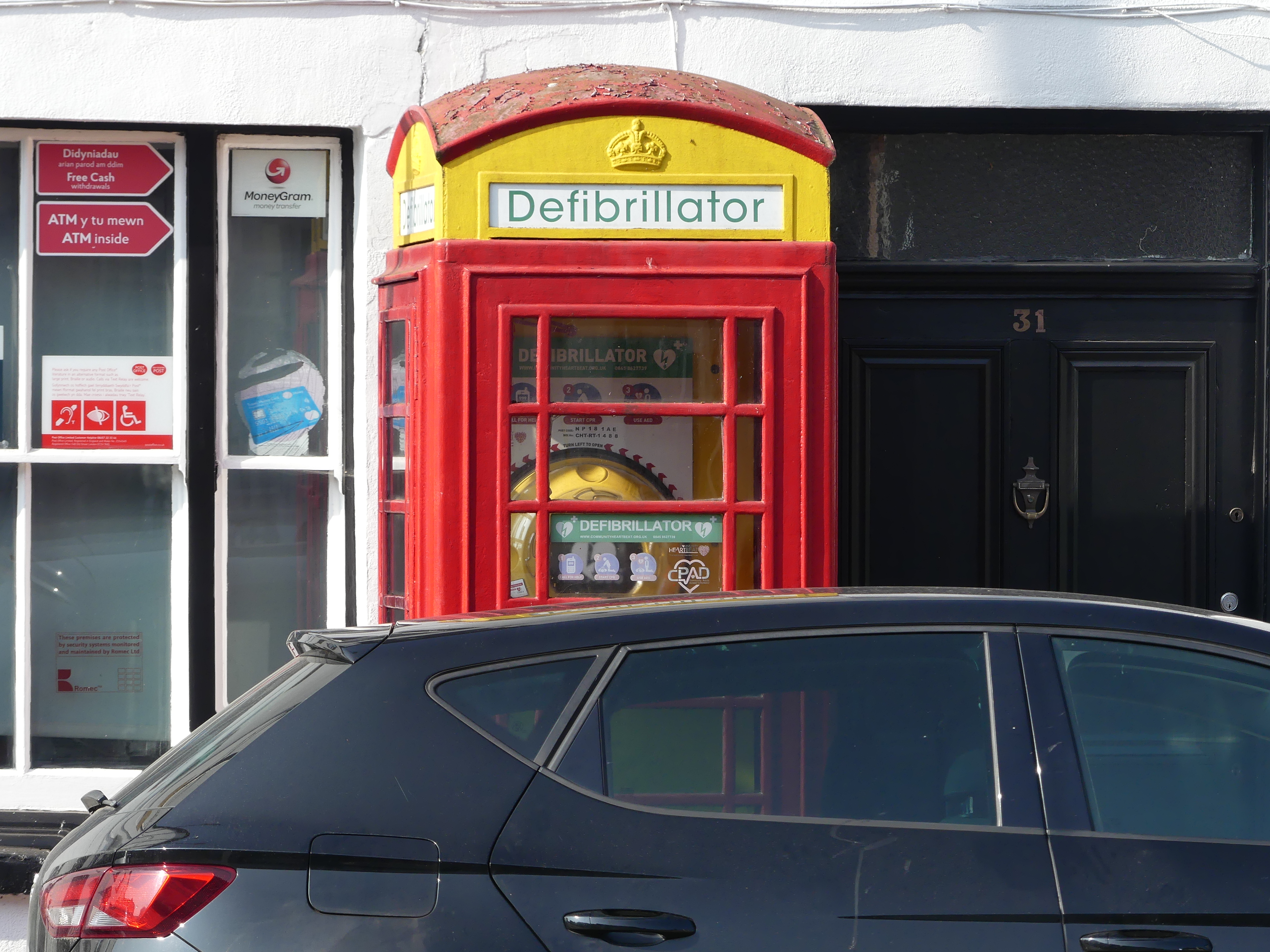
The pictures below take you on that stroll. First is the Priory – now an accommodation hotel but retaining the features of the former Priory with a pair of hares in the back yard. There are some interest wood carvings of a forest gnome, a priory student in cloche and priory guardian. Then there is the pub, a reused telephone box to house a defibrillator, a pretty pub, and the museum entrance.

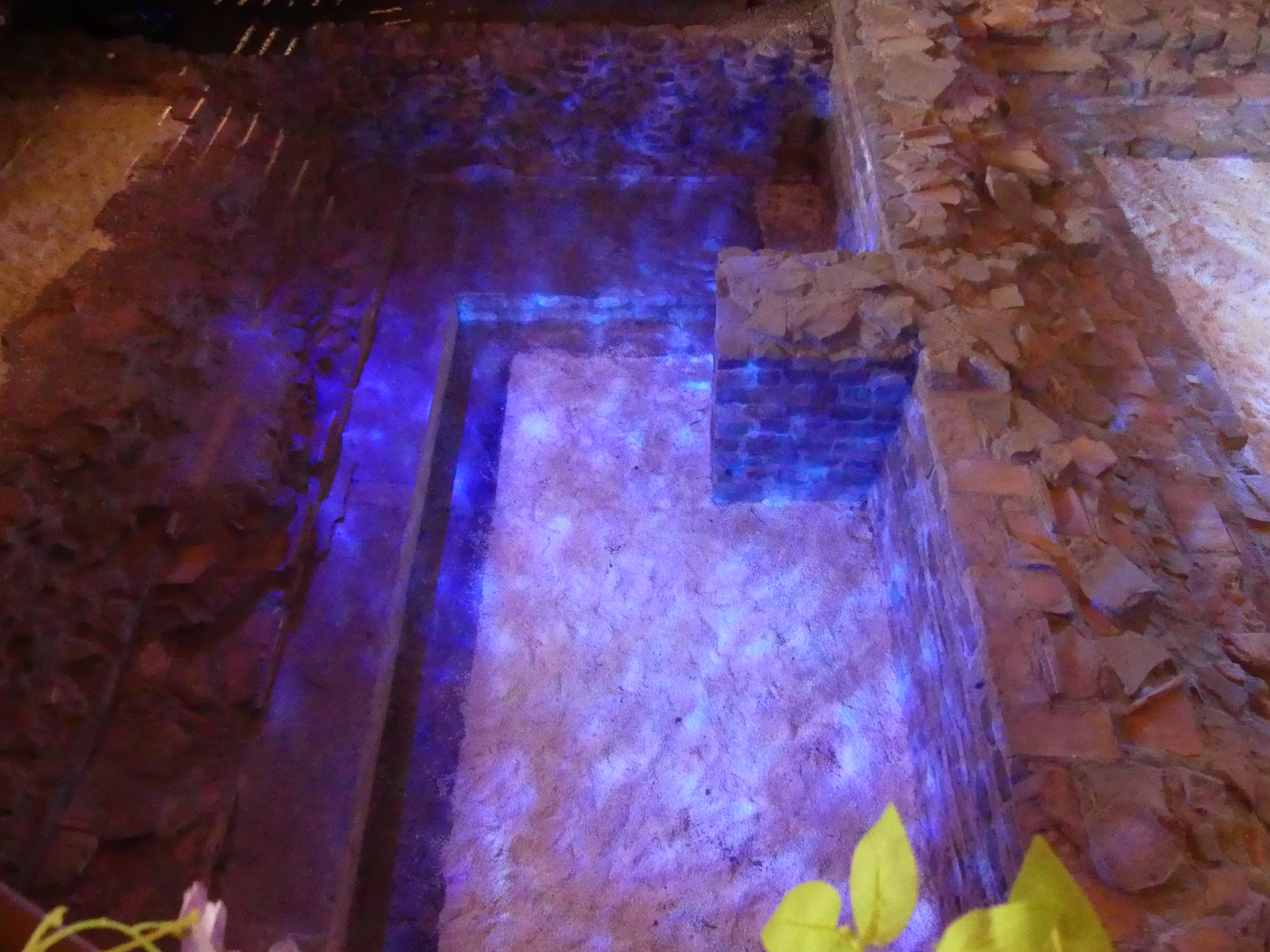
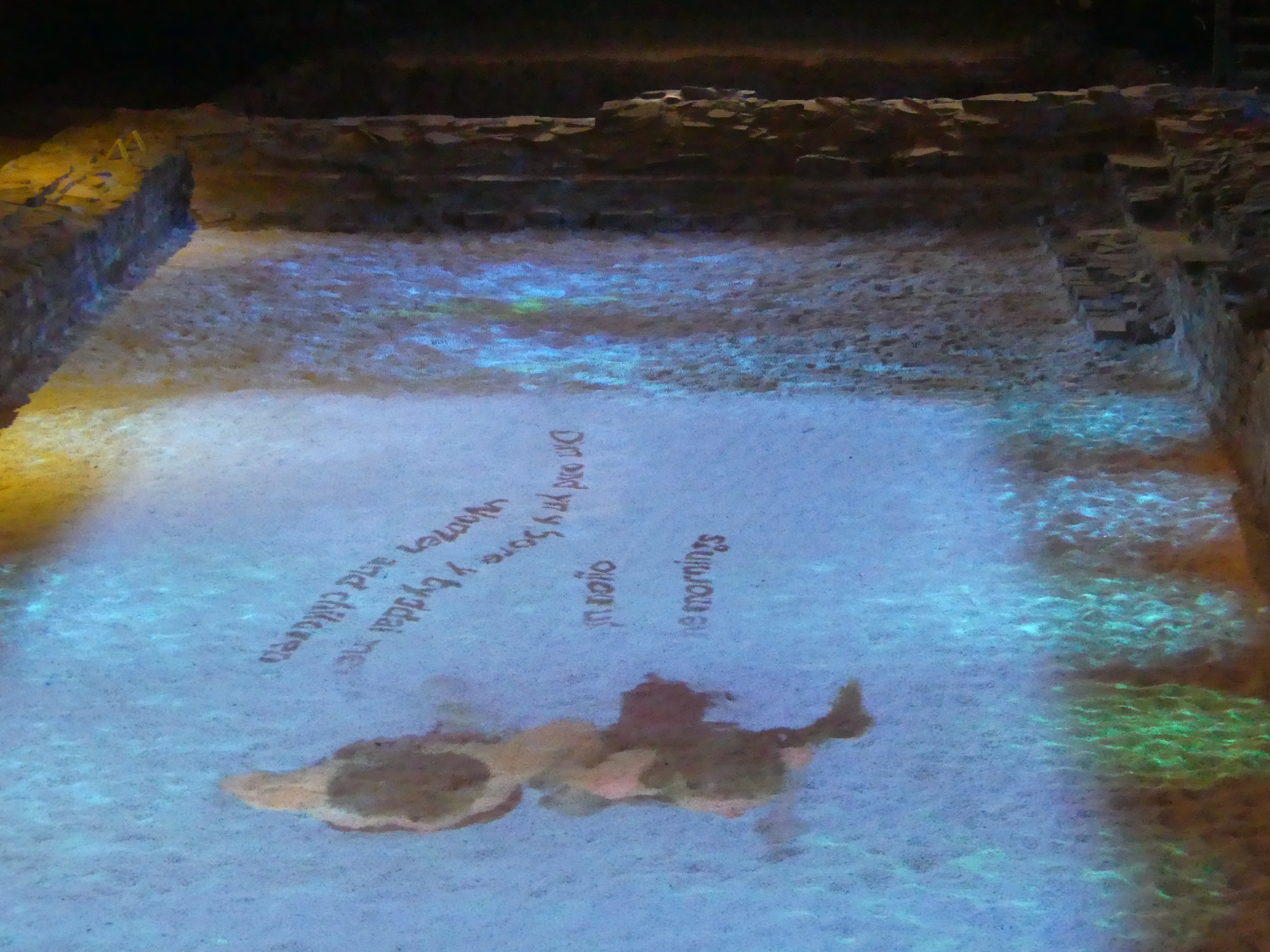
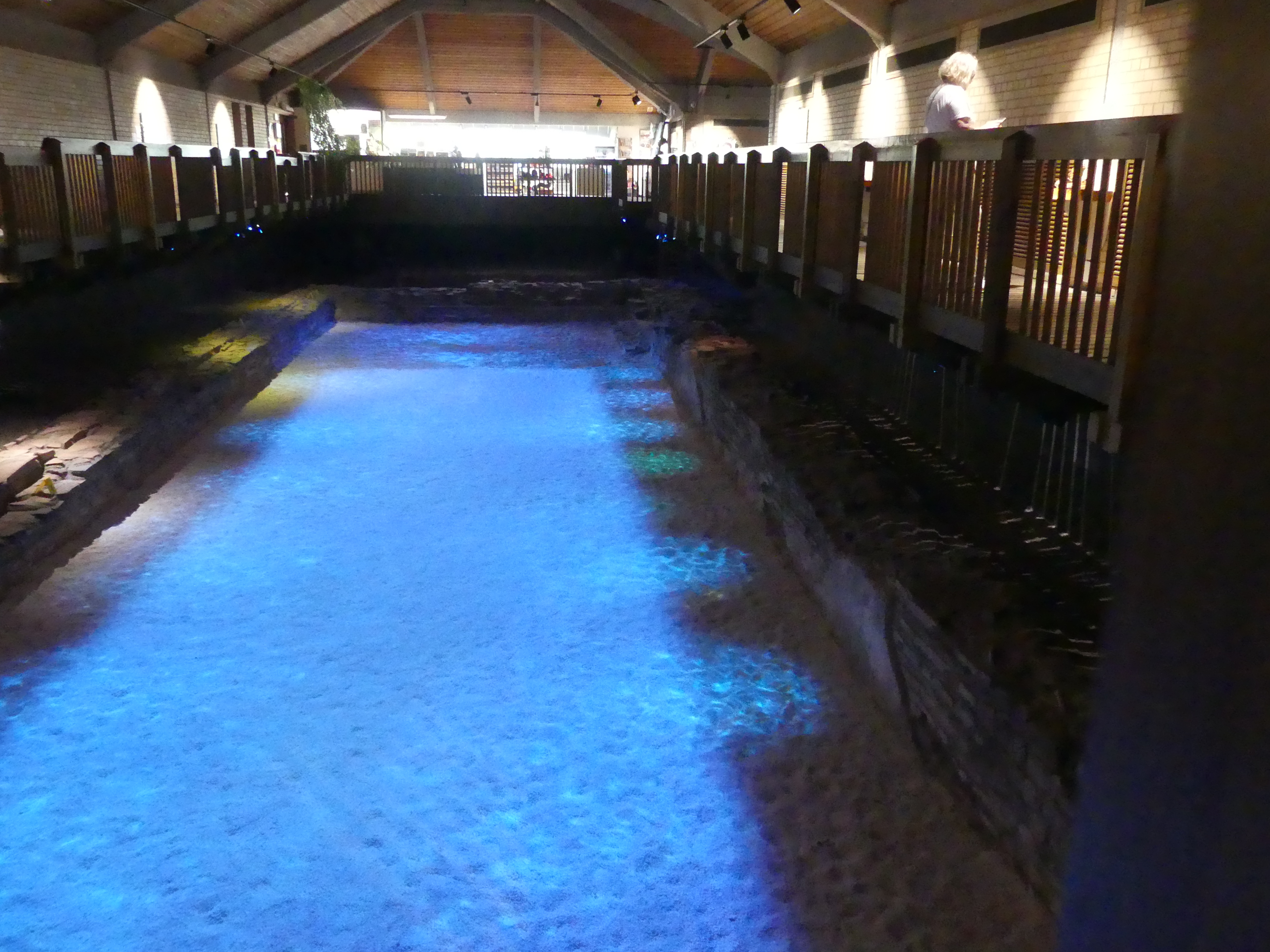
The site is the location of the main Roman legion and fort for the subjugation of the Welsh tribes. Life at the edge of the Roman Empire could be short, hard and dangerous so this fort provided the legionaries a place for rest and relaxation, and it was also their barracks. I have included two of the pages from a comic book containing images of the likely appearance of the building, the interior of the enclosed pools, and the garrison. The baths comprised the hot room (“caldarium”), the warm room (“tepidarium”) and the cold room (“frigidarium”) – you can see the English words in the Latin description.

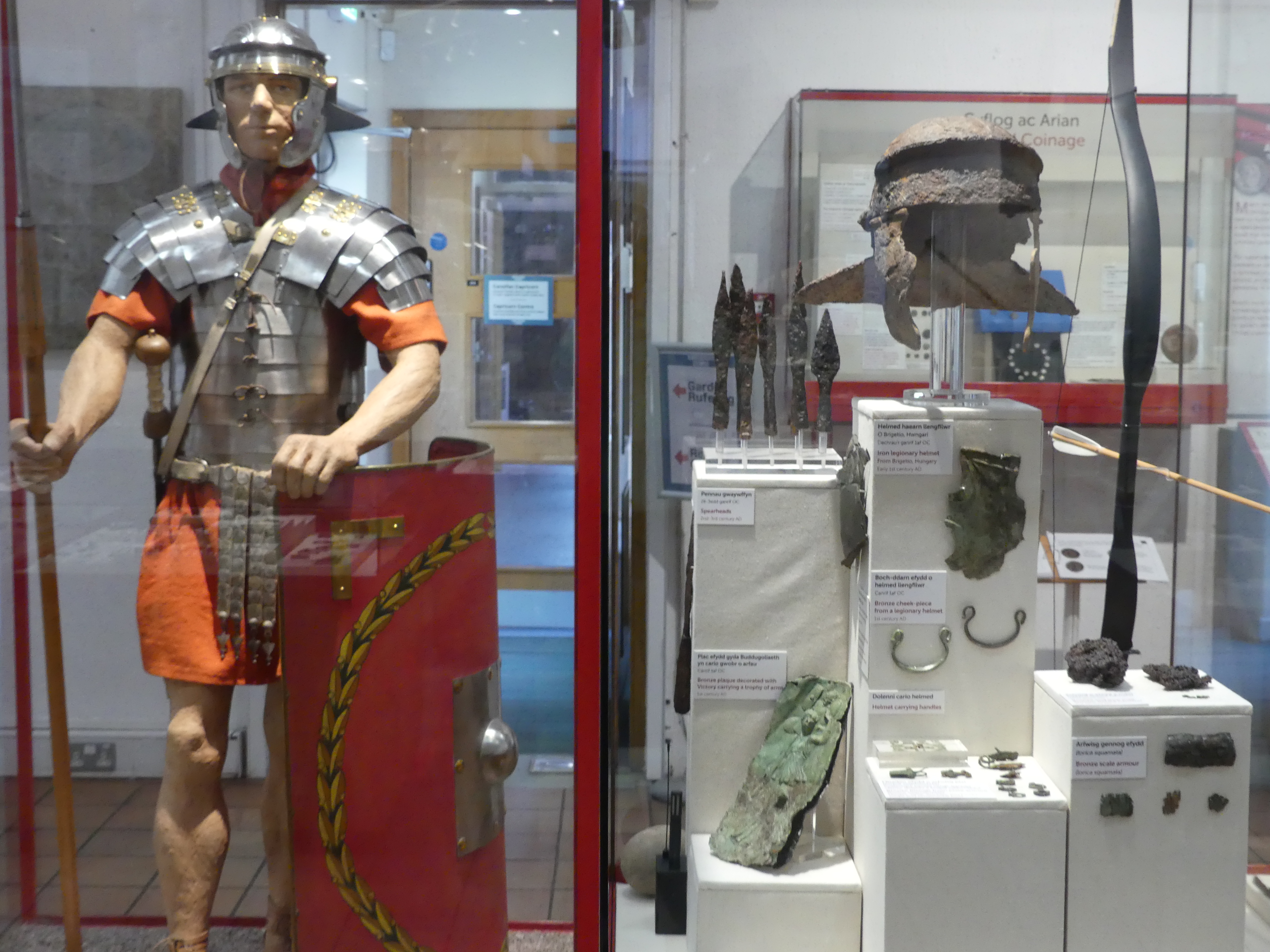
The pictures of the bathes with imagery of soldiers relaxing and using the spa follow. Photos of the replicas displayed in the Exhibition Hall are below.

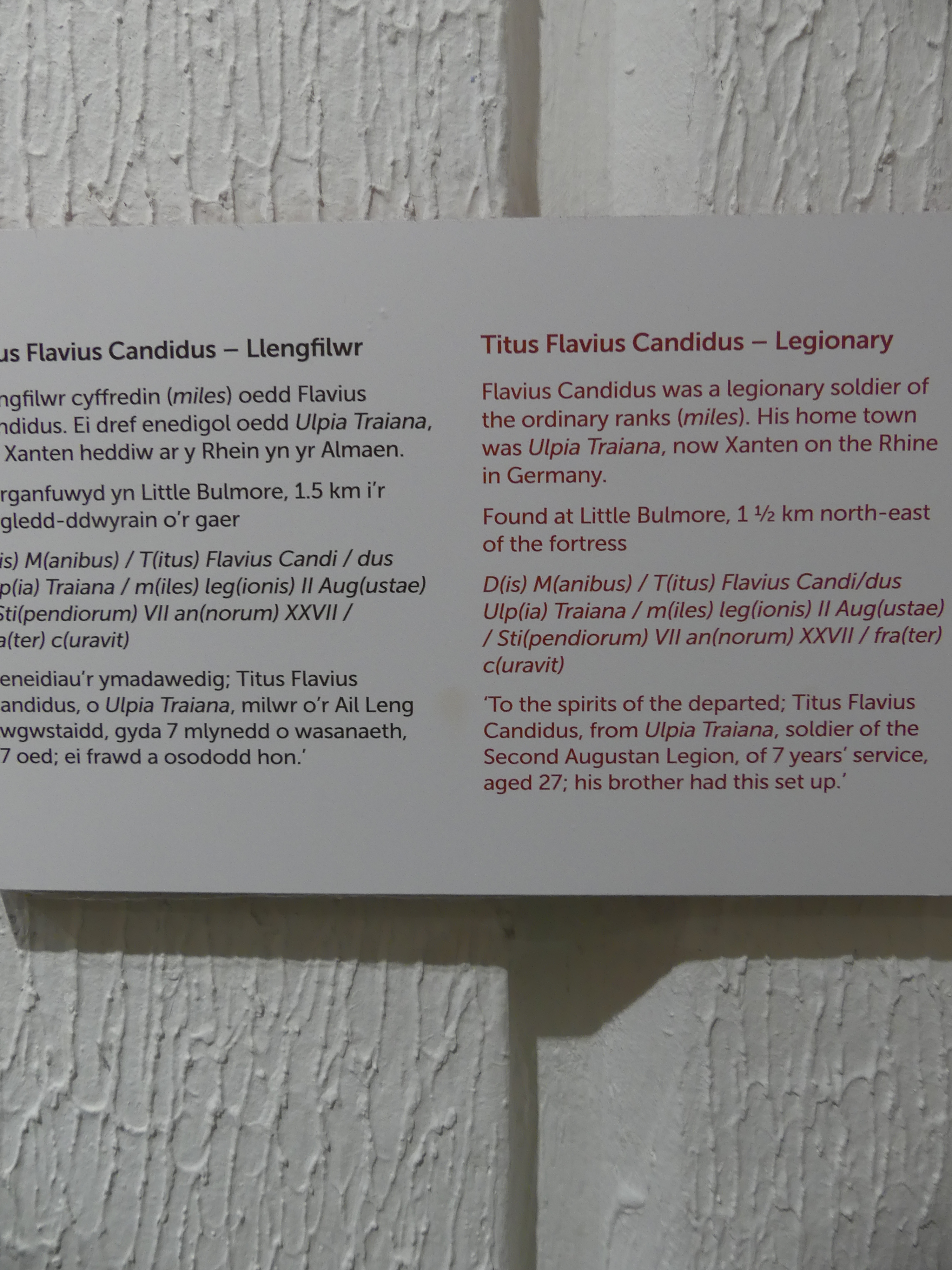
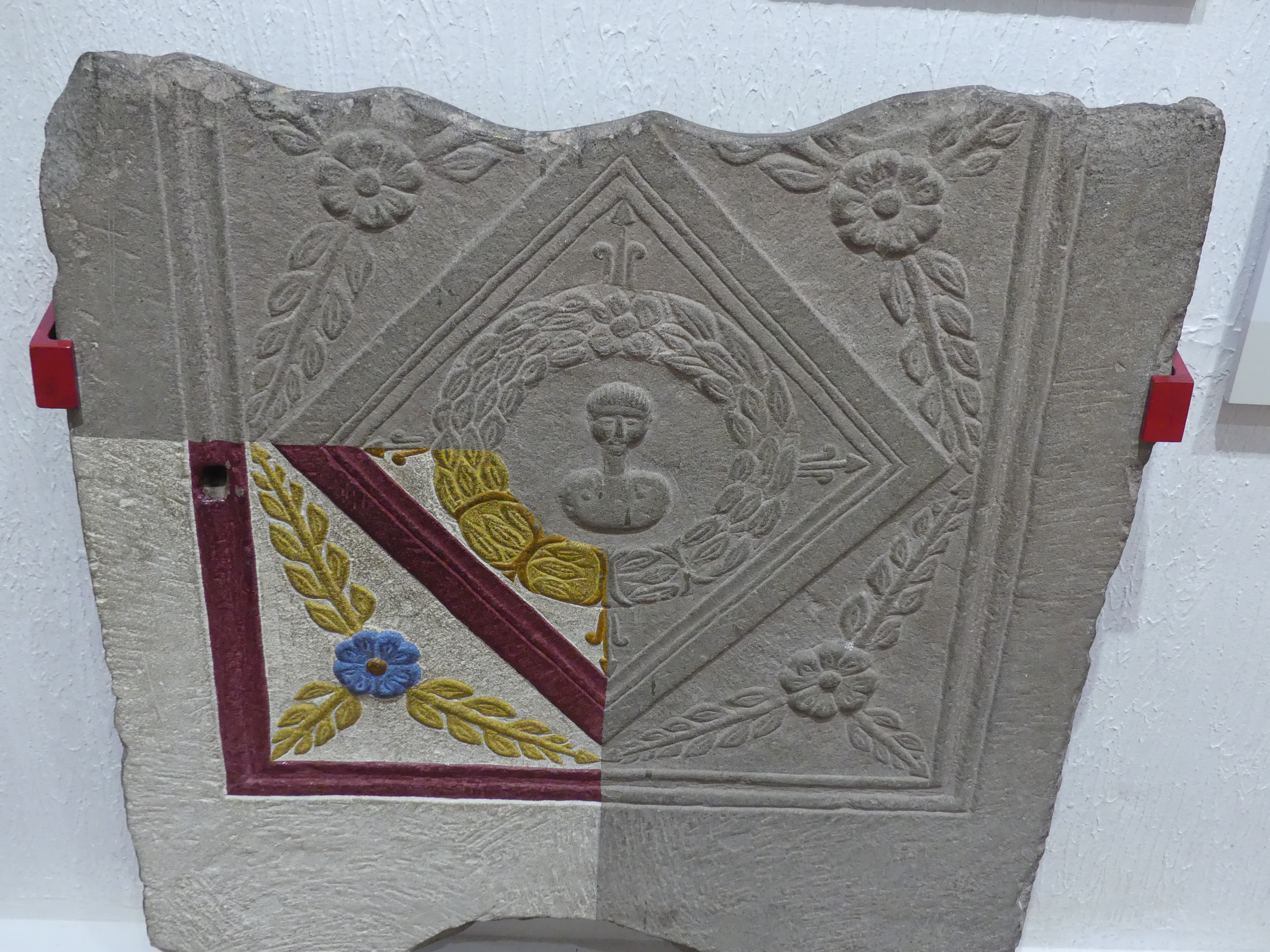
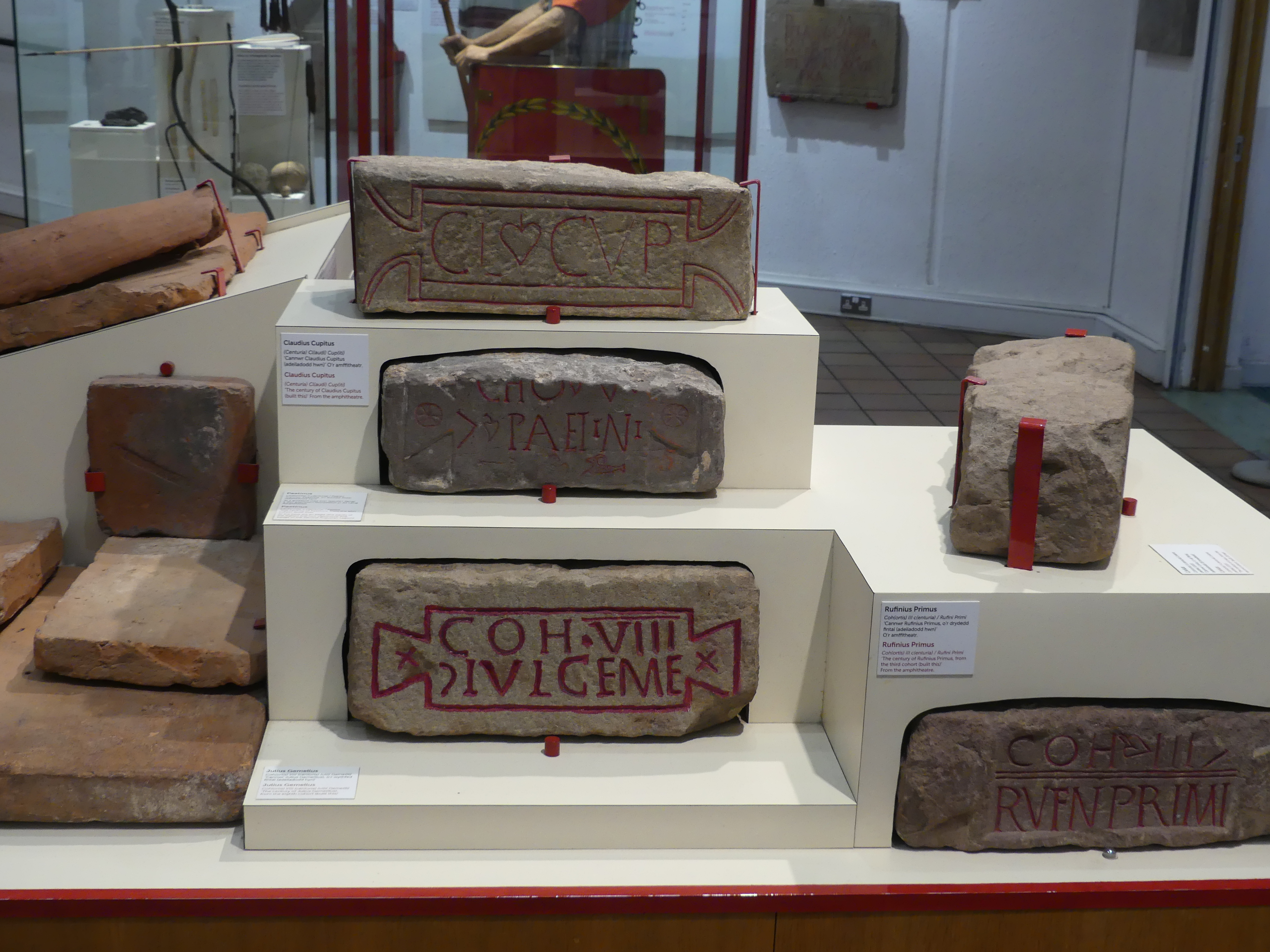
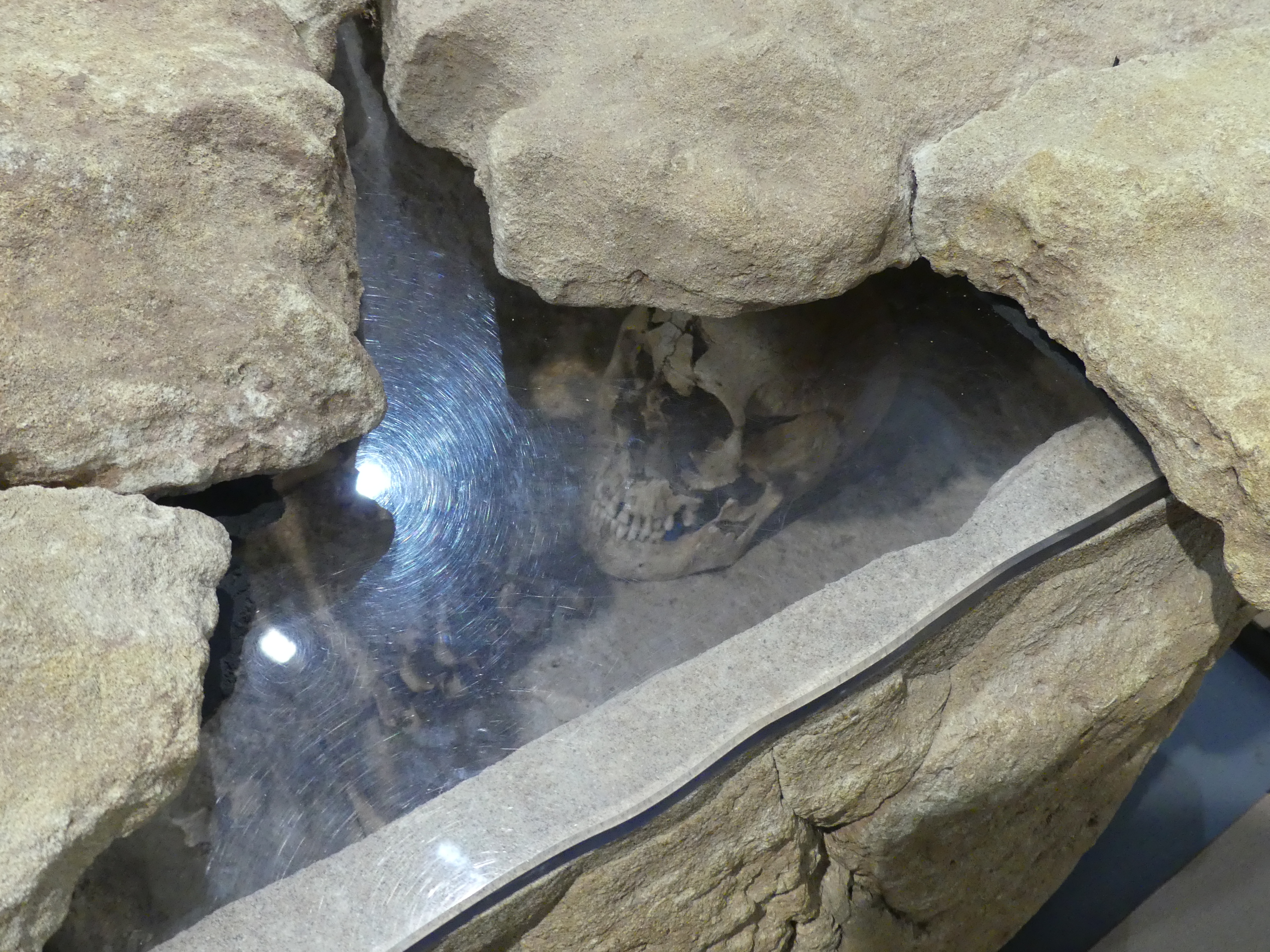
Our entry fee included a visit to the museum. I have included photos of some of the exhibits. The building materials surprised me – properly design pipes and building blocks. They also had the epithets or headstones of graves and cremations.  A stone casket. Partially restored tiles exhibited the beauty of the decorations.

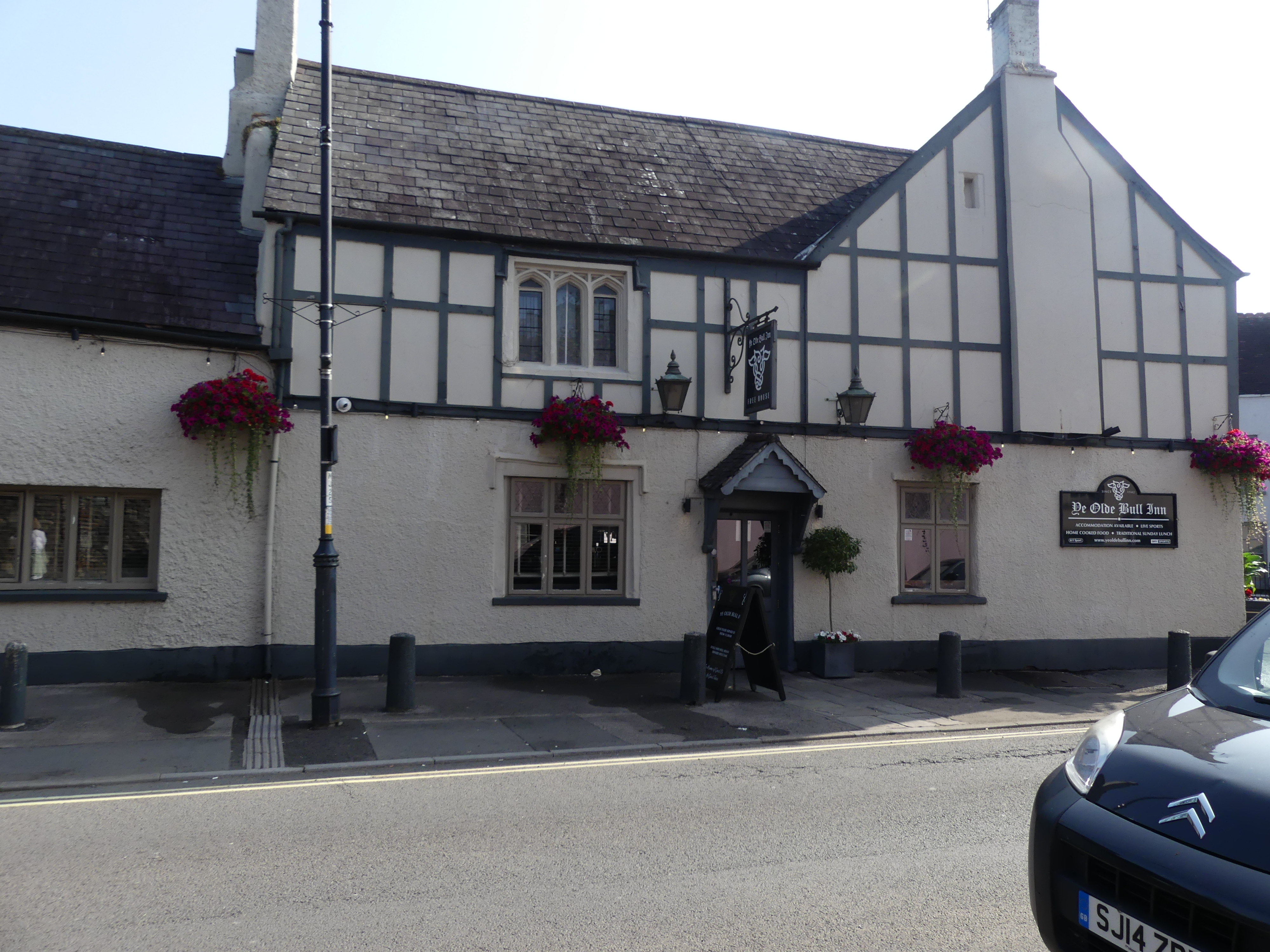
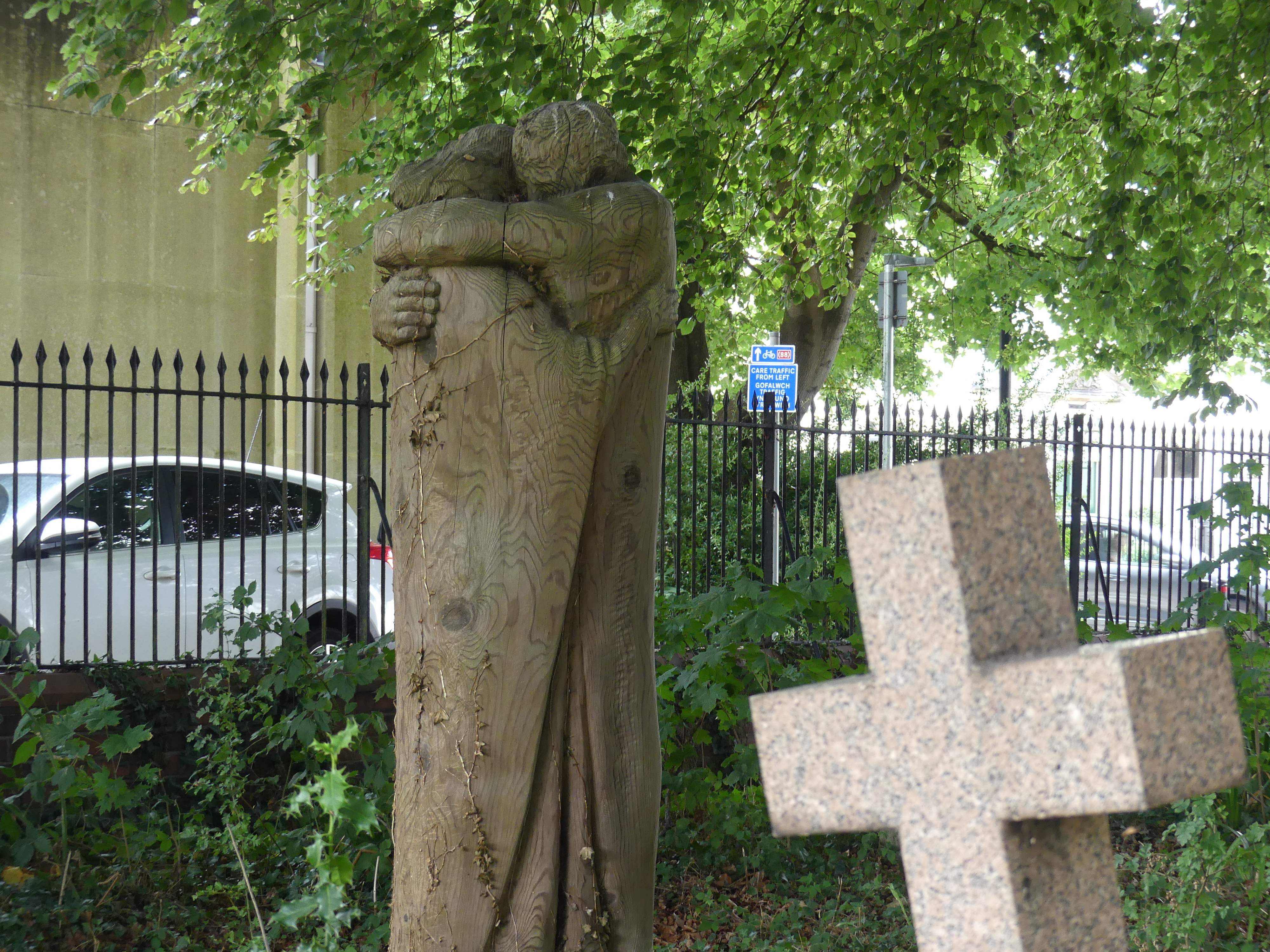
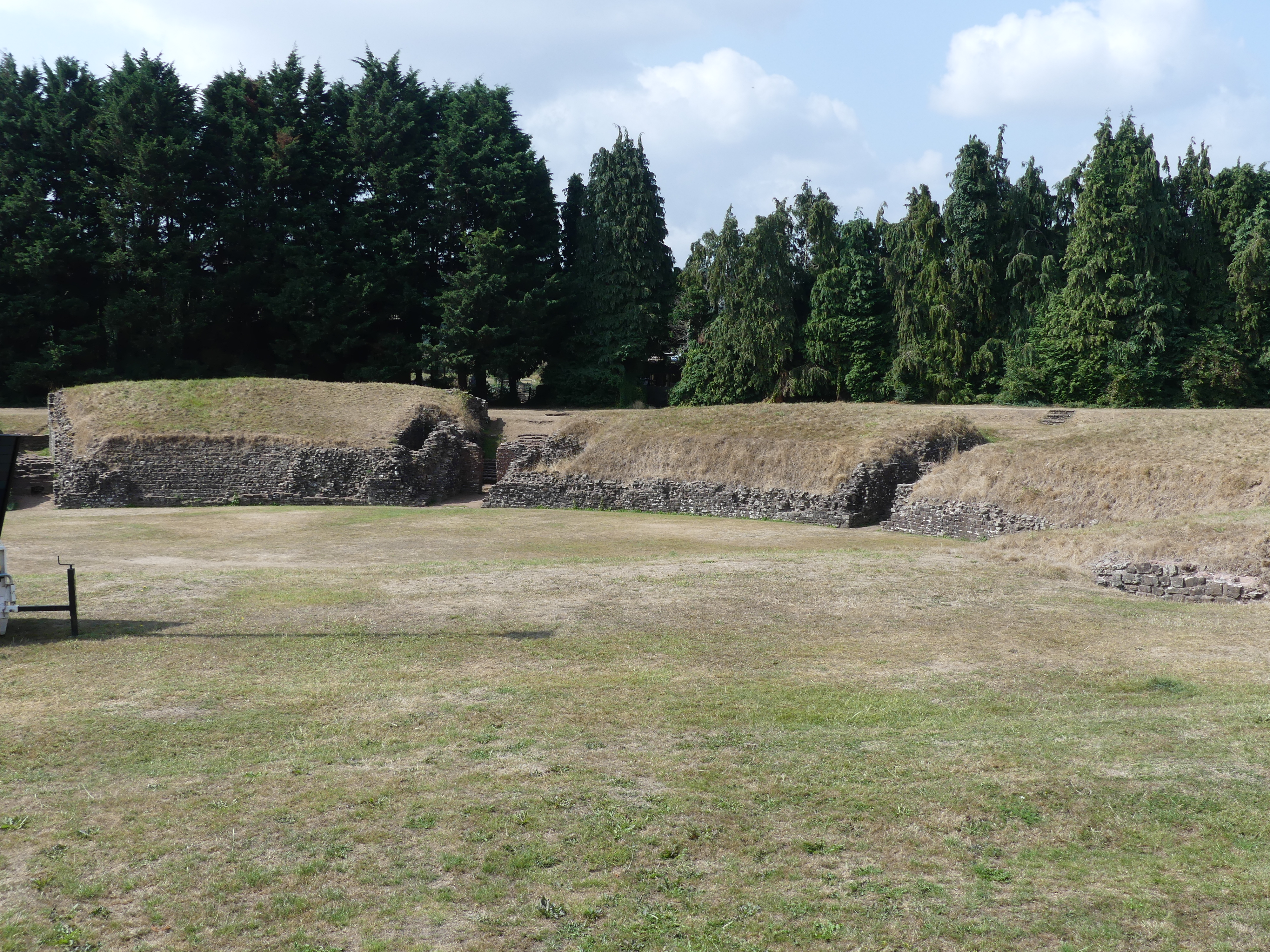
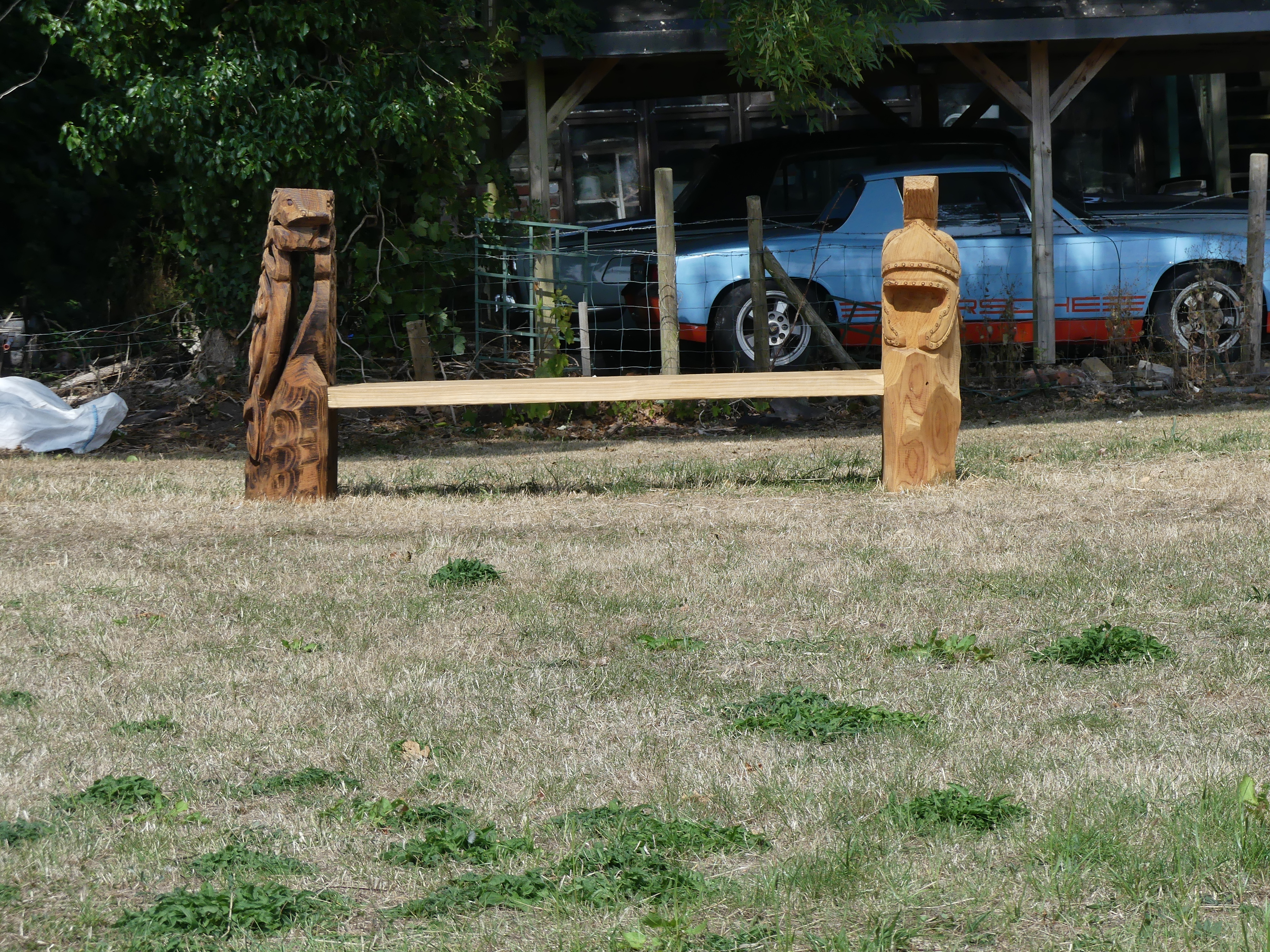
We stopped at the Bull Inn for lunch and encountered Jeremy Clarkson and his farm products. Other things of interest appear in the following photos. St Cadocs’ Church and graveyard. The remains of the Roman amphitheatre and the carvings in the park. An annual event in the village produces these wonderful carvings.

Returning to Cardiff, Kerry, being ever thoughtful, thought she had found another castle – Castle Hensol. We used the GPS in our car and the postcodes for the destination to find everything and it worked perfectly, even on this occasion.  Time brings about change and so it was with Castle Hensol. It was now the centre piece of a gated residential development and golf course. The wine tasting that the advertising had promised had led us on a wild goose chase. After a lot of guessing we found our way only to be disappointed. We needed a booking.

That ends another chapter in our around the world adventure. So, watch out for my next blog on THE RETIREES GO AROUND THE WORLD – CARDIFF to PEMBROKE WALES WEOBLEY CASTLE and KIDWELLY CASTLE.

THE RETIREES GO AROUND THE WORLD – CARDIFF WALES – CASTELL COCH AND CAERPHILLY CASTLE

Castell Coch

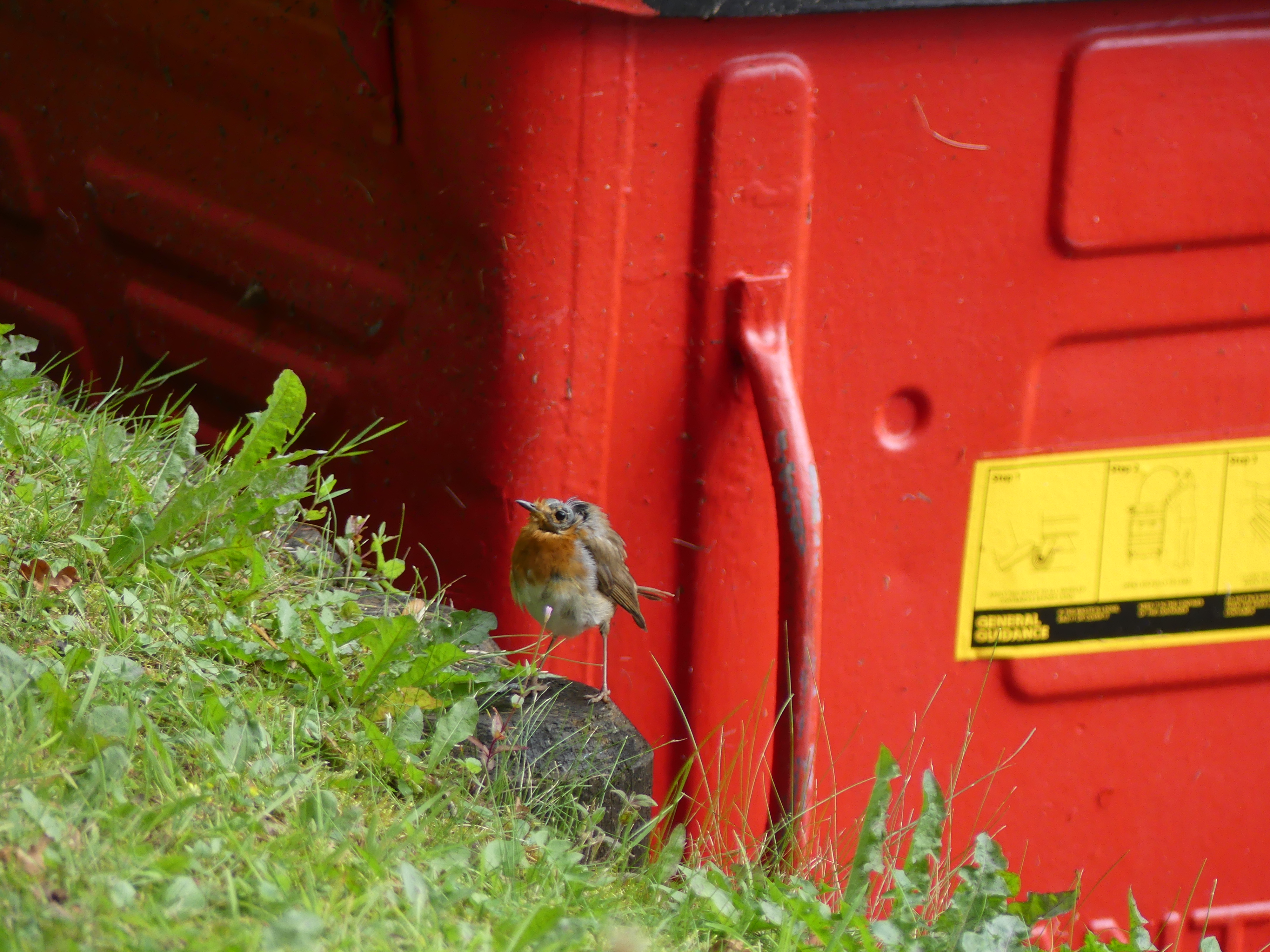
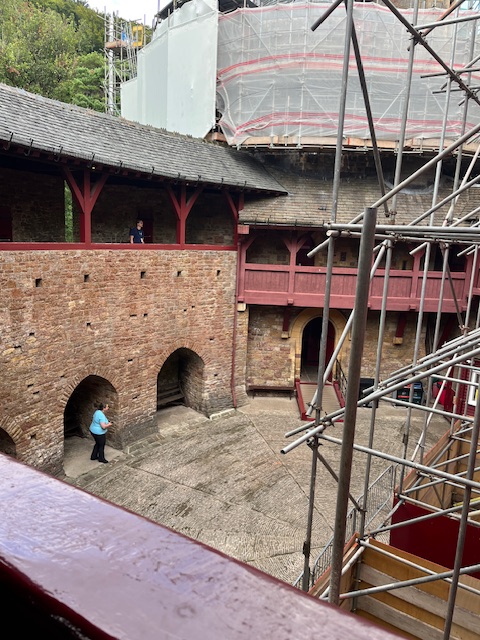
Castell Coch is very near to Cardiff and the drive was pleasant without too many narrow roads. Having said that, as we neared the Castell the roads narrowed, and the bush encroached onto a narrow lane. A sharp left-hand turn and a choice of two lanes presented. Fortunately, we took the correct lane into the car park. The Castell is hidden above the carpark. A portaloo was the sentinel to the carpark, and our first red robin came to show us the way forward. The Castell is undergoing renovation to close leaks into the stonework of the castle which amazingly requires that the stonework be given 2 years to dry out as part of the renovation.

Castell Coch (Welsh for ‘red castle’) is a 19th-century Gothic Revival castle built above the village of Tongwynlais in Wales. The first castle on the site was built by the Normans after 1081 to protect the newly conquered town of Cardiff and control the route along the River Taff. In 1760, the castle ruins were acquired by John Stuart, 3rd Earl of Bute, as part of a marriage settlement that brought the family vast estates in South Wales. He turned it from castle to country house but rarely used it. In 1950 the 5th Marquess of Bute, placed it into the care of the state. It is now controlled by the Welsh heritage agency CADW. The surrounding Castell Coch beech woods contain rare plant species and unusual geological features and are protected as a Site of Special Scientific Interest.

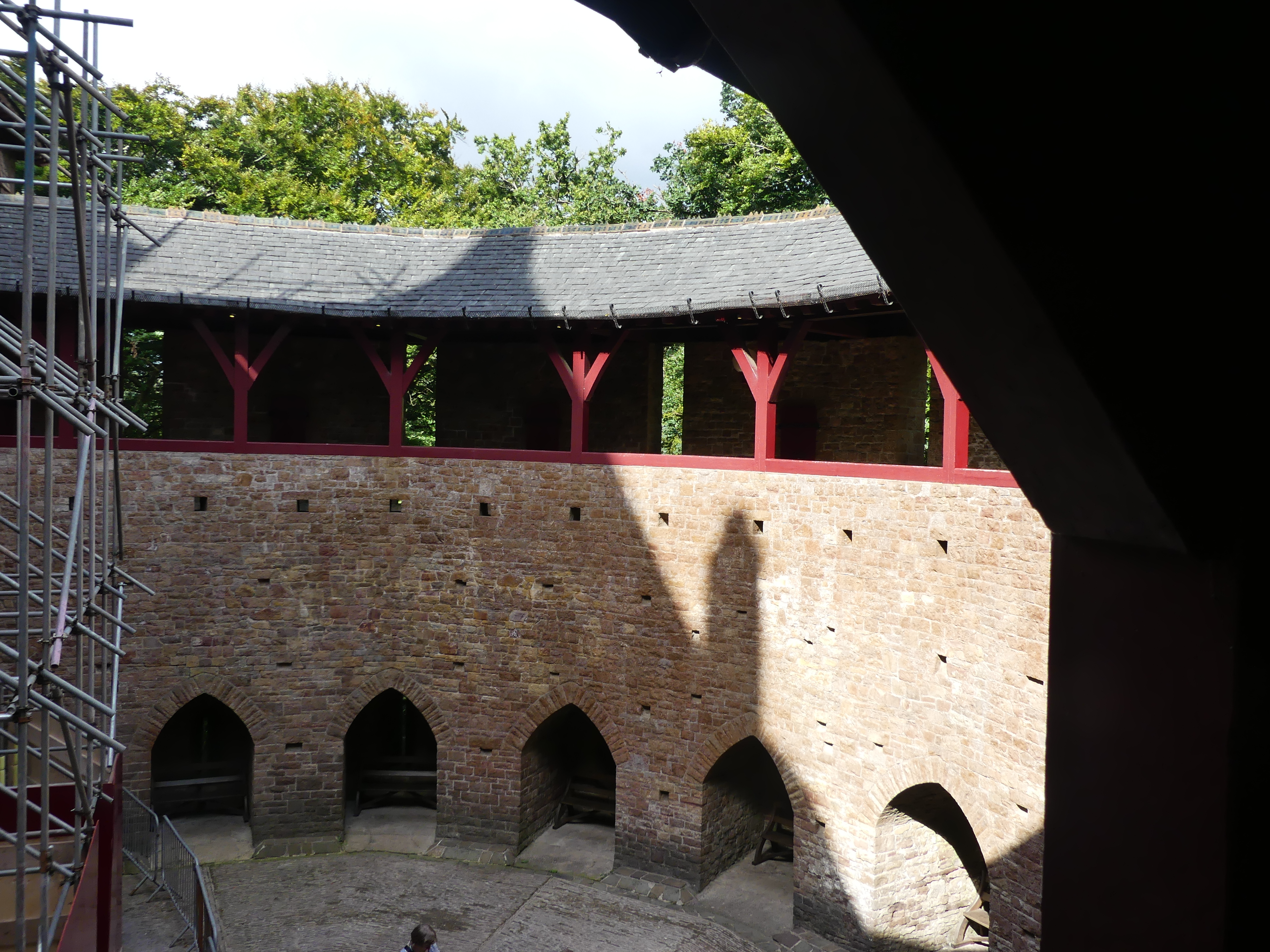
The first picture shows the pleasant entrance to the castle. As you approach the castle, you see the former moat. No longer filled with water, it still stands as a barrier to enter the castle so a permanent draw bridge leads you into the castle. The castle is in the care of CADW the Welsh Government’s historic environment service which provides for the restoration and accessibility to these historic places. From the outside it is obvious that Cadw is doing its job. One part of the castle is clothed in a large sheet painted with images of the castle and a story on a large sign about the renovation. The walls of this section of the castle are being dried out. An entrance fee is payable, and the ticket office is on your right as you pass under the portcullis. Yes the castle still has it’s portcullis. The attendant is a pleasant Welsh lady who before taking our money tells us that instead of taking a ticket for this castle only we could buy a 3 day or 7-day pass and supports her statement with 2 brochures of the many places of interest that are cared for by CADW. It cost us a little over £50 for the 7-day pass and gave us a huge saving in respect of the future visits we planned to make.

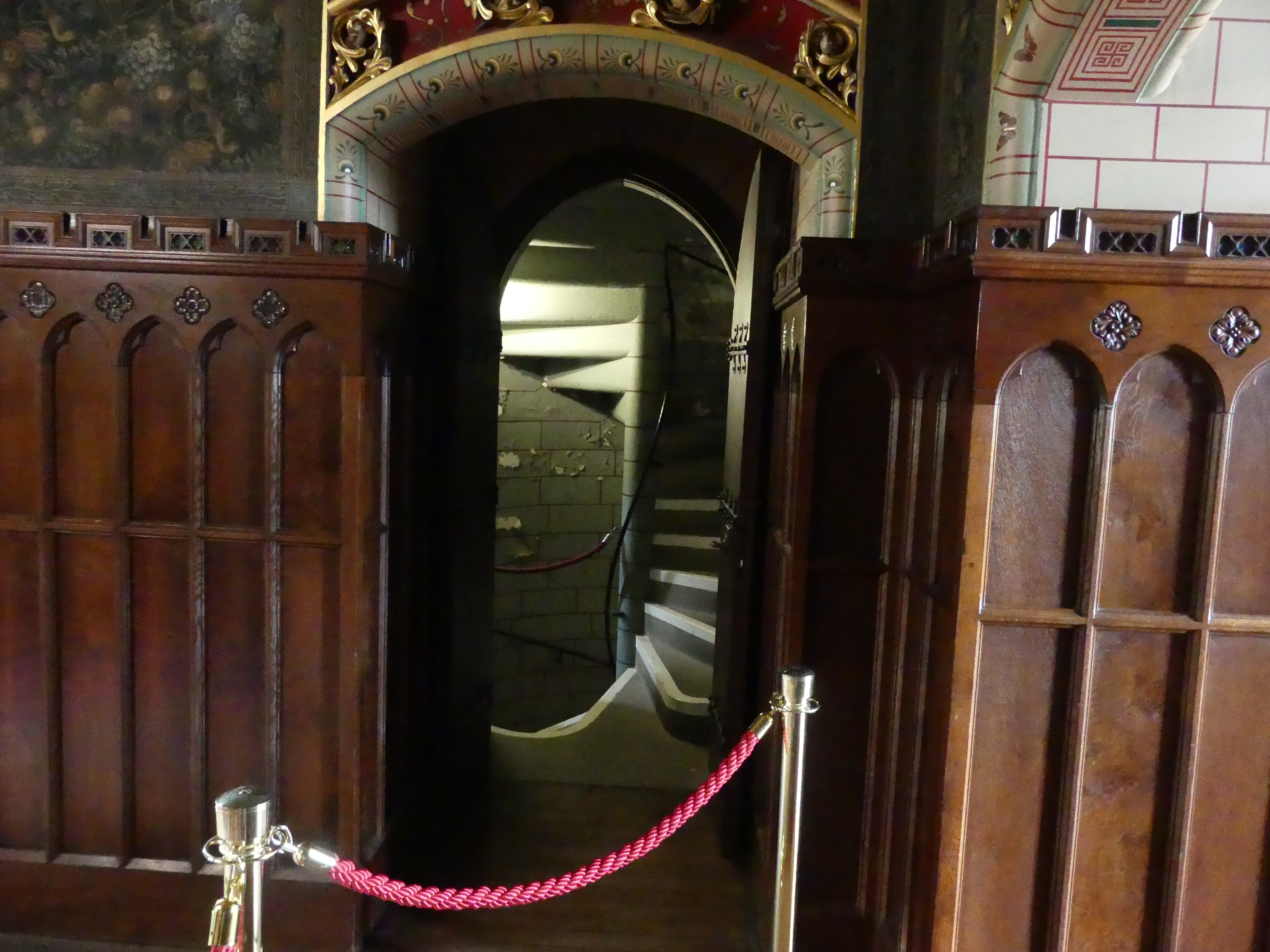
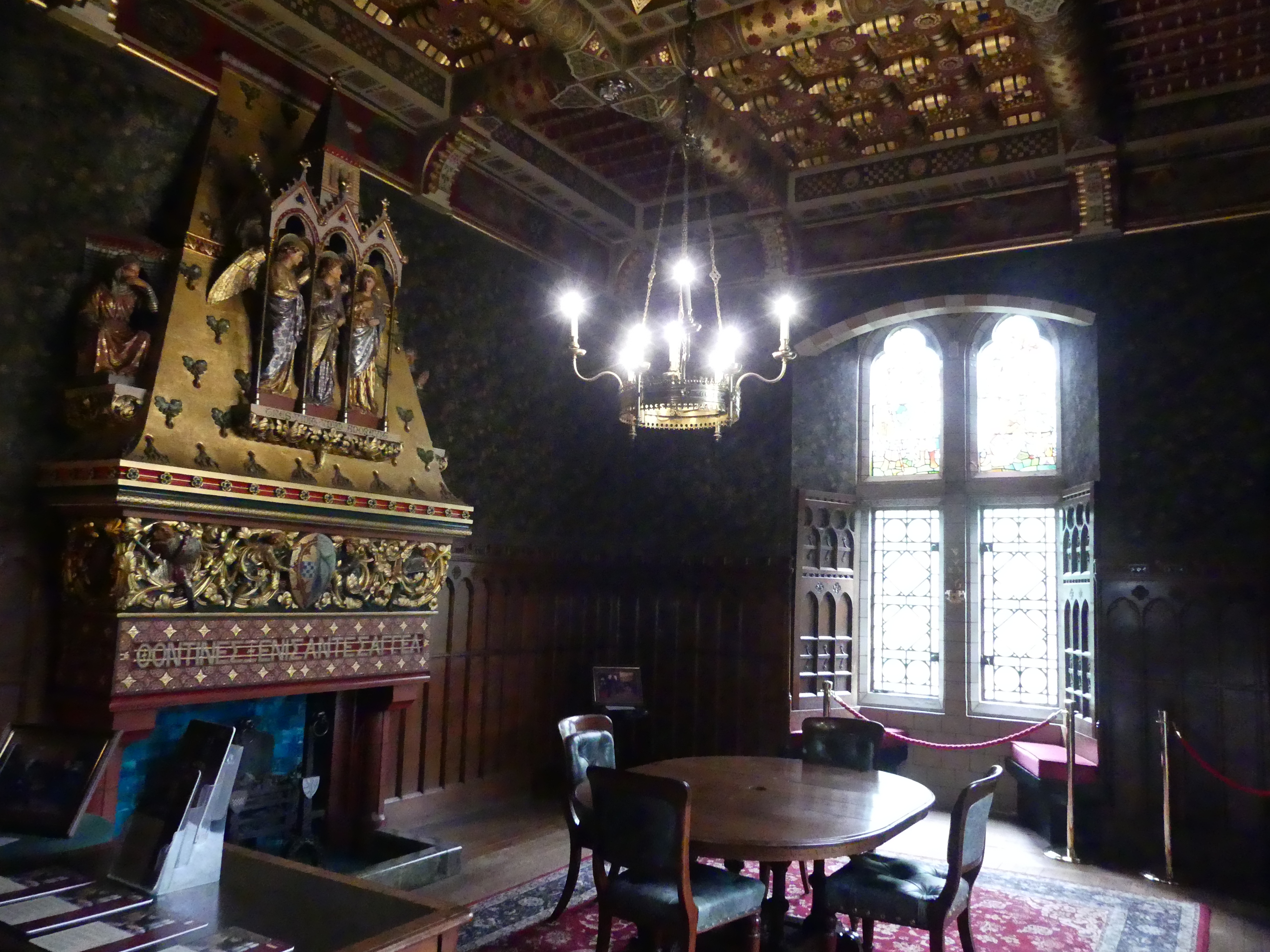
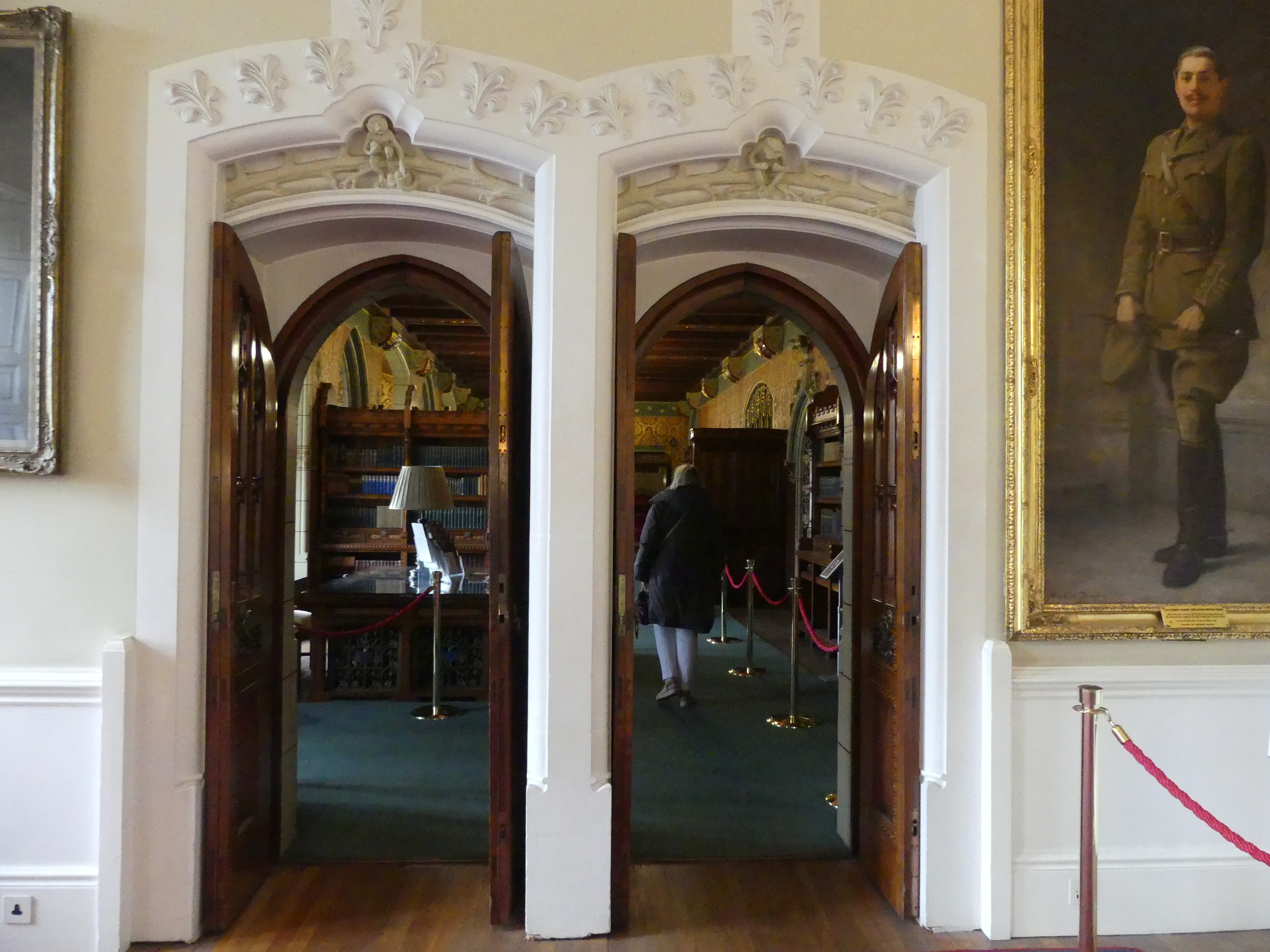
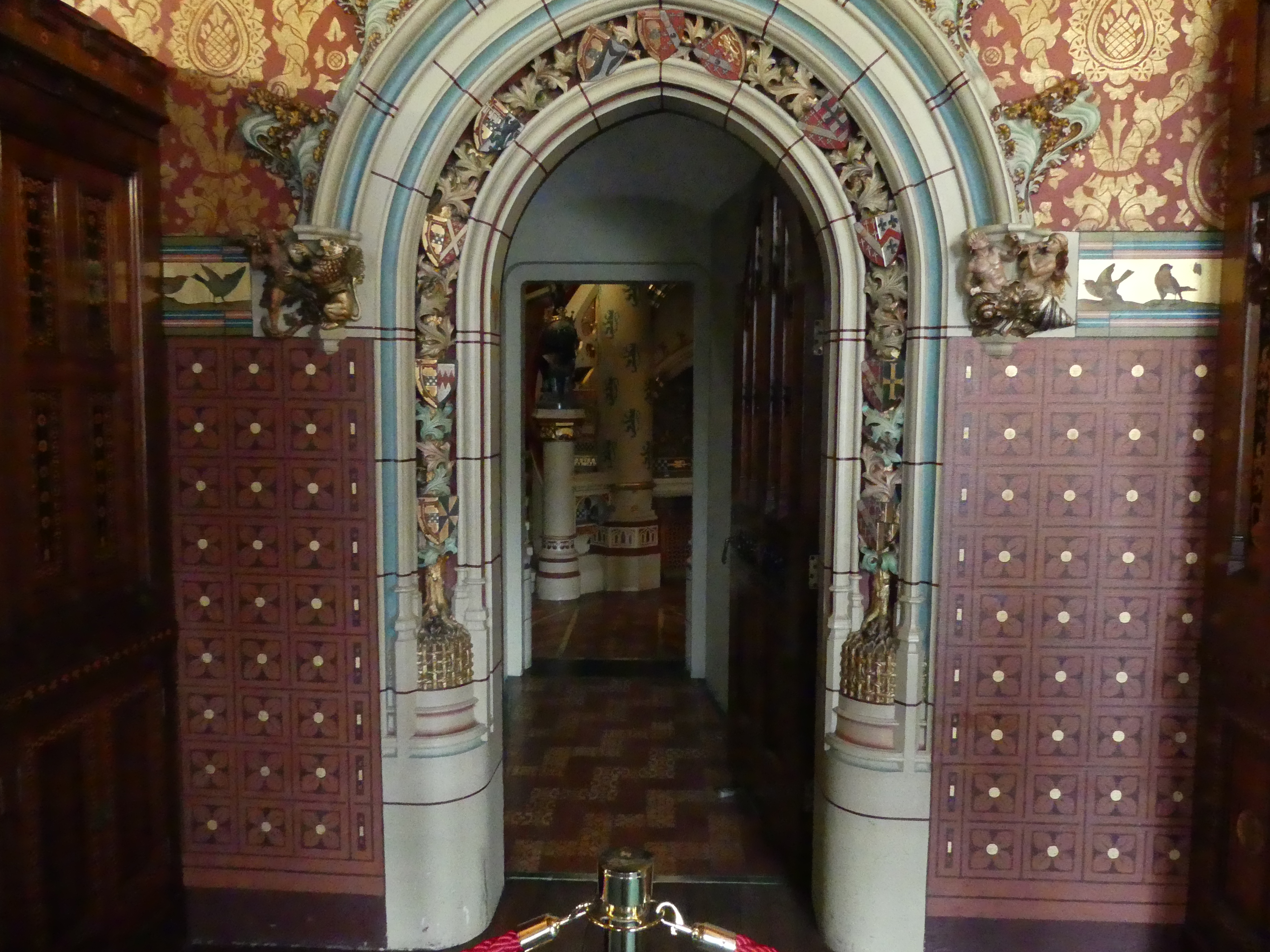
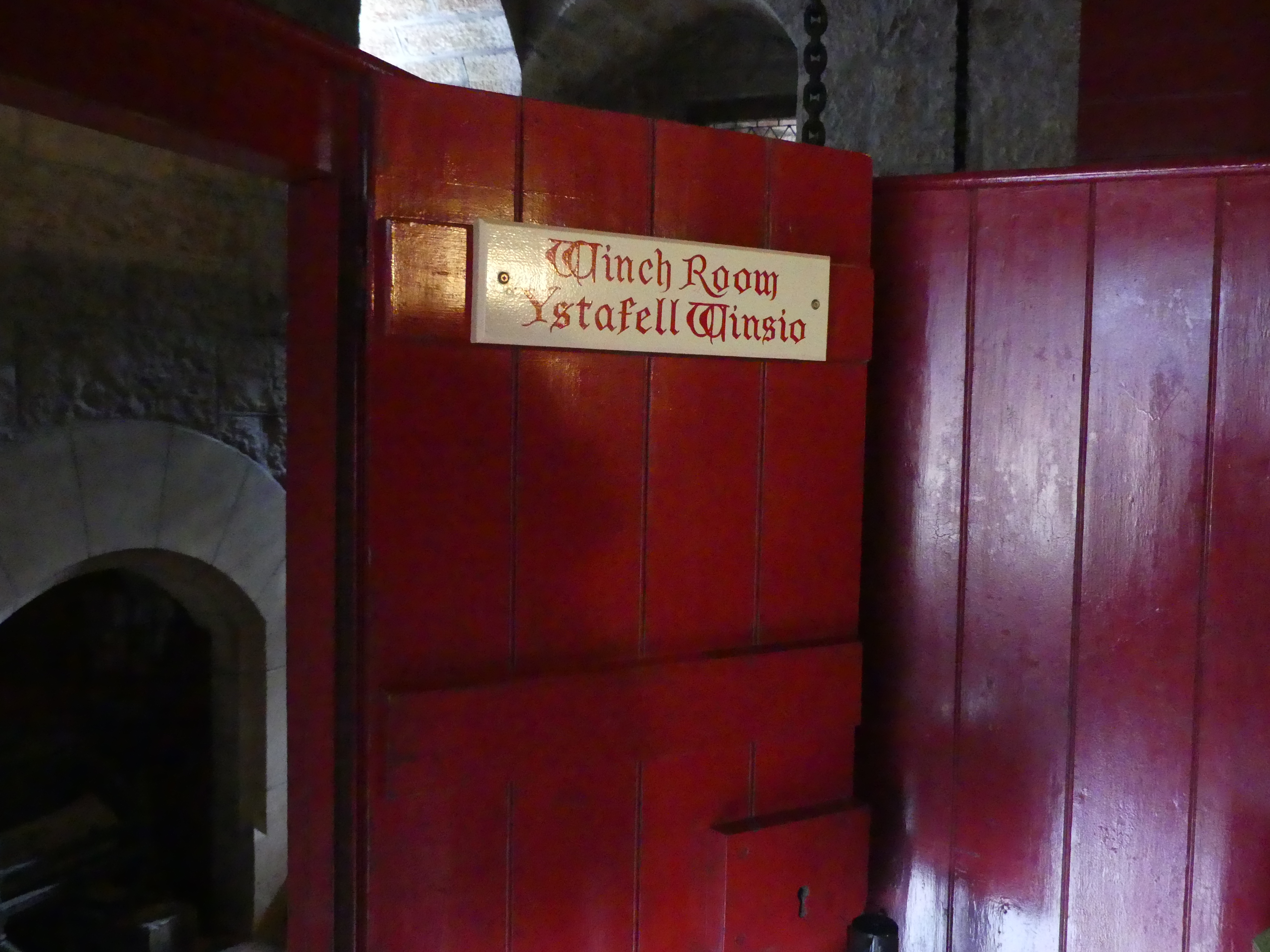
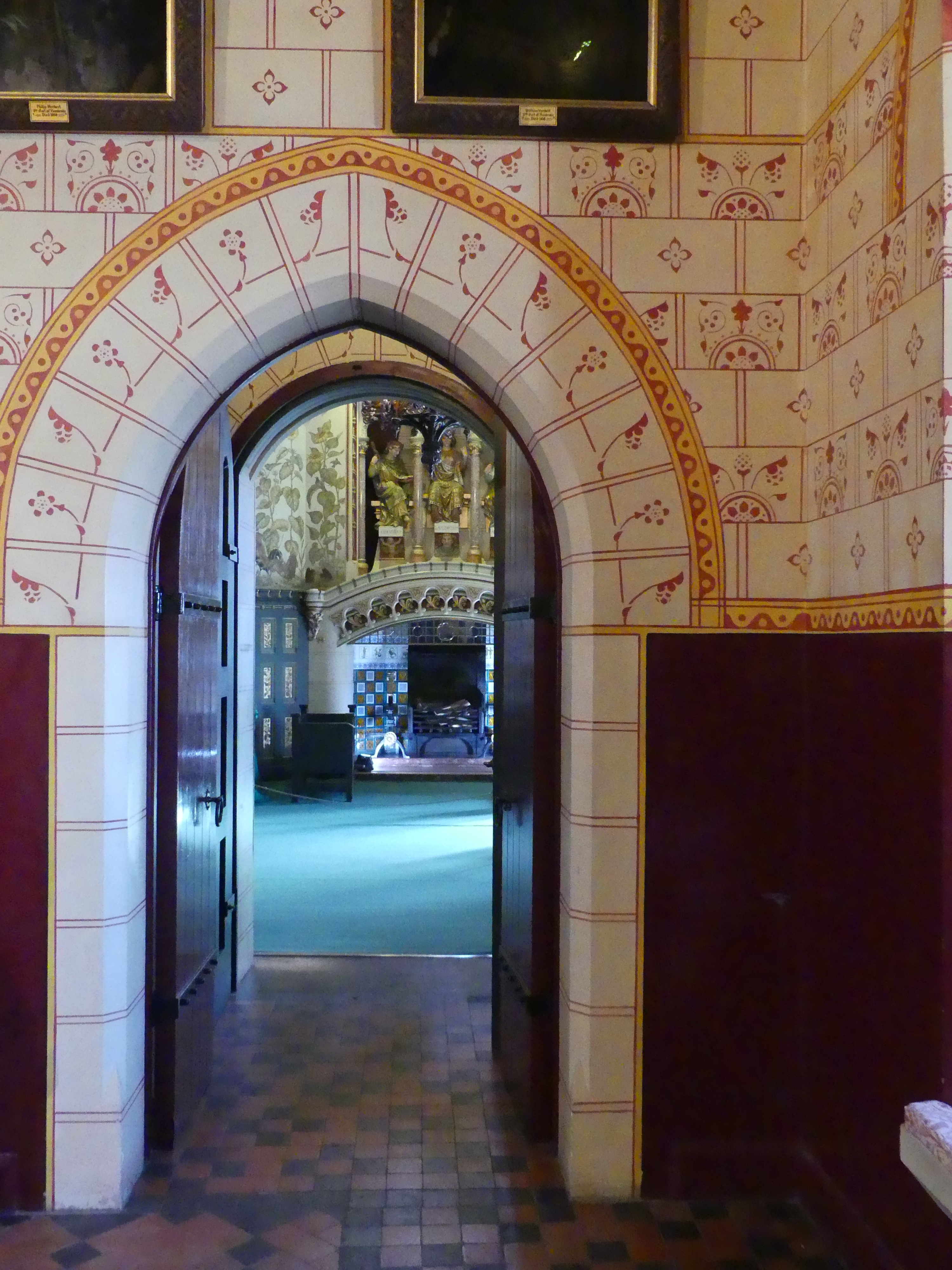
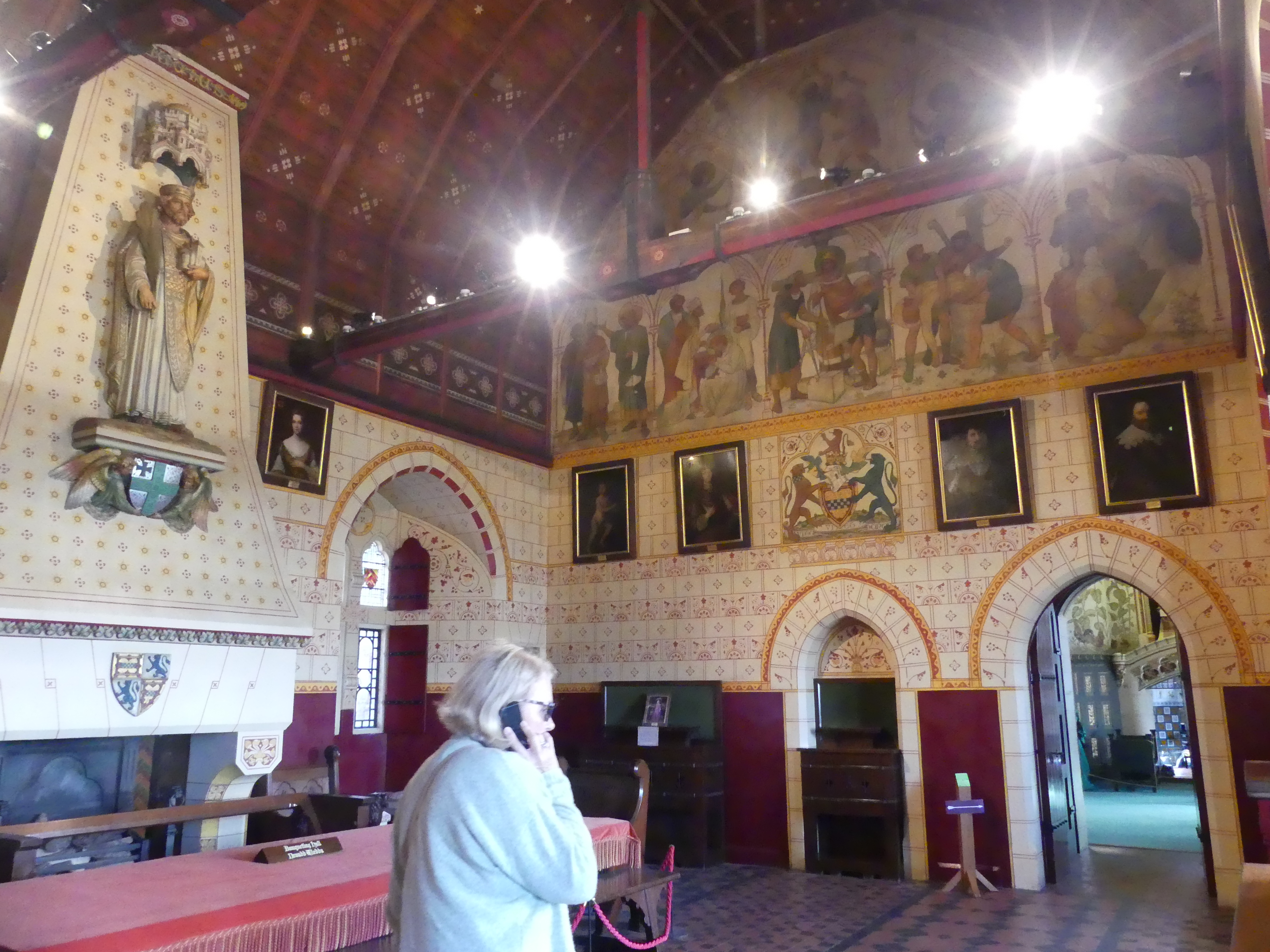
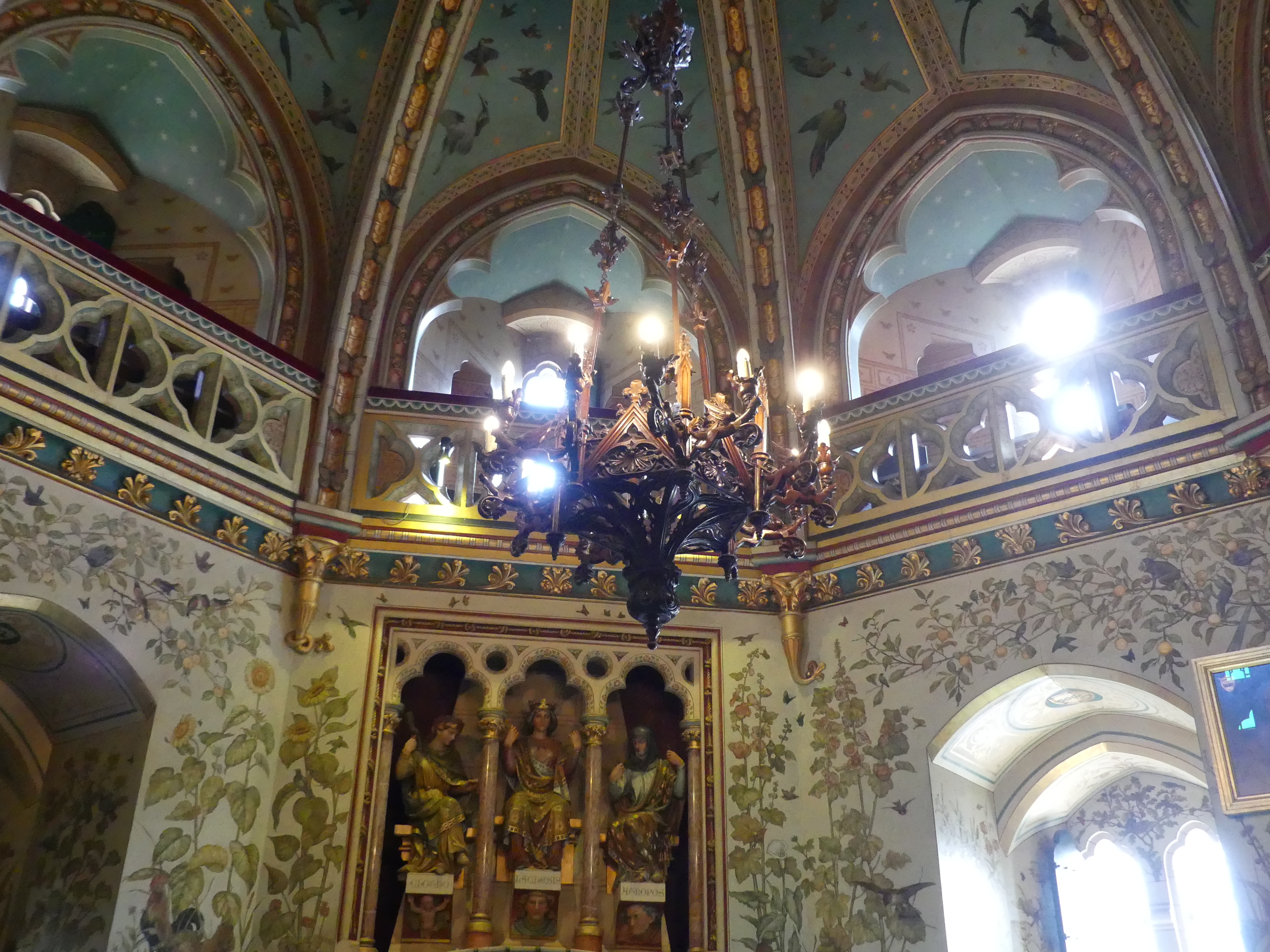
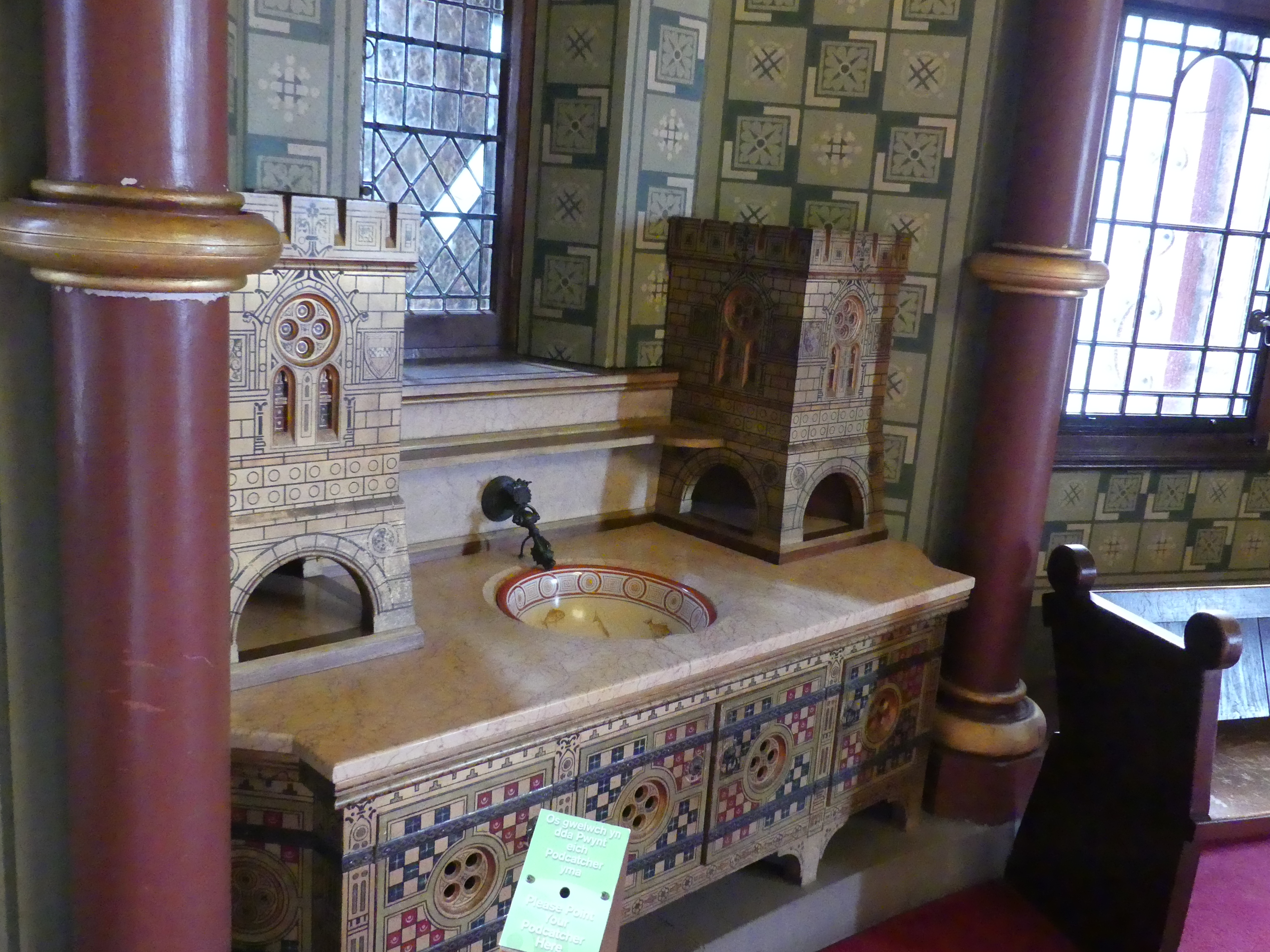
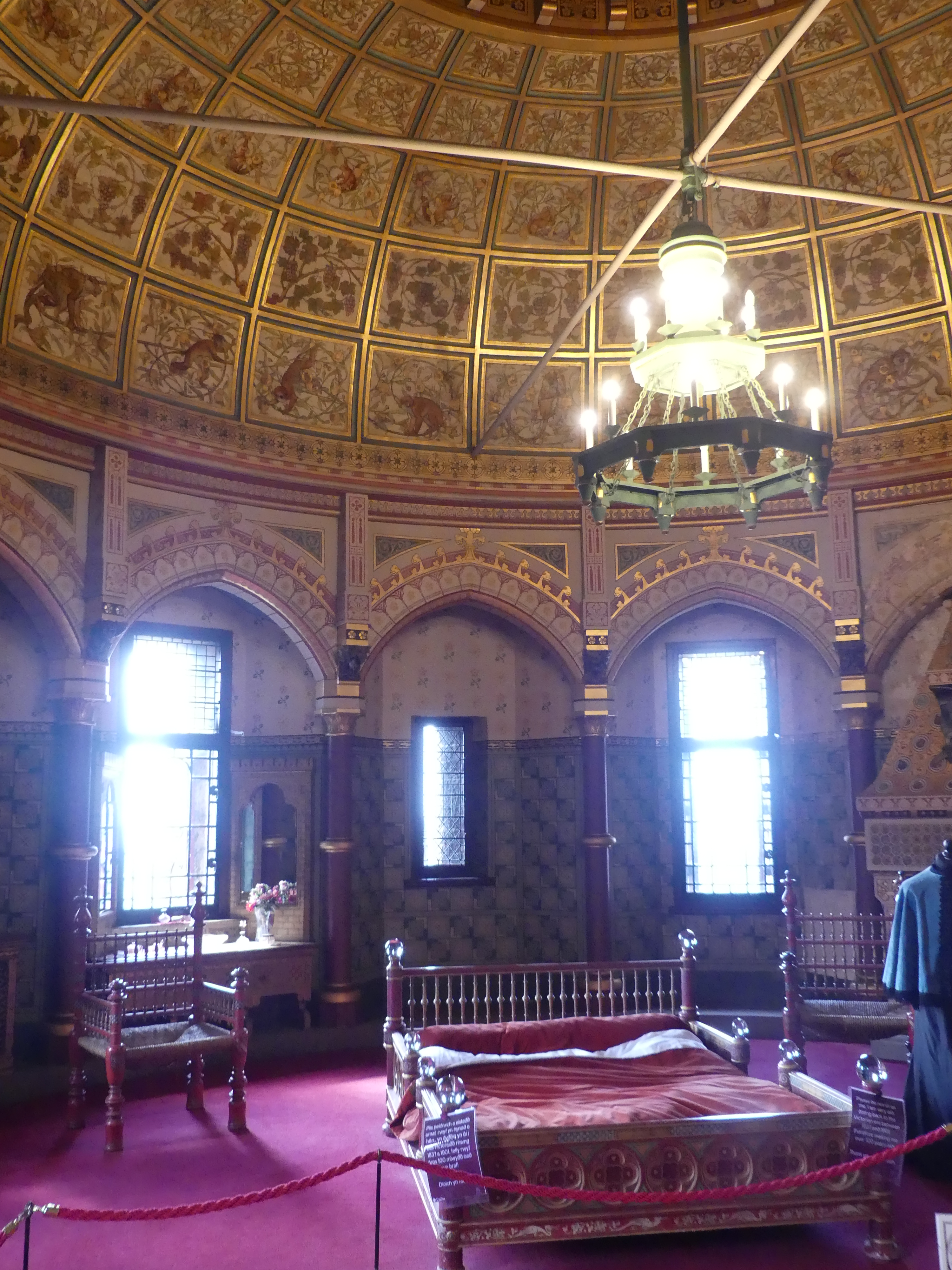
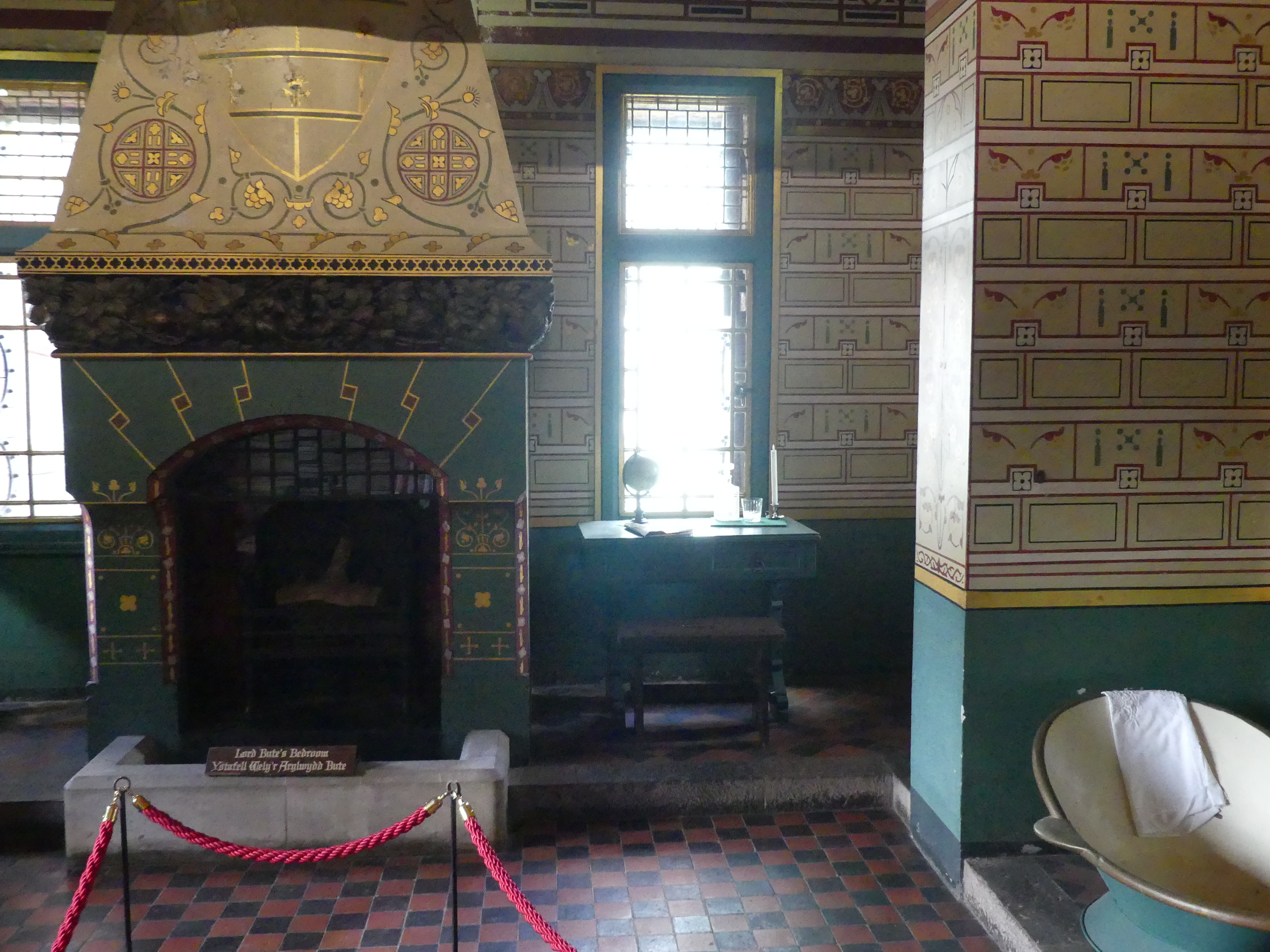
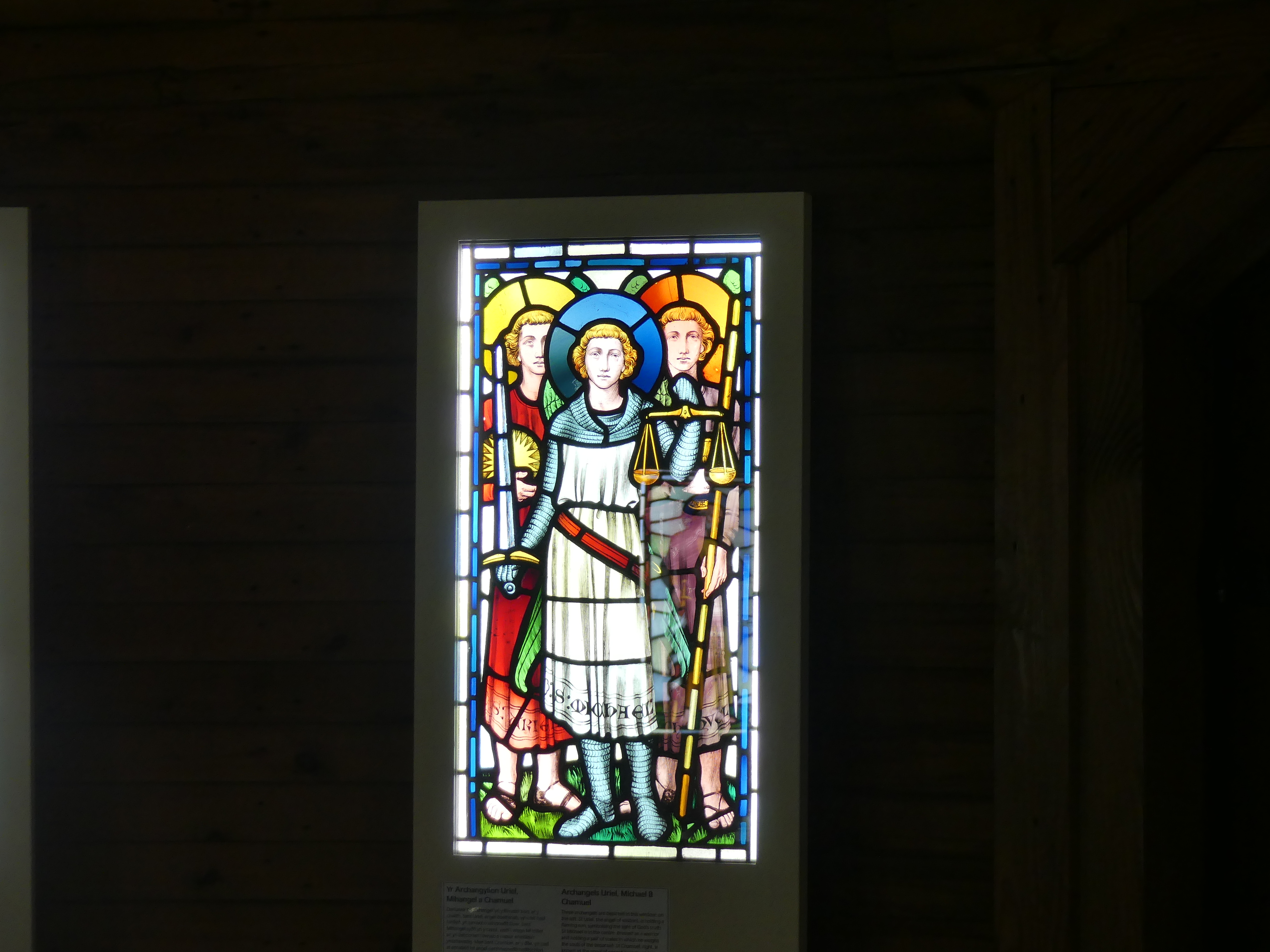
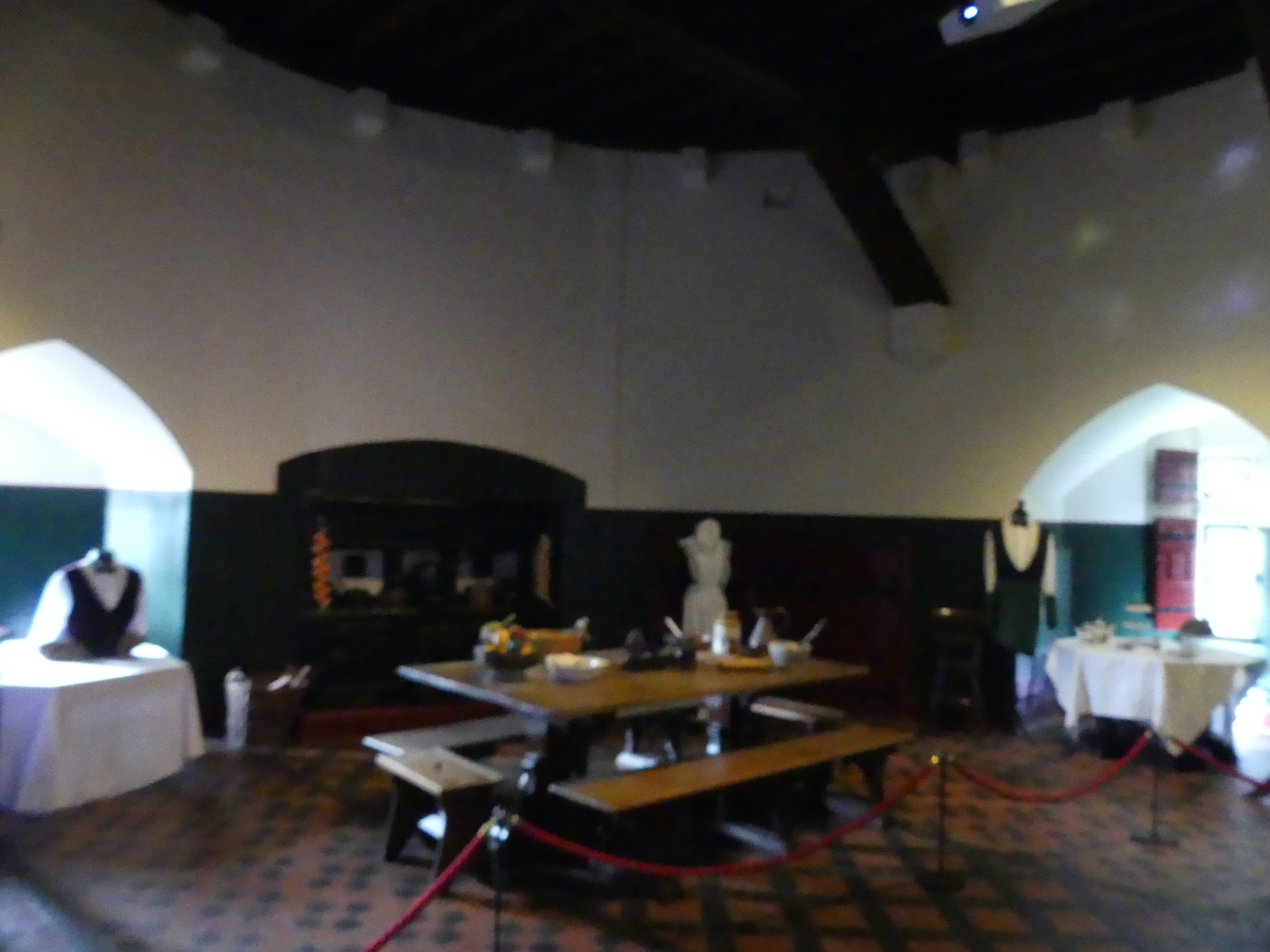
With our self-guided tour, we roamed the Castell. Many of the rooms were filled with furniture from the past and gave us a good idea of the recent use of the place. The photos below follow our tour. Unusually they have kept and restored the chamber “the Winch Room” holding the machinery that operated the portcullis the draw bridge and the “murder hole”. The toilet has been modernised but remains in its original location such that the waste use to flow out over the castle walls. The Lady of the house had a bedroom in the top of one of the towers and was quite pleasant whist the Lord ‘s bedroom was one floor below. It held a single bed, a fireplace and was rudimentary. We joked about the labour of love climbing the stairs for nuptuals with the lady of the house.

The remaining castle that was open for viewing including the balconies circling the castle keep and the chapel, the keep, and the kitchen. I have included the brochure map showing the layout of the Castell (which appears to mean a non-fortified castle) and a photograph of the ruined state of the castle taken over by CADW.

There is no coffee shop at Castell Coch, so we returned to the car as we had heard been informed by the staff that there was a great café nearby. The directions were simply go back to the main road but turn hard left. We followed instructions and returned to the juncture of two laneways and turned hard left and found ourselves on a one-way path to a garden shed which has now been developed as the café. Very rough and rudimentary but it did the trick and even introduced us to a Welsh delicacy. After coffee we headed for Caerphilly Castle which was very nearby.

Caerphilly Castle

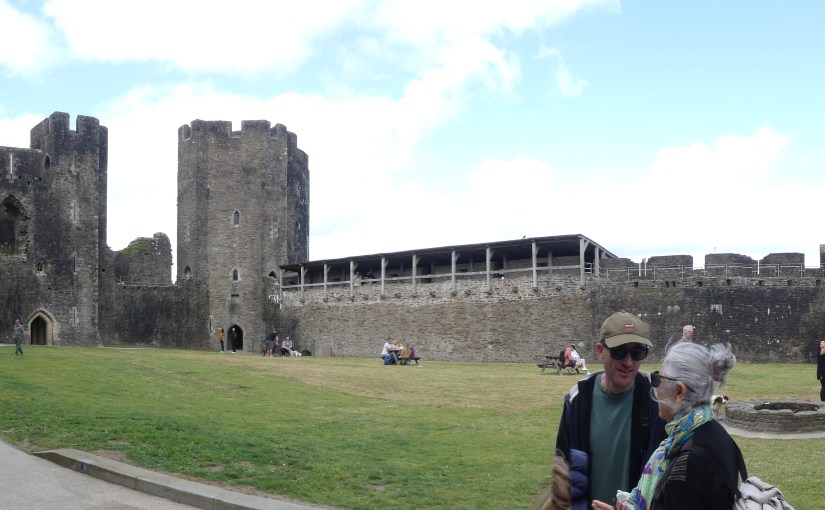
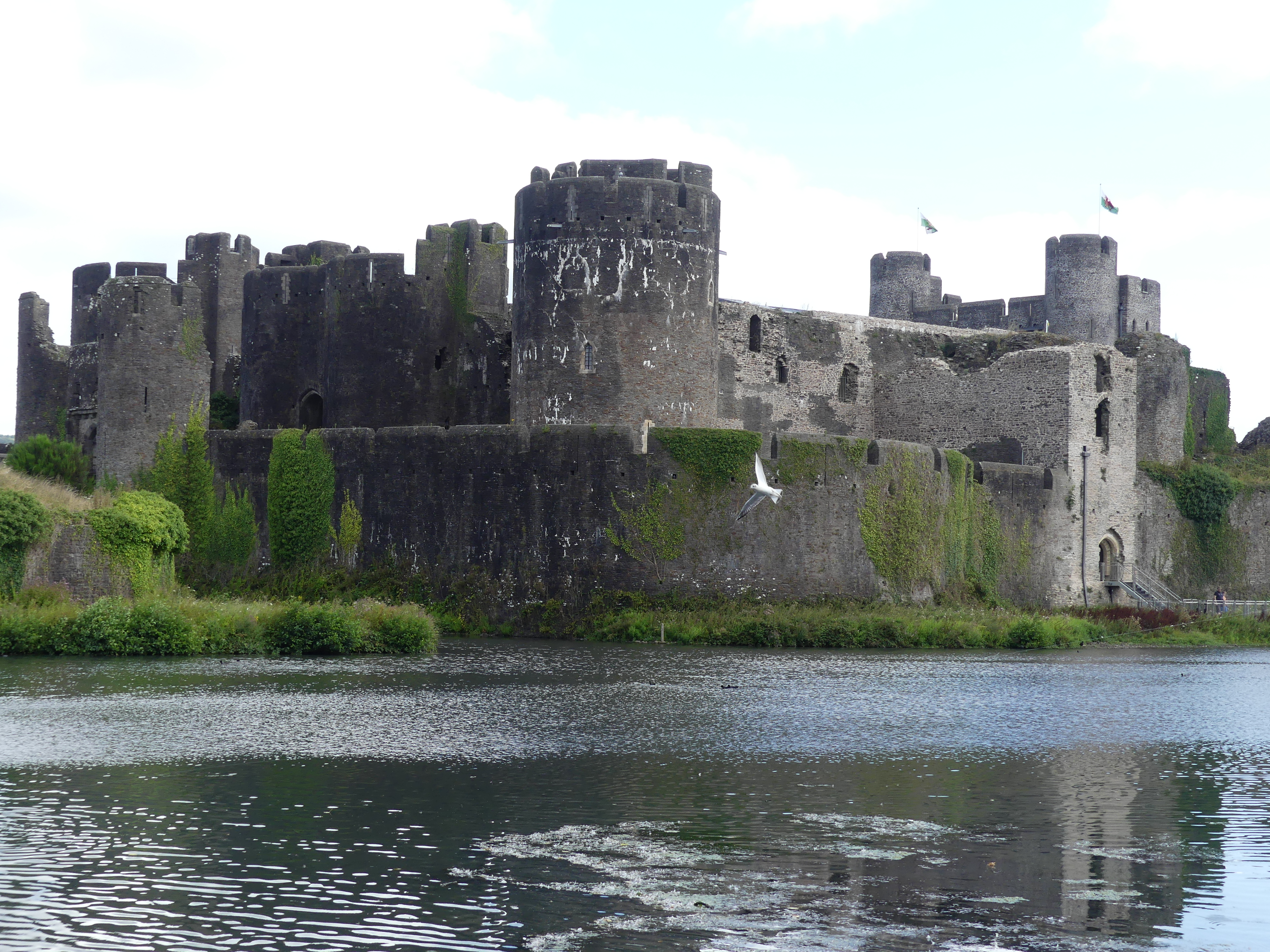
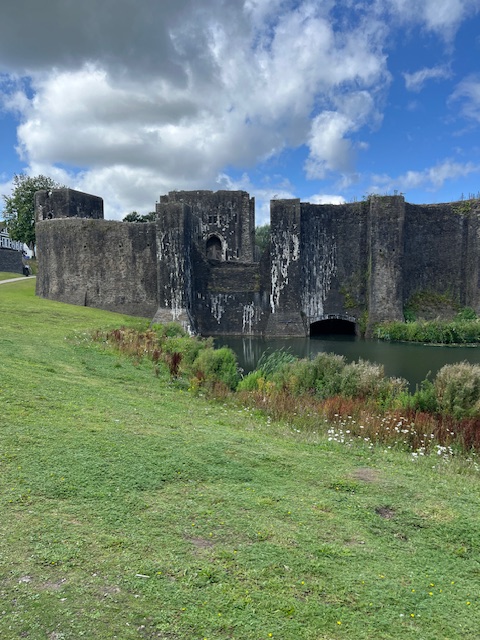
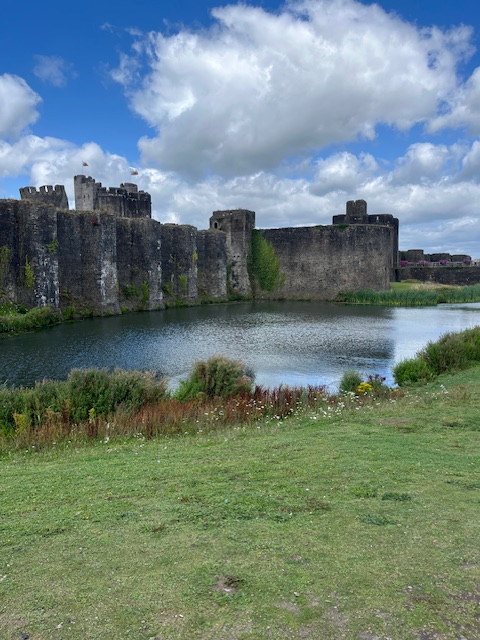
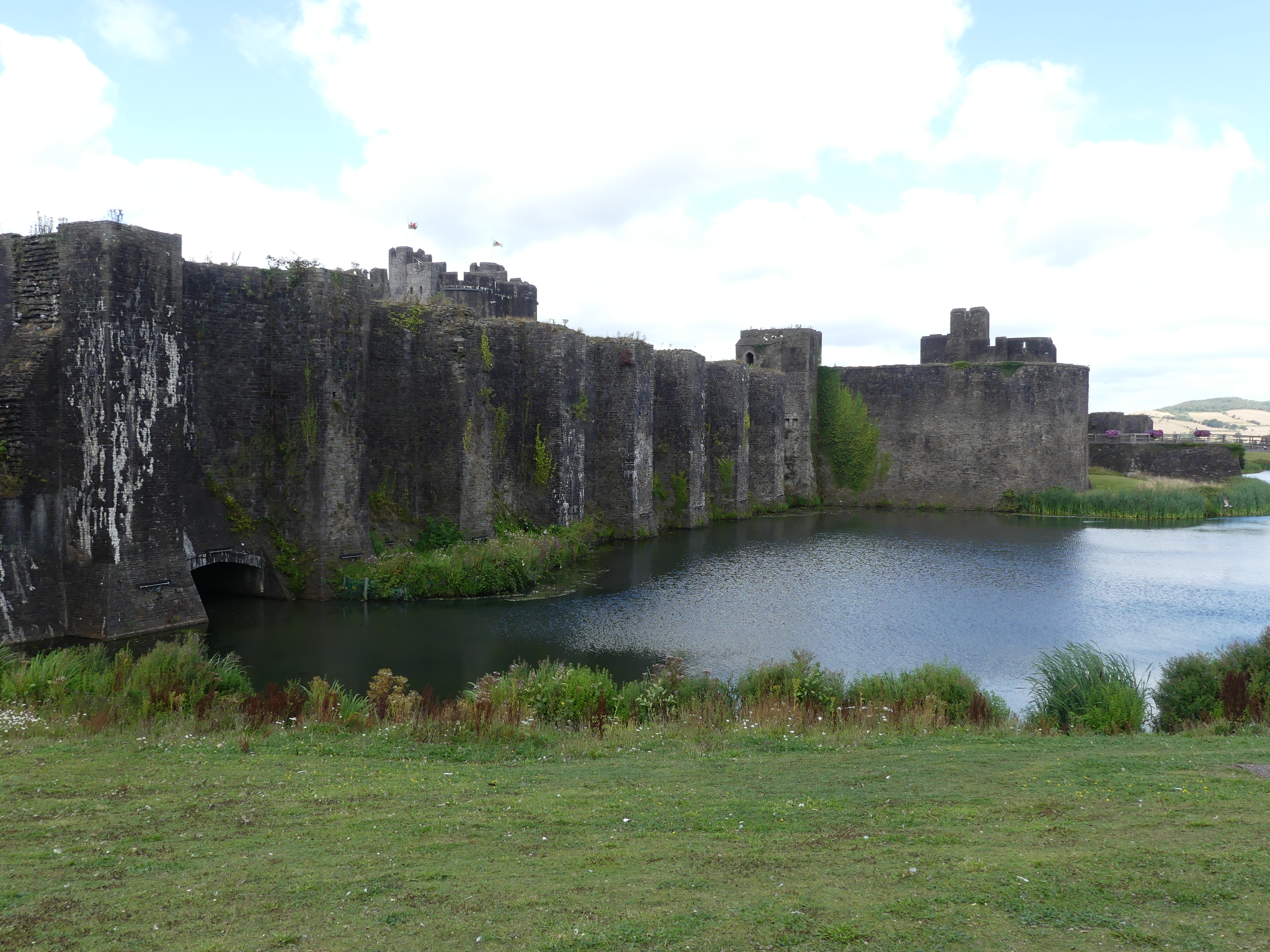
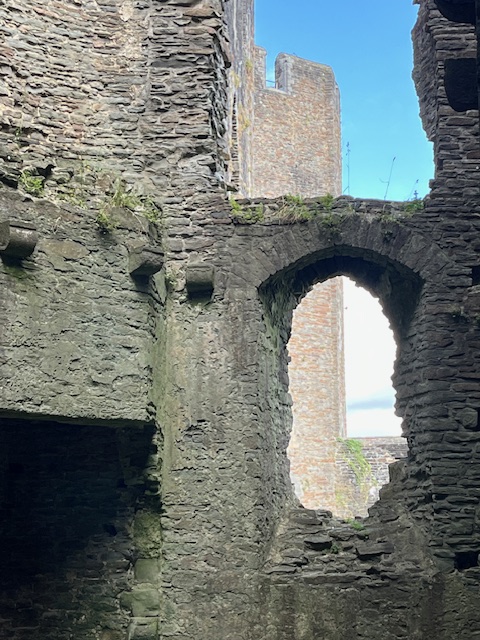
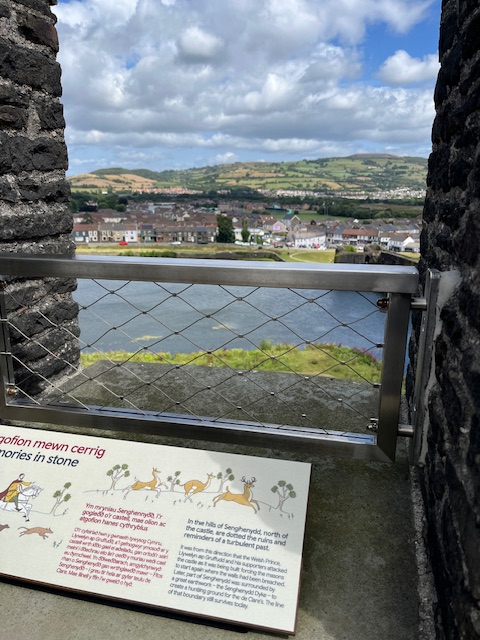
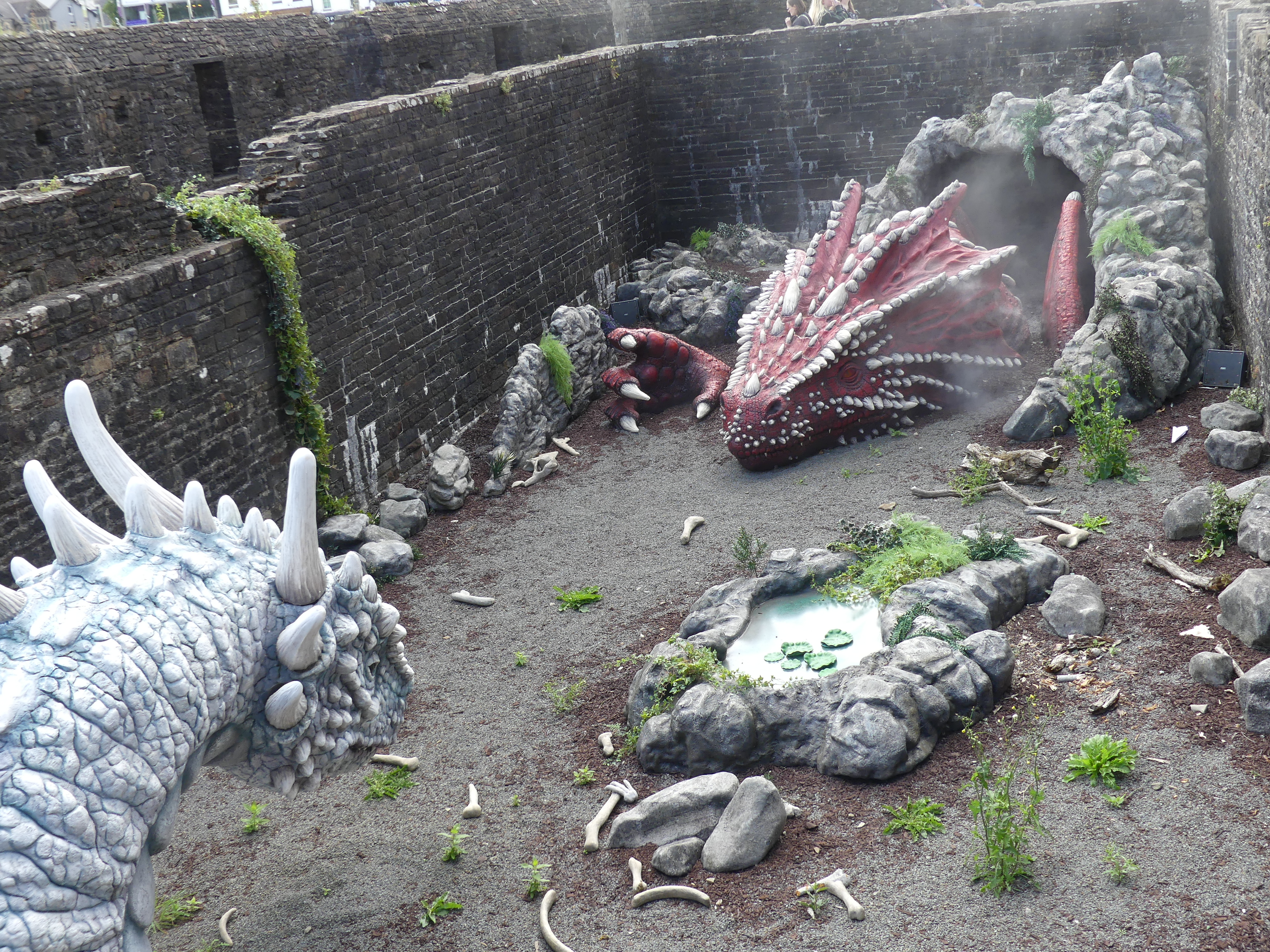
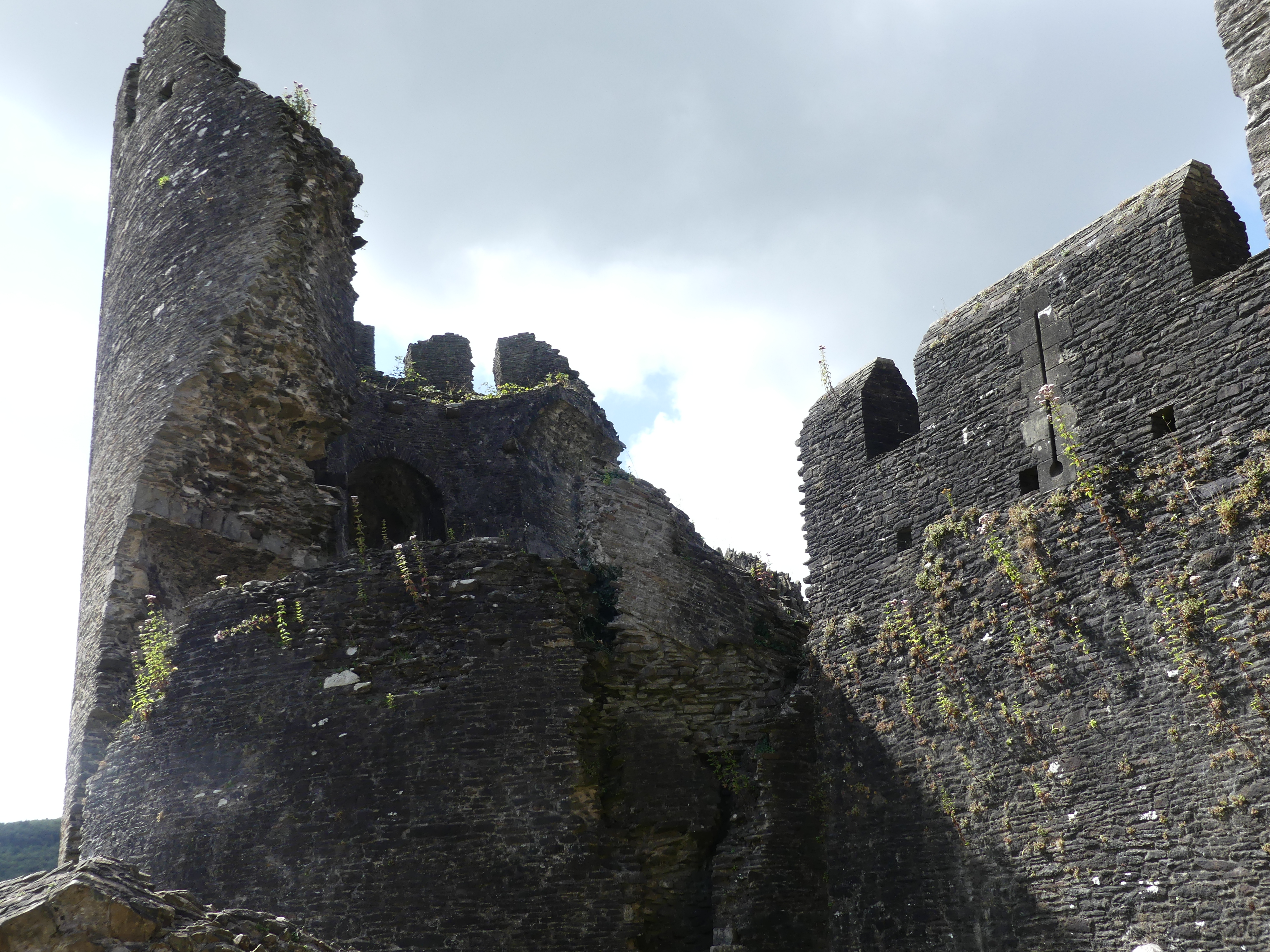
This castle is also controlled by CADW. Where Castell Coch had been in the bush/forest, Caerphilly Castle is a famous castle located in a modest size town. Parking is always the trick to visit a castle. How long are you going to need and how far have you to walk to reach it. In the pictures below I start with a view of part of the castle, followed by another view. It is immense. The moat is more a lake and the drawbridge shows how wide the moat is at its narrowest point. Inside is a secondary defensive wall. A make-believe dragon pit has been added to match myth with reality. One of these towers has been partly demolished by the Roundheads when they formed the Commonwealth in the 17th century.

The Castle has been decorated to tell the story of a queen of England married to her King at 13 and fifteen respectively and her surviving to give birth to 18 children and outliving her King and then surviving the aftermath of his death. For some reason my photos have not survived. A truly magnificent castle. We spent our time in the castle finishing with lunch on the deck of a hotel overlooking a magnificent view of the castle. Note in the picture on the left above that there is a “bloke” holding up the tumbling tower. It is in fact a prop and the tower is tilted by a bomb placed by the Roundheads Army which over ran the castle in the 17th century.

Attached is the Cadw brochure from our visit.

Our plan is to return home and rest up as we will have a big day tomorrow when THE RETIREES GO AROUND THE WORLD – SUTTON HOO UK to CARDIFF WALES – CAERLEON.

THE RETIREES GO AROUND THE WORLD – CARDIFF WALES – CARDIFF BAY BARRY ISLAND AND PENARTH.

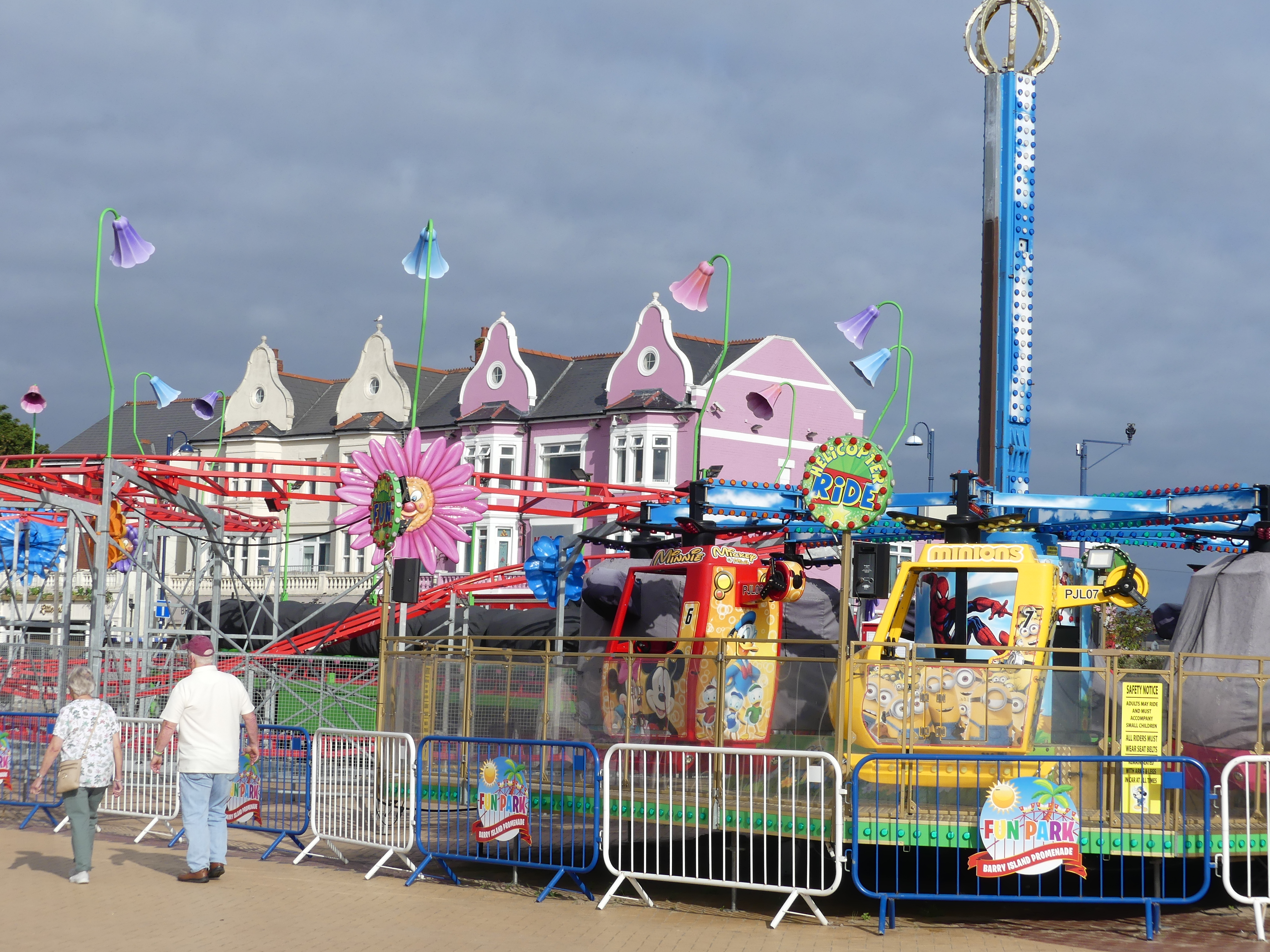
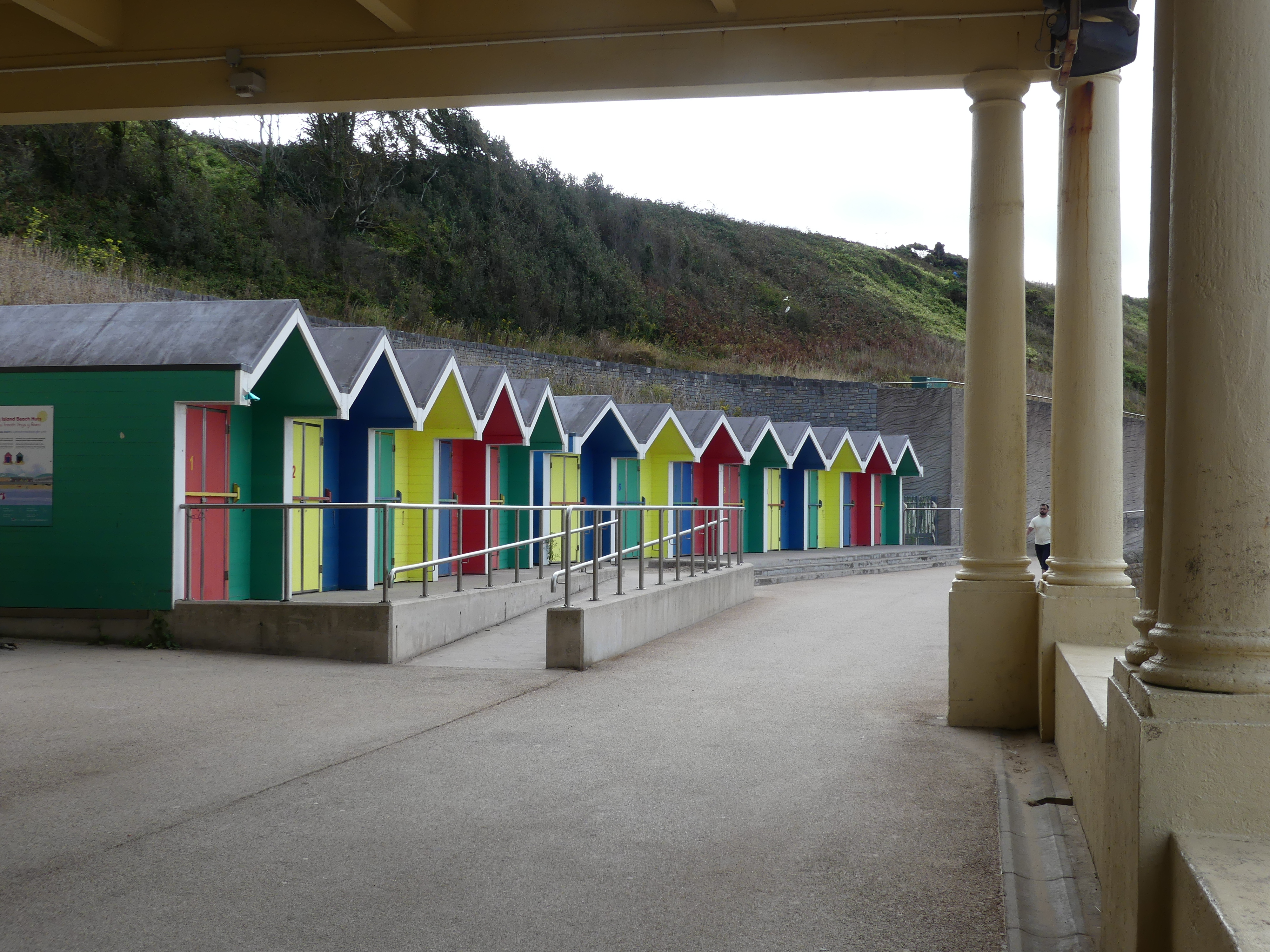
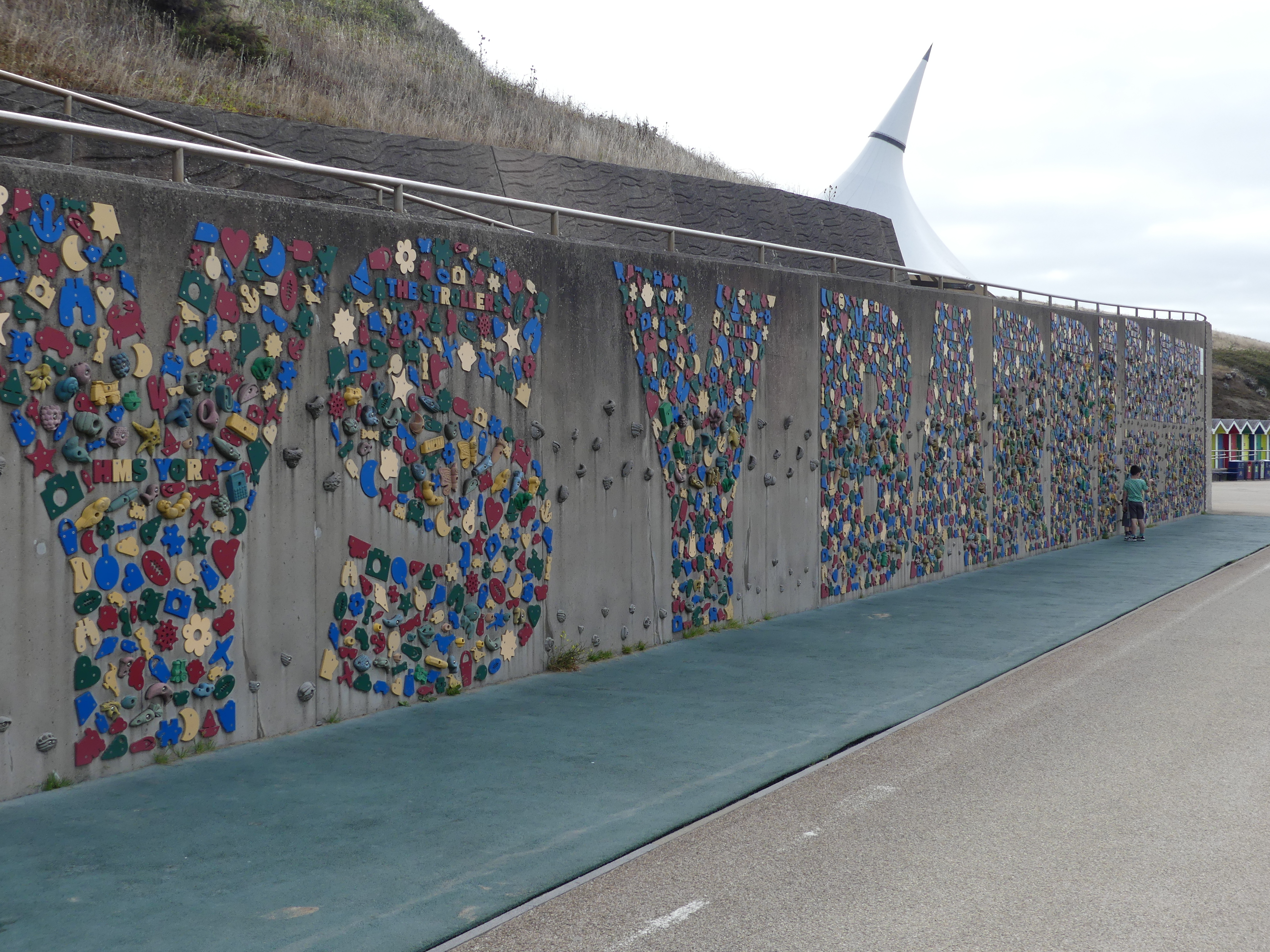
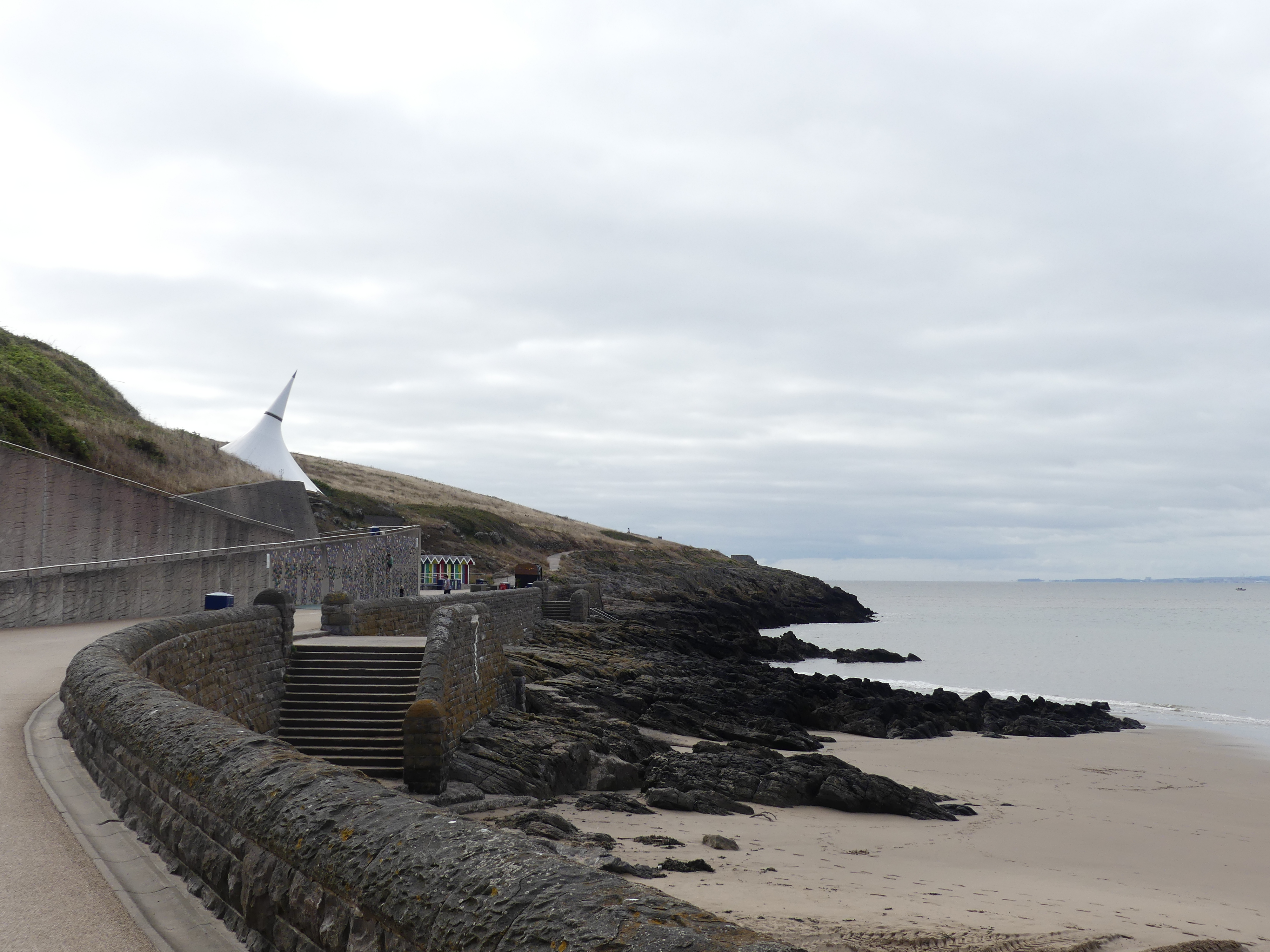
To the south of Cardiff is a bay having the obvious name Cardiff Bay. We made our way around to Barry Island. It’s the middle of school break and the middle of summer – everyone should be at the beach. Well not in Cardiff. We took a walk around the township and the beaches were deserted and the carnival had not started. Oops we have arrived too early it doesn’t start till 10.00 am. Even so the weather is not inviting you onto the beach and the water is hardly more than a mill pond – not exciting at all. The beach huts are polished and painted but no body is around. There is a clever beach side kids climbing wall with one lad having a go but he is a bit small as yet.

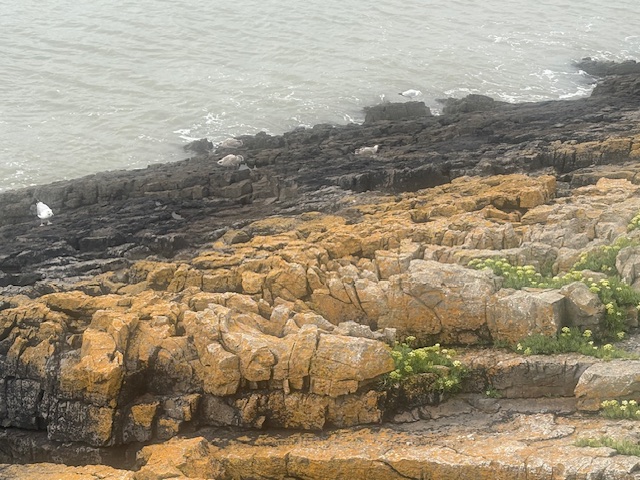
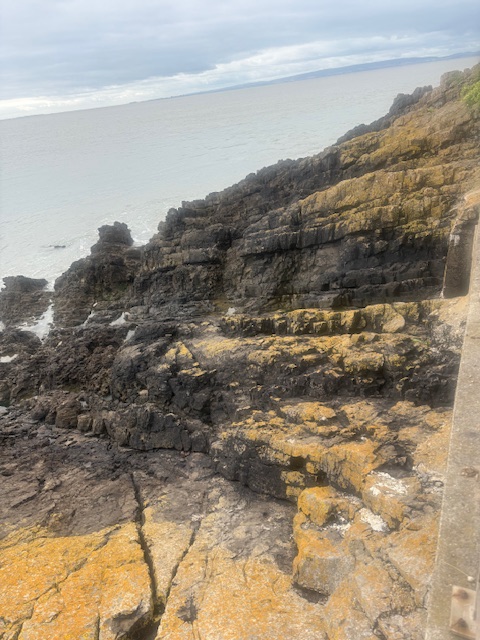
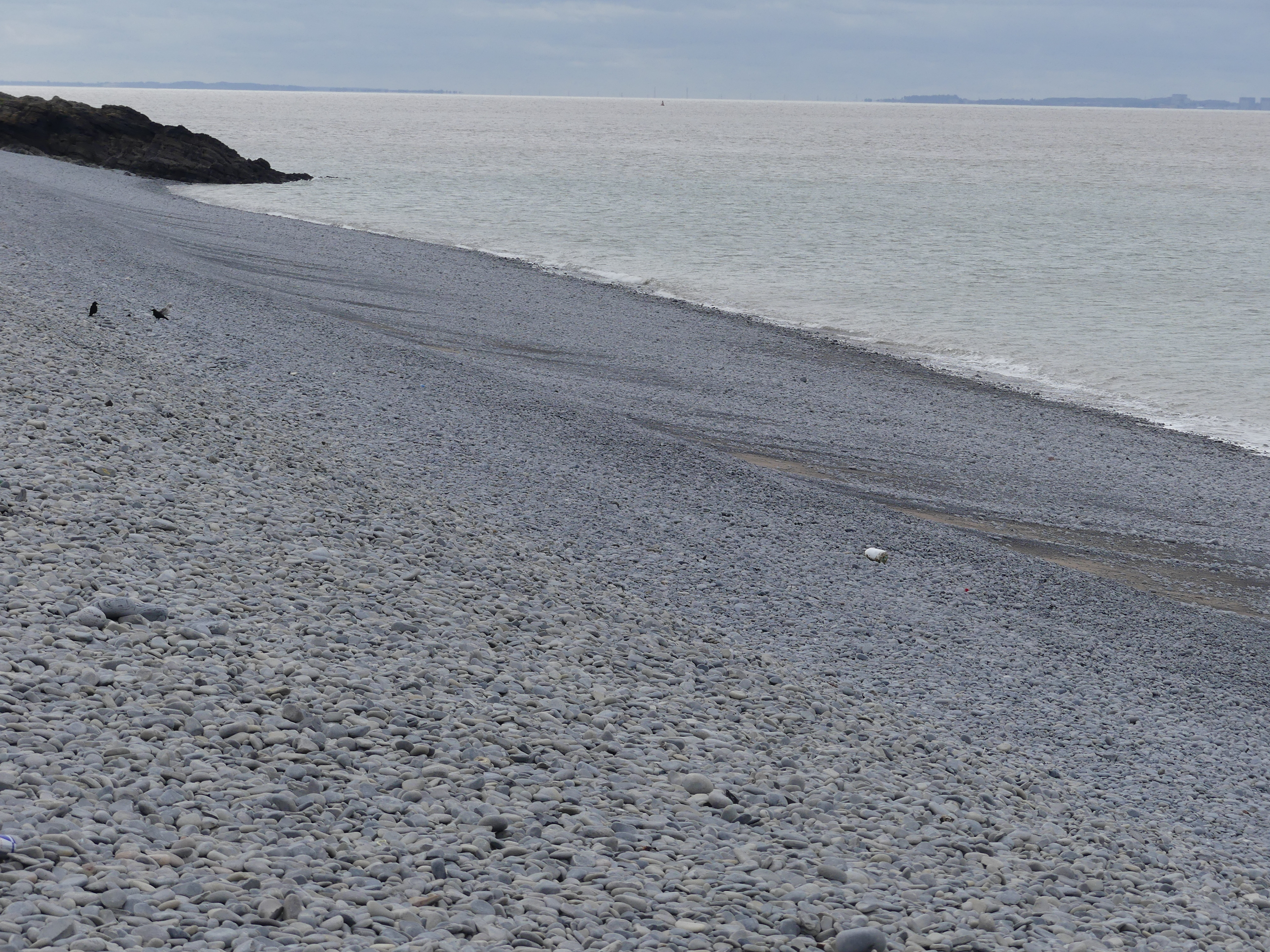
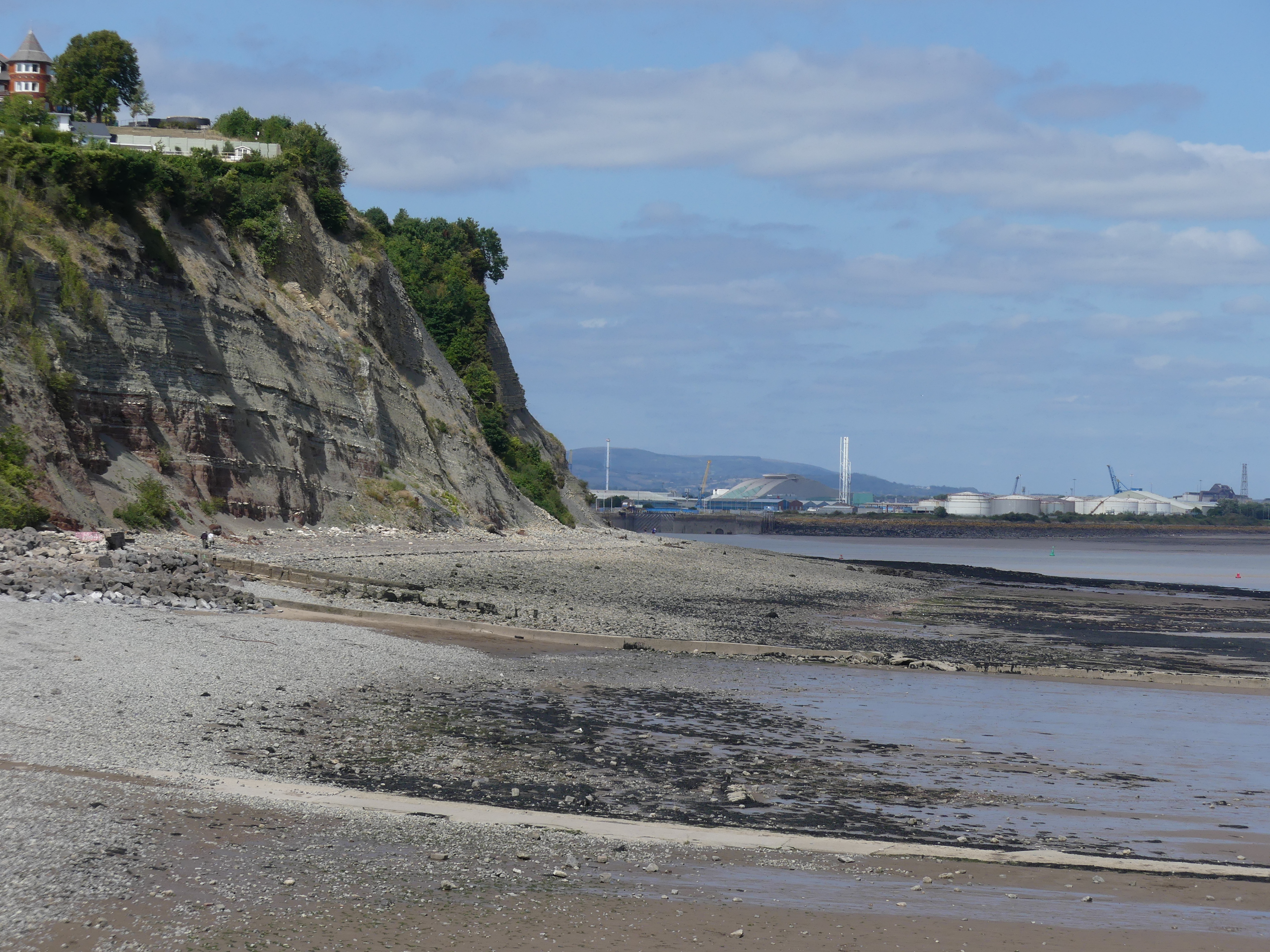
The Bay played a part in the second World War and a demounted concreted base stands testament to the place where the telescope was replaced by a gun. We walk around the headland path and come across an automated lighthouse and it is the sentinel for Nellie Point. My late Mum was named Nellie and I felt a little chuffed that she had the same name as this Point. The path comes to a dead end where it ends in a cliff and a small beach. A passing local tells us there is a pathway on the other side of the beach, but the gradient is so steep that locals call it “death hill”.  So warned, we turn around and walk back. After collecting the car, we take a drive around to a different beach where Kerry pulls out our picnic thermos of coffee and some biscuits. This beach is covered in pebbles and has been severely eroded.

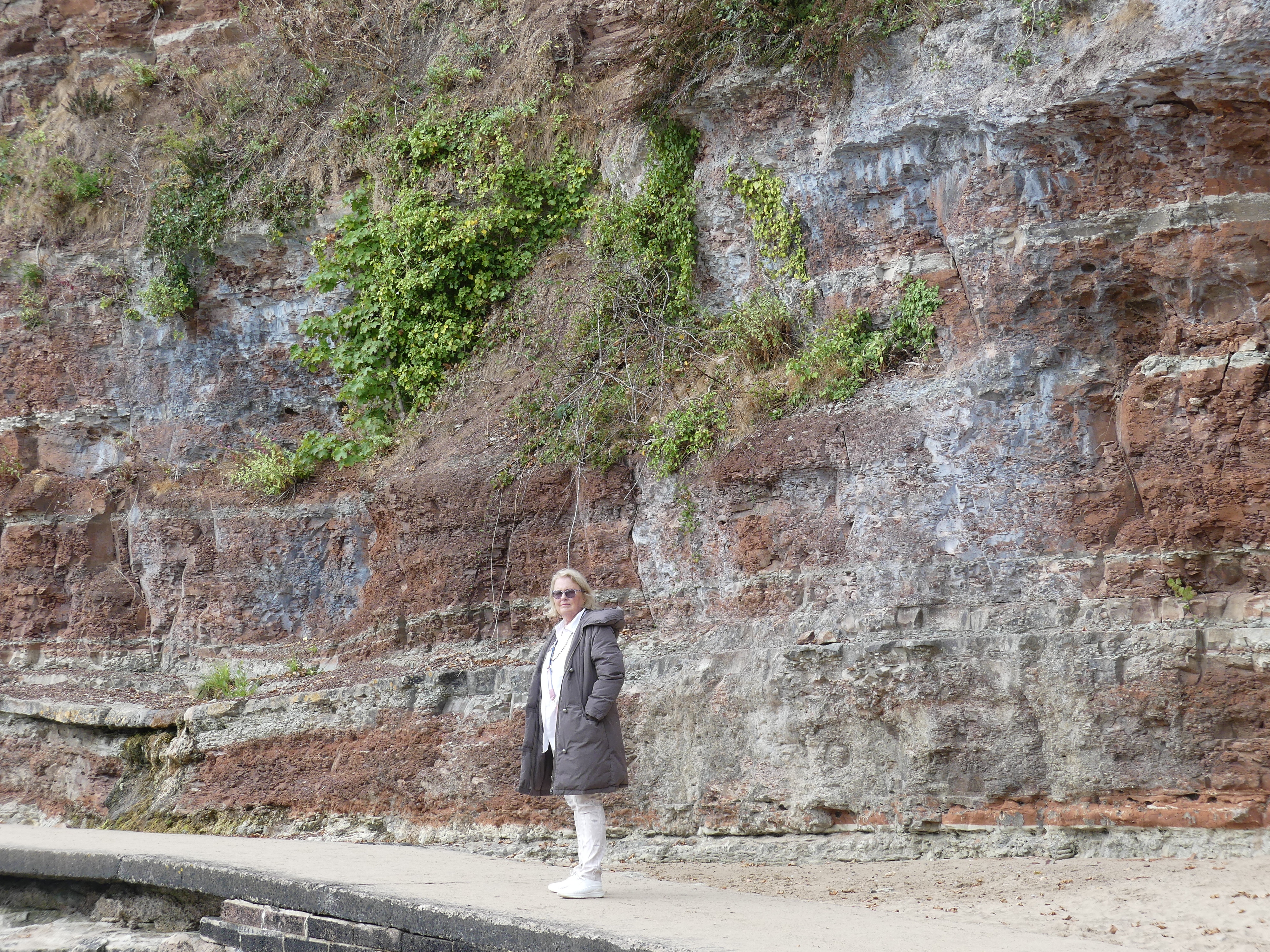
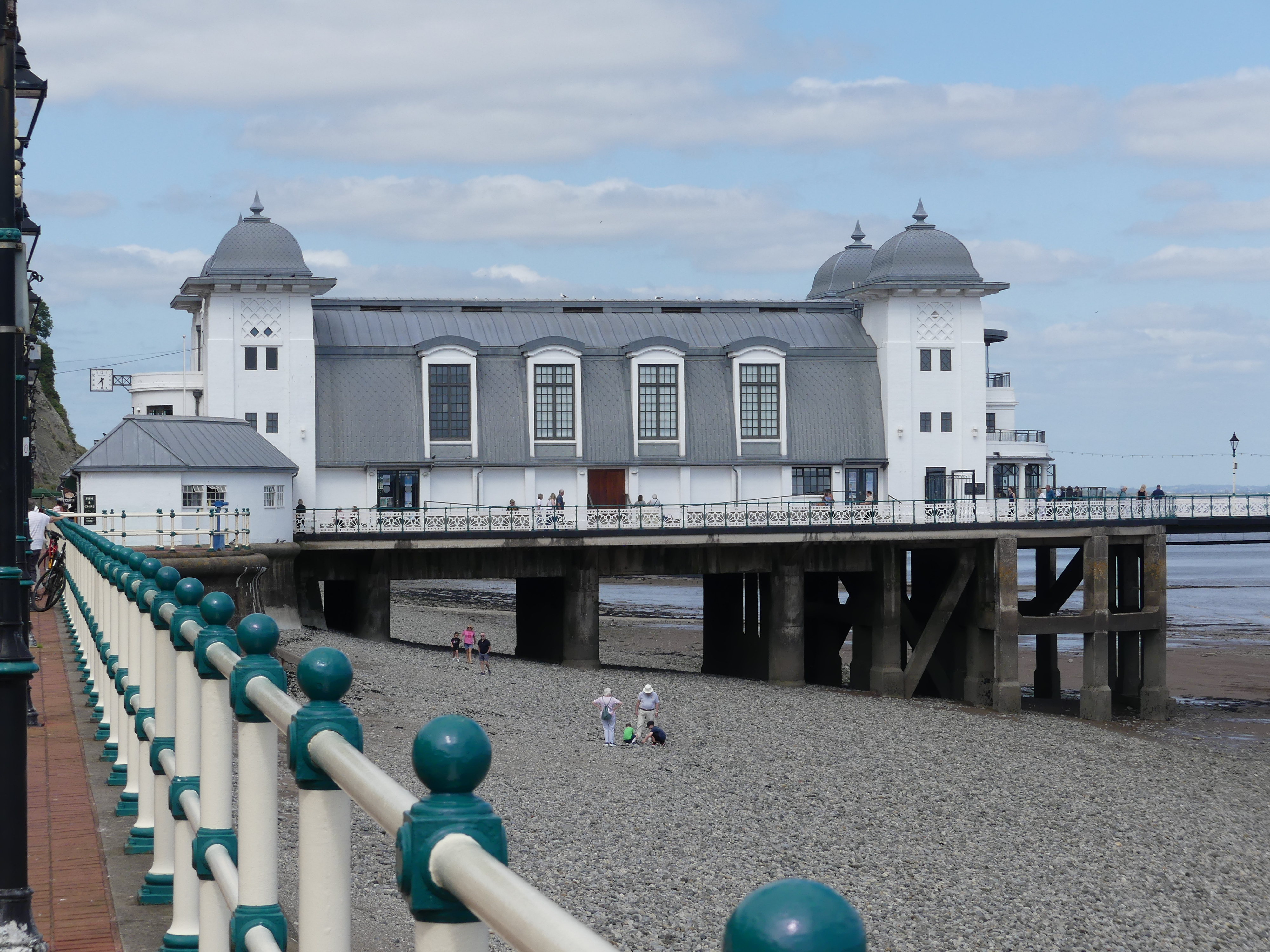
We decided to extend our trip to another beach side at Penarth to the east of the Bay. Lots more activity over here. Penarth is famous locally for its pier – the Brits love these piers. They also love oddly designed public baths. In the pictures below is what looks to be an odd house with a tower when in fact it is an odd public bath house – go figure. The beach is backed by some dramatic cliffs and steep walks up the hills. The pier is very long due to the shallow waters. You can see in my pictures a boat sitting in the boat channel and how far off the land they sit.

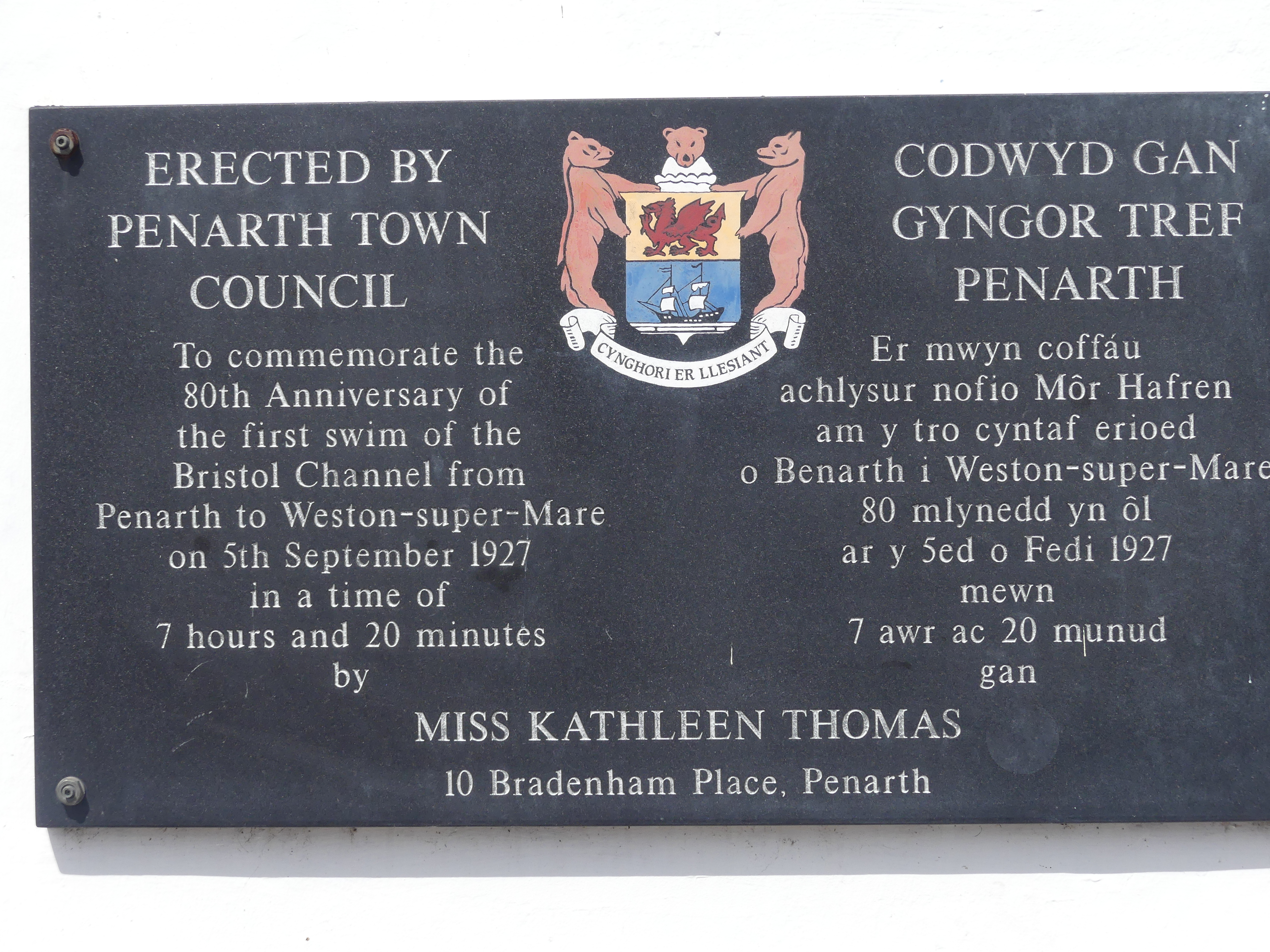
Emblazoned on the wall of the kiosk at the commencement of the pier is a memoriam to Miss Kathleen Thomas who braved the chill water in 1927 to swim from Penarth to Weston-Super-Mare on the English side of the Bristol Channel. The plaque suggests that no one else has beaten her time for the swim. I reckon its just too bloody cold.

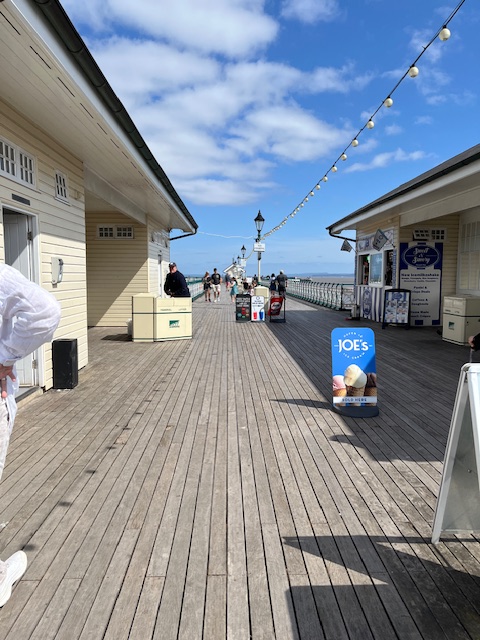
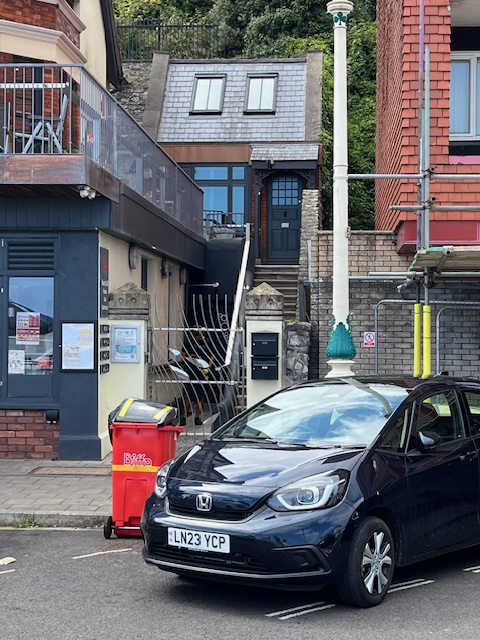
The ice cream shop beckoned. So, ice cream in hand we weaved back to our car parked some distance from the pier and ended our beach side tour for the day. As we walk to the car we pass a passage where sheltered in the back is small cottage taking advantage of the seaside views.

Tomorrow we will commence our castle hunting with a visit to Castell Coch and Caerphilly Castle. Watch for THE RETIREES GO AROUND THE WORLD – CARDIFF WALES – CASTELL COCH AND CAERPHILLY CASTLE.