The Retirees go Abroad – Last Day in Salzburg Austria

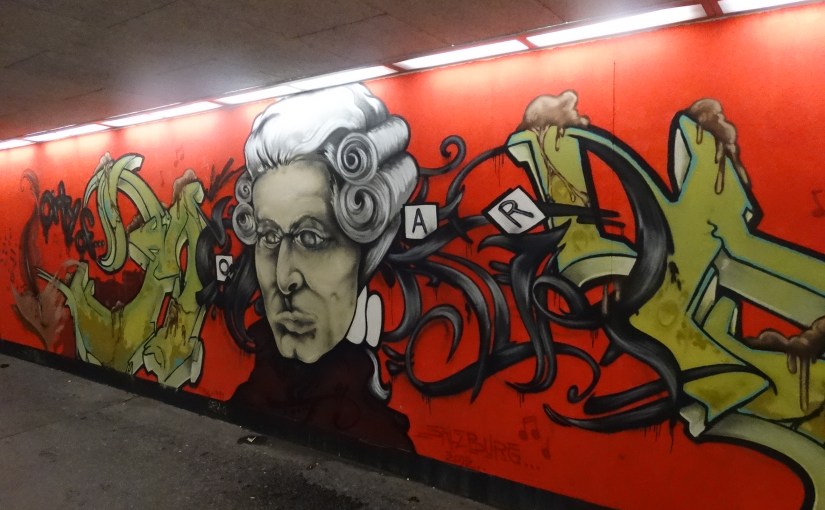
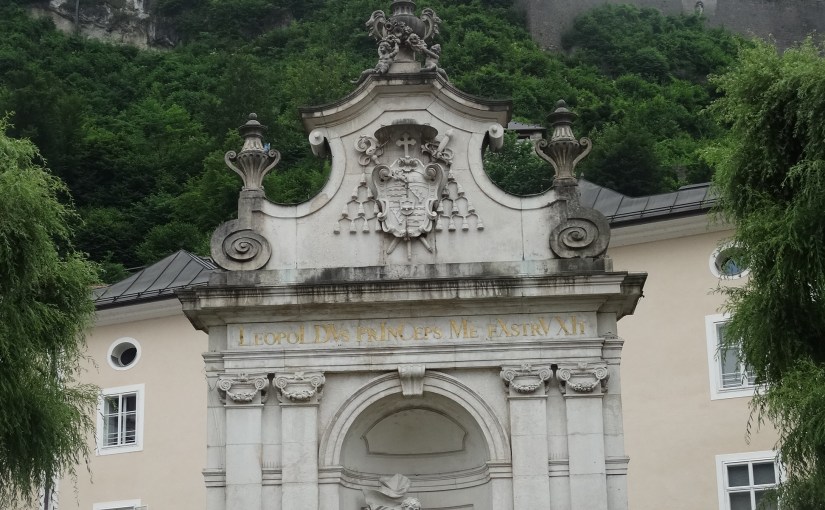
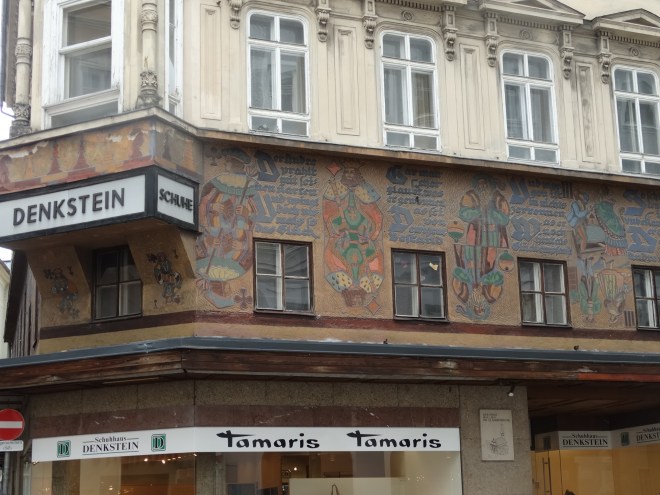
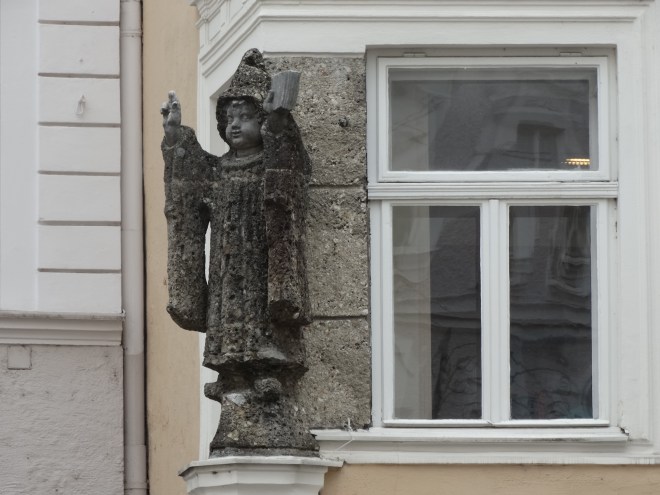
It is our last day for tripping around. We have to get some domestic things done like washing ironing and some car repairs. However we have the use of our Salzburg cards until 10.00 am so we jump the bus and go into the old City and visit Mozart’s birth place. On the way we pass some interesting graffiti. Mozart’s birth place is far more interesting and informative. We learn that Mozart had a sister and 5 other siblings who died at birth or shortly thereafter. His father Leopold was a distinguished musician and held positions at court. Because of Leopold’s talent he recognised Wolfgang’s brilliance and moved mountains to have it recognised. Mozart’s sister was brilliant also but not quite genius. Wolfgang had two sons one who was as brilliant as his father but lived in his father’s shadow and the second also musically talented but who chose to work in the civil service. The family line died out with Wolfgang’s sons. As usual with brilliant people the musicians were eccentric and it was Wolfgang’s mother who was the family stabiliser. Wolfgang’s wife was quite a business woman and although Wolfgang died at an early age his widow made his name and music live on. If in Salzburg this is a must to visit.

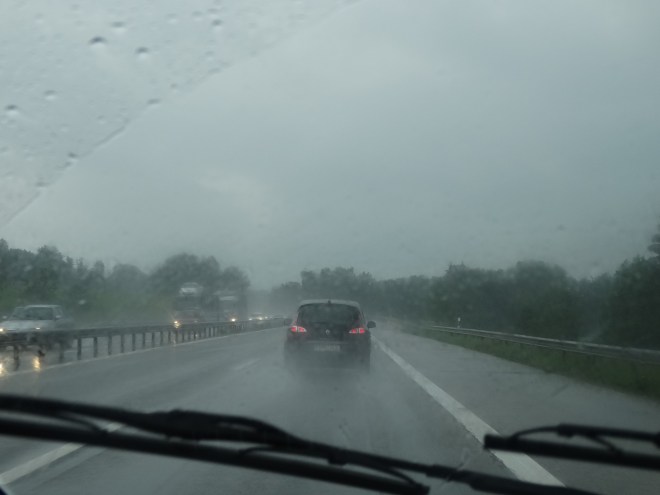
Kerry had high hopes of a shopping spree after our last museum but the weather had been overcast and rainy the last few days and today it was constantly raining – raining on her shopping spree. So home to domestic duties and car repairs.

We had lost power to the auxiliary power points in the car and it needed some oil. I knew it was the fuse but I could not find the fuse in question. I spoke to Petra our host about a service station and she immediately volunteered her father (who happened to be visiting her that night) to help. Arrangements were made to go to her uncle’s garage outside of Salzburg on Friday – today. At 2.00pm we followed Petra to this garage and after everyone got over a right hand drive car it took 5 minutes for the professional to find the fuses behind the change box in the dash. Fuse changed and oil topped up we returned to our domestic duties to prepare for travel and to prepare for the concert at Schloss Mirabell tonight.

← Back

Thank you for your response. ✨

Warning
Warning
Warning
Warning

Warning.

The Retirees go Abroad – Concert at Schloss Mirabell Salzburg Austria

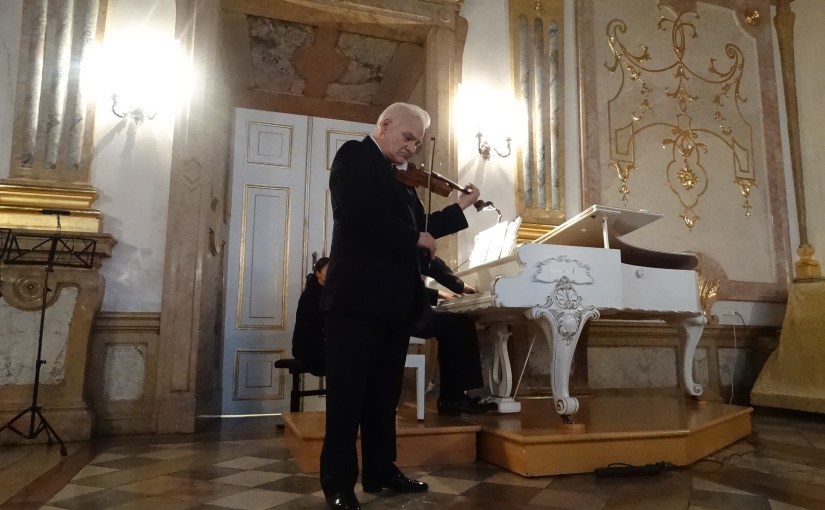
Schloss Mirabell’s breathtaking Marble Hall is the venue for classical concerts every Friday night in Salzburg. Dripping with old-world Austrian glamour, the hall’s interior matches the elegance of the music played inside it, making it the place to watch a concert in Salzburg. Access to the inside of Schloss Mirabell is only possible by booking a concert such as the one we attended tonight. So we did it and discovered the palace’s Baroque beauty while listening to chamber music from a trio of master musicians (piano, violin and viola) playing the music of the likes of Mozart and Beethoven.

The performance stated with a pianist from Siberia who played a set of three pieces by Mozart. Then the “First Violin” joined him for another set of three pieces followed by a break. Then came the surprise. The Violinist had forgotten the sheet music for the trio – the first time in 30 years so the pianist filled in with an ad lib piece until the sheet music was brought to the Palace.

The evening finished with the trio playing three pieces by Mozart to a standing ovation. The viola player was almost demonic in her determined thrusting with her bow.

So we walked to the bus stop to catch the number 5 home but the last bus was at 8.00pm and our concert finished at ten. So a cab home and into bed ready for a big drive to Bregenz in Austria tomorrow.

← Back

Thank you for your response. ✨

Warning
Warning
Warning
Warning

Warning.

The Retirees go Abroad – Ice Caves near Werfen Austria

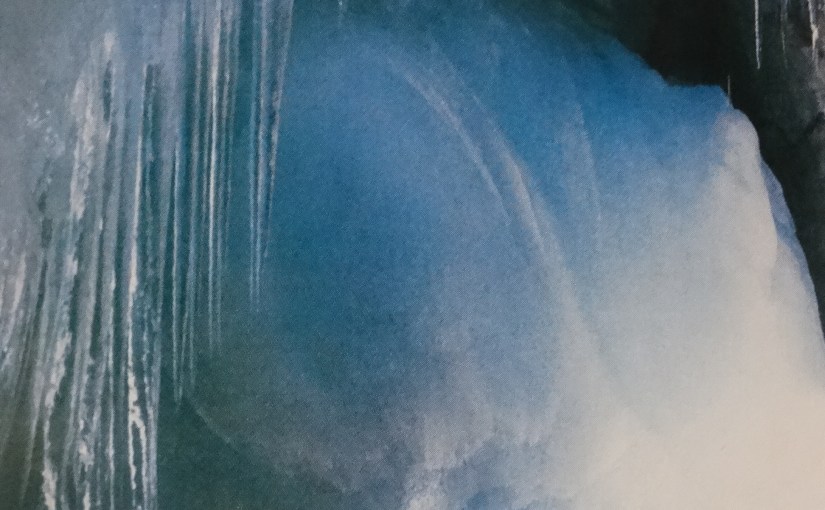
This was to prove to be a very special day in many ways. We started early with the goal of doing the ice caves, Berchtesgaden salt mines and the Eagles Nest. I am glad we decided to do the ice caves first. The drive to the caves was exhilarating. We climbed to an enormous height way above Hohenwerfen castle which itself stood on a hill above the town, then after paying for our entry we walked up what must have been a 25 degree slope for 10 minutes then through a tunnel in the mountain for another 5 minutes then climbed again on a steep twisting trail for another 10 minutes to reach the cable car which took us up to 1500m. There we climbed again for another ½ hour on a twisting trail partly sheltered by concrete to protect against rock slides before we got to the mouth of the cave.

There were groups of school children as well as tourists so we had about a ½ hour wait (to catch our breath) before we were given our kerosene miners lamp and entered the cave with a mixed group of German and English speakers and our guide. No photos allowed inside so I have cheated bought a series of post cards photographed them and they appear below. However the thing you need to know is that the cave is cold – below freezing obviously and the trail is for the first ¾ of an hour made up of ladders climbing 700 steps up or the equivalent of 145m up through the caverns. After the climb to get there this can be quite a strain. Then of course you have to come down and walk back to your car. We thought we had earned a hot chocolate which we consumed before taking the cable car down to the last stage of our walk back to the car.

A breath taking experience!

The Retirees go Abroad – Salt Mines Berchtesgaden Austria

We lunched on Austrian baguettes (a bit tougher than the French ones) after climbing down from the Ice Caves looking at Hohenwerfen Castle and then travelled to Berchtesgaden. Kerry’s IPhone must have been playing a joke on us as we took the most circuitous route through villages to end up on a main road beside the tour buses at our destination, the salt mines. I was very surprised that we were standing in front of a glass and steel building with a train line poking out of it.

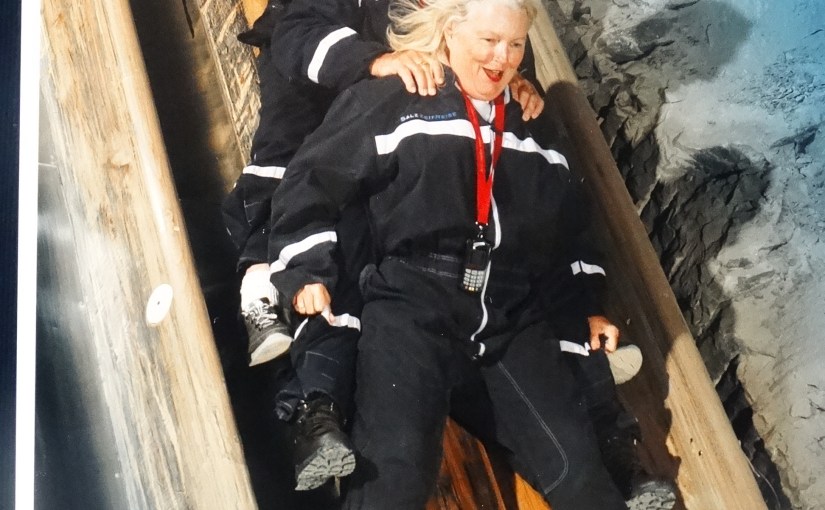
We encountered another Aussie Bea out for the day with her Austrian friend of 40 years. They joined us and we dressed in our overalls along with a tour bus of Chinese to head off on a tour in German with audio guides for those of us who did not understand German. No photos permitted of course but this did not stop the Chinese so I got a bit of the action half way through. The museum is an old salt mine and the tour went through its history and the mining process. The mine is still in use today and is likely to continue for many years yet and the stores of it are immense.

One of the photos shows Kerry me and Bea on one of the slides. I cannot tell a lie this was the highlight shushing down the slides. The tour included a boat ride on one of the lakes formed underground by the mining process of dissolving the salt and pumping it out and some of the photos are of the light show you watch from the boat. The picture of the church is just random – we saw this as we followed Tommy’s directions to the salt mines.

We had planned to visit the Eagles Nest. This is the resort built for Hitler on top of a mountain above Berchtesgaden which today is a restaurant and visited by many tourists but not us today as we are too late. Ah well we have done some amazing things today so I cannot be disappointed.

← Back

Thank you for your response. ✨

Warning
Warning
Warning
Warning

Warning.

The Retirees go Abroad – Old Town Salzburg Austria

You may remember a little movie called “the Sound of Music” and that most of the movie is set in Salzburg and that most of it was shot in Salzburg. Well even though there is no organised tour you can visit some of the sights where famous scenes were shot. Like the pavilion at Schloss Hellbrun, the fountain in Residenz Square, the cemetery at St Peters and a few other sights. Well I can give you the fountain and the Duomo of Salzburg, the cemetery at St Peters but not the Pavilion as we were too tired and wet for reasons I will explain. I have also included a shot of a large ball with a figure on top for which I can give no explanation.

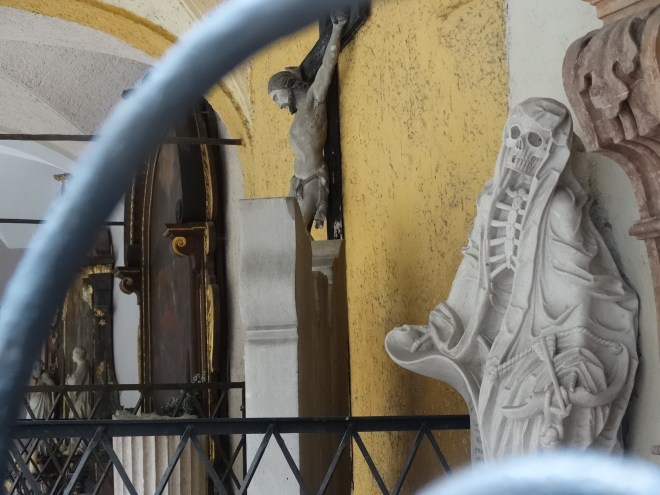
St Peter’s Cemetery is where the Von Trapp family hid from the Brown Shirts after their performance. It is a beautiful cemetery with some unusual aspects like its gated tombs to the chapel built into the rock wall and the gardens in the graves themselves.

Hohensalzburg Castle sits directly above the city and was the place of power and protection for the Prince Bishops of Salzburg. Although it has the oldest working funicular (originally powered by horses) it is now used for delivery of goods whilst a modern funicular give visitors access to the castle.

After arriving in the castle grounds, we made our way to the courtyard via one of the well heads and via the keep passing a marionette theatre which included the Von Trapps.  The keep was made up of a square tower not much like the fortified keeps of English castles. In the courtyard was a quaint church and a display on the changes to the castle over time. We also saw the old funicular as it is today still used to cart goods in and out of the castle.

In the state rooms we did not see much of the life of the bishops but rather a military museum. However the doors and door jambs were remarkable with the jambs made in marble. There were a number of tiled stoves (apparently Salzburg was a leader in these when they were popular) and one section of wall where during recent remodelling they found that a much earlier wall had been bricked in and they have left it open for visitors to see the earlier construction.

Other displays included medieval weapons and armour, a chapel, a kitchen and musical instruments. The kitchen had a quaint exhaust system for fouled water. A purpose built hole in the wall.

We were also able to get a view of the monastery we had visited previously or at least a little part of the walls and watch towers.After the castle we visited the Bendictine Monastery where Mother Superior sang “Climb Every Mountain” but photo opportunities were limited.

Then off to catch the bus (that bus pass came in very handy) to Schloss Hellbrun and the Folk Museum. This is a palace without a bedroom. The Bishop for whom it was built only wanted a day residence and he wanted to have fun so it is filled with water traps for his guests and todays visitors. If you visit don’t expect to stay dry. There are many little water operated dioramas including one that ends with a fountain on its audience.

Our visit to the folk museum was a bit of an afterthought – after we had walked in the opposite direction. It turned out to be a short version of the trek to the Ice Caves without a cable car and perhaps not worth the effort. Here are the photos for you to decide.

As we were leaving Schloss Hellbrun I noticed this lovely line of flowers with the colours lined to create a dazzling display. After leaving the palace of trick fountains and long walks, we finished the day by visiting the Mozart Steg – the final place of residence for Mozart in Salzburg. Well talk about disappointing. There seemed to be more about things that were not Mozart and we found out when we visited Mozart’s home where he grew up that all the good stuff was over there. Anyway this is what the front door to his last home in Salzburg looks like.

← Back

Thank you for your response. ✨

Warning
Warning
Warning
Warning

Warning.

The Retirees go Abroad – the Devils Bridge and the village of Sillico

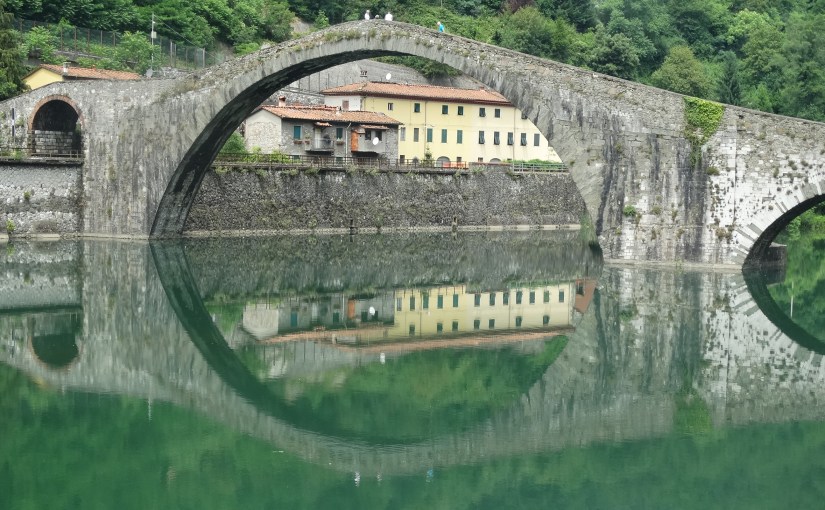
Today we set out to see some of the smaller villages around Lucca. First port of call was Borgo a Mozzano which is best known for Ponte della Maddalena also called “del Diavolo” (Devil’s Bridge). The Devil’s Bridge is located about one kilometre north of the town. According to the historical notices beside the bridge it was first built to provide the Lombards with safe passage through their territories avoiding conflict with other tribes of the area. Then the present day bridge with its extraordinary engineering was commissioned by Countess Mathilde di Canossa in or around 1500. The bridge’s majestic structure attracts thousands of tourists every year.

The legend/myth about the bridge is that when the bridge was being built the devil said to the people of the village that he would enable the bridge to be built if he could have the first soul to cross the bridge. This troubled the Mayor until an old farmer said go ahead with the bridge I will give up the first soul. The bridge was built and the farmer told everyone to stay clear while he coaxed his pig to cross the bridge. The devil was so irate he threw himself off the bridge and never returned.

After spending an idyllic hour eating a picnic lunch under the trees near the bridge we pushed on to find a hot water spring Pra del Lama shown on our map. We searched high and low to find this spring even to the point where we were confronted with a track along the spine of a hill which I think even the Romans rejected. But we lived to tell the tale. Instead we ended up in Sillico (I think we were silly co), a pretty village on the peak of a hill/mountain where we got some great photos.

← Back

Thank you for your response. ✨

Warning
Warning
Warning
Warning

Warning.

The Retirees go Abroad – Verona Overnight

David and Veronica are now on their way to Rome and we head north to Salzburg in Austria. We have broken the trip into two parts – Lucca to Verona and Verona to Salzburg. We are hoping that we will get away from the heat for a while.

Travelling north through the heart of Italy we saw much the same scenery that abounded in Tuscany and it did not get much cooler. As it was an overnight we stayed in the Best Western CTC Verona. Tommy got terribly confused and took us miles from our destination but eventually we arrived. Quickly we unpacked and drove into the old town of Verona principally to see the balcony from which Juliette received those immortal words “Juliette, Juliette wherefore art thou Juliette”.

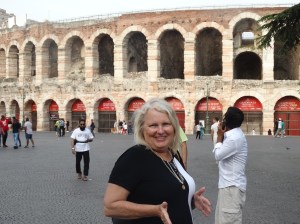
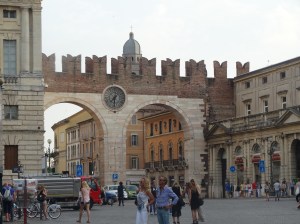
We found the parking station and walked through the old gate and ran smack into a Roman Amphitheatre. Verona has managed to preserve this historic part of its Roman history and today uses it for less violent activities. Presently they are preparing the stage for an Egyptian themed production.

Kerry was indisposed when I heard drums chants and whistles outside the arena. Maybe they have caught a Christian or two for the lions I thought but no it was a protest of some sort – most boring. We then headed into the streets of old Verona in search of a Shakespearean experience. Past dress shops and shoe shops and bag shops – hard work I can tell you until we saw the sign. There in front of us was a Japanese bus tour – they had found Juliette’s balcony.

We could not leave it there we had to find Romeo’s pad. Back into the street armed with a tourism map marked with all the sights, we found the Palace, Palazzo della Ragione, the Palais of Justice, the old city well, a church with grand tombs around it and a Square dedicated to a famous French writer whose name I have forgotten. Almost at our wits end we found it – a most unimposing place and no Japanese tour thronging to photograph it. In fact to our surprise, the current resident suddenly appeared – no not Romeo but who knows maybe a Capulette?

Verona was a surprising city with its pretty building its markets and the mobile market stands, its three wheeled eco cleaning utilities, and it’s pretty women. Dinner was a shared pizza in the shadow of the Roman Arena before going home with the prettiest woman.

← Back

Thank you for your response. ✨

Warning
Warning
Warning
Warning

Warning.

The Retirees go Abroad – Salzburg, Hangar 7 and the Capuchin Monastery

It’s Sunday and the weather is deteriorating. Rain is forecast for the week and we can no longer see the top of the mountain that towers over Salzburg. The mountain remained clouded and on some days totally obscured by cloud and rain. But we had a plan. We would go to the central rail station and purchase tickets to Munich (photo of the façade below) for Monday then go over to Hangar 7 then visit the Capuchin Monastery built on a monolith in the centre of the city.

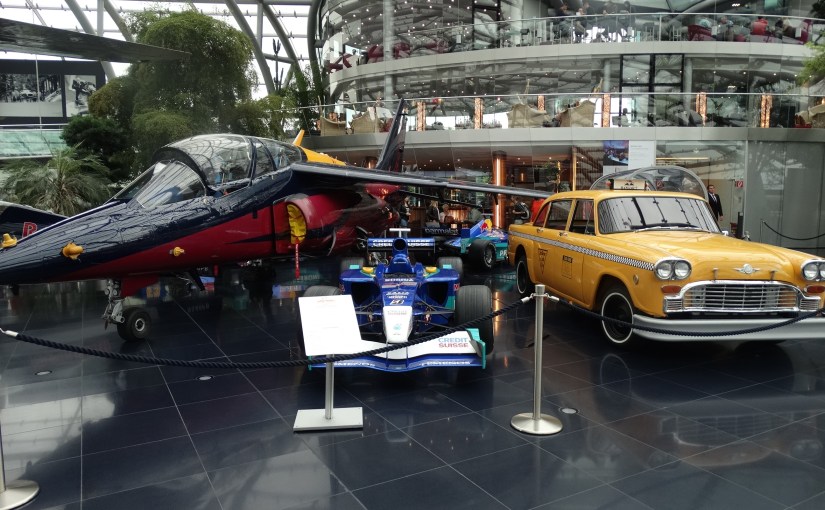
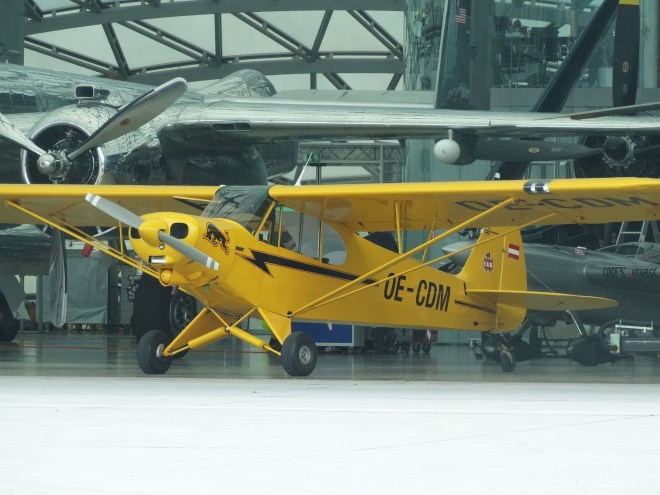
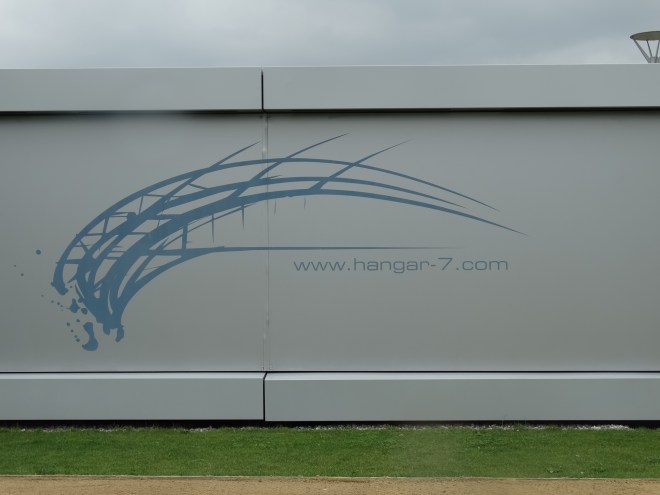
Kerry had discovered Hangar 7 on the internet. It is located at the Salzburg Airport and is in part a museum of racing cars and planes owned by Red Bull or the Red Bull Racing team. It is mind blowing. The museum building is a stunning piece of architecture and the contents are priceless. Many of the racing cars are former F1 cars driven by Sebastian Vittel.

The exhibits included the space ship and suit the French explorer who sky dived from space, jet trainers, helicopters, turbo prop planes used in the Red Bull races, the first Red Bull executive plane a DC 6, motor cross bikes, F1 cars, a jet pack suit and a reconstruction of Leonardo’s “Bird Wings”. Whilst we were there a white executive jet pulled up to the front of the hangar and out stepped Mark Webber (who now drives F2 endurance cars for Red Bull) and he paraded through the hangar and went to the restaurant on the 1st floor where he was interviewed. We went to the bar on floor 2 via an amazing lift to have a drink and observe. Even the toilets were something special – the men’s urinals featured this huge floral display. Kerry figured that there was going to be some presentation there and later that night on TV we watched a show broadcast live from Hangar 7 including Mark Webber.

As we departed we noticed the further hangar across the tarmac and took in the sculptures around the hangar.

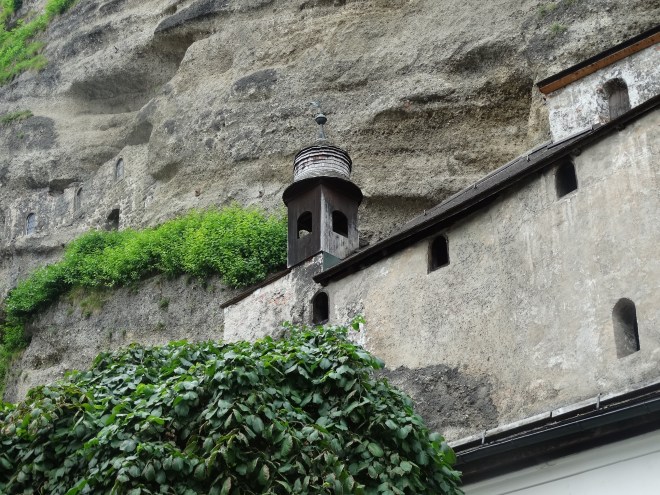
To finish the day we thought we would visit a monastery. So in the centre of the city, we searched for the passage to take us up to the monastery, finally finding it. Some of the things we found as well as the gateway to the monastery are below.

We climbed up through the old gate (the gate keepers house is still occupied) past the Stations of the Cross (I photographed a few only), then to the church but we could not access the monastery. Then, I made the fateful mistake of talking Kerry into visiting the fortress just a little way beyond. It turned out to be two kilometres up some very steep roads and then it was closed when we got there. We consoled ourselves that it had been a lovely walk, we had seen some great views, seen Hohensalzburg and we had go to see some of the large snails and slugs brought out by the rain. Kerry particularly consoled herself that we had accidentally found the main shopping area of Salzburg.

By now we had bought our weekly pass for the bus (which we used to death) and we jumped a No 5 to go home.

← Back

Thank you for your response. ✨

Warning
Warning
Warning
Warning

Warning.

The Retirees go Abroad – Verona Onto Salzburg

We discovered that we did not have any maps in our GPS for Austria or Germany. Alarm bells! What were we to do, we were half way to Salzburg and our host was expecting us at 15.00. We also realised that we had not experienced a German speaking country before. We decided that in respect of the GPS we would do it the old fashioned way and buy a map, and in respect of the language we would play dumb (which we were) and hope to find English speakers.

The road to Austria and through Austria has some of the most spectacular scenery we had seen so far. High mountains followed us throughout the day. Large castles appeared among the villages springing up throughout the valleys and sometimes perched precariously on the mountains. The .weather was threatening rain most of the day but the scenery made up for it. We even passed through the Dolomites which are a mountain range located in north eastern Italy. They form a part of the Southern Limestone Alps. The name “Dolomites” is derived from the famous French mineralogist Déodat Gratet de Dolomieu who was the first to describe the rock, dolomite, a type of carbonate rock which is responsible for the characteristic shapes and colour of these mountains.

Before entering Austria we called in at a services area to get our map. By now we were satisfied that the cord for Kerry’s IPhone was broken as her phone was not charging so when we bought the book of maps we also bought a new cord. 45€ later we were walking out of the service station office when I notice a sign in Italian with the Austrian two headed eagle on it and other ominous looking words and so I thought I better enquire. It turns out Austria has a road tax and before entering the country you need to buy and display a vignette. Of course the servo sold them and a ten day pass cost 9€.

Well with Kerry’s phone recharging we realised that we could use it for directions so the book of maps was unnecessary. Then we realised that it was not Kerry’s cord but the power outlet in the car – the fuse had blown for our auxiliary outlets on which we ran the phone and the fridge. Just one of those days.

We also encountered an extraordinary number of tunnels and bridges; too many to count although I think I got up to 28 tunnels before losing count.

Well when we finally arrived we were dismayed. The house was surrounded by scaffold (my picture is of the back of the house which is more flattering). Petra the owner was quickly at the front door and showed us inside speaking very good English. She explained that she and her father were renovating whenever she had the money to do some more, but the flat we were renting was complete on the inside. It certainly was and had every comfort. She gave us a run down on the buses and other things and then showed us her part of the house inviting us to call if we needed anything. So we unpacked and headed for town. As we walked to the bus we noticed a huge castle on a nearby hill which turned out to be Hohensalzburg in the centre of Salzburg. We passed a red phone box which had been converted into a community borrowing library, passed over a canal and noted that Austrian houses had a distinct Swiss appearance or vice a versa.

Not much else happened that first day but as the photos show we were in Salzburg.

← Back

Thank you for your response. ✨

Warning
Warning
Warning
Warning

Warning.

The Retirees go Abroad – Day #4 the old city of Lucca

It was time that we spent some time looking at Lucca. So I prepared an itinerary and after breakfast lead the band down to the railway station parked the car and lead the band through a different gate into the old city. Once inside we visited Lucca’s grandest cathedral Duomo San Martino which boasts that it holds a cross according to the legend, was carved by Jesus’s contemporary Nicodemus, and miraculously conveyed to Lucca in 782, giving the world the only likeness of Jesus created by an eye witness and contemporary of Jesus as to his appearance. This cedar-wood crucifix and image of Christ called the Holy Face of Lucca (Volto Santo di Lucca) or Sacred Countenance, is in the nave in a small octagonal temple or chapel shrine.

Additionally the cathedral contains Domenico Ghirlandaio’s Madonna and Child with Saints Peter, Clement, Paul and Sebastian; Federico Zuccari’s Adoration of the Magi, Jacopo Tintoretto’s Last Supper, Fra Bartolomeo’s Madonna and Child (1509) and the tomb of Ilaria del Carretto by Jacopo della Quercia of Siena, commissioned by her husband, the lord of Lucca, Paolo Guinigi, in 1406.

By the way you will see the ladder above. This would be to change the lightbulbs in the aisles; there is no way it would reach the ceiling in the Nave.

Outside of the Duomo is a large square, in fact Lucca is full of churches and squares. We visited Piazza Napoleone which includes the Town Hall, then Chiesa di San Michele in Foro with it unusual confessional set into the walls of the church and its false front and the Basilica di San Frediano with its large fresco on the front of the church.

This brought us to the Amphitheatre, Piazza dell’Anfiteatro. The amphitheatre, built in the 1st century AD under the Emperor Claudius and concluded in the Flavian period as the centre of entertainment outside the Roman town. In the Middle Ages the Roman structure was transformed into fortification and when this use ceased terraced houses were built on the surviving ruined structures and this area became a unique elliptical-shaped plaza. It is today the centre of town life and the very symbol of Lucca. Now filled with restaurants and shops, the old arena is still used for less violent entertainments like music.

Next on the itinerary was the Torre Guinigi. The Torre Guinigi is one of the few remaining towers within the city walls. Its main characteristic is its hanging garden on the roof of the tower. The tower has been donated to the local government by the descendants of the Guinigi family former Lords of Lucca. There were over 200 hundred steps to climb to the roof top garden but the views of Lucca were spectacular.

On the way back to the walls of the city we encountered a little church dedicated to St. Egidio with unusual grotesques over the door of a lion pouncing on I presume St. Egidio. So I have included the photos and a little research.

From Wikipedia “The Community of Sant’Egidio (Italian: Comunità di Sant’Egidio) is a Christian community that is officially recognized by the Catholic Church as a “Church public lay association”. It claims 50,000 members in more than 70 countries. Its main activities are:

prayer, centred on a reading of the Bible

spreading the Gospel to help people who are looking for a sense to their life.

service to the poor, which is free and unpaid

commitment to ecumenism (the Community of Sant’Egidio is also ecumenical, though rooted in the Catholic Church)

dialogue with members of other religions and non-believers.”

There you go nothing to do with the lion.

It had been another hot day so we sought the shady portions of the city walls and the free fountains that are found regularly in Italian cities. Under the shade of the trees we recovered our composure but Mother Nature was brewing a storm to relieve us of the heat so we head for home a cooling shower and hot meal.

← Back

Thank you for your response. ✨

Warning
Warning
Warning
Warning

Warning.