Today Raffles is synonymous with Singapore. Sir Stamford Raffles secured control over the strategically located Singapore from local rulers in 1819 to secure British access along the Strait of Singapore and the nearby seas in the region, particularly the Indian Ocean and the South China Sea. The Anglo–Dutch Treaty of 1824 established their respective spheres of influence, with the Dutch relinquishing their claims to Singapore. A transshipment port was subsequently established in Singapore for maritime trade between Europe and Asia.
While Raffles was largely credited for the founding of contemporary Singapore, the early running of day-to-day operations was mostly done by William Farquhar, who served as the first Resident of Singapore from 1819 to 1823. Raffles returned to England in 1824, where he died on his birthday in 1826 at the age of 45. His legacy remains significant in Singapore, most notably the Raffles’s Landing Site, as well as his name being a common sight in numerous entities and institutions throughout the country.
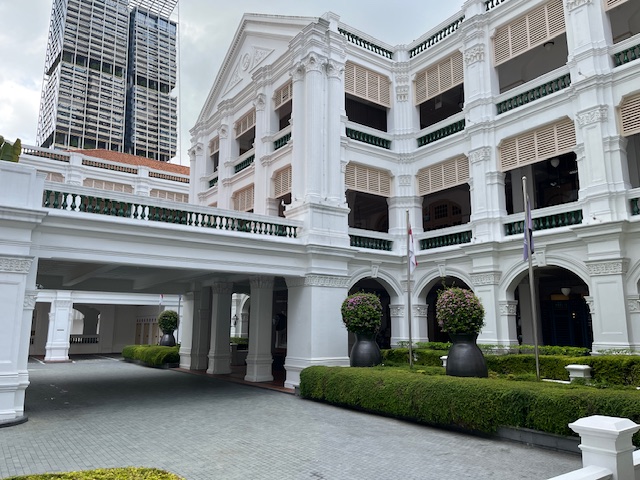
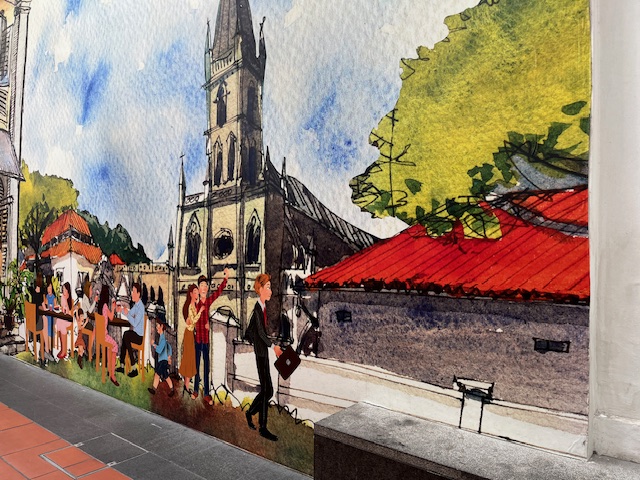
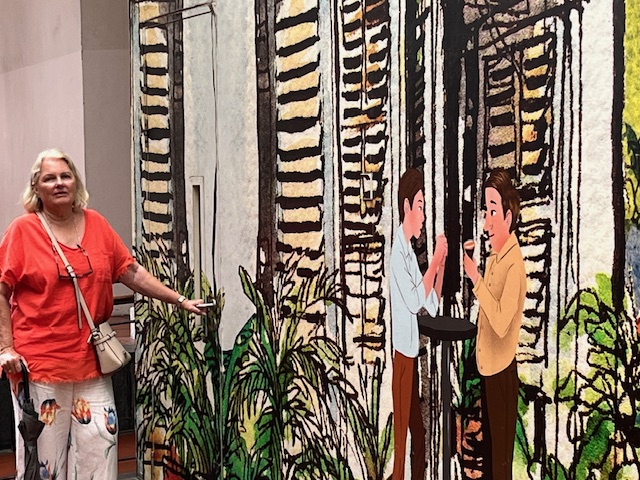
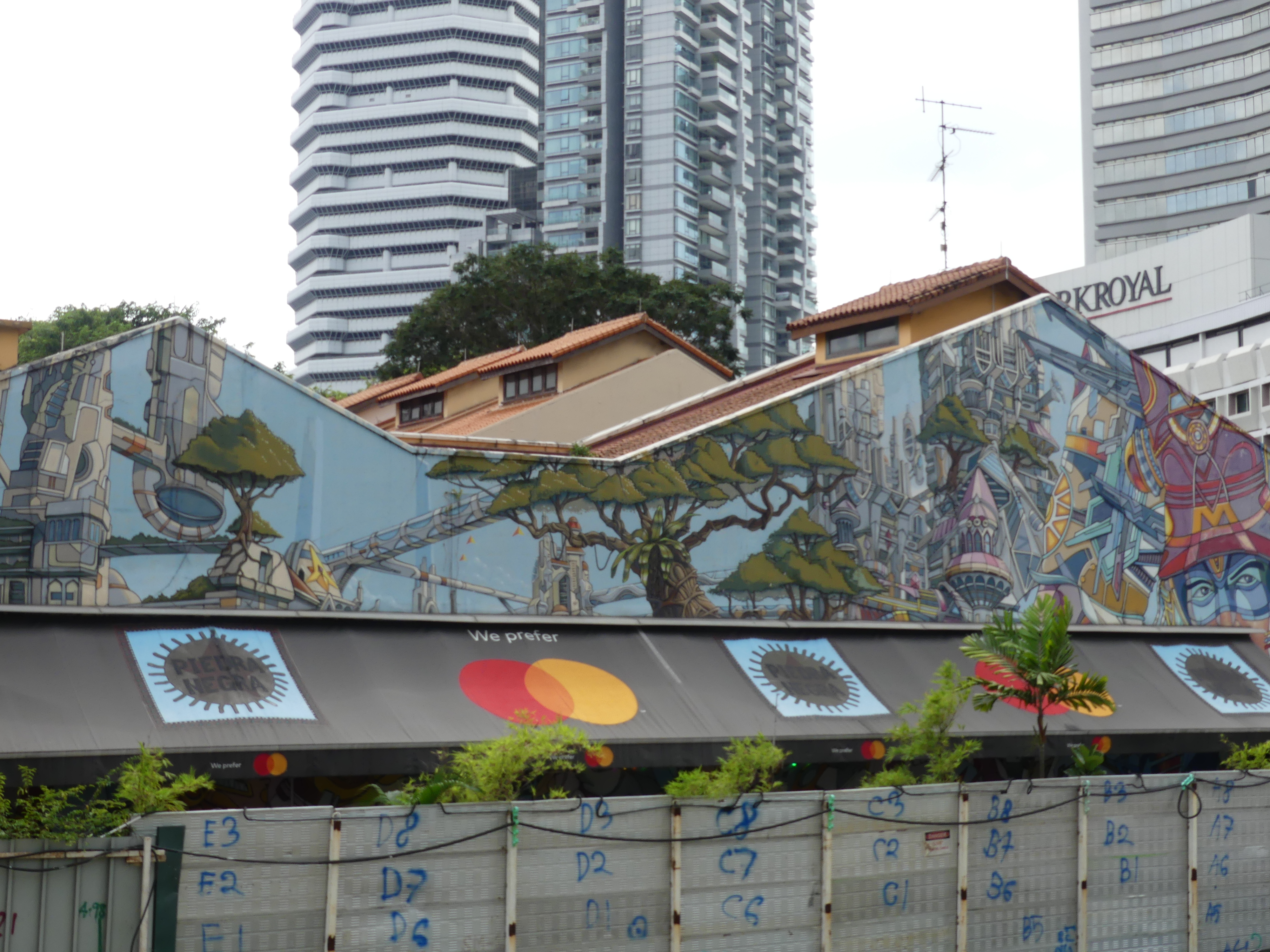
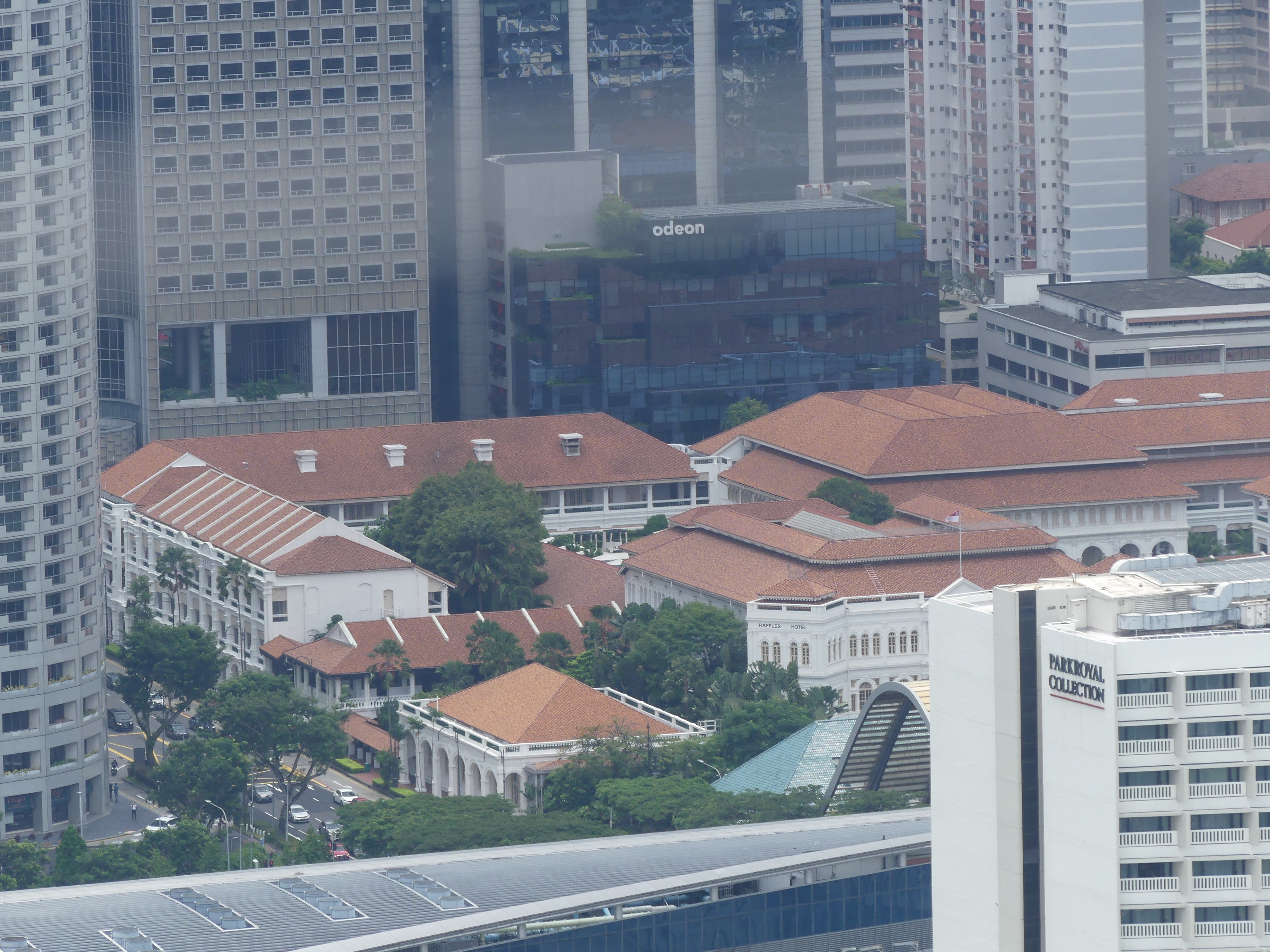
Raffles Singapore began as a private beach house in the 1830s, leased by the Sarkies Brothers in 1887 and reopened as a grand hotel named after Sir Stamford Raffles, quickly becoming a legendary landmark for wealthy travelers with its colonial elegance. It expanded significantly through the early 1900s, hosted famous guests like Rudyard Kipling, faced challenges including bankruptcy and Japanese occupation, was declared a National Monument in 1987, and underwent major restorations to preserve its historic grandeur for modern luxury, reopening in 1991. It was impeccably presented and continues to provide grandure and luxury to its guests. There is a hall that has been turned into a hall of fame with pictures of all the wealthy and important people who have stayed in the hotel. There is a roof top pool, dining spaces, bars and other luxurious retail spaces. It has a shopping arcade with 40 speciality boutiques including the high end brands of course. We made a visit to the Long Bar and the gift shop but took a look at everything else. One thing the hotel does not have is a simple cafe serving coffee but outside in the arcade across the road we discovered just that, a simple cafe. The arcade wall had been decorated with street art of the life style of Singapore. Two of the paintings are pictured below.
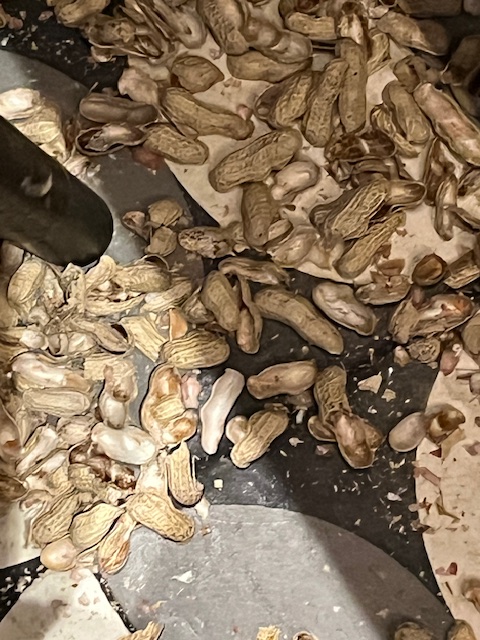
The historic Long Bar is where the Singapore Sling, widely regarded as the national drink, was first mixed in 1915. Today the rich, earthy decor of the two-storey bar is inspired by Malayan life in the 1920s, in keeping with the relaxed atmosphere, guests are invited to brush peanut shells off the bar and onto the floor – quite possibly the only place in Singapore where littering is encouraged. This unique custom dates back to the 1900s, when rubber and plantation owners from Malaya would often gather at the bar on weekends. As peanuts were offered to them, they would casually brush the shells onto the ground and over time, this casual habit evolved into a beloved tradition that continues to this day. We tried the Singapore Sling which is based on gin and snacked on the peanuts that are liberally spread across all tables and the Long Bar. Kerry was not a Sling drinker so I held up my end by drinking both and we left our peanut shells behind. See our pictures below.
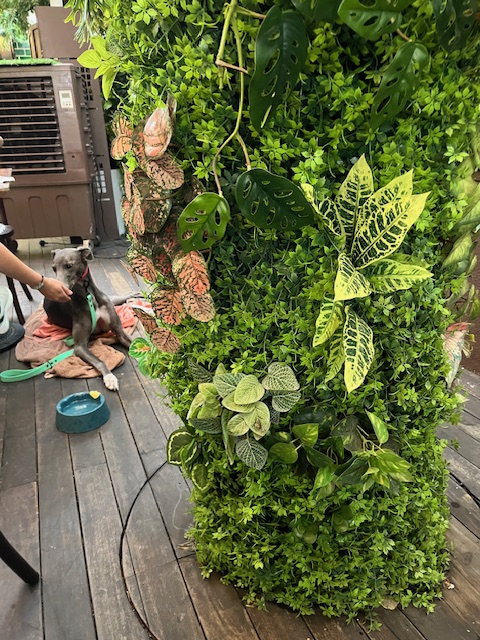
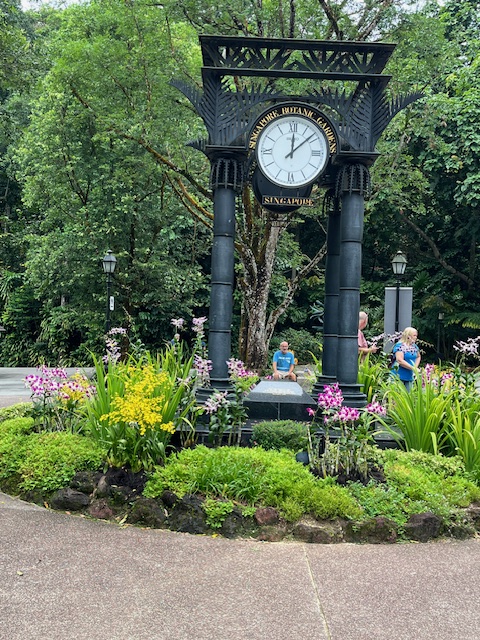
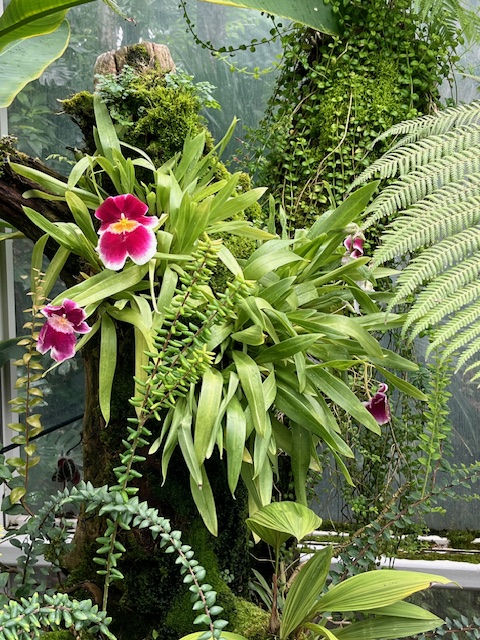
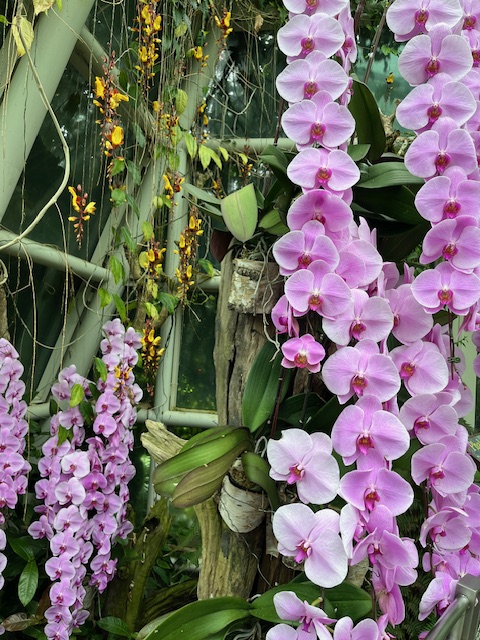
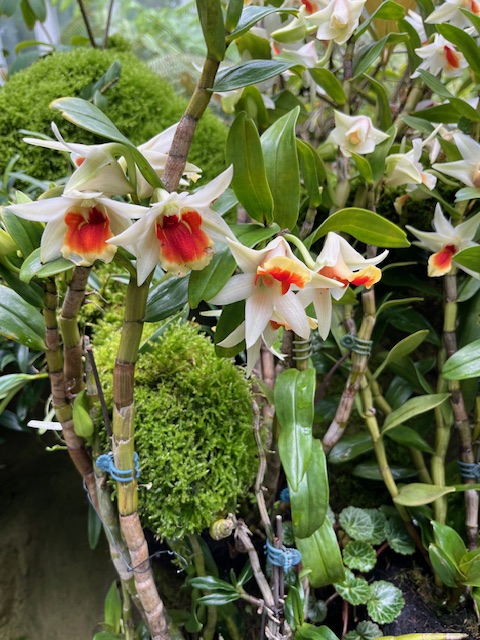
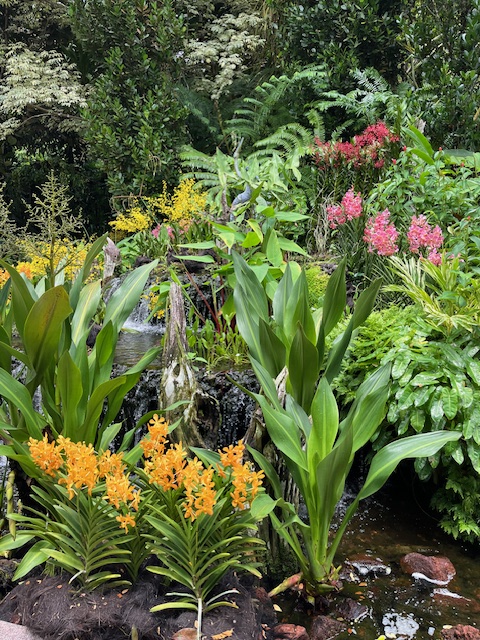
After the fiasco concerning the limo drive to the airport, we decided to visit the Botanic Gardens and in particular the National Orchid Garden. Again the temperature was equatorial and humid so our walk of 1 klm to the orchid gardens was draining. At the 800m mark we found a coffee shop and took a break. The fellow traveller sitting in front of us had brought her greyhound who also looked hot and bothered like us. After a recovery coffee we battled on arriving at the entrance with its clock. After paying the entrance fee we stepped into a wonderland of colour.
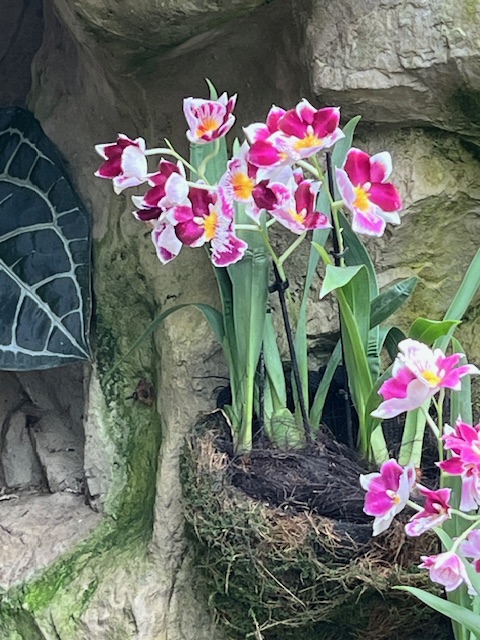
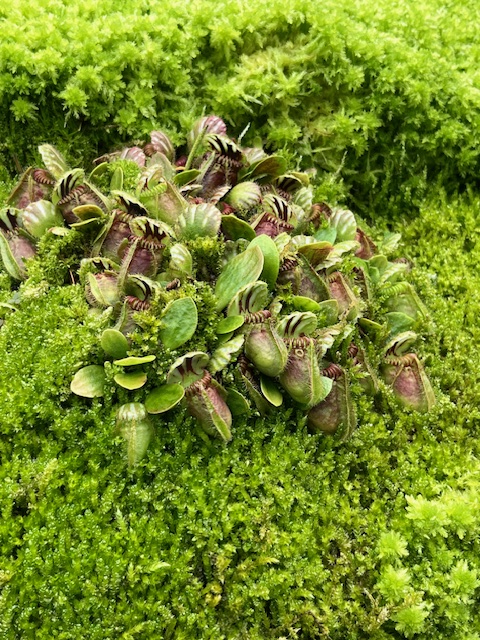
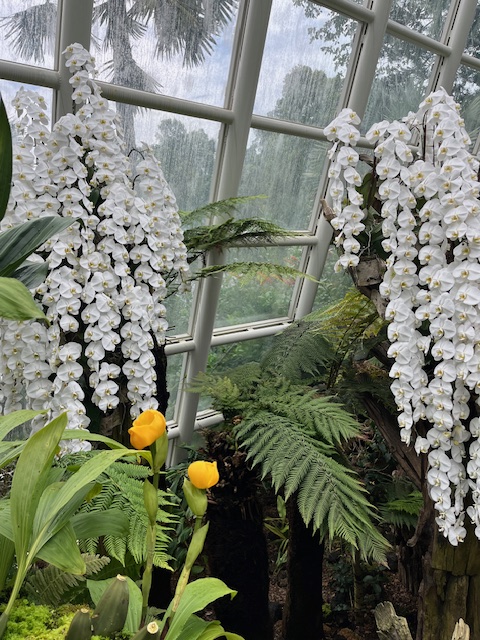
With over 1,500 species and 3,000 hybrids on display, the splendour of these gorgeous blooms is absolutely a sight to behold. The gardens include a bromeliad collection and the occassional carnivorous plants. I have collected my pictures below but suggest a visit to https://www.nparks.gov.sg/sbg/our-gardens/tyersall-entrance/national-orchid-garden . It was well worth the effort.
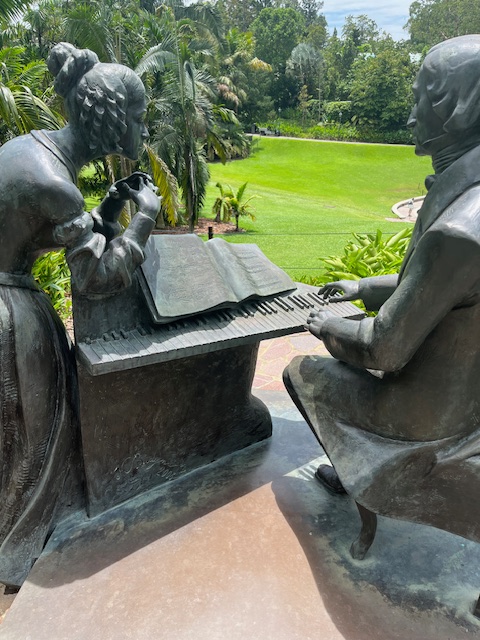
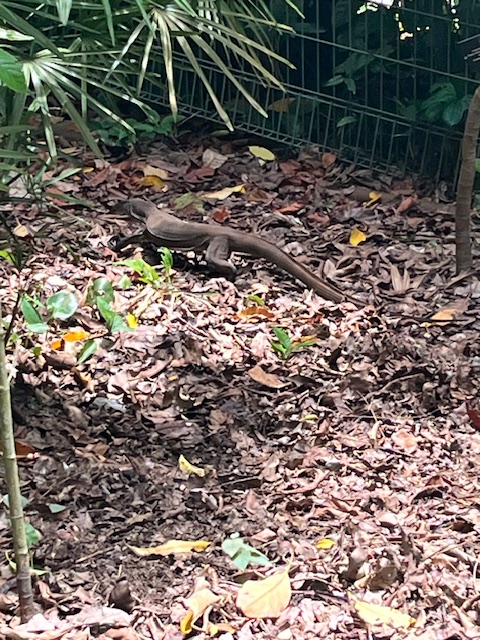
It was 1 klm to walk in and the same going out. We took some excursions from the main path and discovered a memorial to Frédéric Chopin (1810 – 1849). Made of bronze, the sculpture weighs a hefty half a tonne. It overlooks the Shaw Foundation Symphony Stage, where orchestras play regularly for public audiences. The last frame is the monitor lizard that passed us by as he headed in for a look at the glorious blooms.
We made it back to the hotel and collected our bags and arranged a cab to the airport (if we wanted a limo like yesterday it was Singaporean $145.00. The cab was less than Singaporean $40.) From the time of dropping off the luggage we felt we could breath again and sit down and relax. The trip was painless and home was there to welcome us. I don’t know when we will do it all again or where it will be. Wherever it be we will find something off the beaten track. See you again perhaps!
The trip from Dover was to prove a disaster. The American couple behind us shared their germs with the whole bus. They hacked and coughed the whole journey. We thought we may have avoided any of the contagion but this proved to be mistaken.
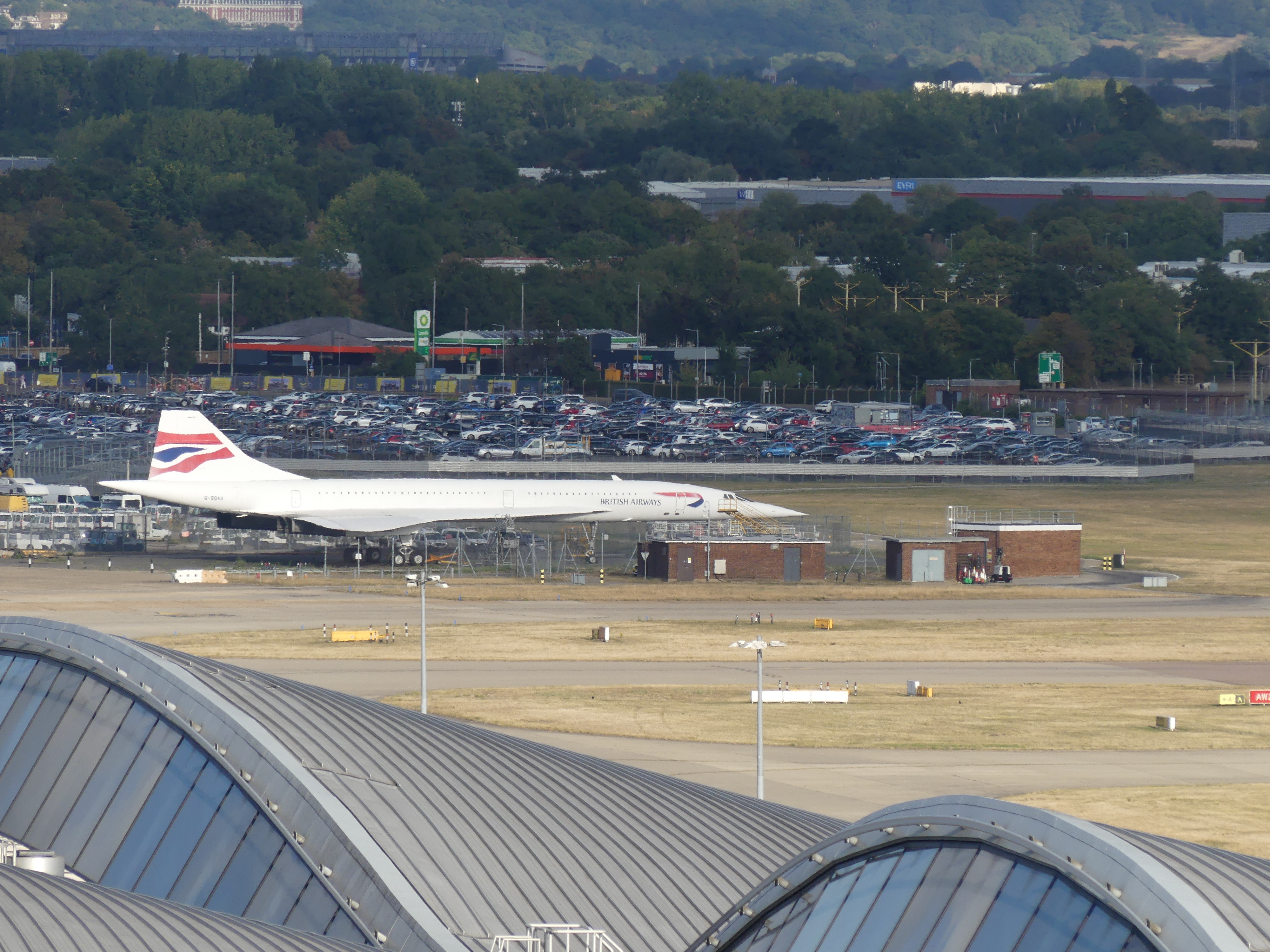
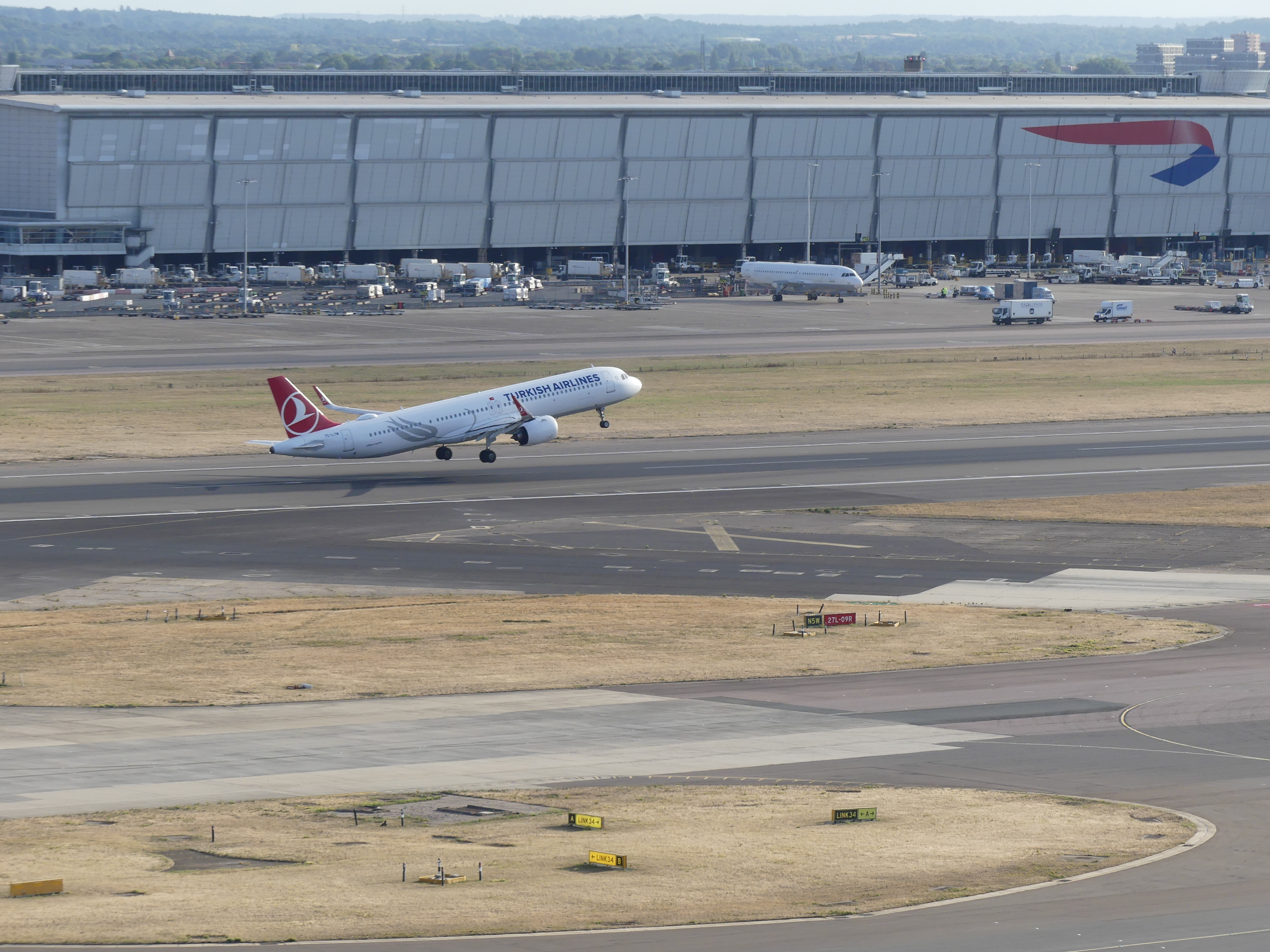
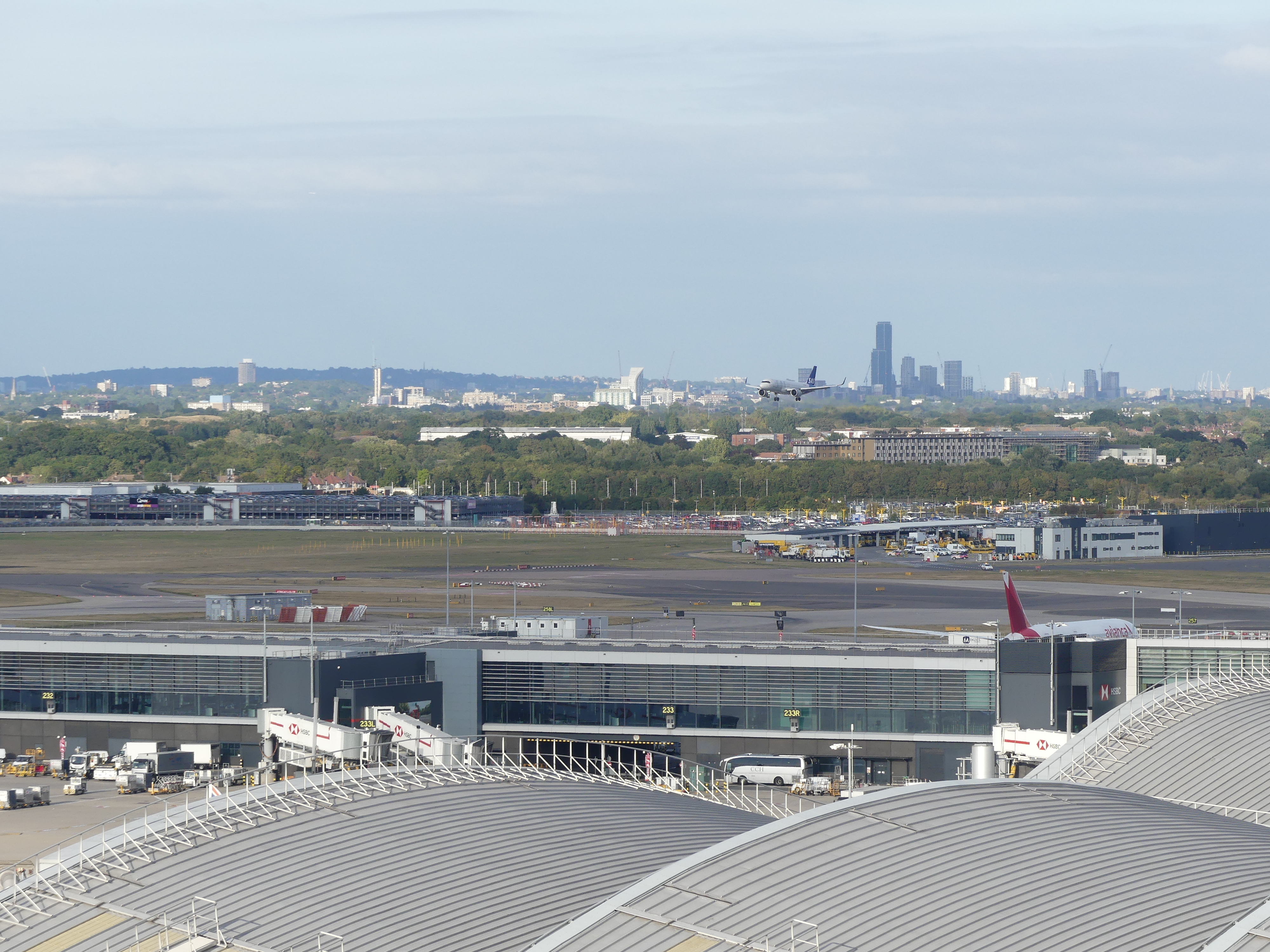
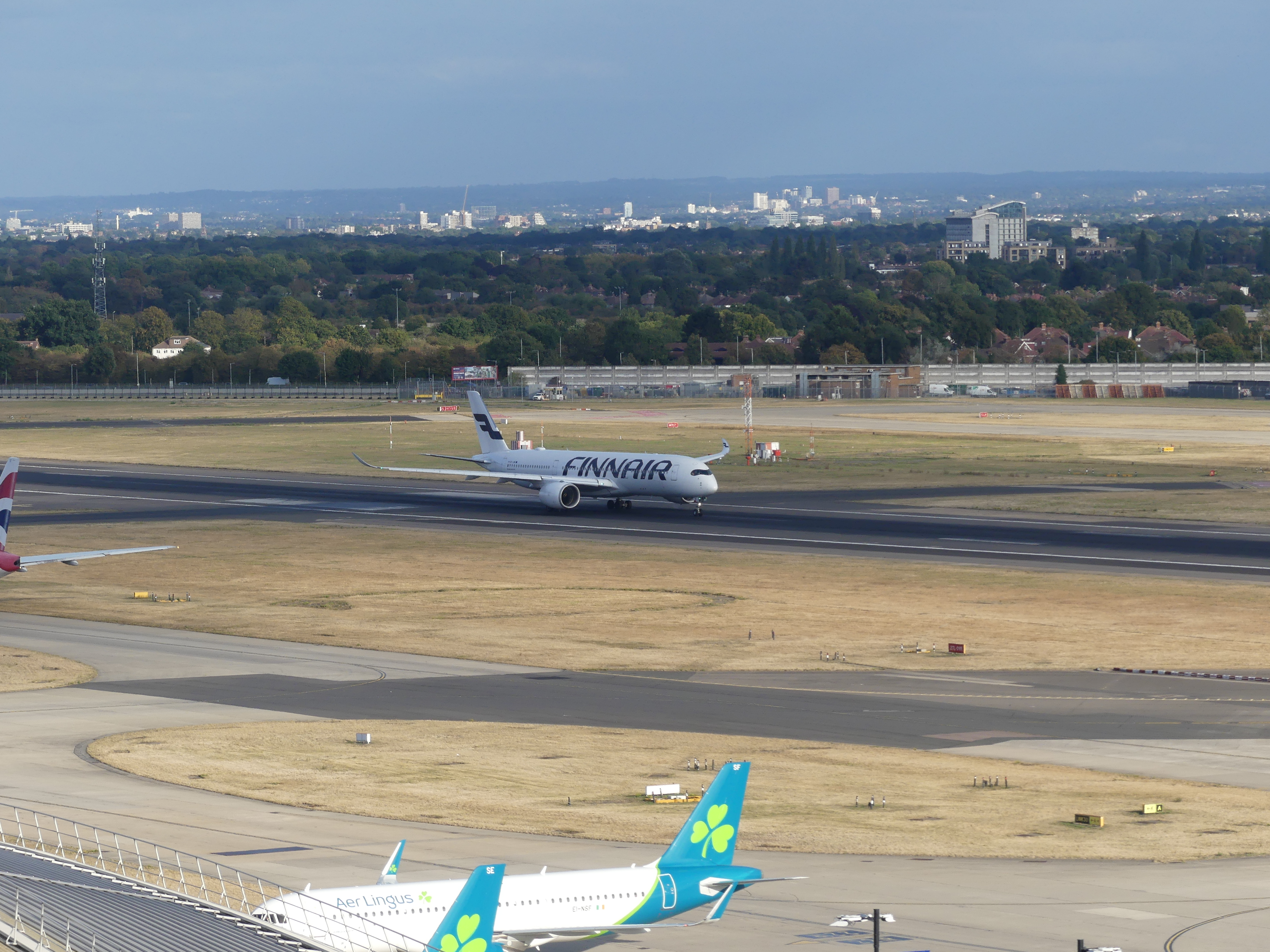
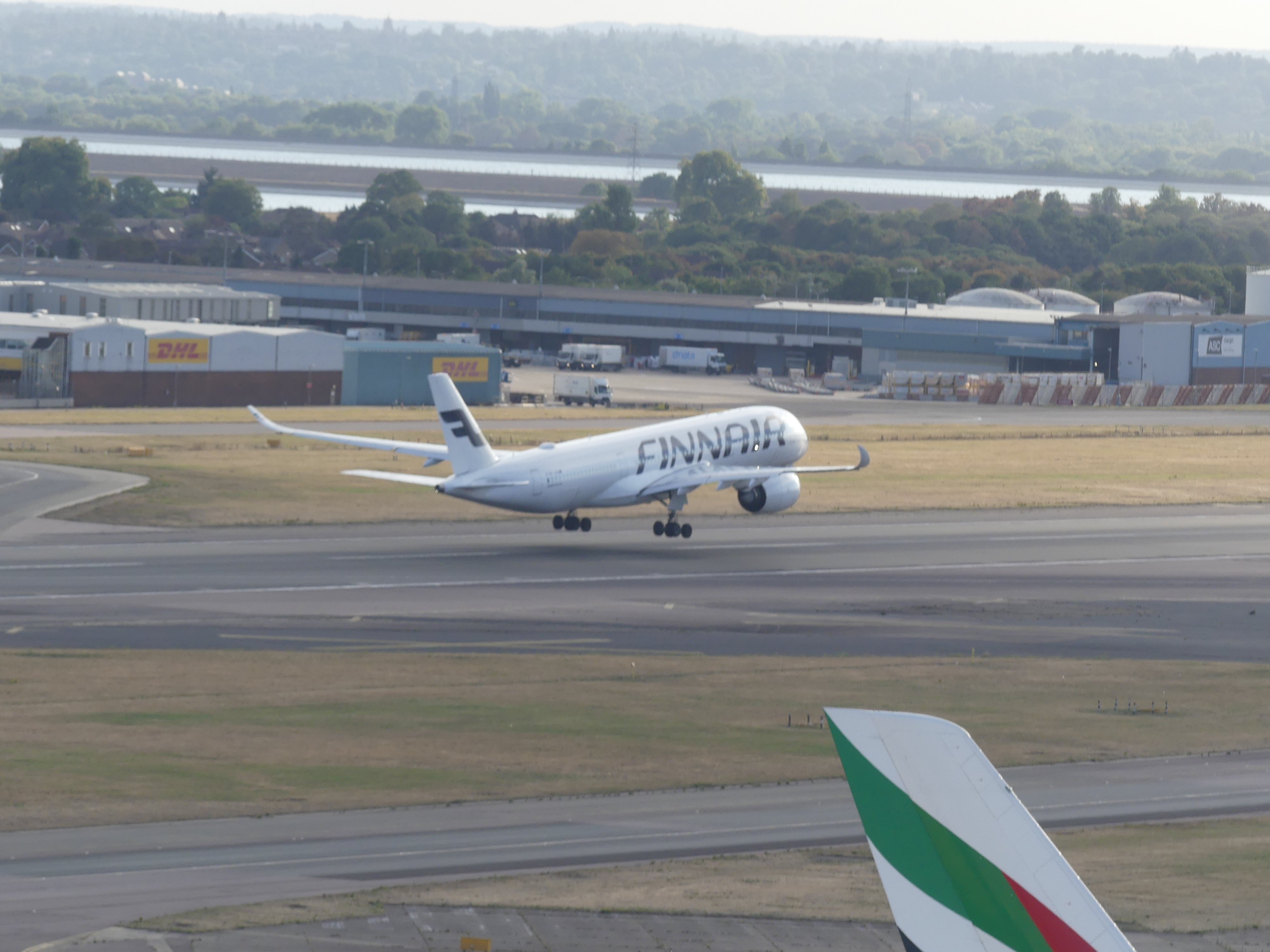
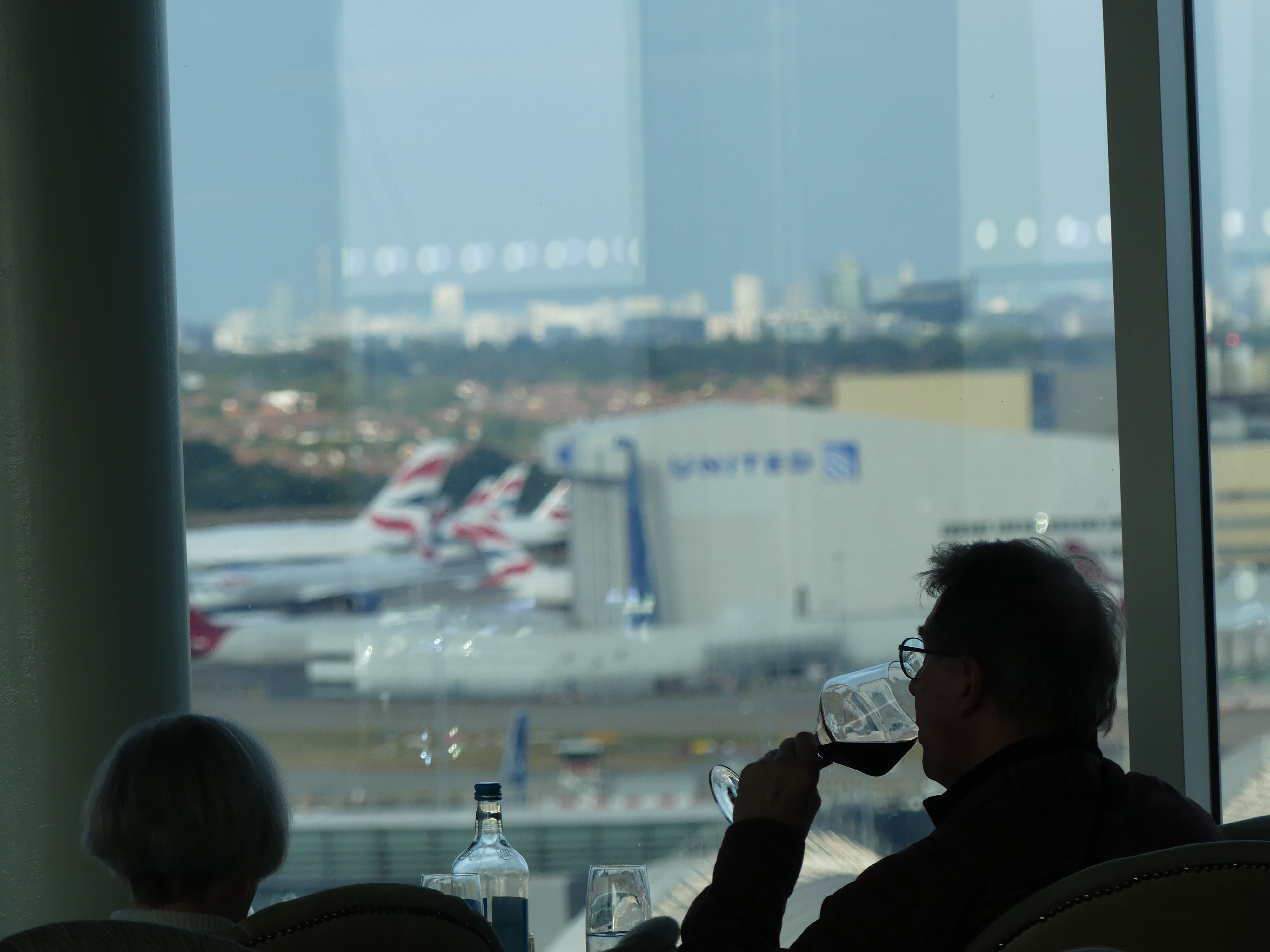
Our plan had always been to overnight at Heathrow so that the trip to singapore did not feel so rushed. Our hotel had a convenient roof top bar with views over the runway and a direct connection with the Terminal for our departure. We took advantage of the rooftop bar but I was oblivious to the signs that camers were not permitted until too late when the steward brought it to my attention in a most public way. Anyway I got some good photos which are below. Yes it does look like Concorde!
The flight to Singapore took about 8 hours and we arrived in Singapore in the late afternoon. One of the objectives was to stay in Raffles Hotel but a 6 day stay was absurdly expensive. We opted for the Park Royal Collection in Pickering near to Chinatown. We thought we would be smart and take a two day package at Raffles which included a chaufeur driven limo to or from the airport and stay the rest of the time at the Park Royal – which is not a shabby hotel by any means but a third of the cost.
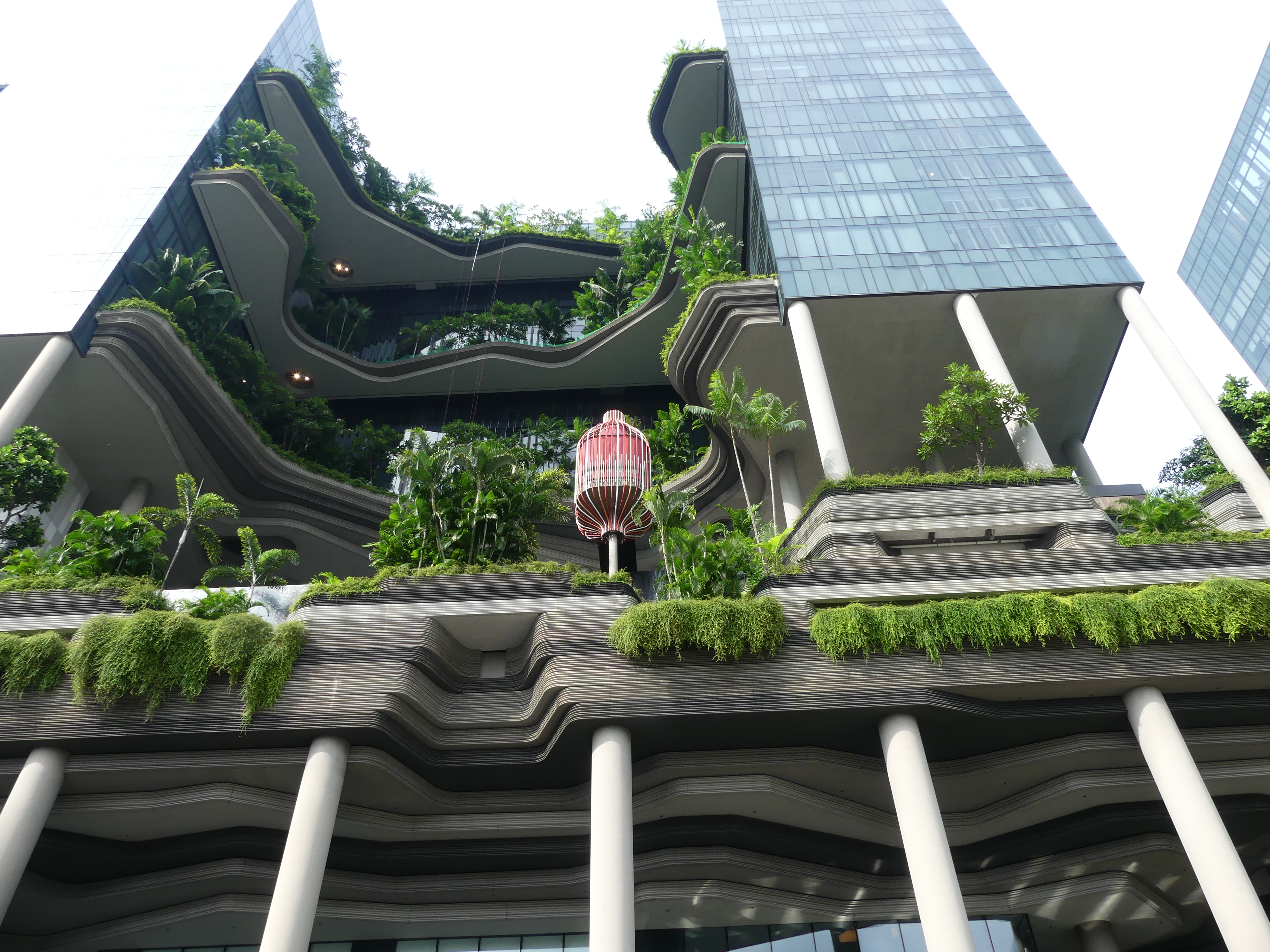
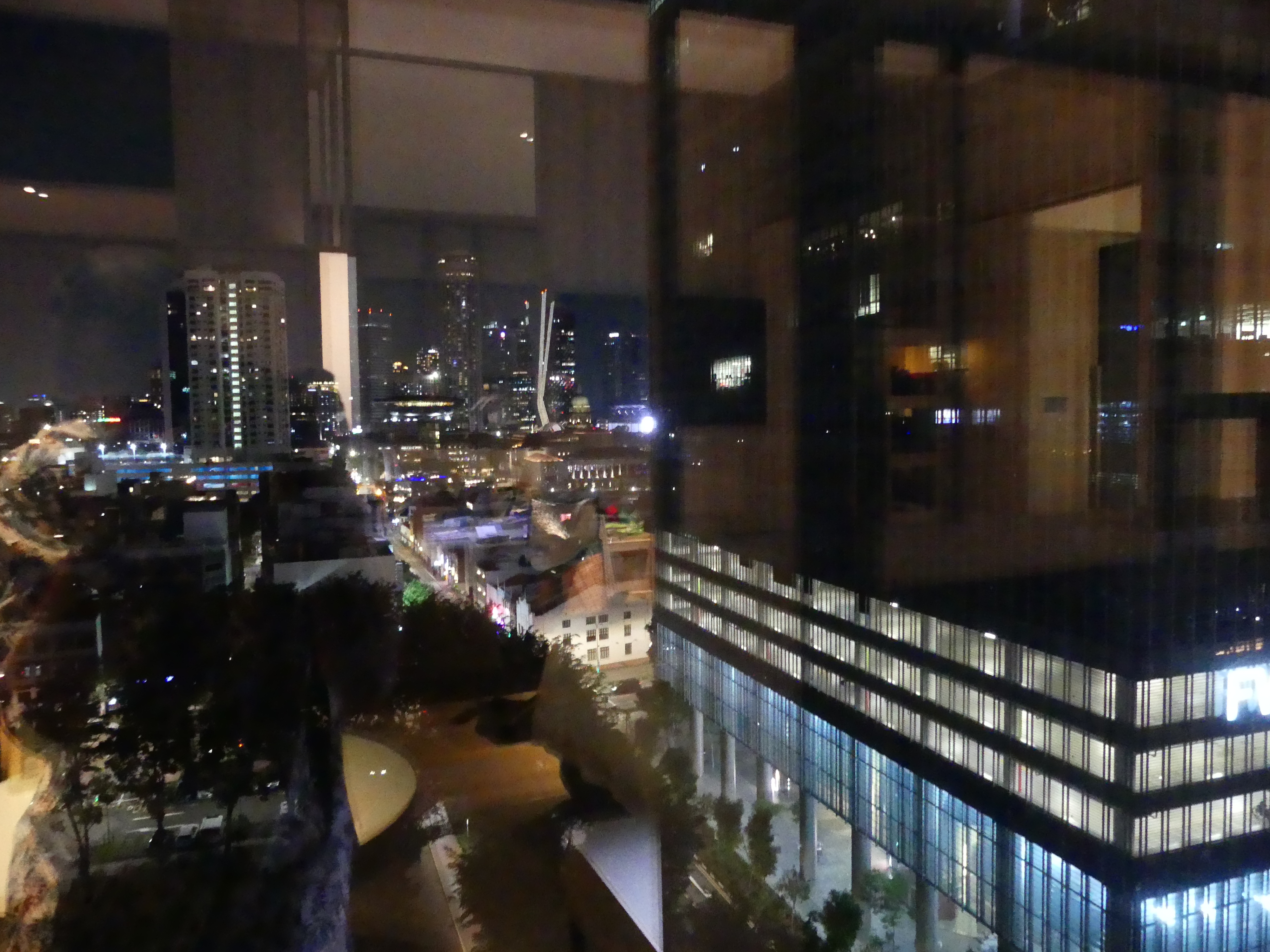
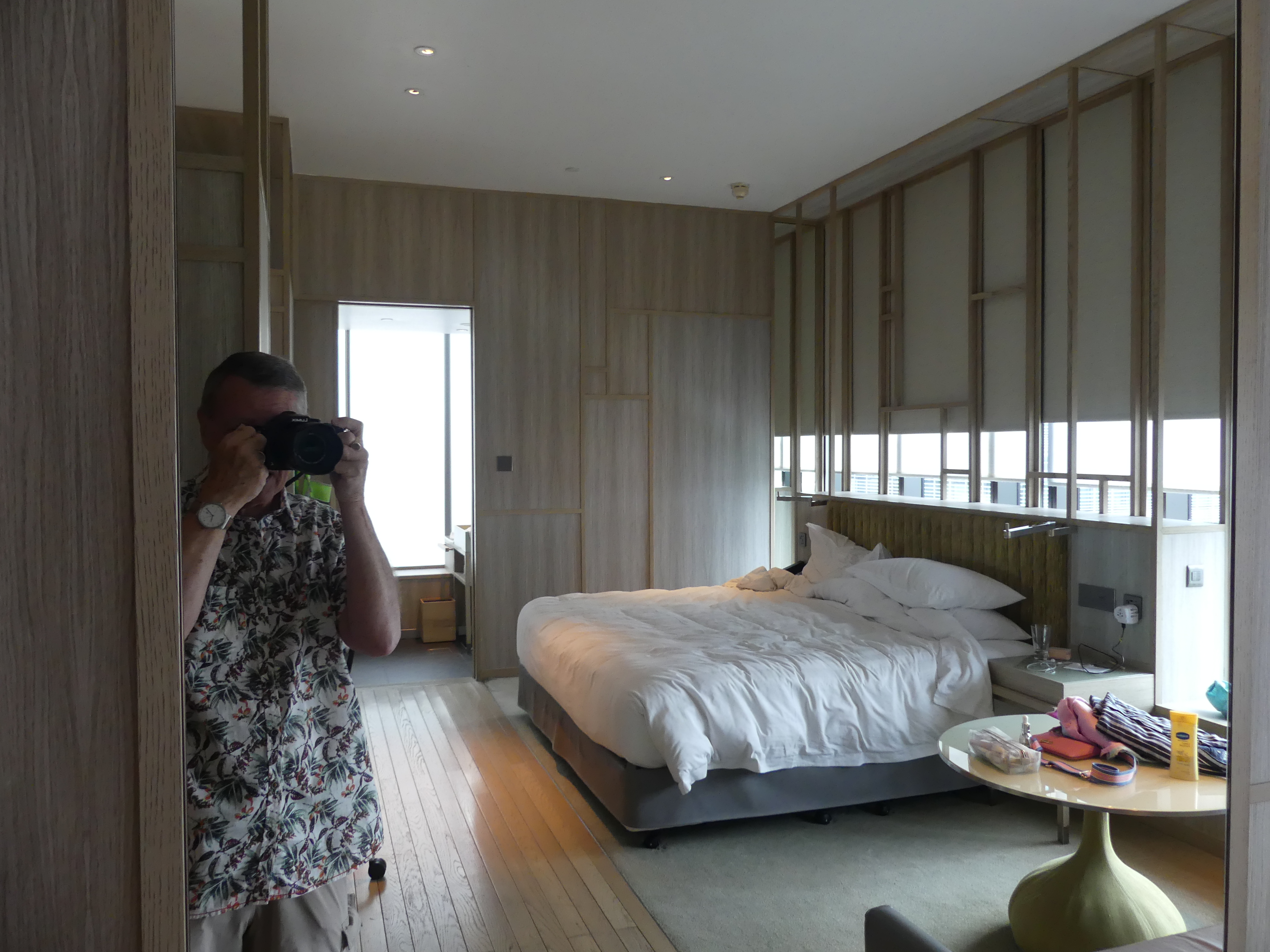
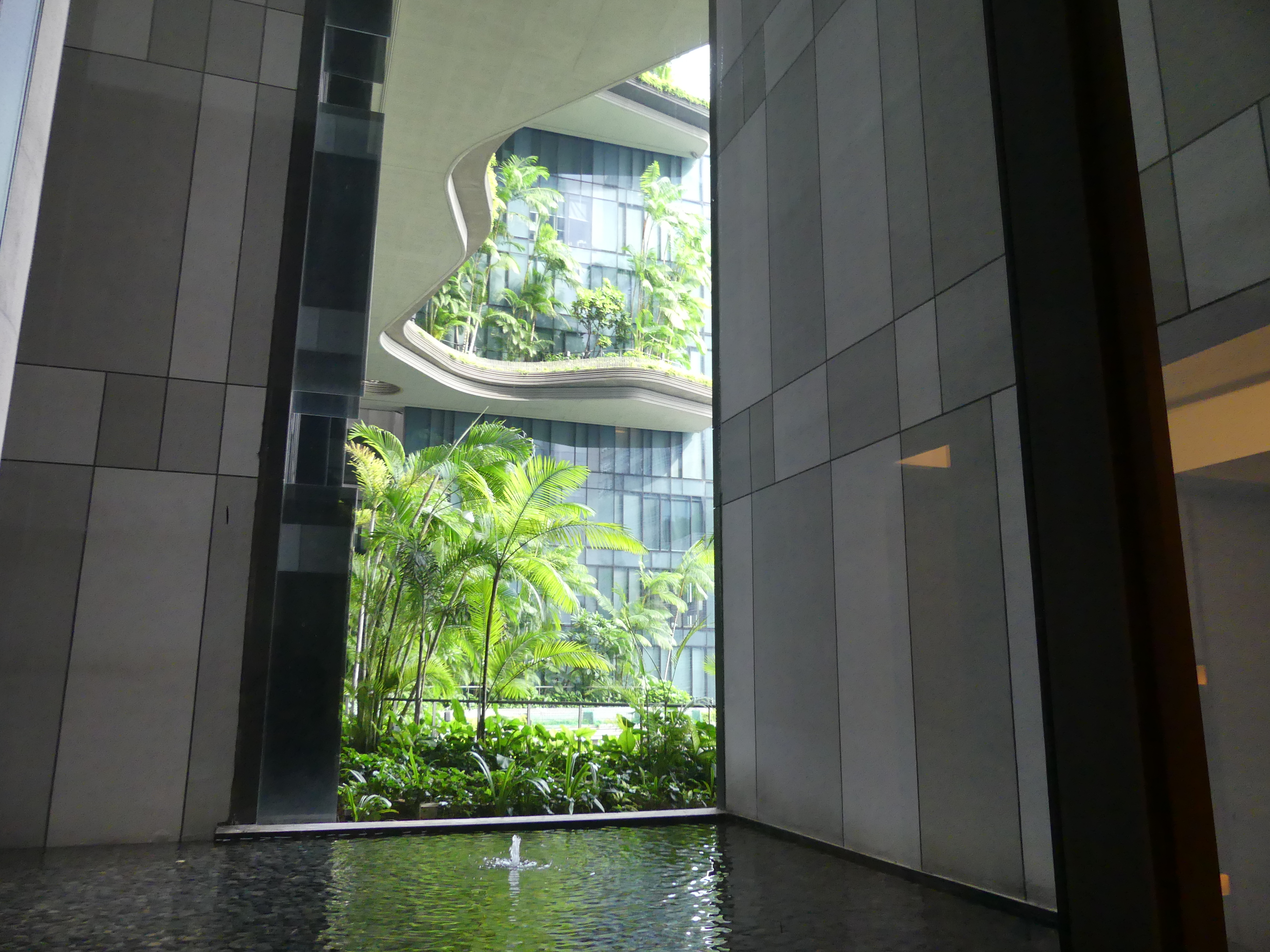
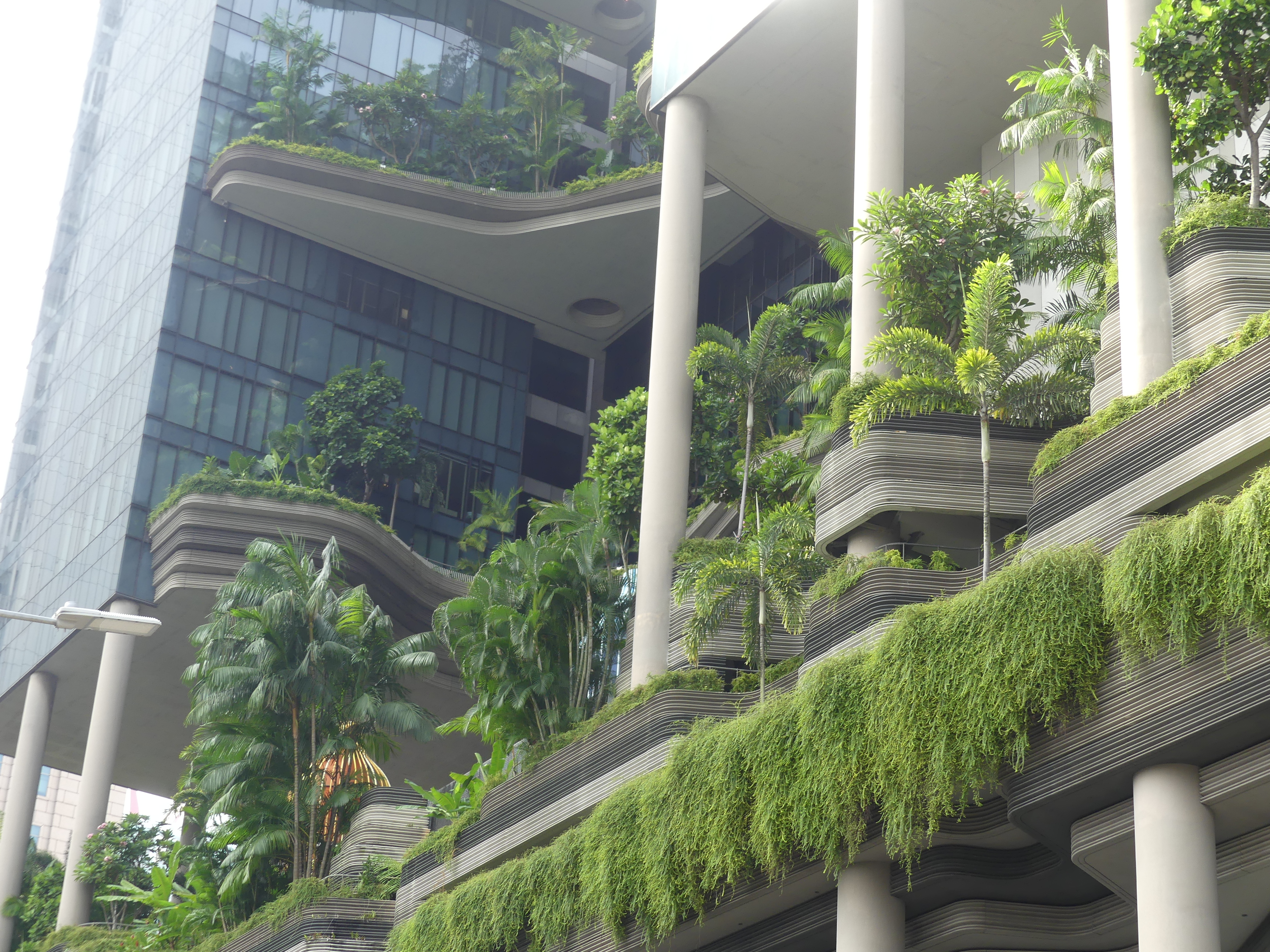
The Park Royal Collection at Pickering is designed to minimise environmental pollution and they have achieved this in many ways included bedecking the hotel with trees and plants. When the cab from the airport arrived at the hotel we were taken back by the green environment encasing the concrete hotel. We were not disappointed by the hotel. The foyer and reception was modern with the general dining area just off the reception. To get to our room involved passing through some of the gardens and water features where we were actually outside the hotel 6 stories above ground. The room was very comfortable with large windows allowing excellent views across the local area. The bathroom and shower was particularly exposed to receive the views and I wondered how many people may be viewing us.
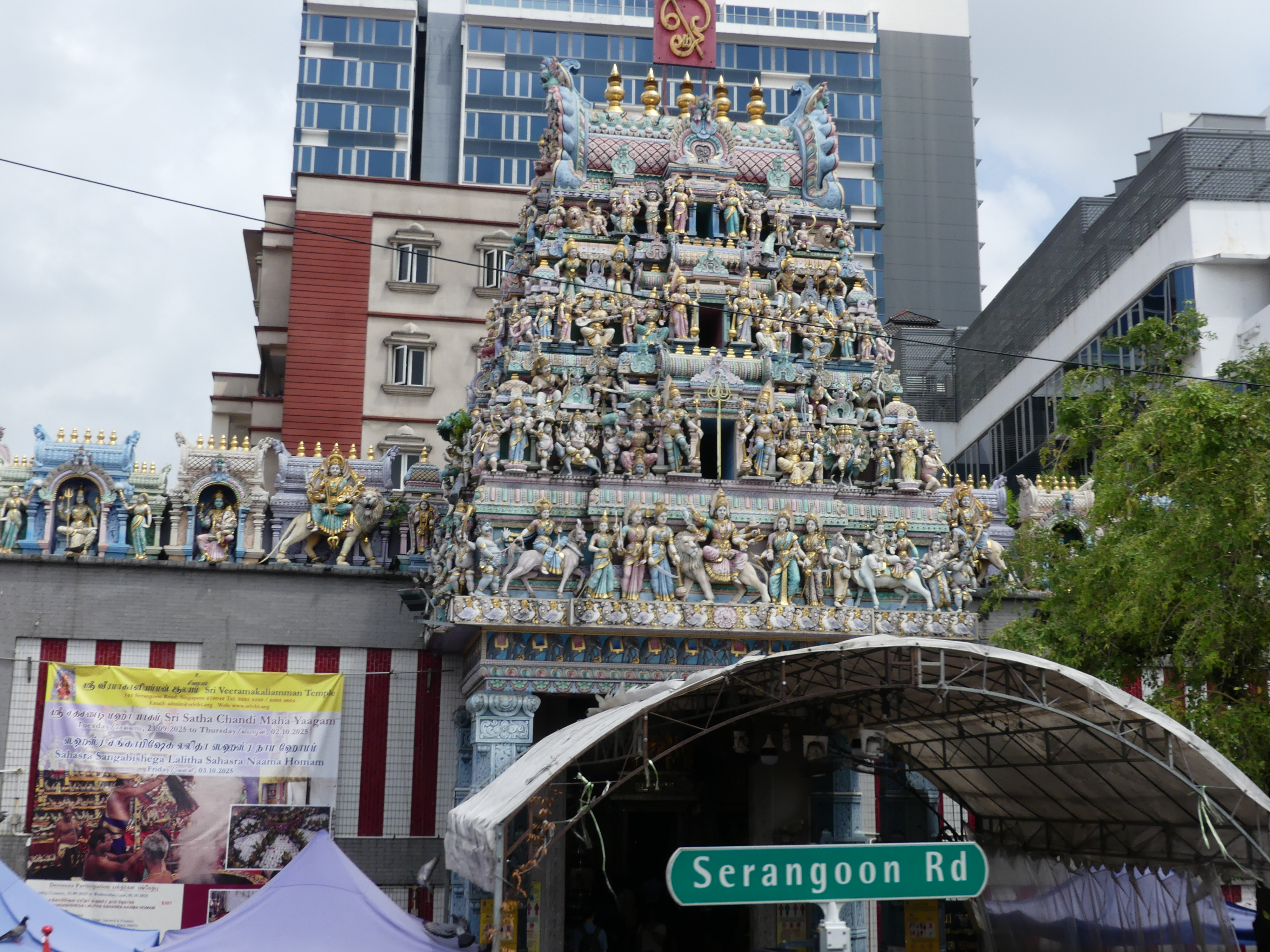
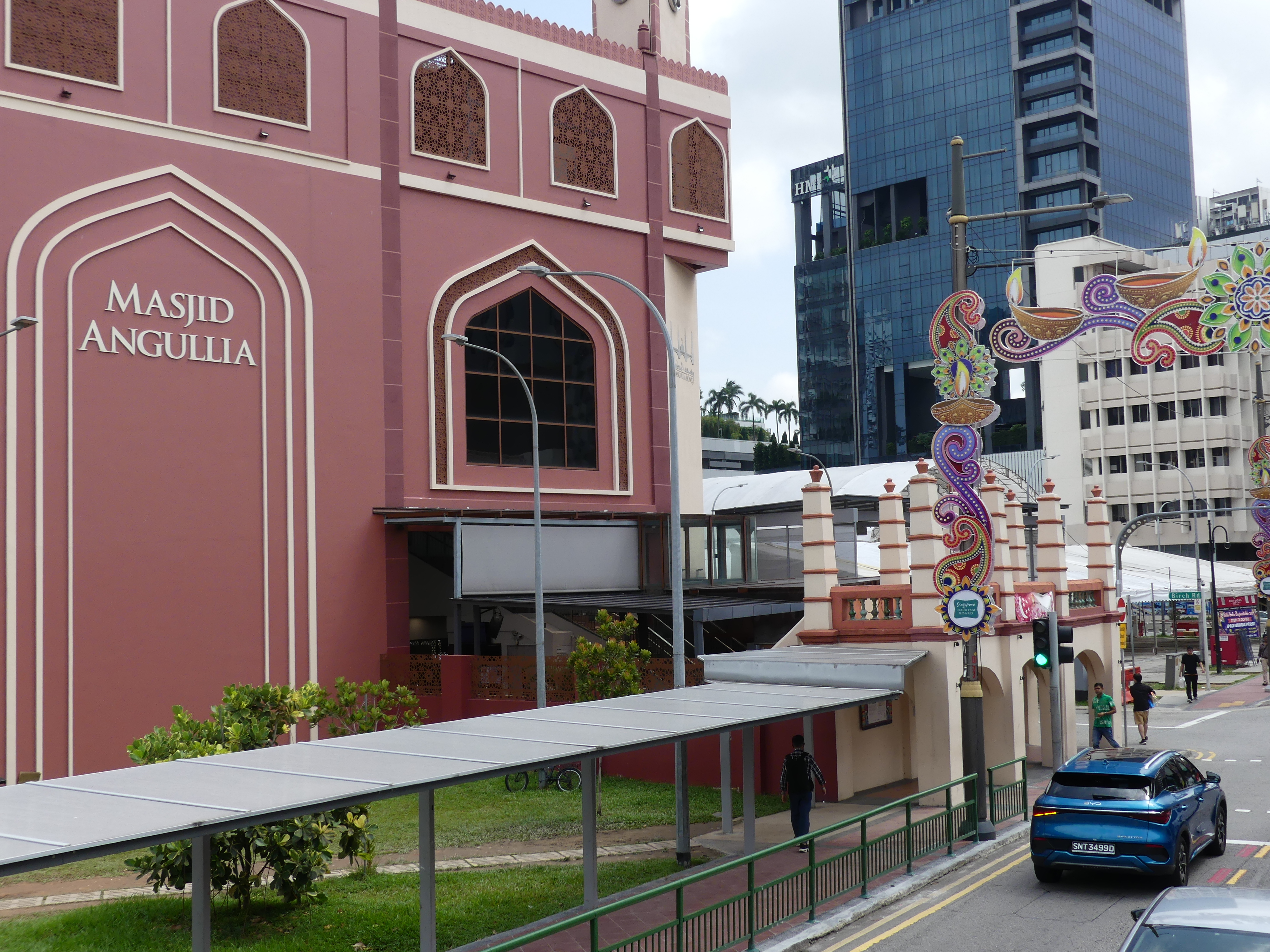
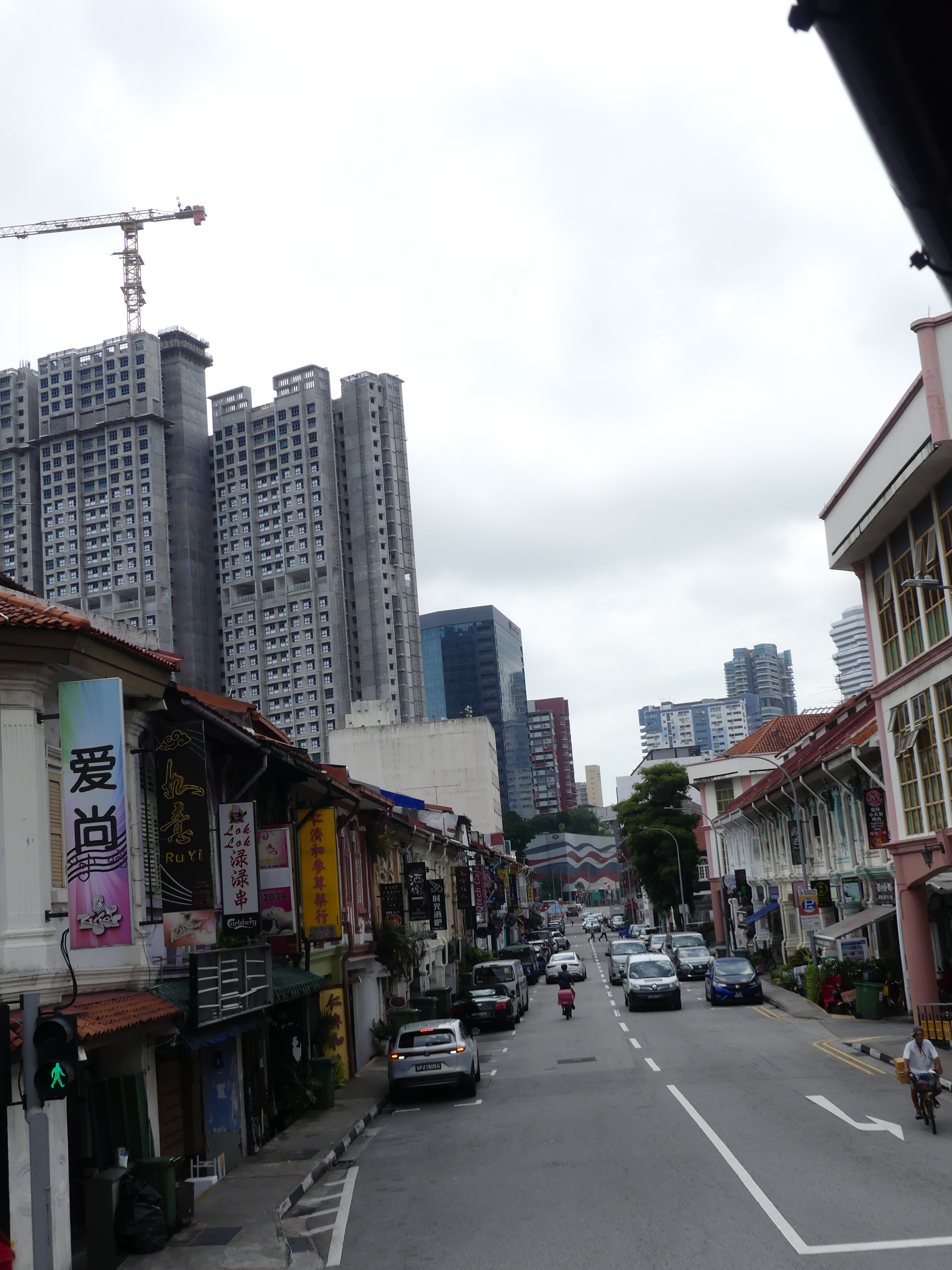
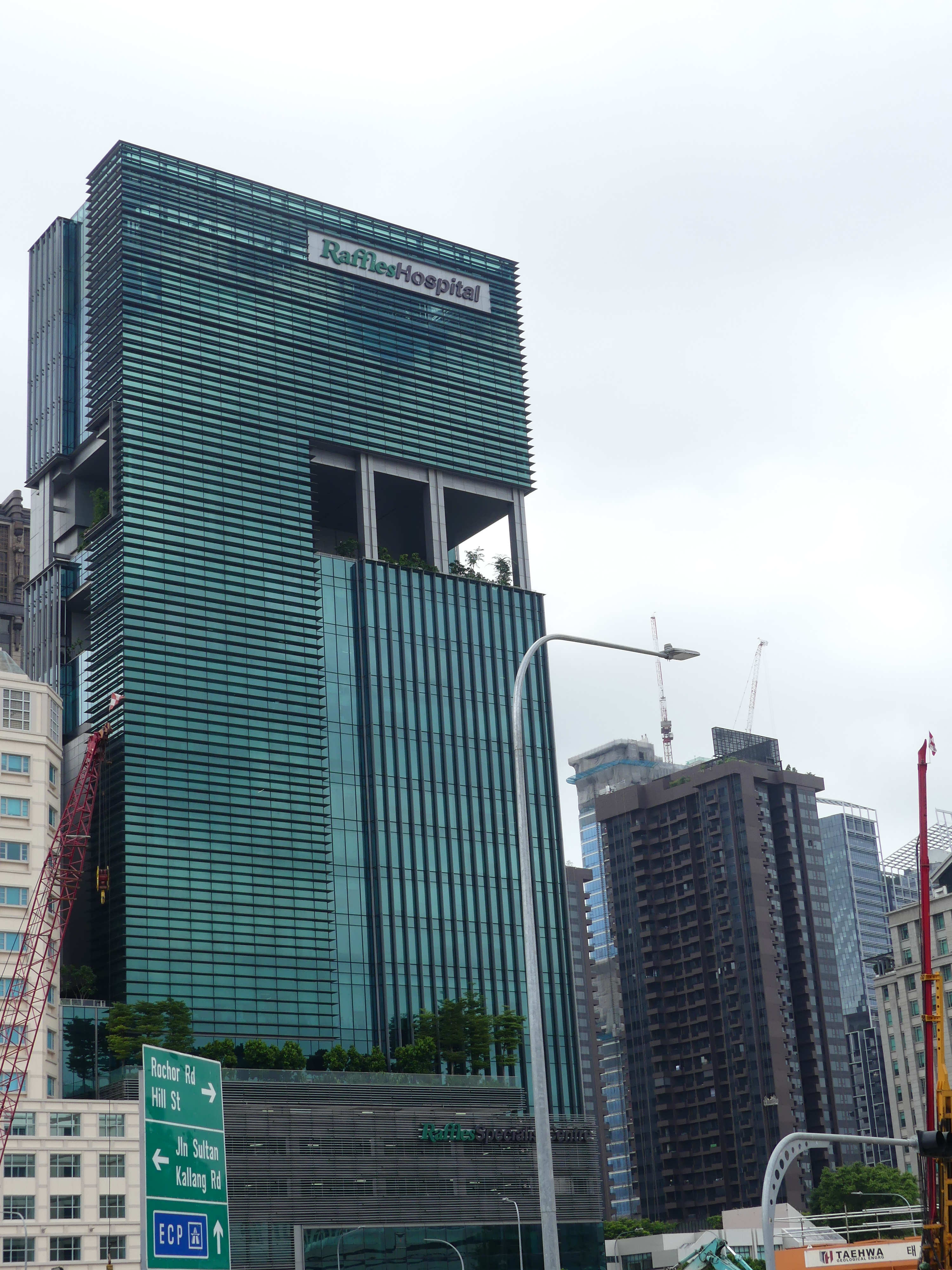
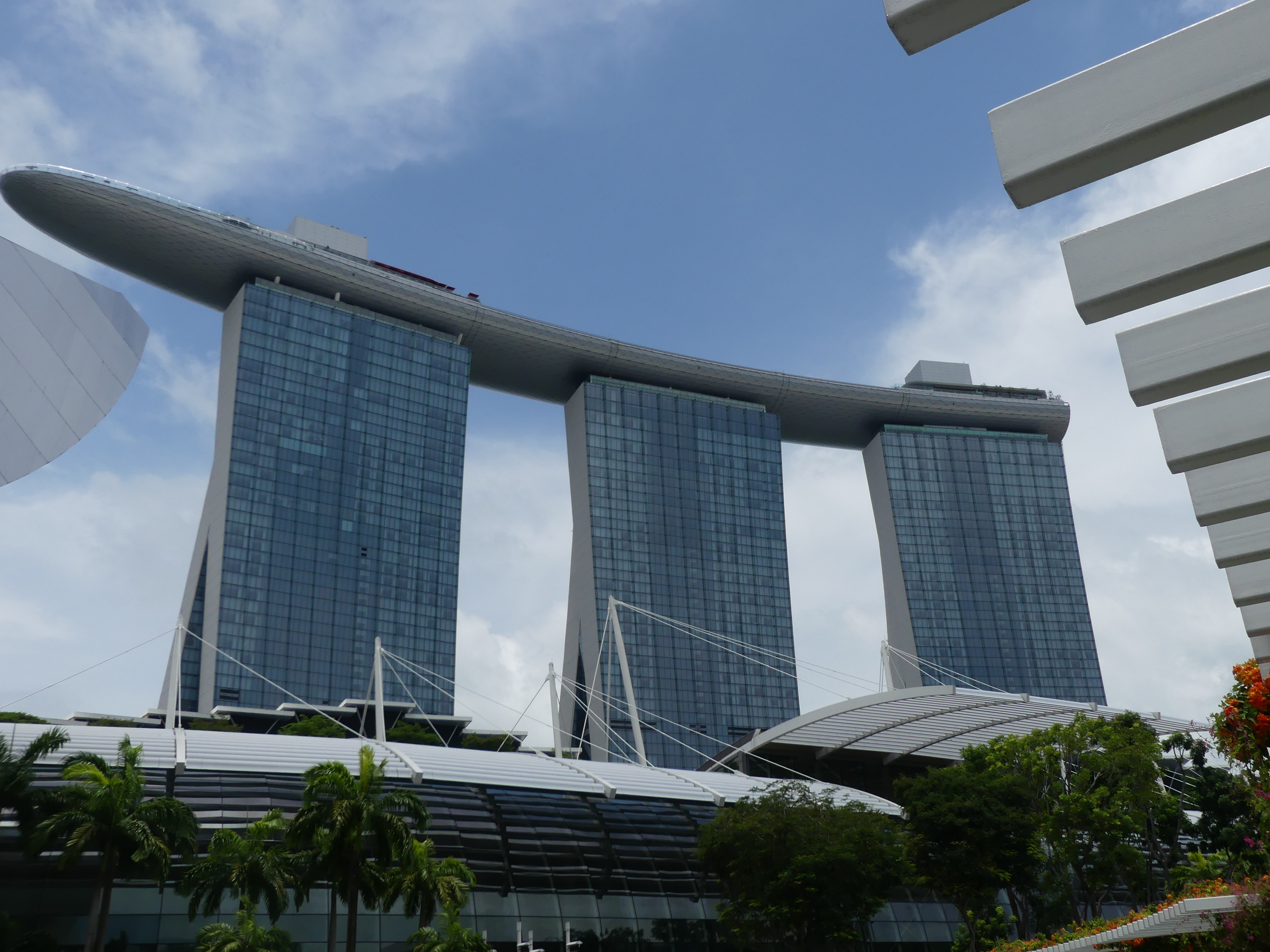
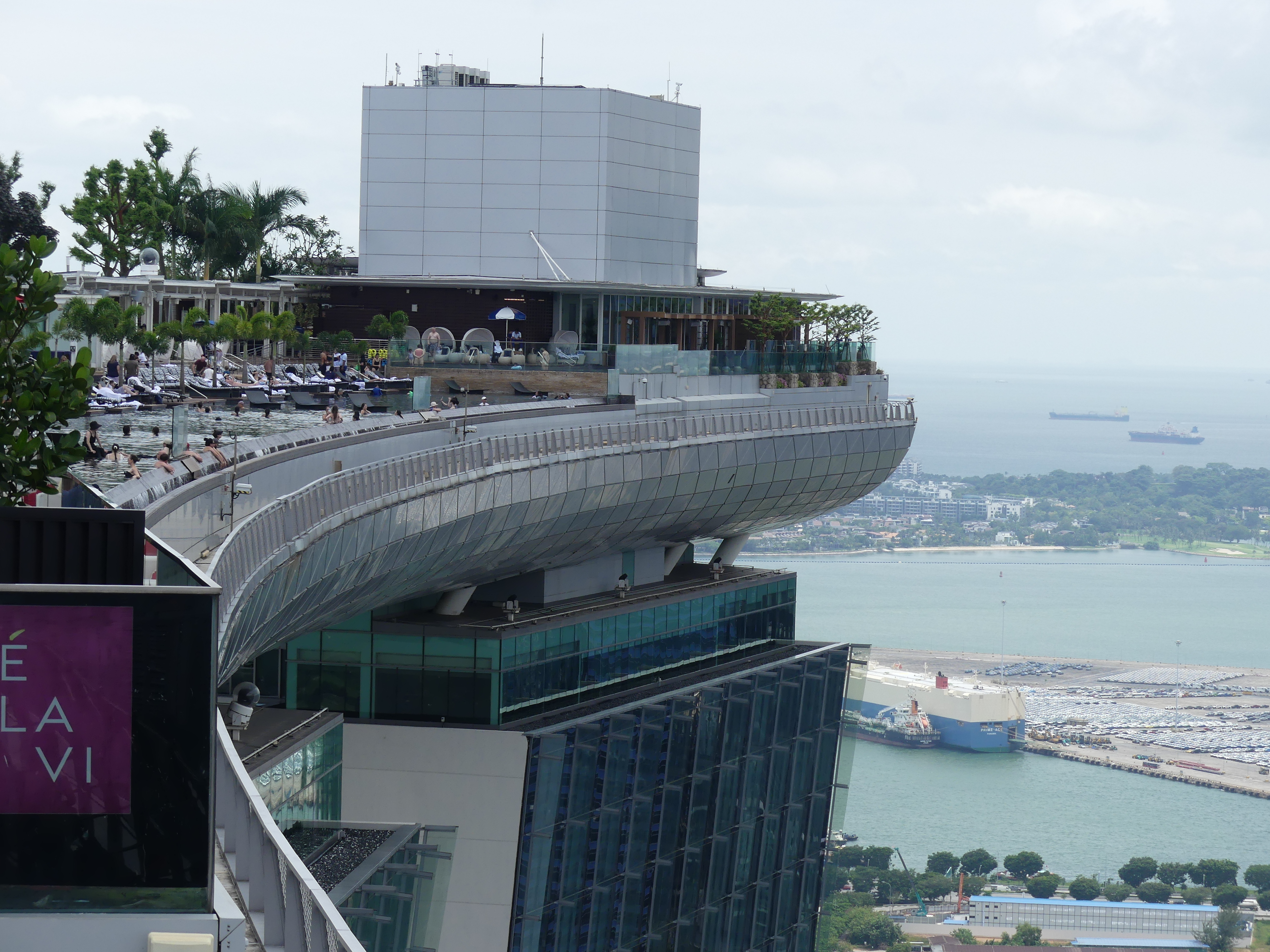
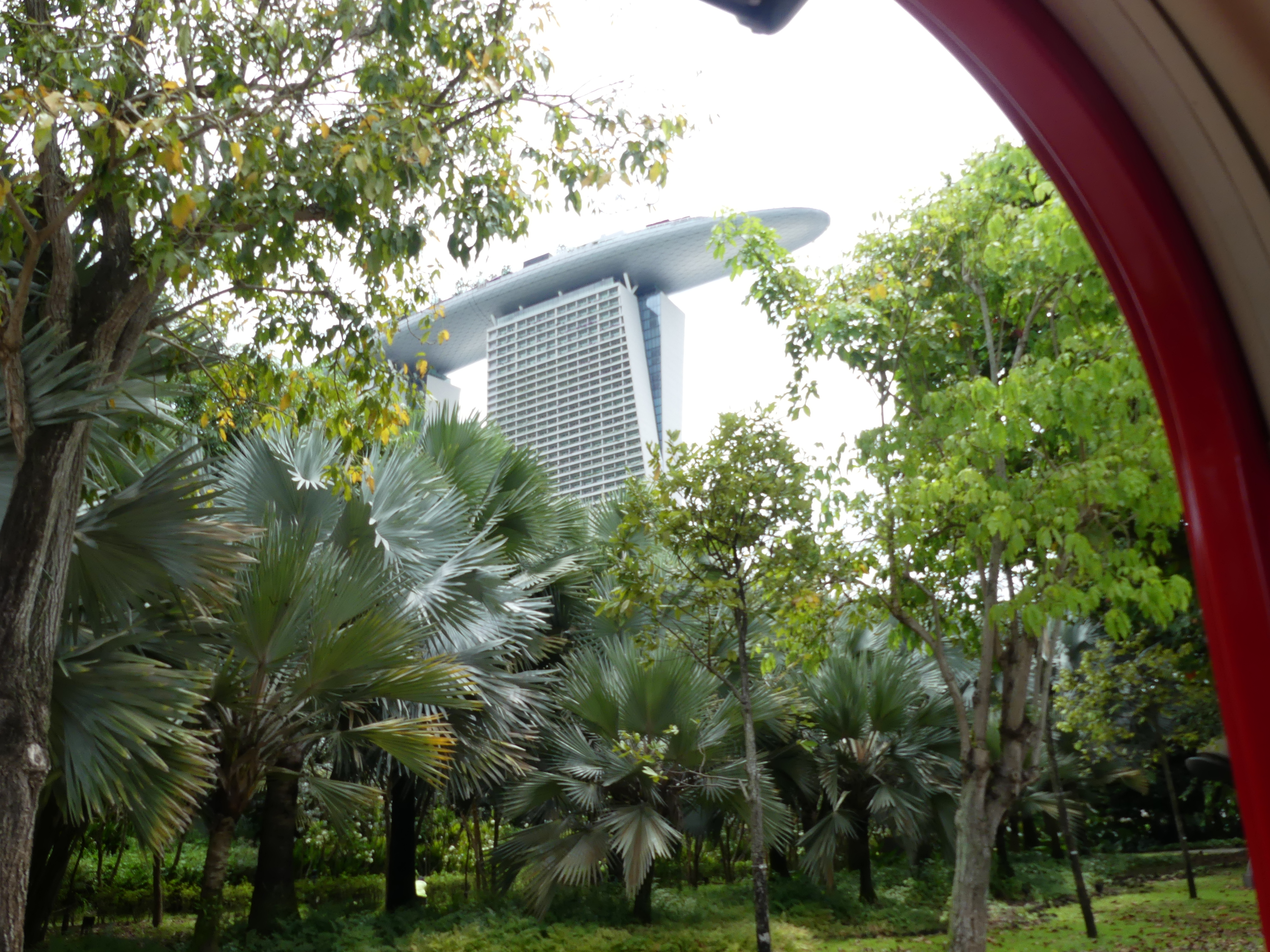
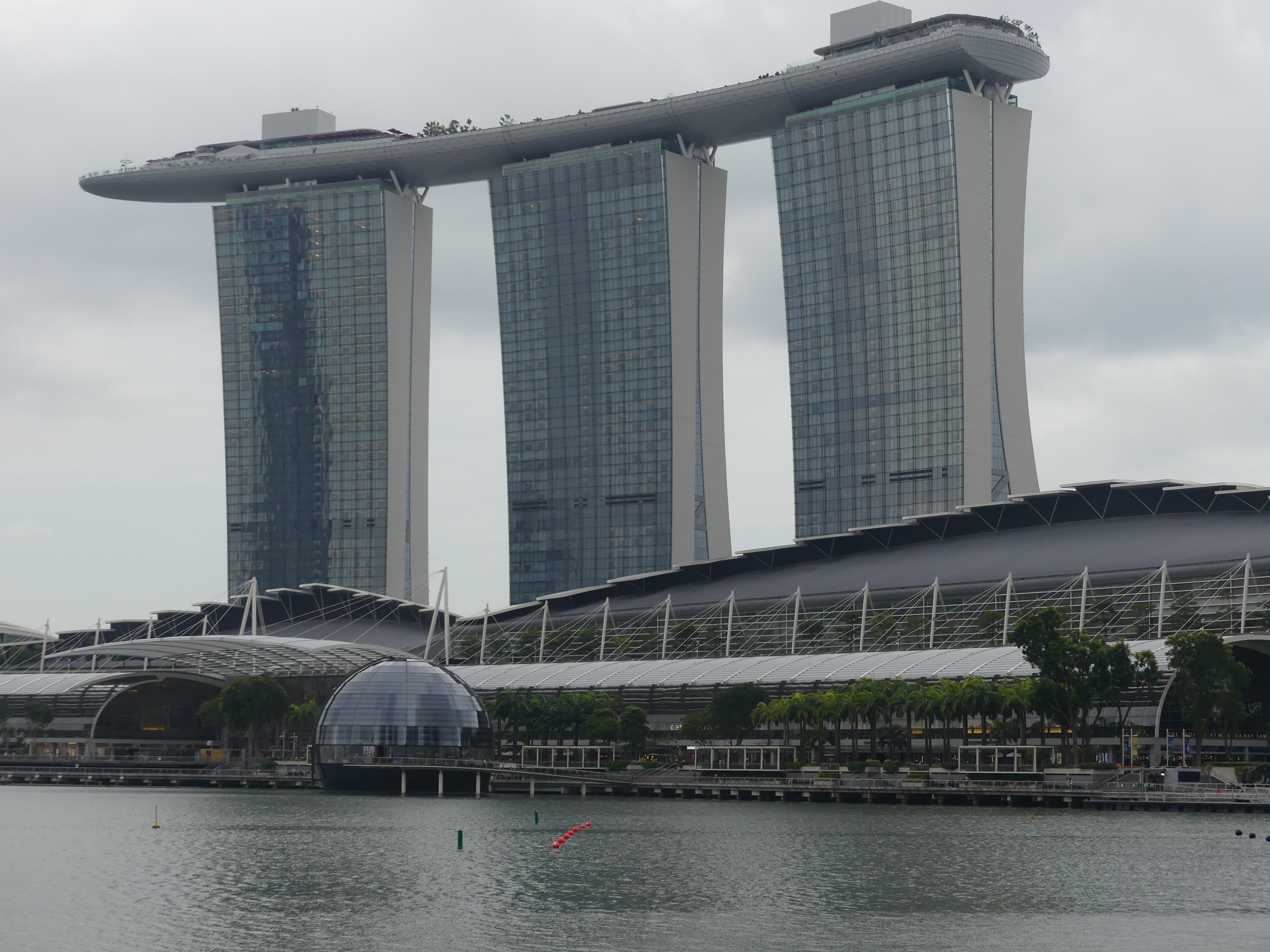
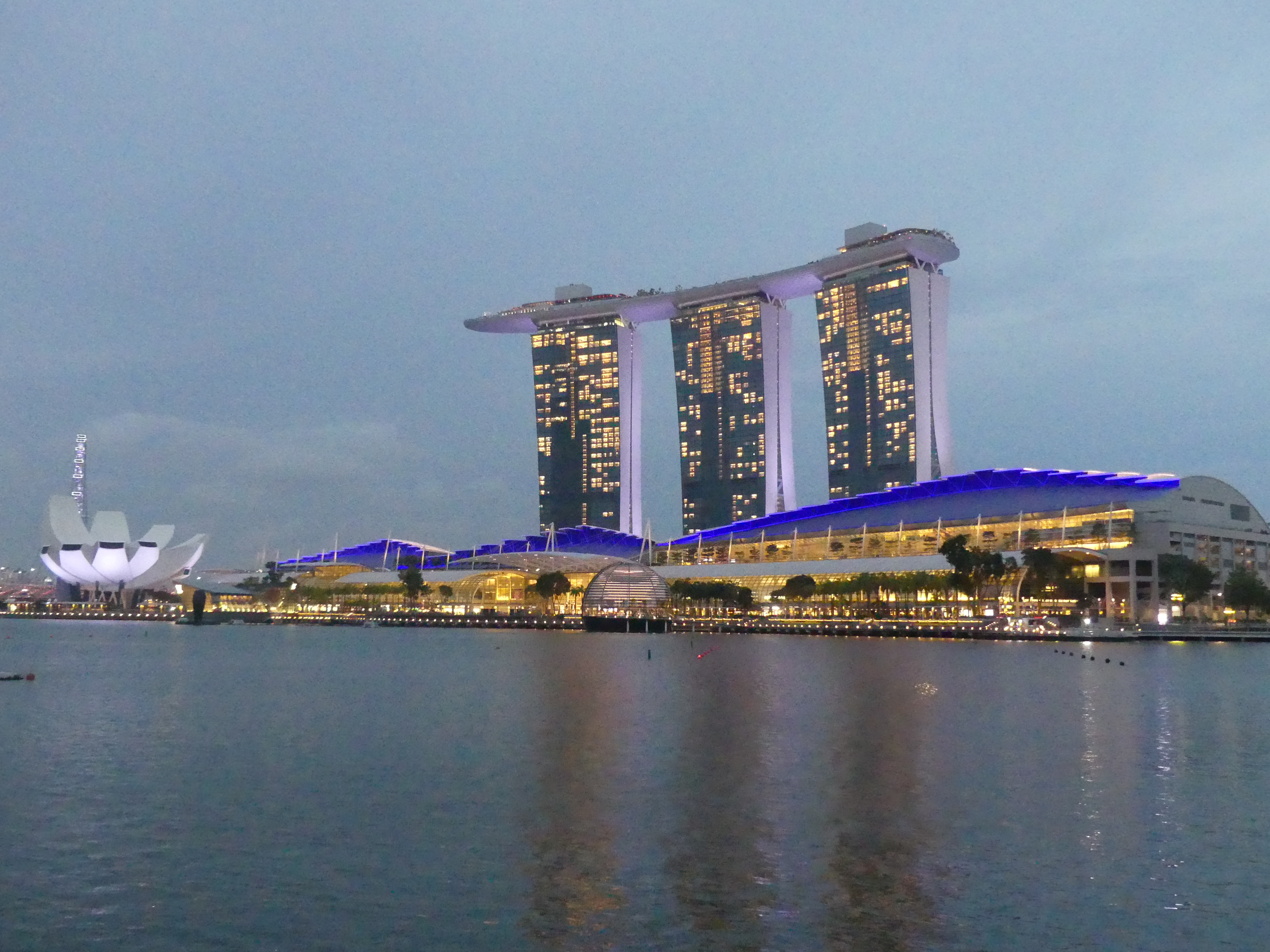
We were also surprised at how well located the hotel proved to be. The Hop on Hop off bus stop was across the road at Hong Lim Park in Pickering St and the 3rd last stop before the terminus. This meant the first bus came to the stop at 9.40am – very suitable for getting a sleep in then breakfast. And so it was that we caught the bus paying a 1 day fare. The bus drove down to Old Customs House on Marina Bay around the corner to the MBS Convention Centre which is across the road from the iconic Marina Bay Sands hotel, famous for its massive ship-like structure, the Sands SkyPark, perched on top of three towering hotel buildings, featuring an infinity pool, observation deck, restaurants, and bars with stunning city views. From there we went onto the Suntec City Mall and the terminus. Only then did I pick up my camera as we journeyed through Little India, passed the Raffles Hospital, the Parkroyal on Beach Rd, round into the Muslim enclave of mosques and heritage centre, past the retail shops of Raffles Hotel, down past the boat quay into Chinatown and then back to the MBS Convention Centre where we got off the bus to explore further.
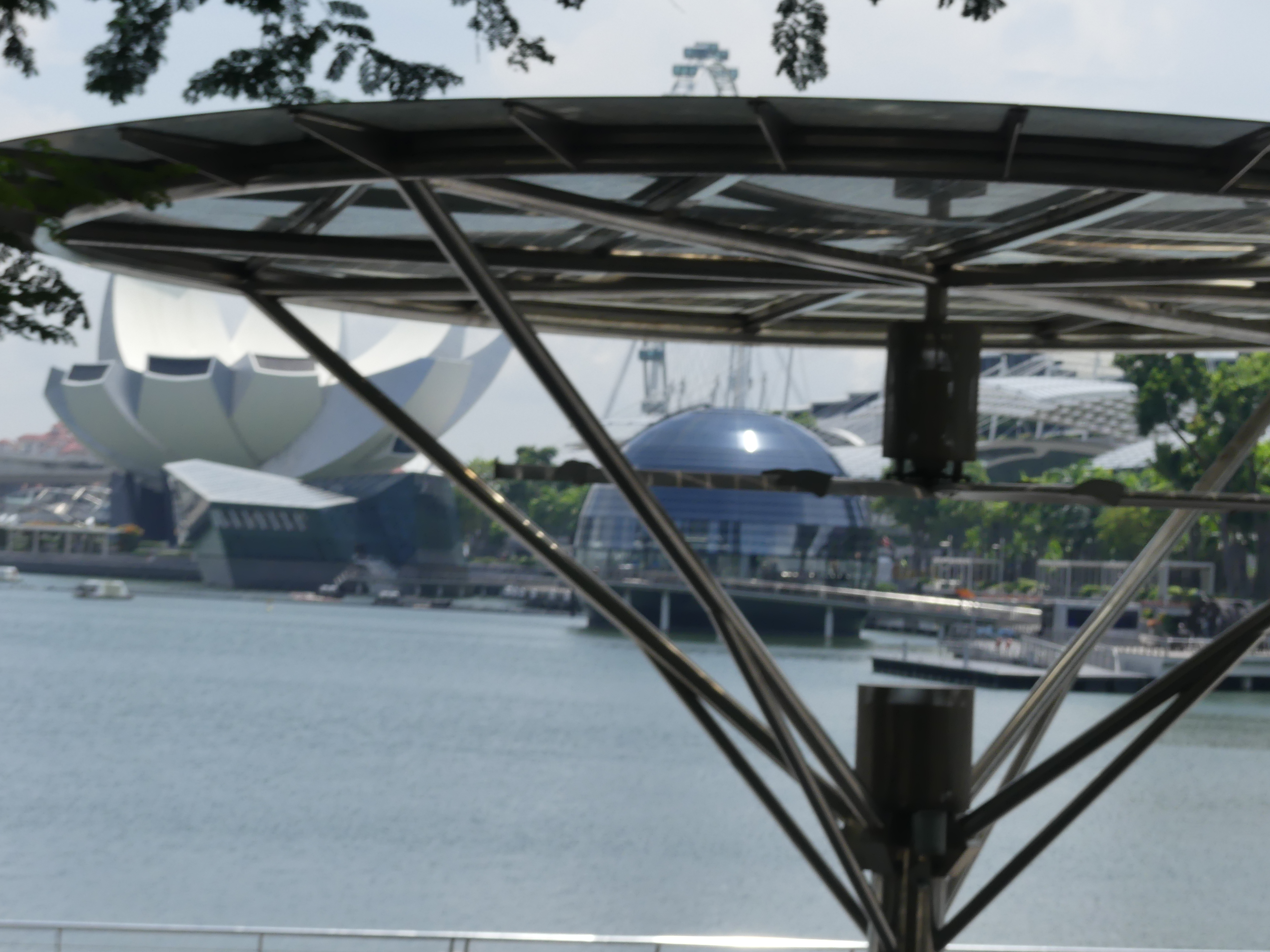
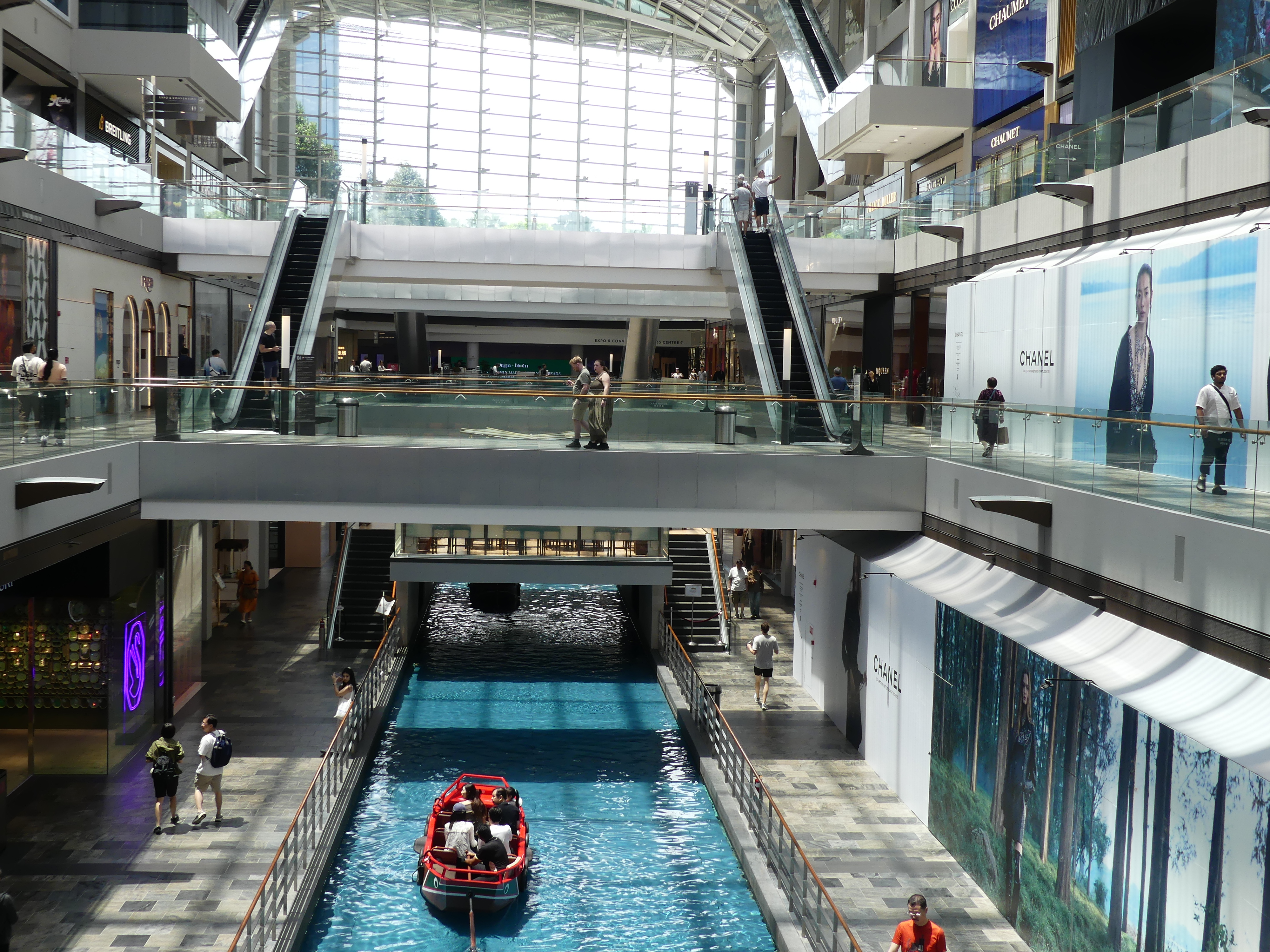
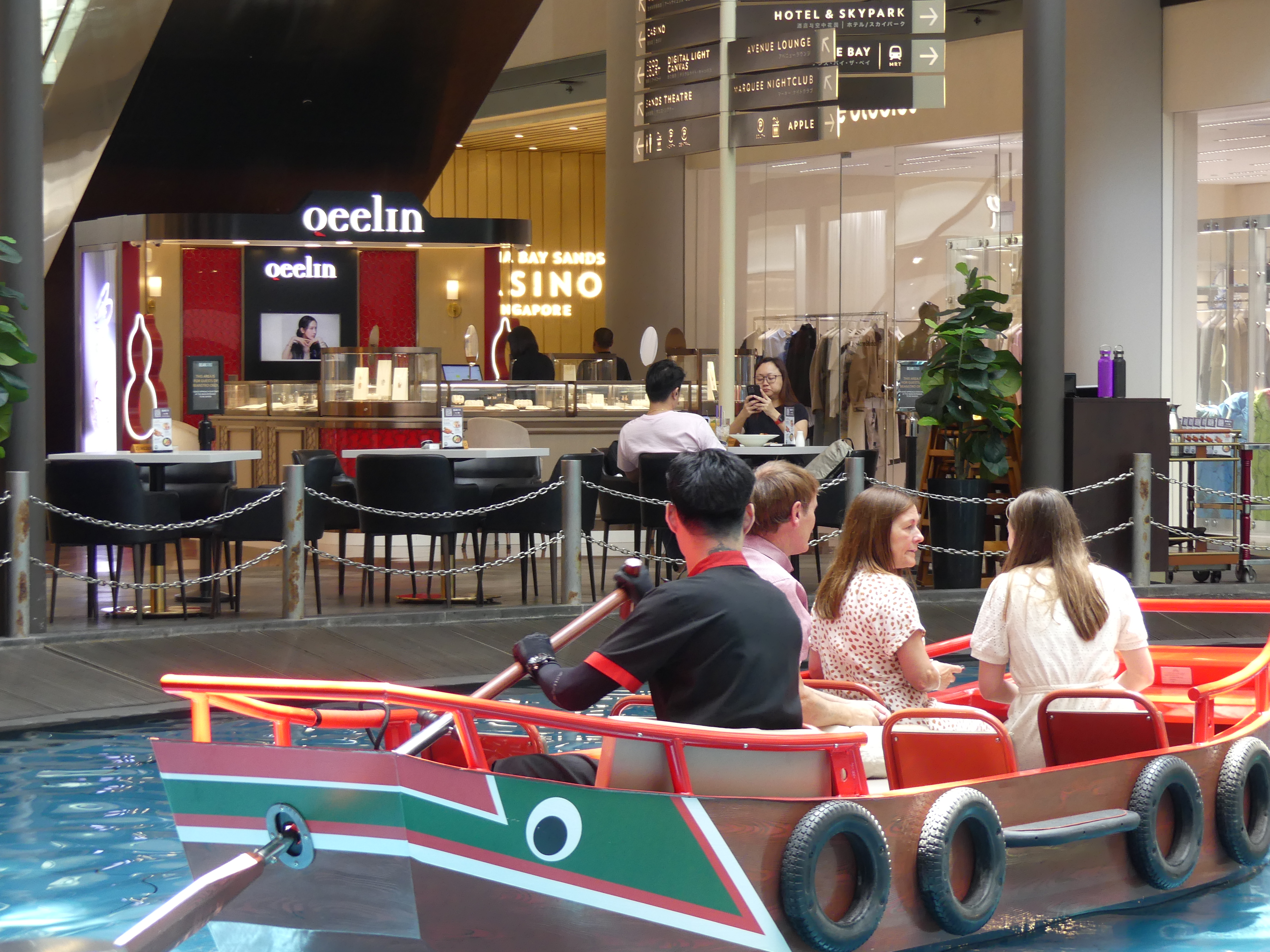
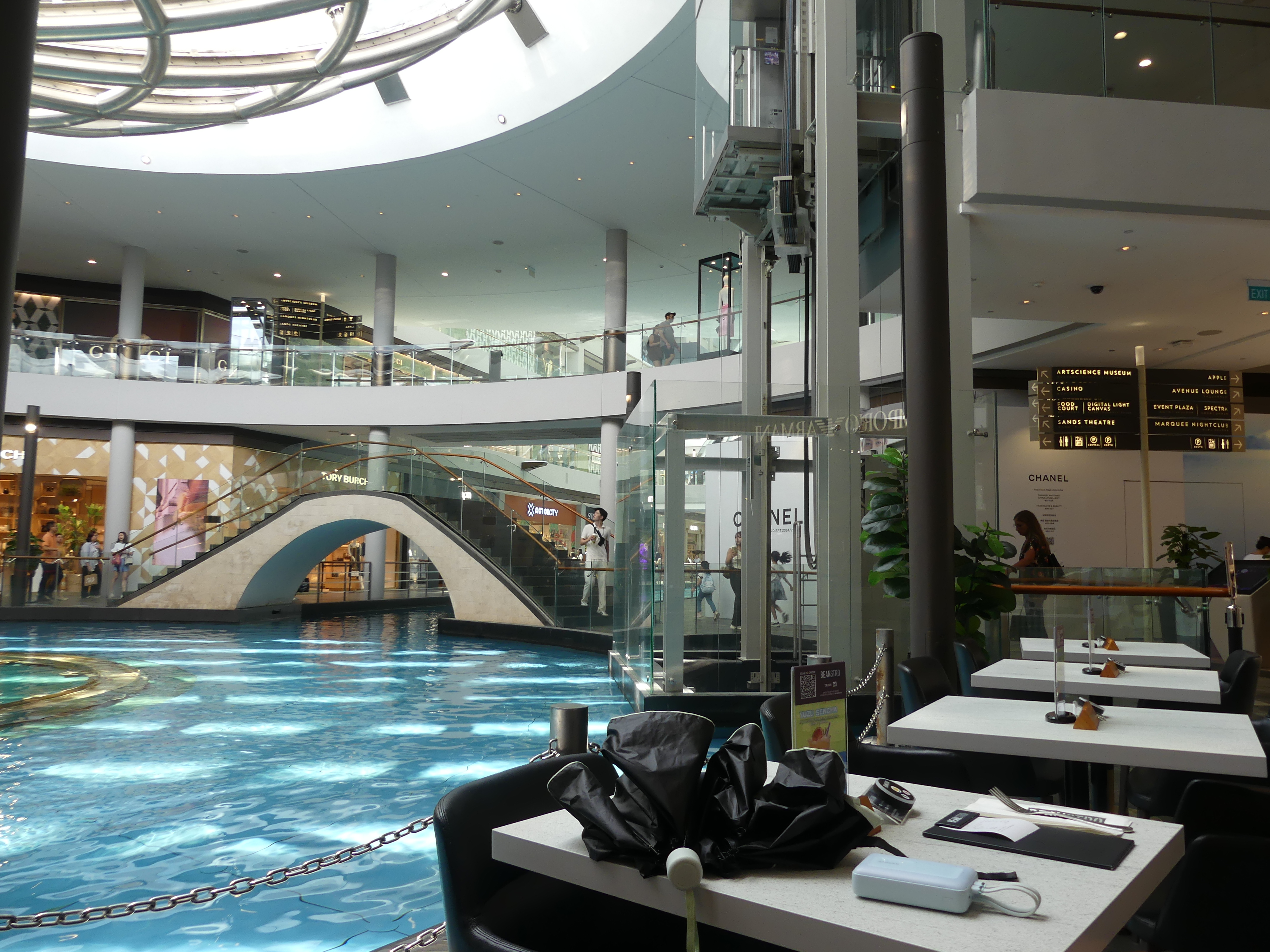
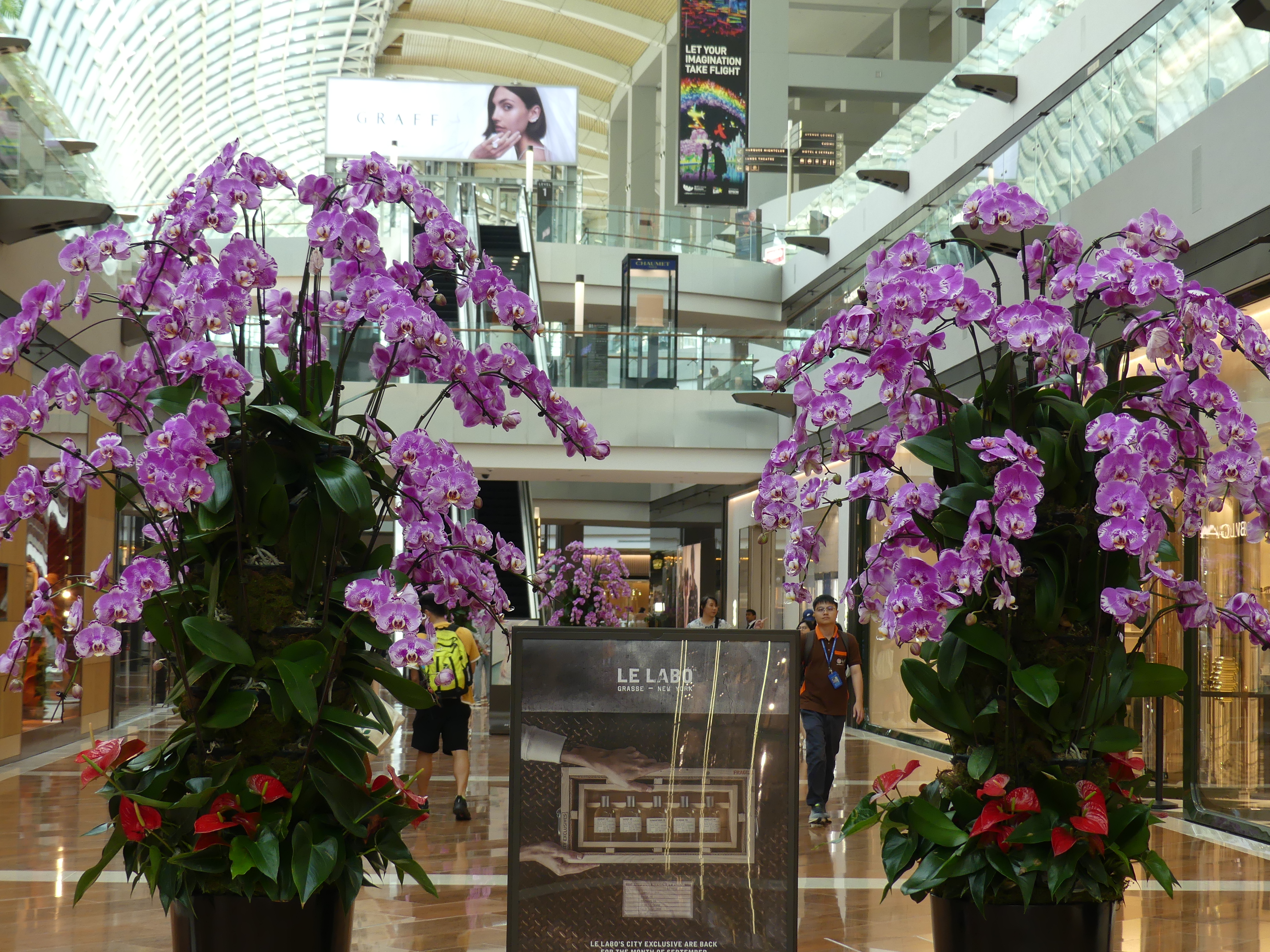
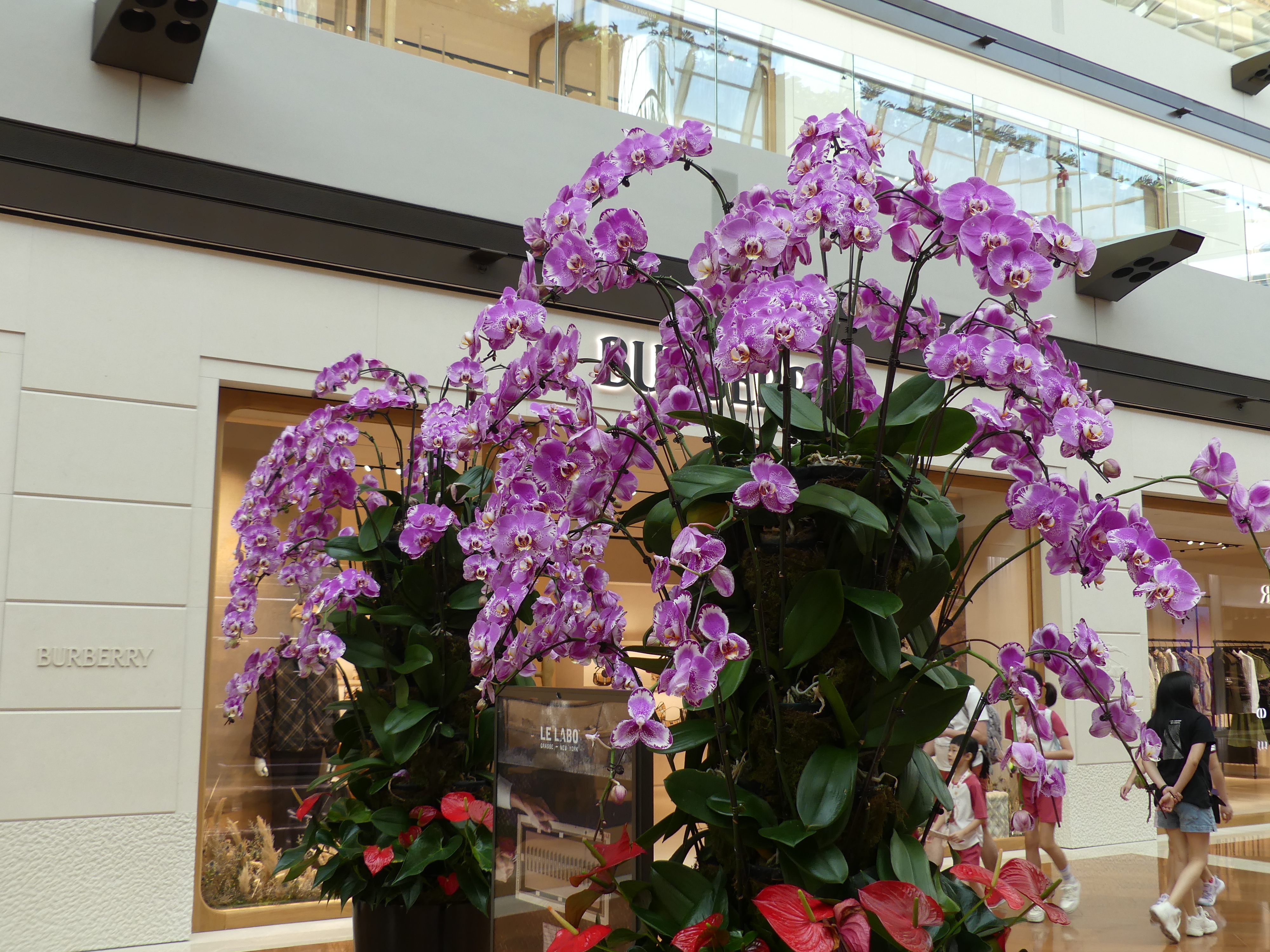
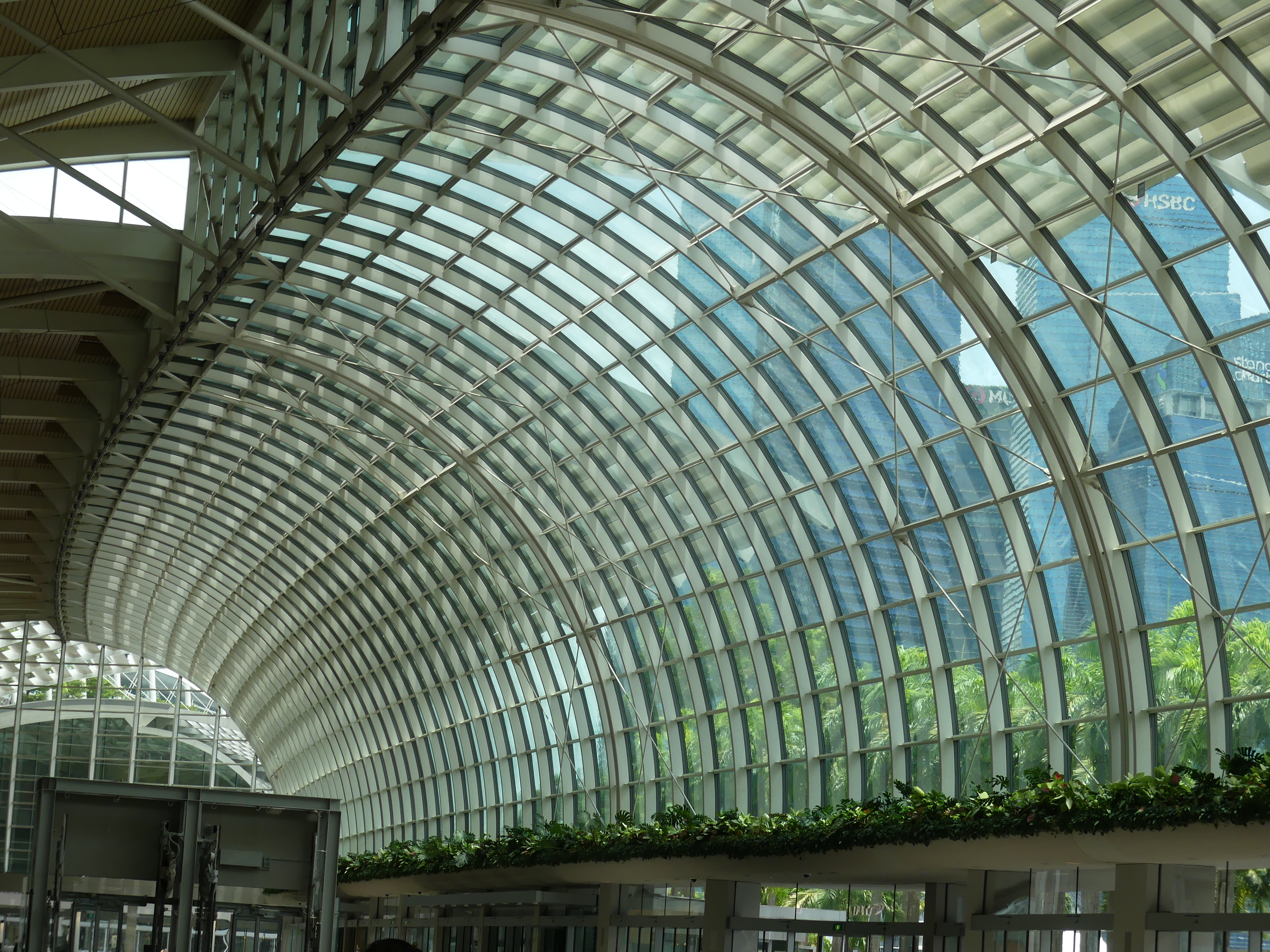
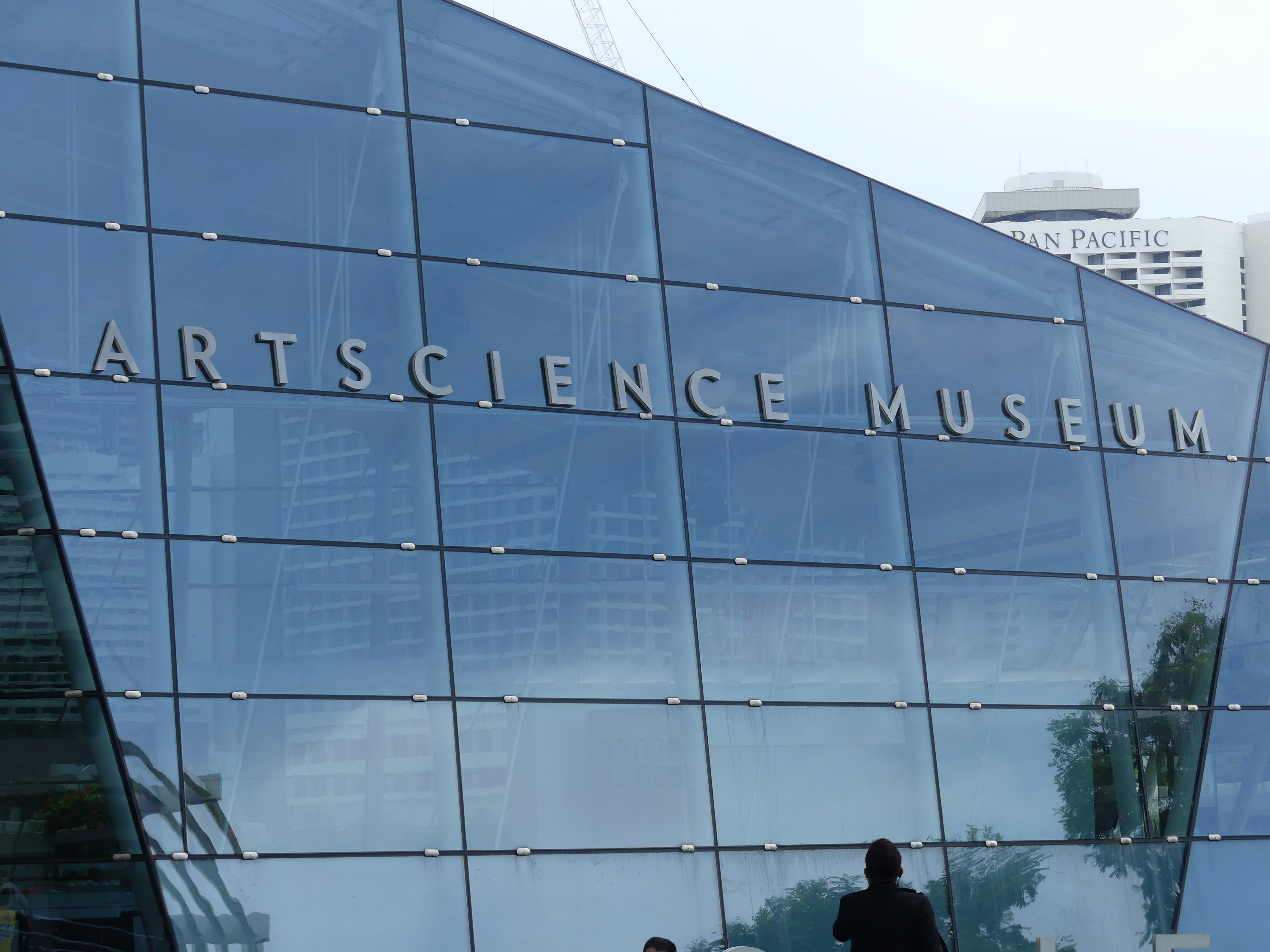
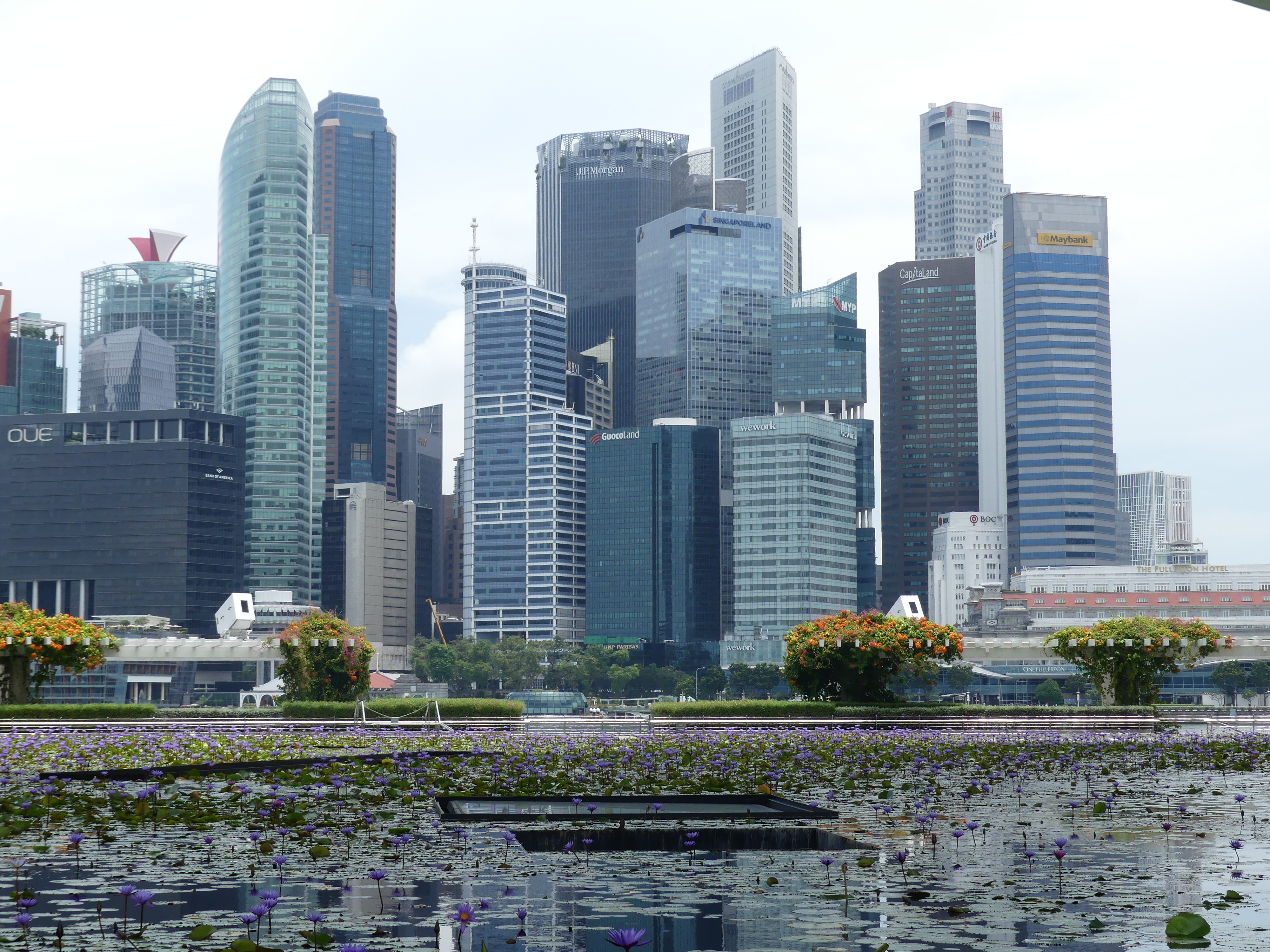
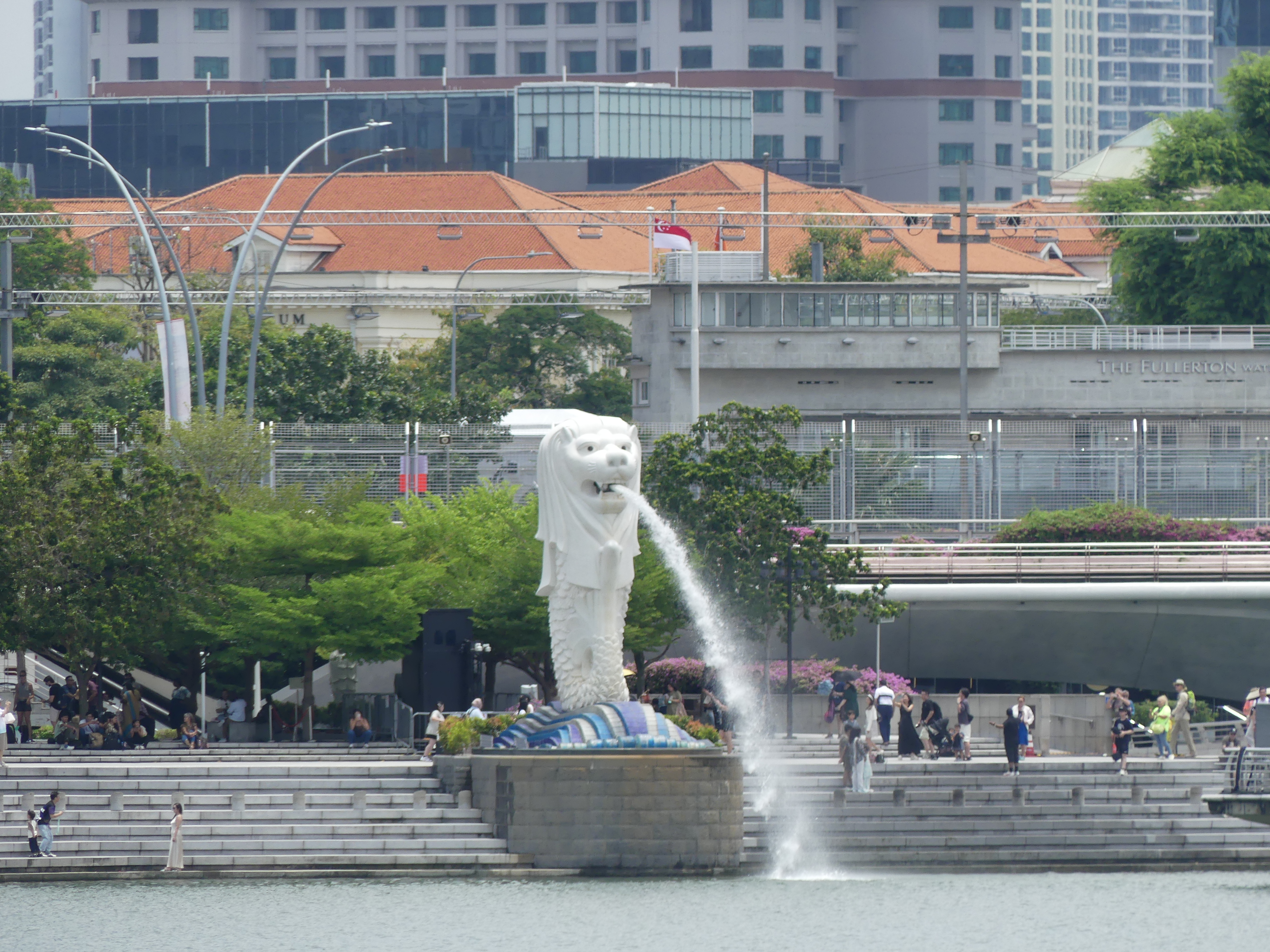
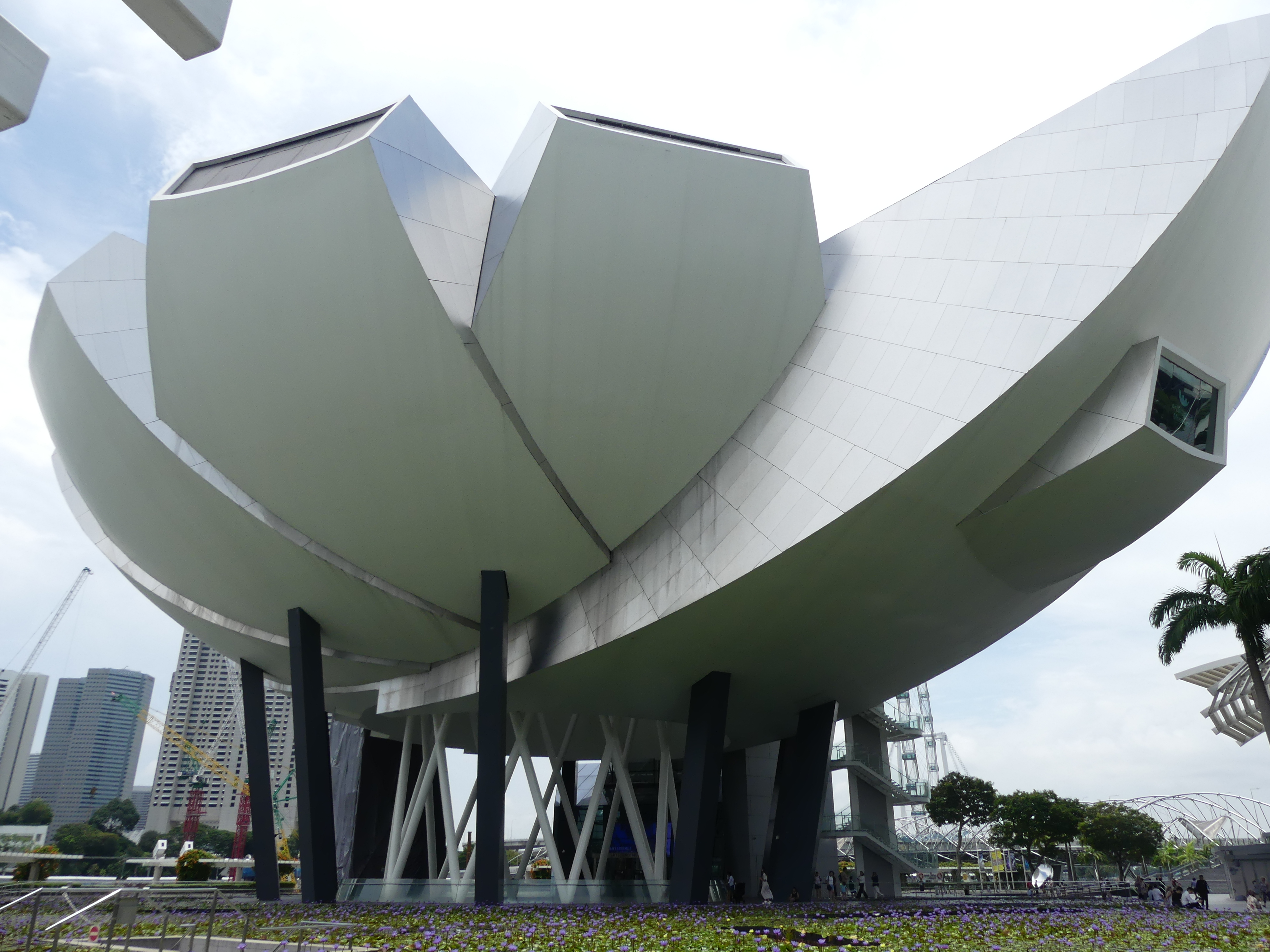
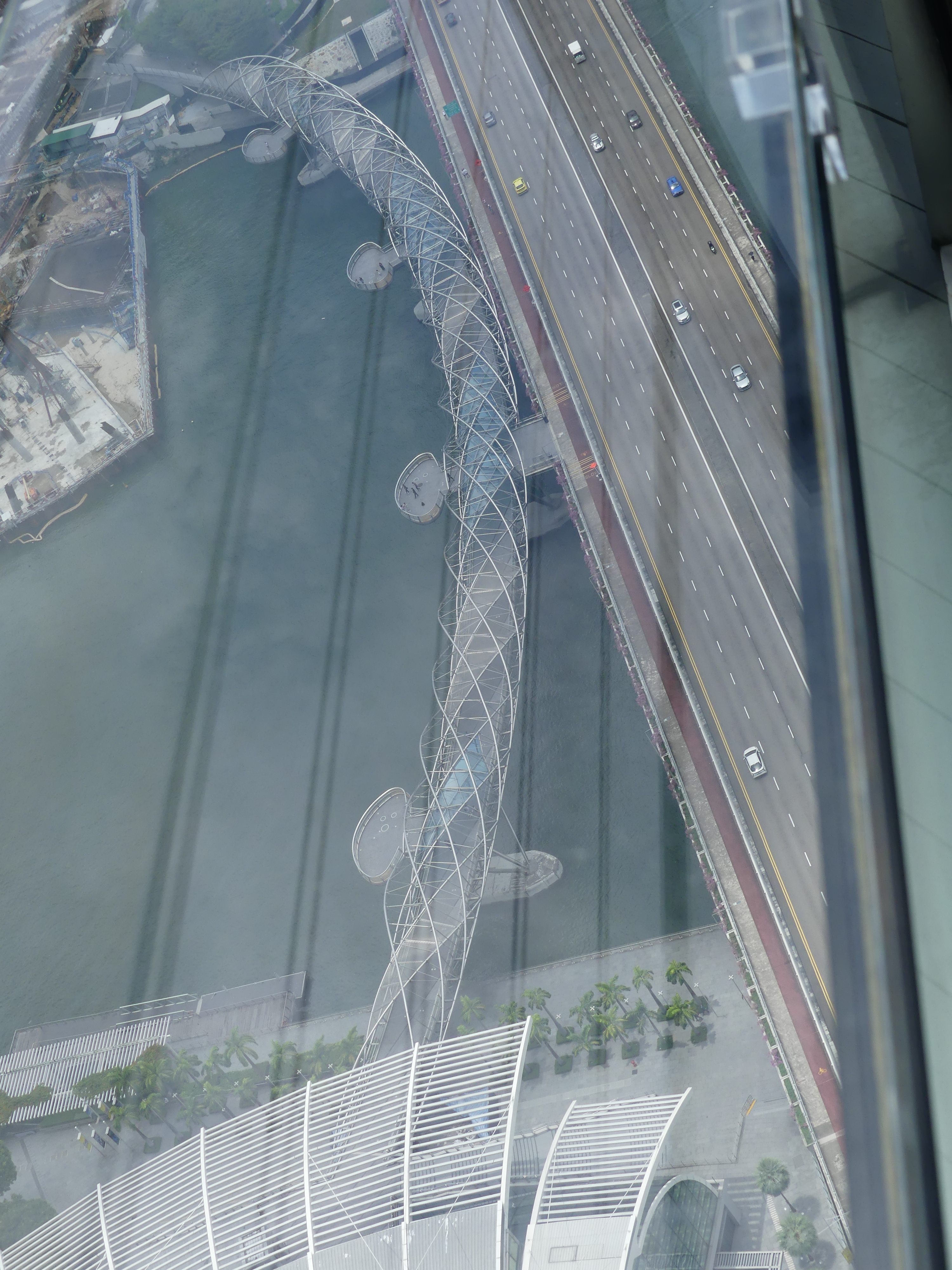
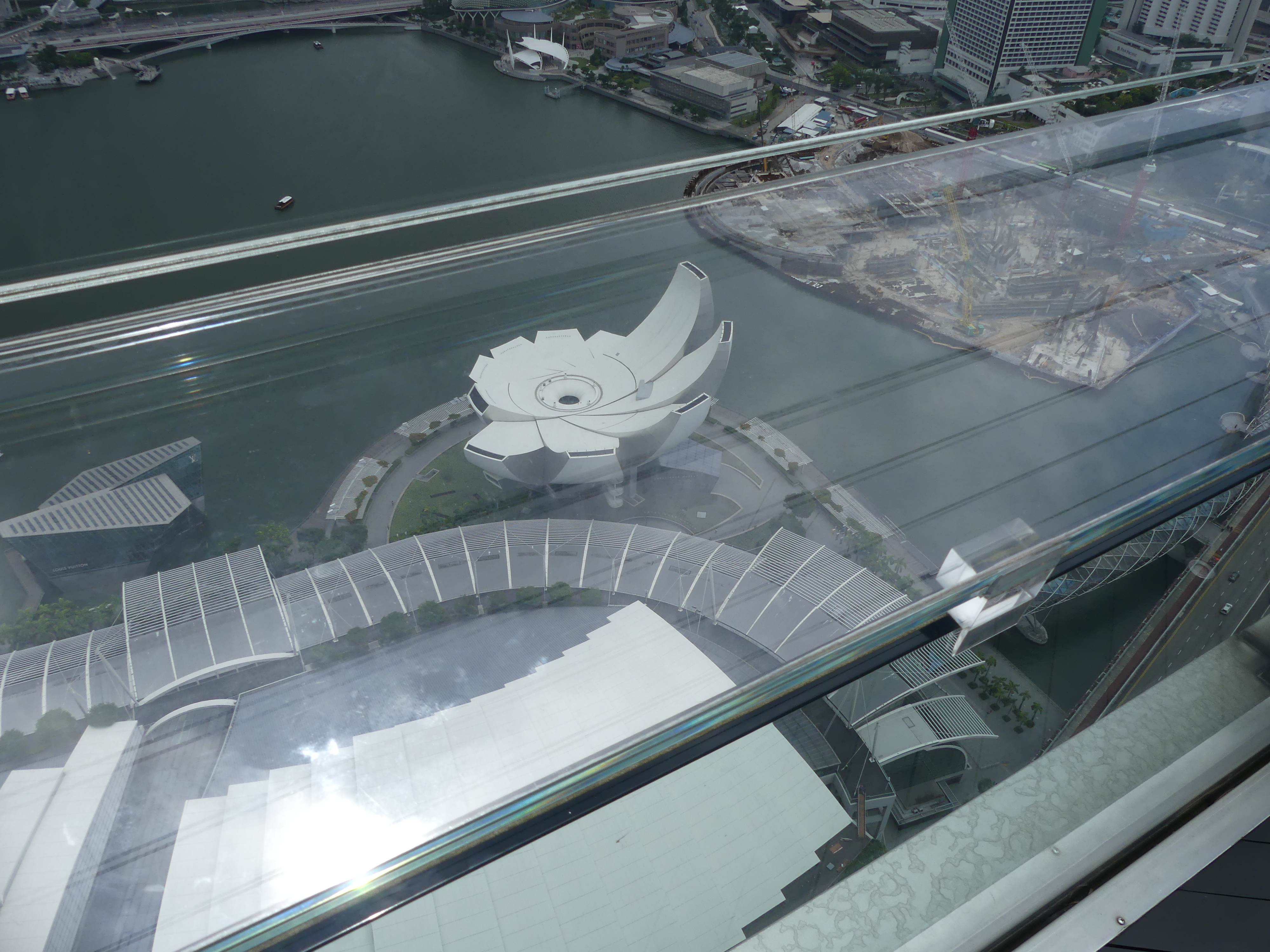
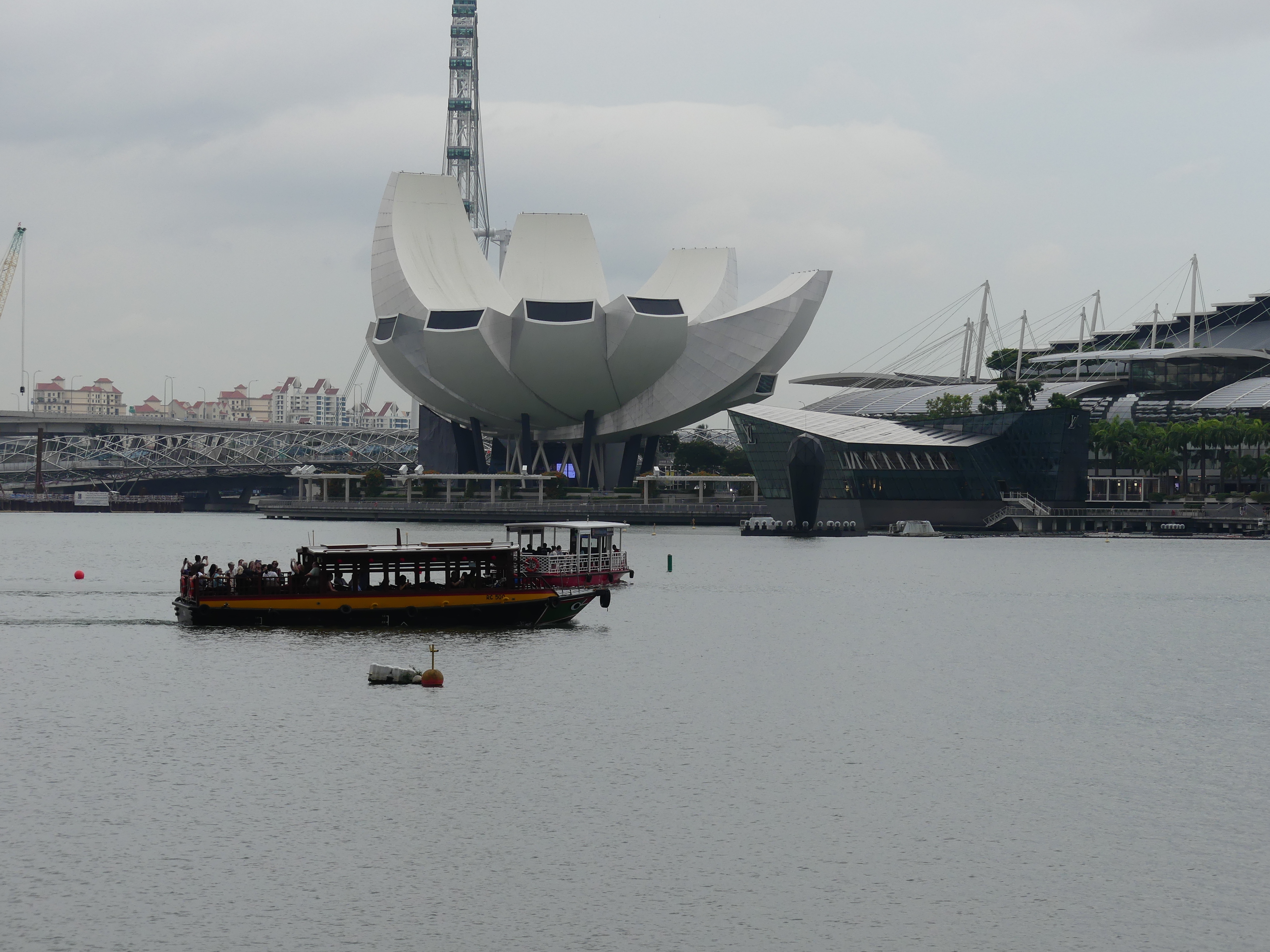
The convention centre can best be seen from the otherside of Marina Bay. In my photo below you will see the lotus shaped Art Science Museum. Behind is the convention centre and behind that the Marina Bay Sands Hotel. The convention centre includes a shopping mall easily the size of Indooripilly Shopping Centre here in Brisbane and three stories high. Exploring this area was amazing. The design and shape very rich and speaking of wealth. It had an indoor canal system emulating Venice, outstanding orchid displays, inteeresting shop fittings and a massive curved ceiling of glass to let in the light. From the outside of the Art Science Museum I was able to get a clear photo of the Sands Sky Park and the Lionheaded serpent; the symbol of Singapore.
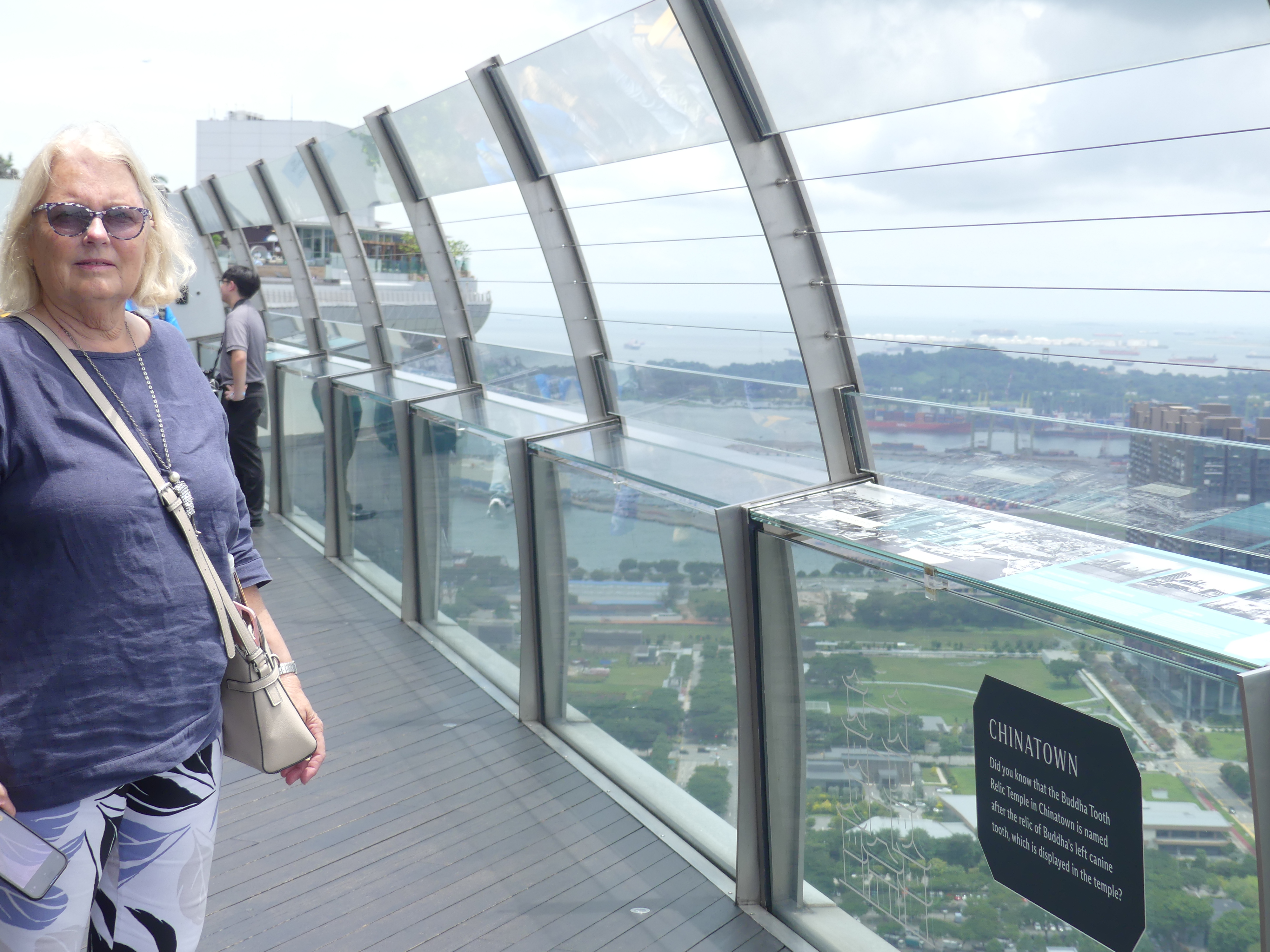
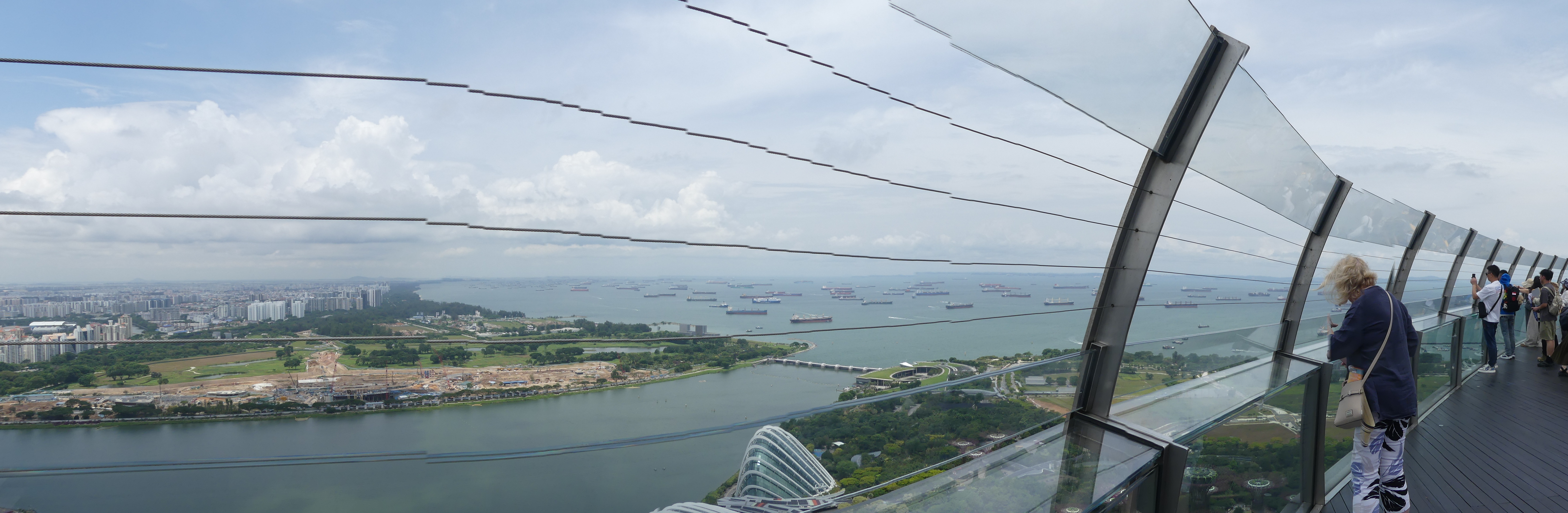
The Sands Skypark offers (for a fee) a trip to the top of the hotel to look around the sights of Singapore so we made our way across the road scrambled through the mall under the Marina Sands Hotel towers and around to the elevators transporting us 56 levels above ground to view Singapore, and the exclusive areas enjoyed by hotel guests.
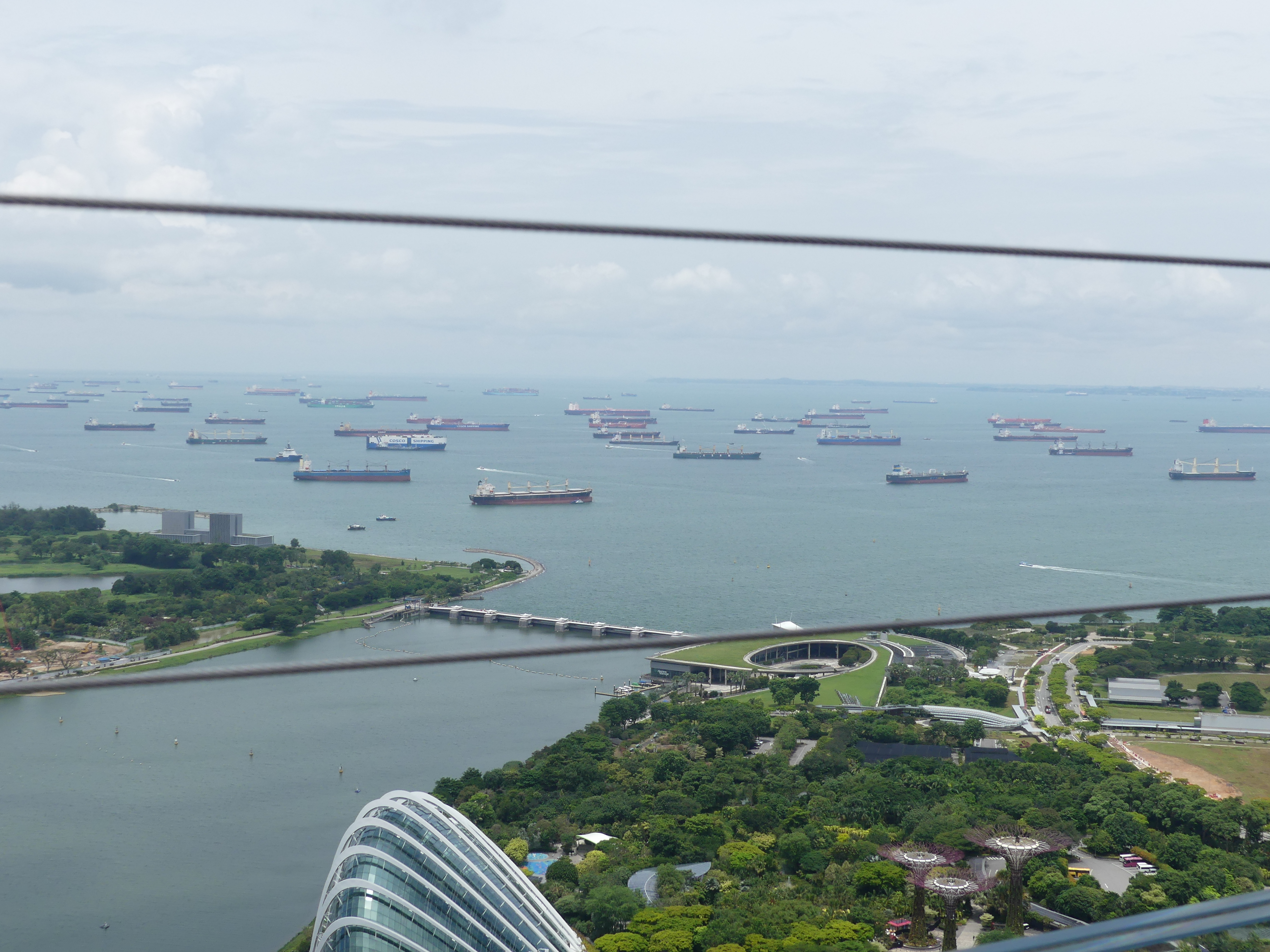
I took the next photo to show the ships at anchor.
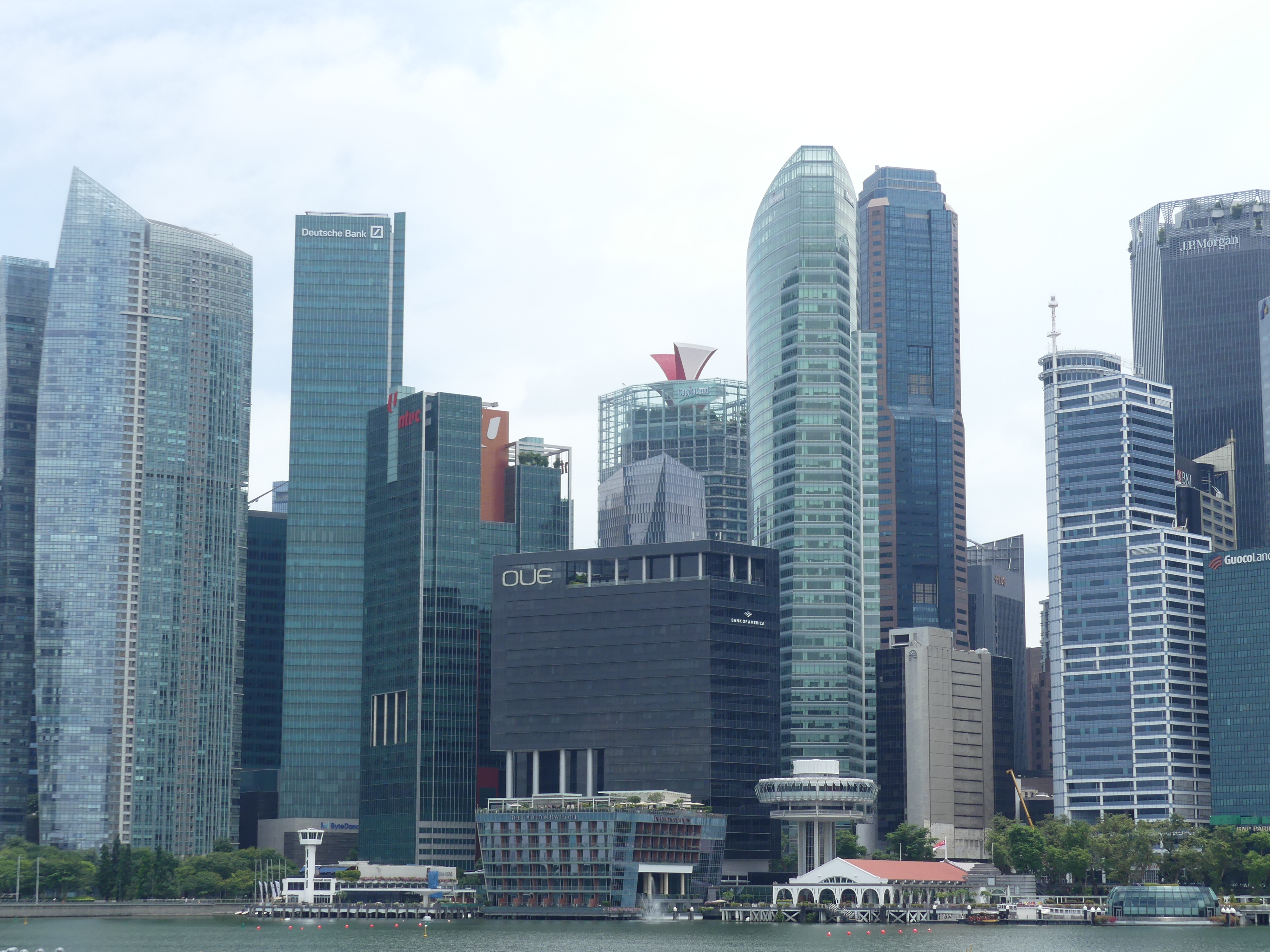
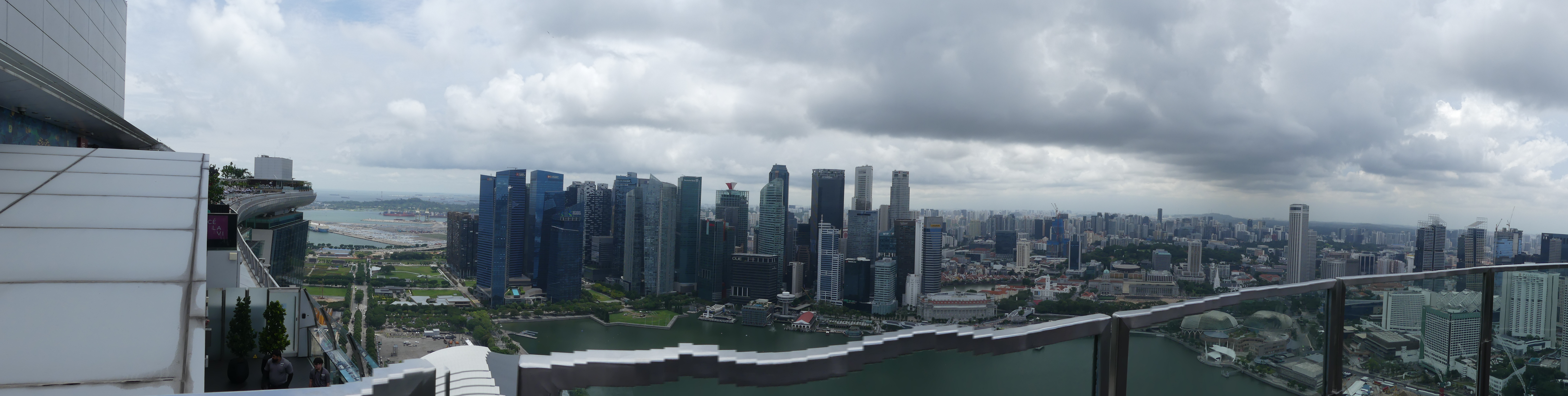
And another panoramic photo this time of the CBD.
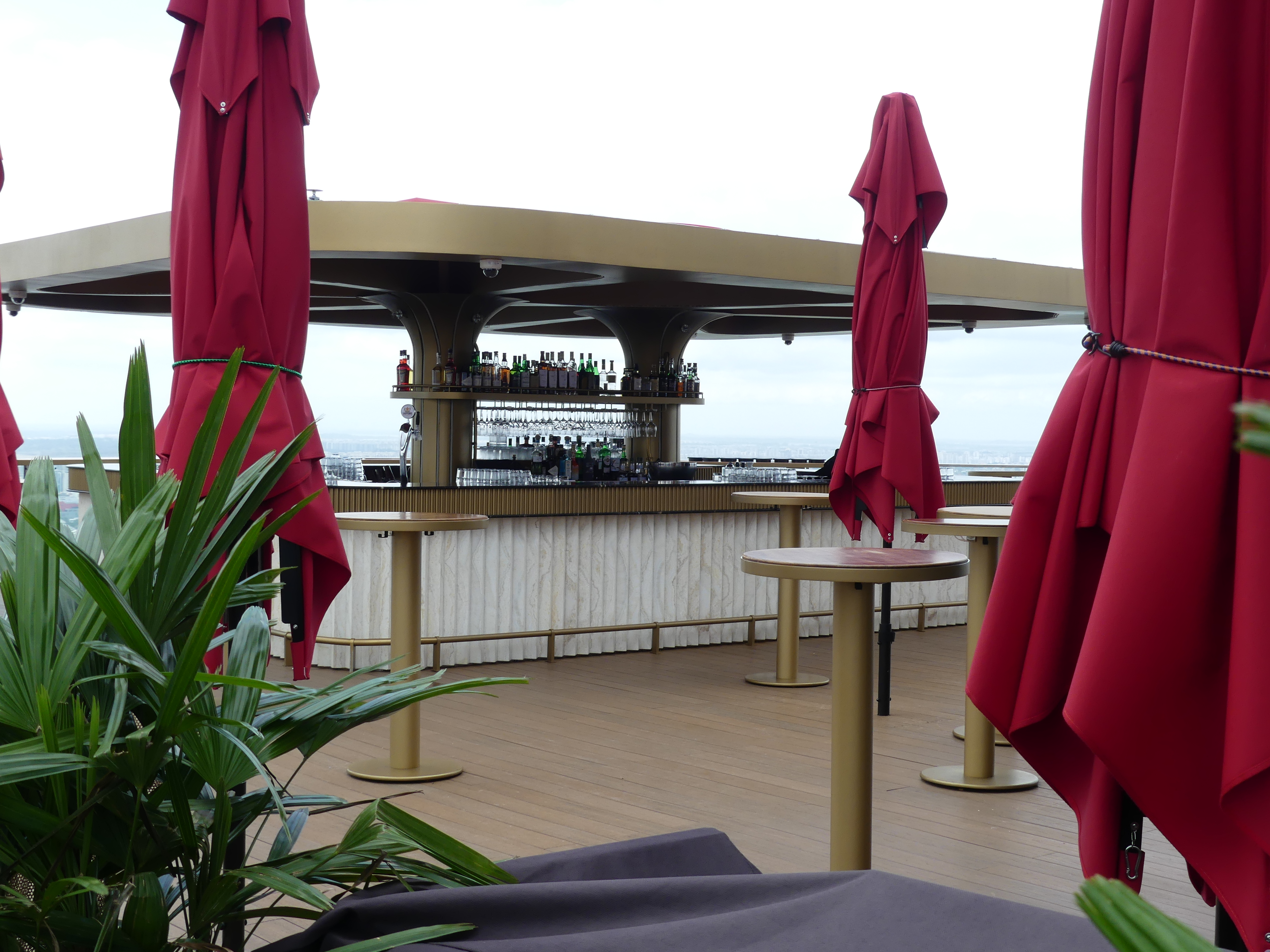
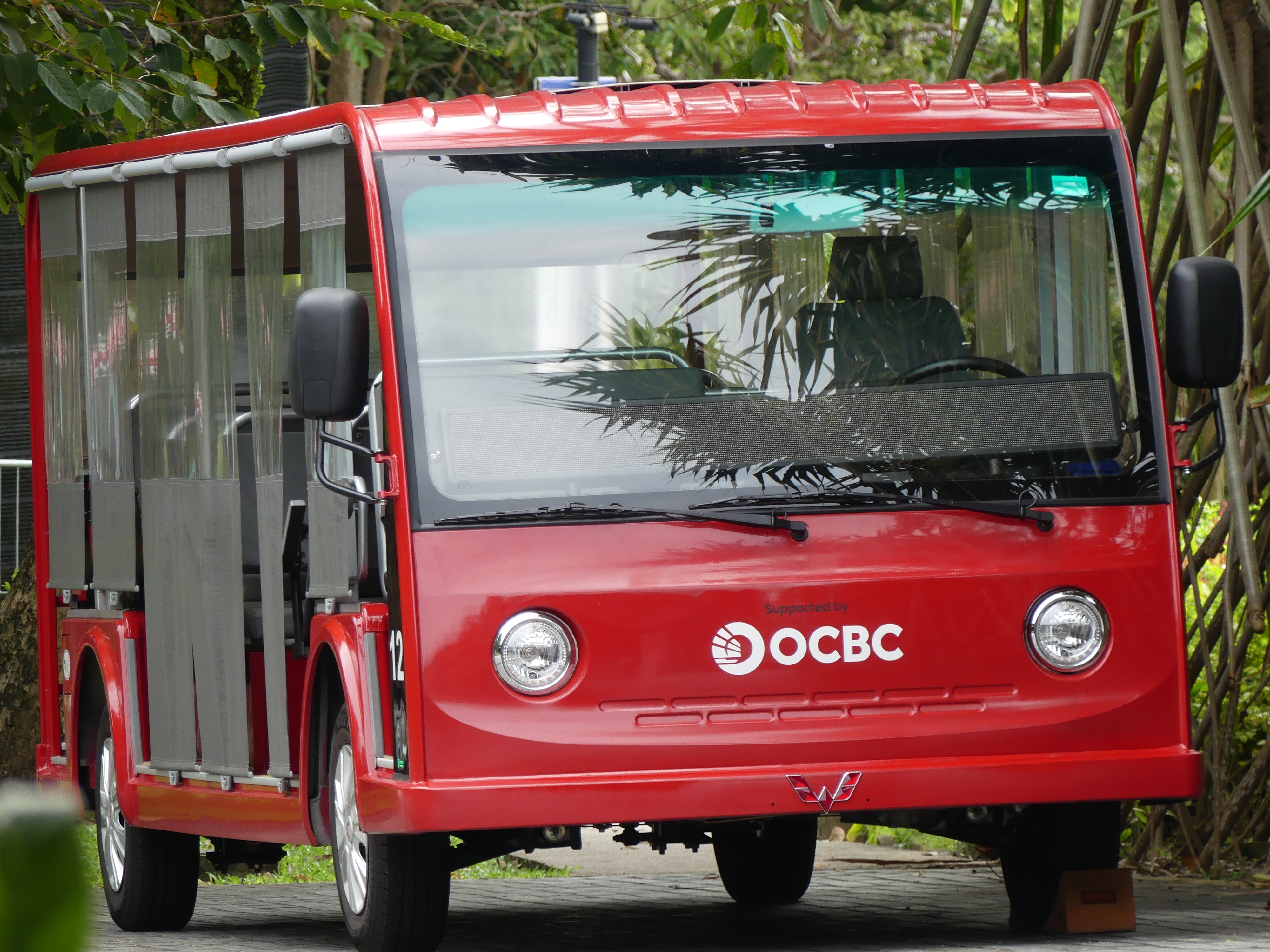
Behind the hotel is Gardens by the Bay an enormous botanic garden. Its website describes it as “Gardens by the Bay is a showpiece of horticulture and garden artistry that presents the plant kingdom in a whole new way, entertaining while educating visitors with plants seldom seen in this part of the world, ranging from species in cool, temperate climates to tropical forests and habitats.” It is so big that golf cart type transport is available and in the climate of Singapore and being on top of the Equator, they are necessary but not free. The bar was not open and we could see the residents were enjoying themselves so we decided to go and see the gardens.
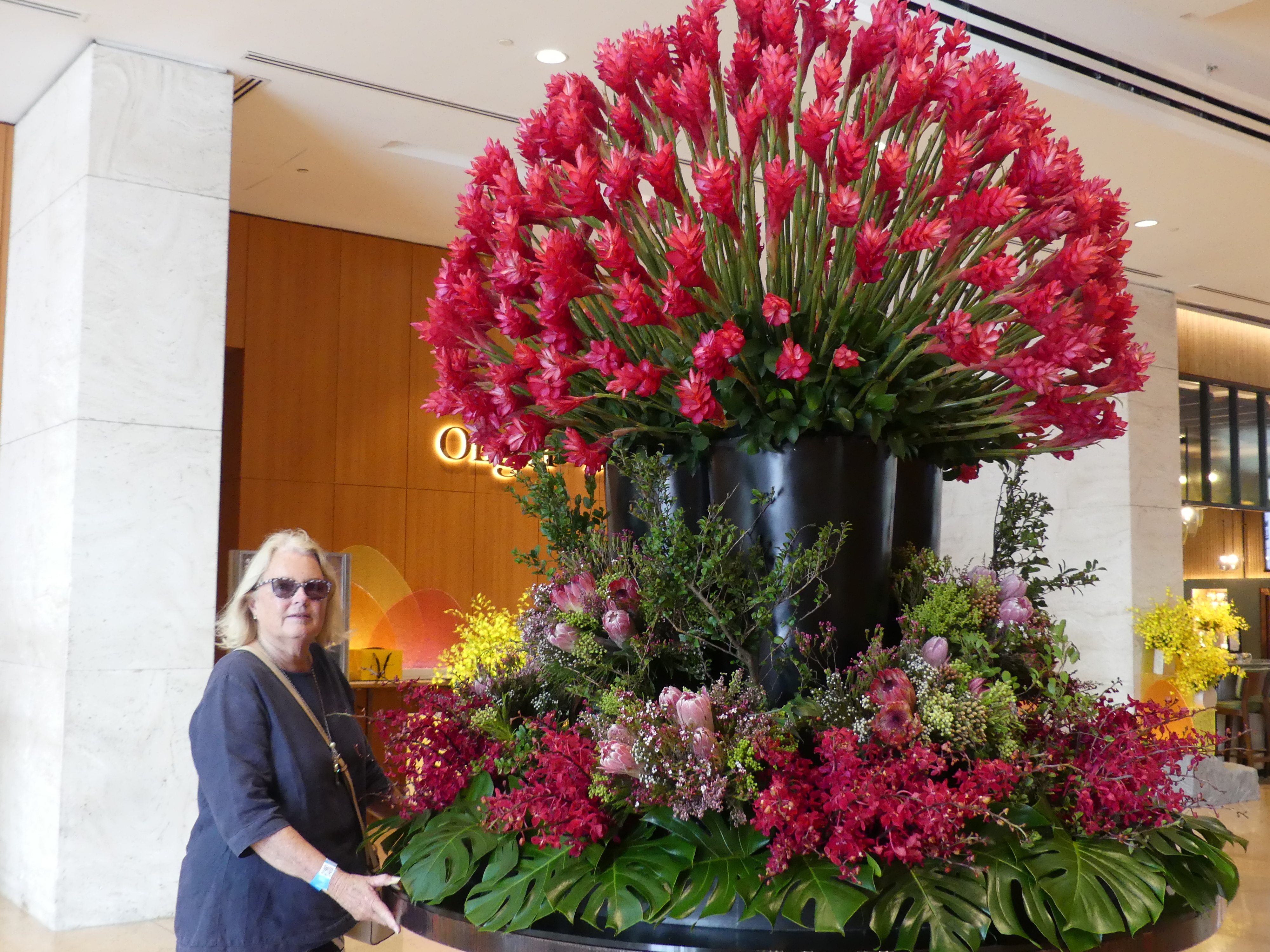
We returned to the ground to make our way through the crowd back to the exit to the gardens. We walked through the shopping mall again. At the reception to the hotel we came across a magnificent bouquet of flowers pictured below and there after my photos take you on the journey we followed just to find our way around the gardens.
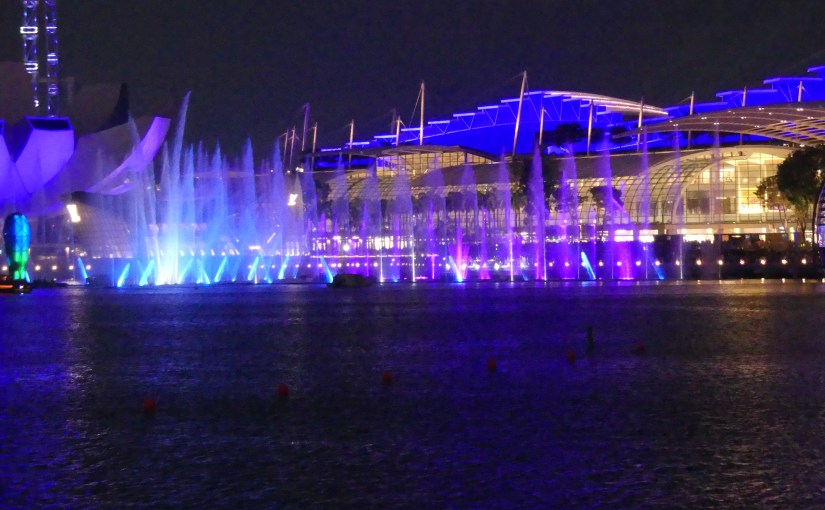
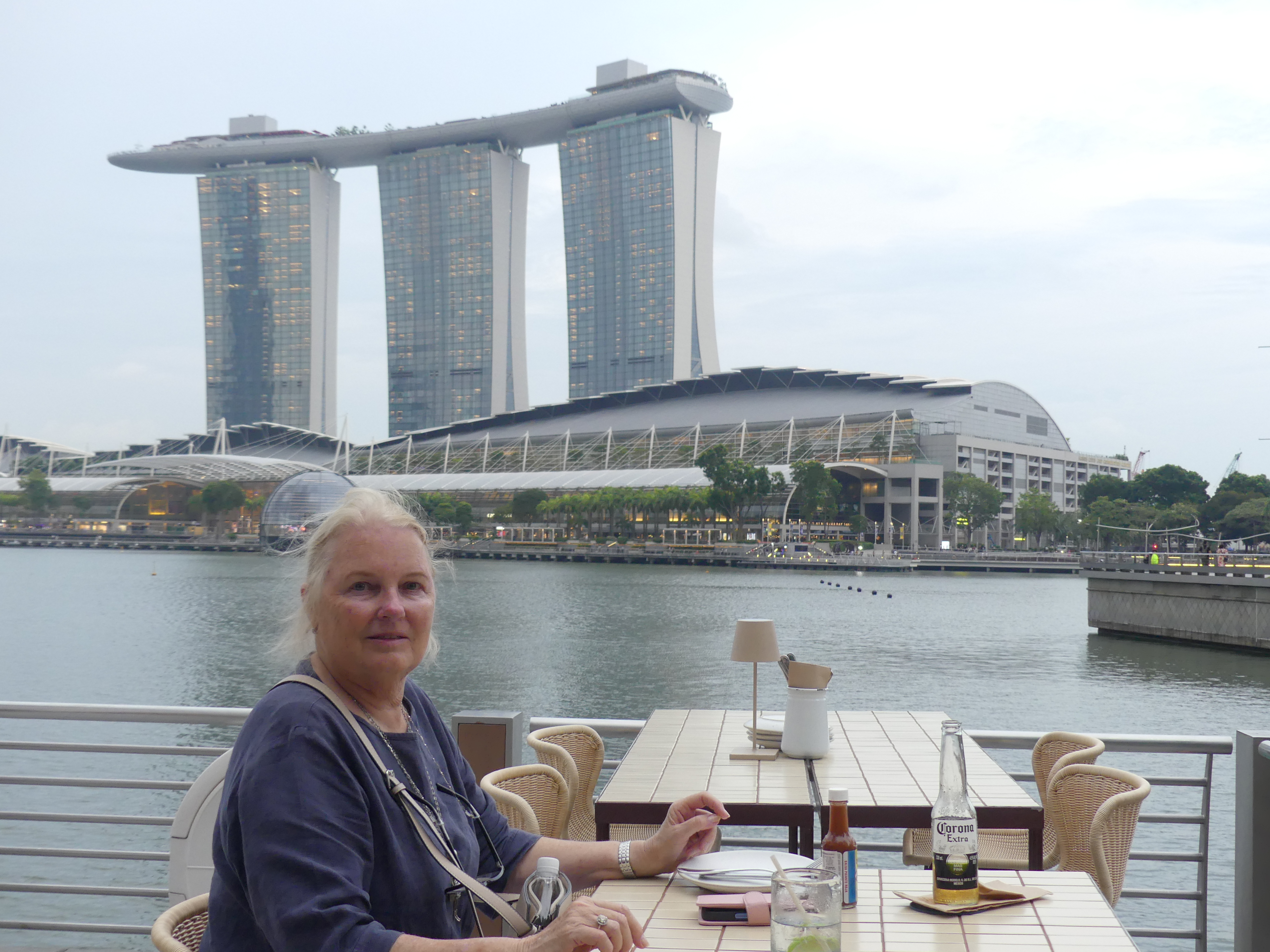
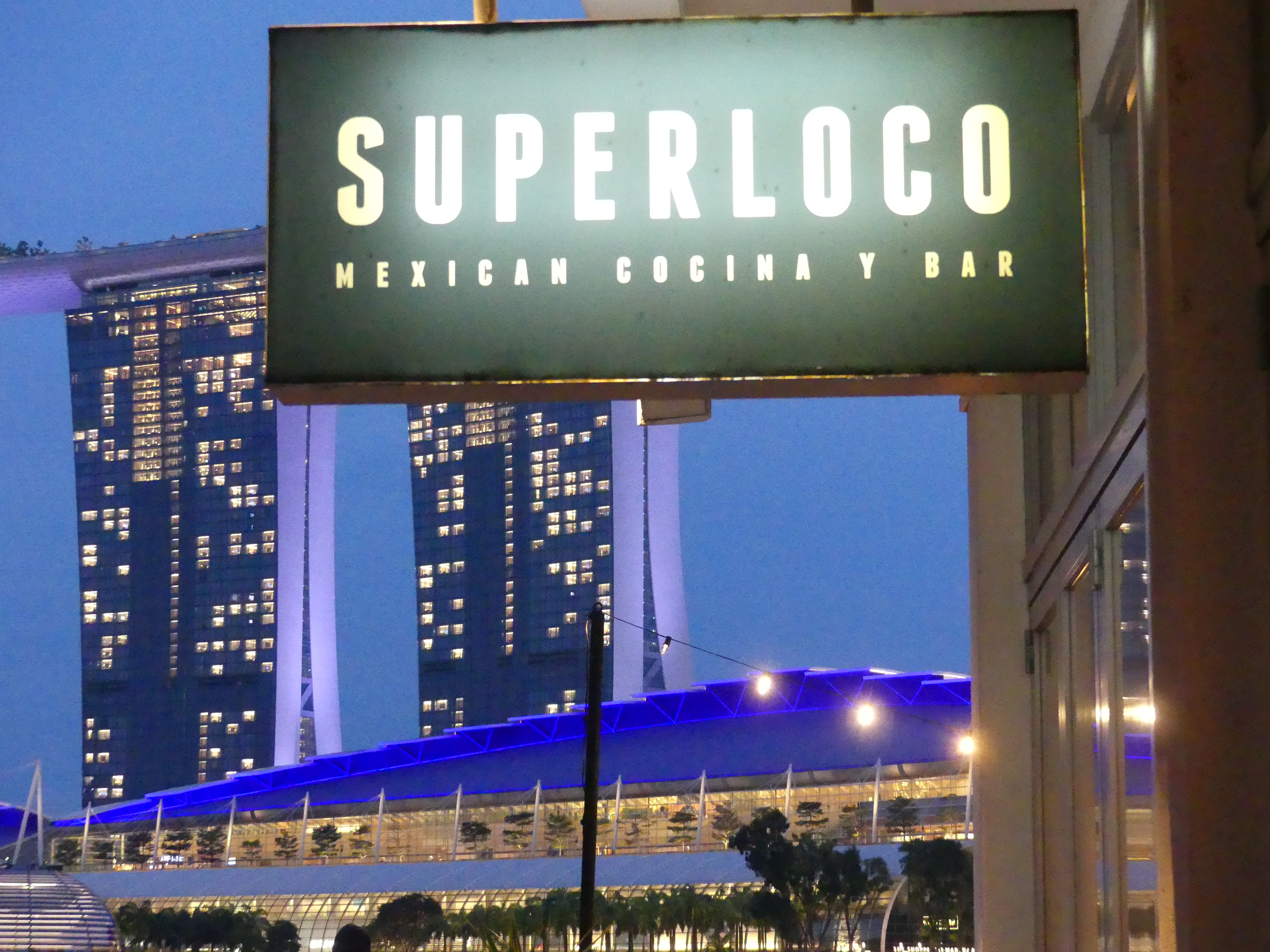
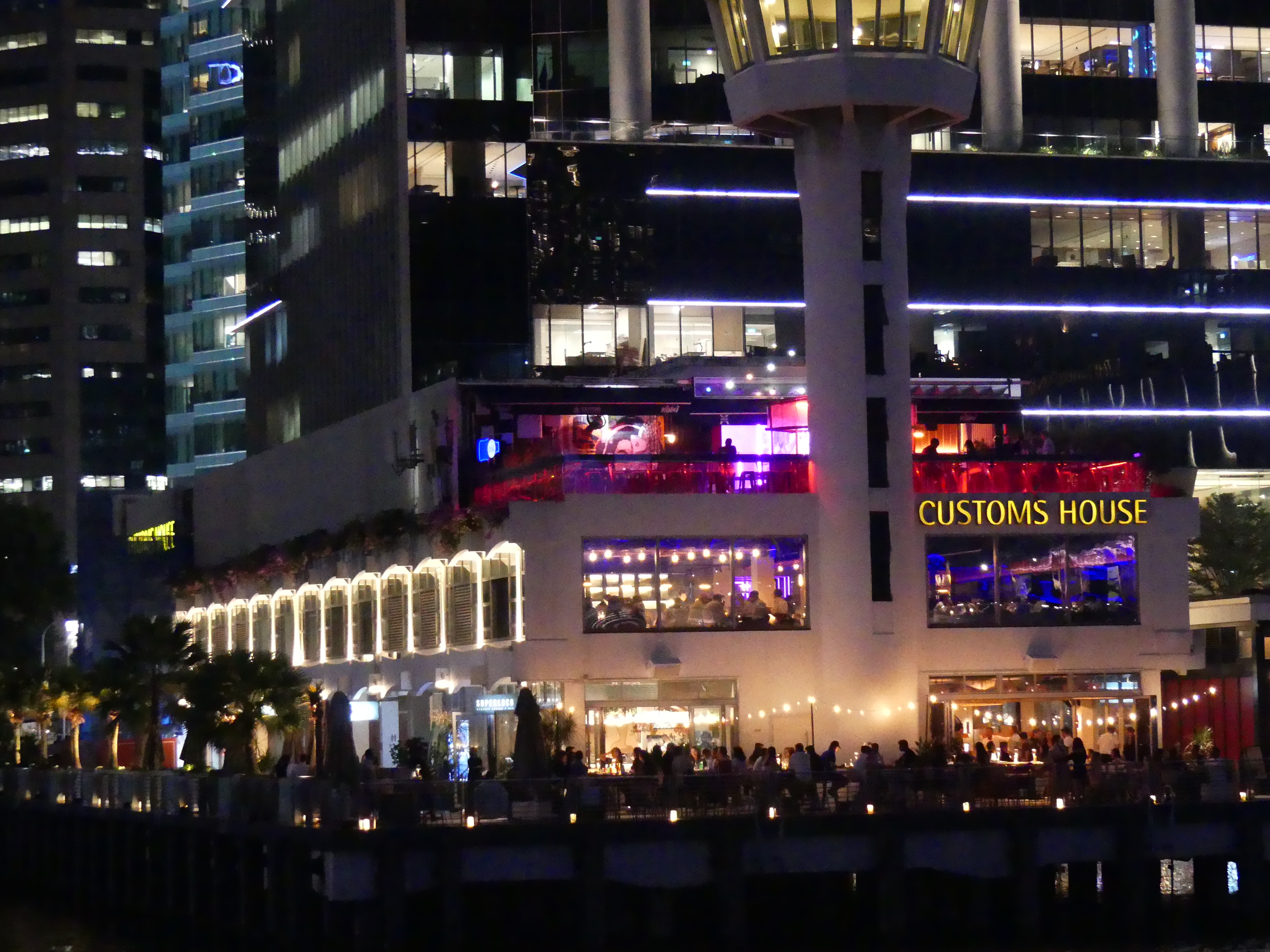
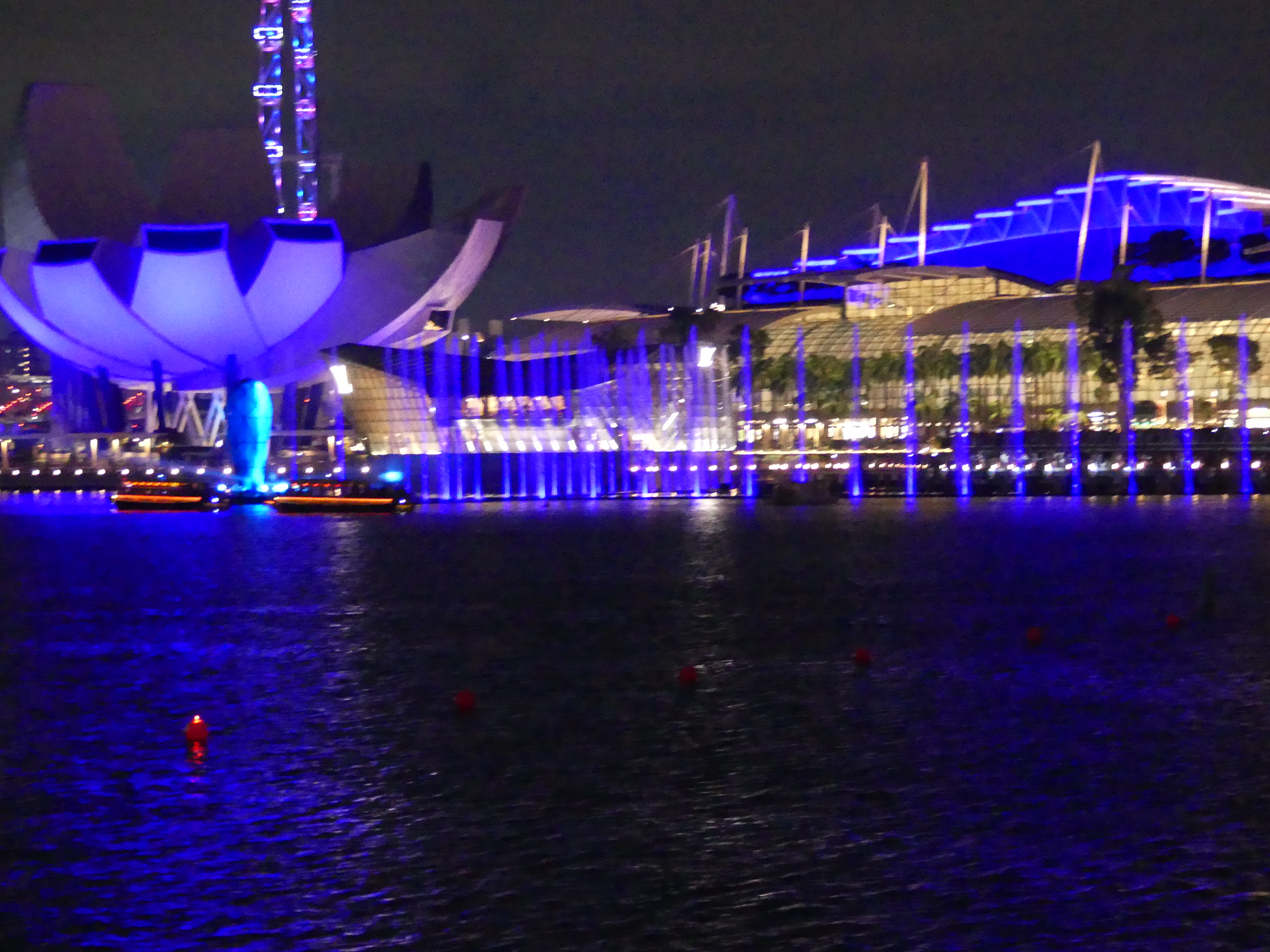
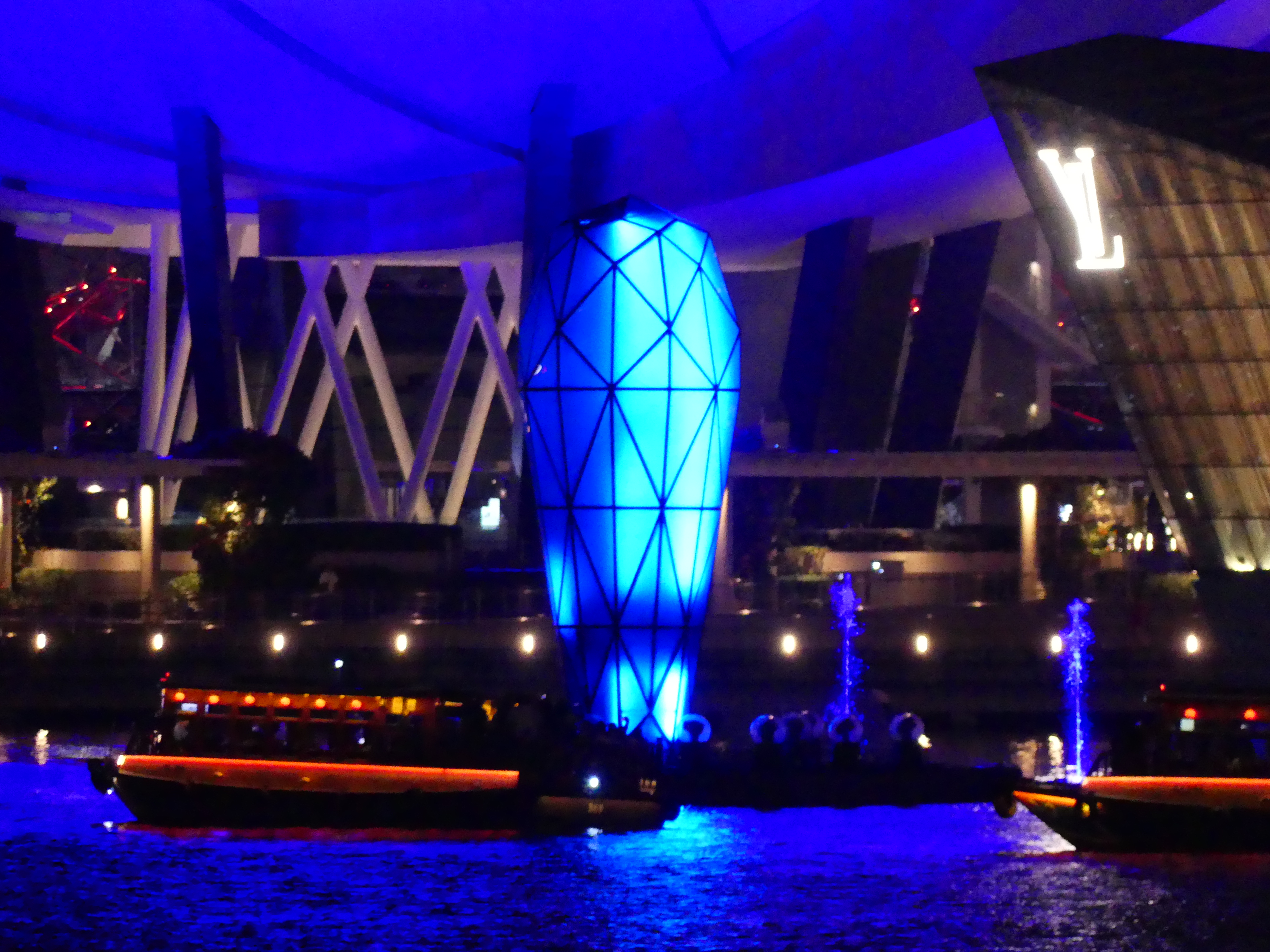
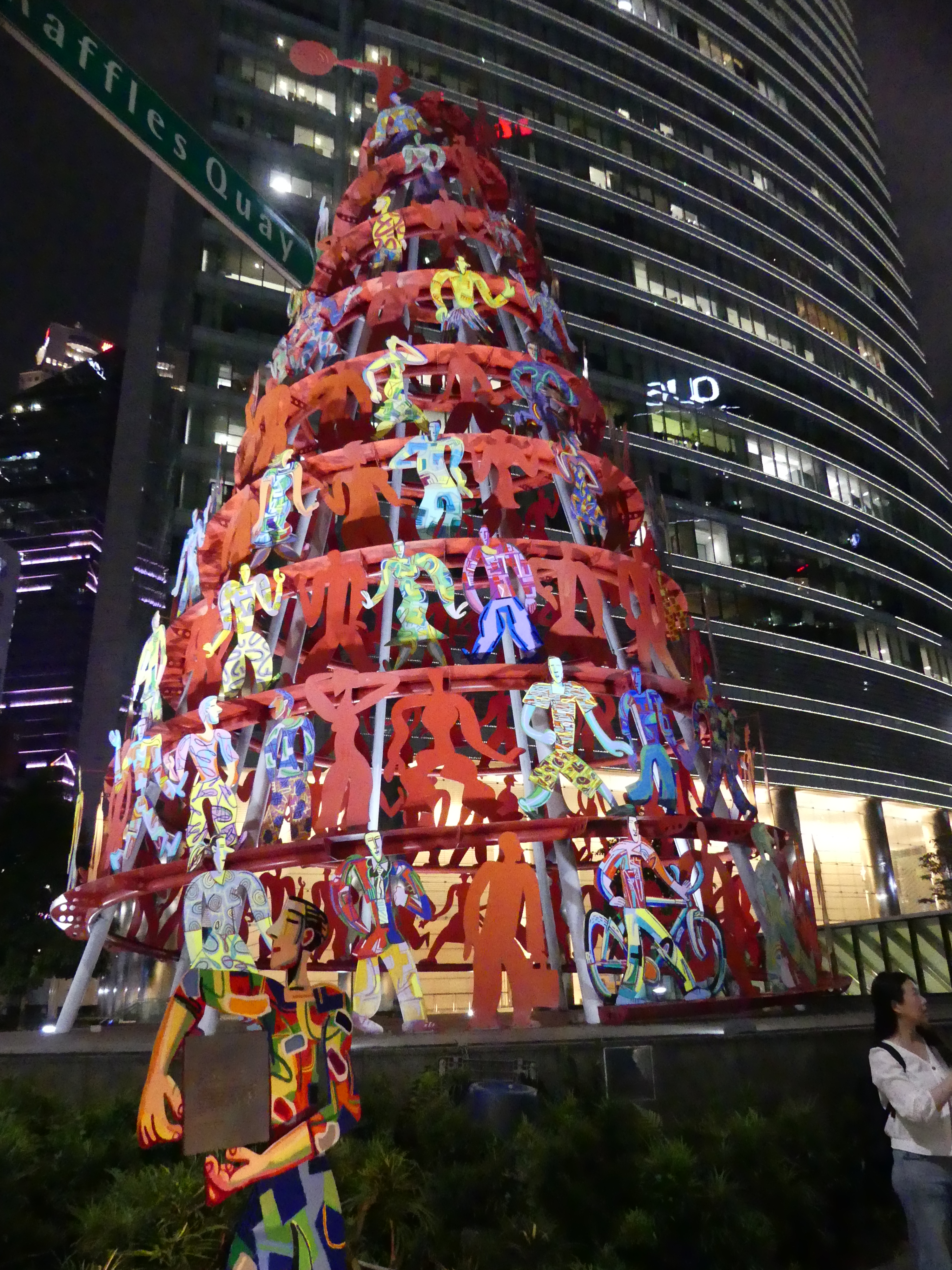
Although we did not get to see a great deal of the gardens, we were both tired and happy to return to the hotel and rest. We caught the bus back to the hotel planning to rest then walk to the bay for dinner and the light show. All went well and we were back at the old Customs House seated in a harbourside restaurant called Superloco to await the light show which we had been told would start around 7.30pm. After dinner we moved around into the adjoining park. My photos show our restaurant and the light show. When walking to the hotel we came across and illumination of a tree but it certainly was not yet Christmas.
Back in the hotel we rested till the following day. Catch up with Day 2 in Singapore when I post “THE RETIREES GO AROUND THE WORLD – Singapore Day 2“
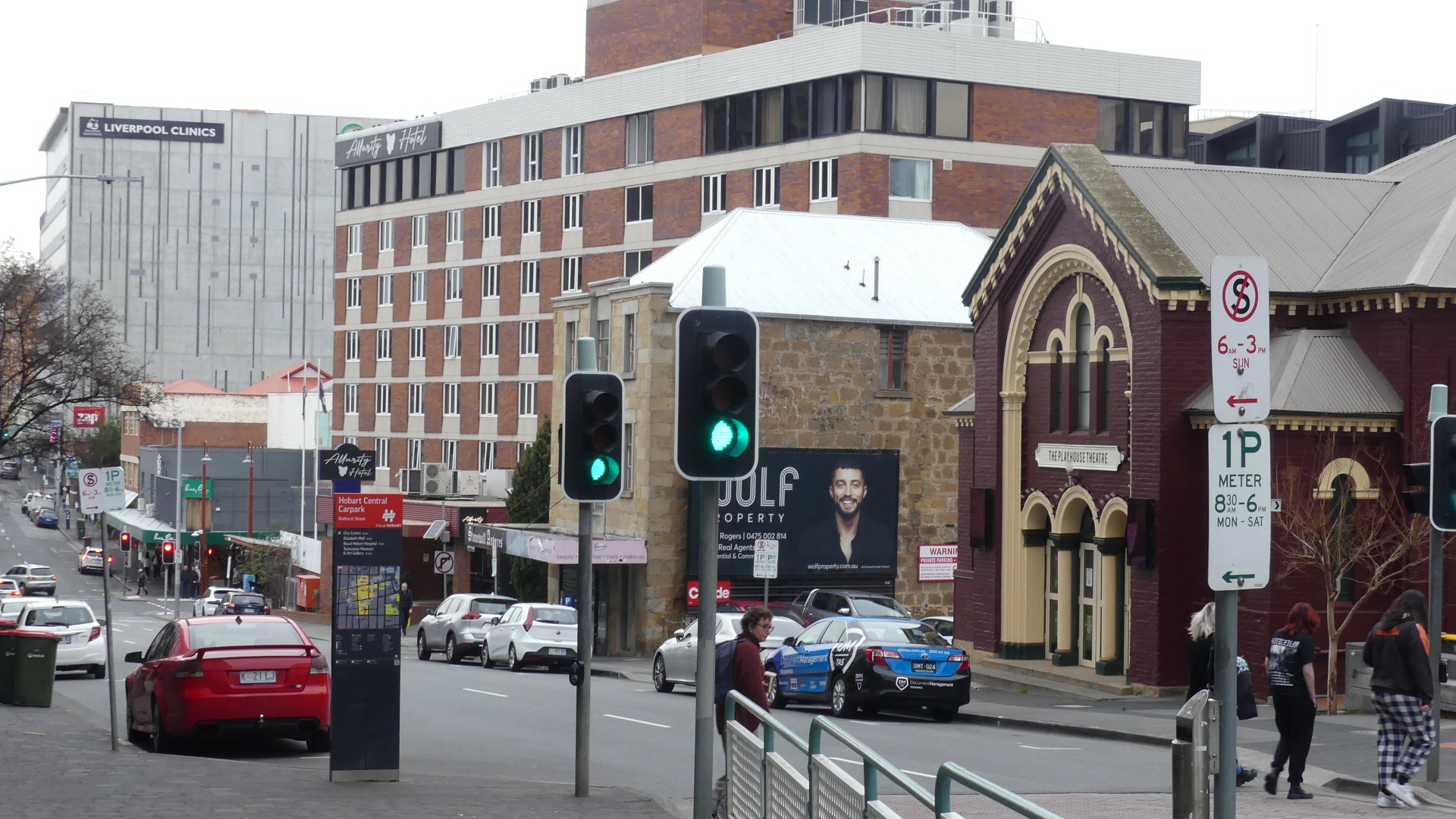
We were staying in the Allurity Hotel in Bathurst St and had dined nearby. It was a regular school day for Lola and a working day for Paul, so we decided to look around for a breakfast joint. Photo #1 (looking left to right) is the view from our bedroom window – the building had been converted from its former use of an office building to a hotel, and it had an unusual arrangement for the shower and toilet, but the bed was comfortable, and we were close to the CBD.
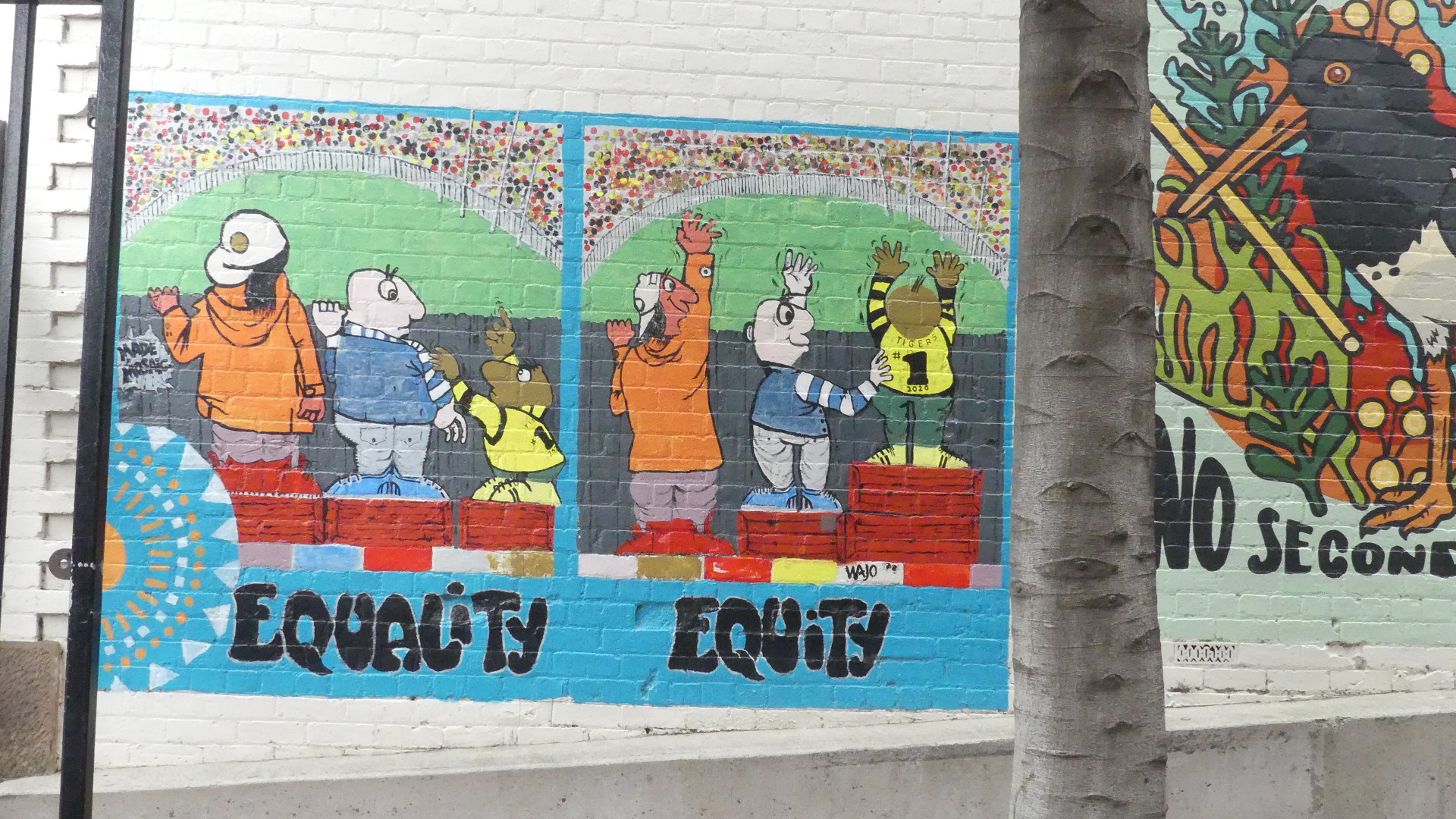
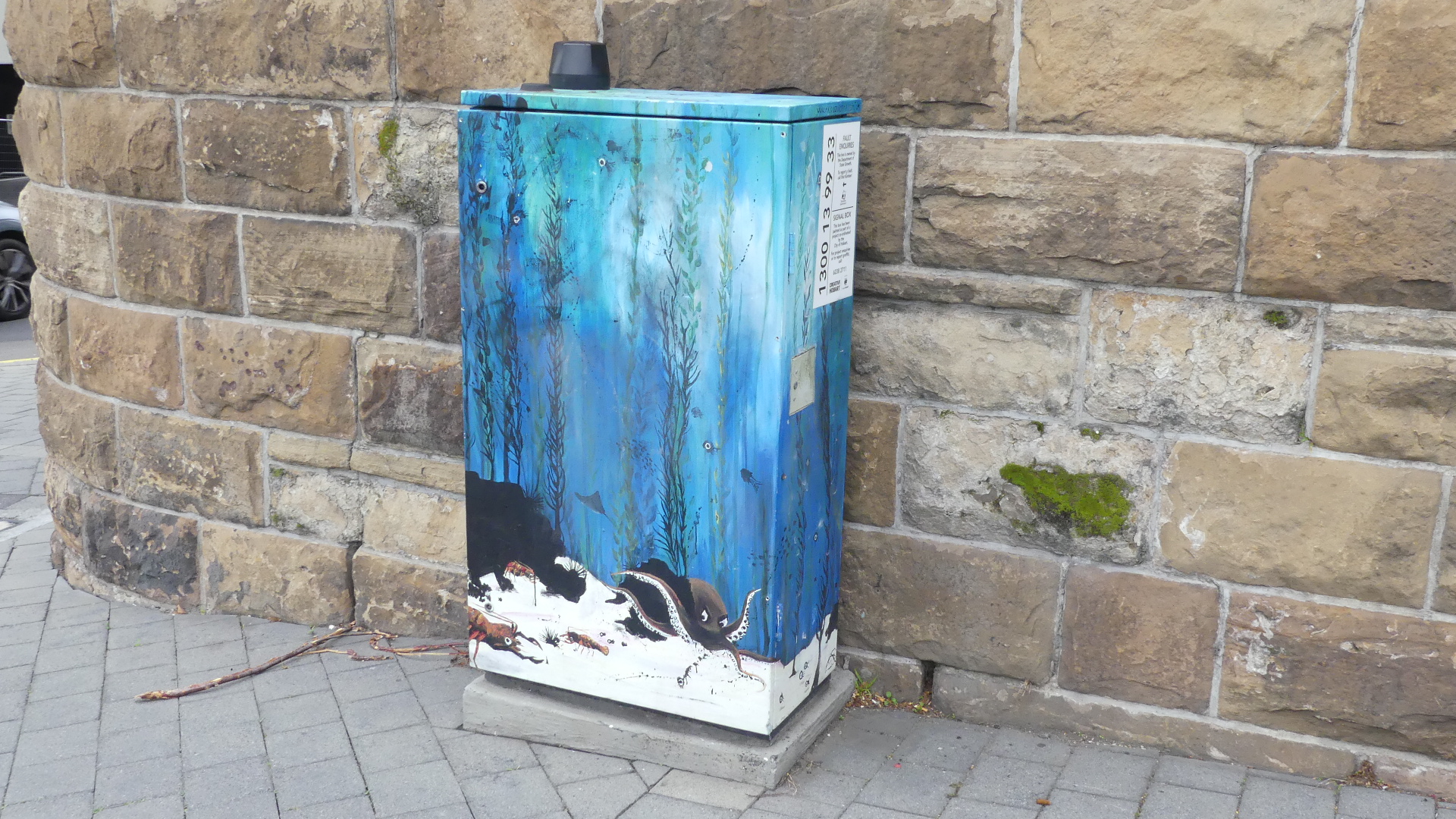
At first we walked up Bathurst St in the direction we had gone the night before and were pleasantly surprised by some of the street art. Photo #4 is the hotel and photos #2, 5, 6, & 7 some of the street art. Photo 7 is in a narrow lane and getting a clear picture a challenge.
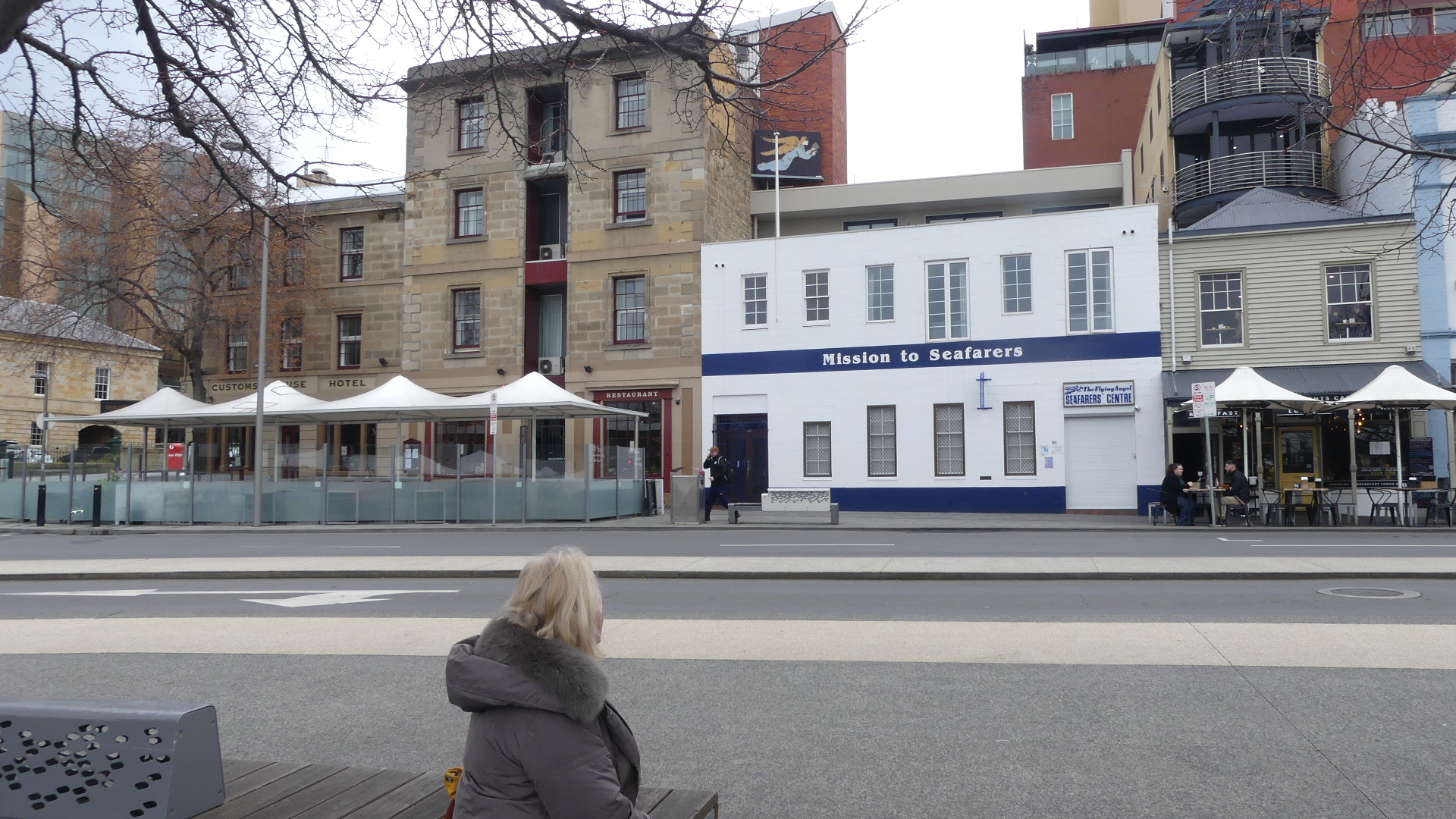
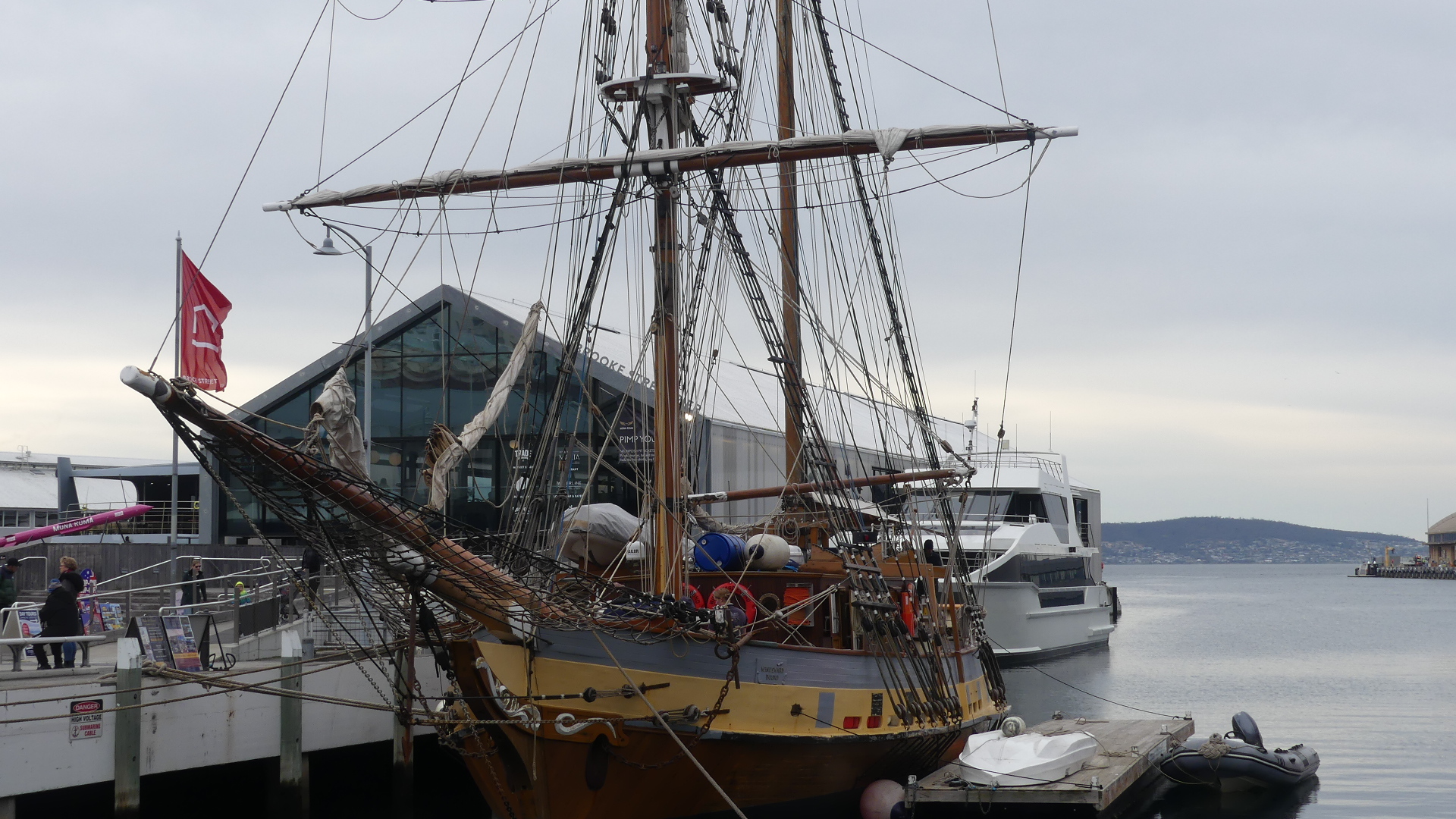
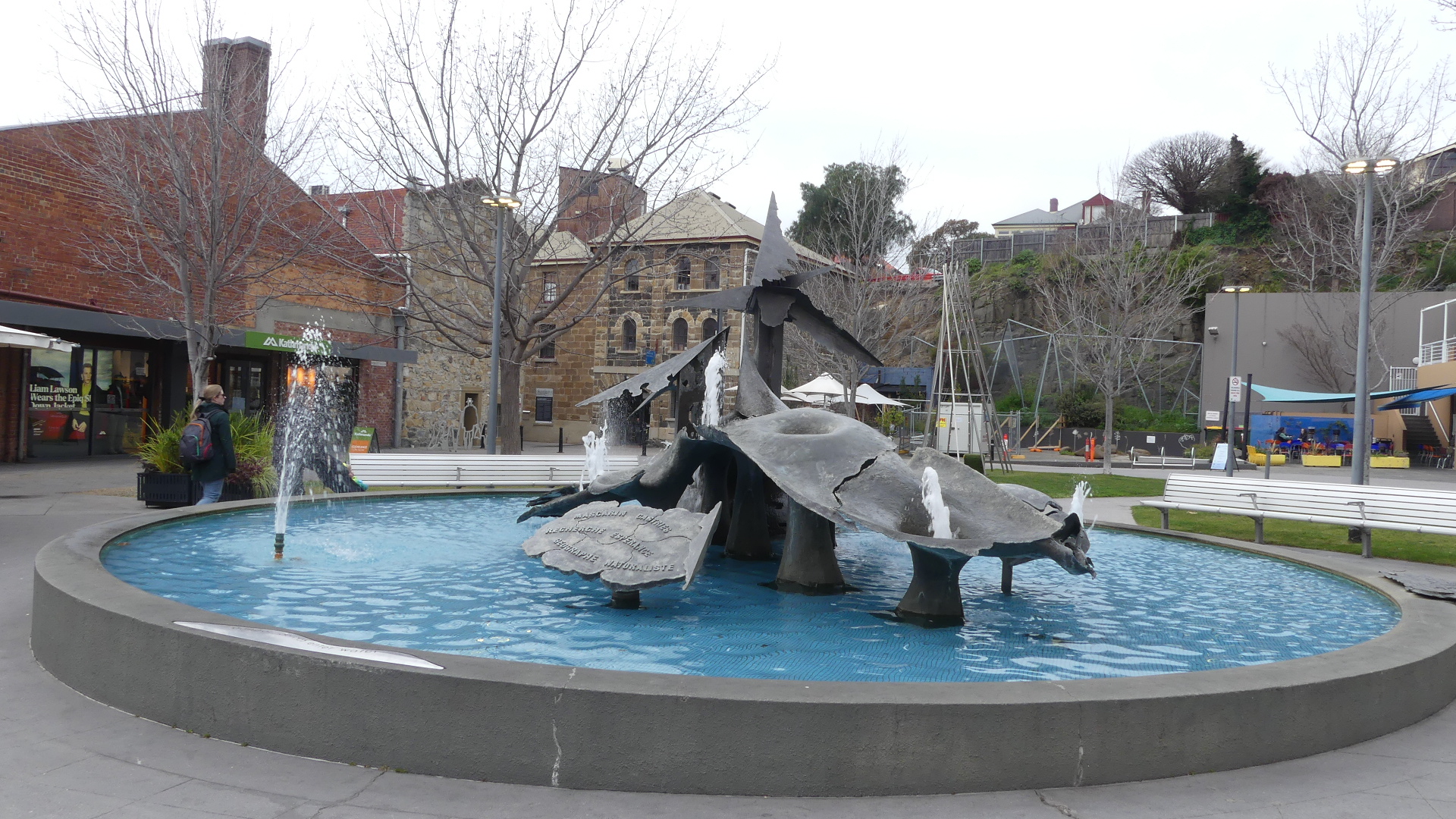
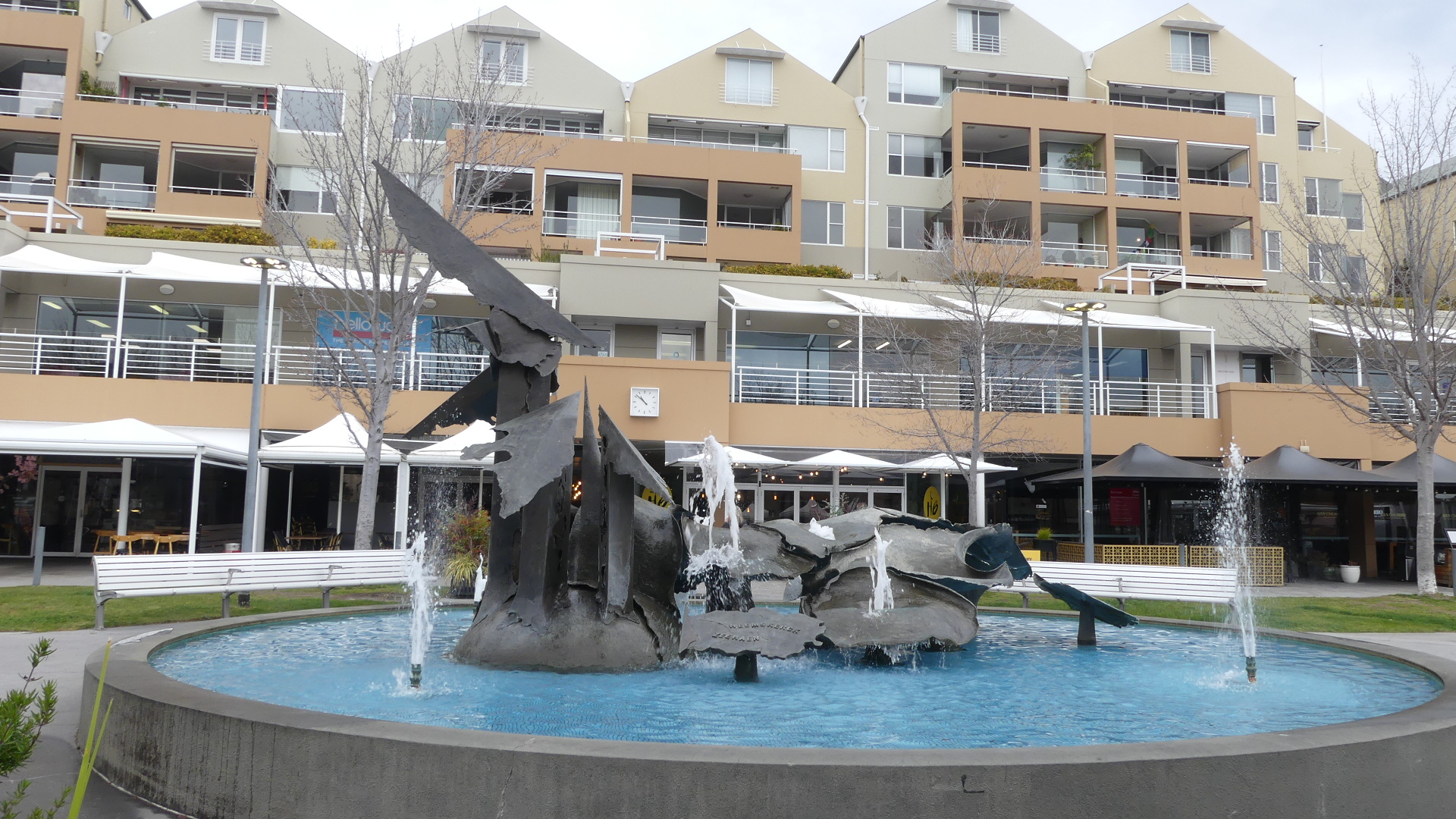
We found a cafe serving breakfast and then moved onto towards and into Salamanca Markets which were not open but it meant there were no crowds. We walked down Elizabeth St passed the Post Office – a 19th century styled building, and onto the Seafarers Centre and the Mission to Seafarers in the midst of Salamanca its Custom House, wharves and chandleries. A piece of history of sailing ship and sailors lost in many cities Photos 9, 10, & 11. What has helped preserve the history is the construction behind the historic buildings providing residences and work places photos 12, 13, & 14.
We found the site of the American Embassy from the times of the sailing ships in one of those lanes but apart from the plaque and the story it told there is nothing of the embassy.
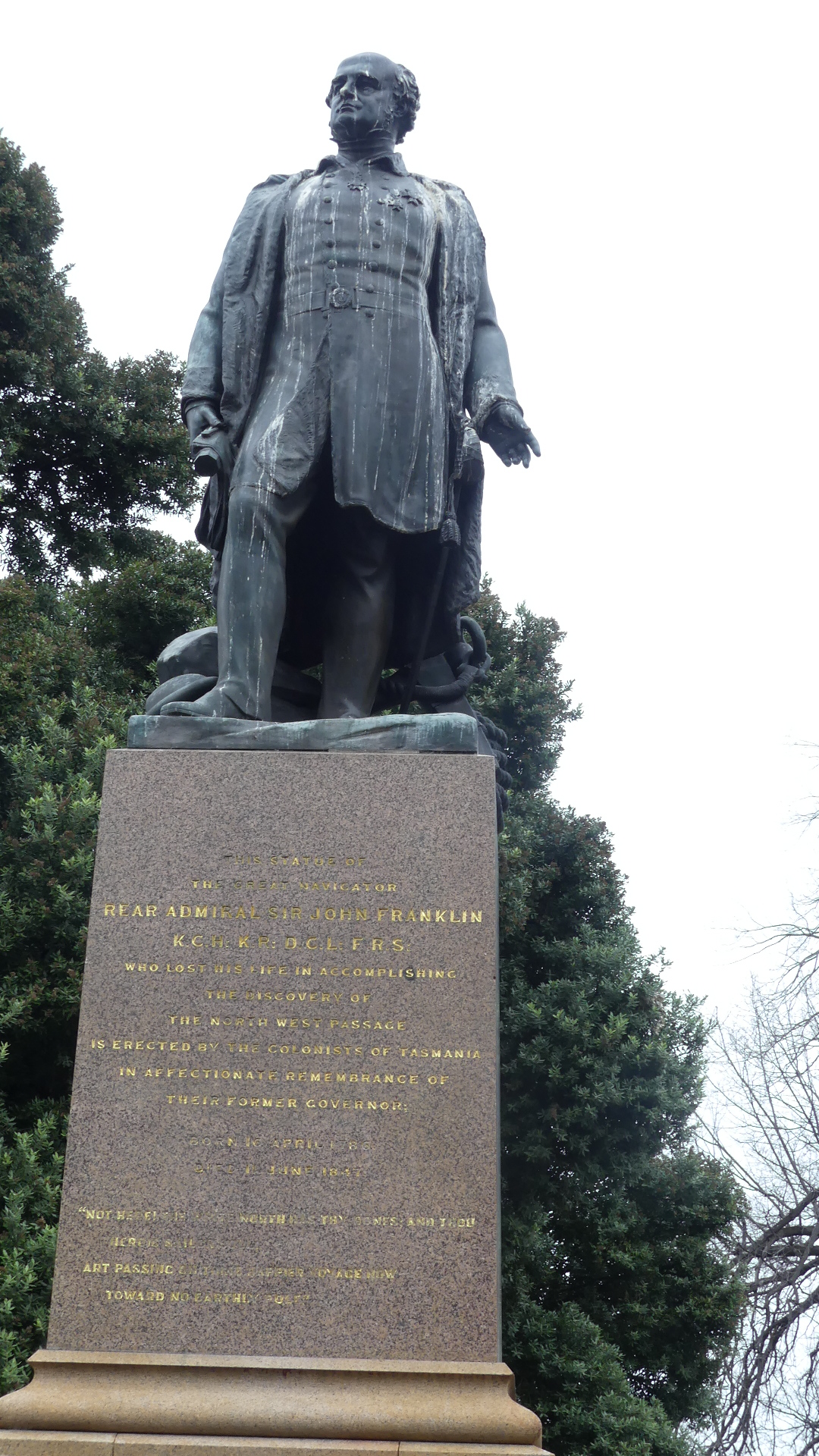
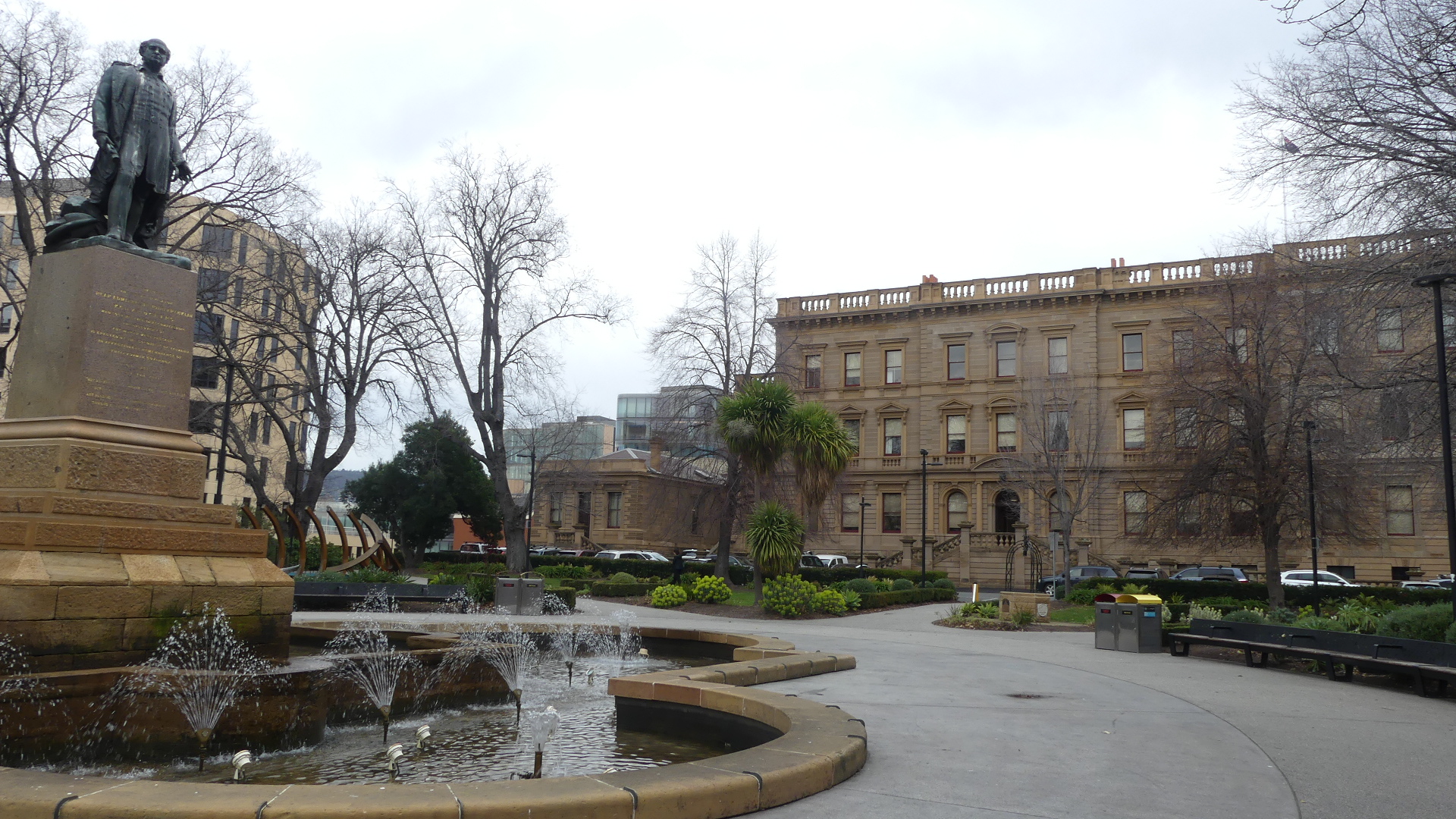
As we made our way back to our hotel we walked through the park Franklin Square which we had passed by going to Salamanca. Who was it that is remembered by the statue in the park photos 15, & 16. The statue commemorates Sir John Franklin (1786-1847), Lieutenant Governor of Van Dieman’s land. Sir John Franklin was appointed Lieutenant-Governor of Van Dieman`s Land in 1837. Sir John established a State education system, founded the Tasmanian Natural History Society (which became the first scientific Royal Society to be established outside Britain) and subsidised the Tasmanian Journal of Natural History. During his period in office, Tasmania became the intellectual hub of the Australian colonies. There may be some doubt about that claim but that is what I found out on Monument Australia – https://monumentaustralia.org.au/.
After his Tasmanian appointment he conducted two significant polar explorations, the first in 1845 and the second in 1847 in his attempt to discover the North West Passage. The statue was intended to commemorate the governorship of Tasmania by the great Arctic navigator, Sir John Franklin.
In 1847, Franklin reminded the Admiralty of its promise that his having held a civil post should not debar him from further naval service. The Admiralty kept its word. At 59 he was too old for Arctic exploration and died on this expedition, in the HMS Erebus, which was beset in the ice-pack off the coast of King William’s Land, on 11 June 1847, in sight of the North-West Passage which he had first set out to find nearly thirty years before. Franklin and 128 sailors aboard the HMS Erebus and HMS Terror perished in the Royal Navy’s worst polar expedition disaster.
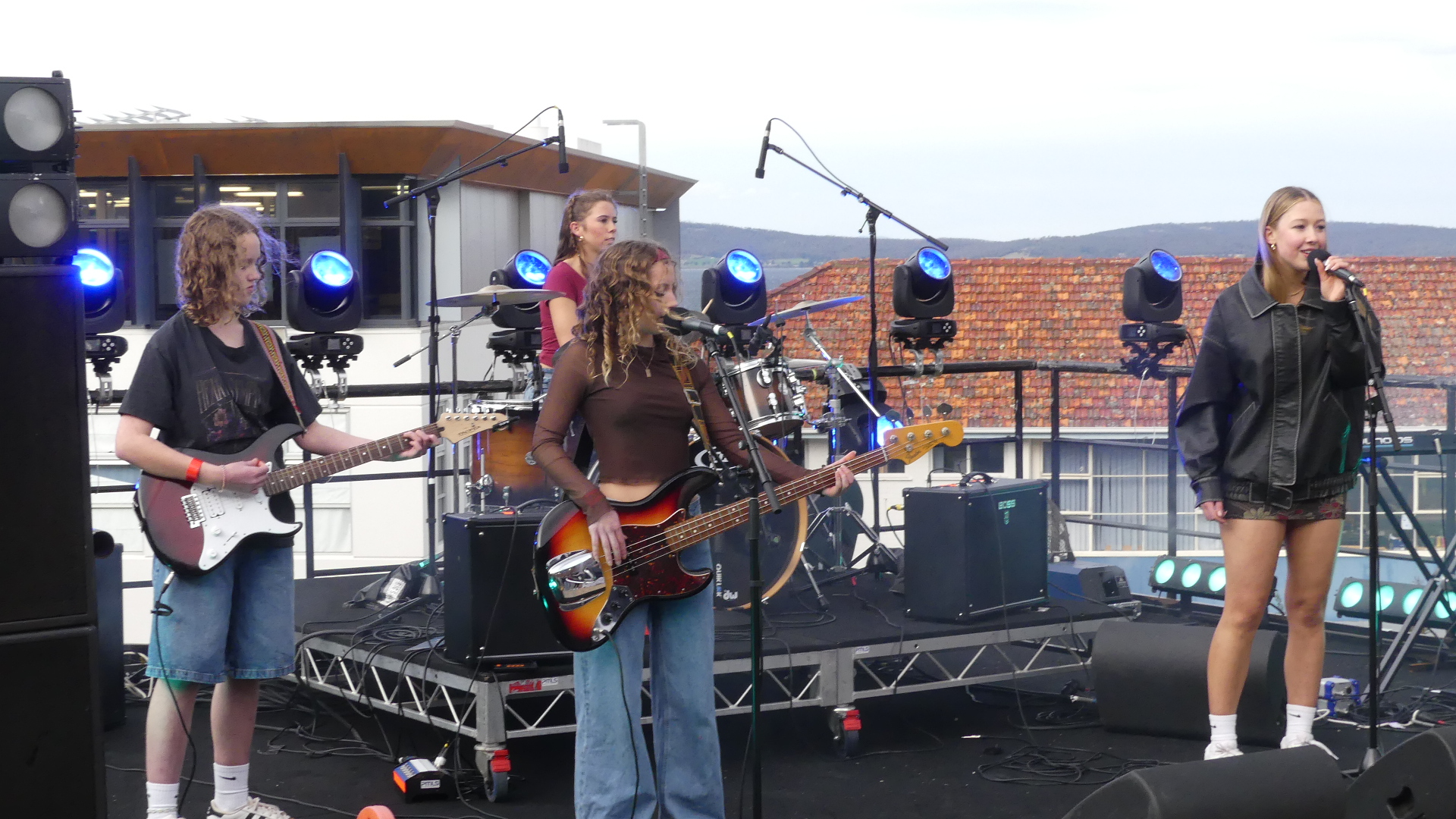
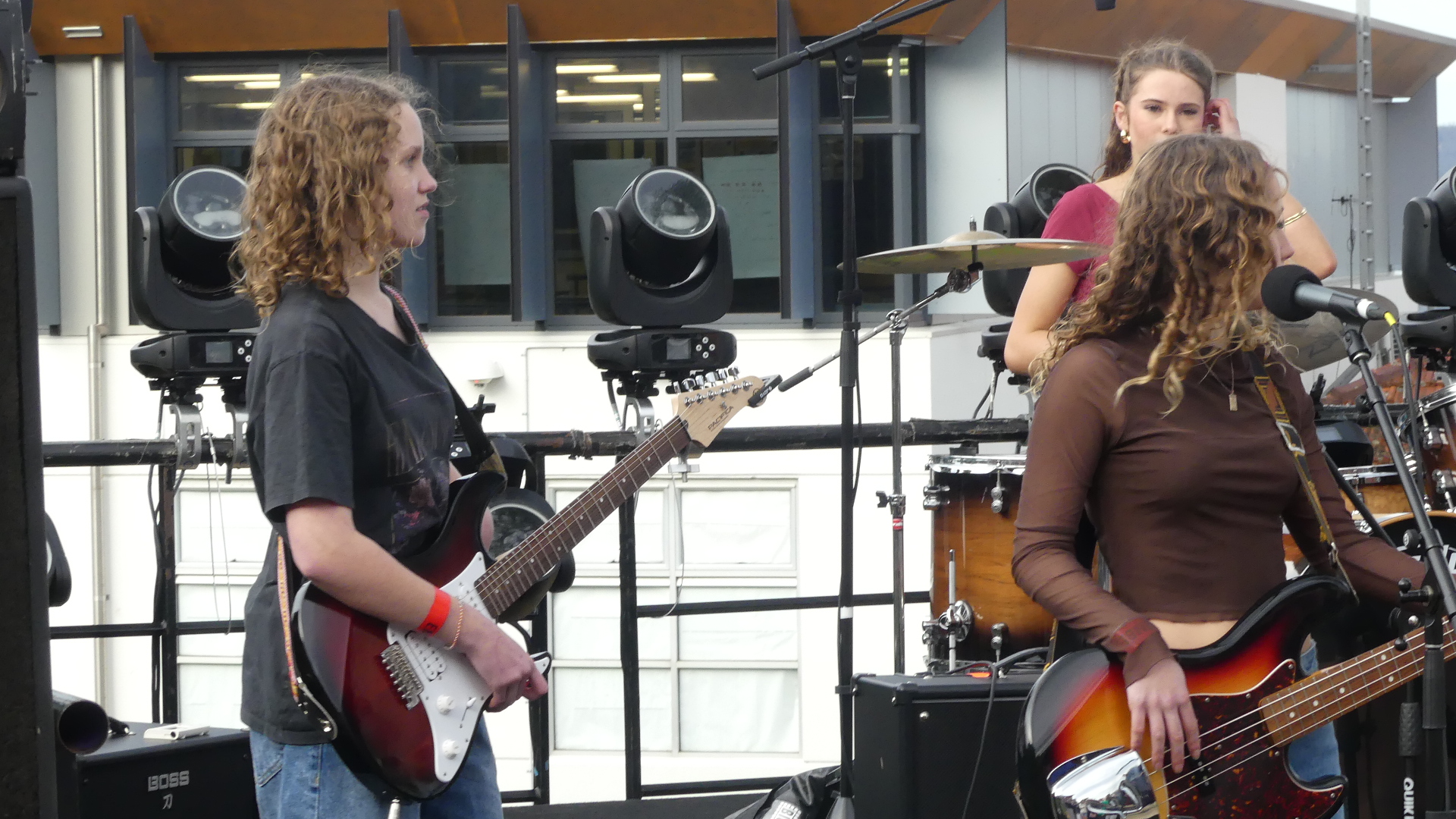
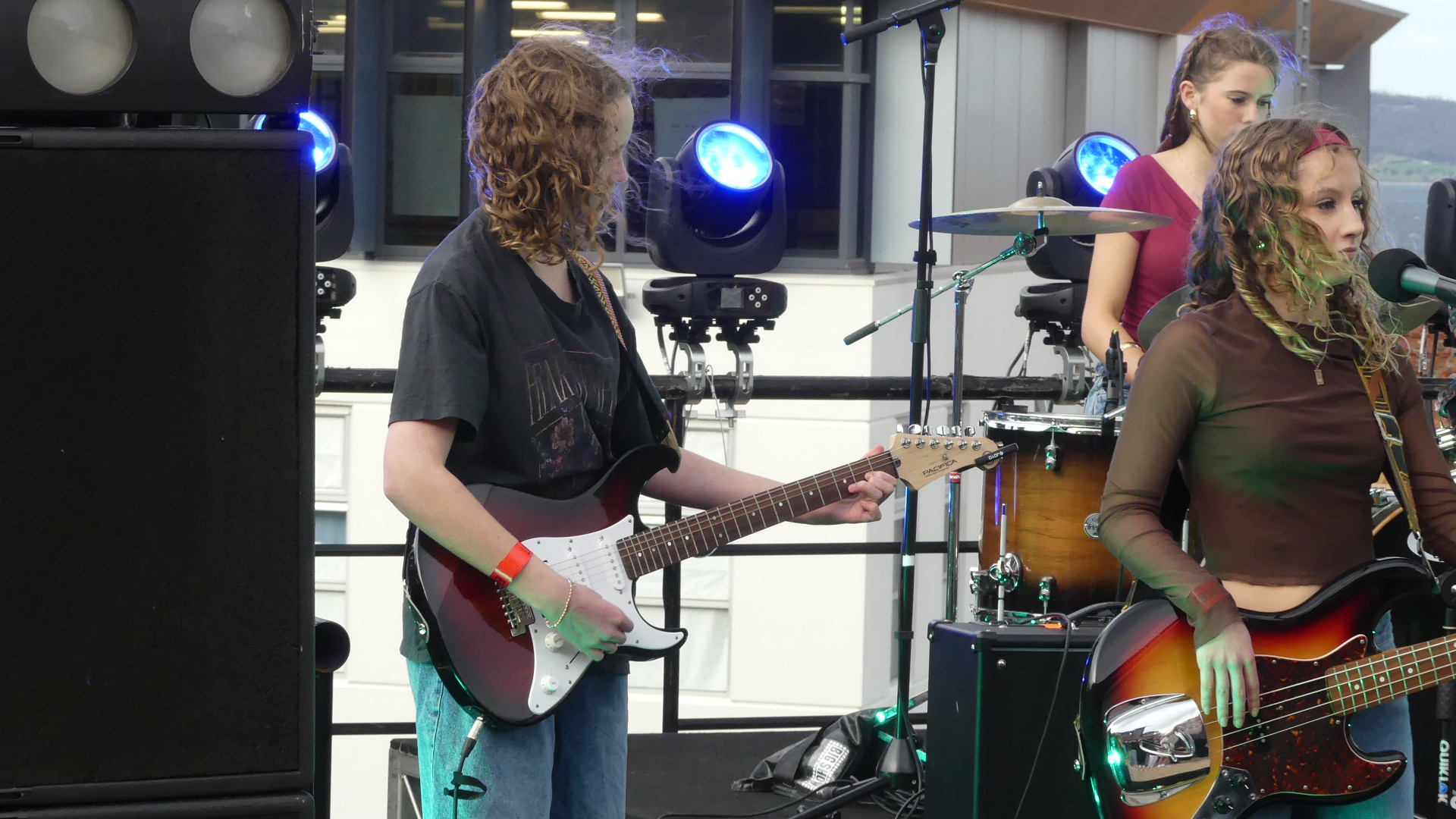
We had a rest while waiting for Paul to call to take us to Lola’s performance. Lola attends Taroon State High School situated on picturesque Little Sandy Bay near Dixon’s Beach. You can see through the headlands at the mouth of the Derwent River and that means you look directly south to Antarctica and the winds from the south howl through – bloody cold. The programme was arranged so that each band played two numbers and whilst they were playing the next band was setting up at stage 2. The band sounded quite good and were roundly applauded by their school mates and thank god it was over quickly – we were not dressed for this weather. We left Lola Paul, her mum Emily and sister there to enjoy the celebrations that followed returning to the hotel. Paul and Lola would later pick us up for dinner.
Next morning we had booked a tour to take us to Tahune Forest on the Huon River.
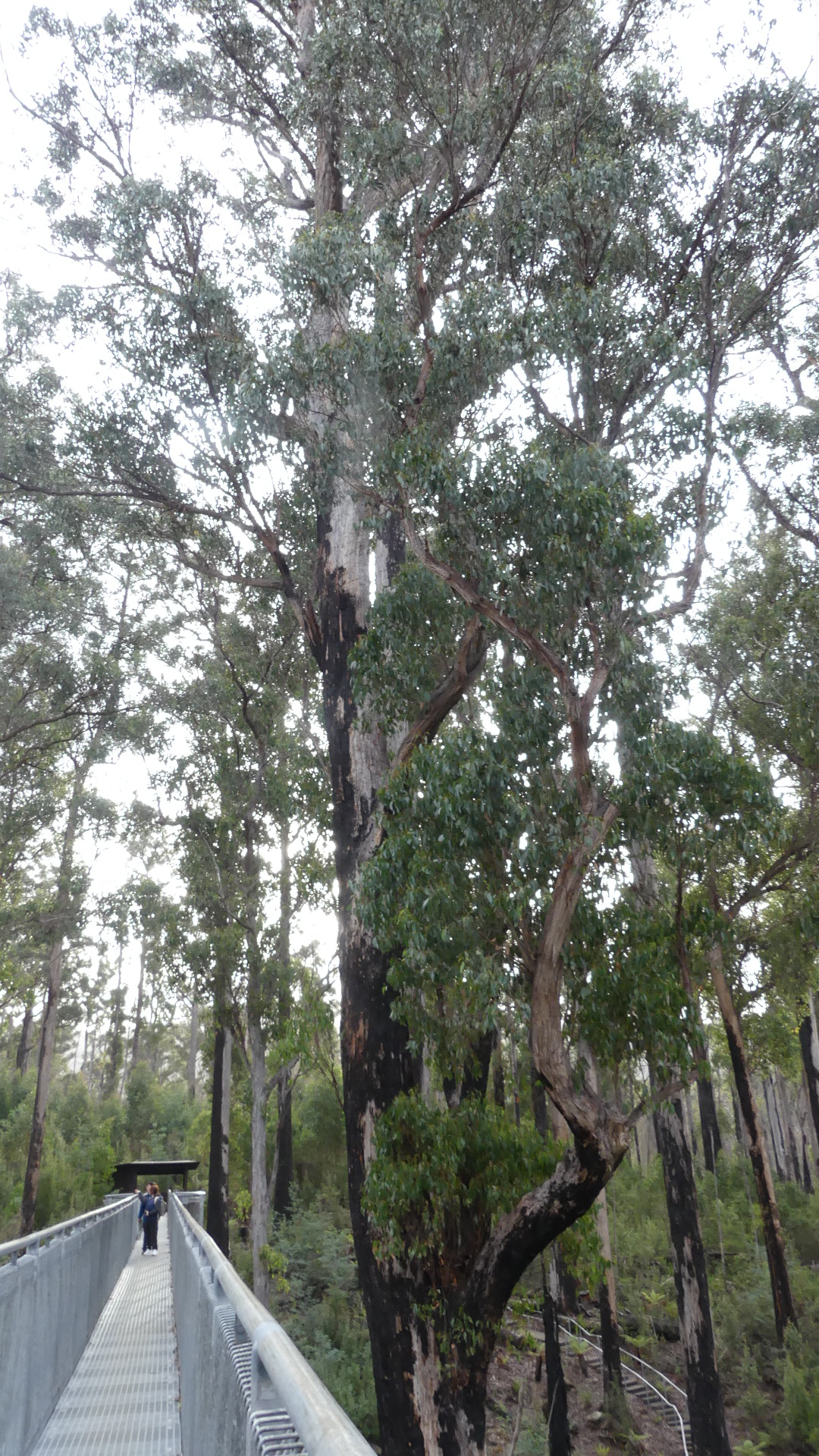
Tasmania is known for towering trees. In fact, the second tallest tree in the world lives here (according to the Tasmanian Tourist Bureau and Tahune Adventures. So it’s no surprise that the Tasmanian government went through the trouble to build the Tahune Airwalk.
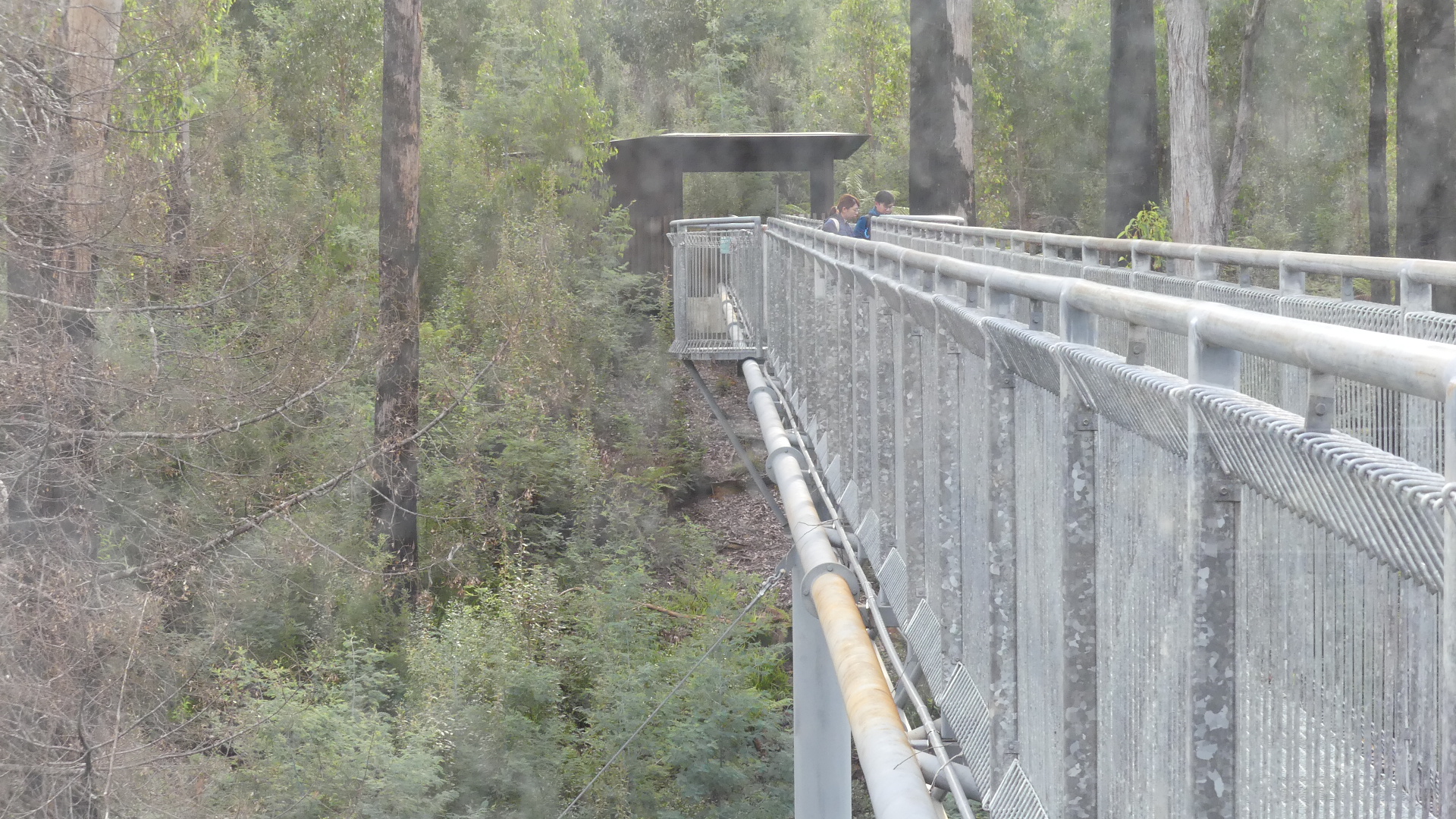
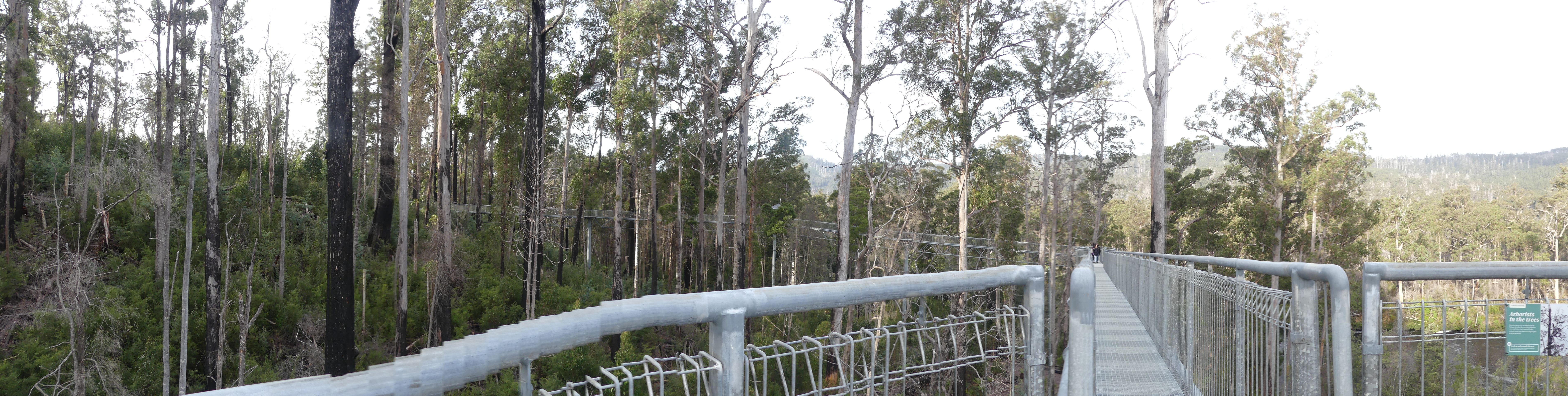
Built amongst the treetops in the Huon River Valley, the Tahune Airwalk takes you 50 metres above the forest floor. From here, you’ll be able to see across the verdant valleys that earn Tasmania the nickname ‘Apple Island.’
The morning did not start well with Kerry needing a day off. So on my lonesome I walked up the hill to the pick up missed the pickup but saved the day by a phone call to the operators of the tour – Tahune Adventures – http://www.tahuneadventures.com.au.
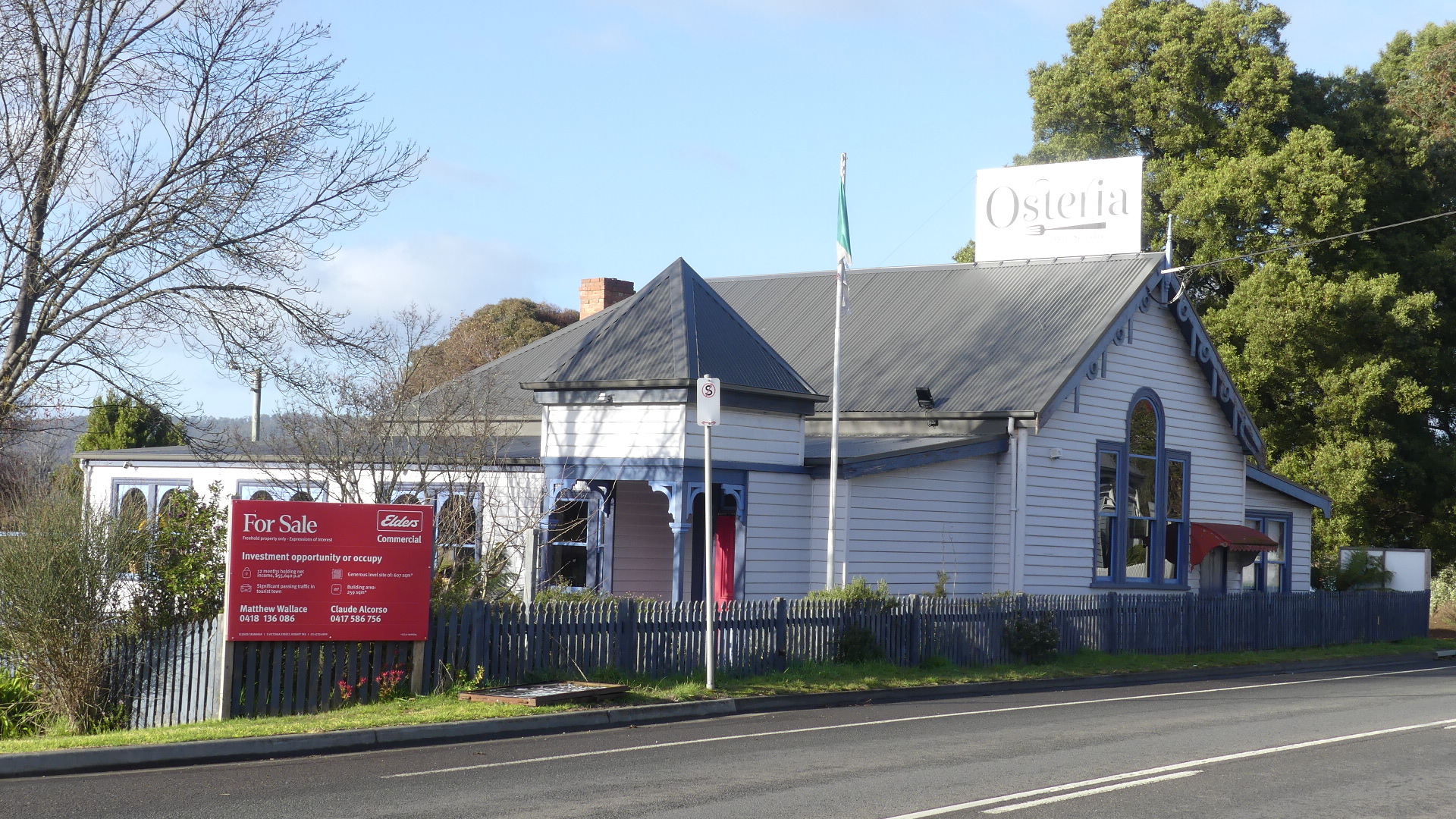
It was a small bus with some obvious tourists aboard like me with my camera around my neck who awaited the round trip to pick me up. We left Hobart traveling to Taroona (yes past the school I visited yesterday) hung a right turn and headed to Huonville and into Franklin. On the way I noticed a sign about a cafe in Franklin that raised a legal heckle on my neck – Osteria – cafe of petty sessions.
The phrase “petty sessions” in Australia, historically referred to a lower-level court that dealt with minor criminal offenses and civil matters, akin to what is now typically handled by Magistrates’ Courts. Petty Sessions courts primarily handled summary offenses—minor cases such as traffic violations, petty theft, or public order issues—where quick decisions were appropriate. These courts operated in a more informal setting than higher courts, with magistrates often presiding over cases without juries. The term “petty sessions” has largely fallen out of common use. So I was interested to check it out when we stopped in Franklin.
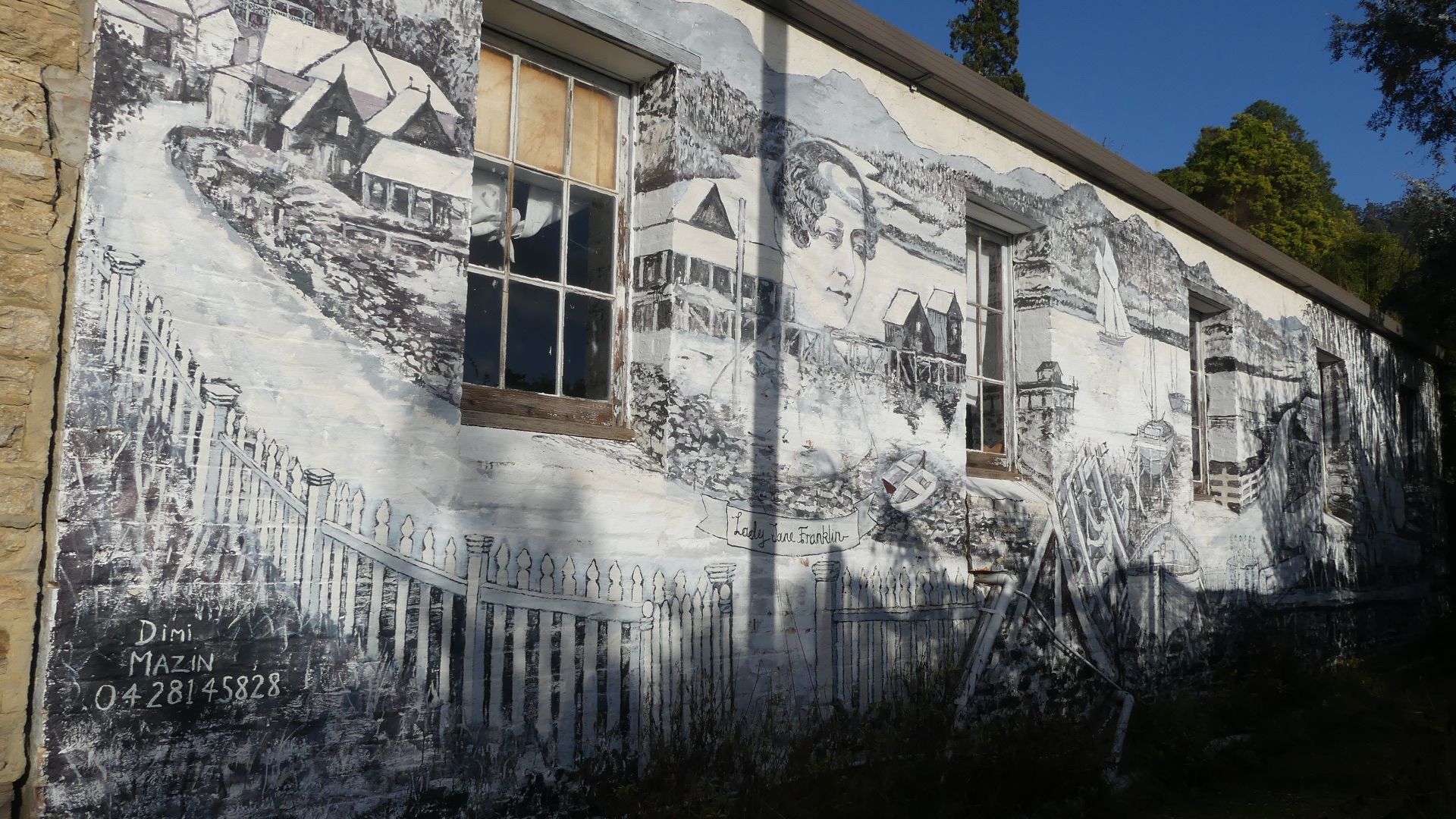
Franklin, is a small town in Tasmania’s Huon Valley, with a rich history tied closely to Tasmania’s maritime heritage, agriculture, and early settlement. Named after Lady Jane Franklin, the wife of Sir John Franklin (yes Sir John Franklin, the fellow immortalised by the statue in Franklin Square, who was the governor of Van Dieman’s Land (now Tasmania) from 1837 to 1843. Franklin was initially established as an agricultural and timber town in the 19th century.
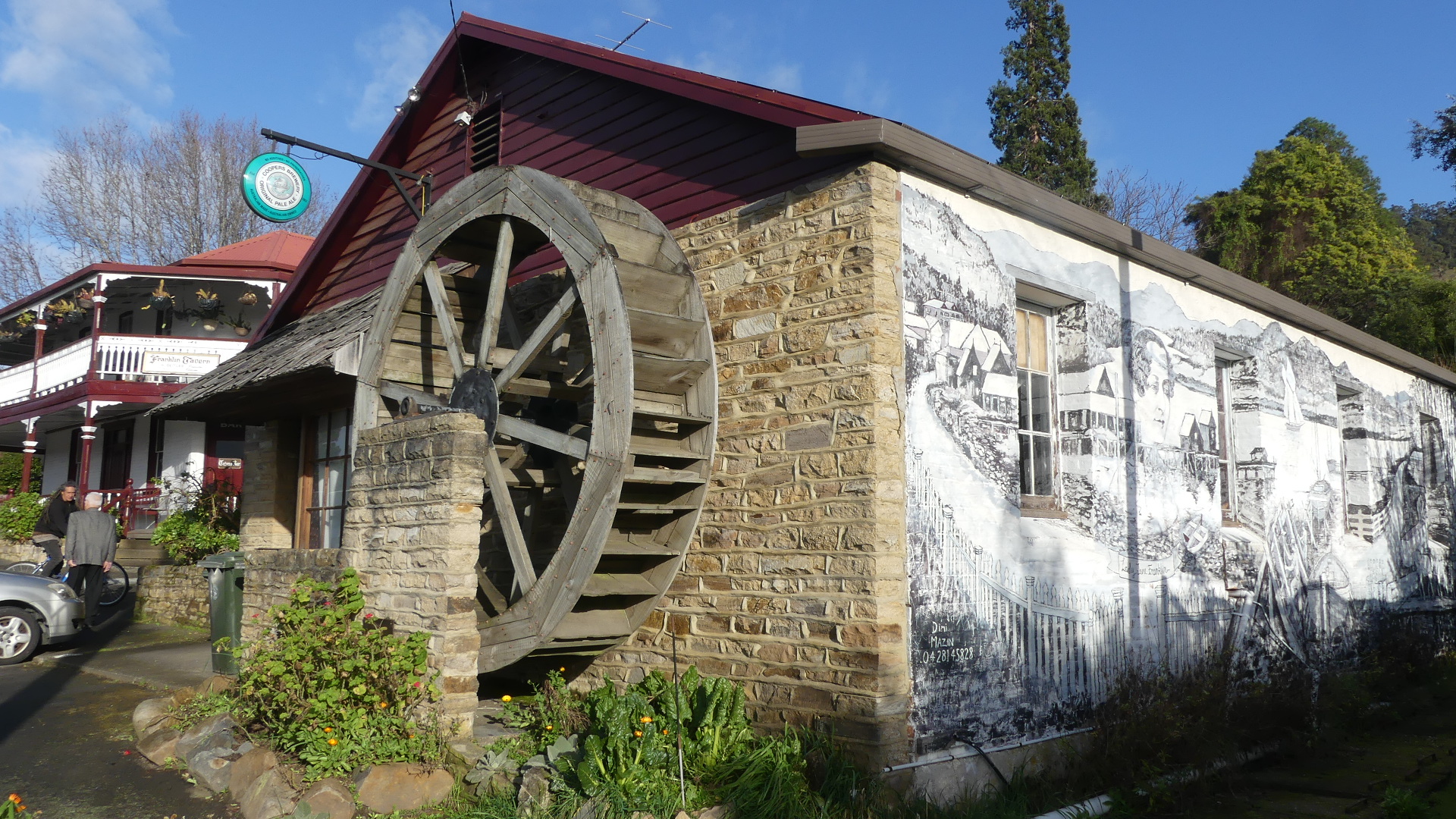
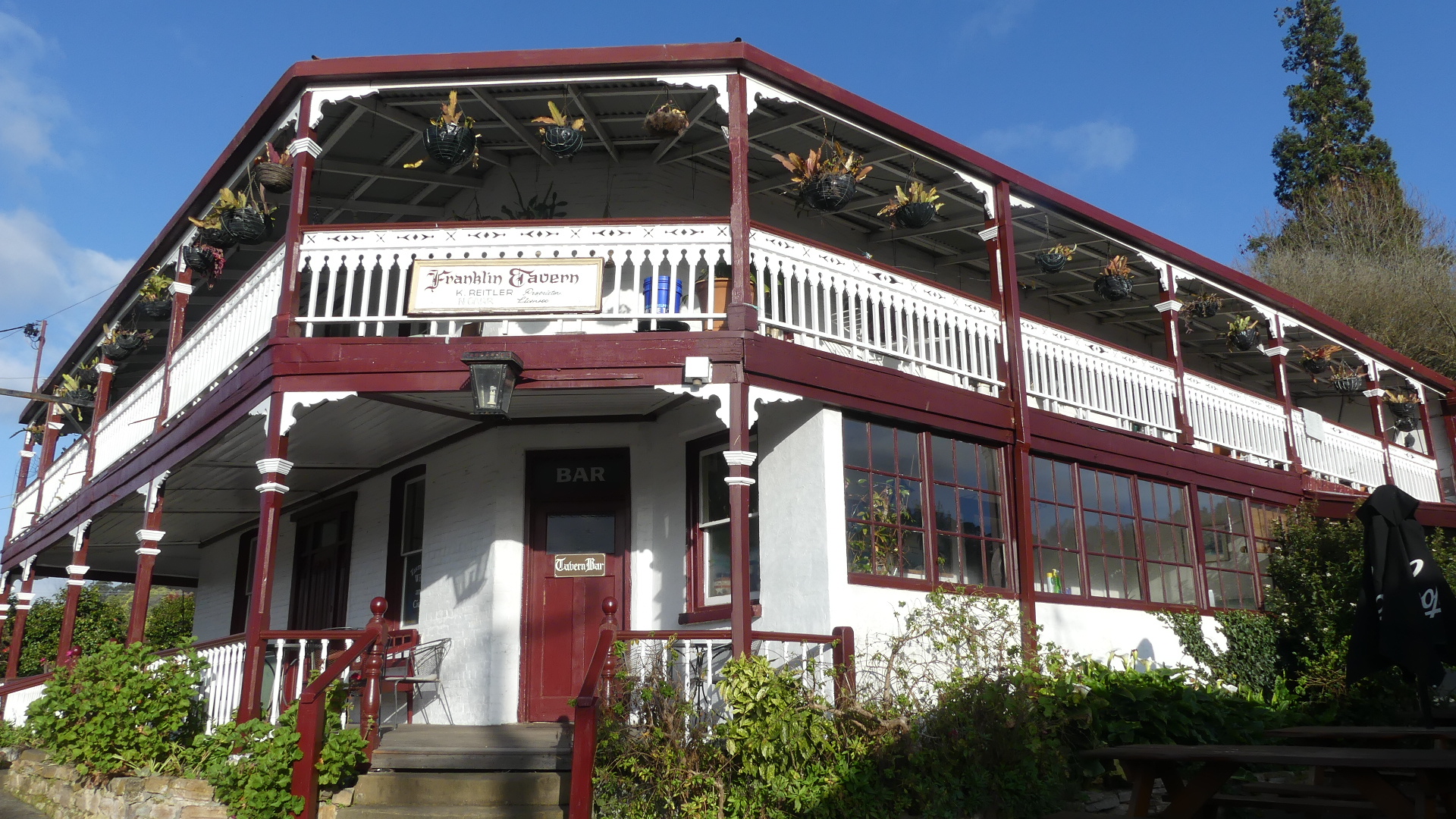
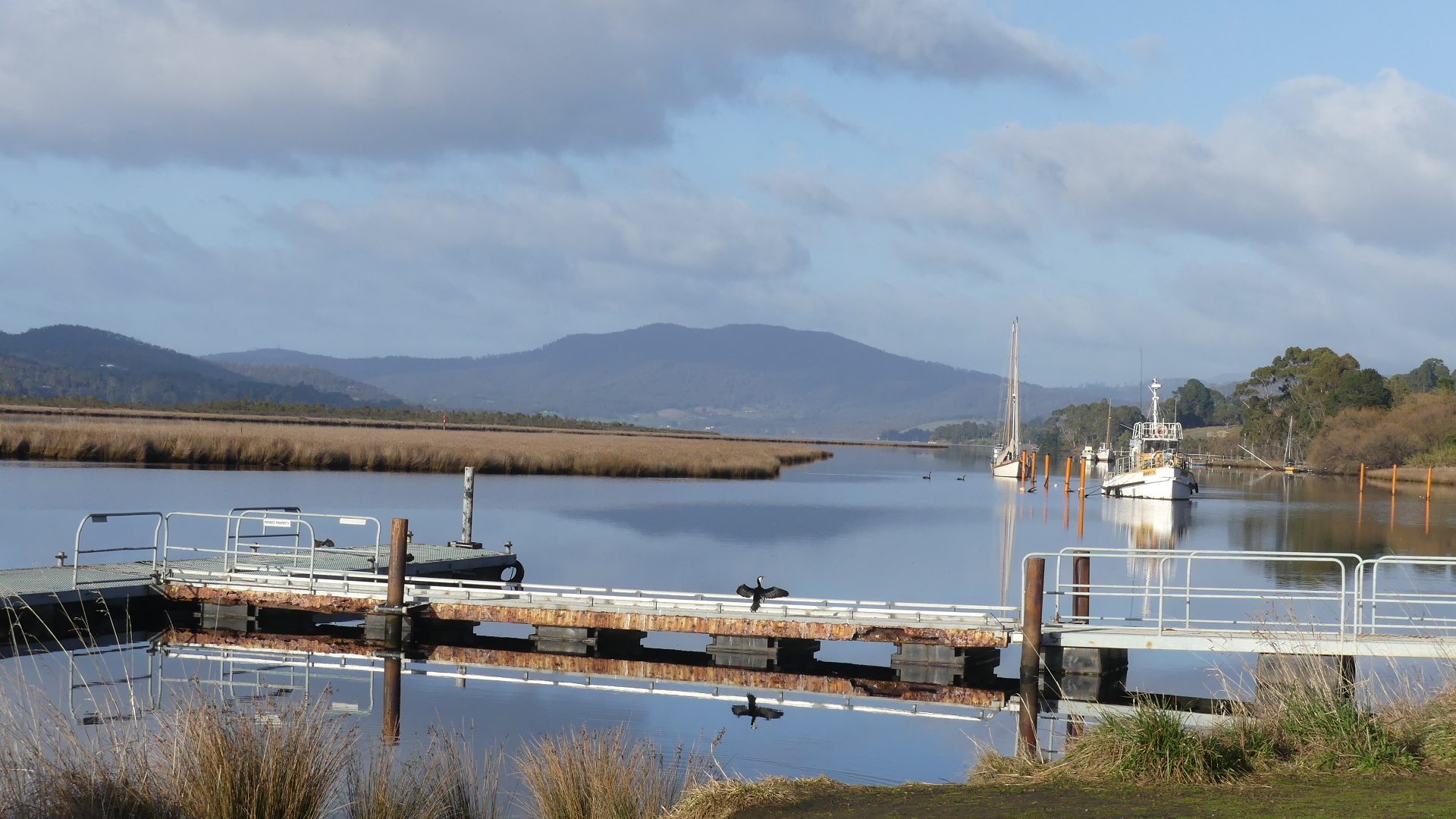
With its riverfront location, Franklin is historically known for its wooden boat-building industry. The town’s rich maritime heritage continues today with the presence of the Wooden Boat Centre, a workshop and museum dedicated to traditional boat-building skills ( unfortunately closed this day). Franklin’s location along the Huon River made it a prime spot for riverboat transport. The riverboats played a critical role in transporting goods to and from Hobart and surrounding settlements, and the Huon River became a lifeline for local communities. Photos #1 & 2 (left to right below) picture the Cafe of petty sessions which Photo # 3 identifies as the former police station, court house, Gaol, and residence for the Franklin area. Photos #4 & 5 identify the water mill and the painting depicting an earlier time in Franklin’s history and alongside is one of the pub’s (suitably located across the road from the former court and police station). Finally photo 7 provides a view of the harbour on the Huon River. Our break was quickly over and we were on the road again to Geeveston where we took a right hand turn to follow the river into the hills and its headwaters.
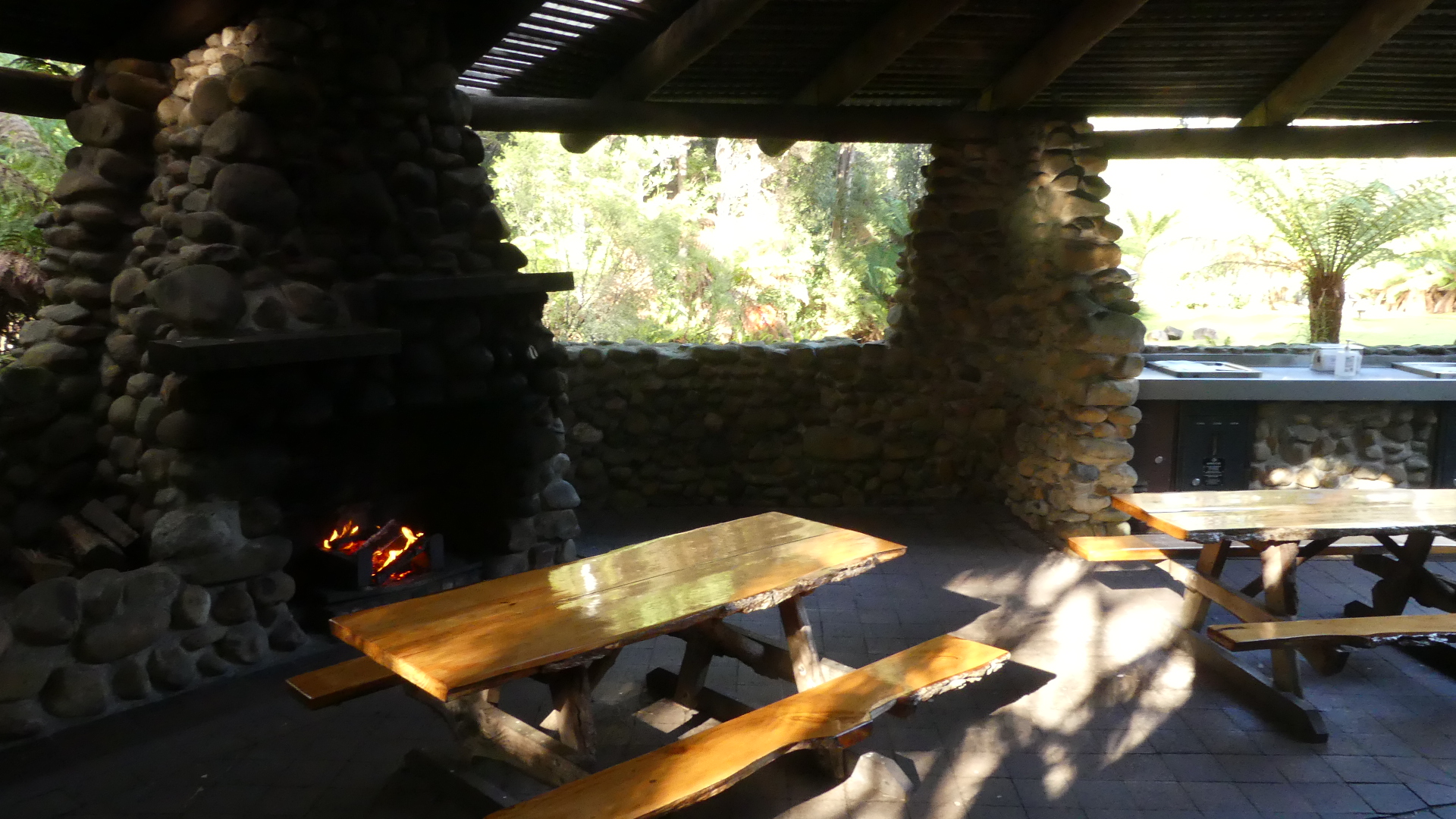
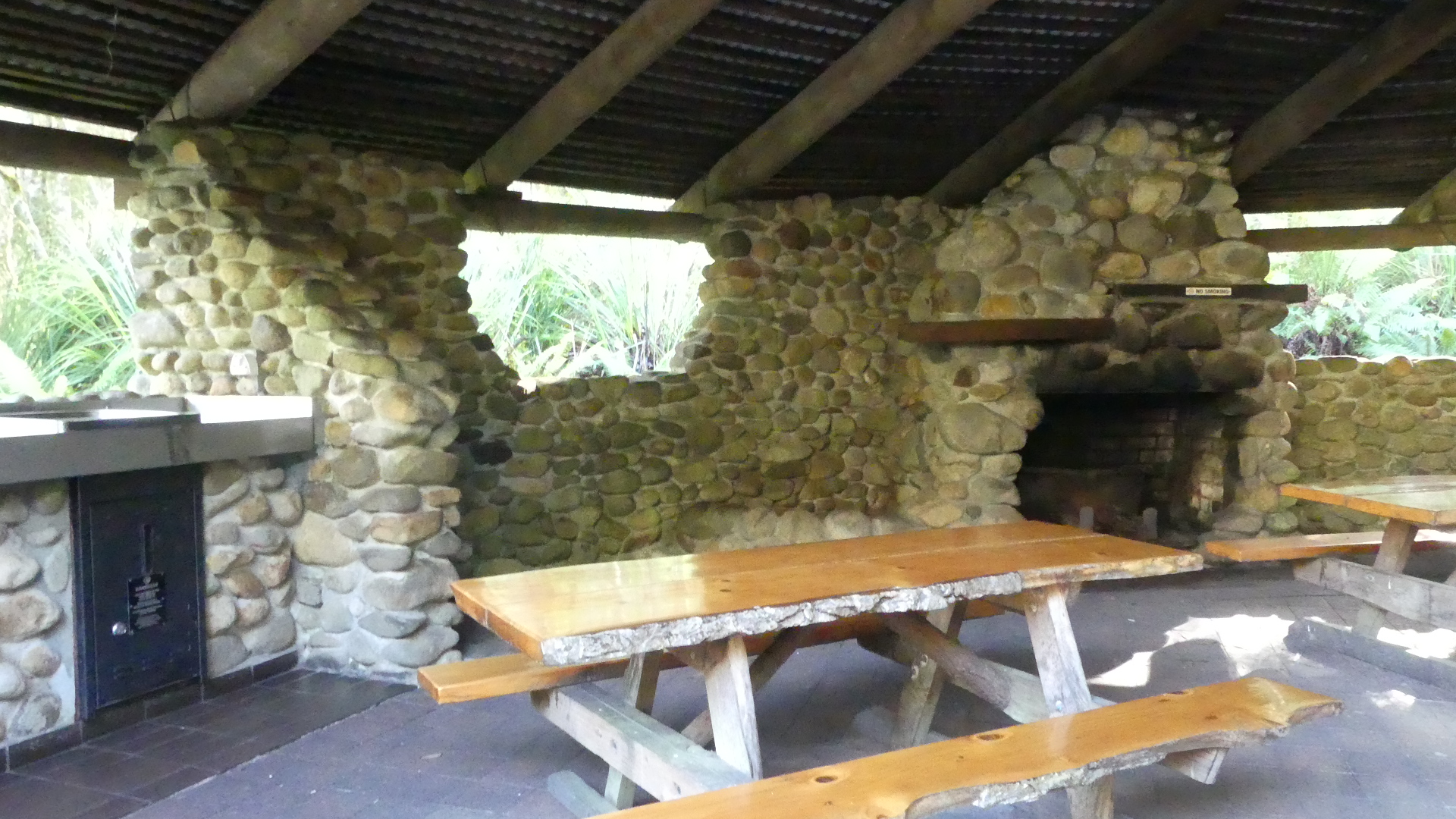
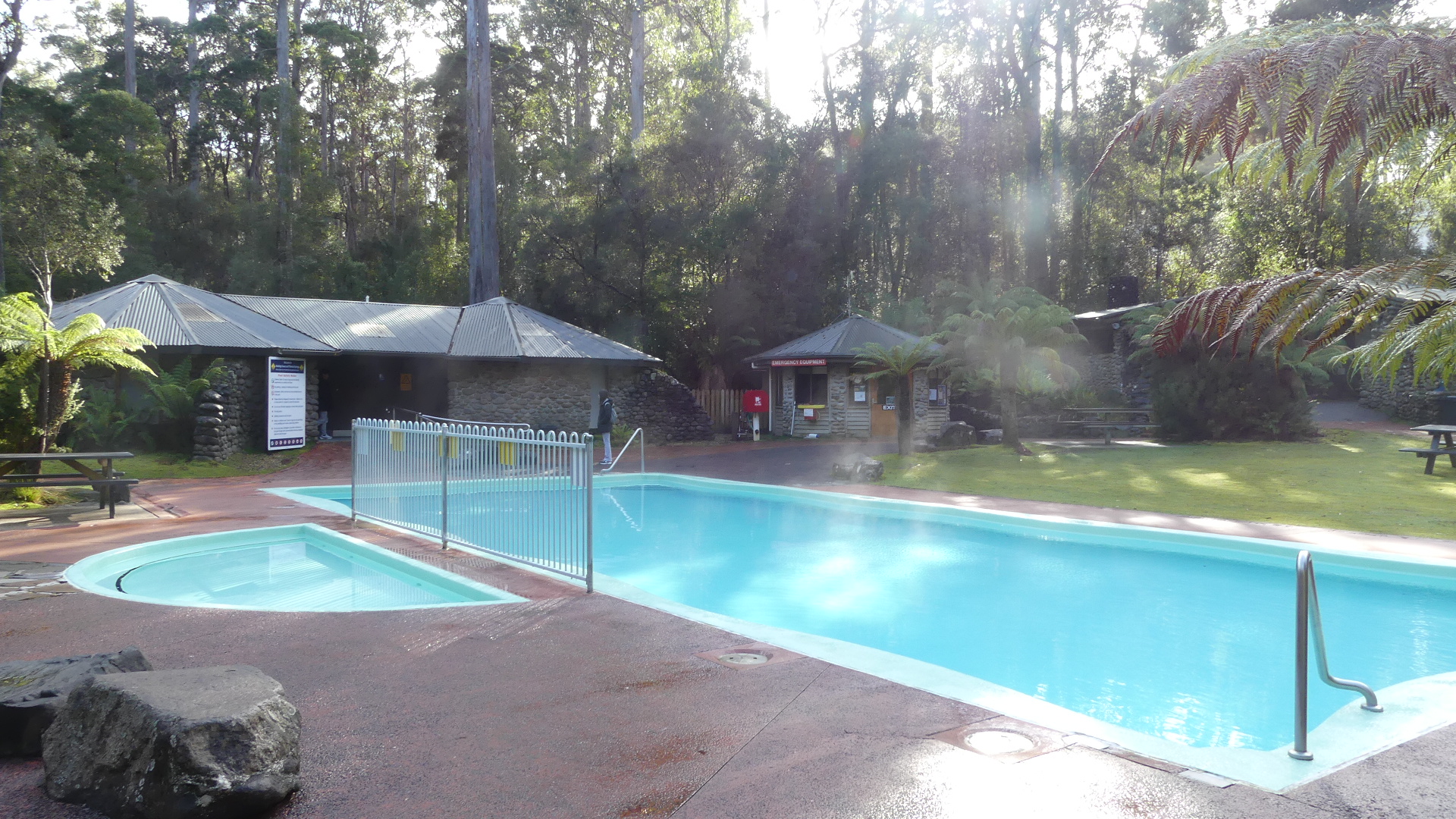
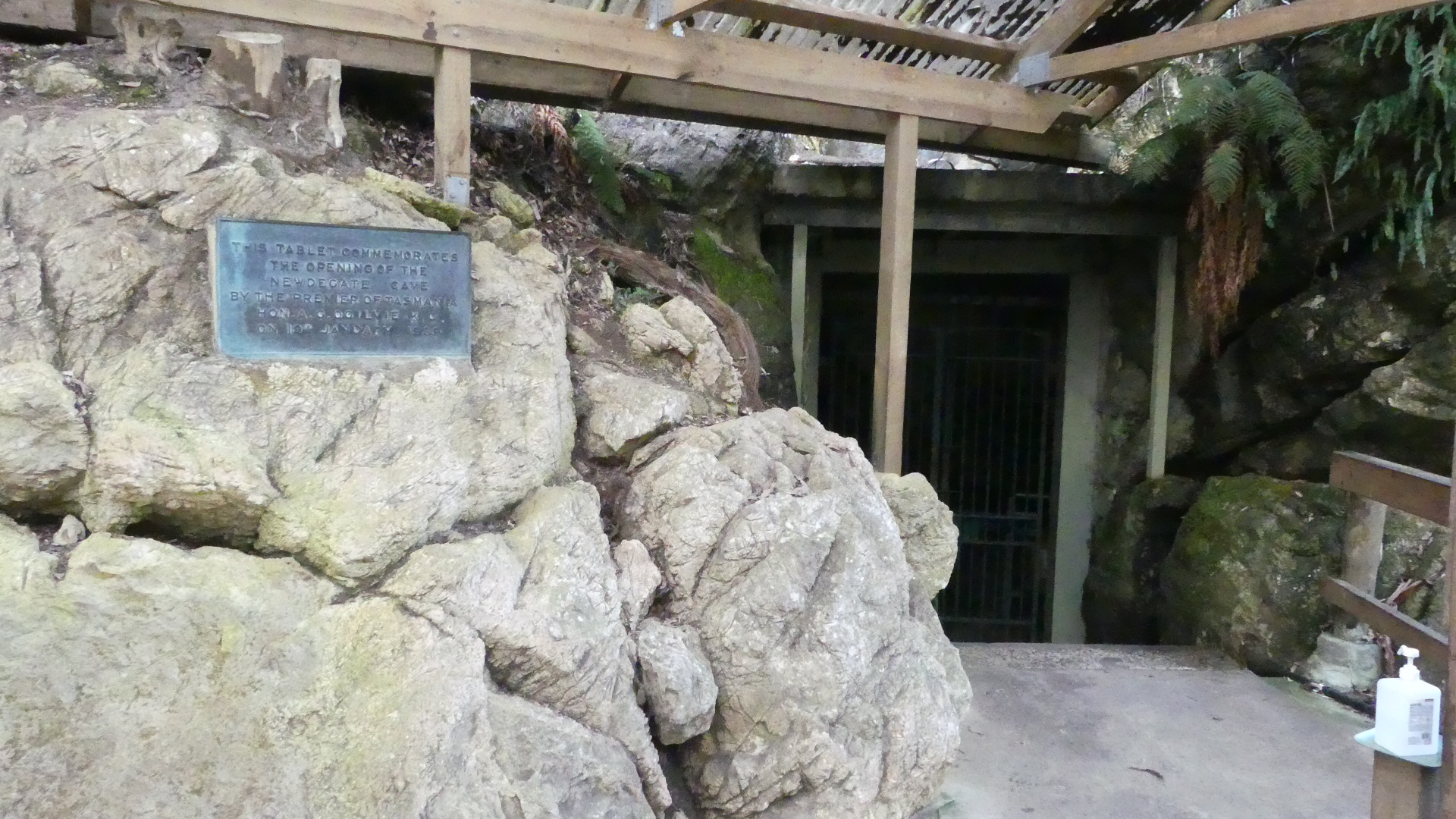
We had chosen this tour to see Newdegate Cave and the Tahune Skywalk. On arriving at the tourist centre I learned about everything else that was available but this was a tour no changes permitted. Photos # 1 to 3 (viewed left to right) is the entrance to the carpark, and the Tourist Information Centre. Newdegate is one set of caves in the Hasting Caves area. Firstly we explored thermal hot spring Photo # 7 (yes the water runs into the swimming pool – not very natural), the picnic area, photos #4 to 6 (one of the smaller trees provides the centre pole) and the entrance to two short walks – photo #8. After killing time doing those things we started the march to the cave entrance.
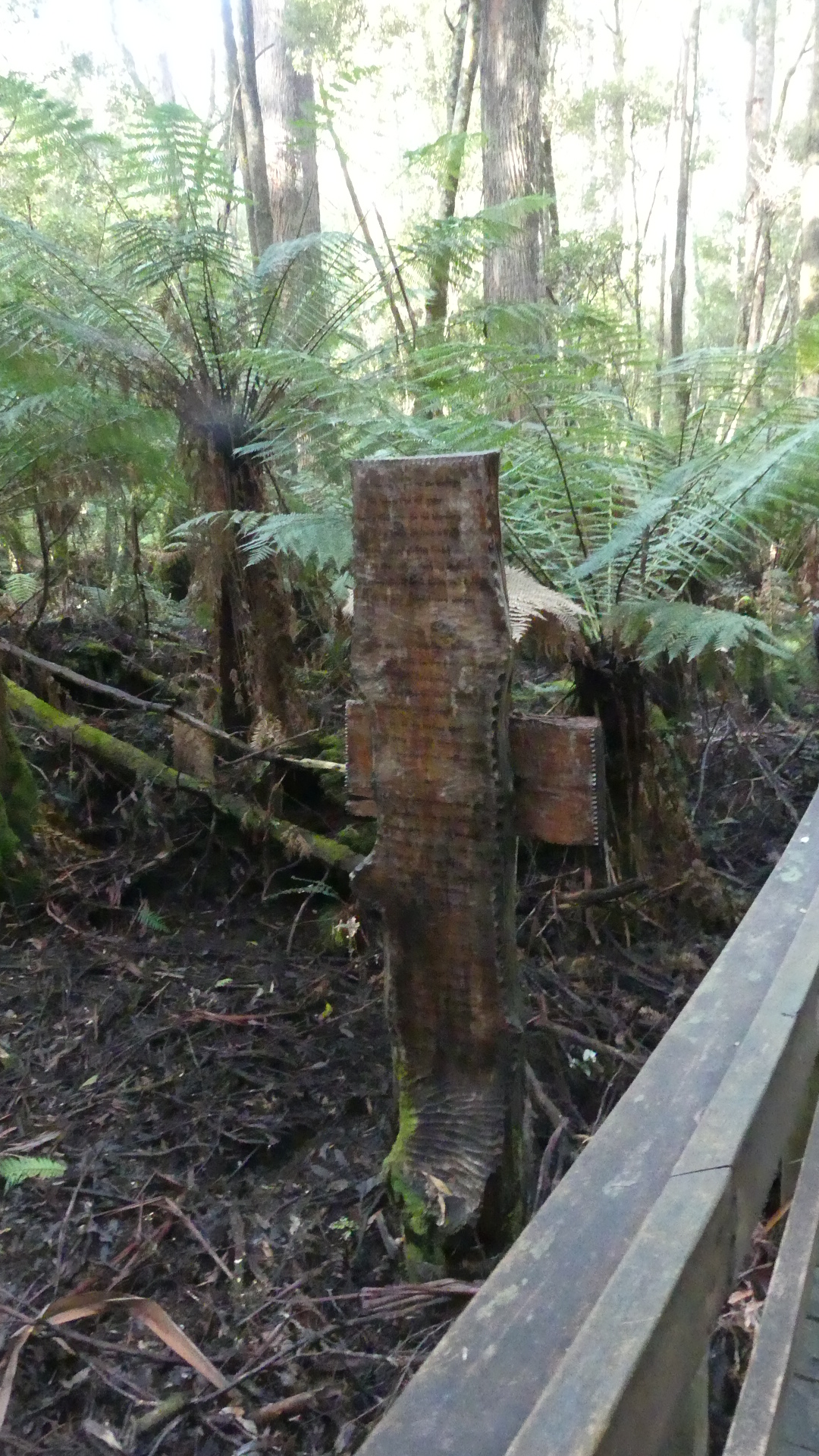
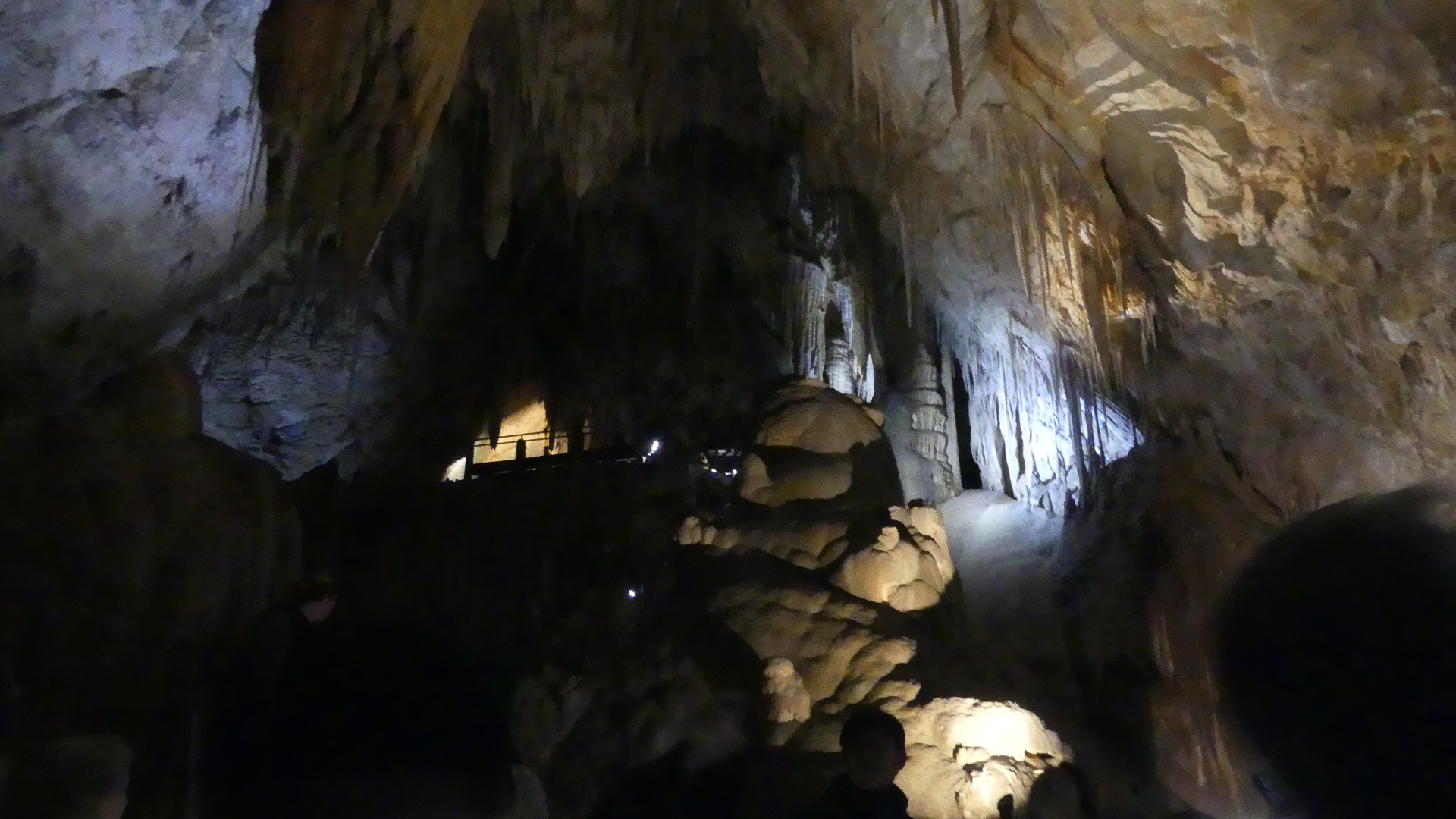
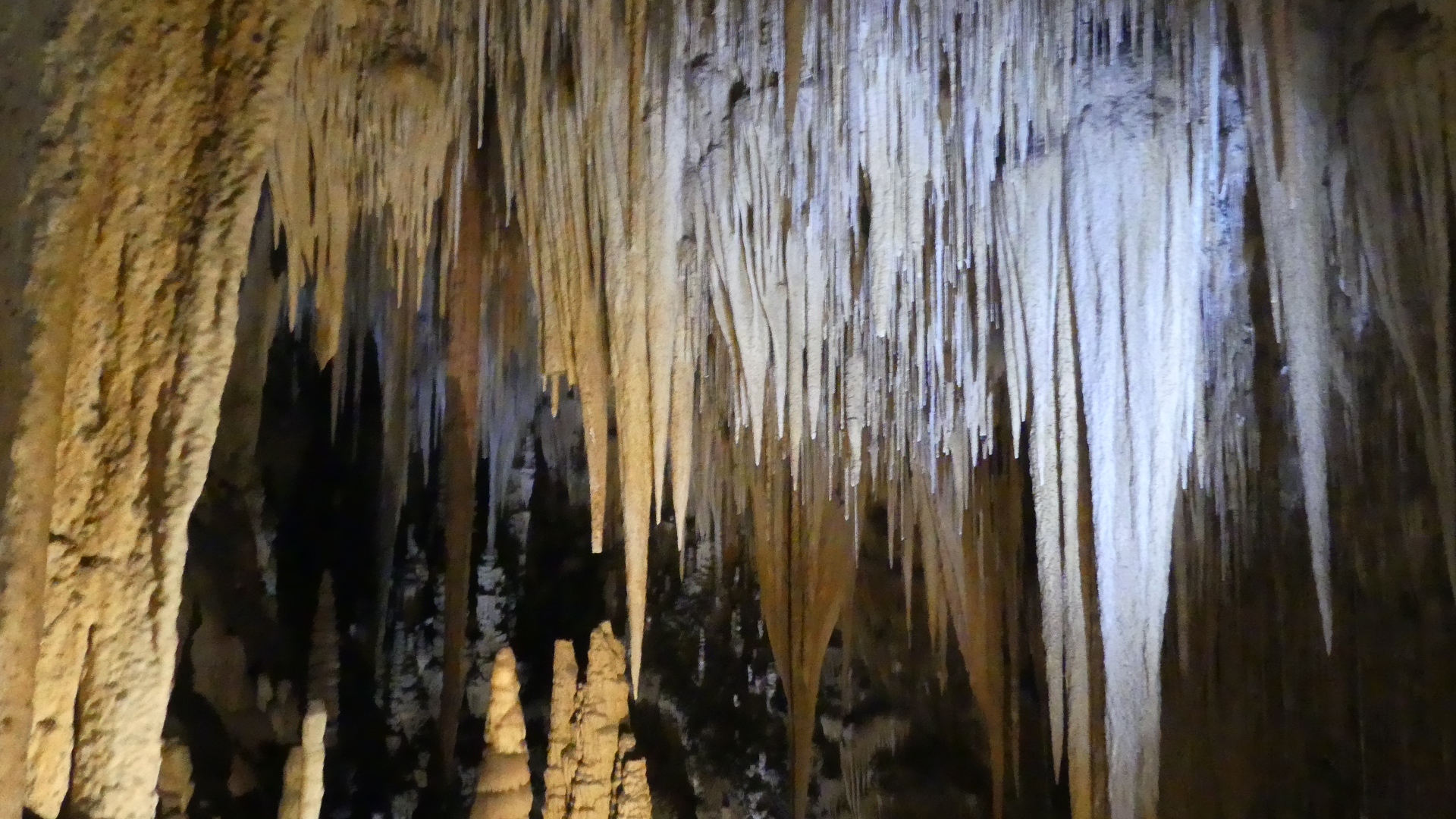
Photos #9 to 12 are photos of the walk along with two feature notice poles which could not be read to to the weathering and photo #13 is the cave entrance. Photos #14 to 26 are all from the interior of the cave which was dry in the sense there was no stream running through it.
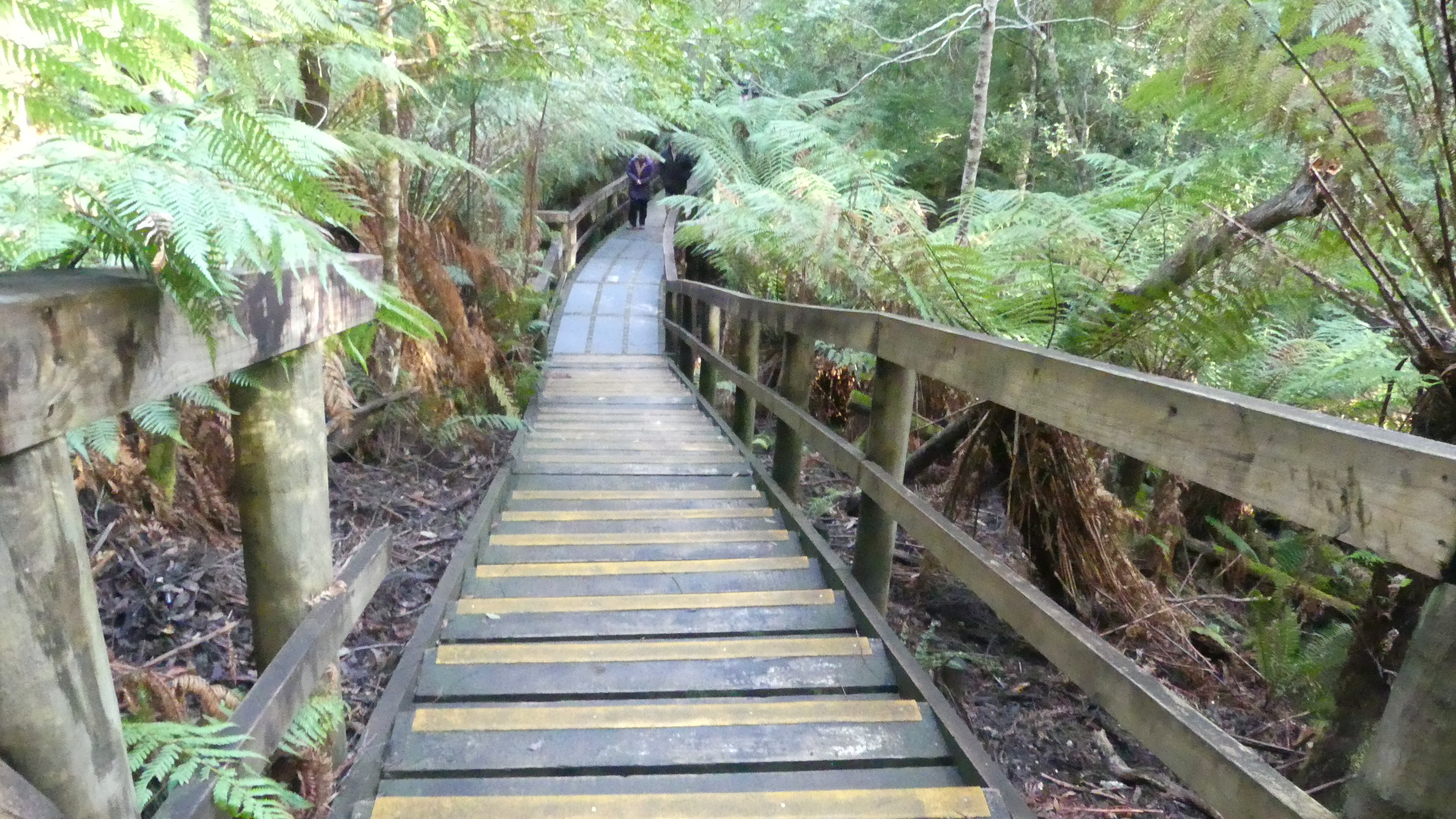
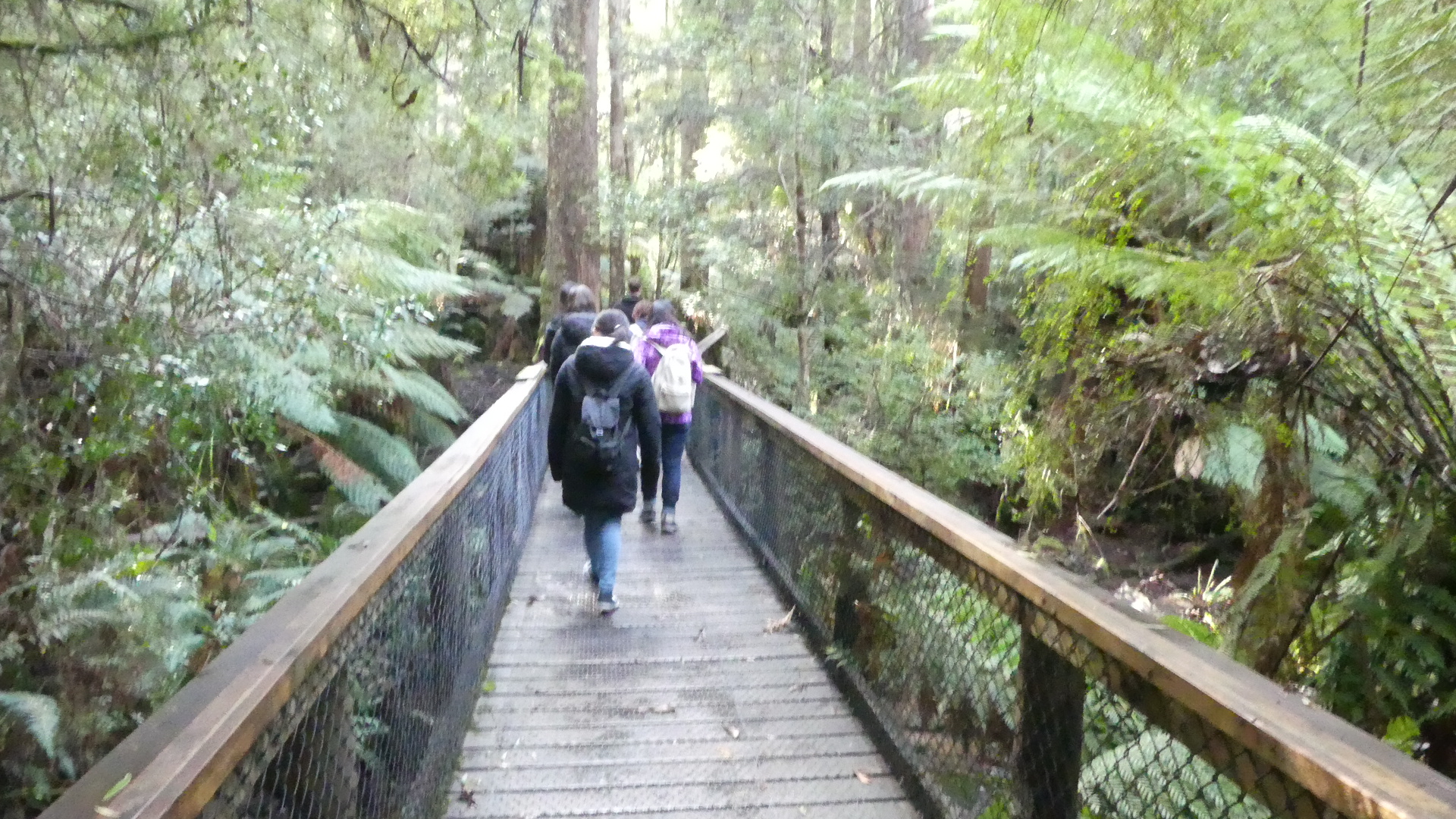
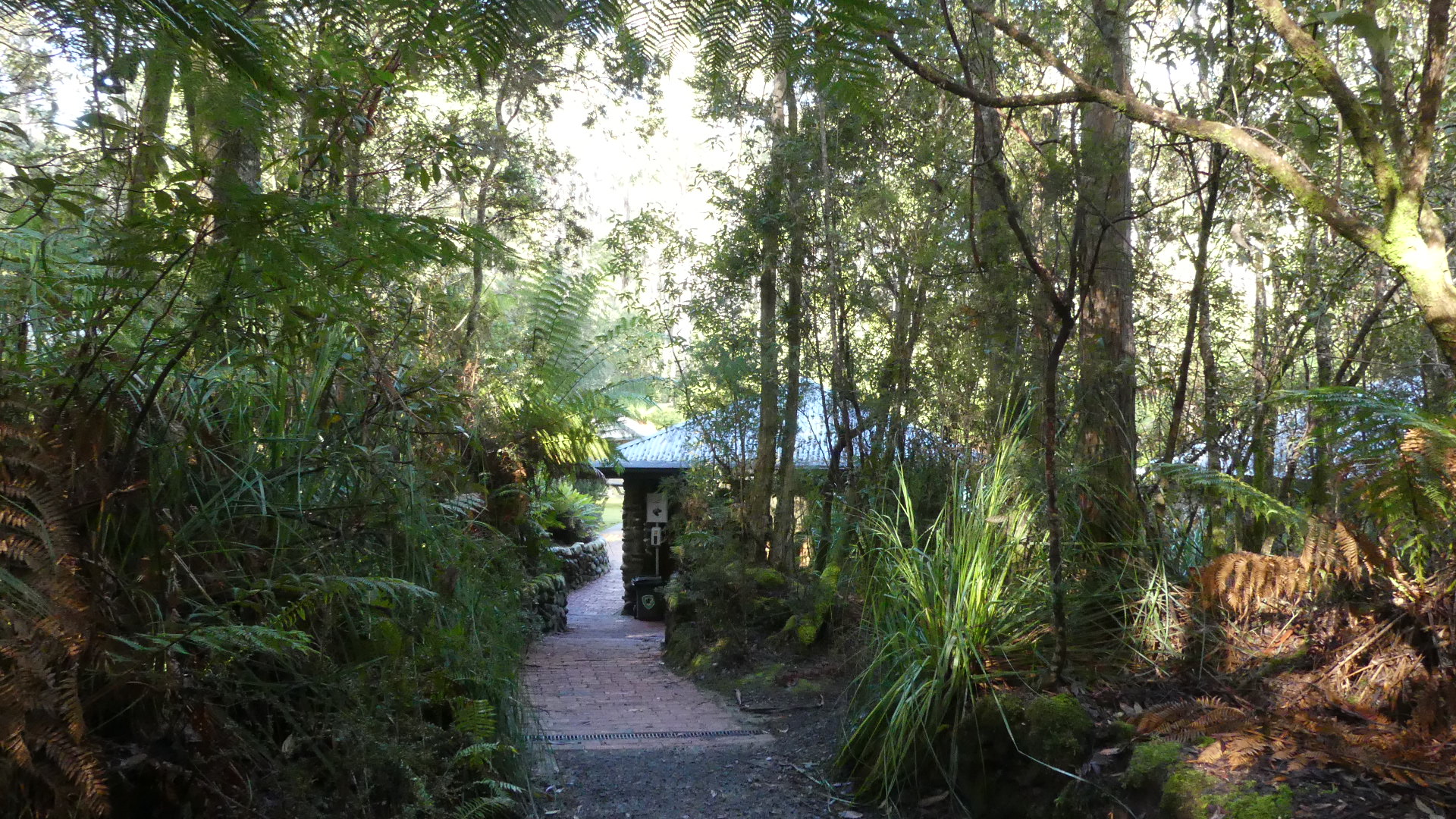
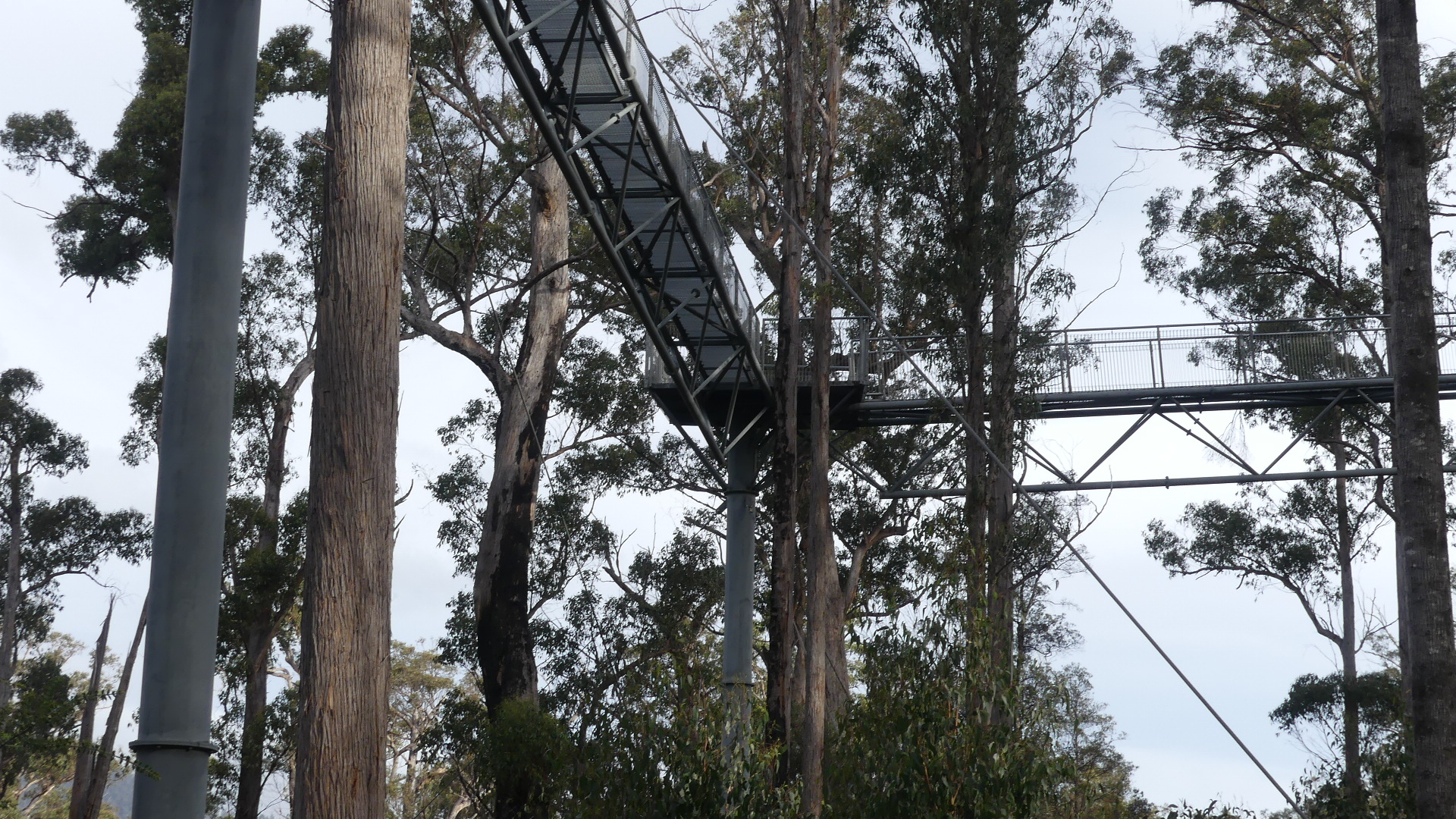
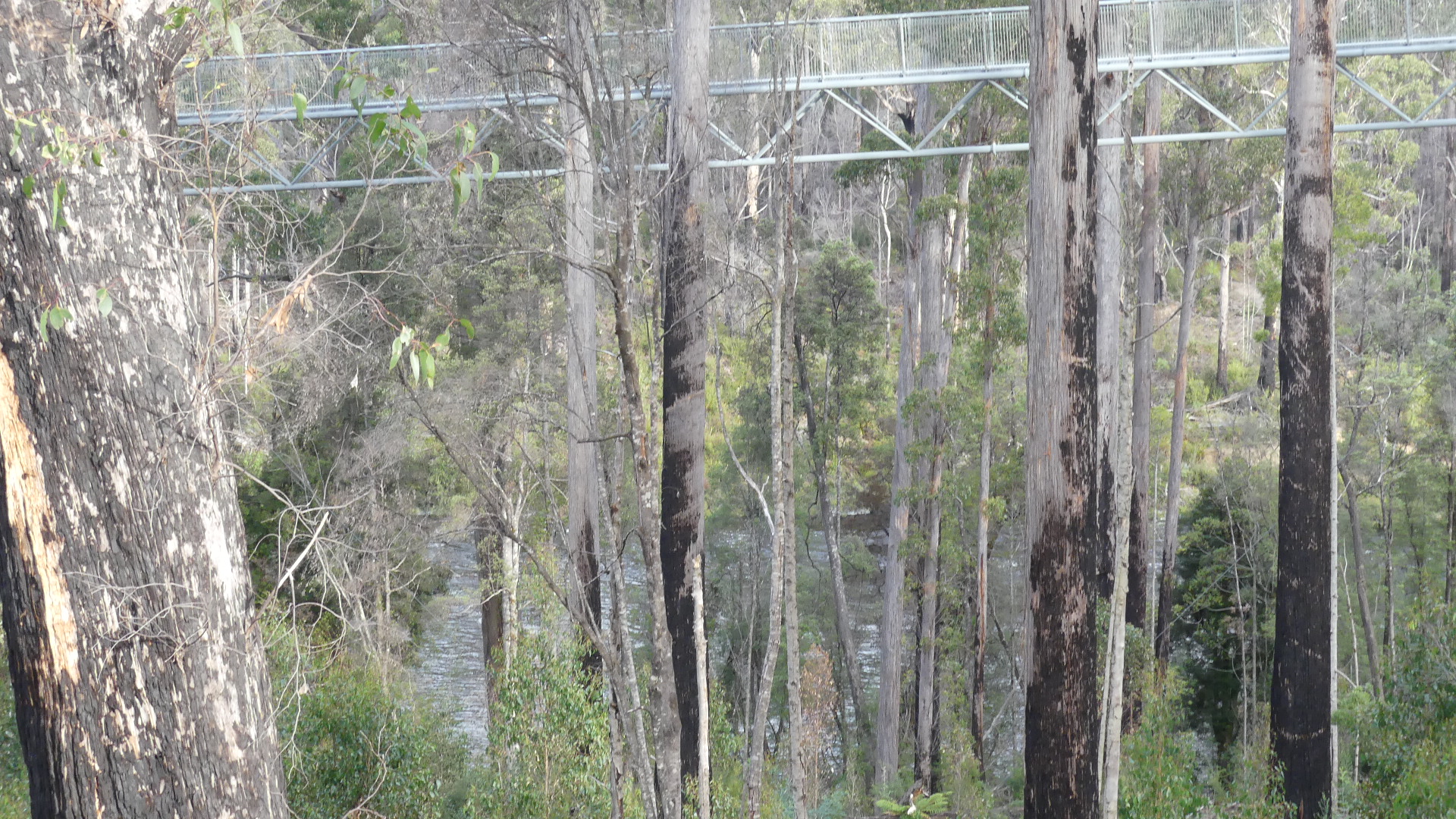
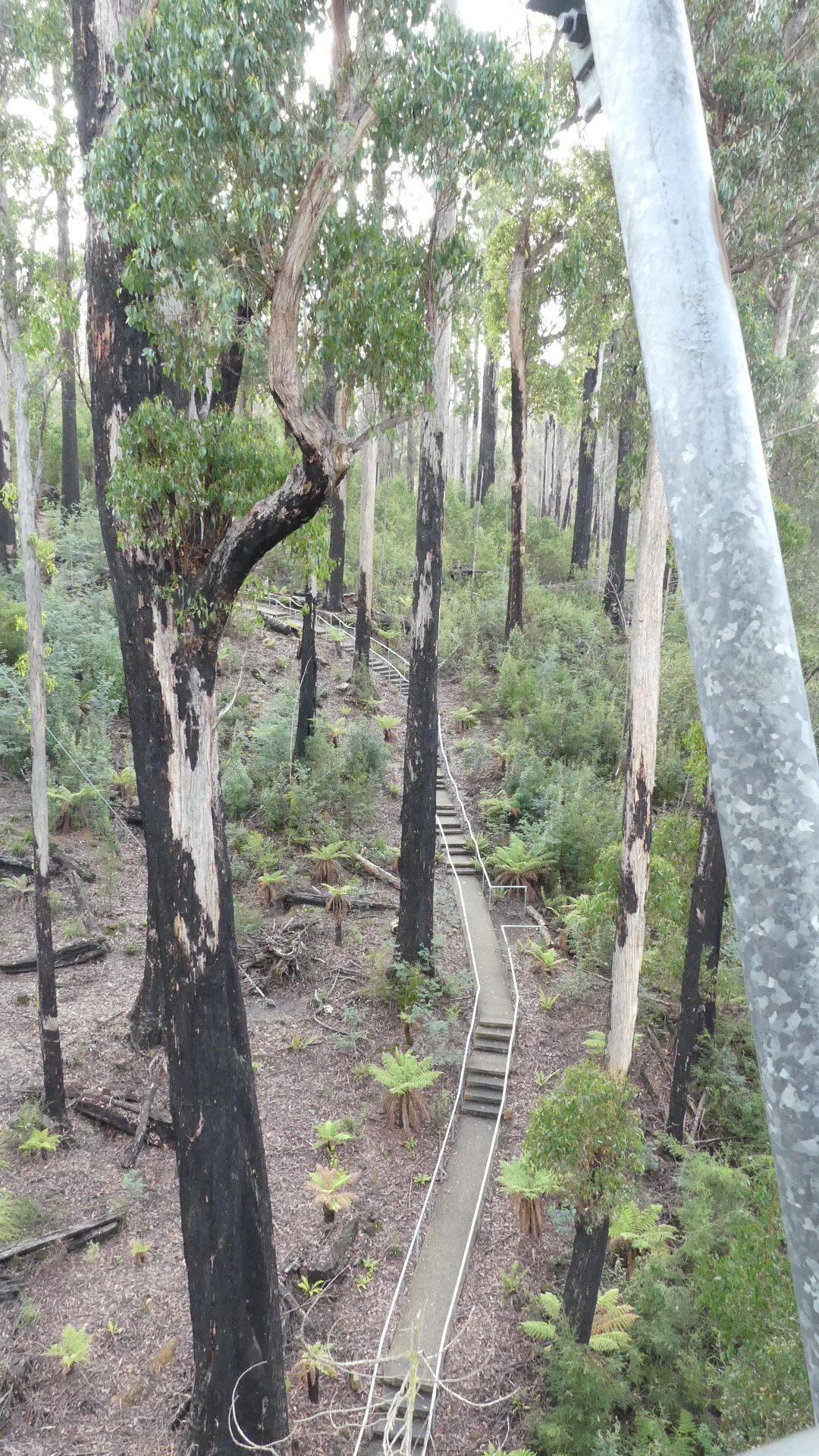
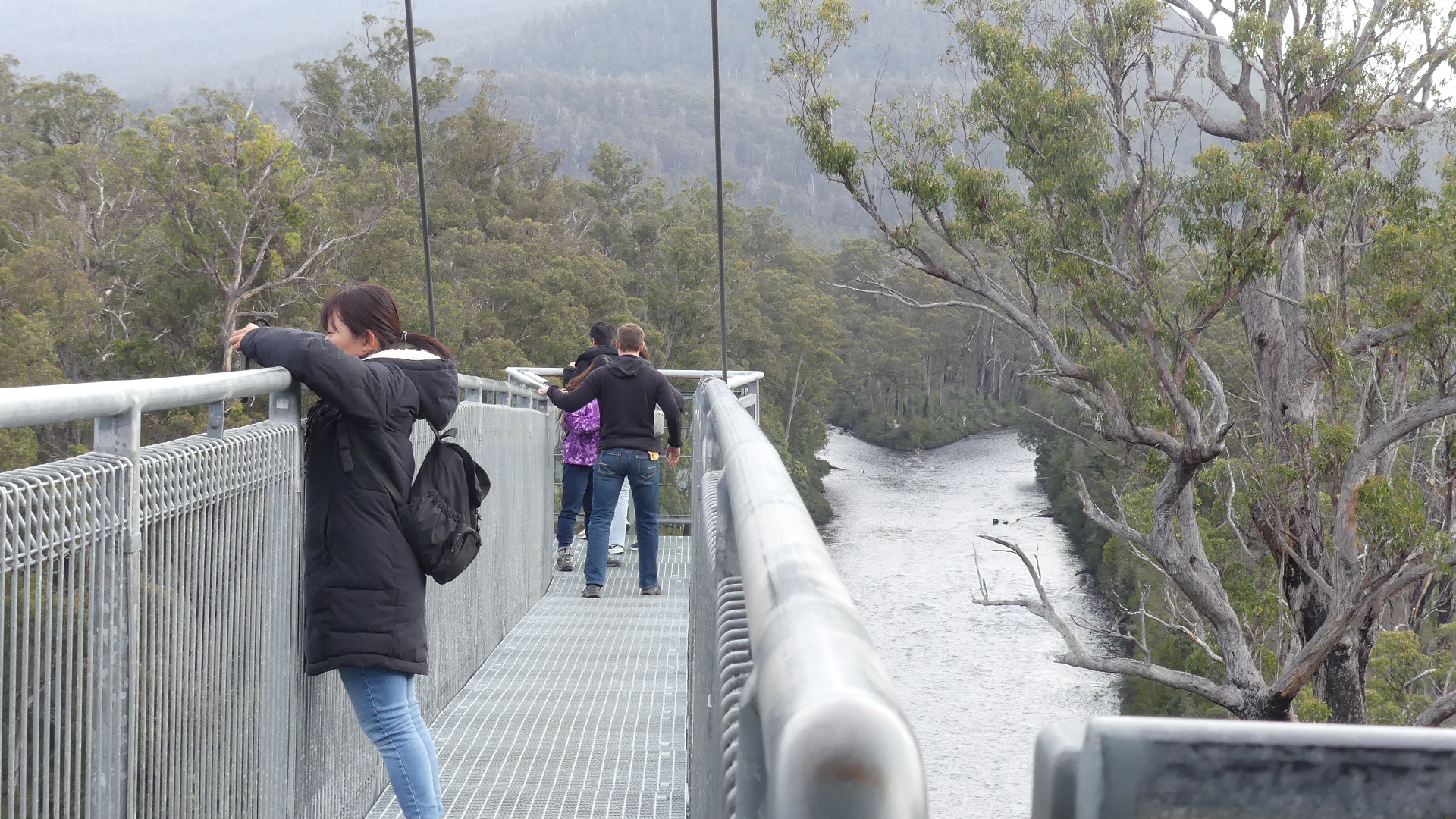
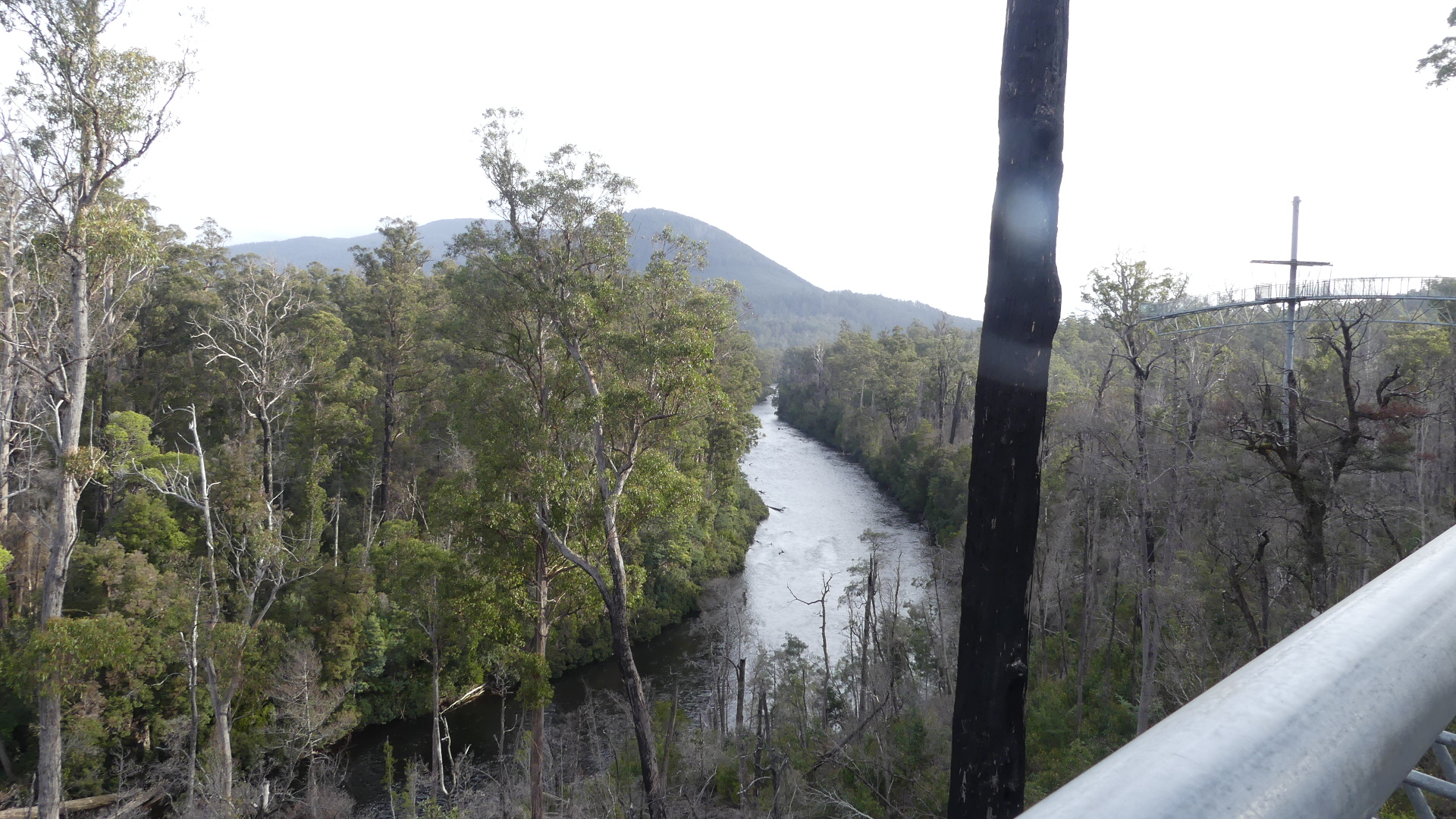
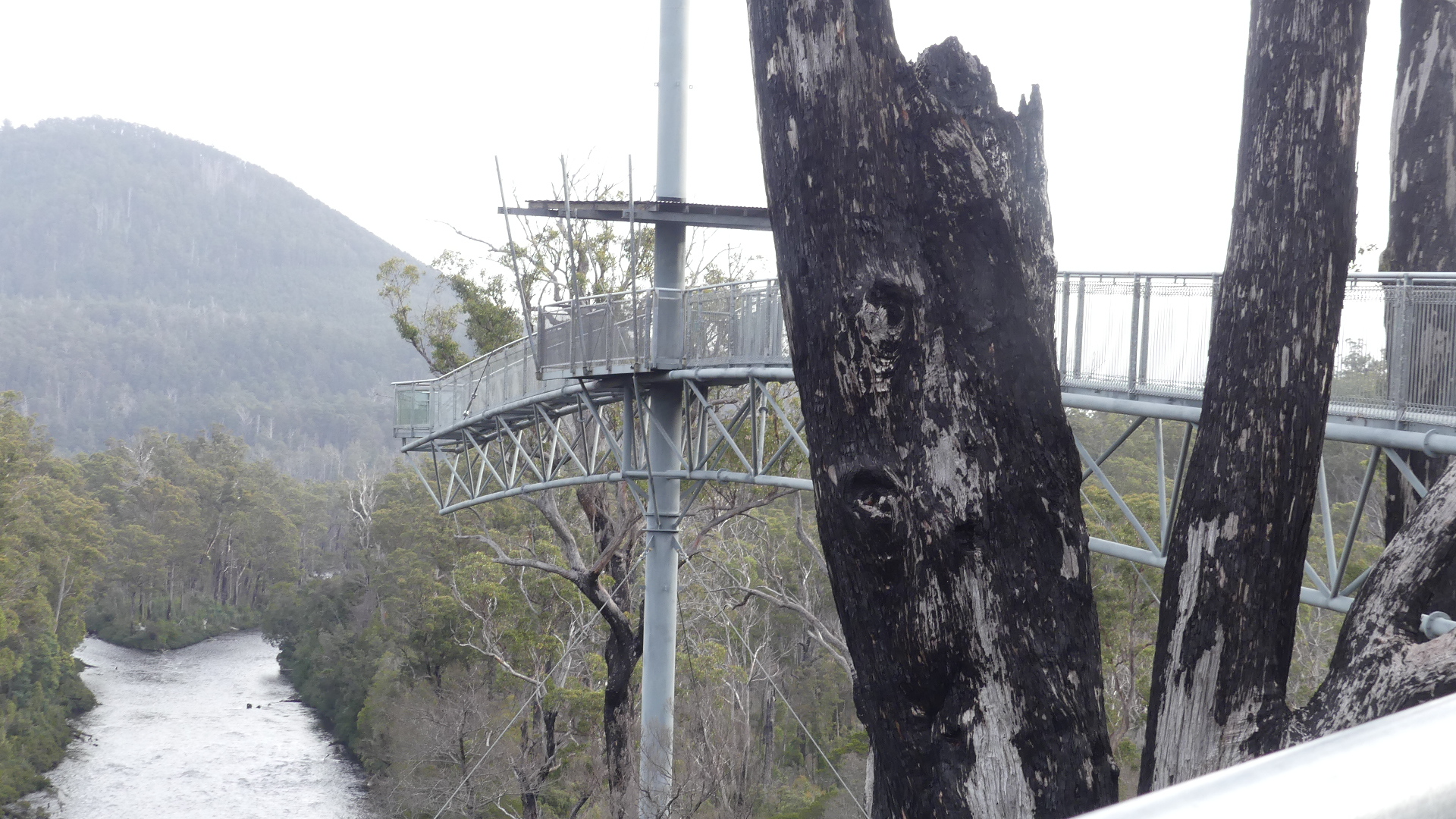
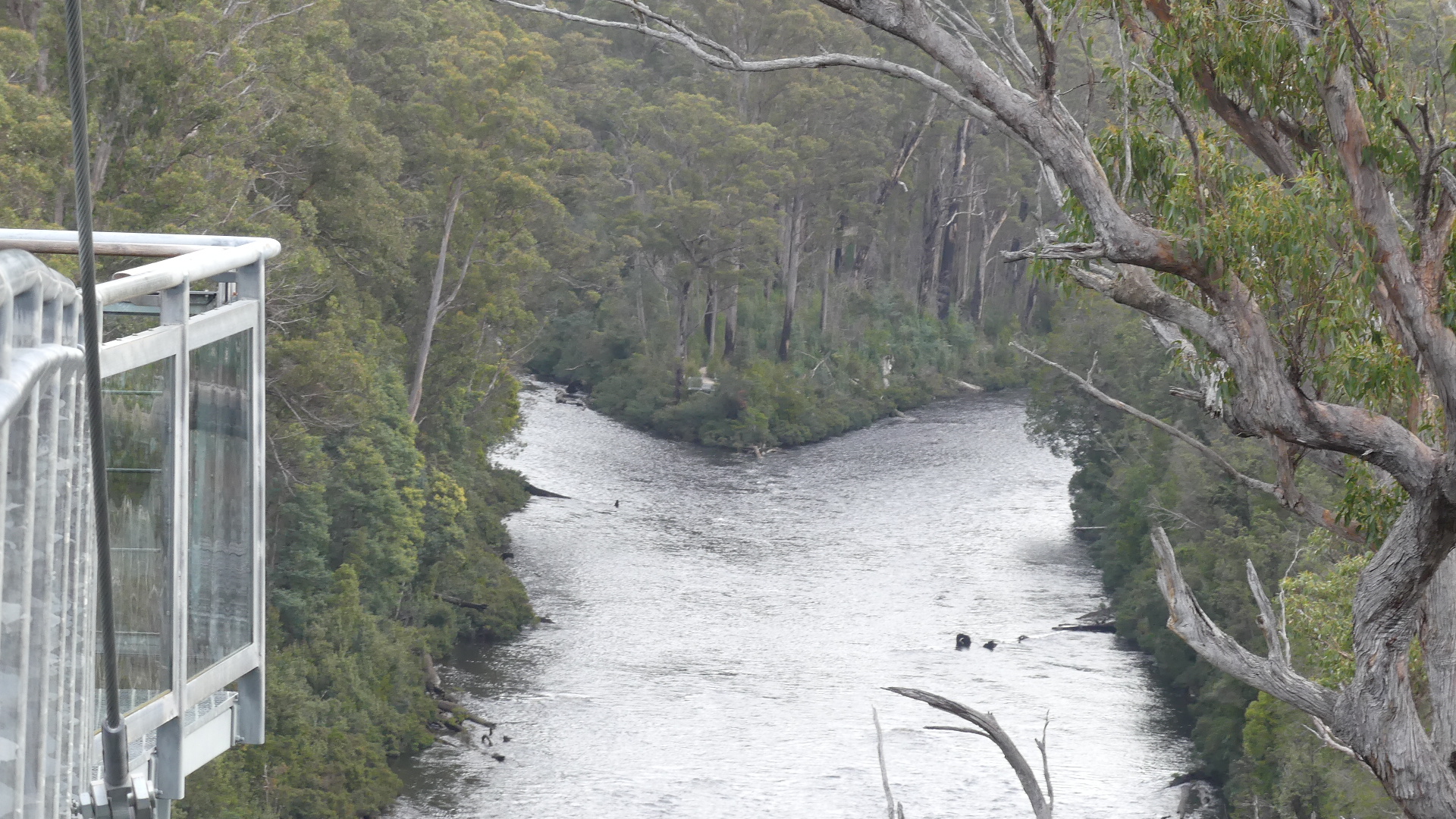
After completing the cave we returned to the Tour centre and took a different path to the Forest walk. Photos #27 to 30 show the lodge front and back then the bridge across the Huon River. Then the climb started until we go to the entrance to the Sky Bridge – photos #31 to 33. The walk is made up of a circuit and then a viewing platform over the Houn and Picton River conjunction – photos 34 to 42 and the final photo is the view back to the tourist centre. The journey concludes at a cantilever sitting high above the intersection of the Huon and Picton Rivers to give you breathtaking views. There’s no better way to experience the healthy natural abundance of the Tasmanian island.
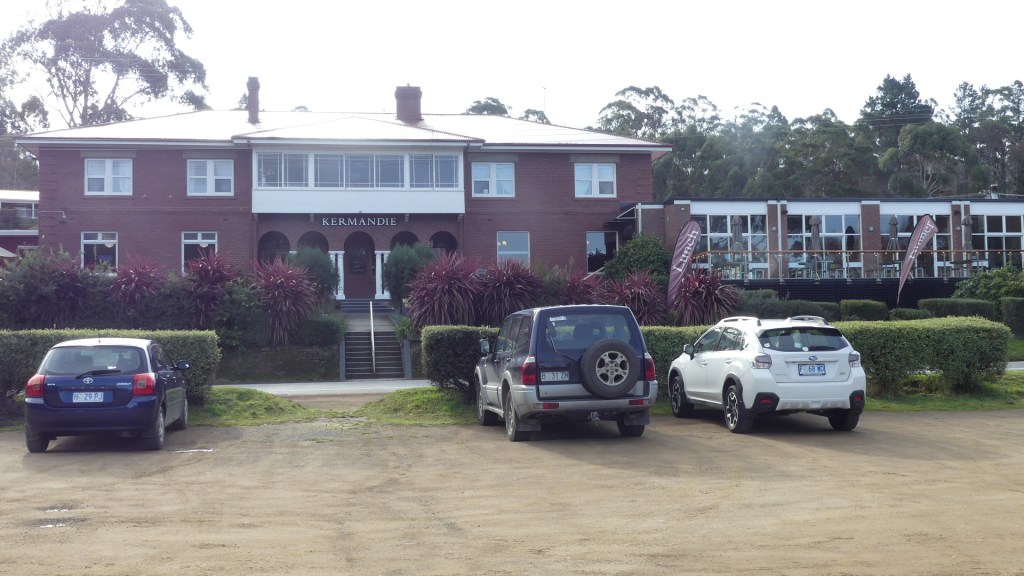
We were offered the opportunity to take the long walk or short walk back to the bus. The long walk had the attraction of a swinging bridge whereas the short walk had the bus, so I took the short walk. Good thing too, the driver came with me while the rest went on the long walk so I could rest while the driver panicked when the group did not come back by the designated time. I offered to stay with the bus and after two abortive attempts to find them, the group turned up oblivious to the time – did I say they were Japanese & Korean? On the road again and it was lunch time – we were stopping at Kermandie Hotel Port Huon on the mouth of the Huon River.
Port Huon, a small town on the Huon River, has a rich history tied to its role as a key port and hub for the apple and timber industries. Located around 40 km southwest of Hobart, it developed in the 19th century, mainly to support the bustling timber trade and the apple industry, both crucial to Tasmania’s economy. During World War II, Port Huon played a role in military logistics. The Australian and U.S. navies used the nearby waters for strategic operations, and the port served as a repair and refueling station. In recent decades, the area around Port Huon has seen significant growth in the aquaculture industry, particularly salmon farming, which has become a major part of Tasmania’s economy. This industry now provides employment and supports the local economy.
Today, Port Huon is known for its scenic beauty, with views over the Huon River and surrounding hills, and draws visitors interested in Tasmania’s natural environment and local produce, especially apples and seafood. Its history as a port, agricultural hub, and center for timber and salmon farming remains an important part of its character.
We stopped at the Kermandie Hotel. Charming old building decorated with the history of French exploration. The notable French expeditions to the region were led by explorers such as Bruni d’Entrecasteaux and Nicolas Baudin. In 1792 and 1793, Rear Admiral Antoine Raymond Joseph de Bruni d’Entrecasteaux was sent by the French government to search for the lost expedition of fellow explorer Jean-François de Galaup, comte de Lapérouse. While searching, d’Entrecasteaux charted much of Tasmania’s coastline.The Huon River and subsequently Port Huon were named after Vice-Admiral Jean-Michel Huon de Kermadec, one of the expedition’s officers.
Nicolas Baudin arrived in Tasmanian waters in 1802. This expedition also mapped various parts of Tasmania and was significant in gathering scientific data. The French naturalists and artists aboard Baudin’s ships, including François Péron and Charles-Alexandre Lesueur, extensively documented the plants, animals, and landscapes, leaving a rich archive of illustrations and descriptions. The expedition anchored in areas around the Huon Valley and the channel, further solidifying French influence on place names in the area.
The hotel carries this history on its walls. Although the exterior may disappoint the interior has a 19th century charm.
Loaded with all accounted for, we headed back the way we had come to the Tahune Forest. One beer and a meal meant nap time for me so whilst the others prattled on in their own languages, I spent a little time walking amongst the stars. Safely home I found Kerry rested in bed and restless to do something as usual. So, I took her for dinner.
Our time on tour over we flew back to Brisbane and planning for our next voyage off the beaten track.
Busselton a city in the South West region of Western Australia approximately 220 km (140 mi) south-west of Perth was home to the Noongar Aboriginal people was one of the earliest settlements in Western Australia. John Bussell was granted land in the area in July 1832 and the settlers moved there in April 1834. The present name of Busselton derives from the Bussell family. It was first officially used in June 1835. Busselton soon established itself as a leading port. In 1850, being in close proximity to the tall timber country, timber was being exported and the small town prospered. Jetties for this purpose were built at Wonnerup, Busselton, and Quindalup but of these, only the Busselton Jetty remains. During the 1850s, Busselton began to receive convicts who were beginning to arrive in Western Australia; they particularly helped with the timber industry.
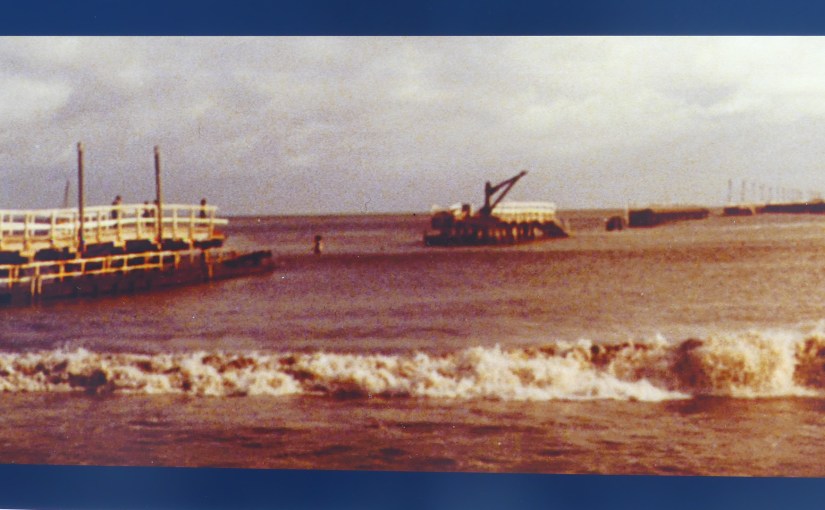
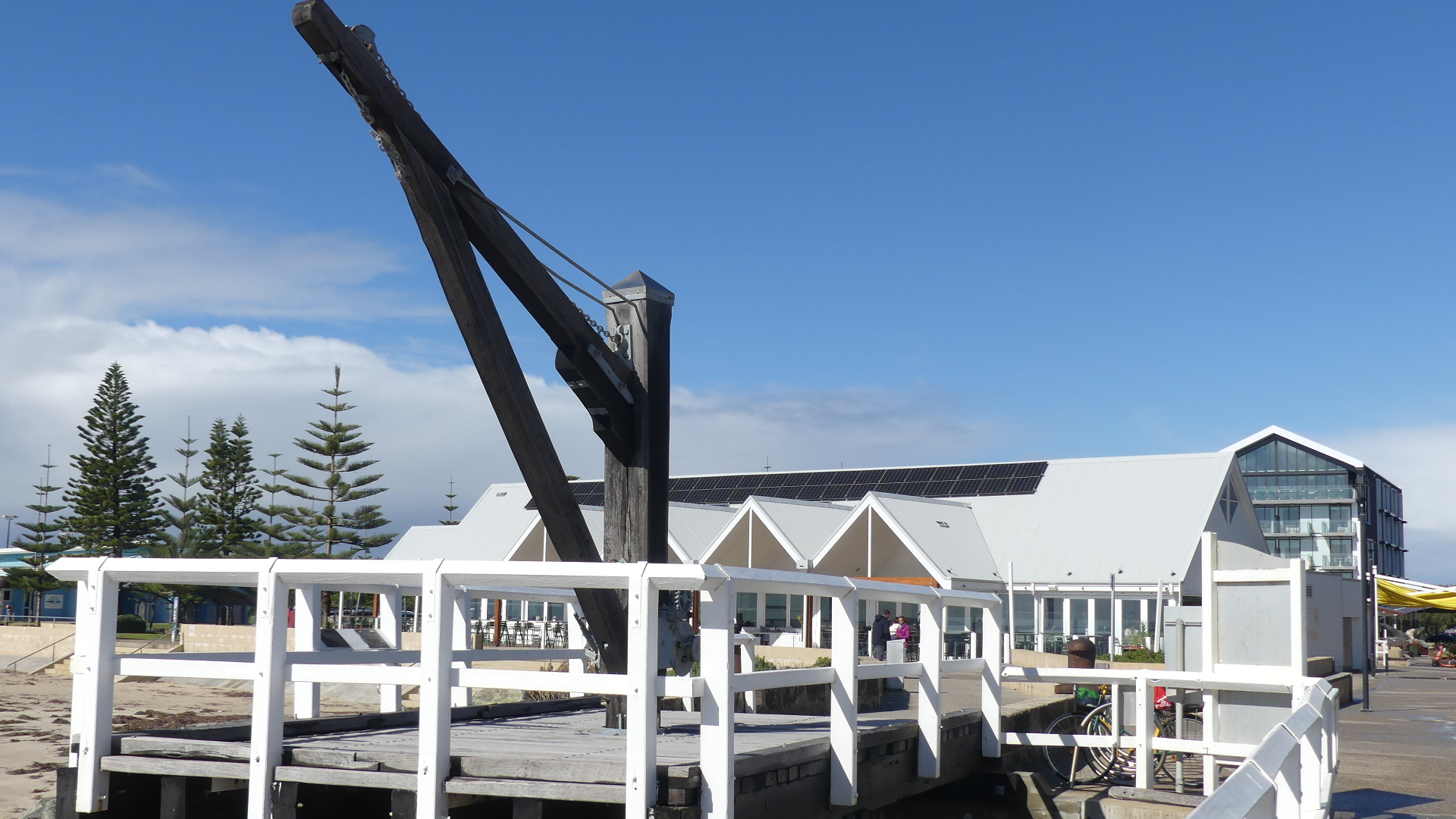
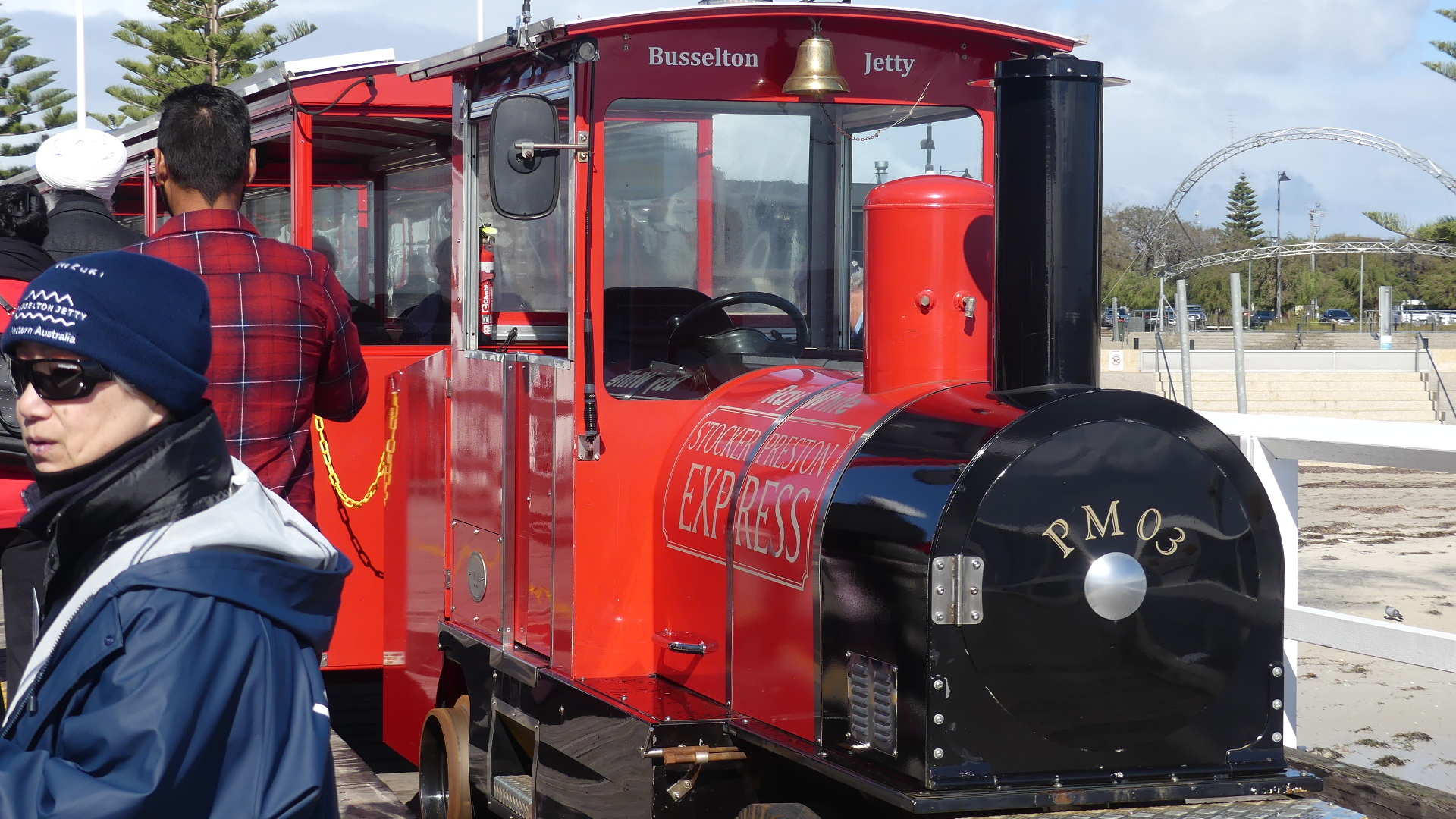
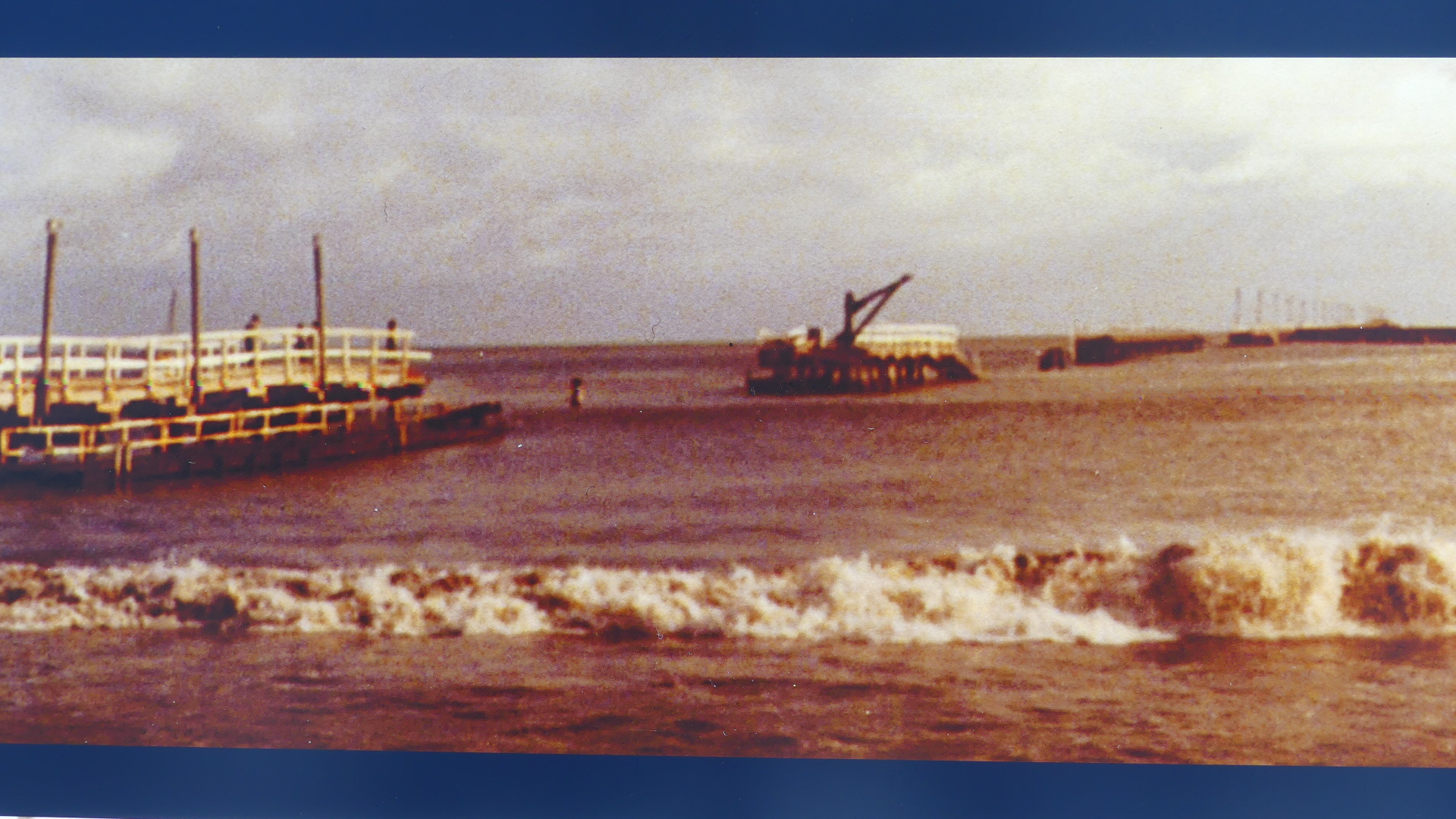
The 1960s saw the beginnings of the professional fishing industry and, in particular, the Margaret River wine region, which greatly increased tourist numbers in and around Busselton. Busselton’s nearest city is Bunbury named after Lieutenant Henry Bunbury who led a contingent of troops stationed at Wonnerup. Bunbury is 52 kilometres (32 mi) north-east of Busselton. Busselton is home to the longest wooden jetty (pier) in the Southern Hemisphere, stretching 1,841 metres (6,040 ft) out to sea. Construction of the jetty began in 1864 and it was continually extended until the 1960s, when it reached its current length. It was closed to shipping in 1972, and maintenance was discontinued for a time. Following major damage caused by Cyclone Alby in 1978 and a fire in 1999, it was restored and improved. Since 2003, the jetty has offered visitors a tourist train ride, an underwater observatory, and an interpretive centre.
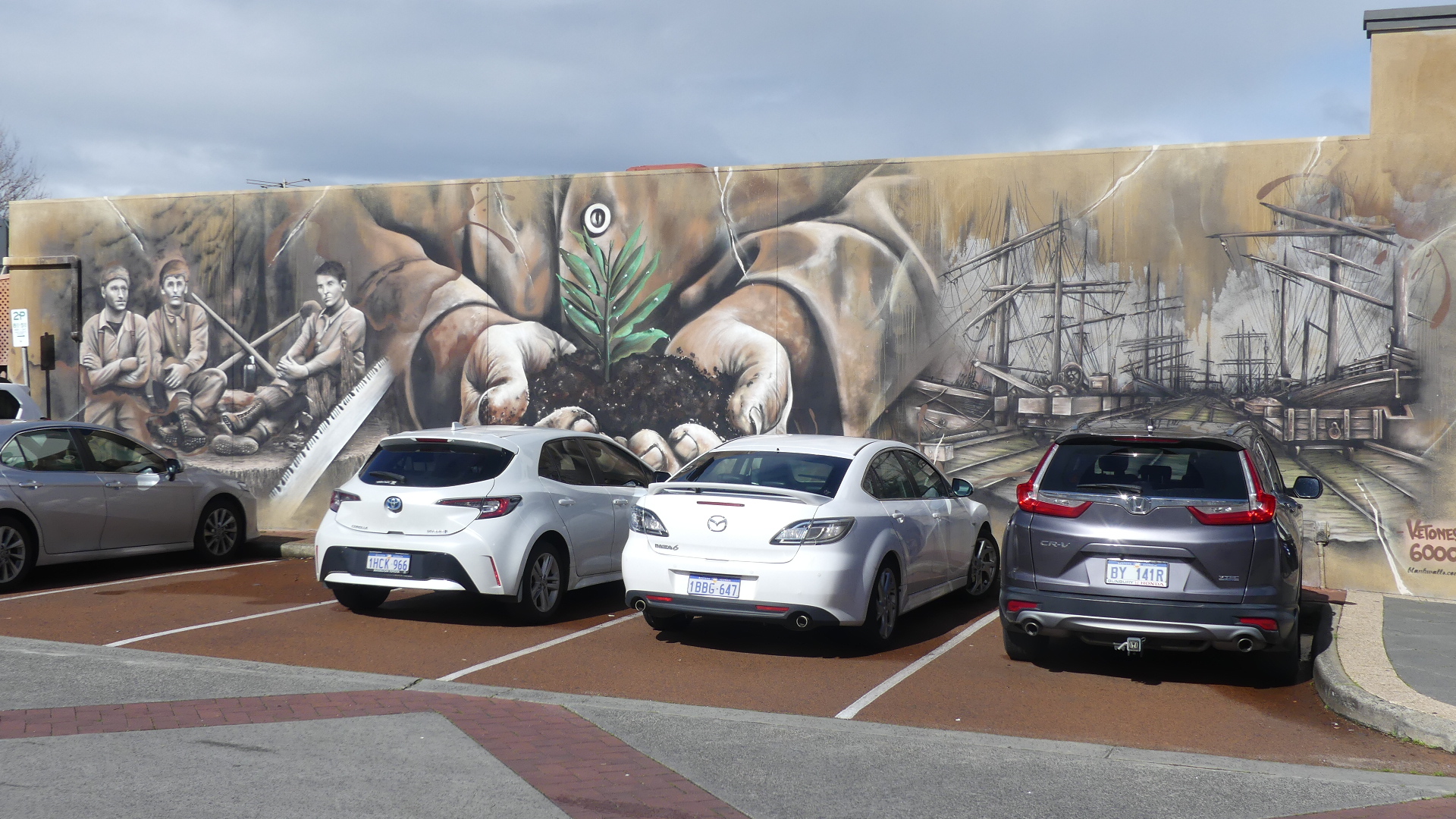
Photo #1 from the top left is the Visitors Centre, Gift Shop and train terminus. The train is rubber tyred but the carriages run on the rails. Photo #5 two gulls nesting – this is a remnant of an earlier part of the pier providing nesting spots for the gulls. We rode the train out and then walked back to the new building you can see in photo #2 for lunch and a lot of other people had the same idea. There are reminders of Busselton’s past in muriels on building walls such as the picture below. After Cyclone Alby.
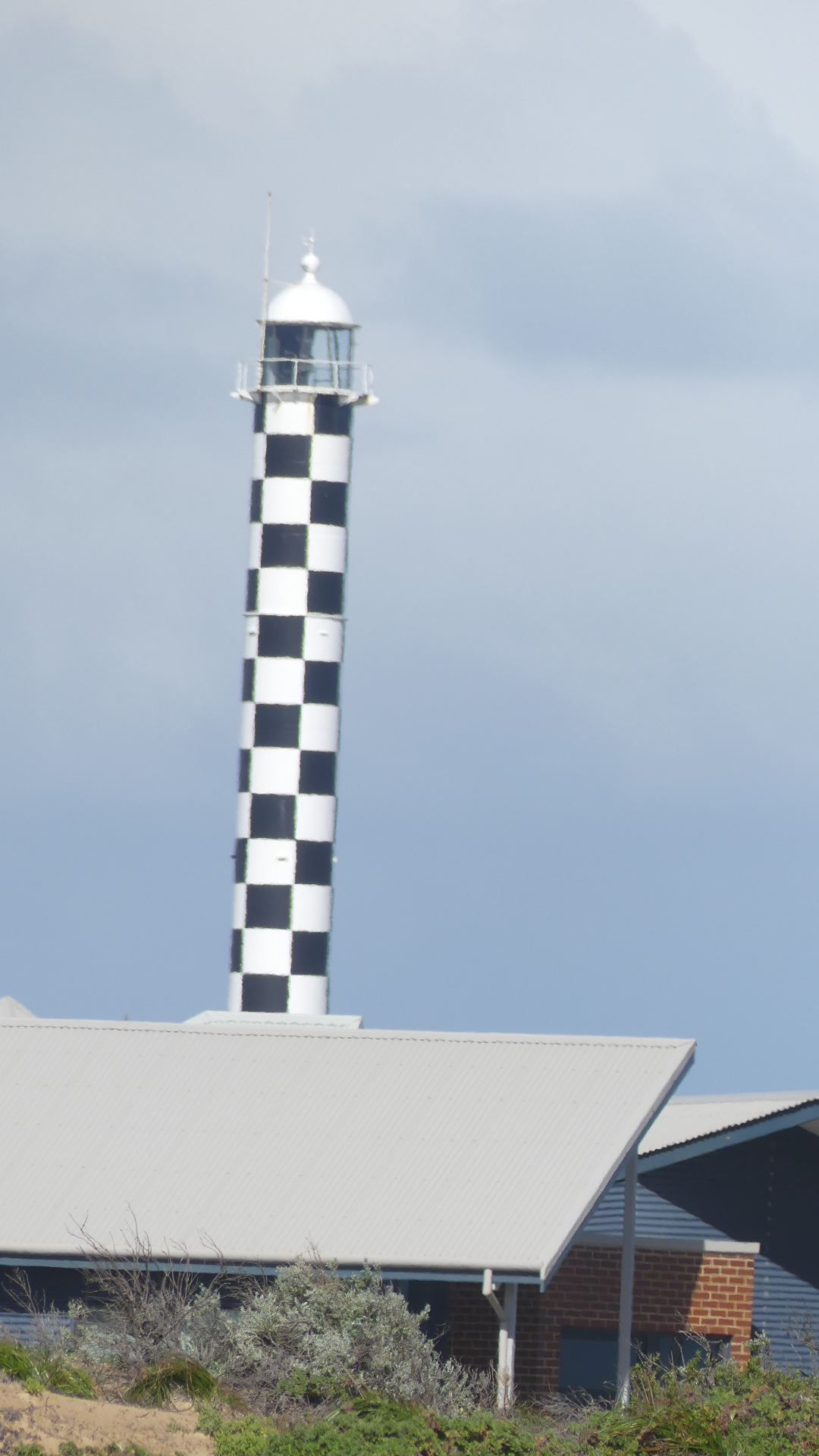
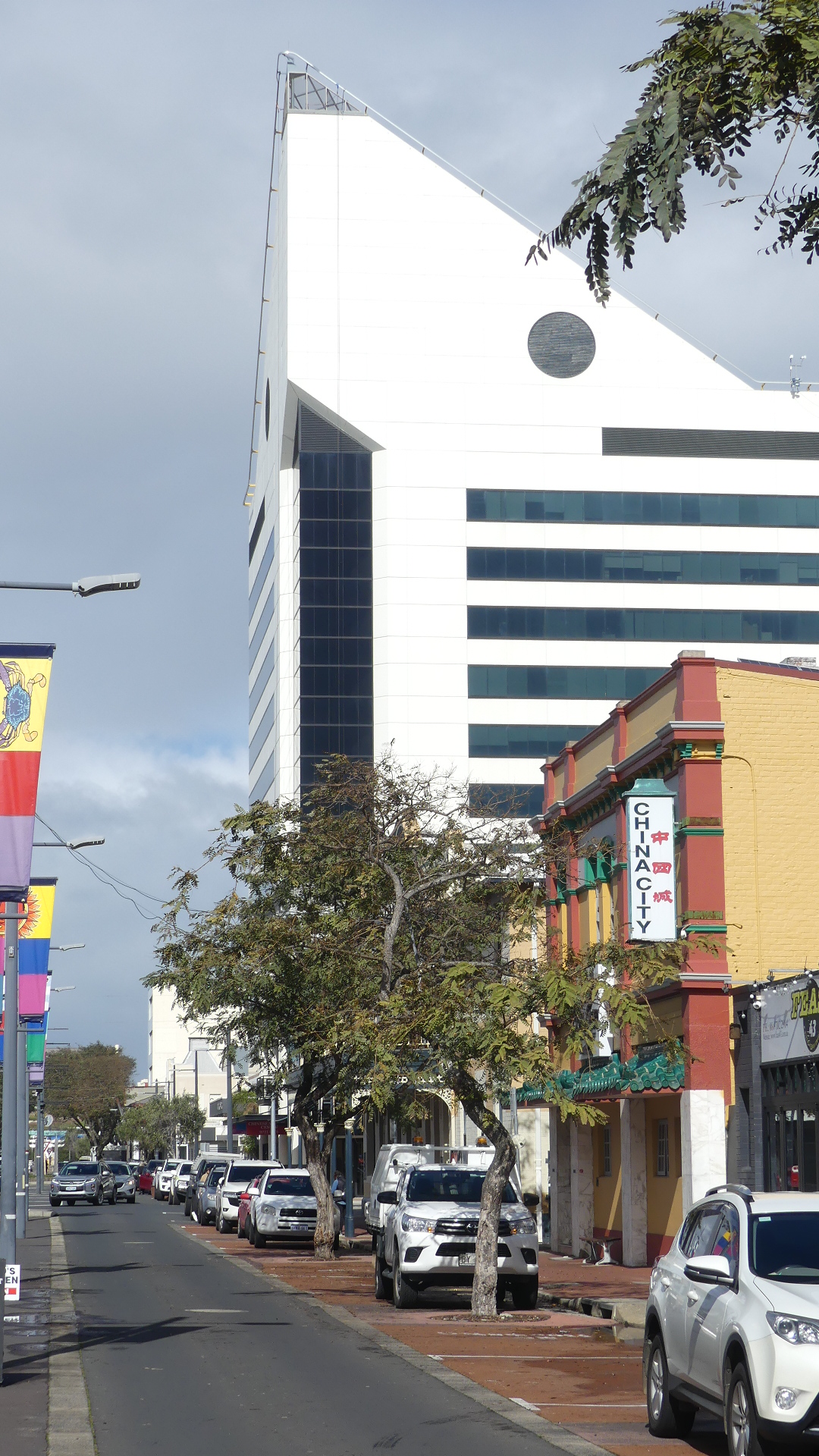
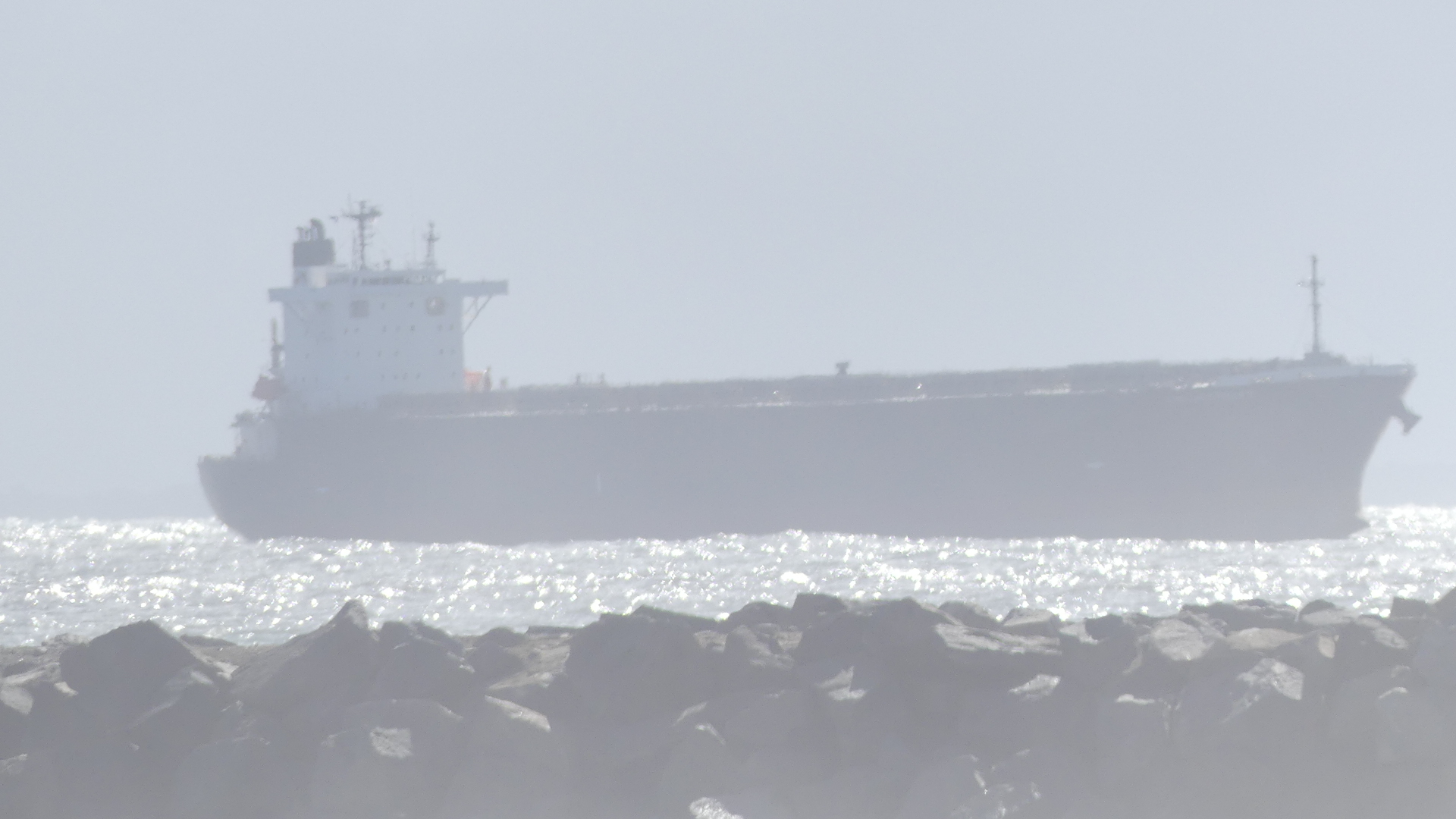
Prior to the visit to the pier we visited a number of different spots in town. It remains a port city as seen in photos #1 to 3, with lighthouses sited amongst the residences. Surprisingly there is a lot of historic street art to admire as well as seen in photo #11.
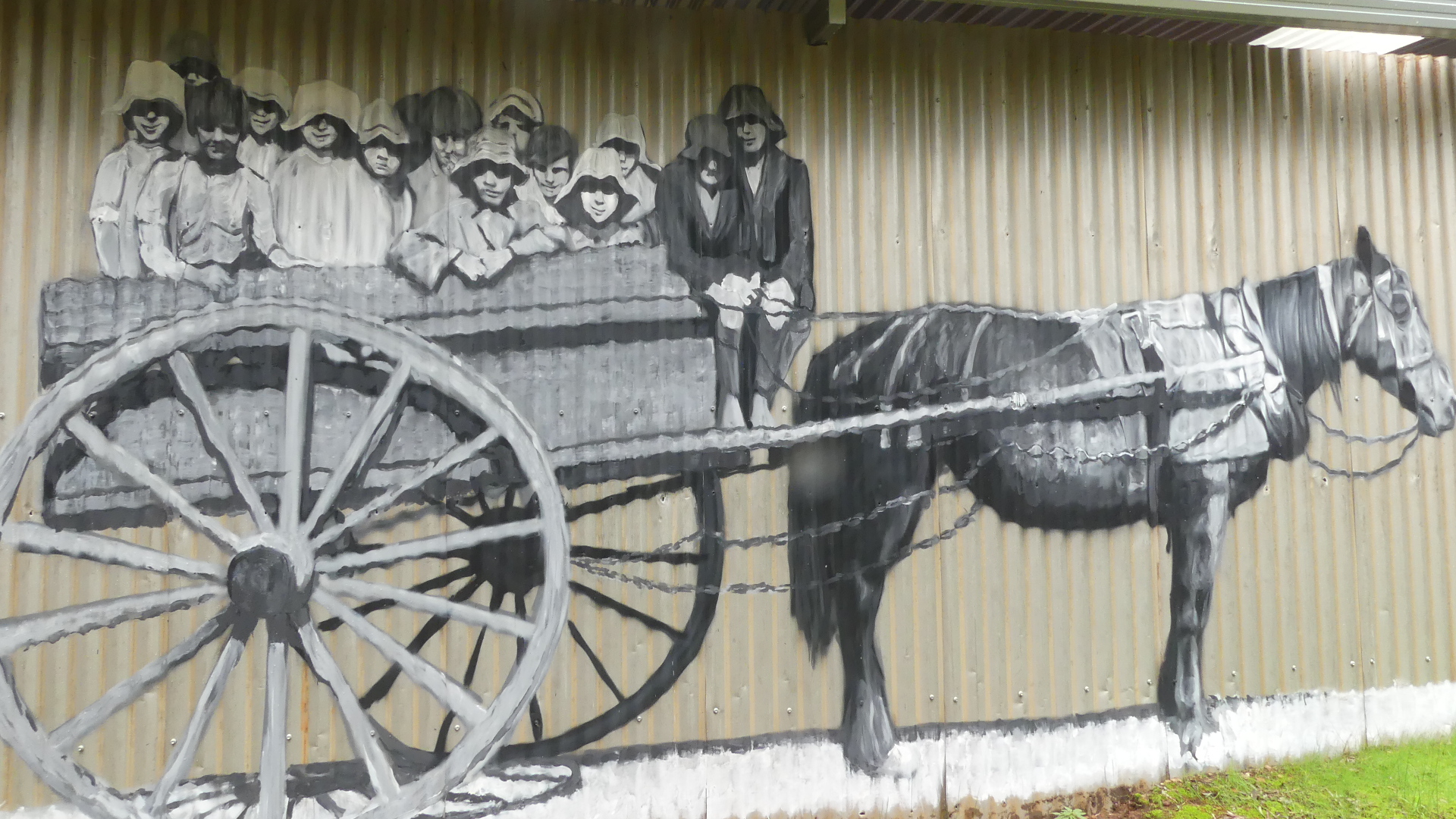
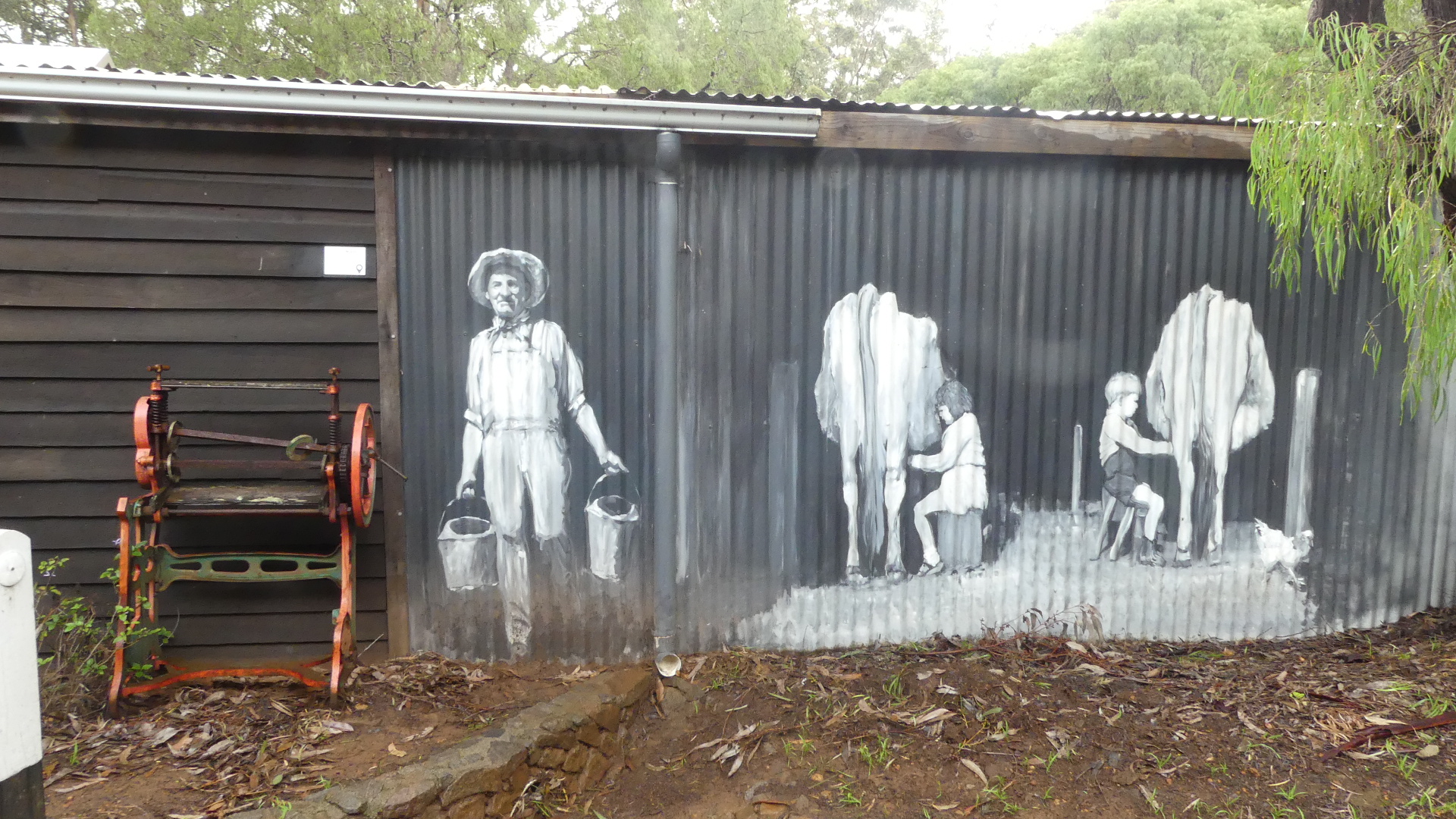
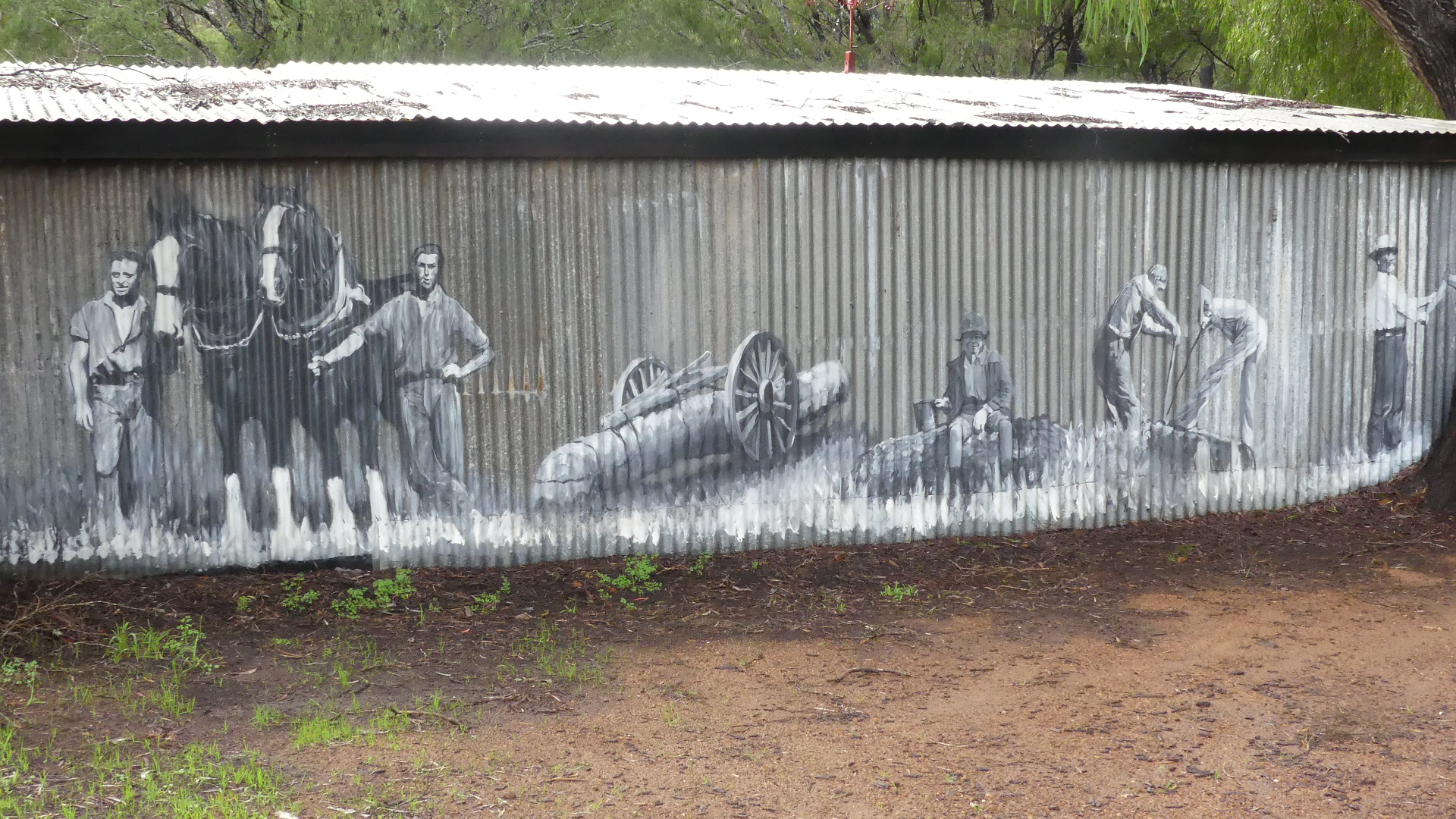
We made our way home but both arriving we noticed the historic buildings at the northern end of Margaret River Village. It had blown up windy with sprinkles of rain so while it seemed miserable we were not going to miss this opportunity. Once again the pictorial artwork was terrific to see images of the past.
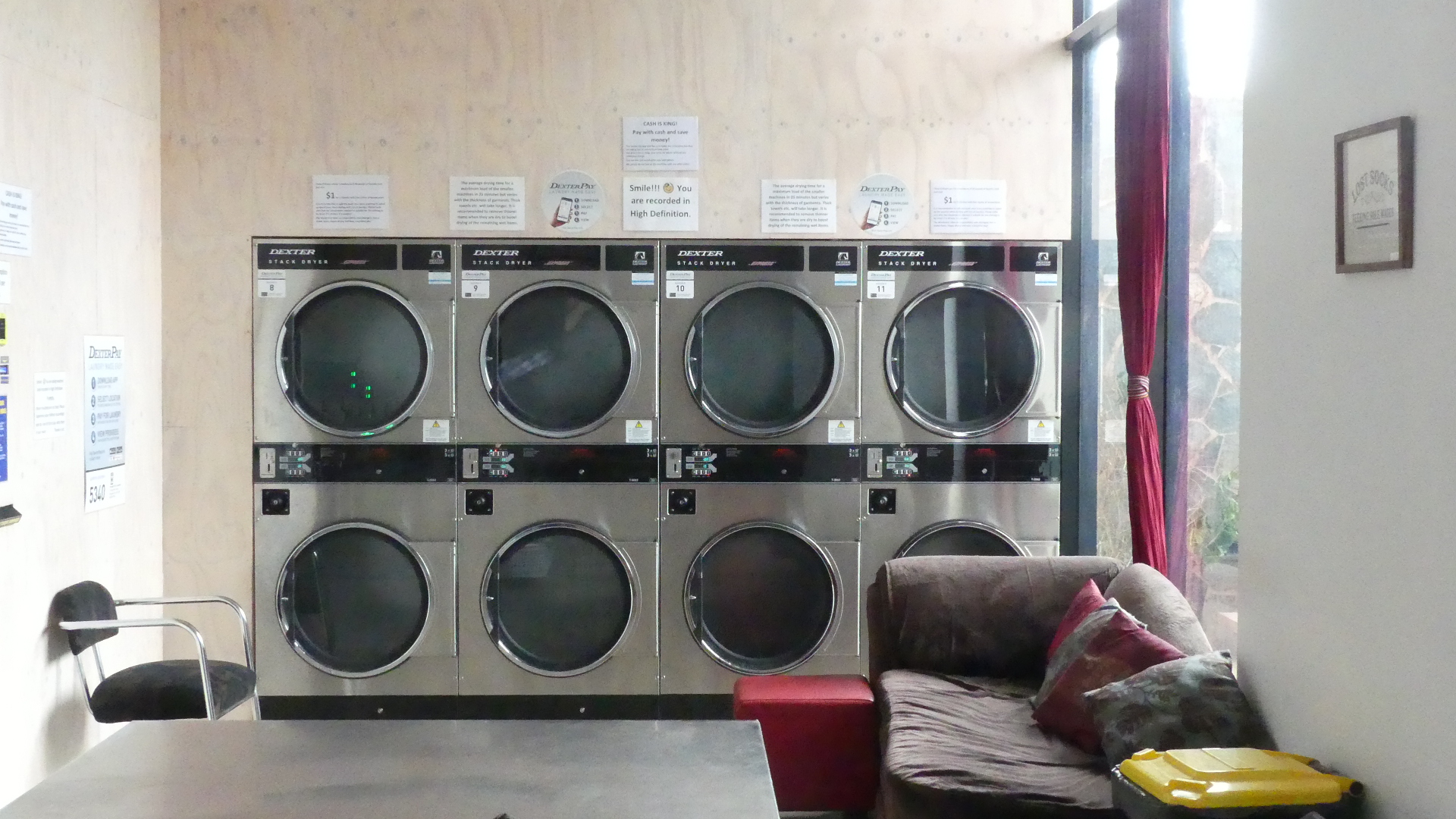
Well tomorrow we board the bus to Perth Airport so time to do some washing. Although there is a laundry in the house/home we decided to use the local laundromat – cannot recall why at the present but here’s the proof – the dryers and the lost and found basket.
The following morning 5th August we drove down to the bus stop in the darkness and sat in the shelter until the bus arrived. Dale and Zdravka protested that they would drive us to the airport but we won out and stayed for the bus. It was both cold and dark but gradually the sun peeped over the horizon, the street lights disappeared and the bus arrived. There would be one change before arriving at our accommodation at the airport. Now if you remember in my first of these blogs we had intended to meet Kerry’s cousin Ken and his wife Yena. Yena’s mother passed away suddenly and as she lived in Bali Ken and Yena had left Perth the morning of our arrival. So on our return journey we arranged to catch up that evening.
Our bus took us on an interesting circuit on the way to the accommodation – in this world of FIFO we went to every small aircraft operator providing FIFO travel taking men and women to work. Interesting!
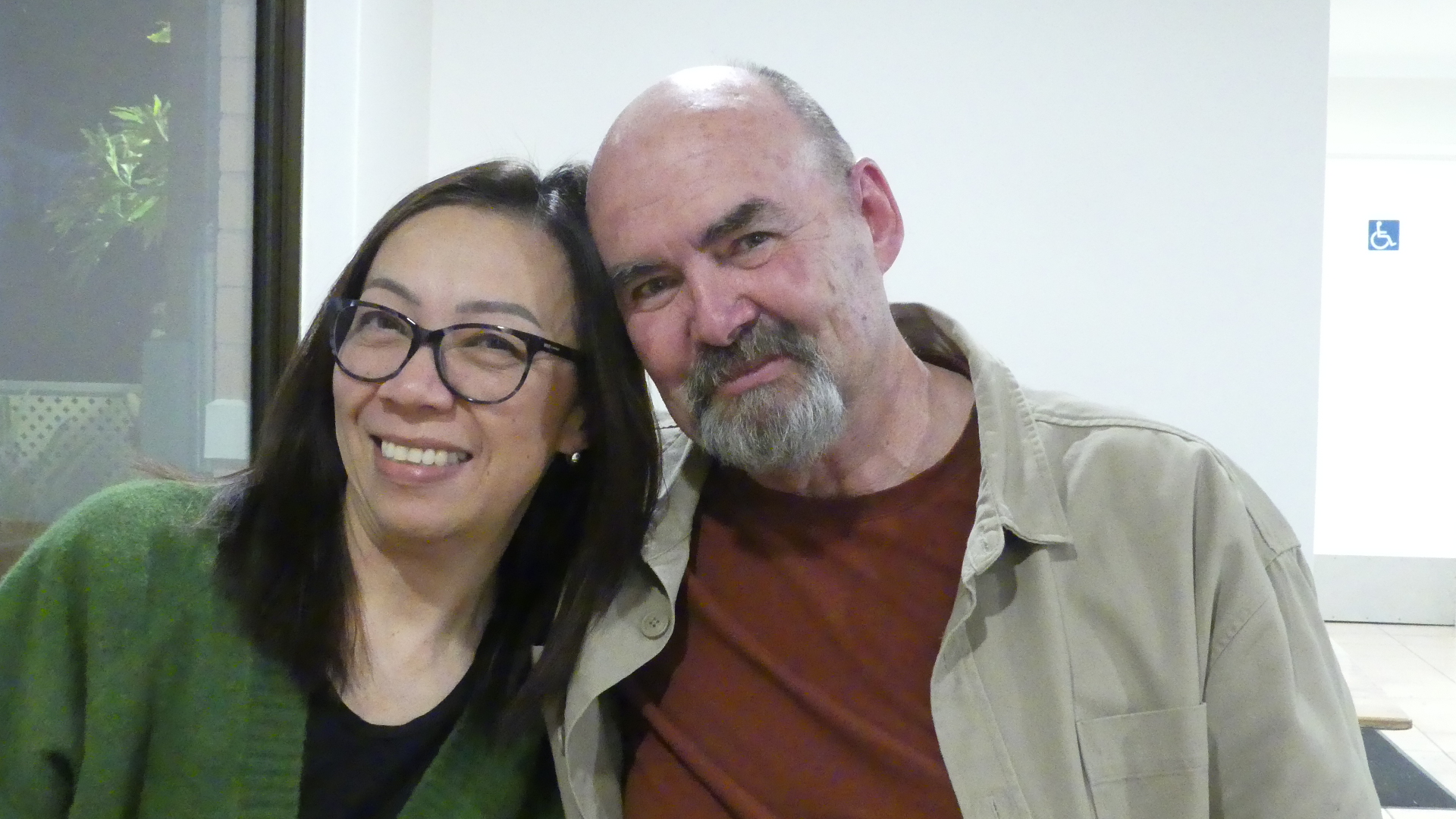
After showering and pulling on some of those clean clothes we went to the inhouse restaurant to meet Ken and Yena. Reminded me a bit like Star Wars and the bar on Tatoon but fortunately Jaba was not in. Ken and Yena arrived and we caught up on everything from Ken’s father Barry passing away to Yena’s mother passing – a characteristic of getting old. Here is Ken and Yena.
Well after farewelling Ken and Yena we dragged ourselves to bed. We were scheduled to travel with the FIFO workers to the airport and what a shock. The bus transfer was a true shuttle with everyone jostling for space and once we got to the departure terminals all of the shuttles were converging and spewing passengers into the terminal. We were stunned but we had allowed plenty of time fortunately. We were not going to Brisbane but to Hobart to catchup with our youngest son Paul and his family. Whilst we booked a direct flight the plane took us firstly to Sydney then to Hobart where caught an Uber to our hotel. Having found our way to the hotel we arranged to catch up for dinner at a local eatery. The reason for our visit was tomorrow our granddaughter Lola was to perform in a school band.
The mornings were quite crisp so the fire was lit whilst we fed the birds and had breakfast. We had word that the Markets were on this morning. Nothing like the word “Markets” to wet the palate so the plan to go to Cape Leeuwin Lighthouse took a slight deviation to the local school grounds for the Markets. A short drive to the other end of the village and there it lay – the Markets – a collection of all strange things and smells a bit like early explorers we lay anchor in the crowded carpark and moved amongst the natives. There was a lonely busker plying his trade before an uncaring audience wound up in the goods on sale. Now I tired very quickly – once around the tents was enough. So I became the buskers sole fan but I was soon joined by Dale and we sat patiently like dogs on a lead waiting for the madam to return.
Once the shopping flea had been scratched the girls returned to collect us and on the road again.
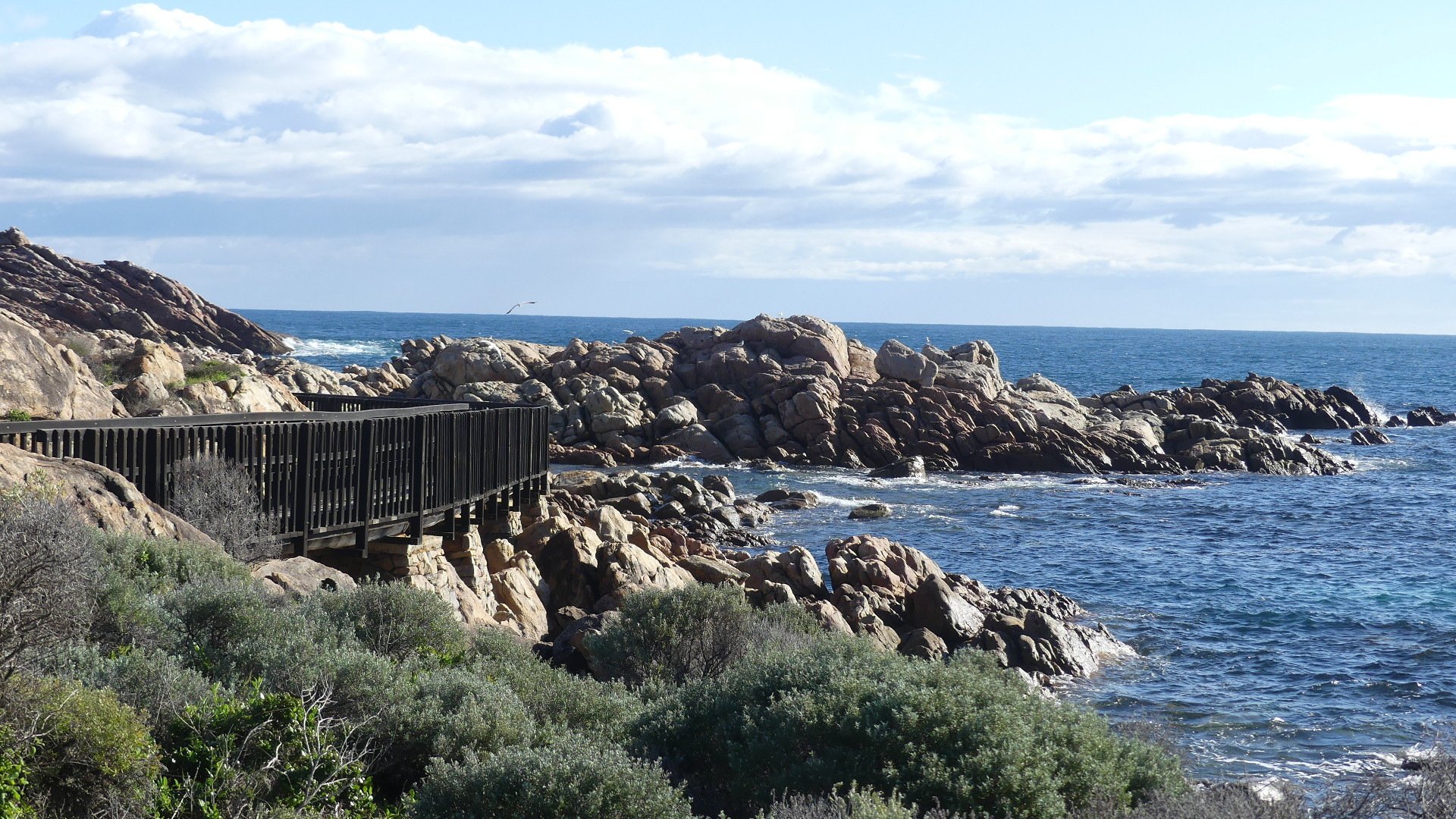
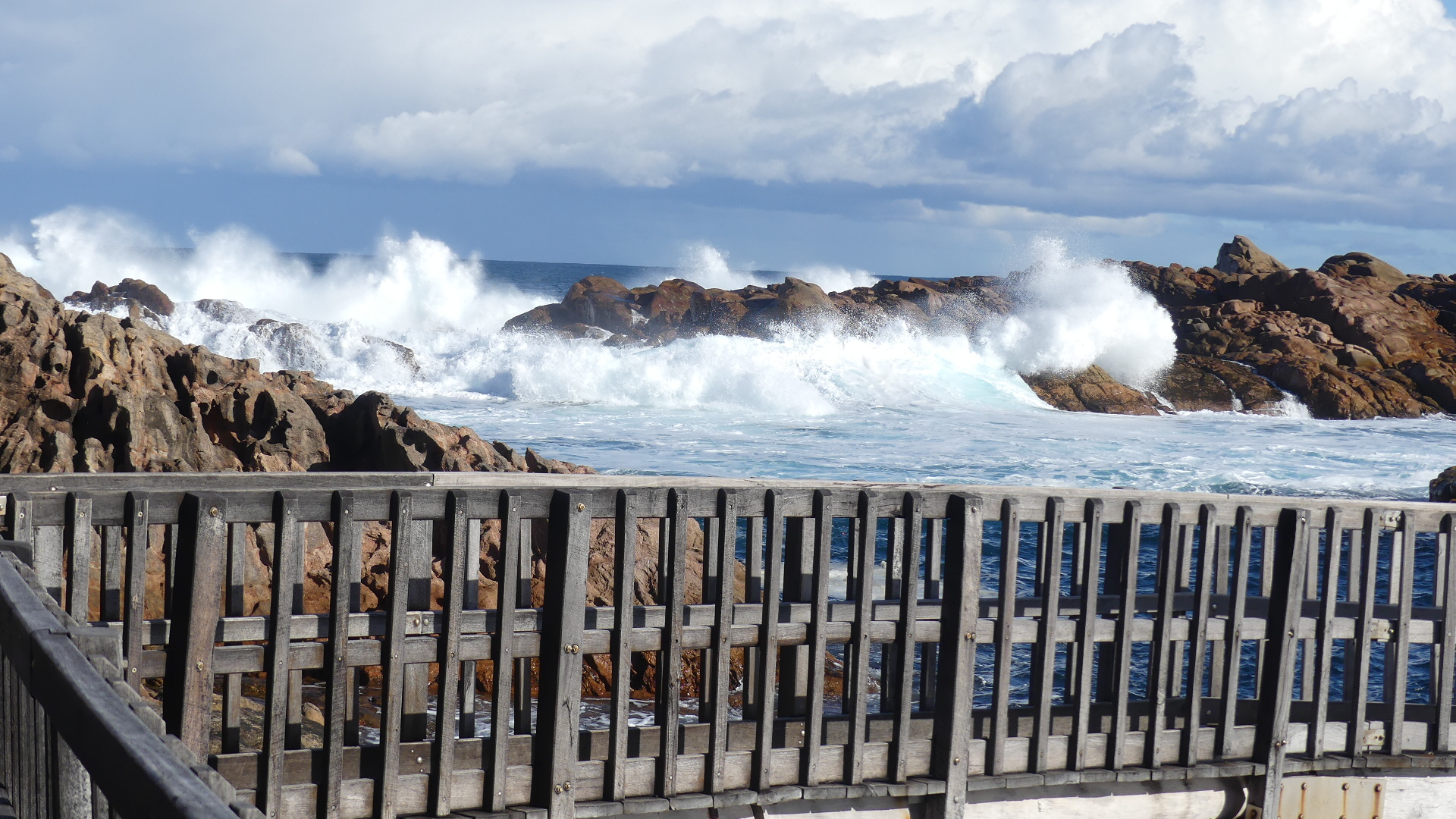
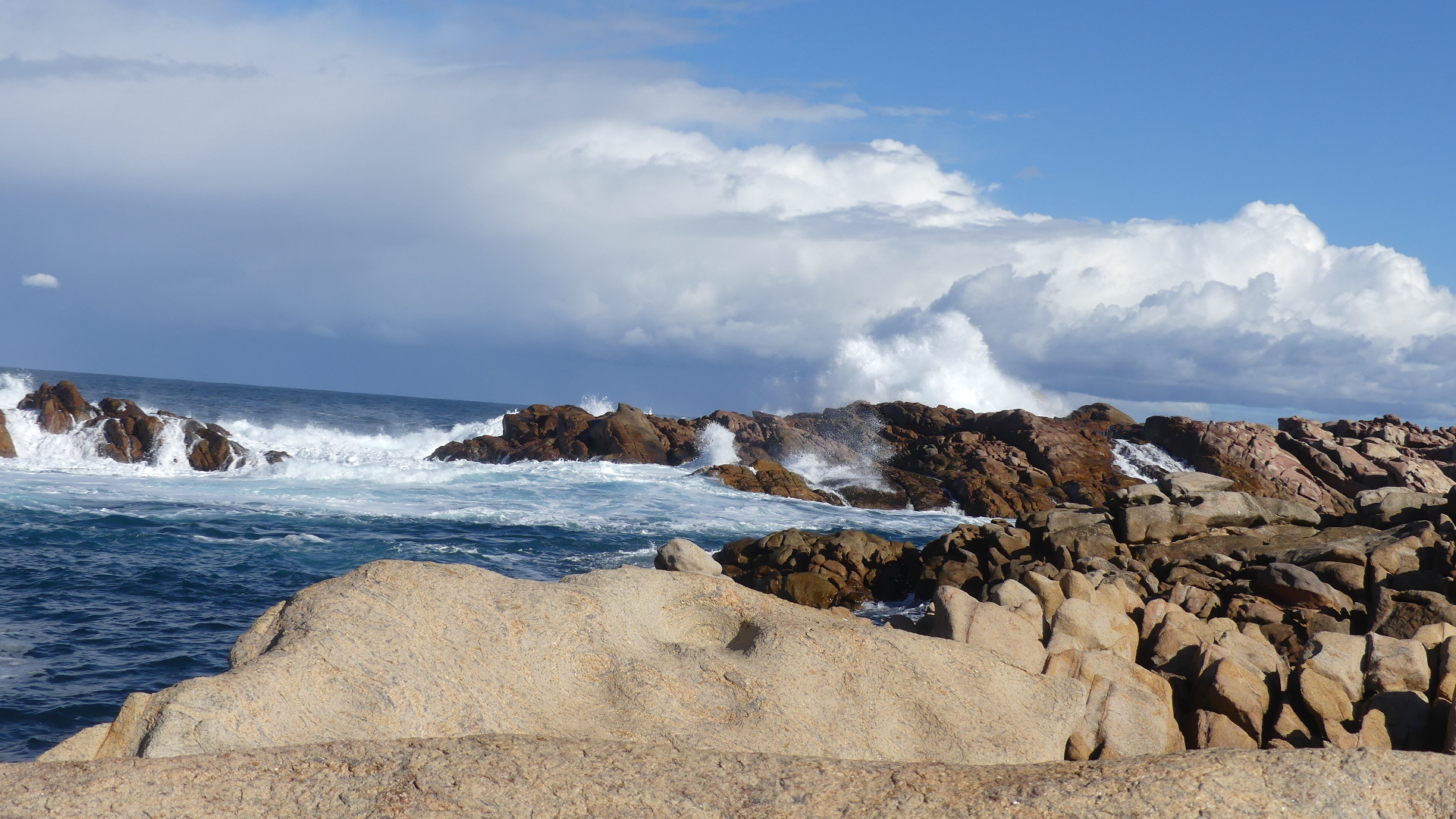
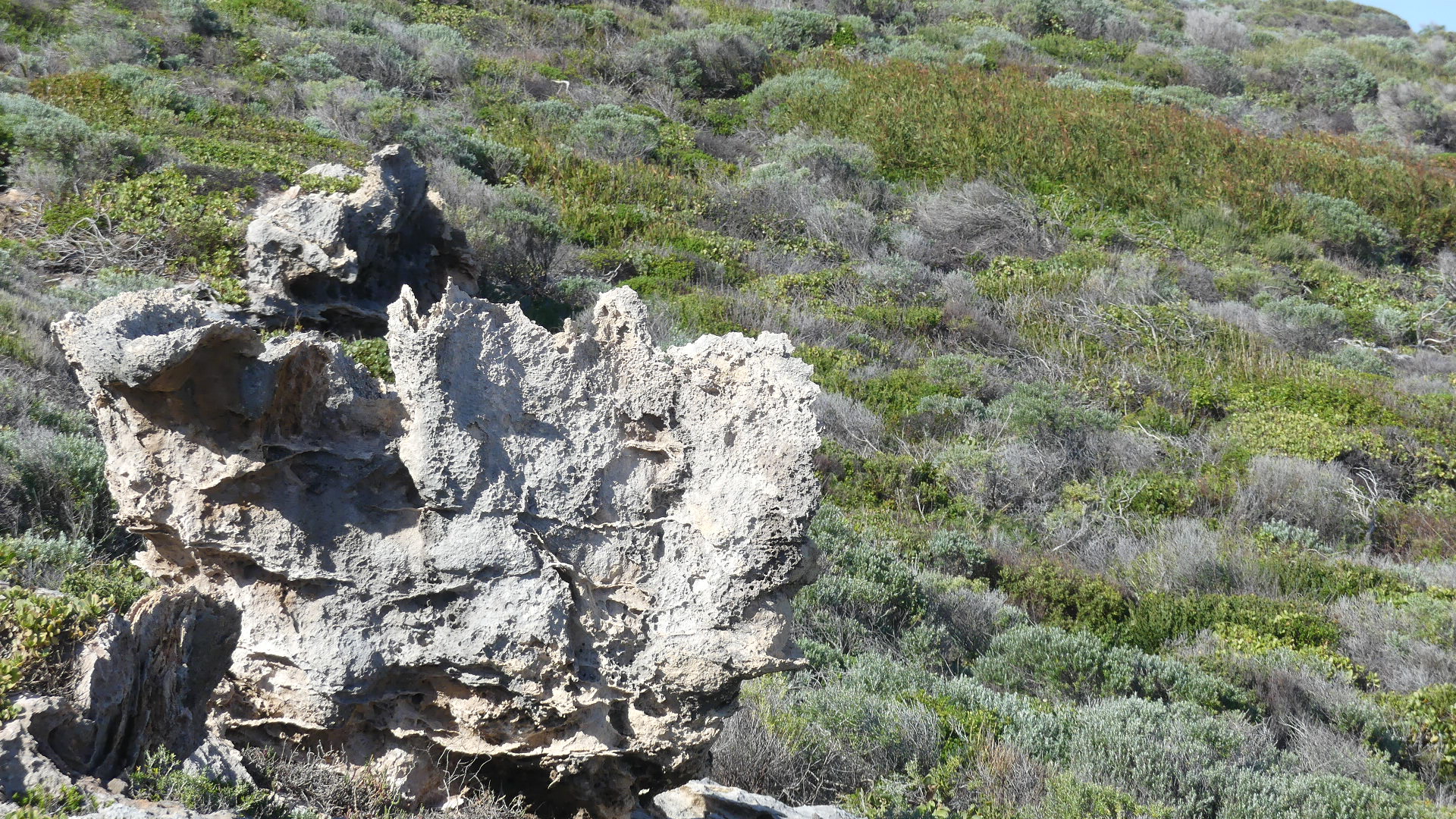
On our way to the lighthouse we had a few other points of interest to visit and the first of these was Canal Rocks – a rocky headland outcrop with interesting formation and wind weathered rocks. The wind was strong but the rocks tell you how strong they can get.
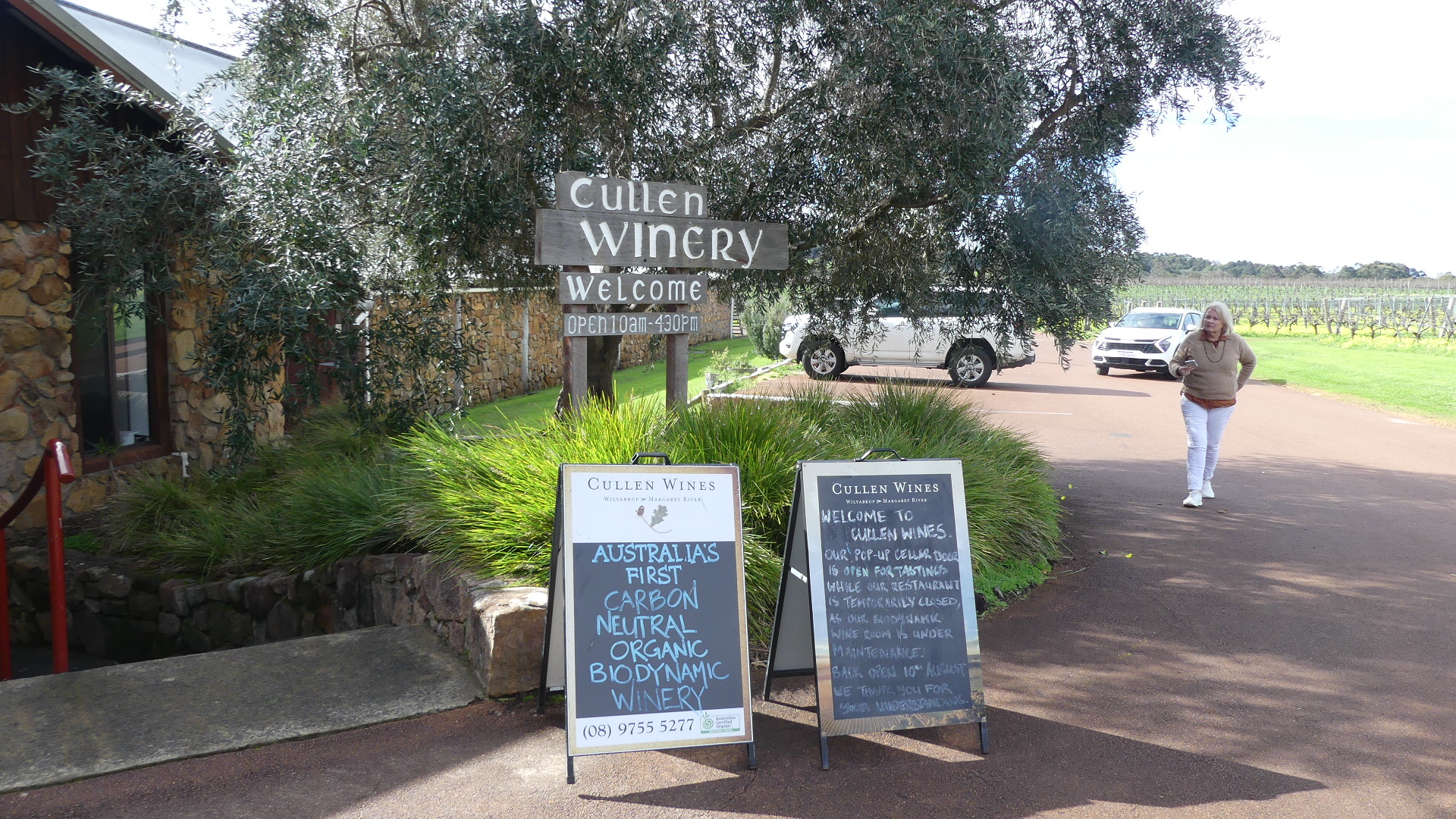
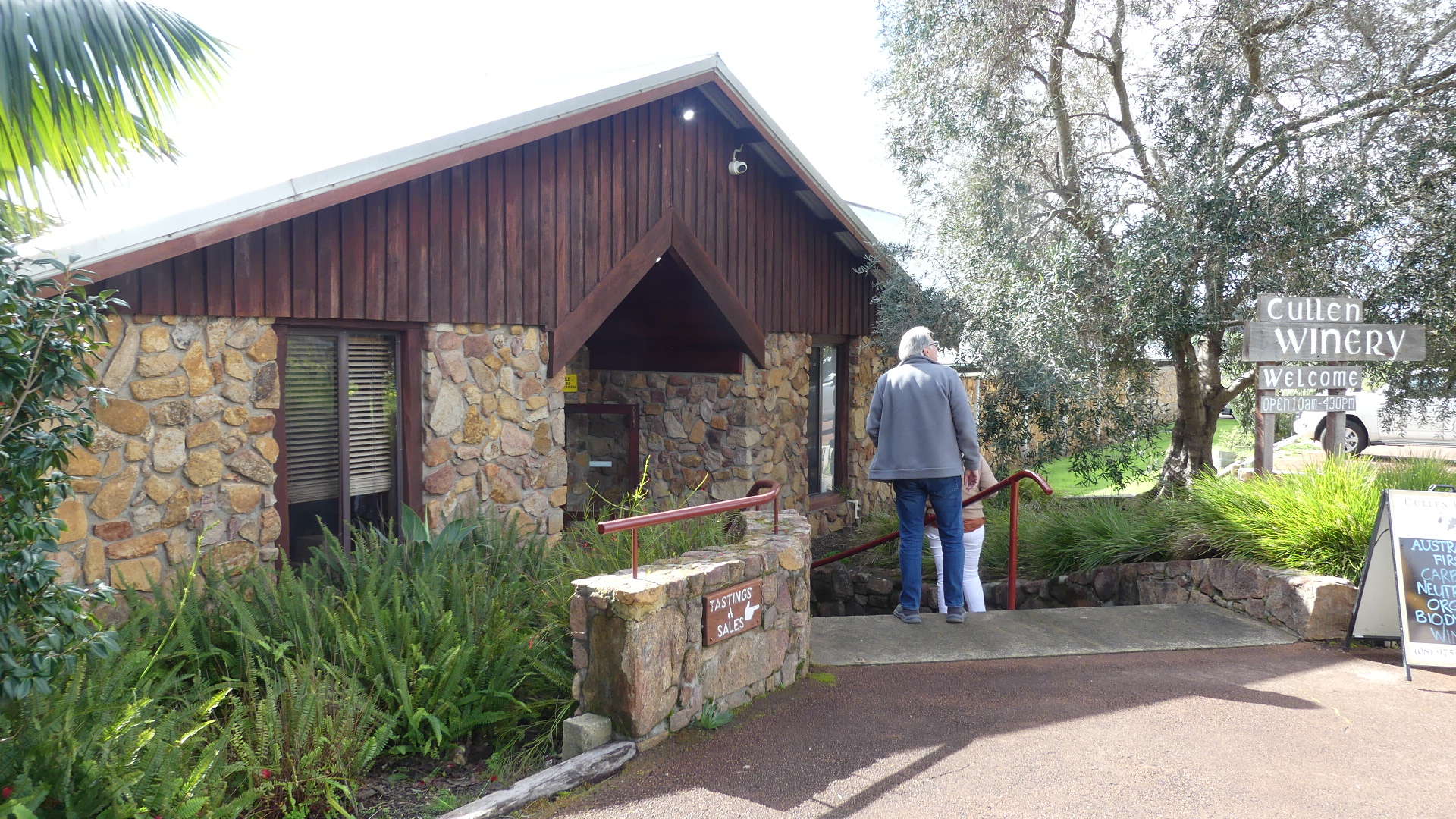
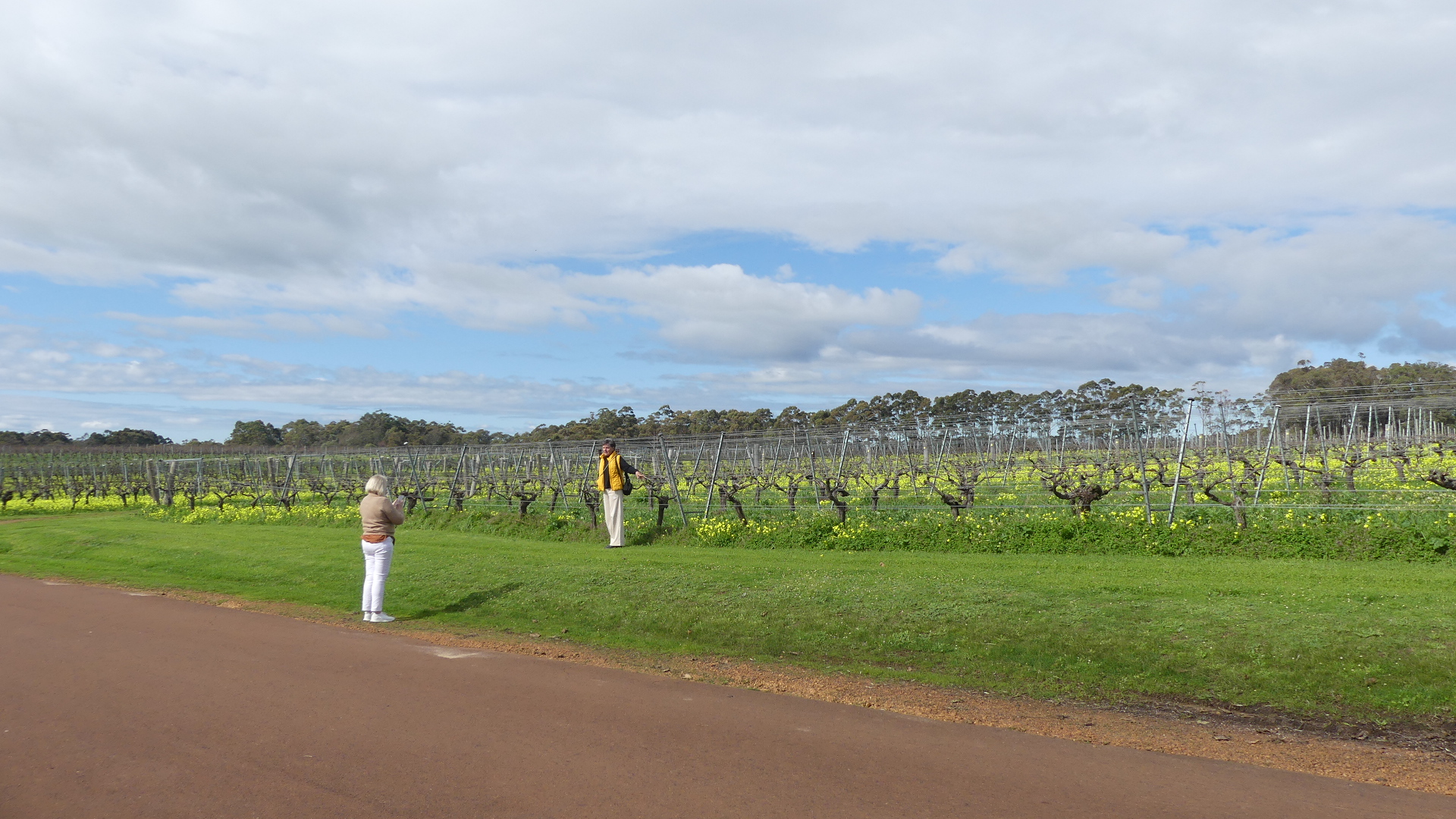
It was still early by the time we arrived at Cullens Wines Cellar Door and vineyard. Our thoughts ran to a hot coffee and a bun but the cellar door was under renovation and the staff disinterested so we basically looked around and moved on.
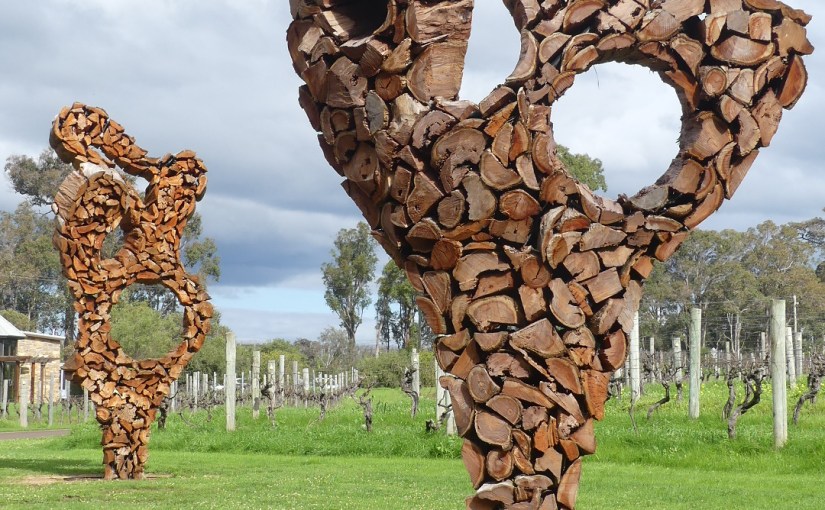
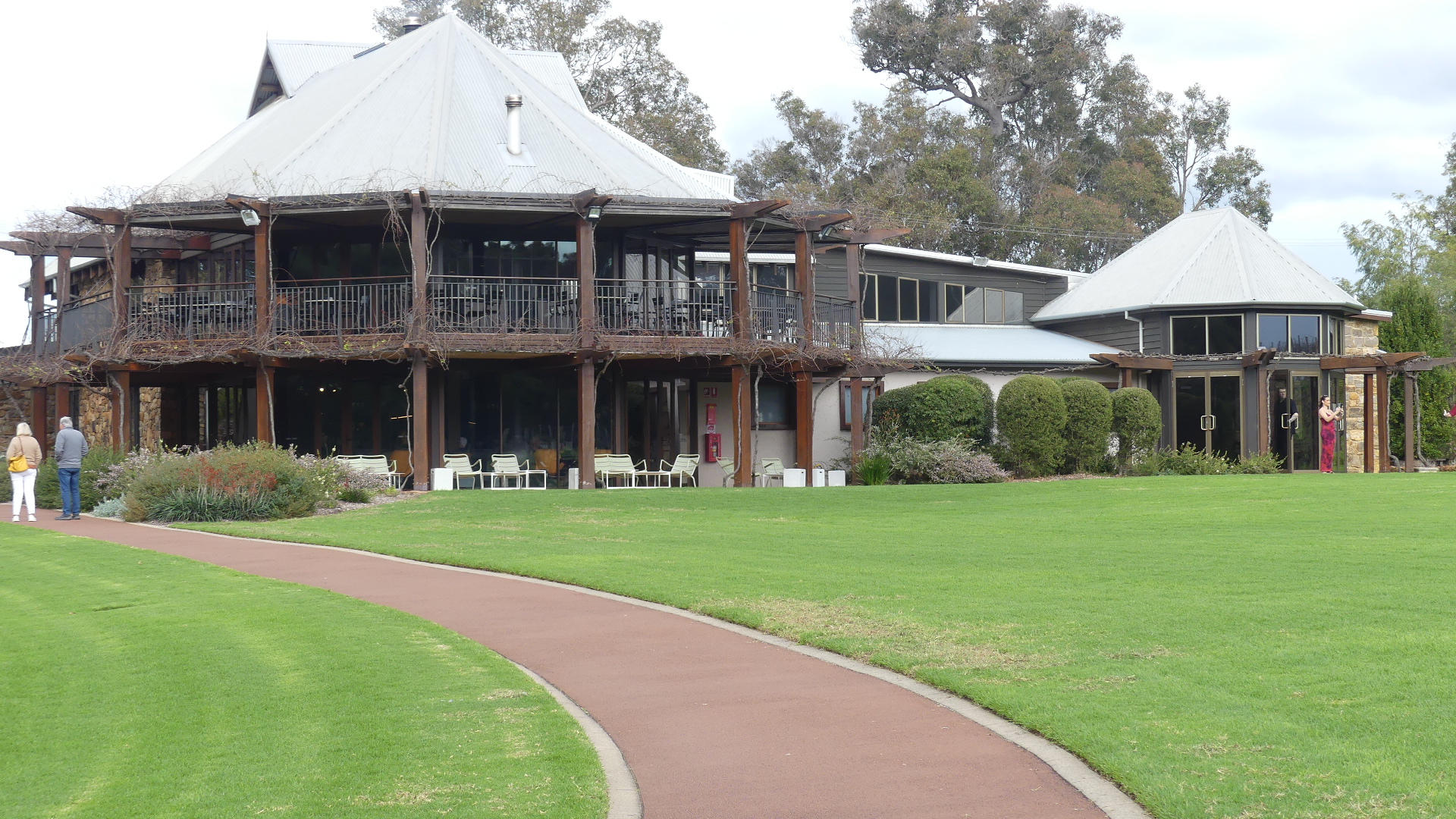
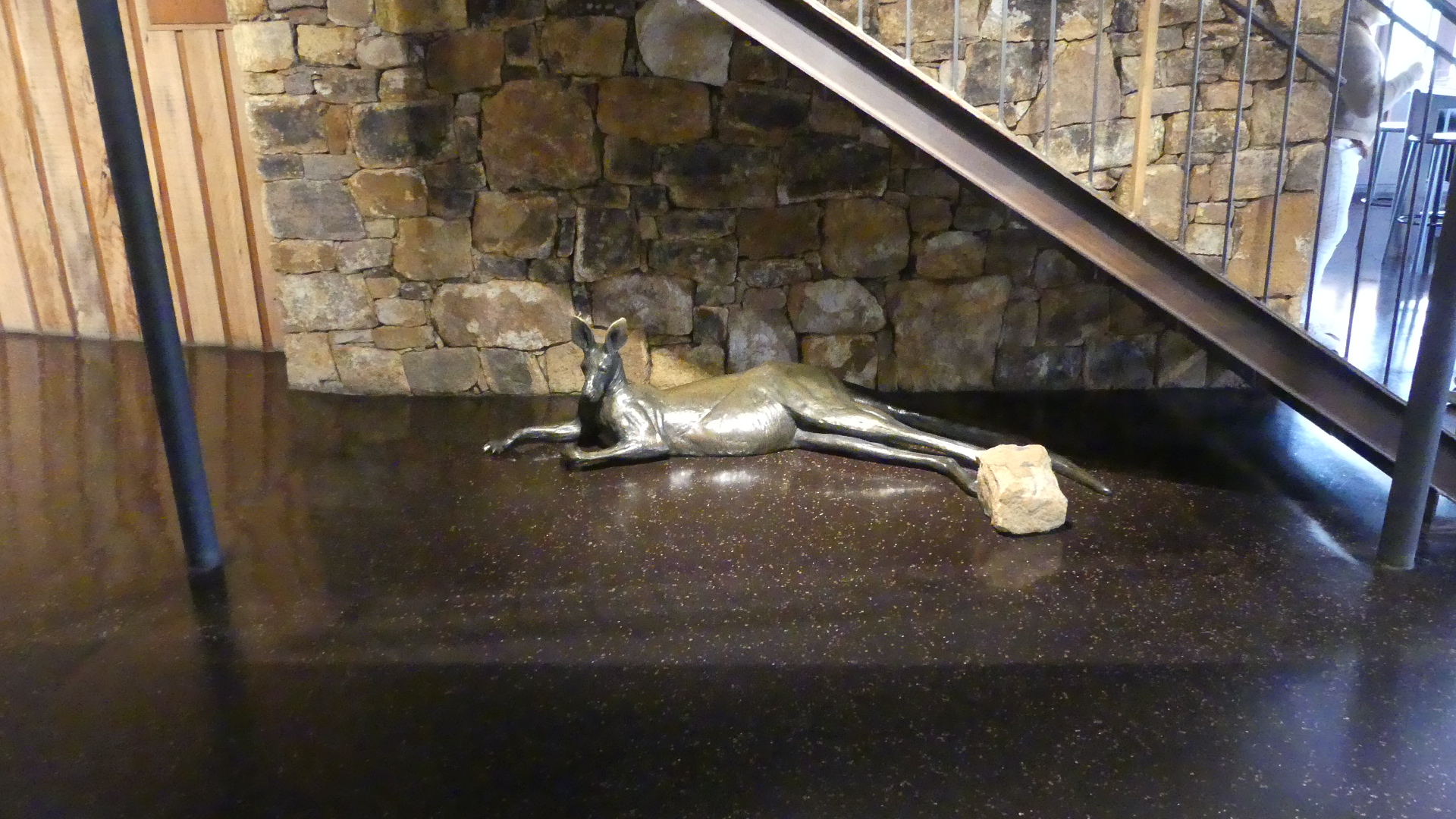
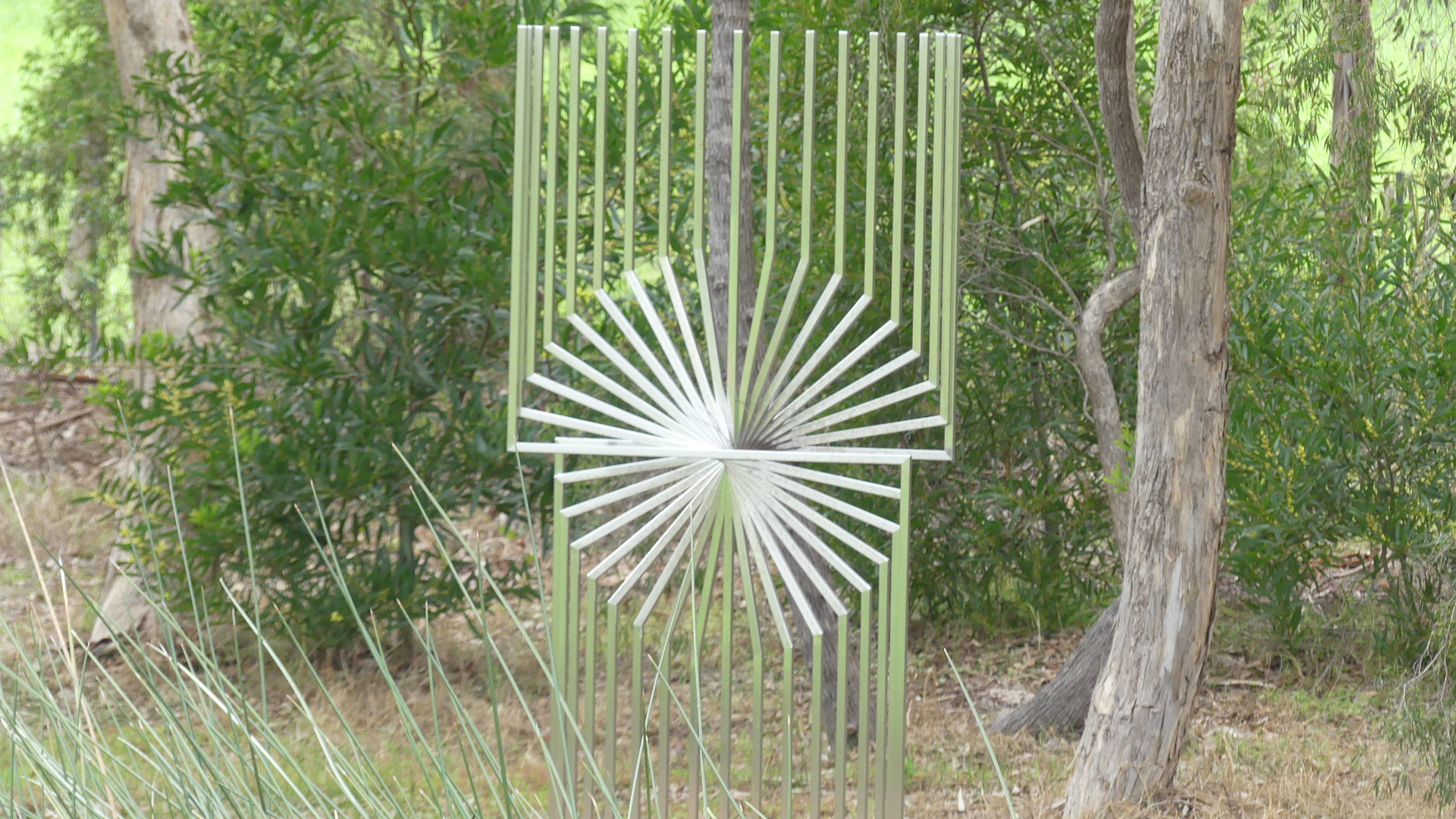
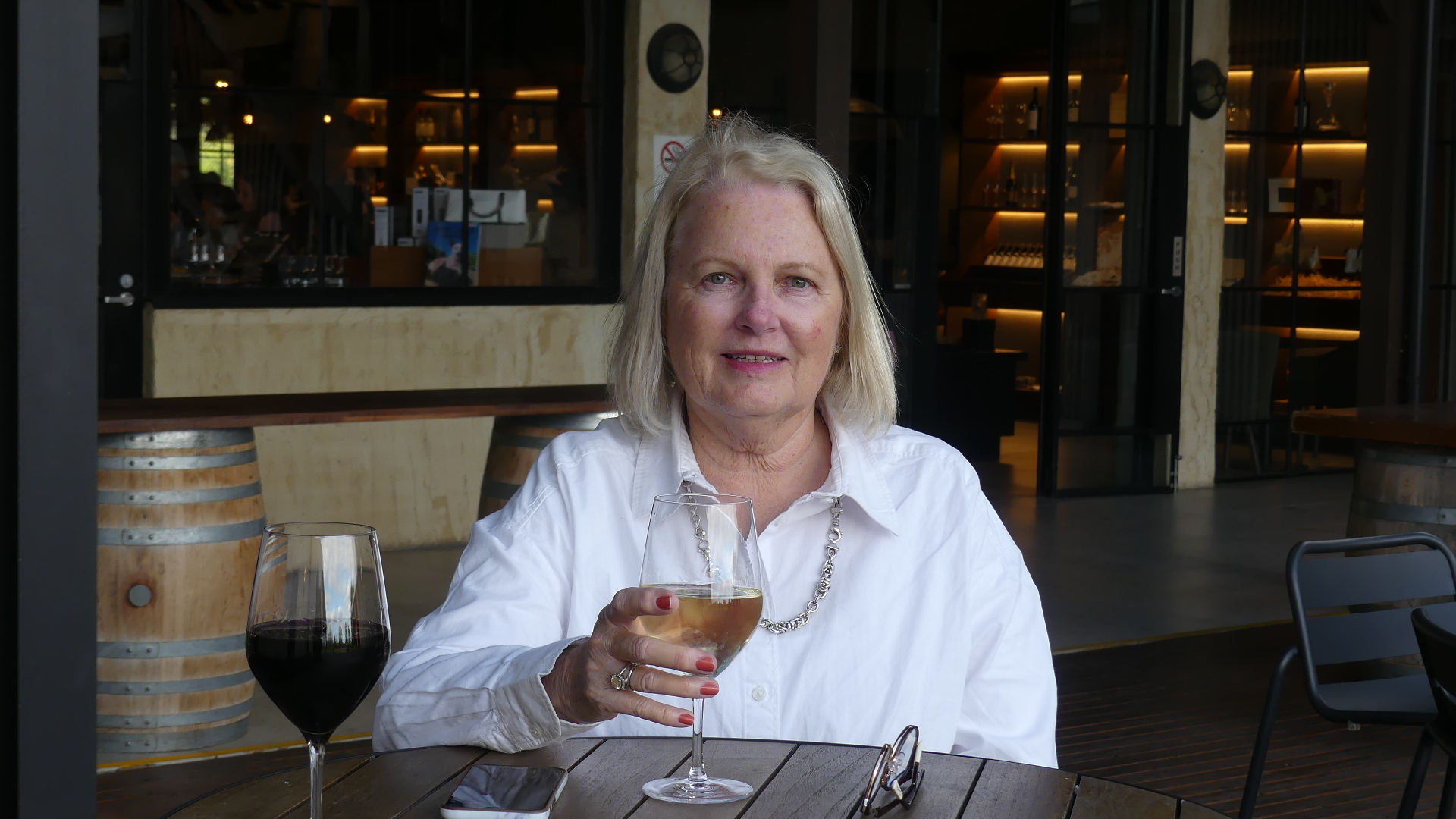
Next winery Vasse Felix. Founded by Dr Thomas Cullity in 1967, its first vintage in 1971, David Gregg appointed winemaker in 1973, the Gregg Family acquire the vineyard in 1984, and the vineyard and cellar door were acquired by the Holmes a Court Family in 1987 and remain the owners today. The cellar door is picturesque and the top of the range in Australian cellar doors. The entrance is manicured with a large well maintained carpark so much so that an odd looking home made vehicle stands out like a sore thumb. Sculptures decorate the entrance walkway with gracious trees and landscaping – the carpark is worth visiting!
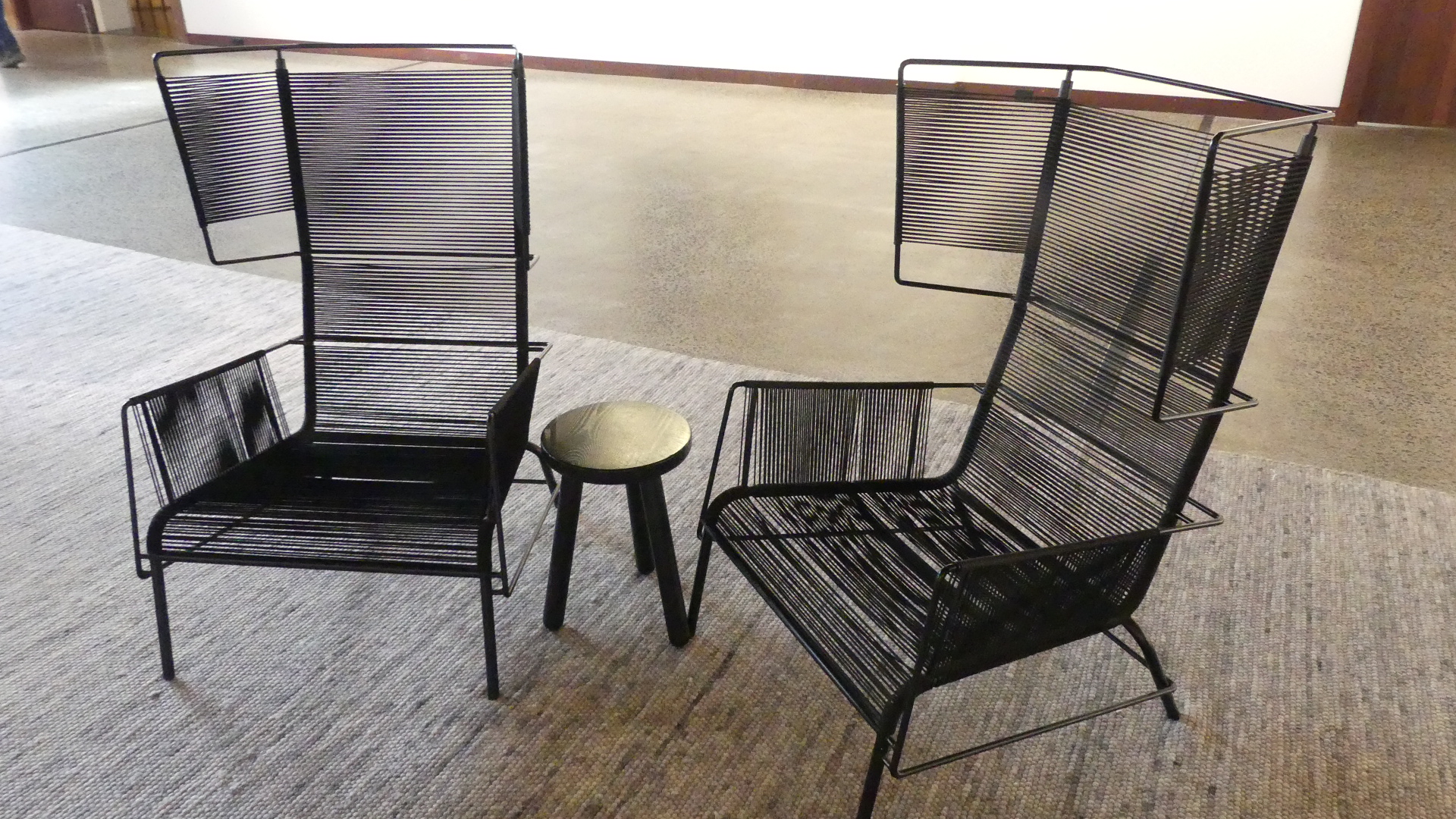
Stepping inside is an experience in its self. There is a gallery behind the enormous doors shown below and only two chairs to sit an admire the art. There is a cellar of the very best Vasse Felix wines above which is the wine tasting area and cafe and outstanding pieces of sculpture and art then upstairs is the restaurant exuding an opulence of elegance with an Australian flavour. The dining room was full of guests and I felt like a pervert spying on them so I declined to photograph the dining room. As we left we were followed by birdsong.
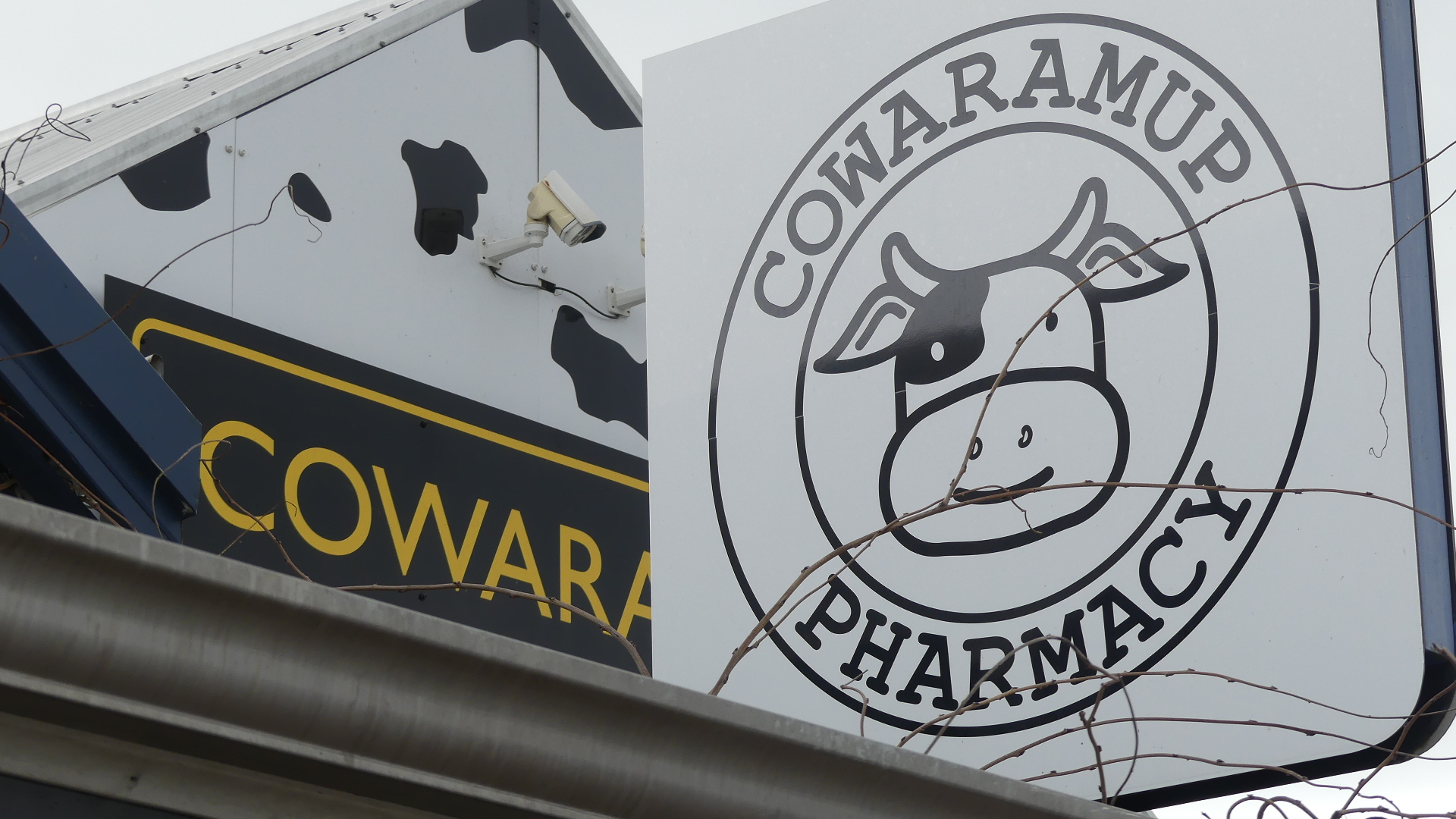
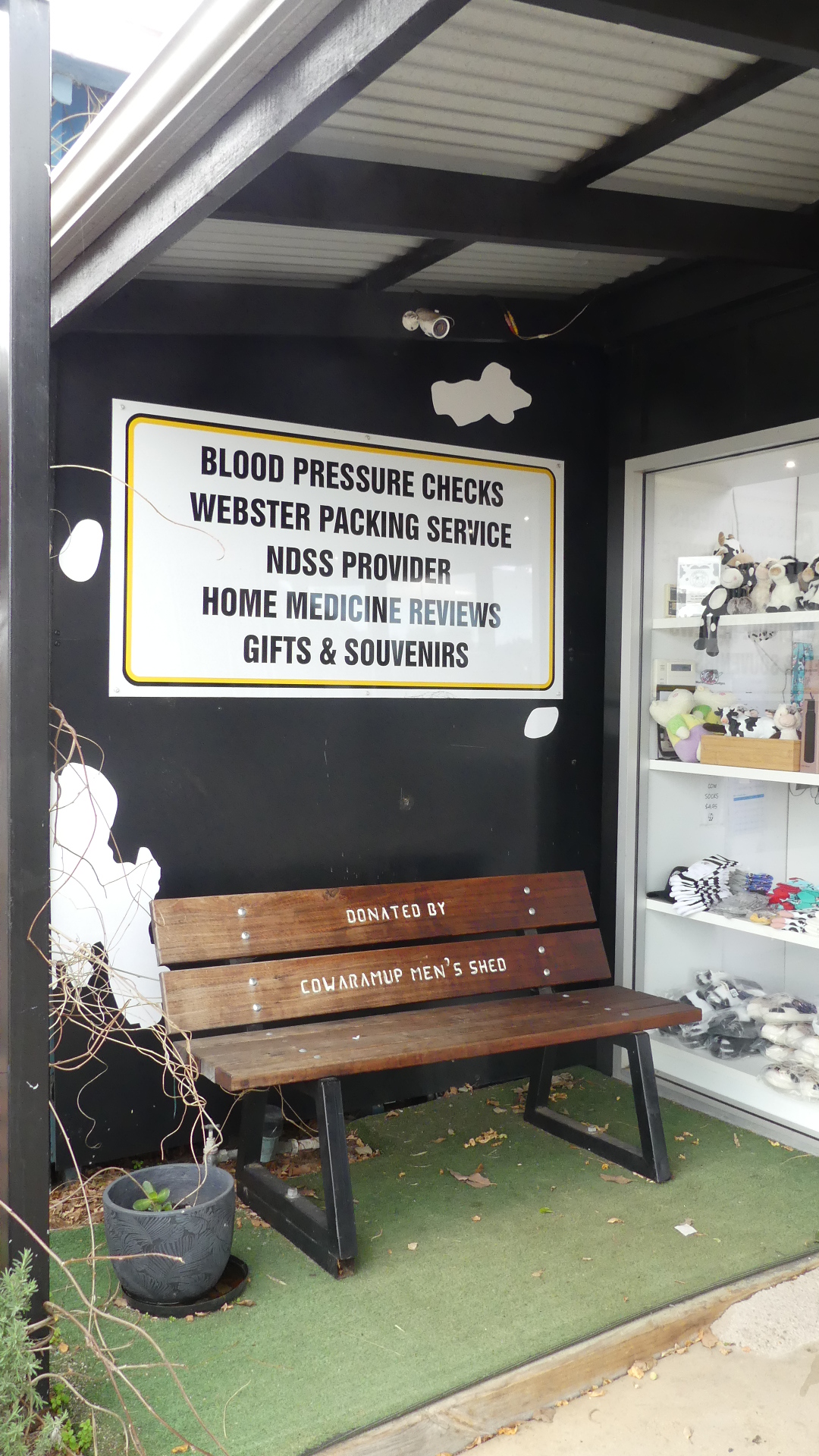
Finally time to return home but not before we visited Cowaramup; a village just up the road from Margaret River paying homage to the dairy cow. These fibre glass cows and calves adorn the footpaths and shop fronts throughout the village adding significantly to the character of the place. The pharmacy was particularly caught up in the mad cow disease.
There were a number of shops we had to visit and fortunately 1 was the French bakery where we obtained lunch then a Curiosity shop (I found it curious we were in there) and the sweet shop – I missed that having been caught up in curiosity. We were now close to our home and the fireplace and bottle of wine was calling – no sorry that was the birds for their afternoon feed.
We will be back on the road tomorrow this time going to the most south-westerly point on the mainland Australia.
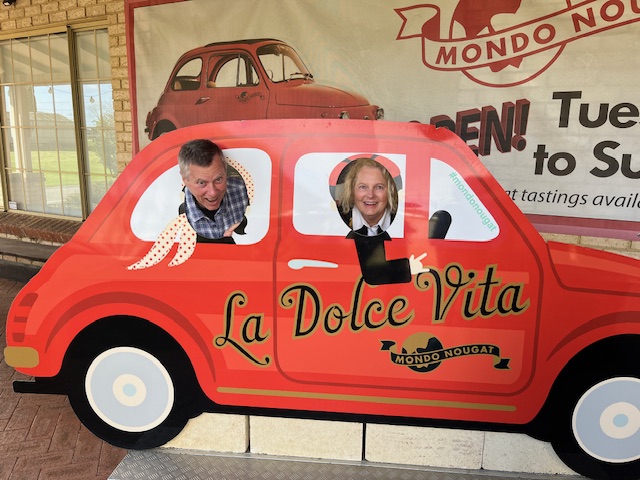
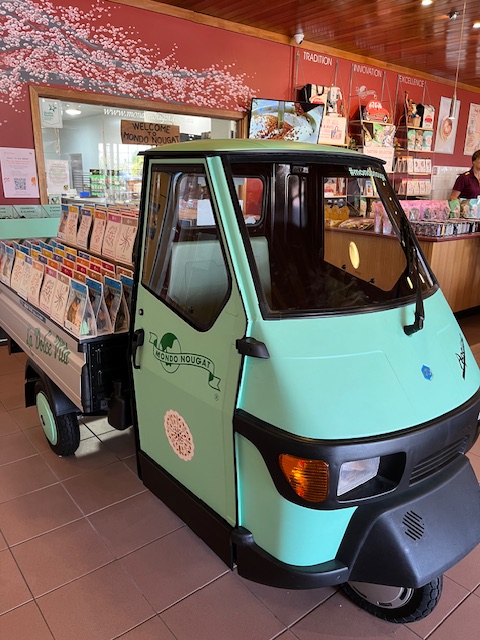
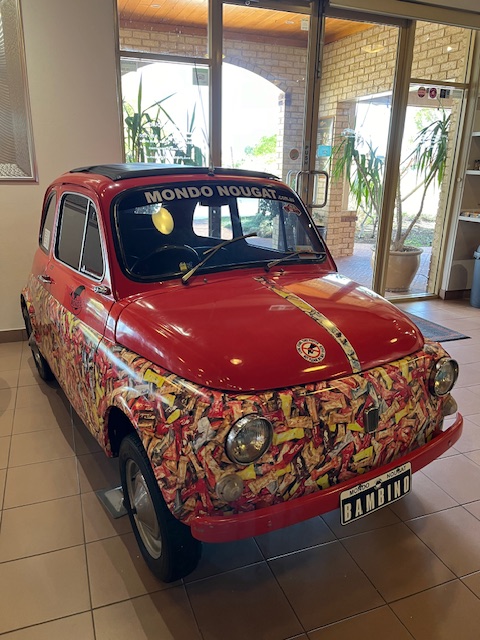
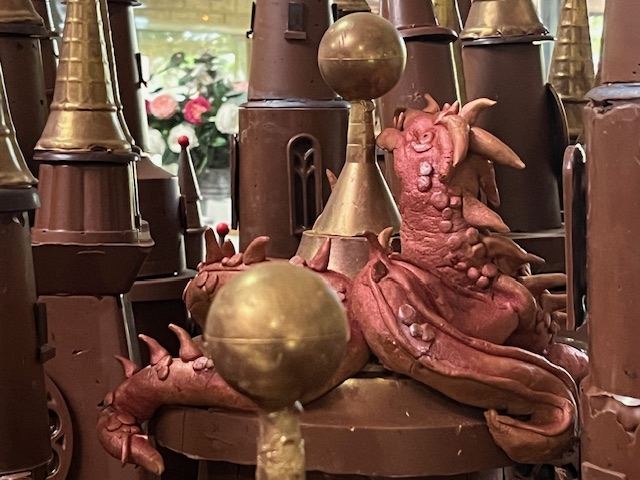
Did I tell you we handed the car back to cousin Ken which meant that we got the opportunity to unite our efforts to explore this big wide land or at least Swan Valley. After feeding the birds and ourselves we picked up the tourist map provided by the Tourist Information Centre and Zdravka’s itinerary and headed out for adventure. First Stop – the chocolate shops. Oh, the Morish Nuts shop was worth a stop for a photo too.
Then we moved onto the House of honey – a sticky situation developed.
We continued our exploration of the waterholes and camp spots finding delights wherever we went.
After filling the morning with all the delights of the valley we returned to Guildford and the selection of somewhere to get lunch. Now there are a number of pubs near the centre of the old town – The Rose and Crown – well we had been there, the Stirling Arms built in 1852, or the Guildford Hotel which had been the subject of a fire and we decided to go to the last one Guildford Hotel to see what they had done to the menu and whether it was all burnt up. The reno looked positive so fingers crossed for the menu.
With our bellys full we decided to slow the pace and take a walk in the park – Stirling Park on the other side of the rail line. To get to the park we had to cross the rail line in Meadows St and we encountered the first of a number of memorials to the Tenth Light Horse Regiment. The first is the Guildford Town War Memorial, then Guildford’s Artillery Guns and the Memorial Gates. The Guildford Town War Memorial remembers the many men who served in World War 1, the 25 pound Artillery pieces are replacements for two earlier guns, a captured Howitzer from WW1 and a twenty five pounder from WW2 and the Memorial Gates originally from Perth Railway Station presented to the town to honour the men of the Tenth Light Horse Regiment.
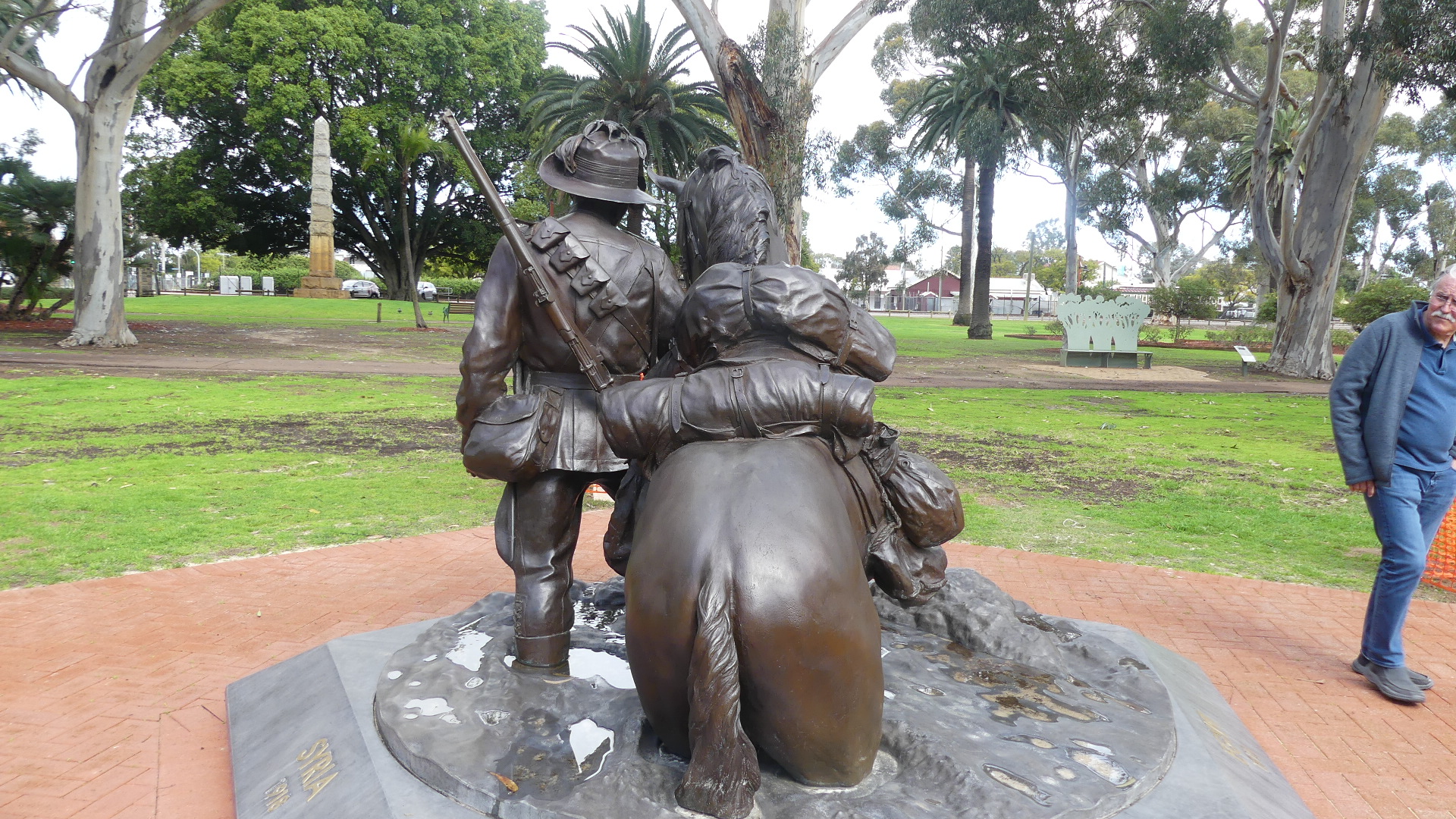
There are a number of other memorials but I was very taken by the Tenth Light Horse Statue developed by Charles Robb as part of a community initiative again in remembrance of the Tenth Light Horse Regiment raised in the town in 1914. It acknowledges the bond between horse and Trooper and support of indigenous horse breakers. None of the horses returned to Australia.
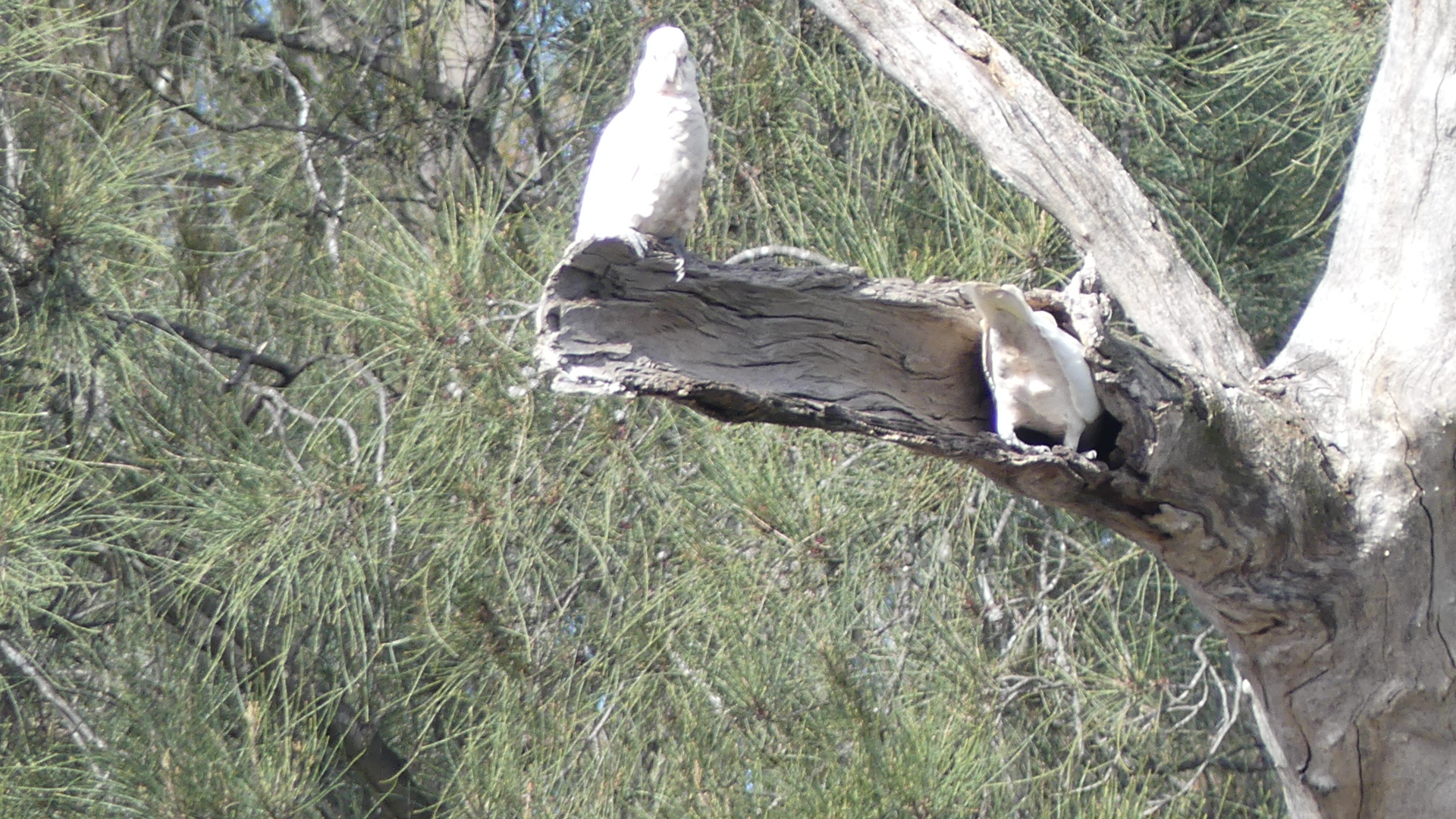
There is more to the park than war memorials, there are the white cockatoos nesting in the caverns in the gum trees.
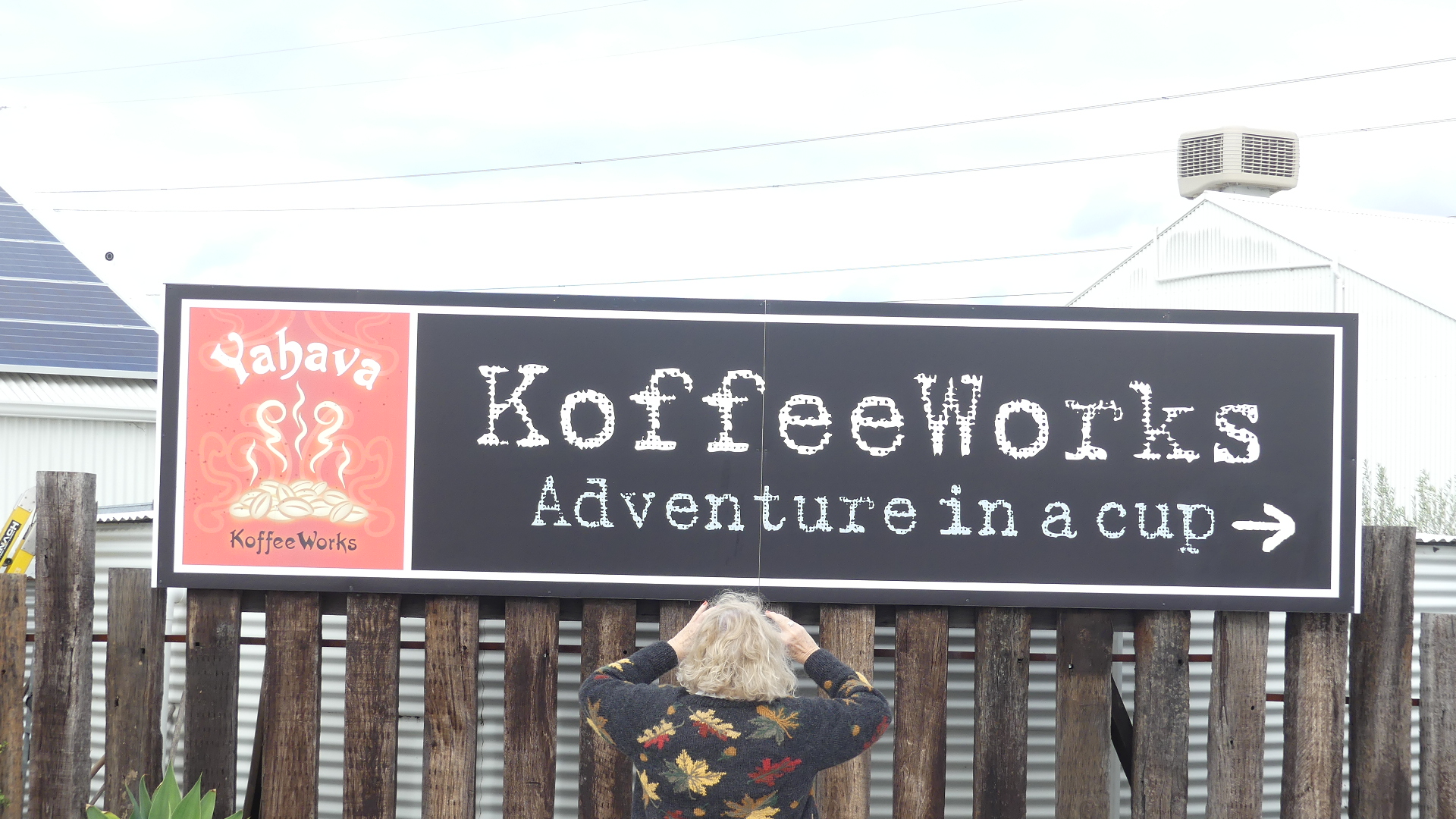
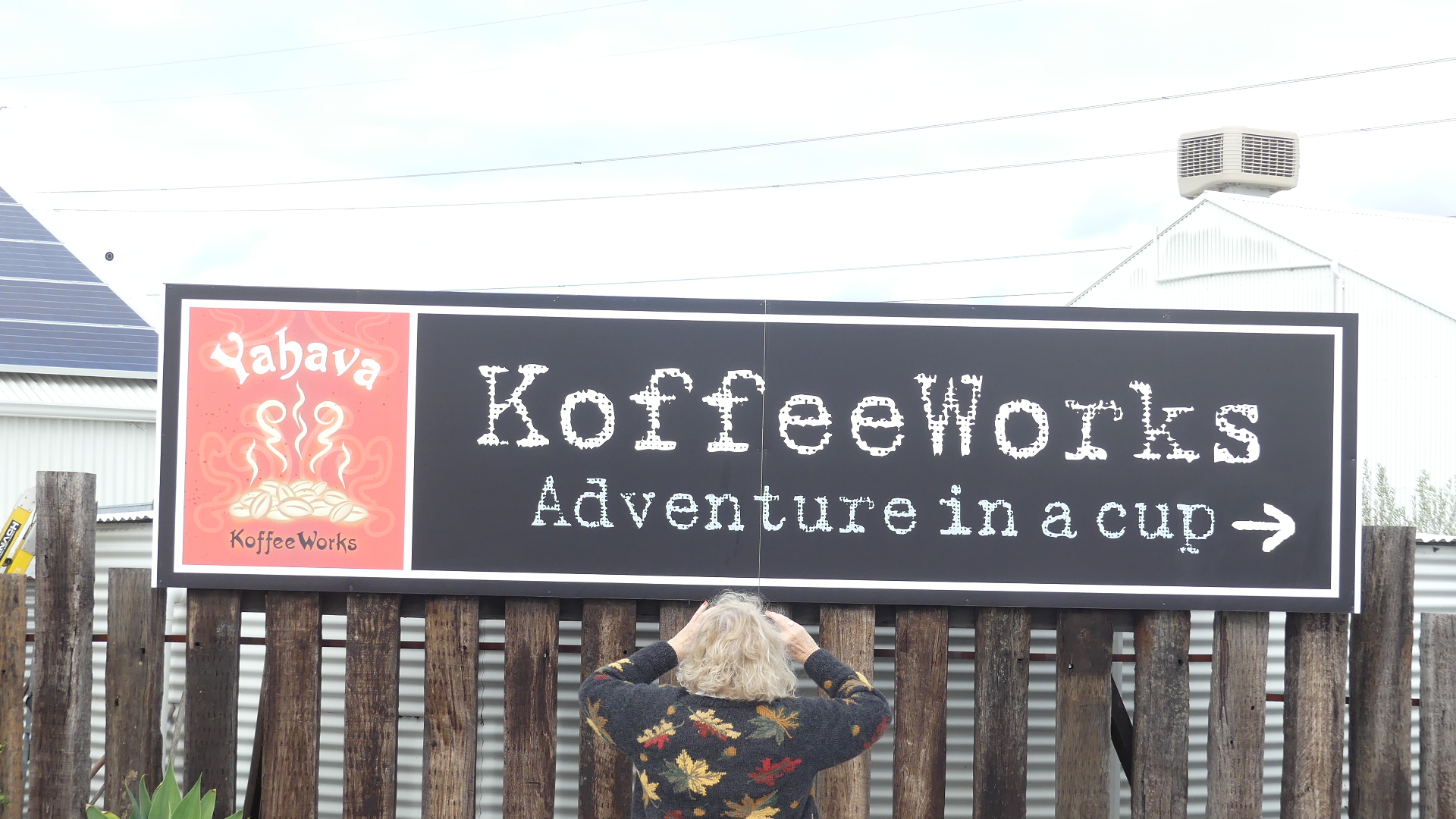
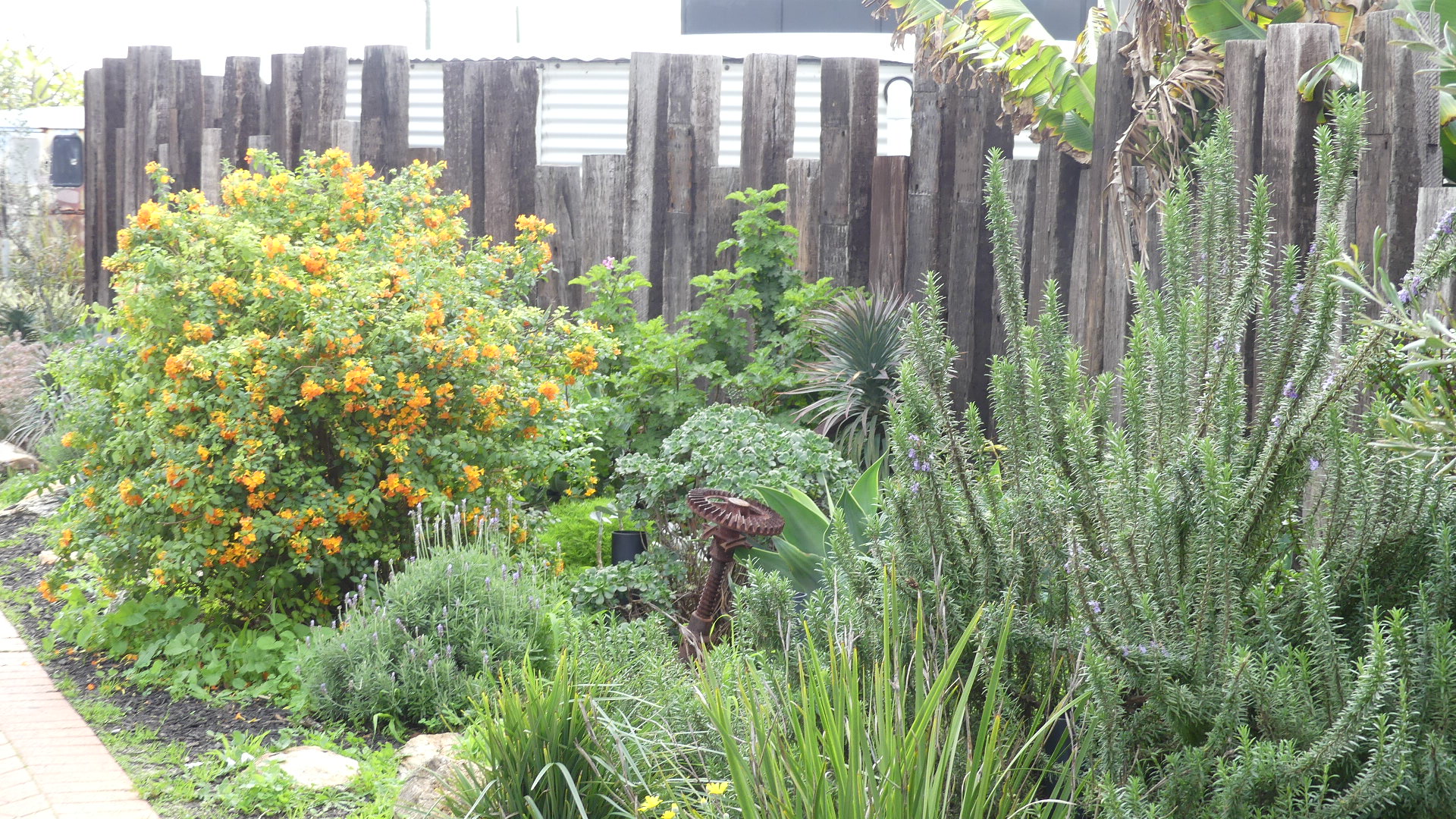
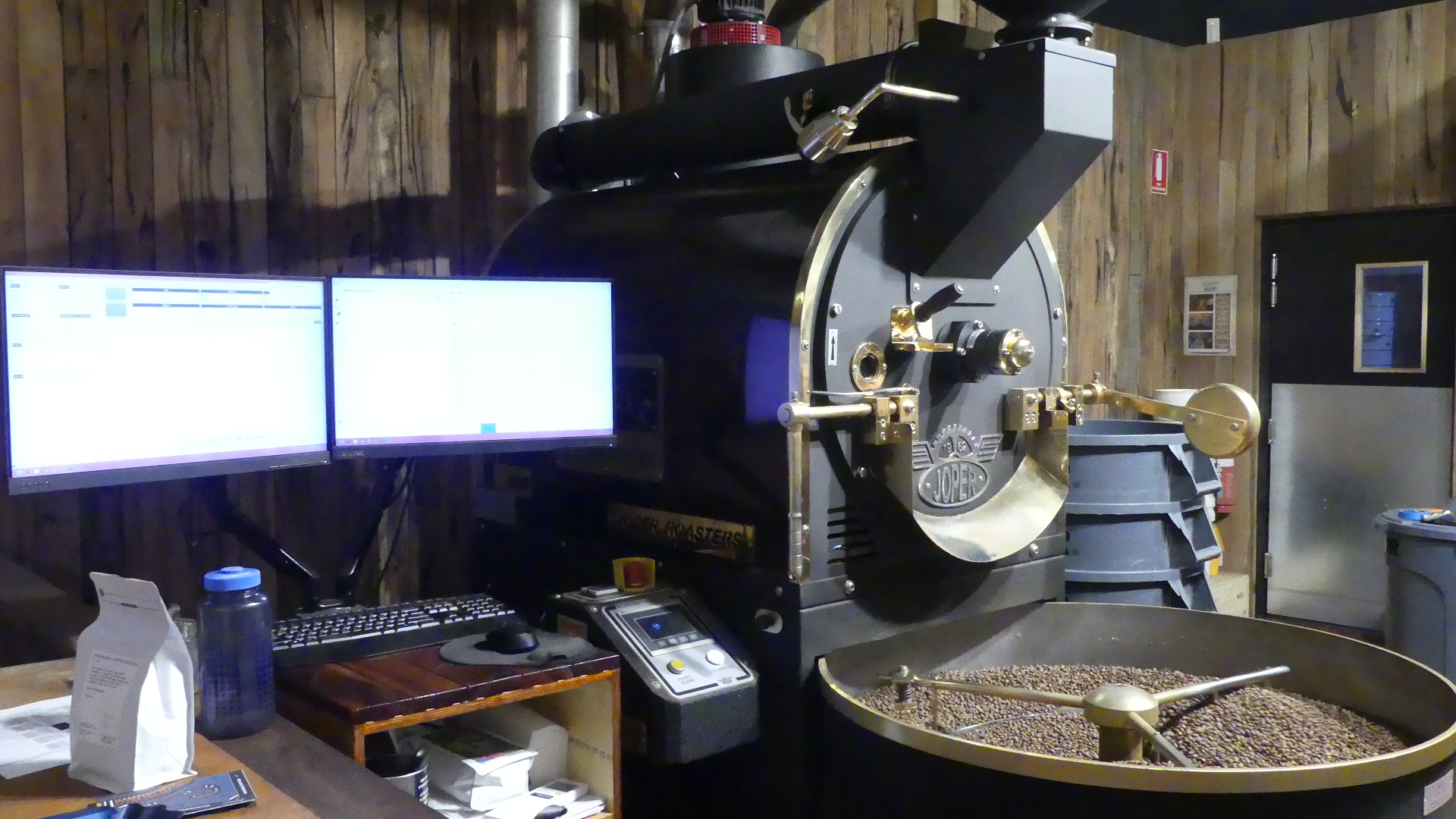
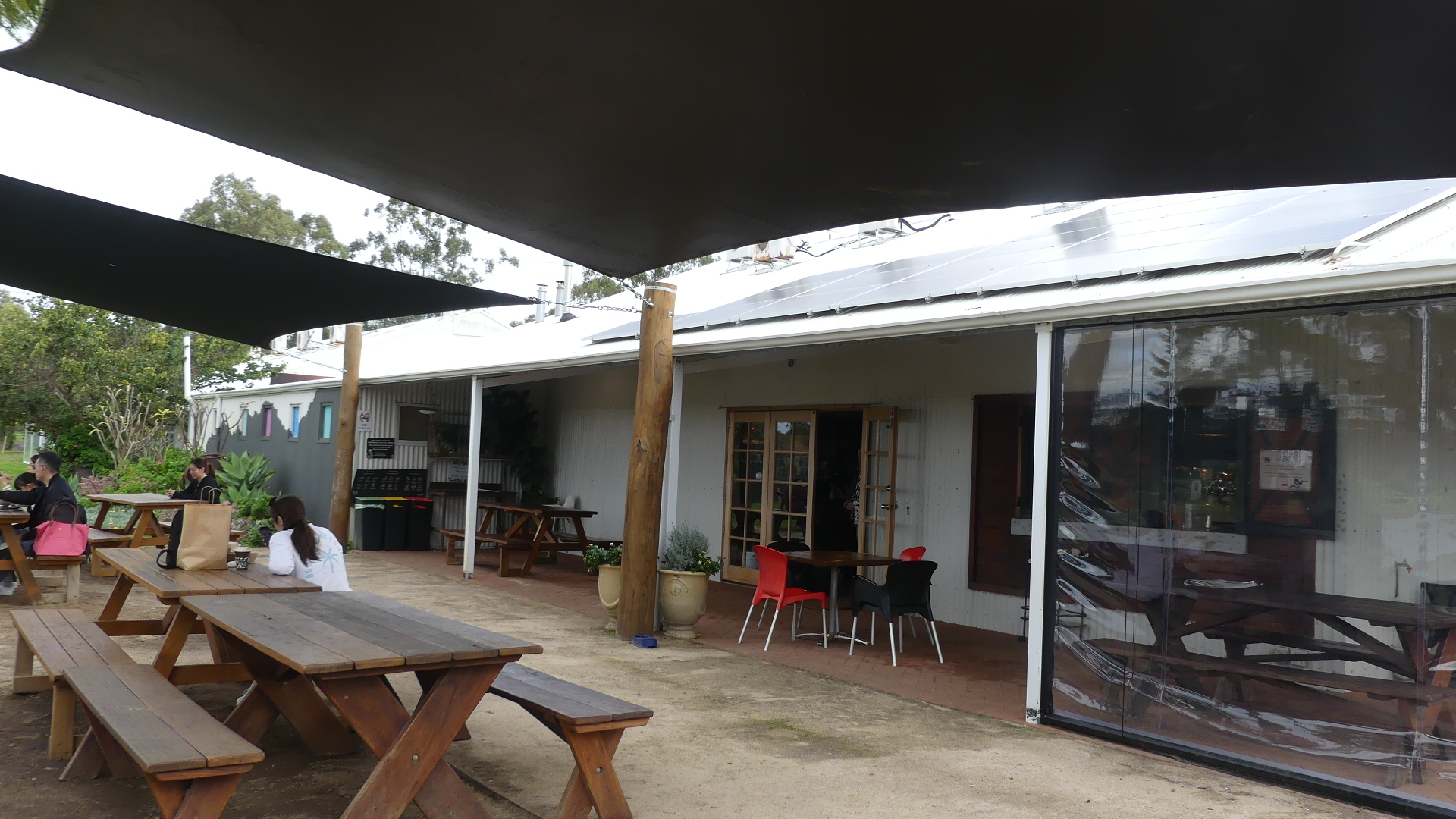
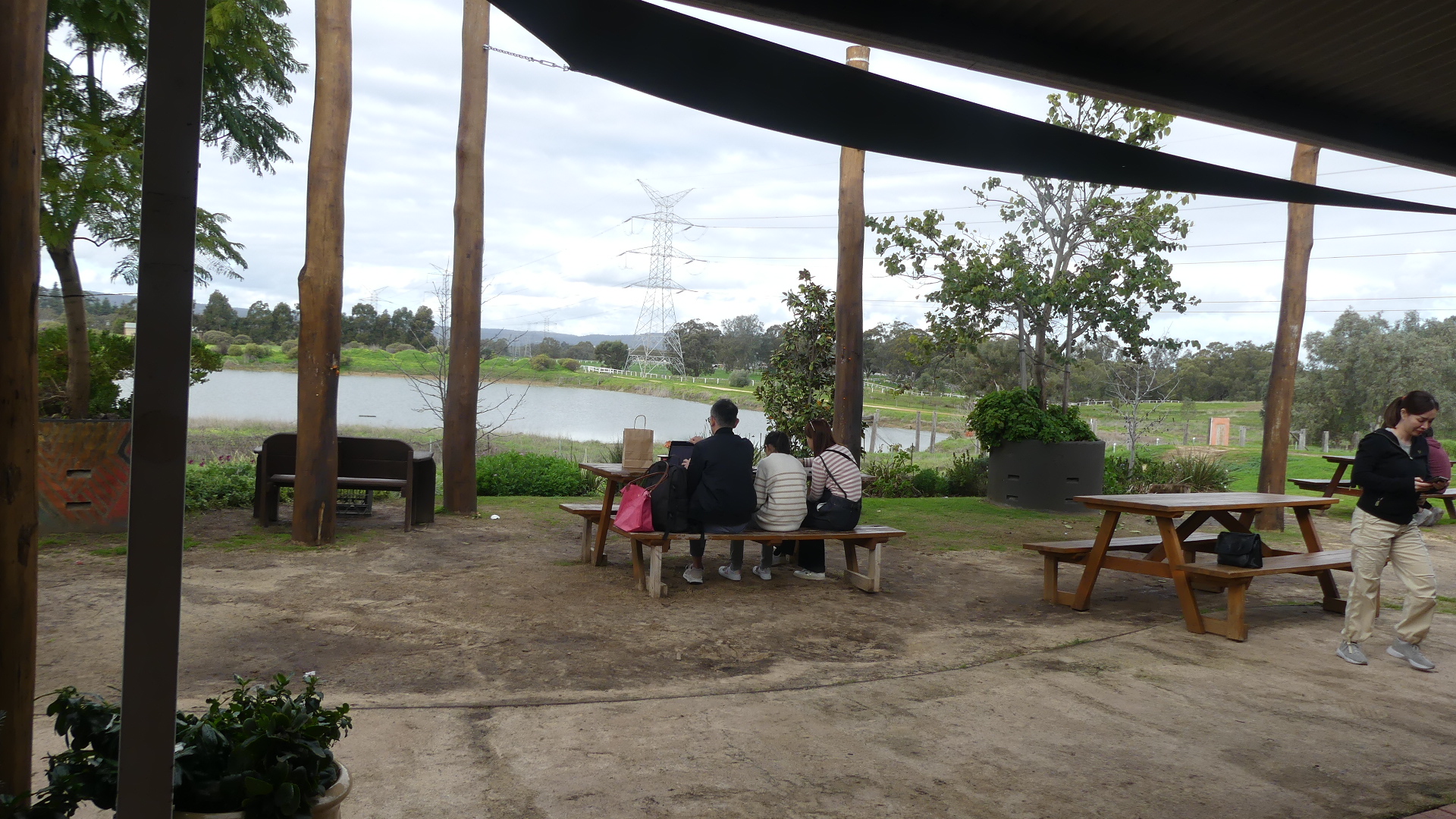
After a walk in the park we thought about a cup of coffee and recalled Yahava Koffeeworks that we had driven passed. It was on the way home so we called in. In the carpark we found an old Toyota – someone enjoyed the coffee and decided to stay. The garden was pretty but I think I may have been getting bored at this time. Inside they were roasting beans and there was every known apparatus for drinking the brew. They even had a water view to enjoy the brew and finally there was the bird bath – bye bye birdee.
I was pretty tired by then and so we ended the day in front of the fire at home with a glass and watching the Olympics. We have picked up some local products and decided that between the wine and local product that was it for the night. Tomorrow is another day, more fire wood to be chopped and Galahs (the birds) to be fed so I would need my kip.
Our next destination was the Cape Leeuwin Lighthouse located on the headland of the most south-westerly point on the mainland Australia.
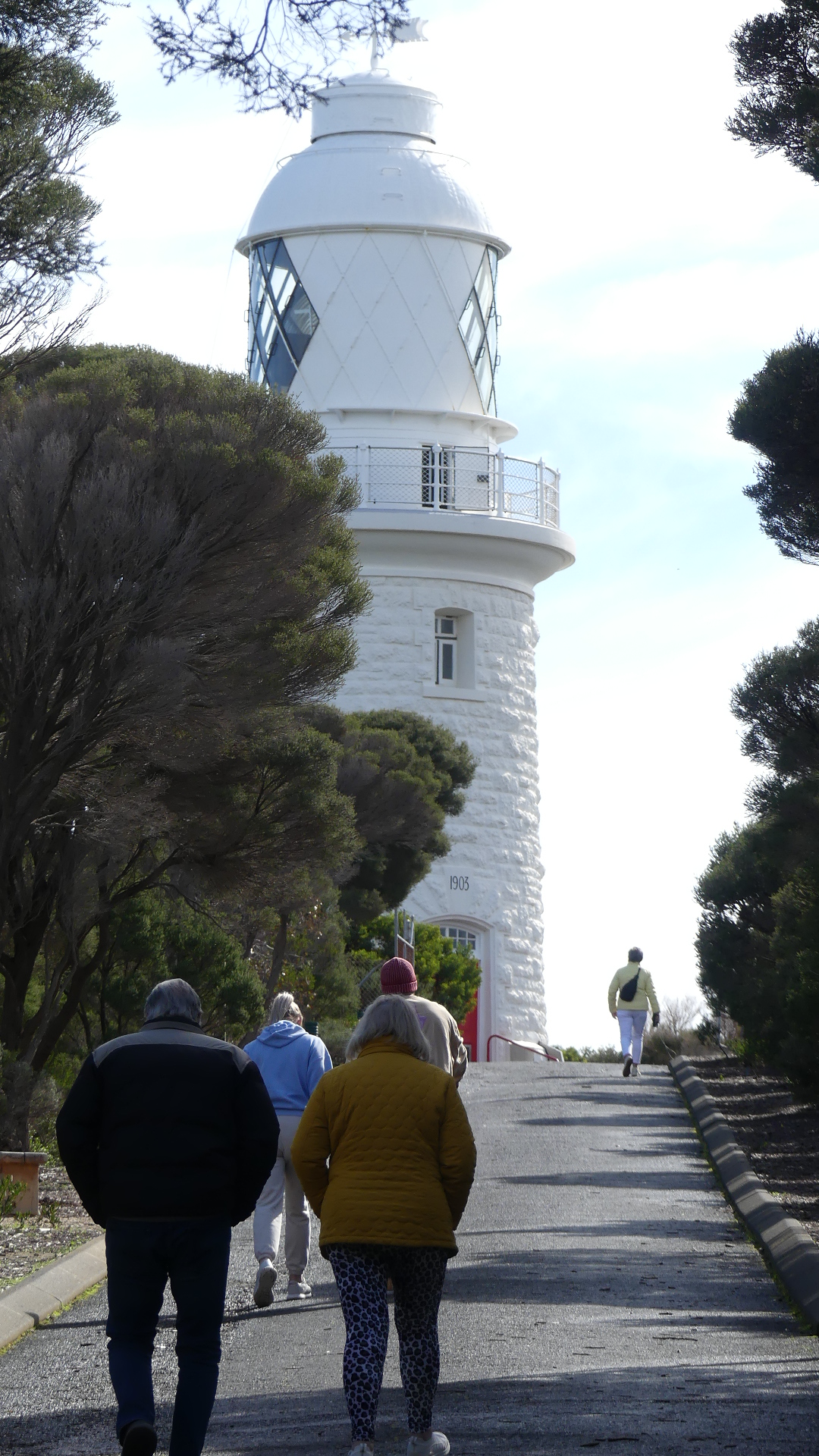
The light tower which is built of local stone was originally designed to show two lights – a higher white light and a lower red light. Although the foundations were completed, the lower light was never installed. It was opened with great ceremony in 1895. Until June 1982 the lens was rotated by a counter weight driving clockwork mechanism, and the beacon was a pressure kerosene mantle type. A radio navigation beacon was commissioned in 1955 and operated until 1992. The lighthouse was automated in 1982. The lighthouse, besides being a navigational aid, serves as an important automatic weather station. The lighthouse’s buildings and grounds are now vested in the local tourism body and the single (1960s) and double (1980s) communications towers that were north-west of the lighthouse, seen in older photographs of Cape Leeuwin, have been removed.
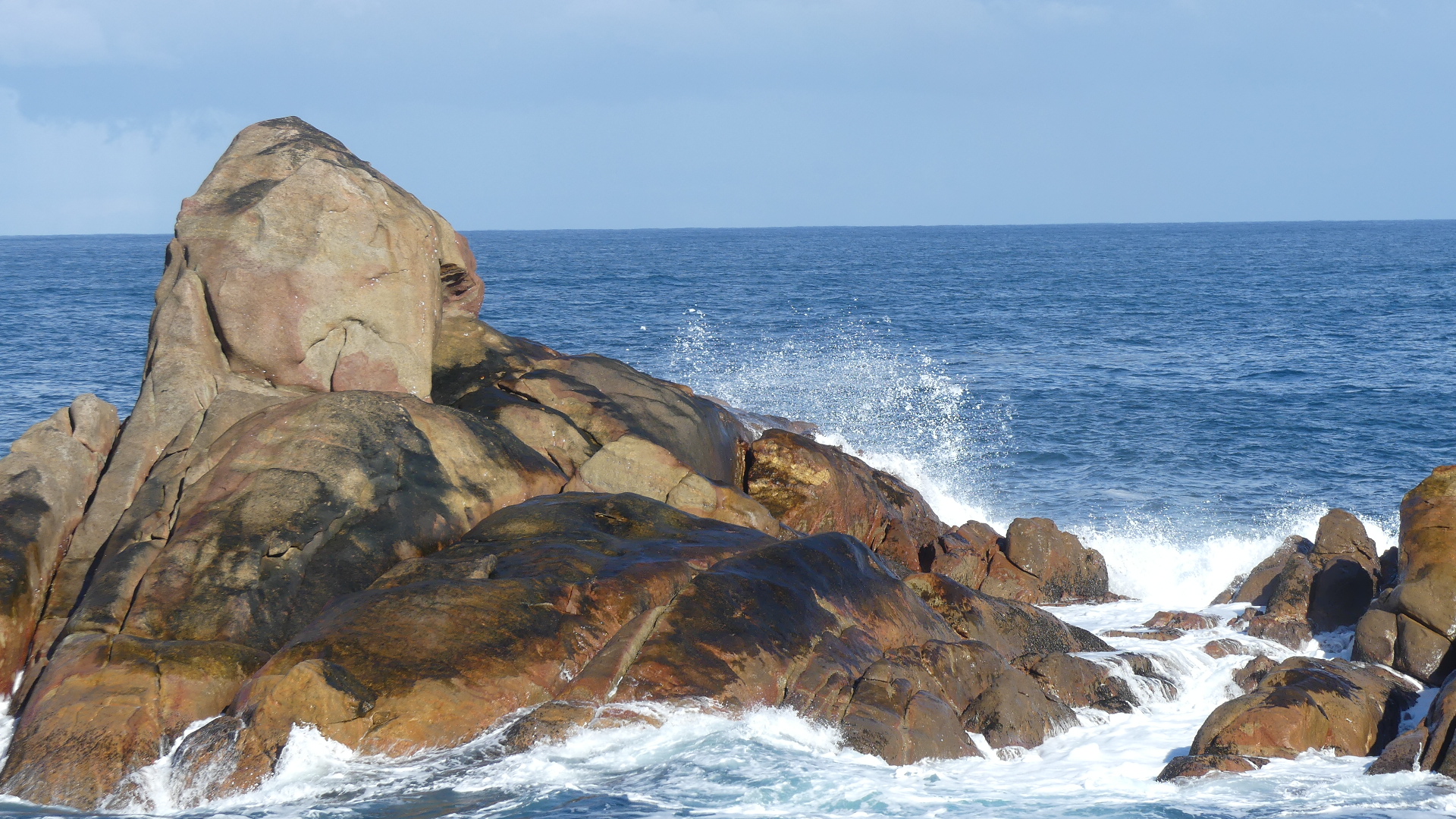
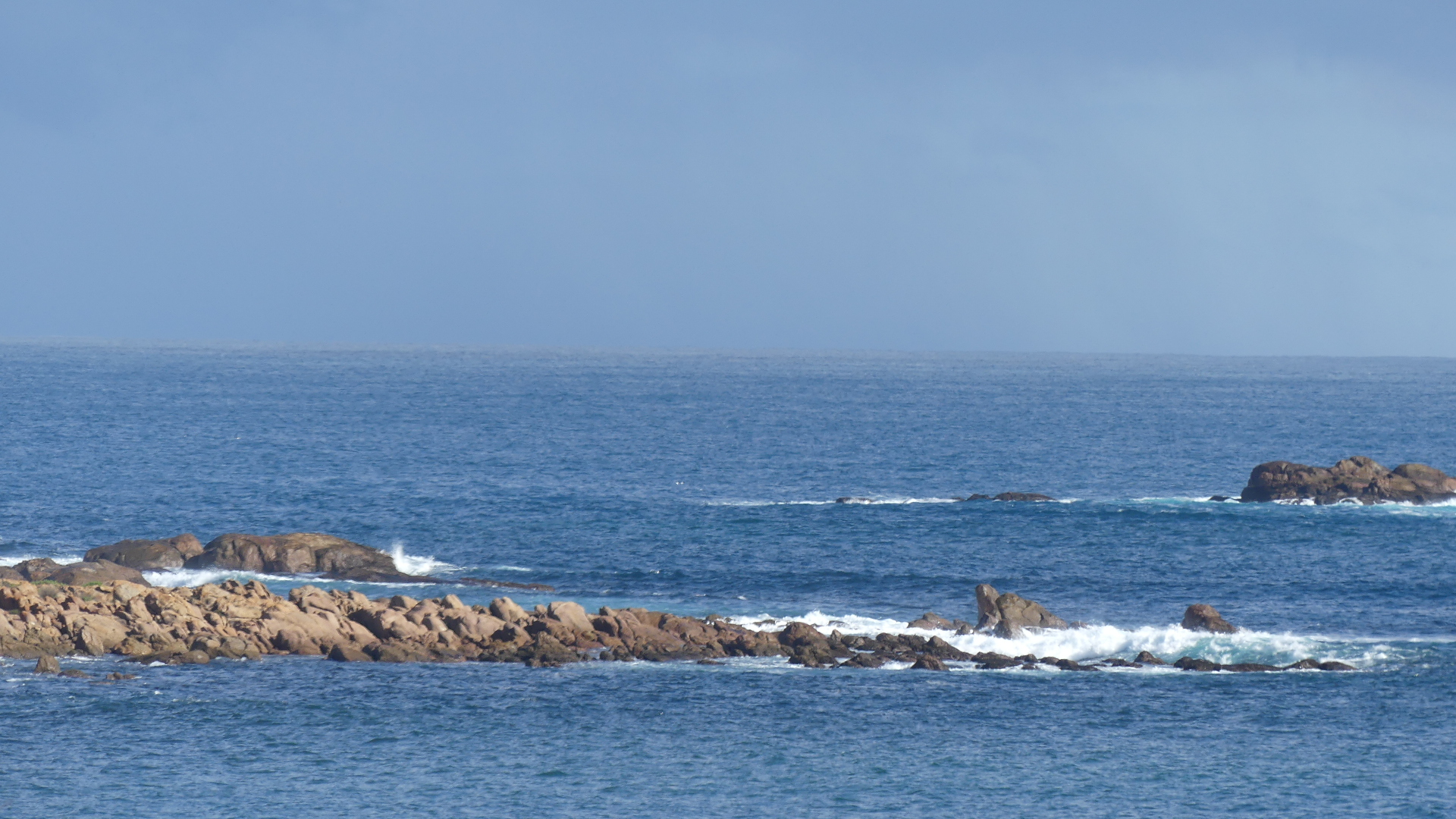
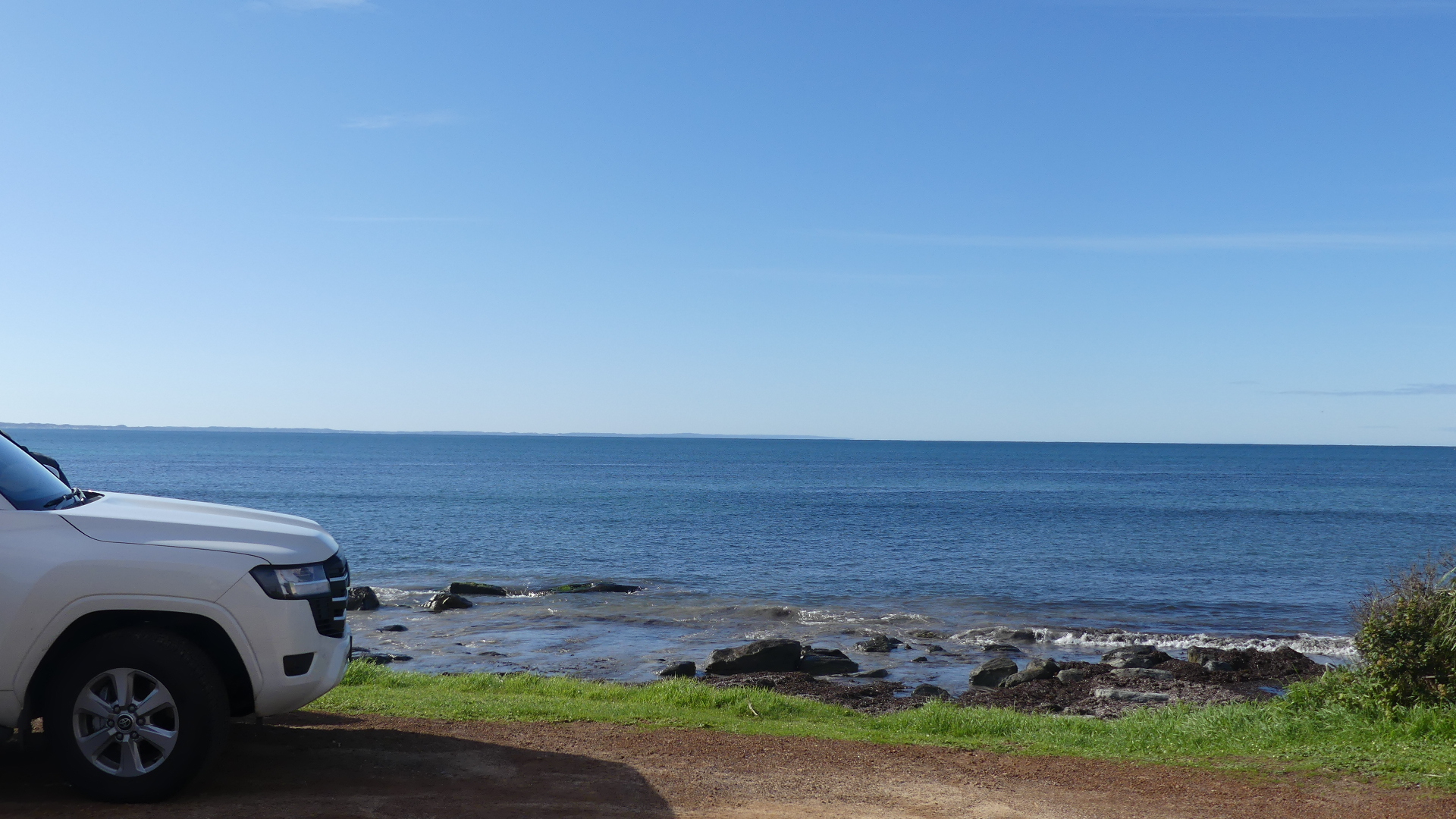
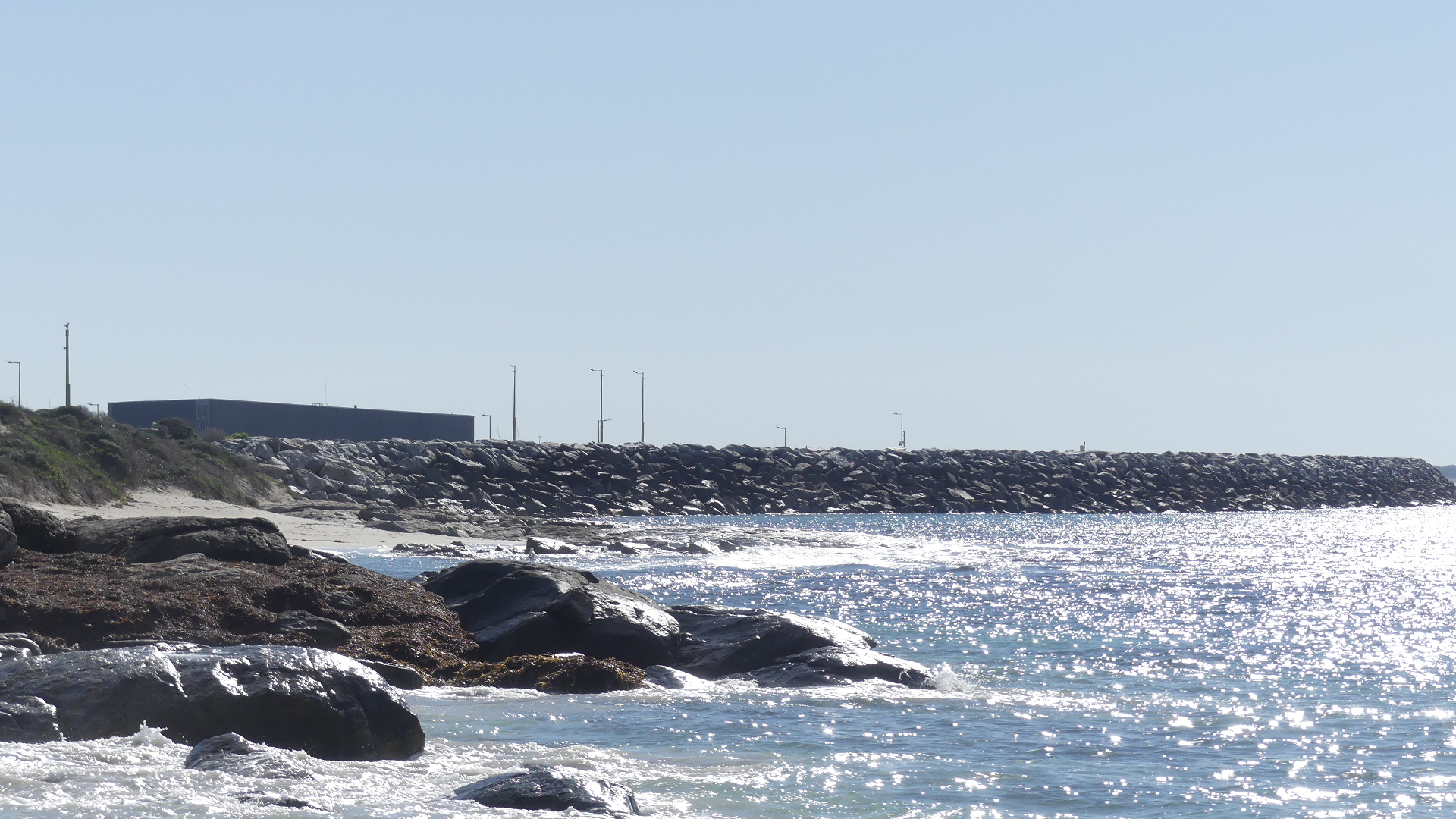
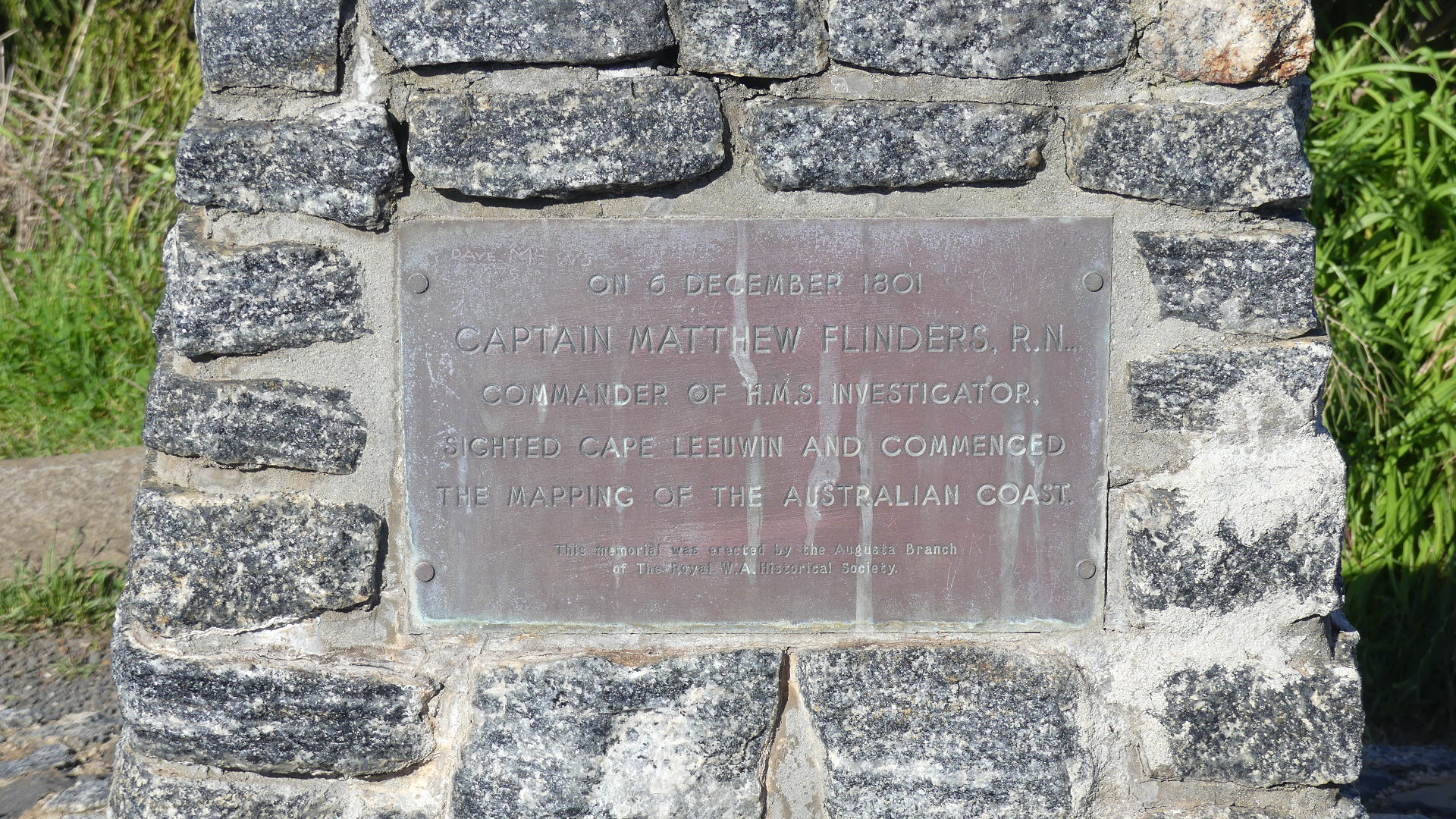
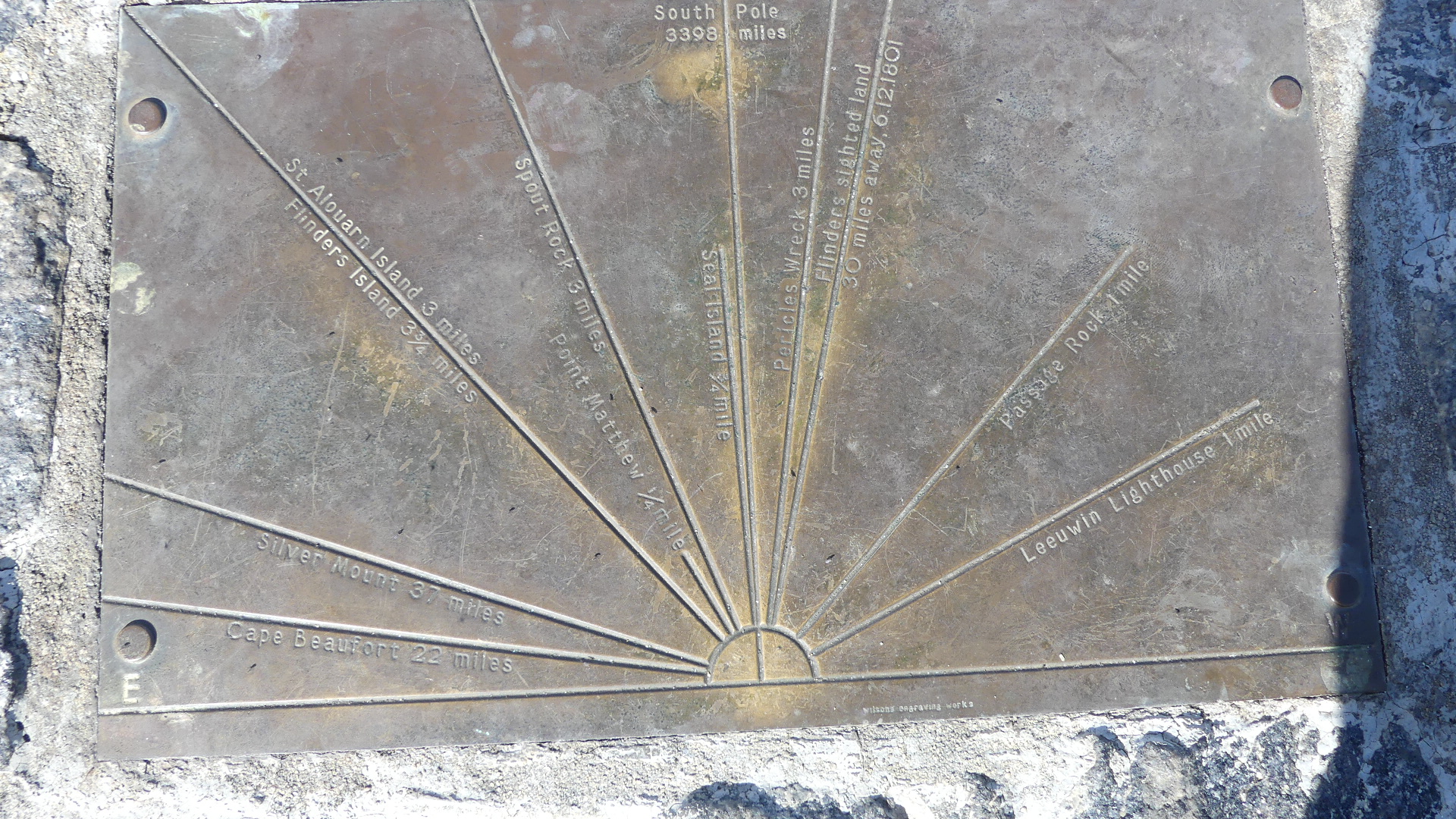
We approached the lighthouse from Augusta. The rock below commemorates the landing of the first settlers in 1830 from the Brig Emily Taylor . From that point you look out across a broad bay and behind us you can see the rock walls protecting the new marina. Immediately behind the memorial is a rock shelf decorated with the seaweed washed ashore. A bit further along is another memorial this time to Capt. Matthew Flinders RN aboard the HMS Investigator 6th December 1801 when he sighted Cape Leeuwin and commenced mapping the coast of Australia. Atop of the memorial are the features that can be sighted from this point such as the conjunction of the Indian Ocean and the Great Southern Ocean.
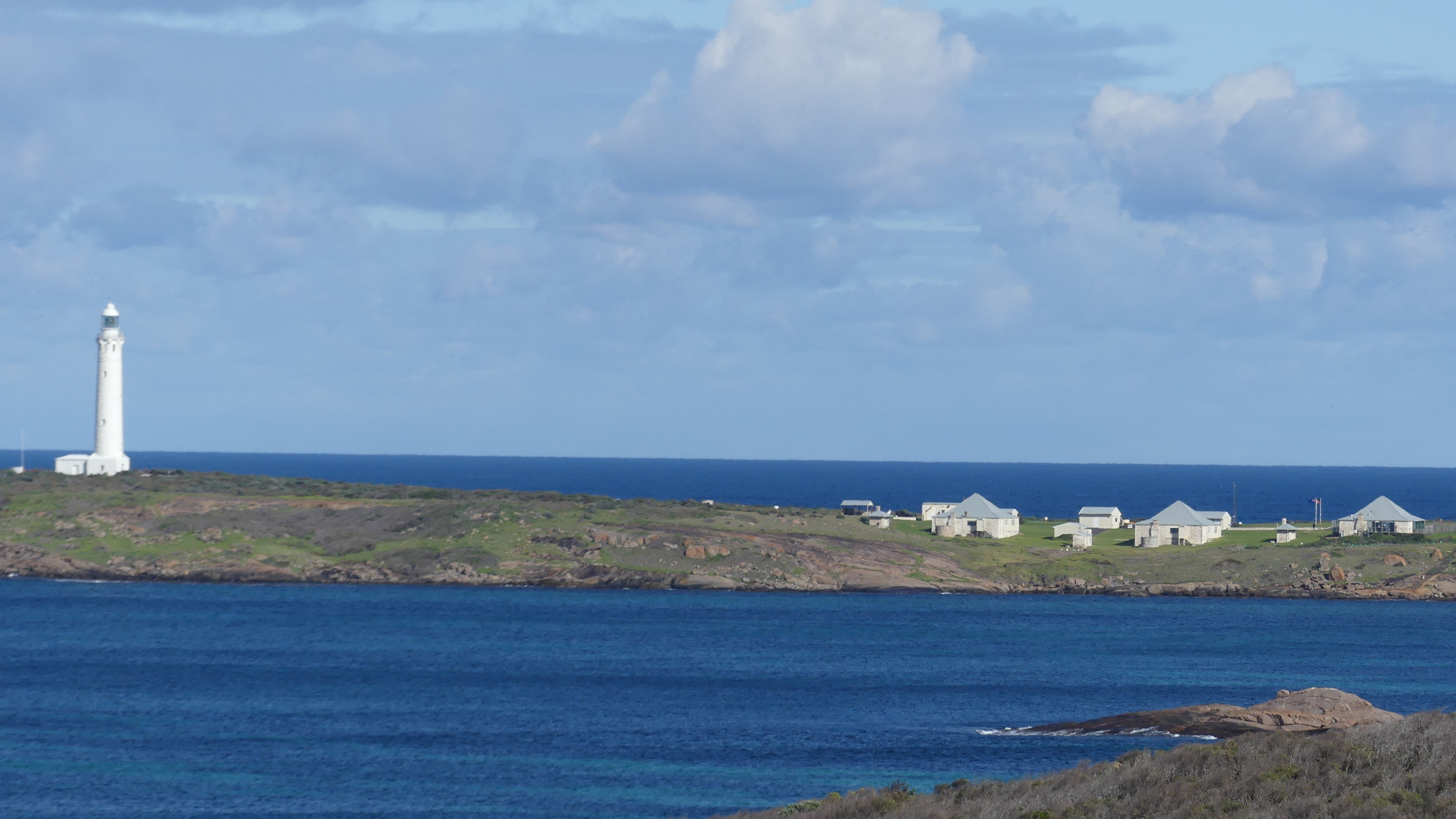
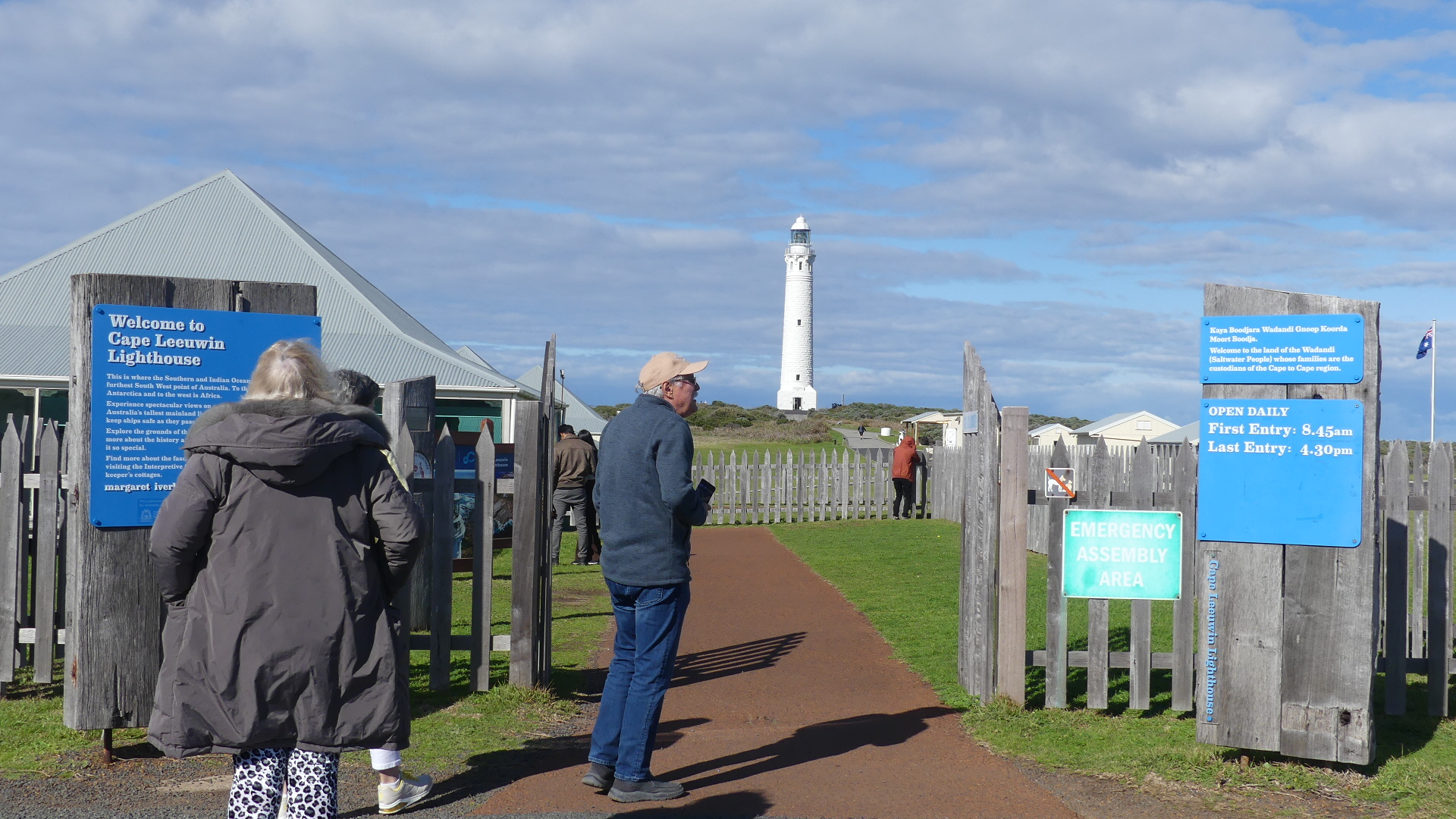
The reason we came this way – I don’t recall but the vista of the lighthouse emphasises the remoteness of this point. The light keepers house and other out buildings and water tanks can be seen on the right hand side of the photos. The entrance takes you into the coffee shop and gift shop and then you make your way through each of the following buildings with museums and artifacts all of which i think is to disguise how far you have to walk to get to the lighthouse. Finally we got to the reason for coming here today – to see the meeting of the two oceans
The climb to the viewing deck of the lighthouse consists of 176 steps. Enough said.
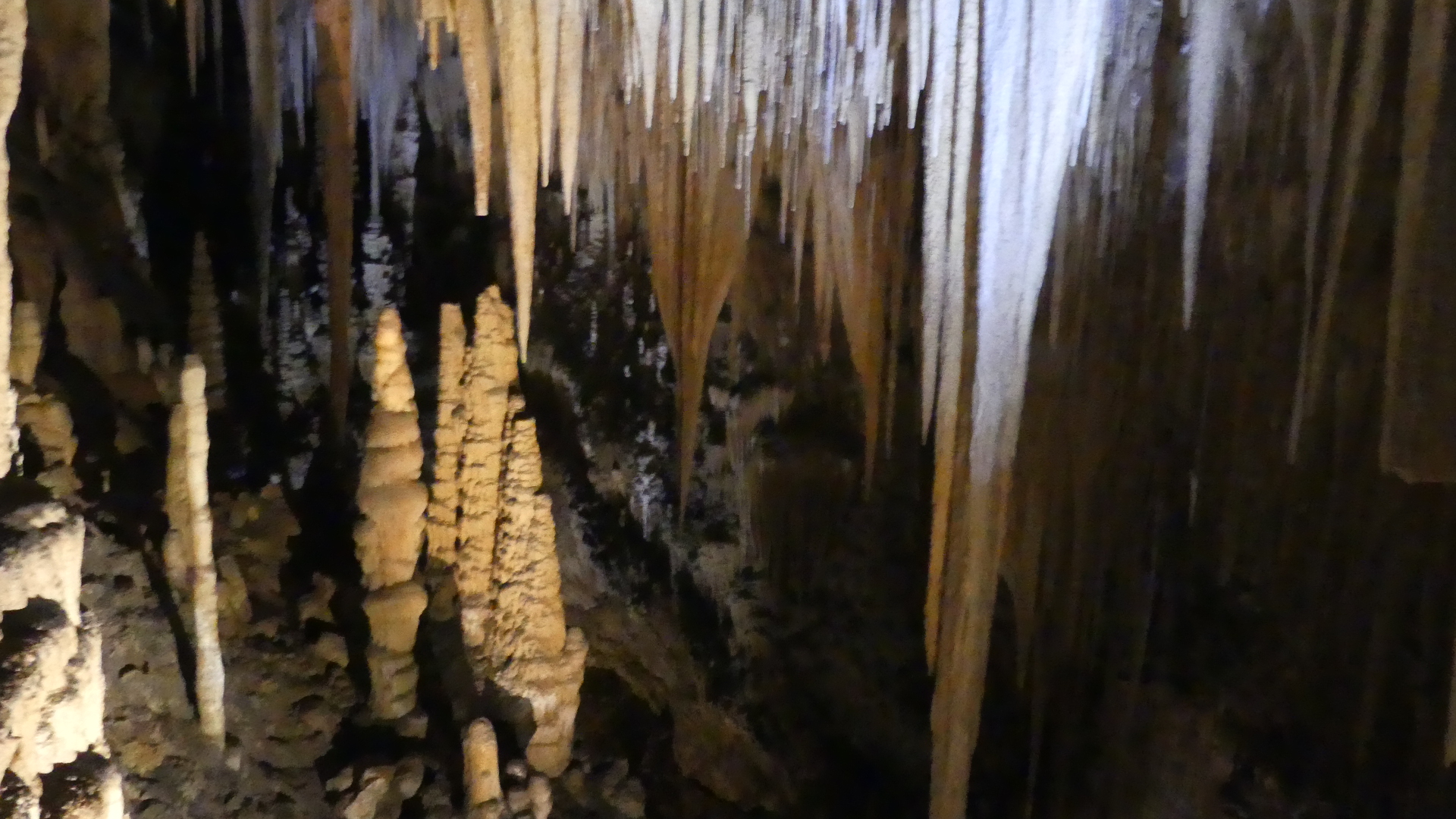
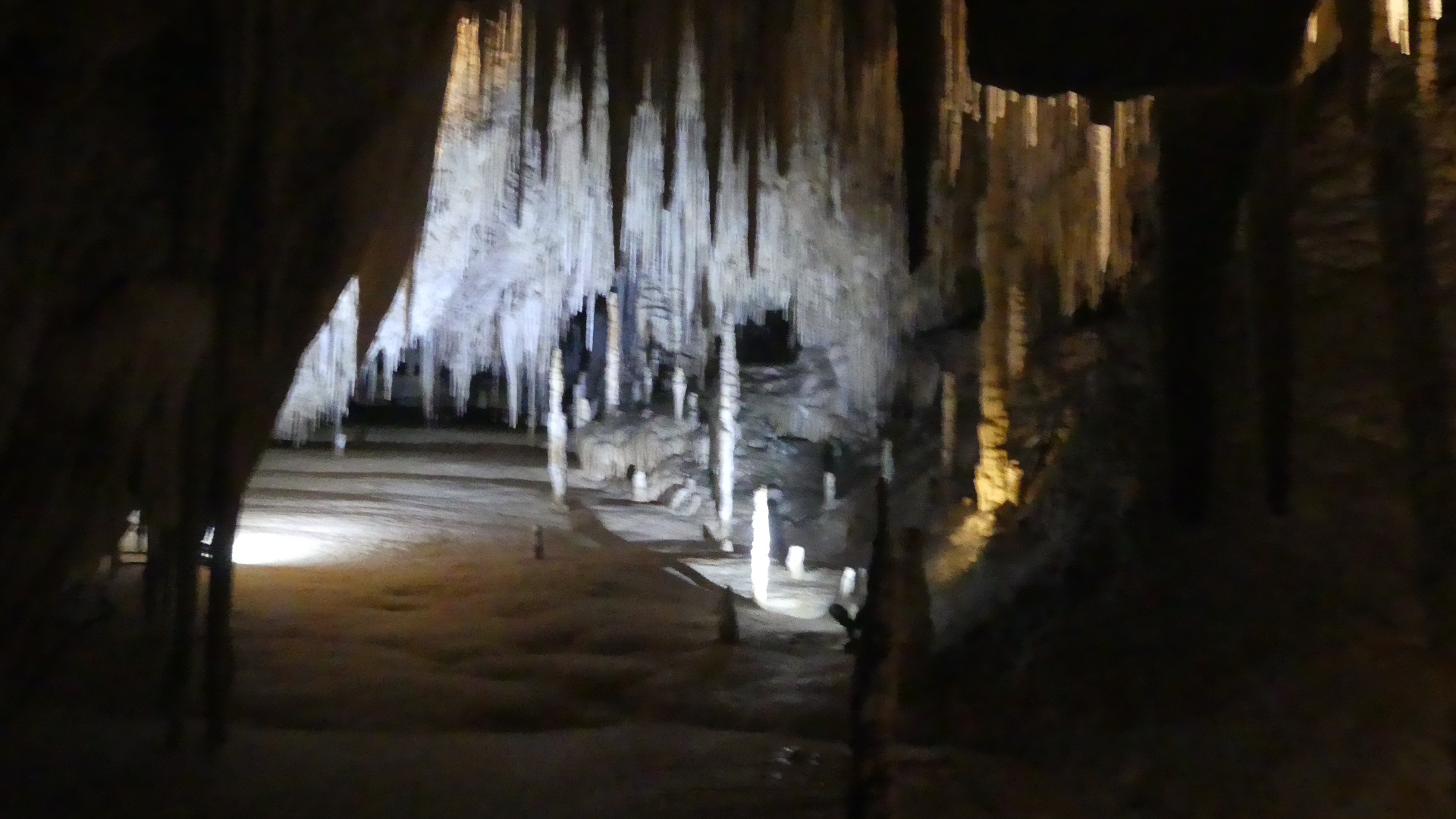
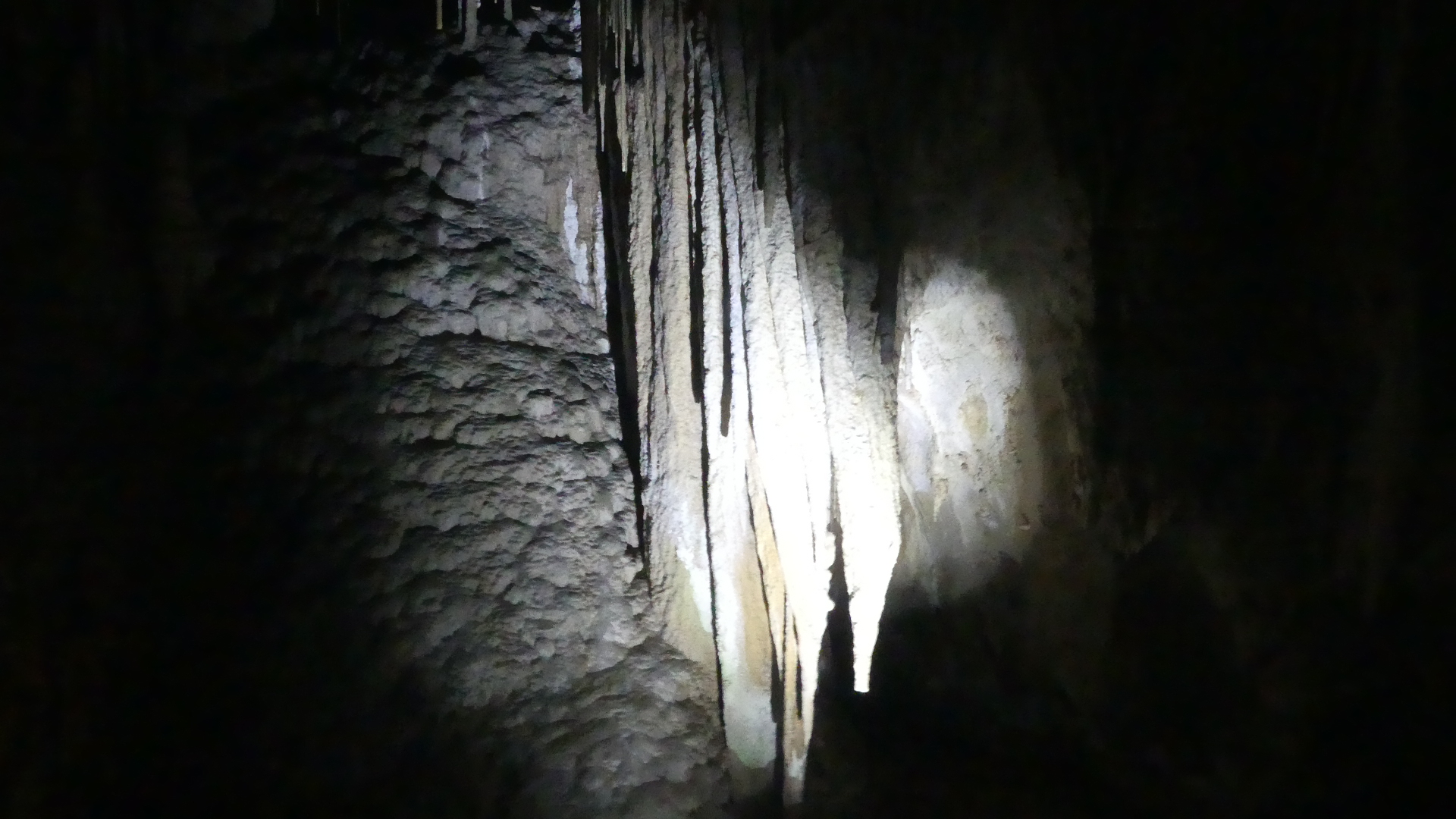
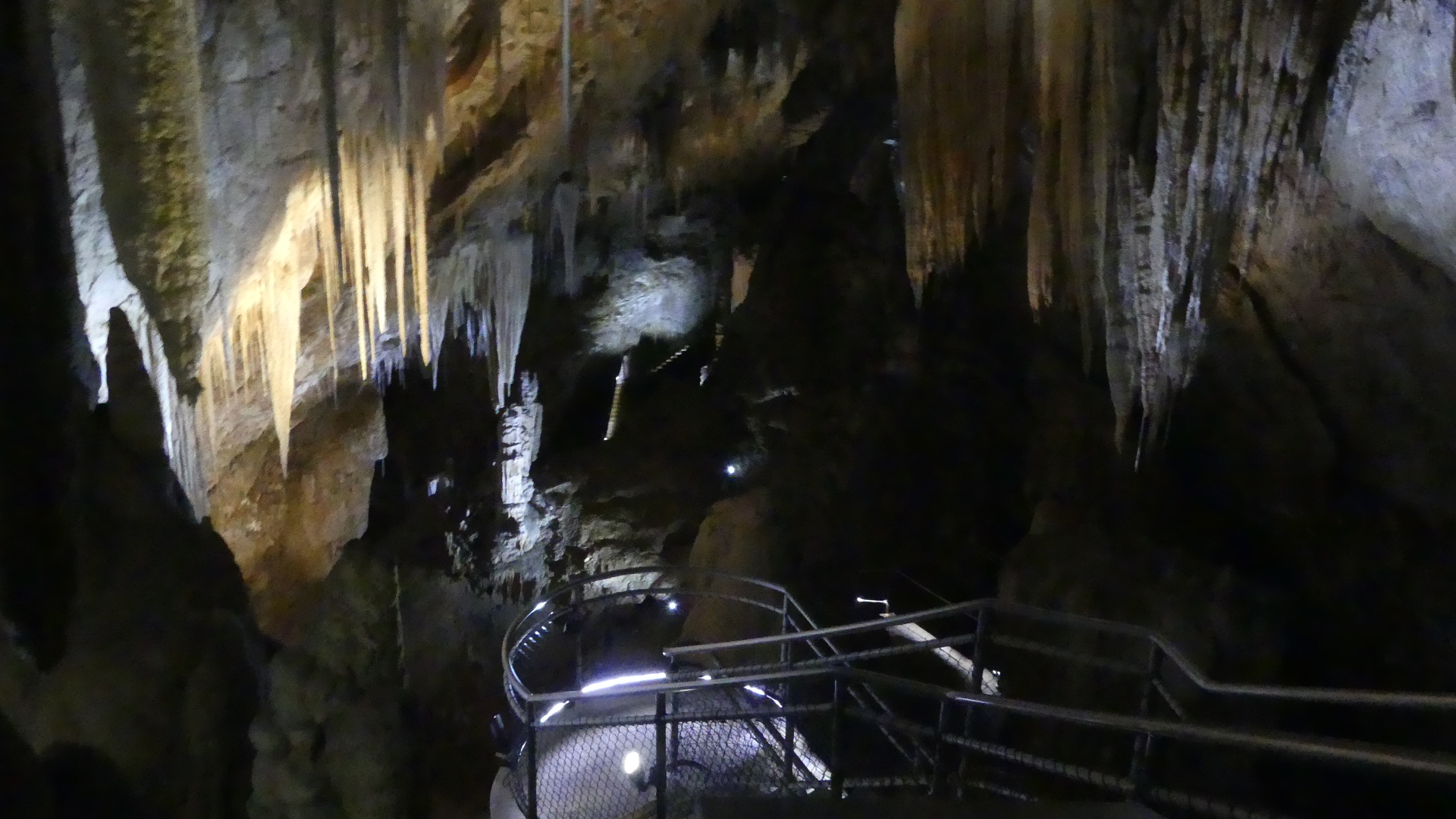
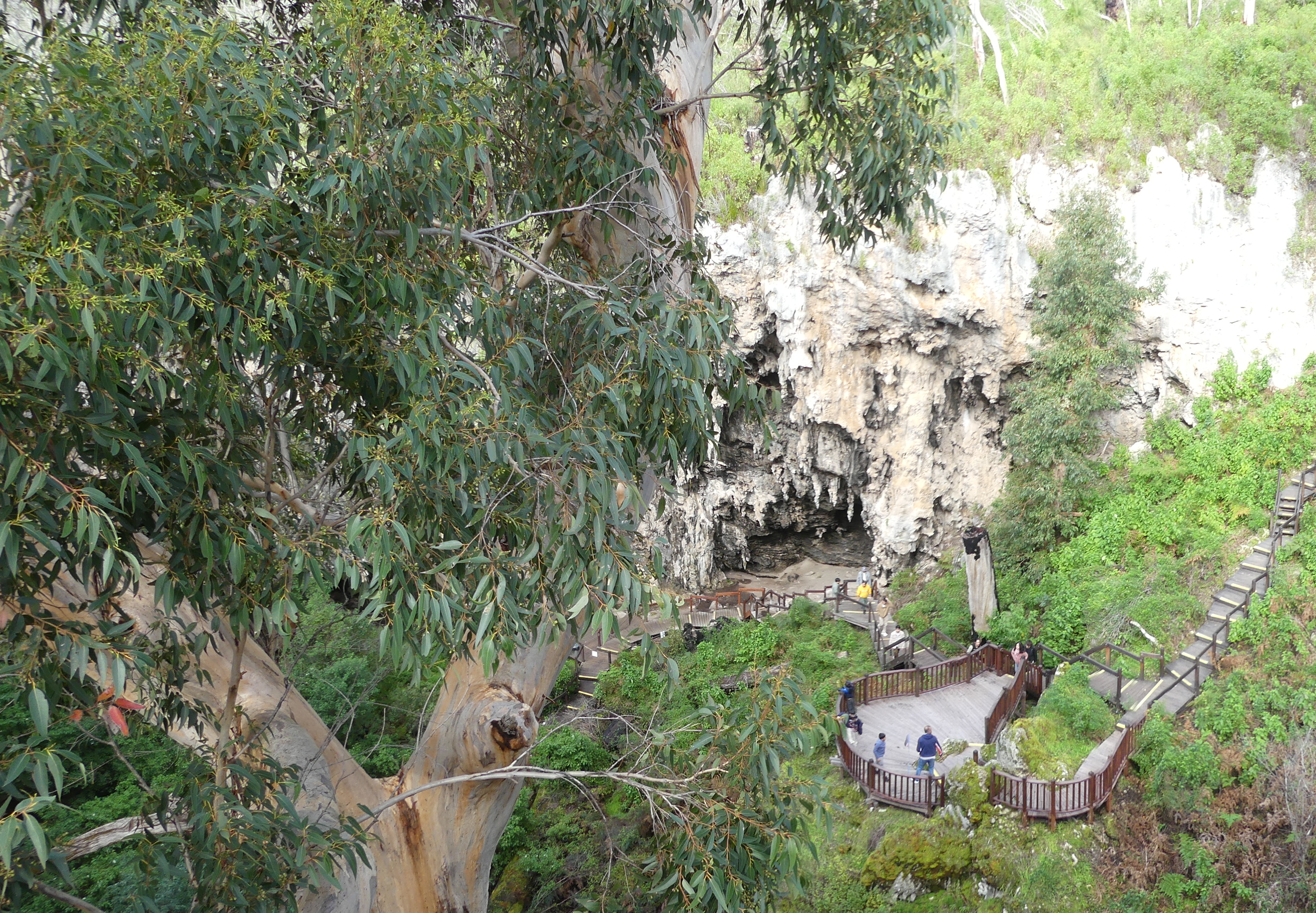
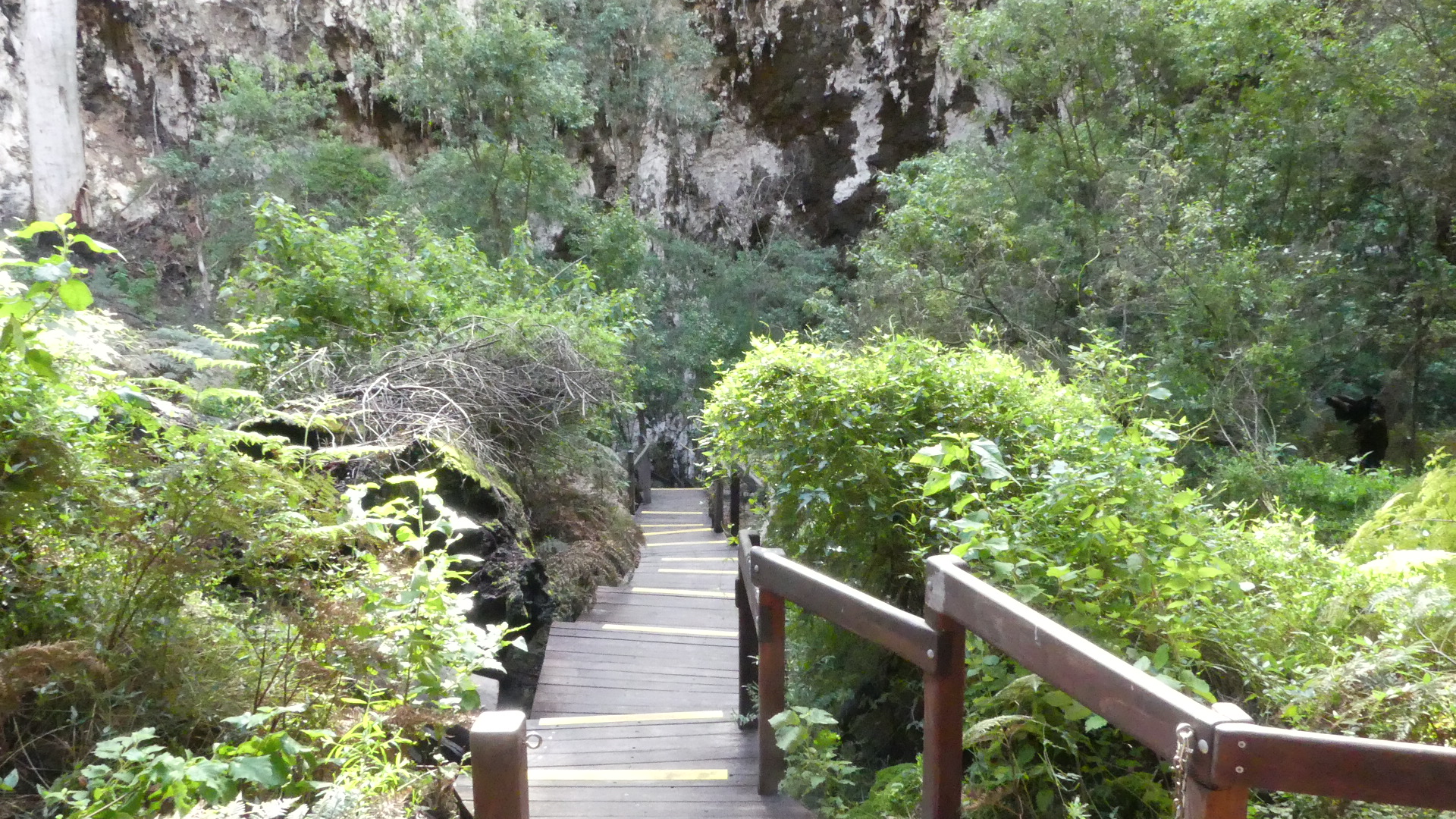
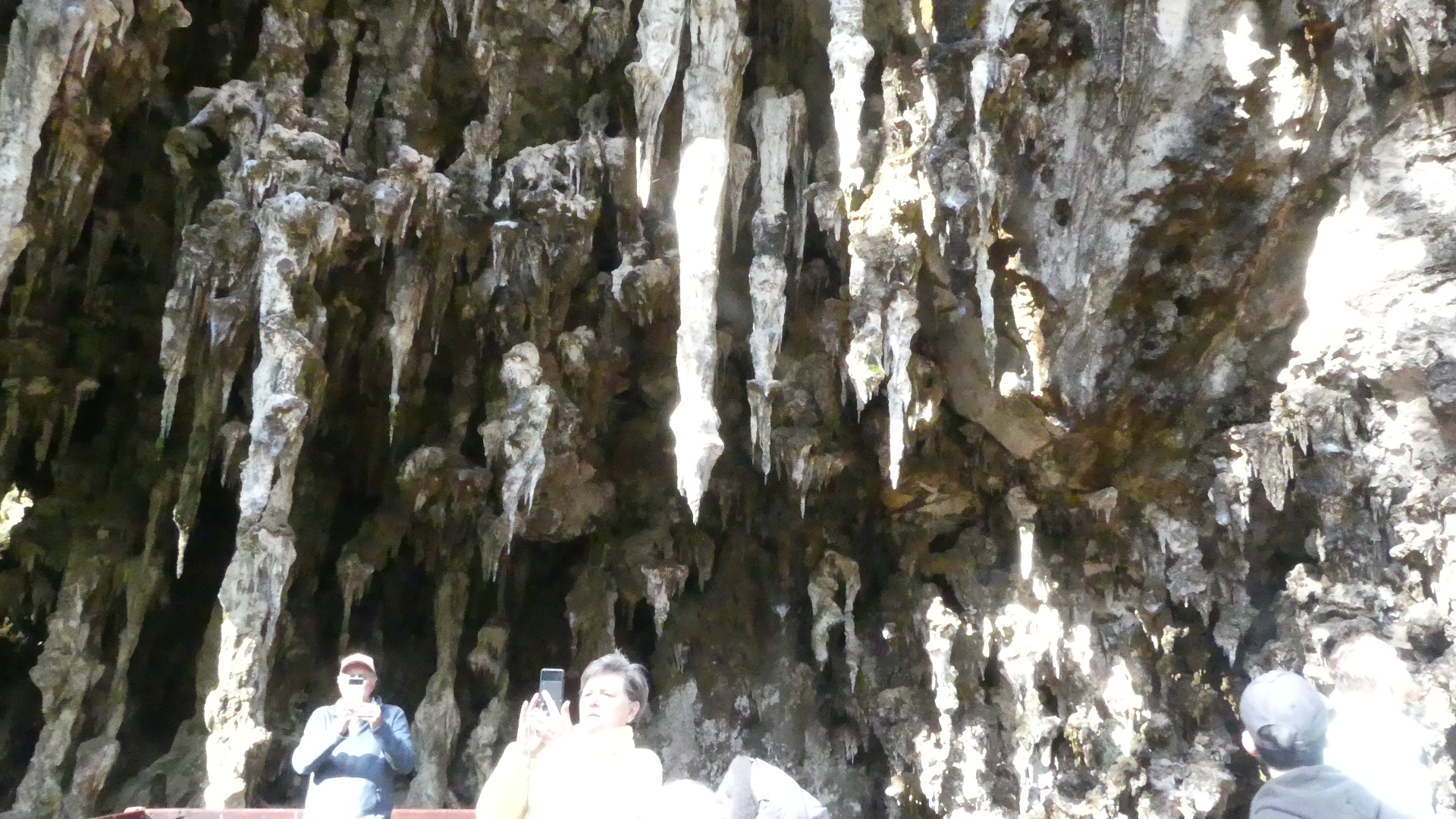
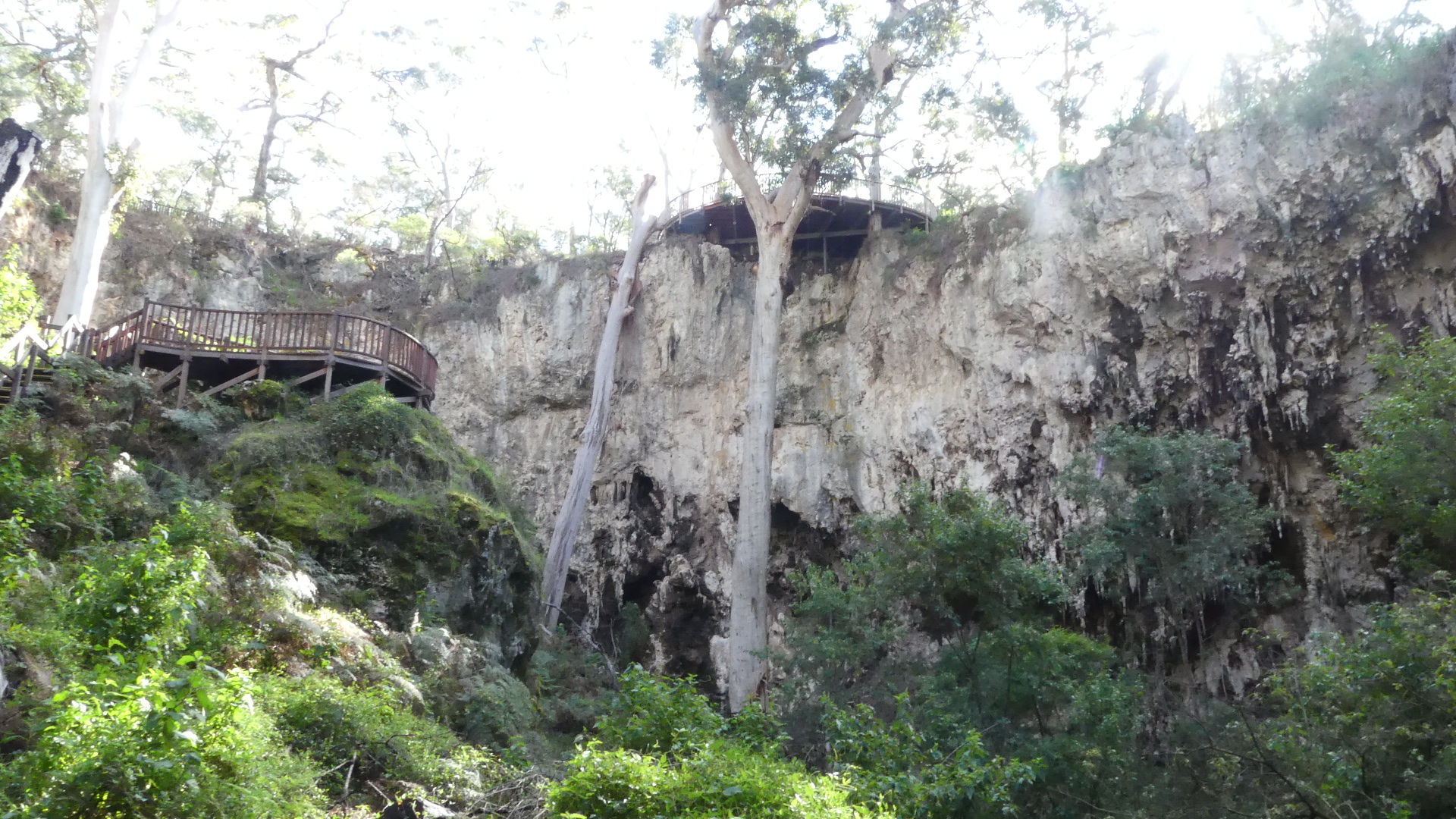
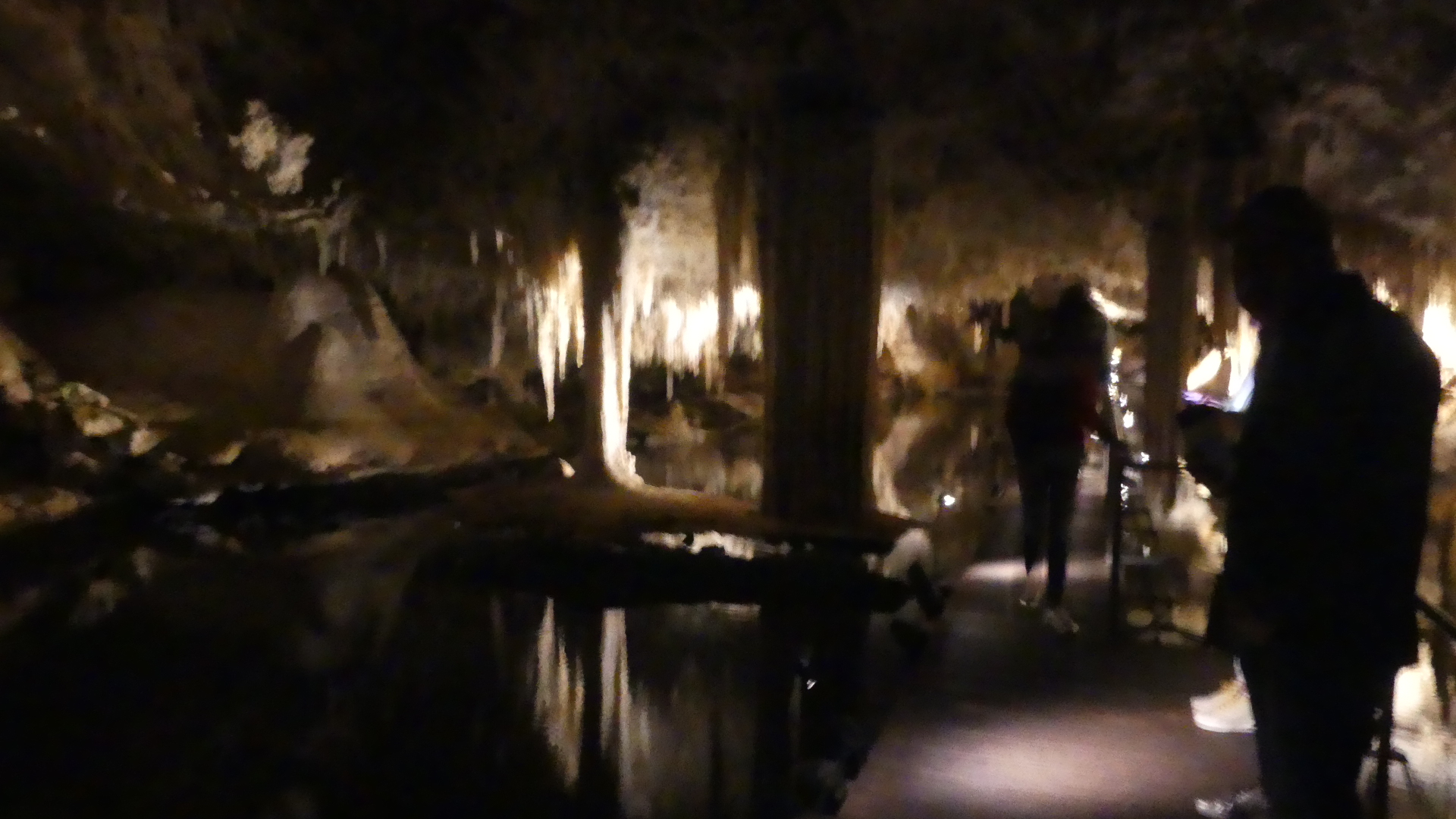
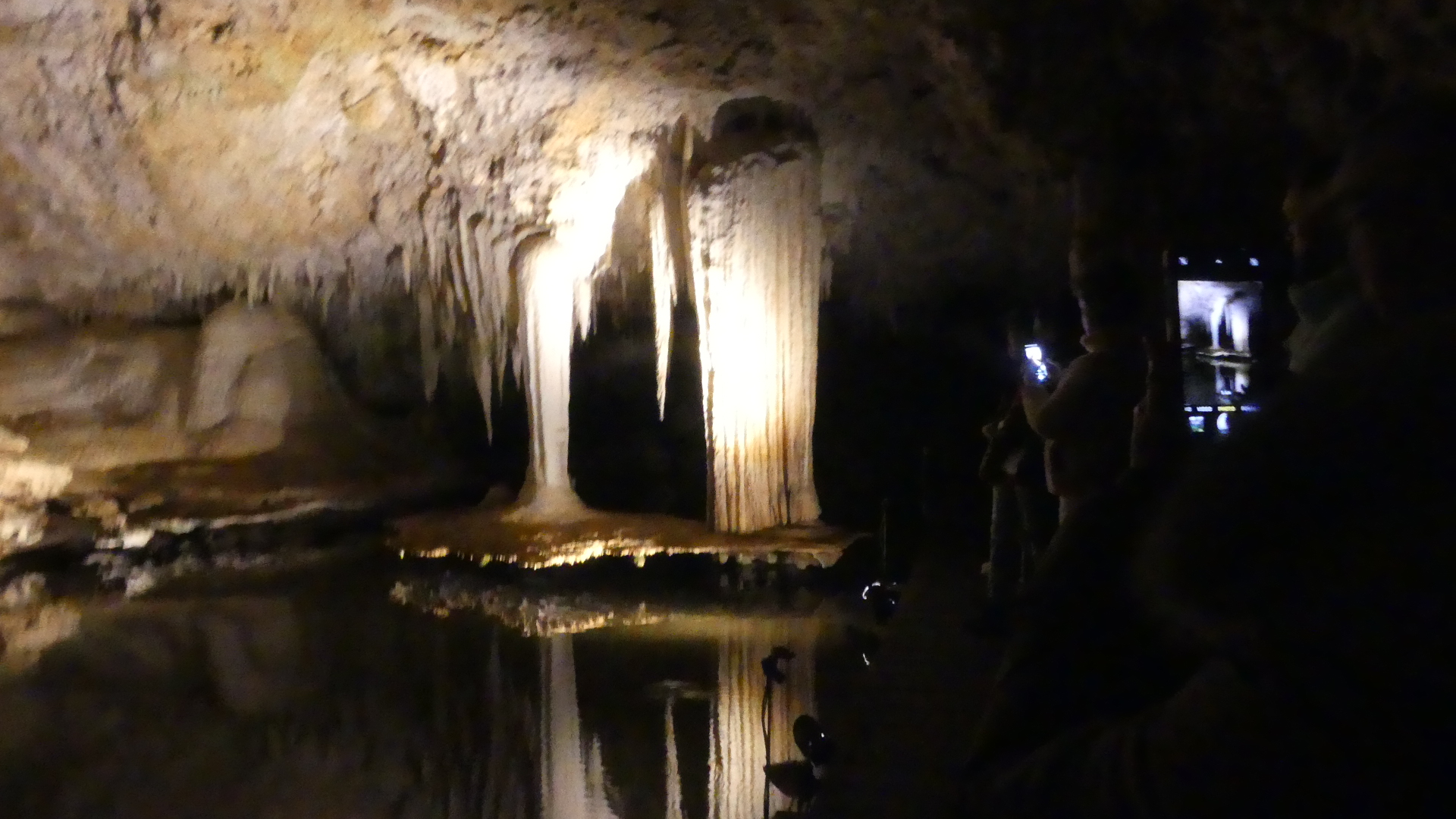
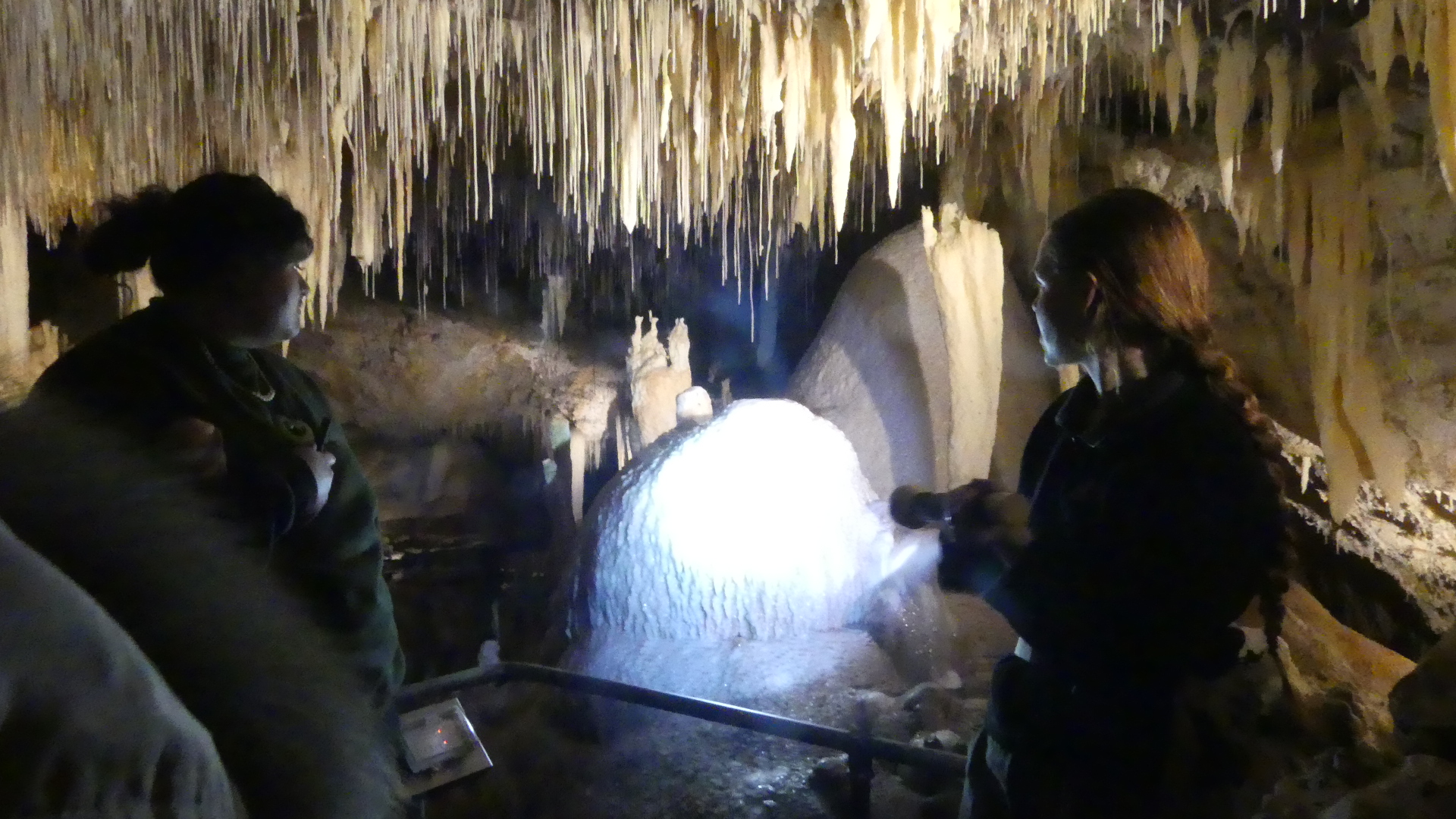
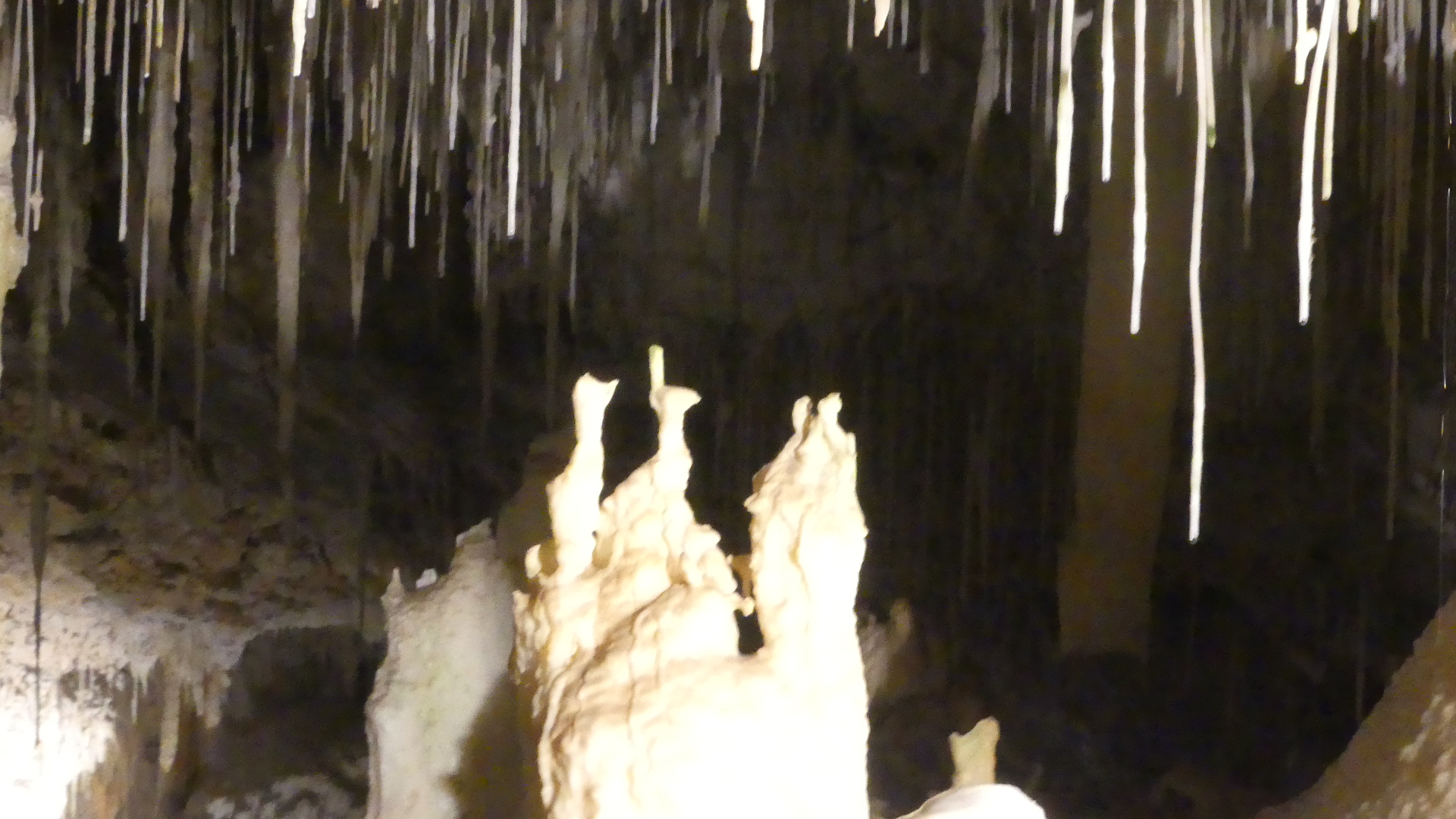
Returning north along Caves Rd we encountered the Lake Cave. It is a stunning crystal wonderland, situated deep beneath the earth. The entrance of the cave lies at the base of a spectacular sinkhole. Visitors descend a staircase through an ancient sinkhole called a doline, gazing up at the towering karri trees from the floor of the sunken forest. Inside the cave a tranquil lake reflects the delicate crystal formations that grow from the cave ceiling and dazzling crystal formations dominate the cave roof, while the unique ‘Suspended Table’ is perfectly reflected in the tranquil water below.
Droplets hang from the tips of straws and stalactites before dropping to the cave floor or into the lake creating ripples in the water’s reflections. The unique ‘Suspended Table’ formation, which weighs several tonnes and seems to defy gravity as it hovers above the clear lake water is one of the unique features within the cave. We took a guided. They say there is moderate physical exertion required to enter this cave. Don’t believe it for a minute – easy going down but when you make your way back up the staircase of the magnificent doline do it at your own pace.
Looking at the photos we start at the Visitors centre and from there you walk out onto a deck above a huge sinkhole – you have to see it to believe it. As you go down there are a number of changes in direction and this has alot to do with the return journey being exhausting. You will see a large rock lying on its side (from the left down photo 8) and this is a staligmite that collsaped during a recent bush fire almost sealing off the entrance to the cave. The photo to the right of the staligmite is the hole it came from. The inside the cave is like a fairyland. Photos 10 and 11 show you the suspended table formed by flood waters through the cave. The final photo #17 is the doorway to the tunnel that was drilled to release the flood water to preserve the cave.
Well we have visited many caves around the world, but we were about to encounter the worst return to the Visitors Centre – up the stairs. Well I don’t know how many stairs but both Kerry and I took at least half an hour to climb out of the hole and that was it for us that day. Dale and Zdravka patiently awaited our climb and I may have had a nanny nap going home. Tomorrow we will go north again to Busselton – no stairs.
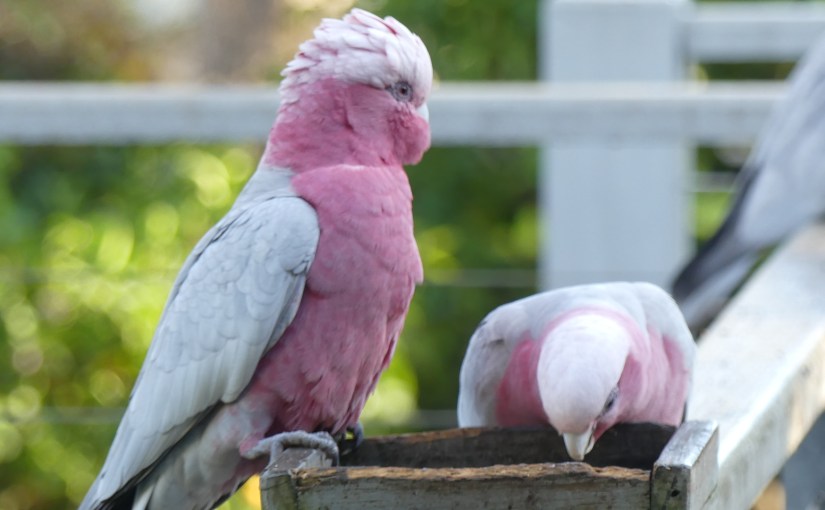
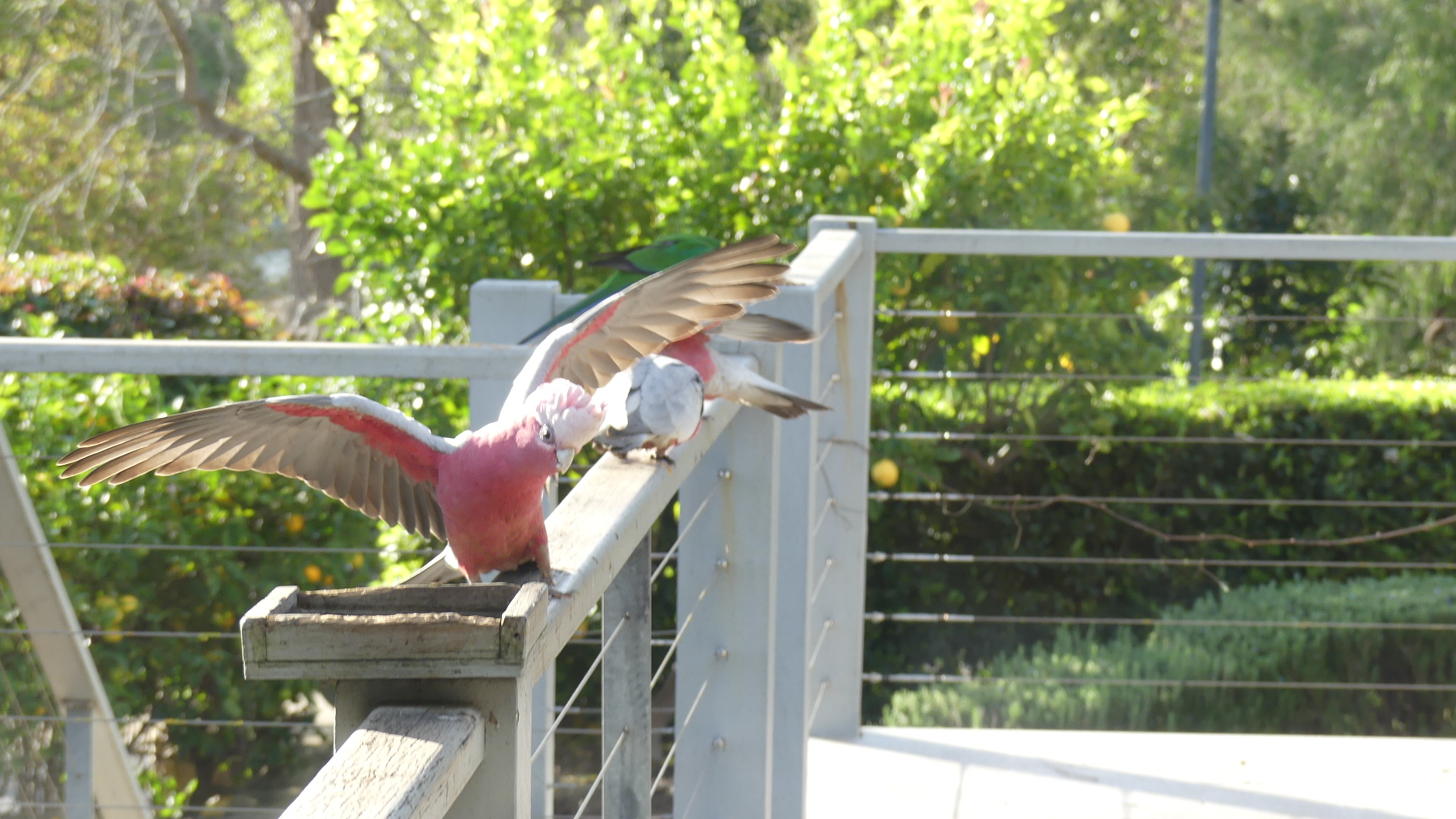
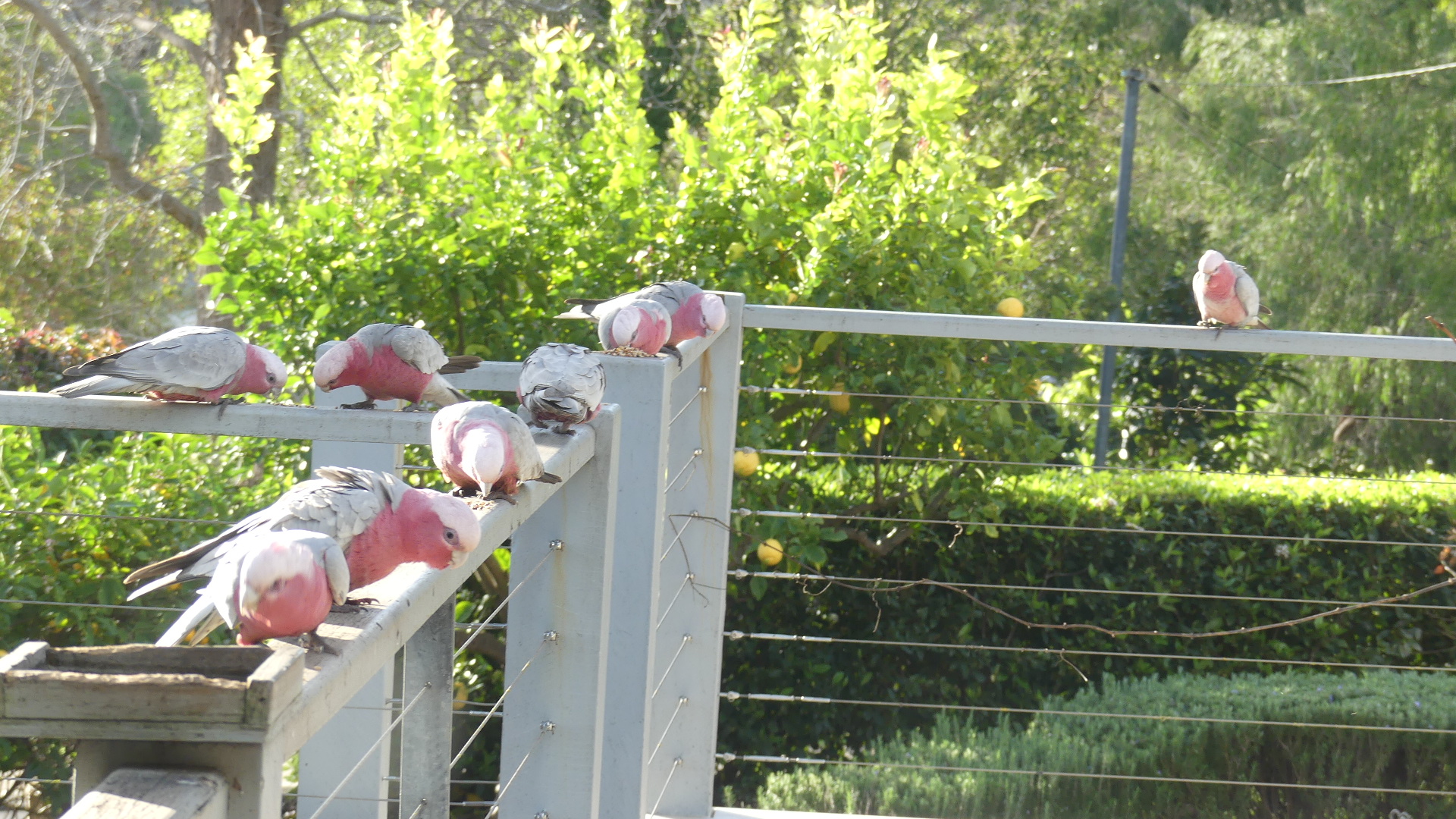
We were staying approximately 70m from the main street of Margaret River Village in an old looking cottage that has been modernised. It is on a brick base which forms a basement with a carpark not built for a Landcruiser and above is the front deck leading into a very small living room with fireplace, small dining area, a small galley kitchen, our bedroom which only just fits a double bed, a short hallway leading to the bathroom and back door where a porch brings you onto the back yard probably 3m wide. Here stand the chopping block for the fire wood to be split. The house is surrounded by trees. Of particular interest is the avocado tree which has fruit on it but without a ladder very much out of reach fruit. Of a morning and evening pink and white Galahs, pigeons and an occasional kookaburra come to be feed on the front deck, a ritual created by everyone who has stayed here and perpetuated by the landlord providing the seed. The house has a loft and this was the domain of Dale and Zdravka – two bedrooms and a bathroom.
We had brought some beverages to put in the fridge so after lighting the fire which I kept adequately stocked with split logs, we would feed the birds turn on the TV (the Olympics was on) and have some refreshments with the birds scrabbling away on the deck to get their fair share of seed. Of course there was spillage and that brought a local chook to pick up the scraps. Here are a few photos of the birds and one of the house.
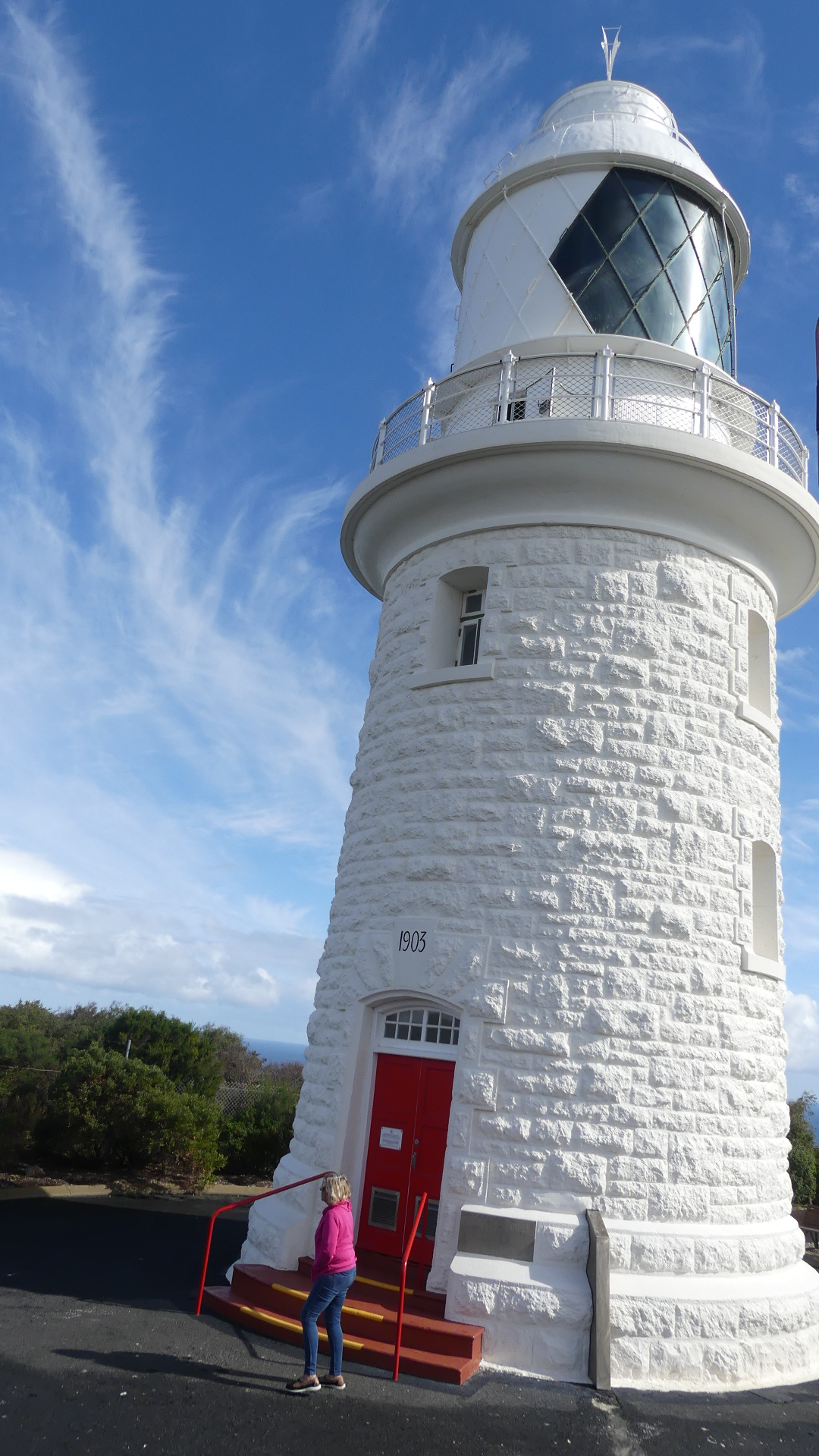
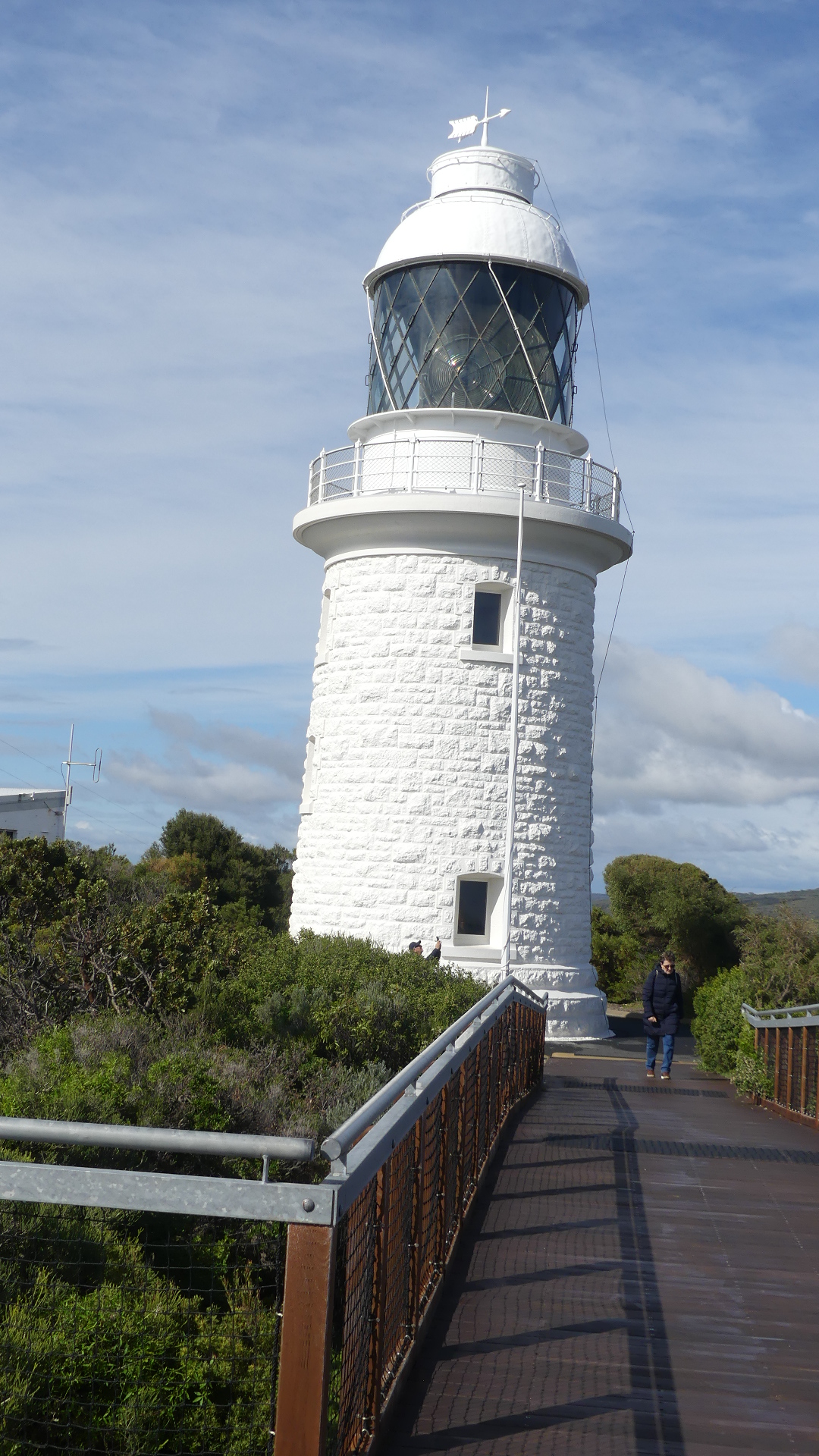
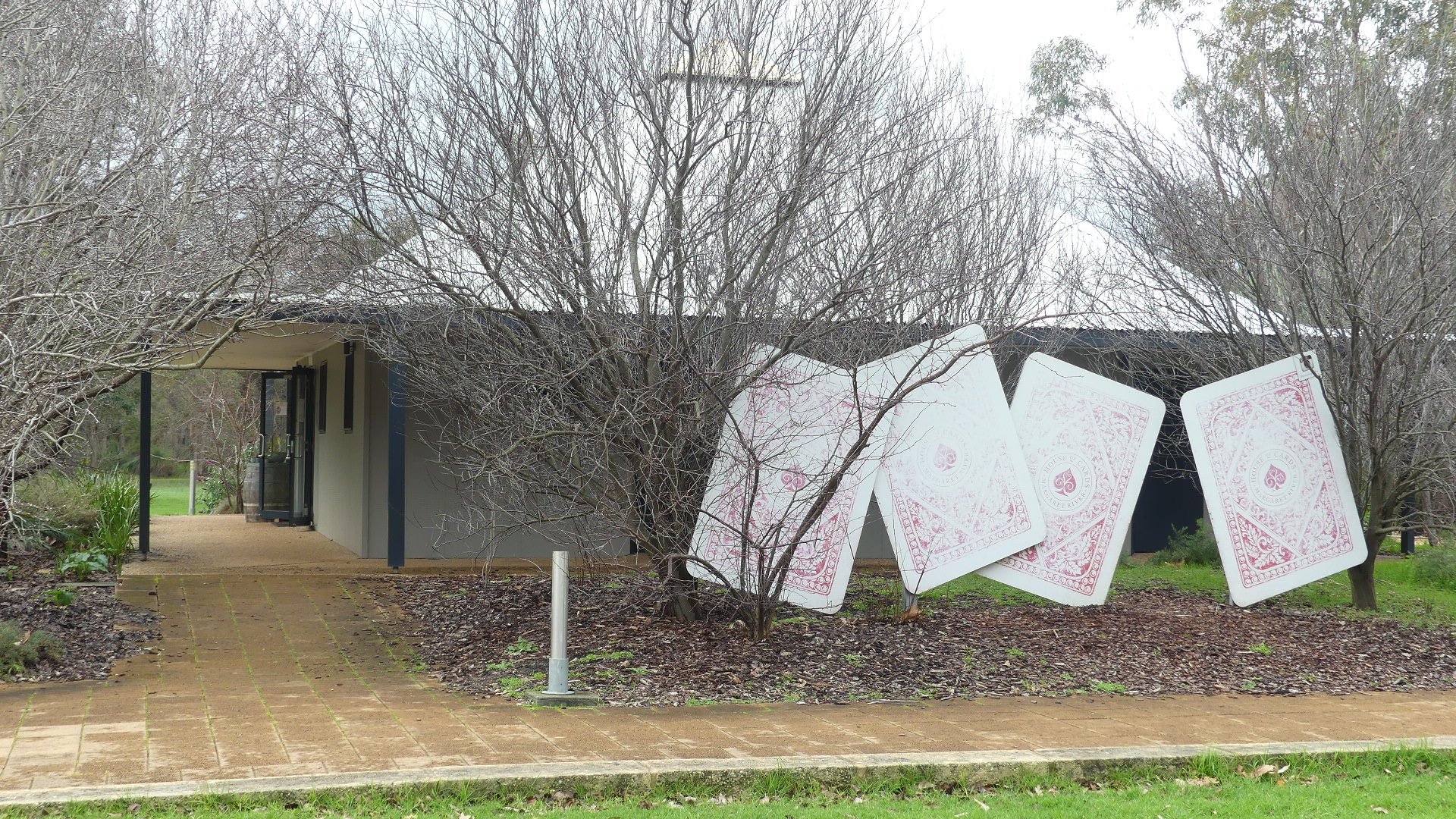
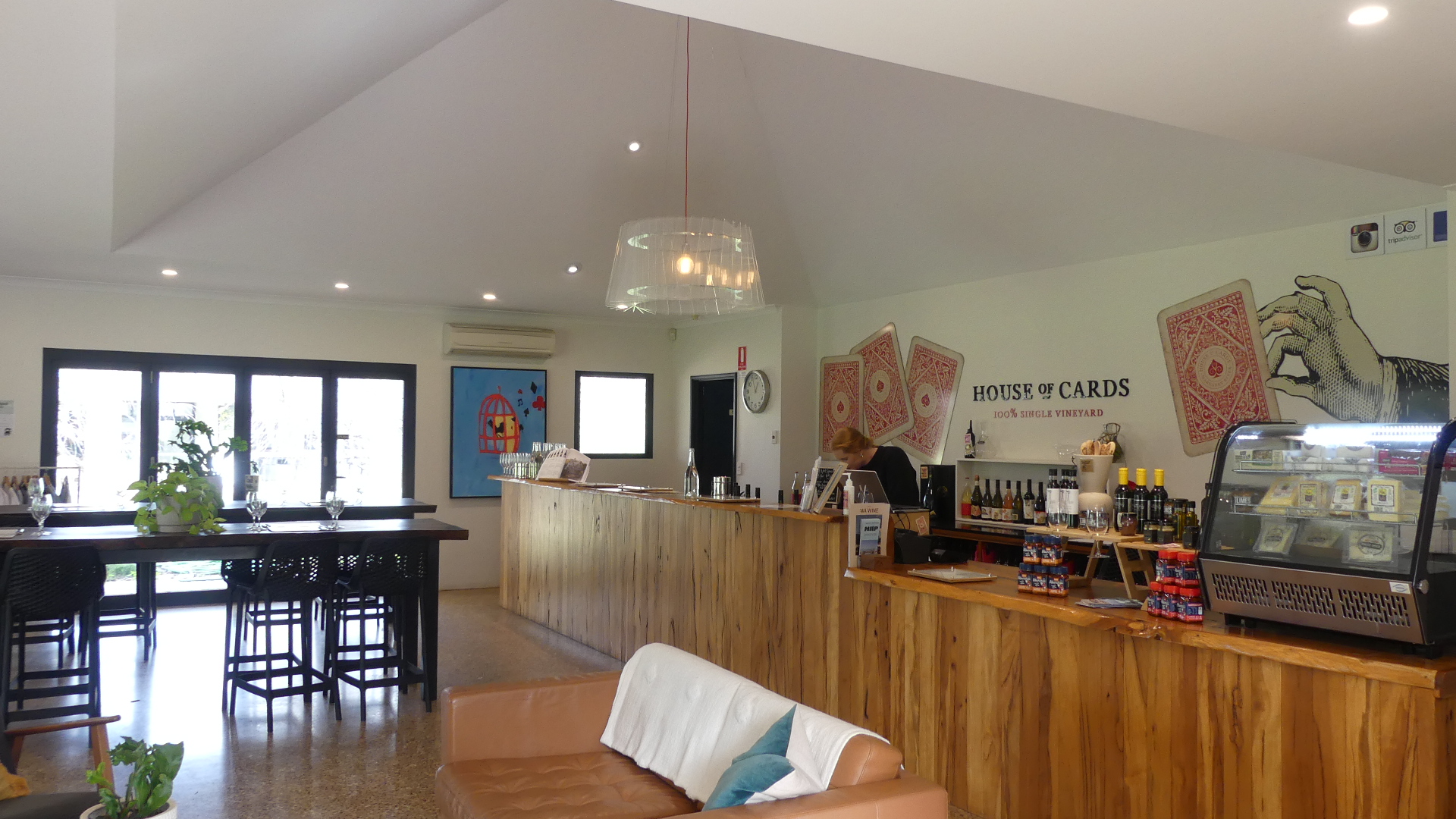
Now its all very well to have an itinerary but following it can some times be difficult as we were about to find out. Despite the best laid plans, we were going to Cape Naturaliste lighthouse. Then onto House of Cards Vineyard, Vasse Virgin, Fishbone Japanese inspired dining, and Margaret River Chocolates but we did not know that nor did the driver. The lighthouse is north of Margaret River village but well worth the drive. You may have noticed the french twist on the name of the cape. Cape Naturaliste, in the south west of Western Australia, is the site of a lighthouse which was activated in 1904. The tower, positioned on a 100 m high bluff overlooking Geographe Bay, was constructed in 1903.The lighthouse is constructed of limestone quarried from nearby Bunker Bay, which was also known as the Quarries.
The French twist comes from French explorer Nicolas Baudin, after his ship, Géographe. The bay was named in May 1801 and is a wide curve of coastline extending from Cape Naturaliste past the towns of Dunsborough and Busselton, ending near the city of Bunbury. Geographe Bay is in the south-west of Western Australia, around 220 kilometres (140 mi) southwest of Perth.
It is a 20-metre-high (66 ft) cylindrical tower built of limestone that still uses its original first order Fresnel lens made by Chance Brothers. Another precious lens optic is displayed there, the second order Fresnel lens of the Jarman Island Light, as well as the original Great Sandy Islands beacon. Both items were originally used on the Pilbara coast further north.
The entrance leads us through the original lighthouse keepers dwelling and other out buildings which now contain a museum and of course the gift shop.
The handset as seen being used by Kerry is in fact a recording of the ship wreck of the Carnarvon Castle in 1907. It is a chilling re-enactment. The lighthouse is not the tallest nor the brightest light but in this setting it gives a romantic/heroic feel to the whole area.
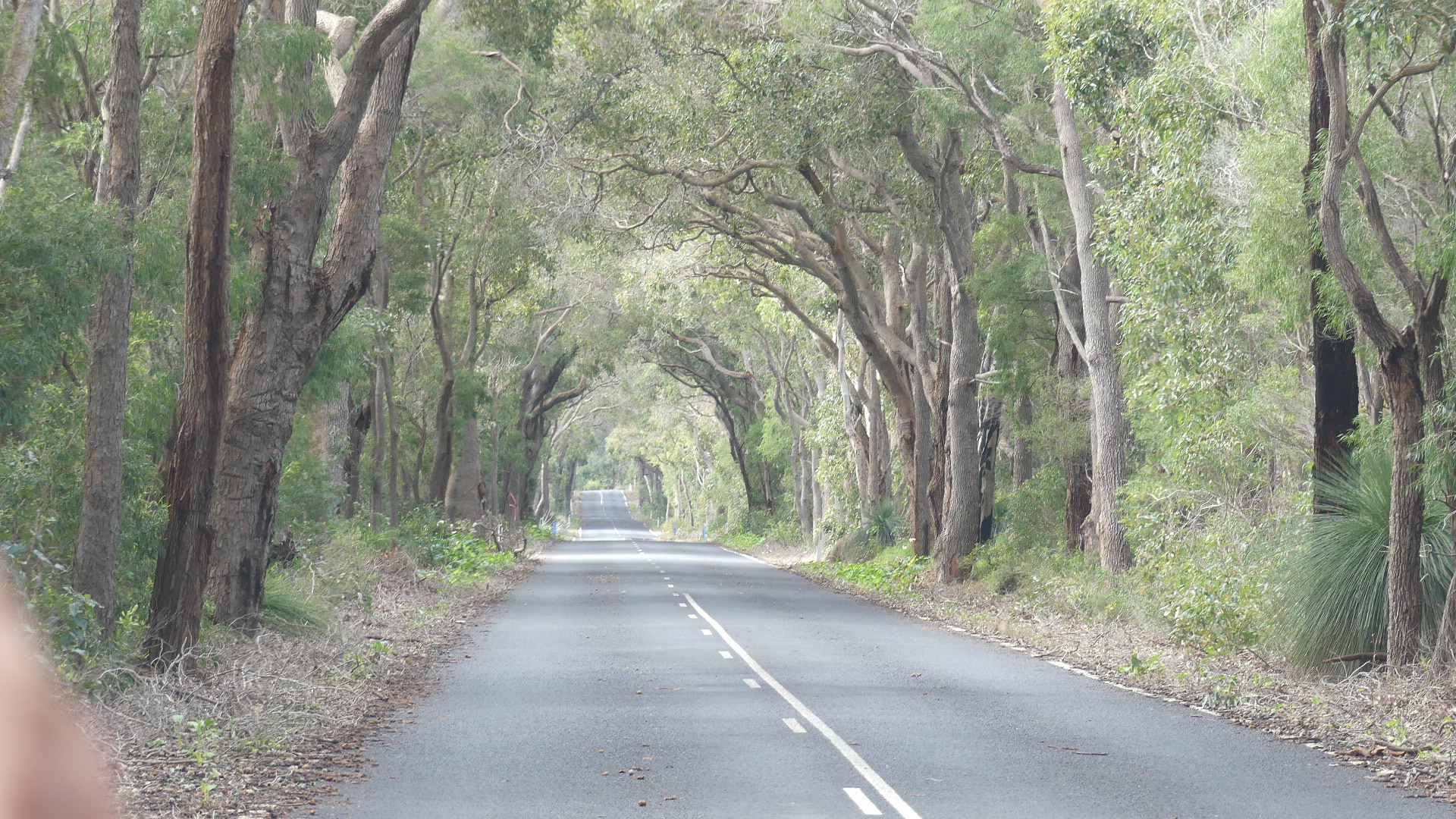
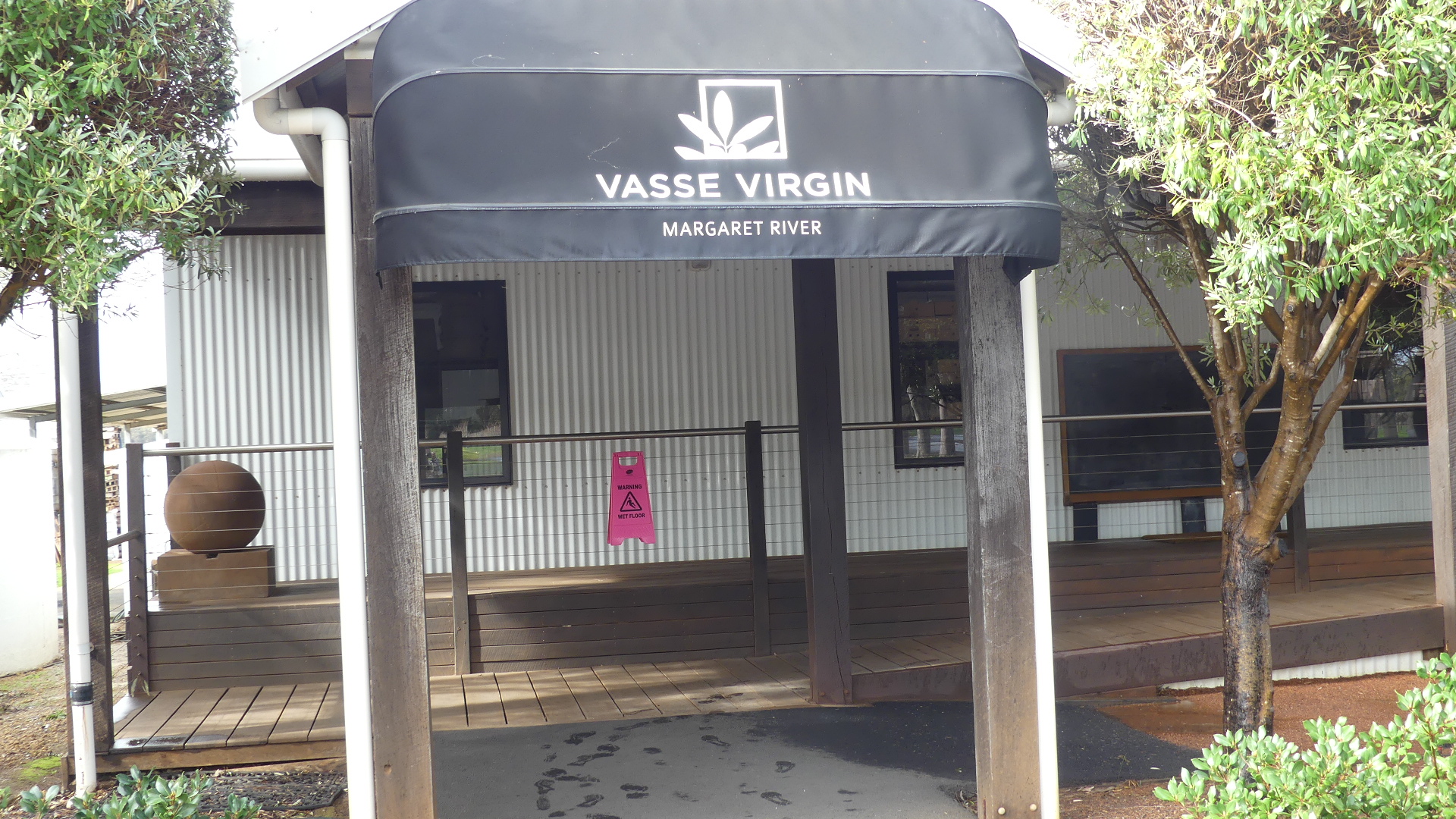
We then returned to the car planning to visit Vasse Virgin home of the olive shampoo but memories got in the road. Driving along Kerry and I recognised a favourite winery of our last trip over here – House of Cards. As we drove in an air of despair came in through the window. It looked sad and unkempt. Its neighbour the chocolate shop was gone and everything looked tied except for the smart looking restaurant behind the cellar door. The cellar assistant told us that the winery had changed hands many years ago (just after our visit) and it had lost its glitter. So we visited the restaurant it being that time of day. Oops forgot my cheque book – a touch too rich for us. Moving along to Vasse Virgin, we entered a beautiful row of trees either side of the entry.
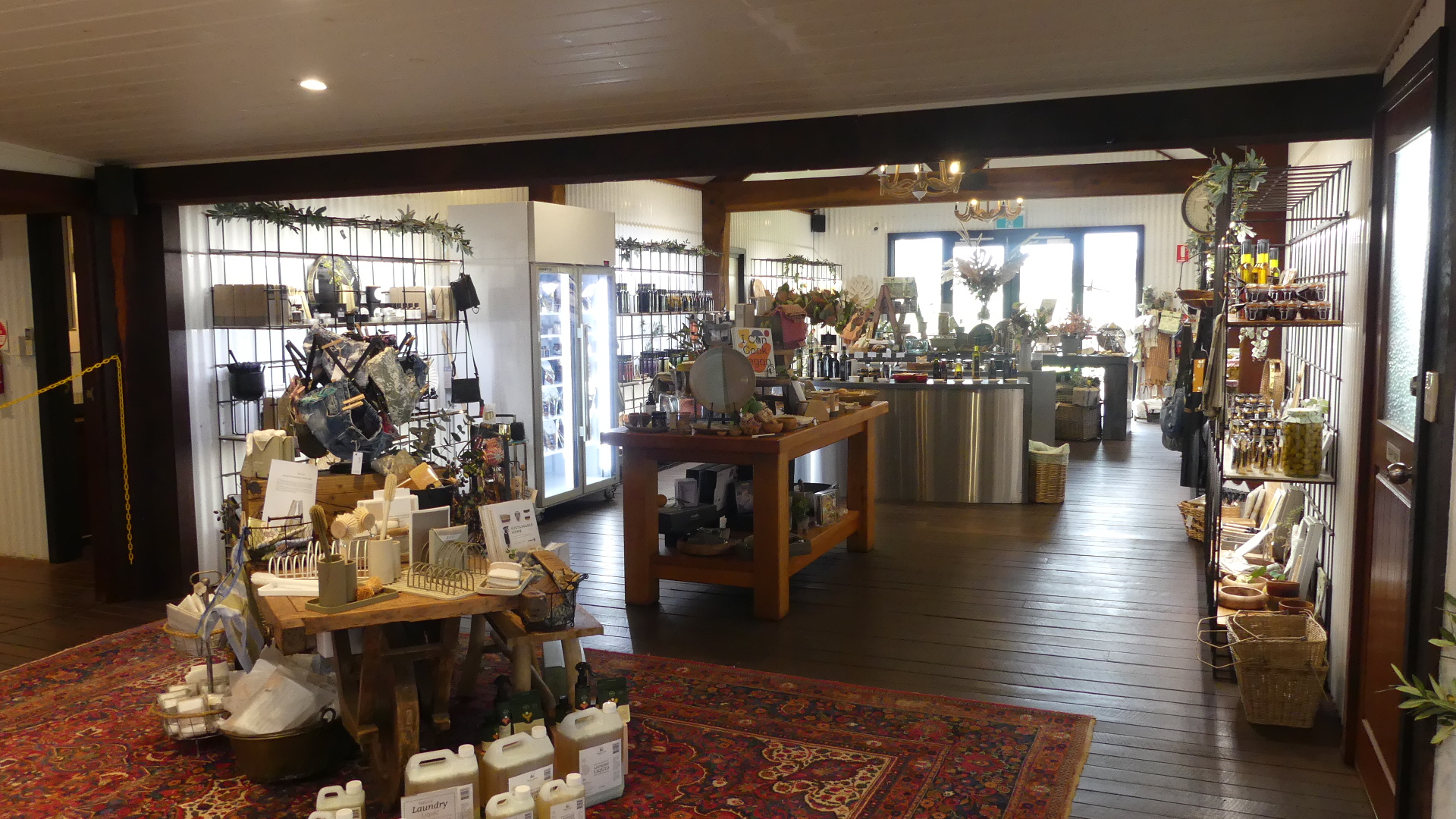
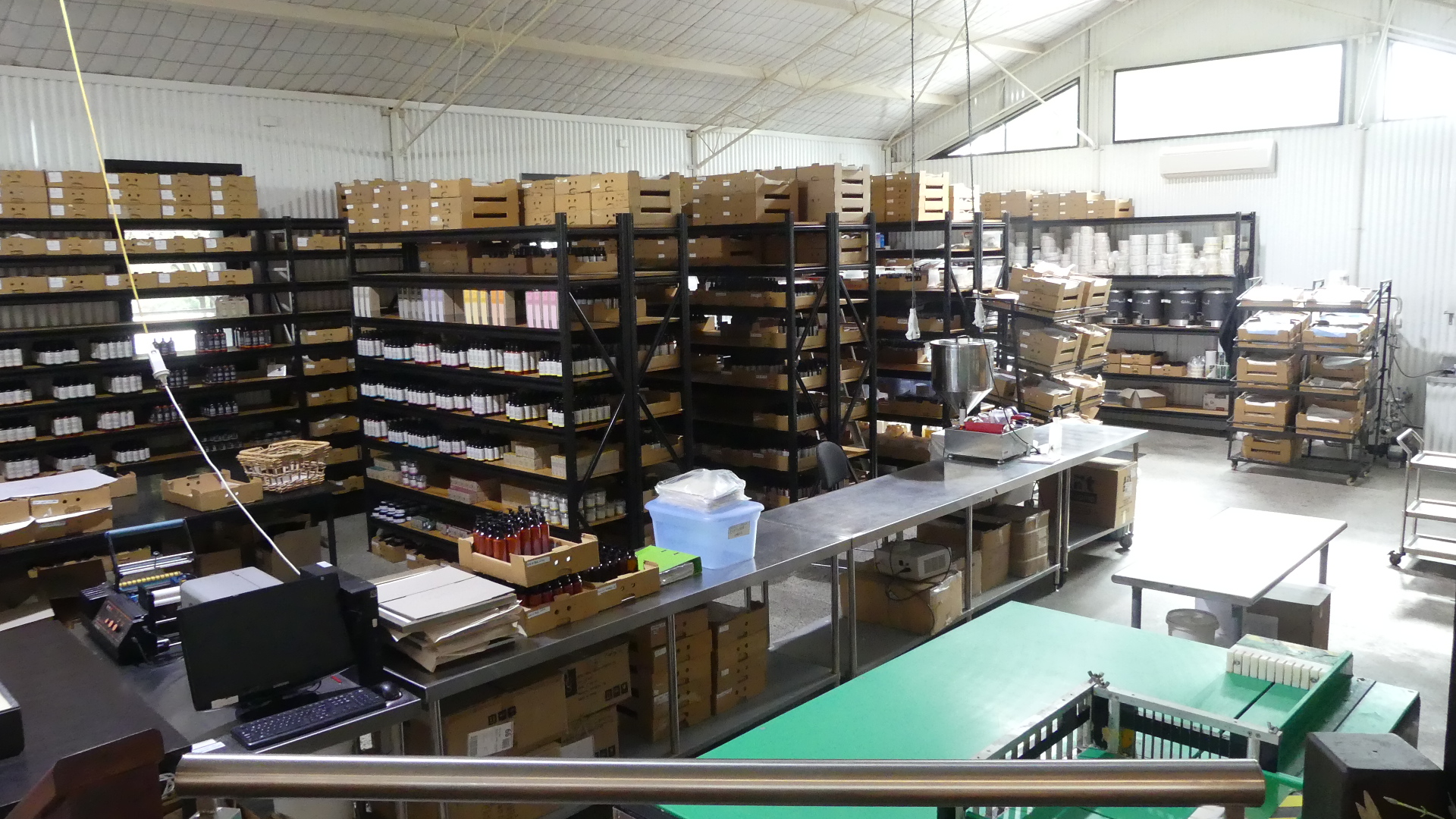
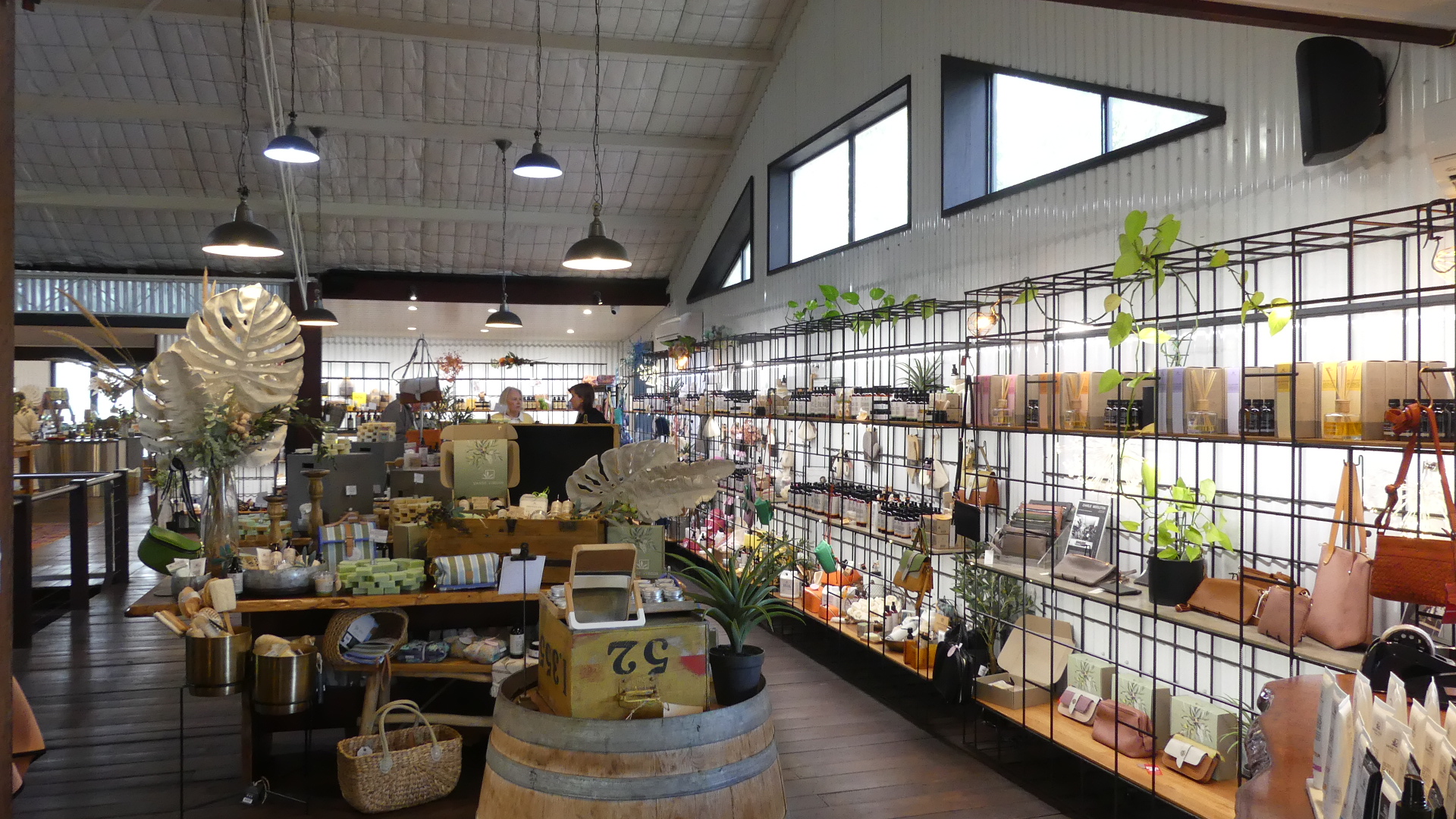
Vasse Virgin is a factory with a gift shop attached. Here they make Kerry’s favourite shampoo and conditioner using olive oil which has been a real find for her treating her psoriasis. Whatever else they do does not matter – Kerry pulls out her bulk containers and says “Fill ’em up”. So I have a look around and whilst it is quite impressive and obviously successful its all girlie stuff – No Sale.
Hunger has grabbed the attention of Dale who having heard the words”Japanese style dining” is looking for “Fishbone”. We find Margaret River Chocolate Company but across the road there hiding in the bushes is Fishbone. Well I have been off my food and the thought of any food was not appealing but in we go. Not only is it a restaurant but its part cellar door and distillery – something for everyone. The 165-acre Fishbone estate is a picturesque expanse of gently sloping hills, falling into the Wilyabrup brook. Against the backdrop of the vineyard, is a fresh, refined and elegant Japanese restaurant. The food is excellent and we grabbed a bottle of wine and bottle of gin.
The chocolate company was identical to the same named establishment in Margaret River so we did not spend much time there. We decided to call it a day and pulled up stumps. Home for the fire and more Olympics.
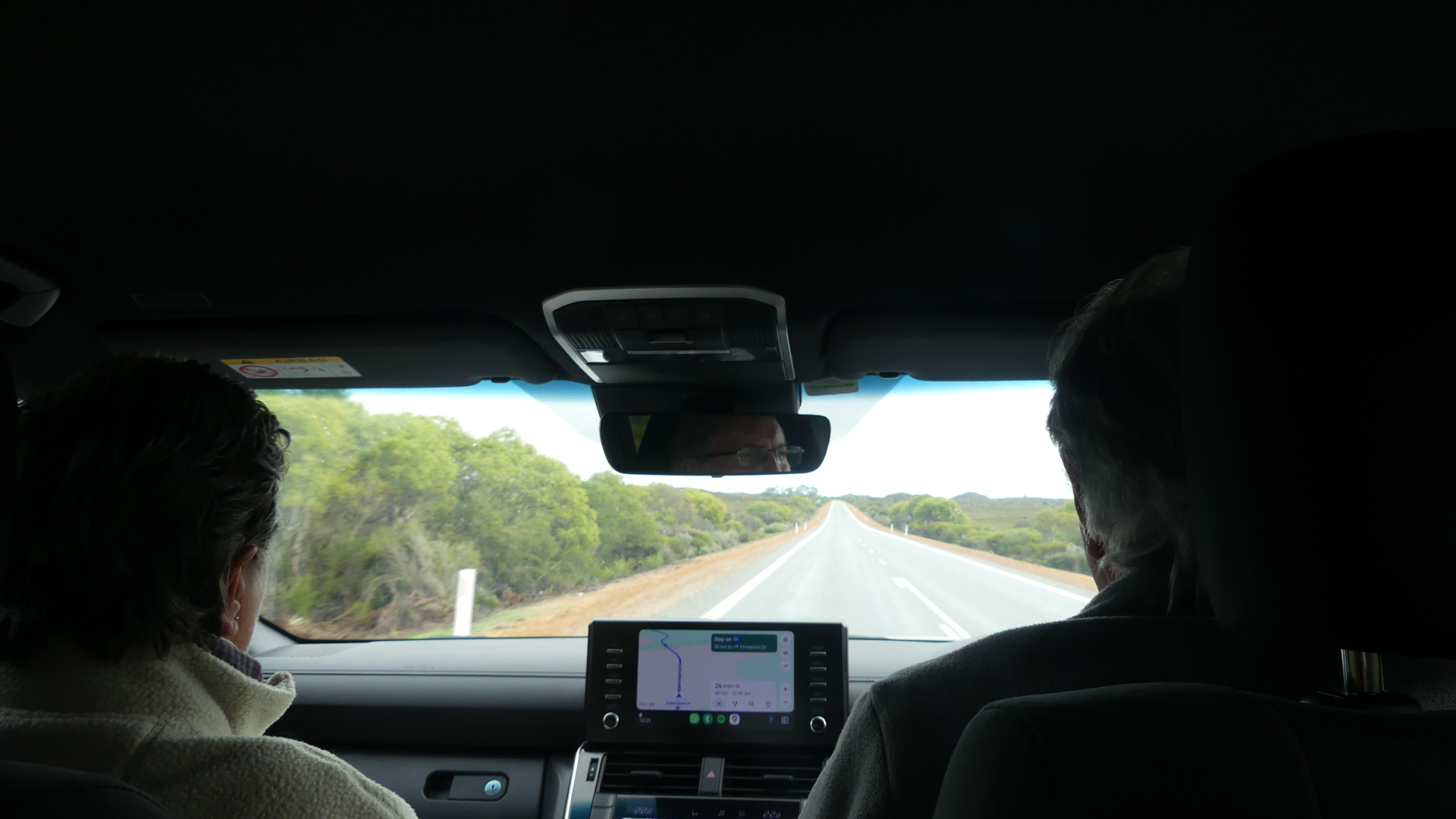
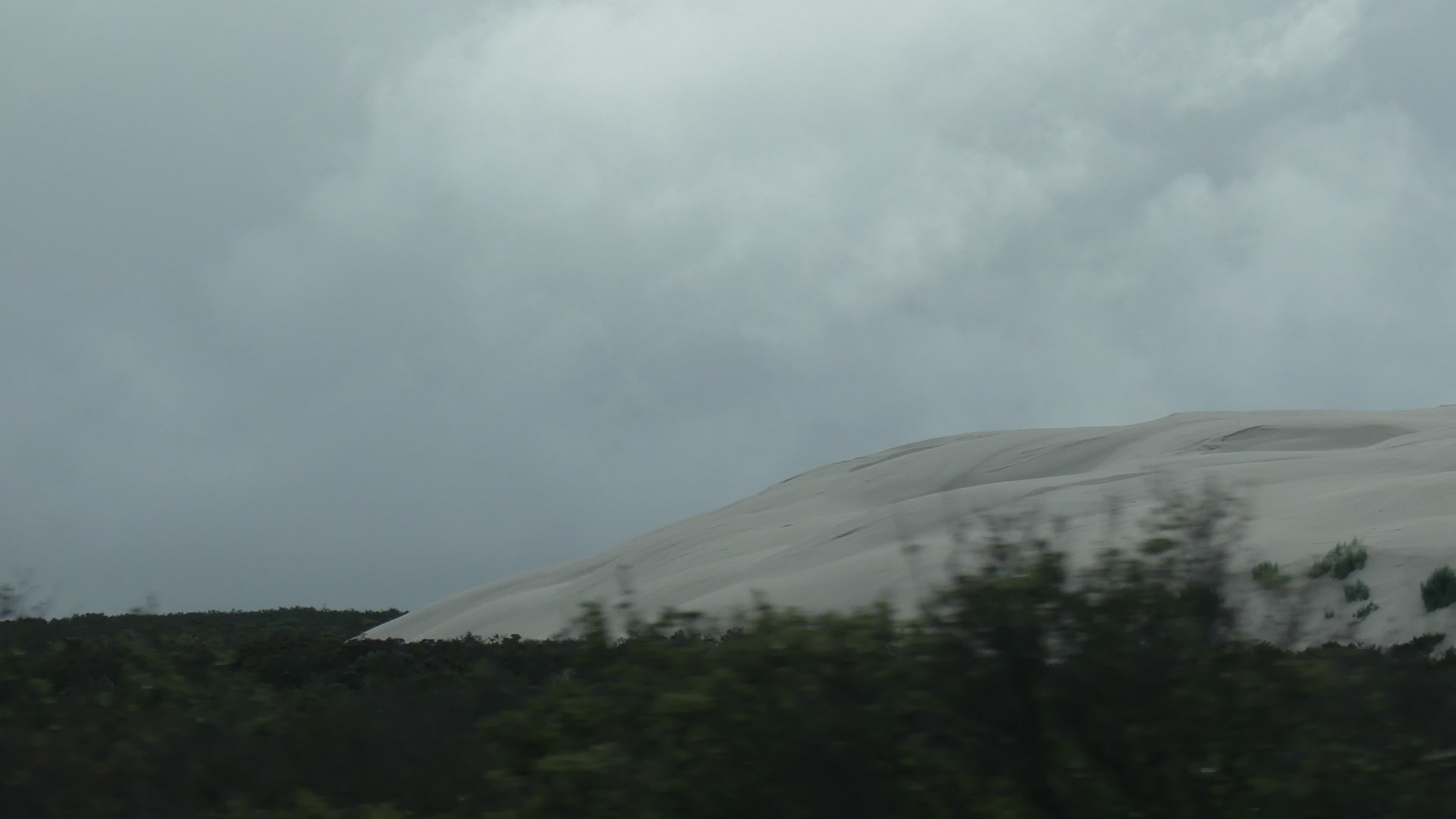
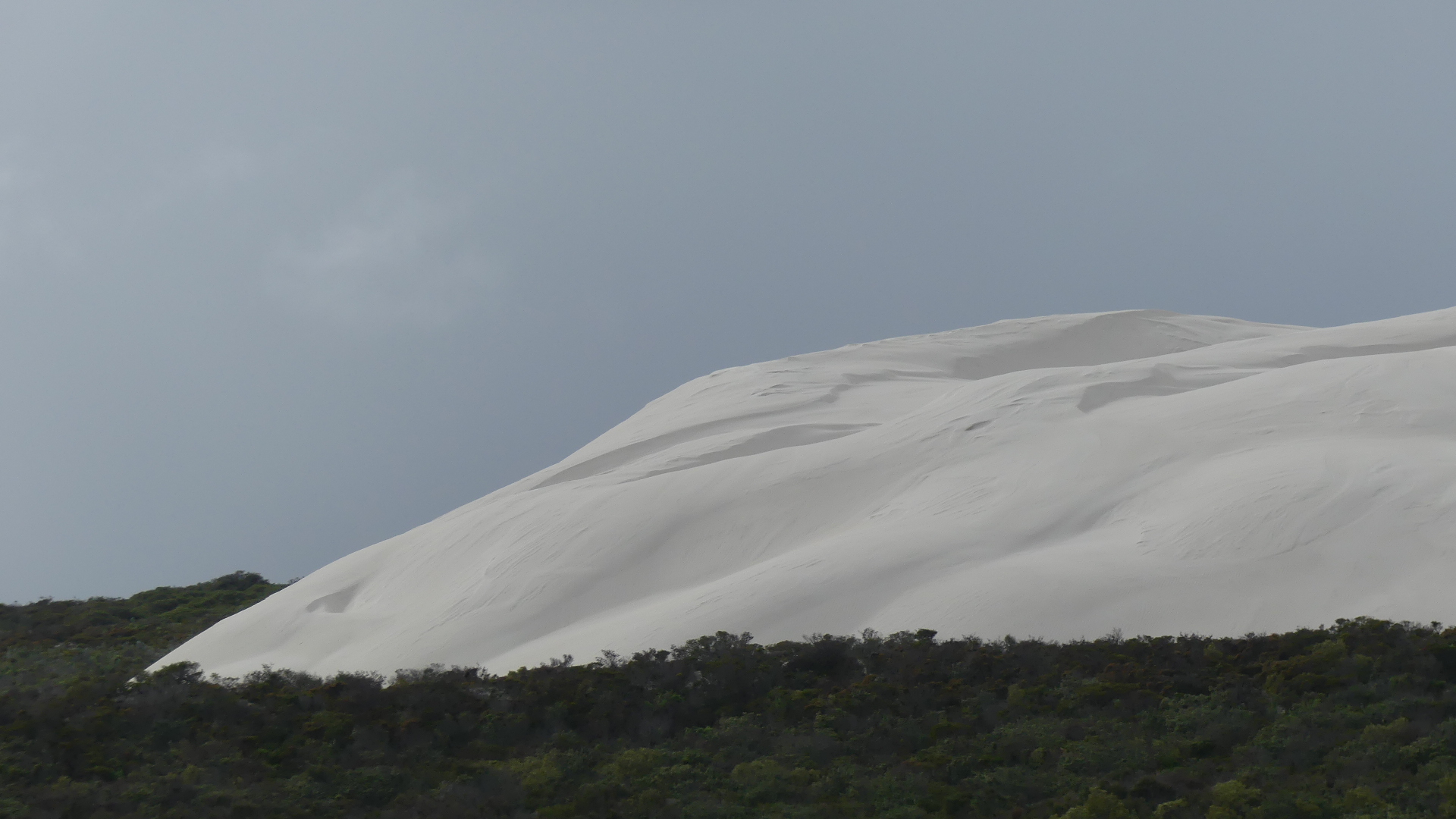
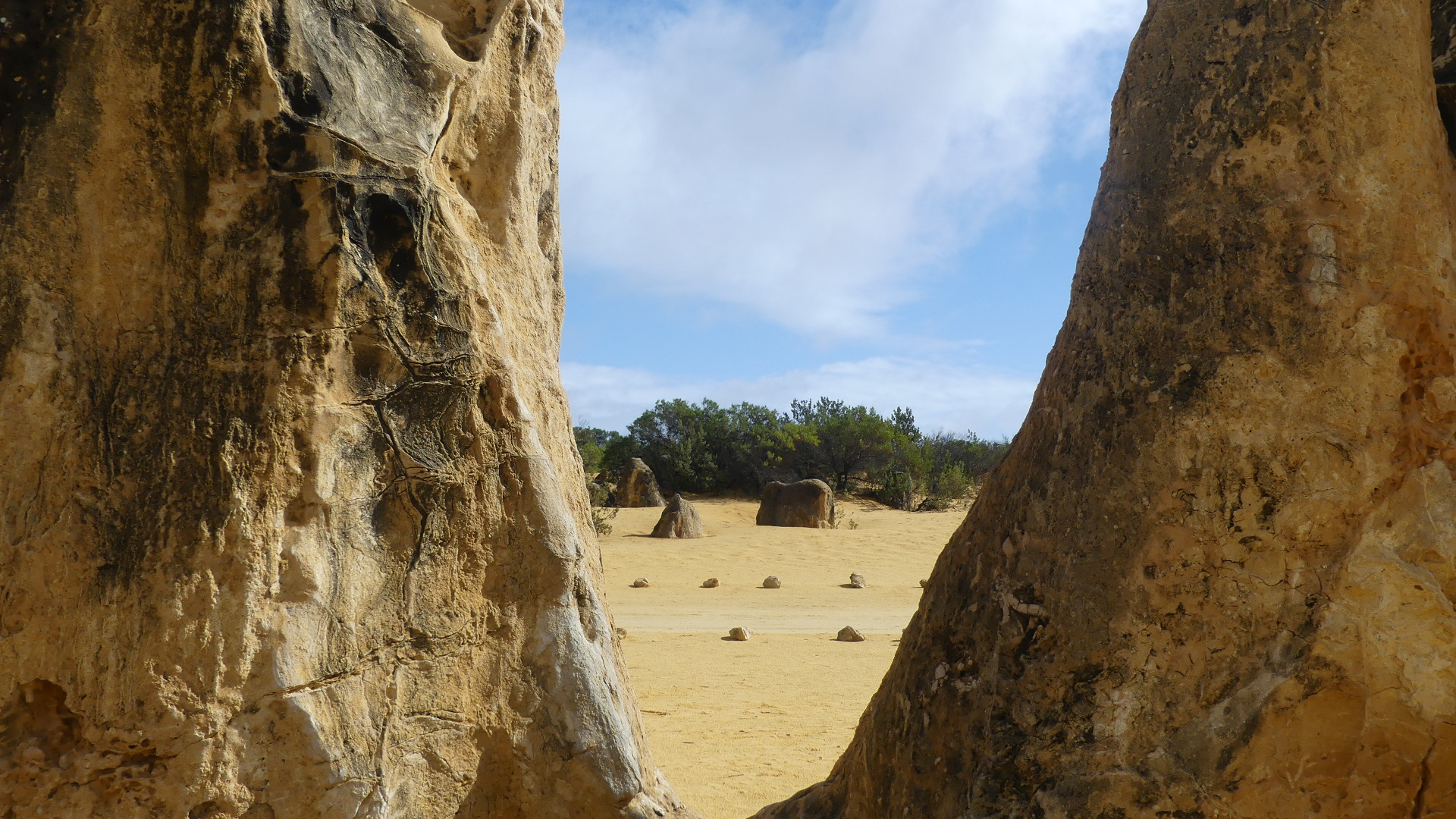
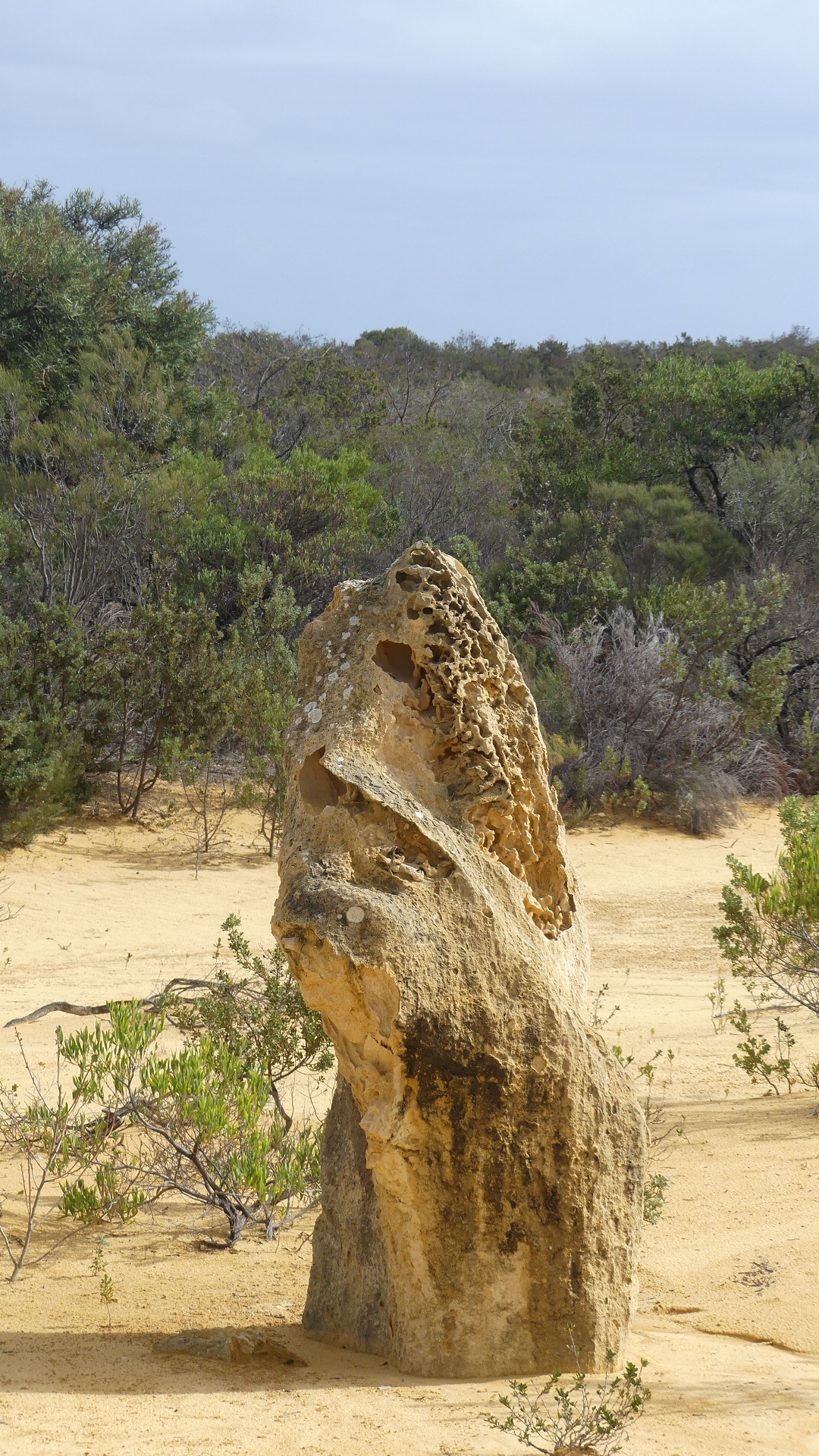
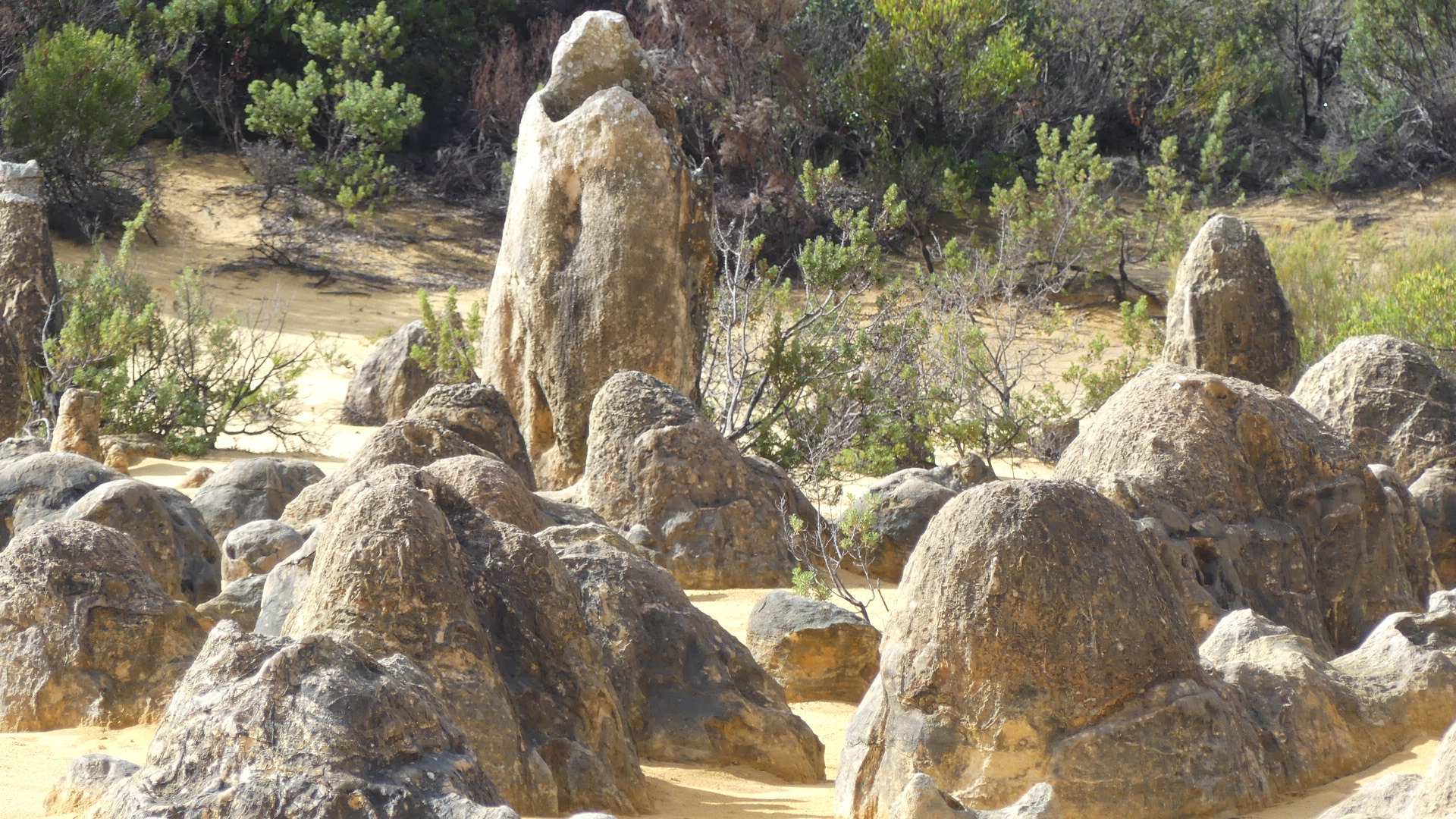
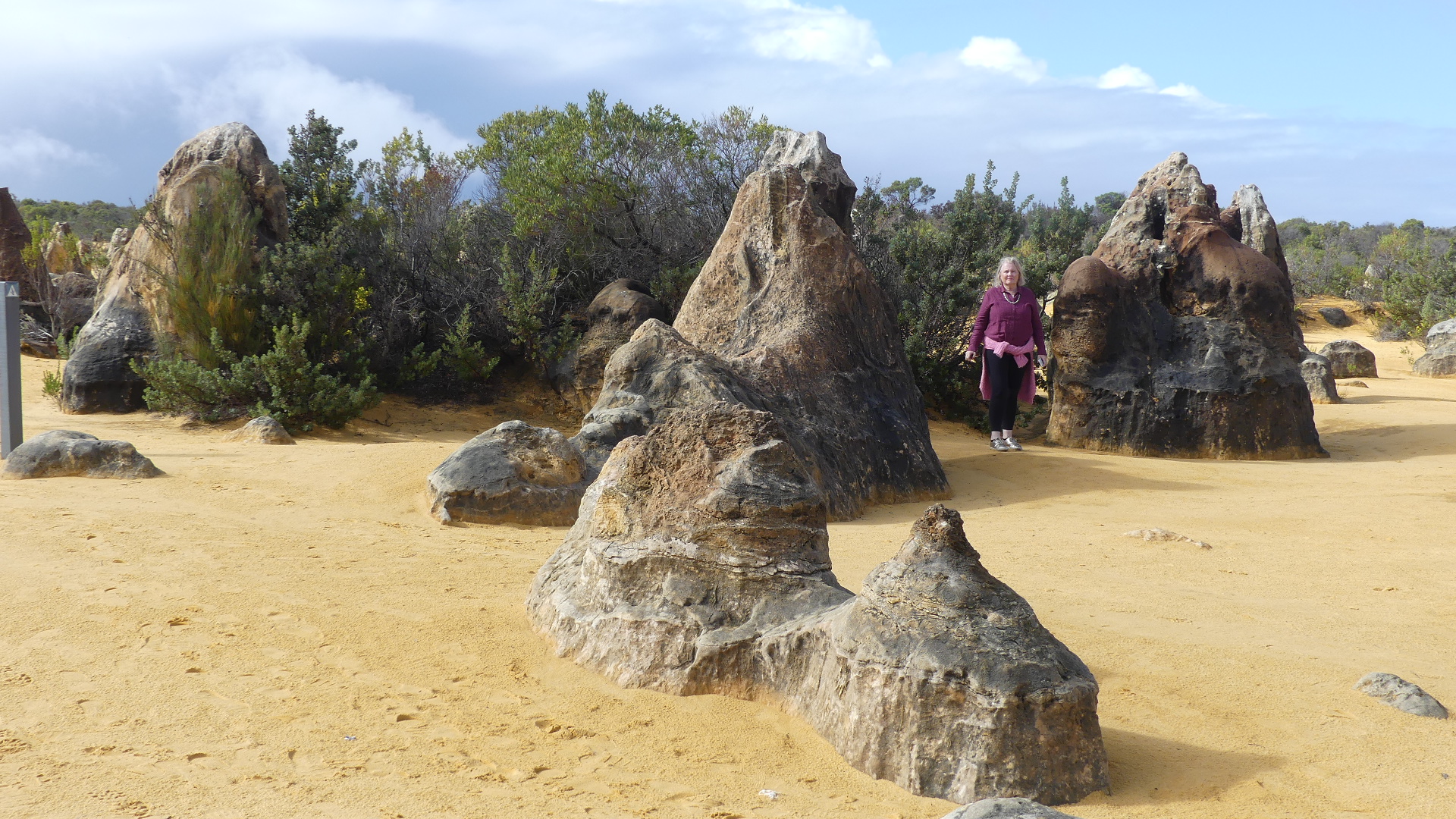
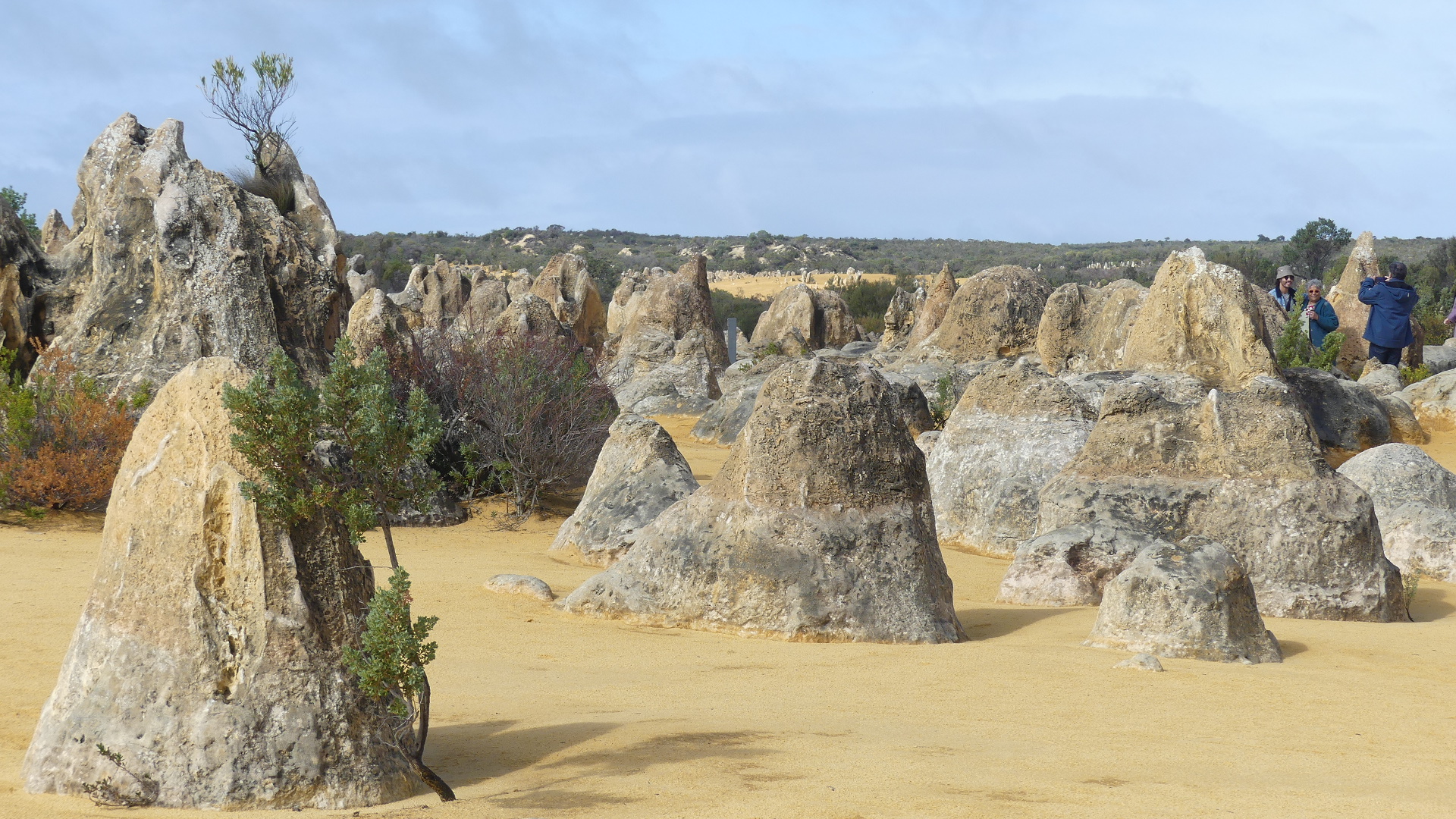
Dale and Zdravka have planned to go to the Pinnacles and without the use of Ken’s car we decided to hitch a ride. The Pinnacles are limestone formations within Nambung National Park, near the town of Cervantes, Western Australia 2 hours drive north of Perth. Dale had his trusty new Landcruiser at hand with plenty of space for all. The drive proved trouble free and we were treated to some unique countryside. Note the unique intrusion of the sand into the surrounding scrub in photos # 6 & 7 (reading left to right down the page).
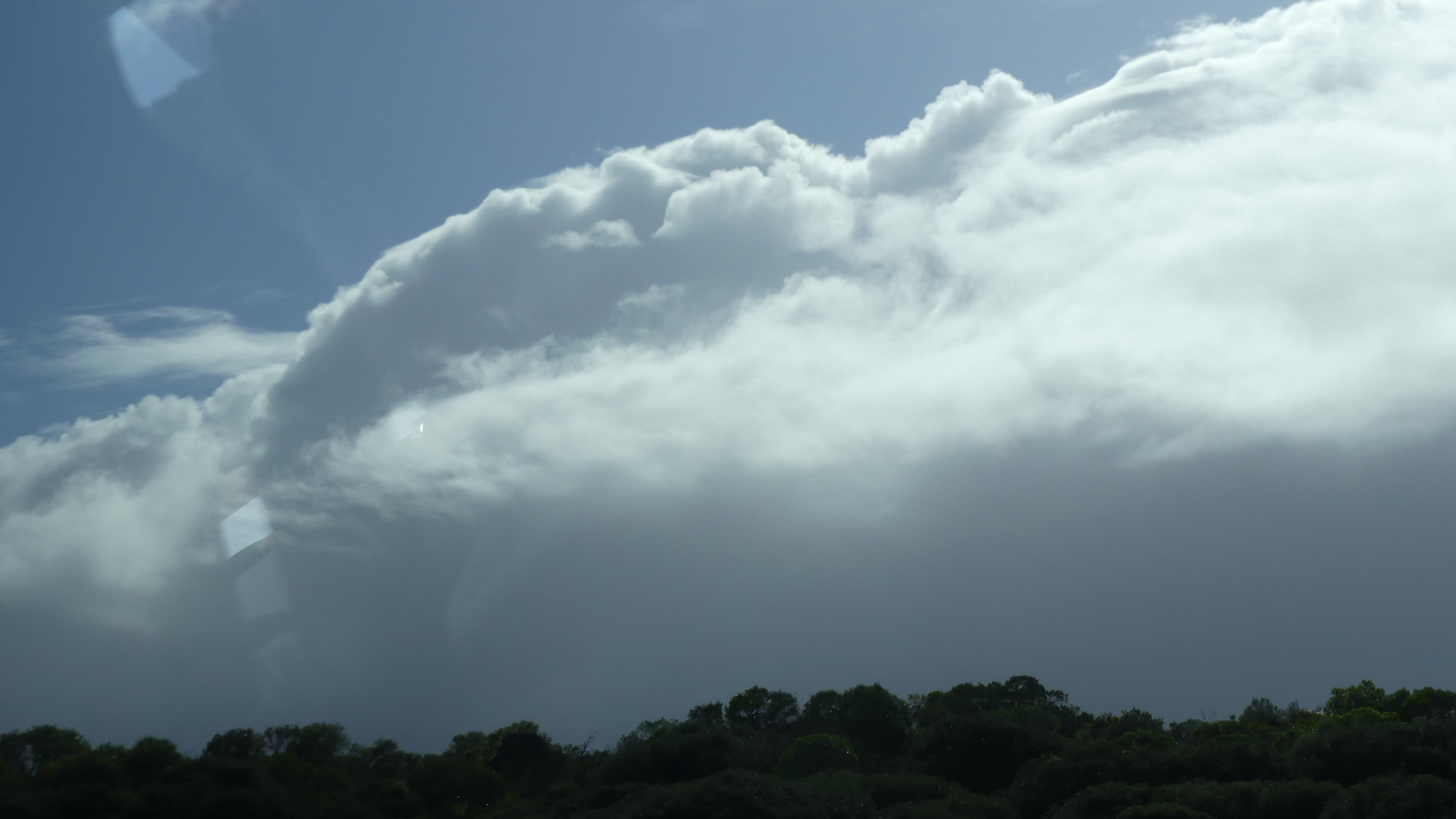
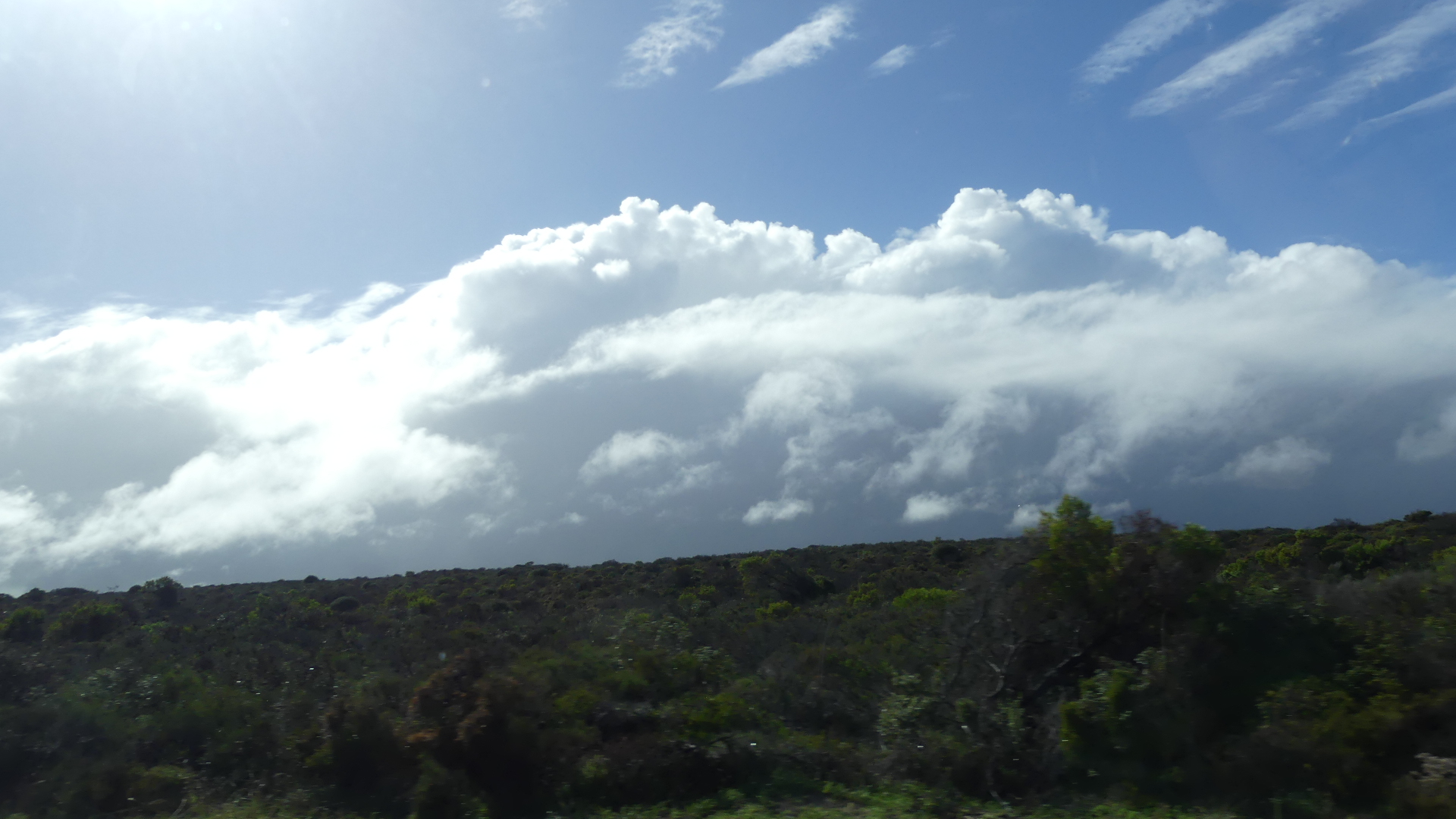
The weather was slightly overcast but the air-con was on and we were sweet. As we came closer to the area around Cervantes the country was flat with scrubby bushes but as we drawing nearer suddenly there were sand hills rolling in across the top of the scrub and to match the sand hills the clouds piled up promising rain at some stage. Below are pictures of the pinnacles. You can walk freely among the pinnacles and it reminds me of walking among headstones in a cemetery.
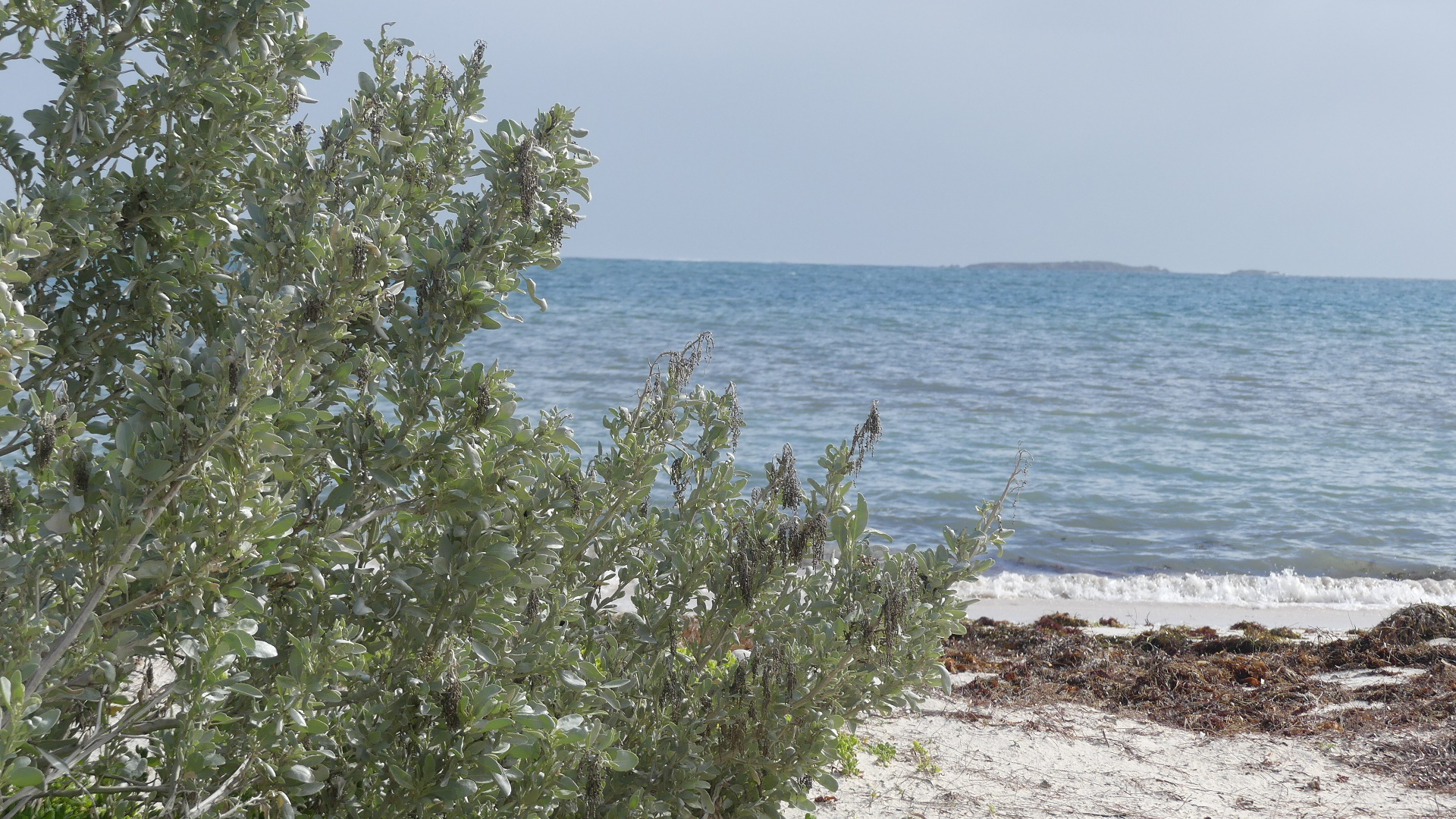
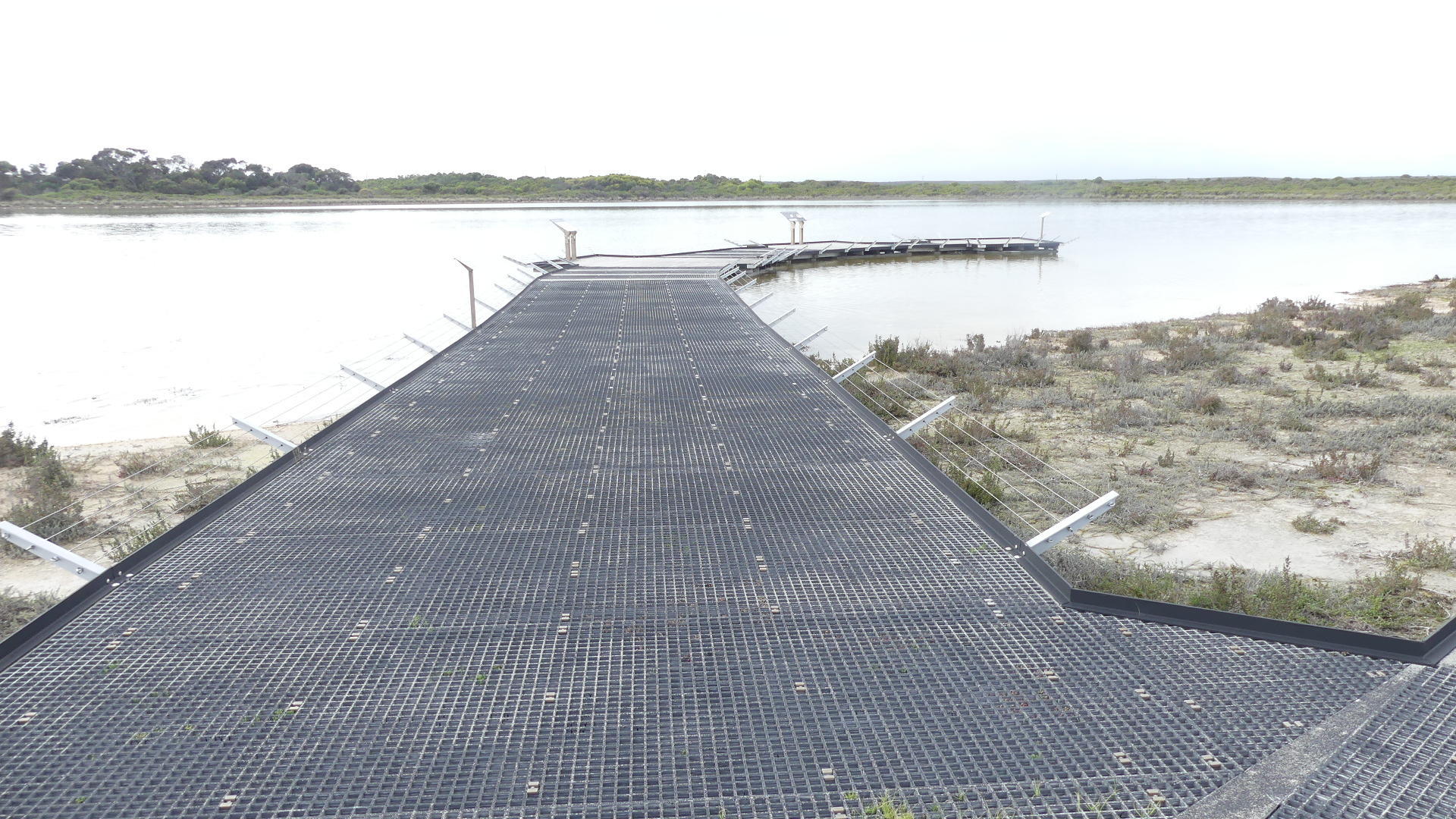
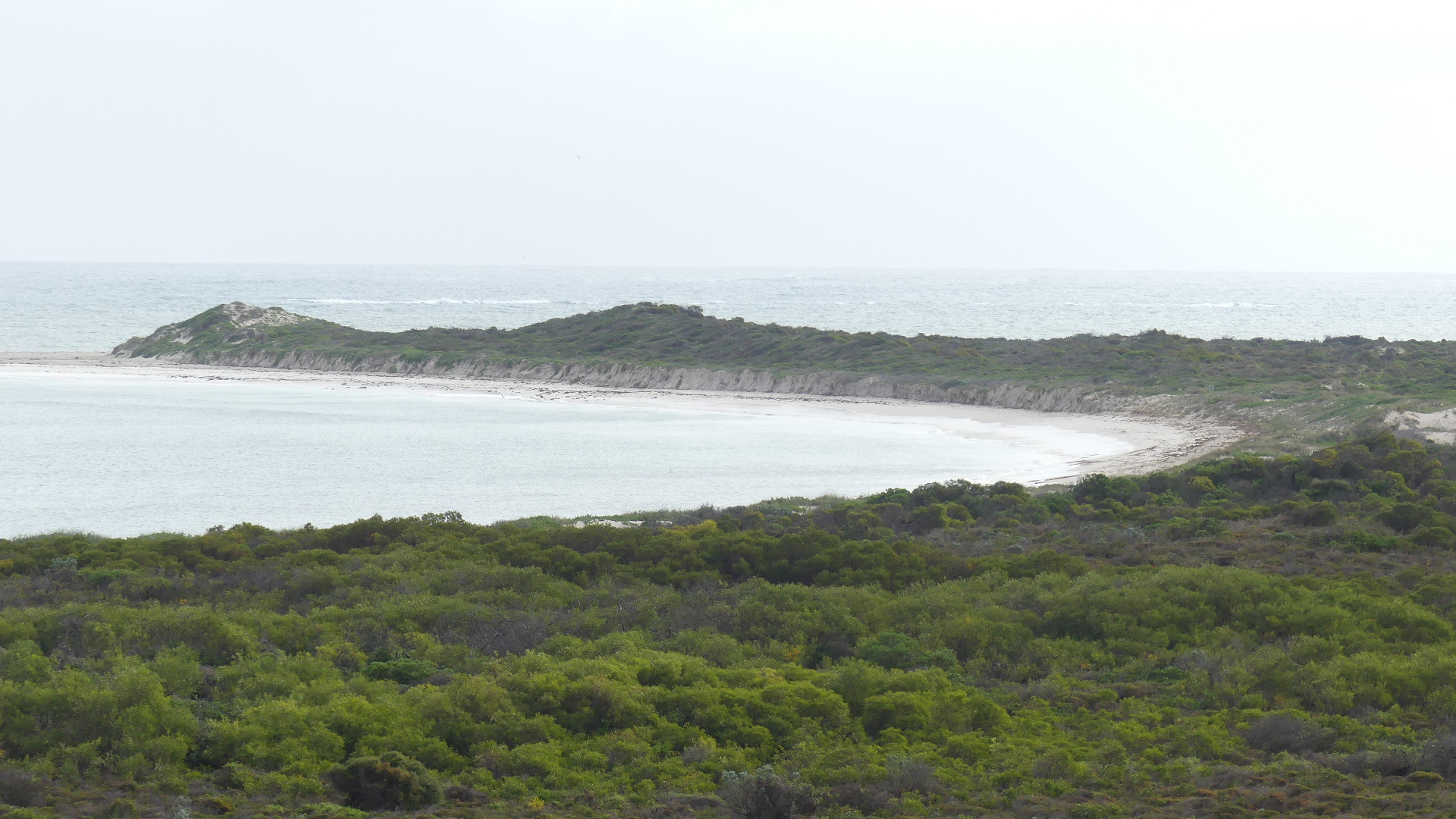
There was a visitor’s centre with an interesting museum on the wildlife and the Aboriginals tales about the origins of the Pinnacles – a bit more interesting than the speculation by the scientists about the creation of the rock formations. Fascinating to wander through and see how the animals and birds used them. Referring to our tour itinerary we decided it was time for the Lobster Shack in Cervantes for lunch. Zdravka had spent hours piecing together our tour making this a relaxing holiday for us in the back seat. Cervantes is named after a ship that was wrecked nearby. The ship, in turn, was named after Miguel de Cervantes, author of Don Quixote. The principal industry in the town is fishing particularly Lobster. The Pinnacles in nearby Nambung National Park and the saline Lake Thetis, which contains stromatolites, supports a small tourism industry which helps out the economy of the area. Firstly we stopped off at a beach and touched the Indian Ocean then into Cervantes and the Lobster Shack.
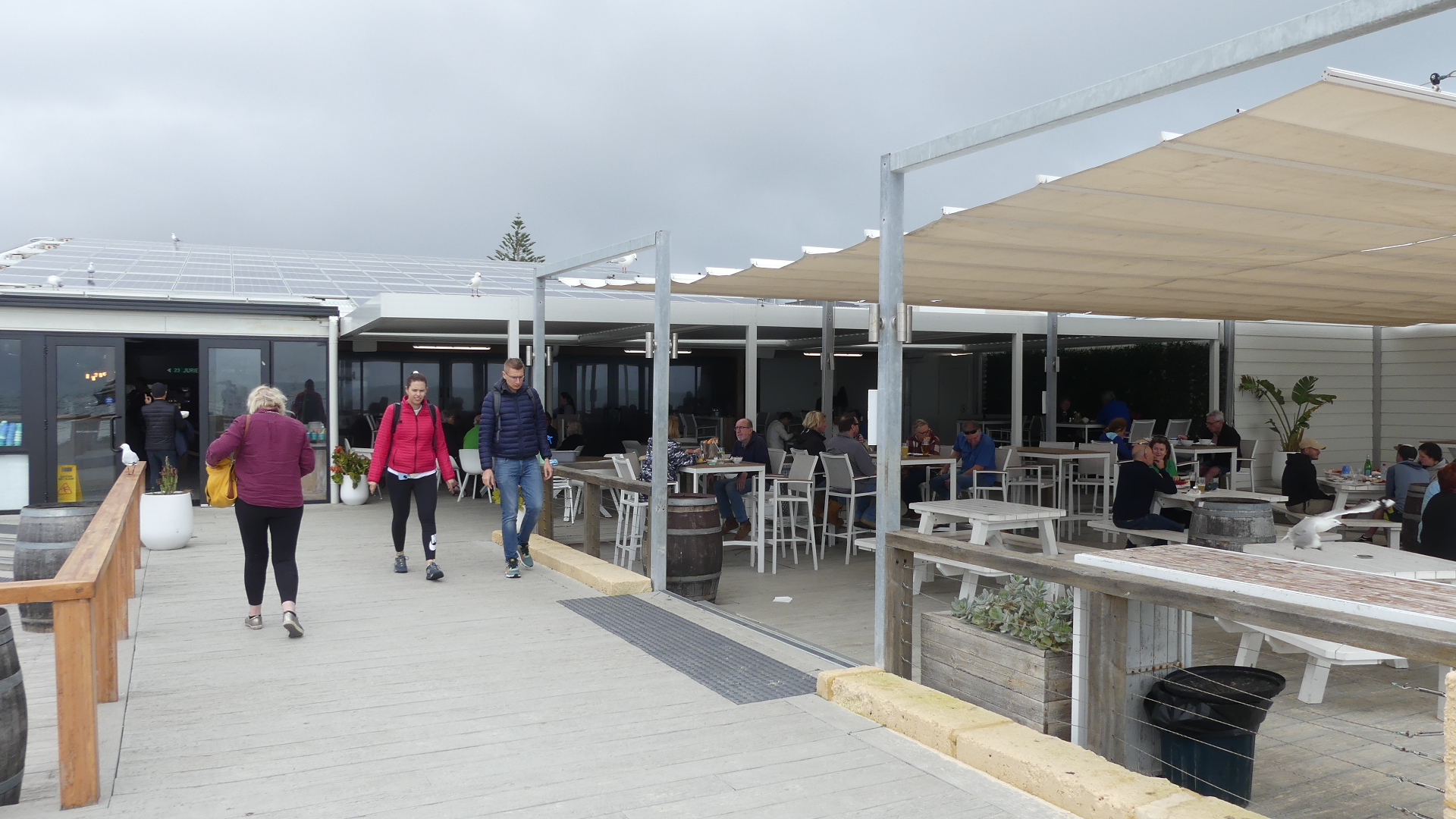
The Lobster shack – watch out for the robbing sea gulls.
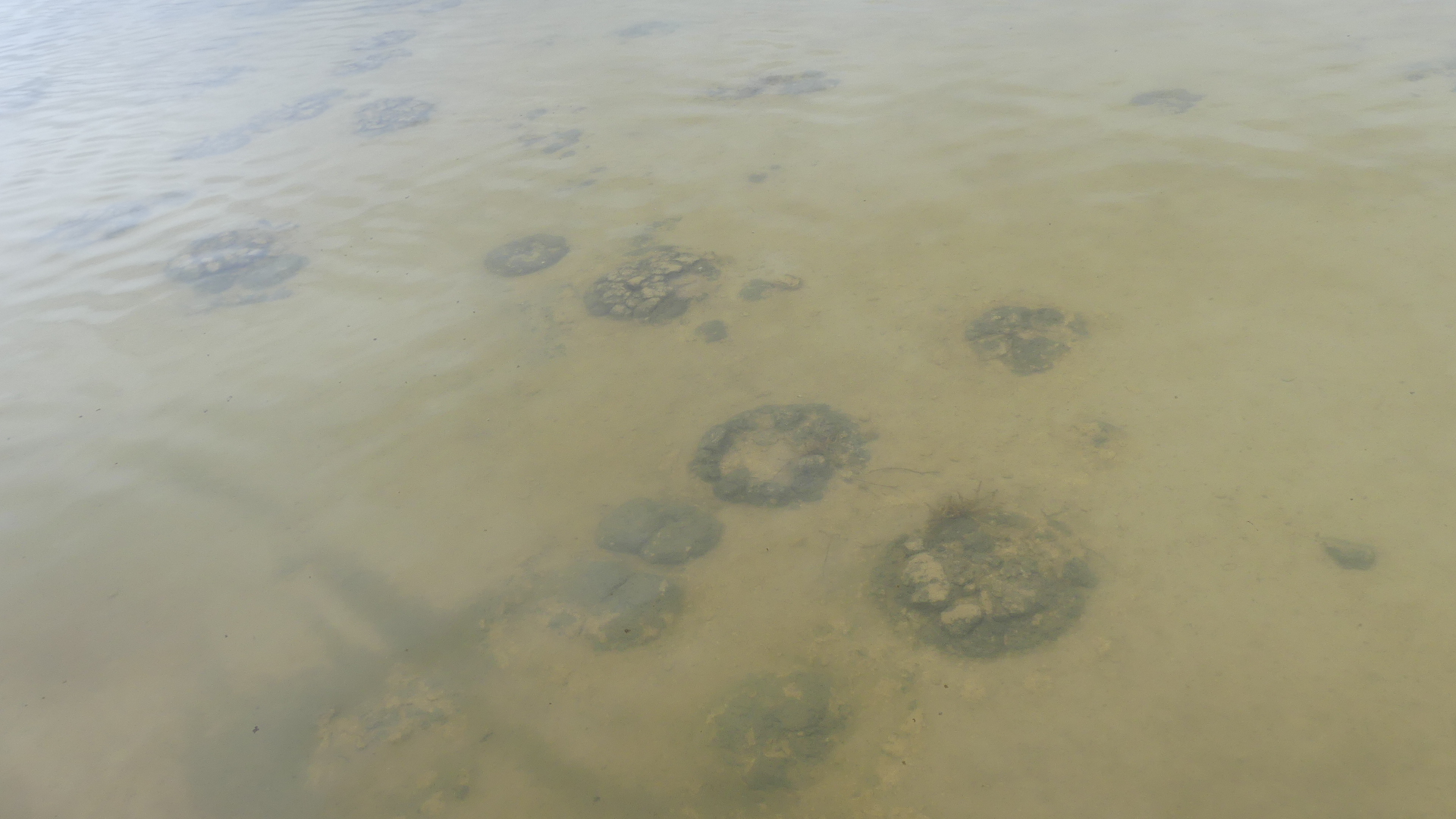
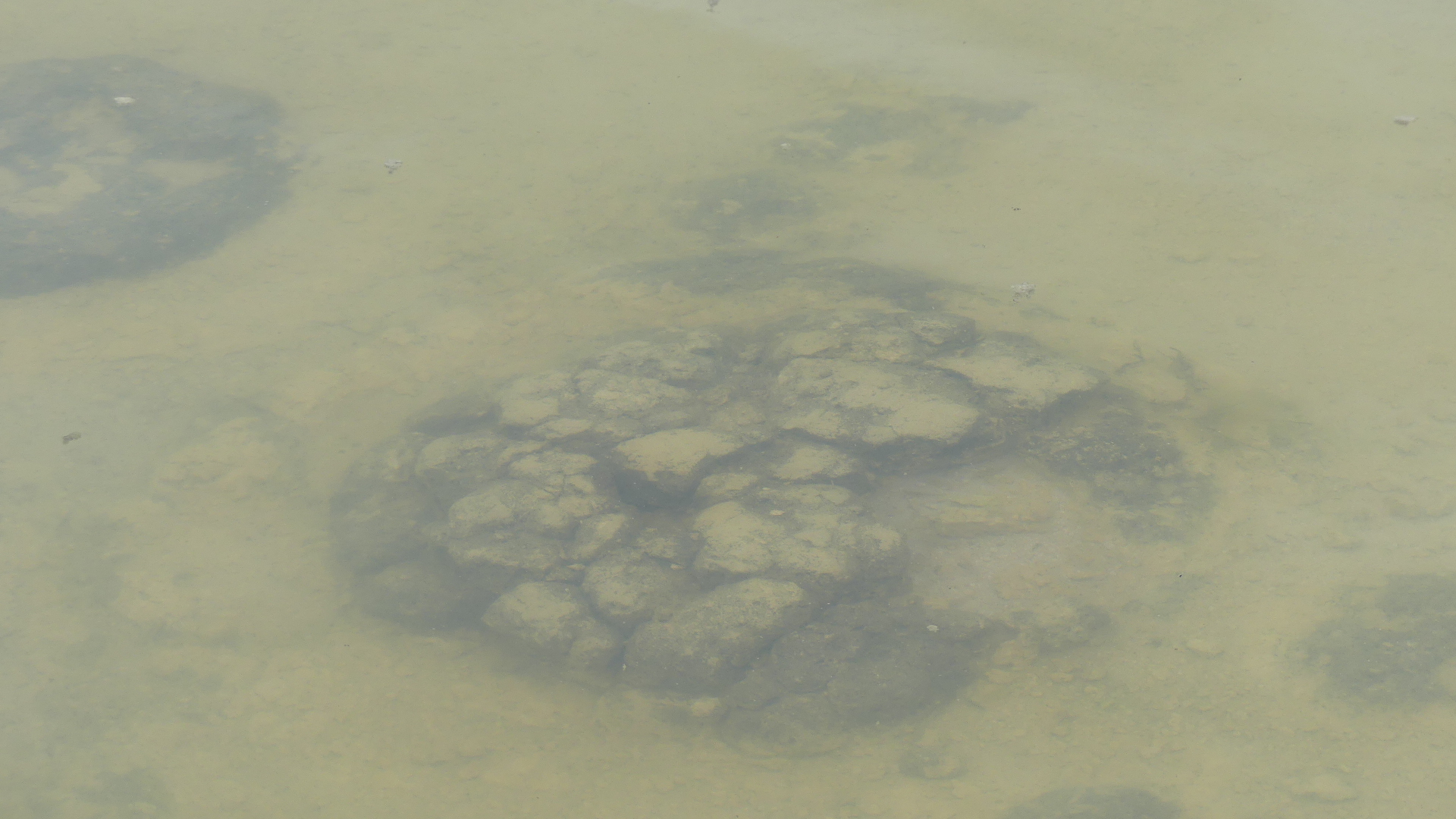
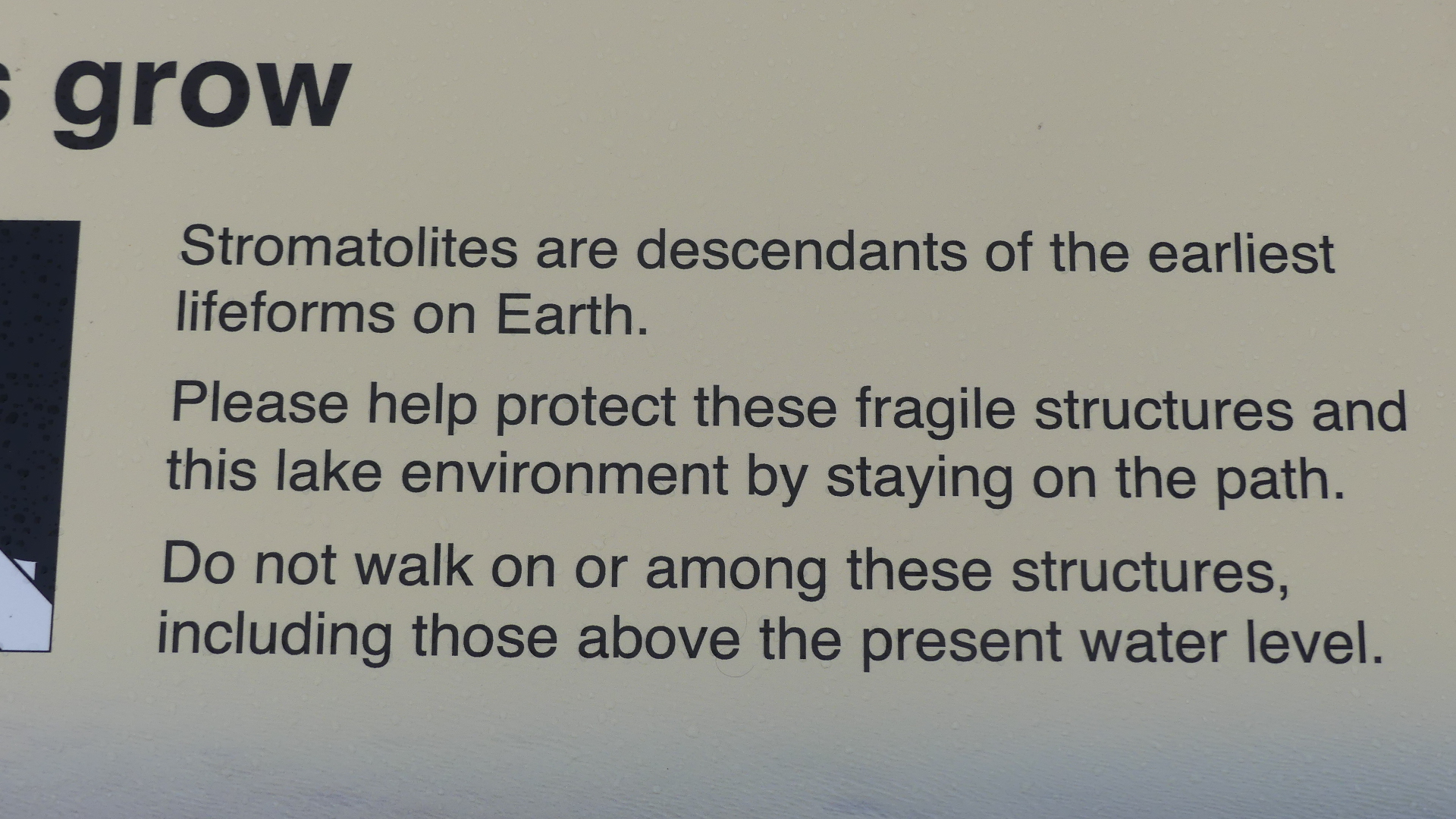
Leaving Cervantes and onto the saline Lake Thetis, which contains stromatolites. “Stromatolites – Greek for ‘layered rock’ – are microbial reefs created by cyanobacteria”. These deposits built up very slowly: a single 1m structure may be 2,000 to 3,000 years old. But the tiny microbes that make up modern Stromatolites are similar to organism that existed 3.5 billion years ago! What’s more, Stromatolites are the reason why we’re alive today! Before cyanobacteria the air was only 1% oxygen. Then, for 2 billion years, photosynthesising Stromatolites pumped oxygen into the oceans (like underwater trees, before trees existed). When the oceans’ waters were saturated, oxygen was released into the air, and with around 20% of oxygen in the air, life was able to flourish and evolve. For context, consider that the Earth itself has been around for 4.5 billion years, and that modern Homo sapiens have only been on Earth for 160,000 years.
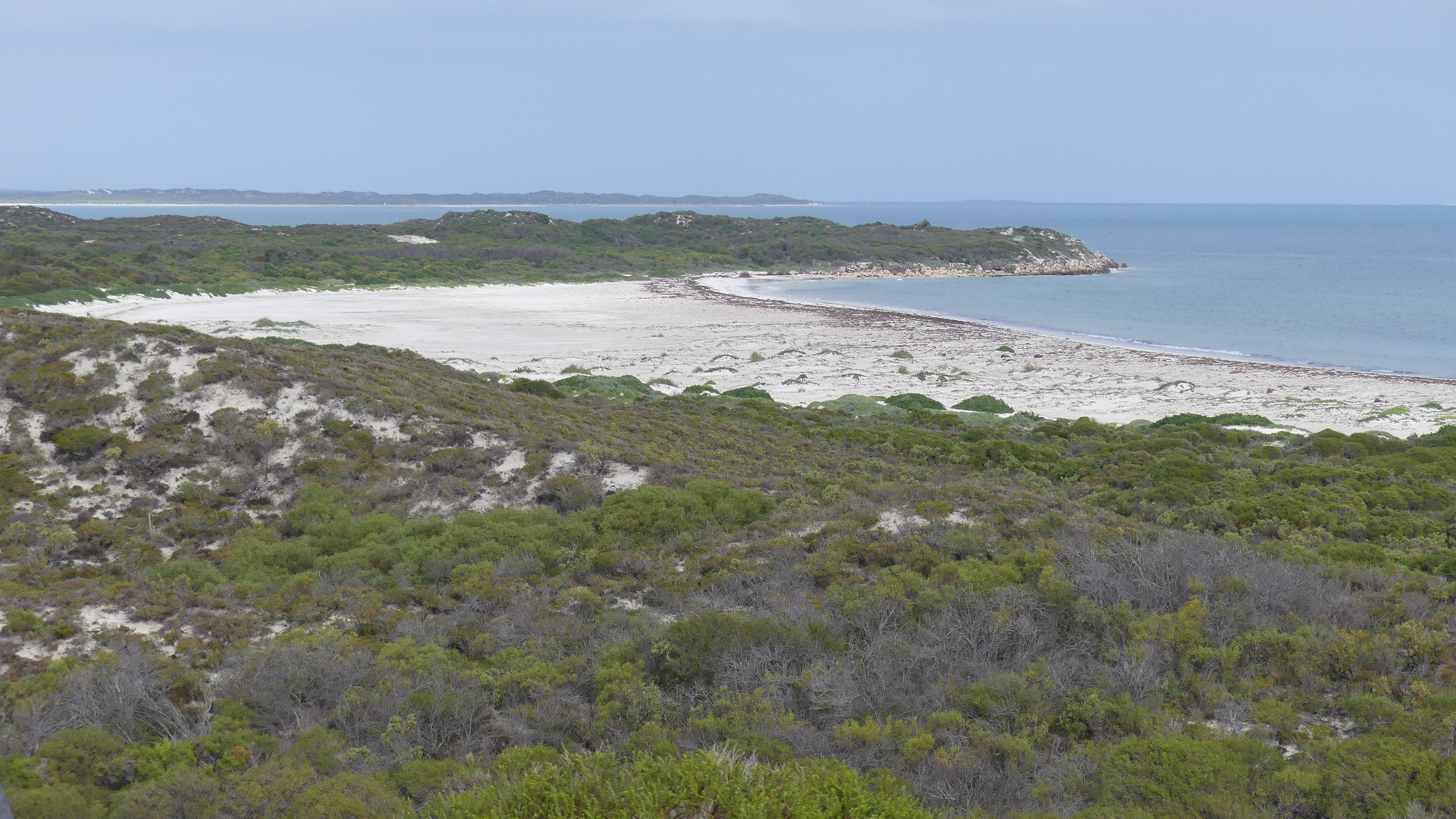
Finally we had to climb this hill and look at the ocean to end our visit to Cervantes.
I may have nodded off on the way home- old people do that.
However it was the end to an enjoyable day. The Pinnacles presented a foreign landscape out of place until we experienced the Stramatolites of Lake Thetis and somehow it makes sense – billions of years have passed and this is the outcome.
We wake with the sunrise and outside the kangaroos are gathering across the road. They stay there until 8.00 am when they will rush across to the back of the Sebel Apartments. No one is there to feed them but that doesn’t deter them. Dale and Zdravka are going to Perth to Kings Park and we are taking a wine tour. We will meet the coach at Guildford opposite the visitors centre.
After breakfast we drove into Guildford and meandered through the streets until we stood in the bus stop awaiting our guide. We were getting concerned when the bus had not arrived at the appointed time. We were on the point of ringing the tour company when we noticed the bus approaching. The driver was some what surprised but called us on board. So the tour began. Our first stop would be Mandoon Estate. I was suspicious that something was wrong and so at Mandoon the driver started investigating our tickets. Lo and behold we were 1 day too early and travelling with a different tour company and our tour commenced tomorrow. My embarrassment would not permit me to continue although that was offered and I could not bring myself to even taste the wine.
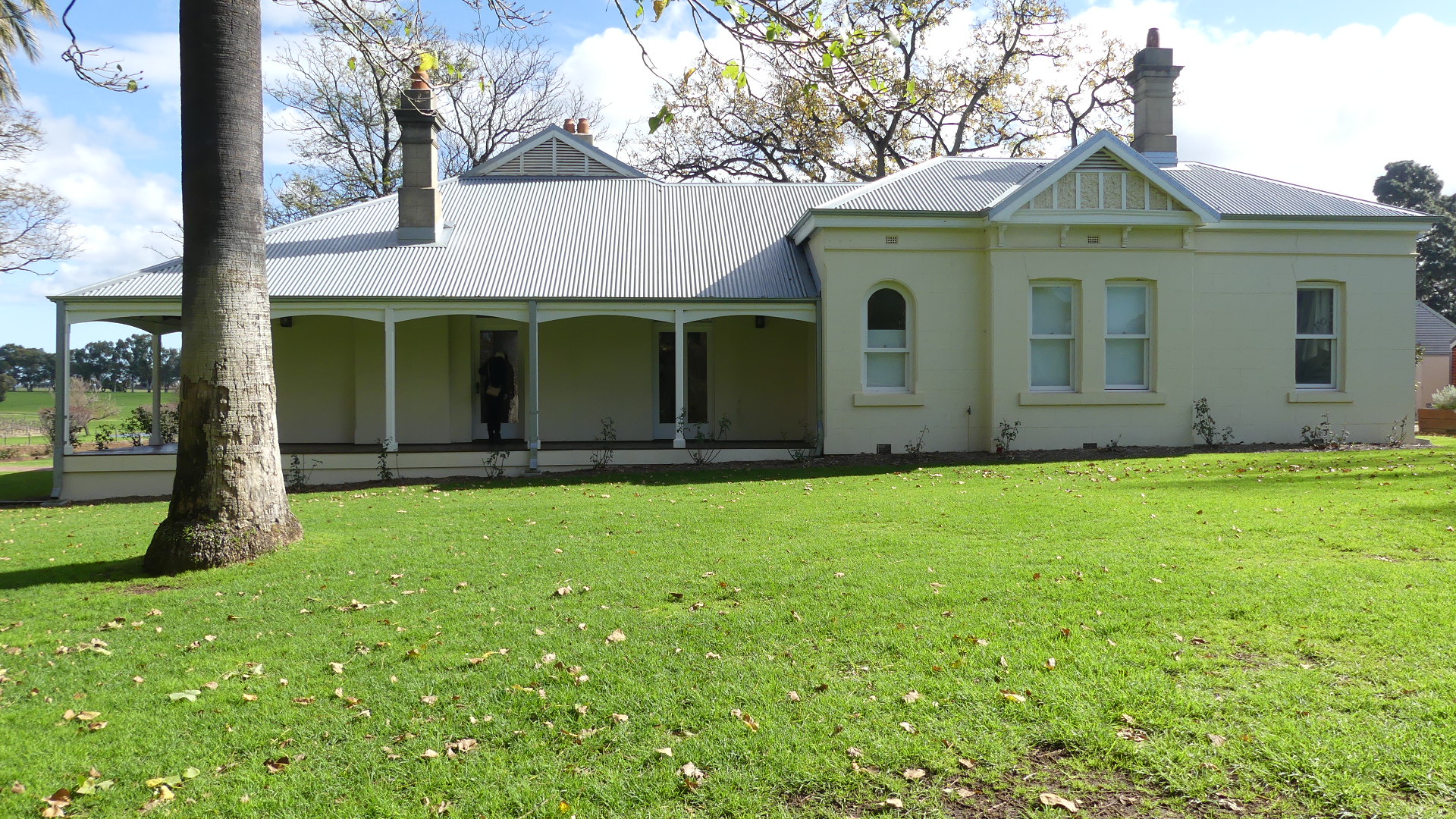
So we walked through the winery and found the early homestead now turned into an arts and crafts gallery with views over the Swan River. From the river bank we watched a pair of cockatoos preparing their nest in a hole in the tree.
Still feeling embarrassed that not only had we joined the wrong tour but we even got the day for our tour wrong, I was inclined to avoid showing my face at Mandoon cellar door. However adjoining Mandoon is Sandalford Wines cellar door – nothing too hold me back we came into the cellar door via the tradesman’s entrance. Sandalford is one of the biggest wine producers in the Valley. As we walked through the vineyards we noticed these white flowers everywhere but no one seemed certain if they had a purpose other than looking pretty. We settled down to some serious wine tasting
After tasting the wines at Sandalford I still could not bring myself to do any wine tasting at Mandoon so we caught an Uber (remember our car is back in Guildford) back to Guildford and strolled the old town a little further. We had planned to visit a number of different places in the Valley with our traveling companions so we could not explore too far. After lunch we headed back to Sebel in the Vines and made plans for dinner.
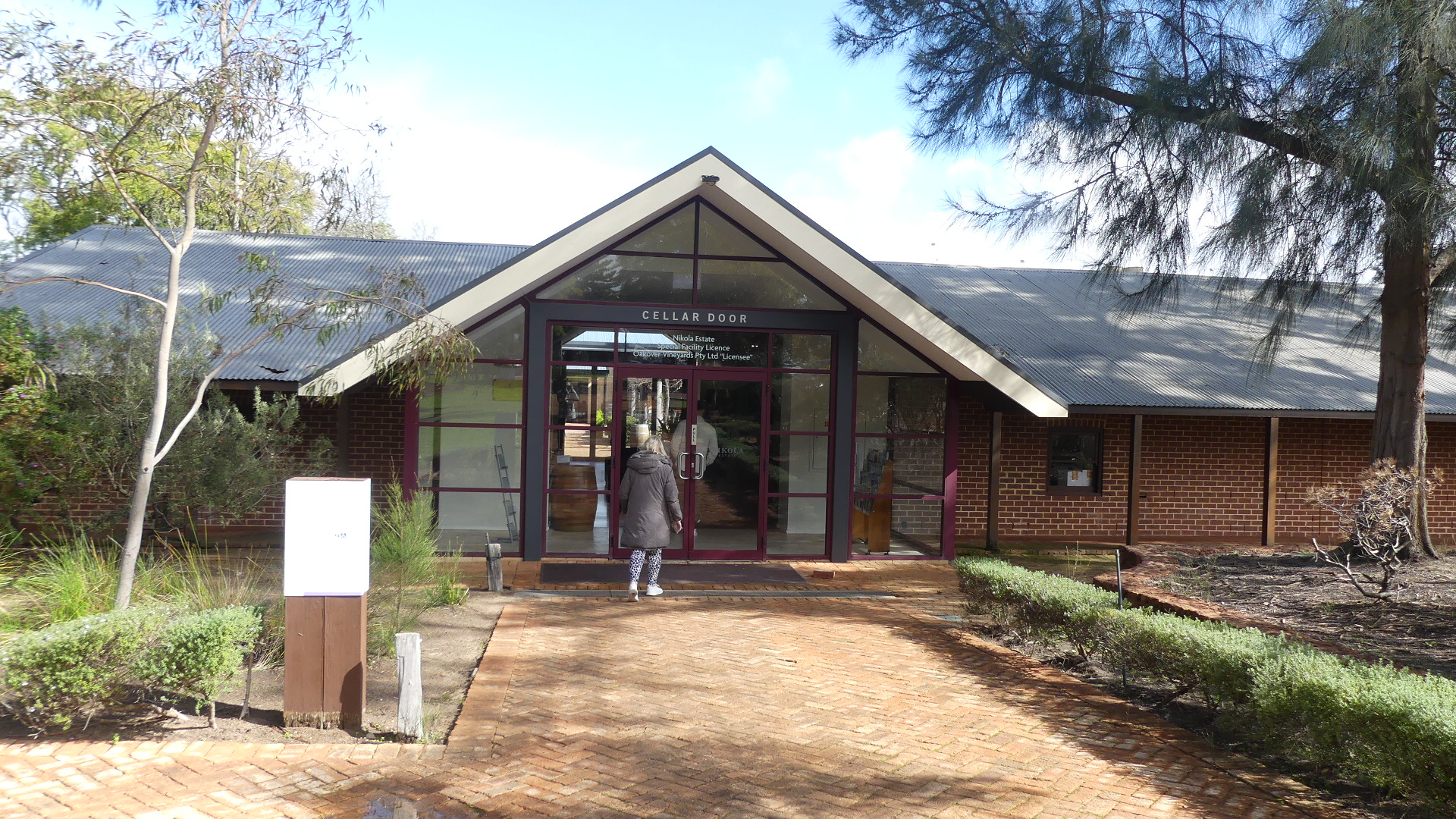
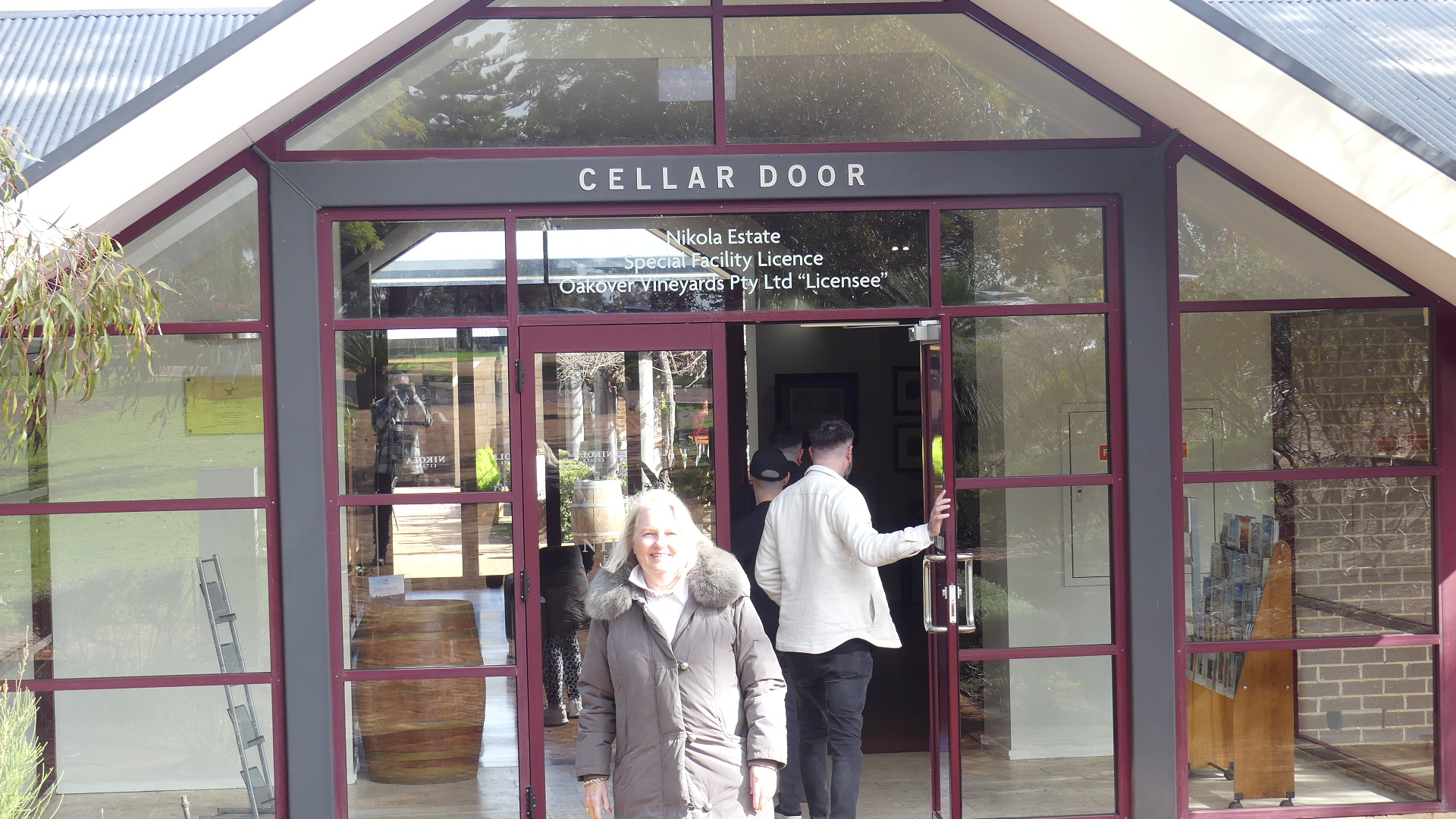
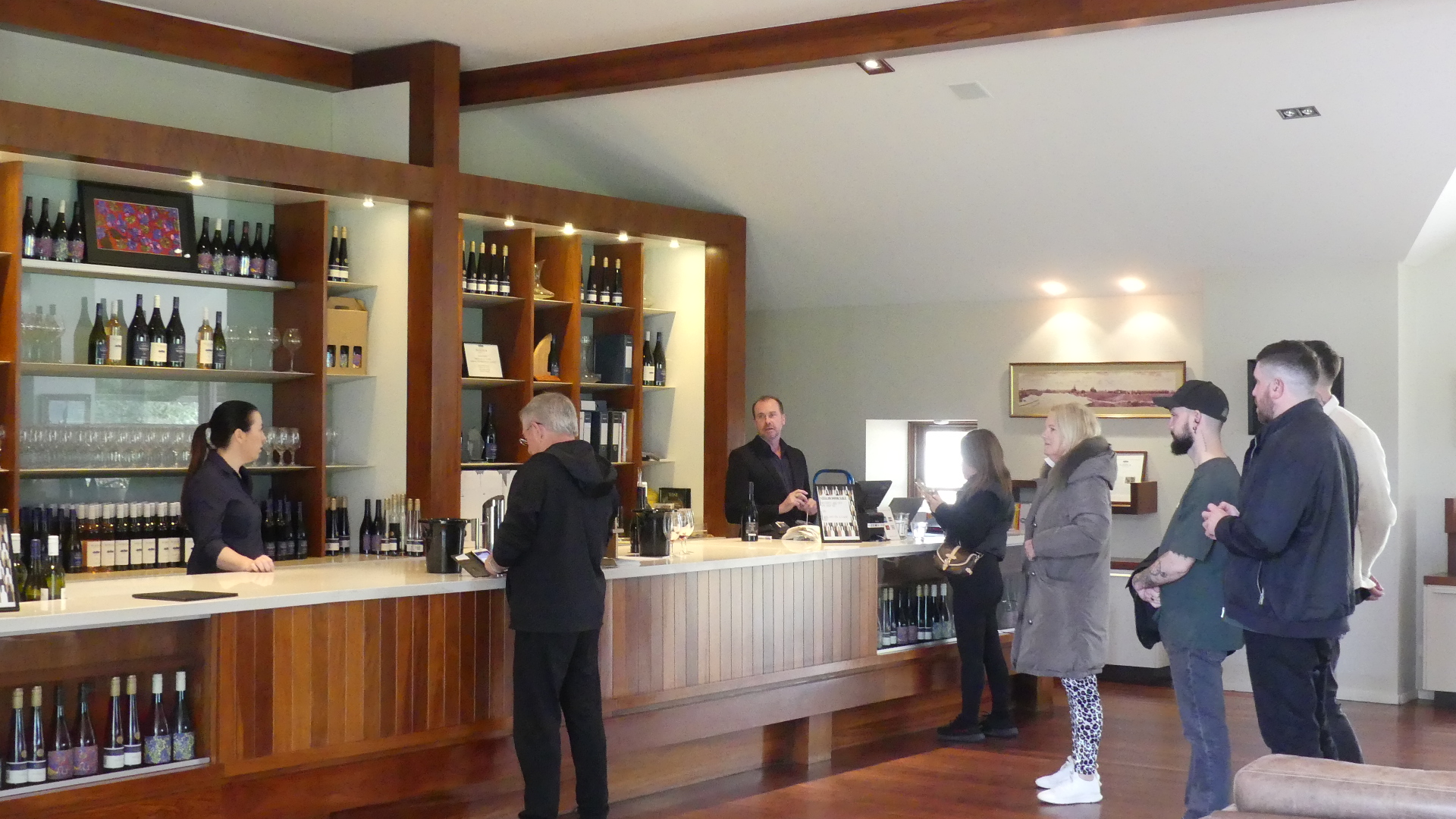
The following morning we repeated our trip to Guildford and caught the correct tour bus. As we boarded Kerry recounted yesterday’s adventure. This introduction broke the ice with the other passengers – 3 gay guys who admitted they were a 3 some very quickly into the trip. First stop was Nikola Estate (formerly Houghtons Winery) and the largest vineyard in WA. Very elegant and extensive grounds – the driver gossiped that the owners had a big event here and the vineyard grounds were jammed packed so much so that people could not leave the vineyard until after midnight due to the traffic jam created as people tried to leave. Well there was no trouble like that today. The place was empty so the 5 of us were sat down at the big table and tried their wines.
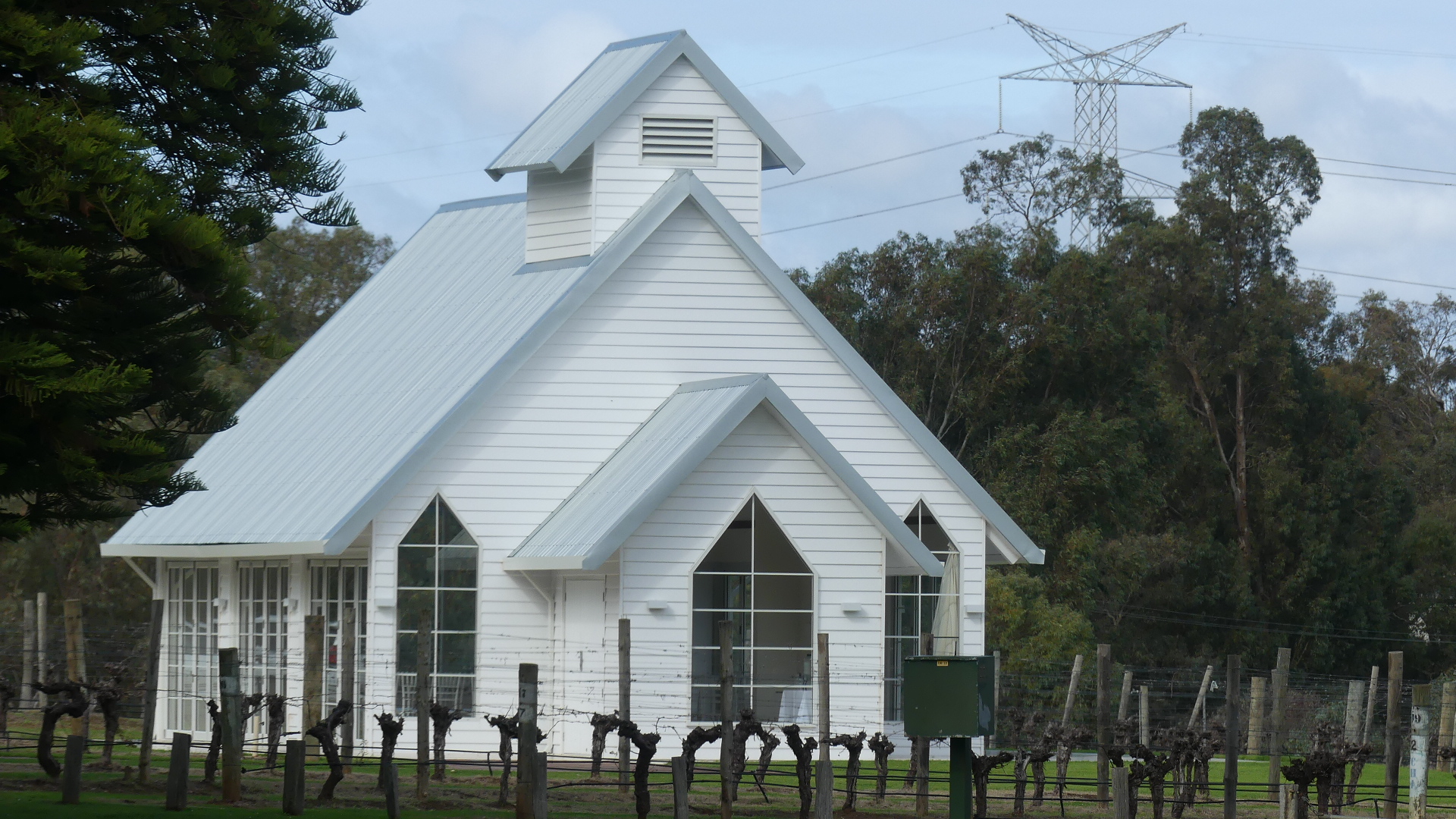
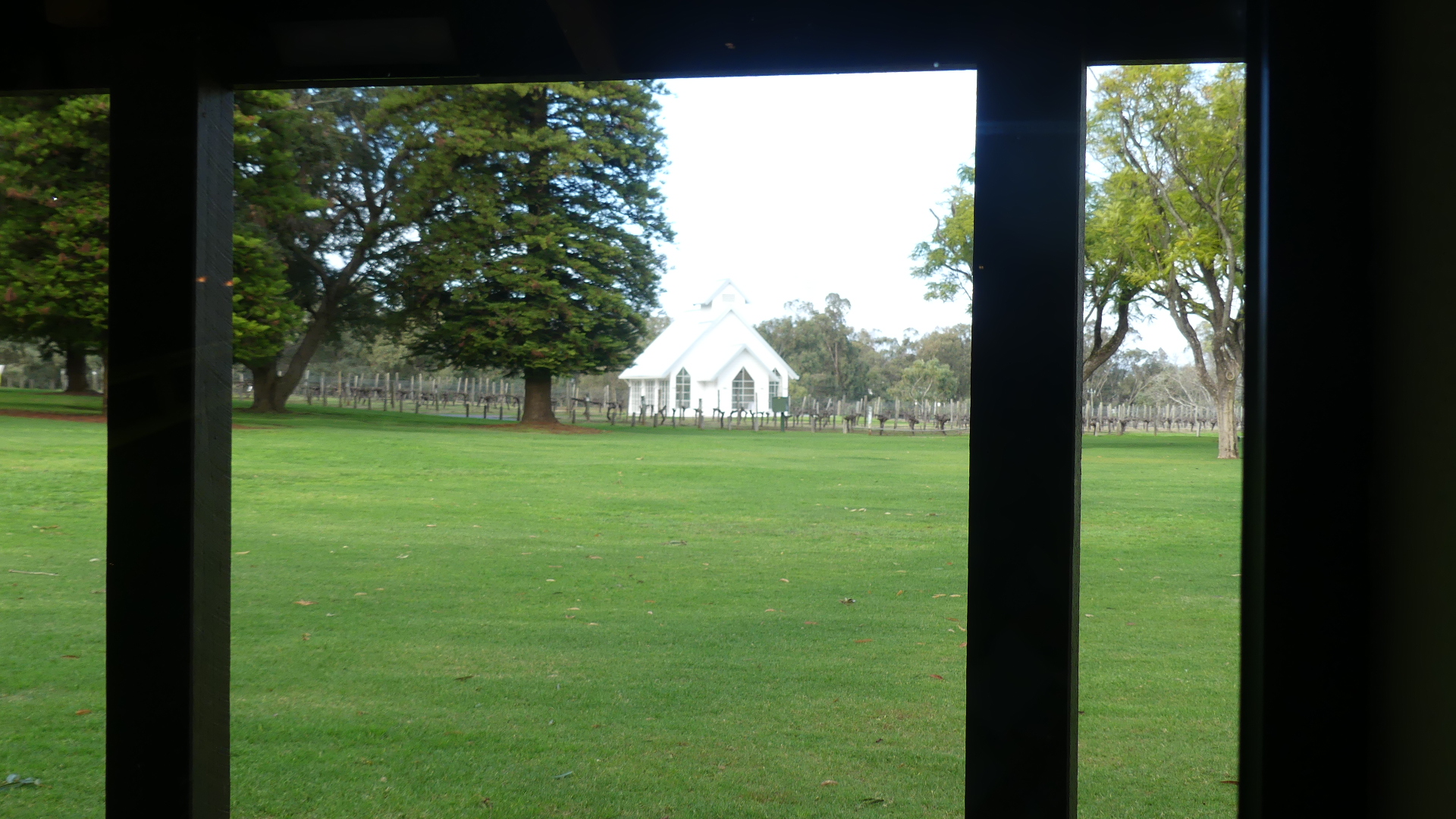
Sitting at the table I noticed they have a chapel for weddings. Although the cellar door and grounds were impressive this was not what we had come looking for. Here is a glimpse of the chapel from our tasting window.
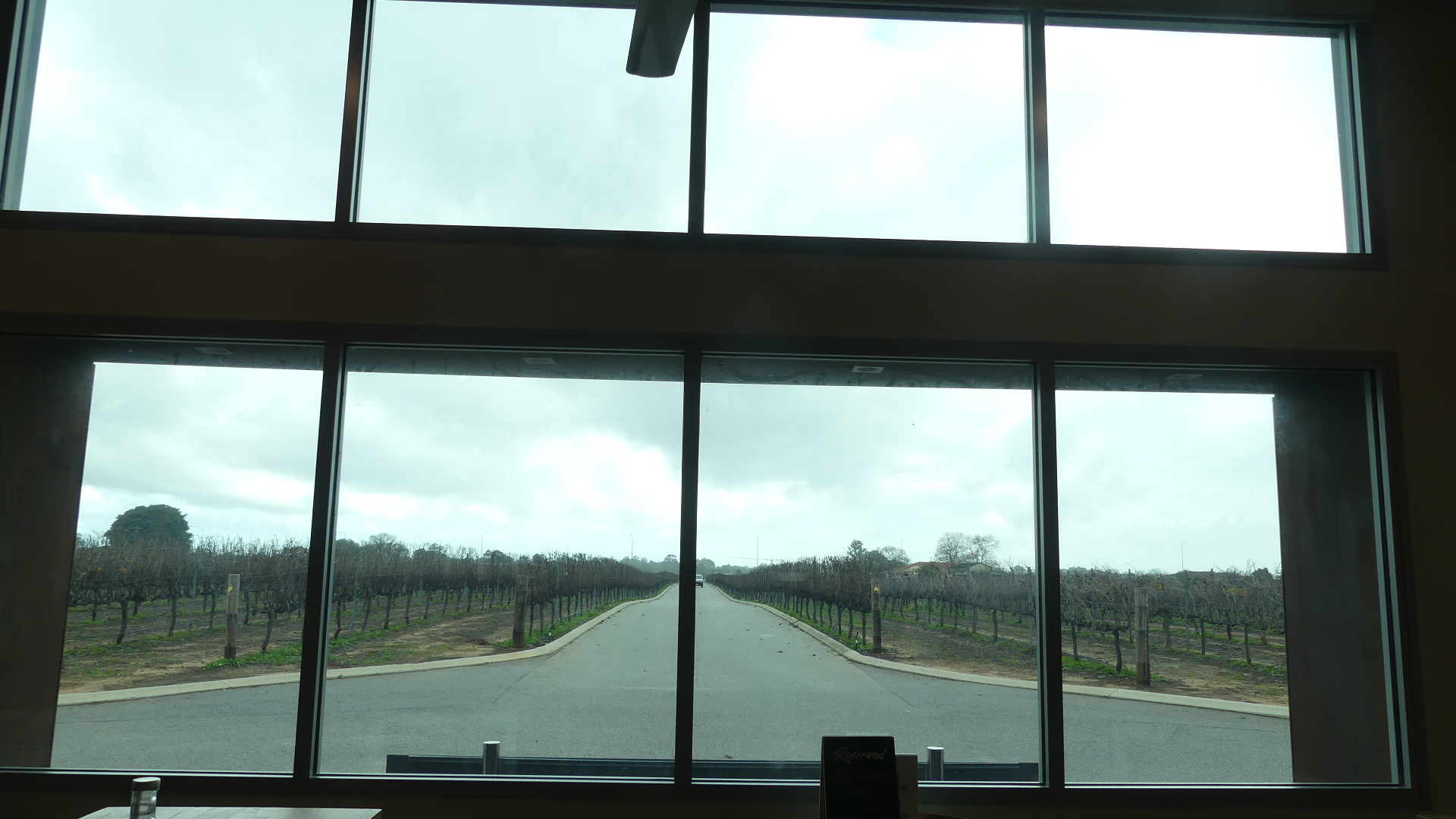
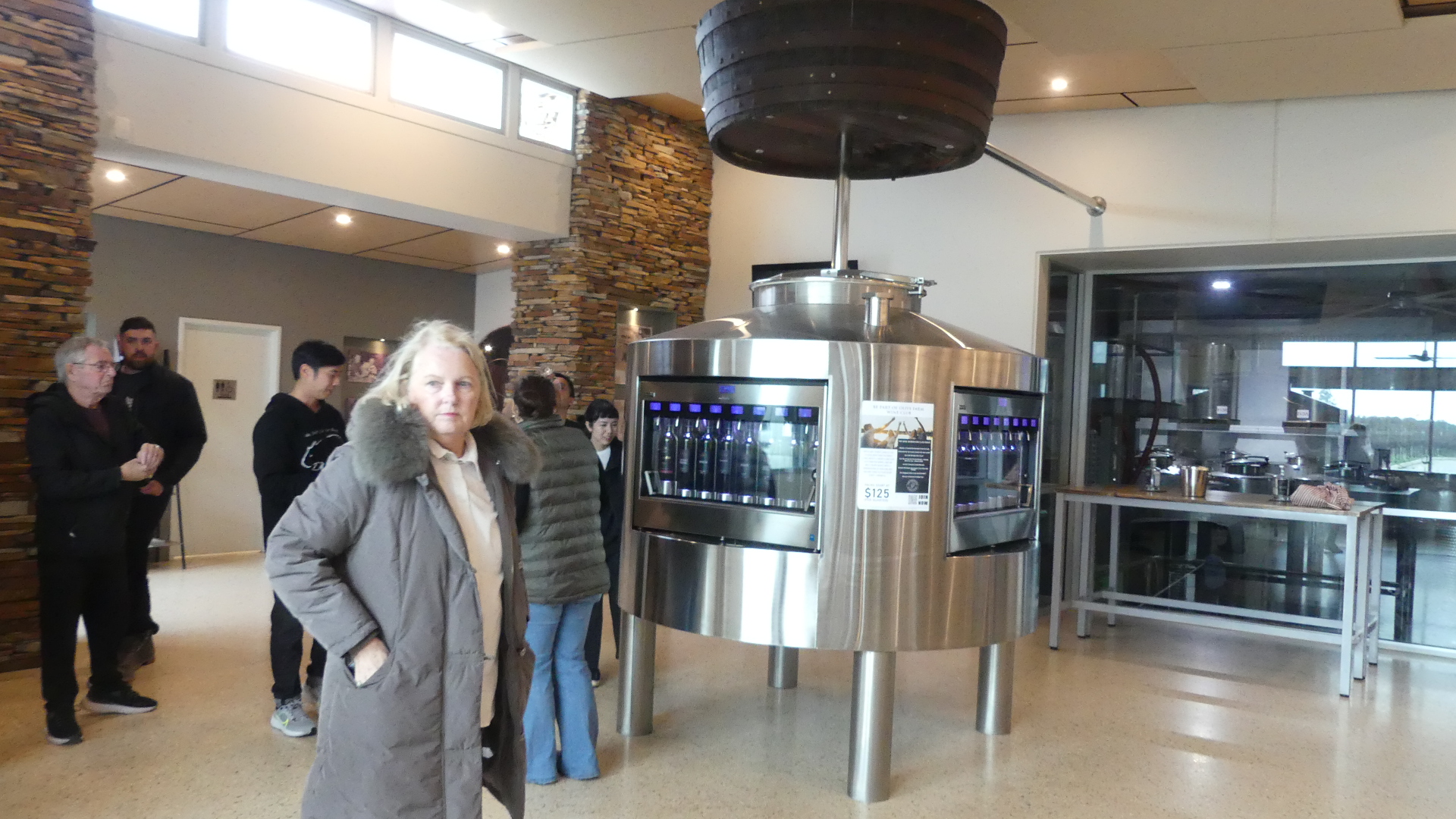
Next we moved onto Olive Farm Wines. Yes a combination small winery which was of more interest to us particularly its wine dispenser which you can see below. The drive into the vineyard can be observed from the wine tasting table with the vineyard either side of the driveway. Thus far each vineyard had some different style or grape variety in addition to traditional grape varieties but this dispenser was something to behold – there were 30+ bottles on tap for a tasting at a price. The cellar door was quite busy but I expect it was tours like us in a small winery that made it seem very full. I liked their Shiraz (I know I’m boring) and left with bottle in hand. Onto the next one – Lamont’s Winery.
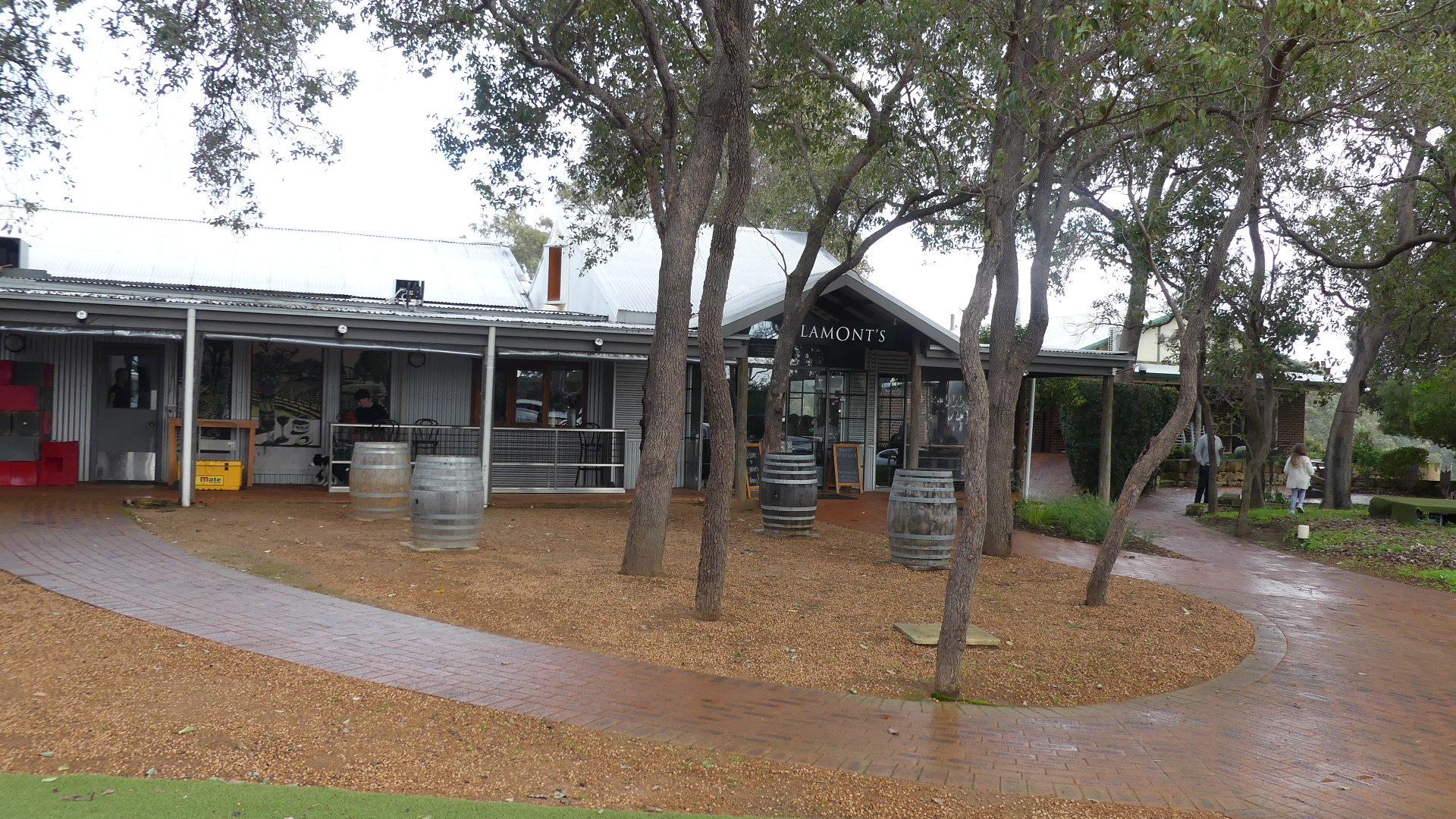
Lamont’s did not impress as the other two cellar doors did, but inside was a different story. Lamont’s appeared lost in the bush whereas the other two were prominent on a major road. Of course I had to have an incident with my camera – the battery was flat and I did not bring my backup so the picture below is all I can offer for Lamont’s. Inside was a busy cafe, and the maturing vats and wine tasting area. Our host who’s name is lost to me now (I think he was married to one of the daughters of the Lamont family based on his apparent level of authority but not directly part of the family based on his “experience” in the industry related to us during the tasting). The gay guys turned out to be easy going but inexperienced travelers and wine connoisseurs and our host played up to them. He gathered their choice in wines told them it was cheap and nasty gave them the bottle and turned to Kerry and me asking what we would like to taste. Kerry suggested we get straight to the good stuff in their range of Shiraz and she was saving herself for the gin distillery. Our host lined up 3 bottles of Shiraz each of a different vintage and went through with each wine in an indepth tasting and of course I bought the one I liked – ouch was it that much? Read more about the winery at https://lamonts.com.au/swan-valley-winery/.
As we left he threw in a packet of olives to have with the wine which was generous of him and they were enjoyed by Dale and Zdravka but not with my wine.
Next stop was the gin distillery Sin Gin. Sin Gin Distillery is a Nano distillery creating Perth Pink, Original Sin & the Seven Deadly Sins range of gins in the Swan Valley. Sin Gin is named after Kate Sinfield who brought ideas of gin with her from England to Australia in the 1980’s. Mark and Kate work closely with products from the local Western Australian environment to handcraft unique, tasty and fun gins. Here is a link to their website – https://singindistillery.com.au/collections/the-sin-gin-collections. With my camera battery flat there are no photos. We made our way home to share stories and our olives with Dale and Zdravka. Tomorrow I will need to cut more wood for the fire – very chilly nights.






























































































































 glendon1954