The Retirees go Abroad – Prague and the Czech Republic – Here we found Paradise

The weather has taken a definite turn for the hottest. Many of the Czechs we speak to say that this is their hottest and driest summer. Friday, after recovering from our tour of Terezin we decided we would walk to Prague Castle early in the morning for breakfast. This is the best time to walk the streets of Prague – when the bloody tourists are still in bed. Here are some photos of the walk – the view to another bridge, the castle on the hill, the statue that grants you your wish 6 months later (see the bright spots – that is where people rub with their left hand whilst making their wish), the penguins, some chestnuts on a tree by the bridge, and a peculiar statue which includes a disinterested Turk on the left hand side.

This slideshow requires JavaScript.

Through the gatehouse onto another square (that is a convent you can see in the background), then these modern hitching rails, a memorial to the students killed in riots against the Soviets invasion in 1948 and then we found Paradise. It could be the buffet breakfast or it could be the Gardens of Paradise adjoining the castle. We then went for a walk in the King’s vineyard. Here are the photos.

This slideshow requires JavaScript.

The Czech Republic has a well recorded history. The lands formerly called Bohemia, Moravia and Lower Silesia, were settled by Celtic tribes then by Germanic tribes and then by Western Slavic tribes. According to a popular myth, the Slavic settlers come from Forefather Čech who settled at Říp Mountain and from this comes the name Czech Republic. Ethnic Czechs were called Bohemians in English until the early 20th century, referring to the late Iron Age tribe of Celtic Boii and their land Bohemia.

The lands were ruled by a King as the Holy Roman Empire for many hundreds of years until the last Wenceslas died without issue and his sister took over but married a Prince of Luxembourg, the most successful and influential of all Czech kings Charles IV, who also became the Holy Roman Emperor. After Charles the Hapsburgs came to power breaking up the Holy Roman Empire and creating the Austro-Hungarian Empire. Bohemia, Moravia and Silesia became part of that empire for the next 400 years until Ferdinand was shot and WW1 broke out. After WW1 Czechoslovakia was created with the help of Woodrow Wilson of the USA until 1939 when the Germans invaded then the Russians in 1948 until the “velvet revolution” in 1989 when Czechoslovakia was recreated only to be peaceably dissolved to become the Czech Republic and Slovakia in 1993.

We had read about the Marionette Theatre of Prague and this night we were determined to see the performance of Mozart’s Don Giovanni. Dinner was at the U Prince Restaurant just beside the Old Town Square between Coyotes and Hard Rock Café. I think we made the right choice for us. We enjoyed it so much we returned for coffee and dessert.

The Marionettes was something to behold. The serious performance of Don Giovanni performed by Marionettes and their handlers left us uncertain as to whether it was enjoyed or stared at in amazement. From the orchestra leader who became bored then drunk throughout the performance to the handler who got impatient with the closing duet and tried to stop the show it was unique in all aspects. It claims to have been running for 15 years.

← Back

Thank you for your response. ✨

Warning
Warning
Warning
Warning

Warning.


The Retirees go Abroad – Prague and the Czech Republic – Terezin Ghetto

Our tour ends at the castle so we make our way to a restaurant for lunch then we pick up the tour to Terezin Internment camp. It is advertised as a “Concentration Camp” but in fact it was part of the chain but not a place where they gassed masses of people. The Nazi regime planned to exterminate the Jews of Europe and to gather them together they prepared Jewish settlements (Ghettos) and gave them autonomy and then slowly they were transferred to internment camps like Terezin and finally to the true Concentration camps like Auschwitz, Treblinka and Dachau. Don’t get me wrong Terezin (Little fort) was no resort and Terezin Ghetto (autonomous village) was not a picnic either.

Terezin was built as a fort to defend the borders against Prussian invaders and when they did not invade it became a prison and when the Nazis declared the Protectorate and took control of the country it became part of the final solution: holding Jews and political prisoners for transportation. When arriving at the fort you are met by Christian and Jewish graves but these are the people who died there because of the conditions not executions. Some executions by firing squad and hanging did take place but not to the extent of true Concentration camps. Here is what Wikipedia says;

“Theresienstadt concentration camp, also referred to as Theresienstadt Ghetto,was established by the SS during World War II in the fortress and garrison city of Terezín (German name Theresienstadt), located in what is now the Czech Republic. During World War II it served as a Nazi concentration camp staffed by German Nazi guards.

Tens of thousands of people died there, some killed outright and others dying from malnutrition and disease. More than 150,000 other persons (including tens of thousands of children) were held there for months or years, before being sent by rail transports to their deaths at Treblinka and Auschwitz extermination camps in occupied Poland, as well as to smaller camps elsewhere.”

The entrance and the graveyard.

The gate to the prison and the prison yards beyond, the barracks and the solitary confinement cells, the delousing room and the shower. From 1914 until 1918,Gavrilo Princip was imprisoned here, after his conviction for the assassination of Archduke Franz Ferdinand of Austria and his wife on June 28, 1914, a catalyst for World War I. Princip died in Cell Number 1 (photo below) from tuberculosis on April 28, 1918.

This slideshow requires JavaScript.

Then we came to the mortuary rooms between which was an entrance to a tunnel under the fort used for defensive purposes and closed during the Nazi occupation.

This slideshow requires JavaScript.

At the end of the tunnel was the wall used by the firing squad and the gallows. In the yard was this monument to the people who died of starvation and disease. Mass graves were found containing the bodies of executed people and there is a monument to them also. The women’s quarters had the mistaken appearance of being more comfortable (natural light and two toilets) but they held 600 hundred women in the cell pictured.

We then travelled to Terezin Ghetto which looks rather pleasant today but was every bit a torture camp as those with barb wire and dogs. We went to the crematorium and the graves around it. A Russian Jew donated this stone for the memorial as a symbol of oppression. Many of the graves had pebbles laid upon them (even the monument had them). Jewish people leave these tokens when they visit the grave. We then went back into the village to the museum of the ten thousand children who were imprisoned there, died there or were eventually transported to extermination centres. It was too sad for words and whilst we were both interested and we were extremely glad to get out.

This slideshow requires JavaScript.

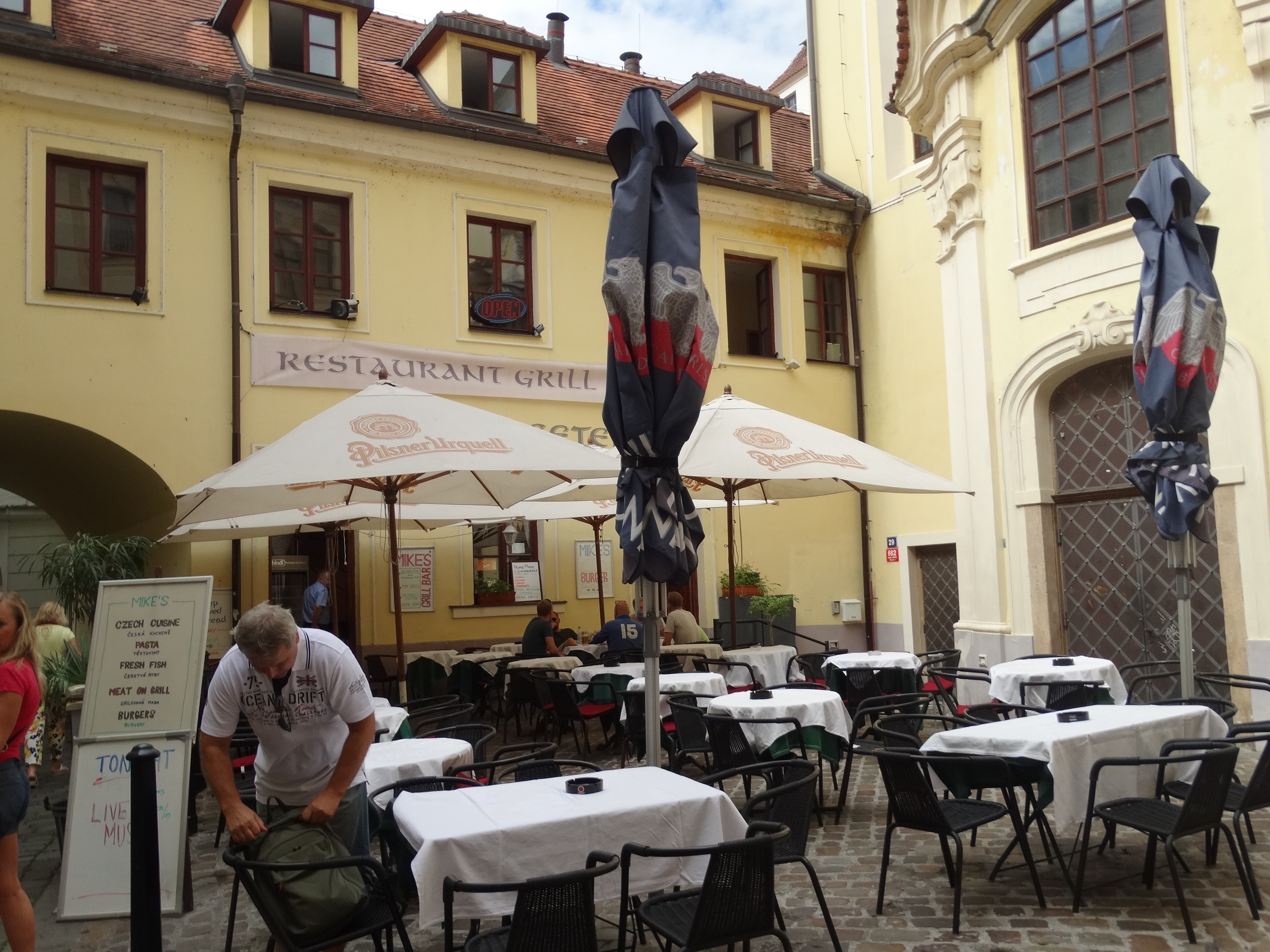
Dinner that night was something special. In the old town, down an alley and beside what appeared to be an abandoned church, we found Mikes. Despite the name it is a traditional Czech pub serving Czech beer in big steins and traditional Czech food. Throughout the evening where were entertained by a musical trio; double bass accordion and violin. Magical moments to be remembered. No, no pictures, not at the table please.

I did gain a photo of Mikes the next day.

DSC07738

← Back

Thank you for your response. ✨

Warning
Warning
Warning
Warning

Warning.

The Retirees go Abroad – Prague and the Czech Republic – Meet the Worrells

Ivor and Shanelle arrived this afternoon from Vienna. We met out the front of the Apartments as though we were meeting at Carindale Shopping Centre and that we had done so recently – last time we met was probably 18 months ago. After settling in we set off to show them the sights. Our apartment is in Wenceslas Square and is central for all the things that Prague offers. So we walked to the main square to view the astronomical clock and its hourly show along with the myriad of other tourists who turn up from everywhere. Whilst visiting the clock we also visited the tower. You access the tower from the adjoining building. Just past the lift is a dramatic glass wall made with glass logs with a feature “carved” into it. From the top of the tower we could see the city. Starting with the Powder tower once part of the city defences it is called the powder tower as that is where they stored their gun powder. Then the spires of St Vitus church, the Jan Huss memorial, the road to the Jewish Quarter, the roof tops off some of the elegant hotels.

This slideshow requires JavaScript.

After getting our over view we choose to walk through the Jewish Quarter where there are some fascinating buildings decorated with motifs that seem to have no meaning. We then strolled around to Charles Bridge where we had spotted a restaurant for dinner and discussed our plans for tomorrow.

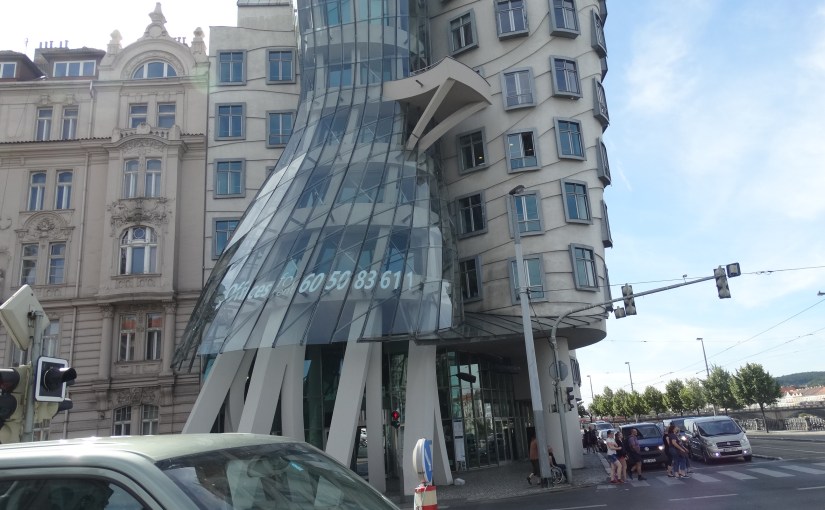
Thursday and its chilly with a forecast of the weather warming with the day. We have chosen to do a private tour. We can hire an open top mini bus for 2 hours for 3,000 Czech Koruna. Although we will repeat a lot of what Kerry and I have already seen, there is so much that we don’t mind seeing it again. The tour starts with a pass by the National Play House and swings through the Jewish quarter, past the powder tower, and the National Museum at the top of Wenceslas Square and the good King (who only reigned in the 11th century till he was 26 years old when his brother stabbed him) sits astride his horse. We then head for the other side of the River Vlana passed the “Ginger Rogers/Fred Astaire” building and up to Prague Castle.

This slideshow requires JavaScript.

At the castle we walked through the courtyard of the Presidential Palace into the main square where the changing of the guard takes place. We are too early for it this time. The President is home – the flag is flying. The Square has a grand fountain and what appears to be the former well covered by a bird cage. Oh and there is Shanelle and a strange man watching her. Look at that she’s picked him up. And it appears she is giving him ideas about what she wants. Just in time out come the guards to take control followed by the band. All sorts of vehicles are adapted to tourist coaches. Here one of the open top sports cars that carries four passengers.

This slideshow requires JavaScript.

← Back

Thank you for your response. ✨

Warning
Warning
Warning
Warning

Warning.

The Retirees go Abroad – Prague and the Czech Republic – Praha by Segway

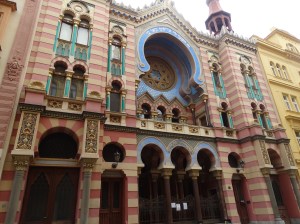
Wednesday – we started with clear blue skies and a coolish breeze. Excitedly we hurried to the old town and our Segway tour. Alexandria was to be our guide. We selected our helmets tried the machines and we were off – inching our way forward to start. Good thing we went early so that we could avoid the crowds. We went down to Jewish Town and saw where the various notable synagogues could be found. They boast the oldest synagogue in Europe and of course I have a photo.


We were making our way to the river and came to where Stalin built his largest statue on the banks of the Vltana. It is no longer there thanks to Nikita Kruschev declaring Stalin a criminal and destroying the monument. Not to waste a good set of stairs and a large plinth the Czech’s built a large metronome in place of the statue. Then we went to the beach by the Vltana where the swans and ducks congregate, onto the Franz Kafka museum with the pissing politicians and then to “Lenins” wall.

Oops it was “Lennons” wall – John Lennon memorial. We also found where the restored cars/ tour taxis parked up. Then onto the Palace. The tour groups were out in force so we elected to go to the Petřín Lookout Tower. It is a 63.5-metre-tall steel-framework tower strongly resembling the Eiffel Tower. Although it is much shorter than the Eiffel Tower, it stands atop a sizable hill, Petřín, so the top is at a higher elevation than that of the Eiffel Tower. Built in 1891 it was used as an observation tower as well as a transmission tower.

We stopped for coffee and cake (a lemon and earl grey cake) and resumed our trip back down to the old town passed the statue of Karel Macha and the memorial to those killed during the communist era to end our Segway tour. I was ecstatic about the ease of using a Segway and the fun that can be had with it. The tour company Euro Segway Prague were good to deal with also.

Walking back to our apartment we passed some markets filled with tourist trinkets but also with fresh fruit and vegetables. Some of the boxes of berries looked very tempting. And there were some interesting coffee shops along the way. Back home I stopped to grab some snaps of Wenceslas Square. At one end is a large building now a museum where I can imagine Good King Wenceslas last looked out in the 11th century on the feast of Stephen, when the snow lay round about deep and crisp and even. At the other end is the passage to the old town as we are in the New Town quarter. Beds of roses lay between me and the museum and the air was full of perfume.

← Back

Thank you for your response. ✨

Warning
Warning
Warning
Warning

Warning.

The Retirees go Abroad – Prague and the Czech Republic – Getting To Know Praha

We arranged a tour of the city (called Praha by the Czechs) not on the traditional hop on hop off bus but on a small tour which rushed us around the city after which we end at the Prague Castle and then we walked down the hill to the old town. The day started with drizzle and grey skies but finished in sunshine. While waiting for the tour to start we visited an arcade. Prague is remarkable for its architecture. It is baroque, art nouveau, renaissance and gothic and on and on. The arcades are charming and popular. Here are photos of an arcade with a theatre as the centre piece.

The bus tour was a rush with a combination of English and Italian speaking tourists which meant the guide was saying everything twice and you never knew quite which building she was talking about. She took us through Jewish Town with its world listed synagogue and a history of Jewish settlement from the 10th century until WW2.

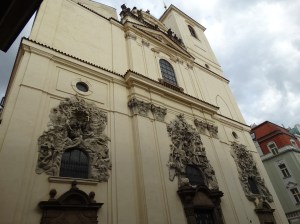
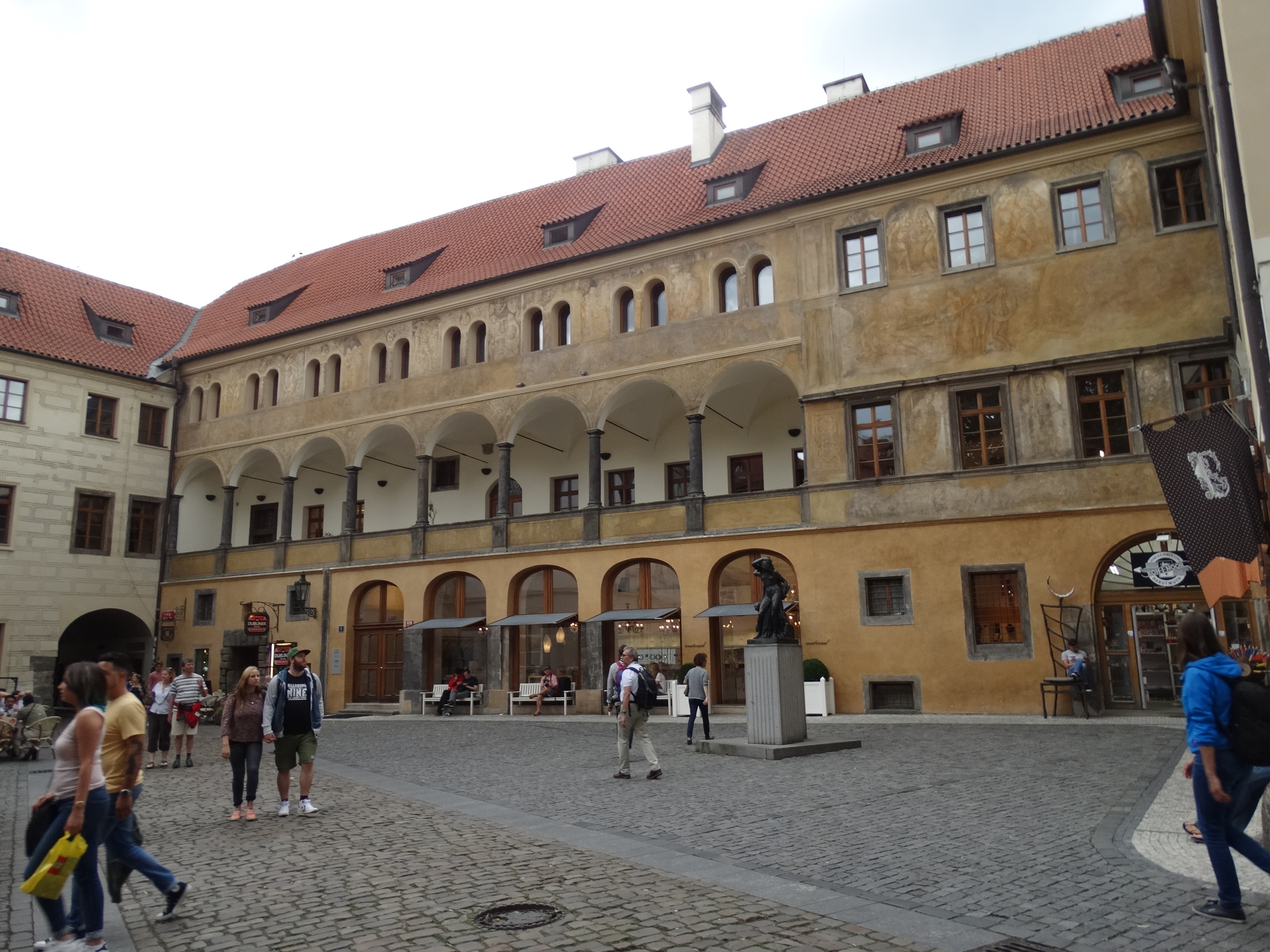
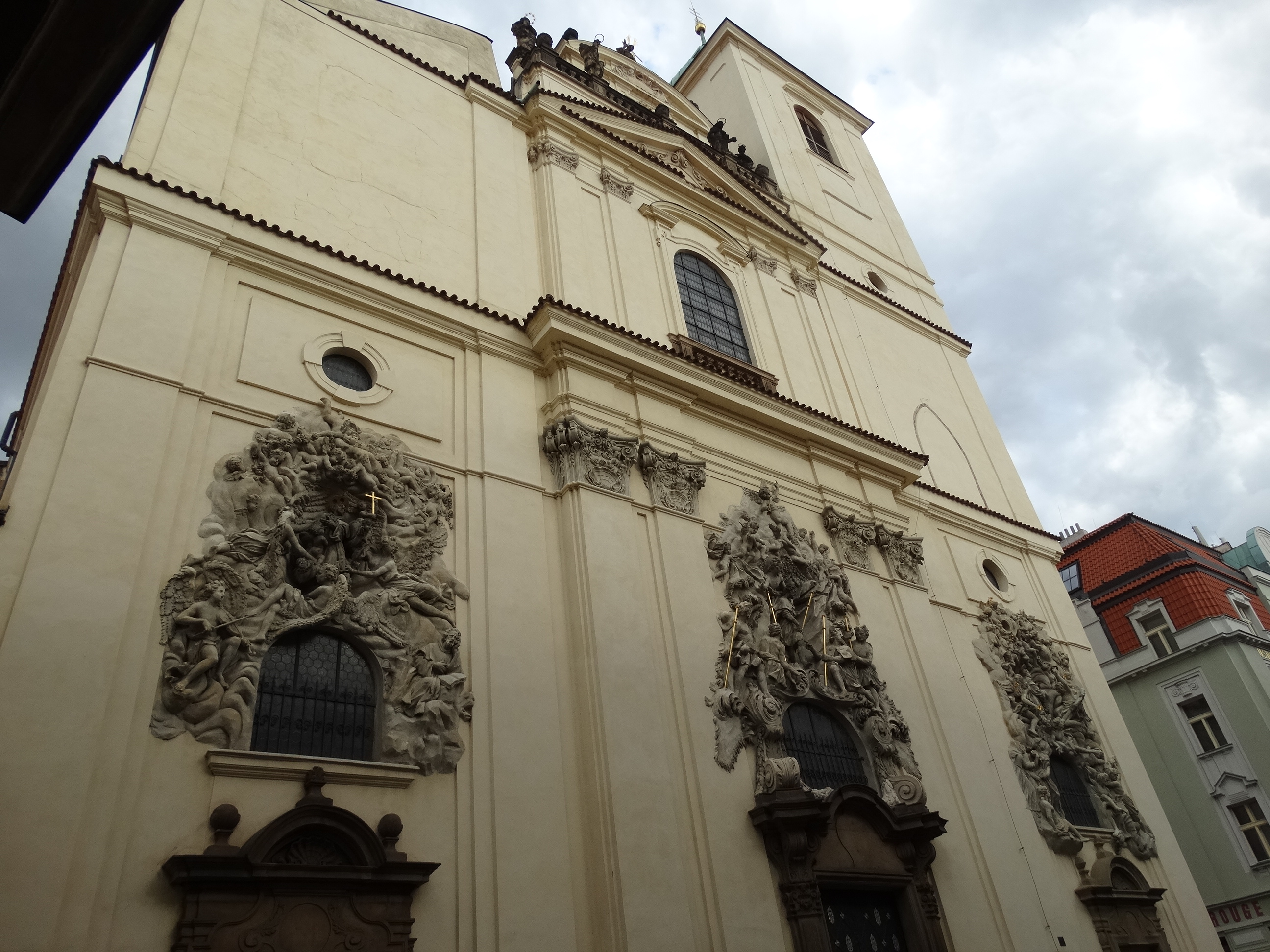
Everything else was so much of a rush that I could not be bothered trying to take photos. Once we arrived at the “castle” it became apparent that it is not a castle but rather the district is called Prague Castle. It is the old centre where the King of Bohemia, Moravia and Lower Silesia and the Holy Roman Emperor resided and his court surrounded him and the foreign dignitaries filled in the Lesser Town. So there are numerous Palaces of the King and the court making up the “Castle”. Lots of churches and disused churches like the photo below where one has been transformed into a hotel with an ecclesiastical feel. Each district making up Prague had its own town hall some grand and some like the castle where the King was top dog – quite minor. Again the architecture was fascinating like the palace below where the exterior was covered in a patterned design.

The Cathedral was as you would expect outstanding.

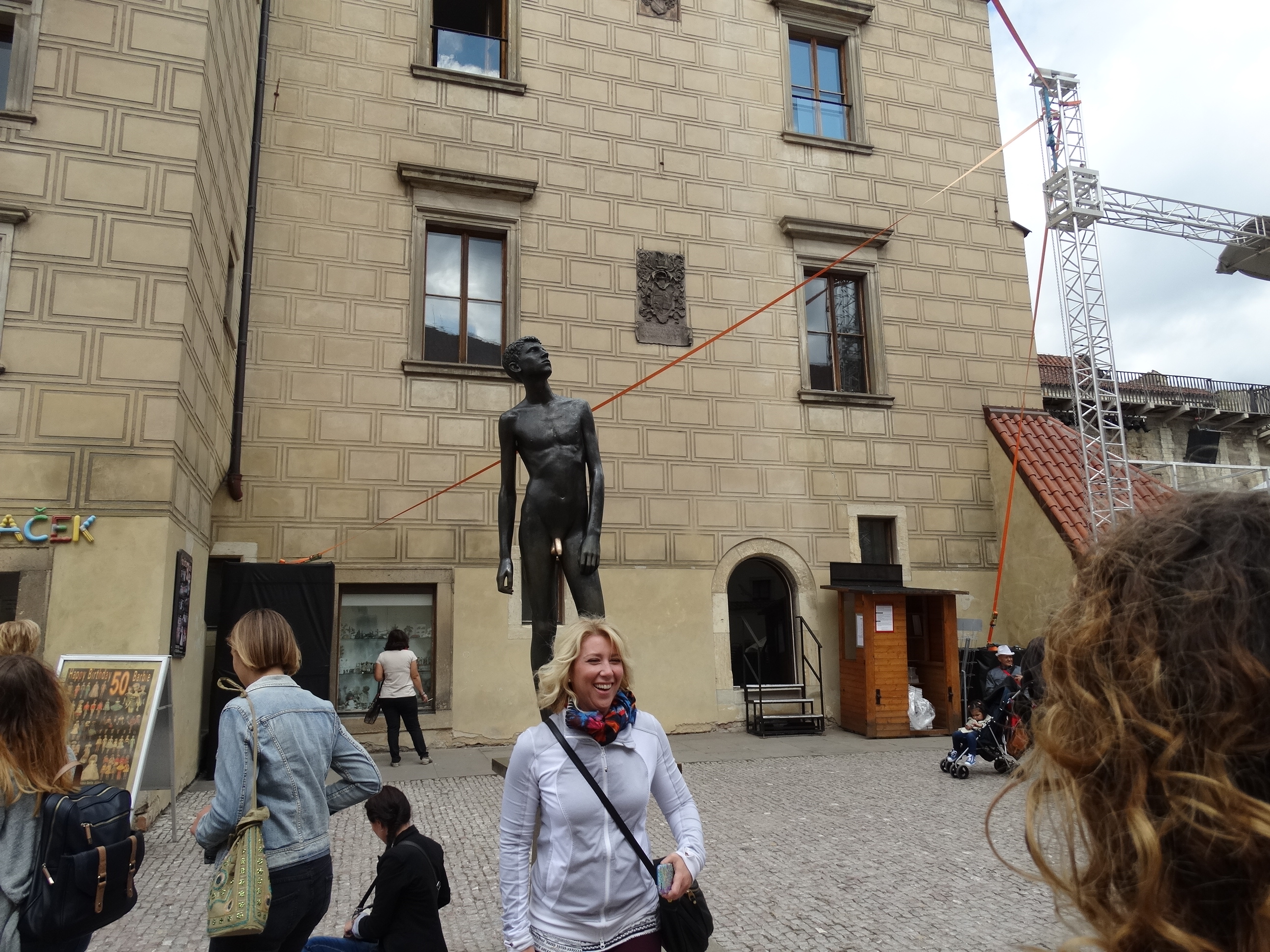
Then there was St Georges Cathedral with its rouge colour and phallic tower. In the courtyard of the Cathedral was the statue of a naked boy and the belief is that if fair maidens rub his phallus then they will become fertile. You will notice the only shiny part of the statue is his phallus so there are a lot of horny dick rubbing women visit Prague including the young American nurse who was amongst our tour group (centre of the photo).
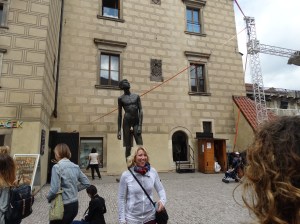
DSC07554

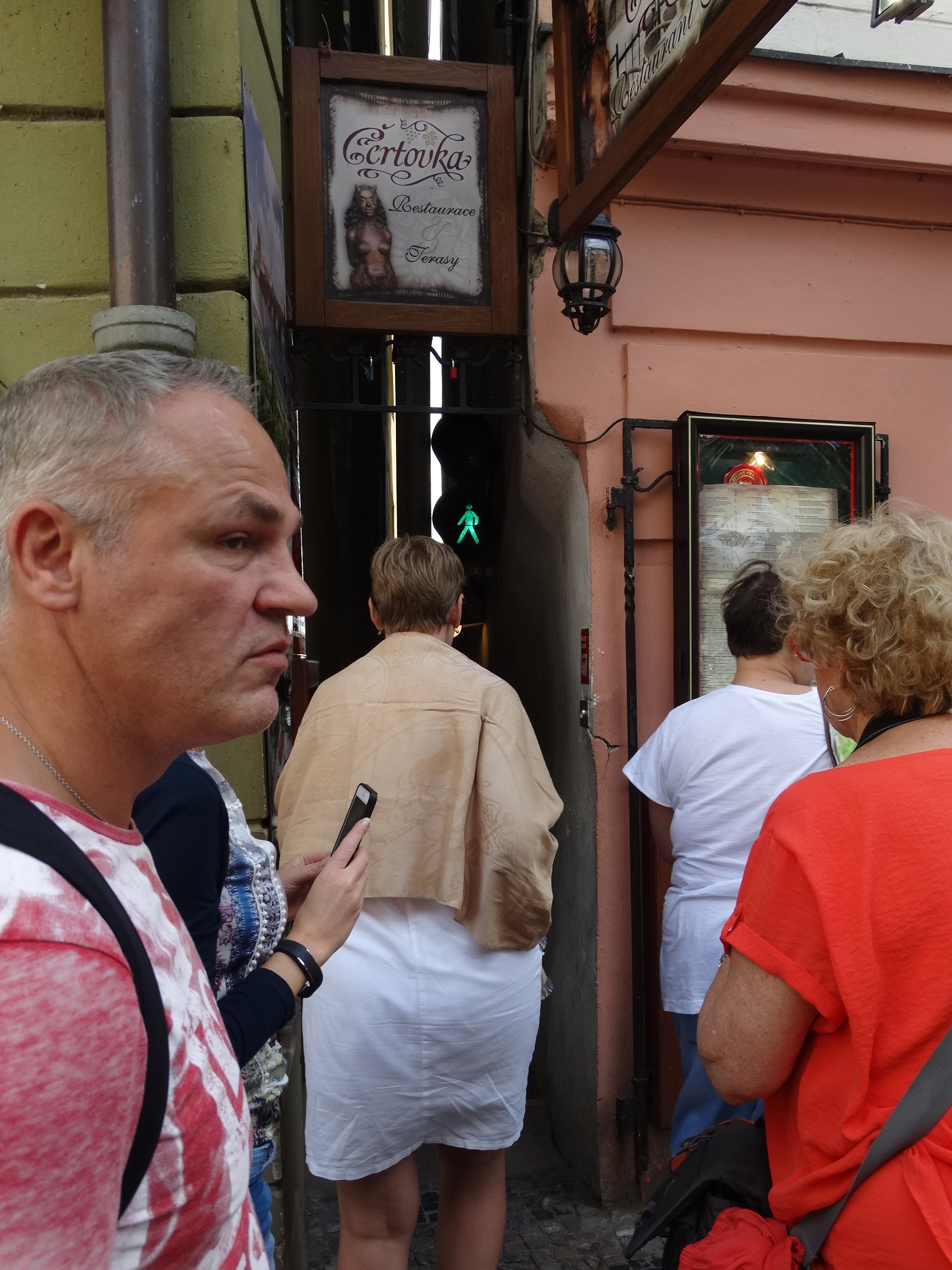
We moved down the hill through the various castle buildings and came to our restaurant where lunch awaited us. Czech ham, followed by Salmon on a potato mash and then a sorbet. Very tasty and not too filling. Down, down, down to the river we went until we came to Prague’s narrowest street. A signalised footpath would you believe it.
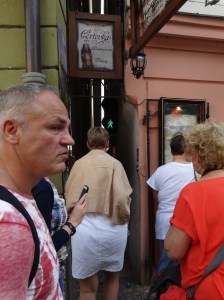
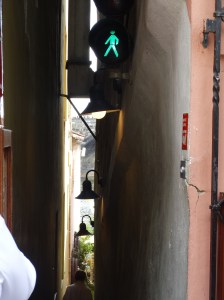
DSC07556 DSC07557

We were making our way to the Charles Bridge so that we could cross to the Old Town/New Town side of the bridge (the new town dates from the 13th century and the old town from the 8th century).
DSC07558 DSC07559

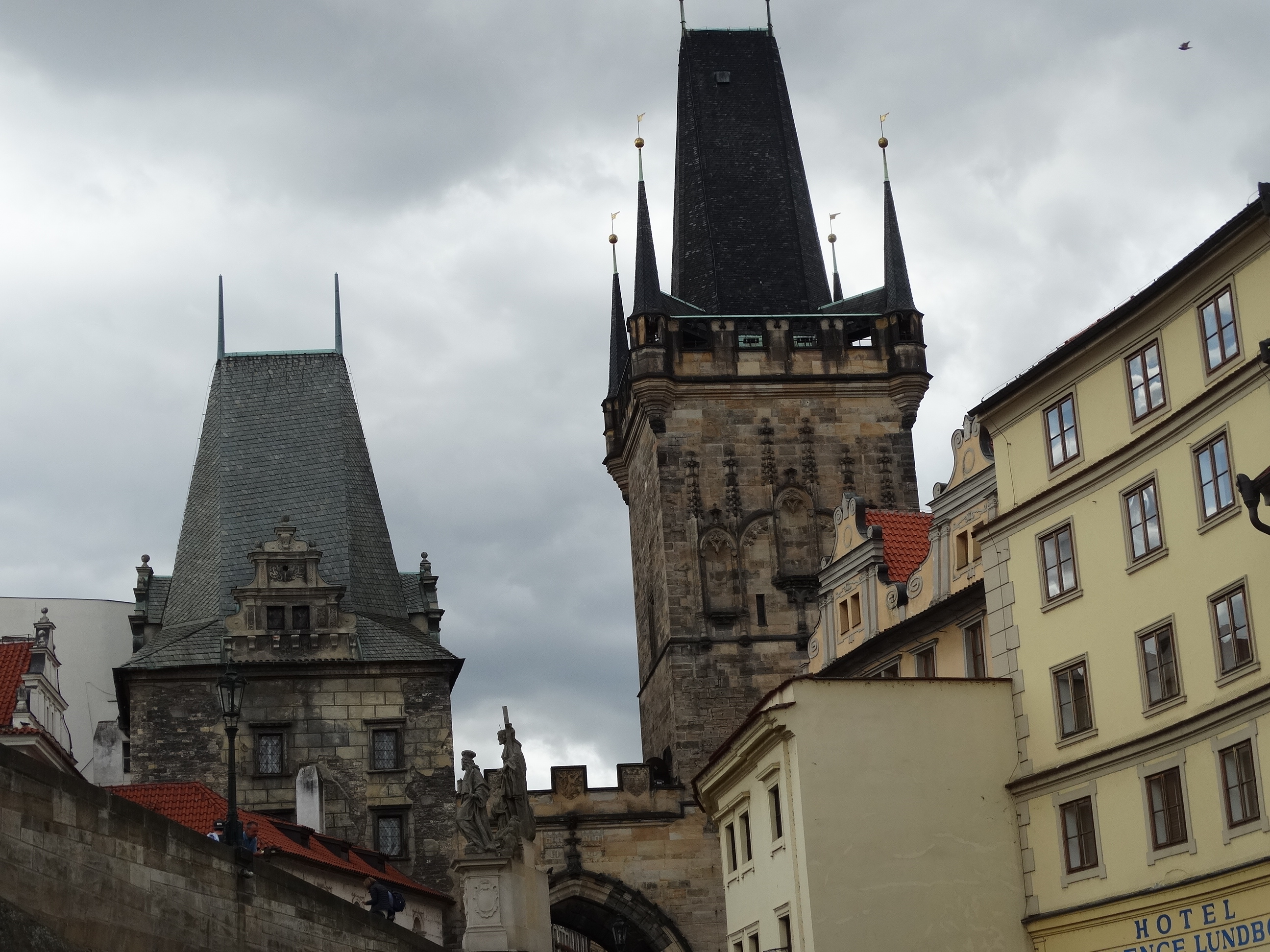
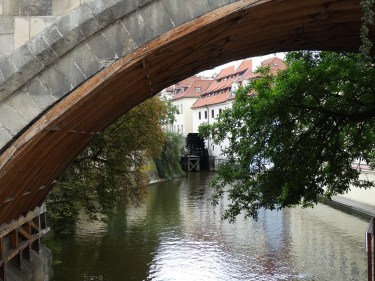
The Charles Bridge built in the 14th century by Charles IV is just for pedestrians now and it replaces two former bridges. (You can see the remains of the earlier bridges on the boat trip of the Vltana River.) It has fortified towers at either end and in the 18th century someone thought it would be a good idea to build 30 statues to saints on the bridge. The photos give you the views from the bridge to the castle to the bridge towers to a little house by the bridge, the top of the National Theatre with its golden crown, a nearby tower with the unusual turrets around the centre spire, Charles atop a pedestal to the university he created and two panoramic shots looking up and down the river.

We came upon the boat quay behind the statue of Charles and under the arch of the Charles Bridge and the remaining arches of the Judith bridge from the 11th century and another bridge lost in a flood to provide a covered harbour for these tourist ferries. Quite honestly they don’t do much and the trip was quite boring except for the beer and the ice cream handed out to all passengers. My photos show the banks of the river with Charles bridge, the yellow penguins at Kamil Lhotak an art gallery I gather, the water wheel in Certovka Canal (“certovka” is roughly devil woman and it relates to an ugly old witch who lived in a street nearby and the locals identified by painting 7 devils on her house that remain there to today).

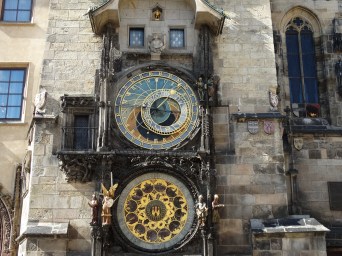
After the boat ride we went to the astronomical clock. The Orloj is mounted on the southern wall of Old Town City Hall in the Old Town Square. The clock mechanism itself is composed of three main components: the astronomical dial, representing the position of the Sun and Moon in the sky and displaying various astronomical details; “The Walk of the Apostles”, a clockwork hourly show of figures of the Apostles and other moving sculptures—notably a figure of Death (represented by a skeleton) striking the time; and a calendar dial with medallions representing the months. According to local legend, the city will suffer if the clock is neglected and its good operation is placed in jeopardy and a skeleton, mounted on the clock, was supposed to nod his head in confirmation. The clock was first installed in 1410, making it the third-oldest astronomical clock in the world and the oldest one still working.
DSC07582 DSC07583

Our tour ended in a quarter of the old town created by Charles to house foreign businessmen in Prague. He was wanting to ensure they did not avoid the Kings taxes. So he built a quarter of luxury accommodation, a church, a mosque, a synagogue and a brothel for their comfort and containment. It is just off the old town square.

DSC07588 DSC07589 DSC07590

There were two other Aussies on this tour – Pam and Vic from Oxenford. Pam’s feet were tired so whilst we mapped our way back to the apartment and Vic got instructions from our guide Pam pulled up a chair in a cafe and that is where we all rested until we had coffee and a chat. Parting was such sweet sorrow but we wanted to fit in another walk tonight so we left them in the cafe and went back to the square to find our way home.

This is where we met our destiny for Tuesday – we booked a Segway tour. I left Kerry to take some photos while she tried a Segway to see if she liked it and could handle it. The answer is obvious. I got some good photos of the memorial to Jan Hus a Czech protestant who taught in line with the protestant teachings of the English independent Wycliffe against catholic indulgences. Hus was burned at the stake as a heretic on the order of Pope John XXIIII following the Council of Constance. After Whycliffe he is considered the initiator of the Protestant movement and the martyr causing the Hussite Wars in Bohemia. On the way home I stopped to get these photos of the Lekarna Adam a pharmacy founded in 1520. On our evening walk I took shots of the National theatre and the monument to those lost in the black plague.

← Back

Thank you for your response. ✨

Warning
Warning
Warning
Warning

Warning.

The Retirees go Abroad – Prague and the Czech Republic – Getting There

It is a fine Monday morning in late August. We finish packing and walk around to the bus to go to the airport. Twenty minutes later we step out and into the departures lounge of East Midlands Airport. We are there three hours before departure of our international flight and 30 minutes after arriving we are in the terminal and hours too early.

Finally boarding and the trip is without incident. We find our chauffeur as we had arranged a pick up form the airport. His English is quite understandable so we chat on the way to our apartment. Kerry asks about the sights and in particular the former German concentration camp. Well, our driver is Montenegrin and he has seen it and becomes very melancholy – how frightful the camp is and remembering the wars in Bosnia etc.

We arrive at last. The sun has gone and darkness is creeping over the city. We go out to find a supermarket. Kerry spots a group of young people in the courtyard. “Do you speak English? We want to buy groceries.” she asks. One girl with limited English tries desperately to help us and leads us up the street. We bump into a street spruker for an Irish pub who speaks English. He directs us to Alberts under Debenhams by the metro but our Czech friend is not so sure. The Spruker speaks to her in English, French and German but does not know Czech so our friend follows us to Alberts just to make sure we get there. She then disappears in the crowd.

Shopping is interesting with the koruna being about 35 to the pound. Our small selection of groceries was 581 koruna or about 12 pounds. Dinner is a hotdog and a chicken cutlet and some french fries. We know how to end the day on a high!

After a restless night due to the apartment design not really permitting airflow we arose to trip around the city. The apartment design does not seem to flow. We have our bedroom in the loft without a window or airflow. The kitchen while appearing to be spacious is cramped once you open its huge window. The living room would be fine if there were some suitable furniture in it. Here are the photos of the apartment. However it does have some innovations like the carpark lift. In the square below our deck is a circular room comprising large windows with large doors and no obvious purpose. I thought it was the abandoned idea for a reception. No it is a car lift to the carpark below which holds 40 cars. You swipe your electronic card, drive in the motor vehicle and the elevator takes the vehicle to that space.

← Back

Thank you for your response. ✨

Warning
Warning
Warning
Warning

Warning.

The Retirees go Abroad – Home for a Few Days then off to the Tattoo – Edinburgh’s Tattoo

With so much happening in Edinburgh, we decided to take the train from Dunfermline Queen Margaret Station to Edinburgh Waverley Bridge Station. This was a great decision given the traffic nightmares we had already endured.

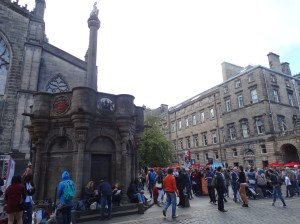
We arrived at the station and made our way to the Royal Mile found a coffee shop beside the Jolly Judge bar down a lane after battling the crowds through the Fringe.

Photos of Edinburgh and the Royal Mile

We thought we were making great time until we got to within 100 metres of the Tattoo entrance. Here the officials Military Police and local Police were marshalling the ticket holders and corralling us until the gates opened. So there we stood for about ½ an hour before going through security then the ticket check then the ushers. Whew, nobody tells you about that.

Inside our seats were great except that we looked directly into the western sun. The set up was continuing and whilst people were straggling in the show began.

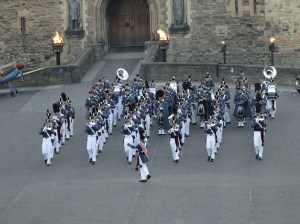
Photos of the set up the ceremonial introductions, the flyover and the massed pipers.

Somewhere in the massed pipers were the Manly Warringah Pipers but how to distinguish them I don’t know. We did pick out the Ghurkhas though. Then came the US Air Forces Special Command drill team with their bayonet fixed drill.

This slideshow requires JavaScript.

There were fiddlers from the Falklands, dancers from Dun somewhere Bollywood presentations and Lotus Eaters and dragons.

This slideshow requires JavaScript.

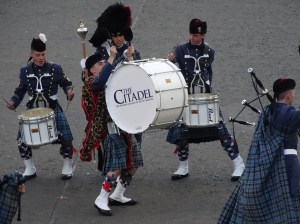
Even the PRC (Peoples Republic of China) sent the band from the PLA (Peoples Liberation Army). Not to be out done the Citadel Military College from South Carolina joined in.

Then the best act of the night – Switzerland’s Top Secret Drum Corps from of all places Basel. Finishing was left to the Queen’s Colour Squadron to show us “Marching up and down”. Followed by the Queen’s Own colours regiment.

The finale saw everyone massed on the parade ground whilst fireworks burst above in a twilight sky. Great show.

Then came the walk back to the train to find the next train came 90 minutes later. Oh well at least we got to sit down as we had to stand up on the train to Perth to get home.

← Back

Thank you for your response. ✨

Warning
Warning
Warning
Warning

Warning.

The Retirees go Abroad – Home for a Few Days then off to the Tattoo – Culross and North Queensport in the Kingdom of Fife

We left Harrogate relaxed and prepared for rain wind hail and a long trip to Dunfermline. Due to the Edinburgh Festival the Edinburgh Fringe and the Tattoo accommodation was at a premium in Edinburgh. Dunfermline is in the Kingdom of Fife and just north of Edinburgh across the Firth of Forth Bridge.

We stayed at the Holiday Inn Express but the trip to get there was very tiring. Traffic snarls and Tommy leading us up the garden path meant when we arrived we just needed a drink. Fortunately the predicted bad weather did not eventuate. After some dreadful takeaway and the subsequent indigestion, we slept soundly awaking to a bright sunshiny day with little cloud in the sky. A great day for the Tattoo and our planned visit to the ancient village of Culross and the old ferry port of North Queensport.

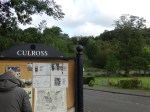
Culross is a village and former royal burgh in Fife, Scotland. Originally Culross served as a port city on the Firth of Forth and is believed to have been founded by Saint Serf during the 6th century. During the 16th and 17th centuries, the town was a centre of the coal mining industry. Sir George Bruce of Carnock, who built the splendid ‘Palace’ of Culross and whose elaborate family monument stands in the north transept of the Abbey church, established at Culross, the first coal mine in the world to extend under the sea, in 1575. The mine worked the coal seam under the Firth, with ingenious contrivances to drain the constant leakage from above. This mine was considered one of the marvels of the British Isles in the early 17th century, until it was destroyed in a storm, in 1625.

Photos of the palace and the family monument in the Abbey church.

This slideshow requires JavaScript.

Culross’ secondary industry was salt panning. There was a considerable export trade by sea in the produce of these industries and the prevalence of red roof tiles in Culross and other villages in Fife is thought to be a direct result of collier ships returning to Culross with Dutch roof tiles as ballast. The town was also known for its monopoly on the manufacture of ‘girdles’, i.e. flat iron plates for baking over an open fire. The town’s role as a port declined from the 18th century, and by Victorian times it had become something of a ‘ghost town’. The harbour was filled in and the sea cut off by the coastal railway line in the second half of the 19th century. The village has some unusual street names also.

Photos of the town buildings, streets and the sea wall

The other notable building is the remains of the Cistercian house of Culross Abbey, founded 1217. The tower, transepts and choir of the Abbey Church remain in use as the parish church, while the ruined claustral buildings are cared for by Historic Scotland.

There is a bust in honour of Thomas Cochrane, 10th Earl of Dundonald outside the Culross Town House. He was the first Vice Admiral of Chile.

Photos of the bust Town House and Cistercian Abbey ruins.

We also visited North Queensport the home of the world’s smallest light house. Primarily we went there to view the rail bridge the road bridge and the new bridge under construction. The village was also a snapshot of history losing its importance as a ferry port when the road bridge terminated a need for a ferry service.

Photos of the rail bridge, the road bridge the stanchions of the new road bridge the modern Liner terminal, the smallest lighthouse and someone’s lounge room we mistook for the lighthouse.

I would have to say that Culross was one of the prettiest villages we have visited. We had arrived early and we seemed to be following the postie or vice versa. We chatted to him few times and noted he was wearing shorts and a short sleeve cotton shirt whilst we were dressed much more warmly. He pointed out a few things particularly that the television series Outlander and several motion pictures have used Culross as a location.

We returned to the hotel just in time to rug up for the Tattoo as the clear skies had brought the cold and the wind.

← Back

Thank you for your response. ✨

Warning
Warning
Warning
Warning

Warning.

The Retirees go Abroad – Home for a Few Days then off to the Tattoo – Fountains Abbey

Fountains Abbey is one of the largest and best preserved ruined Cistercian monasteries in England. It is located approximately three miles south-west of Ripon in North Yorkshire, near to the village of Aldfield. Founded in 1132, the abbey operated for over 400 years, until 1539, when Henry VIII ordered the Dissolution of the Monasteries.

The abbey is a Grade I listed building owned by the National Trust and part of the designated Studley Royal Park including the Ruins of Fountains Abbey UNESCO World Heritage Site. For more of the history of the site go to:

https://en.wikipedia.org/wiki/Fountains_Abbey

Nerida Bishop had been telling us for ages that this was one place we had to visit and she was right. For our experience we walked through a forest along a cliff edge to reach the abbey ruins. Along the way we stopped at a bird hide to see what creatures were in the forest. The groundsmen set up a feeding site for the birds and one squirrel must have thought he was a bird. Not content with scavenging on the ground he climbed up on to one of the feeders – well see for yourself.

Then we made our way down to the ruins and met the volunteer guide showing tourists through the site and giving us the history. It seems that a number of Benedictine monks decided that life was too easy around York and they had lost their religious way. They formed their own group and were given some lands in this valley where they nearly froze to death but having survived went on to prosper join the Cistercians and suffer the same fate of the Benedictines – victims of their own earthly success, until Henry VIII took all that earthly success for himself.

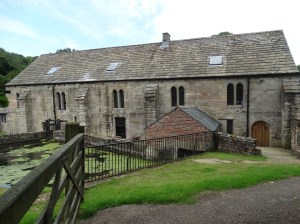
Well in 400 years they developed this Abbey to the point where it was more palace like than abbey. The ruins tell you that but the giveaway is the last of the Abbotts built a tower for no other reason than to have a tower and show off the wealth of the abbey. Anyway enjoy the photos, they include the water mill which believe it or not was still working until 1936 and then became a generator for Fountains Hall for another 20 years.

Despite the ruins being at the bottom of a cliff the imposing tower was evident from far away. As we climbed down the cliff we could see the body of the church with the large set of storage rooms running across the face of the Abbey. The Abbey is located beside a creek which once ran straight but has been diverted to one side and used to carry waste and sewerage from the Abbey. The roof and windows have been gone for a long time but it is obvious that the weight of the roof and enormous windows caused stresses on the building frame with buttresses built to re-enforce walls and window cracks cover with clever masonry figures.


The watermill although not as impressive has proved to be the most resilient building and it still generates power for the Hall today.


As we departed we made a quick call to the Hall where a wedding was occurring. There was not much to see really but it was interesting to learn that the Lord of the Manor had supported Charles I in the Civil War and lost his fortune for choosing the loosing side.

← Back

Thank you for your response. ✨

Warning
Warning
Warning
Warning

Warning.

The Retirees go Abroad – Home for a Few Days then off to the Tattoo

Since we returned from Buckingham Palace we have continued our routine as members of the community in Long Eaton. Part of that routine is to assist at St Mary the Virgin Church at Attenborough. On our last working bee we were not sur e whether we may fit in another working bee so I took a photo of the Clean – up Crew. It has always been enjoyable working with this group of dedicated volunteers. As we work amongst the graves most days, we can probably include a few of the spirits around the place but of course they were absent for the photo.

Photo of the crew in the Vestry at morning tea

DSC07276

The other group we routinely meet with and work with is the Rotary Club of Nottingham. The same thing applies here. We enjoy the company of all the members (despite their gentle ribbing when Australia shows its glass jaw in the cricket) and they seem to genuinely enjoy our irregular appearance and assistance. George, one of the senior members of the Club has held an annual Summers Garden Party and has done so for years. He always seems to pick the summer day and then the weather returns to usual UK weather and this year was the same. Though I was not confident that it was warm enough for swimming and stayed dry.

Photos of our host George, the new President John and Geoff, Past President Roy and David Kerry and the girls

The UK is a small place when compared with Australia but despite this it is always taking us longer than planned to travel anywhere by car because of the infernal delays on the motorways and slow trek when forced onto country roads even though the scenery is often stunning. So we planned our trek to Edinburgh (some 5 hours north) into two days – Harrogate and Fountains Abbey on day 1 and Edinburgh day two.

Harrogate is north west of York and famous as a spa town in Georgian times. Our hotel – the Majestic – although a relic of the Victorian age, is a good example of the idle pursuits that the town became famous for. Built in 1900 in 12 acres of parkland and only 5 minutes walk from the centre of Harrogate the hotel must have been the 7 star hotel of the Victorian era but today it suffers from its glorious past belonging to an era that is not to everyone’s taste today. Sad opulence I would describe it as. But it provided a wonderful backdrop for our wedding anniversary and staging point for Fountains Abbey and Edinburgh.

Dinner in the dining room that night and breakfast the next morning before we took to the treatment rooms for a massage and then a relaxing swim and spa. The way it should be always.

The town itself was easy to navigate but seemed to have become stuck in the same era as the Majestic. However we found a park with a photo frame and when others saw us a number wanted to copy us and we became unofficial photographers for three or four families.

Photos – Harrogate park and the Majestic Hotel


Nearby to Harrogate is the ruins of Fountains Abbey and its gardens and it is a story in its self for another day.

← Back

Thank you for your response. ✨

Warning
Warning
Warning
Warning

Warning.