The Retirees go Abroad – The Lakes District – Windemere, Bowness and Rydal

Thursday we planned a walk around Derwentwater but it turned very cold and grey so a trip to Windermere replaced our walk. We found Windermere but it is not on the lake so after a coffee we went onto Bowness where we did a tour of the lake by boat.

Lunch was followed by a trip to Rydal Water and Caves. This exceptionally pretty walk around the tranquil waters of Rydal Water is the inspiration for so much of the poetry of William Wordsworth and the words in the diary of his sister Dorothy. It is very easy to see why – Rydal Water itself is tightly enclosed between the steep slopes of Loughrigg Fell and the Fairfield Horseshoe creating the landscape of trees, lake and mountain which so inspired them.

Much of the walk is through lovely woodland, which clings tightly to the shores of the lake but is not thick enough to cut off the views across the lake. However we were there to visit Rydal Cave, a large man made amphitheatre of slate complete with resident fish!

← Back

Thank you for your response. ✨

The Retirees go Abroad – The Lakes District – Keswick


Monday and we have planned a trip to the Lakes District with a stay at Keswick where we will meet Joe and Sue Scanlan, former neighbours from Toowoomba. Things do not get off to a good start. There is a problem with the Amex card and Kerry has dropped her IPhone smashing her screen. This throws out our plans and we end up having to travel to Sheffield to have the phone repaired.

In Sheffield we go to a modern shopping centre on the outskirts. It is huge or at least the car park is huge. We get the phone fixed but it is still a long trip to Keswick along a minor road the A66 which takes us into the Lakes District through Penrith. This brings us onto a road repair that has traffic backed up for miles. It turns out to be a hole in the road under repair but abandoned for the day by the workmen leaving the traffic to sort itself out. This caused over half an hour of stop start traffic and we did not get into Keswick before 4.00pm.

We are staying in a B&B called Hall Garth. It is a three story home in a street of three story homes most of which are B&Bs with no vacancy signs in the window. Our room is pleasant and the B&B well located within an easy walk of the town centre. So we use the rest of the afternoon to check out the centre and meet up with Joe and Sue.

We finally meet up and have dinner at a local pizza restaurant before going home. The B&B breakfast the next morning is big enough for two people but it sets us up for the day. We have planned to walk along the old Keswick rail line toward Thekeld, turning off to go to the Castlerigg Stone Circle returning to the town via Spring Farm. The walk along the old rail line is very interesting. They have pulled up the rail line but the bridges are still in place with new decking. The path is crossed by the river as it winds through the valley and it is very romantic to stroll along listening to the river and seeing the sun reflecting through the trees. The path is crossed by a major overpass which according to the plaque below won the prize as the best engineered concrete overpass in 1999.

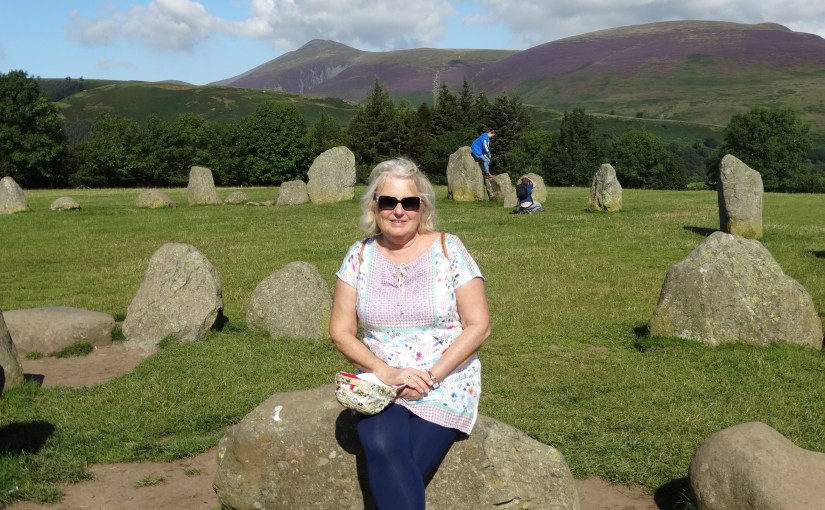
Once we leave the path we walk through cow paddocks before reaching a road where we made our way up to the stones. Before we could reach the stones we encountered a gallery with photography of the remoter parts of the district. Stunning photography. Outside in the courtyard an old man sits in the sun looking proudly on at his restored 1927 Sunbeam motor bike with its acetylene gas lamp for a head light. The stones sit atop a hill and although not as large as Stone Henge they are just as old. It was constructed as a part of a megalithic tradition that lasted from 3,300 to 900 BC, during the Late Neolithic and Early Bronze Ages. Every year, thousands of tourists travel to the site. This plateau forms the raised centre of a natural amphitheatre created by the surrounding fells and from within the circle it is possible to see some of the highest peaks in Cumbria: Helvellyn, Skiddaw, Grasmoor and Blencathra.

We depart across a style and down a lane cross over some more fields through some gates and finally down a steep path to the cafe of Spring Farm where we have lunch and recover after over three hours in the field.

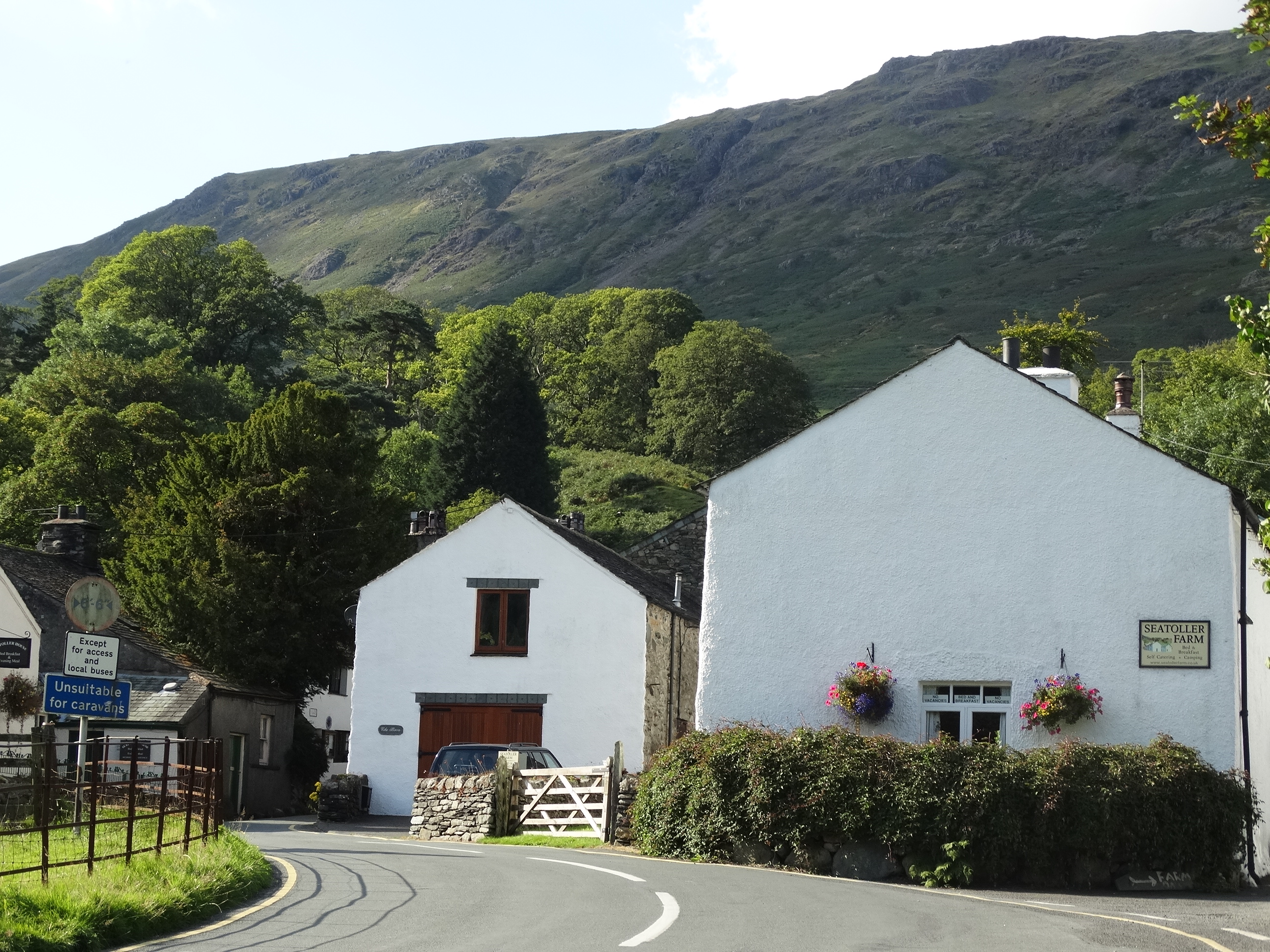
After a rest we go home for a cup of tea and a lie down. Soon we are up again to take a tour on the hop on hop off bus. But the bus is not typical. Whilst it is a double decker the buses go different routes and there is not one route viewing the highlights. So we travel out to Seatoller where we hop off and our bus turns around going back to Keswick.

Seatoller was once the home to the mine workers at Hollister Slate Mine and since the closure of the mine there is not much there.  Attractions around the mine complex include a visitor centre, underground tours of the workings, and England’s first via ferrata, where participants use a safety harness to scale a cliff path.

DSC07932

We had hoped to catch a smaller no 77 bus to travel up through the hills and back around to Keswick but the damned thing did not turn up until it was too late for us to get back to Keswick for dinner with Joe and Sue so with heavy hearts we returned to Keswick without going beyond Seatoller. But we made it to the Pheasant Inn for dinner and a good thing too. On the way home we found the hotel with the longest name “The Chief Justice of the Common Pleas” in memory of a 17th century jurist born in Keswick and formerly until 2000 the Police Station and Magistrates court.

DSC07939

← Back

Thank you for your response. ✨

The Retirees go Abroad – Derbyshire and the Elton Walk

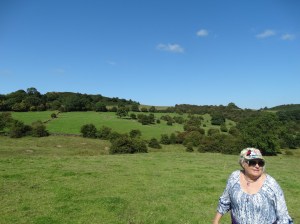
It’s Sunday and after a week of re-cooperating in the flat and one day before venturing off to the Lakes District, we go for a 4 mile walk up hill and down dale in the Peak District Park. Although sunny it is cold so I get hot with my jacket on and drench my shirt only to freeze when I take my jacket off and the wind chills through my sweat drenched shirt.

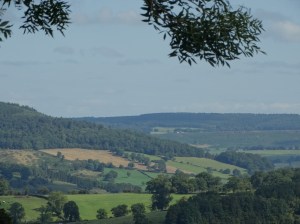
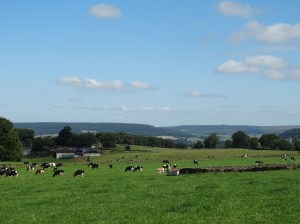
Elton is an old lead mining village west of Derby in the Derwent Valley, surrounded by farms of cattle and sheep grazing on lush green hillsides. The walk includes, a medieval hermit’s cave, an unusual rock formation known as Robin Hood’s Stride and a stone circle wait on this popular walk from the of Elton.

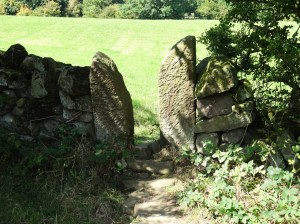
The Walk starts from the Duke of York Pub (although there was no sign of Pub type activity there) along the main street towards the B5056 and turn left at a stile just beyond the edge of the village, to cross the corner of a field and a farm access road. We continue to angle to the left across the next field and reach a stile into Dudwood Lane. Walking down Dudwood Lane, it is worth recollecting that this route was probably used by travellers long before the Romans came to Briatin. It follows the line of the ancient Portway, which ran the length of the county.

We walk down to the bottom of the lane, and cross over the stile opposite and walk up the drive towards Cratcliffe Cottage, bearing left by a wall after going through an open gateway. As we begin to climb, there is a curious mass of rocks with twin pinnacles known as Robin Hood’s Stride. It is often referred to as Mock Beggar’s Hall, because the outline of the rocks at a distance resembles a large house with twin turrets. On the right are Cratcliffe Rocks and carved into a small cave, where a hermit used to live, is supposed to be a crucifix. I did not find the crucifix but I believe I found the cave.

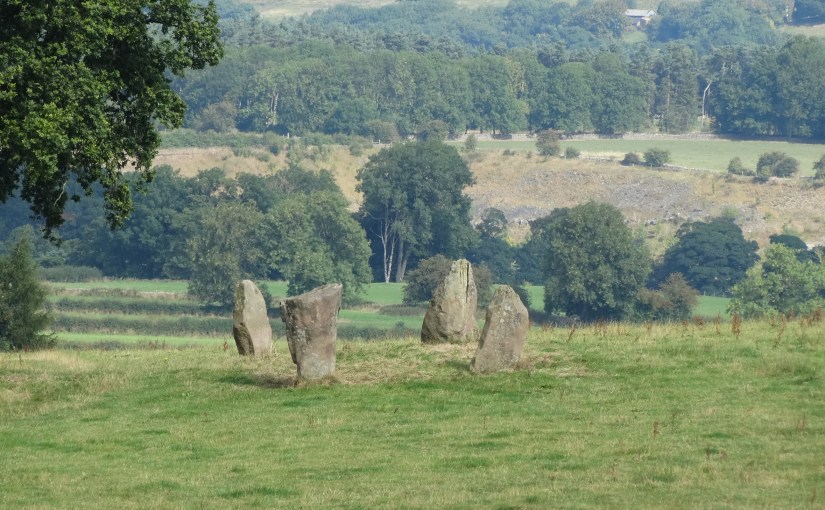
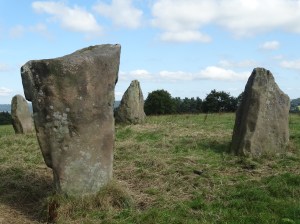
A short distance further on, facing Harthill Moor Farm across the moor, are four great standing stones, all that is left of a circle of eleven. The others have disappeared for use as gateposts and stone wall construction. We cross two small fields diagonally to the left to reach a quiet country road opposite Harthill Moor Farm.

The walk continues through woods and farmland and, provides good views of the exposed position in which Elton is situated. We turn right down the road and, as it begins to drop more steeply, take the footpath on the left into Tomlinson Wood. We leave the wood, cross a corner of a field to a gate stile on the right, turn sharp left and follow a cow track until its begins to bear left, keeping straight on to a wall stile in front of us. We continue climbing uphill to walk alongside Tomlinson Wood, until we reach a finger post sign directing us to the right over a stile and straight up a long field to reach the access road to Cliff Farm.

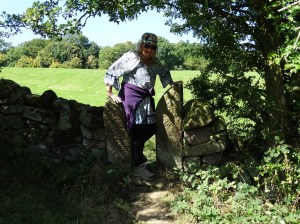
We cross the stile opposite on the far side of the access road and angle slightly to the left to a stile, and follow a clear path down the hill to reach a road. We head straight across the road to a squeezer stile to follow a footpath sign marked ‘Elton’ and follow along a clear path, which straightens out on its way to the bottom of the valley.

The path then climbs up the other side of the valley with a thorn hedge on the left, before turning left at the top of the field, and going through a stile and turning right back to Elton Church and the Duke of York Pub across the road.

DSC07860

Well, we are exhausted. We thought that we had done enough walking that we could do this in our stride. Not so. The gentle slopes were long and steep. We will sleep well tonight.
← Back

Thank you for your response. ✨

The Retirees go Abroad – Prague and the Czech Republic – Farewell to Praha

The weather is now quite unbearable for two old softies from Nottingham. We decide to beat the weather by going out early to Žižkov Television Tower.

To do this we must learn to navigate the Czech underground tube – the Metro. It turns out to be quite easy and cheap. Well maintained it moved us from the centre of the city to Žižkov effortlessly in under ten minutes. On exiting the metro there was no need to consult a map to find the Tower as it stands over Žižkov like the launch pad of a great rocket.
We were pleasantly surprised on arriving at Žižkov. Not only did we spy the tower but the metro is set in a park with a modern church built in a “cubist” style greeting you.

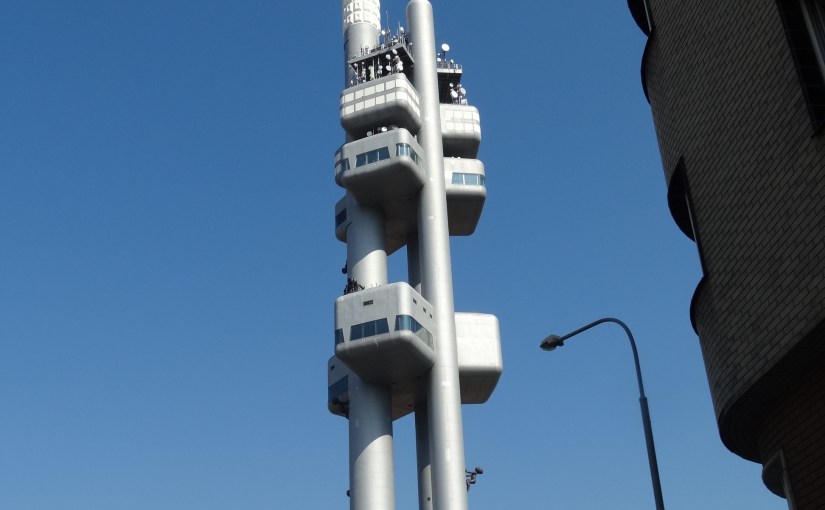
The Žižkov Television Tower is a unique transmitter tower built in Prague between 1985 and 1992. It stands high above the city’s traditional skyline from its position on top of a hill in the district of Žižkov, from which it takes its name.

The structure of the tower is unconventional, based on a triangle whose corners are growing up in steel columns, consisting of three tubes with a double steel wall, filled with concrete. They support nine ‘pods’ and three decks for transmitting equipment. One of the three pillars extends considerably higher than the others, and this provides both the necessary height for some antennas, along with the structure’s rocket and gantry appearance. In its time it was a unique technology, which authors have patented. In total, the tower stands 216 metres (709 feet) high.

Three of the pods, positioned directly beneath the decks at the top of the tower, are used for equipment related to the tower’s primary function and are inaccessible to the public. The remaining six pods are open to visitors, the highest of which are observation rooms at 100 metres (328 feet), providing a panoramic view of Prague and the surrounding area. The lower three, approximately half-way up the length of the pillars at 63 metres (207 feet), house a recently refurbished restaurant and café bar. Elevators, equipped with speedometers, transport passengers to the different levels at a rate of 4 m/s. The tower weighs 11,800 tons and is also used as a meteorological observatory. It is a member of the World Federation of Great Towers.

It is striking that the Žižkov tower is covered with giant babies crawling on it. The company that manages the tower for a long time had something to add to the building and give both personal and less rigid spice up your architecture. The exhibition of the artist SEJD which was originally to be one year left as a final touch of the tower.

Each of the large baby weighs approximately 800 kilos and the idea came from the Kampa Museum, located nearby in Sovovy Mlyny.

We travelled up to the Observatory and well I will let the pictures speak for themselves. We then went down to the restaurant, café and bar for a spot of indulgence. Whilst Kerry had her pannacota and Kahlua with whipped milk, I had an Americano with a slice of Mango cheese cake topped with a gooseberry and raspberry coulis. Yum oh!

This slideshow requires JavaScript.

And here are some panoramic shots of the whole city.

This slideshow requires JavaScript.

From here the city did not look all that far and it wasn’t but the day had warmed up and we had to take a break in the park then an iced coffee at the rail station before getting home to await our taxi and our return to Long Eaton.

← Back

Thank you for your response. ✨

The Retirees go Abroad – Prague and the Czech Republic – Karlštejn Castle

Having said farewell to the Worrells we continued our discovery of Prague with a visit to Karlštejn Castle. Our day started with catching a bus for an hour long drive through the country past the new ring road around Prague and out into the countryside.

Karlštejn Castle is a large Gothic castle founded 1348 AD by Charles IV, Holy Roman Emperor-elect and King of Bohemia. The castle served as a place for safekeeping the Imperial Regalia as well as the Bohemian/Czech crown jewels, holy relics, and other royal treasures. Located about 30 km southwest of Prague above the village of the same name, it is one of the most famous and most frequently visited castles in the Czech Republic.

Founded in 1348, the construction works and interior decoration were supervised the Holy Roman Emperor Charles IV personally. Construction was finished nearly twenty years later in 1365 when the “heart” of the treasury – the Chapel of the Holy Cross situated in the Great tower – was consecrated.

Following the outbreak of the Hussite Wars, the Imperial Regalia were evacuated in 1421 and brought via Hungary to Nuremberg. Later, the Bohemian crown jewels were moved to the castle and were kept there for almost two centuries, with some short breaks. The castle underwent several reconstructions: in late Gothic style after 1480, in Renaissance style in the last quarter of the 16th century. During the Thirty Years’ War in 1619, the coronation jewels and the archive were brought to Prague, and in 1620 the castle was turned over to Ferdinand II, Holy Roman Emperor. After having been conquered in 1648 by Swedes, it fell in disrepair. Finally, a neo-Gothic reconstruction was carried out by Josef Mocker between 1887 and 1899, giving the castle its present look. The nearby village was founded during the construction of the castle and bears its name.

The core of the castle consisted of three parts placed on three levels-differentiated terraces; every level express different importance. On the lowest terrace there stood the Imperial Palace, above it there was the Marian Tower and the Big Tower stood the highest. The emperor inhabited the second floor of the palace; the floor was divided into four rooms by self-supporting partitions. A spiral staircase connected it with the third floor in which – according to the record from the 16th century – there was a residence of the “empress with her female retinue”.

The central area of the 60m high and separately fortified (4–7,5 m thick walls) Big Tower is the Chapel of the Holy Cross; it has no analogy in concept elsewhere in the world. In the safety of the chapel, behind four doors with nineteen locks to each key was guarded independently, the valuable documents of the state archive were kept along with the symbols of the state power – the Imperial Regalia, later the Czech Crown Jewels.

The Well Tower, being the logistical centre piece the castle could not function without, was the first part of the castle to be built. Miners were brought in from the mining town of Kutná Hora, however, water was not encountered even after the depth of the well was 70 meters, well below the level of the Berounka River. An underground channel was therefore excavated to bring in water from near by stream, yielding a water column of 25 meters, sufficient to last for several months. The reservoir had to be manually refilled roughly twice a year by opening a floodgate. Considering the significant strategic weakness incurred to the castle by the lack of an independent water source, the existence of the underground channel was a state secret known only to the Emperor himself, and the burgrave. The only other persons aware of its existence were the miners, who were however allegedly massacred on their way from the castle after the construction, leaving no survivors.

Our bus dropped us at the bottom of the hill and we chose the taxi ride up to the castle. Good choice on a hot day. After leaving the cab we walked up through one of the three gatehouses into the courtyard. We visited the Well Tower whilst waiting for the tour to start. We almost lost Kerry.

We commenced our tour at the second gate house. I did not purchase the necessary photography licence so I could only take photos of the exterior parts. Someone with a hidden IPhone got some shots but I don’t know if she will share.

This slideshow requires JavaScript.

Of course she did share and here they are starting with the interior of Charles private boudoir, the playing cards believed to have been used by him, his bed (or at least a copy of it), a wall of timber panelling typical of the panelling that was once throughout the castle, typical door, a display of typical furniture and implements from Charles period, a cross created in rare jewels and the copies of the two crowns one for the Holy Roman Empire and the other for the King of Bohemia.

This slideshow requires JavaScript.

After the tour we walked back to our bus through the village where we saw the castle as it would be viewed by an invader. It dominates the village and provides a lovely backdrop whilst we sat in a local restaurant for lunch.

This slideshow requires JavaScript.

← Back

Thank you for your response. ✨

The Retirees go Abroad – Prague and the Czech Republic – Farewell to Friends

Saturday and the weather was becoming hotter. Early morning was still cool so best to set off early. Breakfast at Pauls preceded a stroll over to the central rail Station. The original building looked very sad from the outside but it had been extended with a modern glass and steel extension and tunnel under the road to make it a very busy station. At the same time as building the extension they freshened up the art deco interior of the station making it really swish inside. Outside in the park we found the memorial to Woodrow Wilson who is remembered by all the Czech citizens of the USA for the services to their home country after WW1 by this monument in his honour.

We intended to visit the Jewish Quarter but were unexpectedly confronted by the Jerusalem Synagogue. I don’t know what you would call the style – baroque meets art deco with a touch of Arabia. Shanelle thought she would put the synagogue to good purpose with a poignant photo about evil.

As we turned back to our apartment we could not help but find interesting features on the buildings – like the wall mural on the soup kitchen. If there is any one thing that makes Prague stand out it is the diversity of its architecture and the use of colour design and art to enhance its appearance. Oh and the Tram turned into a restaurant as well.

This is Ivor and Shanelle’s last day and they fly out around noon so we farewell them and watch them leave in their cab. We decide to continue our walk and head onto the Jewish Quarter. The temperature has climbed to 34C so we seek the shade wherever it can be found. The Jewish Quarter is made up of a number of synagogues and the old cemetery. The oldest synagogue is still the finest in my view.

We found more of that diversity and some interesting street art – from the Franz Kafka statue in the precinct where he was born to the statute of recreation. We even stopped at the Restaurant Amos for refreshment.  Although Prague is a large city it can be easily navigated particularly when you are centrally located. We made our way to the Powder Tower and the shopping precinct (via the shade) and visited the National Orchestra House a superbly baroque styled building inside and out. Where it had taken us hours to walk to this point from Wenceslas Square we found that 10 minutes down the road we were back at our apartment.

← Back

Thank you for your response. ✨


The Retirees go Abroad – Prague and the Czech Republic – Here we found Paradise

The weather has taken a definite turn for the hottest. Many of the Czechs we speak to say that this is their hottest and driest summer. Friday, after recovering from our tour of Terezin we decided we would walk to Prague Castle early in the morning for breakfast. This is the best time to walk the streets of Prague – when the bloody tourists are still in bed. Here are some photos of the walk – the view to another bridge, the castle on the hill, the statue that grants you your wish 6 months later (see the bright spots – that is where people rub with their left hand whilst making their wish), the penguins, some chestnuts on a tree by the bridge, and a peculiar statue which includes a disinterested Turk on the left hand side.

This slideshow requires JavaScript.

Through the gatehouse onto another square (that is a convent you can see in the background), then these modern hitching rails, a memorial to the students killed in riots against the Soviets invasion in 1948 and then we found Paradise. It could be the buffet breakfast or it could be the Gardens of Paradise adjoining the castle. We then went for a walk in the King’s vineyard. Here are the photos.

This slideshow requires JavaScript.

The Czech Republic has a well recorded history. The lands formerly called Bohemia, Moravia and Lower Silesia, were settled by Celtic tribes then by Germanic tribes and then by Western Slavic tribes. According to a popular myth, the Slavic settlers come from Forefather Čech who settled at Říp Mountain and from this comes the name Czech Republic. Ethnic Czechs were called Bohemians in English until the early 20th century, referring to the late Iron Age tribe of Celtic Boii and their land Bohemia.

The lands were ruled by a King as the Holy Roman Empire for many hundreds of years until the last Wenceslas died without issue and his sister took over but married a Prince of Luxembourg, the most successful and influential of all Czech kings Charles IV, who also became the Holy Roman Emperor. After Charles the Hapsburgs came to power breaking up the Holy Roman Empire and creating the Austro-Hungarian Empire. Bohemia, Moravia and Silesia became part of that empire for the next 400 years until Ferdinand was shot and WW1 broke out. After WW1 Czechoslovakia was created with the help of Woodrow Wilson of the USA until 1939 when the Germans invaded then the Russians in 1948 until the “velvet revolution” in 1989 when Czechoslovakia was recreated only to be peaceably dissolved to become the Czech Republic and Slovakia in 1993.

We had read about the Marionette Theatre of Prague and this night we were determined to see the performance of Mozart’s Don Giovanni. Dinner was at the U Prince Restaurant just beside the Old Town Square between Coyotes and Hard Rock Café. I think we made the right choice for us. We enjoyed it so much we returned for coffee and dessert.

The Marionettes was something to behold. The serious performance of Don Giovanni performed by Marionettes and their handlers left us uncertain as to whether it was enjoyed or stared at in amazement. From the orchestra leader who became bored then drunk throughout the performance to the handler who got impatient with the closing duet and tried to stop the show it was unique in all aspects. It claims to have been running for 15 years.

← Back

Thank you for your response. ✨


The Retirees go Abroad – Prague and the Czech Republic – Terezin Ghetto

Our tour ends at the castle so we make our way to a restaurant for lunch then we pick up the tour to Terezin Internment camp. It is advertised as a “Concentration Camp” but in fact it was part of the chain but not a place where they gassed masses of people. The Nazi regime planned to exterminate the Jews of Europe and to gather them together they prepared Jewish settlements (Ghettos) and gave them autonomy and then slowly they were transferred to internment camps like Terezin and finally to the true Concentration camps like Auschwitz, Treblinka and Dachau. Don’t get me wrong Terezin (Little fort) was no resort and Terezin Ghetto (autonomous village) was not a picnic either.
Terezin was built as a fort to defend the borders against Prussian invaders and when they did not invade it became a prison and when the Nazis declared the Protectorate and took control of the country it became part of the final solution: holding Jews and political prisoners for transportation. When arriving at the fort you are met by Christian and Jewish graves but these are the people who died there because of the conditions not executions. Some executions by firing squad and hanging did take place but not to the extent of true Concentration camps. Here is what Wikipedia says;

“Theresienstadt concentration camp, also referred to as Theresienstadt Ghetto,was established by the SS during World War II in the fortress and garrison city of Terezín (German name Theresienstadt), located in what is now the Czech Republic. During World War II it served as a Nazi concentration camp staffed by German Nazi guards.

Tens of thousands of people died there, some killed outright and others dying from malnutrition and disease. More than 150,000 other persons (including tens of thousands of children) were held there for months or years, before being sent by rail transports to their deaths at Treblinka and Auschwitz extermination camps in occupied Poland, as well as to smaller camps elsewhere.”

The entrance and the graveyard.

The gate to the prison and the prison yards beyond, the barracks and the solitary confinement cells, the delousing room and the shower. From 1914 until 1918,Gavrilo Princip was imprisoned here, after his conviction for the assassination of Archduke Franz Ferdinand of Austria and his wife on June 28, 1914, a catalyst for World War I. Princip died in Cell Number 1 (photo below) from tuberculosis on April 28, 1918.

This slideshow requires JavaScript.

Then we came to the mortuary rooms between which was an entrance to a tunnel under the fort used for defensive purposes and closed during the Nazi occupation.

This slideshow requires JavaScript.

At the end of the tunnel was the wall used by the firing squad and the gallows. In the yard was this monument to the people who died of starvation and disease. Mass graves were found containing the bodies of executed people and there is a monument to them also. The women’s quarters had the mistaken appearance of being more comfortable (natural light and two toilets) but they held 600 hundred women in the cell pictured.

We then travelled to Terezin Ghetto which looks rather pleasant today but was every bit a torture camp as those with barb wire and dogs. We went to the crematorium and the graves around it. A Russian Jew donated this stone for the memorial as a symbol of oppression. Many of the graves had pebbles laid upon them (even the monument had them). Jewish people leave these tokens when they visit the grave. We then went back into the village to the museum of the ten thousand children who were imprisoned there, died there or were eventually transported to extermination centres. It was too sad for words and whilst we were both interested and we were extremely glad to get out.

This slideshow requires JavaScript.

Dinner that night was something special. In the old town, down an alley and beside what appeared to be an abandoned church, we found Mikes. Despite the name it is a traditional Czech pub serving Czech beer in big steins and traditional Czech food. Throughout the evening where were entertained by a musical trio; double bass accordion and violin. Magical moments to be remembered. No, no pictures, not at the table please.

I did gain a photo of Mikes the next day.

DSC07738

← Back

Thank you for your response. ✨

The Retirees go Abroad – Prague and the Czech Republic – Meet the Worrells

Ivor and Shanelle arrived this afternoon from Vienna. We met out the front of the Apartments as though we were meeting at Carindale Shopping Centre and that we had done so recently – last time we met was probably 18 months ago. After settling in we set off to show them the sights. Our apartment is in Wenceslas Square and is central for all the things that Prague offers. So we walked to the main square to view the astronomical clock and its hourly show along with the myriad of other tourists who turn up from everywhere. Whilst visiting the clock we also visited the tower. You access the tower from the adjoining building. Just past the lift is a dramatic glass wall made with glass logs with a feature “carved” into it. From the top of the tower we could see the city. Starting with the Powder tower once part of the city defences it is called the powder tower as that is where they stored their gun powder. Then the spires of St Vitus church, the Jan Huss memorial, the road to the Jewish Quarter, the roof tops off some of the elegant hotels.

This slideshow requires JavaScript.

After getting our over view we choose to walk through the Jewish Quarter where there are some fascinating buildings decorated with motifs that seem to have no meaning. We then strolled around to Charles Bridge where we had spotted a restaurant for dinner and discussed our plans for tomorrow.

Thursday and its chilly with a forecast of the weather warming with the day. We have chosen to do a private tour. We can hire an open top mini bus for 2 hours for 3,000 Czech Koruna. Although we will repeat a lot of what Kerry and I have already seen, there is so much that we don’t mind seeing it again. The tour starts with a pass by the National Play House and swings through the Jewish quarter, past the powder tower, and the National Museum at the top of Wenceslas Square and the good King (who only reigned in the 11th century till he was 26 years old when his brother stabbed him) sits astride his horse. We then head for the other side of the River Vlana passed the “Ginger Rogers/Fred Astaire” building and up to Prague Castle.

This slideshow requires JavaScript.

At the castle we walked through the courtyard of the Presidential Palace into the main square where the changing of the guard takes place. We are too early for it this time. The President is home – the flag is flying. The Square has a grand fountain and what appears to be the former well covered by a bird cage. Oh and there is Shanelle and a strange man watching her. Look at that she’s picked him up. And it appears she is giving him ideas about what she wants. Just in time out come the guards to take control followed by the band. All sorts of vehicles are adapted to tourist coaches. Here one of the open top sports cars that carries four passengers.

This slideshow requires JavaScript.

← Back

Thank you for your response. ✨

The Retirees go Abroad – Prague and the Czech Republic – Praha by Segway

Wednesday – we started with clear blue skies and a coolish breeze. Excitedly we hurried to the old town and our Segway tour. Alexandria was to be our guide. We selected our helmets tried the machines and we were off – inching our way forward to start. Good thing we went early so that we could avoid the crowds. We went down to Jewish Town and saw where the various notable synagogues could be found. They boast the oldest synagogue in Europe and of course I have a photo.


We were making our way to the river and came to where Stalin built his largest statue on the banks of the Vltana. It is no longer there thanks to Nikita Kruschev declaring Stalin a criminal and destroying the monument. Not to waste a good set of stairs and a large plinth the Czech’s built a large metronome in place of the statue. Then we went to the beach by the Vltana where the swans and ducks congregate, onto the Franz Kafka museum with the pissing politicians and then to “Lenins” wall.

Oops it was “Lennons” wall – John Lennon memorial. We also found where the restored cars/ tour taxis parked up. Then onto the Palace. The tour groups were out in force so we elected to go to the Petřín Lookout Tower. It is a 63.5-metre-tall steel-framework tower strongly resembling the Eiffel Tower. Although it is much shorter than the Eiffel Tower, it stands atop a sizable hill, Petřín, so the top is at a higher elevation than that of the Eiffel Tower. Built in 1891 it was used as an observation tower as well as a transmission tower.

We stopped for coffee and cake (a lemon and earl grey cake) and resumed our trip back down to the old town passed the statue of Karel Macha and the memorial to those killed during the communist era to end our Segway tour. I was ecstatic about the ease of using a Segway and the fun that can be had with it. The tour company Euro Segway Prague were good to deal with also.

Walking back to our apartment we passed some markets filled with tourist trinkets but also with fresh fruit and vegetables. Some of the boxes of berries looked very tempting. And there were some interesting coffee shops along the way. Back home I stopped to grab some snaps of Wenceslas Square. At one end is a large building now a museum where I can imagine Good King Wenceslas last looked out in the 11th century on the feast of Stephen, when the snow lay round about deep and crisp and even. At the other end is the passage to the old town as we are in the New Town quarter. Beds of roses lay between me and the museum and the air was full of perfume.

← Back

Thank you for your response. ✨