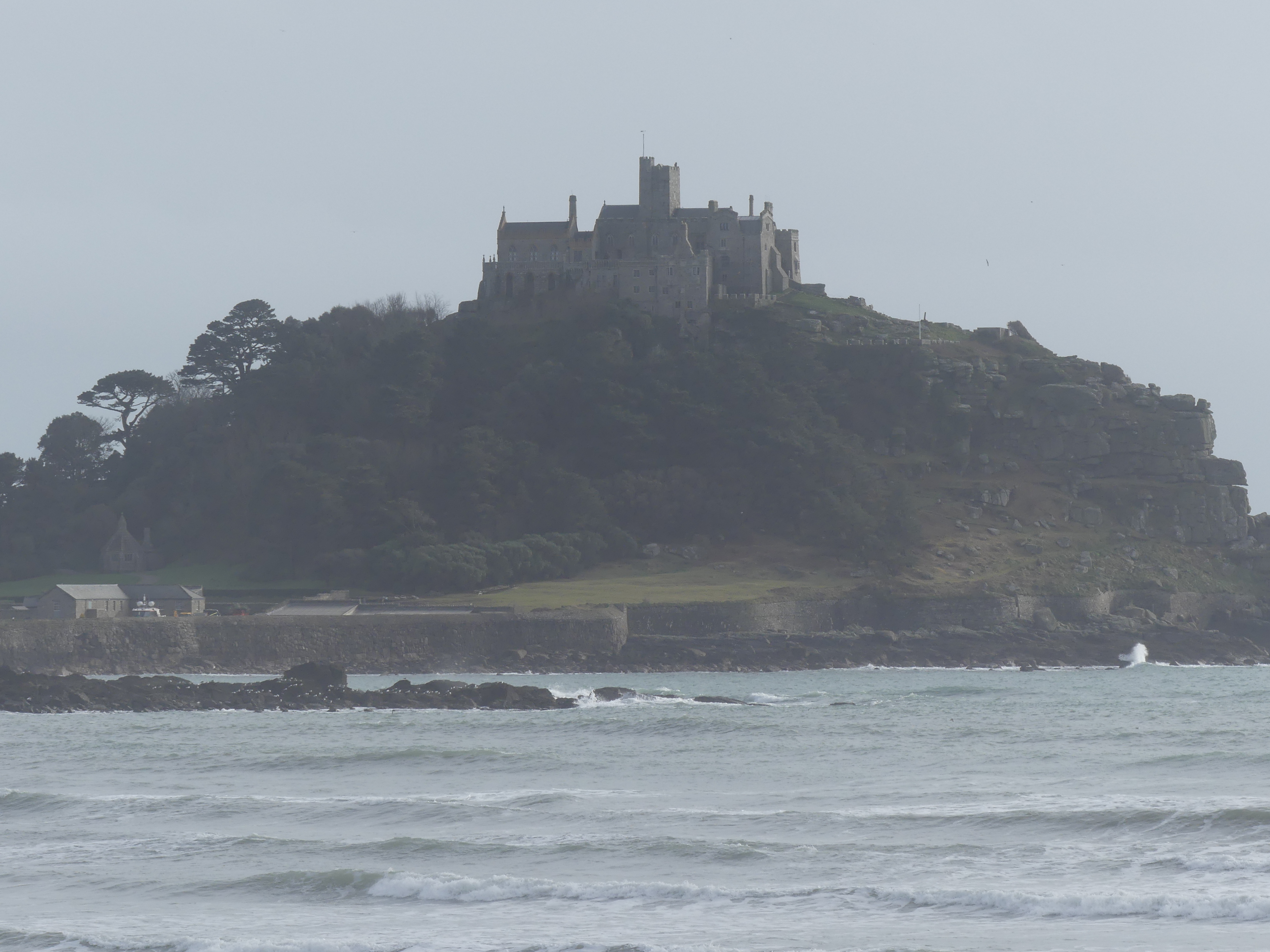
THE RETIREES AND FRIENDS VISIT PERTH AND MARGARET RIVER – day 8 Back to our Itinerary in Margaret River

Star Date 1st August 2024

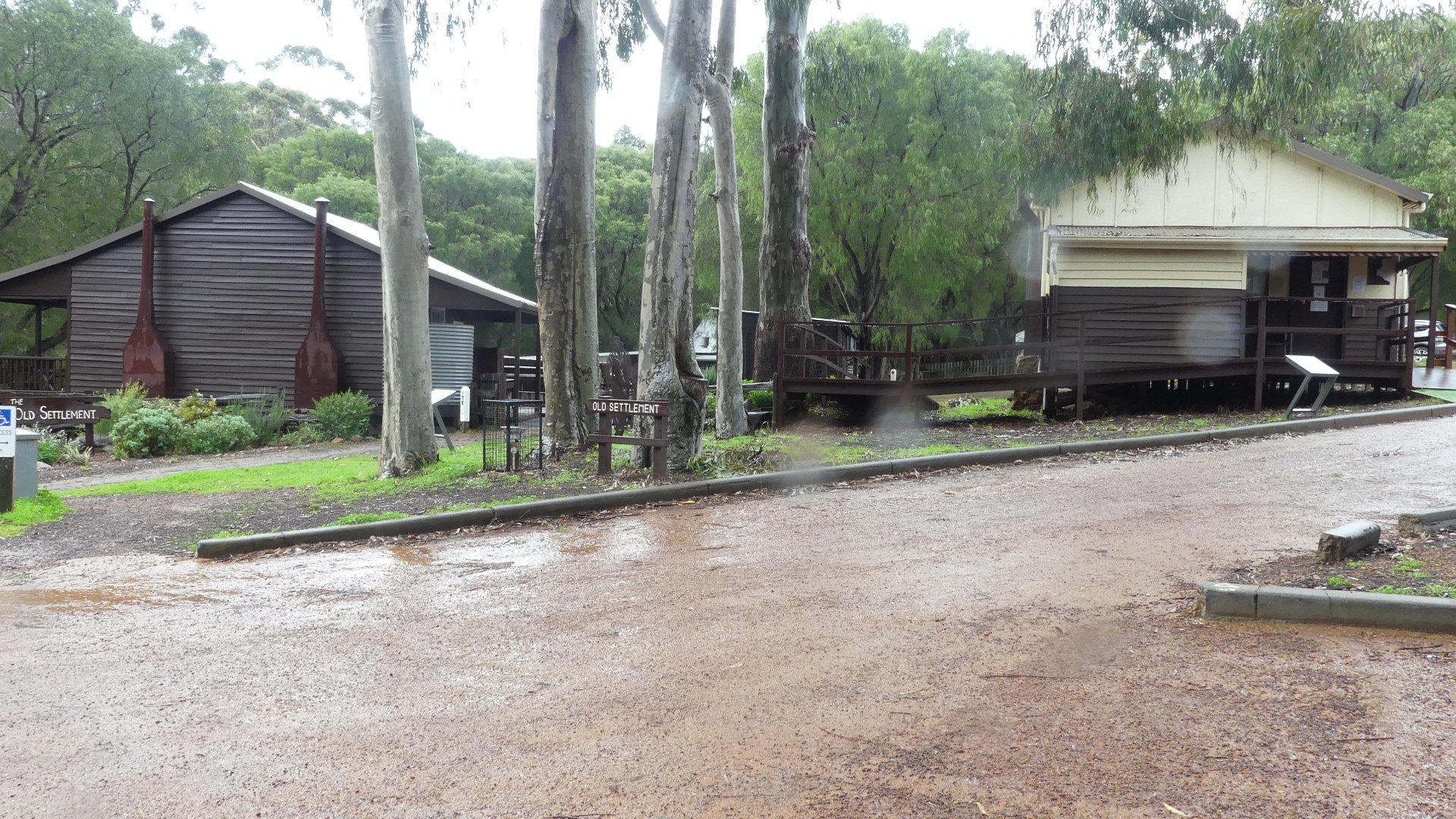
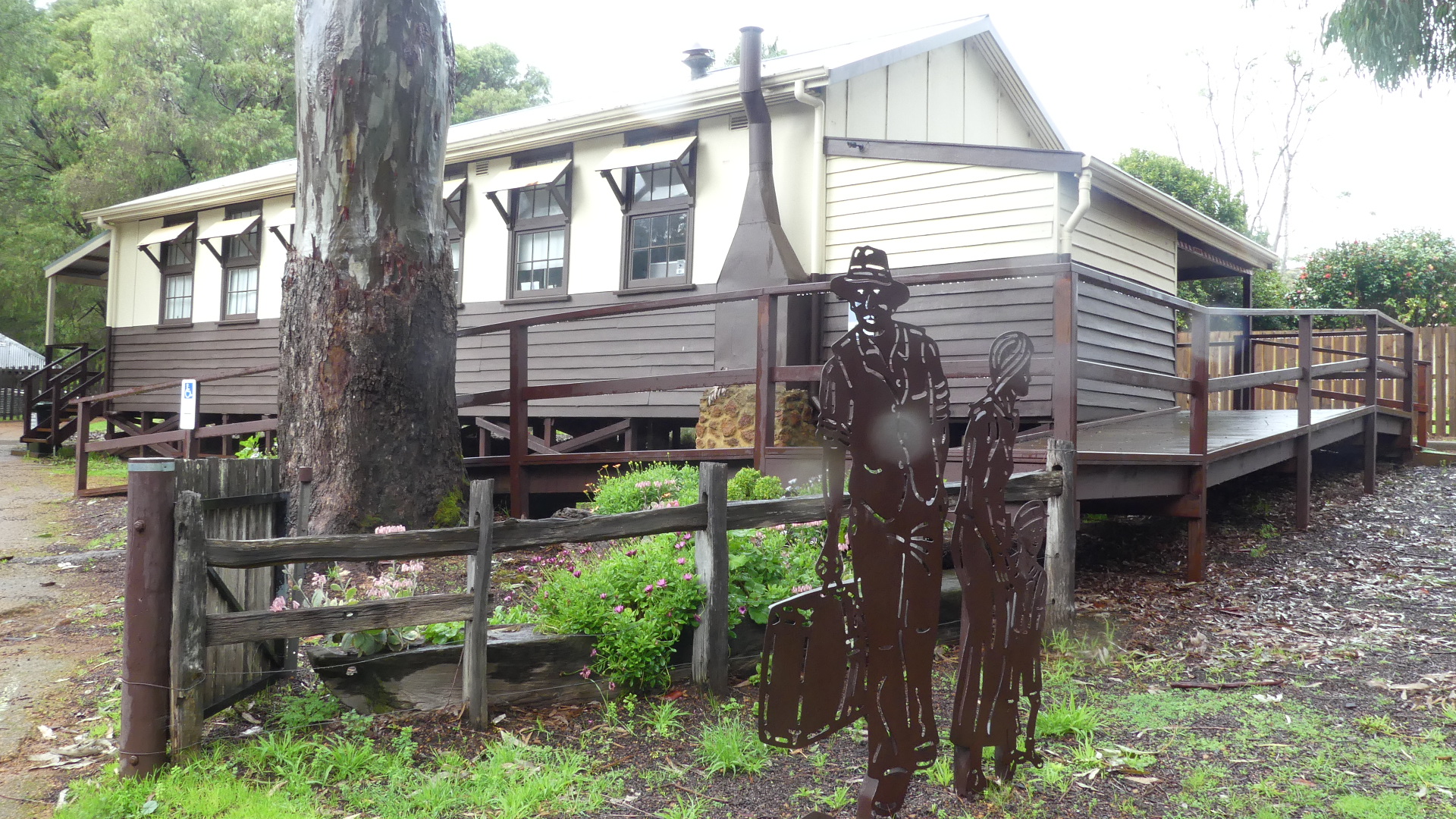
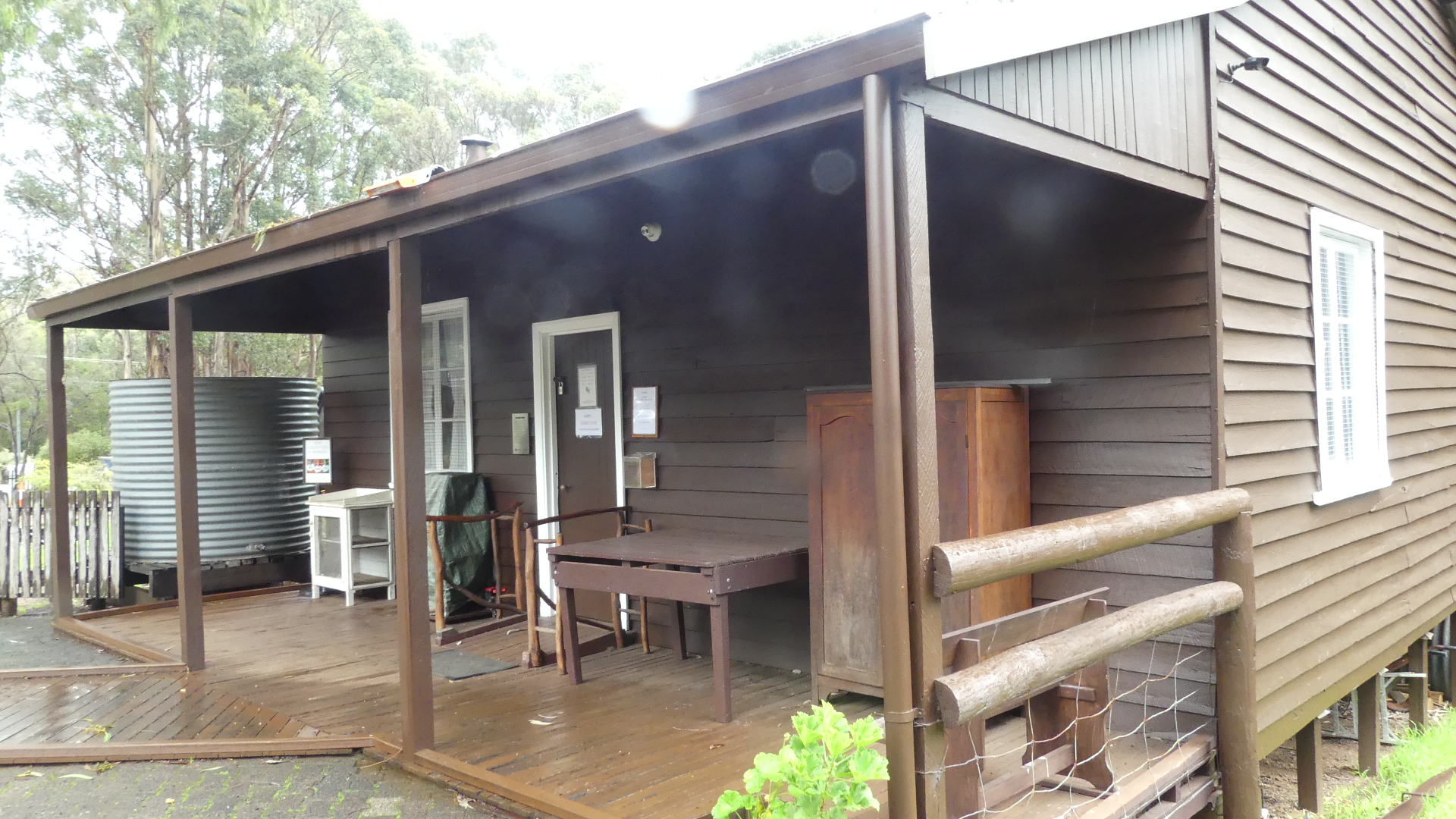
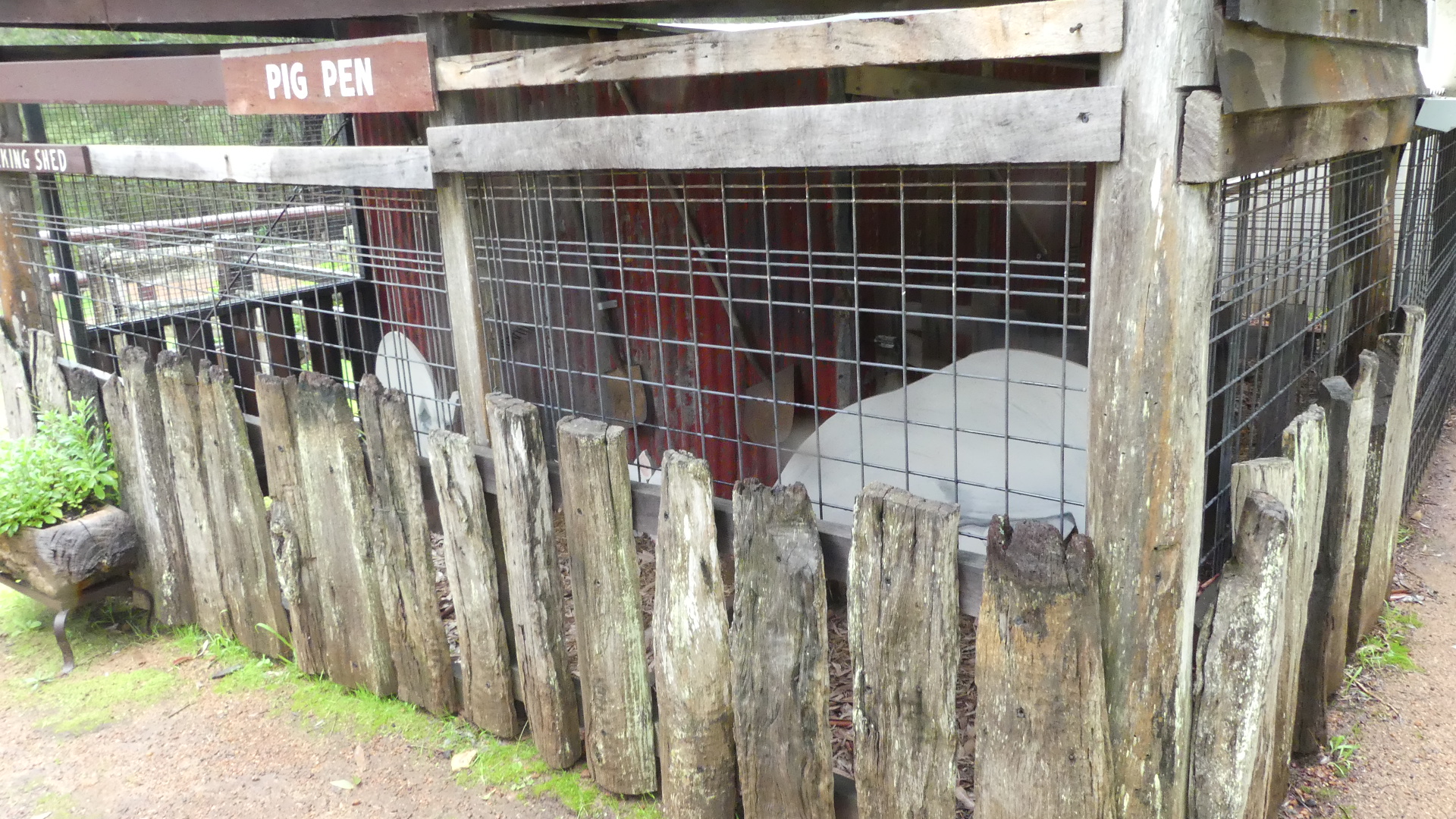
The mornings were quite crisp so the fire was lit whilst we fed the birds and had breakfast. We had word that the Markets were on this morning. Nothing like the word “Markets” to wet the palate so the plan to go to Cape Leeuwin Lighthouse took a slight deviation to the local school grounds for the Markets. A short drive to the other end of the village and there it lay – the Markets – a collection of all strange things and smells a bit like early explorers we lay anchor in the crowded carpark and moved amongst the natives. There was a lonely busker plying his trade before an uncaring audience wound up in the goods on sale. Now I tired very quickly – once around the tents was enough. So I became the buskers sole fan but I was soon joined by Dale and we sat patiently like dogs on a lead waiting for the madam to return.

Once the shopping flea had been scratched the girls returned to collect us and on the road again.

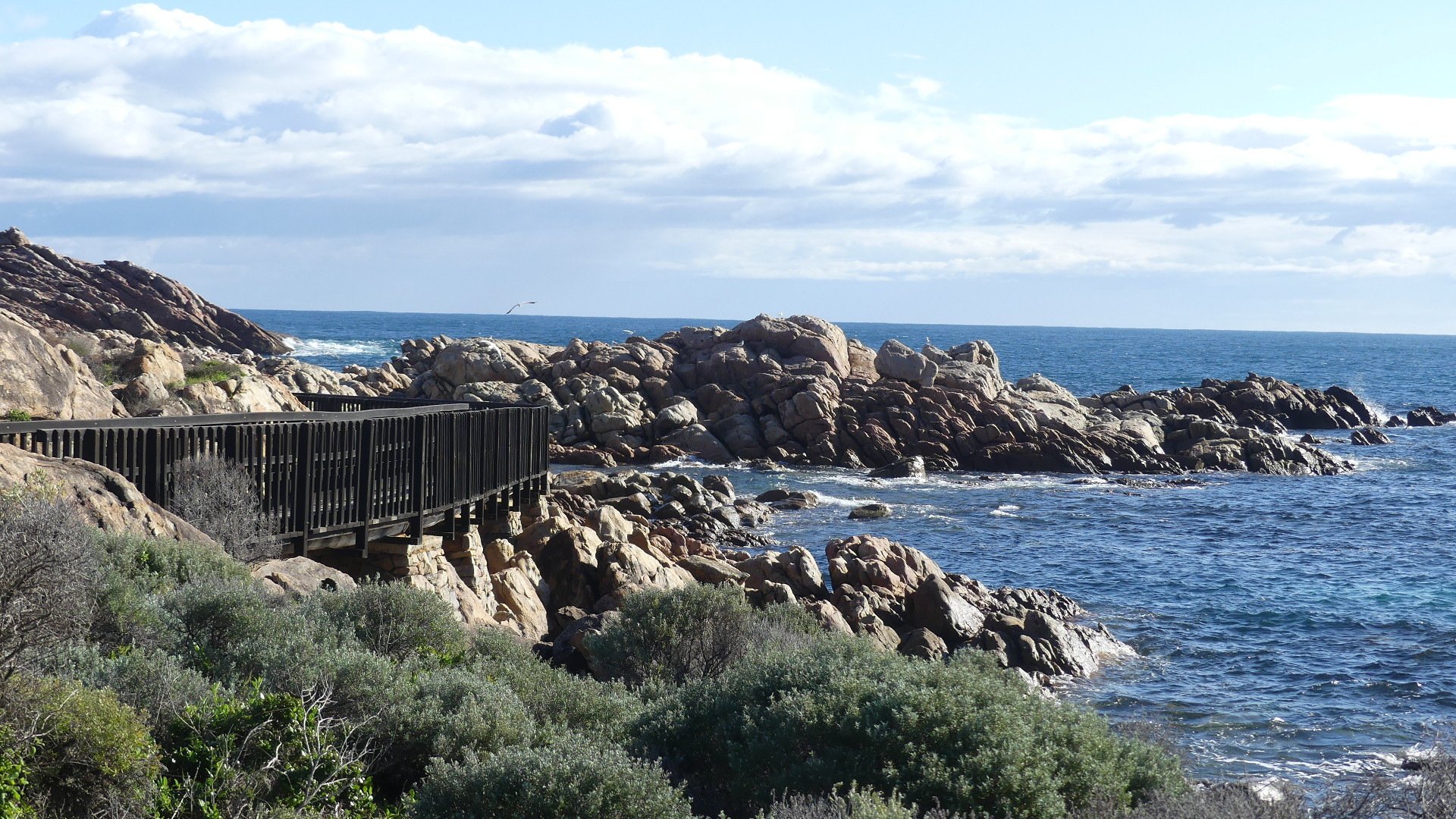
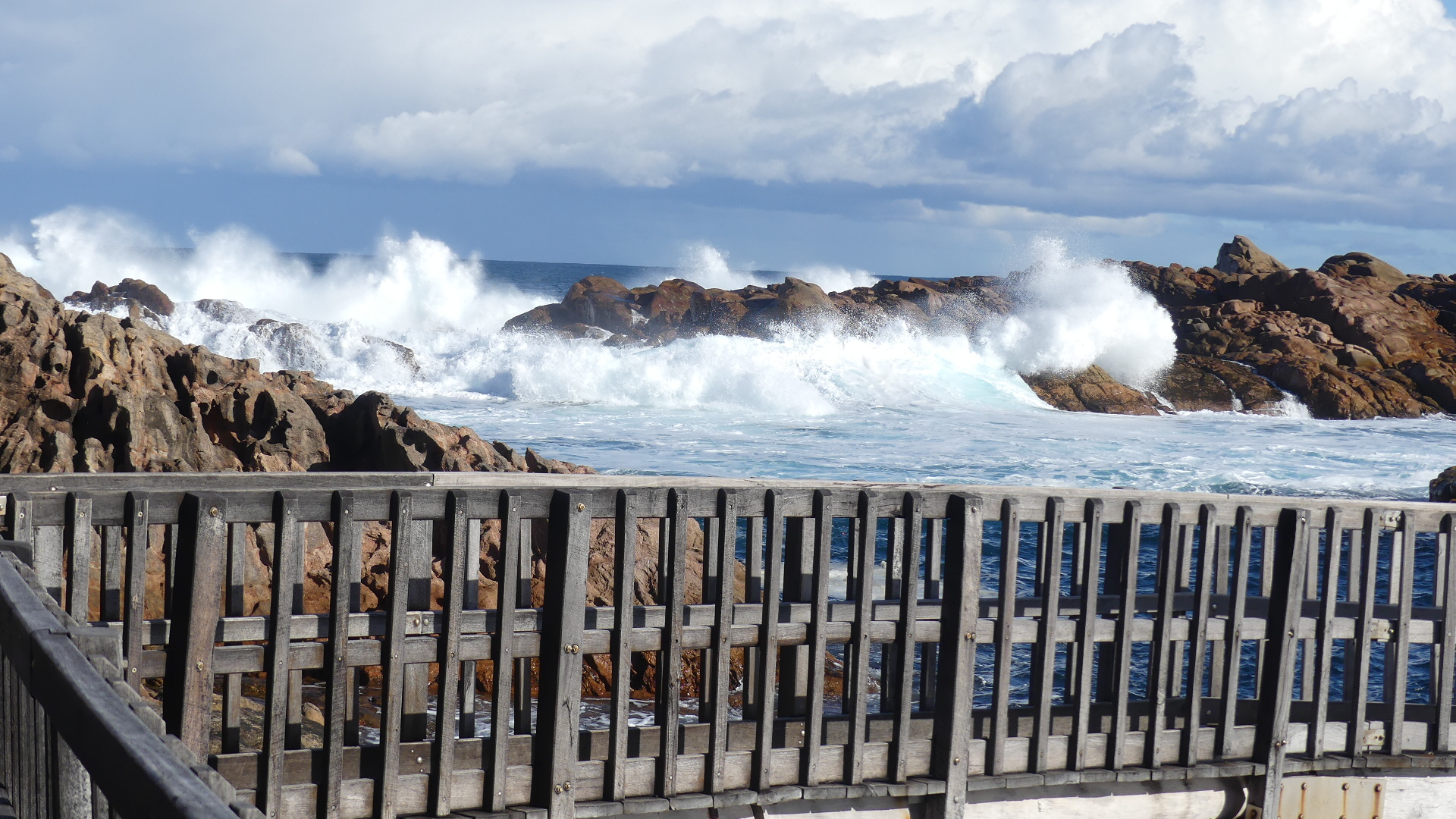
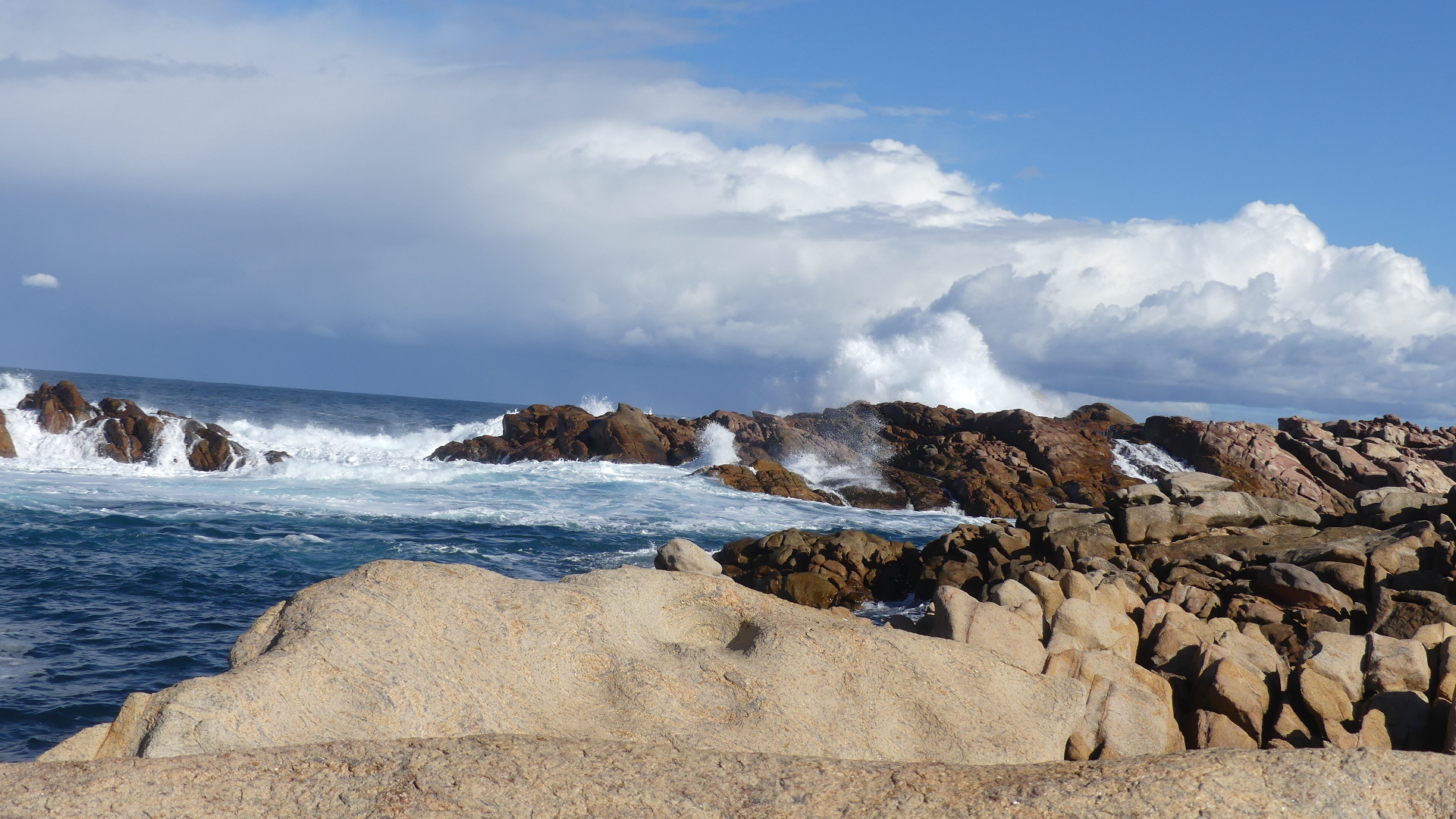
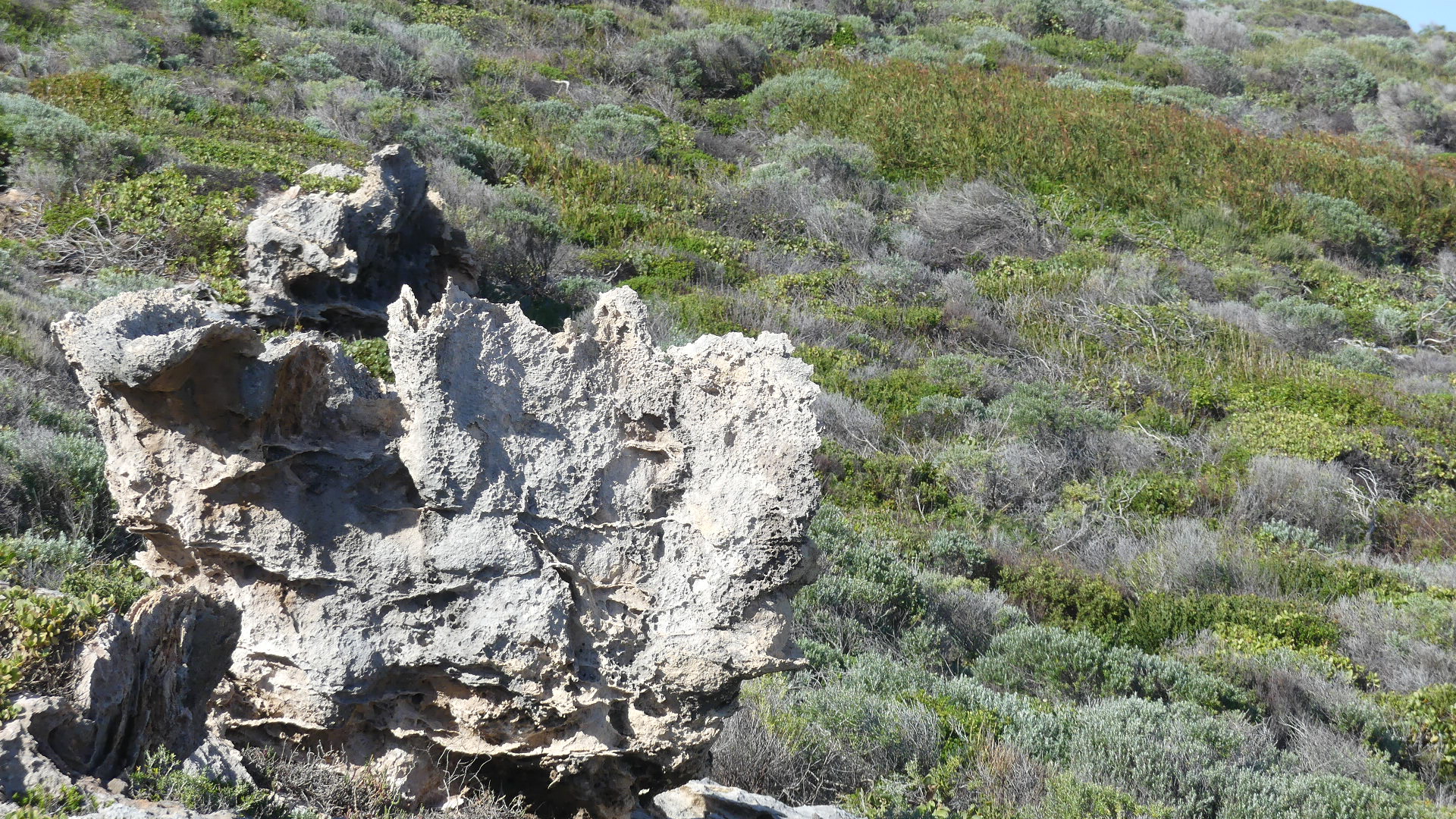
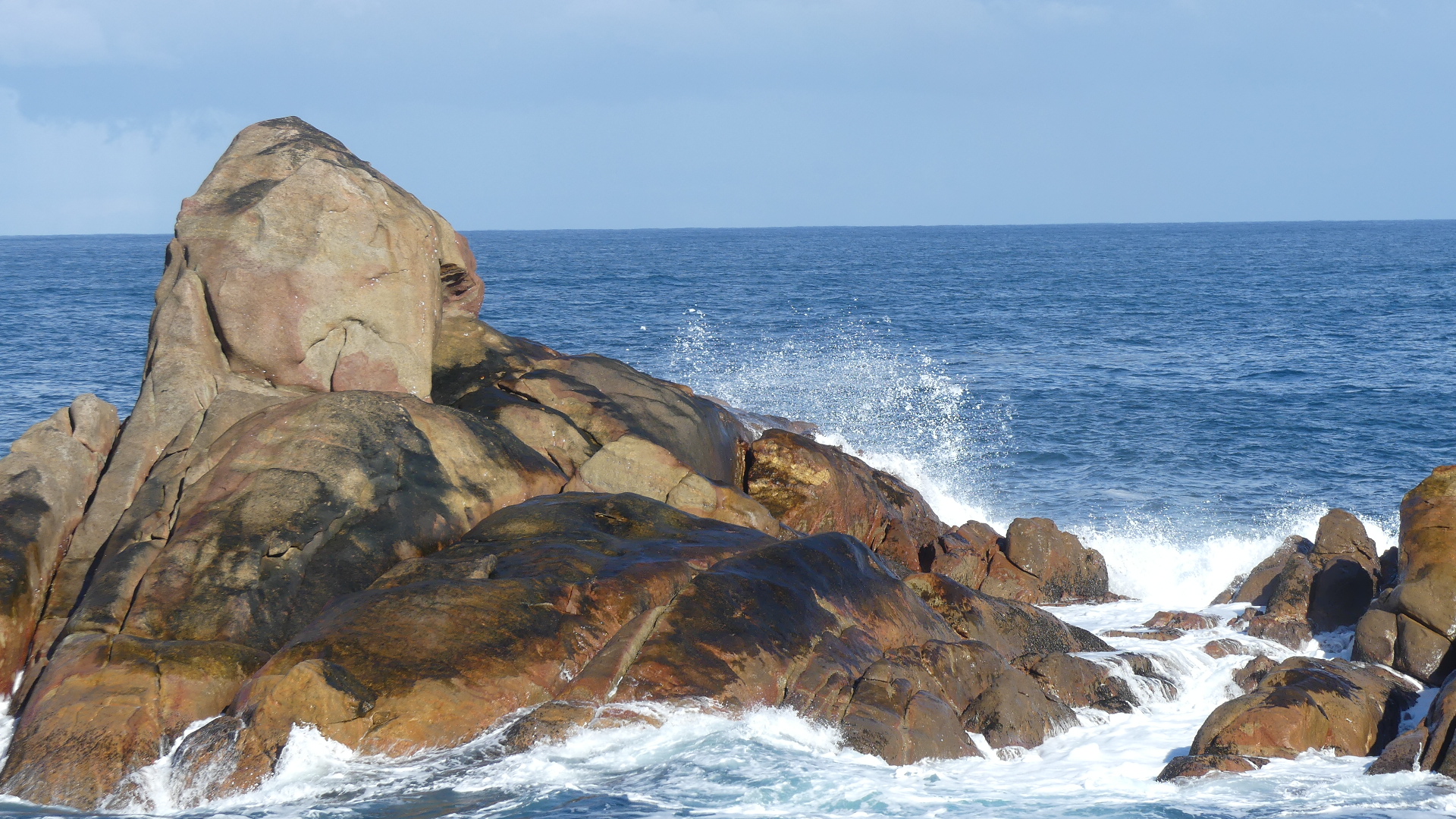
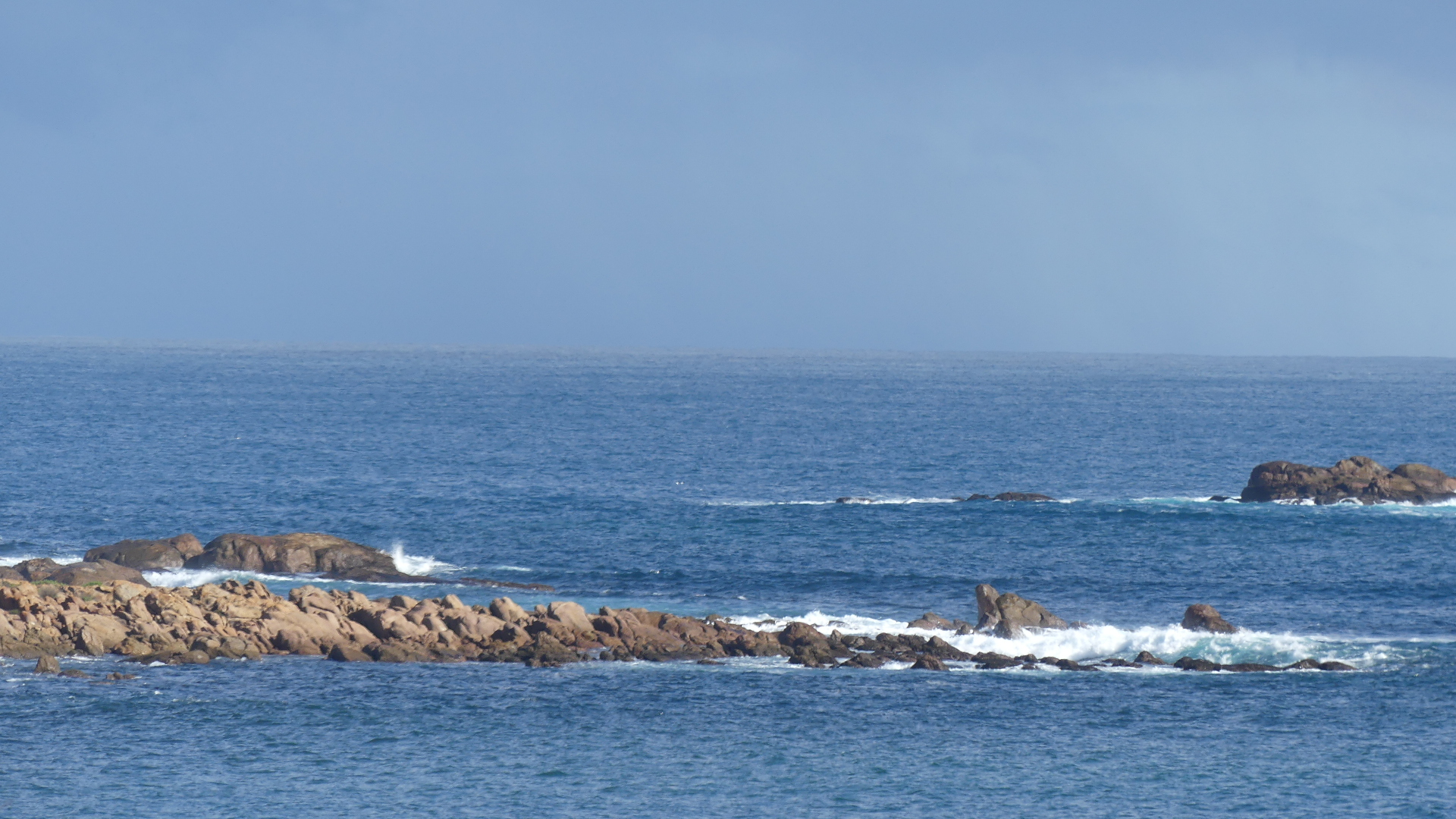
On our way to the lighthouse we had a few other points of interest to visit and the first of these was Canal Rocks – a rocky headland outcrop with interesting formation and wind weathered rocks. The wind was strong but the rocks tell you how strong they can get.

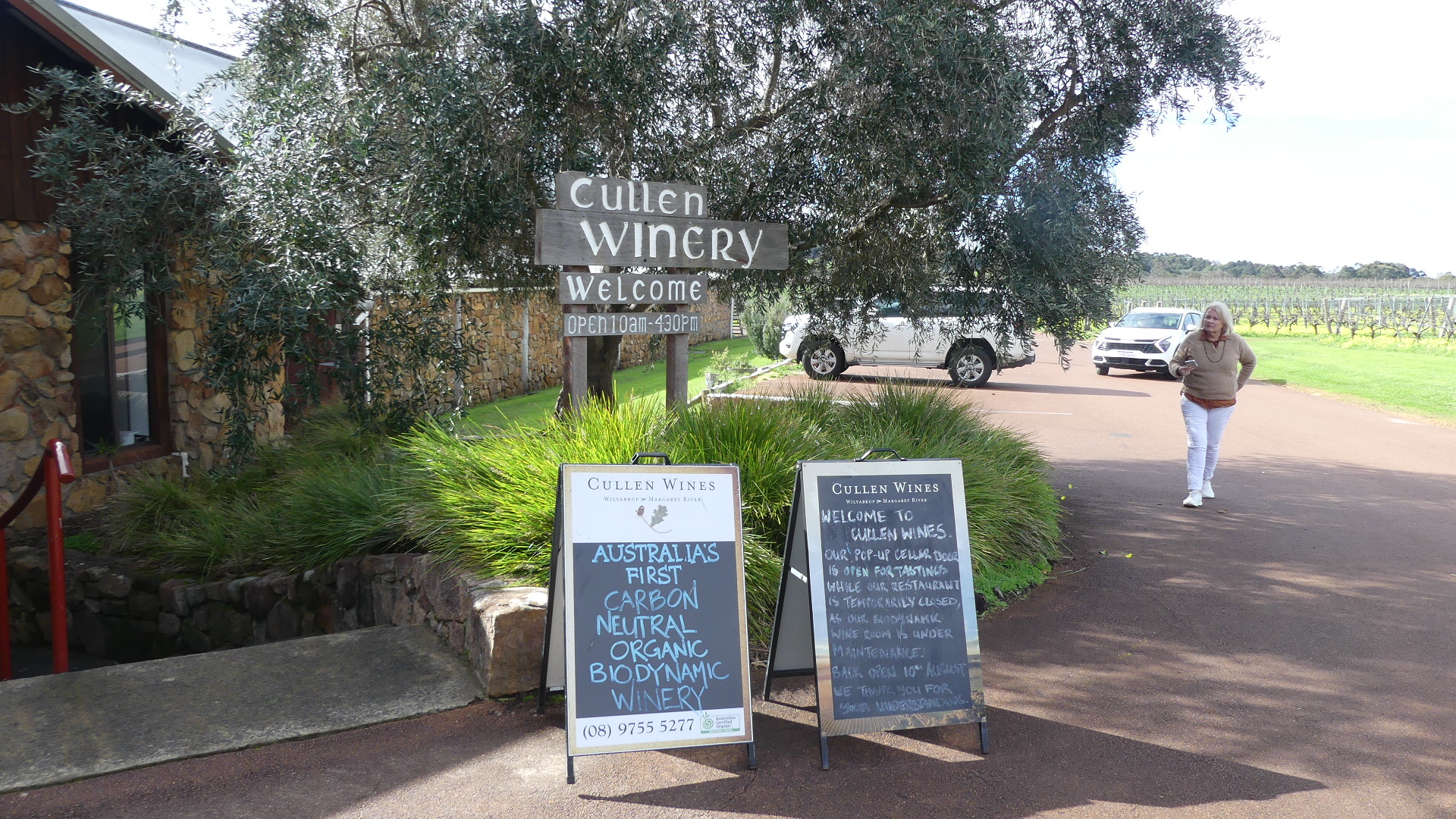
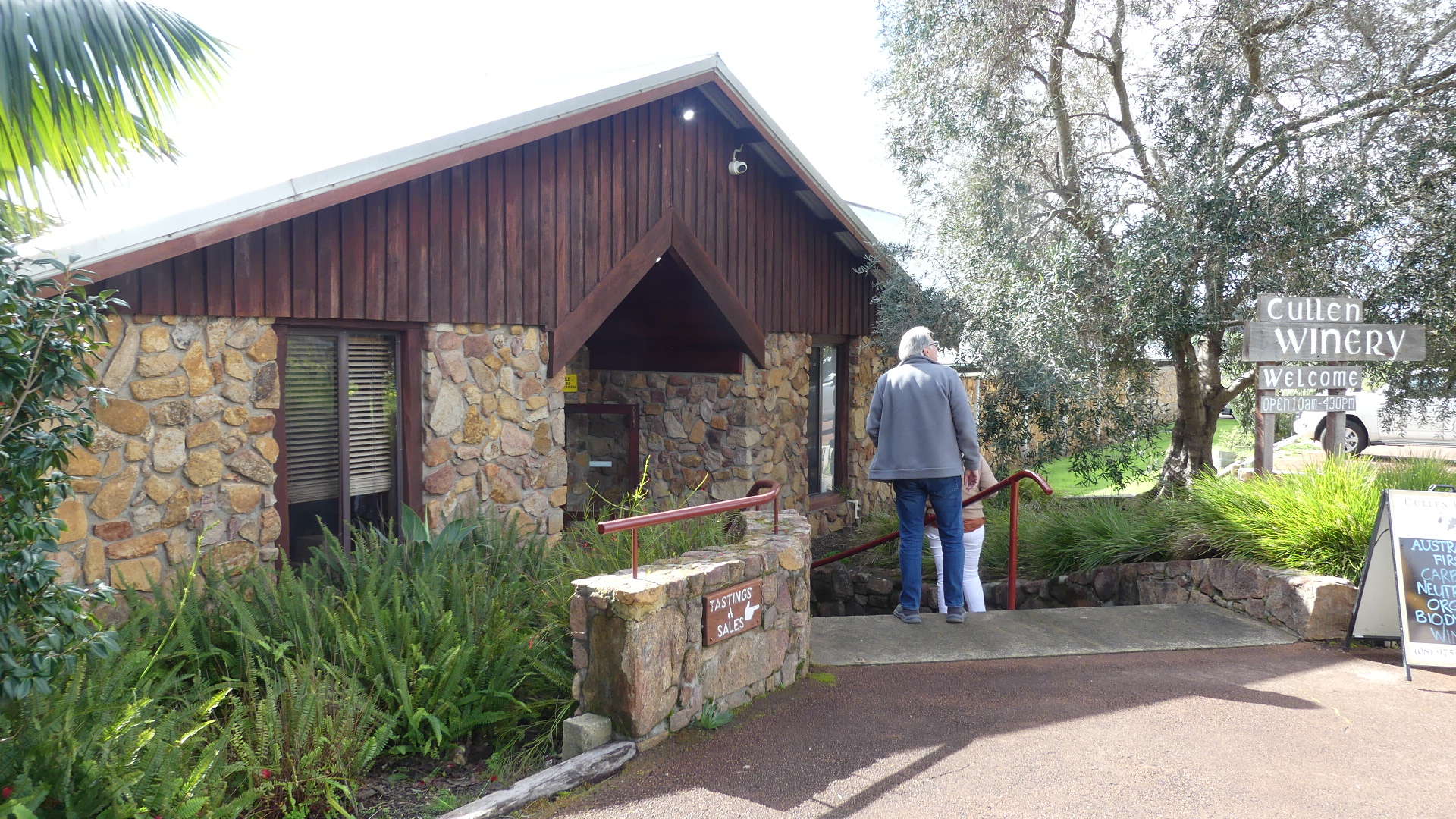
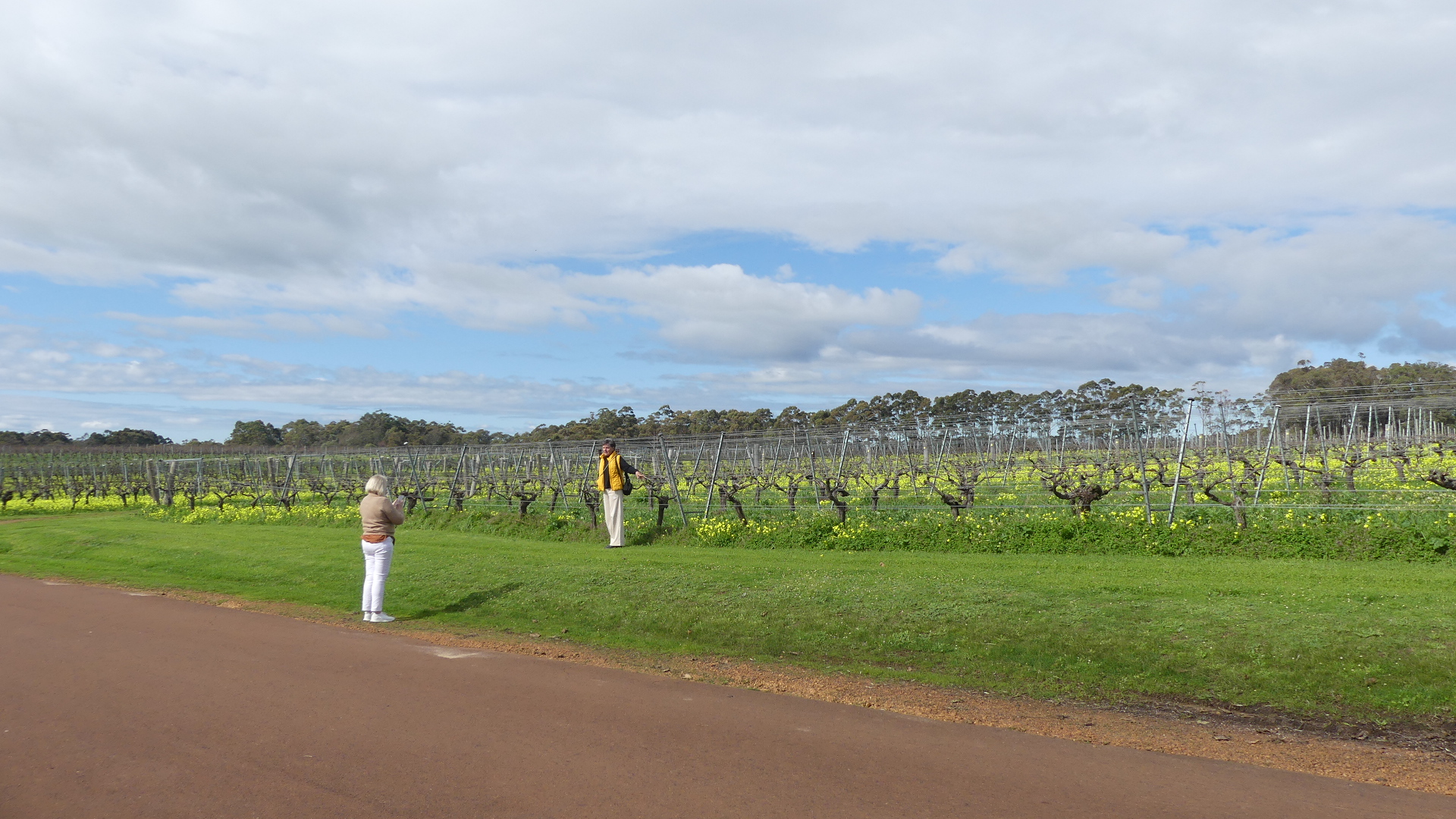
It was still early by the time we arrived at Cullens Wines Cellar Door and vineyard. Our thoughts ran to a hot coffee and a bun but the cellar door was under renovation and the staff disinterested so we basically looked around and moved on.

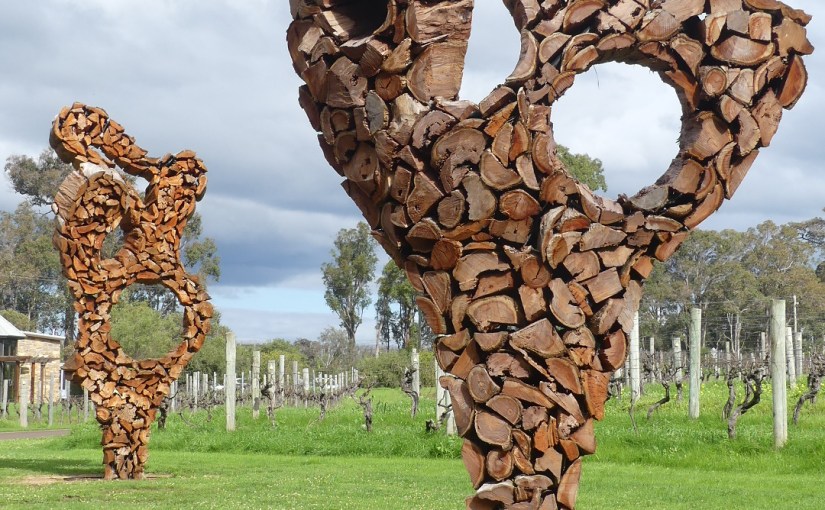
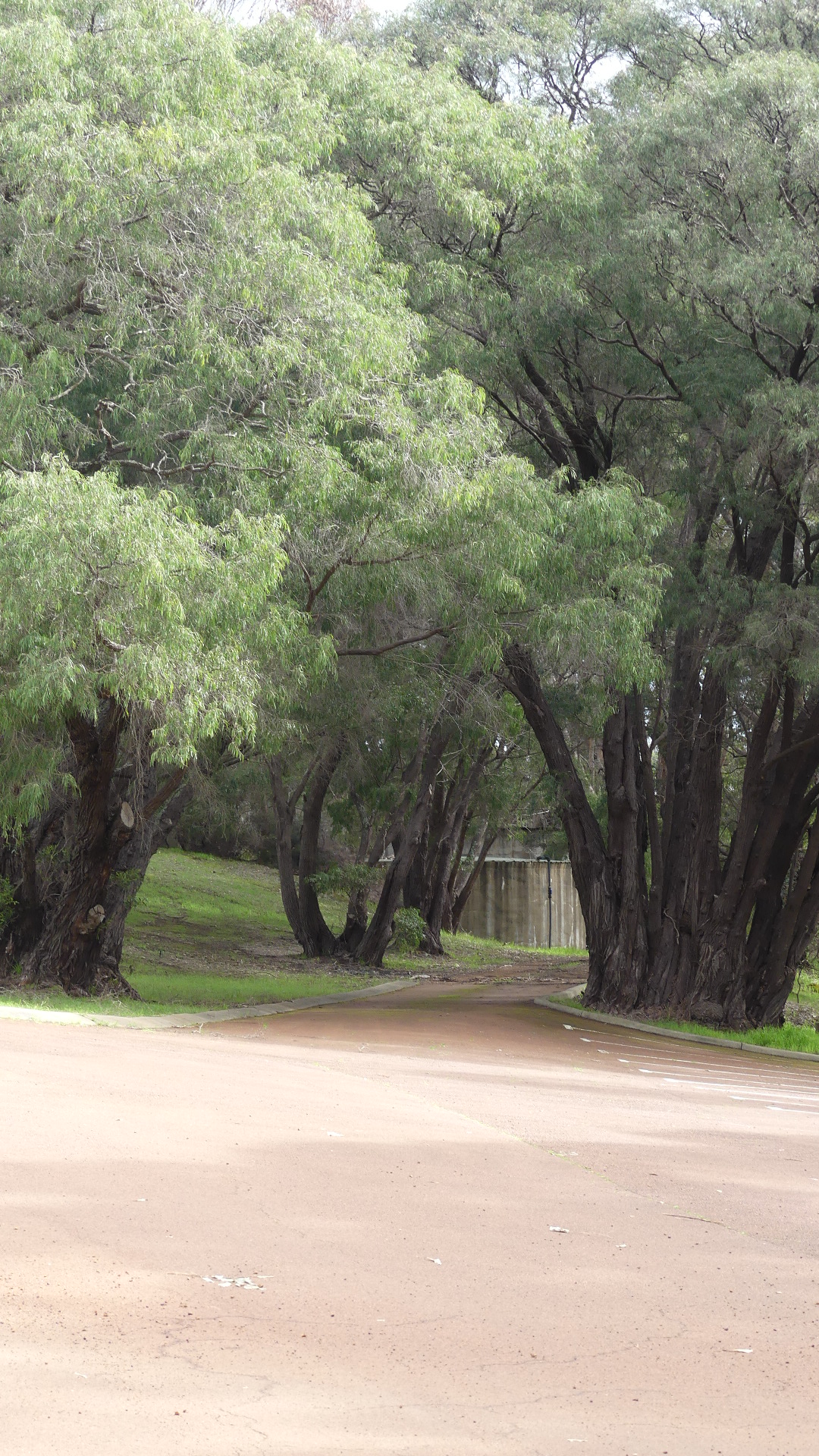
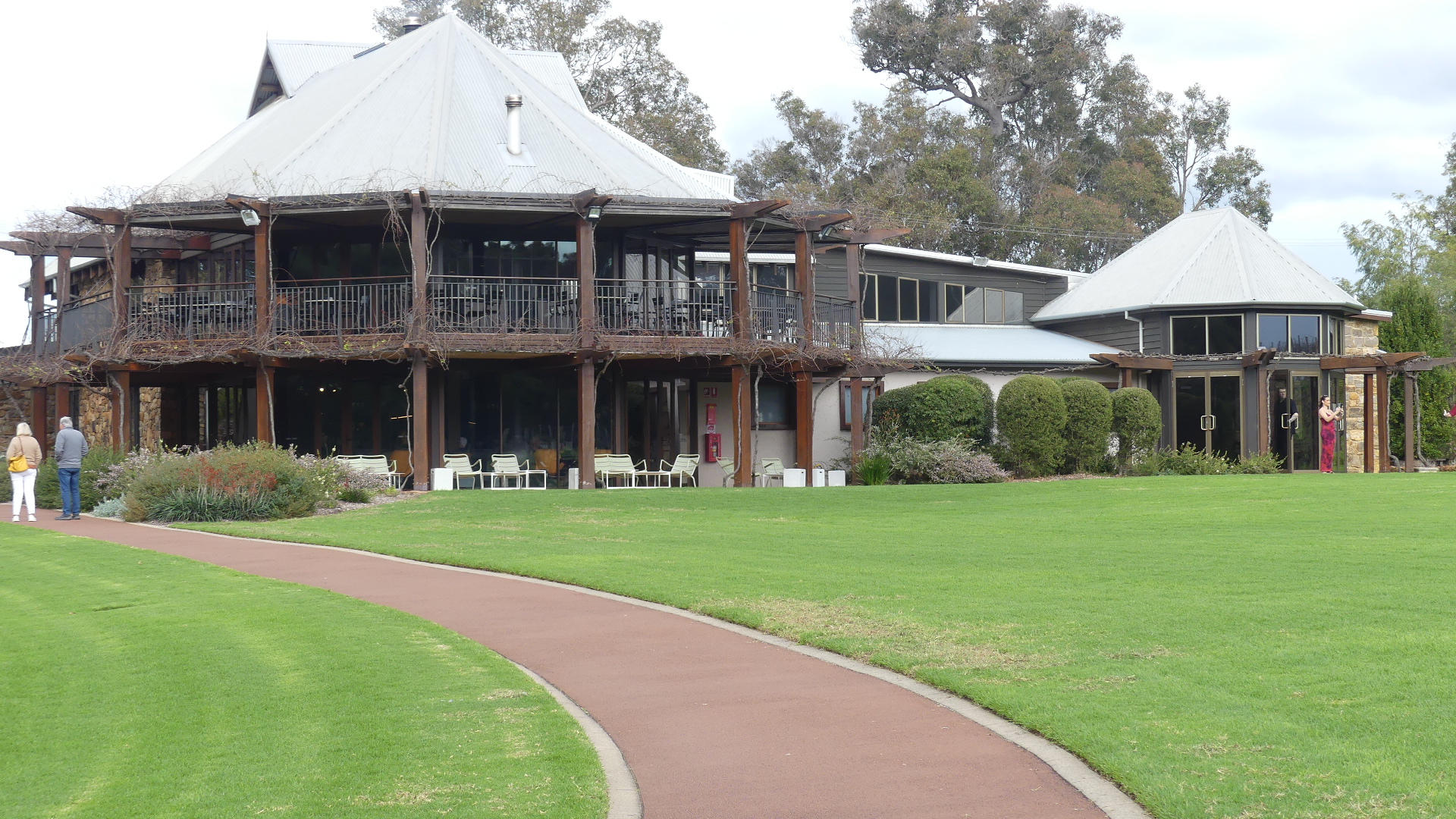
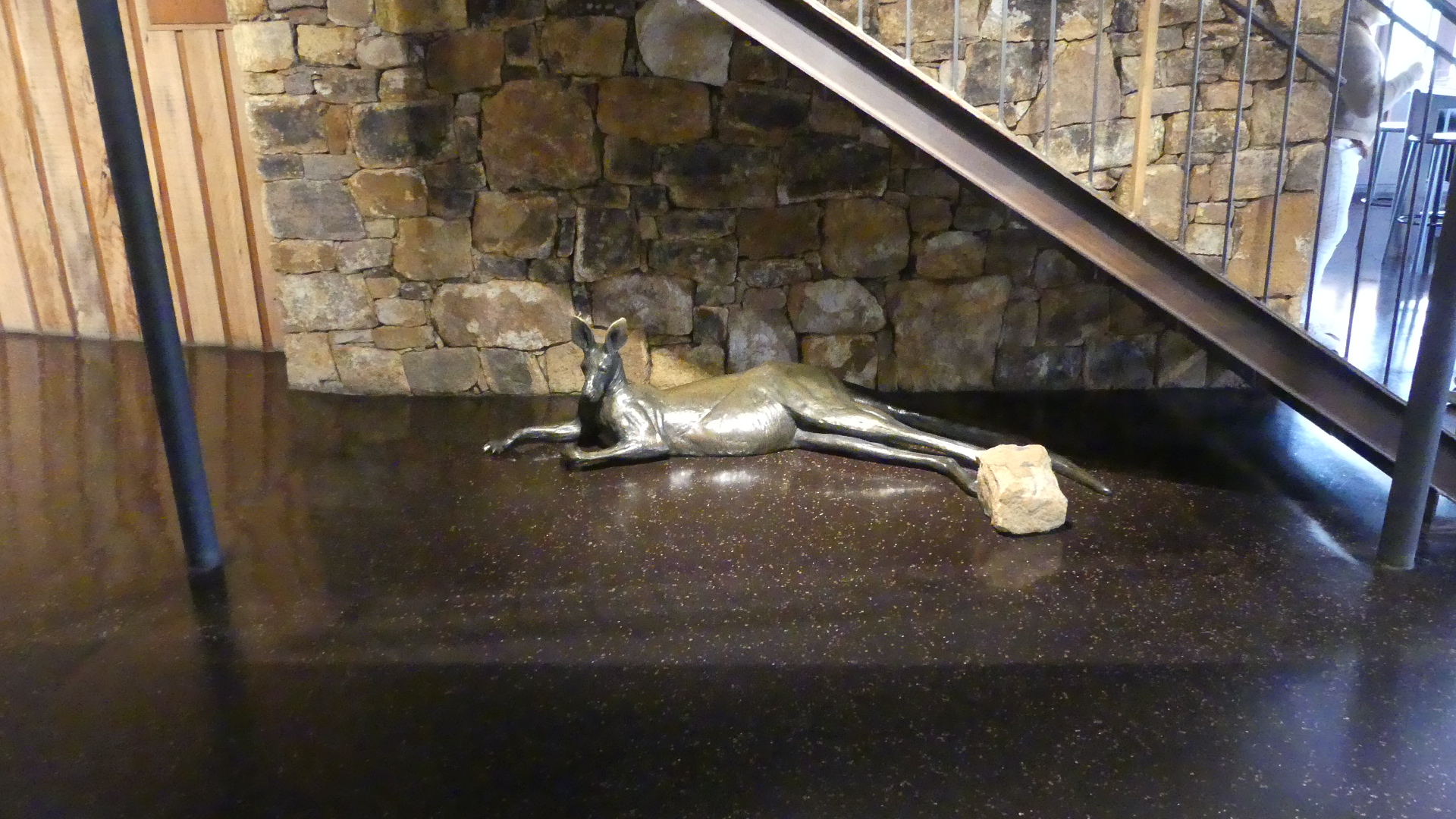
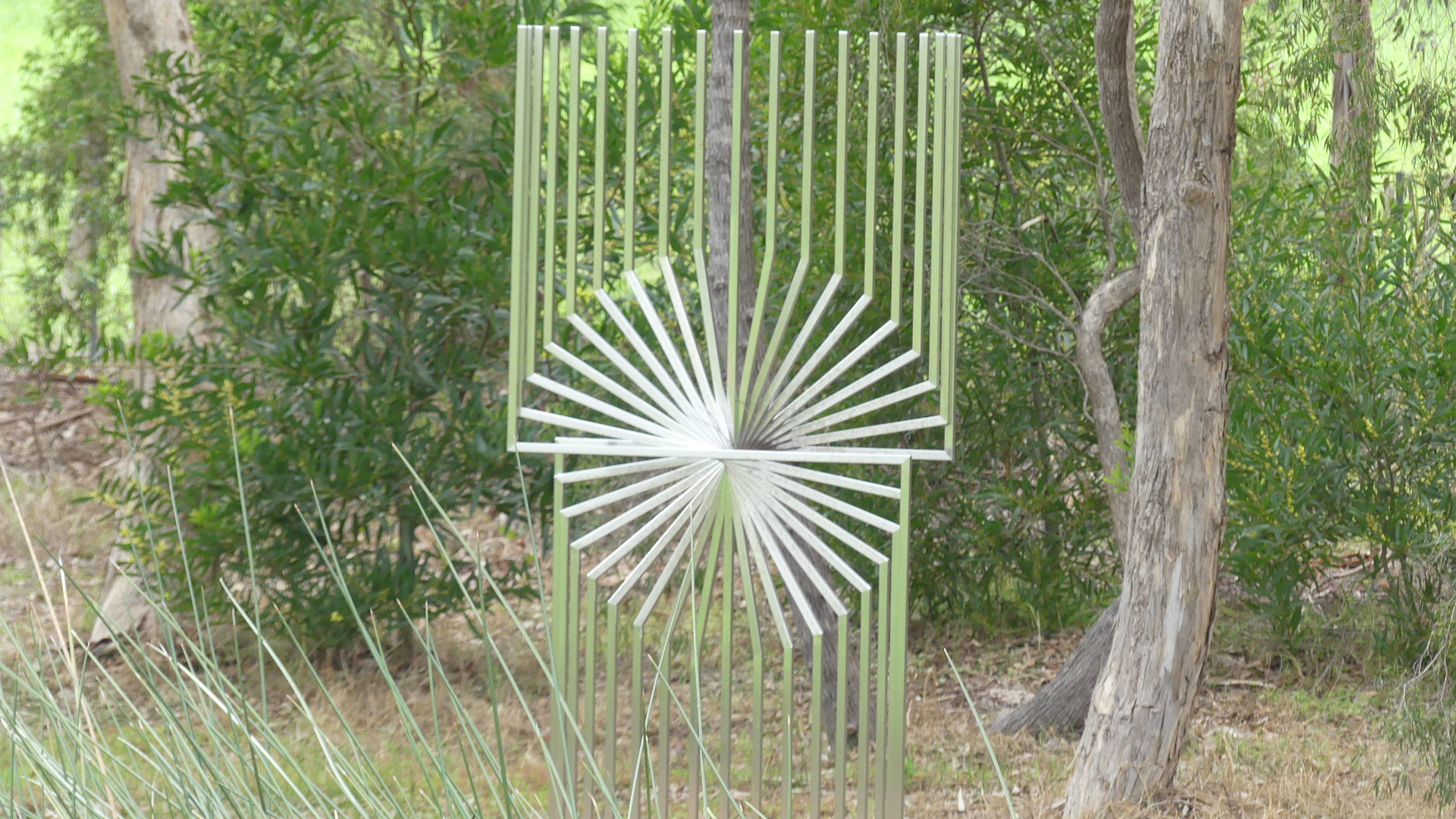
Next winery Vasse Felix. Founded by Dr Thomas Cullity in 1967, its first vintage in 1971, David Gregg appointed winemaker in 1973, the Gregg Family acquire the vineyard in 1984, and the vineyard and cellar door were acquired by the Holmes a Court Family in 1987 and remain the owners today. The cellar door is picturesque and the top of the range in Australian cellar doors. The entrance is manicured with a large well maintained carpark so much so that an odd looking home made vehicle stands out like a sore thumb. Sculptures decorate the entrance walkway with gracious trees and landscaping – the carpark is worth visiting!

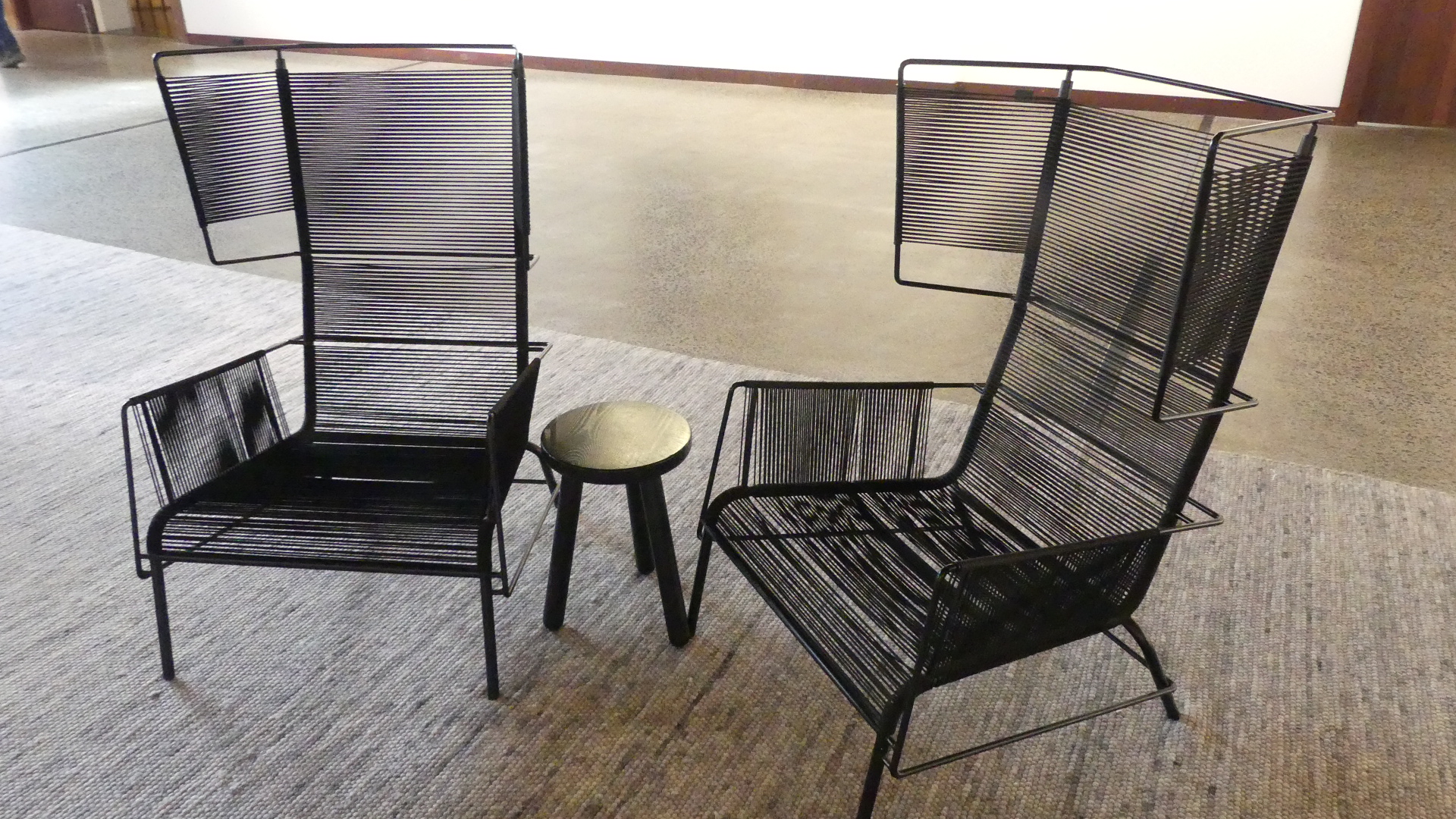
Stepping inside is an experience in its self. There is a gallery behind the enormous doors shown below and only two chairs to sit an admire the art. There is a cellar of the very best Vasse Felix wines above which is the wine tasting area and cafe and outstanding pieces of sculpture and art then upstairs is the restaurant exuding an opulence of elegance with an Australian flavour. The dining room was full of guests and I felt like a pervert spying on them so I declined to photograph the dining room. As we left we were followed by birdsong.

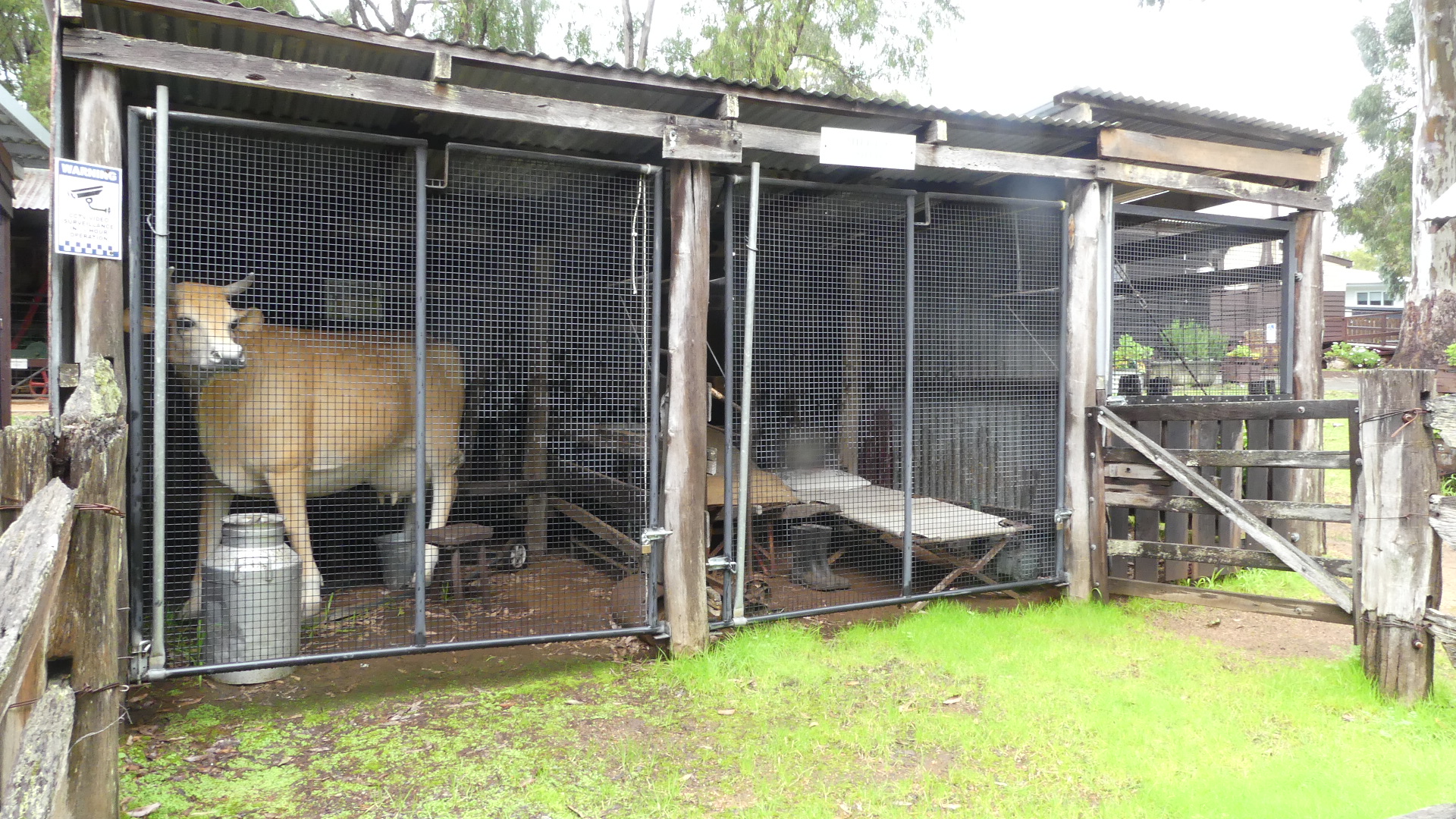
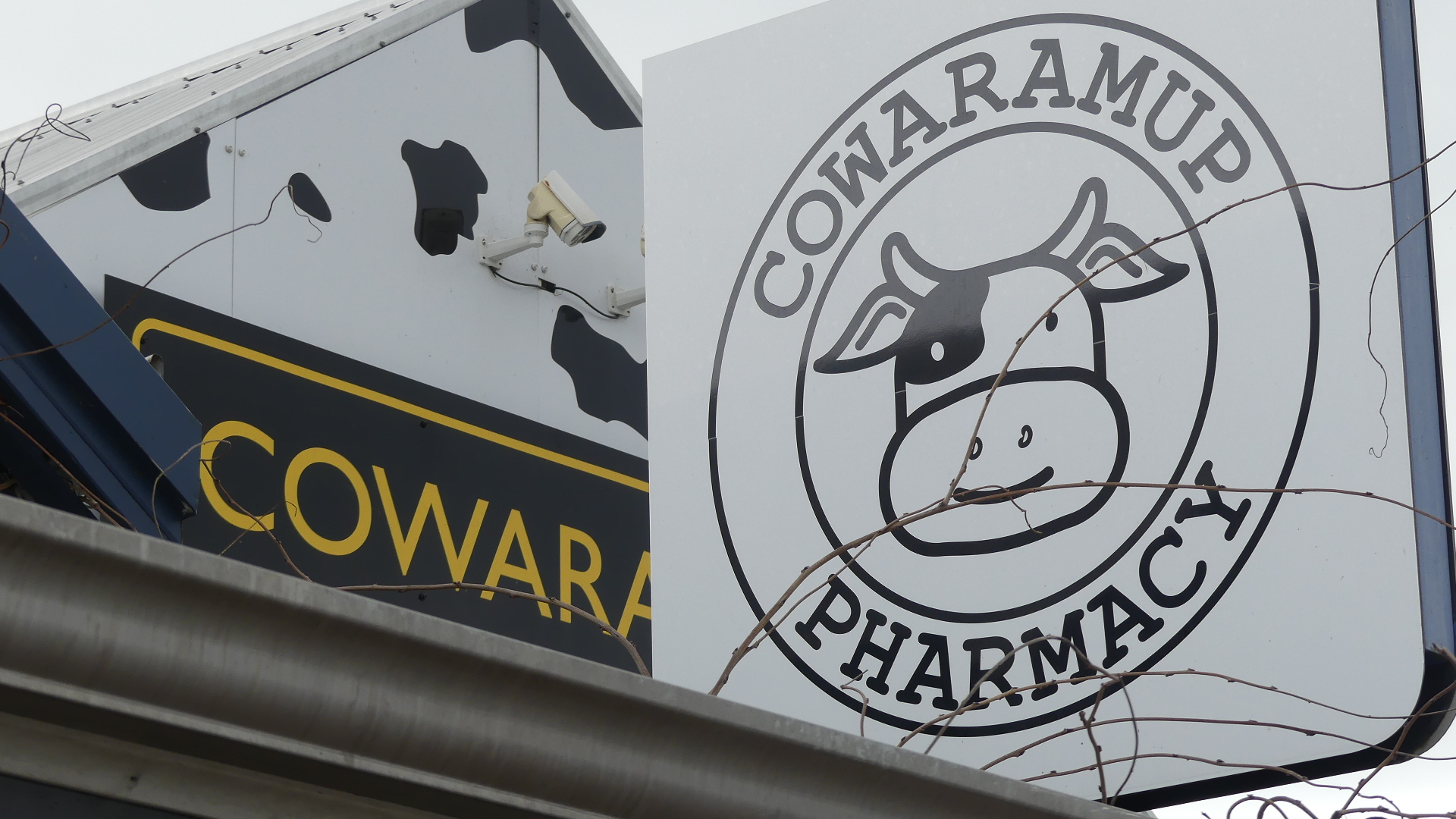
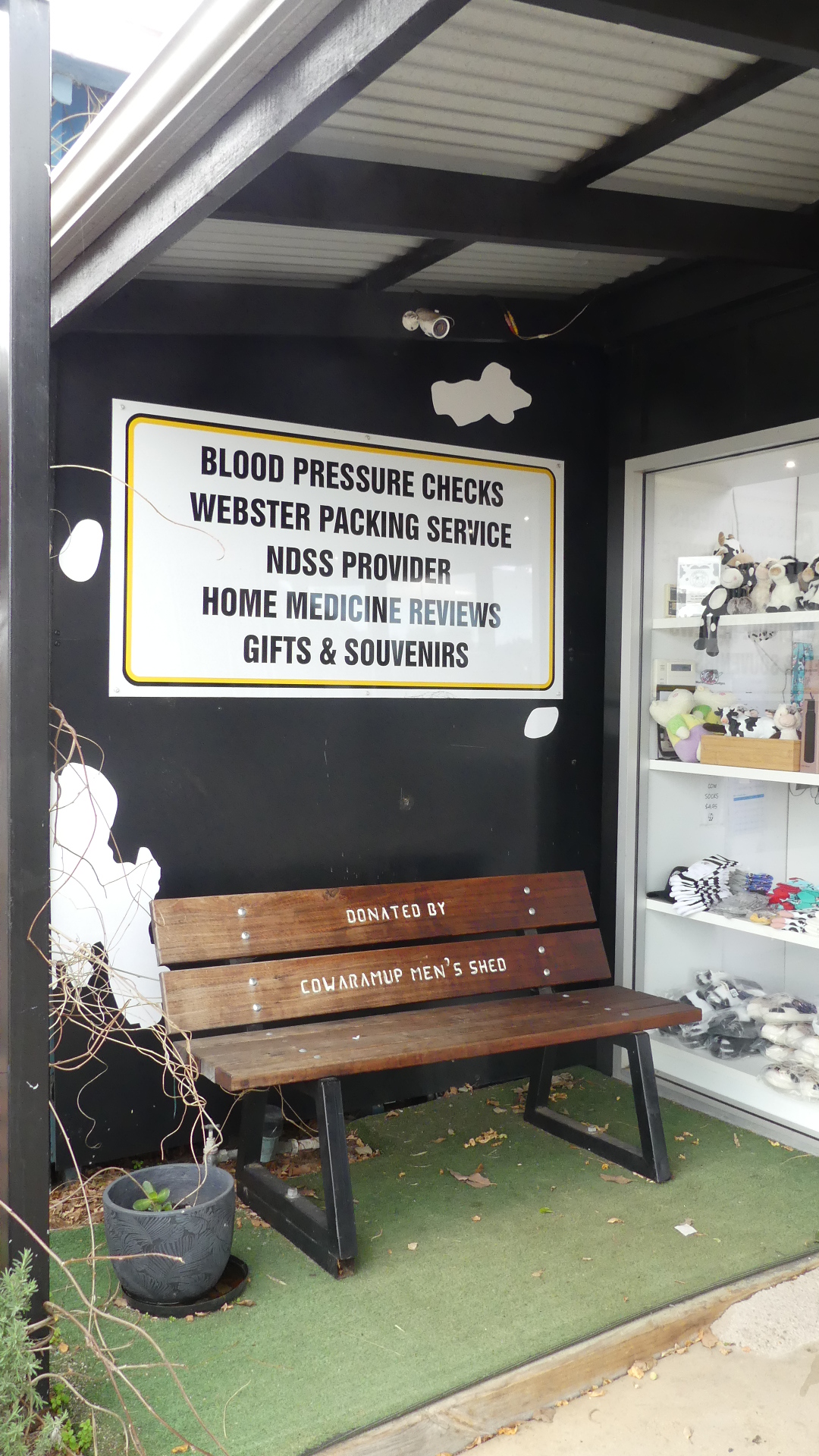
Finally time to return home but not before we visited Cowaramup; a village just up the road from Margaret River paying homage to the dairy cow. These fibre glass cows and calves adorn the footpaths and shop fronts throughout the village adding significantly to the character of the place. The pharmacy was particularly caught up in the mad cow disease.

There were a number of shops we had to visit and fortunately 1 was the French bakery where we obtained lunch then a Curiosity shop (I found it curious we were in there) and the sweet shop – I missed that having been caught up in curiosity. We were now close to our home and the fireplace and bottle of wine was calling – no sorry that was the birds for their afternoon feed.

We will be back on the road tomorrow this time going to the most south-westerly point on the mainland Australia.

December 2024

THE RETIREES AND FRIENDS VISIT PERTH AND MARGARET RIVER – THE FOUR MUSKETEERS IN SWAN VALLEY – 2024 DAY 5

Star Date 29th July 2024.

Batteries fully recharged – the camera of course.

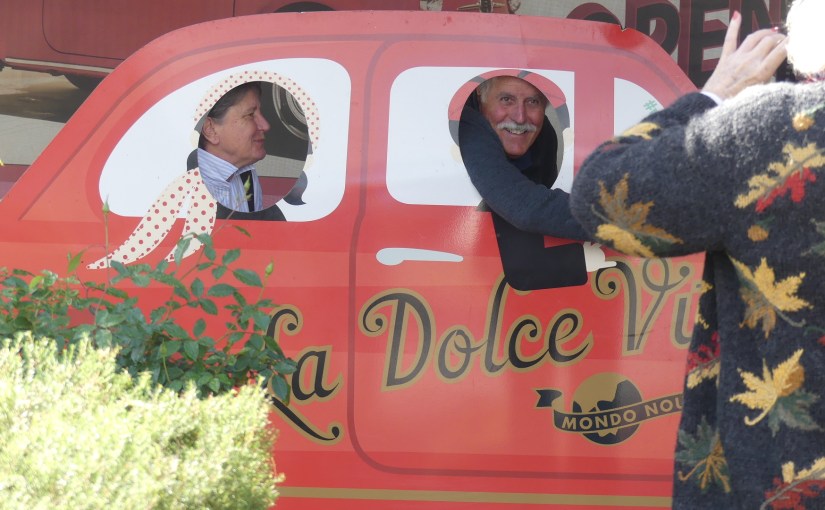
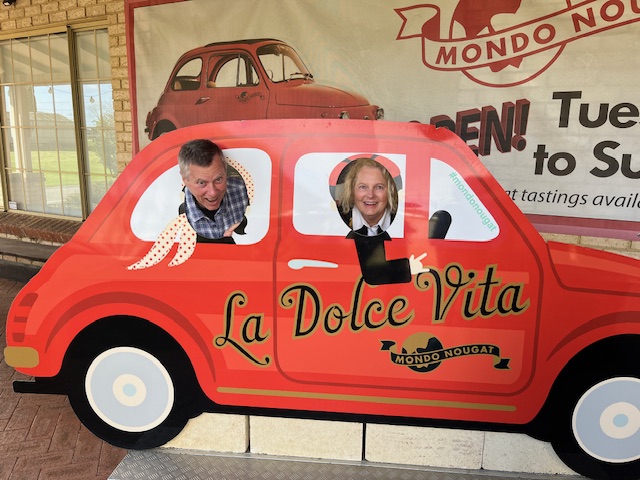
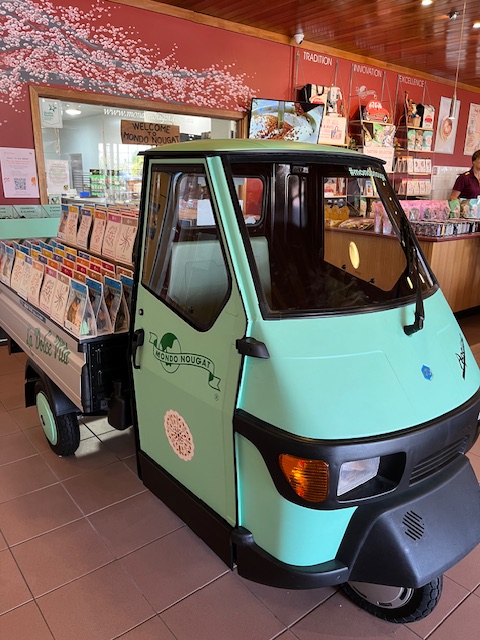
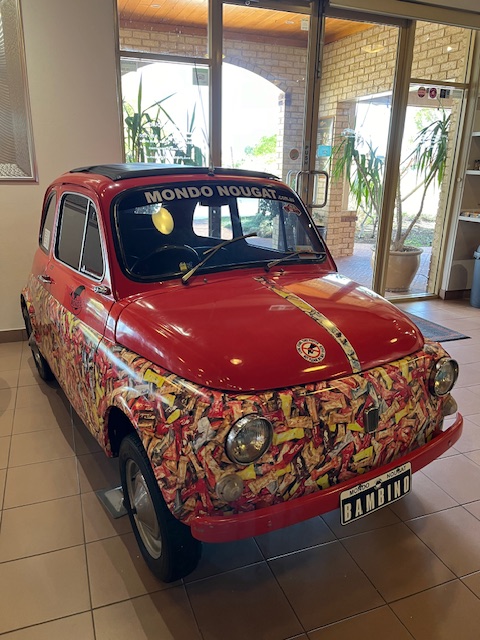
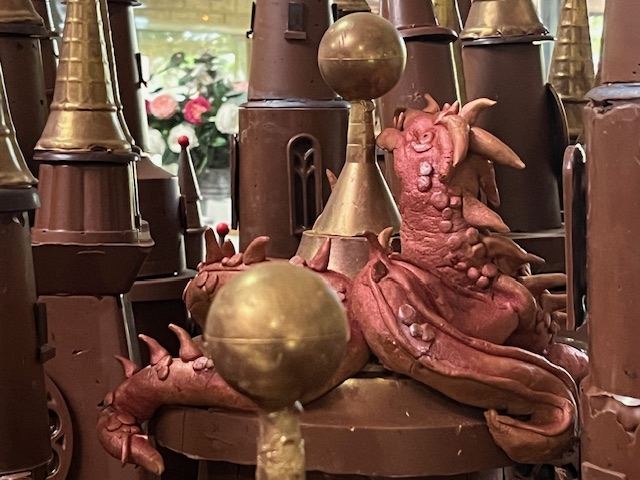
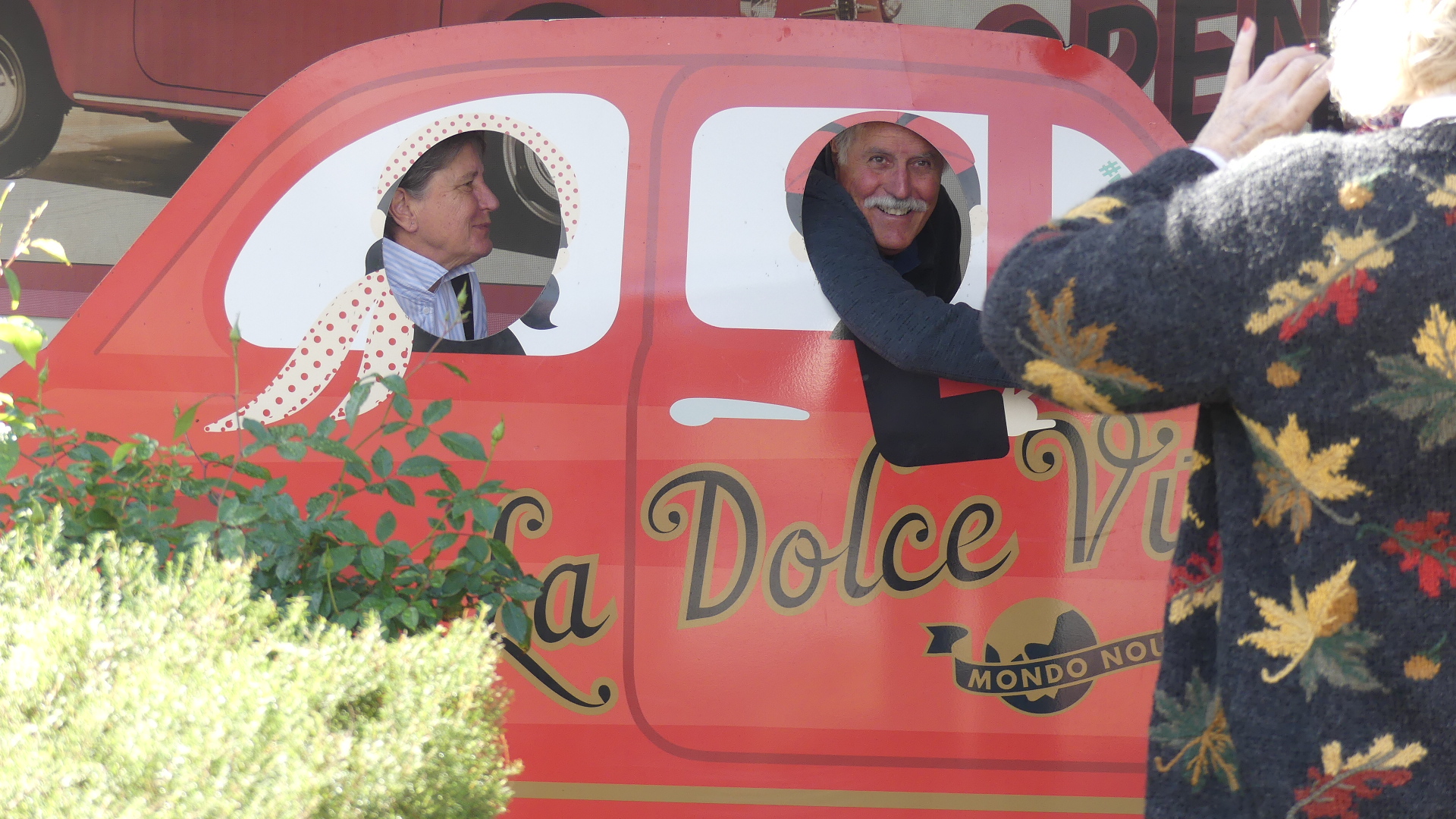
Did I tell you we handed the car back to cousin Ken which meant that we got the opportunity to unite our efforts to explore this big wide land or at least Swan Valley. After feeding the birds and ourselves we picked up the tourist map provided by the Tourist Information Centre and Zdravka’s itinerary and headed out for adventure. First Stop – the chocolate shops. Oh, the Morish Nuts shop was worth a stop for a photo too.

Then we moved onto the House of honey – a sticky situation developed.

We continued our exploration of the waterholes and camp spots finding delights wherever we went.

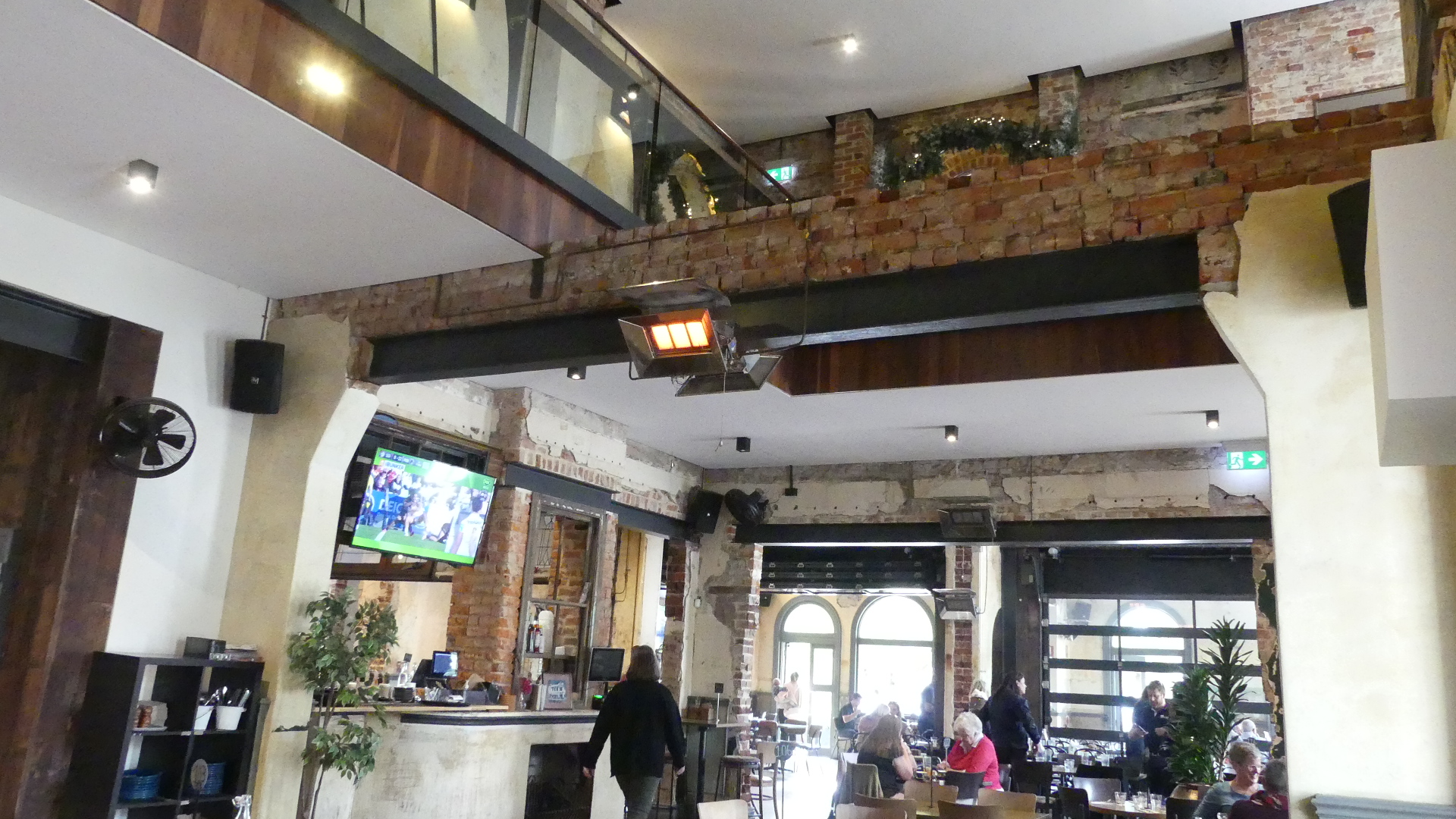
After filling the morning with all the delights of the valley we returned to Guildford and the selection of somewhere to get lunch. Now there are a number of pubs near the centre of the old town – The Rose and Crown – well we had been there, the Stirling Arms built in 1852, or the Guildford Hotel which had been the subject of a fire and we decided to go to the last one Guildford Hotel to see what they had done to the menu and whether it was all burnt up. The reno looked positive so fingers crossed for the menu.

With our bellys full we decided to slow the pace and take a walk in the park – Stirling Park on the other side of the rail line. To get to the park we had to cross the rail line in Meadows St and we encountered the first of a number of memorials to the Tenth Light Horse Regiment. The first is the Guildford Town War Memorial, then Guildford’s Artillery Guns and the Memorial Gates. The Guildford Town War Memorial remembers the many men who served in World War 1, the 25 pound Artillery pieces are replacements for two earlier guns, a captured Howitzer from WW1 and a twenty five pounder from WW2 and the Memorial Gates originally from Perth Railway Station presented to the town to honour the men of the Tenth Light Horse Regiment.

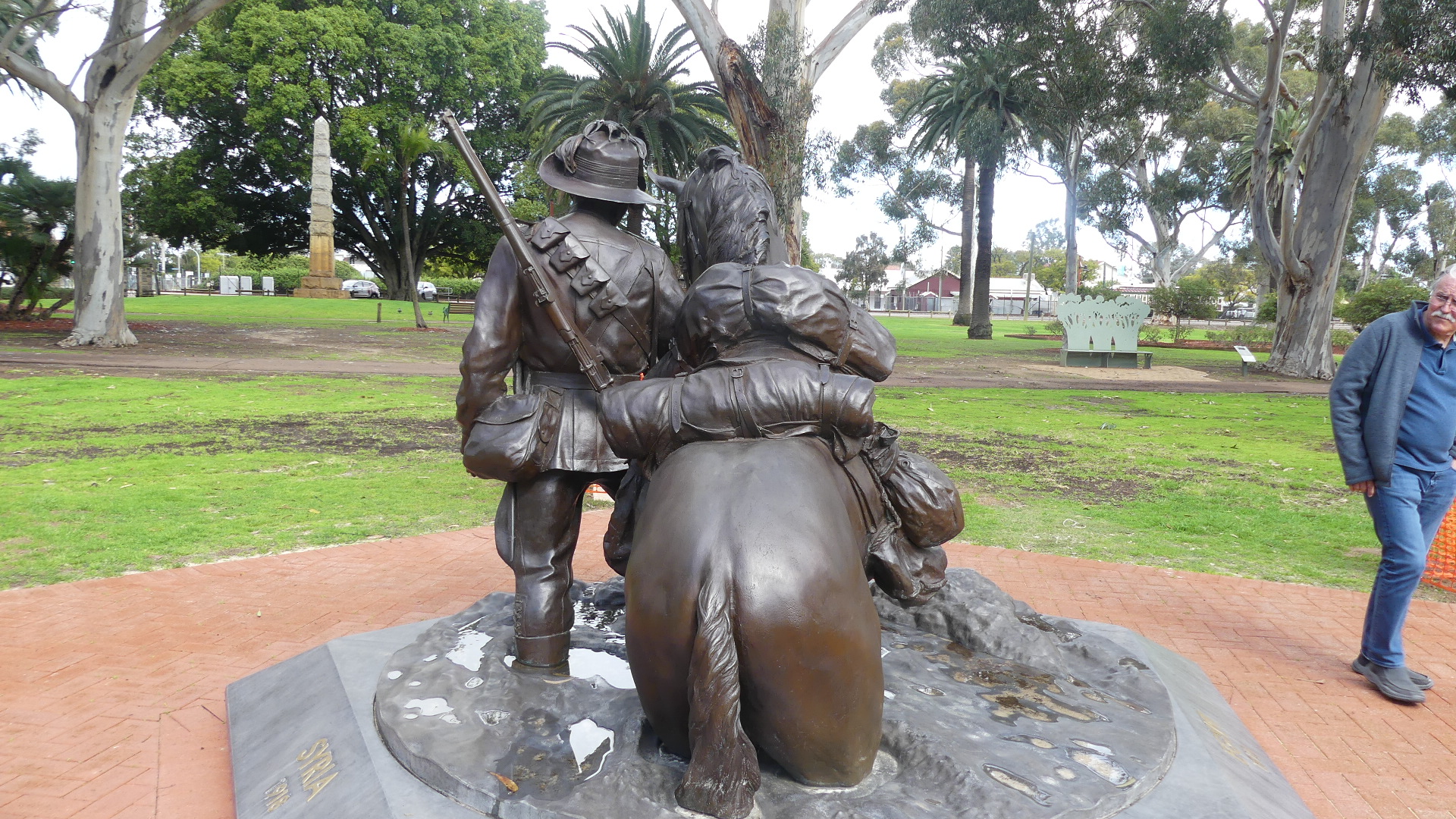
There are a number of other memorials but I was very taken by the Tenth Light Horse Statue developed by Charles Robb as part of a community initiative again in remembrance of the Tenth Light Horse Regiment raised in the town in 1914. It acknowledges the bond between horse and Trooper and support of indigenous horse breakers. None of the horses returned to Australia.

There is more to the park than war memorials, there are the white cockatoos nesting in the caverns in the gum trees.

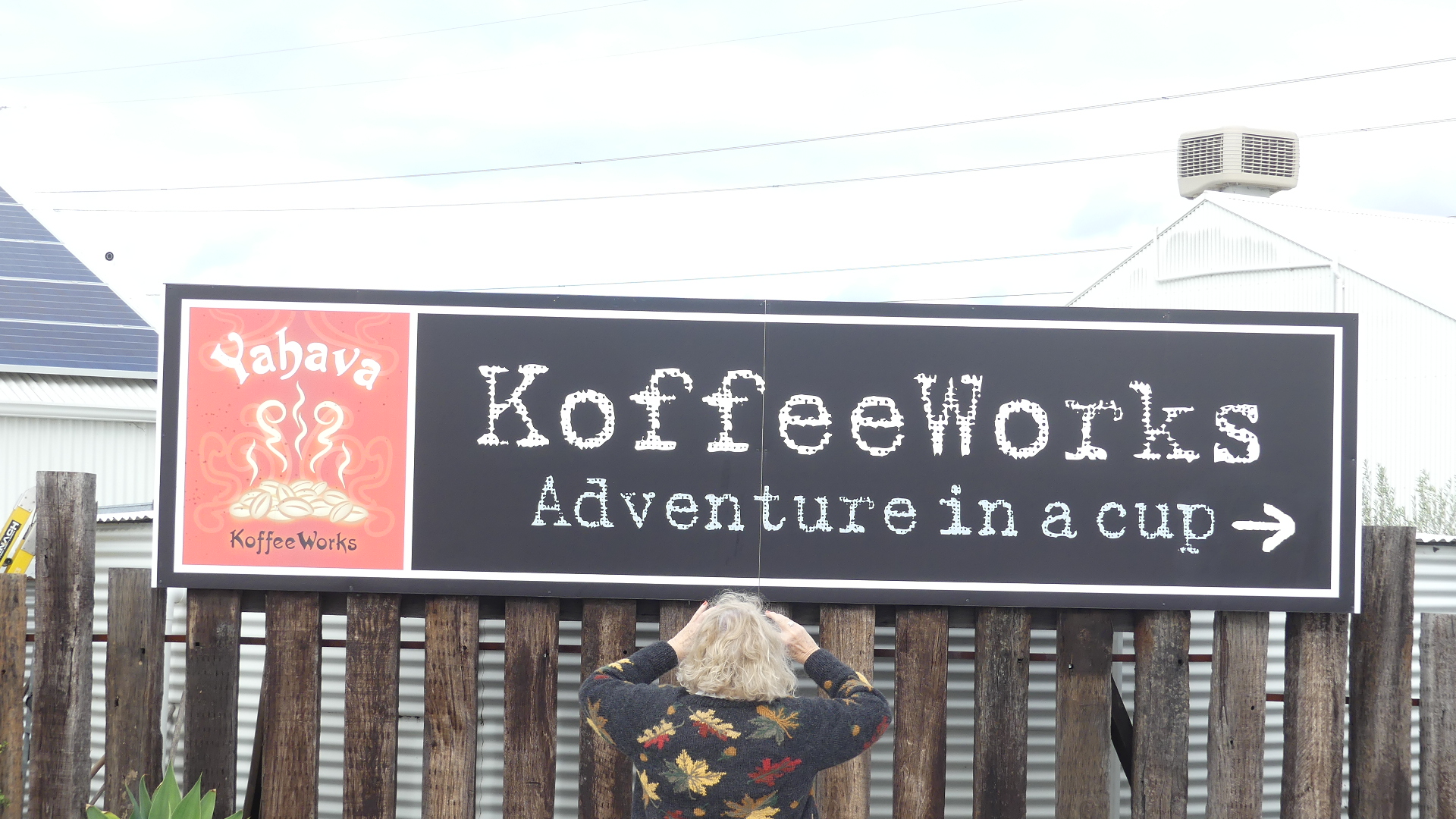
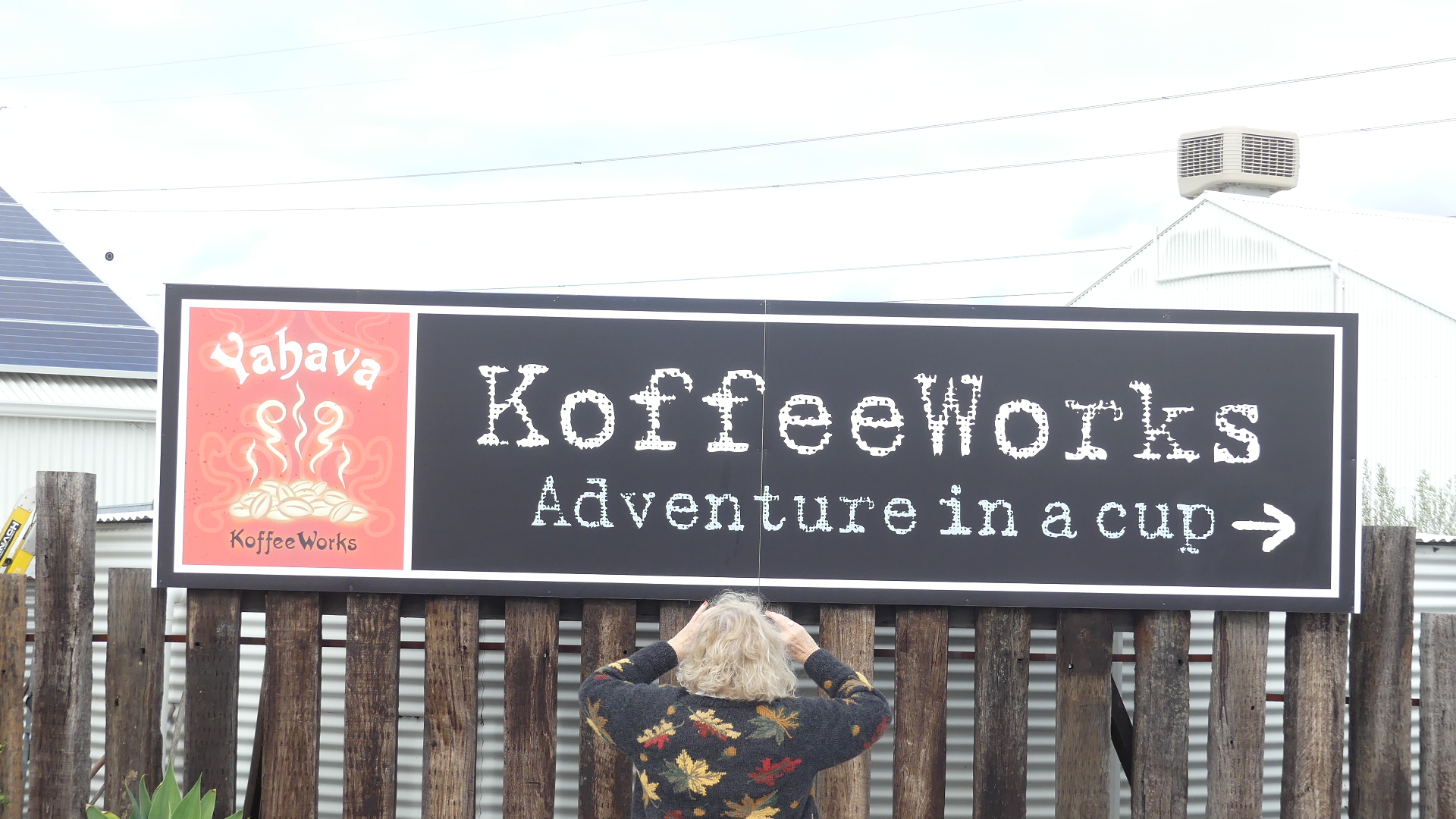
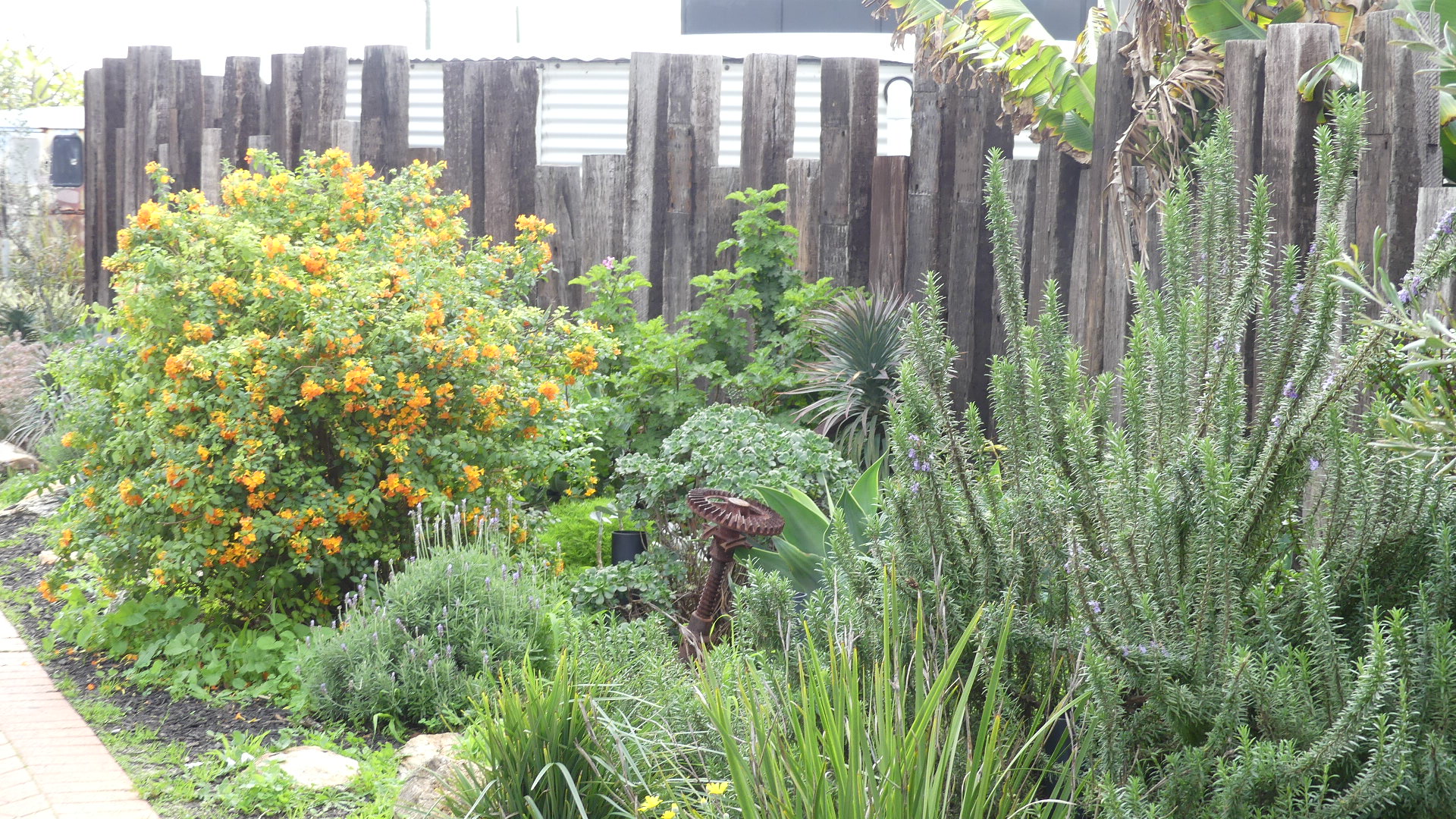
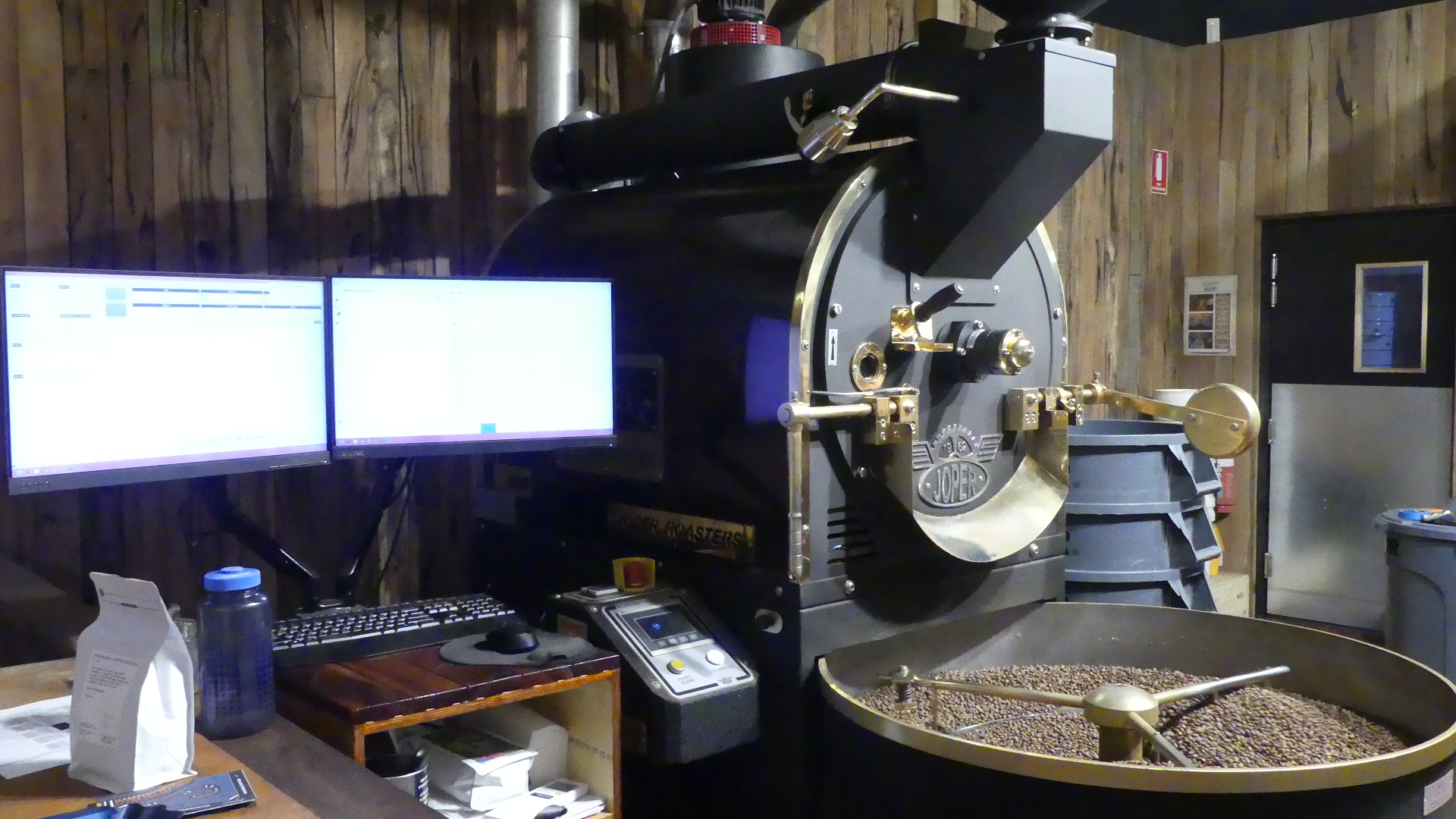
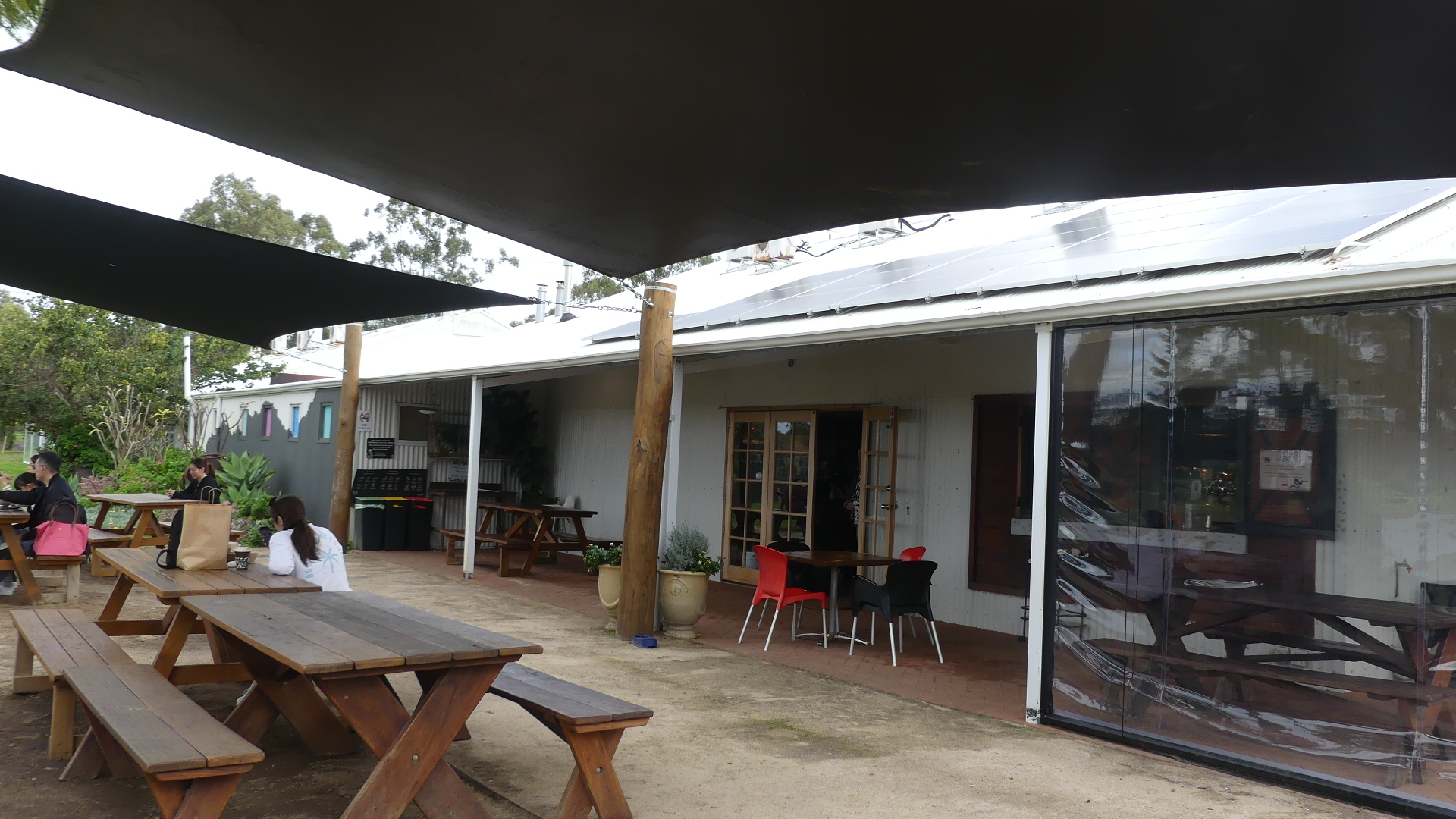
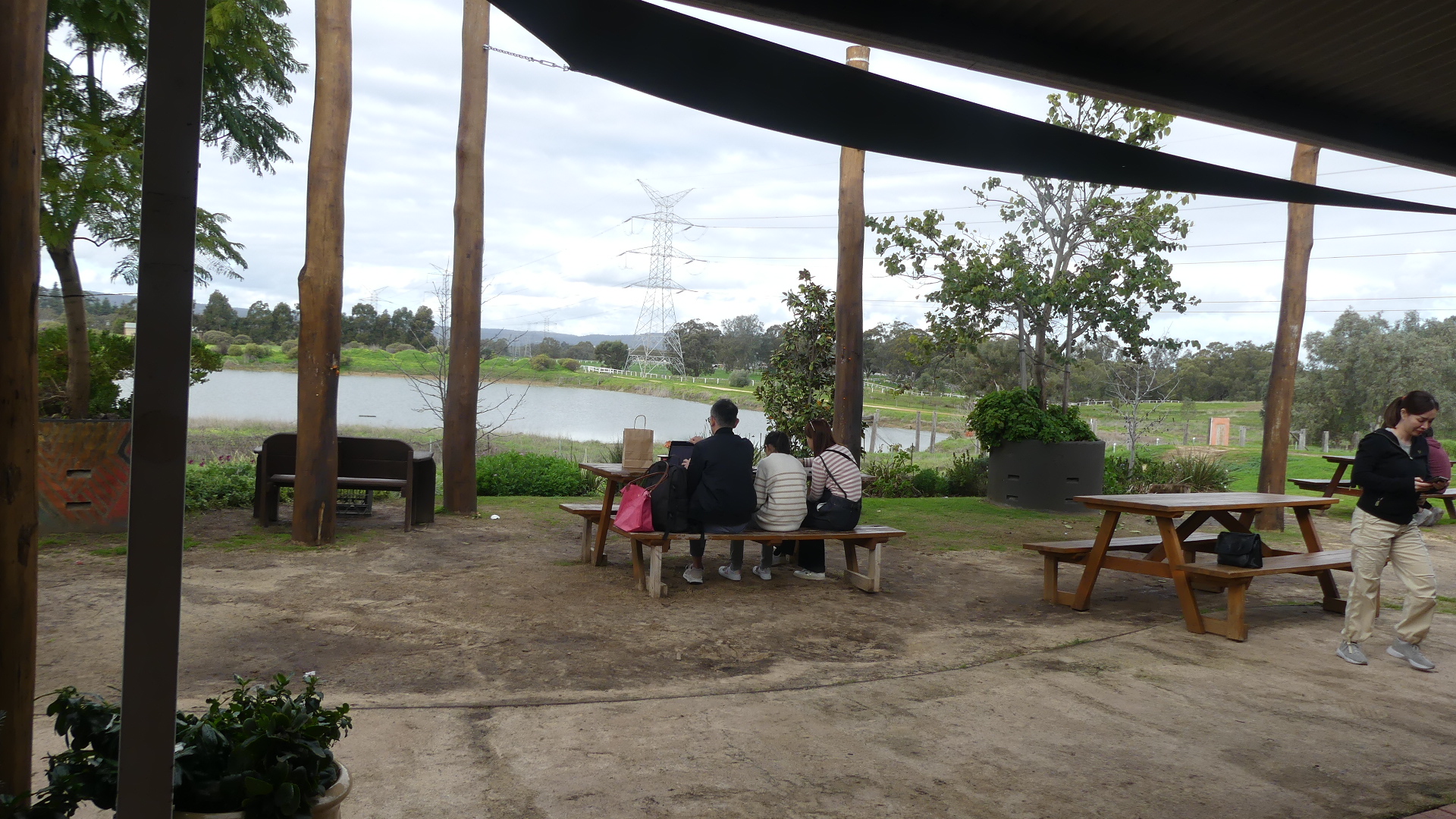
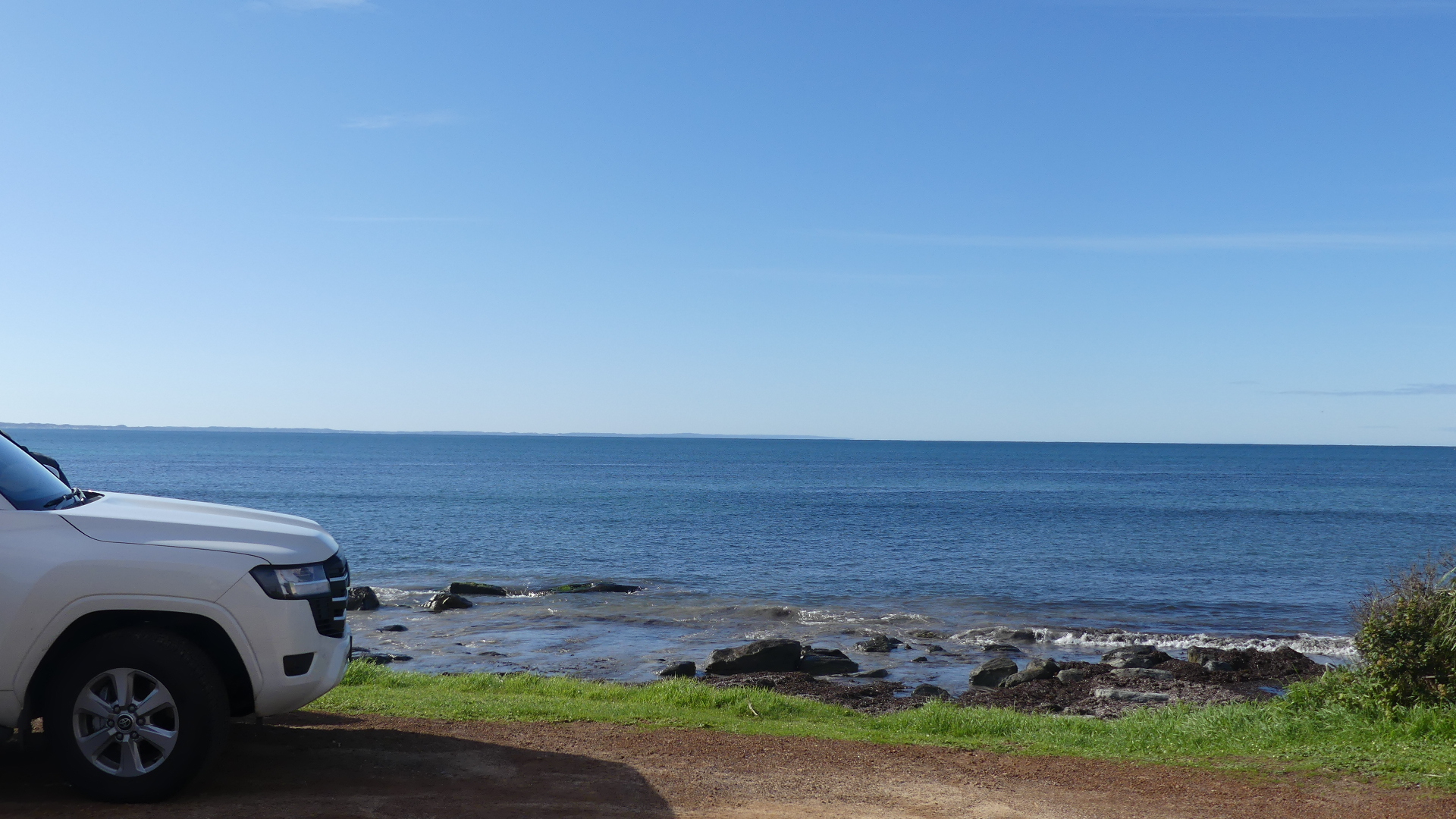
After a walk in the park we thought about a cup of coffee and recalled Yahava Koffeeworks that we had driven passed. It was on the way home so we called in. In the carpark we found an old Toyota – someone enjoyed the coffee and decided to stay. The garden was pretty but I think I may have been getting bored at this time. Inside they were roasting beans and there was every known apparatus for drinking the brew. They even had a water view to enjoy the brew and finally there was the bird bath – bye bye birdee.
I was pretty tired by then and so we ended the day in front of the fire at home with a glass and watching the Olympics. We have picked up some local products and decided that between the wine and local product that was it for the night. Tomorrow is another day, more fire wood to be chopped and Galahs (the birds) to be fed so I would need my kip.

November 2024

THE RETIREES AND FRIENDS VISIT PERTH AND MARGARET RIVER – days 8 & 9 Back to our Itinerary in Margaret River

Star Date 2nd August 2024

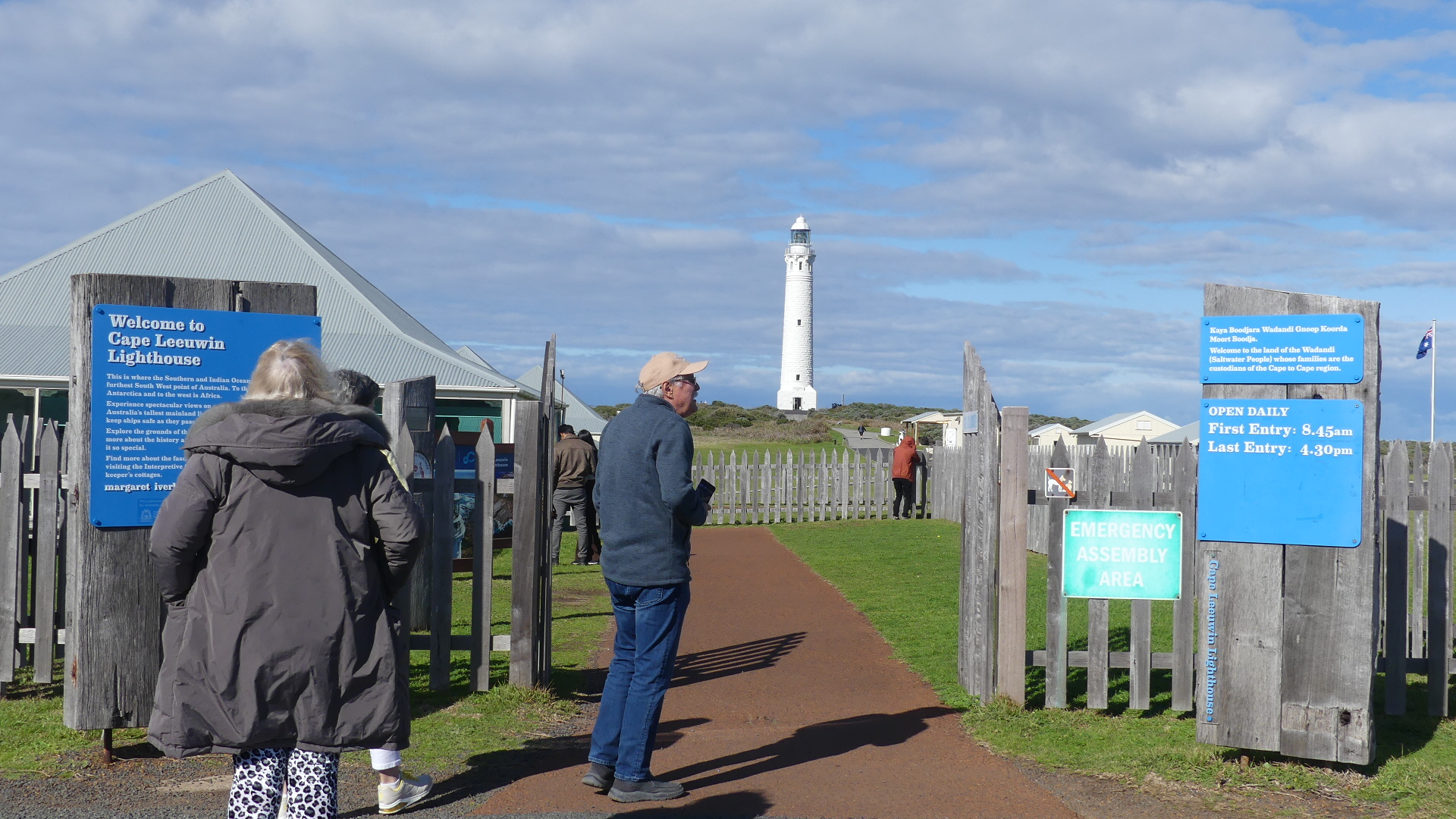
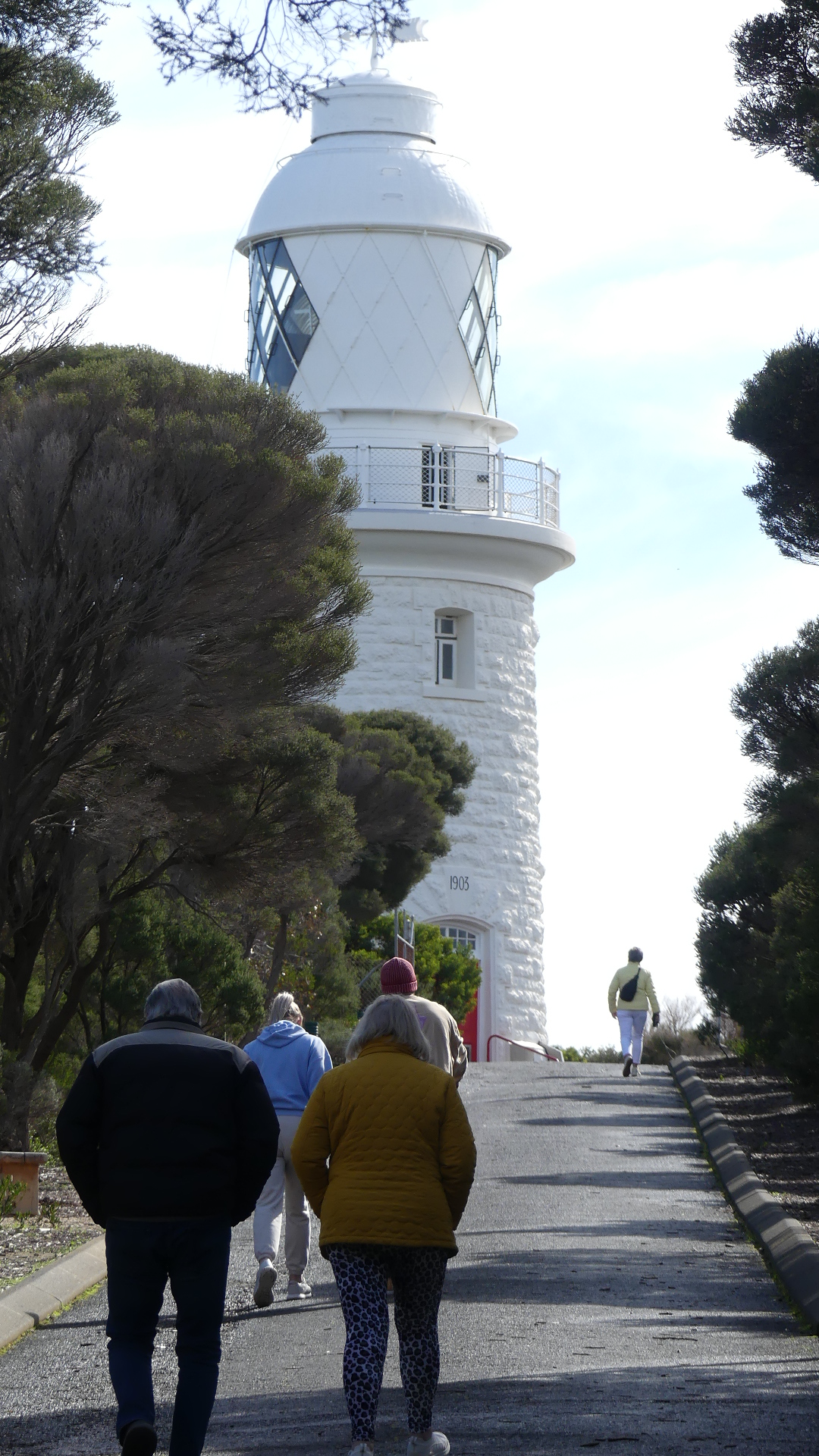
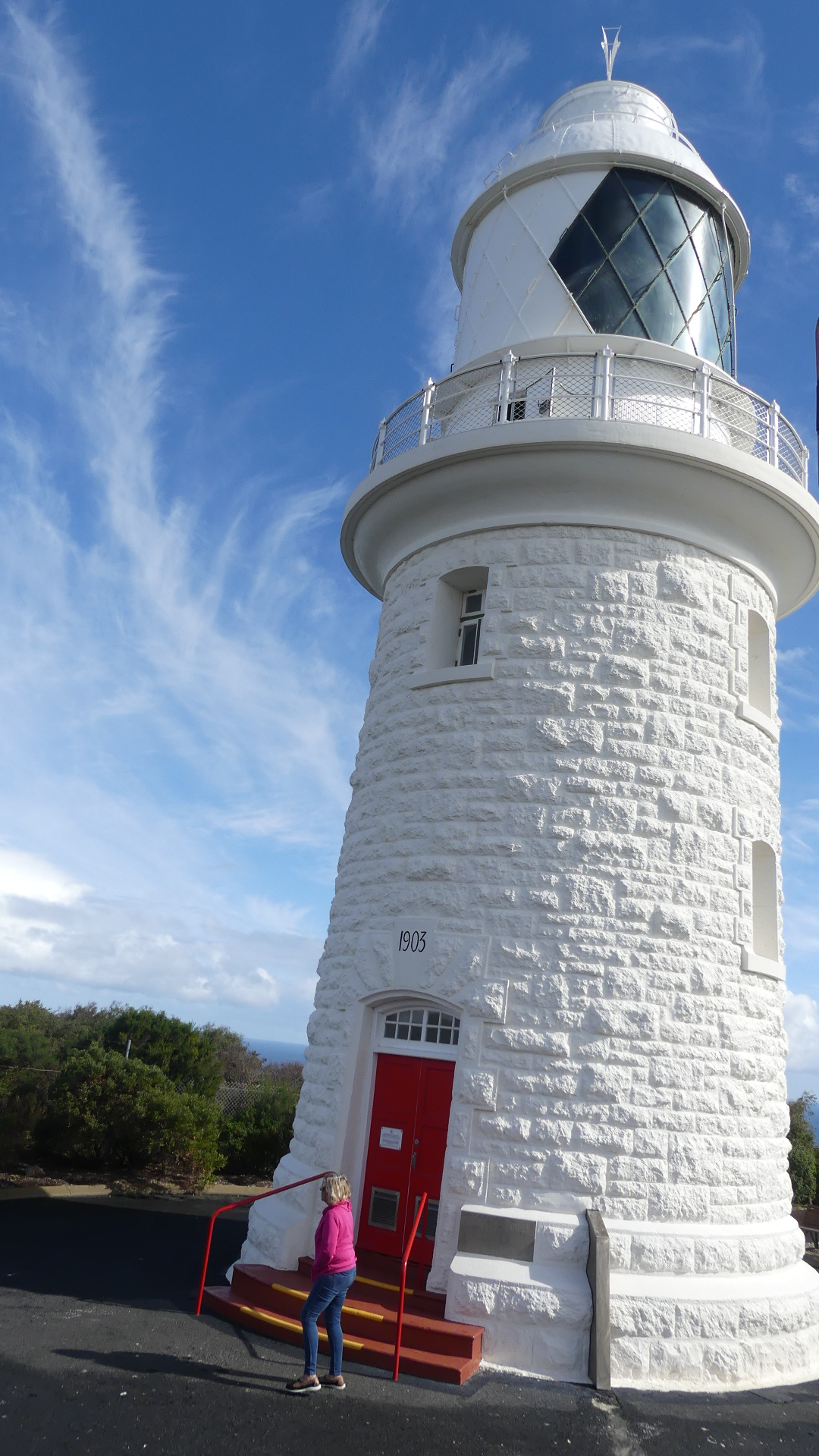
Our next destination was the Cape Leeuwin Lighthouse located on the headland of the most south-westerly point on the mainland Australia.

The light tower which is built of local stone was originally designed to show two lights – a higher white light and a lower red light. Although the foundations were completed, the lower light was never installed. It was opened with great ceremony in 1895. Until June 1982 the lens was rotated by a counter weight driving clockwork mechanism, and the beacon was a pressure kerosene mantle type. A radio navigation beacon was commissioned in 1955 and operated until 1992. The lighthouse was automated in 1982. The lighthouse, besides being a navigational aid, serves as an important automatic weather station. The lighthouse’s buildings and grounds are now vested in the local tourism body and the single (1960s) and double (1980s) communications towers that were north-west of the lighthouse, seen in older photographs of Cape Leeuwin, have been removed.

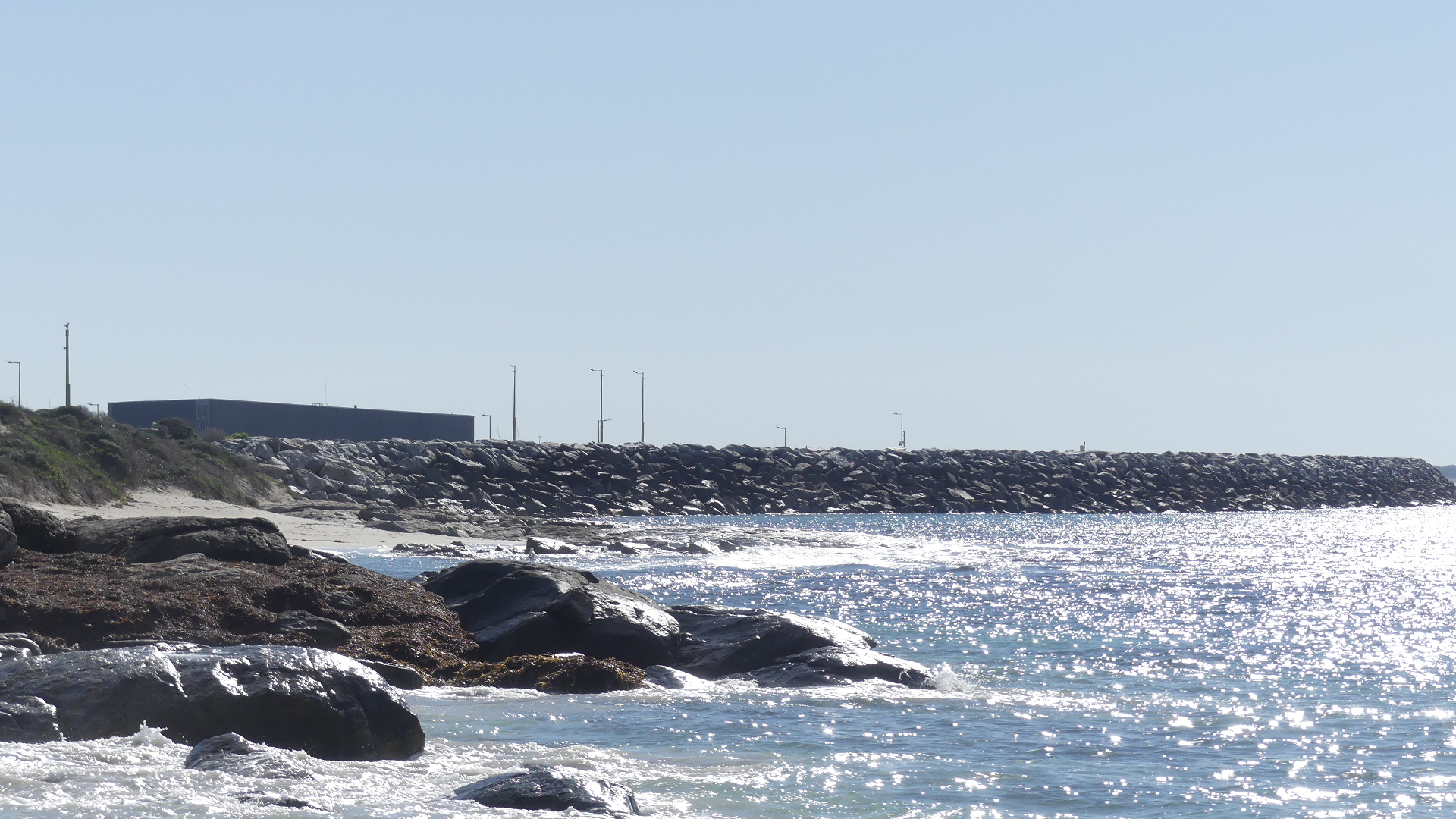
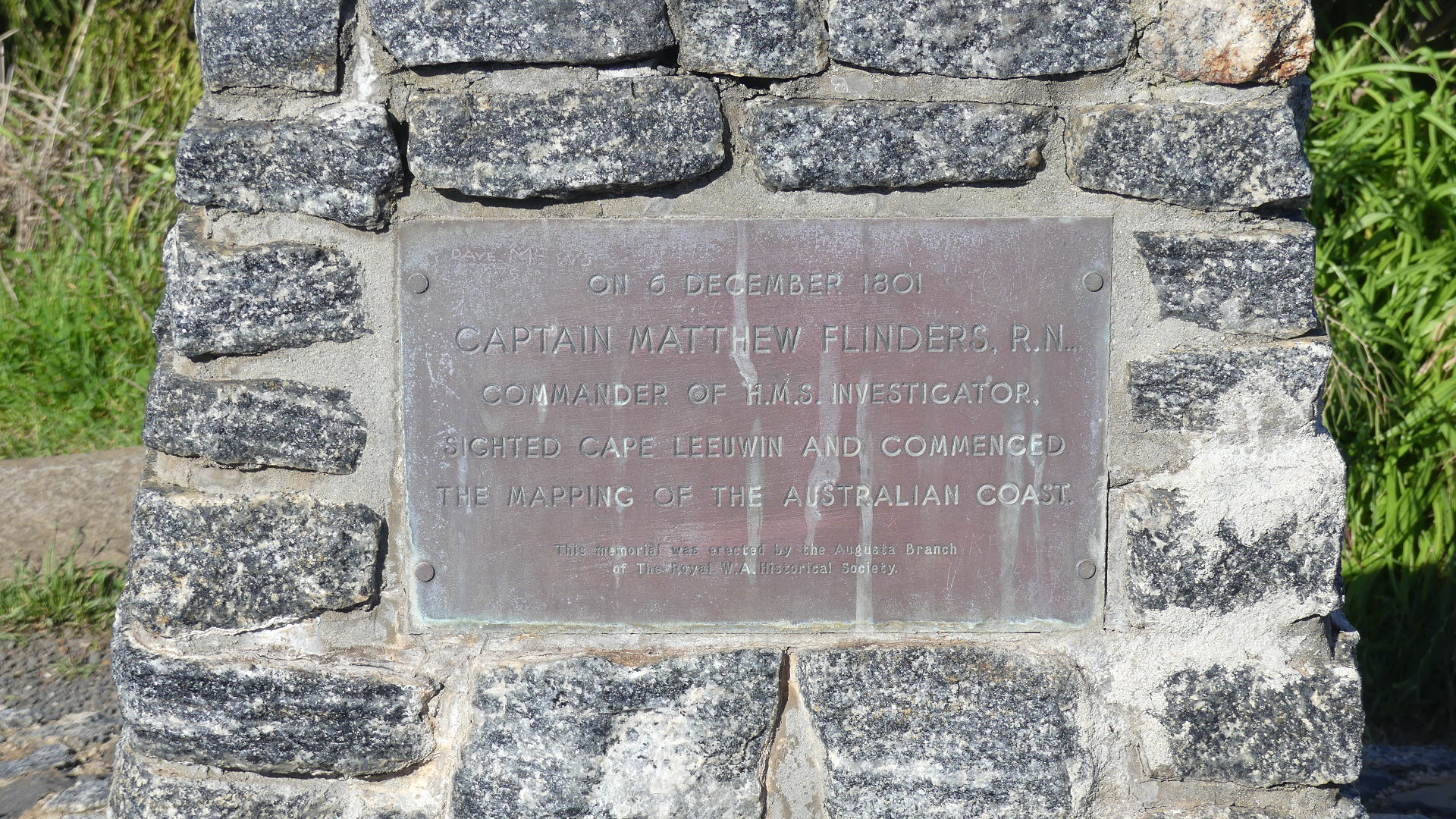
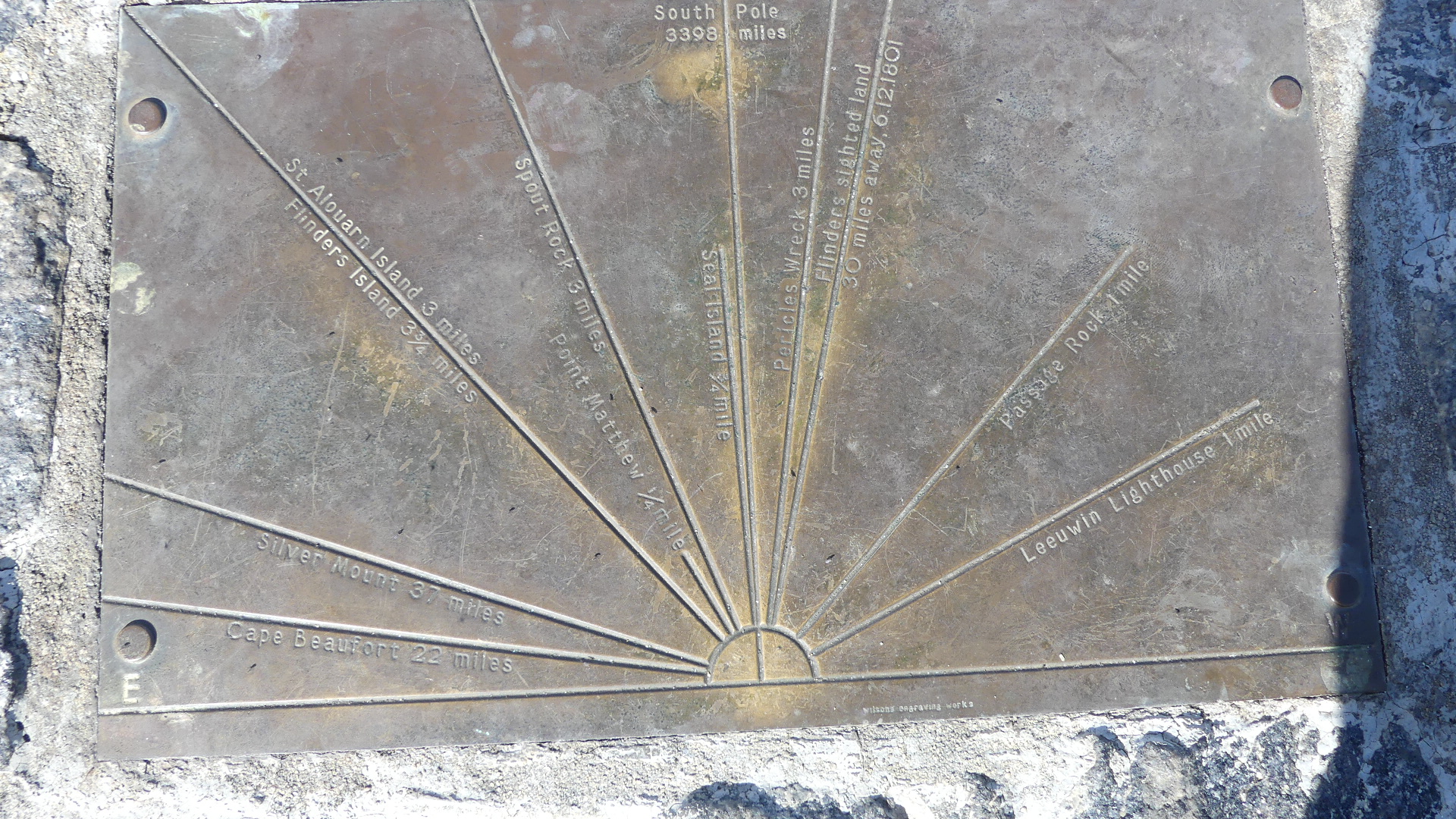
We approached the lighthouse from Augusta. The rock below commemorates the landing of the first settlers in 1830 from the Brig Emily Taylor . From that point you look out across a broad bay and behind us you can see the rock walls protecting the new marina. Immediately behind the memorial is a rock shelf decorated with the seaweed washed ashore. A bit further along is another memorial this time to Capt. Matthew Flinders RN aboard the HMS Investigator 6th December 1801 when he sighted Cape Leeuwin and commenced mapping the coast of Australia. Atop of the memorial are the features that can be sighted from this point such as the conjunction of the Indian Ocean and the Great Southern Ocean.

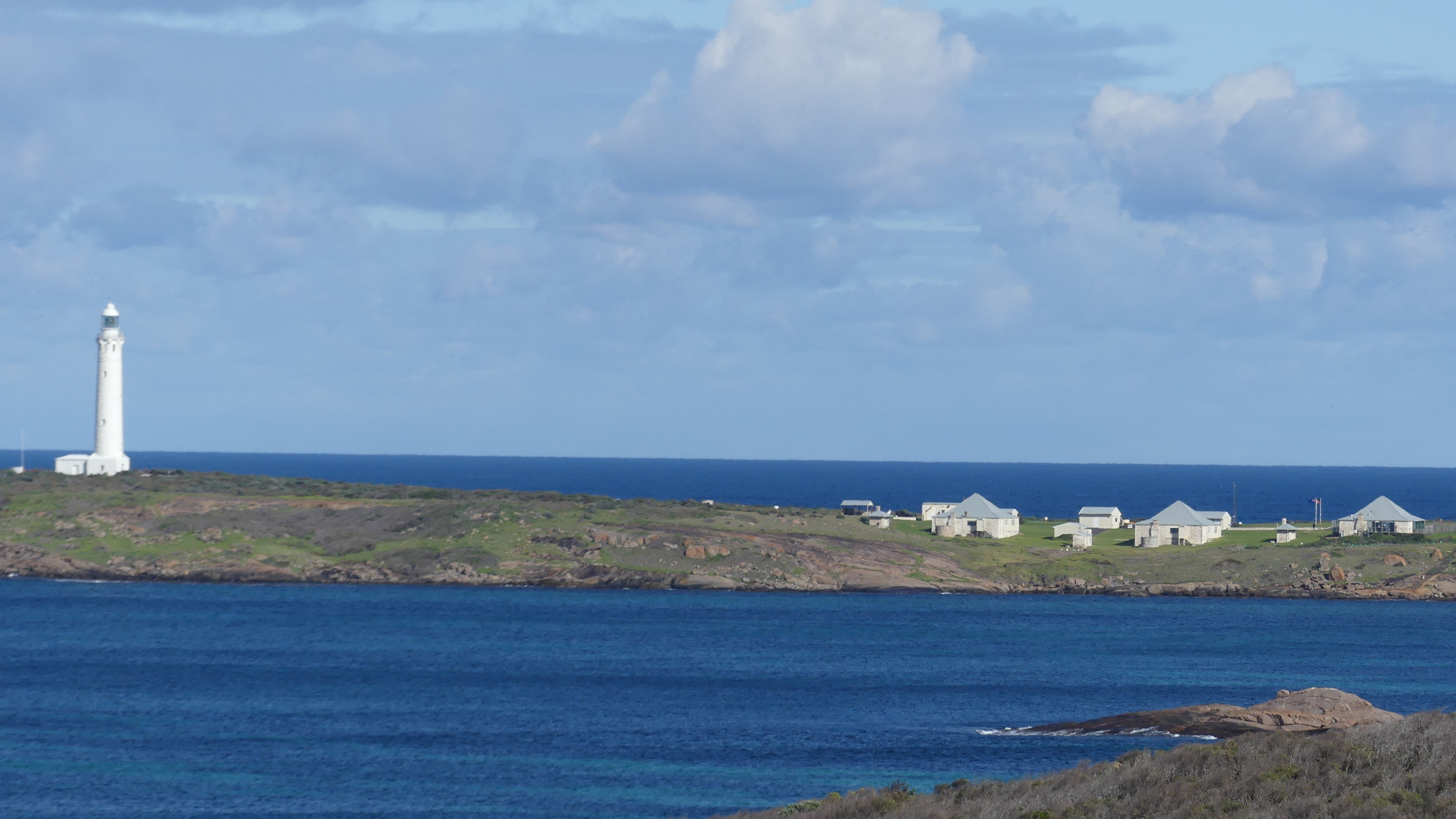
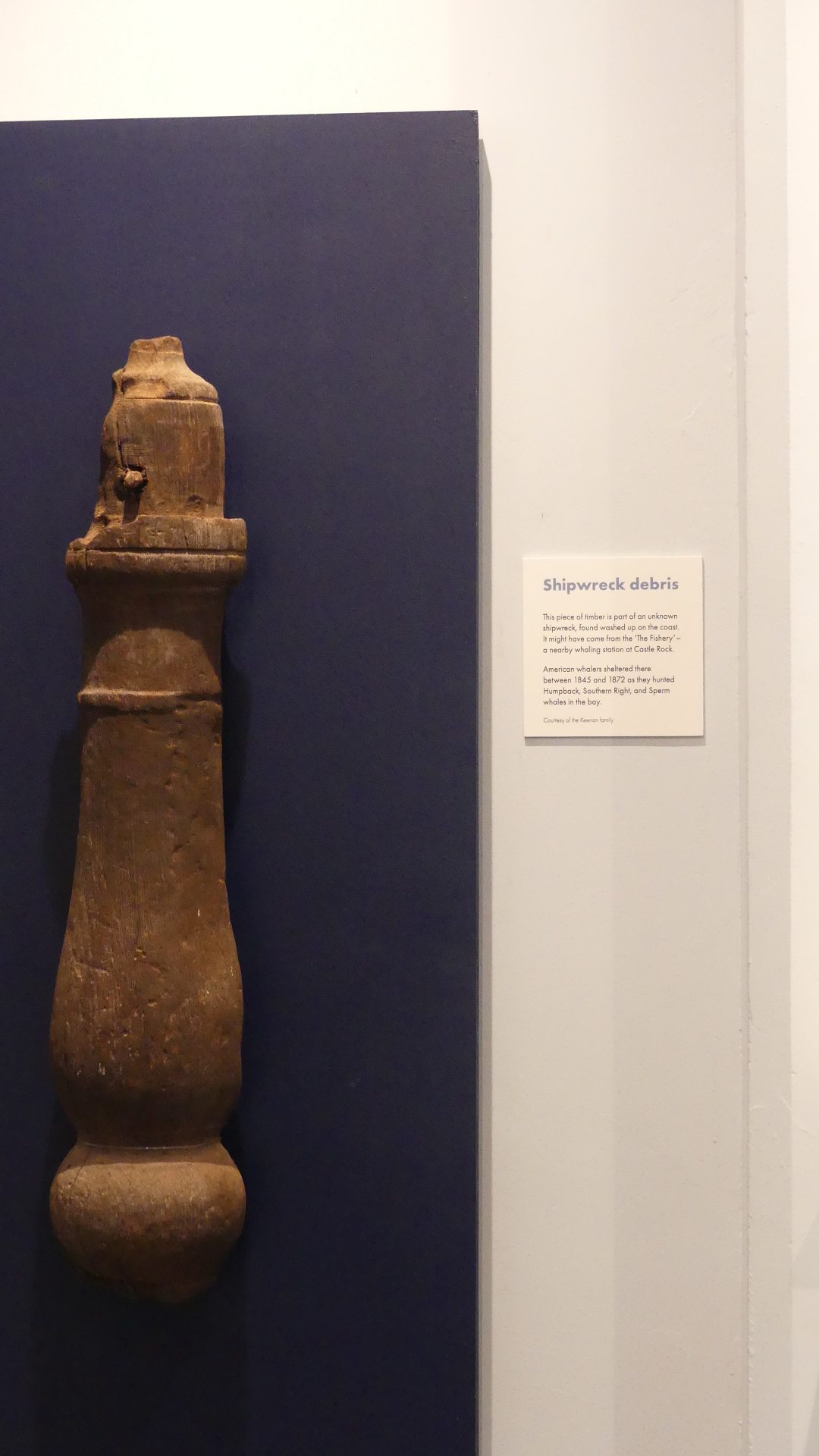
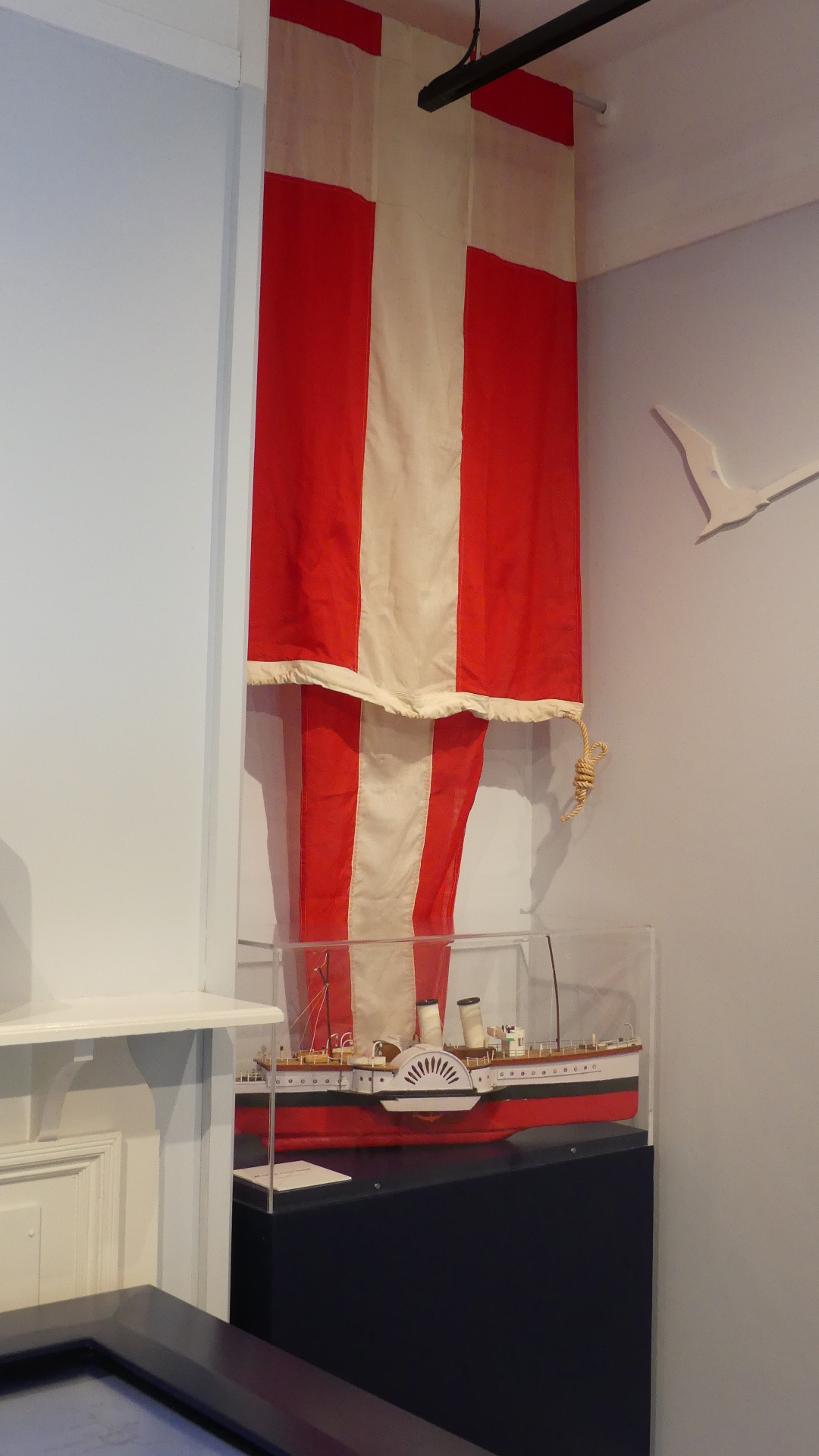
The reason we came this way – I don’t recall but the vista of the lighthouse emphasises the remoteness of this point. The light keepers house and other out buildings and water tanks can be seen on the right hand side of the photos. The entrance takes you into the coffee shop and gift shop and then you make your way through each of the following buildings with museums and artifacts all of which i think is to disguise how far you have to walk to get to the lighthouse. Finally we got to the reason for coming here today – to see the meeting of the two oceans

The climb to the viewing deck of the lighthouse consists of 176 steps. Enough said.

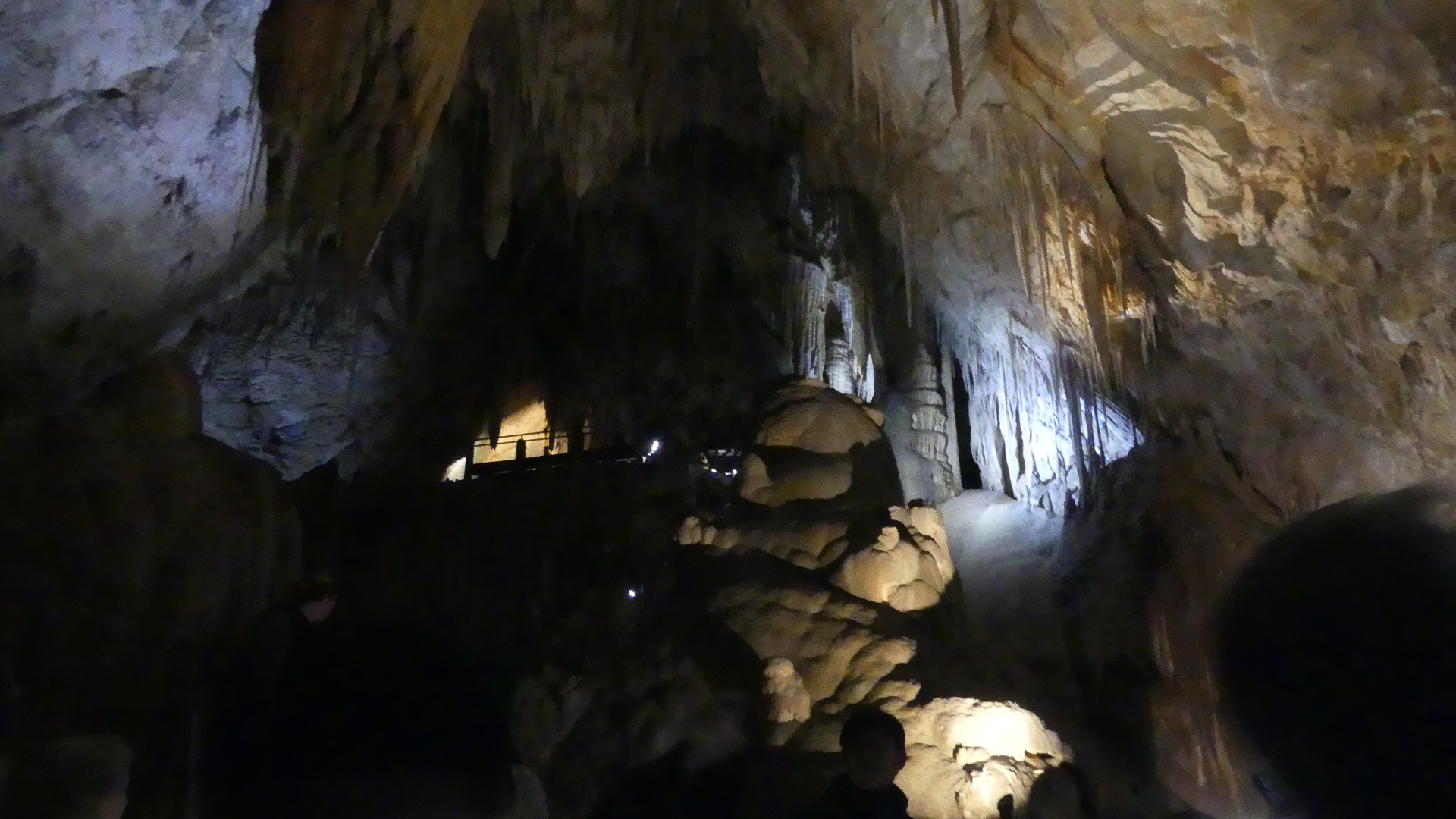
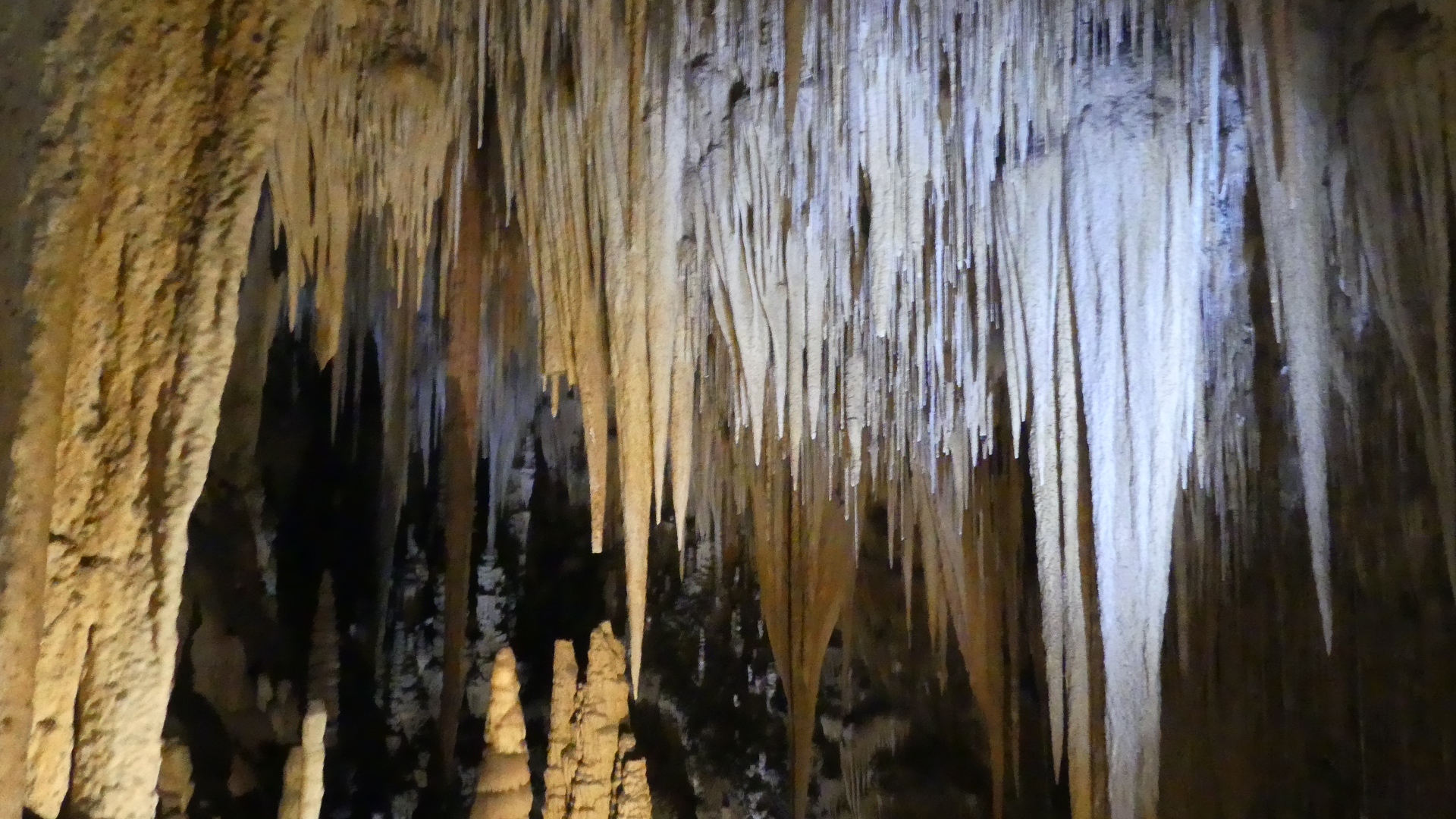
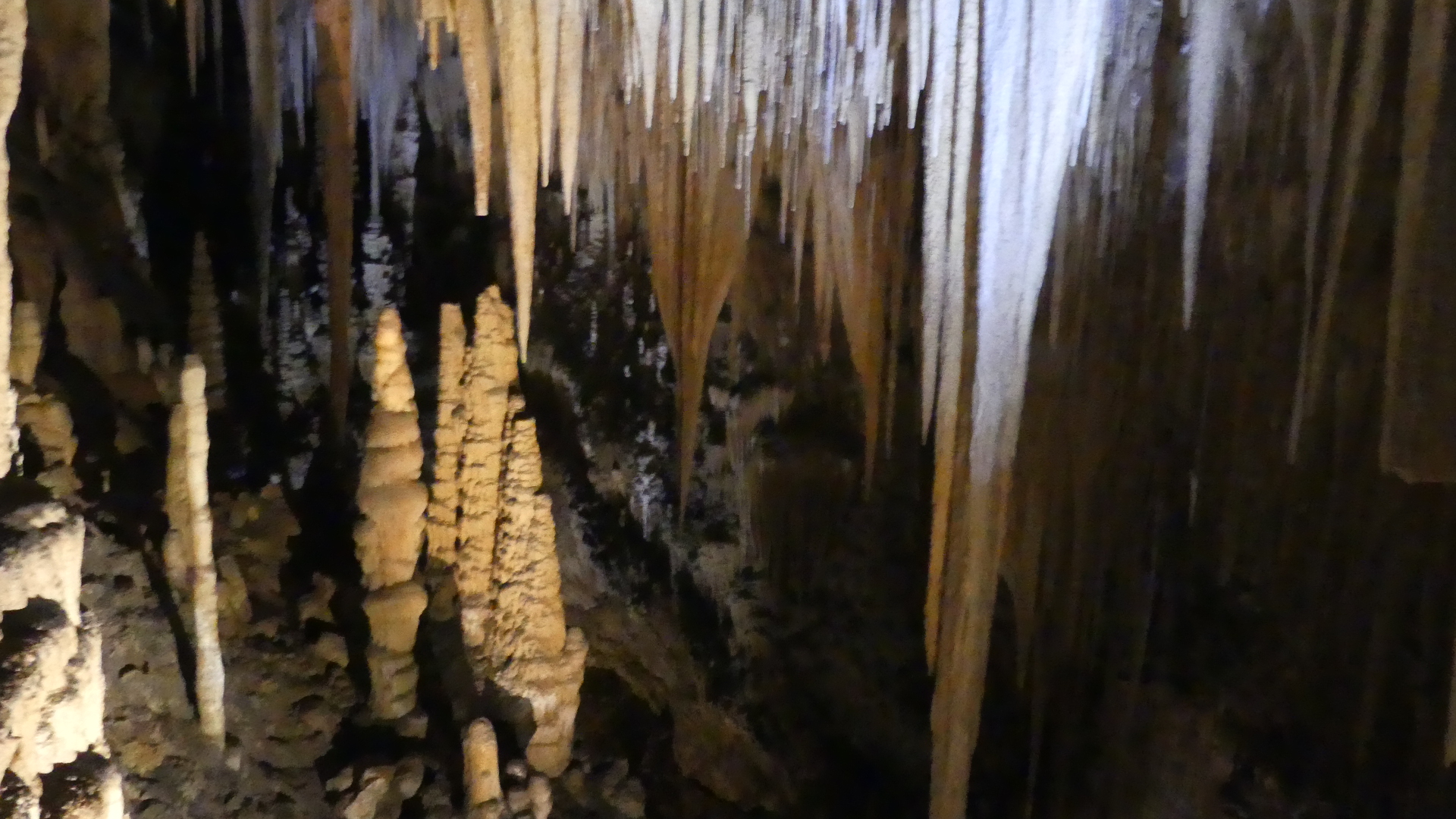
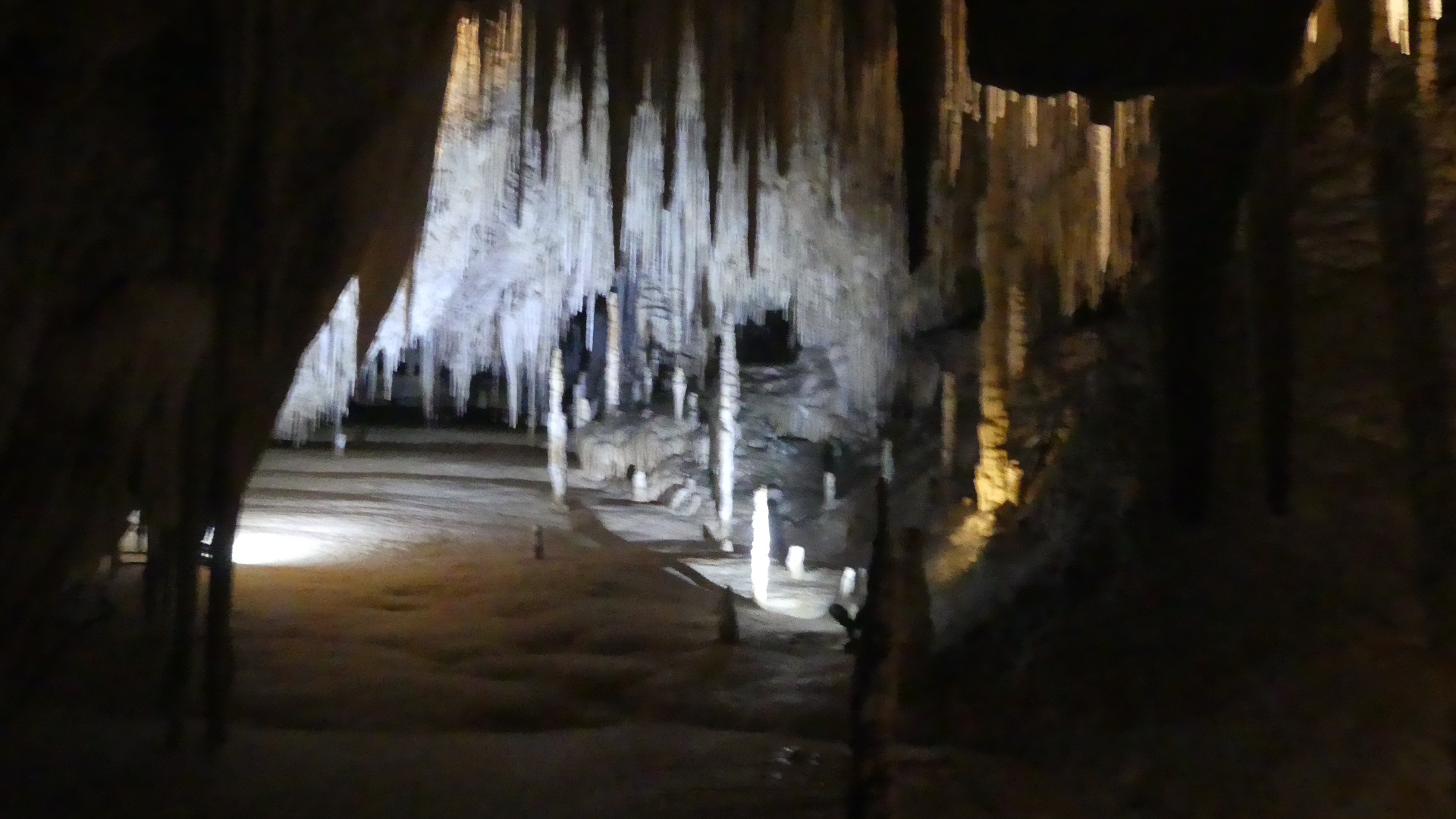
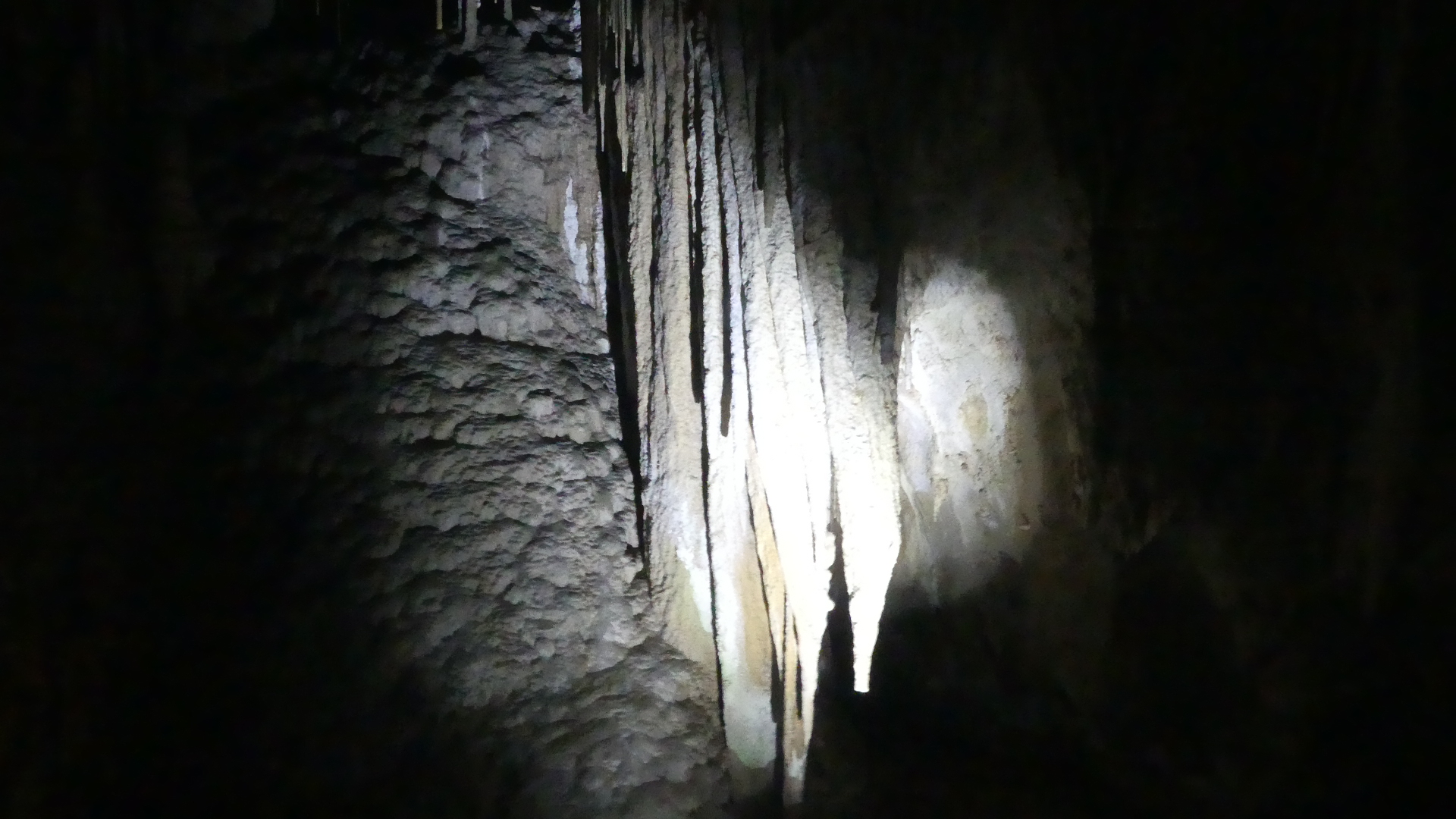
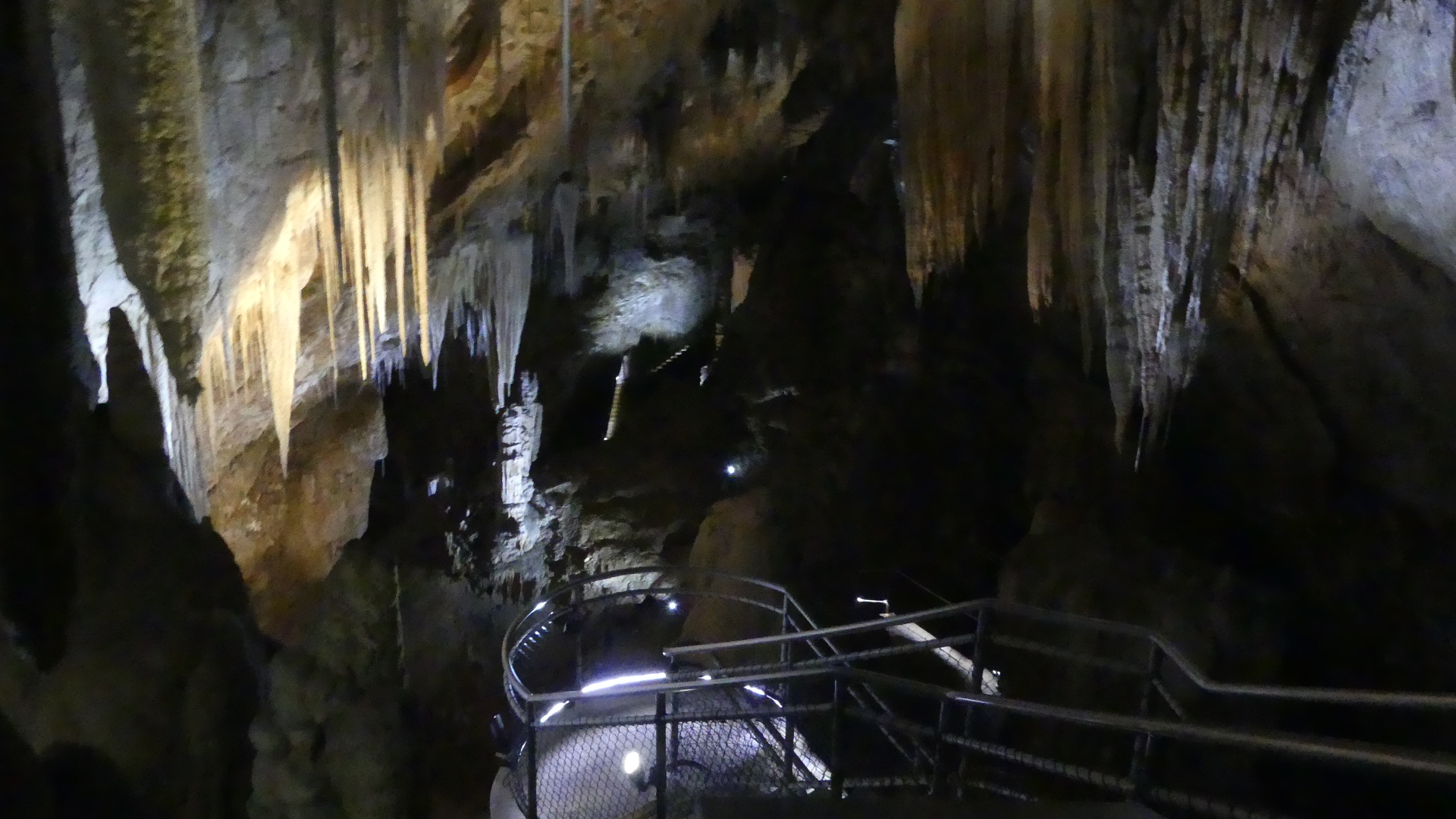
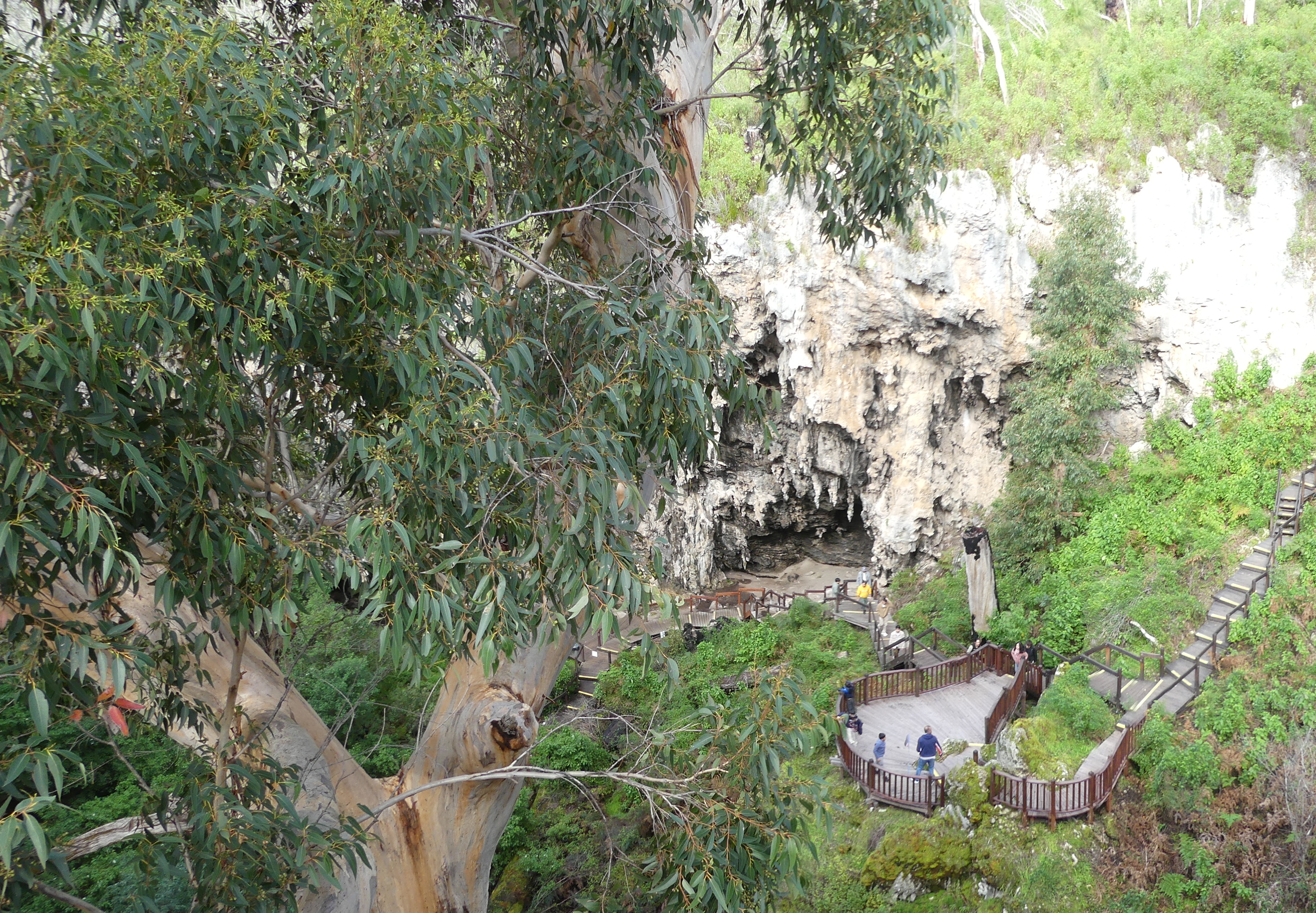
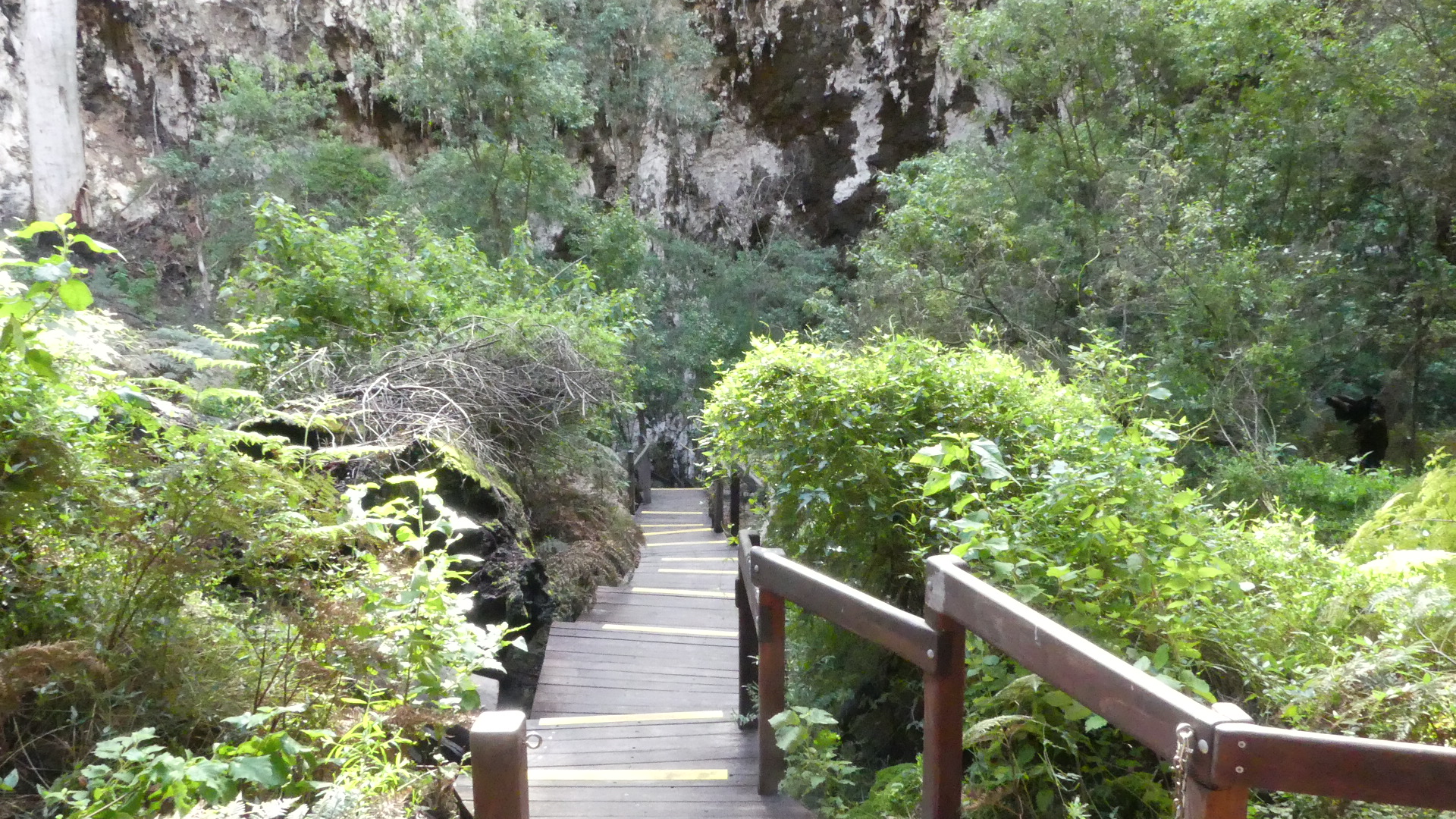
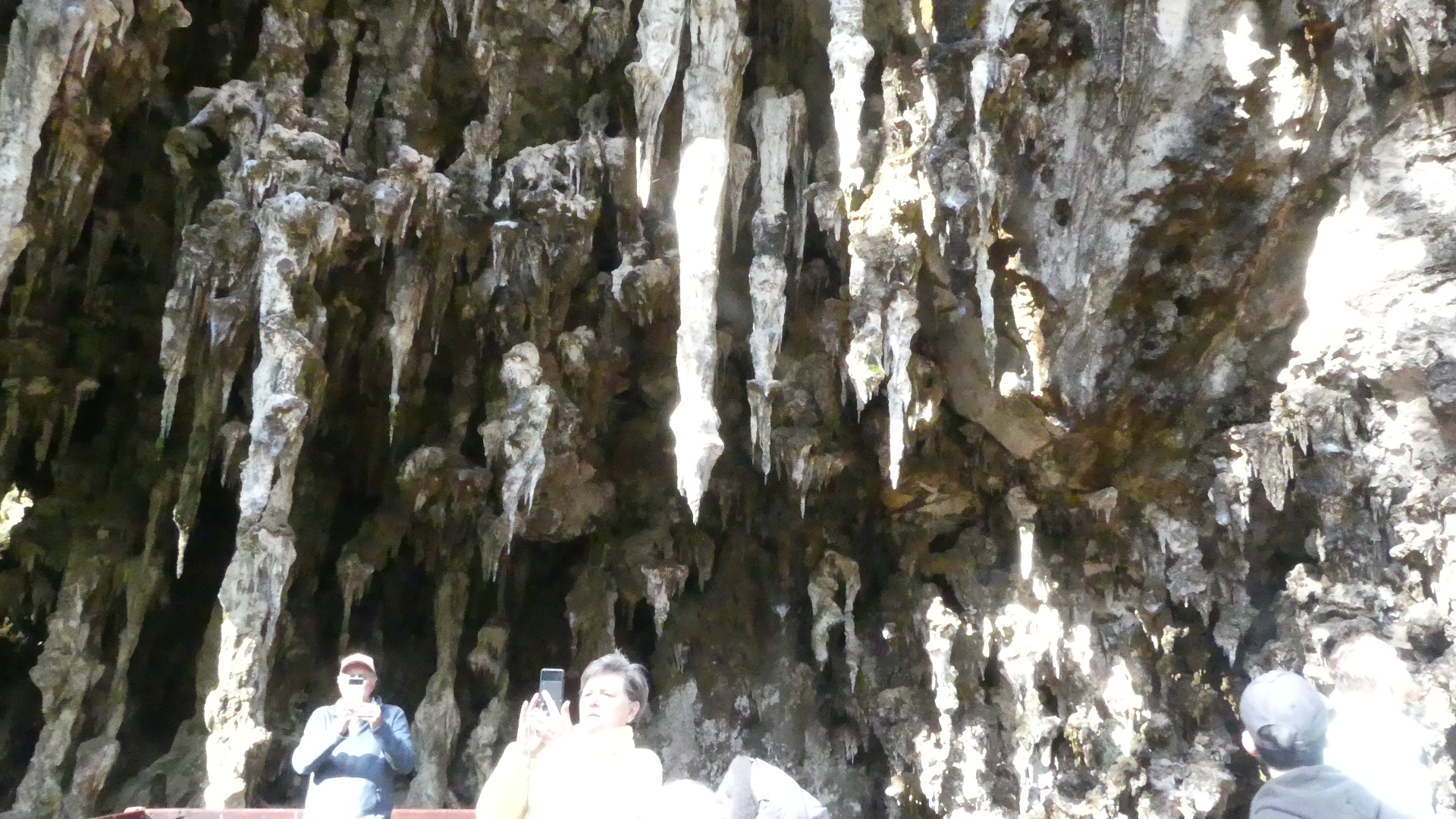
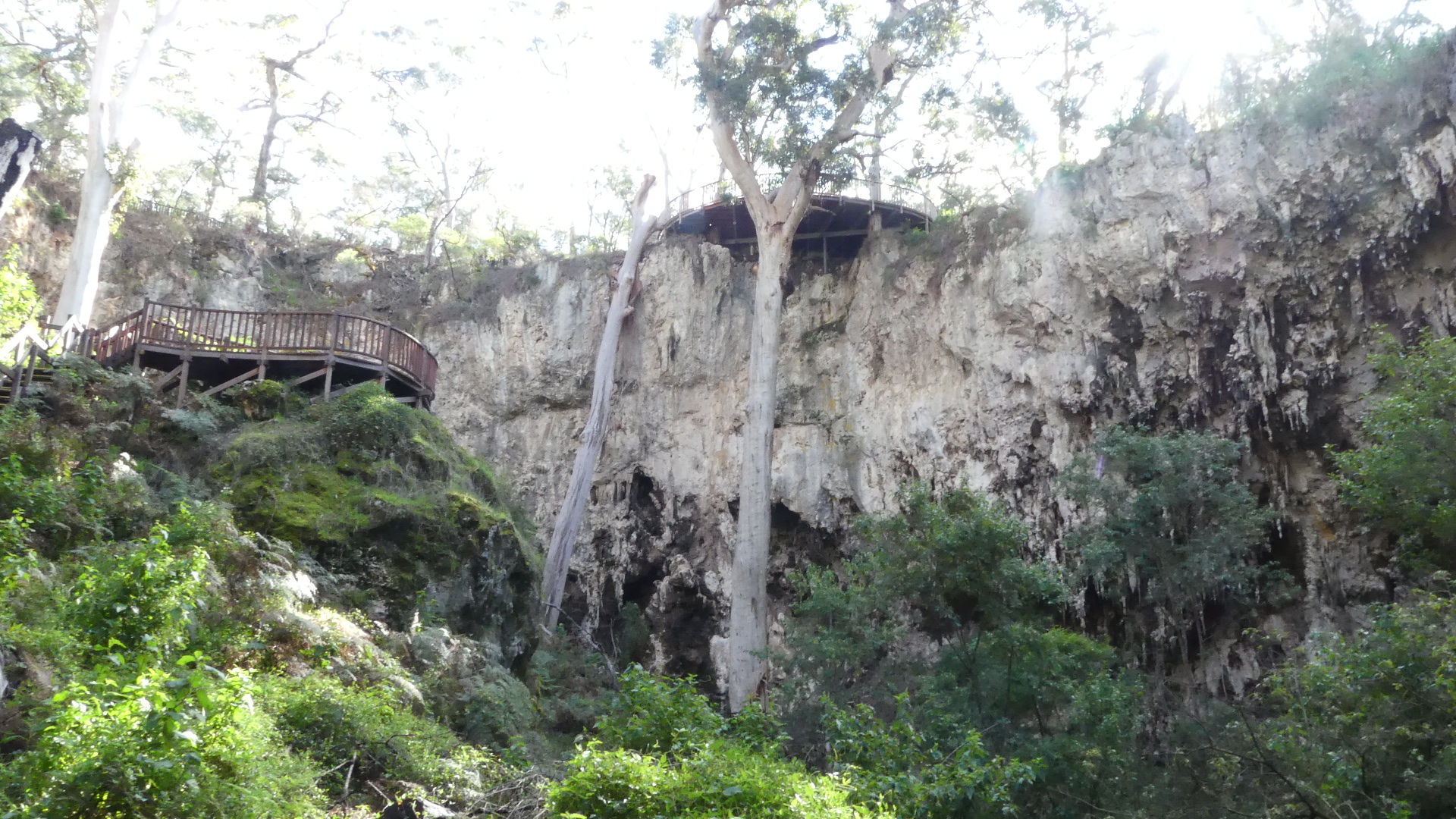
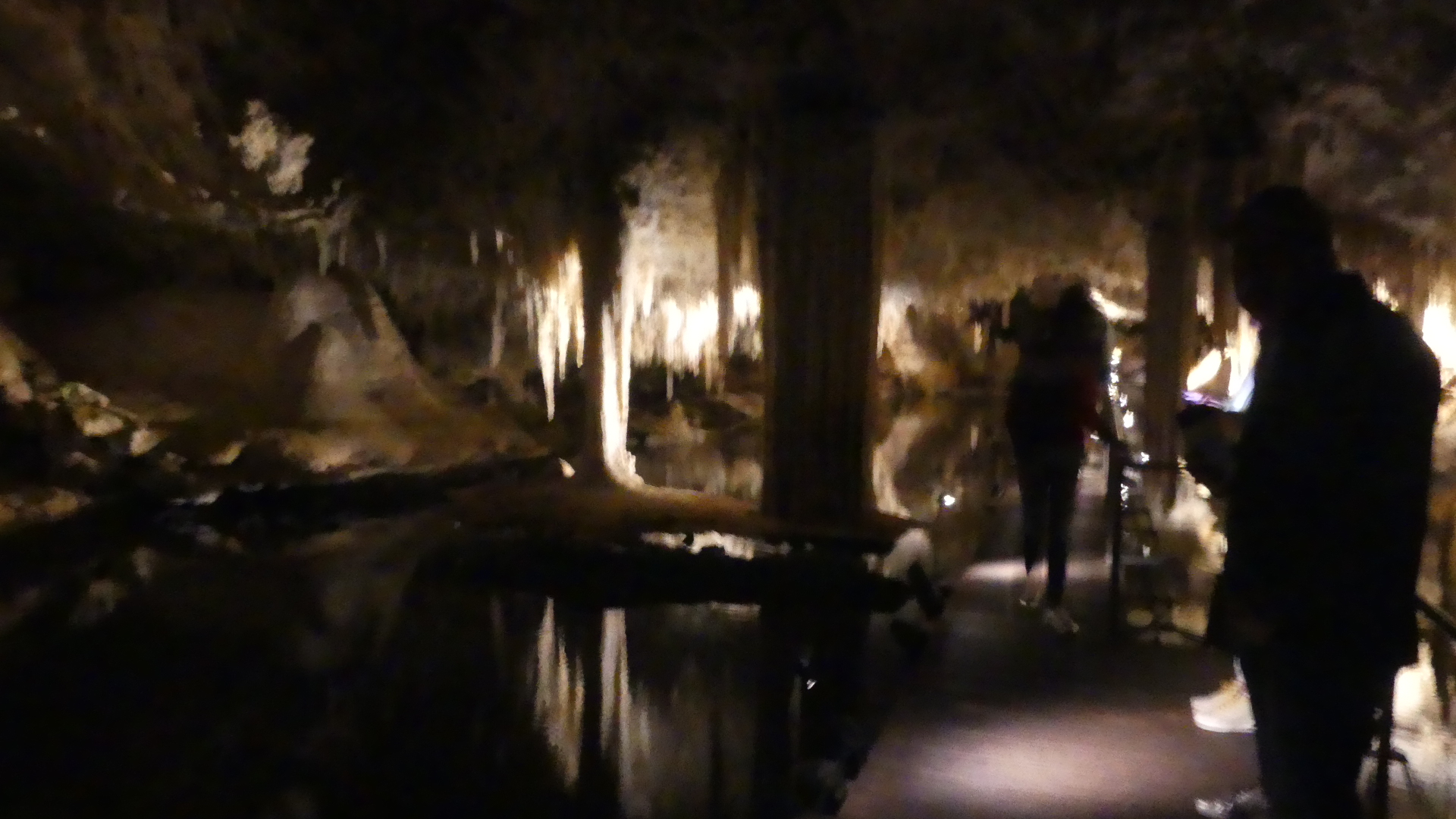
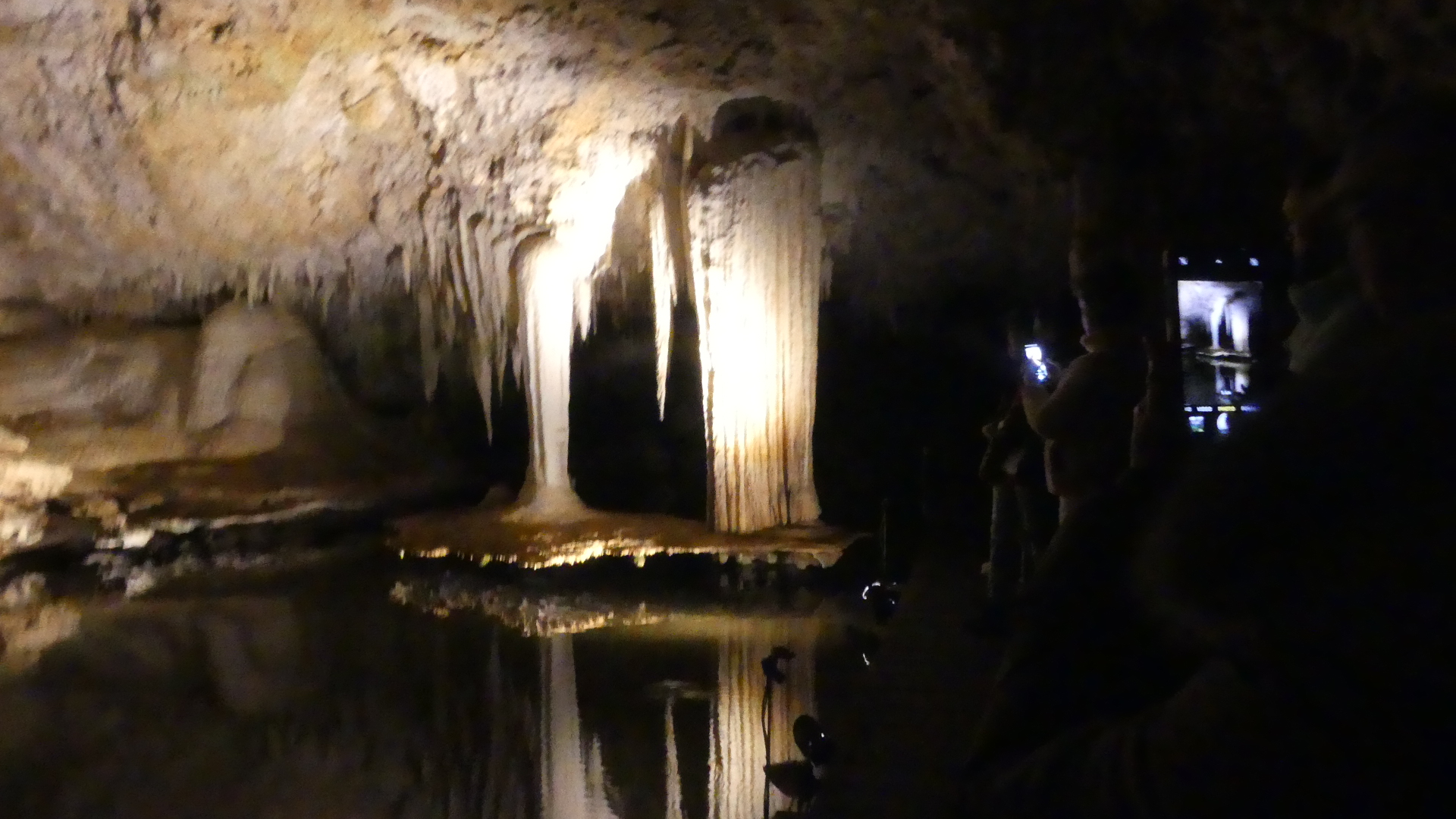
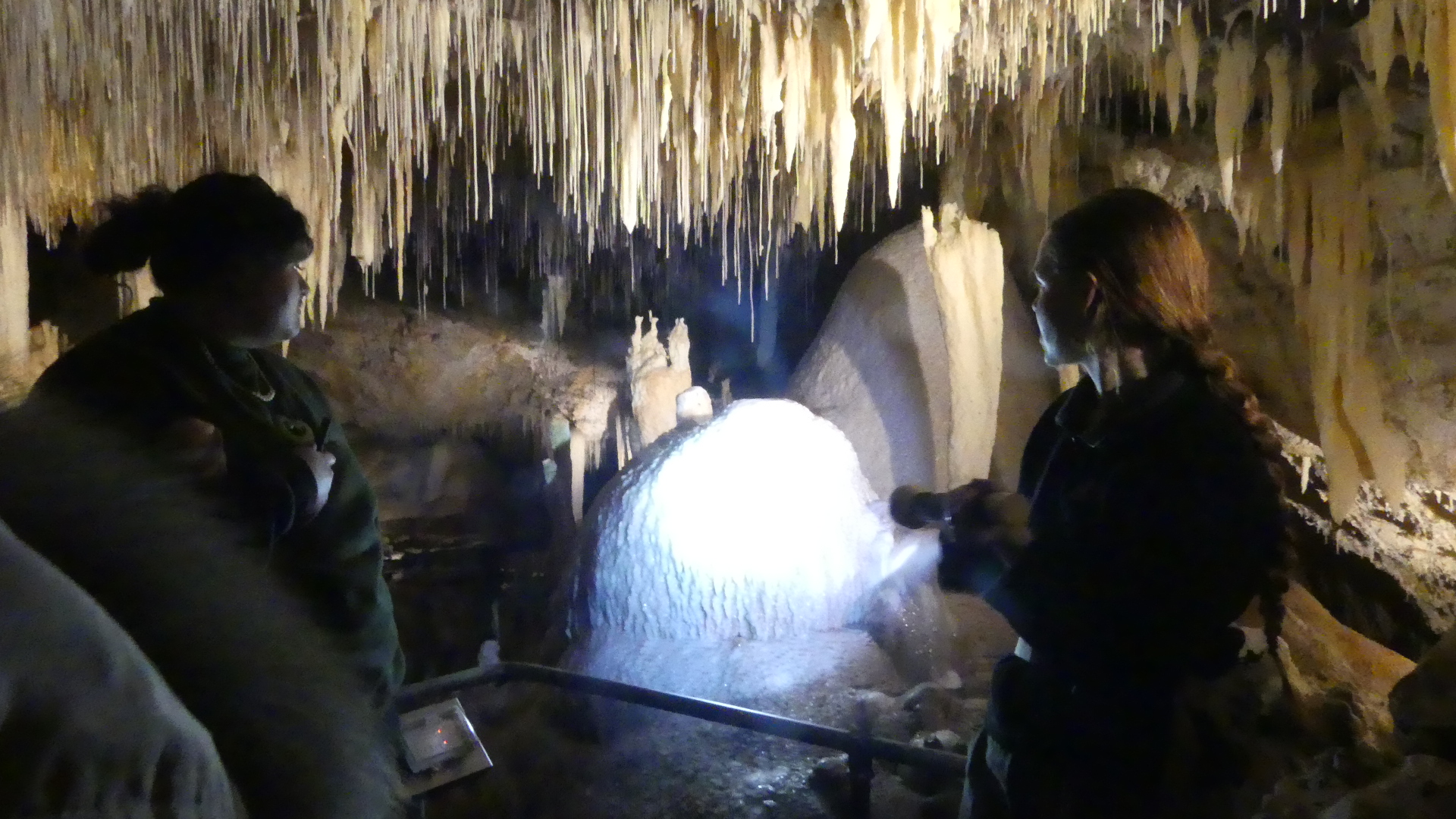
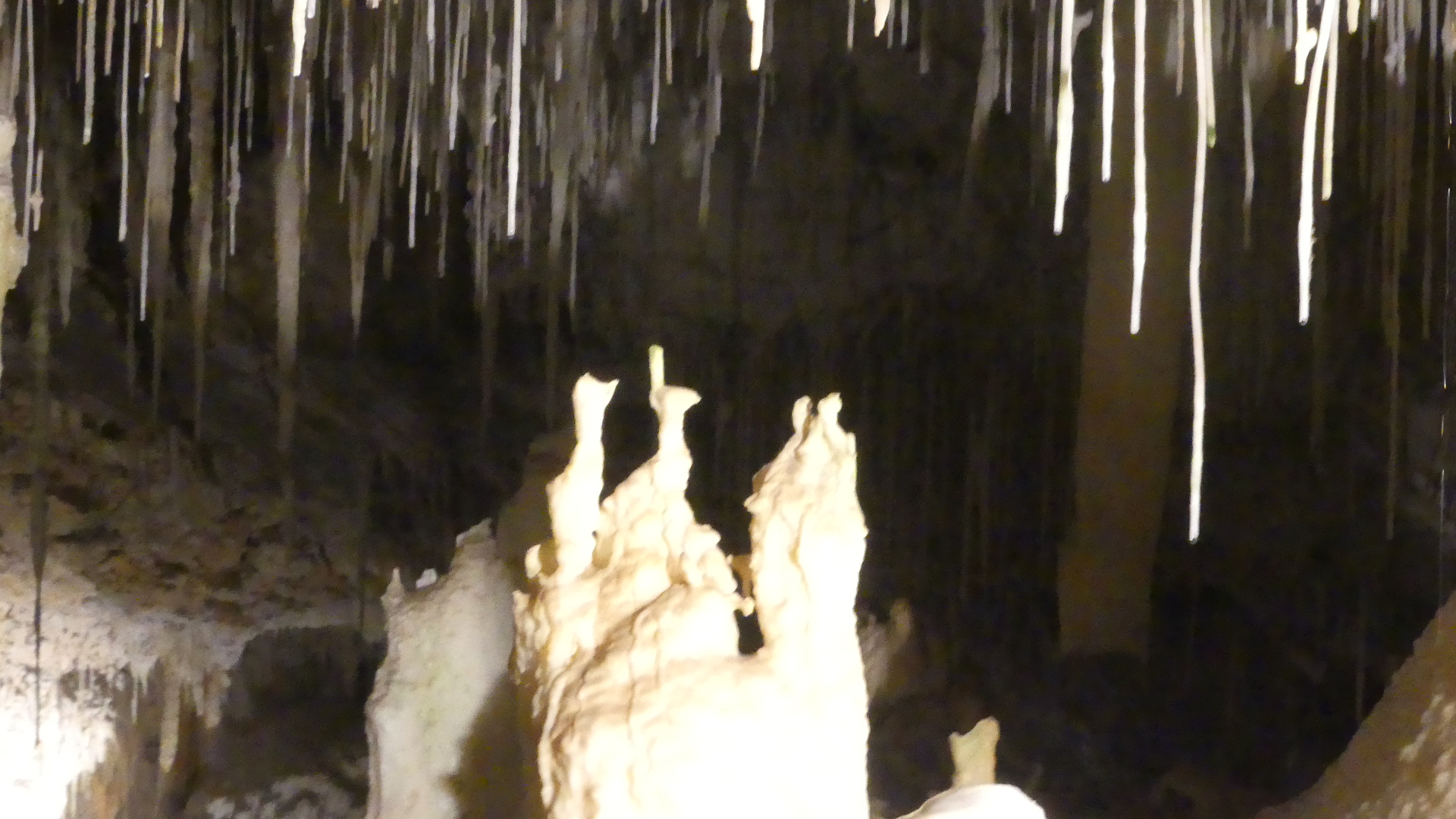
Returning north along Caves Rd we encountered the Lake Cave. It is a stunning crystal wonderland, situated deep beneath the earth. The entrance of the cave lies at the base of a spectacular sinkhole. Visitors descend a staircase through an ancient sinkhole called a doline, gazing up at the towering karri trees from the floor of the sunken forest. Inside the cave a tranquil lake reflects the delicate crystal formations that grow from the cave ceiling and dazzling crystal formations dominate the cave roof, while the unique ‘Suspended Table’ is perfectly reflected in the tranquil water below.

Droplets hang from the tips of straws and stalactites before dropping to the cave floor or into the lake creating ripples in the water’s reflections. The unique ‘Suspended Table’ formation, which weighs several tonnes and seems to defy gravity as it hovers above the clear lake water is one of the unique features within the cave. We took a guided. They say there is moderate physical exertion required to enter this cave. Don’t believe it for a minute – easy going down but when you make your way back up the staircase of the magnificent doline do it at your own pace.

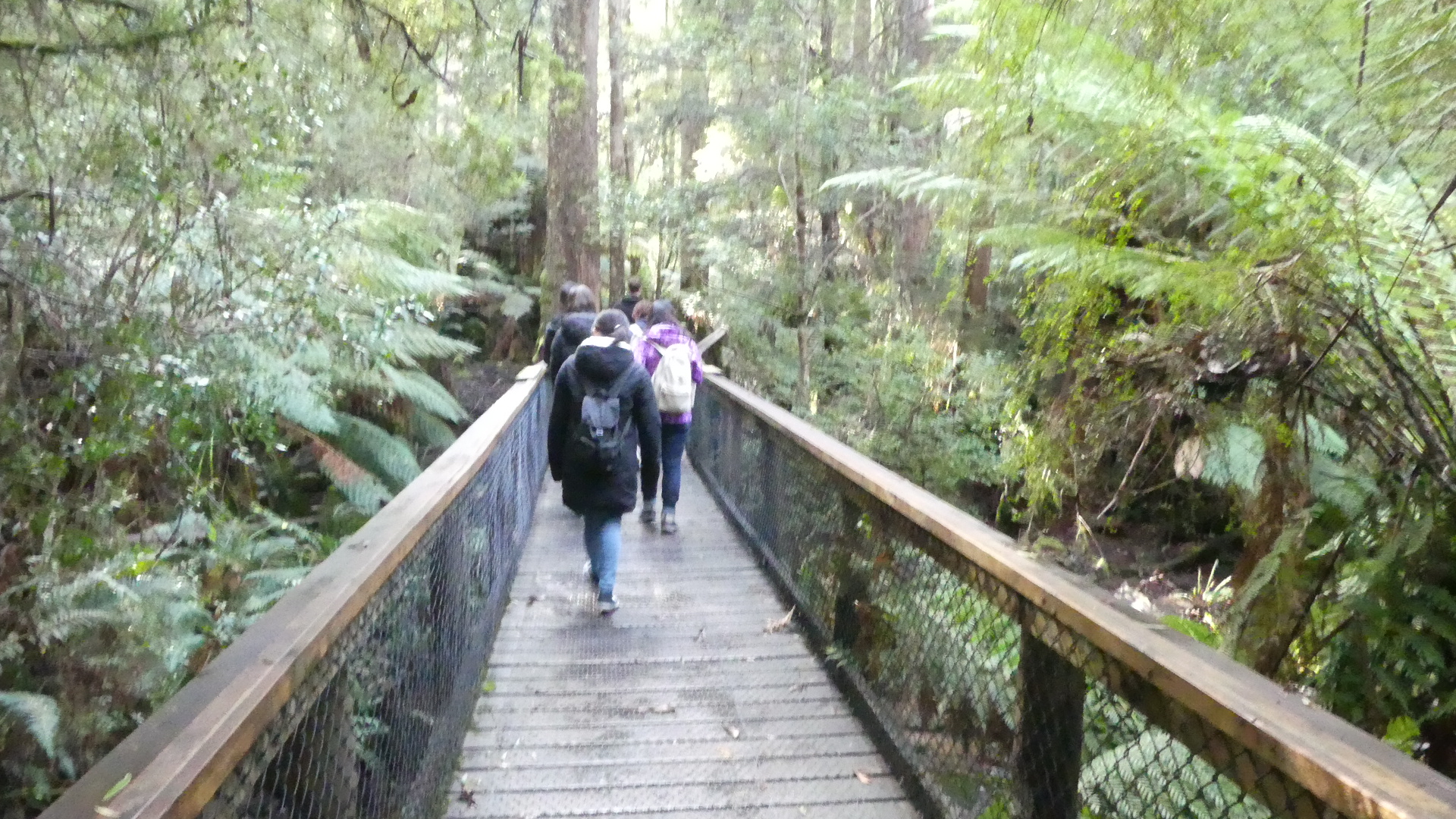
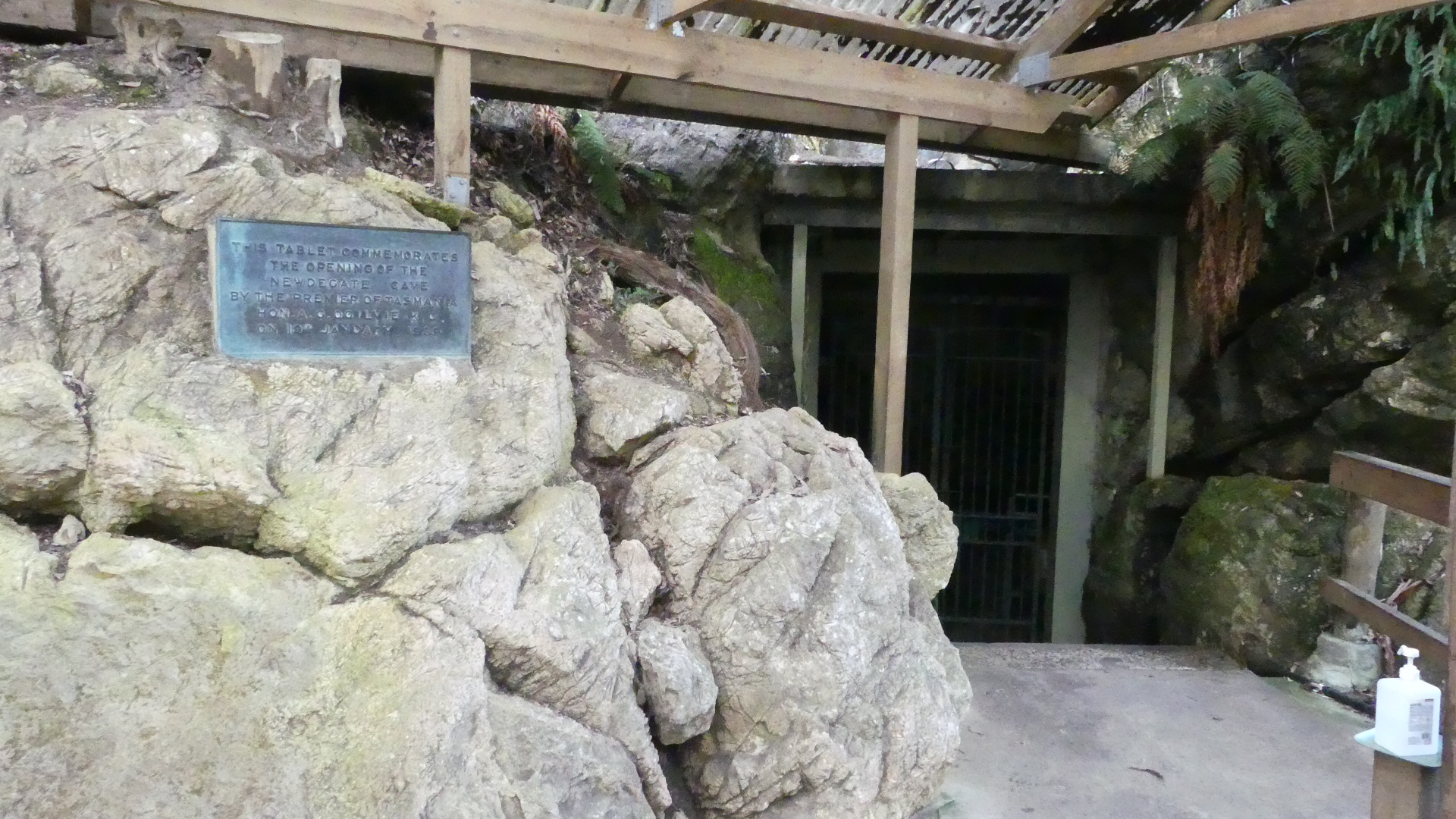
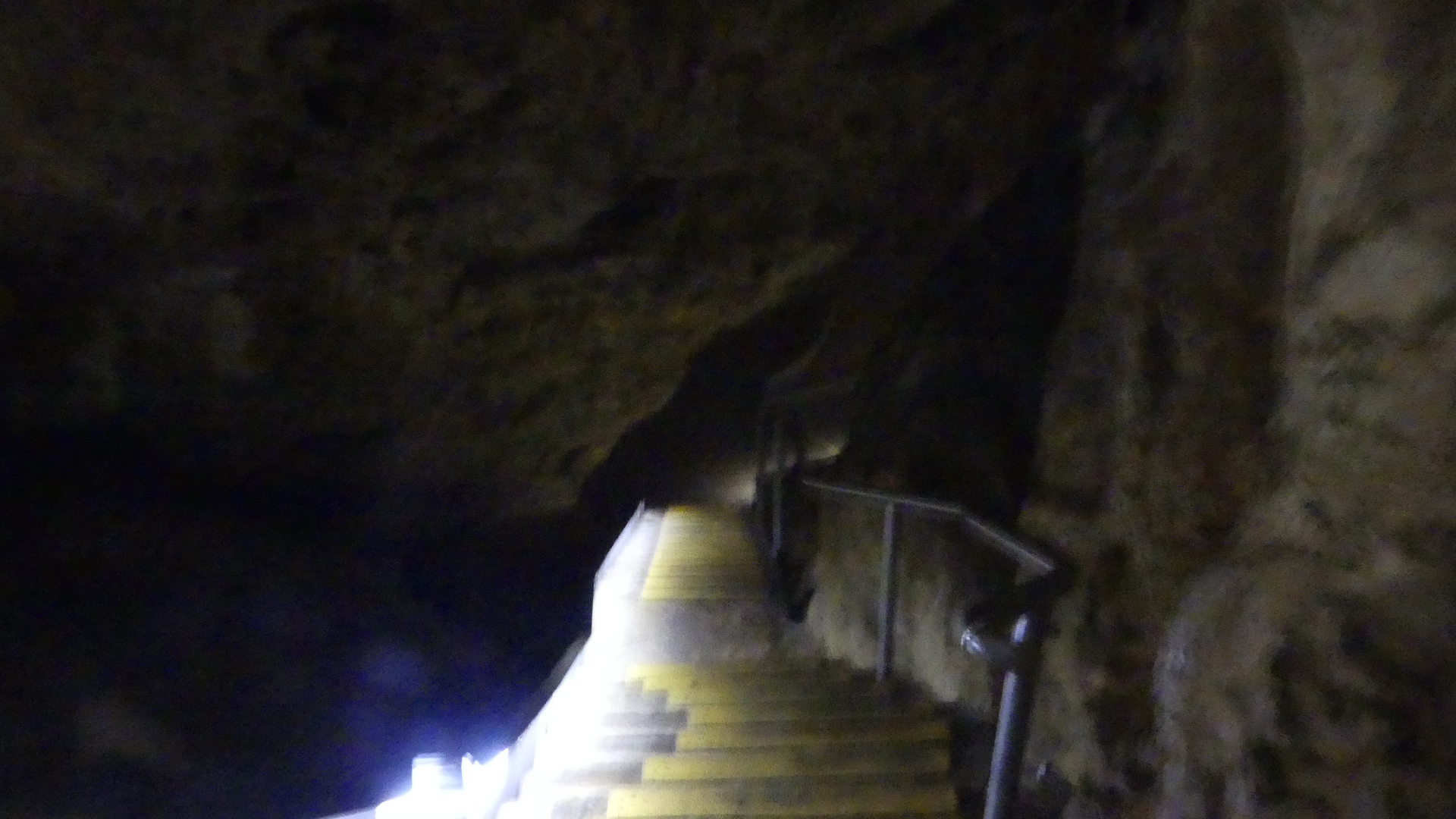
Looking at the photos we start at the Visitors centre and from there you walk out onto a deck above a huge sinkhole – you have to see it to believe it. As you go down there are a number of changes in direction and this has alot to do with the return journey being exhausting. You will see a large rock lying on its side (from the left down photo 8) and this is a staligmite that collsaped during a recent bush fire almost sealing off the entrance to the cave. The photo to the right of the staligmite is the hole it came from. The inside the cave is like a fairyland. Photos 10 and 11 show you the suspended table formed by flood waters through the cave. The final photo #17 is the doorway to the tunnel that was drilled to release the flood water to preserve the cave.

Well we have visited many caves around the world, but we were about to encounter the worst return to the Visitors Centre – up the stairs. Well I don’t know how many stairs but both Kerry and I took at least half an hour to climb out of the hole and that was it for us that day. Dale and Zdravka patiently awaited our climb and I may have had a nanny nap going home. Tomorrow we will go north again to Busselton – no stairs.

THE RETIREES AND FRIENDS VISIT PERTH AND MARGARET RIVER – day 6 Back to our Itinerary in Margaret River

Star Date 30th July 2024

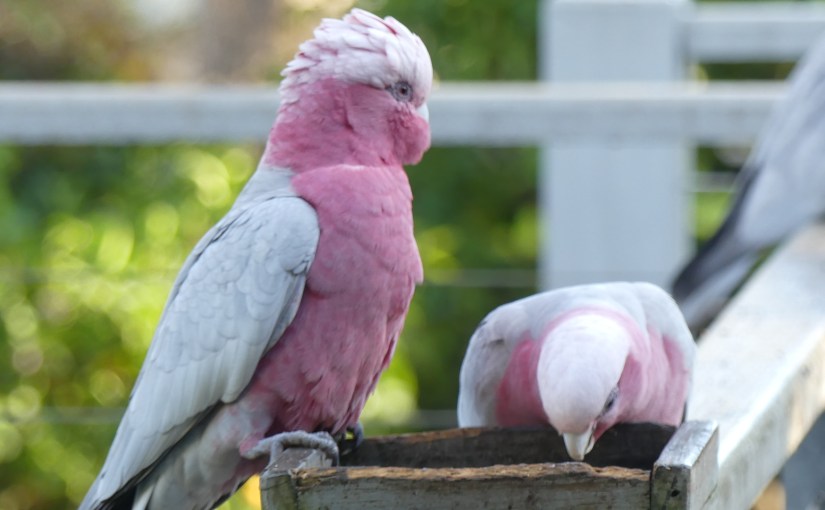
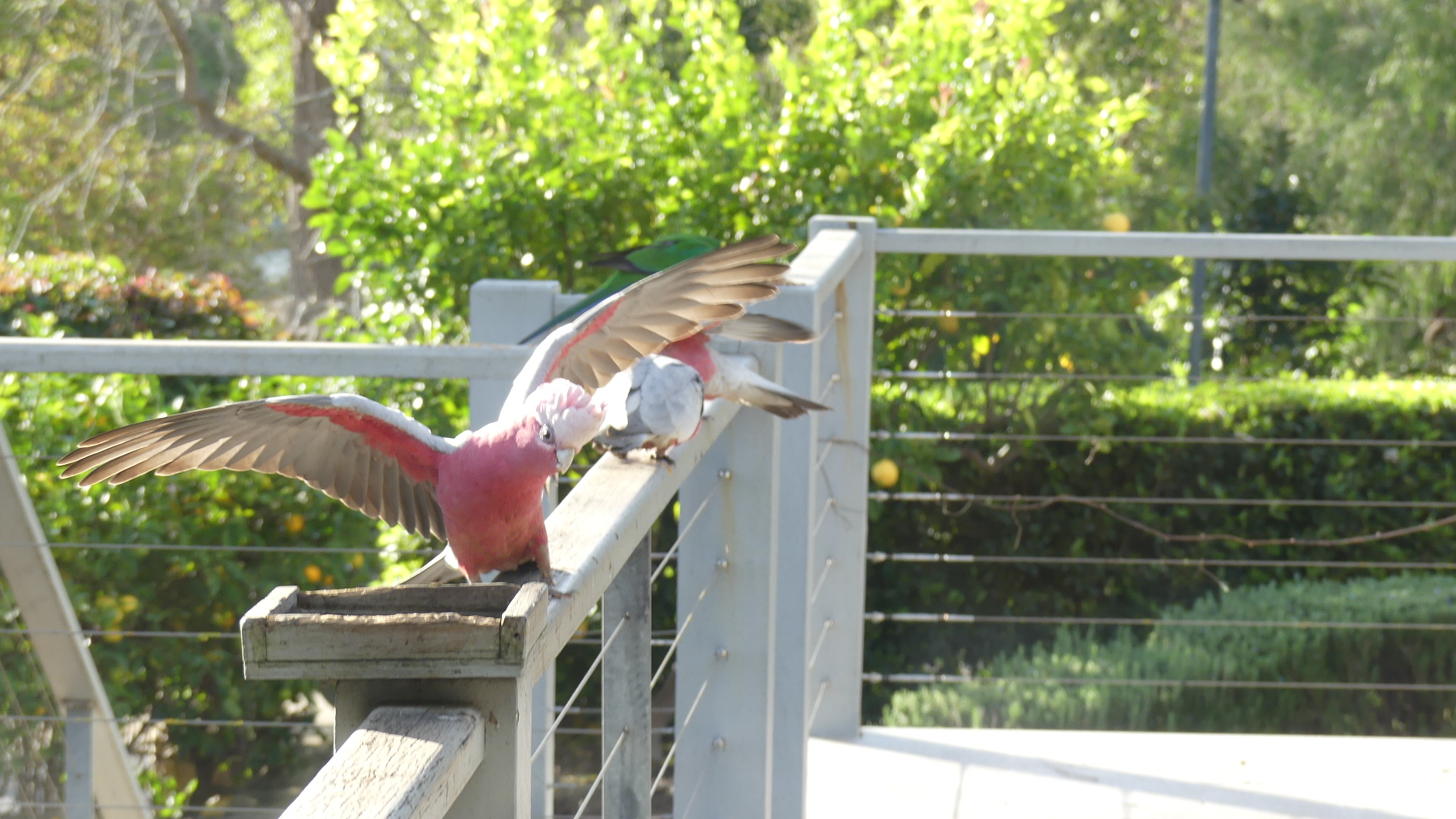
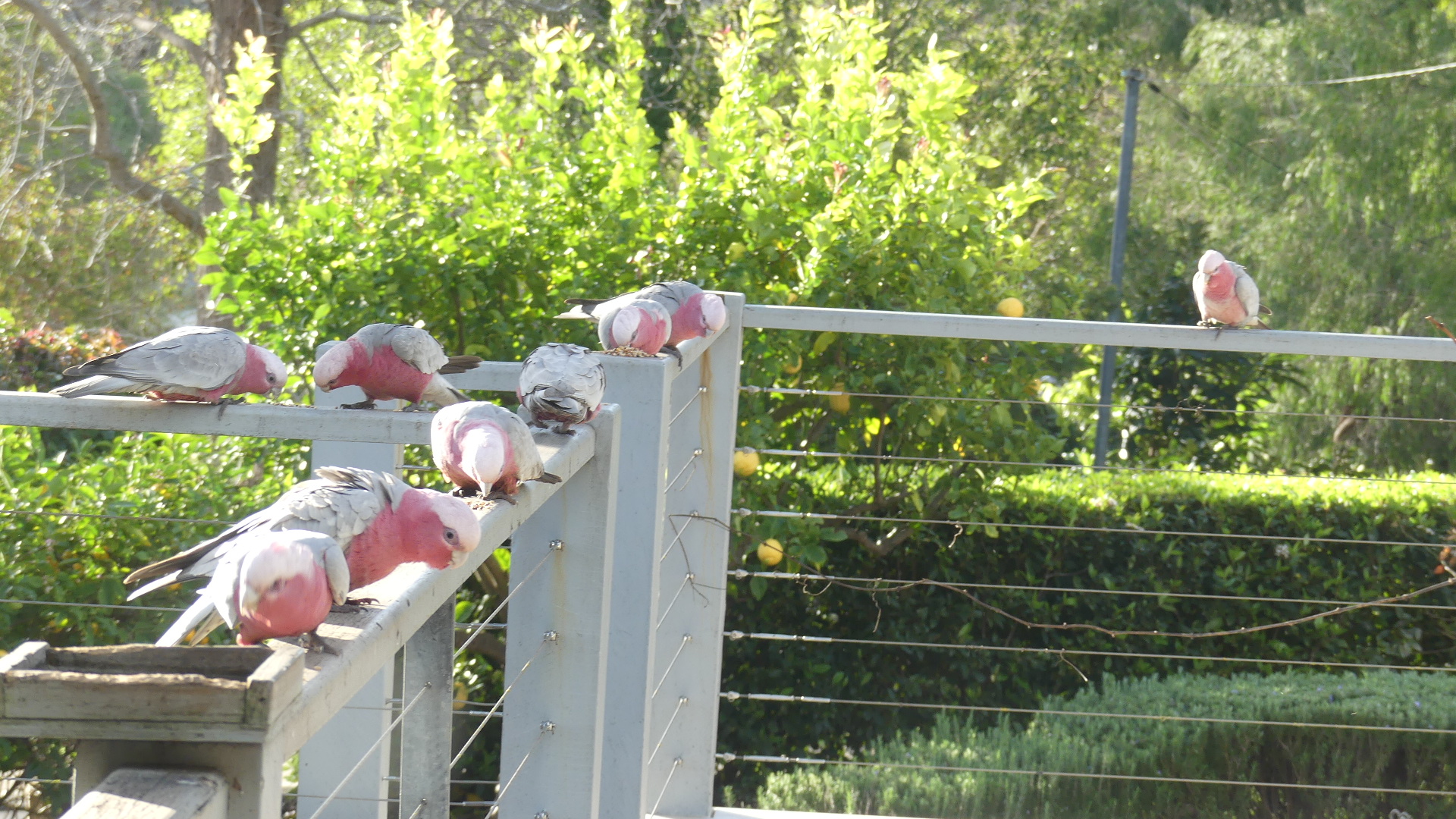
We were staying approximately 70m from the main street of Margaret River Village in an old looking cottage that has been modernised. It is on a brick base which forms a basement with a carpark not built for a Landcruiser and above is the front deck leading into a very small living room with fireplace, small dining area, a small galley kitchen, our bedroom which only just fits a double bed, a short hallway leading to the bathroom and back door where a porch brings you onto the back yard probably 3m wide. Here stand the chopping block for the fire wood to be split. The house is surrounded by trees. Of particular interest is the avocado tree which has fruit on it but without a ladder very much out of reach fruit. Of a morning and evening pink and white Galahs, pigeons and an occasional kookaburra come to be feed on the front deck, a ritual created by everyone who has stayed here and perpetuated by the landlord providing the seed. The house has a loft and this was the domain of Dale and Zdravka – two bedrooms and a bathroom.

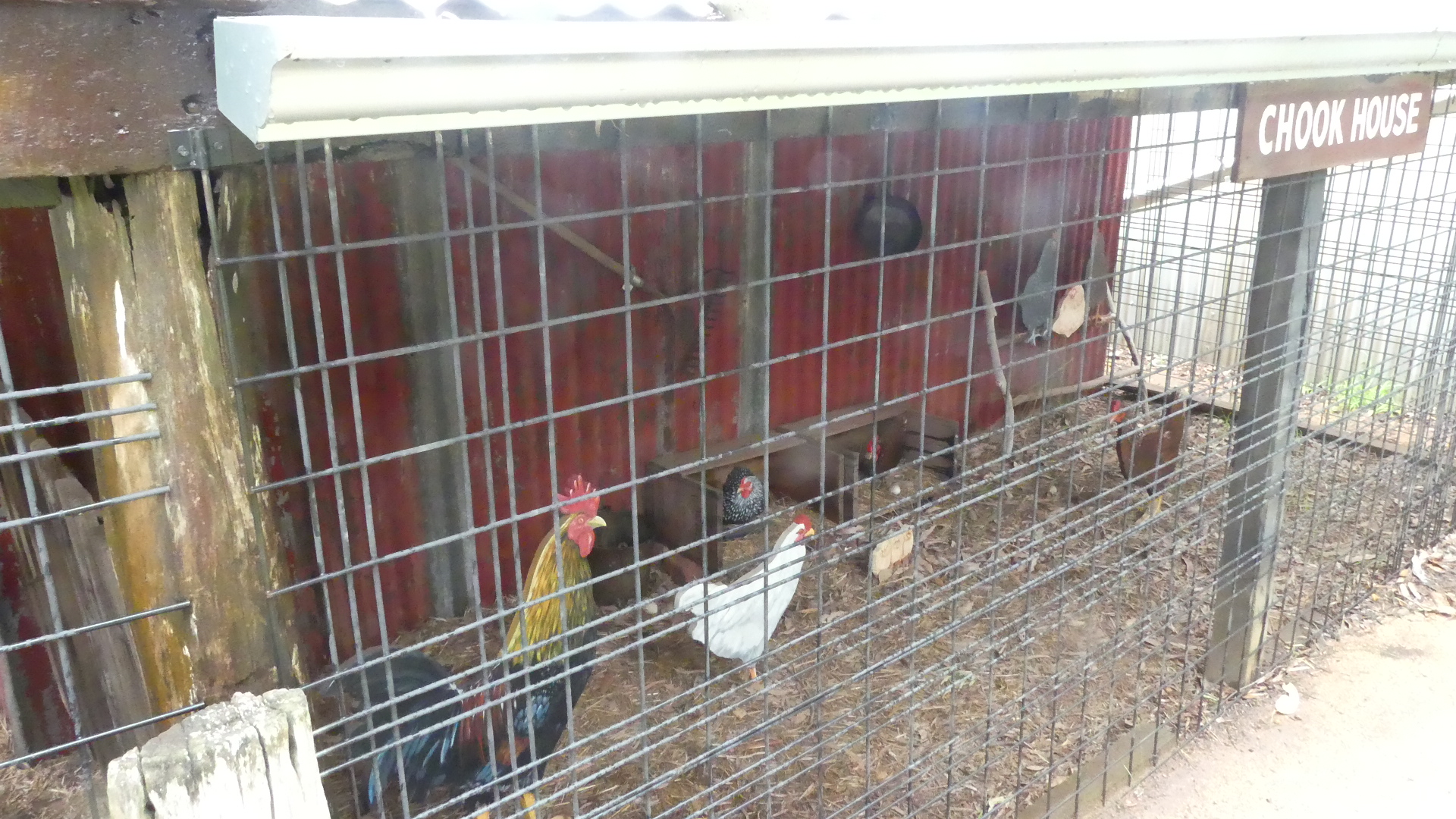
We had brought some beverages to put in the fridge so after lighting the fire which I kept adequately stocked with split logs, we would feed the birds turn on the TV (the Olympics was on) and have some refreshments with the birds scrabbling away on the deck to get their fair share of seed. Of course there was spillage and that brought a local chook to pick up the scraps. Here are a few photos of the birds and one of the house.

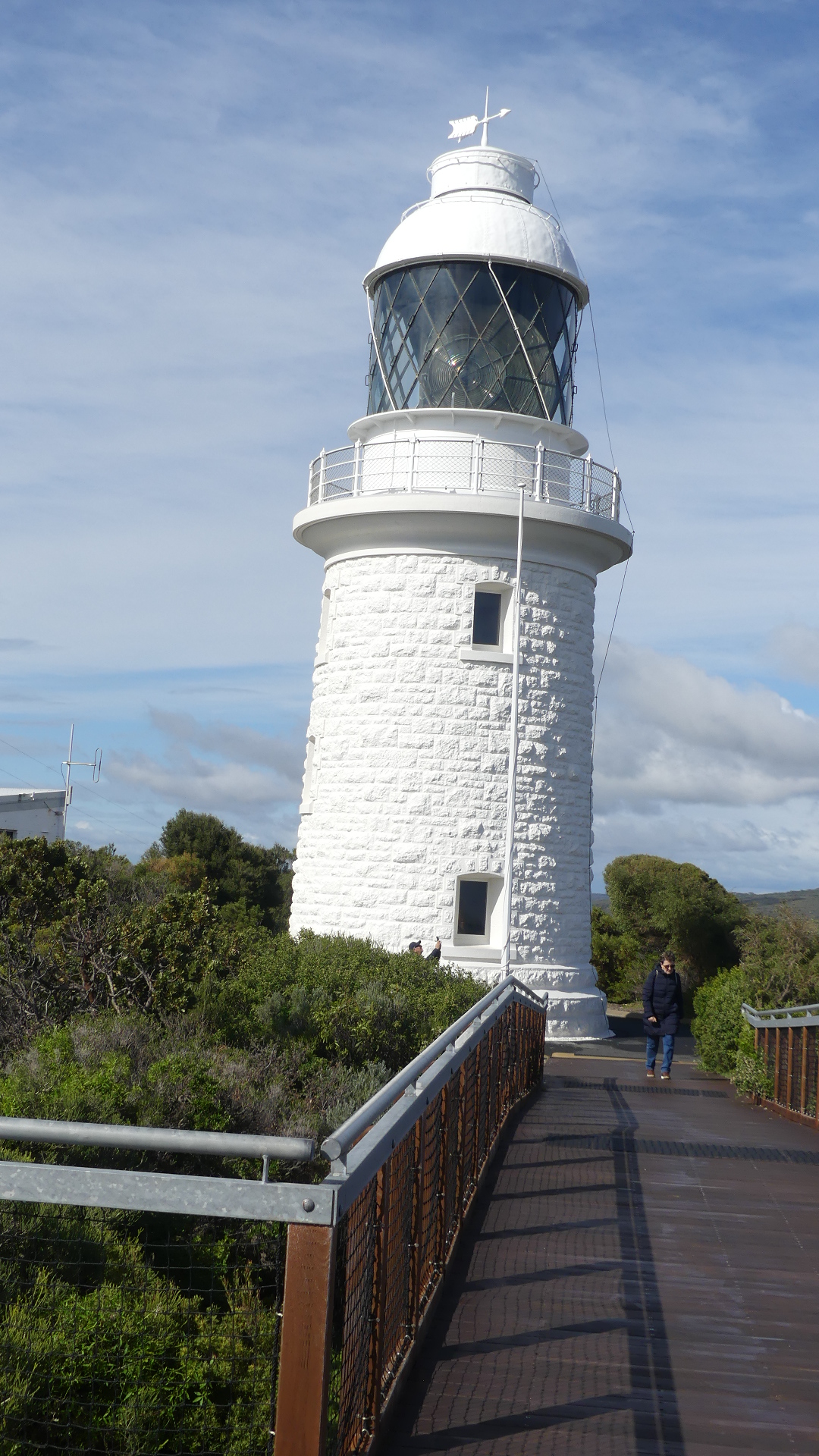
Now its all very well to have an itinerary but following it can some times be difficult as we were about to find out. Despite the best laid plans, we were going to Cape Naturaliste lighthouse. Then onto House of Cards Vineyard, Vasse Virgin, Fishbone Japanese inspired dining, and Margaret River Chocolates but we did not know that nor did the driver. The lighthouse is north of Margaret River village but well worth the drive. You may have noticed the french twist on the name of the cape. Cape Naturaliste, in the south west of Western Australia, is the site of a lighthouse which was activated in 1904. The tower, positioned on a 100 m high bluff overlooking Geographe Bay, was constructed in 1903.The lighthouse is constructed of limestone quarried from nearby Bunker Bay, which was also known as the Quarries.

The French twist comes from French explorer Nicolas Baudin, after his ship, Géographe.  The bay was named in May 1801 and is a wide curve of coastline extending from Cape Naturaliste past the towns of Dunsborough and Busselton, ending near the city of Bunbury. Geographe Bay is in the south-west of Western Australia, around 220 kilometres (140 mi) southwest of Perth.

It is a 20-metre-high (66 ft) cylindrical tower built of limestone that still uses its original first order Fresnel lens made by Chance Brothers. Another precious lens optic is displayed there, the second order Fresnel lens of the Jarman Island Light, as well as the original Great Sandy Islands beacon. Both items were originally used on the Pilbara coast further north.

The entrance leads us through the original lighthouse keepers dwelling and other out buildings which now contain a museum and of course the gift shop.

The handset as seen being used by Kerry is in fact a recording of the ship wreck of the Carnarvon Castle in 1907. It is a chilling re-enactment. The lighthouse is not the tallest nor the brightest light but in this setting it gives a romantic/heroic feel to the whole area.

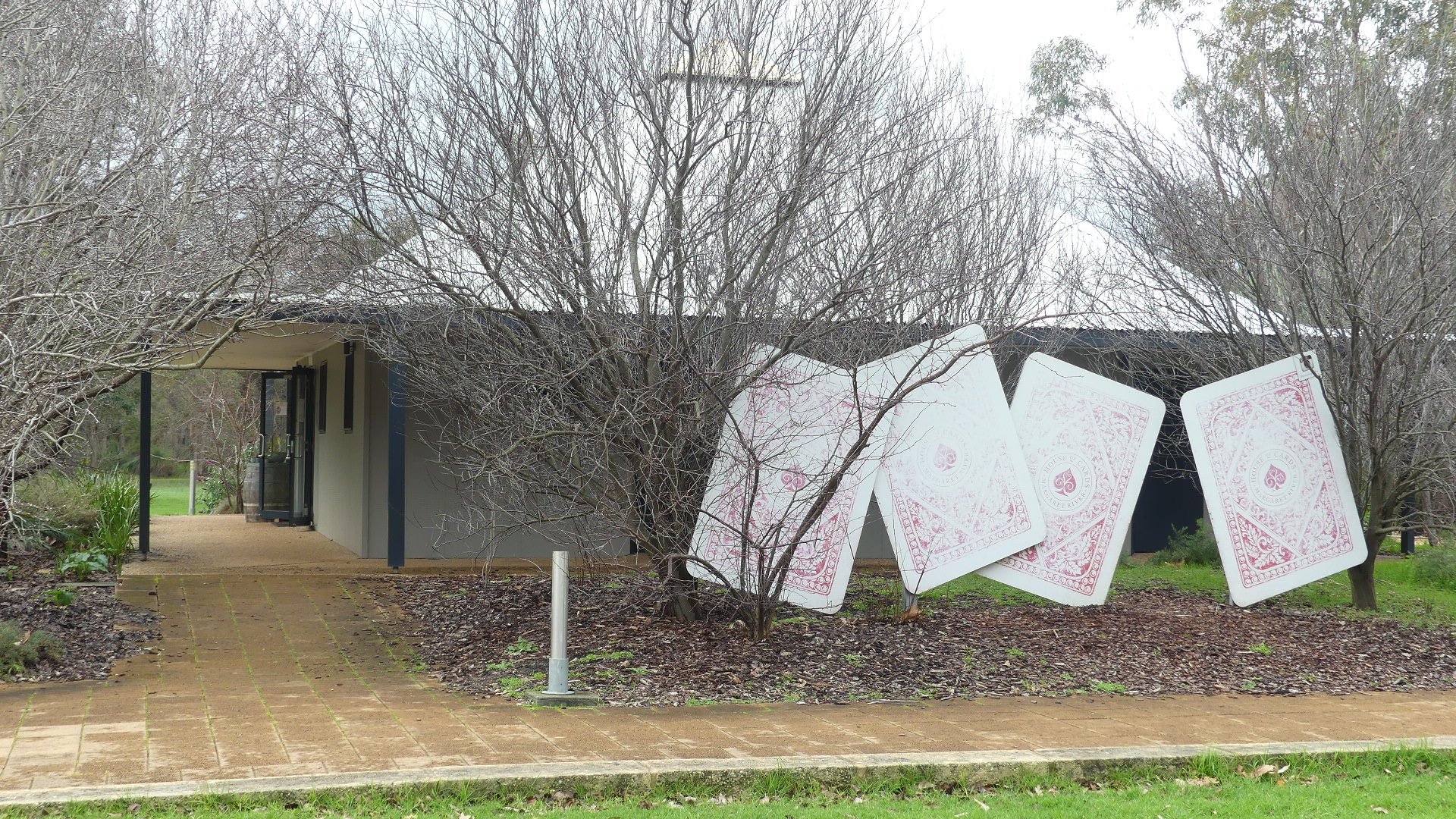
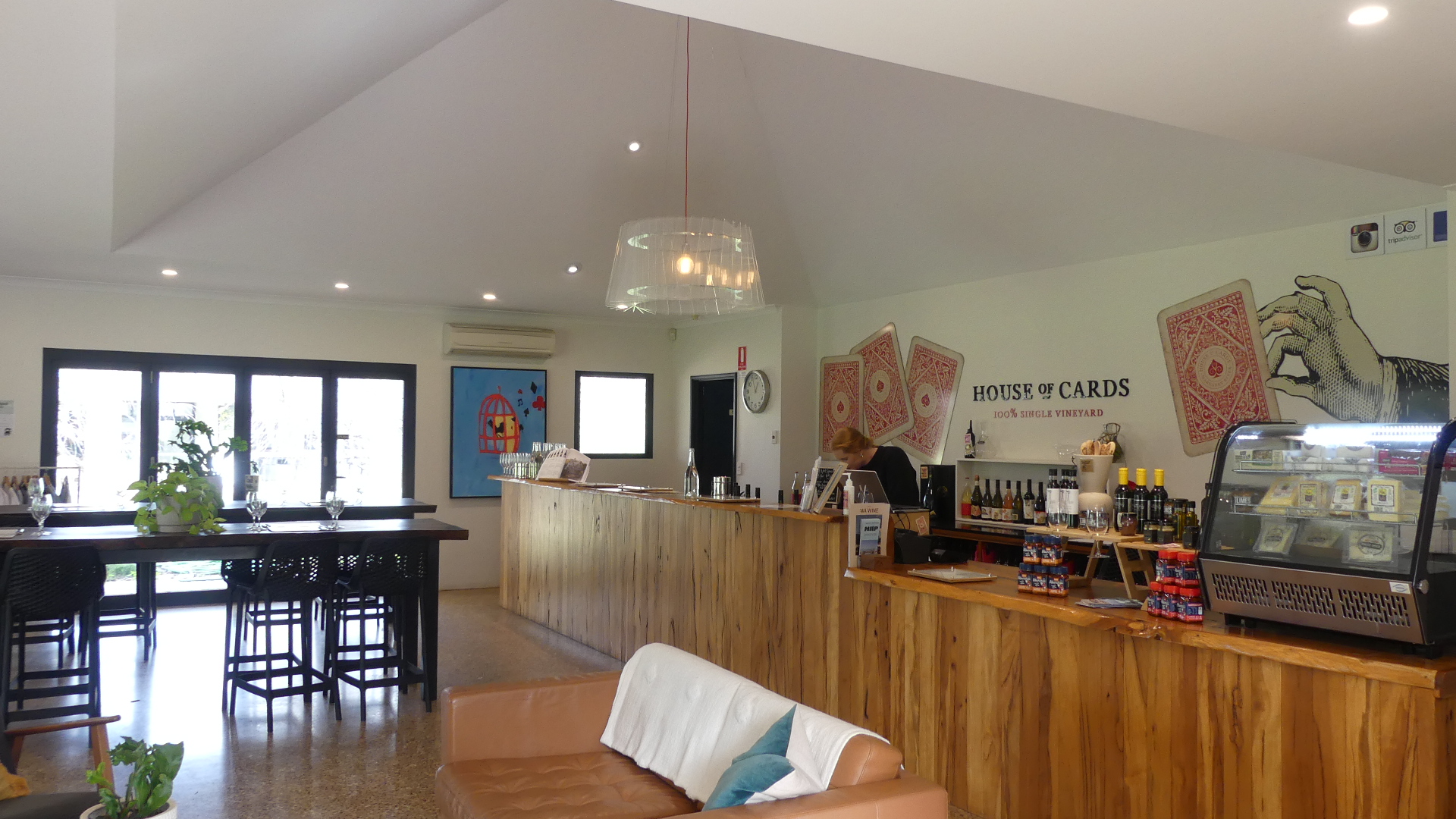
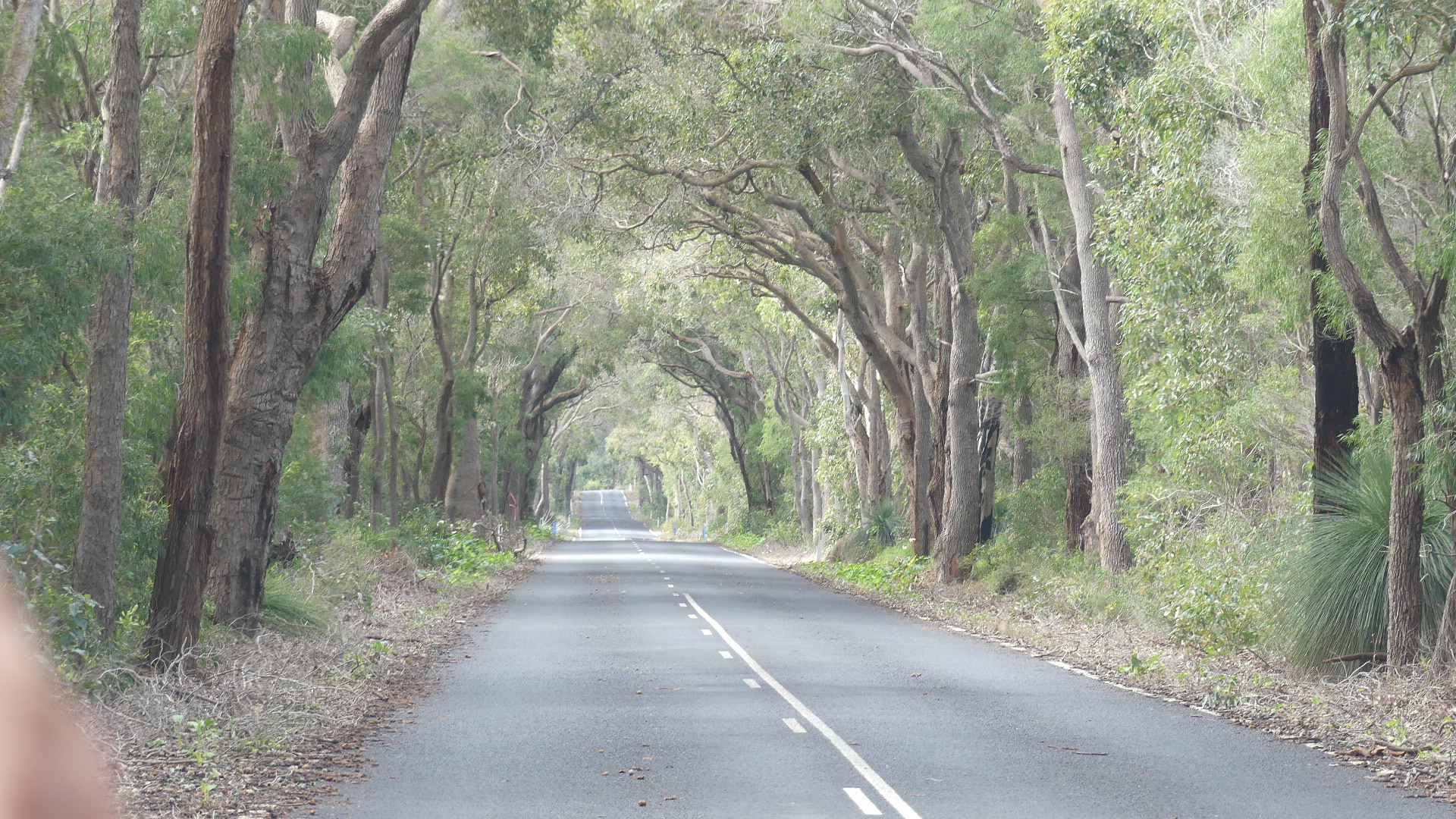
We then returned to the car planning to visit Vasse Virgin home of the olive shampoo but memories got in the road. Driving along Kerry and I recognised a favourite winery of our last trip over here – House of Cards. As we drove in an air of despair came in through the window. It looked sad and unkempt. Its neighbour the chocolate shop was gone and everything looked tied except for the smart looking restaurant behind the cellar door. The cellar assistant told us that the winery had changed hands many years ago (just after our visit) and it had lost its glitter. So we visited the restaurant it being that time of day. Oops forgot my cheque book – a touch too rich for us. Moving along to Vasse Virgin, we entered a beautiful row of trees either side of the entry.

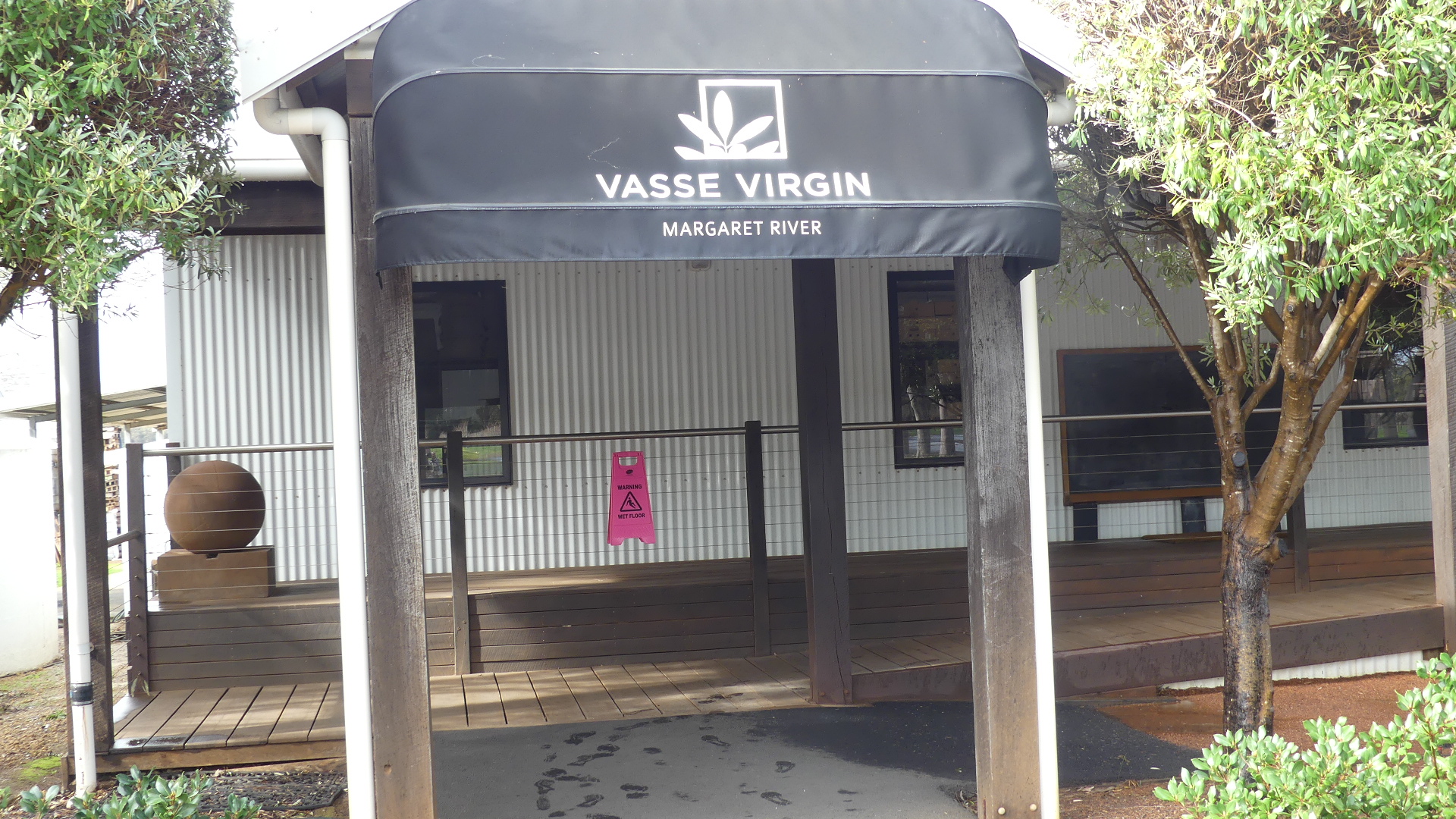
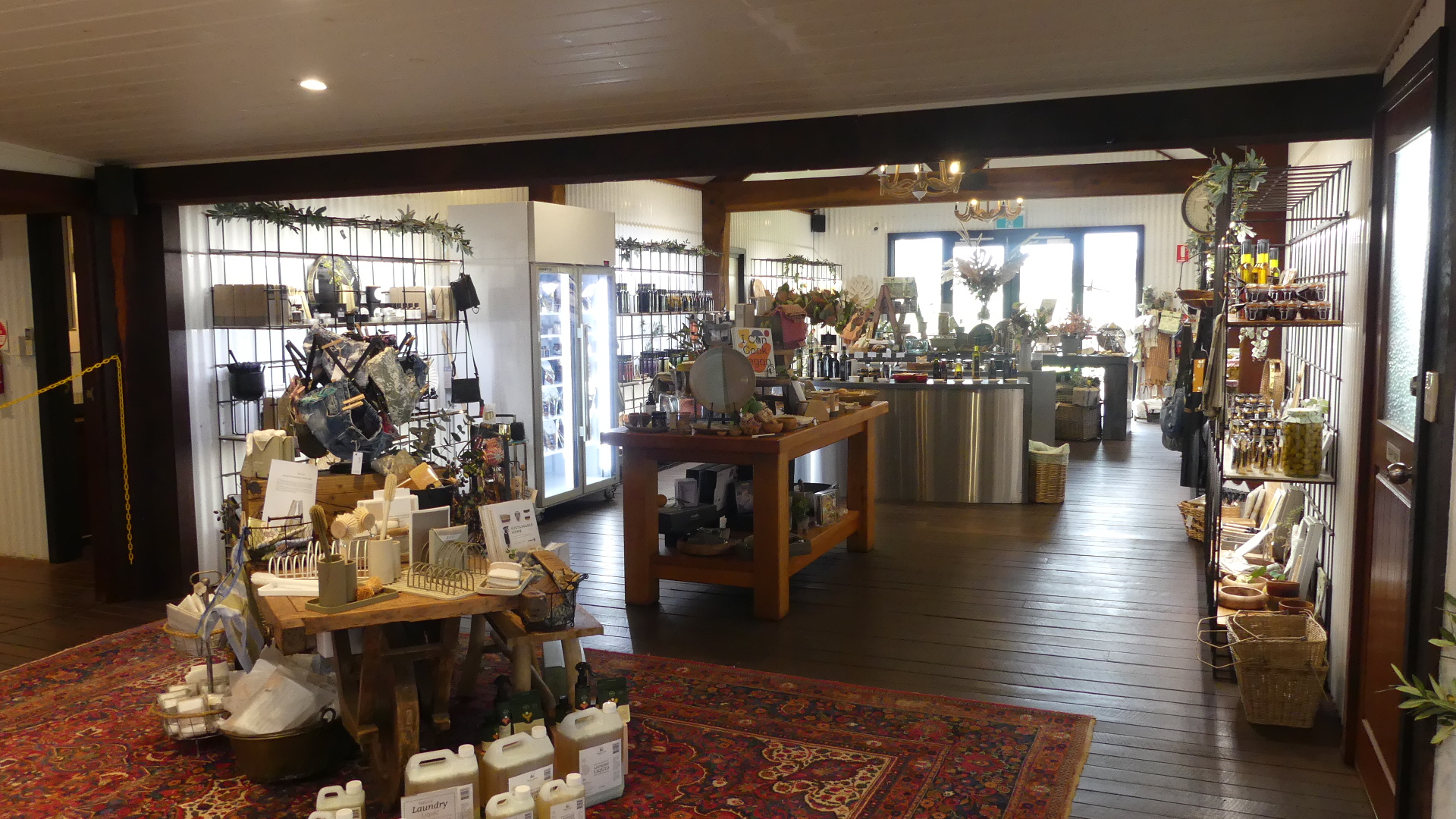
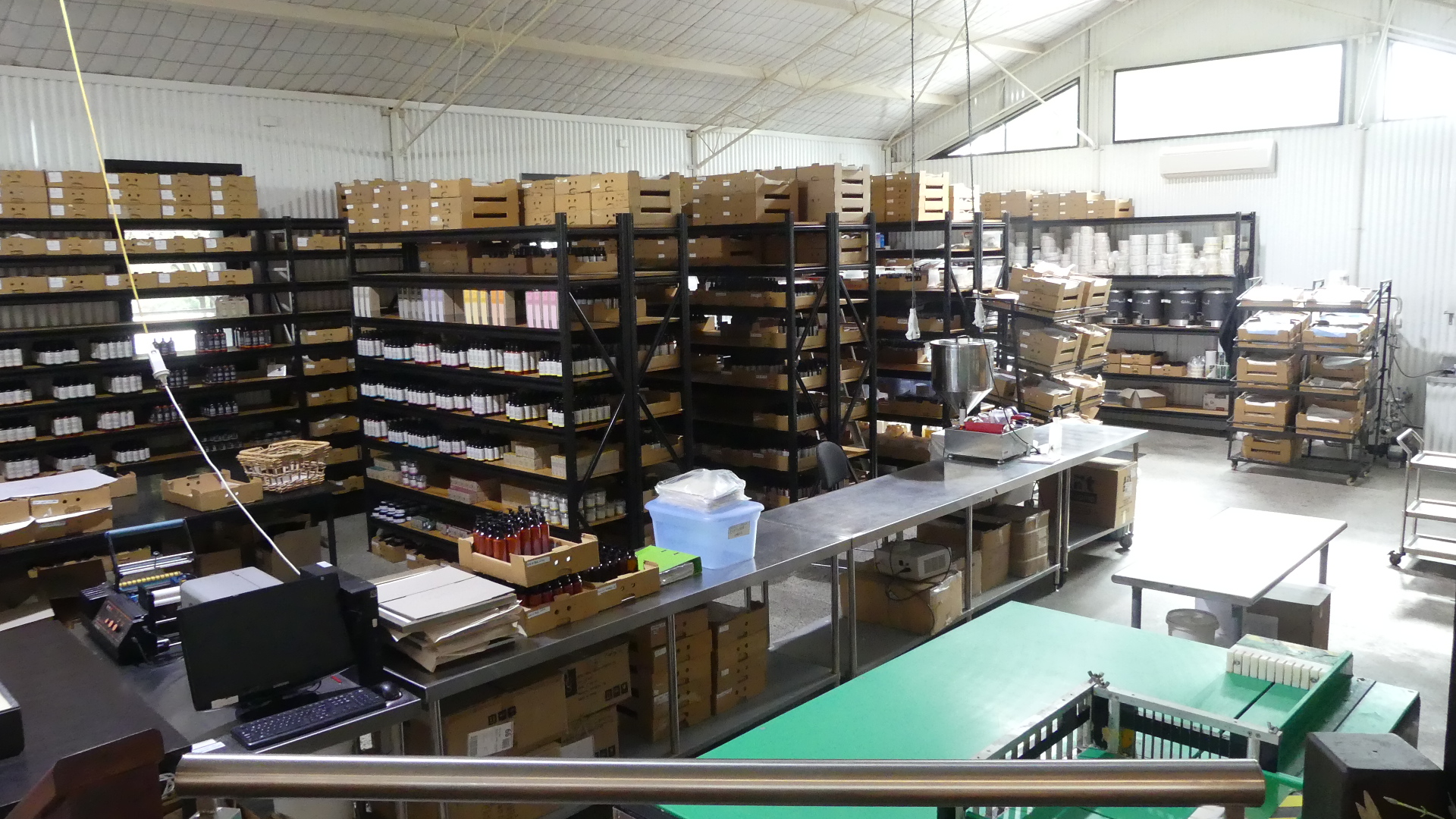
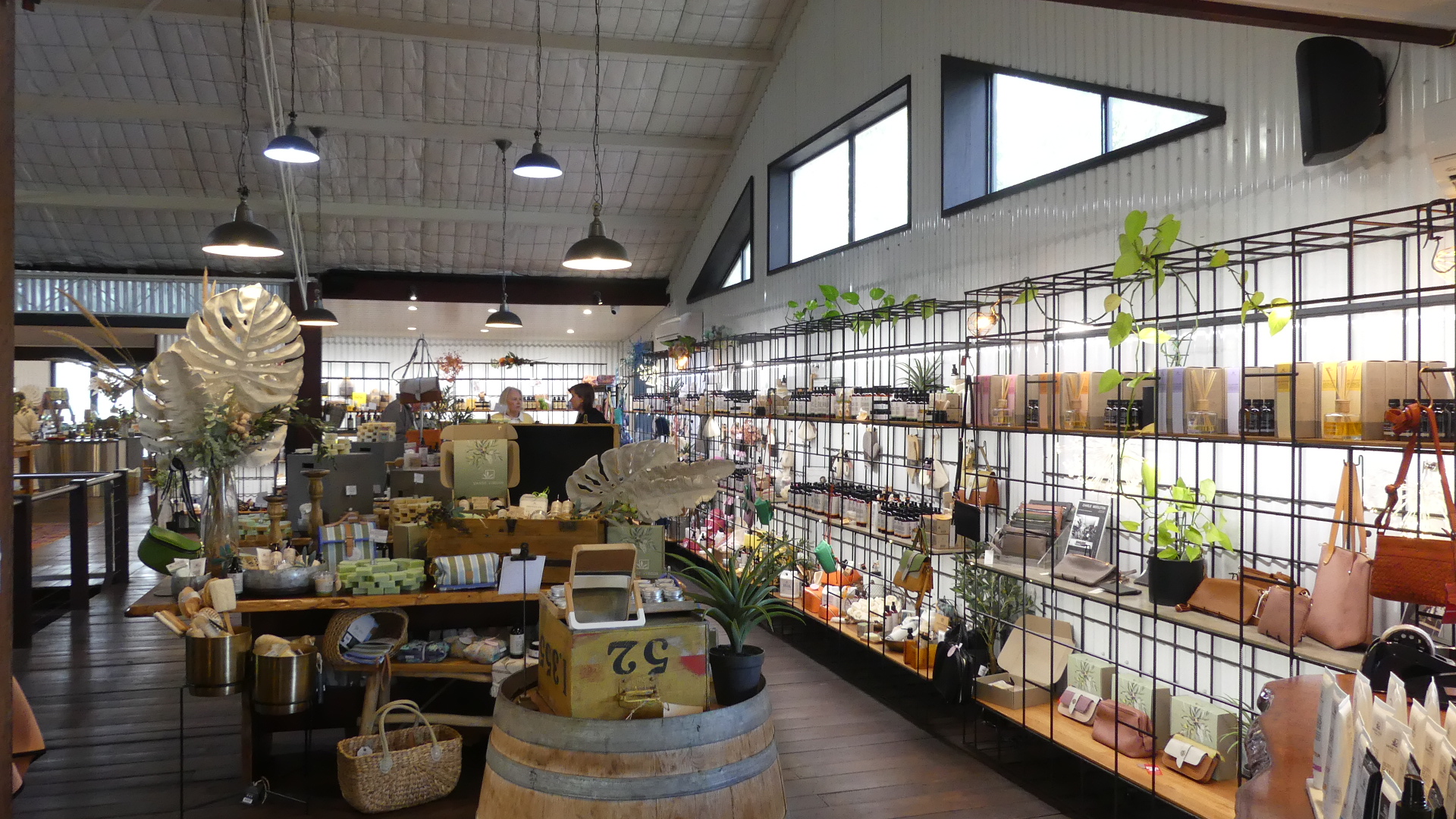
Vasse Virgin is a factory with a gift shop attached. Here they make Kerry’s favourite shampoo and conditioner using olive oil which has been a real find for her treating her psoriasis. Whatever else they do does not matter – Kerry pulls out her bulk containers and says “Fill ’em up”. So I have a look around and whilst it is quite impressive and obviously successful its all girlie stuff – No Sale.

Hunger has grabbed the attention of Dale who having heard the words”Japanese style dining” is looking for “Fishbone”. We find Margaret River Chocolate Company but across the road there hiding in the bushes is Fishbone. Well I have been off my food and the thought of any food was not appealing but in we go. Not only is it a restaurant but its part cellar door and distillery – something for everyone. The 165-acre Fishbone estate is a picturesque expanse of gently sloping hills, falling into the Wilyabrup brook. Against the backdrop of the vineyard, is a fresh, refined and elegant Japanese restaurant. The food is excellent and we grabbed a bottle of wine and bottle of gin.

The chocolate company was identical to the same named establishment in Margaret River so we did not spend much time there. We decided to call it a day and pulled up stumps. Home for the fire and more Olympics.

November 2024

THE RETIREES AND FRIENDS VISIT PERTH AND MARGARET RIVER – SWAN VALLEY – day 4 Back to our Itinerary

Star Date 29th July 2024

Dale and Zdravka have planned to go to the Pinnacles and without the use of Ken’s car we decided to hitch a ride. The Pinnacles are limestone formations within Nambung National Park, near the town of Cervantes, Western Australia 2 hours drive north of Perth. Dale had his trusty new Landcruiser at hand with plenty of space for all. The drive proved trouble free and we were treated to some unique countryside. Note the unique intrusion of the sand into the surrounding scrub in photos # 6 & 7 (reading left to right down the page).

The weather was slightly overcast but the air-con was on and we were sweet. As we came closer to the area around Cervantes the country was flat with scrubby bushes but as we drawing nearer suddenly there were sand hills rolling in across the top of the scrub and to match the sand hills the clouds piled up promising rain at some stage. Below are pictures of the pinnacles. You can walk freely among the pinnacles and it reminds me of walking among headstones in a cemetery.

There was a visitor’s centre with an interesting museum on the wildlife and the Aboriginals tales about the origins of the Pinnacles – a bit more interesting than the speculation by the scientists about the creation of the rock formations. Fascinating to wander through and see how the animals and birds used them. Referring to our tour itinerary we decided it was time for the Lobster Shack in Cervantes for lunch. Zdravka had spent hours piecing together our tour making this a relaxing holiday for us in the back seat. Cervantes is named after a ship that was wrecked nearby. The ship, in turn, was named after Miguel de Cervantes, author of Don Quixote. The principal industry in the town is fishing particularly Lobster. The Pinnacles in nearby Nambung National Park and the saline Lake Thetis, which contains stromatolites, supports a small tourism industry which helps out the economy of the area. Firstly we stopped off at a beach and touched the Indian Ocean then into Cervantes and the Lobster Shack.

The Lobster shack – watch out for the robbing sea gulls.

Leaving Cervantes and onto the saline Lake Thetis, which contains stromatolites. “Stromatolites – Greek for ‘layered rock’ – are microbial reefs created by cyanobacteria”. These deposits built up very slowly: a single 1m structure may be 2,000 to 3,000 years old. But the tiny microbes that make up modern Stromatolites are similar to organism that existed 3.5 billion years ago! What’s more, Stromatolites are the reason why we’re alive today! Before cyanobacteria the air was only 1% oxygen. Then, for 2 billion years, photosynthesising Stromatolites pumped oxygen into the oceans (like underwater trees, before trees existed). When the oceans’ waters were saturated, oxygen was released into the air, and with around 20% of oxygen in the air, life was able to flourish and evolve. For context, consider that the Earth itself has been around for 4.5 billion years, and that modern Homo sapiens have only been on Earth for 160,000 years.

Finally we had to climb this hill and look at the ocean to end our visit to Cervantes.

I may have nodded off on the way home- old people do that.

However it was the end to an enjoyable day. The Pinnacles presented a foreign landscape out of place until we experienced the Stramatolites of Lake Thetis and somehow it makes sense – billions of years have passed and this is the outcome.

THE RETIREES AND FRIENDS VISIT PERTH AND MARGARET RIVER – SWAN VALLEY – days 2 & 3 wine tour 2024

Star Date 27th and 28th July 2024

We wake with the sunrise and outside the kangaroos are gathering across the road. They stay there until 8.00 am when they will rush across to the back of the Sebel Apartments. No one is there to feed them but that doesn’t deter them. Dale and Zdravka are going to Perth to Kings Park and we are taking a wine tour. We will meet the coach at Guildford opposite the visitors centre.

After breakfast we drove into Guildford and meandered through the streets until we stood in the bus stop awaiting our guide. We were getting concerned when the bus had not arrived at the appointed time. We were on the point of ringing the tour company when we noticed the bus approaching. The driver was some what surprised but called us on board. So the tour began. Our first stop would be Mandoon Estate. I was suspicious that something was wrong and so at Mandoon the driver started investigating our tickets. Lo and behold we were 1 day too early and travelling with a different tour company and our tour commenced tomorrow. My embarrassment would not permit me to continue although that was offered and I could not bring myself to even taste the wine.

So we walked through the winery and found the early homestead now turned into an arts and crafts gallery with views over the Swan River. From the river bank we watched a pair of cockatoos preparing their nest in a hole in the tree.

Still feeling embarrassed that not only had we joined the wrong tour but we even got the day for our tour wrong, I was inclined to avoid showing my face at Mandoon cellar door. However adjoining Mandoon is Sandalford Wines cellar door – nothing too hold me back we came into the cellar door via the tradesman’s entrance. Sandalford is one of the biggest wine producers in the Valley. As we walked through the vineyards we noticed these white flowers everywhere but no one seemed certain if they had a purpose other than looking pretty. We settled down to some serious wine tasting
After tasting the wines at Sandalford I still could not bring myself to do any wine tasting at Mandoon so we caught an Uber (remember our car is back in Guildford) back to Guildford and strolled the old town a little further. We had planned to visit a number of different places in the Valley with our traveling companions so we could not explore too far. After lunch we headed back to Sebel in the Vines and made plans for dinner.
The following morning we repeated our trip to Guildford and caught the correct tour bus. As we boarded Kerry recounted yesterday’s adventure. This introduction broke the ice with the other passengers – 3 gay guys who admitted they were a 3 some very quickly into the trip. First stop was Nikola Estate (formerly Houghtons Winery) and the largest vineyard in WA. Very elegant and extensive grounds – the driver gossiped that the owners had a big event here and the vineyard grounds were jammed packed so much so that people could not leave the vineyard until after midnight due to the traffic jam created as people tried to leave. Well there was no trouble like that today. The place was empty so the 5 of us were sat down at the big table and tried their wines.

Sitting at the table I noticed they have a chapel for weddings. Although the cellar door and grounds were impressive this was not what we had come looking for. Here is a glimpse of the chapel from our tasting window.

Next we moved onto Olive Farm Wines. Yes a combination small winery which was of more interest to us particularly its wine dispenser which you can see below. The drive into the vineyard can be observed from the wine tasting table with the vineyard either side of the driveway. Thus far each vineyard had some different style or grape variety in addition to traditional grape varieties but this dispenser was something to behold – there were 30+ bottles on tap for a tasting at a price. The cellar door was quite busy but I expect it was tours like us in a small winery that made it seem very full. I liked their Shiraz (I know I’m boring) and left with bottle in hand. Onto the next one – Lamont’s Winery.

Lamont’s did not impress as the other two cellar doors did, but inside was a different story. Lamont’s appeared lost in the bush whereas the other two were prominent on a major road. Of course I had to have an incident with my camera – the battery was flat and I did not bring my backup so the picture below is all I can offer for Lamont’s. Inside was a busy cafe, and the maturing vats and wine tasting area. Our host who’s name is lost to me now (I think he was married to one of the daughters of the Lamont family based on his apparent level of authority but not directly part of the family based on his “experience” in the industry related to us during the tasting). The gay guys turned out to be easy going but inexperienced travelers and wine connoisseurs and our host played up to them. He gathered their choice in wines told them it was cheap and nasty gave them the bottle and turned to Kerry and me asking what we would like to taste. Kerry suggested we get straight to the good stuff in their range of Shiraz and she was saving herself for the gin distillery. Our host lined up 3 bottles of Shiraz each of a different vintage and went through with each wine in an indepth tasting and of course I bought the one I liked – ouch was it that much? Read more about the winery at https://lamonts.com.au/swan-valley-winery/.

As we left he threw in a packet of olives to have with the wine which was generous of him and they were enjoyed by Dale and Zdravka but not with my wine.

Next stop was the gin distillery Sin Gin. Sin Gin Distillery is a Nano distillery creating Perth Pink, Original Sin & the Seven Deadly Sins range of gins in the Swan Valley. Sin Gin is named after Kate Sinfield who brought ideas of gin with her from England to Australia in the 1980’s. Mark and Kate work closely with products from the local Western Australian environment to handcraft unique, tasty and fun gins. Here is a link to their website – https://singindistillery.com.au/collections/the-sin-gin-collections. With my camera battery flat there are no photos. We made our way home to share stories and our olives with Dale and Zdravka. Tomorrow I will need to cut more wood for the fire – very chilly nights.

THE RETIREES AND FRIENDS VISIT PERTH AND MARGARET RIVER – SWAN VALLEY – 2024 DAY 1

Star Date 26th July 2024.

It all started as a conversation over a coffee meeting. Dale and Zdravka (long term friends) were talking about an across country trip they were planning once they had taken delivery of their new Land Cruiser. Their plans to go skiing had expanded into driving across the Nullarbor through the eastern goldfields of Western Australia onto Perth because they had never been there before – as you do.

Now we saw an opportunity. Between breaking my neck, undergoing months of treatment, surgeries for that then surgery (a craniotomy) for my brain tumour discovered during the second operation to screw my head back on then radiology therapy and now chemotherapy, that we needed a holiday and a return visit to Swan Valley and Margaret River wine districts might be just the go. However, we were not ready to drive across the Nullarbor to get there.

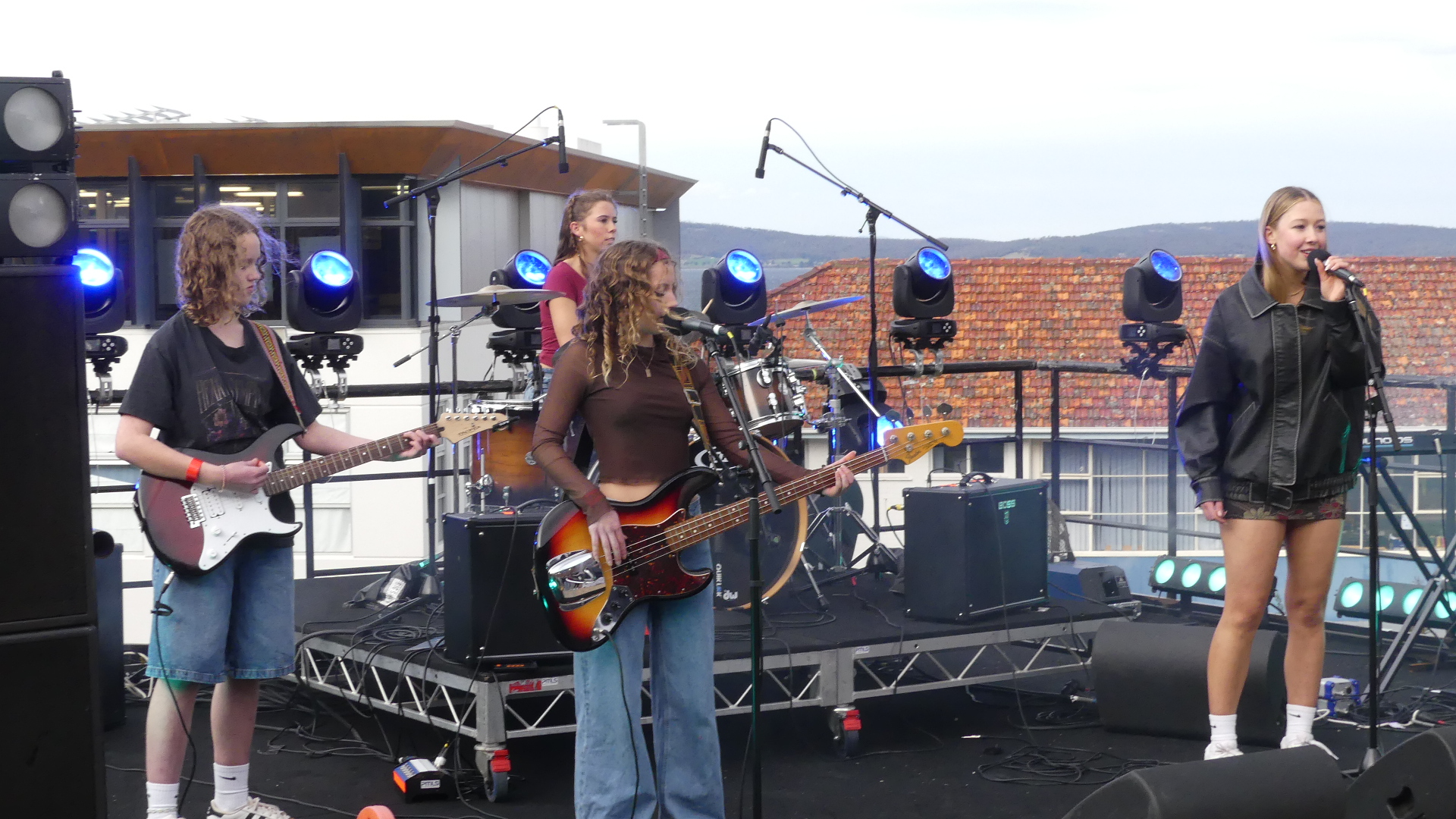
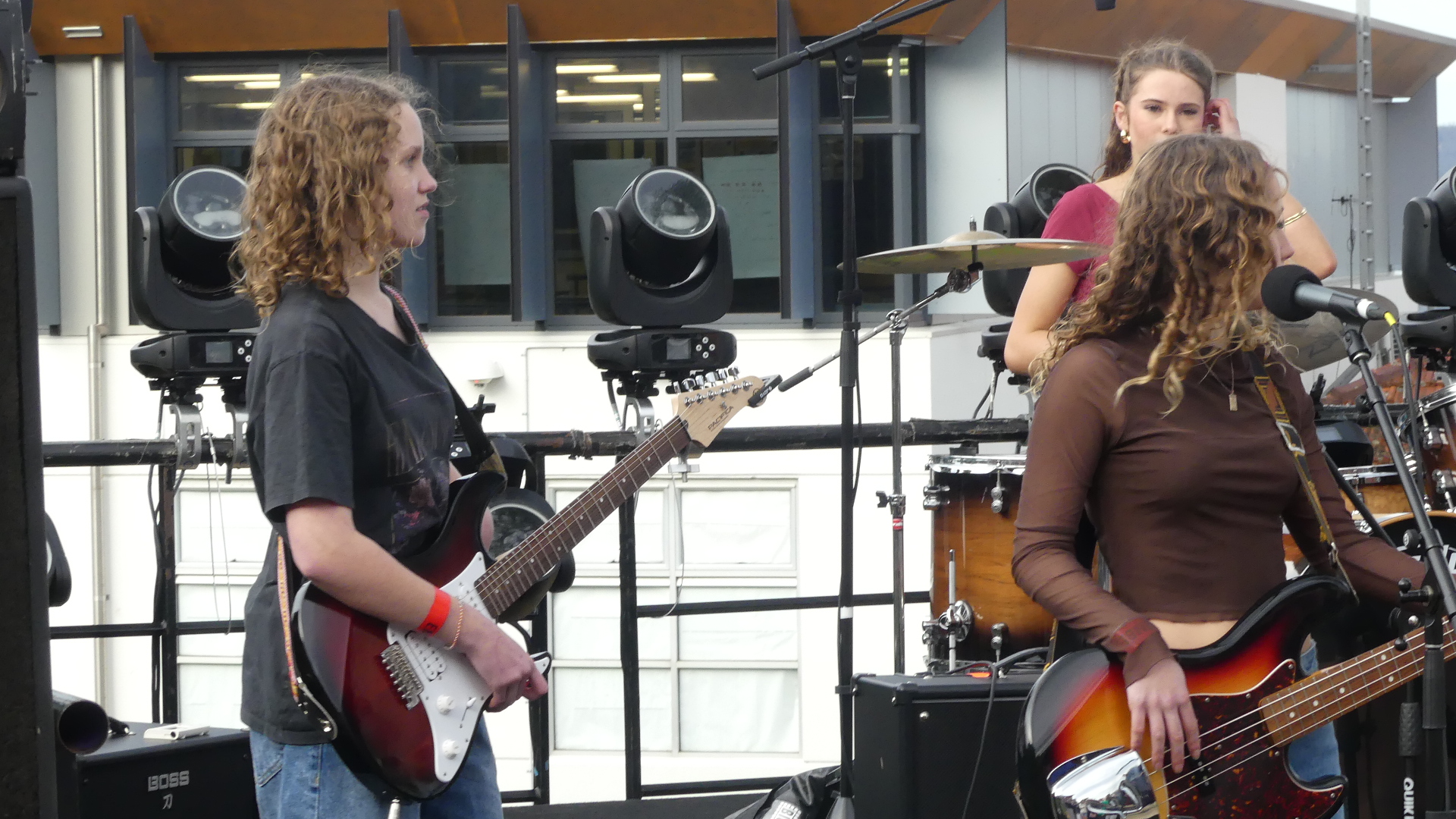
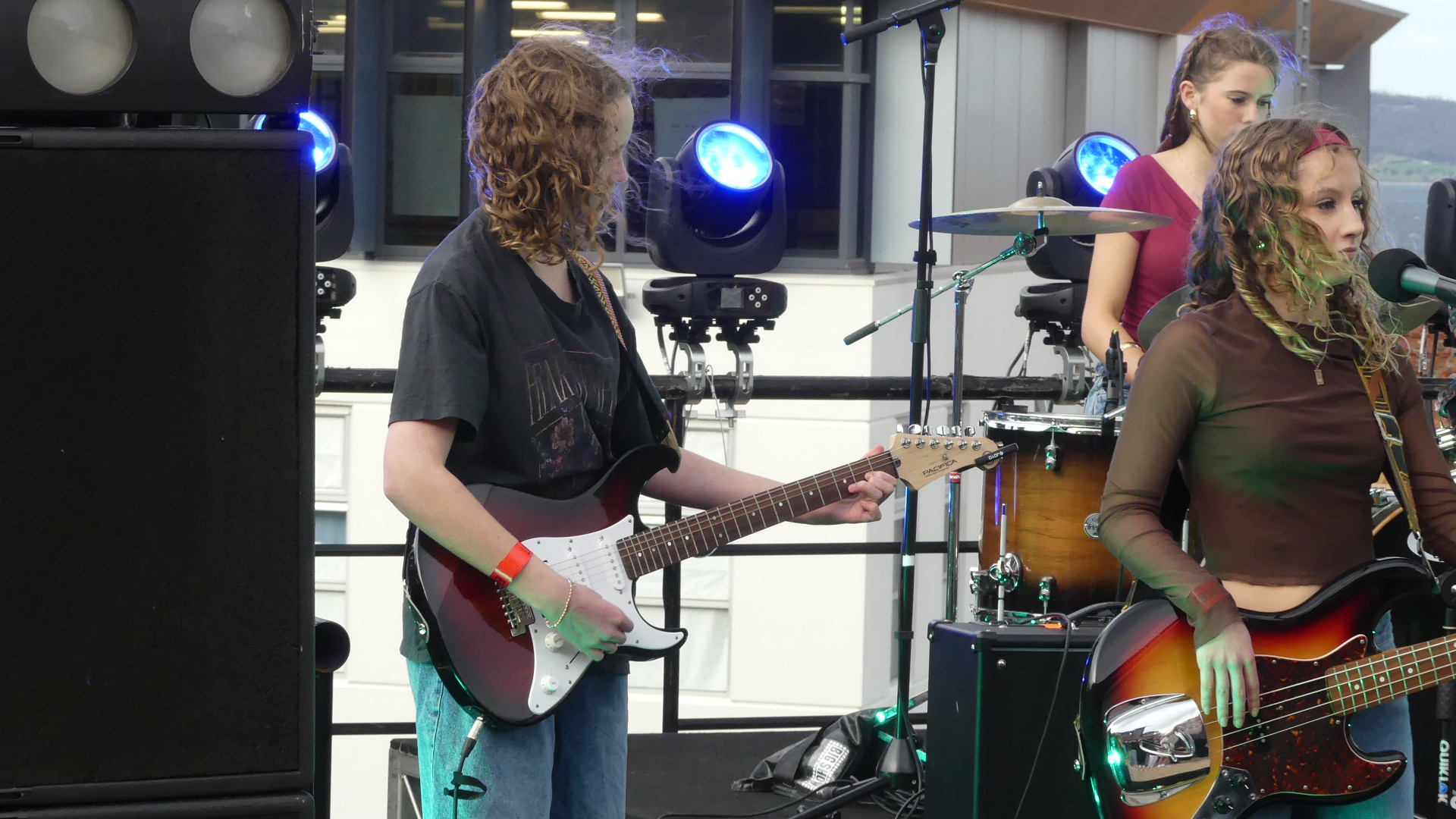
As members of the Accor Vacation Club, we were able to book accommodation in Swan Valley so we did a deal that we would meet up in Swan Valley for a few days sharing accommodation and then travel with them to Margaret River to again share accommodation in exchange for which we would hitch a ride with them whilst we were together. As we were developing the itinerary our son Paul let it be known that our granddaughter was playing lead guitar in her school band and that generally coincided with the end of the WA adventure, so our planning then included a return trip through Tasmania.

So, the fun of planning how to stitch these ideas together started resulting in Zdravka producing an elaborate itinerary which included us for part of their tour. The tour for us commenced with an early morning plane flight from Brisbane to Perth (a five-hour flight) then an Uber ride to Sebel Swan Valley.

              Home at Sebel  

We arrived in Perth just about the same time as we received a text from Kerry’s cousin Ken advising that his mother-in-law had passed away and he would not be at his home to greet us (Ken lives in Swan Valley). Even so Arden, Ken’s son, would be home and Ken offered us the use of his car. So, our Uber ride from the airport was shorter but not by much to pick up Ken’s car and catch up with Arden.

After collecting the car, we arrived at the Sebel before Dale and Zdravka. Fortunately, as it was somewhat of a puzzle to find the place. Despite its seclusion the amenities were very good. Surrounded by a golf course and a Novotel Hotel it was very comfortable and had some interesting WA neighbours.

Our neighbours were very quiet, but they were not your usual types. A mob of kangaroos gathered in the back of the apartment on the edge of the green of one of the course holes. Even when I took a walk the following morning the mob was there. However right on 8.00am they would race from the course proper to the area behind our unit – rather obvious sign that someone is feeding them. Similarly, the local parrots which looked like the Lorikeets from the Currumbin Bird Sanctuary only predominantly green.

8.00am the mob arrives                       and loiters there all day local parrot

Dale and Zdravka arrived about midday and the usual preparations for a short stay commenced – a visit to the supermarket and bottle shop. The following morning, I was up and feeling good so I took a walk on the golf course where our neighbours were settling a minor dispute and haunting the golfers: –

A playful fist-a-cuffs, Haunting the green and a Xanthorrhoea in the fairway

Zdravka had their day planned and as we unexpectedly had a car, we decided to do something different from them. It was Friday so we took a drive and ended up in Guildford (the old town area) and spent most of the day exploring this earliest British settlement in Swan Valley. Guildford was founded in 1829 at the confluence of the Helena River and Swan River, being sited near a permanent fresh water supply and was one of the earliest settlements of the Swan River Colony. It is one of only three towns in the metropolitan area listed on the Register of the National Trust. Guildford was originally the centre of the Swan River Colony before Perth succeeded in being the dominant location on the Swan Coastal Plain.

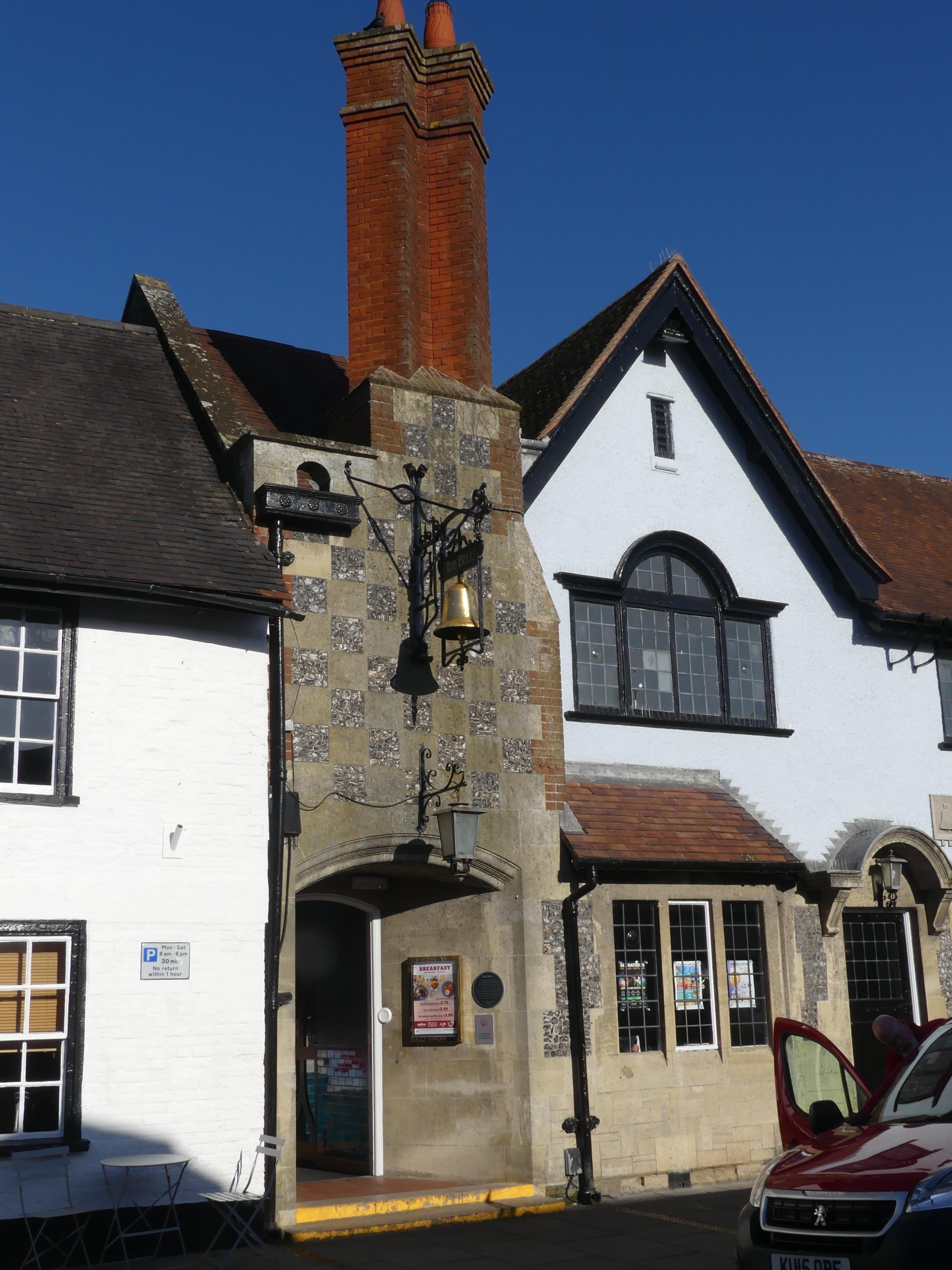
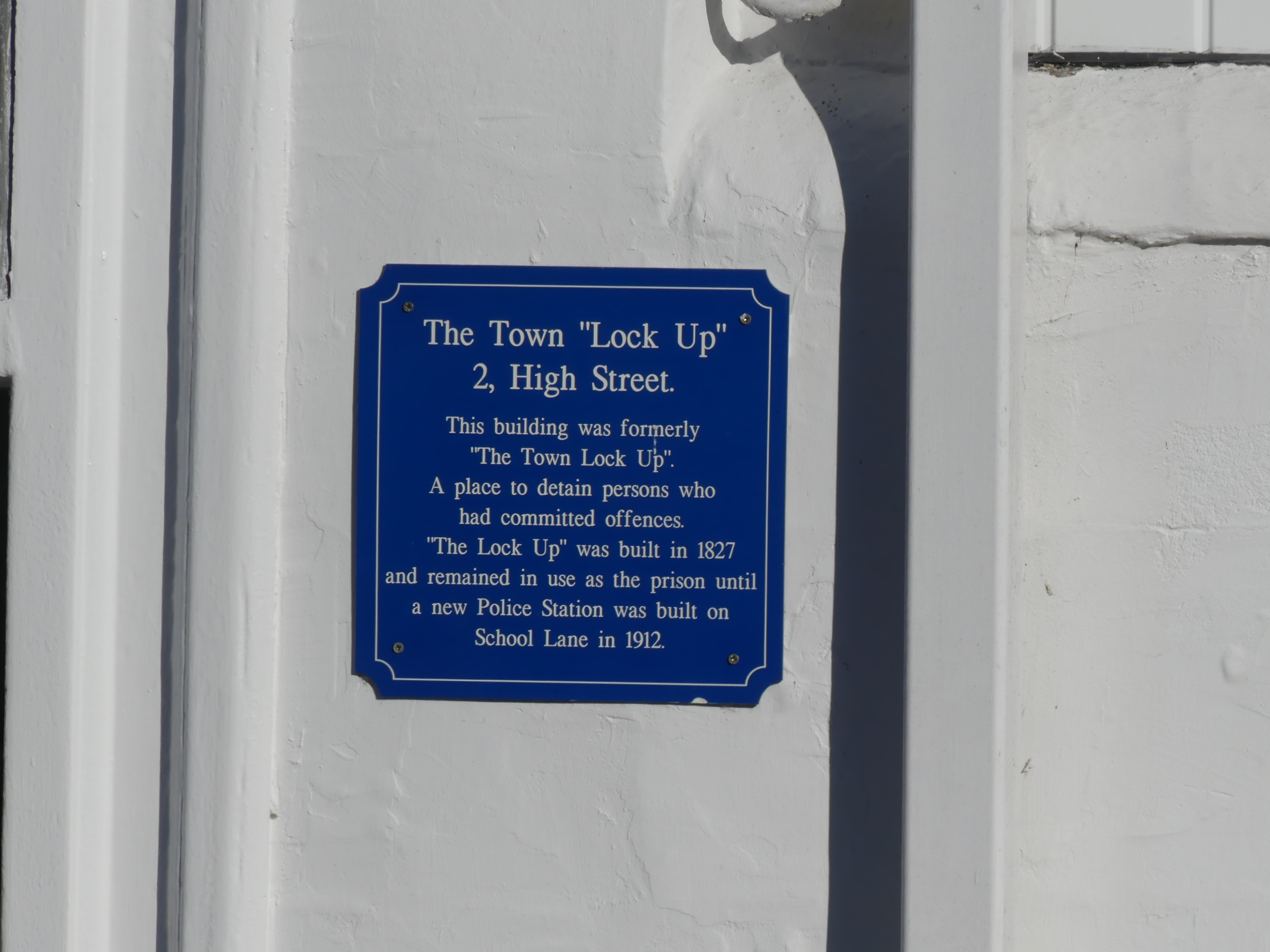
We found ourselves recalling the area from earlier visits but this time we stumbled across the Visitors Centre being the converted former Magistrates Court, Gaol house and a settlers cottage (relocated for its historic preservation). The Courthouse has a fabulous small museum on British settlement and some of the history of the 10th Australian Lighthouse Regiment that trained there before and during WW1 and still operates as a unit of the Australian Defence Force today. Across the road from the Courthouse is a relaxing park full of magnificent gum trees, cockatoos and memorials to the Regiment. We visited this later with Dale and Zdravka and I will return to it later.

               History board The old Magistrates Court now Visitors Centre

The old Gaol                                                       The curfew bell

The curfew bell has stood there since early settlement and no one thought to steal it until the twentieth century. A country of convicts in deed.

The “settler’s cottage” is a two-room shanty one room for sleeping and the main room was for kitchen, dining and everything else and was once the home of an early settler who had been transported as a convict. He and his wife raised 13 children in this home and outdoor dunny.

Kerry and our guide outside the shanty                    the only internal wall in the house.

The kitchen and below the bedroom.   The dunny

Our guide is a local teacher, who volunteers on weekends and her family has been living in Swan Valley for several generations in the same house 11 Meadow St built in the 1860s. If memory serves me, I think, her grandmother may have been the last family member to live there but the new owner is only too obliging to show the home and its historic features. The house was just down the road, and our guide told us to tell the new owners she had sent us to see the house. So, we strolled across the rail line passed the old local Council Chambers, the local theatre company, a large pub, and made an acquaintance with another resident in the street. Whilst Kerry was chatting with her new friend I was trying to find the house our guides grandmother had lived in, when I was rushed by our the new owner keen to show us the house. Very warm community. We were shown into the backyard where we met her partner doing some gardening and our host then pointed out the original house and its extensions.

The front of number 11                                             

The shed at the back and its extension A grape vine originally planted in 1860

The Dunny/garden shed                                           

Our guide had told us about the 10th Light Horse Regiment and how her grandfather (now deceased) was a veteran of WW1 and had been a member of the regiment. The town has remembered their service by providing each home where the veterans lived with a poppy to stand at the front of the house to remember them and their service.

The original well with a modern accessory                Front door of No 11

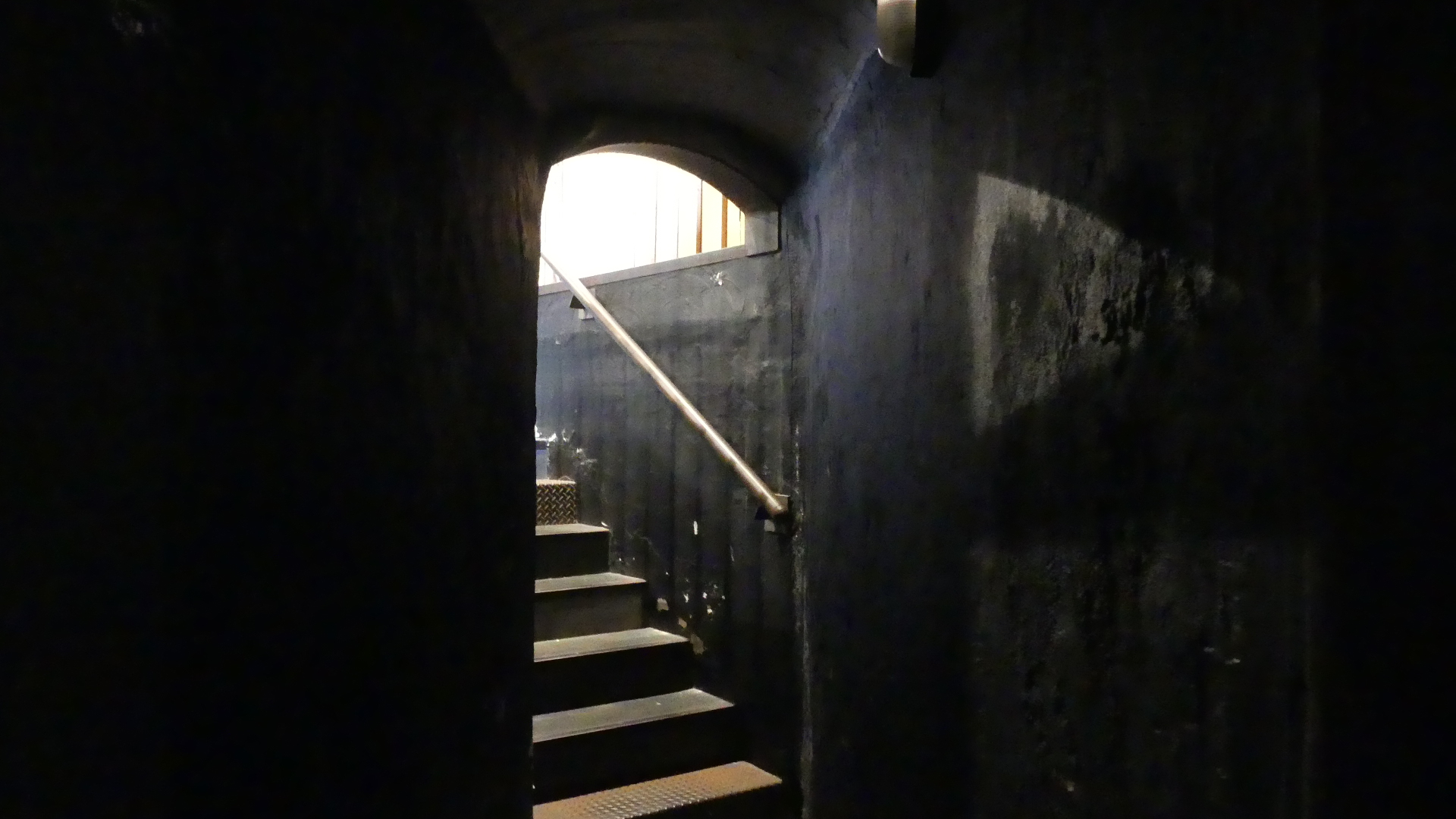
Well, feeling a bit sombre from this journey through history we needed a coffee so we headed to the oldest pub in town the Rose & Crown and the fable underground cellar. In the earliest days of settlement when the pub was catering to a much rougher crowd, they brought in their supplies of alcohol from sailing ships plying the Swan River through an underground tunnel which has today been transformed into a bar and night spot.

Cellar – this way Original fittings Dark and sinister bar

I have left writing this blog too long – I think we wandered a bit up the main street and then went home dragging Dale and Zdravka to the Rose and Crown for dinner that night.

September 2024

The Retirees return to UK via Europe – Nottingham and Bristol

After collecting our luggage at East Midlands Airport, we check the Sky Bus timetable and decide not to wait 45 mins but call an Uber for the trip to the Benternick Hotel Nottingham. Our Uber driver picks us up and just outside the airport we get a tremendous fright when a car speeds past us racing pursued by a mate. The shoulders of the road are draped in other motor vehicles and the crowd watching this illegal racing. A short way down the highway we observe a Police car lurking in the bushes apparently unaware of the circus behind us.

By the time we arrive in Nottingham, the reception for the Hotel has closed but we knew this in advanced and had instructions on how to find our room. Our room is on the second floor. With the benefit of the emailed instructions, we gain access and drag the luggage up to our spacious room. We are yet to eat so we visit Tescos Express next door and pick up some sandwiches and a salad after all this is all about overnighting then catch the train to Bristol. Despite the lack of a lift the hotel has a lot of charm, is conveniently located across the road from the Rail station and has a continental breakfast included.

Photos of the breakfast room and the view of the rail station ourside our bedroom window, inside the station and the chimney stacks.

Our journey starts at Nottingham Station. We board the train which soon commences its journey passing by the power station chimney stacks which represented the land mark to identify Nottingham whether we came by car up the M1 or flew into East Midlands Airport. First stop is Derby a frequent destination when we lived in Long Eaton and then onto Birmingham. First time in Birmingham Station to change trains for Bristol. Our fears of changing platform disappear as we walk to the other side of the arrival platform to travel onto Bristol arriving in Bristol by the middle of the afternoon. We refer to our phone and google maps to locate our hotel West India House and our apartment for our stay in Bristol. The apartment is very private, and our apartment is again on the 2nd floor but this time we have a lift – smaller than the little lift in Lyon (I didn’t think it possible).

Photos

Welsh Back (the name of the road in front of our apartment) follows the canal/floating harbour of Bristol (the canal runs into the River Avon). Beside us is the Brewdog Bar – yes the same Brewdog as at Murarrie in Brisbane . We have a large choice of pubs and all quite handy but our search for the tourist information office was to prove impossible with misleading signage and then to learn that the office had closed. Last located in the City Aquarium we were fortunate to obtain a copy of a street map amongst papers they had left behind.

Our exploration had uncovered the ferry system running up and down the “floating harbour”. These ferries run the length and breadth of the canal off the River Avon. The walk from the station to our apartment left me with the impression that we were in a pocket and dislocated from the key parts of the city. This proved to be very wrong. Our first afternoon we spent checking our location with the aid of the tourist map. Distances looked very long on paper but nothing could be further from the truth. We found a bar and had a late afternoon lunch of burger and chips – in fact every cafe pub and restaurant seemed to have either burgers or pizzas – this proved rather tiring as a menu choice.

That night we continued our exploring and realised we were in the old city section of Bristol. Two streets over from our apartment we found Corn Market St and the St Nicholas markets. The Markets were closed but the street was alight with the lights from “pubs”. These establishments were nothing more than a cafe with beer on tap – every kind of imaginable beer. Two streets in the opposite direction we found a section of King street turned into pedestrian mall and beer hall. On one corner stood “the Old Duke”, across the road a pub the Llandower Trow (in Tudor style one section had a frightening lean suggesting it was going to fall into the next pub), then adjoining each pub another pub on each corner with the mall filled with bench tables and people – the hum of constant conversation filled the air and the smell of hops and beer a partnering aroma. We went back to Corn Market St in daylight and it is essentially now a second hand dealers emporium but its clock remains to evidence the position before Greenwich created mean time.

During our exploration, we learned there is a walking tour of street art and graffiti including two examples by Banksy. So, the next day we made our way to the College Green in front of the City Hall where we met our guide John and about 20 other visitors to Bristol. For twenty quid (seniors’ discount) John gave us more than a two and one half hour tour with constant commentary into an ear piece he provided. John told us that in his earlier life he had been a youth worker at the commencement of graffiti becoming a culture and as a youth worker he encouraged these individuals to express themselves through “art” and in this role he had been part of the development of the culture, met and knew many of the notable street artists and the not so notable taggers making up this culture. He explained that in many instances the street artist started out as a tagger and developed into a notable artist – Banksy was one of these. He also explained that taggers had a different view of the world and considered anything and everything a fair target and did not expect their tag to last as a piece of work. There are a few unwritten rules about exceptions to this rule. The key though is that graffiti artists do not expect their work to be permanent.

The first work he showed us is straight across the road from City Hall “the Well Hung Lover”. this is a protest piece done by Banksy at the start of his street art period after learning about avoiding the long arm of the law as a tagger. Bristol had a policy that graffiti was criminal damage of property and enforced it rigorously, but this piece changed that policy. Banksy was able to produce the piece without being observed and escape with the unveiling of his protest (he had contractors erect scaffolding and posing as a commercial painter produced the work under the cover of a mesh screen). The council allowed the piece to remain, but an anti-graffiti protestor used a paint ball gun to try and deface the work with the council cleaning off some of the blue paint.

Photos – the canal ferry, the golden hind atop a building, multicolour attached houses, the Bristol Museum, the Bristol Sailors Home, Hole in the Wall Pub, The Ole Duke and the Llandower Trow, the markets up the stairs and the Corn Market its clock with 3 hands and its front door, City Hall and the library. The last photo “the wellhung lover”

As the culture developed so John says a committee of youth workers and “artists” proposed a festival to celebrate the development of the culture. He then took us to see these works and talk about how some are done by stencils and others freehand. All of these works have been tagged in one way or another.

Photos and the final Banksy bottom right. Many expressed an object such as the protest that “black lives matter” and the Banksy protest about the Bristol riots

Many of these buildings were earmarked for demolition and the sites redeveloped but Covid changed all of that. You will note from my pictures the dilapidation in some sections and sectors. the council still actively seeks to stop and remove graffiti and paint companies are riding that sentiment with development of anti-graffiti paints whilst continuing to produce the material these people use – in fact there are specialist stores where taggers purchase their materials and he showed them to us. Bizarre! The only winners – the paint company.

Finally, John showed us the second Banksy – a protest against Police for causing riots over graffiti. Whilst the piece is a meaningful expression of his protest (by the way this piece was done before his name was noted worldwide) it misses the underlying point that taggers have no respect for private or community property, defacing it with meaningless pseudonyms which are in turn are defaced with someone else’s pseudonym all of which is unattractive and damaging to the property. I have seen the Berlin Wall and the graffiti that now appears on it’s remains and can understand the protest so whilst it is an expression of freedom that does not make it acceptable – I don’t accept it is a limitation on freedom to respect other people’s property.

One of the other great things about Bristol is the Brunel story. Isambard Kingdom Brunel was a civil engineer who is considered “one of the most ingenious and prolific figures in engineering history”. Brunel built dockyards, a series of steamships including the first propeller-driven steel hulled transatlantic steamships and numerous important bridges and tunnels. His designs revolutionised public transport and modern engineering.

During his career, Brunel achieved many engineering firsts, including assisting in the building of the first tunnel under the River Thames and the development of the SS Great Britain, the first propeller-driven, ocean-going iron ship, which, when launched in 1843, was the largest ship ever built. Here in the dry dock that gave birth to the SS Great Britain, the restored hulk is displayed as a museum to its designer.

She was the first iron steamer to cross the Atlantic Ocean, which she did in 1845, in 14 days. The ship is 322 ft (98 m) in length and has a 3,400-ton displacement. She was powered by two inclined two-cylinder engines, with twin high pressure cylinders and twin low-pressure cylinders, all of 6-foot (1.8 m) stroke cylinders. She was also provided with secondary masts for sail power. The four decks provided accommodation for a crew of 120, plus 360 passengers who were provided with cabins, and dining and promenade saloons.

When launched in 1843, Great Britain was by far the largest vessel afloat. But her protracted construction time of six years (1839–1845) and high cost had left her owners in a difficult financial position, and they were forced out of business in 1846, having spent all their remaining funds re-floating the ship after she ran aground. In 1852 she was sold for salvage and repaired. After being repaired, from 1852 she carried thousands of immigrants to Australia until being converted by removal of its engine to all-sail in 1881. Three years later, she was retired to the Falkland Islands, where she was used as a warehouse, quarantine ship and coal hulk until she was scuttled in Sparrow Cove in 1937, 98 years after being laid down. In 1970, after SS Great Britain had been abandoned for 33 years, the vessel was raised and repaired enough to be towed north through the Atlantic back to the United Kingdom, and returned to the Bristol where she had been built 127 years earlier.

Photos

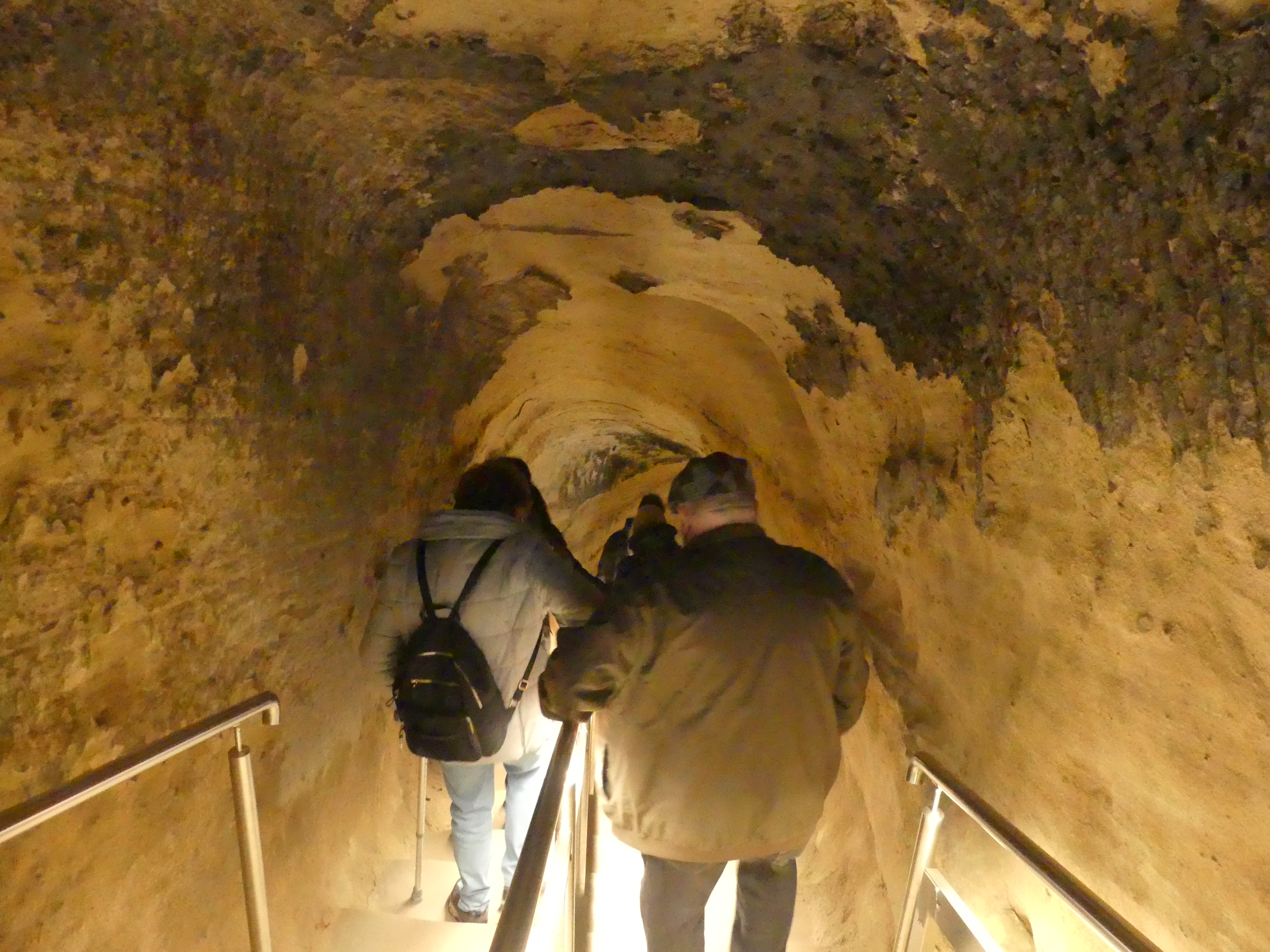
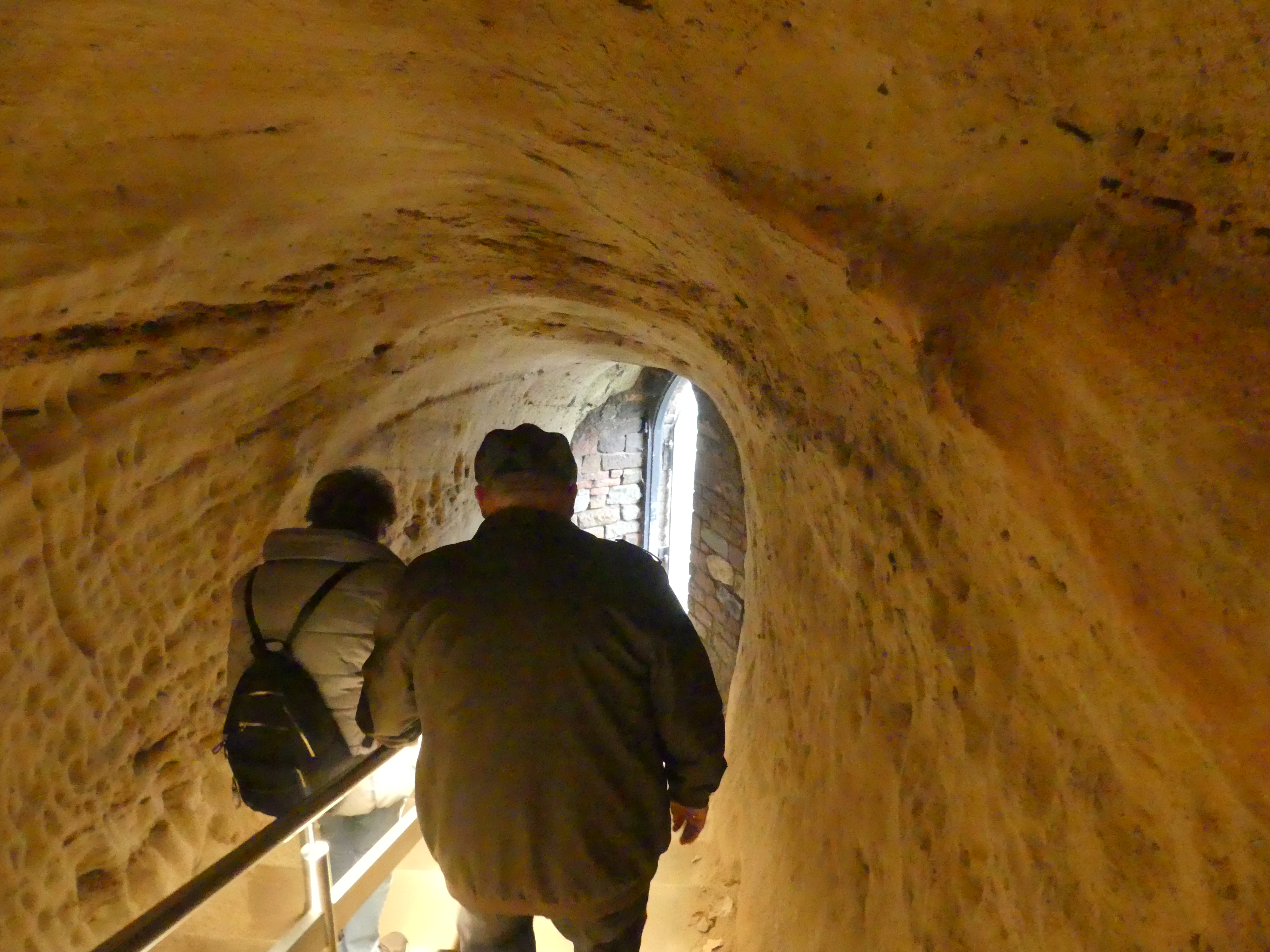
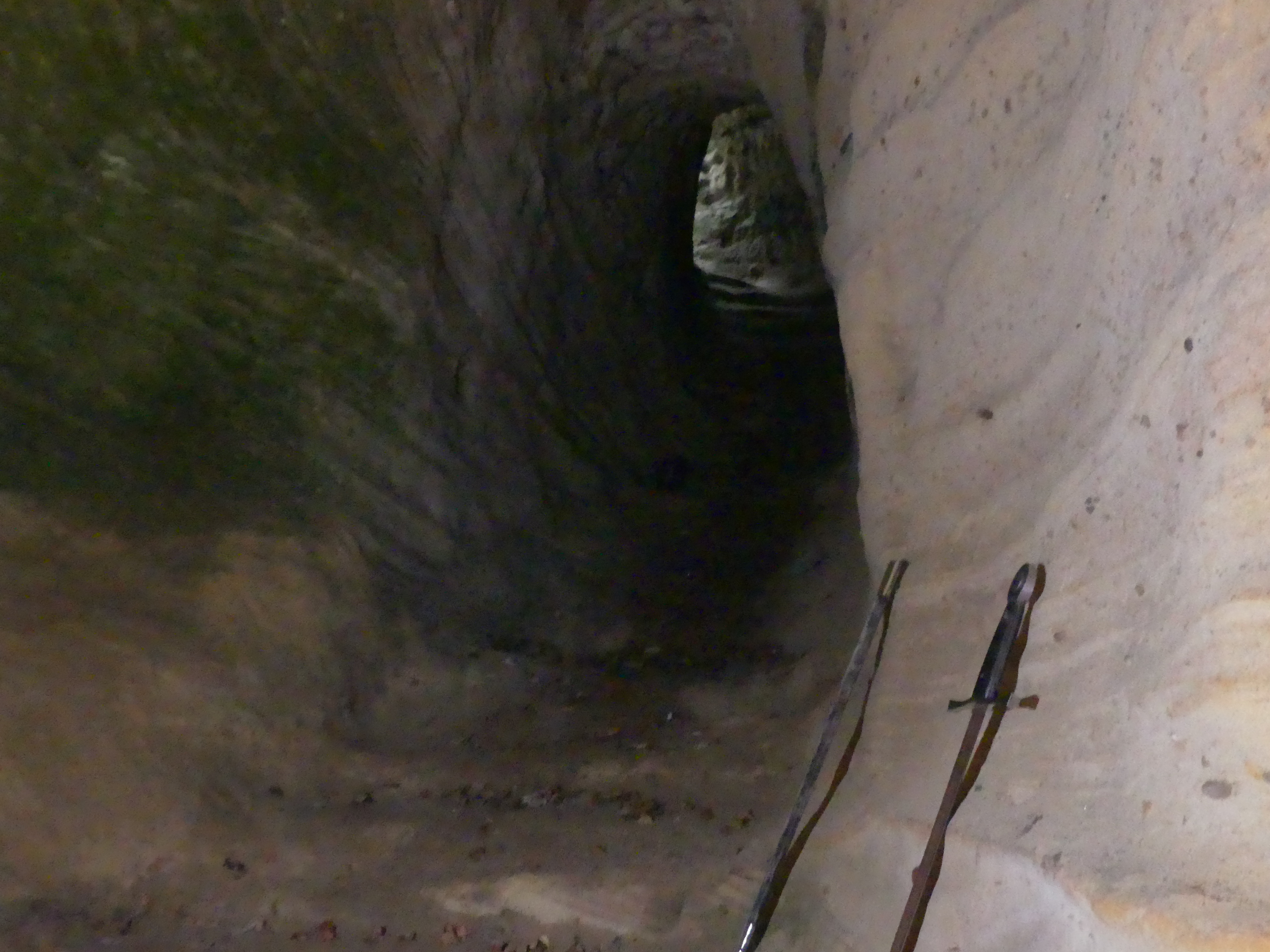
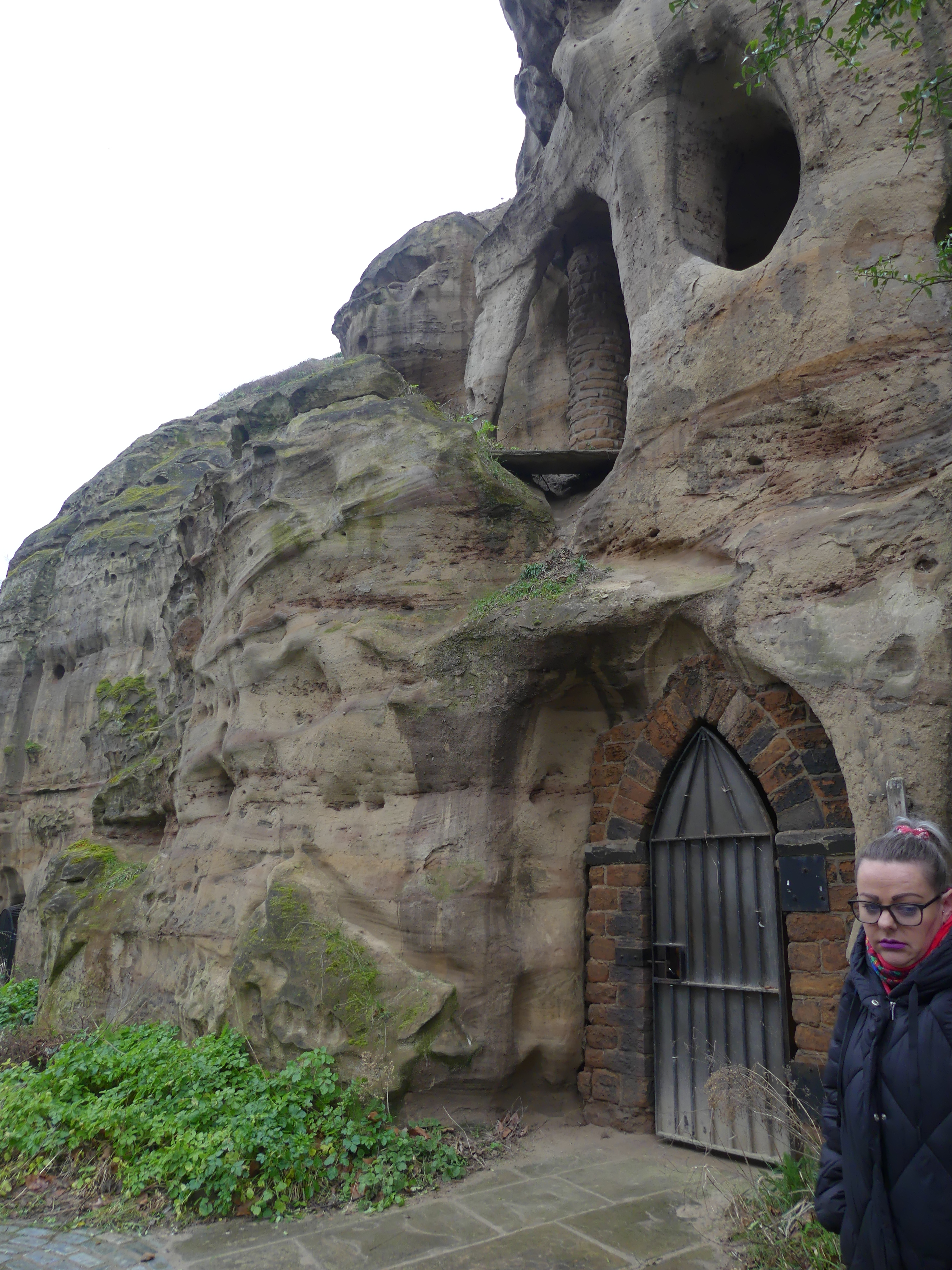
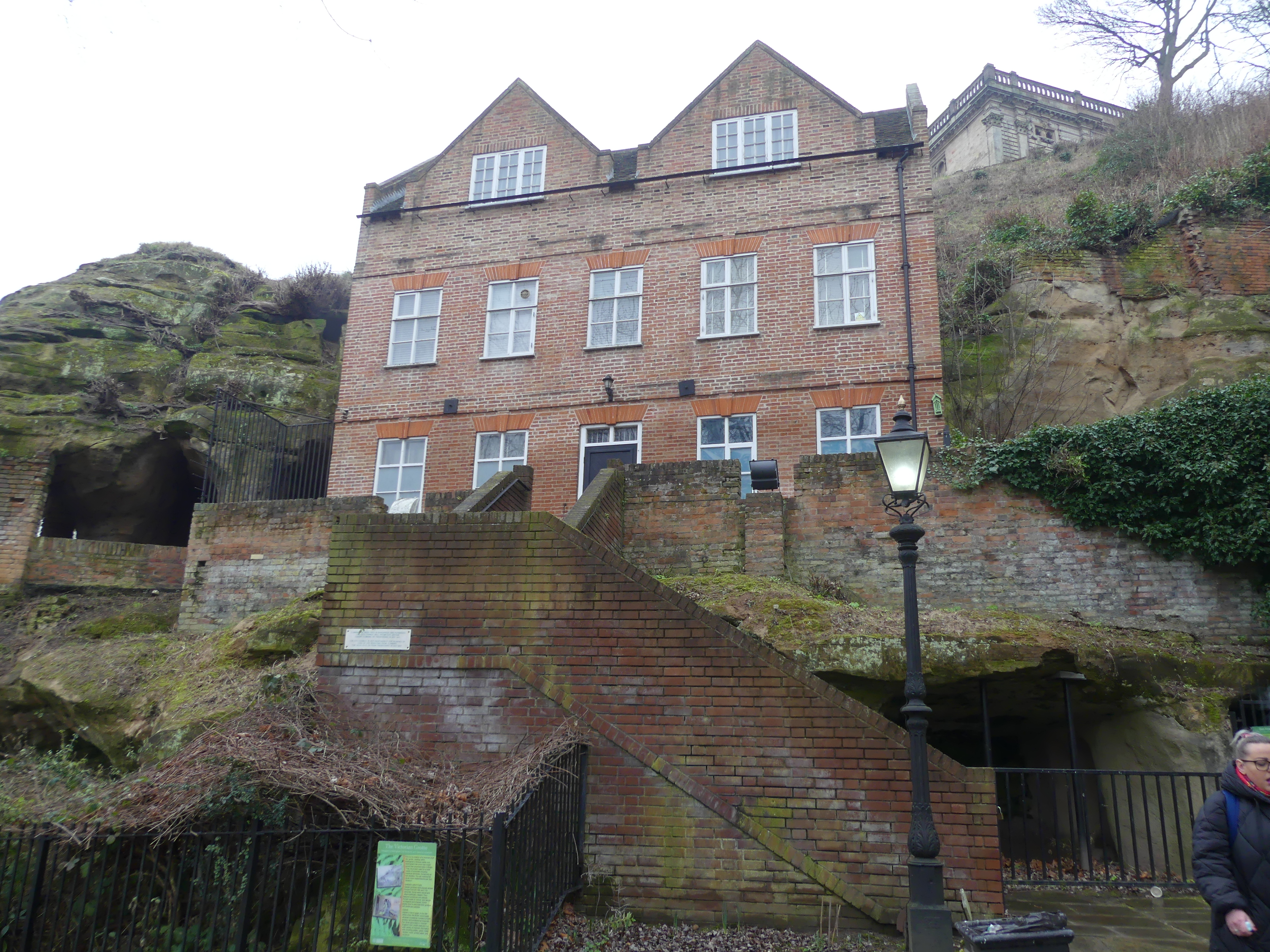
The museum is comprehensive on the life of Brunel and the details of SS Great Britain. Really worth the visit. Following a bite of lunch, we walked along the canal to the M shed (the Bristol Museum) but having been there previously we moved on. That’s when we found the “Ostrich” a pub with character and a little historic memoir about the slave trade and the glassware produced in the city. The sand needed to create the glassware was obtained from excavating under the city creating “caves” which still exist today. One of the walls in the hotel has been partly demolished to expose one of the caves. A nip of Laphraoig and a glass of Sav Blanc and we journeyed on back to our apartment to prepare for our departure tomorrow.

Photos the Ostrich, othe views of the city

Our trip to Bristol finished we returned to Nottingham by train. Our return to Nottingham has been spoiled by the news that Martin and Christine (our Rhine Cruise mates) are struck down with Covid and we will not be catching up with them. So, no plans for Saturday and Sunday. I contacted our old neighbour at Long Eaton Pam Fowler to arrange our catch up with her and to my surprise she offered to meet us at Bill’s in Nottingham Old City Market. Pam is 86 years old. Pam and John were our neighbours for the 20+ months we lived as their neighbours and when we prepared to return to Australia and knowing John had a terminal cancer, we took him and Pam to the University of Nottingham Lake for a walk around the lake. A fortnight after returning home John passed over and Pam was all alone. We have maintained intermittent contact with Pam concerned she was all alone. So, when we met for lunch, it was pleasing to hear that she was blessed with some good neighbours in our former flat. She was well and happy, and we enjoyed brunch at Bill’s.

With no plans and having seen a lot of Nottingham and Derby, we have visited many of our old haunts. My favourite “anti salesman” sign is still there – “No clowns”.

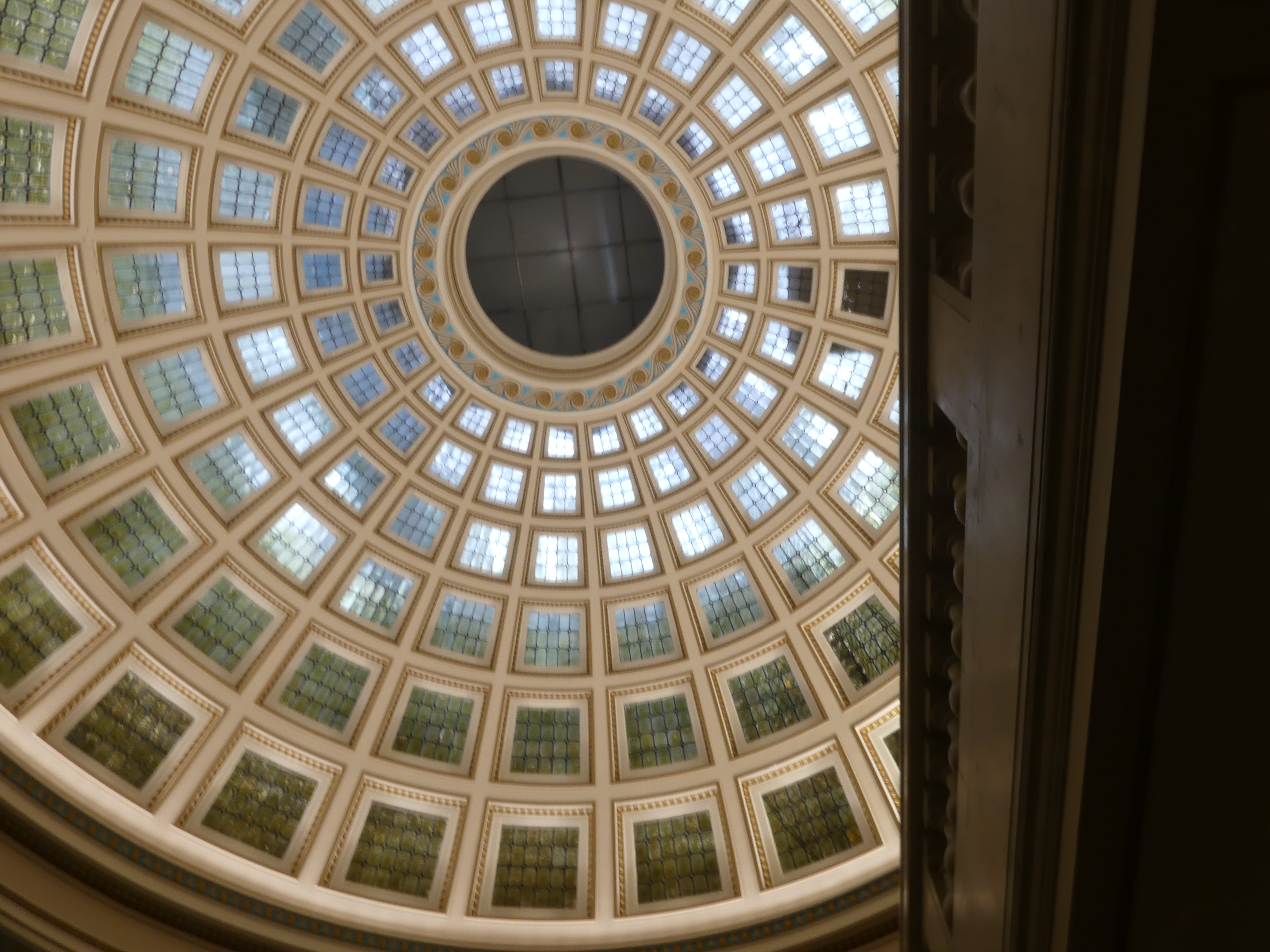
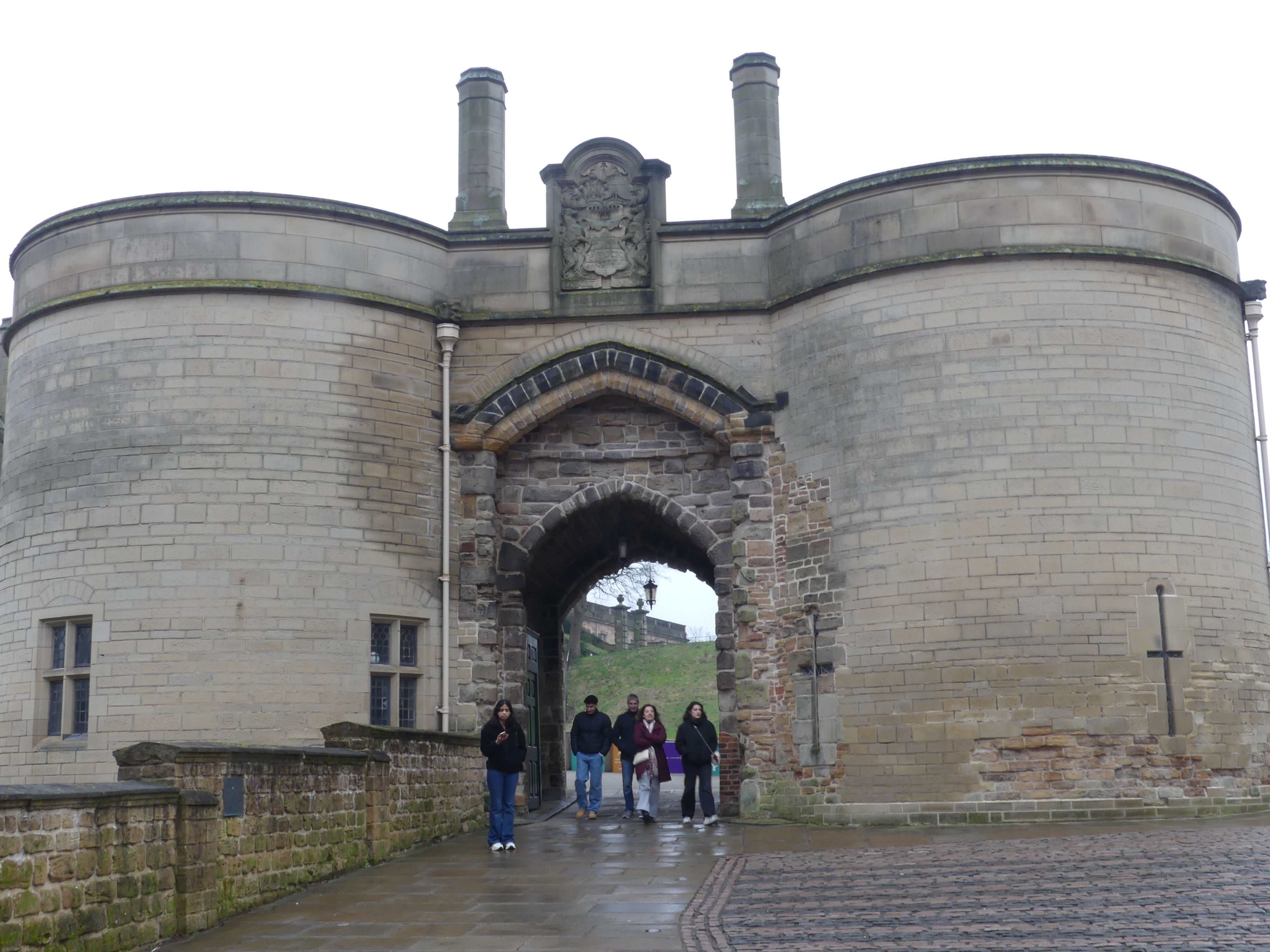
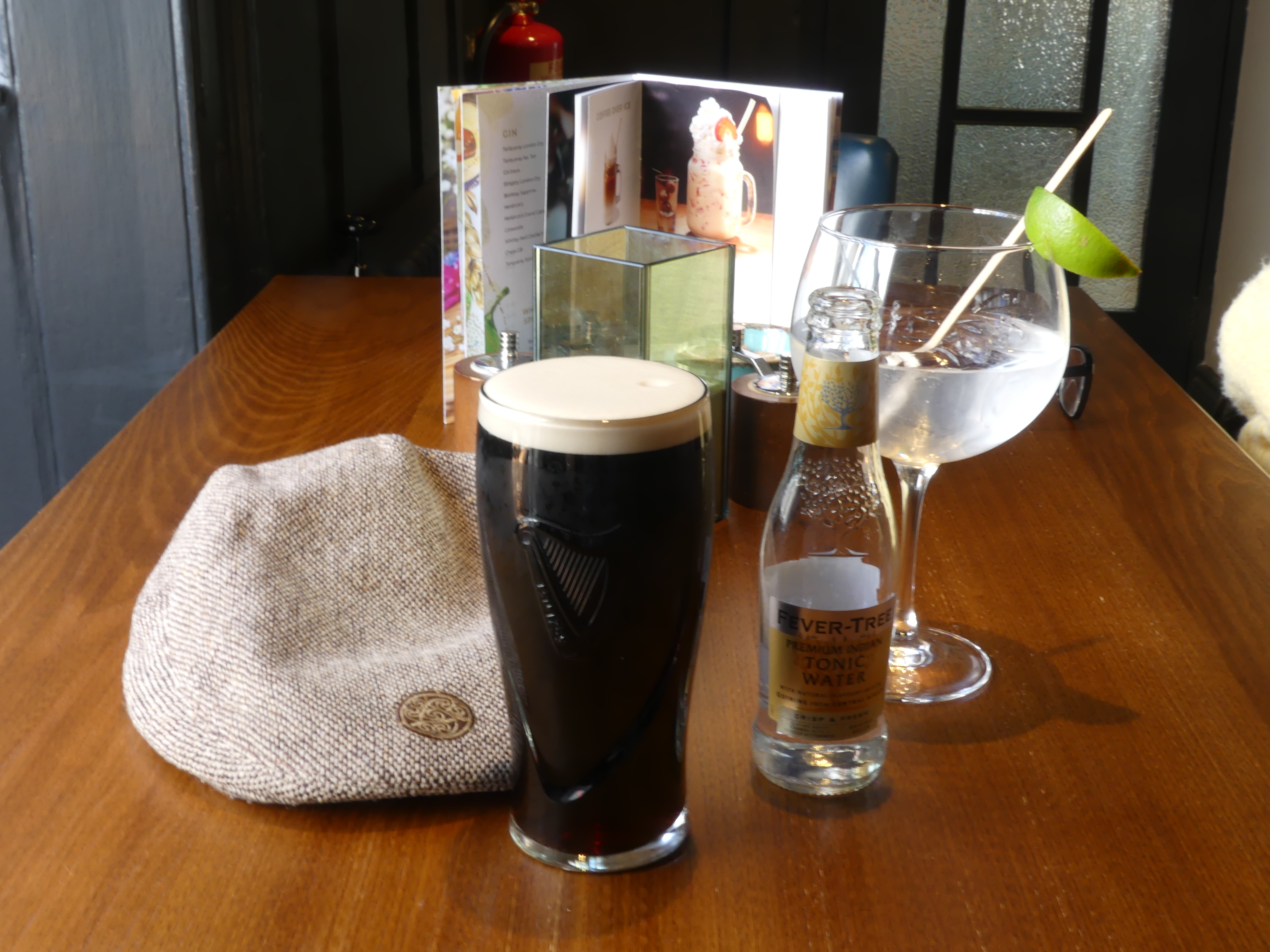
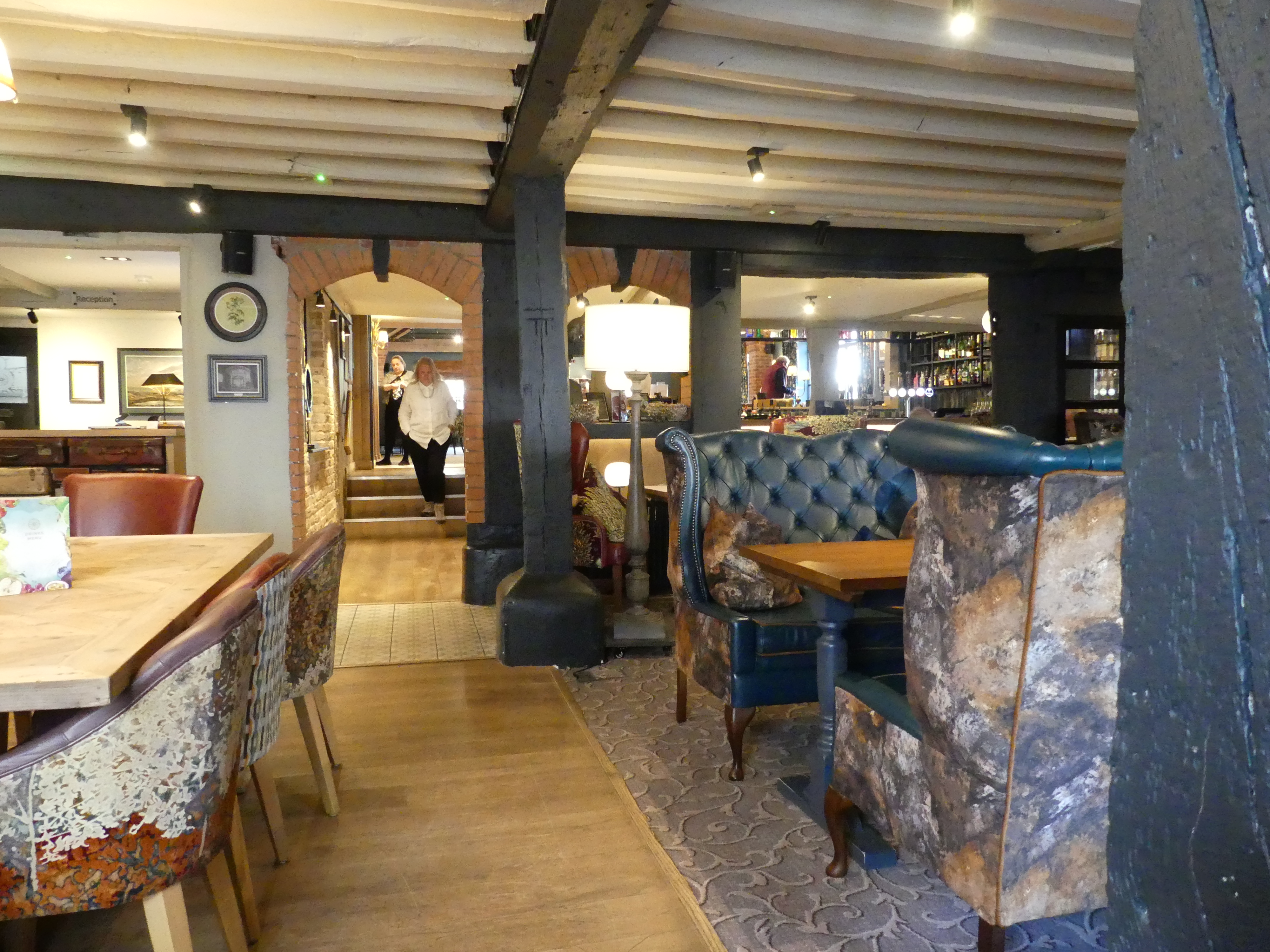
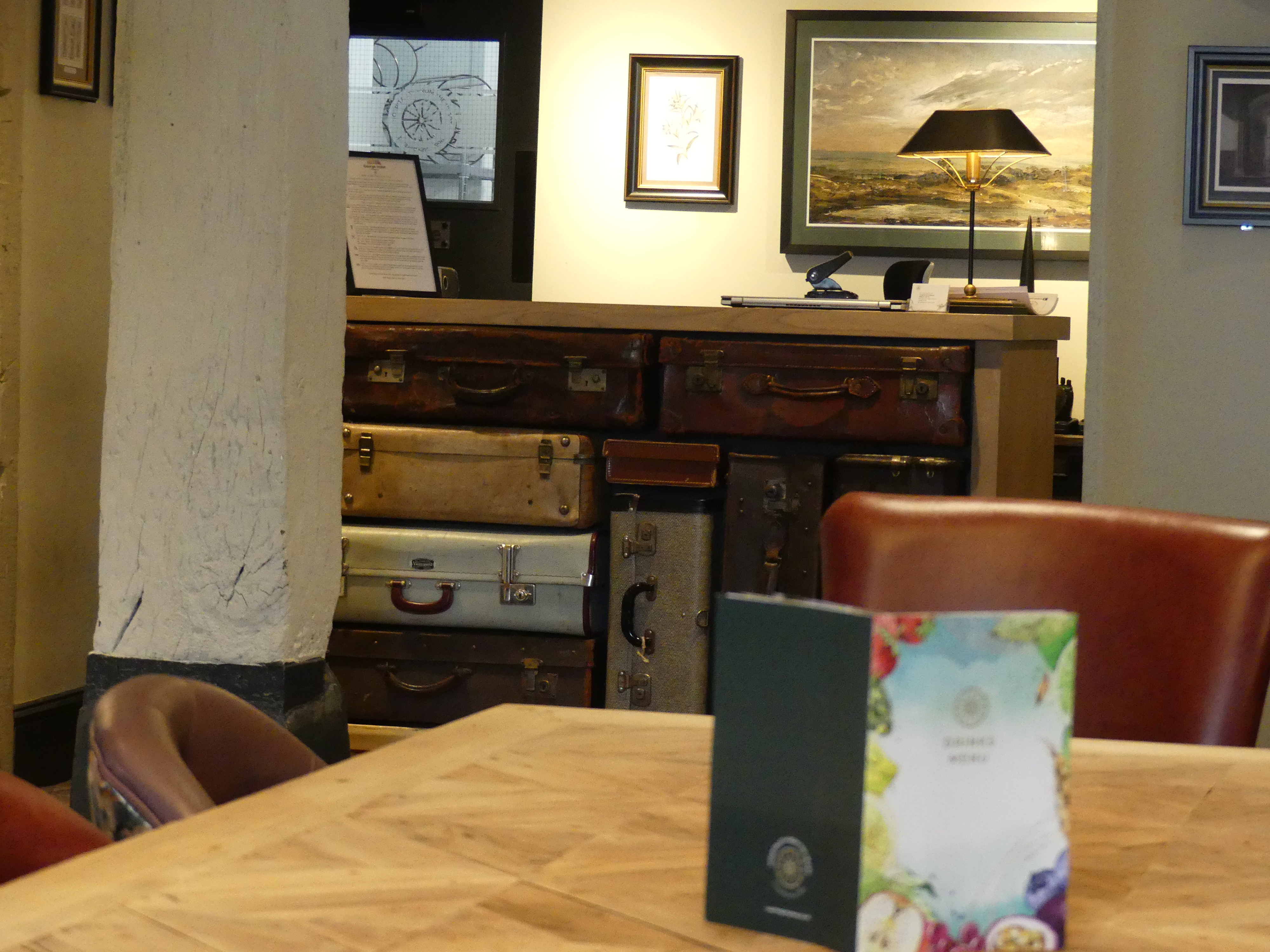
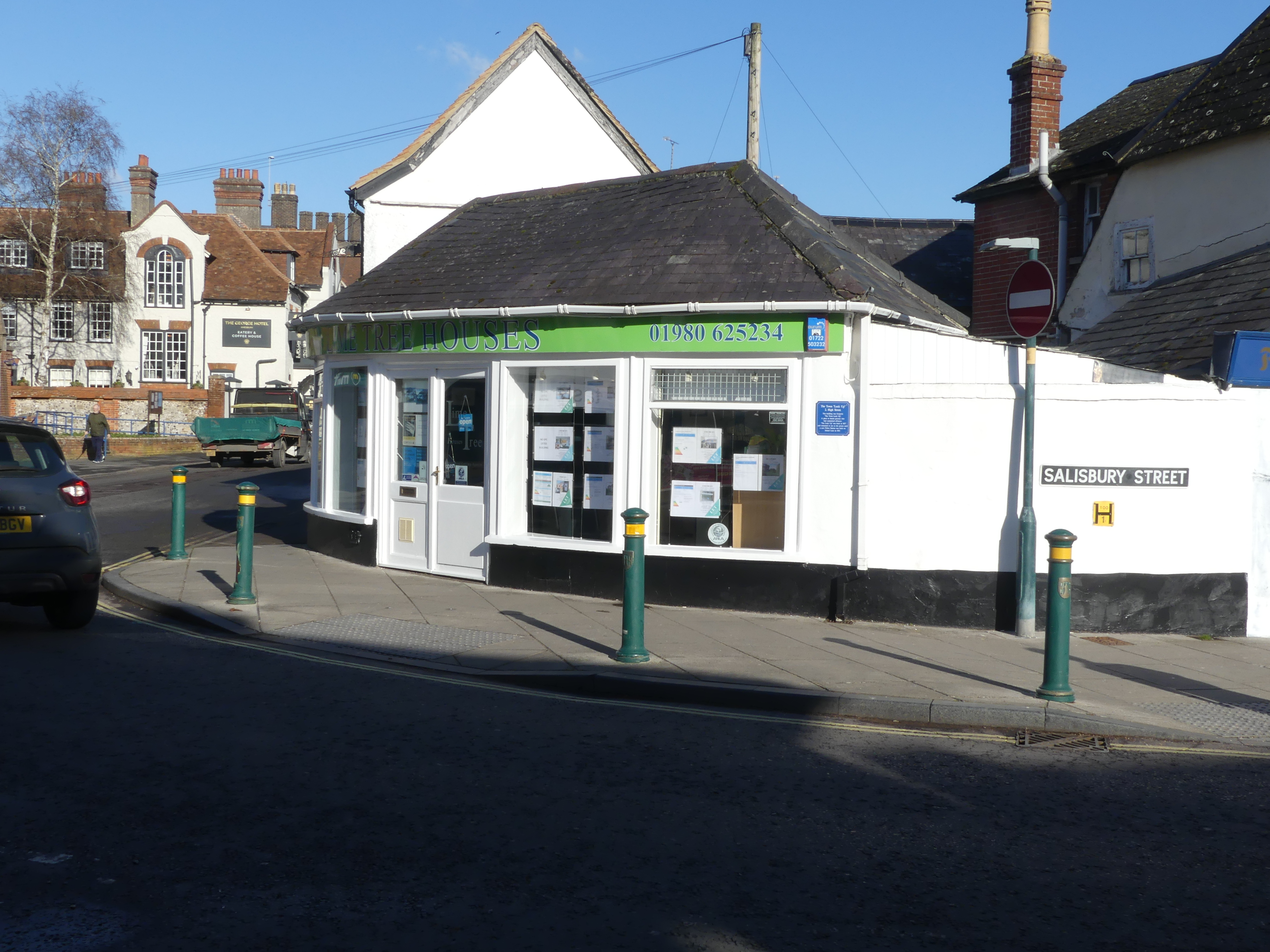
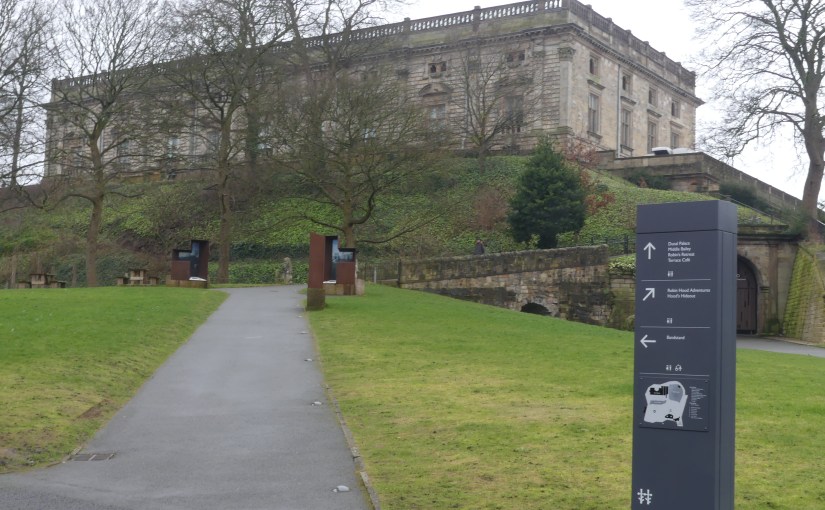
However we did find some new haunts. We found another cinema – a community cinema – in the back streets and “the Curious Tavern”. Situated in Nottingham’s oldest accomodation hotel which is operated by Mercure, The Curious Tavern’s peculiar decor the captures the essence of being the oldest hotel tavern in Nottingham. Of course we all know the oldest pub is Ye Olde Trip to Jeruselem under the site where Nottingham Castle once stood.

Situated is Georges St Nottinghamthis strange door is the entrance that caught our eye and inside the light shdes in the reception are suitcases and the staircase is the original from 1822. Some luminaries have stayed at the hotel – Lord Byron, Charles Dickens, Elizabeth Taylor and Richard Burton.

Well that ends this trip. We are back in Australia with our luggage and busy as usual. till next time (should there be one) Adieu/See ya mate.

The Retirees return to Europe – Sanary Sur Mer – France

Our Lyon stay has ended, and we are now headed to Sanary sur Mer via Avignon and Toulon on the TGV train. This time we made sure we were on time and in place to board the first-class carriage. We changed trains at Avignon and left the train at Toulon. The scenery has certainly changed from the green hills of Switzerland to the Mediterranean rugged mountains and dry looking plant life. In Toulon we made the decision to complete our journey by Uber. This was without doubt the correct decision. To catch another train then a cab would have been crazy and on arrival at the address given to us by my cousin Terri both the Uber driver and us were unable to identify the apartment.

Whilst Kerry stood in the shade with our luggage, I made investigations to see if we had a home. I saw a woman standing by her car and tentatively asked “Parley vous Anglais” to which she replied, “Of course I am English”. What a relief. This is Karen who asks who I was looking for and I answered No46 – there is no number 46. Then through a series of questions we determine that Karen is the next-door neighbour to our apartment No 60 (the street numbers have been changed by the Council) and she was expecting Terri and Mick for lunch. I introduced myself as Terri’s cousin and explain Terri had invited us to stay. Karen had been expecting them for lunch but it was clear they were not going to be there any time soon so she asked us in for lunch. And that was how it was – lunch served whilst we waited for Mick and Terri. Valerie the French cleaner was still next-door in our apartment cleaning so when she finished we moved our luggage in and waited. Despite assurances that the drive from Marseille would only take an hour all factors worked against Mick and Terri delaying their arrival. Below are photos of the apartment.

Photos of the apartment – the annex where we stayed, our washing, the kitchen, the dining room, the lounge with two bedrooms on the floor above and the back yard

After a night’s rest we walked down to the village past the swimming bay, past the restaurant where our daughter married in 2007, toward the waterfront and the fishing port. There is a market on, and the place is crowded (really crowded) – even the old Roman tower is occupied. There are several Pointus in the harbour – the traditional fishing boat for Provence. The market is hectic and full of tourists – its their summer holiday.

Its around 10.00am the weather is hot and humid and with the sun setting around 8.30pm we don’t feel like eating anything at this early hour, so we struggle through the crowd past leather-craft shops, clothing, swimwear, footwear, underwear, candles and perfumes, the vegetables, the fish mongers, the butchers, the Boulanger, the Charcuterie, and of course we run into our daughter Carly, husband Vincent, and our grandsons William and Mathis amongst the thousands in the square. We expected that we would cross paths in Sanary but the sheer coincidence that my cousin Terri would be holidaying in Sanary causing us to visit Sanary at that time is amazing. Some time earlier Mick and Terri had lived in Sanary whilst Mick performed building miracles at the apartment so this holiday was a bit of payback to Mick and Terri by Mick’s sister whose husband owns the proeprty and both of whom are presnetly living in Melbourne Australia – in those circumstances it all makes sense.

After a few hours fighting the crowds and fighting for the shady spots, we give up and wander up the hill towards home. Mick has a gammy hip and needs a redo on the hip replacement, so he needs a break half way home (its about 1.1 kilometres all the way home most of it up hill). His favourite halfway mark is PB Cafe where he and Terri enjoy a beer. Who are we to break a tradition. An Aperol spritz for Kerry and 3 beers one each for Terri, Mick and me. The first beer goes down quickly and we order a second whilst Kerry sips on slowly so by the time the second beer is finished its time to move on.

By the time we arrive home and enjoy a lunch in air-conditioned comfort it’s time for a nap. Then with evening slowly arriving we adjourn to the garden and catch up on everything that happened since we last met in 2014, the progress with the new house at St Leger, kids, family and retirement.

Sanary-sur-Mer was once a fishing village, and its neighbours Cannes and San Tropez took the limelight. Whilst they still attract the celebrities Sanary attracts the tourist and the fisherman now catch tourists. It has beaches in cosy bays, long sunny days in summer and lots and lots of cafes. Nearby in the hills behind Sanary are medieval walled villages (now enclosed tourist shopping villages) like Le Chatelet, other beach resorts like Bandol and Cassis and we would do it all.

Karen our next door neighbour invited the four of us for dinner which we enjoyed in her garden along with a variety of French wines. We went swimming with the grandkids and their parents in the bay, we visited Le Chatelet, Cassis and Bandol, caught up with Mimi our son-in-law’s mother and her partner Jonathan for a very pleasant dinner by the bay at Bandol, had a thank you dinner for Karen at Bardot’s Restaurant overlooking the bay and assisted Mick to carry out maintenance on the plumbing at the accommodation. The accommodation is owned by Graham partner of Margaret sister of Mick. Mick and Terri have lived in rural southwest France for the last 23 years and Mick has made their living renovating old French cottages and converting farm sheds to holiday lets (“gites”) so when he arranged a visit to catch up with us of course the plumbing starts to play up and he ends up calling in a specialist after we found tree roots in the pipes. After a traumatic 3 days of dealing with flooding showers and blocked toilets relief came in the form of an emergency plumber with a “worm” which ground out the tree roots.

This has been our rest and relaxation from the stress and activity of our trip thus far. We even visited Castorama (incidentally Mick tells me it is owned by a UK chain), France’s version of Bunnings our Australian DIY giant to obtain some glue which Mick says from experience is the bees knees if you want to make something stick permanently. My photos follow with a brief description of what is depicted.

Photos – Le Chatelet looking over the wall, in the streets, Mick wishing he was home, hotel de ville, the church and its stained-glass window, a suit of armour and lunch with a fantastic view.

We decided to take a trip to Cassis west toward Marseille to see what we could see. Cassis is another fishing village turned holiday destination on the Cote d’Azur. Arriving in Cassis by car may have been a mistake as everyone else in Cassis had their car out that day and we found ourselves parking some distance away from the centre. After making our way into the centre of Cassis where the cove is lined with cafes Kerry noticed that one of the tour operators was offering a boat ride along the coast so we took another boat ride – yes another boat ride but the surrounding hills made it dramatic.

Photos – Cassis, the beach, the harbour, the cliffs, the coves and the beaches. I had to wonder how the locals accessed some of these coves with sheer rock surrounding them and can only be by boat.

That night we had our thank you dinner for Karen at Bardot’s. The sun did not set till 8.30pm which meant people were swimming and strolling on the beach (yes topless swim suits for women and men are popular) well into the evening and the breeze did not settle until the sun dipped below the horizon when the restaurants became lively.

Our time here has slipped by very quickly and it is time to leave Sanary sur Mer and cousin Terri and Mick. I think we have convinced them to return to Australia again and we might see them early next year. We have also got the travel bug and need to investigate what further travel we want to do before it is beyond us.

Karen is returning to the UK today also, so we bum a ride in her Fiat 500 two door. A little bit squeezy. We fill the car up with our luggage and chuff off to Marseille airport. On the way we are stopped by three Gendarmes who want to know who is in the car and continually have their hands on their weapons. But they are not looking for us this time and send us on our way with a cheery “Bon voyage” but their hands never leave their weapons.

Karen is a careful driver a bit different to Mick but perhaps doing 80kph on the 110kph freeway was a little too conservative. The car is hot even with the driver’s window down and the a/c belting out. So, it is a relief for me in the back to pry myself out at Marseille airport. Marseille Airport is not a bustling giant of an airport and is easily navigated. It has two terminals – 1 & 2 with 1 being a modern open hall with a nice restaurant for passengers to prepare for their flight. Of course, we are flying Ryanair – so it is rough old terminal 2 for us. Nevertheless, the flight leaves on time – with our luggage we hope. One and a half hours from now we will be in the midlands of the UK again and hopefully so will our luggage.

The Retirees return to Europe – Lyon France

Catching the train to Lyon proved stressful for Kerry. We missed our scheduled train at Interlaken Oust but caught the next one half an hour later. There was a train change at Berne and we arrived there in time to catch our original connecting train but due to the short changeover time we found ourselves in an overcrowded 2nd class cabin and no way to move through to first class. Distressing but not the end of the world. We were unable to sit together, and our luggage sat unattended in the entrance/exit of the carriage. The journey proved uneventful apart from the heavy odour of hot bodies in a tin can.

There was some relief when we arrived at Gare de Lyon Par Dieu opposite a huge Westfield shopping centre – just like home – and even greater relief when we found our hotel Best Western Richelieu nearby. The area around the train station is undergoing some significant renovation and navigating our way the first time was testing. The hotel is in an old building converted to this purpose which made me worry that we maybe dragging our luggage upstairs. Fortunately, it has an elevator. Now don’t feel too relieved. These old buildings may have an elevator, but it is retro fitted so many compromises are often made to make them fit. I can recall an old-style hand operated elevator in Paris fitted into the opening of the staircase barely fitting 2 people, the elevator in Vienna styled like a closet and barely fitting 2 people and this elevator styled on a sardine tin fitting only 2 people facing one another. Still better than dragging the luggage upstairs.

The hotel room is tiny but with modern fittings. It had a kettle and a desk in addition to the usual, so it felt luxurious. We had some ideas about what we wanted to do but needed to gain an understanding of the transport system to do it. We located the Tourist Information Centre on our phone and via the magic of the Google maps made our way there on foot – some hour long walk – to Bellcour Square.

Lyon is on two rivers – the Saone and the Rhone and we had crossed the Rhone to get to Bellcour Square. The pictures below show the river and some of the major buildings on its banks. Passing through the street toward the square we came upon a protest the purpose of which was unclear, but they had everyone’s attention.

As we entered Bellcour square 3 things stood out – the Information Centre, the underground station and the Basilica on the hill. Having obtained the information needed we decided we would visit the Basilica that afternoon. The Basilica appears below.

We had been told that we could access the Basilica via a funicular at the next underground station across the Saone in the old city. So, we purchased the day pass for €6 euros each travelled across the river or I should say under the river then exited at the 1st station to find right next door a funicular. Kerry had a little trouble with her ticket and entry into the funicular causing a minor issue with an underground official and a helpful local. Once solved we noticed two cars, one with a long queue and the other rather shorter. It seemed that the car with the shorter queue was leaving later and we chose that car. It proved to be the wrong choice. The car we had chosen took us to the Roman ruins and St Just a suburb of Lyon not the church. We returned to the Roman ruins and walked around and up the hill to see rather extensive ruins of foundations and a sign directing us to The Basilica of Notre-Dame de Fourvière.

Thinking we had stumbled onto the right path we dragged ourselves up some steep hills in very hot afternoon heat until arriving at the back of the Basilica. As we started to explore, we came across a delightful little bar with views of the city and the Basilica and an empty table with our names on it. The pictures below show the Basilica, firstly from the bar the panorama from the bar, then a tour around the exterior and a carousel designed as a Xmas tree with the large pine nut carriages at the bottom. From there I visited the interior of the Basilica starting with the crypt which appeared to be for the living rather than the dead. I had left Kerry at the Bar to finish her large G & T.

The Basilica was built with private funds between 1872 and 1896 in a dominant position overlooking the city. The site it occupies was once the Roman forum of Trajan. We felt we had completed enough for today so we headed to our hotel using our new found knowledge of the underground system only to be frustrated by a line closure. Where we were to change underground line D for line B, Line B was closed and a kind official walked us out of the subway to the nearby bus stop showing us that a bus had been substituted. We travelled to Gare de Par Dieux and walked home.

We wanted to walk through the old city, and I wanted to see the “Traboules” – passageways between houses and between streets behind doors appearing to be the entrance to homes. We knew line B remained closed so we sought out the bus to travel to Sax Gambetta but missed the stop. Realising we had missed our stop occurred about 3/4 the way to the end of the line and we ended up travelling to the end of the line not knowing what we were going to do. We got off the bus and with an exchange of hand signs with the bus driver started off in the direction of the return bus stop. Not knowing any better had we stayed on the bus the next stop was the terminus and the bus would then return to Lyon Gare de Par Dieu. So, we tracked down the bus station as best we could (about 1/2 hour) and got the return bus to Sax Gambetta then the underground line D and the old town. The following photos show Lyon Cathedral. The cathedral is dedicated to Saint John the Baptist, and is the seat of the Archbishop of Lyon. Begun in 1180 on the ruins of a 6th-century church, it was completed in 1476. Beside the cathedral are the ruins of either an earlier church a Roman ruin or an extension which has been destroyed. We followed a map given to us by the Tourist Office to locate the Traboules and the photos show the Palais des Justice, the oldest street in Lyon, timber facades on 15th century houses in a lane off that street, scenes of the old city and our hunt for the Traboules.

We finally cracked it and found our first Traboule and inside some old doors and about 3 courtyards on different levels all giving access to residences formerly the homes of weavers. We were now looking up at the timber facades in the alley behind which we had visited a short time ago. We then found about another 4 or 5 traboules which the public can access. One lead to the back of a functioning cafe and some had elevators installed for the residents. One had been converted into a hidden magic shop. We found Soleil’s House and it’s history and had coffee at Soleil’s House. Returning via the cathedral we past a mime different from others in that on making a donation he did a routine thereby changing his position.

On our final full day, we decided to visit the country and visit a medieval village called “Perouge”. Told we could catch a bus to it for €2 euro each and a journey of 20 mins, we thought this would make a nice change. It was a challenge again to find the right bus at the right bus stop, but we did it but then after 20 mins travel, no sign of Perouge and a driver who did not speak English panic started to creep in. I was able to inform the driver we were a little worried and he reassured me that it was still some distance away. 1 hour 10 mins later we were dropped off in the new Perouges with the old town 1.5 klms away. Putting on our walking shoes we headed off arriving shortly after 10.00am at the Lower Gate. Following are photos of our first sights after getting off the bus and sights of old medieval Perouge.

We made our way to the Upper Gate, where we found a small information office, which lead us to the church beside the old City gates (interestingly it had entrances outside the city walls as well as the inside and the village. In 1792 with the commencement of the French Revolution, the Revolution committee presented the town with a lime tree to plant in its main square. That tree survives and is now a National listed monument. There is also a niche with a statue of St George in it on the square and an old olive press. I found the Lower Gate once again and made a reservation at a restaurant. Before going to lunch we visited the local museum and learned that the village had been in decline until a committee of residents was formed to save the village. One of those families was the Thibault family and long serving Mayor of Lyon Edouard Herriot who owned a house in the village and they organised the renaissance of the village.

We dined at the restaurant operated by the younger generation of the Thibault family. The lunch was wonderful. Fine dining and period costume worn by the waitress, we were treated as special guests enjoying steak in mushroom sauce for me with potato au gratin and Kerry enjoying a fillet of a local river fish with season vegetables and potato au gratin. We followed this with a dessert which included the house specialty a galaterre which is in the shape of a large pizza base made of bread and brioche coated in sugar and the sugar seared as with creme Brulé. A celebration of our 34 years of marriage. After lunch we visited the museum in the old tower. They have preserved some of the equipment that made the town prosperous but it was time to walk back inot the 21st century and back to our hotel.