The Retirees visit Bungendore for the Meeting of Tribes

Bungendore is a dormitory village outside Canberra in the Queanbeyan district first settled by Europeans in 1837. It is now home to 4,000 plus people and has many of its earlier buildings under heritage protection. These buildings give it the charm of history and a rural past.

It is 37klms from Canberra and is surrounded by vineyards cattle and sheep. Kerry and I went there as a meeting of tribes to celebrate our second son’s wedding, welcome our new daughter in law and meet the many members of her family. They had chosen Bungendore as neutral territory and a pleasant village for the gathering of tribes.

We arrived in advance of the of the others and together with brother Greg and his partner Gillian we sought out two of the more pleasant of those vineyards with a welcoming cellar door. Well truth be told we went looking for a place for lunch and without doing any research selected Larks Hill Vineyard. We drove out into the hills surrounding Bungendore and found Larks Hill just off the highway hiding amongst the scrub. Some of the trees were in full flower and reminded me of the cherry trees in Orange  Whilst the others rushed the restaurant I scouted the cellar door. There were a number of other visitors so I went to join the others at the restaurant which is closed on Fridays. Go figure!

By the time we had reconciled our disappointment the cellar door had been evacuated, so we shuffled in. Greeted by an elderly silver haired lady, we sampled a number of wines (the dedicated driver abstaining of course) and finding a very good Sangiovese and Pinot Noir purchased one of each. The good lady of the Cellar door then guided us to one of the better “watering holes” for lunch – the Lake George Pub in Bungendore.

And very good it was. The girls enjoyed a Beetroot salad with pepitas and walnuts while the boys shared a pizza with jalapenos chilies adorning.

Now fortified we returned to the wine trail to search out Summer Hill Cellar Door. The evening was approaching and the weather was taking on the traits of springtime in Canberra – bloody chilly. We traveled the length of the Kings Highway and not a sign of the vineyard anywhere (because Greg had turned on his “maps” once we had past it) so once we hit the freeway out of Canberra we all knew we had missed it. (Kerry had forecast that it was in the other direction and there were plenty other signs that we had missed it all ignored of course) This time Google directed us to the door. The vineyard had changed name under new ownership which had confused us.

On arriving we noticed a group amongst the barren vines (just budding into life) seated with an array of wines in front of them and Mrs Winemaker spruking the virtues of their bottled produce. We joined the group for the wine tasting in the vineyard at Summer Hill. This was a first for us. In all of our wine travels we had not sat amongst the vines tasting the pleasures of the fruits. But for the cooling breezes, it was most enjoyable but sadly the wines were not as enjoyable as Larks Hill in my view.

The fading sun and chilling breezes of the late afternoon forecast our return to the motel in Bungendore. There is a twilight effect (as well as daylight saving) in Canberra at this time of year so we were able to walk through the two streets that made up the village before we chose the only café open for dinner that night – Café Woodwork. Interesting interior but my choice of meal was not the best and I suffered indigestion for the rest of the night.

Next morning – wedding day, we had a couple of hours before the wedding so we decided to take a drive to Braidwood another village about 1/2 hour away. It is a much bigger village with many more historic buildings but laid out in the traditional fashion – a main or high Street with residences behind the commercial strip. A veritable plethora of coffee shops and cafes lined “Main Street” but behind all that was the history of a rural town told in its buildings – the Literary Society building now the HQ for the area authority and library, the Courthouse with the Police station behind, the old hotels now converted to a new use and the theatre now a hall with the Saturday Farmers markets occupying it today. Across the road and down a lane is one of the earliest stone houses now accommodating a bakery and some of the old cinema chairs from across the road. Standing prominently at one end of the village is the Catholic Church. Like the cathedrals of Europe, it looks the most successful building (even though it is not adorned anywhere near the opulence of the European cathedrals).

Before leaving the village we drop into the converted CBC bank (Commercial Banking Co of Sydney). It is a bizarre collection of craft and fashion but in this jumble, I find the replacement for my credit card tool confiscated by Australian border security after surviving in my wallet throughout Europe.

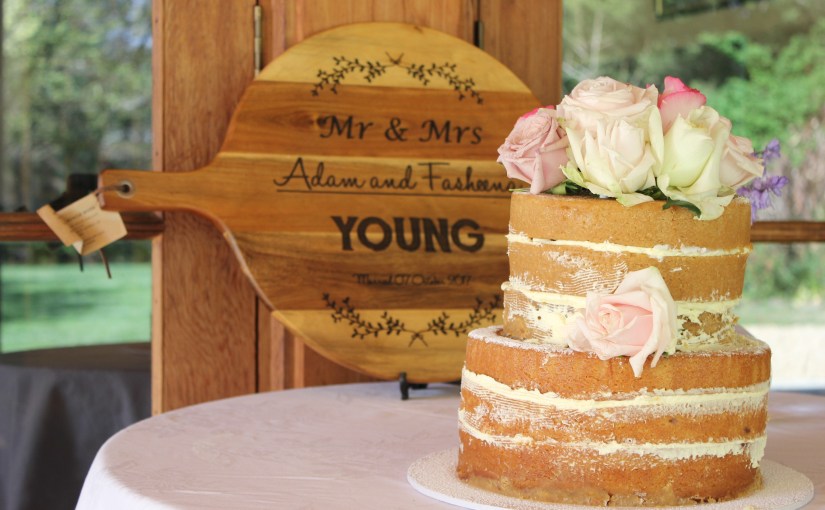
Back to Bungendore to prepare for the Wedding. After a short kip we shower and dress, meet with Greg and Gill and walk to the ole Stone House. There are already guests milling around and soon the garden fills, the ceremony commences and in brilliant sunshine and a cooling spring breeze Adam and Fasheena become husband and wife. Tears of joy, photographs with family and the reception follow. A perfect start to their wedded life.

The day is concluded with dinner at Le Tres Bon and a very happy Adam is presented with the electric power saw I have carted from home so I don’t have to cart it back. I am one happy and proud dad.

← Back

Thank you for your response. ✨

The Retirees revisit Gayndah

We were here 12 months ago and promised June we would return for her 90th birthday. Gayndah is 360+ kilometres from Brisbane and some of the road is a bit hairy when a cattle truck passes or a caravan decides to meander along in front of you. Depending on your timetable its is at least 4 to 5 hours north west of Brisbane. We had a delightful if somewhat chilly evening with June, her family and friends and we will be back for the next milestone.

When you enter from the south you are greeted by Gay Dan and the Big Orange. Noted for its citrus, Gayndah has become home to Gay Dan and it is the only breakfast spot of a Sunday morning. Gayndah claims to be the first town in Queensland having been established in 1850. Exploration of the Gayndah area began in 1847  the first European settlers arrived in 1848, and the town was established in the following year. Gayndah may be the oldest officially Gazetted town in Queensland though, it should be noted that, a convict colony of 47 people existed on the Brisbane River, CBD site in 1825.

Being the oldest gazetted town in Queensland you can expect to find some history in town. The local museum established in W Young’s General Store which opened in 1849 is well stocked with memorabilia and spreads across the street. Located in a dead end street fronting the Burnett River you get a grand view of the river and the bridge crossing it plus the flood level measure (2013 the river flooded to 17 metres).

It is one of the tidiest towns we have visited.  The town hall has a retro look of the 40’s buildings quite a contrast to the traditional houses and hotels which abound in the town. Even the public toilet is modeled on the early timber style. A place of many firsts, Gayndah even claims Queensland’s first derby over 1 and 1/2 mile, hence the statue of the horse and jockey in the main thoroughfare.

We visited the Duke and Duchess (the name given to the peak behind Gayndah) to lookout upon the Burnett and its surrounds.

I was pleasantly surprised to find out that my footy club Easts Tigers had also journeyed to Gayndah for the weekend – well at least their In-Trust Super Cup Team to contest a round against Norths Devils at neighbouring Mundubbera. The town is located 405 kilometres (252 mi) north west of  Brisbane. Mundubbera is also built on the banks of the Burnett River and is the self-proclaimed “Citrus Capital of Queensland”, although this is disputed by the neighbouring (and rival) Gayndah. I am pleased to report that the Tigers had a win over the Devils. There were even some stars at the match – Darren Smith (former East’s centre,  Bulldogs and later Broncos player and State of Origin member and Australian International) as an assistant coach of the Tigers and Steve Menzies (former Manly Sea Eagles player) as an NRL ambassador. Interestingly both Smith and Menzies played in head gear. I captured a few shots of the match.


← Back

Thank you for your response. ✨

The Retirees return – to Cesi then Australia – the last four days

On arriving in Cesi, it was our priority was to do some washing but that could wait whilst we relaxed in the serene quietness of the village watching the bustle of life in the valley below. We had a further four days in Cesi to prepare for the trip home. My plan was read a book in the sun but instead we;

climbed a mountain.

Although Cesi is some 400+ metres above the valley floor, there is at least another 400 metres of granite extrusion above the village and Robert assured us that it was a gentle walk of 15 minutes to the top. Now Robert is not stupid but he does have a problem with measuring time and a propensity to minimize the difficulty of tasks. After climbing along the footpaths of Cesi to the end of the village then the road to the old church of St Erasmus, we veered off into the undergrowth on a rock strewn winding goat track (actually it looked like the path followed by the local vermin pigs) and after half an hour we stopped at the lookout half way up the mountain.

Kerry and I turned back leaving Robert to fossick for wild asparagus and flowers. The trip down was treacherous with the loose stones and rocks sliding under foot. Whilst in Cesi we had often heard helicopters delivering building materials and now we could see the result – a fence to prevent landslides onto the village. We sat and waited for Robert on the stub wall leading to the church which must have had bottoms parked on it for centuries.

Caught a bus.

We visited Narni  a village on the south eastern end of the valley and miles from Cesi. It involved catching two buses, one from Cesi to the terminus and the second from the terminus to Narni. This is a far more substantial village (don’t be fooled when catching the train – it stops at Narni but that is the new Narni miles from the old village where we were in the hills behind). The bus stopped in a parking station below the village and via a funicular and an elevator we traveled up to the “High” street of the village.

The streets are so narrow in parts that traffic lights govern the passage of single lanes of traffic. The village is aware of its past and many buildings have been restored to preserve their antiquity. We enjoyed a lunch in an establishment that called itself a hotel but the usual facilities of rooms reception bar etc were not obvious. Catching buses may have been inexpensive but the timetable meant often you had little time to explore and we always seemed to arrive when everyone was on siesta.

Caught another bus.

We planned a farewell Easter lunch in Portaria (apparently it means pig shit in Italian – go figure). We had been to the village previously but Robert had heard the restaurant in town did the wild boar and polenta in the true traditional way so Portaria it was. The other specialty of the house is BBQ’ed mixed grill. They have an open fire place and they BBQ your lunch on the coals. Very rustic! But I have burnt my sausage over coals camping before. This was followed by a stroll around the village as we waited for the bus.

Did the washing. That evening Easter Friday, the village paraded through the main street with a litter containing an effigy of Christ after being taken from the cross. This is a tradition that has been performed every Easter Friday for centuries and it was a privilege to observe the village people young and old participating.Our last four days with Robert came to an end and after packing  we are back on the train (two trains actually) to Fumucino Airport. It has been a busy month away from home; now we are going back to plan to do it all again somewhere else.

← Back

Thank you for your response. ✨

The Retirees return to Florence – Palazzo Pitti and the other side of the Arno

We were exhausted again and retired after dinner. Not to be kept down we rose early to walk to the other side of the Arno to visit Palazzo Pitti. This is the giant home created by Cosimo I for his wife who wanted a garden and then he wanted safe passage to work at Palazzo Vecchio on the other side of the Arno. We weren’t that interested to see another palace but I was interested to see how the Duke’s walkway connected as it had to pass across the top of the Ponte Vecchio, over private homes and into Palazzo Pitti. A gateway at the side of the palace allowed us to see the passage into the palace.

From the Palace, we could see the steeple of the Basilica di Santo Spirito so we took to the lanes past a cobbler’s shop and a man walking his dog (if you can call something the size of a rat a dog) and voila we entered Piazza Santo Spirito. The Basilica di Santo Spirito (“Basilica of the Holy Spirit”) is usually referred to simply as Santo Spirito, it is located in the Oltrarno quarter, facing the square with the same name. The interior of the building is one of the preeminent examples of Renaissance architecture. In 1252, the Augustinians started the church and the convent incorporating an old church of San Romolo in the complex. The convent had two cloisters, called Cloister of the Dead and Grand Cloister. The first takes its name from the great number of tombstone decorating its walls, and was built around 1600. The latter was constructed in 1564-1569.

The former convent also contains the great refectory (Cenacolo di Santo Spirito) with a large fresco portraying the Crucifixion over a fragmentary Last Supper (1360–1365). It is one of the rare examples of Late Gothic Art which can still be seen in Florence. Michelangelo, when he was seventeen years old, was allowed to make anatomical studies on the corpses coming from the convent’s hospital; in exchange, he sculpted a wooden crucifix which was placed over the high altar. Today the crucifix is in the octagonal sacristy that can be reached from the convent.  The only remaining wooden sculpture by Michelangelo. No photography permitted.

VvThus, ended our stay in Florence. The next morning we caught a taxi to the train station and a wait for the “fast train” to Rome occupied most of our morning, then the train trip (the train achieved a mere 250 klm per hour compared to the 430 klm per hour in Shanghai) to Rome and a quick turn around through the tunnel (which I wish we had known about when going to Fumacino from Civitavecchia) to catch the much more sedate train to Terni and a warm welcome from Robert at the train station (I think not – MIA). So a taxi to Cesi and dragging the suitcases up the steepest of streets in the village to be welcomed by Robert from his kitchen landing. An offer to help with the suitcases to drag them up the stairs and at last we can stand still and rest.

← Back

Thank you for your response. ✨

The Retirees return to Florence – Santa Maria Novella (pictured below) & Santa Maria Assunta of Badia Florentina and others

From the top of Palazzo Veechio we had the benefit of the view over the old town we were able to identify some sites of the old town that we had not located. One was the church of Santa Maria Assunta of Badia Florentina. The Badìa Fiorentina is an abbey and church now home to the Fraternity of Jerusalem situated on the Via del Proconsolo in the centre of Florence. Dante supposedly grew up across the street in what is now called the ‘Casa di Dante’, rebuilt in 1910 as a museum to Dante. They were celebrating Palm Sunday so we were unable to enter camera in hand. Below you can see the bell tower and the door below in the courtyard.

With not much action there, we then walked across to the other side of the old town to Santa Maria Novella (near the train station) to view the museum. The outside of the church had something different about it and today I worked out that there is a sundial on its facade. There are two entrances and we chose the courtyard entrance passing family niches and some headstones to the ticket office.

On entering through those huge doors we found ourselves in a cavernous nave of the church. The vast interior is based on a basilica plan, designed as a Latin cross, and is divided into a nave, two aisles with stained-glass windows and a short transept. The large nave is 100 metres long and gives an impression of austerity. The interior also contains Corinthian columns that were inspired by Greek and Roman classical models. The stained-glass windows date from the 14th and 15th century and some stained glass windows have been damaged in the course of centuries and have been replaced. The one on the façade, a depiction of the Coronation of Mary, dates from the 14th century.

The pulpit has a particular historical significance, since it was from this pulpit that the first verbal attack was made on Galileo Galilei, leading eventually to his indictment. On the whole, it was well and truly worth the €5 entrance fee.

The courtyard of the former abbey is full of tombs and frescos dating back centuries and the former refectory included a version of the Last Supper

← Back

Thank you for your response. ✨

The Retirees return to Florence – Uffizi Gallery

The Uffizi was originally the offices created to accommodate the offices of the Florentine magistrates. The project commissioned by Cosimo I de’ Medici, Grand Duke of Tuscany planned to display prime art works of the Medici collections on the piano nobile; the plan was carried out by his son, Grand Duke Francesco I. He commissioned from the architect Buontalenti the design of the Tribuna degli Uffizi that collected a series of masterpieces in one room, and was a highly influential attraction of a Grand Tour. Over the years, more sections of the palace were recruited to exhibit paintings and sculpture collected or commissioned by the Medici. After the house of Medici was extinguished, the art treasures remained in Florence by terms of the famous Patto di famiglia negotiated by Anna Maria Luisa, the last Medici heiress; it formed one of the first modern museums.

The Uffizi is “u” shaped running from Palazzo Vecchio to the River. You can see the connection of the Palazzo to the Uffizi to the Ponte Vecchio and then through to the royal residence on the other side of the river. As you enter you see the Medici crest to remind you of who’s boss and then two flights of stairs to a gallery running the length and back again of the building. The ceiling is ornate with picto-grams of important people lining the edge of the ceiling.

Once inside, each room is filled with the art collected by the Medicis starting with the Middle Ages and into the Renaissance. Here is a tiny sample.

Although this is off peak the crowds in the Uffizi made it uncomfortable and the guided tour seemed rushed so we handed in our radios at the end of the top floor and made our way through the lower floors without the pressure of the tour. Here we saw the unfinished work of Leonardo Da Vinci “the Adoration of the Magi” for the high altar of the church San Donato a Scopeto and the finished picture by Filippino Lippi a contemporary and competitor of Da Vinci.

The benefit of the tour is to get inside without waiting 5 hours in queues outside. Back to the Apartment again to prepare for the next day.

← Back

Thank you for your response. ✨

The Retirees return to Florence – Palazzo Vecchio

Its Sunday and the city is hosting a half marathon and we are hoping to beat the crowds and get to the Palazzo Vecchio ahead of the crowds. The race is starting at Santa Croce which is on our way to Piazza Signoria and the Palazzo Vecchio. Kerry stops to consider competing but changes her mind. The pre – race queue for the toilets deters her.

We arrive at the Palazzo and as we planned there is no queue so we purchase tickets for the tour of the palace exploring the secret passages and the tower with a guide for the palace museum. We could have also visited the archaeological dig underneath the Palazzo but we have seen roman ruins.

The Palazzo Vecchio is the town hall of Florence, Italy. It overlooks the Piazza della Signoria with its copy of Michelangelo’s David statue as well as the gallery of statues in the adjacent Loggia dei Lanzi. Originally called the Palazzo della Signoria, after the Signoria of Florence, the ruling body of the Republic of Florence, it was also given several other names: Palazzo del Popolo, Palazzo dei Priori, and Palazzo Ducale, in accordance with the varying use of the palace during its long history. The building acquired its current name (meaning the old palace) when the Medici duke’s residence was moved across the Arno to the Palazzo Pitti.

The original ground floor courtyard is remarkable for its artwork on its walls its view of the tower and the statue of a nymph in the centre. The newer parts of the ground floor is decorated with large tubs of flowers.

Our guide Molloy turns up and is a 20 something US student studying Art History in Florence and doing the guided tour to fill in. The first stop is the room of the Five Hundred being the meeting hall for the city delegate until the Spanish installed Cosimo as the Grand Duke and he took over the reins of government. This is an enormous hall decorated by the Medicis with wall panels and ceiling panels to justify their importance and position. Passing from the hall we entered the palace proper. I have included my photos below. We visited the deck (altana to the Italians), saw the crest of the Medicis in the Dukes room and the joint crest in the rooms used by the Duchess. In the map room we were shown the secret door (through a map) which led to a veranda to which was later added a room for the mistress of one of the dukes who was interested in alchemy (prohibited at this period) and her presence was not welcome at court so the room included a secret panel (on the left) so she could view the goings on in the Room of the Five Hundred.

After visiting the apartments, we passed into another stairwell to access the tower. To my surprise, we had to go to the end of the queue for the tower despite having done the tour of the apartments. Fortunately, the queue was short but it soon grew as they limit numbers as the staircase is narrow and I am not that certain the tower is designed for thousands of tourists to be hanging off it. Once we were allowed to climb the 418 narrow stairs to the top of the tower we were given an extraordinary view of Florence. One of the views is the umbrellas on the Uffizi veranda and the Piazza Signoria below that.

The climb down was a little more harrowing but less fatiguing.

← Back

Thank you for your response. ✨


The Retirees return to Florence – a Walking tour

We had a disappointing lunch (some Italian bread is made stale) a short rest and then back on the road again walking back to Piazza Santa Maria Novella arriving far too early for our tour – a miscalculation of the time needed to walk and our new knowledge on traversing Florence. What to do? A sign caught my eye. At one end of the Piazza was an old building we were to learn was originally a hospital and now an art gallery. It had a display on northern art – Estonia and the collection of Enn Kunila’s Collection including early 20th century Estonian artists (Ants Laikmaa, Elmar Kits, Villem Ormisson, Endel Koks, Nikolai Triik, and Herber Lukk) progressing to impressionism. The collection included a special section on Konrad Magi. I have included some photos of some of the pieces of Konrad Magi and in particular showing an image of the previous occupants of the building.

From here we walked across to the pavilion and met our guide. Our tour started at San Maria Novella and the Piazza. This church was called Novella (New) because it was built on the site of the 9th-century oratory of Santa Maria delle Vigne. When the site was assigned to Dominican Order in 1221, they decided to build a new church and adjoining cloister. Hence the name. The exterior of the church had a curious sundial on the front of the church. The church, the adjoining cloister, and chapter house contain a multiplicity of art treasures and funerary monuments. This had been home to a Dominican order of priests and friars which the guide described as the knights of San Maria who fought heretics for control of Florence. The Piazza which was the scene of many orations by the Dominicans over the centuries but know it is an open piazza with two obelisks supported by the Medici turtles.

We moved on to Via delle Belle Donne, the street of prostitutes where the heretics and Dominicans fought their battle and the column remembering their victory. We then walked to the Palsso belonging to one of Florence’s richest families the Strozzi. The construction of the palace was begun in 1489 by Benedetto da Maiano, for Filippo Strozzi the Elder, a rival of the Medici who had returned to the city in November 1466 and desired the most magnificent palace to assert his family’s continued prominence and, perhaps more important, a political statement of his own status. A great number of other buildings were acquired during the 1470s and demolished to provide enough space for the new construction. Filippo Strozzi died in 1491, long before the construction’s completion in 1538. Duke Cosimo I de’ Medici confiscated it in the same year, not returning it to the Strozzi family until thirty years later. The palace faces the historical Via de’ Tornabuoni the street with all the expensive brands in Florence. My photos include the sculpture by Henry Moore “Warrior with Shield” which had been intend for the Terrace of Saturn in Palazzo Vecchio moved to the Basilica of Santa Croce until 2015 when the Strozzi Foundation obtained it for Palazzo Strozzi

Our tour continued along to Piazza di Santa Trinita (one block away from Ponte Santa Trinita) where there is a church of the same name and a street ensemble entertaining us with rag time music. Our guide stated this was the only church in town that did not charge tourists an entrance fee. Beyond the piazza, we passed this extraordinary shop – the original supermarket. Unfortunately, my photo also captures one of our fellow tourists scratching her arse. Nearby is a church in a small piazza which claims to hold a relic – a piece of the cross. It was closed but I took the photo. Every tour has to include the Ponte Vecchio which is the oldest bridge standing in Florence (even the invading German Army did not damage the bridge). Formerly the home of butchers and bakers (who discarded their waste into the river), one of the Medicis (Cosimo Ist, I believe) drove them off the bridge and replaced them with the goldsmiths we see today. The Duke built a passage from Palazzo Pitti to Palazzo Vecchio (the seat of government) over the bridge to avoid assignation and did not like the smell. Thank you, Cosimo. My photos shows, the oldest building on the bridge and the sundial on top, the bank below with the rowing club entrance and the Duke’s passage running into Ufizzi.

We then ventured into Uffizi with Palazzo Vecchio in the background and onto the Duomo, Giotto’s Bell Tower and Baptistry. The Cattedrale di Santa Maria del Fiore; in English “Cathedral of Saint Mary of the Flower”, is the main church of Florence. Il Duomo di Firenze, as it is ordinarily called, was begun in 1296 in the Gothic style and completed structurally in 1436 with the dome. The exterior of the basilica is faced with polychrome marble panels in various shades of green and pink bordered by white and has an elaborate 19th-century Gothic Revival façade.

The cathedral complex, located in Piazza del Duomo, includes the Baptistery and Giotto’s Campanile. The basilica is one of Italy’s largest churches, and until development of new structural materials in the modern era, the dome was the largest in the world. It remains the largest brick dome ever constructed. The day finished in Piazza Republica where we had aperitifs and a chance to chat with our fellow travellers; two from UAE from the tour industry, a couple from Barcelona (Catalan separatists), and a young woman from Bristol. It turned out the Catalans and the UK girl had both been at a conference of illustrators in Bolonga and we encouraged some drawings from each.


That was enough walking for the day so we went to our chosen bar the Beer Hall club for dinner and made it into bed around 10.00 pm.

← Back

Thank you for your response. ✨

The Retirees return to Florence – a Segway tour

. The next morning, we were both anxious to get to our Segway tour. Ever since Prague we have been smitten with the Segway. Arriving early, we found the Gucci Museum in Piazza Signoria and it was closed. We had to walk past it to get to the Segway tour office. Three floors of Gucci was too much for me. So, we moved onto the office and we were redirected to a coffee shop as we were far too early. We went around to Piazza san Martino and the coffee shop there and found the Dante Museum, an old tower house (this is the style of the middle ages) and an interesting old church San Martino del Vescovo.

Back in the Renaissance, the poor could rely on the services of a lay charitable institution to help them with the essentials of life and death – being clothed, helped when sick, and buried when dead. This institution, was called the Confraternity of the Buonomini di San Martino; Buonomini literally translates as “good men”. In 1442, Fra Antonino Pierozzi (who later became Archbishop of Florence and a saint) recognized the need for a dignified way to help these people, who tried to “keep up appearances”. He chose 12 reliable men of the higher social classes who would identify those in need of help and discreetly offer assistance in whatever way was required. The group initially met at one of their houses, but eventually was given a room off the side of the church, which was decorated as their “oratory”. This confraternity is one of the very few remaining visible examples in Florence (another is the Misericordia, still today the city’s ambulance service). The painting in the niche shows San Martino (the patron Saint, Saint Martino of Tours) handing out alms to the poor and when the Buonomini found themselves in need of money, they light a candle above the door. The Italian expression “essere ridotti al lumicino” (literally to be reduced to the candle or stony broke) derived from this practice. In the same breath, we encountered this bicycle that had been badly parked and suffered the consequences.

The time had arrived and so had our guide Valentina and three English girls, novices at the Segway. After a few practice runs, we head off toward Republica and our guide starts explaining the different styles of architecture in the various churches and she selects a very ostentatious baroque style to start with. We weave in and out of the back streets listening to her stories over the radio each one of carried and always hearing the constant ringing of her bell telling cloth eared tourists to get out of the way. We come upon a brass boar a symbol of the city and she tells us to rub the snout for luck. Its lucky if you can get near it.

Next is Duomo, Bell Tower and Baptistry followed by two statues of architects and builder of the dome. On to Santa Croce and the statue of Dante, past the first Medici Palazzo onto the Basilica San Lorenzo, one of the largest churches of Florence, situated at the centre of the city’s main market district, and the burial place of all the principal members of the Medici family from Cosimo il Vecchio to Cosimo III. It was consecrated in 393AD and it stood outside the city walls. San Lorenzo was also the parish church of the Medici family. Our guide told us that the façade of the church was never finished as Michelangelo took 3 months selecting the marble and in that time the Medicis changed their mind.

We toured around for 3 hours stopping for a gelato and thoroughly enjoying the freedom of the Segway. Then we returned to the apartment put our feet up and rested until it was time for the Uffizi tour.

← Back

Thank you for your response. ✨

The Retirees return to Italy – Florence and Tuscany

We flew out of Gatwick South but I don’t recall much of the flight as I slept most of the way. Our landing was smooth but I was surprised about the Florence International airport. It is small and appears nothing more than a domestic airport for a small town. We disembarked onto the tarmac and entered the immigration area with a queue out the door because there was insufficient space. Clearing the terminal, we went looking for a taxi as it was after 8.00 pm by the time we got our luggage and got out. Very few taxis and a queue a mile long so the shuttle bus to the railway terminal was the next best thing but everyone was thinking the same so a jammed packed bus took us to the terminal where we caught a taxi through a maze of streets to the hotel which was closed. Our phone had proven to be out of date and useless so we had no means to contact the hotel to let us in. Kerry went to an adjoining hotel and after some begging contacted the hotel and gained the various codes to the “front” door in the lane behind the hotel, the elevator and the front door to the rooms on the 4th floor.

Suffice it to say we made it and settled in for the night to start our Florentine adventure the next day. The apartment was reasonably spacious with a kitchen dining room bedroom and bath/ensuite. Our only window gave a view over the Arno river to Porta San Nicolo, a part of a city wall of the past and Piazzale Michelangelo (a copy of the statue of David stands in the Piazzale). Below on the sand bar of the Arno, Florentines lay sunbaking (too damn chilly for us).

We needed to get orientated so we headed off for the old city on foot passing the central library and taking our lives in our hands as cars scooters bikes and trucks battled with pedestrians for use of the road/footpath. We were looking for the Segway tours office and the tourist information office to make our plans of where to go and what to see. We had a brochure for the Segway tour office and a map provided by someone pointed out an information office and we set sail to negotiate the streets and book a tour on a Segway.

We found the Segway tour office in the lanes behind Piazza Signoria and Palazzo Vecchio and booked our 3hour tour for the following Saturday morning and turned our attention to finding the Tourist Information Centre. After a short walk we arrive at a gate (a Roman looking gate) which we later learnt was part of Piazza Republica, created for the period that Italy did not include Rome and Florence was capital.

The buildings of the old town of Florence have a charm and design that is Florence and many carry the crests of the important merchant families of the city. Where there is a footpath some of the streets are decorated in flowers. A particular variety of small azalea was often the preferred choice. Our walk took us down many an alley until we arrived at the Piazza Santa Maria Novella with its two obelisks and named after the church of the same name and convent run by the Dominican order until disbanded in the 19th century.

According to our map the information office was here, but all we could see was the Basilica and a tourist pavilion selling tours and trinkets. Unable to find any tourist information centre, we went to the tourist pavilion and found the staff to be very helpful and booking a walking tour that evening at half price and a visit to the Uffizi. Without knowing it we had walked almost back to the train station and exploring around Santa Maria Novella we found the station hidden by the church and hidden within the walls of the church the Tourist Information Centre. We decided to return to the apartment to rest for our evening tour so we walked back to the river and found we were four bridges away from our apartment. We had literally weaved diagonally across the city from our apartment. First, we came upon Ponte alla Carraia, then further along Ponte San Trinita then Ponte Vecchio and finally Ponte alle Grazie and then “home”.

← Back

Thank you for your response. ✨