The Retirees return to Italy – On board the SS Costa Diadema – Marseilles and Barcelona

Sailing along the Gulf of Genoa and the Ligurian Coast, past the Principality of Monaco, Nice, Cannes and Sanry sur Mer, our next port of call is Marseilles. Daylight saving starts tonight so we find ourselves waking at 8.20am to see “Marseille” out the starboard window.  I spot an island with a fort and a church with a tower on a hill. But this is Sunday a day of rest for us too. So, we spend the day on ship in the spa having an ice cream and finishing with massages and a movie. We set sail with the next stop Barcelona.

Arriving at Barcelona, we find ourselves caught out by the time change for daylight saving. We rush to have breakfast to ensure we are on board the first coach to the city centre. The coach drops us near the World Trade Centre and we see the Red Bus nearby. We are not sure what we want to do in Barcelona and we decide that with grey skies and sprinkling rain we should catch the bus. One thing we have learned about Barcelona is that it is spread widely so the bus trip took a long time to get anywhere.

The first sight we see is the cable car tower at Port Voll which connects with Mont Juic. We board the Red Bus which climbs up Mont Juic past Anella Olimpica which is a renovated building converted into a stadium for the 1992 Olympic Games in Barcelona. Further along we encounter the Arenas de Barcelona (the former bull fight ring) now a shopping centre. It had to be raised to fit the new use. This was on the way to the stadium for FC Barcelona.

The bus returned to Port Voll with over 4,000 moorings and some rather decent boats. From there we visited La Barceloneta and the main beach of the town. Unfortunately, the day had not improved and wind and rain now swept the beach. My goal was to see Sagrada Familia the most popular of Barcelona’s works by the famous architect Gaudi. We changed from the red west line to the green east line to see the Familia but it was not to be. In fact, it is so popular that you have to purchase tickets to visit. By the time, we got there the tickets had sold out until the following day. So, we strolled around the Familia and I was able to take a few pictures even though it was still under renovation/repair.

We found a warm bar across the road and ordered a paella. We made the decision to abandon the bus and try our hand at the Metro to visit the old part of the town. After investigating the available lines at the nearby Metro, we decided on the purple line to Paral-el. Once we arrived at the station we found it is situated on the Avenue Paral-el and very close to the cable car tower where we started our trip. We were still not in the old town so we headed to the wharves and took a left-hand turn to Avenue la Rambla and into the heart of the old town. On the way, we passed a reminder of Barcelona’s industrial history, and a reminder of it is medieval past. The old town was drab and although it had its fair share of old churches, medieval bridges, and Roman relics, it did not capture our interest. The sky had lost its cloudiness and the warmth of the sun could be felt and appreciated but it did not last long. We stopped at a small bar and enjoyed a fruit smoothie each and decided to head back to the ship. Our excitement was so great that we left without paying which I remembered when we were halfway back to our collection point causing us to retrace our steps pay our bill and start again. Tomorrow is Mallorca and Palma de Mallorca.

Go back

Your message has been sent

Warning
Warning
Warning
Warning

Warning.

The Retirees return to Italy – On board the SS Costa Diadema – Savona

Our next port of call is Savona. During the night, the ship navigates around the Ligurian coast past Portofino and Genoa. Our plan is to travel by bus to Genoa and check out the old town. It is a bit overcast when we arrive in Genoa. It is an early start and an hour by autostrada to Genoa and we are dropped off at a square beside the aquarium and a fake galleon donated by Roman Polanski after he finished making a pirate movie.

Genoa is a much lively place with its ancient buildings having covered footpath hiding the retail premises beneath the residences above. For the naval historians reading this, you will know of Genoa’s maritime history, its long – time battle with Venice for dominance of the sea lanes and the wealth of the town but those who don’t need to see our photos of the city gates and how residences and shops have all but swallowed it up, the streets lined with shops, the continuous apartments and the piazzas, the public icons on buildings, the churches (including San Maria Madellane where an Italian playing bagpipes played a lament on the anniversary of a deceased husband for the grieving widow and San Pietro in Banchi) and banks that line even the smallest streets.

Following the back streets led us to the mall in Via San Lorenzo. Here the more extravagant monuments could be found in Piazzas San Lorenzo (Cathedrale San Lorenzo) Matteotti (Chiesa del Gesu) and Ferrari. Outside the Chiesa del Gesu a protest to abuse of children. After the fountain in Piazza Ferrari we followed into Via Dante and the house of Christopher Columbus, that famous mariner who discovered and claimed for the King of Spain the Americas and all the time he was Genoese not Italian or Spanish. Remember Genoa was a city state with its own government, and naval force and Italy would not be unified until 1861 under Garibaldi.

After the house of Columbus, we passed into Piazza Dante and there stood two towers and another town gate. So, we sat in the sun with our stolen rolls from the ship and had our morning tea looking at a Roman ruin and the city gate connected to the remnant of the city wall. Following the city wall, we passed little trattorias, doorways in the wall, and the Piazza di Sarzano. After calling into a ship’s chandelier to pick up a thingo, we made our way back to the bus in Piazza Caricamento and return to the Diadema.

Go back

Your message has been sent

Warning
Warning
Warning
Warning

Warning.

The Retirees return to Italy – On board the SS Costa Diadema – La Spezia.

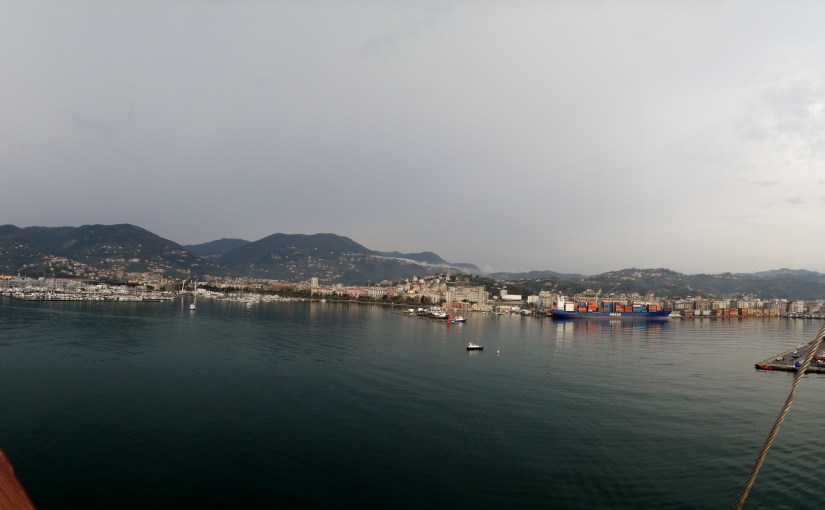
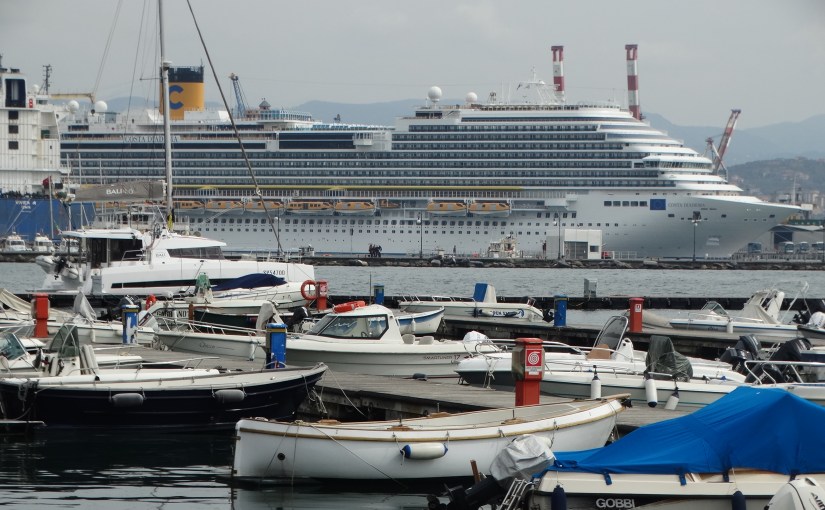
After sailing all night passing the lights of the islands of Giannutri and Giglo, we arrive at La Spezia. This huge ship reverses into the berth by the wharf. We can see all the tour buses lined up waiting for us and the town is awaking to another visit by tourists.

After breakfast and before our tour, we stroll the ship and find the basketball court, the adventure castle and Peppa Pig water park.

We have some free time in La Spezia. This is very close to Cinque Terra which is to the north so there are some aspects that seem familiar such as the colours of the buildings along the shore. In the town, there is a strange church on Piazza Europa and the buildings are very grand. An adjoining square has these simple but effective sculptures highlighting the unitary colours of the buildings around. Mandarin trees laden with fruit line the streets. Not a lot to see or do but the stroll through the town and along the waterfront is very enjoyable. It gives us a chance to see our ship at berth and take a portrait.

After we have lunch, I am a little ashamed to say, we went to a shopping village by bus. Even so it allowed us to see some of the rural areas outside of La Spezia and like most of Italy there were always hilltop villages in view. But I have withheld the shopping photos through embarrassment. We visited one of those villages, Sarzana which of course had a Roman heritage and was one of the towns controlled by the Medici family in the middle ages. The bus dropped us off outside of the town walls so that we entered through the Town Gate and then proceeded to the top of the wall for a view down the main street. Crossing to the other side we came across a Medici fortress with its clone on the hilltop behind the town. It was here we lost the rest of the tour and made our own investigations.

Kerry and I followed the streets through typical Italian village squares (Piazzas), past remnant pieces of history such as the village well now water fountain, workshops (this one being the workshop of a motorbike restorer), the memorial to lives lost in conflict beside a children’s merry-go-round, houses built on remnant parts of the old wall, and a building that appeared to be something to do with injured servicemen. The village is very much alive and a place still in use but having its roots in Roman times. Times up and we fight the evening traffic to return to Diadema, dinner and bed.

Go back

Your message has been sent

Warning
Warning
Warning
Warning

Warning.

The Retirees return to Italy – Farewell Cesi hello Civitavecchia

Our day starts, as usual, with a manic trip to Terni by bus this time with suitcases which run a muck in the bus leading to a collision between my head and the overhead luggage racks. Kerry found this most humorous. We board the train remembering to validate our tickets and bid Roberto farewell. The trip to Rome was going smoothly until we reached Orta when there was a delay of some 30 minutes throwing out our timing to catch the train to Civitavecchia and the departure point for our ship.

Of course, we arrive at Platform 1 EST the furthest point from the station. We then walked with suitcases to the station, where we try to purchase tickets but due to a misspelling of the name of the port Kerry is having difficulty when a “helpful” local intervenes then begs for financial assistance for his services. Fair enough I think he helped except that we got tickets for the next train to Civitavecchia from Platform 28 which is the equivalent of Platform 1 EST only on the opposite side of the station. Panic ensues as we charge up the platform. My suitcase has suddenly got very heavy. Finally, I drag it onto the train much relieved that we made it. I then examined my suitcase to find one of the wheels to be frozen. The ride to Civitavecchia went smoothly and we resolved to get a cab to the ship – it proved a great decision with the cab delivering us and luggage to the door for €10.

We were finally able to relax. From our cabin window, we see the other ships at anchor and the land disappearing in our wake. Our room is large and comfortable, the ship luxurious in its fitout and we look forward to our trip to La Spezia through the Tyrrhenian Sea.

Go back

Your message has been sent

Warning
Warning
Warning
Warning

Warning.

The Retirees return to Italy – Umbria – Portaria

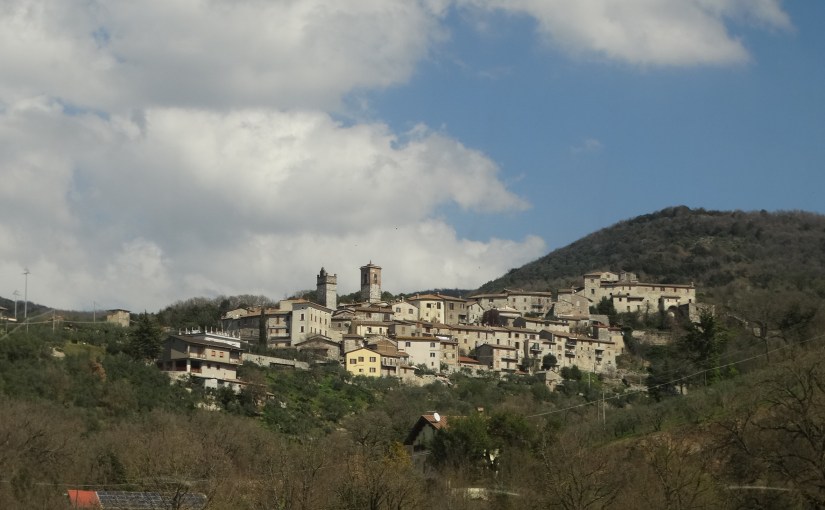
Leaving behind the ruins of Carsulae, we waited at the road for the bus to take us on to Portaria. After a short wait we boarded the bus travelling along the lonely country road towards Acquasparta and after 5minutes the bus took an abrupt turn right into a track towards the hills. Portaria is a part of the town of Acquasparta. It is located along the ancient byway of the Via Flaminia , between Carsulae and Spoleto on the  Martani mountains, overlooking a great view of the Naia river valley. We arrived around 1.00 pm looking for a spot of lunch. Just inside the city gate we found this medieval looking tavern serving delightful country food. We could not help but overindulge.

According to data from Istat census in 2001, there are 126 inhabitants, while the municipal website says about 425 residents.

The town appeared to have castle like walls with two different eras of construction as there appeared to be a second building period with another wall around both sets of buildings. So I did some research.

A document of 1093 shows the town known as Porcaria (pastures for pigs were evidently abundant), where two monasteries in the area are donated to ‘ Abbey of Montecassino, by a descendant of Count Arnulf. In August 1499 Lucrezia Borgia, with her army, stopped at Porcaria castle and was greeted by four commissioners and two hundred Spoleto infantrymen before taking possession of the governorate of Spoleto.

Following her marital annulment from Count Sforza in 1498, Lucrezia was married to the Neapolitan Alfonso of Aragon, the half-brother of Sancha of Aragon who was the wife of Lucrezia’s brother Gioffre Borgia. The marriage was a short one. They were married in 1498; Lucrezia—not her husband—was appointed governor of Spoleto in 1499, Raids of troops from Ternane and Tuderti forced the inhabitants to submit to the protection of Spoleto: the captain Bartolomeo d’Alviano  established a commissioner and an infantry garrison at Porcaria.

In 1540 the town was traded, along with Acquasparta, with the castle of Alviano with Pier Luigi Farnese : the new lord, Giovan Giacomo Cesi, who exploited the marriage to Isabella d’Alviano. In 1550 it was bought for 6,000 crowns from the Apostolic Camera. During the Spoleto Duchy of Lucrezia Borgia , it is said that she lived in one of the houses overlooking the piazza Verdi today.

A separate municipality until November 1875 when it was merged with Cesi then part of the province of Terni in 1929.

Again the village appeared asleep (and they probably were) and we walked the streets alone.The main piazza is dominated by this tower and clock and inside the residences all appeared to be in good condition (apart from some doors showing their ancient heritage) and small garden plots abounded. There was one active church and below the fresco some of those funeral reliefs from the Carsulae ruins were apparent. There is a rear gate and the exterior wall of the village sits on another wall equally as high.

Returning to the entrance to the village we awaited our bus which duly came and transported us and a few other passengers to Acquasparta rail station, paused and then headed off on the return route to Cesi and Terni.

Go back

Your message has been sent

Warning
Warning
Warning
Warning

Warning.


The Retirees return to Italy – Umbria – The ruins of Carsulae

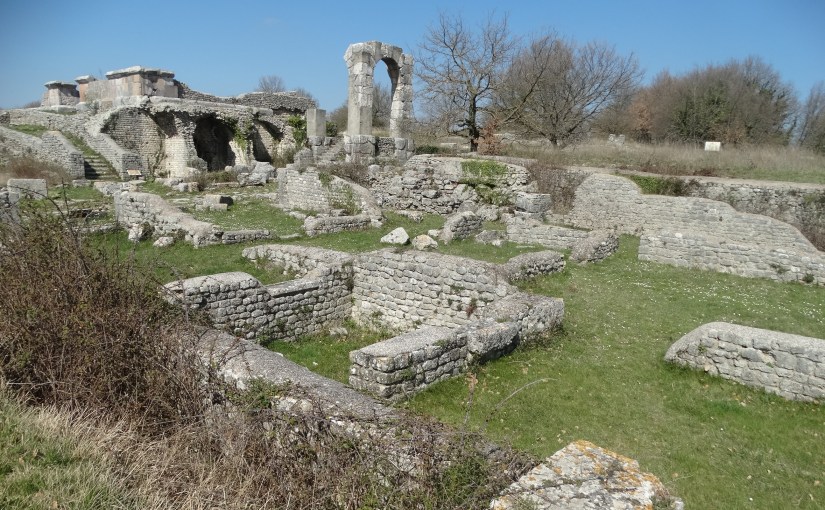
Carsulae is an archaeological site in Umbria, central Italy, now one of the most impressive archaeological ruins in Italy. It is located c. 4 kilometres (2.5 mi) north of San Gemini, a small comune in the province of Terni. Nearby is the comune of Montecastrilli (Montes Carsulis). The bus stops at the car park for the ruins which is on the opposite side of the road and until we stumbled onto the guide map we thought the ruins had been lost. It was like the ruins a ghost town with only one lonely car in it. We walked across the car park under the road and 300 metres later encountered the gatehouse and entrance.

Most historians fix the town’s official founding to about 300 BC. Carsulae’s growth into a major town only took place, however, with the building of the ancient Roman road, the via Flaminia, in 220-219 BC.

When the via Flaminia was built, its western branch proceeded north from Narni, sparking the development not only of Carsulae, but also of Bevagna. This branch of the road courses through a gently rolling upland plain at the foot of the Martani mountain range, an area that had been heavily populated since the middle of the Bronze Age. The eastern branch proceeded from Narni to Terni, north to Spoleto, then past Trevi and finally to Foligno, where it merged with the western branch.

In due course, during the age of Emperor Augustus, Carsulae became a Roman municipium. During his reign a number of major works were initiated, eventually including the amphitheater, most of the forum, and the marble-clad Arch of Trajan (now called the Arco di San Damiano).

During its “golden age” Carsulae, supported by agricultural activity in the surrounding area, was prosperous and wealthy. Its bucolic setting, its large complex of mineralized thermal baths, theatres, temples and other public amenities, attracted wealthy and even middle class “tourists” from Rome.

However, while many of the other mentioned towns and cities on the two branches of the old Roman road continue to exist, nothing but ruins remains of Carsulae, which was abandoned, and once abandoned, never resettled. The only subsequent building that took place occurred in paleo-Christian times, about the 4th or 5th century, at the southerly entrance to Carsulae, where the church of San Damiano, still standing today, was built for a small community of nuns on the foundations of an earlier Roman building.

For centuries after it was deserted, Carsulae was used as a quarry for building materials transported to cities like Spoleto or Cesi, where Roman tombstones may be seen built into the church of S. Andrea (St Andrew), but otherwise, it was left alone. Consequently, archaeologists have been able to map the city with considerable detail.

No one knows the precise reasons why Carsulae was abandoned, but two that seem most plausible are first, that it was almost destroyed and the site made inhospitable by an earthquake, and second that it lost its importance and as a result became increasingly impoverished because most of the important north-south traffic used the faster east branch of the via Flaminia.

Haphazard excavations took place in the 16th century under the direction of Duke Federico Cesi, whose palazzi are in Cesi Acquasparta, and in the 17th century under the direction of Pope Pius VI, but not until 1951 were the ruins subjected to methodical archaeological exploration and documentation. Significant additional work was also done in 1972. There is a current excavation run through Valdosta State University of Georgia.

The modern entrance to the ruins is through a modern gatehouse museum and coffee shop. The museum displays some of the statuary, baths and sarcophagi from the ruins. Speaking of sarcophagi we discovered the ruins of a tomb and sarcophagus on the site.


Go back

Your message has been sent

Warning
Warning
Warning
Warning

Warning.

The Retirees return to Italy – Marmore Waterfalls in Umbria

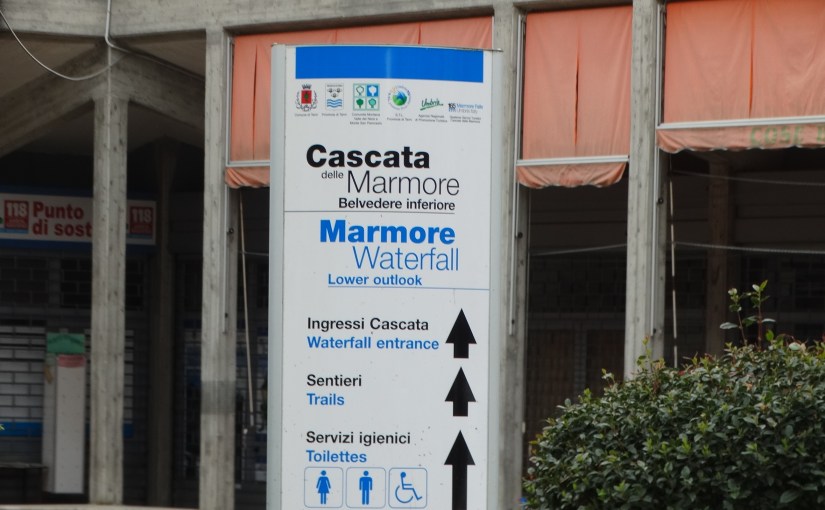
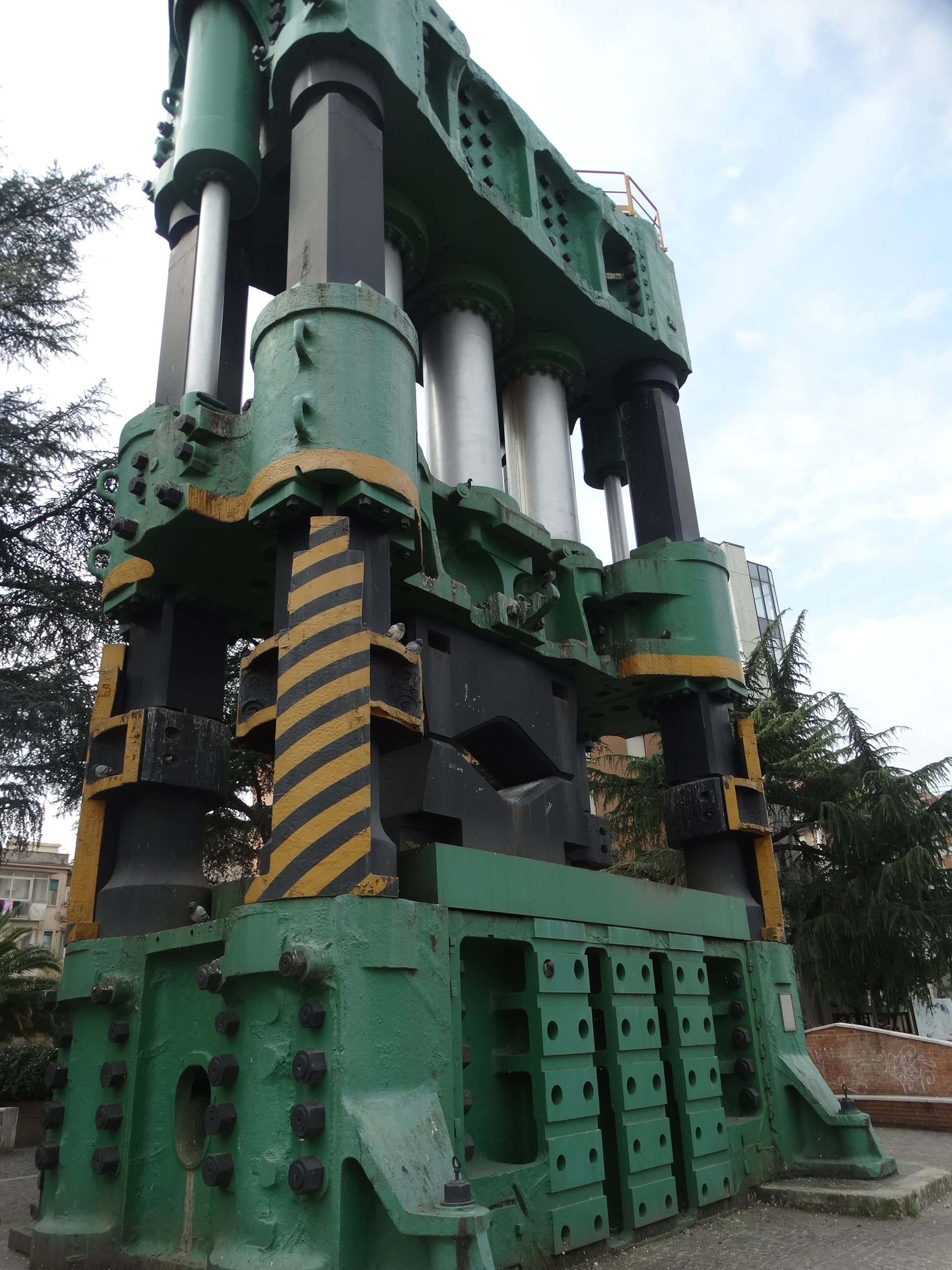
Once again, we bused down to Terni, this time getting out near the train station where we had arrived a few days earlier from Rome. We walked pasted the train station and a huge 12,000 ton press retired from service and positioned prominently to remind the residents of their industrial past.  Around the corner, we found ourselves in the bus terminus of Terni. We boarded the bus to Marmore Falls and the driver dropped us at the ticket office rather than the bus stop (the ticket office is in a non – descript industrial looking building 200 metres from the entrance to the Falls park). Fortunately, Roberto had been there before so we found our way easily.

The falls are fed by the waters from Piediluco della Largo and have been dammed to give control over the flow of the water for the purpose of the hydro power station in the valley below the falls. A wide and sealed path follows the rim of the valley into which the water falls empty and when we arrived the falls appeared a mere trickle.

We followed one of the paths (the longer path to the top of the falls was closed for construction) to the point where the lower falls merged and spilled into the valley below the walkway. Just as in the Michelangelo painting on the Cysteine Chapel, Roberto receives the phone from she who must be obeyed to take a photo.

When we returned to the valley floor we found a mossy and wet valley floor chill with the hanging moisture in the air.

All that was to change at 12.00 o’clock when the flood gates were opened and fortunately we were back on the path having lunch at a canteen with views of the falls. Even sitting 50 metres from the valley rim, we could feel the mist from the bloated falls (bloated with water released from the lake).

The weir was closed about 1.00 pm and the Falls slowly returned to their slumber until 12 noon tomorrow. We walked back to the ticket office to catch the bus finding the stop was opposite the entry to the Falls park. Then whilst waiting for the bus we were obscured from the oncoming bus by a parked car (Italians believe parking is a right and leave their cars wherever they choose) and but for my excited flagging of the bus driver we would still be there.

Go back

Your message has been sent

Warning
Warning
Warning
Warning

Warning.

The Retirees return to Italy -Bus trip to Piediluco Umbria

After an hour or so in Terni, our bus arrived to take us to Piediluco passing Papigno located on a small hill, at the height of 227 m above sea level, and has a population of 449 inhabitants. Pardon the photo this bus driver was equally excited driving around the hairy turns on the road to Piediluco. We also had some great views of Terni  as we slid around corners.

After 20 minutes, we arrived at Piediluco. Crossing the bridge over one of the three rivers that empty into Lake Piediluco and driving through the town wedged between the hills and the lake’s edge, we dismounted at the furthest buildings of the village from where we could see another mountain top village backed by the peaks covered in snow (photo above). Our plan was to stroll along the lake’s edge taking in the village atmosphere.

Piediluco is part of the town of Terni. Located at 375 m above sea level, the village is inhabited by 523 residents. It stands directly on its namesakes lake that feeds the waters of the river Velino, and the Marmore Falls. Archaeological excavations in the area have found the remains of settlements dating back to the late Bronze Age. It was later conquered by the Sabines and, from the middle of the third century BC, it passed to the Romans.

We could see the ruins of Castello de Luco (from the Latin Lucus sacred grove on the top of Mount della Rocca, ). A document dated 1028 mentions Castello de Luco, as a possession of Lord Bernard D’Arrochar. La Rocca was characterized by a square tower of which only ruins now remain. The city of Piediluco was abolished in 1927 (merged by Royal Decree-Law with the municipality of Terni) but the Coat of arms of the city of Piediluco still remains on the face of the municipal building. See the featured image.

We had lunch at the Ristorante Eco on the lakes edge. Note the tree in the restaurant and its decapitation above. Not the most memorable meal but lovely atmosphere and out of the wind and cold. After lunch, we continued our walk and I noticed a steel garage door adapted to dispense cigarettes – novel!

About 3.00 pm we caught the bus back to Terni with Roberto promising the best pastry shop Carletti’s would be the next stop. Of course, this involved some walking but give him credit it was good pastry. Now quite full of food we walked back to the centre of Terni where I sought out some of the few remaining old buildings of Terni including the Porta d’Angeli (the gate of Angels) one of the few remnants of its past. Amongst the remnants, I found one of Italy’s similarities with China – the converted motor bike.

Go back

Your message has been sent

Warning
Warning
Warning
Warning

Warning.

The Retirees return to Italy – Terni and its origins

This morning before I awoke and we decided we would visit  Piediluco on the Lake via Terni on the way. Its like that here. You wake the weather is fine nothing to do so……

We caught the bus and in true Italian tradition the bus driver drove like a bat out of hell down the hill into Terni. Note the faces of the excited passengers in the picture below. While waiting for the bus we could see from our vantage point overlooking the Terni valley, one of the local marble quarries and the nearby village of St Gemini which we decided we would visit shortly.

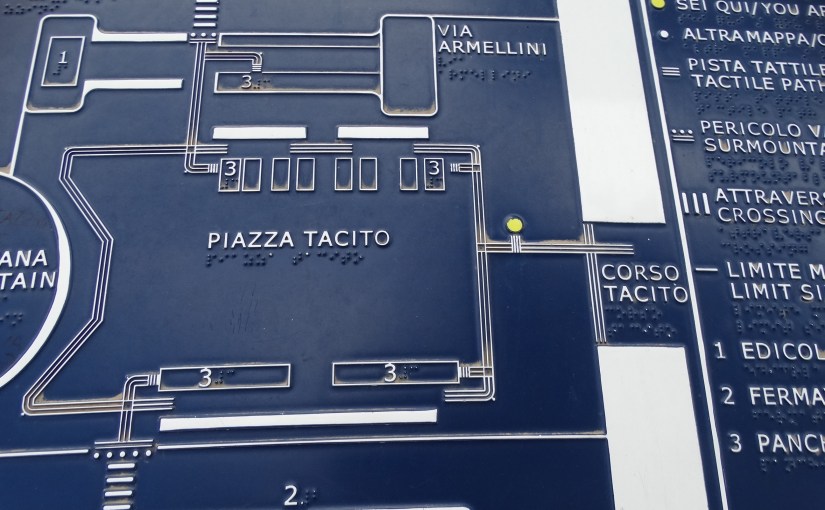
Twenty minutes later once the blood had returned to our knuckles, we left the bus and walked 50 metres to the main Piazza Tacito. It is largely paved for pedestrians but as usual you have to watch out for the cyclists and motor bikes. The hills surround the city and can be seen on all sides as you stroll down the mall. It is only the fact that many of the buildings appear of the modern era that remind you that on August 11, 1943, a massive allied bombardment devastated the city. It was the first of the 108 air strikes that destroyed 80% of Terni’s buildings. Despite this, Terni’s industrial environment increased quickly after the war. Some of the ancient city remains and some of those buildings have had a second life like the former church in the photo below.

Terni is a city in the southern portion of the Region of Umbria in central Italy. The city is the capital of the province of Terni, located in the plain of the Nera river. It is 104 kilometres (65 miles) northeast of Rome. It was founded as an Ancient Roman town.

During the 19th century, steel mills were introduced and led the city to have a role in the second industrial revolution in Italy. Because of its industrial importance, the city was heavily bombed during World War II by the Allies. It still remains an industrial hub, and has been nicknamed “The Steel City” and the “Italian Manchester”.

Terni also advertises itself as a “City of Lovers”, as its patron saint, Saint Valentine, was born and became a bishop here and his remains are preserved in the basilica. The city was founded around the 7th century BC by the Umbrians, in a territory inhabited (as testified by archaeological excavations of several necropolises) as early as the Bronze Age. In the 3rd century BC it was conquered by the Romans and soon became an important municipium lying on the Via Flaminia. The Roman name was Interamna, meaning “in between two rivers”. During the Roman Empire the city was enriched with several buildings, including aqueducts, walls, an amphitheater, a theater, temples and bridges.

After the Lombard conquest in 755 Terni lost prominence when it was reduced to a secondary town in the Duchy of Spoleto. In 1174 it was sacked by Frederick Barbarossa’s general, Archbishop Christian of Mainz. In the following century Terni was one of sites visited frequently by St. Francis to give sermons.

In the 14th century Terni issued its own constitution, and from 1353 the walls were enlarged, and new channels were opened. As with many of the Italian communes of the Late Middle Ages, it was beset by civil unrest between the partisans of the Guelphs and Ghibellines, and later between the Nobili and Banderari. Later it joined the Papal States. In 1580 an ironworks, the Ferriera, was introduced to work the iron ore mined in Monteleone di Spoleto, starting the traditional industrial connotation of the city. In the 17th century, however, the population of Terni declined further due to plagues and famines.

In the 19th century, Terni took advantage of the Industrial Revolution and of plentiful water sources in the area. New industries included a steelworks, a foundry, as well as weapons manufacture, jute and wool processing factories. In 1927 Terni became capital of the province. The presence of important industries made it a target for the Allied bombardments in World War II.

Go back

Your message has been sent

Warning
Warning
Warning
Warning

Warning.


The Retirees return to Italy – Villa Contessa, Cesi

Roberto is extremely proud of his Villa and has every right to be so. He has taken a centuries old residence and breathed new life into it. To attest to its age one is greeted by a mural on the wall of the virgin painted in the 17th century and treasured by the village. After climbing the stairs in Via Carlo Stocchi, and entering on the ground floor, a semi circular staircase takes you to a three bedroom apartment with all the modern conveniences.

The Villa is on the western end of the village below the old convent and Church of St. Michael the Archangel, sharing a wall with the church. There are two neighbours below the Villa, one of whom shares the entrance to the Villa. The village has a small convenience store, a pharmacy that opens when the doctor visits (no one knows exactly when the doctor visits) and a bar on the outskirts of the village near the bypass road to Terni. The village is serviced by a bus which travels from Terni terminus to the village with some services going on to Portaria, the Roman ruins of Carsulae, and Acquasparta. The bus takes the circuitous route winding down through the olive groves whilst the general traffic comes up a narrow lane (the bus won’t fit) exiting beside the bar (you need a drink).

On the Sunday morning after we arrived, I took a walk around the village passing the entrance to the grotto, the present parish church of S’Onofrio through the town gate on its eastern end and ended up above the village and found among the brush the remnant of what appeared to be the city wall.

The village celebrates the Feast of St Joseph (St Guiseppi) this time each year at the former church of St Andrew. Of course we went to the feast. The former church is now a community hall but the former use is present in the frescoes on the wall. The fact that this was a religious feast was born out by a raffle for an icon of St Joseph and child (Jesus) displayed at the front of the hall. The burial cairns from Carsulae tombs are incorporated on the facade of the church beside a doorway. The purpose of doing this was explained to us in Italian by the local historian and of course we did not understand a word.

Inside the hall is a plaque in remembrance of a visit by the famous Italian baritone Titta Ruffo who sang in that hall in 1916. Titta was a contemporary of Caruso and one recording of a duet between them remains. The feast had been prepared by the local citizens and included an antipasto, followed by a dish of lasagna, followed by the first course then two desserts and all washed down with a local wine. Good value for 15 euros.

I was all set for a lazy afternoon when it was decided we would visit the ruins of St Eraszmus Church which are slowly being restored. The ruins are a 15 minute climb at the back of the village and provide astounding views across the Terni plain. Our walk took us past the track up the mountain which plays a part in a later episode (the signs point out all other directions but up the mountain which is the only track that was open – go figure?). When I said the renovation was proceeding slowly, I meant very very slowly.

Go back

Your message has been sent

Warning
Warning
Warning
Warning

Warning.