The Retirees in the South East USA – Antoines on Mother’s day

This was our last full day in New Orleans and it was Mothers’ Day. Veronica had managed to book a table in Antoines for the event. We arrived early along with a few others and even though it was barely 10.00 am the girls were into the sparkly and orange juice. Most of the restaurant is styled in a Rococo architecture and very ornate as can be seen in the pictures. The Maitre de showed us to our table and here we thought we had hit the jackpot as the jazz band was set up in this dining room. However they were like strolling minstrels going to each dining room after finishing a set.

After salivating over the menu, my oysters were served followed by my veal steak then the bombe Alaska. Washed down with wine and serenaded by the jazz trio.

Antoine’s is a Louisiana Creole cuisine restaurant located in the French Quarter. It has the distinction of being one of the oldest family-run restaurants in the United States, having been established in 1840 by Antoine Alciatore. Antoine’s Cookbook, compiled by Roy F. Guste (the fifth-generation proprietor) features hundreds of recipes from the Antoine’s tradition. The restaurant is also known for its VIP patrons including several U.S. presidents and Pope John Paul II.

Antoine’s features a 25,000 bottle capacity wine storage and 15 dining rooms of varying sizes and themes, with several featuring Mardi Gras krewe memorabilia. The lengthy menu (originally only in French, now in French and English) features classic French-Creole dishes. By tradition, Antoine’s is closed to the general public on Thanksgiving, Christmas and Mardi Gras. The restaurant can be reserved for private parties on these “Closed Days”. My photos below include the menu and the dishes. Fabulous lunch leaving us gluttonously full. The restaurant is also a museum with each dining room filled with historic items. For instance a photo of Madam Veuve Cilcquot, and old menus of the restaurant. We revisited Bourbon st to see if it was any better – afraid not.

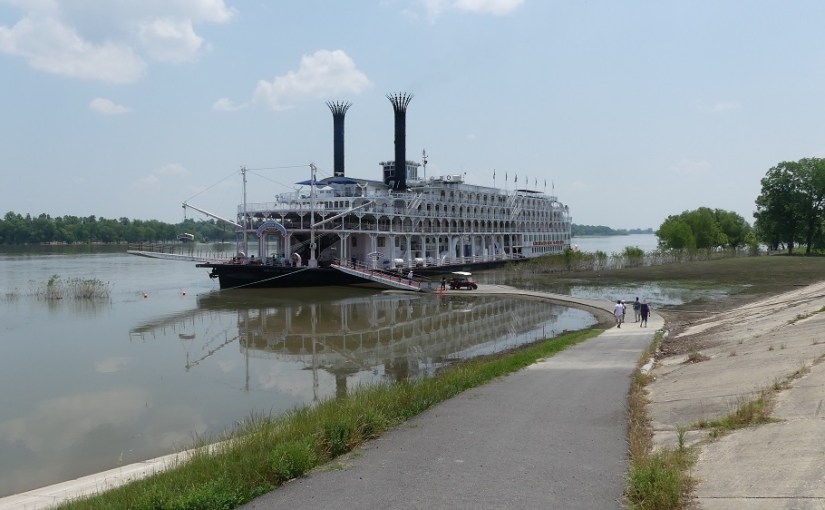
Following lunch it was time for us to move to the Hilton Hotel from which we would embark on the American Queen up the Mississippi River to Memphis. The hotel is immediately across the road from Hurrahs Casino and we could not miss out on that. So, after a cat nap we showered dressed and crossed to the casino. Being minor punters we invested USD $20 and soon showed a profit on the investment and relying on our experience and intuition we lost the profit all bar USD $1.50 walking away with our investment and enough to buy a padded bag envelope from the US postal service. A big day!

← Back

Thank you for your response. ✨

The Retirees in the South East USA – Cemeteries, Parks and Rooftops of New Orleans

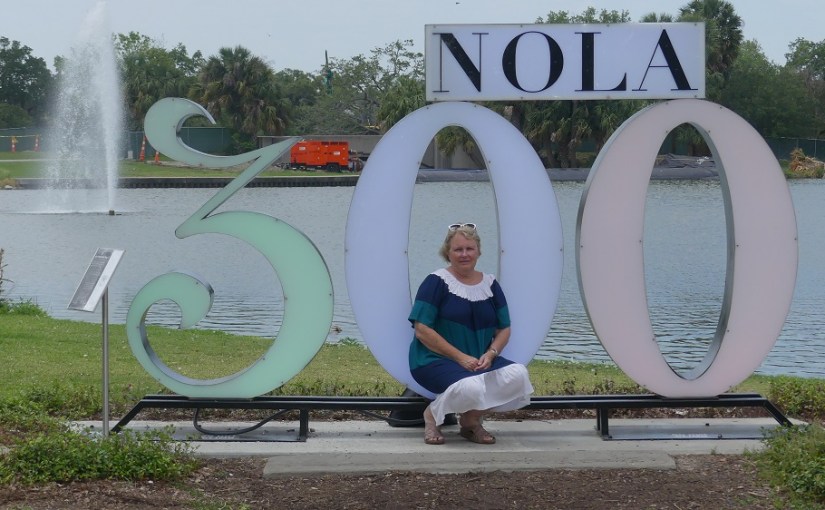
The following morning, we rose early to catch the city tour. We travelled by tram to the city, then caught the riverside tram back to where we were last night but this time to catch the bus. The tour started travelling through the French Quarter where we saw a sign saying “300 NOLA” . New Orleans Louisiana (NOLA) is 300 years old this year and the signs are erected to remind everyone. We then passed Jackson Sq. named after General Jackson who liberated New Orleans from the British, passed a monument to the workmen who died in the Blue Horizon tragedy, passed a typical American settlers home (a “shotgun” home due to it having a hall from front to back), a typical Creole home (pitched roof and wooden shutters) a restored plantation home and a multi – coloured home (9 colours) finishing with their own style craftsman home.

The cemeteries of New Orleans are full of crypts. New Orleans is surrounded by and has formerly been part of the swamps forming most parts of Florida. So the appearance of many crypts in the cemeteries raised the question why not bury the dead in the ground? Some one suggested to us that they bury their dead above ground because the water table is so high. However the bus driver/tour guide disagreed. He explained that this habit was about recycling rather than water tables and pointed out one crypt which contains over 250 Augustinian nuns and 1 priest – is that heaven or hell? During the yellow fever epidemic it was believed that the fever was spread by the dead so they developed some half way houses to hold the dead until it was considered safe to open the crypt. One of the effects of yellow fever is a comatose type state which lead to people being buried alive in some cases. How do they know? The frantic scratching on the underside of the coffin lid told the story.

From the cemetery we travelled to the City Park and its sculpture gardens. Along the way we passed New Orleans’s oldest oak tree (800+ years). The park is immense and contains the second oldest tree as well – surprised? The sculpture garden is very interesting with its tower of violins, a magically suspended window with its escape ladder (or is someone breaking in?), elongated spiders and hollow horses and the ever – present oak trees draped in Spanish moss. This moss is not a moss but feeds from moisture in the air. It has been used in the past as mattress stuffing, but it must be treated (washed or boiled) before doing so otherwise the small creatures living in the moss bite (hence sleep tight and don’t let the bed bugs bite).

There ended the tour and the bus raced back to the city. I have had better tours but it gave us a better understanding of how valuable our tram passes were. We decided to walk back to St Charles Ave tram and in doing so passed through Jackson Sq and the artists all trying to flog their wares. There is that blue dog again. We saw one in the sculpture gardens. This led us to walk the back streets spotting restored apartments with gardens on their balconies. A quick decision we decided we would return to city park in the afternoon.

Back on the trams again.

The trip on the tram took a lot longer than we anticipated. There are two trams that run in that direction – the Cemeteries tram and the City Park tram. The Cemeteries trams out numbered City park trams two to one. The trip dragged but we made it to City Park – end of the line. City Park, a 1,300-acre (5.3 km2) public park, is approximately 50% larger than Central Park in New York City, and holds the world’s largest collection of mature live oak trees, some older than 600 years in age. It also has rows of Crepe Myrtle trees planted as a result of Hurricane Katrina’s damage to the existing trees. It also has the Issac Delgardo Museum of Art now the New Orleans Museum of Art which our tour driver had said was free to enter. What he did not say that it was free for residents of New Orleans on Wednesdays only. So we skipped the museum and decided to visit the sculpture gardens again and  then the gardens which included the Temple of the Twin Sisters which turned out to be a hot house for tropical plants.

Quite surprising was the model railway tucked away in one corner. We rejoined David and Veronica and made our way to the tram stop.

We managed to catch the tram almost immediately and enjoyed a much faster ride home. After appropriately dressing for the evening to walk through Bourbon St, we boarded the tram once again. The tram terminates across the road from Bourbon St and even though it was late afternoon/early evening the sun shone brightly showing up the seediness of Bourbon St. Brash bands playing in filthy bars, strip clubs, hookers standing in doorways awaiting their next customer, filth in the street – not the scene expected. Where were the jazz bands and the juke joints we had heard about. So after walking a number of blocks we determined to move over onto Royal St. via St Louis St in the French Quarter past our restaurant for tomorrow night. Cleaner but still no juke joints or jazz bands but rather art galleries reflecting the neighbourhood the Supreme Court of Louisiana and antiques shops. We found another Café Beignet with a guitar player serenading it patrons so we pulled in for dinner. We all ordered omelettes of different kinds and no one was really happy with the meals but the music was enjoyable and we sat around for up to an hour enjoying the music.

We finally returned to our tram stop for the journey home. I am reminded of a funny incident whilst travelling back to our hotel. To return to our hotel we had to pass through a round – about with a garden and memorial in the centre. It seems a regular hangout for the homeless and the down and out residents. This evening in question, a fellow boarded the tram dressed in jeans blue underpants barely covered by the jeans and a T shirt with some voodoo cartoon on it. He looked dirty and unsteady on his feet. The tram slows to pass through the roundabout and our fellow traveller strikes up a very loud conversation with one of the fellows lounging under a street light in the park. The conversation goes along until the park resident says, “Are you all comin’ to pick up your bag?” Tram rider says “You all got my bag?” Park resident “yeah you all want your bag?” The tram rider became agitated, rang the bell, hitched his pants up, and pushed to the front of the tram. As the tram slowed the driver opened the door and the now excited tram rider does not wait for the doors to open fully (when the door opens a step extends to make the departure or entrance to the tram easier) and he steps out falling flat on his face on the ground. There was murmuring throughout the tram as that would have hurt, but whatever substance he had taken and whatever was in the bag seemed to fortify him against feeling pain as he pulled himself up hitched his britches once again and strode away. I was astounded as I thought for sure we would be waiting for an ambulance to collect the fallen rider.

On returning to the hotel the others went up to the roof top whilst I went to the room gathered together the wine glasses and snacks and joined them on the roof top. A grand view of the stadium and central business district.

← Back

Thank you for your response. ✨

The Retirees in the South East USA – New Orleans

Well we made it. Returned the car to the airport stayed overnight at a new airport hotel and caught that bloody early flight to arrive in New Orleans and travel to our hotel in St Charles St. A city of jazz legend and mixed cultures of French/Spanish/American cultures visible in its architecture and its people. Our hotel in St Charles St is part of the Wyndham Group and has a pleasant old world New Orleans feel to it. It is only a one bedroom apartment so this time it was our turn on the settee.

St Charles St is one of the longest streets in NOLA (better get used to it – New Orleans Louisiana) and has a tram line running up the centre all the way to Bourbon St and out to City Park and the city cemeteries. You can see it from our apartment window. After registering and dumping our gear in the room we explored nearby and took a walk to Walgreen’s Chemist to purchase a tram pass for the next 3 days. In doing so we discovered the Avenue Pub – a local hangout in a building dating back to late 1800s and in some respects was probably unchanged.The exterior reflected the French influence of the earliest settlers and the pressed metal ceiling on the interior reflected its age. Despite the surrounding the offering was of considerable variety. David and I sampled local craft beers – the pub owner had inherited it when her father died and she moved out to NOLA to sell it but stayed and has won a number of awards as the best venue for craft beers. Kerry and Ron played it safe with a Pimms or so they thought. The local variety of Pimms here is mixed with Ginger Beer, horrifying Kerry but I did not hear too much complaint from Ron.

Having quenched our thirst we continued the sight seeing looking for Walgreens. From the Avenue we could take in the full effect of our hotel, the local Baptist Church and its neighbouring properties, which continued the architecture of NOLA. There is also a steel construction of a surprising kind. It was once a restaurant on the top tier of the Eiffel Tower. Unfortunately, the restaurant was too heavy and was causing damage to the tower floor resulting in it be dismantled and abandoned in 1981 and purchased for the NOLA Worlds Fair in 1984. It was not a success there either and ended up here in St Charles Ave where it remains an unsuccessful restaurant.

We purchased our 3 day passes (which were in expensive and enabled us to visit most parts of the town) in order to travel to the docks of the Mississippi. We had booked to dine on the steamboat Natchez (yes, a steamboat powered by a diesel fuelled steam engine). Uncertain of the travelling times we arrive 1 hour too early and decided to have a walk on the waterfront. Audubon’s Aquarium of the Americas was the first thing to greet us. The walk would be about 1 mile long, and we passed some interesting monuments including 1 to the “Immigrants”. We were still too early to board so we took a tram down to the French Quarter which as its name suggests it was the market place for the French when Louisiana was a French overseas colony. Nowadays it is a haunt for tourists and the junk they like to peddle to tourists so we moved quickly through this area up to Café du Monde where they serve the famous New Orleans beignet – a deep fried donut like cake smothered in icing sugar. We did not have time on this occasion to stop but we were able to take in some of the street scenes that are typical of NOLA including the Catholic church facing Jackson Square.

We returned in time to join the queue thronging to board the Natchez. Once on board they sat us down straight away to feast on the smorgasbord (the dinner is divided into two sittings and we chose the first sitting so that we could enjoy the sights and our meal). After dining (pretty average offering except for the desserts – bread pudding and bananas forster) we settled back to enjoy the cruise.  With New Orleans being over 100 miles from the mouth of the Mississippi we travelled generally south sissippi Riverviewing the industry along the river and learning about the need for levies along the banks. One of the more interesting sights was the two “RORO” (Roll on roll off) ships moored in the river. These are emergency US Navy transports on call 24 hours a day able to load and unload from the rear of the vessel in all conditions.

We passed the competition the Creole Queen (an imitation paddle steamer – diesel and screw propulsion), the national guard HQ for New Orleans and various other deep-water sea going freighters (the river is over 200 feet deep at this reach). We were also able to visit the engine room and view the boilers “Thelma and Louise” and view the pistons driving the paddle wheel. There was a beautiful sunset this evening and some dazzling lights from the Creole Queen, downtown New Orleans and the bridge over the Mississippi to cap off the day.

← Back

Thank you for your response. ✨

The Retirees in the South East USA – Key Biscayne et al

Although we only had 3 days in Fort Lauderdale we still managed to drive down to Key Biscayne (Key Largo and the drive to Key West was just that little bit too far) on our way to Miami. We had hoped to see the launch of the SpacEx rocket from Cape Canaveral, but this proved too hopeful. We stopped at somewhere for coffee and cake and found a beach (with meter maid charging for entry to the beach), a pier with café (there was a charge to walk on the pier and the café was unable to serve us any of the items we ordered from their menu) but we did get some great photos of what should have been a delightful beach side stopover.

We reached Key Biscayne drove over the bridge stopped for a restroom break and lunch finishing up the supplies we had carried from Orlando sitting in the car in the carpark by the beach. However, as we continued to drive into Biscayne we found a fabulous park by the ocean from where we hoped to see the launch. Here was a carpark for thousands of cars with access to partly open grassy areas leading to the beach – only $5 to enter. The beach was littered with thick layers of seaweed washed ashore from the beds just 25 metres off the beach. Kerry braved the crossing to stand in the water to view the launch that we were never going to see from so far away. But it really is a beautiful park and in summer I guess it will be standing room only. We headed for home to pack to move down to Miami as we had to be at the airport by 4.00am. Then onto New Orleans Tennessee.

← Back

Thank you for your response. ✨

The Retirees in the South East USA – Ah Tah Thi Ki Museum of the Seminole tribes of Florida

After the Gator show we drove deeper into the everglades to the Seminole Reservation at Big Cypress to visit Ah Tah Thi Ki Museum of the Seminole tribes of Florida (the Seminole are not only found in Florida and were not the only native tribe inhabiting these everglades, but they are the “undefeated “tribe).

The word “Seminole” is derived from the Creek word simanó-li, which may itself be derived from the Spanish word cimarrón, meaning “runaway” or “wild one”. Seminole culture is largely derived from that of the Creek; the most important ceremony is the Green Corn Dance; other notable traditions include use of the black drink and ritual tobacco. As the Seminole adapted to Florida environs, they developed local traditions, such as the construction of open-air, thatched-roof houses known as chickees. After the United States achieved independence, its settlers increased pressure on Seminole lands, leading to the Seminole Wars (1818–1858). Perhaps fewer than 200 Seminoles remained in Florida after the Third Seminole War (1855–1858), but they fostered a resurgence in traditional customs and a culture of staunch independence. In the late 19th century, the Florida Seminole re-established limited relations with the U.S. government and in 1930 received 5,000 acres (20 km2) of reservation lands. Few Seminole moved to reservations until the 1940s; they re-organised their government and received federal recognition in 1957 as the Seminole Tribe of Florida.

The museum starts with a video history of the tribes and how they avoided being forced into government reservations in the west like the Seminoles of Oklahoma. They have a number of static displays of the Seminoles life at the time of Europeans moving into the everglades. There are some other garments displayed created by the Choctaws and Cherokee tribes. There is also a bush walk where you can see the remains of a Seminole camp and information on the native plants and animals.

This was a big day of driving made even bigger by Kerry’s desire to travel back to Fort Lauderdale the long way around by travel beside a lake. Unfortunately, the lake was surrounded by levee banks so all we saw was grassy slopes of levees. I did not photograph these features.

← Back

Thank you for your response. ✨

The Retirees in the South East USA – the Everglades and Big Cypress Reservation

Our apartment was one of many in a complex of at least 3 towers surrounding pools and other entertainments. However we were not half way round the world to swim in a pool. From our apartment we planned our next assault – a visit to the Everglades with a jet boat tour and alligator show and a visit to the Seminole Reservation and Museum.

Kerry and I had been to the everglades previously and ridden in an open jet boat but I am certain the alleged alligator was of the stuffed variety.

This tour we were about to embark upon was a far superior experience. The drive to the Gator Park itself was an experience viewing the different countryside. the HQ at the Gator Park was different. Log buildings with wide verandahs both set 3 feet off the ground. The first thing I noticed was the long queue of jet boats down on the water. The jet boats are partly enclosed and  carry a lot more people. We saw many live and kicking biting Alligators, along with fish, vultures, eagles, water lilies and water plants, and grasses which keep the water filtered of pollutants. The everglades is actually a very slow flowing river which the Army Corps of engineers were instructed to drain so they dug deeper channels through the everglades but fortunately the decision was reversed and these channels have made the everglades more accessible. Despite the prolific numbers of alligators swimming through the everglades some brave souls thought nothing of doing a spot of fishing.

One of the black birds inhabiting the everglades is a “grackel”. I will talk about this later. After the tour of the everglades finished we decided to visit the Gator show which was most enjoyable with a “Steve Irwin” type presenting, pushing, pulling, kissing and demonstrating the Seminole method to tie an alligator. After watching the show we spoke with Paul who said he had visited the Northern Territory doing crocodile capturing so he was familiar with both critters and that he found the Australian crocodile more aggressive. So, we then went and nursed a baby alligator for a photo.

Time for some lunch. The menu is not so flash at the Gator Park but then you are in the everglades and there are dangers. David ordered gator bites (pieces of alligator deep fried) and fries and immediately on collecting the food he was swooped from all sides by hungry grackels. Sensibly I did not order any fries.

← Back

Thank you for your response. ✨

The Retirees in south east USA – Its a “Grand Celebration”

Our trip to Daytona was but only a few days long before we drove down to Fort Lauderdale and boarded the “SS Grand Celebration” bound for the Bahamas. After finding the wharf we took a photo of the car and it rego plate(so we could find it when we get back) and left it in the hands of some rather rough looking locals passing off as parking attendants.

Leaving the port of Fort Lauderdale, the presence of the coast guard could be seen in the harbour side houses, amongst the mangroves, and in the water ways. Grand Celebration is a full size cruise ship making the voyage on an almost daily basis from Fort Lauderdale to Freeport in the Bahamas.

We sailed over night to be greeted by the Pilot boat and a curious entry into the harbour – the vessel parked (docked) like a car reversing into it’s spot. We had risen early to view the docking. As with all cruise ships food was available even at 5.00 am so we grabbed two croissants and two cups of coffee and headed for the observation deck.  Before we could reach the rail one of the local gulls had swooped and stolen a croissant. I got a mug shot for the wanted poster.

Arriving at Freeport we were rather disappointed. The available tours took us to resorts on the Island or you could catch a local taxi to the commercial centre. The resorts were of no interest and the local taxis proved difficult. We could not get a firm price from any of the taxi drivers to take us to Freeport. As a result we stepped ashore at the dock and visited the few vendors by the dock and then returned to the boat – the Bahamas are still recovering from Hurricane Larry. One of the likely original things at the port was the hut selling drinks – they chopped the top off a coconut put a straw in and you were done.

So we spent most of our time on the ship which was enjoyable of course until it came time to return and disembark. The Bahamas are independent and part of the British Commonwealth of Nations. So there is a full on custom clearance to be undertaken. I don’t know how long it took but we left the ship straight after breakfast and by the time we were back in the car it was almost lunch time and we had to find our car then our accommodation. This proved to be quite easy with the vehicle being brought to us (they were in a hurry to empty the parking lot for the next cruise) and the gps finding our apartment – a lovely apartment with pools games and lots of things.

← Back

Thank you for your response. ✨


The Retirees in south east USA – Daytona Beach to Ponce De Leon Inlet

Having travelled north to St Augustine, the following day we travelled south to Ponce De Leon Inlet. Driving the length of the island was unremarkable. Resorts and beach house accommodation lined the route. It was not until arriving at Ponce De Leon Inlet that the scenery changed to some beach type scrub with roads winding through it. Despite being the highest lighthouse in Florida the lighthouse was not visible due to the other structures obscuring it. As it hove into view, we were impressed with the lighthouse and the facilities preserved around it.

The Ponce de Leon Inlet Light is a lighthouse and museum located at Ponce de León Inlet in Central Florida. At 175 feet (53 m) in height, it is the tallest lighthouse in the state and one of the tallest in the United States (the Cape Hatteras Light in North Carolina is taller at 207 feet (63 m)). It is located between St. Augustine Light and Cape Canaveral Light. Restored by the Ponce de Leon Inlet Lighthouse Preservation Association, the lighthouse became a National Historic Landmark in 1998.

Completed in 1887 and located on the north side of the inlet, then named Mosquito Inlet, the tower was completed and the lamp, which could be seen 17 nautical miles; 32 kilometres (20 mi) away, lit in 1887.

The original lamp burned kerosene; in 1909 it was replaced with an incandescent oil vapour lamp. In 1924 a generator was installed to provide electricity in the keepers’ dwellings and to pump water, replacing an old windmill pump. The lighthouse beacon was electrified in 1933 with a 500-watt lamp. The first order Fresnel lens was replaced with a third order rotating Fresnel lens at the same time.

In 1927 the name of Mosquito Inlet was changed to Ponce de Leon Inlet. The lighthouse was transferred from the abolished Lighthouse Service to the United States Coast Guard in 1939, which would oversee it for the next three decades. In 1970, the Coast Guard abandoned the old light station and established a new beacon at New Smyrna Beach. The abandoned property was then deeded to the Town of Ponce Inlet. At the urging of concerned citizens, the Town of Ponce Inlet accepted the Light Station property from the Coast Guard in 1972, and the Lighthouse Preservation Association was formed to manage the museum.

My Achilles was still painful for walking so we did not venture to the top but we did visit all of the outbuildings and the remnants of “boat people” boats and rafts that made the journey from Cuba. The buildings included the Light Keepers house , the assistant Light Keepers residence , a modern administration building and a museum of the various types of lamp used in the lighthouse.

Just as we are looking for a comfortable placed to dine we found that the local Mustang car collectors were having their local meet across the road sponsored by the Lions Club of Ponce Inlet. Just beyond was Hidden Treasures with its miniature light house and its water side bar and grill. Just the thing for lunch. Great lunch and the bar was handy too. The restaurant has picturesque views of the waterways and its bird life – in this case Pelicans and a lone hawk.

← Back

Thank you for your response. ✨

The Retirees in the South East USA – Lakeridge Vineyards

I almost forgot about our visit to Lakeridge Vineyards. Whilst editing my photos I came across a few snaps of reminder. I did not enjoy the wine which probably explains my forgetfulness. However we must take the good with the not-so-good.

Kerry had done some research and found this winery. It’s website stated “Lakeridge Winery & Vineyards opened its doors in February 1989 in Clermont, Florida and sits on a 127-acre estate in gently rolling countryside some 25 miles west of downtown Orlando. This area was once the center of the State’s grape industry. After years of phenomenal growth, Lakeridge ranks as Florida’s largest premium winery, and remains a pioneer in the development of premium and sparkling wines from the native Muscadine grape varieties Noble, Carlos and Welder, as well as Vinifera varieties to include Chardonnay, Pinot Grigio, Petite Sirah and Cabernet Sauvignon. This excited us to visit the “birth place of the American wine industry” as claimed on it’s website.

We travelled to the winery in our Ford Taurus with Kerry at the wheel. Spotting what I as navigator thought was the turn to the vineyard, Kerry took us down to the “cell door”. We had come to the local goal (jail for any American’s reading this blog). Backing out and going 500m further down the highway we came to our destination.

The cellar is in a Spanish style with vineyards spreading over the hills behind it. It looked quite impressive. So we entered to sample the wares.

We joined the winery tour which was bit different. We first of all watched a 10 minute video on the creation of the winery then took a tour through the vat room out to a rear deck and then back through the wine storage room (not in casks by the way) and then through the gift shop to the tasting bar. Now I had never had Muscadine varietal wine previously and quite frankly I found it unpalatable. Although disappointed with the wine, I was taken by a San Sebastian Lighthouse – a fortified wine in a bottle resembling a lighthouse. I am yet to sample the wine but the lighthouse looks pretty good on the bar at home.

We ended the visit with a picnic. Our neighbours in the vineyard picnic area were celebrating something with cake and sparkling wine (dread the thought of sparkling Muscadine and sugary cake ekk). They had far too much cake so we were offered a slice each but passed on the wine.

I have tried a number of Californian wines none of which used Muscadine grape and found the wine in some respects comparable to our own Aussie wines but the Florida wines must be an acquired taste.

← Back

Thank you for your response. ✨

The Retirees in the South East USA – St Augustine

Daytona Beach is on an island. Most of the coast of Florida is sheltered by fringing islands providing protected waterways for leisure boating. Although our accommodation was directly on the beach there seemed little local activity around the beach apart from the abundant pelicans circling around. On our 2nd day in Daytona we visited St Augustine claimed to be the earliest settlement by Europeans in the USA (1520 AD). The Spanish occupied the locale and built a fort to combat the privateers and buccaneers of the other European countries trying to steal the wealth the Spanish stole from the locals. The old town changed hands to the French and back to the Spanish and then the British burnt it to the ground then it was rebuilt then the Americans purchased it from Spain. The old town does contain historical remnants as the photos below show.

The old town has been retained but a new town has grown up around it prospering from tourism. We took the local version of the hop on hop off bus and saw a bit of both sides. The tour included passing by the St Augustine winery and the distillery, the harbour and Flager College formerly a fantastic hotel for the rich and famous created by Mr Flager.

The big draw card is the old fort which we visited of course. It reminded me of Fort St George in Invernes Scotland – star shaped. They have a lot of educational material and historical artefacts, re-enactment of the firing of the canon and shows demonstrating the operation of muskets and flintlock rifles. I was amazed at the time it took to prepare and fire the cannon – it must have been close to five minutes before they were ready to fire. The same with the rifles. the musket is fired by igniting gun powder using a burning cord and the flintlock struck flint against a hammer to create a spark – sometimes!

The day ended in Scarlet O’Hara’s pub where surrounded by posters for the movie “Gone with the Wind” we had a few drinks and some local foods. More atmosphere than culinary excellence. It had been an excellent day at St Augustine and the day ended with a walk on the beach with some of the feathered locals and having drinks with some of the other persons (some Aussies also) around the pool.

← Back

Thank you for your response. ✨