The Retirees go Abroad – Surprise at Cheshire Cottage


As autumn unfolds and winter prepares to settle upon us, we await the arrival of our visitors from Australia. The days get shorter but because of the rain and cloudy skies it remains grey and some mornings the mist does not leave us. We are taking it easy as when they arrive we have a full itinerary –  London for a day then Scotland as far as Inverness then down Loch Ness and visit the distilleries of Islay before coming home (Long Eaton) for a few days before having Xmas in France and New Year in Paris.

Still, taking it easy doesn’t mean sitting still. So on a not so overcast day, we took out the National Trust guide book and decided we would visit Biddulph Grange National Trust Garden in Staffordshire and Little Moreton Hall Tudor house in Cheshire.

We arrived at the Garden shortly before the Garden opened, just enough time for a cup of coffee. So out came the flask and the home cooked oat biscuits and we sat in the mist enjoying the morning. We watched various cars arrive indicating the Garden had opened so we strolled over to the gate produced our passes and when asked where we came from the receptionist was surprised to hear we were from Nottingham. It’s a trick I love to play as the Notts/midland accent is just so different to a Queenslander. This always starts a conversation. As these sites are manned by volunteers it is often interesting to hear what secrets they can tell you about each place.

These gardens were billed as amazing and imaginative. This description undersells the Garden. They are truly innovative for the time of their creation. James Bateman designed the garden 150 years ago. The garden is a framework of hedges rocks, banks tunnels and discrete areas with their own distinct style and planting. There is feeling of exploration and surprise as you walk through various gardens some of which are designed to portray particular places in particular China, the Pyramids and the Glen.

The garden starts with the house. Unlike other great gardens, the house is just an entrance, tea room and gift shop. The remainder of the grand house has been converted into 9 private apartments. After walking from the house we were met by one of the volunteers and he gave us a few tips to make our exploration more enjoyable and showed us how to read the map of the garden.

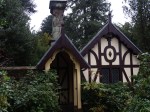
We walked down a series of stairs to the Araucaria Parterre, a type of patio overlooking a lake full of fish and then circle around the Pinetum where we encountered our first tunnel. We walked through into an area of pine trees of every kind. The path was leading us to a cottage. As we approached the cottage a young couple with their children caught up to us and we walked together chatting. On reaching the cottage we see it is named Cheshire Cottage. We open the door and it is dark. Once your eyes adjust, you realise that there are no rooms but four further entrances. The fourth entrance houses a squatted figure whilst the other entrances remain a mystery. We choose to follow the young family and enter a tunnel with a point of light at the end.

We come out into the pale sunlight onto Wellingtonia Avenue; an avenue of pine trees running up a low hill. Walking up the hill we notice a bush walk off to the left so we take that path and wind through what appears natural bush land then we encounter that young family again as this walk returns onto Wellingtonia Avenue.

From the top of the avenue we get a grand view of the house, its valley and hills behind. We return along the avenue taking in the jigsaw of colours – greens, yellows reds and browns. At the end of the avenue we have a choice: the Cherry Orchard or re-enter Cheshire Cottage. There is not much happening in the orchard as the trees have dropped their leaves and await spring so we select the cottage and a different tunnel. We pop out in Egypt. Back into the tunnel and we pop out in the Watch Tower over looking Dahlia Walk (no dahlias til spring) and viewing the apartments.

Back to the tunnel and we arrive at the Stumpery, an area where old tree stumps have been used to create an eerie landscape of moss covered stump walls leading to China and the Temple. We travel through China and surprise another tunnel leading us to the Glen. It is autumn so the Rhododendrons are not in bloom. The glen leads us back to our first tunnel and the lake. The tour has finished but a most relaxing and surprising hour and a half. We must do this in spring. The garden will have change entirely with new growth, birds, animals, and insects.


So we leave the garden reinvigorated and feeling at peace.

← Back

Thank you for your response. ✨

The Retirees go Abroad – In the Shadow of the Templars


The story of the Knights Templars has always fascinated me. Briefly told these are the highlights:

Around 1119, a French nobleman from the Champagne region founded the Poor Fellow-Soldiers of Christ and of the Temple of Solomon, which was eventually shortened to “Knights Templars”. Jacques de Molay, the last of the Order’s Grand Masters, took office around 1292.

King Philip IV (the Fair) of France mistrusted the Templars, as the organization had declared its desire to form its own state in the Languedoc of south eastern France, similar to how the Teutonic Knights had founded Prussia. Philip had inherited an impoverished kingdom from his father and was already deeply in debt to the Templars.

At dawn on Friday, October 13, 1307, scores of French Templars were simultaneously arrested by agents of King Philip, later to be tortured in locations such as the tower at Chinon (the profile on my blog has a picture of the Tower at Chinon in which Jacques de Molay was tortured), into admitting heresy and other sacrilegious offenses in the Order. Then they were put to death. The Templars reached out to the Pope for assistance, and Pope Clement did write letters to King Philip questioning the arrests, but took no further action. Most monarchs simply didn’t believe the charges, though proceedings were started in England, many Knights were arrested and tried, but not found guilty.

In 1312, under extreme pressure from King Philip IV, Pope Clement V issued an edict officially dissolving the Order. In September 2001, a copy of the Chinon Parchment dated 17–20 August 1308 in the Vatican Secret Archives, a document that indicated that Pope Clement V absolved the leaders of the Order in 1308 was found.

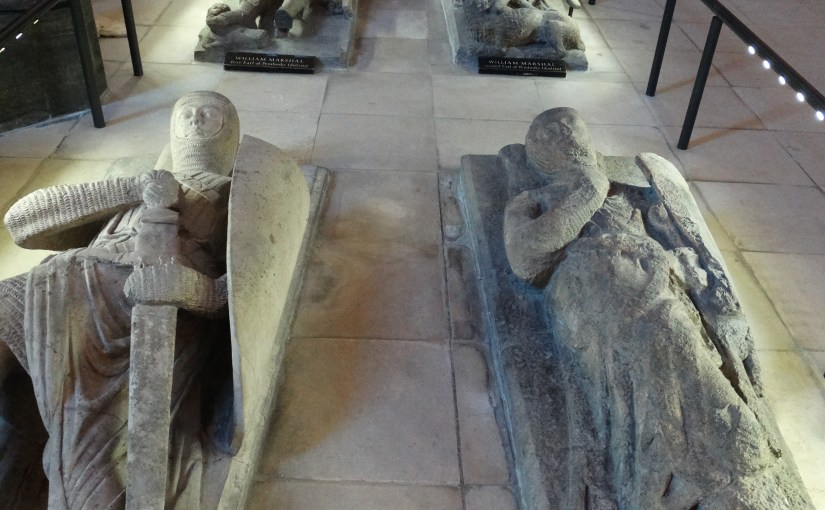
So to visit the Temple Church in London was extremely interesting. The Church was built by the Templars and consecrated in 1185 until the order was dissolved in 1312 and their property confiscated. In 1608 James I granted the whole of the area known as the Temple to two societies of lawyers, Inner Temple and Middle Temple to preserve the Church and be held ever more for the profession of the Law.


After visiting the church, we tried to visit some of the things we saw on the Tour of the Hidden Pubs. We found the clock and tower in Fleet St, and the statue of Elizabeth I moved to Fleet St but the rest was too hard to find and we had to get over to West End for the theatre.


At West End we ended up in Covent Garden, Jamie Oliver’s Restaurant, and preparations for Christmas (but its only November!).


After the theatre, we decided to walk to the Tube Station through Covent Garden and encountered the London Film Museum and its exhibition of original James bond vehicles. We immediately decided this was the mission for tomorrow.

← Back

Thank you for your response. ✨

The Retirees go Abroad – On Her Majesty’s Service


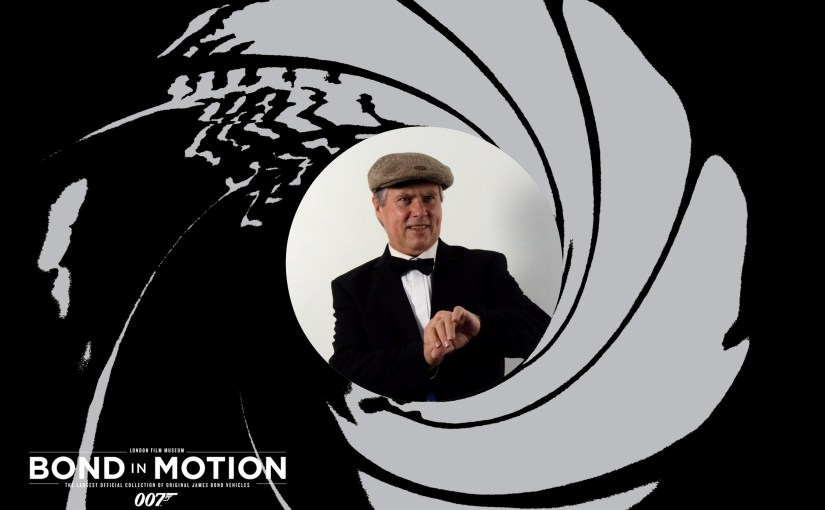
We went to the theatre and saw “The Play That Went Wrong”. It went very wrong and I would not recommend it. Our plans for the following day were to do another walk but we passed by an exhibit in the London Film Museum. We were offered a mission and should we choose to accept it we would visit “Bond in Motion (the largest official collection of original James Bond vehicles)”. Of course we accepted.

The display included:

Gold Finger his majestic gold Rolls Royce Phantom III.


The archetypical Aston Martin DB5,


The submersible Lotus Esprit S1,


The Citroen 2CV,


And a variety of other craft.


There was also a display of examples of the creative process – story boards and concept art.


We spent over and hour and a half touring the display and found it necessary to refresh in the coffee shop. After ordering two coffees and snacks, I spied the reason we had been called in on this difficult job – I spotted a mouse in the kitchen. I reported the sighting to the Barista (unfortunately named “Q”) and I was informed that “007 was on the job”. As we were leaving we both spotted the villain scampering under James’ BMW. We left wondering if 007 ever got his man.

The Retirees go Abroad – the Hidden Pubs of Ole London Town


We met Andy at Temple Tube Station along with 6 other hardy souls as it was still drizzling with rain and the moon was hidden by rain cloud. Andy is a young actor waiting for the big break and doing these guided tours to make some cash whilst studying.

We headed off east toward Middle Temple and our first stop was outside 2 Temple Street the former house of William Astor the American millionaire. The building was built by John Loughborough Pearson for William Waldorf Astor, in 1895. It is now some sort of reception house and is maintained by, managed and preserved by Bulldog Trust, a charitable organization, and is hired out for functions. It opened to the public as a gallery in October 2011. An image of the bulldog appears outside the Temple St. frontage.

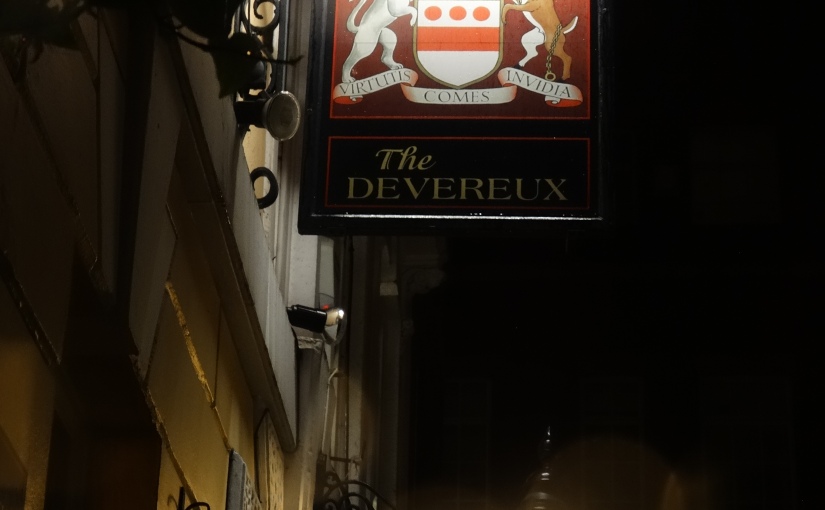
Oh there are famous sights, but to get to them we have to walk through a maze of lanes of the Inner and Middle Temple. In fact we retraced our steps from that afternoon visiting Temple Church, Middle Temple the Great Hall and the Square before landing in our first pub; the Deveraux. The Devereux is located in the back alleys near Fleet Street. We sampled a pint; my choice being Hobgoblen to match the haunted atmosphere said to exist at the hotel. The weather was becoming more and more miserable so we were disappointed when Andy said we must press on.

Andy took us to Gough Square and the former house of Dr. Johnson, claimed to be the author of the first English Dictionary and other literary works. Johnson had a cat called “Hodge” and the only real trace of Johnson today is the statue of his cat outside his house at 17 Gough Square London. By this time we were both huddling under an umbrella and the last thing I was concerned with was taking anymore photos promising that we would come back tomorrow in the sunshine.

We set our course for the most famous London inn of all – Ye Olde Cheshire Cheese. Ye Olde Cheshire Cheese is a Grade II listed public house at 145 Fleet Street, on Wine Office Court, City of London. Ye Olde Cheshire Cheese is one of a number of pubs in London to have been rebuilt shortly after the Great Fire of 1666. According to Andy, there has been a pub at this location since 1538.

The vaulted cellars in the basement are thought to belong to a 13th-century Carmelite monastery which once occupied the site. The entrance to this pub is situated in a narrow alleyway and is very unassuming, yet once inside you soon realise that the pub occupies a lot of floor space and has numerous bars and gloomy rooms. In fact you find yourself getting lost in the maze.

For around 40 years, Ye Olde Cheshire Cheese was associated with an African Grey parrot named Polly. The fame of the parrot was its ability to swear and imitate corks popping and it was world famous such that on its death in 1926 around 200 newspapers across the world wrote an obituary, and a copy of these are posted on the walls along with the stuffed parrot. They have new parrot but he is a bit shy and doesn’t say a word.

From the Cheese we journeyed back along Fleet Street until we dived into a small alley through another alley and before we knew it we had popped out down near Blackfriars and a pub called St Brides Tavern beside the church of the same name. Just across from this landmark (down another alley) is the London Distillery a modern remake of a London gin distillery and around the corner is our last pub Punch Tavern.

Well that was it. Andy shot through and we had to make our way to Blackfriars Tube Station and home. Andy had promised to show us cheek-by-jowl, higgledy-piggledy, brooding back-alleys, secluded courtyards and tortuous zigzag passages; quintessential London. Well we saw plenty back alleys and had no chance of finding our way around again. Apart from the dismal weather we enjoyed our search for the hidden pubs of London.

The Retirees go Abroad – Shakespeare and Dickens in London


We started the day with a visit to St Paul’s Cathedral. The Cathedral is massive and has the traditional dome. We were told later by our guide Corrina on our walking tour that Wren the Architect fought with the Bishop about the rebuild of the church after the Great Fire of London (1666)

Wren wanted a dome like catholic cathedrals but of course this was an anathema to the Bishop of the time. The Bishop wanted an English spire not a dome but Wren outlasted the Bishop hence we have a large dome and two spires on the cathedral today.

It is costly to visit the cathedral but we found the crypt which was free to enter. Here is the coffee shop and gift shop amongst the columns and vaulted ceilings together with statues and monuments all accessible at no cost. After coffee we returned to the St Paul’s Tube Station entrance to meet Corinna. Corinna is an actress also but in the twilight of her career and she does these tours for interest and to keep her active. The weather was a little kinder today. The sun was shining most of the time but the wind had picked up and it was chilly.

Corinna started the tour by taking us across the street to the remains of a church destroyed in WW2. This church had been rebuilt by Wren after the Great Fire but devastated in WW2 and turned into a memorial garden. The bell tower has recently been converted into a residence (sold to the current occupier for 4 million pounds). She sat us down and said “London was to Shakespeare and Dickens what Paris was to Balzac. It held them in its thrall, was both their canvas and their inspiration, their workshop and their raw material. They in turn made it their own, imaginatively colonising it. And, like “special correspondents for posterity”, bequeathed it to us. Today, despite the ravages of time, riot, bombing, and especially fire, traces of their London – shipwrecks from the past – still abound in the City. Everything from superb half-timbered Elizabethan dwellings to the magnificent early 16th-century gatehouse where Shakespeare went with his plays to the offices of the Elizabethan Master of the Revels. And from London’s grandest Tudor manor house to crooked little alleys which fed the fires of Dickens’s “hallucinating genius”.” (an extract from the advertising on the web site)

We admired the gardens and looked at various pictures which Corinna handed round. Then off she went; she may have been in her senior years but she was not slowed by them. We chased to follow her to the Candle Makers Guild building, then to the Mayoral carriage on show near another guild hall, then down some alleys to a small garden where a statue of Shakespeare stood. In fact it is a memorial to John Hemminge and Henry Cordell who are credited with compiling and publishing the First Folio in 1623 being the first collection of Shakespeare’ s works. It is located near the Pewterers’ Hall another guild hall this time for makers of pewter.

After a short stop she charged off again passed a remnant of the wall of London but no time to stop just a quick photo. Onto a memorial to people who had died rescuing others. After that we entered Little Britain St and walked passed St Barts Hospital and through the gates to St Bartholomew Great Church where we paused to hear another anecdote on Dickens as around this area Dickens set a number of his stories. Quite frankly I cannot recall exactly what the anecdote had to do with but everything we were seeing was new and fascinating.

As we left the church yard Corinna pointed out the seamstresses and embroiderer’s guild and then the Hand and Shears Hotel – this had been the sewing and cloth district in the times of Dickens.

We ended up near Farringdon Tube Station. But before she let us go Corinna had to do a little song and dance to finish her tour so here on the footpath in public view Corinna starts singing and dancing – no doubt the residents are used to this performance but I was taken by surprise and delighted. After giving directions to the tube station and the local hotels she vanished.

We elected to go to the oldest looking establishment we could find – the Jerusalem Tavern.

Jerusalem Tavern
Jerusalem Tavern

It was tiny and inside it was busy with workers from nearby, the floors were worn and the layout was higgledy piggledy but we were able to order lunch and a drink and rest our feet as we sat at the table in the bay window of the pub. After answering natures call I bumped into one of the other tourists on our tour and suggested he join us – tables were in short supply. Andrew did join us and he turned out to be an Aussie from Sydney an actor by profession and visiting his girlfriend in London, We chatted away out of the wind in the warm atmosphere of the pub and after finishing lunch bid Andrew adieu and headed for the Tube station and home.

← Back

Thank you for your response. ✨

The Retirees go Abroad – Loughborough Leicestershire


Somehow or other I found on the internet that Loughborough hosted a French Market on Fridays so on a whim we jumped in Thistle and went to Loughborough.

Loughborough is to the south of Long Eaton within the Charnwood borough of Leicestershire, England. It is the seat of Charnwood Borough Council and is home to Loughborough University. In fact when visiting the town it is hard to know which came first the University or the town. It is second in size to the city of Leicester. Before going I checked Wikipedia and found that the town has the world’s largest bell foundry — John Taylor Bellfounders, which made the bells for the Carillon war memorial, a landmark within the Queens Park in the town, Great Paul for St. Paul’s Cathedral, and York Minster. Loughborough has for more than a century been the home of John Taylor & Co bell founders and the firm has a museum—the Bellfoundry Museum—located on two floors telling the story of bell making over the centuries. The River Soar passes by to the east of the town.

The sun was shining promising a glorious English day. We found a parking station and made our way to the markets. Loughborough has developed the main St Cattle Street into a mall and here we got more than we bargained for. There is an antiques market every Friday and the French market is once per month and they both set up in the mall. Well like most antiques markets the word “antiques” is used very loosely. But there were many stalls with curiosities. We browsed through the stalls and when we got to the end there were the French market stalls operated by French people living in the area. Well Kerry found the nut shop then the Turkish delight shop and so we had nuts and Turkish delight for the next week. There were a number of stalls cooking in what looked like paella dishes and the aroma was wonderful. I found a stall cooking a cheesy potato dish and what appeared to be a prawn stir fry. It was 10.30am too earlier for lunch so we agreed we would return for lunch. I cannot say too much more because we did some Xmas shopping and it is a secret.

The town has gone to a lot of effort to turn its alley ways into shopping precincts so we had fun finding our way through it all. Indirectly we were looking for a particular shop providing all the bits and pieces for making jewellery. I cannot say anything more about that either except to say we ultimately fell into the shop. Our exploration also uncovered a new ultramodern shopping precinct. You have to wonder how all these shops survive. I was salivating waiting for lunch so all I could think about was tucking into the garlic prawns and the cheesy potato. Time seemed to be crawling but of course lunchtime arrived and I scurried back to the stall in the French sector of the markets to purchase lunch. With one bowl of prawns and one of potato we sat on the benches in the mall and tucked into the hot delights. The sunny morning was becoming grey, windy, cold, and wet. And the hot delights left me a little disappointed. The prawns were in fact a fish composite moulded to look like prawns. Ah well it wasn’t too bad and the potato was lovely and creamy with bacon pieces through it.

We then strolled a little more passing the Fireworks store. Guy Fawkes Night was fast approaching and the Brits celebrate the day with bon fire, guys and lots of fireworks (like we used to before the authorities decided we are too stupid to handle fireworks and banned the retail sale of them).

DSC01217

The weather had turned distinctly unwelcoming so we found a coffee shop where we hoped to let it pass over us. After about an hour of supping coffee and reading the newspaper things were not getting better so we cut the day short and headed home.

← Back

Thank you for your response. ✨

The Retirees go Abroad – Bakewell Derbyshire


We have been fortunate over the years to have good neighbours and the same has happened here in Long Eaton. John and Pam are a retired couple who have lived their whole lives in Nottinghamshire and Derbyshire and know the area well. So when they suggested we go to Bakewell Markets we jumped at the chance.

Bakewell is a small market town and civil parish in the Derbyshire Dales district of Derbyshire, England, well known for the local confection Bakewell Pudding. It is located on the River Wye, about thirteen miles (21 km) southwest of Sheffield, 31 miles (50 km) southeast of Manchester, and 21 miles (34 km) north of Derby; nearby towns include Matlock to the south east, Chesterfield to the east and Buxton to the west northwest. The town is close to Chatsworth House and Haddon Hall.

We drove in Thistle guided by Tommy winding in and out of country lanes. John commented he had never travelled to Bakewell in the direction guided by Tommy so he guided us home. You have to wonder what goes on in a GPS sometimes because John’s directions were far more straight forward.

Anyway we had a pleasant drive and visited a “chocolate box” village. When parking John and Pam were surprised at how close we were to the village (we had made an early start). When it came time to go home the car park was full and where we had parked 7 or 8 rows from the Cattle Hall cars were now parked 30 or more rows from the Cattle Hall.

After walking past the cattle sales we crossed a small stone bridge and I got very excited to see a good size trout in the crystal clear water. We proceeded further to cross a second larger stone bridge beside a weir. As we crossed Kerry noticed that there were hundreds of padlocks of various kinds and sizes attached to the rails on the bridge. These are known as “love locks” attached over water to represent eternal love between lovers. However I was more interested in a grey crane wading in the river and tens of these trout lazing in the current all around two kilos in size. John identified them as brown trout and very delicious.

We proceeded on into the market stalls which crawled through the village. Everything from farm products to craft and some “antiques”. We stopped for a cup of coffee and purchased Bakewell Puddings to sample. Very sweet and greasy.

After about 1 hour we had seen the markets and the village had a cup of coffee and it was time to go home. So we wound through the markets where a very Muslim looking vendor charmed Kerry to purchase some new bath towels. John was greatly amused saying that this chap was a fixture at the markets and was always putting on a show to make a sale.

Anyway I hope you enjoy the pictures.

The Retirees go Abroad – Chancery Lane and the Silver Vaults


I hope by now you have read my Remembrance Day post. You will have seen all the fabulous photos of the Poppies. Kerry took a video of the scene and posted it on Facebook. I have been unable to down load it for your enjoyment here but I have attached some other photos which I hope will interest you.

Apart from visiting the Poppies we undertook some guided walking tours of London. We can recommend these to anyone visiting London and wanting to understand what surrounds you. They are reasonably priced (9 pounds per person), you don’t have to book (you turn up and meet your guide at the designated spot) and they take about 2 hours but be ready to step it out as they push along at a quick pace. Check the timetable as the walks change from day to day and different times on different days.

We chose to do the “the Hidden Pubs of London” with Andrew, and “Shakespeare’s and Dickens’s London” with Corrina. I can recommend a visit to their website: http://www.walks.com.

We chose to travel to London via National Express Bus. We were able to get tickets from Nottingham return for 29 pounds; yes 29 pounds for both of us. Of course we had to make our way to Nottingham Bus Station and at the other end from Victoria Bus Station to Queensway in Paddington (the other side of Hyde Park). The ride down was uneventful until we got to Golders Green (clearly a Jewish precinct of London from what I saw) when the traffic became stop start. After Swiss Cottage (yes there is a precinct called Swiss Cottage) Kerry started to become car sick so by the time we reached Marble Arch all she wanted to do was get off the bus believing we were close to Queensway at this point.

After some discussion about catching a cab (dismissed obviously because Kerry was car sick) and consulting google maps, it appeared we were within 11 minutes walk from our hotel. Not so. We walked for about ½ an hour before coming to our hotel. After checking in and changing shoes, we set off to have some lunch and find the Silver Vaults and Temple Church. We purchased our oyster (the tube, bus and train card) and headed for Chancery Tube Station. By this time it had become another grey and drizzling day. Lunch at Nero’s (the coffee shop) then down Chancery Lane to the Silver Vaults.

This is an underground safe custody area. One of the vendors told us that before WW2 it had been used as a safe custody area for lawyers at the Inns and that during the bombing of London jewellers had moved their stock down there for safe custody and it had become a sliver ware jeweller’s market ever since. Entry is free and down stairs you are confronted by a huge safe door as the entrance to the market. No photos allowed so I will just have to explain it to you.

Inside the main vault are over 40 minor vaults all being used as a showroom shop for all kinds of silver ware: from silver galleons standing five feet high and six feet long to the finest of jewellery pieces, majestic timber and silver thrones to cufflinks. All too expensive for a pensioner. My favourite piece was a pair of candle taper holders with upright griffins holding up the taper. Exquisite and only 160 pounds! If we stayed we would spend our kids’ inheritance so we quickly moved on.


It was now dark outside but only 5 o’clock. Rain clouds had closed over London but unlike Brisbane they dripped rain in short squirts continuously through the night putting a damper on things. Undaunted we scurried through the showers along Chancery Lane until we arrived at Fleet Street and Middle Temple Lane. The building above Middle Temple Lane appears to be of Tudor origin with its exposed blackened timbers and quite out of place in a modern Fleet St. We were about to enter the past.

Past Middle Temple down the lane to the Temple Church. It closes at 4.00 o’clock so it went onto the itinerary for tomorrow. Still we took the opportunity to walk around the Inner Temple and the Middle Temple. For those of you who don’t know this is the Barristers precinct in London. We were going to learn a lot more later on our walking tour.

The tour started at the Temple Tube Station Entrance at 7.00 pm. We had some time to kill and it was wet and cold. We now moved into the Strand and came upon Somerset House setting up its ice skating rink for the winter. It reminded us of the Rockefeller Centre ice rink in New York. The just about across the road we spotted the Lyceum Hotel. It presented as a warm and dry shelter to partake of a meal and quench our thirst which opportunity we did not pass up.

In my next blog I will tell you about the Hidden Pubs of London.

← Back

Thank you for your response. ✨

Remembrance Day

It is the 11th hour on the 11th day 100 years after the Armistice.

The strength of support for Remembrance is tremendous. The similarity with ANZAC Day in Australia is phenomenal and the pride of the nation for its fallen servicemen is tangible. Everywhere there is silence as we remember those soldiers, sailors, and airmen sacrificed for the security and stability that British people enjoy today.

We feel we have been part of this remembrance and glad that we have involved ourselves. Our involvement started with assisting the British Legion with its Poppy Day fund raising through the Rotary Club of Nottingham. For two hours we sold Poppy Day mementos at Broadmarsh Shopping Centre in Nottingham. Our shift, 4.00pm to 6.00pm meant that we saw people of Nottinghamshire coming home from work (the rail station is accessed through the shopping centre) all stopping to donate or buy a poppy, badge or wrist band. One of the styles of poppies on sale was a knitted poppy. We had not seen these before. All individual but based on a standard pattern. We learned that these had been created by members of the public following a request by one of the local radio stations that 11,000 be knitted for the 11,000 Nottinghamshire soldiers lost in WW1.

Kerry delighted in relaying this story to the many women who picked through these poppies looking for the right one. I am not sure if they were interested in the poppies or just wanted to hear the Australian talking. We were visited by one surprised Aussie who heard the accent and had to ask what the hell we were doing raising money for the British Legion.

We were visited by Val Lievers, a past District Governor for this Rotary District. Val is one of the originators of the project and she continues with organisation for the British Legion and has cemented the relationship between the organisations. Busy and bubbly, Val was surprised to have a couple of Aussies on the stand. Below are the snaps of us on the stand courtesy of Val. According to Val tens of thousands of pounds will be raised through this effort by the Legion and Rotary.


Val also told us that the response from the public to supply the knitted poppies was overwhelming with more than 100,000 poppies being donated from Nottingham.

We also had present servicemen visit and donate. One in particular stopped with his wife and family to talk to me as we shared a common interest – it is probable that he encountered our son Adam serving with the Australian Defence Force in Afghanistan. This fellow is currently in his 30th year in the service, having started as a Private and risen in the ranks to Major and having served a number of times in Afghanistan, Iraq and Falklands.

Our next encounter was when we went to the Tower of London to see our Poppy. For those of you who are not aware the British Legion has arranged the sale of hundreds of thousands of ceramic poppies (almost 900,000 in fact, designed and made right here in Derbyshire) to represent the British soldiers, sailors and airmen lost in the WW1. The poppies have been planted in the moat of the Tower. These poppies are about 4 feet tall and cost 25 pound. We hope to receive ours in January 2015 as the display will be dismantled after today. The vision of these poppies is spectacular and has been visited by over 4 million people according to press reports. A picture is worth a thousand words or so the saying goes. I agree in this case and here are my photos.


Here in Britain they remember on Remembrance Sunday. This is the Sunday before the anniversary of Armistice Day and they have two minutes silence at 11.00am on the 11th as well. I was not aware of this and by accident came across the Long Eaton Memorial parade and service returning from Tescos. On returning to the flat, I told Kerry and both of us hurried back to the Memorial. Marketplace Rd and Tamworth Rd were closed and now filled with people. We had missed the parade but the formal service and wreath laying was taking place. There were dignitaries on the official dais beside the Memorial in the centre of town. It was hard to see what was happening from the back of the crowd but the audio was crystal clear. I don’t know who everyone on the dais was but there was clearly a priest who conducted the service and probably the Mayor for the borough in mayoral regalia. There were representative units from the Army, Navy, Air force and Commandos, and other community organisations laying wreaths.

The priest gave a moving and interesting address about the first two minutes silence. Someone, and I cannot remember who, put the idea to King George V shortly before the first anniversary of the armistice. The King approved of the idea and through the Times requested that on the 11th hour of the 11th day that everyone stop their daily activities for two minutes silence in remembrance of the fallen. Even with the short notice, the country came to a standstill. Traffic stopped. Trains delayed their departure. Pedestrians stood still in the streets. And every year thereafter this ritual of remembrance was performed until Remembrance Sunday was announced for the remembrance of those lost in war, as well as the two minutes silence on the anniversary. With the completion of the ceremony the parade reformed and marched out down Tamworth Rd. I have captured some of it for you.


Lest we forget.

← Back

Thank you for your response. ✨


The Retirees Go Abroad – Amazing Pompeii and the Opera


We had decided that we would visit the ruins of Pompeii rather than the nearby Ostia Antica (which we were assured was just as impressive as Pompeii) even though it was some 3 hours by bus to get to Pompeii. Pompeii is something of legend. A Roman town destroyed by a volcano in 79AD leaving an intact record of life at that time for all generations to see.

This was a full day and we had to be at our rendezvous Enjoy Rome by 7.30am. We had on a previous day searched out the offices of Enjoy Rome and it was a good thing we did. It was located in a house near Terminii Rail station but due to a large tree the sign identifying it was obscured. It took us an hour to locate it and then identify the easiest route for our Wednesday trip. So through good planning we arrived a Terminii for breakfast and were able to make our rendezvous with 15 minutes to spare. There were 17 of us on the bus plus guide and driver. The bus trip took 3 hours broken by a stop at Monte Cassino a spot that should have been well known to the Americans with us because of the battles with the Germans during WW2 to liberate Italy and the bombing of the Abbey of Monte Cassino.

Our guide was an Ecuadorian immigrant who basically marshalled us and introduced us to our Pompeiian guide Andrew (anglicised version of his name I guess). We were equipped with radio and given strict instructions on when to return for the bus and then set free.

“The eruption of Vesuvius killed the city’s inhabitants and buried it under tons of ash. Evidence for the destruction originally came from a surviving letter by Pliny the Younger, who saw the eruption from a distance and described the death of his uncle Pliny the Elder, an admiral of the Roman fleet, who tried to rescue citizens. The site was lost for about 1,500 years until its initial rediscovery in 1599 and broader rediscovery almost 150 years later by Spanish engineer Rocque Joaquin de Alcubierre in 1748.” (Wikipedia – http://en.wikipedia.org/wiki/Pompeii)

Our tour started with a short history lesson as we walked along a modern path past some of the ruins to the entry through the Gladiator Barracks (which looks more like a college square with the barracks along one side and a portico along another. Andrew was of the view that it is unlikely that Gladiators lived and trained here and that it was more likely an assembly area for the theatre and the “barracks” storerooms/prop rooms for the theatre. From here we moved into the large theatre which was remarkable as it demonstrated the transition from an auditorium with a pit to an auditorium with a pit and stage.


We exited onto an area that looked like the sort of exercise track we have today only used by Fred Flintstone (everything in stone) – running track etc. beside the ruins of a Greek (yes Greek) church. Now I may not get this exactly correct but by my reckoning this was the Temple of Isis and from there we moved onto one of the minor roads in the city to visit a “modern brothel” (modern in the sense that language was no barrier – you pointed to a picture on the wall displaying the type of transaction you wished to conduct and believe me they were all portrayed, a bit faded with time but legible). Now the sex industry must have been a big business as there were quite a few buildings dedicated to this purpose and they seemed to be landmarked by large phalluses and scrotums in stone in the footpath and walls of buildings. I was tempted to suggest Biggus Dickus was one of the proprietors, but resisted. (Since visiting Pompeii I have seen a BBC documentary on Pompeii and they put a different interpretation on the graphics on the brothel walls and the numerous phalluses around the city)

Throughout the ruins were water fountains. Our Bus guide warned us about drinking the water from these fountains but as though he knew the challenge had been made Andrew made a point of drinking form a fountain and inviting us to do likewise.

We made our way into the Forum. Andrew pointed out that this was not only the political hub of the city but the community hub as well with a temple to Zeus, a fish market, granary and store. Here we also saw the first of the human casts made by the volcanic ash. It was here that we became aware that there were 5 Aussies out of the 17 member tour and two were from Mt Gravatt.

We visited the central baths, the House of the Vettii, and the house of the Faun with Andrew. He pointed out that small business existed even then showing us a BBQ with residence attached where the proprietor would sell BBQ products (the start of the “lamb sandwich”) and the family live in one or two rooms behind. He pointed out the difference between commercial and domestic dwellings and the “green” credentials of the houses each with their own cistern for catching rain water. The House of the Faun is the largest of the homes in Pompeii, built during the 2 nd. century BC, and most impressive private residences in Pompeii. It is one of the most luxurious aristocratic houses from the Roman republic, and reflects this period better than most archaeological evidence found even in Rome itself The House of the Faun was named for the bronze statue of the dancing faun located, on a basin for catching rainwater. It also has many features such as floor murals and decorations to establish its opulence. (The BBC programme challenged this also showing an even grander ruin)

The baths were also fascinating as they showed just how ingenious these people were at finding solutions to providing services much the same as we enjoy today. They also had an understanding of “feng shui” with how they designed their living spaces. For instance in one house the largest room was a type of family room which encompassed dining and relaxation whilst the bedrooms were functional – just for sleeping. There were centre courts for light breeze and catching rain for the water cistern. (The BBC presenter made the point that there were no drains in the baths and that the water, although hot, was probably rancid with piss and sweat)

Although this tour was for two and one half hours, time passed very quickly and we found ourselves outside a renovated building (probably the only one) turned into a modern café and rest room. Andrew gave instructions to those hearty individuals who wanted to explore more on their own and bid us adieu.

Although the roads were paved time had made them fairly rough. The uneven roads, the heat of the day and the tedium of looking at piles of stone meant we did not seek to go beyond where tourists go but rather to look in more detail at things we had seen with Andrew. We went back to the forum and made our own way through the Temples of Jupiter, Apollo, and Venus down to Marina Gate. Here we ended our tour of the ruins and made our way to the Hotel Vittoria for a cup of coffee and a chat with our Australian comrades.

With the return of the bus we boarded for the return journey. Again we stopped at Monte Cassino and our bus tour guide relayed the story about the bombing of the Abbey. This was the site of 4 major battles both to liberate Italy but also to tie up German resources for the D Day landings. There were Americans, British, Ghurkha, New Zealand, Free French and Moroccan troops involved and the bombing of the Abbey turned out to be a complete blunder. The allies thought the Germans were using the Abbey for spotting when in fact they were not. The Allies sent over 140 planes to bomb the crap out of the Abbey which they did and then the German’s occupied the bombed site. There were 4 battles to push Hitler’s Tenth Army back to Rome.

After this stop we settled in for the journey home during which Kerry spotted some interesting buildings and monuments snapping pictures on the way.

Finally home around 9.00pm and the lights of the Jolly Pizza were still burning. Another enjoyable repast and off to bed. I have the early signs of a cold and we know that tomorrow we go to the opera returning home around 11.00 o’clock and having to get up at 5.00 am for an early start to the airport.

Next day was spent relaxing in our hotel room until late in the afternoon when we travelled into Terminii to visit Museo Nazionale Romano – Palazzo Massimo (closed Mondays). After having visited Pompeii this was dramatic with statuary, jewellery, frescos and architecture from that time. Well worth the visit and it closes later in the evening so no excuses for not going. If you cannot visit then visit the web site: http://archeoroma.beniculturali.it/en/museums/national-roman-museum-palazzo-massimo-alle-terme.

After the museum we went to the Teatro Dell’Opera Di Roma. Now I am not a fan of the opera but I do enjoy certain arias sung well. This was a performance of Rigoletto by some of the current best in Italy and was best quality. I was not feeling like being at the Opera but the performance was certainly worthwhile. I suggest that before visiting any opera that you research the story otherwise you will be lost in all the theatrics.

So ends the tale of our visit to Rome. We arrived home safely and the journey by bus was quite tolerable – better than 4 times the cost by taxi; we are pensioners now.

← Back

Thank you for your response. ✨