Bishops Visit – France and More – Dampierre

It is nearly Xmas so we leave Palaeolithic Lascaux and head for Dampierre sur Boutonne and my cousin’s gites where we will celebrate Xmas. The drive was long and tiresome. As planned we arrived at Dampierre on December 23 to a warm welcome and hot cuppa tea.

We had been driving for most of the day so a stretch of the legs was in order. A brief walk to Chateau Dampierre then around to the church before having dinner did the trick. The chateau has a history dating back to the 10th century and if you want to read more go to http://fr.m.wikipedia.org/wiki/Château_de_Dampierre-sur-Boutonne. The chateau was partly destroyed by fire in 2002 and has recently been restored but is only open for visitors in the warmer months.

The village church is an interesting relic. It appears there was a church on this site from roman times and that it was later in the 12th century replaced by a Romanesque church which over the centuries has had many alterations and additions. It is standard in its layout (the cross running east west with a nave, transept and altar) and includes the town clock in its bell tower which appears to be added on to the main church building. Further you will see that some of the windows are gothic in shape and that a section of wall on the southern side has been replaced but the new wall does not exactly line up with the original.

It has never included a graveyard but the earth wall supporting the church grounds overlooking my cousin’s house has given up a skull, leg bones and other bits of human remain. When reported to the Marie of the town some explanation about many people being killed in the religious wars and these remains probably belong to that era was offered.

Wikipedia records the following about The French Wars of Religion (1562–98). “….. is the name of a period of civil infighting and military operations, primarily fought between French Catholics and Protestants (Huguenots). The conflict involved the factional disputes between the aristocratic houses of France, such as the House of Bourbon and House of Guise (Lorraine), and both sides received assistance from foreign sources.”

Seriously, these bones are sitting in dirt and now exposed to the weather – I don’t think these are left over from the 16th century, but the authorities were unconcerned so now it is up to Mick to cover them up again.

The next day we had to buy some provisions (including mistletoe and holly) so we travelled to St Jean D’Angeley as there are no grocery stores in Dampierre (500 people) and then back to our village and a walk down to the local pub (cafe restaurant and hotel of sorts) for a quick drink.

Then we had to lay in some provisions for Xmas day and Mick had to buy his lotto ticket, so we went to the Supermarche at Aulnay (another town nearby) and bought two 5 litre cartons of the local red and white plonk, two bottles of Mercier champagne and one bottle of the local “champagne style” sparkling wine. Whist there Mick showed us what was left of the Chateau at Aulnay.


Go back

Your message has been sent

Warning
Warning
Warning
Warning

Warning.

Bishops Visit – France and More – Lascaux II

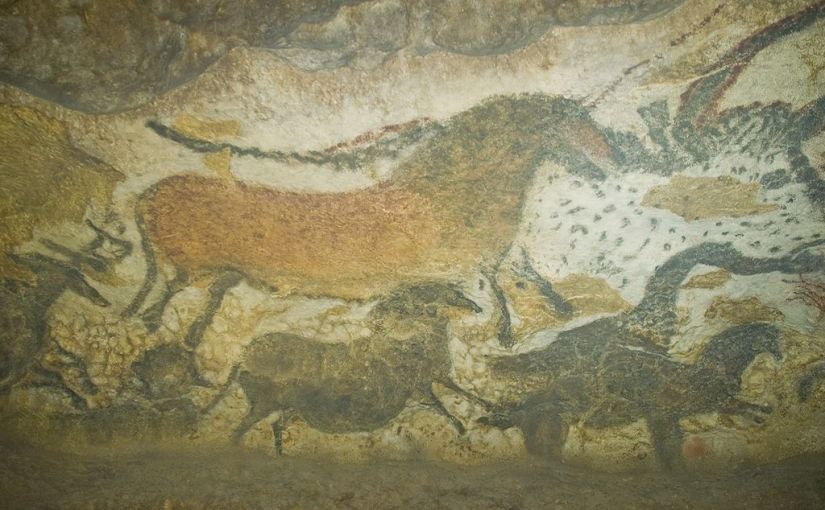
Our next port of call was Lascaux Caves II. This was one of the coldest day we had experienced so far. After scraping the ice off the windows of the car we loaded up and set off. “Lascaux (Lascaux Caves) is the setting of a complex of caves in south western France famous for its Palaeolithic cave paintings. The original caves are located near the village of Montignac, in the department of Dordogne. They contain some of the best-known Upper Palaeolithic art. These paintings are estimated to be 17,300 years old. They primarily consist of images of large animals, most of which are known from fossil evidence to have lived in the area at the time. In 1979, Lascaux was added to the UNESCO World Heritage Sites list along with other prehistoric sites in the Vézère valley.” (Wikipedia)

The caves were sealed by a land slip and rediscovered by a small dog falling into an opening of the caves and its school boy owner climbing in to rescue the dog. The caves were open to the public until it was found that even the breath of the visitors was causing damage to the paintings so they were closed and now can only be visited by scientists a maximum of 300 hours per annum. The French have exactly recreated part of the caves in a tourist attraction nearby and are presently recreating all of the caves in a new exhibit closer to the township of Montingac. Even though these are only replicas it is extraordinary.

The caves themselves are extraordinary evidence of the intelligence of Palaeolithic people. For instance they have found evidence that the artists used scaffolding to enable them to paint on the ceiling, used reindeer fat with birch wicks (birch does not smoke) to provide light to paint by and used the surface of the rock wall to emphasise the shapes of the animals they painted. there are pictures of horses, lots of horses and deer painted on the walls but not all the walls but mainly the upper part to the ceiling due to the rock structure and the fact that water had probably run through the caves at various times.  No photos allowed sorry due to copyright issues. So just a few pictures of the visitors centre, the entrance and a frozen bush and the link to the website. See; http://www.semitour.com/lascaux-ii

There is no problem with access. The visitors centre and caves are both on an even surface but there are steps down into the exhibit. There is a further museum displaying other prehistoric discoveries of the area and the remaining caves in replica at the village of Les Eyzies de Tayac-Sireuill.

Recommended!.

Bishops Visit – France and More – Sarlat la Caneda and Chateau Castelnaud

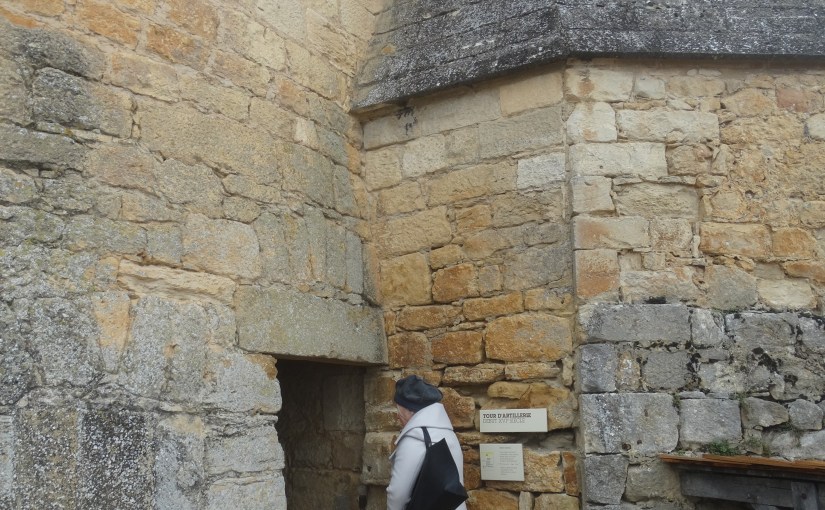
“The Château de Castelnaud is a medieval fortress in the commune of Castelnaud-la-Chapelle, overlooking the Dordogne River in Périgord, southern France. It was erected to face its rival, the Château de Beynac. The oldest documents mentioning it date to the 13th century, when it figured in the Albigensian Crusade; its Cathar castellan was Bernard de Casnac. Simon de Montfort took the castle and installed a garrison; when it was retaken by Bernard, he hanged them all. During the Hundred Years’ War, the castellans of Castelnaud owed their allegiance to the Plantagenets, the sieurs de Beynac across the river, to the king of France. In later times it was abandoned bit by bit, until by the French Revolution it was a ruin. Today the picturesquely restored château, a private property open to the public, houses a much-visited museum of medieval warfare, featuring reconstructions of siege engines, mangonneaux, and trebuchets. The castle is listed as a monument historique by the French Ministry of Culture.” (Wikipedia)

The day of our visit the weather was overcast and foggy so we could not fully enjoy the scenic views from the chateau nor the quaintness of the village below it. The chateau is a complete museum of medieval instruments of war particularly early catapults. We spent hours going through all the exhibits but be warned there is a lot of steps some very steep and narrow. It is no place for people with a disability or young children.

After our visit we travelled to the village of La Roque Gageac where the fog prevented us from enjoying the dramatic setting for this village. It sits under a ridge of vertical rock and apparently has caves behind it but we could only vaguely see the stairs in the wall leading to these caves. Some adventurers could be seen through the fog abseiling down the cliff face. We did explore a walk amongst the houses and found a subtropical garden hidden behind the houses.


We returned to Sarlat for our final night. We dined at a small restaurant in the old city. The weather was turning very cold and it was uncomfortable to walk around the city so we retired to our hotel as tomorrow we travel to Lascaux Caves and then onto Dampierre Sur Boutonne.

Bishops Visit – France and More – Sarlat la Caneda

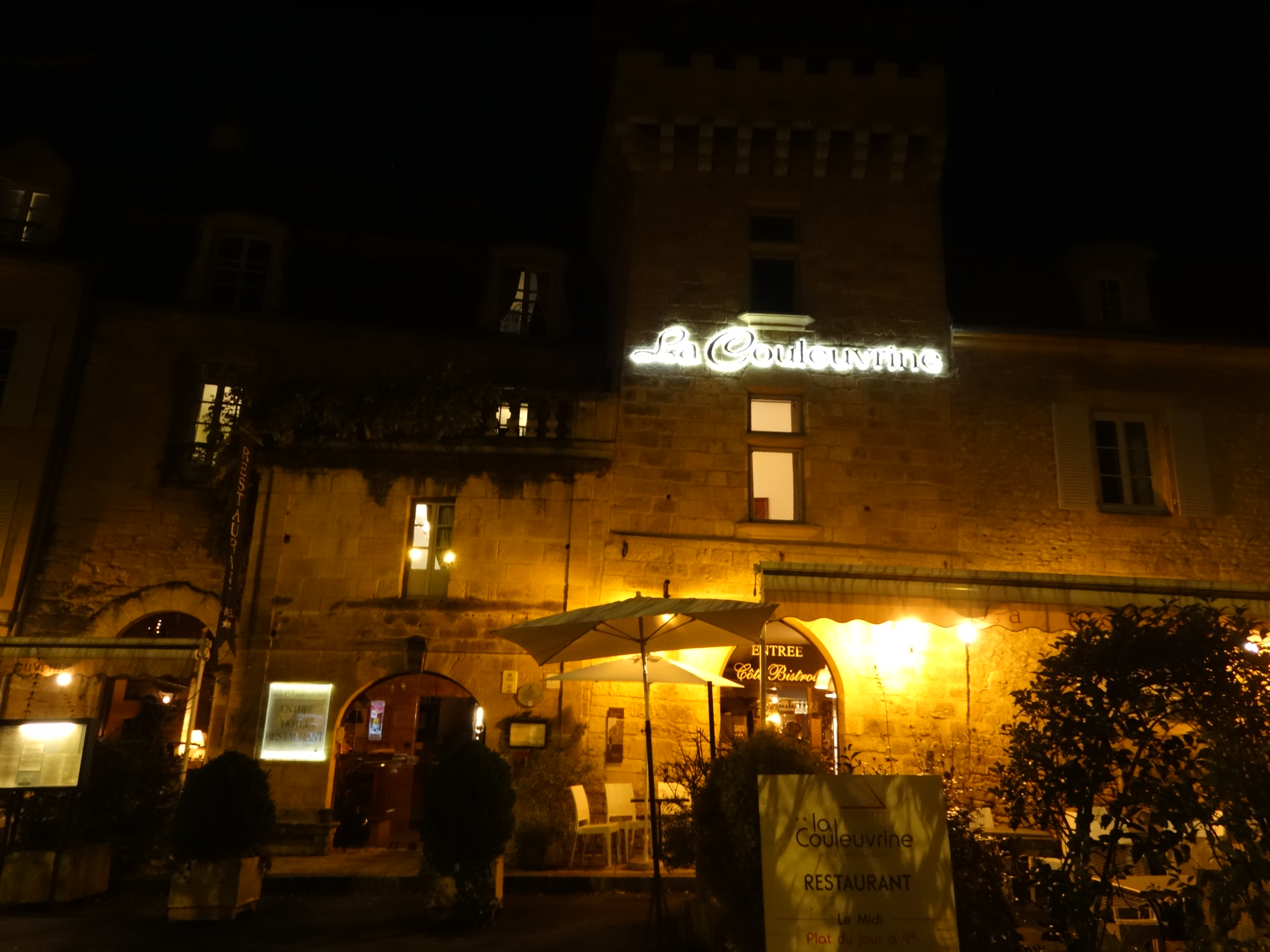
After a delightful lunch in the village at the foot of the chateau (there is another village of the same name below the chateau) we made our way into Sarlat just in time for the Xmas markets and tens of thousands of people (well thousands anyway) making finding the hotel and parking impossible. An eagle eyed Nerida spotted La Couleuvrine (named after the culverins on the town walls which walls now form part of the hotel).

DSC02411

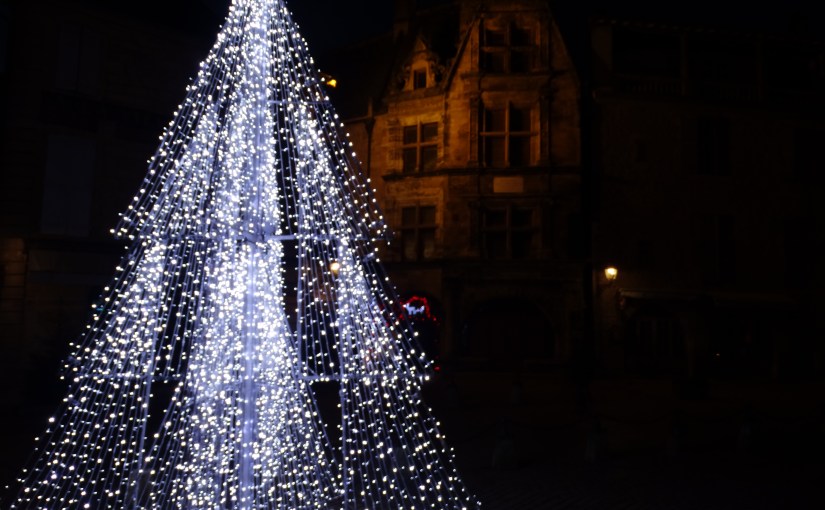
We reconnoitred around the old city and what a fabulous place full of ancient buildings and the old ramparts still exist around 3/4 of the town. “Sarlat is a medieval town that developed around a large Benedictine abbey of Carolingian origin. The medieval Sarlat Cathedral is dedicated to Saint Sacerdos.” (Wikipedia) We found the Cathedral in the heart of the old city with a modern Xmas tree featuring in front of it. I don’t know which attracted more people – the Cathedral or the tree. There are examples of old architecture everywhere you look. Inside the Cathedral you are overwhelmed by the organ hanging over the front door. Outside it towers like the fortifications we had seen at Beynac.

The alleys and old buildings jump out at you drawing you to look at their antique features. Our hotel was an excellent example of the early architecture. But like most of these building converted to a modern use there are oddities such as the stairs to our rooms. Arriving on the first floor there were another 5 stairs to climb to the room and the same for the Bishops.

“Because modern history has largely passed it by, Sarlat has remained preserved and one of the towns most representative of 14th century France. It owes its current status on France’s Tentative List for future nomination as a UNESCO World Heritage site to the enthusiasm of writer, resistance fighter and politician André Malraux, who, as Minister of Culture (1960–1969), restored the town and many other sites of historic significance throughout France. The centre of the old town consists of impeccably restored stone buildings and is largely car-free.” (wikipedia)

This is an area of historical significance as the English and French fought over it for centuries and the religious conflicts between the French themselves saw this area figure prominently. Hence the numerous fortified chateaus on high bluffs. Chateau Castelnaud is another example (and it was open at this time of year – many are not).

Go back

Your message has been sent

Warning
Warning
Warning
Warning

Warning.

Bishops Visit – France and More – Chateau Beynac

Although late to bed the next morning we were on the move early to travel to Sarlat la Caneda another 280 klms south. Unlike previous travel our Tommy took us along some very rural roads to Limoges before we journeyed on a freeway. This made a nice change as we were able to view the countryside and the vistas as we headed into the Central Massif. Also the weather took a turn for the better with the cloud breaking up and as we drove into the valley toward Sarlat we were in brilliant sunshine. On reaching a little town outside Sarlat we reappraised our itinerary due to the improvement in the weather and decided to travel to Chateau Castelnaud but fortunately we found Chateau Beynac instead.

This Middle Ages construction, with its austere appearance, is perched on top of a limestone cliff, dominating the town and the north bank of the Dordogne River. It is worth reading about this chateaux in Wikipedia but what Wikipedia does not tell you is that Richard I (Richard the Lionheart of England) captured the Castle and it remained in English possession for 10 years til Richard was killed and then recaptured and lost again during the One Hundred years war. There are some rooms in the chateau fitted out with Lionheart memorabilia. One of the features is the dungeon and torture implements.

http://en.m.wikipedia.org/wiki/Château_de_Beynac

I got really excited about this chateau. It is truly situated in a magnificent location and the views still astound me when looking at the photos.

Inside the chateau was like returning to that time with braod swords at the ready in the end of tables and the crossbow on the wall. Even the dungeon had that feeling of macabre with instruments of torture still in place ready for the next victim. Now I think this is off the beaten track for most Australian grey nomads.


Go back

Your message has been sent

Warning
Warning
Warning
Warning

Warning.


Bishops Visit – France and More – Futuroscope, Poitiers

The next day started well with weak sunshine coming into the motel unit windows. Our destination is Futuroscope outside of Poitiers. We had packed a breakfast and lunch for on the highway reaching our goal by 2.00pm.

We stayed at a Campanile Hotel in Futuroscope Park and whilst Doug and Nerida rested Kerry and I took a walk to the Park and back. Just as I remembered it – and just as empty of people as the first time we came. Winter just before Xmas – not a popular time for theme parks.


We had purchased a 5.00pm pass as we wanted to particularly see the evening show. There is a bus running from the hotel precinct to the park so we waited for the bus at the bus stop – the wrong bus stop until a banana bus pulled up on the other side of the road to say the bus ran in the other direction and we were waiting at the wrong stop. So obviously we caught the bus and arrived at the park just as the sun was setting. The weather continued to be kind – Cool and clear.


The park is both children’s theme park and a learning park. Adults can learn about cinema and photography plus a variety of subjects and the children have the rides to enjoy. Secretly the adults enjoy the rides as well. The presentations are in a variety of unusually shaped buildings as befits the subject. The subjects vary from the galaxy to forest spirits. Unfortunately at this time of year and time of day not all of the 17 shows are open and not all of the facilities such as food are open so by the time of the evening show we were torn between queueing for food and getting a seat for the show. The show won.

The show is played out on the water using holograms water fountains and music (plus songs in French of course). Spectacular is an overused word but not in this case. This is a secret the French want to keep for themselves. I can recommend it. Start by visiting the website at en.futuroscope.com/

Futuroscope, a different kind of leisure park experience for all the family! France – Poitiers – Poitou-Charentes.

The show finished about 9.00pm. I hurried to return the audio guides and collect my security (they usually want your driver’s licence) whilst the others made their way to the bus stop. After catching the bus back to the hotel it was 10.00pm but the restaurant at the hotel was still open and pumping – we had to wait half an hour to get burgers and the buffet.

Bishops Visit – France and More – Chantilly, the Duc and his horses

Calais is grey and wet but I have time to affix our “GB” sticker identifying our place of registration on Thistle under an umbrella outside of the hotel. We have an early start for Chantilly amidst continuous rain gusting wind and heavy trucks. By the time we reach Chantilly the rain has lessened to a constant drizzle but not enough to dampen our visit to this icon of French art and history – Chateau Chantilly and the Musee Conde. The chateau is a recent invention of the Duc d’Aumale combining two earlier chateaus after they had been destroyed by revolutionaries of the first republic. The Duc was the son of King Louis Philipe of France and served in the Foreign Legion until his father was dethroned by the third republic when he went into exile in the UK and started collecting. Once he was able to return to France, he selected this site because of its connection to Prince Conde the son of the Sun King Louis the XIV (and Dauphin of France) and he dedicated the art and library to this distant relative – Musee Conde.

This is grand as only the French can do grand. The library is second only in importance in France and the Art is second only to the Louvre so when the Duc in his Will left the estate and its treasures to the Institut de France he was gifting invaluable treasures of France’s history in manuscript and Art to the people of France plus a piece of his own history in the house, his taste, style and personal effects. Worth a visit. Check it out on http://en.m.wikipedia.org/wiki/Château_de_Chantilly

Within the estate is the Musee Vivant du Cheval (Living Museum of the Horse) directly alongside the Chantilly Race track. This building is built in the same grand style as the Chateau and again by the Duc. In fact he could view the stables from his study window (across the moat and up the hill). Today the stables are a monument to the horse and its relationship with men through the centuries. On entering you are met by the sweet smell of horse poo as there are live animals in the stables representing some of the 52 recognised breeds in France.

The stables are built in a square with a large court yard in the middle. The museum meanders through the building giving you everything from the original breeds giving rise to the thoroughbreds we know today to the attire ladies wore when riding side saddle. Again well worth a visit and have a look at its history here: http://en.m.wikipedia.org/wiki/Living_Museum_of_the_Horse

After the museums we retired to our rooms for a nanna nap before dinner. Dinner at the hotel was enjoyable as our host was a chirpy little Frenchman prepared to welcome the non-french speakers. The only other diners that evening was a table of 18 gendarmes some bearing their automatic weapons. They all had burgers and frites so it must be some outsourcing arrangement to feed the troops.

Bishops Visit – France and More – Calais


Calais has for many centuries been the gateway to France from England. Our arrival was without incident with Kerry very quickly adjusting to driving on the right hand side of the road (in fact I think she enjoyed being able to line up on the right hand white line). Tommy soon had us at our hotel. The Hotel Mercuire is behind the Musee de Belle Arts Calais and a very fine hotel it is. We actually parked in front of the front door of the hotel and parking is free. We unloaded Thistle greeted our French host then took a walk through the city square. The wind had subsided to occasional gusts but the showers persisted as we walked through the squares of the city. The Xmas lights made this damp atmosphere much brighter. There is a lighthouse shining its warning from inside the city, the remains of what appears an ancient lighthouse in the square and a cathedral obviously called Notre Dame Calais.


It was not really that pleasant weather so we retired to the hotel where we found the Bishops ensconced in the bar with the receptionists dog keeping them company. Doug had researched the history of the hotel by interrogating the receptionist/bar keeper. It had been damaged during WW2 and  rebuilt in the same style after 1945 so it appears an elegant turn of the century hotel. We were very comfortable and well rested by the next morning when we had breakfast. Freshly squeezed orange juice and a hot breakfast so very good value. Our goal today is to travel to Chantilly and the weather is not improving.

Go back

Your message has been sent

Warning
Warning
Warning
Warning

Warning.


Bishops Visit – France and More – Battling the Dreaded M25


We set off this morning with the weather mild and sunny. Our planned route would take us through Northamptonshire and down to the M2 avoiding most of the dreaded M25. We have to use the Dartford Crossing and that is on the M25 – no avoiding it.

Our trip through Northamptonshire was very relaxing with little traffic and clear weather. “Tommy” predicted that we would have a trip of 4 hours to Canterbury and we were on target until coming close to London where we moved onto the M11 headed towards Docklands. Blue lights and sirens – a good indicator that things are not going to be smooth sailing. The traffic came to a stand still and for over an hour we crawled along the M11 until we reached the lorry stalled in the left hand lane blocking completely half of the freeway. At least we knew the cause. So often the blockage clears like stale water in the sink when the blockage is cleared and you never see the cause.

Even so the traffic jam had lost us 1 hour. We then moved along again with free flowing traffic until meeting the M25 and chaos. All we could see was red taillights to the horizon. This is the usual chaos at the Dartford Crossing so now we just had to be patient and navigate to Canterbury rather than any other one of a dozen destinations. We lost another hour finding our way through this chaos.

Having made the crossing we had the choice of the A2 (presently backed up to the M25) or the M25 which strangely cleared as traffic scurried like rats down other exits. The M25 is the obvious choice and our journey is underway again but we are still an hour from our hotel. Our expectation had been to arrive at sunset but these delays had changed our ETA to 1900 hours two hours after sunset.

Now I don’t know what Tommy had been smoking but from that point forward it seemed to find every narrow country lane and go around in circles until out of the blackness of the night a service station appears and Tommy says “you have reached your destination”. Our hotel is one of those freeway motels lurking behind a service station. Despite its location the hotel proves to be fine. The standard of the Holiday Inn Express has proven to be excellent everywhere we travel and we can recommend that chain.

Refreshed we are on the road to Dover early in the morning. No hassles getting to Dover where we visited the local museum with its 12,000 year old salvaged boat and its bronze age history then a quick trip to Deal (Yes a place called Deal and certain evidence of pre Aussie travellers) and back to line up for the ferry. Now a word of warning to all those intrepid travellers using their own car to travel through Europe – it has to be compliant but you can buy the kit on board the ship (Yeah right!). Well we bought the kit and now we are compliant – its not a gag.


The weather has turned decidedly grey and wet. We line up an hour before boarding and the wind picks up. The ferry is delayed by high winds in Calais so our departure is set back 1 and 1/2 hours meaning we arrive in Calais after sunset. Just makes driving a right hand drive car in the right hand lane a little more difficult. Although the crossing was not rough the ferry pitched sufficiently to cause Kerry some discomfort (not a good sailor).

Go back

Your message has been sent

Warning
Warning
Warning
Warning

Warning.

Bishops Visit – Islay – the Land of the Peated Whisky

Part of the inner Hebrides, Islay is famous for its scotch and has 9 distilleries to prove it. To the north is Jura which has given its name to its only whisky distillery. Both islands are only accessible by ferry out of Kennacraig, one and a half hours from Cairnow.

We depart at 7.00am in pitch black travelling back through Inverrary and turning south down through the Argyll country. We see the sun rising behind the hills in front of us and then beside us promising a fine day. The trip proved to be generally straight forward but rain started to dog us again around West Tarbert just before Kennacraig. This rain turned into sleet then small rice size hail, when we arrived at the departure point (that’s all there is to Kennacraig). Boarding was straight forward. The vessel MS Finlaggen is about 3 times the size of the Straddie Flyer and finished like a cruise ship – very nice.


The cruise took about 2 hours and was very relaxing. The wind was running about 25 knots but the vessel stood firm in the water. As we arrived at Islay, I bounded upstairs to the summer observation deck and in a biting wind took shots of the entrance to Port Ellen, our home on Islay.


I had arranged appointments at two distilleries Bunnahabhain and Bruichladich. Brunahabain and Bruichladich (locally called “Laddie”) were both founded in 1881 but are at opposite ends of the island and very different in their approach to distilling.

Brunnhabhain is in the north of the island above Port Askaig the jumping off point for Jura. There are two main roads (I use that term loosely for one of the roads) going north and on the way we went to the ancestral isle of the Lords of the Isle – the Donald clan. There is very little left and the visitors centre was closed for winter but we got some random snaps for you to look at.


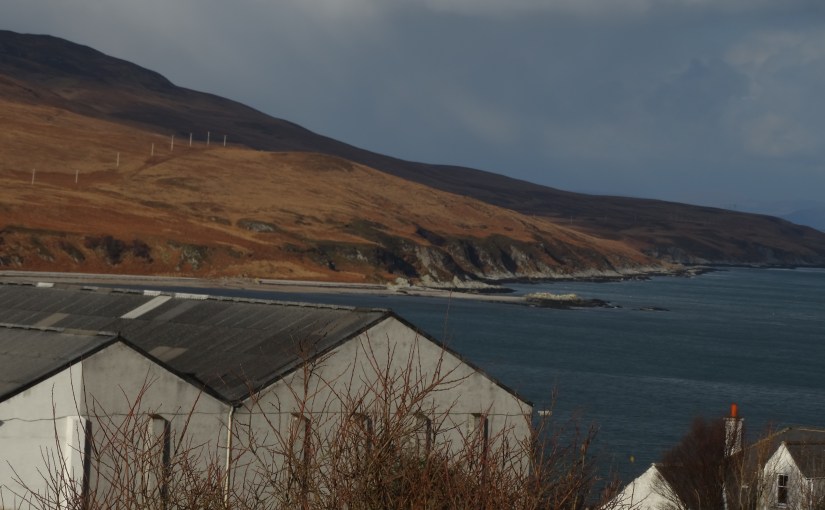
We then went on to Port Askaig to see what was there and we were disappointed that like Kennacraig it is just a jumping off point only with a hotel and shop. We had to fuel up which was interesting – you fill up then walk back down the hill to the shop to pay for the fuel. Then it was on to Bunnahabhain. Here on the narrowest of sealed roads following the strait between Jura and Islay winding along the edge of the hills was the prettiest scenery on the island. Then for no apparent reason a group of large industrial sheds so out of place in these hills appeared. It is the distillery and it sits directly on a sea wall looking north out into the strait.


We met Beth who gave us the tour. Also on the tour were two blokes form Kedron in Brisbane – hows that! The tour was interesting, similar to Oban but this time we got photos.


We finished around 3.30pm and again the weather turned, this time back to the sleet and hail so we hightailed it to our second distillery. We drove across the island to the east, arriving around 4.00pm too late for our tour. Not to miss the opportunity we partook of a tasting of the world’s peatiest malt whisky 200 parts per million. Bruichladich is positioned on a bay facing south and to get there we had to drive through sheep spanning both sides of the road. Careful or there will be mutton on the menu.

We then raced the sun to Port Ellen arriving in a dead heat – total darkness. The Islay Hotel was modern in an old exterior and just too hot in side to be comfortable. Nevertheless we had a good nights sleep and rose early for a walk through the village. The morning was dark but the sky promised to be clear or so we thought. We set off along the front  bracing against the cold wind that was starting to pick up. Few people were moving so our walk seemed somewhat ethereal – a strange village and just us moving about. We were gone just half an hour and by the time we got back to the hotel the wharf had come to life. The ferry leaves at 9.45 and you must line up at 9.15am. Our hotel is so close to the terminal that we literally drove down at 9.10 and lined up.

On board the ferry I spent my time catching up on my blogging and Kerry and Nerida continued their knitting whilst Doug slept. Then we drove to Perth on the other side of the country and Doug slept.

Go back

Your message has been sent

Warning
Warning
Warning
Warning

Warning.