The Retirees go Abroad – France, Norway, UK and Ireland – Chinon and the Fortresse Royale

Next morning breakfast in our hotel room (porridge and a cuppa) and then travel onto Chinon and the Fortresse Royale. Amboise was like any village you see all over France – history in every house and town planning for donkey carts and pedestrians. I enjoyed the town but I am a 21st century boy and looking forward to an Ibis Hotel in Poitiers.

On the road again and we made good time down to Chinon. As seems usual in France our GPS “Tommy” has difficulty finding its way in the villages but this time it was the town of Chinon. “Turn right” it said and all I could see was a barely sealed road connecting houses with an uncertain end round a corner. So I missed the turn but my co-pilot insisted we go down that path. Within 50m we came to a round-about and on the third exit a bloody big sign “Chinon – medieval citie” and “Fortresses Royale – Parking”. Under co – pilot instructions I went back to the muddy lane and down we went until we shocked a french woman walking her dog who politely told us yes you can get to the fortress this way but it is better to go over there as there is parking for the car (at least that is what we determined as she was as good with English as we were with French – avoided running over the dog).

Got to the parking and then to the visitors centre then to the fortress. Sited on a rocky outcrop (as usual) it towers over the city. It is actually three forts in one. The oldest Coudray Tower is where the last of the Knights Templar were held after Louis Phillipe ordered the arrest of all members of the temple. The Middle Tower contains a very interesting display on the history of the fort (last used for military purposes in the 15th century) the visits by Joan of Arc to Charles VII and the archaeology discoveries. It also contains the bell tower (which we climbed after it rang 12noon) and this is an additional 5 stories above the fort and probably 100m above the city. (It is said that the bell has rung over Chinon since 1399 and this is where the “Plantagenets” started life when Geoffrey V Count of Anjou took the nickname “Plantagenet” after a sprig of broom he wore in his hat and his son Henri II became King of England through his mother). So Chinon remained a little bit of England through Richard the Lion Heart and then King John who lost the fortresse to Phillippe Auguste King of France and Chinon became part of France for the first time. As you can see I enjoyed this part.

Finally, there is the Tower of St Georges which was not really part of the military defences but the royal suites and administration centre for France under Charles VII. The emblem for the city is three towers. After the reign of Charles VII Chinon lost popularity and the last fortification work was in 1560. Thereafter it fell into disuse and comes close to destruction in 1854. In the intervening period many parts of the three towers and principally the third one is destroyed (the visitors centre is located where the third tower once stood). It is now a listed historic monument and as you can see some significant historical moments occurred here. Great fun for me not so much for Kerry who become angry and distressed (and rightly so) when I went exploring in the Coudray tower and the cells below ground.

It was in those cells that I learned the history of the Templars and their end at Chinon. In the royal palace at Chinon, Jacques de Molay the 23rd and last Grand Master of the Knights Templar, leading the Order from 20 April 1292 until it was dissolved by order of Pope Clement V in 1307, was questioned by the Pope’s cardinals, this time with agents of King Philip IV of France present. During forced interrogation by royal agents in Paris on 24/25 October, Molay confessed that the Templar initiation ritual included “denying Christ and trampling on the Cross”. He was also forced to write a letter asking every Templar to admit to these acts. Under pressure from Philip IV, Pope Clement V ordered the arrest of all the Templars throughout Christendom. He recanted the admissions but at Chinon he returned to his forced admissions made in Paris. In November 1309, the Papal Commission for the Kingdom of France began its own hearings, during which Molay again recanted, stating that he did not acknowledge the accusations brought against his order. Molay is the best known Templar, along with the Order’s founder and first Grand Master, Hugues de Payens (1070–1136). European support for the Crusades had dwindled, other forces were at work which sought to disband the Order and claim the wealth of the Templars as their own. King Philip IV of France, deeply in debt to the Templars, had Molay and many other French Templars arrested in 1307 and tortured into making false confessions. When Molay later retracted his confession, Philip had him burned upon a scaffold on an island in the River Seine in front of Notre Dame de Paris, in March 1314.

We notice there is an elevator on the side of the cliff about 50m from the visitors centre so we went in search of a hot chocolate in the town. Just like Amboise its design is from other eras and has a mixture of the oldest and the older throughout. Found the hot chocolate in a Tabac – not much open on a Sunday.

Had a sandwich in the car then off to Poitiers. We arrived about 2.00 booked in settled in and I had a nanna nap. After dinner in a very interesting pub called Au Bureau we strolled the streets and are keen to see it all in daylight.

← Back

Thank you for your response. ✨

The Retirees go Abroad – France, Norway, UK and Ireland – Amboise

Up bright and early – hey who played around with my watch its 7.45 am. It’s overcast so no idea of the time therefore slept in. Never the less we left the hotel on time to visit Clos Luce, Leonardo da Vinci’s last home (gifted to him by King Francois 1st). It’s a bit more than a home but not quite a chateau. It is surrounded by lovely gardens and contains a history of da Vinci’s engineering designs and inventions from military to civil. Even had Kerry interested (oops spoke to soon she’s sitting down – time to move on).

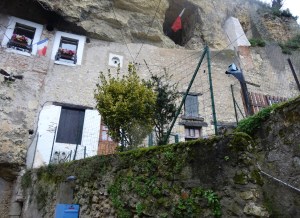
We had chosen to walk but it’s another shitty day weather wise windy and wet which made the entrance to Castle Amboise a bit treacherous. The castle is in the middle of the city and as we walked to the castle we noticed that the castle walls contained houses. I don’t know when but people have constructed house in the castle walls. They are privately owned so we could not see inside but quite different. Les Troglodytes – Oui!

The castle itself is only part of the original (about 50% I guess has been demolished over time). What remains was interesting. Da Vinci is buried there. He lived in Amboise only 3 years before dying and in his will he asked to be entombed in the St Florentin church in Castle Amboise and when this was demolished they dug up his bones some coins (by which they determined these were da Vinci’s bones) and re interred him in the St Hubert Chapel also in the castle grounds (where you can see him today).

Home for a sandwich and then we drove to Château Chenonceaux. Now this place is unique in that it is built in the river Cher with a short timber bridge on one end and a 60m bridge connecting it to the other side (the bridge was covered in by Catherine de Medici (wife of Henri II) after his death and after she took the château back from Henri’s lover Diane of Poitiers (for whom Henri acquired the Château). The “bridge” was turned into a banquet hall by Catherine and the château changed hands a few times up to 1945 but is now a heritage building. It is not opulently fitted out but is interesting because of the various people who have called it home since 1521.

Back in Amboise we noticed a very old building containing a quaint restaurant across the road from the hotel (across the road – you can see into the restaurant and vis a versa – the road is 6m wide from the wall of our hotel to the wall of the restaurant). So we had drinks in the living room of the hotel browsing the local picture books on the sites of the Loire Valley then ambled across the road for dinner. But for the fact it was blowing a gale and probably close to 0c it was lovely.

To bed to dream and check the internet. Bugger! We had planned to visit Futuroscope outside Poitiers but it is closed until February 14 – one of our goals was to go back to Futuroscope but now we are going to miss it. In France when something says on its web site opening in February do not think they mean the 1st of February.

← Back

Thank you for your response. ✨

The Retirees go Abroad – France Norway UK and Ireland – February 2014

I am in the Eva Air business class lounge facing a 19 hour delay before our next flight and you know I don’t care. Just had a shower. What a fantasy that is. The only thing missing is the personal attendant to rub your back.

I have answered my emails reviewed the results of the Easts directors retreat reviewed the amended budget and shot off some questions to the CFO and oh yes Kerry and I have discussed our day. We plan to take a free half day tour to Longshan Temple, the Presidential office building, Chiang Kai-shek memorial Hall, Martyrs Shrine and the Taipei Mall (hunting and gathering again).

A walk around the terminal for an hour or so and back to the lounge. This gave us the opportunity to check out the weather – shitty to say the least. Kerry is still over tired and does not feel up to the tour in rainy weather.  Cancelled the tour. Killed time walked the entire terminal 1, 2, 3, and 4 – they all join up. Kerry napped on the floor.

Finally, on the plane and business class is a treat. Next stop Paris (only 13 hours flying). The trip was probably the bumpiest trip I have ever had and the layout of the seats meant that Kerry and I could barely see one another and over that period it becomes annoying.

Landed at Charles De Gaulle and waited for the luggage and waited and waited. Extremely high winds made it impossible to unload our plane. Got the luggage and collected the car. Set the GPS and off to Amboise in the Loire Valley we go.

Interesting trip just under 2 hours but how the scenery changed. The suburbs of Paris looked dirty and cold while the country side around Amboise is clean and fresh but also cold. Amboise has been around since the Neolithic times when it was settled by a Celtic group called the Turones, occupied by the Romans and the first signs of a castle appeared in the 4th century AD. Clovis the King of the Franks met Alaric King of the Visigoths on Ile d’Or (the island in the Loire river just off Amboise) in 503AD (no idea why) but this gives you some idea that when I say the buildings here are a real mixture of old and new and the roads are all designed for donkey carts that its true.

We found our hotel, walked to the Tourism office bought our tickets for the next days adventures and came back for a Nana nap and I woke again at 3.00 am. Jet lag caught up with us on the first day.

← Back

Thank you for your response. ✨

The Retirees go Abroad – the Iberian Peninsula – Madrid, and the Return to Australia

Our last full day in Madrid. After a long sleep in and late breakfast we took the Metro to Aguellarie and joined the grey line to Puerto d’Angels to find the river running through Madrid. The Manzanares flows from the Sierra de Guadarrama, passes through Madrid, and eventually empties into the Jarama river, which in turn is a tributary to the river running through Lisbon the Tagus. The river when we found it looked almost dry and surrounded by concrete. Kerry googled the name of the river and we found a site pointing out that of all Europe’s capitals Madrid is the only one not on a major river for transport or trade. The site even quoted the famous French writer Dumas when asked what he thought of the new bridge across the Manzanares and he said ” Sell the bridge or buy a river!”. The river has been recently restored by the removal of a freeway which passed over the top of this section (the freeway has been put underground) and the planting of over 400,000 shrubs and 100,000 trees in a 7 kilometre section of the river. We walked part of the new garden area and found the Cafedal Rio. Sitting on the terrace we enjoyed two courses, desert, wine and coffee for under 35 euros – the best value we found in Madrid and in a pleasant location.

Well that is it for Madrid and our trip into Fantasy for the last 18 months. Tomorrow we pack, go back to London, sell the car and return to Australia. It is not without some regret that we return but reality awaits us at home not hopping around the world.

Although I had arranged to sell the car to Webuyanycar.co.uk I was disappointed when they stripped their offer from £269 to £95 after examining the car. Kerry was shitty about this and let the representative know about it. So she phoned the caryard where we had bought the car and when they said they would be interested we drove to Seahaven 20 minutes east of Brighton and picked up in cash £250. Now the car is worth more than that but we could not wait to find a buyer and we were satisfied that we did not have to take the £95 offer. We then caught the local train to Brighton travelling through scenic countryside and had a lovely day in Brighton visiting the Lanes, the casino, the Pier and its penny arcade, and a dress shop for the all-important outfit for the Melbourne Cup – we arrive home on cup day.

We caught the National Express bus to Heathrow and then the U3 line bus to Leonardo Hotel where we were staying all the time being informed by that ex Kiwi/ Australian/Canadian/Pom Diana Bosworth from Nottingham Rotary that Australia had been put to the sword by the Kiwis in the Rugby World Cup final.

Sunday we caught the underground to Piccadilly Circus to visit the shops in Regent St and Oxford St one last time. At last the hour had arrived and we caught the U3 for the last time to Heathrow and despite the attempt by Fate to keep us in the UK (heavy fog shrouded Heathrow) boarded our planed saying farewell to England.

← Back

Thank you for your response. ✨


The Retirees go Abroad – the Iberian Peninsula – Madrid, and the Hop on Hop off Bus

Next morning Kerry wanted to catch up on her sleep so I ventured out on my own. I decided to see where our road led to (anticipating that I could find my way to Plaza Mayor eventually). So up the street past Plaza Nelson Mandela (Yes we are in a predominantly African neighbourhood), past La Morgue, and Taberna Tirso de Molina and past Tirso de Molina Metro, left, past the big chair, and suddenly I am into one of the connecting streets to Plaza Mayor (15 minutes). From there I went to Puerto del Sol and caught the hop on hop off bus again to visit some of the places I had seen on Tuesday. I caught the blue line to start with and went down to the national Museum for Art passing a “green” wall at least 4 stories high, viewing the rail station or at least the departure platforms added onto the old station. I was trying to find a building with a carillon and view the glockenspiel like parade in the carillon but found this other unusual display of powder and wig costumes instead – I am still on the hunt for the carillon. I chanced my luck on foot in the traffic to get a picture of Neptune in the centre of a roundabout, chanced upon Plaza Margaret Thatcher (some might say that the Fascists still rule in Spain), the display of sculptures under an overpass, the non de script HQ of the Armed Forces of Spain, before arriving at the stadium – Santiago Bernabeu Stadium, home of Real Madrid.

Then I jumped on board the bus again to go to Plaza de Colon (I am sure it means something different in Spanish). The plaza is the roof top of a large car park which uses camera and radio technology to allow cars to enter and pay for the parking without stopping for a ticket fumbling with change or finding out your credit card has expired. The surface is parkland with an unusual sculpture/memorial to all the sailor/ adventurers of Spanish history. It also provided me with the best view of a memorial to Columbus which also has the names of all of his crew written upon it. A copy/ duplicate of the memorial is somewhere in New York. Note the contrast between the memorial and the office block behind it. I had completed the sites I wanted to visit so I went back to the apartment to see how Kerry was getting on.

After a bite to eat I dragged her through the path I had discovered to the centre of town. This time I took a slightly different path ending up at San Gines Chocolateria. Here they serve churros and hot chocolate and have done so since 1894. It’s not a sweet chocolate but after 6 sticks of churros I had enough. Hallowen is a big thing over here as is shown by this display on a building in the city centre. They are getting ready for Xmas too. We boarded the bus and went to the Temple of Debod a gift to Spain for its help to Egypt with saving the buildings in the Aswan Valley. From here we got great views of the Palace and the Cathedral. But we made the mistake of deciding to walk through the gardens – two hours later we arrived at the crypt under the Cathedral for Santa María la Real de la Almudena. It was very imposing. Many of Portugal’s wealthy families have buried their dead here. Then there is the cathedral containing the “The Estela de la Almudena” a great work, chiselled in silver, made ​​by the goldsmith Manuel Carrera and his team. This is a Work of Art, and the epitome of an art which unfortunately has disappeared due to the lack of craftsmen. Once again beautiful stone work and treasures locked up in honour of a dead saint.  As we left the cathedral we noticed this ancient olive tree standing alone. That’s enough for today so we waited for the hop on hop off bus to take us back to the Opera Metro. Due to road closures it was delayed so we walked finding Gepetta’s a wooden puppet shop and not much further we found San Miguel mercado picked up dinner and then went home via the Metro without the hop on hop off bus.

← Back

Thank you for your response. ✨

The Retirees go Abroad – the Iberian Peninsula – Madrid, and Flamenco

Tuesday has fulfilled it’s promise of rain. Clearly we are moving through autumn as it is scarves and coats for everyone. We have decided to do the hop on hop off bus today and tomorrow. It comes as no surprise that we are the only ones on the bus but that has not stopped the traffic. There are two routes the green line and the blue line. The green line predominantly follows Paseo de la Castellana north to Real Madrid stadium – Santiago Bernabeu Stadium and south to the Museo Nacional de Arte and the rail station, whilst the blue line is more east west following the Gran Via and visiting the Palace the Cathedral Plaza Mayor and Puerto Sol (the old town). The rain lasted about an hour – about the same time to go to the Stadium and change lines to go to Sol. During the journey we passed the Botanic Gardens where we started our walk on Sunday ending up at Jardins del Buena Retiro and got a picture of the grand entrance which we missed by walking through the centre of the gardens. By the time we reached Sol the sun was shining but the cold was there to stay. At least we got to see the bear and the Arbut tree symbol of the city (the Arbut tree is the tree that provides the cherries for the wine Modrono). We went back to the apartment to rest as tonight is a night of Flamenco.

After resting for the afternoon we left the apartment about quarter to six to take the Metro to the old town. Although our reservation is for 7.30pm, we arrive at Calloa metro station at 6.00pm to ensure we find the place. I was confident that I knew where it was but we had to take no risk about this. In Plaza Calloa we saw the buildings of Madrid displaying their magic by night. Our route took us past Plaza SanMiguel and the Mercador San Miguel, down an alley to Plaza el Conde de Mirande and the entrance for Las Carbonaras – we were 1 hour early. So we went back to San Miguel and had a glass of wine and marvelled at the tempting treats in the food cabinets.

We tried to get in a bit ahead of our 7.30 slot but no we could only arrive at 7.30. So on the stroke of the half hour we were there anxious to get out of the cold. Inside was warm and inviting and some patrons had already arrived (bastards) but even so we got the best table at the front of the stage beside the entrance for the musicians. Dinner was delightful. We had ordered the special menu which was a taste of a number of dishes as a sharing plate – everything from Spanish omelette, paella, ham, chorizo, breads, a beef stew and desserts. Just as I was scooping the last mouthful of dessert into my mouth, out came the performers – two guitarists (12 string guitars), two singers and 4 dancers. The performances were electric and passionate. However our excellent seats meant we were in danger of losing our wine glasses as one of the dancers twirled her shawl breezing just past us and the male dancer working up enough sweat to spray it everywhere with each flashing turn of his head. We thoroughly enjoyed this evening and if you get to Madrid you must see a flamenco performance.

← Back

Thank you for your response. ✨

The Retirees go Abroad – the Iberian Peninsula – Madrid, and El Pardo

Here it is Monday and it is raining so it’s a late start. We head to Lavapies station (the yellow line) and using our ten trip tickets catch the metro to Monclao where the metro terminates under a bus station.  We go up to platform 3 to catch the bus which comes every 15 minutes. Again we use our metro ticket to ride to the Palacio Real de El Pardo (the Royal Palace of El Pardo) which is commonly referred to as “El Pardo”. The palace is about a 15 minute bus ride from the Moncloa bus station. It is the second last stop.

King Enrique/Henry III ordered the building of a hunting lodge there in 1406 in the Monte de el Pardo. The location is surrounded by green hills and a forest abundant with game so it was the ideal place for the Spanish royal family’s hunting excursions. More than a century later, Carlos/Charles V converted the building into a palace, however in March 1604, a fire destroyed most of the palace. In fact, today there is only one room in the entire palace that has remnants of a few paintings predating the 1604 fire. Most of the palace was renovated under the supervision of the architect Francisco Sabatini, hired by King Carlos/Charles III.

In the 20th century (1939-1975), the palace became the official residence of the “head of state” the dictator Francisco Franco. We took the tour which was only in Spanish therefore we did not understand anything much of the guides presentation but  towards the end of the tour, there are a few rooms that I understood included Franco’s private quarters, office and in fact El Pardo became the seat of the Spanish government. His daughter married in the small chapel on the palace’s grounds and all of his grandchildren were born there. The Franco family did not leave El Pardo until 1976, the year following Franco’s death.

Today the palace is used as a residence for visiting heads of state and some of the rooms used by the guests were on the tour. No photos were permitted but I managed two of the first internal courtyard and some of the outside. Most significant were the tapestries – probably the best condition we have seen in any palace. I have grabbed some images from the net and combined them with my own.

After visiting the Palace we went looking for the square described by our guide Enrique as having the best game restaurants in Madrid. We walked past the Garda base and Kerry enquired with a non english speaking member of the Garda who was only too happy to help – even saluted Kerry when she addressed him. He recommended El Gamo and it was only 300m down there. So we had lunch at El Gamo a restaurant recognised for its speciality in game dishes – deer, boar, rabbit. Founded in 1930 it changed hands in 1980 and is still run by that same family -the Lordon Rubio family. In true Spanish style we were served a tapas with our drinks a salad for entree and Kerry had a T-bone from Vila a nearby town and I had churrasco – grilled beef. Kerry’s steak was as expected but my dish (which I thought was going to be sausages) was a large lump of very fatty strong flavoured meat lightly grilled on a sizzle plate – not the best as it was heavily salted and fatty but interesting to try. The dish came with chips and a scotch egg. To finish we had a pineapple ice cream served frozen in half of a pineapple.

As we leave the restaurant it is raining so we catch the bus (without the trouble encountered yesterday) and return to our apartment.

← Back

Thank you for your response. ✨

The Retirees go Abroad – the Iberian Peninsula – Madrid, the Botanic Gardens and Sobrino de Bortin

It’s Sunday and we have slept in. There is an anomaly with our watches and our computers but we pay no notice to it. I book an appointment for the sale of the car and then we walk down to the art gallery to see if it is open. It is but we are reluctant to pay 8 euros to see only part of the exhibition. So I take photos instead.

A notice catches our attention – there are gardens and a palace across the road, so off we go to the Botanic Gardens and Jardines del Buen Retiro and Puerta de Hernani. As we enter the park we note there is a book market in full swing and people everywhere walking running riding playing on the equipment all under the watchful eye of the Policia. In the midst of the park is the Cristal Palace – a glass structure which is hosting a display by a Vietnamese artist involving suspended bones and in the midst of this a suspended Christ like figure. As usual in a royal park there is a lake and a palace but this one is closed. The park is lovely full of grass and trees – trees now showing the first signs of winter.

We leave the gardens and find the Spanish Arch de Triumph set on a roundabout. We make our way to the Metro and our lunch appointment at Sobrino de Bortin. We kicked around town for a bit killing time and listened to a street band serenading passers-by including one fascinated little boy.  Our reservation was for 3.15pm and we finally get there 10 minutes early or so we think. Unbeknown to us daylight saving finished in Madrid last night and we are an hour early. No trouble they found us a table beside two Australians from Melbourne. They have been travelling for 6 weeks and return to Australia next week. We ordered a bottle of wine (pinot noir from Alicante region by Enrique Mendoza – quite nice) and the specialty suckling pig. The restaurant was jumping and because of that service was quick – they wanted our table. I am glad we visited but the pork was not as nice as a pork roast with crackling or a pork belly.

Tomorrow we will try to find El Pardo and try another bus trip to the wilds of Spain.

← Back

Thank you for your response. ✨

The Retirees go Abroad – the Iberian Peninsula – Madrid and Sergovia

Enrique gave us tips about another restaurant specialising in lamb and tips about flamenco shows, markets, towns to visit and a town famous with Spaniards for game – El Pardo. So the next day we revisited where we had been with Enrique before going out to Sergovia. When retracing our steps Kerry found the shop that had been making espadrilles since 1860 at the same spot – Hernanz Cordeleria and Alpargateria. We spent some considerable time here while Kerry photographed shoes and emailed them to various people taking orders. We also made bookings at Sobrino de Bortin and Posada de la Ville. We had cod fish cakes and jam with a glass of wine and tapas (spanish omelette) at El Modrono and visited San Miguel mercado to see what all the fuss was about.

That afternoon we decided to find our way to Moncloa and catch a bus to Sergovia which is located on the plains of Old Castile, near Valladolid and the Spanish capital, Madrid. Sergovia was first settled by the Celts, captured and occupied by the Romans who built a fort and aqueduct and abandoned after the invasion by the Moors and resettled after Alfonso VI defeated the Moors. It is world heritage listed for its aqueduct and the castle built on the foundations of the Roman fort. The bus trip takes about an hour non-stop and cost 8 euro each return. The bus trip was comfortable and without drama and included a vista of a large cross out in the countryside for no apparent reason.We made the mistake of getting off at the first stop in Sergovia and then walking through the modern village to the old village. When returning to Madrid, we would learn that had we not disembarked at the terminus but stayed on the bus for one more stop that there was a terminus much closer to the old village.  The walk through the new village had some interest. The bonus was that it was all downhill. Along the way we passed a wall mural of early life in the old village. Some might call this graffiti but I was very impressed. The mural gave some feel of ordinary life in the village to visitors. Finally after half an hours walk we arrived at the aqueduct. A quick visit to the information centre and we developed our plan of attack. There are some seriously old buildings still in use in this town.

We took the main road up the hill past the diamond tip house, the Palacio de Cascales, St Martins Church, a tower which had an exhibit of Portuguese aqueducts (go figure), a restaurant with suckling pig, the Cathedral, the Town Hall, and finally the castle.

The views from the castle were awe inspiring particularly the windows of the castle with a sheer drop of hundreds of feet.  The Alcázar of Segovia (literally, Segovia Castle) is a castle rising out on a rocky crag above the confluence of two rivers near the Guadarrama mountains, it is one of the most distinctive castle-palaces in Spain by virtue of its shape – like the bow of a ship. The Alcázar was originally built as a fortress but has served as a royal palace, a state prison, a Royal Artillery College and a military academy since then. It is currently used as a museum and a military archives building. The interior was badly damaged by fire but has been rebuilt and the Hall of the Kings with its frieze of all Spanish Kings is impressive.

On the return leg we went through the Jewish quarter with its old architecture and some interesting street art. It is below the cathedral indicating an easy existence with the Christian inhabitants.

We left ourselves an hour to walk back to the bus and this proved to be insufficient because we had got off the bus one stop too early. The bus driver on the journey to Sergovia was a rude individual who answered Kerry’s enquiry about where to catch the return bus with a grunt and a wave of his hand. When we made the same enquiry of a know it all tourist information officer he could not believe we had got off the bus anywhere other than the terminus and simply kept saying that we return to the point where we had arrived to catch the return bus. Well we missed the 5.00pm bus but caught the 6.00pm bus now knowing exactly the ins and outs of Sergovia.

← Back

Thank you for your response. ✨

The Retirees go Abroad – the Iberian Peninsula – Madrid and Tapas

Time for our Tapas tour draws near. We caught the metro and travelled back to Opera and wandered up Calle Arenal; a pedestrianised mall full of tourists. There are plenty of tapas bars and they all seem to have ham on the bone (pigs legs) hanging in the cafe. Not all shops were as innovative as the “pop up” shop here in the mall – a local carver had set up shop with minimum cost. Then there is the chocolate biscuit that is popular in Madrid – chorros, a long biscuit type of thing and a thick flowing chocolate that you dip and eat with the biscuit. We found one place where the customers were lined out the door.


Six o’clock rolled around and this is tour time. We met Enrique our guide at the information office. There was only one other couple for this tour so it was like a personalised tour. Enrique looked and spoke like a Spanish guerrilla; wooly beard and so passionate about his Madrid and its traditions and its food you could imagine him over turning the tables in the Tapas bar that charged tourists for tapas. For Enrique, tapas was a tradition started by King Alfonso IV following a bout of illness where the cure prescribed was 6 glasses of red wine per day with a little to eat with each glass. The King recovered and passed a law that all Castilians should do the same. Whilst it is no longer law the tradition remains – you drink wine or beer and have a little food with the beverage. The word “tapas” comes for the habit of placing the plate with food over the drink to stop insects from getting into the drink – “tapa” a top for the drink.

Enrique showed us that Madrid is protecting its history – shops that have traded for more than a century are identified by a plaque in the footpath and the locals are encouraged to support the local traders so you find shops that are still trading more than 100 years later like this butchers shop which is now more of a general corner shop but is still run by the same family – Los Ferreros.

We moved onto sample our first tapas – a glass of wine some olive oil and bread and some calamari rings with bread. The he showed us where to go for codfish cakes – Revuelta (they are a favourite with the Spanish the same as the Portuguese and use the same salted cod) and codfish cakes and jam made out of a local citrus that is also used to make a liqueur – El Modrono (the tree is called modrono or strawberry tree). Then we went to another restaurant which seemed to have the same name but was decorated in pictures made of tiles. Here we tried the Modrono liqueur in cones lined with chocolate so you ate your “glass” after drinking the liqueur. In fact it was called Taverna El Modrono.

Across the road, and 30 m up the road we stood in front of the oldest restaurant in the world according to the Guinness Book of Records (there is a certificate in the window to prove it). Our guide Enrique used his influence to get us inside to view the wood fired stove that has been turning out suckling pigs since 1725 to view the cellar which I think was last dusted in 1725 and generally view this living bit of history.

Sobrino de Botin founded in 1725, is the oldest restaurant still running in the world. The artist Francisco de Goya worked there as a waiter while waiting to get accepted into the Royal Academy of Fine Arts. The restaurant was founded by a French man Jean Botin and his spouse, and was originally called Casa Botín. It was inherited by a nephew of theirs called Candido Remis, thus explaining the change of name to Sobrino de Botín, which survives to this day. The Sobrino and its speciality of roast suckling pig are mentioned in the closing pages of Ernest Hemingway’s novel, “The Sun Also Rises”. Its other signature dish is an egg, poached in chicken broth, and laced with sherry and garlic: a favourite pick-me-up with Madrileño revellers.

Then Enrique took us to the San Miguel Mercado or Market to show us the seafood and the tourists in the market. His point was to avoid this place at all costs and seek out the local traders for better value and less chaos. After the visit to the markets Enrique took us to another restaurant where we had pig’s blood sandwiches and a glass of wine – not so impressed but we had the chance to chat with our Dutch friends after Enrique had taken his leave. An excellent night which has led to other adventures.

← Back

Thank you for your response. ✨