The Retirees go Abroad – Living the Ordinary Life UK –Kinver Edge and Mosely Old Hall

Spring is supposed to be just round the corner but someone forgot to tell Mother Nature – it is still cold and wet. You learn that you make do with the weather otherwise you would never leave your flat. So we rug up and then travel south west to Kinver Edge to see the Holy Austin Cave Houses.

Kinver Edge is a high heath and woodland escarpment just west of Kinver, about four miles west of Stourbridge, and four miles north of Kidderminster, and is on the border between Worcestershire and Staffordshire, England. It is now owned by the National Trust. Kinver Edge is home to the last troglodyte dwellings occupied in England, with a set of complete cave-houses excavated into the local sandstone. One of the rocks, “Holy Austin”, was a hermitage until the Reformation. The Holy Austin rock houses were inhabited until the 1950s. They are now owned by the National Trust. The cottage gardens and an orchard are being replanted and restored.

The heathland and woodland on Kinver Edge are inhabited by wildlife, including adder and common lizard present on the heaths, and Common Buzzard, Eurasian Jay, Great Spotted Woodpecker, badger, red fox, and many other bird species present in the woods. The area around the summit is mainly heathland, with birch, oak and sweet chestnut trees in the woods at the northern end.

We had an enjoyable time and shared some of our travel stories with one of the volunteers in the tea rooms. He is an avid mountain climber and walker and gave us some great tips about the Severn Railway – a steam locomotive trip from Blewly to Bridgeford North and the Malvern Hills. We teased him with stories of climbing Mt Kosciusko and the Glass House Mountains.

We went back to the village of Kinver Edge and had lunch at the White Hart pub (very disappointing). The village is very pretty and includes antique and second hand shops and some buildings that look as though they are from Tudor times.

Kinver Edge is south west of Birmingham (very industrial and dirty scenery as we passed around it) and south of Wolverhampton (home of the Wolverhampton Wanders) and whilst a big city seemed more hospitable than Birmingham. So we told tommy we wanted to call in at Mosely Old Hall.

This is what Wikipedia says about the Hall. “Moseley Old Hall is a National Trust property located in Fordhouses, north of Wolverhampton in the United Kingdom. It is famous as one of the resting places of Charles II of England during his escape to France following defeat at the Battle of Worcester in 1651.

Charles II’s father, King Charles I, was executed at Whitehall on 30 January 1649, at the climax of the English Civil War. Cromwell then defeated Charles II at the Battle of Worcester on 3 September 1651, and Charles fled to mainland Europe.

The Hall was built in 1600 and was the home of the Whitgreaves, a local Staffordshire family, mostly Catholics and Royalists. Thomas Whitgreave assisted Charles II when he arrived in the early hours of 8 September after the journey from Boscobel House. Thomas gave the King dry clothes, food, and a proper bed (his first since Worcester on 3 September). The King was hidden in the priest-hole for two days whilst planning the route for his escape. He was accompanied by the family’s Catholic priest John Huddleston who cleaned and bandaged the King’s feet.

Descendants of the Whitgreave family owned the house until 1925, and during that time made few structural changes, apart from encasing the Hall with brick walls and replacing the Elizabethan windows. After the 1820s, it appears to have been abandoned as the family home, in favour of Moseley Court, a new Regency style house built for George Whitgreave. It was used as a farmhouse until the Second World War but was suffering from neglect when the National Trust took it over in 1962. It is now fully restored, and furnished with generous donations of period furniture. The original four-poster bed used by Charles stands in the King’s room.”

We arrived close to closing time and had missed the last tour so we guided ourselves with the help of some written notes. On entering through the same door as Charles II (the back door) we went into the brew house (kitchen – as you could not drink the water in those days they brewed beer as the common drink, hence the brew house). Here we met one of the guides who gave us a bit of a short run down on a few things.

In my pictures below you will see a picture of a kitchen table and on the table you will see some black jugs. These are actually made of leather and coated in pitch to preserve and stiffen it. The small one is a “pitcher” after the coating and the large one is a “bombardier” for God only knows what reason.

You will also see a wooden square plate. This was the servants dish and from this came the phrase “a square meal”. The third thing to note is the straw on the stand. The straw would be coated in animal fat and lit at both ends and were used instead of the more expensive candles. From this comes the saying: “burning the candle at both ends”.

We then went up stairs to the King’s Bed Chamber and checked out the “priest’s hole” where the good king hid from the pursuing army. The house reminded us of the visit to Little Moreton in Cheshire and we were right – it is a timber house over which a brick exterior has been constructed. The attic contained the chapel – quite unusual but I guess it is a hangover form the persecution of Catholics at this time. Although only a short visit (about an hour) it was enough time to take in all we needed to see and know about this famous hall.

← Back

Thank you for your response. ✨

Retirees Go Abroad – Ordinary Lives living in the UK – A horse, my kingdom for a horse…….

Svein has returned to Brugges and life has returned to normal. We are planning for our next wave of visitors, our visit to London for Move It, and ANZAC Day at Villers Brettoneux. We decide to take a break and decide we will go to Thornton Reservoir. This is a man – made reservoir operated by the Severn Trent Water Company but it has a recreational walk and picnic areas on its banks. After a short drive down the M1 we exit at the Leicester turn off but go west instead of east to Leicester. The Reservoir is located outside a small village which I expect would be jumping in summer. But this is winter and we have rugged up for a walk around the lake. One thing I have not got used to is the wetness of the UK. There always seems to be a puddle or slippery ground or black ice to catch you out. There are quite a few other amblers wandering around the lake including ducks and swans begging from picnickers. There are some groves of pine that have been planted and some of the runts that should have been weeded out have grown into weird shapes. We passed an overturned boat which in fact was the roof covering for the public toilets and the fishing lodge. After over an hour of walking we finally returned to the car and had our picnic lunch.

There was still plenty of daylight so we decided to visit Bosworth Field where Richard III was killed in the last War of the Roses. The visitor centre was only half an hour from our picnic stop at Thornton’s Reservoir but the sun sets very quickly in winter and the wind gets very chill so by the time we arrived there was only time to visit the centre and look at the fields. Even so the visitors centre is extremely interesting although it is not set on the battle field itself.

The centre was placed at the top of the hill based on oral accounts passed down over the ages. It was only after archaeological research by the University of Nottingham that it was found the centre was in the wrong location and the battle actually took place in the fields to the north and below the centre. You can now walk the battle field but it takes over an hour to do so, so our next visitors are in for a hike.

← Back

Thank you for your response. ✨

Retirees Go Abroad – Ordinary Lives living in the UK – Working once again

For the last six years we have visited London for the Move It Dance Expo at Olympia Kensington. Although the decision has been made to sell on line and not have a bricks and mortar presence in the UK, we did one more show between February 12 and February 16, 2015.

Our journey started on Thursday February 12 with Kerry’s birthday, a cab trip to Nottingham Coach Station and a three hour forty minute coach trip to London – coach is just so cheap. We arrived at Victoria Coach Station in central London and caught a cab to Olympia at Kensington.

Olympia is an exhibition centre, event space and conference centre in West Kensington, London. Opened in 1886 as the National Agricultural Hall, it was built by Andrew Handyside and covered an area of 4 acres (16,000 m2). The Grand Hall, 450 feet (140 m) in length, by 250 feet (76 m) in breadth, was said to be the largest building in the United Kingdom covered by one span of iron and glass. It now features four event venues and a conference centre.

The event is staged in this building and is filled with Universities (dance and theatre are major courses at Universities throughout the UK), Academies, Dance Schools and vendors in interested industries (like fabric specialist Glitter and Dance). This year we had only a mouse hole sized cubical in which we displayed our fabric and website, meeting all the customers and convincing them that although based in Australia they could still buy our fabrics and costumes.

The days were long and tiring sometimes busy but always deafening from the music and dance troupes performances.

Thursday after setting up our display we dropped our cases at the hotel and caught the underground to Selfridges and the Le Chalet Restaurant. We had seen a documentary on Harry Gordon Selfridge and the emporium he created which wetted Kerry’s appetite to visit the London store. I arranged a booking at the restaurant for her birthday and thereby killing two birds with one stone.

Le Chalet does not feel like a department store eatery as it has its own dedicated lift and is built on the roof in a ski lodge/chalet style. The menu is reasonable and prices on par with other places. The main thing was that Kerry was excited to visit Selfridge’s and be taken to dinner in the same night. After dinner we had a very quick stroll around the store which still attempts to lead the retail industry with presentation and range.


Our room at the hotel was described to us as a small room. This overstatement proved to be wrong – not the smallest room we have stayed in but in that category. Nevertheless we managed and on Friday morning Kerry awoke with disturbed disposition so I walked the 2 klm to Hammersmith Rd with our suitcase of samples and paraphernalia to open the shop. I felt somewhat out of place hiding in my mouses hole and watching the team at Bloch handing out goodies to the passing parade. Kerry arrived around lunch time feeling recovered and we worked through til five o’clock at which time we packed up to go back to the hotel whilst the other retailer’s tried to attract the few remaining members of the public until seven o’clock.

We decided that we would try our hand at the casino over near Edgeware Rd. We caught the underground and quickly found the place. We lined up to register (you must register to join just as we do at home) only to find that our registration from Brighton 7 years earlier was still current. A bit of a worry. Nevertheless we were treated as first timers and given the tour at the end of which we were given a complimentary drink each. We ordered dinner from the bar menu and looked upon the scene of gamblers hunched over the tables hanging on a card or ball. Dinner was fine. As usual with meals over here there was too much carbohdyrates so we shared the chips.

Time to try our hands. Kerry went to the poker machines whilst I tried the roulette games. The poker machine devoured Kerry’s stake so she joined me as I played my 25p roulette machine. My stake rose from my initial £10 to £22 and dropped back to £16 at which time I took the money and ran. Kerry had better luck on these machines but never recovered her earlier loses. Sharna if you are reading – TITO (ticket in ticket out). Home to bed to dream.

Saturday we walked together to Olympia and I then went exploring whilst Kerry watched the shop. I strolled down Kensington High St toward Kensington Palace and Hyde Park, ducking up small side streets and lanes to see what I could see. I came across the Church of St Mary in Kensington Church St and the grave of some poor individual who had been buried in the footpath to be walked over and parked upon for centuries to come. Inside the church the vicar was conducting a baptism and others came to light a candle. I was amazed by the remembrance plaques around the wall dating back to the 18th century and many in remembrance of loved ones who died in the empire but not in Kensington. One chap, a member of the East India Trading Co, had died in service to King and country in Bombay in the mid 1700’s. Outside, the graveyard that once encircled the church had been confined in part to a lane way where the headstones now rested against the wall of the lane and some graves (like the unfortunate mentioned earlier) were now the footpath for the living.

I continued walking ending up in Gloucester St then hung a left to Baden Powell House, the Natural History Museum, Victoria and Albert Museum and on to Harrods. I had lost track of time so when I rang Kerry I was greeted with “where the hell are you!” and an invitation to return to Olympia by the quickest means possible. Which I did. Finished the day at the show and returned to the hotel, dinner and bed.

Sunday saw the same routine except that this time we packed up and ended our last trip to Olympia and the Move It Dance Expo. That evening we dined at the Checkmate Restaurant in Cromwell Rd. Not bad but they were having a bad hair day in the kitchen and service was slow. Meanwhile I was trying to determine who the players were in a very serious picture of a chess match on the wall. The picture had been blown up to a size where the figures were fuzzy. Even so you would expect the staff to know but No not one. I guessed it was Boris Spassky but uncertain as to whether it was his 1970’s game with Bobby Fisher (when he lost his World Champion title to Fisher) or the 1980’s game with Gary Kasperov (the eclectic Russian Master and World Champion). Later research I found the picture – it was Fisher.

The following day after a stroll through Kensington and a coffee at Carluccio’s and a sticky beak in Bill Wyman’s “Sticky Fingers”, we returned to Long Eaton on the coach – happy to be back home.

← Back

Thank you for your response. ✨

Retirees Go Abroad – Ordinary Lives living in the UK – Charter Night and the Irish Guards

As most of our friends know we are members of the Rotary Club of Woolloongabba and during our visits to the UK we have made a point of attending meetings here in Nottingham and elsewhere like Whitby and Saffron Waldron. The members of Nottingham Rotary Club have been very welcoming and where possible we have participated in their club functions.

On Friday February 6, the club celebrated its 98th anniversary of its charter as a club by its mother club Edinburgh. This charter night was celebrated at the Senate Room of the University of Nottingham with the Vice Chancellor of the university the keynote speaker and after dinner the President of the Students Association spoke on the way in which the students organised themselves to raise over £1.7m last year.

The evening started with a reception in the council rooms above the senate and then proceeded to the dinner in the senate. After dinner the Quiz (entitled Universeally Challenged) was circulated and thanks to a team effort on our table we won 1st prize with 14 points out of 20. The challenge was to share 4 bottles of wine amongst ten people.

The function was well attended with the District Governor Steve Lawes, our Assistant Governor, and Presidents and members from other clubs including our own Long Eaton Sunrise Club. Cannot avoid it now – we have to go to an early morning meeting at Long Eaton.

Below are a series of photos of the evening.

The following evening we attended a band concert by the Band of the Irish Guards at the cathedral for St Mary the Virgin, High Pavement Nottingham. The concert was in aid of ABF the soldiers’ charity. We attended as much out of curiosity as a love of military band music but rather to support a worthy cause.

We pulled up and parked right outside the church and behind the Lord Mayor’s car – we recognised him and his wife from having met them at the club. The Church is huge in the way that cathedrals are always huge but this one was quite austere and severe in its plain finishes. However it was a perfect setting for the band in their red jackets and shining brass instruments. It was a true military band – the conductor was a Lieutenant Colonel, the Band master a Warrant Officer 1st class and the instruments played by warrant officers, sergeants, corporals, and lance corporals.

Their repertoire included classical (Overture to Orpheus in the Underworld) folk (Danny Boy) marches (Colonel Bogey) Theatre (Lord of the Dance) and songs (What a Wonderful World). Unfortunately the audience was quite small for such a professional show so I don’t think they made much profit. However that is the story with fund raising – it is always a hard slog. Here are some of my photos from the evening.

← Back

Thank you for your response. ✨

Retirees Go Abroad – Ordinary Lives living in the UK –A cunning plan

As an avid viewer of Blackadder and his side-kicks Lord Percy and Baldrick, my attention is always grabbed by anything featuring Tony Robinson (Baldrick) now Sir Tony. Ironic that the lowly Baldrick gets the knighthood whilst Rowan Atkinson (Lord Blackadder)and Hugh Lawrie (Lord Percy) go without.

Sir Tony hosts a programme called “Walking in History” in which he walks the countryside visiting places of historic interest – much the same as Kerry and I do except we don’t have the BBC paying for us and the team. One day flicking through the channels I saw one of his programmes and quickly switched it on. He was in the Derwent Valley going to the site of the world’s first factory. Now I thought I had visited that in Derby – Lombe’s silk mill, but Sir Tony was not talking of that mill but of Richard Arkwrights mill at Cromford.


Lombe’s mill does in fact predate Arkwrights mill by 50 years but Arkwright successfully started the Industrial Revolution with his successful mills where Lombe’s mill spun silk and well silk worms don’t like the cold so when the silk worms contracted a fatal disease the industry in Britain stopped. Then along came Arkwright. Now I am not going to try and tell you the history of the spinning jenny etc but suffice it to say that my interest was peaked and Kerry and I paid a visit to Cromford.

Again we were the only tourists lining up for the tour which was great. We learnt about how the new factory building 5 storeys high were designed on a similar work progression like a wind mill – the raw product (the cotton bowl) is loaded into the top floor where the elderly women who could no longer manage the spinning looms picked the raw cotton out of the bowls and removed the seeds. They then passed the raw product to young girls who carded the cotton – a process whereby passing one large flat plate with comb teeth over it across another such comb loaded with cotton the girls formed a cotton roll which they twisted to give it strength (this was subsequently replaced by a machine). Then it was curled into tall cylinders and these cylinder went to the next floor where the spinning process started. Here all the kids did the work supervised by the mothers. Men were the maintenance managers and the bulk carriers. So kids worked their way up to being supervisors then ended up as old hags pulling cotton out of the bowls.


There is not much of the original factory and water wheel but the society running the show are in the process of putting it back together. Invention and adaptation saw bigger and better mills being built down the Derwent so that by the next generation of Arkwright’s this mill was unprofitable hence all the records and most of the artefacts have been destroyed but even so you still get a real sense of the first factory from the remnants that remain. A must visit for all historians.

Whilst there we also visited Arkwrights house/castle now known as Willersley Castle. It is owned by Christian Guild and operated as a hotel.The castle location is just fabulous with views of the factory obstructed but the vista of the river river valley and surrounding green hills in your face.

Whilst there we ran into a Banner Society on its annual pilgrimage. They are a bit like our Quilting Clubs. So I took some photos for Pam Gaskill back home.

← Back

Thank you for your response. ✨

Retirees Go Abroad – Ordinary Lives living in the UK – Poole’s Cavern

One of the things that Kerry misses over here is the grandchildren. But she now has time to knit so all of those having children (Ben and Phadera, Damien and Barbara, Robert and Dana) are the beneficiaries of her cluckiness as she knits shawls for all of these new borns. We purchased the pattern (and the first lot of wool) in Sheringham in Norfolk. Then having pulled her hair out over the difficulty of the square shawl she decided to knit the round pattern, ran out of wool bought more wool in Buxton in Derbyshire only to find it was not the same shade of white and the pattern seemed to be inaccurate and she abandoned the trial. Purchasing more wool she set sail into her second shawl.

Now all this is to tell you how we ended up back in Buxton visiting Poole’s Cavern. She needed more wool for the third shawl.

Poole’s Cavern can be found in Buxton itself. The Cavern has been known about for centuries but only really became a tourist Poole’s Cavern attraction in the 19th century. The cavern has been sculptured by water over the centuries and archaeological finds show it has been used by pre-historic cave dwellers, romans and highway men like Mr Poole who has given the cavern his name. The first explorers would have trekked through forest and climbed through a narrow opening into the cavern where they would have used candle light to climb over the rock strewn floor of the cavern to marvel at the stalactite and stalagmite formations. Then an inventive Victorian opened the cavern entrance and paved a path through the cavern installing the first gas lamps as he went. This work no doubt interfered with the natural environment but it also gave us the access to the cavern we enjoy today.

The cavern is home to various types of bat but they are shy creatures and are rarely seen by visitors. There is a feature of the cavern which has the scientific population in a stir. Certain Stalagmites which are phallic in shape are growing in decades not centuries and there is argument as to how that can happen. Above the cavern is Grin Low hill which over the 18th century was home to Lime burners. One theory is that it is the accumulation of this lime in the soil which activates the fast growth of the stalagmites. Whether true or not it is spectacular to see a forest of penises all with a yellow head poking their heads to the roof of the cavern.

Now once again we had the pleasure of an exclusive tour due to the time of year and the weather. Notwithstanding the weather, the guided tour and the visit to the cavern is well worth the trip.

While we were on tour the guide informed us of some of the dignitaries who visited down the ages and told us they had all stayed in a particular hotel in Buxton – The Old Hall Hotel, claimed to be the oldest surviving accommodation hotel dating back to the 17th century. So we visited the hotel (which backs onto the baths) and at the same time looked over the Opera house. On the way home we stopped at Ashbourne for afternoon tea. Photos of Buxton and Ashbourne follow.

Kerry did get her wool so all orders for a shawl will be fulfilled.

← Back

Thank you for your response. ✨

Retirees Go Abroad – Ordinary Lives living in the UK – Svein’s Day Tour

Our day started completely differently to yesterday. Yesterday was very wintery but today the sun is shining and although the air is cool it is comfortable. I was determined to show Svein the grand tour of Long Eaton. So scarves on and beanies pulled over our ears, we strolled off to the High St.

Long Eaton has been invaded by a Tesco Extra, and an equally big ASDA store. Beside Tesco is a large Aldi Store. All of these stores have been constructed on the fringe of the central business district so it should come as no surprise to learn that the Long Eaton High St has been decimated. The High St, once the centre of commercial activity in the town, is now a ghostly mall with mostly charities and vacant shops. But there is one unlikely survivor, Rowells, a 19th century haberdashery shop. On entering the shop I am reminded of the haberdashery shops my mother visited in Stones Corner and Bay St Wynnum in the early 60’s. Perhaps because of Tesco and ASDA, Rowells continues to survive offering old time service and selections.

At the end of the High St where it joins Main St. we turn right and proceed to an abandoned building which must have once been the tallest in town with its clock tower above. Pasted on the grime and dirt covering the building is a hopeful notice of a planned renovation. I have no idea whether this is current or past history. We walk along Main St passed Bank St where once Glitter and Dance had its warehouse. The street is largely unpaved and derelict. Access to the warehouse was from the car park of another merchandise shop. It looks sad without the colourful posters inviting customers to drop in. We walk around past the Duchess Theatre which always looks closed but the advertising assures that a local theatre group will be putting on a show soon. Then past the “antiques shop” which apart from its contents is advertised for sale or lease. We walked on to the library and into Tamworth Rd. We followed the road around through Market Place back into Regent St and home. I have included photos of two icons of Long Eaton – Rowells, and the “antiques” shop.

Our next stop was the Attenborough wildlife centre. There are some new visitors, a flock of black and white tufted ducks (these are here all year round apparently but I don’t recall seeing them) and a porchard duck – all on his own. Some Canada Geese goslings were there in their teenage plumage. I showed Svein the bird hide but with everything else we wanted to achieve we could not go walking through the wetlands.

We drive into Nottingham stopping at the DH Lawrence centre in the grounds of the University of Nottingham where we have morning tea and check out the ice on the lake and how the birds are handling the cold weather. I had hoped to show Svein the George Green display but it has finished so we must go to the windmill.

On to Nottingham which sits on top of a sandstone shelf which has given the people of Nottingham the resource for caverns and tunnels under the city. We find a park below the place where Nottingham Castle once stood and park the car. Some of the tunnels and caverns are immediately apparent but the best thing we could do to show Svein how this rock shelf has been used was to visit the UK’s oldest pub – Ye Olde Trip to Jeruselum said to have been founded in 1187. We could not pass the Olde Trip and its rooms in the base of the Castle rock. A glass of mulled wine and an inspection of the pubs interior gives you a clear idea of how the locals used the sandstone shelf.  Pictures of the excavated sandstone and some of the caverns follow.

We head off to Sneiton and the windmill. This is the windmill where George Green Nottingham’s famous but almost forgotten mathematician started life and raised his family. Uneducated beyond primary school Green developed theories on physics and magnetism that are still in use today.


Then onto Southwell Minster and Arch Bishops Palace. A magnificent cathedral it has seen some of England’s more tumultuous events. From the tiles for the former Roman villa to the Saxon foundations the Norman nave and transepts with its gothic extensions it really is extraordinary. Some different photos of the Minster are set out below.

To end the day we went to Thoresby Abbey where Warner Hotels has brought the old Abbey back to life as part of one of its leisure hotels. Some different photos of the Abbey are below. The sun has now set as we warm ourselves in front of the fire with a beer in hand. It will take us an hour to drive back home but we have had a pleasant day.

← Back

Thank you for your response. ✨

Retirees Go Abroad – Ordinary Lives living in the UK – Winter Wonderland in the Peak District

The Peak District is west and north – west of Derby. It is comprised of hills and valleys covered in heather and green during spring, summer and autumn but in winter it is covered in snow. Svein’s wife Diane had visited Kerry in September whilst I had returned to Australia for work and she was so taken by the Peak District that Svein needed to see it for himself.
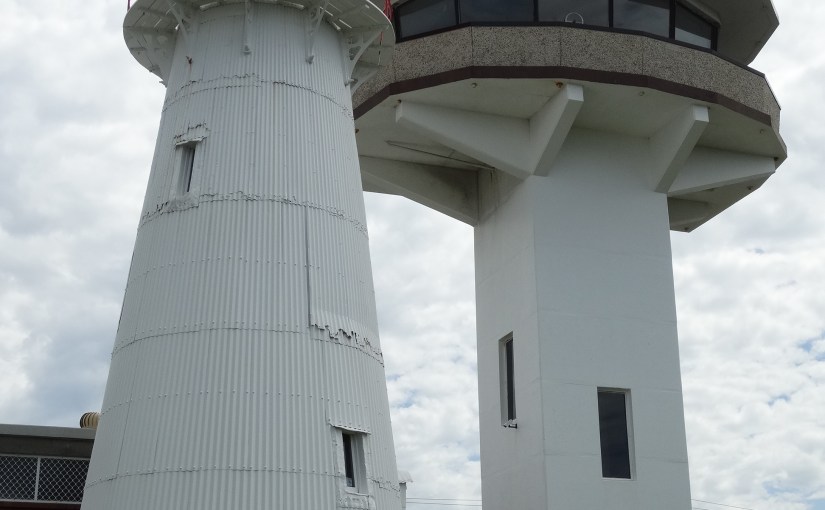
Now Svein is an artist and lives in the old town of Brugges in Belgium. Painting landscapes is not his style but he has a keen appreciation of nature and it’s beauty. We decided we would visit Matlock then visit Chatsworth House and move onto Buxton and then home. Here in Long Eaton we had seen snow flurries and felt the chilling winds but the snow did not last and fortunately neither did the ice that follows the snow. But it was a different story as soon as we started climbing the rural roads outside Chesterfield to travel to Matlock. Upon arriving in Matlock the temperature had dropped significantly there was slush in the street with black ice and we decided it would be good to visit in spring.

I set Tommy (our gps) for the quickest route to Buxton and we would pick up signs to Chatsworth on the way. However at one point Tommy told us to turn left and clearly that was not going to happen. In front of us there appeared a narrow village street with both sides lined with parked cars both street and cars covered in snow (no snow plough here). Thistle has front wheel drive and after we had travelled about 4 metres, Thistle started to slip and slide up the hill in front of us. We had another 200 metres to go to the top of the hill when I made the decision to slide back down to the intersection and find another road to Chatsworth House. However it was so pretty I was directed to stop for the photo gathers to snap pictures.

We found our way to Chatsworth House under snow. Now I expect Diane will be envious but it cannot be helped. We have been here numerous times but we were still not ready for the Christmas card scene. The house was not open for visitors but the stables were and it was nice to get out for a walk and shelter from the wind. Inside the stables we found the local Peak District Artisans had a display. Fantastic promotion of the artisans and their work which included jewellery, silverware, ceramics, art, furniture photography and textile design. Svein was jealous that there is no similar promotion for the artisans of Brugges.

We moved on to Taddington. As we drove to Buxton through the snow and frozen trees of the Peak District a sign on the edge of the road pronounced “Food – next mile”. Svein was looking for lunch at a country pub and you don’t get much more country that Taddington. So we left the road for the track that led to Taddington and the Queens Arms Hotel.

After parking Thistle in a down – hill position to ensure we could leave we went into the hotel where we were the only patrons. The fire was alight and warm a small space in front of it. Otherwise the bar was as cold as a witch’s elbow. Sitting beside the fire we ordered lunch and it was just what Svein wanted – a large plate with lashings of chips and ale pie. An hour or so went by and still no other patrons came into the pub. I awakened the barmaid sitting prone in front of a two bar electric heater messaging on her phone. As we paid our bill the barmaid announced that the road to Buxton was closed due to snow and we may need to rethink our route.  We decided to risk the journey and set off.

The snow had stopped and we made it safely into Buxton. We had read about the world’s largest unsupported dome being in Buxton. With a diameter of 44 m (144.356 ft), larger than the Pantheon (43 metres (141 ft)) and St Peter’s Basilica 42 m (137.794 ft) in Rome, and St Paul’s Cathedral (34 metres (112 ft))it was created for the 7th Duke of Devonshire between 1780–1789 from the Great Stables formerly part of the Crescent. The Crescent was modelled on Bath’s Royal Crescent along with an irregular octagon and colonnade of the Great Stables. The Dome became the Devonshire Royal Hospital (now the Devonshire Campus of the University of Derby). The record was surpassed by space frame domes such as the Georgia Dome (256 metres (840 ft.). The building and its surrounding Victorian villas are part of the University of Derby.

After a visit to the Dome and a hot chocolate at our favourite chocolate shop we agreed we were cold enough to call it a day and headed home.

← Back

Thank you for your response. ✨

The retirees go Abroad – Living ordinary lives in the UK – Royal Crown Derby Porcelain

We have been coming to the UK now for over 6 years and each time we have agreed that we must visit the Royal Crown Derby Porcelain factory. Sounds a bit boring so we managed to skip it time and time again. At this time of the year when very little is open and the weather is cold, we could not escape so on a grey day we tripped over to Derby and the Royal Crown Derby Museum and factory for the tour. The factory is in the inner suburbs of Derby.

“The Royal Crown Derby Porcelain Company is an oldest or second oldest remaining English porcelain manufacturer, based in Derby, England (disputed by Royal Worcester 1751 year of establishment). The company, particularly known for its high-quality bone china, has produced tableware and ornamental items since approximately 1750. It was known as ‘Derby Porcelain’ until 1773, when it became ‘Crown Derby’, the ‘Royal’ being added in 1890. The factory closed down in the past under Royal Doulton ownership, but production was revived under the renewed ownership of Hugh Gibson and Pearson family.” (Wikipedia)

Upon arriving at a plain looking factory we entered into a reception/ Museum. Whilst waiting for the tour to begin we looked around the Museum and as I did not see the sign prohibiting photography I took these shots, so you are very lucky to see this lovely display of porcelain. First thing I spotted was the Zepplin marked service which is the contents of the furnace when the factory was hit by a bomb dropped by a Zepplin in WW1 (there are very few of the pieces still remaining and if you see a piece marked with the Zepplin then it is very rare) Then there is the settings for the SS Olympic and SS Titanic. RCD made the settings and of course had to replace the settings for the Titanic. There are also copies of specific orders for the Royal family, middle-eastern potentates and American millionaires.

In the centre of the museum is a very special piece which was the last photo I snapped before I was informed about the prohibition. We toured the factory and saw everything from the throwing of the clay to the hand painting of special pieces. We even learnt how to distinguish seconds from first pieces. Certainly interesting and worth doing. We then visited the visited the general museum with pieces from 1750 through to the present. It included a special exhibition from a private collector which basically filled a room 15m x 7m. Then as we left there was a special exhibition of vases. So I took some special photos of these very precious vases.

As usual we ended up in the gift shop and noticed that there was a special on certain firsts but just as we started selecting our pieces this other chap started taking the pieces off the table by the armful. It turned out that he is a retailer who grabs all these things for his shop. We got away with our few pieces before he swooped.


Retirees Go Abroad – Ordinary Lives living in the UK – Erewash Canal


Well it is now three weeks since we returned from our Xmas New year tour with the Bishops and apart from hosting a short visit by Svien Koningen, we have been conserving our resources. In this period we have walked our canal, visited Crown Derby Porcelain Factory, toured the peak District to see it in snow, a day tour commencing with a walking tour of Long Eaton, followed by visiting Attenborough Wildlife Reserve, University of Nottingham St Lawrence Centre, Ye Olde Trip to Jerusalem, Southwell Minster and Thoresby Hall. Then we tripped down to Thornton Reservoir, and Boswell Field Battle Visitors centre.

Walking the Erewash Canal

One of the only things flowering at this time is in the garden of our flats. Apparently it is a Himalayan bush hence the cold weather makes it flower. On this day I took a series of photos of our canal (Erewash Canal). Trent Lock (the canal junction with the River Trent) has two pubs, the Steamboat and Trent Lock. I have included some photos of places things and inhabitants of the canal.  I have been playing with the settings on the camera so you will see some different effects.

We have previously always walked toward Trent Locke in the east, but on a particularly nice day we walked in the opposite direction toward Langley Mill in the west. I did not take the camera because we were just going for a walk. Next time I will get some shots.

What started out as a bright cloudless day turned a bit sour when the wind lifted and with the ambient temperature hovering around 1*C the wind had a real bite.

Despite the cold, we walked for about an hour arriving in Sandiacre yet another nearby village. Kerry spotted the Red Lion Pub and wanted to warm up so we crossed the road to find it was permanently closed. There are a lot of abandoned hotels throughout these villages and this one presented an interesting building which appeared to have the old stables still in the back of the hotel. She spotted the White Lion Pub 100m up the road but I was not interested and so we turned around and walked home. There are two further locks in this section. In all the canal has 14 locks and is approximately 11 miles in length.