The Retirees rock up to Rothbury

The following morning, we left Bowral and hit the road headed towards Hunter Valley, Rothbury and the vineyards. Again, the GPS made the trip uneventful until we got to the Vintage and our next hotel – The Sebel Vintage. The GPS took us right to the front of the Apartment complex but there was nothing like a reception to find out which apartment was to be ours. We made a decision to go further down the road as we thought we were in the wrong hotel. Essentially, we drove for 10 minutes to end up at the same spot. We had noticed a real estate agent at the corner of the road into the road leading to the apartments and this time we saw in small print on the face of the agency “Reception The Sebel Vintage”. Pissed off explains how we felt.

With our keys in hand we found our apartment and moved in. The apartment was very comfortable and roomy. Essentially it was a single level one bedroom apartment with kitchen dining room garage bathroom separate toilet and laundry in a cupboard. All of our needs met but there was more – we had a small garden off a patio but the weather was so hot and miserable the air-conditioning was more enjoyable than outdoors. The Vintage is a planned community with a golf club at its heart a gym and pool and surrounded by golf course and hotels/apartment hotels. There did appear to be private homes too. Kangaroos abounded. Without playing the golf course to understand its layout it looked to be very disjointed with players having to cross the main road to go from fairway to fairway.

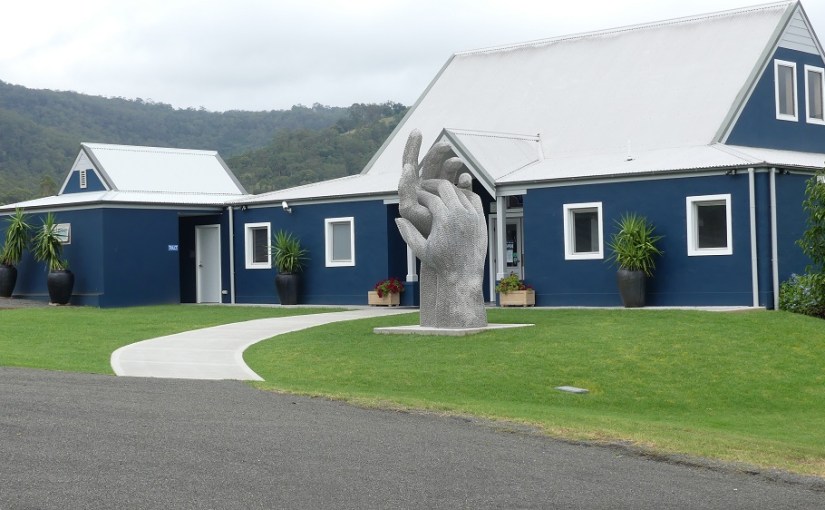
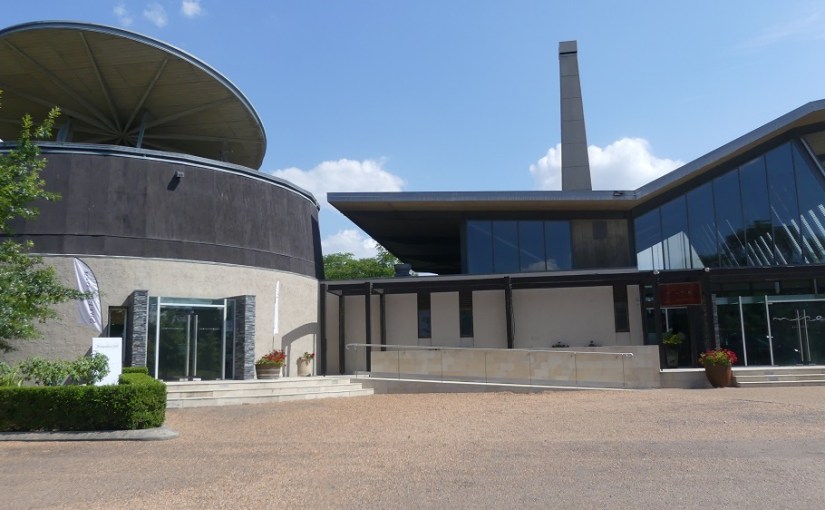
My plan was to break up the valley into 4 segments and do a segment each day. However we started our day by visiting some cellar doors. De Bortolli was our first port of call. We had passed the cellar door twice trying to find our apartment but we were way too early. Not that we needed a vino fix but the sun was up and we wanted to make the most of our visit. The weather hot so we did not need to be waiting for the place to open. However Kerry had a great idea to use the cellar door as a background for photos of one of her suitcase covers for Cover my Case facebook page and website. After De Bortolli we moved onto a cellar in a shopping centre called Monkey Place Creek . Kerry had seen a restaurant advertised and was looking for that particular restaurant which she thought was nearby the shopping centre so that how we ended up here. Good thing too. In the back of the local IGA we found a honey shop and like Winnie the Pooh, Kerry had to have her honey. The range was glorious but standing out was the honey made from pollen from Lemon Myrtle Trees. We have just such a tree in our yard at home and the scent of Lemon Myrtle is just divine. Bees who make honey with lemon myrtle pollen produce divine honey.

Further down the road we encountered the Hunter Distillery. A few more snaps for Cover my Case and then into the distillery we went. Famous for their gin made with botanical ingredients, Hunter Distillery is the only certified organic distillery in the Hunter wine region. Locally owned and operated, it produces an exceptional range of top shelf spirits, including Vodkas, Liqueurs, Schnapps and of course GIN. We sampled and selected but they were out of stock. I however had my eye on the butter scotch schnapps and I got lucky that day. Following the same road we found our way to a brew house where a tour bus had already landed. Kerry wanted a photo with the suitcase cover in front of the purple tour bus much to the alarm of the tour guide who suddenly appeared beside me curious as to why we trying to get into the bus. Huh? We stood in the blazing sun explaining that all we wanted was some photos and she settled down. But that meant I now had a thirst and it needed quenching. Unlike a vineyard cellar door this business combined the concept of cellar door brewery and tasting room restaurant and gift shop (clearly a tourist trap). This was a Matilda brewery selling the bottled beer from Freemantle but they did brew a ginger beer. So I quenched that thirst with an alcoholic ginger beer. Not bad but I think the alcohol content was similar to Green’s ginger wine. Whew! We then tried the cellar door but it had a selection of local wines none of which it produced. So we did not find anything of interest.

Just to show you that it was not all cellar doors, distilleries and breweries we went to the Zoo. The day continued to be blistering hot with clear blue skies. We skipped from shade to shade to try and keep cool. In doing so I disturbed a large thick knee which surprised me as well as me surprising him. I had never seen one of these birds so large. there is a nesting couple in Mowbray Park at home but they would be 30 cm high this bird was 1 m tall.

We were just in time for the Meerkat show – basically a keeper feeding the little critters and talking about being a meerkat.  After the meerkats we wandered past a giant land tortoise with some little pals, a resting Lace Monitor (heavens knows how much more there was to this beast), a frilled neck lizard, another native Australian (lizard), and either a paddy melon or small wallaby in their rocky dens. The next show was right up the other end the zoo. The walk to the next show took us passed all sorts like alligators, crocodiles, ostriches, geese and other sorts ultimately standing in front of the South American Wolf Fox. This strange fox like creature is actually a wolf and it looks like it is on stilts. The highlight had to be the monkeys and their antics with new born clinging on for dear life. The heat was getting to us but we were determined to see the remainder of the animals – a pair of sleeping cockatoos, a riot of lorikeets, a cloud of small finches and a mob of kangaroos. We had an enjoyable time but as the roos show relaxing in the shade was the way to go.

On the way back to our apartment Kerry wanted to stop for a photo opportunity for the Cover my Case label. Spotting some vines, we drove in and found ourselves at Hungerford Hill Cellar Door. After taking some snaps we decided the sun was too hot to not stop for a cool beverage. The host was quite taken with the suitcase covers and allowed more photography and wine sampling. Refreshed we ventured to the car which I had parked under the shadiest bush around and ambled home to fill our suitcase again with more bounty from the cellar door.

← Back

Thank you for your response. ✨

The Retirees chasing the Red Cow

The Red Cow is a unique cool climate garden set on 2.5 hectares in the picturesque rural village of Sutton Forest. The simplicity of its presentation disguises a garden of sophisticated structure and ambitious schemes. Developed by its creative owners Ali Mentesh and Wayne Morrissey around their historic 1820’s cottage, the garden is abundant and secretive.  We were greeted by Ali as he opened for business. He directed us to the wondrous walled sanctuary where solitude invites quiet reflection. Red Cow Farm features an exuberant cottage garden, monastery garden, abbess’s garden, a stunning collection of rare and unusual perennials, woodland, old fashioned roses and clematis, beech walk, lake, bog garden, orchard and kitchen garden. The gardens also attract local wildlife particularly birds. The chook pen was popular with galahs and red parrots. With all these gardens and the festival of birds inhabiting the gardens it is a stark contrast to observe the ploughed fields on the adjoining farm.

From Red Cow we travelled to Bundanoon and the Buddhist Monastery in the forest outside the village. Sunnataram Forest Thai Monastery was commenced in 1989 and has been built by the monks living there over time. The centre of the Monastery is the Gratitude Pagoda finished in 2013. The monks teach Buddhism in schools and Universities in the district and the monastery operates as a retreat for Buddhist adherents. It is open to visitors and you can sit in on a presentation by one of the monks. We took the opportunity but found it was rambling and at some times unclear, but we sat through it though enlightenment evades us still. This was a first for me and something I did not expect in Australia. The Pagoda has niches on all four sides and different statues of Buddha from different cultures and countries stand in these niches. There is an entrance into the Pagoda through a glass door. I felt uncomfortable to just stroll in flashing my camera about but no one seemed to mind.

We returned through Bundanoon which is divided by the rail line to Sydney. Feeling like some lunch we checked out the cafes (all 3 of them) and a rejects shop where we were given the tip to cross over the railway to get a decent pub meal. So we crossed the line, passed an early home still in use today and we found a fabulous old hotel behind the railway station. This hotel must have been built for all of the travellers from Sydney holidaying in the Southern Highlands. The timber panelled dining room the upstairs accommodation and the lounge bar resplendent  with lounge chairs leather sofas and timber panelling with a large fire place all seem in contrast to the tacky tiled public bar tacked on the end of the hotel closest to the station. We chose the dining room and tucked into a succulent lamb roast and a glass of local vino which filled an empty spot before we returned to the Sebel in Bowral.

And that is all folks! The next day we spent sitting in the air-conditioned room doing much of nothing and relaxing after an enjoyable visit to the Southern Highlands.


← Back

Thank you for your response. ✨


The Retirees exploring the Southern Highlands of NSW

After our first big day out in Bowral and resting with a cold G&T on the sofa we mapped out our route for the following day. First stop would be Bendooley Vineyard and Berkelouw Bookstore.

We have been to many a cellar door and vineyard over the years but we were surprised at the enormous carpark behind the cellar door at Bendooley Vineyard. An unusual congregation of buildings – a stone cottage and timber bookstore hid this carpark which must have been big enough for over 100 cars. It turns out the vineyard not only produces pleasant wines, but it has cottages for holiday makers, a tasting room in that stone cottage along with a fine restaurant and a bookstore. We tried the wines at the cellar door whilst awaiting a table in the restaurant and once we were comfortably seated we shared a delicious pizza with a glass of their Rose (our preferred choice from the wine tasting). After lunch we explored the bookshop which appeared to be in an old but renovated stable. The shop was littered with tables and chairs not just for the readers’ but it too offered an dining experience. Further the books were not your usual newspaper stand at the airport selection but rather a library of historical, autobiographical, geographical, mineralogical – all kinds of books. A rare bookstore in the bush outside Berrima.

The story of Berkelouw Books begins in Kipstraat, Rotterdam, Holland, in 1812 with Solomon Berkelouw. Solomon’s young son Carel carried on his father’s trade by opening a bookstore at the Niewe Market in Rotterdam where, Berkelouw Books prospered and later moved to a larger premise at Beurs Station, also in Rotterdam. Carel’s son Hartog Berkelouw continued to expand the family business. He opened a new shop at Schoolstraat, Rotterdam. It was Hartog who first began issuing the catalogues that gained Berkelouw an international reputation. However, the Second World War intervened, and during the siege of Rotterdam, Berkelouw Books’ premises were bombed, and its entire stock destroyed. Its owners became casualties of the war and the once thriving business was brought to a standstill – the work of four generations of Rotterdam booksellers virtually wiped out in just a few years.

Immediately after the war, Isidoor Berkelouw began to re-establish the firm but, Isidoor was keen to move the business out of Europe. In 1948 Isidoor made the long journey to Australia. Arriving in Sydney, Isidoor issued a catalogue, generating immediate interest amongst book collectors around the country. He set up shop at 38 King St, then headquarters was relocated to 114 King St and Isidoor began to share the management of the business with his two sons, Henry and Leo. By 1972 the Berkelouw collection move to Rushcutters Bay, then in 1977 took a quantum leap relocating entirely to ‘Bendooley’, an historic property just outside Berrima in the Southern Highlands of NSW.

In 1994, the sixth generation, Paul, Robert and David Berkelouw, opened again in Sydney, at Paddington. Since then, Berkelouw Books has opened further stores in Sydney and Eumundi on the Sunshine Coast of Queensland. Today Berkelouw Books claims it is Australia’s largest rare and antiquarian, second-hand, and new bookseller.

Whilst in Berrima we visited the Berrima Courthouse. Surprisingly grand sandstone building for a bush court house it stands beside Berrima Goal also constructed in local sandstone. It is now a museum. Berrima Courthouse was built between 1836 and 1838. The first quarter-sessions were held at the court house in 1841, and the first trial by jury in the colony of New South Wales was held there. The assize courts were continued for only seven years. In 1850 the district court moved to Goulburn, south of Berrima. Minor courts continued at Berrima until 1873. Notable trials were of John Lynch, who was hanged for the murder of at least nine people, and of Lucretia Dunkley and her lover Martin Beech who were both hanged in 1843 for the murder of Dunkley’s husband. Their trial is simulated in the present-day museum courtroom with realistic manikins and an audio commentary. Dunkley was the only woman to be hanged at Berrima gaol.

Berrima Gaol was built over five years with much work done by convicts in irons. Conditions at the gaol were harsh, prisoners spent most of their days in cells and the only light was through a small grate set in the door. During World War I the army used Berrima Gaol as a German-prisoner internment camp. Most of the 329 internees were enemy aliens from shipping companies. There were German officers from Rabaul, German New Guinea (what is now Papua New Guinea) and also officers from the light cruiser SMS Emden. Captain Müller had taken Emden to raid the Cocos Islands, where he landed a contingent of sailors to destroy British facilities. There, Emden was attacked by the Australian cruiser HMAS Sydney on 9 November 1914. Most of the survivors were taken prisoner.

After Berrima we returned home to put our feet up and plan the following day at Red Cow Farm.

← Back

Thank you for your response. ✨

The Retirees blow into Bowral

Of course, we found the car. It was on the last floor we searched. If it wasn’t a manual drive care then I would have been banned to the back seat. But it was a manual so taking the helm, I set sail for Bowral in the southern Highlands of NSW. Using the GPS we drove directly and trouble free to our apartment at the Sebel Apartments in Bowral. Our apartment (contained in the building in photo 4) is part of a settlement of self -contained houses set in a pleasant surrounding with undercover pool and gym.

Bowral’s history extends back for approximately 200 years. During the pre-colonial era, the land was home to an Aboriginal tribe known as Tharawal. The first European arrival was ex-convict John Wilson, who was commissioned by Governor Hunter to explore south of the new colony of Sydney.

The town grew rapidly between the 1860s and the 1890s, mainly due to the building of the railway line from Sydney to Melbourne

Gardens and European plants flourished from 1887, when citizens of Bowral started planting deciduous trees to make the area look more British. This legacy still lives on throughout Bowral. Notably, the oaks at the start of Bong Bong St are a characteristic that makes Bowral distinct from other rural towns, giving it strong autumn colour. The town became somewhat affluent, as many wealthy Sydney-siders purchased property or land in the town and built grand Victorian weatherboard homes.

As our apartment was within walking distance of downtown Bowral, we went walking through town in oppressive heat  through to the Coles supermarket to stand in front of the open refrigerator cabinets and pick up supplies including a different make of gin and saw some of its historic buildings like the Town Hall on the way.

Cootamundra was the birth place of Don Bradman, but he played his early cricket at the Bowral Public School and later the Bowral Cricket Club. After a most successful career as a cricketer Bradman has been immortalised at the Bradman Museum Bowral. The Bradman Museum has evolved into the Bradman Museum & International Cricket Hall of Fame. It was Sir Donald Bradman’s vision that ‘cricket continue to flourish and spread its wings. The world can only be richer for it.’ To honour this vision, the museum has been expanded to not only show the importance of the Don’s contribution to cricket and Australian history, but also cricket’s important role throughout the world.

Outside of the museum is the statue of the Don and the Pavilion of the Bowral Cricket Club.

Bowral and the Southern Highlands are known for their wines and there is a published wine trail for tourists like us to follow. In fact, there are Coffee, and Pie trails as well but these are seasonal. After the museum we explored around Bowral stopping at Blaxlands Estate, Cuttaway Hills Estate, and Cherry Tree Hill Estate. Our favourite by far was Cuttaway Hill.

It is also known for its National Parks such as Morton National Park and its water falls. Fitzroy Falls is one such place. In the rugged Southern Highlands, we discovered the Visitors Centre for Morton National Park. Entering the centre we felt we were being watched from up above. Leaving the Visitors Centre the falls are a short distance along a well maintained path. Before getting to the falls the path divides one track going east and the other to the west. We chose the West Rim walk across a footbridge and out into a lookout opening up the valley below. Bending around to look east I capture a view of the beauty and grandeur of Fitzroy Falls. The West Rim walking track provides wonderful vistas of gorges and waterfalls and sweeping views across Kangaroo Valley at the Manning lookout. We decide to back track and taken the Eastern Rim walk to see the spectacular waterfall that dramatically drops more than 80 metres more clearly. There is a lookout on the Eastern Rim walk looking directly at the falls and we take lots of photos. After appreciating the magnificent falls, we explored the enchanting wilderness on well-marked walking tracks. We passed a gnarled old tree which had lumps and bumps all over it. The East Rim and Wildflower walking tracks took us to lookouts with superb views of the valley and sheer drops of dry waterfalls .

From Fitzroy Falls we moved onto the village of Kangaroo Valley which was bursting at the seams with visitors. Quite a number of old buildings have been re-purposed with a new use such as an old bank into a café. The first inhabitants of Kangaroo Valley were the Aboriginal Wodi-Wodi people. The area was first settled in 1817 when Charles Throsby, an explorer and Captain Richard Brooks, a cattleman, opened the area for white settlement. The felling and exporting of cedar trees quickly became the main industry in Kangaroo Valley. By the 1870’s activity had begun to concentrate in the area that is now the village. The local public school was built in 1884 of local sandstone. The local courthouse was built c.1910, also of local sandstone. The main buildings include a residence and lock-up as well as the courthouse itself. The local school and the courthouse are both listed on the Register of the National Estate.

The valley has changed very little in the past 130 years with reminders such as the Hampden Bridge, the oldest suspension bridge in Australia completed in 1898, and old Barrengarry School serving as a testimony to the past when Kangaroo Valley was home to a flourishing dairy industry. Agriculture still exists, though other industries such as tourism and outdoor recreation have since taken over as the primary source of income.

From here we moved onto Shoalhaven, and the beach. Without any knowledge of the area and relying on maps from the café in Kangaroo Valley we arrived at Cunjurong Point, I think. Anyway, there is a beach where a creek/river runs into the ocean and a point of land or an island (not sure). Again, a stinking hot day so a walk along the beach was nice. We relaxed under some trees and consumed our chicken sandwiches and a flask of coffee before returning to the road and home.

However, as we journeyed back to Bowral we discovered the Illawarra Fly Treetop Adventure – a tree top walk not for the feint hearted. A sign on the side of the road and a little knowledge from the tourist brochures in our room we thought it would be worth a visit. We were not the only ones to stumble across it. After paying the entry fee we walked passed a donga where other visitors were being briefed on the use of the zip line. Dotted along the forest walk to the treetop bridge are fairy houses – why I don’t know because I did not see any fairies so that I could ask them. The sky bridge is cantilevered at each end of the bridge and in the middle is a tower reaching another 30 metres above the trees. After proving that heights did not bother her but they tested me, we went back to our apartment in Bowral to turn on the air-conditioning have a gin and tonic and contemplate our day. We were stuffed.

← Back

Thank you for your response. ✨


The Retirees travelling in Australia – New Year 2019 in Sydney

After seeing in the New Year our son and family arrived for brunch. This was the farewell and hand over of the car. The kids particularly Francis made me cringe at the thought of their forthcoming flight overseas. Francis can be boisterous and the confines of a plane – eek! Brunch passed relatively smoothly and after, I took possession of the car parking it in the Parking Station behind the Apartment.

Later that day after the kids had left we decided to take a trip by ferry to Manly perhaps to swim and cool off. We walked to the Pyrmont ferry past the Maritime Museum and boarded the ferry for Circular Quay. It was far more pleasant on the harbour than the previous evening (the humidity had dropped) and we enjoyed the sights at each stop. However we were not the only ones going to Manly that public holiday. Hundreds of other people had the same idea and we found ourselves sweating in queue for the ferry to Manly. On a good day it is always pleasant to cross the harbour to Manly and this was one such day. It brought back memories of my 50th birthday at Doyles on the Beach and our visit to Manly on NRL Grand final day a few years back.


We had thoughts that we would have a swim, but the surf was disappointing and the sun by lunchtime was stinging hot. Kerry found a table under the trees which we shared with a Jewish couple visiting Sydney on a ship. They had viewed the New Years Fireworks from on board – probably one of the ships tied up across the harbour from Pirrama Park. Others from their ship were seated around. Rod and I purchased the fish and chips whilst the girls enjoyed chatting with the visitors. Well maybe I did more than chat with the visitors and eat fish and chips.

Having abandoned the idea of swimming, we thought of an air-conditioned pub with views where we might pay a few hands of cards. On the corner of the esplanade and the mall we found the perfect spot and it has a rooftop Gin Bar meaning the girls were happy too. A few hands of cards a couple of drinks finishing with a tasting plate of ice creams in air-conditioned comfort. Tough life. I tried my hand at taking some more shots of the locals enjoying the beach from on high. I did not have the same success as earlier.

Photos

The trip back to Sydney was arduous after an afternoon in the pub and waiting for the ferry to arrive. once on board and sailing it was again refreshing with cooling sea air blowing through the cabin. Back at the Apartment it was days end and we were rewarded with a brilliant sunset. We looked from our balcony across the roof top gardens on the building beside us (the carpark with apartments on the roof ) and with the sun setting the sting of the sun was now bearable. A gentle breeze caressed our languid bodies slumped with exhaustion in the balcony chairs. A perfect setting to end the day.

Next day we farewelled our fellow travellers checked out of the apartment and went to find the car in the adjoining carpark. Age must be wearying my memory. Although I could remember perfectly where I had left the car, I was very unclear about which floor that was.

← Back

Thank you for your response. ✨


The Retirees travelling in Australia – New Year 2019 in Sydney

It all started with doing a favour. Our son has been posted overseas. This meant a partial rearrangement of things here in Aus but this all changed when the posting went from 1 year to 4 years. We offered to garage one of their cars picking it up in Sydney just before they flew overseas. We would stay in Sydney for the New Year tick off the New Year Fireworks from the bucket list and then drive to the Southern Highlands and the Hunter Valley.

With the change in the posting the vehicle was sold to one of our daughter-in-law’s family who would fly to Brisbane to pick up the car. This forced a change to our plans. We arranged to meet the Buyer at the Newcastle Airport and we return to Brisbane from Newcastle.

So, having set the scene we arrived in Sydney on 30th December having met up with our co-travellers in Brisbane. We were staying at Pyrmont at the Oaks Goldsborough. This is the old Goldsborough Mort building transformed from a Wool Store to apartment accommodation. Pyrmont is an old area of Sydney and very interesting to walk around. We visited Pirrama Park where we expected to spend New Years Eve to view the fireworks over the harbour and judging by the tables and chairs so were a lot of other people.

31 December and we made certain of our spot by arriving early at Pirrama Park. It was a hot afternoon and even the harbour did not seem to cool it off. Two cruise ships docked getting ready for the fireworks. By sunset the crowds had shuffled in and we were thankful for our planning. One thing we did not plan adequately for was the deluge of rain that bucketed down around 7.30 pm. Our umbrella was saturated and leaking rain onto us. We were drenched so we returned to our apartment to change into dry clothes and returned just as the 9.00 pm fireworks commenced.

The weather held off but provided the perfect darkened sky to illuminate the fireworks at midnight and the change of the year. As usual the fireworks were spectacular, but a picture paints a thousand words so here are the photos.

We walked back to the apartment along with all the other revellers and made it to bed well after the new year had begun.

← Back

Thank you for your response. ✨


The Retirees visit Anzio

We had enough of the dead so the following day we decided to visit Anzio. Again, we turned to the train to deliver us safely to this quiet fishing village south of Rome. Terminii is a large modern station with restaurants and bars on the first floor overlooking the trains parked and picking up passengers pulling in and departing across 28 plus lines. We had breakfast and watched the trains until our train was due to depart.

The train station at Anzio is approximately 500 metres from the water front. The downhill stroll was relatively easy however the same cannot be said for the return trip. Anzio has been established since ancient times.

Anzio occupies a part of the ancient Antium territory. In ancient times, Antium was the capital of the Volsci people until it was conquered by the Romans. Leading Romans built magnificent seaside villas there and when Cicero returned from exile, it was at Antium that he reassembled the battered remains of his libraries, where the scrolls would be secure. Remains of Roman villas are conspicuous all along the shore, both to the east and to the north-west of the town. Many ancient masterpieces of sculpture have been found there: the Fanciulla d’Anzio, the Borghese Gladiator (in the Louvre) and the Apollo Belvedere (in the Vatican) were all discovered in the ruins of villas at Antium.

Of the villas, the most famous was the imperial villa, known as the Villa of Nero, which was used by each Emperor in turn, up to the Severans and which extended some 800 metres (2,600 ft) along the seafront of the Capo d’Anzio. Augustus received a delegation from Rome there to acclaim him Pater patriae (“Father of his Country”). The Julian and Claudian emperors frequently visited it; both Emperor Caligula and Nero were born in Antium. Nero razed the villa on the site to rebuild it on a more massive and imperial scale including a theatre. Nero also founded a colony of veterans and built a new harbour, the projecting moles of which still exist.

In the Middle Ages Antium was deserted in favour of Nettuno, which maintained the legacy of the ancient city. Pope Pius IX founded the modern municipality of Anzio, with the boundaries of Nettuno being redrawn to accommodate the new town.

Anzio and Nettuno are also notable as sites of an Allied forces landing and the ensuing Battle of Anzio during World War II. The Commonwealth Anzio War Cemetery and Beach Head War Cemetery are located here.

Strolling down from the station we entered the village at the edge of the market square. The square was bustling all the way to the waterfront where you can still see evidence of the refurbishment of the harbour ordered by Emperor Nero. We walked through the square and along the water front past a Jewish synagogue with middle eastern architecture past beaches lined with umbrellas the colours indicating the different business owners of the beach, a lighthouse standing over caverns in the sea wall delineated as though they were once part of the harbour which lead us up to the ridge running along the sea shore. Scores of ruins lay around between beaches and across the ridge.

A fence prevented us from walking amongst the ruins. We walked about 1000 metres and came upon a visitor centre where we watched a video explaining the ancient ruins all around. We then followed the path taking us on a journey through time and the ruins. We were standing where Emperors like Caligula and Nero had once stood in their holiday villas.

It was hot and the walking was taking a toll. We still had to get back to the train station and we had come such a long way out of the old village. We made our way back attempting a short cut, but it was now the middle of the afternoon and the ocean breeze was not helping much. Mixed in with this was we had only a light lunch and the expectation that we would pick something up before the train proved illusory. Back on the train we journeyed to Terminii and our apartment for the last time. Tomorrow we would catch the train/underground to Leonardo da Vinci – Fumucino airport and home to Brissie.

As I am writing this 6 months after the events (not my usual practice but time did not permit) I cannot be sure that the next event happened on the way to Fumicino or another day we caught the lift at Terminii. Waiting for passengers to alight for the lift carriage two women came from behind me pushing me forward rather than waiting for the passengers in the lift to leave. Then I felt a hand in my pocket so I turned and using my forearm against the throat of the culprit I pushed her back against the wall with her feet off the ground. I screamed at her to remove her hand. She quickly got her hand out of my pocket and so I removed my forearm and then backed into the lift carriage.

Quite a bit of excitement but it reaffirmed for me that you cannot let your guard down in Rome particularly the underground. Kerry who had no idea what was going on, was quite shocked that I would attack this woman and accused me of being impatient and losing my temper.

Very interesting – what the witness saw – not a pickpocket at work but an impatient angry man attacking an innocent woman. Fortunately she accepted that the woman was a pick pocket and did not hand me over to the Carabinieri.

← Back

Thank you for your response. ✨

The Retirees and the Capuchins – the Catacombs of Rome

Two more days of our Roman Holiday. After our visit to Castel Gandolfo we seemed to hit a dead spot but not for long. We took a tour of the catacombs and to pick up the tour we decided to walk which proved to be somewhat futile as we turned right when we should have turned left and ended back where we started which was not the intention. Even so we passed many interesting statues and buildings. We passed what appeared to be a monument to a mythical sea god, a building without corners and Trevi Foundation which is what we were looking for. Having visited the fountain by night on our Segway tour we thought we needed to see it with fewer people and get some day time shots.

Some of these ancient buildings are not actually so ancient but shopping centres made to resemble the ancient. We also passed through a square we had visited on the Segway tour where we were able to obtain photos of the pillar with an avenging angel on top at least I think it is an angel or is an apostle – it gets confusing. We finally made it to the square where we were to meet our guide along with a whole lot of other people. The group was divided into at least 4 smaller groups of 12 – 16 people bundled into buses and whisked away. In our case it was to visit the Capuchin Convent – Cimitero dei Cappuccini: The Capuchin Crypt.

The Capuchin Order arose in 1525 when Matteo da Bascio, an Observant Franciscan friar said he had been inspired by God with the idea that the manner of life led by the friars of his day was not the one which their founder, St. Francis of Assisi, had envisaged. He sought to return to the primitive way of life of solitude and penance, as practiced by the founder of their Order.

Matteo and his companions were formed into a separate province, called the Hermit Friars Minor, as a branch of the Conventual Franciscans, but with a Vicar Provincial of their own, subject to the jurisdiction of the Minister General of the Conventuals. The Observants, the other branch of the Franciscan Order at that time, continued to oppose the movement.

The crypt is located just under the Church of Santa Maria della Concezione in Rome. Cardinal Antonio Barberini, who was of the Capuchin Order, in 1631 ordered the remains of thousands of Capuchin friars exhumed and transferred from the friary on the Via dei Lucchesi to the crypt. The bones were arranged along the walls in varied designs, and the friars began to bury their own dead here, as well as the bodies of poor Romans, whose tomb was under the floor of the present Mass chapel. Here the Capuchins would come to pray and reflect each evening before retiring for the night.

The crypt, or ossuary, now contains the remains of 4,000 friars buried between 1500–1870, during which time the Roman Catholic Church permitted burial in and under churches. The underground crypt is divided into five chapels, lit only by dim natural light seeping in through cracks, and small fluorescent lamps. The crypt walls are decorated extensively with the remains, depicting various religious themes. Some of the skeletons are intact and draped with Franciscan habits, but for the most part, individual bones are used to create the elaborate ornamental designs.

Unfortunately no photos allowed.

I must say it was quite strange, but everything came back to reality when we entered the gift shop for the crypt – I kid you not!

Our next visit was to what I considered the real catacombs The Catacombs of Domitilla

They are situated over 16 metres underground, about 2 kilometers from the south of Appia Antica (Appian Way) and spans 15 kilometers in distance. They were actively used as a cemetery from around first through fifth centuries CE and were rediscovered in 1593 by Antonio Bosio, an archaeologist. They include more than 26,000 tombs. Inside the Catacombs of Domitilla are images, some of which were revealed by the restoration, reflecting the life of bakers, grape vines, Jesus with the apostles, Noah’s ark, and Daniel with the lions. No pictures allowed but rather spooky in parts. No bones that we could see but apparently there are still remains somewhere in there. This was underneath a church and the church had a gift shop of sorts but no where near as weird as the Capuchins.

← Back

Thank you for your response. ✨

The Retirees visit the Pope’s holiday home – Castel Gandolfo

The highlight of our trip occurred on the 13th August when we visited the Pope’s summer palace at Castel Gandolfo. Coincidentally it was also the anniversary of our wedding. We had decided to celebrate with lunch at Antico Ristorante Paginanelli which is outside of Castel Gandolfo.

Castel Gandolfo is a town located 25 kilometres southeast of Rome. It is situated on Largo (Lake) Albano which to me looks like an old caldera filled with water as the village and castle of Castel Gandolfo is over 600m up the side of the lake.

To get to Castel Gandolfo we decided on the train but we had no idea what we would encounter nor how we would get up the hill from the station to the Restaurant and Pope’s residence. Fortunately for us just a few train stations short of the castle stop in Albano, the train line was under repair and for the last leg of our trip we were bussed to the town high above Lake Albano and not the rail terminus.

Occupying the top of the Alban Hills overlooking Lake Albano, Castel Gandolfo has a population of approximately 8,900 residents and is considered one of Italy’s most scenic towns.  The resort community includes almost the whole coastline of Largo (Lake) Albano which is surrounded by many summer residences, villas, and cottages built during the 17th century. It houses the Stadio Olimpico that staged the rowing events during the Rome Olympics. Castel Gandolfo has several places of archaeological interest including the Emissario del Lago Albano and the remains of the Villa of Domitian.

The bus dropped us off and we were left wondering where to from there, but a little investigation uncovered Antico Ristorante Pagnanelli, our ultimate destination. Nearby we noticed a road way climbing along the face of the valley with dramatic views of the lake.

At the end of the road is Castel Gandolfo (the village) and at the end of the village square – the Palace. Within the town’s boundaries lies the Apostolic Palace of Castel Gandolfo which served as a summer residence and vacation retreat for the Pope. Although the palace is located within the borders of Castel Gandolfo, it has extraterritorial status as one of the properties of the Holy See and is not under Italian jurisdiction. It is now open as a museum. The day we visited a group of nuns was also visiting which seemed a little odd that they were tourists and not part of the palace or a least the church.

We entered through a side entrance and looked back to the square of the village. Inside the palace courtyard is part of the Pope’s motor vehicle stable. Above us the Pope would stand and address the villagers and conduct Mass. Our online enquiries about tickets to visit the Palace suggested that we could only visit as part of a tour at a cost of 250 euros each but for 19 euros we got tickets to explore the palace/museum.

The oldest parts of the castle date back to the 13th century. It was acquired by the Vatican in 1596 when the Savelli family, who owned it, were unable to pay a debt to the Papacy. The gardens occupy the site of a residence of the Roman Emperor Domitian. The palace was built for Pope Urban VIII. Popes have used the properties as a summer residence and vacation retreat, except for the years between 1870 and 1929 when the Popes, were in dispute with Italy over territorial claims, and did not leave Vatican City. Pope Pius XI had the facilities modernised and began using the retreat again in 1934. In accordance with the Lateran Treaty of 1929, the palace and the adjoining Villa Barberini added to the complex by Pope Pius XI are extraterritorial properties of the Holy See.  The palace has been a museum since 2016. The first floor holds many of the vestments of past Popes and displays of ceremonies of the Church. In addition portraits of every Pope from the time of the Savelli family (one of the Savellis had held the office of Pope) was displayed along with the official Vatican history of the Pope. Not all of them were saints in my view. The Savelli crest has been absorbed into the Palace crest which appear on the ceiling and pottery (chamber pot in this instance). Of course there are priceless pieces of art and sculpture throughout but the statue of Don Quixote caught my eye as it stared at the timeless stunning scenery out the window. As we passed through the Papal bedroom I was amused that the Papal bed was a single bed but on reflection that is all he needed – probably the only thing that did not suggest excess and opulence.

We exited onto the village square and we wandered through to return to the road that would take us back along the ridge to Antico Ristorante Pagnanelli.

Opened by Giovanni Pagnanelli in 1882 the restaurant has been in the ownership of the same family for 4 generations. When we arrived we were greeted by a very Australian nona who it turned out is the wife of the current owner (met her husband on the beaches of Largo Albano married had 3 children and a restaurant). We positioned ourselves on the Terrace over looking the lake and settled in to a most enjoyable lunch with a bottle of Pol Roger (yummy – aged and honey over tones very dry)

The menu was individual and we slowly grazed through 3 course and our bottle of Pol Roger. The whole experience was very memorable topped off by a visit to the cellar. As we were departing Kerry asked if we could see the cellar. Sure no problem. We were shown the stair case and told to hold the rope as we went down. That was it we had been given the keys to the most extensive cellar I have seen. The photos follow and some of the wines would have to be decades old. As we descended we passed displays of all sorts of instruments for opening wine or harvesting grapes then row upon row of ancient bottles some even signed by past visitors – Keneau Reeves being one.

After lunch we waited for the next bus which took us only as far as the train station back to Terminii and a long walk to Via Natizonali.

How do we match that day? A memorable 30th anniversary leaving me to wonder how we improve for the next milestone.

← Back

Thank you for your response. ✨

The Retirees return to Rome – Terni to Roma

The train trip was without incident. We are getting well-travelled on Italian trains, but the secret is to never get complacent and think you know it all. We arrived at Roma Terminii and thought our accommodation was close by. Well it was stinking hot and we knew the general direction through Piazza della Republica down Via Nazionale. But finding the right door. Our hotel was a suite of rooms in a larger building which fronted Via Nazionale and we had to ring the bell and wait for an answer. This did not happen without error as the manager was off doing something for another guest and did not answer his phone. And it was hot. After what seemed an interminable wait someone opened the door and we got inside the courtyard out of the sun. When the manager arrived, and he pointed us toward a set of stairs Kerry asked about the lift and we were told it was at the top of the stairs. That was enough Kerry. Kerry was certain I was not able to climb the stairs particularly as we were staying a number of days. After some kerfuffle we were changed from one suite to another suite of rooms and all was well again save that we would have to change room again tomorrow. After all was said and done she was right, dragging my moon boot up the stairs would soon wear very thin.

After settling into our room we were off for our Segway tour of Rome. According to the tourist map the Segway tour office was just down the road – well not quite. Feeling adventurous we hailed a bus and guided by our tourist map, got off at Piazza Venezia and the Vittoriano. There’s no way to miss the hustle and bustle of Rome’s largest round-a-bout: the Piazza Venezia. On one side you can look down Rome’s longest street, the Via del Corso to the ancient northern gates of the city. From another angle, the ruins of the Imperial Forums lead the way to the Colosseum. Take a different road and you’ll end up in the Jewish Ghetto, on your way to Rome’s Trastevere neighbourhood and last but not least, towering over the piazza, is the unmistakable marble monument: Il Vittoriano.

This enormous monument derives from the name of Italy’s first king, Victorio Emanuele II of Savoy to whom it is dedicated.  Another name is “l’Altare della Patria” or “Altar of the Fatherland” as the monument was built to celebrate Italian unification and the birth of Italy as a nation at the end of the 19th century.  Most Romans aren’t a fan of the monument which they say doesn’t blend in with the rest of the city skyline.

The centre piece of the Vittoriano is the enormous bronze equestrian statue of the first king himself. Over the steps in the centre stand the actual “Altar of the fatherland”, containing the tomb of “The unknown soldier”, a symbolic reminder of all the unidentified deaths of WWI. In front of the altar’s relief, visitors can see the statue of the goddess Roma with the secret eternal flame, always guarded by soldiers.

Using Vittoriano as as landmark, we walked down Via del Theatro di Marcello and unknowingly past the street leading to Turtle Fountain and the Segway office. We walked down to the church of San Nicola in Carcere and s**t it was hot. We decided to give it up and crossed the road to catch a bus home. We would have had better luck finding hen’s teeth – nothing came along and we were roasting in the sun. So we hailed a cab and decided to ask the driver to take us to the Turtle Fountain – sure he knew where that is and under 5 euros we were there and the tour office was closed but not the bar beside it and we needed a drink.

So, we tumbled in sat down and ordered a gin and tonic and a beer and some water. That was it and there we remained until the tour office opened and I could try to recover the loss of the booking. this little bar feed and watered us for the rest of the afternoon. A short time later on another visit we would walk down the lane obscured by the fountain to the Jewish quarter.

Well the tour office finally opened. With a slight case of sunstroke and the power of a couple of gins and a beer I went to plead our case for a refund of the lost tour. To my amazement  our booking was not lost as I had mistaken the date and our booking was for the next day. However we had learnt our lesson and we shifted the tour to the evening due to the heat of the day. I returned to the bar and we stayed ultimately having dinner and making our way home after the sun had set.

The next day we went back to the Turtle Fountain area and explored the Jewish district. Evidence of the roman period was obvious all the walls above us. Roman writing to sculptures in niches in the wall to forgotten ruins in the middle of the residential neighbourhood.

From the Jewish quarter we strolled across Tiber Island. The only island in the Tiber that flows through Rome it is boat-shaped, approximately 270 metres (890 feet) long and 67 metres (220 feet) wide, and has been connected with bridges to both sides of the river since antiquity. Being a seat of the ancient temple of Asclepius and later a hospital, the island is associated with medicine and healing. The Fatebenefratelli Hospital founded in the 16th century, and the Basilica of St. Bartholomew on the Island dating from the 10th century are located on the island. An ice cream was in order.

We kept our tour appointment. We had about 20 mins to reacquaint ourselves with the segway. Then we started our tour with a mixture of six other tourists all from the USA. The sun was settling into the horizon and the lights of the city rising. But my camera battery gave up the ghost just as we arrived at the first stop. It turned out to be unscheduled to allow some late comers to join us. I felt we could not object. It was a brilliant tour spoilt somewhat by some novices who were not quick learners on the Segway. But to see the city in the cool of the evening travel the laneways full of shoppers cafes full of diners and see the lights from Capitoline Hill was all wonderful.

Details of the tour:

Campo de’ Fiori and its several bars and restaurants. Then we head for the river to arrive at Castel Sant’Angelo, the former Mausoleum of Hadrian, used in many different ways over the centuries. From the Angels’ bridge to an amazing night view of St. Peter’s Basilica  (The Vatican). Next stop is the Piazza Navona with the stunning Bernini’s Fountain of the Four Rivers, also inspiration for the construction of the Trevi fountain. Over to the Pantheon – the majestic ancient temple devoted to all the gods, passing by the Temple of Hadrian and finally reaching the Trevi Fountain. Seeing the Trevi Fountain at night is something you will never forget. The next stop Piazza Venezia with the imposing Vittoriano. Thereafter we zip through the ancient Capitoline Hill, for a last view of the ancient city from above, and return to the office at Piazza Mattei (Turtle Fountain).

Our little pub in Piazza Mattei was closed. Fortunately our accommodation was well located and across the road we found an Irish Pub for dinner that evening (our pub at the Turtle fountain was closed for some reason). The pub was full of antiques including bicycles motor scooter and cameras.

← Back

Thank you for your response. ✨