Bishops Visit – Interval- De je vu – Southwell Minster

Between returning from Scotland and leaving for France, we had a window of opportunity which I have called “the Interval”.

During these few days we visited Southwell Minster north east of Nottingham, Haddon Hall north west of Nottingham and London (I presume you know where that is). This blog concerns Southwell (pronounced “Suthull” by Nottinghamites and “South Well” by its residents – work that out). Norwell (pronounced “Norrell”) approximately eight miles northwest may support the notion of there being “south” and “north” wells in the area.

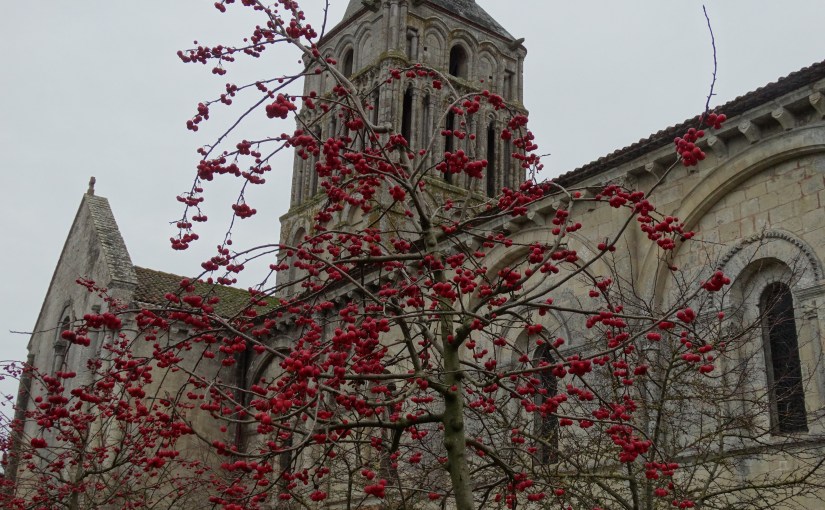
Southwell is a town in Nottinghamshire, best known as the site of Southwell Minster, the seat of the Church of England diocese that covers Nottinghamshire. The town lies on the River Greet, approximately 14 miles (22 km) northeast of Nottingham.

The early history of this Minster as noted by Wikipedia: “Eadwy of England gifted land in Southwell to Oskytel the Archbishop of York, in 956. Eadwy’s charter is the first dated reference to Southwell. Evidence of a tessellated floor and the 11th-century tympanum over a doorway in the north transept are evidence of the construction of the minster after this time. The Domesday Book of 1086 has much detail of an Archbishop’s manor in Southwell. A custom known as the “Gate to Southwell” originated after 1109 when the Archbishop of York, Thomas I wrote to every parish in Nottinghamshire asking for contributions to the construction of a new mother church. Annually at Whitsuntide the contributions known as the “Southwell Pence” were taken to the minster in a procession that set off from Nottingham headed by the mayor followed by clergy and lay people making a pilgrimage to Southwell’s Whitsun Fair. The Southwell Pence was paid at the north porch of the minster to the Chapter Clerk. The name of this custom – the Southwell Gate – derives from the Scandinavian word “gata” meaning street or way to. In its original form it persisted well into the 16th century. In 1981 Dolphin Morrismen revived the tradition.

Geoffrey Plantagenet was ordained as a priest at Southwell in 1189. On 4 April 1194, Richard I and the King of Scots, William I, was in Southwell, having spent Palm Sunday in Clipstone. King John visited Southwell between 1207 and 1213, ostensibly for the hunting in Sherwood Forest, but also en route to an expedition to Wales in 1212. The Saracen’s Head was built in 1463 on land gifted in 1396 by the Archbishop of York, Thomas Arundel, to John and Margaret Fysher. When built, the first floor overhung the roadway in the vernacular of the time.

In 1603, James VI of Scotland passed through Southwell on his way to London to be crowned King James I. During the English Civil War, King Charles I spent his last night as a free man in May 1646 in the Saracen’s Head (then the King’s Head), before surrendering to the Scottish Army stationed at nearby Kelham. The fabric of the town, the minster and Archbishop’s Palace suffered at the hands of Oliver Cromwell’s troops, as they sequestered the palace as stabling for their horses, broke down monuments, and ransacked the graves for lead and other valuables. In 1793, iron rings fastened to the walls to secure the horses were still in situ. The end of the civil war left the Archbishop’s Palace in ruins apart from its Great Hall. It is reputed that Cromwell also stayed in the King’s Head.”

So you can see that this small town (around 7,000 people) has played a big part in bits of history of the UK. The Archbishop’s Palace was home to Cardinal Wolsey who was Henry VIII’s advisor and when unable to secure Henry’s divorce from Rome Wolsey hid out at Southwell until summons by Henry to London but fortunately for Wolsey he died on his trip back to a trial and execution planned by Henry.

The Saracen’s Head is still there. It changed its name from the King’s Head when Charles lost his head. So we visited the Minster and the pub. Whilst at the Pub we picked up this fascinating leaflet on the history of the hotel which told us more of the story of Charles I last meal than the dry facts given by Wikipedia. Remember that in 1642 Charles had raised his standard at Nottingham Castle to signal the beginning of the Civil War. By 1646 the Royalist Army had been all but defeated or surrendered. After the Battle of Naseby Charles realised he needed the Scots to help him defeat the Parliamentarians.

The leaflet told us that Charles escaped from London and went to the Inn disguised as a Clergyman with his clerk to meet with the Scottish commissioners then in Southwell Minster with a regiment of Scottish soldiers. You may recall in earlier blogs I have written about Cromwell’s son in law Henry Ireton and how he was negotiating with Charles around accepting a role as constitutional monarchy. Well the Scots were talking to Charles about supporting him if he accepted Presbyterianism as the religion of England and Ireland amongst other things.

So Charles revealed himself to the Scottish general and started negotiations to have the Scottish forces join his Royalist Army. However he prevaricated so much (as he was doing with Ireton) and refused to sign an agreement that the Scots who left Southwell and marched with Charles as their “prisoner” to Kelham outside Newcastle where they treated with Cromwell’s Parliamentary army and handed over Charles in exchange for 400,000 pounds. And, as they say the rest is history and Charles lost his head at Whitehall on January 30, 1649.

Whilst at the pub and we saw a copy of Charles I death warrant signed by Parliament and in particular Cromwell and Ireton. The leaflet says that as well as Charles I many other notable people stayed at the Inn, namely:

  • Lord Byron (who lived close by),
  • Cardinal Wolsey of course
  • Kings of England, Richard I, Richard II, John, Henry II, Edward I, Edward II, Edward III, and Edward IV
  • King of England and Scotland James I
  • Charles Dickens – he was a very wide travelled individual as he has popped up as a visitor in many places we have been; and
  • The Beatles

So well worth a visit to this village and see the Minster (there are displays of the remains of an old Roman villa under the Minster visible, Saxon “bread” pews and Norman and Gothic architecture), the ruins of the Archbishops Palace and the restored Great Dining Hall and the Saracen’s Head (so named as the sword used to behead Charles was a Saracen sword)

Retirees Go Abroad – Who painted that picture of a Horse on the Hill – Wiltshire

You may recall in my early blogs about Oxford and Cambridge that I had planned to visit the White Horse. Well we were going through Wiltshire on the way to Long Eaton so I thought we should not miss the opportunity. However, I was not aware how many little lanes and rabbit holes we would have to go down to see very little.

There was a cutting chill wind and driven rain coming down as we made our way to the site of the Horse. Finally upon arriving we walked to where we thought it would be only to find that we had walked in the wrong direction. Chilled to the bone we gave up the hunt when it appeared before us on the top of the opposite hill. Clearly it was a summer adventure with a cut lunch and you would climb up to it. Somewhat miffed we returned to Thistle and Kerry commenced to drive down to the entrance road when we spotted a hillock which may give me a picture opportunity at least.

I climbed out of Thistle, slip slided my way up a chalky path past amused black faced sheep and wiping the rain off my face. The top of the knoll did give me the slightest glimpse but after all was said and done the sheep and the valley below were more interesting than the unexplained White Horse.

Back in thistle Kerry asks “Where to now”

I reply “I have heard there is a roman amphitheatre in Cerincester and it is on the way home”. So that is what we did. It was still raining when we arrived in Cirecester. Cirencester the largest town in the Cotswold District in east Gloucestershire, England, 93 miles (150 km) west northwest of London. Cirencester lies on the River Churn, a tributary of the River Thames, and is known to be an important early Roman area, along with St. Albans and Colchester, and the town includes evidence of significant roman roadworks.”

Tommy had the amphitheatre recorded as a point of interest and took us directly to a Sainsburys Shopping Centre. Hardly a roman ruin! So with directions from the trolley boy we found the amphitheatre.

It was still raining and the ground soft under foot so we gingerly made our way through the gate and into a field. There appeared to be nothing but some mounded ground to mark where the amphitheatre once stood. Disappointing but there you go so we found a pub for lunch.

After lunch we planned to go straight home.

← Back

Thank you for your response. ✨

Retirees Go Abroad –Bristol and Bishop’s Knoll

There was a “Bristol during WW1” Remembrance Day exhibition on display at the M Shed. The receptionist recognising our accent invited us to particularly look at the display on private hospitals for soldiers at that time. Amongst the memorabilia war this article about an Australian who threw open his home for Australian soldiers. Here is an excerpt for Bishop’s Knoll and the web links.

“Bristol’s Australians- only hospital

With the outbreak of the First World War a number of wealthy families offered to turn their mansions into convalescent hospitals for wounded soldiers. Bishop’s Knoll War Hospital stands apart as it was the only “make shift” hospital in the area that accepted patients directly from the front. Eventually it was to be used only by Australian soldiers, and it was entirely paid for by former Gloucestershire cricketer Robert Edwin Bush.

Years before the war Bush played for the county alongside the greatest cricketer of all time, WG Grace, but after hanging up his bat Bush spent many years in Australia as a sheep farmer, and made a fortune. On returning to Bristol at the turn of the 20th century, he and his wife Marjorie took up residence at Bishop’s Knoll. With the outbreak of war, Bush wanted to play his part and so set about converting his family home into a war hospital for wounded soldiers.

Having made his fortune in Australia Bush wanted to repay the country that made him so wealthy, and so wanted his home to be used only by Australian soldiers. To start with the Australian authorities refused his offer, before saying that if he wanted to do this then it would have to be staffed by Australians too. Bush disagreed, but finally won his battle in 1916, and for the remainder of the war only soldiers from Down Under were treated at Bishop’s Knoll.

Hundreds of Anzac soldiers came through the gates of the Knoll including Victoria Cross winner John Patrick Hamilton. The care was reported as second to none with Bush himself working there as an orderly. The hospital history reports that after the war a fight broke out in an Australian bar between two men who had been looked after in the West of England during the First World War, both arguing the place they had been treated was better than the other. It was only after the fight that both men realised that they actually been treated at the same hospital – Bishop’s Knoll.

Read more:

http://www.bristolpost.co.uk/Bristol-cricketer-fortune-turned-mansion-hospital/story-22072945-detail/story.html#ixzz3OWq1nqy7

http://www.bbc.co.uk/programmes/p022nlmd

← Back

Thank you for your response. ✨

Retirees Go Abroad – What a lovely pair of – Bristol

Before our Australian guests arrived in late November, Kerry was anxious that we visit Bristol and experience that city. She had gone there to see a surgeon whilst I was working back in Australia and felt compelled to return. We booked accommodation at the Mercure Hotel Brigstow Bristol in Welsh Back with parking at the parking station in Queen Charlotte St behind the hotel. Our room was very comfortable and overlooked the Canal with a view of Bristol Bridge and St Peter’s Church.

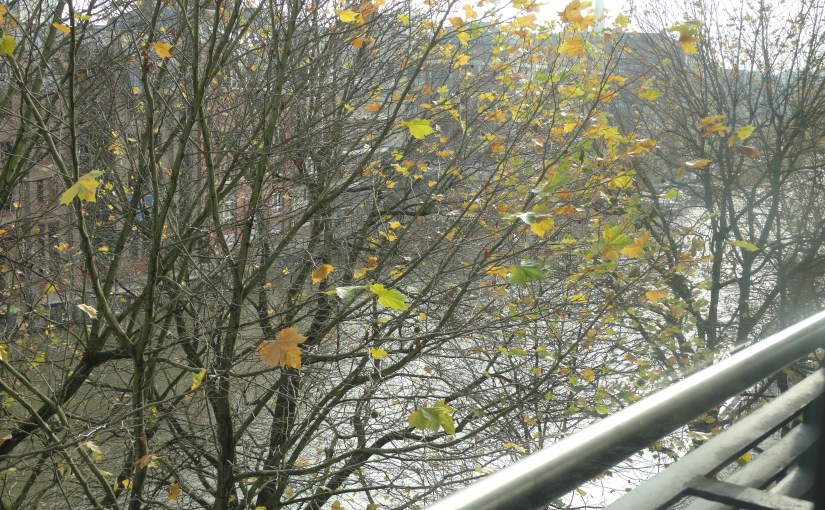
The weather was mild with a slight breeze and the trees were still losing leaves. Every now and then the sun would poke through just to check that we were okay.

I had a few ideas around what I wanted to do in Bristol but once we started walking along the canal toward Redcliffe Way most of my planning went by the way. We came across a memorial to merchant seamen just outside the hotel, then a Tudor style hotel Llandoger Trow, and then further around the canal the memorial to John Cabot.

I remembered this name from social Studies in Primary School but had no idea what controversy surrounded his exploration. Wikipedia reports“. In May 1497. John Cabot, sailing from Bristol, took the small ship Matthew along the coasts of a “New Found Land”. There is much controversy over where exactly Cabot landed, but two likely locations that are often suggested are Nova Scotia and Newfoundland. Cabot and his crew mistook this place for China, without finding the passage to the east they were looking for.”

After the memorial I spotted the M Shed on the other side of the canal. This was one stop I wanted to make. Bristol has been a major maritime port (its proximity to the Americas helped) and large wharves have been turned into a museum housing England’s oldest steam tug, steam powered unlading cranes and a replica of the “SS Matthew”.

There was a “Bristol during WW1” Remembrance Day exhibition on display at the M Shed. The receptionist recognising our accent invited us to particularly look at the display on private hospitals for soldiers at that time. I have prepared a separate blog for this subject “Retirees Go Abroad –Bristol and Bishop’s Knoll”.

After visiting the M Shed we continued our walk through Millennium Square and north to Bristol Cathedral. This is another enormous Cathedral and apparently the only one in the UK to have the ceilings of its halls along the Nave at the same height as the Nave. Kerry was very taken with the stained glass. Although modern, the original having been damaged in WW2, it depicts the heroism of different branches of the  civil services during that war.

After the Cathedral we decided to continue our journey down Deanery Road and we found the Central Library. We poked in side and were surprised to find a structure made entirely out of pencils with furniture made of the same material.

Kerry was wanting to get to Clifton Village an inner suburb of Bristol so we headed to Constitution Hill and what a hill. Probably a 25% grade and 500m long but there no stopping when you are on a mission. It did not take long before we were in the Village – very pretty Victorian shops and houses – pretty pricey too I would bet. There was a pretty arcade where we had coffee and then the White Lion Hotel overlooking the Clifton Suspension Bridge. So we had drinks at the White Lion and by the time we returned to our walk the sun had set and lights were on all through the village. We decided to walk up to the Bridge and then across the Bridge before trying to find The Coronation Tap (the Cori Tap to the locals) a cider house with live entertainment. When we did find it unfortunately it did not open til 8.00pm with no food and the entertainment at 9.00pm. Too late for us.

We strolled back along the narrow streets and found a plaque to the memory of Francis Greenway Father of Australian Architecture affixed to the wall of a hotel design by Greenway presumably before he moved to Australia. The community had erected their Xmas tree and lights making the old town picturesque by night. We dined at a small Italian restaurant (no chips) and then walked back to our hotel through the lights of the modern city.

We planned a return trip through the countryside tomorrow unaware that we would discover Britain’s most complete Roman Villa.

← Back

Thank you for your response. ✨

Retirees Go Abroad – Chedworth – grand 4th century Roman Villa

We had a traditional roast lunch at a pub in Cirencester before driving north towards Long Eaton. We were travelling on minor roads so when the sign to “a roman villa” appeared we were able to take a sharp left hand turn in the direction indicated by that sign. Although it had been wet throughout the day the rain was now easing and that damp chill for which England is famous was now hanging in the air, so any detour had better be worth it.

I know I have stated we have travelled some minor country roads but this was down to the ridiculous. And winding through country side that was last seen by the Romans – or so I thought.

But as the sign had said we finally came upon the ruins of the Chedworth Roman Villa. Discovered by a gamekeeper in 1864, the ruins were first dug to reveal the extensive walls, bath houses, and fine mosaics. In the 19th century Lord Eldon constructed a timber shelter for the most delicate remains and ran a small museum. In 1920 the Villa was purchased for the nation through public subscription. It was acquired in 1924 by the National Trust who have conducted a long-term conservation programme, with new on-site facilities and cover-buildings.

The Chedworth Roman Villa is one of the largest Roman villas in Britain. The villa was built in phases from the early 2nd century to the 4th century, with the 4th century construction transforming the building into an elite dwelling arranged around three sides of a courtyard. The 4th century building included a heated and furnished west wing containing a dining-room (triclinium) with a fine mosaic floor, as well as two separate bathing suites – one for damp-heat and one for dry-heat. It is debatable among historians whether Chedworth was indeed a farm or in fact a religious hostel, there is evidence to support both of these arguments, however most historians believe that Chedworth was a farm, owned by a very wealthy Roman.

It was located just off the Roman road known as the Fosse Way, and 8 miles (13 km) north of the important town of Corinium Dobunnorum (Cirencester). It was one of about fifty villas in the Cotswolds, and one of nine in just a 5 mile (8 km) radius. The villa was located next to a natural spring in the north west corner of the complex, which was the villa’s main source of water.

In recent times, it emerged that the Victorian efforts at conservation on the site were outdated and that the early conservation shelters weren’t providing sufficient protection. The National Trust built a new conservation wrap as well as a reception and learning facility for the archaeological site. The new £2.2m project was completed in March 2012.


This was a dramatic find off the beaten path and one certainly worth a visit.

← Back

Thank you for your response. ✨

Bishops Visit – York the city of the Viking – St Leonard’s Hospice and lighting the Christmas Tree in St Helen’s Square

It started with a band, horns and drums assembling in the square around a plain fir tree. Then the school children assembled on the dais and the crowd closed in. The carols started and the crowd sang along to all the old favourites, Good King Wenslas, Silent Night, Once in Bethlehem and more. We were shivering with cold but transfixed by the joyful sight. St Leonard’s Hospice was lighting the Christmas Tree in St Helen’s Square, in the old town of York.

Then suddenly the tree was lit up to spontaneous applause and cries of Merry Xmas. This was the end of our first day in York. Filled with the spirit of Xmas we journeyed home to our hotel. We would have tomorrow to explore more.

← Back

Thank you for your response. ✨


Bishops Visit – York the city of the Viking – Merchant Adventurers

The following day we visited The Merchant Adventurers’ Hall which is a medieval guildhall. Other such guilds still exist such as in Bristol and London, but do not have the medieval hall such as in York. The majority of the Hall was built in 1357 by a group of influential men and women who came together to form a religious fraternity called the Guild of Our Lord Jesus and the Blessed Virgin Mary. In 1430 the fraternity was granted a royal charter by King Henry VI and renamed ‘The Mistry of Mercers’. It was granted the status of the Company of Merchant Adventurers of York by Queen Elizabeth I in the sixteenth century. The main part of the building consists of the Great Hall and the undercroft, which was originally a hospital or almshouse for poor people of York.

The Great Hall is a timber-framed structure and is the largest timber-framed building in the UK still standing and used for its original purpose. The roof of the hall is of two spans supported by a row of large central timber posts. It includes complex crown posts and is held together by wooden pegs.

The undercroft, like the Great Hall, is divided in two by its supporting row of timber posts. The undercroft also provides access to an attached chapel built for the use of the ill and poor in the hospital as well as the members of the Merchant Adventurers’ Guild. It is still used for worship.


The Hall belongs to and is still regularly used by The Company of Merchant Adventurers of the City of York, who still exist as a charitable membership group. They have an extensive set of records, with documents dating from the 13th century and accounts dating back to 1432.

You can see more at their web site: http://www.theyorkcompany.co.uk/.


Lady Peckett’s Lane. Kerry loves to poke her nose into these sort of places just to see what is there.

← Back

Thank you for your response. ✨


Bishops Visit – Bothwell Castle

After resting in Perth, we had planned to visit Scone Palace on our way to York but as is often the case this time of the year it was closed for the winter so a quick change of plan and we visited Bothwell Castle.

Historic Bothwell Castle “is a large medieval castle sited on a high, steep bank, above a bend in the River Clyde, in South Lanarkshire, Scotland. It is located between Bothwell and Uddingston, about 10 miles (16 km) south-east of Glasgow. Construction of the castle was begun in the 13th century by the ancestors of Clan Murray, to guard a strategic crossing point of the Clyde. Bothwell played a key role in Scotland’s Wars of Independence, changing hands several times.

The huge cylindrical donjon was built in the 13th century, but before the rest of the castle was completed it was severely damaged in a series of sieges. Rebuilding in the early 15th century enlarged the castle, but it was abandoned by the 18th century. The present ruin is rectangular, with the remains of the donjon to the west, and the later Great Hall to the east. The courtyard is enclosed by long curtain walls, with round towers at the south-east and south-west corners.” (source Wikipedia)


We had a little difficulty finding this site because of the surrounding residential development. However once you arrive it is immediately apparent that this edifice has had a tumultuous life. Parts of the former castle like the well and a watchtower – now only the footings remain, lie scattered in front of todays entrance  . Inside we met a very friendly and knowledgeable volunteer for the Scottish National Trust. We showed that we had some interest in the history and then he could not do enough for us right down to displaying for us chain mail, a two handed broad sword and the various arrow head used in the medieval period. If he had a trebuchet (early form of catapult) I am sure he would have rolled it out for us.

The main part of the remaining castle the donjon or keep was under maintenance so we could not go inside but we were able to tour around the court and our friendly custodian opened the basement so we could view a display of history cards and he told tales of the how the Scots prevented captured English Long Bow men from raising their fingers against Scotland ever again. They chopped them off (the bow fingers that is) giving a two fingered salute was how the English returned the compliment to the Scots and just as the salute is an insult today so it was in the 13th century sieges of Bothwell Castle.

← Back

Thank you for your response. ✨

Bishops Visit – York the city of the Viking – Evensong at York Minster

After Bothwell we travelled down to York where stayed at the Hotel Noir. A descent hotel, reasonable cost, with lots of character and an easy walk to the old city. We arrived in the late afternoon and made our way by cab (we did not know how close we were at this stage) through the traffic striving to get to York Minster for the Evensong service.

Evensong is different from Vespers but I don’t know how – it appeared very similar to Vespers we participated in at Lincoln cathedral. Anyway, we gained entry to the Minster just in time to witness the choir convening outside the chapel and singing before enter the chapel for the service. No photos allowed but a certain individual did not tell me that insisting that I take the photos appearing herein. I have done my penance for this blasphemy.

The service was enjoyable with a superb male choir chanting and singing us through the service. Once the service was completed we ventured out into the old city lit up from head to toe for Xmas.

Earlier we had wandered around soaking up the history of York. The schools were running a competition for the best nativity scene and they were featured in many of the shops around the town.

Walls of the City

Before taking to the walls we journeyed through “the Shambles” and down to the river to stroll along the bank. It was too bloody cold so we retreated to a coffee shop to reconsider visiting the Walls. Fortified we proceeded with our plan.

The old city of York is partly enclosed by the city walls. On a cold autumn evening we braved the walk on the walls giving different views of the cathedral and the city beyond.

After strolling the walls we returned to the Cathedral to meet Doug and Neri where we found them trying to hail a taxi to get out of the cold and back to the hotel.


Bishops Visit – Castle Howard

Castle Howard is a stately home in North Yorkshire, England, 15 miles (24 km) north of York. It is a private residence, the home of the Howard family for more than 300 years. Castle Howard is not a true castle, but this term is also used for English country houses erected on the site of a former military castle. It is the fictional “Brideshead”, of  Brideshead Revisited.


The house is surrounded by a large estate which, at one time, covered over 13,000 acres (5,300 ha) and included the villages of Welburn, Bulmer, Slingsby, Terrington and Coneysthorpe. In 1952, the house was opened to the public by then owner, George Howard, Baron Howard of Henderskelfe. It is currently owned by his son, the Honourable Simon Howard, who grew up at the castle.

A large part of the house was destroyed by a fire which broke out on 9 November 1940. The dome, the central hall, the dining room and the state rooms on the east side were entirely destroyed as well as valuable paintings and mirrors. Some of the devastated rooms have been restored over the following decades. In 1960–61 the dome was rebuilt and in the following couple of years, the frescos on the dome was recreated. The East Wing remains a shell, although it has been restored externally. Castle Howard is one of the largest country houses in England, with a total of 145 rooms.

← Back

Thank you for your response. ✨