Bishops Visit – York the city of the Viking – Jorvig Viking Centre and Barley Hall

The Jorvig Viking Centre is widely advertised in York as a must see. Despite its appearance as a commercial kids attraction, this is a serious historic/archaeological site and reconstruction of Viking life in York. Whilst the archaeological finds are there on display along with the work to uncover them, a ride through a reconstruction of an 890AD village is part of the experience. The ride takes you through the village at a time of change in the construction of their homes and there are real life smells sounds and visual effects. As you would expect no cameras allowed but you can see more at their web site: http://jorvik-viking-centre.co.uk/ and it is worth the visit.

After visiting the Viking Centre we made our way (with some hiccups) to the Barley Hall. Named after Professor Maurice Barley who supervised the restoration of the hall, the Hall started life in 1114AD when Henry II established an Augustinian Priory for a community of hermits. In 1540 Henry VIII closed the Priory and confiscated the property. The hall was then used for multiple purposes thereafter and gradually is covered over with later development. In 1984 the building was due for demolition to make way for a new development, When a survey of the site is done the old building is rediscover and in 1987 it was purchased by York Archaeological Trust and restored and opened to the public by 1993.

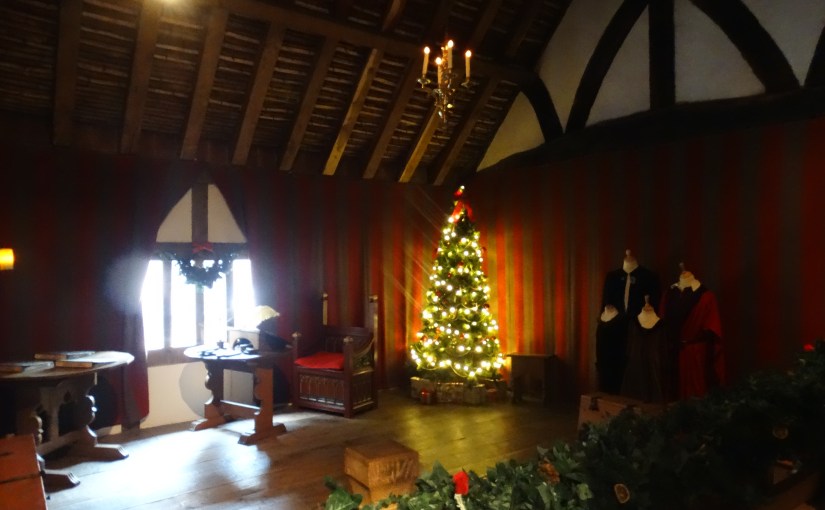
On the ground floor, Barley Hall comprises a number of rooms. The store room, used as an admissions area, contains a large quantity of original 1360 woodwork, which leads onto a second store room, now called the Steward’s room. At the heart of the building is the Great Hall, a 1430 construction, decorated on the basis of equivalents elsewhere in the city of York. The building also includes a pantry and a buttery. On the first floor is the parlour, which overlooks the hall, a gallery and several bedchambers. These rooms now form a museum of medieval life in York. Rather gruesome and interesting at the same time. To read more I suggest a visit to http://barleyhall.co.uk/.

← Back

Thank you for your response. ✨


Bishops Visit – France and More – Dampierre and Cognac

Kerry and I had been to Cognac previously so going back there was only intended to be a quick visit. There was no hurry this morning, no ferry to catch or traffic to avoid so we cruised through bright sunlight with clear skies with expectation that we would travel wider than just Cognac today. Tommy decided to give us the “Cook’s Tour“ and we travelled down back roads past thousands of vines all dedicated to the divine brandy called cognac.

The weather is not a trustworthy friend for as we arrived at Cognac the wind rose and the temperature dropped – I could feel the cold through my corduroy trousers and my fingers were losing sensation without the warmth of gloves. As we approached the town we caught sight of this odd house overlooking the river and the town boundary for Cognac. Cognac is situated on the river Charente between the towns of Angoulême and Saintes. The majority of the town has been built on the river’s left bank, with the smaller right bank area known as the Saint Jacques district. The town is situated on one of the pilgrimage routes to Santiago de Compostella. We parked on the banks of the River by the St Jacques Gate a remnant of its medieval past.

Flying high above us was the flag of Hennessy and the flag of Otard, two of the international distillers of Cognac located in the city (there are three other internationally known distillers in town – Camus, Remy Martin and Martell – and many lesser known brands as well). But there is more to this city than the distilleries.

We start by walking through the Gates of St Jacques along the cobbled streets to the city centre. The architecture tells a story of an old city with a variety of influences. Cognac was unknown before the 10th century and was established as a fortified town which changed hands a number of times during the 100 year war. The Chateau de Valois remains looming over the township but it is closed for visitors til next year. One of the special sights was the “Maison de la Lieutenance” the house of the Lieutenant General of Cognac from 1603 to 1624. Made of timber rather than stone and ornamented with carved figures it is unique.

Strolling on up the hill we discover a whole new Cognac. Kerry and I had gone straight to Hennessy last time we visited but there is another part to the town (particularly the old town) which we had not seen. I was sent back to the car to bring it up to the centre and on returning found the girls had found the shopping. Doug and I found St Leger Church.

As we passed through the mall I noticed that some of the citizens were more interested in modern history as shown by the graffiti of Marilyn Munroe. We made our way to the centre of the old town and found a nice coffee shop. Kerry found out the hard way that the southern French have a different idea of a cappuccino – espresso topped with whipped cream and sprinkles! We ended up overstaying our planned time and with a special dinner tonight we headed back to Dampierre. Not to be out done Tommy found even smaller roads in even remoter parts of the Charante to get home.

← Back

Thank you for your response. ✨

Bishops Visit – France and More – Dampierre and Ile de Re

Lying just off La Rochelle are the islands of Ile de Re and Ile d’Oleron. We only had time to visit Ile de Re this time.

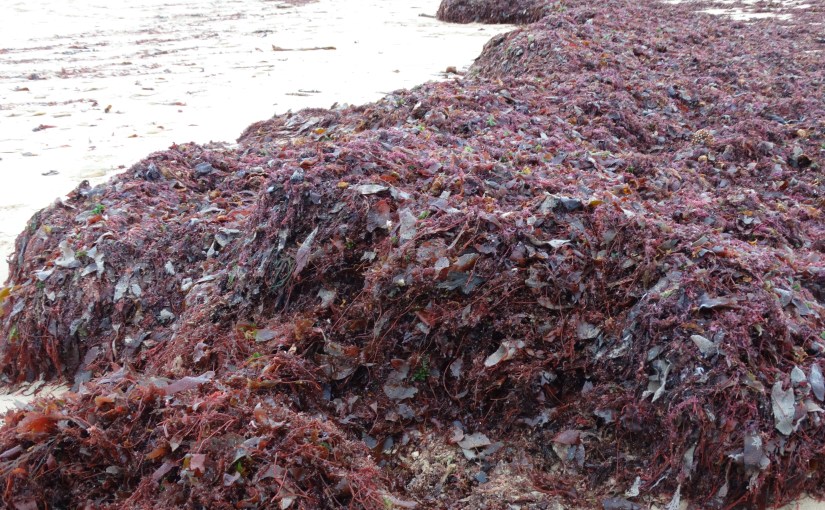
An impressive new bridge and an expensive toll now give easy access to the island and its oyster farms. There are also many residents on the island with a number of villages dotting across it. We drove out to the most westerly point through fields of grapes (that is an interesting terroir for wine grapes) and ponds of oysters. As you might expect the western point was wind swept with large masses of mixed sea vegetation bundled up on the beach. A very interesting colour and contour across the beach. See the featured image at the beginning.

The island is popular as a tourist destination with pretty villages across the island. We called into Ars en Re. We were drawn by the unusual spire on its church and then by its picturesque setting. As we strolled through the streets to the marina it commenced to rain driving us into a local emporium of ales and brews. The ceiling was covered with memorabilia and there on the wall was a photo in sepia shades of three of the 19th century’s most powerful men – King George V of Great Britain, Tzar Nicholas of Russia and Kaiser Wilhelm. George and Nicholas were almost twins but Kaiser Bill had little family resemblance. Strange that with all three being cousins.

The sky was beginning to drain of colour and we did not want to be travelling in darkness back to Dampierre it being so rural that without the moon to show the way we would travel in pitch black darkness.

← Back

Thank you for your response. ✨

Bishops Visit – France and More – Dampierre and La Rochelle

Boxing Day started with a dense fog which overnight had settled over the Charente-Maritime and we were hoping to visit La Rochelle and Ile de Re. However Terri assured us that more than likely it would be clear on the coast. So we loaded up the esky with a Xmas leftover picnic and sailed off to La Rochelle. We chose to pass through Surgeres rather than the freeway into La Rochelle thus wetting the girls appetite to do shopping in the old village.

We parked on the waterfront under the old city walls, then walked through the old harbour entrance into this famous maritime city of France and at times England. The history and its influence are astounding for a city few people I know are even aware it exists.

The old city is very unique with its covered footpaths and the remains of medieval fortifications and modern submarine pens built by the Germans during WWII still visible. I have extracted from Wikipedia the history of the city and set it out below for those interested. For those not interested I have posted some photos which I hope give you some idea of the quaintness of this place and its seaward region of Ile de Re. More on the island in another blog.

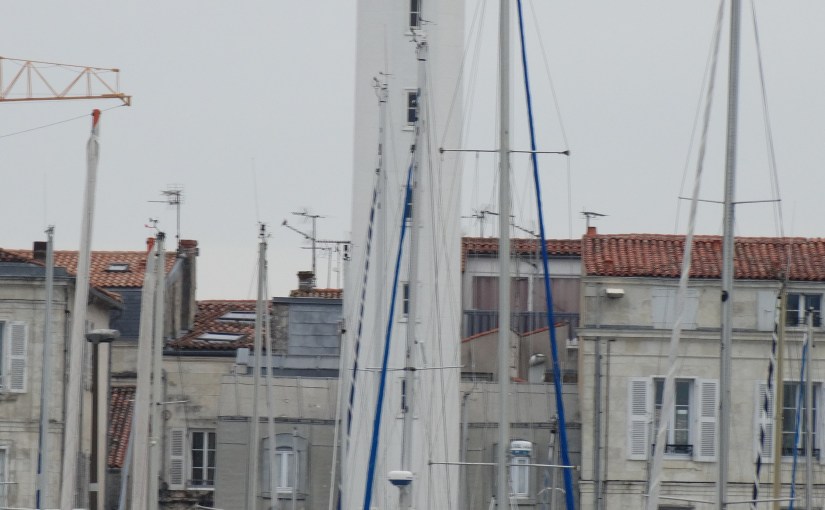
La Rochelle was one of the centres for Huguenots and therefore involved in the Religious Wars in France and I found a Protestant Church which has survived those  Wars. The waterside quays remain and are frequently adorned with markets and the lighthouse located in one of the main streets also remains and is operating..


Potted history of La Rochelle

La Rochelle is a city in western France and a seaport on the Bay of Biscay, a part of the Atlantic Ocean. It is the capital of the Charente-Maritime department. The city is connected to the Île de Ré by a 2.9 kilometres (1.8 miles) bridge. Its harbour opens into a protected strait, the Pertuis d’Antioche.

The area of La Rochelle was occupied in antiquity by the Gallic tribe of the Santones, who gave their name to the nearby region of Saintonge and the city of Saintes. The Romans then occupied the area, Roman villas have been found at Saint-Éloi and at Les Minimes, as well as salt evaporation ponds dating from the same period. La Rochelle was founded during the 10th century and became an important harbour in the 12th century.

Plantagenet rule (1154–1224)

Eleanor married Henry Plantagenet in 1152, who became king of England as Henry II in 1154, thus putting La Rochelle under Plantagenet rule, until Louis VIII captured it in the 1224 Siege of La Rochelle. The Knights Templar had a strong presence in La Rochelle since before the time of Eleanor of Aquitaine.

During the Hundred Years’ War in 1360, La Rochelle again became English. La Rochelle however expelled the English in June 1372, following the naval Battle of La Rochelle. In 1402, the French adventurer Jean de Béthencourt left La Rochelle and sailed along the coast of Morocco to conquer the Canary Islands. Until the 15th century, La Rochelle was to be the largest French harbour on the Atlantic coast.

During the Renaissance, La Rochelle adopted Protestant ideas. An early result of this was the burning at the stake of two “heretics” in La Rochelle in 1552. Conversions to Calvinism however continued, due to a change of religious beliefs, but also to a desire for political independence on the part of the local elite, and a popular opposition to royal expenses and requisitions in the building projects to fortify the coast against England. La Rochelle was the first French city, with Rouen, to experience iconoclastic riots in 1560. Protestants pillaged churches, destroyed images and statues, and also assassinated 13 Catholic priests in the Tower of the Lantern. From 1568, La Rochelle became a centre for the Huguenots, and the city declared itself an independent Reformed Republic on the model of Geneva. This led to numerous conflicts with the Catholic central government. The city supported the Protestant movement of William of Orange in the Netherlands, and from La Rochelle the Dutch under Louis of Nassau and the Sea Beggars were able to raid Spanish shipping.

In 1571 the city of La Rochelle suffered a naval blockade by the French Navy. The conflict ended with the 1573 Peace of La Rochelle, which restricted the Protestant worship to the three cities of Montauban, Nîmes and La Rochelle.

Louis XIII and his Chief Minister Cardinal Richelieu declared the suppression of the Huguenot revolt the first priority of the kingdom. The English came to the support of La Rochelle, starting an Anglo-French War (1627-1629), by sending a major expedition under the Duke of Buckingham. The expedition however ended in a fiasco for England and Cardinal Richelieu blockaded the city for 14 months, until the city surrendered and lost its mayor and its privileges. The remaining Protestants of La Rochelle suffered new persecutions, when 300 families were again expelled in November 1661, the year Louis XIV came to power.

The growing persecution of the Huguenots culminated with the Revocation of the Edict of Nantes by Louis XIV in 1685. Many Huguenots emigrated, founding such cities as New Rochelle in the vicinity of today’s New York in 1689. La Rochelle, and the siege of 1627 form much of the backdrop to the later chapters of Alexandre Dumas, père’s classic novel, The Three Musketeers.

In 1809, the Battle of the Basque Roads took place near La Rochelle, in which a British fleet defeated the French Atlantic Fleet. In 1864, the harbour of La Rochelle (area of the “Bassin à flot” behind the water locks), was the site for the maiden dive experiments of the first mechanically-powered submarine in the World, Plongeur, commanded by Marie-Joseph-Camille Doré, a native of La Rochelle.

During the Second World War, Germany established a submarine naval base at La Pallice (the main port of La Rochelle). A German stronghold, La Rochelle was the last French city to be liberated at the end of the war. The Allied siege of La Rochelle took place between 12 September 1944, and 7 May 1945; the stronghold, including the islands of Ré and Oléron, was held by 20,000 German troops under a German vice-admiral Ernst Schirlitz. Following negotiations by the French Navy frigate captain Meyer, and the general German capitulation on 7 May, French troops entered La Rochelle on 8 May. (source Wikipedia)

So, what do you think? It astounds me that this rural port  and nearby Rochefort have been so influential. One thing further if you visit La Rochelle and the boat trips to Fort Boyard are running don’t miss the opportunity to visit it. Here is a fort built on a bank in the ocean –surrounded by water and only accessible by boat. Again a Wikipedia extract on its history follows:

Fort Boyard is a fort located between the Île-d’Aix and the Île d’Oléron in the Pertuis d’Antioche straits, on the west coast of France. Building started in 1801 and was completed in 1857.

The fortifications were completed in 1857, with sufficient room for a garrison of 250 men. However, by the time of its completion, the range of cannons had significantly increased, making the fort unnecessary for national defence. After 1871, Fort Boyard was briefly used as a military prison, before being abandoned at the beginning of the 20th century. In 1950 it was made a listed building, and in 1961 was sold to Charente Maritime Regional Council.

Bishops Visit – France and More – Xmas in Dampierre


Xmas day arrives as fine and mild. It is just wonderful when the weather is clear and you can walk around without a scarf and coat. We exchanged gifts and then got down to the serious business of cooking the ham, two turkeys and all the veggies.


The Bishops supplied the oysters purchased locally and shucked by Mick. Even the little birds attracted by Micks bird feeders had a nice Xmas. After lunch about 3 o’clock we took a trip to the donkeys.

The Poitou donkey or Poitou ass, also called the Poitevin donkey or simply the Poitou, is a breed of donkey originating in the Poitou region of France. It is one of the largest donkey breeds, and was selected for size so that it could be used for the production of large working mules, in conjunction with the Poitevin horse breed. It is known for its distinctive coat, called a cadanette, which hangs in long, ungroomed cords. Breeders originally prized the coats highly, but today, many Poitou donkeys are shorn for hygienic reasons.

Due to the changes in transport and farm production, the Poitou almost died out as a breed, but the work of the Dampierre Assinerre farm, the breed has been saved. So a visit to see these delightful beasts was very relaxing after our big lunch. To learn more I suggest a visit to http://en.m.wikipedia.org/wiki/Poitou_donkey

← Back

Thank you for your response. ✨

Bishops Visit – France and More – Dampierre

It is nearly Xmas so we leave Palaeolithic Lascaux and head for Dampierre sur Boutonne and my cousin’s gites where we will celebrate Xmas. The drive was long and tiresome. As planned we arrived at Dampierre on December 23 to a warm welcome and hot cuppa tea.

We had been driving for most of the day so a stretch of the legs was in order. A brief walk to Chateau Dampierre then around to the church before having dinner did the trick. The chateau has a history dating back to the 10th century and if you want to read more go to http://fr.m.wikipedia.org/wiki/Château_de_Dampierre-sur-Boutonne. The chateau was partly destroyed by fire in 2002 and has recently been restored but is only open for visitors in the warmer months.

The village church is an interesting relic. It appears there was a church on this site from roman times and that it was later in the 12th century replaced by a Romanesque church which over the centuries has had many alterations and additions. It is standard in its layout (the cross running east west with a nave, transept and altar) and includes the town clock in its bell tower which appears to be added on to the main church building. Further you will see that some of the windows are gothic in shape and that a section of wall on the southern side has been replaced but the new wall does not exactly line up with the original.

It has never included a graveyard but the earth wall supporting the church grounds overlooking my cousin’s house has given up a skull, leg bones and other bits of human remain. When reported to the Marie of the town some explanation about many people being killed in the religious wars and these remains probably belong to that era was offered.

Wikipedia records the following about The French Wars of Religion (1562–98). “….. is the name of a period of civil infighting and military operations, primarily fought between French Catholics and Protestants (Huguenots). The conflict involved the factional disputes between the aristocratic houses of France, such as the House of Bourbon and House of Guise (Lorraine), and both sides received assistance from foreign sources.”

Seriously, these bones are sitting in dirt and now exposed to the weather – I don’t think these are left over from the 16th century, but the authorities were unconcerned so now it is up to Mick to cover them up again.

The next day we had to buy some provisions (including mistletoe and holly) so we travelled to St Jean D’Angeley as there are no grocery stores in Dampierre (500 people) and then back to our village and a walk down to the local pub (cafe restaurant and hotel of sorts) for a quick drink.

Then we had to lay in some provisions for Xmas day and Mick had to buy his lotto ticket, so we went to the Supermarche at Aulnay (another town nearby) and bought two 5 litre cartons of the local red and white plonk, two bottles of Mercier champagne and one bottle of the local “champagne style” sparkling wine. Whist there Mick showed us what was left of the Chateau at Aulnay.


← Back

Thank you for your response. ✨

Bishops Visit – France and More – Lascaux II

Our next port of call was Lascaux Caves II. This was one of the coldest day we had experienced so far. After scraping the ice off the windows of the car we loaded up and set off. “Lascaux (Lascaux Caves) is the setting of a complex of caves in south western France famous for its Palaeolithic cave paintings. The original caves are located near the village of Montignac, in the department of Dordogne. They contain some of the best-known Upper Palaeolithic art. These paintings are estimated to be 17,300 years old. They primarily consist of images of large animals, most of which are known from fossil evidence to have lived in the area at the time. In 1979, Lascaux was added to the UNESCO World Heritage Sites list along with other prehistoric sites in the Vézère valley.” (Wikipedia)

The caves were sealed by a land slip and rediscovered by a small dog falling into an opening of the caves and its school boy owner climbing in to rescue the dog. The caves were open to the public until it was found that even the breath of the visitors was causing damage to the paintings so they were closed and now can only be visited by scientists a maximum of 300 hours per annum. The French have exactly recreated part of the caves in a tourist attraction nearby and are presently recreating all of the caves in a new exhibit closer to the township of Montingac. Even though these are only replicas it is extraordinary.

The caves themselves are extraordinary evidence of the intelligence of Palaeolithic people. For instance they have found evidence that the artists used scaffolding to enable them to paint on the ceiling, used reindeer fat with birch wicks (birch does not smoke) to provide light to paint by and used the surface of the rock wall to emphasise the shapes of the animals they painted. there are pictures of horses, lots of horses and deer painted on the walls but not all the walls but mainly the upper part to the ceiling due to the rock structure and the fact that water had probably run through the caves at various times.  No photos allowed sorry due to copyright issues. So just a few pictures of the visitors centre, the entrance and a frozen bush and the link to the website. See; http://www.semitour.com/lascaux-ii

There is no problem with access. The visitors centre and caves are both on an even surface but there are steps down into the exhibit. There is a further museum displaying other prehistoric discoveries of the area and the remaining caves in replica at the village of Les Eyzies de Tayac-Sireuill.

Recommended!.

Bishops Visit – France and More – Sarlat la Caneda and Chateau Castelnaud

“The Château de Castelnaud is a medieval fortress in the commune of Castelnaud-la-Chapelle, overlooking the Dordogne River in Périgord, southern France. It was erected to face its rival, the Château de Beynac. The oldest documents mentioning it date to the 13th century, when it figured in the Albigensian Crusade; its Cathar castellan was Bernard de Casnac. Simon de Montfort took the castle and installed a garrison; when it was retaken by Bernard, he hanged them all. During the Hundred Years’ War, the castellans of Castelnaud owed their allegiance to the Plantagenets, the sieurs de Beynac across the river, to the king of France. In later times it was abandoned bit by bit, until by the French Revolution it was a ruin. Today the picturesquely restored château, a private property open to the public, houses a much-visited museum of medieval warfare, featuring reconstructions of siege engines, mangonneaux, and trebuchets. The castle is listed as a monument historique by the French Ministry of Culture.” (Wikipedia)

The day of our visit the weather was overcast and foggy so we could not fully enjoy the scenic views from the chateau nor the quaintness of the village below it. The chateau is a complete museum of medieval instruments of war particularly early catapults. We spent hours going through all the exhibits but be warned there is a lot of steps some very steep and narrow. It is no place for people with a disability or young children.

After our visit we travelled to the village of La Roque Gageac where the fog prevented us from enjoying the dramatic setting for this village. It sits under a ridge of vertical rock and apparently has caves behind it but we could only vaguely see the stairs in the wall leading to these caves. Some adventurers could be seen through the fog abseiling down the cliff face. We did explore a walk amongst the houses and found a subtropical garden hidden behind the houses.


We returned to Sarlat for our final night. We dined at a small restaurant in the old city. The weather was turning very cold and it was uncomfortable to walk around the city so we retired to our hotel as tomorrow we travel to Lascaux Caves and then onto Dampierre Sur Boutonne.

Bishops Visit – France and More – Sarlat la Caneda

After a delightful lunch in the village at the foot of the chateau (there is another village of the same name below the chateau) we made our way into Sarlat just in time for the Xmas markets and tens of thousands of people (well thousands anyway) making finding the hotel and parking impossible. An eagle eyed Nerida spotted La Couleuvrine (named after the culverins on the town walls which walls now form part of the hotel).

DSC02411

We reconnoitred around the old city and what a fabulous place full of ancient buildings and the old ramparts still exist around 3/4 of the town. “Sarlat is a medieval town that developed around a large Benedictine abbey of Carolingian origin. The medieval Sarlat Cathedral is dedicated to Saint Sacerdos.” (Wikipedia) We found the Cathedral in the heart of the old city with a modern Xmas tree featuring in front of it. I don’t know which attracted more people – the Cathedral or the tree. There are examples of old architecture everywhere you look. Inside the Cathedral you are overwhelmed by the organ hanging over the front door. Outside it towers like the fortifications we had seen at Beynac.

The alleys and old buildings jump out at you drawing you to look at their antique features. Our hotel was an excellent example of the early architecture. But like most of these building converted to a modern use there are oddities such as the stairs to our rooms. Arriving on the first floor there were another 5 stairs to climb to the room and the same for the Bishops.

“Because modern history has largely passed it by, Sarlat has remained preserved and one of the towns most representative of 14th century France. It owes its current status on France’s Tentative List for future nomination as a UNESCO World Heritage site to the enthusiasm of writer, resistance fighter and politician André Malraux, who, as Minister of Culture (1960–1969), restored the town and many other sites of historic significance throughout France. The centre of the old town consists of impeccably restored stone buildings and is largely car-free.” (wikipedia)

This is an area of historical significance as the English and French fought over it for centuries and the religious conflicts between the French themselves saw this area figure prominently. Hence the numerous fortified chateaus on high bluffs. Chateau Castelnaud is another example (and it was open at this time of year – many are not).

← Back

Thank you for your response. ✨

Bishops Visit – France and More – Chateau Beynac

Although late to bed the next morning we were on the move early to travel to Sarlat la Caneda another 280 klms south. Unlike previous travel our Tommy took us along some very rural roads to Limoges before we journeyed on a freeway. This made a nice change as we were able to view the countryside and the vistas as we headed into the Central Massif. Also the weather took a turn for the better with the cloud breaking up and as we drove into the valley toward Sarlat we were in brilliant sunshine. On reaching a little town outside Sarlat we reappraised our itinerary due to the improvement in the weather and decided to travel to Chateau Castelnaud but fortunately we found Chateau Beynac instead.

This Middle Ages construction, with its austere appearance, is perched on top of a limestone cliff, dominating the town and the north bank of the Dordogne River. It is worth reading about this chateaux in Wikipedia but what Wikipedia does not tell you is that Richard I (Richard the Lionheart of England) captured the Castle and it remained in English possession for 10 years til Richard was killed and then recaptured and lost again during the One Hundred years war. There are some rooms in the chateau fitted out with Lionheart memorabilia. One of the features is the dungeon and torture implements.

http://en.m.wikipedia.org/wiki/Château_de_Beynac

I got really excited about this chateau. It is truly situated in a magnificent location and the views still astound me when looking at the photos.

Inside the chateau was like returning to that time with braod swords at the ready in the end of tables and the crossbow on the wall. Even the dungeon had that feeling of macabre with instruments of torture still in place ready for the next victim. Now I think this is off the beaten track for most Australian grey nomads.


← Back

Thank you for your response. ✨